RSS Feeds
Custody fight over baby born via surrogate sparks fear of fertility treatment restrictions
How data centers became a major issue in the midterms
News Wrap: States sue USPS, challenging Trump's order on mail-in voting
Wall of mud and debris floods communities in Nepal and Tibet
Military trial date set for alleged mastermind of Sept. 11 attacks
Pentagon upgrades awards of 3 Marines for actions after Abbey Gate attack
Meta’s $18B child-safety deal hinges on age-verification tech that doesn’t work well
Deadly Nepal flood caused by enormous landslide, glacier tumble: Scientist
Tim Curry Pioneered Fashion With His ‘Rocky Horror’ Performance
What Meta's $17 billion settlement could mean for its future
Grand jury: DeSantis administration "misappropriated" $10 million
'The record will fall' - Werro takes aim at 43-year-old 800m mark
Root shows off-field leadership - now for on-field
Serena and Venus Williams set to play doubles together at U.S. Open
Norah O'Donnell: This is what I eat to keep my gut microbiome happy
Now you seafood, now you don’t: $350k worth of oysters vanish without a trace in NSW
About 400,000 juvenile Sydney rock oysters were taken from an oyster farm on state’s mid-north coast earlier this year, police say
Get our breaking news email, free app or daily news podcast
Police are on the hunt for a seafood swindler after 400,000 oysters were allegedly stolen from a farm at a river on the New South Wales mid-north coast.
About 320 bags of juvenile oysters, worth an estimated $350,000, were taken from an oyster farm in Scotts Creek, Oxley Island, earlier this year, according to NSW police.
Continue reading...The Papers: 'Britons lost in Nepal flood' and 'Regal had landed'
Army to build microreactors at 5 bases as U.S. seeks to ramp up nuclear power
Mbappé hat-trick sinks Real Sociedad after Real Madrid jeered by home fans
Kylian Mbappé scored a hat-trick as Real Madrid beat Real Sociedad 4-1 at the Bernabéu on Wednesday in their first home match since the return of José Mourinho as head coach.
Mbappé put Madrid ahead in the 40th minute before Luka Sucic levelled four minutes later, but the France forward restored the hosts’ lead on the hour. Vinícius Júnior added a third in the 68th minute before Mbappé completed his treble 10 minutes from time.
Continue reading...Meta to Pay Up to $17.1 Billion Over Claims It Harmed Youths
От «я это понимаю» до «я могу это сказать»: как языковой материал становится активным

Иногда вижу, что во многих массмедиа, и здесь на Хабре в том числе, рассказывают, что есть самый надежный способ освоения языка. Например, просмотр сериала, карточки Анки, видеокурсы. Но если цель - говорить на английском языке, то очевидно, что нужно говорить как можно больше. С другой стороны, многие говорят, но медленно, забывают слова. Естественно, что у большинства людей пассивный словарный запас намного больше активного. Но просто методом поглощения контента (модным "comprehensible input") перевести новую лексику в активный словарный запас и улучшить говорение сложно. Кстати, гораздо реже упоминают другую теорию, comprehensible output, при которой нужно выражать свои мысли на изучаемом языке, и постепенно заполнять пробелы - то есть, случаи, когда выразить мысль сложно.
Метод, по которому язык учат, чтобы говорить, совмещает input и output. Подчеркну, это справедливо в случае, если цель - говорить. Если цель - читать и слушать, то можно:
1) Понять новое слово. Или, например, грамматическое правило, вы можете сами прочитать о нем или посмотреть видео.
2) Понимать его значение в других текстах. Хотите - переводите каждый раз, когда встречаете, пока окончательно не запомните, хотите - предварительно потренируйте на карточках. В учебниках для изучаемых тем есть тесты с вариантами ответов.
Все, дальше никаких упражнений делать не нужно. Чем чаще вы читаете или слушаете, тем сильнее становятся ваши пассивные навыки.
Если же цель - обогатить свой активный словарный запас, то нужно пойти дальше и внедрить новые выражения в свою речь на следующих стадиях, где мы постепенно переходим от управляемого применения к свободному использованию:
Читать далееWorld's most valuable company beats expectations
Target faces renewed backlash after selling a Halloween costume with 'minstrel show features'
ICE arrests of people without criminal records hit record high, new data shows
What Does $17.1 Billion Mean for Meta?
How Rising Temperatures Likely Contributed to Nepal’s Deadly Flood
Alexandria Ocasio-Cortez rejoins DSA after membership lapse of seven years
Then House candidate joined Democratic Socialists of America in 2018 but didn’t renew membership after a year
Alexandria Ocasio-Cortez has rejoined the Democratic Socialists of America after not renewing her membership for seven years, amid speculation that she might run for president in 2028.
The 36-year-old New York representative and one of the country’s most prominent democratic socialists renewed her membership in the group’s national organization after reports emerged earlier this month that it had lapsed. Ocasio-Cortez initially joined the group in 2018.
Continue reading...Man in prison in New York advances in primary for Alaska’s US House seat
Democrat Eric Hafner, to be released in 2036, also ran for seat in 2024, securing spot on that general election ballot
A man who is serving time in a federal prison in New York advanced on Wednesday from the primary for Alaska’s lone US House seat.
Eric Hafner, a registered Democrat, also ran for the seat in 2024 and secured a spot on the general election ballot that November despite a challenge brought by the Alaska Democratic party.
Continue reading...Trump knocks Ralph Norman for Nikki Haley endorsement after Darline Graham wins GOP runoff
New White House Counsel Isn’t a Yes Man, but He Won’t Say No, Either
CIA Chief’s Surprise Moscow Trip Was to Warn Russia Not to Attack NATO
Trump says Iran war will "continue for as long as necessary" but will be over "very soon"
Trump administration threatens to demolish Kennedy Center if renovations don't move forward
US drug agency approves breakthrough treatment for pancreatic cancer
Uefa to push to remove Infantino after dropping boycott
Mamdani Persuades C.E.O.s to Join His Business Advisory Council
A Movement to Restrict Social Media for Children Has Taken Hold Globally
Opinion | India’s Global Image Problem
Fundraiser for A66 crash police officers tops £1m
Affairs? Drugs? You could ask Dolly Parton about anything and get a laugh. Just stay away from politics …
One autumn day in 2023 I bathed in the luminous glow of this utterly authentic star – and while she did have one weak spot, her life and music will speak for themselves
The great privilege of my kind of journalism is to get the chance to meet extraordinary people – some famous, many not – and very occasionally that person is beyond extraordinary. Dolly Parton, you may not be surprised to learn, was one of them. I’ve only come across it a handful of times. It has nothing to do with extreme fame – I’ve met plenty of A-listers who are dead behind the eyes. It’s not charm or extroversion either, nor beauty, and it’s not what we’d call “star quality” because it’s less showy than that. It’s almost indescribable, but “luminous” probably comes closest. I think it’s partly innate – God-given, Parton might have said – but it also comes from living with humility, gratitude and humour. Parton was luminous, and it wasn’t just the rhinestones.
The cliche that you should never meet your heroes because you’ll only be disappointed only stands if you think famous people have somehow transcended the deep character flaws that make the rest of us human. Everyone has off days, or off years. Still, I’d been slightly dreading interviewing Parton. The machinery that surrounds a superstar interview – the holding rooms, the allotted time slots, the officious publicists – is designed to be intimidating, and it was all present on that autumn day in 2023. And then it was just Parton and me in a London hotel room, borderline uncomfortably close on a sofa, but unusually, no publicist sitting in, taking notes.
Continue reading...Plug-in balcony solar panels to go on sale in UK for first time
DIY system will be stocked by big retailers, starting with Argos, enabling more homes to lower bills by generating own electricity
Plug-in solar panels will go on sale in the UK for the first time from Thursday, allowing households unable to use rooftop panels to also generate their own cheap electricity.
Households across the country will be able to join the millions across mainland Europe who generate their own renewable electricity using “balcony solar panels”, which will be stocked by some of the UK’s biggest retailers.
Continue reading...‘Work is good for you’: how UK scheme could help tackle youth mental health crisis
Paid employment can boost confidence and wellbeing, says Pat McFadden as jobs guarantee scheme gets under way
Work must be “part of the answer” to the mental health crisis among young people, the work and pensions secretary, Pat McFadden, has said as he met some of the first beneficiaries of Labour’s youth jobs guarantee scheme.
He was speaking on a visit to Boots’s headquarters in Nottingham on Wednesday, where several 18- to 21-year-olds were taken on under the job guarantee – with their wages paid by the taxpayer for six months.
Continue reading...Dolly Parton Hated Working Out. But She Loved 'Rejoicing Exercises'
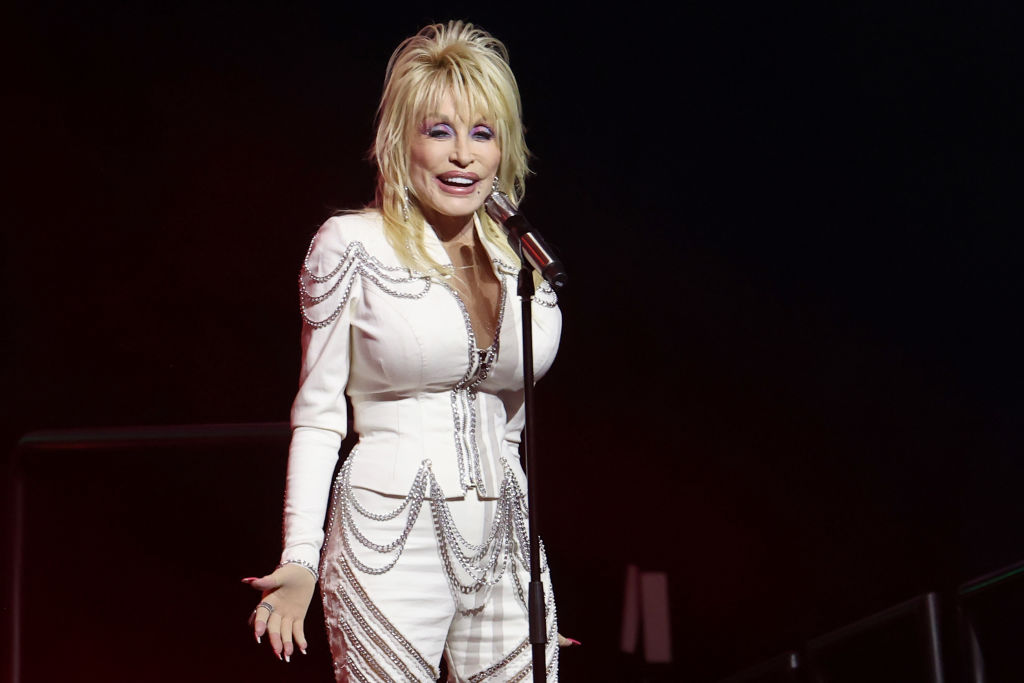
Dolly Parton knew a thing or two about working 9 to 5. Working out was another matter.
“If you tell me I’ve got to do an exercise routine…I dread it so bad,” she told Allure in 2021. Her workaround was “rejoicing exercises”: a freewheeling combination of gospel music, singing, stretching, shouting, and praising. “I do more ‘rejoicing’ than I do ‘working out,’” she said. She occasionally added a few floor exercises and squats—especially, as she put it, “diddly-squats.”
In doing so, she stumbled upon an important truth: Movement doesn’t have to feel like punishment to count.
“Dolly honored herself through movement,” says Michelle Segar, a lifestyle-change sustainability scientist at the University of Michigan and author of The Joy Choice: How to Finally Achieve Lasting Changes in Eating and Exercise. Parton tossed out the rules about what exercise was supposed to look like and designed something that reflected what she needed. “She knew this was for her,” Segar says. “And because it was for her, she had to design it for herself.”
That instinct—to stop chasing the supposedly perfect workout and start with movement that feels good, meaningful, or restorative—could make it easier to keep moving over time. Here’s what we all can learn from Parton’s views on exercise and movement.
“Rejoicing exercises” were quintessentially Dolly
Parton’s routine combined the forces that shaped so much of her life: faith, music, and creative self-expression. She began singing in her maternal grandfather Jake Owens’ church at age 6, and later described feeling divinely inspired as a songwriter, says Leigh H. Edwards, a professor of English at Florida State University and author of Dolly Parton, Gender, and Country Music.
“She often approached her expression on her own terms,” Edwards says, “just as she did when she created her own Dolly image and charted her own trailblazing path for her career.” Exercise was no exception.
Judy Eaton, a professor of psychology at Wilfrid Laurier University in Ontario, teaches positive psychology—the study of how people flourish, rather than only how they struggle. She calls Parton “the poster child for positive psychology.”
Many of Eaton’s students arrive knowing Parton only from Hannah Montana. Eaton introduces them to her as an example of gratitude, optimism, and authenticity; after Parton passed away, former students emailed to say they were grateful her class had helped them understand who she was as a person.
Stop looking for the “right” way to exercise
Many people have absorbed the idea that there’s one correct way to exercise. “We as a society have been taught you’re supposed to exercise in this way for this long, and your body has to feel this way,” Segar says. “You have to breathe hard.” If you can’t—or simply don’t like it—“you don’t do it.”
Public-health guidelines are useful for describing how much activity is associated with certain health benefits. But they don’t necessarily tell people how to fit movement into hectic, unpredictable lives. Fitness marketing has strengthened the idea that a workout only counts when it meets a particular standard, Segar says, creating an all-or-nothing trap: Do the “right” workout, or do nothing.
Parton built her routine around what she would actually do. Instead of deciding exercise wasn’t for her, she decided the gym-and-sweat version wasn’t for her. “We don’t start with the right way,” Segar says. “We start with our way.”
Dr. George Hennawi, physician executive director of geriatrics and senior services at MedStar Health, sees particular value in that approach as people age. When he asks his patients what it means to age successfully, their answers usually involve continuing to do what they already love—whether that’s traveling, gardening, singing, or spending time with their grandchildren.
“She flipped the equation,” Hennawi says of Parton. “What makes me happy? How do I define living successfully, living happily, aging well?” Her answer, as he sees it: “I don’t love exercise—let me bring exercise to the stuff that I love to do.”
That also means reconsidering why you’re moving. Goals like losing weight or preventing a disease years from now can be “abstract, future, often even shame-producing reasons for exercise,” Segar says. Parton’s reason was immediate and personal: She wanted to rejoice. “She’s using movement to fuel herself and live her life,” Segar says, “not to comply with doctor’s orders or to meet some standard of beauty.”
Ask how you want movement to make you feel
“Joyful movement” is a useful phrase, but Segar encourages people to expand their vocabulary. Not every worthwhile walk will make you giddy. It might instead make you feel grounded, energized, connected, or less stressed. It could help you shift out of work mode before walking through your front door—or give you five quiet minutes before the rest of the day begins.
Start by asking: “What do you want to feel while you’re moving?” Segar suggests. Then choose an activity likely to deliver that feeling.
The answer will look different for everyone. “For one person, it could be, ‘I’m going to close my door and put on headphones and dance for five minutes,’” Segar says. Someone else might grab a colleague and walk the stairs at lunch, or chase their kids around the backyard. A walk might serve an entirely different purpose: “I want to transition from my work brain to my family brain,” someone might decide, and head around the block before going home.
Think of movement as a menu rather than a prescription. “You choose what you want based on what you feel like,” Segar says—and that might change daily. “When we toss out the rules, physical movement can be the mechanism for achieving those things.”
Connecting movement to something personally meaningful can also make it more motivating. “Doing things because we have to is never the right way to get us to engage in them more,” Eaton says. “If tying it to something that’s really meaningful to you gets you doing it, then all the better.” For Parton, that meant singing gospel songs and praising—a routine she traced to her Pentecostal upbringing.
Positive emotions can create momentum, too. Eaton points to psychologist Barbara Fredrickson’s broaden-and-build theory: “If you can make yourself experience positive emotions, it makes you more willing to try new things,” she says. A favorite song might put you in the mood to start moving; movement can lift your mood further, making it easier to come back for more.
Rejoicing exercises could engage the mind along with the body, Hennawi adds. “When you’re dancing and singing, you’re stimulating your brain,” he says. “You’re stimulating your body, and you’re connecting all those dots.”
Create your own rejoicing exercises
There’s no official choreography—and prescribing one would miss the point. Choose music you love, if that helps. Dance, stretch, sway, walk, garden, or wave your arms around your living room. Try it for five minutes instead of waiting until you have time for 30. The goal is to finish feeling better than when you started.
Here’s one very Baltimore example from Hennawi: Suppose an older adult’s idea of joy is watching the Ravens and eating ice cream. Without missing a play, they could add arm raises or gentle knee and hip movements while watching on the couch. “Can you add a tiny little bit of exercise?” he asks. “We can do it incrementally, step by step.”
Eaton suspects Parton wouldn’t have issued instructions for copying her routine. The point isn’t to move exactly like Dolly. It’s to move more like yourself. “I think she’d just say, ‘Do what feels good to you,’” she says.
Wes Streeting deluged with homophobic hate mail since becoming defence secretary
Dolly Parton was even more generous than you knew

Dolly Parton was on her way to the studio to polish off “Blue Smoke” when the SUV she was riding in collided with a sedan in a Nashville intersection in 2013. At the hospital, she struck an unlikely friendship with her physician, Naji Abumrad, who, like Parton, was raised in a misty mountain village, hers in East Tennessee and his in Lebanon.
“It’s just like how you meet people in your life. You just click, you just feel like you know them,” Parton once told his son, Jad Abumrad, a public radio host who interviewed Parton for a nine-part series on her life. “There are just some things that, you know, you just can’t explain it. You just be it, you just live it, you just know it, and you just feel it.”
The whole world, it seems, felt it — that inexplicably swift, sweet connection — with Dolly Parton herself, a light-filled, lifelong philanthropist in the truest, most etymological sense of the word: a lover of humankind.
Some seven years after their friendship began, Abumrad told Parton that his fellow researchers at Vanderbilt University Medical Center were looking into a possible vaccine for Covid-19, which had just begun to rage across the country. Without missing a beat, Parton wrote a check for $1 million, an early contribution toward what would eventually become the Moderna vaccine against Covid-19.
Her donation “made the research towards the vaccine go 10 times faster than it would be without it,” Abumrad later told the Washington Post, calling his friend “the kindest and most philanthropic human being” he’d ever known.
Parton, who died at the age of 80 yesterday, was raised with her 11 siblings amid poverty in the Smoky Mountains of Eastern Tennessee. She often credited her upbringing as a muse for both her music and her generosity. Just as integral to her persona as her kitschy high-femme glamour, her poofy hair and rhinestones, was Parton’s capacity for helping others.
With an infectious sense of joy and optimism, she proved that helping others is not only easy to do, but can be a lot of fun.
Parton’s most famous foray into philanthropy by far was her Imagination Library, which she founded in 1995 in honor of her father, who never learned to read or write. Since then, the initiative has doled out a jaw-dropping over 300 million free children’s books to young kids around the country and the world.
“I just give from my heart,” she remarked while accepting the Carnegie Medal of Philanthropy, a kind of Nobel Prize for giving, in 2022. “I never know what I’m going to do or why I’m gonna do it. I just see a need, and if I can fill it, then I will.”
After wildfires tore through her native Tennessee in 2016, she raised millions of dollars that she used to give thousands of dollars in direct cash payments to hundreds of families who’d lost their homes. In recent years, she’s given millions of dollars to families affected by Hurricane Helene, to pediatric infectious-disease research, and to children’s charities across Tennessee. Back in 1990, Parton helped open a sanctuary for injured eagles in partnership with conservationists at Dollywood, the Eagle Mountain Sanctuary, which was forced to close after a brutal storm earlier this year. (You can donate to the American Eagle Foundation, which is rehoming Dollywood’s eagles here.)
Parton, who had a net worth of about $450 million according to Forbes, may have given away many other donations privately. In 2006, when asked about the full scope of her donations, she told my former colleagues at The Chronicle of Philanthropy with her characteristic sass that “it’s none of your business. I have often said that I count my blessings a whole lot more than I count my money,” she said, “the same is true for the contributions I make.”
The world may have gotten a peek into her private giving a few years ago, when some savvy social media users helped break the news that Parton had been casually paying for band uniforms at high schools across Tennessee, and had been quietly doing so for decades. She also received $100 million as a recipient of Jeff Bezos’s Courage and Civility Award to give away as she saw fit. It’s unclear where she chose to spend that money, but it could certainly buy a lot of school band uniforms, children’s books, or pediatric hospital wings.
There was always something otherworldly about Parton’s kindness. It was as if the nicest person you’ve ever met found herself in possession of hundreds of millions of dollars in cash. But as serious as her contributions were — to the music industry, and to millions of children around the country — she never took herself too seriously, and maybe that’s what made it feel so enthralling to watch.
“I’m kind of addicted to the feeling of giving,” she told People in 2021, “knowing that I’m doing something good for someone else.”
And that’s a lesson that all of us, legendary multimillionaire country superstar or not, can use to help carry her legacy forward.