RSS Feeds
Anthropic continues compute-gobbling streak in $45B deal with Nscale
Testimony wraps in Lindsay Clancy murder trial
Debutant Malard breaks Chelsea duck after Real Sociedad threaten WCL shock
Third qualifying round, first leg: Chelsea 5-2 Real Sociedad
Girma 29, Buurman 54, Malard 67 88, James 74; Marín 7, Marcos 59
Chelsea’s sluggish start in the first leg of their Champions League qualifier against Real Sociedad will have made far from satisfying viewing for their suspended head coach, Sonia Bompastor, but two goals from the new signing Melvine Malard contributed to a five-goal haul as the Blues came from behind to give themselves a three-goal cushion going into next week’s return fixture.
“It was a tough game, a tough first half because Real Sociedad is a really great team but I think we had a good reaction,” said Camille Abily, the assistant coach to Bompastor, who was serving a one match ban following her red card in Chelsea’s quarter-final second leg against Arsenal last season. “We were so much better in the second half, there was more space also. It’s a good win – a tough win but a good win.”
Continue reading...Sávio savours debut goal as Spurs coast to emphatic Carabao Cup win over Charlton
A new season at the snazziest modern stadium in England and something extremely welcome for Tottenham. A home win over domestic opposition. There were only four of them last time out; three in the Premier League with the final one – over Everton on the last day – helping them to avoid relegation. Had they lost that, this Carabao Cup fixture against Charlton would also have been played in the Championship.
Spurs needed this tonic for another reason – to begin the clean-up operation after Saturday’s awful 3-0 defeat at Brentford.
Continue reading...Infant in Pennsylvania is one of two people reported to die of measles this week
Australian officials ‘working around the clock’ to check welfare of tourists missing in Nepal
Dfat minister Matt Thistlethwaite says staff are liaising with Kathmandu to find 35 missing Australians, and plans to send emergency team to the region
Get our breaking news email, free app or daily news podcast
The Australian government is urgently seeking information on the welfare of at least 35 Australians missing in Nepal, after a catastrophic flash flood swept through the Nepal-Tibet border region.
Assistant minister for foreign affairs, Matt Thistlethwaite, said on Thursday evening that the Department of Foreign Affairs and Trade (Dfat) was “working around the clock” to verify the status of the missing Australians. The figure is based on reports from the Nepali Tourism Board and officials on the ground.
Continue reading...Alleged 9/11 mastermind's long-awaited trial scheduled for 2028
Dolly Parton, secular saint

This story appeared in Today, Explained, a daily newsletter that helps you understand the most compelling news and stories of the day. Subscribe here.
You’ve probably read a lot about Dolly Parton over the last 24 hours: her songwriting genius, her generosity, her incredible hair. The country icon and philanthropist died Tuesday at age 80 after having cancer. Her hits have been playing in my head ever since.
Parton’s influence extended far beyond her music, though. She was also a singular, centripetal force in American culture — a rare, unifying icon beloved on both the right and the left.
Her ability to project radical kindness without sounding naïve, and to address moral questions without looking partisan, inspired near-universal adoration at a time when Americans can agree on virtually nothing and no one else. And her strategic ambiguity around both her personal life and her political views allowed everyone from Christian conservatives to New York City gays to claim her as their personal representative.
Parton was, as Constance Grady wrote for Vox in 2021, “a secular American saint.” Now it’s hard to think of any living American who might be said to merit that praise. José Andrés? LeVar Burton? Tom Hanks, perhaps…? But they lack the glitter, the candor, the theme park — and the six decades of iconic music.
Go a little deeper
Core to Parton’s cultural canonization was her incredible generosity, which — on the wide spectrum of celebrity philanthropic giving — was both unusually down-to-earth and apparently, charmingly spontaneous.
“I just give from my heart,” Parton said in her 2022 acceptance speech for the Carnegie Medal of Philanthropy. “I never know what I’m going to do or why I’m gonna do it. I just see a need and if I can fill it, then I will.”
The needs she saw were many and varied: children’s books. High school band uniforms. Bald eagle conservation. Research into the novel coronavirus, which eventually yielded Moderna’s Covid-19 vaccine — a vaccine that Parton then vocally and memorably promoted.
I asked my colleague Sara Herschander, who has written a lot about philanthropy — including Parton’s! — to characterize how the later icon’s philosophy of giving jibes with norms in the space. As in so much of her life, Parton stands out.
“I think when many celebrities engage in giving, it can feel like a publicity stunt, or like someone swooping in,” Herschander said. “But the way Parton let her childhood and personal connections guide her giving gave hers a unique character and a sense of authenticity and optimism — even as it was also, in many cases, quite effective and ambitious.”
One link for later
➨ Play your heart out. Playful adults are less stressed out and more satisfied with their lives than their dour, self-serious neighbors. And yet, society tends to encourage playfulness almost exclusively among children. To tap into that state of levity and curiosity as an adult, experts suggest reflecting on the last time when you laughed so hard you cried, or when you truly lost yourself having fun. Then try dipping into that activity again, without any standards or expectations.
Before you go…
- Did you know…that almost half of US adults don’t drink alcohol? The current US drinking rate — just 54 percent — is the lowest it’s been since pollsters started tracking it after Prohibition.
- Today’s trivia: Singer Paul David Hewson is better known as what? (You can find this and other brain puzzles in Vox’s daily crossword. Look for the answer in tomorrow’s edition.)
- Yesterday’s trivia: Yesterday we asked you for Minnesota’s state bird. That would be the loon, recently immortalized as a symbol of the state’s anti-ICE resistance.
Vrancken's side come of age as Hearts bid goodnight Vienna
Dolly Parton theme park president says "we have a lot of plans in place that will honor her legacy"
Dolly Parton’s Other Legacy: A Fortune Given Away, Dollar by Dollar
Moment Peter Kay gatecrashes BBC weather report
Videos show devastating mudslides in Nepal after flash floods
Drugstores say Medicare's $50 obesity drug program is catching on

The Bridge program, which began July 1, makes some Medicare beneficiaries eligible for obesity drugs for $50 a month. CVS and Walgreens say they've each already filled 100,000 such prescriptions.
(Image credit: Scott Olson)

U.S. declares drought disaster for parts of Puerto Rico after driest month on record for San Juan
Dolly Parton's Life, in Pictures



















3 Secret Service officials put on leave amid investigation into "potential misconduct"
Базовые модели надежности отказоустойчивого кластера

Ранее в "Надёжность, устойчивость, доступность" провели введение в терминологию надежности. В этой статье рассмотрим типовые модели отказоустойчивого кластера.
К сожалению, в текущих публикациях ИТ-изданий с заголовками «надежность, отказоустойчивость, доступность» и т.п. не встречал ни моделей надежности, ни расчетов этих самых (показателей) «надежность, отказоустойчивость, доступность», а только качественные критерии: «более надежный», «очень отказоустойчивый» и т.п. Инженерная надёжность (например, «Надежность в технике») из научной (инженерной) дисциплины в публикациях ИТ-журналов (хабр и т.п.) превратилась в некую менеджерскую дисциплину пусть и с техническими подробностями \ описаниями, например, механизмов переключения резерва, но без математического аппарата (теории вероятности \ теории надежности). С целью популяризации расчетов надежности отказоустойчивых резервируемых структур вычислительной и сетевой инфраструктур ниже предлагается несколько базовых подходов \ моделей \ надёжностных схем.
Читать далееWe tested over a dozen meal delivery services — these are the ones we recommend
Woman who died in fire with niece, 7, was 'beautiful soul', mother tells BBC
Trump flexes as the Freedom Caucus fades: From the Politics Desk
Portrait of Ann Widdecombe put up in Parliament for MPs' return
Moment Peter Kay interrupts live weather forecast
Judge Allows Postal Service Effort to Restrict Mail Voting, for Now
Rescue efforts underway in Nepal after devastating flash floods, mudslide
Таймер на 5 минут вместо 10 секунд: как сверка с руководством по эксплуатации нашла отказавшую защиту в чужом коде
Стенд работает, а исходников программы ПЛК нет — ни архива, ни резервной копии, ни у эксплуатанта. Есть 4 900 страниц бумаги: распечатка проекта, экспорт экранов, руководство по эксплуатации, сканы схем. Задача — восстановить поведение один в один. Эталоном я сделал руководство, а не распечатку кода, и на этом нашёлся таймер, который держал максимальный ток 5 минут вместо разрешённых 10 секунд. Ниже — как читаются пять тысяч страниц, как выглядит data-driven программа ПЛК (с кусками настоящих файлов) и все 7 расхождений с честной пометкой, чем каждое найдено.
Читать далееDemocrats Just Might Win the Senate
Stourbridge fires that razed 19 homes were accidental, say investigators
Canal killer who dismembered victims dies in jail
Sal Veder, Pulitzer Prize-winning photographer who shot iconic photo of soldier returning from Vietnam, dies at age 99
The Meta Settlement Will Put Limits on Instagram for Teens. They’re Still Vulnerable
Was a police search for a murder weapon cut short by a guard dog's growl?
Как я вскрыл протокол робота Eilik и научил его танцевать под Bad Apple

Недавно мне подарили робота Eilik от energize lab и я был весьма разочарован тем что от него не оказалось публичной sdk или хоть какой-нибудь возможности писать под него кастомные скрипты. И от сюда начинается мое приключение с реверс инжинирингом.
Читать далееJudge denies Minnesota's request to halt release of ICE officer Christian Castro
Pauline Hanson adds to confusion over One Nation’s immigration policy – as it happened
This blog is now closed
Get our breaking news email, free app or daily news podcast
The prime minister, Anthony Albanese, says Dfat officials are ready to provide consular assistance to Australians in Nepal, after the devastating flooding in the country.
A local tourism official said they believed 34 Australians were missing in the area, among hundreds of foreign nationals. Australian officials were not confirming numbers at this stage, and were working to check on the welfare of people they know were in the affected region.
Australians in the affected area should follow the advice of local authorities. We are aware of a number of Australians in the area and Australian officials are urgently working to confirm their welfare. We are liaising with local authorities as well as tour operators.
We stand ready to provide consular assistance.
The images are very disturbing indeed. We do know that there are Australians in the area. We don’t know exactly how many.
Continue reading...Bill Gates issues stark warning about AI's impact on American jobs
One in two Britons back anticipated Israeli settlement trade ban
My Question for the Formerly Woke
Ten-man Hearts stun Rapid Vienna in shootout to reach Conference League
Playoff second leg: Rapid 2-2 Hearts (aet, 3-4 on pens)
Kara 34, Cvetkovic 119; Kabore 79, Miller 100
Beau Reus made two penalty saves as heroic Hearts overcame Tomas Magnusson’s red card to pull off a stunning shootout victory away to Rapid Vienna, and book themselves a return to the Conference League’s main phase.
Following a 2-2 draw in the first leg at Tynecastle, the Jambos’ European journey looked to be fizzling out when they were reduced to 10 men in the 75th minute of the playoff round second leg, while already trailing to Ercan Kara’s first-half goal.
Continue reading...LIV Golf to lay off majority of staff amid ‘compressed timeline’ for new investors
Saudi Arabia’s PIF have ended financial support
Chief executive working on deal but needs players’ buy-in
LIV Golf informed the majority of its workforce on Wednesday that they will be laid off in the first week of September.
The news comes three days after the 2026 season concluded in Indianapolis and four months after Saudi Arabia’s Public Investment Fund announced it was ending its financial support of the league after spending more than $5bn over the past five years.
Continue reading...Derbyshire police investigating alleged assault in connection with Carse arrest
Durham bowler dropped from England squad
Unclear whether Carse involved in alleged assault
Derbyshire police are investigating an alleged assault in connection with the arrest of Brydon Carse last weekend, which led to the Durham fast bowler being dropped from the England squad for the second Test against Pakistan.
Carse was filmed by a member of the public in handcuffs outside Molly Malone’s Irish Tavern in Derby in the early hours of Sunday morning with several other Durham players, including the former England captain Ben Stokes, also present.
Continue reading...US Capitol police arrest California man with guillotine in truckbed
Philan-Tam-Duy Le, 35, was parked illegally next to supreme court building after driving from home state
The US Capitol police arrested a California man on Tuesday afternoon after observing a wooden guillotine in the bed of a pickup truck.
Federal authorities seized the antiquated decapitation device, which historically was used for executions in France and other European countries. The truck had been parked illegally next to the supreme court building, Capitol police said in a press release, which is located near the US Capitol and the Library of Congress.
Continue reading...Canal killer who dismembered victims dies in jail
E. coli, Salmonella, Cyclospora: Is the U.S. Seeing a Surge in Foodborne Illnesses?
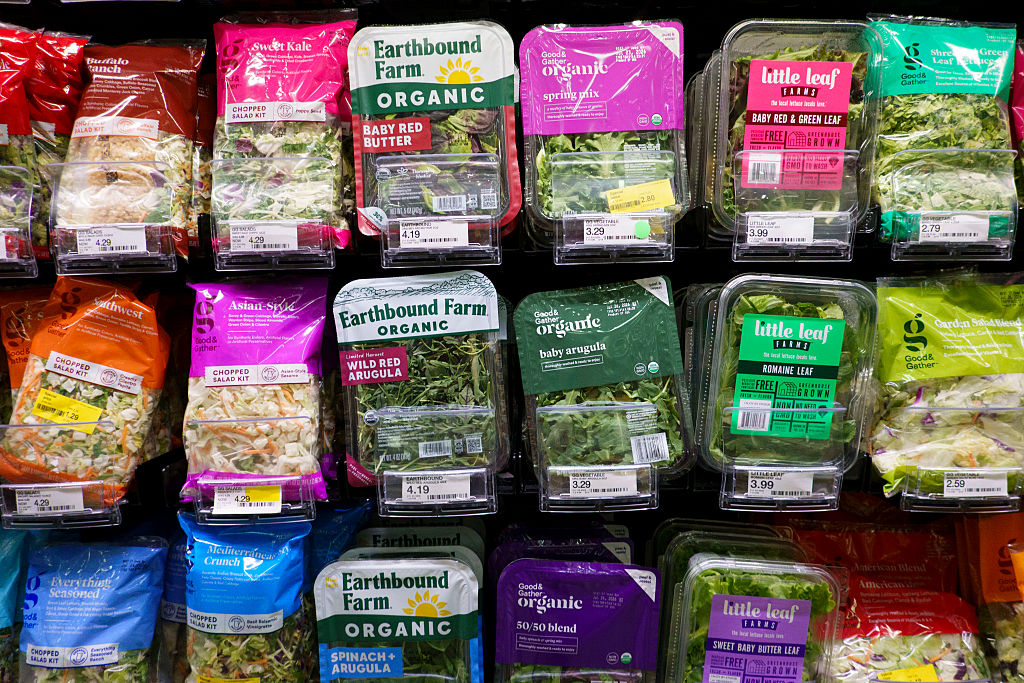
This summer, it’s been hard for consumers to know what to put in their grocery cart. Recalls have affected hundreds of products, including lettuce, which was linked to a Cyclospora outbreak; eggs and jalapenos that were connected with salmonella; and blueberries that were potentially contaminated with E. coli.
These incidents have left shoppers across the United States wondering whether this summer has been a particularly bad one for foodborne illnesses.
Here’s what to know—and why consumers may be perceiving a greater number of outbreaks than usual, despite what the data shows.
Read More: What Food Safety Experts Are Eating During the Cyclospora Outbreak
The number of food recalls are about average, but a few have been unusually severe
According to federal data, the number of food recalls regulated by the U.S. Food and Drug Administration (FDA) is relatively on par with an average year. So far, there have been 483 recalls in this fiscal year (Oct. 1, 2025 through Sept. 30, 2026), with a projected total of 551 by the end of October. In the past decade, the U.S. has seen a range of 400-800 annual recalls.
But what stands out in 2026 is the severity of some of the outbreaks caused by contaminated food this year.
“I don't know that I would necessarily say there are more outbreaks,” says Janet Hamilton, the executive director of the Council of State and Territorial Epidemiologists. “However, what I would say is the scale and magnitude of outbreaks that we're facing right now are unprecedented. It's like we're being eclipsed by the scale and magnitude of these outbreaks with the staffing levels that we have.”
The summer’s Cyclospora outbreak linked to iceberg lettuce alone sickened more than 10,000 people, caused over 400 hospitalizations, and led to at least two deaths, according to the U.S. Centers for Disease Control and Prevention (CDC).
Epidemiologists believe it could be among the largest documented foodborne illness events in U.S. history.
"We've never seen anything like that before,” Hamilton says.
The volume of food affected is higher than average
While the total number of recalls has been about average, USDA-regulated recalls affected more than 37 million pounds of food during the first half of 2026—the highest it has been in a decade.
At the same time, epidemiologist and former CDC adviser Katelyn Jetelina says that it’s very hard to tell just how bad this summer’s outbreaks have been—and our lack of federal data does not help.
“Our data is just not great in the United States,” she tells TIME. “We’re patching things together to try to figure out what is reality versus concern and public perception, and it's hard to know where the line is.”
“That’s what's most frustrating for me as an epidemiologist as well as a mom,” she adds.
There are seasonal factors, and surveillance has improved
It’s normal for foodborne illnesses to peak in the summer, since warmer temperatures help bacteria and other organisms multiply. That is why there have been more outbreak incidents in recent months. But this is a consistent seasonal threat, epidemiologists say, and not specific to 2026.
There has also been an increase in media attention around food safety, which can make it seem like the magnitude of any given event is higher than it actually is. This increased coverage is partially due to improved surveillance tools. Laboratories are better equipped than ever to detect foodborne illnesses, track how bacteria multiply, and find links between patients.
Because we have more information than ever on some of these bacteria, and we are able to process data faster than ever before, this means that the information can be quickly and easily shared with the population—which potentially makes it feel like the country is experiencing more outbreaks, when consumers are really just seeing more updates.
Federal staffing shortages may be weakening the safety net
Experts say that while we are able to more quickly detect and identify food safety issues in past decades, health departments at the federal and state levels have experienced significant decreases in funding and staffing—potentially weakening food safety oversight. It can be hard to tell how this is impacting outbreaks.
One potential outcome is having less ability to monitor and control an existing outbreak, Hamilton says.
“Health departments are mounting responses quickly, but when the outbreaks need additional sustained surge support, the system is quickly overwhelmed,” she says. “That leads to situations like what we have seen with Cyclospora. This would have been a complicated outbreak to begin with, and then when you don't have the staffing to keep pace with the level of detailed interviews that you need, the ability to rapidly control the outbreak diminishes.”
Hamilton and her colleagues at the Council of State and Territorial Epidemiologists conduct regular surveys to track staffing levels in state and territorial health departments, and their recent reports found that one-third of public health officials in state health departments have left their positions since the Trump Administration took control in 2025. On the federal level, some of the staffing cuts were led by the Department of Government Efficiency.
Federal cuts to the CDC and FDA also affect state and local health departments, since federal funds provide more than half of their total budgets, according to KFF.
Hamilton says that public health officials are like a “protective shield” around the complicated food systems in our country. Workers look at data “carefully and thoughtfully,” interview people impacted by foodborne illness, and “tease apart” what foods might be contaminated.
This work is harder with fewer staff members who are stretched increasingly thin. Even advanced tracking and surveillance technology may not be able to counter the loss of knowledgeable human engagement amid these outbreaks.
“Our food supply chains are complicated, and I don't know that people really appreciate the detailed work and the complexity that goes behind understanding where foods and ingredients come from and exactly how people are exposed,” she adds.
Jetelina adds that part of the role of public health officials is distinguishing “correlation from causation”—a consideration that applies directly to questions about whether and how staffing and funding cuts have affected responses to illness outbreaks this year. Reduced oversight may have allowed some contamination events to go undetected or unaddressed, while staffing shortages may have delayed the collection and dissemination of information that could have helped officials contain outbreaks and reduce the risk to consumers. But without further investigation, it is difficult to determine exactly how the cuts affected the number of recalls, the speed of outbreak responses, or other key measures in 2026.
Health and Human Services Secretary Robert F. Kennedy Jr. said that cuts to the CDC and FDA have not hampered the investigation of Cyclospora.
“Those criticisms are invalid,” Kennedy said during a press briefing on July 21. “We had no cuts in the surveillance program. We did cuts in the FoodNet program, but they were for redundant surveillance.”
FoodNet, short for the Foodborne Diseases Active Surveillance Network, was no longer required to actively report on six of eight pathogens, including Cyclospora, as of 2025. The CDC characterized the change in a statement to the Associated Press in August 2025 as a way to “prioritize core activities” and “steward resources effectively.”
TIME has reached out to the CDC and FDA for comment.
When it comes to consumer safety, it’s important to note that the vast majority of food moving through the system is free from contamination. Experts say consumers can stay safe from outbreaks by keeping up with food recalls, washing produce well, refrigerating produce properly, and monitoring symptoms linked to foodborne illnesses.
The South Loved Dolly Parton. It Saw the Best of Itself in Her.
Maryland Judge Blocks Democratic Redistricting Measure
Как я написал свой мигратор для ClickHouse — и почему он до сих пор жив
В 2020-м мне понадобилось версионировать схему ClickHouse в CI/CD, а готового инструмента под Go с поддержкой ClickHouse не нашлось ни одного. Пришлось написать свой — db-migrator. Со временем он оброс поддержкой Postgres, MySQL, а недавно и Iceberg, и разошёлся среди коллег по отрасли. В статье расскажу, чем миграции в ClickHouse отличаются от привычного Postgres/MySQL и какие инженерные развилки из-за этого пришлось пройти: ON CLUSTER для обычного реплицированного кластера, режим Replicated-базы, аккуратная таблица истории миграций на шардированном кластере и маскирование секретов в логах.
Инструмент: https://github.com/raoptimus/db-migrator.go
Читать далееWaffle House Teleporter Gregg Phillips Is Still on the Trump Administration’s Payroll
We Asked Experts For the Easiest Ways to Shrink Your Home Water Usage

For many Americans, accessing fresh, clean water is as simple as turning a tap.
But amid a growing water crisis in the West, and periodic droughts in other parts of the country, constant water access is not a given.
“it's a resource that, in this case, can quite literally run dry,” says John Atkinson, an associate professor of environmental engineering at the University of Buffalo.
Earlier this month, federal officials announced sharp cuts in how much water Arizona, California and Nevada would be allowed to take from the Colorado River over the next two years as the water levels for the nation's two largest reservoirs reach record lows. Under the Bureau of Reclamation’s new plan, the three states will have to collectively reduce water use by 1.25 million acre-feet annually over the next two years—or potentially face larger cuts.
The average American uses roughly 82 gallons of water a day at home, according to the EPA. Much of that water use is the result of habits that most people rarely give a second thought— like leaving the sink running while washing dishes or setting up an automatic sprinkler system to maintain a green yard.
Experts in water sustainability say that there are small steps they take at home to help them save water.
Qizhong George Guo, a professor of civil and environmental engineering at Rutgers University, notes that there are plenty of small habits that can add up to significant drops in water usage. Only run the dishwasher or washing machine when you have full ones. If you’re washing dishes by hand, be mindful to not leave the tap running when it's not in use. Soak pans before cleaning them, and turn off the faucet when scrubbing.
Many older appliances use more water. Switching to newer models, which tend to be more energy and water-efficient, could yield savings in the long run. “The fixtures have become much more efficient in the last 20 years or so—from dishwashers to showerheads, to faucets,” says Guo.
Switching to low-flow faucets, which use less water than older models, are “a low-hanging fruit,” says Helen Dahlke, professor of integrated hydrologic sciences at the University of California, Davis. “You can save several hundreds of gallons of water per year, and that will also show up on your water bill as a benefit.” When looking for a newer model, keep an eye out for products which have a WaterSense label, which meet EPA standards and can save up to 700 gallons per year.
Another tip: Check around your home for leaks, which can add up to a lot of wasted water over time.
“People would be surprised by how much water gets wasted due to leaks,” says Atkinson.
According to the EPA, household leaks waste more than 1 trillion gallons annually nationwide. That's equal to the annual household water use of more than 11 million homes.
Where households use the most water
One of the biggest ways to save water is outside the home. The average homeowner uses 30% to 70% of their water outdoors—watering lawns, flowers and vegetables, the EPA estimates.
“It’s the staple picture of the American home—a nice house and a green lawn in front of it,” says Dahlke. “But in regions where water is scarce, you should really think, is it worth it spending several hundreds of dollars a year and several hundreds of gallons a year just keeping green grass that has no use?”
Nationwide, landscape irrigation is estimated to account for nearly one-third of all residential water use, totaling nearly 9 billion gallons per day. Dahlke bucked that trend by embracing xeriscaping, or drought-tolerant landscaping. Instead of a traditional green yard, she's planted native plants and flowers that attract local pollinators. She’s noticed bees and hummingbirds have begun stopping by.
Another added bonus? “I get a lot of compliments from the neighbors when they walk by,” she says.