RSS Feeds
Here's how much interest a $100,000 2-year CD account will earn savers now
'We keep making stupid mistakes' - England Test captain Joe Root
Manchester United confirm Carlos Baleba signing as midfield spend nears £150m
Cameroon international joins from Brighton
He says United are the ‘club of my dreams’
Manchester United have completed the signing of the Brighton midfielder Carlos Baleba in a deal worth up to £70m. The Cameroon international is the third midfielder to join this summer, after Andrey Santos and Youri Tielemans.
Baleba has signed a five-year contract with the option to extend for 12 months after United agreed a £65m deal plus £5m in add-ons and a sell-on with Brighton. It takes the club’s spend on midfielders to about £148m.
Continue reading...People’s bodies are changing in the age of Ozempic. How are we meant to talk about it?
Discussing people’s bodies can be fraught. We asked eating disorder experts how to do so – or not – responsibly
In the age of Ozempic and people being open about plastic surgery, discussion about people’s bodies is rife. At the same time, nobody seems quite sure how to talk about them, as shown by recent coverage of celebrities like Ariana Grande.
It is a fraught topic. We asked eating disorder experts for guidelines to follow when talking about other people’s bodies, and how to do so without doing harm.
Continue reading...US consumer confidence falls in August as gas prices remain above $4 per gallon
Confidence index drops to 89.4 in August from 90.2 in July amid frustration after five years of elevated inflation
Americans’ confidence in the economy declined again this month as the ongoing conflict in Iran continued to push US gasoline prices above $4 per gallon.
The Conference Board said on Tuesday that its consumer confidence index dipped to 89.4 in August from 90.2 in July. That was the lowest level in seven months but was essentially within the same lukewarm range it has been in since the beginning of the year. In late 2024 and early 2025, readings were consistently above 100.
Continue reading...London bus drivers resume strike over heatwave working amid fears over air con deal
Drivers concerned that bus operator’s offer to retrofit cabs on 730 buses will not be complete by next summer
London bus drivers have resumed strike action over having to work in high temperatures, amid fears that proposed improvements to air conditioning will not be complete by next summer.
About 1,500 members of the Unite union working across north London and Essex are taking part in the four-day strike from Tuesday to Friday, after industrial action earlier this month. Further stoppages are planned for the coming weeks.
Continue reading...CIA director John Ratcliffe reportedly on Moscow visit
Unannounced trip reported by US media is said to be Ratcliffe’s first known visit to Russia as CIA chief
The CIA director, John Ratcliffe, has made an unannounced visit to Moscow, US media reported, after flight data showed an American military aircraft flew to the Russian capital, where a US diplomatic motorcade was later spotted.
CBS News quoted sources familiar with the situation as confirming Ratcliffe’s trip, saying it was his first known visit to Russia as CIA chief. Axios separately confirmed the visit, quoting a US official.
Continue reading...ICE arrests jumped to nearly 50,000 in July, the highest monthly total of Trump’s second term
Rare criminal charges against Air Force officer who criticized Trump
China unlikely to stop buying Iranian oil in the face of U.S. threats, Biden-era economist says
Swedish military seeks to take over Russian-owned estate near naval base
Что такое нарратив категории и зачем IT-стартапу занимать нишу раньше конкурентов

Есть у IT-стартапов один странный момент. Команда может два года строить сильный продукт, собирать сложную архитектуру, искать первых пользователей и переживать бессонные ночи. А потом выйти на рынок и сказать: «Мы делаем AI-native платформу для интеллектуальной оркестрации данных». И ждать, что все сразу поймут, о чём речь. Не поймут, так как не ищут такой продукт, не обсуждают его с коллегами и не закладывают под него отдельный бюджет. У продукта может быть ценность, но для рынка она пока выглядит как набор функций. Тут и появляется нарратив категории.
Читать далееMisty Copeland talks about her new book and why she loves retirement
Countries Need to Look Beyond GDP
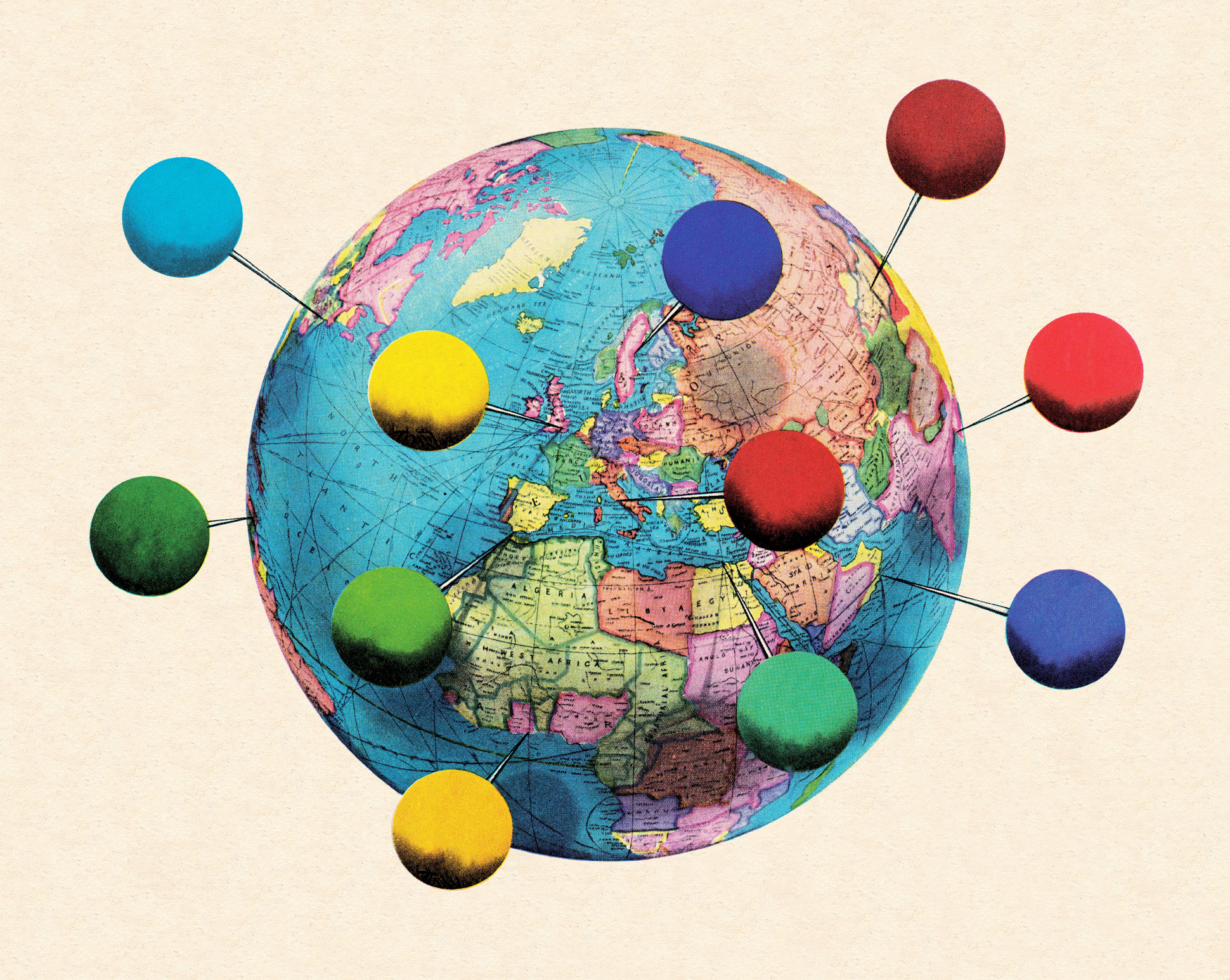
When governments ask people what truly matters to them, they cite things like being healthy, having a secure and affordable home, enough income to live with dignity, and time for the people they love. As the former leaders of Iceland and Scotland, we have heard concerns first-hand.
But these people-first priorities are not abstract ambitions. They are the conditions for a decent life, and ensuring they are met should be the first priority of any government.
And yet none of this is captured in the number that most economists, the media, and indeed, governments use to measure a country’s success: Gross Domestic Product (GDP), commonly referred to as economic “growth.”
To be sure, GDP has its uses as a measure of many of the goods and services a country exchanges and produces. But today, it is typically used in a way its architects never intended. For instance, a country's GDP rises when a forest is felled and when an oil spill is cleaned up. It rises with financial speculation. But it does not rise when a parent cares for a child or a child for an elderly parent, when the forest is left standing, when a woman can walk home at night without fear, when voters turn out because they trust their institutions, or when a patient sees a doctor in days rather than months.
A new UN Framework, Beyond GDP, promises to change this by offering a dashboard of more meaningful indicators to complement GDP. Governments must now put this framework into action. Not simply by publishing new statistics, but by using them to set priorities, shape budgets, assess policies and be held to account publicly on whether people’s lives are genuinely improving.
Eight years ago, we set out to put the wellbeing of our people ahead of the narrow pursuit of economic growth. Together with New Zealand's Jacinda Ardern, we founded the Wellbeing Economy Governments partnership, later joined by Wales and Finland, with Canada actively participating. We shared practical lessons about developing national wellbeing indicators, embedding them in government decision-making and ensuring that economic policy considers social and environmental outcomes alongside financial ones.
In Iceland, we introduced 39 wellbeing indicators, built on what people themselves told us they valued, and used them to inform policy. GDP became one measure among many, alongside life expectancy, unmet healthcare needs, material deprivation and work-life balance. Parental leave shows what this means in practice. We extended leave to 12 months, with six months reserved for each parent and six weeks transferable. In doing so, we recognized that care, family life, gender equality, and the economy are inseparable, and that fathers' time with their children is worth protecting. The reform strengthened families and shifted expectations about work and who does the caring.
In Scotland, a Wellbeing Economy Monitor showed us how the economy was really performing for people, alongside a National Performance Framework of outcomes written into law and aligned with the Sustainable Development Goals. Policies followed: the doubling of early years education, a Baby Box to equalize children’s starts in life, the Scottish Child Payment to reduce child poverty directly, and Community Wealth Building to ensure public spending, land and assets create lasting value locally—an approach Scotland has since made the subject of the first national legislation of its kind anywhere in the world.
While these efforts are still evolving and not perfect, they represent an important shift in how governments understand prosperity. Changes in economic systems take time, but progress begins by changing—and being more explicit about—what we value. Our experience taught us that measuring what matters is only the beginning: wellbeing indicators must also shape budgets, policy decisions and how governments are held accountable. Legal systems need to support this too.
We were, and we still are, far from alone in this endeavor. Bhutan, for example, has been making the argument for more than 50 years. Its Gross National Happiness framework focuses on nine different dimensions of well-being such as living standards, health, education, and ecological diversity. Last year, Malaysia introduced a bold new roadmap that embeds public health, environmental sustainability and economic resilience. The National Planetary Health Action Plan moves away from a narrow focus on economic growth to prioritize the health of people and planet, replacing the short-term idea of return on investment with a “return on values.”
It is worth noting that wellbeing economy approaches often mirror the ways many Indigenous Communities have been providing for collective needs for generations. For example, Buen Vivir—living well together—comes from the Quechua peoples of the Andes, and has been written into the constitutions of Ecuador and Bolivia since 2008. And Aotearoa New Zealand's wellbeing budget draws on Māori understandings of intergenerational wellbeing.
These ideas are finally moving from the margins into mainstream economic policy. A landmark UN report, written by a high-level expert group appointed by the UN Secretary-General after the Pact for the Future, proposes a dashboard of 31 indicators to sit alongside GDP, with recommendations for governments, business, academia, and civil society on how to bring this agenda to life.
Earlier this year, a roadmap for eradicating poverty without relying on endless growth was launched in Geneva, developed with more than four hundred contributors from governments, trade unions, social movements, UN agencies and universities. It sets out measures that already work in different places, from social protection and care; to tax, universal basic services, and the rights of nature; to the governance of trade, debt, and finance. That work and the work on measurement are currently proceeding separately. Bringing them together would be a valuable contribution of the intergovernmental process now underway.
The greatest risk now is a process in which governments agree in principle and move slowly in practice. New indicators alone will not be enough. The pursuit of growth at any cost is embedded far beyond the statistics: in how credit agencies rate a country's debt, how finance ministries deem a budget responsible, and in the rarely-questioned assumption that more is always better.
What is needed is not further consensus but more early adopters: countries willing to pilot implementation and share honestly what they learn, supported by civil society, business and the UN itself.
The 2015 Sustainable Development Goals ask every country to sustain economic growth per person. As governments begin to design what will follow them, we have a chance to change the instruction and create a different approach.
After all, the responsibility of every leader is to ensure the wellbeing and safety of his or her people, and to do that, we need to go beyond GDP and think about what truly matters
Man Utd's midfield spending is done - now for a left-back?
Trump Lawyers Warn That Kennedy Center Might Need Demolition if Not Fixed
Judge rejects Ghislaine Maxwell’s sex-trafficking appeal, calling claims ‘demonstrably meritless’
Maxwell sought to vacate Epstein-related conviction, alleging hidden trial evidence and juror’s abuse history
A federal judge has rejected Ghislaine Maxwell’s legal effort to throw out her 2021 conviction on sex-trafficking charges and 20-year prison sentence, calling her claims “demonstrably meritless, and generally based on speculation, distortions, and/or outright falsehoods”.
In a 67-page decision filed on Tuesday, the US district judge Paul Engelmayer for New York’s southern district denied the former British socialite’s petition for relief, finding that Maxwell had failed to make a substantial showing that her constitutional rights were denied when she was convicted for her role in crimes linked to the late sex trafficker Jeffrey Epstein.
Continue reading...Is the Supreme Court’s Shadow Docket Changing?
Trump Wants to Restrict Mail-In Voting. See Which States Rely on It The Most.
How Trump's trade war with Canada could rattle states with key Senate races
Judge rejects Ghislaine Maxwell’s sex-trafficking appeal, calling claims ‘demonstrably meritless’
Maxwell sought to vacate Epstein-related conviction, alleging hidden trial evidence and juror’s abuse history
A federal judge has rejected Ghislaine Maxwell’s legal effort to throw out her 2021 conviction on sex-trafficking charges and 20-year prison sentence, calling her claims “demonstrably meritless, and generally based on speculation, distortions, and/or outright falsehoods”.
In a 67-page decision filed on Tuesday, US district judge Paul Engelmayer for New York’s southern district denied the former British socialite’s petition for relief, finding that Maxwell had failed to make a substantial showing that her constitutional rights were denied when she was convicted for her role in crimes linked to late sex trafficker Jeffrey Epstein.
Continue reading...VW workers boo boss as he urges them to ‘pull together’ amid job cuts
Oliver Blume faces workforce at German HQ as carmaker struggles against Chinese competition and US tariffs
The chief executive of Volkswagen has faced boos and whistles of protest at the company’s headquarters after telling thousands of workers that a comprehensive reorganisation, which could include job losses and factory closures, is vital for its future.
As Oliver Blume urged more than 10,000 workers on Tuesday to “pull together”, saying drastic restructuring measures at the struggling manufacturer were essential, they held up banners and shouted slogans, including: “Our jobs are not your balance sheet adjustments”.
Continue reading...Baleba completes £70m Man Utd move from Brighton
Is China Replacing Workers With Robots?
Canada announces new tariffs on the U.S. as trade tensions rise
Nayeema Raza on why she started her podcast, "Smart Girl Dumb Questions"
Suspect in court charged with murder after death of man found unresponsive in street
That fake Grand Theft Auto VI demo is actually just malware
Ukrainian star leaves LSU women’s basketball team after signing of Russian recruit
Center Kate Koval departs after one season with Tigers
Anna Minaeva of Russia joined team earlier this month
Kim Mulkey hoped two could be ‘ambassadors’ for peace
Ukrainian center Kate Koval is leaving LSU less than two weeks after the Tigers brought in a player from Russia.
LSU coach Kim Mulkey said Monday night that Koval was leaving for “personal reasons”, adding that the program will “respect her privacy on her decision”.
Continue reading...Two Unvaccinated People Died From Measles in Pennsylvania, Officials Say
Canada's trade minister explains why talks with the U.S. failed
Canadian finance minister announces retaliatory tariffs against U.S.
Boy, 3, injured in crocodile attack returns home from hospital
Trump may hope an 'economic onslaught' will pressure Iran - its leaders are betting otherwise
CIA chief travels to Moscow for unannounced talks, US media reports
Who does Iran trade with and what could Trump's 'economic D-Day' mean?
Vuelta a España: Tadej Pogacar punishes peloton with mighty solo win on stage four
Slovenian powers to victory by more than three minutes
Leader breaks rivals on brutal climb at halfway point
Tadej Pogacar arrived in red, lit the fuse on the climbs and turned stage four of the Vuelta a España into a private exhibition on Tuesday, powering away with almost 50km remaining to win alone in Andorra la Vella.
The Slovenian, bidding to complete his Grand Tour collection by claiming the Vuelta for the first time, attacked on the road to the second climb and quickly reduced a high-altitude battle into a one-man procession.
Continue reading...CIA Director John Ratcliffe Makes Surprise Trip to Moscow
Canada announces tariffs of up to 50% on $20 billion in U.S. goods
Канада объявила о введении ответных пошлин на товары из США
French tourist dies in Death Valley after car gets stuck in mud
CIA chief travels to Moscow for unannounced talks, US media reports
Swedish military seeks to take over Russian-owned estate near naval base
What Hanging from a Bar for 30 Seconds Can Do for Your Body
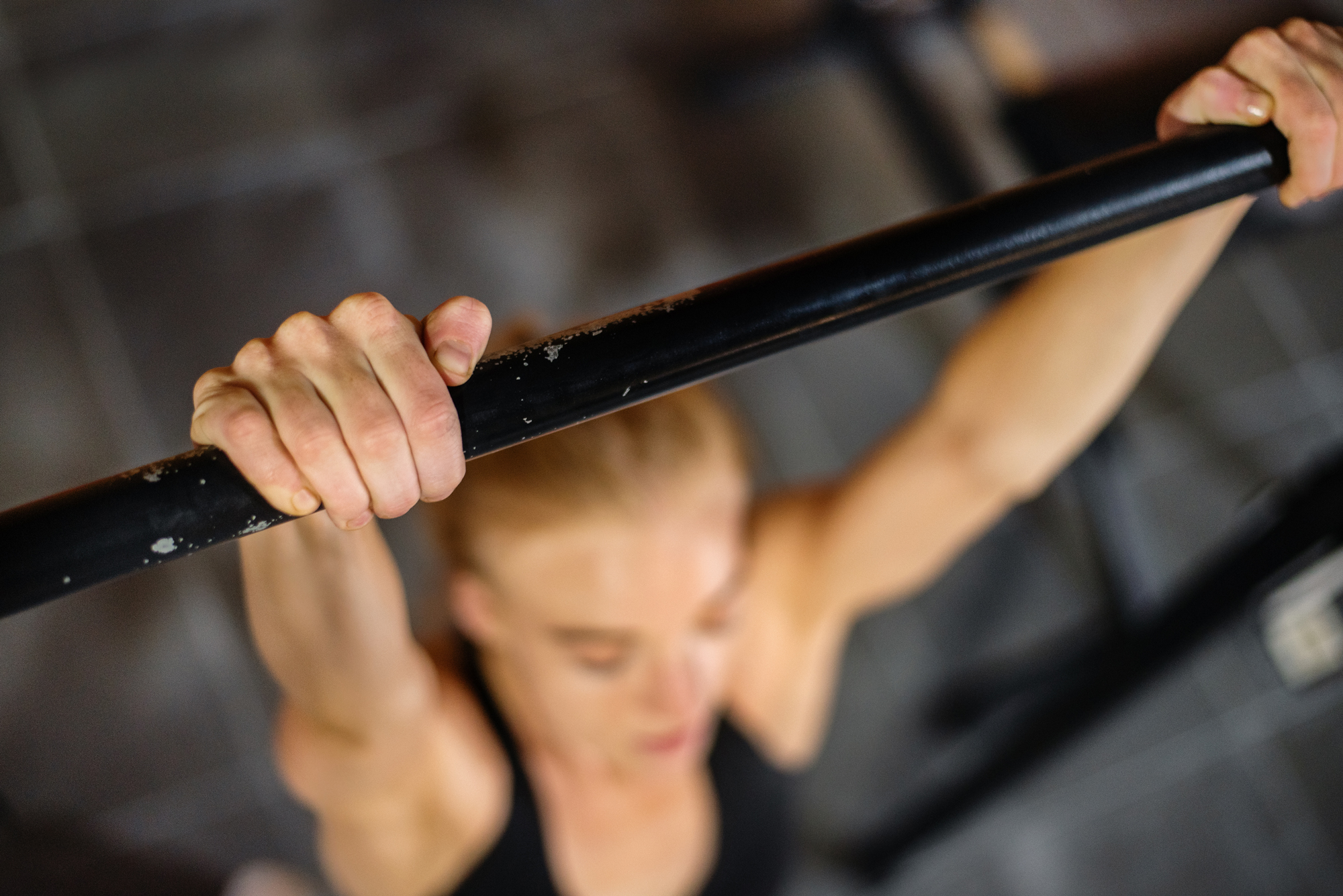
Most people leave the monkey bars behind with childhood. Yet hanging from a bar—right-side up, don’t worry—may be one youthful habit worth picking back up, especially if you spend your days hunched over your desk and phone. (Guilty.)
“We look at kids on a playground—what are they doing?” says Australian physiotherapist Daniel Vadnal, owner of FitnessFAQs, who posts instructive videos on Instagram and YouTube. “They don’t need to be told to hang. They just intuitively do it.”
A few years ago, Vadnal persuaded his grandmother, now 93, to try a supported hang. That means gripping a bar overhead with straight arms but keeping your feet planted on the floor, rather than dangling your entire body weight. She was skeptical: She hadn’t even raised her arms fully overhead since she was a kid. But after just 30 seconds, she felt taller and looser—and found it easier to reach her kitchen cabinets.
Here’s what hanging can do for your body, how to keep your feet planted while you build strength, and why just 30 seconds is long enough.
It gives your upper body a stretch
At its simplest, hanging means gripping a secure overhead pull-up bar—the kind that can be installed in a doorway—with straight arms while supporting some or all of your body weight. You remain right-side up: Your hands are above your head, and your feet point toward the floor or remain planted on it. Hanging upside down, known as inversion, is an entirely different exercise. “It’s fairly simple, but it’s not easy,” says Hazel Anderson, a physical therapist and faculty member at the University of St. Augustine for Health Sciences in Austin.
Whether your feet stay planted for support or lift off the floor, there are two ways to position your upper body. “The passive hang is, as the name suggests, just relaxed,” Vadnal says. “You’re letting nature, gravity, your body do whatever it wants.” Your shoulders move toward your ears, creating a stretch through the shoulders, arms, and trunk.
An active hang requires more effort. “You want to think of trying to bring your shoulder blades down away from your ears,” Vadnal says. That engages the muscles around the shoulders and back, creating more stability. Your elbows remain straight—and your feet can remain planted or off the floor—in either type of hang.
Vadnal considers passive and active hangs opposite ends of a spectrum. A passive hang still requires enough muscle effort to remain safely attached to the bar; an active one involves “really making a concerted effort” to hold yourself in position. He recommends choosing the amount of engagement that feels most comfortable for your body.
Reaching overhead may feel especially satisfying after all those hours slumped over your desk. Hanging “stretches all the tight muscles that we tend to have through the pecs, through the triceps on the back of the arms, as well as the lats,” Vadnal says. You’ll likely find it leaves you feeling a little taller—and less scrunched up through the shoulders.
That doesn’t mean 30 seconds on a bar will permanently correct your posture or treat back or shoulder pain; those claims haven’t been established in strong clinical trials. But hanging moves your upper body into a position it might not visit very often, which helps explain why people often step down feeling looser.
It makes your grip work
A hang might look passive, but your hands and forearms are busy keeping you attached to the bar. “First and foremost, it supports grip endurance,” Anderson says. “It’s helping with grip strength, but more with the endurance of being able to hold on to the bar.”
That endurance is useful for everything from carrying groceries to working toward a pull-up. “The hands, fingers, and forearms serve as a link to our back,” Vadnal says. Strengthening that link helps prepare you to support—and eventually pull—your body weight.
Research on short, recreational hangs is limited, and most studies involve climbers. In a small 2026 study, 11 climbers hung on until their grip gave out. As they got tired, their shoulders and other upper-body muscles increasingly pitched in to keep them on the bar.
Another randomized trial found that when experienced climbers hung by their fingers for eight weeks, with progressively more weight attached to the body, some measures of grip strength improved. The study involved extra weight and a climbing hold—not beginners attempting a relaxed 30-second hang—but it supports the idea that regularly asking your hands to hold you up can make them better at the job.
Grip strength is also widely used as a marker of overall health. “We do know that grip strength is correlated with longevity,” Vadnal says. In a study of nearly 140,000 adults across 17 countries, weaker grip was associated with a higher risk of death and cardiovascular disease.
That doesn’t mean hanging longer will make you live longer, Vadnal adds. Think of it as one useful signal—not a path to immortality.
Your feet can stay on the floor
Beginners don’t need to hover heroically above the ground. When you’re starting out, the bar is—quite literally—low. “I love the addition of a little step stool or platform,” Anderson says. Hold the bar with both hands, bend your knees slightly, and keep enough weight in your feet that the stretch feels manageable. You can gradually allow your arms to support more of you as you become comfortable.
“You definitely don’t need to jump straight to 30-second hangs all at once,” Anderson says. She recommends starting with a 10-second supported hang and repeating it three to five times, resting briefly between attempts. From there, work toward the 30-second goal. Vadnal likes three 30-second sets, but only after choosing a variation easy enough to complete with control.
Begin with your hands about shoulder-width apart. “That’s most comfortable for pretty much everyone,” Vadnal says, though you can move your hands wider or narrower based on what feels best. Wrap your thumbs underneath the bar to make your grip more secure.
If the typical overhand position bothers your shoulders, try a neutral grip, with your palms facing each other. Many gyms have parallel handles that allow for it, and gymnastics rings will rotate to accommodate your joints. Vadnal calls it “probably the most friendly position for the shoulders.”
Decide whether a passive or slightly more active hang feels better, and don’t worry about matching someone else’s position. Forcing your shoulders farther overhead than they can comfortably go may leave them sore or irritated, Vadnal says. Let your range of motion improve gradually instead.
Most importantly, remember to breathe. Anderson advises using “slow, controlled breaths” and making sure you’re not holding your air in, whether you’re a beginner or an expert. It’s easy to get so focused on staying on the bar that your whole body clenches up; a few steady breaths can help you relax into the hang.
“Don’t chase the clock,” Anderson says. If your form changes or you can no longer control the hang, put your feet down, rest, and try again.
Know when to let go
Hanging should feel like work—not like you’re about to injure yourself. “We should feel a stretching sensation; we should feel fatigued,” Vadnal says. “We shouldn’t feel pain.” Put your feet down if you experience sharp or persistent pain, numbness, tingling, or weakness.
Those symptoms are signs to stop, not to push through. Talk to a doctor or a physical therapist before trying again. Some people should seek guidance before they ever reach for the bar: Anderson recommends medical clearance for anyone who recently had shoulder surgery or an injury involving the neck, shoulders, elbows, wrists, or trunk. The same applies to people with shoulder instability, pain when reaching overhead, cardiovascular concerns, or uncontrolled high blood pressure.
Osteoporosis doesn’t automatically make hanging off-limits. But because a fall could have more serious consequences, Anderson says, it’s particularly important to keep your feet supported and get personalized guidance.
Anderson recommends practicing two or three times a week on nonconsecutive days, which allows the muscles to recover. There’s no need to progress from zero hanging to auditioning for Cirque du Soleil. Add time or body weight gradually, and take a day off if your hands, forearms, or shoulders remain unusually sore.
If you like hanging, Vadnal suggests keeping a bar somewhere you’ll regularly see it, like in your laundry room. “It’s like daily hygiene,” he says. “You brush your teeth; hanging is a good thing, too.”