Недавно я запустил свой первый проект на основе ИИ. Это личный дневник, в котором нейросеть выполняет роль наблюдателя, а не психолога или советчика. То есть пользователь делает запись, ИИ ее конспектирует, принимает решение — задать ли наводящий вопрос на основе этой записи, а раз в неделю или месяц собирает ретроспективу по сделанным записям.
Перед запуском, естественно, встал вопрос тестирования, и, если с юнит тестами или интеграционными все более‑менее понятно — там, проверили, что circuit breaker отработал и через 3 попытки бросил исключение, или что отработали лимиты по вводу для отдельной записи — то как тестировать те самые конспекты и вопросы? И вот тут начинается область, где классические техники тест‑дизайна перестают работать — слишком много вводных для того же попарного тестирования или таблицы принятия решений. Я не хочу сказать, что они в принципе не применимы ко всем LLM системам — наоборот, в практике я уже их использовал для агента создания рекламных кампаний. Различия начинаются там, где LLM перестает задавать набор определенных вопросов по набору бизнес правил, и начинает обрабатывать «сырой» пользовательский ввод.
Одно из самых пугающих свойств технологической цивилизации — это то, что для рукотворной катастрофы нам вообще не нужен даже злой умысел, не говоря уже о каком-то тайном теневом заговоре — достаточно базовой математики некооперативных игр. В теории систем это описывают ситуацией, в которой локально правильный расчёт каждого отдельного игрока детерминированно гарантирует коллективное самоуничтожение.
В этой статье поговорим о том, почему так получается, разберём, как Computer Science и теория механизмов помогают взломать дилемму заключённого и можно ли сделать сотрудничество единственным математически верным сценарием.
Protesters in Paris have begun marching from Porte de Bagnolet, with demonstrations also taking place in Lille and Lyon.
Crowds of people have gathered in Paris for the protests, where two French student unions have called for a blockade of schools and universities on Tuesday and Thursday.
The Kangaroos top Pool A with 66-6 victory in Townsville
Tom Trbojevic scores second hat-trick in as many games
Reece Walsh showed if there was anything James Tedesco could do, he can do better with a starring role for the Kangaroos in a partly clunky but otherwise entertaining victory over the Cook Islands in Townsville.
Coach Kevin Walters faces a choice between the two brilliant No 1s for the much-anticipated semi-final against either Samoa or Tonga next week, but this only sometimes convincing display showed there is still work to do in camp Kangaroo.
3 min: A rare old atmosphere at the Bridge. Saturday lunchtime pints! You see? We have photographic proof.
2 min: A fairly hectic and shapeless start. “The ghosts of managerial past are truly haunting this fixture,” writes Michael Coppejans. “Will there be an exorcism or just a sad departing at the end of this one? Chances are neither as I see in my crystal ball a draw. Let’s hope it as at least exciting for your MBM. Happy Halloween or Samhain if that is your preference!”
Что же именно вызвало столь массовое недовольство европейской молодежи и почему оно распространилось так быстро? Связаны ли все эти демонстрации между собой? И как на них будут отвечать власти — с учетом того, что на континенте вскоре пройдет целая серия важнейших выборов?
Под пологом амазонских тропических лесов, вдали от крупных рек, в Бразилии обнаружены сотни геоглифов — огромных высеченных в земле узоров. Им тысячи лет. Это следы древней цивилизации, население которой насчитывало, возможно, до трех миллионов человек.
В предыдущей статье мы разобрали гонку данных в C++: десять потоков увеличивают общий счётчик, но без синхронизации программа может работать некорректно.
Теперь решим ту же задачу на Rust.
Разберём, как модель владения и система типов помогают предотвращать небезопасный доступ к общим данным, зачем нужны Arc, Mutex и AtomicUsize, а также какую роль играют Send и Sync.
На практических примерах сравним независимые вычисления, совместное изменение состояния и ожидание событий через Condvar.
Отдельно поговорим о том, чего Rust не гарантирует автоматически: логические ошибки, взаимные блокировки и проблемы координации потоков всё ещё требуют внимания разработчика.
Это продолжение серии о системном программировании на C++ и Rust — с кодом, разбором механизмов и практическими выводами.
London Paddington and Birmingham New Street stations will shut for five days but most routes will stay open
Passengers travelling on some of Great Britain’s busiest railway lines at Christmas have been warned of significant disruption from 10 days of engineering works.
Work will close London’s Paddington station – affecting intercity trains to the west of England and Wales until January – as well as Birmingham New Street, the UK’s busiest station outside the capital, for five days over the holiday period.
Support for Palestinians runs deep in Ireland. For many, the solidarity is rooted in their own painful history of colonial rule, displacement and partition.
The unprecedented measure has enormous potential nationwide. The clash exposes the party’s corporate-progressive divide
Midway through this summer, a high-quality poll found that Democrats in California were overwhelmingly in favor of the upcoming ballot measure for a one-time 5% tax on billionaire wealth.
The ratio was more than 4 to 1. But the state’s most powerful Democrats – including the governor Gavin Newsom, his near-certain successor Xavier Becerra and the Los Angeles mayor Karen Bass – have lined up with Silicon Valley billionaires who’ve raised upward of $340m to defeat the initiative.
It was very cold and the young smoker was barelegged, barefoot and wearing a fur coat … How could the photographer resist?
This Margate shop is now an ice-cream parlour, but back in 2014 it was a vintage clothes store. Mark McEvoy, who had relocated from London the previous year with his partner and baby daughter, approached the young woman to ask permission to take this shot.
“I remember it being a very cold October day, so I was surprised she was barelegged and barefoot,” he says. “My guess is that she was working in the shop, or maybe a friend of someone working there. The fur coat may even have been for sale inside, just something she put on to keep warm during a cigarette break.”
Millions will vote to decide which party controls Congress – which will have a huge impact on Trump’s final years in office
US voters will soon deliver a national verdict on the second presidency of Donald Trump. On 3 November, millions of Americans will vote in midterm elections to decide control of the House of Representatives and Senate, as well as the governorships in 36 states and state legislatures across the country. The results could have a huge impact on Trump’s final two years in office.
Our reporters have interviewed nine voters across the country and the political spectrum about extremism in US politics, their confidence in the US voting system, what they hope Congress will tackle first and their views of the president’s secretary of defense, Pete Hegseth.
A mile beneath the Black Hills, scientists are building giant detectors to analyse neutrino particles – and possibly find the answer to existence
For more than a century, the mining town of Lead, in the Black Hills of South Dakota, attracted workers with a taste for gold. Now, a flagship experiment being built in the old mine is drawing scientists in search of more intriguing riches: answers to the deepest mysteries of the universe.
Construction of the Deep Underground Neutrino Experiment (Dune) in the former Homestake mine is due to start on Monday. Engineers will begin assembling four giant detectors inside caverns blasted from rock a mile underground.
In publishing, the horror sub-genre is set to break new sales records. Readers aren’t the only ones seeking a good scare. Horror films dominated the silver screen this summer, with Backrooms and Obsessiongrossing more than $460 million domestically and roughly $900 million globally. Both films came from young directors who cut their teeth on YouTube, with their fingers on the pulse of this generation’s anxieties and fears. Even as major franchises like Spider-Man broke box office records, audiences turned two original horror stories into blockbuster hits.
What is it about a horror story that allows it to latch its claws into our minds and pull us in? Why would we seek out an experience that produces in us a feeling of fear and anxiety? After all, we spend most of our lives trying to avoid these emotions.
The truth is that humans love to be scared. We spend our time sharing and consuming scary stories; we take our kids to haunted houses; we dedicate an entire season to all things spooky.
Understanding why we crave fear helps explain more than horror’s hold on Hollywood: It reveals how we confront uncertainty, test our limits, and find a sense of control when the world feels frightening enough already.
Who loves horror
The prevailing wisdom has long suggested that our desire for a good scare comes from the adrenaline kick we get while watching a scary movie. While this does explain some of the appeal, especially among younger consumers, research shows that many people who like horror movies aren’t necessarily looking for the rush it provides.
Curiosity, specifically about situations that can cause injury or death, is perfectly normal and common. Morbid curiosity motivates us to learn about dangers, something that all animals can benefit from.
Horror also offers a laboratory for self-learning. In my own work, I’ve found that a large portion of horror fans are “white knucklers”—people who don’t necessarily enjoy fear, but rather the opportunity to practice overcoming it. Many white knucklers report that they have learned something about themselves after a scary-play experience—for example, how they react in stressful situations, or that they should trust their instincts.
Another group of horror fans seems to enjoy scary stories because they offer a safe opportunity to work through feelings of dread, anxiety, and other difficult thoughts. We called this group the “dark copers.” While this may sound odd at first, horror fans and morbidly curious individuals reported higher levels of psychological resilience during the early months of the COVID-19 pandemic, even when controlling for other personality traits and demographic factors.
The logic begins to make sense once we work through what a horror story really is: a sandbox for a potentially dangerous situation.
The collective imagination of horror
Many animals show some curiosity for things that might be dangerous. Zebras will cautiously observe lions as they lounge, and minnows will swim up to a pike to keep an eye on it. However, humans are the most morbidly curious creatures of all because of our ability to ask “What if?”
In horror, the human capacity for imagination really shines.
We concoct detailed stories of possible encounters with all sorts of beings, some of which we know well, and others that live only in the darkest recesses of our minds. We play out scenarios imagining what might happen if we, or someone like us, encountered a terrible situation.
In real life, an encounter with danger is a costly way to learn. Our minds long for safe ways to learn about dangerous situations.
Because of horror’s position as a sandbox for misfortune, consumers tend to reward horror films that reflect their generation’s anxieties. For instance, the unbelievably destructive ability of atomic bombs captured the imagination of those living in the late 1940s and 1950s. Anxiety about the future of this new atomic age spawned several radiation-borne monsters, the most famous of which was the Japanese film Godzilla (1954).
Around the same time, paranoia was bubbling in the U.S. about surreptitious invaders, both alien and communist. Invasion of the Body Snatchers (1956) beautifully captured these anxieties in a story about your friends and loved ones being secretly replaced by a foreign, hostile entity.
In the 21st century, “elevated horror” has taken hold, with films like The Babadook (2014) and Hereditary (2018) portraying anxieties about trauma and mental health. And then there are films like Get Out (2017) and Parasite (2019), which took on the tense social issues of race and class. While the 2026 hits Backrooms and Obsession may seem to touch on fairly unrelated topics, each has a foothold in the minds of modern consumers.
Horror in an anxious era
I would argue that the rise in interest in horror as a genre can be partly attributed to rising social anxieties. Backrooms is a masterclass in how terrifying meaninglessness can be. The endless hallways and rooms in the film are reminiscent of social media, which offers an endless tunnel of content, with mental health concerns lurking under the surface. Each room contains some variation of objects that aren’t quite right, like an AI rendering of an image. The haphazard placement gives the entire space a creepy, purposeless feel.
Meaninglessness is on the minds of this generation, too. A 2025 Gallup poll reports that 39% of Gen-Z adults feel like their life mostly lacks meaning, with slightly more saying they lack a sense of purpose. Mental health outlooks are similar, with a 2024 McKinsey survey reporting that nearly 1 in 3 Gen-Z respondents in the U.S. report poor mental health.
Over 20% of Gen-Z and Millennials in that same survey report poor or very poor social health, a topic that is explored into absurdity in Obsession. The basic plot is an old monkey’s paw-style tale: a story about a magical item granting a wish with unintended consequences. Director Curry Barker infused his story with modern anxieties about dating and social life. The main character, Bear, is a socially awkward twentysomething who can’t bring himself to tell his crush how he really feels.
In many ways, Bear’s situation resembles men of this generation more than previous generations. One survey found that 44% of Gen-Z men did not date at all as teens, compared to 32% of Millennials and 23% of Gen-X. This may be due to a lack of confidence. A 2026 study by the Wheatley Institute and the Institute for Family Studies found that only about 1 in 3 young men express confidence in their ability to approach a potential romantic partner.
In my view, this resonance is why horror has had such a good run over the past two decades. According to film producer and data maven Stephen Follows, the horror genre has grown faster in the past few decades than any other genre. While the infamous slasher era of the 1980s saw around 150 horror films per year, the 2020s have surpassed 1,500 horror films per year. Even when the film genre was suffering in 2020, horror was having a moment. As COVID-19 emptied theaters, horror held on, pushing its share of the Box Office to the highest it had ever been. Horror beat its own record for Box Office share again in 2025.
To be sure, scary stories have been with us as long as any other type of story, but we seem to be in a golden age of horror, and cultural institutions are taking note. From The Substance(2024) and Sinners (2025) to Bugonia (2025) and Frankenstein (2025), dark films with horror themes are now consistently receiving critical acclaim from the Academy.
The world has always been full of things that frighten us. One way we work through these fears is by simulating scenarios. We tell stories of the things we fear and indulge in the bad outcomes that the protagonists face from the safety of our seats.
Humans learn quite well from the mistakes of others, and horror stories trade in poor choices. In this way, horror offers us a uniquely powerful tool to process social concerns.
As our technological world enters a new area of artificial intelligence, we will unlock a whole new world of possible dangers and things to fear, and films like M3GAN (2022) will be there to help us process worries.
As we enter the unknown, we will try to prepare and cope with what comes our way in the same fashion as those before us: by diving into a good horror story.
Senate Majority Leader John Thune is making the case for Republicans to keep control of the Senate as the party faces mounting headwinds ahead of the midterms. He's balancing the push to advance President Trump's agenda with the need for GOP candidates to chart their own paths.
Поддельные документы давно перестали быть единичным инструментом мошенников. Сегодня их используют в схемах незаконной легализации, банковского мошенничества, захвата чужих аккаунтов и создания целых фиктивных личностей. А генеративный ИИ сделал такие атаки доступнее и технологичнее.
Donald Trump and First Lady Melania Trump arrive for the 80th session of the UN General Assembly in New York City on September 23, 2025. | Alexi J. Rosenfeld/Getty Images
In the last month or so, President Donald Trump’s on-again-off-again relationship with Ukraine — which has ranged from kicking Ukrainian President Volodymyr Zelenskyy out of the White House in early 2025 to promising new air defense missiles this summer — has once again run cold. Trump has excoriated Zelenskyy for successful Ukrainian strikes on Russian oil and gas infrastructure, called for Zelenskyy’s ouster, and gifted Russia a sanctions reprieve.
Trump also hasn’t had much success brokering a ceasefire, much less an end to the war (an announced “energy ceasefire” fell apart-near instantly earlier in October). First Lady Melania Trump, however, has.
She reportedly played a (limited) role in arranging a partial ceasefire for the frontline Ukrainian city of Oleshky, which has been hit especially hard by the war and is currently occupied by Russia.
The pause, which is scheduled to run through the weekend, allows food and aid to get in and for a civilian evacuation. While limited, it also shows that both Ukraine and Russia are potentially willing to come to the negotiating table.
After the Trump-Vladimir Putin rapprochement, though, some critics worry that the US is more likely to take Russia’s side — or at least step away from Ukraine’s — both in the war and in any possible peace talks.
To break down what the Trumps are up to, how serious the concerns of Trump abandoning Ukraine for Putin actually are, and what could come next, Today, Explained co-host Sean Rameswaram spoke with Alex Ward, a national security reporter for the Wall Street Journal.
Below is an excerpt of Sean’s conversation with Ward, edited for length and clarity. There’s much more in the full podcast, so listen to Today, Explained wherever you get podcasts, including Apple Podcasts, Pandora, and Spotify.
Let’s start with the most unexpected news out of this war in recent days: that Melania Trump brokered a ceasefire.
It’s possible she had a role. I’m going to personally, without too much reporting, say that it was probably more Pope Leo.
Melania stole Pope Leo’s ceasefire?
I think a little bit. Look, this ceasefire is not a small thing. It is a humanitarian ceasefire in the southern Ukrainian city of Oleshky. It allows humanitarian aid to get in. The critics would say this allows the Russians to re-arm and regroup, and I guess at the same time also the Ukrainians.
The question is, does it actually have that much influence over the war? No, it’s a very, very small targeted ceasefire. But it is a potential signal that deals can be made.
The Russians are very much saying, look at Melania Trump, look at how important she was to all this. And if I’m the Russians, I would love to be saying things like that because then President Trump feels like the Russians are being very generous towards my wife and to my family, and therefore I side with them.
It feels very convenient that the Russians are pumping that up and that even the White House is pumping up Melania Trump’s influence. I don’t want to discredit her. I’m sure she did work on this.
When did she become a negotiator in this war?
From the beginning, she has been trying to get children kidnapped by Russia back to Ukraine. That has been a major focus of hers in this war.
Is she the driving force behind this ceasefire? Is she the number one reason it happened? It’s totally possible. There’s just a lot of skepticism out there about whether Kyiv and Moscow were brought to the table and browbeaten by the First Lady. Again, very possible, but both sides, being Ukraine and Russia, have an incentive to play up her role.
The ceasefire is just relegated to one city. How come?
That’s all they could agree to. If we’re looking at this war at a bigger scale, there’s been a massive discussion about how to get an end to the Ukraine-Russia war.
The US last week was able to broker a commitment to have trilateral talks between the Ukrainians, Russians, and the Americans with the goal toward ending the war. And you’ve heard President Zelenskyy of Ukraine say, “We can call it ceasefire. We can call stop the killings. We can call freeze the conflict.”
Putin goes, ‘No, thank you. I would like basically a handover of the territory that I want, even though I’ve been unable to conquer it after nearly five years.’ It’s unclear if they’re even going to get into the room for those trilateral negotiations. Even if they do, it’ll probably be at a lower technical level.
So are we ever going to get to the point that Putin and Zelenskyy and Trump get in a room, all hold hands and say ‘war over’? I highly doubt it, but that is the goal they’re after. You see the Trump administration, the Kremlin, and Kyiv all point to this Oleshky ceasefire as, like, ‘Hey, this could be a model for the much bigger deal.’
I want to be clear that this Oleshky thing is important. It really is aimed at a humanitarian ceasefire since there’s a lot of food that isn’t getting in, a lot of people are suffering and this potentially leads to some relief. But there are a lot of people around Ukraine and many bombed-out cities that are going, “Hey, what about us? We are hungry too. We don’t have certain services.”
Winter is coming, and the Russians have bombed out a lot of Ukraine’s energy infrastructure, which is going to make this winter potentially very brutal, as a lot of folks will not have heating or the necessities they need to survive really cold temperatures.
Steve Witkoff called Vladimir Putin a humanitarian, which had a lot of people shook because, famously, Vladimir Putin also started this war.
Yeah, it’s like calling Freddy Krueger a nails enthusiast. It doesn’t make a lot of sense.
Has Vladimir Putin released Americans that he took hostage? Yes. Has he returned some children that his government, his forces have taken? Yes. I don’t know if that makes a humanitarian. That’s kind of like praising the arsonist for throwing a bucket of water on the house fire.
It’s not just calling him a humanitarian; it’s getting rid of the Lindsey Graham sanctions on Russia, which is essentially like handing Russia billions of dollars, right?
There’s a lot of weirdness here. First of all, on the Graham bill, it’s a weird bill, and frankly it’s a pretty bad bill despite the fact that Democrats and Republicans love it.
What it basically calls for is tariffs on countries that purchase Russian energy. The way that Trump explains it is he waived the economic punishments, because otherwise the Russians would not have returned Stephen Hubbard and there might not have been this Oleshky ceasefire and there might not have been a bunch of other benefits.
Another argument President Trump was making for removing these tariff sanctions on Russia was that it would lower diesel costs here in the United States. Has that actually happened?
The Russians agreed to a diesel deal where they would basically export diesel to the United States. And in President Trump’s mind, that will lower costs because President Trump and political allies of his like Elon Musk of SpaceX say that is the reason diesel prices have skyrocketed across the US.
However, when you talk to analysts and look at the data, it is the Iran war that has had a greater effect on diesel prices. Not to say that the Russia-Ukraine war hasn’t had any, but it’s much less because there is just very little Russian diesel in the American market, but also in the global market.
What the US is receiving from Russia is not nothing, but effectively nothing because it’s just not enough to alleviate the diesel concerns across the country and to lower prices to a meaningful amount. And we can see President Trump is effectively scrambling to make good on his promises of lowering prices as the midterms approach, to the point that he’s willing to make a deal with the invading country in the war he’s trying to end in order to lower gas prices at home.
A lot of people see these developments and think that the United States’ allegiances have shifted, that we’ve maybe abandoned Ukraine at the moment. Is that fair?
I don’t think we can say that with any sense of certainty. President Trump has actually been on Ukraine’s side in certain cases, even rhetorically during a UN meeting, I believe it was last year. President Trump was presented with intelligence about how the Russians have been struggling to invade Ukraine. And then he released a statement saying basically, ‘Go Ukraine, go. Russia, you’re kind of losing here.’ And that made people go, ‘Oh, he’s on Ukraine’s side.’
And of course, after that whole Oval Office blowup with Zelenskyy, that relationship improved. But everyone’s always been kind of like, ‘Well, we know where Trump’s feelings are here. He wants a big deal with Russia. He wants an economic deal with Russia. He wants to improve relations with Vladimir Putin, and so he always returns to the mean, even if he flirts with Ukraine.’
But below President Trump’s unique style of dealmaking, the US intelligence community is helping Ukraine to defend against Russia. The US is selling weapons to Europeans for the Europeans to deliver to Ukraine. It is nowhere near the level of weapons support during the Biden administration, but that intelligence support seems to be at a higher level than during the Biden years.
And it’s not like President Trump has purposefully hampered Ukraine’s defenses a lot. There are some questions about sudden intelligence shutoffs and delays of important weapons. I am not saying President Trump has been a staunch defender and a staunch supporter of Ukraine here. But if you look at the grand totality, Ukraine is still being defended by the United States.
It almost seems like President Trump has an inability to pick a side. He’s playing both. In his mind, he thinks that’s the best way to get them both to the table and get a deal. But this is also the man that said he could do it in 24 hours and we’re nearly two years into his presidency. And right now the best we can get is, ‘Hey, maybe we can get the Russians, Ukrainians, and Americans to meet in a room for technical talks.’
It’s not nothing. And also, hey, we got a ceasefire in a town in Ukraine. It’s not nothing, but it’s nowhere near the big, potentially Nobel Peace Prize-winning deal that he’s searching for.
Defence secretary says value for money and modernisation key for spending to ‘fight the wars ahead’
The defence secretary, Wes Streeting, says he started stockpiling food and water weeks ago in case of a national emergency, as he talked up the threats to the UK and said his department had already begun ramping up its spending in response.
Продолжаю рассказывать об open source-экосистемах. Сегодня в центре внимания опыт «МК.Лаб» — небольшой компании, разрабатывающей «РуОду» и другие открытые решения. О том, с какими сложностями сталкивается команда в контексте открытой кооперации, какие решения находит и какие открытые инициативы запускает, мне рассказал Михаил Скворцов, один из основателей компании и энтузиаст open source-подхода. Этот материал выступает продолжением интервью с Михаилом и его коллегой Сергеем Коробковым (тут и тут).
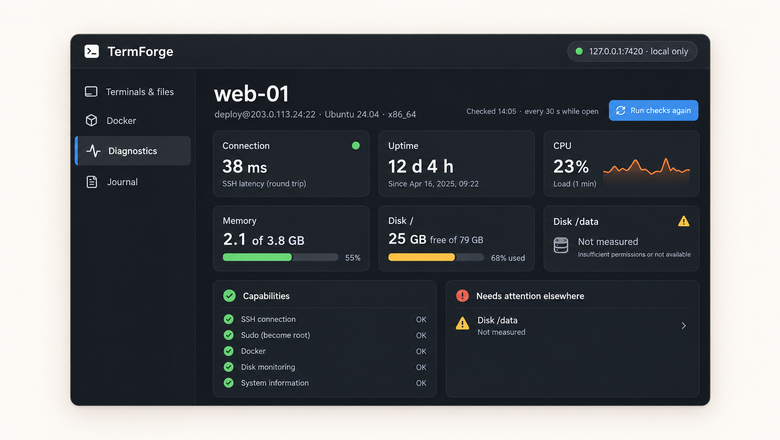
Было ли у вас такое, что приходится управлять несколькими серверами одновременно? Если да, то возможно вам знакома боль, когда нужно переключаться между терминалами, файловыми провайдерами и тд. В этой статье я расскажу про свое решение этой проблемы.
Эта статья о том, как сериалы предсказывали влияние ИИ на людей и мир вокруг них и что из этих прогнозов начинает сбываться. «Люди», «Мир Дикого Запада», «Измененный углерод» и «В поле зрения» показывают одну ключевую закономерность в сознании людей, которую видно уже сейчас. ИИ снимает с сознания тормоза, и то, что было на уме, становится проявленной действительностью. Ограничения бывают разные: стыд, осторожность, страх последствий, чужой отказ, наконец, сама смерть. Когда технология убирает одно из них, человек остается наедине с тем, что раньше сдерживал. Одни обнаруживают в себе жестокость, другие нежность. А «Американские боги» добавляют вторую оптику: ИИ как новый бог, в жертву которому мы приносим внимание. Разобрав пять историй, я хочу понять, какие ограничения держат нас самих, что происходит, когда они исчезают, и что из этого я наблюдаю рядом с ИИ.
Автор статьи — Игорь Соколов, специалист АБП2Б. Материал посвящён уязвимостям AI-компонентов, практическим сценариям атак и вопросам безопасности при интеграции искусственного интеллекта в корпоративные системы.
Еще недавно AI в веб-приложении чаще всего представлял собой чат-бота, который отвечал на вопросы пользователей. Сегодня ему доверяют гораздо больше: подключают к внутренним документам, корпоративной почте, CRM и базам данных, а иногда даже разрешают самостоятельно выполнять действия.
При этом для сотрудников изменения могут выглядеть совершенно незначительными. В корпоративном портале появился умный поиск, в CRM добавили помощника, а служба поддержки начала автоматически обрабатывать обращения. Вроде бы ничего принципиально нового — просто привычные инструменты стали удобнее.
Но с точки зрения информационной безопасности ситуация изменилась гораздо сильнее, чем кажется.
Обычный веб-пентест по-прежнему включает проверку авторизации, разграничения доступа, API, пользовательского ввода и бизнес-логики. Только теперь между пользователем и приложением появилась языковая модель, которая не просто обрабатывает полученную информацию, но и интерпретирует ее содержимое. А если у модели есть доступ к внешним инструментам, результатом обработки текста может стать вполне реальное действие в корпоративной системе.
Для злоумышленника это открывает дополнительные возможности. Вместо того чтобы напрямую обходить ограничения приложения, он может попытаться повлиять на AI-компонент и добиться, чтобы тот самостоятельно получил нужные данные или выполнил операцию.
The party is hoping they can integrate the public health message with grassroots concern, but leave behind conspiracy theories
Chellie Pingree remembers when she moved to Maine as a teenager in the 1970s – she was one “hippie” among thousands in the back-to-the-land movement, when baby boomers fled to the sticks to revitalize small organic farms.
Today, she’s a Democratic US Representative for Maine, but still knee-deep in the organic movement. And she’s starting to see a lot of new faces – many pulled in by the Make America Healthy Again (Maha) movement, largely led by the Trump administration’s health secretary, Robert F Kennedy Jr.
Voters under 50 probably won’t remember the “welfare queen”. But she once embodied Republicans’ claim of the underlying reason for US societal decay: the poor are a bunch of fraudsters.
Ronald Reagan introduced Linda Taylor to US voters at a rally during the Republican presidential primary season in 1976. A resident of Chicago’s South Side, Taylor had been arrested for welfare fraud. “She used 80 names, 30 addresses, five phone numbers to collect food stamps, social security, veteran’s benefits for four non-existing deceased veteran husbands,” Reagan said. “Her tax-free cash income alone has been running $150,000 a year.”
The Qatari government gifted him a luxury jet, potentially violating the emoluments clause of the constitution.
The UAE gained access to some tightly guarded, high-end American AI chips soon after an investment firm linked to its ruling family secretly bought a $500m stake in World Liberty Financial, the crypto company funded by the families of Trump and his chum Steve Witkoff.
Rich people facing criminal charges have taken to donating to Trump’s political operations and then seeking pardons or clemency. Most recently, Wanda Vázquez Garced, the former governor of Puerto Rico, and the banker who paid her bribes, Julio Herrera Velutini, were pardoned after Velutini’s family gave a $50m deal to Alina Habba, Trump’s former personal lawyer, and donated $3.5m to Trump’s Maga Inc Super Pac.
The first family is also making a killing from the government. The Pentagon lent more than $600m to Vulcan Elements, a rare earths startup, just three months after Donald Jr’s venture capital firm 1789 Capital bought a stake in the outfit.
Powerus, a drone maker backed by Eric and Donald Jr is selling drone interceptors to Persian Gulf allies of the US that are under attack by Iran, enriching the kids from a misbegotten war launched by the dad without consulting Congress.
Есть старая идея, которую обычно произносят с усмешкой: возьми то, что работает в США, и сделай то же самое для своей страны. Звучит как совет из инфобизнеса. Но иногда цифры заставляют отнестись к ней серьёзнее.
CalBuddy — ИИ-счётчик калорий на иврите. Его сделал израильский маркетолог Томер, у которого из опыта программирования было только что-то школьное. Запустился в июне 2025 года, в первый месяц заработал около $1 000, а в апреле 2026-го — больше $81 000. Ничего нового в продукте нет: сфотографировал тарелку, получил калории и БЖУ. Таких приложений в американском App Store десятки.
Мне стало интересно разобрать, за счёт чего это сработало и что из этого переносится на русскоязычный рынок, а что нет.
The 15th amateur to challenge Littler in Netflix stream on Friday evening, Sherrock was ‘lost for words’ after winning £501,000 prize
The name of the programme was Beat Luke Littler and Fallon Sherrock did just that.
On one of the biggest nights of the year for British TV and Netflix, there was much at stake: not just £501,000 to any of the 20 amateur challengers who managed to beat Littler in a single leg of darts, but also the jeopardy of whether audiences would choose to watch the streamer’s first UK live entertainment event – or the final of BBC juggernaut The Celebrity Traitors.
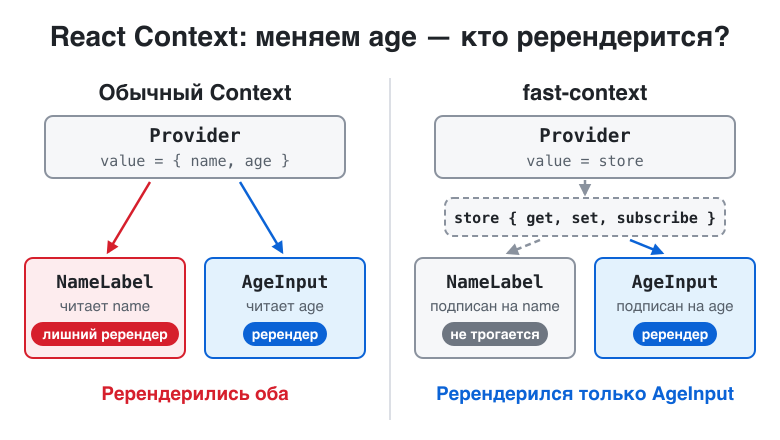
Знакомая ситуация: в контексте лежат два поля, скажем, name и age. Меняется age, и ререндерится компонент, который читает только name. У useContext нет селектора, как у useSelector в Redux: React сравнивает value провайдера целиком, а при каждом изменении это новый объект. Ни useMemo, ни React.memo тут не спасают.
В статье — небольшой контекст, где компонент ререндерится, только когда меняется его собственное поле. И разбор, почему он устроен именно так:
Почему через контекст стоит передавать не сами данные, а стабильный объект доступа к ним?
Почему обычные приёмы — useMemo на value и раздельные контексты — до этого не дотягивают?
Зачем для подписки нужен useSyncExternalStore и что такое tearing?
На каких деталях легко ошибиться и когда такой контекст вообще нужен?
Представьте ситуацию: на компьютере включён VPN, зарубежные сервисы работают, но некоторые российские сайты, банки или маркетплейсы начинают просить его отключить.
Выключаете VPN — российские ресурсы открываются, зато часть зарубежных становится недоступной. Включаете обратно — проблема повторяется.
А если одновременно нужны корпоративный VPN, личный VPN, мессенджеры, игры и обычный интернет?
Мне надоело постоянно переключаться между подключениями. Поэтому я начал разрабатывать NetRuleRouter — программу, которая позволяет управлять маршрутизацией трафика по сайтам, приложениям, IP-адресам и сетям.
Причём NetRuleRouter — не VPN-клиент. Он работает поверх уже существующих подключений и позволяет выбирать, через какое из них должен идти определённый трафик.
Разработку я начал 1 апреля 2026 года, первые рабочие версии использовал ещё летом, а теперь выпустил первую публичную альфу NetRuleRouter v0.1.0-alpha.1 для Windows и Linux.
Хочу рассказать, откуда появилась идея, что уже умеет программа, как я использую её сам и почему при таком количестве возможностей это пока именно alpha.
Voters under 50 probably won’t remember the “welfare queen”. But she once embodied Republicans’ claim of the underlying reason for US societal decay: the poor are a bunch of fraudsters.
Ronald Reagan introduced Linda Taylor to US voters at a rally during the Republican presidential primary season in 1976. A resident of Chicago’s South Side, Taylor had been arrested for welfare fraud. “She used 80 names, 30 addresses, five phone numbers to collect food stamps, social security, veteran’s benefits for four non-existing deceased veteran husbands,” Reagan said. “Her tax-free cash income alone has been running $150,000 a year.”
The Qatari government gifted him a luxury jet, potentially violating the emoluments clause of the constitution.
The UAE gained access to some tightly guarded, high-end American AI chips soon after an investment firm linked to its ruling family secretly bought a $500m stake in World Liberty Financial, the crypto company funded by the families of Trump and his chum Steve Witkoff.
Rich people facing criminal charges have taken to donating to Trump’s political operations and then seeking pardons or clemency. Most recently, Wanda Vázquez Garced, the former governor of Puerto Rico, and the banker who paid her bribes, Julio Herrera Velutini, were pardoned after Velutini’s family gave a $50m deal to Alina Habba, Trump’s former personal lawyer, and donated $3.5m to Trump’s Maga Inc Super Pac.
The first family is also making a killing from the government. The Pentagon lent more than $600m to Vulcan Elements, a rare earths startup, just three months after Donald Jr’s venture capital firm 1789 Capital bought a stake in the outfit.
Powerus, a drone maker backed by Eric and Donald Jr is selling drone interceptors to Persian Gulf allies of the US that are under attack by Iran, enriching the kids from a misbegotten war launched by the dad without consulting Congress.
The proposed billionaire tax on California's November ballot could slap a one-time 5% levy on wealthy residents, including sports team owners, to raise healthcare funds
The current Congress has passed fewer bills and conducted less oversight than any of its predecessors in modern history, according to congressional scholars.
The tech mogul’s midterm donations backing Republicans have made him the largest single-cycle political donor in modern US history
Elon Musk has poured so much money into US politics this midterms election cycle that his donations could fund half a dozen SpaceX rocket launches or buy thousands of Tesla Cybertrucks. At the Tesla Diner in Los Angeles, Musk could order more than 31.9m cheeseburgers with the money he has spent on the midterms.
Musk, the world’s richest person, has funnelled at least $445.77m into Republican-aligned political action committees (Pacs) and groups since last year, according to US Federal Election Commission data as of 29 October. The contributions have made him the Republicans’ most prominent financial backer and the largest single-cycle political donor in modern US history.