RSS Feeds
Trump says Iran war will be put away very soon, "one way or the other"
Неделя ручной работы за два дня: как я делегировала ИИ часть операционного процесса

Привет, Хабр! Меня зовут Анастасия, я руководитель направления ИТ-комплаенса в РГС. Перед каждым циклом планирования мне нужно разбирать и оценивать сотни задач, чтобы определить, какие из них требуют внимания в первую очередь. На это обычно уходила целая рабочая неделя, и я решила поискать способ упростить этот процесс, чтобы освободить время для более сложной экспертной работы. В итоге мне удалось автоматизировать часть рутины с помощью ИИ, и в этой статье я как раз хочу поделится, как, не имея бюджета на разработку и навыков программирования, я сократила время разбора задач с пяти рабочих дней до двух.
Читать далееFootage of Seoul crush to be removed from Call of Duty after backlash
Trump pushes to intensify Alaska Senate probes and Israel’s final election results released: Morning Rundown
Internal documents show failed scramble to save "forever cruise"
Official arrested for alleged cover-up of mayor's cartel-linked killing
This App Brutally Shames You by Tracking How Many Hours You’ve Lost to Scrolling
The two most interesting risks to Anthropic
Anthropic gave a 94-page list of risk factors in its S-1 this week. Two of them stood out.
(Image credit: Kevin Dietsch)

The Key Congressional Races to Watch on Election Night
The fate of Congress hangs in the balance as the outcome of a few key races will determine which party controls the House and Senate for the remainder of Donald Trump's presidency.
Republicans currently control both chambers, with 53 seats in the 100-seat Senate and 218 seats in the 435-seat House.
History suggests that Democrats will gain seats, as the party in power usually cedes representation in the midterms. In 2022, Democrats under President Joe Biden lost nine seats in the House, and in 2018, during Trump’s first term, Republicans lost about 40 seats in the lower chamber.
Democrats are widely expected to gain enough House seats to take control of that chamber. The Senate remains a toss up amid several tightly contested races, many in red states Trump won in 2024. Between campaigns, super PACs and billionaire donors, hundreds of millions of dollars have been spent on a handful of races.
Read More: Midterm Ad Spending Has Surpassed $10B. Where Is the Money Coming From?
Here are the Senate and House races to watch ahead of election day on Nov. 3.
Alaska Senate
Republican Sen. Dan Sullivan is running for another term against Democrat Mary Peltola, who previously served as the first Alaska native elected to Congress. But there's also a Daniel J. Sullivan Jr. on the ballot, and his candidacy was part of a broader effort by Democrats to help Peltola’s bid, according to a recent New York Times report. Alaska’s Republican Governor Mike Dunleavy ordered an investigation into Peltola's campaign following the report.
Polling has indicated that Sullivan and Peltola are neck-in-neck, with Peltola occasionally gaining a slim lead. While Trump won Alaska in 2024 by 13 points, the race appears to be close enough that he travelled to Wasilla on Oct. 13 to campaign on Sullivan’s behalf.
Alaska uses rank-choice voting, which means that voters will rank their top candidates as opposed to selecting one. This month, the Justice Department filed a preemptive lawsuit seeking to block certification of the election results in Alaska’s Senate race if the election results suggest the incumbent lost due to “voter confusion” due to two Dan. Sullivans on the ballot.
Read more: The 7 Key Governor Races to Watch
Iowa Senate
This midwest contest to replace outgoing Republican Sen. Joni Ernst has emerged as among the tightest in the country, with Republican Rep. Ashley Hinson, a former broadcast journalist, vying against Democratic state Rep. Josh Turek, a paralympic gold medalist.
This is another state that Trump won by 13 points in 2024. Yet the recent polling suggests a true toss-up. Hinson, who has represented Iowa in the House since 2021, has distanced herself from Trump, calling for an “immediate end” to the Iran war. Trump campaigned alongside Hinson last week.
Read More: Is Iowa the Senate Race No One Saw Coming?
Michigan Senate
Michigan’s open Senate rate has emerged as perhaps the most hostile of the midterms. Democrat Abdul El-Sayed, a physician and former public health director, has the chance to be the country’s first Muslim senator. He’s facing off against Mike Rogers, a former FBI agent who served in the House before losing a 2024 Senate bid. Both are vying to replace Sen. Gary Peters, the Democrat who has held the seat since 2015.
Read More: Democratic Senate Hopeful Abdul El-Sayed Is Running Against Both Parties
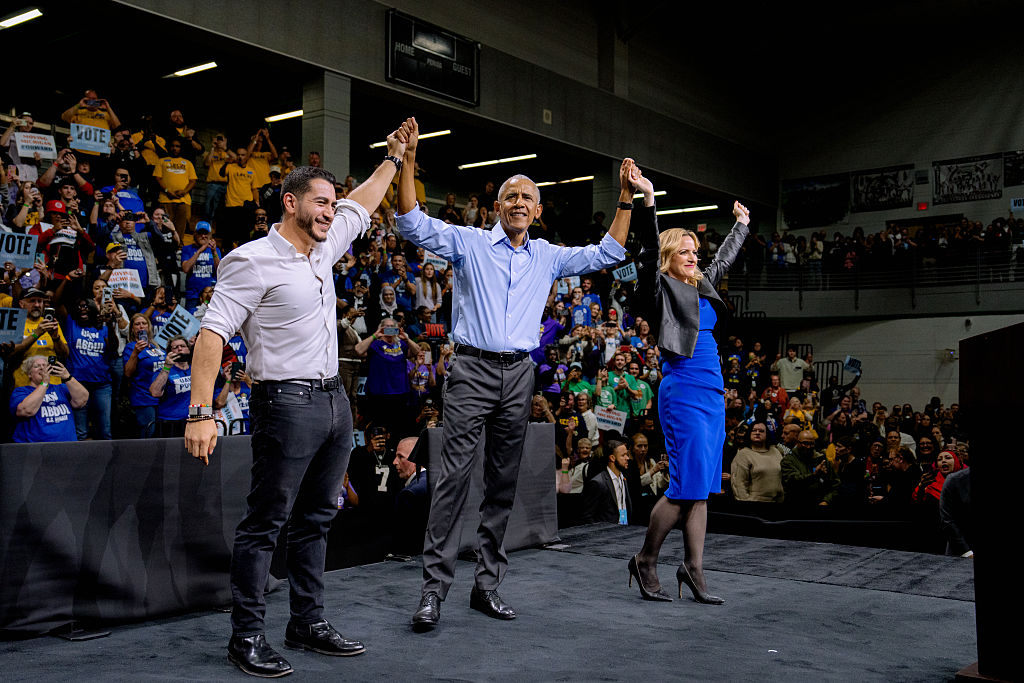
El-Sayed won his party’s nomination after a fierce primary against Rep. Haley Stevens, in which his criticism of Israel’s war in Gaza became a lightning rod issue. Since the primaries, prominent Democrats including Barack Obama, Kamala Harris, and Rep. Alexandria Ocasio-Cortez of New York have all come to Michigan to stump alongside him.
Republicans have attacked El-Sayed for his Muslim identity and progressive politics. At a rally in Michigan last week, Vice President JD Vance accused El-Sayed of hating America.
Recent polls have shown El-Sayed leading Rogers, but usually within the margin of error.
Maine Senate
Sen. Susan Collins, a Republican, is seeking a sixth term in Maine, a moderate blue state. She is facing off against Democrat Troy Jackson, a logger and former president of the Maine Senate, who became the party’s nominee after the winner of the primary, Graham Platner, withdrew from the race amid sexual assault allegations, which he denies.
Main is the only state Trump did not win in the 2024 election where an incumbent Republican is up for reelection. Collins has distanced herself from Trump across many policy issues and on the campaign trail. She voted to convict Trump following his impeachment after the January 6 riots on the Capitol. Yet she’s also drawn criticism for backing Trump’s previous picks for the Supreme Court, despite her longstanding support for Roe v. Wade, which the Court later overturned.
Collins is chair of the powerful Senate Appropriations Committee and frequently boasts on the campaign trial of federal dollars she helped steer to the state. Recent polls show Jackson barely leading Collins, in a race that is widely viewed as a toss-up.
Read more: In Maine, a Toss-Up Senate Race Is About the Incumbent and Not Much Else
Ohio Senate
Former Democratic Sen. Sherrod Brown faces off against Republican Sen. Jon Husted, who was appointed by Republican Gov. Mike DeWine to replace Vance when he went to the White House in 2025.
More than $200 million has been contributed in outside spending on this race, making it one of the most expensive this midterm season. Yet the race is a special election to only finish the remainder of Vance’s term. The winner will need to run again in 2028 to secure a full six-year term.
Read More: Ohio May Be the Sleeper Senate Race of the Midterms
While Ohio has mostly voted Republican in recent years, recent polls show Brown ahead. Brown served for over a decade in the Senate until losing re-election to Republican Bernie Moreno in 2024.
Kansas Senate
Kansas has not elected a Democratic Senator since 1932. But that could all change if Adam Hamilton, who founded the largest Methodist congregation in the U.S., beats out the incumbent, Republican Roger Marshall.
Marshall, a physician and former military officer, has received the support of Trump, who called him “one of my favorite Senators.” Democrats have highlighted Marshall’s pursuit of unpaid medical bills from patients from a decade ago. State court records show that he filed more than 700 of these debt-collection lawsuits, which have been a source of controversy for his campaign.
Read More: Kansas Has Emerged as a Senate Battleground State. Here’s Why It Matters
Recent polls have shown Hamilton leading up to five points against Marshall, prompting a flurry of last-minute investments by both sides into the state. Republicans acknowledged the extent of their concerns about holding on to Kansas when they moved money there after pulling out of North Carolina’s Senate race.

Texas Senate
In perhaps the most closely-watched race of the midterms, James Talarico has a chance to become the first Democratic Senator in Texas since 1993. He faces off against Republican nominee Attorney General Ken Paxton, who defeated the incumbent, Sen. John Cornyn, in a Republican runoff in May.
Read More: How James Talarico Made Texas Competitive Again
Talarico has had a slight edge in recent polling, but the race remains extremely tight, and one poll from last week had them tied.
The contentious race has topped $500 million in ad spending, which could make it the most expensive non-presidential faceoff in U.S. history.
New Hampshire Senate
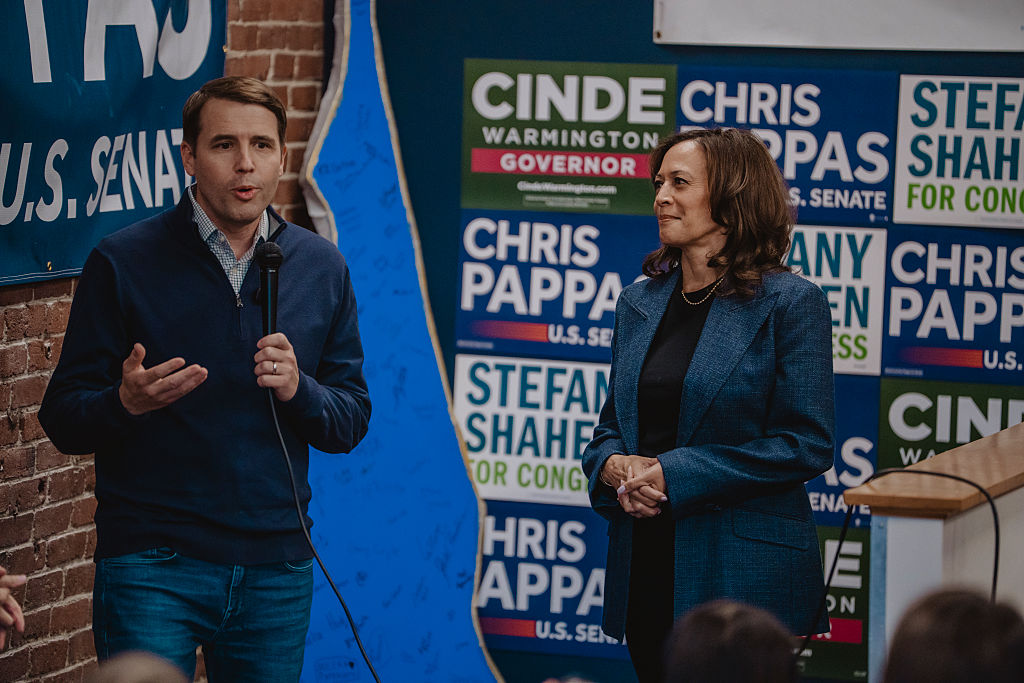
A tight contest for Democratic Sen. Jeanne Shaheen’s seat is taking place in New Hampshire, where four-term Democratic Rep. Chris Pappas is running against former Sen. John Sununu, who was beat out by Shaheen in 2008.
Sununu’s name is well known in his state. His brother served as governor until last year and his father was also governor.
Read more: Why Republicans Still Think They Can Flip New Hampshire's Senate Seat
Pappas has maintained a lead in recent polls against his Trump-endorsed opponent, but Republicans are hopeful that the power of the Sununu brand in New Hampshire will help turn out their voters.
Michigan-07
In one of the most expensive House races in the country, Republican Rep. Tom Barrett is facing off against progressive William Lawrence, a climate organizer who founded the climate advocacy organization the Sunrise Movement.
Michigan’s seventh district encompasses rural and suburban areas that turned Republican in 2024 after former Democratic Rep. Elissa Slotkin left to run for Senate. Lawrence, who beat out more moderate candidates in the Democratic primary, was polling near even with Barrett in August. More recent polls show Lawerence leading.
Texas-15
Deep in South Texas, Trump marked impressive gains with Hispanic voters in 2024. Now, Texas’ 15th district has emerged as a major test of whether Republicans can hold on to those voters. Roughly 75% of eligible voters in this House district are Hispanic.
Republican Monica De La Cruz, who flipped the district in 2022, is running for reelection against Democrat Bobby Pulido, a popular Latin Grammy-winning Tejano musician who is running as a moderate.
Some recent polls show Pulido in the lead, though election results in that region have at times defied expectations. Cook’s Political Report continues to rate the race as a toss-up.
Ohio-07
Republican Rep. Max Miller, a former Trump White House aide, is battling Democrat Brian Poindexter, a union worker and former councilman, in Ohio’s seventh district.
The House race has received outsized attention over domestic abuse allegations against Miller, which he has denied. Republican Sen. Bernie Moreno, who is Miller’s former father-in-law, said over the summer that Miller should “seek professional help.” Moreno was joined by Ohio’s other Senator, Republican John Husted, in publicly urging Miller to exit the race in a district that has traditionally voted Republican and which Trump carried in 2024 by 11 points. Cook’s Political Report rates the race a toss-up.
Подъемная сила крыла, часть 2: парадокс д'Аламбера и модель Жуковского

Привет всем любителям физики и физического эксперимента! На прошлой неделе в говорили о спорах и заблуждениях, касающихся подъемной силы крыла и ее возникновения. Сегодня вторая часть этой статьи – главным образом о теории создания этой силы, которую предложил Николай Егорович Жуковский. Но начнем мы не с модели Жуковского, а с парадокса, который установил еще в середине XVIII века французский ученый и энциклопедист Жан Лерон д'Аламбер.
Читать далееКакие вопросы клиенту стали неприличными в эпоху нейросетей: ревизия методики продаж Рекхэма
Методике продаж Нила Рекхэма почти 40 лет, а продажи за это время успели сильно поменяться. С нейросетями собрать информацию о клиенте (чем занимается компания, какой у неё оборот, сколько продавцов) стало делом нескольких минут. Если после этого спросить заказчика о том, что лежит на его же сайте, в лучшем случае он удивится, в худшем поднимет продавца на смех. Мы поговорили с практиком о том, какие вопросы из методики ещё работают в продаже сложных систем, а какие пора оставить в прошлом.
Читать далееВ Пекине прошел самый малочисленный пленум ЦК Компартии Китая. В партии идут масштабные чистки
Гуманитарная операция в Алешках: делегации Украины и России с эвакуированными жителями покинули город
‘Swift justice’: Student List supporters focus on cleaning up Serbia’s rotten institutions
After improbable election victory, the unconventional grassroots movement says it will prioritise dismissal of corrupt officials
In Belgrade’s Pioneers Park, just across from the national assembly, a small crowd craned their necks to listen. One woman held aloft a placard reading “Love prevailed for the people and Serbia”. With a bouquet of media microphones in front of them, members of the Student List, the direct democracy movement that won an improbable but decisive victory in Sunday’s election, gathered under the trees.
Having spent days bathing in the euphoria of their unexpected triumph, the candidates’ focus was now clear: the cleaning up of the rotten institutions that had increasingly blighted the lives of Serbs over the 14 years of government by the populist leader Aleksandar Vučić and his Serbian Progressive party (SNS). They called for the dismissal of many senior law enforcement officials, among them the chiefs of the criminal police, the paramilitary gendarmerie and an anti-terrorism unit.
Continue reading...The right is rehabbing…Richard Nixon?

President Donald Trump is approaching the halfway point of his second term, raising the question of what — and who — comes next. And, more existentially: Can the MAGA movement survive without him?
To answer that question, some younger conservatives on the “New Right” are looking to a past US president for inspiration: Richard Milhous Nixon.
In June, Vice President JD Vance spoke at the Richard Nixon Presidential Library and Museum in California, downplaying the scandal that ended Nixon’s presidency. If Watergate happened today, Vance said, it would be “like a 12-hour news story. Like, the idea that it would have taken down a presidency is crazy.”
Watergate, of course, is the most famous scandal in presidential history and the reason so many of our contemporary imbroglios get tagged with the -gate suffix. It began with a 1972 break-in at the Democratic National Committee’s headquarters in Washington’s Watergate complex by operatives linked to Nixon’s reelection campaign. Investigations — and a huge volume of Oval Office tapes recorded by Nixon — exposed Nixon’s involvement in the cover-up, and he resigned in 1974 facing the prospect of impeachment and removal from office.
Nevertheless, some conservatives are now embracing a rehabilitation of Nixon’s image dubbed “Nixonmaxxing.” They portray him as a president brought down by the “deep state” — an entrenched network of unelected government officials that they believe also tried to undermine Trump during his first term (and is still trying today).
Today, Explained co-host Noel King spoke with political historian Michael Koncewicz, the associate director of New York University’s Institute for Public Knowledge, about what actually brought Nixon down, why Watergate was, in fact, a big deal, and why some conservatives are undeterred and looking to the 37th president for inspiration today.
Below is an excerpt of their conversation, edited for length and clarity. There’s much more in the full podcast, so listen to Today, Explained wherever you get podcasts, including Apple Podcasts, Pandora, and Spotify.
Because we live in a fallen world, we are here today to talk about something they’re calling Nixonmaxxing. Why are young conservatives interested in former President Richard Milhous Nixon?
Nixon’s ultimately known for Watergate, and Watergate for decades was the ultimate scandal in American politics. And younger conservatives are starting to revisit this history and they’ve started to compare the Watergate scandal to numerous attempts to bring down the Trump presidency.
Nixon is a martyr for the cause. Nixon is the guy who was successfully brought down by the liberal establishment. And so if younger conservatives can rescue Nixon from liberal historians and liberal journalists, they think that they can protect the current president for decades to come.
In the last decade or so, more and more media figures — and this has seeped down into conservative activists — have questioned a story that most Americans accept, which is that Watergate was a moment where the system worked. It’s a moment where Congress, the media, and the American public helped bring down a corrupt president.
Conservative activists want you to believe that that’s not true. And the main reason is that if they can make you believe that that’s a lie, then they can make you question any future scandal that could affect any one of their guys.
What was the Watergate scandal? What did Richard Nixon actually do?
Watergate can best be understood as a story that begins, at least, in the summer of 1971. After the release of the Pentagon Papers, which was a secret history of the Vietnam War compiled by figures in the Johnson administration, Richard Nixon is enraged.
In the summer of 1971, the reason that this matters and why it’s linked to Watergate is that in the wake of the Pentagon Papers coming out, Nixon authorizes the creation of the “Plumbers” unit: a group of shady guys with CIA and FBI on their resume, people who have experience doing black bag jobs.
“It remains to be seen how influential Nixonmaxxing is as a political phenomenon. Richard Nixon is still seen as one of the worst, most corrupt presidents in American history.”
The first operation that they pull off is breaking into Daniel Ellsberg’s psychiatrist’s office — he’s the man who leaked the Pentagon Papers. It’s referred to by Nixon historians as Watergate West. But when they pull this off, they are not caught and it’s dismissed as just a weird moment. No one knows that at the time these are guys being paid by the White House to break into buildings and spy on political opponents.
There’s a lot of other activities that happened between summer of ’71 and June of ’72, but the Watergate burglars, the Plumbers, are caught at the Watergate Hotel. And what is at the Watergate Hotel? It is the offices of the Democratic National Committee.
They’re caught in June of ’72, and even then it’s dismissed as a so-called third-rate burglary because this just seems like some overeager campaign staff members who have nothing to do with the Nixon White House.
But on the tapes, we know that Richard Nixon, even if he didn’t have any link to the Watergate break-in, knows that he created this team. He knows that his advisers are aware of different parts of their activities over the previous year. That was not uncovered until 1973, which is when most of the American people and most people in Congress started to take this scandal seriously. Watergate ends Nixon’s presidency when it becomes clear to the American people that he has something to hide.
The famous phrase attached to Watergate is that it was not the crime, it’s the coverup. That’s true to an extent, in terms of what was on the tapes that made it very clear that Nixon was obstructing justice. But he was covering up pretty serious crimes. He was covering up a lot of improper uses of presidential power.
And so in the summer and fall of 1973, that is when Richard Nixon’s approval rating started to decline — a 25 percent approval rating. And when people ask why Richard Nixon stepped down, that’s the No. 1 reason. When his approval rating is that low, members of Congress feel the pressure to take on an unprecedented action, which is impeachment. The House was going to impeach Richard Nixon and the Senate was going to convict Richard Nixon.
And so in subsequent years and decades, there’s this understanding that Watergate was a bad thing. Watergate was a serious constitutional crisis and that it was good that Richard Nixon stepped down, that our democracy was strengthened as a result of Watergate. And today’s conservatives are increasingly questioning that narrative.
Richard Nixon wouldn’t be in the position he is in currently if he hadn’t done some things that a certain type of conservative today thinks is noble or laudable or important.
What was he doing at the time that makes a guy like Chris Rufo or the vice president say, “Hey, you know what? We need to reconsider Nixon”?
Figures like Christopher Rufo are drawn to Richard Nixon because the historical record shows that behind the scenes, he was a fierce culture warrior.
Other presidents in the post-World War II era were certainly guilty of improper uses of presidential power. Nixon’s key difference was he wanted to bring that into the White House and micromanage the hell out of it. And Christopher Rufo loves that about Richard Nixon. He believes that presidents should use their powers to go after groups that he thinks are hurting the country.
We now know that Nixon was a far more aggressive culture warrior behind the scenes.
He was someone who wanted to create a new establishment, one that would weaken liberals in the media. Richard Nixon said on the Nixon tapes in a meeting with his closest advisers, [“The professors are the enemy. Professors are the enemy. Write that on the blackboard 100 times and never forget it.”]
Both Christopher Rufo and our current vice president, JD Vance, love the quote. JD Vance, when he was running as a Senate candidate in late 2021, gave a speech at the National Conservatism Conference and he used that quote.
This was just five years ago, and it would’ve been unthinkable for any conservative politician to favorably quote Richard Nixon, especially if they had aspirations to be president of the United States someday. But our current vice president, JD Vance, someone who will likely run for president in 2028, has publicly embraced Richard Nixon’s legacy.
President Trump is apparently in decline and his hold on the Republican Party over the next couple years will weaken, right? With so many of these stories, you wonder whether it’s like a handful of coconuts being nutty or whether this kind of effort means something for the future of the Republican Party.
Do you think that this is notable, important, or significant?
It remains to be seen how influential Nixonmaxxing is as a political phenomenon. Richard Nixon is still seen as one of the worst, most corrupt presidents in American history.
I used to lead school tours at the Richard Nixon Library 10, 15 years ago, and I would regularly talk to high school students, sometimes even middle school students, and they came in with a little bit of knowledge about Richard Nixon, and that knowledge was usually centered around the fact that Nixon got in trouble and Nixon was bad.
I am slightly encouraged by that fact because it shows you that Watergate is still viewed as an exceptional period of time.
However, as I told people during Trump’s first administration, Watergate should be seen as a product of a very different political culture. It wasn’t just that the system worked — it did — but it worked because our democratic culture was far stronger than it is today. Our civic institutions were far stronger than they are today. You had a broader culture of dissent and a broader culture of questioning our president that contributed to Nixon’s downfall.
Unfortunately, our political culture today is far more divided and far less willing to rally around a single narrative that would lead to another Watergate resignation happening in the same way [as] what we saw in the summer of 1974.
‘Swift justice’: Student List supporters focus on cleaning up Serbia’s rotten institutions
After improbable election victory, the unconventional grassroots movement says it will prioritise dismissal of corrupt officials
In Belgrade’s Pioneers Park, just across from the national assembly, a small crowd craned their necks to listen. One woman held aloft a placard reading “Love prevailed for the people and Serbia”. With a bouquet of media microphones in front of them, members of the Student List, the direct democracy movement that won an improbable but decisive victory in Sunday’s election, gathered under the trees.
Having spent days bathing in the euphoria of their unexpected triumph, the candidates’ focus was now clear: the cleaning up of the rotten institutions that had increasingly blighted the lives of Serbs over the 14 years of government by the populist leader Aleksandar Vučić and his Serbian Progressive party (SNS). They called for the dismissal of many senior law enforcement officials, among them the chiefs of the criminal police, the paramilitary gendarmerie and an anti-terrorism unit.
Continue reading...[Перевод] Китайские нейросети против французских: Mistral бросает вызов DeepSeek

Mistral выпустила Le Chonk — модель, которую можно скачать и развернуть на собственной инфраструктуре. Французская компания утверждает, что после доработки она сравнялась с ведущими китайскими разработками или превзошла их в программировании и кибербезопасности. Но главный спор вокруг релиза касается контроля: кто должен распоряжаться ИИ, когда от него зависит защита корпоративных систем?
Читать далееSilver-year strongman: 25 years of Narendra Modi
Hundreds evacuated from Russian-occupied Oleshky during rare Ukraine ceasefire
Italy’s PM deploys troops as nation faces widespread strikes and port blockades
Democrats in the US have an identity crisis - it won't be an easy fix
Why healthcare has become such a big problem for Republicans

Less than a week out from the 2026 midterms, Republicans across the country are feeling the heat from their party’s vote last year to shrink Medicaid by roughly $1 trillion over the next decade. The cuts, driven largely by new work requirements and eligibility checks, are expected to leave more than 7 million Americans without insurance by 2034. They’ll also hit hospitals, clinics, and nursing homes that everyone uses, whether or not they’re on Medicaid.
These cuts weren’t supposed to be noticeable to voters just yet. Republicans designed them to take effect in 2027, after the midterms.
But some of the damage is already showing up. Paired with a reduction in tax credits to help buy insurance through the Affordable Care Act, and rising employee premiums, the cuts are colliding with a broader voter revolt against the high cost of living — and have turned healthcare into a top midterm issue.
A slew of recent polling shows healthcare costs sitting at the top of voters’ economic worries as the campaign season winds down. A KFF poll from earlier this month found healthcare outranked food, housing, and utilities as a top concern, with nearly half of voters saying it was “extremely important” for candidates to be talking about. And in late September, an Associated Press and KFF survey of rural voters found that twice as many said the Trump administration’s healthcare policies had hurt the health of people in their community as said they’d helped.
Key takeaways
- Healthcare costs top the list of voters’ economic concerns
- The GOP’s new $50 billion rural fund doesn’t offset $137 billion in rural Medicaid cuts, and the savings come mostly from people losing coverage.
- Work requirements hit nationwide in 2027, so the first wave of coverage losses lands as the 2028 campaign begins.
Republicans have tried to rebrand the One Big Beautiful Bill Act as the “Working Families Tax Cuts,” but Politico found voters largely unmoved by the new name, and Fox News recently gave Democrats a 22-point lead on who voters trust to handle healthcare.
Democrats, for their part, have put healthcare costs at the center of their closing argument. It’s the issue they’ve spent more on than any other, according to the Cook Political Report’s Battleground Issue Tracker, with more than $215 million across the most competitive House and Senate races this year. Democrats trying to flip red seats are running ads on reversing the Medicaid cuts and on having relied on Medicaid once themselves, while outside liberal groups are spending millions of dollars in ads tying Republicans to the cuts, and leading an 8,000-mile bus tour through 36 cities.
They’ll have even more to work with next year. The new Medicaid work requirements and the six-month eligibility checks that Republicans delayed past the midterms will all take effect in 2027, which means the first wave of people losing health insurance coverage will hit right as the 2028 campaign begins.
Republicans’ defenses aren’t holding up
Reducing Medicaid spending became a critical part of the One Big Beautiful Bill Act in order to help offset the multitrillion-dollar cost of extending President Donald Trump’s first-term tax cuts, adding some new ones, and funding ICE.
Mindful of the potential for political backlash, Republicans took steps to ward off attacks.
The main defense Republicans have relied on is to point to a $50 billion rural health fund that was also included in the bill. The GOP is touting it as “the single largest investment” in rural healthcare in over 20 years.
But fact-checkers and health analysts have been clear that this temporary infusion of funds, spread out over five years, doesn’t offset the $137 billion in permanent cuts projected to hit rural areas over the same decade.
Maine Republican Sen. Susan Collins, who voted to let the One Big Beautiful Bill Act reach the Senate floor but against final passage, leaned on this rural healthcare fund in a debate earlier this month. “If I had not allowed the bill to go to the floor, I would never have been able to author the $50 billion fund to help rural healthcare,” she said. Troy Jackson, her Democratic challenger, emphasized that the fund comes nowhere close to covering what Mainers stand to lose. “Senator Collins is like an arsonist who helped set the fire, and then she wants credit for bringing a cup of water to put it out,” he said.
Voters don’t need a fact-check to notice when a hospital shuts down or reduces service. In some cases, medical institutions aren’t waiting for the cuts to arrive, and are making decisions based on the federal funding they expect to lose. In Iowa, for example, MercyOne Clinton Medical Center ended labor and delivery services earlier this year, citing decreased Medicaid funding as part of the reason.
“The public’s not stupid, and we’re all already absorbing a lot of additional costs that we shouldn’t have to because of Republican decision-making in Washington, DC,” Michigan Gov. Gretchen Whitmer told Politico recently.
The second is to deny there is reduced spending at all. “It’s not an actual cut,” as GOP Rep. David Valadao of California said in a debate several weeks ago — the savings, Republicans argue, come from cracking down on waste, fraud, and abuse.
This distinction is an important one in certain campaigns. Medicaid covers over 60 percent of Valadao’s California district, and he voted for the bill. Valadao also led a letter, signed by 12 other Republicans from battleground districts, declaring that “we cannot and will not support a final reconciliation bill that includes any reduction in Medicaid coverage for vulnerable populations.” Every one of them ultimately voted for it.
Loss of coverage is already happening in Nebraska, the only state to start enforcing its new Medicaid work requirements ahead of the deadline.
The “no actual cuts” claim rests on a technicality that the law doesn’t reduce benefits for anyone who stays enrolled. But the roughly $1 trillion in savings the Congressional Budget Office scored comes almost entirely from people losing coverage. When Arkansas tried the same 80-hour-a-month work requirement in 2018, more than 18,000 people lost their health insurance within months. This happened mostly because people didn’t know about the changes or couldn’t handle the new paperwork.
Loss of coverage is already happening in Nebraska, the only state to start enforcing its new Medicaid work requirements ahead of the deadline. Millions more across the country are getting notices in the mail that they could lose their insurance next year.
The problems driving voter anger are about to get worse
Nebraska offers the clearest preview of what’s coming. The state began enforcing its Medicaid work requirements in July, well ahead of the federal deadline, and more than 1,000 residents have already lost coverage, according to the Washington Sun. Republican Sen. Pete Ricketts, who voted for the bill, is tied with Dan Osborn, an independent, in a state that Trump carried easily.
“One out of two Republicans either are, have been or have a family member that is or has been on Medicaid,” Bob Ward, a pollster with the GOP firm Fabrizio Ward, told the Washington Sun. “It’s not like a theoretical thing.”
The rest of the country will experience these new administrative burdens beginning in January. Adults covered under the Medicaid expansion will have to prove every six months that they’re working, volunteering, or attending classes at least 80 hours per month, or demonstrate that they qualify for an exception.
There were Republicans, including some who ultimately voted for the One Big Beautiful Bill Act, who warned in 2025 that voters would not respond well to billions of dollars in Medicaid cuts. Polling at the time found that 71 percent of voters who backed Trump also said they’d oppose cutting the federal health insurance program.
Several months before voting for the bill Missouri Sen. Josh Hawley warned that cutting Medicaid would be “both morally wrong and politically suicidal.” Trump himself told his fellow “cost-cutting Republicans” to avoid going “too crazy” and “REMEMBER, you still have to get reelected.”
Leaders working in healthcare say these changes will drive up costs for all patients, irrespective of whether they use other forms of insurance. For example, if there are fewer people able to access primary care through Medicaid, then more patients will need to utilize hospital emergency rooms for care, and hospitals are required to provide treatment there regardless of whether they’ll be reimbursed. To cover that lost Medicaid revenue, experts expect that some hospitals will need to cut staff, services, or close clinics. They’ll also likely shift costs onto everyone else, through longer ER wait times and higher premiums for patients still on insurance.
Workers who get insurance through their employers are bracing for hikes, too. KFF’s annual employer survey found the average worker is paying more than $600 more toward a family plan this year than in 2025, and the cost-shifting that follows Medicaid cuts is expected to push premiums higher still. One August survey of employers found average plans are projected to rise next year by more than 8 percent. Roughly 160 million Americans get coverage this way.
Republicans have made a bet that higher costs won’t hurt them next week or in two years. Sen. Thom Tillis (R-NC), who announced his retirement days before voting against final passage of the One Big Beautiful Bill Act, warned that voters would come to understand who took away their health insurance coverage.
“If you’re a competent Democrat, you’re going to figure out how to communicate to them how it affects their lives,” he said that summer. “And it almost certainly will.”
Elon Musk’s Ties to Texas Republicans Go Much Deeper Than the Midterms
U.S. Oil Industry Earned Over $130 Billion in Profit During Iran War
Michigan Democratic rift spills into public view and more campaign updates
After 50 years of playing video games, I’m finally starring in one
Voicing the main character in Black Tides Draga’s Wake led to me making the kinds of noises I haven’t made since my honeymoon but also one of my favourite moments as a father
“I listen to you on the radio and I keep hearing your voice in my head!”
Not a typical opening to a creative partnership, but that is how Greg Strangis introduced himself to me 16 months ago, when he asked me to come to his garage in the middle of nowhere and have a look at a game he was making called Black Tides Draga’s Wake.
Continue reading...Television gets treacherous … the Stephen Collins cartoon
Government corruption a top issue for US midterm voters, exclusive poll finds
Harris poll for Guardian finds 76% believe officials care more about self-enrichment than helping everyday Americans
Government corruption has emerged as a top issue in the upcoming US midterm elections, with an overwhelming majority of Americans saying US government officials use their public office for personal financial gain, according to an exclusive Harris poll for the Guardian.
Nearly nine out of 10 Americans said that government corruption, as defined as elected officials putting their own or their donors’ financial interests ahead of the public’s, is a problem, according to the survey.
Continue reading...Watch: What leaked audio reveals about Spain train crash
Hundreds evacuated from Russian-occupied Oleshky during rare Ukraine ceasefire
Male Insecurity Over Penis Size Is a Booming Business
The Best Handheld Translators for Work and Travel (2026)
Иллюзия инженерии / Почему управление — это искусство понимания человека, а не настройка KPI
Почему технократы бессильны перед человеческой природой? Потому что KPI, Rank and Yank, внутренний рынок и даже кайдзен - всё это попытки оцифровать то, что оцифровке не поддаётся. Эта статья - не очередной манифест про "правильный менеджмент", а анализ, как именно человеческая природа взламывает любые бизнес-процессы и регламенты, превращая их из инструментов создания ценности в механизмы краха компании.
История менеджмента - это не история совершенствования формул в отчётах для руководства. Это история мучительного осознания одной истины: процесс создания ценности - это динамическая сумма поведенческих актов живых людей. И чем выше ставки, тем очевиднее становится, что управление - это не технология, а искусство, требующее глубокого понимания человека, общества и контекста.
Читать далееPoundland bidder tells administrator it remains keen on rescue deal
Business secretary says UK needs to understand direction of EU before signing up to closer relationship – as it happened
This blog is now closed
Downing Street has paid tribute to Patrick Stewart following the actor’s death. At the daily lobby briefing, the PM’s spokesperson gave a comment that was a bit more extensive than the usual No 10 contribution when a great British celebrity dies. The spokesperson said that was because Andy Burnham feels strongly about the importance of actors.
The spokesperson said:
The prime minister was very sad to hear of the passing of Sir Patrick Stewart.
As a former culture secretary he knows how much Britain’s greatest actors mean to the country, and Sir Patrick was one of the very best.
Just a reminder that when it comes to Wales, we are not comparing like with like. The term ‘region’ in an English context typically refers to an area covering between 1.5 and 3 million people. In Wales, regions cover much less dense areas. The Swansea Bay city region captures some 700,000 people, and similarly North Wales around 690,000 people. In Mid-Wales sheep outnumber people by 7:1. Only the Cardiff city region is comparable to English tiers, and even then at the lower end: around 1.5 million people.
Transposing an English mayoral worldview onto a very different political geography just doesn’t work. Wales may be a similar population size to the PM’s old manor but that’s where the parallel ends.
Andy Burnham talks about the regions of England and Wales interchangeably but the role the new prime minister champions for metro mayors is, in many respects, already performed by the Welsh government. Powers over skills, employment support, economic development, housing investment and major spending programmes sit at an all-Wales strategic level (covering a similar population size to Greater Manchester.)
His argument for England is that powers should flow from Westminster to city regions because they operate at an economically meaningful scale. Yet when the PM turns to Wales, he seems to suggest that powers already devolved to Cardiff Bay should be dispersed further down the system.
But notably he is not calling on his successor as the mayor of Greater Manchester, Bev Craig, to fragment the powers of the Greater Manchester combined authority and redistribute them amongst its ten constituent councils. On the contrary, the whole logic of the Greater Manchester model rests on concentrating strategic authority at a regional level.
Yet the implication of his comments is that Wales should move in the opposite direction.
Как IaC, документация и бэкапы помогли восстановить сервисы, когда пострадали дата-центры Яндекса

Привет, я Сергей, DevOps-инженер в KTS. Перейду сразу к делу.
К отказу отдельной виртуалки вы наверняка готовы. Но не все готовы к другому классу аварии: к потере площадки, на которой находятся почти все ВМ проекта.
Именно с такой ситуацией столкнулся один из наших заказчиков после серии атак на дата-центры Яндекса в октябре 2026 года. Компания сообщила, что дата-центр в Сасово был серьезно поврежден и полностью остановлен, часть инфраструктуры площадки в Калуге вышла из строя, а позднее остановилась работа дата-центра во Владимире.
Авария затронула инфраструктуру Yandex Cloud, где работали сервисы нашего заказчика. Восстановить работу системы на прежней площадке в тот момент было невозможно, а очередь за новыми ресурсами обрабатывалась несколько дней.
Заказчика и его внутренние системы я называть не буду, статья не о нем. На его примере я хочу поговорить о механике восстановления: что происходит после потери основного дата-центра и какие инженерные практики помогают вернуть бизнес в рабочее состояние.
Читать далее«Скрыто на время рекламы»: как 2ГИС скрывает негативные фото за деньги

Сегодня на вопрос о причинах скрытия фотографий получила официальный ответ от 2гис "На время рекламы компания может скрывать контент."
Читать далее«Ни одного нарушения». В Алешках уже двое суток держится режим тишины, готовится эвакуация и доставка помощи
Как Энди Бернем стал самым популярным премьером Британии со времен Бориса Джонсона и надолго ли его хватит?
It Sure Looks Like the Department of Education Is Promoting a Right-Wing ‘Harry Potter’ Meme
'I made the wrong decision,' Hyrox athlete who soiled herself in race tells BBC
Watch: Why Australia's mushroom murderer may now die in prison
Нейросеть на стройке: почему она ошибается в реальных условиях и как мы научили её замечать опасные ситуации

Вы точно знаете, что компьютерное зрение умеет находить людей, каски, жилеты и строительную технику на изображениях. Но обнаружить объект на тестовом кадре и надёжно распознавать события на работающей стройплощадке оказалось двумя разными задачами.
Представим обычную ситуацию: камера наблюдения установлена на строительном объекте. На экране десятки людей, техника, строительные леса, пыль и меняющееся освещение. Один рабочий находится далеко от камеры, другого частично закрывает экскаватор, а каска третьего сливается с фоном. Человек, который смотрит на запись, может заметить потенциально опасную ситуацию. Но как научить этому алгоритм, который должен анализировать видеопоток непрерывно, не пропускать важные события и не заваливать оператора ложными тревогами? На первый взгляд сложная задача, но что мы сделали с этим? Расскажу в своей статье, а еще разберём, почему нейросети ошибаются на строительных площадках, как устроен процесс повышения качества видеоаналитики и что необходимо учитывать, чтобы превратить обнаружение объектов в инструмент контроля безопасности.
Читать далееHuman rights lawyer couple sentenced to 10 years' prison in Pakistan
[Перевод] Уравнения Эйнштейна могут объяснить устройство Вселенной без тёмной энергии

Математики ставят под серьёзное сомнение одно из наиболее общепринятых объяснений современной космологии: представление о том, что ускоренное расширение Вселенной вызывается тёмной энергией.
Исследование, опубликованное в журнале Proceedings of the Royal Society A, представляет математические результаты, которые, по словам учёных из Калифорнийского университета в Дейвисе, выявляют фундаментальную неустойчивость стандартной модели расширяющейся Вселенной. Их расчёты показывают, что ускорение космического расширения может естественным образом следовать из уравнений Эйнштейна, потенциально устраняя необходимость привлекать для объяснения загадочную тёмную энергию.
Работа ставит под сомнение модель с космологической постоянной и холодной тёмной материей, ведущую теоретическую концепцию, которую учёные используют для описания эволюции Вселенной после Большого взрыва. Исследователи пришли к своим выводам, изучая уравнения Эйнштейна — Эйлера, которые объединяют общую теорию относительности Эйнштейна с уравнениями, описывающими поведение жидкостей и газов. Вместе эти математические инструменты помогают учёным исследовать самые разные явления, от галактик и чёрных дыр до расширения Вселенной.
Читать далееSevere rainfall and flood warnings issued for central Greece and western Turkey
Turkey has been hit by powerful thunderstorms and a fatal tornado this week with more heavy rain expected
Heavy rain and strong winds will continue to affect parts of south-eastern Europe and Turkey over the next few days, as an area of low pressure in the region has allowed for the formation of powerful thunderstorms. During a particularly intense thunderstorm in Antalya, a coastal city in the south-west of Turkey, the formation of a tornado resulted in the deaths of four construction workers on Tuesday. Authorities in Greece and Turkey have released severe rainfall and flooding warnings, as a further 100-150mm (nearly 4-6in) of rain is expected this week in central Greece and western parts of Turkey, with locally higher totals possible.
Travelling eastwards towards south Asia, strong winds and heavy rainfall have swept across the Indian regions of Odisha and Andhra Pradesh as Cyclone Arnab made landfall. With wind gusts in excess of 85mph (140km/h) and rainfall totals in some regions exceeding 200mm, the severe storm has prompted mass evacuations of more than 180,000 people, as well as widespread disruption to energy and transport infrastructure. The cyclone will weaken as it continues to traverse northwards over the coming days, though will continue to deliver heavy rain to parts of northern and central India as it does so.
Continue reading...A rare red line in deeply cynical times
It’s been a particularly brutal cycle for attack ads, but voters are responding with humanity. Plus: on the campaign trail with a Democrat in Kansas
There’s a campaign moment I can’t stop thinking about. It happened shortly after the campaign of Vivek Ramaswamy, the Republican nominee for governor of Ohio, released a shocking attack ad featuring the estranged mother of his Democratic opponent, Amy Acton.
In the ad, as many readers will know by now, Acton’s mother accuses her daughter of lying and tells Ohioans not to vote for her. Acton, 60, says she has not spoken to her mother since she was 12, when she and her brother were removed from their mother’s custody after their stepfather was arrested and charged with raping her. Acton says she last saw her mother at the courthouse, where her mother came to support her husband as her daughter testified against him.
Continue reading...As Trump escalates extreme attacks, Democrats – finally – rally round El-Sayed
Endorsement not always full-throated but party backing marks major turn after bitter split over nomination
Facing a barrage of extreme attacks from Donald Trump and his allies, the Democratic establishment is finally rallying around progressive Abdul El-Sayed, the party’s candidate in the closely watched US Senate election in Michigan. But the endorsement is not always full-throated, and often even omits his name.
At a rally in Port Huron on Sunday, the US president launched the latest in a wave of Islamophobic rants against El-Sayed, erroneously branding him a “jihadist” and “Muslim Brotherhood member” while invoking 9/11.
Continue reading...Healey’s budget cuts mean Britain is likely to miss green heating targets
Ex-energy secretary Ed Miliband’s agenda appears undermined as money is diverted from renewables to defence
Britain is unlikely to hit its targets on green heating after the cuts announced by John Healey this week, experts have warned, as critics of Ed Miliband claim the former energy secretary’s green agenda is being dismantled.
The chancellor unveiled more than £3bn worth of cuts to the energy department’s budget this week, much of which will pay for higher defence spending.
Continue reading...Britain’s blighted high streets will improve by next election, says Rayner
Housing secretary says Labour wants to reverse fortunes of towns plagued by boarded-up shops and rogue businesses
Angela Rayner has said voters will begin to see a difference in their high street before the next general election as Labour prioritises investment in struggling local communities.
The housing secretary said the government had made it a top priority before the country goes to the polls to begin turning around the fortunes of places blighted by boarded-up shops and rogue businesses.
Continue reading...