The British novelist on discovering Molly Keane, coming to Dickens late, and the books that taught her the importance of writing about history
My earliest reading memory
My mother always read me a bedtime story, but by around age three, I was not looking at the pictures but reading the text. After that, I read to myself, and would read four books a week from the library.
My favourite book growing up
As a child I read Elizabeth Goudge’s The Little White Horse, and the combination of history and gothic fantasy was very powerful for me. It’s realistic and charming and frightening without being nightmarish. It started my love of historical fiction, and has since become a family favourite for my own children.
Fifa is to fall short of gender equality with the prize money on offer at next year’s Women’s World Cup, despite making a record $15bn (£11.2bn) in revenue from this summer’s men’s tournament.
Gianni Infantino, the Fifa president, said in 2023 that the organisation’s ambition was to have equality for the prize pot for 2027, saying: “Fifa is stepping up with actions, not just with words.” There had, therefore, been widespread hope across the women’s game that 2027’s prize pot would match the men’s on at least a per-team basis.
We need neither ‘peace in our time’ nor ‘perpetual peace’ – but enough peace to keep civilization
To save the United Nations from the irrelevance in which it now wallows, the next secretary general will require the concerted backing of the few powers that govern the security council.
The paradox is that the great powers who created the institution in the 1940s and recently treat it with a cavalier cynicism are now the ones who need it most, as does the rest of the world.
As Jean-Luc Picard in seven seasons, four films and a sequel, Stewart made us believe the most interesting person in the room might also be the most humane
What might humanity look like in 400 years’ time if we really do become wiser and more compassionate with each passing decade? The creators of Star Trek: The Next Generation clearly felt the answer closely resembled Patrick Stewart, who has died aged 86 after a short illness. Their decision may well have opened up an entirely new future for Gene Roddenberry’s enduring, resolutely utopian space saga.
Prior to the casting of the classically trained Yorkshireman in 1987, Star Trek was best known for the interplay between William Shatner’s charismatic, impulsive Captain Kirk and Leonard Nimoy’s drily logical Spock. Stewart brought something of both men to the captain’s chair as Jean-Luc Picard, combining analytical rigour with a depth of feeling his imposing formality could never quite conceal.
Давайте сразу. Вайбучение — это когда нет паузы между получением и применением знаний. Система подготовки к жизни без вертикальной передачи знаний, базирующаяся на инициирующих событиях.
Это не «Образование 5.0» или какой ещё ярлык пытаются налепить на попытку его реанимировать. Нам не нужно каким-то образом сделать образование лучше. Нам нужно отказаться от него полностью. И если вы хоть как-то с ним связаны, то это самый полезный текст, который можете сейчас прочитать.
Ordinary citizens across the country are participating in grassroots efforts to guard against possible election interference by the Trump administration.
Some 69 people have been confirmed dead but the toll may rise further, with at least 70 people reported missing
Peunte begins by paying tribute to all affected by the incident.
He says that “at present, evidence points to a failure within Adif’s command and control centre,” but adds that investigators are still looking “to clarify what exactly happened.” He says he still has confidence in the system.
Интернет сильно шумит в последние несколько дней от новости, что Claude начал банить пользователей по причине предоставления ими для верификации «токсичных паспортов», хотя в правилах площадки нет ничего подобного.
Правила сервиса прямо не запрещают обладателям конкретного паспорта пользоваться предоставляемыми компанией услугами. Компания имеет прямой запрет на ведение деятельности и предоставление услуг на территории конкретных стран, но чтобы сегрегировать пользователей по цвету обложки паспорта… Звучит как новость с другого континента 50-х годов.
И тем не менее прецеденты появились, и на б̶о̶л̶о̶т̶а̶х̶ Reddit начался знатный вой. Но мы в первую очередь антидетект-браузер и плотно погружены в антидетект и работу антифрода, поэтому давайте все-таки разберемся, где во всей этой истории правда, где кликбейт, а где откровенное вранье (и есть ли там откровенное вранье)?
As the New York City Marathon celebrates the 50th anniversary of its five-borough course, the longtime volunteer reflects on a half-century of tradition.
Christa Pike's failed execution in September, the state's second this year, has raised fresh questions about Tennessee's lethal injection execution process.
Lawyers for former FBI Director James Comey were back in federal court arguing that the Justice Department's latest attempt to prosecute him should be dismissed.
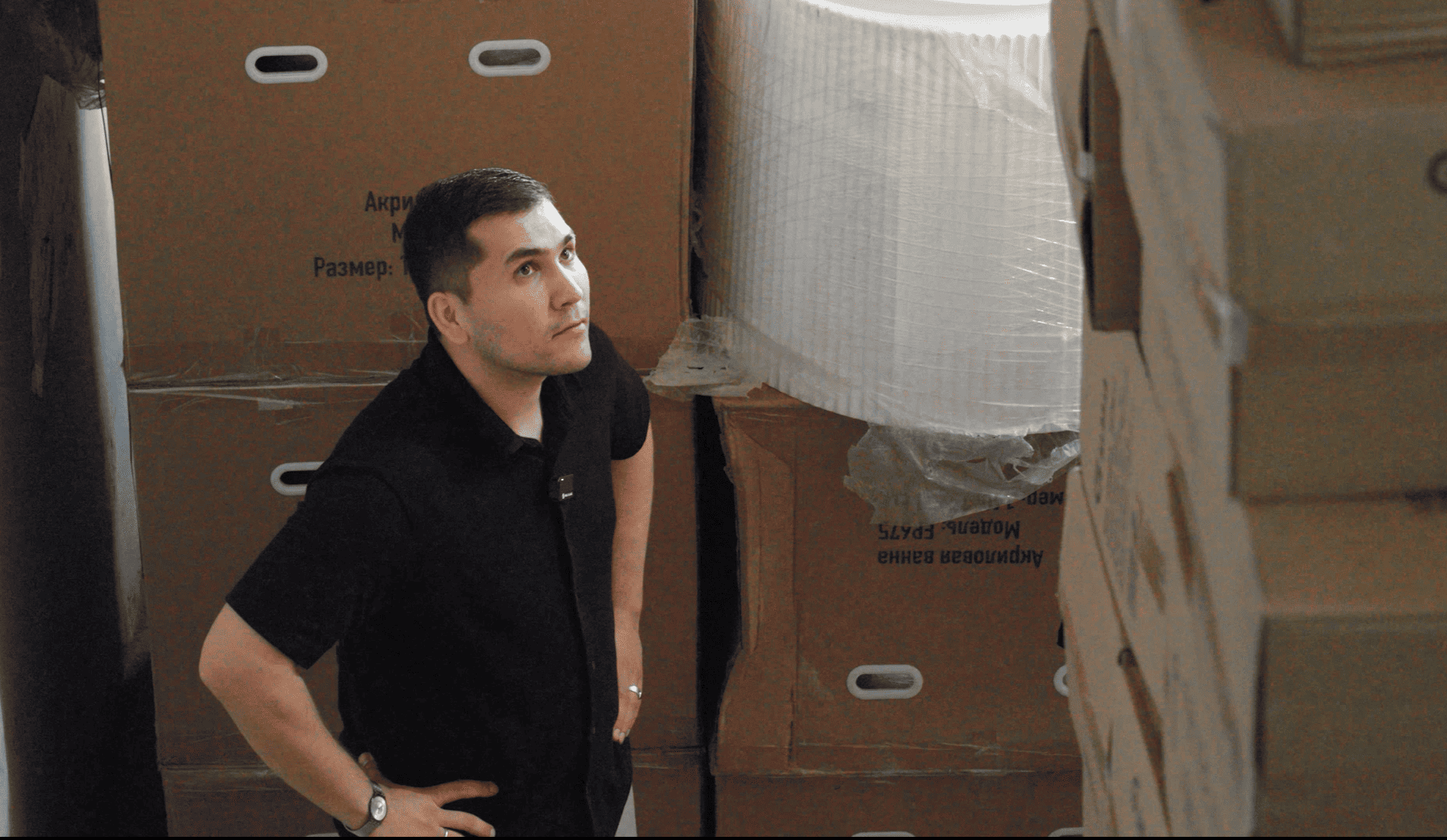
В 2019 году я открыл небольшую точку с сантехникой на барахолке в Алматы. В 2020 году из-за пандемии рынки закрылись, и первый год мы закончили с убытком около 60 тысяч долларов. На второй год я заказал два контейнера акриловых ванн на 80 тысяч долларов, но вся партия оказалась бракованной. Но обо всем по порядку.
В логе моего сборщика данных годами появлялась строка «не удалось получить данные:» и дальше ничего. Я считал это багом форматирования, пока не посмотрел: код написан правильно, просто у asyncio.TimeoutError пустой str(). Дальше выяснилось интереснее. Рядом лежит хелпер с тремя попытками и паузой в пять секунд, написанный ровно под сетевые сбои, а ловит он except aiohttp.ClientError. Начиная с Python 3.11 asyncio.TimeoutError это встроенный TimeoutError, наследник OSError, и к иерархии aiohttp он отношения не имеет. То есть единственная ошибка, ради которой ретраи существовали, пролетала мимо них. Причём у aiohttp есть и свои таймаутные исключения, которые как раз ClientError, и именно это сбивает с толку. Заодно разбираю, как я на основе этих пустых ошибок записал в заметки несуществующее «сетевое ограничение VPS» и построил вокруг него архитектурное решение.
Force says it has received ‘information’ on pair’s stay at royal estate as reported guests of Andrew Mountbatten-Windsor
Detectives in Scotland are investigating Jeffrey Epstein and Ghislaine Maxwell’s stay at Balmoral castle as reported guests of Andrew Mountbatten-Windsor amid allegations that women were trafficked to the royal estate.
Police Scotland said it had received “information” and inquiries were at a “very early stage” into the time the disgraced royal spent with the child sex offender at Balmoral.
Ryan Rickelton and Wiaan Mulder made fine centuries as South Africa fought back to set up a fascinating final day
52nd over: South Africa 151-4 (Breetzke 23, Rickelton 15) There they go! Rickelton gets a ball from Lyon that is not exactly short, but the batter gets back and leans away to make the length and the width he wants, cuts behind point for four. One good partnership and this could very much be South Africa’s day.
“Morning Geoff. Fire up the CRUCIAL FIRST SESSION machine, this really will decide the match. I’m wondering, do you think South Africa missed a trick with only one frontline spinner here? Given the turn and it only getting more exaggerated through the game, Lyon is backed up by Connolly and Renshaw? Coetzee hasn’t really fired - yet - so you wonder what Maharaj could’ve done here...”
Force says it has received ‘information’ on pair’s stay at royal estate as reported guests of Andrew Mountbatten-Windsor
Detectives in Scotland are investigating Jeffrey Epstein and Ghislaine Maxwell’s stay at Balmoral castle as reported guests of Andrew Mountbatten-Windsor amid allegations that women were trafficked to the royal estate.
Police Scotland said it had received “information” and inquiries were at a “very early stage” into the time the disgraced royal spent with the child sex offender at Balmoral.
A great deal is at stake in next week’s midterm elections. The partisan makeup of the new Congress will shape future spending bills, congressional investigations, and judicial nominations, among other things.
And yet, the most consequential bill of the next 12 months — and the one that speaks most directly to voters’ concerns about the cost-of-living — might well pass before the new Congress is seated.
The Bipartisan American Affordability and Jobs Act of 2026 (BAAJA) could dramatically reshape America’s energy system. And the bill’s supporters plan to pass it during the House and Senate’s lame-duck session — the months between next week’s elections and the new Congress’s arrival.
That said, the legislation’s fundamental aim is simple: to make building all forms of energy infrastructure easier.
The BAAJA has united fossil fuel companies and green energy firms in its favor — while cleaving the climate movement in two.
Key takeaways
The Bipartisan American Affordability and Jobs Act would make it easier to build new power plants and transmission lines.
The bill benefits fossil fuel companies, but it would likely do even more to accelerate the growth of clean energy.
Environmentalists are divided over the bill, with critics warning that it would weaken important environmental protections.
The bill has one potentially serious flaw that Congress should fix. But with that change, it would be a win for the climate and consumers alike.
Some climate hawks contend that the legislation pares back vital environmental regulations, while clearing the way for new gas pipelines and power plants that will drive up America’s emissions. “This is not the permitting deal that we were promised,” Jeremy Symons, president of the Center for Energy and Environmental Analysis, told me, citing its “historic environmental protection rollbacks.”
Others insist that the bill is a net-win for decarbonization. In their account, permitting reforms will do more to facilitate a buildout of green energy than to lock in America’s dependence on fossil fuels.
“Fossil is the incumbent technology and fuel mix,” Jane Flegal, a senior fellow at the center-left Searchlight Institute, said. “A system that makes it easier for everyone to build should advantage the nonincumbent.”
I think Flegal’s side has this right. The Bipartisan American Affordability and Jobs Act will likely help renewables erode fossil fuels’ share of the electricity market. By itself, the legislation will not ensure a timely transition to a green electricity system. But it will get us a little further down that road, while also making energy more affordable for US consumers — which might well be the midterm electorate’s top priority.
This said, the current draft of the bill does contain one potentially major — and seemingly, accidental — flaw. Assuming Congress fixes that issue, climate hawks should join hands with Big Oil and push for the BAAJA’s imminent passage.
A carbon-free electric grid requires a lot of infrastructure
The climate case for permitting reform begins with a simple observation: If you want to decarbonize America’s energy grid, you need to build a metric fudge-ton of new infrastructure.
Today, low-carbon energy sources provide about 43 percent of our nation’s electricity. Thus, even if America embraced “degrowth” — and froze its electricity consumption at current levels — zeroing out the power sector’s carbon emissions would require constructing a gargantuan number of new wind, solar, battery storage, and geothermal (and/or nuclear) projects.
But of course, America is not actually going to freeze its use of electricity. And mainstream climate hawks don’t even want it to. After all, if every SUV owner replaces their gas guzzler with an EV, then demand for electricity will rise. And decarbonizing home heat or heavy industry will have the same effect. Indeed, to an extent, this basic process is already playing out.
“We’re seeing quite rapid demand growth,” Flegal said. “And that is not only — or even primarily — because of data centers. It’s because of broader structural trends toward electrifying our economy and onshoring manufacturing.”
Taking demand growth into account, a study from the National Renewable Energy Laboratory (NREL) estimated that getting to a carbon-free electric grid by 2035 would require generating roughly 2,000 gigawatts of wind and solar energy; today, we generate roughly 396 gigawatts.
The challenge appears even more formidable when measured in land. According to Princeton’s 2021 Net Zero America estimate, in a “high electrification” scenario, the US will need wind and solar developments that collectively span nearly 600,000 square kilometers of land — roughly the size of California and Washington state combined.
And even this may undersell the scale of the task. Achieving net zero does not only require constructing immense quantities of wind turbines and solar panels — complemented by battery storage and firm power sources like nuclear or geothermal — but also a vast network of new transmission lines.
America’s transmission infrastructure is already inadequate to our current electricity needs. But a carbon-free grid would demand far more high-voltage lines than today’s. This is because fossil fuel plants are more geographically flexible than renewable ones. Per unit of power generated, gas plants require a small fraction of the land that wind and solar do. And in regions with mature pipeline networks, gas plants can be located in a wide range of places. For these reasons, it’s not that difficult to site carbon power facilities near major population centers or existing transmission lines.
By contrast, wind and solar farms need to be located in areas with both favorable weather conditions and a great deal of affordable land. Such sites are often far from the urban areas where electricity is most needed. Therefore, to replace fossil fuels with renewable energy, America will need a lot more transmission lines. According to NREL, to achieve a 100 percent clean electric grid by 2035 would require building between 1,400 and 10,000 miles of high-capacity transmission lines annually; in 2024, America built just 888 miles.
Given all this, a permitting system that’s biased toward stasis is one that’s biased toward fossil fuels: The harder it is to build new power plants and transmission lines, the longer our electric grids will need to rely on carbon energy.
This world was built for fossil fuels
Alas, the current permitting regime does, in fact, make building power infrastructure really hard.
There are myriad regulatory obstacles to energy development at the state, local, and federal levels. But one major hurdle is the National Environmental Policy Act (NEPA), a law that requires federal agencies to study the ecological consequences of projects before authorizing their construction.
When first enacted, NEPA was not intended to dramatically impede infrastructure development. Indeed, the law does not actually hold proposed projects accountable to any particular environmental standard; it merely requires that a thorough study of the relevant ecological effects be carried out.
But litigators successfully turned NEPA into a tool for obstructing projects — one used by both sincere environmentalists and opportunistic NIMBYs. Such lawyers argued that if the government’s study of a development failed to account for some significant environmental impact, then its authorization was invalid and needed to be redone. When courts started accepting this argument, federal agencies began drafting more and more comprehensive environmental impact statements (EIS), in hopes of preempting legal challenges. In the early 1970s, an EIS could be as short as 10 pages; by the 2010s, the average statement had ballooned to 661.
A Stanford study published in 2023 examining 355 major infrastructure developments found that 28 percent of the projects requiring an EIS ended up facing litigation before construction. And the median NEPA lawsuit takes 19 months to resolve — despite the fact that, in the vast majority of cases, courts ultimately fail to identify any legal flaw requiring a new study, according to an analysis from the Breakthrough Institute. All this doesn’t merely slow projects down; by driving up expected costs, it also prevents many from being pursued in the first place.
A second obstacle to energy development is the exhaustive — yet somewhat anarchic — process for permitting interstate transmission lines. These lines must generally secure approval from authorities in every state whose borders they cross. The federal government already recognizes the impracticality of this arrangement when it comes to natural gas infrastructure: Uncle Sam has claimed the authority to site an interstate natural gas pipeline, in defiance of states’ wishes. But Washington lacks similar powers with respect to transmission projects.
High-voltage lines are further stymied by an absence of procedures for divvying up their costs. Over time, a single transmission project can lower electricity prices across several states. But precisely which jurisdictions will derive the most benefit isn’t always clear ahead of time. And this makes it hard for utilities to agree on how to allocate the lines’ upfront costs, which can nip the developments in the bud.
How the permitting reform bill addresses these problems
The Bipartisan American Affordability and Jobs Act tackles both of these barriers to energy deployment (along with many others).
To clear the way for new high-voltage lines, the bill empowers the Federal Energy Regulatory Commission (FERC) to overrule states that reject or obstruct new transmission projects. (Technically, FERC already has this authority in certain designated corridors. But current restrictions on this power are so binding that the agency has never actually sited a transmission line over state opposition in practice.)
As importantly, the legislation requires regional grid planners to adopt a common set of methods for estimating which jurisdictions will benefit most from a new transmission line (and thus, how much their respective utilities should chip in for it). This will hopefully foster greater consensus. But if it doesn’t, the bill opens up an alternative path to approval: Developers can go above the regional planners’ heads and ask the federal government to approve the line and impose a cost-allocation scheme.
Meanwhile, the legislation also constrains the reach of NEPA litigation. Under current law, after an environmental review is completed, plaintiffs can file lawsuits over that review’s purported flaws for up to six years. Under the BAAJA, they’d have only 150 days. Plaintiffs would also be required to demonstrate direct harm and show that they raised their objections during the review’s public comment process. Most consequentially, the law forbids judges from freezing projects solely because their environmental impact statements were inadequate. Instead, construction would be allowed to continue while federal agencies corrected their review’s deficiencies.
Cutting red tape is good for green energy
By reducing our permitting system’s bias toward the status quo, these reforms make the green transition a bit more possible. Renewables are rapidly growing more cost-competitive. And battery technology is steadily advancing. In a world where new energy infrastructure is relatively easy to build, green power has a good chance of dominating grids in the long run.
But there’s also cause for thinking that the BAAJA’s reforms will disproportionately benefit green projects in the near term.
With transmission, the case is simple: When you look at today’s interconnection queue — which is to say, the backlog of projects seeking connection to the grid — you see that wind, solar, and storage (an enabling technology for weather-dependent renewable power) account for nearly 85 percent of pending capacity. Building out transmission infrastructure should reduce such backlogs, primarily benefiting green technologies in the process.
And the NEPA reforms are likely to benefit renewables more than fossil fuels, even in the short run. To see why, consider the following:
As mentioned, solar and wind are extremely land-intensive. The former covers between 10 and 20 times as much ground as a typical gas plant (even when drilling needs are taken into account), in order to generate the same amount of energy; wind farms can require up to 200 times as much.
Many of the areas that are best-suited to renewable generation — those with abundant sunlight, wind, and open space — are in the western United States, where the federal government owns a large share of all undeveloped land.
If an energy project is built on federal land, it must go through the NEPA process.
For these reasons, carbon energy development probably isn’t as burdened by NEPA as the renewable kind. Gas and coal plants just don’t need as much land in general — and less federally owned western acreage in particular.
According to Daniel Palken, an energy expert at the philanthropy Arnold Ventures, NEPA’s suppressive impact on green development is well-illustrated by any map of wind and solar power in the US. (Disclosure: Vox has received a grant from Arnold Ventures. This story was not funded by that grant, and Vox has full discretion over the content of its reporting.)
“If you look at where the wind and solar congregates, it carefully builds in the negative spaces between where all the federal land is out west,” Palken told me. “Most of the West is de facto off-limits because they just don’t want to go through the process.”
“The NEPA provisions are described as Republican asks,” he added. “But it’s hard to avoid the conclusion that they asymmetrically aid renewables.”
More broadly, the notion that a lax permitting environment can enable a rapid expansion of green energy — and with it, a shift away from carbon power — isn’t just some distant hypothetical. Rather, that scenario has already played out in one of America’s most pro-oil states.
Texas has scant federal or state-owned lands and no NEPA-like environmental review process. “They’re the only state where you don’t need siting permission from either the state or localities to site a large energy project,” Palken said. “And they have had very forward-looking, long-range transmission planning policies.”
Thanks in part to this permitting environment, wind and solar power have flourished in the Lone Star State, rendering its electric grid far less carbon-intensive. In 2003, natural gas and coal generated 86 percent of the power on Texas’s main grid, while wind and solar supplied less than 1 percent. By 2025, renewables’ share had soared to nearly 38 percent, while fossil fuels’ had fallen to 54 percent.
The real problem with the BAAJA
To be sure, Texas is no climate hawk’s idea of utopia. Its permissive regulatory regime has enabled a remarkable green buildout. But by failing to regulate carbon pollution, that regime has also allowed a rise in Texas’s overall emissions, as gains in population, prosperity, and industrial investment have led to higher electricity consumption.
Given this, environmentalists reasonably deem permitting reform inadequate for achieving timely decarbonization.
“Clean energy will not win in the marketplace at the scale and speed needed unless fossil fuels are held accountable for their pollution,” Symons, of the Center for Energy and Environmental Analysis, told me. “Gas and clean energy are growing hand in hand.”
Such concerns animate environmentalists’ objections to the current bill. Two of their complaints warrant attention here — the first because it is widely held but unpersuasive, the second because it is compelling but easily addressed.
Environmentalists’ less convincing objection to the Bipartisan American Affordability and Jobs Act goes like this: Democrats have no good reason to accept the current legislation’s trade-offs. After all, the party will almost certainly have more power in the next Congress than it does in today’s. With control of the House — and perhaps also the Senate — Democrats would have more leverage in negotiations. And they could use this clout to secure permitting relief for green energy projects without throwing as many bones to Big Oil.
“A system where you’re allowed to build the most economic energy resources with fewer encumbrances, fewer delays, and fewer restrictions is, almost by definition, a more affordable system.”
Daniel Palken, energy expert
But there are a couple of problems with this reasoning. For one, permitting reform will still require President Donald Trump’s sign-off in 2027, even in Democrats’ rosiest midterm scenario. And it isn’t remotely clear that the White House will feel compelled to offer Democrats a more environmentally friendly permitting reform bill just because the party captured Congress (especially since the Democratic majorities will likely be inundating the administration with subpoenas and corruption investigations).
For another, however imperfect the legislation may be, it still creates a permitting environment that’s more favorable to green development than the status quo. If Congress passes permitting reform now, the green buildout will likely be further along by 2029 — or whenever Democrats next take full control of the government, at which point they can tweak permitting and environmental rules how they see fit.
The more compelling critique of the BAAJA concerns its “project certainty” provisions. Ironically, this part of the bill was actually a Democratic priority. And it was conceived as a response to the Trump administration’s capricious cancellation of renewable energy permits.
Essentially, the “project certainty” section would prohibit federal agencies from revoking or modifying previously issued permits — or “otherwise interfering with the construction or operation” of permitted projects, unless they uncover a violation of existing law.
But some environmental lawyers fear that the bill’s language is vague and broad enough to threaten the EPA’s future rulemaking authorities: If a Democratic administration tightened air pollution standards, that might “interfere with the construction or operation” of a permitted gas plant. Courts might therefore rule that such regulations are unlawful.
This is genuinely concerning. But it would also be easy for legislators to preempt this scenario with a few tweaks to the bill’s wording.
“I think there is a pretty narrow technical fix to be made that ensures the project certainty section is doing what the drafters wanted it to do,” Flegal said, “which was not to prevent future regulatory action but just to make it harder to rescind legally issued permits.”
When in doubt, err on the side of lowering energy costs
Assuming the “project certainty” details are ironed out, the BAAJA should be good for the climate. And it’s all-but guaranteed to be beneficial for consumers.
According to one analysis, the legislation’s transmission provisions alone would save US households well over $1.1 billion annually on their electric bills.
Further, even the bill’s most regrettable consequences from a climate perspective — such as its facilitation of new natural gas pipelines — would likely be positive for affordability. In particular, such infrastructure could help ease high home heating costs in colder, energy-scarce states like Maine — an issue that some Democratic candidates are explicitly running on.
“A system where you’re allowed to build the most economic energy resources with fewer encumbrances, fewer delays, and fewer restrictions is, almost by definition, a more affordable system,” Palken said.
Thus, to green America’s grid — and save Americans’ money — Congress needs to cut red tape. They should waste little time in doing so.
Using sensors developed for self-driving cars, a Chinese start-up claims it can track and destroy tiny flying targets while avoiding people, pets and reflective surfaces.
In Malaysia, U.S. and Chinese tech giants are pouring billions into vast data centers, straining local resources and testing the limits of Washington’s restrictions on advanced chips.
Gains for Arab-led parties have electrified Taibe, in central Israel, even as voters elsewhere in Israel say they have no place in any future government.
The leading contenders, Prime Minister Benjamin Netanyahu and Gadi Eisenkot, aren’t substantially different in their approach to Israel’s security or in their opposition to a Palestinian state.
Polls show the sister of the late Senator Lindsey Graham in a virtual tie with her Democratic opponent, Dr. Annie Andrews. An upset was unthinkable just a few months ago.
Young men swung to Donald Trump in 2024. Polling shows they are now moving away — but to what? Sabrina Tavernise, a reporter for The New York Times, went to Michigan to find out.
The fate of Dr. Abdul El-Sayed, the progressive candidate in the race, will serve as a litmus test for the left’s potency heading into the next presidential contest.
Всем привет! Я Лев Алимов, техлид платформы хаос-тестирования Storm. Моя работа считается хорошо выполненной, если где-то с моей помощью чей-то production прилег. Эта статья о том, как мы в T-Банке развивали Chaos Engineering, когда в него особо никто не верил.
Расскажу про Chaos Engineering как практику, зачем она нужна, из каких шагов состоит. Приложу ее к разным уровням зрелости команд и компаний, покажу, на каких этапах она действительно нужна. В конце расскажу, как практика Chaos Engineering зарождалась в Т-Банке, что мы делали, чтобы этот маховик раскрутился, какую пользу от этого получаем и какие метрики считаем.
Тут нет законов природы, а точные науки далеки от точности. Тут нет идентичности, нет логики, нет смысла, а может он и есть, но столь туманный, что осознать его не дано даже самым выдающимся философом. Это место, где многие ищут вдохновение, раскрывают потаенные желания или переосмысливают свое бытие. Сон — это удивительное состояние, которое весьма распространено среди обитателей нашей планеты. Однако, по большей степени сон относят к позвоночным. Крайне мало известно о том, могут ли другие организмы видеть сны. Ученые из Боннского университета (Германия) провели исследование, в ходе которого установили, что пауки демонстрируют определенные аспекты сновидения, схожие с человеческими. Как ученые это выяснили, какими типами сна обладают пауки, и считают ли они мух перед сном? Ответы на эти, но может не все, вопросы мы найдем в докладе ученых.
Kentridge’s cine-musical creation, made to accompany Shostakovich’s 10th Symphony, is a marvel of puppetry, dance and humour, exploring humanity, grief and idealism
The Baku international arts festival in Azerbaijan is showcasing an amazing cine-musical creation, perhaps the most amazing animation I have ever seen. Oh to Believe in Another World is an hour-long collage animation with live-action choreography by the 71-year-old South African artist and film-maker William Kentridge. It is shown with the live orchestral accompaniment of Shostakovich’s 10th Symphony, and this event is partly in honour of the 120th anniversary of Shostakovich’s birth this year, and partly to honour Shostakovich’s reportedly unrequited love (and lifelong friendship) for his student, Azerbaijani pianist and composer Elmira Nazirova.
The 10th symphony was inspired by Stalin and premiered shortly after his death, so it seems probable that Shostakovich had been at work on it for some time before this, long enough beforehand for at least some of the composition to have been conceived without any sense of Stalin’s death. Could part of it perhaps have been originally intended as an obediently dramatic tribute to Stalin? Yet the music arguably combines fear, awe, revulsion, and a hysterical reaction to the mad energy of Stalin’s genocidal tyranny, a darkly ambiguous respect for the great dictator whose victory in 1945 was a mainstay of the postwar dispensation; perhaps there is also a feeling in the music’s swirl that a great and terrible era has passed away, and with it a kind of grief at all that had been sacrificed to it.
Что же именно вызвало столь массовое недовольство европейской молодежи и почему оно распространилось так быстро? Связаны ли все эти демонстрации между собой? И как на них будут отвечать власти — с учетом того, что на континенте вскоре пройдет целая серия важнейших выборов?
Всё чаще пользователь поиска получает ответ ещё до перехода по ссылкам выдачи: его пересказывает ИИ-обзор над результатами поиска Google. Попасть в число источников такого обзора — новая задача для SEO. Разберёмся, как устроен блок AI Overviews, по каким принципам он выбирает страницы и что сделать, чтобы среди них оказалась ваша. Каждый тезис подкреплю ссылкой на документацию Google.