Сервис попросил подтвердить личность. Пользователь отправил российский загранпаспорт — и сразу после этого обнаружил, что аккаунт заблокирован. Он утверждает, что живёт в Новой Зеландии по действующей четырёхлетней визе, а деньги за следующий месяц подписки с него списали всего за два дня до ограничения доступа.
Причина конкретной блокировки публично не установлена: последовательность событий сама по себе не доказывает правило «российский паспорт — автоматический бан». Но для пользователя практическая проблема уже возникла: оплаченный инструмент, на который он рассчитывал в работе, оказался недоступен.
Spotify позволяет объяснить музыкальные предпочтения словами. Разбираем возможности Taste Profile, ограничения бета-теста и проверки, которые стоит пройти до оплаты Premium.
Разведывательное управление Министерства обороны США опубликовало снимок китайского многоразового «космического самолета», сделанные спутником компании Maxar Technologies в 2024 году. Это первое четкое изображение секретного космического аппарата, до сих пор снимки в открытом доступе были сильно размытыми.
В Испании на железнодорожной линии, соединяющей Мадрид с южным регионом Андалусия, столкнулись два скоростных поезда, сообщил оператор железнодорожной инфраструктуры Adif. По данным властей, погибли по меньшей мере 68 человек.
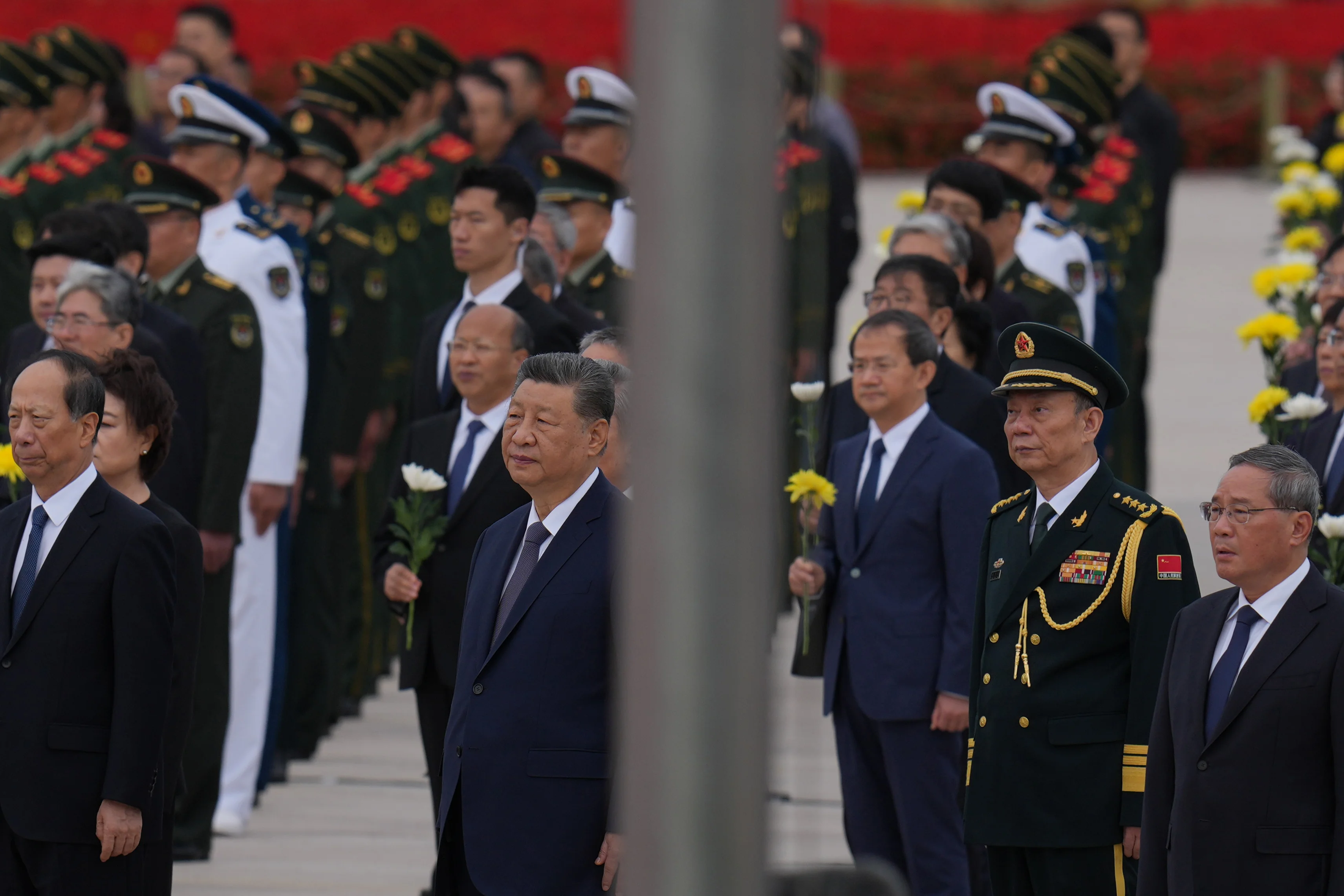
Из Коммунистической партии Китая по итогам 5-го пленума Центрального комитета КПК было исключено рекордное число чиновников — 33 человека. В партии масштабные чистки объяснили необходимостью «ужесточения дисциплины». Эксперты отмечают, что с помощью чисток лидер КНР Си Цзиньпин старается укрепить свою власть перед переизбранием на новый срок.
Би-би-си рассматривает четыре возможных сценария развития событий в Израиле после состоявшихся во вторник выборов, на которых ни одна партия или блок не смогли получить большинство мест в Кнессете. Возможны неожиданные коалиции или, в случае, если договориться не удастся, новые выборы.
Over the last year we’ve been sharing our work leveraging large language models to catch bugs on the fly — a novel approach we call Catching Just-in-Time Tests (JiTTests).
Now, we’re sharing the results and positive impact we’ve seen with Catching JiTTests deployed into production.
Every code change improves our platform, but it also introduces new complexity. With hundreds of millions of lines of code constantly evolving at Meta, traditional testing can’t keep pace. Catching risks proactively, before code lands, enables us to identify risks earlier, respond more effectively, and deliver reliable experiences at scale.
In the five months since we first unveiled this work, we’ve deployed our Catching JiTTests approach to determine its scalability and applicability to the wider industry. Today, Catching JiTTests are no longer a research prototype; they’re part of Meta’s infrastructure, and they’re helping our engineers catch more bugs with less load and a smaller chance of false positives.
The Advantage of Catching JiTTests
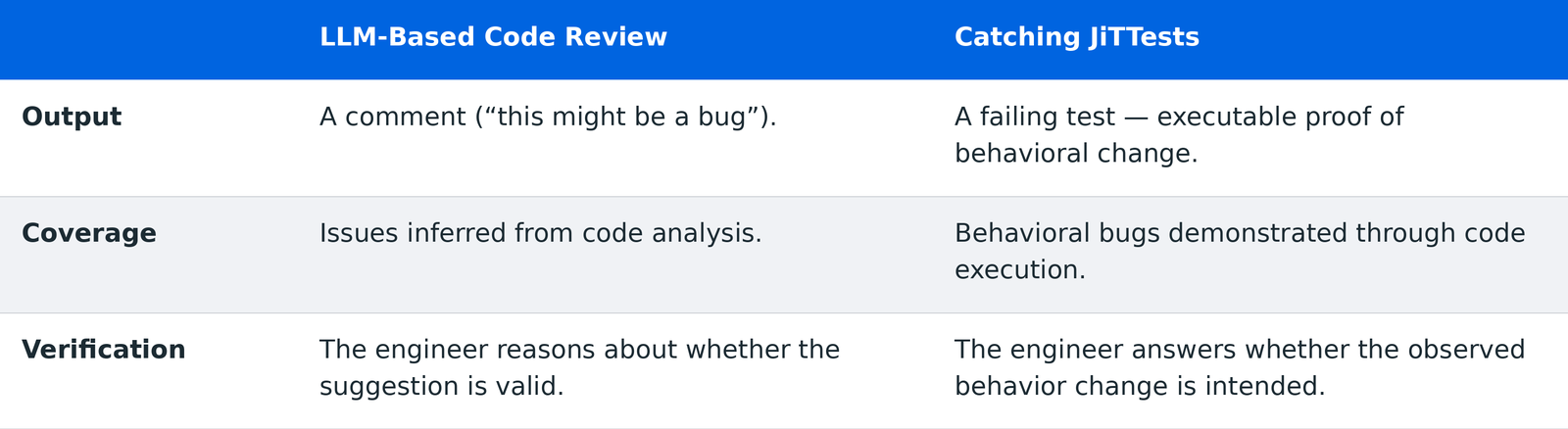
Most AI-based approaches to preventing bugs in code use LLMs and/or agentic AI to review code and detect faults based on prior experience. They work through the same review process that a human reviewer would, only faster. Catching JiTTests is a fundamentally different approach (Table 1): It generates executable tests that demonstrate a concrete behavioral difference introduced by the change. While it requires more computational steps, it catches classes of bugs that LLM- or agent-based code reviews might not.
Table 1. Key differences between traditional LLM-based code review and Catching JiTTests.
How We Implemented Catching JiTTests at Meta
JiTTests are automatically generated and designed to fail, surfacing bugs in code changes (diffs) before they land in production. When they’re applied to a codebase as large as Meta’s, one challenge is distinguishing strong catches (i.e., true-positive failures that reveal real bugs) from weak catches (i.e., tests that may be false positives).
It boils down to a specific question: For every proposed diff, how can we automatically generate tests that find the most severe bugs before they cause severe issues, and do so with a high true-positive rate and without impeding the velocity of our engineers?
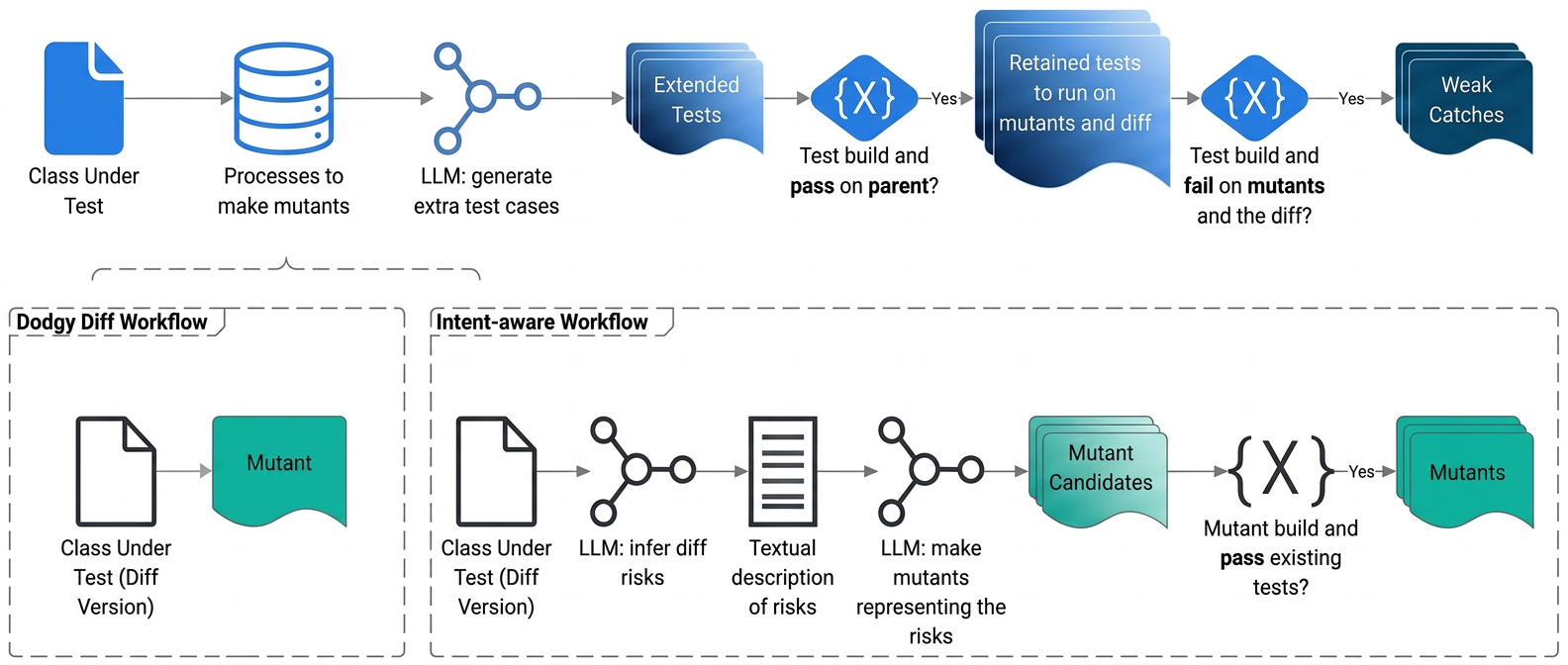
To address this, we developed two tandem workflows:
An “intent-aware” workflow that infers the intention and risks of a code change and targets test generation toward likely failure points.
A “dodgy diff” workflow that treats every code change as if it were a mutant/bug and generates tests to expose its behavioral differences without reasoning about intent. It implicitly asserts that a diff is buggy (hence the term “dodgy”).
Figure 1. The architecture of the dodgy diff and intent-aware workflows for Catching JiTTests.
To filter false positives, we employed a traditional rule-based approach combined with an ensemble approach we call “LLM-as-Judge,” which aggregates judgements from several state-of-the-art (SOTA) LLMs, all tasked with classifying weak catches as likely true or false positives.
We also maintained human review, with an eye toward reducing review load. Our goal is to maintain the consistency of human labeling but reduce the likelihood of an engineer being brought in to review a weak catch.
How It Works
The entire system workflow happens in five stages:
Stage 1: Targeting and Triggering
The system runs overnight on spare capacity and targets diffs submitted the previous day that are deemed “risky” using a mechanism similar to Diff Risk Score (DRS) and trained on previous code changes. This helps ensure test generation is focused on diffs that are most likely to contain severe regressions.
Stage 2: Two Diff-Aware Test-Generation Workflows
The dodgy diff workflow treats each diff as if it were a mutant and usesmutation-guided LLM-based test generation to produce tests that distinguish the diff’s behavior from its parent. The goal here is to maximize the pool of weak catches and with it the chances of finding a strong catch among them.
At the same time, the intent-aware workflow uses an LLM to infer the diff’s intention using the code changes, diff title, and summary. The LLM then describes the “risks”— the ways an attempt to implement the intent could produce errors. It then uses those risk descriptions to construct mutants — each representing a bug that could be introduced while implementing the inferred intent.
Tests are generated to kill each mutant (i.e., distinguish mutant behavior from parent).
Those tests are then run on the actual diff. Any that fail are harvested as weak catches.
Once weak catches are generated, the system must determine whether each is a false positive or actually a strong catch (true positive).
The LLM-as-Judge ensemble consists of a collection of LLMs that review:
The weak-catch test-case code.
The test-execution outcome (failure code, message, execution trace).
The code changes between parent and child (the diff).
The inferred diff intent.
Stage 4: Rule-Based Assessor (RubFake)
We complement LLM-as-Judge with a more traditional, rule-based approach called Rule-Based False-Positive Killing Environment (RubFake).
LLM-as-Judge has rich semantics, but its judgements are non-deterministic and challenging to verify. By contrast, RubFake provides verified, deterministic judgments. Working together, RubFake and LLM-as-Judge produce an overall ranking of weak-catch candidates, with those ranked sufficiently highly being worthy of further consideration.
Stage 5: Human-on-the-Loop (Engineer Reach-Out)
Based on the ranking from LLM-as-Judge and RubFake, the system then decides whether to reach out to human engineers.
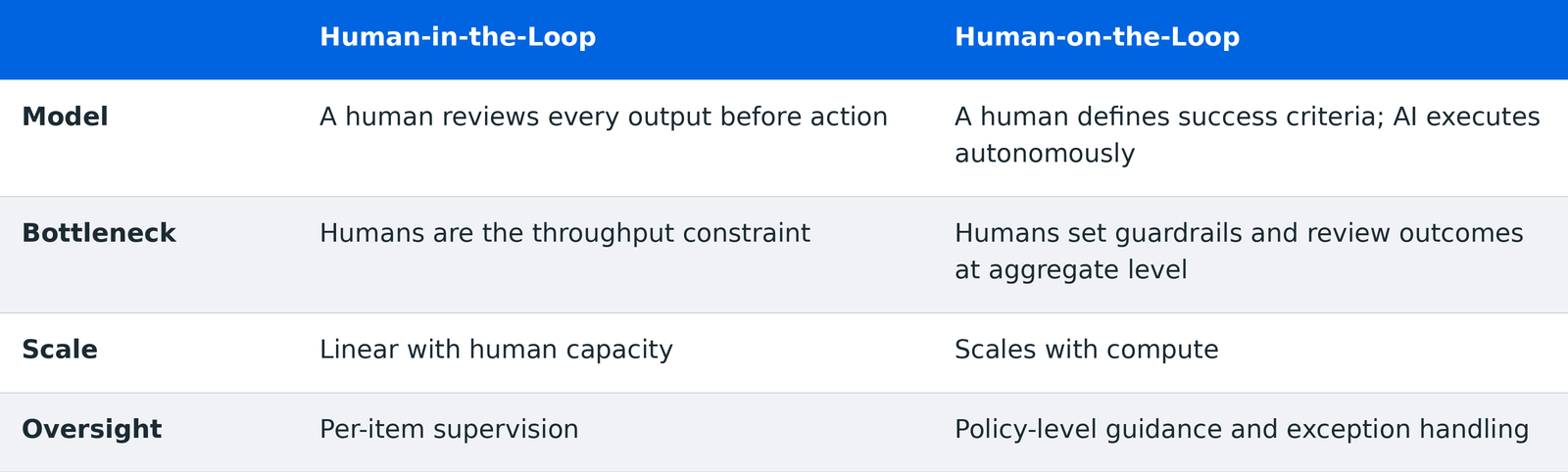
Rather than a human-in-the-loop approach, where a human engineer reviews every output, we’ve reduced friction through a human-on-the-loop approach, where human engineers set criteria and review outcomes at an aggregate level rather than supervising every output.
Table 2. Operational differences between human-in-the-loop and human-on-the-loop approaches.
The Impact of Catching JiTTests at Meta
With the testing system in place, our goal is to get engineers to engage with its results.
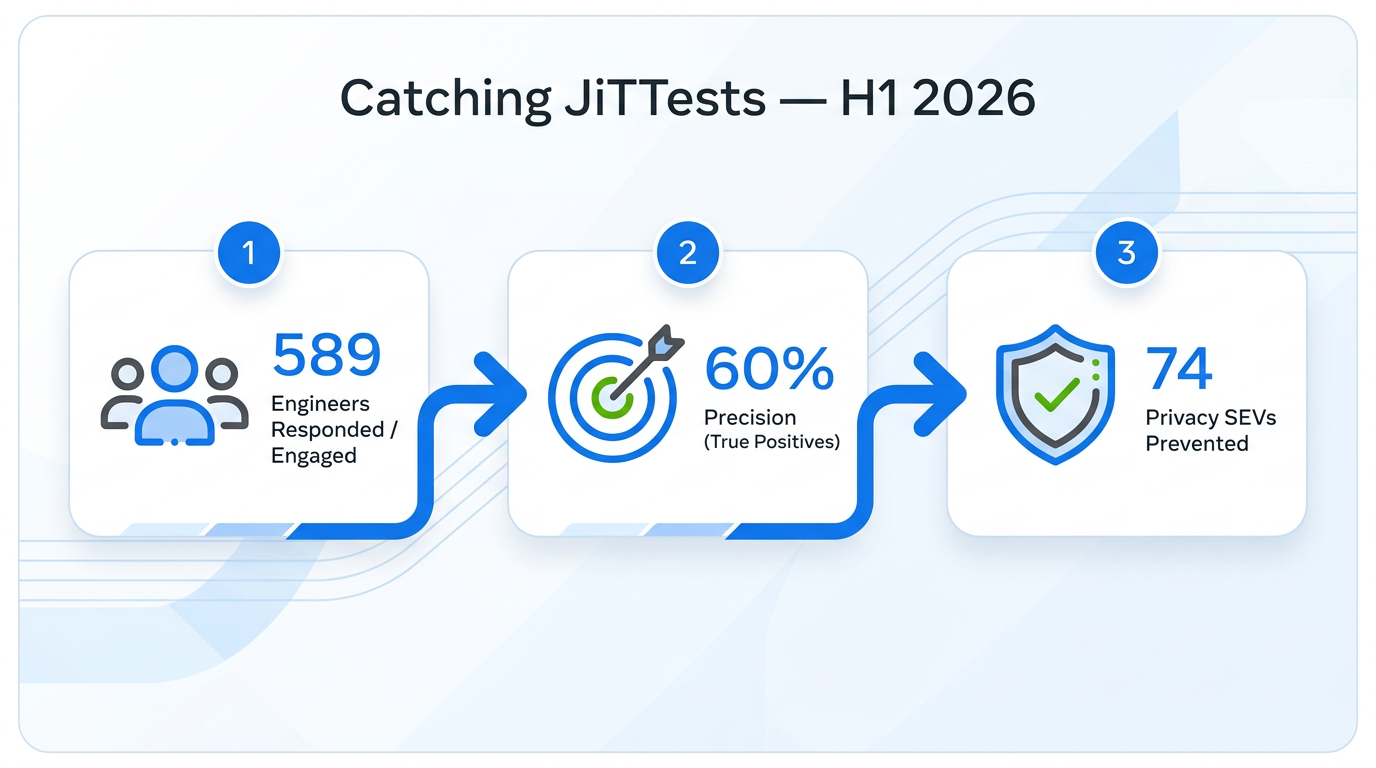
As of this writing, 589 engineers at Meta (64% of our outreach) have engaged with Catching JiTTests. These engineers have reported that Catching JiTTests surfaces genuinely actionable findings, with a 60% rate of true positives.
In the first half of 2026, Catching JiTTests played a key role in catching 74 serious (SEV) privacy bugs at the diff stage, before they landed in production and lowering the overall occurrence of privacy SEVs by 20% during that timeframe.
Figure 2. The impact of Catching JiTTests at Meta in the first half of 2026.
Why It Matters
Agentic software development is helping engineers and developers across the industry write, review, and ship code faster than ever before. But faster deployment means there’s also a need for faster testing. Every bug caught before it reaches production is one that end users never need to deal with. We’ve shown that LLMs can provide an additional safety layer capable of catching what traditional tests may miss, demonstrating that AI-generated testing can scale enough to reduce organizational risk.
Catching JiTTests is a solution that is scalable, both technologically and socially. Combining these tests with a human-on-the-loop approach helps ensure that engineers rarely need to read test code and only need to confirm whether an observed behavioral change was intended.
The approach is generalizable: Engineers define success criteria early, let AI execute the testing, monitor the outcomes at an aggregate level, and intervene at the policy level rather than per item.
A man who stabbed 10 people on a London-bound train "had the greatest delight on his face" and was "loving every single moment" of the attack, a court has heard.
A US Senate race in one of the most Republican states in the country is now a dead heat, according to a new poll showing Annie Andrews, a Democrat, tied with Darline Graham, the Republican incumbent senator.
South Carolina has not elected a Democrat to the Senate since 1998, and Donald Trump won it by nearly 18 points in 2024, but a New York Times/Siena poll this week has the two candidates neck and neck, at 48% each.
Ещё пять – семь лет назад зона ответственности сантехника в основном ограничивалась трубами, запорной арматурой, коллекторами и подключением оборудования. Но само сантехническое оборудование изменилось. Сегодня сантехника становится частью цифровой инфраструктуры жилья. К экосистемам умного дома подключаются системы контроля расхода и качества воды, водонагреватели, насосное оборудование, системы защиты от протечек с датчиками и кранами с электроприводом, и другие инженерные устройства. Их работу можно контролировать через приложения и голосовых помощников, объединять с другими устройствами и включать в общие сценарии автоматизации дома.
Вместе с оборудованием изменился и набор задач на объекте – настройка Wi-Fi, приложений и сценариев автоматизации, что ещё недавно было задачей отдельных специалистов по умному дому и совсем другой, более высокооплачиваемой нишей.
Сегодня эта граница стирается и показательный тому пример на рынке – умная система защиты от протечек воды. Инженерное устройство с полной интеграцией в экосистему умного дома – это наглядный кейс, на котором хорошо видно, какие именно новые компетенции открываются перед специалистом, и почему за эти компетенции рынок готов платить больше.
Открытые системы редко конкурируют на равных с закрытыми лидерами индустрии: у их разработчиков обычно меньше вычислительных ресурсов и данных, чем у крупных лабораторий, и это сказывается на качестве. Kimi K3 — исключение: ее веса можно скачать и развернуть у себя, а на части независимых бенчмарков она обходит закрытые решения GPT и Anthropic. В этой статье я разбираю недавно опубликованный разработчиками официальный отчет, чтобы понять, что стоит за такими результатами.
The battle over data centers is hitting the ballot box. Brookings scholar Darrell West talks about how the backlash against the AI boom, flock cameras and tech companies is crossing party lines.
Guardian columnist, senior economics commentator and host of the new Radical Thinking podcast Aditya Chakrabortty answered your questions on the big ideas around economics, society and democracy, and his new podcast
thegreatfatsby asks: Do you think the fact that Gabriel Zucman, who is a recognised authority on wealth tax is given more respect, time and attention by the mainstream media than Gary Stevenson, who has worked eloquently and tirelessly to spread the debate about the terrible consequences of inequality and whose ideas and analysis are almost identical is because of our cultural fixation on class prejudice?
Aditya says: I’ve followed Gabriel Zucman (and Emmanuel Saez and Thomas Piketty) for a long time, and find his work rigorous and thought provoking. I don’t always agree, but I appreciate their acceptance that taxes on wealth are part of the fight against ever-increasing inequality.
I think Gary Stevenson is eloquent and compelling and is fighting a good fight. His book tells a story very well. But I don’t accept the insistence on a ‘wealth tax’ (as opposed to taxes on wealth) as being the only way we fight everything from inequality to the far right. We have to look at workers’ rights, housing, public ownership, greater democracy in economics and politics as well.
In the age of algorithm, simple, strong messages cut through. But the truth is often more complex.
Aditya says: What a nice question, Marija. I try to read a lot and write a diary. Unfortunately, I have the handwriting of a GP so I can’t read old entries. The other thing is I try to shirk my mobile phone.
Jensen Huang reported to have had close relationship with tech company executive suspected of passing intel to China
US intelligence agencies believe the Nvidia chief executive, Jensen Huang, has been targeted by an alleged Chinese spy who had done business with him, according to a new report by the New York Times.
Alice Huang or Huang Le, of no relation to the Nvidia CEO, is an executive at a Singapore-based datacenter company called Megaspeed. She had previously been suspected of smuggling Nvidia chips to China, prompting American officials to surveil and monitor her. Those officials have determined that she was acting as a Chinese intelligence asset, passing commercial information to Beijing, the New York Times reported, citing unnamed sources.
On Wednesday, Flavio Bolsonaro, who last week lost Brazil's presidential election, was seen arriving in the US on a private jet after having fled in the dead of night.
Jensen Huang reported to have had close relationship with tech company executive suspected of passing intel to China
US intelligence agencies believe the Nvidia chief executive, Jensen Huang, has been targeted by an alleged Chinese spy who had done business with him, according to a new report by the New York Times.
Alice Huang or Huang Le, of no relation to the Nvidia CEO, is an executive at a Singapore-based datacenter company called Megaspeed. She had previously been suspected of smuggling Nvidia chips to China, prompting American officials to surveil and monitor her. Those officials have determined that she was acting as a Chinese intelligence asset, passing commercial information to Beijing, the New York Times reported, citing unnamed sources.
Знали ли вы, что Claude теперь монтирует видео? Не просто пишет сценарий или подсказывает, а делает все сам. Вы кладете в папку исходник и пишете: «Убери паузы, оговорки и слова-паразиты, оставь лучшие дубли, добавь субтитры». Через пару минут в той же папке лежит готовый ролик. Проект, который это умеет, за полгода собрал на GitHub больше 30 000 звёзд, а в соцсетях пишут, что Claude монтирует лучше специализированных нейросетей для видео.
Мы проверили, так ли это. Оказалось, что Клод вообще не смотрит ваше видео перед монтажем. Как он тогда выдает настолько качественный результат — читайте в статье.
Reform UK has launched what it is calling a newspaper, featuring large pictures of Nigel Farage, which the party hopes will replace mainstream media for its supporters.
Though the party is hiring qualified journalists to write its newspapers, the only “reporter” credited with writing articles is Farage, the party leader.
Guardian columnist, senior economics commentator and host of the new Radical Thinking podcast Aditya Chakrabortty answered your questions on the big ideas around economics, society and democracy, and his new podcast
thegreatfatsby asks: Do you think the fact that Gabriel Zucman, who is a recognised authority on wealth tax is given more respect, time and attention by the mainstream media than Gary Stevenson, who has worked eloquently and tirelessly to spread the debate about the terrible consequences of inequality and whose ideas and analysis are almost identical is because of our cultural fixation on class prejudice?
Aditya says: I’ve followed Gabriel Zucman (and Emmanuel Saez and Thomas Piketty) for a long time, and find his work rigorous and thought provoking. I don’t always agree, but I appreciate their acceptance that taxes on wealth are part of the fight against ever-increasing inequality.
I think Gary Stevenson is eloquent and compelling and is fighting a good fight. His book tells a story very well. But I don’t accept the insistence on a ‘wealth tax’ (as opposed to taxes on wealth) as being the only way we fight everything from inequality to the far right. We have to look at workers’ rights, housing, public ownership, greater democracy in economics and politics as well.
In the age of algorithm, simple, strong messages cut through. But the truth is often more complex.
Aditya says: What a nice question, Marija. I try to read a lot and write a diary. Unfortunately, I have the handwriting of a GP so I can’t read old entries. The other thing is I try to shirk my mobile phone.
Перенос учебного портала на новый сервер выглядит довольно просто: развернуть веб-сервер, восстановить базу данных, распаковать файлы и поправить конфигурацию. На практике всё оказалось интереснее.
При восстановлении Moodle 4.1.11 на Ubuntu 24.04.5 LTS мы столкнулись с несколькими проблемами: в конфигурации оказалось неправильное имя базы данных, на сервере обнаружились два каталога с кодом Moodle, MySQL отказывался запускаться, а после восстановления возникли ошибки кэширования и invalidparameter.
В этой статье разберём последовательность работ, диагностические команды и выводы, которые можно использовать при переносе собственной LMS.
Важно: на момент подготовки статьи часть ошибок ещё находилась в стадии диагностики. Поэтому ниже я отдельно отмечаю, что удалось установить, а что требует дополнительной проверки.
Jonathan Bailey, Ella Purnell, Aimee-Lou Wood, Maggie Gyllenhaal and more bring shock and gore to an immersive retelling with real bite
Do we really need another retelling of Bram Stoker’s fabled horror novel, which has already yielded multiple films, plays and radio dramas? Perhaps not, but this new audio version of Dracula, directed by Mary Lambert and adapted by Robyn Aherne, justifies its existence with an unusually star-studded cast, a streamlined story and an immersive and frequently nightmarish sound palette.
Bridgerton’s Jonathan Bailey is smooth and charismatic as the eponymous count who invites a young solicitor, Jonathan Harker (Louis Partridge), to his castle in Transylvania to assist him with the sale of a property. There, Harker becomes increasingly uneasy as he glimpses the count’s diabolical powers and realises that he is, in fact, a prisoner.
Carrick says he is not surprised to still be head coach
He describes Fernandes as ‘important’ for the squad
Michael Carrick has said he will not strip Bruno Fernandes of the Manchester United captaincy after dropping him for the defeat by Bournemouth and that he is not surprised to have kept his job as the head coach.
Carrick and Fernandes held talks this week after the Portuguese criticised the tactics in the loss to Como, resulting in the midfielder being an unused substitute on Sunday. Harry Maguire took the armband but will not retain it for Saturday’s game at Chelsea, with Carrick saying “there is no decision to be made” and praising Fernandes.
Using AI for roles from executive assistants to chiefs of staff, companies are boasting about doing more with less, creating tension with their human workers
On an average workday, Dhruv Amin chats with dozens of colleagues to get things done at his AI startup Anything. He might ask Gwen, his executive assistant, to schedule a meeting, then troubleshoot a technical problem with Cody, his coding partner. Then he might check in with Betsy for search engine optimization, or Juno for onboarding customers. If the office runs out of snacks, he sends a Slack message to Justin, the office manager charged with stocking the kitchen.
But none of these co-workers are people. They’re artificial intelligence agents, software that handles tasks without human intervention. Anything is one of several startups building them, and betting on a future where workplaces will increasingly turn over their sales, marketing, coding and other tasks to semi-autonomous AI. At Anything, there are 15 human employees and roughly 150 agents – a ratio that Amin believes will soon be the norm.
U.S. President Donald Trump takes a meeting at Turnberry, south west Scotland, on July 27, 2025. —Brendan Smialowski—Getty Images
As the Trump Administration forges ahead with its campaign to dismantle the International Criminal Court (ICC) “brick by brick,” Europe is publicly showing a steady stream of support for the institution.
The E.U. last week awarded the court and its officials the Sakharov human rights prize, commending “the important work of the court in upholding international law and justice.” The prestigious recognition came after former ICC judge Navanethem 'Navi' Pillay on Oct. 9 was awarded the 2026 Nobel Peace Prize—an honor long coveted by President Donald Trump. Jørgen Watne Frydnes, chair of the Norwegian Nobel Committee, acknowledged the award was intended to send a “message to those who are attacking, undermin[ing]... the international rules-based system.” Hours after Pillay’s win, U.S. Secretary of State Marco Rubio announced sweeping new sanctions against the ICC. While previous U.S. sanctions had targeted the institution's prosecutors and judges, the new measures were aimed at “cutting off [the court’s] resources” by severing U.S. transactions with the court.
Experts warn that the sanctions could have “extremely disruptive” implications for the court, especially in regards to financial support for case work, travel to the U.S. for judges, and the core functions of the institution itself. “Leaving the political dimension to one side, the rule of law and the just resolution of disputes depends, to a large extent, on the body in question having all available evidence,” says Nabil Khabirpour, an affiliated lecturer in E.U. law and jurisprudence at Cambridge University. “Organizations that are involved in working with witnesses, both on the ground and within the legal infrastructure, are likely to be affected.”
The latest sanctions, which were announced with a six-month initial grace period, are part of a broader push by the Trump Administration to dismantle the institution it accuses of unfairly targeting the U.S. and Israel. The Trump Administration has staunchly criticized the ICC over arrest warrants issued for Israeli leaders, including Prime Minister Benjamin Netanyahu, and former investigations into the actions of American soldiers in Afghanistan. The ICC is recognized as the world’s highest criminal court. It draws its jurisdiction from the Rome Statute, a treaty that went into effect in 2002 and is ratified by 125 countries. Neither the U.S. nor Israel is a state party to the Rome Statute, and therefore they do not recognize the jurisdiction of the court.
Trump has long complained that the ICC oversteps its authority and should not claim jurisdiction over U.S. citizens. He amplified his campaign against the organization at the United Nations General Assembly in New York last month, taking time out of his 45-minute speech to publicly call on “all nations that are members of the ICC to officially resign from this rogue institution, immediately.” He said the U.S. is “opposed to the out-of-control institution known as the ICC” and “will never allow U.S. service members or anyone else to be investigated or given show trials by an anti-American tribunal with no jurisdiction over us.”
His call to action was swiftly rejected by European leaders.
German Foreign Minister Johann Wadephul, shortly after the speech, said: "We will, of course, not be doing that." In an interview with Germany's Deutschlandfunk radio station, he described the court as "an important institution” and said the issue is "one of the areas where we do indeed have to acknowledge a regrettable difference in policy from the U.S. Administration."
Netherlands Prime Minister Rob Jetten also defended the ICC, asking how can anyone “possibly be opposed to prosecuting the very worst crimes?”
“I believe there can be only one response,” he continued, in his own U.N. address. “To say: 'hands off' the ICC, and all those other institutions that protect the international legal order.” The remarks drew loud applause from attending delegates.
Similarly, European Council president Antonio Costa stressed that the E.U. stands “firmly behind” the ICC and argued it’s “unacceptable to threaten or attack the International Criminal Court, its officials, and its staff.”
The European Union as an organization has since strongly criticized the U.S. sanctions against the ICC. In a speech on Oct. 20, E.U. policy chief Kaja Kallas said the most recent “misguided” measures were “against” European interests.
“The U.S. has already adopted individual sanctions, including against nine judges and the chief prosecutor of the ICC. The latest U.S. announcement [on Oct. 9] to impose institutional sanctions puts the entire court at risk,” she argued, adding that Brussels will use the next six months "to open dialogue and look for solutions.”
European lawmakers call for “concrete” action against U.S. sanctions
The European Commission’s choice to take time to consider how to counter the U.S. sanctions has fallen short of what many European lawmakers have called for.
Several leading MEPs, including Germany's David McAllister, chair of the Committee on Foreign Affairs, and France's Mounir Satouri, chair of the Subcommittee on Human Rights, issued a public statement on Oct. 9 calling for the Commission to activate a legislative shield referred to as the “blocking statute,” which would essentially prevent E.U. firms from complying with U.S. sanctions.
“The European Union must now demonstrate unwavering solidarity with the ICC and its personnel—not only with words, but also with concrete acts,” the leading Members of the European Parliament (MEPs) said in a joint statement. “The European Commission must immediately trigger the E.U. blocking statute, shielding the court and European actors from the extraterritorial reach of these sanctions. Europe must stand firm in defence of international law and the rule of law."
This request was bolstered as 58 MEPs reportedly sent a letter to European Commission president Ursula von der Leyen for the Commission to activate the measure.
According to the Commission, the purpose of the European Union’s blocking statute is to “protect E.U. operators from the extra-territorial application of third country laws.” The blocking statute came into force in 1996 in direct response to the U.S. sanctions against Cuba. The aim of the measure was to protect economic operators within the E.U. from the effects of such extraterritorial sanctions, according to the Norton Rose Fulbright law firm. As such, the blocking statute shields European economic operators from the application of the U.S. legislation and sanctions specified in the Annex to the E.U. blocking statute. More recently, the E.U.'s updated blocking statute entered into force in response to U.S. sanctions on Iran after the U.S. withdrew from the nuclear agreement in 2018.
Kallas has expressed an openness to the measure, but also advised caution when delivering her statement on European support for the ICC. “We should keep all options on the table. If we use the blocking statute, we have one shot and we should do it well. So, it should be well prepared," Kallas said, urging companies “not to over comply” with the sanctions, as they are not yet in effect.
ICC prosecutor Nazhat Shameem Khan told the Guardian last week that some ICC staff are already facing "banking difficulties," despite the grace period before the sanctions come into effect. Khan said the banks were “over complying” to minimize risk amid uncertainty over the scope of the measures. She said the court's work has not been hindered.
TIME has reached out to the ICC for comment.
If the E.U. were to activate the blocking statute, it would be a “very important gesture” that could show the Trump Administration how “Europe is serious about protecting the court and that it is prepared to take real steps in that direction,” says Sergey Vasiliev, a professor of international law at Open University Netherlands. But he warns that some may view it as a “very extreme or radical measure, that could perhaps anger the Trump Administration even more” at a time where U.S.-Europe relations are already strained.
Meanwhile, some ICC officials have suggested alternative measures in an effort to mitigate the expected impact of the U.S. sanctions. Osvaldo Zavala Giler, the court's registrar, told Politico that “comfort letters” could be sent out, reassuring firms that they needn’t comply with the U.S. measures.
But Vasiliev argues that this “will not necessarily solve the problem, because businesses are expecting clear assurances of protection… the only such assurance can be provided by the actual triggering of the blocking statute.”
Could the ICC row further escalate U.S.-Europe tensions?
Relations between Europe and the U.S. have been under increasing strain since Trump returned to office in January 2025.
Trump has introduced various waves of tariffs on international trading partners, and has threatened further levies on the E.U. and member states in response to divisive issues.
When Trump’s pursuit of acquiring Greenland as a U.S. territory reached a critical point in January, Trump threatened to tariff European countries that opposed his campaign—a move that earned him strong rebuke from within his own party.
Last month, when von der Leyen invited Canada to work toward becoming the European Union’s first “associate member,” in what she described as an “urgent” reimagining of partnerships, Trump again threatened economic pressure. He called the proposal “laughable” and threatened to “put very serious tariffs or stop trading with Europe on many things” if such an idea were to go ahead.
The Trump Administration has also clashed with its NATO allies. Earlier this year, Trump refused to rule out leaving the alliance over Greenland disputes, and since the start of the Iran war, the President has hit out at NATO countries for refusing to get actively involved in the conflict.
Should Brussels and Washington continue to clash on the ICC sanctions, “this could risk accelerating certain destabilizations, such as what we've seen with the trade wars,” says Khabirpour. International organizations will ultimately stand to suffer if the two remain at odds, he adds.