RSS Feeds
Массированная ночная атака на Киев и область: более 10 погибших
У США снова долговые проблемы. Грозит ли Америке дефолт?
Three admit arson attack at Persian media offices
Свой продукт для управления корпоративами: от MVP за 2 месяца до успешной версии 4.0
Привет, Хабр! Меня зовут Женя, я занимаюсь развитием цифровых продуктов в Sminex. В статье поделюсь опытом разработки и запуска Sminex Event — собственного продукта для управления корпоративами.
Читать далееГорутины изнутри, часть 2

Это вторая часть серии про горутины и рантайм Go. В ней три сюжета: стек, который переезжает по памяти как квартирант; вытеснение, которое прилетает сигналом операционной системы; и полный жизненный цикл горутины, который дословно объясняет каждую строку дампа паники. Первая часть рассказывала, почему потоки ОС дорогие и как Go дошел до схемы GMP: она не обязательна, но там завязка всей истории.
Go читатьStrained smiles and uncertainty - the strange end of LIV Golf 1.0
Конференция ZeroNights 2026 — встретимся 30 сентября

По традиции собираемся на ZeroNights 2026, чтобы обсудить самые животрепещущие темы из мира кибербезопасности, поделиться опытом с коллегами в очереди за бесконечным кофе и порешать таски. Здесь собираются руководители ИБ‑служб, пентестеры, аналитики, AppSec‑специалисты и разработчики.
Где: Санкт-Петербург, LOFT HALL
Когда: 30 сентября
Читать далееHome Office could be blocked from deporting trafficking victims to Albania
Many males are returned even if they have been trafficked but Home Office must now consider new legal guidance
The Home Office could be blocked from deporting many young male trafficking victims to Albania after a major court ruling.
Thousands of Albanian males have been identified as potential trafficking victims in the UK in recent years. Many are sent back to their country even if they are potential or confirmed victims of trafficking, as the Home Office contends they will be safe there.
Continue reading...Зависший пакет на 16 КБ: разбор сетевого дедлока при установке Kubernetes в VirtualBox

В целях тестирования решил развернуть Kubernetes-кластер, состоящий из 1 Control Plane и 2 Worker-нод на виртуальных машинах в VirtualBox (использовал Ubuntu Server). Для развертывания использовал kubeadm.
Казалось бы, никаких проблем возникнуть не должно, но в итоге пришлось потратить несколько часов на отладку возникшей проблемы. Рассказываю по порядку, как и что происходило.
Виртуальную машину изначально настроил в сетевом режиме Bridge (Сетевой мост) через Wi-Fi. То есть она в локальной домашней сети определяется как отдельное устройство и получает собственный IP-адрес (к примеру, 192.168.0.17). Изначально этот вариант кажется самым удобным, так как виртуальные машины могут напрямую общаться друг с другом и доступны с хоста. Однако здесь всплыл нюанс, из-за которого сетевой мост над Wi-Fi показал себя с неожиданной стороны.
PaaS‑сервис: автоматизация работы администратора или что‑то большее?

Российский рынок облачных технологий стремительно растёт, и это не новость. Вместе с тем развивается сфера PaaS-продуктов, которые становятся одним из ключевых инструментов построения IT-инфраструктуры современной компании. В этой статье я расскажу о том, какие возможности может предоставлять PaaS-сервис, и что меняется для пользователя в зависимости от уровня его проработки на стороне провайдера. Мы также поговорим о расширении функциональности таких сервисов и обсудим их преимущества.
Читать далееКак мы переводили страницу объявления на Beduin в мобильной версии Авито

Всем привет! Меня зовут Егор Савинцев, я Frontend Platform Engineer в Авито. Сейчас я работаю в команде архитектуры, а до этого в команде Phobos в рамках Платформизации переводил страницу объявления на Beduin — разрабатывал клиентскую архитектуру и переписывал блоки.
Сразу важное отступление.
Beduin — это Backend‑Driven UI. Если в нативе в коде клиентского приложения есть компоненты, бэкенд присылает им данные, и всё работает. В Beduin бэкенд присылает и данные, и сами компоненты в специальном виде. На клиенте у нас только рендерер — специальный компонент, который принимает JSON и рендерит то, что мы прислали.
В этой статье я расскажу, зачем вообще переписывать работающую страницу, как эволюционировала наша архитектура и с какими компромиссами между нативным кодом и BDUI нам пришлось столкнуться.
Статья будет полезна frontend‑ и mobile‑разработчикам, инженерам платформенных команд, архитекторам клиентских приложений и backend‑разработчикам, которые внедряют Backend‑Driven UI. В общем, всем, кто планирует переводить крупные экраны на BDUI и хочет заранее узнать, что может пойти не так. Спойлер: всё.
Читать далееSnowboarding in the Andes and a twin panda birthday: photos of the day – Friday
The Guardian’s picture editors select photographs from around the world
Continue reading...Home Office could be blocked from deporting trafficking victims to Albania
Many males are returned even if they have been trafficked but Home Office must now consider new legal guidance
The Home Office could be blocked from deporting many young male trafficking victims to Albania after a major court ruling.
Thousands of Albanian males have been identified as potential trafficking victims in the UK in recent years. Many are sent back to their country even if they are potential or confirmed victims of trafficking, as the Home Office contends they will be safe there.
Continue reading...When TV turns sour: the shows we simply can’t stomach any more
They were once the hottest shows on television – gripping, sexy, hilarious, zeitgeisty. But for our writers, the likes of America’s Next Top Model, House of Cards and The Office are now part of their viewing history they feel tainted by
When I think of the summer holidays when I was a teenager, I think of watching America’s Next Top Model for hours on end, critiquing each contestant with my sister. The makeover episode was always my favourite: girls sobbing as their hair was cropped short, or even shaved off. At the time, Tyra Banks seemed like a big sister, giving the contestants the tough love they’d need to succeed in a ferociously competitive industry. Now I feel differently. I hadn’t watched America’s Next Top Model since I was young, but like many, I recently watched Netflix’s excellent series, Reality Check: Inside America’s Next Top Model. It was the strangest sensation, rewatching episodes I hadn’t seen in more than two decades. At times I felt almost teleported back. How could I not find these scenes of models collapsing with hunger utterly abhorrent? I wondered what influence watching a show that celebrated eating disorders had on my own brain. I think it had an impact. I think the residual taint of it is still there. I can’t watch America’s Next Top Model any more, nor do I want to. Ironically, it’s all too ugly. Sirin Kale
Continue reading...Charter plane crash in Alaska kills all eight onboard near US military airstrip
‘Civilian-contracted aircraft’ crashes in western Alaska killing two pilots and six passengers, officials say
A charter aircraft carrying eight people crashed at a remote radar site in western Alaska on Thursday, killing all on board, the US military said.
The crash happened near Cape Newenham Long Range Radar Site airport, approximately 450 miles (725km) west of Anchorage, Alaska.
Continue reading...Could Harry and Meghan's UK Move Signal End of Royal Rift?
Дефект как источник информации о продуктовом риске

Многие считают, что задача QA — найти как можно больше багов. И чем будет длиннее список в баг-трекере, тем «полезнее» тестировщик. В этой статье расскажем, почему QA — не просто ловец багов, а инженер качества. Разберем, как инженерный подход к стабильности помогает команде Modus управлять рисками задолго до первой строчки кода и почему это полностью меняет отношение к процессам тестирования.
Читать далее«Они все равно звезды». Что стало с американской мечтой принца Гарри и Меган — и чем они займутся в Британии?
Как принц Гарри и Меган собираются жить в Британии, с которой они фактически сожгли все мосты
Зачем Канье Уэст едет в Россию?
Rise in migrant deaths as 19 bodies found along Arizona border last month
Pima county figures show highest number of monthly migrant deaths in two years as critics condemn US policy
According to newly released data from the medical examiner’s office in Pima county, Arizona, the remains of 19 migrants, including children, were recovered along the Arizona-Mexico border last month.
The figure accounts for the highest number of monthly deaths in that area since 2024 and brings the number of total remains found to 73 this year, 14 more than the same time period last year.
This article was updated on 21 August 2026 to correct the name of Octavio Fuentes.
Continue reading...Rugby brain injury case able to continue after high court ruling
Governing bodies had asked for ruling to end cases
Judge says claimants ‘blameless’ for missing documents
More than 500 former rugby union and league players’ lawsuits over neurological injuries can continue, London’s high court ruled on Friday, despite their former lawyers’ failure to disclose key medical evidence to governing bodies.
World Rugby, the Rugby Football Union and the Welsh Rugby Union, plus the Rugby Football League and the British Amateur Rugby League Association, argued the claimants’ lawyers had repeatedly failed to provide records.
Continue reading...Brazil’s vast iron mine that supplies the world and fractures the Amazon – in pictures
The Grand Carajás project has made the country a mining superpower, but communities living in its shadow face pollution, displacement and silenced histories
Continue reading...Are you a Gen Z entrepreneur who has started your own business? We’d like to hear from you
We want to hear from young people who have chosen to start their own businesses rather than follow a traditional career path
A growing number of Gen Z are starting their own businesses, with the number of Start Up Loans taken out by young founders rising by 132% over the past five years, according to analysis by the British Business Bank. Meanwhile, Hiscox analysis of Companies House data found nearly 400,000 Gen Z directors are now running UK-registered businesses.
We’d like to hear from people aged between 18 and 29 who have started a business about what inspired you to do it and how you got started. How is your business going? What have been the biggest challenges and rewards? Do you see yourself continuing to run your own business in the future?
Continue reading...[Перевод] Эссе об Elixir. В акведуке все это время была вода. Часть 1

Раскопал на Medium интересное эссе от разработчика Krzyś про Elixir. Написано так захватывающе и самобытно, что не смог пройти мимо. Хотел чуть-чуть подсократить, но каждый раздел важен, а терять стиль автора не хочется. Поэтому разбиваю его на две части — сегодня делюсь первой.
Читать далееWhy consolidating your pension is sometimes a big mistake
French becoming more effective in stopping small boat crossings, UK says
Under-fives and pregnant women told to avoid runny eggs when eating out over salmonella risk
More than 2,500 dead in DR Congo Ebola outbreak, UN says
Body recovered in search for man fallen overboard on cruise ship
Man denies charge over Manchester synagogue attack
Rise in migrant deaths as 19 bodies found along Arizona border last month
Pima county figures show highest number of monthly migrant deaths in two years as critics condemn US policy
According to newly released data from the medical examiner’s office in Pima county, Arizona, the remains of 19 migrants, including children, were recovered along the Arizona-Mexico border last month.
The figure accounts for the highest number of monthly deaths in that area since 2024 and brings the number of total remains found to 73 this year, 14 more than the same time period last year.
This article was updated on 21 August 2026 to correct the name of Octavio Fuentes.
Continue reading...‘It could only have been one person’: top former detective says system failed the murdered journalist Lyra McKee
Jason Murphy believes he knows who killed McKee in Derry, but culture of silence and mistrust of police is denying her family justice
When Lyra McKee was shot and killed on the night of 18 April 2019, approximately 150 people were in her vicinity. The 29-year-old journalist had watched in a crowd as rioting broke out in Derry, Northern Ireland. Police footage captured the grainy outline of a man firing a handgun.
“Someone’s fucking shot,” a bystander could be heard crying in mobile phone footage shown as evidence in court. “There’s a fucking kid shot in the head.”
Continue reading...Jamie and Jools Oliver pay themselves £1.5m dividend as profits almost halve
Pre-tax earnings slump at chef’s food and media group after one-off costs including for a new cookery school
Jamie and Jools Oliver have paid themselves a £1.5m dividend – more than 40% down on last year – after profits at their cookery and media empire almost halved.
Sales at Jamie Oliver Holdings remained broadly steady at £28.4m in 2025, £160,000 less than in the previous year, as a strong performance at the group’s own restaurants, franchise business, cookery schools and TV productions offset a decline in royalties, licensing and endorsements.
Continue reading...Cocktail of the week: Cafe Cùil’s Buckfast bloody Maìri – recipe | The good mixer
The favourite spicy brunch cocktail gets a Scottish twist, complete with Buckfast and a slice of pickle for punch
This is our take on the ultimate brunch cocktail, though of course we had to give it a Gaelic stamp of some kind, so have added a shot of Buckfast and renamed it Maìri. If you’re not familiar, Buckfast is a sweet tonic wine, apparently known for its “healing” properties, made in Devon by Benedictine monks, but that has been adopted by the Scots as our own.
Clare Coghill, chef-owner, Café Cùil, Isle of Skye
Continue reading...With ICC sanctions, Trump wants to make the world safe for war criminals | Kenneth Roth
The US is engaged in a lawless quest to protect American and Israeli officials
The Trump administration has taken another step in its crusade against the international criminal court by imposing sanctions on two more senior ICC officials. The growing number of sanctioned jurists – now 13 – does not change the lawless nature of this quest.
Donald Trump and his henchman, Marco Rubio, want to make the world safe for US and Israeli war criminals. No one should let them.
Continue reading...‘It could only have been one person’: top former detective says system failed the murdered journalist Lyra McKee
Jason Murphy believes he knows who killed McKee in Derry, but culture of silence and mistrust of police is denying her family justice
When Lyra McKee was shot and killed on the night of 18 April 2019, approximately 150 people were in her vicinity. The 29-year-old journalist had watched in a crowd as rioting broke out in Derry, Northern Ireland. Police footage captured the grainy outline of a man firing a handgun.
“Someone’s fucking shot,” a bystander could be heard crying in mobile phone footage shown as evidence in court. “There’s a fucking kid shot in the head.”
Continue reading...Mike D: ‘After Yauch died I couldn’t make music. I’d open a computer file and just feel sadness’
As part of the Beastie Boys, the rapper shot to fame and notoriety in the 80s, before bandmate Adam Yauch’s death saw him withdraw from the spotlight. He returns with a solo album that sees him reckon with greed, mortality – and his past
‘It’s funny how far a joke will get you,” Michael Diamond grins. This time 40 years ago, the New York rapper known as Mike D was working with childhood friends Adam “MCA” Yauch and Adam “Ad-Rock” Horovitz on Licensed to Ill, their 1986 debut album as the Beastie Boys.
The “joke” in question is that record’s cartoonish send-up of frat-bro culture, set to fusions of hard rock riffs and hip-hop beats. As for how far it got them: destinations included global stardom, a page in the history books with rap’s first US chart-topping album, and the crosshairs of British tabloids as they roused a generation to “fight for your right to party”.
Continue reading...Мессенджер, портал, суперапп: что на самом деле нужно вашему бизнесу

Корпоративные мессенджеры, порталы, супераппы — эти термины сегодня звучат едва ли не на каждом совещании. Но что они на самом деле означают, и главное, что из этого действительно нужно вашей компании? Разберемся по порядку.
Читать далееКак строить сканирование активов в MaxPatrol VM. Ч.2 — Windows-активы

Добрый день, дорогие читатели!
В прошлой статье мы разбирали, как импортировать из Active Directory список ПК в домене. Сегодня разберем, как просканировать импортированные Windows-активы. Поговорим о нюансах для АРМов, серверов, контроллеров домена, недоменной технике, проведем эксперимент со сканированием и мельком затронем проблемы лицензирования и End of Support.
Читать далее[Перевод] Почему Уолл‑стрит игнорирует долги техногигантов

Несколько недель назад издание Nikkei Asia сообщило, что у пяти крупнейших технологических компаний США есть долговые обязательства на $1,65 трлн, которые в их балансах нигде не фигурируют. Речь не про ту часть, которую видно, а про второй, куда более мощный пласт долга. Через несколько дней газета Financial Times обнаружила ещё $50 млрд арендных обязательств, которые Nvidia взяла на себя ради одного-единственного центра обработки данных в Техасе, машинные залы которого планируется заполнить её же собственными чипами — обязательство, о котором до этого известно не было
Сумма продолжает движение. Свои прикидки Nikkei проводило ещё до того, как большинство этих компаний успели опубликовать квартальные результаты. А когда несколько дней назад они всё-таки выдали финансовую отчётность, выяснилось, что только из этой пятёрки три компании за один квартал взяли на себя почти $900 млрд новых обязательств, связанных с ИИ. Так что $1,65 трлн — уже оценка заниженная.
И вот поэтому если вы хоть раз заглядывали в финансовые сообщества YouTube, то вы уже знаете, с чем сравнивают ситуацию блогеры. В ход пошло слово Enron. Ютуберы (с огромной аудиторией в социальных сетях, но без внятной экспертизы в в бухгалтерском учёте) посмотрели на эти цифры и пришли к выводу, что перед нами очередной Enron.
В последнее время я частенько подхожу к зеркалу и тренирую ошарашенное выражение лица. Удивительно, но трудно застыть с открытым ртом, показывать пальцем на красную линию и выглядеть так, будто понимаешь смысл термина «аренда». Потому что… ну ладно, вот о чём я хотел поговорить. Правда ли это всё? Нас пытаются надуть? Реальные цифры скрывают от инвесторов, как это делала Enron, пока её не вывели на чистую воду в начале 2000-х? Или реальность более скучная и одновременно интересная? Давайте разбираться.
Читать далееTwo Mexicans arrested as police uncover big meth lab on South African farm
Trump and Ex-Lawyer Michael Cohen Reconcile After Bitter Feud
Joshua fight doesn't look like it will happen - Fury
What 72,000 Bodies at a Fence Revealed about Africa and Europe
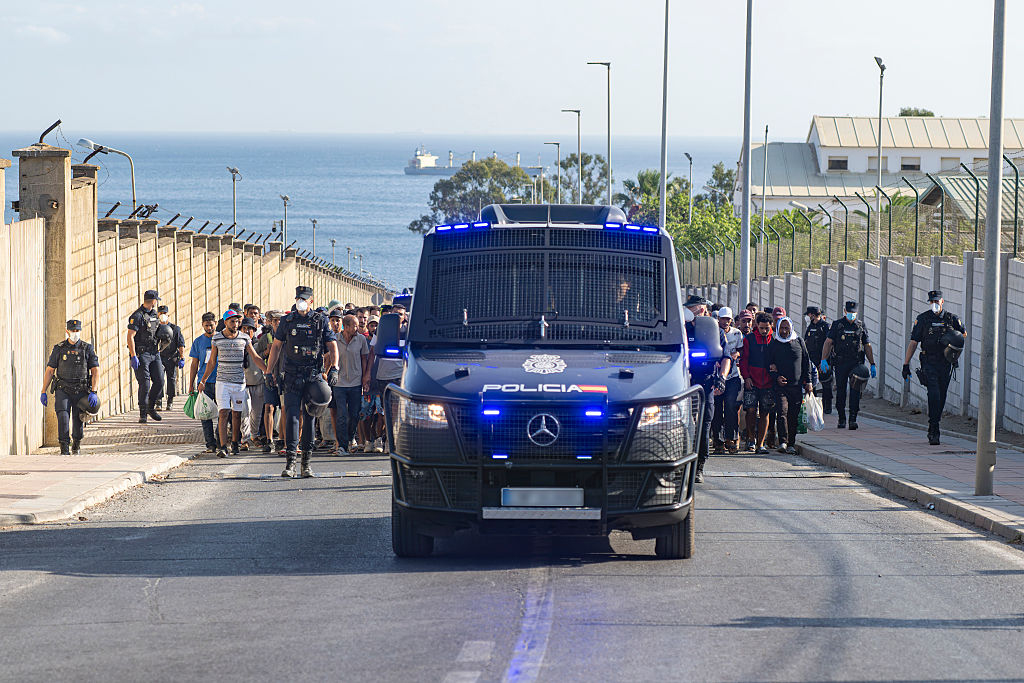
Europe and Africa are at once impossibly close and worlds apart near the northern tip of Morocco. Ceuta and Melilla are two small cities overlooking the Mediterranean Sea and a short ferry ride across the Strait of Gibraltar from Spain. The cities on the African mainland have been controlled by Spain for centuries, and their residents are Spanish citizens who enjoy the privilege of European Union membership.
A border fence and a stark disparity in wealth and opportunity separate the two enclaves from Morocco: Ceuta lies a few miles from the adjoining town of Fnideq, and Melilla is 10-minute drive from Beninsar. In late July and early August, an estimated 72,000 people from Morocco—including many minors—walked, swam and ran toward Ceuta. Some made their way to Melilla, hoping the same rare fortune would await them there. Most carried nothing but a phone in a plastic holster and even lost their shoes to the waves, that later deposited them along the shore.
The people who made the hragga—colloquial for irregular migration—were driven by a combination of calculation and desperation. There were roughly three categories of people. Those who had tried before and had come prepared. There were those who had not been planning but had come to believe through a combination of online misinformation and unverified rumors, that a genuine window of opportunity to make it to Spain had opened and could close at any moment if they hesitated. And there were still others who embraced a daredevil approach with a combination of optimism and pessimism: “Why not? I have nothing to lose.” Many weighed the risks, reasoning that even a beating would be worth spending a day in Ceuta, which they are normally forbidden from entering.
Struggling to find food or shelter, most were either expelled by Spanish authorities or returned to Morocco voluntarily. Videos circulated online showing men kicked by the Spanish Guardia Civil while being expelled, then hit with batons by the Moroccan Gendarmerie on the other side of the border, in a choreography of rejection. The human cost was terrible. Some died falling from slippery rocks. Others drowned or were killed in the crush of thousands of bodies converging on the same narrow strip of shore. Among the 141 dead are: Faten, a smiling 20-year-old, talented footballer hoping to play in Europe; Ahmed, only 17; and many more. Parents of many youth who crossed over to Ceuta have been waiting in anguish at the border in Fnideq, carrying photographs of their missing children, checking with strangers if they happened to see their kids.
The timing was especially awkward for the Moroccan government, as the crisis erupted during the annual celebration marking the anniversary of King Mohammed VI’s reign. The government remained disengaged for days and attributed it to organized criminal smugglers. No one bought the argument, as it would be pointless to smuggle a person to the enclaves, since they are not part of the Schengen area. To reach Europe, a migrant would have to reach mainland Spain. Then, Rabat pointed to a Spanish Supreme Court ruling stating that migrants arriving by sea would not be deported automatically, as if legal nuance, rather than desperation in Morocco, was driving the migration.
The Moroccan government resisted acknowledging the reality behind this wave of migration: inequality, and the absence of work and opportunities for the country’s youth. In fact, those inside the country who spoke out against the state’s mishandling of affairs, and who reiterated why Moroccans wished to leave, were arrested. Only after growing pressure within Morocco did the government eventually agree to assist in identifying the unaccompanied minors and the deceased.
A profusion of conspiracy theories about geopolitics, circulating widely online, further obscured the actual forces driving the migration. Certain narratives, offered without any evidence, sought to portray the migrants as pawns in political games, disregarding entirely what drives and motivates people to leave home on such perilous journeys.
Repression and unemployment in Morocco
A constitutional monarchy, Morocco holds regular multiparty elections but the palace and its entourage dominate political and economic power through formal and informal means. Morocco has a repressive state, a deeply unequal society, and a profound crisis of unemployment and underemployment, especially for its young population.
From banning protests to fining editors to arresting rappers and journalists, the crackdowns on political freedoms in Morocco have increased tremendously. While hundreds of the country’s brightest and most promising people perish in prisons, privileged Moroccans are more concerned with reputational damage to Morocco or insist that the country needs evolution and not a revolution. But how is evolution possible when a teenager demanding public hospitals instead of luxury football stadiums or unions pressing legitimate labor demands can get them beaten and arrested?
Morocco’s economic model has produced soaring headline growth alongside deepening inequality, feeding a resentment that runs deep. Over the past two decades, capital has flowed toward megaprojects—the Tangier Med port, the Africa-Atlantic Corridor—financed by a mix of foreign and private investment. The services sector employs the largest number of people, followed by agriculture, forestry, and fishery.
The working age population of the country has grown by more than 10% over the past decade but employment has increased by only 1.5%, according to a 2025 World Bank report. The official unemployment rate stands at around 10% and at around 27% among young people aged 15-24. Yet 60-80% of workers in Morocco work in the informal economy, according to a 2025 report by the UN Economic Commission for Africa. The result is an economy whose glittering infrastructure sits uneasily alongside stagnant wages and rising prices for food, fuel and housing.
Unsurprisingly, many of the Moroccans who had expressed their frustrations and their desire for reform and opportunity in multiple waves of protests—the Arab Spring-era protests in 2011, the Hirak protests in 2016, the Gen Z protests in 2025—trudged by the thousands toward Spain. When loyalty flows only one way, the haves accumulate ever more while the rest are left to watch lavish banquets for Throne Day—and resignedly sigh, “hiwa hadchi li ‘ta Allah (This is the fate God has given us).” Hence, rather than asking, “Why do they leave?” we would do better to ask, “Why would they stay?”
Morocco has no shortage of resources: the country possesses rich agriculture and fisheries, phosphate, minerals, and enormous extractive projects in the occupied Western Sahara. A sense of being cheated is shared by millions as the economic benefits and opportunities do not trickle down to ordinary people. The contradiction between these natural resources and the everyday poverty, unemployment, and hardship experienced by ordinary Moroccans is expressed in the Moroccan chant that goes: “l'fosfat ou jouz bhorra / wa sha'bha mkhorra (Phosphate and two seas / yet its people still suffer).”
Moroccans see their government invest in the bling of glossy festivals and football stadiums built for the 2025 Africa Cup of Nations and the 2030 FIFA World Cup, which Morocco will co-host with Spain and Portugal. In the face of such visible wealth, it is what the state fails to do that carries the greatest weight.
A long transit in Tangier
Tangier is perched on the Strait of Gibraltar and has long served as a bridge between Africa and Europe. The city has drawn a rich tapestry of internal migrants from across Morocco, its diaspora, and the broader African continent.
In the early 1990s, when Spain—following a transformation of migration policies in the European Union and the implementation of the Schengen agreement—imposed more restrictive visa regimes, irregular migration began to accelerate. The International Organization for Migration estimated that irregular crossings to Europe through the Strait of Gibraltar rose from fewer than 5,000 in 1999 to around 20,000 in 2003.
Wars in Afghanistan and Iraq, military interventions and civil wars across Africa and intensifying climate catastrophes in the following two decades swelled global migration flows. Alongside African migrants awaiting passage, thousands from other parts of the world joined them. Europe, Australia and North America have all sought to obstruct migrants from coming in by any means necessary. The European Union outsourced border control offering economic and political incentives to Turkey and Morocco to stem the flow of migrants.
Under one EU-Africa agreement alone, $2.35 billion was allocated for deportations. This includes detaining migrants and dropping them in remote deserts. Several exit points along the so-called Eastern and Central Mediterranean routes were either sealed off by civil war in Libya, by special agreements with Turkey, and a bottleneck formed along the Western route through Morocco and Senegal.
Spain has already constructed a 1,600-foot floating barrier along the sea border following the Ceuta crossings. In the past decade, tens of thousands of migrants have died in Mediterranean crossings alone. But as Hein de Haas, a sociologist of migration, has explained, restrictive immigration policies fail to stop migration as there is a structural demand for cheap migrant labor in Europe. The waters of the Atlantic and the Mediterranean are full of the remains of those who perished while trying to reach Europe, victims of a system that treats human mobility as a threat to be managed rather than a reality to be humanely addressed.
But the combination of rising inequality and violence globally, and the need for a workforce, means people won’t stop migrating. This means that current border policies don’t stem migration but instead increase death and suffering. Precisely because it takes much longer, thousands of migrants are stuck in Morocco. Mehdi Alioua, a Moroccan sociologist, has called this phenomenon “transit migration.” Each must find rent and work, saving for yet another attempt at a better passage. Some have children, who grow up speaking fluent Darija, the Moroccan colloquial tongue, and who eventually become part of the working class fabric of Tangier. Some migrants with means share rented apartments in the affordable, peripheral neighborhoods of Mesnana and Boukhalef in southwestern Tangier.
Migrants without any financial resources, and mostly from other parts of Africa, camp in the woods in the forested outskirts of the city, where conditions are bare. When I visited their makeshift dwellings to meet some of the migrants, a strange odor hung in the air. Sticky puddles drew flies. I moved past the dumping ground and reached their improvised living quarters, which were kept meticulously clean.
During my fieldwork in Morocco between 2013 and 2018, it was obvious that many African migrants in long transit in Tangiers endured dire living conditions and faced racism. Black migrants were often called “Mamadou,” and sometimes even the dreadful “Ebola.”
In December 2013, Cédric, a young Congolese man, fell from his apartment rooftop in Boukhalef while being chased by the police. Many believed he had been pushed. Images that circulated on migrants’ phones showed his head smashed against the granite floor. Two days after his death, I saw the putrid pool of dried blood, nearly black, where he had fallen, when I visited his friends to pay my respects. What stayed with me for months was that I could still make out the pattern of the spatter from the impact.
Cédric’s death was a key turning point. A growing number of Moroccan activists understood the necessity of rejecting the notion that, in a poor and authoritarian country, organizing against racism is a “privileged” or “European preoccupation.” Moroccan activists, drawing on their own experience of repression, understood how short the distance can be between dehumanization, complacency, and abuse. They grew more attentive to the living conditions of migrants and began to challenge the normalization of racism more explicitly.
On one of those days, I met Najiba, a young activist, near Bab Al Qasba, one of the gates leading to Tangier’s medieval city. She and her comrades were showcasing their posters in hopes of garnering support from passersby for a demonstration the next afternoon. A placard read in beautiful Arabic calligraphy: “Kuluna Afariqa (We Are All African.)” Her group got some attention: some people paused for a few minutes to watch before moving on; others muttered some remarks too.
Najiba fell into conversation with a young man, around 16 years old. He had mocked the group’s slogan and pressed her on why they bothered organizing against racism. “Wasn’t it naïve,” he asked, “to defend the Africanos?” She told him that everyone had been a migrant once, and that Tangier itself had known great waves of migration from people of the northern Rif region.
She asked him where his own family was from. They shared Rif ancestry. “Ah, a Riffi, as well,” I heard her respond. “Did you know they used to say the Riyafa were taking people’s jobs and houses when our grandparents first came here?” She took him seriously and made him see historical patterns. He was intrigued and the teasing stopped. By the end of it, she remarked, “So we’ll see you here tomorrow, yes?” He made no promise. But he did wave goodbye, and his laugh, this time, was genuine.
The road from Ceuta
Many people located Ceuta and Melilla on a map for the first time during the recent frenzy. It would be no surprise if eyebrows were raised upon seeing just how far Spanish territory extends. These were sites of Portuguese and Spanish slave-trading routes and military garrisons in the 16th century.
The crossing to Ceuta was neither the first nor will it be the last of its kind. Because of its exceptional scale, Ceuta laid bare, much clearly, the contradictions of humanity in miniature, from kicking down someone to having the capacity to walk in someone else’s shoes. While a Dutch-Moroccan celebrity tweeted tactlessly, “Moroccan swims to Ceuta with an iPhone 16 to get an iPhone 17,” a woman took off her own shoes and handed them to a barefooted migrant.
While Italian, French, Spanish, Dutch, American and British politicians ratcheted up the headlines, numerous border staff stretched their discretion to the maximum to handle the situation with dignity. When fascists across Spain sowed panic and rallied to stop “the invasion,” local communities marched and blocked an anti-migrant demonstration. Ordinary people came out to provide emergency support; groups such as No Name Kitchen documented the treatment of migrants. Hope lies precisely in these different approaches.
I have been thinking repeatedly about Najiba, the activist organizing in defense of African migrants in Tangier. There were migrants from elsewhere in Africa in Ceuta, and they would have had much less protection or support once deported. Najiba’s example gave me hope that, even in the most difficult circumstances, solidarity can arise.
I think of the conversation between Najiba and the young man in Tangier: the boy’s smirk transforming into a thoughtful frown. I would like to think that something clicked in that moment. I wish I could reach back and speak with him. Standing there in Tangier, he was able to see things from another perspective. Perhaps he too instinctively recognized the moment for what it was. Or perhaps he, too, was among the thousands who had left for Ceuta.
Norah O'Donnell shares how she wants to be honored and remembered when she dies
Дом, который построил Билл: История Microsoft Bob и его невероятного провала

Под конец нашей скевоморфной недели — история еще одной метафорической оболочки, которая должна была подружить неискушенных пользователей с дебрями домашней компьютерной технологии. И, как обычно, что‑то должно было пойти не так…
ИИ-пузырь на рынке США: предупреждение ЕЦБ, долговые риски и мнения экспертов

Опасения по поводу возможного «ИИ-пузыря» на фондовом рынке США нарастают, причём не только в самой Америке. Европейский центробанк выпустил доклад, в котором предупредил о вероятной коррекции акций ИИ-компаний даже в том случае, если их нынешние оценки рационально обоснованы.
ЕЦБ провёл параллели между ИИ-бумом и «пузырём доткомов» 1990-х, а также с периодами развития железных дорог и электрификации, за которыми всегда следовал обвал. Европейский регулятор опасается, что энтузиазм инвесторов по поводу ИИ может резко смениться разочарованием, а последствия падения рынков затронут не только США.
Читать далее