RSS Feeds
Growth Plays Key Supporting Role in Bank of Canada Rate-Hike Decision
What we know as Flávio Bolsonaro lands in US after Brazil election loss
Пять месяцев приручал GoClaw. В итоге плюнул и написал свою систему

Или о том, почему десять пользователей иногда полезнее тысячи звёзд на GitHub.
Пять месяцев я пытался собрать из существующих open-source-компонентов нормальную управляемую среду для корпоративной разработки с ИИ-агентами. Разобрался во всех сортах этого добра, и в итоге пришлось написать свое.
Читать далееSpain Crash Survivor Describes a ‘Twisted Tangle of Metal’
New study estimates 75% of deceased ex-NFL players had brain disease CTE
Research looked at prevalence of chronic traumatic encephalopathy in 2,362 players who died in 2008-2023
A new study published on Wednesday estimates that about 75% of former NFL players who died over a 15-year period had evidence of chronic traumatic encephalopathy (CTE).
The research, published in Jama Network Open and conducted by a Boston-based team, examined the estimated prevalence of the degenerative brain disease among NFL players who died from 2008 through 2023. Researchers found that the estimated rate of CTE among these players was substantially higher than the rates observed in brain samples collected from the general population.
Continue reading...Conservative influencers charged with unlawful voting after ‘Muslim garb’ election stunt
James O’Keefe and Cam Higby were trying to show vulnerabilities in allowing a voter to vouch for another
Two rightwing influencers have been charged with felonies in Minneapolis over attempts in the state’s election primary to disguise themselves in what they called “Muslim garb” and claim they were local voters.
James O’Keefe and Cam Higby went to polling places in Minnesota during the state’s August primary in an attempt to show vulnerabilities in the practice of “vouching”, where a registered voter from the same precinct can vouch for another voter’s eligibility.
Continue reading...От языка к действию: как устроены агентные ИИ‑системы

LLM умеет рассуждать и генерировать ответы, но что делать, если системе нужно самостоятельно выполнять задачи, взаимодействовать с внешними сервисами и проверять результаты своих действий? Здесь начинается территория ИИ‑агентов, где появляются новые архитектурные решения и сложности. Разбираемся, как устроены агентные системы, какие подходы к планированию и взаимодействию агентов существуют и что необходимо учитывать при их разработке.
Изучить агентные системы‘It all happened in a split-second’: survivors recount details of deadly train crash in Spain
Passengers describe carriages full of seriously injured people after crash that has claimed at least 68 lives
Josimar Medina woke a little before 9am on Wednesday to find himself airborne and hurtling through his carriage on the fast train from Madrid to Seville.
“I remember flying through the air and looking for my girlfriend, who was also shooting through the air,” said Medina, a 37-year-old tourist from the northern Peruvian city of Chiclayo.
Continue reading...New book revisits the 2023 killing of an unhoused man in crisis on the NYC subway
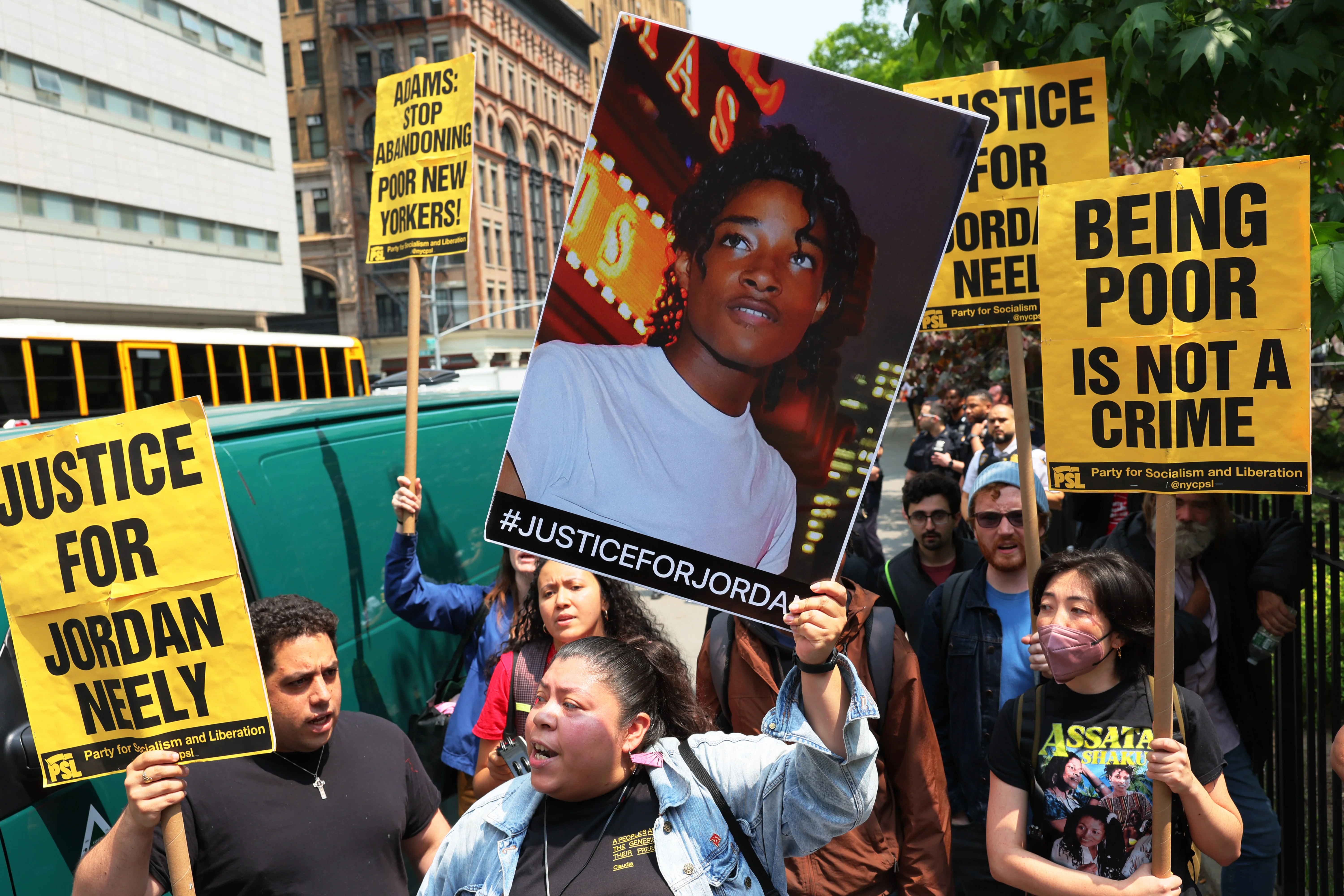
Jordan Neely was frightening fellow passengers. A former Marine named Daniel Penny put Neely into a chokehold, killing him. Journalist Anand Giridharadas investigates the incident in Man in the Mirror.
(Image credit: Michael M. Santiago)

Byron Donalds Holds Slim Lead in Florida’s Race for Governor
‘It all happened in a split-second’: survivors recount details of deadly train crash in Spain
Passengers describe carriages full of seriously injured people after crash that has claimed at least 68 lives
Josimar Medina woke a little before 9am on Wednesday to find himself airborne and hurtling through his carriage on the fast train from Madrid to Seville.
“I remember flying through the air and looking for my girlfriend, who was also shooting through the air,” said Medina, a 37-year-old tourist from the northern Peruvian city of Chiclayo.
Continue reading...India’s ultra-cheap internet is about to get more expensive
Why dogs catch yawns from their owners but not other dogs
Howe, Nagelsmann, Pochettino: can anyone end Manchester United’s doom loop?
Even an elite coach would surely struggle at Old Trafford amid the executive chaos and with an unfit, uneven squad
In January 2014 the 13th series of Celebrity Big Brother aired in the UK, the show so popular that its run time was extended by five days before a public vote anointed Jim Davidson the winner. Then, two years later when Brexit happened, people wondered where their tolerant country had gone, lamenting the ephemeral spirit of London 2012 as though the 2011 riots were some kind of fever dream, not a desperate response to decades of structural and institutional racism exacerbated by the cruelty of unnecessary austerity.
The truth is that if security is quickly upended, it was built on quicksand to begin with. Which brings us to Manchester United, easing effortlessly from an uplifting third-place finish to some of the worst football in their history.
Continue reading...I’ve been watching the 7 Up TV series. And one change in the way we behave really struck me | Adrian Chiles
Before mobile phones, being filmed was very rare – and if you were, you acted naturally. Today, our relationship to the camera is very, very different
Not for the first time, I got something wrong. As someone who made a living being on camera, I developed theories about what it takes to be yourself on screen. My main thought was that everyone in the world would soon be able to do it, because they’d be getting so much practice.
Once upon a time, hardly anybody was filmed or videoed. When the head of my middle school announced in assembly one morning that there would be television cameras in the dinner hall at lunchtime, every child woke up. For once the headteacher had our full and undivided attention. Consternation was in the air. This would have been about 1979. Regional television news probably needed pictures to cover a story about school dinners or something. Nobody, but nobody, in the school that day missed that evening’s edition of Midlands Today. It was a big deal. I saw the back of my head, and was agog.
Continue reading...Federal Reserve leaves interest rates unchanged despite rising inflation
Burnham insists 'no confusion at all' over his Brexit position
Fed holds interest rates steady even as inflation remains stubborn
The Federal Reserve opted to leave its benchmark interest rate unchanged — but investors widely expect the central bank to raise rates at its next meeting in December to combat stubborn inflation.
(Image credit: Andrew Harnik)

Fed holds interest rates steady even as inflation remains high
Allison Pearson said to be negotiating exit from Daily Telegraph amid job cull
Columnist’s relations with some senior editorial figures said to be strained over subjects she raised in her columns
The controversial Daily Telegraph columnist Allison Pearson is understood to be in negotiations about leaving the broadsheet as the newspaper’s new owner makes significant newsroom cuts.
Sources told the Guardian that Pearson – firmly on the right of the Telegraph’s roster – is preparing to announce her exit imminently and is crafting a statement about her future plans.
Continue reading...Activist Dolores Huerta Dies at 96. Here's What To Know About Her Trailblazing Life
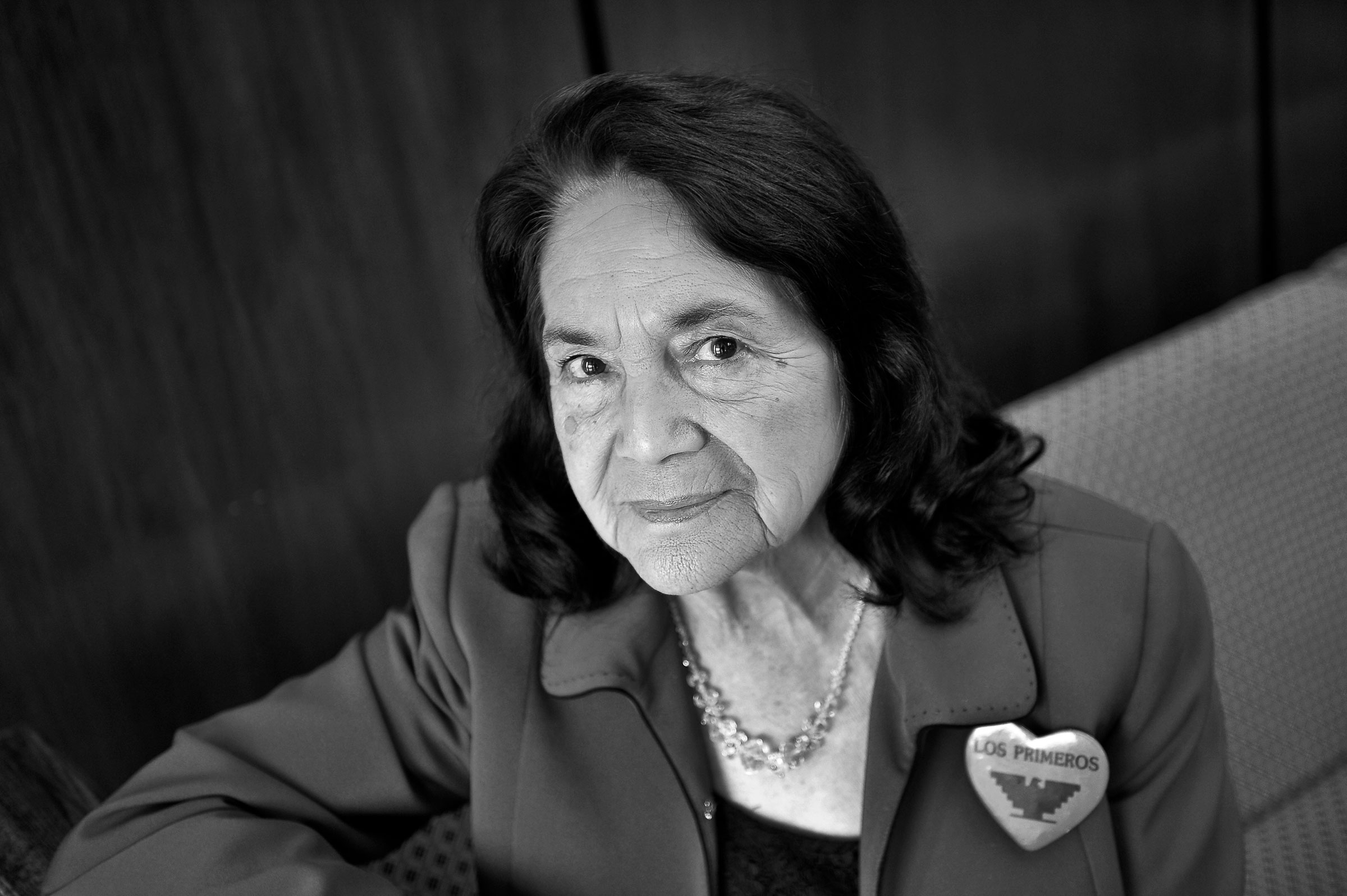
Dolores Huerta, an internationally renowned activist, community organizer, and political force who co-founded what is now known as the United Farm Workers of America (UFW) alongside Cesar Chavez, died Wednesday at her home in Bakersfield, California. She was 96.
Read More: Dolores Huerta, Labor Leader and Civil Rights Icon, Dies at 96
News of Huerta’s death was shared by family members through her Instagram account, though the post did not disclose a cause of death. The New York Times reported that the cause of death was cancer, citing a spokesperson for Huerta.
"We know that many of you around the world share in our mourning, and we will be following up on plans to recognize and celebrate her incredible life and legacy," the post said.
Huerta dedicated her career to fighting a variety of causes, including labor rights, women's rights and immigrants’ rights. She is also credited with coining the phrase "Yes we can"—"Sí se puede"—which was later adopted by Barack Obama.
Read More: TIME100's Most Influential People of 2026: Dolores Huerta
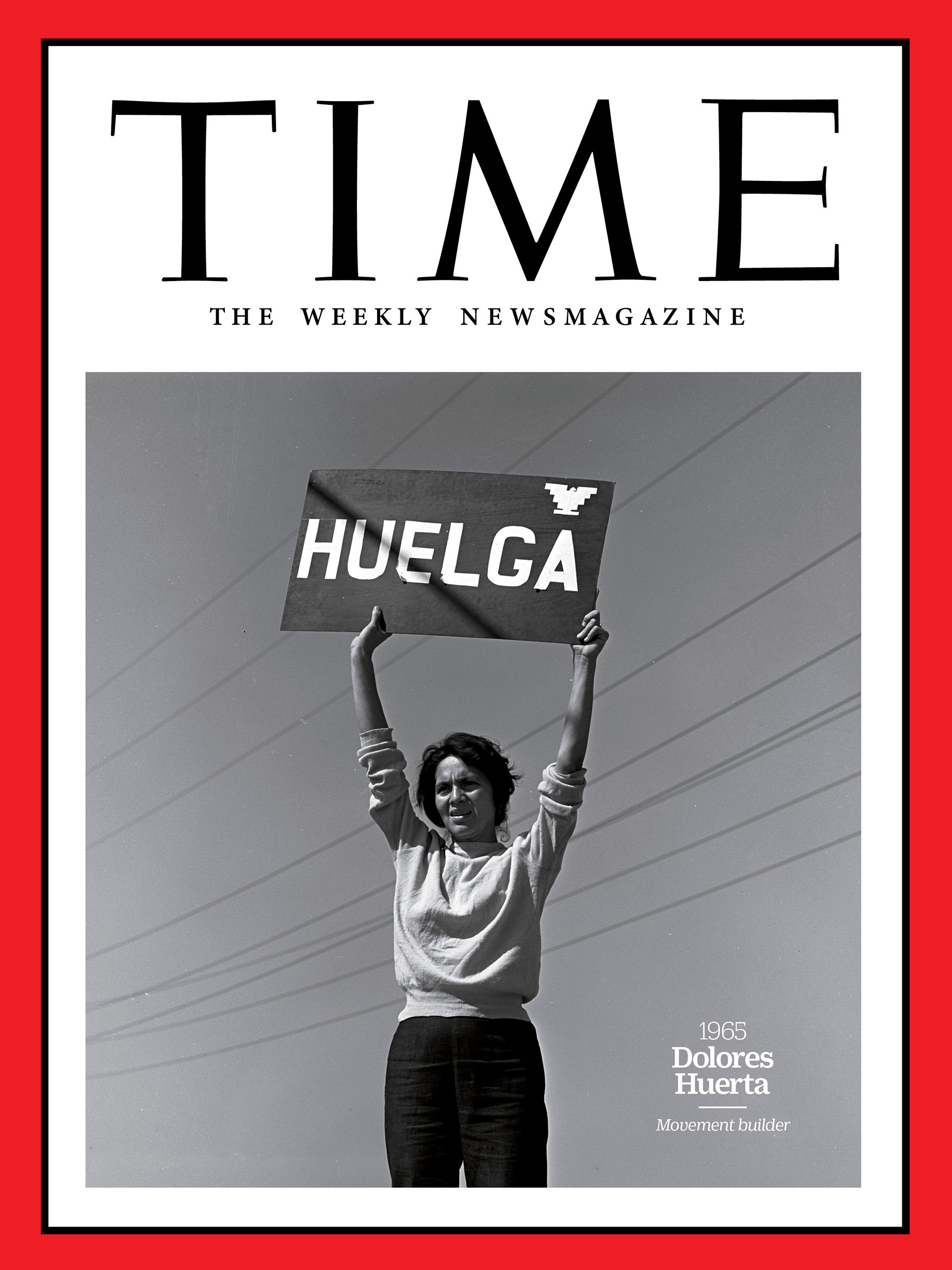
In March 2026, Huerta publicly accused Chavez of sexually abusing her decades earlier, breaking a silence she said she had maintained to protect the farmworker movement. Her disclosure accompanied a New York Times investigation into allegations that Chavez sexually abused women and girls.
"I think she kind of radiates empowerment not only for herself, but for others," Mario Garcia, a professor of Chicano Studies and History at the University of California, Santa Barbara, told TIME in an interview before Huerta's death. "She's really quite an electrifying person."
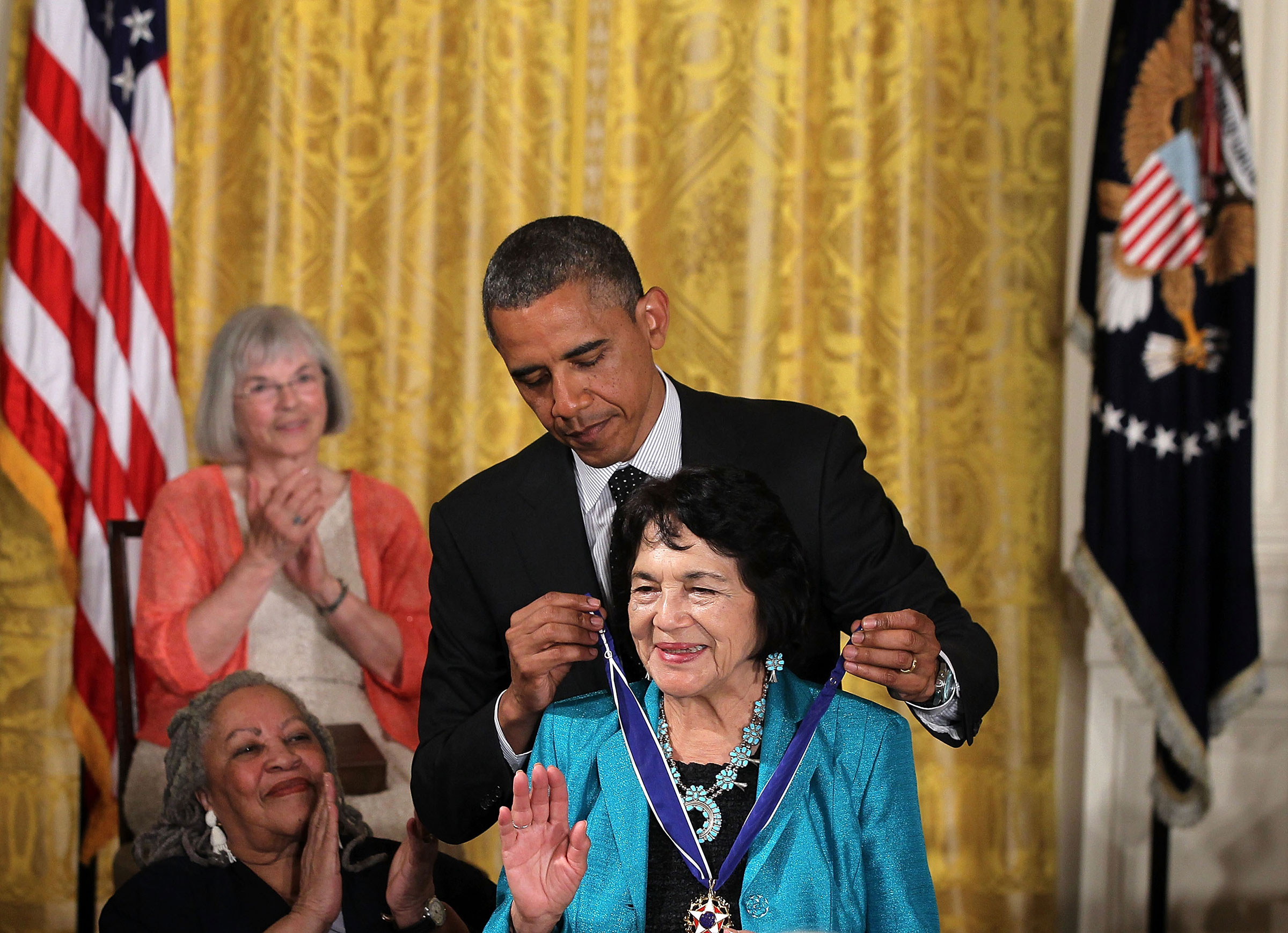
Indeed, when Huerta received the Presidential Medal of Freedom in 2012, Obama noted that she "does not play."
"Without any negotiating experience, Dolores helped lead a worldwide grape boycott that forced growers to agree to some of the country's first farmworker contracts," Obama said during the ceremony. "And ever since she has fought to give more people a seat at the table. 'Don't wait to be invited,' she says. 'Step in there.'"
"On a personal note, Dolores was very gracious when I told her I had stolen her slogan, Sí se puede, Yes we can," Obama added. "Knowing her, I'm pleased that she let me off easy."
How Huerta's early life shaped her activism
Huerta was born on April 10, 1930, in Dawson, New Mexico, to Alicia Chávez and Juan Fernández, who both played a major role in her views on justice.
Her father was a miner and farmworker who went on to join the New Mexico state legislature. After her parents' divorce, her mother opened up her own hotel in Stockton, California, and often offered affordable or free rooms to low-wage workers, according to a biography by the Dolores Huerta Foundation (DHF). Huerta often said she became a feminist because of her mother. As a girl, Huerta was a high-achieving student, an active member of several school clubs, and a member of the Girl Scouts. Huerta now has a Scouts patch dedicated to her.
In 1945, one of her two brothers was beaten for wearing a zoot suit, an ensemble then popular with Black and Mexican-American men who were often unfairly labeled as delinquents. She has said that her brother's beating further influenced her activism.
After Huerta graduated from high school, she obtained a provisional teaching credential at the University of the Pacific’s Stockton College, which later became San Joaquin Delta College, and began teaching at an area elementary school. She also got married and had two children with her husband at the time, Ralph Head. She has repeatedly said that her students, many of whom were children of farmworkers, inspired her activism.
"I think the one thing that really kind of hooked me for life was going to the homes of some workers who did not have linoleum or wood on their floor, only dirt," Huerta told MAKERS, a documentary project featuring influential women, in 2012. "And yet, these are people who are working, they're working very hard and you know that this is wrong."
Huerta decided to pursue a career in community organizing in 1955 when she met Fred Ross Sr., founder of the Community Service Organization (CSO) and a nationally influential community organizer who began his career fighting for the rights of Dust Bowl-era farmworkers.
Finding her voice
At a November 2018 TED Talk, Huerta told an audience she found her voice while volunteering at the Stockton chapter of CSO, which she co-founded.
She described a day she was volunteering there when she was 25 years old and a disabled farmworker walked in asking if someone could help him apply for disability benefits. She went to a welfare office with the man, but she was not allowed to submit an application on his behalf. Defeated, she returned to CSO, where Ross told her to go back and demand that a supervisor allow the man to submit an application.
"I kind of overcame my anxieties and my fears. I went down to the welfare office and I demanded to see the supervisor," Huerta said. "That taught me a lesson. That taught me that I had a voice."
Ross taught Huerta to make demands of people, she said, especially public officials. He also instilled the importance of voting.
While at CSO, Huerta founded the Agricultural Workers Association, led voter registration drives and met Cesar Chavez in 1955, while he was an organizer with CSO. Chavez would later become CSO's executive director in 1959.
Ross died in 1992, but Huerta described Ross as her "spiritual father" for the rest of her life, and the first person to teach her and Chavez community-organizing techniques.
Founding the United Farm Workers
In 1962, Huerta and Chavez left CSO to found the National Farm Workers Association, which would later become UFW, a union that continues to advocate for the rights of agricultural workers.
They were motivated to found the association after hearing from scores of California farmworkers working under harsh conditions: no benefits, low wages, and no access to bathrooms or water while in the fields. The Bracero Program, established through a 1942 agreement between the U.S. and Mexico, recruited Mexican workers to address wartime agricultural labor shortages and continued until 1964.
Chavez and Huerta believed the Bracero Program allowed for farmworker abuses and lobbied to end it. They lobbied against the program, which ended in 1964.
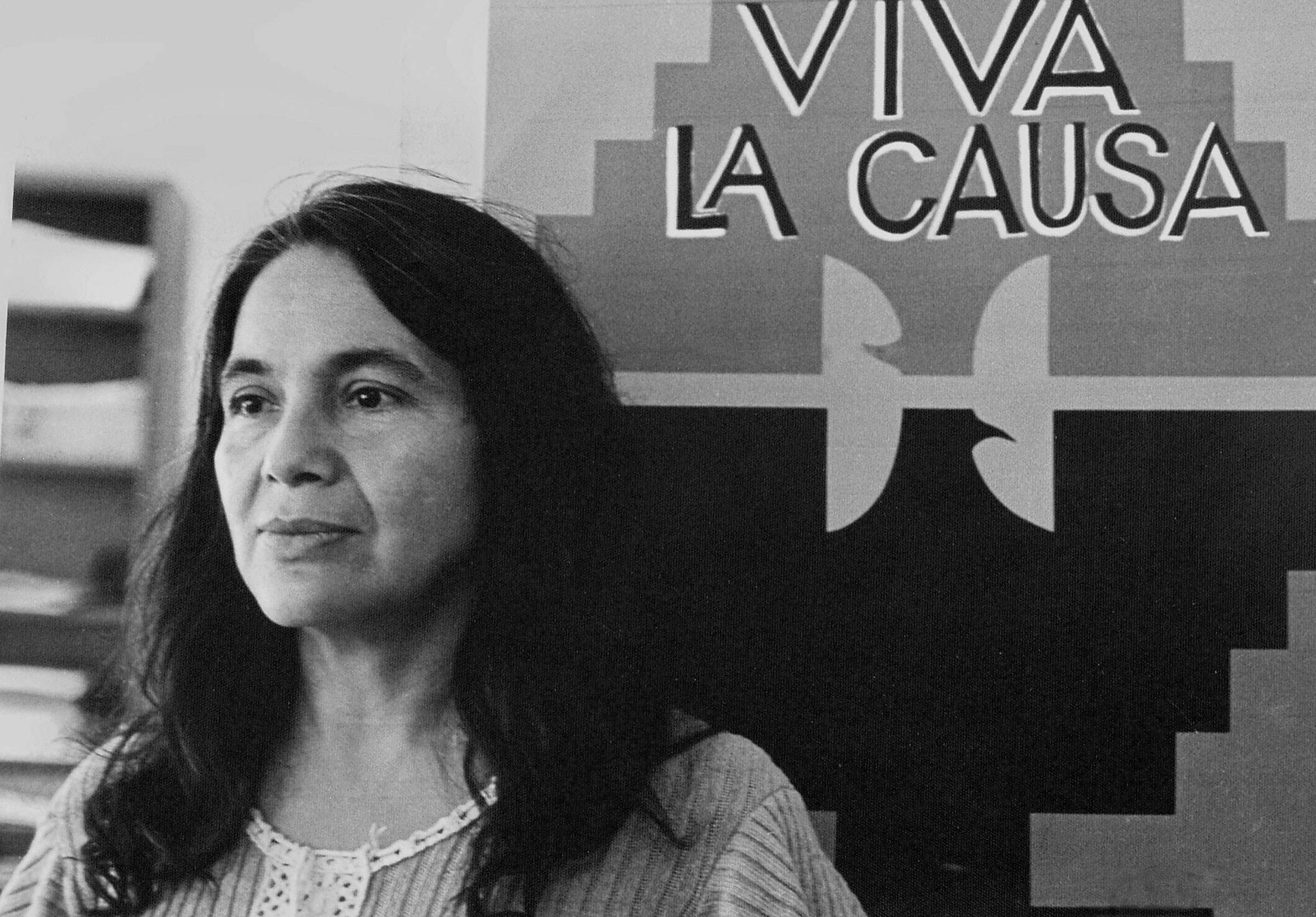
Huerta and Chavez continued their fight for workers' rights, including leading protests, worker strikes, hunger strikes, and arguably their most famous tactic, national boycotts. Huerta helped organize the nationwide grape boycott that supported the Delano grape strike of 1965-1970. The strike began with Filipino farmworkers affiliated with the Agricultural Workers Organizing Committee; Huerta and Chavez’s National Farm Workers Association subsequently joined them. The Delano Grape Strike and Boycott convinced grocery store chains to stop selling the fruit until industry labor standards were set.
Huerta’s boycotts were effective in forcing industries to guarantee better working conditions for their employees.
"I think one of the things about when people are oppressed is that they start accepting their condition and they often kind of blame themselves," Huerta said during a 2015 Q&A with the National Portrait Gallery. "Our job was to convince them again that they could make a difference and that they had the power to do it."
In 1975, California passed the Agricultural Labor Relations Act, which gave farmworkers the right to unionize. The state credited Huerta as instrumental in establishing those rights. Though Chavez often receives national accolades for the achievements of the farmworker movement, historians say Huerta played an equally essential role through every success—but historically received far less credit.
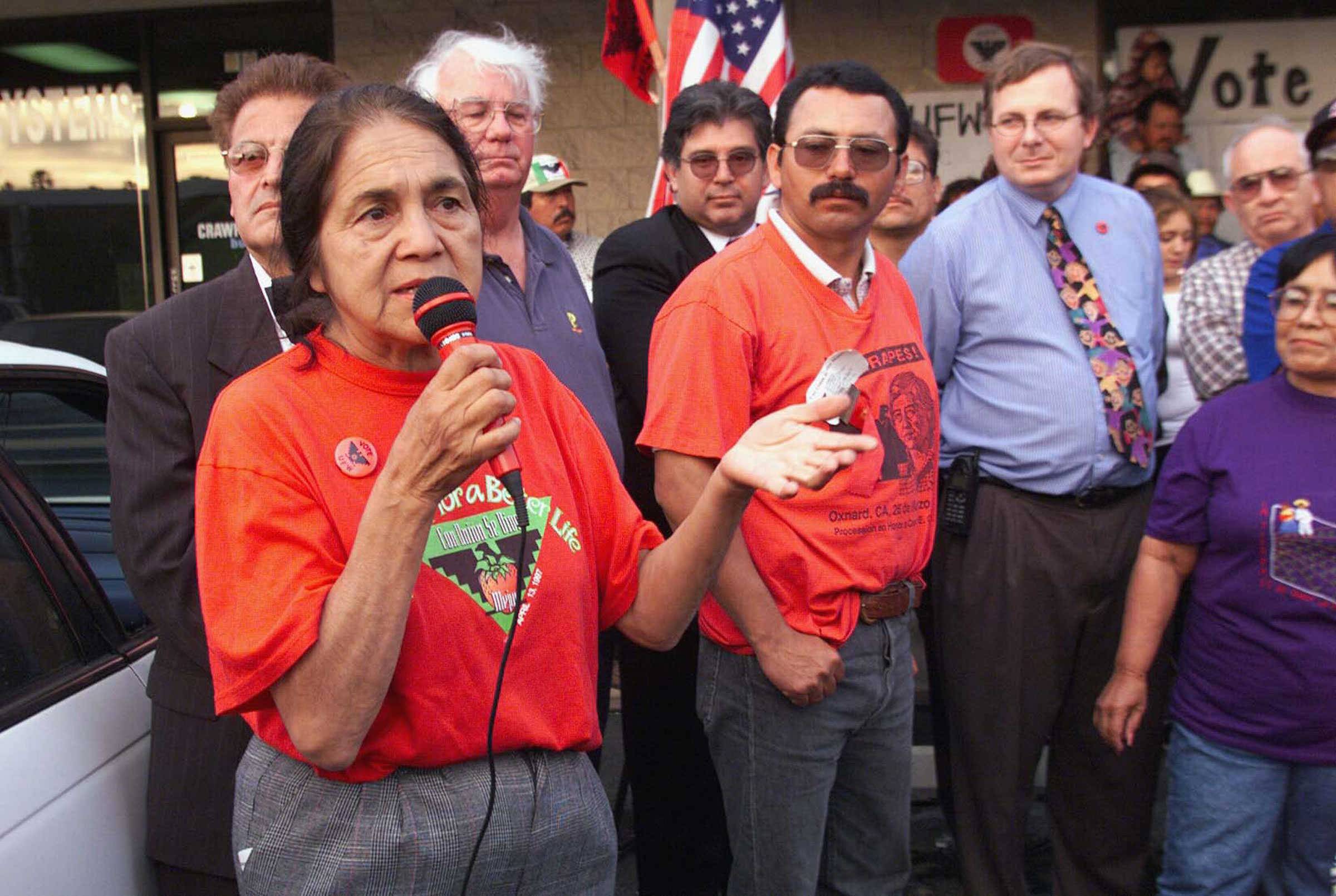
"[Chavez] didn't win you over with his rhetoric, [Chavez] was always soft spoken, but he also radiated strong internal leadership qualities," Garcia said. "[Huerta], by contrast, was always much more verbal, a much better speaker than [Chavez]."
In a 2018 interview with TIME, Huerta said she didn't expect recognition.
"I think that’s very typical of women," she said. "I had been acculturated to be supportive, to be accommodating, to support men in the work they do. We never think of getting credit or recognition or even taking the power. We didn’t think in those terms."
She added that she believed times were changing. "That could make an incredible amount of difference in our world,” she said. “We will never have peace in the world until feminists take power."
In March 2026, Huerta disclosed that Chavez had sexually abused her in the 1960s. She alleged that he pressured her into sex on one occasion and raped her on another. Both encounters resulted in pregnancies, she said, and she arranged for the children to be raised by other families. She said she later developed close relationships with them.
Huerta said she had remained silent for decades because she feared damaging the movement to which she had devoted her life. Coming forward after a New York Times investigation into allegations that Chavez abused other women and girls, she emphasized that the movement’s achievements belonged to thousands of people.
Balancing activism and motherhood
Huerta was a change-maker while also raising 11 children, which gave her kids a front-row seat to her activism.
During the five-year Delano grape boycott, Huerta said she and her family encountered violence.
"There were times when my home was terrorized in the middle of the night, my windows broken when I'm there alone with my children," she told MAKERS. "We had shotguns and rifles aimed at us."
In order to start the farmworkers union, Huerta had to move most of her family—by then she had seven children—to Delano, while leaving two of her children behind in Stockton, California. Huerta credited the women of the movement, including Cesar Chavez's wife, Helen Chavez, and his sisters-in-law, for organizing childcare in Delano.
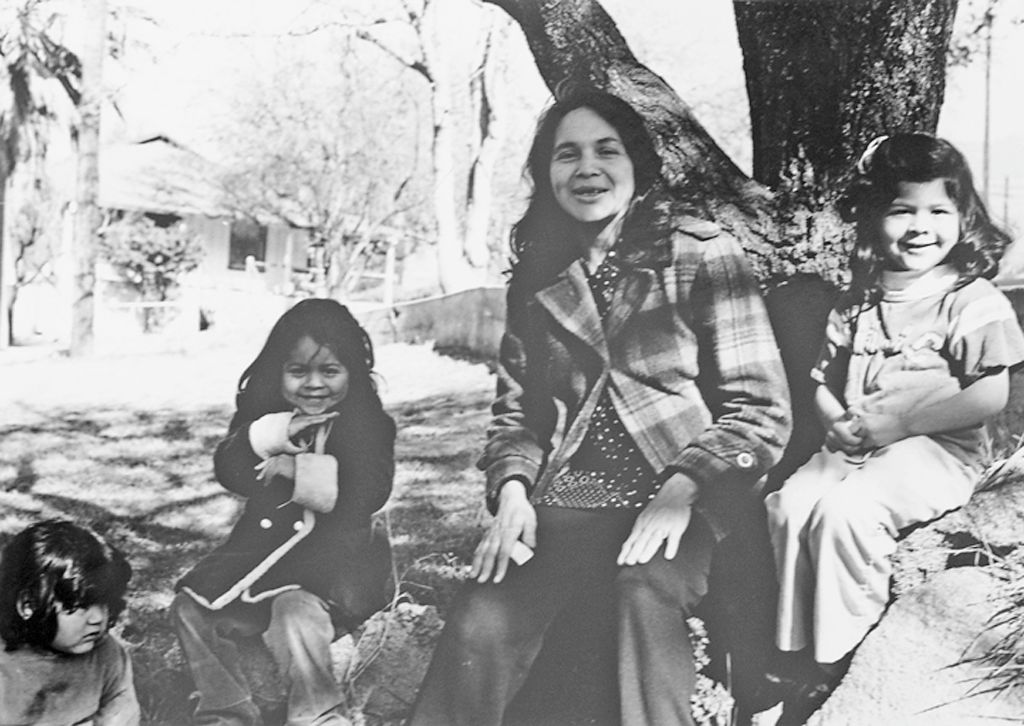
"I had a lot of criticism from family and friends for years until huelga [the strike] became famous and now they all like me," Huerta jokingly said during the 2015 National Portrait Gallery Q&A. "But it was difficult. We were pretty much living like the farmworkers."
Huerta's family and Chavez's family relied on assistance from a food bank and were organizing the union without a steady source of income of their own.
"In the strike, women were always on the picket lines with the children," Huerta said.
It was also not lost on Huerta that Chavez and other male activists were not asked about how they managed their important work with their parental duties.
"The thing about that is that every single mother in every single working family has that question every single day. Who am I going to leave my children with? Are they going to be safe? Are they going to be protected? That’s something women have to deal with all the time," she told TIME in 2018.
Huerta had 14 children, 24 grandchildren, 23 great-grandchildren, and seven great-great-grandchildren, a spokesperson tells TIME.
“Dolores was a deeply private person when it came to her family, and while all 14 of her children were part of her life, some parts of that story were never shared publicly,” according to the spokesperson.
Her lasting legacy
Over the course of her career, Huerta was arrested more than 20 times. In 1988, she was severely beaten by a police officer in San Francisco at a rally against presidential candidate George H. W. Bush. She was 58 years old at the time, and suffered broken ribs and a ruptured spleen.
Despite those types of encounters, Huerta continued to mobilize and fight for causes through her Dolores Huerta Foundation. She established her foundation in 2003 after receiving a $100,000 prize from the Puffin/Nation Prize for Creative Citizenship in 2002. Her youngest daughter, Camila Chávez, helped run the foundation as the executive director.
In the course of her career, Huerta was awarded the Presidential Medal of Freedom, the Eleanor Roosevelt Human Rights Award, and the Mexican Government's Ohtli Award. She also received at least nine honorary doctorates from universities across the country. In 2026, TIME named Huerta one of the world’s 100 most influential people, with a tribute by Gloria Steinem recognizing her decades of organizing and her courage in speaking publicly about Chavez. She received the TIME100 Impact Award at the TIME100 Gala in New York City on April 23, 2026.

Huerta endorsed presidential candidates, including speaking at the 2016 Democratic National Convention in support of Hillary Clinton. She was also the subject of a PBS documentary, Dolores, which won a Peabody Award in 2018.
"She was not afraid to speak truth to power," Clinton said of her in the Dolores documentary.
In July 2018, California Governor Jerry Brown signed a bill declaring April 10 Dolores Huerta Day. "Dolores Huerta deserves proper recognition for her numerous sacrifices in the name of justice and the amelioration of severely inadequate working conditions," the bill’s text said.
"Change comes from the bottom," Huerta said during a May 2012 interview. "But you've got to be able to organize those folks at the bottom to be able to get out there and make the changes that they need. And of course, if you don't have organization, then you don't have a democracy."
How the Budget affects you
Dharshini David: Healey buys himself some time, but big questions still unanswered
Note to Self: Dolores Huerta looks back on her fight for farm workers' rights
Dolores Huerta's 50 years of activism
Dolores Huerta turns 94. Here's a look at the civil rights icon's legacy.
‘Like Saddam opened a Cheesecake Factory’: how did the restaurant end up in a Maga fight over ‘elitism’?
Obama has been accused of ‘snobbery’ over his Trump diss, as people rush to defend the restaurant chain’s ‘affordable opulence’
Around lunchtime on Tuesday, a Rolls-Royce stopped at the intersection of Beverly Drive and Dayton Way in Beverly Hills, California. Local people in athleisure walked past Balenciaga, Dior and Prada boutiques, as visitors on Hollywood bus tours ogled nearby Rodeo Drive, where Burberry and Louis Vuitton shops meet at a celebrated street corner.
Up the street, across from the upmarket Erewhon grocery store – home to $21 smoothies – a few diners sat outside an American landmark: the Cheesecake Factory.
Continue reading...Commentary: Agitating for attention, Trump and Bill Maher get into it, again
Bill Maher has railed on Trump only half as much as his late-night peers, leaning into various MAGA grievances about the "woke" left and forging a fair-weather friendship with the second-term president.
Dolores Huerta alleges assault by Cesar Chavez amid abuse claims
Dolores Huerta says Cesar Chavez "manipulated and pressured" her as abuse allegations emerge
Dolores Huerta speaks out in first public interview since Chavez assault claims
Labor activist Dolores Huerta says Trump "does not know history"
Власти Франции пошли на уступки старшеклассникам. Но те все равно недовольны и обещают продолжать протесты
Пентагон показал снимок секретного китайского космоплана. Он похож на американский Х-37
Budget winners and losers: pensioners and households gain as banks and betting shops hit
How the Burnham government’s first attempt to ease cost of living pressure pans out for key stakeholders
Budget 2026: key points at a glance
Every budget has its winners and losers, and John Healey’s first as chancellor was no exception. While some gained from tax breaks and rule tweaks, others will either pay more, or had their hopes of reforms dashed. Here are some of those with reason to cheer, or sigh:
Continue reading...How Trump is trying to disrupt the midterms – video explainer
From redrawing electoral maps to installing a sense of uncertainty around the electoral process ahead of the midterms elections on 3 November, Republicans have deployed several tactics to try to skew the vote in their favor. As the president's popularity continues to drop, it is crucial for him and his administration to retain a majority in Congress or they could face investigations and even impeachment. Guardian political reporter Shrai Popat looks at the ways the Republicans have tried and are still trying to influence the election
The US midterm races that will decide control of Congress – mapped
US midterms: what are they and why do presidents dread them? – explainer