На code review я регулярно встречаю один и тот же вопрос, только записанный разным кодом: «Как правильно синхронизировать эти значения через useEffect?»
Со временем я понял, что чаще полезнее спросить иначе: а эффект здесь вообще нужен?
В статье разбираю 12 типичных сценариев из React-код-ревью: производное состояние, события, цепочки эффектов, внешний store, useEffectEvent, загрузку данных и современные подходы React 19.2. Для каждого случая — пример «плохо → хорошо» и практический фильтр, который помогает выбрать между рендером, обработчиком события, Action, useEffect или query-библиотекой.
Group, whose constituencies have derelict or at-risk pools, are campaigning to make outdoor swimming available for all
Cooling, blue expanses of water have been a lifesaver for many lucky enough to live near a lido during the recent UK heatwave.
Now, a group of 20 MPs, along with the Fabian Society, are calling for this relief to be made accessible for all by getting water companies to fund the reopening of the country’s lost lidos.
Я надеюсь, что теперь уже точно никаких переносов. Совсем скоро весь мир с двух ног ворвется в, наверное, самый ожидаемый и обсуждаемый проект десятилетия.
Шутка ли, последний раз по-настоящему новая GTA выходила 13 лет назад, но тот день я помню как будто вчера, ведь с утра дежурил под дверьми магазина «Меломан» с целью купить игру для PS3.
Но сегодня не об этом, и так понятно, что хайп разгонится до предела, когда Rockstar наконец-то запустят рекламную кампанию. Сегодня я предлагаю вспомнить, чем еще занималась компания помимо всем известной франшизы про автоугон и сатирический бандитизм. Уверен, про некоторые игры вы прочитаете впервые.
Will Jordan scores twice to help New Zealand beat France as the inaugural Nations Championship opens with a captivating, nine-try thriller in Christchurch.
The novelist on grief, being a terrible liar, and wanting to join the circus
Born in London, Esther Freud, 63, is the daughter of Bernardine Coverley and Lucian Freud. She trained as an actor and, in 1992, released her debut novel, Hideous Kinky, which was made into a film starring Kate Winslet in 1998. Freud’s work has been translated into 13 languages, and her 10th adult novel, My Sister and Other Lovers, is out in paperback. She has three children with the actor David Morrissey, and lives between Suffolk and London with her current partner.
It’s full of heart, humanity and such extreme competence it’s actually comforting to watch. No wonder it’s swept the boards at awards
‘Let’s go save some lives.” That’s the mantra of Noah Wyle’s A&E doctor at the start of every shift in The Pitt. The gritty US hospital drama seems an unlikely contender to be the most hopeful show on air. Yet despite the death, disease and pointed social commentary, The Pitt somehow pulls it off.
The smash HBO hit’s second season climaxed last night in a blaze of Fourth of July fireworks, group cuddles, cute babies and cathartic karaoke. A third season is about to enter production. For millions of devoted fans, it can’t be stretchered back on to our screens soon enough.
Ambystoma quetzalcoatli is the first fossil salamander to be formally identified in Mexico, revealing that axolotls have inhabited the country for millions of years.
В последнее время нишевым, но бурно развивающимся направлением геймдева стали хардкорные игры с упором в глубокую симуляцию. Тут вспоминаются и завоевавшие популярность extraction-шутеры, и антиказуальные Arma, Squad, Ready or Not.
Набравший этим летом популярность хардкорный симулятор сверхтяжелой артиллерии Iron Nest вполне попадает в этот тренд. Но обо всем поговорим по порядку.
С ноября 1896-го по май 1897 года по Соединённым Штатам Америки прошло странное поветрие. Сначала в Калифорнии, затем на Среднем Западе и в Техасе газеты то тут, то там сообщали о наблюдениях в небе сначала странных огней и больших удлинённых теней, а затем и летательных аппаратов сигарообразной формы с гондолами и прожекторами. Чаще наблюдения имели место по ночам в сельской местности, но в ряде случаев утверждалось о массовых наблюдениях при участии ответственных лиц с элементами паники. Иногда из аппаратов выходили люди, и общались с очевидцами — особенно часто рассказывая, что собираются воевать с испанскими колониальными войсками за независимость Кубы. Иногда при контактах происходило нечто совершенно странное и диковатое. При этом и число наблюдений, и характеристики описываемых аппаратов несопоставимо превосходили количество и возможности реальных дирижаблей тех лет, особенно в США. Попробуем разобраться, чем же это было?
As America turns 250, voters from our Swing Shift project talk about the state of the country. Their views ranged from "uncertain" and "concerned" to "excited" and "cautiously optimistic."
England are booed as they arrive at their Mexico City hotel to prepare for their World Cup last-16 game against Mexico - and it's not the only issue they face.
OpenAI CEO Sam Altman has reportedly proposed giving 5% of the company’s equity to a U.S. sovereign wealth fund, reviving discussions about letting the public share in the financial gains from the AI boom.
(Polydor) Continuing the rejuvenated sound of 2023’s Hackney Diamonds, there’s touching vulnerability from Keith Richards while Jagger confronts war and autocracy
Mick Jagger recently launched the Rolling Stones’s 25th album declaring, “The thing about this record is, the Stones are a rock band that also has the capacity to do ballads, country music or dance music. So we don’t get stuck in one kind of style.” The same could be said of numerous bands, but what the singer was probably driving at was that the Stones have always been able to do all this while sounding utterly like themselves. Nobody else has been able to assemble their quintessentially just-shaky Jenga tower of sound, which often sounds like it could fall to pieces at any moment but somehow never does.
They have certainly also made their share of albums that sounded like they’d been phoned in from the cricket, but Foreign Tongues continues the creative renaissance that began with 2023’s Hackney Diamonds, which at the time was their first album of original songs in 18 years. Once again, producer and occasional musician Andrew Watt captures the rejuvenated band’s joy of playing in a room together – and, as guitarist Keith Richards put it recently, kicks their asses when needed. Perhaps drummer Charlie Watts’ death five years ago has sharpened the founding pair’s awareness that their band may not last much longer, so they may as well go down blazing and have fun while they do so.
Hopper will pay $35 million to settle FTC allegations that it used deceptive “dark patterns” to hide fees and mislead travelers about the costs and benefits of services.
If you're going to apply for Startup Battlefield Australia, now is the time. Applications close July 6, and once the deadline passes, the opportunity is gone.
A government customer of NSO Group used the company's Pegasus spyware to hack into the phone of a European politician, who at the time was serving on an EU committee tasked with investigating the spyware industry.
The gadget has three buttons, and it changes context based on what app you are looking at. For instance, in meeting apps and sites, it could be toggle mic, toggle video, and bring window to the front.
The rise of AI has brought an avalanche of new terms and slang. Here is a glossary with definitions of some of the most important words and phrases you might encounter.
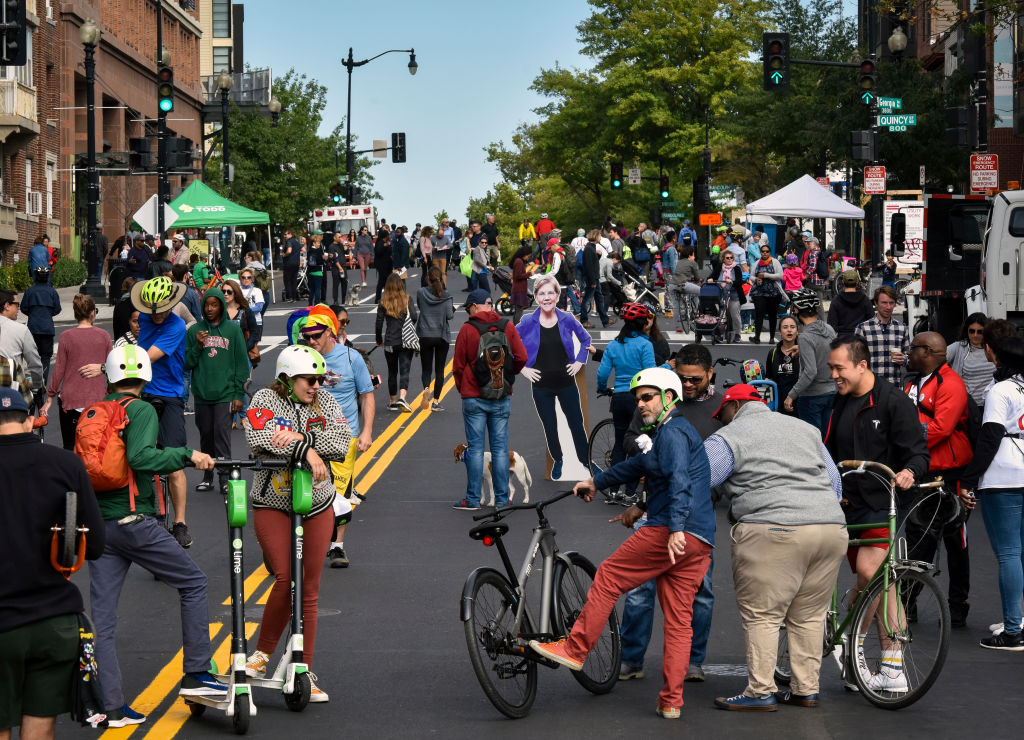
A view looking north at Georgia and Quincy streets as Washington D.C. celebrates its inaugural Open Streets event by closing a 3 mile stretch of Georgia avenue to cars. —Bill O'Leary—Getty Images
Every summer, a number of streets around New York City transform on Saturdays—with honking cars and slow moving traffic replaced with families with strollers, friends out for a walk, bikes weaving through. It’s part of the city’s “summer streets” program which turns busy city streets into a walker’s paradise, providing open space for one of the most densely populated cities in the U.S.
It’s not just New York. Around the world, a growing number of cities are reclaiming roads from cars. In San Francisco, a “Slow Streets” program initially started during the pandemic continues to provide an alternative to driving—and a way to build community. Over 100 streets in Paris have permanently become car-free—and city residents voted last year to add 500 more. A number of roads in Singapore close for “car-free Sundays.” Barcelona is ramping up adoption of its “superblocks” which permanentlyclose off a number of blocks to vehicles.
The initiatives come with big environmental and health impacts.
A study published last month examined Ottawa's summer weekend closure of Queen Elizabeth Driveway, a scenic, 3.5 mile parkway that runs alongside the side of a canal, and found that pedestrians and cyclists experienced an approximately 60% reduction in combined air pollution and noise exposure when vehicle traffic was removed.
“The presence of cars could make the difference between being able to hear your friend you're walking or running with, for example, and not being able to hear them clearly,” says Liam O'Brien, professor of civil and environmental engineering at Carleton University and lead author of the study.
When it comes to reducing air pollution, a major benefit is lowering the amount of harmful fine particulate matter, known as PM 2.5, that is in the atmosphere—which is often emitted into the air as car exhaust. “The principal benefits are in local air quality—much fewer particulates go out into the atmosphere,” says Greg Marsden, professor of Transport Governance at the University of Leeds. One study in 2021 found that car-free Sundays in Rwanda produced an average reduction in PM 2.5of 15% and overall traffic activity decreased by 27% compared to normal traffic levels on Sundays. It’s a significant decrease—especially considering that the transition to electric cars alone won’t necessarily mean no particulate matter in the air. “We still have lots of particulates from breaking tire dust, stuff that's on the road that gets picked up by cars,” says Marsden. “When you take cars off the road, you get rid of a lot of that.”
Spaces without cars also provide opportunities for safe exercise in urban environments that often lack open space. “A lot of people use pedestrian streets for the sake of relieving stress and getting exercise, especially in urban environments…and so to bring cars into those spaces where people are seeking exercise, stress relief, a chat with a friend, etc. is really problematic,” says O’Brien. As an added benefit, people get to enjoy fresher, less polluted air.
Car-free zones also bring more foot traffic to local businesses. When New York City opened streets up to pedestrians during the pandemic, restaurants on “open streets” saw more business than those on nearby, car-friendly streets.
The change isn’t limited to major metropolitan areas. Smaller towns can do it too—whether it be closing off the inner roads of a city center on a weekend, or a couple blocks surrounding a school.
These car-free days can serve as a reminder that, despite how ingrained cars have become in the modern world, they don’t have to be a necessity—there are other choices that can be better for both our health and environment. “People have just accepted this slow-drip growth of cars and are now living in neighborhoods that are overwhelmed by cars, but they can't see a way out of it,” says Marsden. “As an individual, you can't make a different choice. You getting the bus does not solve the traffic problem in your area. What these car-free days do is to say, look, when we've got all this space, you have children independently cycling around, people are walking in the street. We can reimagine some of the areas as mini parks, places to sit and chill out…It gives us that opportunity to have a different discussion about, is that really what we want for the future?”
The idea is becoming increasingly popular. In New York, a group of 29 current and former elected officials in March asked the city’s Department of Transit to expand the car-free streets program into a cohesive network to “create a continuous car-free backbone for walking, biking, and recreation.” Mayor Zohran Mamdani, meanwhile, campaigned on funding and expanding the city’s year-long open streets program, and plans to allocate a baseline funding of $6.4 million per year for open streets through the 2030 fiscal year.
It’s proof that a future does not have to be car-dependent, says O’Brien. “We can provide alternatives that are not only more sustainable, but also more desirable.”
There’s no denying that President Donald Trump has a vise-like hold over the current Republican Party. Time and again, he has shown an uncanny talent to chuck chaos at even bipartisan bills, like the one House Speaker Mike Johnson sent to the White House on Monday only to be met with “yawn” from his fellow Republican Trump. At the same time, it now looks like Trump and Johnson may end up lashing an annual must-pass, traditionally bipartisan defense bill to a Trump pet project that would make it harder for Americans to vote in this fall’s elections—and force lawmakers to pick funding the military through a stand-alone measure or allow Trump’s federal restrictions to put a thumb on the scales in November’s midterm elections as a trade-off to get cash to the troops.
That’s not to say Trump has limitless—or permanent, even—stage-manager energy over his party. In fact, as my TIME colleague Philip Wang reported this spring, there are real ideological divides between Republican voters under 30 and this President. Most surveys bear this out, for sure.
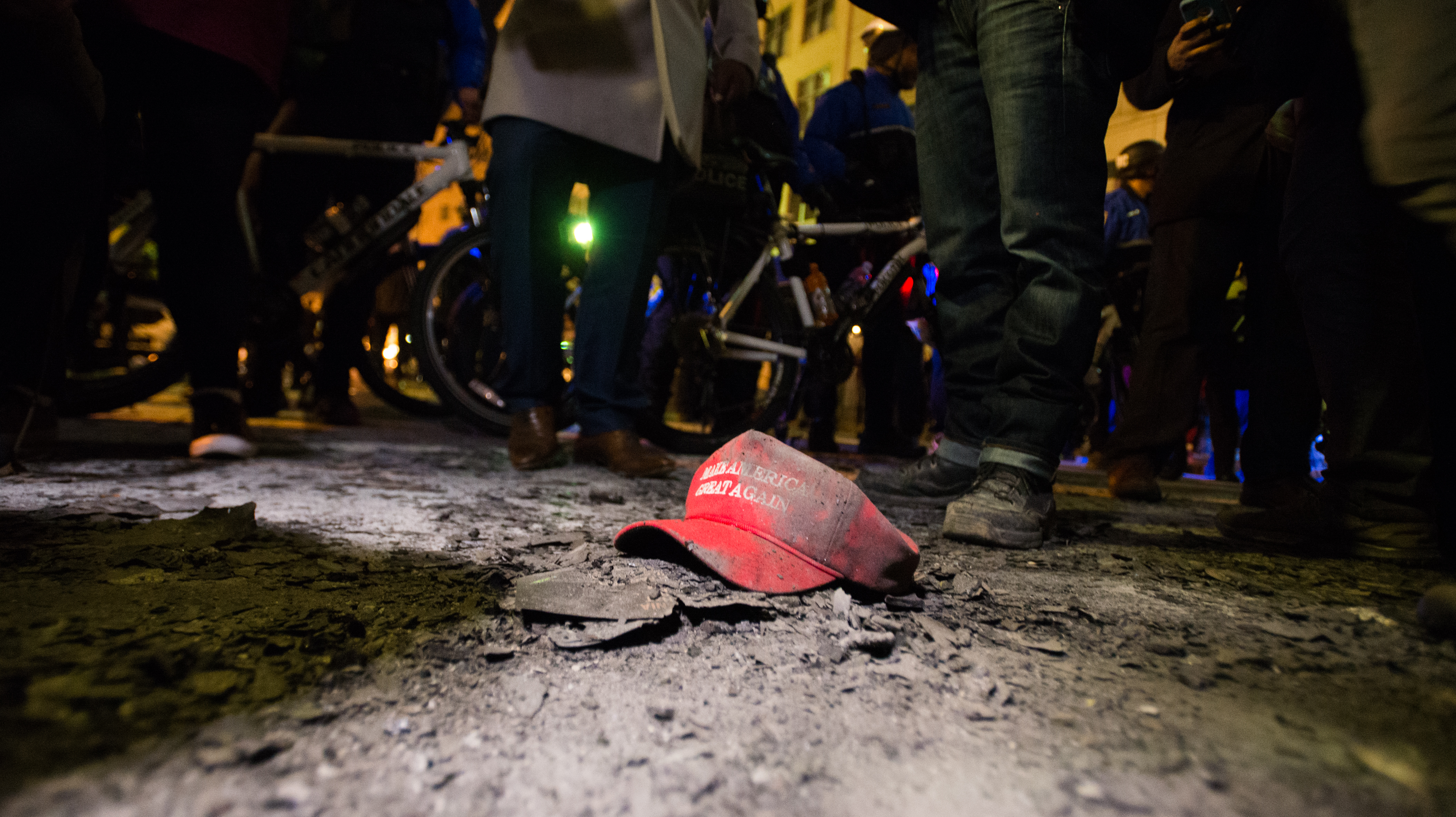
And in new data released this week from the Ronald Reagan Institute, there are very clear warnings that the kids aren’t alright with MAGA. In fact, two-fifths of GOP voters under 30 do not align with Trump’s quest to Make America Great Again, or at least not in his paradigm. Beyond Trump himself, that should be a sign to Republicans looking downfield for their next plays—especially those who are already jockeying to follow him as President come early 2029. (Yes, the shadow campaign has already begun.)
Among all Republicans in the Reagan survey, 25% said they were not part of MAGA. For those under 30, that number hits 39%. That’s a bloc that cannot be ignored in a coalition holding together with little margin for error.
Even among that MAGA sphere, there is definitely a drop-off in enthusiasm among the under-30 set than writ large. Strong majorities of all ages agree the United States needs a strong military, should spread freedom and democracy, and engage with the world to promote Americans’ economic standing. The younger MAGA crowd are just less gung-ho about it. They also see more upside in engaging with international organizations, with 70% of them seeing value in NATO compared to 62% of all MAGA. At the same time, when asked directly if the United States is better served by withdrawing from world affairs to put America First, the under-30 MAGA set says yes with a 72% margin. Among all MAGA, that number stands at 64%.
The differences and contradictions might be easy to dismiss. Consider the basic ages inside the self–described MAGAverse. Of the whole MAGA movement, just 9% of it—as represented in the Reagan poll—is under the age of 30. Of the non-MAGA GOP, the under-30 number hits 19%. Not to mention that voters under the age of 30 tend to have lower voter registration and participation rates.
But these young voters are the future. It’s basic Campaigns 101 that if a candidate can hook younger voters, they keep coming back even after that election is over. In the last presidential election, 48% of eligible residents under the age of 25 cast ballots. Going up each age bucket, the numbers grow, topping 75% for those 65 and over, according to Kaiser data.
That same year, voters under 30 made up just 14% of the total presidential vote, according to network exit polls. But Trump carried 43% of them—meaning he still got around 1 million votes from voters in that age range.
It’s clear in the data and on-the-ground conversations with younger conservatives that Trump might not be building a machine that he could easily transfer to the next MAGA warrior, however.
After months of the punditocracy revisiting Trump’s efforts to use podcasts and the manosphere to bring out younger voters in 2024, it seems there are limits to memes. Since coming back to office, Trump has seen his approval ratings among all voters under the age of 30 fall a whopping 50 points, according to YouGov surveys. In fact, he has a net negative of 45 points in that age group.
For folks seen as next-up contenders like Vice President J.D. Vance and Secretary of State Marco Rubio, a link to Trumpism is not really a question. After all, they’re now seen as fully whole members of his movement despite voicing pointed criticisms of him not that long ago. Both are also already viewed as top contenders for the 2028 nomination, and a Trump endorsement might end that primary before it ever really gets started.
But other possible future leaders might be seeing this data that shows young voters are not entirely sold on the MAGA approach to the world. They’ve certainly been hearing it at rallies: Turning Point USA events have devolved into full-on heckling against Republicans when that youth-engagement army confronts leaders about actions that run afoul of the conservative movement’s historical trajectories. I’m sure that to the svengalis who are helping out the likes of Sens. Tom Cotton of Arkansas and Josh Hawley of Missouri, or Govs. Josh Hawley of Florida and Brian Kemp of Georgia, a little distance might prove prudent. Trump may have built a movement, but its heirs are open to some revisions. In fact, two out of five of them aren’t really in the like-and-subscribe column as it is.
At the heart of the AI is a fear that it could become the first technology in human history to lead to fewer jobs for workers and permanently higher unemployment.
The reason this would be so devastating goes beyond simply its financial impact on families. The harm from a dramatic AI-induced increase in mass unemployment would not be cured simply with Universal Basic Income, a policy that shares the gains of AI by simply cutting equal checks to ensure basic sustenance for all. Such an approach fails to address the dignity and fulfillment humans achieve through work and contribution and the need to target such efforts to create a better society.
If an apocalyptic AI job-loss scenario comes true, we do not need to give up on the fundamental goal of building a full-employment economy that centers on work and the purpose it can bring. A far better path is to offset AI-induced job loss with the elevation and expansion of millions of desperately-needed jobs which provide dignified care, preventative health services, educational opportunities, counseling for those with mental health and addiction issues, and navigation services for individuals facing barriers to work due to disability, past incarceration, or long-term unemployment.
In other words, our response to the AI revolution must be to support what I call “double-dignity jobs,” in which human workers receive the dignified compensation they deserve in exchange for caring and providing dignity to other humans.
Double-dignity jobs primarily involve essential human-touch tasks, making them unlikely to be replaced by AI. For instance, research conducted by Anthropic found that health care support and personal care support jobs have some of the lowest risks of automation. MIT’s David Autor has similarly found that these types of care jobs are hard to automate because they involve non-routine, interpersonal, and dexterous tasks. Intuition confirms this analysis. Will most Americans want AI-powered robots to dress, shower, wipe, and comfort a parent with dementia? Or have their kids forgo learning with other children to sit alone with AI tutors? Or instruct teens struggling with bullying and suicidal thoughts to seek counseling only from Claude or ChatGPT?
The problem is that if AI does lead to massive job loss, simply informing job seekers of the resilience of these job categories offers no cure to the sweeping harm of permanently higher unemployment. After all, even with the growing demands of an aging population and increases in intellectual and developmental disabilities (IDDs), larger numbers of these jobs are already poorly paid. Take just one example of many: direct service professionals who help adults with autism. These workers can mean everything to the families they support, yet they are paid so poorly that they face 40% turnover rates. If AI causes higher unemployment, creating a flood of job seekers to chase such jobs will only depress wages, benefits, and opportunities. That is not progress.
This is why the first step in addressing potential AI-induced job loss must be to ensure that such care economy, counseling, and education jobs, which are essential to providing dignity and care to our loved ones, are themselves treated with dignity in terms of the wages, benefits, worker voice, and career mobility they receive.
The second step is to dramatically expand those jobs to meet critical unmet needs. Consider the following: Only a small fraction of the 17 million Americans with IDDs or cerebral palsy receive the individualized support they need. Among the 63 million Americans who provide ongoing care to a family member, a significant share are forced to give up jobs, cut hours, or leave careers because they cannot afford skilled care for loved ones. Eight million students attend schools without a single college or career counselor, while some states have only one school psychologist for every several thousand students. Rural America cannot fill basic medical roles. Or take childcare. There are too few decently paid early-childhood educators to make affordable and universal childcare possible. And we need an army of navigators to help people apply for government benefits, overcome long-term unemployment, and navigate re-entry from incarceration or addiction.
Our societal demand for these kinds of workers is high. And as a society, we must both invest in workers capable of meeting this demand and ensure their services are affordable and available to those in need.
There are several ways we can achieve this in the AI era. For instance, AI tools themselves could be used augment the capacity of these missing jobs to both enhance the economic dignity of millions while increasing returns to society in terms of lower costs of hospitalization, safety net spending, and higher workforce participation.
If AI leads to unprecedented net job loss, one of our strongest paths to maintaining full employment is to create a dedicated tax stream from AI productivity gains to create millions of needed, double-dignity jobs. We will also need New Deal-style jobs in construction and infrastructure to make us more efficient and resilient to natural disasters. But if widespread AI adoption results in a structural net job reduction, a Second New Deal jobs strategy must have this new focus on a permanent expansion of care, counseling, education, and navigator jobs that will last for the long haul.
No one should assume that double-dignity jobs will be the choice of most jobseekers. It should not be seen as a simplistic “coder-to-nurse” strategy. But by adding millions of such jobs, it will benefit all workers. How? A tighter labor market should strengthen wages and worker power across sectors. And unlike policies like Universal Basic Income, this strategy hews more closely to American values. As the first Labor Secretary Frances Perkins once described, when explaining why FDR chose job programs over just sending checks: “Americans want, above everything, to work and contribute.”
There is no question that varying projections of timing and severity of job loss caused by AI make designing such a major job creation strategy an unprecedented challenge. Policymakers today must design plans that both reflect the reality of 4.3% unemployment today and the possibility of major AI-induced joblessness tomorrow. Uncertainty, however, does not have to dictate a wait-and-see approach.
We can start by creating A new fund for double-dignity jobs to meet vital local and regional needs. Such a new job-creation policy could start with moderate funding, but by requiring states and local governments to stand up such programs now, it would lay the groundwork for quick acceleration if AI causes more severe job loss. We can further prioritize those parts of an affordability agenda – like childcare and home care – that also create large numbers of AI-resilient, double-dignity jobs.
AI does not ever have to deny us an economy based on work, contribution, and dignity. Expanding and elevating dignified work to meet our society’s unmet needs provides one of our most promising paths.
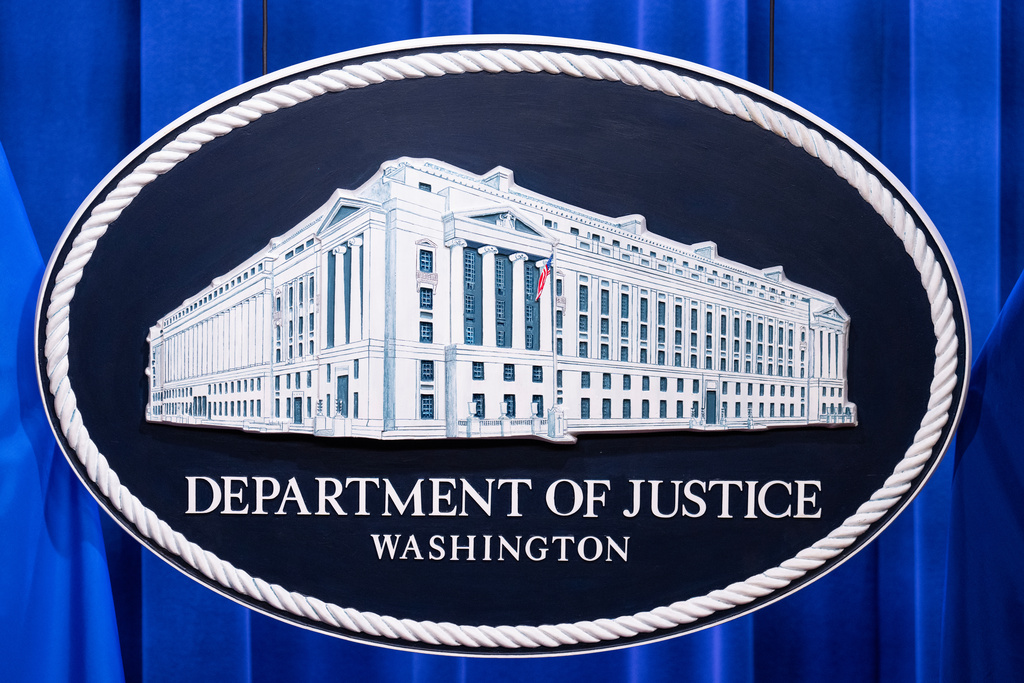
A sign featuring the Department of Justice building is seen before a news conference on Dec. 4, 2025. —Tom Williams—CQ Roll Call/AP Images
The same day that the Supreme Court upheld birthright citizenship, President Donald Trump’s Department of Justice (DOJ) told its staffers that it will “prioritize the investigation and prosecution of birth tourism schemes.”
Assistant Attorney General Colin McDonald issued a memorandum to DOJ employees on Tuesday that the agency shared on social media hours after the Supreme Court issued its ruling that rejected Trump’s effort to restrict birthright citizenship. In the notice, McDonald shared several stories of what he called “birth tourism schemes.”
“The benefits of United States citizenship require little explanation,” he said. “Regrettably, the American system is exploited each year by thousands of foreigners who travel to the United States under false pretenses to give birth and secure citizenship for their child.”
“Birth tourism schemes exploit our immigration system and violate criminal law,” McDonald continued.
He went on to say that the DOJ “will investigate and hold accountable those who engage in this unlawful conduct, as well as those who solicit and sell these criminal services to others.” He said he was directing staffers to work with the Department of Homeland Security to prioritize these cases.
“The Department of Justice will zealously protect the sanctity of United States citizenship by investigating and prosecuting those who fraudulently exploit our immigration system,” he said. “Together, we will bring illegal birth tourism to an end and those responsible to justice.”
The Supreme Court’s decision earlier in the day was one of the most significant blows Trump's second term agenda has so far suffered. The justices ruled in a contentious 5-4 decision to strike down the President’s Executive Order seeking to limit birthright citizenship to those born in the U.S. with at least one parent who is a citizen or legal resident of the U.S. The outcome dealt a setback to his hardline approach to immigration.
The President expressed his displeasure with the ruling on Truth Social, calling it “too bad for our Country.” At the same time, however, he said that “we can easily make it up in Congress through Legislation.”
Other members of the President’s party joined him in criticizing the court’s decision, with some Republicans calling for a constitutional amendment to impose restrictions on birthright citizenship and others saying they would seek to limit it through legislative means. House Speaker Mike Johnson told reporters on Tuesday that birthright citizenship has been “overused and abused.”
“I’m sure that we’ll continue to look at that,” he said. “I’m sure that the conclusion from this decision is you have to amend the Constitution to fix that.”
Graduates arrive to the University of Maryland commencement ceremony in College Park, Maryland, on May 22, 2025. —Allison Robbert—The Washington Post/Getty Images)
Sweeping changes to federal student loans included in President Donald Trump’s One Big Beautiful Bill are taking effect on Wednesday, with implications for millions of borrowers.
Starting on July 1, new student loan borrowers will face a narrowed set of repayment options consisting of two freshly launched plans, and borrowing for professional and graduate students and parents of college students will be capped at lower amounts.
Millions of current enrollees in a Biden-era loan repayment program will also begin receiving notice from federal student loan servicers that they must select a new plan to switch to within 90 days.
Here’s what current and future borrowers should know about the changes, and how they could be affected.
What’s changing?
Under the One Big Beautiful Bill, loan limits for graduate and professional school students and parent borrowers will be tightened for those enrolling after Wednesday.
Graduate students, who were previously allowed to borrow up to the cost of attendance at a college or university under the Grad PLUS loan program, will now have their borrowing capped at $20,500 per year, and no more than $100,000 over the course of their lifetime. Limits will also be tightened for professional students, to $50,000 per year and $200,000 in their lifetime.
Parents of college students enrolling in the Parent PLUS loan program will also face lower loan caps. The program, like Grad PLUS, previously permitted parents to take loans up to the cost of attendance; that number will now be $20,000 annually and $65,000 total per student.
There is also now a lifetime loan limit of $257,000 for anyone else who receives a federal student loan on or after July 1.
Current borrowers will be grandfathered into the prior limits, allowing them to continue borrowing up to those levels under current programs for three academic years or until their program finishes.
For those taking out federal student loans on or after Wednesday, the One Big Beautiful Bill effectively leaves two options for repayment: the Tiered Standard Plan and the Repayment Assistance Plan (RAP).
The first is a fixed-rate repayment option under which a borrower’s monthly payment amount is determined based on how much they owe and their interest rate. Those who take out less than $25,000 will have 10 years to repay the loan, those who take out $25,000-$49,999 will have 15, those who take out $50,000-99,999 will have 20, and those who take out $100,000 or more will have 25.
Under the RAP plan, meanwhile, borrowers will make monthly payments amounting to around 1 to 10% of their income, with a minimum amount of $10 a month. Those enrolled in the plan will also be able to subtract $50 from their monthly payment for each dependent in their household. Unlike previous income-driven plans, which generally had a timeline of 20-25 years, the RAP plan will offer loan forgiveness after 30.
The Biden-era Saving on a Valuable Education (SAVE) plan, meanwhile, is officially coming to an end after it was ruled unconstitutional by a federal court in March. Borrowers under the program, an income-driven repayment plan launched in 2023, will have to shift to another program within 90 days of when they receive notice from servicers. Payments for SAVE plan enrollees have been paused since July 2024.
What does this mean for borrowers?
Many current borrowers will not be immediately impacted by these changes, but should take steps to ensure that they are set up with payment plans after certain grace periods expire.
“There's one group in particular that is really going to need to take action, and those are over seven and a half million people who are enrolled in the SAVE Plan,”, says Betsy Mayotte, the president and founder of the Institute of Student Loan Advisors (TISLA). She notes that it could be “a lot more expensive” for those borrowers to make payments under the new plans. “We are seeing a lot of angst around that issue.”
In addition to the SAVE Plan, the existing Income-Contingent Repayment (ICR) plan and the Pay As You Earn (PAYE) plan are set to sunset in July 2028. By that point current borrowers under those programs must choose another to switch to, or else will be automatically enrolled in an alternative.
Mayotte says that “the best thing [borrowers] can do is educate themselves about what their options are,” and points to studentaid.gov, which outlines the steps for current and former students navigating the loan enrollment and repayment process, or TISLA, which offers free advice on borrowing.
Speaking about the RAP plan, Mayotte says that “for some borrowers that plan is going to be more beneficial than the existing plan, and for others it's going to be less beneficial. It really depends on how much they owe, when they took their loans out, and what their income is … For the borrowers who have really high debt and likely will always have fairly low income compared to their debt, the RAP is better.”
She is critical, however, of the RAP plan’s 30-year forgiveness timeline, which she says is “alarming” and could have significant long-term consequences for borrowers’ finances, or their retirement.
In terms of the new loan limits, meanwhile, proponents of the One Big Beautiful Bill argue that the caps will pressure colleges to lower costs and discourage students from borrowing beyond their means.
Aissa Canchola Bañez, director of policy at the nonprofit advocacy organization Protect Borrowers, tells TIME that they will instead compel students to take out loans from private lenders, however.
“They're going to be forced into the private market in order to fill the gap, and the private market is much harder to secure financing,” she says.
For some students, she believes it’s “absolutely possible” that the new limits could even make them forgo higher education opportunities altogether.
Bañez says that overall, the student loan changes going into effect on Wednesday are “going to make it harder for students and families to pay for college, and it's going to make it more expensive and risky for borrowers to repay their student loans.”
A daredevil Russian couple were arrested and charged after scaling the Empire State Building in New York City on Wednesday, in what appeared to be an elaborate and risky marriage proposal.
The New York Police Department identified them as Ivan Kuznetsov, 32, and Angelina Nikolau, 33, self-proclaimed “rooftoppers” who climb and pose atop the highest buildings without safety nets or permission. The two were the subject of the 2024 Netflix documentary Skywalkers: A Love Story.
Aerial footage showed that at midday, the couple, wearing black masks and clothes, holding onto the skyscraper’s antenna—about 1,454 ft (443 m) from the ground—while unfurling a banner that reads: “When the power of love beats the love of power, the world knows peace.”
Footage later showed one of them going down on one knee, before embracing and kissing.
New York police responded to the incident, as streets below were shut down. Police Commissioner Jessica Tisch posted on social media body camera footage of the NYPD’s Emergency Service Unit responding at about 12:51 p.m. to the climbers. In the footage, one of the responders was heard telling the climbers, “You can’t be up here,” before apprehending them.
Police personnel respond to a report of two people climbing the spire atop the Empire State Building in New York City, on July 1, 2026. —NDZ/STAR MAX/IPx 2026
The couple also posted photos of their climbing exploit on social media, including a snapshot of a ring in what appears to be Nikolau’s hand.
A spokesperson for the Empire State Building told the media that there was “at no time danger to tenants, visitors, and Empire State Building Observation Deck guests.” The building’s social media account also appeared to lean into the incident, posting that it offered “a practical way for the most memorable marriage proposals.”
Unclear how the two got there
How Nikolau and Kuznetsov managed to reach the Empire State Building’s antenna is still under investigation. But they have climbed the tops of other buildings before: the 2024 documentary featured them climbing the likes of 1,955-ft (596 m) Goldin Finance 117 in Tianjin, China, and Malaysia's 2,227-ft (679 m) Merdeka 118. The documentary showed how they bypassed building security before scaling the buildings.
But the top of the Empire State Building is the transmission tower, sending radio and television signals to broadcast stations. John Cleary, a former chief broadcast engineer for CBS New York, told the network in an interview about the potential exposure to high levels of radio-frequency (RF) radiation and electrical energy. “There’s a lot of danger out there,” he said.
CBS News reported, citing unnamed law enforcement sources, that, based on preliminary information, the two climbed the spire after going through a hatch on the 103rd floor, which is not open to the public. That floor is used for water tower maintenance.
The couple, who reside in East Orange, N.J., were hit with several charges following the stunt, including burglary, reckless endangerment, criminal mischief, possession of burglar's tools, criminal tampering, criminal trespass and disorderly conduct, a spokesperson for the NYPD said.
A history of being climbed
For decades until the early 1970s, the Art Deco tower was the tallest building in the world. The highest floor open to the general public is the 102nd floor, which features an enclosed observation deck.
But despite causing a media frenzy, Nikolau and Kuznetsov are far from the first to climb the New York landmark.
Alain Robert, dubbed the “French Spiderman,” famously scaled the skyscraper unassisted, unequipped, and illegally in 1994.
In 2023, actor and 30 Seconds to Mars frontman Jared Leto scaled the skyscraper as part of his band’s 2024 world tour promotions, becoming the first person to legally do so.
Last year, photographer Isaac Wright was arrested at the opening of his gallery exhibition and charged with misdemeanor criminal trespassing after he shot a photograph following his climb to the top of the Empire State Building's spire in 2024.
The campus of Syracuse University. —Madhur Srivastava—Getty Images
When J. Michael Haynie, chancellor of Syracuse University, announced last month that the university would miss its enrollment target and run a deficit for the first time in years, he was unusually candid for a college president.
“Enrollment volatility is widespread, unpredictable and the ‘new normal’ for even strong, well-resourced universities,” he wrote.
To be sure, the enrollment math for colleges was always going to be negative this year. The high school graduating class of 2026 is the first in a long line of smaller ones that will last through the end of the next decade. This is known as the “enrollment cliff,” and it is the result of a birthrate that fell during the Great Recession and never recovered.
While college leaders saw the demographic decline coming for more than a decade, what they didn’t expect was the financial uncertainty imposed on higher education by the second Trump administration. Since last year, the White House has eliminated thousands of research grants to colleges and universities, proposed deep cuts in remaining research funding, and tightened access to student visas, leading enrollment of new foreign students at American universities to drop by more than a third—the largest annual decrease outside of the COVID pandemic. President Donald Trump’s policies have blown a hole in university budgets, forcing schools to cut spending and quickly look for new revenue everywhere.
Now, colleges and universities are bracing for the most consequential rewrite of federal higher-education policy in a generation. On July 1, provisions of the One Big Beautiful Bill Act took effect, which, among other things, will put new limits on student loans. Graduate students, who have helped fuel overall college enrollment in recent years, will no longer be able to borrow up to the full cost of attendance. Instead, loans will be capped at $20,500 per year for most students, and $100,000 for the entire degree. Only students in a handful of disciplines designated by the government as “professional,” including law and some medical fields, will be able to borrow $50,000 a year, up to a limit of $200,000. Parent borrowing for their undergraduates will also be restricted to $20,000 per student per year, with a lifetime limit of $65,000.
Taken together, these changes are breaking the business model that built the modern higher education system. Colleges can respond to the current crisis the way they often have in the past: trim around the edges, delay maintenance, add new majors, and hope the next admissions cycle is better. Or they can accept that the old financial model is no longer reliable.
The first step is to stop treating enrollment as a recruitment problem instead of a product one. Not only is the pool of traditional-age students shrinking, but the pipeline to college is also leaking: the share of high school graduates enrolling immediately in college has already slipped from a high of 70% in 2016 to about 62% in 2022.
To be sure, not all teenagers want what higher education offers—but they also know they need some sort of education after high school. Workers with an advanced degree consistently outearn those without one and are more likely to be employed.
Many students who skip college or drop out do so because of financial difficulties and because they fail to see the relevance of what they are being taught. So rather than force-feed all students the same undergraduate experience, colleges need to stop assuming that students will eventually discover the relevance of college on their own. Work-connected learning must become a core part of the curriculum through co-ops, meaningful campus jobs, and applied projects with employers tied to real problems. That does not mean turning college into narrow job training. It means creating sharper alignment around what college includes. Two-year programs, certificates, and applied credentials aren’t alternatives to college; they’re essential components of it.
Second, colleges need to rebuild their academic portfolios around the demands of today’s job market, the flexibility modern students want, and the employment outcomes their graduates are getting. For too long, colleges have measured academic strength by what they add: new majors, new centers, new buildings, new graduate programs. The next era will require the harder discipline of subtraction.
Third, higher education has to take adult learners seriously. Some 43 million Americans have some college credit but no degree, and when they return, more than a third re-enroll at their most recent institution—which means a sizable share of that market is a college’s own former students. Millions more with college degrees need new skills in a labor market being reshaped by artificial intelligence, automation, and changing employer expectations. Yet most colleges are still geared towards full-time, residential students between the ages of 18 and 22. That market is not entirely disappearing, but it is not going to fix higher education’s broken business model.
The adult learner market will not come to campus on higher education’s terms. Colleges will have to reach them where they are. This is where online learning matters. During the pandemic, many assumed that students would flee online courses as soon as campuses reopened. Instead, online education has become normalized. A quarter of students now are enrolled exclusively in online programs.
Finally, colleges need to be far more transparent about value. Students and families are skeptical about broad claims about the lifetime earnings premium of a degree, especially when outcomes can vary widely across institutions and majors. Families want to know what graduates earn by program, how much debt they take on, whether internships are built into the experience, and how the institution will help them get a job. In the past, colleges could say, “trust us”. Increasingly, students are saying, “show us.”
Syracuse's announcement was striking because it came from a university with a national brand, a large alumni base, and resources that many smaller colleges can only envy. But that is exactly why it matters. If enrollment volatility can reach Syracuse, it can reach almost anywhere.
The lesson is not that American higher education is collapsing. It is that the model that carried many colleges through the past several generations—steady growth in traditional undergraduates, expanding graduate programs, rising prices, more buildings, more amenities, and more borrowing—is breaking down. The colleges that thrive in the next decade will not be the ones that make tweaks while preserving the old model. They will be the ones that redesign the model for today’s learner
Participants wear American flags while marching in the 67th annual El Sereno Independence Day Parade in the predominantly Latino community of El Sereno in Los Angeles, California, on June 27, 2026. —Mario Tama—Getty Images
As the U.S. celebrates its 250th birthday, polls show that many Americans are harboring negative feelings about the state of the country—and its future.
Surveys conducted in recent months among Americans around the U.S. reveal that many feel less pride for their country than in the past; believe that the U.S. is headed in the wrong direction; feel that the Americans dream is unattainable; and worry that American liberties are under threat.
Democrats—whose party is shut out of control across all three branches of the federal government—and young people appear to be feeling particularly gloomy about how things are going in the U.S. and where they might be headed. But many concerns also seem to cut across age groups and party affiliations.
Here’s what to know about what Americans are saying.
Most Americans feel the U.S. is off track
The majority of Americans think the U.S.’s peak is already in the rearview mirror, according to multiple recent polls.
Nearly 6 in 10 respondents in a Pew Research Center survey taken in December said they believe the country’s best days are “behind us.” That sentiment prevailed on both sides of the aisle, though a greater share of Democrats agreed with it—at 64%—than Republicans—at 53%.
A poll conducted by NBC News between May 29 and June 7 similarly showed that 58% said the U.S.’s best years were in the past.
And many opine that worse is yet to come for the country.
A poll from The Associated Press and National Opinion Research Center (NORC), conducted in April, found that 72% of those surveyed said things in the U.S. were generally headed in the “wrong direction.”
A Reuters/Ipsos poll, meanwhile, showed that 77% of respondents surveyed in June believe political violence—which is already on the rise—will likely increase further in the next five years. On the economic front, only 22% of respondents in an April Pew poll were “very confident” that they would have enough savings for retirement, while 55% said the economy would be weaker in 2050.
Pew polling from April also showed that majorities of Americans think that the U.S. will be worse off in 2050 than it is now in a number of other ways: more politically divided (66%), less important in the world (58%), more dangerous (56%), and with a less sophisticated government (54%).
Though Republicans and Democrats were split in how satisfied they were with how things in the U.S. are currently going, some of these concerns cut across the aisle, with similar shares of respondents from each party believing that political divides will worsen and the government will work less effectively.
Still further in the future, the December Pew survey showed that 44% of respondents are “pessimistic” about what the U.S. will be like in 50 years, compared to just 28% who said they are “optimistic.” On this broad view, Democrats were less hopeful than Republicans: 50% of Democrats–and 63% of liberal Democrats—said they were pessimistic, while 39% of Republicans said the same. But that was still greater than the share of Republicans who expressed optimism, at just 33%.
These negative views aren’t new. AP-NORC pollsters, for instance, have been asking Americans whether they believe the country is headed in the right or wrong direction for years, and since 2017 a majority have answered that it was going in the right direction in only one of dozens of polling periods—in the spring of 2021.
American pride is at a record low, and fractured
Americans’ pride has fallen to a 25-year low as the country’s Semiquincentennial anniversary nears, according to Gallup polling.
Just 33% of U.S. adults surveyed by the organization this year say they are “extremely proud” to be American, the lowest share since Gallup first posed the question in 2001. An additional 20% say they are “very proud,” while 22% say they are “moderately proud,” 15% “only a little proud,” and 9% “not at all proud.”
That marks a notable drop even from the past couple years; in both 2024 and 2025, 41% of U.S. adults expressed extreme pride in being American. In earlier years that figure was as high as 70%—in 2003—after pride surged after the 9/11 terrorist attacks in 2001.
The NBC poll similarly found that 33% of respondents said they were “extremely proud” to be an American, with 10% saying they were “not at all proud.”
And the April AP-NORC survey also showed that Americans are feeling less pride for the country in specific areas than they were when surveyed in a 2017 poll, during Trump’s first term. Since that time, Americans’ pride in the country’s armed forces dropped from 78% to 59%; in its history from 58% to 44%; in its democracy from 42% to 28%; and in its political influence around the world from 34% to 24%.
The polls found that the sense of pride Americans felt in the country was divided across age groups and political affiliations, however. While the share of adults aged 18-34 surveyed by Gallup this year who said they were extremely proud was just 14%, 48% for those 55 years or older said the same. Meanwhile, 70% of Republicans expressed extreme pride, compared to only 14% of Democrats.
Notably larger shares of Republicans than Democrats also expressed pride in various aspects of the U.S.—from its scientific and technological achievements to its armed forces to its “treatment of groups in society”—in the recent AP-NORC survey, while slightly more Democrats than Republicans said they were proud of the country’s popular culture.
Partisan differences also contributed to the declines AP-NORC found since 2017; for example, Democrats’ pride in the military fell from 74% in 2017 to 42% this year.
Many Americans believe democracy and constitutional rights are threatened
A number of Americans have expressed a belief in polls this year that democracy and certain constitutional freedoms are at risk.
The Reuters-Ipsos poll showed that 64% of Americans believe democracy is in danger of failing, with 85% of Democrats and 50% of Republicans saying so. Notably, just 37% of Republicans asked the same question in a Reuters-Ipsos survey in 2025 expressed that belief––making this year’s figure a major 74% increase.
The value that Americans place in democracy has also dropped somewhat, according to the AP-NORC poll, though not as significantly: 66% of respondents in the April survey agreed that “a democratically elected government” is “extremely important”––down from 76% in 2024 and 80% in 2021.
The AP-NORC poll additionally showed that nearly half of Americans believe that freedom the of speech is under “major threat,” while 35% believe the same of the right to vote and 28% of the freedom of religion.
Most feel the “American Dream” is out of reach
When asked if they believed the American dream—“that if you work hard you’ll get ahead”—currently holds true, 66% of respondents in the AP-NORC poll disagreed. That figure is consistent with the findings from 2024 and 2025.
Responses were significantly split across party lines, however: 17% of Democrats surveyed this year believed the American dream holds true today, versus 57% of Republicans. Men were also more likely to believe in the truth of the American dream, at 39%, compared to women, at 29%, and older adults—those 60 years and older—were more likely to believe it than those aged 18-29, at 46% versus 22%, respectively.
Still larger differences in beliefs were seen across racial groups, with just 19% of Black adults believing that the American dream currently holds true and 30% saying it has never been true, compared to 40% and 12% of white adults.
Overall, 15% of respondents said the American dream has never been true, while half said it once held true but doesn’t anymore.
In the NBC poll, meanwhile, 78% of respondents said the American dream is harder to attain than it was a generation ago—a 10-point increase from 10 years ago.
United States' Weston McKennie (8) and Christian Pulisic (10) celebrate winning the World Cup round of 32 soccer match between the United States and Bosnia in Santa Clara, Calif., on July 1, 2026. —Eakin Howard—AP Photo
Start with the back-heel passes: those clever flicks of a soccer ball, with the rear part of a foot, that draw “ooohhhhhhs” from the crowd, and can help put goals on the board. For America’s first goal in Wednesday night’s 2-0 Round of 32 knockout victory over Bosnia and Herzegovina in Santa Clara, Calif., Tyler Adams took a Tim Ream pass and back-heeled it to Malik Tillman—himself an enthusiastic practitioner of the maneuver. Tillman, in turn, pushed the ball ahead to striker Folarin Balogun, who was streaking towards the goal.
The pass was off the mark. But aggressive mistakes can create good luck, while passive ones can spark misfortune. The errant ball bounced off a pair of Bosnian defenders, towards Balogun, who finished the job for his third goal of the tournament. The United States took a 1-0 lead in the 45th minute, right before half-time.
Tillman saved his beauty for the second half. With the Americans down a man due to a questionable red card called on Balogun, and still holding a slim one-goal advantage, Tillman set up to take a free kick. He and Antonee Robinson held a back-and-forth chat, discussing whether Tillman should try to shoot it under the defensive wall, perhaps around it, or over it. “I know some guys doubted me to go over the wall,” says Tillman.
He proved those naysayers wrong. Tillman, whose right foot was bloodied before the kick because a Bosnian player stepped on it, still arced a shot over five standing Bosnians, into an unsaveable spot that keeper Nikola Vasilj almost dared Tillman to target.
Beautiful, pretty, full of flair: the American men are playing a World Cup brand of soccer we haven’t really seen from the Stars and Stripes. “It's the best way you can play football,” says Tilllman, who was born in Germany but has an American father and chose to represent the U.S. before the 2022 World Cup. Tillman credits the team’s manager, Mauricio Pochettino, for encouraging this emerging American brand. “The coach gives us the freedom to be creative and do those kinds of things,” says Tillman.
United States' Malik Tillman (17) scores their second goal from a free kick during the World Cup round of 32 soccer match between the United States and Bosnia in Santa Clara, Calif., on July 1, 2026. —Martin Meissner—AP Photo
Fancy plays spread on TikTok and other places, just like dunks, long home runs, and one-handed catches in the end-zone. They can help grow a sport’s appeal. “In the American culture, people love highlights,” says midfielder Weston McKennie. “People love SportsCenter Top-10 plays, everything like that. Get some intrigue. We're able to add that to the game.”
Over its three wins at this World Cup, the United States has outscored its opponents 8-1. American players looked fitter, and faster, than the Bosnians. The American pressing style seemed to tire the opponent out. When the U.S. lost Balogun in the 64th minute, giving Bosnia a man advantage, the American defense was undaunted. “It's kind of an adrenaline rush,” McKennie says of being shorthanded. “Because you're like, ‘oh sh-t, if we can pull off this win and hold them to zero goals, it's even bigger.’ So everyone's running everywhere and tackling and just making sure we keep our structure.”
With the win over Bosnia, in front of 68,827 partisan fans in the stadium that hosted this year’s Super Bowl, the U.S. snapped its 10-game losing streak against European sides. “Maybe it's our turn to start a new streak,” says American defender Chris Richards.
Dropping this game, especially after fellow co-hosts Canada and Mexico moved on, would have erased all American group stage accomplishments. Now the U.S. meets Belgium, in Seattle, on Monday in the Round of 16, a rematch of a crushing 2-1 loss at the same stage of the 2014 World Cup, in which American keeper Tim Howard made a record 16 saves but still went home with his mates. The stakes remain high for the Americans. With the added layer of single-elimination games at this inaugural expanded 48-team World Cup, the U.S. was able to win its first World Cup knockout match since 2002—but still only advance to the final 16, a stage they’ve reached in each of their last three World Cups appearances before bowing out.
A quarterfinal, at this point, feels mandatory, especially given how strong the U.S. has looked over the past three-plus weeks. The squad has created serious expectations.
Belgium needed two goals, in the 86th and 89th minutes, to come back from two down against Senegal on Wednesday in the Round of 32 in Seattle; the Red Devils won on a penalty conversion in the 125th minute, after a controversial call, moments before the game seemed destined for a shootout. U.S.-Bosnia had its own officiating brouhaha. About midway through the second half, Balogun stepped on the foot of a Bosnian player, while going for the ball. The infraction did not appear intentional; officials reviewed the play and thought otherwise. Even Canadian commentators called the red card decision "diabolical” and "dreadful."
FIFA rules mean Balogun must sit out the next game. A reporter asked Adams if it was disheartening that appeals are not allowed on such calls. “Typical FIFA,” Adams said. “I think it's a yellow card. I think when you slow everything down, it's always going to look worse.” He sighed. “I don't want to say too much,” says Adams.
Losing your leading World Cup goalscorer hurts, especially against a Belgian side that, despite its shaky moments at this tournament, is still stocked with talent. Seattle Stadium could provide an extra boost for the U.S. It’s known as the loudest place in North American sports, and brought the noise in the second U.S. group stage game, a 2-0 victory over Australia on June 19. “Seattle was lit,” says Richards. “Hopefully they’ll come out for [the Belgium game] as well.”
And inspire more highlight-reel material. “It shows a little bit of a swagger in our team,” says Adams about the back-heel touches and other flourishes. “That we have the belief in what we're doing, and we can compete against some of the best teams. It's important to remember to have fun in these moments. And be free.”
Agibot X2 Robots dance during the 10th edition of the Viva Technology startup and innovation fair at the Paris Expo Porte de Versailles exhibition center in Paris, France, on June 19, 2026. —Mustafa Yalcin—Anadolu/Getty Images
The greatest threat facing business today is not artificial intelligence. It is the illusion that AI is the whole challenge. Across the world, corporate boards are demanding AI strategies, CEOs are announcing AI initiatives, consultants are selling transformation programs, and investors are rewarding companies that present themselves as leaders in this new, emerging technology.
Yet many of these efforts address symptoms rather than causes. AI is not simply changing how companies operate. It is changing what a company fundamentally is. The real question is not whether corporations will use AI, but whether corporations designed for the industrial age can survive the intelligent age.
For more than a century, the modern corporation has been the dominant institution of economic life. Its basic architecture has remained remarkably stable: hierarchies, departments, planning cycles, management layers, reporting lines, and control systems. This model produced extraordinary prosperity. It mobilized capital, organized labor, created scale, and turned invention into global markets.
But every institution is ultimately a product of its time. The corporation was designed for a world in which information moved slowly, markets changed gradually, and competitive advantage could be defended for years. That world has gone.
For decades, management focused on efficiency: optimizing resources, eliminating waste, increasing productivity, and achieving scale. This logic worked. But efficiency is no longer enough. Algorithms can optimize. Machines can automate. Data can predict.
When intelligence itself becomes abundant, the decisive source of advantage moves elsewhere: to imagination, judgment, trust, purpose, and, above all, adaptability. The winners will not necessarily be the largest, richest, or even most technologically advanced organizations. They will be those that learn faster than their environment changes.
This is why many established corporations may struggle despite massive investments in technology. Their challenge is not technological; it is institutional. A company can possess advanced AI systems and still fail. It can exceed quarterly earnings expectations and still be in decline. It can be profitable and still be dying.
History shows that companies rarely disappear because they did not see change coming. Most saw it. What they could not do was change themselves. Success became habit. Habit became rigidity. Rigidity became decline.
The enterprise of the future must therefore become less a machine and more a living system; less a hierarchy and more an intelligence network; less a collection of departments and more an integrated ecosystem. It will continuously learn from customers, suppliers, employees, partners, researchers, and intelligent technologies. Its boundaries will become more fluid. Its strategy will evolve continuously. Its workforce will constantly acquire new capabilities.
Learning will become its central management process. Adaptation will become its decisive capability. Purpose will become its source of cohesion and trust. This has practical consequences.
Strategy can no longer be an annual ritual that produces documents that are rendered obsolete before they are implemented. It must become a continuous process of sensing, experimenting, learning, and adapting. Internal silos must give way to end-to-end systems that reflect how customers, suppliers, and partners actually experience value.
Work must be redesigned around collaboration between human and artificial intelligence, not merely automated task by task. Supply chains must become intelligent ecosystems. Training must become continuous learning. Performance must be judged not only by efficiency, but by the speed with which an organization renews itself.
Leadership must change just as radically. The heroic leader of the twentieth century was often portrayed as decisive, commanding, and all-knowing. The Intelligent Age makes that model obsolete. No individual can comprehend the complexity of today's environment alone. The leader's task is no longer to provide all the answers. It is to build systems capable of discovering better answers continuously.
The CEO of the Industrial Age was a commander. The CEO of the Information Age was a strategist. The CEO of the Intelligent Age must become the architect of a continuously learning organization. Boards, too, must become guardians not only of compliance and financial performance, but of future relevance. Their most important question should not be, “Are we performing well today?” It should be, “Are we learning fast enough to exist tomorrow?”
This challenge reaches far beyond business. The prosperity of nations increasingly depends on whether their institutions can adapt to accelerating change. Technology is advancing exponentially while most organizations are changing incrementally. That gap may become the defining economic and social challenge of our time.
Much of today's debate focuses, understandably, on the disappearance of individual jobs. But the more consequential question may be whether whole corporations will disappear. Artificial intelligence will not determine the winners and losers of the next era.
The decisive factor will be the capacity for continuous learning, continuous adaptation, and continuous reinvention. Enterprises that transform themselves into living, intelligent systems will define the future. Those that believe they are too large, too successful, too established, or too powerful to reinvent themselves may find themselves on the wrong side of history.
A woman looks at an apartment building burning after a Russian missile attack in Kyiv, Ukraine, on July 2, 2026. —Danylo Antoniuk—AP
Russia launched a barrage of drones and missiles at Kyiv in what Ukrainian officials described as a “night of horror” for the capital.
At least 25 people have been killed, according to the State Emergency Service of Ukraine, and more than 80 injured. Search and rescue efforts are still underway.
“Russia launched more than 70 missiles of various types against Ukraine overnight, nearly half of them ballistic missiles, along with almost 500 attack drones, including jet-powered shaheds,” said Ukrainian President Volodymyr Zelensky on Thursday.
Strikes were reported at more than 30 locations across every district of Kyiv, including residential neighborhoods, driving citizens into bomb shelters and underground metro stations.
Kyiv’s mayor Vitali Klitschko has declared a day of mourning, with flags on municipal buildings set to be flown at half-mast.
The Sumy, Dnipro, Zaporizhzhia, Cherkasy, and Kharkiv areas were also impacted.
Ukraine’s Foreign Minister Andrii Sybiha described the assault as a "night of horror" and referred to Russian President Vladimir Putin as a “war criminal.”
“Putin can only wage a vile and terroristic war against civilians, women, and children. Because in his war against Ukraine’s Defense Forces he cannot achieve a single result,” he argued.
The Russian Defense Ministry declared the “massive attack” was carried out in response to Ukraine’s drone strikes on Russia.
Kremlin spokesperson Dmitry Peskov said the assault had been aimed at "military or military-related facilities" and vowed Russia will "continue increasing pressure" on Ukraine in order to achieve its goals.
Ukraine has stepped up its drone attacks on oil refineries, with reports indicating Russia is now entering a summer fuel crisis.
Last week, Zelensky “approved a 40-day influence operation” for the Security Service of Ukraine “against the aggressor state, aimed at compelling it to end the war.”
The Ukrainian leader was in Dublin, Ireland, on Monday, discussing Ukraine’s envisioned future in the E.U. as Ireland assumed the presidency of the European Council on Wednesday, but he cut short his visit and returned home, relaying he had received intel about “another massive Russian strike.”
Following the assault, European leaders have repledged their support to Ukraine and its people.
“Russia has again chosen escalation over peace with this deplorable onslaught on Kyiv, including dozens of missiles and hundreds of drones killing and injuring civilians, including children,” said U.K. Foreign Secretary Yvette Cooper. “We will keep increasing the international pressure on Russia, strengthen Ukraine’s air defences—solidarity with Ukraine.”
Irish Minister of State Thomas Byrne described the overnight attacks as showing Russia’s “utter brutality and inhumanity” and said Ireland will stand with Ukraine “for however long it takes.”
Kaja Kallas, the E.U.'s chief diplomat, said “words of condemnation alone will not stop attacks on Kyiv. Only sustained military support for Ukraine and increased pressure on Moscow can do that.”
“Today, I will propose to sanction more entities supporting Russia’s military-industrial complex in response to the strikes. The more Moscow attacks civilians, the more sanctions must be imposed,” she vowed.
On Tuesday, the E.U. disbursed the first installment of its €6 billion defense package to support drone procurement as part of the €90 billion Ukraine Support Loan.
Zelensky thanked European partners for their ongoing support when he visited an area of Kyiv struck in the overnight attack, but raised concerns about the speed of U.S. aid.
When asked about the U.S. providing more ballistic defenses, Zelensky told reporters: "We are thankful to the American team for the transfer of these missiles. But for for today, it's too slow."
He added: "We are asking President [Donald] Trump, his team... rush."
Meanwhile, Marta Kos, the European commissioner for enlargement, has said the assault highlights why “Ukraine needs the means to defend itself and a credible path to E.U. membership.”
Is Ukraine joining the European Union?
Ukraine is a step closer to joining the European Union, after officials opened the first negotiating cluster last month—initiating a crucial phase of the membership negotiation process.
Zelensky has long framed Ukraine’s bid to join the E.U. as a way to bolster its security guarantees amid attacks from Russia.
Despite strong political support from some European leaders, Ukraine faces a long, complex path before membership of the bloc becomes a reality. Zelensky's eagerness to have the decision on accession fast-tracked by 2027 has been met with skepticism.
Since formally applying for membership in 2022, shortly after Russia’s full-scale invasion, Ukraine has made significant progress toward meeting E.U. member state requirements and has continued aligning its laws and regulations with E.U. standards through the Association Agreement framework.
While last month's opening negotiations mark a significant milestone for Ukraine, many hurdles remain.
Accession negotiations are divided into six clusters, with the first cluster considered the most important. Known as the “fundamentals” cluster, it focuses on democracy, rule of law, governance, and judicial reform.
Overall, the decision of E.U. enlargement ultimately stands with the member states. Throughout the accession process, every cluster must be opened and closed unanimously.
Attitudes toward Ukraine’s membership varies across Europe.
Countries such as Germany and France both reportedly support a faster “symbolic” membership for Ukraine and have generally been more supportive of Ukraine’s aspirations.
Others remain more cautious. Even under its new leadership, Hungary has signaled opposition to any effort to fast-track Ukraine into the bloc.
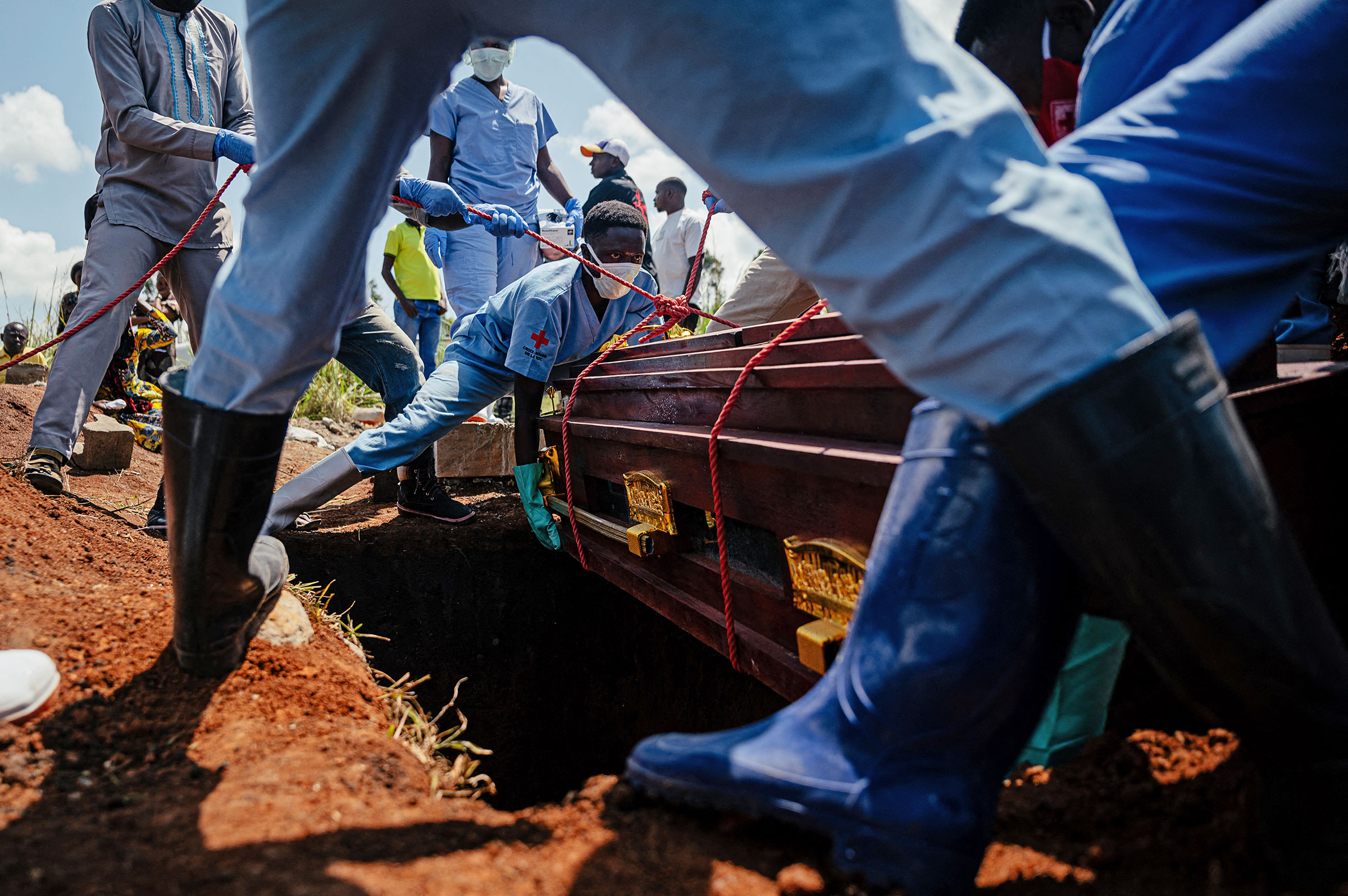
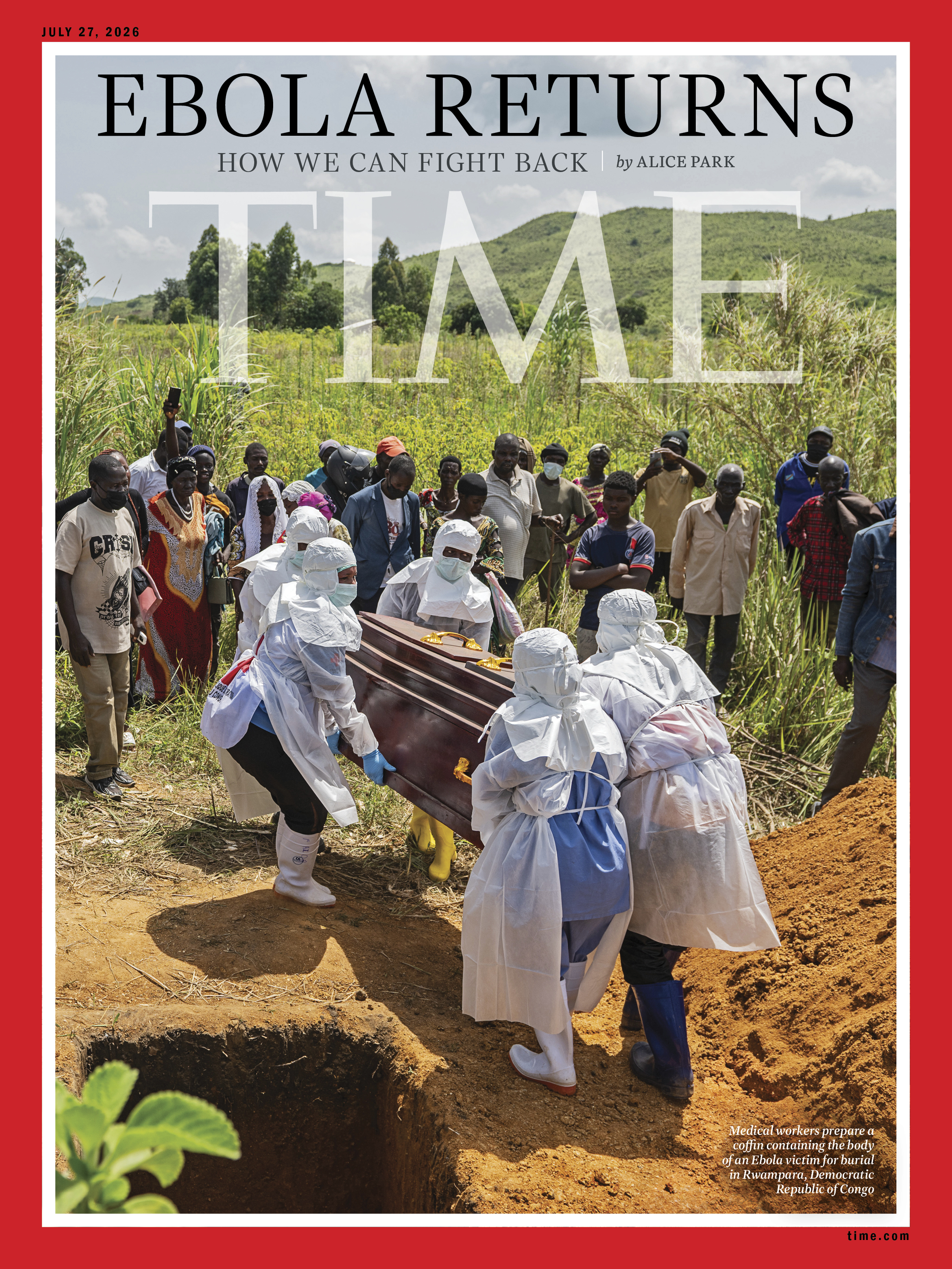
A Red Cross team lowers the coffin of a likely Ebola victim in Bunia, Congo —Jospin Mwisha—AFP/Getty Images
A woman had died. She had traveled from Mongbwalu, in the Democratic Republic of Congo, to neighboring Uganda, where she fell ill and rapidly declined. Her body was transported back to Mongbwalu, but during the journey, the casket cracked. So mourners moved her body into a new one, burning the broken one.
Ten days later, everyone who had helped with the coffin transfer also became sick and died. “They said it was witchcraft,” says Dr. Marie Roseline Belizaire, the World Health Organization (WHO)’s emergency director for Africa. Locals told her the story when she arrived in Mongbwalu to help with the WHO’s Ebola response. “They told me that they saw the casket flying, and that the casket came back to pick up all those who burned it."
Battling an invisible virus is always challenging, but it’s far more difficult when rumors, misinformation, and spiritual beliefs in an affected region conflict with public-health practices. Mongbwalu, where the first cases in the Ebola outbreak raging through Congo and Uganda are believed to have emerged undetected, is a remote mining town in Ituri province that attracts migrant workers. Some of the symptoms of Ebola—fever, headaches, and body aches—can also be caused by exposure to the processes involved in the search for minerals. Malaria and tuberculosis, which can cause fever and bloody coughs, are prevalent in the area too. “So Ebola was the last thing to come into their mind,” Belizaire says. The region’s natural resources also make it a target for political instability, corruption, and violent conflict, which all create fertile ground for infectious diseases.
—Photograph by Moses Sawasawa—AP
This Ebola outbreak likely started when an unsuspecting person encountered the virus, possibly by handling or eating the meat of wild animals. While Ebola has struck the continent before, most notably in 2014, health authorities are concerned about the speed with which cases are mounting. With more than 1,400 cases and 400 deaths recorded by early July, this outbreak, which was declared in May, is now the second largest on record. The U.S. Centers for Disease Control and Prevention (CDC) has raised its response to the highest level, reflecting the escalating urgency of the situation. “We have never seen an epidemic increase as fast as this one,” says Dr. Alan Gonzalez, deputy director of operations at Médecins Sans Frontières (Doctors Without Borders). “This is massive.”
Spreading awareness on the frontlines of Ebola response
It’s impossible to stop viruses like Ebola from finding human hosts and causing disease. But it is possible to contain them quickly, and global health experts are alarmed by the world’s worsening ability to do that. Our systems for responding to and confronting viruses are increasingly fractured and weakened, making everyone more vulnerable. In many important ways, the world is less prepared now than it was even a few years ago to address microbial threats.
“The current epidemic in the D.R.C. is a stress test that, as of now, the world is failing,” says Dr. Tom Frieden, who led the CDC during the 2014 Ebola outbreak and who is now CEO of the nonprofit Resolve to Save Lives.
Drastic cuts to global health and pandemic-preparedness budgets are giving viruses like Ebola the opportunities they need to spread. The U.S.’s role also looks markedly different than it did before President Donald Trump’s second term. Traditionally the largest supporter of global health security, both financially and through its scientific expertise, the U.S. is no longer a member of the WHO, which monitors pathogens and coordinates responses to emergency threats. The withdrawal led to 3,000 job cuts at the WHO and a retreat from some of the agency’s activities, including disease surveillance and response. It’s part of the U.S.’s shift toward an “America First” foreign aid strategy that favors more deals with individual nations for health funds—in exchange for data or mineral rights, for example. That transactional approach to aid is already weakening global health security, experts say.
WHO director-general Tedros Adhanom Ghebreyesus visits a hospital in Bunia —Gradel Muyisa Mumbere—Reuters
Humankind has managed to survive past outbreaks, and it likely will overcome this one too. But in this game of microbial roulette, each encounter with a virus or pathogen heightens the risk that we won’t. “Every time [a virus] pops up, it has evolved along lines that are more and more concerning,” says Pardis Sabeti, a computational geneticist at the Broad Institute of MIT and Harvard who sequenced some of the first samples of Ebola from the 2014 outbreak. “Why do we let them pop up, see that it’s gotten worse, but when cases stop, we stop worrying? The next time it pops up, it might not be OK.”
We have at our disposal, she says, deeper knowledge about the genetic makeup of viruses, how they work, and how to confront them with antiviral treatments and vaccines. So why does each successive onslaught from the microbial world—as we recently saw with COVID—seem to get worse?
“We keep toggling between panic and denial when these events happen,” says Dr. Raj Panjabi, senior partner at Flagship Pioneering and former lead health-security official at the White House. “We don’t build our reflexes in between.”
We’ve seen this war between man and microbe before. The world had never encountered an Ebola crisis like the one that started in 2014, when the virus ravaged West Africa, eventually killing more than 11,000 people. Even with different political leaders in charge at the time, the disease spread undetected for far too long—as it did this year—and eventually became the largest Ebola outbreak ever recorded. Misinformation and distrust of public-health providers was pervasive then too. But as we face another outbreak, there are key differences—both in the virus and in the ways the U.S. and the world are responding to it.
For all of its destruction, the 2014 outbreak triggered scientific innovation; companies developed therapeutics, tests, and vaccines for that Ebola strain, called Zaire. Countries, including the U.S., and groups like the WHO stood up surveillance and laboratory systems to be better prepared for the next inevitable encounter. But there are multiple Ebola strains, and those vaccines, treatments, and tests aren’t effective against the rarer strain, Bundibugyo, sickening people today. Changes in U.S. policies under the Trump Administration have also compromised, and in some cases dismantled, some of the gains made.
Deep budget and personnel cuts, as well as attacks on vaccines, have hobbled health agencies, and there has been a Senate-confirmed CDC director for only 29 days of Trump’s second term. That office remains vacant. Until May, Bloomberg reported, so had the lead of the White House Office of Pandemic Preparedness and Response, which Congress established with bipartisan support in 2023 after COVID to launch a more coordinated response to global health threats.
The U.S. used to be part of a network of community workers, foreign aid groups, and government channels that make up the critical defense system against viral threats. That meant “you’re hearing updates on the programs, you’re hearing scuttlebutt about what’s going on in the area,” says Jeremy Konyndyk, who led the USAID office of foreign-disaster assistance during the 2014 outbreak and who is now president of Refugees International. It’s often how we’d detect the first signs of an emerging infectious disease. “If there were still a robust USAID portfolio of programs running in eastern Congo, someone would have noticed something,” he says.
A community leader in Goma, Congo, raises awareness about Ebola —Jospin Mwisha—AFP/Getty Images
But now, “the U.S. is flying blind to these things,” says Dr. Ashish Jha, who coordinated the COVID response in the Biden Administration and now leads the AI disease-surveillance company BioRadar. The Trump Administration’s decision to defund USAID in 2025 abruptly shuttered its programs and broke many of those chains of communication.
Ebola moved silently for weeks, and possibly months, before the first patient was reported: a nurse who came to the hospital in Bunia, Congo, with fever, vomiting, and bleeding on April 24. Local labs didn’t have the necessary equipment to test her sample, so it was sent to the capital in Kinshasa, which took days. In the meantime, she and other people with Ebola had been mingling in the community; some crossed the border into Uganda. It took another week or so for the WHO to receive reports of more cases, when it then declared the outbreak a public-health emergency of international concern.
The region’s skeletal health ecosystem was no match for fast-moving Ebola. It spreads by direct contact with body fluids: saliva, blood, vomit, urine, feces. The bodies of the recently deceased are especially contagious, as they often contain the highest levels of the virus. But burial and mourning practices in Congo are built around touching and handling departed loved ones during the funeral. Health care workers who impede these rituals for infection-control reasons often face hostility and violence; clinics have been attacked and burned down during this outbreak, furthering viral spread.
The best defense against such resistance came from a lesson learned during the 2014 Ebola crisis: the importance of engaging with trusted local leaders to inform communities about the virus. Without them, misinformation and conspiracies flourish. In Congo’s 2018 Ebola outbreak, the humanitarian group Mercy Corps worked with local governments to train leaders and Ebola survivors how to talk to their community about the risks of Ebola and the benefits of cooperating with health care workers. But because of instability in the area and shrinking funding, those trained community members are now gone. “I was asking one of the health doctors, ‘Where are those community leaders that we trained? Where are they?’” says Onesphore Bangenza, Mercy Corps’ Ebola response team leader. “They were supposed to be here; they have the trust of the community.” Now, he says, local health authorities have to start from scratch.
They are battling not only the loss of trained allies but also confusion about the Bundibugyo strain now circulating, and why people vaccinated in previous outbreaks are not protected. “I explain to them that Ebola has six sons and daughters,” says Belizaire. “And for the first child, we have a vaccine. But for the other children, we don’t.”
The U.S.’s commitment to global health typically begins with Congress, which has historically allocated funding to nongovernmental groups that tackle everything from HIV to maternal health and childhood vaccination programs. In 2025, Congress designated $2 billion to health programs, including $650 million for global health security: maintaining surveillance programs for infectious-disease threats and responding to outbreaks. But that $2 billion has not yet been formally released, and Administration officials at the State Department and the Office of Management and Budget have said the government was holding that funding for closing down USAID programs. “All of the money that relates to global health security threats like Ebola has come back to the State Department, and we are programming it,” a senior department official told TIME.
Protesters in Kenya march against an Ebola quarantine facility for U.S. citizens —Lucas Mukasa—Anadolu/Getty Images
More broadly, the Administration’s plans to reframe foreign aid to focus more on bilateral agreements made directly with countries is centered on the principle that “foreign aid is not charity,” says the senior department official. “It’s a strategic tool for dealing directly with governments.” While the agreements themselves are strictly related to health, the official said, the Administration takes strategic benefits and security alliances into account during negotiations. In June, Secretary of State Marco Rubio testified before Congress that when it comes to doling out foreign aid, including global health funds, “we are going to reward those that are good to the United States; we’re not going to be as friendly to places that are not furthering our national interests.”
“At both the macro and micro level, we are seeing changes that we haven’t seen in 25 years,” says Vincent Lin, associate director of health policy and advocacy at the global nonprofit Partners in Health. “It’s a total reset of the system, and not something Congress agreed to or approved.”
The U.S. is contributing to the Ebola response, but not in the ways that would have once been expected. In briefings, the CDC’s incident manager for the Ebola response, Dr. Satish Pillai, said the CDC now has more than 400 personnel involved in the Ebola response, both in the U.S. and overseas, and has sent supplies like personal protective and lab testing equipment. The U.S. has also provided $270 million directly to combatting the outbreak, according to the State Department, including an additional $350 million for the outbreak and other humanitarian needs in Congo, Uganda, and South Sudan, and $50 million more to develop new treatments and vaccines. By comparison, in the 2014 outbreak, the U.S. provided nearly $2 billion in financial support, drawn from a package of $5.4 billion in emergency global health funding appropriated by Congress.
During his appearance before Congress, Rubio did commit to releasing $661 million in matched funding from other donors to the Global Fund to Fight AIDS, TB and Malaria “very quickly”—and said savings from closing USAID and addressing inefficiencies in foreign aid programs would be directed toward programs such as expanding access to a recently approved twice-a-year HIV-prevention medication.
Health leaders say the traditional financial support is not the only thing missing from this response. “The biggest deficit I feel is a loss of partnership with one of our most reliable technical partners in the world, the U.S. CDC,” says Dr. Chikwe Ihekweazu, executive director of the WHO Health Emergencies Program, who is deployed in Bunia. Recently, “we had a big partnerships meeting—we had the local and national public-health agency, the Africa CDC, but the missing partner in the room was the U.S. CDC.”
American health care workers who travel to support the outbreak response may also be more at risk now than in the past. The Trump Administration announced a controversial plan to build an Ebola quarantine and treatment center in Kenya, which currently has no confirmed Ebola cases, on an air base to manage Americans who might have been exposed to the virus. Dr. Craig Spencer, who contracted Ebola in 2014 after volunteering in West Africa with Médecins Sans Frontières, doubts whether such a makeshift facility will provide the same quality of care as established specialized centers in the U.S. He was evacuated to Bellevue Hospital in New York, where he received care that saved his life. “The U.S. military will famously put in incredible amounts of resources to rescue a helicopter or plane pilot who is down in Iran, and the tagline is ‘No man left behind,’” he says. “But when it comes to Ebola, our willingness to even consider allowing someone back into the country apparently ends.” The center was scheduled to open in late May but was blocked by a Kenyan high court after locals protested.
Public-health advice displayed at the Ebola Treatment Center in Munigi, Congo —Jospin Mwisha—AFP/Getty Images
Being ready for Bundibugyo and other neglected viral strains requires investing in “what if” scenarios. “There are a dozen or so viruses out there that we know can cause really serious illnesses in humans,” Jha says. “We should be looking at all of the strains of all of those viruses and building vaccines and therapeutics against them now.” The WHO is currently taking this approach by concentrating its efforts on a few major viral families that are most likely to erupt.
The U.S. donated doses of an experimental antibody treatment for Bundibugyo that the first patients in a trial received in early July. But a Bundibugyo vaccine is needed to control the outbreak, and one that appears to work in animals already exists, says Teresa Lambe, head of vaccine immunology at Oxford University, who helped make it and one of the first shots for COVID. “When we started this work, we started it at risk, relying on the fact that I had a very generous philanthropic donation.” But those funds dried up; the barrier to creating the vaccine wasn’t scientific, but financial.
Several weeks after the WHO sounded the alarm on Ebola, the money to continue those studies finally emerged from the philanthropic and intergovernmental group CEPI, which supports vaccine development against global health threats. At the end of May, CEPI announced an investment of nearly $62 million to develop three Bundibugyo vaccines, including the Oxford candidate.
Lambe is now working with the Serum Institute of India to finish testing the experimental vaccine in ferrets and hopes to have doses ready to test in people in Congo this summer. Moderna, which partnered with CEPI to develop the first mRNA COVID vaccine, also received CEPI funding to develop an mRNA vaccine—which has the advantage of speed, as shown during COVID—against Bundibugyo. The final candidate, from IAVI, may take the longest to develop, around seven to nine months.
These time lags are measured in lives lost and more chances for the virus to find new hosts and spread—out of one country and into another, from one continent to another. In terms of money and lives, “building health systems is much cheaper than mounting an emergency response,” says Sheila Davis, CEO at Partners in Health.
Meanwhile, while attending to the new outbreak, experts also are working to make sure new treatments and vaccines become available for whatever comes next. “We are working with a no-regrets policy,” says Ihekweazu of the WHO.
He and other global health leaders agree on one thing: we have the tools and knowledge to confront and contain viruses like Ebola before they become epidemics or pandemics. But we lack the consolidated commitment to invest in the resources and workforce needed to use those tools and knowledge effectively. “We need to set up systems so the world isn’t scrambling, as if it’s never happened before, every time there is another emergency,” says Frieden. “This is not rocket science. We know what to do. But it does take dedicated resources and money.”
The Walt Disney Company logo appears on a screen above the floor of the New York Stock Exchange in this Aug. 8, 2017, file photo. —Richard Drew—AP
The Walt Disney Company has agreed to a $50 million settlement in a class action lawsuit that alleged the media giant violated federal antitrust and consumer protection laws.
The settlement is still waiting for final court approval from a federal judge, with a hearing set for January 2027, but eligible consumers need to submit any claims ahead of that date.
Disney has denied the lawsuit’s claims and allegations of wrongdoing. The company agreed to settle the case without admitting liability.
Here is what you need to know about the settlement and how you can file a claim.
What did the lawsuit against Disney allege?
A federal class action lawsuit was filed in 2022 on behalf of YouTube TV and DirecTV subscribers.
In Biddle v. Disney, the plaintiffs alleged that Disney, through its ownership and control of Hulu and the Entertainment Sports Programming Network (ESPN), used its market position to inflate prices across the streaming live pay television market.
According to the lawsuit, Disney's carriage agreements required streaming platforms to include ESPN in their basic channel packages, limiting competitors' ability to offer lower-cost alternatives.
The plaintiffs alleged that those practices contributed to significant price increases for YouTube TV and DirecTV subscribers.
They further argued that Disney “set a price floor for the entire market, reduced consumer choice, and strengthened significant barriers to entry.”
While denying wrongdoing or liability, Disney agreed to a $50 million settlement with the YouTube TV and DirecTV subscriber plaintiffs.
A similar case involving Disney’s impact on streaming subscription prices involving FuboTV was later filed. However, claims brought by the FuboTV plaintiffs remain unresolved and are not part of this settlement.
Who is eligible to make a claim for a portion of the Disney settlement?
Two groups of subscribers are eligible to submit a claim.
People who purchased a YouTube TV subscription between April 1, 2019, and March 31, 2026, and people who subscribed to DirecTV's streaming live pay TV services (including DirecTV Stream, DirecTV Now, and AT&T TV Now) between April 1, 2019, and March 31, 2026.
You are not eligible if you are one of Disney's employees, officers, directors, legal representatives, heirs, successors, wholly or partially owned subsidiaries or affiliates; counsel for the parties and their employees; or the judicial officers, their immediate family members, and court staff assigned to this litigation.
How can you make a claim for a portion of the Disney settlement?
A notice should have been sent to any settlement class member via email, post, or hand-delivery.
Before filing, you will need the unique ID printed on the notice you received by mail or email. If you did not receive a notice or have misplaced it, you can contact the settlement administrator at info@OnlineTVSettlement.com for further assistance.
Claims must be submitted online or postmarked by Sept. 8, 2026.
After submitting a claim online, you should receive an email containing a confirmation code for your records.
Paper claim forms are also available and must be completed in full, with the verification statement signed, and mailed to: Settlement Administrator, P.O. Box 4720, Portland, OR 97208-4720.
Eligible claimants are required to confirm the start and end dates of a subscription under penalty of perjury.
Individuals who maintained both a YouTube TV subscription and a DirecTV streaming subscription may submit a single claim form containing information for both subscriptions in order to seek compensation for each.
When can claimants expect to receive compensation—and how much could they receive?
If a valid claim is submitted by the deadline, any payment will be issued only if the settlement receives final court approval and becomes effective.
The court is scheduled to hold a final approval hearing on Jan. 14, 2027, at 9 a.m., local time, before U.S. District Judge Edward J. Davila, who is overseeing the class action in California.
At the hearing, the court will determine whether the settlement is “fair, reasonable, and adequate,” and will also consider the proposed distribution plan, class counsel's request for attorneys' fees and costs, and any requested service awards.
The settlement administrator recommends that class members monitor the settlement website for updates.
Eligible claimants will receive a pro rata cash payment, with the amount based on the length of their YouTube TV and/or DirecTV streaming subscription.
The money received by each eligible claimant will depend on the amount of people that apply for a portion of the settlement.
Attorney’s fees will also need to be subtracted from the settlement fund prior to payments being made.
Swift's ultraviolet image of the Andromeda galaxy, the largest and closest spiral galaxy to the Milky Way —NASA/Swift/Stefan Immler (Goddard Space Flight Center) and Erin Grand (UMCP)
NASA made a good bet when it built the Swift Space Telescope. Launched in 2004, Swift has spent more than a generation observing gamma ray bursts—the most powerful forms of energy since the Big Bang. The bursts last a few milliseconds to a few hundred seconds, and are thought to be caused by the merger of two neutron stars (the short bursts), or the collapse of large stars, creating a black hole (the long ones). Whatever the source, Swift has long been on the case, and at a relative bargain—just $250 million. The James Webb Space Telescope, launched in 2021, cost $10 billion.
But Swift is in trouble. The satellite ordinarily orbits the Earth at an altitude of 370 miles. However, atmospheric drag, even at that nosebleed elevation, has slowly pulled Swift down to 210 miles and falling, putting it on target to reenter and burn up as soon as the end of this year—and taking NASA’s quarter-billion-dollar investment with it. The so-called solar maximum, when the sun is at the most energetic point in its 11-year cycle, hasn’t helped any. Solar maximum was reached in late 2024, heating and puffing the Earth’s atmosphere, increasing the drag on all satellites.
NASA, however, has a rescue mission ready to go. Poised on a tarmac on the Kwajalein Atoll in the western Pacific and set to fly as early as tomorrow, July 3, is an L-1011 Stargazer jet, carrying a three-stage Pegasus rocket under its belly; the Pegasus is itself carrying a refrigerator-sized satellite called Link. If all goes according to plan, the plane will fly to 40,000 ft. and there release the Pegasus, which will fire its engines and deliver Link into an orbit matching Swift’s. From there, Link will rendezvous with Swift, take hold of it with its three grappling arms and use its thrusters to carry it to a higher orbit. That’s what the checklist calls for, at least, but there are an awful lot of steps that have to go just-so for the mission to work as planned.
For starters there’s the Pegasus, a 55-ft. long three-stage rocket using rubbery, solid fuel as a propellant. En route to orbit, each of the three stages has to fire on time, in sequence if the payload is to get where it’s going. Pegasus rockets were introduced in 1990 and have since flown 45 missions successfully. But this time around the charm was broken. Launch of the Swift rescue mission was originally scheduled for July 2, and the L-1011 jet did get off the ground, but mission controllers detected an undisclosed problem in the Pegasus system and called the plane back to the hangar.
“The date of the next launch attempt for this mission … will be determined after teams have reviewed data from today’s attempt,” NASA said in a short-on-details statement.
Whenever Pegasus does get to space, things won’t be as simple as just releasing Link to speed toward Swift and carry it out of danger. It will take as much as a month to find and maneuver to the space telescope in the first place, with Link relying on slow, gentle ion thrusters to get it where it’s going. When the rescue ship does reach Swift it will spend another two to three weeks pirouetting around it, looking for promising grappling points for its robotic arms to grab onto. Only when it finds them will it take hold of Swift and begin the slow two- or three-month process of raising its orbit.
All of these handle-with-care protocols are necessitated by the design and condition of Swift. The telescope was not built to be serviced the way the Hubble Space Telescope has been numerous times since its 1990 launch and thus was not designed with handles or brackets to accommodate robotic arms. What’s more, Swift has been in space so long its thermal insulation blankets might have grown brittle meaning too much jostling or too much speed in getting from place to place could damage the ship.
If the mission does come off as planned, it will be a capstone to the career of the Northrop-Grumman-built Pegasus line, which had not flown since 2021 and was expected to be retired in favor of more advanced jet-launched rockets in the development pipeline. It was just by chance that Northrop-Grumman had one more Pegasus in inventory when NASA came calling last year with its plans for the Swift rescue. That was good news, since launching Link atop a traditional rocket like the Falcon 9 was not an option.
That’s because Swift flies in an orbit inclined 20.6° to the equator to avoid passing through the Van Allen radiation belts. That’s a shallow inclination compared to the 28.5° tilt at which the space shuttles flew and the 51.6° orbit the International Space Station inscribes. Swift’s orbit is hard to reach from fixed launch pads that a vertical rocket like the Falcon 9 would use, but an air launch provides much more flexibility in picking an inclination. An air launch is also cheap—as these things go. The Swift rescue mission carries a price tag of just $30 million—which is significantly less than the $74 million it costs to buy the services of a Falcon 9, and far less than the $250 million it would cost to abandon and replace Swift.
Launching by plane also means an easy liftoff—just gas up and go, as opposed to the extensive preparations necessary to get a rocket off the ground. As soon as the Pegasus engineers figure out what caused the recent abort they can thus proceed with saving Swift. The telescope has done yeoman’s work for the past two decades, and with luck, it has years more ahead of it.