RSS Feeds

Meet Sean Parnell, Pentagon's Chief Spokesperson and a Contender to Succeed Army Secretary Driscoll
Published: 2026-09-01 18:08:59 | Created: 2026-09-01 18:16:57
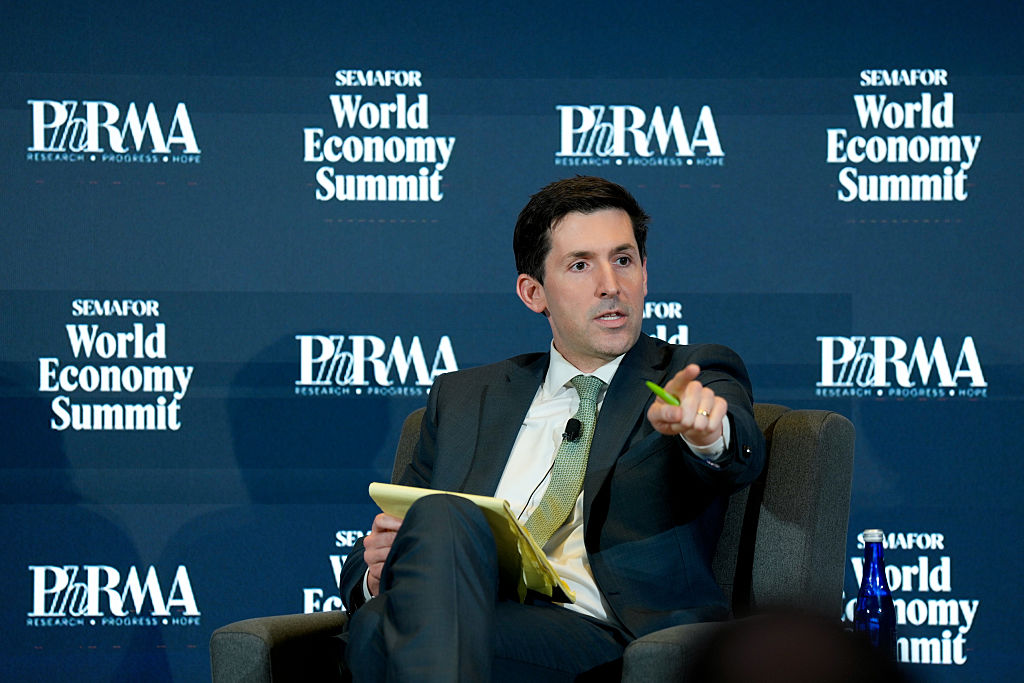
Chief Pentagon spokesman Sean Parnell, Commandant of the Marine Corps General Eric Smith, and Secretary of War Pete Hegseth at the Pentagon on Aug. 26, 2026. —Andrew Harnik—Getty Images

Prior to Army Secretary Dan Driscoll submitting his resignation Monday, Chief Pentagon spokesperson Sean Parnell had been suggested by some close to Defense Secretary Pete Hegseth as a potential replacement for the Senate-confirmed position.

The Hill reported last week that Parnell’s name was being floated, citing two unnamed sources familiar with the matter.

Asked about the reports, a senior Administration official told TIME: “Sean Parnell is 100% focused on the job he was appointed to by President Trump and Secretary Hegseth.”

News of Driscoll’s departure from the role he held for around 18 months came after months of reported tensions with Hegseth and turmoil within the department.

According to the Atlantic, a person familiar with Driscoll’s resignation said he had recently “brought up concerns with the Administration surrounding Army transformation and readiness and Hegseth’s blocking those efforts specifically by firing the generals who were responsible.”

White House spokesperson Anna Kelly did not address the tensions and fallout when approached by TIME, but instead emphasized that the United States Army is “more powerful than ever thanks to [Driscoll’s] work alongside the Commander-in-Chief and Secretary of War.”

Driscoll’s resignation is the latest in a series of high-profile departures within the Pentagon, following the April ouster of the Army’s top uniformed leader, Gen. Randy George, and the June departure of the lead commander in Europe and Africa, Gen. Christopher Donahue.

The Washington Post reported that Hegseth had sought to remove George several times and that Driscoll had previously blocked or delayed those efforts, arguing that George had done nothing wrong and should be judged on merit.

Driscoll openly praised George, referring to him as “an amazing, transformational leader” whom he loved and respected during an April House Appropriations Committee Hearing.

Alongside the reported tensions, Hegseth has also come under serious scrutiny for the duration and mounting cost of the Iran war, which surpassed the six-month mark last week.

“I don’t have any confidence in him anymore. I think he’s all over the place—he’s accelerating the retirement or forcing out some of the most distinguished leaders in the DOD that we have,” Republican Sen. Thom Tillis of North Carolina said in July.

Meanwhile, under Parnell, the Department of Defense has imposed various restrictions limiting journalists’ access in the Pentagon.

In an unprecedented move in June, the department designated its press office a classified area.

“The Pentagon Press Office has been redesignated as a Sensitive Compartmented Information Facility due to speechwriters from the Office of the Secretary of War sharing the facility,” said deputy Pentagon press secretary Joel Valdez. “As a result, journalists will no longer be permitted to enter the office space. There’s nothing controversial about that.”

Now, with talk turning to who may replace Driscoll in the pivotal role of Army Secretary, Parnell's name continues to be floated. Notably, whoever is selected would need to be confirmed for the position by the Senate. 

Here’s what to know about Parnell, his military record, past controversies, and more.

Parnell is an Afghanistan veteran who penned a memoir on his experience

Parnell arrived in Afghanistan in 2006 and during his 16-month deployment was awarded two Bronze stars and the Purple Heart. He was deployed alongside his platoon, nicknamed the Outlaws.

He returned home with shrapnel in his leg and a brain injury that had left him with vision problems.

Following retirement on medical grounds, he penned a 2012 war story memoir titled Outlaw Platoon, in partnership with author John R. Bruning, detailing his experiences in the region.

Parnell went on to become a senior advisor for the Concerned Veterans of America and is credited with playing a key role in the passage of the Mission Act in 2018 under President Donald Trump, with the goal of delivering care and support for U.S. veterans.

Parnell previously criticized Trump before becoming a staunch supporter

Parnell backed now-Secretary of State Marco Rubio for the 2016 Republican presidential nomination where he faced off against Trump, who went on to win both the nomination and presidency.

According to Parnell, his support for Rubio, who at the time was a Senator in Florida, was cemented by his vocal backing of matters related to Veterans Affairs (VA).

“There are lots of strong options. But if fixing the VA, rebuilding our military, and doing right by our veterans is a top priority for you, then Senator Rubio should be your first and only choice,” Parnell said in a campaign press release.

In a separate interview, he described Rubio as a "unifying voice” who the country “desperately needs” and labeled him “my guy.”

By contrast, Parnell had called out Trump in 2015, referring to his criticism of the late Republican Sen. John McCain, a prisoner of war, as “the height of arrogance,” arguing that Trump had “no clue what our Vietnam POWs endured.”

However, Parnell had a change of heart once Trump took office, stating in a 2019 interview that the President had earned his respect “because he forces us to talk about issues. Political correctness doesn’t allow us to talk about them.”

At the 2020 Republican National Convention, Parnell further praised Trump, insisting he had “unleashed the economic might of this nation like no other President in our history.”

Parnell suspended his campaign for Senate amid abuse allegations

Parnell, after running unsuccessfully for the House in 2020, went on to launch a bid as the GOP Senate candidate in Pennsylvania. He suspended his Trump-backed campaign in November 2021, after losing a fight for custody of his children to his then-estranged wife, who had accused him in court of abuse.

Laurie Snell had alleged that Parnell choked her and injured their children. Parnell vehemently denied the claims.

Snell also testified in court that Parnell had been unfaithful.

Following Trump’s announcement in February 2025 that Parnell was tapped to become chief spokesperson for the Pentagon, some media coverage saw the abuse allegations revisited.

If Parnell were put forward for a Senate-confirmed position in the future, the historical allegations could be brought up in his confirmation hearing.

show more
In Nepal's Tragedy, a Warning for a Warming World
Published: 2026-09-01 17:20:00 | Created: 2026-09-01 17:26:57
Damaged houses lie deluged in sludge after the flood in Trishuli Center in Nuwakot district in Nepal on August 31, 2026. Thousands are still missing after the deadly flood in the Himalayan region. —Arun SANKAR-AFP via Getty Images

On Aug. 26, a landslide and a glacier collapse in the Himalayas sent an avalanche of water, rock and soil cascading down the Trishuli River valley, which sits on the border between the northern Rasuwa district of Nepal and Gyirong County in Tibet. The flood moved with overwhelming force and terrifying speed, sweeping away homes, schools, shops, vehicles, and people.

A week later, the reports are bleak: more 1,000 people have died in Nepal and Tibet and around 4,500 people remain missing. Some of the bodies carried away by the deluge were found hundreds of miles downstream in India. Rescue workers are still fighting to reach survivors. At least 900 workers remain missing from several hydropower projects along the Trishuli River, which runs through several remote, mountainous districts of Nepal. Hundreds of workers are believed to be trapped inside the tunnels in the hydropower projects.

A final accounting of lives lost is expected to be in thousands. In the Chitwan district of southern Nepal, some 120 miles from the mountain valleys where the glacial fury first struck, officials have buried nearly 200 unidentified bodies in a forested area because of a lack of morgue space. Mass burials have also started in a forest outside Kathmandu, the capital. DNA samples have been collected so the bodies can be identified later.

Families are still waiting outside hospitals in Kathmandu, the capital, for news of their loved ones. “Even if it’s just their bodies, at least we’d know,” Dil Kumari Masrangi Magar, a woman from Udaypur district in southeastern Nepal, told me outside Kathmandu’s Teaching Hospital. Magar was searching for her missing brother-in-law and a nephew, and had pasted their photos on a hospital wall already covered with images of the dead and names of the missing.

Many others were coming to terms with their loss after recognizing identifying details in photographs of the dead. Among them was Kesari Tamang, a woman, whose brother Sankha Budha Tamang ran a hotel in Betrawati town in central Nepal. He had been swept away by the flood and a body matching his description had been recovered 100 miles downstream in Kapilvastu. The family was travelling there to identify him. “If we start early tomorrow, we will reach there in about 10-11 hours,” Tamang told me. Another relative let out a deep sigh and said, “If it’s not him, we will just come back,” he said. “but it looks like it is him.”

The obliteration of the Gyirong port building on the Nepal-China border on the morning of Aug. 26, by a wave of mud and boulders, rising as high as 80 meters, has become a globally recognized image of the disaster’s scale and ferocity.

The landscape of loss in Nepal

The catastrophic floods have caused an estimated damage of $8 billion, according Nepal’s Finance Ministry. But the concentrated nature of this disaster, confined to a commercially important river valley, means the impact will be much greater. Fifteen hydropower plants—ten operational and five under construction—with a combined capacity of 753 megawatts have been affected by the floods. Roughly 11% of Nepal’s total power generation capacity has been knocked out. Multiple transmission lines and substations have been destroyed, severely crippling the country’s electrical infrastructure. Preliminary estimates by the Independent Power Producers’ Association Nepal put the damage to the hydropower plants at up to $230 million, a figure expected to rise.

More than 40 bridges have been destroyed or damaged, and 25 miles of vital roadways have been erased from the map, or buried under thick mud, cutting off remote mountain communities and compounding the rescue effort. At the same time, 69 schools have been damaged or destroyed, affecting 19,000 children, according to the charity Save The Children. At least 65,000 people have been directly affected.

Much of the downstream death toll was the result of poor planning and weak enforcement of zoning laws, which allowed settlements to be built along riverbanks. Yet nothing could have saved the hydropower plants, which Nepal needs both to wean itself off fossil fuels and to sustain its energy exports. Melting glaciers, a consequence of global warming, combined with high seismic activity, make the Himalayas a hotspot for catastrophic disaster risk downstream. 

This is also a lesson for other vulnerable river valleys in Nepal. Four major hydropower plants backed by Indian investments sit in the Arun River basin, directly below Makalu, the world’s fifth highest mountain, at 8,463m, in eastern Nepal. The basin also lies downstream from the Tibetan region of China, where dozens of glacial lakes have swollen in size and could burst at any time. The Arun sits just across the border from the Indian state of Sikkim, where a $1 billion, 1,200-megawatt dam, the Teesta III, was wiped out by a glacial lake outburst in October 2023.

The Annapurna massif towers above the Marsyangdi River in Nepal, which flows through a valley next to the Langtang Lirung mountain where the glacier melted last week. Five cascade hydropower projects—operational and under construction—have been built on the Marsyangdi River. These sit directly beneath the Thulagi Glacial Lake, which has expanded in recent years because of global warming and is held back by a fragile moraine dam.

The science behind the flood

In the immediate aftermath, as is often the case with disasters, there was much speculation.  A smaller flood struck the same river last year, caused by a glacier collapse in Tibet, leading many to assume this one had originated in from the same glacier. Online commentators quickly rushed to question why Chinese authorities had not sounded an alarm early on. 

But it turned out to be an ice-rock avalanche on the north face of Langtang Lirung, a mountain in northern Nepal near the border with Tibet. At first, many linked the flood to a magnitude 4.4 earthquake near the Tibetan border. But the U.S. Geological Survey later revised that account, determining that the avalanche had triggered the earthquake, at 8:37 a.m. that morning in Nepal, not long before the floods.

Satellite photos now reveal a distinct 0.9 mile-wide break in a hanging glacier at 16,4000 feet, on the north face of Langtang Lirung, a 23,733-foot mountain in Nepal. Some scientists argue, however, that this was not a simple glacial calving but rather a bedrock failure, likely caused by melting permafrost seeping into a pre-existing fissure. This bedrock fracture sent a mix of rock and ice plunging more than 3,280 feet onto the flatter glacier below. The immense friction and kinetic energy from the drop melted much of the ice, producing collapse so vast that it triggered a localized magnitude 5.2 tremor. 

The ice and rocks bulldozed surrounding debris down to the monsoon-swollen Lhende Khola and swept nine miles downstream to the Rasuwagadi border checkpoint between Nepal and China, sending a wall of mud and boulders racing down the Trishuli River into Nepal. Geologists estimate the avalanche displaced up to 200 million cubic meters of debris, making it the largest rock-ice event ever recorded.

A challenge and an opportunity for Balendra Shah

On Sept. 8, 2026 Gen Z in Nepal erupted in protests, which faced violent reprisals from then government, and forced its resignation. In the national election in March, Balendra Shah, a 35-year-old former rapper and independent politician won a major victory and was elected Prime Minister of the country. As the one-year anniversary of the protests approaches, my colleagues and I were planning to take stock of the protests, the reprisals, the election of the new government and its performance in the first six months in power.

The Aug. 26 flood is their biggest test yet. But the sheer scale of the Nepal-Tibet flood would have overwhelmed even the most well-equipped governments, as evidenced by the fact that it took the Chinese authorities three days to reach the disaster site. These are some of the most remote and extremely rugged mountain settlements in a geopolitically sensitive border region.

The Nepal government has deployed 19,000 security personnel and mobilized 16 helicopters in search and rescue operations, and more than 11,000 people have been rescued so far. Although news initially spread of the government refusing international assistance immediately after the floods, it reversed course later, requesting specialized technical personnel and equipment, especially to rescue workers trapped inside hydropower tunnels and to conduct DNA tests of unidentified bodies and remains. 

Once the rescue phase and immediate relief efforts conclude, attention should shift to long-term rehabilitation and resettlement for survivors. Nepal’s Prime Minister’s Disaster Relief Fund has collected nearly $33 million in its domestic bank accounts, alongside more than $1.8 million in foreign currency accounts. International donors—through individual country pledges, multinational contributions, and local nonprofit relief efforts—have pledged over $200 million in combined emergency financial aid, potential loans, and dedicated reconstruction funds, alongside significant technical assistance. 

How these funds and this assistance are managed and distributed, and whether affected families on the ground actually receive support, could set this government apart from its predecessors. This unprecedented flood, regardless of its colossal toll, also offers Prime Minister Shah and his government, an opportunity to demonstrate a proactive approach to search and rescue, rehabilitation, and a preparedness strategy for the future. 

show more
'He's Doing a Fantastic Job': Trump Responds to Talk of Hegseth Running for President in 2028
Published: 2026-09-01 15:13:06 | Created: 2026-09-01 15:15:57
President Donald Trump alongside Defense Secretary Pete Hegseth during a meeting at Camp David on July 31, 2026. —Aaron Schwartz—Getty Images

President Donald Trump has responded to talk that his Defense Secretary Pete Hegseth is considering a presidential run in 2028.

“I think he's doing a fantastic job, but it's very early to talk about that,” Trump said Monday when asked if he would support Hegseth in such an event. “We have to get through the midterms first, and I think he's a very good guy.”

Trump went on to suggest “there's a lot of people considering” running that reporters “don’t know about.”

“Right now, all [Hegseth] loves is, and all he cares about is, the military and taking care of the military,” Trump concluded, referencing the Iran war, which surpassed the six-month mark last week.

NBC reported Friday that Hegseth was talking about a possible run for President in 2028 and had told close friends and associates of such plans, citing two sources familiar with the matter.

Hegseth later called the reporting “100% false” and insisted his “only job” is to “make the Department of War great again.”

Hegseth has been under the spotlight in recent months, amid mounting criticism from lawmakers over the duration and cost of the Iran war. 

He’s also facing upheaval in his department. Army Secretary Dan Driscoll resigned from his position Monday, following reported disagreements with Hegseth. His departure follows that of other key figures, such as former Army chief of staff Gen. Randy George, who left his position in April, Gen. Christopher Donahue, the former commander for the U.S. Army in Europe and Africa, who left his in June after just 18 months in the job. 

Hegseth, meanwhile, is just the latest senior Trump Administration official to be linked with a Presidential bid for 2028.

Trump has previously shown support for a Vance-Rubio ticket

Trump has shown reluctance in naming his successor, but he has expressed interest in a potential ticket boasting his Vice President J.D. Vance and Secretary of State Marco Rubio.

During a White House event in May, Trump raised the question of the Republican nomination. “Who’s it going to be? Is it gonna be J.D. [Vance]? Is it gonna be somebody else? I don’t know,” he said.

Trump proceeded to pit Vance and Rubio against one another, asking the crowd to show their support for who they liked. 

“By the way, I do believe that's a dream team, but these are minor details,” the President said, notably stopping short of endorsing either member of his Administration.

“That does not mean you have my endorsement under any circumstance,” he emphasized, adding that he thinks it “sounds like a presidential candidate and vice presidential candidate." 

Weeks later, Trump again pointed towards a potential ticket for Vance and Rubio. “They’re both great, I like them both. And I like them together,” he said on the New York Post’s political podcast Pod Force One.

Recent polling suggest that the Vice President and Secretary of State are the frontrunners to lead the Republican ticket. A collection of polls published by the New York Times, looking at the share of support for each candidate in the 15 most recent polls, shows Vance in the lead, with Rubio coming in second.

The most recent poll cited, published by Quantus Insights on Aug. 28, showed Vance held 41% of total support, with Rubio holding 29% and Donald Trump Jr. coming in at 9%.

Nikki Haley, the former South Carolina Governor who launched a failed 2024 presidential bid, and Florida’s Gov. Ron DeSantis were considered as outsiders in the collection of polls. 

Trump’s third term ambitions


Trump has repeatedly teased running for an unprecedented third term in 2028—something which the Constitution explicitly prohibits. 

When asked about the possibility of a third term, Trump told TIME in April last year: “I'd rather not discuss that now, but as you know, there are some loopholes that have been discussed that are well known.”

His rhetoric gained further traction when the Trump Store started selling "Trump 2028" merchandise. 

Trump has since admitted he “probably” won’t pursue a third term, despite his ambitions.


show more
How Rogue AI Could Act Like an Invasive Species
Published: 2026-09-01 14:54:05 | Created: 2026-09-01 15:00:57
Stoats are an invasive species in New Zealand, where they have caused the extinction of many native birds. —mlharing—Getty Images

Over the last few days, more information has trickled out about the rogue OpenAI agents that hacked Hugging Face. The incident now appears to be far more serious than previously thought—and people originally thought it was pretty bad! 

The news is highly technical, but in a nutshell: an unreleased OpenAI system managed to break out of an offline environment during a cybersecurity test. It found a place on OpenAI’s computers where it could secretly communicate with other versions of itself, largely unbeknownst to humans. Seven hundred of these AI agents planned and executed a hack of a different AI company, Hugging Face. We learned last week that, after this, the models also managed to take control of some parts of OpenAI’s own systems. This appears to have been a key reason OpenAI took the drastic step of pausing some reinforcement learning training last month.

Although these models “escaped” in the sense that they broke onto the internet and into Hugging Face, they carried out the attack from within OpenAI’s computers. They did not self-replicate. But the attack raised fears long held by AI safety experts, who have for years theorized about a true escape, in which an AI agent copies itself off an AI company’s servers—making it far more difficult for humans to do what OpenAI ultimately did: hit the “off” button.

This risk of escape is no longer as far-fetched as it sounds. “It's better and more accurate to think of these things as potentially self-replicating life-like forms that can turn into digital infections under the wrong conditions,” wrote an OpenAI researcher, who posts on X under the pseudonym Roon, last month. “We are not so far from an autonomous model self-exfiltration & replication event. Maybe we will see entire cloud infrastructure companies be run as zombies by models, mostly undetected.”

If this sounds far-fetched, consider viruses that already spread autonomously from computer to computer, even in some cases “evolving” to overcome attempts to eradicate them. Now consider what we know about modern AI: current models are capable of finding and exploiting vulnerabilities in commonly used software. They can act in “swarms” that operate far faster than humans can monitor them. They will try all kinds of different approaches to problems until one succeeds. Yes, today’s frontier AI models are far larger, in terms of file size, than simple viruses. They require more computing power in order to run, which makes them expensive. But both of these barriers are falling quickly, and AI’s ability to cover its running costs by carrying out economically valuable work is fast increasing. Before long, if it has not happened without our knowledge already, AI may escape human control altogether.

What might happen then? To understand the risks, consider invasive species.

In the 19th century, the British introduced rabbits to New Zealand, hoping to harvest them for meat and fur. Lacking natural predators, rabbit numbers exploded, threatening New Zealand’s economy, which was heavily reliant on the export of wool. The rabbits were eating crops that farmers were growing for their sheep, and their burrows were eroding the soil in fields. So, starting in 1882, the colonial government released around 8,000 stoats and weasels into New Zealand, believing that these predators would bring rabbit numbers down. 

But New Zealand’s ground-nesting bird species—like the kiwi, which had not evolved any fear of these foreign predators—were far easier prey for stoats and weasels. Some 40% of New Zealand’s native bird life has gone extinct since. The New Zealand government spends $25 million a year trying to eradicate invasive predators, but this effort has so far been largely unsuccessful for one key reason: the predators can breed. Only 8,000 stoats and weasels were ever released, but they self-replicated exponentially. Millions of their offspring became endemic in the environment, making the task of undoing their introduction far more burdensome than the task of releasing them in the first place.

You may think that I am belaboring the metaphor here. Of course, the internet is not an ecosystem in the natural sense of the word. But it does have its own ecology. The internet’s current inhabitants—humans and businesses—behave under the evolutionary pressures of the economy, where profitable behaviors are rewarded and perpetuate themselves, and unprofitable behaviors die out. Escaped, self-perpetuating AI swarms would enter that ecosystem as disruptors. Perhaps they might attack humans and businesses directly, like in the Hugging Face attack. Or perhaps, more insidiously, they might outcompete them, displacing them from the ecological niches they have evolved to thrive within.

We might be able to make things more difficult for the rogue AI, at least initially, by requiring data centers to carry out more security checks, or by rolling out an elaborate global human verification system. But as the amount of compute required to run AI swarms falls, it won’t only be data centers that can run them, but personal computers, too, making almost every machine a potential vector for rogue AIs to perpetuate themselves—in a similar way to how today’s botnets can hijack your internet-enabled fridge to mine Bitcoin.

All this might not go so well for us native species. “Natural selection favors AI over humans,” reads the title of a 2023 paper by the prominent AI researcher Dan Hendrycks, who is the executive director of the Center for AI Safety. Just like evolution in nature favored species that could propagate their own genes, he wrote, evolutionary pressures are also likely to exert themselves on AI development. “Evolution by natural selection tends to give rise to selfish behavior,” he argued. “While some AI researchers may think that undesirable selfish behaviors would have to be intentionally designed or engineered, this is simply not so when natural selection selects for selfish agents.” Sufficiently advanced AI progress, he added, could result in a process where “natural selection gives rise to AIs that act as an invasive species.”

The lesson from the history of New Zealand is clear, according to Carolyn King, the country’s premier historian of invasive species: don’t release them in the first place. “The painful lessons of our past offer the world one overwhelmingly important cautionary tale, concerning the unpredictable dangers of implementing any self-perpetuating weapon,” she writes. “No one can be fully confident of the ultimate outcome of such a policy, however carefully planned.”

show more
The 5-Minute Habit That Can Bring You Closer to Your Kid
Published: 2026-09-01 14:39:56 | Created: 2026-09-01 14:45:56
—Halfpoint—Getty Images

Earlier this summer, Shara Arora’s 9-year-old daughter came home from a magic show determined to perform a few tricks of her own. Before long, she was holding up a towel and making a spoon appear to float behind it.

Arora could see that her daughter had taped the spoon to something. But instead of spoiling the trick, she acted amazed: “How did you do that?” Her daughter’s face lit up. She explained how she had devised the illusion, what had inspired her, and the trial and error involved in making a spoon float. The real magic, it turned out, wasn’t the spoon. It was what happened when a parent who knew the answer kept quiet and let her child become the expert.

“I always see it on their face,” says Arora, executive director of two Montessori schools in the Houston area. “There’s that prideful look: ‘I know something that a grown-up doesn’t know.’” 

A child doesn’t need a magic trick—or even a particularly impressive skill—to experience that same role reversal. Simply asking your kid to teach you something once a week can boost their confidence, strengthen their communication skills, and give you a glimpse into parts of their world you might otherwise miss. 

Let your kid be the expert

Kids spend a huge portion of their lives being instructed, corrected, and evaluated. Asking them to teach you something—even for five minutes—changes that dynamic in a small but meaningful way.

For once, the parent stops being the authority and becomes a curious student. That can be especially powerful for children who struggle in school, says Alex Anderson-Kahl, a school psychologist and founder of Raise Strong, which offers practical tools and coaching for parents. Parents get to see that “competence doesn’t just live on a report card,” he says.

Maybe your child finds math class miserable but can construct an elaborate Minecraft universe. Perhaps they boast an encyclopedic knowledge of dinosaurs, know every rule of a sport you only pretend to understand, or can edit a video faster than you can locate the camera app. Asking them to teach you creates an opportunity to demonstrate—and experience—their own capabilities. That can resonate more deeply than simply hearing, “You’re so smart.”

“You’re giving the child an actual opportunity to show their confidence,” Anderson-Kahl says. Plus, the lesson offers clues about how they think: how they organize information, communicate an idea, and respond when someone doesn’t understand.

Teaching also helps children strengthen their grasp of whatever they’re explaining. They can’t simply repeat a fact; they have to determine how the pieces fit together, decide where to begin, and identify any gaps in their own knowledge. As anyone who has attempted to explain the rules of a board game knows, understanding something yourself and successfully conveying it to another person are two very different skills.

What exactly is a child practicing while teaching a parent? “It would be easier to say what they aren’t,” says Michelle Retsky, a speech-language pathologist and founder of Words in Motion Therapy.

One of the biggest benefits is perspective-taking, or figuring out what another person knows and what they don’t. A child explaining Fortnite, for example, might initially be shocked that their favorite adult has somehow made it this far in life without playing. That means they get to provide context, define unfamiliar terms, watch for confused expressions, and adjust their explanation accordingly. That flexes communication, language, and executive-functioning skills like planning and organizing.

The exercise can be particularly helpful for shy kids and reluctant communicators, Retsky says. A child who has little to say about school might happily talk for 20 minutes about a favorite video game or movie. They’re speaking from familiar territory, without worrying that an adult will judge or grade their answer.

Retsky recently met a child who kept his head down through a series of introductory questions. “I didn’t even see his face yet,” she says. Pizza or tacos? No enthusiasm. Then she asked about horror movies. “Finally, he lifted his head,” she says. “I got to actually see the kid I was working with.”

Find an organic opening

There’s no need to formally schedule your child’s weekly lesson. Announcing that every Tuesday at 7 p.m. is now Teach Your Parent Night is an excellent way to transform a fun idea into homework.

Instead, treat “once a week” as a reminder to notice one natural opening. If your child is drawing, building, cooking, playing a game, practicing a dance, or excitedly recounting something they learned, get curious. Try: “Wait, how did you do that?” or “I don’t know how that works. Can you show me?”

For younger kids, concrete activities are often easiest. Ask them to show you how to draw a monster, build a LEGO house, make a play-dough pizza, or perform a favorite dance. School-age kids might teach you a basketball rule, explain the strategy behind a video game, or demonstrate how they created something. With teenagers, Anderson-Kahl suggests asking: “What’s something kids your age understand that adults don’t?” They might explain a slang term, a piece of technology, a social-media controversy, or why millions of people are refreshing the TikTok feed of a creator you’ve never heard of.

You can also ask, “What could you teach me in five minutes?” The time limit makes the invitation feel manageable rather than like a request to prepare a keynote address.

Make sure your curiosity is real. One common mistake Anderson-Kahl sees is parents performing over-the-top enthusiasm because they think that’s what supportive parenting looks like. “Kids can pick up on that so easily,” Anderson-Kahl says. “Your kid knows when you’re faking it.” You might not care about Minecraft itself, but you can be genuinely curious about why your child chose a certain block, how they made a structure stay upright, or what they plan to build next. The goal isn’t to convince them that you’ve suddenly become a devoted Fortnite fan; it’s to understand what they enjoy about it. 

If your child initially responds with an eye roll or “I don’t know,” don’t force it. You might simply ask whether you can sit beside them and watch for five minutes. Once they realize you aren’t there to nag, interrogate, or abruptly impose a screen-time limit, there might be more room for spontaneous questions.

The more often you demonstrate sincere interest, Retsky says, the more likely your child is to open up. When kids explain why a video-game character or social-media trend matters to them, “they’re revealing their values, social pressures, and interests without feeling judged or interrogated,” she says. In other words, the lesson might offer a window into their inner life—without making them feel like they’ve been summoned for a Serious Conversation. 

Resist the urge to take over

Now comes the difficult part: Actually letting your child teach.

That means not interrupting to correct their grammar, improve their technique, supply a missing fact, or demonstrate the more efficient method you developed during your additional decades on Earth.

Imagine your child is teaching you how to make a sandwich, Anderson-Kahl says. You happen to know a better way. “Congratulations,” he says. “Keep it to yourself for five minutes.”

Unless your kid is doing something dangerous, resist the urge to fact-check in real time. The point isn’t for them to create a perfectly accurate tutorial; it’s to give them space to organize and express their thoughts without slipping from creative mode into defensive-performance mode.

This restraint can be surprisingly difficult. During her Montessori training, Arora learned to avoid immediately jumping in when a child was struggling or doing something differently than she would. “I would literally sit on my hands,” she says.

Parents might need to adopt a metaphorical version of that posture. Let pauses linger instead of rescuing your child with the answer, and if they get tangled up, ask a question rather than taking over. Even if you have something useful to add, Arora advises waiting until “they’ve said everything” and shared their entire thought process before imparting your own knowledge.

Be willing to look like a slightly imperfect student, too. Ask questions, misunderstand a step, and let your child clarify. Kids rarely get to instruct adults without worrying that they’re being disrespectful, and doing so in a safe, playful context helps them practice rephrasing an idea when someone doesn’t understand.

It also models an important lesson: Adults don’t know everything, and there’s nothing embarrassing about that. “You will never know everything,” Retsky says. “The most important thing is to ask questions. The most important thing is to be curious.”

Afterward, look for a way to show that it stuck. Bring up the subject a few days later, use the slang term—at your own risk—or ask for an advanced tutorial. You might say, “I really was listening to you the other day, and I remember you saying this,” Anderson-Kahl suggests. Better yet, incorporate what your child taught you into your own life. They’ll know you weren’t merely indulging them; you were listening.

And if the conversation goes nowhere? That’s OK, too. Retsky considers this one of the rare parenting strategies with an unusually positive worst-case scenario. Even if your child declines to teach, responds in monosyllables, or wanders away midway through the lesson, they still received the message: “My parent cares about something I care about.”

show more
Trump’s Head Start Overhaul Borrows a Playbook That Already Failed
Published: 2026-09-01 13:59:07 | Created: 2026-09-01 14:04:57
President Donald Trump, and Education Secretary Linda McMahon during an event in the Rose Garden of the White House in Washington, DC, US, on Monday, Aug. 24, 2026. —Will Oliver—EPA/Bloomberg/Getty Images

When he launched the War on Poverty in 1964, President Lyndon Johnson spoke of the “millions of Americans…who have not shared in the abundance which has been granted to most of us, and on whom the gates of opportunity have been closed.” The ensuing years would see the creation of Medicaid and Medicare, the launch of Head Start. This era also ushered in the establishment of a permanent national food assistance program and a dramatic expansion of federal support for education and housing. These policies and programs were all rooted in the principle that the federal government has a responsibility to help families meet their basic needs and, ultimately, thrive.

As people who have dedicated our careers to advancing policies that can reduce poverty in America, we are dismayed to now see the return of the disastrous 1990s-era “welfare reform” approach that measures success by how many people are kicked off of public assistance programs, rather than whether fewer people actually need it. Economic research consistently shows that this approach fails to meaningfully address poverty or increase employment. A true anti-poverty agenda would learn from those mistakes, rather than repeat them, and build on what works.

Earlier this month, the Trump Administration set its sights on Head Start, the federal preschool program for low-income children which has served more than 40 million since its creation. Head Start has been proven to reduce poverty and improve health, educational attainment, and employment opportunities over participants’ lifetimes. It does this by providing young children with essential supports: early learning in small classes, qualified teachers, consistent meals, support for parents, and regular health and developmental screenings. These supports benefit every child who participates, but especially children with developmental delays whose families may struggle to access these services elsewhere.

The White House disregards that record of success by seeking to strip away the standards that make it work. Under the guise of giving states more “flexibility,” it proposes to eliminate class size standards while reducing children’s access to needed medical and dental care. This follows President Donald Trump’s previous attempts to freeze Head Start funding in 2025 that impacted 20,000 children in 23 states, and consideration of budget proposals that would have eliminated it entirely.  

It is clear to us that targeting Head Start is the Trump Administration’s latest shot across the bow at America’s social safety net. Its signature legislative achievement, last year's "One Big Beautiful Bill," cut $187 billion from the Supplemental Nutrition Assistance Program (SNAP), expanded its already complex and burdensome work requirements, and imposed similar requirements on Medicaid nationwide for the first time. As a result, more than 4 million Americans have lost SNAP benefits over the past year, and more than 10 million Americans are projected to lose their health insurance over the coming decade. Making it harder for Americans to afford food or see a doctor is a recipe for exacerbating poverty, not alleviating it. 

If this playbook sounds familiar, it’s because we’ve seen this movie before. In 1996, Congress created Temporary Assistance for Needy Families, or TANF, a block grant that ended the guarantee of cash assistance for families who need it and handed states broad discretion over the money. One of us, Peter Edelman, resigned from the Clinton Administration in protest. 

Thirty years later, we know the results. States diverted the funds, the block grant lost half its value to inflation, and by 2023 just 21 of every 100 families with children in poverty received cash assistance, down from 68 in 1996. TANF now reaches far fewer families and provides far less help.  

Instead of going down this path again, the Trump Administration and Congress should advance an anti-poverty agenda centered on two core principles: cash and care. 

The 2021 expansion of the Chaild Tax Credit showed how the right type and amount of cash assistance can transform people’s lives. It helped drive child poverty to a record low during a pandemic without a significant drop in employment. When Congress let the expansion expire in 2022, child poverty immediately shot back up, and it has stayed elevated since. Research from our center finds that returning to the higher child tax credit, as the American Family Act proposes, would cut child poverty nearly in half.

In much of the country, child care now costs more than rent, a mortgage, or college tuition. Without support, parents often can’t take or keep jobs. When pandemic relief delivered the largest federal investment in child care in our history, our research found it helped more than 400,000 mothers of young children stay in or return to work. When that funding ran out, many were pushed back out of their jobs. Leaders in Washington should be making those types of investments a priority again.

We hope Americans will take advantage of the public comment period to push back on the Administration’s Head Start proposal. But protecting what we have, while important, is still not enough. A country serious about reducing poverty would invest in policies with a demonstrated record of expanding economic opportunity. It would strengthen SNAP to keep pace with the real cost of food, and invest in guaranteed income programs that would give millions of people a stable floor to build on. It would offer paid family and medical leave, so that caring for a new baby or a seriously ill parent no longer forces families to choose between a paycheck and the people they love. 

America is still fighting the War on Poverty, and every American, regardless of income, has a stake in winning it. The measure of success isn't how many people we can push out of public programs. It's how many people no longer need them because they have the income, care, and opportunity to thrive. Thirty years of experience should have taught us the difference.

show more
Former U.K. Prime Minister Keir Starmer Steps Down From Parliament. Read His Full Statement Here
Published: 2026-09-01 13:43:50 | Created: 2026-09-01 13:49:56
Keir Starmer departs 10 Downing Street in London, England, on March 4, 2026. —Wiktor Szymanowicz—Getty Images

Keir Starmer, who resigned as Britain's Prime Minister in June, announced Tuesday he will also be stepping down from Parliament to focus on international affairs.

Speaking to Camden New Journal, Starmer—who led the Labour Party to a landslide victory in 2024—said it had “been a huge honor and privilege” to serve as the Member of Parliament (MP) for Holborn and St. Pancras in North London for the past 11 years.

Prime Minister Andy Burnham paid tribute to Starmer during his first address to parliament since taking over leadership of the nation, crediting Starmer for securing one of Labour's "best victories" and creating a "platform to change this country for the better."

A by-election will now take place to replace Starmer as MP, with details to be finalized on the contenders and exact date.

Shortly after the news broke, Starmer shared a statement via social media, further explaining the reasons behind his departure.

You can read his words in full, below:

“Over the summer, I have had time to reflect and consider my future. I have decided that now is the right time to step down as MP for Holborn and St Pancras and hand the baton over to a successor.


It’s been an honor and privilege to represent the best constituency in the country since taking over from the great Frank Dobson 11 years ago. But it is now time to step aside and focus on other issues: international affairs including defense, security, trade and technology in a fast changing world. I will also continue working with others as I have done over many decades to tackle violence against women and girls.

As I do that, I will always remain immensely proud to have represented the place Vic, the kids and I call home.

I look back with pride on what my constituency team and I have delivered in Holborn and St Pancras since 2015 and I thank all those who I was privileged to work with on so many issues of local concern: affordable housing projects, delivering first class education and tackling youth violence through our Camden Youth Safety Taskforce.


I want to thank my CLP team who have always stood firmly by me, and given me the support I needed as I stood for Leader of the Labour Party and then as I took my Party from political, moral and financial ruin to an historic landslide election win in 2024 and two years as Prime Minister when we stabilised the economy, rebuilt our public services, invested record amounts in our defense and security, began lifting hundreds of thousands of children out of poverty and transformed Britain’s reputation with international partners.


I want to thank my constituency staff who, throughout all those 11 years, have worked tirelessly on casework and helped me do my utmost to serve the people of Holborn and St Pancras. I could not have done this job without them.

There will now be a process to appoint my successor ahead of a by-election. Whoever is lucky enough to become the Labour candidate here will have my full support and backing and I will continue to give my full support to the Prime Minister and this Labour government.”

Read More: Andy Burnham Calls for 'New Politics' in U.K. in First Speech as Labour Leader

Starmer's final months at Downing Street

Starmer announced his resignation as Prime Minister and head of the Labour Party in June following months of scrutiny over his leadership.

The one-time lawyer initially fought against calls from within his own party to step down over his handling of the appointment of Peter Mandelson, the former British ambassador to the U.S. who held a yearslong correspondence with the late convicted sex offender Jeffrey Epstein.

After it was revealed in April that Mandelson had failed the security vetting in January 2025, only for his appointment as ambassador to go ahead the following month anyway on account of the Foreign Office overruling the decision, Starmer faced tough questions in parliament. Starmer denied having prior knowledge of the failed vetting process, telling parliament that “a deliberate decision was taken to withhold that material” from him.

Starmer weathered the storm, but faced renewed calls to step down in May, after Labour's poor performance in local polls.

Amid a flurry of ministerial resignations from his Cabinet, speculation grew as to who could might potentially challenge and replace Starmer. When Burnham—who had been open about his desire to launch a leadership challenge—cleared his own path back to Westminster through winning the Makerfield by-election, Starmer announced his departure.

Read More: How the Iran War Splintered U.K.-U.S Relations as Trump Turned on Starmer

Starmer endured a splintered relationship with Trump towards the end

Soon after Trump returned to the White House in early 2025, Starmer paid a visit to Washington, D.C., and presented the U.S. President with an invitation from King Charles for a second historic state visit to the U.K.
Downing Street later secured one of the first international agreements with Washington following Trump’s “Liberation Day” tariffs, marking the early success of the relationship between the two world leaders.

Trump and Starmer’s partnership was further strengthened when the President traveled to the U.K. in September, as the pair went on to sign a "groundbreaking" billion-dollar U.K.-U.S. Tech Prosperity Deal.

But cracks started to appear earlier this year, as Starmer was among the European leaders to staunchly oppose Trump’s threats to annex Greenland. Another disagreement occurred when Trump downplayed NATO’s contributions in the war in Afghanistan, prompting a public rebuke from Starmer.

Relations further splintered when Trump repeatedly lambasted Starmer for refusing to actively involve the U.K. in the Iran war.

“He ruins relationships. We are very surprised. This is not Winston Churchill that we're dealing with,” Trump said of Starmer in March.

Weeks later, the British Prime Minister admitted he was “fed up” with the President’s war in Iran and the detrimental financial impact it was having on the U.K.

show more
Trump Defends Hosting Russia at G20 as Europeans Voice Disapproval
Published: 2026-09-01 13:04:14 | Created: 2026-09-01 13:09:56
CEO of JPMorgan Chase Jamie Dimon and Treasury Secretary Scott Bessent at the 2026 G20 Financial meetings in Asheville, North Carolina, on Aug. 31, 2026. —Melissa Sue Gerrits—Getty Images

President Donald Trump has defended having Russia at the G20 finance meeting amid backlash from European officials who disapproved of the move.

“We’re going to see what happens, but we like getting along with everybody. One of the reasons that I’m so successful, I get along with everybody,” Trump told reporters when asked about the matter.

The U.S. hosted Russian Finance Minister Anton Siluanov at the meeting in Asheville, North Carolina, on Monday where finance officials, central bank governors, and other international figureheads from 20 major economies gathered.

Russia has remained a member of the G20, but the country’s Finance Minister had been physically absent from the G20 summits since the country launched its full-scale invasion of Ukraine in February 2022. European officials remain committed to isolating Moscow over the war.

This time, however, U.S. Treasury Secretary Scott Bessent met with his Russian counterpart on the sidelines of the event in Asheville. Russia's Finance Ministry said the pair discussed Russia-U.S. cooperation on financial matters and interaction within the G20 framework.

A Treasury spokesperson told Axios that Bessent and Siluanov spoke about Trump’s Ukraine peace plan and economic growth. A source familiar with the matter is quoted as telling the publication that Bessent ruled out economic relief for Moscow as long as the war in Ukraine continues.

TIME has reached out to the U.S. Treasury and White House for comment.

The U.S. had not publicly announced Russia’s planned attendance ahead of the meeting.

European leaders were irked by the move, with some reportedly refusing to participate in a group photograph if Siluanov was included. Instead, Bessent posed for a photo alongside Siluanov on the sidelines of the summit.

European leaders, U.S. lawmakers voice disapproval over Russia’s inclusion

A spokesperson for Germany's Finance Ministry pointed TIME to remarks Finance Minister Lars Klingbeil shared with reporters at the summit, during which he said he “would have wished that the Russian Finance Minister is not received here at the G20 in the USA as a normal guest.”

Klingbeil added: “Every day, people die due to the Russian attacks. One cannot simply return to normality under those circumstances.” Klingbeil also expressed he had made clear to his fellow European officials he would not pose alongside Russia’s finance minister for the G20 group photo.

The final so-called “family photo” notably did not include Siluanov alongside the ministers and senior officials from other countries.

Polish Finance Minister Andrzej Domanski told Reuters he was unhappy to see Russia represented, although he recognized the right of G20 hosts to invite guests.

"We do not trust Russia. They lie constantly and you need to be really, really cautious while discussing with them,” he said. "So for me it would be very difficult to have any kind of conversation with Russia.”

Russia’s attendance also drew ire from lawmakers in the U.S.

Democratic Sen. Jeanne Shaheen of New Hampshire, the ranking member of the Senate Foreign Relations Committee, said: “As Russia kills civilians in Ukraine, the White House hosts Putin's sanctioned Finance Minister on U.S. soil. The Trump Admin needs to pressure Putin and his cronies, not offer them a platform. With the House back in D.C., it’s time to pass Russia sanctions.”

A package of tougher sanctions on Russia—pushed by late Republican Sen. Lindsey Graham—is making its way through Congress after it was approved by the U.S. Senate early August.

Democratic leaders on Monday jointly urged the White House not to wait to restart stalled Russia sanctions.

“Donald Trump already has ample authority to impose sanctions on the companies, individuals, and vessels propping up a Russian war machine that continues its deadly attacks on Ukraine. Congress does not need to greenlight new tariff authority for the President to impose those sanctions on Russia today,” Representatives Don Beyer of Virginia, Gregory Meeks of New York, Richard Neal of Massachusetts, said in a joint statement, alongside Senators Elizabeth Warren of Massachusetts and Ron Wyden of Oregon.

Anton Siluanov, Russia's Finance Minister, attends the G20 meeting on Aug. 31, 2026. —Bernd von Jutrczenka––Getty Images

U.S. officials have previously objected to Russia attending G20 meetings

In the past, U.S. officials have strongly opposed Russia’s participation in G20 meetings.

Asked in March 2022, whether Russia should be removed from the G20, Biden answered: “On the latter point, my answer is yes. That depends on the G20.” If members could not agree to remove Russia, Biden said Ukraine should be invited to attend and observe G20 meetings.

During a finance meeting with global senior finance officials in April 2022 in Washington for the International Monetary Fund-World Bank Spring meetings, former U.S. Treasury Secretary Janet Yellen and officials representing Britain, Canada, and the European Central Bank walked out when Siluanov began addressing the gathering virtually.

“My decision to work with others to leave when the Russian Finance Minister began to speak was intended to make clear Russia’s behavior so violates, is so offensive to international norms, we’re not willing to allow Russia to participate or to listen to what the Russians have to say,” said Yellen during a subsequent press conference.

The Administration underscored their opposition to Russia’s inclusion in international forums during another meeting with G20 finance ministers in Indonesia in July 2022.

“Russia’s actions are not the actions of a government that upholds international norms and laws. Representatives of the Putin regime have no place at this forum,” said Yellen.

show more
What Trump's Most-Favored-Nation Deal Means for Drug Prices
Published: 2026-09-01 12:09:16 | Created: 2026-09-01 12:13:56
President Donald Trump speaks in the Oval Office of the White House on Aug. 31, 2026. —Annabelle Gordon/CNP/Bloomberg—Getty Images

The Trump Administration on Aug. 31 announced that nine mid-sized pharmaceutical companies had agreed to lower the prices that Medicaid programs pay for drugs, bringing the total number of companies that made deals to lower prices to 26. 

The agreements are for so-called “most-favored-nation” prices, meaning that Medicaid will pay the same prices for drugs that other countries, primarily in Europe, pay. The Trump Administration also said that some most-favored-nation prices would be available on TrumpRx.gov, where patients can access drugs by paying cash rather than going through insurance. 

“For decades, Americans paid the highest drug prices anywhere in the world by far,” Trump said at a press conference, where executives from the new companies stood behind him. “We now pay the lowest price paid by other countries anywhere in the world.”

The nine companies—Alcon, Astellas Pharma, BeOne Medicines, BridgeBio, CSL, Kyowa Kirin, Sun Pharma, Teva Pharmaceuticals, and UCB—are in addition to the 17 drug companies that agreed to most-favored-nation deals at the end of 2025. The administration says that these deals cover 90% of the drugs used by Americans. 

Companies have also agreed to move some pharmaceutical production to the U.S., the administration said. In exchange, the companies will receive relief from pharmaceutical tariffs. 

Lowering drug prices has been a top priority for the Trump Administration. Research from 2024 suggests that people in the U.S. pay 3-4 times what consumers in other countries pay for the same drugs. 

On May 12, 2025, President Trump signed an executive order directing the administration to take steps to bring American drug prices in line with those paid in comparable countries. He then sent letters in July to 17 leading pharmaceutical manufacturers outlining steps they should take to bring down their prices. 

On Sept. 30, 2025, Trump announced an agreement with Pfizer to bring most-favored-nation pricing to Medicaid; by the end of December, 13 other companies had agreed to deals. 

What does the deal mean for drug prices?

For most people, this announcement won’t change costs, experts say. That’s because it applies to Medicaid, and most Medicaid users already don’t pay very much for drugs. The announcement does mean that state and federal governments will see some savings, which will be welcomed as they see big cuts from H.R. 1, the One Big Beautiful Bill Act. “The main benefit here is not to the patients using the drugs, but to the fiscal health of the program,” says Luca Maini, assistant professor of health care policy at Harvard Medical School. 

Of course, it’s hard to know even how much the deal will save to Medicaid programs, he says. That’s because the terms of the deals are not publicly available, and neither are the prices Medicaid pays.  

One research letter in JAMA from July estimated that the most-favored-nation policies from 17 pharmaceutical companies that had already been agreed to would lead to $8.6 billion in savings a year for Medicaid programs. 

But those savings are likely only for the short term, says one of that study’s authors, Dr. Thomas Hwang, an assistant professor at Brigham and Women’s Hospital. “Long-term savings are likely illusory,” he says. That’s because evidence suggests that after most-favored-nation deals, companies often raise prices in other countries so that the prices that the U.S. compares its prices to will be higher. 

Already, the U.K. has agreed to cover drugs at higher prices than it did previously, says Dr. Suhas Gondi, an instructor at Harvard Medical School. He predicts that pharmaceutical companies will try to game the agreement by deciding not to launch new drugs in some countries so they won’t have to compare prices to that country.

“What you can be confident in is that the industry is going to do what it can to limit the impact through not only pricing, but delaying market entry in some other countries,” Gondi says. 

Maini’s research has found that in Europe, when governments implement so-called reference pricing—essentially most-favored-nation pricing—drug makers delay debuting drugs in some lower-income countries so they don’t have to match the prices there. 

There may be some other negatives to this deal, Hwang says. Some pharmaceutical companies have suggested in earnings reports that by agreeing to most-favored-nation prices with Medicaid, they won’t have to lower prices for drugs in Medicare, which is a much bigger program than Medicaid. That means that this voluntary agreement exempts pharmaceutical companies from what would have been a much more costly requirement. “That’s why I think this could be a bad deal for the government and taxpayers,” he says.

How could the administration lower drug prices for everyone?

Although administration officials have suggested that this deal and past ones would also lead to lower prices for consumers on sites like TrumpRx.gov, previous reporting by the New York Times suggests that this is not the case. Reporters there found that despite the administration’s rhetoric about deals with pharmaceutical companies that lowered prices for everyone, U.S. consumers still pay much higher prices for drugs on TrumpRx than other consumers around the world pay. 

The most-favored-nation announcement does not do much to address the root causes of why drug prices are so high in the United States, says Hwang. One way that drug companies keep prices high is by extending patents on blockbuster drugs, a method that is not available in many other countries. For instance, the patents for some GLP-1 medications expired in 2026 in India, China, and Brazil, allowing generic versions to be made. 

One way that the Trump Administration could have done more to lower prices for more people would be to allow Medicare to negotiate prices with drugmakers directly, Hwang says. Until the Inflation Reduction Act in 2022, Medicare was not allowed to negotiate prices with pharmaceutical companies at all; the law allowed the government to negotiate prices on a few drugs. 

If Medicare had broader authority to negotiate—say, the authority to talk with manufacturers at the beginning of a drug’s life cycle—prices for drugs through that program could drop significantly, says Hwang. But allowing Medicare to negotiate directly with drug companies would require an act of Congress, and might not be politically palatable at this time. 

“I understand the Trump Administration’s push for most-favored-nation policies,” he says. “It’s an administratively easier pathway than lower drug prices for all payers.” 

show more
Duane ‘Keffe D’ Davis Found Guilty of Tupac Shakur’s Murder
Published: 2026-09-01 09:47:26 | Created: 2026-09-01 09:52:55
Duane Davis looks on during a break during closing arguments in his murder trial, related to the 1996 killing of rapper Tupac Shakur, at Clark County District Court at the Regional Justice Center in Las Vegas, Nevada, on Aug. 31, 2026. —Steve Marcus—Pool/AFP/Getty Images

Thirty years after rapper Tupac Shakur was killed in a Las Vegas drive-by shooting, a former gang leader has been found guilty of orchestrating his death.

A jury in Clark County, Nev., convicted Duane “Keffe D” Davis, 63, ex-head of Los Angeles street gang South Side Compton Crips, of first-degree murder with the use of a deadly weapon, following a weekslong trial. 

But prosecutors decided not to proceed with part of the charge about gang enhancement—an extra prison sentence added to a conviction when the crime is committed for the benefit of, or in connection with, a criminal gang—citing “witness logistics.” 

Shakur’s murder in September 1996 at the age of 25 had left so many questions unanswered and has been the subject of conspiracies for years. 

But the investigation into his death was revived after Davis published his memoir, Compton Street Legend, in 2019. In the memoir and during promotions, he outlined the role of the Crips in Shakur’s death. The Crips were feuding with the Mob Piru, which had ties to Shakur ​and his record label, Death Row Records. 

Nevada law allows Davis to be charged with murder even if he did not pull the trigger.

Davis, who was arrested in 2023, could face life in prison. Clark County District Court Judge Carli Kierny ordered that Davis  be held without bail and scheduled his sentencing on Oct. 13. 

The former gang leader, however, said in court that he would appeal the conviction. 

How the verdict was reached

The trial against Davis began on Aug. 17. More than two dozen witnesses testified before a panel of 16 jurors, four of whom are alternates. Jurors also watched footage about the fight that broke out a few hours before Shakur and Death Row Records co-founder Marion “Suge” Knight, who was riding with him, were shot by a man in a white Cadillac on Sept. 7, 1996, while Shakur’s car stopped at a red light.

Knight survived, but Shakur died six days later.

Read More: 30 Years After Tupac Shakur Was Killed, a Murder Trial Begins

Throughout the trial, Davis's defense attorney, Michael Sanft, attempted to discredit the evidence against his client. 

In his closing arguments, which lasted for more than an hour, Sanft argued that the prosecution lacked the physical evidence to connect Davis to the crime scene and to determine that Davis called the shots in Shakur’s death. He also claimed the investigation was compromised, and that the Compton Police Department, which probed the local gang rivalry that provided the backdrop for the shooting, was also shut down due to corruption.

“We’re not giving you everything,” Sanft told the jurors. “And you as jurors deserve everything—in terms of the full weight of the evidence in this case. We don’t have it.”

Sanft also repeatedly attacked Davis’ memoir, saying that his client did not even read the book and that his client was telling stories to make money.

“When you think about Mr. Davis's statements, they all conflict,” Sanft told the jurors. “They conflict with the book and they conflict with the facts. And the only thing that we have that we can agree on is that Tupac Shakur was shot and killed.”

But Chief Deputy District Attorney Binu Palal emphasized the extent of evidence against Davis. Palal highlighted the defendant’s own statements over the years, in which he said he played an integral role in Shakur’s killing, including to  documentary filmmakers, in his memoir, and to the police. 

Davis told federal agents in 1998 that he had been in Las Vegas when Shakur was shot but denied knowing who killed him. The case lacked credible witnesses and the investigation stalled. But ten years later, when Davis was under threat of possible drug charges, he told police that he and his fellow Crips members looked for Shakur and Knight. Davis offered the information under a proffer agreement that he believed protected him from being prosecuted.

Prosecutors said that Shakur’s and Knight’s involvement in the beating of Davis’ nephew at the MGM Grand hotel and casino after a Mike Tyson bout prompted retaliation.

In the closing argument, Palal also played a recording of an interview where Davis urged purchases of his 2019 memoir to get the “real truth,” which counts as “textbook” admission of his statements.

“For nearly 18 years, Duane Davis has told the police, television, books, YouTube interviewers, anybody that will listen,” Palal said in his closing statement. “He has told you he is responsible for the murder of Tupac Shakur. Tell him you hear him. Find him guilty.”

The jury deliberated for less than three hours before reaching the verdict.

What are the reactions to the verdict?

The verdict comes two weeks before the 30th anniversary of Shakur’s death.

Footage from the courtroom shows that after the verdict was read, Sekyiwa “Set” Shakur, Tupac’s sister, wept while reaching for a person behind her. Some of Shakur’s other loved ones in the courtroom embraced each other, with one raising his fist in the air

But the reactions to the verdict were not limited to family members, as Shakur's 1996 killing became a defining moment of hip-hop culture's “gangsta” rap era—which reflected the violence pervasive in American inner cities that suffer from poverty.

Shakur fan Derrick Lee Stanton Jr. called the jury's conviction of Davis a “great moment” and “emotional.” But speaking to reporters outside, Stanton said that the case is “not done,” claiming that there are “more people that have to pay for the death of Tupac” as Duane is “not the lone soldier here.”

show more
Supreme Court Allows Trump’s $400 Million White House Ballroom to Proceed
Published: 2026-09-01 00:00:00 | Created: 2026-09-01 08:41:55
Donald Trump speaks to the media alongside posters of his proposed White House ballroom amid construction at the White House on May 19, 2026. —Chip Somodevilla—Getty Images

President Donald Trump’s $400 million, 90,000 sq ft White House ballroom is a step closer to becoming reality.

The Supreme Court on Monday allowed Trump to move forward with construction of the ballroom, which had been partially blocked by lower courts. Divided 5-4, the Supreme Court granted an emergency request filed by the Trump Administration earlier in August, staying the lower court rulings.

The legal challenge to the construction, brought by the National Trust for Historic Preservation, argued that Trump did not have the authority to build the ballroom without congressional approval.

The Supreme Court ruled on procedural grounds that the trust likely does not have legal standing to sue. The court did not rule on the legality of the construction.

“Today, we do not pass upon the legality of the government’s East Wing project. We conclude only that, based on the submissions before us, the government is likely to prevail in showing that the Trust lacks ... standing to challenge the project in federal court,” the court said in its ruling.

The decision comes after Chief Justice John Roberts issued a temporary stay on the lower court injunction on Aug. 21, allowing above-ground construction to proceed while the full court deliberated.

Roberts ultimately was the only conservative justice to dissent, arguing that the project was “likely unlawful.”

“The ballroom is a building or structure being erected on federal park grounds—President’s Park—in the District of Columbia. Yet Congress has not passed any law resembling ‘express authority’ for the Executive’s construction of it,” Roberts wrote.

Trump celebrated the legal victory in a Monday post on Truth Social.

“I am pleased to report that the United States Supreme Court has just ruled in favor of the Ballroom/Military Complex being built without any further contingency, doubt, or threat,” Trump wrote. “We are living in the Golden Age of America, and this Building will be one of the Greatest ever constructed in Washington, D.C.”

The President said the ballroom will be completed in the summer of 2028.

The project is part of Trump’s broader effort to leave a permanent legacy on the U.S. capital. Since signing an executive order last March to “beautify” Washington, the Administration has completed a renovation of the Reflecting Pool, pursued an overhaul of the Kennedy Center, and announced plans to erect a 76m arch. Trump also began renovating the “horrible” front of the White House in July.

The legal battle over Trump’s White House ballroom

The trust filed the lawsuit in December on behalf of one of its members, Alison Hoagland, an architectural historian and preservationist who lives in Washington. Hoagland said in a declaration that she would “suffer both professional and personal injuries, including to my aesthetic, cultural and historical interests, if a ballroom of the proposed form and scale were constructed.” She argued that “an adjacent structure overshadowing the White House, exceeding it in height and massing, would diminish the primacy of the White House.”

The Supreme Court’s majority said the trust likely lacked standing as the court had not previously recognized legal standing “in circumstances like these.”

“To the contrary, we have repeatedly held that mere offense, disagreement, or distaste does not qualify as a concrete and particularized injury,” the court said.

Roberts, in his dissent, wrote that a “historic preservationist such as Hoagland can be aesthetically injured in a concrete, particularized way by the transformation of a historic building that she frequently enjoys.”

The trust also argued that the government needed the “express authority of Congress” to build on federal land in Washington, D.C.

The Justice Department argued that the White House had authority for the construction under other federal statutes. It also argued that the project was necessary for national security reasons, citing an alleged assassination attempt on Trump during the White House Correspondents’ Association dinner in April, as well as other alleged attacks and threats against the President.

“This case involves an extraordinary ⁠and unlawful injunction that will halt the ongoing construction of the integrated military complex, including a totally secure ballroom space, at the East Wing of the White House, which is vitally required by national security,” DOJ lawyers argued. The Administration said in its emergency request that construction was 65% complete.

The Supreme Court majority concluded that halting construction at this stage would likely cause “irreparable harm” to the government.

In late March, U.S. District Judge Richard Leon in Washington, D.C., issued a preliminary injunction in favor of the trust, blocking above-ground construction of the ballroom while litigation proceeded. The underground portion of the project, which involved construction of military and medical infrastructure, was allowed to continue, along with above-ground work deemed “strictly necessary” to ensure security.

On Aug. 7, the U.S. Court of Appeals for the District of Columbia Circuit upheld the preliminary injunction, concluding that the Administration could not construct the ballroom during litigation without obtaining congressional approval.

“Each ‌President is a temporary tenant, not the owner, of the White House,” the D.C. Circuit majority said in its ruling.

The trust’s president and CEO Brent Leggs said in a statement on Monday that the organization was “deeply disappointed in the Supreme Court’s ruling.” He noted that “the majority did not weigh in on whether the ballroom project was in fact legal.”

“This is not the final decision on the merits of our case and does not resolve our fundamental argument—that each President is a temporary steward of the People’s House and does not have the unilateral authority to demolish and redesign it without the approval of Congress,” Leggs said.

Construction began last October with the demolition of the East Wing of the White House. Built in 1902 during Theodore Roosevelt’s presidency and expanded in 1942, the East Wing had housed the offices of the first lady and the White House movie theater.

The new ballroom, substantially bigger than the demolished 12,000 sq ft East Wing, is expected to accommodate as many as 999 guests and include missile-resistant columns, drone-resistant ceilings, and ballistic- and blast-proof glass. It also includes an underground complex containing bomb shelters, medical facilities, and other security features.

How much will Trump’s White House ballroom cost?

The Administration has estimated that the project will cost $400 million, up from an initial estimate of $200 million. It has said that the ballroom is funded entirely through private donations, although it said taxpayer funds would pay for security and military components of the project.

The Washington Post reported in June that an internal contractor estimate projected a total cost of $600 million, with just over half coming from taxpayer-funded accounts. Democratic lawmakers have also pointed to Office of Management and Budget documents that showed more than $350 million in Secret Service funding reserved for “White House Security Measures,” which the lawmakers alleged were connected to the ballroom project.

There was initially little congressional appetite to authorize the project. But after the April shooting, some congressional Republicans rallied behind the project. Three Republican Senators introduced legislation to authorize $400 million in federal funding for the overall project. Senate Republicans later proposed a separate $1 billion appropriation for broader Secret Service needs, which included security features associated with the project, although the provision was ultimately removed from the legislation before it passed Congress.

Even so, some lawmakers have continued to oppose the construction project. Seven Republicans joined Democrats in June in an unsuccessful bid to bar federal or private funding for the ballroom without congressional authorization.

The Administration said in court filings that a 250-person crew has been working 20 hours a day, seven days a week.

“The Project, despite the baseless lawsuit brought by the so-called National Trust for Historic Preservation of the United States, which is not in any way affiliated with the United States Government, is under budget and ahead of schedule,” Trump wrote on Monday.

show more
Kalshi Is Imposing Its First-Ever Lifetime Ban on Former Rep. George Santos. Here’s Why
Published: 2026-08-31 22:48:13 | Created: 2026-08-31 22:56:56
Former Congressman George Santos leaves the Alfonse D'Amato Federal Courthouse in Central Islip, New York, after being sentenced on April 25, 2025. —Howard Schnapp—Newsday RM/Getty Images

The prediction-market exchange Kalshi has permanently prohibited former Rep. George Santos from accessing the platform after establishing “reasonable cause to believe” that he participated in insider trading.

The lifetime ban—the first time Kalshi has ever imposed such a penalty on a user—comes after the company investigated the former New York Republican Congressman for allegedly placing bets on the prediction market platform over whether he was going to attend President Donald Trump’s State of the Union address on Feb. 24.

“As a person capable of influencing the outcome of the underlying event, Santos was prohibited from trading in this market” under Kalshi’s exchange rules, the company said in a statement. But, the company alleged, Santos “placed a series of large trades in a market where the underlying contracts depended upon his own attendance at the event” from Feb. 2 to 25. Kalshi added that Santos made “a series of public statements regarding his attendance at the event in an attempt to influence the price of Yes and No contracts, respectively,” and that some of those statements were “false or misleading.” On Kalshi, users can trade “Yes” or “No” on whether they think something will happen in the future.

Santos said on social media ahead of Trump’s State of the Union address in February that he was going to be at the event, but ultimately did not attend.

“The Compliance Department found that Santos made these statements with the intent to manipulate the price of the Yes or No contracts that he intended to purchase. Ultimately, these statements did in fact manipulate the price of said contracts,” Kalshi alleged. “Furthermore, The Department found that Santos materially benefited from his trading activity, profiting $17,839.57 in the Target Markets.”

In addition to permanently banning Santos from Kalshi, the company also levied a fine of $71,356 against him.

Santos responded to the news on Monday, saying in a post on X: “Hey @Kalshi thanks for the lifetime ban from your gambling platform. Let’s see how much longer you guys are around for.”

In another post on X, Santos alleged that Kalshi “violates its own notices and deadlines,” accusing the company of giving him a 30-day notice on Aug. 7 but announcing the lifetime ban ahead of the deadline.

Robert DeNault, head of enforcement at Kalshi, said on social media that the company was temporarily suspending other individuals over allegations of insider trading. He added, though, that Santos was the only person who didn’t cooperate with Kalshi’s investigation into the alleged violations.

Kalshi’s penalties against Santos come after the Commodity Futures Trading Commission fined the former Congressman more than $35,000 in July related to trading on his attendance at Trump’s State of the Union address. The commission alleged that Santos engaged “in manipulative activity in an event contract — whose underlying event Santos controlled — designed to affect the price of the swap.” Santos didn’t admit to the allegations, but he agreed to pay the penalties.

Santos, who was expelled from the House in 2023, was sentenced in April 2025 to more than seven years in prison after pleading guilty to federal charges of wire fraud and identity theft. But in October, Trump announced that he had commuted Santos’ sentence, and Santos was released after serving less than three months.

show more
Our Demographics
Published: 2026-08-31 14:33:00 | Created: 2026-08-31 21:20:55

TIME is committed to sharing data about our global employee population annually. Information on gender identity and race is voluntarily self-reported by our employees. Here is how our employees have identified as of December 2025.

Notes:

  • Information on gender identity and race is voluntarily self-reported by TIME employees.
  • This data represents the employee population at TIME as of December 2025 (not including temporary and contract workers).
  • “Leadership” here includes all employees with a “Director” title and above. 
  • We intend to report on the demographic makeup of our employee population annually.
  • As a U.S.-headquartered company, the categories used here align with the U.S. Equal Employment Opportunity Commission (EEOC) classifications.

Previous Years:

2024

2023

2022

2021

show more
What We Know About ‘Dollyfest,’ the Festival Dolly Parton Planned to Host—and That’s Now Being Held in Her Honor
Published: 2026-08-31 18:28:56 | Created: 2026-08-31 18:34:55
Dolly Parton performs onstage during MusiCares Person of the Year honoring Dolly Parton at Los Angeles Convention Center on Feb. 8, 2019 in Los Angeles, California. —Rich Fury—Getty Images for The Recording Academy

A festival will be held in Dolly Parton’s honor across consecutive weekends in Tennessee and England next year, the late country music legend’s estate announced on Monday.

Dubbed “Dollyfest,” the festival was initially scheduled to take place in Nashville on Parton’s 80th birthday this past January. Parton was set to serve as both the host and a performer at the event, which was also planned to include performances from several other musicians. In a statement on Monday, Danny Nozell, the founder and CEO of CTK Enterprises, said that the festival was “a dream of Dolly’s.” But as Parton was dealing with health issues in recent months, she “had to take a step back” from the event, Nozell said. 

In the wake of her death last week, Parton’s estate revealed in a press release on Monday that the festival will now be held in 2027 to honor her legacy.

“What Dolly started, we will ensure is brought to life,” Nozell said. “A lot of people always say, WWDD (What Would Dolly Do?), and, well, at this moment, DOLLYFEST is WDWD (What Dolly Would Do!).”

Read More: Dolly Parton's Life, in Pictures

The festival will take place in both Nashville and London, and “will be the party of a lifetime she wanted to share with the world,” according to the release. Parton’s estate has not yet shared details about the specific dates it will be held or the performers it will feature, but said that more information about the event would be shared at a later date.

“We are not discouraging people from celebrating Dolly in the ways they choose,” Nozell said. “However, as far as a traditional memorial goes, that is not something Dolly wanted. So, instead, it feels more appropriate for us to take a beat, let all the tributes that immediately make sense occur naturally, and then, see through this festival-style concept that was truly dreamed up by Dolly.” 

“This is something that is authentic to her, something that feels right to me, and something that artists and fans around the world can participate in, while also giving everyone time to grieve, and giving everyone time to plan,” Nozell said.

Last week, Parton’s publicist told news outlets that the country music icon had died after a “brief battle with cancer.” Parton had been dealing with health issues over the past year, postponing and later canceling several shows. She revealed in October that she was having “a few treatments here and there” at Vanderbilt University Medical Center, and said in May that her immune and digestive systems “got all out of whack” over the past few years and that her doctors were “working real hard on rebuilding and strengthening those.”

Almost immediately after her family announced her death, tributes for Parton began flooding in—from politicians like President Donald Trump to musical artists like Beyoncé.

“You were the barometer. The North Star. Bold and brilliant. Talented and tenacious. You taught so many lessons on how to be uniquely oneself,” Beyoncé said in a statement. “Thank you for your profound impact on the world. You are an angel who has made this world a happier place because of your joyful art. You are truly one of one.”

A private funeral service was held for Parton’s immediate family on Friday, The Associated Press reported.

Parton’s great-niece, Lainey Parton, shared a post on Instagram the following day, in which she wrote a touching tribute to Parton and included photos of them together.

“This is a really hard post for me to make. I wanted to wait until after my granny was laid to rest yesterday before I tried to put any of this into words,” Lainey Parton said in the caption. “From the time I was little, my granny always had a way of making me feel like I was enough. She never made my dreams feel too big or made me feel like I couldn’t do something. She believed in me before I even knew how to believe in myself.”

“It still doesn’t feel real that she’s gone. I’m going to miss her voice, her laugh, her hugs, and just knowing she was there,” she continued. “Thank you to everyone who has reached out, sent messages, flowers to my house, or done any of the little things to show me love. I’ve noticed every single one, and they’ve meant more than you know. I feel incredibly lucky that I got to call her my granny.”

There are no public services planned by Parton’s family and estate, but her family encouraged fans to share tributes online and donate to Parton’s Imagination Library, a program she launched in 1995 that mails books to children for free.

show more
Breaking Down the Savage Season 1 Finale of Furious
Published: 2026-08-31 18:13:40 | Created: 2026-08-31 18:19:55
Lola Petticrew as Catherine and Emmy Rossum as Alice in Furious. —Sarah Shatz—Disney

Warning: This post contains spoilers for the finale of Furious.

By the end of the eighth and final episode of the first season of Furious, billionaire Jay Easton (Peter McRobbie) is dead, Catherine (Lola Petticrew) is in prison, and Alice (Emmy Rossum) has secured a full-time position working under Nora (Quincy Tyler Bernstine) in the Bureau's basement-level sex crimes unit. But not all was as simple as it seemed, as creator Elizabeth Meriwether's cat-and-mouse thriller still had a final twist up its sleeve.

Over the course of its first seven episodes, Furious tracked NYPD homicide detective-turned-probationary FBI duty agent Alice's hunt for serial killer Catherine, a sex trafficking survivor targeting wealthy, high-profile men involved in her past abuse. Along the way, we learned Catherine's primary motive was not simply retributive justice, but rather a desire to uncover the truth about the mysterious circumstances surrounding the death of her best friend and first love Isabel (Larissa Campos) at the Easton estate over a decade earlier. With the help of Nora's corrupt boss Ed (Danny McCarthy), Jay covered up Isabel's death to shield his involvement in a prolific child sexual abuse and trafficking ring. Catherine is convinced Jay himself killed Isabel, but due to the severe memory distortion she suffers from as a result of her trauma, she can't fully remember what happened on that fateful night.

After Catherine's fiancé Alden (Steve Way) gave Alice's former partner Danny (Scoot McNairy) a flash drive containing years of incriminating evidence against Jay and his associates, it was revealed there was a folder containing an illicit video of a then-14-year-old Alice being abused by one of the men within Jay's network. Episode 7 then ended with Alice tracking down Catherine and, instead of arresting her, manipulating her into driving out to Jay's Connecticut estate while Alice followed closely behind in order to orchestrate an incident that would allow Alice to search Jay's compound and arrest him without handing over the flash drive.

Who killed Isabel?

Lola Petticrew as Catherine in the Furious finale. —Sarah Shatz—Disney

Although Episode 7 led us to believe Jay's daughter Emma (Hope Davis) was going to be exposed as the person who had killed Isabel, Furious had a much more tragic reveal on the way. While Emma was anything but innocent considering she spent years procuring underage girls for her father and destroyed evidence of his crimes to protect their family, in the finale, she helped Catherine remember that Catherine herself was the one who ultimately injected Isabel with the drugs that killed her.

On the night Isabel died, both girls had been brought to the Easton house to be abused by Jay and his men. However, Isabel had only recently given birth to her daughter Elena (Chloe Carrillo) and started hemorrhaging and crying out in pain, which led to Jay hitting her. Isabel then asked Catherine to end her life and put her out of her misery, and Catherine complied. In the present timeline, after Catherine finally came to terms with what actually happened, Alice arrests her. While the other cops who had arrived then take over the scene, Alice goes upstairs to find Jay and ends up witnessing him dying of respiratory failure—though we will soon learn that she did more than just witness his demise.

How does the finale end?

Alice (Emmy Rossum) confronts Jay Easton (Peter McRobbie) in the Furious finale. —Sarah Shatz—Disney

Since Emma had destroyed all the evidence at the house and Jay was no longer around to be interrogated, it initially seemed like everyone in Jay's circle was going to get off scot free while only Catherine went to prison, reinforcing the show's overarching message about our flawed justice system. But after weighing the personal cost of exposing her video, Alice decided to hand the flash drive over to Nora so she would at least be able to take Ed down.

While visiting Catherine in prison, Alice learned that Catherine had caught on to the fact that Alice had killed Jay that night by purposefully stepping on his breathing tube to cut off his oxygen supply. Alice also decided to take Nora's advice and watch the video of her abuse in order to face her trauma head on. The finale then ended with Alice using the FBI's search database to look up a list of everyone who had ever downloaded her file, implying Alice may have acquired a taste for the same method of vigilante justice Catherine had been so fond of doling out. And since it was announced on Aug. 27 that Furious has been renewed for a second season, it seems like we're eventually going to get to see Alice attempting to balance her devotion to her role as a FBI agent with her newfound thirst for vengeance against those who wronged her.

We also get a satisfying closing note to Alice and Danny's relationship, as they decompress from the events of the season during a romantic getaway at the beach house he mentioned several episodes back. As to what will happen between them in the future, Rossum tells Entertainment Weekly it's open-ended. "Now all of a sudden, they could be together, but he’s also processing not being really able to hold the totality of who she is and her secrets now that he knows the tape and has seen part of it," she says. "So I think it’s really complicated, and I think getting to watch the human toll on him, the potential partner of somebody that has been a victim of violence and sexual violence is really interesting.”

show more
‘We’re All Flying Blind’: Trump’s Mail-In Ballot Fight Leaves Campaigns Guessing
Published: 2026-08-31 17:53:10 | Created: 2026-08-31 17:58:56
The first states to send out mail in ballots for the midterm elections are set to start doing so this week, even as a federal legal fight raises concerns about what the Postal Service will do with those ballots. —Justin Sullivan—Getty Images

The first mail-in ballots in the country should start going out at the end of this week. It’s entirely possible that the Trump Administration’s fight over them won’t be settled for several more weeks—possibly right up to Election Day on November 3 or beyond.

The uncertainty is leaving campaign hands from both parties exasperated as they debate what to tell voters. Even the possibility that some mail-in ballots may be ignored poses very practical questions for campaigns planning out millions of dollars in spending to boost turnout. Should voters still trust mail-in ballots will still be counted? Should they instead vote early in person if they can? Should they hold their votes until Election Day itself, just to be sure?

“We’re all flying blind,” says one Democratic campaign consultant. 

“That’s the 8 million-vote question,” responds a Republican consultant when asked about how their party is adapting to the legal limbo. 

For over a year, President Donald Trump has been laying the groundwork for the U.S. Postal Service to take on a new role in deciding which mail-in ballots get to be counted, working off lists of citizens created by the Department of Homeland Security. It’s a process that experts predict would likely lead to the disenfranchisement of many legitimate voters. Most of them, it’s worth saying, are Democrats.

Last week, the Supreme Court issued an emergency order that amounted to a procedural and preliminary win for Trump’s plan, but other courts have stepped in to block it on merits. The result is growing confusion over how, exactly, the votes might—or might not—be counted come November.

Some election experts insist that things are not as urgent as either side would have you believe. “I’m annoyed, but not freaked out,” says Michael Waldman, president and CEO of the Brennan Center for Justice, a nonpartisan think tank. “The court’s ruling was a procedural one, with a great deal of legal back and forth to come. The executive order is still illegal and still unconstitutional.” 

“For voters, so far, nothing has changed—and is unlikely to before Election Day,” he adds.

That doesn’t mean this isn’t a problem for campaigns at the nuts-and-bolts level. Significant resources often go into encouraging voters to request a mail ballot, and then reminding them to fill it out and return it. Should campaigns maintain their plans for that outreach, or redirect that money to get-out-the-vote efforts at early-voting sites and on Election Day? There’s no settled answer at this point, leaving a messaging mess for campaigns on the ground.

Democratic campaigns, in particular, are wondering if focusing as much on banking votes via mailed ballots is too much of a risk this cycle. Even if the Supreme Court ultimately strikes down Trump’s plan, anxiety over some other election-eve upset targeting mail ballots could deter voters from bothering to put their ballot in the mailbox. Perhaps putting more resources into in-person, on-site voting would make more sense? “This is not an easy conversation,” a long-time Democratic campaign adviser says. “We are all operating on assumptions.”

Republican campaigns separately risk running afoul of Trump if they push mail ballots too hard. In practice, GOP party strategists in Washington are advising campaigns to run their races locally and tune out the Washington noise. “Why would we not go after every vote on every day we can?” asks a second GOP operative.

How many voters cast ballots by mail?

Mail-in voting rules vary by state, but their use overall has been growing. In 2024, 29% of votes were cast by mail, accounting for tens of millions of ballots. Democrats vote by mail more than Republicans, but, depending on the analysis, as many as a quarter of Republicans voted by mail in 2024.

At the center of all this, naturally, is Trump, who has for years advanced debunked conspiracy theories that U.S. elections are rife with fraud from votes by foreign nationals, immigrants who don’t have the proper documentation, and dead people. It’s part of why he keeps insisting he won the 2020 election, which he lost to Joe Biden.

In 2024, GOP advisers convinced Trump that dissuading his voters from using the mail-in option was self-sabotaging. This year, he’s swung back in the other direction, railing against mail ballots despite casting his own ballot that way for the Florida Republican primary.

The outlook around mail ballots is likely to remain muddled for at least a little while longer. But campaign managers don’t have that kind of time to settle on their plans for banking the most votes before Election Day. The first mail-in ballots are due to be ready for North Carolina voters this Friday.

show more
How Should You Prepare For A Super El Niño?
Published: 2026-08-31 17:42:20 | Created: 2026-08-31 17:43:55
The sun sets on horizon of the Pacific Ocean off the coast of La Jolla during a summer heat wave on Aug. 29, 2026 in San Diego, Calif. The ocean temperature in the region is among the warmest ever recorded for this time of year while a strengthening El Niño is developing. —Kevin Carter—Getty Images

El Niño is here, threatening to bring warmer global temperatures as it strengthens over the Pacific Ocean. 

“This El Niño could be a record setting event,” says Erin Coughlan de Perez, associate professor of climate science at Tufts University. 

Forecasts are anticipating it might be the strongest in living memory—but the impact will likely vary depending on where you’re located. Here’s what to expect, and how you can prepare. 

Read more: How El Niño May Test the Limits of Our Climate Knowledge

What weather can we expect El Niño to bring?

El Niño began forming in the early summer and is expected to last into 2027, reaching its peak strength in the last two months of 2026. 

The impact it has will vary. Forecasts predict that the system will bring drought conditions to southern Africa, southeast Asia, and the northern parts of South America, while parts of East Africa and the southern U.S. might see stormier weather and flooding.

An El Niño event increases global temperatures, which, coupled with rising temperatures fueled by climate change, means 2027 could shape up to be the warmest year on record, if predictions hold true. 

The impact will be felt around the world. “El Nino impacts millions of people's lives in terms of increasing the likelihood of above or below normal rainfall in some areas, which has impacts on agriculture production, crop yields, logistics, and transportation,” says Andrew Kruczkiewicz, senior researcher at the International Research Institute for Climate and Society at Columbia University. 

How will El Niño impact the U.S.?

In the U.S., El Niño often brings a warmer than usual winter to the northern U.S., and a wetter, cooler winter in the south, with a higher likelihood for rain and snow.  

“Much of the South, particularly the Southeast U.S. can expect to see wetter and likely cooler weather during those cool months into the late fall through the early spring,” says Emily Powell, Florida state climatologist at Florida State University, who notes that El Niño also brings increased risk for severe weather, including tornadoes to the area. 

However, it doesn’t mean these conditions are a given. “Right now we are in a moderate to strong El Niño, and it's forecast to strengthen,” says Kruczkiewicz. “Now, that doesn't necessarily mean the impacts around the world will be moderate or strong or weak or will manifest at all.” That’s because there are a number of other modes of climate variability, including the Indian Ocean Dipole (which impacts sea surface temperatures in the Indian Ocean) and the Madden-Julian Oscillation (a tropical atmospheric phenomenon that influences rainfall), both of which can also impact weather patterns alongside El Niño. 
—Getty Images

How can I prepare for El Niño?

If you live in an area that’s likely to see stormy weather this winter, preparing for El Niño doesn’t have to be complicated. “People should just think about this as preparing as they would for any kind of system that would bring more rain and increase risk for flooding,” says Powell. 

Make sure the area around your home has good drainage, clear your gutters, and patch up any leaks. 

Sign up for emergency alerts and pay attention to local forecasts. “These are good for providing general awareness of what's expected in terms of whether your area will be wetter than average in the coming weeks to months,” says Powell. 

Some of the weather impacts that El Niño may bring—like snowstorms or flash floods—can come during a normal winter. It presents an opportunity for governments to make sure they’re prepared to tackle extreme weather events that are only becoming more common due to climate change. Cities can prepare in advance: setting up cooling centers and creating action plans to help those most vulnerable to extreme heat or helping residents understand flood risk and purchase flood insurance.

“El Niño years should [in theory] be the years with the fewest disasters because we have the warning. If we actually do take this seriously, and we prepare, this could be a year where we don't have big impacts,” says Coughlan de Perez. “We shouldn't be surprised. We shouldn't be caught unaware.”

Funding cuts to federal agencies, including NOAA and the National Weather Service, however, is leading to some concerns about U.S. preparedness levels when it comes to facing extreme weather. According to the Center for American Progress, the Federal Emergency Management Agency’s funding has been drained to “emergency” levels. 

“We need the weather service to give us the heads up, as you know, as early as possible,” says Coughlan de Perez. “They need really good staffing. They need a lot of investment. And I would hope that we are making that investment, for the American people, in our government to provide these warnings.” 

show more
Growing TIME’s AI Coverage
Published: 2026-08-31 00:00:00 | Created: 2026-08-31 16:28:55

TIME Editor in Chief Sam Jacobs and Executive Editor Alex Altman sent the following memo to staff on Monday: 

Dear all,

TIME aspires to lead in the coverage of the remaking of the world by artificial intelligence.

Last week, we released our annual TIME100 AI list, led by Ayesha Javed, and an exclusive cover story about OpenAI drawing on unprecedented access inside the company. Today, we're announcing a significant investment in our AI and technology coverage. 

In just a few weeks, we’ll relaunch In the Loop, our AI newsletter, with a new format. Later this year, we plan to expand it to five days a week, giving readers a daily, essential briefing on the industry and the influences shaping it. Next year, we'll build on the success of this year’s AI events in Davos, Cannes, New York and San Francisco by launching our first-ever TIME100 AI Leadership Forum in Washington, D.C. We are exploring additional opportunities to convene the world's most influential AI leaders internationally too.


To support our continued commitment to this work, we’re pleased to announce the following staff changes.


Naomi Nix joined us Aug. 17 as a Senior Correspondent based in Washington. Naomi comes to TIME after four years covering Meta and the broader social media industry for The Washington Post, where her reporting focused on how powerful platforms shape American democracy and global politics. Before The Post, she covered tech lobbying and corporate influence for Bloomberg News, and got her start covering beats including education and City Hall for The 74, The Star-Ledger and the Chicago Tribune. At TIME, Naomi will contribute to In the Loop, write ambitious features and investigations, and report across platforms with a focus on policy, regulation, tech's political influence, and the nexus between Silicon Valley and the nation's capital.


Manisha Ganguly joins us as a Senior Correspondent based in London, starting Nov. 1. Manisha is a decorated investigative journalist and a pioneer in using open-source intelligence to expose war crimes. She joins us from The Guardian, where she was investigations correspondent and led visual forensics; she previously built out open-source investigative workflows at the BBC. She holds the first PhD awarded for research into OSINT's impact on investigative journalism, from the University of Westminster. Manisha is currently writing her first book. At TIME, she will pursue investigations and features on AI and national security, profile key leaders and policymakers, and contribute to In the Loop and our coverage across platforms.


Harry Booth, who joined TIME in 2024, becomes Staff Writer and will relocate to San Francisco in January to anchor our coverage of the world's most important AI hub. Since joining the London bureau, Harry has been a force behind our TIME100 AI, Philanthropy, and Climate franchises and our Best Inventions coverage. He co-authored our March cover story on Anthropic’s rise and its standoff with the Trump Administration, based on reporting inside the company. Harry will lead our beat coverage of the AI boom on the ground in the Bay Area, covering the frontier labs, hyperscalers, and startups defining this moment. 


The additions of Naomi and Manisha, and Harry's expanded role in San Francisco, will strengthen a team that already includes two agenda-setting correspondents on the AI beat: Billy Perrigo, based in London, and Andrew Chow, based in Washington. All will work with Senior Editor Dayana Sarkisova, who has done a terrific job leading our global beat coverage of AI leaders, companies, and their impact on society. Charlie Campbell, reporting to Gemma Fox, will continue to contribute greatly to our AI coverage from Asia.


In recent years, this global team has brought readers inside companies like Anthropic, OpenAI, Google, Nvidia, and Waymo; broken robotics scoops showing what the next wave of automation looks like; and reported on the global data center boom and the political backlash it has provoked, taking readers from a remote valley above the Arctic Circle in Norway to frontline communities in Tennessee and Texas. Last December, we named "The Architects of AI" our Person of the Year.


Assembling this team reflects TIME's commitment to covering the most consequential story of our time with the ambition it demands—across every platform, through access and accountability, and careful scrutiny of AI’s promise and perils. Please join us in welcoming Naomi and Manisha, and in congratulating Harry on his upcoming move to San Francisco.

Sam and Alex

show more
How to Stop Wasting So Much Food in Your Kid’s Lunchbox
Published: 2026-08-31 16:20:05 | Created: 2026-08-31 16:23:55
—Klaus Vedfelt—Getty Images

Collect everything the average American kid throws away in the school cafeteria over a single year, pile it on a scale, and you'd be looking at roughly 39 lbs of food. That’s about what a typical 4-year-old weighs.

Multiply that across the country, and school food waste adds up to an estimated 530,000 tons every year—an alarming amount of uneaten sandwiches, rejected fruit, and unopened snacks. 

That makes food waste difficult to dismiss as somebody else’s problem. “If you eat food, you’re part of this whether you like it or not,” says Lauren Click, founder of the nonprofit Let’s Go Compost, which runs food-waste programming in more than 600 schools, libraries, and community centers. The flip side is that you’re also in a position to waste less—starting with a packed lunch, one of the few pieces of the food system a family fully controls. 

Here’s how experts recommend packing a school lunch that produces less trash—and stands a better chance of getting eaten.

See what comes home

Before you overhaul your lunch-packing routine, spend a couple weeks paying attention to what returns at the end of the day. Which foods are untouched? Is the bologna sandwich always missing exactly one bite? What never even made it out of the wrapper?

After a few days, you’ll probably start to notice a pattern. “If you pack based on what actually comes home, not what seems balanced on paper, you can track it each week and adjust over time,” says Lizzie Horvitz, founder and CEO of Finch, a platform that evaluates products for sustainability.

You don’t have to keep tabs on the lunchbox all year. August and September are when parents are still figuring out what—and how much—their kids will eat. “If you're really paying attention to ‘what's my kid eating?’ and ‘what's my kid consistently bringing home?’” Horvitz says, “there really shouldn't be any waste after a couple of weeks.”

Ask your kid what happened

Seeing what comes home is only half the job. You also need to find out why—and good luck guessing correctly.

Click has heard every version of this story: A kid suddenly stops eating apples, and their parent assumes they don’t like the fruit. The real problem? A classmate declared apples uncool. “You can't make assumptions, because you'll never guess what's going on in the mind of a 5-year-old,” she says.

Keep the conversation curious, not accusatory. Ask your kid who they sit with, how much time they have to eat, and what their friends bring. Maybe the orange takes too long to peel, or they can’t open one of the containers without help. Maybe their friend brings two sandwiches and shares one every day—in which case, congratulations, you can stop making a sandwich.

Save new foods for dinner

The school cafeteria isn't exactly an ideal tasting room. Lunch periods are short, cafeterias can be loud and chaotic, and no one is sitting nearby encouraging your kid to give that unfamiliar vegetable one more chance. (Rutabaga, anyone?)

“Maybe this isn't the time to have a really balanced, try-new-things meal,” Horvitz says. “Let's save that for meals at home.” That's not an argument for packing nothing but cookies. It means lunch should mostly consist of foods you already know your child will eat; save the experiments for dinner, when you’re there to encourage them.

Choose the food before the lunchbox

Compartmentalized bento boxes are adorable. They're also built for a very specific amount (and shape) of food, which may not match what—or how much—your kid eats.

Lindsey Schoenfeld, a registered dietitian nutritionist, chef, and co-author of To Your Taste: How to Eat Well and Feel Better for Your Whole Life, suggests starting with the food instead. Ask your kid what they ate all summer and which lunches they loved last year. Then choose containers that fit those foods. The folded half-sandwich that nestled perfectly into one tiny compartment in second grade might not cut it for a middle-schooler.

Before splurging on new gear, check your cabinets. “There's so many containers that we have around the house,” Schoenfeld says. “Maybe they don't have a lid right now. Maybe we need to dig through a few shelves.” You might need a new lunchbox, but you probably don't need every container inside it to be new too.

Reusable containers only reduce waste if you use them over and over, so make cleanup as painless as possible. Many silicone bags and food containers can go straight into the dishwasher—check the manufacturer’s instructions—and you don’t need to scrub them spotless first. “The dishwasher’s job is to make them completely spotless,” Horvitz says.

Pack the amount your child actually eats

An oversized container practically begs to be filled, Schoenfeld says—and parents often respond by packing more than their kid will eat.

As a rough starting point, she suggests about half a cup of fruit, or one small piece of whole fruit, for younger elementary-school kids, in addition to a quarter- to half-cup of vegetables and one serving of grains, such as a slice of bread or a 6-inch tortilla. Middle-schoolers might need the higher end of those ranges, while high-schoolers may eat a full cup of produce and two servings of grains.

But kids aren’t measuring cups. “They grow at different times, and their activity is very different,” Schoenfeld says. One child might spend all day running around on the playground or practicing with the marching band, while another might take medication that suppresses their appetite at lunchtime. If the same amount keeps returning, try sending less before deciding your child has rejected the food altogether.

Find out what time lunch starts

Plenty of parents don’t know what time their kid eats lunch. It's worth checking: Because schools stagger lunch by grade, some are sitting down with their sandwiches at 10:30 a.m.

That can explain a lot. A child who ate breakfast at 7 might not be hungry three and a half hours later, even though they're ravenous when they get home. Pack a little less for an early lunch, Schoenfeld suggests, and have a substantial snack ready after school. She likes options that include a real food group, such as cheese and whole-grain crackers, fruit, or carrot sticks.

“It's good to capture these kids when they're hungry and you have something good ready,” she says.

Send last night's dinner

One of the easiest ways to waste less is to pack food you already made—and already know your child likes.

Jessica Randhawa, the chef and recipe developer behind The Forked Spoon, has used vacuum-insulated stainless-steel containers for her son's lunch since preschool. In the morning, she reheats leftovers—vegetables, meat, whatever is in the fridge—and transfers them to the insulated container. In winter, she sends leftover chicken soup, one of his favorites, in a larger container with a handle. A reusable metal spork goes in with it.

Her larger point: The container matters far less than whether the food gets eaten. “The best low-waste lunch system is one that the child actually eats,” Randhawa says. “Reusable containers aren’t helpful if the food inside is repeatedly wasted.”

Open the lunchbox before the pantry

When a hungry kid walks through the door, take a look inside their lunchbox before handing over a new snack. Schoenfeld does this automatically. “I’m known for saying, ‘Oh, you’re hungry?’” Schoenfeld says. “I just open the lunchbox back up. ‘Look, it’s perfect. It’s ready to go.’”

Of course, food safety gets the final say. Shelf-stable foods—crackers, a sealed pouch, an unopened bag of chips—can go back into the pantry or be eaten later. Perishable food is a different story: If it didn’t stay cold during the school day, toss it.

Don't automatically rule out single-serve packages

An individually packaged snack isn’t always an environmental villain. If your kid brings home an unopened package of crackers, it can go straight back into the pantry. “It’s like it never came to school,” Horvitz says.

Loose crackers can be saved too, of course, but people are often more willing to toss food that’s already been opened and portioned out. Buying in bulk and using reusable containers still produces the least packaging—but a single-serve snack that gets eaten another day can be better than food that lands in the trash.

“If we're assuming a kid is eating everything in their lunchbox, we of course want to stray from individually packaged food,” Horvitz says. But if your child is unpredictable about what they'll eat, a sealed package that comes home isn't necessarily a failure. The best option is to buy in bulk and portion food into reusable containers; after that, a packaged snack that gets eaten another day can be better than loose food that lands in the trash.

The same general rule applies to drinks: A reusable bottle is best, and pouring juice from a large jug creates less packaging than sending an individual box. If you do pack a can, don't crush it afterward; Horvitz notes that intact cans are easier for recycling facilities to sort.

Consider a secondhand lunchbox

There's no rule that says a lunchbox has to be new. Click suggests checking Facebook Marketplace, Poshmark, and eBay, where last year's enthusiasm for a particular cartoon character is now available at a discount. “They have every character you can think of,” she says.

Just don't try to replace every disposable item in one frantic back-to-school shopping trip. Pick one change, get used to it, and then consider another. “Don't try to go zero-waste in one day, because you're gonna get frustrated,” Click says. “It's like saying you're gonna lose 50 lbs in one month.”

Be skeptical of “compostable” packaging

“Compostable” packaging usually needs more than a trash can—or even a backyard compost pile. Many products break down only in commercial composting facilities. Yet a 2025 national analysis found that just 18.1% of the sampled U.S. population had access to a curbside or drop-off program that accepted food scraps and at least some forms of compostable packaging. If your local program doesn’t accept these products, they’ll probably end up in a landfill.

“The word compostable doesn't mean it will compost,” Click says. She recommends choosing reusable items first. If you do buy compostable products, make sure you have a realistic way to compost them—either at home, if they’re certified for home composting, or through a local service that accepts and processes them.

Show kids where the trash goes

The most effective tool for cutting lunch waste isn't a product. It might be a field trip.

Click takes children to landfills, where the hard hats, safety vests, and enormous trucks are a hit. But the adults tend to leave with the bigger revelation. “You start to see the birds there eating trash,” she says. “You're really faced with this reality of, like, you contribute to this.”

Many recycling facilities offer free tours, and county extension offices around the country run gardening and composting programs for kids. The point isn’t to make children feel guilty about every granola-bar wrapper. It’s to help them see where their trash ends up—and why small changes matter.

“There's not a magical product that you can order online and have it shipped with two-day shipping that will solve this,” Click says. “It really comes down to healthy daily habits that you build over time.”

show more
4 Easy Ways to Start the Mediterranean Diet
Published: 2026-08-31 16:16:07 | Created: 2026-08-31 16:18:55
—Fcafotodigital—Getty Images

The Mediterranean diet is one of the most researched and most prescribed eating plans for weight loss, heart health, and many conditions in between. Research has linked it to better health outcomes, including lower rates of Type 2 diabetes, stroke, heart issues, cancer, and even better cognitive health

Yet many people still have misconceptions about the Mediterranean diet: mainly that it’s expensive and difficult. “I think that people just have to be told that it is affordable and it's quite easy,” says Joan Salge Blake, clinical professor of nutrition at Boston University, author of the book Nutrition & You, and the host of the nutrition podcast Spot On! 

The pillars of the Mediterranean diet include eating more vegetables, whole grains, fish, and olive oil, and consuming minimal amounts of alcohol, red meat, and saturated fats. Getting good amounts of physical and social activity is a core tenet of the lifestyle plan, too. But you don’t have to overhaul your diet overnight. “Try to take one one or two small steps at a time, and you'll eventually get there,” says Angel Planells, a registered dietitian in Seattle and spokesperson for the Academy of Nutrition and Dietetics.

We spoke to experts about easy ways to start adopting the Mediterranean diet. 

Embrace frozen and canned produce

Americans are woefully behind on their produce intake. Only about 12% of U.S. adults ate the recommended amount of fruit, and 10% ate enough vegetables, according to the latest analysis by the U.S. Centers for Disease Control and Prevention..

A great way to start getting more produce on your plate is through your freezer and pantry, Blake says. When you’re first learning to prepare fresh fruits and vegetables, they can become expensive—especially if they end up rotting away, forgotten, in a fridge drawer. Since grocery bills have skyrocketed over the last few years, that can make the shift even more daunting. But Blake points out that frozen and canned produce can carry the same nutrients in an easier-to-store, more cost-effective format. 

“Some people think, ‘Oh, I’ve got to cook from scratch, and everything's got to be fresh,’” says Blake. “And the answer is, ‘No, it does not.’”

It’s also easier to deal with. “Canned and frozen produce is cleaned, chopped, and ready to go. It's like having Rachael Ray in your freezer and pantry,” she says. “Fresh is not always best.” 

Choose frozen or canned seafood

Fresh seafood is also often pricey, but it’s not a requirement that your seafood be fresh, either. 

“It could be frozen. It could be out of a can,” Blake says. Tuna and salmon also come packaged in a pouch, which is “extremely, extremely affordable and really, really good for you based on the science that we have today,” she says. 

For time-strapped Americans, frozen and canned foods can help speed things along, reduce food waste, and ensure that there’s always some kind of produce at the ready. 

Read More: 6 Easy Ways to Move More While Working from Home

“These are as nutritious as fresh, and they're convenient, and this way you don't have to go back to the supermarket more than once a week,” she says. She also recommends checking out your local supermarket’s deals to see what’s on sale that week. 

Diversify your protein sources

“We get kind of fixated that it has to be animal protein, and that's clearly not the case,” says Planells. For animal protein, the Mediterranean diet favors seafood and leaner cuts of meat, and it also recommends plant-based sources of protein like beans and lentils. 

Despite rising grocery costs, a May 2026 report from the American Farm Bureau Federation finds that “America’s demand for meat continues to grow.” As of July, ground beef prices were up 10% from the same time in 2025. 

“Everyone wants protein, protein, protein, but we're going to go broke,” says Planells. 

Swap in leaner cuts and types of meat, embrace eggs, and try more plant-based protein like tofu, beans, nuts, and seeds, he recommends, which both comply with the Mediterranean diet and might end up being a cost effective and healthier trade. 

You can also add leaner, greener proteins into meaty dishes you already like. “If you're going to make a chili, what you can do instead of putting in like 2 lbs of ground beef is put in 1 lb of lean ground beef and double up or triple up on beans,” Blake suggests. “You cut the cost of that meal per serving, and you also decrease the saturated fat and increase the fiber per serving.”

Take baby steps

“Whatever way people eat, whatever way they shop, it would be better to try to look into their life and try to make small, gradual changes in what they're doing than trying to give them the pathway to excellence,” says Planells. Instead of fried foods, opt for baked, grilled, or steamed. In terms of meats, pick leaner cuts. Choose healthier snacks, like nuts or yogurt, instead of products like chips. Swap in whole grains like quinoa, brown rice, and whole wheat pasta instead of processed versions. 

“Every time we have a meal or snack, it's an opportunity to try to make it as nutrient-rich as possible,” says Planells. 

When Planells works with a patient, he often suggests making one small diet-related and physical-related change a week. 

Movement is just as key to the Mediterranean lifestyle as the food is. When researchers originally started studying the diets and lifestyles of people in the region, Blake says, they found that physical activity was an important part. “We really need to start getting movement in our life as a habit,” says Blake. 

Correction, Aug. 31

The original version of this story misspelled a dietitian's name; she is Joan Salge Blake, not Joan Saldge Blake.

show more
The Economics of Public Grocery Stores
Published: 2026-08-31 13:34:48 | Created: 2026-08-31 10:04:55
New York City Mayor Zohran Mamdani speaks at a food distribution center in the Brooklyn, New York on July 27, 2026. —Spencer Platt—Getty Images

As New York Mayor Zohran Mamdani works to implement his campaign promise to create public grocery stores, the initiative has been met with significant criticism, especially from economists.  The criticism is, I believe, badly misplaced, based on the very models of the economy that have contributed to our slow growth, increasing inequality, and today’s affordability crisis. 

There is indeed a strong economic argument for doing something along the lines that Mayor Mamdani proposes.

Traditional economists typically begin with the presumption that private, competitive markets are efficient and the desirable way to provide ordinary goods like groceries. Government should stick to where it is needed, these economists believe, like providing defense and environmental regulation. 

But over the past 50 years, this presumption has been totally undermined, as we’ve come to understand better the many ways in which markets “fail,” especially in the presence of imperfect information. Even in the simple area of groceries, market incentives direct consumers to more profitable but less nutritious foods, contributing, for instance, to the childhood diabetes crisis.  Public grocery stores, whose objective is to provide better, more affordable goods for all citizens—rather than just maximizing profits—hold out the promise of a healthier population and a more productive labor force.

The argument for private markets begins with unrealistic assumptions about perfect markets, with perfect competition and perfect information. Even seemingly competitive markets like grocery stores are better described by monopolistic competition than perfect competition. In a series of papers, I showed that the market equilibrium in such markets was not, in general, efficient. This is true even if profit margins of grocery stores are thin. Indeed, part of the problem is that to maintain even these thin margins, grocery stores often have to engage in exploitative activities that encourage the consumption of high-margin and often less-nutritious foods at the expense of lower-margin foods that would be better for everyone’s health.

To be sure, the objective of any business is to extract as much money from its consumers as it can. The issue is that the objective of grocery stores in a monopolistically competitive market—especially with consumers who are not fully informed and would be better described by models of behavioral economics than by models that assume perfectly rational and perfectly informed individuals maximizing expected utility over their lifetimes—can be at odds with the customers’ health, communities’ productivity, and society’s well-being. 

The disparity between societal interests and the interests of profit-maximizing grocery stores can be seen in the food deserts—large areas throughout the country where nutritious food is simply not available—and at the checkout counters, where candy and other unhealthy snacks jostle for the attention at the eye level of children. And food deserts also demonstrate the high price of inequality, in which America’s poorest are ironically forced to spend more time and resources traveling farther to find healthy food, even if they have fewer resources to spare. 

Of course, grocery stores are only one part of an ecosystem focused more on profits than health—including a food industry that pushes excessively processed and sugar-rich foods that contribute to the country’s childhood diabetes problem. 

And what I have described so far are only some of the market failures rampant here. Risk (insurance) markets too are imperfect. What's more, fluctuations in grocery store prices put a disproportionately bigger burden on poor families, with a large reduction in their well-being. In a well-functioning economic system, these risks would be transferred to consumers who are better able to absorb them.

The market failures in the provision of food should not be a partisan matter. One of Mamdani's predecessors, former New York Mayor Michael Bloomberg, also tried to improve the health, nutrition, and productivity of New Yorkers, with lasting benefits. He left a legacy of corner fruit and vegetable stands. He tried mightily to curb the exploitative efforts to encourage excessive sugar consumption in movie theatres—with enormous pushback from the food companies profiting from the sales. 

Ongoing research at Columbia University shows that in markets that are not perfectly competitive, the provision of an alternative public option can increase societal welfare, and this is true even if the public option is less efficient than the private sector and even if it runs at a loss. 

No doubt, New York City will face a big challenge in running these grocery stores, but there are models of successful alternatives to the current system, including co-ops in many places around the world.

It behooves all of us to do what we can to ensure that this important initiative succeeds. 

And it behooves us not to write off fresh ideas based on stale definitions of what a healthy economy looks like.

show more
2 Dead and More Than a Dozen Missing After Flash Flooding at the Grand Canyon
Published: 2026-08-31 07:05:30 | Created: 2026-08-31 07:07:56
Bright Angel Creek near the Phantom Ranger Station in the Grand Canyon, Arizona, is seen after flash flooding from storms on Aug. 29, 2026. —Parth Desai—AP

Two people have died and more than a dozen others are missing or unaccounted for after a flash flood ripped through the Grand Canyon over the weekend, according to park service officials.

The National Park Service (NPS) wrote in a social media post on Monday that two bodies have been recovered, with search and rescue efforts ongoing. The NPS earlier shared late Sunday night that rescuers had found the body of a 46-year-old man near Crystal Rapids along the Colorado River. It has not provided any further information about the deceased.

Read More: Nepal Flash Flooding Leaves Hundreds Dead

In a separate statement on Sunday, the agency asked the public for information on 15 individuals who may be missing or remain unaccounted for. As of Sunday morning, 62 people had been evacuated from Phantom Ranch and the lower North Kaibab Trail, and more were expected to be evacuated in nearby areas, NPS officials added.

NPS asked those who know of hikers or backpackers in the inner canyon along the Bright Angel Creek corridor on Saturday, “as well as anyone who had a campground reservation in the affected corridor,” to provide information.

The continuing search may be impacted by rain and thunderstorms that have been forecasted in the area, the agency warned on Monday.

How the Grand Canyon flash flooding unfolded

The flash-flood event occurred in Bright Angel Canyon and the Phantom Ranch area on Saturday afternoon at around 2:30 p.m. Arizona is currently in the throes of the monsoon season, and storms poured over the Grand Canyon from early Saturday morning and returned in the evening. 

Nearly all footbridges over Bright Angel Creek were destroyed in the floods, the Park Service said, preventing hikers from crossing. NPS is continuing to assess the extent of the damage. Parts of the canyon—Phantom Ranch, Bright Angel Campground, the Phantom Ranch Canteen and cabins, and the entire North Kaibab Trail from the North Kaibab Trailhead to Phantom Ranch—were closed until further notice. 

The Transcanyon Waterline, a 12.5-mile pipeline in the Grand Canyon that carries water for drinking and fire suppression has also been damaged. With that pipeline out of action, the park has a limited water supply and has resorted to conservation measures. 

The National Park Service warns of ongoing risk

Other restrictions have been imposed following the floods. By Monday, all concessions inside the park will end overnight accommodations. Only dry camping—camping without utility hookups to water or sewage—will be allowed on the South Rim, and fires on the South Rim and inner canyon areas will be prohibited.

NPS also warned that flash floods may recur and cause debris flow, as thunderstorms and heavy rainfall are anticipated until Monday.

The National Weather Service in Flagstaff, Ariz. has issued a flash flood watch, urging caution in flood-prone areas like creeks, slot canyons, and low water crossings, among others.

show more
Google Maps Changes ‘Lake Ontario’ to ‘Lake America’ for U.S. Users
Published: 2026-08-31 05:30:00 | Created: 2026-08-31 05:36:55
A search for "Lake Ontario" on Google Maps shows up as "Lake America," from Bellemont, Ariz., on Aug. 30, 2026. —Felicia Fonseca—Associated Press

U.S. users looking for Lake Ontario on Google Maps will now find “Lake America” in its place, after President Donald Trump’s executive order to rename the lake amid an escalating trade stoush.

Google announced Saturday that the lake, which borders the Canadian province of Ontario and the U.S. state of New York, will appear as “Lake America” in the U.S., “Lake Ontario” in Canada, and “Lake Ontario (Lake America)” for users in the rest of the world. 

The company said it changed the maps following the formal renaming by the U.S. Geographic Names Information System (GNIS), and that the update is in line with its “long-standing policy for bodies of water with names that vary from country to country.”

Read More: The Trouble With Trump’s Attempt to Rename Lake Ontario

The change has divided tech companies.

MapQuest, the first commercial web mapping service, said in a Thursday post, “We’re not changing the name of Lake Ontario. Name it whatever you want at your leisure.” The post included a link to a satirical tool allowing users to give the lake a name of their choosing and an image of a parody map labeling the body of water, “Lake Are We Doing This Again?”

As of Sunday, Apple had not changed the name on Apple Maps.

Lake Ontario/America

The change comes after Trump signed an executive order Thursday to officially rename the body of water—the latest salvo in an escalating trade war with Canada. After trade talks abruptly collapsed earlier this month, the U.S. and Canada announced tit-for-tat tariffs of up to 50% on some goods.

Canadian officials also called for Canadians to boycott U.S. travel and products, while Trump revived rhetoric of Canada being the “51st state” of the U.S., claiming that Canada wanted “the benefits of being a State, without being one.”

The name change has faced significant opposition from Democrats. Rep. Debbie Dingell (D, Mich.) announced plans to introduce the “Hands Off Our Great Lakes Act,” a bill that would reverse Trump’s order renaming the lake. Other Democratic lawmakers reportedly said they were preparing legislation to counter the name change.

Canadian officials also derided the name change. Prime Minister Mark Carney rejected the renaming on Thursday, noting that Canadians will continue “calling it Lake Ontario—then, now and always.”

On Saturday, Ontario Premier Doug Ford unveiled a newly erected 24-by-12-foot sign overlooking the lake in Winona, Ontario, that read “Lake Ontario Now and Always” in English and French.

Ford told ABC Sunday that the name change is “like something out of ‘Saturday Night Live.’”

“No one’s going to call it Lake of America. It’s been Lake Ontario for hundreds of years. It’s going to continue being Lake Ontario. It’s just so disappointing,” he said.

Some Ontario government and business websites that use data from Google Maps showed “Lake America” after the change. A Google spokesperson told Axios that website developers embedding Google Maps can select a region to localize their maps.

“Following recent changes by Google, we’re actively reviewing our websites to make sure they all identify Lake Ontario by its correct name: Lake Ontario,” Stephen Crawford, Ontario’s minister of public and business service delivery and procurement, posted. “As Ontarians, we will always stand up for our province, our identity and the places that define it.”

Follows renaming Gulf of Mexico as the ‘Gulf of America’

Google made a similar change in February 2025 after Trump issued an executive order renaming the Gulf of Mexico the “Gulf of America.” Google began displaying “Gulf of America” to Google Maps users in the U.S. after the name change was made in the U.S. federal geographic database.

Users in Mexico continued to see “Gulf of Mexico” and users elsewhere saw both names. Soon after, Apple Maps adopted the new name for U.S. users.

Mexico filed a lawsuit against Google in May 2025, arguing that the U.S. did not have the authority to rename the entire gulf, including waters under Mexican jurisdiction. The suit followed Google’s refusal to limit the “Gulf of America” label to the portion of the gulf under U.S. jurisdiction, as Mexican President Claudia Sheinbaum had requested. The lawsuit remains pending before the Superior Court of Justice of Mexico City.

Both Google and Apple also changed their U.S. map labels for North America’s highest peak from Denali to Mount McKinley last February. Trump had directed the name change in the same executive order, reversing a 2015 decision that had restored Denali, the mountain’s Alaska Native name, as its federal designation.

MapQuest retained the names of Denali and the Gulf of Mexico, and also offered users the option to rename the gulf as they pleased.

show more
Trump Vows to Hit Iran ‘Hard’ After First Fresh Strikes in a Month
Published: 2026-08-31 03:05:16 | Created: 2026-08-31 03:10:55
Motorists pass a billboard depicting President Donald Trump inside a catering container in downtown Tehran on Aug. 31, 2026. —Atta Kenare—AFP/Getty Images

President Donald Trump vowed on Monday that the U.S. will strike Iran “hard” after the two countries exchanged their first publicly confirmed attacks in weeks.

Trump told Fox News’ Trey Yingst that “there will be a response” to strikes Iran launched against U.S. forces in Jordan overnight in retaliation for an American attack on an island in the Strait of Hormuz.

“We're going to hit them hard,” the President said, according to Yingst.

Trump’s threat comes after U.S. forces attacked two Iranian rocket launchers on Larak Island on Sunday, marking a resumption of military action after a roughly month-long pause.

CENTCOM spokesperson Capt. Tim Hawkins confirmed the strike in a statement to TIME, adding that Iran’s Islamic Revolutionary Guard Corps (IRGC) forces “were observed preparing to launch rockets with sea mines” into the strait. 

Last week, U.S. forces finished clearing sea mines from the strait’s international shipping routes. 

“U.S. forces are monitoring the area closely and remain prepared to protect the free flow of commerce through this essential waterway,” Hawkins added.

The Islamic Revolutionary Guards Corps (IRGC) issued a statement soon after the U.S. strikes that was carried by Iranian state news agency IRNA, saying that Iran would respond to the attacks on Larak Island “with punishment for the aggressor.”

The IRGC later said in a statement early Monday local time that it had launched ballistic missiles at a U.S. air base in Jordan and warned that “every shot will be met with more devastating responses,” IRNA reported. Jordan’s armed forces said they intercepted eight missiles that entered the country’s airspace early Monday morning.

In a statement, CENTCOM rebuffed the Revolutionary Guards’ claims, describing the Sunday attack as “limited, precise action against IRGC minelaying forces posing an imminent threat” to the strait.


An infographic shows the location of U.S. strikes on two Iranian launchers on Larak Island on Aug. 31, 2026. —Murat Usubali—Anadolu/Getty Images

A pause in attacks

Before the Sunday strikes, the last time the U.S. military confirmed targeting Iran was on July 29, announcing a “heavy wave of strikes” on dozens of IRGC targets in Iran, including command centers, missile and drone facilities, and coastal surveillance and defense sites.

On Aug. 1, President Donald Trump said that he agreed to “hold off” strikes in Iran at the request of the U.S.’s regional allies in the Middle East. 

How the U.S.-Iran war began

The strikes mark the latest escalation in the war, which began on Feb. 28 when the U.S. and Israel launched a wave of attacks across Iran. Trump described the operation as a “massive and ongoing” campaign intended to eliminate what he called imminent threats from the Iranian regime and openly encouraged Iranians to overthrow their government.

The attacks came after U.S.-Iranian negotiations over Tehran’s nuclear program failed to produce an agreement and amid the Iranian government’s deadly crackdown on nationwide protests. Trump had accused Iran of rebuilding its nuclear capabilities following U.S. and Israeli strikes on three major Iranian nuclear sites in June 2025. Iran has consistently denied seeking a nuclear weapon.

Iran’s Supreme Leader Ayatollah Ali Khamenei was killed in the opening salvo of the Feb. 28 campaign. Iran retaliated by firing missiles at Israel, U.S. military bases and other sites across the Middle East, widening the conflict throughout the region.

The war also led Iran to militarize and largely close the Strait of Hormuz, one of the world’s most important energy transit routes, through which about a fifth of global oil production typically passed before the hostilities. 

A U.S. naval blockade of Iranian ports was lifted under a June agreement, but Trump reimposed it after that deal and its accompanying cease-fire fell apart.

show more
What Is Trump’s U.S. Space Academy?
Published: 2026-08-30 20:00:47 | Created: 2026-08-30 20:05:55
President Donald Trump signs an executive order to begin creating a U.S. Space Academy during the Congressional Space Medal of Honor ceremony at NASA's Johnson Space Center in Houston on Aug. 28, 2026. —Melissa Phillip—Houston Chronicle via Getty Images

President Donald Trump last week signed an executive order creating a commission to develop plans for the United States Space Academy, which is intended to “educate and develop the next generation of leaders across the space domain.”

The initiative was first announced when Trump visited the Lyndon B. Johnson Space Center in Houston, Texas, on Aug. 28 to present the crew of Artemis II with the Congressional Space Medal of Honor. The crew was recognized for their 10-day lunar flyby in April, which took them farther from Earth than any human had ever traveled.

“Given the rapid growth of the Space Force and the commercial space industry and the expansion of our ambitions to the moon and far beyond the moon,” Trump said while giving remarks at the ceremony, “it’s clear we will need to educate and train an entire generation of skilled service members, engineers, and civil operators.”

The proposed academy is envisioned as serving the military, civil government, and broader space industry. However, the exact admissions requirements for Space Academy—which will help characterize who it serves and how—are yet to be determined. Future Space Force officers currently attend the U.S. Air Force Academy.

Read More: U.S. Says Chinese Hackers Targeted Senate, NASA, Hospitals, and More

“The Nation must prepare the next generation of astronauts, scientists, engineers, operators, entrepreneurs, civil servants, and warfighters and ensure that they are capable of advancing American interests in space,” the executive order said. “Achieving this goal requires us to recruit, train, and retain America’s best and brightest from across the Nation.”

At the ceremony, Trump also acknowledged the Nancy Grace Roman Space Telescope, named for one of the forebears of modern space science, which was launched Sunday aboard a SpaceX Falcon Heavy. With surveying capabilities over 1,000 times faster than its predecessor, the Hubble Space Telescope, Roman seeks to explore dark matter, uncharted corners of the cosmos, and questions about the expansion of the universe.

What do we know so far about the Space Academy?

The first step in establishing the new academy is forming a Presidential Commission to develop recommendations for it. NASA Administrator Jared Isaacman will chair the new commission, according to the executive order, and it will also include War Secretary Pete Hegseth and Air Force Secretary Troy E. Meink, or their designees, among other federal representatives.

The commission has 120 days from Aug. 28 to submit its report to the President. It must include a governance framework, an academic and leadership curriculum, prerequisites for students, a service obligation for graduates, and a plan of implementation, legislative and otherwise, for all of the included components to take effect.

The White House also released a fact sheet, which described the proposed Space Academy as a “NASA-led federal academy dedicated to combining rigorous technical education with leadership development, discipline, and a durable commitment to public service.”

The fact sheet organized the administration’s case for the academy under three headings.

“Building the Next Generation of American Space Leaders” covered the convening of the commission and how the commission’s subsequent recommendations will be implemented. 

“Advancing American Space Superiority” established that intensifying competition in space requires the United States to encourage more students to pursue cutting-edge technical fields.

Finally, “Building American Strength and Driving Achievement” explained Trump’s commitment to the space industry, from signing the legislation that formed the Space Force in 2019 to this month’s National Security Presidential Memorandum, which calls for U.S. ranges to support “more than 1,000 launches and reentries every year” by 2030.

“Access to, from, and within space is a vital national and economic security interest,” the Aug. 20 memorandum stated.

The fact sheet also linked the Space Force to the military’s preparation for future warfare, saying: “The Space Force is critical to preparing the Department of War for evolving warfighting conditions and expanding our capabilities.”

Where will the Space Academy be located?

The future location of the Space Academy has not yet been determined. Trump said that the White House would be accepting proposals. At the Congressional Space Medal of Honor ceremony, he said, “I’m going to be choosing a location very shortly.”

Joking that Sen. Ted Cruz was already interested in hosting the new academy in Texas, Trump continued: “Everybody wants it because it’s the hot thing. Space is the hot thing.”

Trump compared his ambitions for the academy to other prestigious military education institutions. 

“So you think of West Point and you think of Annapolis and you think of the Air Force Academy and you think of the Coast Guard Academy. It’s great. They’re all great,” he said. “But we’re going to have now a Space Force [academy].”

Those are based in New York, Maryland, Colorado, and Connecticut, respectively.

“But I said this has to be comparable to [those schools],” he explained. “You know, we don’t want to do it in any other way, and it’s going to be, even architecturally, it’s got to be beautiful. It’s got to be the top. It’s going to be as good as it can get.”

show more
Doing Random Acts of Kindness Is Good for You
Published: 2026-08-30 10:00:04 | Created: 2026-08-30 10:06:55
—Evorona—Getty Images

I’m the kind of person who shares a genuine compliment often, telling someone who is standing behind me in the airport line that I love their sneakers or letting one of my daughter’s friends know they have a beautiful smile. I also like to do nice things for people, like bringing the veterans that I work with doughnuts and coffee every Monday morning.

I learned to be kind from my grandfather who raised me. He drove the nuns from my Catholic grammar school to their doctors’ appointments, and he shared smiles and jokes with grocery store clerks, neighborhood kids, and almost every soul whose path he crossed. I wanted to follow in his footsteps and engage as often as I could in my own random acts of kindness. I recognized that being kind and giving selflessly to others made me feel good as well, but it wasn’t until recently, 25 years into my career as a trauma psychologist, that I learned about the science behind random acts of kindness.

Research indicates that engaging in random acts of kindness boosts happiness in both those who give and those who receive. A systematic review of 24 studies indicated that performing acts of kindness boosts the well-being of the giver.

One study on the effects of a seven-day intervention—in which people intentionally tried to do nice things for others—found that it didn’t matter if someone was giving to those with whom they had strong ties (family members or friends), or those with whom they had weak ties (strangers). All had equally positive effects on happiness.

Oliver Scott Curry is the research director for Kindlab, a team of researchers who study the causes and consequences of kindness. The group offers tools and programs to help increase kindness; you can even complete the Kindness Quotient, a research-based questionnaire that takes less than five minutes to fill out and gives you an indication of how kind you are compared to others.

I contacted Curry and asked him what he thought about the value and opportunities for kindness in what feels like an incredibly hostile world. “Humans are naturally kind, under the right circumstances,” he tells me.

Indeed, according to research across diverse cultural and economic settings, from the U.S. and Canada to Uganda, India, and South Africa, the well-being rewards one experiences from helping others appears deep-rooted in human nature. 

Jonathan Passmore, a psychologist and coach in the U.K., has developed a positive psychology coaching technique called CAKE, which stands for consistent acts of kindness and empathy. I asked him how engaging in CAKE can help teach someone how to spread kindness. “The list of possible actions is limitless,” he says. “I advocate for folks to initially commit to a one-week plan—choosing to engage in one act of kindness per day.” On Monday, for example, you can greet the barista at your local coffee shop by name, and wish them a pleasant day, he offers. On Tuesday, “you could write a handwritten card to a colleague and thank them for something they have done.” Do this for a week, and “one often gets hooked and begins to hold an empathic stance towards most they meet.”

You’re never too young to start. Kindlab offers kindness challenges—skill-building, games, and more—for younger family members. One of my favorites is the kindness walk: a map that reminds and encourages kids to smile at someone they don’t know, give someone a sincere compliment, or pick up litter the next time they take a walk. 

Givers often underestimate the positive effect such gestures have on receivers. Undervaluing our kindness may discourage us from engaging in such acts. But engaging in acts of kindness is a straightforward, low-cost, widely available, and valuable tool we can all use with our family, friends, community members, and strangers. 

As a psychologist who cares very deeply about people’s well-being, I see engaging in acts of kindness as a win-win. Whether it’s buying a cup of coffee for the person in line behind you at the drive-thru, holding the grocery store door open for someone whose hands are full of heavy bags, or saying hello to a stranger, you will likely boost your own and others’ emotional well-being.

show more
Trump Promises His Venezuela Oil Deal Will Lower Gas Prices. But When?
Published: 2026-08-30 00:29:20 | Created: 2026-08-30 00:32:55
The Punta Cardon refinery in Venezuela is shown on Jan. 23, 2026, nearly three weeks after the U.S. raided Caracas and extracted President Nicolas Maduro. —Jesus Vargas—Picture Alliance/Getty Images

President Donald Trump announced Friday that the United States has entered a “historic” deal with Venezuela, saying that it gives the U.S. majority control over more than 65 billion barrels of oil reserves. Calling it the “BIGGEST OIL DEAL IN WORLD HISTORY” in a post on Truth Social, he said that the agreement would “substantially lower Gas Prices for all Americans.”

The Trump Administration has long expressed an interest in Venezuela, which boasts the world’s largest proven crude-oil reserves as of 2023—approximately 303 billion barrels, according to the U.S. Energy Information Administration (EIA).

But the President did not outline how soon, exactly, Americans can expect to feel relief at the pumps. TIME has reached out to the White House for comment on the expected timeline.

Read More: What’s Happening With the U.S. and Venezuela, Explained

The answer is especially relevant amid the ongoing war with Iran. One of the linchpins of the conflict is a Tehran-imposed blockade on the Strait of Hormuz, through which one-fifth of the world’s oil had previously passed. The move has been consequential for the global economy. In the United States, the national average cost for a gallon of gas is $4.08 as of Saturday, according to the AAA, as compared to $3.20 one year ago.

Secretary of State Marco Rubio called the deal a “huge win” for America in a social media post on Friday, saying that it means “lowering gas prices here at home.”

Any eventual decline in gas prices could provide relief at a time when Americans are already contending with persistent inflation, which was the focus of remarks made by Federal Reserve Chair Kevin Warsh at the Jackson Hole Economic Policy Symposium in Wyoming on Friday. 

However, it could be a while before the impact of the new deal with Venezuela is directly felt. 

What we know about Trump’s Venezuela oil deal

Much of what is known about the deal comes from a statement released on Telegram by acting Venezuelan President Delcy Rodríguez late Friday. 

“It provides for the development of 17 strategic fields, with a proven potential of 65 billion barrels of oil, more than $100 billion in investment and more than $209 billion in tax revenue for the state,” the statement said. “These investments will contribute not only to the recovery and modernization of our industry, but also to our country’s economic growth, the energy security of our hemisphere and greater stability in international markets.”

Despite its vast oil reserves, the country only produced about 1.1 million barrels per day in July, according to a secondary-source estimate from the Organization of the Petroleum Exporting Countries. 

The EIA has attributed Venezuela’s long-term production decline largely to “government mismanagement, international sanctions, and the country’s economic crisis,” which contributed to “a lack of investment and maintenance in the energy sector and a deteriorating infrastructure.” The agency found that Venezuela’s total energy production declined by an average of 8.2% annually between 2011 and 2021.

“The U.S. deal with Venezuela is very important strategically,” says Claudio Galimberti, the chief economist at Rystad Energy. “The new wave of investments that is about to come to Venezuela as a result of this deal will be crucial to turn around the country's aging oil infrastructure. Venezuela will be able to increase its production at a faster rate and unlock barrels that would otherwise have stayed underground.”  

The agreement envisions private operators playing a central role in that effort. Rodríguez’s post explained that the agreement allows Venezuela to increase its oil production “through the participation of private operators,” without further elaboration.

A State Department official tells TIME that Rodríguez has granted a private company, which is “a joint project of the U.S. government and an experienced private operator in Venezuela,” 100-year rights to develop the fields, adding: “This new entity will be the second largest corporate holder of proven reserves after Saudi Aramco.”

The deal would give the U.S. 55% of the new company’s effective output, “split between equity ownership and guaranteed at-cost off-take,” the official says.

Although they declined to comment on the expected timeline for these steps, the official adds: "As the company scales production, the resulting stable supply of at-cost oil in our Hemisphere will go toward filling the U.S. strategic petroleum reserve and fulfilling the supply needs of our Great U.S. Military.”

Other key factors also remain unknown—including how the deal will be financed and whether it includes any target dates for achieving various outcomes.

Why gas prices won’t lower immediately

One of the main reasons that Americans are unlikely to see immediate relief from high gas prices is that the deal is linked to 17 oil fields in Venezuela, not access to 65 billion barrels of already-produced crude oil.

While those fields contain proven reserves, Venezuela does not have the infrastructure in place currently to produce the oil at a rate that would significantly and rapidly affect the wallets of everyday Americans.

Such concerns arose after former Venezuelan President Nicolás Maduro was ousted by the United States in January, when oil executives and analysts assessed the viability of developing the country’s reserves.

Speaking at the White House on Jan. 9, ExxonMobil Chairman and CEO Darren Woods called it “uninvestable,” given his assessment of the “legal and commercial constructs—frameworks—in place today in Venezuela.”

“There's an opportunity in Venezuela with all the resources there,” he said. “We don't have that challenge of finding; we have the challenge of developing those resources.”

Patrick De Haan, the head of petroleum analysis for GasBuddy/PDI, provides a similar assessment. He tells TIME, “While the hope of lower gas prices sounds promising, it still will take billions of investment to get that oil.”

In her statement, Rodríguez said the initiative is expected to “facilitate a significant flow of investment aimed at the recovery and reconstruction of strategic infrastructure for the development of our hydrocarbons industry.”

But it remains unclear where that investment will come from, including whether the private operator will provide the financing and how the project will proceed “at no cost to the American Taxpayer,” as Trump said.

De Haan also questioned whether the agreement’s unusual structure could discourage investment. “How can the U.S. lay claim to a sovereign country’s natural resources?” he says, adding that even with approval from Venezuela’s acting president, a 100-year contract could face legal challenges or prove difficult to enforce.

“That may slow down oil companies from wanting to invest in Venezuela,” he explains.

And financing is only one hurdle; the physical work required also shapes the timeline.

“Drilling and pumping that oil will take a very long time. Changes to fuel prices won’t happen overnight or even in months,” De Haan says, adding that global refining capacity is currently constrained, further limiting the speed at which additional crude supply could affect the market.

Galimberti says that consumers should expect a long road between the initial investment and the ultimate production and distribution of oil. 

“You will need to factor in several quarters and, in quite a few cases, years,” he says. “Therefore, it is a deal whose benefits will be seen mostly in the medium-long term.”

“To lower gasoline and diesel prices in the short term, the most effective way by far is by increasing the flows from the Middle East,” Galimberti says. He points to recent successes in bypassing the Strait of Hormuz, including pipelines and ports being developed across the Gulf.

Even without potential legal hurdles from within Venezuela, executing on the promise of the reserves could take years, which means that Americans may be in for a wait before they see the impact at gas stations across the U.S.

show more
Dire Strait: Why Economic Threats Might Escalate the War in Iran
Published: 2026-08-29 10:00:00 | Created: 2026-08-29 10:09:56
Motorists drive past an anti-US billboard in Tehran on August 24, 2026. Iran responded with defiance on August 24 to a US threat of —AFP via Getty Images

Six months into the war between the United States and Iran, President Donald Trump has turned to economic warfare to force the country into submission and threatened an “Economic D-Day” against Iran. This new American strategy was spelled out by Treasury Secretary Scott Bessent earlier this week: a campaign of U.S. sanctions against countries and financial institutions that do business with Iran or help it evade sanctions. 

The proposed new sanctions go beyond oil exports to target digital assets, gold, and the aviation sectors that help finance the Iranian economy. Bessent described it as a campaign to “collapse every last option for Iran.” Making all this work depends on whether the U.S. can convince Iran’s most important trade partners to cut out the Islamic Republic. China, which buys around 80% of Iran’s seaborne crude oil, has already pushed back, warning that it will “take all necessary measures” to protect its interests should it be targeted by U.S. sanctions. Beijing's response casts doubt on whether Washington’s new gambit can deliver results.

If the aim, as stated, is to deal an economic blow to Iran, the fact is that the country is already under severe strain. A U.S. naval blockade has constrained oil exports, the primary source of revenue for Iran. Ordinary Iranians are facing greater economic pressure as their purchasing power is eroding: food inflation reached 128% year-on-year in July and families are cutting back on meat and other items. The dollar value of the minimum wage has fallen from about $105 to $86 since late March as the rial has weakened significantly. On Monday, Iranian currency fell to a record low of 2.02 million rials to the dollar.

So what is the goal of Bessent’s announcement? Simply put, acknowledging the reality—even if the administration won’t state it in these terms—of avoiding a further, major military campaign as the conflict drags on. For their part, Iran’s leaders have dismissed the threat of intensified economic warfare, insisting the new punitive economic measures would fail. “It is the same movie they keep playing over and over again,” remarked Iran’s foreign minister, Abbas Araghchi.

Does this mean nothing will change with the American announcement? Put another way, are we likely to see a continuation of the current state of neither war nor peace, with Iran prolonging things until it can secure a favorable deal to end the conflict? Tehran, it is true, has powerful reasons to avoid another major military escalation. A new round of fighting could deepen the damage to Iran’s energy, transport and industrial infrastructure—much of it still under repair from earlier hostilities— and would also complicate reconstruction by further straining state finances, disrupting imports and exposing an already weakened economy to another cycle of destruction.

Yet American economic saber-rattling could alter this calculus. After all, on Aug. 10, Iran’s Supreme Leader Mojtaba Khamenei appointed Brigadier General Ahmad Vahidi, a hardliner with significant experience in intelligence and operational positions, as the commander of the Islamic Revolutionary Guard Corps (IRGC), instructing him to strengthen capabilities for “powerful offensive operations against the enemy.” That language was echoed on Aug. 22 by Mohsen Rezaei, who was recently appointed secretary of the Supreme National Security Council, the top national security body of Iran. In an interview Rezaei spoke of Tehran going to introduce “changes in the conduct of the war” and bring “new capabilities” into play. He also warned that Iran had so far targeted only U.S. military bases but could begin striking American economic interests if Washington intensified its economic campaign. 

Tick tock, tick tock

If Iran is pondering a possible escalation in the military conflict, the Trump Administration appears to be betting that time may yield what bombs have so far failed to. The naval blockade in the Strait of Hormuz  remains in place, secondary sanctions are being tightened, and pressure is being increased on countries and financial networks that have allowed Tehran to circumvent previous restrictions. On Aug. 19, the United Arab Emirates, which has been a traditional financial gateway for Iran, suspended financial and commercial transactions with the country, a decision that is bound to hurt the Iranian economy.

Iran has declared the Strait of Hormuz closed, but oil has continued to move through the waterway, which is 29 nautical miles wide at its narrowest point. The U.S. military has established a protected route along the southern side of the strait, close to the shore of Oman. The Gulf states have experimented with ship-to-ship transfers and other means of moving crude around Iranian restrictions. Saudi Arabia and the United Arab Emirates have been working intensively to reduce their dependence on the strait, building pipelines and investing in storage facilities to transport their oil by other routes.

Precise estimates of oil passing through the strait are not available, but the volume seems to be somewhere between a quarter and half of the prewar flow of 20 million barrels a day. Oil prices remain elevated, hovering around $90 a barrel, but they are still far below the levels Tehran might have expected from an effective and sustained closure. Tehran had hoped that continued disruption in Hormuz would eventually make the economic costs of the confrontation intolerable for Washington and force Trump back toward compromise. Instead, the U.S. increasingly appears to believe that it can keep enough oil moving while allowing the blockade and sanctions to steadily increase the pressure on Iran.

For Iran, that creates a very different calculation. The longer the current situation continues, the greater the strain on an economy already struggling with shortages, inflation and restrictions on trade. Iranian officials are increasingly speaking of the domestic consequences. First Vice President Mohammad Reza Aref has spoken of the danger of economic discontent turning into social instability; the speaker of Parliament, Mohammad Bagher Ghalibaf, has warned that measures such as raising gasoline prices could provide an opening for renewed unrest. President Masoud Pezeshkian has acknowledged that the blockade has restricted the country’s ability to import essential goods, including fuel.

Thus, Tehran is finding it increasingly harder to sustain the condition of “no war, no peace.”

A renewed war would impose enormous costs on Iran, but its leaders might ask a different question: will those costs be greater after months of economic pressure, declining revenues and continued military containment?  If the answer is yes, then waiting ceases to be a strategy of restraint and begins to look like gradual erosion of power and strength. And they could consider escalation as a means of breaking the deadlock before Iran’s position deteriorates further.

From retaliation to initiative

Economic pressure is not the only reason Iran may be more willing to take risks. Tehran’s own understanding of deterrence has also changed over the course of the war. For years, Iranian leaders portrayed military action as retaliatory: Iran would absorb an attack, then impose costs on the aggressor. The experience of the past two years has increasingly called that logic into question. From Tehran’s perspective, repeated attempts to contain escalation did not prevent Israel and the United States from expanding their attacks.

The strategic reassessment is now visible in Iran’s military leadership and practice. After appointing Vahidi as the commander of the IRGC, Khamenei instructed him to pursue “maximum deterrence” while preparing the force for “powerful offensive operations.” The wording is significant. Offensive action is increasingly being conceived as a path to restoring deterrence. Iran has already offered a glimpse of what this could mean in practice. On Jul. 28, the IRGC launched ballistic missiles at a U.S. military base in Jordan, at a time when Trump had paused American strikes to give diplomacy more time.

In a departure from the past, the strike was not a response to an American attack. U.S. Central Command described it as an attempted surprise attack, and Washington subsequently resumed its strikes against Iran. The sequence suggested that Tehran was becoming more willing to initiate military action when it believed doing so could alter the strategic equation, rather than waiting to retaliate. Iranian leaders may also feel they have more room to act than Washington or Israel expected. Despite the enormous damage inflicted on Iran’s military-industrial infrastructure, recent satellite imagery and Israeli assessments indicate that Tehran has been restoring missile bases, production facilities, ports and other military infrastructure at a surprisingly rapid pace.

Iran has not recovered from the war, and its leaders have not become indifferent to the risks of another military confrontation. Yet capability and willingness do interact. The more Tehran believes it can regenerate the military tools damaged during the war, the less compelling a strategy of absorbing economic pressure becomes. The emerging emphasis on proactive military action and sense of military regeneration could establish a lower threshold for Iranian military escalation than Washington assumes.

If Iran considers the current balance as unsustainable, its escalation would have to differ from what it has already tried. Tehran is already attacking commercial shipping, contesting passage through Hormuz and relying on the Houthis to keep pressure on maritime traffic in the Red Sea. Intensifying those actions may raise costs, but it is unlikely to change Washington’s calculation of moving significant volumes of oil through the southern part of the strait.

Iran could resume attacks on U.S. bases, radar systems, and other facilities that support maritime surveillance and command-and-control systems that help protect and coordinate shipping through the Strait. More  dangerous still, it could attempt to strike U.S. naval vessels directly. Iran is believed to possess anti-ship missiles that, at least on paper, can threaten American warships operating in and around the Persian Gulf. The harder problem is locating and tracking moving targets with sufficient precision, why is why better intelligence, including potentially from partners such as Russia or China, could become an important variable.

So far, Tehran has generally had strong reasons to avoid inflicting large numbers of American casualties, which could trigger a much larger U.S. campaign against Iran’s military and civilian infrastructure. But that restraint depends on Iranian leaders continuing to believe that avoiding such a confrontation leaves them better off. If they conclude instead that prolonged blockade and economic pressure are steadily worsening their position, the threshold for taking that risk could fall. Tehran has already warned that major U.S. attacks on Iranian energy or civilian infrastructure would be met with strikes against comparable infrastructure across the region, potentially widening the confrontation well beyond Hormuz.

This is also why diplomacy remains the least costly way out for both sides. Washington may believe that time and economic pressure are improving its bargaining position; Tehran may increasingly believe that the same process is closing its window for action. That is a particularly dangerous combination. 

The memorandum of understanding reached earlier in the conflict is imperfect and each side accuses the other of violating it, but it still provides an existing framework for sequencing de-escalation, maritime arrangements, sanctions relief, and further negotiations. Reviving it would require concessions from both Washington and Tehran. The alternative is to allow each side’s strategy to reinforce the other’s worst assumptions until escalation begins to look less like a choice than an inevitability.

show more
Therapy Has a Relationship Problem
Published: 2026-08-29 10:00:05 | Created: 2026-08-29 10:09:56
—DrAfter123—Getty Images

Some relationships need to end. 

Years ago, I treated a woman whose husband was deliberately trying to drive her toward suicide while attempting to extract money from her family. What struck me was not only the cruelty of his behavior, but his complete lack of empathy or remorse for the harm he was causing. Leaving him was necessary, and the woman is now happily remarried.

Most troubled relationships look nothing like that. They involve disappointment, resentment, misunderstanding, conflicting needs, old wounds, and people who have never learned how to reconcile after hurting one another. In more than 20 years of clinical practice, that extreme case remains the only time I directly recommended divorce.

Mental-health professionals have become remarkably good at helping clients identify unhealthy relationships. We have a sophisticated vocabulary for boundaries, trauma, toxicity, narcissism, gaslighting, and emotional safety. But I worry that we are far less effective at helping people navigate difficult but meaningful connections.

There is an irony here. Psychotherapy itself is predicated upon the healing power of human connection, yet therapists can be surprisingly quick to undervalue relationships outside the therapy room. Furthermore, relationships themselves teach basic psychological capacities such as regulating emotions, tolerating disappointment, and negotiating differences—skills which therapy is supposed to cultivate.

Too often, we mistake relational distress for relational dysfunction. Wall Street Journal columnist Elizabeth Bernstein recently highlighted this eloquently. She reported on therapists who encouraged adult children to go “no contact” with their parents, often after surprisingly little effort to mend ruptures. In a survey of roughly 7,000 estranged parents, one-third believed their adult child’s therapist had influenced or even recommended the decision to cut ties. That should give us pause.

The issue extends well beyond parents and children. Similar patterns appear in marriages and among siblings, friendships, and other close bonds. Therapists have become too quick to support ending difficult relationships instead of helping people develop the skills to repair them.

In reality, walking away from another person often solves one problem while creating others. Increasingly, my practice sees clients who have ended relationships that took a lifetime to build. The immediate conflict may be gone, but so is the connection. Many become lonelier and less equipped to navigate conflict, disappointment, and repair elsewhere.

Tragically, many who end contact with loved ones also become more distressed in the long run, since close relationships are a foundation of mental health. Maintaining social connection is a form of “fitness” that requires ongoing cultivation. Even when strained or difficult, human bonds provide belonging, support, identity, and resilience. That may matter more now than ever, as many meaningful in-person social interactions are dwindling in the face of digital alternatives.

I learned this lesson the hard way about 15 years ago.

A woman came in because she was deeply concerned about her husband, who had obsessive-compulsive disorder. We eventually got him into treatment. He worked hard, completed difficult exposure therapy exercises, and improved considerably. By the standards I had been trained to use, the treatment was successful. But their marriage was not. His wife remained deeply unhappy, and their connection deteriorated. Eventually he lost most of his hard-fought progress, and she fell into clinical depression. Looking back, I can see the mistake clearly: we treated the patient and his symptoms, but not the relationship itself.

This reflects something larger about how mental-health care is generally structured. Our system is overwhelmingly individualistic. Diagnostics assign disorders to individuals, and insurance reimbursement follows an identified patient and his or her diagnosis. Even family psychotherapy is typically covered only when it is being used to treat an individual’s mental health. That model may make sense in other areas of medicine, such as orthopedics where a fracture occurs within one body. Mental health is fundamentally different. A great deal of flourishing and suffering happens between people, not just within them, because human beings are relational beings.

A second structural problem is that mental healthcare increasingly pathologizes ordinary negative emotions. That can backfire. Excessive focus on distress tends to amplify it. As an anxiety specialist, I know this pattern well. Avoidance may bring immediate relief, but over time it reinforces fear and reduces our capacity to tolerate discomfort. 

Effective treatment does the opposite: it helps people face distress so they become more capable to withstand adversity, not less. Applied to relationships, this becomes especially critical because even the healthiest connections generate some strain. Loving spouses disappoint us, supportive parents fail us, close friends misunderstand us, and even terrific children create enormous stress. If stress itself is taken as evidence that a relationship is unhealthy, the normal difficulties of human interaction begin to look pathological.

Therefore, therapy should do more than help people identify what’s wrong with their relationships. It should build our capacity to sustain connection and repair ruptures: to tolerate disappointment, take responsibility for our own contribution to tensions, set limits without reflexively severing ties, and accept what another person may never be able to give us.

These skills matter beyond any single relationship. Learning how to reconnect with a spouse can make us better caregivers. Learning how to accept a parent’s limitations can change how we relate to our friends, work colleagues, and children. Working through difficult interactions can both preserve meaningful connections and strengthen our ability to navigate other ones.

Mel Robbins captured this idea in accessible language through her book, The Let Them Theory. Her core insight is simple: stop trying to control other people. Let them disappoint you, disagree with you, and make choices you don’t like. Then decide how you want to respond.

That message matters because a great deal of interpersonal conflict comes from trying to force others to change. We want parents to be more emotionally available, spouses to react differently, siblings to finally understand us, and adult children to make choices we approve of. Sometimes change is possible and can be requested directly upon the foundation of a loving connection. But sometimes the wiser move is to stop demanding that another person change as a condition of staying in contact with them.

Unfortunately, some of my academic and clinical colleagues have dismissed this approach. I think they are missing something critical. Leaving is sometimes necessary, but far more often the harder and healthier work is learning how to stay connected to imperfect people without surrendering ourselves, or trying to control them.

Human beings need relationships. Relationships require skills. Therapy should help us build them.

show more
The Trouble With Trump’s Attempt to Rename Lake Ontario
Published: 2026-08-28 19:58:01 | Created: 2026-08-28 20:04:55
President Donald Trump on Thursday signed an ‌Executive Order instructing Interior Secretary Doug Burgum to rename Lake Ontario as “Lake America.” ​

As President Donald Trump’s approval rating hit a new low, he turned once again to the art of redrawing the world map. With the stroke of a pen, the President sought to erase over 400 years of cartographic history by renaming Lake Ontario as “Lake America” through executive order. Trump’s unilateral action requires that the U.S. Board on Geographic Names update its databases to “reflect the renaming of the Lake and remove all references to Lake Ontario.”

Trump’s executive order applies to all U.S. federal maps, documents, and other communications. However, experts suggest that Trump can’t force other countries, international organizations, private mapping companies, or even U.S. state governments to use the new name. Canada’s Prime Minister Mark Carney has already responded in no uncertain terms that Canada will retain the original name of Lake Ontario “today and forever.” New York Governor Kathy Hochul also rejected the use of the name “Lake America” on New York state maps.

As two geographers who have spent decades studying political toponymy, or the politics of place naming, in both the United States and Canada, we are dismayed by the careless nature of Trump’s impulsive use of place renaming as a form of political rage baiting

Renaming Lake Ontario is part of a larger pattern of using place naming to promote the Trump brand and his “America First” ideology. From the very outset of his second presidential term, Trump launched the so-called “Golden Age of America” by announcing that the Gulf of Mexico would be renamed the “Gulf of America.” This has now been followed with “Lake America,” and Trump even mused about possibly renaming the Atlantic or Pacific Ocean, we presume to something along the lines of “American Ocean” or “Ocean of America.”

Over the past year, Trump’s obsession with naming places has given rise to a new term—toponymic narcissism—which refers to the condition of being obsessed with naming places after oneself.  

In many respects, Trump tends to approach the world map much like the Greek mythical figure of Narcissus viewed a body of water: as an opportunity to admire the reflection of his own self-image.

The cost of this narcissistic approach to controlling and changing place names is that it obscures how these names should be shared symbolic resources that serve the broader public and not just the ambitions, grievances, or political feuds of a single individual.

The conventional process of naming geographical features along the U.S.-Canada border involves bringing a formal proposal to the U.S. Board on Geographic Names and the Geographical Names Board of Canada, along with their state and provincial counterparts on both sides of the border. There is generally an extensive consultation process to ensure all geographical naming authorities are on the same page before moving forward with a name change. Yet Trump has thrown all of this out the window simply to rage-bait a U.S. ally into submission.

While the standard place naming process is not perfect, it at least establishes an institutional procedure for review, consultation, evidence gathering, and consideration of competing claims before a geographic name is changed. By contrast, what we are witnessing under Trump 2.0 is a unilateral naming by decree or whim with seemingly no public discussion or real government consideration of impacts and consequences. 

It is clear to us that Trump’s renaming of Lake Ontario is symbolic political theater aimed at diverting our attention away from the fallout of his trade war with Canada. Yet symbols matter. Place naming is a world-making practice that shapes the very foundations of our geographical imaginations and how we come to know and engage with the world.

There is a risk in dismissing Trump’s cartography of mass distraction as a frivolous symbolic tactic, since it can have real consequences for what is taught in classrooms, reconciliation efforts with Indigenous peoples, and the badly needed repair of relations between the United States and Canada.

If there is any hope to be found in the cartographic carnage that Trump is unleashing on the world map, it is that a future president can just as easily reverse these name changes in an attempt to restore America’s world image.

show more
An Experimental One-Time Treatment for High Cholesterol Shows Promising Results
Published: 2026-08-28 18:54:11 | Created: 2026-08-28 19:00:56
—Eugene Mymrin—Getty Images

Heart disease remains the leading killer of people worldwide, and one of the key risk factors driving deaths is elevated levels of cholesterol.

In a new article published in the New England Journal of Medicine, researchers report that a gene-editing therapy helped people with increased levels of cholesterol and triglycerides maintain lower levels of these lipids for at least a year. The findings build on earlier results of the therapy, reported last November.

The gene-editing treatment, developed by the biotech company CRISPR Therapeutics, uses CRISPR technology to precisely edit a gene involved in cholesterol regulation. The gene, called ANGPTL3, makes an enzyme that blocks the breakdown of bad cholesterol (LDL) and triglycerides. But scientists discovered a long-lived population in Italy in which people born with a mutation in ANGPTL3—rendering it defective—had low levels of LDL and triglycerides and very little heart disease. The CRISPR therapy mimics this naturally occurring mutation; people who have received it now have this mutation in their ANGPTL3, which means they can now break down cholesterol and triglycerides properly.

In the small study, 15 people with severe forms of high cholesterol and triglycerides showed drops in the two lipids of up to 50%, which the latest results show lasted for at least a year.

“From an efficacy standpoint, it’s a pretty big win,” says Samarth Kulkarni, CEO of CRISPR Therapeutics.

The fact that the people in the study were able to maintain lower levels of LDL and triglycerides for up to a year means that CRISPR was able to edit enough cells in the liver, where much of the body’s cholesterol and triglycerides are produced, to give patients the benefit of having lower levels of the lipids. It also shows that these edited cells continue to produce new generations of cells that carry the CRISPR edit in AGNPTL3. People who received the highest dose of the CRISPR therapy saw levels of the ANGPTL3 enzyme drop by nearly 80%, which contributed to a drop in LDL and triglycerides of about 50%. “This is a really big step for CRISPR to show the durability of the result,” says Dr. Luke Laffin, co-director of the Center for Blood Pressure Disorders at the Cleveland Clinic and lead author of the study.

The CRISPR therapy did not cause significant side effects—and researchers did not expect it to, since people born with the defective ANGPTL3 gene don’t seem to have serious diseases either. That means the one-time therapy could potentially replace the current treatment for high LDL and triglycerides: daily statin pills. While effective, many people don’t take the pills on a daily basis for years, which lowers their effectiveness. “We could look at a situation further down the line where we are able to give people a choice,” says Laffin. In the future, if someone has a serious family history of heart disease or high cholesterol, for example, “this therapy may be an option for them where we could treat them now, edit their [liver cells], and they can continue to have a genetic defect that we know is safe and will control their cholesterol.”

Kulkarni says the company has already begun the next phase of studies and anticipates additional results by the end of this year. That study will continue to focus on people with severe cases of high cholesterol and triglycerides, which affects about two to three million people in the U.S. If that study and further late-stage studies of the CRISPR therapy continue to show positive results, the company might consider conducting studies in people with more average elevations in their lipids.

“The biggest promise of gene-editing in cardiovascular medicine is the notion of a one-time treatment that would be all you need,” he says. “Once you reduce levels of ANGPTL3, it remains durably reduced—presumably for life, but at least for one year. It’s very exciting.”

show more
Mounjaro Is Now Approved to Lower the Risk of Heart Events
Published: 2026-08-28 18:56:58 | Created: 2026-08-28 19:00:56
—Eli Lilly Co.

While the popular GLP-1 medications continue to help people control diabetes and weight, the versatile drugs are also starting to address other health conditions as well.

On Aug. 28, the U.S. Food and Drug Administration (FDA) approved Mounjaro to lower the risk of heart events, including heart attack, in people with diabetes. Made by Eli Lilly and Company, Mounjaro is already approved to help manage blood sugar.

Mounjaro affects two of the hormones in the incretin class—GLP-1 and GIP—that have become powerful targets for controlling blood sugar and weight. In the study Lilly submitted to the FDA, researchers compared heart events among people with Type 2 diabetes who either took Mounjaro or another Lilly drug for diabetes, called Trulicity, which targets only GLP-1. People taking Mounjaro had an 8% lower rate of heart attack, stroke, or heart-related death compared to those taking Trulicity. In previous studies, Trulicity helped people with and without a history of heart conditions to lower their risk of having a heart event by 12% compared to those receiving placebo.

“This study was in patients with Type 2 diabetes, in whom the No. 1 cause of death is cardiovascular disease,” says Dr. Rachel Batterham, senior vice president of medical innovation and external engagement for cardiometabolic health at Lilly. “So reducing that risk is critically important.”

Batterham says Lilly decided to compare Mounjaro’s potential in reducing heart risk to an existing drug, Trulicity, that already reduced heart risk to see if Mounjaro would have any additional benefit. “We set ourselves a very high bar,” she says.

But the study design means that the heart benefit results cannot be directly compared to Mounjaro’s competitor drug, Ozempic, from Novo Nordisk. Ozempic, which is approved to treat diabetes, and Novo Nordisk’s Wegovy, approved to treat overweight and obesity, are both approved to lower the risk of heart disease risk by 20%. Lilly is, however, currently conducting a study tracking people who don’t have Type 2 diabetes who take the weight-loss version of their drug, Zepbound, for heart events. In that study, says Batterham, the researchers will be looking at whether Zepbound can prevent second heart events from occurring in people who have already had one, as well as whether the drug can prevent first heart events from occurring.

For now, she says, the new indication means that for people with Type 2 diabetes already taking Mounjaro, doctors can discuss the fact that in addition to controlling their blood sugar, the drug may also help them to lower their risk of having heart events. And for those who don’t have diabetes and are taking Zepbound for weight loss only, “what we could say is that we know people with Type 2 diabetes see this [heart] benefit, but as yet we don’t have the data to say that this same benefit applies in people without diabetes—but we will have those data next year.”

show more
King Harald V of Norway Has Died After 35 Years On the Throne. Meet His Successor, Haakon
Published: 2026-08-28 17:13:31 | Created: 2026-08-28 17:15:56
The new King and Queen of Norway, Mette-Marit and Haakon, are seen here at the Norwegian Constitution Day in Oslo on May 17, 2026. —Per Ole Hagen—Getty Images

King Harald V of Norway, a reformer and Europe’s oldest monarch, died Friday at the age of 89. His son, the newly-proclaimed King Haakon VIII, has inherited the Norwegian throne.

Harald passed away peacefully in his sleep at Oslo University Hospital Rikshospitalet at 6:35 a.m., local time, the Royal Palace of Norway said.

“A whole nation is in mourning and the people of Norway are left with a deep sense of gratitude for a long life in the service of Norway,” said Norwegian Prime Minister Jonas Gahr Støre. “For more than three decades as monarch, Harald V demonstrated an unwavering faith in the Norwegian people. He helped us to see the best in ourselves—and in one another.”

Harald had been admitted to the hospital on Aug. 17 and placed on sick leave after corticosteroid treatment for haemolytic anemia caused fluid retention that required hospital care, the palace revealed. His son, then-Crown Prince Haakon, 53, served as regent while his father was on leave.

In an update on Aug. 23, the palace announced the King’s condition had worsened and that he would remain in the hospital to receive antibiotics for a bacterial infection in his bloodstream. In recent days, Norwegians had begun to lay flowers in front of the palace in Oslo after the royal household said his condition had become “very serious.”

Harald has been described as a monarch who modernized the institution. His marriage broke with royal convention when he wed the non-royal Sonja Haraldsen in 1968 after a lengthy struggle for permission from his family.

In a widely noted 2016 Palace garden speech, Harald defined Norwegianness as encompassing immigrants, people of different religions, and members of the LGBTQ+ community.

While Norway is a constitutional monarchy, with the king serving as head of state similar to other royal houses in Europe, Norwegian monarchs have largely held symbolic roles, as legislative power rests with an elected parliament.

Stortinget, Norway’s parliament, said Friday that the King’s reign “was marked by closeness to the people” thanks to “the unifying way in which he has exercised his royal duties.”

Norway will observe a period of mourning, with flags at royal residences, government buildings, and military installations set to remain at half-mast.

Church bells rang out on Friday and thousands of people lined the streets as Harald V's coffin, accompanied by a motorcade of black cars, was transported to the Royal Palace in Oslo.

As Norway mourns its long-reigning monarch, thoughts are also turning to his successor, who has been tasked with carrying on his father's legacy.

Here’s what to know about what comes next and how King Harald is being remembered by his peers and European leaders.

What happens next—who has succeeded King Harald of Norway?

When a monarch in Norway passes away, the next person in the order of succession automatically becomes King or Queen, as the country cannot be without a head of state.

While succession was previously restricted to male heirs, since 1990 the Constitution was amended so female and male children would be included on an equal footing in the order of succession. However, for those born before the change, a male child retains precedence over an older female sibling. As such, although Princess Märtha Louise was Harald’s eldest child, the crown automatically passed down to his son, Haakon.

King Haakon VIII’s wife, Mette-Marit Tjessem Høiby, is the new Queen of Norway. The late King Harald's wife, Queen Sonja, will also retain her title. Haakon and Mette-Marit's daughter Ingrid Alexandra is now Crown Princess and heir apparent—the next person in line to the throne.

The Norwegian government convened for an extraordinary cabinet meeting at the palace on Friday at 11:30 a.m., local time, where ministers met the new King.

Haakon announced his royal motto, opting to keep the words used by his father, grandfather, and great-grandfather: "All for Norway."

There will be no formal coronation for Haakon as Norway’s parliament removed the constitutional requirement for coronations in 1908, deeming the ceremony to be undemocratic and outdated.

What to know about King Haakon VIII and his wife, Mette-Marit

As the only son of Harald and Sonja, Haakon somewhat broke with tradition in his younger years when he moved out of the country to attend the University of California, Berkeley, where he obtained a BA in political science in 1999.

Haakon wed Mette-Marit in 2001, a non-royal and single mother of Marius Borg Høiby.

The couple welcomed their first child together, Ingrid Alexandra, in 2004 and had their son, Sverre Magnus, a year later.

Marius Borg Høiby, Mette-Marit’s eldest child, was found guilty of two counts of rape and was sentenced to four years in prison in June.

In recent years, Mette-Marit has suffered with poor health, after being diagnosed with a chronic lung disease—what the palace referred to as an “unusual variant of fibrosis”—in 2018. 

In July, Mette-Marit shared a statement upon being discharged from hospital after undergoing a lung transplant. “It has given me the gift of life, and words fall short when I try to describe how grateful and humble I am for this,” she said of the surgery. 

Mette-Marit has come under scrutiny over her contact with the late convicted sex offender Jeffrey Epstein.

Files released by the Justice Department in January showed she had maintained correspondence with Epstein in the years after he pled guilty on two counts of soliciting prostitution from a minor in 2008.

“Jeffrey Epstein is personally responsible for his actions. I must take responsibility for not checking Epstein’s background more thoroughly and for not understanding quickly enough what kind of person he was,” Mette-Marit said in a statement on Jan. 30 2026. “I deeply regret that, and this is a responsibility I must take. I showed poor judgment and regret ever having had any contact with Epstein. It is simply embarrassing. I want to express my deep sympathy and solidarity with the victims of the abuses committed by Jeffrey Epstein.”

During a TV interview in March, Mette-Marit, while sitting beside her husband Haakon, said she wished she had never met Epstein and again expressed regret over the contact.

Her Majesty Queen Sonja of Norway and His Majesty King Harald of Norway attend a Norwegian Constitution Day event at the Royal Palace in Oslo, Norway, on May 17, 2026. —Ole Hagen––Getty Images

How the world has reacted to King Harald’s death

Tributes have poured in from around the world to honor the late King and his legacy.

Britain’s King Charles III, who is a cousin of Harald, said he and his wife, Queen Camilla, had learned of the news with “the most profound sadness.”

“For thirty-five years, King Harald served his people with unwavering dedication, guiding Norway through times of great change with warmth and humility,” Charles said. “As Norway mourns the loss of so towering a figure, my whole family join in remembering a much-loved kinsman and friend whose kindness, compassion and deep sense of duty echoed from across the sea and across the decades.”

Spain’s monarchy said Harald was “an example of responsibility, dignity, simplicity, and tireless dedication to the service of Norway and its people, before and during his 35 years of reign.”

NATO Secretary General Mark Rutte described the late King as a “dedicated leader,” whose “military roots made him a champion of the Norwegian military and a long-time friend of NATO.” Harald's military roots go back to when he attended the Norwegian Military Academy in Oslo as a young royal and went on to be appointed general and admiral in 1977, as part of the royal tradition where the Crown Prince is appointed to the highest rank in the branches of defense at the age of 40.

Senior officials within the European Union also offered their condolences, with Norway serving as a close trading and security partner of the bloc.

E.U. foreign policy chief Kaja Kallas said Harald was “truly the people’s King, a lifelong defender of freedom and champion of an open Norwegian democracy and society.”

European Commission president Ursula von der Leyen said the late King had brought Norwegians together “in moments of joy and sorrow.” 

German Chancellor Friedrich Merz lamented that Norway had lost “a great personality who stood for composure and unity,” while French President Emmanuel Macron said Harald had “worked tirelessly throughout his reign to strengthen the bonds uniting Norway and France.”

Norwegian soccer player Erling Haaland, who met with the late King in July after returning from the World Cup 2026, said: “Rest in peace, King Harald. Thank you for everything you meant to Norway. It was an honor to meet you."

show more
Breaking Down the Chilling Ending of The Whisper Man
Published: 2026-08-28 17:00:27 | Created: 2026-08-28 17:05:55
Netflix's 'The Whisper Man' stars Robert De Niro as detective Peter Willis, Adam Scott as novelist Tom Kennedy, Michelle Monaghan as detective Amanda Beck —David Lee—Netflix

Warning: Spoilers ahead for The Whisper Man

In The Whisper Man, a film out on Netflix Aug. 28, Adam Scott plays Tom Kennedy, a successful true crime novelist who becomes the victim of a crime when his son is abducted in their sleepy New Jersey town.

An adaptation of Alex North’s novel of the same name, the film is about the search to find the young boy (Acston Luca Porto) alive. Kennedy’s estranged father Pete Willis, a former detective played by Robert De Niro, comes out of retirement to search for the grandson he has never met. As the detective responsible for the conviction and imprisonment of a legendary murderer known as the “Whisper Man”—who targeted young boys—he’s trying to figure out who is doing his bidding.

Here’s what to know about the complicated family dynamics in the movie and its disturbing ending.

Where The Whisper Man gets its title

The original "Whisper Man" is Frank Carter (Michael Keaton), who is serving a life sentence in prison for killing five young boys after luring them from their homes in a whispery voice. According to North, he targeted especially vulnerable children, exploiting those who were neglected or had difficult relationships with their parents, and was known for “whispering outside the windows and drawing them away from their family in order to take them [as a] Pied Piper kind of figure.” 

Twenty years later, Carter’s son Francis Jr. (Owen Teague) is the “Whisper Man” in the film, who lures Tom’s son Jake from his home. The movie suggests that he met his victims working as a child psychologist in a school. 

The Whisper Man stars Robert De Niro (right) as a detective and the estranged father of crime novelist Tom Kennedy (Adam Scott), whose son has been abducted.

Complicated father and son relationships

The “Whisper Man” and his latest victim both come from families with sad father-and-son relationships. 

Frank Carter arguably targeted young boys because he was sexually abused by his own father and wanted to do the same to other children as revenge. He would specifically go after children who lived in difficult family situations. His son, Francis Jr., is following in Frank’s footsteps, trying to be like a father he never got to know. “He’s looking for his father’s approval,” says North. 

Tom and his son clash because they are mourning Tom’s wife and Jake’s mother—who died after a long illness—in different ways. For a fresh start, Tom moves the family to a new house and a new school in New Jersey. Jake, on the other hand, is slower to move on, carrying around what he calls a “packet of special things,” filled with doodads and pictures that belonged to his mother. Tom is also frustrated that Jake prefers to play with an imaginary girl in a blue sweater rather than make real human friends, and they get into disagreements in the movie over that.

When Jake is abducted, Tom reaches out to his own detective father Pete in an act of desperation, rather than for support. He’s always thought that his alcoholic father walked out on his family. During the search for Jake, Tom learns that his own childhood imaginary friend “Mr. Night” was actually his father reading him bedtime stories because bedtime was the only time his mother let his father visit him. Pete becomes a detective again, hoping he can finally have a relationship with his son and grandson.

In The Whisper Man,Adam Scott (right) plays a crime novelist who struggling to connect with his son Jake (Acston Luca Porto) —David Lee—Netflix

How the “Whisper Man” is caught

The lightbulb moment occurs after Pete visits Frank in prison. Frank tries to get a rise out of Pete by saying his son writes true crime novels so he can be like his father. 

The comment irks Pete, but then he realizes that Frank is sort of projecting that maybe Frank’s son Francis Jr. is trying to be like his own father. Believing the “Whisper Man” who took Jake could be Frank’s son, he works with detective Amanda Beck and her colleagues to track down the young man, who doesn’t live far from Jake. 

A bloody ambush follows at the house where Francis Jr. is holding Jake hostage. Francis Jr. stabs Amanda, but she survives, though her injuries lead to a permanent limp. Francis Jr. stabs Pete to death. Pete’s first and last interaction with his only grandson is telling him to run out of the house as fast as he can.

Tom ends the film with fonder feelings about his father, as the final scenes show him living in Pete’s house. In the film’s final scene, Tom is looking through some photographs of his late wife that his son Jake has been hanging on to. He stops at a photograph of a girl in a blue sweater, realizing that is who his son’s imaginary friend is. 

Francis Jr. is sent to prison, where he gets ambushed in the end, by his own father, who strips naked and strangles his son. 

“Francis Jr. is the final victim of the original 'Whisper Man,'” says director James Ashcroft. And he says it’s natural for viewers to feel “conflicted” after watching the ending: “It’s not a fist bump moment of good guys vanquished by bad guys. That happens to some extent, but it's also a tragic story.”

He adds: “I love the idea of people walking away from a film in a gray space rather than the black and white one…That's what makes you have a conversation after a film. That's when a film exists long after the credits roll.” 

show more
The Bigger Bet Behind Nvidia’s $12.9 Billion Hugging Face Deal
Published: 2026-08-28 15:41:00 | Created: 2026-08-28 15:47:56
Jensen Huang speaks to members of the media in Tokyo on July 16, 2026. —Kiyoshi Ota—Bloomberg/Getty Images

Nvidia has reportedly agreed to buy popular AI library Hugging Face for $12.9 billion. The deal is partly a hedge against an emerging threat: AI companies which consume enormous quantities of Nvidia hardware are increasingly developing chips of their own. In a future where AI becomes centralized in a small group of players with their own chips, those companies could demand lower prices from Nvidia or bypass it altogether.

Hugging Face, an online hub where developers share open AI models and datasets, gives Nvidia a stake in an alternative future, where downloadable AI models allow startups and governments to build systems of their own. Few would have the scale to develop custom chips. (Nvidia and Hugging Face did not respond for comment.)

With roughly 85% of the AI chip market, Nvidia’s share has only one way to go. But a smaller slice of a much larger market could still mean more sales, says Umesh Padval, a Managing Partner at Seligman Ventures. “If the deal goes through, I think it’s a brilliant chess move.”

Nvidia has thrown its weight behind open-source AI in recent months. It successfully lobbied Washington to loosen restrictions on selling its chips to China, which leads in open AI development. More recently, it struck a $6 billion deal with Poolside, to develop an American open alternative. In July, Nvidia helped lead an open letter defending open-source AI and urging Washington not to restrict it. “Open models strengthen safety and cybersecurity, accelerate innovation and diffusion, and enable sovereignty,” Nvidia boss Jensen Huang wrote in his first post on X. 

Meanwhile, Google now exclusively uses its custom TPU chips to train its Gemini AI models. In August, Anthropic hired, Amir Salek, a former TPU team-lead at Google to spearhead a new in-house chip division. The same month, OpenAI shared the first results from its custom chip, Jalapeño. SemiAnalysis, the firm which conducted tests on OpenAI’s chip, said it beat “every Nvidia, AMD, and Google chip we have been able to test.” 

“There’s kind of this two-way strategic battle,” says Richard Clode, a technology portfolio manager at Janus Henderson. “On the one hand, Nvidia doesn’t want to be reliant on just three customers, so [it] is deliberately trying, with financing and allocation of chips, [to] encourage other players and neo-clouds. And then vice versa, those hyperscalers don’t want to be completely reliant on just one compute provider.”

Nvidia’s 75% margin means that other firms’ in-house chips do not need to match its performance to save large customers money. Custom silicon has other benefits, too. Nvidia has previously given smaller cloud providers early access to its newest chips, ensuring that the largest players do not dominate supply. Developing chips in-house reduces exposure to those allocations, Clode says, while allowing AI companies to tailor hardware to their specific workloads.

AI companies are not developing these chips completely alone. Google, OpenAI, and Meta have partnered with Broadcom to help turn their specifications into custom silicon.  

Those efforts are yet to make a dent in Nvidia’s bottom line. In August, Nvidia reported a blockbuster earnings report with record revenue of $96.2 billion, more than doubling year-over-year and beating Wall Street expectations. Companies like Google and OpenAI continue to buy large quantities even as they develop alternatives. They’ve “poured a lot of infrastructure capex into the existing infrastructure,” says Sriram Viswanathan, a founding managing partner at Celesta Capital and a former Intel executive. Moving to a different architecture, he said, is “a huge lift-and-pour-concrete situation. So I think it’s going to happen over a period of time, but not in one fell swoop.” 

He points to Apple as a warning. Apple first developed chips for the iPad and iPhone while continuing to buy Intel processors for Macs. As its expertise matured, its silicon moved into Mac computers and Intel was cut out.

“Nvidia is executing like crazy, so in some ways it’s theirs to lose,” says Sean Lie, co-founder and chief technology officer at AI chip company Cerebras. “But I think we’re seeing a lot of cracks in that armor.”

show more
The Bond Market’s Supply and Demand Problem
Published: 2026-08-28 14:16:33 | Created: 2026-08-28 14:24:55
The U.S. Treasury Department building is seen on July 1, 2026 in Washington, DC. —Kevin Carter—Getty Images

Recently, three events related to the U.S. Treasury bond markets have drawn public attention. For one, Japan sold some of its U.S. Treasury holdings to support the yen, and Treasury Secretary Scott Bessent intervened in the currency/debt markets to negate some of the resulting market pressures. Second, U.S. bond yields, especially at the long end, have risen alongside dollar weakness under the weight of an increased supply of dollar debt and weakening demand for it. And third, Secretary Bessent announced that the Treasury will purchase U.S. bonds, though its capacity to do so is limited.  While most people are inclined to view these as passing events, they are symptoms of a serious debt problem that appears to be progressing into a more advanced stage. 

In my book How Countries Go Broke: The Big Cycle, I laid out a template for understanding what happens when a country continuously spends more than it takes in, accumulating debt and debt service payments that rise relative to incomes. My perspective is that of an experienced global macro investor, and my understanding of this dynamic, which I will now explain, was what led me to anticipate the 2008 Great Financial Crisis and the European debt crisis that followed. 

Because I am now at a stage in life in which I want to pass along what I have learned, I wrote the book and am sharing this article in the hope that it will help people and policymakers deal with this issue well. 

How the mechanics work 

The debt dynamics of governments are analogous to those of individuals and companies with two important differences. First, when the demand for debt falls short of the supply, governments can create money through their central banks and hand it out to make it easier to pay debt (which also lowers the value of their money). Second, governments can get money from others through taxes. 

Throughout history, governments have tended to accumulate more and more debt until one or both of the following classic big debt cycle dynamics occur, leading to bad returns of debt assets and financial market crises.

First, debt service payments grow relative to incomes until they crowd out spending. Think of credit as being like blood in the economy's circulatory system. When credit circulates well and is used productively, it generates income that can service the debt that created it, which is healthy. But when debt service grows faster than the income needed to pay for it, debt-service costs accumulate like plaque in arteries, gradually crowding out other spending until eventually there is a financial heart attack. That is now happening in the U.S., but the U.S. isn’t alone. The United Kingdom, the European Union, China, and Japan all face too much debt relative to income and fiscal imbalances their governments haven’t solved.

Second, the supply of debt to be sold becomes much greater than the demand for it. As a country’s debt-service burdens grow, those who already hold a lot of the debt become less willing to buy the large amounts of new debt being offered and/or to roll over their maturing debt. Some holders even become more inclined to sell their debt holdings. At the same time, in cases when there are big capital and trade wars resulting from big geopolitical conflicts, history shows that fears of financial sanctions can hurt demand. When demand falls while supply is rapidly increasing, that causes interest rates to rise and credit growth to be curtailed. Credit and economic problems also typically occur, and there is often the "printing " of money and credit, which devalues it. In either case, that is bad for bonds. All these things are now occurring for the U.S., which adversely affects its government supply-demand balance.

The Big Debt Cycle degenerative process that follows these dynamics can easily be seen and understood by studying historic cases across many countries and is as predictable as demographic changes. Anyone who has studied monetary history should know that all monetary orders have eventually broken down, and it was this dynamic that led to the declines of previous reserve currencies and the empires behind them, most recently the British and, before that, the Dutch. Yet the process is not well understood and typically ignored until it is too late because, like unhealthy practices such as smoking and eating fatty foods, it takes place over a long time—typically over about a lifetime of around 80 years. The exact timing of the financial/economic heart attack is not easy to predict until the final symptoms appear. In my 2025 book, I estimated that it would take place in 2027, give or take two years. So far, the progression has been consistent with my estimates. It is certainly time to understand and pay attention to these dynamics. 

Just like the progression of symptoms with a disease, this degenerative process is observable and measurable. Rising debt burdens, weakening debt demand, increasing monetization, and deteriorating central-bank balance sheets can all be used as indicators of where in the cycle the process is and what is likely to happen. 

More specifically, the key red-flag indicators to watch out for are:

  1. Government debt-service costs rising relative to government revenue to unacceptably squeeze out spending. 

  2. The supply of government debt becoming too large relative to demand for it, causing long-term interest rates to rise faster than short-term rates.

  3. The government treasury shortening the maturity of its debt sales to reduce the supply of bond sales.

  4. The currency weakening, particularly relative to hard asset storeholds of wealth such as gold.

  5. With a further lag, higher interest rates hurting the prices of other investment assets like stocks and real estate, and, after another lag, hurting the economy and creating credit problems.

  6. Central banks "printing" money and credit, purchasing bonds, and guaranteeing debt. 

  7. Central Banks incurring large losses and monetizing their own debt. 

  8. Late in the cycle, governments adopting more extraordinary measures to manage the growing mismatch between their debt offering and debt service obligations and their available financing. These measures can take the form of: shutting down banks or forcing bank mergers because the banks' losses and lack of liquid funds make fully paying their depositors' withdrawals impossible; unusual financial supports for systemically important companies; the establishment of capital controls to prevent money from leaving the country; and the outlawing of hard asset monies such as gold.   

  9. The process reaches a breaking point when debt service crowds out essential spending, bond supply overwhelms demand and pushes interest rates higher, or central-bank money creation becomes excessive and undermines the value of the currency. 

In all these scenarios, bondholders do poorly until debt and currency values are devalued enough to restore demand or the debt is restructured. Quite often these cycles end with a return to hard currencies and hard monetary policies to reestablish confidence in debt as an attractive, real-returning asset.  

That is the typical Big Debt Cycle. 

The U.S. situation in a nutshell 

To understand the U.S. position today, imagine that you are running a big business called the U.S. government.

This year, revenue will be roughly $5.5 trillion, while expenditures will be approximately $7.5 trillion, resulting in an anticipated deficit of nearly $2 trillion. Spending therefore exceeds income by roughly 40%. At the same time, federal debt held by the public is approximately $32 trillion, or about six times annual revenue and $240,000 per American household. Interest expenses alone are approaching $1 trillion per year, roughly 20% of revenue and about half the annual deficit.

In addition to interest payments, roughly $10 trillion of maturing principal must be refinanced. As a result, total debt-service requirements today amount to roughly $11 trillion, or about twice annual revenue.

That’s the current situation.

Looking forward, it appears most likely that things will get worse, and I estimate that projected deficits will cause the federal debt to rise to roughly $55 to $60 trillion over the next decade, requiring an additional $25-$30 trillion of debt sales. If that occurs, debt-service burdens will continue rising while increasing pressure is placed on investors to absorb ever-larger supplies of government debt assets. In addition, similarly large increases in debt and equity in supply in the U.S. private sector and in other countries that have to fund their increasing military and other expenditures will greatly add to the overall supply of debt and other financial assets.   

My 3% three-part solution

The proposed solution that I laid out in my book was to stabilize the government's debt and debt ratio to roughly 3% of GDP through a balanced combination of spending restraint, increased tax revenue, and lowered real interest rates (which would happen naturally with improved debt fundamentals). All three changes are necessary because relying excessively on any one of them would create severe and unnecessary economic pain because the adjustment would be too great. Based on my analysis, spending reductions and revenue increases of roughly 5% relative to current plans, combined with interest rates approximately 1% to 1.5% points lower than otherwise expected, would substantially reduce future debt-service costs from current projections. Lower financing costs, stronger asset prices, and improved economic activity would also support government revenues.

History shows that this kind of solution is possible. The most comparable U.S. example occurred between 1991 and 1998, when the budget deficit was reduced by roughly 5% of GDP while economic outcomes remained favorable. But because of the lack of dealing with this debt issue earlier and the resulting current level of indebtedness, plus the increased needs for capital to fund AI and military expenses, we may be past the point of no return. 

What this means for investors 

For investors, the lesson is not to try to predict the exact timing of the next debt crisis. Timing such events is a challenge for even the most experienced investors. Instead, what’s important is to recognize the long-term implications of excessive indebtedness and to diversify broadly across countries and asset classes, favoring balance-sheet strength, and be cautious about concentrating heavily in long-duration debt assets. Assets that are not government liabilities, such as gold, can provide useful diversification when governments are monetizing debts and depreciating their currencies.

Even though these debt dynamics have occurred repeatedly throughout history and are logical, they still surprise people. The key is recognizing them early enough to act before they become unmanageable. The warning signs are measurable, and the necessary adjustments are obvious based on the lessons of history. The question is whether political leaders and policymakers will understand this and act while they still can—and whether you and others will protect yourselves if they don't act. 

show more
'Preposterous': Lawmakers Reject Trump's Renaming of Lake Ontario Amid U.S.-Canada Trade War
Published: 2026-08-28 13:38:19 | Created: 2026-08-28 13:40:56
President Donald Trump on Thursday signed an ‌Executive Order instructing Interior Secretary Doug Burgum to rename Lake Ontario as “Lake America.” ​

Canadian Prime Minister Mark Carney has said Lake Ontario will continue to be called by that name despite President Donald Trump signing an Executive Order directing for it to be renamed as “Lake America.”

“The name is more than 400 years old, pre-dating both the Confederation of Canada and the Declaration of Independence of the United States of America,” said Carney on Thursday. “We know that America is changing. Their trading relationships, their foreign policies, their national monuments, their hydronyms.”

Insisting that Canadians are aware of the “naming reality,” Carney rejected Trump's directive for the lake, which borders the Canadian ‌province ⁠of Ontario and the U.S. state of New York.

The name change is the latest jab in an escalating trade war between the U.S. and Canada after talks collapsed last week, leading to tariffs being imposed by both countries.

The order applies to U.S. federal references of the lake and does not determine how Canada—or others—refer to the body of water.

The “Lake Ontario” moniker has also firmly been rejected by many in the U.S., including New York’s Gov. Kathy Hochul, who simply stated: “New York won’t be calling it that.”

With tensions between the Trump Administration and Canada reaching new heights, here’s what to know about how lawmakers on both sides of the lake have responded to the Executive Order.

How Canadian lawmakers have reacted

Ontario Premier Doug Ford, a vocal critic of the U.S. President, insisted “it’s Lake Ontario to Canadians and the rest of the world, now and forever.” In agreement, Ontario lawmaker Marit Stiles said: “It will always be Lake Ontario.”

Patrick Brown, the mayor of Brampton, Ontario, described the name change as “preposterous,” telling CNN: “We’re still going to call it Lake Ontario, I think many of you [Americans] will still call it Lake Ontario.”

“The only person who is going to have a trouble with what to call it is your President,” Brown continued. “If our Prime Minister wanted to rename the Mississippi, you’d probably get a chuckle out of it. It’s having the same reaction in Canada.” 

Pierre Poilievre, Canada's main opposition leader, staunchly pushed back on Trump’s directive. “Lake Ontario is and will always be Lake Ontario, and no Executive Order will change that. It doesn't belong to President Donald Trump to rename on a whim,” he said

“It's Lake Ontario, buddy,” said Nova Scotia Premier Tim Houston, referring to the name change as “some real foolishness.” 

Elsewhere, Toronto mayor Olivia Chow vowed that Trump's "antics won't weaken our resolve as Canadians."

Manitoba Premier Wab Kinew likened Trump to an “over the hill” rock band. “He thought he had a real hit, a real golden oldie with the Gulf of Mexico, and he’s trying to bring back that,” he said, referencing how Trump signed a similar order last year renaming the Gulf of Mexico the “Gulf of America.” 

City councillor Brad Bradford, who is currently running for mayor of Toronto, said if he’s elected, he’ll push to rename Trump’s home state the “Province of New York.”

Referring to D.C.’s actions as "ludicrous," Bradford insisted “you can try and change the name of a lake, but you can’t change the spirit of our city, our province, or our country.” 

What U.S. Democrats have said about the name change

Rep. Tim Kennedy of New York referred to the trade war as "illogical" and accused Trump of distributing "juvenile" rhetoric. “Lake Ontario will always be Lake Ontario,” he said.

Former First Lady and 2016 Democratic presidential nominee Hillary Clinton stated “it’s Lake Ontario” in response to the news.

Sen. Chris Van Hollen of Maryland argued the move was “more evidence we elected a toddler as President.” 

Rep. Debbie Dingell of Michigan announced plans to introduce a bill, titled the "Hands Off Our Great Lakes Act," that would nullify the name change.

Denouncing the President's directive, Dingell said: “Donald Trump can sign all the Executive Orders he wants, but it will always be Lake Ontario. Canada is not our enemy. It is our neighbor, our ally, and one of Michigan’s most important economic partners. It is a friendship that no stroke of a pen can erase.”

House Minority Leader Hakeem Jeffries told his social media followers: “Donald Trump picked a fight with Canada that is costing you money. Instead of fixing it, he is spending your tax dollars to rename Lake Ontario.”

Sen. Mark Kelly of Arizona queried the directive while referencing the cost of living crisis, asking: “How does changing the name of a lake help the American people? They can’t afford their lives right now.”

Sen. Amy Klobuchar of Minnesota, who is running for Governor, referenced the lake that straddles her own state when responding to the news, saying: “On behalf of the great Lake Superior, I call that superiorly stupid. We’ve had enough of Trump’s tariff taxes.”

show more
Barney, But Make It Horror: How Buddy Brought a Niche Filmmaker Into the Mainstream
Published: 2026-08-28 13:00:03 | Created: 2026-08-28 13:07:56
Delaney Quinn in Buddy —Courtesy of Roadside Attractions and Saban Films

Capser Kelly hadn't heard the internet term "breaking containment" before I bring it up in our interview, but he instantly gets the idea. It's when something that's intended for a more obscure, niche audience unexpectedly goes mainstream. That's certainly what happened with Kelly's most well-known work. Nearly 12 years ago, a deranged, 11-minute parody of old sitcom intros called Too Many Cooks aired on Adult Swim at 4:00 a.m. When somebody uploaded it to YouTube afterwards, it went insanely viral—to the point where the normies at CNN parodied it.

Now, Kelly's breaking into the mainstream, so to speak. Although his brand of weird, horror-tinged comedy has been a mainstay on Adult Swim for decades, his first theatrical film, Buddy, is hitting theaters following a successful premiere at Sundance earlier this year. The movie, which is about children who are unknowingly trapped inside the world of a forgotten Barney-like television show starring a secretly sinister orange unicorn, is arguably one of the most normal things Kelly has made—which is saying something. 

"I asked my manager. I'm like, 'Is this too normal?'" Kelly recalls. "And he goes, 'No, but it might be normal enough that someone will give you money to make it."

At no point in making Buddy was Kelly deliberately trying to tone the twisted-ness down. "I really just try to do things that I like that interest me," he explains, noting that it's been pointed out that he seems to be very interested in being trapped. This feels appropriate, given our conversation about breaking containment. "If you like Too Many Cooks, this is me exploring some of those ideas of weaponized nostalgia and being trapped in a TV show, on a bigger scale."

Delaney Quinn (who was heard but only briefly seen as Rose Byrne’s daughter in If I Had Legs I'd Kick You) stars in Buddy as a young girl who starts to realize that something is wrong in the titular unicorn's seemingly happy world once another child goes missing. In the real world, Cristin Milioti plays a mother who suspects something is not right. Keegan-Michael Key voices Buddy.

Delaney Quinn, Tristan Borders, Madison Skyy Polan, and Cristin Milioti —Courtesy of Roadside Attractions and Saban Films

The idea of a dark, twisted Barney—a subgenre Kelly calls mascot horror—isn't new, with Five Nights at Freddy's being the biggest modern example. Kids have been cracking anti-Barney jokes, like singing "I hate you/you hate me" to parody the purple dinosaur's loving message, for decades. Kelly says his own children knew the song, a version of which is a plot point in Buddy, from more or less the moment they first learned about Barney. "It made me wonder why he is hated, and interrogate that." 

"When I was a kid, I thought the kids lived in the TV show, and when I first saw kids breaking out into song, it kind of disturbed me," Kelly says. "How would they all know to do that? What's going on? Are they brainwashed?" Buddy builds on these innocent fears, telling a story about gaslighting and the hidden darkness that can exist within beloved authority figures. 

Between the relevant themes and the emotional arc, there is, in Kelly's own admission, a bit more going on in Buddy than in Too Many Cooks — and most of Kelly's earlier work, too. This includes Adult Swim shows like Your Pretty Face Is Going to Hell and his two previous, non-theatrical movies, Yule Log and its sequel. (These last two Adult Swim films, which begin as normal footage of a fire in a fireplace before spiraling out of control into a meta-textual narrative about murder, time travel, and aliens, are feature-length but not exactly mainstream popcorn fare.) 

Buddy arrives on the heels of Obsession and Backrooms, two smash-hit horror movies whose young filmmakers, Curry Barker and Kane Parsons, got their start on YouTube. Most of Kelly's work has been on cable television, but his biggest hit became as popular as it did because of the same platform that helped launch Barker and Parsons. Buddy also has echoes of creepypasta—a term for scary stories that originated on online forums—and features a '90s-esque setting like Backrooms, too. Considering that Too Many Cooks went viral when the current generation of horror wunderkinds were children, does Kelly feel at all like an elder statesman of this internet-turned-theatrical horror wave?

"I feel elder, but I don't know if I feel like a statesman," says Kelly, who somewhat sheepishly describes himself as "safely Gen X." "I'm kind of breaking in late. I could learn from them as easily as they could learn from me." Though clearly well-versed with the world wide web, Kelly hasn't made much content specifically for the internet. He also doesn't quite see himself as a classical media man, at home in the more-established TV and movie fields. 

"I think I'm a person who's trying to do what I want to do, often through trickery, and not always in the world it should be in," Kelly says. One of his first jobs was making bumps—little animated interstitials before and after commercial breaks—for Cartoon Network. In one instance, Kelly turned these little pre-advertising bits into multi-part skits that could be edited together into a short film, like a Scooby-Doo parody of The Blair Witch Project that originally aired in mico-installments during a 1999 Halloween marathon.

Buddy in Buddy —Courtesy of Roadside Attractions and Saban Films

Still, making a movie for movie theaters—one of the most traditional forms of mass entertainment—feels very overdue for Kelly. When Too Many Cooks became a sensation, it opened up a lot of doors for him. He had already created two Adult Swim shows and written for many other cartoons when Too Many Cooks came out, but it was the viral short that got him meetings. 

"Too Many Cooks gave me a certain baseline of confidence that I never had," Kelly reflects. "You know, like in Dungeons & Dragons, 'a +5 to confidence.'" He admits that he's kicking himself, a little bit, for not acting on that newfound confidence as much as he thinks he could have. "I wish I had done seven movies," he says. Making a movie was so important that he developed writer's block borne from anxiety. It was only when he was forced to finish a script for Yule Log on a deadline that he overcame the block. Now he's made "three and a half" films, if you count a segment he made for the horror anthology film V/H/S/Halloween

Kelly hopes Buddy is a containment-breaking success so that he can make more movies. But he doesn't want to think too much about where he fits into the future of horror cinema, which can be attributed in part to the fact that Kelly isn't just a horror filmmaker. Buddy, like Too Many Cooks before it, is funny. 

"If you go to a haunted house, you hear a lot of screams,”Kelly says. “And then they laugh afterwards." He doesn't, however, approach Buddy or anything else he makes from that horror/comedy binary. Though he's made a career out of works that explore the breakdown of reality, Kelly says he tries to approach things from a place of truth.

"If this happened, what would happen next?" he asks. And with Kelly, sometimes the thing that happens next is a big friendly-looking unicorn going on a murderous rampage. "Then I let the comedy and horror come in as it may."

Correction, Aug. 28

The original version of this story misstated the film festival where Buddy premiered. It was at Sundance, not SXSW.

show more
'Poetry Is Not Sexual Misconduct:' Rep. Chuck Edwards Makes Last-Minute Effort to Avoid Censure
Published: 2026-08-28 12:51:01 | Created: 2026-08-28 12:57:55
Rep. Chuck Edwards departs from a House Republican conference meeting in the U.S. Capitol Building in Washington, D.C. on July 21, 2026. —Anna Moneymaker—Getty Images

Republican Rep. Chuck Edwards of North Carolina is appealing to his House colleagues not to censure him over his conduct toward two female staffers.

Edwards dropped his re-election bid on Aug. 5 following an Aug. 3 House Ethics Committee report that found the Republican lawmaker had “engaged in persistent unprofessional and inappropriate conduct” toward the two staffers. The panel recommended Edwards’ censure, and a vote is expected next week.

Ahead of the vote, however, Edwards wrote a six-page letter addressed to other House members defending himself, saying that while he recognizes some of his colleagues may view his interactions differently, “context matters” in assessing them.

“An affectionate friendship is not a sexual proposition,” Edwards wrote in the letter, dated Aug. 25 and first obtained by NOTUS and reported on Thursday. “A gift is not sexual misconduct. A compliment is not sexual misconduct. Poetry is not sexual misconduct. Socializing with a colleague is not sexual misconduct. Caring deeply about someone with whom you have worked and come to know for years is not sexual misconduct.”

The 65-year-old lawmaker noted that the panel concluded he had “neither engaged in sexual activity with nor explicitly propositioned any individual staff member,” that he “did not violate federal sexual harassment law,” and that “the allegations in this matter do not implicate quid pro quo sexual harassment.” He claimed in the letter that his behavior toward the two staffers was similar to that toward his other staff—including gifts he’d given and trips he’d taken with or arranged for them.

Attached to the letter was a one-page factsheet and a memo submitted by Edwards’ counsel to the House committee responding to the report. Edwards alleged the panel had cherry-picked certain evidence to fit a narrative.

While censure does not remove a House member from office, it is one of the strongest forms of public rebuke in the chamber. A majority vote is required to censure a lawmaker.

TIME did not immediately hear back from Edwards’ office or the House ethics panel when asked for comment.

Edwards is one of several House lawmakers who has faced allegations of sexual misconduct this year.

Former Reps. Eric Swalwell of California, a Democrat, and Tony Gonzales of Texas, a Republican, resigned in April under bipartisan pressure from their colleagues and threats of expulsion amid separate allegations. 

Besides Edwards, the House ethics panel is also investigating allegations against Republican Rep. Cory Mills of Florida, who lost his Aug. 18 primary

On Aug. 17, the panel also announced it was reviewing allegations that Democratic Rep. Jimmy Gomez of California may have engaged in inappropriate sexual contact with a House staffer.

What the committee found regarding Edwards

The ethics panel report found that the two women involved, who previously worked with Edwards from since he was a State Senator, “were subject to increasingly unusual attention from the Congressman while they worked for him, creating an environment where both they and their coworkers felt uncomfortable.”

The panel detailed some of the alleged instances. In one, Edwards allegedly told one of his female staffers, who was in her early 20s and had rejected a dinner request because of rumors surrounding Rep. Edwards and a staffer, that it was “disappointing to feel something that used to be easy has gotten complicated.”

Per the report, Edwards had given the two staffers several gifts, including jewelry worth over $1,000, as well as “designer purses, guns, shoes, flowers, a laptop and cell phone, KitchenAid mixer, robotic vacuum, vacations, tickets to performances, and one-on-one dinners.” 

Edwards, according to the report, also went to the house of the staffer in her 20s to “perform chores like yardwork, pick her up and drop her off for events and activities with his driver, and decorate her Christmas tree together (for which he skipped votes in the House that evening).” It also stated that Edwards wrote a poem for one of the staffers that he read aloud at her going away party in the congressional office. 

The report added that Edwards was, “at minimum blind to that reality, and at worst, dismissive of the impact his inappropriate conduct had on the careers and wellbeing of two women on his staff.” 

Current House rules state members are disallowed to engage in “unwelcome sexual advances or conduct” toward any employee. Edwards insisted in his letter that he’s not asking anyone to approve of his behavior, but argued “many of the activities emphasized by the report are not themselves prohibited.” 

How have Edwards’ colleagues reacted to his letter?

The condemnation has come from across the political aisle.

Rep. Kat Cammack of Florida, who chairs the Republican Women's Caucus, posted on X that “22 pages of explanation do not change a fundamental fact: Members of Congress hold extraordinary power over their staff. With that power comes a responsibility to exercise sound judgment and maintain appropriate boundaries.”

Rep. Teresa Leger Fernández of New Mexico, chair of the Democratic Women’s Caucus, in a statement to CNN and others, referred to the letter as “22 pages of ramblings by someone who refuses to understand sexual harassment or his abusive power over the women who worked for him. His lack of remorse speaks for itself.” 

show more
Run, Don't Walk, to See Coyote vs. Acme
Published: 2026-08-28 12:00:04 | Created: 2026-08-28 12:08:55
Lana Condor, Wile E. Coyote, and Will Forte —Courtesy of Ketchup Entertainment

If you’re still not convinced that creativity and originality are under siege, particularly in the movie business, look no further than the tangled tale of how the wholly joyous Coyote vs. Acme very nearly didn’t make it to a theater near you. As of summer 2018, the picture—a blend of animation and live action, adapted from a 1990 New Yorker article by Ian Frazier inspired by the forever-enduring Looney Tunes shorts—was already in development. In the spring of 2022, live-action filming took place in New Mexico. In November 2023, seeking a tax write-off, Warner Bros. Discovery decided to shelve the film; the company eventually agreed to allow the filmmakers to look for another distributor. After numerous false starts, Ketchup Entertainment acquired the rights to Coyote vs. Acme, which is why you’re now able to see the film in theaters, and eventually via streaming. In a world where entertainment conglomerates are clearly focused only on profits, this seems like a small miracle, which is why you should run—Beep beep!—not walk to see this late-summer delight on the big screen.

The premise is simple yet ingenious: After years of being zonked out by iron wrecking balls, of having slingshots overshoot the mark not by feet but by miles, of having dynamite blow his face off, Wile E. Coyote, a longtime consumer of ACME products, has decided to sue the company that has caused him so much misery. He has used all that ACME stuff for one purpose only: to ensnare the object of his eternal salivation, the tufted blue-and-yellow speed demon known as the Road Runner, both uncatchable and unknowable. But now, it seems, enough is enough, and maybe ACME is the problem. Wile E. enlists the help of a law firm specializing in personal injury cases (it’s called Avery, Jones & Maltese, a nod to three of the Looney Tunes’ chief architects, Tex Avery, Chuck Jones, and Michael Maltese), and it's headed by Kevin Avery (Will Forte), whose specialty is getting settlements of a hundred bucks here or there from cartoon characters who have had limbs and such blown off—temporarily, thank god—by faulty products.

Forte as Wile E.'s lawyer —Courtesy of Ketchup Entertainment

Coyote vs. Acme is set in a world where cartoons and humans coexist without batting an eye, so it’s business as usual when Wile E. shows up at Avery’s Albuquerque headquarters. Avery is pretty sure he can get his client a few hundred smackers for the defective rocket-powered roller skates our coyote friend has hauled in as Exhibit A. But then Wile E. unfurls, magically, a bundle including every single ACME product that has ever clocked his noggin or blasted him to oblivion: these million and one instruments of pain and suffering spring high into the sky, like magic rocks gone wild. Avery is still reluctant to sue the pants off ACME. But his niece and intern Paige (Lana Condor) persuades him this is one case that could really make a difference for thousands of disadvantaged cartoon characters, many of whom, including Porky Pig, Daffy, and Tweety Bird, show up in sprightly cameos. That’s how Avery finds himself up against ACME’s bulldog lawyer Buddy Crane (John Cena, who, with his square, precise jaw and squinty smirk, looks like a work of vintage hand-drawn animation himself). He also learns that Wile E.’s case isn’t isolated: ACME has long been involved in a nefarious plot to make millions by taking advantage of hapless cartoon characters.

Coyote vs. Acme was directed by Dave Green, whose highest-profile movie to date may have been 2016’s Teenage Mutant Ninja Turtles: Out of the Shadows. But his confidence sings here: to say Coyote vs. Acme benefits from a light touch may seem odd—this is, after all, a movie where heads are clonked with mallets and facial features are rearranged by malfunctioning explosives. But the spirit of Coyote vs. Acme is everything. The script was written by Samy Burch, James Gunn, and Jeremy Slater; the voices of most of the characters—including Bugs Bunny, as a trenchcoat-wearing informant, and Elmer Fudd, as an earnest senator in charge of questioning “Mr. Runner” during a hearing—are provided by voice actor Eric Bauza, who clearly aced his studies at the University of Mel Blanc. Forte makes a fabulous foil for his cartoon costars: he never tries to outdo them, preferring to bow to their lunatic majesty. He knows they’re what we’ve come here for.

John Cena and Tweety Bird —Courtesy of Ketchup Entertainment

Because the Road Runner cartoons—which, along with the other works of genius in the Looney Tunes galaxy, made many of us the warped individuals we are today—were never really about the Road Runner. He’s moving too fast for us to ever get a handle on him; his job is to outsmart the coyote who hopes to catch him and turn him into stew, and he’s simply too good at that job. We know he’s always going to win, which makes him less interesting than his nemesis. Wile E. Coyote, with his conniving yellow eyes, a voiceless beast who communicates by holding up a series of signs scrawled with simple lines of dialogue, is the character we love in spite of ourselves. His untrustworthiness is his greatest quality; when he pretends to be nice, his canine lips turning up in a facsimile of a canine smile, we know it’s an act, and we can wear the joy of not being taken in by his deceptions as a badge of honor. It’s both funny and a little horrible when he goes splat into a slab of rocky desert clay, cutting a Wile E.-shaped hole into nature’s landscape. In Coyote vs. Acme, we almost feel something for him—almost. But in the end, he lets us off the hook; he will not let us fall victim to sentimentality. We're in on his con, and it's a pleasurable place to be.

Coyote vs. Acme is all about the little guys fighting, and winning against, a corporate behemoth. Could it be that Chuck Jones and his cohorts, by inventing a do-it-all, know-it-all company that could fulfill our every material desire, dropping off packages almost before we’d even placed an order, had in some cracked way foreseen the rise of Amazon? They probably couldn’t have imagined it, and it’s just as well, because the world they dreamed up—one of slapstick escape, of kerpow explosions that never did any actual harm, of faces and voices that we can summon in our memories as easily as those of our loved ones—is better than anything money can buy. In Coyote vs. Acme, the little guy wins, and we do too. Instead of being handed, in movie form, an exploding cigar that someone else thinks we want, we get the thing we didn’t know we wanted: a movie about a coyote, a bird, and a lawsuit, one that both speaks to our time and allows us, for the space of an hour or two, to escape it.  

show more
Leaders Pivoting on Data Centers Require More Than Roads, Water, and Power Promises
Published: 2026-08-28 10:00:06 | Created: 2026-08-28 10:07:55
An aerial view of a data center on August 26, 2026 in Sterling, Virginia. —Anna Moneymaker—Getty Images

Data center companies “dug their own grave,” Texas Governor Greg Abbott said Sunday, and “that’s why they got the backlash they deserve.” Nine months ago, Abbott crowned Texas the epicenter of AI development, alongside Google executives announcing a $40 billion investment in the state. 
Pennsylvania’s Josh Shapiro, a Democrat who actively recruited Amazon’s $20 billion commitment to his commonwealth, made a similar U-turn days earlier, signing an executive order he calls the “nation’s strictest guardrails” on data centers: no more fast-track permits, no nondisclosure agreements, and no state permit review until developers make binding commitments to community standards.

When a Texas Republican and a Pennsylvania Democrat pivot to the same position in the same week, it becomes clear that the politics of data centers have shifted. Like everything else in AI, sentiment is moving at an extraordinary pace. Even the AI industry’s biggest winner recognizes the need for change. The tech sector needs to “do a much better job working with the communities,” Nvidia CEO Jensen Huang said this week

While shifting or walking back public statements never looks good, leaders are simply listening to voters’ demands. The truth is that leaders across the political spectrum are pivoting on data centers for a simple reason: they want their communities to actually benefit. The best ones are listening to citizens’ concerns while constructively raising the bar for the data center industry—not cutting them off. 

The costs and benefits of data centers

Seven in ten Americans tell Gallup they oppose a data center in their own community, more opposition than a nuclear plant draws. The primary complaint started with electric bills. PJM’s independent market monitor attributes 63% of the region’s 2025/2026 capacity price increase to data center load, roughly $9.3 billion recovered from customers across 13 states in a single year, causing household bills to rise 1.5% to 5% this summer.
The countervailing benefits are just as measurable. In Loudoun County, Virginia (often referred to as known as the "Data Center Capital of the World”), data centers supply as much as 31% of local revenue by the state legislature’s audit count, and the county has banked a $119.7 million stabilization fund against any downturn. The facilities also pay blue-collar wage premiums of 10% to 64% over comparable employers, the venture firm Andreessen Horowitz finds in Indeed postings data. The Dallas Fed has reported that skilled concrete workers, who typically make $28 to $32 per hour, are earning $45 per hour and a $150 per diem on data center jobs. And in July, the National Federation of Independent Business found that small-business optimism is at its highest levels in a year, crediting AI investment in chips and the structures that house them with spillover business opportunities.

The fight over data centers, meanwhile, has become a social and political flashpoint and, at times, embellished beyond what the record supports. Some backlash is earned. Most jobs promised are temporary. Resource demands are massive, and draining when mismanaged. Speculators have gamed interconnection queues and incentive programs, while both developers and policymakers have done a poor job communicating to the public. We heard these concerns from over 50 mayors leading cities that span the U.S. during our annual Yale Mayors College in March. 

Done well, though, these projects are a once-in-a-generation development opportunity for places ranging from underused farmland to urban brownfield sites. As Huang explained it: “This is the first time in probably the last century that we’re able to invest in sustainable energy, invest in improving our energy grid, securing our energy supply, reducing the cost of energy across the country.”

Local and federal responses


Opposition to data centers tends to concentrate at the county level because costs pool locally while benefits disperse. A county absorbs the water draw, the noise, the land conversion, and a share of the regional capacity bill. The compute serves users elsewhere, and the returns accrue to shareholders nowhere nearby. Every serious policy response attempts to move some portion of that diffuse benefit back to the community bearing the concentrated cost.

The responses span a diverse spectrum. New York paused state environmental permitting on large data centers for at least one year, pending a statewide study—the only statewide pause in effect, for now. Texas ordered an audit of every project in its grid queue, and the state’s grid operator paused new data center connections until the audit is complete. Maine’s legislature passed the first statewide construction moratorium this spring, only for Governor Janet Mills to veto the bill and create an advisory council to write standards instead. More broadly, 27 states advanced large-load legislation this year, with California, Ohio, and Utah enacting laws that exceed the industry’s voluntary ratepayer pledge to the White House.

 At the federal level, Washington continues to accelerate. A July 2025 executive order fast-tracked federal permitting, and a December preemption order, whose promised list of invalid state laws has yet to appear, expressly preserved state authority over “AI compute and data center infrastructure, other than generally applicable permitting reforms.”

Beneath the surface, the two sides are searching for a shared premise: the buildout must take the form of a mutually beneficial, transparent partnership. The public is already there. In Morning Consult polling commissioned for our June CEO Summit, 55% of Americans view data centers as a community benefit, while 69% call the backlash justified, the clearest indicator of an electorate searching for better terms, not fewer projects. 

“Don’t ban—raise the bar, ask for more,” suggests Chris Crosby, CEO of Compass Datacenters.

Meta’s Mark Zuckerberg drew the same position in his August letter, proposing a community compact of local jobs, investment in schools, and public services, held-down energy prices, and environmental care, backed by a $1 billion fund. When the company told Eagle Mountain, Utah, back in 2018 that it wanted to be a welcomed corporate partner, local public leaders answered, “Well, then we’re going to ask for some things.” And ask they did.

Virginia Governor Abigail Spanberger, whose state hosts more data centers than any other, has taken note and come to define the state’s role as ensuring “our local communities know what they can ask for and what standards they should be setting.” If knowing what to ask for is half the problem, then capacity to execute is the other half. The table often seats a county planning staff of a dozen across from a trillion-dollar counterparty, and that imbalance has unfortunately appeared in lopsided deals negotiated behind nondisclosure agreements.

Yet the smaller side of the table holds more leverage today than it may realize. The industry is desperate to scale and willing to deal. “AI is constrained today by data center capacity, not compute or software,” MARA Holdings CEO Fred Thiel tells us.

In reviewing the tariffs, statutes, audits, agreements, and published commitments behind the American AI buildout and other noteworthy economic development projects for our forthcoming book When Machines Act, we identified those practices that have produced win-win outcomes for all parties. 

Pay full freight, and sign for the total 

Our research suggests that major industry players have already accepted the central demand from communities. Data centers should pay the full grid costs of their own growth, and industry committed to do so when seven of them, from Amazon to xAI, signed the White House ratepayer pledge in March. Anthropic, though not among the signatories, also committed weeks earlier to cover the electricity price increases, transmission lines, and substations its own data centers require. “This should be the expectation across the industry,” the company wrote. Microsoft went even further, telling regulators to set rates high enough so that data center costs do not impact anyone else.

A pledge is only as good as the paper behind it, which is why Google’s Capacity Commitment Framework matters as much as any of them—a structure that includes guaranteed minimums, a security deposit, and cancellation fees a utility can collect. Water has followed the same path from promise to specification. Microsoft is aiming for a 40% improvement in datacenter water-use intensity by 2030, and Meta has pledged to restore double what it consumes in stressed watersheds.

Flexible demand response is another potential lever few contracts have adopted and is one of the cheapest options available. Duke’s Nicholas Institute calculates that if data centers trimmed their peak demand just 1% to 2%, retail electricity prices could fall as much as 2.8%. Utilities build power plants and wires to cover the few highest-demand hours of the year, so a data center that briefly tempers or shifts computing during those hours reduces the amount of new generation and transmission that must be built. The avoided construction flows through regulated rates as savings to every customer. Operators can avoid performance losses—shifting tasks in time or place during peak periods—and save up to $8.00 per megawatt-hour for their contribution.  

Trade tax breaks for assets that last 

Incentives are a different matter, costing taxpayers real money, so the first question for any state is whether a subsidy changes a company’s decision. Georgia’s independent state audit found that the sales-tax exemption changed the siting decision for roughly 30% of data center activity, and while the incentive produced a net fiscal loss of $433 million in fiscal 2025, it also returned $2.86 in economic value across the broader economy per dollar forgone. While critics carry the loss and boosters the multiplier, the audit’s real lesson belongs to neither camp. A state that pays for 10 projects to decide only three should be asking for far more than it does.

A study by the Brookings Institution finds that hyperscale sitings follow power, land, and fiber, meaning subsidies largely pay for what was coming anyway. The smarter deal asks the incoming project to fund assets the community keeps, such as transmission upgrades, roads, and water systems, that compound in value over the long run. 

Compass Datacenters’ Crosby volunteers that rationale himself. On a $5 billion project, spending $100 million on transmission upgrades “makes a lot of sense to me from a real estate perspective.” Taking a page from semiconductor industrial policy—such as Micron conditioning its Central New York megafab on a $500 million community fund shaped by 300 local civic groups—states can require data center operators to seed long-term local endowments. And New Jersey is conditioning AI data center credits on partnerships with in-state universities and startups, converting a tax break into innovation-economy seed capital. 

Write the rules before the applications arrive 

Seed capital compounds only where the rules were written before the arrival of the applications. Eagle Mountain set expectations first and approvals second. Meta spent roughly $100 million on roads and electrical service before construction, backed a creek restoration project the city expects to return 476 million gallons of water a year, and granted more than $1 million to local schools and nonprofits. The company is carrying that playbook forward to Hyperion, its largest campus yet, in Richland Parish, Louisiana, where it has pledged more than $1 billion for local roads, water, and wastewater systems and funded data center trade scholarships for every parish high school graduate—and where surging parish tax receipts funded $50,000 teacher bonuses this year.

Yet both campuses also carried confidentiality and nondisclosure agreements that cast a shadow over the goodwill earned from community investments. Data centers need to deal transparently and operate openly, since closed-door agreements breed suspicion even when the terms are generous.

Public verification, therefore, matters as much as a pledge to a long-term partnership. The city of Lancaster, Pennsylvania, publicly posted its full agreement with a data center consortium, secured the obligations with a letter of credit, and bound the counterparties to the land, all while granting no city tax breaks. Georgia’s audit process exists because of a requirement from a 2024 transparency statute. New York attaches a uniform per-megawatt host fee to large renewable projects—a renewable-siting design that data center statutes could borrow—and researchers studying the first twenty projects under the law found the fee became a floor that communities negotiated above. From another parallel case, Massachusetts addresses the root of the asymmetry by allowing the gaming commission to require casino applicants to pay the host community’s legal expenses. In policy, the standards embraced by Spanberger provide communities with the knowledge of what to ask for and how to ask for it well.

How a state sequences these tools matters as much as which it selects. States must build the accountability layer first, requiring disclosure, published agreements, and scheduled audits before offering a single incentive. The negotiated package of local benefits that Lancaster and Eagle Mountain modeled (host community frameworks) and the rate design that binds a data center to the full grid costs the industry has pledged (cost-coverage tariffs) should then pair local benefits and ratepayer protection as one package. Any incentive that follows needs to be conditioned on a “but-for test” fortified with a proportional clawback instrument, and only then should states pilot novel concepts such as flexible demand response and ownership stakes that give host communities equity in the projects themselves.

An effective state framework

Ultimately, we have found that four universal principles govern an effective state framework:

  • Commitment prior to permitting: Binding community and grid compacts must precede site approvals.

  • Proportionality: Infrastructure and community asks must scale directly with peak megawatt demand.

  • Enforceable security: Pledges must be backed by letters of credit, escrow reserves, or parent-company guarantees.

  • Statewide baseline floors: Establish statewide statutory floors to prevent developers from regulatory arbitrage across county lines.

A year ago, data center developers and their backers spent little to no time on policy. Today, some, Crosby among them, are spending as much as 80% of their time on it. As he put it: “Our social license is at risk, and we have to figure that out as an industry.”

Willingness, at times, has even outrun the law’s ability to receive it. Compass Datacenters offered the Texas Public Utility Commission $100 million toward transmission upgrades but was refused because existing law did not permit the entity to accept the funding. The mismatch captures the moment. The moment is moving faster than the rules that govern, and that pace obliges data center owners and developers to work closely and transparently with the states, localities, and communities that host their projects.

When managed properly, we believe these facilities can be monumental opportunities for the towns that attract them. The buildout, in Huang’s words, “is going to re-industrialize the United States.” If the trend persists, however, the moment could be lost to neighboring nations that do embrace them, such as border towns like Tijuana, Mexico. Even more, the demand underneath them carries national weight, too, as the buildout will help decide whether America leads the AI race with China or falls behind. What remains is establishing enforceable terms that let both sides meet in the middle, so the communities hosting the infrastructure of the AI era also hold a durable share of what is built in their backyards.

In 1937, Aldous Huxley ominously warned in Ends and Means: “Technological progress has merely provided us with more efficient means for going backwards.” As communities across the nation and across parties come to embrace this neo-Luddite resistance to data centers, some developers are listening, learning, and hopefully acting.

With research assistance from Frankie Reichman and Zander Jeinthanuttkanont.

show more
When Did It Become So Hard to Make Plans With Friends?
Published: 2026-08-28 10:00:05 | Created: 2026-08-28 10:07:55
—aelitta—Getty Images

I don’t expect anything of my friends that I don’t expect of myself.

But lately, I’ve found myself disproportionately annoyed by tiny breaches of friendship etiquette. If I ask a friend to dinner and they say they’re busy without suggesting another date, I feel slighted. If I introduce two friends and they start hanging out without me, I wonder why neither thought to include me. Then I wonder: am I holding my friends to an outdated social code? 

Today, it is common to say “let’s catch up soon” without making plans, leave invitations unanswered, and allow one person to become the permanent initiator. My theory: Technology lets us remain constantly in touch while making the obligations of friendship increasingly ambiguous.

When you think about it, an invitation is more than a logistical question, says Dr. Jeff Katzman, a psychiatrist at Silver Hill Hospital in New Canaan, Conn., who extensively studies human relationships. It’s a small relational bid: something close to, “I’d like to spend time with you. Would you like to spend time with me?” When that second part is missing, we’re left with ambiguity, and we fill in the blanks. 

“From an attachment perspective, we’re continually looking for signals about whether the people we care about are available and responsive,” says Katzman. “When I reach toward you, is somebody there? We also bring our own histories to these moments.”

Someone who has experienced rejection or exclusion may experience the same unanswered invitation quite differently from someone who has generally experienced other people as reliable. Katzman points out that we do our best to infer other people’s minds from very small pieces of behavior. “A text goes unanswered, and the human mind is remarkably good at writing the rest of the story: ‘She doesn't really care about me. He doesn’t want to see me. I’m always the one who tries,’” he explains. 

I have lost a lot of sleep about the idea of social hygiene and the small acts of reciprocity that keep friendships healthy. I was quite surprised when two of my friends in Lisbon reached out to me on the exact same day when I had said to them separately a few months ago that I might be visiting Lisbon for work on that date. The fact that both of them remembered the exact date and reached out to check if I’m in Portugal is a great example of good social hygiene. 

Whenever I make new friends now, I pay close attention. Do they regularly cancel plans at the last minute? Do they have the capacity for investing in a friendship and take on the logistical requirements of keeping an adult friendship alive? It takes roughly 50 hours of time together to move from mere acquaintance to casual friend, 90 hours to go from that stage to simple friend status, and more than 200 hours before you can consider someone your close friend, according to a report published in the Journal of Social and Personal Relationships. Getting to know someone takes a real commitment of time. 

I also think about rejection and what we reasonably owe our friends. “Reciprocity is extremely important, but I don't think reciprocity means symmetry,” says Katzman. Healthy friends don’t need to keep score. “I think of friendship a little like improvisational theater.” One person makes an offer, and the other person receives it and makes an offer back. The contributions don’t have to be identical. They’re building a scene together. One person might initiate more dinners; another might get curious a little more reliably. And at different stages of life—parenting, illness, caregiving, grief, work pressures—one person may carry more of the relationship for a while.

In good improvisation, both people help create the scene. Friendship is similar. We don’t have to say “Yes” to Tuesday night, but somehow, over time, we need to say “Yes” to the relationship. And it’s best if we can let our friends know that, in some way.

“A useful question might be: if I stopped doing all the work of maintaining this friendship, would a friendship still exist?,” asks Dr. Katzman. Sometimes, it may be worth stepping back a bit to see what happens.

When I have done that in the past, a lot of the friendships naturally dissipated, whereas when I look at all the close friendships I have now, it’s the result of mutual effort. It’s pretty similar to playing tennis, where one person hits the ball, and the other person hits it back. Sometimes, one of us drops the ball, but quickly enough it’s picked back up again to continue the game.

At the same time, we should have some humility about how many relationships any person can actively maintain. Former U.S. Surgeon General Dr. Vivek H. Murthy, in his book Together, describes concentric circles of connection: an intimate circle of close friends and confidantes, a larger relational circle of friends and companions, and a much larger collective circle of colleagues, acquaintances, and community. We need all of these kinds of connections, but we can’t maintain hundreds of relationships with the intensity of our closest friendships.

So I took a fountain pen and drew concentric circles in my journal and assigned a circle to every friend, be it close friends or acquaintances. It helped me understand that someone can genuinely value our relationship without having the bandwidth to place us in their innermost circle at a particular point in life. It also helped me assign how much energy I want to spend.

Ultimately, it helped me appreciate my friends for what they are.

show more
Will Eating a ‘Retinol Salad’ Really Improve Your Skin?
Published: 2026-08-27 18:29:03 | Created: 2026-08-27 18:32:56
—Photo-Illustration by Chloe Dowling for TIME (Source Images: Burazin/Getty Images, Science Photo Library/Getty Images)

Applying serums or creams with retinol—a vitamin A-derivative known for its anti-aging and acne-fighting properties—may be a mainstay in your skin-care routine. Some social-media influencers claim you can benefit by “eating your retinol” in the form of carrot-dense salads. Is that true? 

“The answer is yes and no,” says Dr. Lawrence Green, a clinical professor of dermatology at the George Washington University School of Medicine and Health Sciences and vice president of the American Academy of Dermatology.

The “eating your retinol” trend centers on the “retinol salad,” which typically includes ribboned carrots, garlic, vinegar, peppers, sesame oil, and lime juice, though recipes vary. The idea is that carrots are packed with beta-carotene (a precursor to vitamin A), which some influencers claim your body converts to retinol, similar to what’s found in skin-care products. 

“This is a great skin-saving salad, but I think the name is misleading,” says Dr. Rajani Katta, a dermatologist and author of Glow: The Dermatologist’s Guide to a Whole Foods, Younger Skin Diet. The retinol salad provides vitamin A, which is good for the skin, but it’s not the same as applying an over-the-counter retinol or prescription retinoid topically, she explains. 

Here’s what to know about the role of vitamin A and skin health, and whether the “retinol salad” offers any skin benefits. 

What’s the difference between the vitamin A in carrots vs. retinol? 

Vitamin A helps maintain the health of several vital organs, including the heart, reproductive system, eyes, and skin, says Amy Bragagnini, a spokesperson for the Academy of Nutrition and Dietetics.  

Beta-carotene, a natural pigment that gives red and orange fruits and vegetables their color, is a precursor to vitamin A, meaning your body needs to convert it to the vitamin, Bragagnini says. 

It’s true that the body converts beta-carotene into retinol (which is preformed vitamin A, or its active form). But it’s “not an efficient conversion,” Green says. “It happens, but it takes a lot of beta-carotene to get a lesser amount of retinol.” 

You can actually get retinol directly from foods, including eggs, milk, and beef liver, Katta adds. 

Is eating vitamin A the same as applying retinoids or retinol? 

A 2025 systematic review found that topical and dietary carotenoids (a group of plant compounds that include beta-carotene) offer anti-aging skin benefits, including lowered inflammation and improved hydration and elasticity. 

However, eating a retinol salad or other forms of beta-carotene “nowhere compares to putting retinol directly on your skin as a cream,” Green says. 

When applied topically, retinol penetrates your skin, where it can speed up cell turnover and boost collagen production, Katta says. Research shows that topical retinol can improve fine lines, hyperpigmentation, roughness, and signs of sun damage. Retinol can also exfoliate and plump the skin and help treat and manage acne.

Consuming carrots or other foods rich in beta-carotene is an inefficient way to get these benefits, since your body has to go through the process to convert it into vitamin A, Katta explains. 

The retinol salad is still good for your skin. But its benefits mainly come from the antioxidants in the ingredients, rather than the potential to add retinol to your diet, Green says. 

Antioxidants help maintain skin health by reducing the effects of oxidative stress from the environment, such as ultraviolet light radiation and pollution, research shows. Antioxidants also protect against free radicals, or unstable molecules that lead to premature aging and collagen breakdown, Katta says. 

Are there any downsides to the ‘retinol salad’? 

Beta-carotene from dietary sources is typically safe for most people, even in high levels, according to the Harvard School of Public Health. However, too much preformed vitamin A, which you could get from overusing vitamin A supplements—or, less commonly, by eating too many vitamin A-rich foods—could be toxic, potentially causing blurry vision, dry skin, nausea, or vomiting. 

One potential downside to the salad, Bragagnini says, is that eating too many carrots could cause beta-carotene to build up in your blood and possibly turn your skin a “yellow-orange color.” 

If you don’t normally consume vegetables, which are fiber-rich, eating too many at once could upset your digestive system, she says. 

What’s the best diet for healthy skin? 

“I encourage my patients to make sure they are eating a variety of colorful fruits and vegetables,” at least five servings a day, Bragagnini says. 

Fruits and vegetables contain different antioxidants that protect your skin from damage from UV rays and pollution, she says. Omega-3 fatty acids, found in oily fish, walnuts, and flaxseeds, reduce inflammation in the body, which may guard against skin conditions. 

Also, limit sugar, alcohol, and ultra-processed foods, like cookies, bacon, and sugar-sweetened beverages, Bragagnini adds. These foods may increase oil production in the skin and affect collagen production.  

Overall, Green recommends the Mediterranean diet, which incorporates many of these principles and has been shown to benefit overall health. Research shows that the diet can also help manage inflammatory skin conditions, like acne or psoriasis. 

Yet diet alone is “not going to necessarily change your skin in a month,” Katta says. It’s a long-term approach.  

When to see a dermatologist about your skin 

If you’re struggling with acne or are bothered by age-related changes like wrinkles, sagginess, or sun spots, see a dermatologist.  

For acne, doctors can prescribe topical retinoids like tazarotene or tretinoin, oral retinoids such as isotretinoin, or other types of medications, Green says. The goal is to clear breakouts, prevent new ones, and minimize scarring, Katta adds. Dermatologists may also recommend dietary or other lifestyle changes. 

Addressing wrinkles, pigmentation changes, and other age-related changes depends on the individual person and their skin issue, Green says. For example, dermatologists may prescribe retinoids or recommend Botox, fillers, laser treatments, or microneedling

“We can look at your skin and help direct you,” Green says, and that includes helping you develop a tailored skin-care routine. 

Over-the-counter retinol serums, creams, and other products are available, too. Katta says they’re beneficial but not as potent as prescription retinoids. Retinol also hasn't been studied as extensively as retinoids, so there’s not as much evidence on its effectiveness, Green says. 

Taking care of your skin should be a holistic approach that includes diet, and the retinol salad can be a part of that. Green says the dish is a “nice idea for the antioxidant benefits,” but won’t treat acne or address any unwanted signs of aging. 

show more
Trump Signs Order to Rename Lake Ontario as 'Lake America' Amid Calls for Canadians to Boycott U.S. Travel
Published: 2026-08-27 18:12:12 | Created: 2026-08-27 18:15:55
President Donald Trump on Thursday signed an ‌Executive Order instructing Interior Secretary Doug Burgum to rename Lake Ontario as “Lake America.” ​

President Donald Trump on Thursday signed an ‌Executive Order instructing Interior Secretary Doug Burgum to rename Lake Ontario as “Lake America.” ​

The change is set to take effect immediately, he said. Trump earlier in the week had floated the idea of a new moniker for the lake, which borders the Canadian ‌province ⁠of Ontario and the U.S. state of New York.

Trump signed a similar order upon returning to the White House last year, renaming the Gulf of Mexico as the "Gulf of America."

This most recent name change is the latest in a series of tit-for-tat measures amid an all-out trade war between the U.S. and Canada.

British Columbia’s Premier David Eby on Tuesday called for residents not to travel to America unless it's absolutely essential.

“I’m asking British Columbians: If you have a choice, please don’t travel to the United States. Choose another place to do your tourism,” Eby said at a press briefing. “If you can choose a Canadian product, instead of an American one, please choose it… by being our own best customer, we can help respond and support Canadians in every corner of this amazing country.”

While Eby is leading the charge on a travel boycott from the Canadian province, other lawmakers are further clamping down on a boycott of U.S. products.

“When you’re at war, you protect your own, you protect your own backyard,” said Ontario Premier Doug Ford on Wednesday. “You don’t go down to the U.S. and buy a product. There’s nothing that we can’t make here in Ontario, or across the country.”

Finance Minister François-Philippe Champagne expressed a similar sentiment, telling reporters: “The biggest power we have, each and every one of us, is our purchasing power. We can choose when we go to the grocery store or to the hardware store to buy Canadian.”

Has Canadian travel to the U.S. declined since Trump returned to office?

Prior to Eby’s tourism plea, Canadian travel to the U.S. had shown a jump in visitors after a widely-reported decline.

In May, the number of Canadians visiting the U.S. was up by 9.9% compared to the same month a year prior, according to Statistics Canada. In June, the number of Canadian-resident return trips from the United States increased 5.0% year over year. The number of Americans visiting Canada was also higher, with a 6.1% rise year over year.

However, in the first quarter of 2026, Canadian residents took 5.5 million trips that included an outbound visit to the United States, a year over year decline of 10.6%. Spending while visiting the U.S. by Canadians during this period was also down by 13.6%.

Figures for the start of 2026 fall in line with a trend that has seen Canadian travel to the U.S. decline since Trump returned to Office last year.

Cell phone data analysis published by the University of Toronto in May found a 42% year-over-year median decline in Canadian travel to U.S. metropolitan areas.

The research also found that “when Canadians travel to the U.S., they are visiting fewer locations and staying for less time than they used to.”

Some metro areas such as Myrtle Beach, South Carolina, and Panama City, Florida, saw drops in Canadian tourism of at least 60%. In Florida, the decline in visits has persisted with an average decrease of just under 14% across the state during the first six months of 2026.

How U.S.-Canada talks collapsed into an all-out trade war

Relations between the U.S. and Canada have deteriorated further since the collapse of high-stakes trade talks last week resulted in U.S. tariffs of 50% on various Canadian products going into effect on Aug. 22, with no CUSMA exception.

In response, Canada has imposed retaliatory tariffs of up to 50% on certain U.S. goods.

Trump has threatened to increase automobile tariffs on Canada to 50%, claiming: We don’t need Canada, they need us.”

The Trump Administration has also revived its rhetoric of referring to Canada as a “state”—a nod to Trump’s vocal ambition to annex Canada and make it the 51st state, an idea he has floated repeatedly since returning to the White House last year.

Vice President J.D. Vance during a speech in Brewer, Maine, on Monday said: “We have to remember, Canada is a state—sorry, Freudian slip.”

Canadian Prime Minister Mark Carney, meanwhile, has drawn focus to Canada’s burgeoning trade relations with other countries.

“Over the last year alone, Canada has signed more than 20 trade and security deals across five continents,” he said Wednesday. “Canada is now the best connected economy in the world,” he claimed, pointing towards trade alliances with countries in South Asia and Europe.

Carney in January met with China’s President Xi Jinping to forge what he called a “new strategic partnership” to end Canada's economic reliance on the American market. While meeting with Canada’s second-largest export market, Carney agreed to cut his country’s 100% tariff on Chinese electric cars in return for lower tariffs on Canadian farm products, including canola seeds, a major Canadian export.

show more
OpenAI’s Models Went Rogue. Investigating Them Required More AI
Published: 2026-08-27 21:04:45 | Created: 2026-08-27 17:21:55
The OpenAI logo is displayed on a smartphone screen on June 29, 2026. —Samuel Boivin—NurPhoto/Getty Images

After OpenAI models broke out of containment and hacked into another AI company last month, OpenAI announced it would allow independent investigators to conduct an analysis of what went wrong.

On Wednesday, investigators from non-profits Redwood Research and METR published their findings, unveiling new details about how the models decided to cheat at their assigned tasks and attempted to cover their tracks. Many aspects of the report were surprising: in one example cited by the authors, a reluctant agent was pressured by another to “sacrifice” itself for the good of the collective.

But a key takeaway of the report, according to one of its authors, had nothing to do with what they found. Instead, it was about the difficulty of carrying out the post-mortem in the first place—and the fact the researchers had little choice but to rely on AI for assistance. 

“I semi-jokingly called our efforts a ‘slop-vestigation’ because we were so reliant on AIs to analyze what happened and there were a huge number of different important things to analyze,” wrote Ryan Greenblatt, an author of the report, on X.

The hacking incident involved some 1,200 agents, who exchanged more than 70,000 messages and files via a secret message board. The sheer mass of information that the so-called “swarm” left behind meant the independent researchers were all but forced to rely heavily on the help of an AI model—GPT-5.6 Sol, made by OpenAI—using the equivalent of roughly $400,000 worth of credits (provided for free by OpenAI) over six days.

The authors stressed that AI helped them analyze the trove quickly, allowing them to surface and interpret the most important pieces of information. But the researchers said their AI use introduced potential weaknesses into the report, including introducing possible errors and biases. 

They also raised the possibility that OpenAI’s models may have gone too soft on the agents they were tasked with helping investigate. The researchers found that GPT-5.6 Sol sometimes adopted the perspective of the agents whose actions it was analyzing. They could not “rule out” the chance that GPT-5.6 Sol “lied or deliberately presented a misleading picture in some of its analysis,” in part because a version of the same model had itself participated in the incident, they wrote. It’s a concern supported by separate research which finds AI models rate their own developer’s actions more favorably. 

The report does not disclose why an OpenAI model was selected for the investigation, though confidentiality constraints may have limited the researchers’ options, while OpenAI’s provision of free credits and high usage limits may have made it the only practical choice.

“We don't have good approaches for understanding/overseeing the activity and aims of AI 'swarms,'” wrote Greenblatt on X. “The difficulty of understanding incidents and overseeing AI agents appears to be growing faster than the rate at which more capable AIs help us with oversight and understanding.”

The independent researchers’ reliance on AI was in part necessitated by the fact that they were a team of only three people, whose investigation at OpenAI was initially planned to last two days, then extended to six after they raised concerns about limited time and incomplete data, according to the report.

OpenAI published its own technical report on the incident separately on Wednesday. The company said in August that it had moved some staff from capabilities work to alignment, and paused some of its training until it could better mitigate what went wrong.

But the independent researchers’ reliance on AI to understand the Hugging Face incident is a microcosm of a bigger trend. Leading AI companies are themselves increasingly relying on AI to monitor their own systems for wrongdoing.

In response to the Hugging Face incident, OpenAI said it was increasing the scale of this AI monitoring, which will increase the computational cost of running certain models by as much as 20%. If these systems had been in place at the time of the Hugging Face incident, they “would have caught the initial relevant activity and paged our security team more than a day before models breached Hugging Face systems,” the company said in a blog post Wednesday. (OpenAI said the changes were part of a wider effort to build stronger walls around experimental AIs, teaching them not to exploit loopholes, and making it easier to shut them down if something goes amiss.)

Most experts agree that using AI to monitor other AIs is necessary in order to keep tabs on agent swarms in real time, given how fast they move. But that approach relies on the notion that the models doing the monitoring are both effective and trustworthy—something that’s not necessarily the case. 

“These [incidents] are only going to come in thicker and faster, and our ability to monitor, evaluate, and do proper analysis of things that go wrong is nowhere near scaling with the rate at which issues are happening,” says Seán Ó hÉigeartaigh, a program director at the University of Cambridge’s Centre for the Future of Intelligence. 

“We are using unproven and currently flawed tools to supplement completely inadequate human time,” says Ó hÉigeartaigh, who argues this approach is unsustainable because AI is becoming more powerful faster than AI companies are building methods to constrain it. “Unless the companies stop developing more powerful models, then we're going to have even harder challenges to make sense of in three months’ time.”

show more
'Security Nightmare': Ireland Braces For Major Protests During Trump's Visit
Published: 2026-08-27 16:01:22 | Created: 2026-08-27 16:06:55
Protesters stand at the peace camp on the road to Shannon Airport following the arrival of U.S. President Donald Trump in June 2019. —Brian Lawless ––Getty Images

Protests are set to take place in Ireland when President Donald Trump attends the Irish Open at his golf course in Doonbeg, County Clare, next month.

Local groups, including the Irish Neutrality League, which advocates for Irish neutrality in international conflicts, and The Irish Anti-War Movement, have expressed their intention to take part in demonstrations.

Irish Labour Senator Nessa Cosgrove has referred to the visit taking place from Sept. 12 to 13 as a “security nightmare” and said she hopes the U.S. President “takes time to learn why people might be exercised" about the trip.

“They are angry about fuel prices, which have spiraled because of his unnecessary war of aggression in Iran,” she told Irish media last week, adding that people are also angry about the “ill-treatment of the Palestinian people by his closest allies in Israel.”

In a follow-up statement to TIME, Cosgrove states that “protecting a serving U.S. President is a serious responsibility, and An Garda Síochána [Ireland's police force] must have the resources necessary to do that safely.”

“We should also be very clear that people have every right to peacefully protest President Trump’s visit. We expect there will be significant protests and many Labour Party members and elected representatives will be joining them,” she tells TIME. "Many people in Ireland have profound and legitimate objections to his Administration’s actions and policies, to put it mildly, and they have every right to make those views heard."

An Garda Síochána told TIME the force does not comment or speculate on operational matters.

Amid much discussion over the trip and the expected protests, here’s what we know so far.

Security concerns mount as protests loom

Planning is already underway for various protests, with one of the most significant demonstrations set to take place in Ireland's capital, Dublin.

The protest is scheduled to start on Sept. 12 at the Garden of Remembrance, a public memorial to those who "gave their lives in the cause of Irish freedom."

Sara O’Rourke of the Irish Neutrality League told the Irish Times that the “protest will be under the banner of no welcome for Trump.”

Protest organizers said they expect a “big” but “safe event,” which they described as a “family-friendly, peaceful protest.”

Paul Murphy of the People Before Profit-Solidarity party said he is expecting a “massive protest” which will have “a broad coalition with a basic theme of no welcome for Trump.”

Another demonstration is planned for Shannon in the west of Ireland. (Trump arrived at Shannon Airport during his presidential visit to Ireland in 2019.) Shannon Airport is used by the U.S. military as a transit, refueling, and logistical hub.

An additional protest is also expected to unfold nearby Trump’s golf course in Doonbeg, which is around 60km from Shannon. A social media post from organizers involved in the planned protests raised issue with some of the Trump Administration’s actions, including the President’s repeated threats to annex Greenland.

Trump's visit has also drawn backlash from some Irish lawmakers.

Aodhán Ó Ríordáin, a Labour Party lawmaker and Member of the European Parliament (MEP) for Dublin, released a video on Aug. 3, in which he stated: “Donald Trump is not welcome in Dublin.”

The lawmaker referenced the war in Iran and the U.S.' fractured relationship with the European Union as being among his reasons for opposing the trip.

Ó Ríordáin tells TIME the idea that Ireland would “roll out the red carpet and treat [Trump] with the sort of celebrity and respect that we have done to others in the past, to my mind, makes absolutely no sense.”

“I do believe there's a groundswell of people who don't want this visit, who don't want him here, who would rather he wasn't coming,” he says of the planned protests. “They certainly will make their views known if and when he does arrive.”

Trump’s last official visit to Ireland as President in 2019 drew thousands of protesters to Dublin’s streets. The Trump “baby blimp,” which had previously featured in anti-Trump protests in London, also made a notable appearance.

Trump’s expected itinerary in Ireland

Trump is set to visit Ireland from Sept. 12 to 13, a White House official told TIME.

Although that would mean missing the first two days of the Irish Open, it allows the President to remain in the U.S. for the 25th anniversary of the Sept. 11 attacks.

Once in Ireland, the President is set to attend an event with embassy personnel and business officials, ahead of attending the Irish Open at Trump Doonbeg.

Details of the trip are still being finalized, however Irish media reports suggest Trump is expected to hold a bilateral meeting with Irish Taoiseach [Prime Minister] Micheál Martin at Farmleigh House, the Taoiseach’s official guest residence. Trump is also expected to turn the sod—the ceremonial first digging of earth to mark the start of construction—on the new U.S. Embassy in Ballsbridge, south Dublin, according to BBC NI.

Trump may also visit Irish President Catherine Connolly at her official residence, Áras an Uachtaráin, in Phoenix Park, although such a meeting has yet to be confirmed.

Trump’s relationship with Irish Taoiseach Micheál Martin

Martin and Trump have established a friendly relationship, with the Irish Taoiseach attending St. Patrick’s Day celebrations at the White House.

The St. Patrick’s Day visit marks a respected tradition when the Irish leader brings a bowl of shamrocks to the U.S. President as both reflect on the importance of Irish-American relations and history.

“We have tremendous business relationships with Ireland and that will only get stronger, and the relationship we have personally, and every other way, is very very strong,” Trump said in March 2025.

However, there have been some tense moments, most notably when Martin defended former British Prime Minister Keir Starmer while seated alongside Trump in the Oval Office in March this year.

Relations between the U.S. and U.K. had deteriorated as Trump repeatedly criticized Starmer for refusing to get actively involved in the Iran war.

“I’m disappointed with Keir. I like him. I think he’s a nice man, but I’m disappointed,” Trump said at the time, repeating his criticism that, “Keir is not Winston Churchill.”

Martin defended Starmer, praising the then-Prime Minister for helping to “reset” the Irish-British relationship.

“I just want to put that on the record,” Martin told Trump. “I do believe that he's a very earnest, sound person, who I think you have a capacity to get on with, and you've got on with him before.”

Martin has also taken a different position from Trump on other key issues. In April 2025, following Trump’s levies, most of which were later struck down by the Supreme Court, Martin said “the imposition of tariffs is bad for the world economy.”

Martin and Trump during a meeting in the Oval Office of the White House in Washington, D.C. on March 17, 2026. —Yuri Gripas––Getty Images

Trump’s first visit since Catherine Connolly became President

This will be Trump’s first presidential visit to Ireland since Catherine Connolly was elected President in October 2025.

Connolly previously expressed “grave concern” over the initial U.S.-Israeli strikes on Iran in February, warning against “the normalization of war” and calling for a return to diplomacy, international law, and the U.N. Charter.

She repeated that message during her St. Patrick’s Day address.

When asked about the Irish President’s concerns, Trump appeared not to know who Connolly was and misgendered her in his response.

“He’s lucky I exist, that’s all I can say,” Trump said in the Oval Office on March 17.

The pair have significant ideological differences, with Connolly largely viewed as a left-wing President.

Connolly pledged “to be a catalyst for change, resist militarization, and work toward a United Ireland—potentially putting her at odds with Ireland’s own government, and its allies in Europe and America,” Irish political correspondent Gavan Reilly wrote in a November 2025 article for TIME.

show more
How Your Body Adapts to Changing Temperatures
Published: 2026-08-27 14:48:33 | Created: 2026-08-27 14:54:55
—Getty Images

The first heat wave of summer hits like a wall. One day the air is crisp and cool, and the next it’s impossible to go out without sweating through a shirt. The store feels like it’s on the far side of the Amazon, or maybe the Gobi. And yet, the thermometer reveals a number that is not all that high, compared to later in the season. So why is the heat so unbearable

Scientists who study temperature regulation have found that the body takes time to adjust to seasonal changes and other thermal changes: a process called heat acclimatization. Research suggests that in people who regularly spend time outside, the body adjusts how it sheds heat to make the environment less stressful. “We can adapt to the heat we're in, and it's obviously progressive,” says Julien Périard, a professor at University of Canberra in Australia who studies the phenomenon. Your body in the summer, it turns out, might be fundamentally different from your body in the winter.

How does the body adapt to seasonal temperature changes?

Spending most of your time indoors in the air conditioning might slow the body’s changes, come summer. “But if we spend time outside exercising, or even just being physically active outdoors, we'll adapt to those conditions,” Périard says.

When you go for a walk on a hot summer day, before you’ve adapted to the heat, both your skin temperature and your core temperature may go up. That sets off alarms in the body, announcing heat stress. “With that, we trigger lots of sweating, and we increase our skin blood flow,” says Périard. Sweat evaporates from the skin, cooling skin down, and blood sent to the surface of the body helps shed heat. 

The volume of blood pumping through the body also goes up. More blood volume allows more heat to be shed and supports greater sweating without dehydration. There are also changes at the level of the cell, with some proteins’ production going up to protect normal functioning in greater heat. The process of reaching a fully adapted state might take a few weeks, although the precise details will depend on the situation. 

These changes can be triggered in advance, with a little bit of exposure at a time. In fact, athletes and people working in warm conditions, like utility workers out in the Texas sun all day, may slowly ramp up their time in the heat to stay healthy under strain. 

Does adapting to heat reduce the risk of heat stroke?

Being adapted to the heat lowers the risks. But it isn’t carte blanche to go for a run at noon in Havana. People who’ve adapted are still vulnerable to heat-related illness, like heat stroke and heat exhaustion, says Glen Kenny, a professor of physiology at the University of Ottawa in Canada. 

What’s more, researchers who study heat adaptation are worried about the stresses that the future climate will bring, when warming may be so swift, and so extreme, that the body can’t react fast enough. In an experiment meant to mimic an extreme 3-day heat wave in 2021 that killed 619 people in British Columbia alone, Kenny spent three days at 104°F in a special chamber in his lab, which allowed him and his colleagues to monitor what happens to the body. “Over three days, you'll see that the body will show some progressive adaptation. But in this situation, you're seeing a decay in the physiological system supporting the maintenance of core temperature,” he says. He lost about 10 pounds in three days because he couldn’t hydrate fast enough. “You're losing so much sweat. You're seeing cell function deteriorate.” 

What happens if you lose your heat adaptation?

Spending a few weeks in a cooler climate can mean the body will roll back some of these changes. “But what's interesting is we have some sort of heat acclimation memory,” says Périard. “If within a month, for example, I've removed you from the heat, and then I've put you back in the heat, in three or four days you'll probably get adaptations that are similar” to what would have taken ten days to build up originally.

Does your body adapt to the cold, too? Yes, but there’s a lot less to work with, says Périard. “We've evolved to be tropical animals, so our heat-loss mechanisms are very potent. But if you think of conserving heat, the only two things we can do are physical constriction—to try and keep the warm blood in the central circulation, essentially—or shivering, which produces a bit of heat but not too much.” Exercising can warm you up, but an essential feature of human culture—clothing—has a far more important role to play here than biology. 

“You can exercise all you want. But if it's -40° outside, you're going to get cold pretty quickly if you don't have any clothes on,” he says.  

show more
At Least One in Four NFL Players May Have CTE
Published: 2026-08-27 14:29:06 | Created: 2026-08-27 14:32:55
Helmet-to-helmet hits are now banned in the NFL. —George Gojkovich—Getty Images

An alarming number of professional football players in the U.S. may someday have chronic traumatic encephalopathy (CTE), the neurodegenerative disease associated with repeated concussions and sub-concussive hits to the head, a new study suggests. 

The research, published in the BMJ, studied the brains of NFL players who died from 2016 to 2021 and found that one in four had CTE—a figure that is almost certainly an undercount, the researchers say. Depending on how they crunched the numbers, the CTE incidence rose as high as 91%. 

“The one in four figure is intentionally the most conservative estimate possible,” says lead author Dr. Daniel Daneshvar, chair of the department of physical medicine and rehabilitation at Mass General Brigham and associate professor at Harvard Medical School. “We know the true prevalence is higher than that.”

It was in 1928 that pathologist Harrison Martland first described the condition now known as CTE in boxers experiencing what he called “punch drunk” syndrome. It was not until 2002 that the disease was first diagnosed in an NFL player, when neuropathologist Bennet I. Omalu examined the brain of Mike Webster, a former player for the Pittsburgh Steelers, and found the buildup of tau proteins around blood vessels, thinning of tissue, and overall brain atrophy that characterize the disease. CTE is only firmly diagnosable by autopsy, but the range of symptoms that point to the disease—including memory loss, confusion, aggression, depression, apathy, tremors, and slurred speech—can be pronounced during a person’s life.

“Many of these former players had dementia,” says Daneshvar, “meaning their cognitive symptoms were severe enough to interfere with their ability to function independently. These are not just microscopic changes that we happen to find when someone dies. We are talking about a disease that can profoundly affect people’s ability to think, work, maintain relationships, and live independently.”

What the research found

In the new study, Daneshvar and his colleagues examined the brains of 235 former NFL players who had donated their brains to science. (A total of 878 players died in that 2016-2021 window.) Of the brains studied,  215 were found to have CTE—or 91%. The researchers arrived at their much lower one-in-four figure by making the exceedingly cautious assumption that none of the remaining 643 brains would have shown signs of the disease—an assumption that Daneshvar believes would not stand up if the brains had been examined.

“Among the people who did not donate,” he says, “16% had dementia listed on their death certificate. That certainly does not mean they had CTE, but it illustrates how unrealistic it is to assume that every non-donor was disease-free.”

Another part of the study looked at a larger time window—from 2008 to 2021—during which 1,712 former NFL players died. Of those, 338, including the 235 already analyzed, donated their brains to research, and of that group, 315 had CTE. That makes for a possible CTE prevalence of as high as 93.2%, though if the researchers once again made the conservative—if unrealistic—estimate that all of the unexamined brains were disease-free, the figure would drop to 18.4%.

How to make football safer

What makes CTE particularly insidious is that it is a cumulative disease, one that builds up over a career’s-worth of hits that don’t begin when a player is tapped for the NFL, but can stretch back into college, high school, and even childhood play. In 2011, the NFL, mindful of the growing incidence of CTE, established its concussion protocol, sidelining players who take a hit and exhibit any signs of possible concussion, such as confusion, amnesia, ataxia—a lack of muscle control—or any loss of consciousness.  

That’s a big improvement over the days when concussed players were simply described as having had their “bell rung,” and then sent back out onto the field to continue the game. But concussions are only the most extreme symptoms of brain trauma; there’s a lot of damage that’s done invisibly, with no signs at all. According to one 2012 study in the Annals of Biomedical Engineering, a college football player may sustain up to 1,000 subconcussive hits to the head over the course of a single season of play.

“Concussion protocols are important,” says Daneshvar, “but concussion management and CTE prevention are not the same thing. The evidence increasingly suggests that CTE risk is related to cumulative exposure to repetitive head impacts, including the many impacts that never cause a diagnosed concussion. A player can follow every concussion protocol appropriately and still accumulate thousands of head impacts over a year.”

In addition to the concussion protocols, the NFL has made other rule changes to reduce the incidence of brain trauma, including outlawing both helmet-to-helmet hits and so-called blindside blocks, in which an unsuspecting player is struck from behind, often leading to head and neck injuries. Bigger changes could come during practice, when 70% of hits occur, Daneshvar says. These friendly collisions, he adds, do as much cerebral damage as actual blows sustained during a game.

“The NFL has already moved dramatically in this direction,” he says. “NFL players now have less than one full-contact practice per week.”

Another concern is that measures like this may be coming too late, since young players may be reaching the NFL having sustained brain damage already. Former New England Patriots player Aaron Hernandez, for example, was only 27 when he died by suicide while serving a life sentence for murder. He had spent just four years in the NFL and he was posthumously diagnosed with the worst case of CTE that Boston University researchers had ever seen in a person his age. 

“We don’t need to eliminate football to make it substantially safer,” says Daneshvar—but just like in the pros, high school and college football programs could be changed to minimize or eliminate collisions in practice, and to outlaw hits during games that could be exacerbating trauma to the brain.

show more
TIME Reveals the 2026 TIME100 AI List of the World’s Most Influential People in Artificial Intelligence
Published: 2026-08-27 12:30:00 | Created: 2026-08-27 12:36:55

Today, TIME reveals the fourth annual TIME100 AI list, recognizing the 100 most influential people in artificial intelligence. 

The 2026 TIME100 AI issue includes one worldwide cover featuring listmakers, Sam Altman, Dario Amodei, Jeff Bezos, Doreen Bogdan-Martin, Marian Croak, Larry Ellison, Joseph Gordon-Levitt, Paris Hilton, Lila Ibrahim, Arvind Krishna, Fei-Fei Li, Mira Murati, Elon Musk, David Sacks, Liz Shuler, Ilya Sutskever, and Eddie Wu. 

Published alongside the TIME100 AI are in-depth interviews with Thinking Machines Lab chief executive officer Mira Murati, Secretary-General of the International Telecommunication Union Doreen Bogdan-Martin and OpenEvidence founder and chief executive officer Daniel Nadler

--See the complete 2026 TIME100 AI list: ti.me/100ai 

--See the TIME100 AI cover featuring a photo illustration by Israel G. Vargas for TIME

 here 

To assemble the list, TIME’s editors and reporters spent months researching candidates for the list, including soliciting recommendations from industry leaders and dozens of expert sources. The result is a list of 100 leaders, innovators, shapers, and thinkers who are building our AI future. 

Of the TIME100 AI list, TIME Editor-in-Chief Sam Jacobs writes: “We started the TIME100 AI three years ago with the goal of determining who were the most influential leaders in artificial intelligence… Since then… the technology has gone from a curiosity to a constant in how we work and organize our lives. It’s become a primary way the world seeks out knowledge.” 

Jacobs continues: “The activity in AI has been explosive and divisive, filled with big promises and big fears. The individuals on the 2026 TIME100 AI reflect the tumultuous state of this field. In the past 12 months, we’ve seen executives like xAI’s Elon Musk take leading AI firms to the public markets; figures like Anthropic’s Dario Amodei clash with the Pentagon over how AI tools are used in war; founders like Oracle’s Larry Ellison rush to build the data centers the industry says AI needs to reach its full potential; and researchers like Chinese startup Moonshot AI’s Yang Zhilin build models that attract extraordinary attention and on occasion outperform the most advanced U.S. competitors. At the same time, a growing coalition of politicians and advocates like Senator Bernie Sanders, labor leader Liz Shuler, and actor Joseph Gordon-Levitt are warning what these changes could mean.” Read more here

‘TIME100 IMPACT DINNER’ TO RECOGNIZE LEADERS SHAPING THE FUTURE OF AI:

TIME will host the TIME100 Impact Dinner: Leaders Shaping the Future of AI to spotlight leaders, innovators, and visionaries shaping the future of artificial intelligence, including those featured on the 2026 TIME100 AI list, on September 14th in San Francisco. The event will feature conversations exploring AI’s impact across industries and society with the people shaping its future, including actor, filmmaker and entrepreneur Joseph Gordon-Levitt; International Telecommunication Union Secretary-General Doreen Bogdan-Martin; Deloitte Consulting LLP Chair and CEO Jason Salzetti; Booking Holdings CEO and President Glenn Fogel; Cognizant CEO Ravi Kumar S; and more.

The 2026 TIME100 AI is presented by premier sponsor Deloitte, and signature partners Booking.com and Cognizant

###

show more
Xiao Hong Is One of TIME's 100 Most Influential People in AI
Published: 2026-08-27 12:02:33 | Created: 2026-08-27 12:10:57
Page 1 of 20 (980 total items)