Social media companies including Meta have pulled back on efforts to protect voters from election-meddling lies
Social media feeds are awash with an unprecedented flood of AI-driven disinformation ahead of November’s US midterm elections, according to experts, who warn many posts are probably “slipping through the cracks”.
As tens of millions of Americans prepare to cast their vote, social media companies have scaled back their efforts to protect voters from lies meant to manipulate elections.
Apparently, I’m the person who turns up soaking wet, sucking Haribos. Who needs lifelong friends who know you inside-out when acquaintances tell it like it is?
The worst kind of professional relationship is with the person you see twice a year, in a variety of different locations, because whatever they notice about you from that tiny observational sample, that’s what you’re like. So on the first rainy day in folk memory, the opening bars of Storm Austen, I turned up to a job with a photographer, soaked. I’d been on my bike and had tucked my trousers into my socks, so the accumulated water in the ankle area had seeped upwards, giving me a confusing wet leg-warmer effect, then a couple of dry inches, then an unbelievably wet rest of body. I was so wet that when I went to hug the studio’s labrador, he backed away from me like I was trying to give him a bath.
“You were really wet last time!” the photographer exclaimed, remembering our previous meeting back in March. “Well, it’s a wet country,” I replied, before the person we were there to shoot chipped in: “It’s actually in unprecedented drought, but fine.” Then the photographer asked, “Have you thought about getting some wet-weather clothes, if you’re going to cycle?” and I said, “Obviously this is the first time that’s occurred to me, otherwise it would have happened at some point between March and now,” except she didn’t hear me because I had my mouth full of Haribo chewy sours.
My mother was a keen swimmer, and she lived with depression. I wonder if she found the same respite in the water that has helped heal me since she passed away
It was early morning in late September, off the coast of Kaş in Turkey. Watching the slightly choppy sea from a boat, the last thing I felt like doing was embarking on another 5km (3-mile) swim. Mind fog had sapped my energy, and my mood was decidedly Eeyore-like. But as I pulled on my cap and flippers, adjusted my goggles and took the plunge, something shifted.
Head in the water, the knotted feeling in my throat began to loosen. Breathing came properly. There was respite.
Republicans currently hold majorities in the House and Senate. How many seats must Hakeem Jeffries and Chuck Schumer flip to seize control of Congress?
The number of Ebola cases in the Democratic Republic of Congo (DRC) has surpassed 10,000, government data showed, as fears that the epidemic could spread to more African countries grow.
Speaking to reporters on the tarmac before departing for a campaign event in Michigan, JD Vance responded to a question about President Trump’s remarks branding Democratic Senate candidate Abdul El-Sayed as a “jihadist.”
Vance, who has sparred with the progressive El-Sayed repeatedly on the campaign trail, took a somewhat softer tone. But he didn’t walk away from Trump’s remarks.
The musician and outspoken critic of the president is suing for $10m in reputational damages – six years after a settlement in which Trump agreed not to use the song again
Neil Young is suing Donald Trump’s political action committee Trump 47 Committee Inc for $10m (£7.47m) over alleged copyright infringement of his song Rockin’ in the Free World after the US president used it as walk-up music in recent midterm election rallies.
It is the second time that Young has filed against one of Trump’s organisations over his unlicenced use of the song. He first did so in 2020, against the corporation Donald J Trump for President Inc. Trump settled, promising, according to Young’s suit, that his organisation “would never again use Rockin’ in the Free World without a license and permission from Young”.
Talk to Republicans around Washington and battleground states about the midterms and their talking points are all but in chorus: the polls are wrong and undercounting GOP voters.
Talk to Democrats, and it’s giddy optimism mixed with an equal measure of trepidation, but for a whole other reason: all those predictions of a blue wave could give thousands of their voters permission to stay home.
“We’ve all been burned,” says one former staffer on Democratic campaigns.
The polls currently show Democrats may be on the verge of anhistoric blowout. President Donald Trump has the lowest approval ratings of his two terms in office and threatens to be a drag on most Republicans on the ballot. Democrats are in a strong position to snag a majority in the House and the Senate is still in play, but ideological fractures and a party brand that’s in the gutter stand to undermine their showing. Republicans, meanwhile, are on track to outspend Democrats in some pivotal races.
A particularly messy election season could mean the polls are way off—or mostly on target.
Why the polls might be wrong
House speaker Mike Johnson, left, stumps for Rep. Gabe Evans, who is in a closely watched race against Democrat Manny Rutinel, on Oct. 22, 2026, in Longmont, Colo. —Hyoung Chang—The Denver Post
"I'm telling you, these polls are off. All of them. They use faulty analysis," said House Speaker Mike Johnson over the weekend, as he fights to save the House and his job.
It’s been the drumbeat of the GOP talking-head circuit in recent weeks, as party leaders try to buck up a decidedly unenthusiastic base with talk of rigged surveys that overcount Democratic voters. That enthusiasm gap is quantifiable; about three-quarters of Democratic voters say voting this year is “extremely” important while roughly 6 in 10 Republicans say the same, according to Associated Press polling.
And yet, there is some truth to the notion that pollsters have trouble with Republicans, who are more likely to ignore pollsters’ calls or even mislead them. Past pre-election surveys have repeatedly over-hyped Democrats’ chances of winning. In the last three presidential races, the election results underestimated Trump’s strength heading into Election Day. Republicans are emphasizing that trend, even though similar errors don’t usually occur in midterm election years. “Let’s ask Hillary Clinton how fake the fake polls are. We don’t pay those polls any mind,” rapper Nicki Minaj recently said aboard Air Force One in a video clip posted by a senior White House official. “Obviously, they are to deter our voters from going out and casting their vote.”
More recently, some polls have been off, but not in a way that necessarily helps the Republicans’ argument. Last year’s polling in New Jersey’s and Virginia’s gubernatorial races actually underestimated Democrats’ chances; both went blue.
No matter how loudly Republican talking heads say the polls are overcounting Democrats, that historically is just not the case in years when a presidential race is not on the ballot.
The polls have been pretty accurate in recent midterm elections, and when they’ve been off, it hasn’t always been in Democrats’ favor. In 2022, Democrats narrowly outperformed expectations, leading to a Red Wave that proved smaller than Republicans had hoped. While that was portrayed as a big polling miss by some, in reality, the polls were largely on track, despite some regional exceptions.
A big reason why polls are more accurate in midterm elections is because figuring out who is most likely to make it to the polls is less of a challenge for pollsters. In off-year, low-turnout elections, politics doesn't dominate the zeitgeist. “SNL isn’t opening with a skit on the Nebraska Senate race,” another Democratic strategist says. In other words, it’s easier to pinpoint those voters who are dialed into an election when the White House isn’t in play. After all, many people can’t even name their member of Congress, let alone have a strong opinion on them. As much as Trump keeps saying he’s on the ballot this fall, he objectively is not.
Both sides are acting like the polls are accurate
While Republicans insist polls are underestimating their support, their allocation of resources suggests they believe what the polls in key battlegrounds are telling them. For instance, as polls showed Democrat Roy Cooper well ahead of Republican Michael Whatley in North Carolina’s Senate race, Republicans largely pulled their funding, a clear sign they believed that Cooper’s victory is all but assured.
But the current environment remains unsettled at best. How else to explain that red states like Texas, Iowa, and even Kansas may actually elect a Democrat to the U.S. Senate? Even so, Republicans are dismissing polling trends in many battlegrounds, and instead citing selected polls that show them still in contention or at least within the margin of sampling error.
Nationally, the generic ballot certainly favors Democrats and Trump is undeniably a drag on Republicans who have to stand with their party’s leader or face his wrath. Some Republican nominees have turned out to be lackluster and underperforming national party leaders’ expectations. Others, such as Vivek Ramaswamy in Ohio’s race for Governor, have stepped in it and seem unable to clean their shoes. (So badly did a Ramaswamy attack ad backfire, the non-partisan Cook Political Report last week moved that race from a “Toss Up” to “Lean Democrat.”)
We’re on the verge of taking back control of the House,” Democratic Leader Hakeem Jeffries said over the weekend. But first, Democrats understand, they have to show up and not take the polling as permission to stay home on Election Day.
That’s not to say Democrats are fielding an immaculate set of candidates. A misfire in Maine’s Senate race forced the party to swap candidates after the nomination had seemingly been settled. National Democrats didn’t get their favored candidate in Michigan’s Senate race either. The polling in both states shows tighter contests than Democrats had hoped for.
Still, there’s no bigger megaphone in politics right now than Trump, and he is barnstorming the map trying to turn out his people, the folks who are widely understood to eschew pollsters’ calls. While Trump appears to be a drag on the national ticket, he still is popular with his base. A CNBC poll released Monday shows the President with an 82% approval rating among Republicans and at 90% among those who identify with the MAGA movement. Those are numbers that has Republicans praying at least that poll is correct.
How do you plan for not just one retirement, but two? Jill and Mark break down the financial planning every age-gap couple needs to consider. Plus, when should you fire your financial planner?
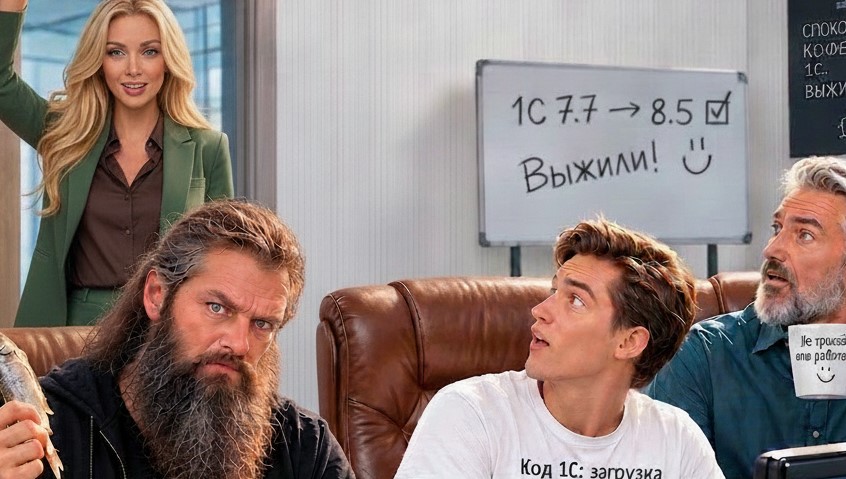
Добро пожаловать в ИТ-отдел крупной компании “ИнвестБолт”, которая знает цену специфики ВЭД с Китаем. Сегодня — первый рабочий день нашего джуниора Данилы. Вокруг него кипит жизнь, сеньор Михалыч флегматично чистит воблу, тимлид наливает кофе, а в углу моргает серверная стойка. Кажется, что впереди спокойное погружение в профессию и чтение документации. Но у вселенной автоматизации на этот день совсем другие планы. Порог отдела переступает менеджер Таня, и с этой секунды время ускоряется, а привычный мир начинает рушиться. Что ждет новичка, когда реальные бизнес-процессы сталкиваются с теоретическими знаниями? Как выжить в первый рабочий день, если всё вокруг идет не по плану, и почему этот день джуниор запомнит на всю жизнь? Это книга о бизнесе на стыке закупок, ВЭД и автоматизации: здесь вы увидите ответы на вопросы : как не потерять деньги на внешнеторговых сделках, как проверять прайсы на скрытые риски и как закрывать эти риски с помощью 1С и понятных регламентов.
Часть 1. Прайс из Китая
Действующие лица:
Таня — менеджер по закупкам. Мыслит категориями «красивенько», «быстренько» и «скидочки». В руках у неё флешка с прайс-листом поставщика на 300 000 строк.
Джуниор (Данила) — 22 года. Называет себя «Промпт-Архитектором». Уверен, что если код компилируется, то он крутой. Искренне верит, что ИИ уже заменил senior-архитекторов.
Сеньор (Михалыч) — 45 лет. Борода до пупка. Глаза цвета «база данных заблокирована». В руках держит сушёную воблу.
Тимлид (Антон Павлович) — начальник отдела. Уставший человек с поллитровой кружкой кофе, который просто мечтает дожить до пятницы.
More and more of your terminal work now runs through tools that push the terminal harder than a shell prompt ever did: AI coding agents like Claude Code and Codex, full-screen apps like Neovim and tmux, system monitors and dashboards. These tools lean on modern terminal protocols, the kind today’s best standalone terminals are built on.
Starting with 2026.3, the built-in terminal in JetBrains IDEs speaks that same language. It now runs on libghostty, the terminal emulation library that powers Ghostty itself.
Many projects already embed libghostty, and it’s widely regarded as a reliable, performant library, so we preferred it over the other options we considered.
In our IDEs, libghostty replaces JediTerm, the terminal emulator we relied on for many years. TUI apps increasingly depend on modern protocols that JediTerm never supported. That gap felt more like a minor inconvenience, since the experience didn’t quite match other terminals, but it wasn’t disruptive enough to warrant a bug report. Now libghostty takes over parsing and terminal state in our IDEs, while the IDE still handles rendering, and higher-level features and integrations.
Here is what those changes mean in practice.
Multi-line prompts and keybindings work the way the docs say
With support for the Kitty keyboard protocol, terminal apps can now distinguish among Enter, Shift+Enter, and Ctrl+Enter, and can request key-release and repeat events. CLI AI agents like Claude Code, Codex, and Pi, as well as the fish shell, and applications like Neovim, all use this protocol. The terminal also supports xterm’s modifyOtherKeys, an older keyboard protocol that Vim uses.
For you, this means Shift+Enter starts a new line in your prompt instead of sending a half-written message, and shortcuts that combine Ctrl, Shift, or Alt with other keys reach the app intact. Terminal-based editors and tools respond the way they should, with no IDE settings to adjust. The old setting that sent Esc+CR on Shift+Enter is no longer needed and is ignored.
Your tools follow your IDE theme
Switching the IDE to Dark mode used to leave terminal apps guessing, and you ended up with dark text on a dark background or a bright color scheme inside a dark IDE, unless you configured each tool by hand.
Now the terminal answers the dark/light query (CSI ? 996 n) from the current IDE theme and sends a notification through mode 2031 when you switch. Claude Code, OpenCode, Pi, Neovim, and tmux subscribe to these theme-change notifications, so most of them switch automatically with the IDE.
The terminal also answers OSC 4 palette queries and the Kitty OSC 21 color query, in addition to the OSC 10/11 queries that JediTerm already handled. OpenCode and Pi read the palette, and Junie CLI asks whether the terminal is dark or light. Programs can now set the extended palette colors 16 to 255 with OSC 4, while colors 0 to 15 stay under the control of the IDE theme.
Terminal applications with rich output now draw better
AI agents, system monitors, file managers, and dashboards are only as good as the terminal that renders them. The new engine handles almost 50 control sequences that JediTerm either ignored or misread. A few you may have hit:
REP (CSI Ps b): ncurses uses it for runs of 7 or more identical characters, so some lines previously rendered with missing characters.
Colon-separated SGR colors (38:2::r:g:b): JediTerm printed the colons and merged the digits into the wrong attribute.
Unknown APC, SOS, and PM strings: JediTerm printed them as text. They are now silently dropped.
Also supported are left/right margins (DECSLRM), protected areas, tab-stop control, insert mode, XTSAVE/XTRESTORE, the Kitty CSI 22 J scroll-and-clear, and X10 mouse reporting. Cursor blink mode (?12) is respected now; before, the cursor always blinked. There’s much more – to see the full list of supported escape-sequences, please refer to this table.
In summation: lines, borders, and separators no longer come out broken, colored output no longer shows stray colons or the wrong colors, and leftover invisible codes no longer show up as garbage text.
And this is just the start
The libghostty library already parses many sequences that the IDE doesn’t act on yet: OSC 52 clipboard, desktop notifications (OSC 9/777), ConEmu progress bars, Kitty graphics, and styled and colored underlines. Parsing is no longer the bottleneck. Only the IDE side is left, so expect these to arrive faster than they did with JediTerm.
In practice, that groundwork covers features you may know from standalone terminals: copying to your clipboard from a program running on a remote server, getting notified when the app in the terminal finishes a task (for example, Claude finishes processing a prompt and is waiting on you), seeing a progress bar for long tasks, and showing images directly in the terminal.
Try it now, enabled by default in 2026.3
The libghostty-based engine is already on by default in the reworked terminal in the 2026.3 EAP builds of your IDEs, and it will stay that way through the Beta and Release Candidate builds and in the stable release.
If something goes wrong, you can switch back to JediTerm: go to Help | Find Action, open Registry…, and turn off terminal.use.ghostty.emulator. We’d appreciate it if you also let us know what happened by leaving a comment on IJPL-218849 or by filing a bug report.
Thank you, Ghostty
The Ghostty team has been engaged and supportive throughout the transition. Many thanks to Mitchell Hashimoto, Tim Culverhouse, and all the Ghostty contributors. You built libghostty as a reusable library and kept improving it while we integrated it. Over the past months, libghostty also gained features that JediTerm users relied on, which made the switch possible. We’re glad to build on your work, and we look forward to contributing back.
Two men arrested in connection with the alleged Iran-linked terror plot targeting RAF Fairford in England have been charged with national security offenses.
Having lost the first round of Brazil’s presidential election to far right rival Flávio Bolsonaro, incumbent Luiz Inácio Lula da Silva spectacularly triumphed in the second. The Guardian’s Latin America corrrespondent Tom Phillips answered your questions on what’s next for Brazil.
Jeremy Hurley asks: Why did the Brazil stock market tank after the election result, and will it recover?
Tom: Basically, because the markets had been convinced that Flávio Bolsonaro was going to win and that after taking power he would implement a “chainsaw” style austerity programme inspired by Javier Milei’s government in Argentina, deal with Brazil’s budget deficit, and bring down interest rates. Lula’s victory came as a shock to investors who believe his fourth presidency will see increased and unsustainable public spending.
Yes, I’m sure things will stabilise at some point soon after the initial panic – during Lula’s previous administrations investors made a lot of money, particularly during his first two terms. There is talk of Lula naming his vice-president, the centre-right politician Geraldo Alckmin, as finance minister in order to calm markets down. Another possible name Rafael Fonteles, a mathematician who is the governor of Piauí and used to run that state’s finances.
Tom: That’s a really good question and, as someone who lives in Rio de Janeiro, it is one that has been on my mind a lot. The far right has been very good at blaming “soft” left wing policies and federal government incompetence for the failure to control armed violence. It was a huge part of the campaign against Lula in the run up to this election.
But public security is a state matter and Rio state has largely been governed by the right for years now. Their hard-line, shoot first ask questions later approach has not worked - in fact many believe it has made the violence even worse and led to massacres such as the one I covered in the Complexo da Penha almost exactly one year ago. It must be said that similar tactics have been used in Bahia state, which has a huge problem with violence and is governed by the Worker’s party (PT). My colleague Tiago Rogero has written about this.
Two orbiters have long outlasted their expected lifespans and completely reshaped our understanding of the Red Planet, all while operating 140 million miles from Earth.
Far-right senator banned from leaving country as supreme court judge’s ruling cites money-laundering case
The far-right senator Flávio Bolsonaro was banned from leaving Brazil and ordered to surrender his passports just hours after his dramatic loss in the presidential election to the leftist president Luiz Inácio Lula da Silva.
The ruling was issued by Alexandre de Moraes, the same supreme court justice who oversaw the trial of the senator’s father, the former president Jair Bolsonaro, for attempting a coup.
Nations Championship games against Australia and Japan should be the end of experimentation for Steve Borthwick
Even on the most serene days no one would describe coaching England as a relaxing gig. With his side’s opening November Test looming on Sunday week, Steve Borthwick is already faced with assorted injury-related complications at precisely the moment he needs to start finding lasting answers to a range of fundamental selection questions.
The untimely training field absence of Fin Smith, pencilled in to be England’s starting No 10, is a prime example. With the two leading midfield candidates to face Australia – Seb Atkinson and Bernhard Janse van Rensburg – also unable to train this week, Smith’s calf injury has materialised at the worst possible moment. Add the Bath flanker Guy Pepper, who limped off against Gloucester last Friday, and suddenly there is a hint of pre-Halloween gloom hanging over England’s preparations.
Republican attacks on the candidate for governor are contradictory and hinge on a warped understanding of sexual abuse
I’ve heard people say that the Ramaswamy team must have been scared.
Last week, the campaign of Vivek Ramaswamy, the tech billionaire and onetime Republican presidential candidate who is currently the Republican nominee to be the governor of Ohio, ran an ad featuring the long-estranged mother of his Democratic opponent, the physician and former public health official Amy Acton.
Immigration and Customs Enforcement (ICE) agents on March 24, 2026 in New York, New York. —Michael M. Santiago—Getty Images
During the presidential election of 1863, at the height of the Civil War, federal troops reportedly descended on polling places in Delaware, Kentucky, Maryland, and Missouri and prevented people they deemed disloyal from voting. This prompted a fierce national debate that culminated in Congress passing an 1865 law barring federal “troops or armed men” from “any place” where an election is being held. The central goal of this law, according to its proponents, was “to prevent the President and his officers from interfering in elections,” which are run by the states. Keeping armed federal officers away from the polls, they argued, was necessary to preserve democracy, even in the midst of civil war.
This has been the clear law, and the respected policy of every presidential administration, for over a century.
Until now.
Ahead of the midterms, top Trump Administration officials have publicly refused to rule out the possibility of sending federal agents to the polls. In September, Department of Homeland Security Secretary Markwayne Mullin claimed that immigration officers could be sent to polling places to “serve a warrant” as part of immigration enforcement operations or if “there is a threat” to those polling places, adding “we’ll be where we need to be.”
“ICE isn’t there to patrol the polling places,” hedged Mullin. “We’re there to enforce specific threats.”
Federal Bureau of Investigation Director Kash Patelsimilarly said, “If there’s a reason to go there because there’s been a violation, we will, otherwise we won’t.”
It is clear to us, and to legal experts, that barring extreme circumstances, sending ICE or FBI agents to the polls would be flatly illegal under the 1865 law, and several others. As Daniel Caine, Chair of the Joint Chiefs of Staff, pointedly said this August, any request to send military troops to election sites would be an “unlawful order.” The same holds true for any other armed federal agents.
The only exception to the prohibition is to “repel armed enemies of the United States.” The Congress of 1865 originally included a second exception, allowing armed federal agents to “keep the peace at the polls.” But Congress repealed that exception in 1909 because lawmakers feared that federal authorities could point to any kind of disturbance as a pretext to deploy federal forces.
In other words, unless a hostile foreign power attacks voting sites using weapons, it is a crime for any armed federal agents to go to those sites, even to quell a disruption. And they are certainly not allowed to show up for routine policing or immigration actions.
If sending ICE to the polls is so plainly illegal, then why do top administration officials keep refusing to rule it out? Context is important. The federal government has been conducting indiscriminate and often violent immigration enforcement actions in communities across the country. At the same time, the administration has been peddling conspiracy theories about widespread illegal voting, often targeting communities of color. The administration has redirected thousands of homeland security agents away from critical transnational security threats to hunt for elusive noncitizen voters.
These efforts are not uncovering any significant problems. Federal and state law already bar noncitizens from voting in federal and state elections, and our election system does a terrific job of ensuring that only eligible citizens vote, with vanishingly rare exceptions—as dozens of studies, election reviews, and painstaking investigations have already confirmed.
This intimidation campaign is taking a toll. According to a University of California, San Diego poll conducted last month, a staggering 40% of voting-age American citizens expect ICE agents to be at the polls this November. Black, Hispanic, and Asian American voters are three to four times more likely than white voters to worry that they will be questioned by ICE at polls or that members of their racial or ethnic groups will face intimidation at the polls. This fear is real.
But despite all the administration’s threats, voters should not be intimidated. The law protecting election sites from federal forces is ironclad. Anyone who violates that would be committing a federal crime. Federal and state laws also prohibit any effort to intimidate voters, wherever it occurs. A broad array of civil rights groups and labor unions have already filed lawsuits to hold the federal government accountable for its intimidation efforts—including The Brennan Center, where we work. Other lawyers across the country are poised to run to court to protect elections if federal agents do unlawfully show up to polls.
Outside court, election officials, state government officials, law enforcement, and voter protection organizations are prepared to respond to any instance of voter intimidation. That includes de-escalation and backup plans, including changing voting sites if needed, to ensure that all Americans can continue to vote safely. Voters are determined and undeterred, as millions so far have already cast their ballots by voting early and by mail.
Our advice to concerned voters: make a plan to vote as early as you can. Voters have multiple options to vote with confidence. In addition to voting at the polls on election day, they can vote early in person or vote by mail ballot, dropping it off in secure ballot drop boxes, at an election office, or by mail. You can also go vote with a trusted group of loved ones or neighbors.
It is an outrage that the federal government has refused to rule out the idea of federal agents at the polls. In our view, it is part of a campaign to intimidate voters and undermine our elections.
The only way it will succeed is if voters don’t show up.
A top executive at HSBC has tried to quash speculation that the bank could move its headquarters out of the UK over tax increases expected to be announced in Wednesday’s budget.
HSBC’s chief financial officer, Pam Kaur, said there was “no pressure”, particularly from shareholders in its cornerstone Hong Kong market, to shift out of London despite lobbyists warning higher tax bills could drive big banks’ business abroad.
Anthropic CEO Dario Amodei says his AI company can drive a “race to the top.” Where’s the evidence? | Finn Gomez/Getty Images
We’re living through an AI-fueled “Black October,” and things are changing fast. Hackers are using AI to breach countless companies. AI tools have uncovered security flaws that could leave 70 percent of all websites vulnerable. Governments are scrambling to secure their sites. Banks, too. And because cyberhacks can hurt supply chains, some longtime AI watchers are going full prepper, stocking up on food, cash, and more.
In the center of this story is Anthropic, one of the world’s leading AI companies, which was explicitly founded on the promise that it would be a “good guy” company in a world of dubious tech giants.
Anthropic says all the latest developments are very serious. Its security chief wrote last week that things are “going to get a lot worse before they get better.” Two weeks ago the company warned that AI models could soon self-replicate on the internet-connected devices in your home, like smart fridges and robot vacuums. And its co-founder now says “the singularity” — when AI systems speed up technical progress in a way that’s hard for humans to comprehend — “is here.”
You might think, given its view of the risks, that Anthropic would be pumping the brakes on its cutting-edge AI progress. Just the opposite. Anthropic filed for a blockbuster initial public offering on Monday, chasing a valuation of $2 trillion even as it warns in the IPO filing that AI could “pose catastrophic or existential risks to humanity.” Every day, it is racing toward recursive self-improvement (RSI), where AI models are smart enough to build the next, even smarter AI models by themselves.
How does Anthropic justify that?
As its CEO, Dario Amodei, reminded the world last week, he built the company on one big bet: that instead of driving a race to the bottom, where companies skimp on safety in their rush to beat competitors in the market, Anthropic could actually catalyze a “race to the top.”
Why I wrote this story
As I’ve watched Anthropic double down on its “race to the top” strategy, I’ve been uncomfortably reminded of another very risky gambit: Sam Bankman-Fried’s crypto fraud of 2022. There are important differences between the two; this is not a perfect parallel. But both involve a tiny handful of figures, strongly influenced by effective altruism, making huge bets on behalf of many, many other people.
EA culture prides itself on offering a counter to commonsense morality. The community has shown a willingness to take big risks and justify them with complex calculations. Sometimes that pays off. But believing you are intelligent enough to adopt a counter-intuitive, galaxy-brained strategy and end up saving the world with it often involves some hubris. And hubris makes me nervous in a field as high-stakes as AI.
The idea is that if Anthropic proves it can build AI that’s both powerful and safe, the market will expect both — so other AI companies will then feel compelled to compete on safety, too. That may sound nice in theory, but it means Anthropic has to keep building ever-more-powerful AIs.
“The forces that drive the race to the top are hugely more effective if the company practicing them is at the frontier,” Amodei wrote. “And looking at that strategy as a whole, I’m proud of our track record and stand by it.”
So there’s a very basic question that the public deserves a good answer to right at this pivotal moment: What is the evidence that Anthropic’s stated strategy — compete at the frontier so as to drive a “race to the top” — is actually successful overall?
From the outside, it looks like Anthropic has done more, on balance, to drive a race to the bottom. (Disclosure: Future Perfect is funded in part by the BEMC Foundation, whose major funder was also an early investor in Anthropic; they don’t have any editorial input into our content.)
In fact, part of the problem may be that Anthropic continues to treat this as a classic arms race. Specifically, the company seems to model it as a prisoner’s dilemma: If Anthropic stopped building more powerful AI, another player — whether it’s China, OpenAI, or another company — would just build it anyway. In this kind of dilemma, if the other player is going to defect, it’s rational for you to defect, even though nobody actually wants that outcome.
But what if this framing misses the point?
Game theory can make a huge gamble seem sophisticated, while making the obvious alternative — just don’t build a doom machine — seem naive. Yet the fact that Anthropic and others are now racing toward RSI makes it much more likely that we could lose control of AI and start to see massive damage to our world. When the cost of defecting from safety is that you create a serious risk of catastrophic harm — or of all humanity, including you, going extinct — is that still a “rational” move?
Instead of telling yourself that you can galaxy-brain your way through this with fancy enough game theory, maybe you’re better off just thinking of this as something much simpler: Russian roulette.
More and more leading voices in AI are starting to recognize that.
“We should stop AI progress now, starting unilaterally with Anthropic and/or OpenAI stopping — and then broadening out as a second step to more AI companies and negotiations with China,” Geoffrey Irving, who was until recently the chief scientist at the UK AI Security Institute, told me. “Unilateral pauses can’t hold for long, but they are the right first step: When you’re doing a very dangerous thing, the correct action is stop, even if others are also doing dangerous things.”
Anthropic did not respond to a request for comment.
The case that Anthropic has done more harm than good
Let’s be clear: The question is not whether Anthropic has done anything good on the safety front. It has. Standing up to the Pentagon, temporarily holding back access to frontier models, and publicly advocating for safer AI policies are a few examples, among others.
But the real question is whether the company’s “race to the top” strategy is working on balance — whether it’s net-negative or net-positive for safety.
Nathan Calvin, the chief strategy officer at AI safety advocacy organization Encode, recently set off a firestorm among tech watchers, writing on X, “When I look at many notable actions that Anthropic has taken over the past year, that evidence seems most consistent to me with the view that Anthropic is primarily trying to win the race to superintelligence, and that other considerations (including safety) are fundamentally secondary.” Here’s his list of what Anthropic has done:
And this is all just in the past year. If we rewind the tape further back, we see Anthropic pushing back on a landmark bill to regulate AI. Rewind even further back, and we see indications that Anthropic’s core strategy may have been flawed from the start. According to Reuters, in late 2022, OpenAI CEO Sam Altman heard rumors that Anthropic was building an AI-powered chatbot. So he ordered his employees to ship an OpenAI chatbot first. That chatbot was called ChatGPT. We all know the rest.
The rivalry between OpenAI and Anthropic seems not only to have hastened the arrival of generative AI, but also to keep pushing release dates forward to this day. The two companies have been known to release new or cheaper models within hours of each other, each one keen to protect its market share.
Even if you think Anthropic’s behavior was justified in 2022 because publicly demonstrating the risks of AI also demonstrates the need to regulate AI — a common claim within the company and AI discourse writ large — you have to ask: Is it still justifiable now, when AI has reached this level of power and sophistication?
Anthropic has indicated that it’s getting closer and closer to achieving RSI. In January, Amodei himself wrote, “I am concerned that LLMs are approaching (or may already have reached) the knowledge needed to create and release [biological weapons] end-to-end, and that their potential for destruction is very high. Some biological agents could cause millions of deaths.” And he wrote in September, “Given the accelerating rate of AI capability development, it’s my worry that in 6-12 months such a swarm could be capable of taking over the entire internet with a persistent botnet.”
But at this point, Amodei and his staffers are themselves perhaps the primary ones accelerating the rate of AI capability development.
“Anthropic seems to be doing the whole RSI thing more than anyone else, other than perhaps OpenAI,” Calvin told me. “And I just think that seems insane given their publicly stated views on the risks.”
“I think people at Anthropic should reckon more with the fact that it seems like the modal outcome is that the largest impact that Anthropic will have had is dramatically accelerating the race to RSI,” he continued. “On the current trajectory, everything else they will have done and thought and ideals they had will be a rounding error compared to their contribution there.”
Anthropic should be willing to invite scrutiny on this point — and, if it believes it’s actually making the field safer than it otherwise would be, to show us the receipts. How? It could put before Congress a bill that actually strengthens safety, instead of weakening it. It could stick to its former Responsible Scaling Policy and get other companies to do the same, instead of jettisoning its commitments. It could influence other labs not to build RSI, instead of leading the charge.
In the absence of such evidence, the “race to the top” logic just doesn’t hold water.
What if Anthropic just…stopped?
Amodei has begun advocating for “pacing the frontier” of AI development. “We must slow the pace at which we improve the capabilities of AI models,” he wrote in September.
The catch is that Amodei’s plan to slow down is contingent on others agreeing to slow down too — other AI labs, to start with, and also other countries. But more experts are now saying that it would be better if a frontier company like Anthropic unilaterally stopped.
“I’m glad that he proposed that we pace, but like, now we have to actually do it — and it seems like he’s saying he’s not going to do it unilaterally,” Daniel Kokotajlo, a former researcher at OpenAI who became a prominent whistleblower, told me. “That’s not very helpful, Dario! You should lead. What’s all this about ‘racing to the top’ and ‘leading by example’ if you’re just waiting?”
Voluntary unilateral action by individual companies is of course no substitute for federal regulation and international treaties. But Irving argues that it’s the right first step, because if the companies wait for governments to rein them in, it may well be too late. Governments are notoriously slow. An individual company can act today.
For starters, AI is not just one thing with one purpose, like the atomic bomb. It’s a much more general-purpose technology, like electricity. So what matters isn’t simply who gets it first, but who uses it in which ways. Besides, if the harms from AI are massive, then those harms are relevant for the other party, too. The Chinese don’t want to see catastrophic harms to all of human civilization, either. So we shouldn’t write off the possibility of coordination.
Former Vox reporter Kelsey Piper recently wrote about a colloquium at Anthropic where one participant objected: A decade ago, Facebook considered acquiring the tech that would later power TikTok. But, facing pressure due to privacy and safety worries, the company passed. That didn’t end up protecting us from the scourges of a world with TikTok — all it did was hand China an early monopoly on the tech. Piper writes:
Was this a policy success? Did we want to repeat it?
We were obliged to grudgingly concede that it didn’t sound like a policy success. We did not want to repeat it. China might be no excuse for the U.S. labs to do reckless things, but it is a real consideration.
Our next step might be bilateral talks with China, then. But by the point where you agree that Anthropic’s plans might depend on bilateral talks with China, you’ve already conceded most of the steps of Anthropic’s worldview that seemed so much like madness 10 minutes ago: continue working on AI for now, try to negotiate a slowdown, but don’t abandon work at the frontier and all the advantages that come with it.
But TikTok is not a good analogy for RSI. The former may be a cesspool that rots our brains and amplifies ethnic hatred, but its dangers don’t compare to the dangers of RSI. The TikTok case may indeed be best approached as a classic prisoner’s dilemma. But with RSI, the potential downside is so catastrophic that anyone who proposes to save the world precisely by building the tech that endangers it is making a hell of a gamble on behalf of everyone else. At the very least, the burden of proof should be on them to prove their confidence is justified.
AI insiders often think those outside of their industry can’t possibly understand the technical, geopolitical, and moral complexities they’re facing. But commonsense morality is commonsense for a reason: It tracks intuitions that are usually right (such as, if you don’t want a doom machine, maybe don’t build a doom machine) and trains us to be appropriately skeptical of huge, counterintuitive bets to the contrary.
Precisely because the AI landscape is a complex system — there are so many actors (including different AI companies and different governments), and actions from each can trigger actions from others in ways that are hard to predict — believing you’re smart enough to take highly counterintuitive actions and end up saving the world as a result is an extremely risky gambit. Instead, maybe it’s best to just do the straightforwardly right thing: Stop.
To be clear, “stopping” doesn’t have to mean peeling back everything that’s been done in AI so far. The powerful AI systems that are already out there can’t be put back in the box. And we may need some AI to defend from the AI that’s already out there.
“I’m not saying shut down all of your data centers,” Calvin said. “But I’m saying that in particular, pushing the frontier on RSI and making it so that you’re going to be the company that is doing more fully autonomous development than anyone else in the world, does that actually make any fucking sense?”
Increasingly, both AI insiders and the public are shouting no.
Я работаю в производстве печати и вышивки на одежде, и каждую осень у нас повторяется один и тот же спор: когда начинать готовиться к новогоднему сезону. Одни говорят, что заказы на подарки приходят в декабре, другие уверены, что всё решается в октябре. Спорить на ощущениях надоело, поэтому я собрал помесячную частоту запросов из Wordstat и посчитал, что там на самом деле происходит.
Ниже данные, код и результаты, а в конце отдельный раздел о том, где этот метод меня обманывал.
В середине XX века в канализационных системах целых городов для очистки воды успешно использовались рыбы. Рыбоводческие пруды, питающиеся отходами, — это низкотехнологичная, дешевая и экологичная альтернатива утилизации наших отходов, которая позволяет получать пищу с высоким содержанием белка.
Jason Wilcox has driven decision to stand by head coach
United would have to pay Newcastle about £3m for Howe
Michael Carrick has been given the chance to save his job by turning Manchester United’s results around, with the head coach remaining in place for Saturday’s visit to Chelsea.
The decision by Jason Wilcox, the director of football, and Omar Berrada, the chief executive, can be viewed as a surprise given United’s dire form.
Benjamin Netanyahu is in the fight of his political life. Voters in Israel are heading to the polls on Tuesday to decide an election that could determine whether Netanyahu will remain the country's prime minister (and affect the outcome of the corruption charges against him). But the Israeli election also arrives at a time when voters around the world seem to be rejecting authoritarianism. A student-run movement stunned the world on Sunday when its candidates routed Serbia's long-serving leader, Aleksandar Vučić. That same day, Brazilians beat back a campaign by Flávio Bolsonaro – the son of Jair Bolsonaro, the disgraced former president – in a historic upset. Carter Sherman speaks to Julian Borger, the Guardian’s senior international correspondent, about how these four elections could reshape the political world order in just 10 days, and why the upcoming US midterm elections are the biggest test for global democracy.
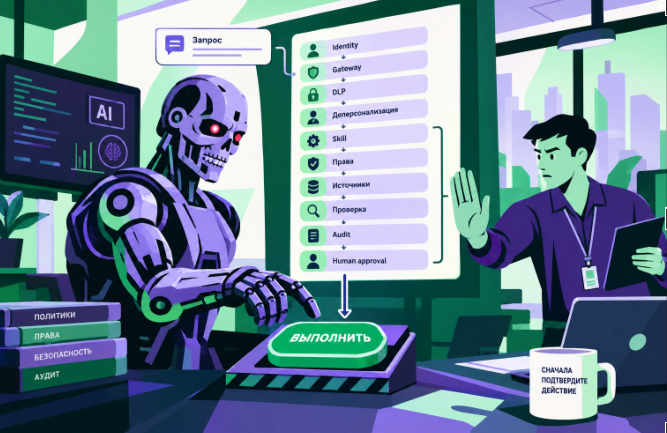
Разбираем архитектуру корпоративной AI-платформы для безопасной работы AI-агентов с внутренними системами: от LLM Gateway и MCP до контроля доступа, DLP и аудита.
На связи Анна Астахова, коммерческий директор ИТ-интегратора «Белый код». Интеграционная платформа в крупной компании — это не проект, который однажды запустили и больше не трогают. Меняются учетные процессы, появляются новые системы, а вместе с ними — требования к данным и логике обмена. Расскажу, как мы сопровождаем и развиваем DATAREON Platform для крупной промышленной компании, где интеграции связывают ERP, УСО, MDM и другие корпоративные системы.
“There is only one way to settle this: roast battle on the White House lawn, live,” Kimmel offered, after former President Barack Obama mocked President Trump.
Social media companies including Meta have pulled back on efforts to protect voters from election-meddling lies
Social media feeds are awash with an unprecedented flood of AI-driven disinformation ahead of November’s US midterm elections, according to experts, who warn many posts are likely “slipping through the cracks”.
As tens of millions of Americans prepare to cast their vote, social media companies have scaled back their efforts to protect voters from lies meant to manipulate elections.
Ценность цифрового продукта складывается из множества результатов интеллектуальной деятельности и средств индивидуализации – кода, документации, дизайна, базы данных, названия, технических решений, алгоритмов, а также из договорной конструкции, которая связывает все эти элементы с компанией.
В статье подробно рассматриваются все виды объектов интеллектуальной собственности которые могут быть в IT-компании, а также предлагается пошаговая инструкция о том как самостоятельно проверить необходимый минимум правовой охраны нематериальных активов (объектов интеллектуальной собственности) в своем проекте.
Говоря «нейрослоп», мы замалчиваем вопросы, которые нужно обсудить. Когда мы называем что‑то нейрослопом, мы не просто жалуемся на отдельный продукт нейрогенерации. Оптимисты используют этот термин, чтобы отделить неудачи от перспектив ИИ; критики — чтобы обвинить всю технологию. Говоря о слопе, мы думаем, что обсуждаем важные общественные вопросы, на деле их не обсуждая.