RSS Feeds
What to make of Trump's latest comments on Iran as he says talks could continue "at some point"
Why states claim Meta designed addictive features for children
Prince Harry and Meghan will move back to the United Kingdom, source says
Democrats are in their post-resistance era: From the Politics Desk
Prince Harry and Meghan to make U.K. their 'primary residence,' reports say
Beagles get first taste of freedom after relocation from controversial breeding facility
What to know about Dr. Heidi Overton, Trump's pick to lead the FDA
В Украине перезахоронили останки полковника армии УНР Евгения Коновальца, который был убит НКВД. Кем он был и как погиб
How Sen. Darline Graham’s debate blunder could give undecided voters ‘some pause’
Tongue & Robinson cut Headingley ball in half
‘Really exceptional’: O’Neill hails Durán as Celtic surge towards Champions League
A stunning double from the summer signing Camilo Durán helped Celtic open up a commanding lead against Lask in their Champions League playoff. Benjamin Nygren also produced a superb finish to send Martin O’Neill’s side on their way to a 3-0 first-leg win over their Austrian opponents in Glasgow.
The visitors had two goals disallowed for offside and created chances throughout in an open encounter but Celtic were clinical as they continued their strong start to the season. Nygren has been at the heart of it with four goals and four assists in as many games and he opened the scoring in the 26th minute. The Swede readjusted his body to volley into the top corner from 20 yards after a weak clearance from Kieran Tierney’s cross.
Continue reading...What to Know About Iran’s Economic Ties With Gulf Countries
5 Americans among 7 killed in Kenya safari helicopter crash
Waymo’s cheaper, next-gen robotaxi is now open to all riders in these three cities
U.S. Debt Hits $40 Trillion
Israel's deadly Gaza strikes cast doubt on ceasefire progress days after Kushner visit
No new Canada tariffs — for now

This story appeared in The Logoff, a daily newsletter that helps you stay informed about the Trump administration without letting political news take over your life. Subscribe here.
Welcome to The Logoff: President Donald Trump’s planned Canada tariffs are off — for now.
What happened? Trump had previously threatened 50-percent tariffs on about $20 billion worth of Canadian goods, but delayed them late on Tuesday, hours before they were set to take effect.
In a social media post, he wrote that the tariffs were on hold for “a three day period, based on the fact that Canada and the U.S.A., subject to the finalization of documents, have a DEAL!”
Is there actually a deal? We’ll find out in the next three days. Trump’s claims should always be taken with a grain of salt, and Canadian Prime Minister Mark Carney said only that “substantial progress” had been made toward a deal, with “important work still to be done.”
On Wednesday, the Wall Street Journal reported that the US could reduce previous tariffs on Canadian goods —which applied to cars, steel, and aluminum — as part of a potential trade deal. Trump has also suggested that a deal could resurrect the Keystone XL oil pipeline.
Can Trump still impose new tariffs? He can. Earlier this year, the Supreme Court struck down Trump’s use of a specific law, the International Emergency Economic Powers Act, to impose tariffs. In doing so, the Court ended many of his most sweeping tariffs and took away his favorite way to impose them.
He has plenty of other tools to keep at it, though, albeit on a more limited basis. Trump was threatening to use a never-tested section of the 1930 Smoot-Hawley Tariff Act to impose his most recent Canada tariffs. (Other existing Canadian tariffs fall under yet another law.)
What’s the big picture? This trade fight could preview an even bigger one to come, as the US, Mexico, and Canada attempt to renegotiate the US-Mexico-Canada Agreement that Trump struck in his first term. Trump declined to renew the deal last month, kicking off new negotiations.
And with that, it’s time to log off…
We got some incredibly good news about cancer treatment on Wednesday from the pharma companies Moderna and Merck, which announced a successful trial of an mRNA vaccine for melanoma, a particularly dangerous type of skin cancer.
The idea of using vaccines — and specifically mRNA, which helped produce Covid vaccines in record time — to treat cancer isn’t new, but the Moderna and Merck trial is a big step on the path to getting a cancer vaccine approved by the FDA.
As always, thanks for reading, and we’ll see you back here tomorrow!
He spied for the U.S. in the war on terror. Now ICE wants to deport him.
Canada and US say they are finalising a trade deal
Australia 'outraged' after Israel decides not to open criminal investigation into killing of aid worker in Gaza
OpenAI seeks to one-up Anthropic with new customer privacy protections
Dr. Oz on Trump and prescription drug prices, skin cancer vaccine trial
Trump-backed candidates struggle, and other takeaways from Florida, Wyoming, Alaska primaries
A democratic socialist won the Democratic nomination in a Florida Senate race over a moderate favored by the party establishment.
Prince Harry and Meghan moving back to Britain this month
Duke and Duchess of Sussex intend to relocate from US, with children to start British school in September
The Duke and Duchess of Sussex are planning to return to live in Britain, six years after leaving for the US, it is understood.
The couple and their two children, Prince Archie, seven, and Princess Lilibet, five, are expected to relocate later in August to a non-royal residence.
Continue reading...Prince Harry and Meghan moving back to U.K.
Trump’s Plan to Squeeze Iran’s Economy Will Live or Die in Dubai
Prince Harry and Meghan planning to move back to the UK: Source
Prince Harry and Meghan Markle to Return to the U.K.
Trump to Appear on Radio With Michael Cohen, His Onetime Nemesis
The U.S. national debt now stands at $40 trillion
NASA mission to save its sinking space telescope fails
Teenage ace Rafael Jódar endures defeat by Cobolli but his star is rising
Spaniard loses narrowly in fourth round of the Cincinnati Open yet the buzz around him will only get louder
As Rafael Jódar slowly trudged from the court, he could only bring himself to wave at his adoring crowd for no more than a millisecond. The 19-year-old was appropriately devastated after he had come within two points of victory on numerous occasions before losing 4-6, 7-6 (3), 6-3 in the fourth round of the Cincinnati Open to an excellent Flavio Cobolli.
No matter, Jódar departs Ohio having further solidified himself as the subject of so much conversation on the ATP Tour. This has been a turbulent and unpredictable year in men’s tennis, largely thanks to Carlos Alcaraz’s extended injury layoff. The one certainty through it all has been the imperious rise of Jódar. After a short period competing at the University of Virginia, Jódar started to play regularly on the tour only in May last year. In August 2025, he was ranked No 540. He began the 2026 season at No 165.
Continue reading...Factors that led to Angie Nixon's primary win over Alex Vindman
Mike Lindell offers to fund recount in Minnesota Republican primary for governor
MyPillow founder and Trump ally lost primary to Lisa Demuth by 11 points, but still refuses to concede defeat
The pillow salesman, Trump supporter and election denier Mike Lindell has offered to personally fund a recount and audit of every paper ballot cast in Minnesota’s Republican gubernatorial primary, which he lost last week.
Lindell’s announcement on Wednesday escalates his bid to challenge the results of last week’s vote, after finishing a distant second to the Minnesota house speaker, Lisa Demuth.
Continue reading...Prince Harry and Meghan moving back to Britain this month
Duke and Duchess of Sussex intend to relocate from US, with children to start British school in September
The Duke and Duchess of Sussex are planning to return to live in Britain, six years after leaving for the US, it is understood.
The couple and their two children, Prince Archie, seven, and Princess Lilibet, five, are expected to relocate later in August to a non-royal residence.
Continue reading...Opinion | Trump, Canada Tariffs and USMCA
Moderna Stock Soars on Cancer Vaccine Success
Cognition CEO denies report that SpaceX tried to acquire the startup
Salmonella outbreak linked to tainted jalapenos isn’t over, as CDC reports more than 400 cases
Travis Kalanick kicks off another round of VC bashing: ‘1% are helpful’
How Climate Change Is Messing With Your Blood
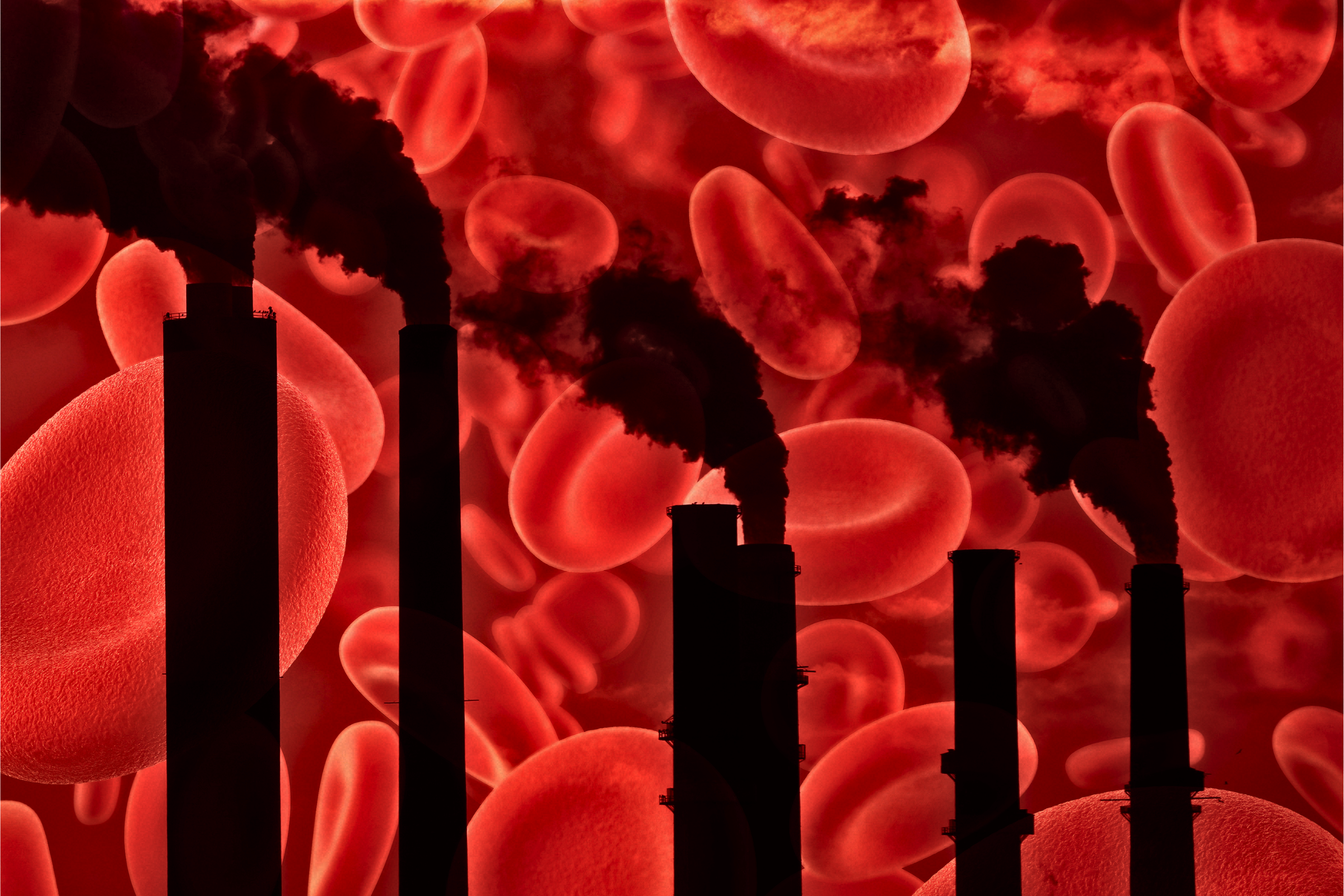
Rising carbon dioxide levels in the atmosphere do a lot of damage—heat waves, droughts, wildfires, superstorms. Now it appears there’s another knock-on effect that had never before been measured. According to a new study in the journal Air Quality, Atmosphere and Health, the changing chemistry of the atmosphere could be leading to changing chemistry in our blood—with potentially dangerous effects.
If CO2 is indeed messing with our blood, it’s no wonder. During the early rise of Homo sapiens, carbon dioxide levels in the atmosphere measured a consistent 280 parts per million (ppm). Those conditions prevailed until roughly the middle of the 18th century when the Industrial Revolution began pouring greenhouse gasses into the air from factory smokestacks. By 1900, CO2 levels had risen to nearly 300 ppm; by 1980, that figure had jumped to nearly 330 ppm. Since then the numbers have exploded, standing at 425 ppm today.
That’s very bad news for the health of the planet—and equally bad for the health of our bodies. Every breath we take—indoors or out—draws in more carbon dioxide than our bodies were originally adapted to cope with. To determine just what the impact of this is, environmental geoscientist Phil Bierwirth, of Australian National University in Canberra, and environmental health scientist Alexander Larcombe, of Curtin University, took advantage of a 21-year survey—from 1999 to 2020—conducted by the U.S. National Health and Nutrition Examination Survey (NHANES), during which government investigators sampled the blood of 7,000 subjects every other year to see how the body responded to all manner of environmental pollutants.
The period the NHANES researchers surveyed was a particularly bad one for the planet when it comes to carbon dioxide emissions, since in just those 21 years, U.S. CO2 levels rose from 369 ppm to 420 ppm. In their work, Bierwirth and Larcombe were looking for rising levels of serum bicarbonate, a chemical marker associated with rising levels of CO2—and they found just that, with a 7% jump in bicarbonate over the 21 years.
Much in the way oceans can become more acidic as they absorb more carbon dioxide, the same can be said for blood. “Bicarbonate,” said Larcombe in an email to TIME, “is the body's main chemical ‘shock absorber’ for keeping blood from becoming too acidic, and a rising level is an indicator of the body compensating for more CO2.”
But bicarbonate can do only so much, and even over relatively small stretches, higher levels of CO2 in the blood can take a toll. “From short-term studies at moderately elevated CO2 (the sort of levels common in poorly ventilated rooms),” wrote Larcombe, “that means headache, tiredness, and declines in concentration and decision-making. Over longer periods, animal studies raise the possibility of oxidative stress, inflammation, tissue calcification in the kidneys and arteries, and effects on bone.”
At the same time bicarbonate levels have been rising in the blood, calcium and phosphorus levels have been falling, the study found. In addition to producing higher levels of bicarbonate, the body responds to rising carbon dioxide by drawing CO2 molecules out of the blood and storing them in bones in the form of carbonate—an ion composed of one carbon atom and three oxygen atoms. Phosphorus and calcium, which assist in this process, are drawn from blood into bone as well.
“Falling calcium and phosphorus in blood is what you'd broadly expect if that [CO2] storage process were being asked to do more work,” says Larcombe. Here too, bodily functions may suffer. “Low calcium (hypocalcaemia) produces muscle cramps, lethargy, numbness and tingling in the fingers, and disturbances of heart rhythm. Low phosphorus (hypophosphataemia) can lead to weakness, fatigue and impaired oxygen delivery.” The good news is, we’re not there yet, with Larcombe stressing that such symptoms would occur only at “much higher CO2 concentrations than today’s atmosphere.”
What’s more, at the moment, our bodies are doing a good job of adjusting to the level of CO2 that does exist in the atmosphere—even if just barely—since most people are not experiencing the warning symptoms Larcombe describes. But the famed CO2 hockey stick—the y-axis graph that shows greenhouse gasses and global temperatures steadily rising—is pushing us ever further into the danger zone.
As with so much concerning the environment, it will be young people who will pay the highest price for the mess preceding generations have made. Not only are growing bodies more susceptible to environmental toxins, but babies born into the current world will be alive for more of the latter decades in which atmospheric CO2 will be at its highest—assuming more stringent curbs on greenhouse emissions are not put in place now. Most projections call for atmospheric CO2 concentrations to reach 500-plus PPM by mid-century, a level that will exceed tolerable carbon dioxide levels in the blood, Larcombe says.
The answer—again and always—is to undertake the hard work of curbing greenhouse gas output before anything like those astronomical levels of CO2 are reached. That’s not a job many decision makers in high-polluting countries have shown any consistent willingness to take on—the result being that the world has now briefly breached well-intentioned stop signs like the Intergovernmental Panel on Climate Change’s proposal to limit global temperatures to no more than 2°C above those of pre-industrial levels. The problem is emissions and temperature limits are not the only ones in play here; so too are biological ones.
“I think that what we are seeing is because our bodies are not adapting,” said Bierwirth in a statement that accompanied the release of the study. “Maybe we can never adapt.”
Correction, Aug. 20
The original version of this story misspelled a scientist's surname, and misstated his university affiliation. It is Alexander Larcombe not Lacrombe. He works at Curtin University, not the University of Western Australia.
AI companies buying books to scan and destroy, 404 Media investigation finds
Opinion | Ending the Syrian Nuclear Saga
FTC proposal would require retailers to be transparent about personalized pricing
Prince Harry and Meghan Will Move Back to U.K. After 6 Years in U.S.
NASA's Swift telescope will plunge toward Earth after rescue mission called off
Watch: Match of the Day
Taxpayers to fund clear-up of illegal dumps in West Yorkshire, Surrey and Kent
Andy Burnham promises drive to tackle toxic waste, raise fines and use AI-powered drones to detect illegal activity
Illegal dumps in West Yorkshire, Surrey and Kent will be cleared up using taxpayer money, Andy Burnham has announced, as the prime minister promises a new drive to tackle toxic waste.
Ministers have identified dumps in Bradford, Runnymede and the Isle of Sheppey, which collectively contain about 22,000 tonnes of illegal waste, to be cleared in the next phase of the government’s national clear-up effort.
Continue reading...Why Treasury Yields Are Rising, and What That Means for the Economy
Experts raise alarms over Census Bureau report Trump is touting on noncitizen voting

A Trump-aligned think tank has ties to a highly unusual Census Bureau report that the president is using to renew false claims of widespread voting by non-U.S. citizens in 2020, NPR has learned.
(Image credit: Andrew Harnik)
