RSS Feeds
The U.S. national debt now stands at $40 trillion
NASA mission to save its sinking space telescope fails
Teenage ace Rafael Jódar endures defeat by Cobolli but his star is rising
Spaniard loses narrowly in fourth round of the Cincinnati Open yet the buzz around him will only get louder
As Rafael Jódar slowly trudged from the court, he could only bring himself to wave at his adoring crowd for no more than a millisecond. The 19-year-old was appropriately devastated after he had come within two points of victory on numerous occasions before losing 4-6, 7-6 (3), 6-3 in the fourth round of the Cincinnati Open to an excellent Flavio Cobolli.
No matter, Jódar departs Ohio having further solidified himself as the subject of so much conversation on the ATP Tour. This has been a turbulent and unpredictable year in men’s tennis, largely thanks to Carlos Alcaraz’s extended injury layoff. The one certainty through it all has been the imperious rise of Jódar. After a short period competing at the University of Virginia, Jódar started to play regularly on the tour only in May last year. In August 2025, he was ranked No 540. He began the 2026 season at No 165.
Continue reading...Factors that led to Angie Nixon's primary win over Alex Vindman
Mike Lindell offers to fund recount in Minnesota Republican primary for governor
MyPillow founder and Trump ally lost primary to Lisa Demuth by 11 points, but still refuses to concede defeat
The pillow salesman, Trump supporter and election denier Mike Lindell has offered to personally fund a recount and audit of every paper ballot cast in Minnesota’s Republican gubernatorial primary, which he lost last week.
Lindell’s announcement on Wednesday escalates his bid to challenge the results of last week’s vote, after finishing a distant second to the Minnesota house speaker, Lisa Demuth.
Continue reading...Prince Harry and Meghan moving back to Britain this month
Duke and Duchess of Sussex intend to relocate from US, with children to start British school in September
The Duke and Duchess of Sussex are planning to return to live in Britain, six years after leaving for the US, it is understood.
The couple and their two children, Prince Archie, seven, and Princess Lilibet, five, are expected to relocate later in August to a non-royal residence.
Continue reading...Opinion | Trump, Canada Tariffs and USMCA
Moderna Stock Soars on Cancer Vaccine Success
Cognition CEO denies report that SpaceX tried to acquire the startup
Salmonella outbreak linked to tainted jalapenos isn’t over, as CDC reports more than 400 cases
Travis Kalanick kicks off another round of VC bashing: ‘1% are helpful’
How Climate Change Is Messing With Your Blood

Rising carbon dioxide levels in the atmosphere do a lot of damage—heat waves, droughts, wildfires, superstorms. Now it appears there’s another knock-on effect that had never before been measured. According to a new study in the journal Air Quality, Atmosphere and Health, the changing chemistry of the atmosphere could be leading to changing chemistry in our blood—with potentially dangerous effects.
If CO2 is indeed messing with our blood, it’s no wonder. During the early rise of Homo sapiens, carbon dioxide levels in the atmosphere measured a consistent 280 parts per million (ppm). Those conditions prevailed until roughly the middle of the 18th century when the Industrial Revolution began pouring greenhouse gasses into the air from factory smokestacks. By 1900, CO2 levels had risen to nearly 300 ppm; by 1980, that figure had jumped to nearly 330 ppm. Since then the numbers have exploded, standing at 425 ppm today.
That’s very bad news for the health of the planet—and equally bad for the health of our bodies. Every breath we take—indoors or out—draws in more carbon dioxide than our bodies were originally adapted to cope with. To determine just what the impact of this is, environmental geoscientist Phil Bierwirth, of Australian National University in Canberra, and environmental health scientist Alexander Larcombe, of Curtin University, took advantage of a 21-year survey—from 1999 to 2020—conducted by the U.S. National Health and Nutrition Examination Survey (NHANES), during which government investigators sampled the blood of 7,000 subjects every other year to see how the body responded to all manner of environmental pollutants.
The period the NHANES researchers surveyed was a particularly bad one for the planet when it comes to carbon dioxide emissions, since in just those 21 years, U.S. CO2 levels rose from 369 ppm to 420 ppm. In their work, Bierwirth and Larcombe were looking for rising levels of serum bicarbonate, a chemical marker associated with rising levels of CO2—and they found just that, with a 7% jump in bicarbonate over the 21 years.
Much in the way oceans can become more acidic as they absorb more carbon dioxide, the same can be said for blood. “Bicarbonate,” said Larcombe in an email to TIME, “is the body's main chemical ‘shock absorber’ for keeping blood from becoming too acidic, and a rising level is an indicator of the body compensating for more CO2.”
But bicarbonate can do only so much, and even over relatively small stretches, higher levels of CO2 in the blood can take a toll. “From short-term studies at moderately elevated CO2 (the sort of levels common in poorly ventilated rooms),” wrote Larcombe, “that means headache, tiredness, and declines in concentration and decision-making. Over longer periods, animal studies raise the possibility of oxidative stress, inflammation, tissue calcification in the kidneys and arteries, and effects on bone.”
At the same time bicarbonate levels have been rising in the blood, calcium and phosphorus levels have been falling, the study found. In addition to producing higher levels of bicarbonate, the body responds to rising carbon dioxide by drawing CO2 molecules out of the blood and storing them in bones in the form of carbonate—an ion composed of one carbon atom and three oxygen atoms. Phosphorus and calcium, which assist in this process, are drawn from blood into bone as well.
“Falling calcium and phosphorus in blood is what you'd broadly expect if that [CO2] storage process were being asked to do more work,” says Larcombe. Here too, bodily functions may suffer. “Low calcium (hypocalcaemia) produces muscle cramps, lethargy, numbness and tingling in the fingers, and disturbances of heart rhythm. Low phosphorus (hypophosphataemia) can lead to weakness, fatigue and impaired oxygen delivery.” The good news is, we’re not there yet, with Larcombe stressing that such symptoms would occur only at “much higher CO2 concentrations than today’s atmosphere.”
What’s more, at the moment, our bodies are doing a good job of adjusting to the level of CO2 that does exist in the atmosphere—even if just barely—since most people are not experiencing the warning symptoms Larcombe describes. But the famed CO2 hockey stick—the y-axis graph that shows greenhouse gasses and global temperatures steadily rising—is pushing us ever further into the danger zone.
As with so much concerning the environment, it will be young people who will pay the highest price for the mess preceding generations have made. Not only are growing bodies more susceptible to environmental toxins, but babies born into the current world will be alive for more of the latter decades in which atmospheric CO2 will be at its highest—assuming more stringent curbs on greenhouse emissions are not put in place now. Most projections call for atmospheric CO2 concentrations to reach 500-plus PPM by mid-century, a level that will exceed tolerable carbon dioxide levels in the blood, Larcombe says.
The answer—again and always—is to undertake the hard work of curbing greenhouse gas output before anything like those astronomical levels of CO2 are reached. That’s not a job many decision makers in high-polluting countries have shown any consistent willingness to take on—the result being that the world has now briefly breached well-intentioned stop signs like the Intergovernmental Panel on Climate Change’s proposal to limit global temperatures to no more than 2°C above those of pre-industrial levels. The problem is emissions and temperature limits are not the only ones in play here; so too are biological ones.
“I think that what we are seeing is because our bodies are not adapting,” said Bierwirth in a statement that accompanied the release of the study. “Maybe we can never adapt.”
Correction, Aug. 20
The original version of this story misspelled a scientist's surname, and misstated his university affiliation. It is Alexander Larcombe not Lacrombe. He works at Curtin University, not the University of Western Australia.
AI companies buying books to scan and destroy, 404 Media investigation finds
Opinion | Ending the Syrian Nuclear Saga
FTC proposal would require retailers to be transparent about personalized pricing
Prince Harry and Meghan Will Move Back to U.K. After 6 Years in U.S.
NASA's Swift telescope will plunge toward Earth after rescue mission called off
Watch: Match of the Day
Taxpayers to fund clear-up of illegal dumps in West Yorkshire, Surrey and Kent
Andy Burnham promises drive to tackle toxic waste, raise fines and use AI-powered drones to detect illegal activity
Illegal dumps in West Yorkshire, Surrey and Kent will be cleared up using taxpayer money, Andy Burnham has announced, as the prime minister promises a new drive to tackle toxic waste.
Ministers have identified dumps in Bradford, Runnymede and the Isle of Sheppey, which collectively contain about 22,000 tonnes of illegal waste, to be cleared in the next phase of the government’s national clear-up effort.
Continue reading...Why Treasury Yields Are Rising, and What That Means for the Economy
Experts raise alarms over Census Bureau report Trump is touting on noncitizen voting

A Trump-aligned think tank has ties to a highly unusual Census Bureau report that the president is using to renew false claims of widespread voting by non-U.S. citizens in 2020, NPR has learned.
(Image credit: Andrew Harnik)

Duran stars as Celtic ease to comfortable win over LASK
'Many' Fed officials think higher rates will be needed if inflation stays high
Trump says peace talks with Iran will resume "maybe at some point"
WATCH: Friends of boy who died rally around his sister on 1st day of school
Zelenskyy Faces Pressure to Hold Elections. What Stands in the Way?
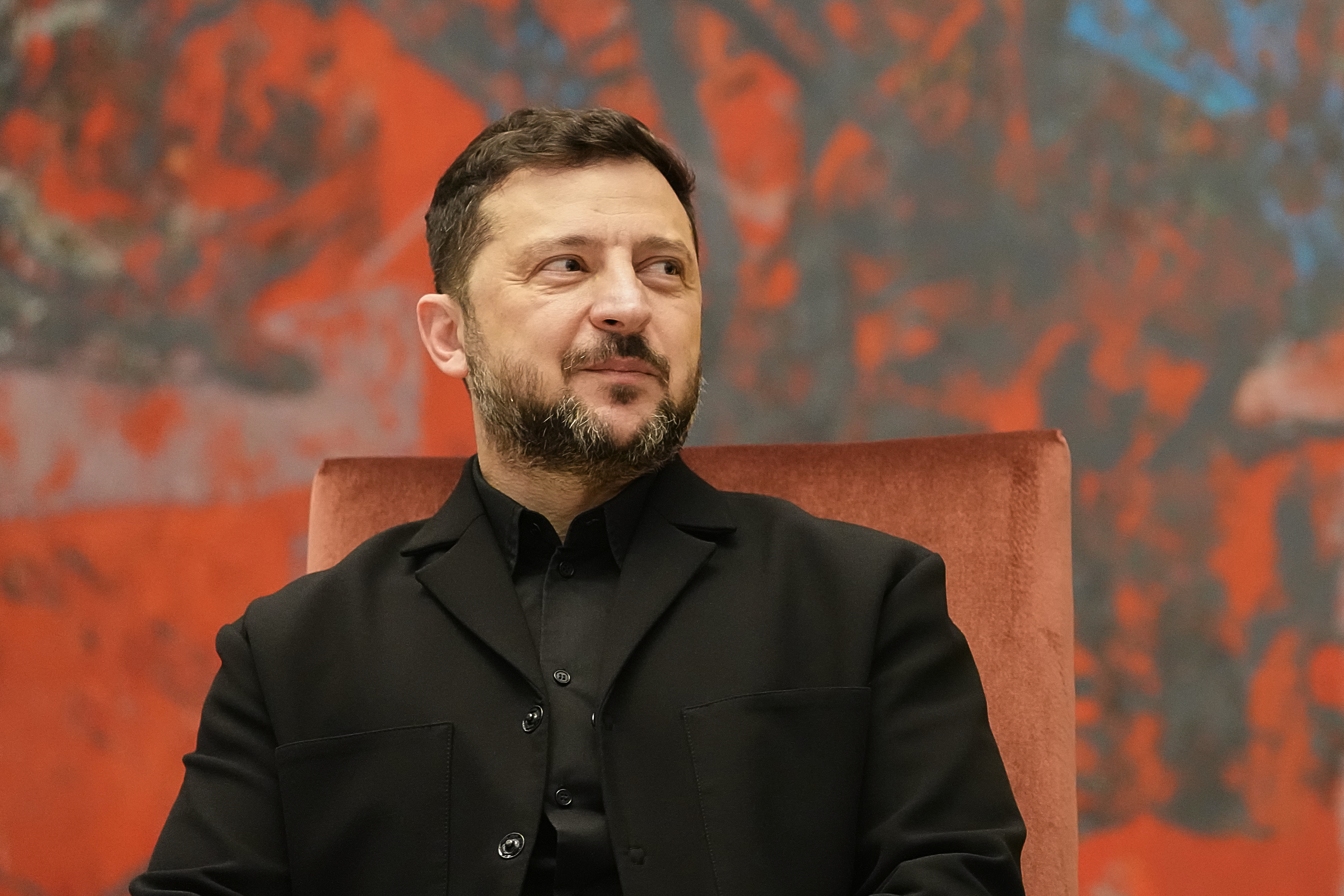
Ukrainian President Volodymyr Zelenskyy is facing a major internal political challenge after a recently dismissed defense minister called for a wartime presidential election. But holding an election during an ongoing war would pose enormous legal and logistical challenges—and it may not be possible at all.
Ex-Defense Minister Mykhailo Fedorov's challenge comes amid an ongoing war with Russia. While Zelenskyy’s five-year term was scheduled to end in May 2024, elections have been suspended under martial law since Russia’s full-scale invasion of Ukraine in February 2022.
Fedorov posted a nine-minute video online Tuesday, demanding that Ukraine “restore a full democratic process even amid a prolonged war.”
Read More: Chalk One Up for Ukraine
“Democracy cannot be held hostage by Russia. We are fighting precisely because we want to remain a free European state,” Fedorov said. “We must find a legal, safe, and realistic mechanism which will allow Ukraine to renew its full democratic process even in the conditions of a long war.”
Fedorov, 35, was a longtime ally of Zelenskyy before he was abruptly fired in July amid mounting friction with military leadership, and his departure sparked days of protests. On Wednesday, Yevhenii Khmara was confirmed as the new defense minister.
Although Fedorov did not mention Zelenskyy in the video, he issued a blistering critique of Ukrainian leadership, saying that the country is in a “systemic crisis of governance” and alluding to corruption. The accusation comes just after Zelenskyy fired deputy chief of staff Iryna Mudra on Wednesday amid a money-laundering investigation.
This is not the first time that Zelenskyy has come under fire for the suspended elections. Last year, President Donald Trump attacked him as a “dictator without elections.” However, the Ukrainian President has steadfastly denied that he is using the war to cling to power and said he would be open to an election if it could be safely and securely held.
“I am now asking—and I am stating this openly—for the United States, possibly together with our European colleagues, to help me ensure security for holding elections,” he told reporters on WhatsApp at the end of 2025. He said there would need to be “guarantees” from the United States and Russia to ensure safe voting practices.
Zelenskyy had yet to respond to the comments from Fedorov as of Wednesday afternoon, but experts say it is unlikely that an election can take place in Ukraine.
What stands in the way of holding elections in Ukraine?
Historically, very few countries have held elections in wartime, Konstantin Sonin, a professor at the University of Chicago Harris School of Public Policy, tells TIME, adding that it's very unlikely for an election to happen in Ukraine.
A ceasefire would first be needed—but Sonin says it’s unlikely that Ukraine would trust any assurances from Russia.
“I cannot imagine that Ukraine would rely on any kind of guarantees from Russia to have elections,” Sonin tells TIME. “[Concerns about] Russian election interference are half of the problem.”
Sonin says that there are also many “practical limitations” to putting the necessary technology and infrastructure in place for a secure vote.
“The main limitation is that it's difficult to count votes from the occupied territories,” he says.
Russia occupies roughly 19% of Ukraine. According to Ukrainian figures from January of that year, there could be as many as 4.5 million adults living in those occupied territories. Millions more Ukrainians have been internally displaced.
Who could challenge Zelenskyy?
It’s unlikely that any challenger would successfully unseat the Ukrainian President amid the ongoing war, Sonin says.
“Zelenskyy won elections in 2019, defeating the incumbent, and since then navigated an extremely complex terrain of Ukrainian politics,” he says. “He would defeat any other candidate.”
Sonin says in years past there were potential presidential alternatives—including General Valerii Zaluzhnyi—who might have been perceived as someone who could “prosecute the war better.”
Zaluzhnyi long held that he had no political ambitions; however, in July, Ukrainska Pravda reported that Zaluzhnyi told Zelenskyy he would run if elections were held in the fall, citing sources close to both men. Sources told the outlet that Zaluzhnyi had changed his mind because he didn’t want to disregard the trust that people had placed in him.
“Ukraine is not losing, and there is so much hope,” Sonin says. “I do not see how Zelenskyy would not win these elections.”
Recent polling, however, complicates Sonin’s assessment. SOCIS, a polling firm, found that Zelenskyy would finish first in the first round in an election against Fedorov, Zaluzhnyi, and Kyrylo Budanov—the current chief of staff for the President, who has not publicly expressed any intention to run. Zelenskyy would capture 22% of the vote as compared with Zaluzhnyi’s 21% and Fedorov’s 13%.
Because none of the candidates would command the majority, which is required in Ukraine, the top two contenders would move on to a runoff election. And if the vote did reach a second round, the poll projected a loss for Zelenskyy. He ranked behind Fedorov, Zaluzhnyi, and Budanov in the prospective runoff modeled by SOCIS.
Recent developments in the war could also shift those political dynamics. In the past few weeks, Ukraine has expanded its aerial war against Russia. It started ramping up production of long-range missiles that can travel up to 1,500 miles (2,400 km) from the border and has already targeted several key retail and energy hubs in and around Moscow.
According to Ukrainian media, Zelenskyy’s approval rating has dipped since the war started, but still remains close to 60%.
Whistleblower Arturo Béjar leads testimony in landmark trial against Meta

The former Meta employee testified that the company culture prioritized user numbers over child safety measures.
(Image credit: KARL MONDON)

[Перевод] Метод Каллана: я повторял предложения три года

Как курс английского, построенный на повторении, оказался самым полезным, что я изучал, — и почему любой разработчик за пределами англоязычного мира рано или поздно сталкивается с тем же выбором.
Фото: little Gabriel, Unsplash
Мне было четырнадцать, когда я решил, что школа не научит меня английскому.
Шёл 2009 год. Я учил немецкий и не любил его — не сам язык, а тот факт, что его выбрали за меня. К тому времени я уже писал первые строки кода и заметил вещь, которая казалась мне очевидной и, судя по всему, никому вокруг: любой язык программирования, который я хотел выучить, был документирован на английском. Любой ответ на форуме. Любое сообщение об ошибке. Любая книга, которую стоило читать.
Так что я попросил записать меня куда-нибудь всерьёз. Так я оказался в Британский Центр в Тбилиси, в двухэтажном здании на улице Пекини, в комнате с одиннадцатью другими людьми и преподавателем, который говорил быстрее, чем я успевал думать.
Читать далееFormer Meta engineer testifies in child endangerment trial; Apple to announce new products
Derrick Parker, Known as New York’s ‘Hip-Hop Cop,’ Dies at 65
Alabama Democrats Look for a Black Backlash Over Voting Rights
Zomi Frankcom: Penny Wong condemns ‘insulting’ decision to clear IDF over Gaza strikes that killed Australian aid worker
Israeli government decides not to pursue criminal proceedings over 2024 triple drone strike that killed Australian aid worker and six others
Get our breaking news email, free app or daily news podcast
Australia’s federal government has expressed “outrage” over the Israel Defense Forces decision not to open a criminal investigation into Gaza strikes that killed aid worker Zomi Frankcom and six of her colleagues.
Israel’s ambassador to Australia, Hillel Newman, who was called in for formal talks on Thursday, offered no concession, insisting the process was appropriate while refusing to apologise for the death of the Australian and her six humanitarian worker colleagues, citing legal implications.
Continue reading...Prince Harry and Meghan moving back to UK later this month
[Перевод] Хайп вокруг ИИ: реальное состояние дел и будущее

Меня зовут Ричард Кэмпбелл. Я из Ванкувера из канадской провинции Британская Колумбия. В Копенгагене я не впервые и, как уже говорил, выступал на множестве конференций NDC1.
Этот доклад сложился сам собой, потому что в последнее время вокруг происходящего с искусственным интеллектом возникла неразбериха. Начать надо с этого ужасного названия. Термин старый, ещё из 1950-х. Придумала его группа учёных, пытавшихся выбить финансирование у американских военных, что, кстати, у них получилось.
Читать далее7 questions about the national debt hitting $40 trillion
Manchester City target Roma’s Manu Koné as Spurs talk over Savinho and Marmoush deal
France World Cup midfielder could cost £50m
Tottenham discussing £150m double deal for forward pair
Manchester City have identified Roma’s Manu Koné as a potential target to strengthen further Enzo Maresca’s options in midfield.
While City have already bought Elliot Anderson for £116m and are closing in on the £85m signing of Lille’s Ayyoub Bouaddi, Maresca admires Koné for his dynamic mode of play. He would be expected to cost about £50m.
Continue reading...South Korea Was Given No Notice Before Trump Announced Drill Cut, Foreign Minister Says
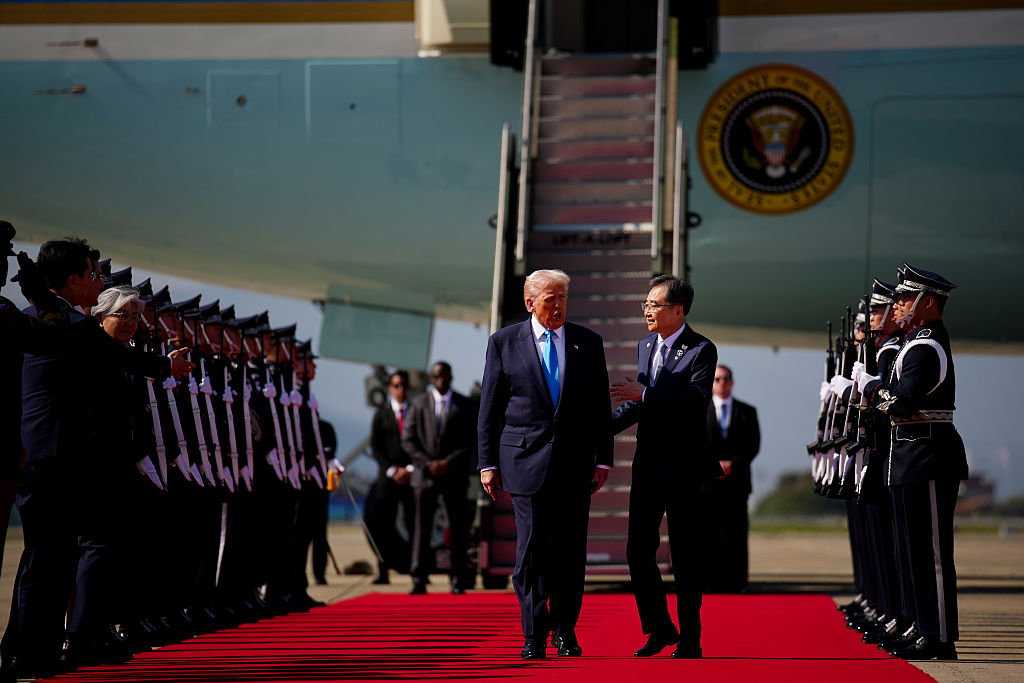
South Korean Foreign Minister Cho Hyun said Wednesday that Seoul was given no notice before President Donald Trump announced that he would be scaling back joint military operations between the two countries.
“Neither our government nor U.S. officials knew what President Trump wrote on his Truth Social," Cho told the National Assembly Committee on Foreign Affairs and Unification. "We were not notified in advance.”
Cho added, however, that Defense Minister Ahn Gyu-back was in “close consultation” with his U.S. counterparts regarding the reductions to South Korea-U.S. military exercises.
Read More: Trump’s South Korea Shift Tests a Key U.S. Alliance
Trump on Sunday announced in a Truth Social post that he had instructed Defense Secretary Pete Hegseth to “substantially reduce” joint military exercises with South Korea, citing the country’s refusal to participate in the U.S.-Israel war against Iran and his “very good relationship” with North Korean leader Kim Jong Un.
Trump called the joint exercises “costly” and “totally inappropriate and hostile” to North Korea, which he said has been “unthreatening and respectful” throughout his presidency.
Both the Pentagon and South Korea have confirmed that joint operations have been reduced following Trump’s announcement.
A Defense Department official tells TIME that the U.S. has “substantially reduced” Exercise Ulchi Freedom Shield—an annual, large-scale training dating back roughly 50 years that combines multiple sectors of the military designed to prepare a U.S.-Korean joint response to international threats. The Ulchi exercise began on Monday and was supposed to last for 11 days, but will now end on Aug. 21, one week earlier than originally scheduled, the official says.
“Associated live-training events have been reduced, with certain events canceled or converted to simulations,” the official adds, noting that “training that enhances tactical capability” will continue. “These adjustments preserve essential readiness and training objectives. There will be no degradation to U.S. training objectives.”
South Korea's Joint Chiefs of Staff also confirmed that it had agreed to the reductions at the request of the U.S.
North Korea has largely shrugged off the reductions, saying that they don’t change the geopolitical posture of either the U.S. or South Korea towards itself.
"We are paying greater attention to the reality that joint military exercises between the U.S. and South Korea have continued and are still ongoing, and this is an unmistakable expression of hostility toward North Korea," Kim Yo Jong, the sister of the country’s leader, said on Wednesday, according to the state-run Korean Central News Agency. She added that Pyongyang had “no interest whatsoever" in Trump’s announcement and that “reducing the scale or duration of the drills does not change the provocative and aggressive nature of the military exercises.”
Trump said in the Oval Office on Monday, following his order to the Pentagon, that he had spoken with Kim Jong Un about a scheduled conversation. Kim Yo Jong said on Wednesday, however, that she was "unaware" and knew “absolutely nothing” about recent communication between Trump and Kim Jong Un.
On Wednesday, Trump said that he would meet with Kim Jong Un this year, but did not elaborate further.
“He has 57 very powerful nuclear weapons,” Trump said to reporters on the White House grounds, referring to North Korea’s arsenal. “Should have never allowed it to happen, they should never have allowed it. If I were president, I never would have allowed it.”
Trump, who met Kim Jong Un face-to-face three times during his first term, has maintained a friendly relationship with the North Korean leader throughout his presidencies. "I have a great relationship with Kim Jong Un,” Trump said in August of last year. “I hope it stays that way, I think it will. I have a very good relationship. I understand him.”
Amid his cordial relations with Kim Jong Un, Trump has repeatedly demanded that North Korea suspend its nuclear arms program, a request Pyongyang has said is off the table. Trump seems determined to negotiate towards that goal with the North Korean leader.
The President’s recent move to halt joint exercises resembles one he made in his first term. Following a summit in Singapore in 2018 during which Trump met with Kim Jong Un, making him the first sitting president to hold a summit with a North Korean leader, Trump suspended the Ulchi exercise with South Korea in the name of diplomacy with North Korea.
Harry and Meghan to move back to UK this month
2 members of Tennessee college cycling team killed in highway collision
Jason Arday was treated as a symbol, not a man
The war on data centres is a bit fake
US gross national debt tops $40tn for first time
Milestone marks years of government spending that grew under both Donald Trump and Joe Biden
US debt reached $40tn for the first time on Wednesday, the US treasury department said, after the government deficit doubled over the last decade.
The treasury’s latest debt balance showed $40.047tn on Tuesday afternoon, the highest in US history.
Continue reading...NSW police commissioner says ‘I unreservedly apologise’ for miscommunication over 18-year-old bushwalker Lily Hooper’s death – as it happened
This blog is now closed
Get our breaking news email, free app or daily news podcast
‘Outrageous’: Greens leader says sending Israeli ambassador home should be on the table
Greens leader Larissa Waters says strong words are not enough, and the government should sanction the state of Israel after its defence force decided not to pursue a criminal investigation into the killing of World Central Kitchen aid workers including Australian Zomi Frankom.
It is absolutely outrageous that after two years of investigating, the Israeli authorities have cleared themselves of any wrongdoing … The Australian government needs to do more than just issue some strongly worded statements. They need to sanction the state of Israel and they need to make sure that we are not involved in a two-way arms trade, which we are at the moment.
It’s a significant loss not only to her family, but to the Australian community, because she was the best of us. The people that run into danger, that try to help others. So it is deeply disappointing that this news was obviously released on world humanitarian day, but deeply disappointing no further action taken … I think we’re all really concerned that nothing more is going to be done about this.
Continue reading...The Florida primary from hell

This story appeared in Today, Explained, a daily newsletter that helps you understand the most compelling news and stories of the day. Subscribe here.
Name a disgraced former Congress member, not originally from Florida, whose time in office was marred by shady financial dealings and who ran in yesterday’s GOP primary for Florida’s 19th District.
…This is, amazingly, a trick question. Because TWO candidates who fit that bill ran in FL-19, and neither of them won. (They were Madison Cawthorn and Chris Collins.)
Florida is — how do I put this? — one hell of a drug. And its primary results were no less surprising or chaotic. On the Democratic side, a socialist candidate for Senate came out of (literal) left field to topple an opponent who out-fundraised her 16 to 1. Meanwhile, progressive challengers lost decisively in two other races.
On the Republican side, President Donald Trump’s picks won most of their contests, including the race to succeed Gov. Ron DeSantis. But two endorsed candidates also lost in surprising upsets. Republicans ousted Rep. Cory Mills, for instance, who has been accused of assaulting one woman he dated and threatening another. And Trump’s pick in FL-19, Catalina Lauf, fell not to Cawthorn or Collins, but to the founder of a conservative talk-radio station. Florida!!!
Go a little deeper
This all makes for a pretty muddled cup of tea leaves. So rather than generalize about Florida’s results, let’s zoom in on one primary race you might not have followed.
That race — the Republican primary in Florida’s Sixth Congressional District — pitted an open Islamophobe (Rep. Randy Fine, who won) against an avowed antisemite (the manosphere influencer Dan Bilzerian).
Both men are shocking in their bigotry, even for a party that has inured itself to shock. Bilzerian, a self-described sex addict and former professional poker player, has fantasized about “exterminating Israel” and “revisiting” the ideologies that precipitated the Holocaust. Fine, meanwhile, has repeatedly compared Muslims to dogs and said that Israel should let Gazans starve.
How did men with such repugnant views emerge as this race’s top finishers? The first reason is dark, but fairly obvious: a significant share of Republicans hold Islamophobic or antisemitic opinions.
The second reason is maybe more interesting: Republicans increasingly treat any perceived limit on speech as an intolerable form of censorship. That new norm has made it less likely that party leaders will condemn hateful views, since the appearance of policing speech is often considered just as bad as bigotry or extremism. As a pair of conservative writers warned in the New York Times last week, this reflex has created “a subculture of racism, sexism and antisemitism” in the GOP.
Some on the left hold hateful views too, of course. But Democrats don’t have those same norms against policing speech.
One link for later
➨ Stop trying to “sell” yourself to new people. That’s advice from my colleague Allie Volpe’s evidence-backed guide to optimizing your online dating profile, but I’d argue it applies to most social interactions. Other all-purpose gems from Allie: be selective with how much you share about yourself and convey your willingness to get to know other people.
Before you go…
- Did you know…that the length of the average middle-grade book ballooned from 175 pages in 2006 to 290 pages a decade later? It’s one of the unexpected reasons that kids aren’t reading as much as they used to.
- Today’s trivia: Jackie Robinson and Jackie Joyner-Kersee attended the same college. What college was that? (You can find this and other brain puzzles in Vox’s daily crossword. Look for the answer in tomorrow’s edition.)
- Yesterday’s trivia: Yesterday we asked you which Dutch astronomer theorized “a cloud that constantly creates comets.” (Say that three times fast!) That would be Jan Oort, namesake of the Oort Cloud — an immensely distant band of billions of icy objects that are thought to surround our solar system.