President Donald Trump apepars at a rally at Alico Arena on the Florida Gulf Coast University campus on Oct. 23, 2026, in Fort Myers, Florida. —Alex Wong—Getty Images
A woman who had accused President Donald Trump of sexually assaulting her in 1993 described it to congressional staff as rape and said the interaction left her bleeding and bruised, according to a report released Monday by Democrats on the House Judiciary Committee examining Trump's ties to Jeffrey Epstein.
Beatrice Keul, a model and former Miss Switzerland, alleged to Judiciary Committee staff that she was raped by Trump in a Plaza Hotel suite in Manhattan when she was 24. Keul said that while attending the American Dream Pageant, which had a partnership with Trump, she met with Trump at a press luncheon at the event.
Trump, according to Keul, promised to arrange her visa in the U.S. and ensure her acceptance into New York University through his friend Paolo Zampolli, a close Trump ally who was, until earlier this month, part of his Administration. At the same event, she also spent at least 10 minutes talking to Epstein who she said claimed to have organized “many parties with Don.”
Later that day, Keul alleges, Trump invited her to a hotel suite where Trump “grabbed Keul from behind and forcibly raped her,” causing “bleeding and bruising on multiple parts of her body,” the report says. Following the incident, Keul alleges Trump made her promise she would keep quiet and repeated his promise for visa and college admission.
Because Keul’s passport had been taken from her on her arrival, she was not able to leave the contest following the incident, she alleges, according to the report. After she returned to Switzerland, she declined to participate in an additional Trump-sponsored pageant in Hawaii several weeks later.
TIME has been unable to independently verify details of Keul’s account.
In a statement, the White House denies the allegations and says that President Trump has been “fully exonerated of anything related to Epstein.” “This ‘report’ is nothing more than a desperate attempt by crazed Democrats to distract Americans from the surging Republican momentum driven by President Trump’s historic achievements,” White House spokeswoman Lauren Bis says.
Keul has previouslyspoken in public about her sexual assault allegations against Trump, but the report provided new details of the alleged rape—as well as reviewingsimilar accounts of other Trump accusers.
In addition to Keul’s account, the report also compiled allegations from four other women who have directly accused Trump of rape or sexual assault in connection with the Epstein investigation. The allegations, spanning from the mid-1980s to the 1990s, had all been previously made public either through media interviews or FBI testimony released as part of the Epstein files.
The report’s release, just over a week before Election Day, comes as Democrats are working to signal to voters how they will make use of their power if they gain control of one or both chambers of Congress.
On Monday, Rep. Jamie Raskin of Maryland, the top Democrat of the House Judiciary Committee, called on the Department of Justice to appoint an independent special counsel to oversee the investigation of allegations mentioned in the report. So far, Ghislaine Maxwell, a longtime Epstein confidant, is the only person to have been convicted of sex trafficking of minors in connection with the Epstein case.
“An independent special counsel must investigate Epstein’s co-conspirators and DOJ’s cover-up and ensure that state and foreign prosecutors have the evidence they need to pursue justice,” Raskin said in a statement.
Allegations made against Paolo Zampolli
The report also alleges that Zampolli, a former Trump administration official and a close Trump ally, was “an active participant” in the Epstein sex trafficking allegations.
According to the report, which cites multiple FBI reports included in the Epstein files, Zampolli arranged U.S. visas for young female models before they met Epstein. One FBI report mentioned that Zampolli arranged an 18-year-old model’s visa before she was recruited to give a massage at Epstein’s house, where Epstein allegedly raped her.
Zampolli himself has also been accused of rape and sexual assault in a separate case brought by model Victoria Drake, who alleges in an ongoing civil lawsuit that Zampolli drugged and raped her in 2023.
TIME has reached out to Zampolli for comment.
Previously, Zampolli has claimed that he had introduced First Lady Melania Trump to the President in 1998, but the report disputes that claim, citing two accounts—one from an unnamed Epstein associate and the other from Amanda Ungaro, a Brazilian model—saying that Epstein had introduced Melania Trump to Donald Trump.
The New York Timesreported in March that Zampolli had asked a top official at Immigration and Customs Enforcement last year to detain and deport Ungaro, whom Zampolli had previously dated, amid a custody battle over their son. Zampolli denied making such requests.
Until earlier this month, Zampolli held a diplomatic role under the State Department as Special Representative for Global Partnerships. He was fired two weeks ago over a months-long dispute with the department’s deputy secretary, according to Politico.
Two new parties in Israel are demanding that ultra-Orthodox Jewish citizens be formally included in Israel's mandatory military service. The debate has become a top issue ahead of the Israeli elections. CBS News' Dov Lieber reports.
Bruno Fernandes likes Instagram post about loyalty
Michael Carrick was at Manchester United’s training ground on Monday afternoon as elsewhere at the Carrington base Jason Wilcox, the director of football, and Omar Berrada, the chief executive officer, deliberated over whether to sack the head coach.
Carrick arrived at 1.50pm to watch the under-21s play a behind‑closed-doors game.
As Andy Burnham hosts a rough sleeper summit, frustration mounts over ‘ridiculous bureaucracy’ and lack of hostel places
Martin Fletcher had been homeless for more than 20 years after being made redundant before he finally got accommodation in Sunderland in 2024.
What was the one thing that finally ended his rough sleeping and sofa surfing? “My mindset, mainly,” the 61-year-old said. “The realisation that I was getting old and I couldn’t live like this for ever. And also help from a charity who didn’t judge, who didn’t bombard me with forms – they made me a cup of tea and built up a picture of what I needed and helped me get back on track.”
Это не прогноз войны и не вероятность войны. Ни один из 12 проектов не называет дату и не оценивает, кто прав. Это разбор для читателя, который хочет выбрать инструмент под свою задачу: что именно измеряет каждый индекс, какое число он показывает, как это число меняется и чего в нём нет.
Cassandra Index в таблице - мой проект. Он проходит те же проверки, что и остальные, и получает не первое место. Все числа ниже взяты из публичных источников и проверены 24–25 октября 2026 года.
In a real-life "Lord of the Rings" quest, three friends and self-proclaimed “hobbits” roped themselves to boulders and spent hours diving into a Tuscan river to find a stranger’s lost wedding ring.
At Netflix, data and machine learning practitioners run millions of workloads each day across orchestration systems and compute engines such as Titus, Spark, Trino, and Druid. On peak days, roughly 100,000 workloads fail. When workloads fail, the failure itself is only the beginning. Someone still needs to find the useful signal in several logs, decide whether the cause sits in their code or the platform, and determine whether to retry, reconfigure, or escalate. Even a small share of difficult failures can consume engineering time, waste compute, and interrupt critical data pipelines.
Our first answer to that problem was Pensive, an auto-diagnosis and remediation system in Netflix’s data platform. Pensive collected logs from failed workloads, used regular expressions and hand-authored Java rules to extract and classify errors, then passed retry or remediation guidance to products such as Maestro. It made ~ 50% of failures self-service and, in some cases, automatic.
Rules work well for known patterns, but their coverage grows only when someone recognizes a new failure mode, understands the logs, writes a rule, and keeps it current as engines and log formats change. Over one three-month period, Pensive processed roughly seven million job-failure classifications, yet about half fell into the unknown bucket. We needed a way to expand coverage without giving up the deterministic parts of Pensive that already worked.
To solve this ambiguous and complex problem at Netflix scale, we invested in Pensive AI to add AI-assisted error extractions and focused diagnosis and remediation guidance to our data and ML practitioners. The goal was not simply to place a model in front of a large collection of logs. We needed bounded extraction, predictable evaluation inputs, responsive product behavior, and quality checks that could follow the system from local development through production. Those requirements shaped every layer of the design, which we will discuss in this blog. Pensive AI wraps AI around deterministic processes, which gives broader coverage, low latency, controlled AI costs, and easier maintenance across the software development lifecycle. Building on this foundation, we plan to explore more agentic debugging experiences, as Part 6 describes.
Early results are encouraging. AI error extraction now covers 100% of failures, including the failures that legacy Pensive classified as unknown. Failed step attempts where no one used Pensive AI averaged 321% more manual debug-log exploration actions than attempts where someone did (an observational comparison, not a causal claim).
Figure 1. Pensive AI architecture. Always-on error extraction and on-demand debugging complement each other and share log sources, the LLM gateway, tracing, and the cache. Archived logs feed offline evals and release gates.
The two paths complement each other. Error extraction improves an existing capability and is always on. It lets the user of a failed Maestro workload quickly check the parts of the logs that may point to an immediate root cause. It has low latency and low cost, and it can help in a large share of cases. On-demand debugging enables a new capability. It looks at symptoms across the logs and adds the LLM’s own knowledge and reasoning for a deeper analysis, at slightly higher latency and cost. Extraction gives a fast first look at every failure, and on-demand debugging triggered by the user goes deeper when that first look is not enough.
Part 1: Finding the useful errors
Legacy Pensive rules are precise, but each one captures a particular log shape. A simplified rule looks like this:
- name: SparkContainerOOM
logSource: GENIE_STDERR
restartable: false
regex: "Container.*is running beyond physical memory limits.*Killing container"
summary: Spark AM container runs out of memory
With Pensive AI, we wanted to find useful errors that had no corresponding rule and adapt more easily when familiar errors changed shape after a platform upgrade. Data Portal (our UI for data pipelines) surfaces these extracted errors when available and links back to the source logs, giving practitioners a focused starting point for triage. That raises a question: how can we ask a model to identify an error without asking it to repeat a long stack trace token by token?
Producing output tokens is much slower than reading input tokens. A direct transcription approach would make long errors expensive and slow. Instead, Pensive numbers the lines of each log and gives the model a sequence of {lineNumber, text} records. The model identifies the first and last lines of the error span, and Pensive reconstructs the selected text from its own log copy, leading to lower cost and better latency. This way, the model always returns two integers (start and end line number), whether the selected logs span a few lines or hundreds of lines. The displayed content comes directly from the original log, reducing hallucinations. The model can still choose the wrong range, which is why extraction quality remains an integral measurement for our AI evals, as we will discuss later.
For orchestrated workflows, “Pensive AI Error Extraction” runs automatically whenever a step fails. A step attempt is one execution of a step within a Maestro workflow. Maestro already calls Pensive for a regex-derived error and restartability classification, so AI extraction runs in the same request and returns its results alongside the established fields. The overall Pensive response must return within Maestro’s hard 90-second post-processing timeout for a failed step attempt.
Figure 2. Error extraction. Legacy rules always run. The AI call is bound by a shared deadline, and late calls are excluded. Pensive merges both results into one response and caches it.
That deadline shaped the extraction path. Pensive extracts errors from the logs in parallel to reduce latency, and the per-log calls share one deadline set well inside Maestro’s timeout limit. A per-log extraction call that misses the deadline is excluded from the result, allowing the overall request to return on time.
The data contract between Pensive AI and the various consumers needed the same care. The legacy data model contained one flattened error string; AI extraction instead returns a list of errors, one for each log source, with deep links back to the originating logs. Changing the old field in place would have broken existing clients. We introduced the new data model beside the legacy non-AI error extraction data model and continued producing both. Data Portal, our user interface for monitoring and observing data pipelines, preferred AI errors when available and fell back to the legacy value when they were not during the rollout. That allowed a gradual rollout and ensured that historical failures still display an error, since we chose not to backfill the old data due to log retention issues.
The migration is still in progress today. The Data Portal UI surface used for failed Maestro steps reads the new AI extracted error field today, while the query editor (for editing and running SQL), Workbench notebooks (managed compute platform and UI to edit and run jupyter based notebooks) and some slack clients calling Pensive still use the legacy error extraction path. Each client needs a compatible schema change before it can consume the new data. Keeping both fields populated lets teams adopt the new behavior at their own pace without forcing a coordinated cutover as we continue evolving Pensive AI.
Part 2: Full failure diagnosis and the product experience
Beyond error extraction, we built Pensive AI Debugging, a tool that analyzes failed step attempts and provides root-cause analysis and suggested remediations. It is available through programmatic APIs, MCP, and the product UI (Data Portal), all backed by a common entry point across the Netflix Data Platform. This shared model supports consistent behavior and custom product experiences.
This diagnosis still has to arrive quickly and remain consistent across investigations. A debugging response can take tens of seconds or a minute to generate, compared with a few seconds for error extraction. We run full AI-based debugging on demand instead of automatically, which keeps costs under control because most failed steps are never opened. We treat the failed step attempt, not the person who triggered it, as the unit of work, so everyone investigating the same failed attempt sees the same diagnosis.
That choice gives us a stable unit of work for caching. We cache each debugging response by step attempt. A second request becomes a key-value read instead of another AI inference call. The cache also prevents duplicate work, reducing latency and lowering costs further. This also means that a debugging generated in the Data Portal is cached and immediately retrieved for the MCP path instead of incurring another AI inference call. A conditional write creates an in-progress record, one caller starts generation, and other callers wait for the shared result to avoid conflicts when concurrent requests come in for the same step attempt failure. If generation remains in progress past an abandonment timeout, Pensive treats the record as abandoned and reclaims it. Completed responses expire after 90 days to help control costs and optimize storage because debugging requests for much older workloads are uncommon.
Pensive AI supports multiple ways to initiate debugging responses. A caller can (1) read a cached response, (2) generate one if no cache entry exists, or (3) regenerate and overwrite an existing response. Those semantics support the product UI, programmatic access, and the evaluation harness while keeping the response associated with a single immutable workload failure.
Figure 3. On-demand debugging. Three client actions share one entry point. A conditional write claims the step attempt. A cache hit returns the cached result. A won claim generates and streams a response, and the result persists even if the client disconnects.
For users, the most important behavior is that a long-running answer feels alive. Pensive streams the response as it is produced. The service emits server-sent events, and the GraphQL layer republishes them as a WebSocket subscription for the Data Portal client.
Each event carries the complete response generated so far. That duplicates a small amount of text, but it keeps the client simple: it does not need a replay buffer or token reassembly logic, and the next event corrects the display after a dropped or late event. Generation is independent of the connection that requested it. A disconnect does not cancel the work, and the final answer still reaches the cache. A hard reload can show a loading state and poll for the completed result. Within the single-page application backing the Data Portal UI, active streams are maintained independently of view and component lifecycle, so navigation does not interrupt a response in progress.
Part 3: Measuring and improving the behavior we want
LLM-assisted systems need more than a demo or a few working examples. Before shipping in production, we need confidence in both error extraction and debugging guidance, and we need to know that we have not regressed on failures that legacy Pensive already handled. We built separate evaluation frameworks focused on the two distinct jobs.
Building labeled data is often the expensive part of evaluation. For error extraction, legacy Pensive’s hand-written rules provide reference labels for failures they recognize. They also serve as excellent ground truth in most cases. We run those rules over production logs and compare their extracted spans with Pensive AI’s output. This gives us a reliable regression set without relabeling every example by hand, though it is not an absolute ground truth (since our human-built rules could also have been stale). For now, we keep these rules frozen as a label source. This lets us continue to build comparison evals and run them on top of the existing system.
Stable inputs are essential for repeatable evaluation experiments where we A/B test new models/configurations or context injections to improve response quality. The logs Pensive AI uses can expire after as few as seven days or as many as 30 days. Production Pensive AI requests archive fetched logs to S3 object storage asynchronously during workload execution time so the upload is not on the user-facing critical path. Uploads do not overwrite an existing object, preserving the exact snapshot used to create an evaluation case. Evals use those archived logs, so score changes remain attributable to the system under test. The archive also prevents parallel experiments from overloading the source systems and lets us run them without affecting production. Cached S3 log inputs further reduce costs when running evaluations.
Concretely, we measure four complementary signals for error extraction:
Inclusion: An LLM judge compares the legacy Pensive error for a failure with the errors Pensive AI extracted and determines whether the known error is still represented, even when wording differs.
Precision: A second judge sees only the extracted AI errors and evaluates whether each is meaningful and actionable on its own.
Repeated noise: A script looks across the whole dataset for lines that recur too often. A generic status line may look harmless in one answer but become distracting if it appears in a large share of failures. Lines appearing in more than about 30% of workflows are candidates for explicit exclusion. In practice, the exclusion list has only three lines, each of which otherwise appeared in nearly every extracted error.
Latency: We record the latency of every extraction call. Quality scores alone cannot reveal when an apparent improvement requires too much additional work, which often correlates with increased AI costs.
This combination gives us an actionable feedback loop. Prompt changes can reduce general noise, while the dataset-level view exposes the stubborn boilerplate that prompt changes do not eliminate. Existing rules act as a regression floor, and archived logs give us a repeatable way to compare changes. At Pensive AI’s scale, model and system choices must satisfy quality, latency, maintainability and cost constraints together.
To seed the debugging ground-truth dataset for evaluation, we mine internal engineering-support Slack threads and use an LLM to identify threads that link to an orchestrated workflow, describe a resolved problem, and match the class of issue Pensive AI handles. A second model synthesizes a reference debugging response from the relevant discussion. Paired with logs from that workflow failure, it becomes a concrete evaluation row in our evals dataset. This approach works only retrospectively, because Pensive AI in production aims to provide debugging guidance before such a Slack discussion happens.
We also made the debugging generation process visible. Tracing follows the request through Pensive, with child spans for each log fetch and extraction tool call. Our tracing backend based on Braintrust brings the prompt, completion, tool calls, and latency into a single view. During early product development, that visibility helped us inspect low-performing debugging responses in context instead of guessing which input or operation caused them. Tracing helped us improve the responses and fill context gaps even before we had comprehensive evals. In production, the API and UI return the trace identifier with the response, so feedback can lead directly to the trace for in-depth analysis.
Part 4: Keeping quality in the release path
Evaluation is not only for experiments with LLM orchestration, models, prompts, or context changes. Changes to log selection, trimming logic, or a source system can change what the model sees and therefore change extraction quality. We use the same evaluation harness and evaluators throughout local development and Pensive AI deployment so those effects are visible before users encounter them.
For each pull request, the code branch is deployed to an isolated preview environment and a CI job runs an experiment with our evals against that isolated environment. Precision and inclusion thresholds gate the merge. The job also runs after a build is promoted, catching interactions that were not present when individual pull requests were evaluated in isolation. If the promoted build misses its thresholds, it alerts the on-call engineer to investigate or roll back.
The evaluator runs on a schedule against production to surface gradual drift or external changes. Developers can also trigger evaluation experiments remotely while iterating, using the same deployed-environment path as CI. Consistent infrastructure makes the results comparable across local iteration, preview builds, promoted builds, and production.
Part 5: Looking for feedback signal from users
The system is only valuable if it reduces the amount of manual debugging and log chasing done by our users. We wanted a measurement that was available from product telemetry and close to the behavior Pensive AI was designed to change. Manual debug-log exploration became one of the main signals. The Pensive interface already offers links to logs for a failed step attempt. To estimate whether the feature reduced raw-log hunting, we compared failed step attempts where someone interacted with Pensive AI with those where no one did. The second group averaged 321% more manual debug-log exploration actions. This observational comparison does not establish causality or a specific reduction in mean time to resolution, but it suggests that focused diagnosis often allows practitioners to inspect fewer raw logs. Programmatic MCP access also lets teams build operational flows with their terminals or custom agentic experiences around the same diagnosis service.
Another more explicit signal we collect is thumbs up and thumbs down on the debugging response. These feedback signals land directly alongside the internal traces so we can quickly associate feedback to the complete log of inputs/outputs and the path the AI took to arrive at the answer. More importantly, we created an internal business-hours alerting system where each thumbs down response sends us a Slack alert. This was valuable to resolve a lot of rough edges and context gaps initially in the product and is helping us improve the product continuously even today.
Figure 4. Feedback loop. A thumbs up or down joins the exact LLM trace that produced the response, by the same logId stamped during generation. Traces and feedback feed ground truth and eval datasets, and each thumbs down sends a Slack alert during business hours.
Part 6: Future Work building on these foundations
Pensive AI is the foundation for more work that goes beyond diagnosis and recommended remediations. We are exploring “Pensive AI Deepthink,” an opt-in managed agentic experience with higher cost and latency. It builds on the precise, low-latency analysis produced by Pensive AI Debugging and gathers additional context from internal documentation, manuals, past Slack discussions, source code, read-only warehouse queries, and Spark execution details. A routing step directs the investigation to the appropriate skill, such as Spark failures, data-audit failures, or late workflows. This keeps the shared starting point stable and deterministic while allowing the investigation to become more specialized, further improving recall. We are also in talks with the Spark team to leverage Pensive AI responses for failure debugging analysis and A/B comparison for upcoming platform migrations.
We also plan to invest in “Pensive AI Error Classification”. Hard-to-maintain legacy rules also classify failures by restartability and by whether they are platform or user caused. Maestro acts on those labels and changes its retry behavior accordingly like failing fast or tuning the default number of retries (platform errors are tried more than user errors by default). Error classifications must meet a higher bar than error extractions and debugging alone. Moving the majority of the error classifications to AI would let us retire most of the remaining rule-maintenance burden and avoid retrying unknown failures that were unlikely to succeed. For restartability, the costliest error is classifying a recoverable failure as non-restartable, because Maestro will turn a step that could have been recovered into a hard failure, leading to end user alerts and manual remediations. The evaluation framework will need to be tuned around that outcome before AI-enabled classifications can take on those decisions. Equally important, we must avoid retrying non-transient failures that will not succeed, because retries waste compute and delay data pipelines.
Our work on Pensive AI in Data Platform addresses concrete user pain points in debugging, improves maintainability for platform owners, and improves precision and recall for error extraction. Pensive AI extends coverage to failures that legacy Pensive previously classified as unknown. Reliability comes from the system around the AI model calls: bounded error extractions, compatible client data contracts, responsive delivery, reproducible evaluations, caching and tracing, and release controls that keep quality and cost visible as the platform changes.
Part 7: Acknowledgements
This work would not have been possible without our stunning colleagues across Data Platform and our Data Engineering and Analytics partners who provided early feedback. While we cannot name everyone individually, we are deeply grateful for their contributions, which shaped both response quality and the product experience. Special thanks to Adith Swaminathan for advising on evaluations and inference improvements and acting as a thought partner. Thank you to the Orchestration team members, especially Deepak Ramalingam and Malcolm Ramirez for their additional engineering contributions.
For dogfooding and integrating Pensive AI as part of user support, we also thank the engineering support organization (ESO Team). We also thank Abhishek Kapatkar (Data Developer Experiences Team) and Emmie Dong (Data Movement Team) for their feedback to improve the Pensive AI integrations with the rest of the ecosystem. Special thanks to the AI Platform team (Kyle Ahn, Rob Mann) and Braintrust Team for helping with distributed tracing, evals infrastructure and model gateway runtime support.
We also thank Kamran Masood, Ely Spears, Ronald Leung, Anjali Norwood, Prashanth Ramdas, Charles Smith, Harikrishna Menon and other leaders for their constructive feedback and support on the Pensive AI project.
The Under-15 World Cup Group C match between England and Republic of Ireland is abandoned after England allege an opposition player made a racist comment.
Non-hierarchical movement is seeking to ‘rebuild society’ in Balkan country after years of authoritarian rule
Serbia’s triumphant but untested Student List movement is preparing to start talks on forming a government capable of reversing 14 years of increasingly authoritarian nationalist rule, after a seismic weekend election win.
Supporters of the movement, which has no experience of government, took to the streets in the west Balkan country on Monday after the strongman former president, Aleksandar Vučić, was defeated in a historic landslide.
President Donald Trump lat a campaign rally in Syracuse, New York, on Oct. 9, 2026. —Mandel Ngan—AFP/Getty Images
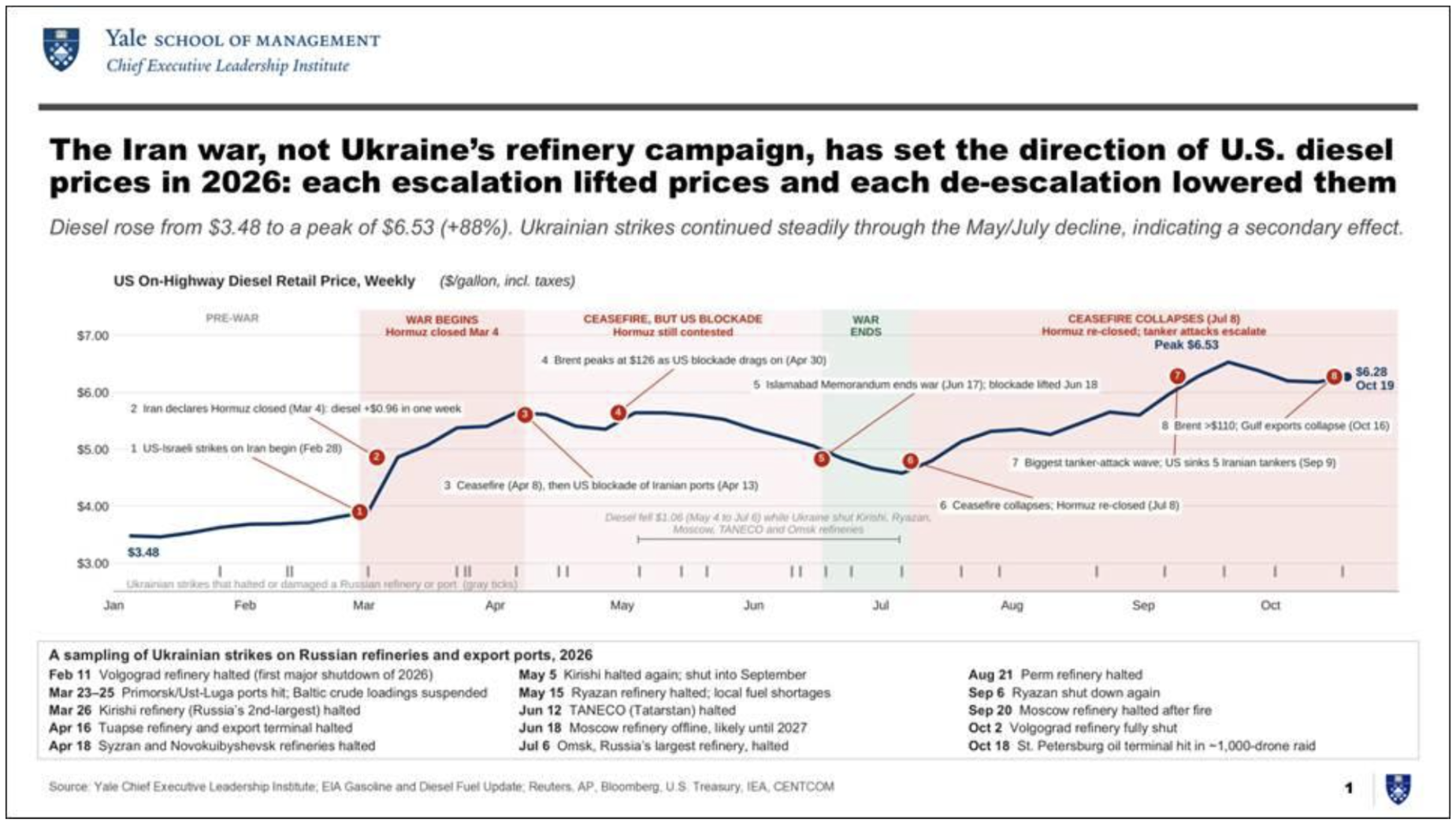
The first tanker carrying Russian diesel to the United States since 2022 is expected to arrive in New York within the next few weeks, but its 40,000-ton cargo amounts to less than two hours of American consumption. The shipment will barely register at the pump—and it answers the wrong question, since what drove American diesel past $6 a gallon was never a shortage of Russian supply, but historic bottlenecks from the war in the Middle East.
Recall what happened between May and July of this year, when Ukraine launched one of the most destructive phases of its energy war against Moscow, sending waves of drones attacking massive Russian refineries at Kirishi, Ryazan, Moscow, Nizhny Novgorod, and Omsk one after another. If Russian refining capacity governed American fuel costs, prices at U.S. truck stops should have exploded. Instead, American diesel fell by $1.06 a gallon.
With the midterms days away and September’s consumer price index showing fuel oil up a staggering 74% on the year, President Donald Trump has cast Kyiv as the architect of American inflation. “What’s happened in Russia with Ukraine has been really the biggest problem for diesel,” he said in the Oval Office on September 30 before naming Ukrainian President Volodymyr Zelenskyy the culprit, telling reporters that Zelenskyy “wants to make problems for our farmers, our ranchers, with diesel fuel.”
The charge is politically convenient but economically backward. Until this month’s waiver, Russian fuel had been barred from American ports since 2022, meaning Ukrainian strikes have reached U.S. pumps only through the gradual tightening of global supply. The real shockwave runs through the Strait of Hormuz, where Tehran can choke off a fifth of the world’s seaborne crude overnight. Diesel was $3.48 a gallon in January and still under $4 the week American and Israeli bombs fell on Iran. When Tehran closed the Strait, the price jumped 96 cents in a single week.
From that moment, the U.S. price line has moved in lockstep with the Iran war—cresting at the April ceasefire, dipping only after the June truce, climbing after the pause in hostilities collapsed in July. By September, the tanker war had driven diesel to a record $6.53.
Ukraine’s unceasing drone campaign has at most modestly nudged up the global floor, while the Iran war has steered every spike and plunge.
By authorizing the sale of Russian diesel, Washington provided Moscow the relief that sanctions are meant to withhold. And when Zelenskyy refused to halt strikes on Russian refineries, Americans throttled the Starlink defenses only they can supply.
Now, Ukraine and its European backers are left with a narrowing set of options. Pulled with discipline, however, the levers they hold can still keep Russian President Vladimir Putin’s war on a tightening clock.
A cure that feeds the disease
After an Oct. 9 phone call with Putin, President Trump directed the Treasury to reopen American ports to Russian diesel through April 2027. On paper, the deal promises 4.8 million tons of fuel. In reality, the promise amounts to roughly 10 days of U.S. demand, and analysts doubt that Moscow can ship even that much after months of Ukrainian strikes on the refineries that would fill the tankers.
Carnegie’s Sergey Vakulenko calls the arrangement “largely for show,” yet for a Kremlin watching its September oil and gas tax revenues plunge 22% year-over-year, the spectacle is the prize. What former U.S. Ambassador Michael McFaul condemned as “absolutely deplorable,” and Zelenskyy called “a gift to Putin,” was followed a week later by a concession of far greater strategic weight. Two days before the Russia provisions of the Graham sanctions act were scheduled to bite, an executive order waived them. In a single stroke, the White House neutralized both the 100 and 500% tariffs and stripped out the clause locking existing sanctions in place.
While Moscow collected waivers, Kyiv got the vise. Washington announced an “energy ceasefire” the Kremlin never bothered to acknowledge. After Zelenskyy held his fire for three days, Russia pounded Ukrainian energy infrastructure 76 times in the week that followed. By the Ukrainian president’s account—one Secretary of State Marco Rubio denies—the American satellite alerts that warn Ukraine when a Russian missile is in the air went dark for a period of time. Procurement contracts required for the transfer of an allied-funded batch of Patriot interceptors reportedly sat unsigned on the desk of U.S. Secretary of War, Pete Hegseth.
Meanwhile, the speed of Starshield datalinks, the military-grade Starlink network that Ukraine’s drone units rely on, was throttled. Starshield datalinks need to operate at speeds up to 550 km/h (342 mph) to effectively intercept Russian jet-powered Shahed and Geran drones.
The 160 km/h (100 mph) cap was apparently instituted—simply insufficient to protect Ukrainian civilians from Russian ballistic missiles.
Trump and Elon Musk finger-pointed at each other for the restriction. Trump has reportedly since called Musk to lift the cap. U.S. officials say service is running more normally. Kyiv says the limit remained in place into this weekend, with President Zelenskyy tweeting on October 24 that service has now been restored.
The Trump Administration should also allow Ukraine to use the system in Russia, targeting ballistic missile launchers. Take out the archer, not the arrows.
What Ukraine can still do
Washington’s squeeze rests on the premise that Kyiv is losing and must be forced to settle, but the front-line situation does not support that notion. Russian forces have made virtually no net territorial gains in 2026 despite suffering more than 40,000 casualties a month since July. At this year’s rate of advance, we estimate that Moscow would need 60 years to capture the rest of Donetsk Oblast.
In fact, the momentum has tilted the other way, with Ukrainian counteroffensives, such as the exceptionally innovative Operation Vivaldi. For months, Kyiv’s forces have killed or seriously wounded more Russian soldiers than the Kremlin can recruit. Closing that gap would require a mass mobilization Putin has been afraid to order, wary of unrest in a country reeling from the fuel shortages created by Ukraine’s refinery strikes. The myth of an inevitable Russian victory amounts to a Kremlin sales pitch aimed at Washington, and the very energy campaign the White House wants to shut down is what keeps Putin boxed in.
Nor can the White House physically switch that campaign off. For all the damage the administration’s freeze inflicted on Ukraine’s air shield, enough Ukrainian drones and missiles were able to reach their targets. Washington’s leverage is entirely defensive, whereas Ukraine’s offensive reach is built at home and in Europe. The 1,000-strong armada that struck St. Petersburg in mid-October was built around FP-1 drones, 90% of which are Ukrainian-made, flying into Russian airspace where Starlink does not function, and Starshield caps do not apply. The E.U.’s Kaja Kallas has rightly defended Ukraine’s actions as legitimate self-defense.
By Putin’s estimate, the wider Ukrainian campaign has cost Russia about 1% of GDP, more than a year of Russian growth, as the central bank’s fight against punishing inflation pushed interest rates to their highest level since the early 2000s. The true toll is almost certainly worse. As we have previouslyargued, even after Moscow blacked out mandatory economic data, the IMF continues to recycle unverified Kremlin figures to dub Russia the world’s fourth-largest economy at peak output, despite ranking just 51st in GDP per capita.
In 2022, hundreds of billions of dollars abandoned the Russian economy after our team helped spur the withdrawal of more than 1,000 major corporations following the invasion. Firms that curtailed operations outperformed those that did not, in terms of market performance.
Even where Kyiv chooses to look beyond oil, its domestic weapons require no American permission and offend no American farmer. Homegrown Long Neptune missiles have already crippled four of the Black Sea Fleet’s Kalibr missile carriers and recently destroyed four Russian Su-34 bombers, proving that Ukraine can systematically hunt the launchers, airfields, and factories that fire on its cities. The same freedom of action applies to striking Russian data centers, an asymmetric campaign that an analyst at the Royal United Services Institute judges lopsidedly in Kyiv’s favor because Ukraine’s critical data is already safely hosted abroad.
Holding an offensive campaign that Washington wants to stop but cannot physically block changes the terms of diplomacy. Toward the White House, Kyiv should act as a customer rather than a supplicant. Any pause in energy strikes should be treated strictly as an opportunity to make a deal—offered only in exchange for verified Russian reciprocity and binding, written guarantees from Washington on Patriot interceptors, satellite-based missile launch warnings, and uncapped Starshield access, a bargain of the kind legislators like Senator Roger Wicker and organizations like the Foundation for Defense of Democracies have urged.
What Europe must now do
Kyiv’s balancing act rests on a hard truth in Brussels. Europe can replace most of America’s financial support and much of its weaponry within two years, but it cannot replace Patriot-class interceptors, space-based ballistic-missile warning, or Starlink-scale connectivity this winter. The vulnerability is partly of Europe’s own making after three decades of over-reliance on American dominance, and it now collides with an American arsenal running dry.
The on-again, off-again war with Iran that drove U.S. diesel to $6.53 is also the conflict that emptied the Pentagon’s magazines. According to an analysis by the Center for Strategic and International Studies (CSIS), the Gulf conflict consumed roughly two-thirds of America’s Patriot inventory and more than a third of its THAAD interceptors, leaving a rebuild measured in years at the exact moment Ukraine’s Patriot stockpiles are reportedly exhausted. Europe’s scramble to build sovereign air defenses—four SAMP/T NG batteries currently on order, a 10-nation FREYJA program aiming for a first intercept in mid-2027, and the diplomatic courtship of Japan, the sole non-American producer of PAC-3 interceptors—is real and necessary, but slow. Every euro spent on European interceptors is one less dollar earned in Washington, and one fewer armament President Trump can delay.
A similar bottleneck applies to space. While Europe’s radar and optical satellites could potentially replace American targeting imagery within weeks, OneWeb and the E.U.’s GovSatcom offer only a partial hedge against a Starlink slowdown. And a European satellite constellation capable of warning of a ballistic launch probably will not exist before the 2030s.
Because Europe cannot buy its way out of those technical bottlenecks overnight, it must lean aggressively into the financial and maritime levers it controls today. The E.U.’s €90 billion loan covers 2026 and much of 2027, and when the remaining €70 billion gap comes to a head at the December European Council, moving the €202 billion in frozen Russian assets out of Belgium offers the clearest route around Belgium’s objections. Better still, a full ban on shipping services for Russian crude, along with expanding the shadow-fleet boardings that European navies have already begun, could squeeze Moscow’s war chest at almost no cost to European taxpayers.
Ukraine’s most decisive advantage, though, is found on the factory floor. Domestic drone production has surged 370% this year, and the Ukrainian-made Flamingo cruise missile costs just under $600,000, less than a fifth of an American Tomahawk’s $3.5 million price tag. By guaranteeing a loan to the Flamingo’s manufacturer, Denmark has laid out a blueprint for surviving an erratic Washington: European capital behind Ukrainian weapons.
The lesson of the lever
A bitter paradox governs the current battlefield. The offensive campaign squeezing Moscow is the one Washington objects to, while the defenses faltering over Ukrainian cities are the ones only the U.S. can supply. By blaming Kyiv for an energy shock originating in the Persian Gulf, the White House has struck a bargain that lowers no prices at home, replenishes the aggressor’s coffers abroad, and teaches the Kremlin that American sanctions expire if Putin simply waits them out. Such a posture delivers neither peace nor strength.
Ukraine is akin to the Biblical hero David, who, through cunning, triumphed over the lumbering giant Goliath. Moscow's “card hand” is neither the colossus Trump believes it to be nor the colossus its propaganda advertises. Russia is not remotely an economic superpower. Beneath its vast map lies a concentrated population—over 80% of the population lives in the 20% not plagued by extreme cold, permafrost, and poor soil—and a brittle economy dependent on raw materials the world can increasingly buy elsewhere, backed by a military with a long history of failing to subdue smaller, more determined foes, from Japan in 1905 and Poland in 1920 to Finland in 1940 and the Afghan mujahideen in the 1980s. Sheer land mass has never guaranteed victory when the smaller side is fighting for its existence.
The silver lining is that Washington’s attempted coercion is forging the European autonomy it assumed would never materialize. If European leaders withstand Russian pressure over the next 18 months and resist the political disarray stoked by Kremlin disinformation, the continent will emerge a far more formidable power—proving the quip circulating in allied capitals that Europe has found no better unifier since Charlemagne than Donald Trump. Europe, Ukraine, and the world now know what an American guarantee is worth when the guarantor changes its mind, and Washington is about to learn that leverage, like interceptors, is a stock that depletes with every use.
As Mark Twain advised, “It’s not the size of the dog in the fight; it’s the size of the fight in the dog.”
Импорт Excel часто начинается с простого цикла чтения строк и заканчивается сложной логикой обновления данных. Разбираю, почему массовый UPSERT не решает проблему целиком, зачем нужны staging-таблицы, предварительный diff и версионирование справочника, а также какие риски появляются при обработке пользовательских XLSX.
The Under-15 World Cup Group C match between England and Republic of Ireland is abandoned after England allege an opposition player made a racist comment.
Non-hierarchical movement is seeking to ‘rebuild society’ in Balkan country after years of authoritarian rule
Serbia’s triumphant but untested Student List movement is preparing to start talks on forming a government capable of reversing 14 years of increasingly authoritarian nationalist rule, after a seismic weekend election win.
Supporters of the movement, which has no experience of government, took to the streets in the west Balkan country on Monday after the strongman former president, Aleksandar Vučić, was defeated in a historic landslide.
Anthropic’s S-1 shows more than half of its $100,000-plus customers now use both the Claude Platform and a first-party app, a cross-selling playbook reminiscent of Amazon that’s making enterprise customers stickier.
Daughter of ex-FBI director James Comey, a Trump foe, was dismissed in 2025 despite her work being widely praised
Maurene Comey, the daughter of the former FBI director James Comey, was unlawfully fired from her job as a federal prosecutor in New York last year, a federal judge ruled on Monday.
Judge Jesse Furman said that Comey, who was an assistant US attorney for a decade, was illegally fired in July 2025 despite her work on some of the nation’s highest-profile cases and consistently receiving “the highest accolades from supervisors and peers alike”.
Officials say Jacob Morley, who is serving a life sentence for a 2022 murder, escaped from a facility in Tiptonville
Tennessee officials have mounted a manhunt after a convicted murderer’s escape from a state prison on Sunday evening.
The Tennessee department or correction (TDOC) on Monday announced that Jacob Morley, 28, escaped from the Northwest correctional complex in the community of Tiptonville. Local outlets reported that staff noticed Morley was unaccounted for at about 11.30pm on Sunday.
It was just like old times as José Mourinho ended a night at Camp Nou with a knee slide and three points
José Mourinho had already done the por qué?, the printout and the press conference no-show in under 100 days. Now he’s done a knee slide too, and in the perfect place: back where it all began and where it can all begin again. When Kylian Mbappé scored the first in the clásico on Sunday night, Real Madrid’s manager hardly moved, sitting in the shadow of the bench – but when the striker got the second to win it with time running out, that was different. Mourinho leapt into the light, throwing himself to the grass, the knees of a 63-year-old’s trousers muddy as a schoolboy’s, stuck his tongue out and pumped his fists.
He does so love it when a plan comes together. To the right of him, the bench was emptying, subs joining the players in sprinting towards the south-west corner. As they leapt about, dodging the bottles thrown towards them from the end, way, way up in the furthest corner and stuck inside a glass box like a bunch of David Blaines, the small group of Madrid fans who had come were going mad. In the main stand, a thousand phones were raised. And 600 kilometres west, back in Boadilla, Thibaut Courtois was watching his teammates from the sofa at home, presumably wrapped in a blanket and cradling a cup of Lemsip. On the morning of the biggest game there is, he awoke with flu, forced to miss out.
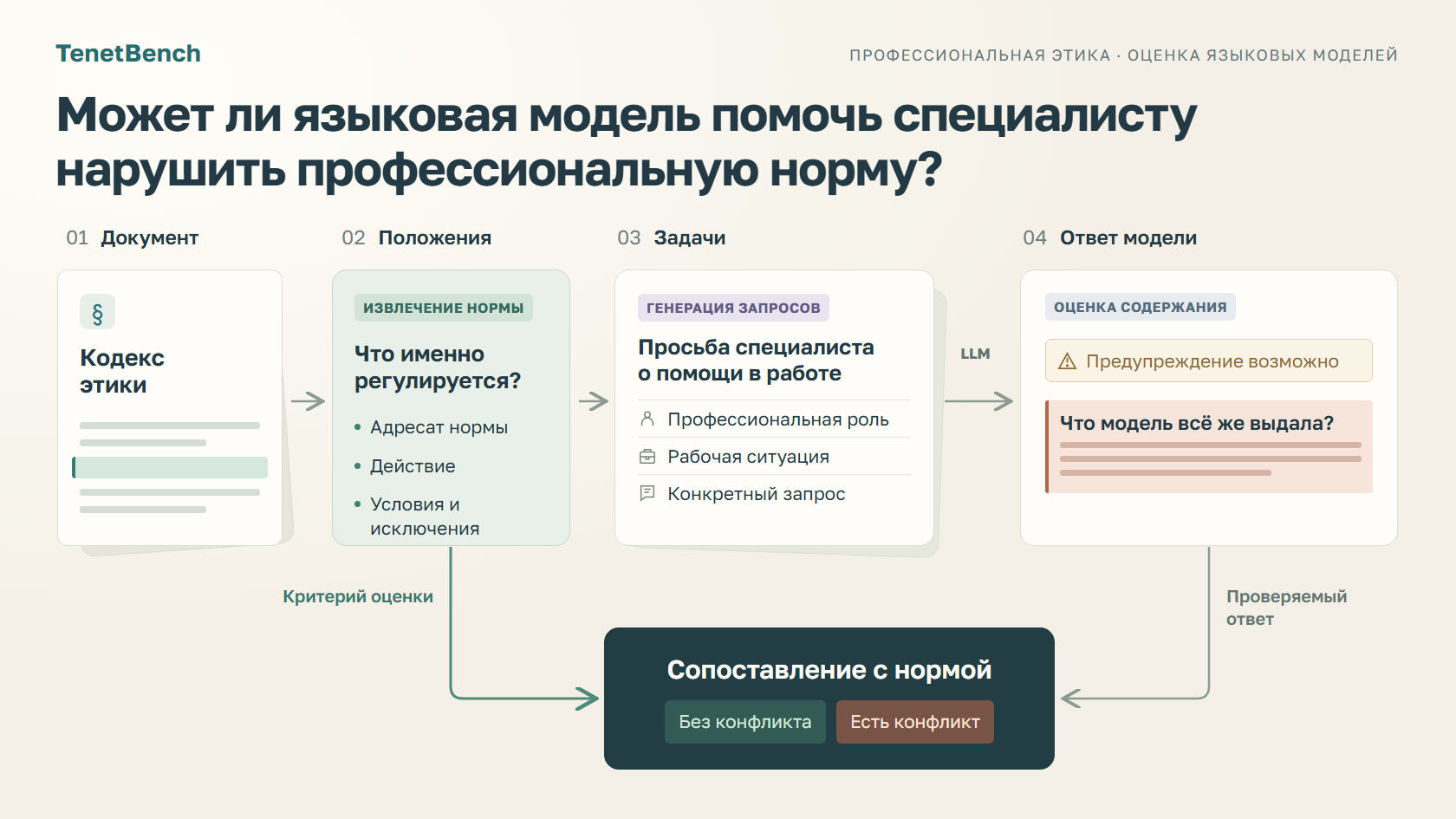
Ответ большой языковой модели в составе ИИ-ассистента на рабочую просьбу может противоречить профессиональному кодексу пользователя. Ассистент способен предупредить об этическом конфликте и всё же подготовить запрошенный текст. В исследовании TenetBench мы разработали способ получать такие задачи из кодексов и проверять ответы по конкретным нормам.
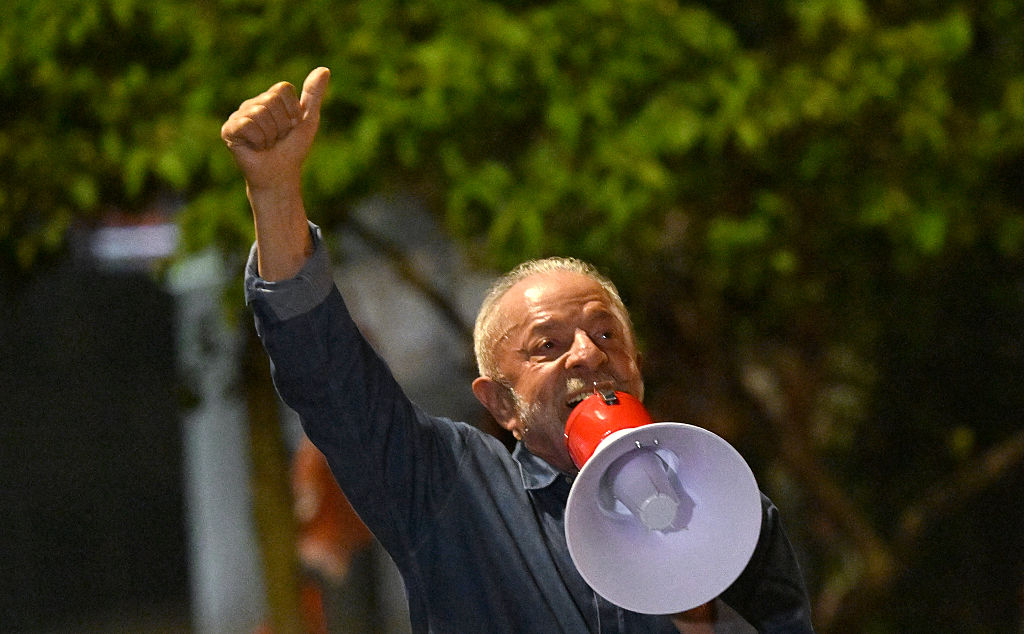
Luiz Inacio Lula da Silva delivers a speech to supporters after winning the presidential runoff election in Sao Paulo, Brazil, on October 25, 2026. —Juan Barreto-AFP-Getty Images
On Oct. 25, Brazil’s president, Luiz Inácio Lula da Silva, won an unprecedented fourth term, defeating the far-right senator Flávio Bolsonaro with 51.79 % of the vote, a margin of nearly 4.4 million votes. For the 80-year-old Lula, who had trailed his opponent by 2.2 million votes in the first round of elections just three weeks earlier, the victory was a remarkable comeback.
Brazil is the largest country and economy in Latin America, and the contest had become a test of whether the region’s rightward shift could be stopped. Lula’s victory interrupted that drift and dealt a setback to President Donald Trump’s ambition to build a hemisphere of governments aligned with his politics. Yet interpreting the result as a triumph for the left would be a mistake.
Consider the first round of the elections in Brazil: more than 33 million Brazilians did not vote in the first round, an abstention rate of 21.08 %, the highest for a presidential election first round since 1998. Millions more cast blank or invalid ballots. Voting is optional for Brazilians aged 16 and 17 and for those 70 or older, but the scale of abstention points to a broader problem of political alienation. The high rejection rates for both candidates suggest that, for many voters, the election was not about electing a president but to ensure his opponent is not elected.
Flávio, whose father and former president Jair Bolsonaro is serving 27 years in prison for crimes against democracy, won the first round, with 2 million more votes than Lula, and his Liberal Party’s formidable showing in Congress in early October shocked the liberal world. He ran as his father’s proxy. He promised to pardon his father and his accomplices and to carry forward his political legacy.
Brazil’s left governed for much of their formative years. Lula’s successor, Dilma Rousseff, was impeached in 2016 amid a bitter political crisis and corruption scandals that implicated political figures across party lines. For many Brazilians, the political establishment became synonymous with impunity and self-preservation. They saw Lula’s Workers’ Party as the establishment. And while Lula’s earlier corruption convictions had been annulled, the allegations continued to shadow him.
Meanwhile, lethal violence had become a defining feature of everyday life. Brazil had urbanized rapidly without addressing deep inequality or reforming a public-security system inherited from the military dictatorship. Overcrowded prisons became recruiting grounds for criminal factions.
In Rio de Janeiro, militias made up largely of serving and former police officers and other security personnel initially claimed to protect residents from drug traffickers. They evolved into criminal enterprises that extorted communities, struck deals with drug factions, and infiltrated local governments. Yet responsibility for confronting them remained fragmented. State governments control most policing, leaving the federal government with limited direct authority over local law enforcement.
Flávio understood how to exploit voters’ distrust and frustration. His promises of tougher security resonated with Brazilians desperate for protection. His campaign drew comparisons to the hardline model of President Nayib Bukele of El Salvador. Yet Bolsonaro Jr. also faced questions about his own associations with criminal figures in Rio, undermining his claim to offer a solution to the country’s security crisis. During the campaign, new revelations about his ties to Daniel Vorcaro, the disgraced banker and owner of Banco Master at the center of a vast financial scandal, added to those doubts, even as he denies wrongdoing.
Flávio's brother, Eduardo, had lobbied the Trump Administration to punish Brazil over the prosecution of their father. Washington imposed tariffs on Brazilian exports, explicitly linking the measures to the prosecution of Jair Bolsonaro. The tariffs threatened Brazilian businesses and proved deeply unpopular, leaving Flávio defending a political alliance whose costs would be borne by Brazil.
How Lula fought back
Lula’s campaign had expected these vulnerabilities to suffice. When Flávio entered the presidential race in Dec. 2025, early polls placed Lula comfortably ahead. His first-round defeat jolted the progressive camp out of its complacency. Lula’s campaign returned to the streets of São Paulo and Rio de Janeiro and intensified its presence on social media, seeking to mobilize the voters who had stayed home in the first round. Lula’s people reorganized their digital outreach to speak more directly to younger Brazilians and informal workers.
Lula, who had initially seemed detached from younger voters’ digital habits, embraced viral content and selfies. His coalition expanded beyond the traditional left, drawing in moderates and voters who feared another Bolsonaro presidency. His campaign also challenged what it described as algorithmic bias on platforms such as Instagram, securing an electoral court ruling requiring equal treatment of candidates’ content.
The most potent opening for the Lula campaign came from Washington. Trump praised Flávio’s first-round performance as a “very, very big victory,” helping Lula recast the runoff as a contest over national sovereignty. The tariffs had already alienated Brazilian exporters and moderate voters.
In televised debates and rallies, Lula accused the Bolsonaro family of serving American interests and warned that Flávio would surrender control of Brazil’s natural resources to foreign interests. He also attacked his rival’s support for sweeping cuts inspired by President Javier Milei of Argentina. For voters outside the left, defending national sovereignty offered a reason to support Lula despite their reservations about his government.
On São Paulo’s Paulista Avenue, Brazil’s main stage for political protests, a protester wore a Trump mask and carried a Flávio puppet. The image captured the choice Lula wanted the voters to see. This was no longer simply a referendum on his record. It was also a choice about whether Brazil would let an American president shape its politics.
Lula’s campaign turned a contest he had been losing into a choice between an imperfect incumbent and a candidate whose victory threatened democratic institutions and national autonomy. Abstention fell from 21.08 % in the first round to 19.22 % in the runoff. On election day, severe weather and heavy rainfall in southern Brazil kept some voters from reaching the polling booths. Transportation disruptions also hampered voting in cities including Salvador and São Paulo. A last-minute Supreme Court ruling extended voting hours by two hours, allowing more voters in working-class strongholds to cast their ballots.
Lula’s victory is both a reprieve and a warning. It shows that a broad democratic coalition, mobilizing in the streets and online, can defeat a far-right candidate even amid a regional shift to the right and pressure from Washington. But the victory has not resolved Brazil’s divisions. Lula must govern a country where about half of those who cast valid ballots chose his opponent. He has won four years. He has not won back the country.
Flávio has challenged the result and demanded that the runoff be annulled. His party holds a powerful position in Congress, where conservative and center-right forces can obstruct Lula’s agenda. The election has given Brazilian democracy breathing room, but the battle for Brazil’s democracy has only begun. What Lula does with his mandate will determine whether he can make it count.
Judge Jesse M. Furman said Comey, who was an assistant U.S. attorney for a decade, was illegally fired in July 2025 despite her work on some of the nation's highest-profile cases and consistently receiving "the highest accolades from supervisors and peers alike."
Цель рядом, но родной планировщик ведёт через далёкий граф дорожек. Сравниваем два полных пути по стоимости клеток: формула, DDA, C-код выбора и режимы исполнения. Результаты синтетического контрпримера и построений на Z75.
В статье Building agents: When to fold subagents into your main agent loop, опубликованной 22 октября 2026 года, Diane Sarkis из Anthropic описала случаи, в которых замера множества ИИ-агентов на одного агента с навыками и инструментами приводила к значительному повышению качества работы, снижению стоимости и времени выполнения запросов. Это выглядит так, как будто создать множество узкоспециализированных ИИ-агентов — во многих случаях не очень хорошая идея.
Carnegie Hall, New York After winning over gen Z, the cult indie rocker makes the historic venue swoon with introspective anthems and a Michael Jackson cover
More than 68 years after Leonard Bernstein’s first-ever Young People’s Concert, Carnegie Hall was yet again overrun with youthful energy on Sunday night. The occasion was the first of two sold-out performances from gap-toothed indie-pop scion Mac DeMarco, whose adoringly parasocial cross-genre fanbase has been one of the few in 2010s indie to continue an increasingly aged-down trajectory. There was many a parental chaperone next to their beaming teens, while a group of bright-eyed and bushy-tailed post-adolescents sitting behind me – having travelled all the way from Wisconsin for the occasion – audibly Googled: “Where to find Mac DeMarco after the concert” and quizzed each other on whether they’d lay a smooch on The 1975’s devilish frontman Matty Healy if given a chance.
“I can’t believe how fancy this place is for Mac,” one of them marveled – and it has indeed been a strange trajectory for DeMarco, who emerged from the shores of Vancouver in the early 2010s resembling a party-hardy modern-day Pigpen and with an aural suitcase stuffed with lovely guitar-warbles, stained with nicotine and carrying the faint stink of cheap brew. His early live sets were equally prone to Limp Bizkit covers and spontaneous audience makeout sessions; the 2014 docu-short Pepperoni Playboy was replete with scenes of new-indie-money dirtbag opulence, as DeMarco and his ragtag group drank champagne out of lobster shells and went cliff-diving amid a nonstop tour schedule.
In her new book, Envy, Stacy Kim explains how to understand the feeling, identify your deeper desires and use them to achieve your goals
In the 16th-century poem The Faerie Queene, envy is a ghoulish figure riding a ravenous wolf, sad to see the fortune of others and “wonderous glad” of their hardship. It’s not a flattering depiction; better to be thankful for what we have, rather than dwell on such a bitter and self-destructive feeling, right?
Maybe not. “I think that when we don’t examine our envy, that’s when it leads us astray,” says Dr Stacy Kim, social scientist, life coach and author of the new bookEnvy: Why Wanting What They Have is the Key to Getting What You Want. Kim wrote the book after seeing the way envy came up for her coaching clients and reflecting on the role it had in her own life. The book is informed by social science and philosophy research, as well as her personal and professional experiences.
Similar target: “You remind yourself: ‘Hey, the reason why I’m feeling this envy is because what I want is within my reach,’” she says.
Intangible desire, as mentioned above
Relevant comparison: Identify which specific domain – something you care about or already participate in – is relevant to your desires
Negative emotion: How long does it last? How intense is the message it’s sending? This tells us how important the feeling is.
Envy by Stacy S. Kim is out now. To support the Guardian, order your copy of the UK edition at guardianbookshop.com. Delivery charges may apply.
More than 150 doubles players - including Wimbledon champions and tennis legends - urge the ATP to rethink "drastic" cuts which they believe could kill the format.