RSS Feeds
Darline Graham says she's "not that informed on national security" at debate
Volodymyr Zelenskyy sacks senior aide amid Ukraine corruption crisis
Presidential deputy chief of staff Iryna Mudra dismissed day after former defence minister called for wartime election
Ukraine’s president Volodymyr Zelenskyy has fired a senior aide amid a fresh corruption investigation – one day after a former defence minister warned the country was facing “a crisis of governance” and needed to hold a wartime presidential election.
Iryna Mudra, a presidential deputy chief of staff, was dismissed by decree after multiple reports in Ukrainian media that her house was being searched by officials investigating an alleged money-laundering scheme.
Continue reading...Lindsay Clancy's trial puts postpartum psychosis in the spotlight
Опухший C++ код

Есть такая старая программистская байка, что нельзя платить программистам за строки кода, так как тогда они будут писать длинный бестолковый код и любить метод copy-paste. Будущее наступило. Только теперь этими “программистами” является генеративный ИИ (GenAI), которому как раз платят за строки кода. Иронично.
Один из моих интересов — изучение сгенерированного С++ кода, чтобы понимать, как развивается индустрия создания ПО, какие проблемы уходят, а какие наоборот возникают. После заметки “Дайте посмотреть на нормальный С++ проект, созданный вайб-кодингом” мне предложили заглянуть в проект VibeTensor, что я и сделал.
Читать далееЛето в стиле Light Academia. Как прошла школа по искусственному интеллекту «Лето с AIRI» 2026

Всем привет! Меня зовут Заруцкий Семён, я выпускник и новоприбывший аспирант физического факультета МГУ. Изначально я занимался экспериментальными квантовыми технологиями, со временем появилась необходимость моделировать физические процессы на компьютере, а следом в мою жизнь вошли прикладные ML‑проекты. Пришло всё к тому, что недавно мне посчастливилось принять участие в летней школе по искусственному интеллекту «Лето с AIRI» 2026, которую Институт провёл в Первом университетском лицее им. Н.И. Лобачевского в Усть‑Лабинске совместно с Фондом «Вольное дело».
О том, как прошла школа и что интересного успело произойти, я расскажу в этой статье. Делать это я буду не один, мне поможет Настя Золотарева, сотрудник Института ИИ МФТИ, биофизик по образованию и моя коллега по школе. Мы оба прошли через это увлекательное и полное депривации сна приключение, а теперь хотим поделиться им с вами. Если вкратце, это был интенсив на грани возможностей, но в потрясающе тёплой атмосфере.
А теперь с самого начала.
Читать далееКак мы проверяем до 1 000 cайтов в час: рассказываем про ЮScan — сервис оценки рисков в сегменте e-commerce

1000 сайтов в час вместо нескольких часов на каждый — так работает ЮScan, сервис автоматизированного аудита от ЮMoney. Его основная задача — помочь банкам и платёжным организациям не допустить подключения сайтов, которые маскируют запрещённую или рискованную деятельность под легальный бизнес. Сервис автоматически проверяет ресурс и выявляет подобные случаи ещё до начала сотрудничества.
С 2020 года через ЮScan проверено более 550 тысяч заявок. За это время ЮKassa не получила штрафов за обслуживание запрещённых видов деятельности.
Кому это нужно? Если вы обрабатываете более 10 000 страниц в сутки, работаете с эквайрингом, маркетплейсами, KYC/AML-проверками или выполняете требования 152-ФЗ, ручные процессы неизбежно становятся узким местом. Меня зовут Ирина, я руковожу антифродом в ЮMoney. Расскажу, как устроен ЮScan: как обходить тысячи страниц, находить рискованный контент и превращать данные в понятный скоринг.
Читать далее'Incredible': SpaceX rocket spotted off Christmas Island coast
Why is Ukraine's ex-defence minister calling for wartime elections?
Swimmers warned of toxic algae at newly designated Thames bathing site
People told they and their pets should keep out of river at Ham amid anger over Thames Water’s treated sewage plan
Swimmers are being warned not to enter the water at the first official bathing site on the River Thames, in south-west London, because of toxic blue-green algae in the water.
The blue-green algal blooms are rare in moving water but are likely to be caused by the extreme heat, low river flow, and nutrient pollution from sewage waste.
Continue reading...Moving pillowcase leads to discovery of reptiles in car seized at border
Lindsay Clancy: The mother on trial for allegedly murdering her three children
Why Aitana's 'Superestrella' is the surprise Latin hit song of the summer

There's a reason why the escapist hit from singer Aitana has swept most of the Spanish-language world.
(Image credit: Pablo Alzaga)

«Вся правда о Диане с точки зрения брата». Чарльз Спенсер написал книгу о своей сестре-принцессе
В Самаре на прошлой неделе был атакован цех по сборке двигателей для ракет-носителей, заявил Генштаб ВСУ. Что известно
How we knew COVID was over (and what our models had to unlearn)
When we retrain, when we rebuild, and when we leave a model alone.

By: Harrison Katz
A forecast that carries weight
The Forecasting Data Science team at Airbnb produces many of the forecasts the rest of the company plans around: demand, bookings, cancellations, and a range of finer cuts by market and segment, refreshed continuously across thousands of markets. The targets differ, and the models differ, but they have one thing in common: Other teams build on top of them.
This means a forecast that is casually wrong is not a clean miss, as it might be in an academic setting. That’s because a small bias does not stay small once a lot of decisions are riding on it. So when one of those forecasts starts to drift, what to do about it is not really a methods question. It is a risk question, and an easy one to get wrong, which we have from time to time.
One of these forecasts had been missing, compared to what actually happened after the forecast was released, in the same direction for a couple of quarters. This bias persisted after several routine refreshes. The usual solution would be to fully retrain the model: pull in the recent data, refit the model again, and ship. But we wanted to understand the source of the bias, rather than simply hoping an update would eliminate it.
If you’re interested in other posts on this topic, you can learn more about how COVID impacted Airbnb’s financial models or how we dealt with disruption to our models during the pandemic. This post is about the discipline that came out of both: how we now decide whether a struggling forecast needs new data, a new model, or no changes at all.
One word, three decisions
The easy mistake is treating the choice to “retrain” a model as a single action. It is three separate actions — refitting, respecifying, or holding — and none of them is particularly similar to the others.
Refitting is the cheaper option. Same model, same structure, same features, updated with newer data. This is what most people mean by “retrain.” For the ordinary drift that builds up in a model as the world moves on, it’s usually the right choice.
Saying that this is the cheaper option is not the same as saying that it’s cheap. A refit still has to be validated and shipped. The refitting process can degrade a model that was actually fine if the recent data happens to be unusual. And, given the importance of the production forecast, every refresh is a small risk you are choosing to take. It is the least expensive of the three options, but not a free one. None of this is an argument against refitting. On most cycles it is the right move, and if we had to run one of the three blind, it would be this one. The claim is narrower. A refit is a decision with a price, and pricing it is what lets you notice the cycles where a different option was worth more.
Respecifying is a different animal. You change the model itself: add a feature, drop one, change the structure, the priors, the likelihood. On the production forecast, which so many of our teams plan around, this is a real commitment; you are replacing something you understand, and have watched the behavior of for years, with something partly new that you have not. It is also where almost all the actual improvement lives. Refitting keeps a good model current. Respecifying is how a model that is in some way wrong in its operations is made right.
Holding is the one nobody likes. You look at the miss, decide it does not warrant action, and leave the model alone. This takes the most nerve, because to anyone watching the forecast it looks like you are ignoring a problem. On a forecast that people are relying on, “We decided to do nothing” is a hard sentence to say out loud. It is also, more often than you would think, the correct call.
What we have learned from years of running these models is that the trouble comes from filing all three under one verb. “We should retrain” gets said when any of the three is the actual answer, and the word drags everyone toward the one that feels cheapest, because it is the one with a name.
Most of the time, though, nobody says it at all. Retraining is rarely a decision someone makes because a model is drifting. Retraining runs on a schedule, monthly or quarterly, by convention, because a standing cadence is one less thing to think about. Which means the choice among the three is hardly ever made on purpose. The cadence makes the choice in advance, every cycle, and the cadence always picks refit.
Three ways to hold on too long
Each of the options contained in the term “retrain” — refit, respecify, or hold — has a matching failure, and underneath each sits the same mistake: a model holding onto a shock, or a surprise, after the cause of the shock or surprise is no longer relevant to forecasts. That mistake can grab a blip and treat it as the new normal; keep a crisis assumption after the crisis is over; or build the shock so far into a new model that the model can never move past the shock.
Chasing noise. A forecast misses for a quarter, the residuals look alarming, and someone asks whether we should update the model now rather than wait for the next scheduled run. That impulse is the failure, and it is a specific one. What triggers an off-cycle refit is always a surprise, which means the window you are rushing to absorb is the window you understand least.
A couple of years ago one of our markets ran hot for a quarter against the published forecast, because a large event landed on the calendar and pulled a wave of bookings forward. We refit early. The model took the unusual quarter as the new level, the next two forecasts came in high, and it settled only once the event aged out of the training window. Waiting for the cadence would have meant fitting that spike alongside the quarters that came after it, rather than as the last thing the model saw, which is a much weaker pull.

Carrying ghosts. The quieter error, and the opposite mistake. A structural assumption that was true during a shock stays switched on long after the shock has passed, hidden behind a run of refits that all look like routine maintenance. We have had one of these hide in plain sight. During the worst of the COVID disruption, cancellation timing shifted in a way it never previously had, and the model learned from it. Market behavior came back to normal well before the assumption did, and since every refit looked clean, the stale piece sat there until the forecast had leaned the same way for long enough that someone went looking, found the lean baked into the model, and respecified the model to wring out the now-faulty assumption.

Respec-as-panic. The failure of overcorrecting. Something genuinely moves — a foreign exchange rate (FX) swing from a major source market, a regional disruption that reroutes demand — and the reflex is to rebuild. A fresh model, new structure, stood up under deadline.
We have caught ourselves reaching for this solution. An FX move on a major source market threw one of our forecasts off for a couple of months, and the first instinct was to stand up a new model around the new regime. We widened the priors instead, the existing model rode it out, and we avoided a move to a more fragile model, tuned in response to a shock that was already on its way out. (Figure 3)

How we decide now
The rule we now hold to is easy to state and hard to follow. On a standing cadence, the question of whether to retrain mostly answers itself. So the question that matters is which of the three options a given miss calls for: refit, respecify, or hold? And the right answers turns on what changed.
If the process generating the data is still the one the model assumes, and the parameters have just drifted, refit. The structure is fine, it just needs current numbers.
If the process has changed in a way the model cannot represent no matter how you estimate it, respecify, because fresh data cannot help a model being asked to describe a world it has no language for. The tell is direction: a misspecified model misses the same way over and over.
A respecify can cut both ways. It can add structure the model was missing, the way borrowing across geography did after 2020, or it can take structure out, retiring an assumption the world has outgrown.
The second kind is the forgetting, and it is the one teams skip, because adding feels like progress and removing feels like giving something up. But it’s an important tool to remember, and to use, whenever needed.
And if the miss sits inside the range the model already calls normal, hold. In practice this usually means declining to refit off-cycle, on the theory that a surprise you cannot yet explain is the worst possible reason to move a model early. The cadence will get to it. Skipping a scheduled refit is the rarer and more expensive version, since stale parameters have a price of their own, and it is worth it only when you can name the thing in the window that you do not want the model to absorb.

There is a more formal version of this that we have written up separately [1][2]. The one-line version is that updating is not free: moving a model toward new data costs something, staying put costs something, and the call is a comparison of the two, at the level of parameters and again at the level of structure.
In production, running real forecasts, the math is not what we reach for. We reach for the three questions above, in order.
The time we got it right
The clearest case we have of making this call correctly is the one from our second post on the Covid era, seen through this lens.
Before 2020, our destination-market forecasts leaned on a hierarchy. Markets with long, stable histories anchored the estimates, and other, “thinner” markets borrowed strength from them, on the assumption that a destination behaves like comparable destinations elsewhere. The borrowing was the structure, and for years it was true enough to be both invisible and unquestioned.
COVID broke the assumption, not the parameters. The shock was larger than anything we had previously experienced. Recovery did not arrive everywhere at once, or in the same shape. Some markets came back fast, while others stayed flat for quarters. Markets s that used to move together were suddenly on different paths. As a result, the “borrowing” of one market’s stability, by other markets that had previously tracked it, which had previously stabilized the forecasts, was now contaminating them. Markets were being pulled toward a kind of average that no longer described any of them.
The instinct was to refit our models with new data, and we tried that. It failed in a way that turned out to be the whole lesson: the estimates did not just shift, they went unstable, swinging quarter to quarter as the model tried to reconcile markets that no longer belonged in the same pool. Over the recovery window, the refit-only error ran about three times the pre-shock baseline, and it would not settle as new data came in.
That instability was the signal. A parameter problem gets noisier at the edges, but holds its shape; this was the shape itself coming apart, which is what a structural problem looks like.

The fix was a respecification, which is the subject of the previous post, so in one line: we changed what the model borrows across. Instead of pooling by a fixed hierarchy, the prior borrows along geographic adjacency and shared recovery dynamics, so a market draws strength from places actually behaving like it today, rather than places it used to resemble before the crisis. On a held-out recovery window, the respecification cut error by a little over half against refitting, and brought it back to within a couple of points of the pre-shock baseline.
The point for this post is that our new framework, which gives a prominent role to holding, would have told us not to refit. That would have prevented the failed refit that generated so many errors.
The miss was directional, not noisy, so it was not a hold. Fresh data made it worse, not better, which is the signature of a problem in structure and not in parameters, which indicated that the remedy was not a refit. What was left was to respecify.
We got there by trial, and errors, that time. The reason to write the decision down is to get there without the trial the next time, on a forecast where the trial costs a quarter of accuracy that other teams feel downstream.
Why this is hard on forecasts that carry weight
None of this is hard to understand. It is hard to do, and it is hardest precisely on the forecasts that matter most, for three reasons that we keep running into.
Holding looks like negligence. When a forecast a lot of people watch is missing, “We are choosing not to act” is an unpopular thing to say, and the pressure is always toward visible activity. Instead, when we hold, we use the modern, Buddhist-adjacent maxim: “Don’t just do something; sit there.” Refitting, on the other hand, is visible activity. It photographs well even when it is wrong.
Respecifying is expensive, and a little frightening. Replacing the structure of a model that has produced reliable numbers for years means giving up something you understand for something you do not understand yet, and the cost of being wrong is not abstract. That fear is healthy, and it is also why teams under-respecify and let ghosts accumulate.
And the last few years trained the wrong reflex. Forecasting through COVID meant changing models under real pressure, often correctly. Coming out the other side of the pandemic, a lot of teams kept reaching for the rebuild when a refit would do, while leaving pandemic-era assumptions switched on because nobody wanted to touch a model that had survived.
The same period produced both the panic and the ghosts. The discipline now is not how to react fast. It is how to tell the three options apart again, with time to think, on models where being repeatedly wrong is expensive.
Learning to forget
Refitting keeps the model current. It does not keep it honest. What goes stale is not the numbers but the assumptions underneath them, and those are exactly what a refit leaves alone.
A shock makes you add structure to cope: an elevated risk, a wider band, a special case for a world that has stopped behaving. Taking that structure back down once the shock has passed, before it quietly biases everything downstream, is harder than any retrain. It rarely has a deadline. Nobody schedules it.
A good forecasting team doesn’t just learn from shocks. It learns to forget them, when needed, on purpose.
If this type of work interests you, check out some of our related positions.
Acknowledgments
Thanks to Liz Medina, Jess Needleman, Linhan Liu, and Flavio Stanchi for building and improving the forecasting systems described here, and to Peter Coles, Yuanyuan Cui, and Adam Liss for their support of this work and its publication.
Harrison Katz leads Finance Data Science & Strategy at Airbnb. His research focuses on Bayesian methods for compositional and hierarchical time series, Bayesian decision theory, & forecast governance.
All product names, logos, and brands are property of their respective owners. All company, product, and service names used in this website are for identification purposes only. Use of these names, logos, and brands does not imply endorsement.
How we knew COVID was over (and what our models had to unlearn) was originally published in The Airbnb Tech Blog on Medium, where people are continuing the conversation by highlighting and responding to this story.
Former Fauci Adviser Pleads Guilty to Trying to Conceal Covid-Related Records
Key Primary Results: Florida, California, Wyoming, Alaska
Snooker champion Dott told boy to stay out while in room with girl, jury told
Разобрал логи сервера: какие ИИ-боты реально ходят по сайту и что они запрашивают

Про ИИ-ботов пишут в основном пересказами документации вендоров: этот собирает данные для обучения, тот ходит за содержанием по запросу пользователя. Я решил посмотреть, что происходит на самом деле — прежде всего по журналам доступа сервера. Ниже представляю вам разбор: кого видно в логах, что они запрашивают, чем отличаются два типа ботов у одного вендора и почему файл llms.txt в этой картине почти не встречается.
Judi Dench has inspired a new decorating trend – and I oppose it with every fibre of my being
Reverse decluttering is here, prompting a shudder from me and my fellow neat freaks. Why would you want to be surrounded by mementos when you could be perfectly tidy?
Older doesn’t always mean wiser. Jo Whiley has spoken about a home hack she picked up from – clang! – Dame Judi Dench, and I’m afraid I’m opposed to it with every fibre of my being. Whiley is in a new phase – her four children are grownup – so she recently began the most satisfying project of all: a decluttering spree. Hard even to type those words without a shiver of anticipation. Trigger warning for fellow neat freaks, though: this anecdote does not end well.
Whiley went to interview Dench for her RHS Roots podcast and found the actor’s house “packed with family photographs, children’s drawings and memories everywhere”. Mind-blowingly, she means this as a positive. “Seeing Judi’s reminded me that lived-in spaces are often the most beautiful because they reflect a lifetime of love, family and shared experiences,” she says. “I suddenly thought: ‘Why am I putting all these things away?’” As soon as I got home, I immediately put all the family photographs back out.” TLDR: I cleaned up and then I made it all messy again. Shudder.
Continue reading...‘I love provocative stories’: producer Christine Vachon on fighting for her ‘offensive’ movies
The maker of indie classics Kids, Swoon and Poison on daring to have a temper in the 90s, what some producer credits mean – and what happened between her and Joaquin Phoenix
Trailblazing producer Christine Vachon bestrides the world of US independent film-making like a colossus. She has championed idiosyncratic American cinema for more than 35 years, scoring hits such as the romcom Materialists, which starred three superhero actors (Dakota Johnson, Pedro Pascal, Chris Evans) and grossed $108m, alongside curiosities such as Zola, a strippers’ road-trip comedy based on a string of viral tweets.
Vachon got her start in the early 1990s. Her often scandalous movies – from Poison (gay prison sex) and Swoon (gay child killers) to Happiness (paedophile dad) and Kids (delinquent teens) – dominated the cultural conversation decades before boutique studio A24 had sold its first tote bag. Her production outfit Killer Films, which she founded in 1995 with Pamela Koffler, has as its logo a cartoon bunny with a target for a body, mischievously evoking the company’s blend of irreverence and danger. “I don’t think we’ve ever made a movie that somebody hasn’t been offended by,” Vachon said in 2000.
Continue reading...Is the US actually too chicken to take on China for trade?
A weak yuan guarantees Beijing massive trade surplus even as the White House tries tamp down on Chinese imports
Since China offered a truce in the trade war last October following its threat to deprive the United States of rare-earth magnets, the Trump administration has been happy to stop escalating. After all, imports from China have been falling, down by 40% in the year to June, compared with the same period in 2024. Best to declare victory and call it a day.
But the US hasn’t won this battle – and there’s strong evidence to show it’s too chicken to really try.
Continue reading...Ананкастное расстройство личности — проклятье и сила программиста

У каждого есть навык или черта, которые его выделяют среди других, определяют многое в его поведении и в том числе то почему он занимается тем делом, которым занимается. Есть подтип программистов, которым присуща педантичность, аккуратность, желание привести все в порядок, расставить по своим местам, в общем упорядочить хаос. Я как раз такой. Если вы тоже из “этих”, то прошу под кат, обсудим как с этим жить :)
Читать далееДилемма Федорова. О чем хотел сказать экс-министр в своем видеообращении и о чем он умолчал
В Украине перезахоронили останки полковника армии УНР Евгения Коновальца, который был убит НКВД. Кем он был и как погиб
Behaviour guidelines for life in UK published for asylum seekers
Israeli military launches criminal probes into killings of Hind Rajab and Palestinian paramedics
Breaking Down the Cathartic Ending of Lucky

Warning: This post contains spoilers for the Lucky finale.
Morning is just reaching the shoreline when Lucky (Anya Taylor-Joy) walks barefoot toward the water. The waves slide over her feet, then her ankles. She looks up at a scatter of birds, spreads her arms wide, and the camera moves in close as her expression turns—eyes open, taking it in, then the beginnings of a smile. The ocean was the destination her father dangled in front of her as a child, the reward waiting at the end of a con. She reaches it without him, the only way she was ever going to get there.
These are the final moments of Lucky, an Apple TV limited series that follows Luciana “Lucky” Armstrong, a con artist raised inside the life by her charming grifter father, John (Timothy Olyphant). At John’s urging, Lucky and her husband, Cary (Drew Starkey), lift $10 million from Wayne Whittaker (William Fichtner), the crime boss they all answer to. The money was John’s own skim from the energy-fraud scheme that sent him and Priscilla (Annette Bening), Wayne’s second-in-command and Cary’s mother, to prison years earlier. Then Cary vanishes with the score, leaving Lucky to run from FBI agent Billie Rand (Aunjanue Ellis-Taylor) on one side and a newly sprung Priscilla on the other. By the finale, Cary is dead, the money has resurfaced as cryptocurrency locked behind a seed phrase only Lucky knows, and Lucky is walking into a meeting with Wayne wearing an FBI wire.
Behind all of it, the writers saw one repeating pattern. “The mechanics or the mechanisms of a con are a cycle of trust and betrayal,” says Cassie Pappas, the series’ co-showrunner, who wrote the finale episode. “She’s locked in this cycle of trust and betrayal with all the people in her life: with Cary, with Priscilla, with her father. And so we’re rooting for her to finally break free of that cycle.” The finale lets Lucky stop running, granting her the freedom to wipe the slate clean. “We wanted to make sure it wasn’t a happy ending or a bad ending,” creator and co-showrunner Jonathan Tropper says. “It was really important that she make a sacrifice to basically get to the point where she can start her life again.”
A performance for an audience of one
Before the meeting with Wayne, the episode lingers on Priscilla at her mirror. Dutch (Clifton Collins Jr.), her devoted enforcer, fastens the watch that belonged to Cary on her wrist. “Thought you’d want it,” he says. In the car, Priscilla gives Wayne exactly what he wants: gratitude for springing her from prison and an apology for how long it took to find the money. When he excuses his refusal to claim Cary as his son by saying it was Priscilla’s choice to have him, she absorbs it and keeps up the act, drawing internal strength from Cary’s watch on her wrist. The watch mattered beyond what the camera captured. “The whole car ride with Wayne up to the gas terminal, Annette was touching it, feeling it,” Pappas says. “She let that watch be a part of her performance. Like she could feel him on her wrist.”
Lucky arrives at the gas terminal with her own act to sustain: get Wayne on tape admitting he knew about the gas scam and profited from it, and stay alive long enough for it to matter. But the con she runs is aimed somewhere else entirely. “Who she’s really playing to in that moment is not Wayne, but Priscilla. It’s a performance for Priscilla,” Taylor-Joy says. “She’s performing for somebody else’s eyes.”
That’s why the scene’s most cutting line isn’t really for the man it’s addressed to. When Wayne muses that Lucky could have worked for him, she declines. “I know how you treat the women who work for you,” Lucky says. She tells him about the child Cary wanted: a girl, because he couldn’t imagine raising a son with a father-shaped hole where his own had been. Every word lands on the woman off to the side.
“It’s coded conversation directly to Priscilla, playing to her,” Pappas says. “She doesn’t know if she’s going to [turn on Wayne], but hoping that she will.” Lucky isn’t guessing blindly. In episode 6, Priscilla let slip that she once tried to leave this life and couldn’t. “In another life, if she had gone left instead of right, or if she had made a few different choices, Lucky could have easily become Priscilla,” Pappas continues. “I think that’s why Priscilla’s intrigued by her.”
Midway through the standoff, with Wayne demanding the seed phrase, Lucky drops a revelation she’s just pieced together: he already knew the money had been converted to crypto, she announces, knew how to find Cary in La Jolla, and knows the FBI is listening, because Kershaw (Eric Lange), the FBI supervisor stationed above with Rand, has been feeding him information. Up on the gas tank, Rand pulls her gun on the mole.
The gambit nearly dies anyway. Wayne, meanwhile, produces John, snatched from the hotel in episode 6 and beaten bloody, then hands Priscilla his gun: she can prove she’s “really ready” to be back by executing him herself. Instead, Priscilla presses the barrel to Lucky’s head. A tear runs down Lucky’s cheek. “Priscilla,” Lucky pleads.
“Hon, I’m sorry,” Priscilla says, then turns and shoots Wayne in the stomach. Whether she decided at the mirror, in the car, or in the half-second before the trigger, the episode declines to say.
The same moment splits the frame. Above, Rand, shoved over the tank’s edge by Kershaw and hauling herself back up, shoots him dead; below, Dutch, who trailed Priscilla to the site, emerges firing and cuts down Wayne’s remaining men. Wayne himself crawls. “If you had tried even once to be any kind of a father to my boy, you wouldn’t be in the position you’re in right now,” Priscilla tells him, and fires the last shot.
Wayne’s final rejection of Cary earlier in the finale sealed his fate for Priscilla. Tropper frames her life-saving gesture to Lucky as the episode’s strangest gift: alive, Cary could never make peace between his mother and his wife. “In death, he’s able to reconcile them in a way that he couldn’t in life,” he says. “His absence is the presence.”
When the shooting stops, Priscilla wonders aloud what she’s supposed to do with the two of them. Lucky makes an offer. “I’m asking you to do for me what they didn’t do for you,” she says. “Give me a chance. Or you can kill us, but I’m done running from you, from anyone.”
For Taylor-Joy, the plea is her character’s emotional exhaustion finding words. “Most people walk around waiting for the other shoe to drop without there being a shoe there. Lucky knows there’s a shoe,” she says. “Having the promise of a reality where there is no shoe that’s going to drop is where she would rather be.”
So Priscilla lets Lucky and John go, sending them off with a warning never to return and a parting verdict on John—“Lucky bastard”—as the Brian Jonestown Massacre’s “Anemone” plays, their SUV pulling away.
One hell of a bluff
Lucky’s mole reveal plays like a plan. It wasn’t one. Instead, it was Lucky’s oldest instinct: that in a game built on borrowed trust, even the feds might be playing dirty. At the motel afterward, Lucky admits she’d pieced Kershaw’s defection together from La Jolla (Priscilla couldn't have found Cary unless Wayne had someone inside) but kept the theory to herself because she wasn’t sure. John is incredulous: she detonated a federal sting on a hunch? “Well, I was either right, or it was one hell of a bluff,” she shrugs.
The day’s losses trail Rand into the finale’s quietest confrontation. That night, she finds Priscilla at home in her backyard, sunglasses on in the dark, at the edge of her pool. Rand isn’t there to arrest her; she’s there to promise that one day she will. Priscilla tells her to take the win: Wayne is dead, the FBI mole exposed. Rand refuses. “You killed my partner,” she says, referring to Gates (Mo McRae), the agent gunned down when Wayne’s men stormed the hotel for John. “You didn’t pull the trigger, but you killed him.”
Tropper reads the standoff between Rand and Priscilla as a diagnosis. “They’re both kind of trapped in their cycles,” he says. “These two are still going to be locked in this eternal struggle that Lucky has managed to extricate herself from. But neither of these women will be able to pull that off.” The images say it more simply: Priscilla ends her season the way Lucky ends hers, standing at the water’s edge.

The con after the con
A conventional thriller would have rolled credits after the gunfire. But Lucky spends many of its final minutes at a motel instead. “We always looked at this as a character show that has a thriller element to it,” Tropper says. Pappas describes it the way the writers’ room did: the finale holds two cons: an “action set piece” with a con built into it, and an “emotional set piece.”
That second con trades on episode 6’s hotel-room reckoning, when Lucky told John the life she had as a child was never one she wanted, when she admitted she was the reason he went to prison years earlier, and when John apologized, at last, for the childhood he’d mistaken for a good one. The apology was slow in coming; John’s first reflex was to call her an idiot for ever trusting Rand. “You just see her become seven years old,” Taylor-Joy says of the moment. “It’s the face and the feelings of a child that’s been trapped in there the whole time.” Seven, not incidentally, was the age of Lucky’s first haul.
A deeper understanding of her father unfolds over a burger with him. John eats, as Lucky nibbles a pickle. They share their recurring dreams. His: a ball of sheets on his prison bed that turns out to be infant Lucky, whom he straps to his chest and carries past a charmed guard into the sunlight. Hers: “I’m underwater, and I can’t breathe, and then I wake up.”
Pappas, who wrote John’s monologue, built his dream from a question the writers kept circling: why is her nickname Lucky? “You can imagine growing up, he could probably use her as a baby as part of his cons,” she says. “She’s been his lucky charm for as long as she’s been alive.” Lucky’s dream sits at the opposite pole, “almost a nightmare connected to her childhood trauma of the drowning con,” and the fact that John never thought “that was traumatic for her.” When Lucky tries to say what the dream means to her, John cuts in with his own reading and pivots to the money.
Taylor-Joy explains that the father-daughter exchange reveals John for who he really is: a “narcissist.” The cruelty of the motel stretch is that its warmth is real. Tommy Tangles, the imaginary friend John invented to get a squirming girl through hair-brushing, gets a fond retelling. But none of it changes the long-held family dynamic. “She hopes that he will do the right thing, whilst making contingencies for what his actions in the past have told her about who he is,” Taylor-Joy says. By Pappas’ account, Lucky spends the scene deciding, and by the end of the scene, she knows “she’s going to set the trap.”
Ninety percent truth
Lucky wakes the next morning to an empty bed, an empty parking space, and no surprise. John is on the road with the teddy bear that held Cary’s recorded seed phrase riding shotgun. When he presses its stomach, Cary’s voice recording is gone; Lucky’s has replaced it.
“I had a feeling you’d do this,” the recording begins. “A feeling I’ve been ignoring most of my life.” As she speaks, the season’s most persistent image finally resolves. The childhood flashback threaded through the episode, young Lucky at the lip of a hotel pool, completes itself: she goes into the deep end, flails, is hauled out by a stranger while John rushes over performing paternal alarm, then threatens a lawsuit and gets their rooms comped. “You knew I couldn’t swim,” adult Lucky says. “But the best cons are 90% truth, right, Dad? And the truth was I was drowning.”
Taylor-Joy locates the wound in child psychology. “When you’re a kid, your parents are God,” she says. “You rely on them so much for survival that you never stop to think that there’s something wrong with them. You internalize everything as something being wrong with yourself. The one person who was supposed to take care of [Lucky] and value her above anything else was happy to let her almost drown in order to get a free room. And if you really think about that, it’s just so painful.”
Tropper is just as unsparing about what the memory indicts. “Lucky never had a choice,” he says. “[John] is sort of a classic narcissist where he loves her, but only in the way he can, which is as a reflection of himself.” The scene suggests this wasn’t a one-time con, and Tropper confirms it: “You get the sense that it had been done more than once.”
That’s what makes Lucky’s counter-con the season’s real climax. Both showrunners knew from the earliest drafts where the story had to arrive. “The end had to be that the student becomes the master,” Tropper says. Lucky’s final con inverts everything John taught her, building not on a lie but on an honest accounting of who he is. “He trained her so well that he trained her to be better than him,” Pappas says. “She outsmarts him.”

A proud father
The recording ends with a gift and a form of severance. “I’m not giving you the money, but I’m giving you your freedom. I hope you use it wisely,” Lucky says. “I love you, Dad. But you won’t see me again. Goodbye.” John thumps the bear against the dashboard, pulls over, gets out, stares at the horizon, and laughs.
Ask the showrunners what that laugh contains and they answer, independently, with the same word. “I saw it as pride,” Tropper says, with John thinking, “if she was able to pull this on me, I taught her well.” Pappas echoes the sentiment. “After absorbing the blow, he almost makes it again about himself. Like, look at how well I taught her,” she says. His laugh is also a reversal, of sorts: hours before his abduction, John told Lucky he was proud of the ways she isn’t like him. But the laugh is pride in the way she is.
For Taylor-Joy, the message is the closure the relationship never offered between father and daughter in person. “[John] is a person who will continuously dismiss her, not listen to what she’s saying,” she says, adding, “If she’s going to have a shot in hell of living a decent life, he just can’t come with her.” Pappas calls the goodbye a look at the “tension of opposites.” Two things can both be true: John can be bad for Lucky, and she can know it, but he’s also her dad, and there’s no undoing that. Tropper, meanwhile, has no illusions about what John does with his life. “He’ll be back in jail in a year or two,” he says.
The money goes where the father couldn’t: away. Rand opens a FedEx package at the bureau to find a laptop and the seed phrase taped to it on an index card. The fortune, Tropper argues, was the tether. “John stole this money, and so for Lucky to really be free of her father, she has to get rid of that money,” he says. Pappas reads the FedEx package as a proposed truce. “You stop hunting, and I’m going to stop running,” she says, pointing to the flicker on Ellis-Taylor’s face as Rand takes in the card. “Rand kind of smiles too, in a way. It makes you wonder if Rand is secretly maybe happy that she’s out from underneath her father as well.”
The great big blue
Which leaves the beach Lucky arrives at in the finale’s final moments. The show planted it in that same episode 6 hotel room, in a promise Lucky recited back to her father. “Remember when you used to tell me about the ocean?” she said then. “How some people can go their entire lives without ever seeing the water, but we weren’t going to be like that? One day, Lucky, our feet will be in the sand, and we’ll be looking at the great big blue and we’ll finally be still.” Then she tells him why she’s bringing it up: “I’m ready to be still, Dad.”
In the end, the ocean John teased throughout her childhood became the image that unlocked the season, and also became its sharpest irony, since Lucky must claim the promise alone. “It starts off in trauma in water, and it ends with water being this cleansing, purification moment,” Pappas says. Even the nickname goes. Dropping the alias is what Pappas calls the “last mask” Lucky has to shed.
An alternate finale ending existed on paper. “We did have one that jumped ahead in time, where she’s taking her daughter to school in a very sort of simple suburban life,” Tropper says. They cut it for the same reason they refused her the money: the show should hand her a new beginning, not a future. Still, every version they ever sketched, Pappas says, shared one property: “It was always some image of freedom, and it was always somewhere in nature.”
That the finale spends its last beat on Taylor-Joy’s face in extreme close-up, as Phantogram’s cover of Phil Collins’ “Take Me Home” swells, is no accident. As an executive producer, Taylor-Joy pushed the series toward its visual extremes: faces or vistas, almost nothing between. “It felt like you had to either be seeing thoughts as they were forming on somebody’s face, or be reminded of the scope of the world and the scope of the responsibilities that were about to come crashing down on Lucky,” she says. Her creative fingerprints run through the Americana-inspired color palette—“these places that seem very desolate,” sprinkled with the “touch of the American dream”—and a costume philosophy of making “found clothing” still express a “point of view.”
Taylor-Joy also helped choose the final frame. “I remember when we were picking what the ending shot was going to be, and I was like, it’s got to be this one,” she says. In it, Lucky’s expression is unguarded: the look of someone who’s “genuinely never imagined that they could possibly get to where they are.” It’s also the “first time where she doesn’t have a shoe that’s gonna drop.”
Tropper points out the series returns to a shot of Lucky, transformed. “We started the show with a close-up of Lucky, and we end the show with a close-up of Lucky, because the world has shifted around her, but it’s always been her,” he says. John knew the game, but what he never imagined was a daughter who would run it on him, then walk away for good. That is the con he couldn’t see coming: Lucky trusting what she knows about him over what she wants from him. And the show grants her a glimpse of life on the other side. “It kind of feels like the first inhale of a new life,” Pappas says of that final close-up. “We cut away before she gets to exhale.”
That exhale belongs to Lucky now, somewhere past the edge of the frame. What it took for this woman to stop running turns out to be everything she had: the money, the long-running nickname, her narcissistic father. She gives up all three, and the ocean, which was never really John’s to promise, comes to meet her anyway, with whatever follows finally hers to choose.
Trump says he will meet with Kim Jong Un this year
First bluefin tunas caught off Yorkshire since 1960s ‘success story’ for marine conservation
Researchers laud return of giant tuna to North Sea after being fished almost to point of extinction
Researchers have lauded two giant bluefin tunas being caught off the coast of Yorkshire for the first time in more than six decades as a “success story” for marine conservation.
The tunas, which were caught a day apart off the coast of Whitby earlier this week, have mostly been absent along the north-east coast of Britain since the 1960s. While small numbers of the species have been spotted in the waters around Yorkshire in the previous years, the pair were the first to be caught for market from the North Sea since licences to catch the fish were issued in July.
Continue reading...Is the US actually too chicken to take on China for trade?
A weak yuan guarantees Beijing massive trade surplus even as the White House tries tamp down on Chinese imports
Since China offered a truce in the trade war last October following its threat to deprive the United States of rare-earth magnets, the Trump administration has been happy to stop escalating. After all, imports from China have been falling, down by 40% in the year to June, compared with the same period in 2024. Best to declare victory and call it a day.
But the US hasn’t won this battle – and there’s strong evidence to show it’s too chicken to really try.
Continue reading...As Students Return, America’s Classrooms Are Dangerously Hot
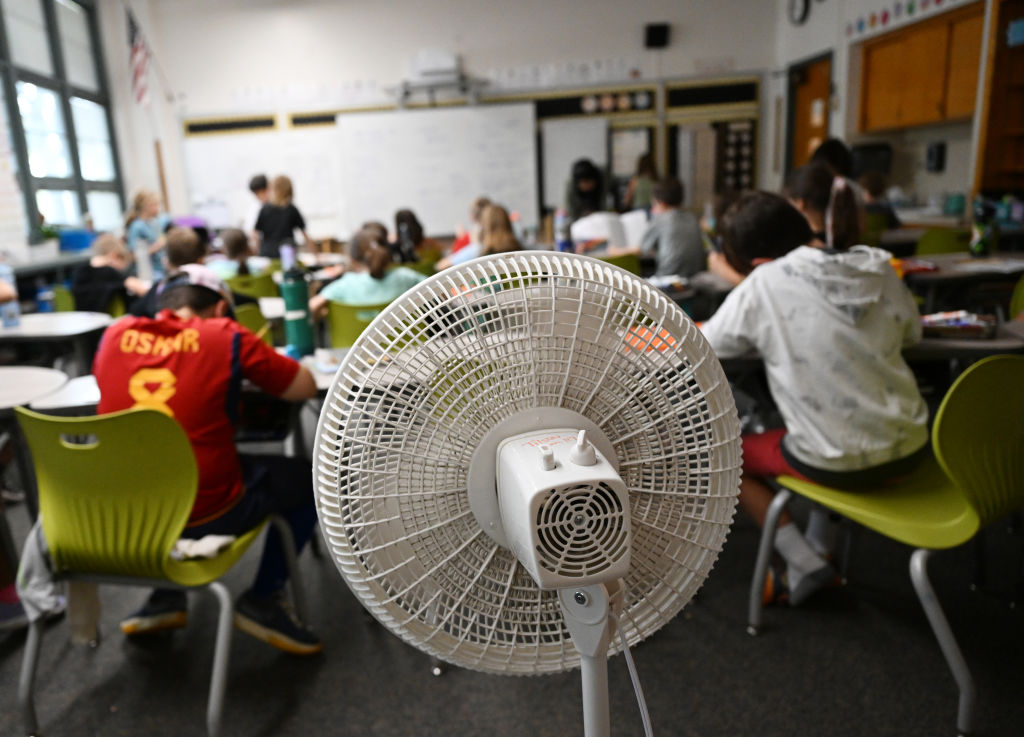
As students go back to school in the midst of record-breaking summer heat, many are returning to overheating classrooms whose aging air conditioning systems can't keep up with extreme heat waves—if they even have air conditioning at all.
Extreme heat has already caused school closures and disruptions across the country. In July, Milwaukee Public Schools shut down its Summer Academy and other indoor school programs for two days because of extreme heat. One day in May, 57 Philadelphia schools went remote and canceled all in-person activities due to soaring temperatures. That same month, a Washington, D.C. high school carried out a "heat evacuation" as classroom temperatures reached the mid-90s. Eight elementary schools in Doylestown, PA also closed for a day because old buildings couldn’t protect students from the heat. And in recent years, schools in Memphis dismissed students early as temperatures climbed to 110 degrees.
During the 2024-25 school year alone, more than 9 million students at 10,000 schools nationwide experienced extreme heat- and weather-driven school closures or disruptions. These are not isolated inconveniences. They are warning signs that our school buildings and grounds were not designed for today’s new weather patterns.
It’s important to understand that students struggle to learn in hot, stuffy classrooms. Air quality, temperature, and ventilation can affect how students think, focus, and perform. Poor ventilation can impair cognitive function, while excessive heat diverts the body’s energy from learning, slows reaction time, and weakens attention.
In fact, research has shown that in schools without cooling, each 1° Fahrenheit increase in school year temperature reduces the amount learned that year by approximately 1%.
Extreme temperatures (80 to 90 degrees Fahrenheit and above) are known to exacerbate student absenteeism and disciplinary referrals, while poor indoor environments can also contribute to the spread of illness and exacerbate respiratory conditions like asthma, one of the leading causes of missed school days. Younger children, whose bodies and brains are still developing, are especially susceptible.
In medicine and education alike, we have seen how the environments where people spend their time can directly affect their health, well-being, and ability to thrive. We would never accept these conditions in a hospital. We should not accept them in a classroom.
At the same time, outdated heating and cooling systems are placing a growing financial strain on school districts. Across the country, energy costs are rising and becoming more unstable. For school leaders, that often means tradeoffs: dollars spent on inefficient energy systems are dollars not spent directly on teaching and learning. But there is a better path forward.
Modern HVAC systems, often paired with on-site solar energy, offer schools a way to deliver reliable heating and cooling while reducing exposure to volatile fossil fuel costs. These solutions can stabilize energy budgets over time and are increasingly supported by domestic manufacturing, including the production of heat pumps here in the United States.
Just as important, new federal tools make these upgrades far more accessible than they once were. Through energy tax credits and a mechanism known as Elective Pay, public school districts can receive direct financial support to invest in these improvements. That means lower upfront costs and faster payback, turning what was once out of reach into a practical, near-term option.
We are already seeing what this looks like in practice.
In Indiana, Center Grove Community Schools are demonstrating how modern HVAC upgrades can improve classroom comfort while helping manage energy costs, in part by replacing aging boilers, chillers, and fan coils with a geothermal heat pump system. In Virginia’s Prince William County, at the heart of the nation’s data center corridor, district leaders are acting to shield their budgets from steep projected utility increases. And in Wisconsin, a school in Menasha modernized its facility with a ground-source heat pump system, solar panels, and energy storage to deliver better air quality, lower costs, and create local jobs.
The benefits extend well beyond temperature control. Students are better able to focus and learn. Districts gain predictability in their operating costs. And communities benefit from more resilient, efficient infrastructure that reduces strain on the grid during periods of peak demand.
For school and district leaders, this moment calls for action. Now is the time to explore how these solutions can work in your community.
The environments we live in shape the health within us. Nowhere is that more immediate, or more consequential, than in the classroom.
We can improve student health and learning, strengthen our schools, and protect public resources at the same time. And we have real-world proof from communities across the country that this is not only possible, but doable.
The real risk is not the price of modernization, but the cost of continuing to send students and teachers into unhealthy, inefficient buildings unprepared for the realities ahead.
Trial of mum accused of killing her three children puts postpartum psychosis on the map
Coders Say They Already Found Workarounds to Claude’s Invisible Watermarks
5 Americans among 7 killed in Kenya helicopter crash, including Telemundo executive
Açaí, chipotle and gnocchi – and other words you are probably mispronouncing
The English language can seem designed to trip us up, whether we’re greeting a colonel or travelling to Worcestershire. Here are some of the biggest stumbling blocks
Name: Açaí.
Age: First imported to western countries from South America as freeze-dried pulp in the 1990s.
Continue reading...Texas rancher on Big Bend border wall outcry: "About protecting our land"
Democratic socialist Angie Nixon won the Senate primary in Florida. Can she win in November?
Trump nominates policy aide Dr. Heidi Overton as next FDA commissioner
How One Small Section of Trump's Planned Border Wall Became the Center of a Big Battle
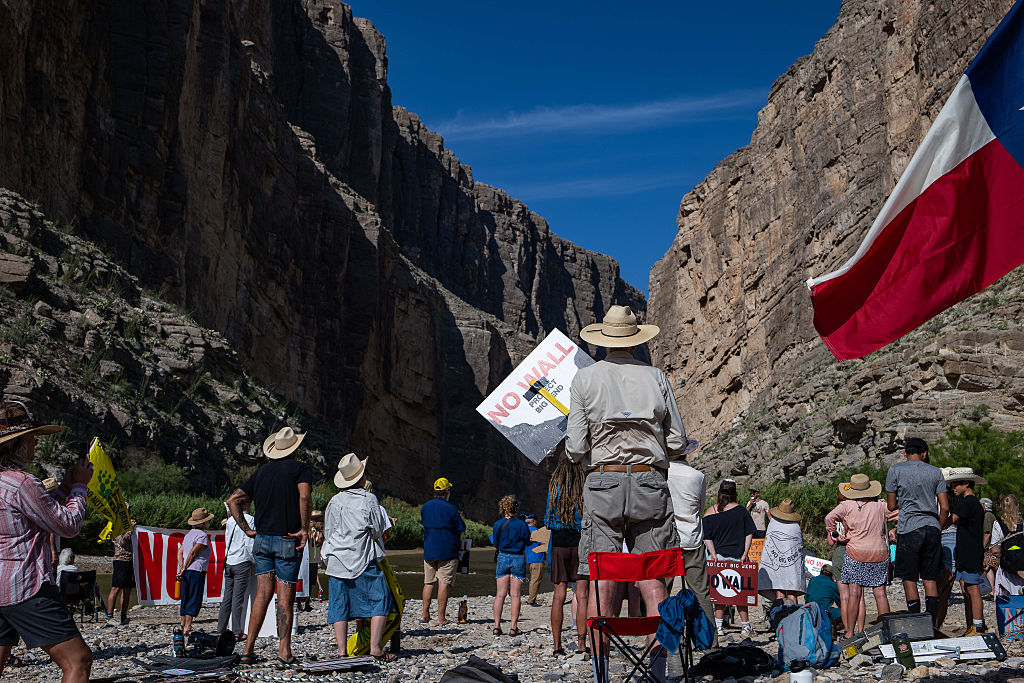
President Donald Trump’s Administrations have overseen construction work on hundreds of miles of barriers along the U.S.-Mexico border. But one small portion of the planned wall—stretching merely 17 miles—has become the center of a hard-fought battle.
That section of the project, which extends across challenging terrain in Texas’ Big Bend National Park that has historically seen relatively few attempted border crossings, has faced pushback from everyone from public lands advocates to congressional lawmakers to local residents.
Read More: What's the Status of Trump's Border Wall? A Key Campaign Promise, Over a Decade On
The Trump Administration has been pushing the construction of the border wall in Big Bend despite the public outcry, going so far as to bypass a score of environmental laws to expedite the project.
But on Monday, after months of opposition, Customs and Border Patrol (CBP) Commissioner Rodney Scott announced that CBP had paused “all construction” in the park while he visited the site to conduct a “personal, on-the-ground evaluation.” In post on X, Scott wrote that he would be working to “evaluate the terrain and listen to local leadership, community members and stakeholders” over the next “couple of days.”
Texas Gov. Gregg Abbott also said on Monday that he had spoken with Department of Homeland Security (DHS) Secretary Markwayne Mullin, who Abbott said had “committed” to not building “a wall or a fence” in Big Bend. Abbott said there were “other tools” to ensure border security.
Here’s what to know about the Trump Administration’s efforts to build the border wall in Big Bend, and the opposition the project is confronting.
What the Trump Administration is seeking to build in Big Bend
Big Bend National Park sits in a remote southwest corner of Texas along the U.S.-Mexico border in Brewster County. The Administration has sought to build 17 miles of barriers across that section of the border as part of the larger border wall project.
Perhaps the most recognizable image of Trump’s wall is the “primary wall,” a structure built from tall steel bollards up to 30 feet tall that makes up the first line of the barrier system that would be encountered by those travelling north from Mexico. The section of the project planned to run through Big Bend, however, would look notably different, according to Scott.
“CBP is building one new access road, improving existing roads, installing detection technology, and placing vehicle barriers in limited, strategic locations,” he said. “We are NOT building a 30-foot wall or stadium lighting through Big Bend National Park, Big Bend Ranch State Park, or the Black Gap Wildlife Management Area.”
The portion of the wall in the park would be made up of a non-contiguous “vehicle barrier system,” according to the CBP, which consists of “steel posts supported by continuous steel rails,” power cables, cameras, roads for patrol cars, and shelters along the border.
According to the agency’s Smart Wall tracker, an interactive and frequently updated map that shows the status of the border wall, CBP has several construction projects interspersed along the border labeled as a “vehicle barriers … technology & patrol road.” A couple of these are located at the southern tip of the park; one sits far west near Presidio County, while others are located at the eastern edge of the park. These sites are in the Chihuahuan Desert, which presents a difficult landscape to navigate filled with steep canyons and mountainous terrain.
A controversial push to speed construction
In June, the Trump Administration waived more than 20 environmental and preservation laws intended to protect Big Bend’s landscape in order to accelerate the construction of the border wall in the park.
To do so, the Administration invoked a section of the Illegal Immigration Reform and Immigrant Responsibility Act of 1996, which allows the government to bypass laws that obstruct the building of border wall.
DHS defended the move at the time by describing Big Bend as an “area of high illegal entry” and saying that “there is presently an acute and immediate need” to build more barriers.
Migrant encounters are relatively rare at the section of the border that runs through the park, however—and have become more so in recent years. The park includes roughly 118 miles of what’s known as the Big Bend Sector of the border, which spans 517 miles from Sierra Blanca, Texas, to Sanderson, Texas, and covers roughly one-quarter of the full length of the U.S.-Mexico boundary. CBP recorded a 74% decrease in border crossings through its Big Bend Sector between fiscal years 2023 and 2025, with apprehensions dropping from 11,823 to 3,096. There were a total of 237,538 migrant encounters along the U.S.-Mexico border in FY 2025, meaning that the 3,096 apprehensions in that sector accounted for just 1.3% of the total number. And CBP’s planned border wall in the park would only cover a fraction of a fraction of the full sector.
The Administration’s move to bypass the environmental laws triggered immediate opposition. Bob Krumenaker, the park’s most recent former superintendent, called the news “devastating” to Marfa Public Radio and referred to it as “giving CBP unfettered authority to do anything they want within the national park.” Legal challenges also followed in the form of multiple federal lawsuits, while members of Congress made efforts to block DHS’s funding for projects in Big Bend.
Why the project has faced opposition, and from who
Grassroots organizations, conservation groups, businesses, local communities, and lawmakers have also made efforts to fight against the construction of the border wall in Big Bend.
Much of the opposition stems from concern over the park’s natural landscape, which is home to an array of wildlife and is effectively undeveloped. Other groups oppose the construction because they view the park as a cultural and heritage site, while still others have voiced concerns for the impact the planned barrier construction could have on the tourism economy there.
A series of lawsuits have been filed in an effort to block DHS’s plans to construct the border wall in Big Bend.
One lawsuit from the Center for Biological Diversity challenged DHS’s waiving of laws to carry out construction in the park. “Until now no administration has been heartless enough to waive laws in a national park like Big Bend, so we’re suing to uphold the U.S. Constitution and protect this crown jewel,” Laiken Jordahl, national public lands advocate at the Center for Biological Diversity, said in a statement according to a news release.
The Center for Biological Diversity had previously filed a lawsuit that argued the construction would “devastate the region’s wildlife, recreation economy, and natural and cultural heritage.”
Another lawsuit, filed by The People of La Junta for Preservation and Far
Flung Outdoor Center, a tribal nonprofit and an outdoor recreation company, argued that the construction will cause damage to archaeological sites associated with indigenous peoples and could threaten protected religious freedoms.
Groups have also mounted protests and sent letters to lawmakers to call for the planned construction to be halted.
In March, the grassroots organization No Big Bend Wall sent a letter to several leaders on congressional committees on behalf of 132 organizations asking that the use of any federal funding for the border wall in Big Bend be prohibited.
All the Democratic members of the Texas delegation in Congress sent a letter to Mullin later that same month voicing “staunch opposition” to the wall.
“This proposal threatens preservation of one of America’s crown jewels, Texas’ largest state park, and the state’s only congressionally-designated Wild & Scenic River,” the lawmakers wrote. “Construction and maintenance of a border wall segment and the associated roads, secondary barriers, power lines, towers, and lighting will disrupt natural biodiversity, river dynamics subject to routine flash flooding, and one of the darkest night sky areas in the world.”
Over the following two months, more than 2,000 people rallied at the Texas Capitol building in Austin, and seven former superintendents of Big Bend National Park urged Mullin not to waive federal laws to build the border wall in the park.
In early August, video showed heavy machinery bulldozing the land at Big Bend. A bipartisan group of Texas House lawmakers soon after sent a letter to Gov. Greg Abbott on Thursday in which they urged him to halt the Big Bend construction, citing “damage to one of Texas’ most pristine and irreplaceable landscapes” that they said had already begun with the movement of bulldozers and construction equipment into the park.
Last Wednesday, a large crowd of protesters gathered in the park chanting “No road. No wall. No wire. No way," as they held hands in a circle. They also held a large banner that read “NO WALL,” along with a series of other wildlife-themed flags and signs.
More than 140 local businesses, recreation groups, and outfitters who rely on the tourism economy in the park also penned a letter on Aug. 4 to Cornyn, Cruz, and Abott asking them to halt the border construction to preserve the vibrant tourism economy that lives within the park.
Scott released a statement last week in response to the public reaction specifying that “what people are seeing right now is survey and design work—NOT construction of a wall through the park.”
Following Scott’s later announcement that CBP would be pausing construction on the wall in Big Bend, the National Parks Conservation Association (NPCA), which has pushed back against the Big Bend construction, lamented the damage that it said the project has already done to the park’s lands.
“The people have spoken, and they do not want the Trump administration to bulldoze America’s national parks for border infrastructure,” said NPCA President and CEO Tiernan Sittenfeld in a statement. “Unfortunately, the federal contractors’ bulldozers have already inflicted tremendous damage to one of America’s most iconic national parks. Their heavy equipment has torn through miles of priceless wild landscape, wreaking havoc on sensitive wildlife and irreplaceable habitat.”
Google Pixel Watch 5 Review: More Health, More AI
Trump nominates abortion opponent Heidi Overton to be head of FDA
Overton has said that Congress should strictly regulate abortion drug mifepristone ‘to protect women and children’
Donald Trump nominated Dr Heidi Overton – an abortion opponent who stood next to the president as he made false claims about vaccines – to be commissioner of the US Food and Drug Administration (FDA).
“Today I am honored to nominate the wonderful Dr. Heidi Overton, MD, PhD, as our next FDA Commissioner. Dr. Heidi has been a ROCKSTAR in my Administration, where she has worked directly with Secretary Kennedy, Dr. Oz, and team, to deliver on the MOST TRANSFORMATIVE Health Agenda in History. She is known to take on the HARDEST issues, and bring me solutions that work best for the Country,” the president wrote on Truth Social on Wednesday.
Continue reading...2 tons of squid spill out onto Rhode Island roadway
ICE Is Asking Gate Agents To Help Arrest Passengers. Some Are Pushing Back
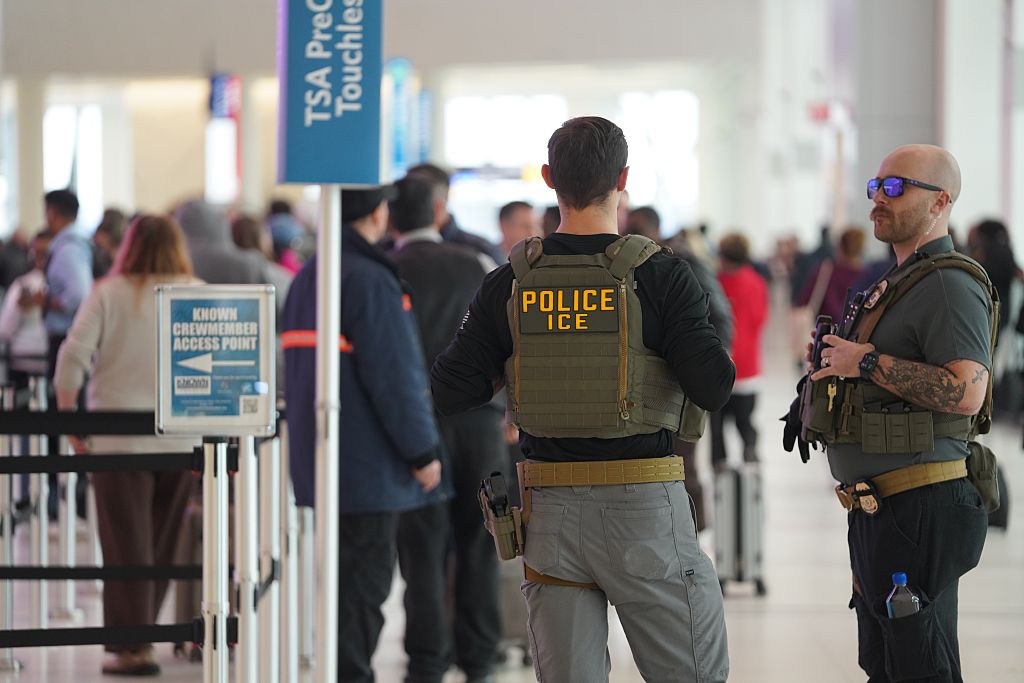
Laurie was on her way to a gate at the airport where she worked as a manager when a colleague called with a warning: Immigration and Customs Enforcement (ICE) agents had turned up again and were asking airline staff to help locate a passenger.
She had years of experience cooperating with federal law enforcement. But the encounters she was accustomed to followed a protocol: airline managers were notified in advance, officers arrived in uniform with their badges visible and judicial warrants were presented for passenger arrests.
Read more: ICE Considers Expanding Detention Space in 14 Locations—Including Guantanamo Bay and Virgin Islands
Multiple gate agents working at airports in Colorado, Texas and Arizona have told TIME that ICE agents have become a recurring presence in recent weeks. With protocols for handling such encounters unclear or inconsistently applied, airline employees like Laurie say they are increasingly being left to decide for themselves how to respond.
She knew how consequential that decision could be.
Ten days earlier, two men in plain clothes had approached a gate agent, identified themselves only as federal officers and asked the employee to summon a passenger. Laurie, who was the manager on duty, had received no advance notice of their arrival. She approached the men and asked for identification.
She said the officers told her they were ICE agents and showed their badges, which had not been visible. An announcement went out over the airport’s public address system. A woman approached the desk, and the officers took her into custody.
Laurie asked to see a warrant and the men told her it was in their car. She followed as they escorted the passenger to an unmarked vehicle with an out-of-state license plate, where the officers showed her an administrative warrant rather than a judicial warrant signed by a judge.
“Well, this isn't a criminal. This is immigration, it's different,” the agents told her, before handcuffing the passenger and driving away.
Laurie asked TIME to use a pseudonym because she fears government retaliation and was not authorized by her employer to speak publicly. TIME reviewed video footage of the incident filmed by Laurie.
“Because I hadn't seen this before, I was kind of freaking out, thinking, ‘What do I do?’” she said.
ICE ramps up its presence at airports
Airline employees around the country are confronting similar questions as ICE expands its presence at U.S. airports. Gate agents say officers have asked them to help identify or locate passengers, provide information from internal airline systems and grant access to restricted areas such as jet bridges and, in some cases, aircraft. The requests have left some workers uncertain about when they are required to assist federal officers and when doing so could conflict with airline security protocols.
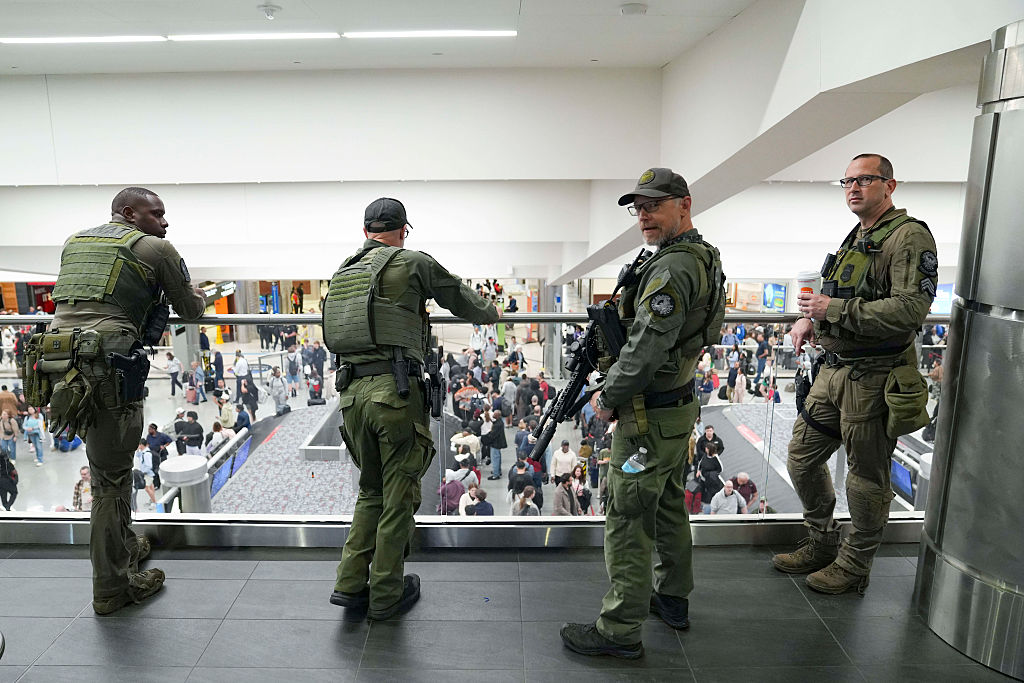
The increase in airport enforcement comes as ICE seeks to meet a White House goal of 2,000 arrests a day, a target confirmed by an ICE official not authorized to speak publicly. Last month, it was reported that the agency was making an average of 20 to 40 arrests a day at airports, targeting, among others, travelers with expired visas and pending asylum cases.
Videos of airport arrests have also circulated widely online. On July 21, two plainclothes ICE agents arrested Chantal Morales Rojas, a 27-year-old woman from Ecuador, at the jet bridge at Denver International Airport, according to a widely shared video. That same day, ICE arrested an Ethiopian faculty member from the University of Maryland at Dallas Fort Worth International Airport.
The operations have been aided by expanded sharing of travelers’ information between federal agencies. Since May 2025, ICE has been obtaining traveler information through the Transportation Security Administration under a previously undisclosed data-sharing program, according to a declassified memo released by the watchdog group American Oversight. The New York Times reported that the program gives ICE access to the names and birth dates of passengers the agency believes may be subject to immigration arrest.
The administration has also broadened its use of administrative warrants. Previous administrations used such warrants to arrest people who were already in deportation proceedings. Under the Trump administration, they have also been used in cases involving immigrants who are actively applying to renew their immigration status.
“In the past, people like that have never been prioritized for deportation if they pose no other public safety threat, given that they're taking steps to get into compliance with the law,” said Nayna Gupta, policy director at the American Immigration Council.
Backlogs and processing delays in the immigration system can put immigrants at risk of losing legal protections while their applications are pending, she said.
ICE agents can also make arrests without a warrant in certain circumstances if they have probable cause to believe someone is in the country without legal status and is likely to escape if not immediately arrested. Gupta said that authority has been abused in previous immigration operations.
In a statement, the Department of Homeland Security said that law enforcement officers are “simply enforcing our nation’s laws and following all applicable laws and established policies.”
“When DHS components operate in the same transportation environment, they coordinate as appropriate to support public safety, security, and lawful operations while minimizing disruption to the traveling public,” the statement continued.
Some recent airport arrests have faced scrutiny in court. Jodi Ziesemer, an immigration lawyer who represents four immigrants arrested by ICE at Denver International Airport in separate cases, said two of her clients were told that the officers arresting them did not know why they were being detained. In one case, she said, ICE could not initially establish the reason for the arrest.
“I asked ICE why they had arrested her, and they told me they thought that maybe she had a deportation order from 2002, but they couldn't find any other paperwork about it because it wasn't a digital file, so they detained her first, and then they started looking for some paperwork about her,” Ziesemer said. The client spent six weeks in a detention center before a federal judge ordered her release.
How airline employees are responding
The encounters have also raised concerns about the position in which they place airlines and their employees. A Phoenix couple is suing United Airlines for false imprisonment and negligence over the carrier’s role in an ICE arrest at Phoenix Sky Harbor International Airport.
“I've gone to agents who have been involved with any ICE agent,” Laurie said. “Most of them are just like, ‘I don't want to be doing this. Like, why are we helping them?’”
After the first arrest she witnessed, Laurie raised her concerns with airline leadership and asked for guidance.
“We haven't gotten a clear security directive,” she explained. “There's never been an official written directive about ICE."
Laurie says she was still waiting for guidance when ICE agents returned to the airport looking for another passenger. This time, she made a different choice. She called the supervisor at the gate, asked for the passenger’s phone number and called the woman herself.
“I know this is going to sound extremely radical, or crazy,” she recounted telling the woman, “but ICE is there at the gate, and they're looking for you."
There was a pause. “Are you serious?” the woman asked.
“Yes,” Laurie said. “I know this is crazy, but I promise you. I'm being serious.”
“Should I leave?” the woman asked. “I think it might be best if you do,” Laurie said.
When Laurie reached the gate, the woman she had called approached her. She appeared to be in her late 20s and was traveling with a family member. Laurie said the two stepped into a bathroom to speak privately, where the passenger said she did not understand why ICE was looking for her.
“Why is this happening? I have all my papers,” she asked.
After calling a relative, the woman decided not to take the flight. She returned with the hood of her jacket pulled over her head, thanked Laurie and left the gate with her family member.
The ICE agents arrived after she was gone. Laurie recognized two of them from an earlier encounter. About 10 minutes later, one approached her, showed his badge and asked whether she could confirm that the passenger had checked in. Laurie refused, telling him airline employees could not provide passenger information.
As the flight neared final boarding, another ICE officer accused Laurie of interfering with the operation and pressed her to help locate the passenger. Laurie declined to say whether the woman was on the flight's passenger list and told the officer he would need to contact the airline’s corporate security department for information. “You're going to need a subpoena,” she said. No arrests were made at the gate that day.
The next day, the passenger called her.
She had made it home. And she was with her child.
"I was extremely scared that ICE would take another person in front of me, but also for myself and how I was jeopardizing my job and safety," Laurie said. "But I would 100% do it again, without a moment of hesitation."
5 Americans among 7 dead after helicopter crashes in Kenya
Trump picks White House aide Dr. Heidi Overton for top FDA job
Tongue takes back-to-back wickets but misses out on hat-trick
81,000 warning letters sent to crypto holders in HMRC tax crackdown
Tice should apologise to firefighters for ‘enjoy it’ remark on extreme heat, says Labour
Exclusive: Bridget Phillipson’s comments show her party feels voters have been alienated by Reform net zero attacks
Richard Tice should apologise to firefighters for his comments this week urging British people to “enjoy” this summer’s extreme heat, according to the Labour party chair.
Bridget Phillipson has called on Reform’s deputy leader to say sorry to those who, over the last few weeks, have battled wildfires across the country that have forced evacuations and destroyed homes.
Continue reading...Inter hold talks with Liverpool over deal for £30m-rated Curtis Jones
Midfielder has been a target for Italians since January
Jones in the final year of his contract at Anfield
Inter are in talks with Liverpool over a deal for Curtis Jones, with the 25-year-old expected to leave his boyhood club should the Italian champions offer around £30m. Jones has been a target for Inter since January and was the subject of a failed €25m bid from them in June.
Liverpool valued their homegrown midfielder closer to €40m, but with Jones in the final year of his contract, and no sign of an agreement over an extension, that figure is unlikely to be reached.
Continue reading...