RSS Feeds
Moderna, Merck Say mRNA Vaccine Prevents Melanoma From Returning
Israel Opens Criminal Investigation Into Killings of Hind Rajab and Gaza Medical Workers
'Catastrophic' hotel mix-up at the heart of Australia's mushroom murder appeal
Watch: SpaceX rocket spotted off Christmas Island coast
US retail giant receives $1bn boost from tariff refunds
Trump’s Lust for Vengeance Is Turning Into a Farce
US treasury doubles debt buyback to steady bond market amid inflation fears
Yields, at recent highs this week, dropped after treasury’s vow to ‘provide greater liquidity support’ to bond market
The US treasury is doubling its buyback of government debt in an effort to balance out the bond market and counterbalance investor concern over high inflation.
The yield rate on 10-year, 20-year and 30-year treasury notes all hit 20-year highs this week, with the 30-year treasury yield rising to its highest rate since 2007. The rapid rise was concerning news for borrowers as major loans, including mortgages, are backed by treasuries.
Continue reading...A fifth of older Australians who contested automated decision on home support funding got more after human review
Exclusive: Greens say department of health’s integrated assessment tool is ‘under-assessing’ far more people who may not know how to contest
Get our breaking news email, free app or daily news podcast
Almost one-fifth of older Australians who contested their algorithm-determined Support at Home funding allocation had a higher level of support or higher priority allocated once a human reviewed the decision.
The department of health and ageing would not provide the most current data on how many people have contested their funding allocation under the integrated assessment tool (IAT), introduced in November, which is used across aged care to determine eligibility and classification for services, including Support at Home.
Continue reading...A ‘shiny, dangling carrot’ lured Jesse into gambling. He says Labor’s reform won’t stop others being sucked in
The government says it’s stopping ‘the most toxic’ gambling company strategies. Former addicts say it will do ‘absolutely nothing’
Get our breaking news email, free app or daily news podcast
Jesse Murphy wasn’t sure what to wear when his VIP gambling manager texted him: “Looking forward to having a beer with you!”
His frequent betting had just earned the then 25-year-old free tickets to a gambling company’s corporate box at the footy with free food and alcohol. His handler was waiting for him. He told Murphy to wear a collared shirt before joining for drinks.
Continue reading...Roblox commits to privacy overhaul after eSafety discovers adults can contact children via gaming platform
Regulator says verifiable safety measures are ‘critical’ to the online service’s viability
Get our breaking news email, free app or daily news podcast
Roblox has committed to making changes to its online gaming platform after Australia’s eSafety commissioner discovered adults were still able to see child accounts and send connection requests without parental consent.
The company has provided a legal agreement to the online safety regulator after testing earlier this year also revealed children and adults could view and respond to one another’s posts on forums outside game environments without parental consent.
Continue reading...Trump delays 50% tariffs on Canada, hints at plan to revive controversial oil pipeline
In Big Walk, players just walk and talk – and find joy along the way: ‘Some stories we’ve heard are punch-in-the-gut beautiful’
After their hit Untitled Goose Game, Australian studio House House is back with a new game where your only goal is to go exploring with friends – so we took them on a big walk inside Big Walk
When I arrive to meet with the tiny team at Melbourne game developer House House, they’re sitting in a circle under a eucalyptus tree. After introductions, the five of us set off into the scrub. Over the course of our hike we take a train to the beach, huddle on deck chairs in the sand dunes and climb a mountain as the sun rises. All without ever leaving our desks.
Welcome to the world of Big Walk: House House’s new game after the runaway global success Untitled Goose Game, which saw millions fall in love with being a naughty goose rampaging through a bucolic village. After Untitled Goose Game’s overwhelming success, House House wanted their next game to be very different and “unusual”. Despite this, Big Walk has been an immediate success, with more than 1m downloads in the first week of release.
Continue reading...Ukrainian diver arrested in Croatia over Nord Stream pipeline bombings
Berlin to seek suspect’s extradition for 2022 explosions that damaged gas pipelines to Russia
A Ukrainian man has been arrested in Croatia as part of an investigation into the 2022 bombing of the Nord Stream gas pipelines between Germany and Russia.
Undersea explosions in September 2022, just months after Russia’s full-scale invasion of Ukraine, damaged three of the four pipelines built to carry Russian fossil gas to Germany under the Baltic Sea.
Continue reading...GOP Rep. Donalds will run against Democrat Jolly in Florida's race for governor
Jolly and Donalds projected to face off in Florida gubernatorial race to replace DeSantis
Sachin Bansal’s fintech Navi raises first outside capital with $100M Prosus investment
Retail giant Target receives $1bn boost from tariff refunds
Amazon makes its AI-powered Alexa+ free on Fire TV, no Prime required
How can you apply for student loan forgiveness in 2026?
Moderna stock surges as melanoma vaccine trial shows "landmark moment"
Amazon’s Prime Air is taking off in nearly 500 US cities
UAE says it is suspending trade with Iran after missile launch
Salad companies brace for low earnings after cyclospora outbreak
Lindsey Graham’s sister and fill-in senator says she’s ‘not that informed on national security’
She made the statement during a debate when asked about potential threats to US national security in South China Sea
Asked whether Taiwan and the South China Sea threaten US national security, republican fill-in senator Darline Graham hesitated. “I’m just going to be honest here,” she told Tuesday night’s debate audience. “I’m – not that informed on national security, so – but I do support the military.”
Gasps, and boos, rolled through the opera house hosting the only debate before next week’s Republican runoff – a race to succeed her brother, Lindsey Graham, who was one of the Senate’s most committed rightwing foreign policy hawks before his sudden passing in July. She did not retreat.
Continue reading...Trump administration can target Ethiopians for deportation
Angélique Kidjo becomes first African musician with Hollywood Walk of Fame star
Spain to allow 500 children in Ceuta to go to mainland in immigration U-turn
Madrid government changes stance after previously saying anyone who entered territory illegally would be sent back
The Spanish government has U-turned and said it will allow 500 migrant children in Ceuta to relocate to the mainland.
The majority of the estimated 70,000 people who crossed into Ceuta – a Spanish territory on the coast of north Africa – on 30 July have returned to Morocco. However, under Spanish law, the state has a duty of care to young, unaccompanied migrants until they reach the age of 18.
Continue reading...Israel’s Military Opens Rare Criminal Probes Into Attacks on Gaza Civilians
Not just big in Japan: Zion Suzuki has what it takes to follow Emiliano Martínez
He is replacing a World Cup winner and is his country’s first Premier League keeper, but Villa’s new signing has already dealt with harder challenges
In November 2001, the first Japanese goalkeeper to play English league football conceded a goal within the first minute of his debut. Yoshikatsu Kawaguchi may have struggled for second-tier Portsmouth, conceding 21 times in his 12 league games after being spotted by the then director of football, Harry Redknapp, but he also produced some world-class saves and had glowing things to say about the Royal Mail.
Replaced by a 42-year-old Dave Beasant, Kawaguchi nevertheless remains a cult hero on the south coast, as a standing ovation in his final game demonstrated. Despite going on to play 116 times for Japan, he never made the jump to the Premier League. Now though, finally, Japan has a No 1 in the top flight.
Continue reading...Germany’s firewall was meant to hold the far right at bay. It may have done the reverse
An AfD win in next month’s state election in Saxony-Anhalt would shatter a decades-long political consensus and reverberate throughout the EU
• Don’t get This Is Europe delivered to your inbox? Sign up here
In just over two weeks’ time, Saxony-Anhalt – home to historic timber-framed houses, the dramatic Harz mountains and the birthplace of Martin Luther – will hold what could prove one of the most significant state elections in Germany’s postwar history.
The vote, on 6 September, could see a far-right party whose local branch is officially classified by the country’s domestic intelligence service as “confirmed rightwing extremist” appoint a state premier and govern a state alone, for the first time.
Continue reading...Spain to allow 500 children in Ceuta to go to mainland in immigration U-turn
Madrid government changes stance after previously saying anyone who entered territory illegally would be sent back
The Spanish government has U-turned and said it will allow 500 migrant children in Ceuta to relocate to the mainland.
The majority of the estimated 70,000 people who crossed into Ceuta – a Spanish territory on the coast of north Africa – on 30 July have returned to Morocco. However, under Spanish law, the state has a duty of care to young, unaccompanied migrants until they reach the age of 18.
Continue reading...US justice department defends prosecution of James Comey over ‘8647’ seashell post
Justice department claims there’s ‘no dispute’ over whether ex-FBI head’s post could be read as a threat against Trump
The US Department of Justice has defended its prosecution of former FBI director James Comey, claiming in new court documents there is “no serious dispute” that his social media post last year featuring a photo of seashells arranged to read “8647” could be interpreted as a threat against Donald Trump.
“There is no serious dispute that an objective viewer of Comey’s post could read it to mean ‘Kill President Trump’,” prosecutors wrote in a document filed on Tuesday in response to efforts by Comey’s efforts to have the case dismissed.
Continue reading...Часть IV. Религии в IT: от ООП к ИИстерии + Большое расследование Python

Просто закройте эту главу, если вы не научились с юмором, здоровым сарказмом и самокритикой смотреть на абсурд происходящего. Её текст точно соответствует исторической фактуре, но оскорбит «чувства верующих».
В народе говорят: «носится как дурак с фантиком». Многие технические или кажущиеся такими решения, казалось бы, даже в компьютерной сфере не имели научной подоплёки. Чтоб не ошибиться в выборе технологии, нужно было учесть исторический и политический факторы.
Ниже истории о провальных идеях, стоивших жизни и карьеры многим разработчикам. Без знания их, прошлое будет настигать снова и снова.
Читать далееClaude сам собрал конвейер из десяти нейросетей и спроектировал 354 белка

Anthropic опубликовала результаты биологического эксперимента (плюс подробный отчет), в котором модель работала без человека до двух суток подряд. Claude получил список из шестнадцати белков-мишеней и задание: придумать для каждой по тридцать маленьких белков, которые к ней прилипнут. Дальше человек не вмешивался ни в одно научное решение — только подтверждал агенту сетевые доступы и следил, чтобы не упала инфраструктура. Готовые молекулы синтезировали и проверили две сторонние лаборатории. Одну мишень пришлось выбросить: белок слипался сам с собой, и оба прибора выдали нечитаемый сигнал. По остальным пятнадцати из 1320 проверенных дизайнов связались 354, а мишеней с хотя бы одним попаданием оказалось 14.
Читать далееFormer Lebara backer eyes TalkTalk consumer arm
America’s Water Systems Are Under Attack. We Are Not Ready.
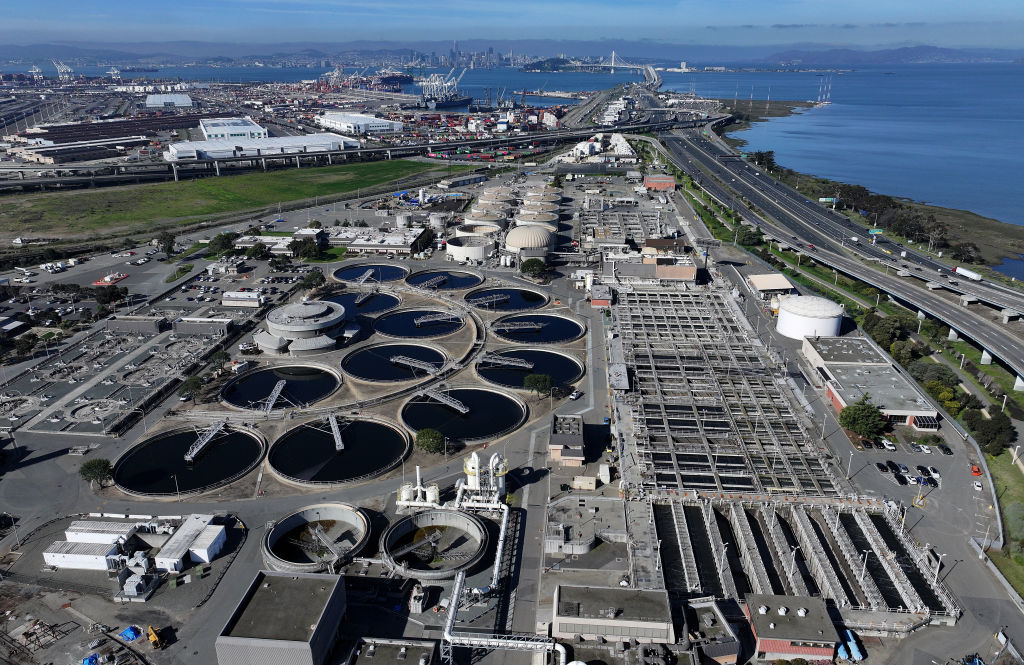
In late July, the Federal Bureau of Investigation received reports of cyberattacks on water facilities from utility companies in at least seven states in the United States.
One of those attacks, in Braham, Minnesota, a city of around 1,800 people, affected the functioning of a pump at a water treatment plant and threatened the water supply. Public works crews in the city quickly and impressively isolated the system, restored a backup, and had the water plant back up and running in around 90 minutes, according to Nate George, the mayor of Braham.
While this ad hoc response worked this time, much more is needed to make America truly resilient to hybrid attacks by malicious actors on the critical infrastructure that Americans depend on every day for water, power, healthcare, and financial transactions.
In April, the U.S. Cybersecurity and Infrastructure Security Agency issued a warning saying that Iranian-backed groups are targeting America’s critical infrastructure, including water systems. More capable adversaries of America, China and Russia, are also actively targeting critical infrastructure in the United States, according to U.S. officials.
President Donald Trump said he does not believe that Iran is behind these most recent cyberattacks. Unnamed U.S. officials reportedly believe that Iran-backed groups are the likely culprits but also caution that the findings are preliminary and that there is a chance that the attackers may be impersonating Iran to stoke tensions.
Meanwhile. the Trump Administration has been gutting U.S. cybersecurity capabilities, cutting roughly a third of the federal cyber agency’s workforce at exactly the moment small utilities need it most. A new approach is needed. Washington needs a whole-of-society, resilience-based approach to deter and defend against these increasing hybrid threats to the American homeland.
Washington can learn a lot from its European allies. Europe has spent decades hardening its systems through a whole-of-society effort it calls “total defense.” Finland and Estonia are especially instructive examples. Finland runs a national supply agency that holds reserves of fuel, grain, and medicine and rehearses shortages alongside the private companies that would actually have to manage them.
Estonia fields a volunteer cyber unit within its Defense League, a militia under the command of its defense ministry. The volunteers are civilians with day jobs who train with the state and show up when attackers strike. They run exercise programs built around cyber resilience, information sharing, and public-private partnerships.
So what does Washington need to do to harden America’s water systems and other critical infrastructure? First, America needs to broadly embrace a whole-of-society “total defense” approach to homeland security, adopting and adapting innovative ideas from partners and allies.
More specifically, policymakers can take three specific steps now that will help prepare for, and perhaps deter, the next attack. First, they should renew the State and Local Cybersecurity Grant Program, a small grants program for states that helps build state and local level cyber defenses. The program has already lapsed once and now runs on year-to-year extensions, which is no way to fund a defense. Make it permanent and carve out a sizable share for water.
Second, Washington should set a response floor for water municipalities and measure it in hours. Electric utilities operate under binding federal cyber standards backed by real financial penalties. Water utilities have no equivalent, and the Environmental Protection Agency currently has no authority to impose one. Congress should give it a narrow version: every system above a modest size must be able to run manually for 72 hours and must prove it in an annual drill. This is not a technology mandate; it is a time standard, and it is the only number that matters once the pumps stop. Braham did it in 90 minutes. That should be the benchmark.
Finally, the U.S. needs to build the bench. There are roughly 50,000 small water systems in this country, and most have no dedicated IT staff at all. No grant program can hire its way out of that. Governors can act tomorrow with authorities they already have: cyber teams in the National Guard on standing state active duty orders, tied to a water mutual aid compact modeled on the one power companies use to restore each other’s lines after hurricanes. When a plant serving 1,800 people gets hit at two in the morning, somebody should already have the phone number.
A country that can afford 11 aircraft carriers can afford to teach 50,000 water operators to turn a valve by hand. Resilience is not a consolation prize for failed deterrence. By forcing an adversary to think twice about whether an operation will succeed, resilience is deterrence.
Trump Delays 50% Canada Tariffs as the Two Countries Race to Finalize a Deal
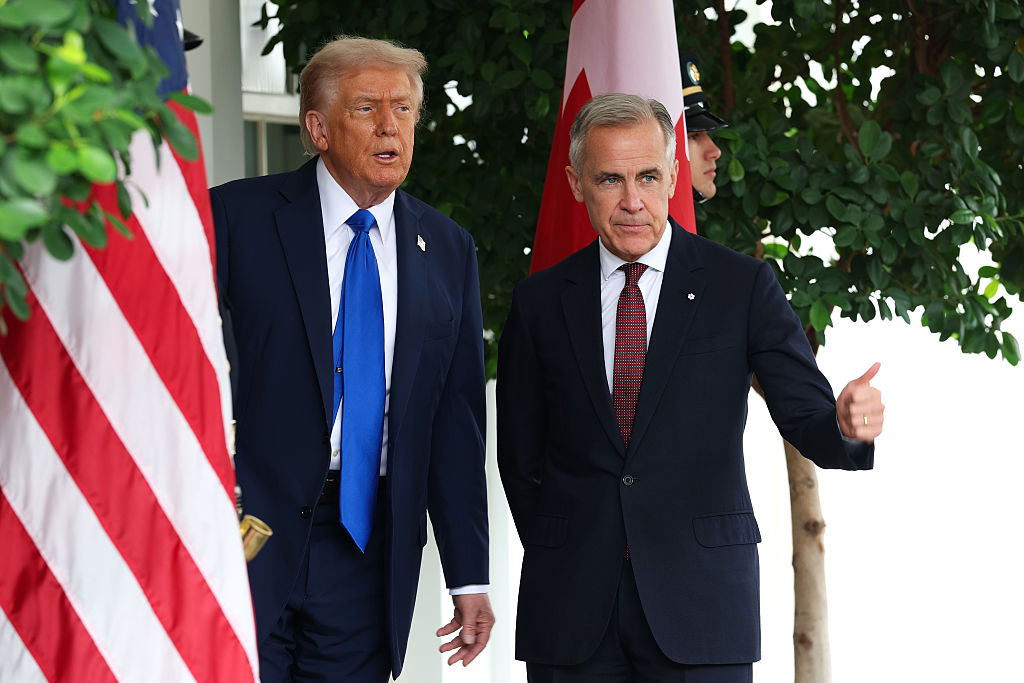
President Donald Trump announced late Tuesday a temporary pause on 50% tariffs on Canada as both countries race to finalize a trade deal.
The President’s announcement came hours before a series of tariffs set to cover about $20 billion worth of imports into the U.S. from Canada were set to take effect.
“I have paused the 50% tariffs against Canada, that were scheduled to kick in tomorrow morning for a three day period, based on the fact that Canada and the U.S.A., subject to the finalization of documents, have a deal!” Trump said on social media.
Canadian Prime Minister Mark Carney released a statement moments later, confirming that there had been “intensive discussions” with the U.S. to “address outstanding trade issues.”
“Substantial progress has been made, although there is important work still to be done,” he said.
Read More: Trump Imposes 50% Tariff Hike on Canadian Goods
The tariffs will now be paused until Aug. 21, subject to the finalization of an agreement between the two countries.
U.S. Trade Representative Jamieson Greer said the deal will include "comprehensive market access for all American goods, economic security commitments, digital trade alignment," along with other provisions.
Trump added in his social media post that the Keystone XL pipeline—a cross-border oil pipeline project between the U.S. and Canada that was canceled by former President Joe Biden in 2021 after pushback from environmentalists, Native American tribes, and Indigenous advocates—"may be awoken from the grave," but did not provide further details.
The President later posted what appeared to be an AI-generated image of himself dragging the Keystone pipeline out of the ground.
Neither side has provided further confirmation about the contents of the agreement.
TIME has reached out to both the White House and the Prime Minister's office for comment.
U.S. and Canada push toward a deal
Carney said earlier this week that he planned to speak with the U.S. President ahead of the tariff deadline. The announcement follows a period of negotiations between the two sides.
During a tour of a tire factory in Iowa last week, Greer told reporters that the U.S. and Canada were engaged in “constructive negotiations” but warned that if a “country retaliates” they would “take action.”
Canada's minister responsible for U.S. trade, Dominic LeBlanc, and chief trade negotiator Janice Charette have been in Washington since last week for talks.
The negotiations unfolded against a backdrop of ongoing grievances between the two countries, including Trump’s repeated statements about his desire to annex Canada and make it the 51st U.S. state—an idea Carney has strongly pushed back against.
In August, Carney took a swipe at Trump, mocking the U.S. President after a teleprompter malfunctioned in the middle of an on-camera speech.
The tense relationship between the pair has also played out over the Gordie Howe International Bridge—a cross-border bridge connecting the two countries that has repeatedly become a source of disagreement between Washington and Ottawa.
How U.S.-Canada trade tensions escalated
The last-minute tariff pause comes after more than a year of escalations between the two countries.
In February 2025, the White House hit Canada with a 25% tariff on most goods and 10% on energy resources, citing what it regarded as inadequate progress in curbing cross-border illegal immigration and drug trafficking.
Canada then imposed tariffs on some vehicle imports from the U.S. in April 2025, amid a larger trade war sparked by Trump’s global tariffs—the majority of which were struck down by a Supreme Court ruling earlier this year.
The 50% tariff hike on a range of Canadian goods was announced in July, with Trump signing a series of proclamations citing Canada’s “discriminatory treatment” of American products.
The new levy, a retaliation for Canada’s tariffs, would apply to a range of Canadian goods, including electronics, sports equipment, and essential oils.
The Administration had also announced targeted new tariffs on Canadian dairy products and exports of wine and other alcoholic beverages.
According to economists, the tariffs could have had significant economic consequences if enacted. TD Economics estimated that, if maintained, they could reduce Canadian GDP growth by 0.3 to 0.6 percentage points over the following year.
A Canadian Federation of Independent Business survey of 1,833 firms found that 77% of affected exporters expected revenue losses, while 35% expected their revenue to fall by at least half.
In a new proclamation issued Tuesday suspending the tariffs, Trump said: “Canada has expressed a commitment to remove the discriminations or unreasonable and unequal impositions.”
In a statement late Tuesday, the Distilled Spirits Council of the U.S. applauded Trump's announcement and called for "a negotiated solution that gets American spirits back on retail shelves in all Canadian provinces and returns the spirits sector to a zero-for-zero tariff framework."
The new tariffs were set to apply despite the U.S.-Mexico-Canada trade agreement (USMCA)—which had shielded Canadian industries from earlier U.S. tariffs.
The USMCA, which was signed by Trump in 2018, is a trilateral agreement that eliminated or reduced tariffs on goods traded between the nations of North America. It governs nearly $2 trillion in annual trade among the three countries.
In early July, the U.S. declined to renew the U.S.-Mexico-Canada Agreement for a 16-year term. Rather than terminate it outright, this puts the USMCA under annual review. Trade experts told TIME that the move is expected to carry profound long-term economic consequences.
Army unit offers 4-day pass to play Grand Theft Auto as reenlistment incentive
US justice department defends prosecution of James Comey over ‘8647’ seashell post
Justice department claims there’s ‘no dispute’ over whether ex-FBI head’s post could be read as a threat against Trump
The US Department of Justice has defended its prosecution of former FBI director James Comey, claiming in new court documents there is “no serious dispute” that his social media post last year featuring a photo of seashells arranged to read “8647” could be interpreted as a threat against Donald Trump.
“There is no serious dispute that an objective viewer of Comey’s post could read it to mean ‘Kill President Trump’,” prosecutors wrote in a document filed on Tuesday in response to efforts by Comey’s efforts to have the case dismissed.
Continue reading...Andy Burnham calls on wider society to help end rough sleeping by Christmas
PM says public money alone won’t solve problem but ‘we did it in the pandemic, we can do it again’
Andy Burnham has said government money alone may not be enough to get rough sleepers off the streets by Christmas, as experts called for more of a plan to deal with the problems that cause homelessness.
Speaking on a visit to the north-east of England, the prime minister said he felt “very passionately” about tackling rough sleeping and wanted the wider society to play a part in wiping it out.
Continue reading...Germany’s firewall was meant to hold the far right at bay. It may have done the reverse
An AfD win in next month’s state election in Saxony-Anhalt would shatter a decades-long political consensus and reverberate throughout the EU
• Don’t get This Is Europe delivered to your inbox? Sign up here
In just over two weeks’ time, Saxony-Anhalt – home to historic timber-framed houses, the dramatic Harz mountains and the birthplace of Martin Luther – will hold what could prove one of the most significant state elections in Germany’s postwar history.
The vote, on 6 September, could see a far-right party whose local branch is officially classified by the country’s domestic intelligence service as “confirmed rightwing extremist” appoint a state premier and govern a state alone, for the first time.
Continue reading...Why Is It Absolute Hell to Buy a Movie Ticket Now?
Voters Aren’t Waiting for November to Try Ousting Officials Over Data Centers
A County Got Rich From Data Centers. Some Question ‘At What Cost?’
Details on potential motive behind Tupac's murder
Progressive scores upset victory in Florida, and other takeaways from Tuesday's elections
‘He doubted’: Mourinho says Real Madrid did not want Rodri after hesitation over move
Mourinho: Madrid made midfielder ‘a very good offer’
Spain captain chose to join Barcelona instead for £65.4m
José Mourinho has confirmed Real Madrid made Rodri an offer and that he spoke to him about joining the club, but claimed the player’s doubts about the transfer made him unsure about signing Spain’s World Cup-winning captain.
On the same day Rodri was presented at Barcelona after the completion of a €75m (£65.4m) move from Manchester City that the midfielder said was “always my first choice”, Mourinho insisted he would not miss him at the Santiago Bernabéu. “I spoke to him a couple of times and Real Madrid made him a very good offer,” Mourinho said in an interview with El Chiringuito.
Continue reading...Did someone wearing Meta Glasses film you today? Are you sure?
People say they’ve been secretly filmed in their own homes, at concerts and at work. Are the wildly popular smartglasses the final nail in the coffin of personal privacy?
“I’ve had one person who told me that their intentions were creepy,” a man tells me over a video call, on condition of anonymity. He’s based in Los Angeles, and while we speak, he eats what appears to be tuna directly out of the can. “He said: ‘I go to strip clubs, and I want to record the strippers … Normally I put my phone in my chest pocket, but the glasses are more convenient.’”
The man I’m talking to runs a business called Ghost Metas. He’s one of hundreds of vendors, easily discoverable online, who specialise in disabling the flashing LED light embedded in Meta’s smartglasses that blinks when wearers capture photos, videos and audio. After Ghost Metas disables the LED, it’s impossible for someone to know they’re being filmed.
Continue reading...Couple who died with their daughter off Sussex coast named by police
Officers still investigating deaths of Zeina Alayn, Hassan El-Khawas and daughter Sara El-Khawas at Shoreham-by-Sea
A father, mother and their teenage daughter who died off the Sussex coast on Tuesday have been identified.
Sussex police named the victims as Hassan El-Khawas, 55, his partner, Zeina Alayn, 37, and their 14-year-old daughter, Sara El-Khawas. A younger girl who was also part of the family is in hospital in a critical condition. She has not been named.
Continue reading...