RSS Feeds
Wetherspoons bans customers playing music from phones in pubs
Колыбель Ньютона: знакомый опыт с неожиданным поворотом

На прошлой неделе мы опубликовали интервью с Артуром Григорьевичем Погосовым, преподавателем Физфака НГУ и автором задач для олимпиады «Твой путь в настоящую науку». Сегодня разберем одну из его демонстрационных задач, где нужно дать качественное объяснение наблюдаемому явлению. Задача старенькая, 2013 года — и для неё мы собрали установку, известную как колыбель Ньютона.
Читать далееOssoff taunts Trump about White House aide Natalie Harp
How TIME and Statista Determined America's Best Incubators and Accelerators of 2026
This year, TIME and Statista have published the first edition of America’s Best Incubators and Accelerators 2026. It identifies the most outstanding hubs offering incubator and accelerator programs in the United States, based on a multi-stage research process combining an open application, structured alumni feedback, track record analysis, and expert recommendations.
Methodology
The process began with an application phase running from January to April 2026. TIME published an announcement article, and the call for entries was promoted across social media channels and shared by InBIA, a global nonprofit organization focused on advancing entrepreneurship and supporting innovation ecosystems. In addition, Statista independently identified several hundred potential candidates through databases and other publicly available sources and invited them to participate via email and LinkedIn. To be eligible, incubators and accelerators had to be physically located in the United States, offer at least one incubation or acceleration program, and have been in operation since at least 2022. During the online registration, participants provided general information about their organization, including the number of employees and the number of startups or alumni per program cohort, along with contact details.
Following the registration phase, all eligible incubators and accelerators were asked to reach out to their alumni who had participated in programs between 2020 and 2025. More than 2,000 alumni responded and evaluated their experience. Each alumnus provided a general recommendation on a scale from 0 to 10 and rated six specific aspects on a scale from 1 to 5, with an additional “not relevant” option. These aspects covered Mentoring & Training, Infrastructure, Legal Assistance, Funding Opportunities, Networking Opportunities, and Business Development Advice. Furthermore, alumni answered questions about the application process, funding, and post-program support.
Statista also reviewed publicly available information and data on the track record of incubators and accelerators, that were evaluated by their alumni, specifically with regard to the five most successful startups that had participated in one of their programs. This information was collected through desk research using official and publicly available sources, including organization websites, public presentations, and online media articles. Where justified by the available data, these organizations were also included in the ranking.
The data collected was then analyzed to produce four distinct subscores. The general alumni recommendation accounted for 40% of the total score, while the six subcriteria from the alumni evaluations accounted for 45%. The Track Record Score was derived from information that incubators and accelerators provided about the top five startups that had participated in one of their programs. The Expert Score was based on recommendations from startup investors and entrepreneurs who were asked to name the Incubators and Accelerators they know and regard highly.
The final overall score was calculated as a weighted average of these components: the general alumni recommendation contributed 40%, the six alumni subcriteria 45%, the Track Record Score 10%, and the Expert Score 5%. This weighting ensures that the ranking is primarily driven by the direct experience of program participants while also accounting for measurable outcomes and the broader reputation within the entrepreneurial community.
Игра в имитацию

И снова про ИИ, точнее, про большие языковые модели, LLM, которые сейчас считаются панацеей для всего и уже разрушили всё, куда были внедрены: найм, разработку, маркетинг и т.д. Почему так происходит? Отличная штука же, ты ему пишешь, что тебе надо, он делает. Ну да, иногда делает не очень хорошо, но ведь новые модели выходят постоянно! И каждая лучше, чем предыдущая, вон, результаты тестов не дадут соврать.
Или дадут?One dead and hundreds ill in UK salmonella outbreak
WATCH: Skydiving couple gets married in midair
Trump threatens longtime U.S. ally Oman amid Strait of Hormuz stalemate
Latino voters "are very frustrated" with the economy, analyst says
America’s Best Incubators and Accelerators of 2026
The U.S. creates more unicorns—companies valued at more than $1 billion—than any other country in the world. Most began as startups that were developed through funding and external support. There are several different development pathways a startup can take, from venture funding to partnerships to joining incubators and accelerators, which formed as a way to provide resources and support to burgeoning companies apart from capital.
“I think part of what's pushed this movement into accelerators for many founders is that U.S. venture capital has moved over time from seed- and early-stage to more growth-oriented investment,” says Valentina Assenova, an assistant professor at University of Pennsylvania’s Wharton School. “It's a lot more capital that's coming after startups are very scalable.”
Accelerators, Assenova says, “reduce uncertainty during some of the riskiest phases of new company formation and development” by offering guidance and support to the founders. To identify the most outstanding hubs offering incubator and accelerator programs in the United States, TIME partnered with data company Statista on a multi-stage research process combining an open application, structured alumni feedback, track record analysis, and expert recommendations. The top 80 were ranked as America’s Best Incubators and Accelerators of 2026.
Methodology: How TIME and Statista Determined America’s Best Incubators and Accelerators 2026
Incubators and accelerators are similar in that they usually support companies at an earlier stage than venture capital firms, but have some key distinctions in the roles they play in development. “We think of incubators as being hatcheries for new companies,” Assenova says. “They typically are longer term, or they may not have a fixed term, they provide a lot of infrastructure, venture development support, and they often come in at an earlier stage of development for the startup.” Popular places for incubators to be situated are within larger corporations where successful ideas can eventually be spun-out into independent companies, and at universities like The Garage at Northwestern University (no. 5).
Accelerators, on the other hand, can compress years of learning into a super-intensive, fixed-term “boot camp” that allows founders to experiment with different ideas and constructively fail and pivot. They provide access to trusted business networks that would be otherwise difficult to access. For example, for startups that emerge outside of Silicon Valley, founders can use an accelerator to connect to their local ecosystem. “They can draw on the experience and the playbook of other startups and also the wealth of knowledge of their mentors and advisors within the program,” Assenova says. “It's front-loading knowledge and information that prevent you from making some of the mistakes down the line, and overcommitting capital to ideas that are not successful or are not ultimately going to be successful.”
Some accelerators are focused on specific objectives like climate change or biotechnology, some are sponsored by existing organizations like Google for Startups (no. 19 on the list), and some are equity-based while others are nonprofits or have longer-runways from government backing. The heterogeneity allows founders to pick an accelerator that best matches their needs.
As one of the earliest accelerators on the scene, Techstars (no. 1), formed as an alternative to angel investing and helped pilot the mentorship-driven accelerator model. Although the structure of TechStars is similar to a venture capital business, its value proposition is its network of mentors from well-established companies who have a lot of industry and insider knowledge—critical for companies that need to navigate regulatory hurdles or handle proprietary data.
“We've done a lot and learned a lot over 20 years,” says CEO and co-founder David Cohen. “We tend to appeal most to founders who need a lot of help getting it to market; they need help with their pitch, they need help with network connections and how to get in those rooms. They spend the three months with us, but then we continue working with them as they start to grow and scale. And usually they get to Series A or Series B, and we're a little bit less involved.”
MassChallenge (no. 2), was founded in 2009 on the heels of an economic depression with the goal to catalyze a global startup renaissance. It’s about 65% funded by industry and governmental bodies that have a strategic interest in supporting, engaging, and more effectively collaborating with early stage innovators, and 35% funded by grants and philanthropy. “Our funding model means that our job is to find exceptional entrepreneurs that are going to change the world and change our economies,” says CEO Caitlin Brumme. “It's also to find entrepreneurs that can directly solve business challenges that end customers and users are looking for. We've just found that those combined incentives allow us to do work that's really complementary to the venture capital ecosystem and hopefully expands its impact on the world.”
Because they’re looking for more specialized ideas with high impact, Brumme says MassChallenge tends to take more technology and market risk, and they focus more on commercialization over valuation. Alums that have gone on to upend their respective fields include mental health platform Spring Health and weather tech company Tomorrow.io.
Accelerators can also become a vital local hub for businesses with good ideas in cities without well-established business networks. Linda Olson, CEO of Tampa Bay Wave (no. 3), founded the nonprofit accelerator because she realized there was no local startup ecosystem in Florida at that time when she was working on her tech startup. “I started a meetup group for fellow founders like me because there was nowhere else just to even get together to talk, and it was really impactful,” she says. “Out of that experience, as an entrepreneur, you want to fix things.”
Her goal was to build a world-class accelerator in a region that has almost no real density of technology startups, no track record, no capital, but a lot of potential. Since 2008, they’ve hosted companies from 30 different countries, and attracted new talent to the region leading to the creation of thousands of jobs. One startup, Refactr, led by a husband and wife pair, was struggling with fundraising and was on the verge of shutting down when they got accepted to Tampa Bay Wave’s program. Within months of completing the program, they landed significant funding that eventually led to an acquisition by British cybersecurity firm Sophos. South Florida is now becoming one of the fastest growing startup hubs.
See the full list of America’s Top Incubators and Accelerators of 2026 below:
Я хотел понять, где создана AI‑картинка. В итоге разобрался, что на самом деле проверяет C2PA

13 августа Google выложила Credentio — C++ библиотеку для проверки C2PA Content Credentials. Я решил собрать её и сделать простой тест: кидаешь картинку и смотришь, можно ли понять, камера это, генератор или редактор.
Спойлер: нельзя. Причём ограничение оказалось не в Credentio — я просто неправильно понимал, какую задачу вообще решает C2PA. Он не анализирует пиксели и не пытается угадать происхождение изображения. Если в файле нет C2PA‑данных, проверять ему попросту нечего.
В итоге вместо «детектора AI‑картинок» у меня получился небольшой локальный валидатор, а сам эксперимент оказался полезнее именно из‑за того, что первоначальная гипотеза не сработала.
Читать далееPalestinian-American travels to his West Bank home amid Israeli settler siege
Eye Opener: Trump threatens to bomb U.S. ally
‘The truth about Diana’: Charles Spencer to publish book about late sister
Earl says he wanted to ‘write down my own thoughts and memories’ with 30th anniversary of Diana’s death ‘on the skyline’
Charles Spencer is to publish a book about his sister Diana in September.
In the book – titled Swan Song: Diana, My Sister – Spencer recounts the story of Diana’s life and the week of her death. It marks “the first time that Earl Spencer has spoken openly and at length about his sister”, according to the book’s publisher, the Penguin imprint Michael Joseph. The book will be released on 22 September in the UK.
Continue reading...‘Our task is to laugh at these enemies’: the Ukrainian unit posting drone videos of Russian soldiers’ last moments
Creators of chase compilations reject any moral qualms and say they show ‘death is waiting’ for those who join war
To many observers they will appear dehumanising and offensive. To many Ukrainians, however, they are a brutal reminder of the fate that awaits Russian soldiers who take part in Vladimir Putin’s invasion, as well as a potent propaganda weapon.
Over the past year and a half, videos of kamikaze drones chasing Russian service personnel to their deaths have become a distinctive genre on social media. They are the brainchild of Robert Brovdi, the head of Ukraine’s unmanned systems forces and founder of “Magyar’s Birds”, named after his call sign.
Continue reading...Технический аудит сайта — что проверять, чтобы сайт быстро работал

Привет, Хабр! Меня зовут Дмитрий, руковожу отделом рекламы и продвижения в Аспро. Мы запускаем сайты, интернет-магазины и развиваем систему управления бизнесом Аспро.Cloud.
Частый вопрос от клиентов, которые заказывают у нас аудит: он же вроде нормально работает, зачем еще платить за технический аудит? Отвечаю: сайт сейчас одновременно общается с четырьмя разными читателями — человеком, поисковым роботом, алгоритмом ранжирования и, с 2024 года все активнее, краулером нейросети, который решает, упомянуть ли вас в ответе.
Все четверо считывают одни и те же технические сигналы: скорость загрузки, структуру разметки, доступность контента. Разберем, что именно они смотрят и как проверить это самостоятельно.
Читать далееHow TIME and Statista Determined America's Top Venture Capital Firms of 2026
TIME has published the second annual "America’s Top Venture Capital Firms” ranking, in partnership with Statista, the leading global provider of market and consumer data and rankings, to recognize 350 firms at the forefront of the U.S. venture capital landscape.
Methodology
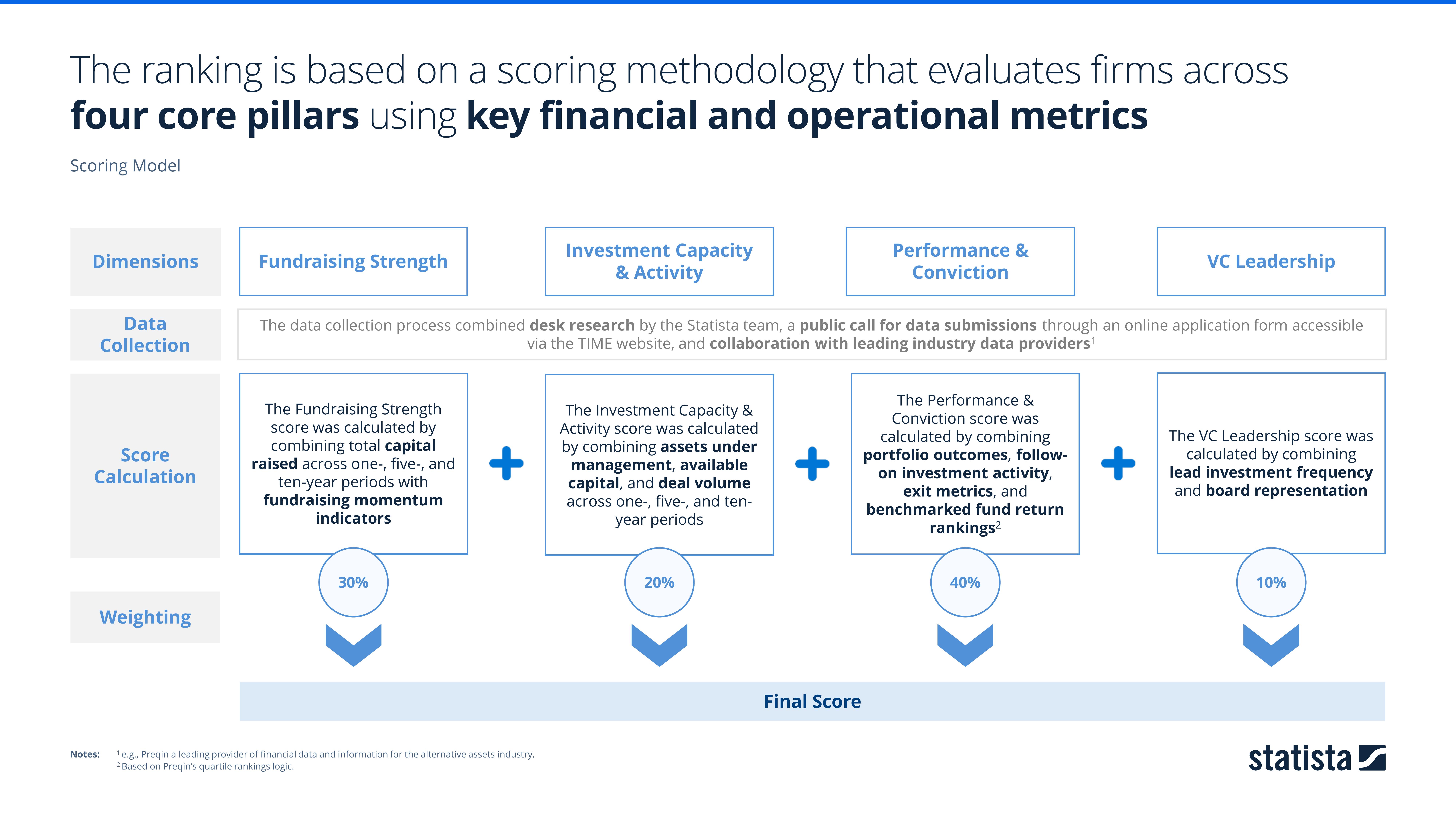
This year, we further developed the model, building on last year's foundation while incorporating direct feedback from the venture capital community. Based on conversations with VC firms and industry experts on how the market defines success, we refined the methodology by expanding it from three to four pillars and placing a stronger focus on deal-level investment data—capturing a firm's ability to identify and back winning companies early, and to sustain that conviction over time, while also recognizing the hands-on work investors do beyond simply writing checks.
Eligibility
To be considered, a firm must be headquartered in the United States and, as a core part of its business model, raise third-party capital and deploy it as direct venture capital funding to companies and startups across various venture stages and sectors. Firms whose investment activities are exclusively or predominantly focused on growth equity, private equity, fund-of-funds, venture debt, or similar non-VC-focused strategies are not eligible.
The four pillars
- Fundraising Strength (30%) captures a firm's ability to consistently attract and grow investor capital over time. It was measured by analyzing total capital raised across one-, five-, and ten-year horizons complemented by fundraising momentum indicators to assess both the scale and trajectory of each firm’s fundraising activity. New in this edition: the ten-year horizon, added in response to market feedback that a single strong vintage shouldn't overshadow a sustained track record.
- Investment Capacity & Activity (20%) reflects the operational firepower a firm brings to bear and the pace at which it deploys it. It was evaluated using each firm's assets under management and available capital, alongside deal volume across one-, five-, and ten-year windows, capturing both the scale of its investment operations and the intensity of its current deployment activity. New in this edition: deal volume, so this dimension reflects not only the capital a firm holds, but the rate at which it actually puts that capital to work.
- Performance & Conviction (40%) assesses each firm's ability to identify and back winning companies early, and to sustain that conviction over time. Firms were scored first on the scale of outcomes achieved by their portfolio, with particular credit given to companies that went public or reached significant private valuations, and second on the frequency and consistency of follow-on investments, rewarding firms that continued backing portfolio companies across successive funding rounds. To distinguish quality from volume, earlier-stage entry into successful companies carries greater weight than late-stage participation. Additional metrics include exit volume and efficiency across time horizons, as well as benchmarked fund return rankings. New in this edition: this dimension was rebuilt entirely on deal-level data, tracing outcomes and follow-on behavior investment by investment—reflecting market and firm feedback that outcome-based, granular data is a fairer measure of performance than aggregate, firm-level figures.
- VC Leadership (10%) captures the degree to which a firm acts as an active, hands-on partner rather than a passive capital provider. It was measured by the frequency with which a firm took a leading role in investment rounds and secured board representation in its portfolio companies. This pillar is new this year, added because firms and founders told us that capital and activity metrics alone don't capture the hands-on value a lead investor brings to the table.
Data collection
Statista gathered and scrutinized data for over 3,000 firms through desk research, online application forms, and collaborations with data and market intelligence companies.
Final scoring formula
Final Score = 30% × Fundraising Strength + 20% × Investment Capacity & Activity + 40% × Performance & Conviction + 10% × VC Leadership The 350 firms with the highest scores were awarded as “America’s Top Venture Capital Firms 2026” by TIME and Statista.
See the full list here.
Discord suspends livestreams in Brazil amid backlash over girl's suicide
Georgia man deported from Fiji to face $165m crypto Ponzi scheme charges
Edward Zimbardi, 59, who had fled US, will appear in court in Los Angeles on wire fraud and money-laundering charges
A man from Flowery Branch, Georgia, has been deported from Fiji to face charges in his home state accusing him of defrauding more than 6,000 investors and causing more than $165m of losses in a cryptocurrency Ponzi scheme, the US attorney in Atlanta said on Monday.
Edward Zimbardi, 59, was indicted on 12 counts of wire fraud, 12 counts of money laundering and one count of money-laundering conspiracy.
Continue reading...‘The truth about Diana’: Charles Spencer to publish book about late sister
Earl says he wanted to ‘write down my own thoughts and memories’ with 30th anniversary of Diana’s death ‘on the skyline’
Charles Spencer is to publish about a book about his sister Diana in September.
In the book – titled Swan Song: Diana, My Sister – Spencer recounts the story of Diana’s life and the week of her death. It marks “the first time that Earl Spencer has spoken openly and at length about his sister”, according to the book’s publisher, the Penguin imprint Michael Joseph. The book will be released on 22 September in the UK.
Continue reading...National Television Awards pick first all-female shortlist for drama acting award
Penn State Frat Brothers Charged in Alleged Cocaine Trafficking
Как запустить LLM на 2,8 трлн параметров на ноутбуке

Локальный запуск больших LLM быстро упирается в память: веса не помещаются, оффлоад режет скорость, а красивые бенчмарки мало говорят о реальной нагрузке. Разбираем эксперимент с Kimi K3 на 2,8 трлн параметров и смотрим, как MoE, квантование, стриминг и иерархия памяти меняют пределы потребительского железа.
Читать далееSacked FIFA executive and Infantino critic sends message to colleagues on his way out
Hayden Panettiere's ex-fiancé in "profound shock" after her death
Kariba ferry death toll rises to 93, making it Zimbabwe's deadliest transport disaster
America's Top Venture Capital Firms of 2026

The U.S. venture capital industry is one of the most impressive economic growth engines this country has. Seven of the top ten companies by market capitalization today were VC-backed when they were young, innovative, and very risky. My research with Will Gornall shows that companies that received VC funding and subsequently went public now account for nearly half of the U.S. market capitalization and 94% of R&D spending among all public companies founded in the last 50 years. Today, global VC assets under management stand at nearly $3.5 trillion, spread across more than 11,000 institutional VC firms. Those firms have backed a quarter of a million companies, including almost 4,000 unicorns.
Yet the industry remains shrouded in mystery. Many capital allocators struggle to select fund managers and manage their VC portfolios, and many founders are uncertain which VCs are the best fit for them. In this light, TIME is publishing its second annual ranking of America’s 350 Top Venture Capital Firms.
Methodology: How TIME and Statista Determined America's Top Venture Capital Firms of 2026
The 2026 methodology is a weighted average of four factors, some quantitative, others more subjective: fundraising (30%—how much capital the firm attracted over a one- to ten-year span, and the trajectory of that growth); investments (20%—how much capital was put to work, including deal volume); performance (40%—the scale of outcomes, including IPOs and highly valued private companies, along with the consistency of follow-on investments, with early-stage bets weighted more heavily); and leadership (10%—leading rounds and winning board seats).
Each of these four factors is relevant, though how they are combined and measured of course matters and can dramatically affect which firms come out on top. The combined 50% weight given to fundraising and investments by the TIME methodology can reflect size. Size matters: many investors have minimum check sizes and pass on smaller VC funds, and many funds have grown dramatically in recent years. But capital allocators have yet to see whether greater size delivers similarly attractive returns and profits. Academic work also is not conclusive. Two factors balance TIME's methodology: deal volume favors firms making a great many bets, and the follow-on measure again rewards firms that invest early and then continue to back their winners. Performance is the critical consideration; at the end of the day, it is the ability to back home runs repeatedly and at scale that separates the greatest VC firms from the rest.
Taken as a whole, the methodology rewards what can be observed from the outside. Capital raised, deals done, and marquee portfolio names are all visible; the money actually returned to limited partners, for the most part, is not. Firms that are big, busy, and prominent will therefore do well, and on the whole they deserve to.
Every ranking methodology reflects the objectives of its creators. In my research, my partner and I have also assessed VC firms, with an emphasis on the economically relevant portions of the net profits generated by individual VCs’ investments. Both our assessment and TIME's ranking put the same handful of firms, which have been prominent for a decade or more, at the very top; firms such as Sequoia, a16z, and Lightspeed. That agreement is real: the elite of the American VC industry is very select, relatively stable, and well capitalized. Below that, of the roughly 110 firms in TIME's top 200 that do not appear in our research, only fifteen are ones we ruled out by definition: accelerators such as Plug and Play, angel networks, corporate vehicles, asset managers. We included some VC firms that are ineligible for TIME’s ranking (Meritech, Dragoneer, Addition, and Inflection Ventures all place in our top 100). We agree on the other firms: we simply score some lower. In other words, the industry has reached consensus on its top performers but not on the tier beneath it. For a founder or an allocator, that is the practical lesson: past the first twenty names, "top firm" is a claim about which yardstick you picked.
What our research makes plain is that VC no longer has clean edges. Capital comes from crossover funds, sovereign investors, corporations, and firms that would not have called themselves VC a decade ago, while the earliest support often comes from accelerators, angel networks, and solo investors. A list of top American VC firms is a useful map of the industry's core. The interesting question is how much of the action has moved to its edges.
Strebulaev is a professor at Stanford Graduate School of Business, focusing on startups and investors.
See TIME's full ranking of America's Top Venture Capital Firms of 2026 below.
Firms looking to submit data for consideration for the 2027 ranking can pre-register here.
New Details Emerge on Hayden Panettiere’s Sudden Death
Cool as a cucumber: recipes and tips to save you from cooking in a heatwave | Kitchen aide
When ovens and stovetops just won’t do, turn to loaded toasts, open sandwiches, cold noodles and smashed cucumbers, say our no-cook experts
It’s too hot to turn on the oven or stove. What can I make for dinner that’s still substantial?
Mark, via email
This sounds like a job for Lucy Carr-Ellison, of Tart London, who is fully functioning in a no-oven household. “We moved in last year and there’s an Aga, which was amazing in winter, but we can’t have it on in summer,” she says, so toast toppers have become a crucial category of cooking: “Try rubbing toasts with garlic, adding a bit of olive oil, some grated tomatoes, lots of salt and tinned anchovies.”
Otherwise, Mark could do away with the toaster and get some focaccia, suggests Jamie Pickles, chef/co-owner of Stow and The Trof, both in Manchester: “Mix picked brown crab meat with mayo, lemon juice and mustard, and spread that over the bread.” Next, combine the picked white meat with chopped chives and coriander, lemon juice, creme fraiche and black pepper. “Mix through some tinned sweetcorn, spread that over the brown crab mayo and finish with watercress.”
Got a culinary dilemma? Email feast@theguardian.com
Continue reading...Georgia man deported from Fiji to face $165m crypto Ponzi scheme charges
Edward Zimbardi, 59, who had fled US, will appear in court in Los Angeles on wire fraud and money-laundering charges
A man from Flowery Branch, Georgia, has been deported from Fiji to face charges in his home state accusing him of defrauding more than 6,000 investors and causing more than $165m of losses in a cryptocurrency Ponzi scheme, the US attorney in Atlanta said on Monday.
Edward Zimbardi, 59, was indicted on 12 counts of wire fraud, 12 counts of money laundering and one count of money-laundering conspiracy.
Continue reading...How slavery reparations could help make yearning to return to Africa a reality
Right for people of African descent to return to continent is key pillar of global push for reparatory justice from colonisers
Supporting the right for people of African descent to return to the continent has become a key pillar of the growing global push for reparatory justice from Britain and other colonisers.
When Ghana’s president, John Dramani Mahama, visited Jamaica this month he addressed the issue of repatriation for Jamaicans and others whose ancestors were kidnapped from Africa and sold into transatlantic chattel slavery.
Continue reading...Fairphone is launching its latest repairable phone in the US too
OpenAI makes ChatGPT less 'human' for teens in new safety update
Не в 12,1 раз, а 2,3–2,9: сколько стоит новый тариф DeepSeek V4 и почему все решают 3 часа с 10:00 до 13:00 МСК

Цифру «+1100%» я увидел в чужом пересказе, и это ровно тот жанр новости, после которого приходят спрашивать, что будет со сметой. Часть нашей нагрузки на DeepSeek пакетная, ее можно двигать по времени суток, так что вопрос был прикладной: насколько сильно двигать и куда.
Я открыл прайс, взял профиль своей нагрузки, перемножил. Получилось 2,3. Перепроверил на других профилях, получилось от 2,3 до 2,9. Роста в 11 раз не вышло нигде.
Дальше выяснилось, что 12,1 существует, живет ровно в одной клетке прайса из шести и весит в счете меньше 10%. А по дороге я наткнулся на вещь поинтереснее: пиковые окна DeepSeek объявил в UTC, и в московском времени они ложатся так, что из рабочего дня дорогим оказывается ровно промежуток с 10:00 до 13:00, после чего до 04:00 следующих суток все идет по дешевому тарифу.
Ниже разбор прайса, реверс-инжиниринг пиковых окон, таблица «найдите свой часовой пояс», калькулятор на 40 строк и фрагмент crontab, который сдвигает батч за 13:05.
Читать далееЭксперимент с Claude Code на заброшенном Java-проекте
В этой статье я хотел бы сделать отчёт по эксперименту: взять чужой заброшенный Java-проект и методично прогнать через Claude Code все стадии, которые проходит легаси-код в реальной команде — от первого знакомства до рефакторинга и аудита.
Проект — форк учебного e-commerce на Spring Boot 2.2 / Java 11, Spring Security, Spring Data JPA, JWT, PostgreSQL, Angular 7 на фронте. Не обновлялся около шести лет — типичный «замороженный» легаси, только меньшего масштаба, чем в реальной компании.
Читать далееЭлектрокар Ferrari продан с аукциона за рекордные 40 млн долларов
Срок действия меморандума о взаимопонимании между США и Ираном истек, война не закончилась. Что будет дальше?
The New Science of Dreaming
I’m reclining in a large blue chair in a small dark room: earbuds in, tinted glasses on, eyelids closed. Clasping my head is a swimmer’s cap of electrodes fastened under my chin. My fingers are wrapped in sensors.
I hear a voice through a monitor: “Now we’re going to flash some lights.” When I see flashes, I am to move my cheek twice in the direction they came from. I get similar instructions about sounds I hear and vibrations I feel in my fingers. Karen Konkoly, a postdoctoral researcher at University of Cambridge in the U.K., and Marco Wolf, a German graduate student working with her, are getting ready to watch me while I dream.
No one really knows why people dream. There have been psychoanalytical theories, of course. Sigmund Freud wrote that dreams were a kind of acting-out of repressed impulses. And since long before Freud, dreams have been regarded as prophetic. They can feel important, like they ought to mean something.
However, when scientists imagine what evolutionary purpose dreams might have—how they might be helping us survive this crazy whirlwind called life—definitive answers have been hard to come by. Whatever insight we might get from thinking about our own dreams is unlikely to be the whole story. Studies suggest we dream multiple times per night, and we forget almost all of them, so whatever purpose dreams might serve probably doesn’t depend only on our remembering them. Does dreaming help us make memories? Learn from our experiences? Or is it just keeping us entertained while important business is attended to by the brain?
In recent decades, scientists have approached this problem from a number of angles, and today, I’m taking part in one such stab at an answer. Konkoly is a rising star in the world of dream research, the co-inventor of a way to help people dream lucidly. Lucid dreaming, first named in a scientific paper back in 1913, occurs when dreamers realize they are dreaming. In some cases, they can deliberately influence the events of the dream. Lucid dreaming is a skill that can be taught, and Konkoly is quite good at it; she guesses she has dreamed lucidly about 185 times in her life. In her first lucid dream, she decided to fly, and did: “I got a few feet off the ground, breaststroking through the air,” she recalls. More than half the population reports having lucid dreamed at some point in their life—23% say they do so regularly—and scientists believe that lucid dreamers could provide a way to test hypotheses about what dreams do, since they may be able to alter dreams on demand.

In a landmark study in 2021, Konkoly and colleagues found that lucid dreamers can sometimes even communicate with scientists in real time, responding to spoken questions by signaling with their eyes under closed lids, for instance. In search of what makes that possible, and in hopes of increasing the frequency of such communication, in her current experiment she is asking me and, in other sessions, about 50 others to perform the task as we fall asleep of moving our cheeks to signal from which direction a stimulus comes. The hope is that I’ll somehow be able to do this even when I’m unconscious. As I listen to the beeps and start to grow drowsy, I wonder: When I’m dreaming, will I be able to answer?
Dreams have not always been a fashionable target of study. When Robert Stickgold, a professor of psychiatry at Harvard Medical School, began to study sleep and dreams in the 1990s, scientists who studied dreams were few and far between. Those who did tended to collect dream reports from people when they woke up and catalog them; they were usually focused on emphatically rejecting Freud’s ideas and suspected that dreams were meaningless.
When we sleep, we lose consciousness, which puts us in a vulnerable psychological state, Freud believed. All sorts of weird and unsavory repressed desires could emerge, and the function of dreams is to disguise these from ourselves, he wrote. Freud thought that “dreams are an attempt to take these suppressed wishes and convert them into something that would be palatable, so instead of dreaming about wanting to sleep with your mother, or actually sleeping with your mother, you dream about eating a watermelon or something,” Stickgold tells me. “Their function was to keep you from being woken up by these horrible subconscious desires you had.” When in the early 1990s he went to work with J. Allan Hobson, a pioneer of the modern study of dreams who was famously anti--Freudian, it was often assumed “that dreams had no function at all,” says Stickgold. They were just noise in the neurons.
Stickgold didn’t believe that dreams hid suppressed desires. But he also wasn’t so sure they were pointless. It seemed clear to him that dreams drew on rehashed moments from the recent past, and he began to think about what that meant. Focusing first on sleep, he found that people who learned a new task and then slept on it were better at it after waking than people who tried it again without first going to sleep. Looking more specifically at dreams, in 2000 he dropped a bombshell in the world of dream research: when scientists had healthy people play Tetris before falling asleep, they reported dreaming about the game—but the same thing happened in a group of people with brain damage who’d played the game, despite their having no memory of playing it. This suggested that dreams were drawing on the events of the day—even for people who could not consciously recall them—and working with them somehow. In later experiments, he and Erin Wamsley, now a cognitive neuroscientist at Furman University, discovered that dreaming of a memorization task was correlated with doing it better in the morning. Today Stickgold is widely perceived as one of the giants of modern dream science, having inspired and trained a generation of researchers.
After decades of studying dreams, what does he think they’re for? He has some thoughts. He has developed what he calls the NEXTUP theory of dreaming, short for Network Exploration to Understand Possibilities. “The model basically says that while we’re sleeping, the brain looks for often very weak associations to waking concerns, and then builds a story around it in a dream to see if it’s feasible as an explanation of what’s going on in our lives,” Stickgold says. This would account for the way that everyday concerns (like missing the bus) and unlikely occurrences (being chased by evildoers) can mesh in dreams, forming a mix of strange situations. But it isn’t clear how to prove or disprove the idea, Stickgold says.


So far, it has been very difficult to prove that a dream is actually causing any effect at all, whether that’s learning a new physical skill or learning to navigate a new environment; it’s merely been shown that these are associated. That’s why lucid dreaming is such an exciting target. If scientists can interfere with a dream while it is happening, they might be able to more directly link waking actions to dreams.
This year, Konkoly and Ken Paller, a cognitive neuroscientist and a professor at Northwestern University, made inroads with a new study in which they had people play logic puzzles set to music during the day, then told them they might play some of the same songs later on while they slept, which was their cue to keep working on those puzzles in the dream. People who managed to do that were more likely to solve those puzzles the following morning than puzzles that weren’t cued by a song. By manipulating dreams in real time, Konkoly got a little closer to showing that they might have some power over the waking world.
What do dream researchers dream about? The same things as most people: pieces of the past few days, the homes they grew up in, bizarre catastrophes they cannot prevent. But Wolf and Konkoly, my experimenters, who both track their own dreams closely, are paying more attention than most of us.
When Wolf was 6, his father and sister wanted to teach him inline skating, and after too many failed attempts, he quit. Years later, as a teenager, he accepted a friend’s invitation to skate despite not knowing how, and the night before they were to meet he found himself dreaming lucidly about skating. Since lucid dreams mean you might have control over what happens, he decided to practice. “The next day when I tried again, after this long time, I suddenly was able to do it, and within a few weeks I had actually quite surpassed everyone I knew,” he says. “I just wondered, What else is possible with the brain?”
It wasn’t a fluke. Since that first lucid dream, Wolf has used them when faced with tricky problems, knowing that there’s a good chance he might be able to keep working on them in a dream. Several times, the nights before Latin tests in school, he recalls speaking with the philosopher Seneca in lucid dreams to help him practice. “I cannot say that something caused this,” he cautions. But “I had this subjective feeling that on the next day, it was way more intuitive and way more easy to translate the Latin exam. And funnily, always when this happened, my grade was just amazing.”
Lucid dreams might be some of the best tools scientists have to really get to the bottom of what everyday dreams do. Ever since Konkoly first learned, in college, that people studied them professionally, she knew what she wanted to do. “‘I want that to be my job,’” she recalls thinking. “So then, that is what I doggedly pursued.”
After college in 2017, she moved to Wales and worked with dream researcher Michelle Carr at Swansea University. Many of the techniques that had been used in previous studies to trigger lucid dreaming involved weeks of training for the participants ahead of time. But Carr wanted to compress it all into the tedious period of time when researchers were wiring people up with EEG electrodes, which researchers use to monitor brain waves, confirm someone is sleeping, and tell what stage of sleep they are in. Carr and Konkoly came up with a shortened protocol that trained people how to become lucid and signal that they have done so by moving their closed eyes back and forth.


Then they started a 10-day experiment in which they recruited 41 people to take naps in the lab. Carr and Konkoly would wire everyone up with EEG, perform their lucid-dreaming protocol, and let people drift off. And people dreamed, often lucidly. “‘I can’t believe it’s working,’” Konkoly and Carr would say to each other. “They were kind of weird lucid dreams that were really short,” Konkoly recalls. But the effect was real. In the end, they found that about half of people who went through their protocol were able to lucid dream.
With her newfound ability to make large numbers of people “go lucid,” as practitioners call it, Konkoly joined Paller’s lab at Northwestern to finally experiment with seeing whether people in lucid dreams could communicate while asleep. In 2021, they and their colleagues reported that they had sent messages to dreamers in real time, asking them to answer math problems and other questions, and in some cases those people had responded by moving their eyes under their lids or by twitching facial muscles using a pre-arranged code. If it’s possible to get people to consistently reply to questions about their dreams as they are happening, and even change what’s happening in the dream in real time, then it may be possible to perform experiments that directly address what dreams are doing for us. It could give us “a whole new dimension for studying dreaming,” Paller says.
Stickgold agrees. “We have to try to find ways to experimentally manipulate dream content,” he says. “If we get good enough at that, and the younger people are smarter than us, maybe that’ll provide a mechanism to provide experimental testing of some of these models.”
Paller—who, when we spoke recently, was about to leave for Bhutan—is now making recordings of brain waves from Buddhists who perform lucid dreaming as part of their practice. “We’re going to set up in a hotel and have them come in in the capital of Bhutan from different regions in the country,” he said. “And if things go smoothly, we’re hopeful that we’ll get some interesting results.”
In the dark in the lab, I start to drift off. It’s late afternoon, and I skipped coffee this morning so I could be sure of napping for Konkoly and Wolf. In this study, the researchers are looking to understand why dreamers sometimes perceive stimuli from outside the dream, like the flashes of light and vibrations, and sometimes don’t, with the goal of finding out the best ways to communicate with dreamers. Konkoly told me of many nights she spent in the sleep lab at Northwestern, watching dreamers: “Every now and then—they’re there. They’re answering. And then they’re gone again. How does that happen?”
This is no ordinary nap. As I drift off, vibrations strum my fingertips, and low tones play in the earbuds. Between these stimuli, strange thoughts move through my semi-conscious mind, the kind of free association that feels normal in sleep and bizarre in life. Names, words, rabbits, phone booths, train announcements—but just when I start to go under, the lights, tones, and vibrations kick in and wake me back up. I try to keep responding; after a long, dark interval, I am so tired that I stop, and then I am dreaming.
I am with my son, digging in the back garden of a brick row house. We are burying something in the lawn. I respond to a few stimuli, then I have the impression that someone in a position of authority—a man with a mustache?—is reprimanding me for failing to keep something level. Then I am awake. The electrodes taped to my face are suddenly palpable.

Konkoly’s voice crackles over the monitor. “Can you tell me everything you remember about your dreams and experiences?” I recount as much as I can, fuzzy from the sleep, and then stumble off to my hotel for the night—where, in the morning, I wake up with the sense of having dreamed many times over. All I can remember is the kind of dream where I’m scheduling plane flights, penciling on calendars, memorizing dates.
Back at the lab, we look at the rainbow of electrode readings from last night, where my brain waves collapse into the slow waves of deep sleep. From a first look, it appears that the moments when I responded to the stimuli were moments when I awakened briefly, rather than when I was fully asleep. But the study is only at its beginning. I am the 11th sleeper in this experiment, with 40 left to go.
Is there really a singular purpose to dreams? I ask Konkoly. She sits back in her chair, hugging her knees against her chest, and thinks. What we refer to as dreaming, as if it were all one thing, is really many, she speculates. Nightmares, recurring dreams, dreams of embarrassment, and dreams of flying—each might have a different purpose, still unknown to us. We look back at the screen. Somewhere in there is the moment where I was digging with my son, burying something, under a lawn behind a house I do not recognize.
“Maybe sometimes you do need to simulate social situations,” she says. “Sometimes you do need to understand the hierarchical meaning of your recent experience. And sometimes, you do need to jumble everything up, and forget.”
SharkNinja’s Billionaire Chinese Backer on Building an American Success Story
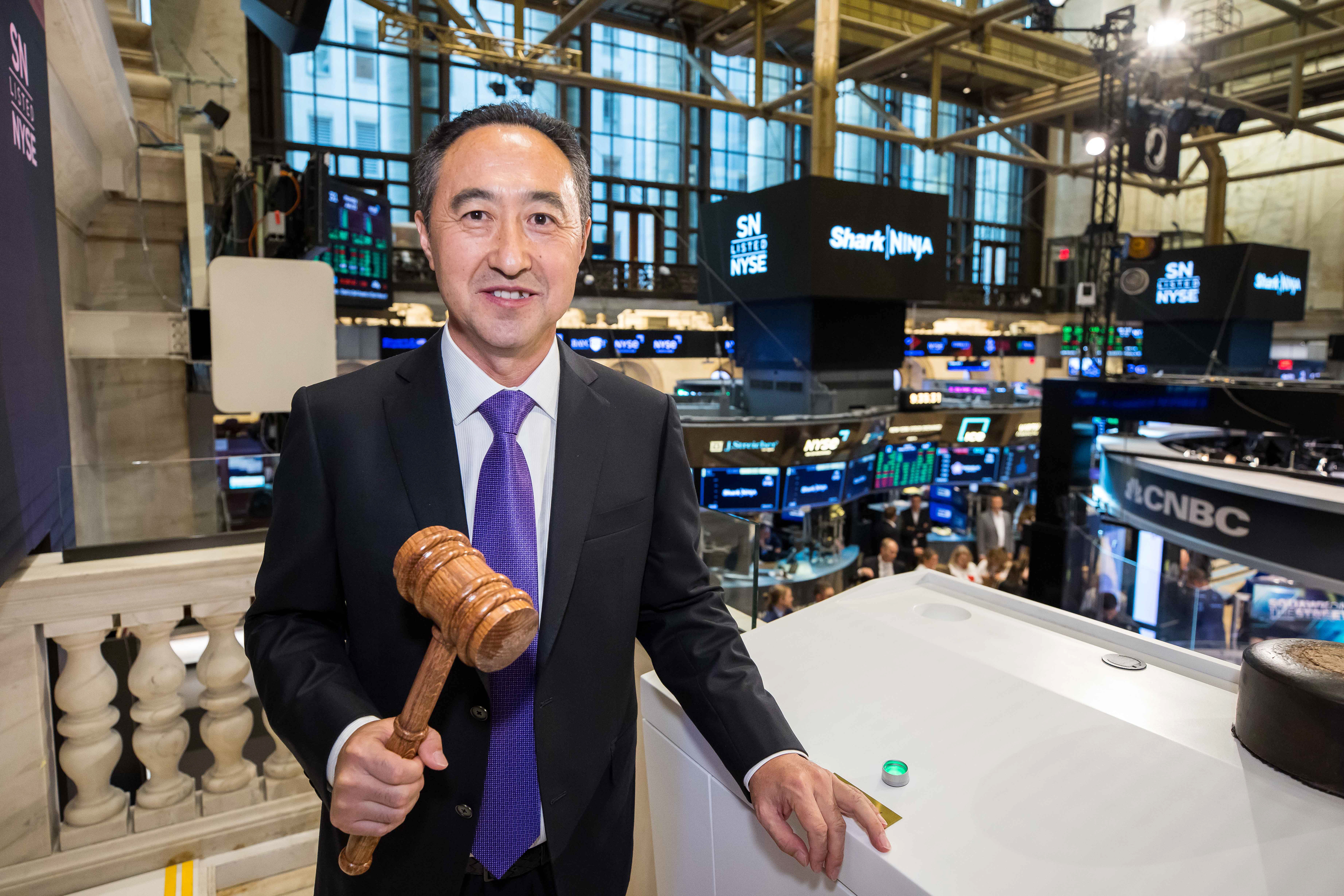
Many self-made billionaires conceal their humble beginnings. CJ Wang has put his front and center of his penthouse Hong Kong office: a small stone mill for grinding soybeans.
Mao Zedong’s tumultuous Cultural Revolution was just winding down when Wang started school in what is today Yantai city of China’s eastern Shandong province. (Where, incidentally, TIME founder Henry Luce was born in 1898.)
Like most neighborhood kids, Wang was obliged to help with household chores after class, especially churning soymilk by endlessly hauling his uncle’s giant stone mill around. It was labor that made the young Wang’s arms ache, though the eventual payoff would be a business empire worth tens of billions of dollars.
After graduating in electrical engineering from Beijing Jiaotong University, Wang became a teacher like his parents. “It was what my family did so I just naturally fell into teaching,” he says, gazing out at sweeping views of Victoria Harbour. “But I always wanted to do something bigger and carve my own path.”
In 1994, as Chinese reformer Deng Xiaoping’s market liberalization unleashed a heady entrepreneurial spirit across the People’s Republic, Wang quit his job at a vocational college and invented the world’s first automatic soymilk maker. “It was far from perfect, and wasn't an ideal product, but it was already a huge leap forward,” Wang says.
That same year Wang founded Joyoung, which soon became a household name in China for low-cost, dependable consumer products from blenders to rice cookers. While Americans may not recognize Joyoung, they are probably familiar with Wang’s other major venture: SharkNinja, which he acquired in 2017 and today serves as chairman, having transformed the Massachusetts-based firm into a $26 billion trailblazer for disruptive household appliances.
“I really saw SharkNinja as an American version of Joyoung,” he says. “I really felt like I understood the business.”
In our interview, Wang’s first ever with international media, he comes across as shy and softly spoken, betraying none of the performative bravado of many billionaire founders. He is, he confesses, a very private person, whose few passions outside of work include Macallan whisky and golf. (He has a 15 handicap). So why has he decided to chat today?
“I just want to be ahead of the curve to proactively tell my story to mitigate any speculation,” he says. “Because there's just not much out there about me.”
In an age of relentless scrutiny, even immense wealth offers no refuge from the public eye. The elephant in the room is the dire state of U.S.-China relations, with tariffs and export restrictions casting a pall on what had once been a synergistic business climate. Chinese investment into the U.S. grew steadily until peaking at $46.5 billion in 2016, with Chinese investors hoovering up everything from Smithfield Foods and AMC Theatres to New York City’s Waldorf Astoria hotel.
However, re-tightened capital controls in China and expanded CFIUS regulatory reviews in the U.S. dovetailed to bring the honeymoon to an end. Last year, Chinese foreign direct investment into the U.S. was just $2.5 billion—down 94% from its peak—with the investment climate further chastened by ongoing geopolitical friction, supply chain reshoring, and tit-for-tat import duties.
U.S. lawmakers from both sides of the aisle have increasingly framed capital flows from China into U.S. farmland, manufacturing, and technology as national security vulnerabilities rather than economic opportunities. Last year, President Donald Trump promised “new rules” to “stop China from buying up America.”
In today’s febrile political environment, the risk Wang faces is that his Chinese background and natural introversion could be misinterpreted as shadowy or even sinister—a notion he is at pains to dispel.
“SharkNinja is a very American company,” says Wang. “But people just start making assumptions. I want people to know who I am and my motivations for the good of the company, so there's no speculation about that.”
If today’s political climate is problematic, popular culture hasn’t been much kinder. The 2019 Netflix documentary American Factory relished in the culture-clash antagonisms between American workers and Chinese managers of the Fuyao auto-glass factory in Dayton, Oh., which took over a long-shuttered GM plant.
Then there is Chinese fast-fashion phenomenon Shein, whose direct-to-consumer sales have been blamed for decimating high streets and sparked protests and legal objections across Europe and North America over its alleged labor abuses and environmental footprint.
However, Wang argues the experience of SharkNinja—the Shark half produces household appliances and beauty products; Ninja does kitchen gadgets—offers a stark counterpoint as an example of a successful “refounding” to clarify and reenergise a company’s mission statement and propel it to new heights.
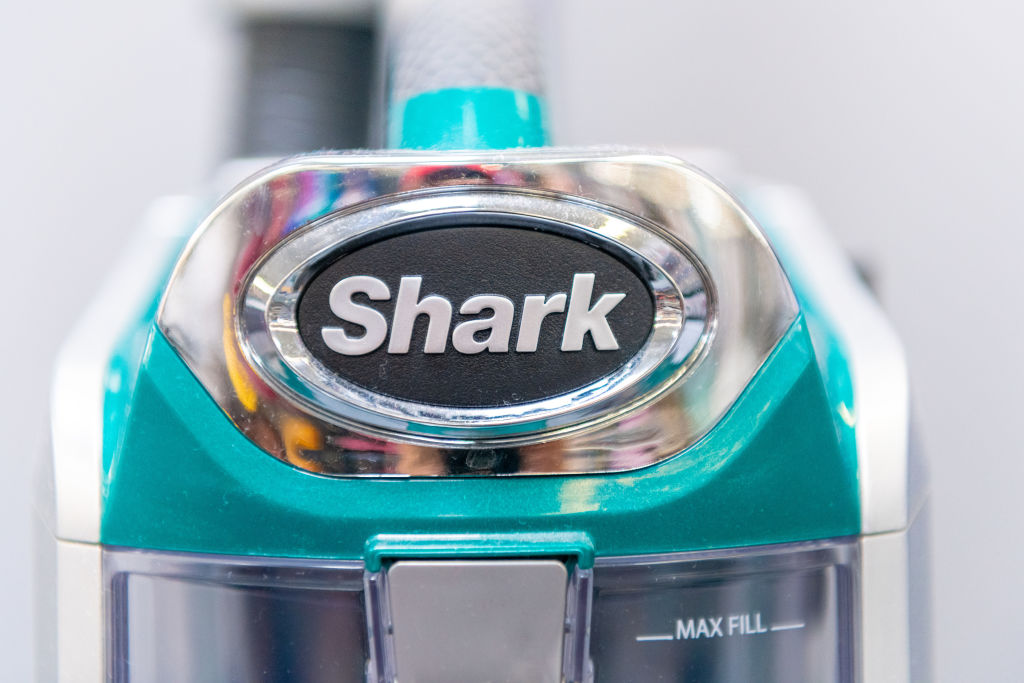
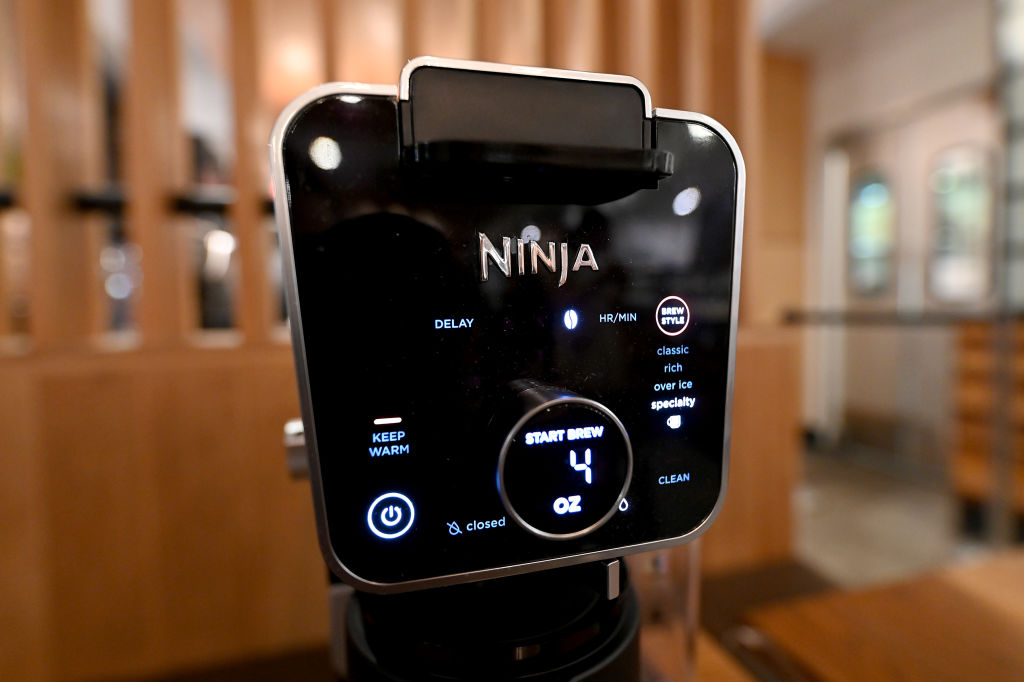
After more than two decades of building Joyoung into a trusted brand in China—as well as establishing an eponymous philanthropic foundation—Wang started to cast his eyes overseas. However, Joyoung was virtually unknown in the West. Rather than spend years building recognition abroad, he chose a faster route: buy an established player.
Wang looked at several options but was captivated by SharkNinja. After a quick trip to Boston, he saw a company that felt reassuringly familiar: strong products, entrepreneurial leadership, and plenty of room to grow. Wang was especially impressed by CEO Mark Barrocas, whom he asked to remain after the acquisition—a condition that helped smooth the deal. (Original founder Mark Rosenzweig also still regularly consults for the company.)
Given that Barrocas is renowned for micromanagement, Wang’s hands off style led to a very amicable partnership. One manager told TIME that Wang turns up at the firm's U.S. headquarters with such little fanfare that it takes baffled reception staff a few minutes to work out that the guy in front signs all their paychecks.
“My role is always from a very high-level, strategic standpoint,” says Wang. “All the day-to-day stuff is the American team. I’ve had a really good working relationship with Mark from the very beginning.”
But SharkNinja also had clear weaknesses. Its product range was narrow: Shark depended heavily on vacuums, while Ninja relied largely on blenders. Its sales model leaned on fading television infomercials, with little social-media presence or diversified distribution. And its manufacturing was concentrated among only a few Chinese suppliers, limiting flexibility and innovation.
Wang believed Joyoung’s experience could unlock the company’s potential. His plan centered on three moves: broaden the product portfolio, strengthen the supply chain, and modernize sales channels. Today, the company funnels around 10% of revenue into advertising, including celebrity endorsements from the likes of Tom Brady and Kevin Hart.
Imaginative marketing is very close to Wang’s heart. After debuting his first soymilk maker, Wang personally hawked his fledgling creation in markets and malls. But then a friend who worked in the media suggested he publish an article about how people can now make soy milk in a matter of minutes in their own home. “That gained a lot of attention, and I realized the power of marketing to sell your products,” Wang recalls. That friend, meanwhile, “became my wife,” he grins.
Wang also wanted SharkNinja to adopt his passion for engineering by building its own R&D capabilities. At the time of the acquisition, SharkNinja’s innovation model was thin. Its leaders could identify product opportunities, but design and engineering were largely outsourced to a small group of Chinese suppliers, who had a “stranglehold” on development, says Wang. The company had little in-house industrial design or research capability—and therefore limited control over how quickly ideas became products.
Wang had the manufacturing chops and contacts to change that. Today, SharkNinja employs roughly 1,200 R&D staff across Boston, London, Shenzhen, and Hangzhou. That investment has helped expand the business from a handful of core appliances into more than 40 product categories, with two or three added each year. Shark moved beyond vacuums into beauty and broader home-care products; Ninja grew from blenders into a full kitchen portfolio.
Behind those products is a simple discipline: start with consumer frustration. SharkNinja mines reviews and complaints to find friction, then engineers around it. Innovation does not end at launch. Teams keep refining cleaning, convenience and usability—turning each solved problem into a better product, and each better product into another platform for growth.
The hits followed. The Foodi combined pressure cooking and air frying in one appliance. The CREAMi brought homemade ice cream into the home while sparking a viral “Can it CREAMi?” craze of TikTok stars competing to produce ever more wacky recipes, featuring Dr Pepper, dill pickles, and even tomato soup. The Ninja SLUSHi was a similar sensation for frozen drinks, selling out 10 times in the U.S., with a global waitlist of over 170,000. A post featuring the Shark TurboBlade fan, meanwhile, received more than 75 million views on TikTok and Instagram.
“One of the keys to success is innovation,” says Joe Derochowski, vice president of home and home improvement for market research firm Circana. “The second key is you’ve got to tell people about that innovation in their language—how it fits into their lives.”
There have been setbacks, of course. SharkNinja recently settled lawsuits with competitors Dyson and iRobot over alleged patent infringements. Over 1.8 million Foodi units were recalled last year after a malfunction led to 106 reports of burn injuries and multiple lawsuits. In November 2024, short seller Grizzly Research accused Wang of “taking advantage of the company to the detriment of public shareholders” and presiding over “some of the worst practices of old-school China hustle stock.” The market didn’t buy it, however, and the firm’s value has more than doubled since.
“He's been an absolutely extraordinary partner for the business over the last nine years,” Barrocas says of Wang. “He’s very thoughtful, asks a lot of questions, very strategic, and takes a very long-term view of things. He wants to build a sustainable, lasting business.
Barrocas’s praise of his boss is, of course, unsurprising. Not least when Barrocas—who retains a 1% stake in SharkNinja—just last week took advantage of its stellar stock performance to net himself over $100 million pretax by divesting nearly 600,000 shares.
Still, an objective case for Wang’s positive influence doesn’t want for evidence. Today, SharkNinja has over 4,100 employees centered on the U.S. but also spanning the globe—up fourfold from when Wang took over. Annual revenue, meanwhile, has soared from $1.3 billion to $6.4 billion over the same period.
Wang hopes that SharkNinja will continue to ease American consumer friction long into the future, and that his Chinese nationality won’t be a hitch. “Nobody wants to see U.S.-China relations improve more than me,” he says.
Recent signs haven’t been hopeful. In June, the U.S. designated several more Chinese firms including BYD—the world’s top EV maker—as “Chinese military companies.” The accusation rests on alleged links to Chinese industrial-policy agencies and a military-civil-fusion industrial zone. No evidence was provided that BYD directly supplies the People’s Liberation Army.
While BYD is also primarily a consumer-focused firm, Wang is quick to draw a distinction with SharkNinja, which, despite his 36.9% controlling stake, is both listed and headquartered in the U.S. “I don't think we’ll suffer much from trade restrictions, or become a blacklisted company,” says Wang. “But we always remain diligent and continue to adapt the business to make sure that everything is smooth.”
But like any responsible business leader, Wang is preparing for the worst: nearly all of SharkNinja’s U.S. inventory is now sourced outside China, principally from Southeast Asia. “The company is diversifying to make sure we can continually supply consumers with products at the right price and right quality to keep up with shifting political trade restrictions,” says Wang.
Not that extricating supply chains from China is sufficient in today’s nativist political climate. Following Trump’s “Liberation Day” announcement in April last year, which imposed a 10% baseline tariff on nearly all imports and proposed steeper levies on major trading partners,
SharkNinja’s stock plunged more than 20% as even its diversified supply chain faces a barrage of new import duties.
The following month, Barrocas revealed the firm was scouting a U.S. factory to produce certain low-labor products, such as coolers and certain vacuum cleaners, though February’s Supreme Court striking down of Trump’s emergency tariffs has reduced the imperative of reshoring.
“The risk for SharkNinja is not existential as it is for companies like Shein that are impacted by tariffs in a big way,” says Ravi Dhar, a professor at the Yale School of Management. “[Because] the product is more than manufacturing—it is design, deep consumer insights into pain points and unmet needs and that will remain valuable.”
Trump has nevertheless offered conflicting signals. In January, he welcomed Chinese companies willing to build U.S. plants and hire American workers. “If they want to come in and build a plant and hire you and hire your friends and your neighbors, that's great,” Trump told the Detroit Economic Club. In May, he separately defended Chinese investment in American farmland, provoking a backlash from his MAGA base.
Wang can only hope that this tentative embrace of collaboration sticks. “SharkNinja has experienced tremendous growth, which I see as the power of Chinese and U.S. business cultures coming together to create a company that plays on the strengths of both countries,” says Wang. “It's a very positive story of the combination of China and the U.S.”
Jeanie Buss Fights Brothers Over Plan to Sell Stake in Lakers
Primary Candidates With the Same Name Sparks Confusion
Как я собрал 10+ ИИ-агентов на Claude Code и Kaiten и почти вышел из операционки

Меня зовут Игорь Кузнецов, я ИТ-директор компании «Эрегион». Мы развиваем ИИ-продукты и консультируем бизнес по внедрению ИИ в рабочие процессы.
Недавно в качестве эксперимента я решил проверить, можно ли полностью передать продуктовые и ИТ-задачи ИИ-агентам. В итоге собрал систему из 13 агентов, которые сами разбирают задачи, распределяют работу, проверяют друг друга и фиксируют результаты.
Первые внедрения этой системы мы сделали в процессах «Кабель.РФ». В статье расскажу, как все устроено, зачем агентам понадобился таск-трекер и что из этого получилось.
Читать далееHow to be irresistible on dating apps, according to science

Some professors might recoil at the idea of looking at their students’ dating app profiles. Not Gurit Birnbaum, a professor of psychology at Reichman University. She saw it as an opportunity.
Some of the young people in Birnbaum’s classes, as well as close friends, asked for her advice and turned their phones over to her. After poring over their bios and photos, she had some opinions.
What stood out were a few commonalities in how they presented themselves to potential partners: “Some profiles revealed almost nothing, others revealed too much. Some relied heavily on sexualized images, while many simply blended into a sea of interchangeable, generic profiles,” Birnbaum told Vox in an email. Many people seemed unsure of how to uniquely introduce themselves, instead offering a laundry list of qualities. She wondered which profiles sparked genuine interest and what characteristics these singles successfully transmitted. So she decided to research what more dating app users choose to reveal about themselves and how they go about it.
The results of those studies allowed Birnbaum and her collaborators to zero in on a few concrete strategies for crafting a dating profile that is not only authentic, but would get people to swipe right. Her findings, along with those from other researchers, can help everyday singles put their best foot forward.
“The goal shouldn’t be to turn yourself into a product,” Birnbaum said. “The real challenge is getting the right kind of attention without losing yourself in the process.”
Get creative — but don’t exaggerate
One of the biggest misconceptions when it comes to online dating is that you must impress people and sell yourself, Liesel Sharabi, an associate professor in human communication at Arizona State University, told Vox. That mindset can lead you to present a slightly exaggerated or more idealized version of yourself. “That can be effective for getting a date or starting a conversation, but then by the time you actually end up meeting, it can lead to a lot of disappointment and even feelings that someone’s been misled, even if that’s not actually the case,” Sharabi said.
Instead of embellishing the details of your life, use your creative skills to package reality in an attention-grabbing way. Research shows daters value originality in dating app profiles — it signals intelligence and sense of humor. The profiles that were perceived as original contained vivid descriptions and imagery, metaphors, and frequent uses of adjectives and adverbs. Think: “I’m a star in the kitchen.” (They also contained elements of self-disclosure — more on that later.)
These specifics give daters an opening to start a conversation with you. Instead of simply saying you like running, you can express that same information with a cheeky call to action: “Tell me about your favorite running trails.”
When in doubt, Sharabi said, ask a friend to look over your profile to see if you’re being authentic or bending the truth — and take their feedback seriously.
Tell a story
Birnbaum’s research has shown that narrative presentations — in other words, short stories — are more effective at garnering empathy and interest than a list of likes and dislikes. Storytelling helps people see you as a person rather than a bunch of traits, which encourages perspective-taking and can foster empathy. “Empathy may be less the initial spark of attraction than the bridge from noticing someone to feeling that you might actually connect with them,” she said.
So consider reframing your best qualities in a way where you’re actively doing, experiencing, or reacting to something. In lieu of describing yourself as simply “funny,” Birnbaum suggests something more illustrative like, “I laugh at my own jokes first. It’s a character flaw.” Or instead of “outdoorsy,” try, “Most weekends I disappear into a trail, come back sunburned, and swear I’ll bring more water next time.”
“Those tiny stories bring a person to life in a way that generic descriptions simply don’t,” she said. And avoid using ChatGPT to craft these bios; people can spot AI-generated writing, and no one knows your life better than you do.
Be selective with how much you share
How much you choose to reveal about yourself is an art. Birnbaum found that sharing too little can be a signal you’re not serious about finding a relationship, while exposing too much may be overwhelming to potential dates. “Moderate disclosure seems to strike the right balance: enough information to create trust and a sense of connection, but not so much that curiosity disappears before the first date,” she said.
In the study on originality in dating app profiles, concrete self-disclosures were rated as more original. Think: “I start every day with waffles and ice cream,” over “I’m a foodie.”
Convey your willingness to get to know someone
Research has shown that feeling known by your partner predicts relationship satisfaction. But often, when singles create their dating app profiles, they can be a little too self-centric. You know what you’re looking for in a partner, after all. But it’s also important to communicate that you’d like to get to know someone else. So, how to signal your openness to understanding someone in your dating app profile?
An expert constructs a dating app profile
Girut Birnbaum, a researcher who has studied successful components of dating app profiles, wrote one for a hypothetical single, a woman in her mid-30s.
- The photos: A shot of her laughing with friends over dinner, another of her on a hike, an image that shows her in her professional element, and a final picture from a vacation. They should be attractive/flattering, but they shouldn’t all be glamour shots.
- The bio: Instead of the stereotypical, “I love traveling, cooking, nature, and spending time with friends,” Birnbaum says to punch it up: “Last year I decided I was finally going to learn how to make Thai food properly. Three cooking classes later, I can make a respectable curry, but my smoke alarm still participates in dinner more often than I’d like. On weekends, I’m usually somewhere outside with people I love, preferably followed by good food and a conversation about the meaning of life. Looking for someone curious, warm, and willing to occasionally eat my mistakes.”
In one study, Juliana Schroeder, a professor of management of organizations at the Haas School of Business, UC Berkeley, and her co-author found that dating app profiles that attracted the most interest were those who expressed an interest in knowing the person on the other end. In practice, that might look like expressing how you’re a good listener or your curiosity. Something as simple as, “I’m the kind of person who loves to ask questions. Be prepared,” gets the point across.
“Even if it’s something vague and just a signal that you’ll be the kind of person who will actually try to get to know them and try to support them,” Schroeder told Vox. “That’s what I would think people are missing in their profiles, and that’s what the research suggests that they could put in there.”
Use photos to accompany your bio
Photos are often the first thing other daters see on apps, so you’ll want to make sure they’re an accurate representation of you today. Not five years ago. Not with a hat or sunglasses on.
“A picture that would tell me if I show up somewhere, will I be able to recognize them based on the pictures they’re posting?” Sharabi, the human communication professor, said.
Beyond that, pictures can be a means of augmenting or contextualizing the words in your profile. In her research on storytelling in dating app profiles, Birnbaum found that photos that presented people’s lives narratively were more effective at garnering empathy than a random assortment of images. “Rather than posting a collection of disconnected flattering shots, choose attractive but authentic photos that show different facets of your life and, ideally, work together as a coherent slice of life,” she said. Put simply: If you like rock climbing, you may want to include an image of you bouldering at the gym.
Dating app profiles, if done correctly, can be a savvy way of presenting yourself to other daters. And, as the science shows, there are ways to be a little more strategic at creating them. Just think of your life as a story a potential partner will want to be a part of.
Qodana Expands Security Analysis with OpenGrep Rules, and More
Modern software development teams face a difficult balancing act. Applications are growing more complex, release cycles are accelerating, and security expectations continue to rise. This is especially true in a time where much more code is generated daily, which needs to be checked. Teams need tools that can identify vulnerabilities early without creating additional friction for developers or overwhelming security teams with noise.
Now, we bring you expanded security analysis capabilities in Qodana through the integration of OpenGrep-powered inspections for .NET and JavaScript projects.
This enhancement combines Qodana’s existing code quality, vulnerability detection, dependency analysis, and taint analysis capabilities with hundreds of additional security-focused inspections, helping teams identify more risks before they reach production. Plus, it’s also possible to use own or third-party Opengrep rules as a result of this change.
Table of contents
- More security coverage, one workflow
- Combining OpenGrep with Qodana’s existing security intelligence
- Built on trusted static analysis
- Transparency and proof matter
- Security that fits developer workflows
- Looking ahead
- Benchmarking Qodana’s security inspections against others
- Frequently asked questions
- What is OpenGrep?
- How does Qodana use OpenGrep?
- Which programming languages are supported?
- Does OpenGrep replace Qodana’s existing inspections?
- What types of security issues can OpenGrep detect?
- Where are the results displayed?
- Is OpenGrep suitable for CI/CD pipelines?
- Why combine static analysis with OpenGrep?
- Is OpenGrep included with Qodana?
More security coverage, one workflow
Security teams often find themselves managing multiple tools across the software development lifecycle.
One tool checks code quality. Another scans dependencies. A third performs security analysis. Each produces its own reports, workflows, and operational overhead.
With Opengrep-powered inspections integrated directly into Qodana, teams can consolidate more of their security and quality analysis into a single platform.
Developers continue working within the tools they already use while benefiting from expanded security coverage that includes:
- Injection vulnerabilities, including SQL, command, and code injection
- Cross-site scripting (XSS) and path traversal
- Server-side request forgery (SSRF)
- Selected deserialization and resource-allocation issues
- Insecure coding patterns covered by Qodana’s ruleset
- Unsafe data flows associated with supported vulnerabilities
- Custom security checks for internal APIs, frameworks, and policies
The result is broader visibility without introducing another disconnected security solution.
Combining OpenGrep with Qodana’s existing security intelligence
This release is more than simply adding new rules. Qodana already provides static code analysis, vulnerability checking, dependency inspection, license auditing, quality gates, and advanced taint analysis capabilities.
The addition of Opengrep inspections extends this foundation, creating a more comprehensive approach to identifying security issues across the software development lifecycle.
By combining multiple analysis techniques, teams gain deeper visibility into potential risks while maintaining a consistent developer experience.
Built on trusted static analysis
As AI continues to reshape software development, security teams increasingly need confidence in the tools they rely on.
The new Opengrep-powered capabilities are based on proven static analysis techniques designed to identify security vulnerabilities directly within source code.
Rather than relying on probabilistic outputs, these inspections use deterministic analysis to help teams identify issues early and consistently.
For organizations seeking predictable, repeatable security scanning, static analysis remains one of the most effective ways to shift security left and reduce risk before deployment.
Transparency and proof matter
Security tooling should not be a black box.
As part of this initiative, we are investing in transparent benchmarking to help teams understand how security analysis solutions perform.
Our goal is simple: provide customers with clear, measurable insight into detection capabilities, true positive rates, and false positive rates so they can make informed decisions about their application security strategy.
Security teams deserve visibility into how their tools perform, not just marketing claims.
Security that fits developer workflows
The best security tools are the ones developers actually use and at JetBrains, we’ve always prioritised developer experience.
Because OpenGrep-powered inspections are integrated into Qodana, findings appear alongside existing code quality and security results within established development workflows.
Developers receive actionable feedback in their IDEs, pull requests, and CI/CD pipelines, allowing issues to be addressed earlier and more efficiently.
Organizations can continue enforcing standards through automated quality gates while gaining broader security coverage across their applications.
Looking ahead
Software security is becoming increasingly important as organizations manage growing codebases, expanding software supply chains, and AI-assisted development workflows.
By combining Qodana’s existing analysis capabilities with hundreds of additional Opengrep-powered inspections, we’re helping teams build a stronger foundation for secure software development.
This release represents another step toward our goal of giving engineering and security teams the visibility, confidence, and control they need to deliver high-quality, secure software at scale.
Stay tuned for more rules/inspections, OWASP/CWE coverage with expanded coverage, as we continue investing in security analysis across the Qodana platform.
Benchmarking Qodana’s security inspections against others
We’re making it easier to evaluate the performance of these inspections with SABER – a Static Analysis Benchmark Evolution Runner. Find out more about SABER benchmarking here.

Frequently asked questions
What is OpenGrep?
OpenGrep is an open-source static analysis engine designed to identify security vulnerabilities, insecure coding patterns, and framework-specific issues using a large library of community-maintained rules. It scans source code for known patterns associated with security risks and helps developers catch issues before software reaches production.
How does Qodana use OpenGrep?
Qodana integrates OpenGrep-powered security inspections directly into its existing code quality workflow. Rather than introducing another standalone security tool, OpenGrep findings appear alongside Qodana’s existing inspections, quality gates, and reports, allowing developers to review security and code quality issues in one place. It’s also combined with Qodana’s Taint Analysis which provides a strong alternative to other options.
Which programming languages are supported?
Qodana currently includes OpenGrep-powered security inspections for .NET and JavaScript projects – with planned future support for Kotlin and Java. These inspections complement Qodana’s existing language-specific static analysis and security capabilities.
Does OpenGrep replace Qodana’s existing inspections?
No. OpenGrep expands Qodana’s security coverage rather than replacing existing inspections. Qodana continues to provide JetBrains’ static analysis, quality gates, code coverage, vulnerability detection, dependency analysis, licence auditing, and other code quality features alongside OpenGrep-powered security checks.
What types of security issues can OpenGrep detect?
The additional inspection set includes checks for common security weaknesses such as:
- Injection vulnerabilities, including SQL, command, and code injection
- Cross-site scripting (XSS) and path traversal
- Server-side request forgery (SSRF)
- Insecure coding patterns covered by Qodana’s ruleset
- Unsafe data flows associated with supported vulnerabilities
- Custom security checks for internal APIs, frameworks, and policies
The exact findings depend on the language, framework, and enabled rules.
Where are the results displayed?
Security findings appear within the same Qodana workflows developers already use. Results can be viewed in supported IDEs, during CI/CD analysis, and in Qodana reports, allowing teams to investigate and remediate issues without switching tools.
Is OpenGrep suitable for CI/CD pipelines?
Yes. OpenGrep-powered inspections are designed to run as part of automated development workflows, helping teams identify potential security issues early in the software development lifecycle and enforce quality gates before code is merged or deployed.
Why combine static analysis with OpenGrep?
Modern software quality extends beyond style and correctness. As applications become more complex and AI-generated code becomes more common, teams increasingly need both traditional static analysis and security-focused pattern matching. Combining these capabilities provides broader coverage while keeping the developer experience consistent.
Is OpenGrep included with Qodana?
Yes. For supported languages, Qodana includes an OpenGrep binary built from JetBrains’ fork of OpenGrep and uses it to run additional security inspections. Available features depend on your Qodana edition and the language being analysed.
UK retailers too slow to pass on fuel price falls, watchdog says
Competition and Markets Authority raises concerns about ‘passive pricing strategies’ used by some petrol stations
Some petrol stations are still not passing on changes in wholesale prices quickly enough and more than 1,000 warning letters have been sent to retailers failing to give prices to the Fuel Finder service, the UK competition watchdog has said.
The Competition and Markets Authority (CMA) raised concerns in its latest quarterly update on the fuel market over “passive pricing strategies” used by the majority of retailers, which it said were helping to keep profit margins high amid soaring cost pressures on drivers from the Iran war.
Continue reading...‘Our task is to laugh at these enemies’: the Ukrainian unit posting drone videos of Russian soldiers’ last moments
Creators of chase compilations reject any moral qualms and say they show ‘death is waiting’ for those who join war
To many observers they will appear dehumanising and offensive. To many Ukrainians, however, they are a brutal reminder of the fate that awaits Russian soldiers who take part in Vladimir Putin’s invasion, as well as a potent propaganda weapon.
Over the past year and a half, videos of kamikaze drones chasing Russian service personnel to their deaths have become a distinctive genre on social media. They are the brainchild of Robert Brovdi, the head of Ukraine’s unmanned systems forces and founder of “Magyar’s Birds”, named after his call sign.
Continue reading...Saudi-hosted Esports Nations Cup delayed to 2027 as Iran conflict continues
[Перевод] Почему в Chrome маленькие JPEG выглядят иначе

Этот значок на компьютере моего коллеги выглядит лучше
Как-то я общался с коллегой у него за компьютером и заметил, что логотип выглядит не совсем так, как моём компьютере. На компьютере коллеги он казался тоньше и больше походил на исходное изображение. Он имел размер 15px; на картинке выше показана его увеличенная версия.
Примечание: показано не исходное изображение. Это было уже довольно давно, поэтому я создал новое изображение, чтобы продемонстрировать, в чём же проблема.
Если прищуриться или отойти подальше, то изображение из Chrome выглядит толще. Это немного странно, но если заменить картинку на SVG, то проблема исчезнет. Однако мне всё равно стало любопытно: почему она вообще так рендерится?
Я провёл исследование и обнаружил в Chrome изящную оптимизацию, используемую для рендеринга JPEG в мелком масштабе.
Читать далееU.S. and Iran miss peace talks deadline. And, Alaska, Florida and Wyoming primaries
The U.S. and Iran missed a deadline to begin peace talks this week. The monthslong war has depleted U.S. resources. And, what to know about Alaska's U.S. Senate seat primary.
(Image credit: Jim Watson)

First Thing: Meta’s treatment of children on social media in spotlight as landmark trial set to begin
Several US states have accused Instagram and Facebook’s parent company of deliberately causing young people harm with its products. Plus: the Italian nuns fighting to keep control of their spot in the sun
Good morning. More than half of the states in the US have joined together in an unprecedented lawsuit against Meta that goes to trial on Tuesday, accusing the parent company of Instagram and Facebook of deliberately designing addictive products that lured in young people and caused them harm.
The sweeping legal proceedings could have profound consequences for the company. The attorneys general say that if Meta is found liable, damages could be as high as $200bn – equivalent to the company’s 2025 annual revenue. The lawmakers are also asking that Meta be compelled to change the design of its products to make them safer for children, which may have longer-term effects than a fine.
What is Meta accused of? The 233-page lawsuit, first filed in October 2023, alleges that Meta regularly collects data on children under the age of 13 without parental permission. The lawmakers claim in court documents that Meta “refuses to abandon its use of known harmful features” and that its motives are based solely on profit.
How has Meta responded? Meta denies all allegations and says: “Rather than sticking to the facts or the law, the states have instead decided to chase an outlandish payout. The state AGs may call this a landmark case, but their limited claims are unsubstantiated and their financial demands are vastly disproportionate.”
Why have conditions onboard the ship become contentious? The Lincoln, a nuclear-powered aircraft carrier left port from San Diego on 21 November 2025 and has now set a modern record for the longest time at sea without a port call. It has been more than 250 days since it has touched land.
What else is causing concern with US navy ships? A US guided-missile destroyer reportedly spent four days adrift and without power in the South China Sea in July. The USS Benfold was reported to have been towed to Subic Bay in the Philippines.
Continue reading...