RSS Feeds
Self-driving trucks are officially testing on California highways
Trump says record USS Lincoln deployment 'not nearly long enough'
Dozens injured and thousands evacuated in Croatia wildfire
Former Cambridge professor found dead amid plagiarism allegations
Court ruling narrows pathway to citizenship for DACA recipients
A new ruling by an administrative immigration court ends a pathway to citizenship for DACA recipients who are married to U.S. citizens.
Walter puts dominant Super Giants in Hundred final
Trump's vaccine order would require millions of individual shots last used decades ago
What to Know About the Growing Concerns Over Conditions on the Long-Deployed USS Abraham Lincoln
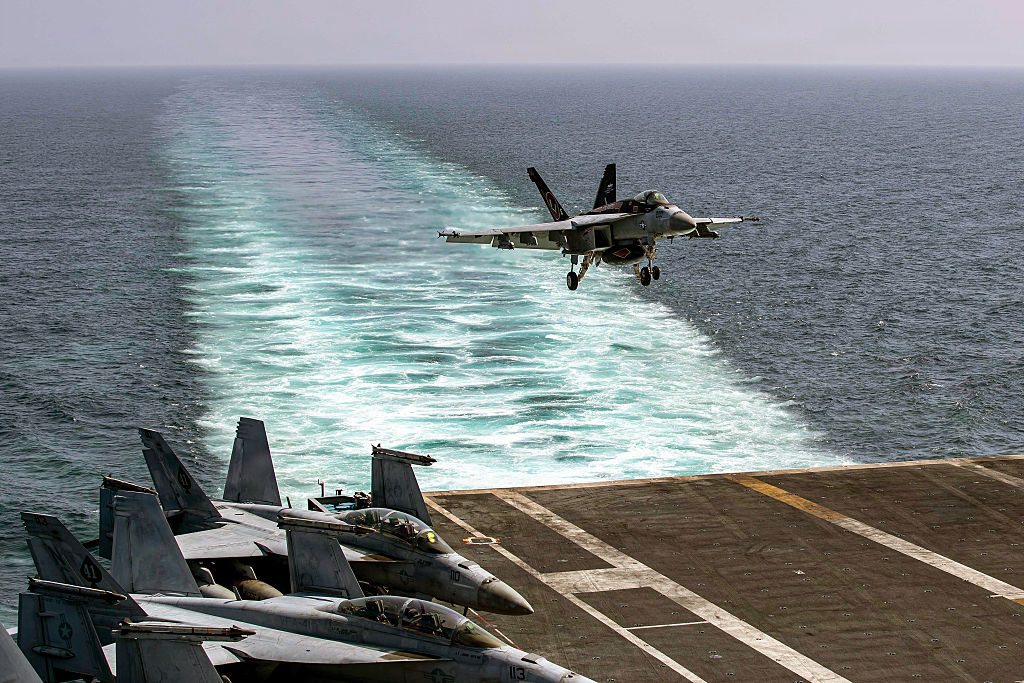
The USS Abraham Lincoln has been at sea in the Middle East for months, and with no clear end in sight for the war in Iran, concerns for those aboard the aircraft carrier—and for the vessel itself—have mounted amid a series of troubling reports.
Another aircraft carrier, the USS George Washington, had begun making its way towards the Middle East as of Thursday to replace the Lincoln, multiple news outlets reported. President Donald Trump appeared to confirm the reported ship swap on Friday, saying that the Lincoln "is moving right now, or very shortly and is being replaced with another very similar ship.”
The Washington’s deployment comes as reports have emerged in recent months recounting worsening living conditions, mental health concerns, and supply shortages on board the Lincoln.
Trump seemed to deny the reports on the state of the Lincoln and its crew on Friday, responding “No, they’re not,” in response to a reporter saying that families of the crew members are worried about conditions on board. He also said, when asked if the carrier has been deployed for too long, that it has been deployed “not nearly long enough.”
Defense Secretary Pete Hegeseth on Thursday called the reports of dire conditions on the Lincoln “completely misrepresented.”
“We make sure that every ship, every crew, every captain has everything we can provide them at every single moment. Some deployments are longer than others. I have more respect and gratitude for those sailors than anybody,” Hegseth, with a hand to his heart, told reporters. “I want them home as soon as everybody else, too.”
Admiral Brad Cooper, the top U.S. military commander in the Middle East, visited the Lincoln over the weekend. In a statement afterward, he referred to his time aboard “awe-inspiring,” citing the "camaraderie, teamwork and resilience” he witnessed. He lauded the Lincoln’s leadership “for making mental health … a priority.”
Out of the 11 active U.S. aircraft carriers, Cooper said the Lincoln had "among the lowest number of cases related to mental health,” though he acknowledged that long deployments at sea were "uniquely challenging and tough."
TIME has reached out to the Defense Department for comment.
Here’s what to know about the USS Abraham Lincoln, the concerns that have been raised over conditions on board, and the burgeoning calls for its crew to return home.
What is the USS Abraham Lincoln, and how long has it been deployed?
The Lincoln is in its ninth month at sea and has been deployed for more than 260 days.
The vessel works as a mobile airbase and command center with its own defense systems. It’s the length of more than three football fields and has a crew of roughly 5,000 when fully deployed.
It departed from San Diego in November on an alternate deployment, but was redirected towards the Middle East in January to provide tactical support to U.S. forces ahead of the war in Iran, which began with an initial wave of American-Israeli strikes at the end of February.
The Lincoln has played a key defensive role in the war against Iran, having shot down “hundreds and hundreds of missiles” and drone attacks that targeted the vessel, according to Hegseth.
“Every single one of those shots, easily shot down miles and miles away from the Abe Lincoln,” he said in April. “They were blowing ammo into fantasy land.”
The ship has also had a part in enforcing the U.S.’s blockade of Iranian ports.
The Lincoln’s deployment was expected to end in May, but was extended indefinitely.
The reported ship swap with the Washington comes as Trump has reinstated a blockade against Iran in the Strait of Hormuz and peace talks have stalled between the countries.
Reports of issues on board the carrier
Several reports have detailed poor conditions aboard the Lincoln. According to MS Now, which interviewed a dozen family members of crew members, those aboard the ship have been dealing with moldy showers and running out of key toiletries, such as toothpaste, deodorant, and soap. The outlet was also told that crew members are working grueling shifts with limited days off and that there are holes on the Lincoln’s flight deck, where pilots take off and land.
A spouse of a service member on the Lincoln also told CBS News that sailors had previously experienced food shortages. Another report from USA Today contained photos of rationed meals served to crew on board the carrier.
Adm. Daryl Caudle, chief of naval operations, pushed back against reports of food shortages back in April. “In no way, shape or form, has there been a time where in, at least in this deployment, where they’ve not met the nutritional requirements of our menu,” Caudle said.
As the deployment has stretched on and living conditions on board have allegedly deteriorated, the crew of the Lincoln has also reportedly struggled with increasing mental health concerns. The Navy Times and Stars and Stripes reported several instances of crew members on the vessel attempting to jump overboard.
An unnamed U.S. official confirmed to CNN that a crew member went overboard and was rescued last month, an event that was viewed as a mental health incident by the Navy, according to the outlet.
More than 200 families of crew members attended a meeting in San Diego last week with acting Secretary of the Navy Hung Cao. Many of the families raised a litany of concerns at a later virtual meeting, including about the crew’s mental health, safety, a lack of supplies and food, and water contamination, according to MS Now, which reviewed recordings of the meeting.
Cao was unable to specify during the meeting when the crew on the Lincoln would return home, according to the outlet.
The U.S. military has strongly pushed back against reporting about mental health concerns regarding the Lincoln’s crew.
“We have not observed an increase in suicidal ideations or attempts aboard the ship,” a U.S. official tells TIME. “Adapting to life at sea can be difficult, so we've learned how to provide resources and help Sailors with these transitions. We are not experiencing an uptick in mental health issues aboard Abraham Lincoln.”
The official says that “religious, medical and mental health professionals” are aboard the Lincoln, including five chaplains, a psychologist, a social worker, three "behavioral health technicians,” and a service dog “to support crew morale and emotional welfare.”
The official did not provide information regarding the ongoing deployment of those aboard the Lincoln “due to operations security.”
“The Sailors and Marines of the Abraham Lincoln Carrier Strike Group remain resilient and resolved after more than 260 days at sea, 10,000 aircraft flights, and 1.5 million pounds of ordnance expended,” U.S. Central Command posted on X on Thursday. “No service members aboard the aircraft carrier have died, and the one Sailor who fell overboard Aug. 3 was quickly and safely recovered.”
Democrats push for answers
The reports about conditions on board the Lincoln have sparked calls from several Democrats urging the Defense Department to remedy the situation.
In a letter to Hegseth and Cao, Sen. Richard Blumenthal of Connecticut, a member of the Senate Armed Services Committee, noted that the vessel’s crew members have not been to a port in a record-setting 200-plus days and demanded answers to a series of questions about the crew and the state of the ship.
“There have been widespread reports of shortages of basic supplies, water contamination, plumbing issues, deteriorating mental health, deck safety concerns, and disruptions in the mail system,” Blumenthal wrote. “These reports warrant immediate attention, but they also raise a broader question: whether the Navy can sustain the operational tempo now being demanded of its carrier force, particularly as this Administration repeatedly commits U.S. forces to conflicts of its own choosing and increasingly relies on aircraft carriers to sustain those operations.”
He also noted that the long deployment of the Lincoln is not an isolated incident, “suggesting that extended deployments may be becoming a feature rather than an exception of the Navy's force-generation model.” The USS Gerald R. Ford, used for the U.S.’s military operation in Venezuela, spent 326 days at sea before its return in May, Blumenthal wrote, which he noted was “nearly twice the length of a traditional six-month carrier deployment and the longest modern U.S. carrier deployment since the Vietnam era.”
Sen. Ruben Gallego requested an oversight visit to investigate the reports.
“Unlike Donald Trump, I've seen active duty,” Gallego wrote on X. “The way he's treating our service members as he carries out this illegal war is not just disgusting; it’s dangerous. These sailors are owed a sense of when they will go home.”
Gallego referenced the reports of crew members threatening to jump overboard, shifts lasting as long as 16 hours, rationed meals, and moldy showers, which he called “a frightening alarm bell.”
Rep. Sara Jacobs of California, who has introduced a War Powers Resolution to restrict Trump’s authority to continue the conflict in Iran without congressional approval, said that the Lincoln’s crew was “going through hell” and called for an end to the war. She described the reported poor conditions on the carrier as “a personnel issue and a national security risk.”
Sen. Mark Kelly of Arizona, a Navy veteran, has also taken to social media to call for accountability.
“Our servicemembers deserve better than this,” he said in a video posted to Bluesky. “There needs to be an investigation.” Kelly also blamed Trump having “no way out” of the war with Iran for the extended deployment of those aboard the Lincoln.
Rep. Mike Levin, who represents part of the San Diego region where the Lincoln was deployed from in November, took jabs at Hegseth’s comments downplaying the reports about the carrier.
“When families first raised the alarm back in April, Pete Hegseth called it fake news,” he wrote on X. “These men and women signed up to serve their country. The least their country owes them is hot water, a working toilet, and a real meal. Hegseth cannot even manage that, and he has the nerve to look their families in the eye and call them liars.”
A number of other Democrats have also joined the chorus of concerned voices over the Lincoln, including Rep. Jason Crow of Colorado; Rep. Seth Moulton of Massachusetts; and Sen. Chris Coons of Delaware, the top Democrat on the Senate Defense Appropriations subcommittee.
The 5 Congress Members Whose Families Trade the Most Stocks
Stock Trading in Congress Becomes an Attack Line in Midterm Campaigns
Jason Arday, professor at centre of Cambridge plagiarism row, found dead
Academic was pronounced dead at his home in south London after police called to address after 3pm on Friday
Jason Arday, the academic who resigned last week as a professor at the University of Cambridge, has been found dead at his home in south London.
The Metropolitan police said officers were called to Arday’s address by the London ambulance service after 3pm on Friday.
Continue reading...Hormuz chaos highlights risks for other global trade chokepoints
Jason Arday, Cambridge Professor Accused of Plagiarism, Is Found Dead
Jason Arday, professor at centre of Cambridge plagiarism row, found dead
Academic was pronounced dead at his home in south London after police called to address after 3pm on Friday
Jason Arday, the academic who resigned last week as a professor at the University of Cambridge, has been found dead at his home in south London.
The Metropolitan police said officers were called to Arday’s address by the London ambulance service after 3pm on Friday.
Continue reading...British cyclist, 19, dies in serious incident in Volta a Portugal race
FDA upgrades egg recall linked to salmonella to highest risk level
Where the Texas surrogate dispute stands right now
IDF troops stood by as West Bank settlers besieged Palestinian homes
Jason Arday, ex-Cambridge professor at centre of plagiarism row, found dead
What Wildfire Smoke Reveals About How We Respond to Climate Risk
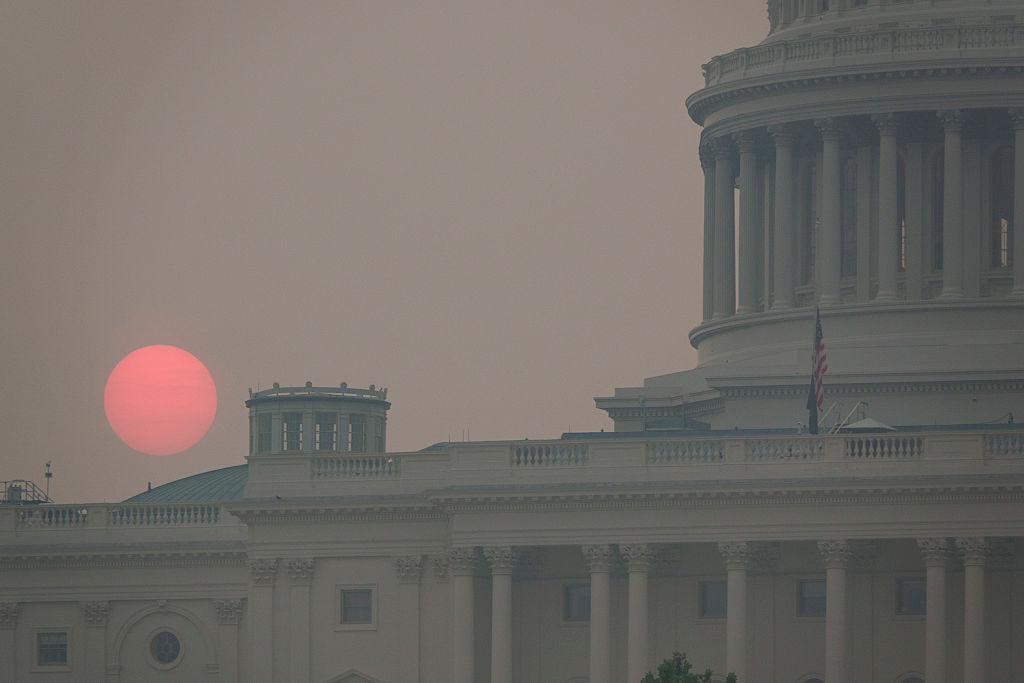
A month ago, I was running embarrassingly late to a meeting in D.C. And so, even though I knew the air pollution outside from the Canadian wildfires was a hazard to my health, I picked up the pace and ran a few blocks to minimize my tardiness.
The cough set in the next day, and I haven’t been able to kick it since. The doctor tells me I’m suffering from irritant bronchitis and that it should go away with time.
In the scheme of climate change, the cost of my cough is relatively small. It has slowed down my fitness ambitions a bit, and I am now frequently reassuring many a plane seatmate that I’m not actually sick. As an economic actor, it’s made me somewhat less productive.
Read more: What Living Through the Hottest July Ever Looked Like Across the U.S.
In a way, I’m embarrassed by this story. I know that fire-induced air pollution is dangerous. It can trigger chronic heart and lung issues and, in some cases, lead to emergencies. Wildfire smoke has been tied to more than 24,000 premature deaths in the U.S. each year. (That same morning I donned a mask, only to lose it over the course of the day.) But I’m sharing it because I think it offers a few valuable lessons in our age of climate extremes.
Perhaps the most obvious lesson is the undeniable economic effects of wildfire smoke. We see it clearly in the data. A 2024 study published in the The Review of Economics and Statistics found that a single day of wildfire smoke reduces quarterly per-capita earnings in affected U.S. counties by about 0.1%. In aggregate, the study estimates wildfire smoke reduces U.S. labor income by about 2%.
The wisest societal response to this would, of course, be to set out a policy framework to address both the root causes and the symptoms of the problem. Education about the risks and preventive measures like masking would help, too.
Nonetheless, at the end of the day, the economy absorbs these costs. At the local level, however, that may not be possible much longer as fires occur more frequently. While a fire generally cannot occur in the same place year after year, the smoke will often hit the same places over and over again. A company with operations concentrated in affected geographies faces real operational risk. And that says nothing of the very real human health consequences for affected individuals.
From an economic perspective, it’s worth noting that adaptation has a cost, too. If I had cancelled to avoid smoke exposure, I could have missed out on an important story idea, or I could have soured the other meeting participants, leading them to avoid working with me in the future.
Since my fateful two-block jog, I’ve also been wondering about psychology and human behavior. Most immediately, I wondered, why was I so stupid? I write about these things. I yelled at my dad for not wearing a mask amid the Los Angeles fires. In short, I know better. More generally, what does that say about our broader reluctance to take climate change seriously even though we know better?
Research on how individuals respond to wildfire risk shows perhaps an unsurprising result: people at higher education levels tend to take protective action more seriously than their less educated counterparts. For example, a study published earlier this year in the Proceedings of the National Academy of Sciences used cell phone data from the 2018 fire season in California to show just that. And yet, even the educated underestimate at what point the level of air pollution becomes dangerous.
But I was also intrigued by a smaller study looking at the response to fires published in the Journal of Community Health last year. Researchers found in general that study participants responded to fire-induced smoke pollution with smart interventions, like halting outdoor exercise and closing windows. But, at the same time, participants were constantly evaluating tradeoffs. Will it be too hot, for example, if I close the window?
The problem may be that even those who understand that there is a risk, myself included, may underappreciate the cost of neglecting prevention.
To get this story in your inbox, sign up to TIME's Future Proof newsletter here.
Alaska Democrat Mary Peltola Pushes Back Against Endorsement From Kamala Harris
A Prominent Mexican Politician Says U.S. Revoked His Visa
Trump Administration Asks Supreme Court to Greenlight White House Ballroom
Вышла новая модель: Qwen 3.8 27B

https://huggingface.co/Qwen/Qwen3.8-27B
Вышла модель Qwen3.8-27B, которая по бенчмаркам лучше чем Opus 4.6
Вот тут я на своей RTX 5090 запустил llama.cpp с этой моделью в кванте UD-Q5_K_XL :
Если упадёт из-за Хабр-эффекта, то ссылку уберу.
Читать далее‘Devastating’: bulldozers plough through Big Bend national park as Trump’s border work pushes ahead
Heavy machinery seen operating in famous Santa Elena Canyon amid outcry over new wall infrastructure in beloved Texas park
Bulldozers have begun plowing up ground at the mouth of Big Bend national park’s famed Santa Elena Canyon as part of the Trump administration’s multibillion-dollar “smart wall” expansion on the US-Mexico border, according to new footage taken by activists who have been monitoring the site.
Tensions have run high since the Trump administration announced plans to erect new border security infrastructure in the roughly 500-mile Big Bend region of south-west Texas, which includes the Lone Star State’s largest and most-visited national park.
Continue reading...Iga Swiatek takes swing at critics after ending title drought in Canada
Pole beats Rybakina to win her first title in 11 months but is angry about disapproving voices from her own country
It came as no surprise that almost a year of pent-up emotion exploded from Iga Swiatek the moment she slotted her final backhand winner to clinch the Canadian Open title by defeating Elena Rybakina in two clean sets on Thursday night.
As she screamed towards her team members on her corner of the court, pointed to her head and furiously pumped her fist, though, it was the tenor of Swiatek’s emotion that made her reaction noteworthy: she was angry. Her anger, she explained later, stemmed from the doubtful, disapproving voices she has heard throughout these difficult periods, most of it coming from viewers and the media alike in Poland.
Continue reading...‘Tinderbox’ Britain bans disposable barbecues, sends nationwide fire alerts as Europe battles blazes
Golfer Jessica Bang, 18, dies while preparing for tournament in Thailand
Marine vet on USS Lincoln's 200+ days without port call: "Very abnormal number"
PM responds to death of former Cambridge professor Jason Arday
‘Devastating’: bulldozers plough through Big Bend national park as Trump’s border work pushes ahead
Heavy machinery seen operating in famous Santa Elena Canyon amid outcry over new wall infrastructure in beloved Texas park
Bulldozers have begun plowing up ground at the mouth of Big Bend national park’s famed Santa Elena Canyon as part of the Trump administration’s multibillion-dollar “smart wall” expansion on the US-Mexico border, according to new footage taken by activists who have been monitoring the site.
Tensions have run high since the Trump administration announced plans to erect new border security infrastructure in the roughly 500-mile Big Bend region of south-west Texas, which includes the Lone Star State’s largest and most-visited national park.
Continue reading...Emergency alert warning of wildfire risk sent to phones in England and Wales
People urged not to light barbecues, campfires or anything else that could spark fire during period of extreme heat
Millions of people across England and Wales received an emergency alert to their phones on Friday as the government warned against activities that could start fires.
The deputy prime minister, Louise Haigh, said it was the most extensive use to date of the emergency alert system, with phones beaming a siren noise about 7pm, with the warning: “There is a serious risk of wildfires nationally.”
Continue reading...Thrive’s Joshua Kushner chides Silicon Valley VCs over AI euphoria
Canada Union Says Stellantis Eyeing Sale of Toronto-Area Plant
Trump delivers speech on Long Island to law enforcement
France's top court blocks social media ban for under-15s
Mangione admits killing healthcare CEO and pleads guilty to federal charges
Afghan women tell the BBC their lives are unrecognisable after five years of Taliban rule
WATCH: Trump says USS Lincoln's deployment was 'not nearly long enough'
US Forest Service chief reportedly pressed staff for more support for wildfire near his ranch
Michael Boren requested more aircraft for 7-acre Cabin Creek fire, some of which were diverted from other fires
Michael Boren, the US undersecretary of agriculture for natural resources and environment who oversees the US Forest Service, reportedly pressed agency staff last month to deploy more aircraft to a 7-acre (2.8-hectare) fire that was burning near his Idaho ranch, according to a Washington Post report on Friday.
The Cabin Creek fire in Idaho began on about 12 July as a result of an unattended campfire, and spread across several acres in Idaho’s Sawtooth national forest. By 15 July, the forest service said that the fire was 100% contained.
Continue reading...Alex Murdaugh granted change of venue for murder retrial, past testimony allowed
Derailed Essex to London train leads to travel chaos
The True Story Behind The Brink of War

The Reykjavik Summit—when U.S. President Ronald Reagan and Soviet Union President Mikhail Gorbachev talked in person in 1986—is not known as an iconic bit of American history. But the face-to-face conversation between the leaders, held over Oct. 11 and 12 in the Icelandic capital, proved to be an important step toward the end of the Cold War.
The summit (or meeting, depending on who you ask) came after “an unexpected invitation from Gorbachev,” says Pete Souza, the former Presidential photographer for Reagan. At the time the Reagan administration refused to call it a summit.
“Before two leaders like that have a summit meeting, there's lots of prep work that goes into it,” recalls Souza. “But this was very last minute. The Reagan administration went to great effort leading up to Reykjavik, to not call it a summit. They’d say, ‘It’s just a meeting, and we’re not characterizing it as a summit.’”
The summit’s purpose was to discuss the arms controls between the two nations, in hopes of bringing an end to the long-lasting threat of nuclear war hanging over both countries, and the world as a whole. Over 30 hours, Reagan and Gorbachev fiercely debated in an effort to bring peace and the end of the Cold War. Now, a new film from writer-director Michael Russell Gunn, The Brink of War, gives this historical moment a worthy spotlight. The film stars Jeff Daniels as Reagan, Jared Harris as Gorbachev, and J.K. Simmons as Secretary of State George Shultz.
For Gunn, the idea for The Brink of War came from a meeting he had with the real George Shultz, to whom the film is dedicated. Shultz told him all about the Reykjavik Summit. “I had never heard of this summit before,” says Gunn, “but once I found out I couldn’t stop thinking of it.”
There was one particular detail from their conversation that made Gunn realize the Reykjavik Summit was a pivotal moment in world history. “Schultz told me he asked Gorbachev years later—and I included this in the movie—what changed to bring an end to the Cold War,” says Gunn. “Gorbachev responded with one word: ‘Reykjavik.’” From that moment, Gunn knew he had a movie.
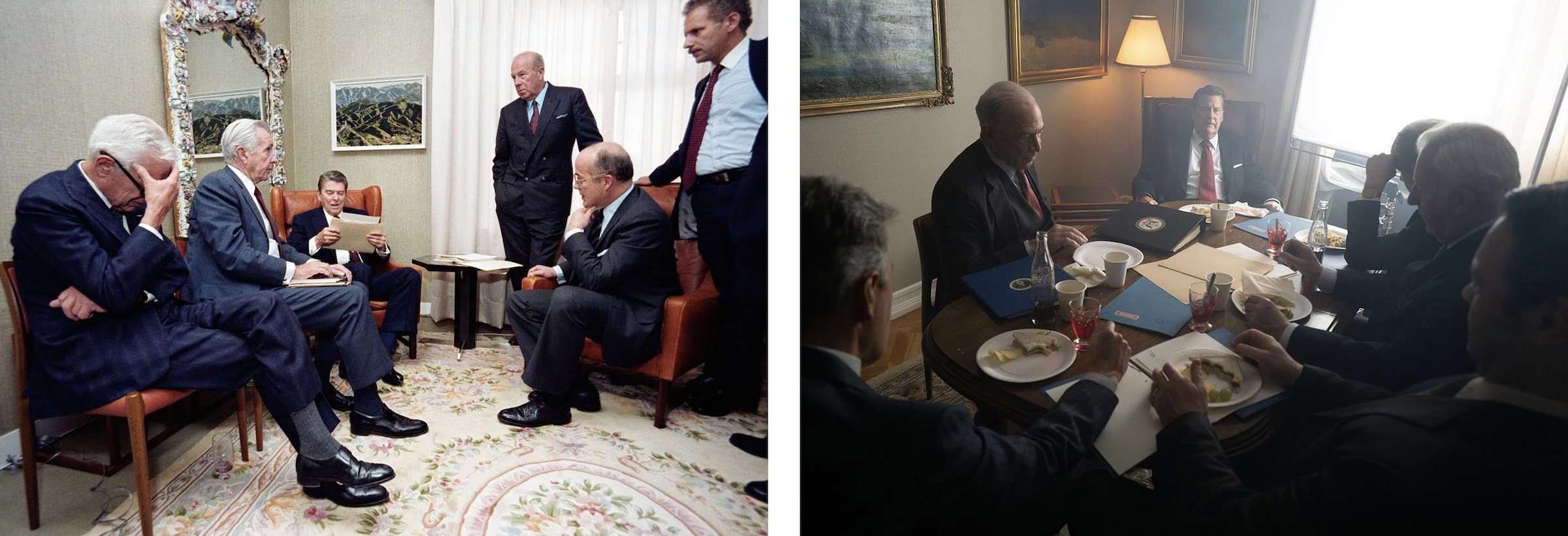
Shultz detailed a memory to Gunn about how he’d stand outside the meeting room when Gorbachev and Reagan went in, and these two military officers would be standing there, each of them holding a nuclear football. “If things had gone badly, Reagan and Gorbachev could walk out, press the buttons, and end it all,” says Gunn. “The idea of these two military officers with all the power in the world literally in their hands, was an extraordinary memory to share, and an extraordinary thing for us to film.”
Gunn was struck by how generous Shultz was with his time, and he gave the filmmaker something that would allow for an exceptionally realistic approach: the declassified transcripts of the meeting. The transcripts allowed Gunn another first-hand account of the summit, as well as the opportunity to lift dialogue directly from the real conversations into the script. A number of conversations are nearly verbatim to what the transcripts show, though Gunn admits to finessing certain moments for cinematic purposes. “I tried to make it as close as I possibly could,” says Gunn.
The only points Gunn really departed from the transcripts were things they didn’t reveal. “I didn’t have transcripts of what was going on with the advisors, or what was happening with the first ladies,” he says. For that, he researched several books, pointing to Dutch: A Memoir of Ronald Reagan by Edmund Morris and Gorbachev by Willaim Taubman to help gather a fuller sense of the people surrounding the leaders.
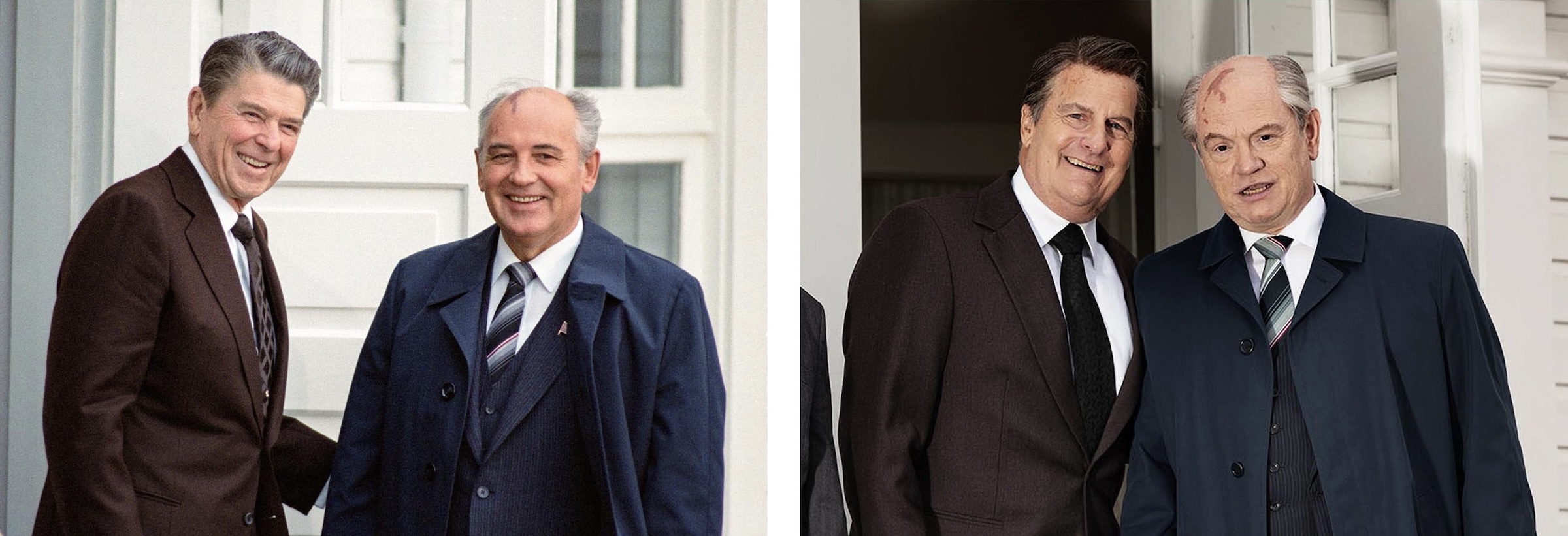
Gunn calls himself a lifelong fan of Souza’s photography, and he pulled the original proofs from Souza’s summit photography at the National Security Archives. On a whim, he cold emailed Souza to see if he was available to join them on the film shoot to produce the film’s still photography. To Gunn’s delight, Souza accepted. The veteran photographer provided Gunn great assistance in faithfully recreating the summit, and the photos Souza took have a striking resemblance to the original photos from ‘86.
The summit itself was an incredibly tense showdown that occurred over a brief 30 hours. The discussions of arms controls with a view to bring an end to the Cold War came tantalizingly close to fruition. At one point during the summit, Reagan and Gorbachev were close to agreeing on a deal that would remove every single nuclear missile from the planet, a moment in the transcript that Gunn was particularly stunned by. “Gorbachev proposed eliminating all these different classes of weapons that the Americans weren’t expecting,” recalls Souza. “There was a moment when Reagan and his team thought ‘This can be historic.’ There was a real excitement about it.”
That excitement was all too brief. As a condition of eliminating these weapons, Gorbachev demanded an end to the Strategic Defense Initiative (SDI), nicknamed “Star Wars,” a missile defense system proposed to protect the United States from attack. “The whole SDI thing doomed that hope. Gorbachev wanted Reagan to not go any further with the SDI. That was the sticking point, and the mood changed to disappointment,” says Souza.
“My main takeaway of President Reagan behind the scenes was he had such an even keeled disposition,” says Souza. “It would take so much to get him angry or pissed off. One of the few times where he got pissed off was at the end of Reykjavik.”
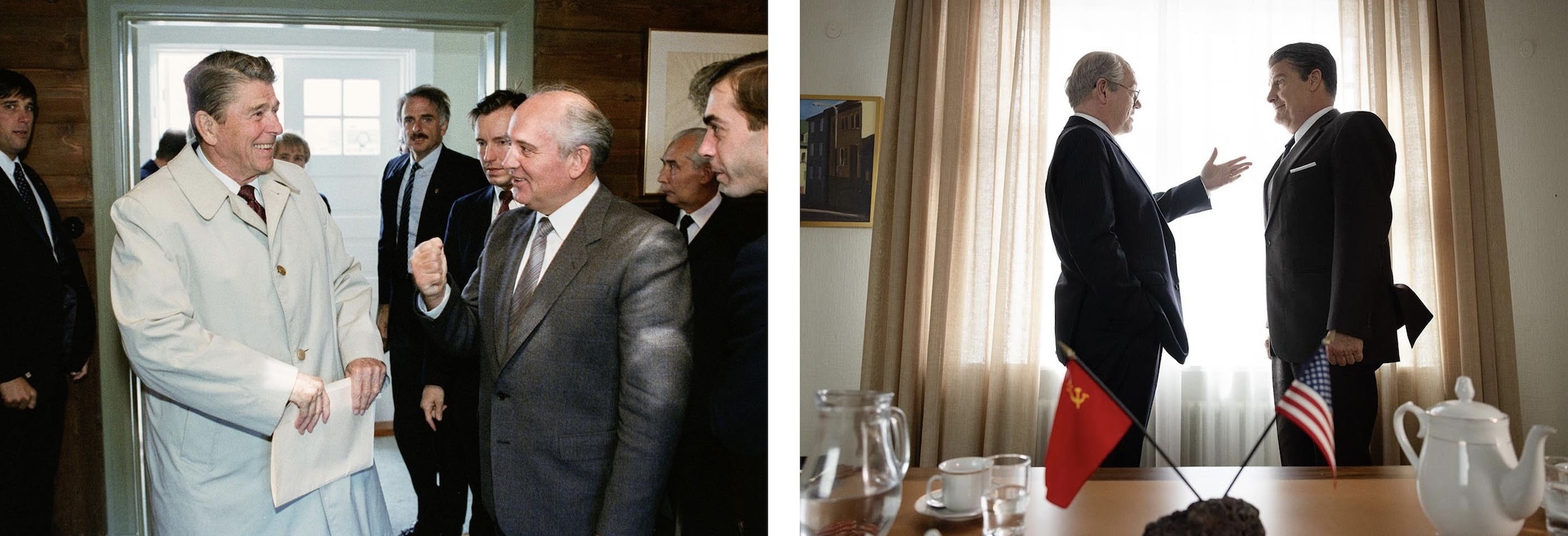
The summit was considered a failure at the time, with no agreement struck at the end. However, it ultimately provided a breakthrough between Reagan and Gorbachev. The Intermediate-Range Nuclear Forces Treaty was signed on December 8, 1987, which was an enormous step forward to the end of the Cold War, which ultimately concluded with the fall of the Soviet Union in 1991. If it wasn’t for the Reykjavik summit, it’s likely that treaty never would have been signed.
Gunn hopes the film can show audiences that if we work with people who disagree with us, we can forge a better future.
“For one, I want the audience to walk out of the cinema with hope. That as divided as we are, it's been worse,” Gunn says. “We were literally about to blow up the world with enemies, and we found a way out of that. The second thing I want people to walk out with is courage. It takes courage to engage with people you disagree with. We've decided that listening means we agree, and that's not true.”
Adds Gunn: “They didn't agree, but they listened to one another, and they found a way to make a better, safer world.”
How Jane Schoenbrun Has Fun With Horror (and Chicken) at Camp Miasma
DOJ Charges Kentucky Woman in World War II Memorial Vandalism Case
Prisoners charged over attack on Sara Sharif's father
'I shot Mr Thompson'- What it was like inside court as Mangione pleaded guilty
Madonna will not be playing Glastonbury in 2027, Emily Eavis says
Festival organiser says she has booked next year’s headliners but would not say if Taylor Swift is among them
Madonna will not be performing at next year’s Glastonbury, the festival’s organiser, Emily Eavis, has said.
The singer, who has the most top 10 singles in UK chart history of any female artist, has never featured at Britain’s biggest music festival.
Continue reading...