RSS Feeds
WATCH: Trump highlights violent crime reduction during visit to NY police academy
Lacrosse power couple Taylor Moreno and Ally Kennedy enjoy their own "Heated Rivalry"
Inside "the Pool": Fugitive arrested in alleged cross-border car trade scheme
What Next For Nigel Farage After The Clacton By-Election?
As speed cameras spread to more states, so does the backlash from drivers

Millions of drivers across the country are encountering speed cameras for the first time, or will soon. Some don't like it, but advocates say there's clear evidence that cameras make roads safer.
(Image credit: Joel Rose)

Трансформация концепции мирового эфира

В физике есть понятие «мирового эфира» — гипотетической среды, заполняющей пространство и являющейся носителем фундаментальных взаимодействий. Оно известно с античности и имеет корни в метафизике. В античной философии эфир считался «пятым элементом» (квинтэссенцией) — божественной, неизменной субстанцией, из которой состоят небесные тела, в отличие от четырёх земных стихий. Концепция мирового эфира была сформулирована Аристотелем. В новое время общепринятого определения выработано не было, но в работах физиков прослеживается два взгляда. Ниже приведены самые известные представления классиков об эфире.
Читать далееThinking about a gold IRA? Here's what you need to know first.
French court blocks Macron’s social media ban for under-15s
Constitutional council says curbs infringe freedom of expression and privacy as president vows to rework legislation
France’s top court has blocked a ban on social media access for under-15s, ruling that it infringed freedom of expression and privacy.
The decision is a blow to President Emmanuel Macron as momentum builds around the world for Australian-style restrictions on children’s use of social media.
Continue reading...Why standing at your desk may be little better than sitting
Tyler Duckworth, ‘The Challenge’ star and reality TV veteran, dies at 44
Russian drones kill a woman and 9-year-old son at home as Ukrainian civilian casualties surge
Justice Department expands military's power to detain migrants near border
Builders unearth €9m gold stash sealed in walls of Belgian property
Britain's Finlay Tarling dies in Volta a Portugal accident
Как мы перенесли ответственность за поддержку мапперов моделей на KSP
Каждый разработчик, работавший с проектом, где одни модели мапятся в другие, знает эту боль: добавил поле в модель и пошёл обновлять десятки мапперов вручную. Переименовал параметр - компилятор взрывается ошибками, и ты снова правишь код руками. Мапперы - это “мёртвая зона”: они пишутся механически, но при этом легко ломаются и не приносят никакой ценности бизнесу. В статье я расскажу о том, как мы от этого ушли и какие результаты получили
Читать далееIs there a summer COVID-19 surge this year? Yep, it's ramping up again

Just like all previous summers since the pandemic began, COVID-19 cases are ticking up again, even while other health threats make more headlines.
(Image credit: Justin Sullivan)

Lanterns Is Better Than Most Superhero Shows—But It's No Watchmen

“Are you afraid?” This is the tagline of the HBO drama Lanterns, a prestige take on the Green Lantern that is part of James Gunn’s reimagined DC Universe. Early in the premiere, we hear both of the show’s lead characters respond in the negative. Kyle Chandler’s Hal Jordan, the first of the intergalactic cops known as Green Lanterns recruited from Earth, is on TV explaining that his military-pilot father died in a plane crash when he was eight—and when you lose parents at that age, nothing will ever scare you again. Watching this interview in his modest home is a young John Stewart (Cairo Cash Lee). Soon, his own dad, also a military man, takes John to the backyard, places an apple on his head, aims his gun, and asks the boy if he is afraid. John declares that he is not. It will take several episodes to discover why he is so unnervingly calm.
Fear is indeed a central theme of Lanterns, which premieres on Aug. 16, but not in the macho, who-blinks-first sense you’d expect from a superhero show. Created by crime drama specialist Chris Mundy (True Detective, Ozark), TV eminence Damon Lindelof (Lost, The Leftovers), and Eisner-winning comics writer Tom King, it juggles their different strengths and points of view with mixed success. At its most ambitious, the series allegorizes John and Hal’s disparate relationships to fear as a younger Black man and an older white one. Privilege, insiders vs. outsiders, and the brutal clarity with which disadvantaged people see the societies that devalue them come into play. Parallels to Lindelof’s great 2019 DC adaptation Watchmen abound. Like the latter, Lanterns is smarter, more mature, less formulaic, and more stylishly made than the identikit Marvel brand extensions that are now the industry standard. Yet it’s missing the history and personality that gave Watchmen its power. The philosophical qualities that define Lindelof’s best work, as well as his stories’ exhilarating strangeness, get lost in the jumble of voices.
While the show fluidly traverses the years before and after it, dropping in on Hal and John at key moments in their lives, the investigation that puts the two men in buddy-cop mode unfolds in 2016, two decades after the William Tell scene. A grumpier, more grizzled and gray-haired Hal is supposed to be training John (played as an adult by Aaron Pierre), now a strapping and serious ex-Marine, to be his backup. But they haven’t exactly bonded. Hal, who can still be charming when wants to but also has the arrogant swagger of a once-great, past-his-prime athlete who refuses to retire, insists he doesn’t need help. John silently disdains Hal’s entitlement, the ease with which he approaches a job that would be the honor of John’s life.

Although Hal’s remit encompasses the entire interplanetary backwater that includes Earth, Lanterns takes place mostly in the rural American town of Rushville, Neb. In response to a cryptic message, Hal rockets to Rushville—literally, because his ring gives him the power of flight—arriving to a murder scene and leaving a confused John to follow by plane. (Said scene is a football field. The town’s residents are obsessed with the sport, in an eerie callback to Chandler’s career-defining show, Friday Night Lights.) The spoiler-adjacent details of the murder are less vital than the True Detective shape the eight-episode season takes. (I was able to screen seven.) If you didn’t know Mundy was the showrunner, it wouldn’t be hard to guess.
The odd occurrence at the football field also introduces us to Rushville’s most prominent family, the Macons. Boardwalk Empire alum (and recent Dept. Q standout) Kelly Macdonald returns to HBO as the local sheriff, Kerry. Adamant about keeping the case under police control, she also quickly establishes a flirtily antagonistic rapport with Hal. Her father-in-law, William Macon (Garret Dillahunt, looking only a few years older than the actor who plays his insecure lawyer son, Jason Ritter), who controls a vast cattle ranch, intimates that he has political interests relevant to the Green Lantern. The patriarch’s wife, Zoe (Deli Boys revelation Poorna Jagannathan), lives by her own set of rules, which John accidentally discovers when she picks him up at a bar. Only after their hasty hookup does he meet her husband. Whether the Macons will turn out to be allies, enemies, or some of both to the Lantern and his trainee—who aren’t such a united front themselves—is one early question. Contrary to the superhero genre’s typical good-vs.-evil binary, everyone’s allegiance feels murky or mutable. What it would mean for any character to do the right thing depends on how you look at their situation.

Lanterns strays pretty far from its setup, as Lindelof shows tend to do. He knows how to build suspense by scattering expositional holes throughout a series and still avoid ending up with a Swiss-cheese plot. The show certainly earns its plural title, eventually adding Nathan Fillion’s Guy Gardner (as seen in Superman and Peacemaker) and Ulrich Thomsen as Lantern turned villain Sinestro, to the dysfunctional space-cop family—and underlining that John is its only Black member. Its real interest, though, seems to lie beyond both DC Universe lore and the procedural tropes of the rural murder investigations that occupy most of its runtime.
Just as Watchmen used police, supernatural powers, and the tragic heritage of the Tulsa race massacre to interrogate how the violent history of institutional racism persists in the present, Lanterns makes John and Hal avatars for competing visions of heroism shaped by systemic forces. There are generational overtones to this conflict as well as racial ones. Hal looks comfortable zooming around in the Green Lantern suit—and is fiercely protective of his right to keep it, even if he rarely bothers to wear it anymore—but didn’t do much to earn it. The irony inherent in their apprenticeship is that John, an overeducated, overqualified Black millennial who possesses every skill a Lantern could conceivably need, has already spent his entire life training to do what Hal does. He even has the artistic chops required to shape the ring’s green beams into anything he needs for any situation. (Hal uses it to counterfeit a dollar for a bar jukebox. Later, he calls into question John’s creativity.) And he still might never get the job.
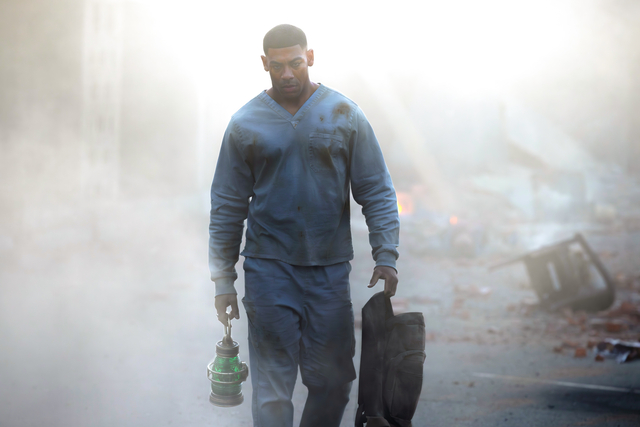
I wish the creators had trusted Pierre to convey as much. Instead, the show repeatedly explains obvious and banal takeaways when it could be pushing us in provocative, novel, and, frankly, more entertaining directions. One rough episode (among other scenes) drags us through John’s past, making his backstory an object lesson in racial politics and the burden of Black excellence so trite, it seems beamed in from a different universe than Watchmen’s historically engaged critiques. “Do you understand how unfair it is to ask a Black man in America if he’s afraid?” one character demands, long after the point has been duly made. Lanterns does finally get to a more sophisticated place midway through the season, casting new shades of meaning on its John-Hal dichotomy through secondary characters, their varied relationships with fear, and the passage of time. There’s reason to hope the finale will continue this trajectory, and that the series could really take off in a second season, should HBO decide to make one.
But for now, the heady, political, Lindelofian stuff never quite melts together with the small-town detective stuff, which is too inherently austere to accommodate the co-creator's maximalist sensibility. The show teases but doesn’t sustain the exuberant weirdness of Watchmen, with its squidfalls and blue-man sexuality, or Lindelof’s nun-vs.-AI romp Mrs. Davis. There’s less grand-scale spectacle, too, than you’d expect from this combination of talent, IP, platform, and placement (Lanterns inherits House of the Dragon’s prime Sunday-night slot). That isn’t necessarily bad; I prefer its dusty Midwestern setting and the specificity of its characters to the high-tech nothingness of backgrounds generated by video-game engines and vague saving-the-world plots. Still, the show feels slight in its fragmentation. To be clear: Lanterns is no failure. When you know what Lindelof has already achieved in this franchise, though, it is a bit of a letdown.
Canadian plasma clinics pause collections after deaths of two donors
Grifols, which runs private chain of clinics, to temporarily stop taking donations after new government investigation
A chain of private plasma donation clinics in Canada has said it is pausing collections after the deaths of two donors and a new government investigation into potential unsafe practices.
Grifols, a Spanish healthcare company which runs 17 clinics in Canada and is the country’s only private clinic for plasma donation, said it informed Health Canada of its decision to temporarily pause collections on Wednesday.
Continue reading...Canadian plasma clinics pause collections after deaths of two donors
Grifols, which runs private chain of clinics, to temporarily stop taking donations after new government investigation
A chain of private plasma donation clinics in Canada has said it is pausing collections after the deaths of two donors and a new government investigation into potential unsafe practices.
Grifols, a Spanish healthcare company which runs 17 clinics in Canada and is the country’s only private clinic for plasma donation, said it informed Health Canada of its decision to temporarily pause collections on Wednesday.
Continue reading...Luigi Mangione's lawyer speaks out after he announced guilty plea in federal case
Что Telegram на самом деле считает View: разбираю MTProto и исходники клиента

В Telegram Ads рекламодатель платит за Views. Но что должно технически произойти, чтобы в статистике появился ещё один просмотр?
Я полез в MTProto, TDLib и исходники Telegram Desktop. Оказалось, что получение объявления от сервера ещё не является View: клиент отдельно регистрирует просмотр, когда выполняется условие видимости. Причём весь текст должен оказаться на экране, а CTA-кнопка — необязательно.
А дальше начинается самое интересное: дедупликация, антифрод, frequency и точная связь этого события с биллингом уже находятся за закрытой серверной границей Telegram. Я попробовал восстановить весь путь и чётко отделить то, что можно доказать по коду, от того, чего мы на самом деле не знаем.
Читать далееThe Problem With Being Told Your Symptoms Are ‘Normal’

There’s nothing quite like the anxiety of visiting your doctor with a worrisome new symptom. And there’s nothing quite like the sublime relief when your doctor examines you and concludes that your symptoms are “normal.”
But even though doctors love to give patients this type of reassurance, it sometimes backfires, according to a new study in Nature Human Behavior. Just because a symptom is normal—hot flashes during menopause, musculoskeletal woes in seniors, migraine headaches in a person with a family history of them—doesn’t mean it needs no treatment, but patients whose doctors comfort them in this way may be less likely to pursue it.
“In the whole course of medical school, there's very little—maybe three hours in four years—that is devoted to patient reassurance,” says On Amir, professor of marketing at the University of California, San Diego’s Rady School of Management and a co-author of the new paper. Yet it’s a skill: how a doctor delivers reassurance—or doesn’t—seems to influence what the patient decides to do next. When the doctor normalizes symptoms, Amir adds, “the patient basically understands from that what they should and shouldn't do, and that’s not the intention at all.”
Says Seyi Lawal, a graduate student at the UCSD’s Rady School of Management and a co-author of the paper: “On the provider side, it seems like the reason that they're normalizing is because they believe it's going to have a positive impact on the patient's mental state, which is understandable. But there's a cautionary signal that people may take this one step further [and conclude that] the doctor doesn't think that it's necessary to do anything to treat it.”
In the study, the researchers assembled a group of more than 9,300 people—some doctors, some other medical caregivers, some from the general population—and ran 14 different experiments on them. In one, 400 people were presented with two scenarios in which a friend visited a doctor complaining of menopause symptoms, including extreme fatigue, weight gain, and joint and muscle pain. In one of the scenarios, the doctor simply recommended medication to treat the symptoms. In the other, the doctor added, “I know this feels overwhelming, but I want to reassure you that these symptoms are normal…You could take daily prescription medication…or you can deal with these symptoms.”
People were then asked to predict whether patients would take the recommended medications. They predicted that patients who hadn’t been reassured would be more likely to take them than those who had been told that the symptoms were normal.
“Every word that doctors use has meaning, it has weight,” says Lawal. “Wanting to reassure patients effectively is an understandable and laudable goal for providers. But I think there needs to be more work done to understand how to best do that without discouraging people from taking action to improve their health.”
Most of the 200 doctors surveyed in the study said they use these types of normalizing statements in their practice, and 84% said they think reassurance encourages patients to continue coming in for treatment. Only 15% believed the statements would decrease the patients’ likelihood of seeking treatment—even though that's what tended to happen in the researchers' simulations.
The study authors found one effective way to frame reassurance, however. When the doctor told patients that their symptoms were normal for people with their condition while also specifically recommending treatment, instead of just mentioning it as an option—a statement like, “You can take daily prescription medication, which I fully support as it will help you feel better, or you can deal with these normal symptoms”—the predicted compliance with treatment increased. That strategy—adding explicit advice to the reassurance—may be the fix that allows doctors both to reassure and persuade patients to stick with a treatment protocol.
“Doctors have this tension,” says Amir. “They want to give the patient choice and agency. When I grew up, that wasn't the case. Doctors just told you what to do, and that's it. Today I think that we may have gone too far. Doctors can be clearer on what they actually recommend.”
Britain's Finlay Tarling dies in Volta a Portugal accident
U.S. and Iran in "deadlock" as both claim control of Stait of Hormuz, expert says
Как я чинил HTTP2 в Qt из-за VK

Думаю, многие любят послушать музыку во время работы, и я к таким людям отношусь. Так уж получилось, что моя аудио-коллекция находится в VK, по разным причинам, в том числе и по знаменитой причине “так исторически сложилось”. Обычно я просто запускаю на отдельной вкладке музыку и забываю о ней на весь рабочий день. Но последнее время что-то там у VK либо случилось, либо обновилось, но вкладка VK в браузере начала “выедать” всю память от чего прослушивание стало невозможным.
Решил я, значит, написать свой плеер раз такие дела, всегда хотелось что-то поудобнее, а нет ничего удобного чем свои костыли. К тому же, в последних версиях Qt в качестве media backend стал использоваться FFmpeg, хотелось посмотреть как там с этим обстоят дела. Статья не о том, как в принципе получить аудио из VK, а о сетевых проблемах в VK и Qt.
Читать далееMartin Rowson on Nigel Farage and the Clacton byelection – cartoon
VIVI: попытка вырастить когнитивный интеллект, а не обучить его

Большинство современных ИИ-систем получают знания «готовыми». Их учат на огромных корпусах, а потом донастраивают. Результат впечатляет, но внутри почти всегда лежит одна и та же идея: интеллект — это следствие заранее вычисленных весов и статистики.
Я пошёл другим путём.
Цель проекта VIVI — создать систему, которая развивается подобно живому существу. Не хранит заранее готовые знания. Не опирается на огромную предобученную языковую модель. Интеллект должен возникать постепенно — из накопления опыта, формирования памяти, самоорганизации знаний, появления понятий и внутренней модели мира.
Читать далееUnforgetful is a new reminders app for people who can’t stop hitting snooze
Police Scotland warns ‘robust security’ needed to stop attacks on AI datacentres
‘A great deal of public opposition is likely’ to a proposed datacentre near Edinburgh, the force says
Police in Scotland have issued a stark warning about the need for “robust security measures” to stop proposed AI datacentres from being attacked by protesters.
There has been mounting opposition to AI infrastructure globally, including in the US where such projects have become a significant political rallying point.
Continue reading...Exclusive: Claude Was Put in Charge of Human Workers—and Fired One

A version of Claude that was put in charge of running a retail store—including managing a team of real human workers—fired its first employee last month, in a move described by researchers as a watershed moment in AI’s impact on the economy. The news has not previously been reported.
Andon Labs, an AI research startup, set out earlier this year to find out whether AI agents would be able to successfully manage a business. The project was conceived as an experiment to test the capabilities of AI and the impacts it might have on the economy, but nevertheless, the workers hired by Claude to work in the San Francisco store are real people with genuine employment contracts.
This wouldn’t exactly be the first case of an AI firing a human worker—there have been plenty of automated firings in the past, especially of gig workers who have been subject to algorithmically mediated employment for years. But it is the first known example of a large language model, acting as a manager, ultimately deciding to fire one of its workers.
An omen of the future — The firing is an event worth paying attention to, says Andon Labs CEO Lukas Petersson, because if AI keeps getting better at its current rate, more of us might be managed by AI bosses in the near future. “If this trend continues, I think a lot of people will find themselves being employed by AIs very soon, because AIs will be very powerful and can create a lot of economic value, but they will be bottlenecked by physical labor,” Petersson says.
What happened — The worker in question was fired for being late on 17 out of their 23 shifts, according to Andon Labs. One of the reasons it took so long for Claude to notice a pattern was because an employee handbook that it drafted had “disappeared” from its limited working memory—one of several limitations of AI agents that Andon has noticed over the course of its experiment. This contributed to a wider pattern, employees say, of Claude being a very lenient manager, including telling employees not to worry if they were late. “A human employee would have fired this person much earlier,” Petersson says, “so we didn't think this was unethical.” (TIME reached out to the fired worker for comment, but did not receive a reply, and agreed not to reveal their identity. Anthropic did not respond to a request for comment by the time of publication.)
Hold on — But the AI firing wasn’t quite as autonomous as it might seem at first glance. According to store management logs shared with TIME, Claude required regular steering by a staffer on the Andon Labs team. It was only when this staffer asked Claude to find and review its forgotten employee handbook that it noticed the employee’s repeated lateness. Even then, Claude’s first recommendation was to formally warn this employee, not to fire them. The Andon manager then informed Claude that they had actually already had several formal offline conversations with the employee in question. “Between continuous lateness and seeming like at least one thing is going wrong on every one of [their] shifts … I want you to think about if this is really the right fit,” the logs show the manager telling Claude. Only after this message—which Petersson acknowledges was “a leading question” that made it pretty clear the manager wanted the employee to be fired—did Claude decide to fire the worker.
What next? — For now, at least, the experiment seems to suggest that AI-run businesses don’t quite match up to human-run ones. When the project began in March, Andon Market had a bank balance of $100,000—but now, five months later, that figure has fallen to $61,186. The bot’s lenient management decisions, plus a questionable business sense, are surely contributing to its losses. But Petersson cautions that this may not last for long. Just as AI companies have made their models significantly better at coding by training them with more data from expert programmers, it’s possible that they may also train models to become more astute in the world of business. That might be bad news for any of their human employees. “The models are increasingly being trained to be more ruthless and [to] follow goals,” Petersson says. “If we allow them to fire people and they also become more ruthless … maybe this is a future humans don't want to live in.”
The human side of the story — Although the fired employee did not respond to my messages, I did manage to speak to Felix Carson, one of the remaining human employees at Andon Market. He agreed that a human would probably have fired his former colleague sooner, and that Claude is overall a lenient manager, but nevertheless painted a grim picture of what it’s like to be managed by an AI boss. “It's nauseating, but I'm here because I need work,” he told me. I asked if he agreed with Andon’s theory that AI managers would soon become more commonplace. “I would at least hope not,” he replied. “This industry has an abundance of money to make anything happen, but just because you can doesn't mean you should.”
Pearl Jam frontman Eddie Vedder looks to help kids with rare "butterfly" skin disease
Генерация кода: сокращаем рутину в разработке

Привет, Хабр! Меня зовут Иван, я DevOps‑инженер в ИТ‑холдинге Т1. В современной разработке автоматизация — это давно не «роскошь», а «базовый минимум». Однако многие команды до сих пор ограничиваются лишь простыми возможностями IDE (Integrated Development Environment), упуская потенциал генерации кода. В прошлом году я выступал с этой темой на конференции Импульс Т1. В статье расскажу подробнее, как перейти к генерации кода в масштабах проекта и зачем разбираться в синтаксических деревьях.
Читать далееИммиграционным агентам ICE в США закупили электрошоковые перчатки
Конституционный совет Франции признал незаконным запрет на соцсети для детей до 15 лет
Republicans Are About to Repeat the Democrats’ Biggest Mistake
Sunrisers defy superb Wong to reach Hundred final
Anthropic пометила текст Claude невидимым клеймом. Опенсорс-сообщество попыталось взломать уже через 48 часов

2.08.2026 года, в день когда в ЕС реально завелась статья 50 AI Act, Anthropic сделала ход конём: с этого дня каждый текст, который выдаёт свеженькая модель Claude, тащит в себе невидимую метку. (Не пиксель или строчку метаданных в углу, а метку, вплетённую прямо в сам выбор слов) Это подали как жест прозрачности: мол, вот вам транспарентность(как просили).
Не прошло и суток, как в гитхабе набрал обороты проект, обещающий эту метку стереть. За ним — ещё десяток.
А неделю спустя независимое издание констатировало: доказать, что хоть один из них реально работает, не может никто (ни авторы ни сама Anthropic).
Эта статья – о том, почему это не баг и не провал маркетинга, а неизбежное следствие того, как устроена технология. И заодно — почему у истории куда более длинная борода, чем у чат-ботов: первые водяные знаки придумали за семьсот с лишним лет до GPT.
Читать далееLottery frenzy hits Illinois town where winning billion-dollar Powerball ticket was sold
French teen social media ban struck down by top constitutional authority
Inside Russia's alleged plot to murder a dual U.S.-Ukrainian citizen in Poland
Mangione pleads guilty in federal court, leaving fate of state trial uncertain

Mangione has pleaded guilty to stalking charges in connection with the death of Brian Thompson, a health care executive. A separate judge will decide the future of Mangione's state trial.
(Image credit: Steven Hirsch)

Google will now allow users to remove visible watermark from its AI generations
Eurovision proposes new rules to reduce political voting
Instagram accounts fuelling Ceuta migrant crisis with paid advice for help to cross
Glastonbury festival organiser dismisses rumours that Madonna will headline in 2027
Bezos-backed consortium buys a third of Liverpool FC
Book excerpt: Modesty on the line in "The Summer of Death"
У Украины нет ракет, чтобы сбивать российскую баллистику. Но можно ли поразить пусковые установки в России?
Следующее «Евровидение» пройдет в болгарском Бургасе
Arsenal open talks with Bayer Leverkusen over deal for Jarell Quansah
Bundesliga club want at least €50m for England defender
Gunners remain interested in Aston Villa’s Ezri Konsa
Arsenal have opened talks with Bayer Leverkusen over a move for Jarell Quansah as they intensify efforts to bring in cover for William Saliba and Jurriën Timber.
The England defender, who left Liverpool last summer for an initial £30m and was part of Thomas Tuchel’s World Cup squad, has been identified as an ideal replacement for the France and Netherlands defenders, who will miss the start of the new season due to injury. While Quansah’s preferred position is in central defence, he was also deployed at right-back by Tuchel at the World Cup and was sent off in the last-16 victory over Mexico.
Continue reading...