RSS Feeds
Trump's covert swap from Air Force One happened a day after Iran's deadly threat
The Best Samsung Galaxy S26 Cases (2026): S26, S26+, and S26 Ultra
How Aryna Sabalenka Became the Most Compelling Player in Tennis

Aryna Sabalenka did not get completely drunk.
In July, Sabalenka, the world’s top-ranked women’s tennis player, lost to Naomi Osaka in their round-of-16 match at Wimbledon. It was her first straight-set defeat at a major in nearly a half-dozen years. What’s more, it was her second surprise exit in a row from a Grand Slam tournament. So when she took her place before the assembled media at her postmatch press conference, she did not mince words: “I just want to go get completely drunk,” she said, “forget about tennis and try to get better, in better shape.”
The comment created worldwide headlines, but now she is ready to set the record straight. “I had a couple of drinks,” Sabalenka tells TIME some three weeks after the loss. “I danced a little bit, I forgot about tennis for a couple days. But I never get drunk.”
After the Wimbledon disappointment, Sabalenka, 28, took a vacation to Greece, posting her leisure activities on social media as she went. She has more followers across TikTok and Instagram, 7.2 million, than any other active women’s player (aside from Serena Williams, who returned to Wimbledon at 44 but injured her knee in a first-round loss) as well as a YouTube series chronicling her life called Aryna’s Arena. The second highest paid female athlete in the world in 2025—she took in about $30 million, according to Sportico, trailing only Coco Gauff’s $31 million, and has deals with blue-chip brands like Nike, Gucci, Stella Artois, and Emirates—Sabalenka danced, sipped espresso martinis, lounged poolside, and dived off a boat into the Aegean Sea.
Some observers, however, were unimpressed. “More tennis less TikTok,” wrote one guy. What these haters don’t understand, Sabalenka explains, is that she finds posting therapeutic. “You just forget about everything,” she says. “You try to dance, try to move your body, so for just that 30, 40 minutes, sometimes an hour, it’s just being focused on one thing and not thinking about other stuff. It’s just like a small getaway.” Sabalenka rolls her eyes at the snide commentary. “Sometimes I go to their profile and see how perfect they are,” she says. “And I’m like, ‘Dude, just figure out your own sh-t before you jump into others’ lives.’”
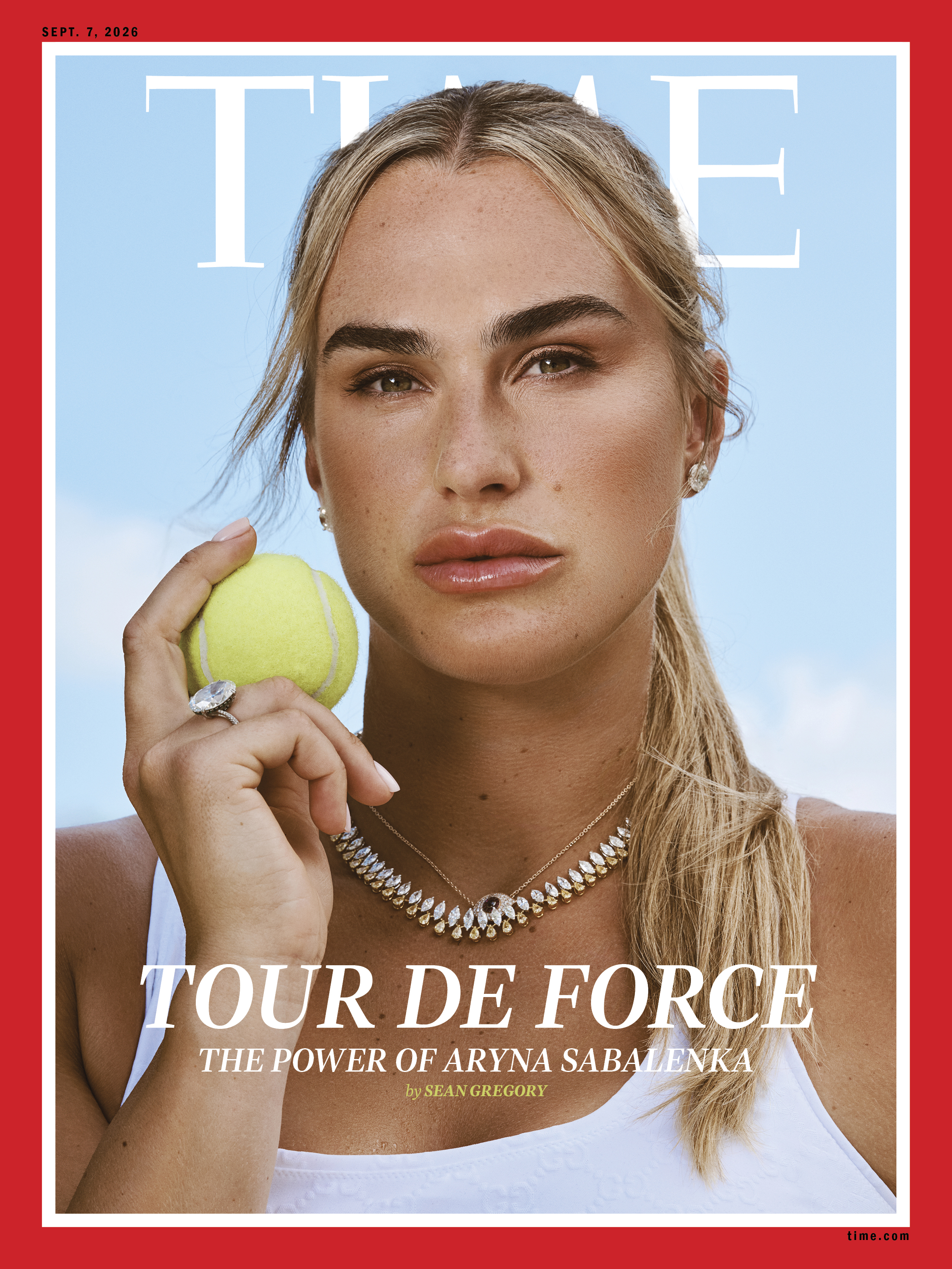
We’re speaking in a well-appointed South Florida home, replete with a tennis court and pool, not far from where she lives. And despite her detractors, Sabalenka seems relaxed and happy. Unlike at Wimbledon, where her pleas to allow dogs on the grounds went unheeded, she has her Cavalier King Charles Spaniel puppy Ash—named after Arthur Ashe Stadium, where she has won the past two U.S. Open titles—nearby. Ash is a good boy, disrupting neither the photo shoot nor our chat.
Brash, goofy, hard-hitting, unfiltered, aggressive, unafraid to lose her temper at her coach and support staff in front of a global audience—this package makes Sabalenka arguably the most compelling player in tennis. “I want to be remembered as a fighter on court, but so cool and fun off court,” she says. “I think it’s really important for kids to understand that you have to balance. You don’t have to be fully, fully focused on your dreams. One day they can destroy you.”
With the U.S. Open main draw beginning on Aug. 30, Sabalenka—who’s had to cope with personal losses and a contentious geopolitical climate on her journey to the top—remains in prime position to fulfill her wildest aspirations. She’s already one of just 10 women’s players in history to hold the top ranking for at least 100 weeks, joining the likes of Serena Williams, Steffi Graf, Martina Navratilova, and Chris Evert. “To see my name somewhere in there, it’s pretty sick,” she says.
She’s underperformed, however, at this year’s Grand Slams. At the Australian Open, Sabalenka reached the final on hard court, her best surface, but current world No. 2 Elena Rybakina mounted a comeback. With a cadre of top-ranked players knocked out of the French Open in June, Sabalenka had what looked like a clear path to her first Roland Garros title. But in the quarterfinals, she dropped 10 straight games to Diana Shnaider of Russia. Then Osaka bounced her out of Wimbledon.
If Sabalenka, a nearly 6-ft.-tall four-time major champion with one of the fastest forehands in the game, doesn’t lift the trophy in New York City, it would be the first year she’d fail to win a Slam since 2022, jeopardizing her grip not only on the world No. 1 spot, but also on the public imagination. A third straight U.S. Open victory, on the other hand, would make her nearly immortal. She’d become the first player since Williams a dozen years ago to three-peat there, and just the third woman in the modern era to do it, with Evert being the other.
“It’s history,” says Sabalenka. “You get hungrier as you go.”
Sabalenka’s independent streak has been evident since she was a child in Belarus. As the girls training in Minsk strove to follow in the footsteps of Victoria Azarenka, the country’s only singles player to claim the top spot before Sabalenka, instructors demanded strict adherence to the tactics they were teaching. But if Sabalenka had a better way, she said so. “Aryna was the one who always argued with the coaches,” says Anton Dubrov, Sabalenka’s current coach, who met her when she was 14. “She was showing who she is.”
Sabalenka’s father Sergey, a former hockey player whose own athletic career was derailed by an auto accident when he was 19, introduced his rambunctious daughter to tennis when she was 6. And while Sabalenka now embraces social media for both business and pleasure, she didn’t have much use for it as a kid; practice, school, and playing games like hide-and-seek into her teenage years occupied her time. “What’s the point of taking pictures of yourself and posting and sharing?” she says. “Who cares? That was my first thought.”
Growing up mostly off the grid, in a country with a population not much bigger than Dallas–Fort Worth’s, benefited Sabalenka. “I think that not having Instagram really helped me to focus on myself and not really get upset or depressed about not living the best life,” she says. She was blissfully ignorant of the tennis industrial complex and is thankful that she never trained at a pressure-cooker Florida academy, where many teens burn out. “It’s so much tougher here,” she says.

Still, she would be tested again and again in the early years of her career. In 2018, when Sabalenka was 20, she was named WTA Newcomer of the Year: she won two tournaments and beat top-10 opponents eight times. The next season, Sergey died unexpectedly of meningitis at 43. “We just started to get closer, like friends,” she says. “He was easy to talk to. He would be the person that would really help me to get back on track whenever things wouldn’t work well.” They had set a goal for Sabalenka to win two Grand Slam titles by the time she turned 25. That pact backfired after Sergey’s death, as Sabalenka pushed herself too hard to honor her father through Slam titles. Her mother Yulia intervened. “She said, ‘What are you talking about?’” says Sabalenka. “‘He was proud of every match you would win. Just you being able to compete on this level was huge for him.’ It really helped me to loosen up.”
But Sabalenka soon faced another problem: Russia’s invasion of Ukraine from Belarusian soil in February 2022 caused a rupture on the tour. “Some of the Ukrainian coaches, they would say really, really, really mean stuff to me,” Sabalenka says. “I don’t want to repeat it. It was so terrible. So it got to my head, and I would be hysterically crying.” Wimbledon banned Russian and Belarusian players that summer; players from those countries still don’t compete under their flags, and most Ukrainian players still refuse to shake their hands.
Sabalenka wants peace and does not support the war. “No one does,” she says. “It’s so obvious.” Does she support Belarus’ authoritarian President, Alexander Lukashenko, an ally of Russian President Vladimir Putin? “I don’t want to talk about it,” she replies.
She was already struggling with her serve before the conflict. The additional stress didn’t help. “My heart rate would go so high up, and I wouldn’t be able to breathe normally,” says Sabalenka. “I completely lost it. I had to play tennis without a serve.” She finished with 428 double faults in 2022, 151 more than any other player on tour.
“In my 50 years, I’ve seen a handful of really troubling yips on the serve,” says former player and veteran tennis analyst Pam Shriver, who reached the U.S. Open final in 1978. “Sabalenka’s was the worst. I was shaking my head, thinking, ‘Oh my God. Is this great talent ever going to recover?’”
Indeed, Sabalenka came close to quitting. “I felt like, OK, the whole world is telling me, ‘That’s it,’” she says. But before that year’s Cincinnati Open, her team called in a biomechanics expert. Within a week, Sabalenka had smoothed her motion, stabilized her balance, and in essence rebuilt her delivery. She reached the U.S. Open semis, falling to the eventual champ, Iga Swiatek. Then before the 2023 season, she made an unusual move in today’s athletic era, where mental health is paramount. She dropped her sports psychologist. “I feel like at some point I started to overthink about psychology,” she says. “I would rely a lot on that and forget about focusing on my tennis. So I decided to step away from it to learn on my own how to control myself. No one else understands myself better than me.”
This self-knowledge would prove critical as Sabalenka navigated the highs and lows of the next few years under an ever brighter spotlight. She won her first major, the 2023 Australian Open, that January. “I put my family name in history,” she says. “I wasn’t wasting my time and energy. I was doing the thing that was right for me. I am where I’m meant to be.” She reached No. 1 for the first time later that year and repeated her Australian Open victory in 2024. Sabalenka had now won two Grand Slams. At 25. Pretty much as she and Sergey dreamed. “This is something big,” she says. “It gave me so much belief inside me. I became way, way stronger.”
She’d need to call on that resilience that March when her ex-boyfriend, former NHL player Konstantin Koltsov, died of an apparent suicide. Sabalenka was preparing for the Miami Open at the time, and Dubrov and others suggested she take some time off. But Sabalenka still wanted to play. She lost in the third round, and some on social media knocked her for returning right away. “Tennis really saved me from depression,” she says. “I was just trying to focus on training, just so I spend less time with myself in my thoughts. I would cry in practice a lot. It was a very tough moment in my life.”
She began a relationship with Brazilian entrepreneur Georgios Frangulis that year. “He was really supportive and really helpful for the team,” says Dubrov. “He was always asking us, ‘What do you think, guys? Should I be at practice? Should I be at the matches?’ Sometimes relationships can be not helpful. But he was asking, ‘What do you think would be the best for her?’”
Frangulis, founder and CEO of the açaí chain Oakberry, proposed in March 2026, just a few months after Sabalenka called him out in front of a packed Brisbane International arena: “Thank you to my boyfriend. Hopefully soon I’ll call you something else, right?” Ideally, she says, they’ll get married in Greece in September 2027. She’d love to start a family at 32, then return to the tour for a few seasons before having a second child. But she brings up a version of an old Yiddish adage: Man plans, God laughs. “That’s what ideally I want,” she says. “But whatever life’s going to bring, I’m ready for it.”
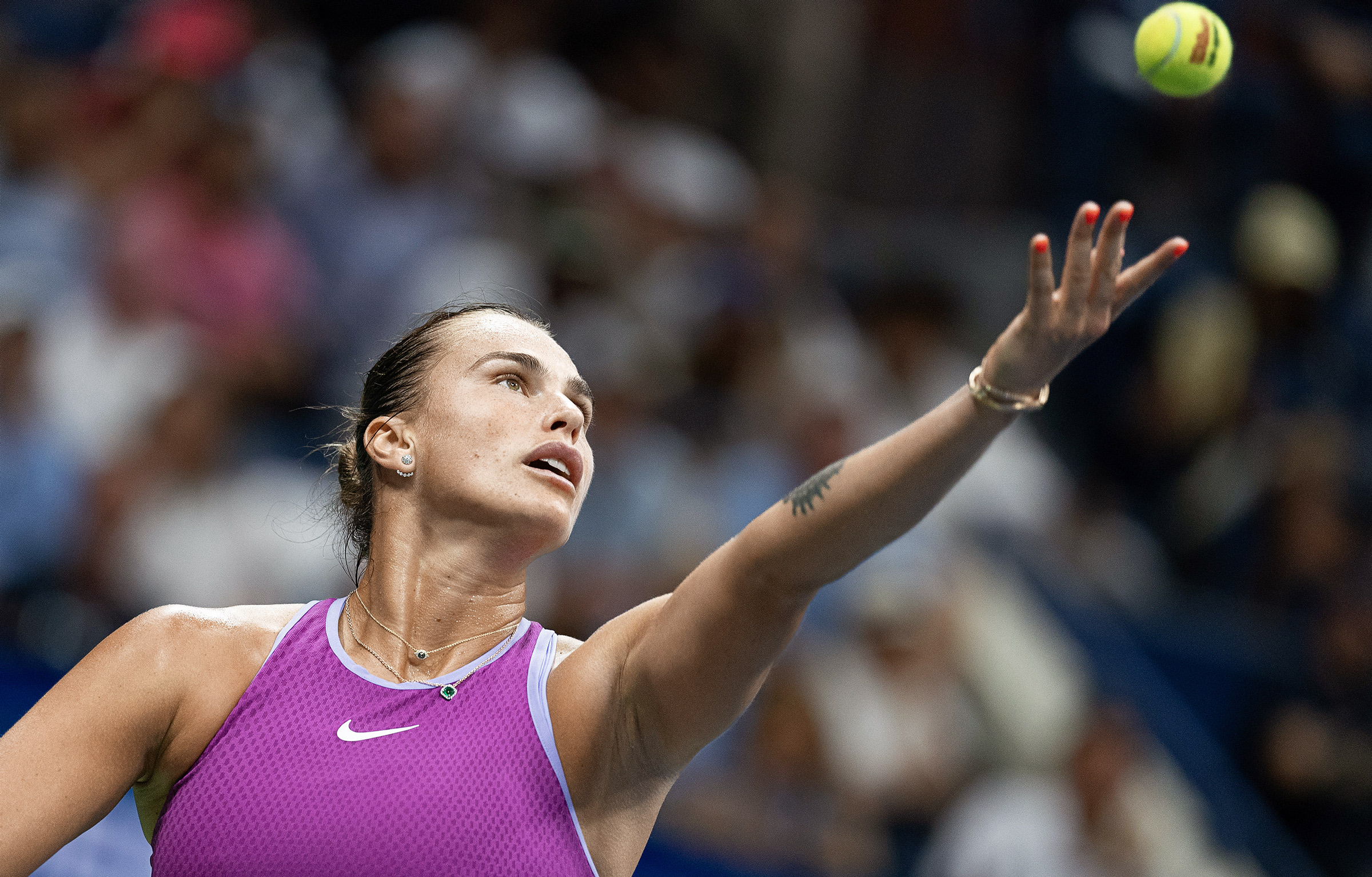
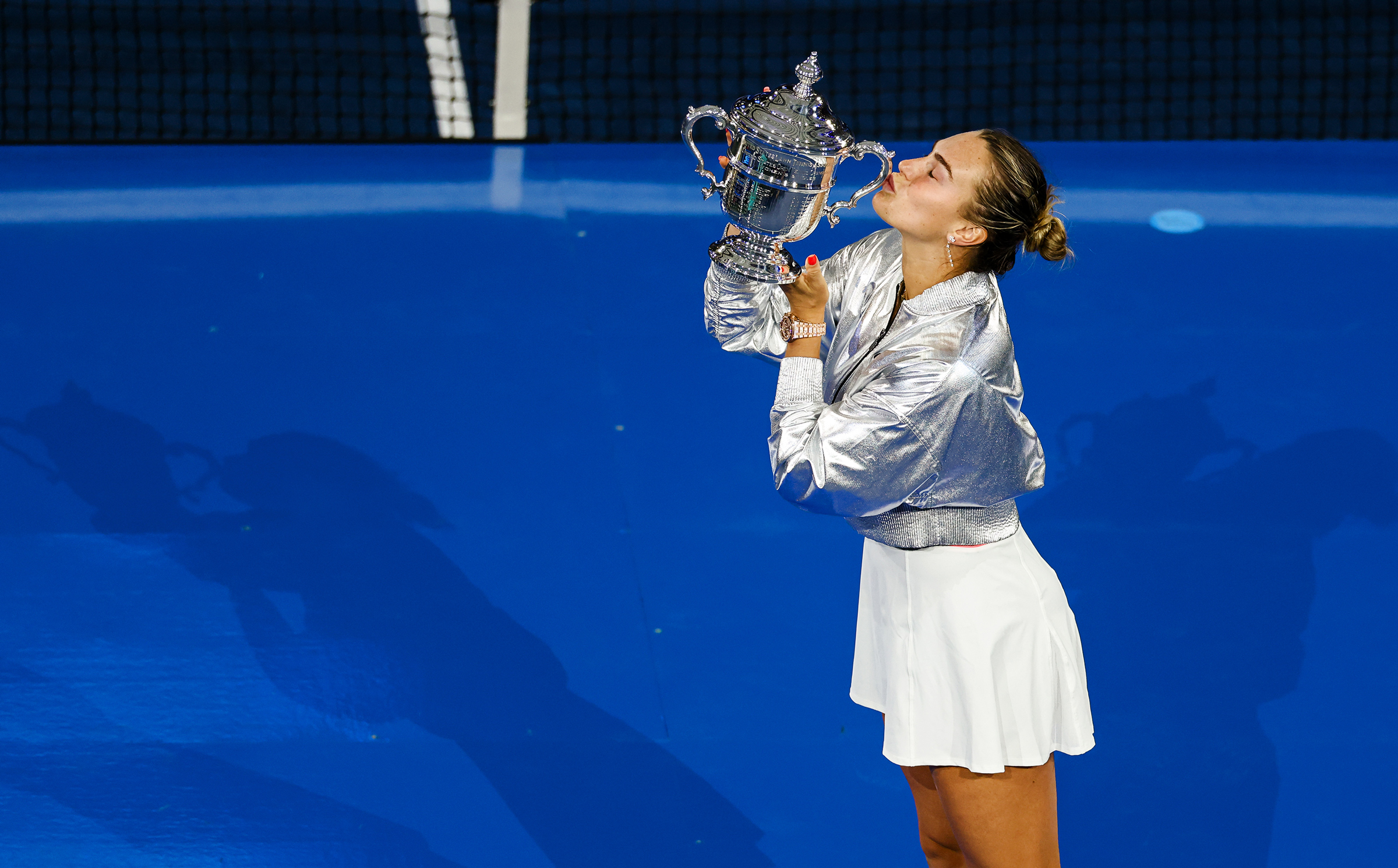
Sabalenka won her first U.S. Open in September 2024. She reached her first French Open final the following June, before crashing out against Gauff; Sabalenka committed 70 unforced errors and shouted at her box, a frequent habit when things go south. “I used to have hair, completely,” notes Dubrov.
Sometimes, a racket smash or a tantrum directed at her team can reset her game. But her rage didn’t help against Gauff. And her response to the loss ignited controversy. “She won the match not because she played incredible, just because I made all of those mistakes,” Sabalenka told reporters. The ensuing firestorm taught her a lesson. “Just shut up and wait a little bit longer before you go to the press-conference room,” she says. “Speak with your team before you actually decide to say something. Every time I lose a big match, there’s a room full of people waiting for the moment. No. Not gonna happen.”
Sabalenka apologized to Gauff for her “completely unprofessional” comment, and the pair did a fence-mending TikTok dance together at Wimbledon.
While critics focus on her meltdowns, fans, friends, and rivals appreciate that what you see is what you get. “At the end of the day, she’s a very authentic person,” says fellow pro Paula Badosa of Spain, Sabalenka’s closest friend on tour. “She always shows the way she is. That’s one of the things that makes her unique.” Even as she has acknowledged that her emotions sometimes get the better of her, Sabalenka refuses to disavow her passion. “I will never be completely in control,” she says. “When I hold that negativity inside, it keeps growing, growing, growing, growing. It destroys you from the inside to the point that you don’t have any energy and power to compete and to fight. So I’ve found it really helpful to just yell something. I have to release it.” She would love a designated racket-bludgeoning area at tournaments. “Between the sets, you just go to that room, you let it go, and you come back as a new person,” she says.
She also expresses not just rage but also joy. When Sabalenka rallied for the U.S. Open repeat last September, she tweaked her leg in the process, and her physiotherapist, Helen Murawska, scrambled to schedule an MRI. “She’s like half-limping, and then suddenly the tequila’s flowing and she’s dancing on a table,” says Murawska. “I was like, ‘I’m just going to put my blinkers on for this. Let her enjoy it.’” Sabalenka showed up to the scan: her leg was fine.
Sabalenka took a swing at something new last offseason. In December, she and Nick Kyrgios, the controversial but talented Australian player, played a “Battle of the Sexes” exhibition in Dubai. Kyrgios won, 6-3, 6-3. Critics called it a money grab beneath a champion like Sabalenka, who defends her decision, saying she wanted to bring more visibility to the sport. She says she’d do it again, but without the modified format of one serve and a smaller court on her side. And she’d want a different opponent. “Nick was so tight, so he couldn’t really bring some fun,” she says. “I would do it with someone else. He lost trust.” She declines to elaborate. (Kyrgios did not comment.)
It was ahead of her match against Kyrgios that she made her first comments about transgender athletes competing in women’s sports, saying that while she had nothing against trans people, it wouldn’t be fair. She reiterated this stance at the Canadian Open in August when asked if she supported the WTA’s new genetic sex testing policy. “It’s obvious that biologically, right, the men are way stronger than women,” she said, “so I feel like it would be not really fair for the women to compete against biological men.”
Earlier this year, Sabalenka became just the second woman in a decade to win the “Sunshine Double”—back-to-back titles at Indian Wells, in California, and the Miami Open. She couldn’t, however, carry hard-court momentum into clay season. She suffered a third-round loss at the Italian Open in May, though perhaps more notably she and other top players, like Gauff and Jannik Sinner, used the occasion to advocate for a larger share of Grand Slam tournament revenue. She mentioned the possibility of a boycott. “I hope it’ll never get to that point,” she says. “But I feel like all of the players are on the same page. If one day we have to boycott the tournament, we will definitely do that.”
After imploding again in Paris, she mused about quitting. That night, Sabalenka says, she cried “like crazy, to the point that I didn’t have any tears left. The next day I woke up swollen.”
She got over it in three days. On the relentless tennis calendar, another major always awaits. After Sabalenka’s Wimbledon defeat, and Greek island getaway, she returned to Minsk to open two clay courts at her old school. In Belarus, locals weren’t worrying about her recent performances. “My phone was so crazy,” says Yaraslav Shyla, a Minsk native who serves as Sabalenka’s hitting partner. “‘Can we meet her? I’m from this shop, can Aryna visit us?’ Close friends. Not close friends. Everyone.” During her trip, Shyla estimates, Sabalenka signed 3,000 balls and posters.
At 4 p.m. on a July afternoon, Sabalenka begins her day’s second training session in 89° heat at a private club near her home. She smashes forehands, works on volleys, takes a water break under a canopy. Sabalenka, whose tiger tattoo on her left forearm reminds her to be ferocious, returns to the court, practicing net charges and drop shots. At one point, Shyla bends over at the baseline, and Sabalenka tries to fire shots between his legs. One strikes his behind. This diversion “helps take her mind off the fatigue a little and makes the practice more fun and interesting,” says Shyla. “Or painful.”
After her French Open loss, she again started talking to her sports psychologist. Fine-tuning her mental game will be key for the three-peat. “It’s good to have someone back who knows you well, who can just say a couple things that are going to completely flip the page,” says Sabalenka. “It’s kind of like a shocking reminder. ‘Oh my God, that’s exactly the approach I should have.’”
Her vibe with New York City, where she’ll also team up for mixed doubles with Novak Djokovic, should help her chances. Sabalenka has her coffee spot, her breakfast spot, her favorite restaurant (the Polo Bar in midtown). She shops and goes for walks through Central Park. “Everyone is rushing there,” she says. “Everyone is chasing something. And you’re there chasing your own thing. You feel supermotivated. For living, probably I wouldn’t choose New York, to be honest. But going there for two, three weeks, that’s amazing.”
The Arthur Ashe Stadium crowd, always rowdy and lubricated on Honey Deuces—the Grey Goose concoction of choice—feeds off her emotion. “I love that the whole stadium, if they support you, they get loud,” says Sabalenka, who has already revealed her U.S. Open outfit, a bright orange sports bra and bike shorts under a black fishnet dress. “They go crazy. They’re just there for you. It’s the best thing on earth.” Plus, Ash will make his first trip to his namesake stadium.
If Sabalenka escapes the early-round traps, she’ll be able to bank on her experience. “She hasn’t had great results at the Slams, and that is definitely a concern,” says ESPN analyst Rennae Stubbs. “But if she starts winning matches at the U.S. Open, instead of thinking about what she hasn’t done this year, I’m sure she’ll start thinking about what she did last year.”
To her credit, Sabalenka refuses to downplay the meaning of the three-peat as most stars in her position would do. “I want it pretty badly,” she says. And she’s promising quite a show, in prime time, under the big-city lights. “Great tennis, fashion, fighting, emotions,” says Sabalenka. “Just everything you could imagine.”
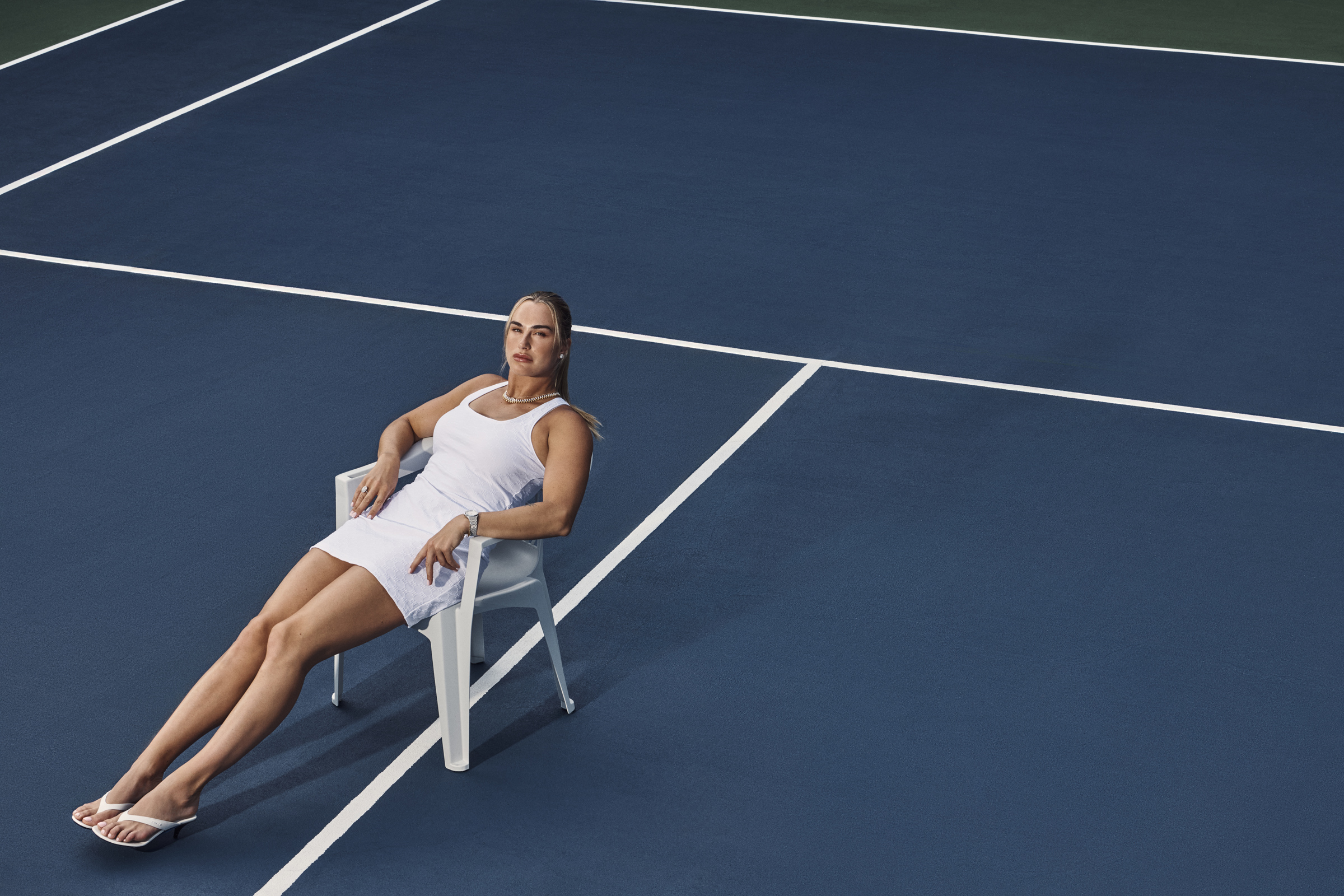
On Set Production: The Production Factory; Hair: Keshia Tabaran; Makeup: Bo Champagne; Wardrobe: Micaela Erlanger; Wardrobe credits: Jump rope photo: Top, shorts, socks, and shoes by Nike; Earrings by Material Good; Watch by Audemars Piguet; Court photo: Dress and shoes by Gucci; Earrings and necklace by Material Good; Watch by Audemars Piguet; Closing photo: Swimsuit, shoes, and sunglasses by Gucci; Earrings and bracelets by Material Good; Watch by Audemars Piguet
Man dies after bungalow destroyed in suspected gas explosion
California bans paraquat, highly toxic herbicide outlawed in more than 70 countries
State is US’s largest user of pesticide that is virtually proven to cause Parkinson’s disease
California is banning paraquat, a highly toxic, controversial herbicide used across millions of acres of American cropland.
Public health advocates characterize it as a deadly substance that is virtually proven to cause Parkinson’s disease. It is already outlawed in more than 70 countries, including China, the UK and the EU. Yet in the US, the Environmental Protection Agency (EPA) reapproved it for use in 2021 and 2024.
Continue reading...Israel Puts West Bank Village on Lockdown Over Settler Siege
Water bills set to rise for many after firms permitted extra funding
Новые модели в ИИ-роутере, GPU-хост с 4хH200 NVLink и другие новости продуктов Selectel

Привет, Хабр! В июле мы добавили выгрузку аудит-логов в объектное хранилище, расширили географию сетевых дисков, улучшили работу Managed Kubernetes и реализовали еще несколько важных обновлений. Обо всех обновлениях в продуктах Selectel читайте под катом!
Читать далееHow to rebuild your broken attention span

Ever find yourself hunched over your laptop, eyes glazed, slack jawed, and stunned by the quantity of information modern life is throwing at you? You might take a break to stare at your phone. Or you could try switching from one browser tab to the next while checking your email and inching closer to the day’s deadline.
Some people call this TikTok brain. Others call it brain rot. Either way, it feels like a distinctly 21st-century affliction, caused by scrolling through too many short-form videos and social media feeds that trains your brain to seek out little hits of dopamine and ruins your ability to focus on anything for more than a few seconds. People with the condition may not be able to read books or even watch feature-length films. They can’t do anything except watch little videos, leaving them prone, catatonic, faces blank and bright in the glow of their smartphone screens.
I don’t even use TikTok, but I feel this way all the time. Give me one hour to complete a task that requires even a medium amount of mental fortitude, and I’ll find 55 minutes’ worth of other things to do. It’s not that I’m avoiding the task. But once I get started, my mind wanders relentlessly, no matter how hard I try to keep it on track.
You can blame technology for doing this to you — and I do — but the real issue is with how we treat our brains. Generally speaking, the human brain works like an analog computer, processing one thing at a time, and when you switch tasks (which is what we’re actually doing when we say we are multitasking), it comes at a cost: It drains your cognitive resources, which makes it even harder to pay attention in the future. The more you do this, the more ingrained the behavior becomes.
“It’s a myth to think that we should push ourselves to focus as long as possible and we’ll be more productive,” said Gloria Mark, the author of Attention Span: A Groundbreaking Way to Restore Balance, Happiness and Productivity and the Substack The Future of Attention.
The human attention span is not one thing. There are different types of attention, including sustained attention (your ability to stay engaged with a task over a period of time) and selective attention (your capacity to take in certain information while tuning out irrelevant details). Alternating attention (the mental flexibility required to switch tasks rapidly) and dividing attention (process multiple things at once) are especially demanding on your cognitive resources. And all of this is managed by the brain’s command center, your prefrontal cortex, which handles executive function. When you’re experiencing cognitive fatigue, there’s a physical reason why: There’s actually less blood flowing to this portion of the brain.
“We need to stop trying to recover from cognitive fatigue and overload by consuming more information.”
Amisha Jha, University of Miami neuroscience professor
The good news is that the damage is not permanent. The human brain’s capacity to focus is just as intact as it was in the 19th century when everyone spent their evenings reading novels and knitting fisherman sweaters. Lots of things have changed since then, of course. As smartphones have driven us to consume endless amounts of information, psychologists have been working on strategies to put the pieces of our attention spans back together. I called a few of these attention experts hoping that they might tell me the secret to regaining my ability to focus. They all agreed that two things are necessary to solve the problem: Be intentional with your attention and let your brain rest.
“What we need most is the capacity to know where attention is, moment by moment, and greater agency over our attention so we can direct it intentionally,” Amishi Jha, a neuroscience professor at the University of Miami and author of Peak Mind, told me. “We need to stop trying to recover from cognitive fatigue and overload by consuming more information.”
Put another way, in order to reclaim your attention span, you first need to be mindful. That means spending less brain power dissociating on social media feeds and more on whatever you’re actually interested in. You also need to give your brain a chance to rest and recover. Staring at your phone will not help you recharge and reclaim your attention span. Staring at a tree, however, will.
Let your brain rest
One way to think about your own attention span is to consider what is voluntary and what is not. When something like a bright light or a loud noise grabs your attention, it engages your involuntary attention, which is effectively limitless. When you’re deciding to pay attention to something, however, you’re using your voluntary, or directed attention. This is a limited resource. As you’re making an effort to focus on something, like a book, your supply of directed attention runs down, but it can be replenished in specific ways.
This simpler way to understand how our attention works dates back to the 19th-century psychologists, like Williams James, but it’s making a comeback thanks to attention restoration theory (ART). This school of thought, first developed in the 1980s by University of Michigan psychology professors Stephen and Rachel Kaplan, suggests that spending time in nature restores your directed attention. The theory claims that the natural world does this by captivating our indirect, or involuntary, attention and allowing our cognitive resources to recover.
Imagine you’ve gone for a hike and happen upon a waterfall that’s so fascinating you can’t look away from it. Marc Berman, one of Stephen Kaplan’s former students and now a professor at the University of Chicago, refers to such a spectacle as a “soft fascination,” something that can grab your attention without consuming it, thus giving your mind space to wander. You might get the same effect from staring at a campfire or looking up at tree branches swaying in the breeze. Hard fascinations, by contrast, capture so much of your attention that you can’t look away and you can’t quickly recover. Times Square is a canonical example, but being on social media counts, too.
“Doomscrolling, streaming, surfing the internet — they’re activities that maybe seem restful, but we actually think that they’re fatiguing and depleting,” said Berman, who is also the author of the book Nature and the Mind: The Science of How Nature Improves Cognitive, Physical, and Social Well-Being.
In one study Berman conducted, he and his team (which included Kaplan) gave research subjects difficult attention and memory tasks, sent them on a walk in nature or an urban environment, and then repeated the tests. The participants who went on nature walks improved their performance in these tests by about 20 percent, Berman said, and the improvements held regardless of whether participants said they liked the walk or not.
“One of the great misconceptions about attention is that it’s simply a matter of us paying attention.”
Nilli Lavie, University College London psychology professor
Berman said they aren’t entirely sure why nature seems to have this effect on us, but he theorizes that it relates to fractals, or repeating, self-similar patterns whose individual parts resemble their larger whole — tree branches or fern leaves, for instance. Fractals are common in nature, and Berman thinks their orderly arrangement helps our brains to process the information. “It’s easy to get the gist and you don’t need to encode all the details,” he said. “Whereas in the built environment, it’s not very fractal and you might have to encode everything, which might be more taxing.”

Of course, it’s not always possible to zip over a forest in the middle of the work day. If you can’t take a walk in the park, Berman said that even looking at a picture of nature scenes can help. (Try not to do that on Instagram, though, because you might end up just doomscrolling.)
Be intentional with your attention
Reclaiming your attention is one thing, but holding onto it in the first place is its own distinct challenge. When you find yourself feeling distractable, it might be that you need a break. If that’s the case, you can’t will your way into concentrating.
“One of the great misconceptions about attention is that it’s simply a matter of us paying attention,” said Nilli Lavie, a professor of psychology and brain sciences at University College London. “It’s not enough to just want to pay attention.”
Instead, you have to put yourself in an environment that makes paying attention not only possible but achievable. That means making a concerted effort to avoid multitasking, which will drain your cognitive resources. Try the alternative: monotasking.
Monotasking likely requires clearing away clutter, whether that’s literal clutter on your desk, or digital clutter on your screen in the form of extra apps or browser tabs. Turning off all notifications is essential. You should also hide your phone — put it in a drawer or in another room. (A widely cited study published in 2017 found that even having a phone in sight can reduce your cognitive capacity and affect your ability to concentrate.) When you need to take a break, don’t go find your phone: Take a walk outside, or stare at a tree, or look out the window and listen to a song you like.
Monotasking also means being intentional about how you do that one thing, avoiding distractions along the way. At work, this might mean carving up projects into digestible chunks. You might even try the Pomodoro technique: Set a timer for 25 minutes, focus hard on the task until it goes off, take a five-minute break, and repeat. At home, it could mean making to-do lists and prioritizing tasks so that the toughest ones get done first, while you still have some gas in the tank.
If you aren’t ready to turn off all notifications at this point, at the very least turn off all the ones that aren’t coming from humans. You do not need to be alerted of an Amazon flash sale while you’re trying to plan your family’s meals for the week.
Give yourself some constraints
There’s no such thing as being 100 percent locked in to any given task. When there are no external distractions, your brain actually turns inward and finds something else to pay attention to, which can lead to daydreaming and mind wandering. Daydreaming — creating a structured narrative of imaginary scenarios — is not necessarily a bad thing, by the way. It can be productive in helping you plan and think creatively. But if you’re just mentally wandering from random topic to topic, you’re getting into the danger zone.
Some people find that adding constraints can improve their attention. One approach you’ll see in self-help books is the use of a so-called commitment device that restricts future behavior in service of a larger goal. If you’ve read (or seen) The Odyssey, you might remember the scene in which Odysseus orders his crew to tie him to the ship’s mast and ignore his orders so that he won’t steer the boat into the rocks when he hears the Sirens’ call. Odysseus was using a commitment device to avoid killing his whole crew. You might use a commitment device, like a dedicated writing space or the Pomodoro technique, to avoid distractions, both external and internal.
So how do you focus just the right amount? Removing those external distractions is a great start. Much like paying attention, ignoring these distractions consumes your cognitive resources, impacting your performance, and causing you to make mistakes. It also takes more effort to stay on task as time goes on. From there, do your best to avoid overtaxing your brain to the point that the internal distractions take over and your mind is wandering. That’s how you know it’s time to take a break.
“For several minutes, give yourself no new input,” Jha said. “Do not reach for the phone while waiting in line. Take a short walk without listening to anything. Look out a window. Let the mind wander without trying to solve a problem.”
Take a walk in the park. Sit quietly and look at a bird. Paying attention has never sounded so relaxing.
Hodgkinson leads home Broeders-Bol to qualify for 800m final
Web‑карты: от координат до изображения

Статья посвящена базовым принципам работы тайловых веб‑карт. В ней рассматривается, как карта мира разбивается на небольшие изображения — тайлы, как устроен их URL и что означают параметры zoom, x и y.
На простых примерах разбирается связь между географическими координатами и положением тайла в общей сетке. Пошагово выводятся формулы преобразования долготы в координату X и широты в координату Y с учётом проекции Web Mercator.
В заключительной части показано, как с помощью дробной части полученных координат определить точное положение точки внутри тайла и отобразить её поверх изображения.
Делаем ядро тайловой веб-карты на JSTrump-led board reportedly votes again to close Kennedy Center for renovations – live
In May, a judge issued a temporary block on Trump’s demand to close the arts institution for renovations after the board – mostly handpicked by the president – voted unanimously in favor
Donald Trump’s executive order on vaccines does not change the US recommendations for the shots – but experts say it does create confusion and doubt about vaccines, which will lead to more illness and possibly deaths among children and will make it harder for families and pediatricians to protect them.
The executive order was an attempt to reinstate sweeping changes to the vaccine schedule made earlier this year by Robert F Kennedy Jr, secretary of the US Department of Health and Human Services and a longtime vaccine opponent – changes that were later halted by a federal judge.
Continue reading...Severe storms cut power supply to 540,000 homes in US midwest
Indiana faced most outages at 267,000, about 8% of its customers, with severe thunderstorms and wind ahead
Power supply was cut on Thursday to about 540,000 homes and businesses across the US midwest as severe storms battered the region, data from PowerOutage.us showed.
Indiana was the hardest-hit state, with more than 267,000 outages, representing about 8% of its roughly 3.3 million customers, the data showed.
Continue reading...Search for survivors of Colombia earthquake enters "final phase"
$5,255 fine issued after foghorn wakes up sleeping polar bear
Trump orders Pentagon to scrap modern jet launching tech on new US aircraft carrier and revert to steam catapults – as it happened
This live blog is now closed.
Donald Trump’s executive order on vaccines does not change the US recommendations for the shots – but experts say it does create confusion and doubt about vaccines, which will lead to more illness and possibly deaths among children and will make it harder for families and pediatricians to protect them.
The executive order was an attempt to reinstate sweeping changes to the vaccine schedule made earlier this year by Robert F Kennedy Jr, secretary of the US Department of Health and Human Services and a longtime vaccine opponent – changes that were later halted by a federal judge.
Continue reading...Hybrid and Local AI course at DeepLearning.AI
Open weight models are having a moment, driven by control, choice, and cost. Hybrid and local AI are now getting serious looks, so JetBrains teamed up with DeepLearning.AI on a free AI Coding Workflows: Hybrid to Local course that covers the ideas and options.
The course is now available and uses PyCharm and its AI Chat. Here’s a peek into the course.
Claude Code: Subagents and cheaper models
We start the course with, well, not-local. Instead, we use what you already know – Claude Code and its Anthropic models – to introduce some of the techniques and “levers” that help bring choice, control, and even cost reduction. (Yes, I wrote emdashes.)
We did a previous course on Spec-Driven Development (SDD) so of course, we wanted to start there. Smaller models struggle with big, open-ended “vibe coding.” Dividing and bounding the work keeps smaller models on track. Important note: this course’s example app is really basic. You might say “that’s too easy.” But that’s part of the takeaway: big brain models can do the upfront work, forming right-sized steps for smaller models.
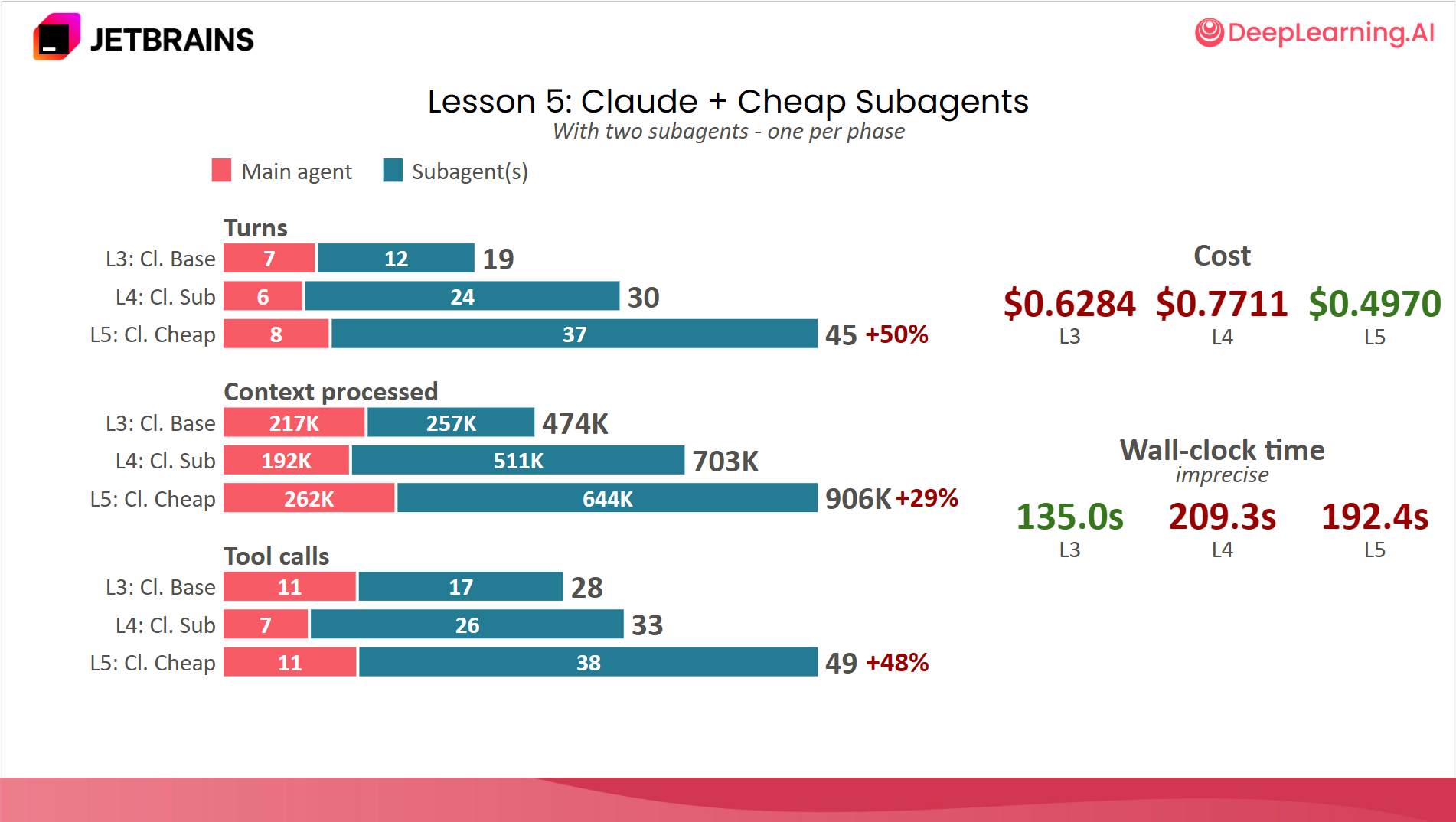
We then illustrate this division with a Claude Code subagent. The main chat prompt implements each roadmap phase in a fresh subagent, to better manage context. This then gives the payoff: a cheaper model for the implementer. Use a “big brain” (Opus) for main conversation thinking and a “little brain” (Haiku) for implementation.
Each lesson finishes with metrics about the change in tokens, turns, cost, and estimated wall time. Which brings us to the main course goal: learning the ideas instead of the specifics, which change weekly.
New agent, inference, and model
That covers the four levers:
- Specs shaped for the model size
- Specialist subagents to divide work
- Cheaper models for the routine work
- Collect metrics as evidence to guide thinking
The course then introduces choice and control:
- New agent: OpenCode
- New inference router: OpenRouter
- New model and inference host: DeepSeek (via OpenRouter) by moving to a new agent (OpenCode) using inference routing (OpenRouter) to inference hosting and models (DeepSeek)
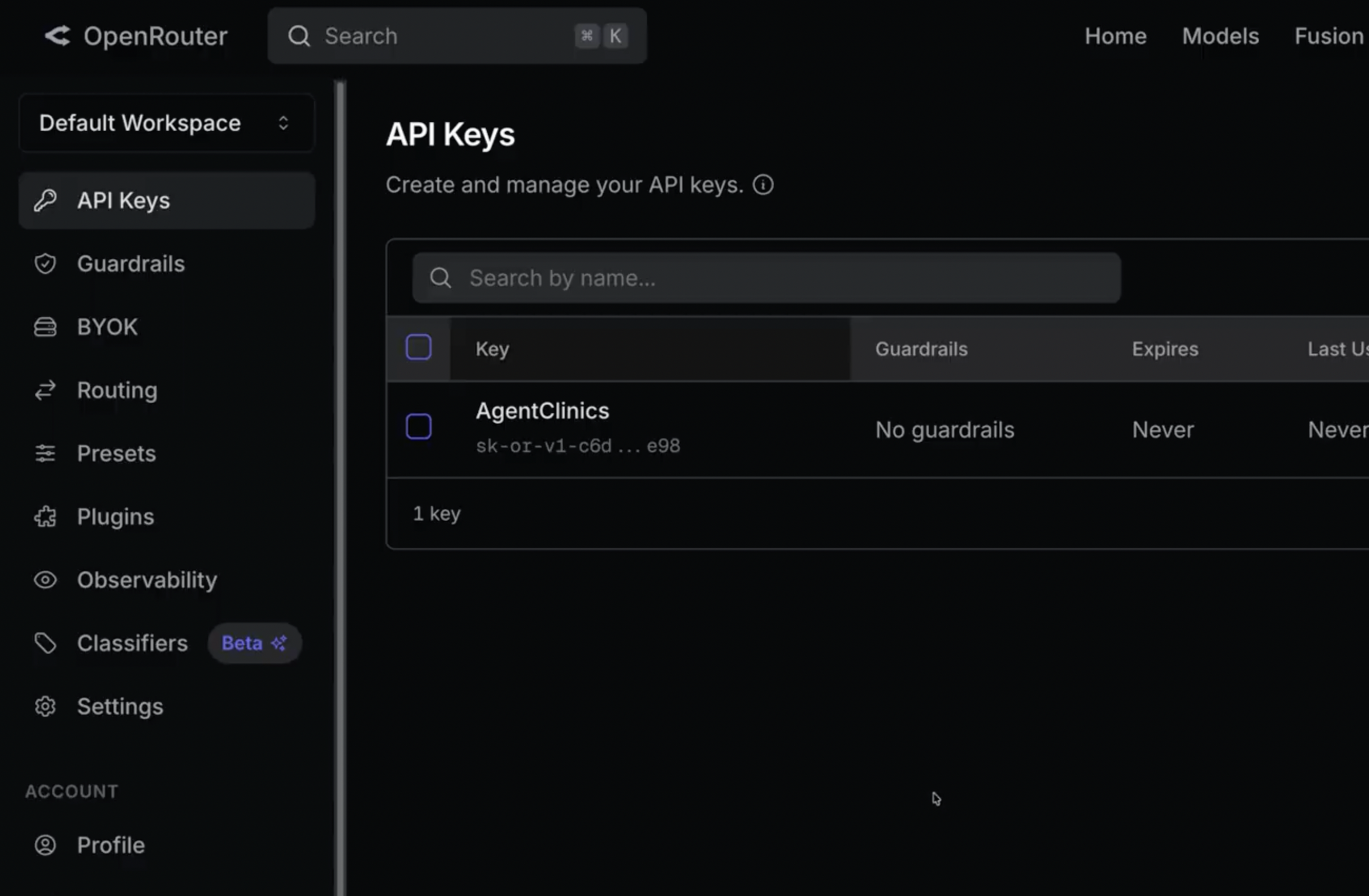
We first move to OpenCode, running in PyCharm. JetBrains wants our IDEs to be open platforms for agents and models. This makes the move from Claude Code to OpenCode straightforward: it’s the same UI. We add OpenRouter (a paid step), connect it to OpenCode, and choose DeepSeek as a model.
Next we repeat our sequence: all in one chat, then context isolation using a subagent. But this time, with a different agent and model.
We finish by making a dedicated implementer subagent in Markdown. This gives quite a number of levers of control: in the frontmatter for mandatory controls, and in the subagent body for “persuasion” guidance. Most importantly, we have the implementer use the smaller DeepSeek v4 Flash model as the “little brain.”
Compared to the Claude Code version, the metrics were, unsurprisingly, a lot cheaper.
Hybrid and Local
Now for the main attraction: for routine development, can we do some – or even all – of the work locally?
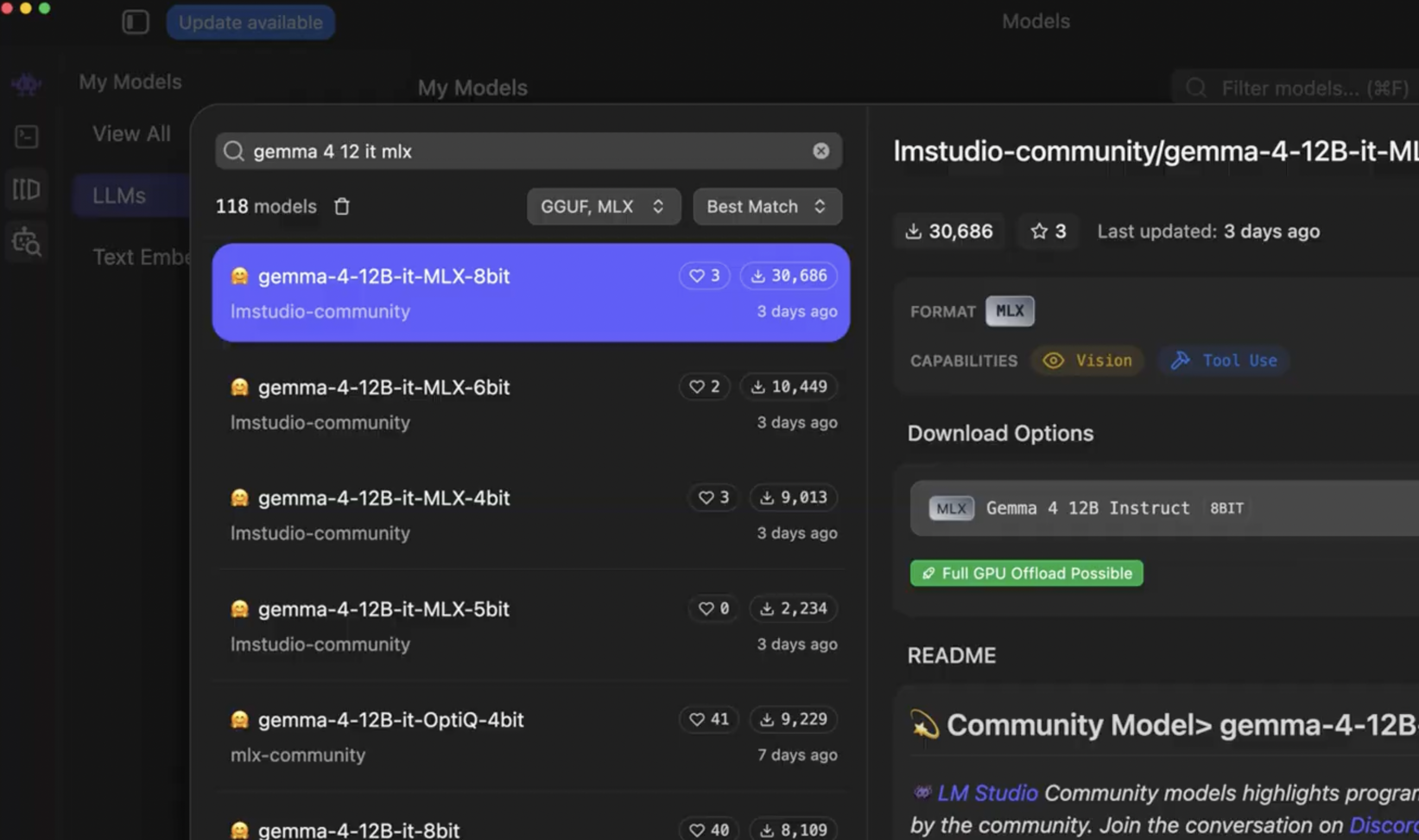
We start with a lesson on setting up local AI: LM Studio as the inference server and Gemma 4 12B as the local model, targeting a 32 GB laptop.
We then configure the implementer subagent to use this local Gemma 4 model, promoting DeepSeek v4 Flash from last lesson’s “little brain” up to “big brain.” The results? Quite good, as it turns out.
Then the big test: fully local, with Qwen 3.5 27B as the “big brain.” The results: better than expected, showing that guardrails help.
How did hybrid and local do? Both of these lessons finish with a review of the metrics. That’s one of the big course takeaways: look at the evidence. You can see how small models struggle, and see the effect of helping them succeed.
Hybrid and Local AI Are Heating Up
Much thanks to DeepLearning.AI both for working with us again and for pushing to get this out fast. This topic is now red-hot in the news: Sovereign AI, privacy and security, and of course cost. The innovations are coming really fast and it is important to have a gentle introduction to the fundamentals.
We’ll do more updates here on Local AI for control, choice, and cost. Most of all, we at PyCharm believe in the human-in-the-loop. Stay tuned for more on this.
Пишу русскоязычный ЯП. Помогите выбрать самый читаемый вариант синтаксиса

Если честно, я давно планировал написать свой язык. Просто надоело на каждом проекте писать одинаковый бойлерплейт, ловить неожиданные ошибки в рантайме, натыкаться на компоненты аля LoanPreloanInterractNDFL6.2ReportViewComponent - и гадать - что имел ввиду художник...
В итоге получился язык "Марка" — штука статически-типозированная, но в которой типы живут во время выполнения, ошибки обрабатываются сами, а из REPL можно сразу дергать запросы и смотреть, что приходит на клиенте и сервере. Как давно мечтал.
Но раскидав исходники по знакомым, получил неутешительный фидбэк: читать трудно! Встал дурацкий вопрос: как это должно выглядеть в коде, чтобы было удобно? Я набросал 4 варианта синтаксиса — от LISP-стиля до почти Python - нотации. У каждого есть плюсы и минусы, и я уже неделю не могу выбрать.
Какой из вариантов читать было бы удобнее лично вам? Проголосуйте!
P.S. Если заинтересовал проект - уже сейчас доступна playground площадка для экспериментов http://marka-lang.ru/playground.php
Inflation eased slightly in July. And, ICE plans to give officers electric shock gloves
Inflation cooled a bit last month, according to a new report from the Labor Department. And, ICE plans to equip its officers with electric shock gloves.
(Image credit: Brandon Bell)

Chelsea Wolfe: The Dark review – existential reflection goes from whisper to gothic scream
(Loma Vista)
The genre-blending Californian artist casts off past toxic influences with a powerful set of tender, brooding and emotionally charged songs that wouldn’t feel out of place as festival anthems
When Chelsea Wolfe was interviewed by the Guardian in 2015 about her fourth album, Abyss, she revealed that her music had been informed by the bouts of sleep paralysis she’d suffered from since childhood. The condition – a transitional state between being awake and asleep – affects sufferers in different ways. Some wake up feeling paralysed, others see ghosts or demonic figures. For the California-born singer-songwriter, it meant “waking up, and you can move your body and your eyes are open, but there are figures and people from your dreams still present in your room”.
No surprise, then, that her music – a blend of drone, alt, folk, industrial and doom metal – had ended up so spookily unsettling. She appeared on album covers with pupil-less eyes, spoke in interviews about “following the path of witchcraft” and even covered Norwegian black metal act and convicted arsonist/murderer Burzum. She did have a sense of humour about it all, however, telling one interviewer, with a chuckle: “It’s not party music.” Since then, though, much has changed. Wolfe left Los Angeles for the mountains above the city – where she’s finally been able to enjoy a good night’s sleep. Sobriety since 2021 has also brought what she calls “a new clarity”. Both developments inform The Dark.
Continue reading...Qwen3.5/3.6 на 16Гб VRAM: кванты, fine-tune, сравнение и немного про Gemma-4
Всем привет.
В свободное время и под настроение я ваяю маленькие, незамысловатые игры на основе d10-кубов механик, похожие на PvP или PvE настолки, которые нередко проходят в автоматическом режиме (ИИ vs ИИ), а иногда получается что-то чуть серьезнее: вроде игры "Жизнь", но на стероидах с экономикой, сражениями и в масштабах солнечной системы.
Не являясь настоящим программистом и написав за всю жизнь, наверное, самое большее - ну, возможно, не более тысячи строк кода - мне для воплощения своих причудливых идей, естественно, потребовалась помощь психиатров нейросетей, которые, как тогда говорили - уже научились писать вполне рабочий, годный код.
Конкретна эта история начиналась банально, а может даже и несколько варварски: с web-чата с одной китайской нейросетью со значком в виде кита в формате ctrl+c > ctrl+v в файлики игры, но вскоре проекты разрослись, структура стала сложной и потребовалось что-то вроде OpenCode или LM Studio Bionic (вышел совсем недавно, но мне понравился), а затем встал и выбор локальной модели, которая всегда будет бесплатной, под рукой и без ограничений типа "server is busy... try later".
Зоопарк моделей разросся довольно быстро и хотя базовых моделей не так много, но это количество предстояло умножить на разные варианты квантования и присыпать сверху горкой т.н. fine-tune моделей, которые, буквально, сотнями, если не тысячами - рассыпаны по HuggingFace, а их авторы обещают космическую скорость инференса, интеллект передовых моделей и "думалку" (режим thinking) от какого-нибудь Deep Seep, Claude или Fable.
Читать далееAOC and Mamdani wanted to defund the police. Their backtracking puts organizers at risk
Progressive and democratic socialist politicians are recanting pandemic-era statements on police and prison abolition
The north may not remember, but 9 August this year marked the 12th anniversary of the police killing of Michael Brown Jr in Ferguson, Missouri. That day, the US representative Alexandria Ocasio-Cortez reassured an ABC news anchor that she, like other progressive politicians and Democratic Socialists of America (DSA) candidates, had “moved away” from statements they made during the pandemic, particularly on police and prison abolition. Questioned further, she explained:
“I have a local city councilman that has this saying: ‘Woke 1 was crazy’… especially during Covid, I think that the doors were really open in trying to entertain any and every policy that was going to get us to a better place. And I actually think that the discussions that were had in that time were quite fruitful. I think that when we talk about crime today, it’s fundamentally different than the way that we talked about crime in bringing crime down. And I think that we all share in the goals of having as low a crime rate as possible. I think that, you know, during lockdown, of course, rhetoric in that time is not rhetoric that we would use today. And I’m grateful that these candidates have the opportunity to present who they are to their electorate and what they’re campaigning on in this moment.”
Continue reading...Пять подписок на нейросети стоят уже $110 в месяц. Посчитал, за что мы вообще платим

ChatGPT, Claude, Gemini, Perplexity и Grok легко превращаются в ещё одну пачку ежемесячных списаний. Я посчитал стоимость такого набора и посмотрел, где пять подписок действительно дают пять разных инструментов, а где мы несколько раз оплачиваем примерно одну и ту же работу.
$109,99 в месяц. $1319,88 в год.
Столько сейчас стоит набор из ChatGPT Plus, Claude Pro, Google AI Pro, Perplexity Pro и SuperGrok, если оплачивать обычные индивидуальные тарифы по официальным ценам в США. ChatGPT Plus и Claude Pro стоят по $20, Google AI Pro и Perplexity Pro почти столько же, SuperGrok дороже, $30.
Когда я сложил эти цифры, первая реакция была простой: отлично, мы заново изобрели кабельное телевидение. Только вместо 140 каналов, которые никто не смотрит, теперь пять вкладок с полем для промпта.
Но списать все дополнительные подписки на невнимательность тоже не получилось.
Разработчик, который каждый день работает через Claude Code, покупает совсем не то же самое, что человек, пару раз в месяц открывающий Claude ради «второго мнения». А Google AI Pro для пользователя, живущего в Gmail и Docs, имеет другую ценность, чем для того, кто запускает Gemini только в отдельном окне браузера.
Поэтому вопрос «какая нейросеть лучше» здесь быстро перестаёт работать.
Мне стал интересен другой: за что именно мы платим второй, третий и пятый раз?
Все цены и состав тарифов в статье проверены 13 августа 2026 года. Конкретные модели и лимиты меняются довольно быстро, поэтому я сознательно не строил материал вокруг очередного бенчмарка GPT против Claude. Через год такой рейтинг легко превратится в археологический артефакт. Логика расходов на подписки меняется медленнее.
Проверить свой AI-стекЧто изучить в DevOps, Kubernetes, observability и сетях для работы с современной инфраструктурой

В инфраструктуре редко получается решить проблему в пределах одного инструмента: сбой в проде быстро выводит к настройкам Linux, сети, CI/CD, Kubernetes или базы. В этом дайджесте собрали материалы, которые помогают разбирать такие задачи точечно и системно — от диагностики и наблюдаемости до безопасности и устойчивости сервисов.
Читать далееFootball Association of Ireland withdraws Infantino support
‘We bring the craic’: how spice bags became an Irish-Chinese takeaway hit
Restaurant critic and award-winning author Jimi Famurewa travels through London, Belfast and Birmingham getting messy with the fusion treat of spicy chicken, chips and curry sauce. Should you dip or pour? What’s it like with a Filipino flavour? And with a Michelin-style glow-up?
Continue reading...Premier League 2026-27 preview No 8: Crystal Palace
Palace take a risk with new manager Pierre Sage, who is tasked with building on Glasner’s unprecedented success
Guardian writers’ predicted position: 16th (NB: this is not necessarily Ed Aarons’ prediction but the average of our writers’ tips)
Last season’s position: 15th
Continue reading...How Trump’s order on vaccines is sowing confusion, doubt and fear
The order cannot affect change, and is only ‘undermining trust in vaccines’ as CDC guidance remains the same
Donald Trump’s executive order on vaccines does not change the US recommendations for the shots – but experts say it does create confusion and doubt about vaccines, which will lead to more illness and possibly deaths among children and will make it harder for families and pediatricians to protect them.
The executive order was an attempt to reinstate sweeping changes to the vaccine schedule made earlier this year by Robert F Kennedy Jr, secretary of the US Department of Health and Human Services and a longtime vaccine opponent – changes that were later halted by a federal judge.
Continue reading...Europe heatwave live: UK sees temperatures of 38.1C, the hottest day of 2026; Greece battles wildfires after gale force winds
A former UK government scientific adviser warned amid the ‘shattering’ heat that worse is still to come
Met Office has just offered an update on temperatures across the UK, with several stations already reporting temperatures above 30C – and it’s not even 11am.
It’s 30.4C in Wych Cross, 30.3C in Charlwood, 30.2C at Kenly Airfield.
Continue reading...The drug lenacapavir is a mighty weapon against HIV. Its rollout gets mixed reviews

It's a twice-a-year injection that is remarkably effective in preventing an HIV infection. Distribution is starting. But questions are being raised about getting it to the areas that need it most.
(Image credit: Osodi Emmanuel)

Россияне снимают больше наличных: чем это грозит?
Watch: Key moments from Karoline Leavitt's White House tenure as Trump says she will leave post
How Trump’s order on vaccines is sowing confusion, doubt and fear
The order cannot affect change, and is only ‘undermining trust in vaccines’ as CDC guidance remains the same
Donald Trump’s executive order on vaccines does not change the US recommendations for the shots – but experts say it does create confusion and doubt about vaccines, which will lead to more illness and possibly deaths among children and will make it harder for families and pediatricians to protect them.
The executive order was an attempt to reinstate sweeping changes to the vaccine schedule made earlier this year by Robert F Kennedy Jr, secretary of the US Department of Health and Human Services and a longtime vaccine opponent – changes that were later halted by a federal judge.
Continue reading...Trump administration finalizes rule to end federal support for gender-affirming care
Move blocking funds through Medicaid and Chip to make it harder for vulnerable children to get healthcare, experts say
The Trump administration finalized a rule on Tuesday to end gender-affirming care through Medicaid and the Children’s Health Insurance Program (Chip), a move that will make it harder for vulnerable children to access healthcare and that eschews evidence to advance an anti-transgender ideology, opponents say.
The rule is set to take effect on 13 October – but legal challenges could delay or block it entirely.
Continue reading...‘Melancholic fantasy’: Wong escalates Labor rhetoric against Hanson, condemning ‘monoculture’ comment
Foreign affairs minister and first Asian-Australian to serve in federal cabinet to use Lowy Institute address to criticise politicians stoking racial divisions
Get our breaking news email, free app or daily news podcast
Labor has escalated its pushback on One Nation’s surging political support, with the foreign affairs minister, Penny Wong, labelling Pauline Hanson’s push for a monoculture a “melancholic fantasy” that would harm national security.
Wong, the first Asian-Australian to serve in federal cabinet, will use a major address at the Lowy Institute on Friday to criticise politicians stoking racial divisions, insisting the country’s multicultural success remains a national asset.
Continue reading...Ubuntu 26.04 как маршрутизатор для GNS3: настраиваем NAT, DHCP и DNS в Hyper-V

Как дать узлам внутри GNS3 доступ в интернет, не используя встроенный NAT Hyper-V?
В этой статье превратим Ubuntu 26.04 в маршрутизатор лабораторного стенда. Настроим NAT, DHCP и DNS только средствами Linux.
В результате Alpine получит сетевые параметры по DHCP, выйдет в интернет и мы установим на него клиент OpenSSH.
Заодно разберем неочевидную проблему с маршрутом по умолчанию в Windows, из-за которой трафик физического хоста может попасть в петлю.
Настраиваем стендКэш — это холодильник: TTL, инвалидация и cache stampede

Объясню кэш через холодильник, а потом покажу, где эта аналогия ломается, и что с этим делают в проде.
Статья для тех, кто кэш уже ставил, но не разбирался, почему он иногда роняет сервис вместо того, чтобы его ускорять.
Читать далееВоняет фекалиями, но «безопасно». Почему паводок привел к кризису в Тюмени
Иммиграционным агентам ICE в США закупили электрошоковые перчатки
Putin’s Visit to Disputed Island Adds to Pressure on Japan
Indian actor's video with endangered gibbon sparks investigation
Eurovision Song Contest 2027 to be held in Burgas, Bulgaria
Eurovision Song Contest 2027 to be held in Burgas, Bulgaria
Zero hours crackdown could cost firms up to £2.9bn a year
Агентная правка багов, ч. 1: всё для отладки

Соавтор статьи — Сергей Левенец, CTO в команде ТестОпс.
Что останется делать людям, когда код будут писать машины? Практика показывает — на удивление много, без работы никто не останется. В двух статьях мы опишем реальный опыт создания внутреннего агента для исправления багов в команде ТестОпс. Расскажем, сколько такой агент экономит, как его отлаживать, и чем автоматическая правка отличается от диалога с Claude Code.
В команде ТестОпс разработка поставила себе задачу: ноль багов в бэклоге. Эта амбициозная задача запустила большую работу по исследованиям и разработке, в результате которой родился агент, способный исправлять и проверять баги. Команда стихийно назвала его «Агент Смит».
Написать первую версию агента было делом двух-трёх дней. Гораздо сложнее оказалось внести в него экспертизу — то есть отладить его шаги и настроить помощников. Для этого потребовалось и набить шишек в реальной работе, и изучить много научной литературы. Возможно, самым сложным и важным было научиться оценивать издержки от внедрения агента. Об этом мы и поговорим — но вначале разберёмся, как устроен сам «Смит».
Читать далееHikers watch as molten lava spews from Mount Etna – video
Mount Etna has continued to erupt in Sicily, sending molten lava, rocks and ash down its slopes as hikers watch nearby. The Italian volcano is Europe's most active
Continue reading...