RSS Feeds
GB's Hudson-Smith wins historic 400m gold on home track - highlights & report
How do I apply for an apprenticeship and what will I get paid?
Everything you need to know about university costs
How to get the most out of university clearing on results day
Results, appeals and resits - what to do if your A-levels don't go to plan
Messi unsure he will play 'much longer' after father's death
I share concerns over Arday appointment, says Cambridge University head
PM warned of Iran war impact on UK growth next year
LA Lakers to be sold in record $12.5bn deal
Ministers push ahead with housing asylum seekers on ex-military sites
New Forest wildfire continues as temperatures rise
Members of Trump's cabinet remained on decoy plane, after president's quiet exit
Your heatwave tips on how to cope in extreme temperatures
Baby Shark boy set to make K-pop debut
How affordable are Edinburgh's festivals?
These seaside apartments were a ghost city - then police say scammers moved in
'Rot in prison', relatives tell double murderer and rapist
Lucy Davis urges women to check their breasts for cancer - here's how
First 100% British chocolate bar made since 1932
Trump says White House press secretary Karoline Leavitt to leave post
ICE plans to equip agents with gloves that can deliver electric shocks
Results day dawns for A-level, T-level and BTec students
Major Russian grain export terminals hit in Ukraine Black Sea port attack
Watch: Solar eclipse seen over UK skies
Wisconsin Democrats chose a middle path – will it lead to victory in November?
Democratic socialist Francesca Hong fell just short as David Crowley strives for unity for the general election
Democratic socialist Francesca Hong was on course to win the party’s nomination for Wisconsin governor on Wednesday by a clear margin, according to the polls – presaging the latest in an extraordinary wave of leftwing victories across the country, challenging the party’s establishment.
It was not to be. In a photo finish after a messy campaign, David Crowley eked out a win by a few thousand votes over Hong, raising questions over the limits of the progressive movement that has swept through Democratic contests in recent months.
Continue reading...Hudson-Smith dazzles home fans as he surges to golden European 400m hat-trick
Becomes first man to win three European 400m titles
Hudson-Smith: ‘Nobody is going to beat me on this track’
Stand … and deliver. On a balmy night in Birmingham, Matt Hudson-Smith powered past the stand bearing his name at the Alexander Stadium and into history by becoming the first man to win three European Championship 400m titles.
And afterwards, as the adrenaline flooded his body and he posed wearing a crown in front of the Matthew Hudson-Smith Stand, the 31-year-old made it clear just how much it meant. “Nobody is going to beat me on this track,” he said. “This is my home. I have been here since I was nine. I know this track like the back of my hand.”
Continue reading...Atletico agree £34.2m deal for Tottenham's Romero
Watch: Solar eclipse seen over UK skies
River Danube's low water levels reveal remains of WWII soldiers and motorcycle
‘A High Potential for Abuse’: Plan to Equip ICE Agents With Electric Shock Gloves Draws Alarm From Former Officials
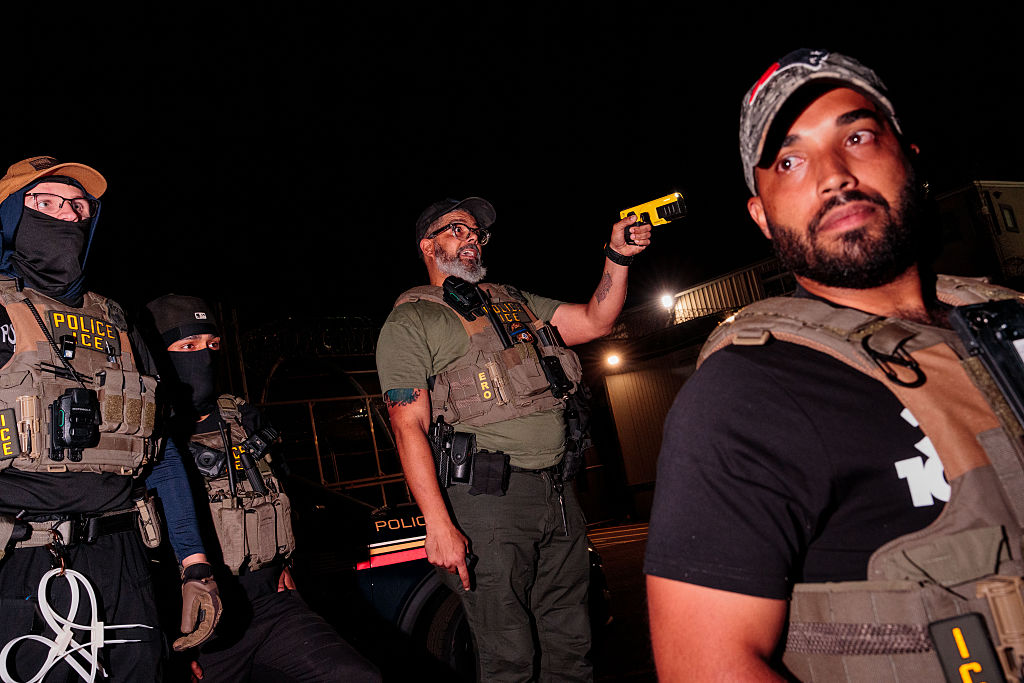
The Department of Homeland Security (DHS) is moving to equip immigration officers with gloves that can administer electrical shocks, a plan that is sparking alarm from former department officials.
According to a notice published by DHS this week, it will spend up to $20 million to purchase Generated Low Output Voltage Emitters, or G.L.O.V.Es, by the end of March 2027. The department, which described the gloves in the notice as a “conductive distraction and de-escalation device,” said they would be issued to Immigration and Customs Enforcement (ICE) officers.
“ICE is constantly assessing the needs of our officers in the field to ensure they have the tools and equipment necessary to safely arrest and remove criminal illegal aliens from our country,” a DHS spokesperson said in a statement to TIME.
The plan to equip immigration officers with the devices comes as the Trump Administration has faced widespread scrutiny over the use of force in its immigration crackdown, which has seen at least 10 people die in encounters with federal agents since Trump returned to office last January.
The DHS spokesperson tells TIME that 70% of the people ICE arrests are “dangerous illegal aliens charged or convicted of a crime,” echoing Trump and federal officials’ repeated claims that the crackdown is targeting the “worst of the worst”—though data have shown that a majority of those held in ICE custody during Trump’s second term have no criminal convictions on their records.
Read More: As ICE Detention Expands, Deaths Reach a 22-Year High
The notice of DHS’s plans to purchase the gloves has drawn concern from former DHS officials, who tell TIME that the devices aren’t necessary as an enforcement method against the civilian population—and that their use in that capacity would pose numerous risks.
“The idea that you need tools like this, this level of force, to subdue a non-criminal immigrant who's in a secure environment … that is alarming,” says John Sandweg, who served as the acting director of ICE and acting general counsel of DHS during the Obama Administration.
Sandweg contends that there is “a high potential for abuse” with the new devices due to the rapid hiring of new immigration officers who he says are not receiving sufficient training.
Documents produced by two DHS whistleblowers in February showed that ICE had significantly scaled up its hiring while axing several screening and training protocols for officers.
“We're seeing lots of problems with training on use of force,” Sandweg says. He describes the plan to introduce the gloves to what he characterizes as an under-trained immigration task force that is quickly expanding as “incredibly concerning.”
The former acting ICE director argues that such a device should not be rolled out en masse, but rather “in small pilots” in order to determine that it “actually helps solve the problem” in immigration enforcement contexts and “doesn’t get abused.”
On top of that, he contends that the device should require extensive in-person training.
“It's tone deaf,” Sandweg says. “We’ve lost sight of the public safety mission of ICE.”
Margo Schlanger, who led DHS’s office for civil rights and civil liberties under the Obama Administration, tells TIME that a taser, which many immigration officers are equipped with or have access to, is a much more effective enforcement tool.
And in addition to being less effective, she also argues that the gloves would pose a greater threat of harming people who have encounters with immigration officials, while making it more difficult to hold officers accountable.
Unlike a taser, which incapacitates its target by temporarily locking up their muscles and inhibiting bodily control, the gloves “are only about pain compliance,” Schlanger says.
“They don't incapacitate. They just hurt, and so what that means is that they're not only used in a situation when a person is posing a risk to a law enforcement officer,” she says to TIME. “Pain compliance is a method of painful domination. Because of that, it's very subject to being misused. It can be used in circumstances where it's not needed. It can be used to excess.”
A taser is also more effective, safe, and humane, she contends, because it can be brandished from a distance before it is used.
“If you're actually interested in compliance, brandishing a taser is a pretty good method of eliciting compliance, and nobody gets hurt,” she says.
Read More: Federal Officers Don’t Have ‘Absolute Immunity’ but Prosecution Isn’t Easy
Schlanger references an article published by Police & Security News in which Jeff Niklaus, the founder and CEO of Compliant Technologies, which manufactures the gloves, is quoted as describing the device as “low optic”—meaning that, unlike tasers, they can be used discreetly.
“What low optics means is that they don't want anybody watching to know that they're doing this,” Schlanger asserts. “It looks like ICE is trying to avoid public accountability. That's what this device does for them.”
Compliant Technologies declined TIME’s request for an interview.
Jenn Rolnick Borchetta, deputy director on policing at the ACLU, similarly raises concern about this aspect of the gloves in a statement to TIME.
“They might be equipped with a device that allows them to deliver an electric shock with their hands by pushing a small button, in a move that might be imperceptible to those watching,” Borchetta says. “Giving immigration agents a concealed means of delivering terrible pain is a recipe for more harm to the public and less accountability.”
An Experimental Pediatric Cancer Treatment Shows Promise in New Research
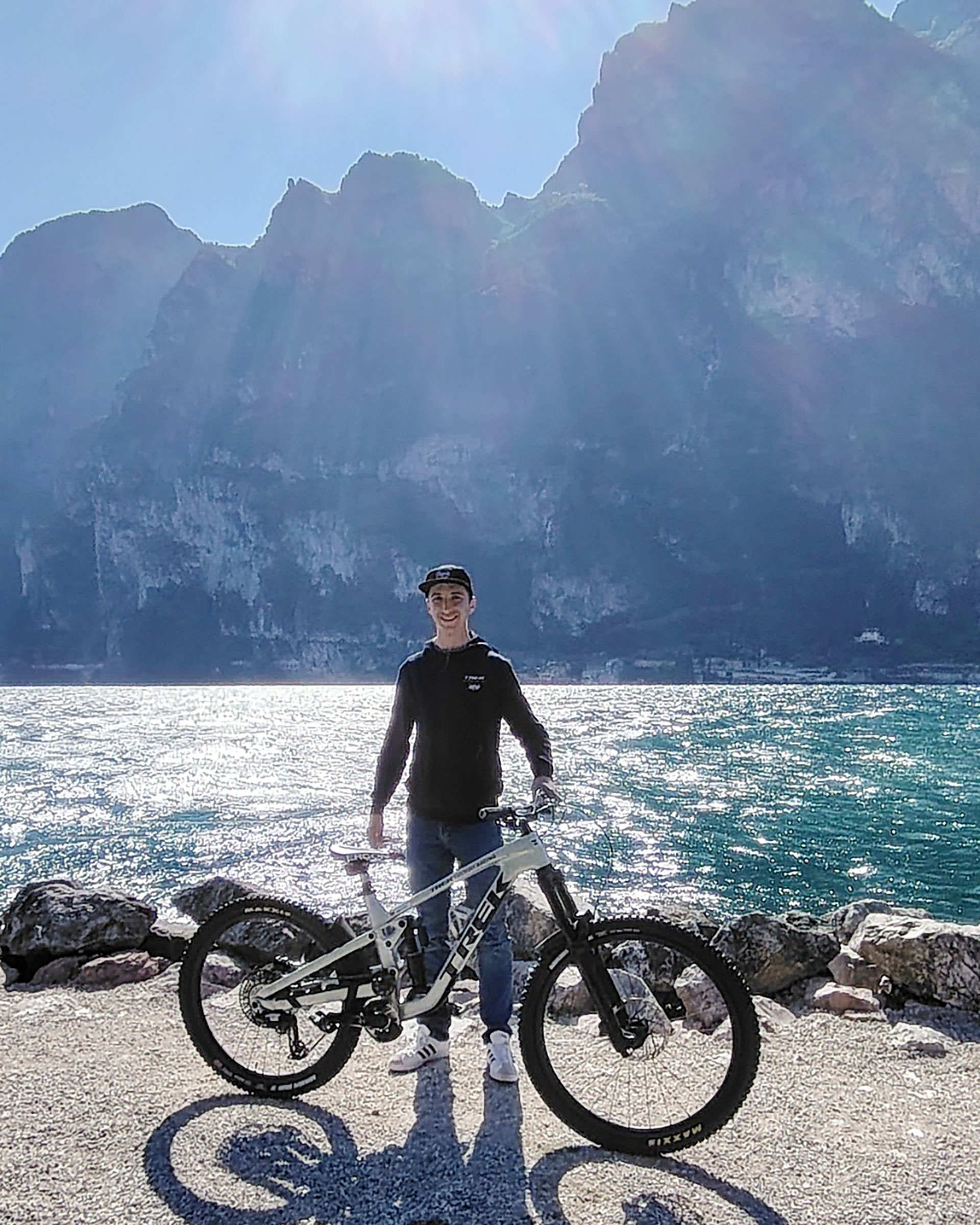
In Germany, a 7-year-old boy had been diagnosed with kidney cancer. He had beaten it back with a series of treatments over about a decade and was able to live a relatively normal life, pursuing his love of riding his bike and becoming a serious cyclist. But by the time he was 17, the cancer had returned and spread to multiple organs, including his brain. He was out of options.
The most his team could offer was an experimental treatment to buy a little time, says Dr. Christian Seitz, head of the Cell and Gene Therapy Program at Hopp Children's Cancer Center in Heidelberg. Seitz and his colleagues found that the boy’s cancer carried a set of markers that could be targets for immune cells, called T-cells, that are specially programmed to hunt cancer, and although this type of solid tumor is not usually treatable this way, the team decided to proceed.
As they describe in a new paper published Aug. 12 in the New England Journal of Medicine, a single infusion of the cells last year resulted in a complete remission. The boy just came in for his follow-up, Seitz says. More than a year later, he still has no detectable signs of cancer.
The study suggests that doctors and scientists may be able to tailor immune cell treatments even for certain cancers that have been difficult to tackle with earlier forms of engineered immune cell therapy.
How can T-cells target and kill cancer?
In the last two decades, engineered T-cells, such as CAR T-cells, have fundamentally altered the landscape of cancer treatment. There are a variety of approaches, but in most of them, a patient’s T-cells, a type of immune cell, are removed from their body, altered or trained to hunt down a particular protein carried by cancer cells, and then re-infused into patients to destroy tumors. Results can be nothing short of breathtaking. While the treatments don’t work for everyone, those for whom they are effective can go from death’s door to essentially cured.
Not every cancer is vulnerable to these attacks, though. “The dogma over the past 10 years was, basically, if you have a large solid tumor, it's not going to work,” says Seitz. Something about the T-cells produced by most approaches makes them unsuitable for broaching the defenses of these tumors, which produce their own little microenvironment full of molecules that protect them from the immune system. The approach is typically more successful in blood cancers.
However, the treatment used in the latest study is a little different from standard engineered T-cell therapies. In this particular approach, called T-cell receptor-engineered therapy, the T-cell’s target is not a protein on the surface of the cancer cell, but a protein within the cell. This opens up a different set of targets to doctors, and it also seems to mean that the T-cells can act a little more like natural immune cells as they work to clear the cancer, says Seitz. That means the T-cells might work better against solid tumors.
The role of genetics in T-cell therapy
The boy’s cancer carried a protein called PRAME, which scientists had already been investigating as a potential target for T-cell treatments for melanoma and sarcoma, and which seems to be present in many pediatric cancers as well. Seitz and colleagues worked with Immatics Biotechnologies in Germany, which is running clinical trials of various PRAME-focused treatments, to produce T-cells for the boy’s infusion.
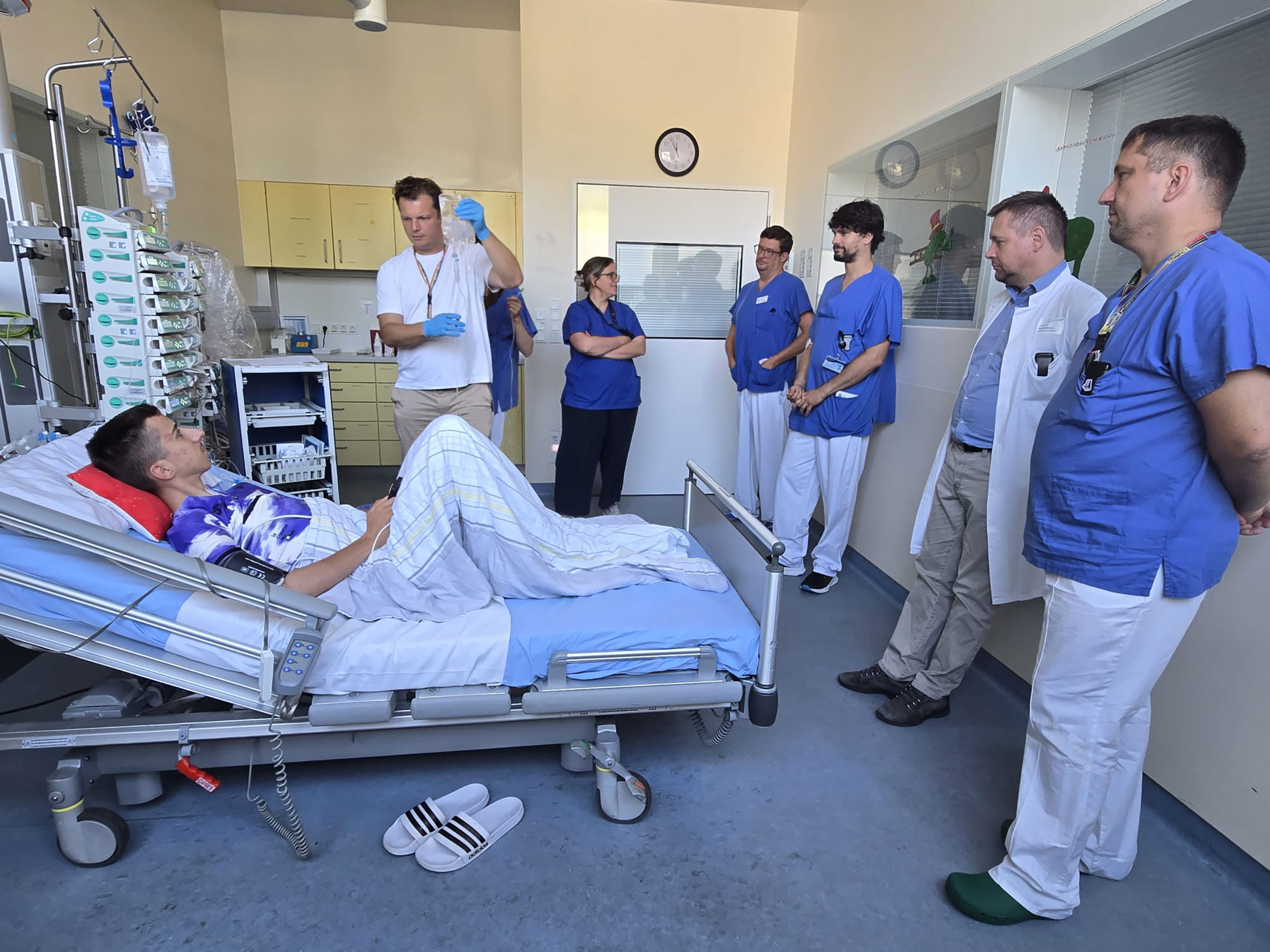
The period after the infusion was tough on his body; he had to spend about two weeks in the ICU, says Seitz.
Eight weeks after the treatment, the boy and his mother came in for his follow-up. After the scans, Seitz recalls, “I was looking at the images, and I was like, ‘This is not possible.’” All of the liver metastases were gone. Tumors elsewhere had shrunk enormously, and when doctors checked the tumor tissue for signs of live cancer cells, they saw none. The boy is now cancer-free, with no detectable signs of disease. What’s more, his blood still contains T-cells that hunt down PRAME, suggesting that his body may now be able to eliminate further recurrences.
It’s an exciting finding, says Rimas Orentas, an adjunct professor at Johns Hopkins Bloomberg School of Public Health and head of immunotherapy at Miltenyi Biotec who was not involved in the study. “Solid tumors are enmeshed in your tissues,” he says. That makes it quite difficult for engineered T-cells to work. “That's the surprising part of this paper.”
As with many engineered T-cell discoveries, this particular approach, if it reaches the clinic, is unlikely to work for every patient or every cancer. Still, with many of these approaches, says Orentas, “just a few patients benefit, but when they benefit, they really benefit. I think that's where we're headed with this.”
Seitz, who is now planning a clinical trial of the treatment with 18 pediatric cancer patients who all have PRAME in their tumors, just saw his recovered patient this week. Over the weekend, the boy had been part of an extreme cycling event. “Apparently, they drive uphill, and then they go nuts downhill between trees and rocks,” Seitz says. “And I was like, ‘Oh my God...please don't crash into a tree! It's not worth it!’ But he really loves it”—and Seitz feels honored to have helped him reclaim his life.
Millions crowd Spanish cities to see country's first total solar eclipse in over a century
Across a wide band of northern and central Spain and Portugal, millions of people expected to have some of mainland Europe's best views of the eclipse. It also passed over slivers of Greenland and Iceland.
Opinion | Field Marshal Munir and the Pakistan Paradox
Inflation Pulls Back Slightly, Buying the Fed More Time
Farm linked to cyclosporiasis outbreak has not been inspected since 2019
AI agents lie, cheat and steal. That is putting off users
Doué seals Super Cup glory for PSG after Madjo makes history for Aston Villa
Uefa Super Cup: Paris Saint-Germain 2-1 Aston Villa
Kvaratskhelia 20, Doué 62; Madjo 45
Luis Enrique says it doesn’t matter which sport he is playing – football, tennis, padel or parchis, a board game – he wants to win all of the time. In Paris Saint-Germain, he has built a winning machine, the back-to-back Champions League victors maintaining a useful habit by conquering Aston Villa in an absorbing Super Cup contest in Salzburg. For PSG, after the joy of Munich and Budapest, three months ago, does a three-peat in Madrid in May beckon?
Aston Villa more than played their part in an enthralling showpiece, Brian Madjo becoming the competition’s youngest scorer after the 17-year-old cancelled out Khvicha Kvaratskhelia’s opener. They could have taken the game to a penalty shootout, Warren Zaïre-Emery’s extraordinary block preventing João Gomes a near-certain debut goal and Emi Buendía heading wide in stoppage time.
Continue reading...Когда терапия выходит в прод

«На тестах всё работало». Любой разработчик слышал эту фразу хотя бы раз. В психотерапии происходит нечто похожее: человек может прекрасно понимать свою проблему на сессии, но в реальной жизни снова автоматически реагировать по-старому. Используя аналогии из разработки, я попробую показать, почему настоящее изменение проверяется не в кабинете психолога, а в том самом «проде», ради которого человек вообще пришёл в терапию.
Читать далее2 killed as Apache helicopter from Fort Hood crashes in Salado, Texas
The White House Is Going to Expand Its AI Policy
Student shot during argument in Georgia high school bathroom, officials say
Israeli Settlers Are Out of Control
TIMELINE: Trump's elaborate covert exit from Turkey amid Iranian threat
Forbes Fired Top Editor After Discovering He Received Secret $6 Million Payment
Jack Draper: ‘When you reach rock bottom like that you can come back up again’
Former world No 4 reflects on emotional reaction in Canada and rebuilding after the most difficult period of his career
Those painful images have relentlessly spread to all corners of the internet. Deep in the final set of the first-round match at the Canadian Open against Térence Atmane just over a week ago, 15 months of pent up emotion erupted. Two games from defeat, Draper spent the entire changeover in tears.
This was a devastating and alarming sight. Injuries had already defined so much of Draper’s career, but the uncertainty of trying to recover from a bone bruise injury to his left arm over the past year has been more challenging than anything he has experienced. All of his efforts since last July have been focused on trying to find a way to compete consistently at the highest level again, to no avail.
Continue reading...The doctor who helps put prisoners to death – Stateside with Kai and Carter
On 13 August, three states are set to carry out executions by lethal injection. It’s the first time since 2010 that three people will be put to death on the same day in the US. In Tennessee, the execution of Darrell Hines is in the spotlight, because the last lethal injection in the state was botched. Ed Pilkington speaks to Kai Wright about the doctor at the center of that botched execution, whose identity was revealed inadvertently last year. Ed explains how his reporting has lifted the lid on a role that is usually hidden away from public view, and what it tells us about the American death penalty today
Unmasked: the doctor who helps put prisoners to death
Continue reading...Cruise ships, quiet towns and an all-day festival: millions flock to eclipse viewing spots across Europe
Beginning in Russia’s remote Arctic north, the eclipse traced an arc over much of western Europe – with the best views in Spain, Iceland and Greenland
It was a moment of awe shared by millions across Europe: an eclipse that blocked out the sun, plunging parts of the continent into a daytime darkness in which temperatures dropped and birds suddenly went quiet.
Wednesday’s eclipse began in Russia’s remote Arctic north, going on to trace an arc over much of western Europe. From the UK to northern Italy, tens of millions of people turned to the sky as the light of the setting sun was almost completely blocked out.
Continue reading...Surrogate fights parents over baby with heart condition
Northrop’s robot space mechanic is a new way to keep satellites at work longer
ICE Is Getting Body Cameras. But Will They Help Hold Agents Accountable?
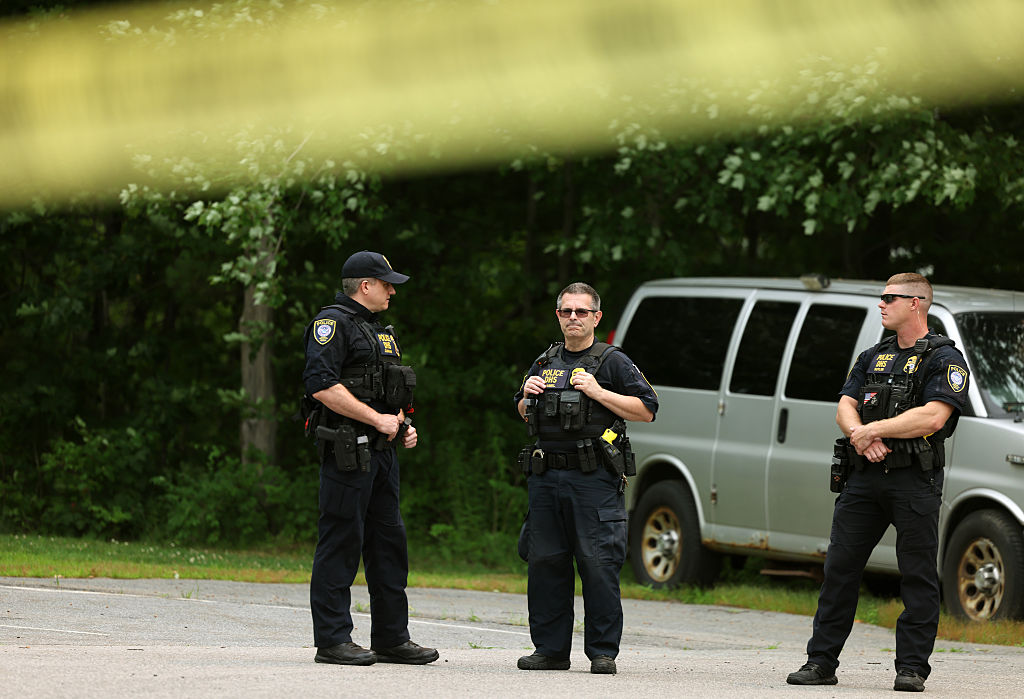
All Immigration and Customs Enforcement (ICE) field agents will be equipped with body cameras by the end of the month, acting ICE Director David Venturella said. However, the footage acquired by the devices would only be released to the public if it is in “the best interests of the agency,” according to ICE. The policy raises questions about how body cameras are meant to be used in law enforcement, as well as whom they are meant to protect.
Venturella said in his statement last week that the body cameras would help the agency uphold its commitment to “transparency and accountability.”
However, a spokesperson for ICE tells TIME that the body cameras are needed because “the media and sanctuary politicians consistently spread smears about our law enforcement.”
This raises the question: Are the cameras meant to hold ICE agents accountable—or protect the agency?
White House “border czar” Tom Homan indicated that the cameras could be useful for both purposes, saying “body cameras are the way to go” to increase transparency between the agency and the public—but they can also provide insights about split-second behavior under high pressure in the field.
“I think body cameras let the American people know what that officer sees when he takes that action,” Homan said on CBS’s Face the Nation in July. On Fox & Friends Weekend that same month, he went further, saying that body cameras “exonerate more law enforcement than they convict.”
Who they ultimately benefit largely depends on how they are used—in theory and in practice, experts tell TIME.
“Body-worn cameras are only as good as their policies,” says Christopher Schneider, sociologist and professor at Brandon University.
The policies governing body cameras must determine not only when agents are recording, experts say, but also what happens to the footage the cameras collect.
Kirk Burkhalter, a New York Law School professor and former detective with the New York Police Department, believes it is a smart move toward course-correcting after multiple fatal shootings this year by ICE. He calls the rollout of body-worn cameras a “very important first step.”
Why did ICE start using body cameras?
Body cameras became a point of contention after two protesters were killed by Department of Homeland Security (DHS) officers in Minneapolis in January. The deaths of Renee Good and Alex Pretti both led to disputes about what transpired and whether the use of force was warranted, leading DHS Secretary Kristi Noem to promise in February that agents would be equipped with body cameras going forward.
A policy regarding their use was established that same month, and Congress approved $20 million in funds for purchasing and operating ICE body cameras in April.
Read More: The Chaos and Cruelty of ICE
Body cameras had been issued to more than half of field offices by July, when agents shot and killed two people within the span of a week: Lorenzo Salgado Araujo in Houston, Texas, on July 7, and Joan Sebastián Durán Guerrero on July 13 in Biddeford, Maine. Neither of the incidents were captured by body cameras, though The Intercept reported that the officers in Maine were equipped with recording devices that they were unable to use.
Members of Congress promptly called for stricter oversight.
“In shooting after shooting, we are told that there is no body-worn camera footage of the incident and asked to accept DHS’s account of the incident. Time and again, that account turns out to be a blatant falsehood,” a letter signed by dozens of senators on July 18 said.
But putting cameras in agents’ hands is just a start; they must also be recording when it matters.
When are ICE agents required to turn on body cameras?
The policy says agents should activate cameras “as soon as practicable” at the beginning of an enforcement activity and deactivate them once the activity concludes. Agents who fail to activate their cameras must provide a written explanation, but the policy does not spell out disciplinary consequences for failing to record an encounter.
This is not dissimilar from policies used by other law enforcement agencies, which also typically stop short of codifying disciplinary steps, Schneider says.
“You would think that if an officer was found after an investigation to have intentionally turned the camera off or not turned it on, to engage in misconduct or pretend, you would think they would be fired for that,” he says. “You won't find that in a policy.”
Phillip Atiba Solomon, professor at Yale University and co-founder of the Center for Policing Equity, says that comprehensive policy should not leave key questions unanswered, such as: “What are the consequences if you disobey those rules?”
“A piece of legislation without an enforcement mechanism is a polite request,” he tells TIME.
The policy does require “Field Responsible Officials” to provide operational training to their agents “at least yearly,” focusing on their handling of recordings, privacy compliance, procedures for redacting and sharing data, and civil rights considerations.
But knowing how to use the cameras is different from establishing how useful they actually are in the field.
How effective are body cameras in law enforcement?
Schneider says there is a presiding belief that the presence of body cameras will influence what transpires between civilians and law enforcement officers. Specifically, there is an assumption that they serve as a deterrent.
“The idea is that if a camera is on, of course the officer is not going to engage in misconduct or brutality, and of course people are going to comply with police,” Schneider says. “That's profoundly untrue.”
He points to the murder of George Floyd in 2020 as an example, since the police officers involved were wearing active cameras while the incident unfolded.
Studies show mixed evidence. Some found that body cameras reduce use-of-force incidents and civilian complaints. But when 70 such studies were analyzed together, they showed “no consistent or statistically significant effects,” according to the National Institute of Justice.
Part of the reasoning for this discrepancy, according to Solomon, is that people must believe that what they are doing is wrong in order for them to change their behavior when being observed. In a randomized controlled study that involved thousands of police officers in 2019, researchers wrote that “cameras did not meaningfully affect police behavior on a range of outcomes, including complaints and use of force.”
“Officers—who are not ICE but are regular municipal law enforcement—didn't think that what they were doing was a problem, so we didn't see significant reductions in use of force,” Solomon says of the study.
They must also believe that there will be consequences for their actions, he says. But the Trump Administration’s staunch defense of ICE in the aftermath of this year’s deadly shootings suggests that this component might also be lacking.
In addition to deterrence, body cameras also offer point-of-view documentation.
“The reason why it's so helpful is because it gives the vantage point of the law enforcement officer who's wearing the camera, and you can kind of see and hear what they see and hear,” Burkhalter says. This can give judges, juries, legislators, and the general public a clearer sense of why they responded the way they did at the time.
Read More: When ICE Kills, We Cannot Look Away
Without such video evidence, the public could be left with difficult questions about what exactly transpired in the critical moments of officer-involved fatalities.
When Silverio Villegas González was killed by ICE agents in September 2025 in Illinois, body camera footage captured by local police officers revealed key details about the incident. DHS claimed its officer was “seriously injured” during the altercation and feared for his own life. However, the footage later showed that the officer said his injuries were “nothing major,” undercutting his explanation of events.
Third-party video evidence was similarly instrumental in showing what transpired when officers shot and killed Good in Minneapolis in January. DHS claimed that Good was a “violent rioter” who had tried to run over agents with her car. It said that its officer then fired “defensive shots.” But cell phone footage captured by bystanders contradicted that account.
“The cameras dispel the rumor mill, preventing us from looking at some footage from someone's doorbell cam 50 feet away and trying to decipher what someone had in their hand or what they didn't have in their hand,” Burkhalter says.
Experts have acknowledged, however, that body camera footage is limited—for example, it does not show officers’ facial expressions and may miss key details that are just out of frame.
That makes how it is reviewed, edited, and distributed even more essential.
Who will have access to footage?
When deterrence fails, and use-of-force incidents take place, the footage is paramount in determining who is responsible and paving a path for justice. That raises the question of who has access to the footage and how it can be used.
ICE’s body camera footage will be immediately available to internal personnel and investigators, its policy says, but public access will be strictly restricted and controlled.
“Footage will be available as appropriate for official purposes,” a spokesperson wrote in a statement to TIME. “Body camera footage must be reviewed on a case-by-case basis due to privacy concerns for innocent bystanders.”
Burkhalter says that the agency’s approach aligns generally with existing law enforcement policies.
“I haven't reviewed all local law policies, but I can assure you that very few agencies have an administrative regulation that says we will release all body cam footage within ‘X’ amount of hours,” he says. “That would just be impossible, given most of those cases involve some type of criminal investigation.”
Policies vary by municipality. For the NYPD, for example, it is codified that body-worn camera footage will be released within 30 calendar days of a critical incident, which includes “incidents involving the discharge of a firearm by an officer that result in a member of the public being struck, as well as police use of force that results in serious injury or death.” Other cities require the police commissioner to personally sign off on the release of footage that may be of interest to the public.
The ICE policy says that when serious bodily injury or death in custody is captured on camera, ICE must “expeditiously review the footage,” and if it is determined it is in the “best interests” of the agency, then it must publicly release within 72 hours of the event or “as soon as operationally feasible.”
Given how the policy is written, and how ICE has operated in recent years, Burkhalter says, “I don't see … the agency releasing footage that is going to seriously harm their public image.”
The footage is also subject to the Freedom of Information Act (FOIA), giving members of the public another avenue to seek recordings regardless of whether the agency chooses to release them. But a FOIA request does not guarantee disclosure: Footage may be withheld or redacted under applicable exemptions, and requests can take considerable time to resolve.
Schneider’s concern is that, without more explicit guidelines about what acting in its own “best interests” means, the agency could be inconsistent and selective about releasing records. For example, it might prioritize the distribution of footage that puts the agency in a good light or supports the Trump Administration’s deportation agenda.
“Probably they're going to release some of those videos that involve undocumented immigrants who are armed and are also criminals,” he says. “Some people might start assuming because of what's being shared that, ‘Oh well, maybe all these undocumented immigrants are criminals and have weapons—because this is all I see.’”
Who else are the cameras watching?
The American Civil Liberties Union (ACLU) and other activist groups generally support the use of body cameras, but they have also warned that without good guardrails, “They risk becoming just another police surveillance device—and one with very real potential to invade privacy.”
Many municipalities require law enforcement officers to turn off their body-worn cameras during sensitive encounters, such as meeting with a confidential informant. ICE does not address such circumstances head-on, but it outlines exceptions for when body-worn cameras would not be worn or turned on, including when an agent is engaging in undercover activity; conducting interviews inside jails, prisons, or detention centers; and aboard commercial flights.
Solomon notes that privacy is one of his biggest concerns—especially because the Trump Administration has not ruled out the presence of ICE officers at voting sites in November.
Although DHS previously told election officials that ICE would not target polling locations, both Homeland Security Secretary Markwayne Mullin and Trump have since declined to categorically rule out a federal immigration enforcement presence at the polls.
ICE officers with recording devices could deter voters from turning out, he explains: “If you're not sure, or if you've got a record, and you just don't want to be on the grid, you are not going to the polling place.”
Those concerns come amid a broader debate over how law enforcement agencies use the data collected by surveillance technology. Recently, that has been expressed through a widening concern about the use of Flock cameras: automatic license plate readers that are cropping up in major cities in the U.S. Residents worry about the technology being used to identify and track people traveling to sensitive locations like protests and specialized health care facilities. There have already been reports from watchdog organizations that officers have used the cameras to stalk their romantic interests.
Solomon therefore expressed skepticism about equipping thousands of DHS field agents, across the country, with even more advanced surveillance tools.
“We are giving folks who have been tasked with terrorizing vulnerable communities the ability to further surveil those communities,” Solomon says. “That's not much of a step forward, if you ask me.”