RSS Feeds
Trump Administration Kills Annual Arctic Report Card
Hooray for index funds—just don’t call them passive
Opinion | Don’t Hand America’s Auto Future to Beijing
Rescue Teams in Colombia Dig Through Rubble to Pull Out Quake Victims
Mamdani to Abandon Plan to Replace Elizabeth Street Garden With Housing
Ocasio-Cortez Opened Up About Freezing Her Eggs. She Got Women Talking.
How and When to View the Perseid Meteor Shower (August 2026)
Lebanon takes step to become first Arab country to abolish death penalty
Rescuers scramble for survivors with 180 dead in Colombia earthquake
OpenAI launches ChatGPT desktop app for Linux
Former judge removed by Orbán elected Hungarian president
Rescuers scramble for survivors with 180 dead in Colombia earthquake
El-Sayed’s Winning Path in Michigan
Trump talks about the Reflecting Pool and White House ballroom a lot. Here's exactly how much
Family of NYC fashion designer found dead on Montauk boat to file wrongful death lawsuit
Everybody needs a personal AI policy. Just ask Hank Green.

Everyone is wrong about Hank Green.
In case you missed the controversy: The veteran YouTube star, writer, and science comms entrepreneur was recently “canceled” after he acknowledged using AI for research.
“I have been relying too heavily on AI as a research aid,” he wrote in a statement on Reddit. “It can be very useful for this task, giving me access to a lot of papers I didn’t know existed really fast, but I think that has been to the detriment of my work because it has not given me the freedom to find all of my own ways into and around a topic.” Although Green wrote that the words in his videos are his own, his reliance on AI as a research aid still gave the finished work an ineffable “AI feel.” And his relationship with AI, he wrote, had become “not healthy for me or good for the world.”
Some of Green’s followers, known by the cheerfully dorky moniker “Nerdfighters,” turned on him for daring to use AI in any capacity. Just as quickly, that backlash produced its own backlash, aghast not at Green’s use of AI but at his prostration before an anti-AI mob — “self-canceling,” as some put it, over a legitimate use of the technology.
I think both of these camps are misguided and have flattened a complex issue into a set of binary extremes. And it surprised me that, despite robust societal debate on AI’s impacts on our ability to think, write, and produce original ideas, the debacle hasn’t prompted more thoughtful conversation about the limits of AI in creative work.
I felt this because I recognized myself in Green’s statement: the feeling that even using AI for research can start to take over your creative process, that it can become hard to know where your own brain ends and where AI begins, and that the technology can simply push you to work too fast. I don’t use AI to generate writing and would not do so — but its use need not rise to that level to raise profound questions about how much of our work to automate, and what happens to our ability to think for ourselves when we do.
In a follow-up video published late last week, Green laid out a new AI policy for his work. He wrote:
1. No portion of any script will be written, edited, or outlined by an LLM.
2. The thesis of a video will always originate with a human.
3. No image or music in a video will be generated by AI. If something is accidentally included, best efforts will be made to remove it.
4. LLM outputs are not trusted as a source.
These are all good ideas for any creator trying to avoid AI creep in their craft. But still, they raise a bigger, harder-to-answer question: The very structure of generative AI makes it hard to use without offloading human thought and judgment, which can lead to a widely discussed phenomenon known as “cognitive surrender.” And it pushes us toward uses — like synthesizing research, brainstorming, generating ideas and angles — that short-circuit the original thinking and discovery that we ought to be doing ourselves. What, then, can we even responsibly use AI for? How can we set guardrails that allow us to avail ourselves of its usefulness, without melting our brains in the process?
The most tempting uses of AI are precisely those best avoided
Remember late 2022, when ChatGPT first came out and everyone mocked its crappy research skills and propensity to hallucinate in every other sentence? I am so wistful for those days.
Many people who abstain from AI may not know it, but in the time since, and especially in recent months, large language models have gotten way smarter (especially the paid premium versions). It’s become unnervingly good at summarizing niche, complex research areas and debates, and producing ideas, often without being asked, for further research or writing on the same subject.
Whenever I have a research question these days (which is pretty much any time I’m working on a story), I’m more likely to fire up an LLM than a traditional search engine. If I ask, “Why are old-growth trees still being logged in North America?” it produces a synthesis of research, news, opinion, and whatever else its training absorbed on the subject: “We’re using an essentially nonrenewable ecological asset to smooth a temporary transition to a renewable timber resource,” it says. Probe it further, and it’ll suggest arguments for you: “Instead of conservationists having to prove that every old forest deserves protection, logging companies should have to demonstrate that cutting a centuries-old stand serves a need that cannot reasonably be met with second-growth or engineered wood.”
LLMs are designed to make cognitive work effortless, but that feels so icky because for it to be worthwhile at all, it has to be effortful.
These aren’t particularly smart or creative ideas — they’re perfectly replacement-level, which makes them plausible substitutes for the thoughts of most people. The AI can supply pat answers to every conceivable question and follow-up you might have while working on a project, relieving you of the need to mentally engage with the shape of a problem. Contrast that with Googling in the pre-AI overview days, which, while certainly not without its problems, at least used to send you to a list of sources that you then had to read and make sense of on your own.
Most of us who’ve engaged with LLMs know what this feels like. They make it easy for users to skate on the surface of a subject and feign understanding or insight, and in the process they can become involved in interpretive decisions that should be our own. In my experience, even more narrowly designed generative AI models don’t escape these problems. Google’s Gemini Notebook (formerly NotebookLM), for example, allows you to upload all of your sources for a project — books, reports, papers, audio and video recordings — and ask it questions based on what they contain, rather than searching the entire internet. It’s less prone to generating outright slop than general-purpose AIs. I use it for most stories I write — it’s an incredibly useful, time-saving tool. But it also enables me to engage with sources in a perfunctory, contextless manner: The AI can surface precisely the bit I need rather than forcing me to form the deeper connections that come from reading a text as a whole.
The best creative work (including not just art and writing, but also technological and medical breakthroughs) probably comes from having a wide range of background associations, and being able to combine them in unexpected ways. The French mathematician Henri Poincaré put this beautifully in his essay “Mathematical Creation,” where he wrote that it’s the tedious, sustained conscious effort that ultimately leads to flashes of insight.
I think this is what Green meant when he wrote that AI can prevent him from finding his “own ways into and around a topic.” LLMs are designed to make cognitive work effortless, but that feels so icky because for it to be worthwhile at all, it has to be effortful. This argument has already been made about AI-generated writing: Letting an LLM write for you defeats the point, because writing is thinking. But it can also be true, as Green’s example has shown, of using AI for the research that feeds the creative process.
If you use AI, consider creating a personal AI policy
Perhaps all these concerns are overblown — humans are hardly less prone to lazy and logically unsound thinking than AI. That’s absolutely true, but the point of doing our own thinking isn’t that we’re inherently good at it. To the contrary, it’s that we can only get better at reasoning by practicing it.
I don’t want to suggest that using AI for research is illegitimate. It’s too useful a tool to take off the table entirely, and we can’t put that genie back in the bottle. It can be extremely helpful with identifying the best sources that you wouldn’t find otherwise, but those very abilities can make it double-edged, foreclosing a slower, more open-ended exploration process. But AI’s greatest strength — its endless variety and flexibility — can be used to steer it away from the most tempting uses, especially those that ultimately harm us.
How to practice good AI hygiene
- Don’t use AI to form your thesis or core arguments.
- Use AI to find, not replace, sources, and avoid depending on AI-generated syntheses of sources. Read through source material yourself.
- Keep creative borrowing of AI-generated language microscopic, not much different from how you’d use a thesaurus.
- Watch out for compulsive chatbot use.
There are very obvious things that any LLM user should do to that end, like never assuming that a claim from an AI is accurate and always reading original sources. Beyond that, the necessary guardrails depend on your own use patterns, but above all, I think it’s helpful to avoid training ourselves to expect immediate answers to difficult questions.
One of my colleagues refrains from using it to brainstorm ideas entirely, instead using it to provide sources for narrow factual questions and to aid in the fact-checking process (emphasis on “aid”) after a story is written. To generalize from this, I think it’s a good idea to resist having AI do much synthetic work on a subject before you have drafted your project yourself. The less you do that, the less you will, to paraphrase Green’s recent video, see every problem as an “LLM-shaped problem,” and the less you’ll feel like you’re in the singularity where your brain is merging with AI.
One way that I like to use AI is as an enhanced thesaurus, to find the precise word or short phrase to express what I want to say in a sentence. When done right, I don’t find this harmful any more than using a traditional thesaurus; I find that it can enrich my working lexicon. But it must be used carefully and surgically, by setting a clear limit on the length of a phrase used from AI — like two or three words max — and avoiding sharing much of your writing with the tool at all, lest it start recommending extensive rewrites.
When interrogating the contents of specific sources or a body of work, or stress testing your own arguments, AI would be better for our intellectual development if it took a Socratic approach — pushing you to discover an answer rather than simply giving you one. It might say, for example, “there might be some relevant caveats to your idea on pp. 42-43 of the source.” LLMs can be directed to behave this way in their custom instructions. It also helps to simply touch grass — find the sources you need, and rather than interviewing the AI about what they say, just close the chatbot and read them from start to finish.
Configuring AI in a way that’s healthier for our brains would also make it less addictive — when you find yourself getting sucked into a long back-and-forth with an AI, that’s often a sign that something has gone amiss. Green evidently struggled to set that boundary, referencing the unhealthy “level of dopamine I’ve been getting from interacting with LLMs.” AI labs have very strong commercial incentives to want us to be addicted to their products, and unless they build different constraints into models themselves, it’s hard to expect the average person, who has far less autonomy over the terms of her work than Green does, to change these conditions on her own.
Although researchers at some AI labs are thinking about the societal risks of cognitive atrophy, it’s another matter to expect these companies, which compete on ease of use, to introduce friction into their models. We shouldn’t count on that happening soon — but we’re far from powerless against AI’s impacts. We can set our own personal AI use policies, and we can enforce social norms against AI-induced brain rot. Like, at bare minimum: Don’t send me your AI-generated writing. It’s rude!
Что на самом деле лежит в зашифрованном блоке рассуждений Claude: разбираем signature по байтам

Сегодня на Хабре вышла статья про кражу цепочек рассуждений у закрытых моделей. Схема такая: берёшь зашифрованный блок сильной модели, подкладываешь слабой сестре того же провайдера, просишь пересказать дословно, и читаешь чужие мысли, включая случайно попавшие туда пароли и ключи.
Статья заставила меня сдуть пыль с того исследования и перегнать парсер по свежим сессиям. За полгода протокол подрос на четыре версии схемы, и внутри нашлось кое-что, из-за чего у меня к выводам препринта есть уточнение. Но давайте по порядку. Начнём с одной маленькой, настоящей подписи, которую я вытащил из собственной сессии Claude Code полчаса назад.
Откроем конверт...The Apple Watch Series 11 is back at its Black Friday price — but not for long
The most dramatic meteor shower of the summer peaks the day of a solar eclipse
2.4 million Afghan girls shut out of secondary school during 5 years of Taliban rule, UN says
Stunning photos show total solar eclipse over Europe
The Trump Administration Wants More Food Ingredient Disclosure
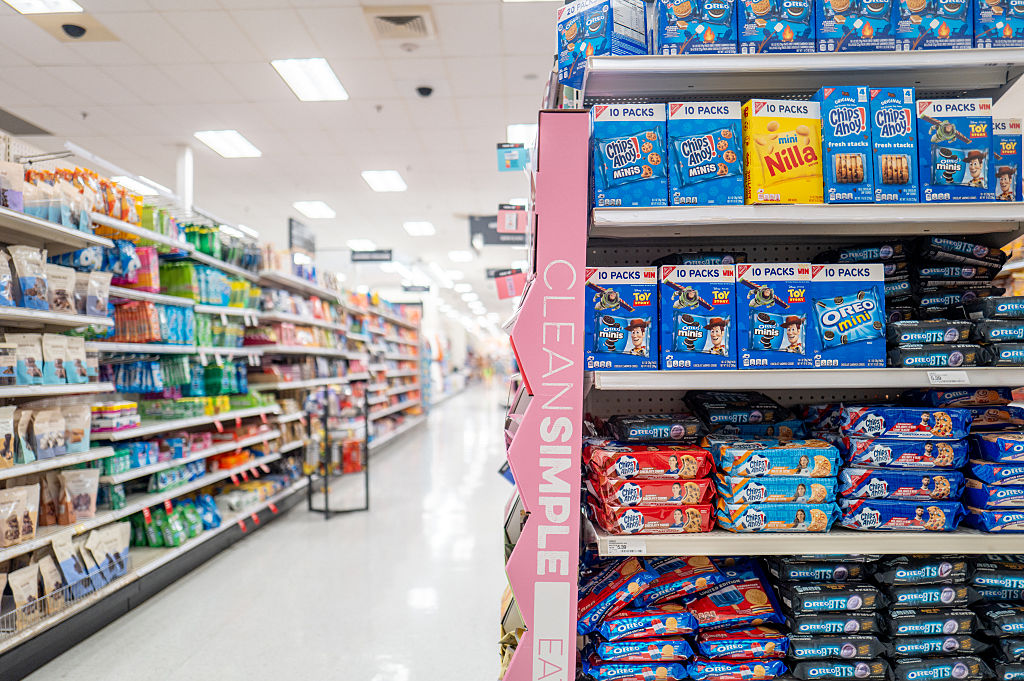
Robert F. Kennedy Jr. rose to prominence in part by criticizing America’s reliance on ultraprocessed foods and promising to make the food supply healthier. On Aug. 10, he announced proposed changes to a longstanding U.S. Food and Drug Administration (FDA) process that determines when food companies have to tell the agency that they’re adding new ingredients to the food supply.
Previously, food companies were permitted to determine on their own that some new food ingredients—often combinations of lab-manufactured chemicals—were Generally Recognized As Safe, or GRAS, and could decide whether or not to tell the FDA that they were including them in their foods. They did that by filing a GRAS notice with the agency at the same time that the food hit the market.
But because they were not required to file a GRAS notice, many companies didn’t. A 2026 analysis by the Environmental Working Group, a health-focused nonprofit, identified at least 111 food chemicals that companies had added to foods including cereal, snack bars, and sports drinks without informing the FDA.
“When I came to HHS, I asked the FDA how many ingredients we have in our food, and they said they didn't know. They said it could be 4,000, it could be 12,000, it's probably somewhere around 10,000,” Kennedy said at a press conference announcing the new rule. “We don't even know exactly how many chemicals are in the food that Americans eat every day, and the food industry continues to develop novel compounds and chemical combinations that do not exist in nature.”
The new announcement, if it becomes law, would make filing a GRAS notice mandatory, meaning that any time a company adds a new chemical to a food sold to the public, it has to file a notice with the FDA.
“By proposing mandatory GRAS notifications, we are closing critical information gaps and giving the FDA greater visibility into substances entering the food supply,” said acting FDA commissioner Kyle Diamantas at the press conference about the new proposed rule.
The proposal now has to go through a lengthy rulemaking process, and experts say that the food industry is likely to pursue litigation, which could further delay the rule from going into effect.
What the new rule would potentially do
Food industry experts say the new rule is a good start, though they had some caveats. Melanie Benesh, vice president of government affairs at the Environmental Working Group and one of the authors of the analysis of chemicals in the food supply, calls it a “critical first step.” But “whether it will make our food safer, whether it will create real enforcement against bad actors, those things are all less clear.”
After all, she says, companies can still add new ingredients to foods and put them into the market at the same time they’re telling the FDA about those new ingredients. Right now, the FDA is under-resourced and may not have time to review the notice until long after the food has reached the public, she adds.
“We don't know what happens without more FDA resources,” she says. “The FDA already struggles to review what's on its docket now.”
There’s still no information about how thorough the FDA reviews will be, she says, and what the enforcement mechanism is if the FDA ends up disagreeing with the food company that the food is safe.
In other industries, companies have banded together to contribute “user fees,” which are payments of participating companies, to fund agency reviews, says Jennifer Pomeranz, a public-health lawyer and professor at the NYU School of Global Public Health. The generic drug industry, for example, found that user fees sped up review timelines and so requested Congress to implement them. Other times, Congress can add user fees. The FDA needs some sort of funding—like user fees—if it is going to be able to truly review the GRAS notices that companies submit, she says.
Ideally, she says, the FDA would require a pre-market review for new ingredients so that it could ensure their safety before they’re added to the food supply. (New color additives, for instance, are not allowed to go through GRAS and must be pre-approved by the FDA before they’re added to food.) But that might be difficult to enact in the current political climate, she says.
“MAHA conflicts with MAGA,” she says, because MAHA (the Make America Healthy Again movement) wants to force food companies to be more transparent about their ingredients, while MAGA (Make America Great Again) is about deregulation. Bloomberg News recently reported that the Trump Administration delayed a long-awaited definition of ultra-processed foods because of pressure from food industry CEOs.
Closing the GRAS loophole
The GRAS loophole has led to illnesses in the public, which is one big reason it needs to be closed, says Thomas Galligan, principal scientist for food additives and supplements for the Center for Science in the Public Interest. In 2022, the company Daily Harvest used a new substance called tara flour in one of its plant-based products, which would become linked to hundreds of instances of people getting sick. The company had not filed a GRAS notice about the substance, and in 2024, the FDA determined that the substance was not generally recognized as safe.
“I think the people who had to have their gallbladders removed from eating tara flour would argue that the impacts of the GRAS loophole are very real,” Galligan says.
Galligan says he hopes that the proposed rule will change how companies act, but points out that it could be years before it actually goes into effect. The last time the FDA proposed changes to a GRAS rule was in 1997, he says; the changes were finalized in 2016.
That’s why he is looking to states to pass their own GRAS rules, a move that would force companies that sell food in those states to change how they operate. A bill that recently passed the New York Assembly and Senate and was sent to Gov. Kathy Hochul’s desk would generally make it illegal to sell or use certain GRAS substances in food unless a company has made a detailed, publicly available report about that ingredient to the New York Department of Agriculture.
Similar bills are being considered in California and New Jersey, he says.
“We hope all these states and additional states will continue to advance GRAS reform at the state level,” he says, “because it's really uncertain what is going to happen federally.”
The Office actor Lucy Davis says she has incurable stage four breast cancer
Star, 53, says disease has metastasised to her bones and it is too late for chemotherapy
Lucy Davis, the actor best known for playing Dawn Tinsley in The Office, has said she has incurable stage four breast cancer.
The 53-year-old said she was diagnosed a year and a half ago and the disease had metastasised to her bones including her spine, right hip and ribs. She said it was too late for chemotherapy.
Continue reading...Google’s Gemini app surges to 1 billion users
Arkansas high school football player finds deadly snake was in his helmet while he practiced for an hour
Watch: Family narrowly escapes home during Colombia earthquake
Former judge removed by Orbán elected Hungarian president
Live Results: Connecticut midterm primaries
Social Security adds 14 conditions to fast-track disability list
Legendary Further bus to make historic return to San Francisco as part of art exhibition
Former judge removed by Orbán elected Hungarian president
Did President Trump Escape Air Force One In A Catering Truck?
Richard Tice accused of ‘nasty tactics’ over legal threat to the Guardian
Reform deputy leader condemned for seeking disclosure of documents that could reveal reporter’s sources
Reform’s deputy leader Richard Tice has been accused of using “nasty tactics” in an attempt to intimidate journalists and deflect attention from his own financial affairs after issuing a legal threat to the Guardian.
In a letter sent from his lawyers, a Guardian correspondent was singled out for her reporting on a series of Tice’s financial transactions that were referred to the National Crime Agency.
Continue reading...Верховный суд России снял антивоенную партию «Яблоко» с выборов в Госдуму
Almost nowhere in California is building enough housing. Here's why
Война, в которой надо видеть выход. Сколько еще Иран сможет противостоять США?
Trump hid in a catering truck to secretly switch planes amid Iran's missile threat
Video shows flames erupting from plane's engine before emergency landing in South Carolina
Man guilty of harassing MP Stella Creasy on Tube train
How Ukraine is holding its own against Russia — and changing warfare as we know it

When the Russia-Ukraine conflict erupted into full-scale war in 2022, things looked grim for Ukraine. Its capital, Kyiv, was under threat almost immediately, and there were questions about how long the smaller country could hold out, even with US support. More than four years later, however, the dynamic is changing. US military support has waned, but not only has Ukraine held its own in years of grinding, attritional fighting, it increasingly has Russia on the defensive.
According to Marcus Walker, who covers Ukraine as South Europe Bureau Chief for the Wall Street Journal, “it’s certainly possible for the smaller country to survive and have a chance of winning only because it is more nimble and and better at improvising and for large periods of the war has had the edge in terms of innovation.”
Walker, who, last month, reported on how the war is beginning to shift against Russian President Vladimir Putin, talked with Today, Explained co-host Noel King to explain how Ukraine has held on this long — and how it’s successfully improvising on the battlefield to press its advantage.
Below is an excerpt of their conversation, edited for length and clarity. There’s much more in the full podcast, including how Ukraine has recently gained a new ally on the American right who has Trump’s ear. You can listen to Today, Explained wherever you get podcasts, including Apple Podcasts, Pandora, and Spotify.
You recently wrote that Ukraine has Russia on its back foot. How?
To understand what happened this year, we have to go back to the very beginnings of the war, which were in 2014 when Russia seized Crimea and the Eastern Donbas region in a smaller-scale war. And, at the time, Ukraine was a militarily weak country. Its army was pretty backward and had outdated equipment; although, it fought as hard as it could. The society was politically divided, especially over its relationship with Russia and with the West and with Europe. And Russia seems to have drawn the lesson that Ukraine would be a pushover when it launched its full scale invasion in 2022. And, at the time, now four and a half years ago, even most Western governments and intelligence services thought that Russia would win the war easily.
Instead, the very fact of Russian pressure on Ukraine had somehow welded Ukrainians together and created a stronger, more united society and state that shared — whatever the internal differences — at least the determination to have a country called Ukraine. And, in the meantime, they did a lot of reforms to their country and to their military.
And so, when Russia launched a full scale invasion — thinking, “this will be easy,” — instead they found themselves in a full-scale war that they’ve been unable to win. On balance, Russia is really struggling to get any military result despite the investment of massive resources and the loss of incredible numbers of soldiers in trying to win this war. It just isn’t able to turn its advantage in numbers into victory.
Right now, it’s hard to see Ukraine collapsing. However, Ukraine’s a long way from winning outright. And the outcome of this war is ultimately still open.
Ukraine must be doing something right on the battlefield. What is it doing right?
It has found ways to counteract Russia’s advantage in numbers, in manpower, and in equipment. And, above all, the asymmetric war that Ukraine has been fighting has come to rely heavily on drones, on its know-how, and on its skill at improvisation to develop a new form of drone warfare that other countries around the world have been trying to learn from, including the US military, including Middle Eastern countries, including Iran, and including other NATO countries in Europe — and, of course, the Russians, too.
There is a constant arms race here in terms of drone technology and tactics. And both sides are now using incredible numbers of these often very tiny weapons — often 12 or 15 inches big with four little propellers — that can kill at ranges of 20 to 30 miles.
What is Ukraine using the drones to do, exactly?
They’re the most important tactical weapon at the front for killing Russian infantry. They are also using larger bomber drones with propellers or with wings to try and destroy Russian logistics, to blow up trucks transporting ammunition or other supplies on the supply roads far behind the front. They’re using long-range drones that can fly for a thousand miles or more to destroy Russian oil refineries deep inside Russia in an attempt to cut off the oil revenues that are vital for the Russian state and for Putin’s ability to finance the war.
On the front line, drones are also doing all sorts of work that humans used to do, such as transporting ammunition, and food, and water to infantry soldiers on the front line. So, if you go to frontline areas now, or anywhere near them, you can see ground drones: little remote-control vehicles with big chunky wheels trundling along on their own with no human in sight.
They also, for example, evacuate wounded Ukrainian soldiers. They will lie down on these ground drones and be ferried out, because that is better than having six men carry you out on a stretcher where, if you’re hit again, then you might have seven casualties.
How did Ukraine end up using drones in so many areas — and so successfully? Is this just weaponry evolving the way it tends to?
Obviously, in all wars, innovation happens very fast under the pressure of necessity. But there is something very particular about Ukraine. It is a country of people who like to improvise. It’s also a country with a large software sector, a large IT sector. And it’s a place where large parts of the military have a culture of, as we journalists sometimes put it, trying to MacGyver solutions. You take what you have, and you improvise.
It so happened that the drone revolution started with consumer drones, the same kind of quadcopters that people were using to take pictures on holiday. And they worked out ways to attach a claw to them that can then drop a grenade or strap some explosives to it and crash the whole drone into a Russian vehicle. That was how it began at the start of this war in 2022. But, now, these things have become really a deadly fleet of flying killer robots that saturate the frontline area.
Of course, the Russians are doing the same. So, on both sides of the front line, it has become extremely difficult and dangerous to move under a sky full of these killer robots.
I was reading this weekend that Ukraine has been using drones to target warehouses for this company called Wildberries. It’s kind of like Amazon for Russia. What’s the strategy there?
There are a couple of aspects to that. One is that Wildberries has also been selling a large amount of military gear, such as body armor or drone components. It’s more like an Amazon from which the soldiers can order a lot of gear to continue the war, so it is a way of disrupting military logistics.
But, also, it strikes a blow to Russian civilian perceptions of the war, because, for years, Putin tried to tell the Russian population that this war is something happening far away, and it wouldn’t touch them directly. Now, it turns out that their equivalent of Amazon deliveries are not going to be arriving, because the warehouse burned down.
At the same time, it’s a way of damaging the Russian economy, because Wildberries also owes a lot of money to banks. And so, if the company is in trouble, then it also causes trouble for the Russian banking system. And it hurts the tax revenues of the Russian government that pay for the war.
Is Russia showing evolution on the battlefield, as well?
Yes, they have. They have also come up with their own innovations. For example, in the last couple of years, since about 2024, they’ve been using large numbers of drones on fiber optic cables. That means the pilot that’s flying them is attached via a long thin plastic cable or fiber optic cable to a drone that carries a spool and is unspooling this cable as it flies. Now, what does that do? It means that electronic interference with the radio signal is no longer possible, because there is a physical connection between the pilot and the drone. So, that was an innovation that bypassed electronic warfare or the interception of the radio signal of the video feed that pilots need to fly their drones.
They’ve had other innovations too. The Russians last year, for example, came up with a whole new class of medium-range drones — cheap, fixed-wing drones. The Ukrainians have now responded and made their own versions, which are better, but it really is a constant race of innovation and adaptation. And every time I come back and talk to military units here, everything’s changed. The tactics that worked last year no longer work. And the drones that work now didn’t exist three months ago.
Is there some possibility that Ukraine can win this war by not losing it?
Yes. Winning in war means achieving political war aims. And Ukraine’s aim is to survive as an independent nation state. It can do that. It can achieve that even if it loses currently about 20 percent of its territory that’s under Russian occupation.
I think it’s hard to see how Russia can achieve its own central war aim, which was to reimpose political control over Ukraine to turn it into a kind of protectorate — really to take back control of the place that was once Russia’s largest colony. It’s very hard to see how the Russians can achieve that. The Russians seem to be counting on the West, on the US and the Europeans getting tired of supporting Ukraine, of sending financing and loans and weaponry. Putin seems to believe that, without this international support from the West, Kyiv won’t be able to carry this on forever.
Richard Tice accused of ‘nasty tactics’ over legal threat to the Guardian
Reform deputy leader condemned for seeking disclosure of documents that could reveal reporter’s sources
Reform’s deputy leader Richard Tice has been accused of using “nasty tactics” in an attempt to intimidate journalists and deflect attention from his own financial affairs after issuing a legal threat to the Guardian.
In a letter sent from his lawyers, a Guardian correspondent was singled out for her reporting on a series of Tice’s financial transactions that were referred to the National Crime Agency.
Continue reading...Ousted Syrian dictator Bashar al-Assad sentenced to death in absentia
How can Andy Burnham stop PC Harper's killers being released early?
Judge finds Kennedy Center owes musician $250,000 in legal fees
Luigi Mangione murder trial to have anonymous jury
Fueled by national movement, democratic socialist shakes up Wisconsin's governor's race
$75,000 CD vs. $75,000 high-yield savings account: Which will earn more interest over the next year?
The Guardian view on wildfires: firefighters can’t handle this crisis alone | Editorial
The response to this summer’s record heat and drought should be led by ministers – not left to the emergency services
The wildfire that began on protected heathland in the New Forest in Hampshire on Sunday was reported to be under control on Tuesday. But with temperatures forecast to reach 36C or higher in parts of England on Thursday, the risk of further outbreaks remains high. Firefighters responded to 185 wildfires in the first 10 days of August. In coastal Suffolk, conservationists and locals are counting the cost of the blaze that devastated Dunwich Heath. Its vegetation and rare bird populations are expected to take decades to recover.
Although the immediate cause of many wildfires is litter, the risks are elevated by heat and drought, and repeated warnings from climate scientists do not necessarily lessen the shock and distress caused. As people and governments across Europe assess this summer’s damage, experts including the UN climate chief, Simon Stiell, hope that the fires will focus minds on the urgent necessity of cutting emissions – as well as investing in emergency planning. Europe is currently heating up faster than any other continent, due in part to proximity to the melting Arctic.
Continue reading...