RSS Feeds
Google says hackers are calling financial firm employees to hack and extort victims
The Chaos and Cruelty of ICE
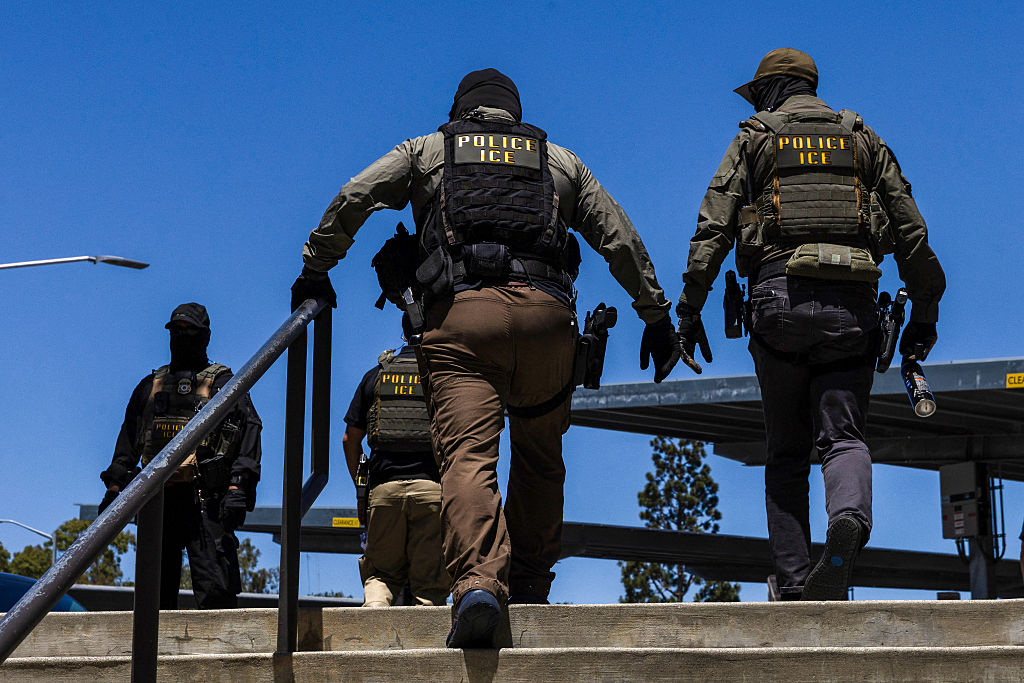
Within the span of just six days, immigration enforcement agents fatally shot two more people, Lorenzo Salgado Araujo in Texas and Johan Sebastián Durán Guerrero in Maine. Their deaths are not an aberration, they’re an indictment: President Donald Trump’s mass deportation machine is deadly and wreaks havoc on American streets every day.
Juiced by tens of billions in funding from Congress, the Trump Administration has amassed thousands of law enforcement personnel and deployed them in a nationwide “surge”—with a public mandate to deport one million people per year, regardless of the chaos their actions cause in American streets. These latest shootings, which Immigrations and Customs Enforcement (ICE) now admits took the lives of people who weren’t even their intended targets, reveal the sloppy, reckless, and cruel results of the Trump Administration’s unprecedented arrest escalation.
The New York Times reports that six other people have been fatally shot by Immigration and Customs Enforcement (ICE) since the start of President Trump’s second term, as the agency pursues aggressive arrest quotas. Without change, this pattern of reckless enforcement threatens to become the go-to playbook for immigration enforcement for years to come.
A new report from the ACLU only provides more clarity on ICE’s track record of lawlessness, as ICE and the agents working for it are operating under new norms that put people in danger, undermine our basic freedoms, and are already changing the nature of American life for the worse. Through a detailed accounting of more than 1,200 enforcement incidents across eight states in 2025, the report found that immigration agents routinely used violence and the threat of physical force against those they encountered to compel immediate obedience to their commands, not because they faced serious threats to their own safety.
Our report identifies 418 times agents shoved, tackled, or pinned people; 76 times they pulled people from cars; 130 times they brandished weapons and 69 times, they verbally threatened to use weapons or force; 361 times they pepper-sprayed or used other chemical irritants on people; and 81 times they used tactics so dangerous that they’re sharply prohibited by many law enforcement agencies because they’re deadly, such as chokeholds and grabbing people by the neck.
When armed officers begin encounters with force as a default tactic, it puts lives at risk. A minor stop, confusion, or an attempt to drive away can become deadly in seconds. Injury and death are not just accidents—they are risks created by the method of enforcement itself. The dangers have only magnified as immigration agents moved their operations into the spaces of everyday public life—where people live, work, commute and go to school—exposing anyone who may happen to be in the vicinity to the disruption and violence. For instance, children are often caught in the cross-hairs. We identified more than 200 who were detained or subjected to law enforcement misconduct, including 32 U.S. citizen children.
In this way, violent immigration enforcement isn’t just a threat to public safety, it's a threat to the very cornerstone of our democracy. Research from the ACLU identified 782 people who were watching, documenting, protesting, or otherwise bearing witness and were targeted, detained, or subject to law enforcement misconduct. This, we determine, is an attack on the First Amendment, effectively suppresses free speech, and threatens to roll back civil liberties.
These findings should worry all Americans. The Trump Administration has turned the nation’s largest federal law enforcement agencies into a kind of paramilitary force, threatening the rights and safety of communities across the country. In the brutal and swift pursuit of its ambition to achieve 100 million deportations—approaching a third of our nation’s population—this deportation force has fundamentally reshaped American life.
The White House should de-escalate its enforcement surge. But without serious, lasting reform, everyday places will remain danger zones for immigrants and U.S. citizens alike, and deaths and serious injuries will continue. It’s time to replace ICE, an agency that was conceived about a quarter century ago and has proven reckless and unaccountable, with a new system designed to manage immigration effectively. We must bring our neighbors and loved ones out of the shadows, and on a path to citizenship and to undisputed, full protection under our laws. This new agency should be charged with a mission to keep families together, support all our communities to thrive, and uphold our rights—not attack them.
Mr. Salgado Araujo and Mr. Durán Guerrero are not the first people to be killed by ICE agents, but they must be the last.
Salmonella Outbreak Linked to Jalapeño Peppers from Chipotle and Qdoba

A Salmonella outbreak linked to jalapeño peppers has sickened hundreds of people in at least 27 U.S. states, according to an Aug. 6 food-safety alert released by the U.S. Centers for Disease Control and Prevention (CDC).
The CDC identified jalapeño peppers grown in Sinaloa, Mexico, and distributed by Coast Citrus Distributors as the source of the outbreak. The peppers were served at restaurants including Chipotle and Qdoba, the CDC said. At least 345 people have been sickened in the outbreak to date, and 36 people have been hospitalized.
Minnesota and Colorado have been especially hard-hit, reporting at least 110 cases each. A woman in Minnesota has sued Chipotle claiming that the restaurant allegedly served her contaminated jalapeño peppers. Kristen Behne says she developed a 102°F fever and was hospitalized with sepsis after eating a chicken burrito bowl at a Chipotle restaurant in Roseville, Minn., in late June, CBS News reported.
Chipotle said in an Aug. 5 statement that it had removed jalapeños supplied by Coast Citrus Distributors from its restaurants across the country “and replaced them with product from different growers.” Qdoba said it had removed all jalapeños from its restaurants “out of an abundance of caution.”
The CDC and U.S. Food and Drug Administration (FDA) said in an update about the outbreak that they do not “consider there to be a current ongoing risk” linked to Chipotle or Qdoba. The CDC and FDA said they continue to investigate the outbreak, including probing whether the contaminated jalapeño peppers were sold at grocery stores.
The FDA said Coast Citrus Distributors has agreed to initiate a recall of jalapeño peppers implicated in the outbreak and was “in the process of identifying and contacting affected customers.”
Salmonella, a bacteria that mostly spreads through contaminated food and water, is one of the most common foodborne pathogens in the U.S. and globally, infecting tens of millions of people every year. Incidences of the disease are on the rise globally, according to a 2025 study. Salmonella cases increased by almost 50% between 1990 and 2021, and deaths from Salmonella infection increased by almost 27% over the same period, the study said.
Most people infected with Salmonella suffer diarrhea, fever, and stomach cramps, starting 6 hours to 6 days after ingesting the bacteria, the CDC says. Most people recover without treatment after 4 to 7 days, but the illness can be severe or even life-threatening in some people, including young children, the elderly, and people with weak immune systems.
The CDC recommends people seek medical care if they have severe or lingering symptoms of food poisoning, including a fever higher than 102°F; diarrhea that doesn’t improve after 3 days; bloody diarrhea; and signs of dehydration, such as a lack of urination.
U.S. health officials are currently investigating multiple Salmonella outbreaks across the country, including one linked to eggs and another tied to backyard poultry. The FDA said in late July that Midwest Poultry Services had recalled 1.5 million eggs due to possible Salmonella contamination. Affected eggs had been sold at Kroger stores in Texas and Louisiana; Brookshire Grocery stores in Texas, Oklahoma, Arkansas, and Louisiana; as well as other retailers in those states and in Mississippi and New Mexico.
The U.S. is also grappling with a record cyclosporiasis outbreak that has sickened thousands of people. Michigan health officials said on Aug. 3 that two people had died in the outbreak.
ICE’s DNA Collection Increases, SpaceX’s Rocket Crashes Into the Moon, and the AI Backlash Grows
Flock Highlighted Police Departments Using Its Tech. Now 4 Face Allegations of Misuse
The Ultimate .NET Workflow for Cursor, Antigravity, and AI-First Editors
With the rapid rise in agent-first development, many developers are adopting AI-first editors like Cursor, Google Antigravity IDE, Devin Desktop, and Kiro into their workflows. The appeal is obvious: deep, contextual AI assistance integrated directly into the coding surface. But if you write C# and .NET for a living, you have probably hit a massive wall trying to make these next-generation editors your daily driver.
The wall isn’t the AI – it’s the lack of great C# tooling in your editor of choice. Until now, .NET developers using AI-first editors had to use those editors without a first-party debugger or a full-featured C# extension from a trusted vendor. You either had to abandon AI-first editors entirely, or you had to adopt a clunky “two-window” approach: using Cursor to generate and edit code, while keeping a separate IDE open on a second monitor just to run unit tests, navigate complex solutions, or attach a debugger. You deserve a complete solution, and we are here to help!
The most complete .NET tooling in alternative editors
With the 2026.2 release, the ReSharper extension completely ends the two-window compromise. ReSharper is fully compatible across these ecosystems, with rich tooling and experiences you come to expect as a .NET developer. To learn more about the value that the ReSharper extension brings to .NET developers, read our previous blog post.
Because we’ve just added our battle-tested .NET debugger to the extension, ReSharper is now officially the most complete .NET option available in Cursor, Google Antigravity IDE, Devin Desktop, and Kiro.

How to install
By installing a single extension, you bring the full suite of JetBrains code intelligence directly into your AI-assisted workspace:
- AI generation + deep code analysis: AI models are incredible at generating boilerplate, but they can introduce subtle bugs. Pair your editor’s generative AI with ReSharper’s precise static analysis to instantly check AI-generated code for architectural flaws, performance bottlenecks, and style consistency before you even run it.
- A unified lifecycle: Write, review, seamlessly refactor, navigate, and debug your application and run unit tests from a single editor window, without ever breaking your focus state.
Installing the extension also auto-starts a free 30-day trial with no manual configuration required.
# Open your editor's command pallette (Ctrl+P / Cmd+P) and run:

ext install JetBrains.resharper-code
If you’re downloading for Cursor, Google Antigravity IDE, Devin Desktop, or Kiro, the extension is natively hosted on the Open VSX Registry. For users of Visual Studio Code, it is available on the standard Visual Studio Code Marketplace.
Shaping the future together
This release marks a major milestone, but it is just the beginning. We’ve brought the core functionality to the Visual Studio Code and compatible editor ecosystems, and we are now looking to the community to help us prioritize what to build next. To provide feedback for the extension, go ahead and submit your feedback through your editor like so:

Share your thoughts!
We’d love to hear your feedback on how you’re getting on with ReSharper for Visual Studio Code. What do you like, what’s working for you, and what you’d like to see next. You can let us know in the issue tracker.
And if you’re enjoying the ReSharper extension, don’t forget to leave us a review on the marketplace. Your feedback helps other members of the .NET community make informed decisions and ensures that we continue to improve based on user needs.
- Visual Studio Code Marketplace
- Open VSX Registry (for Cursor, Google Antigravity IDE, Devin Desktop, Kiro, and other compatible editors)
Thank you for your support!
Thousands of migrants still in Ceuta after border crisis, local leader says
Amanda Knox defends Fringe comedy show after claims it will 'trivialise violence'
Tight vote on Blanche exposes deep skepticism of Trump's Justice Department
The confirmation of Todd Blanche hangs on the support of two Republicans who have repeatedly criticized President Trump's stewardship of the department.
Fled to America at 11. Stole at 18. Deported to Vietnam at 44.
Details on Senate committee vote to hold Dr. Anthony Fauci in contempt
EasyJet agrees to £5.7bn takeover
Sen. Mitch McConnell says he's been discharged from rehab
Thousands of rail passengers hit by power failure disruption
Aipac-linked Super Pacs spend millions in California to thwart progressive candidate
More than $5m in recent weeks have been spent in ads targeting Aisha Wahab and in support of Melissa Hernandez
Super Pacs tied to the American Israel Public Affairs Committee (Aipac) have spent millions in a California congressional race to keep a progressive Democrat from winning Eric Swalwell’s former seat.
Aisha Wahab, a state senator who has been endorsed by the California Democratic party, is widely considered the frontrunner in the special election for the district covering a swathe of the East Bay.
Continue reading...China-linked LightSpy spyware caught targeting victims in 13 countries, including the US
Why a Medicare supplemental insurance plan is worth opening this August
FIFA Executives Were Given Ultimatum to Approve World Cup Privatization Plan
Perez Hilton’s family says his children ‘fled’ their home before his reported self-harm livestream
People can resume regular lettuce-eating habits, Michigan health officials say
Канал свободен, а пинг под нагрузкой скачет до секунды: разбираемся с bufferbloat и очередями

Гигабитный канал может быть загружен лишь наполовину, а пинг под нагрузкой всё равно взлетает до сотен миллисекунд.
Разбираемся, где копятся очереди, как распознать bufferbloat и какие механизмы действительно удерживают задержку под контролем.
Читать далееIsrael charges settler over killing of Palestinian involved in Oscar-winning West Bank film
Sen. Mitch McConnell discharged from rehab center following hospitalization in mid-June
Defense tech Hadrian raises $1.37B at $8B valuation
The Wild True Story Behind Monsters of God

As a lifelong lover of reptiles, Eric Goode has known about the world of exotic reptile smuggling for decades. “I didn't become acutely aware of the criminality of it until probably into the late ‘80s,” says the director of Tiger King and Chimp Crazy ahead of his latest documentary, another foray into wildlife crime, Monsters of God. The five-episode HBO series is Goode’s most ambitious project to date, surveying the explosion of endangered reptiles trafficked into the country in Florida from the 1970s until today. The series guides us through the web of feuding smugglers and law enforcement crackdowns that connect the Sunshine State to the fauna of Madagascar, Indonesia, Malaysia, and many more countries.
Through remarkable archival footage and an incredible range of interviews, Monsters of God digs into the egotistical and ruthless mentalities that supported competing criminal empires and the undercover operations that dismantled them. The series points a finger at animal lovers who felt uniquely connected to exotic creatures while also treating them as a commodity to be exploited and abused.
“We were really intentional about not making it a traditional true crime doc,” says Jeremy McBride, an executive producer on the series. “It's really a portrait of how obsession drives people to get the rarest of the rare, no different than the pathology of people collecting baseball cards, or stamps, or rare coins.” There is one difference: baseball cards can’t bite.
The introduction to Monsters of God’s stolen world
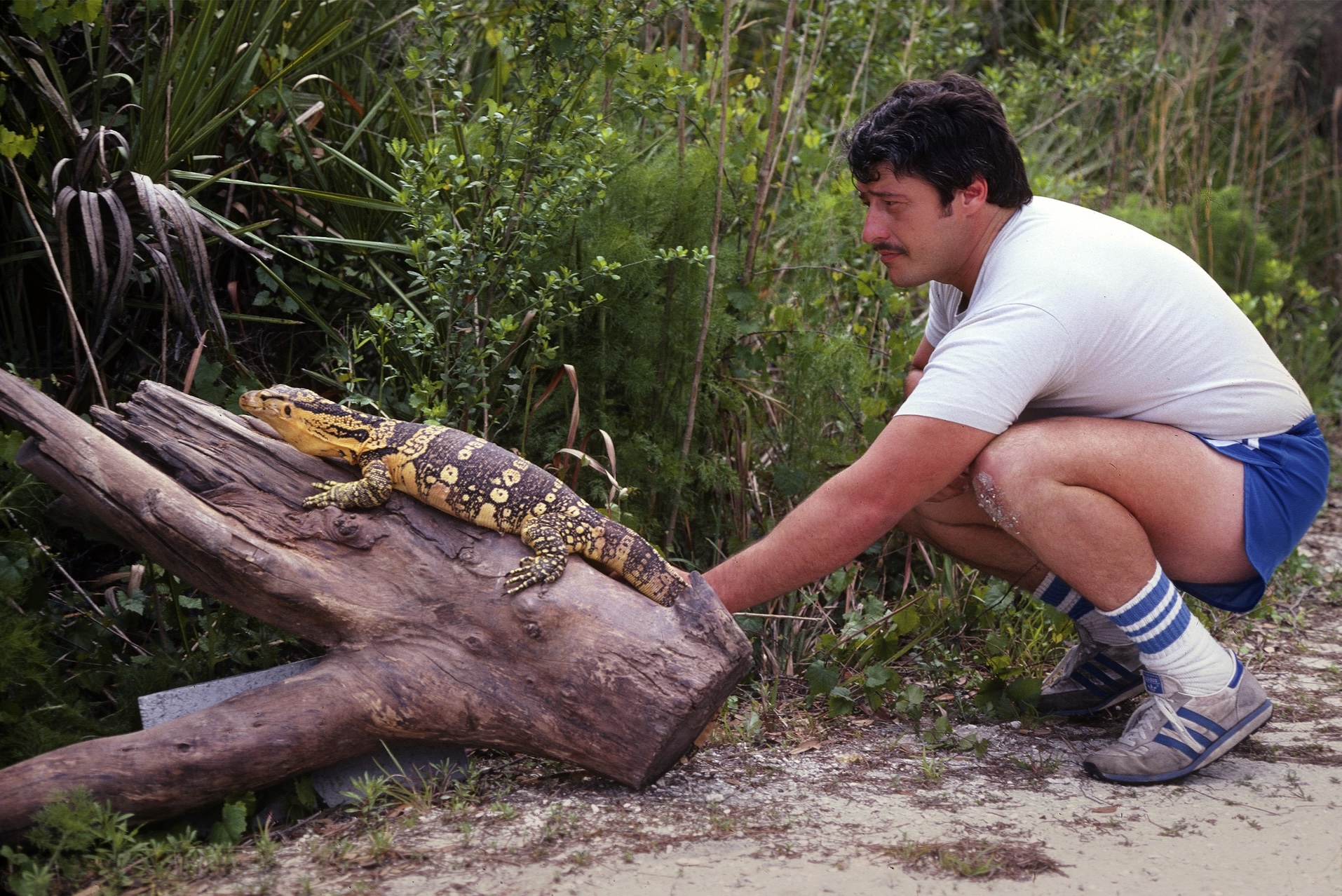
Monsters of God’s first episode, airing Aug. 6, ushers us into the world of reptile smuggling through a major rivalry: Tommy Crutchfield and Hank Molt. Based in Philadelphia, Molt’s obsession with exotic climates and wildlife led him to search the world for exotic reptiles in the 1960s and sell them from his newly acquired Pennsylvania pet store. Molt is considered a crucial figure in the growth of reptile houses in American zoos, which at the time were a rare attraction. He prepared and distributed a price list of rare reptiles—including snakes, turtles, lizards—and sold them to a wide variety of eager customers and competitive zoos. Molt often carried them into the country in suitcases, easily circumventing the relatively lax customs regulations. When the Endangered Species Act came into effect in 1973, Molt’s smuggling business boomed—declaring a reptile species as “endangered” also meant it was rarer and more valuable, allowing Molt to fetch a higher price.
In Molt’s view, Crutchfield rode his coattails. Crutchfield is a Florida native whose introduction to the reptile business began in high school capturing snakes for the “Snake-a-torium” in Panama City Beach. As the smuggling market grew, Crutchfield graduated to the big leagues by mimicking Molt’s established business plan, selling smuggled reptiles to collectors, pet owners, and zoos. Crutchfield and Molt’s rivalry is explored in the book Stolen World by Jennie Erin Smith—like Monsters of God’s first episode, the author uses the two men as a window into how smuggling has fuelled the popularity of reptiles in modern America.
Crutchfield is also a certified braggadocio, at one point referring to himself as “John Dilligenger, Bonnie and Clyde all wrapped up in one”. But it’s true that his criminal activities attracted serious heat—in 1997, the threat of his third round of criminal charges as part of the United States Fish and Wildlife Service (USFWS) five-year-long “Operation Chameleon” made Crutchfield flee to Belize.
When Molt went to prison at the tail end of the 1970s, Crutchfield took his place at the top of the food chain—something his former mentor resented when he was released. According to Maria Palladini, former special agent for the Fish and Wildlife Service, Molt had a habit of taking couriers and dealers under his wing only to betray them. While Crutchfield’s business was soon dominating Molt’s—raking in millions in reptile sales and trades every year—his reckless spending and imports soon put him squarely in the Feds’ crosshairs.
In 1995, Crutchfield asked Molt to help hide an import of endangered Fiji Island iguanas so they weren’t discovered by the Fish and Wildlife Service. Molt agreed—and according to Crutchfield, Molt took his revenge by killing the iguanas. (Molt denies causing them harm.) When USFWS informed Molt he was being charged along with Crutchfield, Molt handed over the dead iguanas and cut a deal to avoid being charged. Crutchfield pled guilty—his second of three criminal convictions in the ‘90s—and cut all ties with Molt.

Monsters of God’s wider gallery of rogues
Don’t expect Tommy and Hank to lead every episode of Monsters of God. Rather than zeroing in on one unstable dynamic like Goode did in Tiger King and Chimp Crazy, Monsters of God expands its scope to the entire reptile trafficking ecosystem throughout the ‘80s and ‘90s.
“This was more of a history lesson about the reptile trade in the United States, so it was a very different kind of storytelling—much more nuanced and complex,” says Goode. “We also really wanted to make sure that we got all sides of the story: law enforcement, the big zoos that were complicit, the reptile dealers, the consumers. It was a global story.”
Subsequent episodes reveal who defined Florida’s exotic reptile trade. Ray Van Nostrand, a New York-born collector and seller who moved to Florida in the ‘70s, took advantage of the power vacuum left by Crutchfield and Molt and smuggled huge quantities of illegal reptiles into the country. His son Mike—one of Monsters of God’s most memorably cantankerous interviewees—took over with a legal, legitimate reptile selling business, euphemistically named “Strictly Reptiles," until he too was tempted by smuggling’s illicit rewards.
But this went way bigger than just reptiles. Ray was in business with returning Tiger King character Mario Tabraue, a “Cocaine Cowboy” druglord with his own exotic animal sanctuary who would smuggle both reptiles and drugs into Florida in the same shipments. On the other side of the law is former DEA agent Larry Loveless and USFWS special agents George Morrison and Ken McCloud, whose respective “Operation Cobra” and “Operation Chameleon” form a clear dramatic backbone to two episodes.
But all these smugglers pale in comparison to Anson Wong, a Malaysian smuggler who was dubbed the “Pablo Escobar of animal trafficking.” Wong had been smuggling illegal animals and products through his export company based in Penang since the ‘80s and gained a reputation as an incredibly elusive and dangerous figure. Wong haunts the stories of the Floridian smugglers, connected to many of the feuds and undercover operations. He emerged as the thread on Goode’s evidence board, tying together the pieces of the director’s most complex documentary so far.
“We had over 174 interviews. We had 1,500 hours of footage. We had Eric’s personal archive and research. We needed a pace that could get people through it, we needed this propulsion, and Eric's quest trying to get to Anson Wong is that propulsion. Anson Wong is this sort of throughline in all of our characters’ stories, like Keyser Söze,” says McBride.
Monsters of God was a different beast to produce
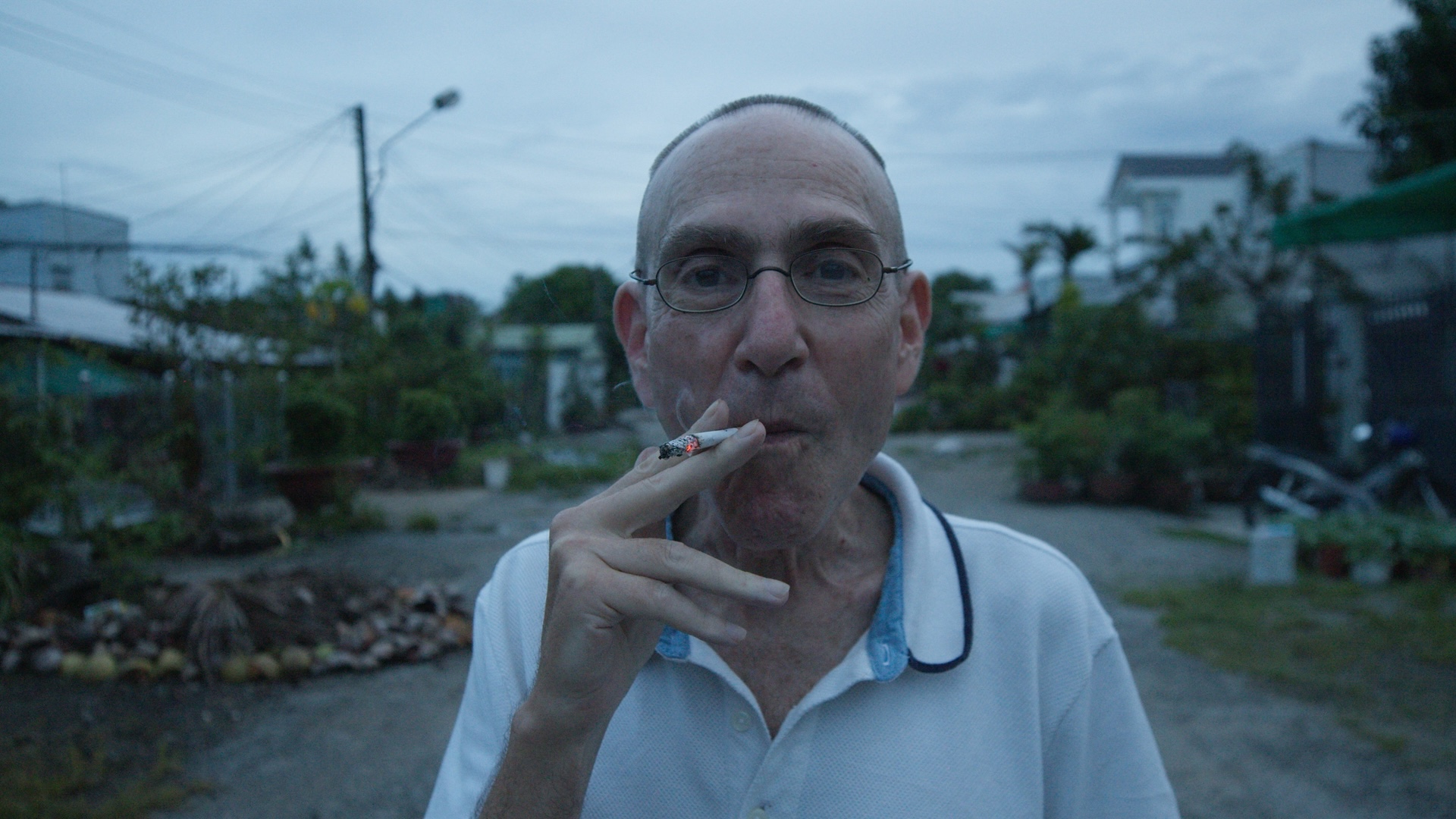
Each episode of Monsters of God is packed with talking heads who talk candidly about their criminal exploits and feuds, but that doesn’t mean it was easy to get them all to talk—compared Joe Exotic and Tonia Haddix, the subjects of Tiger King and Chimp Crazy, the reptile community is far more paranoid. “Joe and Tonia were unique in that way, where they just wanted to be peacocks. They desperately wanted the attention. The reptile world, for the most part, is much more guarded,” says Goode.
While some people had ongoing charges and declined to speak until their cases were adjudicated, others had already been convicted and were willing to talk because double jeopardy protected them from being charged a second time. Others were happy to put everything on the table. “Hank Molt was proud that he could smuggle the way he did, he enjoyed circumventing the laws, and he liked that there were laws because it made it more of a challenge, like Catch Me If You Can with Leonardo DiCaprio,” explains Goode.
In Tiger King and Chimp Crazy, the wildlife crimes spiralled out of control while cameras were rolling. “The story unraveled contemporaneously with the filming, so we didn't know that Joe Exotic was going to try to kill Carol Baskin, that he would get arrested and go to prison. We just happened to be filming different people, and then they all intersected in real time,” says Goode. By contrast, Monsters of God is interested in how the present was shaped by history, so it’s exclusively concerned with reconstructing the past.
The sheer breadth of the material meant that, according to McBride, the shape of each episode wasn’t clear at first, leading them to evolve their true crime storytelling. “What makes this series so distinctive is this psychological character study and this high-stakes true crime documentary, and within all of that, you have this chronology that we analyze with bigger themes involving the extinction crisis and our impact on this planet,” says McBride. “We wanted to draw these big ideas to an everyday person and how it touches their life, how this world overlaps with culture and criminality in a way that a lot of shows don't touch on.”
The beating heart of Monsters of God
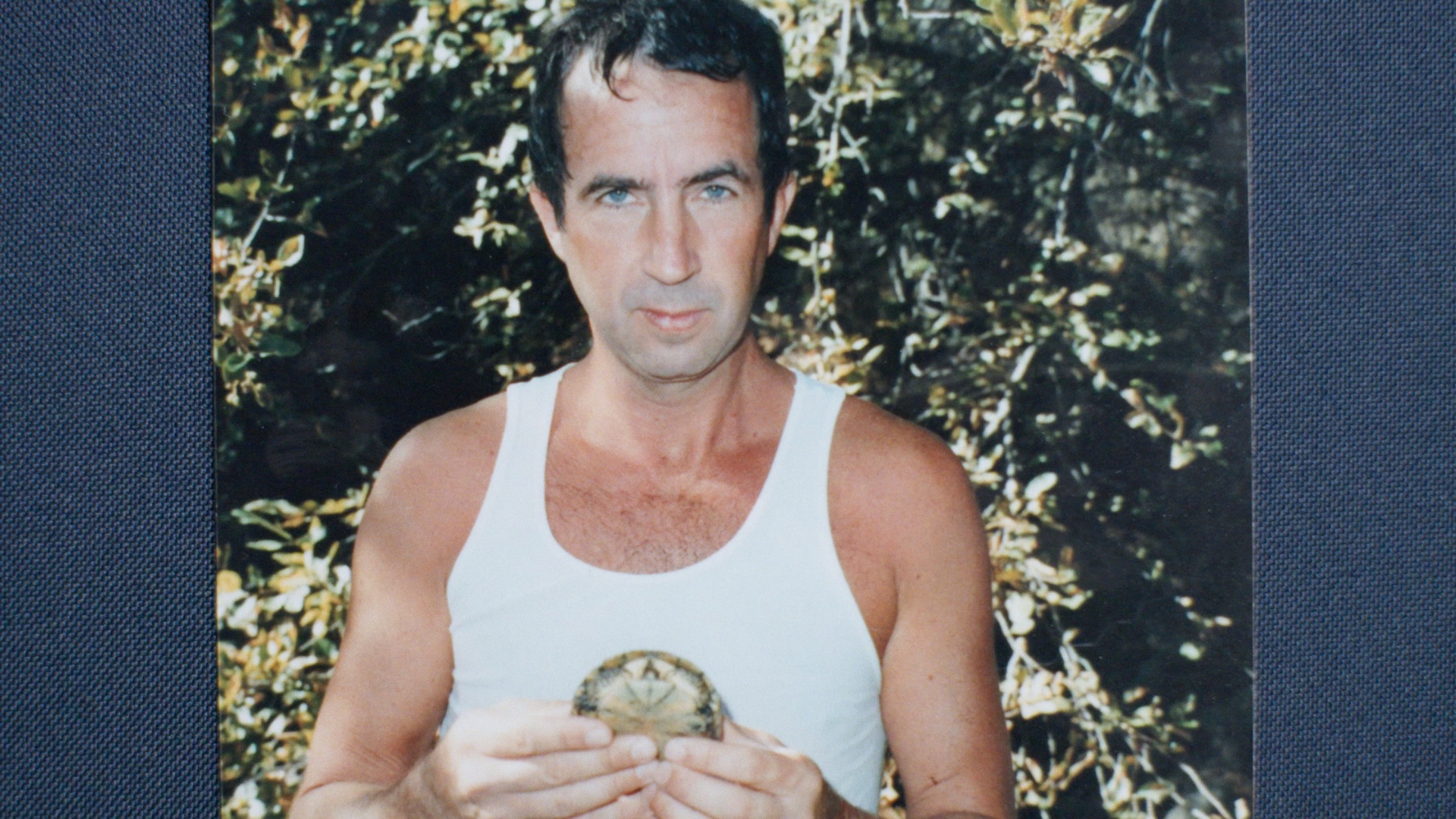
“This story for me is deeply personal,” Goode says in voiceover at the beginning of the series. “I was part of the problem.” But he was definitely the right man for the job: while Goode used to buy reptiles from shady dealers, he had turned a new page by 2003, when he co-founded The Turtle Conservancy to protect the many species of turtles who risk extinction from poachers and smugglers. His reptile expertise made him the ideal filmmaker to handle the cautious and shifty characters wary of appearing on camera—as Goode says, “I can speak their language about reptiles very fluently.” He knows the history of exotic animal collections and menageries in America and Europe, and the hypocrisy displayed by the subjects of Monsters of God—on both sides of the law—infuriates him.
Monsters of God expands on a theme from Goode’s previous docs—that a cultural obsession with rare animals leads to rampant commodification that exploits wildlife, encouraging animal lovers to embrace becoming consumers in a violent and exploitative transaction. Although Monsters of God looks to history, Goode isn’t convinced enough has been done to stop wildlife from being commodified. “It's become more popular because of pop culture. Films like Jurassic Park can trigger these things. Finding Nemo—everyone wanted to buy a clownfish. Or Harry Potter. When I went to Southeast Asia, all the bird markets in Jakarta had baby owls everywhere. Hopefully this show doesn't fuel interest in reptiles and bring in more illegal animals.”
Sen. Mitch McConnell announces he has been discharged from rehab facility
How Abdul El-Sayed rose from political oblivion to progressive breakthrough in Michigan
Wigan thrash Saints in opening Super Four game
Mitch McConnell says he's been discharged from rehab
Dons call for Cambridge leaders to take blame for Jason Arday appointment
Exclusive: Academics call for inquiry, saying university must be held accountable for ‘grotesque racism unleashed’
The University of Cambridge’s leaders deserve blame for the “grotesque racism unleashed” by Jason Arday’s appointment as professor, according to academics calling for the university to hold an independent inquiry.
The Guardian understands that senior dons at Cambridge are circulating a joint letter calling for an inquiry into the processes and circumstances around Arday being given the position, with many suggesting the university wanted a “quick fix” to improve the diversity of its staff.
Continue reading...DR Congo river boat under quarantine for Ebola after five deaths
Israel charges settler over killing of Palestinian involved in Oscar-winning West Bank film
Впервые в истории США сенатором от Мичигана может стать мусульманин
Космическое агентство Южной Кореи опубликовало снимки Луны после падения ступени ракеты SpaceX
Trump administration to pay German firm $1.22bn to cut offshore wind leases
Agreement with RWE is fifth deal Trump team has made with energy companies, offering payouts to give up projects
The German energy company RWE has reached a $1.22bn deal with the US government to relinquish its offshore wind leases and instead redirect funds towards fossil fuel investments.
The agreement marks the fifth deal the Donald Trump administration has struck with energy companies, offering payouts in exchange for abandoning renewable energy projects and redirecting investment towards fossil fuels.
Continue reading...The rise and fall of Jason Arday: a full rundown of the questions being asked
From accusations of plagiarism to queries over his charity work, we list all the allegations against the academic
The rise and fall of Prof Jason Arday has been one of the most dramatic in the history of British academia. Diagnosed as autistic as a child, he says he was non-verbal until he was 11 and only learned to read and write at the age of 18. Less than 20 years later he was appointed the youngest black professor in Cambridge University’s history.
His resignation on Wednesday followed two weeks of intense scrutiny. He has been accused of plagiarism in his academic work and questions have been raised about a long line of claims about his backstory, from endurance running, footballing exploits and charity fundraising to academic positions, qualifications and authorship.
Continue reading...An Explosive Drone Was Found Near Runway at German Airport. Here's What We Know So Far

German officials have suggested “foreign powers” could be behind the explosive-laden drone that was found near a runway at Leipzig/Halle Airport in eastern Germany on Tuesday night.
“We are dealing with a hybrid attack scenario. All measures have been initiated in a highly professional manner,” Interior Minister Alexander Dobrindt told reporters during a press briefing at the airport late Wednesday, upon the launch of an official counterterrorism investigation.
In an interview with German public broadcaster ZDF he elaborated, saying: “We can’t rule out the possibility that foreign powers are behind this.”
Dobrindt did not name any specific “foreign power” and emphasized investigations were ongoing, citing an “excellent collaboration” between state and federal police, along with other authorities.
Germany's Bild newspaper reported that the drone had been found lying near a Ukrainian cargo aircraft. Sueddeutsche Zeitung, another local outlet, on Thursday reported that the cargo plane was carrying military ammunition. A German official later denied the report pertaining to the ammunition finding.
TIME has reached out to Germany’s Interior Ministry, Leipzig/Halle airport, and the Dresden Public Prosecutor's Office for further information.
Leipzig/Halle has served as a European base for Ukraine's Antonov jets since Russia’s full-scale invasion in 2022. The airport is also used by NATO for transportation needs, as well as by the German military.
When contacted about the drone, a NATO official told TIME: “We are aware of the incident, which the German authorities continue to investigate.”
Here’s what to know about the discovery of the device, how German officials have responded so far, and why security concerns are high.
What happened?
Late Tuesday night, local time, police in Leipzig first reported a “sighting of an unidentified object” at Leipzig/Halle Airport.
The object turned out to be a drone armed with explosives and was discovered in a secure cargo area near the southern runway. The authorities swiftly suspended flight operations and deployed a bomb disposal robot to the scene.
After examining the drone, the Federal Police's IED unit was able to successfully remove its detonator.
Separately, a “second, presumably unidentified, flying object collided with a cargo plane after the latter aborted its landing due to the runway being closed,” police said. The cargo plane reportedly belonged to logistics company DHL.
Minor damage was observed on the aircraft after it landed in Hanover, the capital city of Lower Saxony, Germany.
The southern runway at Leipzig/Halle reopened on Wednesday at 6:46 p.m, local time, an airport spokesperson told TIME, adding that “flight operations have been running without restrictions” since then.
What have German officials said about the incident?
Dobrindt said Germany’s authorities are investigating what appears to be “a professional" explosive device. “We are not dealing with amateurs, but with professional actors,” he stated.
Saxony’s Interior Minister Armin Schuster told ZDF he would describe the incident as “a suspected attack scenario, because this is the first time we’ve had a drone that was also loaded with explosives.”
German authorities have stated that the perpetrators of the incident at the airport have not yet been identified.
Roderich Kiesewetter, a member of the German Bundestag, said he is “assuming” the incident was a “targeted attack attempt directed by Russia” and suggested Germany “initiate Article 4 consultations in NATO.”
Under Article 4 of NATO, members can bring any issue of concern, especially related to the security of a member country, to the table for discussion within the North Atlantic Council. The article states that “parties will consult together whenever, in the opinion of any of them, the territorial integrity, political independence or security of any of the parties is threatened.”
Moscow has yet to publicly comment on the incident. TIME has reached out to the Russian embassy in Berlin for comment.

How this incident has added to mounting security concerns
The incident comes as Germany is already on high alert following previous unauthorized drone overflights reported near airports, military facilities, and critical infrastructure.
In October 2025, Munich Airport was forced to halt operations for two days due to drone sightings.
Dozens of flights and thousands of passengers were impacted as authorities investigated the sightings. The incident occurred just shortly after Munich’s popular Oktoberfest was forced to temporarily close due to a bomb threat.
The drone sightings served as “yet another wake-up call,” Dobrindt said at the time, noting that “the race between drone threats and drone defenses is getting tougher.”
In a warning to Europe and beyond, he stated: “We need more funding, support, and research now—nationally and at the European level."
By December, Germany had registered over 1,000 suspicious drone flights in 2025, Bild reported, quoting the head of Germany's Federal Criminal Police Office (BKA).
Suspicious sightings continued into the new year, and in May, flights were briefly halted once again at Munich Airport after pilots flagged a possible drone sighting. On-site investigations by the Federal Police uncovered no suspicious findings.
WATCH: Scientists release most detailed sun images ever
Poll shows how extreme heat is changing Americans' lives
Remains found in backyard of missing family's home, son may have have fled US
Artificial Intelligence used to design brand new viruses
Sticky or slippery? Snails can change their slime to meet the moment

Snails are slimy. But there's more to that goo of theirs than meets the eye. It's a fact that may help inspire the creation of new materials.
(Image credit: Franziska Jehle/Max Planck Institute of Colloids and Interfaces
)

Trump pushes ahead on false claims Reflecting Pool was vandalized
A socialist candidate criticized Thanksgiving — and unearthed a deeper debate on the left

Francesca Hong is the frontrunner to win the Democratic nomination for governor of Wisconsin next week. If she goes on to win the general election, she’ll become the first democratic socialist governor in American history.
But, when Bernie Sanders, the most famous democratic socialist in the country, was asked Wednesday if he’d endorse her, he said: “I don’t think so.” He said he’d met her a few years ago, and that she “seems very very nice” — but said he wasn’t familiar with her race.
Indeed, while leftists and socialists who’ve long been eager to overthrow the Democratic establishment are excited about Hong’s campaign, some are increasingly sounding a bit wary of her chances — and wondering whether she’s the best representative the movement has to offer given the electoral stakes in this swing state.
Key takeaways
- Some on the left want to downplay or quietly renounce some of the identity-related social justice activist language and causes that were popular a few years ago, and jokingly distance themselves from what they now call “woke 1.0.”
- Their preferred approach is embodied in Zohran Mamdani’s mayoral campaign, in which he prioritized affordability while renouncing police defunding — but Francesca Hong, running for governor in Wisconsin, sometimes doesn’t seem to be following that playbook.
- The deeper divide is between left activists who’ve long been uncomfortable with some of the arguments and priorities of the identity-focused left, versus those who still believe in those causes quite strongly.
For instance, when Hong was asked this week about an old deleted tweet in which she called to cancel Thanksgiving due to its celebration of colonialism, she didn’t exactly disavow it. Instead, she told CNN’s Kaitlan Collins that “views can evolve” while also stressing the holiday was “incredibly painful for many people in our communities.”
Moderate Democrats cringed, of course. But what was more notable was how many fellow leftists joined in — even to some of her biggest fans, the answer seemed like political malpractice. It also brought to the surface simmering tensions within the left over how to navigate social issues more broadly, a divide that’s becoming more relevant now that their candidates are on the cusp of wielding actual power.
Left-wing streamer Hasan Piker, fresh off campaigning with Hong, posted on X: “love fran, this was an opportunity to turn this back on how thanksgiving is about to be unaffordable due to trumps wars.” (Two days later, Hong tried a do-over on the answer, claiming Thanksgiving was actually her favorite holiday.)
Another source of concern, for some, is Hong’s tendency of giving elliptical answers when asked about her old support for abolishing police and prisons — saying she won’t do it as governor, but remaining reluctant to disavow the idea as a long-term goal.
Sanders has been a longtime critic of “defund the police” rhetoric. And in the same interview where Sanders said he likely wouldn’t endorse Hong, he said, in response to a separate question: “No serious person that I know who is running for office believes in quote-unquote defunding the police.”
Hong’s rhetoric is reminiscent of how many people in progressive spaces talked about culture, identity, policing, and prisons back during the “Great Awokening” era, peaking in the “racial reckoning” of 2020. But some on the left increasingly believe that those positions alienate voters — particularly the working-class voters they’re trying to mobilize.
This new left conventional wisdom, said to be embodied in Zohran Mamdani’s New York City mayoral campaign, is that socialist candidates for office should quietly downplay or even explicitly renounce those old causes — as Mamdani did for police defunding — in favor of a laser focus on issues like affordability, stopping data centers, and opposition to Israel, where public opinion is on their side.
It’s a sort of left-wing version of “popularism” — the center-left credo that Democrats should campaign on popular ideas that poll well, and abandon unpopular progressive stances. In other words: Don’t scare the normies.
But not everyone on the left is so eager to jettison these stances for purportedly optimal campaign messaging: After all, a major organizing principle for many on the left is their willingness to stand up for what they believe in even when it isn’t popular.
For instance, Darializa Avila Chevalier, the Mamdani ally who successfully challenged a House Democratic incumbent this year, stood by her old calls to abolish policing and borders — though, unlike Hong, she’s running in extremely blue terrain.
“Five years ago, the left was collectively making the case for abolition &/or defund, & gaining public opinion wins,” leftist podcaster Briahna Joy Gray wrote. “Today, they’re making the case for why elected progressives are justified in abandoning this agenda.”
All this is symptomatic of a deeper divide on the left, not just about today’s political strategy, but about race, class, and gender more broadly, and how 2020-era cultural issues fit into their movement today.
Many class-focused leftists view the period they now jokingly call “woke 1.0” or “woke 1” as a cringey mistake, and seek to blame Democratic elites for it. But others on the left still think and talk about race, identity, and social justice causes just like they did in 2020 — indeed, to them, these issues might be why they joined the left in the first place.
Some on the left now want to move on from “woke 1.0”

In 2021, Chi Ossé, campaigning for New York City Council, tweeted: “A cis white man should not be the next speaker of the Council.”
When a critic of his on X unearthed that old post earlier this year, Ossé — now a council member — gave a pithy response: “Woke 1 was crazyyyy”.
The citation of “woke 1.0” or “woke 1” is a now-common shorthand among parts of the online left to describe — and distance themselves from — what they now view as the more dated or inconvenient aspects of the impassioned social justice activism they participated in during the late 2010s and early 2020s.
Typically, this doesn’t necessarily mean rejecting causes like racial justice altogether. Rather, it is often intended to acknowledge that the tactics used a few years back didn’t work, and that a new approach is necessary to try and achieve those goals. (Indeed, “woke 1.0” implies that “woke 2.0” is either coming or already here.)
Among those who use the term, there isn’t a consensus about what’s an outdated relic worth abandoning, and what’s a worthy cause worth preserving. However, there’s probably the most consensus that the sweeping, totalizing identity-related rhetoric and assertions that were common at the time haven’t aged well. Not only did they repel winnable voters, but they fueled constant arguments inside progressive organizations, to the point that some activists likened the discord to undercover federal plots to disrupt left-wing groups in the 1960s.
Take it from Chevalier. The victorious congressional primary challenger has stood by her old tweets about police and borders being fundamentally wrong. But when the New York Editorial Board asked her about “woke 1,” she said it was “indeed crazy” — because there was too much “divisive rhetoric” that hurt the left’s effort to build solidarity.

“At the core of what it means to organize is to bring people together behind a vision,” Chevalier said. “And you can’t do that when you are spending time trying to show who’s more progressive or who’s more woke. That actually causes more division, and it makes folks feel that there is no space for them in our movements.”
To others, the true core of “woke 1.0” is unpopular, fringe-sounding cultural causes — like, say, calling Thanksgiving problematic. In response to the Thanksgiving clip, independent journalist Ken Klippenstein posted: “Hong has a lot of strengths but this woke 1 stuff is a major weakness.”
“Socialists must practice effective communication,” Nathan J. Robinson, editor-in-chief of the socialist publication Current Affairs, wrote. “Reply to a Thanksgiving question: The only thing threatening to cancel Thanksgiving is the rising cost of groceries.”
The deeper disagreement inside the left on economics and identity issues
Underneath some leftists’ attempt to turn the page from “woke 1.0,” there’s a deeper and more longstanding divide on the left between those who want to prioritize economic issues — and those who care deeply about identity-related causes too.
To broadly generalize, we can think of the left as having three main strains, focused on economic justice (class politics), social justice (causes related to identity and culture), and foreign policy (war, empire, and — especially nowadays — Israel). But not everyone prioritizes them in the same way, or joined the movement because of the same issue.
Amid the rise of social media-powered identity related activism, some on the economics-focused left have expressed concern that progressives’ language, approach, and tactics were hampering what should be the left’s top priority: mobilizing the working class. The Marxist scholar Adolph Reed, for instance, has criticized “left identitarians” as “fundamentally antagonistic to working-class politics.”
Some on the class-focused left go further, characterizing “wokeness” as essentially an op by their political enemies.
According to this potted history, it was Hillary Clinton who first opened the Pandora’s box of weaponized identity politics, and she did this to defeat a Bernie Sanders campaign that was overwhelmingly focused on economic justice. Clinton characterized Sanders as insufficiently attentive to gender and racial issues, famously questioning whether breaking up the big banks would solve racism and sexism. His record of more moderate positions on hot-button issues like guns and immigration, which had helped maintain support with culturally conservative independents back in Vermont, also came under attack.

But by 2018, the rising left — embodied by Reps. Alexandria Ocasio-Cortez, Ilhan Omar, Rashida Tlaib, and Ayanna Pressley, all first elected that year — had fulsomely embraced identity-related causes alongside economic ones, believing them to be compatible and interconnected.
All this built up to the 2020 racial reckoning, in which the murder of George Floyd by Minneapolis police Officer Derek Chauvin spurred massive nationwide protests and impassioned demands from the left for societal change. And some activists insisted this change had to include not just defunding but outright abolishing the police.
Yet the racial reckoning ended in disappointment, an “anti-woke” backlash soon followed, and rising crime seemed to discredit the idea of doing away with police. And though the platform of the Democratic Socialists of America still calls for taking “steps towards fully abolishing the police and prison system,” there’s an increasingly open debate on the left about whether it should.
“The idea that police/prison abolitionism flow from ‘core socialist principles’ is pretty odd,” Ben Burgis, a columnist for Jacobin magazine, posted recently.
“We need to create a permission structure on the left that allows socialists to have normal socialist beliefs about police & prisons (fairer, fewer, and more humane) instead of “abolish” which is flatly anarchist, and incompatible with any form of state socialism,” the socialist Cassie Pritchard wrote.
Sociologist Alex Vitale, author of The End of Policing, fired back: “In what fantasy land are police not the natural enemies of workers and their movements? There is no ‘reforming away’ that core truth.”
How these tensions play out in Francesca Hong’s campaign

With Hong holding a large lead in recent polls, some Democrats — fearing what lies ahead for her in the general election — have essentially been trying to coach her into giving what they view as better answers on these “woke 1.0” questions.
When Jon Favreau interviewed Hong on Pod Save America this week, he asked about her old tweets — saying he was only focusing on this because Republicans would be sure to spend millions attacking her, and “I just want to make sure you have the best possible answers to what’s coming.”
Asked about how her views on policing have evolved, Hong said: “My views have only become stronger in that I’m serious about public safety and I will not abolish the police.”
Favreau then asked if she still believed police exist to uphold white supremacy (as she tweeted in 2021), and Hong said, “No.”
But when Favreau asked specifically why she changed her mind on that, her answer was difficult to parse.
“When you talk to people who are most justice-impacted — a mother who lost a child to police violence, people who have contended with injustices in historically marginalized communities — justice also looks like making sure that we are implementing solutions and helping to change the material conditions of people’s lives,” she said.
Then, when asked how her long-term vision of a world without prisons would work, Hong said: “What I know is attainable and the policies that actually meet the urgency of the moment and understanding the realities of it, means that we have to ensure that we’re funding our local governments, that we’re bringing justice to victims.”
She added, more succinctly: “What may have been aspirational is not primary.”
Trump administration to pay German firm $1.22bn to cut offshore wind leases
Agreement with RWE is fifth deal Trump team has made with energy companies, offering payouts to give up projects
The German energy company RWE has reached a $1.22bn deal with the US government to relinquish its offshore wind leases and instead redirect funds towards fossil fuel investments.
The agreement marks the fifth deal the Donald Trump administration has struck with energy companies, offering payouts in exchange for abandoning renewable energy projects and redirecting investment towards fossil fuels.
Continue reading...Iran war renews concerns about lasting toll of traumatic brain injuries to American troops
GOP Rep. Max Miller resists pressure to drop reelection bid as party anxiety grows over abuse claims
The park service says Trump's arch would obstruct historic sites. Could it be moved?

President Trump's proposed arch in Memorial Circle would intrude on dozens of nearby sites, says the National Park Service. But there's been minimal discussion of alternate locations.
(Image credit: Andrew Caballero-Reynolds)
