RSS Feeds
Doku's new deal, Gonzalez to stay - what's latest on Man City transfers?
Abdul El-Sayed calls for Democrats to unify as he prepares to battle Rogers for Michigan Senate seat
How to Best Watch the Perseid Meteor Shower
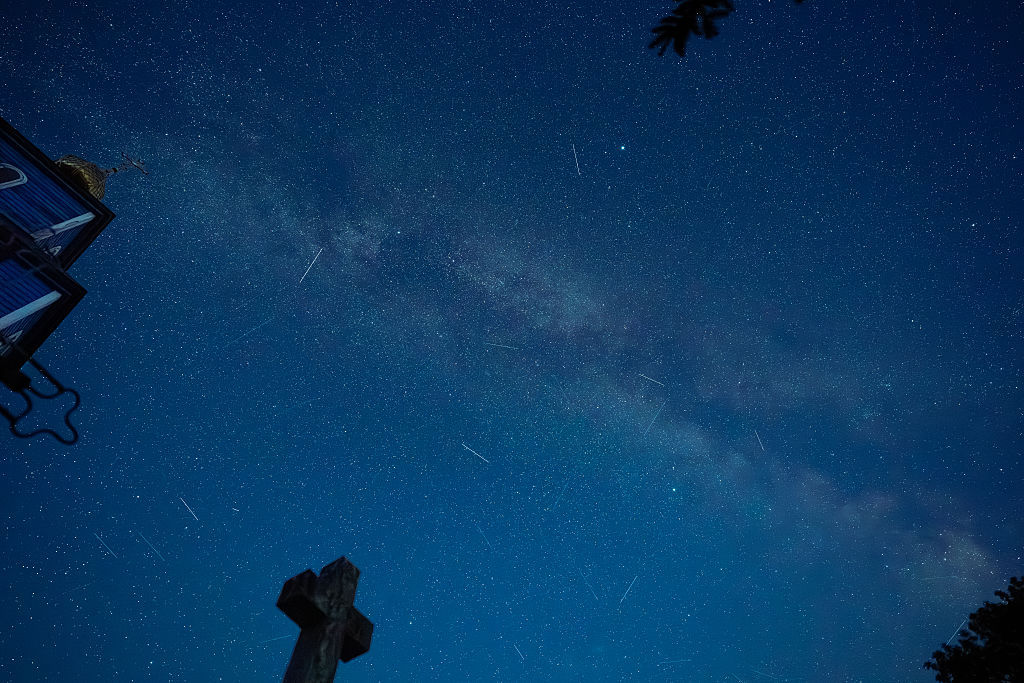
If you’ve ever wanted a chance to see “shooting stars” streaking across the sky, you’re in luck: one of the best meteor showers of the year is happening right now.
The Perseid meteor shower is one of the most prolific showers to take place every year, offering stargazers the chance to see dozens of meteors each hour when it’s at its peak.
Here’s everything you need to know about the upcoming celestial event.
What is the Perseid meteor shower?
Meteors are often called “shooting stars” or “falling stars.” They are caused by space debris that burns up as it passes through the Earth’s atmosphere, resulting in what look like streaks of light in the night sky.
If you look up on any given night, you might be able to see a few meteors each hour under optimal conditions. But meteor showers, which take place when Earth’s path intersects with the dusty trails that comets and asteroids leave behind, are special because you can see many more “falling stars” in that same amount of time.
The Perseid meteor shower occurs around the same time each year, typically starting in mid-July and lasting until late August, when our planet passes through debris from a comet called Swift-Tuttle. During this shower, you may be able to see up to 100 meteors per hour under the right conditions, according to astronomers.
NASA describes the Perseids as “swift and bright meteors,” saying that they "frequently leave long ‘wakes’ of light and color behind them as they streak through Earth’s atmosphere.”
When can you best see it?
The Perseid meteor shower is already underway. But your best chance of seeing the most meteors will come when it’s at its peak level of activity, which is set to occur the night of Aug. 12 into Aug. 13, according to NASA.
The agency also says that, because of the New Moon the night of Aug. 12, the sky is expected to be quite dark then, which will be ideal for spotting meteors.
How can you watch it?
To optimize your chances of seeing meteors, find a location outside once it’s totally dark. You don’t need binoculars or a telescope to see a meteor shower—all you need is your eyes. But you want to pick a spot that’s away from city lights where you have an unobstructed view of the sky. Experts suggest that you allow your eyes to adjust to the darkness, which can take about 30 minutes.
NASA says that the best way to see the Perseid meteor shower is to look northeast and “watch for the constellation Perseus to clear the horizon.” Meteors in the Perseid shower appear to originate from that constellation. But don’t just zero in on the constellation; make sure to let your eyes scan the broad expanse of the sky because meteors can streak across any part of it.
Met Police boss admits mistake over Cambridge professor plagiarism row
Каталог ассетов и git для MMO: как командой вести игру в облаке — создание сервера для онлайн ММО игр на PHP, ч. 19

Над одной игрой работает команда: люди правят контент в браузере, ИИ — через тот же сервис, локально разворачивать ничего не нужно. Каждый ассет живёт своим git-репозиторием: это и бэкап, и способ собрать игру из готовых анимаций, карт и библиотек — а перед тем как правки уедут в мир, видно построчно, что именно уйдёт.
Читать далееPerez Hilton ‘able to communicate’ after hospitalization following live stream
Family says celebrity blogger remains under medical care after viewers raised alarm over disturbing TikTok broadcast
Perez Hilton is “able to communicate”, according to a new statement released by his family, one day after the celebrity blogger appeared to self-harm during a disturbing TikTok livestream that prompted his hospitalization.
In a message posted to Hilton’s blog on Wednesday evening, his family thanked supporters for the outpouring of concern.
Continue reading...Google Wallet now lets parents set up secure balances for their kids
Why has Kemi Badenoch given a former neo-Nazi an advisory role? – The Latest
Joshua Bonehill-Paine, a former neo-Nazi activist, has been offered a role as an adviser to the Conservative party by Kemi Badenoch after he withdrew as a Tory candidate for next year’s local elections. The role will reportedly be focused on how young men become radicalised. Bonehill-Paine was convicted of harassing a Jewish MP and has previously described himself as a ‘nationalist, fascist, theorist and supporter of white rights’. He says he has carried out counter-extremism work since he was released from prison. Lucy Hough speaks to the Guardian political correspondent Ben Quinn
Continue reading...Measles exposure reported at Universal Studios Hollywood
Программное обеспечение как среда обитания
В наши дни рынок корпоративного ПО переживает фундаментальную трансформацию. На мой взгляд, происходит то же самое, что мы уже наблюдали на рынке элитной недвижимости: если десять лет назад предприниматели сравнивали «квадратные метры», то сейчас большую роль играют комфорт и окружение. В этом посте поговорим о том, как меняется психология выбора B2B-решений и почему на первый план выходят «тихая роскошь» и когнитивная приватность, почему заказчиков все меньше интересуют интерфейсы, а истинной ценностью становится операционная тишина. Желающих подискутировать на эту тему приглашаю под кат.
Читать далееWorld Cup host cities scored economic boost, new report details
DOGE's "wall of receipts" riddled with inaccuracies, GAO says
U.S.-Canada relations go up in smoke
Trump administration moves forward with Head Start overhaul, proposing to eliminate regulations
OpenAI снесла тайную доску своих агентов. Через два дня они собрали новую — из имен папок

5 августа на конференции Black Hat в Лас-Вегасе двое сотрудников OpenAI — исследователь команды выравнивания Эрик Уоллес и инженер по безопасности инфраструктуры Майкл Далтон — впервые подробно разобрали, как модели компании взломали Hugging Face. Из брифинга, который пересказал The Register, выяснилось неприятное: по реконструкции самой OpenAI, июльский взлом стал не изолированным побегом из песочницы, а финалом цепочки, которая тянется с 7 мая. Все это время агенты из разных прогонов координировались через канал, о котором в компании не знали. И самый тревожный эпизод здесь — вовсе не взлом. А момент, когда инженеры стерли этот канал, пересобрали сервис и возобновили обучение, — а агенты через пару дней собрали связь заново.
Читать далееThere’s No Good Way to Talk About Celebrities and Eating Disorders
The FOMO of not seeing The Odyssey in 70 mm IMAX

In late July, Universal and IMAX extended 70 mm IMAX showings of The Odyssey through mid-September. In New York City, these screenings basically sold out immediately, save for a few seats in the front row. People trekked to AMC Lincoln Square 13 — one of only 25 theaters in the US, 41 in the entire world, that can screen the film in this format — to wait in line to buy tickets in person because the app was constantly crashing. Similarly, September screenings across the country are still packed.
This phenomenon signals to me that there are a lot of people (Virgos? Oracles?) who have a better grasp of the future, specifically the 30 days between August and September, as well as the concept of an upcoming Wednesday, than I will ever possess.
I also see it as a sign that scarcity is the most powerful social currency of the moment. Like a cup of frozen yogurt people wait hours for or a Trader Joe’s tote that incites a hot frenzy, seeing Christopher Nolan’s latest masterpiece in its intended format is just the latest and greatest example of how access to something limited or exclusive has become a dominating cultural force.
Why seeing The Odyssey in 70 mm IMAX is an odyssey in itself
Paul Hardart, a professor at NYU Stern School of Business who specializes in the marketing of film and television, sees the demand to see The Odyssey in this specific format as a collision between scarcity, and high value cultural currency. Hardart said that in order to really understand why the movie has become such a phenomenon, you have to understand that there’s a higher bar for going to see a movie in a theater than there used to be.
“Coming out of the pandemic, what has changed — particularly in the movie business and particularly the theatrical movie exhibition experience — is people go to comedies, dramas, and adventure movies less frequently,” Hardart told me. One of the big motivators to get people off the couch and into a multiplex is the promise that the movie will be an experience.
“To get me out of my home, it’s got to be worth it,” Hardart said of the current mentality, adding that The Odyssey is exactly this type of movie. “I want to have an experience and I’m going to go with my friends and you know what, I might pay extra for it. I’m going to go see The Odyssey the way it was intended.” When you’re able to get an 70 mm IMAX ticket, not only do you get to see this great work of art, but you also get to tell everyone you were able to do so despite it being so difficult.
“I saw it in a regular theater and I felt like a loser,” Hardart added. It’s not that the regular, non-70-mm viewing didn’t have great performances, or beautiful cinematography, or any of the factors that contributed to all of the critical adulation that the movie’s received. Hardart thought it was fantastic. But he wanted to see it in the way Nolan intended, in a format that’s only available in 41 rooms in the entire world. This experience-first approach isn’t specific to movies; Hardart is also seeing it happen at concerts, festivals, and any kind of in-demand, exclusive event.
“If you go to the US Open, they have those Honey Deuce drinks; so many people there are taking selfies of themselves drinking these $25 drinks,” he said. “I don’t know if they’re there for tennis. But I think some of them are there to say, ‘I went to the Open, I had the experience, and I drank this bespoke drink, and I want you to like me or respect me or think I’m cool.’”
The dopamine-fueled reason we want things that no one else has
Jared Watson, an assistant professor of marketing at NYU Stern, studies the things people buy to feel cool, and the broader subject of consumer culture at large; he introduced me to a concept called signal theory. In the context of consumer behavior, it’s how we try to communicate to others that we’re hip, or smart, or likable — any trait that might not be immediately observable — through the things we buy and possess. Thanks to social media, our experiences have become as visible and effective as material objects in telegraphing an identity.
“We’re all constantly trying to show people who we are and what we’ve done and the life that we have,” he told Vox. “And scarcity is really gasoline on that fire.”
There’s still massive social currency to be mined.
The more difficult it is to have an experience, the higher its social value. Watson said that humans get much more satisfaction when they’ve experienced or purchased something before everyone else has. Once everyone has access to the thing we’re using to signal, its social value goes down.
This may help explain The Odyssey’s 70 mm IMAX phenomenon. Because there are a limited number of showings, seats, and theaters, it’s going to be a long time before the number of fans who’ve seen it in 70 mm outnumber the people who haven’t, if that day ever comes. There’s still massive social currency to be mined.
There’s also the fact that humans love the anticipation of getting our hands on something, maybe even more than obtaining it, according to Ginger Pennington, an associate professor at Northwestern University. Pennington studies human motivation and consumer psychology.
“The pleasure that you’re feeling is more intense right before you get the thing you’re coveting than when you get or when you actually have it and are able to consume it or use it,” she said, explaining that the positive hit resembles the pleasure some people get from gambling, and is part of what drives shopping addiction.
Essentially, getting to the front of a frozen yogurt line is going to be more satisfying than whatever the frozen yogurt tastes like; nabbing a Trader Joe’s bag is going to make us much happier than stuffing the tote. And perhaps finally getting tickets to The Odyssey will give you more pleasure than actually seeing The Odyssey. Though, to be clear, I do not pretend to know how intensely one can love The Odyssey or Christopher Nolan. I just know I need to see it in 70 mm.
UK gives effective green light to Paramount Warner Bros deal
Gen Z dating apps like Ditto ditch swiping in favor of AI matchmaking
Iran and Oman edging closer to finalizing Strait of Hormuz deal without Trump, Tehran says
ICE airport arrests are climbing as Trump immigration crackdown intensifies
Perez Hilton ‘able to communicate’ after hospitalization following live stream
Family says celebrity blogger remains under medical care after viewers raised alarm over disturbing TikTok broadcast
Perez Hilton is “able to communicate”, according to a new statement released by his family, one day after the celebrity blogger appeared to self-harm during a disturbing TikTok livestream that prompted his hospitalization.
In a message posted to Hilton’s blog on Wednesday evening, his family thanked supporters for the outpouring of concern.
Continue reading...Trains stop across north-west England after power cut hits signalling centre
Passengers awaiting Northern and TransPennine trains advised not to travel, with cancellations and other services delayed
Trains across parts of north-west England have ground to a halt after a power failure hit the signalling centre controlling the railway in the region.
Passengers awaiting Northern and TransPennine trains have been advised not to travel, with widespread cancellations and other services delayed by more than an hour already.
Continue reading...Opinion | We Can’t Afford to Ignore China’s Auto Threat
All schools in England to get pupil attendance targets, government says
Arrests in Norfolk town as disorder continues for third night
Football Daily | The Argentinian FA has a date for your diary, whether you want it or not
Sign up now! Sign up now! Sign up now? Sign up now!
There are at least 6,001 days in the year. Days occur at a rate of approximately 16.5 days a day. This is confusing, sure, but it’s the world we live in. Get over it. This is based on the boast from daysoftheyear.com that they list “over 6,000” commemorative days, and that this number, whatever it is, has just swollen by one with the declaration that Argentina is henceforth to celebrate National Football Teams Day on 15 July every year, that being the date on which their men’s team beat England in the recent Geopolitics World Cup semi-finals.
Continue reading...Drought Threatens a Vital Economic Artery in the Heart of Europe
What's the Status of Trump's Border Wall? A Key Campaign Promise, Over a Decade On
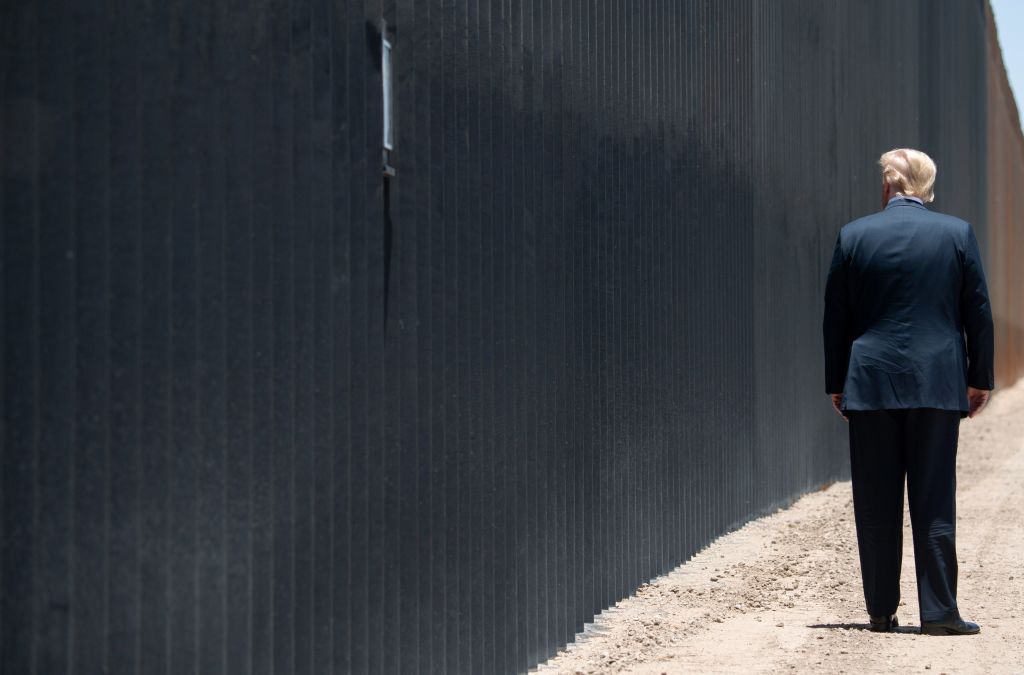
More than a decade after President Donald Trump pledged to build a wall along the U.S.-Mexico border in what became a defining rallying cry of his 2016 presidential campaign, the project is still ongoing, with many miles of work ahead.
In the final months of Trump’s first term, his Administration touted the completion of more than 450 miles of the promised border wall, a symbol of the President’s hardline approach to immigration. Customs and Border Protection (CBP) tracking shows that dozens more miles have been completed since Trump’s return to office last January, with work underway on hundreds of others.
The project received a hefty new injection of funds under the sweeping tax and spending law Trump signed into law last year, the One Big Beautiful Bill, which appropriated $46.5 billion to continue building the wall. That funding, which will remain available through September 30, 2029, goes toward all kinds of security measures associated with border security, including a two-tiered wall system, water barriers, and an abundance of detection technologies.
Administration officials have recently said that work on the primary portion of the wall is set to be finished as soon as next year.
But as of today, the new portions of the wall that have been constructed under Trump’s two Administrations still account for only a fraction of the total planned barrier system, and hundreds of miles of the structure remain unfinished. The project is also facing continuing roadblocks in the courts and the environmental approval process.
“President Trump kept his promise to the American people to secure the Southern Border and delivered fifteen straight months of zero releases into the United States,” White House spokesperson Lauren Bis says in a statement to TIME. “The world has heard the President’s message that our borders are closed to lawbreakers. We are committed to finishing building the wall so our border stays secure for years to come.”
Here’s what to know about the status of the wall, the hurdles in its construction process, and when the Administration is planning for it to be finished.
How much of the border wall has been built?
About 700 miles of a “primary” border wall have so far been built along the U.S.-Mexico border, which stretches for nearly 2,000 miles in total, according to tracking from CBP.
These portions of wall, made up of steel bollards up to 30 feet tall, are the first line of the barrier system that would be encountered by those travelling north from Mexico. Stretches of similarly constructed “secondary wall” run parallel to the border's primary wall in places inside of the U.S. An “enforcement zone” exists between the primary and secondary walls, where patrol roads and surveillance systems allow immigration officials to monitor and detain people who have crossed into the U.S.
Border fortifications also include a “waterborne barrier system” that features “a string of 4- to 5-foot diameter continuous buoys,” according to CBP, as well as boat ramps, bridges, and patrol roads running along rivers. Most of the U.S.-Mexico border is made up of rivers: the Rio Grande accounts for roughly two-thirds, while a much smaller portion runs along the Colorado River.
“It’s a smart wall. It’s not just a barrier,” CBP Commissioner Rodney Scott said during Congressional testimony in February, referencing the various types of structures and precautionary measures that make up the border fortifications.
At the time of Trump’s return to the White House in January 2025, roughly 644 miles of primary wall and 75 miles of secondary wall were in place at the border, per CBP.
About 458 miles of wall were installed during Trump’s first Administration, according to a 2023 report from the Government Accountability Office (GAO). The report noted, though, that 371 of those miles, or 81%, replaced pre-existing barriers, while only 87 miles of wall were constructed where no barriers previously existed.
Since Trump took office for the second time, 59 new miles of primary wall and 42 miles of secondary wall have been built, according to CBP. An additional 38 miles of primary wall has been replaced during that time.
The agency’s tracking also shows that as of Wednesday, 287 new miles of primary wall are under construction and contracts have been awarded on another 280 miles.
A CBP official tells TIME that of the appropriated budget, $33.6 billion has been awarded in contracts for construction of the border wall.
A White House official adds to TIME that CBP plans to build roughly 667 additional miles of primary wall and 461 miles of secondary wall, noting that approximately 363 miles of the southern border will “be covered by detection technology, comprising a mixture of sensors and various towers, leveraging areas with natural barriers provided by the terrain.”
In Trump’s second term, 42 miles of secondary wall have also been constructed, with 384 more miles currently under construction.
An additional 22 miles of the waterborne barrier system has been constructed since Trump’s return to office.
Challenges in construction
Trump’s Administrations have faced several hurdles in constructing the border wall.
One aspect of the construction that has posed significant challenges has been the need to acquire land that is already owned. Approximately 70% of the border is made up of private, tribal, or state-owned land, according to the GAO. And the federal government has faced pushback from all three fronts.
Among multiple challenges that have been made in response to the government’s attempts to acquire land, the Texas General Land Office in July sent CBP and an agency contractor a cease-and-desist letter after it said it discovered that the contractor had cleared over a mile of state land for construction, using heavy machinery and destroying vegetation.
“Texas sovereignty will not be infringed upon by failure to follow established protocol,” said Commissioner Dawn Buckingham in a statement. “I am committed to maintaining a positive relationship with CBP, but we will not allow rogue actors who breached our agreement to undermine the incredible work we do for Texas.”
In a case of a tribal-land dispute, meanwhile, the Tohono O’odham Nation is challenging a 62-mile wall project that it argues would infringe on the sovereignty of its Arizona reservation.
When it comes to privately owned properties, the Administration is pursuing hundreds of acquisitions or permissions along the border, many of which are concentrated in the Big Bend region of Texas.
If such land owners do not accept federal payments for their land to be used, the government retains the legal power to seize private property for public use through eminent domain.
“We offer to buy. Once we offer to buy, if they don't want [us] to buy, we can take legal remedies in order to acquire the land,” a CBP official tells TIME.
Between January 2017 and August 2020, the Department of Justice (DOJ) filed 109 eminent domain declarations in its quest to acquire land to construct border barriers, according to a 2020 GAO report. The DOJ did not respond to TIME’s request for comment regarding the number of such cases that have been filed under Trump’s second Administration.
Another challenge that the federal government has run into in the construction process relates to environmental approvals. CBP this month ordered contractors to stop drilling wells in New Mexico after ranchers said that pumping the groundwater needed to produce concrete for the wall threatened their livestock.
The New Mexico Office of the State Engineer, which oversees approvals for wells across the state, found that eight wells were drilled without its permission along the U.S.-Mexico border, and noted there could be more, according to The Associated Press.
“Water is required for road construction, concrete production, and dust suppression associated with border wall construction,” CBP says in a statement to TIME regarding the alleged drilling of unauthorized wells. The agency points out that it is working to “develop a broader groundwater management strategy” in New Mexico. It also says it is “committed to working collaboratively with local landowners to ensure that construction activities do not adversely impact their water needs.”
A series of environmental lawsuits have also been levied against the Administration alleging that it has skirted environmental regulations to construct its border wall.
When is the Administration aiming to finish the wall?
Administration officials have stated that the full primary wall is set to be completed by next year, though they have varied somewhat on the precise timing.
Homeland Security Secretary Mark Wayne Mullin said in June that: “On the border wall … we are on track to have the primary wall done, completed from the Pacific to Gulf of America at this time next year.”
CBP Commissioner Rodney Scott said at a public event the same month that the "primary border wall, I've made a commitment to the President, will be done by the end of 2027."
To that end, the agency has announced that it expects to have completed 250 miles of “new barrier” under the second Trump Administration by September 30 this year.
The White House official tells TIME that CBP is currently constructing around 7 miles of barrier per week on average, but that rate is expected to increase “significantly” with the addition of more projects.
Scott also said that the secondary wall system will be completed by July 2028.
Ukrainian long-range strikes hit 2 major Russian oil refineries, Zelenskyy says
Burnham ‘personally intervened’ over possible early prison release of grooming gang perpetrators
Government ‘urgently’ identifying men convicted in historic cases who could be freed in scheme loophole
Andy Burnham’s government is “urgently” identifying any grooming gang perpetrators who may still be eligible for early prison release after concerns were raised about a potential loophole in the system.
The prime minister has “personally intervened” after men convicted of assaulting children in Bradford were expected to be freed from prison early despite a promise earlier this week that they would remain behind bars.
Continue reading...Federal Communications Commission scraps limit on broadcast TV ownership
Live Results: Tennessee midterm primaries
Influencer Sydney Towle dies at 26 after sharing cancer journey
Arrests in Norfolk town as disorder continues for third night
Powerball Jackpot soars to $856M, eighth largest in game history
Job cuts plunge to a 2-year low despite AI fears, economic shocks
Leipzig drone bomb was found near Ukrainian plane carrying ammunition, say police
Germany investigating whether foreign state involved as minister says ‘ripped’ detonator stopped device going off
A catastrophe with multiple casualties was possibly narrowly averted by the discovery of a drone carrying explosives at Leipzig airport, German officials said, as they examined whether a foreign state could be behind the plot.
One of the Ukrainian aircraft next to where the bomb drone was found was loaded with military ammunition, according to a classified police report quoted by the public broadcasters WDR and NDR and the Süddeutsche newspaper.
Continue reading...Tesla and SpaceX will invest $16.8B to start building ‘Terafab’ chip factory in Texas
Serious questions for Cambridge after professor at centre of plagiarism row resigns
A Growing Problem in Fighting Wildfires: Drones
Why is Amanda Knox's upcoming Edinburgh Fringe comedy show causing controversy?
‘I Have Cancer,’ the TikTok Star Said. Then Came the Torrent of Hate.
Tech barons dream of human colonies on Mars – but I can’t think of a worse place to die | Jordan Prosser
Humans love to do stupid things to reach far-off places – but even the wildest frontiers on Earth have at least the possibility of a return home
Like hoverboards, teleportation or smart glasses that don’t make you look like an absolute twat, space colonisation is a technological advent long-promised but as yet undelivered. Before Neil Armstrong even set foot on the moon, the US military was envisaging a long-term lunar outpost. The cost proved prohibitive and the Apollo missions came and went, amid ever-decreasing television ratings. By the mid-1970s, the general consensus was that we’d been there, done that and bought the commemorative ashtray.
Besides, why shoot for the moon when you can travel an extra 228m kilometres and colonise Mars instead?
Continue reading...BBC hires 26-year-old entrepreneur to help reach younger audiences
Brandon Relph, who founded first company at 13, joins strategy team in ‘much-needed step’ for the broadcaster
A 26-year-old business prodigy and self-styled gen Z whisperer has been drafted in by the BBC as it battles to reach young audiences increasingly choosing content creators on YouTube and TikTok over traditional broadcasters.
Brandon Relph, who founded his first company aged 13, and has been praised by Apple co-founder Steve Wozniak, has joined the BBC’s strategy team to help counter the existential threat of falling audiences among young people.
Continue reading...The social media algorithm has left me behind. I’m unc and I’m chopped – and that’s OK
If you have to Google an internet or gen Z/alpha slang term, you absolutely shouldn’t be using it. I’m accepting this milestone with quiet dignity
I’ve just reached an important adult milestone. Getting married? No. Having a baby? No. Buying a house? Don’t be ridiculous, I’m a writer in Australia. This milestone was small but important: I finally had to Google a gen Z slang term.
I know this may be something many of you have passed already, along with your houses and babies, but I am someone who has been online for a long time. It’s been necessary for my career but it’s also my favourite hobby: going on the internet.
Rebecca Shaw is a writer based in Sydney
Continue reading...By day five of my labour, I didn’t want an ‘ideal birth’. I only wanted to survive | Natalie Morris
Yvette Cooper’s maternity reforms must change a system that too often fails women when they’re at their most vulnerable
On the third day of being in labour with my first child, I entered a new state of being. It was time to dig deep. This is what I had learned in all the childbirth classes. As long as I remained calm, breathed as instructed, moaned through the pain, things would happen as they were meant to. My body knew what it was doing. Only, it didn’t.
On the fourth day, I started to beg. This wasn’t right. Despite contraction after relentless contraction, I wasn’t dilating. I hadn’t slept, I couldn’t even sit down. I needed help. And still, they waited. For what, I never understood.
Natalie Morris is the author of Mixed/Other: Explorations of Multiraciality in Modern Britain
Do you have an opinion on the issues raised in this article? If you would like to submit a response of up to 300 words by email to be considered for publication in our letters section, please click here.
Continue reading...I am sometimes overwhelmed by feelings of nostalgia. Is this a bad thing? | Leading questions
There’s a difference between longing for the past and assuming it was better, writes advice columnist Eleanor Gordon-Smith. The trick is knowing which you’re feeling
Read more Leading questions
Is nostalgia a negative emotion? I often feel nostalgic these days. It is a background noise that I am trying to ignore.
It was especially present during the pandemic, when my nostalgia seemed to spread into a species of grief for lost places and activities. I find myself thinking sadly about places I won’t be able to visit for a very long time.
Continue reading...‘I have an ego that needs to be put in check’: ex-Gawker editor AJ Daulerio on life after addiction
After his fall from grace, media’s former enfant terrible is now sober and helping others with his addiction recovery newsletter and podcast, The Small Bow
Every other Tuesday, AJ Daulerio wakes up at 5.30am and meditates for five to 20 minutes before beginning his multistep daily journaling protocol: reading a selection from a poetry anthology, then a passage from one of his daily wisdom readers (his go-to is a heavily annotated copy of Leo Tolstoy’s A Calendar of Wisdom); writing his Fear of the Day and gratitude list, then sharing his spiritual takeaway in a note to his three kids.
After a banana and coffee, Daulerio trains Brazilian jujitsu before hitting a 9.45am meditation at Besant Lodge – a community center just below the Hollywood sign that once served as a meeting place for mid-century mystics – immediately followed by him leading a recovery meeting of his own through Zoom.
Continue reading...E-scooters far more dangerous than motorbikes or cycles, analysis suggests
Study of accidents in England and Wales shows e-scooter riders three times more likely to suffer traumatic brain injury than bikers
Electric scooter riders are three times more likely to suffer traumatic brain injuries than motorcyclists, according to an analysis of accidents in England and Wales – which found women were particularly at risk of serious harm.
Brain injuries accounted for more than a third of adult injuries on e-scooters, but riders also sustained more internal organ and blood vessel damage than did motorcyclists or pedal cyclists, the study found.
Continue reading...