RSS Feeds
Misconduct proceedings dropped against officer who shot Chris Kaba
Disney agrees deal to let TikTokers use its films and TV shows in videos
Uganda team manager has 'no idea' why boxers disappeared after Games
Judge reluctantly dismisses case against Oath Keepers militia group over Jan. 6 riot

A judge has granted the Justice Department's bid to drop a landmark case against leaders of the Oath Keepers, as former prosecutors warn about the dangers of denying the violence of Jan. 6.
(Image credit: Heather Diehl)

Judge criticizes Trump's Justice Department as he says he has no choice but to dismiss Jan. 6 seditious conspiracy case
Trump is pioneering the role of commentator-in-chief when issues grow thorny
The president is constantly assigning motives, identifying heroes and villains, and telling his audience what to think
This was originally published in This Week in Trumpland. Sign up to receive it in your inbox every Wednesday
From Charles Barkley to Thierry Henry to John McEnroe, the path from the arena to the commentary box is well trodden, and plenty of politicians have made the transition from elected office to the TV studio. One man, however, insists on doing both at the same time.
Donald Trump is the US president, empowered to kill terrorists, grant pardons, sign and veto bills, and represent the nation on the world stage. But when issues become thorny, as they have of late, he is wont to embrace an alternative role as commentator-in-chief.
Continue reading...Teenager murdered boy, 16, over £20
Bangladesh's ousted ex-prime minister says she will return despite facing death sentence
Putin Overhauls War Effort in Ukraine as Russia Seeks Momentum
Alarming video shows Russian drone chasing Ukrainian man before exploding
Uber robotaxis set for debut in UK
'We took on a machine': Abdul El-Sayed thanks supporters after primary victory
How a bipartisan coalition is taking aim at animal research
How is Britain doing under Labour?
Plot Twist newsletter: Reflecting on Richard Wagner’s “Ring” cycle
Pakistani authorities ban international media from reporting in most of country
Rules brought in soon after killing of dozens of protesters, news of which was reported only by overseas outlets
Pakistani authorities have imposed severe new restrictions on international media, including barring them from reporting in most of the country, in a move that has provoked a significant backlash from journalist organisations.
According to the new rules anyone, including Pakistani nationals, should seek permission first if they want to report from anywhere Pakistan except three cities – Islamabad, Karachi and Lahore.
Continue reading...House Democrats just added 12 'safe' Trump districts to their midterm election target list
Michigan nominates first trans woman for state legislature
Joanna Whaley, ex-megachurch pastor who endured years of conversion practices, comfortably bested her opponents
A former megachurch pastor who endured 15 years of conversion practices is set to become the first transgender member of Michigan’s state legislature after winning a Democratic primary election on Tuesday.
Joanna Whaley comfortably defeated Frank Liberati, a former state representative, and Gary Schlack in the primary for the second district of the Michigan statehouse, a Democratic stronghold.
Continue reading...Pakistani authorities ban international media from reporting in most of country
Rules brought in soon after killing of dozens of protesters, news of which was reported only by overseas outlets
Pakistani authorities have imposed severe new restrictions on international media, including barring them from reporting in most of the country, in a move that has provoked a significant backlash from journalist organisations.
According to the new rules anyone, including Pakistani nationals, should seek permission first if they want to report from anywhere in Pakistan except three cities – Islamabad, Karachi and Lahore.
Continue reading...Meet the eight startups pitching at Startup Battlefield Australia
Jason Sudeikis Shares What to Expect From ‘Ted Lasso’ Season 4
New Mexico sues justice department for ‘stonewalling’ Epstein investigation
Filing by attorney general Raúl Torrez comes after DoJ appears to have ignored deadline for key Epstein ranch files
New Mexico filed a lawsuit against the US Department of Justice and the acting attorney general, Todd Blanche, on Wednesday for “stonewalling” its criminal investigation into the activities of the late financier and sex offender Jeffrey Epstein at a remote ranch in the state.
Raúl Torrez, the New Mexico attorney general, had said he was mulling the possibility of legal action if the justice department did not share with him by 31 July information about the alleged historical abuse of girls and young women at Epstein’s Zorro ranch about 30 miles south of Santa Fe.
Continue reading...Trump Looms Over Brazil’s Closely Fought Election
Buttler breaks T20 runs record in Super Giants win
Why SpaceX stock is falling despite strong revenue growth
PSA: Apple’s Private Relay can leak your real IP address
Lindsay Clancy murder trial: toxicologist testifies about medications found in defendant’s blood
Variety of prescriptions were found in blood of mother accused of strangling her three children, court hears
The trial of Lindsay Clancy, the Massachusetts woman accused of killing her three children in January 2023, continued on Wednesday with a forensic toxicologist testifying to the variety and concentration of medications found in the defendant’s blood.
Justin Brower, a forensic toxicologist with NMS Laboratories, testified that his lab examined the levels of four psychiatric medications detected in Clancy’s blood after she allegedly strangled her children and attempted to take her own life.
Continue reading...New York City transit auctions off last MetroCard machines: ‘Wild home decor idea’
MTA to sell remaining machines – which weigh up to 1,050lbs – as it transitions to contactless fare system
The Metropolitan Transportation Authority (MTA) of New York City has begun auctioning off its final MetroCard vending machines, offering New Yorkers the chance to own one of the transit system’s most recognizable fixtures as the agency continues its transition to Omny.
The auction opened on Wednesday morning and will run through 19 August, according to the MTA. The agency is offering a limited number of retired MetroCard Vending Machines (MVM) and MetroCard Express Machines (MEM), which have served subway riders for decades.
Continue reading...Israel strikes southern Lebanon killing one and injuring 11
Hits on two towns among deadliest bombings since start of June ceasefire
An Israeli airstrike in south Lebanon killed one person and injured 11, the Lebanese ministry of health said, in one of Israel’s deadliest bombings since the start of the June ceasefire.
Israel carried out an airstrike in the town of Tebnine, south Lebanon hitting a cemetery, the Lebanese health ministry said. It said the town of al-Mansouri, also in south Lebanon, was bombed too, forcing families to flee.
Continue reading...Despite political headwinds, Republicans have some structural advantages in midterms
While Republicans face political headwinds in this fall's midterm elections, the party also maintains important structural advantages that could help them preserve their majorities in Congress.

White House declassifies secret FBI probe on whether Russia was involved in Trump's Comey firing
How Malta Became a Tax Haven for Crocs and Other U.S. Companies
Virginia Democrats pick establishment nominees for 2 House seats they hope to flip
American Red Cross sounds alarm on national blood supply crisis
El-Sayed's victory in Michigan sends tremors through Democratic Party
Israel strikes southern Lebanon killing one and injuring 11
Hits on two towns among deadliest bombings since start of June ceasefire
An Israeli airstrike in south Lebanon killed one person and injured 11, the Lebanese ministry of health said, in one of Israel’s deadliest bombings since the start of the June ceasefire.
Israel carried out an airstrike in the town of Tebnine, south Lebanon hitting a cemetery, the Lebanese health ministry said. It said the town of al-Mansouri, also in south Lebanon, was bombed too, forcing families to flee.
Continue reading...Which PM punched John Simpson?
How to Talk Like a Human in the AI Era

As AI becomes more prevalent in our personal and professional lives, the more we’ll need a way to stand out. In fact, skills like empathy, influence, and the ability to read the room—things AI cannot yet do with accuracy and facility—are already becoming more valuable.
We are facing an insidious threat to our interpersonal skills, driven not just by AI's growing capabilities, but by our own diminishing opportunities to actually practice communicating. The expansion of our digital lives has already caused a roughly 28% drop in the words we speak daily between 2005 and 2019, and leaning on AI shrinks those vital practice moments even further. Ultimately, when we offload too much to AI, we aren't just taking a convenient shortcut; we are actively causing our fundamental capabilities to atrophy and increasing our communication anxiety because we know that if we are challenged, we might not have the depth of knowledge to respond.
With algorithms drafting our emails and smoothing out our speech, the baseline for communication has never been more flawless—or flat and disconnected. Because so many people are hiding behind this generated perfection, we gain a massive competitive edge when we do the exact opposite.
Communicating authentically, revealing our humanness, increases our value by serving as a real-time signal of trust and genuine effort. Because anyone can now generate flawlessly polished text, unscripted moments containing natural flaws and foibles demonstrate that we’re actually investing our own labor and personal touch into the exchange.
Striving for a hyper-polished veneer is no longer the winning strategy. Instead, the speakers who resonate most today are those who loosen up and embrace a more idiosyncratic, less perfect expressiveness. This means giving yourself grace when using “filler words” such as “uhm” and “like.” And it means emphasizing your unique perspective. To be sure, putting our unvarnished, authentic selves on display can feel intimidating, but audiences respond well to it, and this approach can allow for meaningful connection and influence.
I experienced this firsthand not long ago when I logged on to speak to 800 people at a live virtual event on best practices for classroom teaching of MBA students. I expected a standard Q&A, but upon arriving, I learned the organizers actually needed me to present solo for 30 minutes. Drawing on my knowledge of the material, I spoke completely impromptu. Did I occasionally veer into a non-sequitur or mangle a sentence? Yes. But the aftermath was a flood of emails from attendees praising the session. They were refreshed to have a speaker who wasn’t reciting a script or hiding behind slides. They appreciated my being me while communicating.
I wasn’t simply winging it, however. I was deliberately letting the audience see more of who I really was.
As humans evolve for the AI era, I created the TRUST framework to help my students at Stanford communicate effectively while embracing their authentic imperfections. Here is how you can use it to project your humanity and establish genuine connection.
Truthful foundation
AI struggles to convey authentic emotion and context, but you do it naturally. Ground your messages in your actual lived experiences, offering specific feelings and the emotions that accompany them. Speak your truth. If you are giving a toast at a wedding, don't reach for generic platitudes; recount a hyper-specific memory chock-full of genuine emotion that only you would have noticed.
For instance, during a recent virtual presentation, I didn't just share teaching theory; I admitted how I had struggled mightily to manage learners of different ability levels, sharing my own insecurity about boring expert students and how it led me to over-monitor their reactions.
Real-time processing
An AI engine delivers its final, polished output as a completed message. In order to communicate more authentically, you can verbalize what you are thinking in the moment, revealing your internal thought process, and proving to your audience that you are originating content on the spot. Using phrases like “My first inclination is…,” or “When I had a similar question prior,” brings listeners into the all-too-human workings of your mind.
When responding to a complex chat question regarding non-native speakers during my event, I simply paused and said, “Give me a moment to reflect on this important point.”
Utilize tailored, local evidence
While AI offers generic backing for its conclusions, you can offer the delightfully quirky. Use stories, data, or testimonials that speak exclusively to your unique background to support your logic. If you are pitching a new product, explain how the street signs in your rural Nebraska hometown inspired its visual design.
To illustrate the challenges of speaking a non-native language, I shared an embarrassing personal story about my own struggles teaching in Beijing.
Show your unique speaking style
For decades, communication coaches counseled clients to ruthlessly eliminate verbal tics and awkward pauses. In the age of AI, those exact imperfections add something vital: a sense of your humanness. You shouldn't go overboard with "uhs" and "ums," but you also shouldn't strive to expunge them completely. My own tendency is to repeat phrases I have recently heard.
During my impromptu keynote, I found myself repeating "the reality is..." multiple times. Instead of freezing or over-correcting, I gave myself grace and let my unfiltered self come through.
Tip off the audience to your perspective
Information without a point of view is just data. When sharing an update, provide commentary through your unique thoughts and historical perspective. If you describe a new process you developed at work, cap it off with a genuine reflection like, “This was one of the most challenging, but fun solutions I’ve seen our team come up with.”
During my presentation, I shared that I love puzzles, and that I find the task of crafting unique activities for my students to be among the most fun puzzles to solve.
Throughout our education and experience, we have been conditioned to hide behind a veneer of perfection, but now that perfection is only a prompt away, people are incredibly ready to reward us when we let our authentic selves shine. In a landscape crowded with pixel-perfect output, projecting your humanity is the ultimate way to build trust, to connect, and ultimately to enhance your influence and impact.
The Global Story: Who is to blame for the chaos on Spain’s border?
Как понять, что tg-канал накручен и лучше на него не заливать?

Шапка канала и его биография это два разных документа.
В шапке может быть красивая цифра, а в биографии столб из трёх тысяч подписчиков, пришедших во вторник ночью без причины.
В Telegram Ads такая площадка покупает вам воздух: объявление показывается людям, которых нет.
Рассказываю, по каким признакам я отличают накрутку за час разглядывания графиков, и почему один признак ещё ничего не доказывает.
Читать далееAbdul El-Sayed reacts to win against Haley Stevens, slams Mike Rogers as "corporate sellout"
What Is 'Russia's Amazon' Wildberries and Why Is Ukraine Targeting It?
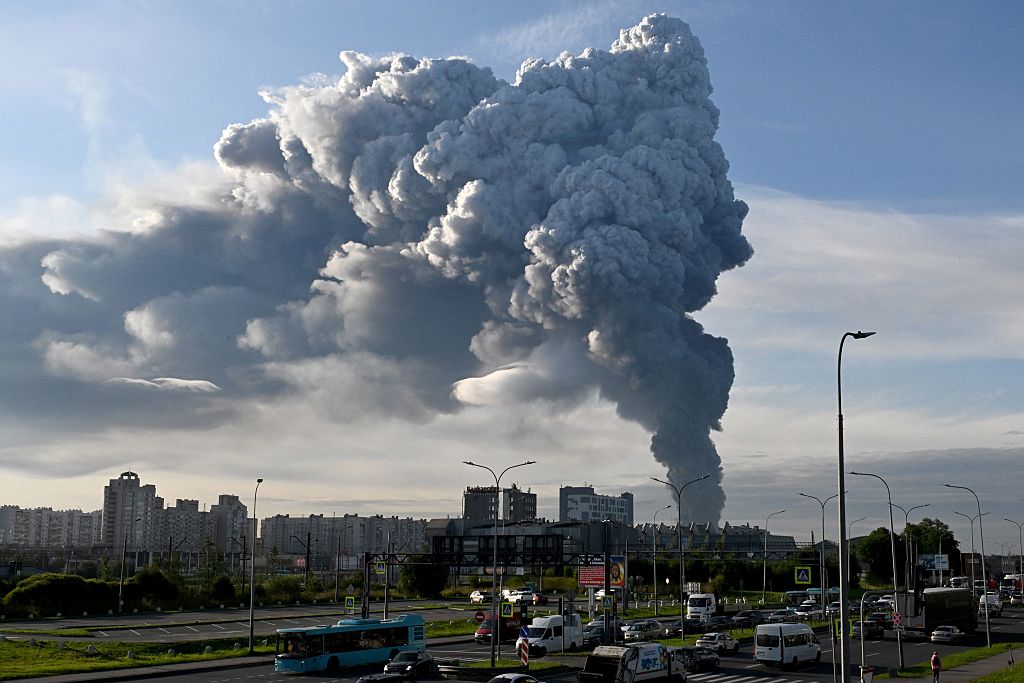
Ukraine hit at least two warehouses belonging to Russia’s e-commerce giant Wildberries in overnight strikes on Monday, adding to a series of drone attacks that have targeted the online retailer.
Ukrainian forces have repeatedly struck warehouses belonging to Russia’s largest online retailer as part of a broader campaign against logistics sites that Kyiv says support Moscow’s military.
Often described as Russia’s “Amazon,” Wildberries operates dozens of warehouses across the country and plays a core role in the Russian consumer economy.
Since July 18, Ukraine has targeted close to 20 of the retailer’s sites, referring to them as military-linked “logistic centers.”
Moscow and Wildberries have denied that the facilities supply the armed forces.
The strikes have drawn attention not only because of their reach inside Russia, but also because of Wildberries’ economic importance, its ties to the country’s financial sector, and the potential impact on ordinary Russian consumers.
”Ukraine's Defense Forces struck the Wildberries logistics center in Krasny Bor near St. Petersburg. Burning again,” read an update from the Defense of Ukraine on Tuesday. “Russian logistics, dismantled one hub at a time.”
The social media statement was accompanied by a video showcasing a large, white-painted building engulfed in flames.
“Wildberries was used to distribute military and dual-use goods,” read the caption across the footage. “We will continue dismantling the enemy’s logistics.”
https://x.com/DefenceU/status/2084653333068055029
With the Russia-Ukraine war now in its fifth year, Kyiv has shifted its military strategy as it continues to come under heavy bombardment from Moscow. Ukraine has increasingly used long-range drone strikes to target infrastructure and supply networks deep inside Russia. Amid a broader government reshuffle near the end of July, Kyiv gained a new military chief, Mykhailo Drapatyi, who Ukrainian President Volodymyr Zelensky has tasked with leading the country's precise defensive efforts.
With Kyiv vowing to maintain its focus on the retailer’s hubs, here’s what to know about Wildberries, its high-profile founder, and why it’s being targeted.
What is Wildberries—and who founded it?
The online retailer, which hosts third-party sellers, facilitates everything from household goods to air travel, and even has a financial arm, WB Bank.
In May, Wildberries announced a strategic partnership with VTB Bank, a Russian majority state-owned institution.
VTB Bank shares fell around 2.5% on July 28 amid ongoing strikes, according to Reuters.
Days after Ukraine’s July 18 strikes against the Wildberries sites, the European Commission included the WB Bank when E.U. member states adopted its 21st package of sanctions against Russia.
“Wildberries Bank LLC is involved in an economic sector providing a substantial source of revenue to the Government of the Russian Federation, which is responsible for the annexation of Crimea and the destabilisation of Ukraine,” declared the council of the European Union.
Wildberries was founded by Tatyana Kim, formerly Tatyana Bakalchuk, in 2004.
A former English teacher, Kim was 28-years-old and on maternity leave when she launched the initiative, and was later joined by her now ex-husband, Vladislav Bakalchuk.
As Wildberries grew, Kim’s fortune did too. Forbes estimates her net worth at $8.1 billion, making her Russia’s richest woman.
She was the only Russian entry on Forbes’ 2025 list of “The 50 Richest Self-Made Women On Earth.”
“Wildberries has grown from small origins to be one of two major internet marketplaces in Russia [alongside Ozon],” Charles Hecker, an associate fellow in international security at the Royal United Services Institute think tank, tells TIME. “It’s an enormously prominent company and Kim is an incredibly prominent business person in Russia.”
Why is Ukraine targeting Russia’s ‘Amazon’?
Kyiv insists Wildberries is being used as a key supply chain for the Russian military.
“Ukraine's official reason behind attacking Wildberries is that Ukraine believes the website is used as a channel for military components,” says Hecker.
After Wildberries sites were struck on July 18, Zelensky announced that “two major logistics facilities were hit—in the Moscow and Tambov regions” and said “the aggressor [Russia] used them to supply sanctioned components for drone production and navigation equipment.”
Kremlin spokesperson Dmitry Peskov has refuted accusations that Wildberries warehouses are used for Russian army supplies.
Kim has also rejected the allegations. In a July 31 video statement uploaded to Telegram, she argued Kyiv’s drone attacks on sites linked to Wildberries amount to “acts of terrorism” against civilians.
In response to accusations that Wildberries sells dual-use goods, items that can have both civilian and military uses, Kim said the company doesn’t offer anything that is not also available on major global e-commerce platforms such as Amazon or Alibaba.
After previous drone strikes on its facilities, the e-commerce giant issued statements pledging financial support for sellers whose goods were damaged.
The retailer's ties to the country’s financial sector and the far-reaching economic impact of the strikes is a key factor to consider.
According to the Washington, D.C.-based think tank Institute for the Study of War, Ukraine’s strike campaign "has increased the cost of the war for small and medium-sized Russian businesses reliant on the Wildberries platform, as well as on the Russian consumers who utilize the Wildberries service, largely in urban areas that the Kremlin has sought to shield from the war."
The realities of these financial repercussions stand in stark contrast to assurances made by Russian President Vladimir Putin in 2022.
“Putin said at the beginning of the full-scale invasion of Ukraine that the war would not impact the way Russians lead their lives,” Hecker tells TIME. “But attacking Wildberries impacts the Russian consumer, and this comes on top of inflation, on top of periodic mobile internet outages across Russia.”
While inflation in Russia has climbed down from highs of 9.4% last year, it rose once again to 6% in June—its highest level since January.
Consumers in Russia are also tackling a summer fuel crisis after Ukraine stepped up its drone attacks on oil refineries.
“It's difficult now for President Putin to say that the war on Ukraine is not impacting the way ordinary Russians live,” Hecker says, reflecting on the economic blows. “Ukraine has discovered how successfully it can penetrate airspace deep into Russian territory, and I think what it's doing right now is exploiting that capability.”
Meta Ran Ads That Contained AI-Generated Child Sexual Abuse Imagery
SpaceX shows strong growth but stock drops
Ukraine says missile interceptors may have saved lives in Russian attack
Trump’s Days-Old Hamas Disarmament Deal Is Already in Danger
A Vote on Leaving Canada Is the Gamble of a Lifetime for Alberta’s Leader
Trump says deal to reopen the Strait of Hormuz could come as early as Wednesday
WATCH: Mom says she was given days to live after spider-bite nightmare
Kemi Badenoch gives former neo-Nazi advisory role after he withdraws as Tory candidate
Joshua Bonehill-Paine says Conservative leader asked him to work with party’s culture and integration commission
A former neo-Nazi activist who was convicted of harassing a Jewish MP has withdrawn as a Conservative election candidate after Kemi Badenoch offered him a role as an adviser to the party.
Joshua Bonehill-Paine said on Wednesday that he had withdrawn from next year’s local elections, and that the Conservative leader had instead asked him to become an adviser to the party’s culture and integration commission, where he will specifically focus on how young men become radicalised.
Continue reading...