Poland striker scores double on his home MLS debut
Messi returns as Inter Miami draw 2-2 with Columbus
Robert Lewandowski scored two goals on his home debut as the Chicago Fire eked out a 2-1 victory over Charlotte FC on Saturday. The win is Chicago’s first in Major League Soccer since the end of the international break.
Lewandowski, signed in late June as a free agent, produced a vintage performance to help the Fire (9-6-2, 29 points) close an ever-narrowing gap with the Eastern Conference’s top three clubs. Charlotte (7-7-4, 25pts) has now lost four of its last five road matches.
A prospective Restore Britain voter and a Green-supporting Chinese immigrant found some common ground over small-boat crossings, but where did they land on foxhunting?
• Want to meet someone from across the divide? Click here to find out how
First it was weddings. Now, going overboard on birthdays, planning murder-mystery breaks or mini-festivals with dress codes and branded merch, is the norm for many. Is this driven by monster egos, or a search for connection in a fractured age?
MikeFest takes place every year, over the August bank holiday weekend, in a large leafy garden on the Cornish coast. Birthday boy Michael’s nearest and dearest turn up in their sparkliest gear (as per the invitation) with tents tucked under their arms. Masks with his face printed on them are handed out, as are handheld fans and sippy cups branded with each guest’s name. Organised fun ensues, including a compulsory talent show. Michael always wins first place with his interpretive dance routine.
Michael is not turning 10; he is about to be 44. And he accepts the title of “birthdayzilla”, admitting that he’s guilt-tripped friends who were unable to make it and barred those who miss two festivals in a row from future events. But he’s quick to defend his fellow birthday fanatics. “It doesn’t feel like there’s much to celebrate these days, and it’s harder than ever to get people together. So yes, I’m militant about my birthday,” he says. “I just think: I’ve managed to build a life I like and a network of people I love, why not make a fuss about it? I don’t think expecting them to show up for me once a year is such a big ask.”
With smartphones stealing our attention, we’re picking up fewer books than ever. A novelist shares her eight-week scheme to get you back into the habit
Do you feel that it’s harder to read than it used to be? Not harder to read emails, texts and social media posts, of course. We’re reading those all day long. Harder to sit down and lose yourself in a book? How long is it since you even sat down with a weekend newspaper and read it cover to cover? Do you feel that you used to have a life-sustaining reading habit, everything from fun popcorn novels to serious nonfiction, classic and contemporary, many genres and writers, but somehow it’s gone away? It doesn’t feel like a decision that you made. It just happened.
I feel like that. At least more like that than I’m comfortable with. I’m a novelist and I present programs about thinking on the BBC, and yet even I am finding that I’m reading less than I used to. It seems more of an effort and less of a consistent, persistent habit than it was. I hate this feeling. I still have the habit of acquiring books, buying them, getting them from libraries, being sent them. And I do still read. Compared with many people, I probably read an enormous amount, but I know it’s not as much as I used to read. And I know where the time has gone.
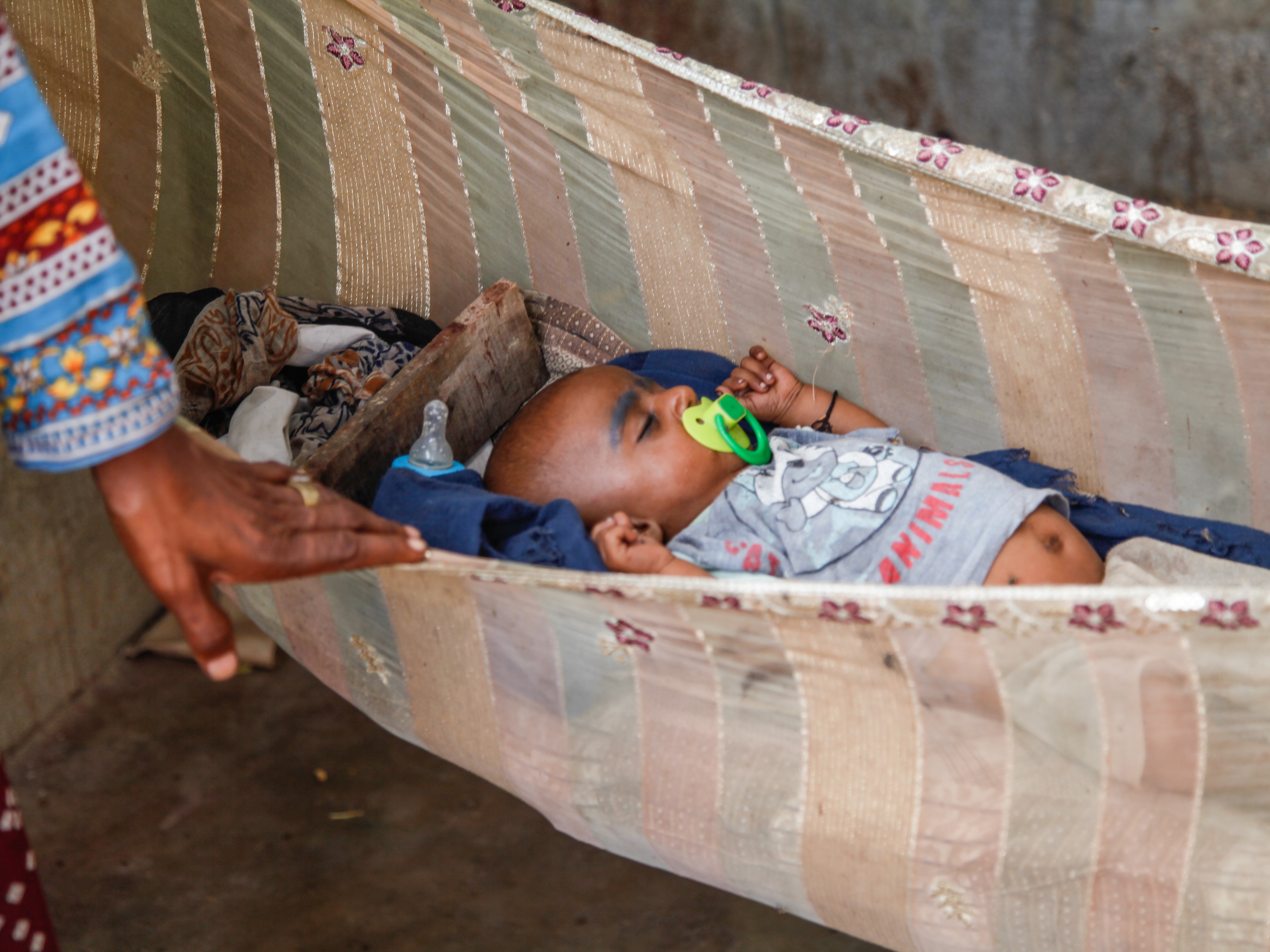
About 1 in 4 babies in the Pakistani fishing settlement of Rehri Goth are born prematurely. Researchers are trying to figure out how to bring the numbers down.
Authorities in Delaware tackle cluster with vaccination and contract tracing – but field has been weakened by cuts
Measles outbreaks are igniting throughout the United States as the nation passes the highest case count in 30 years – putting greater pressure on state and local health departments and highlighting the importance of early identification and quick action.
The US has officially surpassed last year’s tally of measles cases, reaching 2,371 confirmed infections by the end of July. Those numbers have been driven by clusters in Arizona, South Carolina, and Utah – but in times of high transmission, outbreaks elsewhere become more likely. And with decreasing vaccination rates across the country, these sparks are falling on increasingly dry timber.
Records reveal California twice missed deadlines to buy the trains at the center of a federal funding fight — then quietly dropped its lawsuit weeks after missing its new deadline.
In cities where space is tight, underused golf courses are, in theory, ideal canvases for new housing. | Patrick T. Fallon/AFP
Maybe it was never a great idea to build so many golf courses in the desert. But in the 1990s, when Tiger Woods mania was at its peak, Las Vegas went on a fairway construction spree, dotting the city with dozens of pristine, water-gobbling green oases, most woven around upscale master-planned suburbs.
One of those new fairways was the privately owned Badlands Golf Club, whose name now evokes huffs of frustration and wistful what-ifs from Las Vegans in the know. Opened in 1995 about 15 miles west of the Strip, the luxury course once wound its way around some of the city’s most opulent mansions and gated communities.
Key takeaways
An old golf course in Las Vegas is about to be transformed into the largest affordable housing complex in Nevada’s history.
If all 16,000 golf courses in America were turned into such housing, we’d have 22 million more affordable homes.
NIMBY urges can make such projects difficult, but the housing crisis makes it important to consider them.
By the time Woods crashed his car into a fire hydrant in 2009, the golf industry was in a crisis of its own. Many Americans had lost their appetite for the sport, which began hemorrhaging millions of players during the Great Recession and Woods’s fall from grace. Thousands of golf courses built during boom times shut down as a result — Badlands Golf Club among them.
Meanwhile, Las Vegas, like many American cities, needed more homes to help alleviate its brutally high housing costs. These days, Nevada needs 120,000 additional affordable homes, but it is running out of places to build them, in part because about 85 percent of the state is federally owned, meaning there’s little room left for its cities to grow or sprawl. Shuttered golf courses — which often had the advantage of being tied into existing urban infrastructure, unlike more undeveloped land — presented ideal spots for relatively low-cost development.
Not everyone was happy about the idea. To the ire of its affluent neighbors, the precious real estate of the Badlands Golf Club was slated for a new housing development in 2015. What came next was one of the worst land disputes in Nevada history, a decade-long legal tussle waged by the city of Las Vegas at the behest of wealthy locals. Las Vegas was forced to fork over $286 million to a developer last year — one of the largest such settlements in history, and more than the city’s entire annual municipal culture and recreation budget — for illegally denying applications and permits to build atop the Badlands, which by then sat empty, an abandonedeyesore. Eleven years after the fiasco started, a new developer finally began clearing the site for a new luxury housing complex earlier this year, while Las Vegas has had to enact hiring freezes and delay municipal projects to pay off its hefty bill.
In cities where space is tight, underused golf courses are, in theory, ideal canvases for new housing. These huge, repurposed tracts of land can fit thousands of new units — ideally, affordable ones — alongside other amenities like parks or basketball courts smack in the middle of some of the country’s most desirable and well-connected neighborhoods. This makes such developments much cheaper to build than creating a new suburb with all new roads and power lines from scratch.
Not every attempt to turn golf courses into housing lands is destined for financial calamity. Just last year, the city of Las Vegas approved a plan to convert a separate golf course, the city-owned Desert Pines Golf Club, into a 1,500-unit housing complex, the largest affordable housing project in Nevada history and a public-private partnership between the city, the Nevada State Infrastructure Bank, a private developer, and nonprofit partners. The project is a rare win for these kinds of developments, and may offer a blueprint for how they can be accomplished in the future. But even there, the challenges are still real.
“Everyone wants more housing at a regional level. Everyone acknowledges that we need more housing,” said Nicholas Irwin, research director at the Lied Center for Real Estate at the University of Nevada, Las Vegas. “But no one wants it near them, and that’s the tricky part.”
How to turn a golf course into housing
Desert Pines Golf Club opened in the heart of East Las Vegas in 1996, a lush, manicured 18-hole course, peppered with over 4,000 imported pine trees. Like nearly one in five fairways nationwide, Desert Pines was municipally owned, its pricey water needs subsidized by Vegas taxpayers.
With its rolling green hills, Desert Pines was, by far, the largest contiguous green space in the mostly working-class neighborhood that surrounds it. But while golfers flocked to the course, many local residents barely even knew it was there or likely assumed it was out of their price range, said Ángeles Ramos, a local organizer with the immigrant advocacy group Make the Road Nevada. “Only the wealthy wanted it for their own purposes,” she told me in Spanish, but “what we want, what we urgently need, is more affordable housing.”
There was a time when “we could just build anywhere and everywhere because the valley was underdeveloped,” Irwin said, but “now, we’re buttoned up against it. We are incredibly dense, because we’ve basically filled up the land we have.” Much of Nevada is undevelopable because the federal government has set it aside for other purposes like recreation, which explains the state’s bevy of tourist attractions like Lake Tahoe or Red Rock Canyon. But it also leaves the city with little space to build.
If all 16,000 golf courses in America turned all of their land — about 2.3 million acres — into housing with the same density as Desert Pines, it would be enough space to build 22 million homes. If you applied that approach to only those courses that are, like Desert Pines was, municipally owned, then you could still build 4.3 million affordable homes, which would make an enormous dent in the nation’s current shortage of about 7.2 million affordable homes.
That’s not to say that every golf course in every land-constrained city ought to be bulldozed to make way for new apartment buildings. Golfing, for the record, has made a bit of a comeback lately, much like its most famous star. And even if fairways were still closing at the rate they were a few years ago, there’s no way that they could solve Nevada’s housing gap alone, much less overcome the shortage nationwide. But they can still help close the gap.
Ramos, who is among the local leaders organizing community meetings around the Desert Pines redevelopment, believes it could be transformative for the community over time. She says that in her neighborhood it’s become a luxury for many families just to live alone with their spouse and kids, rather than doubling up in cramped apartments, pooling together money each month to keep up with rising costs.
When the Desert Pines redevelopment opens about a decade from now, it will include not just 1,500 housing units, but also a soccer pitch, walking trails, and a job training center. In East Las Vegas, the temperature often feels more than five degrees hotter than it does in the Badlands’ affluent suburbs, where residents enjoy over nine times as much parkland per person.
“This project brings a lot of hope,” said Ramos, who’s especially excited about the prospect of more accessible, kid-friendly green spaces. “We’re all human. We need equity, respect, and to live with dignity, and that’s why we urgently need trees too.”
As it turns out, you can do a lot with an old fairway. Even with all of those bells and whistles, the new development will still likely use less water than the golf course did. And, because the plot of land is already enmeshed within the community of East Las Vegas — close to existing sewer, water, and electricity lines — it will be much cheaper to build there than it would be to try doing so on the outskirts of the city, said Antonio Bermúdez, vice president of McCormack Baron Salazar, the developer working with the city and state government on the proposal.
“What I’ve seen so far in the state of Nevada is that the political will is there,” he said, though the question is, “how do we make this happen not just in Nevada and the city of Las Vegas, but everywhere else where affordable housing is needed.”
Not in my golfyard!
If the Badlands has become a brutal fable of bad governance and highly charged NIMBYism, then Desert Pines may prove to be the model of a golf course-to-housing project gone right.
It also enjoyed the privilege of being located in a welcoming neighborhood, filled with renters who could personally benefit from the project. By contrast, many other golf courses were instead built as a luxury perk embedded in master-planned communities, meaning they’re surrounded by homeowners who fear that losing a recreational amenity — especially if it’s replaced by less upscale housing — could affect their property value.
“Everyone wants more housing at a regional level. Everyone acknowledges that we need more housing. But no one wants it near them, and that’s the tricky part.”
Nicholas Irwin, research director, Lied Center for Real Estate
Just across the street from the Badlands is another golf course, Angel Park Golf Club, built on federal land granted to the city of Las Vegas. If the city ever tried to build an affordable housing complex like the one it’s planning in Desert Pines, it would almost certainly fail given the outrage with which the surrounding community reacted to a proposal for other high-end housing in their backyard.
Victoria Seaman, a former Las Vegas City council member, was elected in 2019 to represent the district that includes the Badlands, mid-lawsuit. Even the “big, beautiful two-acre lots” the developer originally envisioned for the site, she said, were not good enough for Queensbridge, an ultra-luxury gated community abutting the course that acted as a powerful lobbying bloc during the decade-long process, influencing the city’s illegal decision to block the original property owner from breaking ground.
The city of Las Vegas is still paying off the total $286 million settlement it made over its obstruction of the Badlands project, in part through funding cuts to projects like the Desert Pines redevelopment in East Las Vegas.
“These were expensive homes with beautiful planning,” Seaman said of the project planned for the former golf course, and yet somehow, “these very big donors in Queensbridge convinced the entire [homeowners association] that the developer would ruin the neighborhood.”
The fight over fairways is really a fight over who gets to live where
The Badlands example is particularly dramatic, but it also gets at the challenges faced by similar projects across the country. Even a decade after many fairways fell into decline, there are few other examples quite like Desert Pines, and certainly none as large. While dozens of cities — including Denver, New York, and Virginia Beach — have made overtures to turn golf courses into housing in recent years, almost all such projects have been met with upheaval and fierce resistance from locals.
To some extent, that’s understandable. In Sparks, Nevada, hundreds of local residents have flooded community meetings in recent months to oppose a proposal to raze the Red Hawk Golf and Resort and build over 700 new homes in its place. “Promises were made to this community,” Tom Ciesynski, one of those homeowners, told me, “these lots, these very nice homes, were sold with premiums added for those that were sitting on the golf course.” Now, he says, the fairway’s owner is trying to build “tract homes that just don’t fit the character” of a neighborhood that has come to see the Red Hawk as its centerpiece, where Ciesynski regularly goes to golf, and where his wife takes her yoga and pilates classes.
He understands that Sparks, like most of Nevada, faces a housing crunch. “Most people aren’t opposed to all new development, but there’s a right way to do it and a wrong way to do it,” he said, and there are other places within a “stone’s throw of where we live” where he thinks the developers ought to go and build instead.
He arguably has a point. Recreation spaces are important for livable cities, too, and it’s not fair that homeowners who were promised one thing when they bought their properties are now facing a new reality.
And yet, the most troubling trade-off is not the one that leaves a homeowner golf course-less but the one that leaves families in East Las Vegas unable to afford homes at all. It may be tempting to only build affordable housing in places that won’t put up a fight, which in practice, means avoiding most golf courses, especially those in wealthy neighborhoods that want to preserve the kind of exclusivity that many fairways were built to project in the first place. But cities can no longer afford that indulgence — and in any case, they shouldn’t be digging in their heels to protect it.
When people talk about a new development not fitting the character of a neighborhood, “what they’re describing is an amorphous feeling,” said Irwin of the University of Las Vegas, “and if you make policies based on feelings and vibes, you get bad policy.”
From how galaxies form to the beginnings of the universe, the images from the space telescope are giving cosmologists new data to explore—and theories to build out.
On the night of 26 February this year, the Michel family in Pennsylvania expected to see their loved one, Daphy, again very soon.
After she had spent six months in jail, a judge had dismissed criminal charges against her and one of her brothers was told she would be released soon, probably the next day.
The Los Angeles Dodgers have acquired the biggest prize on the trade deadline market, getting two-time reigning AL Cy Young Award winner Tarik Skubal from the Detroit Tigers
Visible impact of warming climate is impossible to ignore across landscapes that have been starved of rainfall
Half of England and the whole of Wales are officially in drought and July is set to be the driest month on record as extreme heat intensified by the climate crisis continues to grip the UK and Europe this summer.
The announcements this week by England’s Environment Agency and Natural Resources Wales mark the third such event over the past five years, and come in the wake of four record-breaking heatwaves since May which have fuelled huge wildfires and left farmers, wildlife and protected habitats running out of water.
Visible impact of warming climate is impossible to ignore across landscapes that have been starved of rainfall
Half of England and the whole of Wales are officially in drought and July is set to be the driest month on record as extreme heat intensified by the climate crisis continues to grip the UK and Europe this summer.
The announcements this week by England’s Environment Agency and Natural Resources Wales mark the third such event over the past five years, and come in the wake of four record-breaking heatwaves since May which have fuelled huge wildfires and left farmers, wildlife and protected habitats running out of water.
В корпоративных системах обычно хорошо считают то, что приходит отдельным счётом: лицензии, серверы, внедрение, поддержку, подрядчиков. Эти расходы видно в бюджете, у них есть владелец, договор и понятная строка в финансовой модели.
Мы решили посчитать, во сколько компании на 200 человек может обходиться ручной поиск документов. Взяли простую модель: 15 минут поиска в день на сотрудника, 247 рабочих дней в 2026 году и среднюю стоимость рабочего часа 700 ₽. Получилось 8 645 000 ₽ в год.
The family of a Haitian immigrant who froze to death in early March at a bus shelter in Pittsburgh after she was dropped off in the city by Immigration and Customs Enforcement (ICE) is poised to file a lawsuit this month against the United States and “multiple other governmental and non-governmental entities”, the Guardian has learned.
Daphy Michel, 31, had been in county jail for six months after a reported mental health crisis and street incident, and then was arrested by ICE before being released with a ankle monitor.
The choice of which state begins the presidential balloting turned into a needlessly divisive conflict over race and ethnicity. Nevada didn't take South Carolina's selection well.
The tidal bore that rockets up the Turnagain Arm south of Anchorage can carry a surfer for an hour; it can also kill. Now that the secret is out, how long will authorities allow surfers to catch the wave?
Spain’s leading far-right politician arrived in the territory on Sunday, fueling tensions there after thousands of migrants entered the exclave last week.
Divisions over Israel and high-profile endorsements have shaped the closely-watched race between a progressive former public health official and a more moderate member of Congress.
At a national meeting of the Democratic Socialists of America, nervous energy and a sprawling tableau of sometimes-competing interests were on display.
The law firm Paul Weiss led the legal resistance against President Trump. Then it led a sudden retreat across the legal industry. A Times investigation examined how it caved to White House pressure.
Paul Weiss was a progressive stalwart for decades and led the legal resistance against President Trump in his first term. Then it surrendered without a fight. This is the inside story of its transformation.
Barely a third of Americans approve of Mr. Trump’s handling of the job, putting him at historic depths for a second-term president at this stage of his tenure.
The amount is still far below what the U.S. spent previously on humanitarian and health aid, but resumes the flow of money for key efforts to fight malnutrition and disease.
И главное: этот фундамент пригодится, когда придет время обосновывать собственное повышение — не эмоциями и перечислением заслуг, а демонстрацией работающего HR продукта, который приносит ценность компании.
A senior couple sold their house in Minnesota and moved to central Florida, where they will have more time for their convertible sports car. | Bruce Bisping/Star Tribune via Getty Images
Over the next 20 years the United States will see a massive transfer of wealth as boomers leave trillions of dollars to their children as they pass away. A contingent of those children are asking, “What if we got that money, now?” Millennials and Gen Z want to be able to take advantage of the money they stand to inherit before their parents pass away. While a majority of parents actually do help their kids, many with the means are surprisingly reluctant.
Bill Perkins argues that these parents should let it all go. Perkins is an entrepreneur and the author of the book Die with Zero. He argues that the money would be better spent while your children are young adults rather than in their 60s when they may already be set up financially. Perkins joined Today, Explained co-host Noel King to explain the philosophy behind his book and why the best time to give is now.
Below is an excerpt of their conversation, edited for length and clarity. There’s much more in the full podcast, so listen to Today, Explained wherever you get your podcasts, including Apple Podcasts, Pandora, and Spotify.
What you’re essentially saying is before you pass on from this earth and leave your kids a big inheritance, maybe instead give that inheritance away sooner.
If you’re going to leave money to your kids, you should be thinking about what’s the right amount. That’s probably the first thing that people think about. But one of the things that people don’t think about is when is the right time? And I argue ferociously that it is not when you die. It is actually well before you die. So that gift makes the maximum impact on their lives.
So you would be agreeing with the millennials who are feeling some kind of way about their parents sitting on the inheritance for now and waiting until they pass on. You think that the youths have a point?
Oh yeah. I’m their best friend. I am definitely their best friend. When you leave an inheritance to someone, you’re trying to have maximum impact on their lives so that they may be able to enjoy it. And that time is not at 86 or 60. The time that they can convert that capital into meaningful experiences at the greatest rate without that much decay is between 28 and 33.
Why is that? What’s happening between 28 and 33?
The sharpest and the biggest calculator you will ever be is at 28. And you reach physical maturity at 33 and then it plateaus and declines. And so what that means is that your mental acuity is declining and your physical abilities are declining at various rates, which means that your ability to convert that money into experiences that you enjoy or can do decline as you age. Most of your life is still ahead of you. At 60, most of your life is behind you.
Are you literally advocating “die with nothing”? Or are you saying, “Hey boomer, maybe have a responsible cushion and give your kids the rest.” What are the mechanics of this?
I am arguing to get as close to zero as possible. Knowing that there are uncertainties in life, that’s going to be probably an impossible goal — especially the biggest uncertainty, when you’re going to die. The uncertainty around what things will you be doing later in life besides hanging out and maintaining yourself. But this is an iterative formula, and if you are not on autopilot and you deeply think about it, you can be more efficient with the allocation of your resources and how you split those things up.
There’s a mathematical reality to some of this. If you’re a boomer and you’re sitting on money, you invest it. Having that money compound over 15 or 20 years, you could be giving your kid, when they are 60 or 65, just an enormous sum of money versus a much smaller sum based on how investment works when they are 33. What do you think about the argument that it’s better math to wait?
I would say that they’re not truly understanding the purpose of the money. Would you give your kid who’s 30 a rattle or a binky? So the understanding of the purpose of the money is for them to have a fulfilling life, not to have a bunch of zeros. And so what matters is how do they convert those zeros into a fulfilling life? And so because you decay — that’s the unfortunate part of having a human body — and then you eventually die, the ability of you to convert that money into the adventurous life or fulfillment that you choose declines with age. And you could just have a thought experiment. How much would you pay of your net worth to be 30 again?
Jesus. One hundred percent, and I’m not 65.
Exactly. And so you can easily see that I’m not going to make enough capital to make up for the difference in age, right? Because that money helps make the life.
We know that this is a very hard conversation to have. It’s hard for parents to talk about not being here. It’s hard for kids to approach this without seeming greedy. How do you suggest families broach this conversation?
The one thing I don’t tell people is whether you should be leaving an inheritance or not. That’s up to you. There are some people who are just like, “All my money is for me. The kids, I gave them an education or gave them whatever they need, a shot in life, and they have to go make their own way.” That’s one. But those who intend to leave a gift, once they’ve thought deeply about it, I think they will come to the logical conclusion that it’s not a bequest. It’s an inheritance and that there’s a better time. And so in my mind, it’s a gift of love. It’s a gift of opportunity. It’s like, “Here you go. I’ve been fortunate in my life to be able to pass on the gift of choice. And here’s this capital and here’s some wisdom that comes with that.” But again, that’s me, not you.
Согласно закону заголовков Беттериджа, который утверждает: «Если заголовок заканчивается вопросительным знаком, на него можно ответить „нет“», ответом на вопрос в заголовке будет „никогда“. И я попытаюсь вас в этом убедить.
There were no pacers and no wave lights. This was a Saturday night scrap - Glasgow rules - and Josh Kerr wasn't going to let anyone beat him in that fight.
Вокруг куча курсов по нейросетям. Марафоны, ютуб, платные интенсивы, гайды на сорок минут. А толку часто ноль. Мы постоянно видим людей, которые честно отсидели два-три курса, открывают Claude, тыкают пару раз, получают невнятицу и закрывают вкладку. Вроде всё рассказали, а сесть и сделать всё равно не получается.
На курсе всё выглядит логично. Тебе показывают промпт-инжиниринг, роли, few-shot, температуру, ты киваешь, вроде понятно. А потом садишься за свою реальную задачу, и она не похожа ни на один пример из курса. И ты зависаешь, потому что руками этого ни разу не делал. На словах-то понятно. А руки не помнят того, чего не делали.
Вторая беда в том, что тебя никто не поправляет. Пока смотришь видео, никто не тычет тебя носом: вот здесь запрос кривой, вот почему. Ты один на один с моделью, она на плохой промпт спокойно выдаёт правдоподобную чушь, и ты этого даже не замечаешь. Так можно месяцами повторять один и тот же косяк и быть уверенным, что всё нормально.
И ещё одна штука, которая нас давно бесит. Работать с нейросетями сейчас хотят не только программисты. Куча обычных людей хочет просто внедрить это в свою жизнь и работу, чтобы рутина автоматизировалась и пахала сама. А их сажают за терминал, суют JSON, какой-то Python. Зачем человеку, который хочет автоматизировать свои задачи, учить питон? Незачем. Его это только пугает, и он бросает на второй день. Хотя с последними моделями всё это уже делается без единой строчки кода, по-человечески.
В какой-то момент нас это достало, и мы вдвоём с моей девушкой Сашей сели делать своё. Уже полгода пилим проект, AGINE Academy. Это игра, где Claude осваивают на заданиях, без лекций. И так, чтобы разобрался обычный человек, а не только программист. Идея была до тупого простая: выкинуть лекции, оставить одни задания. Сразу кидать человека в задачу, которую без нормального промпта не вытащить. Пусть упрётся, перепишет пару раз, сам почувствует, от чего результат меняется. Сейчас там 77 заданий по семи направлениям, и на выходе каждого получается какая-то живая штука, которой реально можно пользоваться.
Fireworks bring Glasgow 2026 to a close as the Isle of Man win first gold in 20 years and Scotland’s Mel Woods wins athlete of the Games.
Australia delivered an unprecedented podium sweep in the women’s mile on the final day of athletics competition at the Commonwealth Games, after Abbey Caldwell upset Jessica Hull to secure one of seven track and field gold medals including a breakthrough victory for Lachie Kennedy’s 4x100m relay team.
The haul exceeds the six gold medals from one day in Auckland in 1950, when Marjorie Jackson and Shirley Strickland were among the winners, to make it Australia’s most successful track and field day at the Commonwealth Games.
I can’t thank [enough] the people who have been in my corner during the highs and the lows of the past 22 years. It didn’t finish the way I wanted today, but I’m proud of what I’ve achieved. I was a flag-bearer for Team Scotland.
[Apart from] stepping away with a medal today, and hearing Flower of Scotland, what more could you ask for, really? To get a standing ovation from a home crowd shows that people appreciate what I’ve done for the sport.