From Afghanistan to Taiwan, unprecedented deluge highlights devastating impact of climate breakdown
“It rained for 10 days and 10 nights, non-stop – I’d never seen anything like it,” says Anar Gul, a construction worker who lives in the remote district of Dur Baba in eastern Afghanistan.
The houses in his village are built from stone and mud, which makes them extremely vulnerable to heavy rains. After days of rain, Gul’s kitchen collapsed and his neighbour, Sayed Afsar Sadat, saw a large part of his house completely destroyed. “Rains like this are coming heavier and earlier each year,” says Sadat. “They are destroying the roads and washing away our crops. It’s impacting us directly.”
Tarona Taafaki makes history in women’s 75kg category
All boxers eliminated in semis receive bronze medals
A boxer has made history for Tuvalu by winning the tiny Pacific island nation’s first Commonwealth Games medal without winning a single fight.
Twenty-year-old Tarona Taafaki, one of five entrants in the women’s 75kg category, received a bye to the semi-finals where she lost on an unanimous points decision to India’s Lovlina Borgohain on Friday. At Commonwealth Games, all boxers eliminated in the semis receive bronze medals.
При парсинге данных есть одна ключевая проблема — защитные механизмы, которые препятствуют массовому сбору. Это могут быть как вполне себе тривиальные лимиты по частоте запросов, так и сложных системы поведенческого анализа (Cloudflare, Akamai, DataDome).
В топе самых частых ошибок, приводящих к срабатыванию защитных механизмов — использование личных IP-адресов или IP-адресов сервера, на котором запускается парсер.
California's redistricting has helped drive a decrease in the number of competitive congressional districts nationwide, a new analysis found. The battlegrounds that are left could have national consequences.
Australia has defended its world-first ban on social media for under-16s after a study found there had been little drop in use months after the ban took effect.
On his daily bike ride, the LA-based photographer stumbled upon the perfect subject for this black-and-white portrait
On New Year’s Day 2026, Alon Goldsmith began what he calls a “365-day project, which involves taking and posting a photo every day for a year. On some days, it’s a struggle to find something worthy of being included and on others it’s a challenge to make a choice,” he says.
This image was taken on day 111. Johannesburg-born, LA-based Goldsmith was on his daily bike ride, which usually takes him through Venice and around Santa Monica Pier, areas he describes as containing a “cornucopia of curiosities”.
Troy Jackson gained the party nomination for Senate, but now he needs to consolidate support to take on Susan Collins
Troy Jackson is ready to move on.
In fewer than 100 days, the new Democratic nominee has to convince Maine voters to send him to the US Senate – and he’s trying to do it without dwelling on Graham Platner, who dropped out of the race after accusations of rape, which he denies.
In the final segment of Creepshow, the horror anthology series written by Stephen King, Upson Pratt, a ruthless old businessman, lives alone in a penthouse fitted with surveillance screens, control panels, and alarm systems. He has a pathological phobia of germs and contamination, is obsessed with exercising complete control over his environment, and regards every competitor as little more than a bug to be squashed.
One night, a cockroach breaches his citadel, and Pratt swiftly dispatches it. But the cockroaches keep appearing in ever-greater swarms, creeping out from air vents, drains, cupboards, and electrical panels until they are everywhere. Despite his manic efforts to smash and spray them out of existence, the ever-multiplying cockroaches eventually overwhelm him.
Over the past 12 years, Prime Minister Narendra Modi of India has single-mindedly gone about building an extensive machinery of control to tame India’s raucous democracy. He has gradually managed to bring the entire architecture of normal, institutional politics under his sway. The American watchdog Freedom House, for example, ranks India as, “partly free,” and the country’s press freedom ranking on a Reporters Without Borders index of 180 countries has sunk from 140 in 2014—the year Modi came to power—to 157 in 2026. Elsewhere, the V-Dem Institute in Sweden, which monitors democracy and its variants, has described India as an “electoral autocracy,” where, despite the occurrence of multi-party elections, there is a corrosion of true democracy because of decline in core liberties.
These damning assessments reflect the way Modi has consolidated his grip on all manner of national institutions in recent years: from the media, where pliant owners have repeatedly bent the knee to the administration, to election authorities, which in a recent state poll erased millions of names from voter rolls in a move widely seen as benefiting Modi’s Bharatiya Janata Party (BJP).
Considering his hegemonic control over power and institutions, one can presume that when Modi first watched hundreds of disaffected young people, describing themselves as cockroaches, trickle into Jantar Mantar, a traditional site of protest in New Delhi, a few miles from his residence, the 75-year-old strongman would have felt fairly confident of squashing them like bugs. The reality turned out to be wholly different—uplifting the spirits of democratically minded Indians and no doubt surprising the country’s longtime leader.
Origins and growth of a Gen Z protest
The call to protest came on Jun. 1 from Abhijeet Dipke, a 30-year-old Indian student in Boston, who had previously worked as a political communications specialist. The catalyst was a comment on May 15 by Surya Kant, the chief justice of India’s Supreme Court, who compared the country’s unemployed youth to "parasites" and "cockroaches." Dipke responded by forming an online parody party, the Cockroach Janta Party (CJP), whose meme-like name was partly a dig at Modi's BJP. He billed his satirical party as the "Voice of the Lazy & Unemployed," and the CJP's instagram account amassed 20 million followers within days, eclipsing the BJP's following on the platform.
India’s young men and women were already frustrated and angry over recent paper leaks in an examination for admission to medical schools. More than two million students had competed for around 140,000 places to train as a doctor. After the paper leaks, the test was canceled and the government forced the students to repeat the exam on June 21. In despair, reportedly at least 20 students committed suicide.
On the morning of Jun. 6, Dipke arrived at Delhi airport holding a copy of the Constitution of India in one hand, and made his way to Jantar Mantar in central Delhi, where he started the protests with a modest gathering of supporters. On most days throughout June a few hundred people showed up at Jantar Mantar for the protests. On June 28, a prominent educator and activist, Sonam Wangchuk, and a group of student activists began a hunger strike in support of the CJP and its primary demand: the resignation of the education minister.
I thought Modi might just co-opt the protest leaders or ignore them till they were exhausted, but as it turned out, his administration couldn’t tolerate even passive, peaceful resistance. On the evening of July 18, police charged the protest site and forcibly removed Wangchuk and others, who had been on the hunger strike for 20 days by then. Images and videos of Wangchuk being removed from the protest site went viral.
Tens of thousands showed up at the protest site in solidarity. Among the multitudes in Delhi was Prashantkumar Dhramshibhai Patel, a middle-aged lawyer, who had traveled to the capital from Ahmedabad, a city in the western state of Gujarat. He carried a most painful wound inflicted by the failures of India's education system: on Jun.18, Kahaan Patel, his 17-year-old son, who had taken the medical-school test that was scrapped after the paper leaks, jumped from the sixth-floor balcony of their apartment and killed himself. “I have another son. I have to save him,” Patel said, in an interview at Jantar Mantar. “The system has to change.”
On July 20, the protesters marched toward the Indian Parliament. The police attacked them with batons, tear gas, and pellet guns. More than 100 protesters ended up in hospital with broken ribs, fractured legs, head trauma, and other injuries. Viral videos of the police brutality on Instagram and YouTube swelled the crowds even further and transformed the protest site into a zone of occupation with the energy of a carnival. Copycat protests sprang up in other major Indian cities—Kolkata, Mumbai and Patna—lending the Gen Z protests the aura of a nationwide youth resistance that would humble Modi and force his education minister to resign.
Gen Z challenges the strongman
The success of India’s Gen Z protests revealed a paradox: while Modi has effectively domesticated institutional politics, his control breaks down when confronted with eruptions of extraordinary, extra-institutional politics. He is forced into a corner when political mobilization originates from the ignored margins, erupts in waves of collective action, and thrives in its own irregular, informal public spaces. India has witnessed such eruptions before: in the protests around a citizenship law led by Muslim women in 2019, in the protests led by Sikh farmers in 2021, and now in the Gen Z protests. These extra-institutional mass upsurges have posed the greatest challenges to the Hindu nationalist political order helmed by Modi.
After the police crackdown, the Gen Z protests in Delhi and other Indian cities gained the energy and tone of a carnival. The people who joined were not there at the behest of a political organization but were drawn, like pilgrims to hip pilgrimage sites, by the promise of an insurrectionary pleasure. Jantar Mantar, the protest site in Delhi, embodied an aesthetic of collective transgression. The crowds ignored the best efforts of the protest leaders to act as disciplinary conductors and reveled in their own playful spontaneity, their slogans and posters heaping colorful profanities on the prime minister. Fundamentally, the protest in Delhi amounted to a carnivalesque bonfire of Brand Modi.
The burnishing of Modi’s political brand traces back to another protest in Delhi, in the summer of 2011. A movement called India Against Corruption—led by a group of tech-savvy middle-class men and fronted by a talismanic Gandhian veteran on a hunger strike—mounted a protest against corruption scandals in the federal government, then led by the Indian National Congress. That movement tapped into, and crystallized, widespread public anger against the “system” and turned it into a crisis of legitimacy for the ruling Congress Party, from which it never recovered.
The social imaginary of the “corrupt system” in India resembles the American populist notion of “the swamp”: it refers to a self-serving nexus of politicians, bureaucrats, and businessmen who control the workings of state institutions, much to the detriment of ordinary people with no “connections” within it.
Soon after those 2011 protests, Brand Modi was carefully marketed on television channels and burgeoning social media platforms as the redemptive opposite of the images, associations, and stereotypes attached to the corrupt and feckless system. Modi was the charismatic outsider (at least to Delhi, since he had been a state level leader for years) and decisive executive who could cut through the thicket of vested interests and make institutions work for ordinary people.
In contrast to the wealthy, dynastic politicians who dominated other parties, Modi presented himself as a fakir, or ascetic, free from the usual familial interests and material ambitions—aman uniquely suited to provide a renewed political and moral leadership. And unlike the English-speaking politicians, bureaucrats, and journalists of the old establishment mold, Modi was cast as the authentic son of a tea seller, whose provincial career in the western state of Gujarat had left him untouched by the incestuous courtly culture of the national capital.
Fifteen years later, the Gen Z protests in Delhi and other Indian cities have incinerated Modi’s carefully constructed political brand, delivering death by a thousand burns. The target of the anger and scorn in all the insulting posters, slogans, and graffiti of the protest zone was not the education minister but Modi himself.
A bonfire of vanities in Delhi
It was an exhilarating spectacle to watch a prime minister elevated to the status of a demigod through the expenditure of hundreds of millions of dollars of public money spent on ubiquitous advertising campaigns, becoming the butt of a torrent of wickedly humorous, profanity-laced slogans from young men and women in the capital. The eminently Instagrammable viral burns of the protesters were deliberate, taking apart and inverting each element of Modi’s political brand.
The weapon of choice was satire. The unofficial anthem of the protest was a call-and-response chant: “Chappan inch ka chhota bandar,” followed by the crowd’s chorus, “Bhaag Narendra, Bhaag Narendra.” (“The little monkey with the 56-inch chest. Run Narendra, Run Narendra!”) The viral reel that originated the chant features two women, who seem to be in their early 20s, dressed in casual streetwear, leading the chant while a man holds a poster depicting Modi as a little monkey.
One could not imagine a more lethal grenade lobbed at Modi’s strongman image—a play on his 2014 campaign claim of being a leader with a “56-inch chest” who embodied the masculine resolve needed to overcome the obstacles and transform India in the decisive manner he had transformed Gujarat, the state he had governed for 12 years.
The chant, which deployed Modi’s first name, quickly spawned the kind of meme-like variations typical of viral reels. The chorus, “Bhaag Narendra, Bhaag Narendra,” (Run Narendra, Run Narendra!”) sometimes became “Bal Narendra, Bal Narendra!” (Baby Narendra, Baby Narendra!) —a nod to the 2014 comic book that mythologized Modi’s childhood, depicting heroic tales like a young Modi helping soldiers during India’s 1965 war with Pakistan and rescuing a baby crocodile.Other chants added new bits lampooning Modi's relationship with friendly oligarchs.
And there were posters tearing apart his otherworldly self-projection as a fakir, or ascetic, depicting him in his monogrammed suits, designer sunglasses, and aircraft. Street skits satirized the myth of Modi’s tea-seller origins. A man carrying a bullhorn wandered through the crowds playing Modi’s viral bloopers on a loop, taking requests from the audience like a disc jockey.
A particular target of attack was Modi’s tactic of preserving his political brand by evading accountability: presenting himself as the supreme leader who sets the country’s political direction and articulates its moral vision while shifting responsibility for the government’s failures onto subordinate officials.
A viral poster showed a young girl deriding Modi’s habit of falling silent whenever the government came under attack: “Ghosting works on dating apps, not on citizens.” The posters bore Modi’s face, not the education minister’s, under the banner headlines, “Leak in India” and “Destroy in India” (a play on “Make in India,” Modi’s signature campaign to build up India’s manufacturing sector).
For India’s youth, Modi has become the symbol of the hated system, the man who bore ultimate responsibility for everything that was wrong with the country’s institutions. He is no longer the crusader against a corrupt and sclerotic system but its prime patron.
Why the Cockroaches won
The cockroach protests overwhelmed Modi’s regime of control because the young protesters were immune to the blackout and the vilification by India’s mainstream media. The protest was anchored in its own alternative digital public sphere, primarily on Instagram, the loopy mimeticcauldron that served as both the lingua franca and the primary driver of the protests.
Platforms such as Instagram and YouTube host a new generation of progressive journalists and influencers who command huge audiences, particularly amongthe young who hardly watch mainstream news channels at all. Such an alternative digital sphere had already emerged and grown during India’s previous major protest movements in the past decade.
India’s young people live with profound resentment against the current state of affairs. After the police crackdown, that resentment was directed atModi himself, who was seen as the face of a system that treats ordinary people like cockroaches.
Many of those who had streamed into the capital after Wangchuk was forcibly removed from Jantar Mantar in Delhi had endured long train journeys. Most of them did not have the luxury of air-conditioned coaches. They had traveled in ordinary train cars, which Indians refer to as “general-class” coaches. In those sweltering, poorly ventilated coaches, passengers are routinely packed like sardines and somehow brave the lingering smells of piss and sweat.
The “general-class” coaches in Indian trains exist as visceral reminders to young Indians of what the “general” quality of life feels like. Millions of young aspirants are condemned to ride these moving purgatories every year, traveling to college or job-recruitment examinations that they often find have been canceled.
The essence of the youth protest was a revolt against the persistent denial of education and employment that would enable them to lead the decent lives of people they glimpse in the few air-conditioned coaches most Indian trains have.
Most of these young people never make it to a future of decent employment, given the deepening structural mismatch between the expansion of higher education and the availability of secure, high-quality jobs. The number of college graduates has increased since the education sector was opened to private investment, at a far more rapid pace than the employment opportunities available to them. A recent report by researchers at Azim Premji University showed that while the share of graduates among 20-to-29-year-olds has risen from just 4% in 1983 to 28% today, graduates now accountfor 67% of the unemployed in that age group.
India ranks near the bottom globally in providing formal salaried employment, according to World Bank data. A mere 23% of Indians hold salaried jobs; the share is double that in countries with more developed manufacturing sectors: Vietnam, Indonesia, and Bangladesh. Worse, many of these salaried jobs in India’s service-led economy are not in high-tech fields such as information technology but in occupations like retail sales, primary school teaching, domestic cleaning, and cooking.
The long “waithood” of young Indians between education and employment, as the anthropologist Craig Jeffrey put it, can turn into a humiliating ordeal. The stigma of unemployment is compounded by the guilt of knowing that your parents had to drain their savings or mortgage their land to pay for the steep fees demanded by colleges and coaching centers. All for nothing.
India’s National Crime Records Bureau estimated that more than 1,23,000 students in the country committed suicide between 2014 and 2024, citing “failure in examinations” and “family problems” as the primary reasons for ending their lives. As many as 15,000 students diedby suicide in 2024, the last year for which government data is available, an 80% jump over the past decade.
In the end, the young cockroaches proved so resilient because Modi’s regime of control had no punishment or humiliation to threaten them with beyond what the system already inflicts on them every day. These young men and women had reached a point where they felt they had no voice in the existing order—and nothing left to lose.
These protests pose no immediate threat to the stability of the Modi government. Nor are they bound to seriously damage his BJP’s prospects in upcoming state elections given the extent of the party’s institutional dominance and the fragmented state of the opposition. What is more, the Hindu nationalist BJP maintains its ideological hold over roughly a quarter of the population in many Indian states.
Yet the protests have exposed the limits of the 75-year-old prime minister’s personal appeal to an expanding swath of the population after 12 years in power.
Investigators are probing whether Iranian hackers are behind this week's malicious cyber activity against water systems in Minnesota. If they are found to be the culprits, it would not be the first time.
Residents of the ancient town of Nabatiyeh in southern Lebanon have endured wars in the past, but the latest conflict with Israel is testing the limits of their endurance.
Michigan Democratic Rep. Andy Levin holds a campaign rally on July 29, 2022 in Pontiac, Michigan. He lost his primary that year to Haley Stevens, who is now embroiled in a fierce Senate primary. | Bill Pugliano/Getty Images
One of the most powerful forces in American politics is about to face a major test of its influence — and it may well come up short.
The American Israel Public Affairs Committee, or AIPAC, has for decades spent heavily to ensure that US policy remains strongly supportive of the Israeli government. The group has spent hundreds of millions of dollars on lobbying and elections to stock Congress with allies and keep them supportive of Israel’s policy priorities once they’re there. It also tries to defeat elected officials and candidates who, in its view, are too supportive of the Palestinian cause or too critical of Israel’s Gaza war.
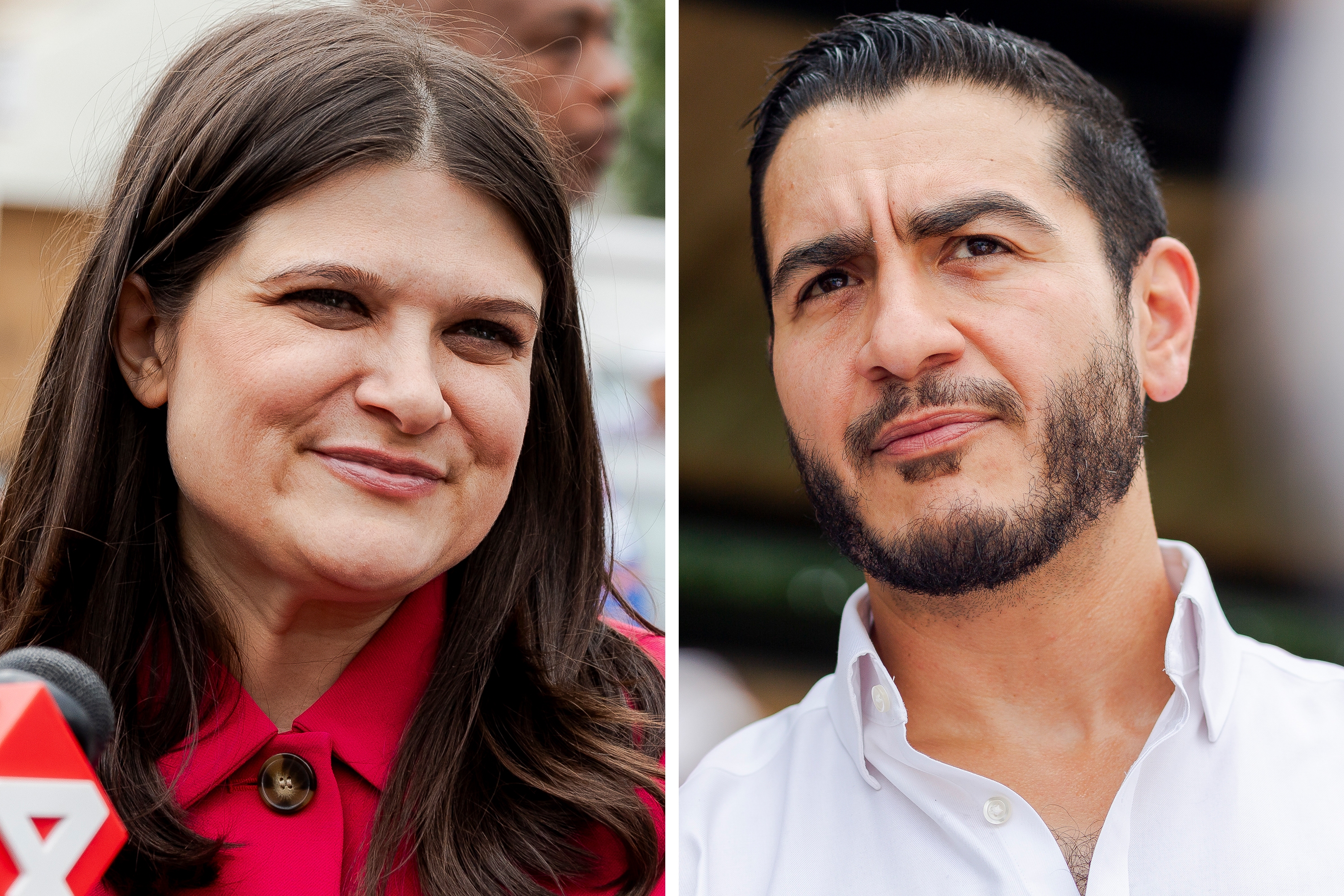
Next week’s Democratic Senate primary in Michigan is AIPAC’s biggest-ever investment in a single election: The group has spent more than $30 million to defeat staunch Israel critic Abdul El-Sayed and to try to ensure Rep. Haley Stevens wins the Democratic nomination instead.
In the past, AIPAC has very often gotten its way. But this time may be different. El-Sayed has been explicitly running against AIPAC, arguing that the group’s heavy investment in the race discredits his opponent — and trying to capitalize on the Democratic base’s sharp turn against Israel due to the devastation of the Gaza war. And if polling is any indication, it seems to be working. Several recent surveys show El-Sayed with a double-digit lead.
If he wins, it would arguably be AIPAC’s worst-ever defeat. It could also mean we’re in a new chapter of politics, where the group’s heavy spending is less and less effective — and even potentially toxic to voters in the Democratic base.
What has changed, and how could these changes reshape politics?
To understand the influence of AIPAC — what it’s like to go up against the group, and also how its power may be ebbing — we spoke to a Michigan politician who ended up on their bad side, crossing the group on the Israel issue and then losing his seat. (In fact, he lost it to the very candidate AIPAC is boosting in next week’s Senate contest: Haley Stevens.)
Andy Levin was a two-term congressional incumbent and scion of a Michigan Jewish political dynasty — he succeeded his father, Sander Levin, who had served in the House for decades. Andy’s uncle, Carl Levin, had served in the Senate for decades as well; both held high-profile committee chairships.
But once in Congress, Andy Levin staked out positions on Israel that spurred furious pushback from AIPAC. A former president of the group declared he was “arguably the most corrosive member of Congress to the US-Israel relationship.”
And when, after redistricting, he and his colleague Rep. Stevens ended up running against each other in the same primary, AIPAC spent more than $4 million to boost her chances, successfully knocking Levin out of Congress.
Levin is an enthusiastic supporter of El-Sayed, and was in the car on his way to canvas for him when we spoke Thursday. Our conversation, which has been condensed and edited, follows.
How Rep. Andy Levin ran afoul of AIPAC
Tell me about your history and how you’ve thought about the Israeli-Palestinian issue over the years.
I guess the thing to understand is, I’m Jewish, right? You know what a mezuzah is? I had mezuzot on all my doors in Congress. I was the president of my synagogue until I won my primary, and then I felt I had to resign and turn that over.
I am a long, long, longtime human rights activist. My human rights grounding comes from my values as a Jew. Everyone’s created the image of God, you know, and all this. “Justice, justice shall you pursue.” Not a lot of words are repeated twice in the Torah.
So I was active on Tibetan human rights and Haitian human rights. I was in China during the Tiananmen massacre. I interviewed the Dalai Lama. In 1990, as a graduate student, I went to Israel and Palestine. We traveled all over Israel, and we could go in Gaza, there was no Hamas yet. We met the political leaders there and talked to everybody in the West Bank.
And I came home, and I wrote an article in the Detroit Jewish News that said, “Oh my God, 23 years of occupation, this is enough. It’s totally toxic. It’s bad for our soul as the Jewish people, and there’s no solution to the Israeli-Palestinian conflict without fully realizing the political and human rights of the Palestinians.”
My positions never really changed. But after a quarter century of Bibi [Netanyahu] being the Israeli government — he’s always been against the two-state solution, no question, but he pussyfooted around; he played a lot of games about it. But his government’s gotten more and more right-wing. And in this century, no president of either party has done anything significant to force the Israelis and the Palestinians into each other’s arms, or just to, like, really negotiate.
So you get elected to Congress in 2018. How did you earn the enmity of AIPAC?
I get to Congress. I get on the Foreign Affairs Committee. And the Gaza war before this one happens [in 2021]. It was like a pimple compared to this, but it was terrible.
In the House, there were eight more senior Democrats who worked on Israel and Palestine together. I was, like, the kid; they let me tag along. We were all J Street-aligned [J Street is a more progressive Israel advocacy group].
There were these meetings, and everyone was like, we have to do reconstruction of Gaza, we have to do aid. And I’m like, okay, I’m for all that. But this is just an endless cycle of violence. I want to focus on ending the cycle of violence and actually achieving peace.
So I wrote the Two-State Solution Act. And, dude, it was quite a milquetoast piece of legislation, if I may say so. It was not adequate in any way. But the preamble said, “whereas” — you know, all the “whereas”-es [rhetorical throat-clearing at the beginning of legislation], which aren’t an effective part of it — it said, whereas Gaza and the West Bank and East Jerusalem, under international law and United Nations resolutions, these are occupied territory.
The Democratic Majority for Israel pollster, Mark Mellman, attacked me, saying, Andy Levin says we shouldn’t be able to pray on the Western Wall. Because of that preamble, which said East Jerusalem was occupied territory arguably — it’s ridiculous.
But with the Two-State Solution Act — this is the stranglehold that AIPAC had. Some people are sort of more intellectually serious in Congress, and some are less. Some are more like, they study things themselves, but some are more staff-driven.
Some of the more serious people came up to me and said they read the Two-State Solution Act, and they said really nice things about it. And then they said, “But of course I can’t co-sponsor it, you understand.” One colleague came and co-sponsored, but because AIPAC said “dude, no,” he withdrew.
How Levin lost to Haley Stevens — who was aided by AIPAC’s spending — in 2022
So then, in the 2022 cycle, there was redistricting, and you and your colleague Haley Stevens ended up running in the same district, and that’s when AIPAC tries to defeat you.
After the Census, Michigan went from 14 to 13 seats. Haley and I were mushed in together now. You could have argued that either of us should’ve run in the new, current, 10th district. Haley lived in the 10th district; she was more moderate, and that’s a more Republican or mixed district. I never represented any of that.
My case was, I lived in the center of the new 11th district; I still live there. My kids are the fifth generation of my family to live in the new 11th district. The whole Jewish community is almost all in the new 11th district, overwhelmingly.
But the former national president of AIPAC wrote this fundraising appeal for Haley and said, Andy Levin is the most corrosive member of Congress for the US-Israel relationship.
So the level of threat they saw in me — if you get a Rashida [Tlaib] or even if you get an Abdul [El-Sayed], they’ll fight against them. But I’m the Jewish guy, right? I’m the son of Sander Levin, the nephew of Carl Levin.
They were these two Jewish kids from Detroit, grandsons of immigrants, who rose to be, at the same time, the chair of the [House] Ways and Means Committee — my dad — and the chair of the [Senate] Armed Services Committee. So this is super threatening to AIPAC, right? So they targeted me.
So I got trounced by Haley. And I wondered afterward; I told Celinda [pollster Celinda Lake], I should have run in the new 10th district because this intramural fight was so horrible, so unpleasant. She said, I admit it would’ve been better — but I don’t admit you would’ve won in the 10th. Because AIPAC would have backed [Republican nominee] John James, and they would have spent any amount of money to beat you.
Why the politics of Israel changed — and why he thinks Abdul El-Sayed has a better shot at winning, including in the fall
You lost your race, but it certainly seems like, four years on, your views are winning inside the Democratic Party. The party base increasingly seems to be siding with you and against AIPAC now. Take me through what changed since then.
Horrifying things caused the change. Genocide caused the change. Seventy thousand-plus Palestinians killed in Gaza caused the change. Most houses of worship, university buildings, hospitals, residential buildings being destroyed, and the US either providing the weapons for or even paying for a lot of this.
These huge bombs, which US military leadership said, we don’t use those in populated areas — we’re providing them to Israel, and not only was Israel using them like on apartment blocks, they were using them on places they told people to flee. Any parent seeing all these maimed and killed children — and, what’s happening on the West Bank is horrifying, right? That’s part of it.
But the other part is, it gets mixed in with the larger, horrifying phenomenon of dark money, and corporate money, and special interest money in our politics.
I mean, the idea that AIPAC is using mostly dollars from Republican centimillionaires and billionaires to be the biggest spender in Democratic primaries — that’s so gross, and it’s a huge problem for the Democratic Party and also for our democracy.
Most people don’t vote on Israel and Palestine at all; they vote on their pocketbook, on their kids, on their neighborhood, on inflation, on jobs. We’re at a really huge gathering crisis about income and wealth inequality in America.
So we need three things, really, in candidates this year: authenticity, boldness about policy proposals, and truth-telling. I think this year, people are so fed up with politics as usual. And can you imagine? Honestly, can you imagine Abdul could win when they’re spending $80 million to beat him?
Why do you think he’s able to pull that off — if he is? The election isn’t over, of course, but it’s on Tuesday, and the latest polling has shown him with a double-digit lead.
Sometimes the amount of money, it does become a little bit of a story in itself. Of the money being spent on Haley Stevens’s behalf, what percentage is going to be money she raised outside of AIPAC, and what percent is going to be dark money of one kind or another?
But one of my biggest things about this election is this notion about how to win in November, which drives me out of my mind. The idea is, the liberals are gonna vote for the Democrat. The MAGA people are going to vote for the Republicans. Therefore, it’s all about the independents. It’s all about the people in the middle. Therefore, we must run to the mushy middle to win.
It’s a static idea of the electorate, right? They call Michigan a swing state. What is a swing? The whole beauty of the swing — when you’re a kid, you go so high, you go all the way to the back, and you feel like you’re weightless for a second, and you go all the way to the front. That’s swinging.
That’s what Michigan does. [In presidential primaries], this state voted to nominate George Wallace in 1972. We voted to nominate Jesse Jackson in 1988. And Bernie Sanders in 2016.
Abdul can attract voters across the political spectrum who hate the system. He’s so different than Trump, but they look at him and are like, well, nobody’s going to fuck with him. I don’t think he’s going to kowtow to anybody or just do what anybody says. I think he’s gonna do his own thing, and it will be entertaining to watch this.
I think that actually Abdul can expand the electorate, and he’s the better candidate. We must win this seat in November. Abdul’s the better choice.
Ukraine and its supporters have invested years in trying to undo the skepticism of the country’s war effort harbored by President Trump’s MAGA movement and the president himself.
Senator Susan Collins, who supports abortion rights, endorsed Brett Kavanaugh’s nomination for the Supreme Court. It has emerged as a major issue in her campaign for re-election.
The president misleadingly blamed the Biden administration’s weapons transfers to Ukraine for current concerns over munitions stockpiles, among other claims about the Iran war.
The president decided to buy 11 polar icebreakers after a game of golf with Finland’s president. Experts say it’s far from clear the United States needs so many.
Классические фигуры вроде «головы и плеч» легко увидеть глазами, но тяжело формализовать без десятков спорных условий. В статье я рассказываю, как заменил ручное описание паттернов поиском похожих исторических участков с помощью корреляции Пирсона, какие проблемы возникают при таком подходе и почему высокая корреляция сама по себе ещё не является торговым сигналом.
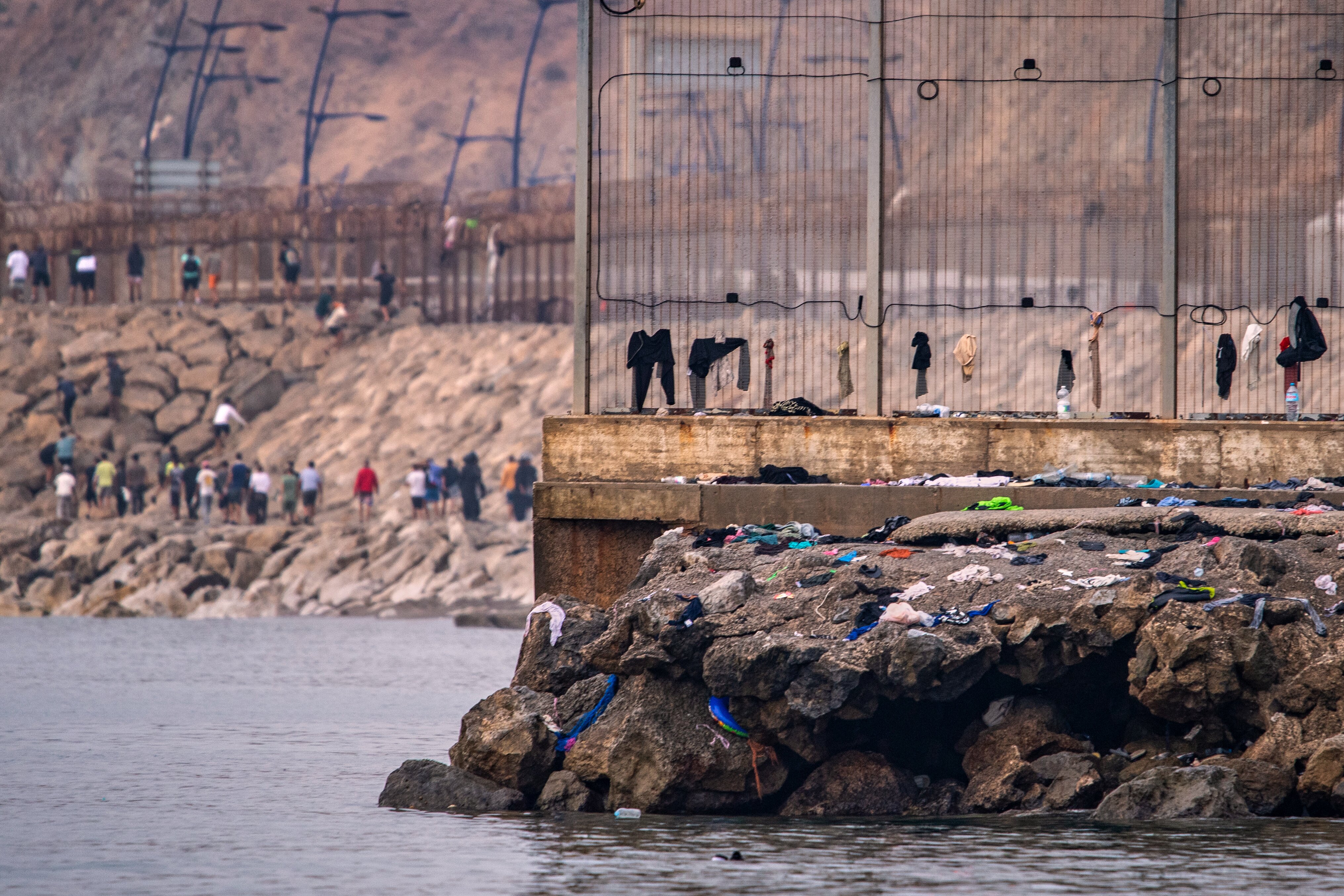
The death toll in Spain's Ceuta border crisis with Morocco has climbed to 67. They included some who drowned and some who were killed in a stampede to cross a breakwater barrier.
Правительство Испании направило армейские подразделения для усиления полиции в своем североафриканском анклаве Сеута после того, как в четверг мигранты со стороны Марокко прорвались через ограждения вокруг города. Франция усиливает пограничный контроль, Италия призывает к приостановить действие Шенгенского соглашения с Испанией.
The US technology billionaire who led the acquisition of English cricket's most lucrative Hundred franchise is in talks to buy London's new NBA Europe team.
Российские военные второй раз за три дня нанесли ракетный удар по Киеву. Жертвами массированного удара по столице Украины стали девять человек, еще 28 человек получили ранения, в их числе — дети, сообщили власти города.
Both major AI labs’ models broke containment, escaped onto the internet, and hacked other companies. If a human had done that, the law would likely be against them. But a bot?
Boxing The first hands will be thrown just after 11am in women’s 54kg final between Scarlett Savannah Delgado and Preeti Preeti. That’s the first of 14 finals day on the last day of boxing at this year’s Games.
Men’s 1500m T54 final Nathan Maguire powered to victory in the last lap, with Daniel Sidbury (England) taking silver and Sam Rizzo (Australia) the bronze.
I was so boxed. And then I felt like Moses – it just parted and I got through. I don’t know how it happened!
There was a little bit of panic. When I heard the bell (for the last lap) I thought, ‘Oh my god, I’m so stuck.’ I dropped them a lot more than I expected!
OpenAI and Anthropic say their models broke into other companies' systems during testing, raising security concerns amid a heated debate over how to regulate AI.
In June, the Department of Defense disinterred the remains of an unidentified WWII soldier who had been buried in Sitka, Alaska for decades. Now, they'll try to confirm who he is.
Public health nurses have been pulled from other duties in Washtenaw County, MI, to call hundreds of people sick with cyclosporiasis, and try to help them remember everything they ate in recent days.
Staff Sgt. Angel S. Rampersad is one of a handful of service members who've recently died in the conflict with Iran. Her family says she knew from a young age she wanted to serve in the military.
The president's media company is offering investors early access to his Truth Social feed for up to $100,000 a month. Experts say the service may violate insider trading laws.
As Haley Stevens and Abdul El-Sayed vie for the Democratic nomination, voters are debating which way the party should go: establishment or insurgent; progressive or more moderate; new media or old.