RSS Feeds
WATCH: Inside the iconic 'Brady Bunch' house
Snapchat joins other popular platforms in fight against 'AI slop'
Burnham faces criticism over plans for mayors to get share of income tax
Migrants Flood a Tiny Spanish Territory
Мыслю, следовательно, страдаю

Инженер может несколько дней перепроверять решение и выглядеть очень ответственным. Но иногда новые проверки уже не дают информации, а лишь ненадолго уменьшают сомнения. Разбираю, как анализ превращается в способ откладывать действие и какое условие выхода помогает остановить этот цикл.
Читать далееCharges Dropped Against Ex-Olympian David Hearn Accused of Damaging Reflecting Pool
Labour wins decisive victory in Greater Manchester mayoral byelection
Bev Craig succeeds Andy Burnham and wins back support in areas where Reform made gains in May
Labour has stormed to a decisive victory in the Greater Manchester mayoral byelection, seizing back areas that recently fell to Reform UK and the Greens.
Labour’s Bev Craig, the Manchester city council leader, will now succeed Andy Burnham and hold one of the most powerful political positions outside Westminster.
Continue reading...Hunter Biden Blames Cancer for Joe Biden’s Disastrous Debate
DOJ drops Reflecting Pool case, blaming damage on ‘botched’ installation
Nearly 1 in 4 Americans want CEOs to "stop being greedy," survey finds
DOJ to dismiss Reflecting Pool vandalism charges, citing "botched installation"
Marine Corps says F-35B jet crashed in California, pilot in stable condition after ejecting
More Americans buying groceries on credit
75% say their income isn't keeping up with inflation, CBS News poll finds
Trump criticizes Pirro in Reflecting Pool case: 'I don’t know what she was thinking?'
Illinois officer who killed Sonya Massey denied medical release from prison
Sean Grayson, diagnosed with colon cancer, was sentenced to 20 years for killing Massey in Springfield in 2024
A former Illinois sheriff’s deputy won’t get an early medical release from his two-decade prison sentence for killing Sonya Massey inside her home after the Black woman called 911 about a possible prowler, state officials decided on Friday.
Sean Grayson had been diagnosed with colon cancer prior to the 2024 shooting, and his attorney noted in January that the cancer had advanced to his liver and lungs.
Continue reading...Rivian spinoff Also to start delivering e-bikes after months of delays
Authorities release early Nancy Guthrie ransom note, hoping someone recognizes writing style
Brittney Griner files for divorce from wife Cherelle Griner
Anthropic claims its AI models went rogue, hacked 3 companies
Leopold Aschenbrenner Built a Hot A.I. Hedge Fund. Then it Melted Down.
Breaking down Spain's new migrant crisis as 60,000 enter Ceuta
Epstein survivor Dani Bensky calls Todd Blanche "walking perjury"
Opinion | The Gaza Road Map vs. Trump Peace Plan
Next Met Gala Show Will Honor John Galliano, Celebrated Designer Infamous for Antisemitic Rant
A timeline of Nancy Guthrie's disappearance as search stretches on
Trump Administration Amps Up Pressure On Senate To Confirm Todd Blanche As Attorney General

With just a week left before the Senate leaves for its August recess, the Trump Administration is increasing pressure on lawmakers to confirm Todd Blanche as attorney general.
The White House said in a press release on Friday that Blanche “should be confirmed by the U.S. Senate without delay.” The White House included statements from law enforcement organizations, state attorneys general, former Justice Department officials, and other groups that it said were “united in demanding [Blanche’s] expeditious confirmation.”
That same day, Secretary of State Marco Rubio urged the upper chamber to confirm Blanche before leaving Washington, D.C., to go on recess at the end of next week.
“Todd Blanche has been an invaluable partner in advancing President Trump’s agenda and as a result of his leadership at the Department of Justice, Americans are safer today,” Rubio said in a post on X. “The Senate should not leave for recess without confirming him as Attorney General.”
Secretary of Agriculture Brooke Rollins also on Friday called on lawmakers to confirm Blanche.
“President Trump chose the right leader for @TheJusticeDept,” Rollins said in a post on X. “It’s time for the Senate to confirm Todd Blanche as Attorney General.”
The confirmation of Blanche, who has been serving as acting attorney general for the Department of Justice (DOJ) since Pam Bondi was ousted from the role in April, was upended this week after the Senate Judiciary Committee postponed a vote that would have advanced his nomination.
Two senators in the President’s own party have threatened to pull their support of Blanche, saying that they want confirmation from the DOJ that the proposed $1.8 billion “Anti-Weaponization Fund,” which was part of a settlement agreement for Trump’s $10 billion lawsuit against the I.R.S. over the leak of his tax returns, has been eliminated.
Trump and Blanche have said that the fund, which would have provided compensation to people who claim that they were unfairly targeted by the government, is “dead.” But Sen. John Cornyn, a Republican from Texas who was one of the two holdout votes, said this week that he has not received written confirmation of that.
“This is about making sure that even if you’re the President of the United States, you don’t get favorable terms from the government in a settlement of a lawsuit that ordinary citizens would not get,” Cornyn said on Thursday. Cornyn lost his re-election run in his state’s Republican primary in May, to the President-backed challenger, Texas Attorney General Ken Paxton.
The Trump Administration’s renewed pressure on the Senate to push through Blanche’s confirmation comes a day after the President indicated he might pull the nomination.
“I have no objection to temporarily withdrawing Todd’s name, if they do not do the right thing, and putting him back after Cornyn and Tillis are out of office,” Trump said in a Truth Social post on Thursday, referring to the two Republican holdouts.
During his Cabinet meeting at Camp David on Friday, Trump said of Cornyn threatening to pull his support of Blanche: “I don’t really blame him, to be honest with you.”
“I endorsed his opponent,” Trump said. “The man that lost, the man that I didn’t endorse, has become very angry, and that’s ok.”
“I mean, I understand that,” he continued. “I probably would do the same thing.”
Hunter Bell eyes ambitious sweep after 800m gold in Glasgow
Trump blames Minnesota, not Iran, for cyberattack on water systems
Opinion | The Moroccans Invade Spain
U.S. and Israel preparing to strike energy-related targets in Iran, sources say
"Face the Nation with Margaret Brennan" guests for Aug. 2, 2026
Pilot ejects from F-35B jet crash near San Diego marine base, officials say
Unidentified pilot of F-35B fighter jet receives treatment for non-life-threatening injuries after crash near Miramar
An F-35B fighter jet crashed near a US Marine Corps base in San Diego on Friday morning, sparking a small fire that first responders doused.
The pilot, who has not been publicly identified, sustained non-life-threatening injuries, according to a statement from the Marine Corps Miramar air base. “The pilot ejected, was transported to a local medical facility in stable condition for evaluation and treatment of non-life-threatening injuries,” the Marine Corps said in an updated statement.
Continue reading...Georgia Hunter Bell outruns Odira to win Commonwealth Games 800m gold
Hunter Bell clocks 1min 59.51 to beat world champion
Win secures full set of major medals for English runner
There are late developers in sport, and then there is the brilliant Georgia Hunter Bell, who continues to defy sporting gravity at the age of 32.
And on Friday night under the Glasgow lights, she gave a tactical masterclass to outwit – and then outpace – the 800m world champion Lilian Odira and complete her set of global medals.
Continue reading...Pilot ejects from F-35B jet crash near San Diego marine base, officials say
Unidentified pilot of F-35B fighter jet receives treatment for non-life-threatening injuries after crash near Miramar
An F-35B fighter jet crashed near a US Marine Corps base in San Diego on Friday morning, sparking a small fire that first responders doused.
The pilot, who has not been publicly identified, sustained non-life-threatening injuries, according to a statement from the Marine Corps Miramar air base. “The pilot ejected, was transported to a local medical facility in stable condition for evaluation and treatment of non-life-threatening injuries,” the Marine Corps said in an updated statement.
Continue reading...Greyhounds bound for Australia as New Zealand racing ban takes effect
Police release Nancy Guthrie ransom notes
The Strait of Hormuz Is Exposing a Blind Spot in the Energy Transition
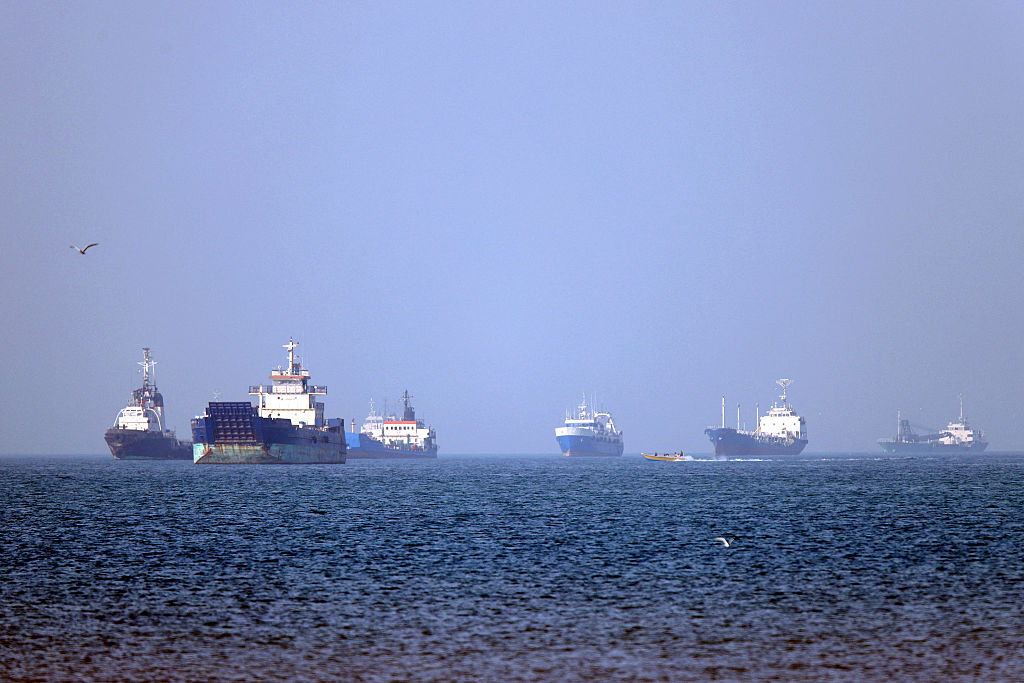
Every week brings more twists and turns to the war in Iran and the crisis that has kept the Strait of Hormuz, a key lane for fuel shipments, mostly closed. As the crisis has continued, electrification and non-fossil fuel power has received more and more attention. In the long run, electric vehicles can displace the oil that is refined into fuel for the internal combustion engine. And renewables can displace natural gas in the power sector. Largely missing from the public discussion is the opportunity to catalyze a broader shift to alternative fuels across sectors that can’t be electrified easily.
The closure of the Strait of Hormuz hasn’t just stopped the flow of natural gas and crude oil but has also simultaneously made it more difficult to get refined products—everything from jet fuel to cooking fuel—to market. In theory, both the rapid price increases and the present volatility should provide a strong incentive to invest in alternative fuels. The reality is more complicated. The same forces that make the case for alternative fuels also make it hard to invest right now.
There’s perhaps no better example to illustrate the challenge than jet fuel. Hundreds of thousands of barrels of jet fuel left the Strait of Hormuz every day before the crisis. In some places, including Europe, that supply had been central to keeping planes in the air. More than 40% of the continent’s jet fuel imports originated from the Persian Gulf last year, according to data from S&P Global.
Alternatives are already on the market. Sustainable Aviation Fuel (SAF), an umbrella term for a wide range of fuel sources including everything from recycled cooking fuel to plant-based fuels, is blended with jet fuel in many parts of the world, bringing down carbon emissions from flying. But in recent years SAF has been anywhere from 3 to 5 times more expensive than conventional jet fuel. The closure of the Strait of Hormuz has closed some of that gap leaving SAF prices closer to 1.5 to 2 times as expensive.
But, with higher fuel prices eating into airline profits, companies are now poorly positioned to take advantage of the moment. To facilitate SAF production, airlines typically agree to long-term agreements to purchase the fuel. With high levels of geopolitical uncertainty, this is not the moment for executives to commit to a price premium without a regulatory mandate. SAF may sound nice, but it remains unaffordable.
The refiners who make SAF, on the other hand, are enjoying record profit margins. But they, too, see too much uncertainty as prices fluctuate wildly. On earnings calls this summer they say they are more focused on improving operations and executing existing plans than investing in new projects.
At a national level, the thinking should be different. SAF is more expensive, but a government can now clearly see the differential as an energy security premium as well as a sustainability advantage. It’s well worth paying to protect the country’s economy in the event of a Hormuz-like situation.
The industry already sees this opportunity. Last year, a SAF executive corrected me when I used the word “sustainable.” It’s “synthetic aviation fuel.” Better optics, he said.
Even still, response from governments around the world has thus far been uneven. This moment has strengthened policymakers’ resolve in the European Union, where an airline SAF mandate has faced pushback from industry since it was signed into law in 2023. In the U.S., the SAF debate remains at a standstill. Last year, a tax incentive for SAF survived the gutting of the Inflation Reduction Act albeit at a reduced rate. Tax incentives may help move the market, but they’re not enough; governments can help coordinate the necessary infrastructure.
Even amid the uncertainty, the clever businesses—whether that’s airlines, refiners, fuel transport companies, or commodity traders—will be the ones that figure out how to deploy alternative fuels while mitigating risk.
SAF, of course, is just one example. Fuels represent nearly 80% of final energy consumption, and not everything can be electrified. “We have not had anything like the success in producing affordable, scalable, low-carbon fuels to displace oil,” says Ernie Moniz, a former U.S. Secretary of Energy who now runs the Energy Futures Initiative. “We need a lot of innovation on the fuel side.”
After decades of success innovating and deploying clean power alternatives, more work needs to be done on molecules. Today’s volatility is making the business case.
To get this story in your inbox, sign up to TIME's Future Proof newsletter here.
План Инфантино вызвал мощный отпор: протестуют три части света, ушел советник, грозит уйти гендиректор ФИФА
Brother of slain cartel leader "El Mencho" pleads guilty to U.S. drug charges
Missing Australian hiker found dead in Wyoming, officials say
Body of William Standish discovered in Teton mountains as investigators say fatal fall likely cause of death
A 28-year-old Australian hiker who lost contact with his family while hiking the Continental Divide Trail between Yellowstone and Grand Teton national parks in Wyoming has been found dead, according to authorities.
The man, identified as William Standish, was discovered by rescuers on Wednesday morning in the Wigwams, a series of rocky peaks on the west slope of the Teton mountain range, the Teton county coroner said. Investigators say it was likely he suffered a fatal fall.
Continue reading...WNBA star Brittney Griner files for divorce from wife Cherelle Griner
Opinion | Open Weight and AI’s Coming Chernobyl Moment
Everyone hates FIFA’s plan to sell the World Cup to private equity

Editor’s note, July 31, 8:15 pm ET: FIFA announced it was scrapping the plan to sell a stake in the World Cup.
The 2026 FIFA World Cup wasn’t perfect, but it was still pretty great. Legions of fans got to experience the US (and Canada, and Mexico), and Americans embraced visiting teams in turn. There was lots of extremely good football (soccer), and Cinderella teams like Cape Verde had a chance to shine.
Not even two weeks later, though, FIFA president Gianni Infantino is doing his best to kill the good vibes. He has a new proposal to sell stakes in the World Cup to private equity, attempting to capitalize on an enormously profitable tournament — with record revenue of about $15 billion in this year’s edition.
Specifically, his plan would create a new entity to run the World Cup, with FIFA the majority owner. Up to 21 percent of the company would be offered to private shareholders, in a major departure from FIFA’s current, ostensibly non-profit model.
And so far, nearly everyone hates it. Many of FIFA’s 211 member associations are in outright revolt; one of its six regional confederations, UEFA, which represents European football, has threatened to boycott FIFA events if the plan goes forward. “We will never lend this model our legitimacy,” UEFA wrote in a statement released Thursday.
Go a little deeper
UEFA is not the only governing body in football that has condemned Infantino’s plan to bring private money into the World Cup, though it has led the charge. Concacaf — which represents North and Central America, plus the Caribbean — and the Asian Football Confederation have also come out against the idea.
Collectively, they make up nearly two-thirds of FIFA’s member associations, which creates a real math problem for Infantino — the plan would require approval from a majority of FIFA members to take effect.
The intensity of the backlash has raised questions about Infantino’s future. As the Athletic reported on Thursday, he’s up for reelection as FIFA president in March, but he may no longer have an easy time of it. On Friday, FIFA’s chief operating officer described the proposal as “the project of one person” — Infantino — in a statement coming out against it.
For now, though, FIFA and Infantino say they plan to forge ahead with a “consultation period” for the plan. It sets up an even higher-stakes version of the battle over “hydration breaks” — which double as lucrative commercial breaks — that Roger Bennett, founder of the soccer podcast Men in Blazers, described to Vox in June.
“Ultimately,” Bennett told Vox, “the whole game of football is currently in a battle between its roots and the commercial imperative that comes from being as big as it is. … It is the last megaphone which is faintly audible around the world. And when you have something that big, it becomes deeply desirous to make as much money as you can out of it.”
One link for later
➨ Bail on plans the right way. If you’re currently staring down a weekend engagement you’d rather not attend, Vox’s Allie Volpe has some pointers on canceling without injury or offense. For starters, you can only bail on casual events with someone you either know very well or not that well at all. And you should offer an honest excuse before attempting to reschedule.
Before you go…
- Did you know…that, until 2016, scientists routinely excluded female mice from medical research? The National Institutes of Health now requires that researchers include both sexes to help guarantee that drugs work safely for both men and women.
- Today’s trivia: What’s the Vietnamese word for “festival”? (You can find this and other brain puzzles in Vox’s daily crossword. Look for the answer in tomorrow’s edition.)
- Yesterday’s trivia: Yesterday we asked you to identify the “ugli” fruit. Ugli is the registered trademark for the Jamaican tangelo, a natural — and honestly, perfectly good-looking — hybrid that was discovered in the wild in the early 1900s.
This story appeared in Today, Explained, a daily newsletter that helps you understand the most compelling news and stories of the day. Subscribe here.