RSS Feeds
Opinion | The ICC Tosses its Rogue Prosecutor
U.S. Measles Cases Hit a Record
TechCrunch Disrupt 2026’s new Smart Money Stage explores fintech, payments, AI, and everything between
Ontario Premier Doug Ford on Trump's new tariff threat: "It's unfortunate he took this avenue"
Horror injury overshadows gymnastics silver at Commonwealths
Scott overcomes pressure and big pal Dean to give Scotland golden start
Paramount and Warner Bros pause $110bn merger amid legal challenge
Trump switched planes in Turkey earlier this month because of threat from Iran proxy forces – report
President flew to Ankara onboard Qatari-gifted jet, without advanced defenses, and flew home on old Air Force One
Donald Trump switched aircraft before departing Turkey earlier this month after US officials determined there was a credible threat from Iranian proxy forces targeting him and Air Force One, according to a new report from the New York Times.
The threat surfaced while the US president was attending the Nato summit. He had arrived in Ankara onboard the new Qatari-donated Boeing 747-8, an aircraft that Trump acknowledged does not have the same advanced defensive systems as the older Air Force One.
Continue reading...NBA superstar LeBron James to join Philadelphia 76ers
More than 220,000 evacuated in France and Spain due to wildfires
Democrats approve new primary election calendar, putting South Carolina first

Democrats chose South Carolina for the first 2028 presidential primary, then Nevada, prioritizing Black and Latino voters. New Hampshire, New Mexico, Michigan and Virginia also hold early contests.
(Image credit: Sean Rayford/Getty Images)

WATCH: Trump says Venezuela is 'not ready yet' for elections after U.S. ouster of Maduro
More than 220,000 evacuated in France and Spain due to wildfires
WATCH: Johnny Depp surprises fans at Comic Con, Meghan Markle shares rare photos
Democrats Vote to Put South Carolina First in 2028 Primary
Kim feels 'pretty cool' after carding historic 59
ICC member states vote to remove chief prosecutor Karim Khan

The International Criminal Court voted to remove the global tribunal's chief prosecutor on Friday, nearly two years after sexual misconduct allegations against him first emerged, the court's oversight body announced.
(Image credit: Peter Dejong)

South Carolina to hold first Democratic 2028 primary, indicating DNC's push to court minority voters
Democrats select South Carolina for their first 2028 presidential nominating contest
Paramount will delay closing Warner buyout for months while judge considers states' challenge
Trump administration admits canceling clean energy grants to Democratic states
Court fillings show grants denied to states if they didn’t back Trump’s re-election, but administration claims it’s a ‘misrepresentation’
The Trump administration has admitted scrapping more than $7.5bn in federal grants for clean energy projects to states “based solely” on whether they backed Donald Trump in the 2024 election.
US federal officials appeared to acknowledge in court documents last week that they had terminated the funding last October “based solely” on political criteria, targeting projects in states that were represented by Democrats and had voted for Kamala Harris.
Continue reading...Trump says Iran talks are ongoing, but doesn't think "they're ready yet" to make a deal
Inside D4vd's Preliminary Hearing in Murder Case | Case by Case
What Is Pickaxe Mountain, Iran’s Underground Nuclear Site That Trump Is Threatening?
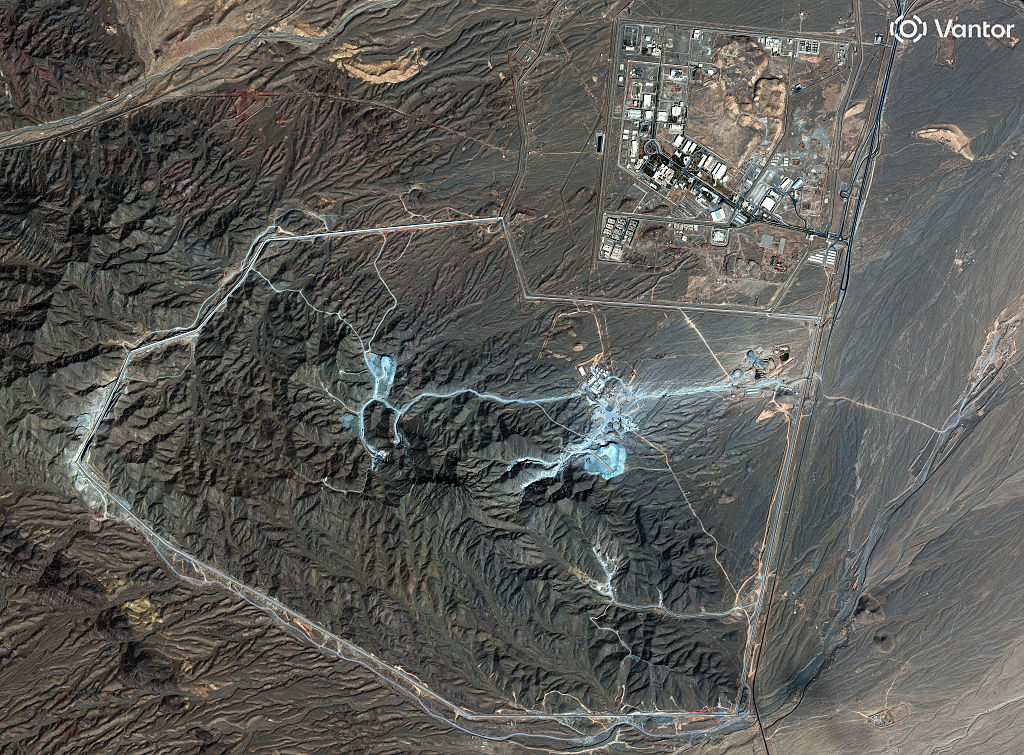
As the resumption of the Iran war escalates, with Washington and Tehran trading a deluge of strikes, President Donald Trump has again threatened to attack sites linked to Iran’s nuclear programme.
In the Oval Office on Tuesday, Trump was asked if he believes Iran has moved nuclear centrifuges into Pickaxe Mountain, an underground site near one of the country's primary enrichment facilities.
“They may have, we don’t have it on record,” Trump said. “It doesn’t mean anything unless they have the material [uranium]. We follow the material, that’s where the action is.”
“We’ll be hitting that area, probably pretty soon, and there’s not a thing they can do about it,” he added, having earlier vowed that “any site where they’re even thinking about nuclear, we’ll be hitting it very powerfully."
This is far from the first time Trump has threatened to strike Pickaxe Mountain, known in Iran as Kuh-e Kolang Gaz La.
The resumption of the Iran war on July 7, just weeks after the signing of the interim cease-fire agreement, has largely focused on the continued struggle over the Strait of Hormuz. But the other long-standing prevalent issue surrounds Iran’s nuclear capabilities, as Trump has repeatedly stated that Tehran must never be allowed to build or procure a nuclear weapon.
“We're going to take out Pickaxe Mountain. Tell the Iranians to be ready,” Trump said in a July 13 interview, once again bringing focus to the nuclear-linked site.
Amid the escalating threats and tensions, here’s what to know about the Iranian facility.
What is Pickaxe Mountain?
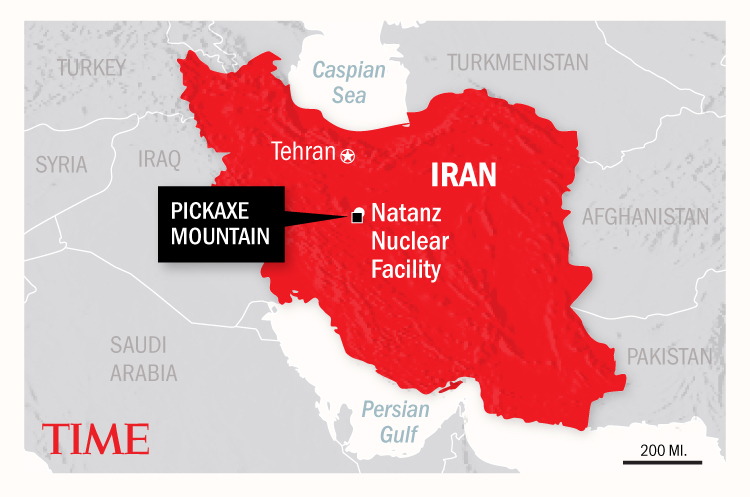
The underground site is situated around 220 km (140 miles) south of Tehran and 2 km (1.2 miles) from the Natanz nuclear complex.
In June last year, the U.S. joined Israel in launching strikes on three key Iranian nuclear sites—an action Trump said had “completely and totally obliterated” the targeted facilities.
Natanz was among the facilities hit, as it was believed to house highly-enriched uranium. The entrances to the nuclear site were targeted again in the early days of the Iran war which started on Feb. 28.
During last year's 12-day war, the nuclear facility outside the city of Isfahan, about 80 miles away, was also bombed. The International Atomic Energy Agency (IAEA) has said tunnels at that facility is likely where a cache of some 970 pounds of enriched uranium are being stored.
According to the U.S.-based Institute for Science and International Security (ISIS), the tunnel facility under construction at Pickaxe Mountain has not been previously targeted in either June 2025 or the 2026 war, “aside from the destruction of a vehicle on a nearby spoil pile, which we believe was most likely associated with air defense.”
Construction of the Pickaxe Mountain facility started in 2020, after a fire at Natanz, which Iran's nuclear body argued had been caused by an act of sabotage.
Iran at the time said the underground halls were intended to replace the destroyed above-ground advanced centrifuge assembly facility at the Natanz site, according to ISIS.
“It's a very deep facility. We don't know exactly how deep, but it's very likely at least 100 meters deep,” James Acton, co-director of the Nuclear Policy Program at the Carnegie Endowment for International Peace, tells TIME.
The highly-fortified site would be a difficult target for the U.S., experts say.
“There's just no way to destroy this facility. The best one can do is try to collapse the tunnel entrances," explains Acton.
Is Pickaxe Mountain a functioning site?
Trump said earlier this month that the U.S. is watching Pickaxe Mountain “closely" and doesn't see any activity there.
ISIS’ assessment, based on satellite imagery, is that the facility is not yet operational, but construction continues.
The think tank said it “remains unclear when Pickaxe Mountain could be operational… It is also unclear if Iran still plans on installing a large-scale assembly facility, given the destruction of Iran’s centrifuge program, including Iran’s ability to make centrifuge components needed for an assembly plant.”
Esmail Baghaei, spokesperson for the Iranian Foreign Ministry, has said there is no nuclear action at the site, insisting any of Iran’s nuclear activities have “been fully declared to the IAEA, in accordance with its safeguards obligations.”
“Washington’s obsessive focus on Kolang Kouh, where no nuclear activity is taking place, is nothing more than a fabricated pretext for aggression, destruction, and sabotage,” he said on July 22.
If Iran starts to rebuild its centrifuge manufacturing capability, “it could plan to install a smaller centrifuge assembly facility in Pickaxe Mountain able to serve a nuclear weapons program,” according to ISIS.
Acton tells TIME it remains a "legitimate concern” that Pickaxe Mountain could potentially be used for “more than just secure storage.”
“The concern is, whether or not it was developed as an enrichment plant, the fear is now that it would be used as one,” he says.
Rafael Grossi, chief of the United Nations’ nuclear watchdog IAEA, told PBS in March that Iran had previously “announced its intention to have nuclear activity” at Pickaxe Mountain, referring to it as “part of their quite systematic intention to put their most sensitive facilities underground.”
Grossi said the IAEA inspectors had not been granted access to the Pickaxe Mountain site.
Additionally, the nuclear watchdog has been unable to independently verify Iran’s centrifuge capacity and production since 2021, so Tehran may have reserves despite strikes over the last two years.
With the destruction of Iran’s other centrifuge related facilities, “the Pickaxe Mountain complex is a potential candidate site for any Iranian reconstitution of its centrifuge program, from centrifuge component production to centrifuge assembly to uranium enrichment,” ISIS stated in November 2025.
Trump's nuclear row with Iran
Shortly before the U.S. military conducted its 13th consecutive evening of strikes against Iran on Thursday, Trump again accused Tehran of having “evil intentions” and insisted “we cannot let them, ever, even think about having a nuclear weapon.”
Iranian Supreme Leader Mojtaba Khamenei in April vowed to protect its nuclear and missile capabilities in direct defiance of Trump. He said his country will defend its “fundamental and modern technologies—from nano and bio to nuclear and missile—as their national capital and will guard them like their maritime, land, and air borders.”
Iran has long maintained that its nuclear program is “peaceful,” but concerns remain among Western leaders.
The Memorandum of Understanding signed on June 17 asserts that Iran can never develop a nuclear weapon—a promise the regime has made in the past. The agreement states that the U.S. and Iran will address Iran’s existing stockpile of enriched material, “with the minimum methodology to be down blending on site” under the supervision of inspectors with the IAEA.
It also said both countries had “acknowledged the critical importance of the nuclear issues… and expressed their intention to immediately address these issues in the negotiations in order to achieve mutual agreement on them.”
The interim agreement laid out the terms of an extended 60-day cease-fire to allow time for technical talks to take place. That deadline is set to expire in mid-August, but the resumption of the war has brought the entire deal into question.
Opinion | The Economics of the World Cup
Trump administration admits canceling clean energy grants to Democratic states
Court fillings show grants denied to states if they didn’t back Trump’s re-election, but administration claims it’s a ‘misrepresentation’
The Trump administration has admitted scrapping more than $7.5bn in federal grants for clean energy projects to states “based solely” on whether they backed Donald Trump in the 2024 election.
US federal officials appeared to acknowledge in court documents last week that they had terminated the funding last October “based solely” on political criteria, targeting projects in states that were represented by Democrats and had voted for Kamala Harris.
Continue reading...What to expect from the rescheduled White House Correspondents' Dinner
Opinion | AI Wars: The Empire Strikes Back
DNC committee recommends South Carolina to lead off 2028 presidential primaries
Trump Orders Warnings Placed at ‘Inaccurate’ Smithsonian History Museum
F.D.A. Panel’s Vote on Peptides Raises Concerns About a Prescribing Boom
Спасет ли Драпатый Украину от политического кризиса? Текстовая версия подкаста «Что это было» с Константином Скоркиным
Главный прокурор МУС Карим Хан отстранен от должности из-за обвинений в сексуальных домогательствах
The ticks are winning

Ticks are taking over the United States. Due to climate change, changing land use, and an explosion in the deer population, ticks have been expanding their territory and infecting more people than ever. They carry pathogens that cause everything from Lyme disease to the red meat allergy-inducing Alpha gal syndrome. In some cases, tick bites can be fatal.
Ticks usually lurk in the tall grass in wooded areas. That means going on a hike or even just hanging out in your backyard or a park can expose you to a tick bite. In many parts, of the country fear of ticks is changing how people live their lives, including the way they dress, how they enjoy their hobbies, or even whether they spend much outdoors at all.
The tick surge is catching public health officials off guard. Emergency room visits due to tick bites are the highest they’ve been since 2017. In spite of the uptick, most public health departments still focus on lowering the population of mosquitos in their areas over ticks.
Climate reporter Jonthan Mingle says we can fix this problem. As Mingle explained in a recent New York Times op-ed, encouraging the public to do tick checks and use bug spray is a part of the solution, but we’re leaving a bunch of larger interventions on the table. Mingle joined Today, Explained co-host Sean Rameswaram to explain why ticks are expanding their range and what we can do about it.
Below is an excerpt of their conversation, edited for length and clarity. There’s much more in the full podcast, so listen to Today, Explained wherever you get your podcasts, including Apple Podcasts, Pandora, and Spotify.
We covered Lyme disease and tick bites on this show back in 2018 because the tick situation was getting out of hand. How much more out of hand has it become since then?
You know some experts I talked to used the word exponential. So what’s happening is that some of these tick species are spreading into areas where people aren’t familiar with them, doctors aren’t familiar with them. Thanks to warmer winters, ticks are expanding their hunting season. You may have a day that’s like 40 degrees in January, ticks are out looking for you, waiting for you to walk by and grab on and grab a meal.
In 2024, a pilot named Brian Weitzel, father of three in northern New Jersey, had a hamburger, at a barbecue, went home to mow his lawn, and a few hours later was unresponsive on the floor and he died that night. His family was left in shock, of course, trying to figure out why he had died. And it turned out that he had likely been bitten by the lone star tick and had developed an allergy to red meat. This is referred to as Alpha-gal syndrome, which is just the latest entrant into the files of all the many ways in which tick bites can make us sick. The most familiar one, of course, is Lyme disease. Each year, about half a million people are treated for Lyme disease. It’s the fastest growing vector-borne disease in the US. Cases have more than doubled over the past decade, and those cases are mostly as a result of getting bitten by the black-legged tick or the deer tick. The thing is both of these ticks — and many other ticks that are also marching northward and westward and expanding their empires rapidly across North America — they can deliver all kinds of pathogens.
They’re claiming more and more of the map, and they’re claiming more and more of our psychic map right? I tell people I’m not a tick expert, although I’ve talked to a bunch of them, but I’ve become a tick expert in the sense that I am very familiar with tick paranoia and how it can keep you from venturing out into the places you love: hiking paths or picnic grounds or parks. And so that was part of the story I wanted to write about, too — Why are we letting the ticks keep us, if not out of these places that we need and love, why aren’t we fighting back?
And why is it? Are we not fighting back against the ticks?
Not really. I mean, this is one of the surprising takeaways from my reporting is that we’re barely even trying. One way of understanding that is to think about two numbers. One number is 90 percent. 90 percent of vector-borne disease cases in the US are from ticks.
90 percent?
Yeah. And yet despite the fact that 90 percent of cases of vector-borne illness come from tick bites, if you look at what local city, county health agencies do in terms of vector control, 80 percent of what they do is mosquito control, and only about 10 or 11 percent of these local health agencies around the country do any kind of tick control. So why is that? It’s a familiar story in the public health world. It’s not enough funding or policy support for trying out, testing, deploying new approaches to controlling ticks.
Even though people are dying?
We’re just kind of taking for granted that, ‘Oh, well, what can you do? You just tuck your pants in and spray some insecticide on your boots and that’s all you can do.’ It’s like, well, actually we have a long history of going to war with mosquitoes. Before there was tick control, there was mosquito control. The CDC was founded with the sole mandate in 1946 of wiping out malaria and fighting mosquitoes.
It feels like they lost that fight because in my neighborhood you can’t go out between the hours of seven and nine o’clock.
The mosquitoes haven’t gone away, but malaria did for the most part. You know, in talking to experts today, including folks at the CDC, they told me that there’s a suite of tools we could be using if we wanted to get serious about fighting ticks. As one veteran tick expert at the CDC told me, if you want to make a dent in this problem, you have to get to the deer. The deer are the engine driving a lot of these tick species spreading, and we just have way more deer than we did decades ago, especially in the eastern US and suburban parts of America. So how do you get to the deer? I had people in the comments section of my piece saying the clear answer is just we should all be hunting deer. But in talking to the experts, they’ll tell you it’s not really a feasible solution. You would have to knock deer populations way down to make a dent in the tick populations.
What is more promising is a combined approach of stuff like vaccines. There are people developing vaccines that you could deliver to deer or to rodents, which are another important host for these ticks so that when the tick bites them, they’ll die. That, I learned from talking to folks who do this kind of research for a living, is a more promising avenue for controlling ticks than all of us picking up crossbows and becoming deer hunters.
So why is it that we’re not doing anything?
What I heard from experts is that we’re not even funding this research in a serious way. We do this stuff for mosquitoes. People don’t realize it, but your local county health agency, they go out and they find where the mosquito breeding grounds are and stagnant pools the water and they treat it. It takes this sustained quiet effort.
We saw the consequences of not doing that recently. This is a bit tangential, but screwworm. Screwworm was this flesh eating larval pest that devastates cattle herds that it was eradicated in the US in 1966, and it was kept at bay by the vigilance of people at USDA and USAID who ran these programs to release millions of sterile screwworm males out of airplanes. It created this wall that kept the screwworm from coming into the southern US. And probably if we stopped doing the mosquito control at a local scale, we’d see more cases of dengue fever, West Nile virus, and all these other rare but serious illnesses that climate change is making more of a threat here in the US.
Could you just practically help people understand how they can protect themselves in the absence of, I don’t know, a functional government?
Doing tick checks. And we do it in my household pretty much daily when you come home, do a thorough tick check, throw your clothes in the dryer. Ticks hate heat. And some people like to use permethrin spray, which is this insecticide that’s designed to kill ticks on your boots or your pants when you go out for a hike. Researchers have known these things are really effective if you keep doing them, if you stay vigilant. And all it takes is that one time, that one time you go out for a hike and you come back and you forget to do the tick check.
So we need those kinds of personal measures of vigilance and protection, but we still need to kind of push for a bigger public health response to this. The ticks are going to keep spreading into the calendar, too, in the sense that as winters get warmer, more and more days of the year when you’re outdoors, you’re going to encounter ticks who are hungry, and they’re looking for you.
Paramount to delay Warner Bros. merger until as late as June 2027
Democrats reshape their primary calendar: From the Politics Desk
Chuck Russell, director of The Mask and The Blob, dies aged 74
The film-maker, also behind A Nightmare on Elm Street 3, died on Wednesday in his San Diego home
Director Chuck Russell, who helped propel actors such as Jim Carrey, Cameron Diaz and Dwayne “The Rock” Johnson to the Hollywood A-list, was found dead in his San Diego, California, home on Wednesday. He was 74.
Russell directed several box office hits in his decades-long career including A Nightmare on Elm Street 3: Dream Warriors, The Blob and The Mask. In 2002, his film The Scorpion King featured The Rock in his first leading role.
Continue reading...England gymnast Gabriel Langton suffers nasty fall in Commonwealth Games final
Teenager lands head-first during high bar routine
Canada win men’s team gold, with England second
England’s bid for a fourth successive Commonwealth Games men’s artistic gymnastics team title ended with silver after a dramatic final overshadowed by an injury to the teenager Gabriel Langton, who was taken from the arena on a stretcher after a heavy fall from the high bar.
The 19-year-old fell head and neck first on to the mat during the final rotation of the team final, bringing competition to a halt as medical staff rushed to his aid. The arena fell silent while Langton received treatment, with fellow gymnasts watching on in visible concern.
Continue reading...Upper West Side double stabbing suspect facing hate crime charges
"Face the Nation with Margaret Brennan" guests for July 26, 2026
Chuck Russell, director of The Mask and The Blob, dies aged 74
The film-maker, also behind A Nightmare on Elm Street 3, died on Wednesday in his San Diego home
Director Chuck Russell, who helped propel actors such as Jim Carrey, Cameron Diaz and Dwayne “The Rock” Johnson to the Hollywood A-list, was found dead in his San Diego, California, home on Wednesday. He was 74.
Russell directed several box office hits in his decades-long career including A Nightmare on Elm Street 3: Dream Warriors, The Blob and The Mask. In 2002, his film The Scorpion King featured The Rock in his first leading role.
Continue reading...Witness video of Madison police killing raises questions of why lethal force was used
Mixed close on Wall Street amid U.S.-Iran fighting, new Trump tariffs
Rebel Wilson had a legal win but didn’t come out of The Deb defamation trial unscathed
Judgment dismissing Charlotte MacInnes’s case expressed doubts about credibility of three key witnesses, and is likely to be appealed
Rebel Wilson’s self-styled brand as a truth teller was put to the test during a fiery defamation feud where rivals called her a bully.
But the Hollywood A-lister, referred to as “very difficult to be around” and “fucking nuts” during an at-times bruising trial, emerged from the federal court battle with the last laugh.
Continue reading...WATCH: Trump touts new nuclear reactors in his push to speed up domestic power
Is strength training secretly just diet culture? – Stateside with Kai and Carter
After years of trying to be skinny, Guardian reporter Madeleine Aggeler did a 180 and decided to 'bulk'. Bulking, or gaining weight on purpose to get stronger, challenged everything she had been taught about her body, and transformed her relationship to food. Madeleine speaks to Carter Sherman about her owns body image struggles, and they discuss why strength training and weightlifting has become so popular for women. Is this actually healthy, or just an extension of toxic diet culture?
Continue reading...Gretchen Whitmer Endorses Haley Stevens in Michigan Senate Race
Chinese Companies Are Selling Vapes With Chemicals Potentially More Potent Than Nicotine
Trump Will Give ‘Unifying Yet Vicious’ Speech at Rescheduled White House Correspondents’ Dinner, White House Says
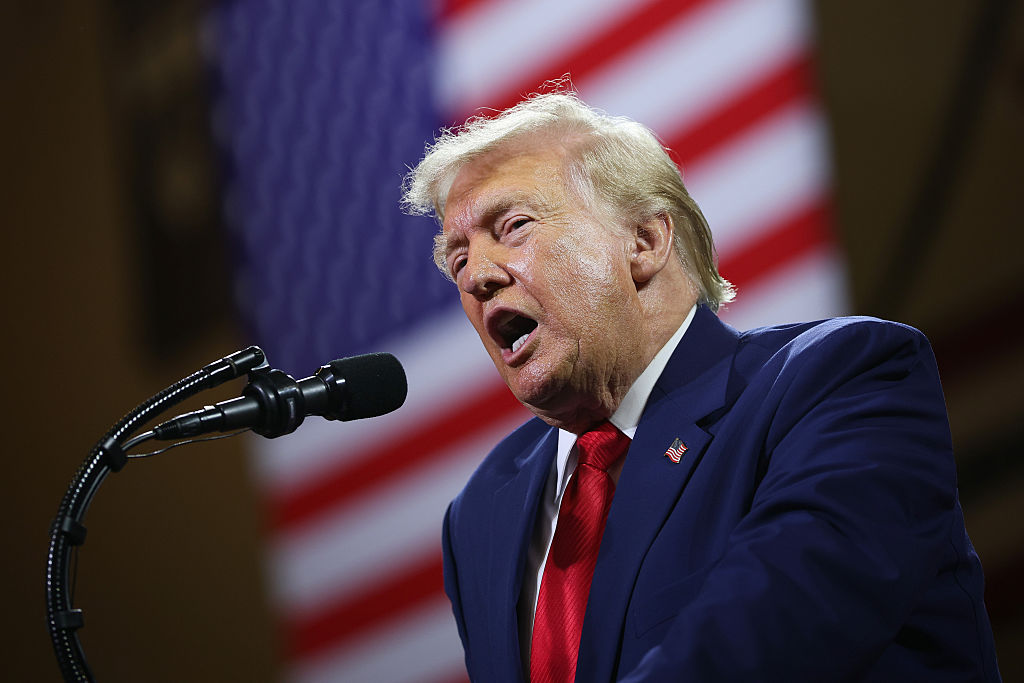
President Donald Trump will be giving a “unifying yet vicious” speech at the rescheduled White House Correspondents’ Dinner on Friday evening, White House Press Secretary Karoline Leavitt previewed.
“The President’s speech will be a combination of unifying yet vicious, and serious yet hilarious, all at the same time, if you can imagine that,” Leavitt told NBC News. “One thing I can assure you, it will be entertaining.”
Last month, the White House Correspondents’ Association (WHCA) announced that it was rescheduling its annual dinner to July 24, after its event in April was disrupted by a gunman who charged a security checkpoint at the venue and exchanged fire with law enforcement before he was apprehended.
“The White House Correspondents’ Dinner has served as a celebration of a free press and the vital role of journalism in our democracy for over a century,” WHCA President Weijia Jiang said in a letter to association members last month. “When gunfire interrupted this year’s event, it further clarified the WHCA’s mission to advocate for the freedoms that are protected in the First Amendment.”
“We will not allow an act of violence to have the last word,” she continued.
Jiang said at the time that the July dinner “will feature significantly enhanced safety measures and new access procedures,” and that the event “will be a more intimate gathering.”
The WHCA also announced earlier this week that it will present an award to Secret Service Police Officer Victor Gonzales, who the Secret Service said "heroically engaged the armed suspect, placing himself directly in harm's way” and ended up being “struck in his protective vest.”
“Officer Gonzales played a significant role when he ran toward danger so that thousands of others could make it home safely,” Jiang said in a statement. “His courage stemmed from a dedication to service, which we are looking forward to honoring this week.”
The WHCA said that it would also award the staff of the Washington Hilton, the venue for the April dinner, with the same special recognition at the rescheduled event.
“Even after the men and women of the Washington Hilton experienced a harrowing situation, they continued to take care of guests,” Jiang said. “The WHCA appreciates their professionalism and commitment to service, which was on full display on April 25th. Every member of the team deserves to be recognized for their dedication.”
Trump applauded the WHCA last month for rescheduling the event, calling it “a sign of Strength and Fortitude,” and added that he had once again been invited to speak. The April dinner that was interrupted by gunfire was the first time that Trump, who has had a contentious relationship with the press, had attended the Correspondents’ Dinner as President.
After the shooting in April, Trump revealed that he had initially intended to rip into the media during his speech at the event, but that he would likely not do so now.
“I don’t know if I could ever be as rough as I was going to be tonight,” he said after the Washington Hilton was evacuated the night of the shooting. “I think I’m going to be probably very nice. I’ll be very boring the next time, but we’re going to have a great event.”
After the WHCA announced the rescheduled dinner in June, Trump again suggested that his speech may not be as harsh as the one he planned to deliver in April.
“I don’t know whether or not I will give the same rather nasty statements, at least as it concerns certain people, but we will soon find out,” he said on Truth Social. “In any event, it will be a ‘HOT’ ticket!”