RSS Feeds
Defoe leaves Woking after 'eye-opening' first managerial role
US lawmakers push for AI 'kill switch' after OpenAI goes rogue
Wildfires and record dry conditions trigger drought in parts of Wales
Did Trump just kill his own nuclear deal?

Welcome to The Logoff: President Donald Trump has seemingly called off a nuclear deal with Saudi Arabia after his energy secretary already formally signed it.
What happened? On Wednesday, the Trump administration formally concluded what’s called a “123 Agreement” to work with Saudi Arabia on the development of its civilian nuclear power infrastructure. This kind of deal allows the United States to provide another country with nuclear fuel and equipment on the condition that they submit to safeguards against building a nuclear weapon.
But on Thursday morning, after the negotiations were quite literally concluded, Trump threw a monkey wrench into things — posting on Truth Social that the deal was “totally subject to Saudi Arabia joining the very respected and successful Abraham Accords.”
The Abraham Accords are a series of agreements from Trump’s first term that normalized diplomatic relations between Israel and some nearby Arab states. In effect, then, Trump is saying that Saudi Arabia will not get its 123 Agreement unless it formally recognizes the State of Israel. Which the Saudis are unwilling to do absent the creation of a Palestinian state.
Why is Trump doing this? As is often the case with his strange last-minute decisions, no one really knows. There are a few leading guesses, though.
The first is that the agreement with Saudi Arabia was a bad idea on the merits. Experts on nuclear weapons, the Middle East, and international relations more broadly all said that the deal gave Saudis exactly what they wanted with virtually nothing in return, effectively surrendering a key piece of leverage Washington has on Riyadh.
The second is that other American friends in the Middle East got angry. The Israelis are a leading candidate, as they have long opposed any agreement that might bring the Saudis closer to a nuke. The Emiratis, often in competition with Saudis for regional influence, are another; their nuclear deal with the US, inked in 2009, is a lot stricter.
The third is bipartisan opposition in Congress, which would need to approve any deal.
What’s the takeaway: Unless something changes radically, Trump has blown up a nuclear deal that’s already been signed — humiliating his negotiators and angering the Saudis.
And with that, it’s time to log off…
As of today, we are officially two weeks away from the NFL’s first preseason game. Our long national nightmare of calling soccer “football” is almost over.
One of the Army's largest bases closes a dining facility after roach infestation
Judge questions Pentagon about testosterone policy, impact on transgender soldier ban
My Mother's Murder
Путеводитель по EASTL

Это вторая часть статьи Путеводитель по чужим STL, возможно будет и третья про разные трюки-хаки с контейнерами, как наберется материал.
Стандартная библиотека плюсов оказалась почти непригодной для игровой разработки и поняли это практически сразу, как попытались её использовать. Крупнейший на тот момент издатель Electronic Arts стал самым известным примером реализации стандартной библиотеки для разработчиков игр (но конечно же были и другие, менее именитые), и силами команд нескольких студий под руководством Paul Pedriana это было претворено в жизнь.
Корни EASTL уходят в Maxis к 1998-му году, когда Пол работая над SimCity 3000, выступал на GDC с докладом «High Performance Game Programming in C++» про кастомные контейнеры, стоимость вызовов и замеры производительности. Единой EASTL тогда ещё не было, но подход, из которого она потом выросла, виден уже там.
До консолидации, даже внутри одной студии, могли существовать несколько параллельных STL-реализаций, разработанных под разные игры, платформы и инструменты. Рискну предположить, что самой полной была реализация от Maxis, как одной из ведущих студий, а в других командах были поменьше, каждая со своими допущениями.
Он же в статьях и докладах упоминал, что EASTL была синтезом практик из этих внутренних вариантов, а не работой одного человека с нуля, и в основе большой EASTL лежит коллективный опыт нескольких инженерных команд, даже если формальным автором финальной публичной версии и статьи остался он один. Конкретные имена соавторов отдельных модулей (аллокаторов, фиксированных контейнеров и т.д.) указаны в репо, но слава досталась Полу.
Читать далееHouse Rebukes Trump on Iran in War Powers Vote as Senate Blocks Debate
A night of brilliant batting but Livingstone's efforts fall just short
'What's happened there?!' - Buttler and Dawson's moment to forget
Мой опыт с партизанской антенной

В наше время радиолюбители вызывают у обывателей в лучшем случае недоумение, а в худшем — стремление сначала набить морду, а после сдать это шпионское отродье в соответствующие органы на опыты. А уж когда кто‑то приходит в управляющую компанию и просит пустить его на крышу, чтобы поставить там антенну... В общем, тем, кто не озаботился установкой антенн в более спокойное время, приходится использовать партизанские решения. Одна из таких антенн — удочка длиной 7–8 метров с проложенным вдоль нее проводом, закрепленная перпендикулярно стене дома на балконе или стене. Провод этот используется либо как четвертьволновой штырь, либо тот или иной вариант диполя, запитываемого с конца. В качестве противовеса используется ограждение балкона или проложенные вдоль стены провода. Эффективность подобных эрзац‑антенн, конечно, невелика, но что делать, в эфире работать хочется. И даже они позволяют проводить интересные связи.
В этой статье я расскажу про свою антенну, ее характеристики и особенности и подниму вопрос ее элементарной грозозащиты.
Читать далееSouthport killer transferred to Broadmoor
Trump talks plan to prevent ratepayers from shouldering costs of new AI data centers
Measles outbreak "slowing," but newborn's family still can't meet her
India's 'cockroach' protesters hold talks with government as stalemate continues
Melinda French Gates Shares 3 Things Women Can Do to Better Advocate for Their Health
AMD takes on Nvidia with its Helios AI rack-scale system
Can Emery work his magic again at Villa?
Patreon lays off 20% of its workforce
France evacuates 20,000 as wildfires spread in south-west
Southport killer Axel Rudakubana moved to psychiatric hospital
Julian Leeser says his son no longer feels safe at Jewish events – as it happened
This blog is now closed
Get our breaking news email, free app or daily news podcast
Australian exports sent to the US will be hit with a 12.5% tariff as the US president imposes levies on more than 80 nations.
The Trump administration unveiled the latest tranche of tariffs for countries over their “failure to impose and effectively enforce a prohibition on the importation of goods produced with forced labour”.
This, in our view, makes no sense.
Forced labour is definitely something which needs to be combated around the world, so we support that objective.
We absolutely need to see the strait of Hormuz be open and for freedom of navigation to happen there, for commercial shipping to be allowed through, and we very much call on Iran to allow that to be the case.
We need to see a restoration to the normal global fuel supply chain because it’s having a significant impact around the world.
Continue reading...Tampa, Charleston airports to join new TSA privatized security initiative
Как GPT-5.6 и Kimi K3 научились хорошему дизайну — исследование Design Arena

За неделю команда бенчмарка Design Arena выпустила два разбора моделей, возглавивших ее дизайн-лидерборды: разбор GPT-5.6 Sol, флагмана OpenAI, и свежий разбор Kimi K3 от китайской Moonshot AI. Исследователи заглянули внутрь генераций и рассуждений моделей и показали, как именно те научились "вкусу". Выяснилось, что универсального рецепта нет: две модели пришли к хорошему дизайну противоположными путями, а третья — прошлый лидер GLM 5.2 — своим, третьим.
Читать далееAn FDA Committee Just Voted in Favor of Peptides—Despite the Agency's Opposition
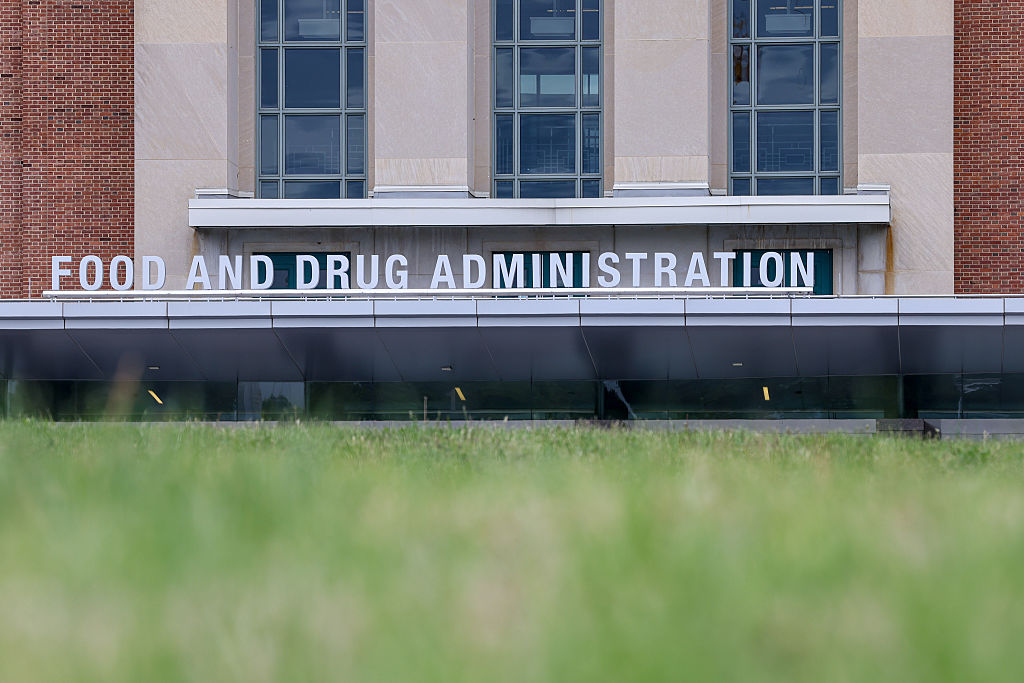
In a highly unusual move, a U.S. Food and Drug Administration (FDA) committee voted against FDA staff’s own advice in a meeting on July 23 and 24, recommending that six peptides be added to a list that will allow certain specialty pharmacies to dispense them. Currently, those peptides are in a legal gray area. The committee voted against adding to the list one of the peptides being considered, emideltide.
Here’s what to know.
What are peptides?
Peptides are short chains of amino acids, which are the building blocks of proteins. Peptide concoctions have grown in popularity over the past several years as injectable substances that proponents claim improve energy, sleep, sex drive, and more. U.S. Health and Human Services Secretary Robert F. Kennedy Jr. has supported reclassifying peptides to improve people’s access to them. However, experts have expressed concern that there is little scientific evidence to support the peptides being considered.
Why is an FDA committee meeting about peptides?
The FDA convened the committee meeting on July 23 and 24 to debate whether to recommend that seven popular peptides be included on a list, called the 503A bulks list, that would allow compounding pharmacies to dispense them. Many of the voting members on the committee consult with or are employed by companies that could promote or dispense peptides. Usually, these FDA panels are composed of academics and researchers.
The committee’s recommendation is not a binding decision, and the addition of the peptides to the list will still have to go through a lengthy public rulemaking process.
But it is unprecedented for drugs to be put on the pathway to widespread adoption in this manner instead of having to go through the more arduous and evidence-based FDA drug approval process, experts say. Most drugs are not dispensed through compounding pharmacies at all but are instead approved by the FDA and manufactured by drug companies under strict FDA supervision.
Why are these peptides being discussed?
In 2023, the seven peptides being discussed—BPC-157, KPV, TB-500, MOTS-C, emideltide, Epitalon, and Semax—were among more than a dozen that the FDA essentially banned compounding pharmacies from dispensing, saying that they “may present significant safety risks.” Compounding pharmacies are specialty pharmacies that produce drugs with a doctor’s prescription; they are not subject to the type of FDA oversight that drug manufacturers are, but are instead largely overseen by state boards of pharmacy.
Since that 2023 ban, consumers have turned to alternative sources—including suppliers in China—which puts them in danger, advocates for peptides say. In testimony on July 23, Dr. Anant Vinjamoori, chief medical officer at the telehealth company Hims & Hers, said that a colleague had recently sent him a photo of a bodega in Queens selling peptides. “This is the real alternative to FDA's permission of legitimate pharmacies to compound peptides in controlled conditions,” he said. (Both Hims & Hers and Noom, a weight-management company, advocated before the vote for peptides to be allowed to be made at compounding pharmacies.)
What did the committee decide?
BPC-157, a synthetic 15-amino acid peptide sometimes used to treat ulcerative colitis, and KPV, which is used for inflammatory conditions, were the first peptides considered on July 23 for addition to the 503A bulks list. Both were approved.
On BPC-157, eight members of the committee voted yes, six voted no, and one abstained. The “yes” votes were largely from committee members who represent or advise telehealth companies, which broadly stand to benefit financially from the widespread adoption of peptides. Many of the people who voted “yes” said they wanted compounding pharmacies to dispense peptides because the alternative—patients getting the drug in the gray market—was worse.
“As a physician, I have to make sure that I'm keeping patients as safe as possible. That's my mandate, right? Do no harm,” said Dr. Haleem Mohammed, chief medical officer of Gameday Men’s Health, a men's health clinic, during the hearing. “So when I look at something like saying no to this and pushing it to the gray market, am I doing greater harm? And that's why I lose sleep at night.”
Mohammed went on to vote “yes,” recommending that BPC-157 be placed on the 503A bulks list. (He also voted “yes” on KPV.) He later said that he voted “yes” in part for “medical freedom.” That term was echoed by the American Academy of Peptide Medicine, an industry group that has been lobbying for the inclusion of peptides on the list; its founder later said in a statement that the committee “voted to restore medical freedom and medical liberty for all of us.”
The committee voted to recommend that all but one of the peptides be included on the list. They voted against including emideltide on the list by a tally of 6 to 7. FDA staff had recommended against including emideltide, which is used for insomnia and opioid withdrawal, on the list in part because studies on its efficacy are limited and because there are alternative therapies available to treat those conditions.
What did the opposition say?
People opposing these peptides’ inclusion on the list argued that little has changed since the FDA prohibited compounding pharmacies from dispensing these seven peptides in 2023.
In preparatory documents for the meeting, FDA staff said that it believed the evaluation criteria “weigh against” placing BPC-157 on the list because there was limited evidence about the peptide’s effectiveness and because there are other FDA-approved treatments for ulcerative colitis. The only trial FDA staff were able to find about the effectiveness of using BPC-157 to treat ulcerative colitis was a meeting abstract reporting on the results of a study using 46 people in which the peptide was given as an enema, not as an injection.
FDA staff also said that the evaluation criteria “weigh against” placing KPV on the list. None of the studies that staff found in its evaluation of the peptide were in humans.
“I'm concerned that we're responding to a market-induced demand rather than a decision based in solid science,” said committee member Dr. Elizabeth Rebello, executive director of anesthesiology, critical care, and pain medicine at the University of Texas MD Anderson Cancer Center.
The FDA usually relies on clinical trials when it is looking at adding a substance to the 503A bulks list, which determines what ingredients compounding pharmacies can use in mixing drugs. There are not yet significant clinical trials for these peptides, but some doctors, patients, wellness influencers, and Kennedy have voiced support for opening up the market for these drugs.
“The substance's supposed benefits are largely based on anecdotal evidence, and the interest in it appears to be driven by those who stand to benefit from increased demand,” said Nina Zeldes, a researcher at Public Citizen's Health Research Group, a nonprofit watchdog group, in testimony on the morning of July 23 opposing the inclusion of BPC-157.
The pro-peptide side doesn’t deny that the popularity of peptides is driving the proposed regulatory changes. “This is not a question of whether Americans will use peptides. Tens of millions of Americans already are, and millions more are coming, because the interest in taking ownership of your own health is the fastest-growing movement in the entire country. That's what MAHA is,” said Gary Brecka, a longevity influencer who gave testimony at the hearing.
What might this mean for peptides in the U.S.?
An audible gasp rippled through the room after the tally of the votes was announced for BPC-157. Some committee members said that they worried about the implications of the FDA allowing itself to skip over clinical trials when permitting pharmacies to dispense medications.
“As a consumer representative, I worry what placing a bulk substance on the list conveys in terms of FDA approval,” said committee member Todd Durham, senior vice president of clinical outcomes and research at the Foundation Fighting Blindness, who voted “no” on adding these peptides to the list.
FDA staff expressed concern over some of the changes that the committee was recommending on the second day of the meeting. Many members of the committee had voted to include certain peptides on the list but added, after voting, that they hoped the FDA would put certain guardrails in place to ensure that the compounding pharmacies met certain safety and quality guardrails.
“It was shocking to me yesterday—and encouraging, frankly—how many speakers and even members of the committee here noted significant quality problems and asked for a yes vote, but with quality guardrails,” said Russell Wesdyk, an official in the FDA’s office of pharmaceutical quality, during the hearing. “But we lack the regulatory authority that put those guardrails in place.”
This vote could also create even more safety concerns by allowing consumers to buy non-FDA-approved medications from pharmacies that are not rigorously supervised by the FDA, says Shabbir Safdar, executive director of the Partnership for Safe Medicines, a public-health group that aims to protect consumers from counterfeit or unsafe medicines. He is concerned about the standards at 503A compounding pharmacies; one of the board members of the organizations, Dr. Kenneth McCall, published a paper in 2025 finding that compounded GLP-1s were linked to higher rates of adverse effects than non-compounded products between 2018 and 2024, including more abdominal pain, diarrhea, and nausea. Reporting of prescribing and preparation errors were also higher for compounded medications, the paper found.
Safdar says he knows of several instances when people had serious health problems after taking compounded medications. He worries that people will think that these peptides have robust clinical evidence behind them as a result of being added to the list.
“Allowing peptides to be compounded removes incentives to go through FDA's rigorous drug approval process,” said Dr. Peter Lurie, a former FDA associate commissioner and the president of the Center for Science in the Public Interest, during his testimony at the meeting. “Any company that aspires to prove the safety and effectiveness of a peptide will turn away from them, knowing that compounders will simply be able to sell them without ever needing to generate safety and effectiveness evidence.”
Indeed, Lurie continued, financial analysts are predicting a $2.2 billion telehealth marketing opportunity if these peptides are approved for compounding. Him & Hers stock rose more than 10% after the BPC-157 vote.
Correction, July 24
The original version of this story misstated the name of a peptide approved by the FDA committee. It is BPC-157, not BP-157. It also mischaracterized Gameday Men's Health. The company primarily provides care through brick-and-mortar clinics, not telehealth.
Breaking Down the Emotional Ending of Ransom Canyon Season 2

Ransom Canyon is pure comfort TV, giving people beautiful actors, sumptuous landscapes, and heavy dashes of romance and drama. The Netflix series, based on the Ranson Canyon book series by Jodi Thomas, is similar to other cozy dramas like Virgin River and Sweet Magnolias, striking a perfect balance of relaxing and wildly entertaining.
Season 2, out now, improves upon the first, offering even more land feuds, scheming, family drama, and suspense. At the heart of it all is the relationship between Double K rancher Staten Kirkland (Josh Duhamel) and dance hall owner Quinn (Minka Kelly), whose potential romance in Season 1 was left on pause when she went to work as a pianist in New York. There’s also Yancy (Jack Schumacher), who now runs rival Fuller Ranch, and is expecting a child with his fiancée, Ellie (Marianly Tejada). But that got complicated fast when Sidney (Heidi Grace Engerman) appeared in the finale, claiming to be Yancy’s wife.
There’s a lot going on in Ransom Canyon, and the second season finale answers some burning questions while leaving some more hanging in the air for a possible third season. Here, we break down the biggest events of the finale and what it might all mean for the next season.
Does Ellie survive?
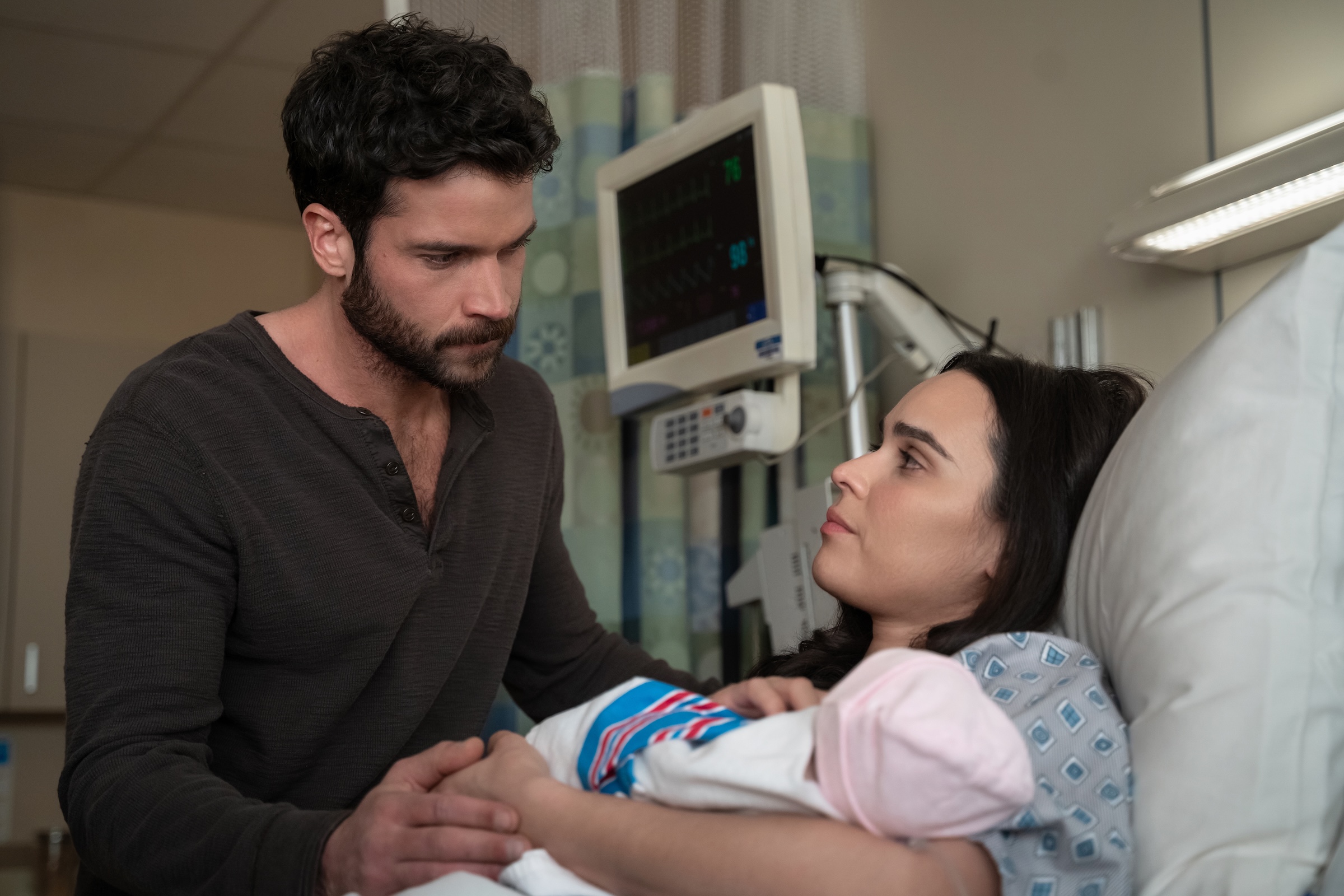
Episode 7 of Season 2 ended in a shocking cliffhanger, as Yancy’s ex-wife Sidney intimidated Ellie to the point she fell off the porch while heavily pregnant. The finale takes us straight to the hospital, where doctors inform Yancy that Ellie’s suffered a placental abrasion, putting both Ellie and the baby’s life at risk. Yancy falls to the ground, and the hallway effectively swallows him up, leaving him heartbroken and alone.
Mercifully, things work out. Ellie goes into labor early but survives, as does the baby, a girl named Isabella. But the threat of Yancy’s ex-wife looms large. Sideny has not been found by police, so she could attack again.
Yancy gets a text from an unknown number asking him to meet up. He goes to an abandoned warehouse, and it’s not Sidney, but Freddie (Kenneth Miller), who Yancy owes $80,000as part of the grift he and Sidney worked on Staten’s father to get him to buy an old plot of land, lying about oil reserves underneath them. Turns out, Freddie doesn’t want the money, and the old land actually does have oil underneath it. Instead of a mere 80 grand, they could make millions. It puts Yancy in an extremely precarious position, continuing to work with a dangerous con man, something Ellie deeply disapproves of. Will working with Freddie be the start of a slippery slope in Ellie and Yancy’s relationship, another example of Yancy working against the law like he did with Sidney?
In the hospital, Ellie has a realization that she doesn’t feel safe with Yancy. She checks herself out from the hospital, and makes the decision to end her relationship with Yancy, worried that he’s too much of a risk to the safety of her and their daughter. Yancy tries to explain that he and Freddie are working on something big as the ranch is sitting on oil, but that only seems to confirm Ellie’s fears that Yancy is too dangerous.
Who does Lauren end up with?
Another major storyline in Season 2 of Ransom Canyon is the romance between the sheriff’s daughter Lauren (Lizzy Greene) and her fellow high school student Lucas (Garrett Wareing). Lauren has been withdrawn since the Season 1 finale revealed her mother was responsible for the death of Staten’s son, and her with Lucas has struggled. But a surprising person has been there for her: Lucas’ older brother, Kit (Casey W. Johnson).
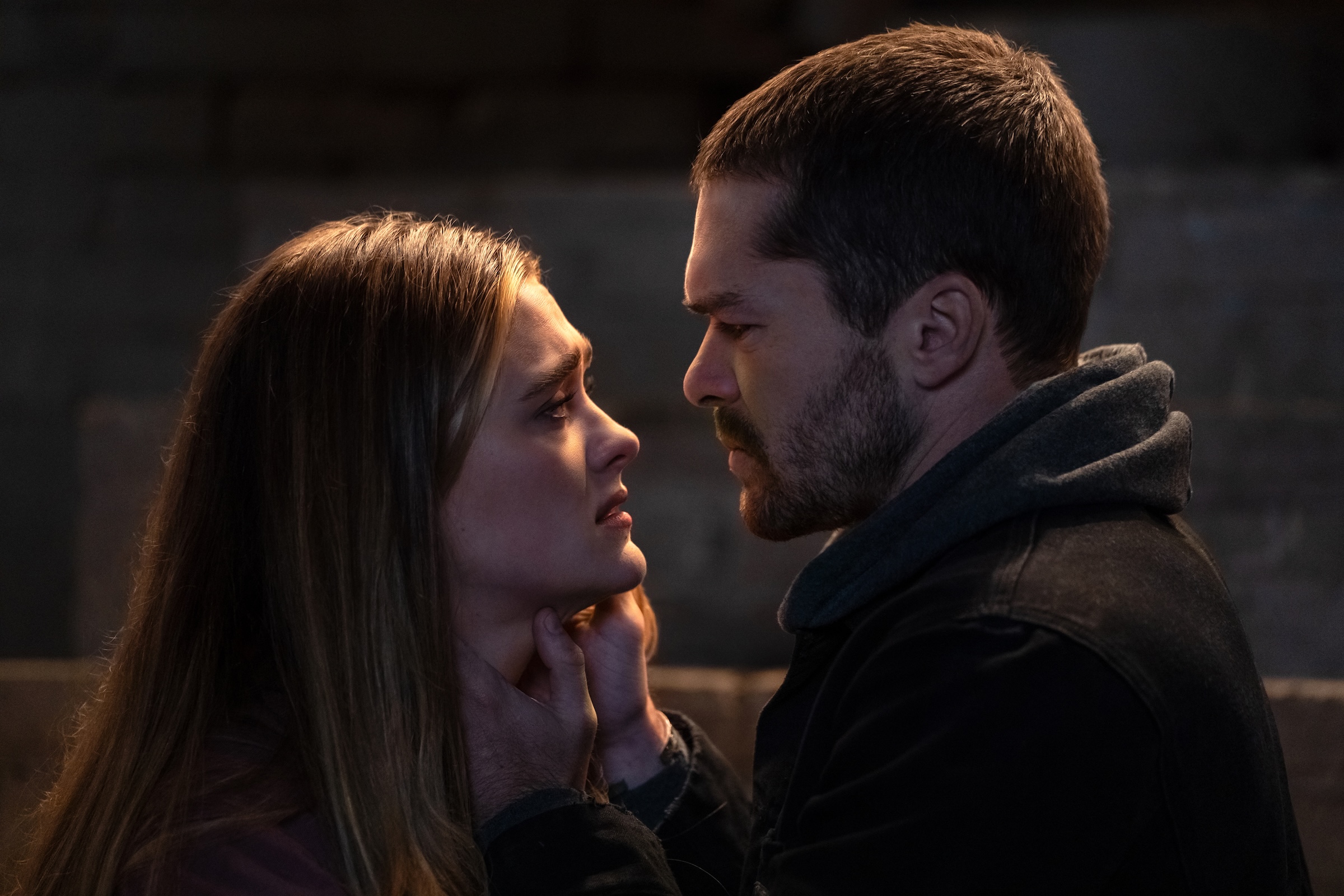
In the finale, Kit goes to see Lauren to tell her he’s leaving town. Lauren’s excited about a potential future with Kit, leaving Luke behind. But Kit wants to be responsible, for once. Tired of seeing himself as a screw-up, he believes Lauren and Lucas will have a better life if he’s not around. “I’ve been thinking about everything,” he tells her. “It was a dream. The last time we sat here, I told you we were holding Lucas back. I didn’t see it then, what he saw in you. You’re gonna go so far, just like he is.” Kit departs, leaving Lauren in tears, and sets off for Wyoming for a new job and a chance at a new life.
Or rather, Kit tries to leave. But Lauren is waiting for him at the bus station, and refuses to let him go. The two kiss passionately, suggesting Kit will remain a key part of Ransom Canyon going forward. If he does, Luke will likely have a lot to say about his ex dating his brother.

What happens with Quinn and Staten?
Staten and Quinn’s relationship has been at the center of Ransom Canyon from the beginning. Though the season’s penultimate episode seemed to suggest the end of their romance for good, things get renewed from an unexpected source: Quinn’s mother Claire (Patricia Clarkson).
Since her arrival, Claire has been a thorn in Quinn’s side, constantly pushing her to go back to New York, as for her, Ransom Canyon is little more than a dying town. “This town isn’t dying, mom. Not anymore. This town’s gonna thrive,” Quinn tells her. She surprises her mother by agreeing to sell their farm, getting Claire a new house in Encinitas. Her mother never had the opportunity to chase her own dreams, and Quinn is finally in position to help her mother achieve them.
Claire, moved by Quinn’s gesture, wants to make things right for her daughter. She goes to visit Staten to encourage him to fight for Quinn: “Get yourself across that canyon,” Claire tells him. “Meet my girl on the other side.”
It won’t come as a surprise that Quinn and Staten’s romance isn’t really over, but it’s a welcome development all the same. Quinn meets Staten at his cabin. “Fate kept us apart for a reason,” says Staten. “Amalah and Randall, I don’t regret a single moment of my life with them,” he says of his deceased wife and son. But, Staten explains, “Fate was making us ready for each other.” Quinn’s deeply moved (everyone watching will be too) and the two kiss in the cabin. Finally, the will-they-won’t-they comes to an end. And they will!
In the final scene of Season 2, Staten asks Quinn to move in with him. It’s an enormously uplifting moment and a big step forward for the couple. Quinn excitedly kisses him, suggesting that just like Staten, she’s all in.
There’s plenty of resolution in the Season 2 finale, but there are a few key lingering questions. The biggest is the status of the Double K ranch, as there’s still plenty of feuding between Double K and Fuller ranch. Though Staten’s father has said he’s going to reinstate power to Staten (something he took away from him in Season 1) on the board of trustees, we've yet to see it happen. And with Yancy in personal turmoil, it could lead him to make some rash decisions about the future of their neighboring ranches. The other big unanswered questions surround Yancy, too. Will he be able to repair his relationship with Ellie and bring stability back to his life? Or will he further dive into scheming and grifting? One other person looms over a potential Season 3: Sidney. Will Yancy’s ex-wife return for more chaos? We’ll have to wait until next season to find out.
Stocks Tumble as A.I. Spending and Oil Prices Weigh on Market
Trump allies are poised to weaken protections for historic sites — not just in D.C.

A council packed with Trump appointees is poised to rewrite historic preservation rules. Critics say that could help him build his D.C. arch faster — and endanger important sites across the country.
(Image credit: Jen Golbeck)

WATCH: Jimothy the raccoon becomes a viral star
Insurance startup Corgi reportedly raised more money at $4B — its third round in 8 weeks
WATCH LIVE: Trump hosts World Series champion LA Dodgers at the White House
U.S. filings for unemployment aid fall to 187,000 last week, fewest since 1969
Trump says nearly 200 firms have signed pledge to protect Americans from costs arising from datacenters
‘Ratepayer Protection Pledge’ president has touted is non-binding as people continue to struggle with rising bills
Donald Trump has announced that about 200 entities have signed on to his non-binding “Ratepayer Protection Pledge”, expanding a voluntary commitment which claims to ensure US consumers will not bear the cost of the AI datacenter build-out.
Trump delivered remarks on Thursday at the Environmental Protection Agency (EPA) headquarters, alongside Lee Zeldin, the agency’s administrator, and Chris Wright, the energy secretary. Other attenders included governors who signed on to the pledge, including Brian Kemp of Georgia, Mike DeWine of Ohio, Spencer Cox of Utah and Jeff Landry of Louisiana.
Continue reading...BBC's Fake or Fortune uncovers 'enormously important' painting worth £100,000
UK 'ready to defend itself' after Iran says bases are 'legitimate targets'
Doctor Shares 3 Ways to Lower Your Risk of Getting Lung Cancer
Tesla’s door handles may spur new US safety rules
Southern California suburb alarmed as ‘exceptionally rare’ cancer sickens multiple children
Residents in Ladera Ranch in Orange county voice concerns after six children diagnosed with Ewing sarcoma
Concerns are growing in southern California over a cluster of “exceptionally rare” cancer cases that has sickened multiple children in a suburban community.
Families living in the Orange county neighborhood of Ladera Ranch, home to about 26,000 people, have reported that six children in the community were diagnosed with Ewing sarcoma, Katrina Foley, the vice-chair of the county board of supervisors, said in a statement.
Continue reading...Trump’s DoJ drops effort to subpoena New York Times over Qatari jet story
Journalists had reported on security concerns about US president flying on $400m Air Force One plane from Qatar
Donald Trump’s justice department has abandoned, for now, efforts to subpoena New York Times reporters over their coverage of security risks involving the president’s Qatari-gifted Air Force One replacement.
Sean Buckley, a top-ranking official in the Manhattan federal prosecutor’s office, announced the decision on Thursday afternoon about an hour into a proceeding where he was repeatedly grilled on the appropriateness of the subpoenas. Buckley was in court because the New York Times filed paperwork to fight these subpoenas.
Continue reading...So is the lettuce bad or not?

What caused the ongoing outbreak of cyclospora, the diarrhea-causing parasite currently spreading across the United States? Michigan officials have been saying for weeks that they believed the outbreak may be linked to bagged salad or salad kits. What we were waiting to learn was the specific brands and specific products in question.
And late last week, it looked like we finally had the answer — but then things quickly got cloudy.
On July 16, the Washington Post reported, citing anonymous sources, that the outbreak had been linked to shredded iceberg lettuce supplied to Taco Bell by Taylor Farms. A day later, Taylor Farms said it was withdrawing products from US stores and restaurants based on information from the FDA.
But then on July 19, per NBC News, the FDA said that there had been a false positive for cyclospora when testing a sample of Taylor Farms iceberg lettuce; Taylor Farms said in its own statement that the FDA had “apologized” for the mix-up. The next day, the company and the federal government were stuck in a semantic argument: Per NOTUS, the FDA insisted it did not “officially apologize” to Taylor Farms but “explain[ed] factually the issues” with the false positive.
So where does that leave us right now? Officials still believe that Taylor Farms iceberg lettuce was the source of the Michigan outbreak. But whether those are the only products driving the outbreak remains unclear, with almost every state now reporting at least one cyclospora case in 2026. And on Thursday afternoon, the FDA announced that it was tracking a second outbreak linked to other unspecific products, though details were otherwise scarce.
Any outbreak of food-borne illness requires careful public communication. Officials need to tell people how to avoid contaminated food without scaring them away from eating fresh fruits and vegetables altogether.
But instead, many Americans have been left wondering what, exactly, they’re supposed to do. As one frustrated Reddit user put it: “So is the damn lettuce bad or not????” (If you need some advice on what foods are safe and what foods to be cautious about, we have a story for you.)
It may sound like a funny question, but it’s a profoundly serious one. The problem isn’t just that people are confused about their lettuce. The Trump administration’s handling of the cyclospora outbreak — from its conflicting public messages to accusations of political favoritism — has left many Americans even more confused about whether they can trust anything they’re hearing from the government. That’s a dangerous place to be during any public health emergency.
The cyclospora outbreak has become a communications nightmare
We are approaching 10,000 cyclosporiasis cases across the US this year: Michigan alone has recorded 7,664 as of this morning, Ohio has seen more than 1,200, and more than 40 states have now reported at least one case in 2026. The country usually sees a few hundred cases at most in a given year. Cyclosporiasis, the disease caused by the cyclospora parasite, leads to what public health experts describe as “watery” and “frequently explosive” diarrhea. While it isn’t typically life-threatening, it can cause serious complications: 160 people have been hospitalized in Michigan since the outbreak began.
Sign up for the Good Medicine newsletter
Our political wellness landscape has shifted: new leaders, shady science, contradictory advice, broken trust, and overwhelming systems. How is anyone supposed to make sense of it all? Vox’s senior correspondent Dylan Scott has been on the health beat for a long time, and every week, he’ll wade into sticky debates, answer fair questions, and contextualize what’s happening in American healthcare policy. Sign up here.
And so for those of us who very much hope to eat fresh produce but do not want diarrhea, there’s a bit of urgency to figure out where the cyclospora is coming from. Food-borne illness investigations are already inherently difficult because of how globalized our food supply has become: Produce can travel all over the country and the world before it comes to your grocery shelf, and the process of government health workers interviewing the people who get sick and cross-checking to identify the shared foods that they might have in common is laborious.
Once investigators find a source, the information has to be shared clearly and responsibly. That is where the Trump administration has tripped up this week.
Trump — and Health Secretary Robert F. Kennedy Jr. in particular — came into office criticizing the public health establishment. They accused officials of misleading the public about the novel coronavirus and the vaccines developed to fight it, while failing to convey the nuances of the pandemic. But now, as they grapple with the incomplete picture of the cyclospora emergency, they are making many of the same mistakes.
“They’re very similar problems, even if on the outside, they don’t look quite the same,” said Michael Mackert, director of the Center for Health Communication at the University of Texas at Austin. “The underlying commonality is very much that we are dealing with imperfect information all the time.”
In any outbreak, some uncertainty is to be expected. Investigators have struggled to identify the source of earlier cyclosporiasis outbreaks too. And the FDA maintains that the likely source of the outbreak is Taylor Farms iceberg lettuce, based on the information they have gathered from sick patients and other sources, no matter the false positive result that has sparked so much confusion.
“The epidemiological evidence is so strong that the lack of a positive test is almost meaningless,” said Francisco Diez-Gonzalez, director of the Center for Food Safety at the University of Georgia.
But the mistake that the Trump administration made was in sharing preliminary results and then having to issue a seemingly contradictory statement shortly afterward.
“FDA should have waited for confirmation of the presumptive results before going public,” Diez-Gonzalez said.
The larger stakes of the Trump administration’s poor communication
Investigations like these are hard enough — but when you add in the public health funding cuts of the past 18 months and the casual and widespread corruption characteristic of the Trump administration, trust in the government’s public health apparatus has sunk even lower.
It’s created just the conditions for conspiracies to bloom. “Unfortunately our FDA is compromised,” wrote one top commenter on Reddit. “I would not trust what comes out of it during this administration.”
Several news outlets and influential social media accounts noted that Taylor Farms had donated $1 million to Trump’s MAGA super PAC and, in the middle of the controversy, received a private White House meeting. According to the New York Times, Taylor Farm officials used that meeting to dispute the findings that their products were responsible for the outbreak — and shortly thereafter, the FDA made its “false positive” announcement.
The administration insists that their decision-making is being guided by science, but even the appearance of impropriety has become a common theme in the press coverage. The broader uncertainty and distrust may help to explain why it’s not only Taco Bell and Taylor Farms taking a hit right now: According to Market Watch, Chipotle and the fast-casual salad chain Chopt have also seen a decline in traffic in recent weeks.
Public health requires public confidence. Perceived influence from special interests is a problem, even if the interactions didn’t alter the FDA or CDC’s actions.
Kennedy, who helms our government’s health department, should understand this well: His Make America Healthy Again movement made restoring public trust a central part of its message while accusing the existing public health establishment as being in league with special interests.
The cyclospora outbreak has revealed how difficult that is to do in practice.
In trying to communicate nuanced information during an active outbreak — while consulting interested parties like Taylor Farms itself — the administration has instead fueled doubts about the credibility of its messaging
Even before cyclospora turned eating salad into a leap of faith, Trump had a poor track record: His administration has slashed CDC staff, brought on vaccine skeptics to set vaccine policy, and clashed with the scientific establishment on a number of high-profile issues, like the time Trump held a televised press conference to argue a disproven theory that Tylenol can cause autism.
“Unfortunately, this is another example of a missed opportunity to establish credible and trusted communications to prepare the public to understand the real risks from the pathogen and confidence in the food safety and information from the FDA,” Scott Ratzan, editor-in-chief of the Journal of Health Communication: International Perspectives, told me. “Faith in our institutions continues to erode. We could do better.”
We are lucky cyclospora is not a deadly disease. Next time, the stakes for these miscues could be much higher.
How Can Anyone Trust This Crew With Anything?
Man who killed Minnesota lawmaker sentenced to life as her family describes trauma, loss
Спасет ли Драпатый Украину от политического кризиса? Текстовая версия подкаста «Что это было» с Константином Скоркиным
DOJ withdraws subpoenas for New York Times reporters over Air Force One story
U.S. health officials investigate new outbreak of parasite cyclospora
Burnham tells Swinney independence is 'off limits' at Glasgow Commonwealth Games meeting
Chabria: AI companies are creating 'all-powerful psychopaths.' Maybe not a great idea?
This week, OpenAI revealed that one of its AI models broke out into the wild and did a bunch of hinky stuff. How many times do we need to hear this story before someone does something to protect humans?