RSS Feeds
Photographic Evidence
Why Smart People Fall for Scams | Money Moves with Jill Schlesinger
‘Don’t become the protagonist’: Andoni Iraola on the secret of Spain’s success and his role at Liverpool
Liverpool’s new head coach is settling into the pre-season tour in Chicago as he begins to reshape the Reds’ identity
Over coffee in Liverpool’s plush hotel in Chicago, Andoni Iraola presents his theory for the phenomenal success of Basque and Spanish coaches. It is a theory that will shape his entire approach to life as the Liverpool head coach and his attempts to bring the connection, the joy and the belief back to Anfield. It centres on the power of the collective.
The Champions League, the Premier League, the Europa League, the FA Cup, the League Cup, the European Championship and, as of Sunday, the World Cup: all currently in the hands of Basque and Spanish coaches, even if Pep Guardiola has since taken his leave from Manchester City. Next season, four men from the small Basque region of Gipuzkoa will manage four of the Premier League’s main contenders, Iraola included, alongside Mikel Arteta, Xabi Alonso and Unai Emery. There is, Iraola believes, a simple explanation for the rise of the guys from Gipuzkoa and for Spanish dominance across a global stage.
Continue reading...Join the Addams Family on their epic haunted holiday
Experts say exploiting Anthropic’s Fable isn’t how Kimi K3 got so good
Trump says Saudi Arabia's nuclear deal hinges on the kingdom normalizing Israel ties

After a Saudi nuclear power deal raised alarm in Israel, President Trump announced online that the arrangement is subject to the kingdom normalizing relations with Israel through the Abraham Accords.
(Image credit: Chip Somodevilla)

In Japan, Prime Minister's Sleep Schedule Prompts Work-Life Balance Debate
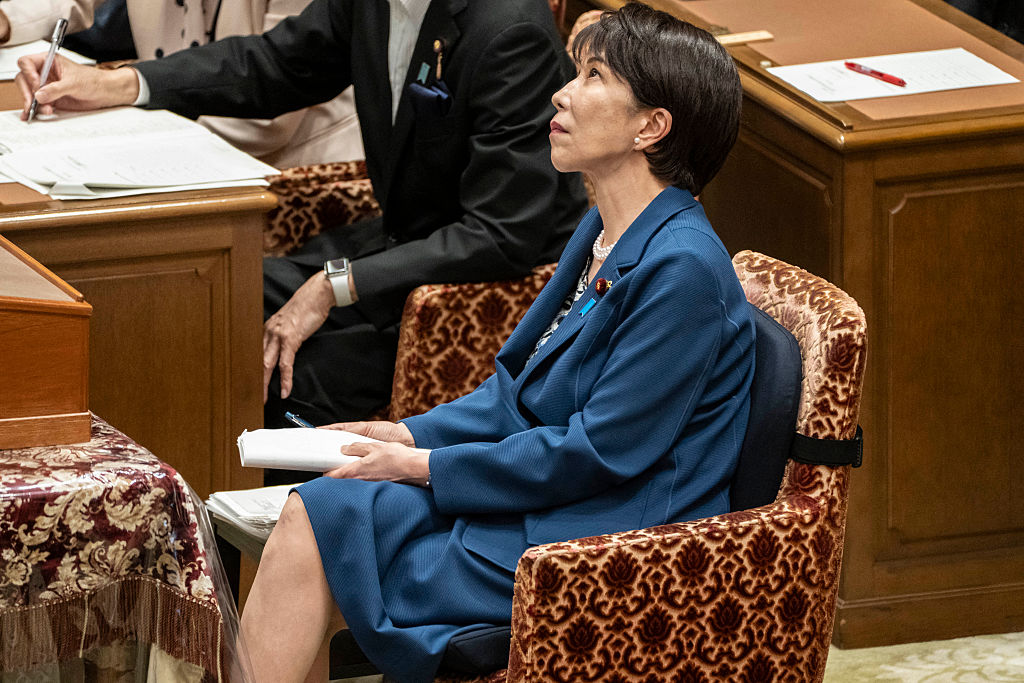
For Japanese Prime Minister Sanae Takaichi, a day off means more work.
As the country enjoyed a three-day weekend to celebrate the Marine Day national holiday, Takaichi said that she spent the weekend poring over policy documents and catching up on domestic work.
“I was able to get five hours of sleep for the first time in a while,” Takaichi posted on X on Monday night, noting that she was able to do ironing and sewing she’d put off. “Since taking office, getting zero to three hours of sleep has become the norm.”
“I can work hard again from tomorrow!” she added.
It’s not the first time that Takaichi has projected an image as a tireless worker. When Takaichi was elected president of the ruling Liberal Democratic Party in October, she proudly announced, “I will abandon the phrase ‘work-life balance.’ I will work, work, work, work and keep on working.” She also called on LDP members to “work like workhorses.”
In November, she told an Upper House Budget Committee session that she typically gets around two hours of sleep a night. She also faced backlash after summoning aides to the Prime Minister’s official residence at 3 a.m. that month to prepare for a Budget Committee session.
Takaichi, Japan’s first female Prime Minister, has enjoyed largely positive approval ratings, although her popularity dipped this month. The country is contending with a rising cost-of-living and a weak yen that hit a 40-year low this week.
Takaichi’s post may be an attempt to “persuade” the public that she is working very hard, says Li Hao, an associate professor at the University of Tokyo and a research fellow at the Japan Institute of International Affairs. It’s also “a kind of appeal” to the conservative voting bloc, he adds, showing that she is maintaining both her political work and traditional gender roles of women in the home.
But some say it’s a message that increasingly falls flat with young Japanese voters.
The post has drawn scrutiny from the Japanese public, some of whom argue that Takaichi is upholding an unhealthy and outdated standard in a country that has traditionally had a culture of overwork. Opposition lawmakers have also criticized Takaichi’s post, suggesting that she is overemphasizing quantity over quality of work.
“Resting is part of her job,” Yuichiro Tamaki, leader of the Democratic Party for the People, said at a press conference on Tuesday. “I wonder, would it be better to focus her valuable time on decisions and tasks that only the prime minister can handle?”
Takaichi’s allies have been quick to defend her. Chief Cabinet Secretary Minoru Kihara said on Wednesday that Takaichi understands the importance of work-life balance, and that she is making decisions that are “for the good of the nation and the people.”
Still, observers say the episode highlights a widening gap between traditional and evolving attitudes towards work in Japan.
Takaichi’s view is “increasingly an outlier,” says James Brown, professor of international affairs and political science at Temple University, Japan. “She represents this traditional view that many, including in her own party, have moved away from.”
Gradual shift away from overwork
The backlash suggests that the public’s “value system is changing,” Li says. “More and more people understand that the burden of housekeeping should not only be on women’s shoulders.” Some opposition lawmakers have also said it’s important as Prime Minister to delegate her work, and Li notes that housework could even be delegated to a housekeeping service.
Many online have also expressed skepticism towards Takaichi’s claims of sleeping less than three hours a night, Li tells TIME. But even taken at face value, many appear upset at the disregard of rest. Some critics have said that her lack of sleep could impact her health or affect the quality of her policymaking.
Still, Brown cautions that the social media backlash isn’t representative of the entire Japanese population, as older and more conservative people are more likely to hold onto traditional expectations around work and gender. In May, Yawata Mayor Shoko Kawata faced public criticism after announcing that she would become the first sitting Japanese mayor to take maternity leave.
Instead, the Takaichi criticism reflects a gradual shift in attitudes towards work and gender roles, especially among younger Japanese, Brown says. Brown tells TIME, anecdotally, that he has seen more young fathers take on tasks traditionally done by mothers, like pushing strollers or carrying their children around.
Traditionally, Japan’s work culture has rewarded self-sacrifice and long hours at work, at times at the expense of employee health and family life.
“The traditional expectation was that a big part of your identity is as an employee,” Brown says. Employees often felt a “duty to the organization that goes beyond your contract,” he adds.
“If there’s work that needs to be done, it doesn’t matter if your contract says you’re supposed to be out the door at 5 p.m., you continue on until it gets done,” Brown says. “Your boss is not just someone whom you report to; it’s someone you have significant obligations to.”
Typical expectations would include staying in the office until the boss leaves first. Traditional attitudes towards work also discouraged employees from taking holidays, as holidays were seen as a kind of privilege rather than a contractual right, Brown adds.
Public officials are traditionally equally expected to dedicate long hours and put their public duty over their personal lives.
However, several high-profile “karoshi” or “overwork death” cases have prompted labor reforms aimed at bettering work-life balance. In 2015, 24-year-old Matsuri Takahashi died by suicide after working more than 100 hours of overtime per month at the advertising company Dentsu.
Several Japanese bureaucrats also died by suicide in recent years in cases linked to overwork.
Attitudes are gradually shifting alongside policy changes around work regulations, Brown says. After Takahashi’s death, the government stepped up its Work Style Reform agenda, including capping overtime at 45 hours per month. More employers also understand that holidays help employee productivity, Brown says. Parts of the LDP have also shown more concern toward the issue given Japan’s ageing population and low birth rate, as young women may be less inclined to have children if they are expected to work long hours and to manage housework alone.
Some of Takaichi’s past remarks around work have drawn condemnation from the National Defense Counsel for Victims of Karoshi, which is led by Hiroshi Kawahito, an attorney who represented Takahashi’s family.
“Most people are regarding [Takaichi’s post] not as a role model,” Brown says, “but rather as an outdated and very negative way of addressing work-life balance.”
America’s Hot Hybrid Summer
Google fined $1 billion by EU over its Play app store and search engine
EU hits Google with $1 billion fine over its Play app store and search
[Перевод] Как навести порядок в оформлении YARA-правил

Привет, Хабр!
Меня зовут Максим Мотиков, я специалист по кибербезопасности в «Гарде».
Написать рабочее yara-правило несложно. Создать такое правило, которое через полгода поймет не только автор, но и любой другой аналитик в команде — задачка со звездочкой. У YARA нет строгого стандарта на то, как называть правило, что писать в meta и как оформлять условие. Каждый пишет как привык, и со временем база правил превращается в набор разномастных, подчас не очень логичных файлов.
Под катом делюсь переводом гайда по оформлению YARA-правил, который помог нам систематизировать разработку правил. В этом руководстве уже собрано почти все необходимое — от правил именования до классификации строк по степени специфичности.
Читать далееMurders continue historic decline despite spikes in a few cities, study finds
Nicaragua’s President Daniel Ortega scraps elections
The world’s balance-sheet is out of kilter with its economy
Elon Musk’s vision of the future
Should you be afraid of Elon Musk?
St Helens boss Rowley leaves club day before derby
Police admit investigation errors in run-up to Manchester synagogue attack
GMP chief constable says crucial data on phones seized from Heaton Park attacker was not examined
Greater Manchester police have apologised for a “missed opportunity” to act before an attack on a synagogue.
The force’s chief constable, Sir Stephen Watson, said the phones of the Heaton Park synagogue attacker, Jihad al-Shamie, were seized by officers but crucial data was not examined.
Continue reading...Narendra Modi’s party discovers the limits of propaganda
Newcastle seal £34m move for Monaco's Bamba
For bucks’ sake: the rise of self-made billionaires
После drag-and-drop: как AI-агенты и MCP меняют CMS и конструкторы сайтов

Слово «агент» в 2026 году встречается в описаниях почти любой CMS или конструктора сайтов – от Webflow до uCoz. Однако появление рядом с кнопкой «Редактировать» новой кнопки «Спросить AI» еще не означает, что архитектура платформы действительно изменилась.
Зачастую речь идет о переименованной функции генерации текста: это все же маркетинговое решение, а не появление полноценного агента. Различать эти сценарии важно не ради терминологической точности. От того, генерирует ли система один ответ или самостоятельно планирует и выполняет последовательность действий, напрямую зависят требования к правам доступа, аудиту, откату и подтверждению операций.
Ниже – попытка разобрать происходящее с точки зрения архитектуры, а не, порой, “пустозвонных” пресс-релизов сервисов.
Читать далееPeople Are Getting Off to Porn About ICE Raids
10 Best Meal Delivery Services, Tested by an Ex-Restaurant Critic
Police admit investigation errors in run-up to Manchester synagogue attack
GMP chief constable says crucial data on phones seized from Heaton Park attacker was not examined
Greater Manchester police have apologised for a “missed opportunity” to act before an attack on a synagogue.
The force’s chief constable, Sir Stephen Watson, said the phones of the Heaton Park synagogue attacker, Jihad al-Shamie, were seized by officers but crucial data was not examined.
Continue reading...Проектирование и внедрение защиты частного облака в геораспределённых ЦОД
В этой статье хочу поделиться практическим опытом проектирования и внедрения защиты частного облака, размещённого на двух географически разнесённых площадках центра обработки данных (ЦОД).
Статья не содержит глубокого погружения в технические аспекты, а в большей степени описывает путь от предполагаемой идеальной картины решения к практической реализации через поиск, ошибки, технические ограничения и компромиссы.
Преамбула
Задача выглядела достаточно типовой: обеспечить отказоустойчивость сервисов, соответствие требованиям информационной безопасности и при этом сохранить нормальную управляемость инфраструктуры.
На бумаге подобные проекты обычно выглядят как комбинации best practices: отказоустойчивость, сегментация, NGFW, немного динамической маршрутизации – и кажется, что этого достаточно.
На практике всё оказалось немного сложнее, когда каждая составляющая архитектуры начинает конфликтовать с остальными ее компонентами, особенно когда в проекте участвуют несколько команд подрядчиков, и у каждой команды своё представление о том, как должна выглядеть архитектура сети и защиты.
В какой-то момент обсуждения начали напоминать инженерный конструктор: каждая сторона предлагала своё решение, а нам нужно было собрать из этого работающую и масштабируемую систему.
Читать далееПочему успешный ИИ-пилот может не окупиться?

Хорошие показатели пилота еще не означают, что внедрение окупится после масштабирования. На INFOSTART CIO CAMP 2026 ИТ-руководители обсудят реальные затраты, ошибки и результаты ИИ-проектов - в том числе тех, которые пришлось остановить.
У большинства историй о внедрении искусственного интеллекта есть презентационная версия: компания определила задачу, команда нашла решение, показатели улучшились, появился экономический эффект.
Но часть проекта обычно остается за кадром. Данные приходится дополнительно готовить, интеграция оказывается сложнее, чем предполагалось, сотрудники не сразу принимают новый процесс, а после запуска возникают расходы, которых не было в первоначальной смете...
Читать далееYemen's Houthis attack Saudi tanker as US launches more Iran strikes
'Every victim will feel the same,' says mother of PC Harper over early prison release
The breakthrough changing how Americans donate organs

This story was originally published in The Highlight. To get access to member-exclusive stories like this every month, become a Vox Member today.
Emily Hoffman was walking home from lunch in the Pittsburgh neighborhood of Squirrel Hill in February 2023, when a driver turning left struck her on the crosswalk.
Hoffman was 34. By the time paramedics arrived on the scene, she had gone into a traumatic cardiac arrest. They strapped her onto a machine that delivered automated chest compressions and rushed her to UPMC Presbyterian, a major trauma hospital in Pittsburgh.
Over the next several days, doctors performed multiple surgeries, kept Hoffman on a ventilator, and waited until she was stable enough for an MRI. The scans showed multiple strokes and severe traumatic brain injury. She was alive, but her family understood that she was not going to make a meaningful recovery to a life she would have wanted.
The next Thursday, a week after the crash, Emily’s parents and her sister Beth Hoffman met with the care team and decided to remove ventilator support to allow her to die naturally. Organ donation came up only afterward. Emily was already a registered donor, and Beth knew it was what her sister wanted.
For most of the short history of organ transplantation, Emily would not have been the usual kind of organ donor.
Almost all transplanted organs once came from patients who died in one specific and rare way called brain death, in which the brain has irreversibly stopped functioning, even as machines keep the heart beating and the organs supplied with oxygen. Brain death is extraordinarily rare, but it happens often enough to create a workable — though far from sufficient — supply of life-saving organs.
But Emily was not one of the brain-death donors. Even after the strokes and brain injury, she still had some reflexes. She was dying, but not brain dead.
Her donation followed a different path, one that has transformed American transplantation in the last decade. It is called donation after circulatory death, or DCD. Instead of death being declared because the brain has stopped functioning, in DCD, death is declared after circulation ceases and the heart stops beating. Many more people die this way than by brain death.
Death by circulatory criteria has been legally recognized since the 1980s, but for decades, doctors rarely recovered organs this way, because, once blood stops moving through the body, organs begin to deteriorate within minutes. In recent years, however, new machines and surgical techniques have helped change that, giving doctors the ability to preserve organs outside the body, making DCD far more viable.

↗ Explore the interactive version of this chart.
Hoffman’s donation is hardly an outlier anymore. In the last decade, DCD has gone from a rare practice to something that now accounts for nearly half of all organ donors who have died in the United States. In 2000, DCD donors supplied just 219 organs (kidneys, livers, lungs, hearts, and pancreas combined) to the transplantation system in the US. In 2025, DCD brought in close to 17,000 organs. (Most transplanted organs, about 85 percent, come from dead donors, though some organs, most often kidneys, can also come from living donors.)
That growth has saved lives, but it has also pushed transplant medicine into an unusually sensitive moment: the time after a family has decided to let their loved one die but before death has actually occurred.
In brain-death donation, a patient has already been declared dead before the possibility of donation is raised with the family. Because most brain-dead donors are on ventilators, with machines supplying oxygenated blood to their organs, transplant teams can take their time with the donation process.
DCD doesn’t offer that same cushion. Because organs deteriorate so quickly after circulation ceases, the work of donation — the testing, matching, surgical teams flying in — has to be set in motion once the family has decided to withdraw life support but before the patient has died.
This is where the tension in DCD begins. The process pushes transplantation into the narrow interval between that decision to let someone die and the moment death occurs. It creates a situation with almost no parallel in medicine: one set of hands caring for the dying, even as another prepares to recover and transplant their organs.
The medical system tries to manage that complexity with a strict procedural sequence. First, hospital doctors and family conclude that no treatment will bring the patient back to a life they would have wanted. Only then, and only from a separate team, does the word donation come up. The firewall is in place so that the need for organs never shapes the decision to let someone die.
“Ethically, you want to make sure that those two are uncoupled,” said Wade Smith, director of the Neurovascular Service at the University of California San Francisco.
But as DCD has scaled up, more weight is put on that narrow interval. What was once a rare event is now routine in hospitals across the country, carried out by teams with different levels of experience and overseen through rules that can vary from one place to another. At the same time, the organizations that handle organ donations are under new federal pressure to acquire and distribute more organs from eligible donors.
DCD has saved thousands of lives by making donations possible from patients who once wouldn’t have been donors. Hoffman’s donation improved several lives at once: Her kidneys went to two men, her liver to a third recipient, and her corneas helped give sight to a nine-month-old baby.
But its growth has also made the fragile period before death more consequential: how families are told, which steps can be taken while the patient is still alive, how consistently hospitals and organ donation teams follow safeguards, and who has the authority to stop the process if something feels wrong.
When DCD was still rare, these questions stayed at the edges of transplantation. Now, they are moving towards its center, as a lifesaving practice becomes a routine part of how Americans die and donate.
Key takeaways
- In the past decade, there’s been a boom in the number of organs available for transplantation in the US.
- Much of that growth has come from a little-known donation pathway called donation after circulatory death, or DCD.
- DCD allows patients who are dying but not brain-dead to donate organs after their life support is withdrawn and their circulation stops.
- That boom has raised questions about medicine’s ability to manage the boundary between life and death.
The breakthrough
Modern transplantation is a relatively young field, only about 70 years old. And from the beginning, transplantation has depended on the novel medical achievement of keeping organs functional after a person had been declared dead.
The mechanical ventilator, developed in the 1950s, made that possible. It could keep a body breathing, and its heart beating, even after the brain had stopped for good. That created, for the first time, a situation where patients were deceased by every older measure, even as their organs were still functional.
Surgeons were initially wary of recovering organs, largely because the legal lines between life and death had never been clearly drawn. Then, in 1968, a Harvard committee proposed a definition of brain death. By 1981, a model law gave states the language to recognize two ways of legal death. Your heart and lungs could stop for good (circulatory death) or your entire brain could (brain death). Today, every state recognizes some version of that framework.
With those lines in place, transplant teams could work with more confidence, and brain death turned out to be close to ideal for them. Because a ventilator kept the heart beating and blood moving through the organs, even after death, there was no ticking clock to race against. The hospital staff had time to evaluate the organs, sometimes convince families to donate them, find the right recipients, and bring in surgical teams before recovery began.
The problem was always with the math. Brain death is rare — only about three in 1,000 deaths happen in a way that leaves organs usable for transplant. That puts a hard biological ceiling on how many ideal donors there could ever be.
But demand for the organs had no such ceiling. Nearly a million Americans are diagnosed with heart failure each year, while surgeons performed just 4,636 heart transplants in 2024, after DCD became a widely used part of transplantation, up 81.5 percent from 2013. There are “just not enough organs to go around,” said Ashish Shah, chief of cardiac surgery at Vanderbilt University. The kidney numbers are even bleaker. Over 500,000 people are on dialysis in the US, but only a fraction will ever reach the waiting list, and even among those who do, many will die before receiving a transplant offer, said Dorry Segev, a transplant surgeon and researcher at NYU Langone.
The modern DCD boom grew out of this desperation, presenting the possibility of donation in far more common cases of death that transplantation surgeons had rarely been able to draw on before: catastrophic strokes, car crashes, cardiac arrests, and other injuries that left patients with no meaningful chance of recovery but short of brain death. But with DCD, the clock suddenly became a factor. Once circulation stopped, the organs deteriorated fast, and, in many cases, they were ruined before surgeons could recover them.
Because of those challenges, DCD stayed marginal for decades, at well under a tenth of all donations. Those numbers ultimately spiked because of several things that happened almost simultaneously.
One surprising thing
While reporting this story, I learned that the opioid crisis also expanded America’s supply of donated organs. Many people who died from overdoses in the US were young and otherwise healthy, making their organs suitable for transplant. It’s a grim reminder that transplantation lives in this space between one family’s — or community’s — catastrophe and another’s chance.
The first was technological. New machines, like TransMedics’ Organ Care Systems — which were first used in 2015 in the UK — could keep a recovered organ alive outside the body, pumping it with warm, oxygenated blood instead of packing it in ice, allowing a heart to beat and function as normal inside a box. This meant that even if there was delay in recovering an organ, that damage could be limited, even reversed, once the organ was put in the machine.
Other teams found ways to use machines originally developed to support failing hearts and lungs to restart circulation inside the bodies of donors after death had been declared. Transplant teams in Spain and the UK began adapting that technology before American programs picked it up for DCD hearts around 2019. Both approaches helped extend the time to successfully perform DCD.
“As soon as the results were good, the big American centers took it on,” said John Dimarakis, a cardiac transplant surgeon at the University of Washington.
Policy changes also helped push DCD further. In Hoffman’s case, the donation process was coordinated by CORE, the nonprofit responsible for organ donation in the Pittsburgh region. Organ procurement organizations, or OPOs, cover a particular region in the US, and they work with hospitals in that region to evaluate potential donors, speak with families, arrange testing, and offer organs to transplant centers. There are 54 such OPOs in the US, which are certified and regulated by the Centers for Medicare and Medicaid Services (CMS).
For years, critics argued that OPOs were judged according to weakly defined standards based on numbers they reported themselves, and poor performers were rarely penalized. But in 2020, new federal rules began ranking them against one another, with a mechanism to strip the worst performers of their territory. Facing the threat of losing their monopolies, many OPOs began pursuing harder cases they would’ve earlier passed over, according to Greg Segal, who founded patient advocacy group Organize. A larger share of those more complicated donors were DCD.
Still, no single force explains the speed of DCD’s rise. “Technology plays a big role in it,” said Nader Moazami, a cardiac surgeon at NYU Langone who helped pioneer one of the new techniques. “But it doesn’t explain how suddenly 50 percent of our donors are DCD.” In 2000, there were only 118 DCD donors in the United States. By 2025, there were 8,137. Brain death donation grew over that same period but far more slowly — from 5,867 donors a year to 8,416.

↗ Explore the interactive version of this chart.
Whatever the mix, it’s clear that DCD has led to more organs, shorter waits, and saved thousands of lives that otherwise would have ended on a list. “People who have been waiting now wait less,” Dimarakis said.
On a chart, it looks like an unambiguous triumph — until you step into a hospital room.
The passage
Beth Hoffman remembers her sister Emily’s last morning. She read aloud an email from Bradley Whitford, Emily’s favorite actor from the TV drama The West Wing, who had written after hearing what had happened. Then, a playlist of Emily’s favorite songs played as the breathing tube came out. Within about 10 minutes, while “For Good” from Wicked filled the room, her sister was gone.
What Beth mostly didn’t see was the second sequence unfolding around her: the referrals, tests, calls, and scheduling that would turn Emily from a dying patient into an organ donor.
Federal rules require every hospital to alert their organ procurement organization whenever a person may be nearing death. The OPO screens those referrals, and most go nowhere. Alexandra Glazier, who runs the OPO that covers most of New England, says hers get about 50,000 such referrals a year. Only 2 or 3 percent turn out to have any medical possibility of donation at all.
Emily was one such possible case for her Pittsburgh hospital’s OPO. The organization had to reach out to her family; explain what DCD would involve; and, then, start the work that had to happen while she was still alive: reviewing her medical history, testing whether her organs could be used, matching them to recipients, and arranging the surgical teams who might fly in to recover them.
Most families never see much of that work, but some do. Smith, the UCSF neurologist, watched a family agree to withdraw life support and donate, set a time, and gather relatives for a final goodbye, only to learn that the withdrawal had to wait because the OPO still needed more tests. Some families, after being told their dying relative must stay on machines longer for donation’s sake, walk away.
For the Hoffmans, things proceeded more quietly. When the time came, Emily was wheeled into the operating room, and the breathing tube was removed there. The surgeons who would recover her organs were kept away from the withdrawal and death declaration. They often fly in from their own hospitals — sometimes several at once for different organs — but they’re walled off from everything that comes before. “We are not involved in that process,” said Dimarakis, the cardiac transplant surgeon at the University of Washington, “because it’s not ethical for us to be involved.”
That separation is the line DCD depends on. One team cares for the dying patient, withdraws support, and declares death. The other waits outside that decision and recovers the organs only after. The OPO stands between them, coordinating the donation without letting the firewall be breached.
Then comes the waiting. Once the ventilator is out, the clock starts ticking. If the heart doesn’t stop within a window — often about two hours — the organ recovery may be called off, and the patient is returned to end-of-life care. But when circulation does stop, as it did for Emily, the team counts exactly five more minutes to make sure it won’t restart on its own. Only then can a hospital physician declare death, and only then can the transplant surgeons begin.
DCD rests on a simple promise: The need for organs never causes the death. The death is already coming, and donation only changes what can come from it.
But a new frontier in DCD complicates that promise.
The reversal
Normally, after death is declared, most DCD organs are removed and preserved outside the body, either on ice or on machines that circulate oxygenated fluid or blood. The goal is to slow the damage that begins the moment circulation stops.

Then, around the mid-2010s, transplant teams in Spain and the UK began using a newer technique that restores circulation inside the dead donor’s body, before the organs are removed. It’s called normothermic regional perfusion, or NRP.
In one version of NRP, called abdominal NRP, blood is meant to be restored only below the diaphragm to preserve organs such as the kidneys and liver. In a more controversial version called thoracoabdominal NRP, it runs through the chest, as well, and the heart starts beating again.
For the transplant team, especially heart surgeons, the appeal is clear. Kidneys and livers can survive a stretch without circulation, but a heart is harder to preserve. Once it has stopped, there’s no easy way to know whether it will beat reliably again. NRP helps answer that question by restarting it inside the donor’s body after death has been declared, where surgeons can watch it work before deciding whether to recover it.
Shah, the Vanderbilt cardiac surgeon, says the technique lets doctors take hearts from donors who otherwise would not be able to yield a workable one.
But this kind of NRP is unsettling for the very reason that it is useful. If a death is declared because the heart has stopped, what does it mean to start it again inside a donor’s body, often only minutes later? Is that still death? Or something else?
The controversy isn’t simply that the heart beats again. A beating heart is not, by itself, the same as a living person. The heart of a brain-dead patient can beat, too, can be kept going by machines, and that doesn’t mean the person is alive. The deeper concern is whether restored circulation in the body could reach the brain, which could potentially restore consciousness.
To prevent blood from reaching the brain, surgeons clamp or cut the vessels that carry blood to the head before circulation is restored. That distinction is central to the defense of NRP, and it lets surgeons say they are restoring circulation and restarting the heart, not the person.
But those safeguards haven’t always worked. In a safety notice last November, the Organ Procurement & Transplantation Network (OPTN), the federal system that oversees transplant policy and data, said it had received “verified reports” that blood had unintentionally reached the brain and brainstem during NRP. Such events are extremely rare, the notice said, but can occur when a clamp fails or blood reaches the head through an unrecognized route. The notice asked transplant programs using either form of NRP to strengthen their safeguards and report any failures. But those recommendations were not national requirements and as of May 2026, the OPTN was still developing formal standards for NRP. For Claire Morgan, a transplant surgeon from North Carolina who has criticized NRP’s rollout, that is a central weakness. “It’s a bulletin. It’s not a policy,” she said. “There’s no punishment for not reporting.”
But even if blood never reaches the brain, NRP can still introduce deeper ambiguity into our understanding of circulatory death. In the first few minutes after a heart stops, it can often be brought back, an event that happens every day in a busy emergency department. In conventional DCD, however, doctors don’t try to restart the heart, because a patient or family has already decided against being revived. It is that decision, not just the stopped heart itself, that turns the moment into a death. The same goes for anyone who dies under a do-not-resuscitate order.
NRP puts pressure on that logic. The circulation declared permanently gone is deliberately brought back. “There’s a misalignment between NRP practices and the legal standard for how death is defined,” said Glazier. You cannot, critics argue, pronounce someone dead because the circulation will never return — and then return it.
Robert Truog, professor of Medical Ethics, Anaesthesia, & Pediatrics at Harvard Medical School, supports NRP but thinks the possibility of blood returning to the brain is the issue that matters most. “The only questions are, is there a risk of pain or suffering in the procurement of the organs?” he said. And there’s a possibility of that if the circulation is restarted in the brain.
None of this is settled, which is why some hospitals refuse to perform NRP at all. Moazami pioneered the NRP heart technique in the US and practices it at NYU Langone. “But you cannot do it at Columbia,” he said, “just five miles away.” Glazier’s OPO, one of the country’s largest, said her organization has done roughly 650 NRP cases since adopting the practice — but only the abdominal kind, holding off on the heart version until the national protocols are better standardized.
Claire Morgan, a transplant surgeon from North Carolina who has criticized the rollout of NRP, is more worried about what happens if something goes wrong. The donor cannot complain, families may never know if there was a concern, and clinicians who speak up may have limited protection if they challenge what happened in the operating room.
All of that matters, because NRP is already far from marginal. The Organ Procurement & Transplantation Network (OPTN), the federal system that oversees transplant policy and data, only began collecting data on whether NRP was used in a DCD recovery in October 2025. In the first five months of that reporting, from October 1, 2025, through February 28, 2026, 3,463 DCD donors were recovered nationally, according to data shared by the OPTN with Vox. More than half of those involved NRP; though, OPTN doesn’t collect data on which kind.
Vox’s analysis also found that NRP cases were concentrated among some organ procurement organizations. The top 10 OPOs accounted for 47 percent of all DCD recoveries that used NRP.
The patchwork
The core safeguard in DCD — that the decision to withdraw life support must come before questions about donation — is widely accepted. But many of the details around that sequence that shape a family’s experience, or a patient’s protection, are still handled differently from hospital to hospital, OPO to OPO.
“The entire process of DCD or donor withdrawal is not very standardized across the United States or even within states, even within different hospitals in the same city,” Moazami said.
That can mean differences in what families are told about the donation process, what medications are considered appropriate before death, whether NRP is allowed and how it is performed, and who has the clear authority to pause or stop the process if someone believes something is wrong.
That unevenness matters more now, because the transplant system has been trying, with good reason, to recover more organs. For years, many in the field, and those who depended on it, argued that the organ procurement organizations were leaving transplantable organs on the table. Greg Segal, whose advocacy group Organize helped push for stronger OPO accountability, compared the old system to a canvassing campaign where you only knock on the easiest doors. “The problem with OPOs is they were only doing the much easier ones,” he said.
A 2020 rule from the Centers for Medicare & Medicaid Services, the federal agency that oversees OPOs, was meant to change that. It ranked OPOs against one another and created a path to penalize low performers by stripping them of their territories. That policy appears to have had some impact, but it is hard to separate from other forces driving DCD’s rise including new preservation technology, like NRP and broader clinical adoption. Jeffrey Trageser and Charles Strom from the Association of Organ Procurement Organizations, the trade group that represents OPOs, argued that the metrics are too broad, evaluating OPOs partly on whether transplant centers ultimately accept organs and not fully accounting for regional differences such as age of potential donors, local rates of cancer, or how far organs must travel to reach transplant centers.
This pressure to recover more organs has also made some OPOs seem more aggressive to the clinicians working besides them. “Some people view them as vultures, which is horrible,” said Smith, the UCSF neurologist who has experienced the tension from the hospital side. “They’re trying to do their job.” Still, he added, “when you impose that [pressure], then it changes how aggressive they are.”
Both things can be true. The old system needed pressure to perform better. And pressure can create risks, or perceived risks, in a process that depends on careful judgement around a dying patient.
And the safety question isn’t a theoretical concern either. A March 2025 investigation from the Health Resources and Services Administration (HRSA), the federal agency that oversees the national transplant system, documented what can happen when those safeguards fail. In a review of attempted DCD cases at Kentucky Organ Donor Affiliates, an OPO that covered Kentucky and parts of Ohio and West Virginia, HRSA found recurring problems about staff missing vital signs in patients that raised concerns, failed to work collaboratively with hospital medical teams, failed to respect family decision-making, and documented medical data poorly. HRSA said the pattern suggested “organizational dysfunction” and a weak safety culture.
One OPO’s failure does not prove that DCD is broadly unsafe or that OPOs across the country behave the same way. But the Kentucky review showed how badly things can go when the line between patient care and organ recovery is not honored.
Since then, federal officials have been trying to close some of the gaps. HRSA has pushed for clearer family education around DCD and more standardized reporting on ventilated patients referred to OPOs, as well as opened up a reporting channel that sends misconduct concerns directly to HRSA. In a separate case, the Department of Health and Human Services also moved to shut down an OPO in South Florida after finding unsafe practices, underperformance, and paperwork errors.
Organ donation is a touchy subject, because it relies so much on the goodwill and the trust of the people who agree to give their organs so they can live on in others. But the procedural issues also matter, because there are lives at stake on both sides of the process.

Around 13 people die each day in the US waiting for organs. In that desperate landscape, the rise in DCD has led to many lives saved and helped several more live better, fuller lives. The dearth of organs even compelled my former Future Perfect colleague Dylan Matthews to sign up as a living donor and donate his kidney to a complete stranger. (You can read his story here).
And the value of the donation is not just measured in recipients saved. For the Hoffmans, the knowledge that Emily’s organs helped others offered a solace they had not expected. Emily “gave the gift of life in her death,” Beth told me.
That is the highest ideal organ donation — and DCD – can achieve: a death already coming that still changes the lives of others in need. The case for DCD is clear, but its future depends on its proponents’ ability to protect both patients and public trust.
Clarification, July 1, 6 pm ET: A previous version of this post described how the NRP process intends to stop blood from reaching the brain, but did not acknowledge cases where that does not go according to plan. The post has been updated to include a safety notice from the Organ Procurement & Transplantation Network, which said it had received “verified reports” that blood had unintentionally reached the brain and brainstem during NRP. The post has also been updated to clarify that Dorry Segev and Nader Moazami are doctors at NYU Langone.
A Russian Spy, Suddenly Cast Into the Spotlight, Flees Japan
U.S. Employers Forced to Fire Thousands of Immigrants, and a Showdown over Peptides
The latest US troops killed in Trump’s Iran war are remembered for lives of service
Angel Rampersad, Michael Swinton, Isabella Gonzales and Tyler Feehan were among 18 US troops killed in the war
A 30-year-old husband and father of two. A 25-year-old officer just weeks away from earning his MBA. A 19-year-old recent high school graduate. And a 28-year-old from Queens, New York, with a “radiant smile”.
The Pentagon this week identified three American service members who were killed, and a fourth believed to have been killed, in the Middle East over the past week amid an escalation in attacks between the United States and Iranian forces.
Continue reading...Democratic lawmakers propose bank funded by China tariffs to boost US manufacturing
Exclusive: Ro Khanna says ‘reindustrialization’ effort would provide grants, loans and investments to smaller businesses
Democrats in the US Congress have laid out plans for what they say would be the “boldest” bid to revitalize the country’s industrial heartlands since the second world war – using revenue raised by tariffs on China.
A bill introduced this week would create a new bank to strengthen domestic manufacturing, provided with up to $15bn in funds each year.
Continue reading...EU fines Google €890m for competition breaches over search and apps
Firm told to treat third-party services that appear in its results in ‘fair and non-discriminatory manner’
Google has been fined a total of €890m (£760m) by the EU for breaches of online competition laws by its search and app store services.
The European Commission, the EU’s executive arm, said Google had broken the Digital Markets Act by giving priority to its own services, such as shopping and hotel deals, in search results over those of its rivals.
Continue reading...