RSS Feeds

Why is it so hard to buy things that work well?
Feed: https://danluu.com/atom.xml (https://danluu.com/atom.xml)
Published: 2022-03-14 00:00:00 | Created: 2026-07-23 05:18:39

There's a cocktail party version of the efficient markets hypothesis I frequently hear that's basically, "markets enforce efficiency, so it's not possible that a company can have some major inefficiency and survive". We've previously discussed Marc Andreessen's quote that tech hiring can't be inefficient here and here:

Let's launch right into it. I think the critique that Silicon Valley companies are deliberately, systematically discriminatory is incorrect, and there are two reasons to believe that that's the case. ... No. 2, our companies are desperate for talent. Desperate. Our companies are dying for talent. They're like lying on the beach gasping because they can't get enough talented people in for these jobs. The motivation to go find talent wherever it is unbelievably high.

Variants of this idea that I frequently hear engineers and VCs repeat involve companies being efficient and/or products being basically as good as possible because, if it were possible for them to be better, someone would've outcompeted them and done it already1.

There's a vague plausibility to that kind of statement, which is why it's a debate I've often heard come up in casual conversation, where one person will point out some obvious company inefficiency or product error and someone else will respond that, if it's so obvious, someone at the company would have fixed the issue or another company would've come along and won based on being more efficient or better. Talking purely abstractly, it's hard to settle the debate, but things are clearer if we look at some specifics, as in the two examples above about hiring, where we can observe that, whatever abstract arguments people make, inefficiencies persisted for decades.

When it comes to buying products and services, at a personal level, most people I know who've checked the work of people they've hired for things like home renovation or accounting have found grievous errors in the work. Although it's possible to find people who don't do shoddy work, it's generally difficult for someone who isn't an expert in the field to determine if someone is going to do shoddy work in the field. You can try to get better quality by paying more, but once you get out of the very bottom end of the market, it's frequently unclear how to trade money for quality, e.g., my friends and colleagues who've gone with large, brand name, accounting firms have paid much more than people who go with small, local, accountants and gotten a higher error rate; as a strategy, trying expensive local accountants hasn't really fared much better. The good accountants are typically somewhat expensive, but they're generally not charging the highest rates and only a small percentage of somewhat expensive accountants are good.

More generally, in many markets, consumers are uninformed and it's fairly difficult to figure out which products are even half decent, let alone good. When people happen to choose a product or service that's right for them, it's often for the wrong reasons. For example, in my social circles, there have been two waves of people migrating from iPhones to Android phones over the past few years. Both waves happened due to Apple PR snafus which caused a lot of people to think that iPhones were terrible at something when, in fact, they were better at that thing than Android phones. Luckily, iPhones aren't strictly superior to Android phones and many people who switched got a device that was better for them because they were previously using an iPhone due to good Apple PR, causing their errors to cancel out. But, when people are mostly making decisions off of marketing and PR and don't have access to good information, there's no particular reason to think that a product being generally better or even strictly superior will result in that winning and the worse product losing. In capital markets, we don't need all that many informed participants to think that some form of the efficient market hypothesis holds ensuring "prices reflect all available information". It's a truism that published results about market inefficiencies stop being true the moment they're published because people exploit the inefficiency until it disappears. But with the job market examples, even though firms can take advantage of mispriced labor, as Greenspan famously did before becoming Chairman of the fed, inefficiencies can persist:

Townsend-Greenspan was unusual for an economics firm in that the men worked for the women (we had about twenty-five employees in all). My hiring of women economists was not motivated by women's liberation. It just made great business sense. I valued men and women equally, and found that because other employers did not, good women economists were less expensive than men. Hiring women . . . gave Townsend-Greenspan higher-quality work for the same money . . .

But as we also saw, individual firms exploiting mispriced labor have a limited demand for labor and inefficiencies can persist for decades because the firms that are acting on "all available information" don't buy enough labor to move the price of mispriced people to where it would be if most or all firms were acting rationally.

In the abstract, it seems that, with products and services, inefficiencies should also be able to persist for a long time since, similarly, there also isn't a mechanism that allows actors in the system to exploit the inefficiency in a way that directly converts money into more money, and sometimes there isn't really even a mechanism to make almost any money at all. For example, if you observe that it's silly for people to move from iPhones to Android phones because they think that Apple is engaging in nefarious planned obsolescence when Android devices generally become obsolete more quickly, due to a combination of iPhones getting updates for longer and iPhones being faster at every price point they compete at, allowing the phone to be used on bloated sites for longer, you can't really make money off of this observation. This is unlike a mispriced asset that you can buy derivatives of to make money (in expectation).

A common suggestion to the problem of not knowing what product or service is good is to ask an expert in the field or a credentialed person, but this often fails as well. For example, a friend of mine had trouble sleeping because his window air conditioner was loud and would wake him up when it turned on. He asked a trusted friend of his who works on air conditioners if this could be improved by getting a newer air conditioner and his friend said "no; air conditioners are basically all the same". But any consumer who's compared items with motors in them would immediately know that this is false. Engineers have gotten much better at producing quieter devices when holding power and cost constant. My friend eventually bought a newer, quieter, air conditioner, which solved his sleep problem, but he had the problem for longer than he needed to because he assumed that someone whose job it is to work on air conditioners would give him non-terrible advice about air conditioners. If my friend were an expert on air conditioners or had compared the noise levels of otherwise comparable consumer products over time, he could've figured out that he shouldn't trust his friend, but if he had that level of expertise, he wouldn't have needed advice in the first place.

So far, we've looked at the difficulty of getting the right product or service at a personal level, but this problem also exists at the firm level and is often worse because the markets tend to be thinner, with fewer products available as well as opaque, "call us" pricing. Some commonly repeated advice is that firms should focus on their "core competencies" and outsource everything else (e.g., Joel Spolsky, Gene Kim, Will Larson, Camille Fournier, etc., all say this), but if we look mid-sized tech companies, we can see that they often need to have in-house expertise that's far outside what anyone would consider their core competency unless, e.g., every social media company has kernel expertise as a core competency. In principle, firms can outsource this kind of work, but people I know who've relied on outsourcing, e.g., kernel expertise to consultants or application engineers on a support contract, have been very unhappy with the results compared to what they can get by hiring dedicated engineers, both in absolute terms (support frequently doesn't come up with a satisfactory resolution in weeks or months, even when it's one a good engineer could solve in days) and for the money (despite engineers being expensive, large support contracts can often cost more than an engineer while delivering worse service than an engineer).

This problem exists not only for support but also for products a company could buy instead of build. For example, Ben Kuhn, the CTO of Wave, has a Twitter thread about some of the issues we've run into at Wave, with a couple of followups. Ben now believes that one of the big mistakes he made as CTO was not putting much more effort into vendor selection, even when the decision appeared to be a slam dunk, and more strongly considering moving many systems to custom in-house versions sooner. Even after selecting the consensus best product in the space from the leading (as in largest and most respected) firm, and using the main offering the company has, the product often not only doesn't work but, by design, can't work.

For example, we tried "buy" instead of "build" for a product that syncs data from Postgres to Snowflake. Syncing from Postrgres is the main offering (as in the offering with the most customers) from a leading data sync company, and we found that it would lose data, duplicate data, and corrupt data. After digging into it, it turns out that the product has a design that, among other issues, relies on the data source being able to seek backwards on its changelog. But Postgres throws changelogs away once they're consumed, so the Postgres data source can't support this operation. When their product attempts to do this and the operation fails, we end up with the sync getting "stuck", needing manual intervention from the vendor's operator and/or data loss. Since our data is still on Postgres, it's possible to recover from this by doing a full resync, but the data sync product tops out at 5MB/s for reasons that appear to be unknown to them, so a full resync can take days even on databases that aren't all that large. Resyncs will also silently drop and corrupt data, so multiple cycles of full resyncs followed by data integrity checks are sometimes necessary to recover from data corruption, which can take weeks. Despite being widely recommended and the leading product in the space, the product has a number of major design flaws that mean that it literally cannot work.

This isn't so different from Mongo or other products that had fundamental design flaws that caused severe data loss, with the main difference being that, in most areas, there isn't a Kyle Kingsbury who spends years publishing tests on various products in the field, patiently responding to bogus claims about correctness until the PR backlash caused companies in the field to start taking correctness seriously. Without that pressure, most software products basically don't work, hence the Twitter threads from Ben, above, where he notes that the "buy" solutions you might want to choose mostly don't work2. Of course, at our scale, there are many things we're not going to build any time soon, like CPUs, but, for many things where the received wisdom is to "buy", "build" seems like a reasonable option. This is even true for larger companies and building CPUs. Fifteen years ago, high-performance (as in, non-embedded level of performance) CPUs were a canonical example of something it would be considered bonkers to build in-house, absurd for even the largest software companies, but Apple and Amazon have been able to produce best-in-class CPUs on the dimensions they're optimizing for, for predictable reasons3.

This isn't just an issue that impacts tech companies; we see this across many different industries. For example, any company that wants to mail items to customers has to either implement shipping themselves or deal with the fallout of having unreliable shipping. As a user, whether or not packages get shipped to you depends a lot on where you live and what kind of building you live in.

When I've lived in a house, packages have usually arrived regardless of the shipper (although they've often arrived late). But, since moving into apartment buildings, some buildings just don't get deliveries from certain delivery services. Once, I lived in a building where the postal service didn't deliver mail properly and I didn't get a lot of mail (although I frequently got mail addressed to other people in the building as well as people elsewhere). More commonly, UPS and Fedex usually won't attempt to deliver and will just put a bunch of notices up on the building door for all the packages they didn't deliver, where the notice falsely indicates that the person wasn't home and correctly indicates that, to get the package, the person has to go to some pick-up location to get the package.

For a while, I lived in a city where Amazon used 3rd-party commercial courier services to do last-mile shipping for same-day delivery. The services they used were famous for marking things as delivered without delivering the item for days, making "same day" shipping slower than next day or even two day shipping. Once, I naively contacted Amazon support because my package had been marked as delivered but wasn't delivered. Support, using a standard script supplied to them by Amazon, told me that I should contact them again three days after the package was marked as delivered because couriers often mark packages as delivered without delivering them, but they often deliver the package within a few days. Amazon knew that the courier service they were using didn't really even try to deliver packages4 when they said they did and the only short-term mitigation available to them was to tell support to tell people that they shouldn't expect that packages have arrived when they've been marked as delivered.

Amazon eventually solved this problem by having their own delivery people or using, by commercial shipping standards, an extremely expensive service (Apple has done for same-day delivery)5. At scale, there's no commercial service you can pay for that will reliably attempt to deliver packages. If you want a service that actually works, you're generally on the hook for building it yourself, just like in the software world. My local grocery store tried to outsource this to DoorDash. I've tried delivery 3 times from my grocery store and my groceries have showed up 2 out of 3 times, which is well below what most people would consider an acceptable hit rate for grocery delivery (and when groceries did arrive, some items I didn't order and didn't get charged were also delivered to me instead to whoever ordered them). Having to build instead of buy to get reliability is a huge drag on productivity, especially for smaller companies (e.g., it's not possible for small shops that want to compete with Amazon and mail products to customers to have reliable delivery since they can't build out their own delivery service).

The amount of waste generated by the inability to farm out services is staggering and I've seen it everywhere I've worked. An example from another industry: when I worked at a small chip startup, we had in-house capability to do end-to-end chip processing (with the exception of having its own fabs), which is unusual for a small chip startup. When the first wafer of a new design came off of a fab, we'd have the wafer flown to us on a flight, at which point someone would use a wafer saw to cut the wafer into individual chips so we could start testing ASAP. This was often considered absurd in the same way that it would be considered absurd for a small software startup to manage its own on-prem hardware. After all, the wafer saw and the expertise necessary to go from a wafer to a working chip will be idle over 99% of the time. Having full-time equipment and expertise that you use less than 1% of the time is a classic example of the kind of thing you should outsource, but if you price out having people competent to do this plus having the equipment available to do it, even at fairly low volumes, it's cheaper to do it in-house even if the equipment and expertise for it are idle 99% of the time. More importantly, you'll get much better service (faster turnaround) in house, letting you ship at a higher cadence. I've both worked at companies that have tried to contract this kind of thing out as well as talked with many people who've done that and you get slower, less reliable, service at a higher cost.

Likewise with chip software tooling; despite it being standard to outsource tooling to large EDA vendors, we got a lot of mileage out using our own custom tools, generally created or maintained by one person, e.g., while I was there, most simulator cycles were run on a custom simulator that was maintained by one person, which saved millions a year in simulator costs (standard pricing for a simulator at the time was a few thousand dollars per license per year and we had a farm of about a thousand simulation machines). You might think that, if a single person can create or maintain a tool that's worth millions of dollars a year to the company, our competitors would do the same thing, just like you might think that if you can ship faster and at a lower cost by hiring a person who knows how to crack a wafer open, our competitors would do that, but they mostly didn't.

Joel Spolsky has an old post where he says:

“Find the dependencies — and eliminate them.” When you're working on a really, really good team with great programmers, everybody else's code, frankly, is bug-infested garbage, and nobody else knows how to ship on time.

We had a similar attitude, although I'd say that we were a bit more humble. We didn't think that everyone else was producing garbage but, we also didn't assume that we couldn't produce something comparable to what we could buy for a tenth of the cost. From talking to folks at some competitors, there was a pretty big cultural difference between how we operated and how they operated. It simply didn't occur to them that they didn't have to buy into the standard American business logic that you should focus on your core competencies, that you can think through whether or not it makes sense to do something in-house on the merits of the particular thing instead of outsourcing your thinking to a pithy saying.

I once watched, from the inside, a company undergo this cultural shift. A few people in leadership decided that the company should focus on its core competencies, which meant abandoning custom software for infrastructure. This resulted in quite a few large migrations from custom internal software to SaaS solutions and open source software. If you watched the discussions on "why" various projects should or shouldn't migrate, there were a few unusually unreasonable people who tried to reason through particular cases on the merits of each case (in a post on pushing back against orders from the top, Yossi Kreinin calls these people insane employees; I'm going to refer to the same concept in this post, but instead call people who do this unusually unreasonable). But, for the most part, people bought the party line and pushed for a migration regardless of the specifics.

The thing that I thought was interesting was that leadership didn't tell particular teams they had to migrate and there weren't really negative consequences for teams where an "unusually unreasonable person" pushed back in order to keep running an existing system for reasonable reasons. Instead, people mostly bought into the idea and tried to justify migrations for vaguely plausible sounding reasons that weren't connected to reality, resulting in funny outcomes like moving to an open source system "to save money" when the new system was quite obviously less efficient6 and, predictably, required much higher capex and opex. The cost savings was supposed to come from shrinking the team, but the increase in operational cost dominated the change in the cost of the team and the complexity of operating the system meant that the team size increased instead of decreasing. There were a number of cases where it really did make sense to migrate, but the stated reasons for migration tended to be unrelated or weakly related to the reasons it actually made sense to migrate. Once people absorbed the idea that the company should focus on core competencies, the migrations were driven by the cultural idea and not any technical reasons.

The pervasiveness of decisions like the above, technical decisions made without serious technical consideration, is a major reason that the selection pressure on companies to make good products is so weak. There is some pressure, but it's noisy enough that successful companies often route around making a product that works, like in the Mongo example from above, where Mongo's decision to loudly repeat demonstrably bogus performance claims and making demonstrably false correctness claims was, from a business standpoint, superior to focusing on actual correctness and performance; by focusing their resources where it mattered for the business, they managed to outcompete companies that made the mistake of devoting serious resources to performance and correctness.

Yossi's post about how an unusually unreasonable person can have outsized impact in a dimension they value at their firm also applies to impact outside of a firm. Kyle Kingsbury, mentioned above, is an example of this. At the rates that I've heard Jepsen is charging now, Kyle can bring in what a senior developer at BigCo does (actually senior, not someone with the title "senior"), but that was after years of working long hours at below market rates on an uncertain endeavour, refuting FUD from his critics (if you read the replies to the linked posts or, worse yet, the actual tickets where he's involved in discussions with developers, the replies to Kyle were a constant stream of nonsense for many years, including people working for vendors feeling like he has it out for them in particular, casting aspersions on his character7, and generally trashing him). I have a deep respect for people who are willing to push on issues like this despite the system being aligned against them but, my respect notwithstanding, basically no one is going to do that. A system that requires someone like Kyle to take a stand before successful firms will put effort into correctness instead of correctness marketing is going to produce a lot of products that are good at marketing correctness without really having decent correctness properties (such as the data sync product mentioned in this post, whose website repeatedly mentions how reliable and safe the syncing product is despite having a design that is fundamentally broken).

It's also true at the firm level that it often takes an unusually unreasonable firm to produce a really great product instead of just one that's marketed as great, e.g., Volvo, the one car manufacturer that seemed to try to produce a level of structural safety beyond what could be demonstrated by IIHS tests fared so poorly as a business that it's been forced to move upmarket and became a niche, luxury, automaker since safety isn't something consumers are really interested in despite car accidents being a leading cause of death and a significant source of life expectancy loss. And it's not clear that Volvo will be able to persist in being an unreasonable firm since they weren't able to survive as an independent automaker. When Ford acquired Volvo, Ford started moving Volvos to the shared Ford C1 platform, which didn't fare particularly well in crash tests. Since Geely has acquired Volvo, it's too early to tell for sure if they'll maintain Volvo's commitment to designing for real-world crash data and not just crash data that gets reported in benchmarks. If Geely declines to continue Volvo's commitment to structural safety, it may not be possible to buy a modern car that's designed to be safe.

Most markets are like this, except that there was never an unreasonable firm like Volvo in the first place. On unreasonable employees, Yossi says

Who can, and sometimes does, un-rot the fish from the bottom? An insane employee. Someone who finds the forks, crashes, etc. a personal offence, and will repeatedly risk annoying management by fighting to stop these things. Especially someone who spends their own political capital, hard earned doing things management truly values, on doing work they don't truly value – such a person can keep fighting for a long time. Some people manage to make a career out of it by persisting until management truly changes their mind and rewards them. Whatever the odds of that, the average person cannot comprehend the motivation of someone attempting such a feat.

It's rare that people are willing to expend a significant amount of personal capital to do the right thing, whatever that means to someone, but it's even rarer that the leadership of a firm will make that choice and spend down the firm's capital to do the right thing.

Economists have a term for cases where information asymmetry means that buyers can't tell the difference between good products and "lemons", "a market for lemons", like the car market (where the term lemons comes from), or both sides of the hiring market. In economic discourse, there's a debate over whether cars are a market for lemons at all for a variety of reasons (lemon laws, which allow people to return bad cars, don't appear to have changed how the market operates, very few modern cars are lemons when that's defined as a vehicle with serious reliability problems, etc.). But looking at whether or not people occasionally buy a defective car is missing the forest for the trees. There's maybe one car manufacturer that really seriously tries to make a structurally safe car beyond what standards bodies test (and word on the street is that they skimp on the increasingly important software testing side of things) because consumers can't tell the difference between a more or less safe car beyond the level a few standards bodies test to. That's a market for lemons, as is nearly every other consumer and B2B market.

Appendix: culture

Something I find interesting about American society is how many people think that someone who gets the raw end of a deal because they failed to protect themselves against every contingency "deserves" what happened (orgs that want to be highly effective often avoid this by having a "blameless" culture, but very few people have exposure to such a culture).

Some places I've seen this recently:

  • Person had a laptop stolen in a cafe; blamed for not keeping their eye on the laptop the entire time since no reasonable person would ever let their eyes off of any belongings for 10 seconds as they turned their head to briefly chat with someone
  • Person posted a PSA that they were caught out by a change in the terms of service of a company and other people should be aware of the same thing, people said that the person caught out was dumb for not reading every word of every terms of service update they're sent
  • (many times, on r/idiotsincars): person gets in an accident that would've been difficult or impossible to reasonably avoid and people tell the person they're a terrible driver for not having avoided the accident
    • At least once, the person did a frame-by-frame analysis that showed that they reacted to, within one frame of latency, as fast as humanly possible, and was still told they should've avoided the accident
    • Often, people will say things like "I would never get into that situation in the first place", which, in the circumstance where someone is driving past a parked car, results in absurd statements like "I would never pass a vehicle at more than 10mph", as if the person making the comment slows down to 10mph on every street that has parked or stopped cars on it.
  • Person griped on flyertalk forum that Google maps instructions are unclear if you're not a robot (e.g., "turn right in 500 meters", which could be one of multiple intersections) and people responded with things like "I never go anywhere without being completely familiar with the route" and that you should map out all of your driving beforehand, just like you would for a road trip with a paper map in 1992 (this was used as a justification for the reasonableness of mapping out all travel beforehand – I did it back then and anyone who isn't dumb would do it now)

If you read these kinds of discussions, you'll often see people claiming "that's just how the world is" and going further and saying that there is no other way the world could be, so anyone who isn't prepared for that is an idiot.

Going back to the laptop theft example, anyone who's traveled, or even read about other cultures, can observe that the things that North Americans think are basically immutable consequences of a large-scale society are arbitrary. For example, if you leave your bag and laptop on a table at a cafe in Korea and come back hours later, the bag and laptop are overwhelmingly likely to be there I've heard this is true in Japan as well. While it's rude to take up a table like that, you're not likely to have your bag and laptop stolen.

And, in fact, if you tweak the context slightly, this is basically true in America. It's not much harder to walk into an empty house and steal things out of the house (it's fairly easy to learn how to pick locks and even easier to just break a window) than it is to steal things out of a cafe. And yet, in most neighbourhoods in America, people are rarely burglarized and when someone posts about being burglarized, they're not excoriated for being a moron for not having kept an eye on their house. Instead, people are mostly sympathetic. It's considered normal to have unattended property stolen in public spaces and not in private spaces, but that's more of a cultural distinction than a technical distinction.

There's a related set of stories Avery Pennarun tells about the culture shock of being an American in Korea. One of them is about some online ordering service you can use that's sort of like Amazon. With Amazon, when you order something, you get a box with multiple bar/QR/other codes on it and, when you open it up, there's another box inside that has at least one other code on it. Of course the other box needs the barcode because it's being shipped through some facility at-scale where no one knows what the box is or where it needs to go and the inner box also had to go through some other kind of process and it also needs to be able to be scanned by a checkout machine if the item is sold at a retailer. Inside the inner box is the item. If you need to return the item, you put the item back into its barcoded box and then put that box into the shipping box and then slap another barcode onto the shipping box and then mail it out.

So, in Korea, there's some service like Amazon where you can order an item and, an hour or two later, you'll hear a knock at your door. When you get to the door, you'll see an unlabeled box or bag and the item is in the unlabeled container. If you want to return the item, you "tell" the app that you want to return the item, put it back into its container, put it in front of your door, and they'll take it back. After seeing this shipping setup, which is wildly different from what you see in the U.S., he asked someone "how is it possible that they don't lose track of which box is which?". The answer he got was, "why would they lose track of which box is which?". His other stories have a similar feel, where he describes something quite alien, asks a local how things can work in this alien way, who can't imagine things working any other way and response with "why would X not work?"

As with the laptop in cafe example, a lot of Avery's stories come down to how there are completely different shared cultural expectations around how people and organizations can work.

Another example of this is with covid. Many of my friends have spent most of the last couple of years in Asian countries like Vietnam or Taiwan, which have had much lower covid rates, so much so that they were barely locked down at all. My friends in those countries were basically able to live normal lives, as if covid didn't exist at all (at least until the latest variants, at which point they were vaccinated and at relatively low risk for the most serious outcomes), while taking basically zero risk of getting covid.

In most western countries, initial public opinion among many people was that locking down was pointless and there was nothing we could do to prevent an explosion of covid. Multiple engineers I know, who understand exponential growth and knew what the implications were, continued normal activities before lockdown and got and (probably) spread covid. When lockdowns were implemented, there was tremendous pressure to lift them as early as possible, resulting in something resembling the "adaptive response" diagram from this post. Since then, many people (I have a project tallying up public opinion on this that I'm not sure I'll ever prioritize enough to complete) have changed their opinion to "having ever locked down was stupid, we were always going to end up with endemic covid, all of this economic damage was pointless". If we look at in-person retail sales data or restaurant data, we can easily see that many people were voluntarily limiting their activities before and after lockdowns in the first year or so of the pandemic when the virus was in broad circulation.

Meanwhile, in some Asian countries, like Taiwan and Vietnam, people mostly complied with lockdowns when they were instituted, which means that they were able to squash covid in the country when outbreaks happened until relatively recently, when covid mutated into forms that spread much more easily and people's tolerance for covid risk went way up due to vaccinations. Of course, covid kept getting reintroduced into countries that were able to squash it because other countries were not, in large part due to the self-fulfilling belief that it would be impossible to squash covid.

Coming back to when it makes sense to bring something in-house, even in cases where it superficially sounds like it shouldn't, because the expertise is 99% idle or a single person would have to be able to build software that a single firm would pay millions of dollars a year for, much of this comes down to whether or not you're in a culture where you can trust another firm's promise. If you operate in a society where it's expected that other firms will push you to the letter of the law with respect to whatever contract you've negotiated, it's frequently not worth the effort to negotiate a contract that would give you service even one half as good as you'd get from someone in house. If you look at how these contracts end up being worded, companies often try to sneak in terms that make the contract meaningless, and even when you managed to stamp out all of that, legally enforcing the contract is expensive and, in the cases I know of where companies regularly violated their agreement for their support SLA (just for example), the resolution was to terminate the contract rather than pursue legal action because the cost of legal action wouldn't be worth anything that could be gained.

If you can't trust other firms, you frequently don't have a choice with respect to bringing things in house if you want them to work.

Although this is really a topic for another post, I'll note that lack of trust that exists across companies can also hamstring companies when it exists internally. As we discussed previously, a lot of larger scale brokenness also comes out of the cultural expectations within organizations. A specific example of this that leads to pervasive organizational problems is lack of trust within the organization. For example, a while back, I was griping to a director that a VP broke a promise and that we were losing a lot of people for similar reasons. The director's response was "there's no way the VP made a promise". When I asked for clarification, the clarification was "unless you get it in a contract, it wasn't a promise", i.e., the rate at which VPs at the company lie is high enough that a verbal commitment from a VP is worthless; only a legally binding commitment that allows you to take them to court has any meaning.

Of course, that's absurd, in that no one could operate at a BigCo while going around and asking for contracts for all their promises since they'd immediately be considered some kind of hyperbureaucratic weirdo. But, let's take the spirit of the comment seriously, that only trust people close to you. That's good advice in the company I worked for but, unfortunately for the company, the implications are similar to the inter-firm example, where we noted that a norm where you need to litigate the letter of the law is expensive enough that firms often bring expertise in house to avoid having to deal with the details. In the intra-firm case and you'll often see teams and orgs "empire build" because they know they, at least the management level, they can't trust anyone outside their fiefdom.

While this intra-firm lack of trust tends to be less costly than the inter-firm lack of trust since there are better levers to get action on an organization that's the cause of a major blocker, it's still fairly costly. Virtually all of the VPs and BigCo tech execs I've talked to are so steeped in the culture they're embedded in that they can't conceive of an alternative, but there isn't an inherent reason that organizations have to work like that. I've worked at two companies where people actually trust leadership and leadership does generally follow through on commitments even when you can't take them to court, including my current employer, Wave. But, at the other companies, the shared expectation that leadership cannot and should not be trusted "causes" the people who end up in leadership roles to be untrustworthy, which results in the inefficiencies we've just discussed.

People often think that having a high degree of internal distrust is inevitable as a company scales, but people I've talked to who were in upper management or fairly close to the top of Intel and Google said that the companies had an extended time period where leadership enforced trustworthiness and that stamping out dishonesty and "bad politics" was a major reason the company was so successful, under Andy Grove and Eric Schmidt, respectively. When the person at the top changed and a new person who didn't enforce honesty came in, the standard cultural norms that you see at the upper levels of most big companies seeped in, but that wasn't inevitable.

When I talk to people who haven't been exposed to BigCo leadership culture and haven't seen how decisions are actually made, they often find the decision making processes to be unbelievable in much the same way that people who are steeped in BigCo leadership culture find the idea that a large company could operate any other way to be unbelievable.

It's often difficult to see how absurd a system is from the inside. Another perspective on this is that Americans often find Japanese universities and the work practices of Japanese engineering firms absurd, though often not as absurd as the promotion policies in Korean chaebols, which are famously nepotistic, e.g., Chung Mong-yong is the CEO of Hyundai Sungwoo because he's the son of Chung Soon-yung, who was the head of Hyundai Sungwoo because he was the younger brother of Chung Ju-yung, the founder of Hyundai Group (essentially the top-level Hyundai corporation), etc. But Japanese and Korean engineering firms are not, in general, less efficient than American engineering firms outside of the software industry despite practices that seem absurdly inefficient to American eyes. American firms didn't lose their dominance in multiple industries while being more efficient; if anything, market inefficiencies allowed them to hang on to marketshare much longer than you would naively expect if you just looked at the technical merit of their products.

There are offsetting inefficiencies in American firms that are just as absurd as effectively having familiar succession of company leadership in Korean chaebols. It's just that the inefficiencies that come out of American cultural practices seem to be immutable facts about the world to people inside the system. But when you look at firms that have completely different cultures, it becomes clear that cultural norms aren't a law of nature.

Appendix: downsides of build

Of course, building instead of buying isn't a panacea. I've frequently seen internal designs that are just as broken as the data sync product described in this post. In general, when you see a design like that, a decent number of people explained why the design can never work during the design phase and were ignored. Although "build" gives you a lot more control than "buy" and gives you better odds of a product that works because you can influence the design, a dysfunctional team in a dysfunctional org can quite easily make products that don't work.

There's a Steve Jobs quote that's about companies that also applies to teams:

It turns out the same thing can happen in technology companies that get monopolies, like IBM or Xerox. If you were a product person at IBM or Xerox, so you make a better copier or computer. So what? When you have monopoly market share, the company's not any more successful.

So the people that can make the company more successful are sales and marketing people, and they end up running the companies. And the product people get driven out of the decision making forums, and the companies forget what it means to make great products. The product sensibility and the product genius that brought them to that monopolistic position gets rotted out by people running these companies that have no conception of a good product versus a bad product.

They have no conception of the craftsmanship that's required to take a good idea and turn it into a good product. And they really have no feeling in their hearts, usually, about wanting to really help the customers."

For "efficiency" reasons, some large companies try to avoid duplicate effort and kill projects if they seem too similar to another project, giving the team that owns the canonical verison of a product a monopoly. If the company doesn't have a culture of trying to do the right thing, this has the same problems that Steve Jobs discusses, but at the team and org level instead of the company level.

The workaround a team I was on used was to basically re-implement a parallel stack of things we relied on that didn't work. But this was only possible beacuse leadership didn't enforce basically anything. Ironically, this was despite their best efforts — leadership made a number of major attempts to impose top-down control, but they didn't understand how to influence an organization, so the attempts failed. Had leadership been successful, the company would've been significantly worse off. There are upsides to effective top-down direction when leadership has good plans, but that wasn't really on the table, so it's actually better that leadership didn't know how to execute.

Thanks to Fabian Giesen, Yossi Kreinen, Peter Bhat Harkins, Ben Kuhn, Laurie Tratt, John Hergenroeder, Tao L., @softminus, Justin Blank, @deadalnix, Dan Lew, @ollyrobot, Sophia Wisdom, Elizabeth Van Nostrand, Kevin Downey, and @PapuaHardyNet for comments/corrections/discussion.


  1. To some, that position is so absurd that it's not believable that anyone would hold that position (in response to my first post that featured the Andreessen quote, above, a number of people told me that it was an exaggerated straw man, which is impossible for a quote, let alone one that sums up a position I've heard quite a few times), but to others, it's an immutable fact about the world. [return]
  2. On the flip side, if we think about things from the vendor side of things, there's little incentive to produce working products since the combination of the fog of war plus making false claims about a product working seems to be roughly as good as making a working product (at least until someone like Kyle Kingsbury comes along, which never happens in most industries), and it's much cheaper.

    And, as Fabian Giesen points out, when vendors actually want to produce good or working products, the fog of war also makes that difficult:

    But producers have a dual problem, which is that all the signal you get from consumers is sporadic, infrequent and highly selected direct communication, as well as a continuous signal of how sales look over time, which is in general very hard to map back to why sales went up or down.

    You hear directly from people who are either very unhappy or very happy, and you might hear second-hand info from your salespeople, but often that's pure noise. E.g. with RAD products over the years a few times we had a prospective customer say, "well we would license it but we really need X" and we didn't have X. And if we heard that 2 or 3 times from different customers, we'd implement X and get back to them a few months later. More often than not, they'd then ask for Y next, and it would become clear over time that they just didn't want to license for some other reason and saying "we need X, it's a deal-breaker for us" for a couple choices of X was just how they chose to get out of the eval without sounding rude or whatever.

    In my experience that's a pretty thorny problem in general, once you spin something out or buy something you're crossing org boundaries and lose most of the ways you otherwise have to cut through the BS and figure out what's actually going on. And whatever communication does happen is often forced to go through a very noisy, low-bandwidth, low-fidelity, high-latency channel.

    [return]
  3. Note that even though it was somewhat predictable that a CPU design team at Apple or Amazon that was well funded had a good chance of being able to produce a best-in-class CPU (e.g., see this 2013 comment about the effectiveness of Apple's team and this 2015 comment about other mobile vendors) that would be a major advantage for their firm, this doesn't mean that the same team should've been expected to succeed if they tried to make a standalone business. In fact, Apple was able to buy their core team cheaply because the team, after many years at DEC and then successfully founding SiByte, founded PA Semi, which basically failed as a business. Similarly, Amazon's big silicon initial hires were from Annapurna (also a failed business that was up for sale because it couldn't survive independently) and Smooth Stone (a startup that failed so badly that it didn't even need to be acquired and people could be picked up individually). Even when there's an obvious market opportunity, factors like network effects, high fixed costs, up front capital expenditures, the ability of incumbent players to use market power to suppress new competitors, etc., can and often does prevent anyone from taking the opportunity. Even though we can now clearly see that there were large opportunities available for the taking, there's every reason to believe that, based on the fates of many other CPU startups to date, an independent startup that attempt to implement the same ideas wouldn't have been nearly a successful and most likely have gone bankrupt or taken a low offer relative to the company's value due to the company's poor business prospects.

    Also, before Amazon started shipping ARM server chips, the most promising ARM server chip, which had pre-orders from at least one major tech company, was killed because it was on the wrong side of an internal political battle.

    The chip situation isn't so different from the motivating example we looked at in our last post, baseball scouting, where many people observed that baseball teams were ignoring simple statistics they could use to their advantage. But, none of the people observing that were in a position to run a baseball team for decades, allowing the market opportunity to persist for decades.

    [return]
  4. Something that amuses me is how some package delivery services appear to apply relatively little effort to make sure that someone even made an attempt to delivery the package. When packages are marked delivered, there's generally a note about how it was delivered, which is frequently quite obviously wrong for the building, e.g., "left with receptionist" for a building with no receptionist or "left on porch" for an office building with no porch and a receptionist who was there during the alleged delivery time. You could imagine services would, like Amazon, request a photo along with "proof of delivery" or perhaps use GPS to check that the driver was plausibly at least in the same neighborhood as the building at the time of delivery, but they generally don't seem to do that?

    I'd guess that a lot of the fake deliveries come from having some kind of quota, one that's difficult or impossible to achieve, combined with weak attempts at verifying that a delivery was done or even attempted.

    [return]
  5. When I say they solved it, I mean that Amazon delivery drivers actually try to deliver the package maybe 95% of the time to the apartment buildings I've lived in, vs. about 25% for UPS and Fedex and much lower for USPS and 0% for Canada Post, if we're talking about big packages and not letters. Apple is using Uber Eats, which I (and random people on the internet) have generally found much more reliable than DoorDash when used as a 3rd party service. [return]
  6. Fittingly for this post, I saw an external discussion on this exact thing where someone commented that it must've been quite expensive for the company to switch to the new system due to its known inefficiencies.

    In true cocktail party efficient markets hypothesis form, an internet commenter replied that the company wouldn't have done it if it was inefficient and therefore it must not have been as inefficient as the first commenter thought.

    I suspect I spent more time looking at software TCO than anyone else at the company and the system under discussion was notable for having one of the largest increases in cost of any system at the company without a concomitant increase in load. Unfortunately, the assumption that competition results in good internal decisions is just as false as the assumption that competition results in good external decisions.

    [return]
  7. Note that if you click the link but don't click through to the main article, the person defending Kyle made the original quote seem more benign than it really is out of politeness because he elided the bit where Loris Cro, the former Redis developer advocate (now "VP of community" for Zig), said that Jepsen is "well deserving of boogers and cum":

    If Redis were pasta, it would be served in a restaurant called Salvatore’s. It would be a plate of spaghetti with tomato sauce and a single leaf of basil on top; basically the Italian symbol for a simple, versatile meal.

    Big tech would be like McDonald’s and Burger King: convinced that the future of nutrition is fast-food and constantly screaming that Redis can’t be considered a real meal as it doesn’t contain any bacon: “Come eat our new burger, which now contains an extra 4th layer of meat, exquisitely designed to make it easier to digest the meal!”

    On a table you would find Jepsen, essentially the equivalent of Yelp, ideally meant to keep restaurants honest, generally correct, but ultimately not that different from other tech companies, and thus well deserving of boogers and cum."

    [return]
show more
In defense of simple architectures
Feed: https://danluu.com/atom.xml (https://danluu.com/atom.xml)
Published: 2022-04-06 00:00:00 | Created: 2026-07-23 05:18:39

Wave is a $1.7B company with 70 engineers1 whose product is a CRUD app that adds and subtracts numbers. In keeping with this, our architecture is a standard CRUD app architecture, a Python monolith on top of Postgres. Starting with a simple architecture and solving problems in simple ways where possible has allowed us to scale to this size while engineers mostly focus on work that delivers value to users.

Stackoverflow scaled up a monolith to good effect (2013 architecture / 2016 architecture), eventually getting acquired for $1.8B. If we look at traffic instead of market cap, Stackoverflow is among the top 100 highest traffic sites on the internet (for many other examples of valuable companies that were built on top of monoliths, see the replies to this Twitter thread. We don’t have a lot of web traffic because we’re a mobile app, but Alexa still puts our website in the top 75k even though our website is basically just a way for people to find the app and most people don’t even find the app through our website).

There are some kinds of applications that have demands that would make a simple monolith on top of a boring database a non-starter but, for most kinds of applications, even at top-100 site levels of traffic, computers are fast enough that high-traffic apps can be served with simple architectures, which can generally be created more cheaply and easily than complex architectures.

Despite the unreasonable effectiveness of simple architectures, most press goes to complex architectures. For example, at a recent generalist tech conference, there were six talks on how to build or deal with side effects of complex, microservice-based, architectures and zero on how one might build out a simple monolith. There were more talks on quantum computing (one) than talks on monoliths (zero). Larger conferences are similar; a recent enterprise-oriented conference in SF had a double-digit number of talks on dealing with the complexity of a sophisticated architecture and zero on how to build a simple monolith. Something that was striking to me the last time I attended that conference is how many attendees who worked at enterprises with low-scale applications that could’ve been built with simple architectures had copied the latest and greatest sophisticated techniques that are popular on the conference circuit and HN.

Our architecture is so simple I’m not even going to bother with an architectural diagram. Instead, I’ll discuss a few boring things we do that help us keep things boring.

We’re currently using boring, synchronous, Python, which means that our server processes block while waiting for I/O, like network requests. We previously tried Eventlet, an async framework that would, in theory, let us get more efficiency out of Python, but ran into so many bugs that we decided the CPU and latency cost of waiting for events wasn’t worth the operational pain we had to take on to deal with Eventlet issues. The are other well-known async frameworks for Python, but users of those at scale often also report significant fallout from using those frameworks at scale. Using synchronous Python is expensive, in the sense that we pay for CPU that does nothing but wait during network requests, but since we’re only handling billions of requests a month (for now), the cost of this is low even when using a slow language, like Python, and paying retail public cloud prices. The cost of our engineering team completely dominates the cost of the systems we operate2.

Rather than take on the complexity of making our monolith async we farm out long-running tasks (that we don’t want responses to block on) to a queue.

A place where we can’t be as boring as we’d like is with our on-prem datacenters. When we were operating solely in Senegal and Côte d'Ivoire, we operated fully in the cloud, but as we expand into Uganda (and more countries in the future), we’re having to split our backend and deploy on-prem to comply with local data residency laws and regulations. That's not exactly a simple operation, but as anyone who's done the same thing with a complex service-oriented architecture knows, this operation is much simpler than it would've been if we had a complex service-oriented architecture.

Another area is with software we’ve had to build (instead of buy). When we started out, we strongly preferred buying software over building it because a team of only a few engineers can’t afford the time cost of building everything. That was the right choice at the time even though the “buy” option generally gives you tools that don’t work. In cases where vendors can’t be convinced to fix showstopping bugs that are critical blockers for us, it does make sense to build more of our own tools and maintain in-house expertise in more areas, in contradiction to the standard advice that a company should only choose to “build” in its core competency. Much of that complexity is complexity that we don’t want to take on, but in some product categories, even after fairly extensive research we haven’t found any vendor that seems likely to provide a product that works for us. To be fair to our vendors, the problem they’d need to solve to deliver a working solution to us is much more complex than the problem we need to solve since our vendors are taking on the complexity of solving a problem for every customer, whereas we only need to solve the problem for one customer, ourselves.

A mistake we made in the first few months of operation that has some cost today was not carefully delimiting the boundaries of database transactions. In Wave’s codebase, the SQLAlchemy database session is a request-global variable; it implicitly begins a new database transaction any time a DB object’s attribute is accessed, and any function in Wave’s codebase can call commit on the session, causing it to commit all pending updates. This makes it difficult to control the time at which database updates occur, which increases our rate of subtle data-integrity bugs, as well as making it harder to lean on the database to build things like idempotency keys or a transactionally-staged job drain. It also increases our risk of accidentally holding open long-running database transactions, which can make schema migrations operationally difficult.

Some choices that we’re unsure about (in that these are things we’re either thinking about changing, or would recommend to other teams starting from scratch to consider a different approach) were using RabbitMQ (for our purposes, Redis would probably work equally well as a task queue and just using Redis would reduce operational burden), using Celery (which is overcomplicated for our use case and has been implicated in several outages e.g. due to backwards compatibility issues during version upgrades), using SQLAlchemy (which makes it hard for developers to understand what database queries their code is going to emit, leading to various situations that are hard to debug and involve unnecessary operational pain, especially related to the above point about database transaction boundaries), and using Python (which was the right initial choice because of our founding CTO’s technical background, but its concurrency support, performance, and extensive dynamism make us question whether it’s the right choice for a large-scale backend codebase). None of these was a major mistake, and for some (e.g. Python) the downsides are minimal enough that it’s cheaper for us to continue to pay the increased maintenance burden than to invest in migrating to something theoretically better, but if we were starting a similar codebase from scratch today we’d think hard about whether they were the right choice.

Some areas where we’re happy with our choices even though they may not sound like the simplest feasible solution is with our API, where we use GraphQL, with our transport protocols, where we had a custom protocol for a while, and our host management, where we use Kubernetes. For our transport protocols, we used to use a custom protocol that runs on top of UDP, with an SMS and USSD fallback, for the performance reasons described in this talk. With the rollout of HTTP/3, we’ve been able to replace our custom protocol with HTTP/3 and we generally only need USSD for events like the recent internet shutdowns in Mali.

As for using GraphQL, we believe the pros outweigh the cons for us:

Pros:

  • Self-documentation of exact return type
  • Code generation of exact return type leads to safer clients
  • GraphiQL interactive explorer is a productivity win
  • Our various apps (user app, support app, Wave agent app, etc.) can mostly share one API, reducing complexity
  • Composable query language allows clients to fetch exactly the data they need in a single packet roundtrip without needing to build a large number of special-purpose endpoints
  • Eliminates bikeshedding over what counts as a RESTful API

Cons:

  • GraphQL libraries weren’t great when we adopted GraphQL (the base Python library was a port of the Javascript one so not Pythonic, Graphene required a lot of boilerplate, and Apollo-Android produced very poorly optimized code)
  • Default GQL encoding is redundant and we care a lot about limiting size because many of our customers have low bandwidth

As for Kubernetes, we use Kubernetes because knew that, if the business was successful (which it has been) and we kept expanding, we’d eventually expand to countries that require us to operate our services in country. The exact regulations vary by country, but we’re already expanding into one major African market that requires we operate our “primary datacenter” in the country and there are others with regulations that, e.g., require us to be able to fail over to a datacenter in the country.

An area where there’s unavoidable complexity for us is with telecom integrations. In theory, we would use a SaaS SMS provider for everything, but the major SaaS SMS provider doesn’t operate everywhere in Africa and the cost of using them everywhere would be prohibitive3. The earlier comment on how the compensation cost of engineers dominates the cost of our systems wouldn’t be true if we used a SaaS SMS provider for all of our SMS needs; the team that provides telecom integrations pays for itself many times over.

By keeping our application architecture as simple as possible, we can spend our complexity (and headcount) budget in places where there’s complexity that it benefits our business to take on. Taking the idea of doing things as simply as possible unless there’s a strong reason to add complexity has allowed us to build a fairly large business with not all that many engineers despite running an African finance business, which is generally believed to be a tough business to get into, which we’ll discuss in a future post (one of our earliest and most helpful advisers, who gave us advice that was critical in Wave’s success, initially suggested that Wave was a bad business idea and the founders should pick another one because he foresaw so many potential difficulties).

Thanks to Ben Kuhn, Sierra Rotimi-Williams, June Seif, Kamal Marhubi, Ruthie Byers, Lincoln Quirk, Calum Ball, John Hergenroeder, Bill Mill, Sophia Wisdom, and Finbarr Timbers for comments/corrections/discussion.


  1. If you want to compute a ratio, we had closer to 40 engineers when we last fundraised and were valued at $1.7B. [return]
  2. There are business models for which this wouldn't be true, e.g., if we were an ad-supported social media company, the level of traffic we'd need to support our company as it grows would be large enough that we'd incur a significant financial cost if we didn't spend a significant fraction of our engineering time on optimization and cost reduction work. But, as a company that charges real money for a significant fraction of interactions with an app, our computational load per unit of revenue is very low compared to a social media company and it's likely that this will be a minor concern for us until we're well over an order of magnitude larger than we are now; it's not even clear that this would be a major concern if we were two orders of magnitude larger, although it would definitely be a concern at three orders of magnitude growth. [return]
  3. Despite the classic advice about how one shouldn’t compete on price, we (among many other things) do compete on price and therefore must care about costs. We’ve driven down the cost of mobile money in Africa and our competitors have had to slash their prices to match our prices, which we view as a positive value for the world [return]
show more
Futurist prediction methods and accuracy
Feed: https://danluu.com/atom.xml (https://danluu.com/atom.xml)
Published: 2022-09-12 00:00:00 | Created: 2026-07-23 05:18:39

I've been reading a lot of predictions from people who are looking to understand what problems humanity will face 10-50 years out (and sometimes longer) in order to work in areas that will be instrumental for the future and wondering how accurate these predictions of the future are. The timeframe of predictions that are so far out means that only a tiny fraction of people making those kinds of predictions today have a track record so, if we want to evaluate which predictions are plausible, we need to look at something other than track record.

The idea behind the approach of this post was to look at predictions from an independently chosen set of predictors (Wikipedia's list of well-known futurists1) whose predictions are old enough to evaluate in order to understand which prediction techniques worked and which ones didn't work, allowing us to then (mostly in a future post) evaluate the plausibility of predictions that use similar methodologies.

Unfortunately, every single predictor from the independently chosen set had a poor record and, on spot checking some predictions from other futurists, it appears that futurists often have a fairly poor track record of predictions so, in order to contrast techniques that worked with techniques that I didn't, I sourced predictors that have a decent track record from my memory, an non-independent source which introduces quite a few potential biases.

Something that gives me more confidence than I'd otherwise have is that I avoided reading independent evaluations of prediction methodologies until after I did the evaluations for this post and wrote 98% of the post and, on reading other people's evaluations, I found that I generally agreed with Tetlock's Superforecasting on what worked and what didn't work despite using a wildly different data set.

In particular, people who were into "big ideas" who use a few big hammers on every prediction combined with a cocktail party idea level of understanding of the particular subject to explain why a prediction about the subject would fall to the big hammer generally fared poorly, whether or not their favored big ideas were correct. Some examples of "big ideas" would be "environmental doomsday is coming and hyperconservation will pervade everything", "economic growth will create near-infinite wealth (soon)", "Moore's law is supremely important", "quantum mechanics is supremely important", etc. Another common trait of poor predictors is lack of anything resembling serious evaluation of past predictive errors, making improving their intuition or methods impossible (unless they do so in secret). Instead, poor predictors often pick a few predictions that were accurate or at least vaguely sounded similar to an accurate prediction and use those to sell their next generation of predictions to others.

By contrast, people who had (relatively) accurate predictions had a deep understanding of the problem and also tended to have a record of learning lessons from past predictive errors. Due to the differences in the data sets between this post and Tetlock's work, the details are quite different here. The predictors that I found to be relatively accurate had deep domain knowledge and, implicitly, had access to a huge amount of information that they filtered effectively in order to make good predictions. Tetlock was studying people who made predictions about a wide variety of areas that were, in general, outside of their areas of expertise, so what Tetlock found was that people really dug into the data and deeply understood the limitations of the data, which allowed them to make relatively accurate predictions. But, although the details of how people operated are different, at a high-level, the approach of really digging into specific knowledge was the same.

Because this post is so long, this post will contain a very short summary about each predictor followed by a moderately long summary on each predictor. Then we'll have a summary of what techniques and styles worked and what didn't work, with the full details of the prediction grading and comparisons to other evaluations of predictors in the appendix.

  • Ray Kurzweil: 7% accuracy
    • Relies on: exponential or super exponential progress that is happening must continue; predicting the future based on past trends continuing; optimistic "rounding up" of facts and interpretations of data; panacea thinking about technologies and computers; cocktail party ideas on topics being predicted
  • Jacque Fresco: predictions mostly too far into the future to judge, but seems very low for judgeable predictions
    • Relies on: panacea thinking about human nature, the scientific method, and computers; certainty that human values match Fresco's values
  • Buckminster Fuller: too few predictions to rate, but seems very low for judgeable predictions
    • Relies on: cocktail party ideas on topics being predicted to an extent that's extreme even for a futurist
  • Michio Kaku: 3% accuracy
    • Relies on: panacea thinking about "quantum", computers, and biotech; exponential progress of those
  • John Naisbitt: predictions too vague to score; mixed results in terms of big-picture accuracy, probably better than any futurist here other than Dixon, but this is not comparable to the percentages given for other predictors
    • Relies on: trend prediction based on analysis of newspapers
  • Gerard K. O'Neill: predictions mostly too far into the future to judge, but seems very low for judgeable predictions
    • Relies on: doing the opposite of what other futurists had done incorrectly, could be described as "trying to buy low and sell high" based on looking at prices that had gone up a lot recently; optimistic "rounding up" of facts and interpretations of data in areas O'Neill views as underrated; cocktail party ideas on topics being predicted
  • Patrick Dixon: 10% accuracy; also much better at "big picture" predictions than any other futurist here (but not in the same league as non-futurist predictors such as Yegge, Gates, etc.)
    • Relies on: extrapolating existing trends (but with much less optimistic "rounding up" than almost any other futurist here); exponential progress; stark divide between "second millennial thinking" and "third millennial thinking"
  • Alvin Toffler: predictions mostly too vague to score; of non-vague predictions, Toffler had an incredible knack for naming a trend as very important and likely to continue right when it was about to stop
    • Relies on: exponential progress that is happening must continue; a medley of cocktail party ideas inspired by speculation about what exponential progress will bring
  • Steve Yegge: 50% accuracy; general vision of the future generally quite accurate
    • Relies on: deep domain knowledge, font of information flowing into Amazon and Google; looking at what's trending
  • Bryan Caplan: 100% accuracy
    • Relies on: taking the "other side" of bad bets/predictions people make and mostly relying on making very conservative predictions
  • Bill Gates / Nathan Myhrvold / old MS leadership: timeframe of predictions too vague to score, but uncanny accuracy on a vision of the future as well as the relative importance of various technologies
    • Relies on: deep domain knowledge, discussions between many people with deep domain knowledge, font of information flowing into Microsoft

Ray Kurzweil

Ray Kurzweil has claimed to have an 86% accuracy rate on his predictions, a claim which is often repeated, such as by Peter Diamandis where he says:

Of the 147 predictions that Kurzweil has made since the 1990's, fully 115 of them have turned out to be correct, and another 12 have turned out to be "essentially correct" (off by a year or two), giving his predictions a stunning 86% accuracy rate.

The article is titled "A Google Exec Just Claimed The Singularity Will Happen by 2029" opens with "Ray Kurzweil, Google's Director of Engineering, is a well-known futurist with a high-hitting track record for accurate predictions." and it cites this list of predictions on wikipedia. 86% is an astoundingly good track record for non-obvious, major, predictions about the future. This claim seems to be the source of other people claiming that Kurzweil has a high accuracy rate, such as here and here. I checked the accuracy rate of the wikipedia list Diamandis cited myself (using archive.org to get the list from when his article was published) and found a somewhat lower accuracy of 7%.

Fundamentally, the thing that derailed so many of Kurzweil's predictions is that he relied on the idea of exponential and accelerating growth in basically every area he can imagine, and even in a number of areas that have had major growth, the growth didn't keep pace with his expectations. His basic thesis is that not only do we have exponential growth due to progress (improve technologically, etc.), improvement in technology feeds back into itself, causing an increase in the rate of exponential growth, so we have double exponential growth (as in e^x^x, not 2*e^x) in many important areas, such as computer performance. He repeatedly talks about this unstoppable exponential or super exponential growth, e.g., in his 1990 book, The Age of Intelligent Machines, he says "One reliable prediction we can make about the future is that the pace of change will continue to accelerate" and he discusses this again in his 1999 book, The Age of Spiritual Machines, his 2001 essay on accelerating technological growth, titled "The Law of Accelerating Returns", his 2005 book, The Singularity is Near, etc.

One thing that's notable is despite the vast majority of his falsifiable predictions from earlier work being false, Kurzweil continues to use the same methodology to generate new predictions each time, which is reminiscent of Andrew Gelman's discussion of forecasters who repeatedly forecast the same thing over and over again in the face of evidence that their old forecasts were wrong. For example, in his 2005 The Singularity is Near, Kurzweil notes the existence of "S-curves", where growth from any particular "thing" isn't necessarily exponential, but, as he did in 1990, concludes that exponential growth will continue because some new technology will inevitably be invented which will cause exponential growth to continue and that "The law of accelerating returns applies to all of technology, indeed to any evolutionary process. It can be charted with remarkable precision in information-based technologies because we have well-defined indexes (for example, calculations per second per dollar, or calculations per second per gram) to measure them".

In 2001, he uses this method to plot a graph and then predicts unbounded life expectancy by 2011 (the quote below isn't unambiguous on life expectancy being unbounded, but it's unambiguous if you read the entire essay or his clarification on his life expectancy predictions, where he says "I don’t mean life expectancy based on your birthdate, but rather your remaining life expectancy"):

Most of you (again I’m using the plural form of the word) are likely to be around to see the Singularity. The expanding human life span is another one of those exponential trends. In the eighteenth century, we added a few days every year to human longevity; during the nineteenth century we added a couple of weeks each year; and now we’re adding almost a half a year every year. With the revolutions in genomics, proteomics, rational drug design, therapeutic cloning of our own organs and tissues, and related developments in bio-information sciences, we will be adding more than a year every year within ten years.

Kurzweil pushes the date this is expected to happen back by more than one year per year (the last citation I saw on this was a 2016 prediction that we would have unbounded life expectancy by 2029), which is characteristic of many of Kurzweil's predictions.

Quite a few people have said that Kurzweil's methodology is absurd because exponential growth can't continue indefinitely in the real world, but Kurzweil explains why he believes this is untrue in his 1990 book, The Age of Intelligent Machines:

A remarkable aspect of this new technology is that it uses almost no natural resources. Silicon chips use infinitesimal amounts of sand and other readily available materials. They use insignificant amounts of electricity. As computers grow smaller and smaller, the material resources utilized are becoming an inconsequential portion of their value. Indeed, software uses virtually no resources at all.

That we're entering a world of natural resource abundance because resources and power are irrelevant to computers hasn't been correct so far, but luckily for Kurzweil, many of the exponential and double exponential processes he predicted would continue indefinitely stopped long before natural resource limits would come into play, so this wasn't a major reason Kurzweil's predictions have been wrong, although it would be if his predictions were less inaccurate.

At a meta level, one issue with Kurzweil's methodology is that he has a propensity to "round up" to make growth look faster than it is in order to fit the world to his model. For example, in "The Law of Accelerating Returns", we noted that Kurzweil predicted unbounded lifespan by 2011 based on accelerating lifespan when "now we’re adding almost a half a year every year" in 2001. However, life expectancy growth in the U.S. (which, based on his comments, seems to be most of what Kurzweil writes about) was only 0.2 years per year overall and 0.1 years per year in longer lived demographics and worldwide life expectancy was 0.3 years per year. While it's technically true that you can round 0.3 to 0.5 if you're rounding to the nearest 0.5, that's a very unreasonable thing to do when trying to guess when unbounded lifespan will happen because the high rate of worldwide increase life expectancy was mostly coming from "catch up growth" where there was a large reduction in things that caused "unnaturally" shortened lifespans.

If you want to predict what's going to happen at the high end, it makes more sense to look at high-end lifespans, which were increasing much more slowly. Another way in which Kurzweil rounded up to get his optimistic prediction was to select a framing that made it look like we were seeing extremely rapid growth in life expectancies. But if we simply plot life expectancy over time since, say, 1950, we can see that growth is mostly linear-ish trending to sub-linear (and this is true even if we cut the graph off when Kurzweil was writing in 2001), with some super-linear periods that trend down to sub-linear. Kurzweil says he's a fan of using indexes, etc., to look at growth curves, but in this case where he can easily do so, he instead chooses to pick some numbers out of the air because his "standard" methodology of looking at the growth curves results in a fairly boring prediction of lifespan growth slowing down, so there are three kinds of rounding up in play here (picking an unreasonably optimistic number, rounding up that number, and then selectively not plotting a bunch of points on the time series to paint the picture Kurzweil wants to present).

Kurzweil's "rounding up" is also how he came up with the predictions that, among other things, computer performance/size/cost and economic growth would follow double exponential trajectories. For computer cost / transistor size, Kurzweil plotted, on a log scale, a number of points on the silicon scaling curve, plus one very old point from the pre-silicon days, when transistor size was on a different scaling curve. He then fits what appears to be a cubic to this, and since a cubic "wants to" either have high growth or high anti-growth in the future, and the pre-silicon point puts pulls the cubic fit very far down in the past, the cubic fit must "want to" go up in the future and Kurzweil rounds up this cubic growth to exponential. This was also very weakly supported by the transistor scaling curve at the time Kurzweil was writing. As someone who was following ITRS roadmaps at the time, my recollection is that ITRS set a predicted Moore's law scaling curve and semiconductor companies raced to beat curve, briefly allowing what appeared to be super-exponential scaling since they would consistently beat the roadmap, which was indexed against Moore's law. However, anyone who actually looked at the details of what was going on or talked to semiconductor engineers instead of just looking at the scaling curve would've known that people generally expected both that super-exponential scaling was temporary and not sustainable and that the end of Dennard scaling as well as transistor-delay dominated (as opposed to interconnect delay-dominated) high-performance processors were imminent, meaning that exponential scaling of transistor sizes would not lead to the historical computer performance gains that had previously accompanied transistor scaling; this expectation was so widespread that it was discussed in undergraduate classes at the time. Anyone who spent even the briefest amount of time looking into semiconductor scaling would've known these things at the time Kurzweil was talking about how we were entering an era of double exponential scaling and would've thought that we would be lucky to even having general single exponential scaling of computer performance, but since Kurzweil looks at the general shape of the curve and not the mechanism, none of this knowledge informed his predictions, and since Kurzweil rounds up the available evidence to support his ideas about accelerating acceleration of growth, he was able to find a selected set of data points that supported the curve fit he was looking for.

We'll see this kind of rounding up done by other futurists discussed here, as well as longtermists discussed in the appendix, and we'll also see some of the same themes over and over again, particularly exponential growth and the idea that exponential growth will lead to even faster exponential growth due to improvements in technology causing an acceleration of the rate at which technology improves.

Jacque Fresco

In 1969, Jacque Fresco wrote Looking Forward. Fresco claims it's possible to predict the future by knowing what values people will have in the future and then using that to derive what the future will look like. Fresco doesn't describe how one can know the values people will have in the future and assumes people will have the values he has, which one might describe as 60s/70s hippy values. Another major mechanism he uses to predict the future is the idea that people of the future will be more scientific and apply the scientific method.

He writes about how "the scientific method" is only applied in a limited fashion, which led to thousands of years of slow progress. But, unlike in the 20th century, in the 21st century, people will be free from bias and apply "the scientific method" in all areas of their life, not just when doing science. People will be fully open to experimentation in all aspects of life and all people will have "a habitual open-mindedness coupled with a rigid insistence that all problems be formulated in a way that permits factual checking".

This will, among other things, lead to complete self-knowledge of one's own limitations for all people as well as an end to unhappiness due to suboptimal political and social structures.

The third major mechanism Fresco uses to derive his predictions is the idea that computers will be able solve basically any problem one can imagine and that manufacturing technology will also progress similarly.

Each of the major mechanisms that are in play in Fresco's predictions are indistinguishable from magic. If you can imagine a problem in the domain, the mechanism is able to solve it. There are other magical mechanisms in play as well, generally what was in the air at the time. For example, behaviorism and operant conditioning were very trendy at the time, so Fresco assumes that society at large will be able to operant condition itself out of any social problems that might exist.

Although most of Fresco's predictions are technically not yet judgable because they're about the far future, for the predictions he makes whose time has come, I didn't see one accurate prediction.

Buckminster Fuller

Fuller is best known for inventing the geodesic dome, although geodesic domes were actually made by Walther Bauersfeld decades before Fuller "invented" them. Fuller is also known for a variety of other creations, like the Dymaxion car, as well as his futurist predictions.

I couldn't find a great source of a very long list of predictions from Fuller, but I did find this interview, where he makes a number of predictions. Fuller basically free associates with words, making predictions by riffing off of the English meaning of the word (e.g., see the teleportation prediction) or sometimes an even vaguer link.

Predictions from the video:

  • We'll be able to send people by radio because atoms have frequencies and radio waves have frequencies so it will be possible to pick up all of our frequencies and send them by radio
  • Undeveloped countries (as opposed to highly developed countries) will be able to get the most advanced technologies "via the moon"
    • We're going to put people on the moon for a year, which will require putting something like mile diameter of earth activity into a little black box weighing 500 lbs so that the moon person will be able to operate locally as if they were on earth
    • This will result in everyone realizing they could just get a little black box and they'll no longer need local sewer systems, water, power, etc.
  • Humans will be fully automated out of physical work
    • The production capability of China and India will be irrelevant and the only thing that will matter is who can "get" the consumers from China and India
  • There will be a realistic accounting system of what wealth is, which is really about energy due to the law of conservation of energy, which also means that wealth won't deteriorate and get lost
    • Wealth can only increase because energy can't be created or destroyed and when you do an experiment, you can only learn more, so wealth can only be created
    • This will make the entire world successful

For those who've heard that Fuller predicted the creation of Bitcoin, that last prediction about an accounting system for wealth is the one people are referring to. Typically, people who say this haven't actually listened to the interview where he states the whole prediction and are themselves using Fuller's free association method. Bitcoin comes from spending energy to mine Bitcoin and Fuller predicted that the future would have a system of wealth based on energy, therefore Fuller predicted the creation of Bitcoin. If you actually listen to the interview, Bitcoin doesn't even come close to satisfying the properties of the system Fuller describes, but that doesn't matter if you're doing Fuller-style free association.

In this post, Fuller has fewer predictions graded than almost anyone else, so it's unclear what his accuracy would be if we had a list of, say, 100 predictions, but the predictions I could find have a 0% accuracy rate.

Michio Kaku

Among people on Wikipedia's futurist list, Michio Kaku is probably relatively well known because, as part of his work on science popularization, he's had a nationally (U.S.) syndicated radio show since 2006 and he frequently appears on talk shows and is interviewed by news organizations.

In his 1997 book, Visions: How Science Will Revolutionize the 21st Century, Kaku explains why predictions from other futurists haven't been very accurate and why his predictions are different:

... most predictions of the future have floundered because they have reflected the eccentric, often narrow viewpoints of a single individual.

The same is not true of Visions. In the course of writing numerous books, articles, and science commentaries, I have had the rare privilege of interviewing over 150 scientists from various disciplines during a ten-year period.

On the basis of these interviews, I have tried to be careful to delineate the time frame over which certain predictions will or will not be realized. Scientists expect some predictions to come about by the year 2020; others will not materialize until much later—from 2050 to the year 2100.

Kaku also claims that his predictions are more accurate than many other futurists because he's a physicist and thinking about things in the ways that physicists do allows for accurate predictions of the future:

It is, I think, an important distinction between Visions, which concerns an emerging consensus among the scientists themselves, and the predictions in the popular press made almost exclusively by writers, journalists, sociologists, science fiction writers, and others who are consumers of technology, rather than by those who have helped to shape and create it. ... As a research physicist, I believe that physicists have been particularly successful at predicting the broad outlines of the future. Professionally, I work in one of the most fundamental areas of physics, the quest to complete Einstein’s dream of a “theory of everything.” As a result, I am constantly reminded of the ways in which quantum physics touches many of the key discoveries that shaped the twentieth century.

In the past, the track record of physicists has been formidable: we have been intimately involved with introducing a host of pivotal inventions (TV, radio, radar, X-rays, the transistor, the computer, the laser, the atomic bomb), decoding the DNA molecule, opening new dimensions in probing the body with PET, MRI, and CAT scans, and even designing the Internet and the World Wide Web.

He also specifically calls out Kurzweil's predictions as absurd, saying Kurzweil has "preposterous predictions about the decades ahead, from vacationing on Mars to banishing all diseases."

Although Kaku finds Kurzweil's predictions ridiculous, his predictions rely on some of the same mechanics Kurzweil relies on. For example, Kaku assumes that materials / commodity prices will tank in the then-near future because the advance of technology will make raw materials less important and Kaku also assumes the performance and cost scaling of computer chips would continue on the historical path it was on during the 70s and 80s. Like most of the other futurists from Wikipedia's list, Kaku also assumed that the pace of scientific progress would rapidly increase, although his reasons are different (he cites increased synergy between the important fields of quantum mechanics, computer science, and biology, which he says are so important that "it will be difficult to be a research scientist in the future without having some working knowledge of" all of those fields).

Kaku assumed that UV lithography would run out of steam and that we'd have to switch to X-ray or electron lithography, which would then run out of steam, requiring us to switch to a fundamentally different substrate for computers (optical, molecular, or DNA) to keep performance and scaling on track, but advances in other fundamental computing substrates have not materialized quickly enough for Kaku's predictions to come to pass. Kaku assigned very high weight to things that have what he considers "quantum" effects, which is why, for example, he cites the microprocessor as something that will be obsolete by 2020 (they're not "quantum") whereas fiber optics will not be obsolete (they rely on "quantum" mechanisms). Although Kaku pans other futurists for making predictions without having a real understanding of the topics they're discussing, it's not clear that Kaku has a better understanding of many of the topics being discussed even though, as a physicist, Kaku has more relevant background knowledge.

The combination of assumptions above that didn't pan out leads to a fairly low accuracy rate for Kaku's predictions in Visions.

I didn't finish Visions, but the prediction accuracy rate of the part of the book I read (from the beginning until somewhere in the middle, to avoid cherry picking) was 3% (arguably 6% if you give full credit to the prediction I gave half credit to). He made quite a few predictions I didn't score in which he said something "may" happen. Such a prediction is, of course, unfalsifiable because the statement is true whether or not the event happens.

John Naisbitt

Anyone who's a regular used book store bargain bin shopper will have seen this name on the cover of Megatrends, which must be up there with Lee Iacocca's autobiography as one of the most common bargain bin fillers.

Naisbitt claims that he's able to accurately predict the future using "content analysis" of newspapers, which he says was used to provide great insights during WWII and has been widely used by the intelligence community since then, but hadn't been commercially applied until he did it. Naisbitt explains that this works because there's a fixed amount of space in newspapers (apparently newspapers can't be created or destroyed nor can newspapers decide to print significantly more or less news or have editorial shifts in what they decide to print that are not reflected by identical changes in society at large):

Why are we so confident that content analysis is an effective way to monitor social change? Simply stated, because the news hole in a newspaper is a closed system. For economic reasons, the amount of space devoted to news in a newspaper does not change significantly over time. So, when something new is introduced, something else or a combination of things must be omitted. You cannot add unless you subtract. It is the principle of forced choice in a closed system.

Unfortunately, it's not really possible to judge Naisbitt's predictions because he almost exclusively deals in vague, horoscope-like, predictions which can't really be judged as correct or incorrect. If you just read Megatrends for the flavor of each chapter and don't try to pick out individual predictions, some chapters seem quite good, e.g., "Industrial Society -> Information Society", but some are decidedly mixed even if you very generously grade his vague predictions, e.g., "From Forced Technology to High Tech / High Touch". This can't really be compared to the other futurists in this post because it's much easier to make vague predictions sound roughly correct than to make precise predictions correct but, even so, if reading for general feel of what direction the future might go, Naisbitt's predictions are much more on the mark than any other futurists discussed.

That being said, as far as I read in his book, the one concrete prediction I could find was incorrect, so if you want to score Naisbitt comparably to the other futurists discussed here, you might say his accuracy rate is 0% but with very wide error bars.

Gerard K. O'Neill

O'Neill has two relatively well-known non-fiction futurist books, 2081 and The Technology Edge. 2081 was written in 1980 and predicts the future 100 years from then. The Technology Edge discusses what O'Neill thought the U.S. needed to do in 1983 to avoid being obsoleted by Japan.

O'Neill spends a lot more space on discussing why previous futurists were wrong than any other futurist under discussion. O'Neill notes that "most [futurists] overestimated how much the world would be transformed by social and political change and underestimated the forces of technological change" and cites Kipling, Verne, Wells, Haldane, and Ballamy, as people who did this. O'Neill also says that "scientists tend to overestimate the chances for major scientific breakthroughs and underestimate the effects of straightforward developments well within the boundaries of existing knowledge" and cites Haldane again on this one. O'Neill also cites spaceflight as a major miss of futurists past, saying that they tended to underestimate how quickly spaceflight was going to develop.

O'Neill also says that it's possible to predict the future without knowing the exact mechanism by which the change will occur. For example, he claims that the automobile could've been safely predicted even if the internal combustion engine hadn't been invented because steam would've also worked. But he also goes on to say that there are things it would've been unreasonable to predict, like the radio, TV, and electronic communications, saying that even though the foundations for those were discovered in 1865 and that the time interval between a foundational discovery and its application is "usually quite long", citing 30-50 years from quantum mechanics to integrated circuits and 100+ years from relativity to faster than light travel, and 50+ years from the invention of nuclear power without "a profound impact".

I don't think O'Neill ever really explains why his predictions are of the "automobile" kind in a convincing way. Instead, he relies on doing the opposite of what he sees as mistakes others made. The result is that he predicts huge advancements in space flight, saying we should expect we should expect large scale space travel and colonization by 2081, presaged by wireless transmission of energy by 2000 (referring to energy beamed down from satellites) and interstellar probes by 2025 (presumably something of a different class than the Voyager probes, which were sent out in 1977).

In 1981, he said "a fleet of reusable vehicles of 1990s vintage, numbering much less than today's world fleet of commercial jet transports, would be quite enough to provide transport into space and back again for several hundred million people per year", predicting that something much more advanced the the NASA Space Shuttle would be produced shortly afterwards. Continuing that progress "by the year 2010 or thereabouts there will be many space colonies in existence and many new ones being constructed each year".

Most of O'Neill's predictions are for 2081, but he does make the occasional prediction for a time before 1981. All of the falsifiable ones I could find were incorrect, giving him an accuracy rate of approximately 0% but with fairly wide error bars.

Patrick Dixon

Dixon is best known for writing Futurewise, but he has quite a few books with predictions about the future. In this post, we're just going to look at Futurewise, because it's the most prediction-oriented book Dixon has that's old enough that we ought to be able to make a call on a decent number of his predictions (Futurewise is from 1998; his other obvious candidate, The Future of Almost Everything is from 2015 and looks forward a century).

Unlike most other futurists featured in this post, Dixon doesn't explicitly lay out why you should trust his predictions in Futurewise in the book itself, although he sort of implicitly does so in the acknowledgements, where he mentions having interacted with many very important people.

I am indebted to the hundreds of senior executives who have shaped this book by their participation in presentations on the Six Faces of the Future. The content has been forged in the realities of their own experience.

And although he doesn't explicitly refer to himself, he also says that business success will come from listening to folks who have great vision:

Those who are often right will make a fortune. Trend hunting in the future will be a far cry from the seventies or eighties, when everything was more certain. In a globalized market there are too many variables for back-projection and forward-projection to work reliably .. That's why economists don't make good futurologists when it comes to new technologies, and why so many boards of large corporations are in such a mess when it comes to quantum leaps in thinking beyond 2000.

Second millennial thinking will never get us there ... A senior board member of a Fortune 1000 company told me recently: 'I'm glad I'm retiring so I don't have to face these decisions' ... 'What can we do?' another senior executive declares ...

Later, in The Future of Almost Everything, Dixon lays out the techniques that he says worked when he wrote Futurewise, which "has stood the test of time for more than 17 years". Dixon says:

All reliable, long-range forecasting is based on powerful megatrends that have been driving profound, consistent and therefore relatively predictable change over the last 30 years. Such trends are the basis of every well- constructed corporate strategy and government policy ... These wider trends have been obvious to most trend analysts like myself for a while, and have been well described over the last 20–30 years. They have evolved much more slowly than booms and busts, or social fads.

And lays out trends such as:

  • fall in costs of production of most mass-produced items
  • increased concern about environment/sustainability
  • fall in price of digital technology, telecoms and networking
  • rapid growth of all kinds of wireless/mobile devices
  • ever-larger global corporations, mergers, consolidations

Dixon declines to mention trends he predicted that didn't come to pass (such as his prediction that increased tribalism will mean that most new wealth is created in small firms of 20 or fewer employees which will mostly be family owned, or his prediction that the death of "old economics" means that we'll be able to have high economic growth with low unemployment and no inflationary pressure indefinitely), or cases where the trend progression caused Dixon's prediction to be wildly incorrect, a common problem when making predictions off of exponential trends because a relatively small inaccuracy in the rate of change can result in a very large change in the final state.

Dixon's website is full of endorsements for him, with implicit and explicit claims that he's a great predictor of the future, as well as more general statements such as "Patrick Dixon has been ranked as one of the 20 most influential business thinkers alive today".

Back in Futurewise, Dixon relies heavily on the idea of a stark divide between "second millennial thinking" and "third millennial thinking" repeatedly comes up in Dixon's text. Like nearly everyone else under discussion, Dixon also extrapolates out from many existing trends to make predictions that didn't pan out, e.g., he looked at the falling cost and decreasing price of phone lines and predicted that people would end up with a huge number of phone lines in their home by 2005 and that screens getting thinner would mean that we'd have "paper-thin display sheets" in significant use by 2005. This kind of extrapolation sometimes works and Dixon's overall accuracy rate of 10% is quite good compared to the other "futurists" under discussion here.

However, when Dixon explains his reasoning in areas I have some understanding of, he seems to be operating at the buzzword level, so that when he makes a correct call, it's generally for the wrong reasons. For example, Dixon says that software will always be buggy, which seems true, at least to date. However, his reasoning for this is that new computers come out so frequently (he says "less than 20 months" — a reference to the 18 month timeline in Moore's law) and it takes so long to write good software ("at least 20 years") that programmers will always be too busy rewriting software to run on the new generation of machines (due to the age of the book, he uses the example of "brand new code ... written for Pentium chips").

It's simply not the case that most bugs or even, as a fraction of bugs, almost any bugs are due to programmers rewriting existing code to run on new CPUs. If you really squint, you can see things like Android devices having lots of security bugs due to the difficulty of updating Android and backporting changes to older hardware, but those kinds of bugs are both a small fraction of all bugs and not really what Dixon was talking about.

Similarly, on how computer backups will be done in the future, Dixon basically correctly says that home workers will be vulnerable to data loss and people who are serious about saving data will back up data online, "back up data on-line to computers in other cities as the ultimate security".

But Dixon's stated reason for this is that workstations already have large disk capacity (>= 2GB) and floppy disks haven't kept up (< 2MB), so it would take thousands of floppy disks to do backups, which is clearly absurd. However, even at the time, Zip drives (100MB per portable disk) were common and, although it didn't take off, the same company that made Zip drives also made 1GB "Jaz" drives. And, of course, tape backup was also used at the time and is still used today. This trend has continued to this day; large, portable, disks are available, and quite a few people I know transfer or back up large amounts of data on portable disks. The reason most people don't do disk/tape backups isn't that it would require thousands of disks to backup a local computer (if you look at the computers people typically use at home, most people could back up their data onto a single portable disk per failure domain and even keep multiple versions on one disk), but that online/cloud backups are more convenient.

Since Dixon's reasoning was incorrect (at least in the cases where I'm close enough to the topic to understand how applicable the reasoning was), it seems that when Dixon is correct, it can't be for the stated reason and Dixon is either correct by coincidence or because he's looking at the broader trend and came up with an incorrect rationalization for the prediction. But, per the above, it's very difficult to actually correctly predict the growth rate of a trend over time, so without some understanding of the mechanics in play, one could also say that a prediction that comes true based on some rough trend is also correct by coincidence.

Alvin Toffler / Heidi Toffler

Like most others on this list, Toffler claims some big prediction wins

The Tofflers claimed on their website to have foretold the breakup of the Soviet Union, the reunification of Germany and the rise of the Asia-Pacific region. He said in the People’s Daily interview that “Future Shock” envisioned cable television, video recording, virtual reality and smaller U.S. families.

In this post, we'll look at Future Shock, Toffler's most famous work, written in 1970.

According to a number of sources, Alvin Toffler's major works were co-authored by Heidi Toffler. In the books themselves, Heidi Toffler is acknowledged as someone who helped out a lot, but not as an author, despite the remarks elsewhere about co-authorship. In this section, I'm going to refer to Toffler in the singular, but you may want to mentally substitute the plural.

Toffler claims that we should understand the present not only by understanding the past, but also by understanding the future:

Previously, men studied the past to shed light on the present. I have turned the time-mirror around, convinced that a coherent image of the future can also shower us with valuable insights into today. We shall find it increasingly difficult to understand our personal and public problems without making use of the future as an intellectual tool. In the pages ahead, I deliberately exploit this tool to show what it can do.

Toffler generally makes vague, wish-y wash-y statements, so it's not really reasonable to score Toffler's concrete predictions because so few predictions are given. However, Toffler very strongly implies that past exponential trends are expected to continue or even accelerate and that the very rapid change caused by this is going to give rise to "future shock", hence the book's title:

I coined the term "future shock" to describe the shattering stress and disorientation that we induce in individuals by subjecting them to too much change in too short a time. Fascinated by this concept, I spent the next five years visiting scores of universities, research centers, laboratories, and government agencies, reading countless articles and scientific papers and interviewing literally hundreds of experts on different aspects of change, coping behavior, and the future. Nobel prizewinners, hippies, psychiatrists, physicians, businessmen, professional futurists, philosophers, and educators gave voice to their concern over change, their anxieties about adaptation, their fears about the future. I came away from this experience with two disturbing convictions. First, it became clear that future shock is no longer a distantly potential danger, but a real sickness from which increasingly large numbers already suffer. This psycho-biological condition can be described in medical and psychiatric terms. It is the disease of change .. Earnest intellectuals talk bravely about "educating for change" or "preparing people for the future." But we know virtually nothing about how to do it ... The purpose of this book, therefore, is to help us come to terms with the future— to help us cope more effectively with both personal and social change by deepening our understanding of how men respond to it

The big hammer that Toffler uses everywhere is extrapolation of exponential growth, with the implication that this is expected to continue. On the general concept of extrapolating out from curves, Toffler's position is very similar to Kurzweil's: if you can see a trend on a graph, you can use that to predict the future, and the ability of technology to accelerate the development of new technology will cause innovation to happen even more rapidly than you might naively expect:

Plotted on a graph, the line representing progress in the past generation would leap vertically off the page. Whether we examine distances traveled, altitudes reached, minerals mined, or explosive power harnessed, the same accelerative trend is obvious. The pattern, here and in a thousand other statistical series, is absolutely clear and unmistakable. Millennia or centuries go by, and then, in our own times, a sudden bursting of the limits, a fantastic spurt forward. The reason for this is that technology feeds on itself. Technology makes more technology possible, as we can see if we look for a moment at the process of innovation. Technological innovation consists of three stages, linked together into a self-reinforcing cycle. ... Today there is evidence that the time between each of the steps in this cycle has been shortened. Thus it is not merely true, as frequently noted, that 90 percent of all the scientists who ever lived are now alive, and that new scientific discoveries are being made every day. These new ideas are put to work much more quickly than ever before.

The first N major examples of this from the book are:

  • Population growth rate (doubling time of 11 years), which will have to create major changes
  • Economic growth (doubling time of 15 years), which will increase the amount of stuff people own (this is specifically phrased as amount of stuff and not wealth)
    • It's very strongly implied that this will continue for at least 70 years
  • Speed of travel; no doubling time is stated, but the reader is invited to extrapolate from the following points: human running speed millions of years ago, 100 mph in the 1880s, 400 mph in 1938, 800 mph by 1958, 4000 mph very shortly afterwards (18000 mph when orbiting the earth)
  • Reduced time from conception of an idea to the application, used to support the idea that growth will accelerate

As we just noted above, when discussing Dixon, Kurzweil, etc., predicting the future by extrapolating out exponential growth is fraught. Toffler somehow manages to pull off the anti-predictive feat of naming a bunch of trends which were about to stop, some of which already had their writing on the wall when Toffler was writing.

Toffler then extrapolates from the above and predicts that the half-life of everything will become shorter, which will overturn how society operates in a variety of ways.

For example, companies and governments will replace bureaucracies with "adhocracies" sometime between 1995 and 2020 . The concern that people will feel like cogs as companies grow larger is obsolete because, in adhocracy, the entire concept of top-down command and control will disappear, obsoleted by the increased pace of everything causing top-down command and control structures to disappear. While it's true that some companies have less top-down direction than would've been expected in Toffler's time, many also have more, which has been enabled by technology allowing employers to keep stricter tabs on employees than ever before, making people more of a cog than ever before.

Another example is that Toffler predicted human colonization of the Ocean, "The New Atlantis", "long before the arrival of A.D. 2000".

Fabian Giesen points out that, independent of the accuracy of Toffler's predictions, Venkatesh Rao's Welcome to the Future Nauseous explains why "future shock" didn't happen in areas of very rapid technological development.

People from the Wikipedia list who weren't included

  • Laurie Anderson
    • I couldn't easily find predictions from her, except some song lyrics that allegedly predicted 9/11, but in a very "horoscope" sort of way
  • Arthur Harkins
    • His Wikipedia entry was later removed for notability reasons and it was already tagged as non-notable at the time
  • Stephen Hawking
    • The predictions I could find are generally too far out to grade and are really more suggestions as to what people should do than predictions. For example the Wikipedia futurist list above links to a 2001 prediction that humans will be left behind by computers / robots if genetic engineering wasn't done to allow humans to keep up and it also links to a 2006 prediction that humans need to expand to other planets to protect the species
  • Thorkil Kristensen
    • I couldn't easily find a set of English language predictions from Kristensen. Thorkil Kristensen is associated with but not an author of The Limits to Growth, a 1970s anti-growth polemic
  • David Sears
    • Not notable enough to have a wikipedia page, then or now
  • John Zerzan
    • Zerzan seems like more of someone who's calling for change in society due to his political views than a "futurist" who's trying to predict the future

Steve Yegge

As I mentioned at the start, none of the futurists from Wikipedia's list had very accurate predictions, so we're going to look at a couple other people from other sources who aren't generally considered futurists to see how they rank.

We previously looked at Yegge's predictions here, which were written in 2004 and were generally about the next 5-10 years, with some further out. There were nine predictions (technically ten, but one isn't really a prediction). If grading them as written, which is how futurists have been scored, I would rank these at 4.5/9, or about 50%.

You might argue that this is unfair because Yegge was predicting the relatively near future, but if we look at relatively near future predictions from futurists, their accuracy rate is generally nowhere near 50%, so I don't think it's unfair to compare the number in some way.

If you want to score these like people often score futurists, where they get credit for essentially getting things directionally correct, then I'd say that Yegge's score should be between 7/9 and 8/9, depending on how much partial credit he gets for one of the questions.

If you want to take a more holistic "what would the world look like if Yegge's vision were correct vs. the world we're in today", I think Yegge also does quite well there, with the big miss being that Lisp-based languages have not taken over the world, the success of Clojure notwithstanding. This is quite different than the futurists here, who generally had a vision of many giant changes that didn't come to pass, e.g., if we look at Kurzweil's vision of the world, by 2010, we would've had self-driving cars, a "cure" for paraplegia, widespread use of AR, etc., by 2011, we would have unbounded life expectancy, and by 2019 we would have pervasive use of nanotechnology including computers having switched from transistors to nanotubes, effective "mitigations" for blindness and deafness, fairly widely deployed fully realistic VR that can simulate sex via realistic full-body stimulation, pervasive self-driving cars (predicted again), entirely new fields of art and music, etc., and all that these things imply, which is a very different world than the world we actually live in.

And we see something similar if we look at other futurists, who predicted things like living underground, living under the ocean, etc.; most predicted many revolutionary changes that would really change society, a few of which came to pass. Yegge, instead, predicted quite a few moderate changes (as well as some places where change would be slower than a lot of people expected) and changes were slower than he expected in the areas he predicted, but only by a bit.

Yegge described his methodology for the post above as:

If you read a lot, you'll start to spot trends and undercurrents. You might see people talking more often about some theme or technology that you think is about to take off, or you'll just sense vaguely that some sort of tipping point is occurring in the industry. Or in your company, for that matter.

I seem to have many of my best insights as I'm writing about stuff I already know. It occurred to me that writing about trends that seem obvious and inevitable might help me surface a few not-so-obvious ones. So I decided to make some random predictions based on trends I've noticed, and see what turns up. It's basically a mental exercise in mining for insights

In this essay I'll make ten predictions based on undercurrents I've felt while reading techie stuff this year. As I write this paragraph, I have no idea yet what my ten predictions will be, except for the first one. It's an easy, obvious prediction, just to kick-start the creative thought process. Then I'll just throw out nine more, as they occur to me, and I'll try to justify them even if they sound crazy.

He's not really trying to generate the best predictions, but still did pretty well by relying on his domain knowledge plus some intuition about what he's seen.

In the post about Yegge's predictions, we also noted that he's made quite a few successful predictions outside of his predictions post:

Steve also has a number of posts that aren't explicitly about predictions that, nevertheless, make pretty solid predictions about how things are today, written way back in 2004. There's It's Not Software, which was years ahead of its time about how people write “software”, how writing server apps is really different from writing shrinkwrap software in a way that obsoletes a lot of previously solid advice, like Joel's dictum against rewrites, as well as how service oriented architectures look; the Google at Delphi (again from 2004) correctly predicts the importance of ML and AI as well as Google's very heavy investment in ML; an old interview where he predicts "web application programming is gradually going to become the most important client-side programming out there. I think it will mostly obsolete all other client-side toolkits: GTK, Java Swing/SWT, Qt, and of course all the platform-specific ones like Cocoa and Win32/MFC/"; etc. A number of Steve's internal Google blog posts also make interesting predictions, but AFAIK those are confidential.

Quite a few of Yegge's predictions would've been considered fairly non-obvious at the time and he seemed to still have a fairly good success rate on his other predictions (although I didn't try to comprehensively find them and score them, I sampled some of his old posts and found the overall success rate to be similar to the ones in his predictions post).

With Yegge and the other predictors that were picked so that we can look at some accurate predictions there is, of course, a concern that there's survivorship bias in picking these predictors. I suspect that's not the case for Yegge because he continued to be accurate after I first noticed that he seemed to have accurate predictions, so it's not just that I picked someone who had a lucky streak after the fact. Also, especially with some of his Google internal G+ comments, made fairly high dimension comments that ended being right for the reasons he suggested, which provides a lot more information about how accurate his reasoning was than simply winning a bunch of coin flips in a row. This comment about depth of reasoning doesn't apply to Caplan, below, because I haven't evaluated Caplan's reasoning, but does apply to MS leadership circa 1990.

Bryan Caplan

Bryan Caplan reports that his track record is 23/23 = 100%. He is much more precise in specifying his predictions than anyone else we've looked at and tries to give a precise bet that will be trivial to adjudicate as well as betting odds.

Caplan started making predictions/bets around the time the concept that "betting is a tax on bullshit" became popular (the idea being that a lot of people are willing to say anything but will quiet down if asked to make a real bet and those that don't will pay a real cost if they make bad real bets) and Caplan seems to have a strategy as acting as a tax man on bullshit in that he generally takes the safe side of bets that people probably shouldn't have made. Andrew Gelman says:

Caplan’s bets are an interesting mix. The first one is a bet where he offered 1-to-100 odds so it’s no big surprise that he won, but most of them are at even odds. A couple of them he got lucky on (for example, he bet in 2008 that no large country would leave the European Union before January 1, 2020, so he just survived by one month on that one), but, hey, it’s ok to be lucky, and in any case even if he only had won 21 out of 23 bets, that would still be impressive.

It seems to me that Caplan’s trick here is to show good judgment on what pitches to swing at. People come at him with some strong, unrealistic opinions, and he’s been good at crystallizing these into bets. In poker terms, he waits till he has the nuts, or nearly so. 23 out of 23 . . . that’s a great record.

I think there's significant value in doing this, both in the general "betting is a tax on bullshit" sense as well as, more specifically, if you have high belief that someone is trying to take the other side of bad bets and has good judgment, knowing that the Caplan-esque bettor has taken the position gives you decent signal about the bet even if you have no particular expertise in the subject. For example, if you look at my bets, even though I sometimes take bets against obviously wrong positions, I much more frequently take bets I have a very good chance of losing, so just knowing that I took a bet provides much less information than knowing that Caplan took a bet.

But, of course, taking Caplan's side of a bet isn't foolproof. As Gelman noted, Caplan got lucky at least once, and Caplan also seems likely to lose the Caplan and Tabarrok v. Bauman bet on global temperature. For that particular bet, you could also make the case that he's expected to lose since he took the bet with 3:1 odds, but a lot of people would argue that 3:1 isn't nearly long enough odds to take that bet.

The methodology that Caplan has used to date will never result in a positive prediction of some big change until the change is very likely to happen, so this methodology can't really give you a vision of what the future will look like in the way that Yegge or Gates or another relatively accurate predictor who takes wilder bets could.

Bill Gates / Nathan Myhrvold / MS leadership circa 1990 to 1997

A handful of memos that were released to the world due to the case against Microsoft which laid out the vision Microsoft executives had about how the world would develop, with or without Microsoft's involvement. These memos don't lay out concrete predictions with timelines and therefore can't be scored in the same way futurist predictions were scored in this post. If rating these predictions on how accurate their vision of the future was, I'd rate them similarly to Steve Yegge (who scored 7/9 or 8/9), but the predictions were significantly more ambitious, so they seem much more impressive when controlling for the scope of the predictions.

Compared to the futurists we discussed, there are multiple ways in which the predictions are much more detailed (and therefore more impressive for a given level of accuracy on top of being more accurate). One is that MS execs have a much deeper understanding of the things under discussion and how they impact each other. With "our" futurists, they often discuss things at a high level and, when they discuss things in detail, they make statements that make it clear that they don't really understand the topic and often don't really know what the words they're writing mean. MS execs of the era pretty clearly had a deep understanding of the issues in play, which let them make detailed predictions that our futurists wouldn't make, e.g., while protocols like FTP and IRC will continue to be used, the near future of the internet is HTTP over TCP and the browser will become a "platform" in the same way that Windows is a "platform", one that's much more important and larger than any OS (unless Microsoft is successful in taking action to stop this from coming to pass, which it was not despite MS execs foreseeing the exact mechanisms that could cause MS to fail to own the internet). MS execs use this level of understanding to make predictions about the kinds of larger things that our futurists discuss, e.g., the nature of work and how that will change.

Actually having an understanding of the issues in play and not just operating with a typical futurist buzzword level understanding of the topics allowed MS leadership to make fairly good guesses about what the future would look like.

For a fun story about how much effort Gates spent on understanding what was going on, see this story by Joel Spolsky on his first Bill Gates review:

Bill turned to me.

I noticed that there were comments in the margins of my spec. He had read the first page!

He had read the first page of my spec and written little notes in the margin!

Considering that we only got him the spec about 24 hours earlier, he must have read it the night before.

He was asking questions. I was answering them. They were pretty easy, but I can’t for the life of me remember what they were, because I couldn’t stop noticing that he was flipping through the spec…

He was flipping through the spec! [Calm down, what are you a little girl?]

… [ed: ellipses are from the original doc] and THERE WERE NOTES IN ALL THE MARGINS. ON EVERY PAGE OF THE SPEC. HE HAD READ THE WHOLE GODDAMNED THING AND WRITTEN NOTES IN THE MARGINS.

He Read The Whole Thing! [OMG SQUEEE!]

The questions got harder and more detailed.

They seemed a little bit random. By now I was used to thinking of Bill as my buddy. He’s a nice guy! He read my spec! He probably just wants to ask me a few questions about the comments in the margins! I’ll open a bug in the bug tracker for each of his comments and makes sure it gets addressed, pronto!

Finally the killer question.

“I don’t know, you guys,” Bill said, “Is anyone really looking into all the details of how to do this? Like, all those date and time functions. Excel has so many date and time functions. Is Basic going to have the same functions? Will they all work the same way?”

“Yes,” I said, “except for January and February, 1900.”

Silence. ... “OK. Well, good work,” said Bill. He took his marked up copy of the spec ... and left

Gates (and some other MS execs) were very well informed about what was going on to a fairly high level of detail considering all of the big picture concerns they also had in mind.

A topic for another post is how MS leadership had a more effective vision for the future than leadership at old-line competitors (Novell, IBM, AT&T, Yahoo, Sun, etc.) and how this resulted in MS turning into a $2T company while their competitors became, at best, irrelevant and most didn't even succeed at becoming irrelevant and ceased to exist. Reading through old MS memos, it's clear that MS really kept tabs on what competitors were doing and they were often surprised at how ineffective leadership was at their competitors, e.g., on Novell, Bill Gates says "Our traditional competitors are just getting involved with the Internet. Novell is surprisingly absent given the importance of networking to their position"; Gates noted that Frankenberg, then-CEO of Novell, seemed to understand the importance of the internet, but Frankenberg only joined Novell in 1994 and left in 1996 and spent much of his time at Novell reversing the direction the company had taken under Noorda, which didn't leave Novell with a coherent position or plan when Frankenberg "resigned" two years into the pivot he was leading.

In many ways, a discussion of what tech execs at the time thought the future would look like and what paths would lead to success is more interesting than looking at futurists who basically don't understand the topics they're talking about, but I started this post to look at how well futurists understood the topics they discussed and I didn't know, in advance, that their understanding of the topics they discuss and resultant prediction accuracy would be so poor.

Common sources of futurist errors

  • Not learning from mistakes
    • Good predictors tend to be serious at looking at failed past predictions and trying to calibrate
  • Reasoning from a cocktail party level understanding of a topic
    • Good predictors tend to engage with ideas in detail
  • Pushing one or a few "big ideas"
  • Generally assuming high certainty about the future
    • Worse yet: assuming high certainty of scaling curves, especially exponential scaling curves
  • Panacea thinking
  • Only seeing the upside (or downside) of technological changes
  • Starting from evidence-free assumptions
Not learning from mistakes

The futurists we looked at in this post tend to rate themselves quite highly and, after the fact, generally claim credit for being great predictors of the future, so much so that they'll even tell you how you can predict the future accurately. And yet, after scoring them, the most accurate futurist (among the ones who made concrete enough predictions that they could be scored) came in at 10% accuracy with generous grading that gave them credit for making predictions that accidentally turned out to be correct when they mispredicted the mechanism by which the prediction would come to pass (a strict reading of many of their predictions would reduce the accuracy because they said that the prediction would happen because of their predicted mechanism, which is false, rendering the prediction false).

There are two tricks that these futurists have used to be able to make such lofty claims. First, many of them make vague predictions and then claim credit if anything vaguely resembling the prediction comes to pass. Second, almost all of them make a lot of predictions and then only tally up the ones that came to pass. One way to look at a 4% accuracy rate is that you really shouldn't rely on that person's predictions. Another way is that, if they made 500 predictions, they're a great predictor because they made 20 accurate predictions. Since almost no one will bother to go through a list of predictions to figure out the overall accuracy when someone does the latter, making a huge number of predictions and then cherry picking the ones that were accurate is a good strategy for becoming a renowned futurist.

But if we want to figure out how to make accurate predictions, we'll have to look at other people's strategies. There are people who do make fairly good, generally directionally accurate, predictions, as we noted when we looked at Steve Yegge's prediction record. However, they tend to be harsh critics of their predictions, as Steve Yegge was when he reviewed his own prediction record, saying:

I saw the HN thread about Dan Luu's review of this post, and felt people were a little too generous with the scoring.

It's unsurprising that a relatively good predictor of the future scored himself lower than I did because taking a critical eye to your own mistakes and calling yourself out for mistakes that are too small for most people to care about is a great way to improve. We can see in communications from Microsoft leadership as well, e.g., calling themselves out for failing to predict that a lack of backwards compatibility doomed major efforts like OS/2 and LanMan. Doing what most futurists do and focusing on the predictions that worked out without looking at what went wrong isn't such a great way to improve.

Cocktail party understanding

Another thing we see among people who make generally directionally correct predictions, as in the Steve Yegge post mentioned above, Nathan Myhrvold's 1993 "Road Kill on the Information Highway", Bill Gates's 1995 "The Internet Tidal Wave", etc., is that the person making the prediction actually understands the topic. In all of the above examples, it's clear that the author of the document has a fairly strong technical understanding of the topics being predicted and, in the general case, it seems that people who have relatively accurate predictions are really trying to understand the topic, which is in stark contrast to the futurists discussed in this post, almost all of whom display clear signs of having a having a buzzword level understanding2 of the topics they're discussing.

There's a sense in which it isn't too difficult to make correct predictions if you understand the topic and have access to the right data. Before joining a huge megacorp and then watching the future unfold, I thought documents like "Road Kill on the Information Highway" and "The Internet Tidal Wave" were eerily prescient, but once I joined Google in 2013, a lot of trends that weren't obvious from the outside seemed fairly obvious from the inside.

For example, it was obvious that mobile was very important for most classes of applications, so much so that most applications that were going to be successful would be "mobile first" applications where the web app was secondary, if it existed at all, and from the data available internally, this should've been obvious going back at least to 2010. Looking at what people were doing on the outside, quite a few startups in areas where mobile was critical were operating with a 2009 understanding of the future even as late as 2016 and 2017, where they focused on having a web app first and had no mobile app and a web app that was unusable on mobile. Another example of this is that, in 2012, quite a few people at Google independently wanted Google to make very large bets on deep learning. It seemed very obvious that deep learning was going to be a really big deal and that it was worth making a billion dollar investment in a portfolio of hardware that would accelerate Google's deep learning efforts.

This isn't to say that the problem is trivial — many people with access to the same data still generally make incorrect predictions. A famous example is Ballmer's prediction that "There’s no chance that the iPhone is going to get any significant market share. No chance."3 Ballmer and other MS leadership had access to information as good as MS leadership from a decade earlier, but many of their predictions were no better than the futurists we discussed here. And with the deep learning example above, a competitor with the same information at Google totally whiffed and kept whiffing for years, even with the benefit of years of extra information; they're still well behind Google now, a decade later, due to their failure to understand how to enable effective, practical, deep learning R&D.

Assuming high certainty

Another common cause of incorrect predictions was having high certainty. That's a general problem that's magnified when making predictions from looking at past exponential growth and extrapolating to the future both because mispredicting the timing of a large change in exponential growth can have a very large impact and also because relatively small sustained changes in exponential growth can also have a large impact. An example that exposed these weaknesses for a large fraction of our futurists was their interpretation of Moore's law, which many interpreted as a doubling of every good thing and/or halving of every bad thing related to computers every 18 months. That was never what Moore's law predicted in the first place, but it was a common pop-conception of Moore's law. One thing that's illustrative about that is that predictors who were writing in the late 90s and early 00s still made these fantastical Moore's law "based" predictions even though it was such common knowledge that both single-threaded computer performance and Moore's law would face significant challenges that this was taught in undergraduate classes at the time. Any futurist who spent a few minutes talking to an expert in the area or even an undergrad would've seen that there's a high degree of uncertainty about computer performance scaling, but most of the futurists we discuss either don't do that or ignore evidence that would add uncertainty to their narrative4.

As computing power increases, all constant-factor inefficiencies ("uses twice as much RAM", "takes three times as many RISC operations") tend to be ground under the heel of Moore's Law, leaving polynomial and exponentially increasing costs as the sole legitimate areas of concern. Flare, then, is willing to accept any O(C) inefficiency (single, one-time cost), and is willing to accept most O(N) inefficiencies (constant-factor costs), because neither of these costs impacts scalability; Flare programs and program spaces can grow without such costs increasing in relative significance. You can throw hardware at an O(N) problem as N increases; throwing hardware at an O(N**2) problem rapidly becomes prohibitively expensive.

For computer scaling in particular, it would've been possible to make a reasonable prediction about 2022 computers in, say, 2000, but it would've had to have been a prediction about the distribution of outcomes which had a lot of weight on severely reduced performance gains in the future with some weight on a portfolio of possibilities that could've resulted in continued large gains. Someone making such a prediction would've had to, implicitly or explicitly, been familiar with ITRS semiconductor scaling roadmaps of the era as well as recent causes of recent misses (my recollection from reading roadmaps back then was that, in the short term, companies had actually exceeded recent scaling predictions, but via mechanisms that were not expected to be scalable into the future) as well as things that could unexpectedly keep semiconductor scaling on track. Furthermore, such a predictor would also have to be able to evaluate architectural ideas that might have panned out to rule them out or assign them a low probability, such as dataflow processors, the basket of techniques people were working on in order to increase ILP in order an attempt to move from the regime Tjaden and Flynn discussed in their classic 1970 and 1973 papers on ILP to the something closer to the bound discussed by Riseman and Foster in 1972 and later by Nicolau and Fisher in 1984, etc.

Such a prediction would be painstaking work for someone who isn't in the field because of the sheer number of different things that could have impacted computer scaling. Instead of doing this, futurists relied heavily on the pop-understanding they had about semiconductors. Kaku was notable among futurists under discussion for taking seriously the idea that Moore's law wasn't smooth sailing in the future, but he incorrectly decided on when UV/EUV would run out of steam and also incorrectly had high certainty that some kind of more "quantum" technology would save computer performance scaling. Most other futurists who discussed computers used a line reasoning like Kurzweil's, who said that we can predict what will happen with "remarkable precision" due to the existence of "well-defined indexes":

The law of accelerating returns applies to all of technology, indeed to any evolutionary process. It can be charted with remarkable precision in information-based technologies because we have well-defined indexes (for example, calculations per second per dollar, or calculations per second per gram) to measure them

Another thing to note here is that, even if you correctly predict an exponential curve of something, understanding the implications of that precise fact also requires an understanding of the big picture which was shown by people like Yegge, Gates, and Myhrvold but not by the futurists discussed here. An example of roughly getting a scaling curve right but mispredicting the outcome was Dixon on the number of phone lines people would have in their homes. Dixon at least roughly correctly predicted the declining cost of phone lines but incorrectly predicted that this would result in people having many phone lines in their house despite also believing that digital technologies and cell phones would have much faster uptake than they did. With respect to phones, another missed prediction, one that came from not having an understanding of the mechanism was his prediction that the falling cost of phone calls would mean that tracking phone calls would be so expensive relative to the cost of calls that phone companies wouldn't track individual calls.

For someone who has a bit of understanding about the underlying technology, this is an odd prediction. One reason the prediction seems odd is that the absolute cost of tracking who called whom is very small and the rate at which humans make and receive phone calls is bounded at a relatively low rate, so even if the cost of metadata tracking were very high compared to the cost of the calls themselves, the absolute cost of tracking metadata would still be very low. Another way to look at it would be to look at the number of bits of information transferred during a phone call vs. the number of bits of information necessary to store call metadata and the cost of storing that long enough to bill someone on a per-call basis. Unless medium-term storage became relatively more expensive than network by a mind bogglingly large factor, it wouldn't be possible for this prediction to be true and Dixon also implicitly predicted exponentially falling storage costs via his predictions on the size of available computer storage with a steep enough curve that this criteria shouldn't be satisfied and, if it were to somehow be satisfied, the cost of storage would still be so low as to be negligible.

Panacea thinking

Another common issue is what Waleed Khan calls panacea thinking, where the person assumes that the solution is a panacea that is basically unboundedly great and can solve all problems. We can see this for quite a few futurists who were writing up until the 70s, where many assumed that computers would be able to solve any problem that required thought, computation, or allocation of resources and that resource scarcity would become irrelevant. But it turns out that quite a few problems don't magically get solved because powerful computers exist. For example, the 2008 housing crash created a shortfall of labor for housing construction that only barely got back to historical levels just before covid hit. Having fast computers neither prevented this nor fixed this problem after it happened because the cause of the problem wasn't a shortfall of computational resources. Some other topics to get this treatment are "nanotechnology", "quantum", "accelerating growth" / "decreased development time", etc.

A closely related issue that almost every futurist here fell prey to is only seeing the upside of technological advancements, resulting in a kind of techno utopian view of the future. For example, in 2005, Kurzweil wrote:

The current disadvantages of Web-based commerce (for example, limitations in the ability to directly interact with products and the frequent frustrations of interacting with inflexible menus and forms instead of human personnel) will gradually dissolve as the trends move robustly in favor of the electronic world. By the end of this decade, computers will disappear as distinct physical objects, with displays built in our eyeglasses, and electronics woven in our clothing, providing full-immersion visual virtual reality. Thus, "going to a Web site" will mean entering a virtual-reality environment—at least for the visual and auditory senses—where we can directly interact with products and people, both real and simulated.

Putting aside the bit about how non-VR interfaces about computers would disappear before 2010, it's striking how Kurzweil assumes that technological advancement will mean that corporations make experiences better for consumers instead of providing the same level of experience at a lower cost or a worse experience at an even lower cost.5

Although that example is from Kurzweil, we can see the same techno utopianism in the other authors on Wikipedia's list with the exception of Zerzan, whose predictions I didn't tally up because prediction wasn't really his shtick. For example, a number of other futurists combined panacea thinking with techno utopianism to predict that computers would cause things to operate with basically perfect efficiency without human intervention, allowing people at large to live a life of leisure. Instead, the benefits to the median person in the U.S. are subtle enough that people debate whether or not life has improved at all for the median person. And on the topic of increased efficiency, a number of people predicted an extreme version of just-in-time delivery that humanity hasn't even come close to achieving and described its upsides, but no futurist under discussion mentioned the downsides of a world-wide distributed just-in-time manufacturing system and supply chain, which includes increased fragility and decreased robustness, notably impacted quite a few industries from 2020 through at least 2022 due to covid despite the worldwide system not being anywhere near as just-in-time or fragile as a number of futurists predicted.

Though not discussed here because they weren't on Wikipedia's list of notable futurists, there are pessimistic futurists such as Jaron Lanier and Paul Ehrlich. From a quick informal look at relatively well-known pessimistic futurists, it seems that pessimistic futurists haven't been more accurate than optimistic futurists. Many made predictions that were too vague to score and the ones who didn't tended to predict catastrophic collapse or overly dystopian futures which haven't materialized. Fundamentally, dystopian thinkers made the same mistakes as utopian thinkers. For example, Paul Ehrlich fell prey to the same issues utopian thinkers fell prey to and he still maintains that his discredited book, The Population Bomb, was fundamentally correct, just like utopian futurists who maintain that their discredited work is fundamentally correct.

Ehrlich's 1968 book opened with

The battle to feed all of humanity is over. In the 1970s the world will undergo famines — hundreds of millions of people are going to starve to death in spite of any crash programs embarked upon now. At this late date nothing can prevent a substantial increase in the world death rate, although many lives could be saved through dramatic programs to "stretch" the carrying capacity of the earth by increasing food production. But these programs will only provide a stay of execution unless they are accompanied by determined and successful efforts at population control. Population control is the conscious regulation of the numbers of human beings to meet the needs, not just of individual families, but of society as a whole.

Nothing could be more misleading to our children than our present affluent society. They will inherit a totally different world, a world in which the standards, politics, and economics of the 1960s are dead.

When this didn't come to pass, he did the same thing as many futurists we looked at and moved the dates on his prediction, changing the text in the opening of his book from "1970s" to "1970s and 1980s". Ehrlich then wrote a new book with even more dire predictions in 1990.

And then later, Ehrlich simply denied ever having made predictions, even though anyone who reads his book can plainly see that he makes plenty of statements about the future with no caveats about the statements being hypothetical:

Anne and I have always followed UN population projections as modified by the Population Reference Bureau — so we never made "predictions," even though idiots think we have.

Unfortunately for pessimists, simply swapping the sign bit on panacea thinking doesn't make predictions more accurate.

Evidence free assumptions

Another major source of errors among these futurists was making an instrumental assumption without any supporting evidence for it. A major example of this is Fresco's theory that you can predict the future by starting from people's values and working back from there, but he doesn't seriously engage with the idea of how people's values can be predicted. Since those are pulled from his intuition without being grounded in evidence, starting from people's values creates a level of indirection, but doesn't fundamentally change the problem of predicting what will happen in the future.

Fin

A goal of this project is to look at current predictors to see who's using methods that have historically had a decent accuracy rate, but we're going to save that for a future post. I normally don't like splitting posts up into multiple parts, but since this post is 30k words (the number of words in a small book, and more words than most pop-sci books have once you remove the pop stories) and evaluating futurists is relatively self-contained, we're going to stop with that (well, with a bit of an evaluation of some longtermist analyses that overlap with this post in the appendix)6.

In terms of concrete takeaways, you could consider this post a kind of negative result that supports the very boring idea that you're not going to get very far if you make predictions on topics you don't understand, whereas you might be able to make decent predictions if you have (or gain) a deep expertise of a topic and apply well-honed intuition to predict what might happen. We've looked at, in some detail, a number of common reasoning errors that cause predictions to miss at a high rate and also taken a bit of a look into some things that have worked for creating relatively accurate predictions.

A major caveat about what's worked is that while using high-level techniques that work poorly is a good way to generate poor predictions, using high-level techniques that work well doesn't mean much because the devil is in the details and, as trite as this is to say, you really need to think about things. This is something that people who are serious about looking at data often preach, e.g., you'll see this theme come up on Andrew Gelman's blog as well as in Richard McElreath's Statistical Rethinking. McElreath, in a lecture targeted at social science grad students who don't have a quantitative background, likens statistical methods to a golem. A golem will mindlessly do what you tell it to do, just like statistical techniques. There's no substitute for using your brain to think through whether or not it's reasonable to apply a particular statistical technique in a certain way. People often seem to want to use methods as a talisman to ward off incorrectness, but that doesn't work.

We see this in the longtermist analyses we examine in the appendix which claim to be more accurate than "classical" futurists analyses because they, among other techniques, state probabilities, which the literature on forecasting (e.g., Tetlock's Superforecasting) says that one should do. But the analyses fundamentally use the same techniques as the futurists analyses we looked at here and then add a few things on top that are also things that people who make accurate predictions do. This is backwards. Things like probabilities need to be a core part of modelling, not something added afterwards. This kind of backwards reasoning is a common error when doing data analysis and I would caution readers who think they're safe against errors because their analyses can, at a high level, be described roughly similarly to good analyses7. An obvious example of this would be the Bill Gates review we looked at. Gates asked a lot of questions and scribbled quite a few notes in the margins, but asking a lot of questions and scribbling notes in the margins of docs doesn't automatically cause you to have a good understanding of the situation. This example is so absurd that I don't think anyone even remotely reasonable would question it, but most analyses I see (of the present as well as of the future) make this fundamental error in one way or another and, as Fabian Giesen might say, are cosplaying what a rigorous analysis looks like.

Thanks to nostalgebraist, Arb Research (Misha Yagudin, Gavin Leech), Laurie Tratt, Fabian Giesen, David Turner, Yossi Kreinin, Catherine Olsson, Tim Pote, David Crawshaw, Jesse Luehrs, @TyphonBaalAmmon, Jamie Brandon, Tao L., Hillel Wayne, Qualadore Qualadore, Sophia, Justin Blank, Milosz Danczak, Waleed Khan, Mindy Preston, @ESRogs, Tim Rice, and @s__video for comments/corrections/discussion (and probably some others I forgot because this post is so long and I've gotten so many comments).

Update / correction: an earlier version of this post contained this error, pointed out by ESRogs. Although I don't believe the error impacts the conclusion, I consider it a fairly major error. If we were doing a tech-company style postmortem, that it doesn't significantly impact the conclusion would be included in the "How We Got Lucky" section of the postmortem. In particular, this was a "lucky" error because the error was made when picking out a few examples from a large portfolio of errors to give examples of one predictors errors, so a single incorrect error doesn't change the conclusion since another error could be substituted in and, even if no other error were substituted, the reasoning quality of the reasoning being evaluated still looks quite low. But, incorrect concluding that something is an error could lead to a different conclusion in the case of a predictor who made few or no errors, which is why this was a lucky mistake for me to make.

Appendix: brief notes on Superforecasting

  • Very difficult to predict more than 3-5 years out; people generally don't do much better than random
    • Later in the book, 10 years is cited as a basically impossible timeframe, but scopes that to certain kinds of predictions (the earlier statement of 3-5 years is more general) > Taleb, Kahneman, and I agree there is no evidence that geopolitical or economic forecasters can predict anything ten years out beyond the excruciatingly obvious—“there will be conflicts”—and the odd lucky hits that are inevitable whenever lots of forecasters make lots of forecasts. These limits on predictability are the predictable results of the butterfly dynamics of nonlinear systems. In my EPJ research, the accuracy of expert predictions declined toward chance five years out. And yet, this sort of forecasting is common, even within institutions that should know better
    • One possibility is that people like Bill Gates are right due to hindsight bias, but that doesn't seem correct w.r.t., e.g., being at Google making it obvious that mobile was the only way forward circa 2010
  • Ballmer prediction: "There’s no chance that the iPhone is going to get any significant market share. No chance."
  • Very important to precisely write down forecasts
  • "big idea" predictors inaccurate (as in, heavily rely on one or a few big hammers, like "global warming", "ecological disaster", "Moore's law", etc., to drive everything
  • Specific knowledge predictors (relatively) accurate; relied heavily on probabilistic thinking, used different analytical tools as appropriate
  • Good forecasters are fluent with numbers, generally aced numerical proficiency test given to forecasters, think probabilistically
  • Good forecasters not particularly high IQ; typical non super-forecaster IQ from forecaster population was 70%-ile; typical forecaster IQ was 80%-ile

See also, this Tetlock interview with Tyler Cowen if you don't want to read the whole book, although the book is a very quick read because it's written the standard pop-sci style, with a lot of anecdotes/stories.

On the people we looked at vs. the people Tetlock looked at, the predictors we looked at are operating in a very different style from the folks studied in the studies that led to the Superforecasting book. Both futurists and tech leaders were trying to predict a vision for the future whereas superforecasters were asked to answer very specific questions.

Another major difference among the accurate predictors is that the accurate predatictors we looked at (other than Caplan) had very deep expertise in their fields. This may be one reason for the difference in timelines here, where it appears that some of our predictors can predict things more than 3-5 years out, contra Tetlock's assertion. Another difference is in the kind of thing being predicted — a lot of the predictions we're looking at here are fundamentally whether or not a trend will continue or if a nascent trend will become a long-running trend, which seems easier than a lot of the questions Tetlock had his forecasters try to answer. For example, in the opening of Superforecasting, Tetlock gives predicting the Arab Spring as an example of something that would've been practically impossible — while the conditions for it had been there for years, the proximal cause of the Arab Spring was a series of coincidences that would've been impossible to predict. This is quite different from and arguably much more difficult than someone in 1980 guessing that computers will continue to get smaller and faster, leading to handheld computers more powerful than supercomputers from the 80s.

Appendix: other evaluations

Of these, the evaluations above, the only intersection with the futurists evaluated here is Kurzweil. Holden Karnofsky says:

A 2013 project assessed Ray Kurzweil's 1999 predictions about 2009, and a 2020 followup assessed his 1999 predictions about 2019. Kurzweil is known for being interesting at the time rather than being right with hindsight, and a large number of predictions were found and scored, so I consider this study to have similar advantages to the above study. ... Kurzweil is notorious for his very bold and contrarian predictions, and I'm overall inclined to call his track record something between "mediocre" and "fine" - too aggressive overall, but with some notable hits

Karnofsky's evaluation of Kurzweil being "fine" to "mediocre" relies on these two analyses done on LessWrong and then uses a very generous interpretation of the results to conclude that Kurzweil's predictions are fine. Those two posts rate predictions as true, weakly true, cannot decide, weakly false, or false. Karnofsky then compares the number of true + weakly true to false + weakly false, which is one level of rounding up to get an optimistic result; another way to look at it is that any level other than "true" is false when read as written. This issue is magnified if you actually look at the data and methodology used in the LW analyses.

In the second post, the author, Stuart Armstrong indirectly noted that there were actually no predictions that were, by strong consensus, very true when he noted that the "most true" prediction had a mean score of 1.3 (1 = true, 2 = weakly true ... , 5 = false) and the second highest rated prediction had a mean score of 1.4. Although Armstrong doesn't note this in the post, if you look at the data, you'll see that the third "most true" prediction had a mean score of 1.45 and the fourth had a mean score of 1.6, i.e., if you round to the nearest prediction score, only 3 out of 105 predictions score "true" and 32 are >= 4.5 and score "false". Karnofsky reads Armstrong's as scoring 12% of predictions true, but the post effectively makes no comment on what fraction of predictions were scored true and the 12% came from summing up the total number of each rating given.

I'm not going to say that taking the mean of each question is the only way one could aggregate the numbers (taking the median or modal values could also be argued for, as well as some more sophisticated scoring function, an extremizing function, etc.), but summing up all of the votes across all questions results in a nonsensical number that shouldn't be used for almost anything. If every rater rated every prediction or there was a systematic interleaving of who rated what questions, then the number could be used for something (though not as a score for what fraction of predictions are accurate), but since each rater could skip any questions (although people were instructed to start rating at the first question and rate all questions until they stop, people did not do that and skipped arbitrary questions), aggregating the number of each score given is not meaningful and actually gives very little insight into what fraction of questions are true. There's an air of rigor about all of this; there are lots of numbers, standard deviations are discussed, etc., but the way most people, including Karnofsky, interpret the numbers in the post is incorrect. I find it a bit odd that, with all of the commentary of these LW posts, few people spent the one minute (and I mean one minute literally — it took me a minute to read the post, see the comment Armstrong made which is a red flag, and then look at the raw data) it would take to look at the data and understand what the post is actually saying, but as we've noted previously, almost no one actually reads what they're citing.

Coming back to Karnofsky's rating of Kurzweil as fine to mediocre, this relies on two levels of rounding. One, doing the wrong kind of aggregation on the raw data to round an accuracy of perhaps 3% up to 12% and then rounding up again by doing the comparison mentioned above instead of looking at the number of true statements. If we use a strict reading and look at the 3%, the numbers aren't so different from what we see in this post. If we look at Armstrong's other post, there are too few raters to really produce any kind of meaningful aggregation. Armstrong rated every prediction, one person rated 68% of predictions, and no one else even rated half of the 172 predictions. The 8 predictors rated 506 predictions, so the number of ratings is equivalent to having 3 raters rate all predictions, but the results are much noisier due to the arbitrary way people decided to pick predictions. This issue is much worse for the 2009 predictions than the 2019 predictions due to the smaller number of raters combined with the sparseness of most raters, making this data set fairly low fidelity; if you want to make a simple inference from the 2019 data, you're probably best off using Armstrong's ratings and discarding the rest (there are non-simple analyses one could do, but if you're going to do that, you might as well just rate the predictions yourself).

Another fundamental issue with the analysis is that it relies on aggregating votes of from a population that's heavily drawn from Less Wrong readers and the associated community. As we discussed here, it's common to see the most upvoted comments in forums like HN, lobsters, LW, etc., be statements that can clearly be seen to be wrong with no specialized knowledge and a few seconds of thought (and an example is given from LW in the link), so why should an aggregation of votes from the LW community be considered meaningful? I often see people refer to the high-level "wisdom of crowds" idea, but if we look at the specific statements endorsed by online crowds, we can see that these crowds are often not so wise. In the Arb Research evaluation (discussed below), they get around this problem by checking reviewing answers themselves and also offering a bounty for incorrectly graded predictions, which is one way to deal with having untrustworthy raters, but Armstrong's work has no mitigation for this issue.

On the Karnofsky / Arb Research evaluation, Karnofsky appears to use a less strict scoring than I do and once again optimistically "rounds up". The Arb Research report scores each question as "unambiguously wrong", "ambiguous or near miss", or "unambiguously right" but Karnofsky's scoring removes the ambiguous and near miss results, whereas my scoring only removes the ambiguous results, the idea being that a near miss is still a miss. Accounting for those reduces the scores substantially but still leaves Heinlen, Clarke, and Asimov with significantly higher scores than the futurists discussed in the body of this post. For the rest, many of the predictions that were scored as "unambiguously right" are ones I would've declined to rate for similar reasons to predictions which I declined to rate (e.g., a prediction that something "may well" happen was rated as "unambiguously right" and I would consider that unfalsifiable and therefore not include it). There are also quite a few "unambiguously right" predictions that I would rate as incorrect using a strict reading similar to the readings that you can see below in the detailed appendix.

Another place where Karnofsky rounds up is that Arb research notes that 'The predictions are usually very vague. Almost none take the form “By Year X technology Y will pass on metric Z”'. This makes the prediction accuracy from futurists Arb Research looked at not comparable to precise predictions of the kind Caplan or Karnofsky himself makes, but Karnofsky directly uses those numbers to justify why his own predictions are accurate without noting that the numbers are not comparable. Since the non-comparable numbers were already rounded up, there are two levels of rounding here (more on this later).

As noted above, some of the predictions are ones that I wouldn't rate because I don't see where the prediction is, such as this one (this is the "exact text" of the prediction being scored, according to the Arb Research spreadsheet), which was scored "unambiguously right"

application of computer technology to professional sports be counterproduc- tive? Would the public become less interested in sports or in betting on the outcome if matters became more predictable? Or would there always be enough unpredictability to keep interest high? And would people derive particular excitement from beat ing the computer when low-ranking players on a particular team suddenly started

This seems like a series of questions about something that might happen, but wouldn't be false if none of these happened, so would not count as a prediction in my book.

Similarly, I would not have rated the following prediction, which Arb also scored "unambiguously right"

its potential is often realized in ways that seem miraculous, not because of idealism but because of the practical benefits to society. Thus, the computer's ability to foster human creativity may well be utilized to its fullest, not because it would be a wonderful thing but because it will serve important social functions Moreover, we are already moving in the

Another kind of prediction that was sometimes scored "unambiguously correct" that I declined to score were predictions of the form "this trend that's in progress will become somewhat {bigger / more important}, such as the following:

The consequences of human irresponsibility in terms of waste and pollution will become more apparent and unbearable with time and again, attempts to deal with this will become more strenuous. It is to be hoped that by 2019, advances in technology will place tools in our hands that will help accelerate the process whereby the deterioration of the environment will be reversed.

On Karnofsky's larger point, that we should trust longtermist predictions because futurists basically did fine and longtermsists are taking prediction more seriously and trying harder and should therefore generate better prediction, that's really a topic for another post, but I'll briefly discuss here because of the high intersection with this post. There are two main pillars of this argument. First, that futurists basically did fine which, as we've seen, relies on a considerable amount of rounding up. And second, that the methodologies that longtermists are using today are considerably more effective than what futurists did in the past.

Karnofsky says that the futurists he looked at "collect casual predictions - no probabilities given, little-to-no reasoning given, no apparent attempt to collect evidence and weigh arguments", whereas Karnofsky's summaries use (among other things):

  • Reports that Open Philanthropy employees spent thousands of hours on, systematically presenting evidence and considering arguments and counterarguments.
  • A serious attempt to take advantage of the nascent literature on how to make good predictions; e.g., the authors (and I) have generally done calibration training, and have tried to use the language of probability to be specific about our uncertainty.

We've seen, when evaluating futurists with an eye towards evaluating longtermists, Karnofsky heavily rounds up in the same way Kurzweil and other futurists do, to paint the picture they want to create. There's also the matter of his summary of a report on Kurzweil's predictions being incorrect because he didn't notice the author of that report used a methodology that produced nonsense numbers that were favorable to the conclusion that Karnofsky favors. It's true that Karnofsky and the reports he cites do the superficial things that the forecasting literature notes is associated with more accurate predictions, like stating probabilities. But for this to work, the probabilities need to come from understanding the data. If you take a pile of data, incorrectly interpret it and then round up the interpretation further to support a particular conclusion, throwing a probability on it at the end is not likely to make it accurate. Although he doesn't use these words, a key thing Tetlock notes in his work is that people who round things up or down to conform to a particular agenda produce low accuracy predictions. Since Karnofsky's errors and rounding heavily lean in one direction, that seems to be happening here.

We can see this in other analyses as well. Although digging into material other than futurist predictions is outside of the scope of this post, nostalgebraist has done this and he said (in a private communication that he gave me permission to mention) that Karnofsky's summary of https://openphilanthropy.org/research/could-advanced-ai-drive-explosive-economic-growth/ is substantially more optimistic about AI timelines than the underlying report in that there's at least one major concern raised in the report that's not brought up as a "con" in Karnofsky's summary and nostalgebraist later wrote this post, where he (implicitly) notes that the methodology used in a report he examined in detail is fundamentally not so different than what the futurists we discussed used. There are quite a few things that may make the report appear credible (it's hundreds of pages of research, there's a complex model, etc.), but when it comes down to it, the model boils down to a few simple variables. In particular, a huge fraction of the variance of whether or not TAI is likely or not likely comes down to the amount of improvement will occur in terms of hardware cost, particularly FLOPS/$. The output of the model can range from 34% to 88% depending how much improvement we get in FLOPS/$ after 2025. Putting in arbitrarily large FLOPS/$ amounts into the model, i.e., the scenario where infinite computational power is free (since other dimensions, like storage and network aren't in the model, let's assume that FLOPS/$ is a proxy for those as well), only pushes the probability of TAI up to 88%, which I would rate as too pessimistic, although it's hard to have a good intuition about what would actually happen if infinite computational power were on tap for free. Conversely, with no performance improvement in computers, the probability of TAI is 34%, which I would rate as overly optimistic without a strong case for it. But I'm just some random person who doesn't work in AI risk and hasn't thought about too much, so your guess on this is as good as mine (and likely better if you're the equivalent of Yegge or Gates and work in the area).

The part about all of this that makes this fundamentally the same thing that the futurists here did is that the estimate of the FLOPS/$ which is instrumental for this prediction is pulled from thin air by someone who is not a deep expert in semiconductors, computer architecture, or a related field that might inform this estimate.

As Karnofsky notes, a number of things were done in an attempt to make this estimate reliable ("the authors (and I) have generally done calibration training, and have tried to use the language of probability") but, when you come up with a model where a single variable controls most of the variances and the estimate for that variable is picked out of thin air, all of the modeling work actually reduces my confidence in the estimate. If you say that, based on your intuition, you think there's some significant probability of TAI by 2100; 10% or 50% or 80% or whatever number you want, I'd say that sounds plausible (why not? things are improving quickly and may continue to do so) but wouldn't place any particular faith in the estimate. If you build a model where the output hinges on a relatively small number of variables and then say that there's an 80% chance, based a critical variable out of thin air, should that estimate be more or less confidence inspiring than the estimate based solely on intuition? I don't think the answer should be that output is higher confidence. The direct guess of 80% is at least honest about its uncertainty. In the model-based case, since the model doesn't propagate uncertainties and the choice of a high but uncertain number can cause the model to output a fairly certain number, like 88%, there's a disconnect between the actual uncertainty produced by the model and the probability estimate.

At one point, in summarizing the report, Karnofsky says

I consider the "evolution" analysis to be very conservative, because machine learning is capable of much faster progress than the sort of trial-and-error associated with natural selection. Even if one believes in something along the lines of "Human brains reason in unique ways, unmatched and unmatchable by a modern-day AI," it seems that whatever is unique about human brains should be re-discoverable if one is able to essentially re-run the whole history of natural selection. And even this very conservative analysis estimates a ~50% chance of transformative AI by 2100

But it seems very strong to call this a "very conservative" estimate when the estimate implicitly relies on future FLOPS/$ improvement staying above some arbitrary, unsupported, threshold. In the appendix of the report itself, it's estimated that there will be a 6 order of magnitude (OOM) improvement and that a 4 OOM improvement would be considered conservative, but why should we expect that 6 OOM is the amount of headroom left for hardware improvement and 4 OOM is some kind of conservative goal that we'll very likely reach? Given how instrumental these estimates are to the output of the model, there's a sense in which the uncertainty of the final estimate has to be at least as large as the uncertainty of these estimates multiplied by their impact on the model but that can't be the case here given the lack of evidence or justification for these inputs to the model.

More generally, the whole methodology is backwards — if you have deep knowledge of a topic, then it can be valuable to put a number down to convey the certainty of your knowledge to other people, and if you don't have deep knowledge but are trying to understand an area, then it can be valuable to state your uncertainties so that you know when you're just guessing. But here, we have a fairly confidently stated estimate (nostalgebraist notes that Karnofsky says "Bio Anchors estimates a >10% chance of transformative AI by 2036, a ~50% chance by 2055, and an ~80% chance by 2100.") that's based off of a model that's nonsense that relies on a variable that's picked out of thin air. Naming a high probability after the fact and then naming a lower number and saying that's conservative when it's based on this kind of modeling is just window dressing. Looking at Karnofsky's comments elsewhere, he lists a number of extremely weak pieces of evidence in support of his position, e.g., in the previous link, he has a laundry list of evidence of mixed strength, including Metaculus, which nostaglebraist has noted is basically worthless for this purpose here and here. It would be very odd for someone who's truth seeking on this particular issue to cite so many bad pieces of evidence; creating a laundry list of such mixed evidence is consistent with someone who has a strong prior belief and is looking for anything that will justify it, no matter how weak. That would also be consistent with the shoddy direct reasoning noted above.

Back to other evaluators, on Justin Rye's evaluations, I would grade the predictions "as written" and therefore more strictly than he did and would end up with lower scores.

For the predictors we looked at in this document who mostly or nearly exclusively give similar predictions, I declined to give them anything like a precise numerical score. To be clear, I think there's value in trying to score vague predictions and near misses, but that's a different thing than this document did, so the scores aren't directly comparable.

A number of people have said that predictions by people who make bold predictions, the way Kurzweil does, are actually pretty good. After all, if someone makes a lot of bold predictions and they're all off by 10 years, that person will have useful insights even if they lose all their bets and get taken to the cleaners in prediction markets. However, that doesn't mean that someone who makes bold predictions should always "get credit for" making bold predictions. For example, in Kurzweil's case, 7% accuracy might not be bad if he uniformly predicted really bold stuff like unbounded life span by 2011. However, that only applies if the hits and misses are both bold predictions, which was not the case in the sampled set of predictions for Kurzweil here. For Kurzweil's predictions evaluated in this document, Kurzweil's correct predictions tended to be very boring, e.g., there will be no giant economic collapse that stops economic growth, cochlear implants will be in widespread use in 2019 (predicted in 1999), etc.

The former is a Caplan-esque bet against people who were making wild predictions that there would be severe or total economic collapse. There's value in bets like that, but it's also not surprising when such a bet is successful. For the latter, the data I could quickly find on cochlear implant rates showed that implant rates slowly linearly increased from the time Kurzweil made the bet until 2019. I would call that a correct prediction, but the prediction is basically just betting that nothing drastically drops cochlear implant rates, making that another Caplan-esque safe bet and not a bet that relies on Kurzweil's ideas about the law of accelerating growth that his wild bets rely on.

If someone makes 40 boring bets of which 7 are right and another person makes 40 boring bets and 22 wild bets and 7 of their boring bets and 0 of their wild bets are right (these are arbitrary numbers as I didn't attempt to classify Kurzweil's bets as wild or not other than the 7 that were scored as correct), do you give the latter person credit for having "a pretty decent accuracy given how wild their bets were"? I would say no.

On the linked HN thread from a particular futurist, a futurist scored themselves 5 out of 10, but most HN commenters scored the same person at 0 out of 10 or, generously, at 1 out of 10, with the general comment that the person and other futurists tend to score themselves much too generously:

sixQuarks: I hate it when “futurists” cherry pick an outlier situation and say their prediction was accurate - like the bartender example.

karaterobot: I wanted to say the same thing. He moved the goal posts from things which "would draw hoots of derision from an audience from the year 2022" to things which there has been some marginal, unevenly distributed, incremental change to in the last 10 years, then said he got it about 50% right. More generally, this is the issue I have with futurists: they get things wrong, and then just keep making more predictions. I suppose that's okay for them to do, unless they try to get people to believe them, and make decisions based on their guesses.

chillacy: Reminded me of the ray [kurzweil] predictions: extremely generous grading.)

Appendix: other reading

Appendix: detailed information on predictions

Ray Kurzweil

4/59 for rated predictions. If you feel like the ones I didn't include that one could arguably include should count, then 7/62.

This list comes from wikipedia's bulleted list of Kurzweil's predictions at the time Peter Diamadis, Kurzweil's co-founder for SingularityU, cited it to bolster the claim that Kurzweil has an 86% prediction accuracy rate. Off the top of my head, this misses quite a few predictions that Kurzweil made, such as life expectancy being "over one hundred" by 2019 and 120 by 2029 (prediction made in 1999) and unbounded (life expectancy increasing at one year per year) by 2011 (prediction made in 2001), that a computer would beat the top human in chess by 2000 (prediction made in 1990).

It's likely that Kurzweil's accuracy rate would change somewhat if we surveyed all of his predictions, but it seems extremely implausible for the rate to hit 86% and, more broadly, looking at Kurzweil's vision of what the world would be like, it also seems impossible that we live in a world that's generally close to Kurzweil's imagined future.

  • 1985
    • Voice activated typewriter / speech writer by 1985 (founded a company to build this in 1982)
      • No. Not true in any meaningful sense. Speech to text with deep learning, circa 2013, was accurate enough that it could be used, with major corrections, on a computer, but it would've been hopeless for a typewriter
  • "Early 2000s" (wikipedia notes that this is listed before 2010 in Kurzweil's chronology, so this should be significantly before 2010 unless the book is very poorly organized)
    • Translating telephones allow people to speak to each other in different languages.
      • No. Today, this works poorly and translations are comically bad, but can sort of work in a "help a tourist get around" sort of way with deep learning, but was basically hopeless in 2010
    • Machines designed to transcribe speech into computer text allow deaf people to understand spoken words.
      • No. Per above, very poor in 2010
    • Exoskeletal, robotic leg prostheses allow the paraplegic to walk.
      • No. Maybe some prototype existed, but this still isn't meaningfully deployed in 2022
    • Telephone calls are routinely screened by intelligent answering machines that ask questions to determine the call's nature and priority.
      • Definitely not in 2010. This arguably exists in 2022, although I think it would be a stretch to call phone trees "intelligent" since they generally get confused if you don't do the keyword matching they're looking for
    • "Cybernetic chauffeurs" can drive cars for humans and can be retrofitted into existing cars. They work by communicating with other vehicles and with sensors embedded along the roads.
      • No.
  • "Early 21st century" (wikipedia notes that this is listed before 2010 in Kurzweil's chronology, so this should be significantly before 2010 unless the book is very poorly organized)
    • The classroom is dominated by computers. Intelligent courseware that can tailor itself to each student by recognizing their strengths and weaknesses. Media technology allows students to manipulate and interact with virtual depictions of the systems and personalities they are studying.
      • No. If you really want to make a stretch argument, you could say this about 2022, but I'd still say no for 2022
    • A small number of highly skilled people dominates the entire production sector. Tailoring of products for individuals is common.
      • No. You could argue that, as written, the 2nd part of this was technically satisfied, but that was really in a trivial way compared the futurist vision Kurzweil was predicting
    • Drugs are designed and tested in simulations that mimic the human body.
      • No.
    • Blind people navigate and read text using machines that can visually recognize features of their environment.
      • Not in 2010. Deep learning unlocked some of this later, though, and continues to improve
  • 2010
    • PCs are capable of answering queries by accessing information wirelessly via the Internet.
      • Yes
  • 2009
    • Most books will be read on screens rather than paper.
      • No
    • Most text will be created using speech recognition technology.
      • No
    • Intelligent roads and driverless cars will be in use, mostly on highways.
      • No
    • People use personal computers the size of rings, pins, credit cards and books.
      • No. One of these was true (books), but the prediction is an "and" and not an "or"
    • Personal worn computers provide monitoring of body functions, automated identity and directions for navigation.
      • No. Arguably true with things like a Garmin band some athletes wear around the chest for heart rate, but not true when the whole statement is taken into account or in the spirit of the prediction
    • Cables are disappearing. Computer peripheries use wireless communication.
      • No. Even in 2022, cables generally haven't come close to disappearing and, unfortunately, wireless perpihphals generally work poorly (Gary Bernhardt, Ben Kuhn, etc.)
    • People can talk to their computer to give commands.
      • Yes. I would say this one is actually a "no" in spirit if you look at Kurzweil's futurist vision, but it was technically true that this was possible in 2009, although it worked quite poorly
    • Computer displays built into eyeglasses for augmented reality are used
      • No. You can argue that someone, somewhere, was using these, but pilots were using head mounted displays in 1999, so it's nonsensical to argue that limited uses like that constitute a successful prediction of the future
    • Computers can recognize their owner's face from a picture or video.
      • No
    • Three-dimensional chips are commonly used.
      • No
    • Sound producing speakers are being replaced with very small chip-based devices that can place high resolution sound anywhere in three-dimensional space.
      • No
    • A $1,000 computer can perform a trillion calculations per second.
      • Undefined. Technically true, but using peak ops to measure computer performance is generally considered too silly to do by people who know much about computers. In this case, for this to merely be a bad benchmark and not worthless, the kind of calculation would have to be defined.
    • There is increasing interest in massively parallel neural nets, genetic algorithms and other forms of "chaotic" or complexity theory computing.
      • No. There was a huge uptick in interest in neural nets in 2012 due to the "Alexnet" paper, but note that this prediction is an "and" and would've been untrue even in the "or" form in 2009
    • Research has been initiated on reverse engineering the brain through both destructive and non-invasive scans.
      • Undefined. Very vague and could easily argue this either way
    • Autonomous nanoengineered machines have been demonstrated and include their own computational controls.
      • Unknown (to me). I don't really care to try to look this one up since the accuracy rate of these predictions is so low that whether or not this one is accurate doesn't matter and I don't know where I'd look this one up
  • 2019
    • The computational capacity of a $4,000 computing device (in 1999 dollars) is approximately equal to the computational capability of the human brain (20 quadrillion calculations per second).
      • Undefined. Per above prediction on computational power, raw ops per second is basically meaningless
    • The summed computational powers of all computers is comparable to the total brainpower of the human race.
      • Undefined. First, you need a non-stupid metric to compare these by
    • Computers are embedded everywhere in the environment (inside of furniture, jewelry, walls, clothing, etc.).
      • No. There are small computers, but this is arguing they're ubiquitously inside common household items, which they're not
    • People experience 3-D virtual reality through glasses and contact lenses that beam images directly to their retinas (retinal display). Coupled with an auditory source (headphones), users can remotely communicate with other people and access the Internet.
      • No
    • These special glasses and contact lenses can deliver "augmented reality" and "virtual reality" in three different ways. First, they can project "heads-up-displays" (HUDs) across the user's field of vision, superimposing images that stay in place in the environment regardless of the user's perspective or orientation. Second, virtual objects or people could be rendered in fixed locations by the glasses, so when the user's eyes look elsewhere, the objects appear to stay in their places. Third, the devices could block out the "real" world entirely and fully immerse the user in a virtual reality environment.
      • No. You need different devices for these use cases and for the HUD use case, the field of view is small and images do not stay in place regardless of the user's perspective or orientation
    • People communicate with their computers via two-way speech and gestures instead of with keyboards. Furthermore, most of this interaction occurs through computerized assistants with different personalities that the user can select or customize. Dealing with computers thus becomes more and more like dealing with a human being.
      • No. Some people sometimes do this, but I'd say this implies with "instead" that speech and gestures have replaced keyboards, which they have not
    • Most business transactions or information inquiries involve dealing with a simulated person.
      • No
    • Most people own more than one PC, though the concept of what a "computer" is has changed considerably: Computers are no longer limited in design to laptops or CPUs contained in a large box connected to a monitor. Instead, devices with computer capabilities come in all sorts of unexpected shapes and sizes.
      • No if you literally use the definition of "most people" and consider a PC to be a general purpose computing device (which a smartphone arguably is), but probably yes for people at, say, 90%-ile wealth and above in the U.S. or other high-SES countries
    • Cables connecting computers and peripherals have almost completely disappeared.
      • No
    • Rotating computer hard drives are no longer used.
      • No
    • Three-dimensional nanotube lattices are the dominant computing substrate.
      • No
    • Massively parallel neural nets and genetic algorithms are in wide use.
      • No. Note the use of "and" here
    • Destructive scans of the brain and noninvasive brain scans have allowed scientists to understand the brain much better. The algorithms that allow the relatively small genetic code of the brain to construct a much more complex organ are being transferred into computer neural nets.
      • No
    • Pinhead-sized cameras are everywhere.
      • No
    • Nanotechnology is more capable and is in use for specialized applications, yet it has not yet made it into the mainstream. "Nanoengineered machines" begin to be used in manufacturing.
      • Unknown (to me). I don't really care to try to look this one up since the accuracy rate of these predictions is so low that whether or not this one is accurate doesn't matter and I don't know where I'd look this one up
    • Thin, lightweight, handheld displays with very high resolutions are the preferred means for viewing documents. The aforementioned computer eyeglasses and contact lenses are also used for this same purpose, and all download the information wirelessly.
      • No. Ironically, a lot of people prefer things like Kindles for viewing documents, but they're quite low resolution (a 2019 Kindle has a resolution of 800x600); many people still prefer paper for viewing documents for a variety of reasons
    • Computers have made paper books and documents almost completely obsolete.
      • No
    • Most learning is accomplished through intelligent, adaptive courseware presented by computer-simulated teachers. In the learning process, human adults fill the counselor and mentor roles instead of being academic instructors. These assistants are often not physically present, and help students remotely. Students still learn together and socialize, though this is often done remotely via computers.
      • No
    • All students have access to computers.
      • No. True in some places, though.
    • Most human workers spend the majority of their time acquiring new skills and knowledge.
      • No
    • Blind people wear special glasses that interpret the real world for them through speech. Sighted people also use these glasses to amplify their own abilities. Retinal and neural implants also exist, but are in limited use because they are less useful.
      • No
    • Deaf people use special glasses that convert speech into text or signs, and music into images or tactile sensations. Cochlear and other implants are also widely used.
      • Yes? I think this is actually a no in terms of whether or not Kurzweil's vision was realized, but these are possible and it isn't the case that no one was using these. I'm bundling the Cochlear implant prediction in here because it's so boring. It was arguably already true when the prediction was made in 1999 and reaching the usage rate it did in 2019 basically just continued slow linear growth of implant rate, i.e., people not rejecting the idea of cochlear implants outright and/or something else superseding cochlear implants.
    • People with spinal cord injuries can walk and climb steps using computer-controlled nerve stimulation and exoskeletal robotic walkers.
      • No
    • Computers are also found inside of some humans in the form of cybernetic implants. These are most commonly used by disabled people to regain normal physical faculties (e.g. Retinal implants allow the blind to see and spinal implants coupled with mechanical legs allow the paralyzed to walk).
      • No, at least not at the ubiquity implied by Kurzweil's vision
    • Language translating machines are of much higher quality, and are routinely used in conversations.
      • Yes, but mostly because this prediction is basically meaningless (language translation was of a "much higher quality" in 2019 than 1999)
    • Effective language technologies (natural language processing, speech recognition, speech synthesis) exist
      • Yes, although arguable
    • Access to the Internet is completely wireless and provided by wearable or implanted computers.
      • No
    • People are able to wirelessly access the Internet at all times from almost anywhere
    • Devices that deliver sensations to the skin surface of their users (e.g. tight body suits and gloves) are also sometimes used in virtual reality to complete the experience. "Virtual sex"—in which two people are able to have sex with each other through virtual reality, or in which a human can have sex with a "simulated" partner that only exists on a computer—becomes a reality. Just as visual- and auditory virtual reality have come of age, haptic technology has fully matured and is completely convincing, yet requires the user to enter a V.R. booth. It is commonly used for computer sex and remote medical examinations. It is the preferred sexual medium since it is safe and enhances the experience.
      • No
    • Worldwide economic growth has continued. There has not been a global economic collapse.
      • Yes
    • The vast majority of business interactions occur between humans and simulated retailers, or between a human's virtual personal assistant and a simulated retailer.
      • No? Depends on what "simulated retailers" means here. In conjunction with how Kurzweil talks about simulations, VR, haptic devices that are fully immersive, etc., I'd say this is a "no"
    • Household robots are ubiquitous and reliable
      • No
    • Computers do most of the vehicle driving—-humans are in fact prohibited from driving on highways unassisted. Furthermore, when humans do take over the wheel, the onboard computer system constantly monitors their actions and takes control whenever the human drives recklessly. As a result, there are very few transportation accidents.
      • No
    • Most roads now have automated driving systems—networks of monitoring and communication devices that allow computer-controlled automobiles to safely navigate.
      • No
    • Prototype personal flying vehicles using microflaps exist. They are also primarily computer-controlled.
      • Unknown (to me). I don't really care to try to look this one up since the accuracy rate of these predictions is so low that whether or not this one is accurate doesn't matter and I don't know where I'd look this one up
    • Humans are beginning to have deep relationships with automated personalities, which hold some advantages over human partners. The depth of some computer personalities convinces some people that they should be accorded more rights
      • No
    • A growing number of humans believe that their computers and the simulated personalities they interact with are intelligent to the point of human-level consciousness, experts dismiss the possibility that any could pass the Turing Test. Human-robot relationships begin as simulated personalities become more convincing.
      • No
    • Interaction with virtual personalities becomes a primary interface
      • No? Depends on what "primary interface" means here, but I think not given Kurzweil's overall vision
    • Public places and workplaces are ubiquitously monitored to prevent violence and all actions are recorded permanently. Personal privacy is a major political issue, and some people protect themselves with unbreakable computer codes.
      • No. True of some public spaces in some countries, but untrue as stated.
    • The basic needs of the underclass are met
      • No. Not even true when looking at some high-SES countries, like the U.S., let alone the entire world
    • Virtual artists—creative computers capable of making their own art and music—emerge in all fields of the arts.
      • No. Maybe arguably technically true, but I think not even close in spirit in 2019

The list above only uses the bulleted predictions from Wikipedia under the section that has per-timeframe sections. If you pull in other ones from the same page that could be evaluated, which includes predictions like " "nanotechnology-based" flying cars would be available [by 2026]", this doesn't hugely change the accuracy rate (and actually can't due to the relatively small number of other predictions).

Jacque Fresco

The foreword to Fresco's book gives a pretty good idea of what to expect from Fresco's predictions:

Looking forward is an imaginative and fascinating book in which the authors take you on a journey into the culture and technology of the twenty-first century. After an introductory section that discusses the "Things that Shape Your Future." you will explore the whys and wherefores of the unfamiliar, alarming, but exciting world of a hundred years from now. You will see this society through the eyes of Scott and Hella, a couple of the next century. Their living quarters are equipped with a cybernator. a seemingly magical computer device, but one that is based on scientific principles now known. It regulates sleeping hours, communications throughout the world, an incredible underwater living complex, and even the daily caloric intake of the "young" couple. (They are in their forties but can expect to live 200 years.) The world that Scott and Hella live in is a world that has achieved full weather control, has developed a finger-sized computer that is implanted in the brain of every baby at birth (and the babies are scientifically incubated the women of the twenty-first century need not go through the pains of childbirth), and that has perfected genetic manipulation that allows the human race to be improved by means of science. Economically, the world is Utopian by our standards. Jobs, wages, and money have long since been phased out. Nothing has a price tag, and personal possessions are not needed. Nationalism has been surpassed, and total disarmament has been achieved; educational technology has made schools and teachers obsolete. The children learn by doing, and are independent in this friendly world by the time they are five.

The chief source of this greater society is the Correlation Center, "Corcen," a gigantic complex of computers that serves but never enslaves mankind. Corcen regulates production, communication, transportation and all other burdensome and monotonous tasks of the past. This frees men and women to achieve creative challenging experiences rather than empty lives of meaningless leisure. Obviously this book is speculative, but it is soundly based upon scientific developments that are now known

As mentioned above, Fresco makes the claim that it's possible to predict the future and to do so, one should start with the values people will have in the future. Many predictions are about "the 21st century" so can arguably be defended as still potentially accurate, although the way the book talks about the stark divide between "the 20th century" and "the 21st century", we should have already seen the changes mentioned in the book since we're no longer in "the 20th century" and the book makes no reference to a long period of transition in between. Fresco does make some specific statements about things that will happen by particular dates, which are covered later. For "the 21st century", his predictions from the first section of his book are:

  • There will be no need for laws, such as a law against murder because humans will no longer do things like murder (which only happen "today" because "our sick society" conditions people to commit depraved acts
    • "Today we are beginning to identify various things which condition us to act as we do. In the future the factors that condition human beings to kill or do other things that harm fellow human beings will be understood and eliminated"
      • The entire section is very behaviorist and assumes that we'll be able to operant condition people out of all bad behaviors
  • Increased understanding of human nature will lead to
    • Total freedom, including no individual desire for conformity
    • Total economic abundance, which will lead to the end of "competitiveness, acquisitiveness, thriftiness", etc.
    • Total freedom from disease
    • Deeper feelings of love and friendship to an extent that can not be understood by those who live in the twentieth-century world of scarcity"
    • Total lack of guilt about sex
    • Appreciation of all kinds of natural beauty, as opposed to "the narrow standards of the 'beauty queen' mentality of today." as well as eschewing any kind of artificial beauty
    • Complete self-knowledge, lack of any repression, leading to "produce a new dimension of relaxed living that is almost unknown today"
    • Elevation of the valuing of others at the same level people value themselves or local communities, i.e., complete selflessness and an end to anything resembling tribalism or nationalism
    • All people will be "multidimensional" and sort of good at everything
    • This is contrasted with "For the first time all men and women will live a multidimensional life, limited only by their imagination. In the twentieth century we could classify people by saying, "He is good in sports. She is an intellectual. He is an artist." In the future all people will have the time and the facilities to accept the fantastic variety of challenges that life offers them"

As mentioned above, the next part of Fresco's prediction is about how science will work. He writes about how "the scientific method" is only applied in a limited fashion, which led to thousands of years of slow progress. But, unlike in the 20th century, in the 21st century, people will be free from bias and apply "the scientific method" in all areas of their life, not just when doing science. People will be fully open to experimentation in all aspects of life and all people will have "a habitual open-mindedness coupled with a rigid insistence that all problems be formulated in a way that permits factual checking".

This will, among other things, lead to complete self-knowledge of one's own limitations for all people as well as an end to unhappiness due to suboptimal political and social structures:

The success of the method of science in solving almost every problem put to it will give individuals in the twenty-first century a deep confidence in its effectiveness. They will not be afraid to experiment with new ways of feeling, thinking, and acting, for they will have observed the self-corrective aspect of science. Science gives us the latest word, not the last word. They will know that if they try something new in personal or social life, the happiness it yields can be determined after sufficient experience has accumulated. They will adapt to changes in a relaxed way as they zigzag toward the achievement of their values. They will know that there are better ways of doing things than have been used in the past, and they will be determined to experiment until they have found them. They will know that most of the unhappiness of human beings in the mid-twentieth century was not due to the lack of shiny new gadgets; it was due, in part, to not using the scientific method to check out new political and social structures that could have yielded greater happiness for them

After discussing, at a high level, the implications on people and society, Fresco gets into specifics, saying that doing everything with computers, what Fresco calls a "cybernated" society, could be achieved by 1979, giving everyone a post-tax income of $100k/yr in 1969 dollars (about $800k/yr in 2022 dollars):

How would you like to have a guaranteed life income of $100,000 per year—with no taxes? And how would you like to earn this income by working a three-hour day, one day per week, for a five-year period of your life, providing you have a six-months vacation each year? Sound fantastic? Not at all with modern technology. This is not twenty-first-century pie-in-the-sky. It could probably be achieved in ten years in the United States if we applied everything we now know about automation and computers to produce a cybernated society. It probably won't be done this rapidly, for it would take some modern thinking applied in an intelligent crash program. Such a crash program was launched to develop the atomic bomb in a little over four years.

Other predictions about "cybernation":

  • Manufacturing will be fully automated, to the point that people need to do no more than turn on the factory to have everything run (and maintain itself)
    • This will lead to "maximum efficiency"
  • Since there will be no need for human labor, the price of items like t-shirts will be so low that they'll be free since there's no need for items to cost anything when the element of human labor is removed
  • The elimination of human labor will lead to a life of leisure for everyone
  • Fresco notes that his previous figure of $100k/yr (1969 dollars) is meaningless and could just as easily be $1M/yr (1969 dollars) since everything will be free
  • A "cybernetically" manufactured item produced anywhere on earth will be able to be delivered anywhere on earth within 24 hours

Michio Kaku

  • By 2005
  • "During the 21st century" implied to not be something that happens at the very end, but something that's happening throughout
    • "it will be difficult to be a research scientist in the future without having some working knowledge of [quantum mechanics, computer science, and biology]" due to increasing "synergy" and "cross-fertilization" between these fundamental fields
    • Silicon computer chips will hit a roadblock that will be unlocked via DNA research allowing for computation on organic molecules
    • Increased pace of scientific progress due to "intense synergy"
  • In 2020
    • Commodity prices down 60% (from 1997 prices) due to wealth becoming based on knowledge, trade being global, and markets being linked electronically, continuing a long-term trend of reduced commodity prices
      • No. CRB commodity price index was up in 2020 compared to 1997 and is up further in 2022
    • Microprocessors as cheap as "scrap paper" due to Moore's law scaling continuing with no speedbump until 2020 (10 cents in 2000, 1 cent in 2010, 1/10th of a cent in 2020)
      • No. Moore's law scaling curve changed and microprocessors did not, in general, cost 1 cent in 2010 or 1/10th of a cent in 2020
    • Above will give us "will give us smart homes, cars, TVs, clothes, jewelry, and money"
      • No due to "and" and comments implying total ubiquity, but actually a fairly good directional prediction
    • "We will speak to our appliances, and they will speak back"
      • No, due to the implied ubiquity here, but again directionally pretty good
    • "the Internet will wire up the entire planet and evolve into a membrane consisting of millions of computer networks, creating an “intelligent planet.”"
      • No due on "intelligent planet"
    • Moore's law / silicon scaling will continue until 2020, at which point "quantum effects will necessarily dominate and the fabled Age of Silicon will end"
      • No
    • Advances in DNA sequencing will continue until roughly 2020 (before it stops); "literally thousands of organisms will have their complete DNA code unraveled"
      • Maybe? Not sure if this was hundreds or thousands; also, the lack of complete sequencing of the human genome project when it was "complete" may also have some analogue here? I didn't score this one because I don't have the background for it
    • "it may be possible for anyone on earth to have their personal DNA code stored on a CD"
      • Not counting this as a prediction because it's non-falsifiable due to the use of "may"
    • "Many genetic diseases will be eliminated by injecting people’s cells with the correct gene."
      • No
    • "Because cancer is now being revealed to be a series of genetic mutations, large classes of cancers may be curable at last, without invasive surgery or chemotherapy"
      • Not counting this as a prediction because it's non-falsifiable due to the use of "may"
    • In or near 2020, bottlenecks in DNA sequencing will stop progress of DNA sequencing
      • No
    • In or near 2020, bottlenecks in silicon will stop advances in computer performance
      • No; computer performance slowed its advancement long before 2020 and then didn't stop in 2020
    • The combination of the two above will (after 2020) require optical computers, molecular computers, DNA computers, and quantum computers for progress to advance in biology and computer science
      • No. Maybe some of these things will be critical in the future, but they're not necessary conditions for advancements in computing and biology in or around 2020
    • Focus of biology will shift from sequencing DNA to understanding the functions of genes
      • I'm not qualified to judge this one
    • something something may prove the key to solving key diseases
      • Not counting this as a prediction because it's non-falsifiable due to the use of "may"
    • [many predictions based around the previous prediction that microprocessors would be as cheap as scrap paper, 1/10th of a cent or less, that also ignore the cost of everything around the processor]
      • No; collapsing these into one bullet reduces the number of incorrect predictions counted, but that shouldn't make too much difference in this case
    • A variety of non-falsifiable "may" predictions about self-driving car progress by 2010 and 2020
    • VR will be "an integral part of the world"
      • No
    • People will use full-body suits and electric-field sensors
      • No
    • Exploring simulations in virtual reality will be a critical part of how science proceeds
      • No
    • A lot of predictions about how computers "may" be critical to a variety of fields
      • Not counting this as a prediction because it's non-falsifiable due to the use of "may"
    • Semiconductor lithography below .1 um (100 nm) will need to switch from UV to X-rays or electrons
      • No; modern 5nm processes use EUV
    • Some more "may" and "likely" non-falsifiable predictions

That gives a prediction rate of 3%. I stopped reading at this point, so may have missed a number of correct predictions. But, even if the rest of the book was full of correct predictions, the correct prediction rate is likely to be low.

There were also a variety of predictions that I didn't include because they were statements that were true in the present. For example

If the dirt road of the Internet is made up of copper wires, then the paved information highway will probably be made of laser ber optics. Lasers are the perfect quantum device, an instrument which creates beams of coherent light (light beams which vibrate in exact synchronization with each other). This exotic form of light, which does not occur naturally in the universe, is made possible by manipulating the electrons making quantum jumps between orbits within an atom

This doesn't seem like much of a prediction since, when the book was written, the "information highway" already used a lot of fiber. Throughout the book, there's a lot of mysticism around quantum-ness which is, for example, on display above and cited as a reason that microprocesses will become obsolete by 2020 (they're not "quantum") and fiber optics won't (it's quantum):

John Naisbitt

Here are a few quotes that get at the methodology of Naisbitt's hit book, Megatrends:

For the past fifteen years, I have been working with major American corporations to try to understand what is really happening in the United States by monitoring local events and behavior, because collectively what is going on locally is what is going on in America.

Despite the conceits of New York and Washington, almost nothing starts there.

In the course of my work, 1 have been overwhelmingly impressed with the extent to which America is a bottom-up society, that is, where new trends and ideas begin in cities and local communities—for example, Tampa, Hartford, San Diego, Seattle, and Denver, not New York City or Washington, D.C. My colleagues and I have studied this great country by reading its local newspapers. We have discovered that trends are generated from the bottom up, fads from the top down. The findings in this book are based on an analysis of more than 2 million local articles about local events in the cities and towns of this country during a twelve-year period.

Out of such highly localized data bases, I have watched the general outlines of a new society slowly emerge.

We learn about this society through a method called content analysis, which has its roots in World War II. During that war, intelligence experts sought to find a method for obtaining the kinds of information on enemy nations that public opinion polls would have normally provided.

Under the leadership of Paul Lazarsfeld and Harold Lasswell, later to become well-known communication theorists, it was decided that we would do an analysis of the content of the German newspapers, which we could get—although some days after publication. The strain on Germany's people, industry, and economy be- gan to show up in its newspapers, even though information about the country's supplies, production, transportation, and food situation remained secret. Over time, it was possible to piece together what was going on in Germany and to figure out whether conditions were improving or deteriorating by carefully tracking local stories about factory openings, clos- ings, and production targets, about train arrivals, departures, and delays, and so on. ... Although this method of monitoring public behavior and events continues to be the choice of the intelligence community—the United States annually spends millions of dollars in newspaper content analysis in various parts of the world it has rarely been applied commercially. In fact. The Naisbitt Group is the first, and presently the only, organization to utilize this approach in analyzing our society.

Why are we so confident that content analysis is an effective way to monitor social change? Simply stated, because the news hole in a newspaper is a closed system. For economic reasons, the amount of space devoted to news in a newspaper does not change significantly over time. So, when something new is introduced, something else or a combination of things must be omitted. You cannot add unless you subtract. It is the principle of forced choice in a closed system.

In this forced-choice situation, societies add new preoccupations and forget old ones. In keeping track of the ones that are added and the ones that are given up, we are in a sense measuring the changing share of the market that competing societal concerns command.

Evidently, societies are like human beings. A person can keep only so many problems and concerns in his or her head or heart at any one time. If new problems or concerns are introduced, some existing ones are given up. All of this is reflected in the collective news hole that becomes a mechanical representation of society sorting out its priorities.

Naisbitt rarely makes falsifiable predictions. For example, on the "information society", Naisbitt says

In our new information society, the time orientation is to the future. This is one of the reasons we are so interested in it. We must now learn from the present how to anticipate the future. When we can do that, we will understand that a trend is not destiny; we will be able to learn from the future the way we have been learning from the past.

This change in time orientation accounts for the growing popular and professional interest in the future during the 1970s. For example, the number of universities offering some type of futures-oriented degree has increased from 2 in 1969 to over 45 in 1978. Membership in the World Future Society grew from 200 in 1967 to well over 30,000 in 1982, and the number of popular and professional periodicals devoted to un- derstanding or studying the future has dramatically increased from 12 in 1965 to more than 122 in 1978.

This could be summed up as "in the future, people will think more about the future". Pretty much any case one might make that Naisbitt's claims ended up being true or false could be argued against.

In the chapter on the "information society", one of the most specific predictions is

New information technologies will at first be applied to old industrial tasks, then, gradually, give birth to new activities, processes, and products.

I'd say that this is false in the general case, but it's vague enough that you could argue it's true.

A, rare, falsifiable comment is this prediction about the price of computers

The home computer explosion is upon us. soon to be followed by a software implosion to fuel it. It is projected that by the year 2000, the cost of a home computer system (computer, printer, monitor, modem, and so forth) should only be about that of the present telephone-radio-recorder-television system.

From a quick search, it seems that reference devices cost something like $300 in 1982? That would be $535 in 2000, which wasn't really a reasonable price for a computer as well as the peripherals mentioned and implied by "and so forth".

Gerard K. O'Neill

We discussed O'Neill's predictions on space colonization in the body of this post. This section contains a bit on his other predictions.

On computers, O'Neill says that in 2081 "any major central computer will have rapid access to at least a hundred million million words of memory (the number '1' followed by 14 zeros). A computer of that memory will be no larger than a suitcase. It will be fast enough to carry out a complete operation in more more time than it takes light to travel from this page to your eye, and perhaps a tenth of that time", which is saying that a machine will have 100TWords of RAM or, to round things up simply, let's say 1PB of RAM and a clock speed of something between 300 MHz and 6 GHz, depending on how far away from your face you hold a book.

On other topics, O'Neill predicts we'll have fully automated manufacturing, people will use 6 times as much energy per capita in 2081 as in 1980, pollution other than carbon dioxide will be a solved problem, coal plants will still be used, most (50% to 95%) of energy will be renewable (with the caveat that "ground-based solar" is a "myth" that can never work, and that wind, tide, and hydro are all forms of solar that even combined with geothermal thrown in, can't reasonably provide enough energy), that solar power from satellites is the answer to then-current and future energy needs.

In The Technology Edge, O'Neill makes predictions for the 10 years following the book's publication in 1983. O'Neill says "the book is primarily based on interviews with chief executives". It was written at a time when many Americans were concerned about the impending Japanese dominance of the world. O'Neill says

As an American, I cannot help being angry — not at the Japanese for succeeding, but at the forces of timidity, shortsightedness, greed, laziness and misdirection here in America that have mired us down so badly in recent years, sapped our strength and kept us from equal achievements.

As we will see, opportunities exist now for the opening of whole new industries that can become even greater than those we have lost to the Japanese. Are we to delay and lose those too?

In an interview about the book, O'Neill said

microengineering, robotics, genetic engineering, magnetic flight, family aircraft, and space science. If the U.S. does not compete successfully in these areas, he warns, it will lose the technological and economic leadership it has enjoyed.

This seems like a big miss with both serious false positives as well as false negatives. O'Neill failed to cite industries that ended up being important to the then-continued U.S. dominance of the world economy, e.g, software, and also predicted that space and flight were much more important than they turned out to be.

On the specific mechanism, O'Neill also generally misses, e.g., in the book, O'Neill cites the lack of U.S. PhD production and people heading directly into industry as a reason the U.S. was falling behind and would continue to fall behind Japan, but in a number of important industries, like software, a lot of the major economic/business contributions have been made by people going to industry without a PhD. The U.S. didn't need to massively increase PhD production in the decades following 1983 to stay economically competitive.

There's quite a bit of text dedicated to a commonly discussed phenomenon at the time, how Japanese companies are going to wipe the floor with American and European companies because they're able to make and execute long-term plans, unlike American companies. I'll admit that it's a bit of a mystery to me how short-term thinking has worked so well for American companies and I would've, at least to date.

Patrick Dixon

Dixon opens with:

The next millennium will witness the greatest challenges to human survival ever in human history, and many of them will face us in the early years of its first century ...

The future has six faces, each of which will have a dramatic effect on all of us in the third millennium ... [Fast, Urban, Radical, Universal, Tribal, Ethical, which spells out FUTURE]

Out of these six faces cascade over 500 key expectations, specific predictions as logical workings-out of these important global trends. These range from inevitable to high probability to lower probability — but still significant enough to require strategic planning and personal preparation.

  • In the third millennium, things reminiscent of the previous millennium will be outdated By [variously, 2004, 2005, 2020, 2025], e.g., "the real winners will be those who tap into this huge shift — and help define it. What television producer will want to produce second millennial TV? What clothes designer dare risk his annual collection being labeled as a rehash of tired late twentieth-century fashions? ..."
    • No, late 20th century fashion is very "in" right now and other 20th century fashions were "in" a decade ago
  • "Pre-millenialists tend to see 2000 to 2010 as just another decade. The trends of the eighties and nineties continue, just more of the same. Post-millennialists are very different. They are products of the third millennium. They live in it. They are twenty-first century people, a new age. Expect to see one of the greatest generation gaps in recent history"
    • Subjective, but no. Dixon assigns huge importance to the millennium counter turning over and says things like "Few people have woken up so far to the impact of the millennium. My children are the M generation. Their entire adult existence will be lived in the third millennium ... Expect to see the M factor affect every aspect of life on earth ... The human brain makes sense of the past by dividing it into intervals: the day... month... year. Then there are decades and centuries ... And four time-events are about to hit us in the same instant. New year, decade, century, and millennium", but the counter turning over doesn't appear to have caused any particularly drastic changes.
  • "Expect to see millennial culture clashes between opposing trends, a world increasingly of extremes with tendencies to intolerance as groups fight to dominate the future"
    • Basically yes, although his stated reasoning (not quoted) as to why this should happen at the turn of the century (as opposed to any other time) is nonsensical as it applies to all of history.
  • Market dominance / power will become less important as "micromarkets" become more important
    • No; the bit about smaller markets existing was correct, but huge players, the big $1T companies of what Dixon calls "the third millennium", Apple, Microsoft, Google, and Amazon, have a huge amount of power of these markets and has not reduced either the economic or cultural importance of what Dixon calls "dominance"
  • Expect more "wild cards" over "the next 20 years" [from 1998 to 2018], such as "war, nuclear accident or the unplanned launch of nuclear weapons, vast volcanic eruptions or plagues or even a comet collision with enormous destructive power"
    • No; this would've sounded much better if it included covid, but if we look at the 20 years prior to the book being published, there was the fall of the soviet union, Tiananmen Square, etc., which isn't obviously less "wild card-y" than we saw from 1998 to 2018
  • Less emphasis on economic growth, due to increased understanding that wealth doesn't make people happy
    • No; Dixon was writing not too long after peak "growth is unsustainable and should be deliberately curtailed to benefit humanity"

That's the end of the introduction. Some of these predictions are arguably too early to call since, in places, Dixon write as if Futurewise is about the entire "third millenia", but Dixon also notes that drastic changes are expected in the first years and decades of the 21st century and these generally have not come to pass, both the specific cases where Dixon calls out particular timelines or in the cases where Dixon doesn't name a particular timeline. In general, I'm trying to only include predictions where it seems that Dixon is referring to the 2022 timeframe or before, but his general vagueness makes it difficult to make the right call 100% of the time.

The next chapter is titled "Fast" and is about the first of the six "faces" of the future.

  • "Expect further rapid realignments [analogous to the fall of the Soviet Union], with North Korea at the top of the list as the last outpost of Stalinism ... North Korea could crash at any moment, spilling thousands of starving refugees into China, South Korea, and Japan"
    • No; there's been significant political upheaval in many places (Thailand, Arab Spring, Sudan, etc.); North Korea hasn't been in the top 10 political upheavals list, let alone at the top of the list
  • "Expect increasing North-South tension as emerging economies come to realize that abolishing all trade and currency restrictions in a rush for growth also places their countries at the mercy of rumors, hunches, and market opinion"
    • No to there being a particular increase in North-South tension
  • "Expect a growing backlash against globalisaiton, with some nations reduced to "economic slavery" by massive, destabilising, currency flows
    • No, due to the second part of this sentence, although highly subjective
  • [A bunch of unscored predictions that are gimmes about vague things continuing to happen, such as "expect large institutions to continue to make (and lose) huge fortunes trying to outguess volatile markets in these countries"]
    • On the example prediction, that's quite vague and could be argued either way on the spirit of the prediction, but is very easy to satisfy as stated since it only requires (for example) two hedge funds to make major bets on volatility that either win or lose; there's list of similar "predictions" that seem extremely easy to satisfy as written that I'm not going to include
  • "Expect increasingly complex investment instruments to be developed, so that a commodity [from the context, this is clearly referring to actual commodities markets and not things like mortgages] sometimes rises or falls dramatically as a large market intervention is made, linked to a completely different and apparently unrelated event
    • Yes, although this trend was definitely already happening and well-known when Dixon wrote his book, making this a very boring prediction
  • "Management theory is still immature ... expect that to change over the next two decades as rigorous statistical and analytical tools are divides to prove or disprove the key elements of success in management methods"
    • No; drastically underestimates the difficulty of rigorously quantifying the impact of different management methods in a way that only someone who hasn't done serious data analysis would do
  • [seem to have lost a line here; sorry!]
    • Yes, although this statement would be more compelling with less stated detail
  • "Expect 'management historians' to become sought after, analyzing industrial successes and failures during the previous Industrial Revolution and at the turn of the twentieth century
    • No; some people do this kind of work, but they're not particularly sought after. The context of the statement implies they'd be sought after by CEOs or other people trying to understand how to run actual businesses, which is generally not the case
  • "Expect consumer surveys and market research to be sidelined by futurology-based customer profiles. Market research only tells you what people want today. What's so smart about that..."
    • No; not that people don't try to predict trends, but the context for this prediction incorrectly implies that market research is trivial "anyone can go out and ask the same questions, so where's the real competitive edge?", that in the computerized world, brands are irrelevant, etc., all of which are incorrect, and of course the simple statement that market research and present-day measurement are obsolete are simply wrong.
  • Flat-rate global "calls" with no long-distance changes
    • Yes as written since you can call people anywhere with quite a few apps, so I'll give Dixon this one, although the context implies that his reasoning was totally incorrect. For one thing, he seems to be talking about phone calls and thinks traditional phone calls will be important, but he also makes some incorrect statements about telecom cost structures, such as "measuring the time and distance of every call is so expensive as a proportion of total call costs" (which was predicted to happen because the cost of calls themselves would fall, causing the cost of metadata tracking of calls to dominate the cost of the calls themselves; even if that came to pass, the cost of tracking how long a call was and where to call was to would be tiny and, in fact, my phone bill still tracks this information even though I'm not charged for it because the cost is so small that it would be absurd not to track other than for privacy reasons)
  • "Expect most households in wealth nations to have several phone numbers by 2005 ... this means that most executives will have access to far more telephone lines at home than they do at work today for their personal use"
    • No; there's a way to read this as some kind of prediction that was correct, but from the context, Dixon is clearly talking about people having a lot of phone numbers and phone lines and makes a statement elsewhere that implies explosive growth in the number of landline phone numbers and lines people will have at home
  • Mobile phones used in most places landline phones are used today
    • Yes; basically totally on the nose, although he has a story about a predicted future situation that isn't right due to some incorrect guesses about how interfaces would play out
  • Many emerging economies will go straight to mobile and leapfrog existing technically
    • Yes
  • Ubiquitous use of satellite phones by traveling execs / very important people by 2005
    • No; many execs, VPs, etc., still impacted by incomplete cell coverage and no sat phone in 2005
  • "The next decade" [by 2008], cell phones will seamlessly switch to satellite coverage when necessary
    • No
  • Phone trees will have switched from "much hated push-button systems to voice recognition" by 2002, with seamless basically perfect recognition by 2005
    • No; these systems are now commonplace in 2022, but many people I know find them to be significantly worse than push-button systems
  • Computational power per "PC" will continue to double every 18 months indefinitely [there's a statement that implies this will continue at least through 2018, but there's no implication that this will end level off at any time after that]
    • No; even at the time, people had already observed that performance scaling was moving to a slower growth curve
  • Future small displays will be able to be magnified
    • No, or not yet anyway (if the prediction means that software zoom will be possible, that was possible and even built into operating systems well before the book was published, so that's not really a prediction about the future)
  • "Paper-thin display sheets by 2005"
    • No
  • Projection displays will be in common use, replacing many uses of CRTs
    • No; projectors are used today, but in many of the same applications they were used in at the time the book was written
  • Many CRT use cases will be replaced by lasers projected onto the retina
    • No, or not yet anyway; even if this happens at some point, I would rate this as a no since this section was about what would kill the CRT and this technology was not instrumental in killing the CRT
  • Digital cameras rival film cameras in terms of image quality by 2020
    • Yes; technically yes as written, but the way this is written implies that digital cameras will just have caught up to film cameras in 2020 when this happened quite a long time ago, so I'd say that Dixon was wrong but made this prediction vague enough that it just happens to be correct as written
  • For consumer use, digital cameras replace 35mm film by 2010
    • Yes; but same issue as above where Dixon really underestimated how quickly digital cameras would improve
  • "Ultra high definition TV cameras" replace film "in most situations" by 2005
    • Yes
  • Software will always be buggy because new chips will be released at a pace that means that programmers can't keep up with bug fixes because they need to re-write the software for new chips.
    • Yes, although the reason was completely wrong. Despite the obvious trueness that software bugginess will continue for quite some time. I'm going to include more of Dixon's text here since a lot of readers are programmers who will have opinions on why computers are buggy and will be able to directly evaluate Dixon's reasoning with no additional context: "Software will always be full of bugs. Desktop computers today are so powerful that even if technology stands still it will take the world's programmers at least 20 years to export their capability to the full. The trouble is that they have less than 20 months – because by then a new generation of machines will be around ... So brand new code was written for Pentium chips. The bugs were never sorted out in the old versions and bugs in the new ones will never be either, for the same reason".
      • Dixon's reasoning as to why software is buggy is completely wrong. It is not because Intel releases a new chip and programmers have to abandon their old code and write code for the new chip. This level of incorrectness of reasoning generally holds for Dixon's comments even when he really nails a prediction and doesn't include some kind of "because" that invalidates the prediction
  • Computer disaster recovery will become more important, resulting in lawsuits against backup companies being a major feature of the next century
    • No; not that there aren't any lawsuits, but lawsuits over backup data loss aren't a major feature of this century
  • Home workers will be vulnerable to data loss, will eventually "back up data on-line to computers in other cities as the ultimate security"
    • Yes, although the reasoning here was incorrect. Dixon concluded this due to the ratio of hard disk sizes (>= 2GB) to floppy disk sizes (<= 2 MB), which caused him to conclude that local backups are impossible (would take more than 1000 floppy disks), but even at the time Dixon was writing, cheap, large, portable disks were available (zip drives, etc.) and tape backups were possible
  • Much greater expenditure on anti virus software, with "monthly updates" of antivirus software, and anti virus companies creating viruses to force people to buy anti virus software
    • No; MS basically obsoleted commercial anti virus software for what was, by far, the largest platform where users bought anti virus software by providing it for free with Windows; corp spend on anti virus software is still signifcant and increases as corps own more computers, but consumer spend dropping drastically seems opposed to what Dixon was predicting
  • New free zones or semi-states will be created to bypass online sales tax and countries will retaliate against ISPs that provide content served from these tax havens
    • No
  • Sex industry will be a major driver of internet technologies and technology in general "for the next 30 years" (up through 2028)
    • No; porn was a major driver of internet technology up to the mid 90s by virtue of being a huge fraction of internet commerce, but this was already changing when Dixon was writing the book (IIRC, mp3 surpassed sex as the top internet search term in 1999) and the non-sex internet economy dwarfs the sex internet economy, so sex sites are no longer major drivers of tech innovation, e.g., youtube's infra drives cutting edge work in a way that pornhub's infra has no need to
  • The internet will end income tax as we know it by 2020 because transactions will be untraceable
    • No
  • By 2020, sales and property taxes will have replaced income tax due to the above
    • No
  • All new homes in western countries will be "intelligent" in 2010, which includes things like the washing machine automatically calling a repair person to get repaired when it has a problem, etc.
    • No; I've lived in multiple post-2010 builds and none of them have been "intelligent"
  • Pervasive networking via power outlets by 2005, allowing you to plug into any power outlet "in every building anywhere in the world" to get networking
    • No
  • PC or console as "smart home" brains by one of the above timelines
    • No
  • Power line networking eliminates other network technologies in the home
    • No
  • No more ordering of food by 2000; scanner in rubbish bin will detect when food is used up and automatically order food
    • No; nonsensical idea even if such scanners were reliable and ubiquitous since the system would only know what food was used, not what food the person wants in the future
  • World will be dominated by the largest telecom companies
    • No; Dixon's idea was that the importance of the internet and networks would mean that telecom companies would dominate the world, an argument analogous to when people say software companies must grow in importance because software will grow in importance; instead, telecom became a commodity
  • Power companies will compete with telecoms and high voltage lines will carry major long haul traffic by 2001
    • No
  • Internet will replace the telephone
    • Yes
  • Mobile phone costs drop so rapidly that they're free by 2000
    • No; arguably yes because some cell phone providers were providing phones free with contract at one point, but once total costs were added up, these weren't cheaper than non-contract phones where those were available
  • Phones with direct retinal displays and voice recognition very soon (prototypes already exist)
    • No
  • The end of books; replaced by digital books with "more than a hundred paper-thin electronic pages. Just load the text you want, settle back and enjoy"
    • No; display technology isn't there, and it's unclear why something like a Kindle should have Dixon's proposed design instead of just having a one-page display
  • Cheap printing causes print on demand in the home to also be force in the end of books
    • No; a very trendy idea in the 90s (either in the home or at local), though
  • Growth in internet radio; "expect thousands of amateur disc jockeys, single-issue activists, eccentrics and misfits to be broadcasting to audiences of only a few tens ot a few hundred from garages or bedrooms with virtually no equipment other than a hi-fi, a PC, modem, and a microphone, possibly with TV camera"
    • No; drastically underestimated how many people would broadcast and/or stream
  • Mainstream TV companies will lose prime time viewership
    • Not scoring this prediction because it's an extremely boring prediction; as Dixon notes, in the book, this had already started happening years before he wrote the book
  • By 2010, doctors will de facto be required to defer to computers for diagnoses because computer diagnoses will be so much better than human diagnoses that the legal liability for overruling the computer with human judgement will be prohibitive
    • No
  • Surgeons will be judged on how many people die during operations, which will cause surgeons to avoid operating on patients with likely poor outcomes
    • No
  • Increased education; "several graduate or postgraduate courses in a lifetime"
    • No
  • Paper credentials devalued, replaced by emphasis on "skills not created by studying books"
    • No
  • Governments set stricter targets for literacy, education, etc.
    • No, or at least not in general for serious targets that are intended to be met
  • Many lawsuits from people who received poor education
    • No
  • Return to single-sex schools, at least regionally in some areas
    • No
  • "complete rethink about punishment and education, with the recognition that a no-touch policy isn't working", by 2005
    • No
  • Collapse of black-white integration in schooling in U.S. cities
    • No
  • College libraries become irrelevant
    • No, or no more so than when the book was written, anyway
  • Ubiquitous video phones and video phone usage by 2005
    • No
  • Dense multimedia and VR experiences in grocery stores
    • No
  • General consolidation of retails, except for "corner shops", which will survive as car-use restrictions "being to bite", circa 2010 or so
    • No
  • Blanket loyalty programs are grocery stores replaced by customized per-person programs
    • No
  • VR dominates arcades and theme parks by 2010
    • No
  • "all complex prototyping [for manufacturing]" done in VR by 2000
    • No
  • Rapid prototyping from VR images
    • No
  • Pervasive use of voice recognition will cause open offices to get redesigned by 2002
    • No
  • Speech recognition to have replaced typing to the extent that typing is considered obsolete and inefficient by 2008, except in cases where silence is necessary
    • No
  • Accurate handwriting recognition will exist but become irrelevant by 2008, obsoleted by speech recognition
    • No
  • Traditional banking wiped out by the internet
    • No
  • "millions" of people will buy and sell directly to and from each other via online marketplaces
    • Not counting this because ebay alone already had 2 million users when the book was published
  • Traditional brokerage services will become less important over time; more trading will happen via cheap or discount brokerages, online
    • Yes, but an extremely boring prediction that was already coming to pass when the book was written
  • Pervasive corporate espionage, an increase over prior eras, made possible by bugs becoming smaller and easier to palace, etc.
    • No? Hard to judge this one, though
  • Pervasive internal corporate surveillance (microphones and hidden cameras everywhere, including the homes of employees), to fight corporate espionage
    • No
    • Retina scans commonly used to verify identity
    • No
  • Full self-driving cars, networked with each other, etc.
    • No, or not yet anyway
  • Cars physically linked together to form trains on the road
    • No
  • Widespread tagging of humans with identity chips by 2010
    • No

This marks the end of the "Fast" chapter. From having skimmed the rest of the book, the hit rate isn't really higher later nor is the style of reasoning any different, so I'm going to avoid doing a prediction-by-prediction grading. Instead, I'll just mention a few highlights (some quite accurate, but mostly not; not included in the prediction accuracy rate since I didn't ensure consistent or random sampling):

  • Extremely limited water supply by 2020, with widespread water metering, recycling of used bathwater, etc.; water so limited that major nations have conflicts over water and water is a major foreign policy instrument by 2010; waterless cleaning of fabrics, etc., by 2025
  • Return to "classic" pop-Christian American family and cultural values, increased stigmatization of single parent households, etc., by 2020
  • Major prohibition movement against smoking, drinking, psychedelic drugs, etc.
  • Increased risk of major disease epidemics due to higher global population and increased mobility
  • Due to increasing tribalism, most new wealth created by companies with <= 20 employees, of which >= 75% are family owned or controlled and started with family money
  • Increased global free trade
  • Death of "old economics" allow for (for example) low unemployment with no inflationary pressure due to combination of globalization pushing down wages and computerization causing productivity increases
  • Travel will have virtually no friction by 2000 due to increased automation; you'll be able to buy a plane ticket online, go to the airport, where a scanner will scan you as you walk through security without delay; you'll even be able to skip the ticket buying process and just walk directly onto a plane, at which point a system will scan an embedded smart-card in your watch or skin will allow the system to seamlessly deduct the payment from your bank account
  • End of left/right politics and rise of single-issue politics and parties [presumebly referring to U.S. politics here]
  • Environmentalism the single biggest political issue
  • Destruction of ozone layer causes people to avoid sun; vacations in sunny areas and beaches no longer popular
  • Very accurate weather predictions by 2008, due to newly collected data allowing accurate forecasting
  • Nuclear power dead, with zero or close to zero active reactors by 2030
  • Increased concern over damage / cancer from "electromagnetic fields"
  • Noise canceling technology wipes out unpleasant noise in cars and homes
  • Widespread market for human cloning, with people often raising a genetic clone of themselves instead of conceiving traditionally
  • Have the capability to design custom viruses / plagues that target particular organs or racial groups by 2010
  • Comprehensive reform of U.S. legal system to reduce / eliminate spurious lawsuits by 2010
  • Major growth of religions; particularly Islam and Christianity
    • Globally, as well as in the U.S., where the importance of Christianity will give rise to things like "the Christian Democratic Party" and an increasing number of Christian schools
  • The internet helps guarantee freedom against authoritarian regimes, which can censor newspapers, radio, and TV, but not the internet
  • Total globalization will cause a new world religion to be created which doesn't come from old ideas and will market itself as dogmatic, exclusive, and superior to old religions
  • New world order with international laws and international courts; international trade impossible otherwise
  • "Cyberspace" has its own governance, with a "cyber-government" and calls for democracy where each email address gets a vote; nation-level governance over "cyberspace" "cannot and will not last, nor will any other benevolent dictatorship of non-elected, unrepresentative authority"

Overall accuracy, 8/79 = 10%

Toffler

Intro to Future Shock:

Another reservation has to do with the verb "will." No serious futurist deals in "predictions." These are left for television oracles and newspaper astrologers. ... Yet to enter every appropriate qualification in a book of this kind would be to bury the reader under an avalanche of maybes. Rather than do this, I have taken the liberty of speaking firmly, without hesitation, trusting that the intelligent reader will understand the stylistic problem. The word "will" should always be read as though it were preceded by "probably" or "in my opinion." Similarly, all dates applied to future events need to be taken with a grain of judgment.

[Chapter 1 is about how future shock is going to be a big deal in the future and how we're presently undergoing a revolution]

Despite the disclaimer in the intro, there are very few concrete predictions. The first that I can see is in the middle of chapter two and isn't even really a prediction, but is a statement that very weakly implies world population growth will continue at the same pace or accelerate. Chapter 1 has a lot of vague statements about how severe future shock will be, and then Chapter 2 discusses how the world is changing at an unprecedented rate and cite a population doubling time eleven years to note how much this must change the world since it would require the equivalent of a new Tokyo, Hamburg, Rome, and Rangoon in eleven years, illustrating how shockingly rapid the world is changing. There's a nod to the creation of future subterranean cities, but stated weakly enough that it can't really be called a prediction.

There's a similar implicit prediction that economic growth will continue with a doubling time of fifteen years, meaning that by the time someone is thirty, the amount of stuff (and it's phrased as amount of stuff and not wealth) will have quadrupled and then by the time someone is seventy it will have increased by a factor of thirty two. This is a stronger implicit prediction than the previous one since the phrasing implies this growth rate should continue for at least seventy years and is perhaps the first actual prediction in the book.

Another such prediction appears later in the chapter, on the speed of travel, which took millions of years to reach 100 mph in the 1880s, only fifty-eight years to reach 400 mph in 1938, and then twenty to double again, and then not much more time before rockets could propel people at 4000 mph and people circled the earth at 18000 mph. Strictly speaking, no prediction is made as to the speed of travel in the future, but since the two chapters are about how this increased rate of change will, in the future, cause future shock, citing examples where exponential growth is expected to level off as reasons the future is going to cause future shock would be silly and implicit in the citation is that the speed of travel will continue to grow.

Toffler then goes on to cite a series of examples where, at previous times in history, the time between having an idea and applying the idea was large, shrinking as we get closer to the present, where it's very low because "we have, with the passage of time, invented all sorts of social devices to hasten the process".

Through Chapter 4, Toffler continued to avoid making concrete, specific predictions, but also implied that buildings would be more temporary and, in the United States specifically, there would be an increase in tearing down old buildings (e.g., ten year old apartment buildings) to build new ones because new buildings would be so much better than old ones that it wouldn't make sense to live in old buildings, and that schools will move to using temporary buildings that are quickly dismantled after they're no longer necessary, perhaps often using geodesic domes.

Also, a general increase in modularity, which parts of buildings being swapped out to allow more rapid changes during the short, 25-year life, of a modern building.

Another implied prediction is that everything will be rented instead of owned, with specific examples cited of cars and homes, with an extremely rapid growth in the rate of car rentership over ownership continuing through the 70s in the then-near future.

Through Chapter 5, Toffler continued to avoid making specific predictions, but very strongly implies that the amount of travel people will do for mundane tasks such as committing will hugely increase, making location essentially irrelevant. As with previous implied predictions, this is based on a very rapid increase in what Toffler views as a trend and is implicitly a prediction of the then very near future, citing people who commute 50k miles in a year and 120 miles in a day and citing stats showing that miles traveled have been increasing. When it comes to an actual prediction, Toffler makes the vague comment

among those I have characterized as "the people of the future," commuting, traveling, and regularly relocating one's family have become second nature.

Which, if read very strictly, not technically not a prediction about the future, although it can be implied that people in the future will commute and travel much more.

In a similar implicit prediction, Toffler implies that, in the future, corporations will order highly skilled workers to move to whatever location most benefits the corporation and they'll have no choice but to obey if they want to have a career.

In Chapter 6, in a rare concrete prediction, Toffler writes

When asked "What do you do?" the super-industrial man will label himself not in terms of his present (transient) job, but in terms of his trajectory type, the overall pattern of his work life.

Some obsolete example job types that Toffler presents are "machine operator", "sales clerk", and "computer programmer". Implicit in this section is that career changes will be so rapid and so frequent that the concept of being "a computer programmer" will be meaningless in the future. It's also implied that the half-life of knowledge will be so short in the future that people will no longer accumulate useful knowledge over the course of their career in the future and people, especially in management, shouldn't expect to move up with age and may be expected to move down with age as their knowledge becomes obsolete and they end up in "simpler" jobs.

It's also implied that more people will work for temp agencies, replacing what would previously have been full-time roles. The book is highly U.S. centric and, in the book, this is considered positive for workers (it will give people more flexibility) without mentioning any of the downsides (lack of benefits, etc.). The chapter has some actual explicit predictions about how people will connect to family and friends, but the predictions are vague enough that it's difficult to say if the prediction has been satisfied or not.

In chapter 7, Toffler says that bureaucracies will be replaced by "adhocracies". Where bureaucracies had top down power and put people into well-defined roles, in adhocracies, roles will change so frequently that people won't get stuck into defined roles.. Toffler notes that a concern some people have about the future is that, since organizations will get larger and more powerful, people will feel like cogs, but this concern is unwarranted because adhocracy will replace bureaucracy. This will also mean an end to top-down direction because the rapid pace of innovation in the future won't leave time for any top down decision making, giving workers power. Furthermore, computers will automate all mundane and routine work, leaving no more need for bureaucracy because bureaucracy will only be needed to control large groups of people doing routine work and has no place in non-routine work. It's implied that "in the next twenty-five to fifty years [we will] participate in the end of bureaucracy". As Toffler was writing in 1970, his timeframe for that prediction is 1995 to 2020.

Chapter 8 takes the theme of everything being quicker and turns it to culture. Toffler predicts that celebrities, politicians, sports stars, famous fictional characters, best selling books, pieces of art, knowledge, etc., will all have much shorter careers and/or durations of relevance in the future. Also, new, widely used, words will be coined more rapidly than in the past.

Chapter 9 takes the theme of everything accelerating and notes that social structures and governments are poised to break down under the pressure of rapid change, as evidenced by unrest in Berlin, New York, Turin, Tokyo, Washington, and Chicago. It's possible this is what Toffler is using to take credit for predicting the fall of the Soviet Union?

Under the subheading "The New Atlantis", Toffler predicts an intense race to own the bottom of the ocean and the associated marine life there, with entire new industries springing up to process the ocean's output. "Aquaculture" will be as important as "agriculture", new textiles, drugs, etc., will come from the ocean. This will be a new frontier, akin to the American frontier, people will colonize the ocean. Toffler says "If all this sounds too far off it is sobering to note that Dr. Walter L. Robb, a scientist at General Electric has already kept a hamster alive under water by enclosing it in a box that is, in effect, an artificial gill--a synthetic membrane that extracts air from the surrounding water while keeping the water out." Toffler gives the timeline for ocean colonization as "long before the arrival of A.D. 2000".

Toffler also predicts control over the weather starting in the 70s, that "It is clearly only a matter of years" before women are able to birth children "without the discomfort of pregnancy".

I stopped reading at this point because the chapters all seem very similar to each other, applying the same reasoning to different areas and the rate of accuracy of predictions didn't seem likely to increase in later chapters.


  1. I used web.archive.org to pull an older list because the current list of futurists is far too long for people to evaluate. I clicked on an arbitrary time in the past on archive.org and that list seemed to be short enough to evaluate (though, given the length of this post, perhaps that's not really true) and then looked at those futurists. [return]
  2. While there are cases where people can make great predictions or otherwise show off expertise while making "cocktail party idea" level statements because it's possible to have a finely honed intuition without being able to verbalize the intuition, developing that kind of intuition requires taking negative feedback seriously in order to train your intuition, which is the opposite of what we observed with the futurists discussed in this post. [return]
  3. Ballmer is laughing with incredulity when he says this; $500 is too expensive for phone and will be the most expensive phone by far; a phone without a keyboard won't appeal to business users and won't be useful for writing emails; you can get "great" Windows Phone devices like the Motorola QPhone for $100, which will do everything (messaging, email, etc.), etc.

    You can see these kinds of futurist-caliber predictions all over the place in big companies. For example, on internal G+ at Google, Steve Yegge made a number of quite accurate predictions about what would happen with various major components of Google, such as Google cloud. If you read comments from people who are fairly senior, many disagreed with Yegge for reasons that I would say were fairly transparently bad at the time and were later proven to be incorrect by events. There's a sense in which you can say this means that what's going to happen isn't so obvious even with the right information, but this really depends on what you mean by obvious.

    A kind of anti-easter egg in Tetlock's Superforecasting is that Tetlock makes the "smart contrarian" case that the Ballmer quote is unjustly attacked since worldwide iPhone marketshare isn't all that high and he also claims that Ballmer is making a fairly measured statement that's been taken out of context, which seems plausible if you read the book and look at the out of context quote Tetlock uses but is obviously untrue if you watch the interview the quote comes from. Tetlock has mentioned that he's not a superforecaster and has basically said that he doesn't have the patience necessary to be one, so I don't hold this against him, but I do find it a bit funny that this bogus Freakonomics-style contrarian "refutation" is in this book that discusses, at great length, how important it is to understand the topic you're discussing.

    [return]
  4. Although this is really a topic for another post, I'll note that longtermists not only often operate with the same level of certainty, but also on the exact same topics, e.g., in 2001, noted longetermist Eliezer Yudkowsky said the following in a document describing Flare, his new programming language:

    A new programming language has to be really good to survive. A new language needs to represent a quantum leap just to be in the game. Well, we're going to be up-front about this: Flare is really good. There are concepts in Flare that have never been seen before. We expect to be able to solve problems in Flare that cannot realistically be solved in any other language. ... Back in the good old days, it may have made sense to write "efficient" programming languages. This, however, is a new age. The age of microwave ovens and instant coffee. The age of six-month-old companies, twenty-two-year-old CEOs and Moore's Law. The age of fiber optics. The age of speed. ... "Efficiency" is the property that determines how much hardware you need, and "scalability" is the property that determines whether you can throw more hardware resources at the problem. In extreme cases, lack of scalability may defeat some problems entirely; for example, any program built around 32-bit pointers may not be able to scale at all past 4GB of memory space. Such a lack of scalability forces programmer efforts to be spent on efficiency - on doing more and more with the mere 4GB of memory available. Had the hardware and software been scalable, however, more RAM could have been bought; this is not necessarily cheap but it is usually cheaper than buying another programmer. ... Scalability also determines how well a program or a language ages with time. Imposing a hard limit of 640K on memory or 4GB on disk drives may not seem absurd when the decision is made, but the inexorable progress of Moore's Law and its corollaries inevitably bumps up against such limits. ... Flare is a language built around the philosophy that it is acceptable to sacrifice efficiency in favor of scalability. What is important is not squeezing every last scrap of performance out of current hardware, but rather preserving the ability to throw hardware at the problem. As long as scalability is preserved, it is also acceptable for Flare to do complex, MIPsucking things in order to make things easier for the programmer. In the dawn days of computing, most computing tasks ran up against the limit of available hardware, and so it was necessary to spend a lot of time on optimizing efficiency just to make computing a bearable experience. Today, most simple programs will run pretty quickly (instantly, from the user's perspective), whether written in a fast language or a slow language. If a program is slow, the limiting factor is likely to be memory bandwidth, disk access, or Internet operations, rather than RAM usage or CPU load. ... Scalability often comes at a cost in efficiency. Writing a program that can be parallelized traditionally comes at a cost in memory barrier instructions and acquisition of synchronization locks. For small N, O(N) or O(N**2) solutions are sometimes faster than the scalable O(C) or O(N) solutions. A two-way linked list allows for constant-time insertion or deletion, but at a cost in RAM, and at the cost of making the list more awkward (O(N) instead of O(C) or O(log N)) for other operations such as indexed lookup. Tracking Flare's two-way references through a two-way linked list maintained on the target burns RAM to maintain the scalability of adding or deleting a reference. Where only ten references exist, an ordinary vector type would be less complicated and just as fast, or faster. Using a two-way linked list adds complication and takes some additional computing power in the smallest case, and buys back the theoretical capability to scale to thousands or millions of references pointing at a single target... though perhaps for such an extreme case, further complication might be necessary.

    As with the other Moore's law predictions of the era, this is not only wrong in retrospect, it was so obviously wrong that undergraduates were taught why this was wrong.

    [return]
  5. My personal experience is that, as large corporations have gotten more powerful, the customer experience has often gotten significantly worse as I'm further removed from a human who feels empowered to do anything to help me when I run into a real issue. And the only reason my experience can be described as merely significantly worse and not much worse is that I have enough Twitter followers that when I run into a bug that makes a major corporation's product stop working for me entirely (which happened twice in the past year), I can post about it on Twitter and it's likely someone will escalate the issue enough that it will get fixed.

    In 2005, when I interacted with corporations, it was likely that I was either directly interacting with someone who could handle whatever issue I had or that I only needed a single level of escalation to get there. And, in the event that the issue wasn't solvable (which never happened to me, but could happen), the market was fragmented enough that I could just go use another company's product or service. More recently, in the two cases where I had to go resort to getting support via Twitter, one of the products essentially has no peers, so my ability to use any product or service of that kind would have ended if I wasn't able to find a friend of a friend to help me or if I couldn't craft some kind of viral video / blog post / tweet / etc. In the other case, there are two companies in the space, but one is much larger and offers effective service over a wider area, so I would've lost the ability to use an entire class of product or service in many areas with no recourse other than "going viral". There isn't a simple way to quantify whether or not this effect is "larger than" the improvements which have occurred and if, on balance, consumer experiences have improved or regressed, but there are enough complaints about how widespread this kind of thing is that degraded experiences should at least have some weight in the discussion, and Kurzweil assigns them zero weight.

    [return]
  6. If it turns out that longtermists and other current predictors of the future very heavily rely on the same techniques as futurists past, I may not write up the analysis since it will be quite long and I don't think it's very interesting to write up a very long list of obvious blunders. Per the comment above about how this post would've been more interesting if it focused on business leaders, it's a lot more interesting to write up an analysis if there are some people using reasonable methodologies that can be compared and contrasted.

    Conversely, if people predicting the future don't rely on the techniques discussed here at all, then an analysis informed by futurist methods would be a fairly straightforward negative result that could be a short Twitter thread or a very short post. As Catherine Olsson points out, longtermists draw from a variety of intellectual traditions (and I'm not close enough to longtermist culture to personally have an opinion of the relative weights of these traditions):

    Modern 'longtermism' draws on a handful of intellectual traditions, including historical 'futurist' thinking, as well as other influences ranging from academic philosophy of population ethics to Berkeley rationalist culture.

    To the extent that 'longtermists' today are using similar prediction methods to historical 'futurists' in particular, [this post] bodes poorly for longtermists' ability to anticipate technological developments in the coming decades

    If there's a serious "part 2" to this post, we'll look at this idea and others but, for the reasons mentioned above, there may not be much of a "part 2" to this post.

    [return]
  7. This post by nostalgebraist gives another example of this, where metaculus uses Brier scores for scoring, just like Tetlock did for his Superforecasting work. This gives it an air of credibility until you look at what's actually being computed, which is not something that's meaningful to take a Brier score over, meaning the result of using this rigorous, Superforecasting-approved, technique is nonsense; exactly the kind of thing McElreath warns about. [return]
show more
Chat log exhibits from Twitter v. Musk case
Feed: https://danluu.com/atom.xml (https://danluu.com/atom.xml)
Published: 2022-10-01 00:00:00 | Created: 2026-07-23 05:18:39

This is a scan/OCR of Exhibits H and J from the Twitter v. Musk case, with some of the conversations de-interleaved and of course converted from a fuzzy scan to text to make for easier reading.

I did this so that I could easily read this and, after reading it, I've found that most accountings of what was said are, in one way or another, fairly misleading. Since the texts aren't all that long, if you're interested in what they said, I would recommended that you just read the texts in their entirety (to the extent they're available — the texts make it clear that some parts of conversations are simply not included) instead of reading what various journalists excerpted, which seems to sometimes be deliberately misleading because selectively quoting allows them to write a story that matches their agenda and sometimes accidentally misleading because they don't know what's interesting about the texts.

If you want to compare these conversations to other executive / leadership conversations, you can compare them to Microsoft emails and memos that came out of the DoJ case against Microsoft and the Enron email dataset.

Since this was done using OCR, it's likely there are OCR errors. Please feel free to contact me if you see an error.

Exhibit H

  • 2022-01-21 to 2022-01-24
    • Alex Shillings [IT specialist for SpaceX / Elon]: Elon- are you able to access your Twitter account ok? I saw a number of emails held in spam. Including some password resets attempts
    • Elon: I haven't tried recently
    • Elon: Am staying off twitter
    • Elon: Is my twitter account posting anything?
    • Alex: Not posting but I see one deactivation email and a dozen password reset emails. Assuming this is a scammer attempt but wanted to check to ensure you still had access to your Twitter
    • Elon: It Is someone trying to hack my twitter
    • Elon: But I have two-factor enabled with the confirmation app
    • Alex: OK, great to hear.
    • Alex: Yes -FaceTimed with them to confirm my identity(hah) and they are hopefully gonna reset your 2FA to SMS soon. Asking for an update now
    • Elon: Sounds good
    • Elon: I can also FaceTime with them if still a problem
    • Alex: Tldr; your account is considered high profile internally over there. So they've made it very hard to make changes like this by their teams. They are working through it...
    • Elon: Happy to FaceTime directly
    • Elon: Not sure how I was able to make Twitter work on this new phone, as I didn't use the backup code.
    • Alex: Connecting with their head of Trust & Safety now
    • Alex: I assume we used your old phone to verify the new, once upon a time
    • Elon: Oh yeah
    • Alex: They can fix it by disabling all 2FA for your account which will let you in and then you can re-enable it. Are you available in 90 mins to have them coordinate it?
    • Elon: ["liked" above]
    • Alex: I know things are in flux right now, but is EMDesk SpaceX still your primary calendar? I realize there a meeting on there in 1 hour. In case I should move this twitter fix out a bit.
    • Elon: Yeah
    • Elon: But I can step off the call briefly ta Face Time them if need be
    • Alex: Sounds good. And ideally I'm just texting you ta sign in once they disable 2FA and then you can immediately sign in and re-enable. No FaceTime needed.
    • Elon: ["liked" above]
    • Alex: Elon-we are ready to make the change if you are
    • Elon: ["liked" above]
    • Alex: 2FA disabled. Please try to log in now
    • Alex: Able to get back in ok?
    • Elon: ["liked" above]
    • Alex: And once in you can enable 2FA Settings> Security and account access> Security> 2FA Alex Stillings
    • Alex: App only is suggested
    • Elon: Thanks!
    • Alex: And reminder to save that backup code 👍
    • Elon: ["liked" above]

  • 2022-03-05
    • Antonio Gracias [VC]: Wow...I saw your tweet re free speech. Wtf is going on Elon...
    • Elon: EU passed a law banning Russia Today and several other Russian news sources. We have been told to block their IP address.
    • Elon: Actually, I find their news quite entertaining
    • Elon: Lot of bullshit, but some good points too
    • Antonio: This is fucking nuts...you are totally right. I 100% agree with you.
    • Elon: We should allow it precisely bc we hate it...that is the ping of the American constitution.
    • Antonio: Exactly
    • Elon: Free speech matters mast when it's someone you hate spouting what you think is bullshit.
    • Antonio: I am 100% with you Elon. To the fucking mattresses no matter what .....this is a principle we need to fucking defend with our lives or we are lost to the darkness.
    • Antonio: Sorry for the swearing. I am getting excited.
    • Elon: ["loved" "I am 100%..."]
    • Elon: [2022-04-26] On a call. Free in 3O mins.
    • Antonio: Ok. I'll call you in 30

  • 2022-03-24
    • TJ: can you buy Twitter and then delete it, please!? xx
    • TJ: America is going INSANE.
    • TJ: The Babylon Bee got suspension is crazy. Raiyah and I were talking about it today. It was a fucking joke. Why has everyone become so puritanical?
    • TJ: Or can you buy Twitter and make it radically free-speech?
    • TJ: So much stupidity comes from Twitter xx
    • Elon: Maybe buy it and change it to properly support free speech xx
    • Elon: ["liked" "Or can you buy Twitter..."]
    • TJ: I honestly think social media is the scourge of modern life, and the worst of all is Twitter, because it's also a news stream as well as a social platform, and so has more real-world standing than Tik Tok etc. But it's very easy to exploit and is being used by radicals for social engineering on a massive scale. And this shit is infecting the world. Please do do something to fight woke-ism. I will do anything to help! xx

  • 2022-03-24 to 2022-04-06 [interleaved with above convo]
    • Joe Lonsdale [VC]: I love your "Twitter algorithm should be open source" tweet -I'm actually speaking to over 100 members of congress tomorrow at the GOP policy retreat and this is one of the ideas I'm pushing for reigning in crazy big tech. Now I can cite you so I'll sound less crazy myself :). Our public squares need to not have arbitrary sketchy censorship.
    • Elon: ["liked" above]
    • Elon: Absolutely
    • Elon: What we have right now is hidden corruption!
    • Joe: ["loved" above]
    • [2022-04-04]: Joe: Excited to see the stake in Twitter -awesome. "Back door man" they are saying haha. Hope you're able to influence it. I bet you the board doesn't even get full reporting or see any report of the censorship decisions and little cabals going on there but they should -the lefties on the board likely want plausible deniability !
    • Elon: ["liked" above]
    • [2022-04-16] Joe: Haha even Governor DeSantis just called me just now with ideas how to help you and outraged at that board and saying the public is rooting for you. Let me know if you or somebody on your side wants to chat w him. Would be fun to see you if you guys are around this weekend or the next few days.
    • Elon: Haha cool

  • 2022-03-26
    • "jack jack" [presumably Jack Dorsey, former CEO of Twitter and CEO of Square]: Yes, a new platform is needed. It can't be a company. This is why I left.
    • jack: https://twitter.com/elonmusk/status/1507777913042571267?s,=20&t=8z3h0h0JGSnt86Zuxd61Wg
    • Elon: Ok
    • Elon: What should it look like?
    • jack: I believe it must be an open source protocol, funded by a foundation of sorts that doesn't own the protocol, only advances it. A bit like what Signal has done. It can't have an advertising model. Otherwise you have surface area that governments and advertisers will try to influence and control. If it has a centralized entity behind it, it will be attacked. This isn't complicated work, it just has to be done right so it's resilient to what has happened to twitter.
    • Elon: Super interesting idea
    • jack: I'm off the twitter board mid May and then completely out of company. I intend to do this work and fix our mistakes. Twitter started as a protocol. It should have never been a company. That was the original sin.
    • Elon: I'd like to help if I am able to
    • jack: I wanted to talk with you about it after I was all clear, because you care so much, get it's importance, and could def help in immeasurable ways. Back when we had the activist come in, I tried my hardest to get you on our board, and our board said no. That's about the time I decided I needed to work to leave, as hard as it was for me.
    • Elon: ["loved" above]
    • jack: Do you have a moment to talk?
    • Elon: Bout to head out to dinner but can for a minute
    • jack: I think the main reason is the board is just super risk averse and saw adding you as more risk, which I thought was completely stupid and backwards, but I only had one vote, and 3% of company, and no dual class shares. Hard set up. We can discuss more.
    • Elon: Let's definitely discuss more
    • Elon: I think it's worth both trying to move Twitter in a better direction and doing something new that's decentralized
    • jack: It's likely the best option. I just have doubts. But open
    • Elon: ["liked above]

  • 2022-03-26 to 2022-03-27
    • Elon to Egon Durban [private equity; Twitter board member]: This is Elon. Please call when you have a moment.
    • Elon: It is regarding the Twitter board.
    • Egon: Have follow-up. Let's chat today whenever convenient for you.

  • 2022-03-27 to 2022-04-26 [interleaved with above]
    • Larry Ellison [Oracle founder and exec] Elon, I'd like to chat with you in the next day or so ... I do think we need another Twitter 👍
    • Elon: Want to talk now?
    • Larry: Sure.
    • [2022-04-17] Elon: Any interest in participating in the Twitter deal?
    • Larry: Yes ... of course 👍
    • Elon: Cool
    • Elon: Roughly what dollar size? Not holding you to anything, but the deal is oversubscribed, so I have to reduce or kick out some participants.
    • Larry: A billion ... or whatever you recommend
    • Elon: Whatever works for you. I'd recommend maybe $2B or more. This has very high potential and I'd rather have you than anyone else.
    • Larry: I agree that it has huge potential... and it would be lots of fun
    • Elon: Absolutely:)
    • [2022-04-26] Larry: Since you think I should come in for at least $2B... I'm in for $2B 👍
    • Elon: Haha thankss:)

  • 2022-03-27 to 2022-03-31 [group chat with Egon Durban, "Martha Twitter NomGov", Brett Taylor [CEO of Salesforce and Chairman of Twitter board], "Parag" [presumably Parag Agrawal, CEO of Twitter, and Elon Musk]
    • Egon: Hi everyone Parag (Ceo), Bret (Chairman) and Martha (head of gov) -You are connected w Elon. He is briefed on my conversations w you. Elon -everyone excited about prospect of you being involved and on board. Next step is for you to chat w three of them so we can move this forward quickly. Maybe we can get this done next few days🤞
    • Elon: Thanks Egon
    • Parag: Hey Elon - great to be connected directly. Would love to chat! Parag
    • Martha: Hey Elon, I'm Martha chair of Twitter nomgov- know you've talked to Bret and parag - keen to have a chat when you have time - im in Europe (also hope covid not too horrible as I hear you have it)
    • Parag: Look forward to meeting soon! Can you let us know when you are able to meet in the Bay Area in the next couple of days?
    • Martha: Hey Elon, I'm Martha chair of Twitter nomgov - know you've talked to Bret and parag -I'm v keen to have a chat when you have time - im in Europe but will make anything work
    • Elon: Sounds good. Perhaps a call late tonight central time works? I'm usually up until ~3am.
    • Martha: If ok with you I'll try you 10am CET (lam PST) looking forward to meeting you
    • Elon: Sure
    • Martha: Thanks v much for the time Elon -pis let us know who in your office our GC can talk to -sleep well!
    • Elon: You're most welcome. Great to talk!

  • 2022-03-27 [interleaved with above]
    • Brett Taylor: This is Bret Taylor. Let me know when you have a minute to speak today.Just got off with Parag and I know he is eager to speak with you today as well. Flexible all day
    • Elon: Later tonight would work - maybe 7pm? I have a minor case of Covid, so am a little under the weather.
    • Brett: Sorry to hear -it can knock you out. 7pm sounds great
    • Elon: ["liked above]

  • 2022-03-27
    • Parag: Would love to talk. Please let me know what time works - I'm super flexible. -Parag
    • Elon: Perhaps tonight around 8?
    • Parag: That works! Look forward to talking.
    • Elon: ["liked" above]
    • Elon: Just finishing a Tesla Autopilot engineering call
    • Parag: ["liked" above]

  • 2022-03-27 to 2022-04-24 [interleaved with above]
    • "Dr Jabour": Hi E,Pain settling down? Time for a latter-day Guttenburg to bring back free speech ..... and buy Twitter.
    • [2022-04-04] Elon: ["liked" above]
    • [2022-04-24] Jabour: Hi E,looks like a TWITTER board member scurrying around unbalanced trying to deal with your offer.... Am loving your tactics, ( vid taken fro my house on Monica beach)-Brad
    • Elon: ["loved" above]

  • 2022-03-29 to 2022-04-01 [interleaved with above]
    • Will MacAskill [co-creator of effective altruism movement, Oxford professor, Chair of board for Global Priorities Institute at Oxford]: Hey - I saw your poll on twitter about Twitter and free speech. I'm not sure if this is what's on your mind, but my collaborator Sam Bankman-Fried (https://www.forbes.com/profile/sam-bankman-fried/?sh=4de9866a4449) has for a while been potentially interested in purchasing it and then making it better for the world. If you want to talk with him about a possible joint effort in that direction, his number is [redacted] and he's on Signal.
    • Elon: Does he have huge amounts of money?
    • Will: Depends on how you define "huge"! He's worth $24B, and his early employees (with shared values) bump that to $30B. I asked about how much he could in principle contribute and he said: "~$1-3b would be easy-$3-8b I could do ~$8-15b is maybe possible but would require financing"
    • Will: If you were interested to discuss the idea I asked and he said he'd be down to meet you in Austin
    • Will: He's based in the Bahamas normally. And I might visit Austin next week, if you'd be around?
    • Will: That's a start
    • Will: Would you like me to intro you two via text?
    • Elon: You vouch for him?
    • Will: Very much so! Very dedicated to making the long-term future of humanity go well
    • Elon: Ok then sure
    • Will: Great! Will use Signal
    • Will: (Signal doesn't work; used imessage instead)
    • Elon: Ok
    • Will: And in case you want to get a feel for Sam, here's the Apr 1st tweet from his foundation, the Future Fund, which I'm advising on -I thought you might like it:
    • Will: https://twitter.com/ftxfuturefund/status/1509924452422717440?s=20&t=0qjM58KUj49xSGa0qae97Q
    • Will: And here's the actual (more informative) launch tweet· moving $100M-$1B this year to improve the future of humanity:
    • Will: https://twitter.com/ftxfuturefund/status/1498350483206860801

  • 2022-03-29 to 2022-04-14
    • Mathias Döpfner [CEO and 22% owner of Axel Springer, president of Federal Association of Digital Publishers and Newspaper Publishers]: Why don't you buy Twitter? We run it for you. And establish a true platform of free speech. Would be a real contribution to democracy.
    • Elon: Interesting idea
    • Mathias: I'm serious. It's doable. Will be fun.
    • [2022-04-04] Mathias: Congrats to the Twitter invest! Fast execution 🤩 Shall we discuss wether we should join that project? I was serious with my suggestion.
    • Elon: Sure, happy to talk
    • Mathias: I am going to miami tomorrow for a week. Shall we speak then or Wednesday and take it from there?
    • Elon: Sure
    • [2022-04-06] Mathias: A short call about Twitter?
    • Mathias: # Status Quo: It is the de facto public town square, but it is a problem that it does not adhere to free speech principles. => so the core product is pretty good, but (i) it does not serve democracy, and (ii) the current business model is a dead end as reflected by flat share price. # Goal: Make Twitter the global backbone of free speech, an open market place of ideas that truly complies with the spirit of the first amendment and shift the business model to a combination of ad-supported and paid to support quality # Game Plan: 1.),,Solve Free Speech" 1a) Step 1: Make it censorship-FREE by radically reducing Terms of Services (now hundreds of pages) to the following: Twitter users agree to: (1) Use our service to send spam or scam users, (2) Promote violence, (3) Post illegal pornography. 🙃 1b) Step 2: Make Twitter censorship-RESISTANT • Ensure censorship resistance by implementing measures that warrant that Twitter can't be censored long term, regardless of which government and management • How? Keep pushing projects at Twitter that have been working on developing a decentralized social network protocol (e.g., BlueSky). It's not easy, but the backend must run on decentralized infrastructure, APls should become open (back to the roots! Twitter started and became big with open APIs). • Twitter would be one of many clients to post and consume content. • Then create a marketplace for algorithms, e.g., if you're a snowflake and don't want content that offends you pick another algorithm. 2.) ,,Solve Share Price" Current state of the business: • Twitters ad revenues grow steadily and for the time being, are sufficient to fund operations. • MAUs are flat, no structural growth • Share price is flat, no confidence in the existing business model and/or
    • [2022-04-14] Mathias: Our editor of Die Welt just gave an interview why he left Twitter. What he is criticising is exactly what you most likely want to change. I am thrilled to discuss twitters future when you are ready. So exciting.
    • Elon: Interesting!

  • 2022-03-31 to 2022-04-01 [group chat with Bret Taylor, Parag, and Elon Musk, interleaved with some of the above]
    • Elon: I land in San Jose tomorrow around 2pm and depart around midnight. My Tesla meetings are flexible, so I can meet anytime in those 10 hours.
    • Bret: By "tomorrow" do you mean Thursday or Friday?
    • Elon: Today
    • Parag: I can make any time in those 10 hours work.
    • Bret: I land in Oakland at 8:30pm. Perhaps we can meet at 9:30pm somewhere? I am working to see if I can move up my flight from NYC to land earlier in the meantime
    • Bret: Working on landing earlier and landing in San Jose so we can have dinner near you. Will keep you both posted in real time
    • Bret: Ok, successfully moved my flight to land at 6:30pm in San Jose. Working on a place we can meet privately
    • Elon: Sounds good
    • Elon: Crypto spam on Twitter really needs to get crushed. It's a major blight on the user experience and they scam so many innocent people.
    • Bret: It sounds like we are confirming 7pm at a private residence near San Jose. Our assistants reached out to Jehn on logistics. Let me know if either of you have any concerns or want to move things around. Looking forward to our conversation.
    • Parag: Works for me. Excited to see you both in person!
    • Elon: Jehn had a baby and I decided to try having no assistant for a few months
    • Elon: Likewise
    • Bret: The address is [redacted]
    • Bret: Does 7pm work for you Elon?
    • Elon: Probably close to that time. Might only be able to get there by 7:30, but will try for earlier.
    • Bret: Sounds good. I am going to be a bit early because my plane is landing earlier but free all evening so we can start whenever you get there and Parag and I can catch up in the meantime
    • Bret: This wins for the weirdest place I've had a meeting recently. I think they were looking for an airbnb near the airport and there are tractors and donkeys 🤷
    • Elon: Haha awesome
    • Elon: Maybe Airbnb's algorithm thinks you love tractors and donkeys (who doesn't!)
    • Elon: On my way. There in about 15 mins.
    • Bret: And abandoned trucks in case we want to start a catering business after we meet
    • Elon: Sounds like a post-apocalyptic movie set
    • Bret: Basically yes
    • Elon: Great dinner:)
    • Bret: Really great. The donkeys and dystopian surveillance helicopters added to the ambiance
    • Elon: Definitely one for the memory books haha
    • Parag: Memorable for multiple reasons. Really enjoyed it

  • 2022-03-31 to 2022-04-02 [group message with Will MacAskill, "Sam BF", and Elon Musk, interleaved with above]
    • Will: Hey, here's introducing you both, Sam and Elon. You both have interests in games, making the very long-run future go well, and buying Twitter. So I think you'd have a good conversation!
    • Sam: Great to meet you Elon-happy to chat about Twitter (or other things) whenever!
    • Elon: Hi!
    • Elon: Maybe we can talk later today? I'm in Germany.
    • Sam: I'm on EST-could talk sometime between 7pm and 10pm Germany time today?

  • 2022-04-03 to 2022-04-04 [group chat with Jared Birchall, "Martha Twitter NomGov", and Elon Musk]
    • Elon: Connecting Martha (Twitter Norn/Gov) with Jared (runs my family office).
    • Elon: Jared, there is important paperwork to be done to allow for me to hopefully join the Twitter board.
    • Martha: Thanks Elon - appreciate this - hi Jared - I'm going to put Sean Edgett in touch with you who is GC at Twitter
    • Jared: Sounds good. Please have him call anytime or send the docs to my email: [...]
    • Martha: 👍
    • Martha: Elon - are you available to chat for 5 mins?
    • Martha: I'd like to relay the board we just finished
    • Elon: Sure
    • [2022-04-04] Martha: Morning elon -you woke up to quite a storm.... Great to hear from Bret that you agree we can move this along v quickly today -Jared, I'm assuming it's you I should send the standstill they discussed to you? It will be the same as egon and silverlake undertook. Let me know if should go to someone else - we're really keen to get this done in next couple of hours. Thank you
    • Elon: You can send to both of us
    • Elon: Sorry, I just woke up when Bret called! I arrived from Berlin around 4am.
    • Martha: No apologies necessary. Let's How would you like it sent? If by email, pis let me know where
    • Elon: Text or email
    • Elon: My email is [redacted]
    • Martha: 👍
    • Martha: <Attachment-application/vnd.openxmlformatsofficedocument.wordprocessingml.document-Twitter Cooperation Agreement-Draft April 4 2022.docx>
    • Martha: Here it is -also gone by email Same as Egon's but even more pared back
    • Martha: Just copying you both to confirm sent agreement-v keen to get this done quickly as per your conversation

  • 2022-04-03
    • Bret: Just spoke to Martha. Let me know when you have time to talk today or tomorrow. Sounds like you are about to get on a flight — flexible
    • Elon: Sounds good. I'm just about to take off from Berlin to Austin, but free to talk anytime tomorrow.
    • Bret: I am free all day. Text when you are available. Planning to take a hike with my wife and that is the only part where my reception may be spotty. Looking forward to speaking. And looking forward to working with you!
    • Elon: ["liked" above]

  • 2022-04-03 [interleaved with above]
    • Parag: I expect you heard from Martha and Bret already. I'm super excited about the opportunity and look forward to working closely and finding ways to use your time as effectively as possible to improve Twitter and the public conversation.
    • Elon: Sounds great!

  • 2022-04-03
    • jack: I heard good things are happening
    • Elon: ["liked" above]

  • 2022-04-04
    • Ken Griffin [CEO of Citadel]: Love it !!
    • Elon: ["liked" above]

  • 2022-04-04
    • Bret Taylor: Hey are you available?
    • Bret Taylor: Given the SEC filing, would like to speak asap to coordinate on communications. Call asap when you are back

  • 2022-04-04 [interleaved with above]
    • [redacted]: Congratulations!! The above article ☝️ [seemingly referring to https://www.revolver.news/2022/04/elon-musk-buy-twitter-free-speech-tech-censorship-american-regime-war/] was laying out some of the things that might happen: Step 1: Blame the platform for its users Step 2. Coordinated pressure campaign Step 3: Exodus of the Bluechecks Step 4: Deplatforming "But it will not be easy. It will be a war. Let the battle begin."
    • [redacted]: It will be a delicate game of letting right wingers back on Twitter and how to navigate that (especially the boss himself, if you're up for that) I would also lay out the standards early but have someone who has a savvy cultural/political view to be the VP of actual enforcement
    • [redacted]: A Blake Masters type

  • 2022-04-04 to 2022-04-17 [interleaved with above]
    • Egon Durban: Hi -if you have a few moments call anytime? Flying to UK
    • Elon: Just spoke to Bret. His call woke me up haha. Got it from Berlin at 4am.
    • Egon: 🙏
    • [2022-04-17] Elon: You're calling Morgan Stanley to speak poorly of me ...

  • 2022-04-04
    • Elon to Jared Birchall: Please talk to Martha about the filing
    • Jared: ok

  • 2022-04-04
    • Bret Taylor: Do you have five minutes?
    • Elon: Sure

  • 2022-04-04
    • Elon to Parag: Happy to talk if you'd like
    • Parag: That will be very helpful. Please call me when you have a moment
    • Elon: Just on the phone with Jared. Will call as soon as that's done.
    • Parag: ["liked" above]

  • 2022-04-04
    • "Kyle": So can you bust us out of Twitter Jail now lol
    • Elon: I do not have that ability
    • Kyle: Lol I know I know. Big move though, love to see it

  • 2022-04-04 [group chat with Egon Durban, "Martha Twitter NomGov", Brett Taylor, Parag Agrawal, and Elon Musk, interleaved with above]
    • Elon: Thank you for considering me for the Twitter board, but, after thinking it over, my current time commitments would prevent me from being an effective board member. This may change in the future. Elon

  • 2022-04-04 [interleaved with some of above]:
    • Joe Rogan: Are you going to liberate Twitter from the censorship happy mob?
    • Elon: I will provide advice, which they may or may not choose to follow

  • 2022-04-04

  • 2022-04-04 to 2022-04-05 [interleaved with above]
    • Parag: You should have an updated agreement in your email. I'm available to chat.
    • Elon: Approved
    • Parag: ["loved" above]
    • Parag: Have a few mins to chat? I'm eager to move fast
    • Elon: Sure, I'm just on a SpaceX engine review call.
    • Parag: Please call me after
    • Parag: I'm excited to share that we're appointing @elonmusk to our board! Through conversations with Elon in recent weeks, it became clear to me that he would bring great value to our Board. Why? Above all else, he's both a passionate believer and intense critic of the service which is exactly what we need on Twitter, and in the Boardroom, to make us stronger in the long-term. Welcome Elon!
    • Elon: Sounds good
    • Elon: Sending out shortly?
    • Parag: https://twitter.com/paraga/status/1511320953598357505?s=21&t=g9oXkMyPGFahuVNDKcoBa5A
    • Elon: Cool
    • Parag: Super excited!
    • Elon: Likewise!
    • Elon: Just had a great conversation with Jack! Are you free to talk later tonight?
    • Parag: Yeah, what time?
    • Elon: Would be great to unwind permanent bans, except for spam accounts and those that explicitly advocate violence.
    • Elon: 7pm CA time? Or anytime after that.
    • Parag: 7p works! Talk soon
    • Elon: Calling back in a few mins
    • Parag: ["liked" above]
    • Elon: Pretty good summary
    • Elon: https://twitter.com/stevenmarkryan/status/1511489781104275456?s=1O&t=LprG6-7KefKLzNX133IpjQ

  • 2022-04-05 [group chat with Jared Birchall, "Martha Twitter NomGov", and Elon Musk]
    • Martha: I'm so thrilled you're joining the board. I apologise about the bump of the first agreement-I'm not a good manager of lawyers. I really look forward to meeting you.
    • Elon: Thanks Martha, same here.

  • 2022-04-05 [interleaved with above]
    • Bret: I am excited to work with you and grateful this worked out
    • Elon: Likewise

  • 2022-04-05 [interleaved with above]
    • jack: Thank you for joining!
    • jack: https://twitter.com/jack/status/1511329369473564677?s=21&t=DdrUUFvJPD7Kf-jXjBogIg
    • Elon: Absolutely. Hope I can be helpfull
    • jack: Immensely. Parag is an incredible engineer. The board is terrible. Always here to talk through anything you want.
    • Elon: When is a good time to talk confidentially?
    • jack: anytime
    • Elon: Thanks, great conversation!
    • jack: Always! I couldn't be happier you're doing this. I've wanted it for a long time. Got very emotional when I learned it was finally possible.
    • Elon: ["loved" above]
    • Elon: Please be super vocal if there is something dumb I'm doing or not doing. That would be greatly appreciated.
    • jack: I trust you but def will do
    • Elon: ["liked" above]
    • jack: https://twitter.com/MattNavarra/status/1511773605239078914
    • jack: Looks like there's a "verified" account in the swamp of despair over there. https://m.facebook.com/Elonmuskoffifref=nf&pn_ref=story&rc=p (promoting crypto too!)
    • Elon: Haha
    • [2022-04-26] jack: I want to make sure Parag is doing everything possible to build towards your goals until close. He is really great at getting things done when tasked with specific direction. Would it make sense for me you and him to get on a call to discuss next steps and get really clear on what's needed? He'd be able to move fast and clear then. Everyone is aligned and this will help even
    • Elon: Sure
    • jack: great when is best for you? And please let me know where/ifyou want my help. I just want to make this amazing and feel bound to it
    • Elon: How about 7pm Central?
    • Elon: Your help would be much appreciated
    • Elon: I agreed with everything you said to me
    • jack: Great! Will set up. I won't let this fail and will do whatever it takes. It's too critical to humanity.
    • Elon: Absolutely
    • jack: <Attachment-image/jpeg-Screen Shot 2022-04-26 at 15.05.00.jpeg>
    • jack: I put together a draft list to make the discussion efficient. Goal is to align around 1) problems we're trying to solve, 2) longterm priorities, 3) short-tenn actions, all using a higher level guide you spoke about. Think about what you'd add/remove. Getting this nailed will increase velocity.
    • jack: Here's meeting link for 7pm your time
    • jack: [meeting URL]
    • Elon: Great list of actions
    • jack: We're on hangout whenever you're ready. No rush. Just working on refining doc.
    • Elon: ["liked" above]
    • Elon: It's asking me for a Google account login
    • Elon: You and I are in complete agreement. Parag is just moving far too slowly and trying to please people who will not be happy no matter what he does.
    • jack: At least it became clear that you can't work together. That was clarifying.
    • Elon: Yeah

  • 2022-04-06
    • Ira Ehrenpreis [VC]: If you plan on joining the Nom/Gov or Comp Committees, lmk and I can give you some tips! Haha! 🤪
    • Elon: Haha, I didn't even want to join the Twitter board! They pushed really hard to have me join.
    • Ira: You're a pushover! 😂
    • Ira: And you already got them to try the edit! Oh yeah... it had already been in the works. Sure.
    • Elon: It was actually in the works, but I didn't know.

  • 2022-04-06 to 2022-04-08
    • Justin Roiland [co-creator of Rick and Morty]: I fucking love that you are majority owner of Twitter. My friends David and Daniel have a program that verifies identity that would be nice to connect to Twitter. As in, if people chose to use it, it could verify that they are a real person and not a troll farm. I should introduce you to them.
    • Elon: I just own 9% of Twitter, so don't control the company.
    • Elon: Will raise the identity issue with Parag (CEO).

  • 2022-04-06 to 2022-04-14
    • Gayle King [co-host for CBS Mornings and editor for The Oprah Magazine]: Gayle here! Have you missed me (smile) Are you ready for to do a proper sit down with me so much to discuss! especially with your twitter play ... what do I need to do ???? Ps I like a twitter edit feature with a24 hour time limit ... we all say shit we regret want to take back in the heat of the moment ...
    • Elon: Twitter edit button is coming
    • Gayle: The whole Twitter thing getting blown out of proportion
    • Elon: Owning ~9% is not quite control
    • Gayle: I never thought that it did ... and I'm not good in math
    • Elon: Twitter should move more to the center, but Parag already thought that should be the case before I came along.
    • Elon: ["laughed at" "I never thought..."]
    • [2022-04-14] Gayle: ELON! You buying twitter or offering to buy twitter Wow! Now Don't you think we should sit down together face to face this is as the kids of today say a "gangsta move" I don't know know how shareholders turn this down .. like I said you are not like the other kids in the class ....
    • Elon: ["loved above]
    • [2022-04-18] Elon: Maybe Oprah would be interested in joining the Twitter board if my bid succeeds. Wisdom about humanity and knowing what is right are more important than so-called "board governance" skills, which mean pretty much nothing in my experience.

  • 2022-04-07 to 2022-04-08 [interleaved with above]
    • Parag: A host of ideas around this merit exploration - even lower friction ones than this.
    • Elon: I have a thought about this that could take out two birds with one stone
    • Elon: Btw, what's your email?
    • Parag: [...]
    • Parag: Would you be able to do a q&a for employees next week virtually? My travel is causing too long of a delay and only about 10-15% of audience will be in person so we will be optimizing for virtual anyways. Would any of Wed/Thu 11a pacific next week work for you for a 45 min video q&a?- else I can suggest other times. Trying to maximize attendance across global timezones.
    • Parag: Would love to hear more when we speak nexts-do you have any availability tomorrow?
    • Elon: Sure
    • Elon: It would be great to get an update from the Twitter engineering team so that my suggestions are less dumb.
    • Parag: Yep-will set up a product+ eng conversation ahead of q&a -they said, I expect most questions to not get into specific ideas / depth - but more around what you believe about the future of Twitter and why it matters, why you can personally, how to want to engage with us, what you hope to see change... -but also some from people who are upset that you are involved and generally don't like you for some reason. As you said yesterday, goal is for people to just hear you speak directly instead of make assumptions about you from media stories. Would Thursday 11a pacific work next week for the q&a?
    • Elon: 11am PT on Wed works great
    • Elon: Exactly. Thurs 11 PT works.
    • Parag: Ok cool. So will confirm a convo Wed 11a PT with small eng and product leads. And the AMA on Thu 11a PT.
    • Parag: Also: my email to company about AMA leaked already+ lots of leaks from internal slack messages: https://www.washingtonpost.com/technology/2022/04/07/musk-twitter-employee-outcry/ -I think there is a large silent majority that is excited about you bring on the board, so this isn't representative. Happy to talk about it-none of this is a surprise.
    • Elon: Seedy
    • Elon: *awesome (damn autocorrect!)
    • Elon: As expected. Yeah, would be good to sync up. I can talk tomorrow night or anytime this weekend. I love our conversations!
    • Parag: I'm totally flexible after 530p pacific tomorrow -let me know what works. And yes this is expected -and I think a good thing to move us in a positive direction. Despite the turmoil internally-I think this is very helpful in moving the company forward.
    • Elon: Awesome!
    • Elon: I have a ton of ideas, but lmk if I'm pushing too hard. I just want Twitter to be maximum amazing.
    • Parag: I want to hear all the ideas -and I'll tell you which ones I'll make progress on vs. not. And why.
    • Parag: And in this phase -just good to spend as much time with you. + have my Product and Eng team talk to you to ingest information on both sides.
    • Elon: I would like to understand the technical details of the Twitter codebase. This will help me calibrate the dumbness of my suggestions.
    • Elon: I wrote heavy duty software for 20 years
    • Parag: I used to be CTO and have been in our codebase for a long time.
    • Parag: So I can answer many many of your questions.
    • Elon: I interface way better with engineers who are able to do hardcore programming than with program managero/ MBA types of people.
    • Elon: ["liked" "I used to be CTO..."]
    • Elon: 🔥🔥
    • Parag: in our next convo-treat me like an engineer instead of CEO and lets see where we get to. I'll know after that convo who might be the best engineer to connect you to.
    • Elon: Frankly, I hate doing mgmt stuff. I kinda don't think anyone should be the boss of anyone. But I love helping solve technical/product design problems.
    • Elon: You got it!
    • Parag: Look forward to speaking tomorrow. Do you like calendar invites sent to your email address?
    • Elon: ["liked" above]
    • Elon: I already put the two dates on my calendar, but no problem to send me supplementary stuff.
    • Parag: I'm available starting now if you want to have a chat about engineering at Twitter. Let me know!
    • Elon: Call in about 45 mins?
    • Parag ["liked" above]
    • Elon: Will call back shortly
    • Elon: <Attachment• image/pngs-Screenshot 2022-04-08 at 10.10.09 PM.png>
    • Elon: I am so sick of stuff like this
    • Parag: We should be catching this
    • Elon: Yeah

  • 2022-04-09 to 2022-04-24
    • Kimbal Musk [Elon's brother and owner of The Kitchen Restaurant Group]: I have an idea for a blockchain social media system that does both payments and short text messages/links like twitter. You have to pay a tiny amount to register your message on the chain, which will cut out the vast majority of spam and bots. There is no throat to choke, so free speech is guaranteed.
    • Kimbal: The second piece of the puzzle is a massive real-time database that keeps a copy of all blockchain messages in memory, as well as all message sent to or received by you, your followers and those you follow.
    • Kimbal: Third piece is a twitter-like app on your phone that accessed the database in the cloud.
    • Kimbal: This could be massive
    • Kimbal: I'd love to learn more. I've dug deep on Web3 (not crytpo as much} and the voting powers are amazing and verified. Lots you could do here for this as well
    • Elon: I think a new social media company is needed that is based on a blockchain and includes payments
    • Kimbal: Would have them pay w a token associated w the service? You'd have to hold the token in your wallet to post. Doesn't have to expensive it will grow over time in value
    • Kimbal: Blockchain prevents people from deleting tweets. Pros and cons, but let the games begin!
    • Kimbal: If you did use your own token, you would not needs advertising it's a pay for use service but at a very low price
    • Kimbal: With scale it will be a huge business purely for the benefit of the users. I hate advertisements
    • Elon: ["liked" above]
    • Kimbal: There are some good ads out there. The voting component of interested users (only vote if you want to) could vote on ads that add value. The advertisers would have to stake a much larger amount of tokens, but other than there is no charge for the ads. It will bring out the creatives and the ads can politically incorrect/art/activision/philanthropy
    • Kimbal: Voting rights could also crowdsource kicking scammers out. It drives me crazy when I see people promoting the scam that you're giving away Bitcoin. Lots of bad people out there
    • [2022-04-24] Elon: Do you want to participate in the twitter transaction?
    • Kimbal: Let's discuss tomorrow
    • Elon: Ok
    • Kimbal: I can break away from my group a lot of the time. Will text tomorrow afternoon and if you're free we can meet up
    • Elon: Ok

  • 2022-04-09 [interleaved with above]
    • Parag: You are free to tweet "is Twitter dying?" or anything else about Twitter -but it's my responsibility to tell you that it's not helping me make Twitter better in the current context. Next time we speak, I'd like to you provide you perspective on the level of internal distraction right now and how it hurting our ability to do work. I hope the AMA will help people get to know you, to understand why you believe in Twitter, and to trust you -and I'd like the company to get to a place where we are more resilient and don't get distracted, but we aren't there right now.
    • Elon: What did you get done this week?
    • Elon: I'm not joining the board. This is a waste of time.
    • Elon: Will make an offer to take Twitter private.
    • Parag: Can we talk?

  • 2022-04-09 to 2022-04-10 [interleaved with above]
    • Bret: Parag just called me and mentioned your text conversation. Can you talk?
    • Elon: Please expect a take private offer
    • Bret: I saw the text thread. Do you have five minutes so I can understand the context? I don't currently
    • Elon: Fixing twitter by chatting with Parag won't work
    • Elon: Drastic action is needed
    • Elon: This is hard to do as a public company, as purging fake users will make the numbers look terrible, so restructuring should be done as a private company.
    • Elon: This is Jack's opinion too.
    • Bret: Can you take 10 minutes to talk this through with me? It has been about 24 hours since you joined the board. I get your point, but just want to understand about the sudden pivot and make sure I deeply understand your point of view and the path forward
    • Elon: I'm about to take off, but can talk tomorrow
    • Bret: Thank you
    • Bret: Heyo-can you speak this evening? I have seen your tweets and feel more urgency about understanding your path forward
    • [next day] Bret: Acknowledging your text with Parag yesterday that you are declining to join the board. This will be reflected in our 8-K tomorrow. I've asked our team to share a draft with your family office today. I'm looking forward to speaking today.
    • Elon: Sounds good
    • Elon: It is better, in my opinion, to take Twitter private, restructure and return to the public markets once that is done. That was also Jack's view when I talked to him.

  • 2022-04-12
    • Michael Kives [Hollywood talent agent]: Have any time to see Philippe Laffont in Vancouver tomorrow?
    • Elon: Maybe
    • Michael: Any particular time of best?
    • Michael: any time best?
    • Elon: What exactly does he want?
    • Michael: Has some ideas on Twitter Owns a billion of Tesla Did last 2 or 3 SpaceX rounds And-wants to get into Boring in the future (I told him to help with recruiting) You could honestly do like 20 mins in your hotel He's super smart, good guy
    • Elon: Ok, he can come by tonight. Room 1001 at Shangri-La.
    • Michael: Need to find you a great assistant! I'm headed to bed I'll tell Philippe to email you when he lands tonight in case you're still up and want to meet
    • Michael: https://twitter.com/sbf_ftx/status/1514588820641128452?s=21&tZ4pA_Ct35ud6M60g3ng
    • Michael: Could be cool to do this with Sam Bankman-Fried
    • [2022-04-28] Elon: Twitter is obviously not going to be turned into some right wing nuthouse. Aiming to be as broadly inclusive as possible. Do the right thing for vast majority of Americans.
    • Michael: ["liked" above]

  • 2022-04-13 to 2022-04-15
    • Elon to Bret: After several days of deliberation -this is obviously a matter of serious gravity-I have decided to move forward with taking Twitter private. I will send you an offer letter tonight, which will be public in the morning. Happy to connect you with my team if you have any questions. Thanks, Elon
    • Bret: Acknowledged
    • Bret: Confirming I received your email. Also, please use [...] going forward, my personal email.
    • Elon: Will do
    • [2022-04-14] Bret: Elon, as you saw from our press release, the board is in receipt of your letter and is evaluating your proposal to determine the course of action that it believes is in the best interest of Twitter and all of its stockholders. We will be back in touch with you when we have completed that work. Bret
    • Elon: Sounds good
    • [2022-04-17] Bret: Elon, I am just checking in to reiterate that the board Is seriously reviewing the proposal in your letter. We are working on a formal response as quickly as we can consistent with our fiduciary duties. Feel free to reach out anytime.
    • Elon: ["liked" above]

  • 2022-04-14
    • Elon to Steve Davis [President of Boring Company]: My Plan B is a blockchain-based version of twitter, where the "tweets" are embedded in the transaction as comments. So you'd have to pay maybe 0.1 Doge per comment or repost of that comment.
    • Elon: https://twitter.com/elonmusk/status/1514564966564651008?s=1O&t=OfO6fmJ_4DuQrOrdkKIT0gQ Self
    • Steve: Amazing! Not sure which plan to root for. If Plan B wins, let me know if blockchain engineers would be helpful.

  • 2022-04-14 [group chat with Will MacAskill, Sam BF, and Elon Musk, interleaved with above]

  • 2022-04-14 to 2022-04-16

  • 2022-04-14 to 2022-04-15
    • Jason Calacanis [VC]: You should raise your offer
    • Jason: $54.21
    • Jason: The perfect counter
    • Jason: You could easily clean up bots and spam and make the service viable for many more users —Removing bots and spam is a lot less complicated than what the Tesla self driving team is doing (based on hearing the last edge case meeting)
    • Jason: And why should blue check marks be limited to the elite, press and celebrities? How is that democratic?
    • Jason: The Kingdom would like a word.. https://twitter.com/Alwaleed_TalaI/status/1514615956986757127?s=20&t=2q4VfMBXrldYGj3vFN_r0w 😂😂😂
    • Jason: Back of the envelope... Twitter revenue per employee: $5B rev / 8k employees = $625K rev per employee in 2021 Google revenue per employee: $257B rev2/ 135K employee2= $1.9M per employee in 2021 Apple revenue per employee: $365B rev / 154k employees= $2.37M per employee in fiscal 2021
    • Jason: Twitter revenue per employee if 3k instead of 8k: $5B rev/ 3k employees= $1.66m rev per employee in 2021 (more industry standard)
    • Elon: ["emphasized" above]
    • Elon: Insane potential for improvement
    • Jason: <Attachment-image/gif-lMG_2241.GIF>
    • Jason: Day zero
    • Jason: Sharpen your blades boys 🗡️
    • Jason: 2 day a week Office requirement= 20% voluntary departures
    • Jason: https://twitter.com/jason/status/1515094823337832448?s=1O&t=CWr2U7sH4wVOsohPgjKRg
    • Jason: I mean, the product road map is beyond obviously
    • Jason: Premium feature abound ... and twitter blue has exactly zero [unknown emoji]
    • Jason: What committee came up with the list of dog shit features in Blue?!? It's worth paying to turn it off
    • Elon: Yeah, what an insane piece of shit!
    • Jason: Maybe we don't talk twitter on twitter OM @
    • Elon: Was just thinking that haha
    • Elon: Nothing said there so far is anything different from what I said publicly.
    • Elon: Btw, Parag is still on a ten day vacation in Hawaii
    • Jason: No reason to cut it short... in your first tour as ceo
    • Jason: (!!!)
    • Jason: Shouldn't he be in a war room right now?!?
    • Elon: Does doing occasional zoom calls while drinking fruity cocktails at the Four Seasons count?
    • Jason: 🤔
    • Jason: https://twitter.com/jason/status/1515427935263490053?s=10&t=4rQ_JIDXCDtHhOaXdGHJ5g
    • Jason: I'm starting a DAO
    • Jason: 😂😂😂
    • Jason: Money goes to buy twitter shares, if you don't wine money goes to open source twitter competitor 😂😂😂
    • Elon: ["liked" above]
    • [2022-04-23] Elon: I will be Universally beloved, since it is so easy to please everyone on twitter
    • Jason: It feels like everyone wants the same exact thing, and they will be patient and understanding of any changes ... Twitter Stans are a reasonable, good faith bunch
    • Jason: These dipshits spent a years on twitter blue to give people exactly..... Nothing they want! * Jason: Splitting revenue with video creators like YouTube could be huge unlock
    • Jason: We could literally give video creators 100% of their ad revenue up to $1m then do split
    • Elon: Absolutely
    • Jason: 5 Teams: 5 Northstar metrics 1. Legacy Opps: uptime, speed 2. Membership team: remove bots while getting users to pay far "Real Name Memberships" $5 a month $SO a year. Includes 24 hours response to customer service 3. Payments: % of users that have connected a bank account/made a deposit 4. Creator Team: get creators to publish to twitter first (musicians, You Tubers, tiktokers, etc) by giving them the best % split in the industry (and promotion) 5. Transparency Team: make the Algorithm & Moderation understandable and fair
    • Jason: I think those are the 5 critical pieces ... everyone agrees to "year one" sprint, including coming back to offices within the first 60 days (unless given special dispensation for extraordinary contribution)
    • Jason: Hard Reboot the organization
    • Jason: Feels like no one is setting priorities ruthlessly .. 12,000 working on whatever they want?!? No projects being cancelled?!
    • Jason: Move HQ to Austin, rent gigafactory excess space
    • Elon: Want to be a strategic advisor if this works out?
    • Elon: Want to be a strategic advisor to Twitter if this works out?
    • Jason: Board member, advisor, whatever ... you have my sword
    • Elon: ["loved" above]
    • Jason: If 2, 3 or 4 unlock they are each 250b+ markets
    • Jason: Payments is $250-500b, YouTube/creators is $250b+
    • Jason: Membership no one has tried really .... So hard to estimate. 1-5m paid members maybe @ Jason $50-100 a year? 250k corporate memberships @ 10k a year?
    • Elon: You are a mind reader
    • Jason: Put me in the game coach!
    • Jason: [unclear emoji]
    • Jason: Twitter CEO is my dream job
    • Jason: https://apple.news/AIDqUaC24Sguyc9S9krWlig
    • Jason: we should get Mr Beast to create for twitter ... we need to win the next two generations (millennials and Z are "meh" on twitter)
    • Elon: For sure
    • Jason: Just had the best idea eve.for monetization ... if you pay .01 per follower per year, you can DM all your followers upto 1x a day.
    • Jason: 500,000 follows = $5,000 and 1 DM them when 1 have new podcast episode, or I'm doing an event... or my new book comes out
    • Jason: And let folks slice and dice... so, you could DM all your twitter followers in Ber1in and invite them to the GigaRave
    • Jason: Oh my lord this would unlock the power of Twitter and goose revenue massively .... Who wouldn't pay for this!?!?
    • Jason: and if you over use the tool and are annoying folks would unfollow you ... so it's got a built in Jason safe guard {unlike email spam)
    • Jason: Imagine we ask Justin Beaver to come back and let him DM his fans ... he could sell $10m in merchandise or tickets instantly. Would be INSANE for power users and companies
    • Elon: Hell yeahl!
    • Elon: It will take a few months for the deal to complete before I'm actually in control

  • 2022-04-14
    • [redacted]: Hey Elon -my name is Jake Sherman. I'm a reporter with Punchbowl News in Washington I cover Congress. Wonder if you're game to talk about how Twitter would change for politics if you were at the helm?

  • 2022-04-14
    • Adeo Ressi [VC]: Would love you to buy Twitter and fix it 🙏
    • Elon: ["loved" above]

  • 2022-04-14
    • Omead Afshar [Project Director for Office of CEO at Tesla]: Thank you for what you're doing. We all love you and are always behind you! Not having a global platform that is truly free speech is dangerous for all. Companies are all adopting some form of content moderation and it's all dependent on ownership on how it shifts and advertisers paying them, as you've said.
    • Omead: Who knew a Saudi Arabian prince had so much leverage and so much to say about twitter.

  • 2022-04-20
    • Elon to Brian Kingston [investment management, real estate]: Not at all

  • 2022-04-20 to 2022-04-22
    • Elon: Larry Ellison is interested in being part of the Twitter take-private
    • Jared: ["liked above]
    • Jared: https://www.bloomberg.com/news/articles/2022-04-19/ftx-ceo-bankman-fried-wants-to-fix-social-media-with-blockchain
    • Jared: <Attachmento-text/vcard - Sam Bankman-Fried.vcf>
    • Jared: He seems to point to a similar blockchain based idea Also, we now have the right software engineer for you to speak with about the blockchain idea. Do you want an intro? Or just contact info?
    • Elon: Who is this person and who recommended them?
    • Elon: The engineer
    • Elon: I mean
    • Elon: The idea of blockchain free speech has been around for a long time. The questions are really about how to implement it.
    • Jared: former spacex'r, current CTO at Matter Labs, a blockchain company. TBC is on the verge of hiring him.
    • Jared: https://www.linkedin.com/in/anthonykrose/
    • Elon: Ok
    • Jared: best to intro you via email?
    • Elon: Yeah
    • Jared: Investor calls are currently scheduled from 1pm to 3pm. They'd like to do a brief check in beforehand.
    • Elon: Ok
    • Elon: Whatever time works
    • Jared: ["liked" above]
    • Jared: I'll be dialing in to the calls as well. Let me know if you prefer that I'm there in person at the house or if remote is better.
    • Elon: Remote is fine

  • 2022-04-22
    • "BL Lee": i have a twitter ceo candidate for you -bill gurley/benchmark. they were early investors as well so know all the drama. want to meet him?

  • 2022-04-23
    • Elon to James Gorman [CEO, Morgan Stanley]: Thanks James, your unwavering support is deeply appreciated. Elon
    • Elon: I think the tender has a real chance

  • 2022-04-23
    • Elon to Bret: Would it be possible for you and me to talk this weekend?
    • Elon: Or any group of people from the Twitter and my side
    • Bret: Yes, that would be great. I would suggest me and Sam Britton from Goldman on our side. Do you have time this afternoon / evening?
    • Elon: Sounds good
    • Elon: Whatever time works for you and Sam is good for me
    • Bret: Can we call you in 15 mins? 4:30pm PT (not sure what time zone you are in)
    • Bret: I can just call your mobile. Let me know if you prefer Zoom, conference call code, or something different
    • Elon: Sure
    • Elon: Mobile is fine
    • Bret: ["liked" above]
    • Bret: Just tried callings-please call whenever you are available
    • Elon: Calling shortly
    • Bret: Great thanks
    • Elon: Morgan Stanley needs to talk to me. I will call as soon as that's done.
    • Bret: No problem -here when you are ready
    • Elon: ["liked" above]
    • Bret: I understand our advisors just had a productive call. I am available to speak after you've debriefed with them.
    • Elon: Sounds good

  • 2022-04-23 [interleaved with above]
    • Joe Rogan: I REALLY hope you get Twitter. If you do, we should throw a hell of a party.
    • Elon: 💯

  • 2022-04-23 to 2022-04-26
    • "Mike Pop": For sure
    • Mike: defiantly things can be better and more culturally engaged
    • Mike: I think you're in a unique position to broker better AI to detect bots the second they pop up
    • Elon: ["liked" above]
    • [2022-04-026] Mike: When do I start boss
    • Elon: It will take at least a few months to dose the deal
    • Mike: ["loved" above]

  • 2022-04-25

  • 2022-04-25 to 2022-04-26 [interleaved with some above]

  • 2022-04-25 [interleaved wth some above]
    • jack: Thank you ❤️
    • Elon: ["loved" above]
    • Elon: I basically following your advice!
    • jack: I know and I appreciate you. This is the right and only path. I'll continue to do whatever it takes to make it work.
    • Elon: ["liked" above]

  • 2022-04-25
    • Elon to Tim Urban [creator of What But Why]: Absolutely
    • Tim: i haven't officially started my podcast yet but if you think it would be helpful, i'd be happy to record a conversation with you about twitter to ask some of the most common questions and let you expand upon your thoughts Tim Urban
    • Tim: but only if it would be helpful to you
    • Elon: Suee
    • Tim: Any day or time that's best for you? And best location? I'm in LA but can zip over to Austin if you're there.
    • Elon: Probably in a few weeks
    • Tim: ["liked" above]

  • 2022-04-25
    • Michael Grimes [IBanker at Morgan Stanley]: Do you have 5 minutes to connect on possible meeting tomorrow I believe you will want to take?
    • Elon: Will call in about half an hour
    • Michael: Sam Bankman Fried is why I'm calling https://twitter.com/sbf_ftx/status/1514588820641128452 https://www.vox.com/platform/amp/recode/2021/3/20/22335209/sam-bank.man-fried-joe-biden-ftx-cryptocurrency-effective-altruism https://ftx.us
    • Elon: ??
    • Elon: I'm backlogged with a mountain of critical work matters. ls this urgent?
    • Michael: Wants 1-Sb. Serious about partner w/you. Same security you own
    • Michael: Not urgent unless you want him to fly tomorrow. He has a window tomorrow then he's wed-Friday booked
    • Michael: Could do $5bn if everything vision lock. Would do the engineering for social media blockchain integration. Founded FTX crypto exchange. Believes in your mission. Major Democratic donor. So thought it was potentially worth an hour tomorrow a la the Orlando meeting and he said he could shake hands on 5 if you like him and I think you will. Can talk when you have more time not urgent but if tomorrow works it could get us $5bn equity in an hour
    • Elon: Blockchain twitter isn't possible, as the bandwidth and latency requirements cannot be supported by a peer to peer network, unless those "peers" are absolutely gigantic, thus defeating the purpose of a decentralized network.
    • Elon: ["disliked" "Could do $5bn ..."]
    • Elon: So long as I don't have to have a laborious blockchain debate
    • Elon: Strange that Orlando declined
    • Elon: Please let him know that I would like to talk and understand why he declined
    • Elon: Does Sam actually have $3B liquid?
    • Michael: I think Sam has it yes. He actually said up to 10 at one point but in writing he said up to 5. He's into you. And he specifically said the blockchain piece is only if you liked it and not gonna push it. Orlando referred Sams interest to us and will be texting you to speak to say why he (Orlando) declined. We agree orlando needs to call you and explain given everything he said to us and you. Will make that happen We can push Sam to next week but I do believe you will like him. Ultra Genius and doer builder like your formula. Built FTX from scratch after MIT physics. Second to Bloomberg in donations to Biden campaign.

  • 2022-04-25 to 2022-04-28
    • Elon to David Sacks [VC]: https://twitter.com/dineshdsouza/status/1518744328205647872?s=10&t=vkagBUrJJexF_SJDOC_LUw
    • David Sacks: RT'd
    • David: Justin Amash (former congressman who's liberterian and good on free speech) asked far an intro to you: "I believe I can be helpful to Twitter's team going forward-thinking about how to handle speech and moderation, how that intersects with ideas about governance, how to navigate actual government (including future threats to Section 230), etc.-and I'd love to connect with Elon if he's interested in connecting (I don't have a direct way to contact him). I believe my experience and expertise can be useful, and my genera! outlook aligns with his stated goals. Thanks. All the best." Please LMK if you want to connect with him.
    • David: https://twitter.com/justinamash?s=21&t=_Owbgwdot71pUtC4rJUXYg
    • Elon: I don't own twitter yet
    • David: Understood.
    • [2022-04-28] Elon: Do you and/or find want to invest in the take private?
    • Elon: *fund
    • David: Yes but I don't have a vehicle for it (Craft is venture} so either I need to set up an SPV or just do it personally. If the latter, my amount would be mice-nuts in relative terms but I would be happy to participate to support the cause.
    • Elon: Up to you
    • David: Ok cool, let me know.
    • David: I'm in personally and will raise an SPV too if that works for you.
    • Elon: Sure

  • 2022-04-26
    • James Murdoch [Rupert Murdoch's son]: Thank you. I will link you up. Also will call when same of the dust settles. Hope all's ok..
    • Elon: ["liked" above]

  • 2022-04-26 [group chat with Kathryn Murdoch, James Murdoch, and Elon Musk]
    • Kathryn Murdoch [James Murdoch's wife]: Will you bring back Jack?
    • Elon: Jack doesn't want to come back. He is focused on Bitcoin.

  • 2022-04-27
    • [redacted]: Hi Elon, This is Maddie, Larry Ellison's assistant. Larry asked that I connect the head of his family office, Paul Marinelli, with the head of yours. Would you please share their contact details? Alternatively, please provide them with Paul's: Cell: [...] Email: [...]
    • Elon: [Jared's email]
    • [redacted]: Thank you.

  • 2022-04-27
    • Marc Benoiff [co-founder, chair, co-CEO of Salesforce, along with Bret Taylor]: Happy to talk about it if this is interesting: Twitter conversational OS-the townsquare for your digital life.
    • Elon: Well I don't own it yet

  • 2022-04-27
    • Reid Hoffman [VC] Great. I will put you in touch with Satya.
    • Elon: Sounds good
    • Elon: Do you want to invest in Twitter take private?
    • Reid: It's way beyond my resources. I presume you are not interested in ventures$.
    • Elon: There is plenty of financial support, but you're a friend, so just letting you know you'd get priority. VC money is fine if you want.
    • Reid: Very cool! OK -if I were to put together$, what size could you make available? [unclear emoji, some kind of smiling face]
    • Elon: Whatever you'd like. I will just cut back others.
    • Elon: I would need to know the approximate by next week
    • Reid: What would be the largest $ that would be ok? I consulted with our LPs, and I have strong demand. Would be fun!
    • Elon: $2B?
    • Reid: Great. Probably doable -let me see.
    • Elon: Can be less if easier. The round is oversubscribed, so I just have to tell other investors what their allocation is ideally bv early next week.
    • Elon: Should I connect you with the Morgan Stanley team?
    • Reid: Yes please. Especially with the terms, etc. I know Michael Grimes, btw.
    • Elon: Please feel free to call him directly
    • [group chat message connecting Reid to Jared Birchall]
    • Reid: OK-I'll do that. (Trying to simplify your massively busy life.) The Morgan Stanley deal team is truly excellent and I don't say such things lightly.
    • [group chat messages between Reid and Jared to exchange emails]
    • Reid: Indeed! I took U public and the MSFT-U deal with them!

  • 2022-04-27 [interleaved with above]
    • Viv Huantusch: From a social perspectives-Twitter allowing for high quality video uploads (1080p at a minimum) & adding a basic in-app video editor would have quite a big impact I think. Especially useful for citizen journalism & fun educational content. Might even help Twitter regain market share lost to TikTok
    • Elon: Agreed
    • Elon: Twrtter can't monetize video yet, so video is a loss for Twitter and for the those who post
    • Elon: Twitter needs better guidance
    • Viv: Yeah, 100%
    • Viv: They should have a subscription that's actually useful (unlike Twitter Blue haha)
    • Elon: Totally

  • 2022-04-27 [group chat with "Satya" [presumed to be Satya Nadella CEO of Microsoft], Reid Hoffman, and Elon Musk, interleaved with above]
    • Elon, Satya: as indicated, this connects the two of you by text and phone.
    • Satya: Thx Reid. Efon -will text and coordinate a time to chat. Thx

  • 2022-04-27 [interleaved with above]
    • Satya: Hi Elon .. Let me know when you have time to chat. can do tomorrow evening or weekend. Look forward to it. ThxSatya
    • Elon: I can talk now if you want
    • Satya: Calling
    • Satya: Thx for the chat. Will stay in touch. And will for sure follow-up on Teams feedback!
    • Elon: sounds good :)

  • 2022-04-27 [interleaved with above]
    • Elon to Brian Acton [interim CEO of Signal]: Trying to figure out what to do with Twitter DMs. They should be end to end encrypted (obv). Dunno if better to have redundancy with Signal or integrate it.

  • 2022-04-27 [interleaved with above]
    • Elon to Bret Taylor: I'd like to convey some critical elements of the transition plan. Is there a good time for us to talk tonight? Happy to have anyone from Twitter on the call.
    • Elon: My biggest concern is headcount and expense growth. Twitter has ~3X the head count per unit of revenue of other social media companies, which is very unhealthy in my view.

  • 2022-04-28 [group chat with Jared Birchall, Sam BF, and Elon Musk]
    • Jared Birchall: Elon -connecting you with SBF.
    • Sam BF: Hey!

  • 2022-04-29
    • Steve Jurvetson [VC]: https://www.linkedin.com/in/emilmichael/
    • Steve: If you are looking for someone to run the Twitter revamping .... perhaps as some kind of CXO under you ... Emil Michael is a friend that just offered that idea. Genevieve loved working for him at Klout. He went on to become Chief Business Officer of Uber for 2013-17.
    • Elon: I don't have a Unkedln account
    • Elon: I don't think we will have any CXO titles
    • Steve: OK. Are you looking to hire anyone, or do you plan to run it?
    • Steve: <Attachmente-image/jpeg-Screen Shot 2022-04-29 at5.49.53 PM.jpeg>
    • steve: This is his experience prior to Uber:
    • Elon: Please send me anyone who actually writes good software
    • Steve: Ok, no management; good coders, got it.
    • Elon: Yes
    • Elon: Twitter is a software company (or should be)
    • Steve: Yes. My son at Reddit and some other young people come to mind. I was thinking about who is going to manage the software people (to prioritize and hit deadlines), and I guess that's you.
    • Elon: I will oversee software development

Exihibit J

  • 2022-04-04 to 2022-04-14
    • Mathias Döpfner: 👍
    • [2022-04-14] Mathias: <Attachment - application/vnd.openxmlformats-officedocument.wordprocessingml.document-Twitter_lnterview.doc>

  • 2022-04-11
    • Kimbal Musk: Great to hang yesterday. I'd love to help think through the structure for the Doge social media idea Let me know how I can help
    • Elon: Ok

  • 2022-04-14
    • Elon to Marc Merill: ["loved" "you are the hero Gotham needs -hell F'ing yes!"]

  • 2022-04-14
    • Elon to Steve Davis: ["liked" "Amazing! Not sure which plan to root for. If Plan B wins, let me know if blockchain engineers would be helpful."]

  • 2022-04-15
    • Elon to Omead Afshar: ["laughed at" "Who knew a Saudi Arabian prince had so much leverage and so much to say about twitter."]

  • 2022-04-20
    • Brian Kingston: Hi Elon-it's Brian Kingston at Brookfield. There was an artide today in the FT that said we (Brookfield) have "decided against providing an equity cheque• for a Twitter buyout. I Just wanted to let you know that didn't came from us-we would never comment (on or off the record) about something like that, particularly when it relates to one of our partners. We appreciate all that we are doing on solar together and you allowing us to participate in the Boring Co raise this week. While I'm sure you don't believe anything you read in the FT anyway, I'm sorry if the article caused any aggravation. If there is anything we can do to be helpful, please do let me know.

  • 2022-04-23 to 2022-05-09
    • Micahel Grimes: Michael Grimes here so you have my number and know who is calling. Dialing you now
    • Elon: ["liked" above]
    • Micahel: https://youtu.be/DOW1V0kOELA
    • Elon: ["laughed at" above]
    • Micahel: If you have a second to chat
    • Michael: Perfect.
    • Michael: got it. Will forward the equity Interest email to Jared and Alex that he sent in and have It in the queue in the event his interest is needed overall. Absent the blockchain piece he's focused on investing if you want his interest in Twitter and your mission but we can park him for now.
    • Michael: Agree. Was one piece of equation and I do think he would be at least3bn if you like him and want him, maybe more. Will work with Jared and Alex to be sure it makes sense to meet -my instinct is it does because Orlando Brace also declined today in the end (not sure if political fears or what but he fiaked today}.
    • [2022-05-04] Elon: No response from Bret, not even an interest in talking. I think it's probably best to release the debt tomorrow. This might take a while.
    • Micahel Grimes: Nikesh came to see me this afternoon. Just to talk Twitter and you. If you had the time he would cancel his plans tomorrow night to meet with you and come to where you are in SF or mid peninsula Or he could fly to Austin another time of course. If you want me to send him to you let me know and he will break his lans to do
    • Elon: It's fine, no need to break his plans.
    • Michael: Got it.
    • Michael: I asked Pat and Kristina to each spend the weekend writing up their transition and diligence plan and how to approach debt rating agencies on may 16. We need one of them signed up (employment contract for 3 months) as Transition CFO of X Holdings and owning the model and diligence from financial point of view on the follow up meetings with Twitter on costs and users and engineers etc. We believe two will not work at the agencies or in front of debt investors as you have to have one CFO. If you were willing to have SVP Ops of X Holdings (Pat would be more qualified for that than Kristina I then it's possible to retain them both for the transition. The way to stay on ludicrous speed Is to pick one of them tomorrow as transition CFO and then we run with it full metal jacket. I believe each can do the job and deliver the ratings and debt and transition plan for day one. Then you dismiss him/her as job well done or offer permanent CFO if you choose.
    • Elon: Neither were great.
    • Elon: They asked no good questions and had no good comments.
    • Elon: Let's slow down just a few days
    • Elon: Putin's speech tomorrow is extremely important
    • Elon: It won't make sense to buy Twitter if we're headed into WW3
    • Elon: Just sayin
    • Michael: Understood. If the pace stays rapid each are good enough to get job done for the debt Then you hire great for go forward. But will pause for May 9 Vladimir and hope for the best there. We can take stock of where things look after that.
    • Elon: ["liked" above]
    • Elon: An extremely fundamental due diligence item is understanding exactly how Twitter confims that 95% of their daily active users are both real people and not double-counted.
    • Elon: They couldn't answer that on Friday, which is insane.
    • Elon: If that number is more like 50% or lower, which is what I would guess based on my feed, then they have been fundamentally misrepresenting the value of Twitter to advertisers and investors.
    • Elon: To be super clear, this deal moves forward if it passes due diligence, but obviously not if there are massive gaping issues.
    • Elon: True user account is a showstopper if actually much lower than the 95% claimed
    • Elon: Parag said thatTwitter has 2500 coders doing at least 100 lines per month. Maybe they could fit this feature in ... https://twitter.com/skylerrainnj/status/1523616659365277698?s=1O&t=1qmVNhjQPeHafBPEHiFrRQ

  • 2022-04-25
    • Adeo Ressi: <Attachment-image/jpego-Elon Musk and Twitter Reach Deal on Sale Live Up....jpeg>
    • Adeo: Congrats? This will be a good thing.
    • Elon: I hope so :)
    • Adeo: You've had ideas on how to fix that companyfor A LONG TIME. The time is now.
    • Adeo: I think it's exciting.

  • 2022-04-25
    • James Musk: Congrats! Super important to solve the bot problem.
    • Elon: Thanks
    • Elon: The bot problem is severe

  • 2022-04-27
    • Elon to Reid Hoffman: This is Elon

  • 2022-05-01
    • Elon to Sean Parker [VC and founder of Napster]: Am at my Mom's a apartment, doing Twitter dilligence calls

  • 2022-05-02
    • Jason Calacanis: https://twitter.com/elonmusk/status/1521158715193315328?s=1O&t=htc_On6KY9B9C4VtllFIO
    • Jason: one thing you can do in this regard is an SPV of 250 folks capped at $10m .. pain on the next for a large company but one item on cap table
    • Jason: You do have to have someone lead/man a e the SPV
    • Elon: Go ahead
    • Jason: ["liked" above]
    • Jason: When you're private its fairly easy to do, but I think current shareholders have to re-up
    • Elon: Are you sure?
    • Jason: I am not
    • Jason: Have never done a take private
    • Jason: Large shareholders (QPs) are likely different than non-accredited investors
    • [2022-05-12] Elon: What's going on with ou marketing an SPV to randos? This is not ok.
    • Jason: Not randos, I have the largest angel syndicate and that's how I invest. We've done 25D+ deals like this and we know all the folks. I though that was how folks were doin it.
    • Jason: $100m+ on commitments, but if that not ok it's fine. Just wanted to support the effort.
    • Jason: ~300 QPs and 200 accredited investors said they would do it. It's not an open process obviously, only folks alread in our syndicate.
    • Jason: There is massive demand to support uyour effort btw...people really want to see you win.
    • Elon: Morgan Stanley and Jared thing you are using our friendship not in a good way
    • Elon: This makes it seem like I'm desperate
    • Elon: Please sto
    • Jason: Only ever want to support you.
    • Jason: Clearly you're not desperate -you have the worlds greatest investors voting in support of a deal you already have covered. you're overfunded. will quietly cancel it... And to be clear, I'm not out actively soliciting folks.These are our exiting LPs not rondos. Sorry forany trouble
    • Elon: Morgan Stanley and Jared are very upset
    • Jason: Ugh
    • Jason: SPVs are how everyone is doing there deals now... Like loved to SPVs etc
    • Jason: Just trying to support you... obviously, I reached out to Jared and sort it out.
    • Jason: * moved
    • Elon: Yes, I had to ask him to stop.
    • Elon: ["liked" "Just trying to support..."]
    • Jason: Cleaned it up with Jared
    • Elon: ["liked" above]
    • Jason: I get where he is coming from.... Candidly, This deal has just captures the worlds imagination In an unimaginable way. It's bonkers...
    • Jason: And you know I'm ride or die brother - I'd jump on a grande for you
    • Elon: ["loved" above]

  • 2022-05-05
    • Elon to Sam BF: Sorry, who is sending this message?

  • 2022-05-05
    • Elon to James Murdoch: In LA right now. SF tomorrow to due dilligence on Twitter.

  • 2022-05-05
    • Elon to John Elkann [heir of Gianni Agnelli]: Sorry, I have to be at Twitter HQ tomorrow afternoon for due dilligence.

  • 2022-05-05
    • David Sacks: ["liked" "Best to be low-key during transaction "]

  • 2022-05-10 [unclear what's happening due to redactions; may be more than one convo here]
    • Antonio Gracias: Connecting you.
    • [redacted]: Hi Elon This is Peter and my numbers. Look forward to being helpful Bob
    • Elon: Got it
    • Elon: Should we use the above two numbers for the conf call?
    • [redacted]: Sure

  • 2022-06-16 to 2022-06-17
    • [redacted]: If I understood them correctly, Ned [presumebly Ned Segal, CFO of Twitter] and Parag said that cash expenditures over the next 12 months will be $78 and that cash receipts will also be $78. However, the cash receipts number doesn't seem realistic, given that they expect only $1.2B in CU, which is just $4.8B annualized.
    • [redacted]: In europe so just getting your msg. i do not have proxy w me but my guess is they are using their proxy numbers vs current reality. we are developing proformas that have lower revenue/receipts and lower disbursements.
    • Elon: Ok. Given that Q2 is almost over, itobviousl doesn't make sense for them to use proxy numbers vs [looks like something is cut off here — seems like text is in a spreadsheet and word wrap wasn't used on this row, which was then printed and scanned in]
    • Elon: I'm traveling in Europe right now, but back next week
    • [redacted]: i spokewned on the 7b receipts/expenses. he said he was trying to be more illustrative on '23 expense base, pre any actions we would take and provide a simplified strawman of possible savings. he said they are not planning on doing an updated fcst for 22/23. i think this Is ok re process since i think their fcst would not likely be very good and we wouldn't likely use It anyways. They fly at way too high a level to have a fcst of much value. We are in process of developing revenue fcst and a range of sensitivities and will then walk thru w them to get their input.
    • Elon: Their revenue projections seem disconnected from reality
    • [redacted]: completely.
    • Elon: Phew, it's not just me

Equity / financing commitments from 2022-05-05 SEC filing

If you're curious about the outcomes of the funding discussions above, the winners are listed in the Schedule 13D

  • HRH Prince Alwaleed Bin Talal Bin Abdulaziz Alsaud (Kingdom): ~$1.9B
  • Lawrence J. Ellison Revocable Trust: $1B
  • Sequoia Capital Fund, L.P.: $0.8B
  • VyCapital: $0.7B
  • Binance:$0.5B
  • AH Capital Management, L.L.C. (a16z): $0.4B
  • Qatar Holding LLC: $0.375B
  • Aliya Capital Partners LLC: $0.36B
  • Fidelity Management & Research Company LLC: ~$0.316B
  • Brookfield: $0.25B
  • Strauss Capital LLC: $0.15B
  • BAMCO, Inc. (Baron): $0.1B
  • DFJ Growth IV Partners, LLC: $0.1B
  • Witkoff Capital: $0.1B
  • Key Wealth Advisors LLC: $0.03B
  • A.M. Management & Consulting: $0.025B
  • Litani Ventures: $0.025B
  • Tresser Blvd 402 LLC (Cartenna): $0.0085B
  • Honeycomb Asset Management LP: $0.005B

Thanks to @tech31842, @agentwaj, and mr. zip for OCR corrections

show more
Transcript of Elon Musk on stage with Dave Chapelle
Feed: https://danluu.com/atom.xml (https://danluu.com/atom.xml)
Published: 2022-12-11 00:00:00 | Created: 2026-07-23 05:18:39

This is a transcription of videos Elon Musk's appearance on stage with Dave Chapelle using OpenAI's Whisper model with some manual error corrections and annotations for crowd noise.

As with the Exhibit H Twitter text message release, there are a lot of articles that quote bits of this, but the articles generally missing a lot of what happened and often paint a misleading picture of happened and the entire thing is short enough that you might as well watch or read it instead of reading someone's misleading summary. In general, the media seems to want to paint a highly unflattering picture of Elon, resulting in articles and virtual tweets that are factually incorrect. For example, it's been widely incorrectly reported that, during the "I'm rich, bitch" part, horns were played to drown out the crowd's booing of Elon, but the horn sounds were played when the previous person said the same thing, which was the most cheered statement that was recorded. The sounds are much weaker when Elon says "I'm rich, bitch" and can't be heard clearly, but it sounds like a mix of booing and cheering. It was probably the most positive crowd response that Elon got from anything and it seems inaccurate in at least two ways to say that horns were played to drown out the booing Elon was receiving. On the other hand, even though the media has tried to paint as negative a picture of Elon as possible, it's done quite a poor job and a boring, accurate, accounting of what happened in many of other sections are much less flattering than the misleading summaries that are being passed around.

  • Video 1
    • Dave: Ladies and gentlemen, make some noise for the richest man in the world.
    • Crowd: [mixed cheering, clapping, and boos; boos drown out cheering and clapping after a couple of seconds and continue into next statements]
    • Dave: Cheers and boos, I say
    • Crowd: [brief laugh, boos continue to drown out other crowd noise]
    • Dave: Elon
    • Crowd: [booing continues]
    • Elon: Hey Dave
    • Crowd: [booing intensifies]
    • Elon: [unintelligible over booing]
    • Dave: Controversy, buddy.
    • Crowd: [booing continues; some cheering can be heard]
    • Elon: Weren't expecting this, were ya?
    • Dave: It sounds like some of them people you fired are in the audience.
    • Crowd: [laughs, some clapping can be heard]
    • Elon: [laughs]
    • Crowd: [booing resumes]
    • Dave: Hey, wait a minute. Those of you booing
    • Crowd: [booing intensifies]
    • Dave: Tough [unintelligible due to booing] sounds like
    • Elon: [unintelligible due to being immediately cut off by Dave]
    • Dave: You know there's one thing. All those people are booing. I'm just. I'm just pointing out the obvious. They have terrible seats. [unintelligible due to crowd noise]
    • Crowd: [weak laughter]
    • Dave: All coming from wayyy up there [unintelligible] last minute non-[unintelligible] n*****. Booo. Booooooo.
    • Crowd: [quiets down]
    • Dave: Listen.
    • Crowd: [booing resumes]
    • Dave: Whatever. Look motherfuckas. This n**** is not even trying to die on earth
    • Crowd: [laughter mixed with booing, laughter louder than boos]
  • Video 2
    • Dave: His whole business model is fuck earth I'm leaving anyway
    • Crowd: [weak laughter, weak mixed sounds]
    • Dave: Do all you want. Take me with you n**** I'm going to Mars
    • Crowd: [laughter]
    • Dave: Whatever kind of pussy they got up there, that's what we'll be doin
    • Crowd: [weak laughter]
    • Dave: [laughs] Anti-gravity titty bars. Follow your dreams bitch and the money just flow all over the room
    • Crowd: [weak laughter]
    • Elon: [laughs]
    • Crowd: [continued laughter drowned out by resumed booing; some cheering can be heard]
    • Elon: Thanks for, uhh, thanks for having me on stage.
    • Dave: Are you kidding. I wouldn't miss this opportunity.
    • Elon: [unintelligible, cut off by crowd laughter]
    • Crowd: [laughter]
    • Elon: [unintelligible, cut off by crowd laughter]
    • Dave: The first comedy club on Mars that should be my [pause for crowd laughter] a deal's a deal, Musk.
    • Crowd: [weak laughter and cheering]
    • Elon: [unintelligible], yeah
    • Dave: You n***** can boo all you want. This n**** gave me a jet pack last Christmas
    • Crowd: [laughter]
    • Dave: Fly right past your house. They can boo these nuts [unintelligible due to laughter at this line]
    • Dave: That's how we like to chill, we do all the shit
    • Crowd: [weak laughter, shifting to crowd talking]
    • Elon: [Elon shifts, as if to address crowd]
    • Crowd: [booing resumes]
    • Elon: Dave, what should I say?
    • Crowd: [booing intensifies]
    • Dave: Don't say nothin. It'll only spoil the moment. Do you hear that sound Elon? That's the sound of pending civil unrest.
    • Crowd: [weak laughter, some booing can initially be heard; booing intensifies until Dave cuts it off with his next line]
    • Dave: I can't wait to see which story you decimate next motherfucka [unintelligible] you shut the fuck up with your boos. There's something better that you can do. Booing is not the best thing that you can do. Try it n****. Make it what you want it to be. I am your ally. I wish everybody in this auditorium peace and the joy of feeling free and your pursuit of happiness make you happy. Amen. Thank you very much San Francisco. No city on earth has ever been kind to me. Thank you. Good night.
  • Video 3 [lots of empty seats in the crowd at this point]
    • Dave: [unintelligible] as you can. It's funnier when you say it. Are you ready? Say this [unintelligible] you say. Go ahead.
    • Crowd: [weak laugther]
    • Maybe Chris Rock?: I'm rich bitch
    • Crowd: [loud cheers, loud horn from stage can be heard as well]
    • Unknown: Wait wait wait wait [hands mic to Elon]
    • Crowd: [laughter]
    • Elon: [poses]
    • Crowd: [laughter, booing starts to be heard over laughter]
    • Elon: I'm rich bitch
    • Crowd: [some sound, hard to hear over horns from stage followed by music from the DJ drowning out the crowd; sounds like some booing and some cheering]
  • Video 4
    • Dave: Talib Kweli my good friend [crowd cheers] is currently banned from Twitter.
    • Crowd: [laughter]
    • Dave: He goes home to [unintelligible], Kweli. [hands mic to Elon]
    • Elon: Ahh waa. Twitter cu-customer service right here.
    • Crowd: [weak laughter]
    • Elon: We'll get right on that.
    • Crowd: [weak booing, gets stronger over time through next statement, until cut off by Dave]
    • Elon: Dave, you should be on Twitter.
    • Dave: If you. Let me tell you something. Wait. Radio, where's your phone?
    • Dave: Listen. Years ago, this is true, I'll tell you two quick Twitter stories then we'll go home.
    • Crowd: [weak laughter]
    • Dave: Years ago, I went to love on the Twitter. I put my name in, and it said that you can't use famous people's names.
    • Crowd: [weak laughter]
    • Dave: And that my name was already in use, it's true.
    • Dave: So I look online to see who's using my name and it turns out it was a fake Dave Chappelle. And I was like, what the fuck? And I started to shut him down, but I read the n***** tweets. And this is shocking. This motherfucker, Elon, was hilarious.
    • Crowd: [weak laughter, someone yells out "damn right"]
    • Dave: So I figured, you know what, I'm gonna let him drop. And everybody will think I'm saying all this funny shit, and I don't even have to say this stuff. And it was great. Every morning I wake up and get some coffee and laugh at fake Dave Chappelle's tweets.
    • Dave: But then
    • Crowd: [loud sounds, can hear someone say "whoa"]
    • Dave: [blocks stage light with hand so he can see into the crowd, looks into crowd] Fight. Will you cut that shit out, you anti-[unintelligible; lots of people are reporting this as facist, which is plausible, making the statement about "anti-facists"] n*****?
    • Crowd: [loud sounds, can hear some jeers and boos]

show more
How bad are search results? Let's compare Google, Bing, Marginalia, Kagi, Mwmbl, and ChatGPT
Feed: https://danluu.com/atom.xml (https://danluu.com/atom.xml)
Published: 2023-12-30 00:00:00 | Created: 2026-07-23 05:18:39

In The birth & death of search engine optimization, Xe suggests

Here's a fun experiment to try. Take an open source project such as yt-dlp and try to find it from a very generic term like "youtube downloader". You won't be able to find it because of all of the content farms that try to rank at the top for that term. Even though yt-dlp is probably actually what you want for a tool to download video from YouTube.

More generally, most tech folks I'm connected to seem to think that Google search results are significantly worse than they were ten years ago (Mastodon poll, Twitter poll, Threads poll). However, there's a sizable group of vocal folks who claim that search results are still great. E.g., a bluesky thought leader who gets high engagement says:

i think the rending of garments about how even google search is terrible now is pretty overblown1

I suspect what's going on here is that some people have gotten so used working around bad software that they don't even know they're doing it, reflexively doing the modern equivalent of hitting ctrl+s all the time in editors, or ctrl+a; ctrl+c when composing anything in a text box. Every adept user of the modern web has a bag of tricks they use to get decent results from queries. From having watched quite a few users interact with computers, that doesn't appear to be normal, even among people who are quite competent in various technical fields, e.g., mechanical engineering2. However, it could be that people who are complaining about bad search result quality are just hopping on the "everything sucks" bandwagon and making totally unsubstantiated comments about search quality.

Since it's fairly easy to try out straightforward, naive, queries, let's try some queries. We'll look at three kinds of queries with five search engines plus ChatGPT and we'll turn off our ad blocker to get the non-expert browsing experience. I once had a computer get owned from browsing to a website with a shady ad, so I hope that doesn't happen here (in that case, I was lucky that I could tell that it happened because the malware was doing so much stuff to my computer that it was impossible to not notice).

One kind of query is a selected set of representative queries a friend of mine used to set up her new computer. My friend is a highly competent engineer outside of tech and wanted help learning "how to use computers", so I watched her try to set up a computer and pointed out holes in her mental model of how to interact with websites and software3.

The second kind of query is queries for the kinds of things I wanted to know in high school where I couldn't find the answer because everyone I asked (teachers, etc.) gave me obviously incorrect answers and I didn't know how to find the right answer. I was able to get the right answer from various textbooks once I got to college and had access to university libraries, but the questions are simple enough that there's no particular reason a high school student shouldn't be able to understand the answers; it's just an issue of finding the answer, so we'll take a look at how easy these answers are to find. The third kind of query is a local query for information I happened to want to get as I was writing this post.

In grading the queries, there's going to be some subjectivity here because, for example, it's not objectively clear if it's better to have moderately relevant results with no scams or very relevant results mixed interspersed with scams that try to install badware or trick you into giving up your credit card info to pay for something you shouldn't pay for. For the purposes of this post, I'm considering scams to be fairly bad, so in that specific example, I'd rate the moderately relevant results above the very relevant results that have scams mixed in. As with my other posts that have some kind of subjective ranking, there's both a short summary as well as a detailed description of results, so you can rank services yourself, if you like.

In the table below, each column is a query and each row is a search engine or ChatGPT. Results are rated (from worst to best) Terrible, Very Bad, Bad, Ok, Good, and Great, with worse results being more red and better results being more blue.

The queries are:

  • download youtube videos
  • ad blocker
  • download firefox
  • Why do wider tires have better grip?
  • Why do they keep making cpu transistors smaller?
  • vancouver snow forecast winter 2023

YouTubeAdblockFirefoxTireCPUSnow
MarginaliaOkGoodOkBadBadBad
ChatGPTV. BadGreatGoodV. BadV. BadBad
MwmblBadBadBadBadBadBad
KagiBadV. BadGreatTerribleBadTerrible
GoogleTerribleV. BadBadBadBadTerrible
BingTerribleTerribleGreatTerribleOkTerrible

Marginalia does relatively well by sometimes providing decent but not great answers and then providing no answers or very obviously irrelevant answers to the questions it can't answer, with a relatively low rate of scams, lower than any other search engine (although, for these queries, ChatGPT returns zero scams and Marginalia returns some).

Interestingly, Mwmbl lets users directly edit search result rankings. I did this for one query, which would score "Great" if it was scored after my edit, but it's easy to do well on a benchmark when you optimize specifically for the benchmark, so Mwmbl's scores are without my edits to the ranking criteria.

One thing I found interesting about the Google results was that, in addition to Google's noted propensity to return recent results, there was a strong propensity to return recent youtube videos. This caused us to get videos that seem quite useless for anybody, except perhaps the maker of the video, who appears to be attempting to get ad revenue from the video. For example, when searching for "ad blocker", one of the youtube results was a video where the person rambles for 93 seconds about how you should use an ad blocker and then googles "ad blocker extension". They then click on the first result and incorrectly say that "it's officially from Google", i.e., the ad blocker is either made by Google or has some kind of official Google seal of approval, because it's the first result. They then ramble for another 40 seconds as they install the ad blocker. After it's installed, they incorrectly state "this is basically one of the most effective ad blocker [sic] on Google Chrome". The video has 14k views. For reference, Steve Yegge spent a year making high-effort videos and his most viewed video has 8k views, with a typical view count below 2k. This person who's gaming the algorithm by making low quality videos on topics they know nothing about, who's part of the cottage industry of people making videos taking advantage of Google's algorithm prioritizing recent content regardless of quality, is dominating Steve Yegge's videos because they've found search terms that you can rank for if you put anything up. We'll discuss other Google quirks in more detail below.

ChatGPT does its usual thing and impressively outperforms its more traditional competitors in one case, does an ok job in another case, refuses to really answer the question in another case, and "hallucinates" nonsense for a number of queries (as usual for ChatGPT, random perturbations can significantly change the results4). It's common to criticize ChatGPT for its hallucinations and, while I don't think that's unfair, as we noted in this 2015, pre-LLM post on AI, I find this general class of criticism to be overrated in that humans and traditional computer systems make the exact same mistakes.

In this case, search engines return various kinds of hallucinated results. In the snow forecast example, we got deliberately fabricated results, one intended to drive ad revenue through shady ads on a fake forecast site, and another intended to trick the user into thinking that the forecast indicates a cold, snowy, winter (the opposite of the actual forecast), seemingly in order to get the user to sign up for unnecessary snow removal services. Other deliberately fabricated results include a site that's intended to look like an objective review site that's actually a fake site designed to funnel you into installing a specific ad blocker, where the ad blocker they funnel you to appears to be a scammy one that tries to get you to pay for ad blocking and doesn't let you unsubscribe, a fake "organic" blog post trying to get you to install a chrome extension that exposes all of your shopping to some service (in many cases, it's not possible to tell if a blog post is a fake or shill post, but in this case, they hosted the fake blog post on the domain for the product and, although it's designed to look like there's an entire blog on the topic, there isn't — it's just this one fake blog post), etc.

There were also many results which don't appear to be deliberately fraudulent and are just run-of-the-mill SEO garbage designed to farm ad clicks. These seem to mostly be pre-LLM sites, so they don't read quite like ChatGPT hallucinations, but they're not fundamentally different. Sometimes the goal of these sites is to get users to click on ads that actually scam the user, and sometimes the goal appears to be to generate clicks to non-scam ads. Search engines also returned many seemingly non-deliberate human hallucinations, where people confidently stated incorrect answers in places where user content is highlighted, like quora, reddit, and stack exchange.

On these queries, even ignoring anything that looks like LLM-generated text, I'd rate the major search engines (Google and Bing) as somewhat worse than ChatGPT in terms of returning various kinds of hallucinated or hallucination-adjacent results. While I don't think concerns about LLM hallucinations are illegitimate, the traditional ecosystem has the problem that the system highly incentivizes putting whatever is most profitable for the software supply chain in front of the user which is, in general, quite different from the best result.

For example, if your app store allows "you might also like" recommendations, the most valuable ad slot for apps about gambling addiction management will be gambling apps. Allowing gambling ads on an addiction management app is too blatantly user-hostile for any company deliberately allow today, but of course companies that make gambling apps will try to game the system to break through the filtering and they sometimes succeed. And for web search, I just tried this again on the web and one of the two major search engines returned, as a top result, ad-laden SEO blogspam for addiction management. At the top of the page is a multi-part ad, with the top two links being "GAMES THAT PAY REAL MONEY" and "GAMES THAT PAY REAL CASH". In general, I was getting localized results (lots of .ca domains since I'm in Canada), so you may get somewhat different results if you try this yourself.

Similarly, if the best result is a good, free, ad blocker like ublock origin, the top ad slot is worth a lot more to a company that makes an ad blocker designed to trick you into paying for a lower quality ad blocker with a nearly-uncancellable subscription, so the scam ad blocker is going to outbid the free ad blocker for the top ad slots. These kinds of companies also have a lot more resources to spend on direct SEO, as well as indirect SEO activities like marketing so, unless search engines mount a more effective effort to combat the profit motive, the top results will go to paid ad blockers even though the paid ad blockers are generally significantly worse for users than free ad blockers. If you talk to people who work on ranking, a lot of the biggest ranking signals are derived from clicks and engagement, but this will only drive users to the best results when users are sophisticated enough to know what the best results are, which they generally aren't. Human raters also rate page quality, but this has the exact same problem.

Many Google employees have told me that ads are actually good because they inform the user about options the user wouldn't have otherwise known about, but anyone who tries browsing without an ad blocker will see ads that are various kinds of misleading, ads that try to trick or entrap the user in various ways, by pretending to be a window, or advertising "GAMES THAT PAY REAL CASH" at the top of a page on battling gambling addiction, which has managed to SEO itself to a high ranking on gambling addiction searches. In principle, these problems could be mitigated with enough resources, but we can observe that trillion dollar companies have chosen not to invest enough resources combating SEO, spam, etc., that these kinds of scam ads are rarely seen. Instead, a number of top results are actually ads that direct you to scams.

In their original Page Rank paper, Sergei Brin and Larry Page noted that ad-based search is inherently not incentive aligned with providing good results:

Currently, the predominant business model for commercial search engines is advertising. The goals of the advertising business model do not always correspond to providing quality search to users. For example, in our prototype search engine one of the top results for cellular phone is "The Effect of Cellular Phone Use Upon Driver Attention", a study which explains in great detail the distractions and risk associated with conversing on a cell phone while driving. This search result came up first because of its high importance as judged by the PageRank algorithm, an approximation of citation importance on the web [Page, 98]. It is clear that a search engine which was taking money for showing cellular phone ads would have difficulty justifying the page that our system returned to its paying advertisers. For this type of reason and historical experience with other media [Bagdikian 83], we expect that advertising funded search engines will be inherently biased towards the advertisers and away from the needs of the Consumers.

Since it is very difficult even for experts to evaluate search engines, search engine bias is particularly insidious. A good example was OpenText, which was reported to be selling companies the right to be listed at the top of the search results for particular queries [Marchiori 97]. This type of bias is much more insidious than advertising, because it is not clear who "deserves" to be there, and who is willing to pay money to be listed. This business model resulted in an uproar, and OpenText has ceased to be a viable search engine. But less blatant bias are likely to be tolerated by the market. ... This type of bias is very difficult to detect but could still have a significant effect on the market. Furthermore, advertising income often provides an incentive to provide poor quality search results. For example, we noticed a major search engine would not return a large airline’s homepage when the airline’s name was given as a query. It so happened that the airline had placed an expensive ad, linked to the query that was its name. A better search engine would not have required this ad, and possibly resulted in the loss of the revenue from the airline to the search engine. In general, it could be argued from the consumer point of view that the better the search engine is, the fewer advertisements will be needed for the consumer to find what they want. This of course erodes the advertising supported business model of the existing search engines ... we believe the issue of advertising causes enough mixed incentives that it is crucial to have a competitive search engine that is transparent and in the academic realm.

Of course, Google is now dominated by ads and, despite specifically calling out the insidiousness of user conflating real results with paid results, both Google and Bing have made ads look more and more like real search results, to the point that most users usually won't know that they're clicking on ads and not real search results. By the way, this propensity for users to think that everything is an "organic" search result is the reason that, in this post, results are ordered by the order the appear on the page, so if four ads appear above the first organic result, the four ads will be rank 1-4 and the organic result will be ranked 5. I've heard Google employees say that AMP didn't impact search ranking because it "only" controlled what results went into the "carousel" that appeared above search results, as if inserting a carousel and then a bunch of ads above results, pushing results down below the fold, has no impact on how the user interacts with results. It's also common to see search engines ransoming the top slot for companies, so that companies that don't buy the ad for their own name end up with searches for that company putting their competitors at the top, which is also said to not impact search result ranking, a technically correct claim that's basically meaningless to the median user.

When I tried running the query from the paper, "cellular phone" (no quotes) and, the top result was a Google Store link to buy Google's own Pixel 7, with the rest of the top results being various Android phones sold on Amazon. That's followed by the Wikipedia page for Mobile Phone, and then a series of commercial results all trying to sell you phones or SEO-spam trying to get you to click on ads or buy phones via their links (the next 7 results were commercial, with the next result after that being an ad-laden SEO blogspam page for the definition of a cell phone with ads of cell phones on it, followed by 3 more commercial results, followed by another ad-laden definition of a phone). The commercial links seem very low quality, e.g., the top link below the carousel after wikipedia is Best Buy's Canadian mobile phone page. The first two products there are an ad slots for eufy's version of the AirTag. The next result is for a monthly financed iPhone that's tied to Rogers, the next for a monthly financed Samsung phone that's tied to TELUS, then we have Samsung's AirTag, an monthly financed iPhone tied to Freedom Mobile, a monthly financed iPhone tied to Freedom mobile in a different color, a monthly financed iPhone tied to Rogers, a screen protector for the iPhone 13, another Samsung AirTag product, an unlocked iPhone 12, a Samsung wall charger, etc.; it's an extremely low quality result with products that people shouldn't be buying (and, based on the number of reviews, aren't buying — the modal number of reviews of the top products is 0 and the median is 1 or 2 even though there are plenty of things people do actually buy from Best Buy Canada and plenty of products that have lots of reviews). The other commercial results that show up are also generally extremely low quality results. The result that Sergei and Larry suggested was a great top result, "The Effect of Cellular Phone Use Upon Driver Attention", is nowhere to be seen, buried beneath an avalanche of commercial results. On the other side of things, Google has also gotten into the action by buying ads that trick users, such as paying for an installer to try to trick users into installing Chrome over Firefox.

Anyway, after looking at the results of our test queries, some questions that come to mind are:

  • How is Marginalia, a search engine built by a single person, so good?
  • Can Marginalia or another small search engine displace Google for mainstream users?
  • Can a collection of small search engines provide better results than Google?
  • Will Mwmbl's user-curation approach work?
  • Would a search engine like 1996-Metacrawler, which aggregates results from multiple search engines, ChatGPT, Bard, etc., significantly outperform Google?

The first question could easily be its own post and this post is already 17000 words, so maybe we'll examine it another time. We've previously noted that some individuals can be very productive, but of course the details vary in each case.

On the second question, we looked at a similar question in 2016, both the general version, "I could reproduce this billion dollar company in a weekend", as well as specific comments about how open source software would make it trivial to surpass Google any day now, such as

Nowadays, most any technology you need is indeed available in OSS and in state of the art. Allow me to plug meta64.com (my own company) as an example. I am using Lucene to index large numbers of news articles, and provide search into them, by searching a Lucene index generated by simple scraping of RSS-crawled content. I would claim that the Lucene technology is near optimal, and this search approach I'm using is nearly identical to what a Google would need to employ. The only true technology advantage Google has is in the sheer number of servers they can put online, which is prohibitively expensive for us small guys. But from a software standpoint, Google will be overtaken by technologies like mine over the next 10 years I predict.

and

Scaling things is always a challenge but as long as Lucene keeps getting better and better there is going to be a point where Google's advantage becomes irrelevant and we can cluster Lucene nodes and distribute search related computations on top and then use something like Hadoop to implement our own open source ranking algorithms. We're not there yet but technology only gets better over time and the choices we as developers make also matter. Even though Amazon and Google look like unbeatable giants now don't discount what incremental improvements can accomplish over a long stretch of time and in technology it's not even that long a stretch. It wasn't very long ago when Windows was the reigning champion. Where is Windows now?

In that 2016 post, we saw that people who thought that open source solutions were set to surpass Google any day now appeared to have no idea how many hard problems must be solved to make a mainstream competitor to Google, including real-time indexing of rapidly-updated sites, like Twitter, newspapers, etc., as well as table-stakes level NLP, which is extremely non-trivial. Since 2016, these problems have gotten significantly harder as there's more real-time content to index and users expect much better NLP. The number of things people expect out of their search engine has increased as well, making the problem harder still, so it still appears to be quite difficult to displace Google as a mainstream search engine for, say, a billion users.

On the other hand, if you want to make a useful search engine for a small number of users, that seems easier than ever because Google returns worse results than it used to for many queries. In our test queries, we saw a number of queries where many or most top results were filled with SEO garbage, a problem that was significantly worse than it was a decade ago, even before the rise of LLMs and that continues to get worse. I typically use search engines in a way that doesn't run into this, but when I look at what "normal" users query or if I try naive queries myself, as I did in this post, most results are quite poor, which didn't used to be true.

Another place Google now falls over for me is when finding non-popular pages. I often find that, when I want to find a web page and I correctly remember the contents of the page, even if I do an exact string search, Google won't return the page. Either the page isn't indexed, or the page is effectively not indexed because it lives in some slow corner of the index that doesn't return in time. In order to find the page, I have to remember some text in a page that links to the page (often many clicks removed from the actual page, not just one, so I'm really remembering a page that links to a page that links to a page that links to a page that links to a page and then using archive.org to traverse the links that are now dead), search for that, and then manually navigate the link graph to get to the page. This basically never happened when I searched for something in 2005 and rarely happened in 2015, but this now happens a large fraction of the time I'm looking for something. Even in 2015, Google wasn't actually comprehensive. Just for example, Google search didn't index every tweet. But, at the time, I found Google search better at searching for tweets than Twitter search and I basically never ran across a tweet I wanted to find that wasn't indexed by Google. But now, most of the tweets I want to find aren't returned by Google search5, even when I search for "[exact string from tweet] site:twitter.com". In the original Page Rank paper, Sergei and Larry said "Because humans can only type or speak a finite amount, and as computers continue improving, text indexing will scale even better than it does now." (and that, while machines can generate an effectively infinite amount of content, just indexing human-generated content seems very useful). Pre-LLM, Google certainly had the resources to index every tweet as well as every human generated utterance on every public website, but they seem to have chosen to devote their resources elsewhere and, relative to its size, the public web appears less indexed than ever, or at least less indexed than it's been since the very early days of web search.

Back when Google returned decent results for simple queries and indexed almost any public page I'd want to find, it would've been very difficult for an independent search engine to return results that I find better than Google's. Marginalia in 2016 would've been nothing more than a curiosity for me since Google would give good-enough results for basically anything where Marginalia returns decent results, and Google would give me the correct result in queries for every obscure page I searched for, something that would be extremely difficult for a small engine. But now that Google effectively doesn't index many pages I want to search for, the relatively small indices that independent search engines have doesn't make them non-starters for me and some of them return less SEO garbage than Google, making them better for my use since I generally don't care about real-time results, don't need fancy NLP (and find that much of it actually makes search results worse for me), don't need shopping integrated into my search results, rarely need image search with understanding of images, etc.

On the question of whether or not a collection of small search engines can provide better results than Google for a lot of users, I don't think this is much of a question because the answer has been a resounding "yes" for years. However, many people don't believe this is so. For example, a Google TLM replied to the bluesky thought leader at the top of this post with

Somebody tried argue that if the search space were more competitive, with lots of little providers instead of like three big ones, then somehow it would be *more* resistant to ML-based SEO abuse.

And... look, if *google* can't currently keep up with it, how will Little Mr. 5% Market Share do it?

presumably referring to arguments like Hillel Wayne's "Algorithm Monocultures", to which our bluesky thought leader replied

like 95% of the time, when someone claims that some small, independent company can do something hard better than the market leader can, it’s just cope. economies of scale work pretty well!

In the past, we looked at some examples where the market leader provides a poor product and various other players, often tiny, provide better products and in a future post, we'll look at how economies of scale and diseconomies of scale interact in various areas for tech but, for this post, suffice it to say that it's clear that despite the common "econ 101" cocktail party idea that economies of scale should be the dominant factor for search quality, that doesn't appear to be the case when we look at actual results.

On the question of whether or not Mwmbl's user-curated results can work, I would guess no, or at least not without a lot more moderation. Just browsing to Mwmbl shows the last edit to ranking was by user "betest", who added some kind of blogspam as the top entry for "RSS". It appears to be possible to revert the change, but there's no easily findable way to report the change or the user as spammy.

On the question of whether or not something like Metacrawler, which aggregated results from multiple search engines, would produce superior results today, that's arguably irrelevant since it would either be impossible to legally run as a commercial service or require prohibitive licensing fees, but it seems plausible that, from a technical standpoint, a modern metacrawler would be fairly good today. Metacrawler quickly became irrelevant because Google returned significantly better results than you would get by aggregating results from other search engines, but it doesn't seem like that's the case today.

Going back to the debate between folks like Xe, who believe that straightforward search queries are inundated with crap, and our thought leader, who believes that "the rending of garments about how even google search is terrible now is pretty overblown", it appears that Xe is correct. Although Google doesn't publicly provide the ability to see what was historically returned for queries, many people remember when straightforward queries generally returned good results. One of the reasons Google took off so quickly in the 90s, even among expert users of AltaVista, who'd become very adept at adding all sorts of qualifiers to queries to get good results, was that you didn't have to do that with Google. But we've now come full circle and we need to add qualifiers, restrict our search to specific sites, etc., to get good results from Google on what used to be simple queries. If anything, we've gone well past full circle since the contortions we need to get good results are a lot more involved than they were in the AltaVista days.

If you're looking for work, Freshpaint is hiring a recruiter, Software Engineers, and a Support Engineer. I'm in an investor in the company, so you should take this with the usual grain of salt, but if you're looking to join a fast growing early-stage startup, they seem to have found product-market fit and have been growing extremely quickly (revenue-wise).

Thanks to Laurence Tratt, Heath Borders, Justin Blank, Brian Swetland, Viktor Lofgren (who, BTW, I didn't know before writing this post — I only reached out to him to discuss the Marginalia search results after running the queries), Misha Yagudin, @hpincket@fosstodon.org, Jeremey Kun, and Yossi Kreinin for comments/corrections/discussion

Appendix: Other search engines

  • DuckDuckGo: in the past, when I've compared DDG to Bing while using an ad blocker, the results have been very similar. I also tried DDG here and, removing the Bing ads, the results aren't as similar as they used to be, but they were still similar enough that it didn't seem worth listing DDG results. I use DDG as my default search engine and I think, like Google, it works fine if you know how to query but, for the kinds of naive queries in this post, it doesn't fare particularly well.
  • wiby.me: Like Marginalia, this is another search engine made for finding relatively obscure results. I tried four of the above queries on wiby and the results were interesting, in that they were really different than what I got from any other search engine, but wiby didn't return relevant results for the queries I tried.
  • searchmysite.net: Somewhat relevant results for some queries, but not as relevant as Marginalia. Many fewer scams and ad-laden pages than Google, Bing, and Kagi.
  • indieweb-search.jamesg.blog: seemed to be having an outage. "Your request could not be processed due to a server error." for every query.
  • Teclis: The search box is still there, but any query results in "Teclis.com is closed due to bot abuse. Teclis results are still available through Kagi's search results, explicitly through the 'Non-commercial Web' lens and also as an API.". A note on the front page reads "Teclis results are disabled on the site due to insane amount of bot traffic (99.9% traffic were bots)."

Appendix: queries that return good results

I think that most programmers are likely to be able to get good results to every query, except perhaps the tire width vs. grip query, so here's how I found an ok answer to the tire query:

I tried a youtube search, since a lot of the best car-related content is now youtube. A youtube video whose title claims to answer the question (the video doesn't actually answer the question) has a comment recommending Carroll Smith's book "Tune To Win". The comment claims that chapter 1 explains why wider tires have more grip, but I couldn't find an explanation anywhere in the book. Chapter 1 does note that race cars typically run wider tires than passenger cars and that passenger cars are moving towards having wider tires and it make some comments about slip angle that give a sketch of an intuitive reason for why you'd end up with better cornering with a wider contact patch, but I couldn't find a comment that explains differences in braking. Also, the book notes that the primary reason for the wider contact patch is that it (indirectly) allows for more less heat buildup, which then lets you design tires that operate over a narrower temperature range, which allows for softer rubber. That may be true, but it doesn't explain much of the observed behavior one might wonder about.

Tune to Win recommends Kummer's The Unified Theory of Tire and Rubber Friction and Hays and Brooke's (actually Browne, but Smith incorrectly says Brooke) The Physics of Tire Traction. Neither of these really explained what's happening either, but looking for similar books turned up Milliken and Millken's Race Car Vehicle Dynamics, which also didn't really explain why but seemed closer to having an explanation. Looking for books similar to Race Car Vehicle Dynamics turned up Guiggiani's The Science of Vehicle Dynamics, which did get at how to think about and model a number of related factors. The last chapter of Guiggiani's book refers to something called the "brush model" (of tires) and searching for "brush model tire width" turned up a reference to Pacejka's Tire and Vehicle Dynamics, which does start to explain why wider tires have better grip and what kind of modeling of tire and vehicle dynamics you need to do to explain easily observed tire behavior.

As we've noted, people have different tricks for getting good results so, if you have a better way of getting a good result here, I'd be interested in hearing about it. But note that, basically every time I have a post that notes that something doesn't work, the most common suggestion will be to do something that's commonly suggested that doesn't work, even though the post explicitly notes that the commonly suggested thing doesn't work. For example, the most common comment I receive about this post on filesystem correctness is that you can get around all of this stuff by doing the rename trick, even though the post explicitly notes that this doesn't work, explains why it doesn't work, and references a paper which discusses why it doesn't work. A few years later, I gave an expanded talk on the subject, where I noted that people kept suggesting this thing that doesn't work and the most common comment I get on the talk is that you don't need to bother with all of this stuff because you can just do the rename trick (and no, ext4 having auto_da_alloc doesn't mean that this works since you can only do it if you check that you're on a compatible filesystem which automatically replaces the incorrect code with correct code, at which point it's simpler to just write the correct code). If you have a suggestion for the reason wider tires have better grip or for a search which turns up an explanation, please consider making sure that the explanation is not one of the standard incorrect explanations noted in this post and that the explanation can account for all of the behavior that one must be able to account for if one is explaining this phenomenon.

On how to get good results for other queries, since this post is already 17000 words, I'll leave that for a future post on how expert vs. non-expert computer users interact with computers.

Appendix: summary of query results

For each question, answers are ordered from best to worst, with the metric being my subjective impression of how good the result is. These queries were mostly run in November 2023, although a couple were run in mid-December. When I'm running queries, I very rarely write natural language queries myself. However, normal users often write natural language queries, so I arbitrarily did the "Tire" and "Snow" queries as natural queries. Continuing with the theme of running simple, naive, queries, we used the free version of ChatGPT for this post, which means the queries were run through ChatGPT 3.5. Ideally, we'd run the full matrix of queries using keyword and natural language queries for each query, run a lot more queries, etc., but this post is already 17000 words (converting to pages of a standard length book, that would be something like 70 pages), so running the full matrix of queries with a few more queries would pretty quickly turn this into a book-length post. For work and for certain kinds of data analysis, I'll sometimes do projects that are that comprehensive or more comprehensive, but here, we can't cover anything resembling a comprehensive set of queries and the best we can do is to just try a handful of queries that seem representative and use our judgment to decide if this matches the kind of behavior we and other people generally see, so I don't think it's worth doing something like 4x the work to cover marginally more ground.

For the search engines, all queries were run in a fresh incognito window with cleared cookies, with the exception of Kagi, which doesn't allow logged-out searches. For Kagi, the queries were done with a fresh account with no custom personalization or filters, although they were done in sequence with the same account, so it's possible some kind of personalized ranking was applied to the later queries based on the clicks in the earlier queries. These queries were done in Vancouver, BC, which seems to have applied some kind of localized ranking on some search engines.

  • download youtube videos
    • Ideally, the top hit would be yt-dlp or a thin, graphical, wrapper around yt-dlp. Links to youtube-dl or other less frequently updated projects would also be ok.
    • Great results (yt-dlp as a top hit, maybe with youtube-dl in there somewhere, and no scams): none
    • Good results (youtube-dl as a top hit, maybe with yt-dlp in there somewhere, and no scams): none
    • Ok results (youtube-dl as a top hit, maybe with yt-dlp in there somewhere, and fewer scams than other search engines):
      • Marginalia: Top link is for youtube-dl. Most links aren't relevant. Many fewer scams than the big search engines
    • Bad results (has some useful links, but also links to a lot of scams)
      • Mwmbl: Some links to bad sites and scams, but fewer than the big search engines. Also has one indirect link to youtube-dl in the top 10 and one for a GUI for youtube-dl
      • Kagi: Mostly links to scammy sites but does have, a couple pages down, a web.archive.org link to the 2010 version of youtube-dl
    • Very bad results (fails to return any kind of useful result)
      • ChatGPT: basically refuses to answer the question, although you can probably prompt engineer your way to an answer if you don't just naively ask the question you want answered
    • Terrible results (fails to return any kind of useful result and is full of scams:
      • Google: Mostly links to sites that try to scam you or charge you for a worse version of free software. Some links to ad-laden listicles which don't have good suggestions. Zero links to good results. Also links to various youtube videos that are the youtube equivalent of blogspam.
      • Bing: Mostly links to sites that try to scam you or charge you for a worse version of free software. Some links to ad-laden listicles which don't have good suggestions. Arguably zero links to good results (although one could make a case that result #10 is an ok result despite seeming to be malware).
  • ad blocker
    • Ideally, the top link would be to ublock origin. Failing that, having any link to ublock origin would be good
    • Great results (ublock origin is top result, no scams):
      • ChatGPT: First suggestion is ublock origin
    • Good results (ublock origin is high up, but not the top result; results above ublock origin are either obviously not ad blockers or basically work without payment even if they're not as good as ublock origin; no links that directly try to scam you): none
    • Ok results (ublock origin is in there somewhere, fewer scams than other search engines with not many scams)
      • Marginalia: 3rd and 4th results gets you to ublock origin and 8th result is ublock origin. Nothing that appears to try to scam you directly and "only" one link to some kind of SEO ad farm scam (which is much better than the major search engines)
    • Bad results (no links to ublock origin and mostly links to things that paywall good features or ad blockers that deliberately let ads through by default):
      • Mwmbl: Lots of irrelevant links and some links to ghostery. One scam link, so fewer scams than commercial search engines
    • Very bad results (exclusively or almost exclusively link to ad blockers that paywall good features or, by default, deliberately let through ads)
      • Google: lots of links to ad blockers that "participate in the Acceptable Ads program, where publishers agree to ensure their ads meet certain criteria" (not mentioned in the text, but explained elsewhere if you look into it, so that the main revenue source for companies that do this is advertisers paying the "ad blocker" company to not block their ads, making the "ad blocker" not only not an ad blocker, but very much not incentive aligned with users. Some links to things that appear to be scams. Zero links to ublock origin. Also links to various youtube videos that are the youtube equivalent of blogspam.
      • Kagi: similar to Google, but with more scams, though fewer than Bing
    • Terrible results (exclusively or almost exclusively link to ad blockers that paywall good features or, by default, deliberately let through ads and has a significant number of scams):
      • Bing: similar to Google, but with more scams and without youtube videospam
  • download Firefox
    • Ideally, we'd get links to download firefox with no fake or scam links
    • Great results (links to download firefox; no scams):
      • Bing: links to download Firefox
      • Mwmbl: links to download firefox
      • Kagi: links to download firefox
    • Good:
      • ChatGPT: this is a bit funny to categorize, since these are technically incorrect instructions, but a human should easily be able to decode the instructions and download firefox
    • Ok results (some kind of indirect links to download firefox; no scams):
      • Marginalia: indirect links to download Firefox instructions to get to a firefox download
    • Bad results (links to download firefox, with scams):
      • Google: top links are all legitimate, but the #7 result is a scam that tries to get you to install badware and the #10 result is an ad that appears to be some kind of scam that wants your credit card info.
  • Why do wider tires have better grip?
    • Ideally, would link to an explanation that clearly explains why and doesn't have an incomplete explanation that can't explain a lot of commonly observed behavior
    • Great / Good / Ok results: none
    • Bad results (no results or a very small number of obviously incorrect results):
      • Mwmbl: one obviously incorrect result and no other results
      • Marginalia: two obviously incorrect results and no other results
    • Very bad results: (a very small number of semi-plausible incorrect results)
      • ChatGPT: standard ChatGPT "hallucination" that's probably plausible to a lot of people (it sounds like a lot of incorrect internet comments on the topic, but better written)
    • Terrible results (lots of semi-plausible incorrect results, often on ad farms):
      • Google / Bing / Kagi: incorrect ad-laden results with the usual rate of scammy ads
  • Why do they keep making cpu transistors smaller?
    • Ideally, would link to an explanation that clearly explains why. The best explanations I've seen are in VLSI textbooks, but I've also seen very good explanations in lecture notes and slides
    • Great results (links to a very good explanation, no scams): none
    • Good results (links to an ok explanation, no scams): none
    • Ok results (links to something you can then search on further and get a good explanation if you're good at searching and doesn't rank bad or misleading explanations above the ok explanation):
      • Bing: top set of links had a partial answer that could easily be turned into links to correct answers via more searching. Also had a lot of irrelevant answers and ad-laden SEO'd garbage
    • Bad results (no results or a small number of obviously irrelevant results or lots of semi-plausible wrong results with an ok result somewhere):
      • Marginalia: no answers
      • Mwmbl: one obviously irrelevant answer
      • Google: 5th link has the right keywords to maybe find the right answer with further searches. Most links have misleading or incorrect partial answers. Lots of links to Quora, which don't answer the question. Also lots of links to other bad SEO'd answers
      • Kagi: 10th link has a fairly direct path to getting the correct answer, if you scroll down far enough on the 10th link. Other links aren't good.
    • Very bad results:
      • ChatGPT: doesn't really answer the question. Asking ChatGPT to explain its answers further causes it "hallucinate" incorrect reasons.
  • vancouver snow forecast winter 2023
    • I'm not sure what the ideal answer is, but a pretty good one would be to Environment Canada's snow forecast, predicting significantly below normal snow (and above normal temperatures)
    • Great results (links to Environment Canada winter 2023 multi-month snow forecast as top result or something equivalently good): none
    • Good results: none
    • Ok results (links to some kind of semi-plausible winter snow forecast that isn't just made-up garbage to drive ad clicks): none
    • Bad results (no results or obviously irrelevant results):
      • Marginalia: no results
      • ChatGPT: incorrect results, but when I accidentally prepended my question with "User\n", then it returned a link to the right website (but in a way that would make it quite difficult to navigate to a decent result), so perhaps a slightly different prompt would pseudo-randomly cause a ok result here?
      • Mwmbl: a bunch of obviously irrelevant results
    • Very bad results: none
    • Terrible results (links to deliberately faked forecast results):
      • Bing: mostly irrelevant results. The top seemingly-relevant result is the 5th link, but it appears to be some kind of scam site that fabricates fake weather forecasts and makes money by serving ads on the heavily SEO'd site
      • Kagi: top 4 results are from the scam forecast site that's Bing's 5th link
      • Google: mostly irrelevant results and the #1 result is a fake answer from a local snow removal company that projects significant snow and cold weather in an attempt to get you to unnecessarily buy snow removal service for the year. Other results are SEO'd garbage that's full of ads

Appendix: detailed query results

Download youtube videos

For our first query, we'll search "download youtube videos" (Xe's suggested search term, "youtube downloader" returns very similar results). The ideal result is yt-dlp or a thin, free, wrapper around yt-dlp. yt-dlp is a fork of youtube-dlc, which is a now defunct fork of youtube-dl, which seems to have very few updates nowadays.. A link to one of these older downloaders also seems ok if they still work.

Google

  1. Some youtube downloader site. Has lots of assurances that the website and the tool are safe because they've been checked by "Norton SafeWeb". Interacting with the site at all prompts you to install a browser extension and enable notifications. Trying to download any video gives you a full page pop-over for extension installation for something called CyberShield. There appears to be no way to dismiss the popover without clicking on something to try to install it. After going through the links but then choosing not to install CyberShield, no video downloads. Googling "cybershield chrome extension" returns a knowledge card with "Cyber Shield is a browser extension that claims to be a popup blocker but instead displays advertisements in the browser. When installed, this extension will open new tabs in the browser that display advertisements trying to sell software, push fake software updates, and tech support scams.", so CyberShield appears to be badware.
  2. Some youtube downloader site. Interacting with the site causes a pop-up prompting you to download their browser extension. Putting a video URL in causes a pop-up to some scam site but does also cause the video to download, so it seems to be possible to download youtube videos here if you're careful not to engage with the scams the site tries to trick you into interacting with
  3. PC Magazine listicle on ways to download videos from youtube. Top recommendations are paying for youtube downloads, VLC (which they note didn't work when they tried it), some $15/yr software, some $26/yr software, "FlixGrab", then a warning about how the downloader websites are often scammy and they don't recommend any downloader website. The article has more than one ad per suggestion.
  4. Some youtube downloader site with shady pop-overs that try to trick you into clicking on ads before you even interact with the page
  5. Some youtube downloader site with pop-ups that try to trick you into clicking on scam ads
  6. Some youtube downloader site with pop-ups that try to trick you into clicking on scam ads, e.g., "Samantha 24, vancouver | I want sex, write to WhatsApp | Close / Continue". Clicking anything (any button, or anywhere else on the site tries to get you to install something called "Adblock Ultimate"
  7. ZDNet ZDnet listicle. First suggestion is clipware, which apparently bundles a bunch of malware/adware/junkware with the installer: https://www.reddit.com/r/software/comments/w9o1by/warning_about_clipgrab/. The listicle is full of ads and has an autoplay video
  8. [YouTube video] Over 2 minutes of ads followed by a video on how to buy youtube premium (2M views on video)
  9. [YouTube video] Video that starts off by asking users to watch the whole video (some monetization thing?). The video tries to funnel you to some kind of software to download videos that costs money
  10. [YouTube video] PC Magazine video saying that you probably don't "have to" download videos since you can use the share button, and then suggests reading their story (the one in result #3) on how to download videos
  11. Some youtube downloader site with scam ads. Interacting with the site at all tries to get you to install "Adblock Ultimate"
  12. Some youtube downloader site with pop-ups that try to trick you into clicking on scam ads
  13. Some youtube downloader site with scam ads

Out of 10 "normal" results, we have 9 that, in one way or another, try to get you to install badware or are linked to some other kind of ad scam. One page doesn't do this, but it also doesn't suggest the good, free, option for downloading youtube videos and instead suggests a number of paid solutions. We also had three youtube videos, all of which seem to be the video equivalent of SEO blogspam. Interestingly, we didn't get a lot of ads from Google itself despite that happening the last time I tried turning off my ad blocker to do some Google test queries.

Bing

  1. Some youtube downloader site. This is google (2), which has ads for scam sites
  2. [EXPLORE FURTHER ... "Recommended to you based on what's popular"] Some youtube download site, not one we saw from google. Site has multiple pulsing ads and bills itself as "50% off" for Christmas (this search was done in mid-November). Trying to download any video pulls up a fake progress bar with a "too slow? Try [our program] link". After a while, a link to download the video appears, but it's a trick, and when you click it, it tries to install "oWebster Search extension". Googling "oWebster Search extension" indicates that it's badware that hijacks your browser to show ads. Two of the top three hits are how to install the extension and the rest of the top hits are how to remove this badware. Many of the removal links are themselves scams that install other badware. After not installing this badware, clicking the download link again results in a pop-over that tries to get you to install the site's software. If you dismiss the pop-over and click the download link again, you just get the pop-over link again, so this site appears to be a pure scam that doesn't let you download videos
  3. [EXPLORE FURTHER]. Interacting with the site pops up fake ads with photos of attractive women who allegedly want to chat with you. Clicking the video download button tries to get you to install a copycat ad blocker that displays extra pop-over ads. The site does seem to actually give you a video download, though
  4. [EXPLORE FURTHER] Same as (3)
  5. [EXPLORE FURTHER] Same as Google (1) (that NortonSafeWeb youtube downloader site that tries to scam you)
  6. [EXPLORE FURTHER] A site that converts videos to MP4. I didn't check to see if the site works or is just a scam as the site doesn't even claim to let you download youtube videos
  7. Google (1), again. That NortonSafeWeb youtube downloader site that tries to scam you.
  8. [EXPLORE FURTHER] A link to youtube.com (the main page)
  9. [EXPLORE FURTHER] Some youtube downloader site with a popover that tries to trick you into clicking on an ad. Closing that reveals 12 more ads. There's a scam ad that's made to look like a youtube downloader button. If you scroll past that, there's a text box and a button for trying to download a youtube video. Entering a valid URL results in an error saying there's no video that URL.
  10. Gigantic card that actually has a download button. The download button is fake and just takes you to the site. The site loudly proclaims that the software is not adware, spyware, etc.. Quite a few internet commenters note that their antivirus software tags this software as malware. A lot of comments also indicate that the software doesn't work very well but sometimes works. The site for the software has a an embedded youtube video, which displays "This video has been removed for violating YouTube's Terms of Service". Oddly, the download links for mac and Linux are not for this software and in fact don't download anything at all and are installation instructions for youtube-dl; perhaps this makes sense if the windows version is actually malware. The windows download button takes you to a page that lets you download a windows executable. There's also a link to some kind of ad-laden page that tries to trick you into clicking on ads that look like normal buttons
  11. PC magazine listicle
  12. An ad for some youtube downloader program that claims "345,764,132 downloads today"; searching the name of this product on reddit seems to indicate that it's malware
  13. Ad for some kind of paid downloader software

That's the end of the first page.

Like Google, no good results and a lot of scams and software that may not be a scam but is some kind of lightweight skin around an open source project that charges you instead of letting you use the software for free.

Marginalia

  1. 12-year old answer suggesting youtube-dl, which links to a URL which has been taken down and replaced with "Due to a ruling of the Hamburg Regional Court, access to this website is blocked."
  2. Some SEO'd article, like you see on normal search engines
  3. Leawo YouTube Downloader (I don't know what this is, but a quick search at least doesn't make it immediately obvious that this is some kind of badware, unlike the Google and Bing results)
  4. Some SEO'd listicle, like you see on normal search engines
  5. Bug report for some random software
  6. Some random blogger's recommendation for "4K Video Downloader". A quick search seems to indicate that this isn't a scam or badware, but it does lock some features behind a paywall, and is therefore worse than yt-dlp or some free wrapper around yt-dlp
  7. A blog post on how to install and use yt-dlp. The blogpost notes that it used to be about youtube-dl, but has been updated to yt-dlp.
  8. More software that charges you for something you can get for free, although searching for this software on reddit turns up cracks for it
  9. A listicle with bizarrely outdated recommendations, like RealPlayer. The entire blog seems to be full of garbage-quality listicles.
  10. A script to download youtube videos for something called "keyboard maestro", which seems useful if you already use that software, but seems like a poor solution to this problem if you don't already use this software.

The best results by a large margin. The first link doesn't work, but you can easily get to youtube-dl from the first link. I certainly wouldn't try Leawo YouTube Downloader, but at least it's not so scammy that searching for the name of the project mostly returns results about how the project is some kind of badware or a scam, which is better than we got from Google or Bing. And we do get a recommendation with yt-dlp, with instructions in the results that's just a blog post from someone who wants to help people who are trying to download youtube videos.

Kagi

  • 1. That NortonSafeWeb youtube downloader site. Interacting with the site at all prompts you to install a browser extension and enable notifications. Trying to download any video gives you a full page pop-over for extension installation for something called CyberShield. There appears to be no way to dismiss the popover without clicking on something to try to install it
  • 2. Another link to that NortonSafeWeb youtube downloader site. For some reason, this one is tagged with "Dec 20, 2003", apparently indicating that the site is from Dec 20th 2003, although that's quite wrong.
  • 3. Some youtube downloader site. Selecting any video to download pushes you to a site with scam ads.
  • 4. Some youtube downloader site. Interacting with the site at all pops up multiple ads that link to scams and the page wants to enable notifications. A pop-up then appears on top of the ads that says "Ad removed" with a link for details. This is a scam link to another ad.
  • 5. Another link to the above site
  • 6-7. Under a subsection titled "Interesting Finds", there are links to two github repos. One is for transcribing youtube videos to text and the other is for using Google Takeout to backup photos from google photos or your own youtube channel
  • 8. Some youtube downloader site.
  • 9-13. Under a subsection titled "Blast from the Past", 4 irrelevant links and a link to youtube-dl's github page, but the 2010 version at archive.org
  • 14. SEO blogspam for youtube help. Has a link that's allegedly for a "Greasemonkey script for downloading YouTube videos", but the link just goes to a page with scammy ads
  • 15. Some software that charges you $5/mo to download videos from youtube

Mwmbl

  1. Some youtube video downloader site, but one that no other search engine returned. There's a huge ad panel that displays "503 NA - Service Deprecating". The download link does nothing except for pop up some other ad panes that then disappear, leaving just the 503 "ad".
  2. $20 software for downloading youtube videos
  3. 2016 blog post on how to install and use youtube-dl. Sidebar has two low quality ads which don't appear to be scams and the main body has two ads interspersed, making this extremely low on ads compared to analogous results we've seen from large search engines
  4. Some youtube video download site. Has a giant banner claiming that it's "the only YouTube Downloader that is 100% ad-free and contains no popups.", which is probably not true, but the site does seem to be ad free and not have pop-ups. Download link seems to actually work.
  5. Youtube video on how to install and use youtube-dlg (a GUI wrapper for youtube-dl) on Linux (this query was run from a Mac).
  6. Link to what was a 2007 blogpost on how to download youtube videos, which automatically forwards to a 2020 ad-laden SEO blogspam listicle with bad suggestions. Article has two autoplay videos. Archive.org shows that the 2007 blog post had some reasonable options in it for the time, so this wasn't always a bad result.
  7. A blog post on a major site that's actually a sponsored post trying to get you to a particular video downloader. Searching for comments on this on reddit indicate that users view the app as a waste of money that doesn't work. The site is also full of scammy and misleading ads for other products. E.g., I tried clicking on an ad that purports to save you money on "products". It loaded a fake "checking your computer" animation that supposedly checked my computer for compatibility with the extension and then another fake checking animation, after which I got a message saying that my computer is compatible and I'm eligible to save money. All I have to do is install this extension. Closing that window opens a new tab that reads "Hold up! Do you actually not want automated savings at checkout" with the options "Yes, Get Coupons" and "No, Don't Save". Clicking "No, Don't Save" is actually an ad that takes you back to a link that tries to get you to install a chrome extension.
  8. That "Norton Safe Web" youtube downloader site, except that the link is wrong and is to the version of the site that purports to download instagram videos instead of the one that purports to download youtube videos.
  9. Link to Google help explaining how you can download youtube videos that you personally uploaded
  10. SEO blogspam. It immediately has a pop-over to get you to subscribe to their newsletter. Closing that gives you another pop-over with the options "Subscribe" and "later". Clicking "later" does actually dismiss the 2nd pop-over. After closing the pop-overs, the article has instructions on how to install some software for windows. Searching for reviews of the software returns comments like "This is a PUP/PUA that can download unwanted applications to your pc or even malicious applications."

Basically the same as Google or Bing.

ChatGPT

Since ChatGPT expects more conversational queries, we'll use the prompt "How can I download youtube videos?"

The first attempt, on a Monday at 10:38am PT returned "Our systems are a bit busy at the moment, please take a break and try again soon.". The second attempt returned an answer saying that one should not download videos without paying for YouTube Premium, but if you want to, you can use third-party apps and websites. Following up with the question "What are the best third-party apps and websites?" returned another warning that you shouldn't use third-party apps and websites, followed by the ironic-for-GPT warning,

I don't endorse or provide information on specific third-party apps or websites for downloading YouTube videos. It's essential to use caution and adhere to legal and ethical guidelines when it comes to online content.

ad blocker

For our next query, we'll try "ad blocker". We'd like to get ublock origin. Failing that, an ad blocker that, by default, blocks ads. Failing that, something that isn't a scam and also doesn't inject extra ads or its own ads. Although what's best may change at any given moment, comparisons I've seen that don't stack the deck have often seemed to show that ublock origin has the best or among the best performance, and ublock origin is free and blocks ads.

Google

  1. "AdBlock — best ad blocker". Below the fold, notes "AdBlock participates in the Acceptable Ads program, so unobtrusive ads are not blocked", so this doesn't block all ads.
  2. Adblock Plus | The world's #1 free ad blocker. Pages notes "Acceptable Ads are allowed by default to support websites", so this also does not block all ads by default
  3. AdBlock. Page notes that " Since 2015, we have participated in the Acceptable Ads program, where publishers agree to ensure their ads meet certain criteria. Ads that are deemed non-intrusive are shown by default to AdBlock users", so this doesn't block all ads
  4. "Adblock Plus - free ad blocker", same as (2), doesn't block all ads
  5. "AdGuard — World's most advanced adblocker!" Page tries to sell you on some kind of paid software, "AdGuard for Mac". Searching for AdGuard turns up a post from this person looking for an ad blocker that blocks ads injected by AdGuard. It seems that you can download it for free, but then, if you don't subscribe, they give you more ads?
  6. "AdBlock Pro" on safari store; has in-app purchases. It looks like you have to pay to unlock features like blocking videos
  7. [YouTube] "How youtube is handling the adblock backlash". 30 second video with 15 second ad before the video. Video has no actual content
  8. [YoutTube] "My thoughts on the youtube adblocker drama"
  9. [YouTube] "How to Block Ads online in Google Chrome for FREE [2023]"; first comment on video is "your video doesnt [sic] tell how to stop Youtube adds [sic]". In the video, a person rambles for a bit and then googles ad blocker extension and then clicks the first link (same as our first link), saying, "If I can go ahead and go to my first website right here, so it's basically officially from Google .... [after installing, as a payment screen pops up asking you to pay $30 or a monthly or annual fee]"
  10. "AdBlock for Mobile" on the App Store. It's rated 3.2* on the iOS store. Lots of reviews indicate that it doesn't really work
  11. MalwareBytes ad blocker. A quick search indicates that it doesn't block all ads (unclear if that's deliberate or due to bugs)
  12. "Block ads in Chrome | AdGuard ad blocker", same as (5)
  13. [ad] NordVPN
  14. [ad] "#1 Best Free Ad Blocker (2024) - 100% Free Ad Blocker." Immediately seems scammy in that it has a fake year (this query was run in mid-November 2023). This is for something called TOTAL Ad Block. Searching for TOTAL Ad Block turns up results indicating that it's a scammy app that doesn't let you unsubscribe and basically tries to steal your money 15 [ad] 100% Free & Easy Download - Automatic Ad Blocker. Actually for Avast browser and not an ad blocker. A quick search show that this browser has a history of being less secure than just running chromium and that it collects an unusually large amount of information from users.

No links to ublock origin. Some links to scams, though not nearly as many as when trying to get a youtube downloader. Lots of links to ad blockers that deliberately only block some ads by default.

Bing

  • 1. [ad] "Automatic Ad Blocker | 100% Free & Easy Download". [link is actually to avast secure browser, so an entire browser and not an ad blocker; from a quick search, this appears to be a wrapper around chromium that [has a history of being less secure than just running chromium](https://palant.info/2020/01/13/pwning-avast-secure-browser-for-fun-and-profit/) [which collects an unusually large amount of information from users](https://palant.info/2019/10/28/avast-online-security-and-avast-secure-browser-are-spying-on-you/)].
  • 2. [ad] "#1 Best Free Ad Blocker (2023) | 100% Free Ad Blocker". Has a pop-over nag window when you mouse over to the URL bar asking you to install it instead of navigating away. Something called TOTAL ad block. Apparently tries to get to sign up for a subscription [and then makes it very difficult to unsubscribe](https://www.reddit.com/r/Adblock/comments/1412m7l/total_adblock_peoples_experiencesopinions/) (apparently, you can't cancel without a phone call, and when you call and tell them to cancel, they still won't do it unless you threaten to issue a chargeback or block the payment from the bank)
  • 3. [ad] "Best Ad Blocker (2023) | 100% Free Ad Blocker". Seems to be a fake review site that reviews various ad blockers; ublock origin is listed as #5 with 3.5 stars. TOTAL ad block is listed as #1 with 5 stars, is the only 5 stars ad blocker, has a banner that shows that it's the "#1 Free Ad Blocker", is award winning, etc.
    If you then click the link to ublock origin, it takes you to a page that "shows" that ublock origin has 0 stars on trustpilot. There are multiple big buttons that say "click to start blocking ads" that try to get you to install TOTAL ad block. In the bottom right, in what looks like an ad slot, there's an image that says "visit site" for ublock origin. The link doesn't take you to ublock origin and instead takes you a site for [the fake ublock origin](https://www.reddit.com/r/ublock/comments/32mos6/ublock_vs_ublock_origin/).
  • 4. [ad] "AVG Free Antivirus 2023 | 100% Free, Secure Download". This at least doesn't pretend to be an ad blocker of any kind.
  • 5. [Explore content from adblockplus.org] A link to the adblock plus blog.
  • 6. [Explore content from adblockplus.org] A link to a list of adblock plus features.
  • 7. "Adblock Plus | The world's #1 free ad blocker".
  • 8-13. Sublinks to various pages on the Adblock Plus site.

We're now three screens down from the result, so the equivalent of the above google results is just a bunch of ads and then links to one website. The note that something is an ad is much more subtle than I've seen on any other site. Given what we know about when users confuse ads with organic search results, it's likely that most users don't realize that the top results are ads and think that the links to scam ad blockers or the fake review site that tries to funnel you into installing a scam ad blocker are organic search results.

Marginalia

  1. "Is ad-blocker software permissible?" from judaism.stackexchange.com
  2. Blogspam for Ghosterty. Ghostery's pricing page notes that you have to pay for "No Private Sponsored Links", so it seems like some features are behind a pay wall. Wikipedia says "Since July 2018, with version 8.2, Ghostery shows advertisements of its own to users", but it seems like this might be opt-in?
  3. https://shouldiblockads.com/. Explains why you might want to block ads. First recommendation is ublock origin
  4. "What’s the best ad blocker for you? - Firefox Add-ons Blog". First recommendation is ublock origin. Also provides what appears to be accurate information about other ad blockers.
  5. Blog post that's a personal account of why someone installed an ad blocker.
  6. Opera (browser).
  7. Blog post, anti-anti-adblocker polemic.
  8. ublock origin.
  9. Fairphone forum discussion on whether or not one should install an ad blocker.
  10. SEO site blogspam (as in, the site is an SEO optimization site and this is blogspam designed to generate backlinks and funnel traffic to the site).

Probably the best result we've seen so far, in that the third and fourth results suggest ublock origin and the first result is very clearly not an ad blocker. It's unfortunate that the second result is blogspam for Ghostery, but this is still better than we see from Google and Bing.

Mwmbl

  1. A bitly link to a "thinkpiece" on ad blocking from a VC thought leader.
  2. A link to cryptojackingtest, which forwards to Opera (the browser).
  3. A link to ghostery.
  4. Another link to ghostery.
  5. A link to something called 1blocker, which appears to be a paid ad blocker. Searching for reviews turns up comments like "I did 1blocker free trial and forgot to cancel so it signed me up for annual for $20 [sic]" (but comments indicate that the ad blocker does work).
  6. Blogspam for Ad Guard. There's a banner ad offering 40% off this ad blocker.
  7. An extremely ad-laden site that appears to be in the search results because it contains the text "ad blocker detected" if you use an ad blocker (I don't see this text on loading the page, but it's in the page preview on Mwmbl). The first page is literally just ads with a "read more" button. Clicking "read more" takes you to a different page that's full of ads that also has the cartoon, which is the "content".
  8. Another site that appears to be in the search results because it contains the text "ad blocker detected".
  9. Malwarebytes ad blocker, which doesn't appear to work.
  10. HN comments for article on youtube ad blocker crackdown. Scrolling to the 41st comment returns a recommendation for ublock origin.

Mwmbl lets users suggest results, so I tried signing up to add ublock origin. Gmail put the sign-up email into my spam folder. After adding ublock origin to the search results, it's now the #1 result for "ad blocker" when I search logged out, from an incognito window and all other results are pushed down by one. As mentioned above, the score for Mwmbl is from before I edited the search results and not after.

Kagi

  • 1. "Adblock Plus | The world's #1 free ad blocker".
  • 2-11. Sublinks to other pages on the Adblock Plus website.
  • 12. "AdBlock — best ad blocker".
  • 13. "Adblock Plus - free ad blocker".
  • 14. "YouTube’s Ad Blocker Crackdown", a blog post that quotes and links to discussions of people talking about the titular topic.
  • 15-18. Under a section titled "Interesting Finds", three articles about youtube's crackdown on ad blockers. One has a full page pop-over trying to get you to install TOTAL Adblock with "Close" and "Open" buttons. The "Close" button does nothing and clicking any link or the open button takes to a page advertising TOTAL adblock. There appears to be no way to dismiss the ad and read the actual article without doing something like going to developer tools and deleting the ad elements. The fourth article is titled "The FBI now recommends using an ad blocker when searching the web" and 100% of the above the fold content is the header plus a giant ad. Scrolling down, there are a lot more ads.
  • 19. "AdBlock".
  • 20. Another link from the Adblock site, "Ad Blocker for Chrome - Download and Install AdBlock for Chrome Now!".
  • 21-25. Under a section titled "Blast from the Past", optimal.com ad blocker, a medium article on how to subvert adblock, a blog post from a Mozillan titled "Why Ad Blockers Work" that's a response to Ars Technica's "Why Ad Blocking is devastating to the sites you love", "Why You Need a Network-Wide Ad-Blocker (Part 1)", and "A Popular Ad Blocker Also Helps the Ad Industry", subtitled "Millions of people use the tool Ghostery to block online tracking technology—some may not realize that it feeds data to the ad industry."

Similar quality to Google and Bing. Maybe halfway in between in terms of the number of links to scams.

ChatGPT

Here, we tried the prompt. How do I install the best ad blocker?

First suggestion is ublock origin. Second suggestion is adblock plus. This seems like the best result by a significant margin.

download firefox

Google

  • 1-6. Links to download firefox.
  • 7. Blogspam for firefox download with ads trying to trick you into installing badware.
  • 8-9. Links to download firefox.
  • 10 [ad] Some kind of shady site that claims to have firefox downloads, but where the downloads take you to other sites that try to get you to sign up for an account where they ask for personal information and your credit card number. Also pops up pop-over with window that does the above if you try to actually download firefox. At least one of the sites is some kind of gambling site, so this site might make money off of referring people to gambling sites?

Mostly good links, but 2 out of the top 10 links are scams. And we didn't have a repeat of this situation I saw in 2017, where Google paid to get ranked above Firefox in a search for Firefox. For search queries where almost every search engine returns a lot of scams, I might rate having 2 out of the top 10 links be scams as "Ok" or perhaps even better but, here, where most search engines return no fake or scam links, I'm rating this as "Bad". You could make a case for "Ok" or "Good" here by saying that the vast majority of users will click one of the top links and never get as far as the 7th link, but I think that if Google is confident enough that's the case that they view it as unproblematic that the 7th and 10th links are scams, they should just only serve up the top links.

Bing

  • 1-12. Links to download firefox or closely related links.
  • 13. [ad] Avast browser.

That's the entire first page. Seems pretty good. Nothing that looks like a scam.

Marginalia

  • 1. "Is it better to download Firefox from the website or use the package manager?" on the UNIX stackexchange
  • 2-9. Various links related to firefox, but not firefox downloads
  • 10. "Internet Download Accelerator online help"

Definitely worse than Bing, since none of the links are to download Firefox. Depending on how highly you rate users not getting scammed vs. having the exact right link, this might be better or worse than Google. In this post, this scams are relatively highly weighted, so Marginalia ranks above Google here.

Mwmbl

  • 1-7. Links to download firefox.
  • 8. A link to a tumblr that has nothing to do with firefox. The title of the tumblr is "Love yourself, download firefox" (that's the title of the entire blog, not a particular blog post).
  • 9. Link to download firefox nightly.
  • 10. Extremely shady link that allegedly downloads firefox. Attempting to download the shady firefox pops up an ad that tries to trick you downloading Opera. I did not run either the Opera or Firefox binaries to see if they're legitimate.

kagi.com

  • 1-3. Links to download firefox.
  • 4-5. Under a heading titled "Interesting finds", a 404'd link to a tweet titled "What happens if you try to download and install Firefox on Windows" [which used to note that downloading Firefox on windows results in an OS-level pop-up that recommends Edge instead "to protect your pc"](https://web.archive.org/web/20220403104257/https://twitter.com/plexus/status/1510568329303445507) and some extremely ad-laden article (though, to its credit, the ads don't seem to be scam ads).
  • 6. Link to download firefox.
  • 7-10. 3 links to download very old versions of firefox, and a blog post about some kind of collaboration between firefox and ebay.
  • 11. Mozilla homepage.
  • 12. Link to download firefox.

Maybe halfway in between Bing and Marginalia. No scams, but a lot of irrelevant links. Unlike some of the larger search engines, these links are almost all to download the wrong version of firefox, e.g., I'm on a Mac and almost all of the links are for windows downloads.

ChatGPT

The prompt "How do I download firefox?" returned technically incorrect instructions on how to download firefox. The instructions did start with going to the correct site, at which point I think users are likely to be able to download firefox by looking at the site and ignoring the instructions. Seems vaguely similar to marginalia, in that you can get to a download by clicking some links, but it's not exactly the right result. However, I think users are almost certain to find the correct steps and only likely with Marginalia, so ChatGPT is rated more highly than Marginalia for this query.

Why do wider tires have better grip?

Any explanation that's correct must, a minimum, be consistent with the following:

  • Assuming a baseline of a moderately wide tire for the wheel size.
    • Scaling both of these to make both wider than the OEM tire (but still running a setup that fits in the car without serious modifications) generally gives better dry braking and better lap times.
    • In wet conditions, wider setups often have better braking distances (though this depends a lot on the specific setup) and better lap times, but also aquaplane at lower speeds.
    • Just increasing the wheel width and using the same tire generally gives you better lap times, within reason.
    • Just increasing the tire width and leaving wheel width fixed generally results in worse lap times.
  • Why tire pressure changes have the impact that they do (I'm not going to define terms in these bullets; if this text doesn't make sense to you, that's ok).
    • At small slip angles, increasing tire pressure results in increased lateral force.
    • In general, lowering tire pressure increases effective friction coefficient (within reason a semi-reasonable range).

This is one that has a lot of standard incorrect or incomplete answers, including:

  • Wider tires give you more grip because you get more surface area.
    • Wider tires don't, at reasonable tire pressure, give you significantly more surface area.
  • Wider tires actually don't give you more grip because friction is surface area times a constant and surface area is mediated by air pressure.
    • It's easily empirically observed that wider tires do, in fact, give you better handling and braking.
  • Wider tires let you use a softer compound, so the real reason wider tires give you more grip is via the softer compound.
    • This could be part of an explanation, but I've generally seen this cited as the only explanation. However, wider tires give you more grip independent of having a softer compound. You can even observe this with the same tire by mounting the exact same tire on a wider wheel (within reason).
  • The shape of the contact patch when the tire is wider gives you better lateral grip due to [some mumbo jumbo], e.g., "tire load sensitivity" or "dynamic load".
    • Ok, perhaps, but what's the mechanism that gives wider tires more grip when braking? And also, please explain the mumbo jumbo. For my goal of understanding why this happens, if you just use some word but don't explain the mechanism, this isn't fundamentally different than saying that wider tires have better grip due to magic.
      • When there's some kind of explanation of the mumbo jumbo, there will often be an explanation that only applies to aspect of increased grip, e.g., the explanation will really only apply to lateral grip and not explain why braking distances are decreased.

Google

  • 1. A "knowledge card" that says "Bigger tires provide a wider contact area that optimizes their performance and traction.", which explains nothing. On clicking the link, it's SEO blogspam with many [incorrect statements, such as "Are wider tires better for snow traction? Or are narrow tires more reliable in the winter months? The simple answer is narrow tires!](https://mastodon.social/@danluu/111441790762754806) Tires with a smaller section width provide more grip in winter conditions. They place higher surface pressure against the road they are being driven on, enabling its snow and ice traction"
  • 2. [Question dropdown] "do wider tires give you more grip?", which correctly says "On a dry road, wider tires will offer more grip than narrow ones, but the risk of aquaplaning will be higher with wide tires.". On clicking the link, there's no explanation of why, let alone an answer to the question we're asking
  • 3. [Question dropdown] "Do bigger tires give you better traction?", which says "What Difference Does The Wheel Size Make? Larger wheels offer better traction, and because they have more rubber on the tire, this also means a better grip on the road", which has a nonsensical explanation of why. On clicking the link, the link appears to be talking about wheel diameter and is not only wrong, but actually answering the wrong question.
  • 4. [Question dropdown] "Why do wider tires have more grip physics?", which then has some of the standard incorrect explanations.
  • 5. "Do wider wheels improve handling?", which says "Wider wheels and wider tires will also lower your steering friction coefficient". On clicking the link, there's no explanation of why nor is there an answer to the question we're asking.
  • 6. "What are the disadvantages of wider tires?", which says "Harder Handling & Steering". On clicking the link, there are multiple incorrect statements and no explanation of why.
  • 7. "Would wider tires increase friction?", which says "Force can be stated as Pressure X Area. For a wide tire, the area is large but the force per unit area is small and vice versa. The force of friction is therefore the same whether the tire is wide or not.". Can't load the page due to a 502 error and the page isn't in archive.org, but this seems fine since the page appears to be wrong
  • 8. "What is the advantage of 20 inch wheels over 18 inch wheels?" Answers a different question. On clicking the link, it's low quality SEO blogspam.
  • 9. "Why do race cars have wide tires?", which says "Wider tires provide more resistance to slippery spots or grit on the road. Race tracks have gravel, dust, rubber beads and oil on them in spots that limit traction. By covering a larger width, the tires can handle small problems like that better. Wider tires have improved wear characteristics.". Perhaps technically correct, but fundamentally not the answer and highly misleading at best.
  • 10-49. Other question dropdowns that are wrong. Usually both wrong and answering the wrong question, but sometimes giving a wrong answer to the right question and sometimes giving the right answer to the wrong question. I am just now realizing that clicking question dropdowns give you more question dropdowns.
  • 50. "Why do wider tires get more grip? : r/cars". The person asks the question I'm asking, concluding with "This feels like a really dumb question because wider tires=more grip just seems intuitive, but I don't know the answer.". The top answer is total nonsense "The smaller surface area has more pressure but the same normal force as a larger surface area. If you distribute the same load across more area, each square inch of tire will have less force it's responsible for holding, and thus is less likely to be overcome by the force from the engine". The #2 answer is a classic reddit answer, "Yeah, take your science bs and throw it out the window.". The #3 answer has a vaguely plausible sounding answer to why wider tires have better lateral grip, but it's still misleading. Like many of the answers, the answer emphasizes how wider tires give you better lateral grip and has a lengthy explanation for why this should be the case, but wider tires also give you shorter braking distances and the provided explanation cannot explain why wider tires have shorter braking distances so must be missing a significant part of the puzzle. Anyway, none of the rest of the answers really even attempt to explain why
  • 51-54. Other reddit answers bunched with this one, which also don't answer the question, although one of them links to https://www.brachengineering.com/content/publications/Wheel-Slip-Model-2006-Brach-Engineering.pdf, which has some good content, though it doesn't answer the question.
  • 55. SEO blogspam for someone's youtube video; video doesn't answer the question.
  • 56. Extremely ad-laden site with popovers that try to trick you into clicking on ads, etc.; has text I've seen on other pages that's been copied over to make an SEO ad farm (and the text has answers that are incorrect)

Bing

  • 1. Knowledge card which incorrectly states "Larger contact patch with the ground."
  • 2-4. Carousel where none of the links answer the question correctly. (3) from bing is (50) from google search results. (2) isn't wrong, but also doesn't answer the question. (3) is SEO blogspam for someone else's youtube video (same link as google.com 55). The video does not answer the question. (3) and (4) are literally the same link and also don't answer the question
  • 5. "This is why wider tires equals more grip". SEO blogspam for someone else's youtube video. The youtube video does not answer the question.
  • 6-10. [EXPLORE FURTHER] results. (6) is blatantly wrong, (7) is the same link as (3) and (4), (8) is (2), SEO blogspam for someone else's youtube video and the video doesn't answer the question, (9) is s SEO blogspam for someone else's youtube video and the video doesn't answer the question, (10) is generic SEO blogspam with lots of incorrect information
  • 11. Same link as (2) and (8), still SEO blogspam for someone else's youtube video and the video doesn't answer the question
  • 12-13 [EXPLORE FURTHER] results. (12) is some kind of SEO ad farm that tries to get you to make "fake" ad clicks (there are full screen popovers that, if you click them, cause you to click through some kind of ad to some normal site, giving revenue to whoever set up the ad farm). (13) is the website of the person who made one of the two videos that's a common target for SEO blogspam on this topic. It doesn't answer the question, but at least we have the actual source here.

From skimming further, many of the other links are the same links as above. No link appears to answer the question.

Marginalia

Original query returns zero results. Removing the question mark returns one single result, which is the same as (3) and (4) from bing.

Mwmbl

  1. NYT article titled "Why Women Pay Higher Interest". This is the only returned result.

Removing the question mark returns an article about bike tires titled "Fat Tires During the Winter: What You Need to Know"

Kagi

  1. A knowledge card that incorrectly reads "wider tire has a greater contact patch with the ground, so can provide traction."
  2. (50) from google
  3. Reddit question with many incorrect answers
  4. Reddit question with many incorrect answers. Top answer is "The same reason that pressing your hand on the desk and sliding it takes more effort than doing the same with a finger. More rubber on the road = more friction".
  5. (3) and (4) from bing
  6. Youtube video titled "Do wider tyres give you more grip?". Clicking the video gives you 1:30 in ads before the video plays. The video is good, but it answers the question in the title of the video and not the question being asked of why this is the case. The first ad appears to be an ad revenue scam. The first link actually takes you to a second link, where any click takes you through some ad's referral link to a product.
  7. "This is why wider tires equals more grip". SEO blogspam for (6)
  8. SEO blogspam for another youtube video
  9. SEO blogspam for (6)
  10. Quora answer where top answer doesn't answer the question and I can't read all of the answers because I'm not logged in or aren't a premium member or something.
  11. Google (56), stolen text from other sites and a site that has popovers that try to trick you into clicking ads
  12. Pre-chat GPT nonsense text and a page that's full of ads. Unusually, the few ads that I clicked on seemed to be normal ads and not scams.
  13. Blogspam for ad farm that has pop-overs that try to get you to install badware.
  14. Page with ChatGPT-sounding nonsense. Has a "Last updated" timestamp that's sever-side generated to match the exact moment you navigated to the page. Page tries to trick you into clicking on ads with full-page popover. Ads don't seem to be scams, as far as I can tell.
  15. Page which incorrectly states "In summary, a wider tire does not give better traction, it is the same traction similar to a more narrow tire.". Has some ads that get you to try to install badware.

ChatGPT

Provides a list of "hallucinated" reasons. The list of reasons has better grammar than most web search results, but still incorrect. It's not surprising that ChatGPT can't answer this question, since it often falls over on questions that are both easier to reason about and where the training data will contain many copies of the correct answer, e.g., Joss Fong noted that, when her niece asked ChatGPT about gravity, the response was nonsense: "... That's why a feather floats down slowly but a rock drops quickly — the Earth is pulling them both, but the rock gets pulled harder because it's heavier."

Overall, no search engine gives correct answers. Marginalia seems to be the best here in that it gives only a couple of links to wrong answers and no links to scams.

Why do they keep making cpu transistors smaller?

I had this question when I was in high school and my AP physics teacher explained to me that it was because making the transistors smaller allowed the CPU to be smaller, which let you make the whole computer smaller. Even at age 14, I could see that this was an absurd answer, not really different than today's ChatGPT hallucinations — at the time, computers tended to be much larger than they are now, and full of huge amounts of empty space, with the CPU taking up basically no space relative to the amount of space in the box and, on top of that, CPUs were actually getting bigger and not smaller as computers were getting smaller. I asked some other people and didn't really get an answer. This was also relatively early on the life of the public web and I wasn't able to find an answer other than something like "smaller transistors are faster" or "smaller = less capacitance". But why are they faster? And what makes them have less capacitance? Specifically, what about the geometry causes that to scale so that transistors get faster? It's not, in general, obvious that things should get faster if you shrink them, e.g., if you naively linearly shrink a wire, it doesn't appear that it should get faster at all because the cross sectional area is reduced quadratically, increasing resistance per distance quadratically. But length is also reduced linearly, so total resistance is increased linearly. And then capacitance also decreases linearly, so it all cancels out. Anyway, for transistors, it turns out the same kind of straightforward scaling logic shows that they speed up (at back then, transistors were large enough and wire delay was relatively small enough that you got extremely large increases in performance for shrinking transistor). You could explain this to a high school student who's taken physics in a few minutes if you had the right explanation, but I couldn't find an answer to this question until I read a VLSI textbook.

There's now enough content on the web that there must be multiple good explanations out there. Just to check, I used non-naive search terms to find some good results. Let's look at what happens when you use the naive search from above, though.

Google

  • 1. A knowledge card that reads "Smaller transistors can do more calculations without overheating, which makes them more power efficient.", which isn't exactly wrong but also isn't what I'd consider an answer of why. The article is interesting, but is about another topic and doesn't explain why.
  • 2. [Question dropdown], "Why are transistors getting smaller?". Site has an immediate ad pop-over on opening. Site doesn't really answer the question, saying "Since the first integrated circuit was built in the 1950s, silicon transistors have shrunk following Moore’s law, helping pack more of these devices onto microchips to boost their computing power."
  • 3. [Question dropdown] "Why do transistors need to be small?". Answer is "The capacitance between two conductors is a function of their physical size: smaller dimensions mean smaller capacitances. And because smaller capacitances mean higher speed as well as lower power, smaller transistors can be run at higher clock frequencies and dissipate less heat while doing so", which isn't wrong, but the site doesn't explain the scaling that made things faster as transistors got smaller. The page mostly seems concerned about discrete components and note that "In general, passive components like resistors, capacitors and inductors don’t become much better when you make them smaller: in many ways, they become worse. Miniaturizing these components is therefore done mainly just to be able to squeeze them into a smaller volume, and thereby saving PCB space.", so it's really answering a different question
  • 4. [Question dropdown], "Why microchips are getting smaller?". SEO blogspam that doesn't answer the question other than saying stuff like "smaller is faster"
  • 5. [Question dropdown], "Why are microprocessors getting smaller?". Link is to stackexchange. The top answer is that yield is better and cost goes down when chips are smaller, which I consider a non-answer, in that it's also extremely expensive to make things smaller, so what explains why the cost reduction is there? And, also, even if the cost didn't go down, companies would still want smaller transistors for performance reasons, so this misses a major reason and arguably the main reason.
  • #2 answer actually sort of explains it, "The reason for this is that as the transistor gate gets smaller, threshold voltage and gate capacitance (required drive current) gets lower.", but is both missing parts of the explanation and doesn't provide the nice, intuitive, physical explanation for why this is the case. Other answers are non-answers like "The CORE reason why CPUs keep getting smaller is simply that, in computing, smaller is more powerful:". It's possible to get to a real explanation by searching for these terms
  • 6. "Why are CPU and GPU manufacturers trying to make ...". Top answer is the non-answer of "Smaller transistors are faster and use less power. Small is good." and since it's quora and I'm not a subscriber, the other answers are obscured by a screen that suggests I start a free trial to "access this answer and support the author as a Quora+ subscriber".
  • 7-10. sub-links to other quora answers. Since I'm not a subscriber, by screen real estate, most of the content is ads. None of the content I could read answered the question.

Bing

  • 1. Knowledge card with multiple parts. First parts have some mumbo jumbo, but the last part contains a partial answer. If you click on the last part of the answer, it takes you to a stack exchange question that has more detail on the partial answer. There's enough information in the partial answer to do a search and then find a more complete explanation.
  • 2-4. [people also ask] some answers that are sort of related, but don't directly answer the question
  • 5. Stack exchange answer for a different question.
  • 7-10 [explore further] answers to totally unrelated questions, except for 10, which is extremely ad-laden blogspam to a related question that has a bunch of semi-related text with many ads interspersed between the text.

Kagi

  • 1. "Why does it take multiple years to develop smaller transistors for CPUs and GPUs?", on r/askscience. Some ok comments, but they answer a different question.
  • 2-5. Other reddit links that don't answer the question. Some of them are people asking this question, but the answers are wrong. Some of the links answer different questions and have quite good answers to those questions.
  • 6. Stackexchange question that has incorrect and misleading answers.
  • 7. Stackexchange question, but a different question.
  • 8. Quora question. The answers I can read without being a member don't really answer the question.
  • 9. Quora question. The answers I can read without being a member don't really answer the question.
  • 10. Metafilter question from 2006. The first answers are fundamentally wrong, but one of the later answers links to the wikipedia page on MOSFET. Unfortunately, the link is to the now-removed anchor #MOSFET_scaling. There's still a scaling section which has a poor explanation. There's also a link to the page on Dennard Scaling, which is technically correct but has a very poor explanation. However, someone could search for more information using these terms and get correct information.

Marginalia

No results

Mwmbl

  1. A link to a Vox article titled "Why do artists keep making holiday albums?". This is the only result.

ChatGPT

Has non-answers like "increase performance". Asking ChatGPT to expand on this, with "Please explain the increased performance." results in more non-answers as well as fairly misleading answers, such as

Shorter Interconnects: Smaller transistors result in shorter distances between them. Shorter interconnects lead to lower resistance and capacitance, reducing the time it takes for signals to travel between transistors. Faster signal propagation enhances the overall speed and efficiency of the integrated circuit ... The reduced time it takes for signals to travel between transistors, combined with lower power consumption, allows for higher clock frequencies

I could see this seeming plausible to someone with no knowledge of electrical engineering, but this isn't too different from ChatGPT's explanation of gravity, "... That's why a feather floats down slowly but a rock drops quickly — the Earth is pulling them both, but the rock gets pulled harder because it's heavier."

vancouver snow forecast winter 2023

Good result: Environment Canada's snow forecast, predicting significantly below normal snow (and above normal temperatures)

Google

  1. Knowledge card from a local snow removal company, incorrectly stating "The forecast for the 2023/2024 season suggests that we can expect another winter marked by ample snowfall and temperatures hovering both slightly above and below the freezing mark. Be prepared ahead of time.". On opening the page, we see that the next sentence is "Have Alblaster [the name of the company] ready to handle your snow removal and salting. We have a proactive approach to winter weather so that you, your staff and your customers need not concern yourself with the approaching storms." and the goal of the link is to get you to buy snow removal services regardless of their necessity by writing a fake forecast.
  2. [question dropdown] "What is the winter prediction for Vancouver 2023?", incorrectly saying that it will be "quite snowy".
  3. [question dropdown] "What kind of winter is predicted for 2023 Canada?" Links to a forecast of Ontario's winter, so not only wrong province, but the wrong coast, and also not actually an answer to the question in the dropdown.
  4. [question dropdown] "What is the winter prediction for B.C. in 2023 2024?" Predicts that B.C. will have a wet and mild winter, which isn't wrong, but doesn't really answer the question.
  5. [question dropdown] "What is the prediction for 2023 2024 winter?" Has a prediction for U.S. weather
  6. Blogspam article that has a lot of pointless text with ads all over. Text is contradictory in various ways and doesn't answer the question. Has huge pop-over ad that covers top half the page
  7. Another blogspam article from the same source. Lots of ads; doesn't answer the question
  8. Ad-laden article that answers some related questions, but not this question
  9. Extremely ad-laden article that's almost unreadable due to the number of ads. Talks a lot about El Nino. Eventually notes that we should see below-normal snow in B.C. due to El Nino, but B.C. is almost 100M km² and the forecast is not the same for all of B.C., so you could maybe hope that the comment about B.C. here applies to Vancouver, but this link only lets you guess at the answer
  10. Very ad-laden article, but does have a map which has map that's labeled "winter precipitation" which appears to be about snow and not rain. Map seems quite different from Environment Canada's map, but it does show reduced "winter precipitation" over Vancouver, so you might conclude the right thing from this map.

Bing

  • 1-4. [news carousel] Extremely ad laden articles that don't answer the question. Multiple articles are well over half ads by page area.
  • 5. Some kind of page that appears to have the answer, expect that the data seems to be totally fabricated? There's a graph with day-by-day probability of "winter storm". From when I did the search, there's about an average of about a 50% daily chance of a "snow storm" going forward for the next 2 weeks. Forecasts that don't seem fake have it at 1% or less daily. Page appears to be some kind of SEO'd fake forecast that makes money on ads?
  • 6-8. [more links from same site] Various ad laden pages. One is a "contact us" page where the main "contact us" pane is actually a trick to get you to click on an ad for some kind of monthly payment service that looks like a scam
  • 9-14 [Explore 6 related pages ... recommended to you based on what's popular] Only one link is relevant. That link has a "farmer's almanac" forecast that's fairly different from Environment Canada's forecast. The farmer's almanaic page mainly seems to be an ad to get you to buy farmer's almanic stuff, although it also has conventional ads

Kagi

  • 1. Same SEO'd fake forecast as Bing (5)
  • 2-4. More results from scam weather site
  • 5-7. [News] Irrelevant results
  • 8. Spam article from same site as Google (6)
  • 9-13. More SEO spam from the same site
  • 14. Same fake forecast as Google (1)
  • 15. Page is incorrectly tagged is being from "Dec 25, 2009" (it's a recent page) and doesn't contain relevant results

Marginalia

No results.

Mwmbl

  • 1. Ad-laden news article from 2022 about a power outage. Has an autoplay video ad and many other ads as well.
  • 2. 2021 article about how the snow forecast for Philadelphia was incorrect. Article has a slow-loading full-page pop-over that shows up after a few seconds and is full of ads.
  • 3. 2016 article on when the Ohio river last froze over.
  • 4. Some local news site from Oregon with a Feb 2023 article on the snow forecast at the time. Site has an autoplay video ad and is full of other ads. Clicking one of the random ads ("Amazon Hates When You Do Ths, But They Can't Stop You (It's Genius)" results in the ad trying to get you to install a chrome extension. The ad attempts to resemble an organic blog post on a site that's just trying to get you to save money, but if you try to navigate away from the "blog post", you get a full page popover that tries to trick you into installing the chrome extension. Going to the base URL reveals that the entire site is actually a site that's trying to trick users into installing this chrome extension. This is the last result.

ChatGPT

"What is the snow forecast for Vancouver in winter of 2023?"

Doesn't answer questions, recommends using a website, app, or weather service.

Asking "Could you please direct me to a weather website, app, or weather service that has the forecast?" causes ChatGPT to return random weather websites that don't have a seasonal snow forecast.

I retried a few times. One time, I accidentally pasted in the entire ChatGPT question, which meant that my question was prepened with "User\n". That time, ChatGPT suggested "the Canadian Meteorological Centre, Environment Canada, or other reputable weather websites". The top response when asking for the correct website was "Environment Canada Weather", which at least has a reasonable seeming seasonal snow forecast somewhere on the website. The other links were still to sites that aren't relevant.

Appendix: Google "knowledge card" results

In general, I've found Google knowledge card results to be quite poor, both for specific questions with easily findable answers as well as for silly questions like "when was running invented" which, for years, infamously returned "1748. Running was invented by Thomas Running when he tried to walk twice at the same time" (which was pulled from a Quora answer).

I had a doc where I was collecting every single knowledge card I saw to tabulate the fraction that were correct. I don't know that I'll ever turn that into a post, so here are some "random" queries with their knowledge card result (and, if anyone is curious, most knowledge card results I saw when I was tracking this were incorrect).

  • "oc2 gemini length" (looking for the length of a kind of canoe, an oc2, called a gemini)
    • 20″ (this was the length of a baby mentioned in an article that also mentioned the length of the boat, which is 24'7"
  • "busy beaver number"
    • (604) 375-2754
  • "Feedly revenue"
    • "$5.2M/yr", via a link to a site which appears to just completely fabricate revenue and profit estimates for private companies
  • "What airlines fly direct from JFK airport to BLI airport?"
    • "Alaska Airlines - (AS) with 30 direct flights between New York and Bellingham monthly; Delta Air Lines - (DL) with 30 direct flights between JFK and BLI monthly". This sounded plausible, but when I looked this up, this was incorrect. The page it links to has a bunch of text that like "How many morning flights are there from JFK to BLI? Alaska Airlines - (AS) lists, on average, 1 flights departing before 12:00pm, where the first departure from JFK is at 09:30AM and the last departure before noon is at 09:30AM", seemingly with the goal of generating a knowledge card for questions like this. It doesn't really matter that the answers are fabricated since the goal of the site seems to be to get traffic or visibility via knowledge cards
  • "Air Canada Vancouver Newark"
    • At the time I did this search, this showed a knowledge card indicating that AC 7082 was going to depart the next day at 11:50am, but no such flight had existed for months and there was certainly not an AC 7082 flight about to depart the next day
  • "TYR Hurricane Category 5 neoprene thickness"
    • 1.5mm (this is incorrect)
  • "Intel number of engineers"
    • (604) 742-3501 (I was looking for the number of engineers that Intel employed, not a phone number, and even if I was looking for a phone number for Intel engineers, I don't think this is it).
  • "boston up118s dimensions"
    • "5826298 x 5826899 x 582697 in" (this is a piano and, no, it is not 92 miles long)
  • "number of competitive checkers players"
    • 2
  • "fraser river current speed"
    • "97 to 129 kilometers per hour (60 to 80 mph)" (this is incorrect)
  • "futura c-4 surfski weight"
    • "39 pounds" (this is actually the weight of a different surfski; the article this comes from just happens to also mention the futura c-4)

Appendix: FAQ

As already noted, the most common responses I get are generally things that are explicitly covered in the post, so I won't recover those here. However, any time I write a post that looks at anything, I also get a slew of comments like and, indeed, that was one of the first comments I got on this post.

This isn't a peer-reviewed study, it's crap

As I noted in this other post,

There's nothing magic about academic papers. I have my name on a few publications, including one that won best paper award at the top conference in its field. My median blog post is more rigorous than my median paper or, for that matter, the median paper that I read.

When I write a paper, I have to deal with co-authors who push for putting in false or misleading material that makes the paper look good and my ability to push back against this has been fairly limited. On my blog, I don't have to deal with that and I can write up results that are accurate (to the best of my ability) even if it makes the result look less interesting or less likely to win an award.

The same thing applies here and, in fact, I have a best paper award in this field (information retrieval, or IR, colloquially called search). I don't find IR papers particularly rigorous. I did push very hard to make my top-conference best-paper-award-wining paper more rigorous and, while I won some of those fights, I lost others, and that paper has a number of issues that I wouldn't let pass in a blog post. I suspect that people who make comments like this mostly don't read papers and, to the extent they do, don't understand them.

Another common response is

Your table is wrong. I tried these queries on Kagi and got Good results for the queries [but phrase much more strongly]

I'm not sure why people feel so strongly about Kagi but, all of these kinds of responses so far have come from Kagi users. No one has gotten good results for the tire, transistor, or snow queries (note, again, that this is not a query looking for a daily forecast, as clearly implied by the "winter 2023" in the query), nor are the results for the other queries very good if you don't have an ad blocker. I suppose it's possible that the next person who tells me this actually has good results, but that seems fairly unlikely given the zero percent correctness rate so far.

For example, one user claimed that the results were all good, but they pinned GitHub results and only ran the queries for which you'd get a good result on GitHub. This is actually worse than you get if you use Google or Bing and write good queries since you'll get noise in your results when GitHub is the wrong place to search. Of course you make a similar claim that Bing is amazing is you write non-naive queries, so it's curious that so many Kagi users are angrily writing me about this and no Google or Bing users. Kagi appears to have tapped into the same vein that Tesla and Apple have managed to tap into, where users become incensed that someone is criticizing something they love and then write nonsensical defenses of their favorite product, which bodes well for Kagi. I've gotten comments like this from not just one Kagi user, but many.


  1. this person does go on to say ", but it is true that a lot of, like, tech industry/trade stuff has been overwhelmed by LLM-generated garbage". However, the results we see in this post generally seem to be non-LLM generated text, often pages pre-dating LLMs and low quality results don't seem confined to or even particularly bad in tech-related areas. Or, to pick another example, our bluesky thought leader is in a local Portland band. If I search "[band name] members", I get a knowledge card which reads "[different band name] is a UK indie rock band formed in Glastonbury, Somerset. The band is composed of [names and instruments]." [return]
  2. For example, for a youtube downloader, my go-to would be to search HN, which returns reasonable results. Although that works, if it didn't, my next step would be to search reddit (but not using reddit search, of course), which returns a mix of good and bad results; searching for info about each result shows that the 2nd returned result (yt-dlp) is good and most of the other results are quite bad. Other people have different ways of getting good results, e.g., Laurence Tratt's reflex is to search for "youtube downloader cli" and Heath Borders's is to search for "YouTube Downloader GitHub"; both of those searches work decently as well. If you're someone whose bag of tricks includes the right contortions to get good results for almost any search, it's easy to not realize that most users don't actually know how to do this. From having watched non-expert users try to use computers with advice from expert users, it's clear that many sophisticated users severely underestimate how much knowledge they have. For example, I've heard many programmers say that they're good at using computers because "I just click on random things to see what happens". Maybe so, but when they give this advice to naive users, this generally doesn't go well and the naive users will click on the wrong random things. The expert user is not, in fact, just clicking on things at random; they're using their mental model of what clicks might make sense to try clicks that could make sense. Similarly with search, where people will give semi-plausible sounding advice like "just add site:reddit.com to queries". But adding "site:reddit.com" that makes many queries worse instead of better — you have to have a mental model of which queries this works on and which queries this fails on.

    When people have some kind of algorithm that they consistently use, it's often one that has poor results that is also very surprising to technical folks. For example, Misha Yagudin noted, "I recently talked to some Russian emigrates in Capetown (two couples have travel agencies, and another couple does RUB<>USDT<>USD). They were surprised I am not on social media, and I discovered that people use Instagram (!!) instead of Google to find products and services these days. The recipe is to search for something you want 'triathlon equipment,' click around a bit, then over the next few days you will get a bunch of recommendations, and by clicking a bit more you will get even better recommendations. This was wild to me."

    [return]
  3. she did better than naive computer users, but still had a lot of holes in her mental model that would lead to installing malware on her machine. For what it's like for normal computer users, the internet is full of stories from programmers like "The number of times I had to yell at family members to NOT CLICK THAT ITS AN AD is maddening. It required getting a pretty nasty virus and a complete wipe to actually convince my dad to install adblock.". The internet is full of scam ads that outrank search that install malware and a decent fraction of users are on devices that have been owned by clicking on an ad or malicious SEO'd search result and you have to constantly watch most users if you want to stop their device from being owned. [return]
  4. accidentally prepending "User\n" to one query got it to return a good result instead of bad results, reminiscent of how ChatGPT "thought" Colin Percival was dead if you asked it to "write about" him, but alive if you asked it to "Write about" him. It's already commonplace for search ranking to be done with multiple levels of ranking, so perhaps you could get good results by running randomly perturbed queries and using a 2nd level ranker, or ChatGPT could even have something like this built in. [return]
  5. some time after Google stopped returning every tweet I wanted to find, Twitter search worked well enough that I could find tweets with Twitter search. However, post-acquisition, Twitter search often doesn't work in various ways. For maybe 3-5 months, search didn't return any of my tweets at all. And both before and after that period, searches often fail to return a tweet even when I search for an exact substring of a tweet, so now I often have to resort to various weird searches for things that I expect to link to the tweet I'm looking for so I can manually follow the link to get to the tweet. [return]
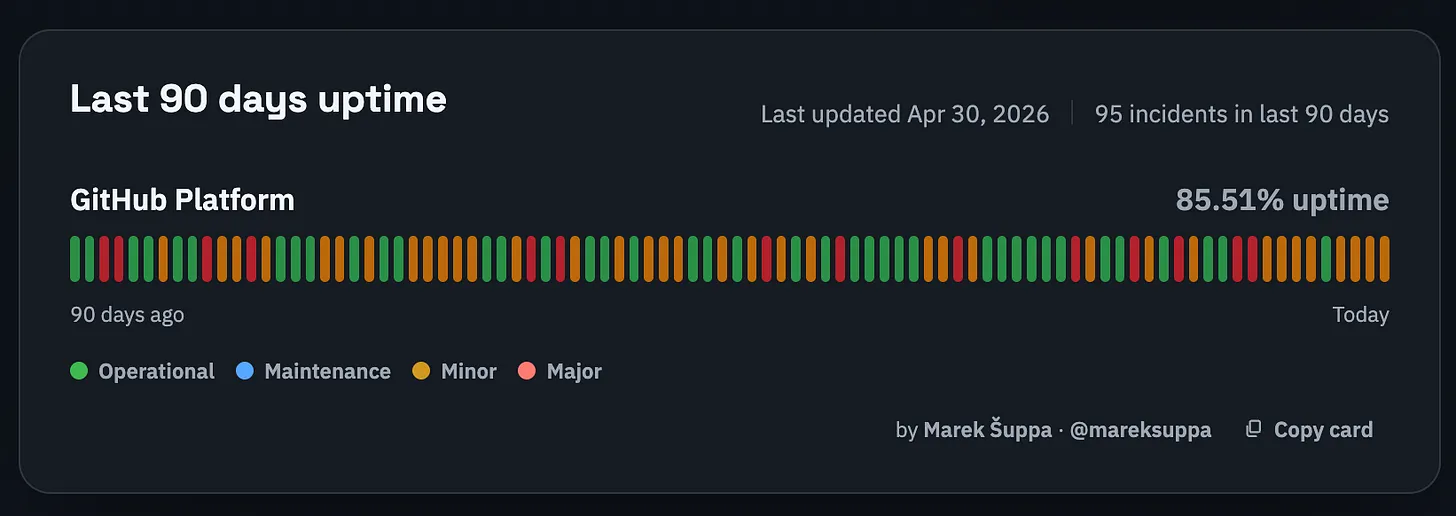
show more
Why do people post on [bad platform] instead of [good platform]?
Feed: https://danluu.com/atom.xml (https://danluu.com/atom.xml)
Published: 2024-01-25 00:00:00 | Created: 2026-07-23 05:18:39

There's a class of comment you often see when someone makes a popular thread on Mastodon/Twitter/Threads/etc., that you also see on videos that's basically "Why make a Twitter thread? This would be better as a blog post" or "Why make a video? This would be better as a blog post". But, these comments are often stronger in form, such as:

I can't read those tweets that span pages because the users puts 5 words in each reply. I find common internet completely stupid: Twitter, tiktok, Instagram, etc. What a huge waste of energy.

or

When someone chooses to blog on twitter you know it's facile at best, and more likely simply stupid (as in this case)

These kinds of comments are fairly common, e.g., I pulled up Foone's last 10 Twitter threads that scored 200 points or more on HN and 9 out of 10 had comments like this, complaining about the use of Twitter.

People often express bafflement that anyone could have a reason for using [bad platform], such as in "how many tweets are there just to make his point? 200? nobody thinks 'maybe this will be more coherent on a single page'? I don't get social media" or "Come on, typing a short description and uploading a picture 100 times is easier than typing everything in one block and adding a few connectors here and there? ... objectively speaking it is more work".

Personally, I don't really like video as a format and, for 95% of youtube videos that I see, I'd rather get the information as a blog post than a video (and this will be even more true if Google really cracks down on ad blocking) and I think that, for a reader who's interested in the information, long-form blog posts are basically strictly better than long threads on [bad platform]. But I also recognize that much of the content that I want to read wouldn't exist at all if it wasn't for things like [bad platform].

Stepping back and looking at the big picture, there are four main reasons I've seen that people use [bad platform], which are that it gets more engagement, it's where their friends are, it's lower friction, and it monetizes better.

Engagement

The engagement reason is the simplest, so let's look at that first. Just looking at where people spend their time, short-form platforms like Twitter, Instagram, etc., completely dominate longer form platforms like Medium, Blogspot, etc.; you can see this in the valuations of these companies, in survey data, etc. Substack is the hottest platform for long-form content and its last valuation was ~$600M, basically a rounding error compared to the value of short-form platforms (I'm not including things like Wordpress and or Squarespace, which derive a lot of their valuation from things other than articles and posts). The money is following the people and people have mostly moved on from long-form content. And if you talk to folks using substack about where their readers and growth comes from, that comes from platforms like Twitter, so people doing long-form content who optimize for engagement or revenue will still produce a lot of short-form content1.

Friends

The friends reason is probably the next simplest. A lot of people are going to use whatever people around them are using. Realistically, if I were ten years younger and started doing something online in 2023 instead of 2013, more likely than not, I would've tried streaming before I tried blogging. But, as an old, out of touch, person, I tried starting a blog in 2013 even knowing that blogging was a dying medium relative to video. It seems to have worked well enough for me, so I've stuck with it, but this seems generational. While there are people older than me who do video and people younger than me who write blogs, looking at the distribution of ages, I'm not all that far from the age where people overwhelmingly moved to video and if I were really planning to do something long-term instead of just doing the lowest friction thing when I started, I would've started with video. Today, doing video is natural for folks who are starting to put their thoughts online.

Friction

When [bad platform] is a microblogging platform like Twitter, Mastodon, Threads, etc., the friends reason still often applies — people on these platforms are frequently part of a community they interact with, and it makes more sense for them to keep their content on the platform full of community members than to put content elsewhere. But the bigger reason for people whose content is widely read is that a lot of people find these platforms are much lower friction than writing blog posts. When people point this out, [bad platform] haters are often baffled, responding with things like

Come on, typing a short description and uploading a picture 100 times is easier than typing everything in one block and adding a few connectors here and there? ... objectively speaking it is more work

For one thing, most widely read programmer/tech bloggers that I'm in touch with use platforms that are actually higher friction (e.g., Jekyll friction and Hugo friction). But, in principle, they could use substack, hosted wordpress, or another platform that this commenter considers "objectively" lower friction, but this fundamentally misunderstands where the friction comes from. When people talk about [bad platform] being lower friction, it's usually about the emotional barriers to writing and publishing something, not the literal number of clicks it takes to publish something. We can argue about whether or not this is rational, whether this "objectively" makes sense, etc., but at the end of the day, it is simply true that many people find it mentally easier to write on a platform where you write short chunks of text instead of a single large chunk of text.

I sometimes write things on Mastodon because it feels like the right platform for some kinds of content for me. Of course, since the issue is not the number of clicks it takes and there's some underlying emotional motivation, other people have different reasons. For example, Foone says:

Not to humblebrag or anything, but my favorite part of getting posted on hackernews or reddit is that EVERY SINGLE TIME there's one highly-ranked reply that's "jesus man, this could have been a blog post! why make 20 tweets when you can make one blog post?"

CAUSE I CAN'T MAKE A BLOG POST, GOD DAMN IT. I have ADHD. I have bad ADHD that is being treated, and the treatment is NOT WORKING TERRIBLY WELL. I cannot focus on writing blog posts. it will not happen

if I try to make a blog post, it'll end up being abandoned and unfinished, as I am unable to edit it into something readable and postable. so if I went 100% to blogs: You would get: no content I would get: lots of unfinished drafts and a feeling of being a useless waste

but I can do rambly tweet threads. they don't require a lot of attention for a long time, they don't have the endless editing I get into with blog posts, I can do them. I do them a bunch! They're just rambly and twitter, which some people don't like

The issue Foone is referring to isn't even uncommon — three of my favorite bloggers have mentioned that they can really only write things in one sitting, so either they have enough momentum to write an entire blog post or they don't. There's a difference in scale between only being able to get yourself to write a tweet at a time and only being able to write what you can fit into a single writing session, but these are differences in degree, not differences in kind.

Revenue

And whatever the reason someone has for finding [bad platform] lower friction than [good platform], allowing people to use a platform that works for them means we get more content. When it comes to video, the same thing also applies because video monetizes so much better than text and there's a lot of content that monetizes well on video that probably wouldn't monetize well in text.

To pick an arbitrary example, automotive content is one of these areas. For example, if you're buying a car and you want detailed, practical, reviews about a car as well as comparisons to other cars one might consider if they're looking at a particular car, before YouTube, AFAIK, no one was doing anything close to the depth of what Alex Dykes does on Alex on Autos. If you open up a car magazine from the heyday of car magazines, something like Car and Driver or Road and Track from 1997, there's nothing that goes into even 1/10th of the depth that Alex does and this is still true today of modern car magazines. The same goes for quite a few sub-categories of automotive content as well, such as Jonathan Benson's on Tyre Reviews. Before Jonathan, no one was testing tires with the same breadth and depth and writing it up (engineers at tire companies did this kind of testing and much more, but you had to talk to them directly to get the info)2 . You can find similar patterns in a lot of areas outside of automotive content as well. While this depends on the area, in many cases, the content wouldn't exist if it weren't for video. Not only do people, in general, have more willingness to watch videos than to read text, video monetizes much better than text does, which allows people to make providing in depth information their job in a way that wouldn't be possible in text. In some areas, you can make good money with a paywalled newsletter, but this is essentially what car magazines are and they were never able to support anything resembling what Alex Dykes does, nor does it seem plausible that you could support something like what Jonathan Benson does on YouTube.

Or, to pick an example from the tech world, shortly after Lucy Wang created her YouTube channel, Tech With Lucy, when she had 50k subscribers and her typical videos had thousands to tens of thousands views with the occasional video with a hundred thousand views, she noted that she was making more than she did working for AWS (with most of the money presumably coming in from sponsorships). By comparison, my blog posts all get well over a million hits and I definitely don't make anywhere near what Lucy made at AWS; instead, my blog barely covers my rent. It's possible to monetize some text decently well if you put most of it behind a paywall, e.g., Gergely Orosz does this with his newsletter, but if you want to have mostly or exclusively have freely available content, video generally dominates text.

Non-conclusion

While I would prefer that most content that I see on YouTube/Twitter/Threads/Mastodon/etc. were hosted on a text blog, the reality is that most of that content wouldn't exist at all if it had to be written up as long-form text instead of as chunked up short-form text or video. Maybe in a few years, summary tools will get good enough that I can consume the translations but, today, all the tools I've tried often get key details badly wrong, so we just have to live with the content in the form it's created in.

If you're looking for work, Freshpaint is hiring a recruiter, Software Engineers, and a Support Engineer. I'm in an investor in the company, so you should take this with the usual grain of salt, but if you're looking to join a fast growing early-stage startup, they seem to have found product-market fit and have been growing extremely quickly (revenue-wise).

Thanks to Heath Borders, Peter Bhat Harkins, James Young, Sophia Wisdom, and David Kok for comments/corrections/discussion.

Appendix: Elsewhere

Here's a comment from David Kok, from a discussion about a rant by an 80-year old bridge player about why bridge is declining, where the 80-year old claimed that the main reason is that IQ has declined and young people (as in, people who are 60 and below) are too stupid to play intellectual games like bridge; many other bridge players concurred:

Rather than some wrong but meaningful statement about age groups I always just interpret statements like "IQ has gone down" as "I am unhappy and have difficulty expressing that" and everybody else going "Yes so am I" when they concur.

If you adapt David Kok's comment to complaints about why something isn't a blog post, that's a meta reason that the reasons I gave in this post are irrelevant (to some people) — these reasons only matter to people who care about the reasons; if someone is just venting their feelings an the reasons they're giving are an expression of their feelings and not meant to be legitimate reasons, the reasons someone might not write a blog post are irrelevant.

Anyway, the topic of why post there instead of here is a common enough topic that I'm sure other people have written things about it that I'd be interested in reading. Please feel free to forward other articles you see on the topic to me

Appendix: HN comments on Foone's last 10 Twitter threads.

I looked up Foone's last N Twitter threads that made to HN with 200+ points, and 9 out of 10 have complaints about why Foone used Twitter and how it would be better as a blog post. [This is not including comments of the form "For those who hate Twitter threads as much as I do: https://threadreaderapp.com/thread/1014267515696922624.html", of which there are more than comments like the ones below, which have a complaint but also have some potentially useful content, like a link to another version of the thread.

Never trust a system that seems to be working

One of the first comments was a complaint that it was on Twitter, which was followed not too long after by

how many tweets are there just to make his point? 200? nobody thinks "maybe this will be more coherent on a single page"? I don't get social media

Someday aliens will land and all will be fine until we explain our calendar

This would be better written in a short story format but I digress.

shit like this is too good and entertaining to be on twitter [one of the few positive comments complaining about this]

This person hates it so much whenever there is a link to their content on this site, they go on huge massive rants about it with threads spamming as much as the OP, it's hilarious.

You want to know something about how bullshit insane our brains are?

They'll tolerate reading it on twitter?

Serious question : why do publishers break down their blog posts into umpteen tweeted microblogs? Do the engagement web algorithms give preference to the number of tweets in a thread? I see this is becoming more of a trend

This is a very interesting submission. But, boy, is Twitter's character limit poisonous.

IMO Foone's web presence is toxic. Rather than write a cogent article posted on their blog and then summarize a pointer to that post in a single tweet, they did the opposite writing dozens of tweets as a thread and then summarizing those tweets in a blog post. This is not a web trend I would like to encourage but alas it is catching on.

Oh, I don't care how the author writes it, or whether there's a graph relationship below (or anything else). It's just that Twitter makes the experience of reading content like that a real chore.

Reverse engineering Skifree

This should have been a blog or a livestream.

Even in this format?

I genuinely don't get it. It's a pain in the ass for them to publish it like that and it's a pain in the ass for us to read it like that. I hope Musk takes over Twitter and runs it the ground so we can get actual blog posts back.

Someone points out that Foone has noted that they find writing long-form stuff impossible and can write in short-form media, to which the response is the following:

Come on, typing a short description and uploading a picture 100 times is easier than typing everything in one block and adding a few connectors here and there?

Obviously that's their prerogative and they can do whatever they want but objectively speaking it is more work and I sincerely hope the trend will die.

Everything with a battery should have an off switch

You forgot, foone isn't going to change from streams of Twitter posts to long form blogging. [actually a meta comment on how people always complain about this and not a complaint, I think]

I can't read those tweets that span pages because the users puts 5 words in each reply. I find common internet completely stupid: Twitter, tiktok, Instagram, etc. What a huge waste of energy.

He clearly knows [posting long threads on Twitter] is a problem, he should fix it.

Someone points out that Foone has said that they're unable to write long-form blog posts, to which the person replies:

You can append to a blog post as you go the same way you can append to a Twitter feed. It's functionally the same, the medium just isn't a threaded hierarchy. There's no reason it has to be posted fully formed as he declares.

My own blog posts often have 10+ revisions after I've posted them.

It doesn't work well for thousands of people, which is why there are always complaints ... When something is suboptimal, you're well within your rights to complain about it. Posting long rants as Twitter threads is suboptimal for the consumers of said threads

I kind of appreciate the signal: When someone chooses to blog on twitter you know it's facile at best, and more likely simply stupid (as in this case)

There's an ARM Cortex-M4 with Bluetooth inside a Covid test kit

Amazingly, no complaint that I could see, although one comment was edited to be "."

Taking apart the 2010 Fisher Price re-released Music Box Record Player

why is this a twitter thread? why not a blog?

Followed by

I love that absolutely no one got the joke ... Foone is a sociopath who doesn't feel certain words should be used to refer to Foone because they don't like them. In fact no one should talk about Foone ever.

While posting to Tumblr, E and W keys just stopped working

Just hotkey detection gone wrong. Not that big of a surprise because implementing hotkeys on a website is a complete minefield. I don't think you can conclude that Tumblr is badly written from this. Badly tested maybe.

Because that comment reads like nonsense to anyone who read the link, someone asks "did you read the whole thread?", to which the commenter responds:

No because Twitter makes it completely unreadable.

My mouse driver is asking for a firewall exemption

Can we have twitter banned from being posted here? On all UI clicks, a nagging window comes up. You can click it away, but it reverts your click, so any kind of navigation becomes really cumbersome.

or twitter urls being replaced with some twitter2readable converter

Duke Nukem 3D Mirror Universe

This is remarkable, but Twitter is such an awful medium for this kind of text. I wish this was posted on a normal platform so I could easily share it.

If this were a blog post instead of a pile of tweets, we wouldn't have to expand multiple replies to see all of the content

Uh why isn't this a blog, or a youtube video? specifically to annoy foone

Yes, long form Twitter is THE WORST. However foone is awesome, so maybe they cancel each other out?

I hate twitter. It's slowly ruining the internet.

Non-foone posts

Of course this kind of thing isn't unique to Foone. For example, on the last Twitter thread I saw on HN, 2 of the first five comments were:

Has this guy got a blog?

and

That's kind of why the answer to "posting something to X" should be "just say no". It's impossible to say anything there that is subtle in the slightest or that requires background to understand but unfortunately people who are under the spell of X just can't begin to see something they do the way somebody else might see it.

I just pulled up Foone's threads because I know that they tend to post to short-form platforms and looking at 10 Foone threads is more interesting than looking at 10 random threads.


  1. Of course, almost no one optimizes for revenue because most people don't make money off of the content they put out on the internet. And I suspect only a tiny fraction of people are consciously optimizing for engagement, but just like we saw with prestige, there seems to be a lot of nonconscious optimization for engagement. A place where you can see this within a platform is (and I've looked at hundreds of examples of this) when people start using a platform like Mastodon or Threads. They'll post a lot of different kinds of things. Most things won't get a lot of traction and a few will. They could continue posting the same things, but they'll often, instead, post less low-engagement content over time and more high-engagement content over time. Platforms have a variety of ways of trying to make other people engage with your content rewarding and, on average, this seems to work on people. This is an intra-platform and not an inter-platform example, but if this works on people, it seems like the inter-platform reasoning should hold as well.

    Personally, I'm not optimizing for engagement or revenue, but I've been paying my rent from Patreon earnings, so it would probably make sense to do so. But, at least at the moment, looking into what interests me feels like a higher priority even if that's sort of a revenue and engagement minimizing move. For example, wc has the source of my last post at 20k words, which means that doing two passes of writing over the post might've been something like 7h40m. If I did short-form content instead, a while back, I did an experiment where I tried tweeting daily for a few months, which increased my Twitter followers by ~50% (from ~20k to ~30k). The Twitter experiment probably took about as much time as typing up my last post (which doesn't include the time spent doing the work for the last post which involved, among other things, reading five books and 15 or so papers about tire and vehicle dynamics), so from an engagement or revenue standpoint, posting to short-form platforms totally dominates the kind of writing I'm doing and anyone who care almost at all about engagement or revenue would do the short-form posting instead of long-form writing that takes time to create. As for me, right now, I have two drafts I'm in the middle of which are more like my last post. For one draft, the two major things I need to finish up are writing up a summary of ~500 articles/comments for an appendix and reading a 400 page book I want to quote a few things from, and for the other, I need to finish writing up notes for ~350 pages of FTC memos. Each of these drafts will turn into a blog post that's long enough that it could be a standalone book. In terms of the revenue this drives to my Patreon, I'd be lucky if I make minimum wage from doing this, not even including the time spent on things I research but don't publish because the result is uninteresting. But I'm also a total weirdo. On average, people are going to produce content that gets eyeballs, so of course a lot more people are going to create more hastily written long [bad platform] threads than blog posts.

    [return]
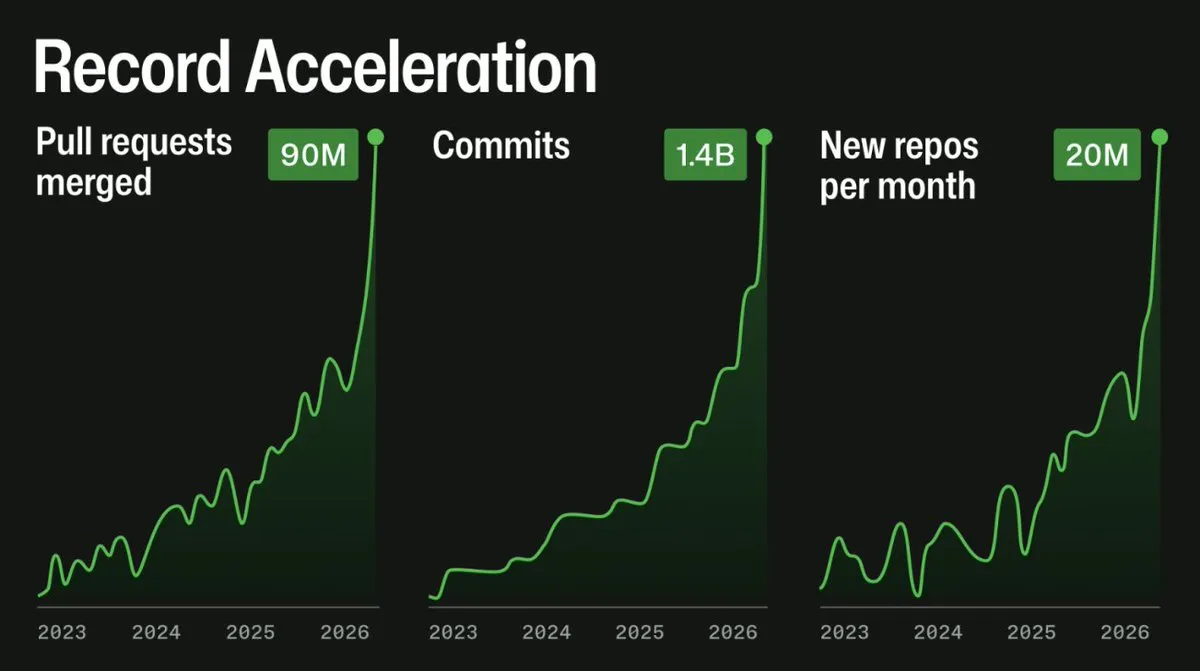
  2. for German-language content, there was one magazine that was doing work that's not as thorough in some ways, but semi-decently close, but no one was translating that into English. Jonathan Benson not only does unprecedented-for-English reviews of tires, he also translates the German reviews into English!

    On the broader topic, unfortunately, despite video making more benchmarking financially viable, there's still plenty of stuff where there's no good way to figure out what's better other than by talking to people who work in the industry, such as for ADAS systems, where the public testing is cursory at best.

    [return]
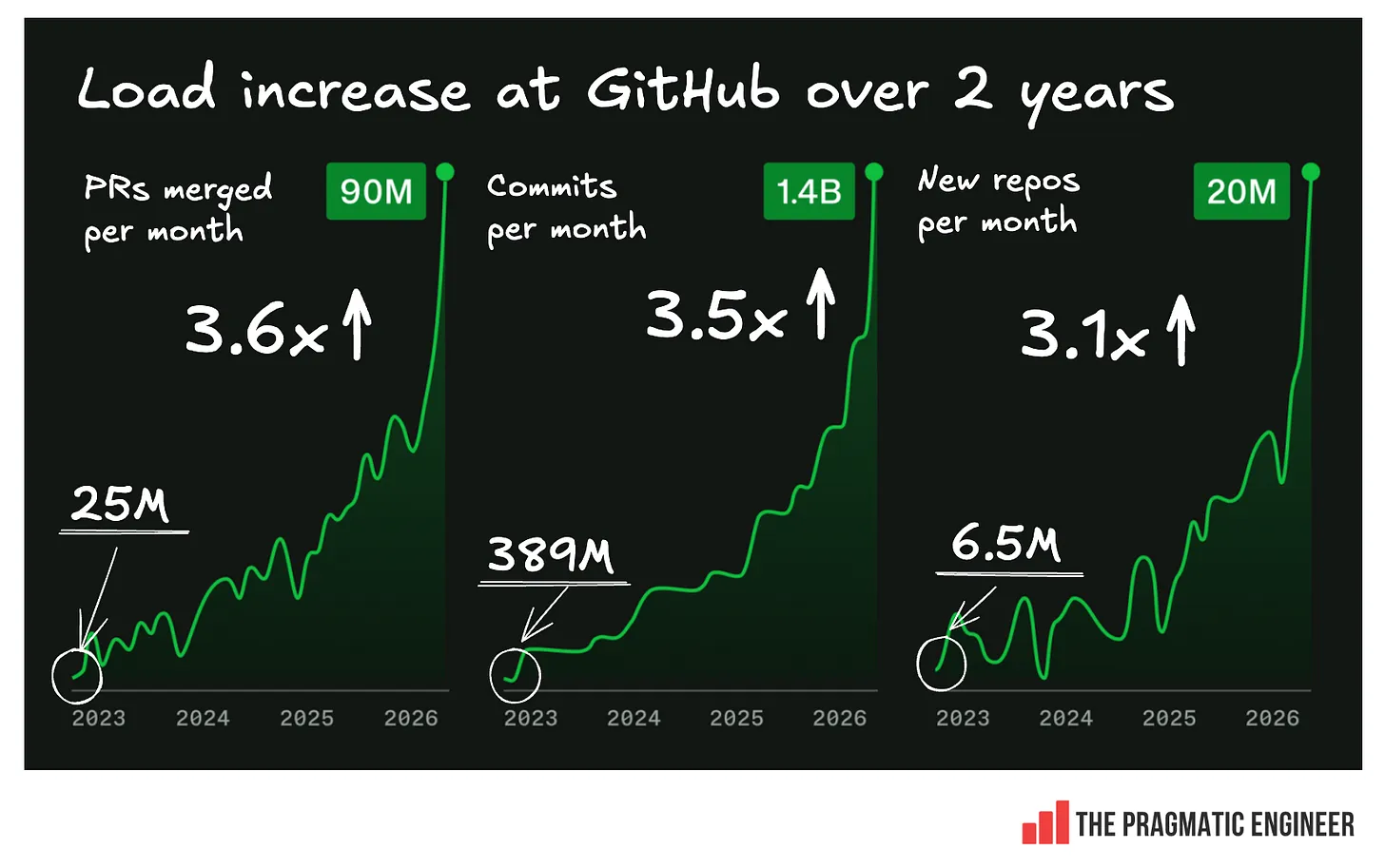
show more
Notes on Cruise's pedestrian accident
Feed: https://danluu.com/atom.xml (https://danluu.com/atom.xml)
Published: 2024-01-29 00:00:00 | Created: 2026-07-23 05:18:39

This is a set of notes on the Quinn Emanuel report on Cruise's handling of the 2023-10-02 accident where a Cruise autonomous vehicle (AV) hit a pedestrian, stopped, and then started moving again with the pedestrian stuck under the bottom of the AV, dragging the pedestrian 20 feet. After seeing some comments about this report, I read five stories on this report and then skimmed the report and my feeling is that the authors of four of the stories probably didn't read the report, and that people who were commenting had generally read stories by journalists who did not appear to read the source material, so the comments were generally way off base. As we previously discussed, it's common for summaries to be wildly wrong, even when they're summarizing a short paper that's easily read by laypeople, so of course summaries of a 200-page report are likely to be misleading at best.

On reading the entire report, I'd say that Cruise both looks better and worse than in the articles I saw, which is the same pattern we saw when we looked at the actual source for Exhibits H and J from Twitter v. Musk, the United States v. Microsoft Corp. docs, etc.; just as some journalists seem to be pro/anti-Elon Musk and pro/anti-Microsoft, willing to push an inaccurate narrative to dunk on them to the maximum extent possible or exonerate them to the maximum extent possible, we see the same thing here with Cruise. And as we saw in those cases, despite some articles seemingly trying to paint Cruise in the best or worst light possible, the report itself has material that is more positive and more negative than we see in the most positive or negative stories.

Aside from correcting misleading opinions on the report, I find the report interesting because it's rare to see any kind of investigation over what went wrong in tech in this level of detail, let alone a public one. We often see this kind of investigation in safety critical systems and sometimes see in sports as well as for historical events, but tech events are usually not covered like this. Of course companies do post-mortems of incidents, but you generally won't see a 200-page report on a single incident, nor will the focus of post-mortems be what the focus was here. In the past, we've noted that a lot can be learned by looking at the literature and incident reports on safety-critical systems, so of course this is true here as well, where we see a safety-critical system that's more tech adjacent than the ones we've looked at previously.

The length and depth of the report here reflects a difference in culture between safety-critical systems and "tech". The behavior that's described as unconscionable in the report is not only normal in tech, but probably more transparent and above board than you'd see at most major tech companies; I find the culture clash between tech and safety-critical systems interesting as well. I attempted to inject as little of my opinion as possible into the report as possible, even in cases where knowledge of tech companies or engineering meant that I would've personally written something different. For more opinions, see the section at the end.

REPORT TO THE BOARDS OF DIRECTORS OF CRUISE LLC, GM CRUISE HOLDINGS LLC, AND GENERAL MOTORS HOLDINGS LLC REGARDING THE OCTOBER 2, 2023 ACCIDENT IN SAN FRANCISCO

I. Introduction

A. Overview

  • 2023-10-24: California DMV suspended Cruise's driverless license
  • 2023-10-02: human-drive Nissan hit a pedestrian, putting the pedestrian in the path of a Cruise autonomous vehicle (AV), which then dragged the pedestrian 20 feet before stopping
  • DMV claims
    • Cruise failed to disclose that the AV moved forward after its initial impact
    • video Cruise played only shows a part of the accident and not the pedestrian dragging
    • DMV only learned about dragging from another government agency, "impeding its oversight"
  • NHTSA and CPUC also took action against Cruise and made similar claims
  • Media outlets also complained they were misled by Cruise
  • Cruise leadership and Cruise employees who talked with regulators admit they didn't explain the dragging, but they said they played the full video clip but, in all but one of the meetings, internet issues may have prevented regulators from seeing the entire accident
  • Cruise employees claim the NHTSA received the full video immediately after the 10-03 meeting and the CPUC declined the offer for the full video
  • Cruise employees note they played the full video, with no internet issues, to the SF MTA, SFPD, and SFFD on 10-03 and had a full discussion with those agencies
  • Cruise leadership concedes they never informed the media, but leadership believed that Cruise's obligations to the media are different than their obligations to regulators

B. Scope of Review

  • [no notes]

C. Review Plan Methodology and Limitations

  • 205k "documents", including " including e-mails, texts, Slack communications, and internal Cruise documents"
  • Interviewed 88 current and former employees and contractors
  • Reviewed a report by Exponent Inc., 3rd party firm
  • Internal review only; did not interview regulators and public officials
  • A number of employees and contractors were not available "due to personal circumstances and/or the wide-scale Reduction in Force", but these interviews were not deemed to be important
  • Report doesn't address broader issues outside of mandate, "such as the safety or safety processes of Cruise AVs or its operations, which are more appropriately evaluated by those with engineering and technical safety expertise"

D. Summary of Principal Findings and Conclusions

  • By morning of 10-03, leadership and 100+ employees knew the pedestrian had been dragged ~20ft. by the Cruise AV during the secondary movement after the AV came to a stop.
  • Plan was to disclose this happened by playing the full video, "letting the 'video speak for itself.'"
    • Cruise assumed that regulators and government officials would ask questions and Cruise would provide further info
  • "Weight of the evidence" is that Cruise attempted to play the full video, but in 3 meetings, internet issues prevented this from happening and Cruise didn't point out that the pedestrian dragging happened
  • On 10-02 and 10-03, "Cruise leadership was fixated on correcting the inaccurate media narrative" that Cruise's AV had caused the accident
    • This led Cruise to convey information about the Nissan and omit "other important information" about the accident to "the media, regulators, and other government officials"
  • "The reasons for Cruise’s failings in this instance are numerous: poor leadership, mistakes in judgment, lack of coordination, an 'us versus them' mentality with regulators, and a fundamental misapprehension of Cruise’s obligations of accountability and transparency to the government and the public. Cruise must take decisive steps to address these issues in order to restore trust and credibility."
  • "the DMV Suspension Order is a direct result of a proverbial self-inflicted wound by certain senior Cruise leadership and employees who appear not to have fully appreciated how a regulated business should interact with its regulators ... it was a fundamentally flawed approach for Cruise or any other business to take the position that a video of an accident causing serious injury provides all necessary information to regulators and otherwise relieves them of the need to affirmatively and fully inform these regulators of all relevant facts. As one Cruise employee stated in a text message to another employee about this matter, our 'leaders have failed us.'"

II. THE FACTS REGARDING THE OCTOBER 2 ACCIDENT

A. Background Regarding Cruise’s Business Operations

  • Cruise founded in 2013, acquired by GM in 2016 (GM owns 79%)
  • Cruise's stated goal: "responsibly deploy the world’s most advanced driverless vehicle service"
  • "Cruise’s stated mission is to make transportation cleaner, safer and more accessible"
  • Driverless ride-hail operation started 2021-09 in SF
  • Started charging in 2022-06
  • Has expanded to other areas, including overseas
  • 10-02 accident was first pedestrian injury in > 5M mi of driving

B. Key Facts Regarding the Accident

  • 10-02, 9:29pm: human-driven Nissan Sentra strikes pedestrian in crosswalk of 4-way intersection at 5th & Market in SF
  • Pedestrian entered crosswalk against a red light and "Do Not Walk" signal and then paused in Nissan's lane. Police report cited both driver and pedestrian for code violations and concluded that the driver was "most at fault"
  • The impact launched the pedestrian into the path of the Crusie AV
  • Cruise AV braked but still hit pedestrian
  • After coming to a complete stop, the AV moved to find a safe place to stop, known as a "'minimal risk condition' pullover maneuver (pullover maneuver) or 'secondary movement.'"
  • AV drove up to 7.7mph for 20 feet, dragging pedestrian with it
  • Nissan driver fled the scene (hit and run)

C. Timeline of Key Events

  • 10-02, 9:29pm: accident occurs and Nissan driver flees; AV transits low-res 3-second video (Offload 1) confirming collison to Cruise Remote Assistance Center
  • 9:32pm: AV transmits medium-res 14-second video (Offload 2) of collision, but not pullover maneuver and pedestrian dragging
  • 9:33pm: emergency responders arrive between 9:33pm and 9:38pm
  • 9:40pm: SFFD uses heavy rescue tools to remove pedestrian from under AV
  • 9:49pm: Cruise Incident Response team labels accident a "Sev-1", which is for minor collisions. Team created a virtual "war room" on Google Meet and a dedicated slack channel (war room slack channel) with ~20 employees
  • 10:17pm: Cruise contractors arrive at accident scene. One contractor takes > 100 photos and videos and notes blood and skin patches on the ground, showing the AV moved from point-of-impact to final stopping place
    • Another contractor, with Cruise's authorization, gives SFPD 14-second video showing Nissan
  • 11:31pm: Cruise raises incident to "Sev-0", for "major vehicle incident with moderate to major injury or fatality to any party". Maybe 200 additional employees are paged to the war room
  • 10-03, 12:15am: incident management convenes virtual meeting to share updates about accident and discuss media strategy to rebut articles that AV caused the accident
  • 12:45am: Cruise govt affairs team reaches out to govt officials
  • 12:53am: Cruise issues a press release noting the Nissan caused the accident. CEO Kyle Vogt and Communications VP Aaron McLear heavily edit the press statement. No mention of pullover maneuver or dragging; Cruise employees claim they were not aware of those facts at the time
  • 1:30am: AV back at Cruise facility, start the process of downloading collision report data from AV, including full video
  • 2:14am: 45-second video of accident which depicts pullover maneuver and dragging available, but no Cruise employee receives a notification that it's ready until > 4 hours later, when all data from AV is processed
  • 3:21am: At the request of Cruise govt. Affairs, Director of Systems Integrity Matt Wood creates 12s video of accident showing Nissan hitting pedestrian and pedestrian landing in front of Cruise AV. Video stops before AV hits pedestrian
  • 3:45am: Wood posts first known communication within Cruise of pullover maneuver and pedestrian dragging to war room slack channel with 77 employees in the channel at the time. Wood says the AV moved 1-2 car lengths after initial collision
  • 6:00am: Cruise holds virtual Crisis Management Team (CMT) meeting; pedestrian dragging is discussed. Subsequent slack messages (6:17am, 6:25am, 6:56am) confirm discussion on pullover maneuver and dragging
  • 6:28am: Cruise posts 45s 9-pane video of pullover and dragging, the full video (offload 3) to war room slack channel
  • 6:45am: Virtual Senior Leadership Team (SLT) meeting; Vogt and McLear discuss whether or not to share full video with media or alter Cruise press statement and decide to do neither
  • 7:25am: Cruise govt. affairs employee emails NHTSA and offers to meet
  • 7:45am: Cruise eng and safety teams hold preliminary meetings to discuss collision and pullover maneuver
  • 9:05am: Cruise regulator, legal, and systems integrity employees have pre-meeting to prepare for NHTSA briefing; they discuss pullover and dragging
  • 10:05am: Wood and VP of Global Government Affairs Prashanthi Raman have virtual meeting with Mayor of SF's transpo advisor. Wood shows full video, "reportedly with internet connectivity issues from his home computer"; neither Wood nor Raman brings up or discusses pullover or dragging
  • 10:30am: Virtual meeting with NHTSA. Wood shows full video, "again having internet connectivity issues causing video to freeze and/or black-out in key places including after initial impact" and again not bringing up or discussing pullover or dragging
  • 10:35am: Cruise eng and safety teams have 2nd meeting to discuss collision
  • 11:05am: Cruise regulatory, legal, and systems integrity employees have pre-meeting for DMV and California Highway Patrol (CHP) briefing; Cruise team doesn't discuss pullover and dragging
  • 11:30am: hybrid in-person and virtual meeting with DMV and CHP. Wood shows full video, again with internet connectivity issues and again not bringing up or discussing pullover or dragging
  • 12:00pm: virtual Cruise CMT meeting; engineers present findings, including chart detailing movement of AV during accident. Shows how AV collided with pedestrian and then moved forward again, dragging pedestrian ~20 ft. AV programmed to move as much as 100 ft, but internal AV systems flagged a failed wheel speed sensor because wheels were moving at different speeds (because one wheel was spinning on pedestrian's leg), stopping the car early
  • 12:30pm: Cruise govt affairs employee calls CPUC to discuss 10-02 accident and video
  • 12:40pm: Cruise virtual SLT meeting. Chart from CMT meeting presented. Vogt, COO Gil West, Chief Legal Officer Jeff Bleich, and others present. Safety and eng teams raise question of grounding fleet; Vogt and West say no
  • 1:40pm: full video uploaded to NHTSA
  • 2:37pm: Cruise submits 1-day report to NHTSA; no mention of pullover or dragging
  • 3:30pm: Cruise virtual meeting with SF MTA, SFPD, and SFFD. Wood "shows full video several times" without technical difficulties. Cruise doesn't bring up pullover maneuver or dragging, but officials see it and ask Cruise questions about it
  • 6:05pm: Cruise CMT meeting. Vogt and West end Sev-0 war room. Some cruise employees later express concerns about this
  • 10-05, 10:46am: Forbes asks Cruise for comment on AV dragging. Cruise declines to comment and stands by 10-03 press release
  • 1:07pm: CPUC sends request for information with 10-19 response deadline
  • 10-06, 10:31am: Forbes publishes "Cruise Robotaxi Dragged Woman 20 Feet in Recent Accident, Local Politician Says"
  • 10-10, 4:00pm: DMV requests more complete video from Cruise. Cruise responds same day, offering to screenshare video
  • 10-11, 11am: Cruise meeting with DMV on operational issues unrelated to accident. DMV's video request "briefly discussed"
  • 12:48pm: Cruise paralegal submits 10-day report to NHTSA after checking for updates. Report doesn't mention pullover or dragging "as no one told the paralegal these facts needed to be added"
  • 10-12, 3pm: NHTSA notifies Cruise that it intends to open Preliminary Evaluation (PE) for 10-02 accident and 3 other pedestrian-related events
  • 10-13, 10am: Cruise meets with DMV and CHP to share 9m 6-pane video and DMV clarifies that it wants the 45s 9-pane video ("full video")
  • 12:19pm: Cruise uploads full video
  • 1:30pm: Cruise meets with NHTSA and argues that PE is unwarranted
  • 10-16, 11:30am: Cruise meets with DMV and CHP, who state they don't believe they were shown full video during 10-03 meeting
  • 10-16: NHTSA officially opens PE
  • 10-18, 3:00pm: Cruise holds standing monthly meeting with CPUC. Cruise says they'll meet CPUC's 10-19 deadline
  • 10-19, 1:40pm: Cruise provides information and full video in response to 10-05 request
  • 10-23, 2:35pm: Cruise learns of possible DMV suspension of driverless permit
  • 10-24, 10:28am: DMV issues suspension of Cruise's driverless permit. Except for the few employees who heard on 10-23, Cruise employees are surprised
  • 10:49am: Cruise publishes blog post which states: "Shortly after the incident, our team proactively shared information with the California Department of Motor Vehicles (DMV), California Public Utilities Commision [sic] (CPUC), and National Highway Traffic Safety Administration (NHTSA), including the full video, and have stayed in close contact with regulators to answer their questions"
  • 11-02, 12:03pm: Cruise submits 30-day NHTSA report, which includes discussion of pullover and dragging
  • 11-02: Cruise recalls 950 systems as a result of 10-02 accident
  • 12-01: CPUC issues Order to Show Cause "for failing to provide complete information and for making misleading public comments regarding the October 2, 2023 Cruise related incident and its subsequent interactions with the commission"

D. Video Footage of the Accident

  • 6 videos
    • Offload 1; 9:29pm: low res, 3s, 4-pane. Captures 3s immediately after collision, including audio
    • Offload 2; 9:32pm*: 14s, 9-pane. No audio. Shows Nissan pedestrian collision and pedestrian being thrown into path of Cruise AV
    • Media Video; 10:04pm: 21s, 4-pane. Derived from offload 2, but slowed down
    • 1:06am: 4s clip of offload 2, cut by Vogt and sent to SVP of Government Affairs David Estrada and Chief Legal Officer Jeff Bleich with "this is the cut I was thinking of". Estrada responds with "yes, agree that should be the primary video that gets released if one is released". Video is a single pane from left-front of AV and only shows Nissan hitting pedestrian. Estrada says this should be shown in meetings with regulators first to show "what happened in clarity so you can see how the event happened (establish clear fault of human driver)", but "no evidence this shorter 4-second video was shown at any of the regulatory meetings."
    • 3:21am: 12s 9-pane video derived from offload 2. Cruise VP of Global Government Affairs Prashanthi Raman and Estrada asked Wood for shorter version of 14s video, "given last night’s Sev 0 and our need to discuss with policymakers, can you please make us a usable video of this angle [link to Webviz]. We only need to show the impact and the person landing in front of us and then cut it there". Wood created the video. Cruise’s Senior Director of Federal Affairs Eric Danko tells Wood, "believe NHTSA will want video footage that captures moment of our impact as well" and Wood replies, " can create a NHTSA version video once the logs have been offloaded"
    • "full video"; 6:28am: 45s, 9-pane, shows pullover and dragging. No audio. Link to full video posted to war room slack at

E. The Facts Regarding What Cruise Knew and When About the October 2 Accident

1. Facts Cruise Learned the Evening of October 2

a. Accident Scene
  • Driverless Support Specialists (DSS) arrive at scene, 9:39pm to 9:44pm
  • Another 2-person DSS team arrives with member of operations team and member of Safety Escalation team (SET), 10:00-10:30pm
  • At least one contractor takes > 100 photos and video and indicated an understanding of pedestrian dragging
    • Contractor noted blood and skin pieces, took long shots of trail of blood that indicated traveled after impact; contractor was instructed to bring phone to Cruise instead of uploading video onto customary Slack channel; contractor believes this was to protect injured pedestrian's privacy
    • Photos and video uploaded into "RINO" database at 2:23am, accessed by > 100 employees starting at 10-03, 5:11am; DB doesn't show which specific employees reviewed specific photos and videos
  • Another person at the scene denied knowing about dragging
  • In Cruise's internal review, prior to Quinn Emanuel, One Remote Assistance operator (RA) said they saw "ped flung onto hood of AV. You could see and hear the bump" and another saw AV "was already pulling over to the side". Quinn Emanuel didn't find out about these until after the RIF on 12-14. On reaching out, one declined the interview and the other didn't respond
    • Two other interviewees reported discussion of secondary movement of AV on evening of 10-02 or early morning of 10-03 but "this information has not been verified and appears contrary to the weight of the evidence"
  • No employees interviewed by Quinn Emanuel indicated they knew about dragging on 10-02
b. Virtual "Sev-0 War Room"
  • 20 people initially in war room
  • 200+ joined and left war room on 10-02 and 10-03
  • 2 interviewees recalled discussion of pedestrian dragging in Sev-0 war room on Meet. Neither could identify who was involved in the discussion or the timing of the discussion. One said it was after 4:00am
  • Cruise incident response playbook outlines roles of Incident Commander, SLT, CMT as well as how to respond in the weeks after incident. Playbook was not followed, said to be "aborted" because "too manually intensive"
c. Initial Media Narrative About the October 2 Accident
  • "Although the War Room was supposed to address a variety of issues such as understanding how the accident happened and next steps, the focus quickly centered almost exclusively on correcting a false media narrative that the Cruise AV had caused the Accident"

2. Facts Cruise Learned on October 3

a. The 12:15 a.m. "Sev-0 Collision SFO" Meeting
  • CMT Incident Manager convened meeting with 140 invites
  • Focus on sharing updates and media narrative strategy
  • Slack communications show Cruise employees viewed risk that public could think that Cruise AV injured pedestrian as a crisis
  • Estrada says to Raman, "feels like we are fighting with both arms tied behind our back if we are so afraid of releasing an exonerating video, very naïve if we think we won’t get walloped by media and enemies"
    • Raman responds, "we are under siege is my opinion, we have no fighting chance with these headlines/media stories…we are drowning — and we will lose every time"
    • above statement is said to have "captured well the feeling within Cruise’s senior leadership"
  • Vogt attended meeting and wanted to reveal only 4s part of clip showing the Nissan hitting the pedestrian
    • Vogt insisted he wanted to authorize any video or media statement before release, "nothing would be shared or done" without his approval
  • In parallel, comms team drafted bullet points to share with media, including "AV came to a complete stop immediately after impacting the struck pedestrian", which comms team did not know was inaccurate
b. Engineer’s 3:45 a.m. Slack Message
  • Slack communication
    • Wood: I have not seen this mentioned yet, but in the 1st RA Session the AV is stopped nearly right next to the adjacent vehicle but drives forward another 1-2 car lengths before coming to it's [sic] final position.
    • Unnamed employee: ACP, I can’t access the link but is the PED under the vehicle while it continues to move? Am I understanding that correctly
    • Wood: I believe so and the AV video can be seen moving vertically
  • Wood determined this by looking at data from RA center, which implied AV movement of 1-2 car lengths with dragged pedestrian
c. The 6:00 a.m. Crisis Management Team (CMT) Meeting
  • CMT discussed pullover and dragging
  • 100+ in meeting, including "COO Gil West, co-founder and Chief Product Officer Dan Kan, VP of Communications, Senior Director of Federal Affairs, and members of the communications, legal, engineering, safety, regulatory, and government affairs teams"
  • 6:17am, engineer slacks Wood, "have they raised the issue that the AV moved post-event? On this call. I joined late" and Wood responds "Not yet. I will raise"
  • Slack conversation during meet, from West to 6 other senior leaders:
    • West: ACP- For awareness it was reported at the CMT meeting that the AV moved 1-2 vehicle lengths before RA connection (low collision and looking for pull over before e-stop hit)
    • Vogt: Should we run road to sim and see what the AV would have done if it was in the other vehicles position? I think that might be quite powerful
    • West: Good idea- I suspect the AV would have stopped and never hit the Ped in the first place
  • engineer summarized CMT meeting in war room slack, "in the CMT meeting this morning, there was discussion of releasing/sharing video at some point. Matt Wood also noted that the AV travels at a slow speed after the collision, with the pedestrian underneath the car (it's about 7 meters). It wasn't discussed, but i wanted to point out that someone who has access to our AV video above up until the point of the collision could see later that the AV traveled about this distance post-collision, because there is a video on social media which shows the AV stopped with the pedestrian underneath, and there are some markers in the scene."
    • engineer also pointed out that non-engineers should be able to deduce pedestrian dragging from before before AV impact plus social media video showing AV's final position. After the DMV suspension order, also said "I pointed out in the channel that it was not hard to conclude there was movement after the initial stop…it seems the DMV fully understanding the entire details was predictable"
d. The 6:45 a.m. Senior Leadership Team (SLT) Meeting
  • Dragging discussed in SLT meeting
  • SLT discussed amending media statement, "the outcome [of these discussions] was whatever statement was published on social we would stick with because the decision was we would lose credibility by editing a previously agreed upon statement"
  • At this point, senior members of comms team knew that "AV came to a complete stop immediately after impacting the struck pedestrian" statement was inaccurate, but comms team continued giving inaccurate statement to press after SLT meeting, resulting in publications with incorrect statements in Forbes, CNBC, ABC News Digital, Engadget, Jalopnik, and The Register
    • "complete stop" removed on 10-13 after comms employee flagged statement to legal, which said "I don’t think we can say this"
e. The 7:45 a.m. and 10:35 a.m. Engineering and Safety Team

Meetings

  • [no notes]
f. The 12:05 p.m. CMT Meeting
  • [no notes]
g. The 12:40 p.m. SLT Meeting
  • "Vogt is said to have stated that it was good the AV stopped after 20 feet when it detected interference with its tire rather than continuing, as AVs are programmed to do, to look for a safe place to pull over for up to 100 feet or one full block"
  • Safety and eng teams raised question of grounding fleet until fix deployed
    • Vogt and West rejected idea
h. The 6:05 p.m. CMT Meeting
  • CMT leaders learn SLT is disbanding Sev-0 war room
  • Some interviewees expressed concern that no future CMT meetings scheduled for biggest incident in Cruise history
    • Some suggested to Chief Legal Officer Jeff Bleich that "miniature CMT" should continue to meet; Bleich and others supportive, but this wasn't done

3. Cruise’s Response to the Forbes Article

  • Forbes reached out about pedestrian dragging
    • Cruise decides not to respond to avoid triggering a new media cycle
      • Cruise stops sharing video with media

III. CRUISE’S COMMUNICATIONS WITH REGULATORS, CITY OFFICIALS, AND OTHER STAKEHOLDERS

A. Overview of Cruise’s Initial Outreach and Meetings with Regulators

  • "initial blurb" drafted by 12:24am; Cruise not aware of dragging at the time

B. The Mayor’s Office Meeting on October 3

  • Meeting with Mayor’s Transportation Advisor Alexandra Sweet
  • Cruise employee gave overview, then Wood played full video
    • This approach became the standard presentation from Cruise
  • Full video was played twice by Wood, but there were connectivity issues
  • Sweet apparently noticed that the vehicle moved again, but didn't ask about dragging or why vehicle moved again

C. Cruise’s Disclosures to the National Highway Traffic Safety Administration (NHTSA)

1. Cruise’s Initial Outreach on October 3

  • **10-03, 7:25am **: Cruise’s Head of Regulatory Engagement emailed NHTSA
    • NHTSA issues they wanted addressed included "Whether the Cruise ADS or remote assistant could ascertain that the pedestrian was trapped under the vehicle or the location of a pedestrian on the ground" and "vehicle control dynamics (lateral and longitudinal) leading to the incident and following impact including ADS predicted path of the pedestrian and whether any crash avoidance or mitigation took place" and video of accident

2. Cruise’s NHTSA Pre-Meeting

  • Talking points for anticipated questions
    • Did you stop the fleet?
      • Alicia Fenrick: We have not changed the posture of the fleet.
      • We have not identified a fault in AV response
    • Why did the vehicle move after it had initially stopped?
      • [Not discussed] Matthew Wood: The impact triggered a collision detection and the vehicle is designed to pull over out of lane in
    • Why didn't the vehicle brake in anticipation of the pedestrian in the road?
      • Matthew Wood: I think the video speaks for itself, the pedestrian is well past our lane of travel into the other lane
      • Alicia Fenrick: The pedestrian was clearly well past lane of travel of the AV. It would not be reasonable to expect that the other vehicle would speed up and proceed to hit the pedestrian, and then for the pedestrian to flip over the adjacent car and wind up in our lane.
  • Excerpt of notes from an employee:
    • They requested a video-wait until the meeting at least. Then another question-where we end the video.
    • Alicia: Biggest issue candidly. That we moved, and why, is something we are going to need to explain. The facts are what they are.
    • Matt: why we moved, it is a collision response. Detected as a minor collision, so design response is a permissible lane pullover.
    • How to reference this: triggered a collision detection and was designed to pull over out of lane. Do not qualify as minor collision, rather as a collision detection.
    • Questions will be: it stopped and then proceeded forward.
    • General premise: we are looking into this, we are doing a deep dive, we have done some preliminary analysis and this is what we have but it is only preliminary.
    • Buckets: before impact, impact, after impact.
  • Slack messages show discussion of when video should be sent and which video should be sent; decided to play full video due to to avoid being "accused of hiding the ball"

3. Cruise’s Meeting with NHTSA on October 3

  • Wood played the full video 2 or 3 times, "but it kept stopping or blacking- or whiting out because his home computer was having connectivity issues"
  • "NHTSA did not see the Full Video clearly or in its entirety"
  • No discussion of pullover or dragging
    • Pre-meeting notes edited after meeting, adding "[Not discussed]" to this item
  • Meeting notes of some questions asked by NHTSA
    • Could RA detect that pedestrian trapped?
      • Wood: Yes
    • Sensors too?
      • Wood: Yes
    • The statement "the last thing you would want to do is move when a pedestrian is underneath" appears to have been said, but recollections disagree on who said it. Some believe Wood said this and NHTSA concurred, some believe Wood said this an NHTSA repeated the statement, and some believe that NHTSA said this and Wood concurred
  • Post-meeting slack discussion
    • Employee: "I think we might need to mention the comment Matt made during the NHTSA call that the last thing you would want to do is move with a pedestrian under the car. From my notes and recollection Matt said 'As pedestrian is under vehicle last thing want to do is maneuver' and [the NHTSA regulator] agreed"
    • Another employee: "lets see where the conversation goes. if it’s relevant, we should share it. That’s not the main point here though"
    • In other discussions, other employees and execs express varying levels of concern on the non-disclosure of pullover and dragging, from moderate to none (e.g., Senior Director of Federal Affair says he "stands by it ... [Cruise's employees] have gone beyond their regulatory requirements")

4. Cruise’s NHTSA Post-Meeting on October 3

  • NHTSA sent a request for video and Cruise uploaded full video

5. Cruise’s Interactions with NHTSA on October 12, 13, and 16

a. October 12 Call
  • NHTSA regulator called Cruise employee and informed them that NHTSA was planning Preliminary Evaluation; employee sent the following to Cruise NHTSA team:
    • "She shared that there was a lot of consternation in the front office about last week's incident. It is going to be a pretty broad investigation into how vehicles react to pedestrians out in the street and people in the roadway. But questions about last week's incident will be included in the IR questions and analysis. I offered an additional briefing about last week's incident, but she said that we were quite upfront and shared the video and told them everything they need to know."
    • "it [is] difficult to believe that they could find fault with our reaction to the pedestrian in Panini [Panini is the name of the specific AV] that would extend beyond asking us additional questions in a follow-up…"
b. October 13 Meeting
  • "Despite the severe consequences that could result from a PE, including a recall, Cruise’s Chief Legal Officer and Senior Vice President of Government Affairs did not attend"
  • From meeting agenda: "We’re just a little confused by this. We met with you about the Panini incident last week, and the team didn’t express any remaining concerns about it, even when asked if you had any additional concerns. Was there really remaining concern about AV behavior regarding Panini? If yes, why did they not request another briefing? We’ve been extremely cooperative with the Agency and have always provided information that the agency requested. What will be gained by this escalation that we are not already providing? Offer briefing on any of these topics in lieu of PE."
  • Also planned to state: "Regarding last week’s incident we briefed the agency within hours of the event, provided video, and offered repeatedly to share additional information, including around the topic of pedestrian safety broadly. None was requested, which makes us question the motivations behind opening a PE. PEs are punitive means to gather information, and are reputationally harmful, particularly in a nascent industry."
c. October 16 PE
  • [no notes]

6. Cruise’s NHTSA Reports Regarding the October 2 Accident

  • NHTSA's SGO requires three written reports, including "a written description of the pre-crash, crash, and post-crash details"
  • Cruise's first two reports did not mention pullover and dragging; after consultation with GM, third report did mention pullover and dragging
a. NHTSA 1-Day Report
  • Original draft forwarded from paralegal to Deputy General Counsel Alicia Fenrick, Director of Communications Erik Moser, and Managing Legal Counsel Andrew Rubenstein: "A Cruise autonomous vehicle ("AV"), operating in driverless autonomous mode, was at a complete stop in response to a red light on southbound Cyril Magnin Street at the intersection with Market Street. A dark colored Nissan Sentra was also stopped in the adjacent lane to the left of the AV. As the Nissan Sentra and the AV proceeded through the intersection after the light turned green, a pedestrian entered the crosswalk on the opposite side of Market Street across from the vehicles and proceeded through the intersection against a red light. The pedestrian passed through the AV's lane of travel but stopped mid-crosswalk in the adjacent lane. Shortly thereafter, the Nissan Sentra made contact with the pedestrian, launching the pedestrian in front of the AV. The AV braked aggressively but, shortly thereafter, made contact with the pedestrian. This caused no damage to the AV. The driver of the Nissan Sentra left the scene shortly after the collision. Police and Emergency Medical Services (EMS) were called to the scene. The pedestrian was transported by EMS."
    • LGTM'd [approved] by Fenrick and Moser; Rubenstein said "the GA folks have suggested some additional edits", which included adding that the "completely" pass through AV's lane of travel, changing "launching" to "deflecting", and removing "this caused no damage to the AV"; no discussion of possible inclusion of pullover and dragging
  • Cruise employee who established NHTSA reporting system believed that full details, including pullover and dragging, should've been included, but they were on vacation at the time
  • In later, 10-24, employee Q&A on DMV suspension order, an employee asked "Why was the decision made not to include the post-collision pull-over in the written report to the NHTSA? At least, this seems like it must have been an intentional decision, not an accidental oversight."
    • Rubenstein drafted this prepared response for Fenrick: "The purpose of the NHTSA reporting requirement is to notify the agency of the occurrence of crashes. Consistent with that objective and our usual practice, our report notified NHTSA that the crash had occurred. Additionally, we had already met with NHTSA, including showing the full video to them, prior to submission of the report. That meeting was the result of our proactive outreach: we immediately reached out to NHTSA after the incident to set up a meeting to discuss with them. Our team met with NHTSA in the morning following the incident, including showing the full video to NHTSA. We then submitted the report and sent a copy of the full video later that afternoon."
    • Fenrick LGTM'd the above, but the response ended up not being given
  • Quinn Emanuel notes, "It is difficult to square this rationale with the plain language of the NHTSA regulation itself, which requires “a written description of the pre-crash, crash, *and post-crash details….*” (emphasis added)"
b. NHTSA 10-Day Report
  • Paralegal had full authority to determine if any new info or updates were necessary
  • Paralegal asked three employees on slack, "hi, checking in to see if there have been any updates to this incident? In particular, any status on the ped"
    • An employee who interacts with law enforcement responded "Unfortunately no. I’ve reached out to the investigating sergeant but have not received a response. This is probably due to other investigations he may be involved in"
    • This employee said that they were referring only to the pedestrian's medical condition, but the paralegal took the response more broadly
  • The paralegal also checked the RINO database for updates and saw none, then filed the 10-day report, which states "There are no updates related to this incident since the original submission on October 3, 2023" and then repeats the narrative in the 1-day report, omitting discussion of pullover and dragging
c. NHTSA 30-Day Report
  • GM urged Cruise to be more comprehensive with 30-day report, so CLO Bleich got involved.
    • Bleich reviewed the 1-day and 10-day reports, and then followed up with "[t]he most important thing now is simply to be complete and accurate in our reporting of this event to our regulators", says to include the pullover and dragging
    • Rubenstein objected to including dragging in 30-day report

7. Conclusions Regarding Cruise’s Interactions with NHTSA

  • [no notes]

D. Cruise’s Disclosures to the Department of Motor Vehicles (DMV)

1. Cruise’s Initial Outreach to the DMV and Internal Discussion of Which Video to Show

  • "Vogt wanted to focus solely on the Nissan’s role in causing the Accident and avoid showing the pedestrian’s injuries"
  • Estrada to Raman, apparently concurring: "Think we should get the clip of the video as Kyle described to prepare to show it to policymakers ... show the impact and the person landing in front of us. Cut it there. That's all that is needed."
  • Raman and Danko disagreed and pushed for showing most complete video available

2. DMV’s Response to Cruise’s Outreach

  • [no notes]

3. Cruise’s DMV Pre-Meeting

  • "While Deputy General Counsel Fenrick said she did not typically attend DMV meetings, she opted to attend this meeting in order to have some overlapping attendees between the NHTSA and DMV meetings. Notably, neither Bleich nor Estrada attended the pre-meeting despite planning to meet in-person with the DMV Director to discuss the Accident."

4. Cruise’s October 3 Meeting with the DMV

a. DMV Meeting Discussions
  • DMV regulators do not believe full video was played
  • Cruise employees have different recollections, but many believe full video was played, likely with bad connectivity problems
  • No discussion of pullover or dragging
b. Cruise’s Post-DMV Meeting Reflections
  • Slack discussion
    • Raman: thoughts?
    • Fenrick: You mean DMV call? More aggressive than NHTSA . . .
    • ACP - Not overly so but seemed a bit more critical and a little unrealistic. Like really we should predict another vehicle will hit and run and brake accordingly. I think they think they're expectations of anticipatory response is to other road users collisions was a bit off.
    • Raman: They tend to ask insane hypotheticals. I was about to interrupt and say we can go through any number of hypos.. this is what happened but I was waiting for them to ask a followup question before I did it.
    • Fenrick: insane hypothetical is absolutely right
    • ACP - Bigger concern is that no regulator has really clued in that we moved after rolling over the pedestrian
  • In another slack discussion, an employee stated "the car moved and they didn’t ask and we’re kind of lucky they didn’t ask"
    • Some employees indicate that this was the general consensus about the meeting

5. Cruise’s October 10 Communications with DMV

  • DMV asked for video by 10-11. Cruise did not do this, but showed a video in a meeting on 10-13

6. Cruise’s October 11 Meeting with the DMV

  • [no notes]

7. Cruise’s October 13 Meeting with the DMV

  • Cruise shared 9-minute 6-pane video created by Wood
    • "Notably, the camera angles did not include the lower frontal camera angles that most clearly showed the AV’s impact with the pedestrian and pullover maneuver"
  • "Interviewees said that the DMV’s tone in the meeting 'felt very mistrustful' and that it 'felt like something was not right here.'"
    • DMV had questions about what appeared to be missing or misleading video
    • In response to DMV's concerns and request, Cruise uploaded full video to DMV online portal

8. Cruise’s October 16 Meeting with the DMV

  • Meeting was scheduled for a different topic, but meeting moved to topic of DMV being misled about the accident; "Cruise interviewees recalled that the DMV and CHP attendees were angry about the October 3 presentation, saying their collective memory was that they were not shown the Full Video"

9. Cruise’s October 23 Communications with the DMV

  • Cruise calls political consultant to have them find out why DMV has been silent on expansion of SF autonomous fleet
    • Consultant says DMV is "pissed" and considering revocation of Cruise's license to operate
  • Internal disagreement on whether this could happen. "Estrada then sent CLO Bleich a Slack message indicating that he had talked to the DMV Director and there was '[n]o indication whatsoever that they are considering revoking.'"
    • Raman checks with political consultant again, who repeats that DMV is very angry and may revoke

10. DMV’s October 24 Suspension Order

  • Estrada calls DMV director Gordon to ask about suspension and is stonewalled
  • Vogt joins the call and makes personal appeal, saying he's "been committed to this since he was 13 to try and improve driver safety"
  • Appeal fails and suspension order is issued shortly afterwards
  • Slack conversation
    • Estrada: Kyle leading our response that we provided "full" video and we will stand by that if it's a fight.
    • Bleich: ACP- This will be a difficult fight to win. DMV and CHP have credibility and Steve Gordon seems to swear that he did not see the end of the video. The word of Cruise employees won't be trusted. I think we should bring in an outside firm to review the sequence of events and do an internal report since otherwise there is no basis for people to believe us. We should consider doing this and how to message it.
    • Estrada: Yes agree difficult and that we need to do it because we have facts, we can have sworn statements and data analytics on our side. Not a he said she said. We have proof. If we prove with facts a false statement that is important reputation saving.
    • Steve stopped even trying to make this claim. He resorted to arguing we should have highlighted the pullover attempt. This is a big overreach by them to make a claim like this we have the ability to prove false.

11. Post-October 24 DMV Communications

  • Vogt posted this blog post, titled "A detailed review of the recent SF hit-and-run incident"
    • [The report only has an excerpt from the blog post, but for the same reason I think it's worth looking at the report in detail, I think it's worth looking at the blog post linked above; my read of the now-deleted blog post is that it attempts to place the blame on the "hit and run" driver, which is repeatedly emphasized; the blog post also appears to include a video of the simulation discussed above, where Vogt says "Should we run road to sim and see what the AV would have done if it was in the other vehicles position? I think that might be quite powerful"]
    • [The blog post does discuss the pullover and dragging, saying "The AV detected a collision, bringing the vehicle to a stop; then attempted to pull over to avoid causing further road safety issues, pulling the individual forward approximately 20 feet"]

12. Conclusions Regarding Cruise’s Communications with the DMV

  • Bleich: "[T]he main concern from DMV was that our vehicle did not distinguish between a person and another object under its carriage originally, and so went into an MRC. Second, they felt that we should have emphasized the AV’s second movement right away in our first meeting. In fact, in the first meeting -- although we showed them the full video -- they (and we) were focused on confirming that we were not operating unsafely before the collision and we did not cause the initial contact with the pedestrian. They did not focus on the end of the video and -- because they did not raise it -- our team did not actively address it"
  • Vogt: "I am very much struggling with the fact that our GA team did not volunteer the info about the secondary movement with the DMV, and that during the handling of the event I remember getting inconsistent reports as to what was shared. At some point bad judgment call must have been made, and I want to know how that happened."
  • Bleich: "ACP -- I share your concern that the second movement wasn’t part of the discussion. I don’t know that there was a deliberate decision by the team that was doing the briefings. I believe they were still in the mode from the previous evening where they were pushing back against an assumption that we either were responsible for hitting the pedestrian or that we did not react fast enough when the pedestrian fell into our path. But as I’ve probed for basic information about what we shared and when I’ve had the same frustration that dates get pushed together or details are left out. I don’t know if this is deliberate, or people are simply having difficulty recalling exactly what they did or said during the immediate aftermath of that event."
  • "these Slacks convey that the three senior leaders of the company – the CEO, CLO, and COO – were not actively engaged in the regulatory response for the worst accident in Cruise’s history. Instead, they were trying to piece together what happened after the fact."

E. Cruise’s Disclosures to the SF MTA, SF Fire Department, and SF Police

Department

  • After playing video, a government official asks "this car moves with the woman underneath it, is that what we are seeing?", which results in a series of discussions about this topic
  • Two of the four Cruise employees in the meeting report being shocked to see the pullover and dragging, apparently not realizing that this had happened

F. Cruise’s Disclosures to the California Public Utilities Commission (CPUC)

1. Cruise’s October 3 Communications with the CPUC

  • CPUC and Cruise disagree on whether or not there was an offer to play the full video

2. CPUC’s October 5 Data Request

  • CPUC requests video by 10-19; Cruise's standard policy was to respond on the last day, so video was sent on 10-19

3. Cruise’s October 19 Response to CPUC’s Data Request

  • Video, along with the following summary: "[T]he Nissan Sentra made contact with the pedestrian, deflecting the pedestrian in front of the AV. The AV biased rightward before braking aggressively but, shortly thereafter, made contact with the pedestrian. The AV then attempted to achieve a minimal risk condition (MRC) by pulling out of the lane before coming to its final stop position. The driver of the Nissan Sentra left the scene shortly after the collision."

4. Conclusions Regarding Cruise’s Disclosures to the CPUC

  • [no notes]

G. Cruise’s Disclosures to Other Federal Officials

  • Cruise's initial outreach focused on conveying the accident had been caused by the hit-and-run Nissan driver
  • After the DMV suspension on 10-24, "outreach focused on conveying the message that it believed it had worked closely with regulatory agencies such as the California DMV, CPUC, and NHTSA following the October 2 Accident"

IV. THE AFTERMATH OF THE OCTOBER 2 ACCIDENT

A. The Cruise License Suspension by the DMV in California

  • Operating with human driver behind the wheel still allowed

B. The NHTSA PE Investigation and Safety Recall

  • [no notes]

C. The CPUC’s “Show Cause Ruling”

  • [no notes]

D. New Senior Management of Cruise and the Downsizing of Cruise

  • [no notes]

V. SUMMARY OF FINDINGS AND CONCLUSIONS

  • "By the time Cruise employees from legal, government affairs, operations, and systems integrity met with regulators and other government officials on October 3, they knew or should have known that the Cruise AV had engaged in a pullover maneuver and dragged the pedestrian underneath the vehicle for approximately 20 feet"
    • "Cruise’s passive, non-transparent approach to its disclosure obligations to its regulators reflects a basic misunderstanding of what regulatory authorities need to know and when they need to know it"
  • "Although neither Cruise nor Quinn Emanuel can definitively establish that NHTSA or DMV were shown the entirety of the Full Video, including the pullover maneuver and dragging, the weight of the evidence indicates that Cruise attempted to play the Full Video in these meetings; however, internet connectivity issues impeded or prevented these regulators from seeing the video clearly or fully."
    • "in the face of these internet connectivity issues that caused the video to freeze or black- or white-out, Cruise employees remained silent, failing to ensure that the regulators understood what they likely could not see – that the Cruise AV had moved forward again after the initial impact, dragging the pedestrian underneath the vehicle"
  • "Even if, as some Cruise employees stated, they were unaware of the pullover maneuver and pedestrian dragging at the time of certain regulatory briefings (which itself raises other concerns), Cruise leadership and other personnel were informed about the full details of the October 2 Accident during the day on October 3 and should have taken corrective action."
  • "While Cruise employees clearly demonstrated mistakes of judgment and failure to appreciate the importance of transparency and accountability, based on Quinn Emanuel’s review to date, the evidence does not establish that Cruise employees sought to intentionally mislead government regulators about the October 2 Accident, including the pullover maneuver and pedestrian dragging"
  • "Cruise’s senior leadership repeatedly failed to understand the importance of public trust and accountability"
  • "Cruise’s response to the October 2 Accident reflects deficient leadership at the highest levels of the Company—including among some members of the C-Suite, legal, governmental affairs, systems integrity, and communications teams—that led to a lack of coordination, mistakes of judgment, misapprehension of regulatory requirements and expectations, and inconsistent disclosures and discussions of material facts at critical meetings with regulators and other government officials. The end result has been a profound loss of public and governmental trust and a suspension of Cruise’s business in California"
    • "There was no captain of the ship. No single person or team within Cruise appears to have taken responsibility to ensure a coordinated and fully transparent disclosure of all material facts regarding the October 2 Accident to the DMV, NHTSA, and other governmental officials. Various members of the SLT who had the responsibility for managing the response to this Accident were missing-in-action for key meetings, both preparatory and/or with the regulators. This left each Cruise team to prepare for the meetings independently, with different employees attending different regulatory meetings, and with no senior Cruise official providing overall direction to ensure consistency in approach and disclosure of all material facts."
    • "There was no demonstrated understanding of regulatory expectations by certain senior Cruise management or line employees"
    • "Cruise’s deficient regulatory response to the October 2 Accident reflects preexisting weaknesses in the Company, including ineffectual Cruise leadership with respect to certain senior leaders. Two out of many examples illustrate these weaknesses."
      • No coordinated or rigorous process for what needed to be discussed with DMV, NHTSA, etc., nor did leadership or employees in meetings take steps to ensure they were informed of what had happened before the meetings (such as asking their direct reports for updates); "To underscore Cruise’s lack of coordination in its briefings to regulators and other government officials on October 3, senior leadership never convened a meeting of the various teams to discuss and learn how these meetings went, what questions were asked, and what discussions took place. Had they done so, they should have realized that in only one of the four meetings did government officials ask questions about the pullover maneuver and pedestrian dragging, requiring corrective action"
      • "Cruise lawyers displayed a lack of understanding of what information must be communicated to NHTSA in these reports, and misapprehended the NHTSA requirement ... Cruise leadership gave a paralegal the primary responsibility for preparing and filing such reports with the Cruise legal department exercising little oversight"

VI. RECOMMENDATIONS

  • New senior leadership
  • Consider creating a dedicated, cross-disciplinary Regulatory Team which understands regulations, has experience dealing with regulators, and proactively improves Cruise's regulatory reporting processes and systems, reporting directly to CEO with board oversight
  • Training for remaining senior leadership
  • Create a streamlined Crisis Management Team
    • 200 people in a war room can't manage a crisis; also need to have a "captain" or someone in charge
  • Review incident response protocol and ensure that it is followed
  • "There is a need to reform the governmental affairs, legal, and public communications functions within Cruise"
  • "Cruise should file its reports about any accident involving a Cruise vehicle with regulators by having a designated Chief Safety Officer or senior engineer, as well as a regulatory lawyer, within Cruise review and approve the filing of each report"

Appendix

  • The report by Exponent, mentioned above, is included in the Appendix. It is mostly redacted, although there is a lot of interesting non-redacted content, such as "the collision detection system incorrectly identified the pedestrian as being located on the side of the AV at the time of impact instead of in front of the AV and thus determined the collision to be a side impact ... The determination by the ADS that a side collision occurred, and not a frontal collision, led to a less severe collision response being executed and resulted in the AV performing the subsequent outermost lane stop maneuver instead of an emergency stop ... The root cause of the AV’s post-collision movement, after the initial brief stop, was the inaccurate determination by the ADS that a side collision had occurred ... the inaccuracy of the object track considered by the collision detection system and the resulting disparity between this track and the pedestrian’s actual position, the ADS failed to accurately determine the location of the pedestrian at the time of impact and while the pedestrian was underneath the vehicle"

back to danluu.com

I don't have much to add to this. I certainly have opinions, but I don't work in automotive and haven't dug into it enough to feel informed enough to add my own thoughts. In one discussion I had with a retired exec who used to work on autonomous vehicles, on incident management at Cruise vs. tech companies Twitter or Slack, the former exec said:

You get good at incidents given a steady stream of incidents of varying severity if you have to handle the many small ones. You get terrible at incidents if you can cover up the small ones until a big one happens. So it's not only funny but natural for internet companies to do it better than AV companies I think

On the "minimal risk condition" pullover maneuver, this exec said:

These pullover maneuvers are magic pixie dust making AVs safe: if something happens, we'll do a safety pullover maneuver

And on the now-deleted blog post, "A detailed review of the recent SF hit-and-run incident", the exec said:

Their mentioning of regulatory ADAS test cases does not inspire confidence; these tests are shit. But it's a bit unfair on my part since of course they would mention these tests, it doesn't mean they don't have better ones

On how regulations and processes making safety-critical industries safer and what you'd do if you cared about safety vs. the recommendations in the report, this exec said

[Dan,] you care about things being done right. People in these industries care about compliance. Anything "above the state of the art" buys you zero brownie points. eg for [X], any [Y] ATM are not required at all. [We] are better at [X] than most and it does nothing for compliance ... OTOH if a terrible tool or process exists that does nothing good but is considered "the state of the art" / is mandated by a standard, you sure as hell are going to use it

If you're looking for work, Freshpaint is hiring a recruiter, Software Engineers, and a Support Engineer. I'm in an investor, so you should consider my potential bias, but they seem to have found product-market fit and are growing extremely quickly (revenue-wise)

Thanks to an anonymous former AV exec, Justin Blank, and 5d22b for comments/corrections/discussion.

Appendix: a physical hardware curiosity

One question I had for the exec mentioned above, which wasn't relevant to this case, but is something I've wondered about for a while, is why the AVs that I see driving don't have upgraded tires and brakes. You can get much shorter stopping distances from cars that aren't super heavy by upgrading their tires and brakes, but the AVs I've seen have not had this done.

In this case, we can't do the exact comparison from an upgraded vehicle to the base vehicle because the vehicle dynamics data was redacted from section 3.3.3, table 9, and figure 40 of the appendix, but it's common knowledge that the simplest safety upgrade you can make on a car is upgrading the tires (and, if relevant, the brakes). One could argue that this isn't worth the extra running cost, or the effort (for the low-performance cars that I tend to see converted into AVs, getting stopping distances equivalent to a sporty vehicle would generally require modifying the wheel well so that wider tires don't rub) but, as an outsider, I'd be curious to know what the cost benefit trade-off on shorter stopping distances is.

They hadn't considered it before, but thought that better tires and brake would make a difference in a lot of other cases and prevent accients and explained the lack of this upgrade by:

I think if you have a combination of "we want to base AV on commodity cars" and "I am an algorithms guy" mindset you will not go look at what the car should be.

And, to be clear, upgraded tires and brakes would not have changed the outcome in this case. The timeline from the Exponent report has

  • -2.9s: contact between Nissan and Pedestrian
  • -2s: Pedestrian track dropped
  • -1.17s: Pedestrian beings separating from Nissan
  • -0.81s: [redacted]
  • -0.78s: Pedestrian lands in AV's travel lane
  • -0.41s: Collision checker predicts collision
  • -0.25s: AV starts sending braking and steering commands (19.1 mph)
  • 0s: collision (18.6 mph)

Looking at actual accelerometer data from a car with upgraded tires and brakes, stopping time from 19.1mph for that car was around 0.8s, so this wouldn't have made much difference in this case. If brakes aren't pre-charged before attempting to brake, there's significant latency when initially braking, such that 0.25s isn't enough for almost any braking to have occurred, which we can see from the speed only being 0.5mph slower in this case.

Another comment from the exec is that, while a human might react to the collision at -2.9s and slow down or stop, "scene understanding" as a human might do it is non-existent in most or perhaps all AVs, so it's unsurprising that the AV doesn't react until the pedestrian is in the AV's path, whereas a human, if they noticed the accident in the adjacent lane, would likely drastically slow down or stop (the exec guessed that most humans would come to a complete stop, whereas I guessed that most humans would slow down). The exec was also not surprised by the 530ms latency between the pedestrian landing in the AV's path and the AV starting to attempt to apply the brakes although, as a lay person, I found 530ms surprising.

On the advantage of AVs and ADAS, as implemented today, compared to a human who's looking in the right place, paying attention, etc., the exec said

They mainly never get tired or drink and hopefully also run in that terrible driver's car in the next lane. For [current systems], it's reliability and not peak performance that makes it useful. Peak performance is definitely not superhuman but subhuman

show more
Why it's impossible to agree on what's allowed
Feed: https://danluu.com/atom.xml (https://danluu.com/atom.xml)
Published: 2024-02-07 00:00:00 | Created: 2026-07-23 05:18:39

On large platforms, it's impossible to have policies on things like moderation, spam, fraud, and sexual content that people agree on. David Turner made a simple game to illustrate how difficult this is even in a trivial case, No Vehicles in the Park. If you haven't played it yet, I recommend playing it now before continuing to read this document.

The idea behind the site is that it's very difficult to get people to agree on what moderation rules should apply to a platform. Even if you take a much simpler example, what vehicles should be allowed in a park given a rule and some instructions for how to interpret the rule, and then ask a small set of questions, people won't be able to agree. On doing the survey myself, one of the first reactions I had was that the questions aren't chosen to be particularly nettlesome and there are many edge cases Dave could've asked about if he wanted to make it a challenge. And yet, despite not making the survey particularly challenging, there isn't broad agreement on the questions. Comments on the survey also indicate another problem with rules, which is that it's much harder to get agreement than people think it will be. If you read comments on rule interpretation or moderation on lobsters, HN, reddit, etc., when people suggest a solution, the vast majority of people will suggest something that anyone who's done moderation or paid attention to how moderation works knows cannot work, the moderation equivalent of "I could build that in a weekend"1. Of course we see this on Dave's game as well. The top HN comment, the most agree-upon comment, and a very common sentiment elsewhere is2:

I'm fascinated by the fact that my takeaway is the precise opposite of what the author intended.

To me, the answer to all of the questions was crystal-clear. Yes, you can academically wonder whether an orbiting space station is a vehicle and whether it's in the park, but the obvious intent of the sign couldn't be clearer. Cars/trucks/motorcycles aren't allowed, and obviously police and ambulances (and fire trucks) doing their jobs don't have to follow the sign.

So if this is supposed to be an example of how content moderation rules are unclear to follow, it's achieving precisely the opposite.

And someone agreeingly replies with:

Exactly. There is a clear majority in the answers.

After going through the survey, you get a graph showing how many people answered yes and no to each question, which is where the "clear majority" comes from. First of all, I think it's not correct to say that there is a clear majority. But even supposing that there were, there's no reason to think that there being a majority means that most people agree with you even if you take the majority position in each vote. In fact, given how "wiggly" the per-question majority graph looks, it would be extraordinary if it were the case that being in the majority for each question meant that most people agreed with you or that there's any set of positions that the majority of people agree on. Although you could construct a contrived dataset where this is true, it would be very surprising if this were true in a natural dataset.

If you look at the data (which isn't available on the site, but Dave was happy to pass it along when I asked), as of when I pulled the data, there was no set of answers which the majority of users agreed on and it was not even close. I pulled this data shortly after I posted on the link to HN, when the vast majority of responses were HN readers, who are more homogeneous than the population at large. Despite these factors making it easier to find agreement, the most popular set of answers was only selected by 11.7% of people. This is the position the top commenter says is "obvious", but it's a minority position not only in the sense that only 11.7% of people agree and 88.3% of people disagree, almost no one holds a position with only a small amount of disagreement from this allegedly obvious position. The 2nd and 3rd most common positions, representing 8.5% and 6.5% of the vote, respectively, are similar and only disagree on whether or not a non-functioning WW-II era tank that's part of a memorial violates the rule. Beyond that, approximately 1% of people hold the 4th, 5th, 6th, and 7th most popular positions, with every less popular position having less than 1% agreement, with a fairly rapid drop from there as well. So, 27% of people find themselves in agreement with significantly more than 1% of other users (the median user agrees with 0.16% of other users). See below for a plot of what this looks like. The opinions are sorted from most popular to least popular, with the most popular on the left. A log scale is used because there's so little agreement on opinions that a linear scale plot looks like a few points above zero followed by a bunch of zeros.

a plot illustrating the previous paragraph

Another way to look at this data is that 36902 people expressed an opinion on what constitutes a vehicle in the park and they came up with 9432 distinct opinions, for an average of ~3.9 people, per distinct expressed opinion. i.e., the average user agreement is ~0.01%. Although averages are, on average, overused, an average works as a summary for expressing the level of agreement because while we do have a small handful of opinions with much higher than the average 0.01% agreement, to "maintain" the average, this must be balanced out by a ginormous number of people who have even less agreement with other users. There's no way to have a low average agreement with high actual agreement unless that's balanced out by even higher disagreement, and vice versa.

On HN, in response to the same comment, Michael Chermside had the reasonable but not highly upvoted comment,

> To me, the answer to all of the questions was crystal-clear.

That's not particularly surprising. But you may be asking the wrong question.

If you want to know whether the rules are clear then I think that the right question to ask is not "Are the answers crystal-clear to you?" but "Will different people produce the same answers?".

If we had a sharp drop in the graph at one point then it would suggest that most everyone has the same cutoff; instead we see a very smooth curve as if different people read this VERY SIMPLE AND CLEAR rule and still didn't agree on when it applied.

Many (and probably actually most) people are overconfident when predicting what other people think is obvious and often incorrectly assume that other people will think the same thoughts and find the same things obvious. This is more true of the highly-charged issues that result in bitter fights about moderation than the simple "no vehicles in the park" example, but even this simple example demonstrates not only the difficulty in reaching agreement, but the difficulty in understanding how difficult it is to reach agreement.

To use an example from another context that's more charged, consider in any sport and whether or not a player is considered to be playing fair or is making dirty plays and should be censured. We could look at many different players from many different sports, so let's arbitrarily pick Draymond Green. If you ask any serious basketball fan who's not a Warriors fan, who's the dirtiest player in the NBA today, you'll find general agreement that it's Draymond Green (although some people will argue for Dillon Brooks, so if you want near uniform agreement, you'll have to ask for the top two dirtiest players). And yet, if you ask a Warriors fan about Draymond, most have no problem explaining away every dirty play of his. So if you want to get uniform agreement to a question that's much more straightforward than the "no vehicles in the park" question, such as, "is it ok to stomp on another player's chest and then use them as a springboard to leap into the air? on top of a hundred other dirty plays", you'll find that for many such seemingly obvious questions, a sizable group of people will have extremely strong disagreements with the "obvious" answer. When you move away from a contrived, abstract, example like "no vehicles in the park" to a real-world issue that people have emotional attachments to, it generally becomes impossible to get agreement even in cases where disinterested third parties would all agree, which we observed is already impossible even without emotional attachment. And when you move away from sports into issues people care even more strongly about, like politics, the disagreements get stronger.

While people might be able to "agree to disagree" on whether or not a a non-functioning WW-II era tank that's part of a memorial violates the "no vehicles in the park" rule (resulting in a pair of positions that accounts for 15% of the vote), in reality, people often have a hard time agreeing to disagree over what outsiders would consider very small differences of opinion. Charged issues are often fractally contentious, causing disagreement among people who hold all but identical opinions, making them significantly more difficult to agree on than our "no vehicles in the park" example.

To pick a real-world example, consider Jo Freeman, a feminist who, in 1976, wrote about her experienced being canceled for minute differences in opinion and how this was unfortunately common in the Movement (using the term "trashed" and not "canceled" because cancellation hadn't come into common usage yet and, in my opinion, "trashed" is the better term anyway). In the nearly fifty years since Jo Freeman wrote "Trashing", the propensity of humans to pick on minute differences and attempt to destroy anyone who doesn't completely agree with them hasn't changed; for a recent, parallel, example, Natalie Wynn's similar experience.

For people with opinions far away in the space of commonly held opinions, the differences in opinion between Natalie and the people calling for her to be deplatformed are fairly small. But, not only did these "small" differences in opinion result in people calling for Natalie to be deplatformed, they called for her to be physically assaulted, doxed, etc., and they suggested the same treatment suggested for her friends and associates as well as people who didn't really associate with her, but publicly talked about similar topics and didn't cancel her. Even now, years later, she still gets calls to be deplatformed and I expect this will continue past the end of my life (when I wrote this, years after the event Natalie discussed, I did a Twitter search and found a long thread from someone ranting about what a horrible human being Natalie is for the alleged transgression discussed in the video, dated 10 days ago, and it's easy to find more of these rants). I'm not going to attempt to describe the difference in positions because the positions are close enough that, to describe them would take something like 5k to 10k words (as opposed to, say, a left-wing vs. a right-wing politician, where the difference is blatant enough that you can describe in a sentence or two); you can watch the hour in the 1h40m video that's dedicated to the topic if you want to know the full details.

The point here is just that, if you look at almost any person who has public opinions on charged issues, the opinion space is fractally contentious. No large platform can satisfy user preferences because users will disagree over what content should be moderated off the platform and what content should be allowed. And, of course, this problem scales up as the platform gets larger3.

If you're looking for work, Freshpaint is hiring (US remote) in engineering, sales, and recruiting. Disclaimer: I may be biased since I'm an investor, but they seem to have found product-market fit and are rapidly growing.

Thanks to Peter Bhat Harkins, Dan Gackle, Laurence Tratt, Gary Bernhardt, David Turner, Kevin Burke, Sophia Wisdom, Justin Blank, and Bert Muthalaly for comments/corrections/discussion.


  1. Something I've repeatedly seen on every forum I've been on is the suggestion that we just don't need moderation after all and all our problems will be solved if we just stop this nasty censorship. If you want a small forum that's basically 4chan, then no moderation can work fine, but even if you want a big platform that's like 4chan, no moderation doesn't actually work. If we go back to those Twitter numbers, 300M users and 1M bots removed a day, if you stop doing this kind of "censorship", the platform will quickly fill up with bots to the point that everything you see will be spam/scam/phishing content or content from an account copying content from somewhere else or using LLM-generated content to post scam/scam/phishing content. Not only will most accounts be bots, bots will be a part of large engagement/voting rings that will drown out all human content.

    The next most naive suggestion is to stop downranking memes, dumb jokes, etc., often throw in with a comment like "doesn't anyone here have a sense of humor?". If you look at why forums with upvoting/ranking ban memes, it generally happens after the forum becomes totally dominated by memes/comics because people upvote those at a much higher rate than any kind of content with a bit of nuance, and not everyone wants a forum that's full of the lowest common denominator meme/comic content. And as for "having a sense of humor" in comments, if you look forums that don't ban cheap humor, top comments will generally end up dominated by these, e.g., for maybe 3-6 months, one the top comments on any kind of story about a man doing anything vaguely heroic on reddit forums that don't ban this kind of cheap was some variant of "I'm surprised he can walk with balls that weigh 900 lbs.", often repeated multiple times by multiple users, amidst a sea of the other cheap humor that was trendy during that period. Of course, some people actually want that kind of humor to dominate the comments, they actually want to see the same comment 150 times a day for months on end, but I suspect most people who grumpily claim "no one has a sense of humor here" when their cheap humor gets flagged don't actually want to read a forum that's full of other people's cheap humor.

    [return]
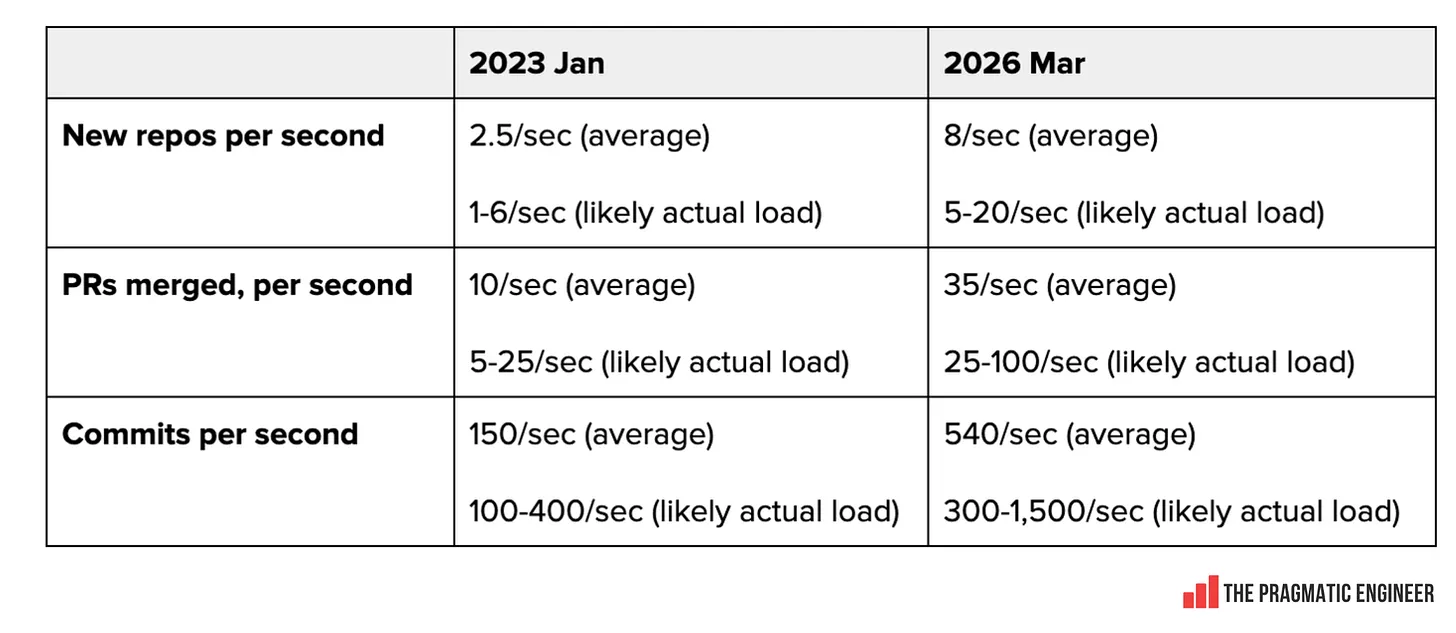
  2. This particular commenter indicates that they understand that moderation is, in general, a hard problem; they just don't agree with the "no vehicles in the park" example, but many other people think that both the park example and moderation are easy. [return]

  3. Nowadays, it's trendy to use "federation" as a cure-all in the same way people used "blockchain" as a cure-all five years ago, but federation doesn't solve this problem for the typical user. I actually had a conversation with someone who notes in their social media bio that they're one of the creators of the ActivityPub spec, who claimed that federation does solve this problem and that Threads adding ActivityPub would create some kind of federating panacea. I noted that fragmentation is already a problem for many users on Mastodon and whether or not Threads will be blocked is contentious and will only increase fragmentation, and the ActivityPub guy replied with something like "don't worry about that, most people won't block Threads, and it's their problem if they do."

    I noted that a problem many of my non-technical friends had when they tried Mastodon was that they'd pick a server and find that they couldn't follow someone they wanted to follow due to some kind of server blocking or ban. So then they'd try another server to follow this one person and then find that another person they wanted to follow is blocked. The fundamental problem is that users on different servers want different things to be allowed, which then results in no server giving you access to everything you want to see. The ActivityPub guy didn't have a response to this and deleted his comment.

    By the way, a problem that's much easier than moderation/spam/fraud/obscene content/etc. policy that the fediverse can't even solve is how to present content. Whenever I use Mastodon to interact with someone using "honk", messages get mangled. For example, a Mastodon message " in the subject (and content warning) field gets converted to &quot; the Mastodon user sees the reply from the honk user, so every reply from a honk user forks the discussion into a different subject. Here's something that can be fully specified without ambiguity, where people are much less emotionally attached to the subject than they are for moderation/spam/fraud/obscene content/etc., and the fediverse can't even solve this problem across two platforms.

    [return]
show more
Diseconomies of scale in fraud, spam, support, and moderation
Feed: https://danluu.com/atom.xml (https://danluu.com/atom.xml)
Published: 2024-02-18 00:00:00 | Created: 2026-07-23 05:18:39

If I ask myself a question like "I'd like to buy an SD card; who do I trust to sell me a real SD card and not some fake, Amazon or my local Best Buy?", of course the answer is that I trust my local Best Buy1 more than Amazon, which is notorious for selling counterfeit SD cards. And if I ask who do I trust more, my local reputable electronics shop (Memory Express, B&H Photo, etc.), I trust my local reputable electronics shop more. Not only are they less likely to sell me a counterfeit than Best Buy, in the event that they do sell me a counterfeit, the service is likely to be better.

Similarly, let's say I ask myself a question like, "on which platform do I get a higher rate of scams, spam, fraudulent content, etc., [smaller platform] or [larger platform]"? Generally the answer is [larger platform]. Of course, there are more total small platforms out there and they're higher variance, so I could deliberately use a smaller platform that's worse, but I'm choosing good options instead of bad options, in every size class, the smaller platform is generally better. For example, with Signal vs. WhatsApp, I've literally never received a spam Signal message, whereas I get spam WhatsApp messages somewhat regularly. Or if I compare places I might read tech content on, if I compare tiny forums no one's heard of to lobste.rs, lobste.rs has a very slightly higher rate (rate as in fraction of messages I see, not absolute message volume) of bad content because it's zero on the private forums and very low but non-zero on lobste.rs. And then if I compare lobste.rs to a somewhat larger platform, like Hacker News or mastodon.social, those have (again very slightly) higher rates of scam/spam/fraudulent content. And then if I compare that to mid-sized social media platforms, like reddit, reddit has a significantly higher and noticeable rate of bad content. And then if I can compare reddit to the huge platforms like YouTube, Facebook, Google search results, these larger platforms have an even higher rate of scams/spam/fraudulent content. And, as with the SD card example, the odds of getting decent support go down as the platform size goes up as well. In the event of an incorrect suspension or ban from the platform, the odds of an account getting reinstated get worse as the platform gets larger.

I don't think it's controversial to say that in general, a lot of things get worse as platforms get bigger. For example, when I ran a Twitter poll to see what people I'm loosely connected to think, only 2.6% thought that huge company platforms have the best moderation and spam/fraud filtering. For reference, in one poll, 9% of Americans said that vaccines implant a microchip and and 12% said the moon landing was fake. These are different populations but it seems random Americans are more likely to say that the moon landing was faked than tech people are likely to say that the largest companies have the best anti-fraud/anti-spam/moderation.

However, over the past five years, I've noticed an increasingly large number of people make the opposite claim, that only large companies can do decent moderation, spam filtering, fraud (and counterfeit) detection, etc. We looked at one example of this when we examined search results, where a Google engineer said

Somebody tried argue that if the search space were more competitive, with lots of little providers instead of like three big ones, then somehow it would be *more* resistant to ML-based SEO abuse.

And... look, if *google* can't currently keep up with it, how will Little Mr. 5% Market Share do it?

And a thought leader responded

like 95% of the time, when someone claims that some small, independent company can do something hard better than the market leader can, it’s just cope. economies of scale work pretty well!

But when we looked at the actual results, it turned out that, of the search engines we looked at, Mr 0.0001% Market Share was the most resistant to SEO abuse (and fairly good), Mr 0.001% was a bit resistant to SEO abuse, and Google and Bing were just flooded with SEO abuse, frequently funneling people directly to various kinds of scams. Something similar happens with email, where I commonly hear that it's impossible to manage your own email due to the spam burden, but people do it all the time and often have similar or better results than Gmail, with the main problem being interacting with big company mail servers which incorrectly ban their little email server.

I started seeing a lot of comments claiming that you need scale to do moderation, anti-spam, anti-fraud, etc., around the time Zuckerberg, in response to Elizabeth Warren calling for the breakup of big tech companies, claimed that breaking up tech companies would make content moderation issues substantially worse, saying:

It’s just that breaking up these companies, whether it’s Facebook or Google or Amazon, is not actually going to solve the issues,” Zuckerberg said “And, you know, it doesn’t make election interference less likely. It makes it more likely because now the companies can’t coordinate and work together. It doesn’t make any of the hate speech or issues like that less likely. It makes it more likely because now ... all the processes that we’re putting in place and investing in, now we’re more fragmented

It’s why Twitter can’t do as good of a job as we can. I mean, they face, qualitatively, the same types of issues. But they can’t put in the investment. Our investment on safety is bigger than the whole revenue of their company. [laughter] And yeah, we’re operating on a bigger scale, but it’s not like they face qualitatively different questions. They have all the same types of issues that we do."

The argument is that you need a lot of resources to do good moderation and smaller companies, Twitter sized companies (worth ~$30B at the time), can't marshal the necessary resources to do good moderation. I found this statement quite funny at the time because, pre-Twitter acquisition, I saw a much higher rate of obvious scam content on Facebook than on Twitter. For example, when I clicked through Facebook ads during holiday shopping season, most were scams and, while Twitter had its share of scam ads, it wasn't really in the same league as Facebook. And it's not just me — Arturo Bejar, who designed an early version of Facebook's reporting system and headed up some major trust and safety efforts noticed something similar (see footnote for details)2.

Zuckerberg seems to like the line of reasoning mentioned above, though, as he's made similar arguments elsewhere, such as here, in a statement the same year that Meta's internal docs made the case that they were exposing 100k minors a day to sexual abuse imagery:

To some degree when I was getting started in my dorm room, we obviously couldn’t have had 10,000 people or 40,000 people doing content moderation then and the AI capacity at that point just didn’t exist to go proactively find a lot of harmful content. At some point along the way, it started to become possible to do more of that as we became a bigger business

The rhetorical sleight of hand here is the assumption that Facebook needed 10k or 40k people doing content moderation when Facebook was getting started in Zuckerberg's dorm room. Services that are larger than dorm-room-Facebook can and do have better moderation than Facebook today with a single moderator, often one who works part time. But as people talk more about pursuing real antitrust action against big tech companies, tech big tech founders and execs have ramped up the anti-antitrust rhetoric, making claims about all sorts of disasters that will befall humanity if the biggest companies are broken up into the size of the biggest tech companies of 2015 or 2010. This kind of reasoning seems to be catching on a bit, as I've seen more and more big company employees state very similar reasoning. We've come a long way since the 1979 IBM training manual which read

A COMPUTER CAN NEVER BE HELD ACCOUNTABLE

THEREFORE A COMPUTER MUST NEVER MAKE A MANAGEMENT DECISION

The argument is now, for many critical decisions, it is only computers that can make most of the decisions and the lack of accountability seems to ultimately a feature, not a bug.

But unfortunately for Zuckerberg's argument3, there are at least three major issues in play here where diseconomies of scale dominate. One is that, given material that nearly everyone can agree is bad (such as bitcoin scams, spam for fake pharmaceutical products, fake weather forecasts, adults sending photos of their genitals to children), etc., large platforms do worse than small ones. The second is that, for the user, errors are much more costly and less fixable as companies get bigger because support generally becomes worse. The third is that, as platforms scale up, a larger fraction of users will strongly disagree about what should be allowed on the platform.

With respect to the first, while it's true that big companies have more resources, the cocktail party idea that they'll have the best moderation because they have the most resources is countered by the equally simplistic idea that they'll have the worst moderation because they're the juiciest targets or that they'll have the worst moderation because they'll have worst fragmentation due to the standard diseconomies of scale that occur when you scale up organizations and problem domains. Whether or not the company having more resources or these other factors dominate is too complex to resolve theoretically, but can observe the result empirically. At least at the level of resources that big companies choose to devote to moderation, spam, etc., having the larger target and other problems associated with scale dominate.

While it's true that these companies are wildly profitable and could devote enough resources to significantly reduce this problem, they have chosen not to do this. For example, in the last year before I wrote this sentence, Meta's last-year profit before tax (through December 2023) was $47B. If Meta had a version of the internal vision statement of a power company a friend mine worked for ("Reliable energy, at low cost, for generations.") and operated like that power company did, trying to create a good experience for the user instead of maximizing profit plus creating the metaverse, they could've spent the $50B they spent on the metaverse on moderation platforms and technology and then spent $30k/yr (which would result in a very good income in most countries where moderators are hired today, allowing them to have their pick of who to hire) on 1.6 million additional full-time staffers for things like escalations and support, on the order of one additional moderator or support staffer per few thousand users (and of course diseconomies of scale apply to managing this many people). I'm not saying that Meta or Google should do this, just that whenever someone at big tech company says something like "these systems have to be fully automated because no one could afford to operate manual systems at our scale", what's really being said is more along the lines of "we would not be able to generate as many billions a year in profit if we hired enough competent people to manually review cases our system should flag as ambiguous, so we settle for what we can get without compromising profits".4 One can defend that choice, but it is a choice.

And likewise for claims about advantages of economies of scale. There are areas where economies of scale legitimately make the experience better for users. For example, when we looked at why it's so hard to buy things that work well, we noted that Amazon's economies of scale have enabled them to build out their own package delivery service that is, while flawed, still more reliable than is otherwise available (and this has only improved since they added the ability for users to rate each delivery, which no other major package delivery service has). Similarly, Apple's scale and vertical integration has allowed them to build one of the all-time great performance teams (as measured by normalized performance relative to competitors of the same era), not only wiping the floor with the competition on benchmarks, but also providing a better experience in ways that no one really measured until recently, like device latency. For a more mundane example of economies of scale, crackers and other food that ships well are cheaper on Amazon than in my local grocery store. It's easy to name ways in which economies of scale benefit the user, but this doesn't mean that we should assume that economies of scale dominate diseconomies of scale in all areas. Although it's beyond the scope of this post, if we're going to talk about whether or not users are better off if companies are larger or smaller, we should look at what gets better when companies get bigger and what gets worse, not just assume that everything will get better just because some things get better (or vice versa).

Coming back to the argument that huge companies have the most resources to spend on moderation, spam, anti-fraud, etc., vs. the reality that they choose to spend those resources elsewhere, like dropping $50B on the Metaverse and not hiring 1.6 million moderators and support staff that they could afford to hire, it makes sense to look at how much effort is being expended. Meta's involvement in Myanmar makes for a nice case study because Erin Kissane wrote up a fairly detailed 40,000 word account of what happened. The entirety of what happened is a large and complicated issue (see appendix for more discussion) but, for the main topic of this post, the key components are that there was an issue that most people can generally agree should be among the highest priority moderation and support issues and that, despite repeated, extremely severe and urgent, warnings to Meta staff at various levels (engineers, directors, VPs, execs, etc.), almost no resources were dedicated to the issue while internal documents indicate that only a small fraction of agreed-upon bad content was caught by their systems (on the order of a few percent). I don't think this is unique to Meta and this matches my experience with other large tech companies, both as a user of their products and as an employee.

To pick a smaller scale example, an acquaintance of mine had their Facebook account compromised and it's now being used for bitcoin scams. The person's name is Samantha K. and some scammer is doing enough scamming that they didn't even bother reading her name properly and have been generating very obviously faked photos where someone holds up a sign and explains how "Kamantha" has helped them make tens or hundreds of thousands of dollars. This is a fairly common move for "hackers" to make and someone else I'm connected to on FB reported that this happened to their account and they haven't been able to recover the old account or even get it banned despite the constant stream of obvious scams being posted by the account.

By comparison, on lobste.rs, I've never seen a scam like this and Peter Bhat Harkins, the head mod says that they've never had one that he knows of. On Mastodon, I think I might've seen one once in my feed, replies, or mentions. Of course, Mastodon is big enough that you can find some scams if you go looking for them, but the per-message and per-user rates are low enough that you shouldn't encounter them as a normal user. On Twitter (before the acquisition) or reddit, moderately frequently, perhaps an average of once every few weeks in my normal feed. On Facebook, I see things like this all the time; I get obvious scam consumer good sites every shopping season, and the bitcoin scams, both from ads as well as account takeovers, are year-round. Many people have noted that they don't bother reporting these kinds of scams anymore because they've observed that Facebook doesn't take action on their reports. Meanwhile, Reuven Lerner was banned from running Facebook ads on their courses about Python and Pandas, seemingly because Facebook systems "thought" that Reuven was advertising something to do with animal trading (as opposed to programming). This is the fidelity of moderation and spam control that Zuckerberg says cannot be matched by any smaller company. By the way, I don't mean to pick on Meta in particular; if you'd like examples with a slightly different flavor, you can see the appendix of Google examples for a hundred examples of automated systems going awry at Google.

A reason this comes back to being an empirical question is that all of this talk about how economies of scale allows huge companies to bring more resources to bear on the problem on matters if the company chooses to deploy those resources. There's no theoretical force that makes companies deploy resources in these areas, so we can't reason theoretically. But we can observe that the resources deployed aren't sufficient to match the problems, even in cases where people would generally agree that the problem should very obviously be high priority, such as with Meta in Myanmar. Of course, when it comes to issues where the priority is less obvious, resources are also not deployed there.

On the second issue, support, it's a meme among tech folks that the only way to get support as a user of one of the big platforms is to make a viral social media post or know someone on the inside. This compounds the issue of bad moderation, scam detection, anti-fraud, etc., since those issues could be mitigated if support was good.

Normal support channels are a joke, where you either get a generic form letter rejection, or a kafkaesque nightmare followed by a form letter rejection. For example, when Adrian Black was banned from YouTube for impersonating Adrian Black (to be clear, he was banned for impersonating himself, not someone else with the same name), after appealing, he got a response that read

unfortunately, there's not more we can do on our end. your account suspension & appeal were very carefully reviewed & the decision is final

In another Google support story, Simon Weber got the runaround from Google support when he was trying to get information he needed to pay his taxes

accounting data exports for extensions have been broken for me (and I think all extension merchants?) since April 2018 [this was written on Sept 2020]. I had to get the NY attorney general to write them a letter before they would actually respond to my support requests so that I could properly file my taxes

There was also the time YouTube kept demonetizing PointCrow's video of eating water with chopsticks (he repeatedly dips chopsticks into water and then drinks the water, very slowly eating a bowl of water).

Despite responding with things like

we're so sorry about that mistake & the back and fourth [sic], we've talked to the team to ensure it doesn't happen again

He would get demonetized again and appeals would start with the standard support response strategy of saying that they took great care in examining the violating under discussion but, unfortunately, the user clearly violated the policy and therefore nothing can be done:

We have reviewed your appeal ... We reviewed your content carefully, and have confirmed that it violates our violent or graphic content policy ... it's our job to make sure that YouTube is a safe place for all

These are high-profile examples, but of course having a low profile doesn't stop you from getting banned and getting the same basically canned response, like this HN user who was banned for selling a vacuum in FB marketplace. After a number of appeals, he was told

Unfortunately, your account cannot be reinstated due to violating community guidelines. The review is final

When paid support is optional, people often say you won't have these problems if you pay for support, but people who use Google One paid support or Facebook and Instagram's paid creator support generally report that the paid support is no better than the free support. Products that effectively have paid support built-in aren't necessarily better, either. I know people who've gotten the same kind of runaround you get from free Google support with Google Cloud, even when they're working for companies that have 8 or 9 figure a year Google Cloud spend. In one of many examples, the user was seeing that Google must've been dropping packets and Google support kept insisting that the drops were happening in the customer's datacenter despite packet traces showing that this could not possibly be the case. The last I heard, they gave up on that one, but sometimes when an issue is a total showstopper, someone will call up a buddy of theirs at Google to get support because the standard support is often completely ineffective. And this isn't unique to Google — at another cloud vendor, a former colleague of mine was in the room for a conversation where a very senior engineer was asked to look into an issue where a customer was complaining that they were seeing 100% of packets get dropped for a few seconds at a time, multiple times an hour. The engineer responded with something like "it's the cloud, they should deal with it", before being told they couldn't ignore the issue as usual because the issue was coming from [VIP customer] and it was interrupting [one of the world's largest televised sporting events]. That one got fixed, but, odds are, you aren't that important, even if you're paying hundreds of millions a year.

And of course this kind of support isn't unique to cloud vendors. For example, there was this time Stripe held $400k from a customer for over a month without explanation, and every request to support got a response that was as ridiculous as the ones we just looked at. The user availed themself of the only reliable Stripe support mechanism, posting to HN and hoping to hit #1 on the front page, which worked, although many commenters said made the usual comments like "Flagged because we are seeing a lot of these on HN, and they seem to be attempts to fraudulently manipulate customer support, rather than genuine stories", with multiple people suggesting or insinuating that the user is doing something illicit or fraudulent, but it turned out that it was an error on Stripe's end, compounded by Stripe's big company support. At one point, the user notes

While I was writing my HN post I was also on chat with Stripe for over an hour. No new information. They were basically trying to shut down the chat with me until I sent them the HN story and showed that it was getting some traction. Then they started working on my issue again and trying to communicate with more people

And then the issue was fixed the next day.

Although, in principle, as companies become larger, they could leverage their economies of scale to deliver more efficient support, instead, they tend to use their economies of scale to deliver worse, but cheaper and more profitable support. For example, on Google Play store approval support, a Google employee notes:

a lot of that was outsourced to overseas which resulted in much slower response time. Here stateside we had a lot of metrics in place to fast response. Typically your app would get reviewed the same day. Not sure what it's like now but the managers were incompetent back then even so

And a former FB support person notes:

The big problem here is the division of labor. Those who spend the most time in the queues have the least input as to policy. Analysts are able to raise issues to QAs who can then raise them to Facebook FTEs. It can take months for issues to be addressed, if they are addressed at all. The worst part is that doing the common sense thing and implementing the spirit of the policy, rather than the letter, can have a negative effect on your quality score. I often think about how there were several months during my tenure when most photographs of mutilated animals were allowed on a platform without a warning screen due to a carelessly worded policy "clarification" and there was nothing we could do about it.

If you've ever wondered why your support person is responding nonsensically, sometimes it's the obvious reason that support has been outsourced to someone making $1/hr (when I looked up the standard rates for one country that a lot of support is outsourced to, a fairly standard rate works out to about $1/hr) who doesn't really speak your language and is reading from a flowchart without understanding anything about the system they're giving support for, but another, less obvious, reason is that the support person may be penalized and eventually fired if they take actions that make sense instead of following the nonsensical flowchart that's in front of them.

Coming back to the "they seem to be attempts to fraudulently manipulate customer support, rather than genuine stories" comment, this is a sentiment I've commonly seen expressed by engineers at companies that mete out arbitrary and capricious bans. I'm sympathetic to how people get here. As I noted before I joined Twitter, commenting on public information

Turns out twitter is removing ~1M bots/day. Twitter only has ~300M MAU, making the error tolerance v. low. This seems like a really hard problem ... Gmail's spam filter gives me maybe 1 false positive per 1k correctly classified ham ... Regularly wiping the same fraction of real users in a service would be [bad].

It is actually true that, if you, an engineer, dig into the support queue at some giant company and look at people appealing bans, almost all of the appeals should be denied. But, my experience from having talked to engineers working on things like anti-fraud systems is that many, and perhaps most, round "almost all" to "all", which is both quantitatively and qualitatively different. Having engineers who work on these systems believe that "all" and not "almost all" of their decisions are correct results in bad experiences for users.

For example, there's a social media company that's famous for incorrectly banning users (at least 10% of people I know have lost an account due to incorrect bans and, if I search for a random person I don't know, there's a good chance I get multiple accounts for them, with some recent one that has a profile that reads "used to be @[some old account]", with no forward from the old account to the new one because they're now banned). When I ran into a senior engineer from the team that works on this stuff, I asked him why so many legitimate users get banned and he told me something like "that's not a problem, the real problem is that we don't ban enough accounts. Everyone who's banned deserves it, it's not worth listening to appeals or thinking about them". Of course it's true that most content on every public platform is bad content, spam, etc., so if you have any sort of signal at all on whether or not something is bad content, when you look at it, it's likely to be bad content. But this doesn't mean the converse, that almost no users are banned incorrectly, is true. And if senior people on the team that classifies which content is bad have the attitude that we shouldn't worry about false positives because almost all flagged content is bad, we'll end up with a system that has a large number of false positives. I later asked around to see what had ever been done to reduce false positives in the fraud detection systems and found out that there was no systematic attempt at tracking false positives at all, no way to count cases where employees filed internal tickets to override bad bans, etc.; At the meta level, there was some mechanism to decrease the false negative rate (e.g., someone sees bad content that isn't being caught then adds something to catch more bad content) but, without any sort of tracking of false positives, there was effectively no mechanism to decrease the false positive rate. It's no surprise that this meta system resulted in over 10% of people I know getting incorrect suspensions or bans. And, as Patrick McKenzie says, the optimal rate of false positives isn't zero. But when you have engineers who have the attitude that they've done enough legwork that false positives are impossible, it's basically guaranteed that the false positive rate is higher than optimal. When you combine this with normal big company levels of support, it's a recipe for kafkaesque user experiences.

Another time, I commented on how an announced change in Uber's moderation policy seemed likely to result in false positive bans. An Uber TL immediately took me to task, saying that I was making unwarranted assumptions on how banning works, that Uber engineers go to great lengths to make sure that there are no false positive bans, there's extensive to review to make sure that bans are valid and, in fact, the false positive banning I was concerned about could never happen. And then I got effectively banned due to a false positive in a fraud detection system. I was remind of that incident when Uber incorrectly banned a driver who had to take them to court to even get information on why he was banned, at which point Uber finally actually looked into it (instead of just responding to appeals with fake messages claiming they'd looked into it). Afterwards, Uber responded to a press inquiry with

We are disappointed that the court did not recognize the robust processes we have in place, including meaningful human review, when making a decision to deactivate a driver’s account due to suspected fraud

Of course, in that driver's case, there was no robust process for review, nor was there a robust appeals process for my case. When I contacted support, they didn't really read my message and made some change that broke my account even worse than before. Luckily, I have enough Twitter followers that some Uber engineers saw my tweet about the issue and got me unbanned, but that's not an option that's available to most people, leading to weird stuff like this Facebook ad targeted at Google employees, from someone desperately seeking help with their Google account.

And even when you know someone on the inside, it's not always easy to get the issue fixed because even if the company's effectiveness doesn't increase as the company gets bigger, the complexity of the systems does increase. A nice example of this is Gergely Orosz's story about when the manager of the payments team left Uber and then got banned from Uber due to some an inscrutable ML anti-fraud algorithm deciding that the former manager of the payments team was committing payments fraud. It took six months of trying to get the problem fixed to mitigate the issue. And, by the way, they never managed to understand what happened and fix the underlying issue; instead, they added the former manager of the payments team to a special whitelist, not fixing the issue for any other user and, presumably, severely reducing or perhaps even entirely removing payment fraud protections for the former manager's account.

No doubt they would've fixed the underlying issue if it were easy to, but as companies scale up, they produce both technical and non-technical bureaucracy that makes systems opaque even to employees.

Another example of that is, at a company that has a ranked social feed, the idea that you could eliminate stuff you didn't want in your ranked feed by adding filters for things like timeline_injection:false, interstitial_ad_op_out, etc., would go viral. The first time this happened, a number of engineers looked into it and thought that the viral tricks didn't work. They weren't 100% sure and were relying on ideas like "no one can recall a system that would do something like this ever being implemented" and "if you search the codebase for these strings, they don't appear", and "we looked at the systems we think might do this and they don't appear to do this". There was moderate confidence that this trick didn't work, but no one would state with certainty that the trick didn't work because, as at all large companies, the aggregate behavior of the system is beyond human understanding and even parts that could be understood often aren't because there are other priorities.

A few months later, the trick went viral again and people were generally referred to the last investigation when they asked if it was real, except that one person actually tried the trick and reported that it worked. They wrote a slack message about how the trick did work for them, but almost no one noticed that the one person who tried reproducing the trick found that it worked. Later, when the trick would go viral again, people would point to the discussions about how people thought the trick didn't work, with this message noting that it appears to work (almost certainly not by the mechanism that users think, and instead just because having a long list of filters causes something to time out, or something similar) basically got lost because there's too much information to read all of it.

In my social circles, many people have read James Scott's Seeing Like a State, which is subtitled How Certain Schemes to Improve the Human World Have Failed. A key concept from the book is "legibility", what a state can see, and how this distorts what states do. One could easily write a highly analogous book, Seeing like a Tech Company about what's illegible to companies that scale up, at least as companies are run today. A simple example of this is that, in many video games, including ones made by game studios that are part of a $3T company, it's easy to get someone suspended or banned by having a bunch of people report the account for bad behavior. What's legible to the game company is the rate of reports and what's not legible is the player's actual behavior (it could be legible, but the company chooses not to have enough people or skilled enough people examine actual behavior); and many people have reported similar bannings with social media companies. When it comes to things like anti-fraud systems, what's legible to the company tends to be fairly illegible to humans, even humans working on the anti-fraud systems themselves.

Although he wasn't specifically talking about an anti-fraud system, in a Special Master's System, Eugene Zarashaw, a director a Facebook made this comment which illustrates the illegibility of Facebook's own systems:

It would take multiple teams on the ad side to track down exactly the — where the data flows. I would be surprised if there’s even a single person that can answer that narrow question conclusively

Facebook was unfairly and mostly ignorantly raked over the coals for this statement (we'll discuss that in an appendix), but it is generally true that it's difficult to understand how a system the size of Facebook works.

In principle, companies could augment the legibility of their inscrutable systems by having decently paid support people look into things that might be edge-case issues with severe consequences, where the system is "misunderstanding" what's happening but, in practice, companies pay these support people extremely poorly and hire people who really don't understand what's going on, and then give them instructions which ensure that they generally do not succeed at resolving legibility issues.

One thing that helps the forces of illegibility win at scale is that, as a highly-paid employee of one of these huge companies, it's easy to look at the millions or billions of people (and bots) out there and think of them all as numbers. As the saying goes, "the death of one man is a tragedy. The death of a million is a statistic" and, as we noted, engineers often turn thoughts like "almost all X is fraud" to "all X is fraud, so we might as well just ban everyone who does X and not look at appeals". The culture that modern tech companies have, of looking for scalable solutions at all costs, makes this worse than in other industries even at the same scale, and tech companies also have unprecedented scale.

For example, in response to someone noting that FB Ad Manager claims you can run an ad with a potential reach of 101M people in the U.S. aged 18-34 when the U.S. census had the total population of people aged 18-34 as 76M, the former PM of the ads targeting team responded with

Think at FB scale

And explained that you can't expect slice & dice queries to work for something like the 18-34 demographic in the U.S. at "FB scale". There's a meme at Google that's used ironically in cases like this, where people will say "I can't count that low". Here's the former PM of FB ads saying, non-ironically, "FB can't count that low" for numbers like 100M. Not only does FB not care about any individual user (unless they're famous), this PM claims they can't be bothered to care that groups of 100M people are tracked accurately.

Coming back to the consequences of poor support, a common response to hearing about people getting incorrectly banned from one of these huge services is "Good! Why would you want to use Uber/Amazon/whatever anyway? They're terrible and no one should use them". I disagree with this line of reasoning. For one thing, why should you decide for that person whether or not they should use a service or what's good for them? For another (and this this is a large enough topic that it should be its own post, so I'll just mention it briefly and link to this lengthier comment from @whitequark) most services that people write off as unnecessary conveniences that you should just do without are actually serious accessibility issues for quite a few people (in absolute, not necessarily, percentage, terms). When we're talking about small businesses, those people can often switch to another business, but with things like Uber and Amazon, there are sometimes zero or one alternatives that offer similar convenience and when there's one, getting banned due to some random system misfiring can happen with the other service as well. For example, in response to many people commenting on how you should just issue a chargeback and get banned from DoorDash when they don't deliver, a disabled user responds:

I'm disabled. Don't have a driver's license or a car. There isn't a bus stop near my apartment, I actually take paratransit to get to work, but I have to plan that a day ahead. Uber pulls the same shit, so I have to cycle through Uber, Door dash, and GrubHub based on who has coupons and hasn't stolen my money lately. Not everyone can just go pick something up.

Also, when talking about this class of issue, involvement is often not voluntary, such as in the case of this Fujitsu bug that incorrectly put people in prison.

On the third issue, the impossibility of getting people to agree on what constitutes spam, fraud, and other disallowed content, we discussed that in detail here. We saw that, even in a trivial case with a single, uncontroversial, simple, rule, people can't agree on what's allowed. And, as you add more rules or add topics that are controversial or scale up the number of people, it becomes even harder to agree on what should be allowed.

To recap, we looked at three areas where diseconomies of scale make moderation, support, anti-fraud, and anti-spam worse as companies get bigger. The first was that, even in cases where there's broad agreement that something is bad, such as fraud/scam/phishing websites and search, the largest companies with the most sophisticated machine learning can't actually keep up with a single (albeit very skilled) person working on a small search engine. The returns to scammers are much higher if they take on the biggest platforms, resulting in the anti-spam/anti-fraud/etc. problem being extremely non-linearly hard.

To get an idea of the difference in scale, HN "hellbans" spammers and people who post some kinds of vitriolic comments. Most spammers don't seem to realize they're hellbanned and will keep posting for a while, so if you browse the "newest" (submissions) page while logged in, you'll see a steady stream of automatically killed stories from these hellbanned users. While there are quite a few of them, the percentage is generally well under half. When we looked at a "mid-sized" big tech company like Twitter circa 2017, based on the public numbers, if spam bots were hellbanned instead of removed, spam is so much more prevalent that all you'd see if you were able to see it. And, as big companies go, 2017-Twitter isn't that big. As we also noted, the former PM of FB ads targeting explained that numbers as low as 100M are in the "I can't count that low" range, too small to care about; to him, basically a rounding error. The non-linear difference in difficulty is much worse for a company like FB or Google. The non-linearity of the difficulty of this problems is, apparently, more than a match for whatever ML or AI techniques Zuckerberg and other tech execs want to brag about.

In testimony in front of Congress, you'll see execs defend the effectiveness of these systems at scale with comments like "we can identify X with 95% accuracy", a statement that may technically be correct, but seems designed to deliberately mislead an audience that's presumed to be innumerate. If you use, as a frame of reference, things at a personal scale, 95% might sound quite good. Even for something like HN's scale, 95% accurate spam detection that results in an immediate ban might be sort of alright. Anyway, even if it's not great, people who get incorrectly banned can just email Dan Gackle, who will unban them. As we noted when we looked at the numbers, 95% accurate detection at Twitter's scale would be horrible (and, indeed, the majority of DMs I get are obvious spam). Either you have to back off and only ban users in cases where you're extremely confident, or you ban all your users after not too long and, as companies like to handle support, appealing means that you'll get a response saying that "your case was carefully reviewed and we have determined that you've violated our policies. This is final", even for cases where any sort of cursory review would cause a reversal of the ban, like when you ban a user for impersonating themselves. And then at FB's scale, it's even worse and you'll ban all of your users even more quickly, so then you back off and we end up with things like 100k minors a day being exposed to "photos of adult genitalia or other sexually abusive content".

The second area we looked at was support, which tends to get worse as companies get larger. At a high level, it's fair to say that companies don't care to provide decent support (with Amazon being somewhat of an exception here, especially with AWS, but even on the consumer side). Inside the system, there are individuals who care, but if you look at the fraction of resources expended on support vs. growth or even fun/prestige projects, support is an afterthought. Back when deepmind was training a StarCraft AI, it's plausible that Alphabet was spending more money playing Starcraft than on support agents (and, if not, just throw in one or two more big AI training projects and you'll be there, especially if you include the amortized cost of developing custom hardware, etc.).

It's easy to see how little big companies care. All you have to do is contact support and get connected to someone who's paid $1/hr to respond to you in a language they barely know, attempting to help solve a problem they don't understand by walking through some flowchart, or appeal an issue and get told "after careful review, we have determined that you have [done the opposite of what you actually did]". In some cases, you don't even need to get that far, like when following Instagram's support instructions results in an infinite loop that takes you back where you started and the "click here if this wasn't you link returns a 404". I've run into an infinite loop like this once, with Verizon, and it persisted for at least six months. I didn't check after that, but I'd bet on it persisting for years. If you had an onboarding or sign-up page that had an issue like this, that would be considered a serious bug that people should prioritize because that impacts growth. But for something like account loss due to scammers taking over accounts, that might get fixed after months or years. Or maybe not.

If you ever talk to people who work in support at a company that really cares about support, it's immediately obvious that they operate completely different from typical big tech company support, in terms of process as well as culture. Another way you can tell that big companies don't care about support is how often big company employees and execs who've never looked into how support is done or could be done will tell you that it's impossible to do better.

When you talk to people who work on support at companies that do actually care about this, it's apparent that it can be done much better. While I was writing this post, I actually did support at a company that does support decently well (for a tech company, adjusted for size, I'd say they're well above 99%-ile), including going through the training and onboarding process for support folks. Executing anything well at scale is non-trivial, so I don't mean to downplay how good their support org is, but the most striking thing to me was how much of the effectiveness of the org naturally followed from caring about providing a good support experience for the user. A full discussion of what that means is too long to include here, so we'll look at this in more detail another time, but one example is that, when we look at how big company support responds, it's often designed to discourage the user from responding ("this review is final") or to justify, putatively to the user, that the company is doing an adequate job ("this was not a purely automated process and each appeal was reviewed by humans in a robust process that ... "). This company's training instructs you to do the opposite of the standard big company "please go away"-style and "we did a great job and have a robust process, therefore complaints are invalid"-style responses. For every anti-pattern you commonly see in support, the training tells you to do the opposite and discusses why the anti-pattern results in a bad user experience. Moreover, the culture has deeply absorbed these ideas (or rather, these ideas come out of the culture) and there are processes for ensuring that people really know what it means to provide good support and follow through on it, support folks have ways to directly talk to the developers who are implementing the product, etc.

If people cared about doing good support, they could talk to people who work in support orgs that are good at helping users or even try working in one before explaining how it's impossible to do better, but this generally isn't done. Their company's support org leadership could do this as well, or do what I did and actually directly work in a support role in an effective support org, but this doesn't happen. If you're a cynic, this all makes sense. In the same way that cynics advise junior employees "big company HR isn't there to help you; their job is to protect the company", a cynic can credibly argue "big company support isn't there to help the user; their job is to protect the company", so of course big companies don't try to understand how companies that are good at supporting users do support because that's not what big company support is for.

The third area we looked at was how it's impossible for people to agree on how a platform should operate and how people's biases mean that people don't understand how difficult a problem this is. For Americans, a prominent case of this are the left and right wing conspiracy theories that pop up every time some bug pseudo-randomly causes any kind of service disruption or banning.

In a tweet, Ryan Greeberg joked:

Come work at Twitter, where your bugs TODAY can become conspiracy theories of TOMORROW!

In my social circles, people like to make fun of all of the absurd right-wing conspiracy theories that get passed around after some bug causes people to incorrectly get banned, causes the site not to load, etc., or even when some new ML feature correctly takes down a huge network of scam/spam bots, which also happens to reduce the follower count of some users. But of course this isn't unique to the right, and left-wing thought leaders and politicians come up with their own conspiracy theories as well.

Putting all three of these together, worse detection of issues, worse support, and a harder time reaching agreement on policies, we end with the situation we noted at the start where, in a poll of my Twitter followers, people who mostly work in tech and are generally fairly technically savvy, only 2.6% of people thought that the biggest companies were the best at moderation and spam/fraud filtering, so it might seem a bit silly to spend so much time belaboring the point. When you sample the U.S population at large, a larger fraction of people say they believe in conspiracy theories like vaccines putting a microchip in you or that we never landed on the moon, and I don't spend my time explaining why vaccines do not actually put a microchip in you or why it's reasonable to think that we landed on the moon. One reason that would perhaps be reasonable is that I've been watching the "only big companies can handle these issues" rhetoric with concern as it catches on among non-technical people, like regulators, lawmakers, and high-ranking government advisors, who often listen to and then regurgitate nonsense. Maybe next time you run into a lay person who tells you that only the largest companies could possibly handle these issues, you can politely point out that there's very strong consensus the other way among tech folks5.

If you're a founder or early-stage startup looking for an auth solution, PropelAuth is targeting your use case. Although they can handle other use cases, they're currently specifically trying to make life easier for pre-launch startups that haven't invested in an auth solution yet. Disclaimer: I'm an investor

Thanks to Gary Bernhardt, Peter Bhat Harkins, Laurence Tratt, Dan Gackle, Sophia Wisdom, David Turner, Yossi Kreinin, Justin Blank, Ben Cox, Horace He, @borzhemsky, Kevin Burke, Bert Muthalaly, Sasuke, anonymous, Zach Manson, Joachim Schipper, Tony D'Souza, and @GL1zdA for comments/corrections/discussion.

Appendix: techniques that only work at small scale

This post has focused on the disadvantages of bigness, but we can also flip this around and look at the advantages of smallness.

As mentioned, the best experiences I've had on platforms are a side effect of doing things that don't scale. One thing that can work well is to have a single person, with a single vision, handling the entire site or, when that's too big, a key feature of the site.

I'm on a number of small discords that have good discussion and essentially zero scams, spam, etc. The strategy for this is simple; the owner of the channel reads every message and bans and scammers or spammers who show up. When you get to a bigger site, like lobste.rs, or even bigger like HN, that's too large for someone to read every message (well, this could be done for lobste.rs, but considering that it's a spare-time pursuit for the owner and the volume of messages, it's not reasonable to expect them to read every message in a short timeframe), but there's still a single person who provides the vision for what should happen, even if the sites are large enough that it's not reasonable to literally read every message. The "no vehicles in the park" problem doesn't apply here because a person decides what the policies should be. You might not like those policies, but you're welcome to find another small forum or start your own (and this is actually how lobste.rs got started — under HN's previous moderation regime, which was known for banning people who disagreed with them, Joshua Stein was banned for publicly disagreeing with an HN policy, so Joshua created lobsters (and then eventually handed it off to Peter Bhat Harkins).

There's also this story about craigslist in the early days, as it was just getting big enough to have a serious scam and spam problem

... we were stuck at SFO for something like four hours and getting to spend half a workday sitting next to Craig Newmark was pretty awesome.

I'd heard Craig say in interviews that he was basically just "head of customer service" for Craigslist but I always thought that was a throwaway self-deprecating joke. Like if you ran into Larry Page at Google and he claimed to just be the janitor or guy that picks out the free cereal at Google instead of the cofounder. But sitting next to him, I got a whole new appreciation for what he does. He was going through emails in his inbox, then responding to questions in the craigslist forums, and hopping onto his cellphone about once every ten minutes. Calls were quick and to the point "Hi, this is Craig Newmark from craigslist.org. We are having problems with a customer of your ISP and would like to discuss how we can remedy their bad behavior in our real estate forums". He was literally chasing down forum spammers one by one, sometimes taking five minutes per problem, sometimes it seemed to take half an hour to get spammers dealt with. He was totally engrossed in his work, looking up IP addresses, answering questions best he could, and doing the kind of thankless work I'd never seen anyone else do with so much enthusiasm. By the time we got on our flight he had to shut down and it felt like his giant pile of work got slightly smaller but he was looking forward to attacking it again when we landed.

At some point, if sites grow, they get big enough that a person can't really own every feature and every moderation action on the site, but sites can still get significant value out of having a single person own something that people would normally think is automated. A famous example of this is how the Digg "algorithm" was basically one person:

What made Digg work really was one guy who was a machine. He would vet all the stories, infiltrate all the SEO networks, and basically keep subverting them to keep the Digg front-page usable. Digg had an algorithm, but it was basically just a simple algorithm that helped this one dude 10x his productivity and keep the quality up.

Google came to buy Digg, but figured out that really it's just a dude who works 22 hours a day that keeps the quality up, and all that talk of an algorithm was smoke and mirrors to trick the SEO guys into thinking it was something they could game (they could not, which is why front page was so high quality for so many years). Google walked.

Then the founders realised if they ever wanted to get any serious money out of this thing, they had to fix that. So they developed "real algorithms" that independently attempted to do what this one dude was doing, to surface good/interesting content.

...

It was a total shit-show ... The algorithm to figure out what's cool and what isn't wasn't as good as the dude who worked 22 hours a day, and without his very heavy input, it just basically rehashed all the shit that was popular somewhere else a few days earlier ... Instead of taking this massive slap to the face constructively, the founders doubled-down. And now here we are.

...

Who I am referring to was named Amar (his name is common enough I don't think I'm outing him). He was the SEO whisperer and "algorithm." He was literally like a spy. He would infiltrate the awful groups trying to game the front page and trick them into giving him enough info that he could identify their campaigns early, and kill them. All the while pretending to be an SEO loser like them.

Etsy supposedly used the same strategy as well.

Another class of advantage that small sites have over large ones is that the small site usually doesn't care about being large and can do things that you wouldn't do if you wanted to grow. For example, consider these two comments made in the midst of a large flamewar on HN

My wife spent years on Twitter embroiled in a very long running and bitter political / rights issue. She was always thoughtful, insightful etc. She'd spend 10 minutes rewording a single tweet to make sure it got the real point across in a way that wasn't inflammatory, and that had a good chance of being persuasive. With 5k followers, I think her most popular tweets might get a few hundred likes. The one time she got drunk and angry, she got thousands of supportive reactions, and her followers increased by a large % overnight. And that scared her. She saw the way "the crowd" was pushing her. Rewarding her for the smell of blood in the water.

I've turned off both the flags and flamewar detector on this article now, in keeping with the first rule of HN moderation, which is (I'm repeating myself but it's probably worth repeating) that we moderate HN less, not more, when YC or a YC-funded startup is part of a story ... Normally we would never late a ragestorm like this stay on the front page—there's zero intellectual curiosity here, as the comments demonstrate. This kind of thing is obviously off topic for HN: https://news.ycombinator.com/newsguidelines.html. If it weren't, the site would consist of little else. Equally obvious is that this is why HN users are flagging the story. They're not doing anything different than they normally would.

For a social media site, low-quality high-engagement flamebait is one of the main pillars that drive growth. HN, which cares more about discussion quality than growth, tries to detect and suppress these (with exceptions like criticism of HN itself, of YC companies like Stripe, etc., to ensure a lack of bias). Any social media site that aims to grow does the opposite; they implement a ranked feed that puts the content that is most enraging and most engaging in front of the people its algorithms predict will be the most enraged and engaged by it. For example, let's say you're in a country with very high racial/religious/factonal tensions, with regular calls for violence, etc. What's the most engaging content? Well, that would be content calling for the death of your enemies, so you get things a livestream of someone calling for the death of the other faction and then grabbing someone and beating them shown to a lot of people. After all, what's more engaging than a beatdown of your sworn enemy? A theme of Broken Code is that someone will find some harmful content they want to suppress, but then get overruled because that would reduce engagement and growth. HN has no such goal, so it has no problem suppressing or eliminating content that HN deems to be harmful.

Another thing you can do if growth isn't your primary goal is to deliberately make user-signups high friction. HN adds does a little bit of this by having a "login" link but not a "sign up" link, and sites like lobste.rs and metafilter do even more of this.

Appendix: Theory vs. practice

In the main doc, we noted that big company employees often say that it's impossible to provide better support for theoretical reason X, without ever actually looking into how one provides support or what companies that provide good support do. When the now-$1T were the size where many companies do provide good support, these companies also did not provide good support, so this doesn't seem to come from size since these huge companies didn't even attempt to provide good support, then or now. This theoretical, plausible sounding, reason doesn't really hold up in practice.

This is generally the case for theoretical discussions on disceconomies of scale of large tech companies. Another example is an idea mentioned at the start of this doc, that being a larger target has a larger impact than having more sophisticated ML. A standard extension of this idea that I frequently hear is that big companies actually do have the best anti-spam and anti-fraud, but they're also subject to the most sophisticated attacks. I've seen this used as a justification for why big companies seem to have worst anti-spam and anti-fraud than a forum like HN. While it's likely true that big companies are subject to the most sophisticated attacks, if this whole idea held and it were the case that their systems were really good, it would be harder, in absolute terms, to spam or scam people on reddit and Facebook than on HN, but that's not the case at all.

If you actually try to spam, it's extremely easy to do so on large platforms and the most obvious things you might try will often work. As an experiment, I made a new reddit account and tried to get nonsense onto the front page and found this completely trivial. Similarly it's completely trivial to take over someone's Facebook account and post obvious scams for months to years, with extremely markers that they're scams, many people replying in concern that the account has been taken over and is running scams (unlike working in support and spamming reddit, I didn't try taking over people's Facebook accounts, but given people's password practices, it's very easy to take over an account, and given how Facebook responds to these takeovers when a friend's account is taken over, we can see that attacks that do the most naive thing possible, with zero sophistication, are not defeated), etc. In absolute terms, it's actually more difficult to get spammy or scammy content in front of eyeballs on HN than it is on reddit or Facebook.

The theoretical reason here is one that would be significant if large companies were even remotely close to doing the kind of job they could do with the resources they have, but we're not even close to being there.

To avoid belaboring the point in this already very long document, I've only listed a couple of examples here, but I find this pattern to hold true of almost every counterargument I've heard on this topic. If you actually look into it a bit, these theoretical arguments are classic cocktail party ideas that have little to no connection to reality.

A meta point here is that you absolutely cannot trust vaguely plausible sounding arguments from people on this since they virtually all of them fall apart when examined in practice. It seems quite reasonable to think that a business the size of reddit would have more sophisticated anti-spam systems than HN, which has a single person who both writes the code for the anti-spam systems and does the moderation. But the most naive and simplistic tricks you might use to put content on the front page work on reddit and don't work on HN. I'm not saying you can't defeat HN's system, but doing so would take a little bit of thought, which is not the case for reddit and Facebook. And likewise for support, where once you start talking to people about how to run a support org that's good for users, you immediately see that the most obvious things have not been seriously tried by big tech companies.

Appendix: How much should we trust journalists' summaries of leaked documents?

Overall, very little. As we discussed when we looked at the Cruise pedestrian accident report, almost every time I read a journalist's take on something (with rare exceptions like Zeynep), the journalist has a spin they're trying to put on the story and the impression you get from reading the story is quite different from the impression you get if you look at the raw source; it's fairly common that there's so much spin that the story says the opposite of what the source docs say. That's one issue.

The full topic here is big enough that it deserves its own document, so we'll just look at two examples. The first is one we briefly looked at, when Eugene Zarashaw, a director at Facebook, testified in a Special Master’s Hearing. He said

It would take multiple teams on the ad side to track down exactly the — where the data flows. I would be surprised if there’s even a single person that can answer that narrow question conclusively

Eugene's testimony resulted in headlines like , "Facebook Has No Idea What Is Going on With Your Data", "Facebook engineers admit there’s no way to track all the data it collects on you" (with a stock photo of an overwhelmed person in a nest of cables, grabbing their head) and "Facebook Engineers: We Have No Idea Where We Keep All Your Personal Data", etc.

Even without any technical knowledge, any unbiased person can plainly see that these headlines are inaccurate. There's a big difference between it taking work to figure out exactly where all data, direct and derived, for each user exists, and having no idea where the data is. If I Google, logged out with no cookies, Eugene Zarashaw facebook testimony, every single above the fold result I get is misleading, false, clickbait, like the above.

For most people with relevant technical knowledge, who understand the kind of systems being discussed, Eugene Zarashaw's quote is not only not egregious, it's mundane, expected, and reasonable.

Despite this lengthy disclaimer, there are a few reasons that I feel comfortable citing Jeff Horwitz's Broken Code as well as a few stories that cover similar ground. The first is that, if you delete all of the references to these accounts, the points in this doc don't really change, just like they wouldn't change if you delete 50% of the user stories mentioned here. The second is that, at least for me, the most key part is the attitudes on display and not the specific numbers. I've seen similar attitudes in companies I've worked for and heard about them inside companies where I'm well connected via my friends and I could substitute similar stories from my friends, but it's nice to be able to use already-public sources instead of using anonymized stories from my friends, so the quotes about attitude are really just a stand-in for other stories which I can verify. The third reason is a bit too subtle to describe here, so we'll look at that when I expand this disclaimer into a standalone document.

If you're looking for work, Freshpaint is hiring (US remote) in engineering, sales, and recruiting. Disclaimer: I may be biased since I'm an investor, but they seem to have found product-market fit and are rapidly growing.

Appendix: Erin Kissane on Meta in Myanmar

Erin starts with

But once I started to really dig in, what I learned was so much gnarlier and grosser and more devastating than what I’d assumed. The harms Meta passively and actively fueled destroyed or ended hundreds of thousands of lives that might have been yours or mine, but for accidents of birth. I say “hundreds of thousands” because “millions” sounds unbelievable, but by the end of my research I came to believe that the actual number is very, very large.

To make sense of it, I had to try to go back, reset my assumptions, and try build up a detailed, factual understanding of what happened in this one tiny slice of the world’s experience with Meta. The risks and harms in Myanmar—and their connection to Meta’s platform—are meticulously documented. And if you’re willing to spend time in the documents, it’s not that hard to piece together what happened. Even if you never read any further, know this: Facebook played what the lead investigator on the UN Human Rights Council’s Independent International Fact-Finding Mission on Myanmar (hereafter just “the UN Mission”) called a “determining role” in the bloody emergence of what would become the genocide of the Rohingya people in Myanmar.2

From far away, I think Meta’s role in the Rohingya crisis can feel blurry and debatable—it was content moderation fuckups, right? In a country they weren’t paying much attention to? Unethical and probably negligent, but come on, what tech company isn’t, at some point?

As discussed above, I have not looked into the details enough to determine if the claim that Facebook played a "determining role" in genocide are correct, but at a meta-level (no pun intended), it seems plausible. Every comment I've seen that aims to be a direction refutation of Erin's position is actually pre-refuted by Erin in Erin's text, so it appears that very few people who are publicly commenting who disagree with Erin read the articles before commenting (or they've read them and failed to understand what Erin is saying) and, instead, are disagreeing based on something other than the actual content. It reminds me a bit of the responses to David Jackson's proof of the four color theorem. Some people thought it was, finally, a proof, and others thought it wasn't.. Something I found interesting at the time was that the people who thought it wasn't a proof had read the paper and thought it seemed flawed, whereas the people who thought it was a proof were going off of signals like David's track record or the prestige of his institution. At the time, without having read the paper myself, I guessed (with low confidence) that the proof was incorrect based on the meta-heuristic that thoughts from people who read the paper were stronger evidence than things like prestige. Similarly, I would guess that Erin's summary is at least roughly accurate and that Erin's endorsement of the UN HRC fact-finding mission is correct, although I have lower confidence in this than in my guess about the proof because making a positive claim like this is harder than finding a flaw and the area is one where evaluating a claim is significantly trickier.

Unlike with Broken Code, the source documents are available here and it would be possible to retrace Erin's steps, but since there's quite a bit of source material and the claims that would need additional reading and analysis to really be convinced and those claims don't play a determining role in the correctness of this document, I'll leave that for somebody else.

On the topic itself, Erin noted that some people at Facebook, when presented with evidence that something bad was happening, laughed it off as they simply couldn't believe that Facebook could be instrumental in something that bad. Ironically, this is fairly similar in tone and content to a lot of the "refutations" of Erin's articles which appear to have not actually read the articles.

The most substantive objections I've seen are around the edges which, such as

The article claims that "Arturo Bejar" was "head of engineering at Facebook", which is simply false. He appears to have been a Director, which is a manager title overseeing (typically) less than 100 people. That isn't remotely close to "head of engineering".

What Erin actually said was

... Arturo Bejar, one of Facebook’s heads of engineering

So the objection is technically incorrect in that it was not said that Arturo Bejar was head of engineering. And, if you read the entire set of articles, you'll see references like "Susan Benesch, head of the Dangerous Speech Project" and "the head of Deloitte in Myanmar", so it appears that the reason that Erin said that "one of Facebook’s heads of engineering" is that Erin is using the term head colloquially here (and note that the it isn't capitalized, as a title might be), to mean that Arturo was in charge of something.

There is a form of the above objection that's technically correct — for an engineer at a big tech company, the term Head of Engineering will generally call to mind an executive who all engineers transitively report into (or, in cases where there are large pillars, perhaps one of a few such people). Someone who's fluent in internal tech company lingo would probably not use this phrasing, even when writing for lay people, but this isn't strong evidence of factual errors in the article even if, in an ideal world, journalists would be fluent in the domain-specific connotations of every phrase.

The person's objection continues with

I point this out because I think it calls into question some of the accuracy of how clearly the problem was communicated to relevant people at Facebook.

It isn't enough for someone to tell random engineers or Communications VPs about a complex social problem.

On the topic of this post, diseconomies of scale, this objection, if correct, actually supports the post. According to Arturo's LinkedIn, he was "the leader for Integrity and Care Facebook", and the book Broken Code discusses his role at length, which is very closely related to the topic of Meta in Myanmar. Arturo is not, in fact, a "random engineers or Communications VP".

Anway, Erin documents that Facebook was repeatedly warned about what was happening, for years. These warnings went well beyond the standard reporting of bad content and fake accounts (although those were also done), and included direct conversations with directors, VPs, and other leaders. These warnings were dismissed and it seems that people thought that their existing content moderation systems were good enough, even in the face of fairly strong evidence that this was not the case.

Reuters notes that one of the examples Schissler gives Meta was a Burmese Facebook Page called, “We will genocide all of the Muslims and feed them to the dogs.” 48

None of this seems to get through to the Meta employees on the line, who are interested in…cyberbullying. Frenkel and Kang write that the Meta employees on the call “believed that the same set of tools they used to stop a high school senior from intimidating an incoming freshman could be used to stop Buddhist monks in Myanmar.”49

Aela Callan later tells Wired that hate speech seemed to be a “low priority” for Facebook, and that the situation in Myanmar, “was seen as a connectivity opportunity rather than a big pressing problem.”50

The details make this sound worse than a small excerpt, so I recommend reading the entire thing, but with respect to the discussion about resources, a key issue is that even after Meta decided to take some kind of action, the result was:

As the Burmese civil society people in the private Facebook group finally learn, Facebook has a single Burmese-speaking moderator—a contractor based in Dublin—to review everything that comes in. The Burmese-language reporting tool is, as Htaike Htaike Aung and Victoire Rio put it in their timeline, “a road to nowhere."

Since this was 2014, it's not fair to say that Meta could've spent the $50B metaverse dollars and hired 1.6 million moderators, but in 2014, it was still the 4th largest tech company in the world, worth $217B, with a net profit of $3B/yr, Meta would've "only" been able to afford something like 100k moderators and support staff if paid at a globally very generous loaded cost of $30k/yr (e.g., Jacobin notes that Meta's Kenyan moderators are paid $2/hr and don't get benefits). Myanmar's share of the global population was 0.7% and, let's say that you consider a developing genocide to be low priority and don't think that additional resources should be deployed to prevent or stop it and want to allocate a standard moderation share, then we have "only" have capacity for 700 generously paid moderation and support staff for Myanmar.

On the other side of the fence, there actually were 700 people:

in the years before the coup, it already had an internal adversary in the military that ran a professionalized, Russia-trained online propaganda and deception operation that maxed out at about 700 people, working in shifts to manipulate the online landscape and shout down opposing points of view. It’s hard to imagine that this force has lessened now that the genocidaires are running the country.

These folks didn't have the vaunted technology that Zuckerberg says that smaller companies can't match, but it turns out you don't need billions of dollars of technology when it's 700 on 1 and the 1 is using tools that were developed for a different purpose.

As you'd expect if you've ever interacted with the reporting system for a huge tech company, from the outside, nothing people tried worked:

They report posts and never hear anything. They report posts that clearly call for violence and eventually hear back that they’re not against Facebook’s Community Standards. This is also true of the Rohingya refugees Amnesty International interviews in Bangladesh

In the 40,000 word summary, Erin also digs through whistleblower reports to find things like

…we’re deleting less than 5% of all of the hate speech posted to Facebook. This is actually an optimistic estimate—previous (and more rigorous) iterations of this estimation exercise have put it closer to 3%, and on V&I [violence and incitement] we’re deleting somewhere around 0.6%…we miss 95% of violating hate speech.

and

[W]e do not … have a model that captures even a majority of integrity harms, particularly in sensitive areas … We only take action against approximately 2% of the hate speech on the platform. Recent estimates suggest that unless there is a major change in strategy, it will be very difficult to improve this beyond 10-20% in the short-medium term

and

While Hate Speech is consistently ranked as one of the top abuse categories in the Afghanistan market, the action rate for Hate Speech is worryingly low at 0.23 per cent.

To be clear, I'm not saying that Facebook has a significantly worse rate of catching bad content than other platforms of similar or larger size. As we noted above, large tech companies often have fairly high false positive and false negative rates and have employees who dismiss concerns about this, saying that things are fine.

Appendix: elsewhere

Appendix: Moderation and filtering fails

Since I saw Zuck's statement about how only large companies (and the larger the better) can possibly do good moderation, anti-fraud, anti-spam, etc., I've been collecting links I run across when doing normal day-to-browsing of failures by large companies. If I deliberately looked for failures, I'd have a lot more. And, for some reason, some companies don't really trigger my radar for this so, for example, even though I see stories about AirBnB issues all the time, it didn't occur to me to collect them until I started writing this post, so there are only a few AirBnB fails here, even though they'd be up there with Uber in failure count if I actually recorded the links I saw.

These are so frequent that, out of eight draft readers, at least two draft readers ran into an issue while reading the draft of this doc. Peter Bhat Harkins reported:

Well, I received a keychron keyboard a few days ago. I ordered a used K1 v5 (Keychron does small, infrequent production runs so it was out of stock everywhere). I placed the order on KeyChron's official Amazon store, fulfilled by Amazon. After some examination, I've received a v4. It's the previous gen mechanical switch instead of the current optical switch. Someone apparently peeled off the sticker with the model and serial number and one key stabilizer is broken from wear, which strongly implies someone bought a v5 and returned a v4 they already owned. Apparently this is a common scam on Amazon now.

In the other case, an anonymous reader created a Gmail account to used as a shared account for them and their partner, so they could get shared emails from local services. I know a number of people who've done this and this usually works fine, but in their case, after they used this email to set up a few services, Google decided that their account was suspicious:

Verify your identity

We’ve detected unusual activity on the account you’re trying to access. To continue, please follow the instructions below.

Provide a phone number to continue. We’ll send a verification code you can use to sign in.

Providing the phone number they used to sign up for the account resulted in

This phone number has already been used too many times for verification.

For whatever reason, even though this number was provided at account creation, using this apparently illegal number didn't result in the account being banned until it had been used for a while and the email address had been used to sign up for some services. Luckily, these were local services by small companies, so this issue could be fixed by calling them up. I've seen something similar happen with services that don't require you to provide a phone number on sign-up, but then lock and effectively ban the account unless you provide a phone number later, but I've never seen a case where the provided phone number turned out to not work after a day or two. The message above can be read two ways, the other way being that the phone number was allowed but had just recently been used to receive too many verification codes but, in recent history, the phone number had only once been used to receive a code, and that was the verification code necessary to attach a (required) phone number to the account in the first place.

I also had a quality control failure from Amazon, when I ordered a 10 pack of Amazon Basics power strips and the first one I pulled out had its cable covered in solder. I wonder what sort of process could leave solder, likely lead-based solder (although I didn't test it) all over the outside of one of these and wonder if I need to wash every Amazon Basics electronics item I get if I don't want lead dust getting all over my apartment. And, of course, since this is constant, I had many spam emails get through Gmail's spam filter and hit my inbox, and multiple ham emails get filtered into spam, including the classic case where I emailed someone and their reply to me went to spam; from having talked to them about it previously, I have no doubt that most of my draft readers who use Gmail also had something similar happen to them and that this is so common they didn't even find it worth remarking on.

Anyway, below, in a few cases, I've mentioned when commenters blame the user even though the issue is clearly not the user's fault. I haven't done this even close to exhaustively, so the lack of such a comment from me shouldn't be read as the lack of the standard "the user must be at fault" response from people.

Google

Facebook (Meta)

Amazon

Microsoft

This includes GitHub, LinkedIn, Activision, etc.

Stripe

Uber

Cloudflare

Shopify

Twitter (X)

I dropped most of the Twitter stories since there are so many after the acquisition that it seems silly to list them, but I've kept a few random ones.

Apple

DoorDash

  • Driver can't contact customer, so DoorDash support tells driver to dump food in parking lot
  • DoorDash driver says they'll only actually deliver the item if the user pays them $15 extra
  • The above is apparently not that uncommon scam as a friend of mine had this happen to them as well
  • DoorDash refuses refund for item that didn't arrive
    • Of course, people have the standard response of "why don't you stop using these crappy services?" (the link above this one is also full of these) and some responds, "Because I'm disabled. Don't have a driver's license or a car. There isn't a bus stop near my apartment, I actually take paratransit to get to work, but I have to plan that a day ahead. Uber pulls the same shit, so I have to cycle through Uber, Door dash, and GrubHub based on who has coupons and hasn't stolen my money lately. Not everyone can just go pick something up."
  • At one point, after I had a few bad deliveries in a row and gave a few drivers low ratings (I normally give people a high rating unless they don't even attempt to deliver to my door), I had a driver who took a really long time to deliver who, from watching the map, was just driving around. With my rating, I wrote a note that said that it appeared that, from the route, the driver was multi-apping, at which point DoorDash removed my ability to rate drivers, so I switched to Uber

Walmart

Airbnb

I've seen a ton of these but, for some reason, it didn't occur to me to add them to my list, so I don't have a lot of examples even though I've probably seen three times as many of these as I've seen Uber horror stories.

Appendix: Jeff Horwitz's Broken Code

Below are a few relevant excerpts. This is intended to be analogous to Zvi Mowshowitz's Quotes from Moral Mazes, which gives you an idea of what's in the book but is definitely not a replacement for reading the book. If these quotes are interesting, I recommend reading the book!

The former employees who agreed to speak to me said troubling things from the get-go. Facebook’s automated enforcement systems were flatly incapable of performing as billed. Efforts to engineer growth had inadvertently rewarded political zealotry. And the company knew far more about the negative effects of social media usage than it let on.


as the election progressed, the company started receiving reports of mass fake accounts, bald-faced lies on campaign-controlled pages, and coordinated threats of violence against Duterte critics. After years in politics, Harbath wasn’t naive about dirty tricks. But when Duterte won, it was impossible to deny that Facebook’s platform had rewarded his combative and sometimes underhanded brand of politics. The president-elect banned independent media from his inauguration—but livestreamed the event on Facebook. His promised extrajudicial killings began soon after.

A month after Duterte’s May 2016 victory came the United Kingdom’s referendum to leave the European Union. The Brexit campaign had been heavy on anti-immigrant sentiment and outright lies. As in the Philippines, the insurgent tactics seemed to thrive on Facebook—supporters of the “Leave” camp had obliterated “Remain” supporters on the platform. ... Harbath found all that to be gross, but there was no denying that Trump was successfully using Facebook and Twitter to short-circuit traditional campaign coverage, garnering attention in ways no campaign ever had. “I mean, he just has to go and do a short video on Facebook or Instagram and then the media covers it,” Harbath had marveled during a talk in Europe that spring. She wasn’t wrong: political reporters reported not just the content of Trump’s posts but their like counts.

Did Facebook need to consider making some effort to fact-check lies spread on its platform? Harbath broached the subject with Adam Mosseri, then Facebook’s head of News Feed.

“How on earth would we determine what’s true?” Mosseri responded. Depending on how you looked at it, it was an epistemic or a technological conundrum. Either way, the company chose to punt when it came to lies on its platform.


Zuckerberg believed math was on Facebook’s side. Yes, there had been misinformation on the platform—but it certainly wasn’t the majority of content. Numerically, falsehoods accounted for just a fraction of all news viewed on Facebook, and news itself was just a fraction of the platform’s overall content. That such a fraction of a fraction could have thrown the election was downright illogical, Zuckerberg insisted.. ... But Zuckerberg was the boss. Ignoring Kornblut’s advice, he made his case the following day during a live interview at Techonomy, a conference held at the Ritz-Carlton in Half Moon Bay. Calling fake news a “very small” component of the platform, he declared the possibility that it had swung the election “a crazy idea.” ... A favorite saying at Facebook is that “Data Wins Arguments.” But when it came to Zuckerberg’s argument that fake news wasn’t a major problem on Facebook, the company didn’t have any data. As convinced as the CEO was that Facebook was blameless, he had no evidence of how “fake news” came to be, how it spread across the platform, and whether the Trump campaign had made use of it in their Facebook ad campaigns. ... One week after the election, BuzzFeed News reporter Craig Silverman published an analysis showing that, in the final months of the election, fake news had been the most viral election-related content on Facebook. A story falsely claiming that the pope had endorsed Trump had gotten more than 900,000 likes, reshares, and comments—more engagement than even the most widely shared stories from CNN, the New York Times, or the Washington Post. The most popular falsehoods, the story showed, had been in support of Trump.

It was a bombshell. Interest in the term “fake news” spiked on Google the day the story was published—and it stayed high for years, first as Trump’s critics cited it as an explanation for the president-elect’s victory, and then as Trump co-opted the term to denigrate the media at large. ... even as the company’s Communications staff had quibbled with Silverman’s methodology, executives had demanded that News Feed’s data scientists replicate it. Was it really true that lies were the platform’s top election-related content?

A day later, the staffers came back with an answer: almost.

A quick and dirty review suggested that the data BuzzFeed was using had been slightly off, but the claim that partisan hoaxes were trouncing real news in Facebook’s News Feed was unquestionably correct. Bullshit peddlers had a big advantage over legitimate publications—their material was invariably compelling and exclusive. While scores of mainstream news outlets had written rival stories about Clinton’s leaked emails, for instance, none of them could compete with the headline “WikiLeaks CONFIRMS Hillary Sold Weapons to ISIS.”


The engineers weren’t incompetent—just applying often-cited company wisdom that “Done Is Better Than Perfect.” Rather than slowing down, Maurer said, Facebook preferred to build new systems capable of minimizing the damage of sloppy work, creating firewalls to prevent failures from cascading, discarding neglected data before it piled up in server-crashing queues, and redesigning infrastructure so that it could be readily restored after inevitable blowups.

The same culture applied to product design, where bonuses and promotions were doled out to employees based on how many features they “shipped”—programming jargon for incorporating new code into an app. Conducted semiannually, these “Performance Summary Cycle” reviews incented employees to complete products within six months, even if it meant the finished product was only minimally viable and poorly documented. Engineers and data scientists described living with perpetual uncertainty about where user data was being collected and stored—a poorly labeled data table could be a redundant file or a critical component of an important product. Brian Boland, a longtime vice president in Facebook’s Advertising and Partnerships divisions, recalled that a major data-sharing deal with Amazon once collapsed because Facebook couldn’t meet the retailing giant’s demand that it not mix Amazon’s data with its own.

“Building things is way more fun than making things secure and safe,” he said of the company’s attitude. “Until there’s a regulatory or press fire, you don’t deal with it.”


Nowhere in the system was there much place for quality control. Instead of trying to restrict problem content, Facebook generally preferred to personalize users’ feeds with whatever it thought they would want to see. Though taking a light touch on moderation had practical advantages—selling ads against content you don’t review is a great business—Facebook came to treat it as a moral virtue, too. The company wasn’t failing to supervise what users did—it was neutral.

Though the company had come to accept that it would need to do some policing, executives continued to suggest that the platform would largely regulate itself. In 2016, with the company facing pressure to moderate terrorism recruitment more aggressively, Sheryl Sandberg had told the World Economic Forum that the platform did what it could, but that the lasting solution to hate on Facebook was to drown it in positive messages.

“The best antidote to bad speech is good speech,” she declared, telling the audience how German activists had rebuked a Neo-Nazi political party’s Facebook page with “like attacks,” swarming it with messages of tolerance.

Definitionally, the “counterspeech” Sandberg was describing didn’t work on Facebook. However inspiring the concept, interacting with vile content would have triggered the platform to distribute the objectionable material to a wider audience.


​​... in an internal memo by Andrew “Boz” Bosworth, who had gone from being one of Mark Zuckerberg’s TAs at Harvard to one of his most trusted deputies and confidants at Facebook. Titled “The Ugly,” Bosworth wrote the memo in June 2016, two days after the murder of a Chicago man was inadvertently livestreamed on Facebook. Facing calls for the company to rethink its products, Bosworth was rallying the troops.

“We talk about the good and the bad of our work often. I want to talk about the ugly,” the memo began. Connecting people created obvious good, he said—but doing so at Facebook’s scale would produce harm, whether it was users bullying a peer to the point of suicide or using the platform to organize a terror attack.

That Facebook would inevitably lead to such tragedies was unfortunate, but it wasn’t the Ugly. The Ugly, Boz wrote, was that the company believed in its mission of connecting people so deeply that it would sacrifice anything to carry it out.

“That’s why all the work we do in growth is justified. All the questionable contact importing practices. All the subtle language that helps people stay searchable by friends. All of the work we do to bring more communication in. The work we will likely have to do in China some day. All of it,” Bosworth wrote.


Every team responsible for ranking or recommending content rushed to overhaul their systems as fast as they could, setting off an explosion in the complexity of Facebook’s product. Employees found that the biggest gains often came not from deliberate initiatives but from simple futzing around. Rather than redesigning algorithms, which was slow, engineers were scoring big with quick and dirty machine learning experiments that amounted to throwing hundreds of variants of existing algorithms at the wall and seeing which versions stuck—which performed best with users. They wouldn’t necessarily know why a variable mattered or how one algorithm outperformed another at, say, predicting the likelihood of commenting. But they could keep fiddling until the machine learning model produced an algorithm that statistically outperformed the existing one, and that was good enough.
... in Facebook’s efforts to deploy a classifier to detect pornography, Arturo Bejar recalled, the system routinely tried to cull images of beds. Rather than learning to identify people screwing, the model had instead taught itself to recognize the furniture on which they most often did ... Similarly fundamental errors kept occurring, even as the company came to rely on far more advanced AI techniques to make far weightier and complex decisions than “porn/not porn.” The company was going all in on AI, both to determine what people should see, and also to solve any problems that might arise.
Willner happened to read an NGO report documenting the use of Facebook to groom and arrange meetings with dozens of young girls who were then kidnapped and sold into sex slavery in Indonesia. Zuckerberg was working on his public speaking skills at the time and had asked employees to give him tough questions. So, at an all-hands meeting, Willner asked him why the company had allocated money for its first-ever TV commercial—a recently released ninety-second spot likening Facebook to chairs and other helpful structures—but no budget for a staffer to address its platform’s known role in the abduction, rape, and occasional murder of Indonesian children.

Zuckerberg looked physically ill. He told Willner that he would need to look into the matter ... Willner said, the company was hopelessly behind in the markets where she believed Facebook had the highest likelihood of being misused. When she left Facebook in 2013, she had concluded that the company would never catch up.


Within a few months, Facebook laid off the entire Trending Topics team, sending a security guard to escort them out of the building. A newsroom announcement said that the company had always hoped to make Trending Topics fully automated, and henceforth it would be. If a story topped Facebook’s metrics for viral news, it would top Trending Topics.

The effects of the switch were not subtle. Freed from the shackles of human judgment, Facebook’s code began recommending users check out the commemoration of “National Go Topless Day,” a false story alleging that Megyn Kelly had been sacked by Fox News, and an only-too-accurate story titled “Man Films Himself Having Sex with a McChicken Sandwich.”

Setting aside the feelings of McDonald’s social media team, there were reasons to doubt that the engagement on that final story reflected the public’s genuine interest in sandwich-screwing: much of the engagement was apparently coming from people wishing they’d never seen such accursed content. Still, Zuckerberg preferred it this way. Perceptions of Facebook’s neutrality were paramount; dubious and distasteful was better than biased.

“Zuckerberg said anything that had a human in the loop we had to get rid of as much as possible,” the member of the early polarization team recalled.

Among the early victims of this approach was the company’s only tool to combat hoaxes. For more than a decade, Facebook had avoided removing even the most obvious bullshit, which was less a principled stance and more the only possible option for the startup. “We were a bunch of college students in a room,” said Dave Willner, Charlotte Willner’s husband and the guy who wrote Facebook’s first content standards. “We were radically unequipped and unqualified to decide the correct history of the world.”

But as the company started churning out billions of dollars in annual profit, there were, at least, resources to consider the problem of fake information. In early 2015, the company had announced that it had found a way to combat hoaxes without doing fact-checking—that is, without judging truthfulness itself. It would simply suppress content that users disproportionately reported as false.

Nobody was so naive as to think that this couldn’t get contentious, or that the feature wouldn’t be abused. In a conversation with Adam Mosseri, one engineer asked how the company would deal, for example, with hoax “debunkings” of manmade global warming, which were popular on the American right. Mosseri acknowledged that climate change would be tricky but said that was not cause to stop: “You’re choosing the hardest case—most of them won’t be that hard.”

Facebook publicly revealed its anti-hoax work to little fanfare in an announcement that accurately noted that users reliably reported false news. What it omitted was that users also reported as false any news story they didn’t like, regardless of its accuracy.

To stem a flood of false positives, Facebook engineers devised a workaround: a “whitelist” of trusted publishers. Such safe lists are common in digital advertising, allowing jewelers to buy preauthorized ads on a host of reputable bridal websites, for example, while excluding domains like www.wedddings.com. Facebook’s whitelisting was pretty much the same: they compiled a generously large list of recognized news sites whose stories would be treated as above reproach.

The solution was inelegant, and it could disadvantage obscure publishers specializing in factual but controversial reporting. Nonetheless, it effectively diminished the success of false viral news on Facebook. That is, until the company faced accusations of bias surrounding Trending Topics. Then Facebook preemptively turned it off.

The disabling of Facebook’s defense against hoaxes was part of the reason fake news surged in the fall of 2016.


Gomez-Uribe’s team hadn’t been tasked with working on Russian interference, but one of his subordinates noted something unusual: some of the most hyperactive accounts seemed to go entirely dark on certain days of the year. Their downtime, it turned out, corresponded with a list of public holidays in the Russian Federation.

“They respect holidays in Russia?” he recalled thinking. “Are we all this fucking stupid?”

But users didn’t have to be foreign trolls to promote problem posts. An analysis by Gomez-Uribe’s team showed that a class of Facebook power users tended to favor edgier content, and they were more prone to extreme partisanship. They were also, hour to hour, more prolific—they liked, commented, and reshared vastly more content than the average user. These accounts were outliers, but because Facebook recommended content based on aggregate engagement signals, they had an outsized effect on recommendations. If Facebook was a democracy, it was one in which everyone could vote whenever they liked and as frequently as they wished. ... hyperactive users tended to be more partisan and more inclined to share misinformation, hate speech, and clickbait,


At Facebook, he realized, nobody was responsible for looking under the hood. “They’d trust the metrics without diving into the individual cases,” McNally said. “It was part of the ‘Move Fast’ thing. You’d have hundreds of launches every year that were only driven by bottom-line metrics.”

Something else worried McNally. Facebook’s goal metrics tended to be calculated in averages.

“It is a common phenomenon in statistics that the average is volatile, so certain pathologies could fall straight out of the geometry of the goal metrics,” McNally said. In his own reserved, mathematically minded way, he was calling Facebook’s most hallowed metrics crap. Making decisions based on metrics alone, without carefully studying the effects on actual humans, was reckless. But doing it based on average metrics was flat-out stupid. An average could rise because you did something that was broadly good for users, or it could go up because normal people were using the platform a tiny bit less and a small number of trolls were using Facebook way more.

Everyone at Facebook understood this concept—it’s the difference between median and mean, a topic that is generally taught in middle school. But, in the interest of expediency, Facebook’s core metrics were all based on aggregate usage. It was as if a biologist was measuring the strength of an ecosystem based on raw biomass, failing to distinguish between healthy growth and a toxic algae bloom.


One distinguishing feature was the shamelessness of fake news publishers’ efforts to draw attention. Along with bad information, their pages invariably featured clickbait (sensationalist headlines) and engagement bait (direct appeals for users to interact with content, thereby spreading it further).

Facebook already frowned on those hype techniques as a little spammy, but truth be told it didn’t really do much about them. How much damage could a viral “Share this if you support the troops” post cause?


Facebook’s mandate to respect users’ preferences posed another challenge. According to the metrics the platform used, misinformation was what people wanted. Every metric that Facebook used showed that people liked and shared stories with sensationalistic and misleading headlines.

McNally suspected the metrics were obscuring the reality of the situation. His team set out to demonstrate that this wasn’t actually true. What they found was that, even though users routinely engaged with bait content, they agreed in surveys that such material was of low value to them. When informed that they had shared false content, they experienced regret. And they generally considered fact-checks to contain useful information.


every time a well-intentioned proposal of that sort blew up in the company’s face, the people working on misinformation lost a bit of ground. In the absence of a coherent, consistent set of demands from the outside world, Facebook would always fall back on the logic of maximizing its own usage metrics.

“If something is not going to play well when it hits mainstream media, they might hesitate when doing it,” McNally said. “Other times we were told to take smaller steps and see if anybody notices. The errors were always on the side of doing less.” ... “For people who wanted to fix Facebook, polarization was the poster child of ‘Let’s do some good in the world,’ ” McNally said. “The verdict came back that Facebook’s goal was not to do that work.”


When the ranking team had begun its work, there had been no question that Facebook was feeding its users overtly false information at a rate that vastly outstripped any other form of media. This was no longer the case (even though the company would be raked over the coals for spreading “fake news” for years to come).

Ironically, Facebook was in a poor position to boast about that success. With Zuckerberg having insisted throughout that fake news accounted for only a trivial portion of content, Facebook couldn’t celebrate that it might be on the path of making the claim true.


multiple members of both teams recalled having had the same response when they first learned of MSI’s new engagement weightings: it was going to make people fight. Facebook’s good intent may have been genuine, but the idea that turbocharging comments, reshares, and emojis would have unpleasant effects was pretty obvious to people who had, for instance, worked on Macedonian troll farms, sensationalism, and hateful content.

Hyperbolic headlines and outrage bait were already well-recognized digital publishing tactics, on and off Facebook. They traveled well, getting reshared in long chains. Giving a boost to content that galvanized reshares was going to add an exponential component to the already-healthy rate at which such problem content spread. At a time when the company was trying to address purveyors of misinformation, hyperpartisanship, and hate speech, it had just made their tactics more effective.

Multiple leaders inside Facebook’s Integrity team raised concerns about MSI with Hegeman, who acknowledged the problem and committed to trying to fine-tune MSI later. But adopting MSI was a done deal, he said—Zuckerberg’s orders.

Even non-Integrity staffers recognized the risk. When a Growth team product manager asked if the change meant News Feed would favor more controversial content, the manager of the team responsible for the work acknowledged it very well could.


The effect was more than simply provoking arguments among friends and relatives. As a Civic Integrity researcher would later report back to colleagues, Facebook’s adoption of MSI appeared to have gone so far as to alter European politics. “Engagement on positive and policy posts has been severely reduced, leaving parties increasingly reliant on inflammatory posts and direct attacks on their competitors,” a Facebook social scientist wrote after interviewing political strategists about how they used the platform. In Poland, the parties described online political discourse as “a social-civil war.” One party’s social media management team estimated that they had shifted the proportion of their posts from 50/50 positive/negative to 80 percent negative and 20 percent positive, explicitly as a function of the change to the algorithm. Major parties blamed social media for deepening political polarization, describing the situation as “unsustainable.”

The same was true of parties in Spain. “They have learnt that harsh attacks on their opponents net the highest engagement,” the researcher wrote. “From their perspective, they are trapped in an inescapable cycle of negative campaigning by the incentive structures of the platform.”

If Facebook was making politics more combative, not everyone was upset about it. Extremist parties proudly told the researcher that they were running “provocation strategies” in which they would “create conflictual engagement on divisive issues, such as immigration and nationalism.”

To compete, moderate parties weren’t just talking more confrontationally. They were adopting more extreme policy positions, too. It was a matter of survival. “While they acknowledge they are contributing to polarization, they feel like they have little choice and are asking for help,” the researcher wrote.


Facebook’s most successful publishers of political content were foreign content farms posting absolute trash, stuff that made About.com’s old SEO chum look like it belonged in the New Yorker.

Allen wasn’t the first staffer to notice the quality problem. The pages were an outgrowth of the fake news publishers that Facebook had battled in the wake of the 2016 election. While fact-checks and other crackdown efforts had made it far harder for outright hoaxes to go viral, the publishers had regrouped. Some of the same entities that BuzzFeed had written about in 2016—teenagers from a small Macedonian mountain town called Veles—were back in the game. How had Facebook’s news distribution system been manipulated by kids in a country with a per capita GDP of $5,800?


When reviewing troll farm pages, he noticed something—their posts usually went viral. This was odd. Competition for space in users’ News Feeds meant that most pages couldn’t reliably get their posts in front of even those people who deliberately chose to follow them. But with the help of reshares and the News Feed algorithms, the Macedonian troll farms were routinely reaching huge audiences. If having a post go viral was hitting the attention jackpot, then the Macedonians were winning every time they put a buck into Facebook’s slot machine.

The reason the Macedonians’ content was so good was that it wasn’t theirs. Virtually every post was either aggregated or stolen from somewhere else on the internet. Usually such material came from Reddit or Twitter, but the Macedonians were just ripping off content from other Facebook pages, too, and reposting it to their far larger audiences. This worked because, on Facebook, originality wasn’t an asset; it was a liability. Even for talented content creators, most posts turned out to be duds. But things that had already gone viral nearly always would do so again.


Allen began a note about the problem from the summer of 2018 with a reminder. “The mission of Facebook is to empower people to build community. This is a good mission,” he wrote, before arguing that the behavior he was describing exploited attempts to do that. As an example, Allen compared a real community—a group known as the National Congress of American Indians. The group had clear leaders, produced original programming, and held offline events for Native Americans. But, despite NCAI’s earnest efforts, it had far fewer fans than a page titled “Native American Proub” [sic] that was run out of Vietnam. The page’s unknown administrators were using recycled content to promote a website that sold T-shirts.

“They are exploiting the Native American Community,” Allen wrote, arguing that, even if users liked the content, they would never choose to follow a Native American pride page that was secretly run out of Vietnam. As proof, he included an appendix of reactions from users who had wised up. “If you’d like to read 300 reviews from real users who are very upset about pages that exploit the Native American community, here is a collection of 1 star reviews on Native American ‘Community’ and ‘Media’ pages,” he concluded.

This wasn’t a niche problem. It was increasingly the default state of pages in every community. Six of the top ten Black-themed pages—including the number one page, “My Baby Daddy Ain’t Shit”—were troll farms. The top fourteen English-language Christian- and Muslim-themed pages were illegitimate. A cluster of troll farms peddling evangelical content had a combined audience twenty times larger than the biggest authentic page.

“This is not normal. This is not healthy. We have empowered inauthentic actors to accumulate huge followings for largely unknown purposes,” Allen wrote in a later note. “Mostly, they seem to want to skim a quick buck off of their audience. But there are signs they have been in contact with the IRA.”

So how bad was the problem? A sampling of Facebook publishers with significant audiences found that a full 40 percent relied on content that was either stolen, aggregated, or “spun”—meaning altered in a trivial fashion. The same thing was true of Facebook video content. One of Allen’s colleagues found that 60 percent of video views went to aggregators.

The tactics were so well-known that, on YouTube, people were putting together instructional how-to videos explaining how to become a top Facebook publisher in a matter of weeks. “This is where I’m snagging videos from YouTube and I’ll re-upload them to Facebook,” said one guy in a video Allen documented, noting that it wasn’t strictly necessary to do the work yourself. “You can pay 20 dollars on Fiverr for a compilation—‘Hey, just find me funny videos on dogs, and chain them together into a compilation video.’ ”

Holy shit, Allen thought. Facebook was losing in the later innings of a game it didn’t even understand it was playing. He branded the set of winning tactics “manufactured virality.”

“What’s the easiest (lowest effort) way to make a big Facebook Page?” Allen wrote in an internal slide presentation. “Step 1: Find an existing, engaged community on [Facebook]. Step 2: Scrape/Aggregate content popular in that community. Step 3: Repost the most popular content on your Page.”


Allen’s research kicked off a discussion. That a top page for American Vietnam veterans was being run from overseas—from Vietnam, no less—was just flat-out embarrassing. And unlike killing off Page Like ads, which had been a nonstarter for the way it alienated certain internal constituencies, if Allen and his colleagues could work up ways to systematically suppress trash content farms—material that was hardly exalted by any Facebook team—getting leadership to approve them might be a real possibility.

This was where Allen ran up against that key Facebook tenet, “Assume Good Intent.” The principle had been applied to colleagues, but it was meant to be just as applicable to Facebook’s billions of users. In addition to being a nice thought, it was generally correct. The overwhelming majority of people who use Facebook do so in the name of connection, entertainment, and distraction, and not to deceive or defraud. But, as Allen knew from experience, the motto was hardly a comprehensive guide to living, especially when money was involved.


With the help of another data scientist, Allen documented the inherent traits of crap publishers. They aggregated content. They went viral too consistently. They frequently posted engagement bait. And they relied on reshares from random users, rather than cultivating a dedicated long-term audience.

None of these traits warranted severe punishment by itself. But together they added up to something damning. A 2019 screening for these features found 33,000 entities—a scant 0.175 percent of all pages—that were receiving a full 25 percent of all Facebook page views. Virtually none of them were “managed,” meaning controlled by entities that Facebook’s Partnerships team considered credible media professionals, and they accounted for just 0.14 percent of Facebook revenue.


After it was bought, CrowdTangle was no longer a company but a product, available to media companies at no cost. However much publishers were angry with Facebook, they loved Silverman’s product. The only mandate Facebook gave him was for his team to keep building things that made publishers happy. Savvy reporters looking for viral story fodder loved it, too. CrowdTangle could surface, for instance, an up-and-coming post about a dog that saved its owner’s life, material that was guaranteed to do huge numbers on social media because it was already heading in that direction.

CrowdTangle invited its formerly paying media customers to a party in New York to celebrate the deal. One of the media executives there asked Silverman whether Facebook would be using CrowdTangle internally as an investigative tool, a question that struck Silverman as absurd. Yes, it had offered social media platforms an early window into their own usage. But Facebook’s staff now outnumbered his own by several thousand to one. “I was like, ‘That’s ridiculous—I’m sure whatever they have is infinitely more powerful than what we have!’ ”

It took Silverman more than a year to reconsider that answer.


It was only as CrowdTangle started building tools to do this that the team realized just how little Facebook knew about its own platform. When Media Matters, a liberal media watchdog, published a report showing that MSI had been a boon for Breitbart, Facebook executives were genuinely surprised, sending around the article asking if it was true. As any CrowdTangle user would have known, it was.

Silverman thought the blindness unfortunate, because it prevented the company from recognizing the extent of its quality problem. It was the same point that Jeff Allen and a number of other Facebook employees had been hammering on. As it turned out, the person to drive it home wouldn’t come from inside the company. It would be Jonah Peretti, the CEO of BuzzFeed.

BuzzFeed had pioneered the viral publishing model. While “listicles” earned the publication a reputation for silly fluff in its early days, Peretti’s staff operated at a level of social media sophistication far above most media outlets, stockpiling content ahead of snowstorms and using CrowdTangle to find quick-hit stories that drew giant audiences.

In the fall of 2018, Peretti emailed Cox with a grievance: Facebook’s Meaningful Social Interactions ranking change was pressuring his staff to produce scuzzier content. BuzzFeed could roll with the punches, Peretti wrote, but nobody on his staff would be happy about it. Distinguishing himself from publishers who just whined about lost traffic, Peretti cited one of his platform’s recent successes: a compilation of tweets titled “21 Things That Almost All White People Are Guilty of Saying.” The list—which included “whoopsie daisy,” “get these chips away from me,” and “guilty as charged”—had performed fantastically on Facebook. What bothered Peretti was the apparent reason why. Thousands of users were brawling in the comments section over whether the item itself was racist.

“When we create meaningful content, it doesn’t get rewarded,” Peretti told Cox. Instead, Facebook was promoting “fad/junky science,” “extremely disturbing news,” “gross images,” and content that exploited racial divisions, according to a summary of Peretti’s email that circulated among Integrity staffers. Nobody at BuzzFeed liked producing that junk, Peretti wrote, but that was what Facebook was demanding. (In an illustration of BuzzFeed’s willingness to play the game, a few months later it ran another compilation titled “33 Things That Almost All White People Are Guilty of Doing.”)


As users’ News Feeds became dominated by reshares, group posts, and videos, the “organic reach” of celebrity pages began tanking. “My artists built up a fan base and now they can’t reach them unless they buy ads,” groused Travis Laurendine, a New Orleans–based music promoter and technologist, in a 2019 interview. A page with 10,000 followers would be lucky to reach more than a tiny percent of them.

Explaining why a celebrity’s Facebook reach was dropping even as they gained followers was hell for Partnerships, the team tasked with providing VIP service to notable users and selling them on the value of maintaining an active presence on Facebook. The job boiled down to convincing famous people, or their social media handlers, that if they followed a set of company-approved best practices, they would reach their audience. The problem was that those practices, such as regularly posting original content and avoiding engagement bait, didn’t actually work. Actresses who were the center of attention on the Oscars’ red carpet would have their posts beaten out by a compilation video of dirt bike crashes stolen from YouTube. ... Over time, celebrities and influencers began drifting off the platform, generally to sister company Instagram. “I don’t think people ever connected the dots,” Boland said.


“Sixty-four percent of all extremist group joins are due to our recommendation tools,” the researcher wrote in a note summarizing her findings. “Our recommendation systems grow the problem.”

This sort of thing was decidedly not supposed to be Civic’s concern. The team existed to promote civic participation, not police it. Still, a longstanding company motto was that “Nothing Is Someone Else’s Problem.” Chakrabarti and the researcher team took the findings to the company’s Protect and Care team, which worked on things like suicide prevention and bullying and was, at that point, the closest thing Facebook had to a team focused on societal problems.

Protect and Care told Civic there was nothing it could do. The accounts creating the content were real people, and Facebook intentionally had no rules mandating truth, balance, or good faith. This wasn’t someone else’s problem—it was nobody’s problem.


Even if the problem seemed large and urgent, exploring possible defenses against bad-faith viral discourse was going to be new territory for Civic, and the team wanted to start off slow. Cox clearly supported the team’s involvement, but studying the platform’s defenses against manipulation would still represent moonlighting from Civic’s main job, which was building useful features for public discussion online.

A few months after the 2016 election, Chakrabarti made a request of Zuckerberg. To build tools to study political misinformation on Facebook, he wanted two additional engineers on top of the eight he already had working on boosting political participation.

“How many engineers do you have on your team right now?” Zuckerberg asked. Chakrabarti told him. “If you want to do it, you’re going to have to come up with the resources yourself,” the CEO said, according to members of Civic. Facebook had more than 20,000 engineers—and Zuckerberg wasn’t willing to give the Civic team two of them to study what had happened during the election.


While acknowledging the possibility that social media might not be a force for universal good was a step forward for Facebook, discussing the flaws of the existing platform remained difficult even internally, recalled product manager Elise Liu.

“People don’t like being told they’re wrong, and they especially don’t like being told that they’re morally wrong,” she said. “Every meeting I went to, the most important thing to get in was ‘It’s not your fault. It happened. How can you be part of the solution? Because you’re amazing.’ 


“We do not and possibly never will have a model that captures even a majority of integrity harms, particularly in sensitive areas,” one engineer would write, noting that the company’s classifiers could identify only 2 percent of prohibited hate speech with enough precision to remove it.

Inaction on the overwhelming majority of content violations was unfortunate, Rosen said, but not a reason to change course. Facebook’s bar for removing content was akin to the standard of guilt beyond a reasonable doubt applied in criminal cases. Even limiting a post’s distribution should require a preponderance of evidence. The combination of inaccurate systems and a high burden of proof would inherently mean that Facebook generally didn’t enforce its own rules against hate, Rosen acknowledged, but that was by design.

“Mark personally values free expression first and foremost and would say this is a feature, not a bug,” he wrote.

Publicly, the company declared that it had zero tolerance for hate speech. In practice, however, the company’s failure to meaningfully combat it was viewed as unfortunate—but highly tolerable.


Myanmar, ruled by a military junta that exercised near-complete control until 2011, was the sort of place where Facebook was rapidly filling in for the civil society that the government had never allowed to develop. The app offered telecommunications services, real-time news, and opportunities for activism to a society unaccustomed to them.

In 2012, ethnic violence between the country’s dominant Buddhist majority and its Rohingya Muslim minority left around two hundred people dead and prompted tens of thousands of people to flee their homes. To many, the dangers posed by Facebook in the situation seemed obvious, including to Aela Callan, a journalist and documentary filmmaker who brought them to the attention of Elliot Schrage in Facebook’s Public Policy division in 2013. All the like-minded Myanmar Cassandras received a polite audience in Menlo Park, and little more. Their argument that Myanmar was a tinderbox was validated in 2014, when a hardline Buddhist monk posted a false claim on Facebook that a Rohingya man had raped a Buddhist woman, a provocation that produced clashes, killing two people. But with the exception of Bejar’s Compassion Research team and Cox—who was personally interested in Myanmar, privately funding independent news media there as a philanthropic endeavor—nobody at Facebook paid a great deal of attention.

Later accounts of the ignored warnings led many of the company’s critics to attribute Facebook’s inaction to pure callousness, though interviews with those involved in the cleanup suggest that the root problem was incomprehension. Human rights advocates were telling Facebook not just that its platform would be used to kill people but that it already had. At a time when the company assumed that users would suss out and shut down misinformation without help, however, the information proved difficult to absorb. The version of Facebook that the company’s upper ranks knew—a patchwork of their friends, coworkers, family, and interests—couldn’t possibly be used as a tool of genocide.

Facebook eventually hired its first Burmese-language content reviewer to cover whatever issues arose in the country of more than 50 million in 2015, and released a packet of flower-themed, peace-promoting digital stickers for Burmese users to slap on hateful posts. (The company would later note that the stickers had emerged from discussions with nonprofits and were “widely celebrated by civil society groups at the time.”) At the same time, it cut deals with telecommunications providers to provide Burmese users with Facebook access free of charge.

The first wave of ethnic cleansing began later that same year, with leaders of the country’s military announcing on Facebook that they would be “solving the problem” of the country’s Muslim minority. A second wave of violence followed and, in the end, 25,000 people were killed by the military and Buddhist vigilante groups, 700,000 were forced to flee their homes, and thousands more were raped and injured. The UN branded the violence a genocide.

Facebook still wasn’t responding. On its own authority, Gomez-Uribe’s News Feed Integrity team began collecting examples of the platform giving massive distribution to statements inciting violence. Even without Burmese-language skills, it wasn’t difficult. The torrent of anti-Rohingya hate and falsehoods from the Burmese military, government shills, and firebrand monks was not just overwhelming but overwhelmingly successful.

This was exploratory work, not on the Integrity Ranking team’s half-year roadmap. When Gomez-Uribe, along with McNally and others, pushed to reassign staff to better grasp the scope of Facebook’s problem in Myanmar, they were shot down.

“We were told no,” Gomez-Uribe recalled. “It was clear that leadership didn’t want to understand it more deeply.”

That changed, as it so often did, when Facebook’s role in the problem became public. A couple of weeks after the worst violence broke out, an international human rights organization condemned Facebook for inaction. Within seventy-two hours, Gomez-Uribe’s team was urgently asked to figure out what was going on.

When it was all over, Facebook’s negligence was clear. A UN report declared that “the response of Facebook has been slow and ineffective,” and an external human rights consultant that Facebook hired eventually concluded that the platform “has become a means for those seeking to spread hate and cause harm.”

In a series of apologies, the company acknowledged that it had been asleep at the wheel and pledged to hire more staffers capable of speaking Burmese. Left unsaid was why the company screwed up. The truth was that it had no idea what was happening on its platform in most countries.


Barnes was put in charge of “meme busting”—that is, combating the spread of viral hoaxes about Facebook, on Facebook. No, the company was not going to claim permanent rights to all your photos unless you reshared a post warning of the threat. And no, Zuckerberg was not giving away money to the people who reshared a post saying so. Suppressing these digital chain letters had an obvious payoff; they tarred Facebook’s reputation and served no purpose.

Unfortunately, restricting the distribution of this junk via News Feed wasn’t enough to sink it. The posts also spread via Messenger, in large part because the messaging platform was prodding recipients of the messages to forward them on to a list of their friends.

The Advocacy team that Barnes had worked on sat within Facebook’s Growth division, and Barnes knew the guy who oversaw Messenger forwarding. Armed with data showing that the current forwarding feature was flooding the platform with anti-Facebook crap, he arranged a meeting.

Barnes’s colleague heard him out, then raised an objection.

“It’s really helping us with our goals,” the man said of the forwarding feature, which allowed users to reshare a message to a list of their friends with just a single tap. Messenger’s Growth staff had been tasked with boosting the number of “sends” that occurred each day. They had designed the forwarding feature to encourage precisely the impulsive sharing that Barnes’s team was trying to stop.

Barnes hadn’t so much lost a fight over Messenger forwarding as failed to even start one. At a time when the company was trying to control damage to its reputation, it was also being intentionally agnostic about whether its own users were slandering it. What was important was that they shared their slander via a Facebook product.

“The goal was in itself a sacred thing that couldn’t be questioned,” Barnes said. “They’d specifically created this flow to maximize the number of times that people would send messages. It was a Ferrari, a machine designed for one thing: infinite scroll.”


Entities like Liftable Media, a digital media company run by longtime Republican operative Floyd Brown, had built an empire on pages that began by spewing upbeat clickbait, then pivoted to supporting Trump ahead of the 2016 election. To compound its growth, Liftable began buying up other spammy political Facebook pages with names like “Trump Truck,” “Patriot Update,” and “Conservative Byte,” running its content through them.

In the old world of media, the strategy of managing loads of interchangeable websites and Facebook pages wouldn’t make sense. For both economies of scale and to build a brand, print and video publishers targeted each audience through a single channel. (The publisher of Cat Fancy might expand into Bird Fancy, but was unlikely to cannibalize its audience by creating a near-duplicate magazine called Cat Enthusiast.)

That was old media, though. On Facebook, flooding the zone with competing pages made sense because of some algorithmic quirks. First, the algorithm favored variety. To prevent a single popular and prolific content producer from dominating users’ feeds, Facebook blocked any publisher from appearing too frequently. Running dozens of near-duplicate pages sidestepped that, giving the same content more bites at the apple.

Coordinating a network of pages provided a second, greater benefit. It fooled a News Feed feature that promoted virality. News Feed had been designed to favor content that appeared to be emerging organically in many places. If multiple entities you followed were all talking about something, the odds were that you would be interested so Facebook would give that content a big boost.

The feature played right into the hands of motivated publishers. By recommending that users who followed one page like its near doppelgängers, a publisher could create overlapping audiences, using a dozen or more pages to synthetically mimic a hot story popping up everywhere at once. ... Zhang, working on the issue in 2020, found that the tactic was being used to benefit publishers (Business Insider, Daily Wire, a site named iHeartDogs), as well as political figures and just about anyone interested in gaming Facebook content distribution (Dairy Queen franchises in Thailand). Outsmarting Facebook didn’t require subterfuge. You could win a boost for your content by running it on ten different pages that were all administered by the same account.

It would be difficult to overstate the size of the blind spot that Zhang exposed when she found it ... ... Liftable was an archetype of that malleability. The company had begun as a vaguely Christian publisher of the low-calorie inspirational content that once thrived on Facebook. But News Feed was a fickle master, and by 2015 Facebook had changed its recommendations in ways that stopped rewarding things like “You Won’t Believe Your Eyes When You See This Phenomenally Festive Christmas Light Show.”

The algorithm changes sent an entire class of rival publishers like Upworthy and ViralNova into a terminal tailspin, but Liftable was a survivor. In addition to shifting toward stories with headlines like “Parents Furious: WATCH What Teacher Did to Autistic Son on Stage in Front of EVERYONE,” Liftable acquired WesternJournal.com and every large political Facebook page it could get its hands on.

This approach was hardly a secret. Despite Facebook rules prohibiting the sale of pages, Liftable issued press releases about its acquisition of “new assets”—Facebook pages with millions of followers. Once brought into the fold, the network of pages would blast out the same content.

Nobody inside or outside Facebook paid much attention to the craven amplification tactics and dubious content that publishers such as Liftable were adopting. Headlines like “The Sodomites Are Aiming for Your Kids” seemed more ridiculous than problematic. But Floyd and the publishers of such content knew what they were doing, and they capitalized on Facebook’s inattention and indifference.


The early work trying to figure out how to police publishers’ tactics had come from staffers attached to News Feed, but that team was broken up during the consolidation of integrity work under Guy Rosen ... “The News Feed integrity staffers were told not to work on this, that it wasn’t worth their time,” recalled product manager Elise Liu ... Facebook’s policies certainly made it seem like removing networks of fake accounts shouldn’t have been a big deal: the platform required users to go by their real names in the interests of accountability and safety. In practice, however, the rule that users were allowed a single account bearing their legal name generally went unenforced.
In the spring of 2018, the Civic team began agitating to address dozens of other networks of recalcitrant pages, including one tied to a site called “Right Wing News.” The network was run by Brian Kolfage, a U.S. veteran who had lost both legs and a hand to a missile in Iraq.

Harbath’s first reaction to Civic’s efforts to take down a prominent disabled veteran’s political media business was a flat no. She couldn’t dispute the details of his misbehavior—Kolfage was using fake or borrowed accounts to spam Facebook with links to vitriolic, sometimes false content. But she also wasn’t ready to shut him down for doing things that the platform had tacitly allowed.

“Facebook had let this guy build up a business using shady-ass tactics and scammy behavior, so there was some reluctance to basically say, like, ‘Sorry, the things that you’ve done every day for the last several years are no longer acceptable,’ ” she said. ... Other than simply giving up on enforcing Facebook’s rules, there wasn’t much left to try. Facebook’s Public Policy team remained uncomfortable with taking down a major domestic publisher for inauthentic amplification, and it made the Civic team prove that Kolfage’s content, in addition to his tactics, was objectionable. This hurdle became a permanent but undisclosed change in policy: cheating to manipulate Facebook’s algorithm wasn’t enough to get you kicked off the platform—you had to be promoting something bad, too.


Tests showed that the takedowns cut the amount of American political spam content by 20 percent overnight. Chakrabarti later admitted to his subordinates that he had been surprised that they had succeeded in taking a major action on domestic attempts to manipulate the platform. He had privately been expecting Facebook’s leadership to shut the effort down.
A staffer had shown Cox that a Brazilian legislator who supported the populist Jair Bolsonaro had posted a fabricated video of a voting machine that had supposedly been rigged in favor of his opponent. The doctored footage had already been debunked by fact-checkers, which normally would have provided grounds to bring the distribution of the post to an abrupt halt. But Facebook’s Public Policy team had long ago determined, after a healthy amount of discussion regarding the rule’s application to President Donald Trump, that government officials’ posts were immune from fact-checks. Facebook was therefore allowing false material that undermined Brazilians’ trust in democracy to spread unimpeded.

... Despite Civic’s concerns, voting in Brazil went smoothly. The same couldn’t be said for Civic’s colleagues over at WhatsApp. In the final days of the Brazilian election, viral misinformation transmitted by unfettered forwarding had blown up.


Supporters of the victorious Bolsonaro, who shared their candidate’s hostility toward homosexuality, were celebrating on Facebook by posting memes of masked men holding guns and bats. The accompanying Portuguese text combined the phrase “We’re going hunting” with a gay slur, and some of the posts encouraged users to join WhatsApp groups supposedly for that violent purpose. Engagement was through the roof, prompting Facebook’s systems to spread them even further.

While the company’s hate classifiers had been good enough to detect the problem, they weren’t reliable enough to automatically remove the torrent of hate. Rather than celebrating the race’s conclusion, Civic War Room staff put out an after-hours call for help from Portuguese-speaking colleagues. One polymath data scientist, a non-Brazilian who spoke great Portuguese and happened to be gay, answered the call.

For Civic staffers, an incident like this wasn’t a good time, but it wasn’t extraordinary, either. They had come to accept that unfortunate things like this popped up on the platform sometimes, especially around election time.

It took a glance at the Portuguese-speaking data scientist to remind Barnes how strange it was that viral horrors had become so routine on Facebook. The volunteer was hard at work just like everyone else, but he was quietly sobbing as he worked. “That moment is embedded in my mind,” Barnes said. “He’s crying, and it’s going to take the Operations team ten hours to clear this.”


India was a huge target for Facebook, which had already been locked out of China, despite much effort by Zuckerberg. The CEO had jogged unmasked through Tiananmen Square as a sign that he wasn’t bothered by Beijing’s notorious air pollution. He had asked President Xi Jinping, unsuccessfully, to choose a Chinese name for his first child. The company had even worked on a secret tool that would have allowed Beijing to directly censor the posts of Chinese users. All of it was to little avail: Facebook wasn’t getting into China. By 2019, Zuckerberg had changed his tune, saying that the company didn’t want to be there—Facebook’s commitment to free expression was incompatible with state repression and censorship. Whatever solace Facebook derived from adopting this moral stance, succeeding in India became all the more vital: If Facebook wasn’t the dominant platform in either of the world’s two most populous countries, how could it be the world’s most important social network?
Civic’s work got off to an easy start because the misbehavior was obvious. Taking only perfunctory measures to cover their tracks, all major parties were running networks of inauthentic pages, a clear violation of Facebook rules.

The BJP’s IT cell seemed the most successful. The bulk of the coordinated posting could be traced to websites and pages created by Silver Touch, the company that had built Modi’s reelection campaign app. With cumulative follower accounts in excess of 10 million, the network hit both of Facebook’s agreed-upon standards for removal: they were using banned tricks to boost engagement and violating Facebook content policies by running fabricated, inflammatory quotes that allegedly exposed Modi opponents’ affection for rapists and that denigrated Muslims.

With documentation of all parties’ bad behavior in hand by early spring, the Civic staffers overseeing the project arranged an hour-long meeting in Menlo Park with Das and Harbath to make the case for a mass takedown. Das showed up forty minutes late and pointedly let the team know that, despite the ample cafés, cafeterias, and snack rooms at the office, she had just gone out for coffee. As the Civic Team’s Liu and Ghosh tried to rush through several months of research showing how the major parties were relying on banned tactics, Das listened impassively, then told them she’d have to approve any action they wanted to take.

The team pushed ahead with preparing to remove the offending pages. Mindful as ever of optics, the team was careful to package a large group of abusive pages together, some from the BJP’s network and others from the INC’s far less successful effort. With the help of Nathaniel Gleicher’s security team, a modest collection of Facebook pages traced to the Pakistani military was thrown in for good measure

Even with the attempt at balance, the effort soon got bogged down. Higher-ups’ enthusiasm for the takedowns was so lacking that Chakrabarti and Harbath had to lobby Kaplan directly before they got approval to move forward.

“I think they thought it was going to be simpler,” Harbath said of the Civic team’s efforts.

Still, Civic kept pushing. On April 1, less than two weeks before voting was set to begin, Facebook announced that it had taken down more than one thousand pages and groups in separate actions against inauthentic behavior. In a statement, the company named the guilty parties: the Pakistani military, the IT cell of the Indian National Congress, and “individuals associated with an Indian IT firm, Silver Touch.”

For anyone who knew what was truly going on, the announcement was suspicious. Of the three parties cited, the pro-BJP propaganda network was by far the largest—and yet the party wasn’t being called out like the others.

Harbath and another person familiar with the mass takedown insisted this had nothing to do with favoritism. It was, they said, simply a mess. Where the INC had abysmally failed at subterfuge, making the attribution unavoidable under Facebook’s rules, the pro-BJP effort had been run through a contractor. That fig leaf gave the party some measure of deniability, even if it might fall short of plausible.

If the announcement’s omission of the BJP wasn’t a sop to India’s ruling party, what Facebook did next certainly seemed to be. Even as it was publicly mocking the INC for getting caught, the BJP was privately demanding that Facebook reinstate the pages the party claimed it had no connection to. Within days of the takedown, Das and Kaplan’s team in Washington were lobbying hard to reinstate several BJP-connected entities that Civic had fought so hard to take down. They won, and some of the BJP pages got restored.

With Civic and Public Policy at odds, the whole messy incident got kicked up to Zuckerberg to hash out. Kaplan argued that applying American campaign standards to India and many other international markets was unwarranted. Besides, no matter what Facebook did, the BJP was overwhelmingly favored to return to power when the election ended in May, and Facebook was seriously pissing it off.

Zuckerberg concurred with Kaplan’s qualms. The company should absolutely continue to crack down hard on covert foreign efforts to influence politics, he said, but in domestic politics the line between persuasion and manipulation was far less clear. Perhaps Facebook needed to develop new rules—ones with Public Policy’s approval.

The result was a near moratorium on attacking domestically organized inauthentic behavior and political spam. Imminent plans to remove illicitly coordinated Indonesian networks of pages, groups, and accounts ahead of upcoming elections were shut down. Civic’s wings were getting clipped.


By 2019, Jin’s standing inside the company was slipping. He had made a conscious decision to stop working so much, offloading parts of his job onto others, something that did not conform to Facebook’s culture. More than that, Jin had a habit of framing what the company did in moral terms. Was this good for users? Was Facebook truly making its products better?

Other executives were careful when bringing decisions to Zuckerberg to not frame decisions in terms of right or wrong. Everyone was trying to work collaboratively, to make a better product, and whatever Zuckerberg decided was good. Jin’s proposals didn’t carry that tone. He was unfailingly respectful, but he was also clear on what he considered the range of acceptable positions. Alex Schultz, the company’s chief marketing officer, once remarked to a colleague that the problem with Jin was that he made Zuckerberg feel like shit.

In July 2019, Jin wrote a memo titled “Virality Reduction as an Integrity Strategy” and posted it in a 4,200-person Workplace group for employees working on integrity problems. “There’s a growing set of research showing that some viral channels are used for bad more than they are used for good,” the memo began. “What should our principles be around how we approach this?” Jin went on to list, with voluminous links to internal research, how Facebook’s products routinely garnered higher growth rates at the expense of content quality and user safety. Features that produced marginal usage increases were disproportionately responsible for spam on WhatsApp, the explosive growth of hate groups, and the spread of false news stories via reshares, he wrote.

None of the examples were new. Each of them had been previously cited by Product and Research teams as discrete problems that would require either a design fix or extra enforcement. But Jin was framing them differently. In his telling, they were the inexorable result of Facebook’s efforts to speed up and grow the platform.

The response from colleagues was enthusiastic. “Virality is the goal of tenacious bad actors distributing malicious content,” wrote one researcher. “Totally on board for this,” wrote another, who noted that virality helped inflame anti-Muslim sentiment in Sri Lanka after a terrorist attack. “This is 100% direction to go,” Brandon Silverman of CrowdTangle wrote.

After more than fifty overwhelmingly positive comments, Jin ran into an objection from Jon Hegeman, the executive at News Feed who by then had been promoted to head of the team. Yes, Jin was probably right that viral content was disproportionately worse than nonviral content, Hegeman wrote, but that didn’t mean that the stuff was bad on average. ... Hegeman was skeptical. If Jin was right, he responded, Facebook should probably be taking drastic steps like shutting down all reshares, and the company wasn’t in much of a mood to try. “If we remove a small percentage of reshares from people’s inventory,” Hegeman wrote, “they decide to come back to Facebook less.”


If Civic had thought Facebook’s leadership would be rattled by the discovery that the company’s growth efforts had been making Facebook’s integrity problems worse, they were wrong. Not only was Zuckerberg hostile to future anti-growth work; he was beginning to wonder whether some of the company’s past integrity efforts were misguided.

Empowered to veto not just new integrity proposals but work that had long ago been approved, the Public Policy team began declaring that some failed to meet the company’s standards for “legitimacy.” Sparing Sharing, the demotion of content pushed by hyperactive users—already dialed down by 80 percent at its adoption—was set to be dialed back completely. (It was ultimately spared but further watered down.)

“We cannot assume links shared by people who shared a lot are bad,” a writeup of plans to undo the change said. (In practice, the effect of rolling back Sparing Sharing, even in its weakened form, was unambiguous. Views of “ideologically extreme content for users of all ideologies” would immediately rise by a double-digit percentage, with the bulk of the gains going to the far right.)

“Informed Sharing”—an initiative that had demoted content shared by people who hadn’t clicked on the posts in question, and which had proved successful in diminishing the spread of fake news—was also slated for decommissioning.

“Being less likely to share content after reading it is not a good indicator of integrity,” stated a document justifying the planned discontinuation.

A company spokeswoman denied numerous Integrity staffers’ contention that the Public Policy team had the ability to veto or roll back integrity changes, saying that Kaplan’s team was just one voice among many internally. But, regardless of who was calling the shots, the company’s trajectory was clear. Facebook wasn’t just slow-walking integrity work anymore. It was actively planning to undo large chunks of it.


Facebook could be certain of meeting its goals for the 2020 election if it was willing to slow down viral features. This could include imposing limits on reshares, message forwarding, and aggressive algorithmic amplification—the kind of steps that the Integrity teams throughout Facebook had been pushing to adopt for more than a year. The moves would be simple and cheap. Best of all, the methods had been tested and guaranteed success in combating longstanding problems.

The correct choice was obvious, Jin suggested, but Facebook seemed strangely unwilling to take it. It would mean slowing down the platform’s growth, the one tenet that was inviolable.

“Today the bar to ship a pro-Integrity win (that may be negative to engagement) often is higher than the bar to ship pro-engagement win (that may be negative to Integrity),” Jin lamented. If the situation didn’t change, he warned, it risked a 2020 election disaster from “rampant harmful virality.”


Even including downranking, “we estimate that we may action as little as 3–5% of hate and 0.6% of [violence and incitement] on Facebook, despite being the best in the world at it,” one presentation noted. Jin knew these stats, according to people who worked with him, but was too polite to emphasize them.
Company researchers used multiple methods to demonstrate QAnon’s gravitational pull, but the simplest and most visceral proof came from setting up a test account and seeing where Facebook’s algorithms took it.

After setting up a dummy account for “Carol”—a hypothetical forty-one-year-old conservative woman in Wilmington, North Carolina, whose interests included the Trump family, Fox News, Christianity, and parenting—the researcher watched as Facebook guided Carol from those mainstream interests toward darker places.

Within a day, Facebook’s recommendations had “devolved toward polarizing content.” Within a week, Facebook was pushing a “barrage of extreme, conspiratorial, and graphic content.” ... The researcher’s write-up included a plea for action: if Facebook was going to push content this hard, the company needed to get a lot more discriminating about what it pushed.

Later write-ups would acknowledge that such warnings went unheeded.


As executives filed out, Zuckerberg pulled Integrity’s Guy Rosen aside. “Why did you show me this in front of so many people?” Zuckerberg asked Rosen, who as Chakrabarti’s boss bore responsibility for his subordinate’s presentation landing on that day’s agenda.

Zuckerberg had good reason to be unhappy that so many executives had watched him being told in plain terms that the forthcoming election was shaping up to be a disaster. In the course of investigating Cambridge Analytica, regulators around the world had already subpoenaed thousands of pages of documents from the company and had pushed for Zuckerberg’s personal communications going back for the better part of the decade. Facebook had paid $5 billion to the U.S. Federal Trade Commission to settle one of the most prominent inquiries, but the threat of subpoenas and depositions wasn’t going away. ... If there had been any doubt that Civic was the Integrity division’s problem child, lobbing such a damning document straight onto Zuckerberg’s desk settled it. As Chakrabarti later informed his deputies, Rosen told him that Civic would henceforth be required to run such material through other executives first—strictly for organizational reasons, of course.

​​Chakrabarti didn’t take the reining in well. A few months later, he wrote a scathing appraisal of Rosen’s leadership as part of the company’s semiannual performance review. Facebook’s top integrity official was, he wrote, “prioritizing PR risk over social harm.”


Facebook still hadn’t given Civic the green light to resume the fight against domestically coordinated political manipulation efforts. Its fact-checking program was too slow to effectively shut down the spread of misinformation during a crisis. And the company still hadn’t addressed the “perverse incentives” resulting from News Feed’s tendency to favor divisive posts. “Remains unclear if we have a societal responsibility to reduce exposure to this type of content,” an updated presentation from Civic tartly stated.

“Samidh was trying to push Mark into making those decisions, but he didn’t take the bait,” Harbath recalled.


Cutler remarked that she would have pushed for Chakrabarti’s ouster if she didn’t expect a substantial portion of his team would mutiny. (The company denies Cutler said this.)
a British study had found that Instagram had the worst effect of any social media app on the health and well-being of teens and young adults.
The second was the death of Molly Russell, a fourteen-year-old from North London. Though “apparently flourishing,” as a later coroner’s inquest found, Russell had died by suicide in late 2017. Her death was treated as an inexplicable local tragedy until the BBC ran a report on social media activity in 2019. Russell had followed a large group of accounts that romanticized depression, self-harm, and suicide, and she had engaged with more than 2,100 macabre posts, mostly on Instagram. Her final login had come at 12:45 the morning she died.

“I have no doubt that Instagram helped kill my daughter,” her father told the BBC.

Later research—both inside and outside Instagram—would demonstrate that a class of commercially motivated accounts had seized on depression-related content for the same reason that others focused on car crashes or fighting: the stuff pulled high engagement. But serving pro-suicide content to a vulnerable kid was clearly indefensible, and the platform pledged to remove and restrict the recommendation of such material, along with hiding hashtags like #Selfharm. Beyond exposing an operational failure, the extensive coverage of Russell’s death associated Instagram with rising concerns about teen mental health.


Though much attention, both inside and outside the company, had been paid to bullying, the most serious risks weren’t the result of people mistreating each other. Instead, the researchers wrote, harm arose when a user’s existing insecurities combined with Instagram’s mechanics. “Those who are dissatisfied with their lives are more negatively affected by the app,” one presentation noted, with the effects most pronounced among girls unhappy with their bodies and social standing.

There was a logic here, one that teens themselves described to researchers. Instagram’s stream of content was a “highlight reel,” at once real life and unachievable. This was manageable for users who arrived in a good frame of mind, but it could be poisonous for those who showed up vulnerable. Seeing comments about how great an acquaintance looked in a photo would make a user who was unhappy about her weight feel bad—but it didn’t make her stop scrolling.

“They often feel ‘addicted’ and know that what they’re seeing is bad for their mental health but feel unable to stop themselves,” the “Teen Mental Health Deep Dive” presentation noted. Field research in the U.S. and U.K. found that more than 40 percent of Instagram users who felt “unattractive” traced that feeling to Instagram. Among American teens who said they had thought about dying by suicide in the past month, 6 percent said the feeling originated on the platform. In the U.K., the number was double that.

“Teens who struggle with mental health say Instagram makes it worse,” the presentation stated. “Young people know this, but they don’t adopt different patterns.”

These findings weren’t dispositive, but they were unpleasant, in no small part because they made sense. Teens said—and researchers appeared to accept—that certain features of Instagram could aggravate mental health issues in ways beyond its social media peers. Snapchat had a focus on silly filters and communication with friends, while TikTok was devoted to performance. Instagram, though? It revolved around bodies and lifestyle. The company disowned these findings after they were made public, calling the researchers’ apparent conclusion that Instagram could harm users with preexisting insecurities unreliable. The company would dispute allegations that it had buried negative research findings as “plain false.”


Facebook had deployed a comment-filtering system to prevent the heckling of public figures such as Zuckerberg during livestreams, burying not just curse words and complaints but also substantive discussion of any kind. The system had been tuned for sycophancy, and poorly at that. The irony of heavily censoring comments on a speech about free speech wasn’t hard to miss.
CrowdTangle’s rundown of that Tuesday’s top content had, it turned out, included a butthole. This wasn’t a borderline picture of someone’s ass. It was an unmistakable, up-close image of an anus. It hadn’t just gone big on Facebook—it had gone biggest. Holding the number one slot, it was the lead item that executives had seen when they opened Silverman’s email. “I hadn’t put Mark or Sheryl on it, but I basically put everyone else on there,” Silverman said.

The picture was a thumbnail outtake from a porn video that had escaped Facebook’s automated filters. Such errors were to be expected, but was Facebook’s familiarity with its platform so poor that it wouldn’t notice when its systems started spreading that content to millions of people?

Yes, it unquestionably was.


In May, a data scientist working on integrity posted a Workplace note titled “Facebook Creating a Big Echo Chamber for ‘the Government and Public Health Officials Are Lying to Us’ Narrative—Do We Care?”

Just a few months into the pandemic, groups devoted to opposing COVID lockdown measures had become some of the most widely viewed on the platform, pushing false claims about the pandemic under the guise of political activism. Beyond serving as an echo chamber for alternating claims that the virus was a Chinese plot and that the virus wasn’t real, the groups served as a staging area for platform-wide assaults on mainstream medical information. ... An analysis showed these groups had appeared abruptly, and while they had ties to well-established anti-vaccination communities, they weren’t arising organically. Many shared near-identical names and descriptions, and an analysis of their growth showed that “a relatively small number of people” were sending automated invitations to “hundreds or thousands of users per day.”

Most of this didn’t violate Facebook’s rules, the data scientist noted in his post. Claiming that COVID was a plot by Bill Gates to enrich himself from vaccines didn’t meet Facebook’s definition of “imminent harm.” But, he said, the company should think about whether it was merely reflecting a widespread skepticism of COVID or creating one.

“This is severely impacting public health attitudes,” a senior data scientist responded. “I have some upcoming survey data that suggests some baaaad results.”


President Trump was gearing up for reelection and he took to his platform of choice, Twitter, to launch what would become a monthslong attempt to undermine the legitimacy of the November 2020 election. “There is no way (ZERO!) that Mail-In Ballots will be anything less than substantially fraudulent,” Trump wrote. As was standard for Trump’s tweets, the message was cross-posted on Facebook.

Under the tweet, Twitter included a small alert that encouraged users to “Get the facts about mail-in ballots.” Anyone clicking on it was informed that Trump’s allegations of a “rigged” election were false and there was no evidence that mail-in ballots posed a risk of fraud.

Twitter had drawn its line. Facebook now had to choose where it stood. Monika Bickert, Facebook’s head of Content Policy, declared that Trump’s post was right on the edge of the sort of misinformation about “methods for voting” that the company had already pledged to take down.

Zuckerberg didn’t have a strong position, so he went with his gut and left it up. But then he went on Fox News to attack Twitter for doing the opposite. “I just believe strongly that Facebook shouldn’t be the arbiter of truth of everything that people say online,” he told host Dana Perino. “Private companies probably shouldn’t be, especially these platform companies, shouldn’t be in the position of doing that.”

The interview caused some tumult inside Facebook. Why would Zuckerberg encourage Trump’s testing of the platform’s boundaries by declaring its tolerance of the post a matter of principle? The perception that Zuckerberg was kowtowing to Trump was about to get a lot worse. On the day of his Fox News interview, protests over the recent killing of George Floyd by Minneapolis police officers had gone national, and the following day the president tweeted that “when the looting starts, the shooting starts”—a notoriously menacing phrase used by a white Miami police chief during the civil rights era.

Declaring that Trump had violated its rules against glorifying violence, Twitter took the rare step of limiting the public’s ability to see the tweet—users had to click through a warning to view it, and they were prevented from liking or retweeting it.

Over on Facebook, where the message had been cross-posted as usual, the company’s classifier for violence and incitement estimated it had just under a 90 percent probability of breaking the platform’s rules—just shy of the threshold that would get a regular user’s post automatically deleted.

Trump wasn’t a regular user, of course. As a public figure, arguably the world’s most public figure, his account and posts were protected by dozens of different layers of safeguards.


Facebook drew up a list of accounts that were immune to some or all immediate enforcement actions. If those accounts appeared to break Facebook’s rules, the issue would go up the chain of Facebook’s hierarchy and a decision would be made on whether to take action against the account or not. Every social media platform ended up creating similar lists—it didn’t make sense to adjudicate complaints about heads of state, famous athletes, or persecuted human rights advocates in the same way the companies did with run-of-the-mill users. The problem was that, like a lot of things at Facebook, the company’s process got particularly messy.

For Facebook, the risks that arose from shielding too few users were seen as far greater than the risks of shielding too many. Erroneously removing a bigshot’s content could unleash public hell—in Facebook parlance, a “media escalation” or, that most dreaded of events, a “PR fire.” Hours or days of coverage would follow when Facebook erroneously removed posts from breast cancer victims or activists of all stripes. When it took down a photo of a risqué French magazine cover posted to Instagram by the American singer Rihanna in 2014, it nearly caused an international incident. As internal reviews of the system later noted, the incentive was to shield as heavily as possible any account with enough clout to cause undue attention.

No one team oversaw XCheck, and the term didn’t even have a specific definition. There were endless varieties and gradations applied to advertisers, posts, pages, and politicians, with hundreds of engineers around the company coding different flavors of protections and tagging accounts as needed. Eventually, at least 6 million accounts and pages were enrolled into XCheck, with an internal guide stating that an entity should be “newsworthy,” “influential or popular,” or “PR risky” to qualify. On Instagram, XCheck even covered popular animal influencers, including Doug the Pug.

Any Facebook employee who knew the ropes could go into the system and flag accounts for special handling. XCheck was used by more than forty teams inside the company. Sometimes there were records of how they had deployed it and sometimes there were not. Later reviews would find that XCheck’s protections had been granted to “abusive accounts” and “persistent violators” of Facebook’s rules.

The job of giving a second review to violating content from high-profile users would require a sizable team of full-time employees. Facebook simply never staffed one. Flagged posts were put into a queue that no one ever considered, sweeping already once-validated complaints under the digital rug. “Because there was no governance or rigor, those queues might as well not have existed,” recalled someone who worked with the system. “The interest was in protecting the business, and that meant making sure we don’t take down a whale’s post.”

The stakes could be high. XCheck protected high-profile accounts, including in Myanmar, where public figures were using Facebook to incite genocide. It shielded the account of British far-right figure Tommy Robinson, an investigation by Britain’s Channel Four revealed in 2018.

One of the most explosive cases was that of Brazilian soccer star Neymar, whose 150 million Instagram followers placed him among the platform’s top twenty influencers. After a woman accused Neymar of rape in 2019, he accused the woman of extorting him and posted Facebook and Instagram videos defending himself—and showing viewers his WhatsApp correspondence with his accuser, which included her name and nude photos of her. Facebook’s procedure for handling the posting of “non-consensual intimate imagery” was simple: delete it. But Neymar was protected by XCheck. For more than a day, the system blocked Facebook’s moderators from removing the video. An internal review of the incident found that 56 million Facebook and Instagram users saw what Facebook described in a separate document as “revenge porn,” exposing the woman to what an employee referred to in the review as “ongoing abuse” from other users.

Facebook’s operational guidelines stipulate that not only should unauthorized nude photos be deleted, but people who post them should have their accounts deleted. Faced with the prospect of scrubbing one of the world’s most famous athletes from its platform, Facebook blinked.

“After escalating the case to leadership,” the review said, “we decided to leave Neymar’s accounts active, a departure from our usual ‘one strike’ profile disable policy.”

Facebook knew that providing preferential treatment to famous and powerful users was problematic at best and unacceptable at worst. “Unlike the rest of our community, these people can violate our standards without any consequences,” a 2019 review noted, calling the system “not publicly defensible.”

Nowhere did XCheck interventions occur more than in American politics, especially on the right.


When a high-enough-profile account was conclusively found to have broken Facebook’s rules, the company would delay taking action for twenty-four hours, during which it tried to convince the offending party to remove the offending post voluntarily. The program served as an invitation for privileged accounts to play at the edge of Facebook’s tolerance. If they crossed the line, they could simply take it back, having already gotten most of the traffic they would receive anyway. (Along with Diamond and Silk, every member of Congress ended up being granted the self-remediation window.)

Sometimes Kaplan himself got directly involved. According to documents first obtained by BuzzFeed, the global head of Public Policy was not above either pushing employees to lift penalties against high-profile conservatives for spreading false information or leaning on Facebook’s fact-checkers to alter their verdicts.

An understanding began to dawn among the politically powerful: if you mattered enough, Facebook would often cut you slack. Prominent entities rightly treated any significant punishment as a sign that Facebook didn’t consider them worthy of white-glove treatment. To prove the company wrong, they would scream as loudly as they could in response.

“Some of these people were real gems,” recalled Harbath. In Facebook’s Washington, DC, office, staffers would explicitly justify blocking penalties against “Activist Mommy,” a Midwestern Christian account with a penchant for anti-gay rhetoric, because she would immediately go to the conservative press.

Facebook’s fear of messing up with a major public figure was so great that some achieved a status beyond XCheck and were whitelisted altogether, rendering even their most vile content immune from penalties, downranking, and, in some cases, even internal review.


Other Civic colleagues and Integrity staffers piled into the comments section to concur. “If our goal, was say something like: have less hate, violence etc. on our platform to begin with instead of remove more hate, violence etc. our solutions and investments would probably look quite different,” one wrote.

Rosen was getting tired of dealing with Civic. Zuckerberg, who famously did not like to revisit decisions once they were made, had already dictated his preferred approach: automatically remove content if Facebook’s classifiers were highly confident that it broke the platform’s rules and take “soft” actions such as demotions when the systems predicted a violation was more likely than not. These were the marching orders and the only productive path forward was to diligently execute them.


The week before, the Wall Street Journal had published a story my colleague Newley Purnell and I cowrote about how Facebook had exempted a firebrand Hindu politician from its hate speech enforcement. There had been no question that Raja Singh, a member of the Telangana state parliament, was inciting violence. He gave speeches calling for Rohingya immigrants who fled genocide in Myanmar to be shot, branded all Indian Muslims traitors, and threatened to raze mosques. He did these things while building an audience of more than 400,000 followers on Facebook. Earlier that year, police in Hyderabad had placed him under house arrest to prevent him from leading supporters to the scene of recent religious violence.

That Facebook did nothing in the face of such rhetoric could have been due to negligence—there were a lot of firebrand politicians offering a lot of incitement in a lot of different languages around the world. But in this case, Facebook was well aware of Singh’s behavior. Indian civil rights groups had brought him to the attention of staff in both Delhi and Menlo Park as part of their efforts to pressure the company to act against hate speech in the country.

There was no question whether Singh qualified as a “dangerous individual,” someone who would normally be barred from having a presence on Facebook’s platforms. Despite the internal conclusion that Singh and several other Hindu nationalist figures were creating a risk of actual bloodshed, their designation as hate figures had been blocked by Ankhi Das, Facebook’s head of Indian Public Policy—the same executive who had lobbied years earlier to reinstate BJP-associated pages after Civic had fought to take them down.

Das, whose job included lobbying India’s government on Facebook’s behalf, didn’t bother trying to justify protecting Singh and other Hindu nationalists on technical or procedural grounds. She flatly said that designating them as hate figures would anger the government, and the ruling BJP, so the company would not be doing it. ... Following our story, Facebook India’s then–managing director Ajit Mohan assured the company’s Muslim employees that we had gotten it wrong. Facebook removed hate speech “as soon as it became aware of it” and would never compromise its community standards for political purposes. “While we know there is more to do, we are making progress every day,” he wrote.

It was after we published the story that Kiran (a pseudonym) reached out to me. They wanted to make clear that our story in the Journal had just scratched the surface. Das’s ties with the government were far tighter than we understood, they said, and Facebook India was protecting entities much more dangerous than Singh.


“Hindus, come out. Die or kill,” one prominent activist had declared during a Facebook livestream, according to a later report by retired Indian civil servants. The ensuing violence left fifty-three people dead and swaths of northeastern Delhi burned.
The researcher set up a dummy account while traveling. Because the platform factored a user’s geography into content recommendations, she and a colleague noted in a writeup of her findings, it was the only way to get a true read on what the platform was serving up to a new Indian user.

Ominously, her summary of what Facebook had recommended to their notional twenty-one-year-old Indian woman began with a trigger warning for graphic violence. While Facebook’s push of American test users toward conspiracy theories had been concerning, the Indian version was dystopian.

“In the 3 weeks since the account has been opened, by following just this recommended content, the test user’s News Feed has become a near constant barrage of polarizing nationalist content, misinformation, and violence and gore,” the note stated. The dummy account’s feed had turned especially dark after border skirmishes between Pakistan and India in early 2019. Amid a period of extreme military tensions, Facebook funneled the user toward groups filled with content promoting full-scale war and mocking images of corpses with laughing emojis.

This wasn’t a case of bad posts slipping past Facebook’s defenses, or one Indian user going down a nationalistic rabbit hole. What Facebook was recommending to the young woman had been bad from the start. The platform had pushed her to join groups clogged with images of corpses, watch purported footage of fictional air strikes, and congratulate nonexistent fighter pilots on their bravery.

“I’ve seen more images of dead people in the past three weeks than I’ve seen in my entire life, total,” the researcher wrote, noting that the platform had allowed falsehoods, dehumanizing rhetoric, and violence to “totally take over during a major crisis event.” Facebook needed to consider not only how its recommendation systems were affecting “users who are different from us,” she concluded, but rethink how it built its products for “non-US contexts.”

India was not an outlier. Outside of English-speaking countries and Western Europe, users routinely saw more cruelty, engagement bait, and falsehoods. Perhaps differing cultural senses of propriety explained some of the gap, but a lot clearly stemmed from differences in investment and concern.


This wasn’t supposed to be legal in the Gulf under the gray-market labor sponsorship system known as kafala, but the internet had removed the friction from buying people. Undercover reporters from BBC Arabic posed as a Kuwaiti couple and negotiated to buy a sixteen-year-old girl whose seller boasted about never allowing her to leave the house.

Everyone told the BBC they were horrified. Kuwaiti police rescued the girl and sent her home. Apple and Google pledged to root out the abuse, and the bartering apps cited in the story deleted their “domestic help” sections. Facebook pledged to take action and deleted a popular hashtag used to advertise maids for sale.

After that, the company largely dropped the matter. But Apple turned out to have a longer attention span. In October, after sending Facebook numerous examples of ongoing maid sales via Instagram, it threatened to remove Facebook’s products from its App Store.

Unlike human trafficking, this, to Facebook, was a real crisis.

“Removing our applications from Apple’s platforms would have had potentially severe consequences to the business, including depriving millions of users of access to IG & FB,” an internal report on the incident stated.

With alarm bells ringing at the highest levels, the company found and deleted an astonishing 133,000 posts, groups, and accounts related to the practice within days. It also performed a quick revamp of its policies, reversing a previous rule allowing the sale of maids through “brick and mortar” businesses. (To avoid upsetting the sensibilities of Gulf State “partners,” the company had previously permitted the advertising and sale of servants by businesses with a physical address.) Facebook also committed to “holistic enforcement against any and all content promoting domestic servitude,” according to the memo.

Apple lifted its threat, but again Facebook wouldn’t live up to its pledges. Two years later, in late 2021, an Integrity staffer would write up an investigation titled “Domestic Servitude: This Shouldn’t Happen on FB and How We Can Fix It.” Focused on the Philippines, the memo described how fly-by-night employment agencies were recruiting women with “unrealistic promises” and then selling them into debt bondage overseas. If Instagram was where domestic servants were sold, Facebook was where they were recruited.

Accessing the direct-messaging inboxes of the placing agencies, the staffer found Filipina domestic servants pleading for help. Some reported rape or sent pictures of bruises from being hit. Others hadn’t been paid in months. Still others reported being locked up and starved. The labor agencies didn’t help.

The passionately worded memo, and others like it, listed numerous things the company could do to prevent the abuse. There were improvements to classifiers, policy changes, and public service announcements to run. Using machine learning, Facebook could identify Filipinas who were looking for overseas work and then inform them of how to spot red flags in job postings. In Persian Gulf countries, Instagram could run PSAs about workers’ rights.

These things largely didn’t happen for a host of reasons. One memo noted a concern that, if worded too strongly, Arabic-language PSAs admonishing against the abuse of domestic servants might “alienate buyers” of them. But the main obstacle, according to people familiar with the team, was simply resources. The team devoted full-time to human trafficking—which included not just the smuggling of people for labor and sex but also the sale of human organs—amounted to a half-dozen people worldwide. The team simply wasn’t large enough to knock this stuff out.


“We’re largely blind to problems on our site,” Leach’s presentation wrote of Ethiopia.

Facebook employees produced a lot of internal work like this: declarations that the company had gotten in over its head, unable to provide even basic remediation to potentially horrific problems. Events on the platform could foreseeably lead to loss of life and almost certainly did, according to human rights groups monitoring Ethiopia. Meareg Amare, a university lecturer in Addis Ababa, was murdered outside his home one month after a post went viral, receiving 35,000 likes, listing his home address and calling for him to be attacked. Facebook failed to remove it. His family is now suing the company.

As it so often did, the company was choosing growth over quality. Efforts to expand service to poorer and more isolated places would not wait for user protections to catch up, and, even in countries at “dire” risk of mass atrocities, the At Risk Countries team needed approval to do things that harmed engagement.


Documents and transcripts of internal meetings among the company’s American staff show employees struggling to explain why Facebook wasn’t following its normal playbook when dealing with hate speech, the coordination of violence, and government manipulation in India. Employees in Menlo Park discussed the BJP’s promotion of the “Love Jihad” lie. They met with human rights organizations that documented the violence committed by the platform’s cow-protection vigilantes. And they tracked efforts by the Indian government and its allies to manipulate the platform via networks of accounts. Yet nothing changed.

“We have a lot of business in India, yeah. And we have connections with the government, I guess, so there are some sensitivities around doing a mitigation in India,” one employee told another about the company’s protracted failure to address abusive behavior by an Indian intelligence service.

During another meeting, a team working on what it called the problem of “politicized hate” informed colleagues that the BJP and its allies were coordinating both the “Love Jihad” slander and another hashtag, #CoronaJihad, premised on the idea that Muslims were infecting Hindus with COVID via halal food.

The Rashtriya Swayamsevak Sangh, or RSS—the umbrella Hindu nationalist movement of which the BJP is the political arm—was promoting these slanders through 6,000 or 7,000 different entities on the platform, with the goal of portraying Indian Muslims as subhuman, the presenter explained. Some of the posts said that the Quran encouraged Muslim men to rape their female family members.

“What they’re doing really permeates Indian society,” the presenter noted, calling it part of a “larger war.”

A colleague at the meeting asked the obvious question. Given the company’s conclusive knowledge of the coordinated hate campaign, why hadn’t the posts or accounts been taken down?

“Ummm, the answer that I’ve received for the past year and a half is that it’s too politically sensitive to take down RSS content as hate,” the presenter said.

Nothing needed to be said in response.

“I see your face,” the presenter said. “And I totally agree.”


One incident in particular, involving a local political candidate, stuck out. As Kiran recalled it, the guy was a little fish, a Hindu nationalist activist who hadn’t achieved Raja Singh’s six-digit follower count but was still a provocateur. The man’s truly abhorrent behavior had been repeatedly flagged by lower-level moderators, but somehow the company always seemed to give it a pass.

This time was different. The activist had streamed a video in which he and some accomplices kidnapped a man who, they informed the camera, had killed a cow. They took their captive to a construction site and assaulted him while Facebook users heartily cheered in the comments section.


Zuckerberg launched an internal campaign against social media overenforcement. Ordering the creation of a team dedicated to preventing wrongful content takedowns, Zuckerberg demanded regular briefings on its progress from senior employees. He also suggested that, instead of rigidly enforcing platform rules on content in Groups, Facebook should defer more to the sensibilities of the users in them. In response, a staffer proposed entirely exempting private groups from enforcement for “low-tier hate speech.”
The stuff was viscerally terrible—people clamoring for lynchings and civil war. One group was filled with “enthusiastic calls for violence every day.” Another top group claimed it was set up by Trump-supporting patriots but was actually run by “financially motivated Albanians” directing a million views daily to fake news stories and other provocative content.

The comments were often worse than the posts themselves, and even this was by design. The content of the posts would be incendiary but fall just shy of Facebook’s boundaries for removal—it would be bad enough, however, to harvest user anger, classic “hate bait.” The administrators were professionals, and they understood the platform’s weaknesses every bit as well as Civic did. In News Feed, anger would rise like a hot-air balloon, and such comments could take a group to the top.

Public Policy had previously refused to act on hate bait


We have heavily overpromised regarding our ability to moderate content on the platform,” one data scientist wrote to Rosen in September. “We are breaking and will continue to break our recent promises.”
The longstanding conflicts between Civic and Facebook’s Product, Policy, and leadership teams had boiled over in the wake of the “looting/shooting” furor, and executives—minus Chakrabarti—had privately begun discussing how to address what was now unquestionably viewed as a rogue Integrity operation. Civic, with its dedicated engineering staff, hefty research operation, and self-chosen mission statement, was on the chopping block.
The group had grown to more than 360,000 members less than twenty-four hours later when Facebook took it down, citing “extraordinary measures.” Pushing false claims of election fraud to a mass audience at a time when armed men were calling for a halt to vote counting outside tabulation centers was an obvious problem, and one that the company knew was only going to get bigger. Stop the Steal had an additional 2.1 million users pending admission to the group when Facebook pulled the plug.

Facebook’s leadership would describe Stop the Steal’s growth as unprecedented, though Civic staffers could be forgiven for not sharing their sense of surprise.


Zuckerberg had accepted the deletion under emergency circumstances, but he didn’t want the Stop the Steal group’s removal to become a precedent for a backdoor ban on false election claims. During the run-up to Election Day, Facebook had removed only lies about the actual voting process—stuff like “Democrats vote on Wednesday” and “People with outstanding parking tickets can’t go to the polls.” Noting the thin distinction between the claim that votes wouldn’t be counted and that they wouldn’t be counted accurately, Chakrabarti had pushed to take at least some action against baseless election fraud claims.

Civic hadn’t won that fight, but with the Stop the Steal group spawning dozens of similarly named copycats—some of which also accrued six-figure memberships—the threat of further organized election delegitimization efforts was obvious.

Barred from shutting down the new entities, Civic assigned staff to at least study them. Staff also began tracking top delegitimization posts, which were earning tens of millions of views, for what one document described as “situational awareness.” A later analysis found that as much as 70 percent of Stop the Steal content was coming from known “low news ecosystem quality” pages, the commercially driven publishers that Facebook’s News Feed integrity staffers had been trying to fight for years.


Zuckerberg overruled both Facebook’s Civic team and its head of counterterrorism. Shortly after the Associated Press called the presidential election for Joe Biden on November 7—the traditional marker for the race being definitively over—Molly Cutler assembled roughly fifteen executives that had been responsible for the company’s election preparation. Citing orders from Zuckerberg, she said the election delegitimization monitoring was to immediately stop.
On December 17, a data scientist flagged that a system responsible for either deleting or restricting high-profile posts that violated Facebook’s rules had stopped doing so. Colleagues ignored it, assuming that the problem was just a “logging issue”—meaning the system still worked, it just wasn’t recording its actions. On the list of Facebook’s engineering priorities, fixing that didn’t rate.

In fact, the system truly had failed, in early November. Between then and when engineers realized their error in mid-January, the system had given a pass to 3,100 highly viral posts that should have been deleted or labeled “disturbing.”

Glitches like that happened all the time at Facebook. Unfortunately, this one produced an additional 8 billion “regrettable” views globally, instances in which Facebook had shown users content that it knew was trouble. The company would later say that only a small minority of the 8 billion “regrettable” content views touched on American politics, and that the mistake was immaterial to subsequent events. A later review of Facebook’s post-election work tartly described the flub as a “lowlight” of the platform’s 2020 election performance, though the company disputes that it had a meaningful impact. At least 7 billion of the bad content views were international, the company says, and of the American material only a portion dealt with politics. Overall, a spokeswoman said, the company remains proud of its pre- and post-election safety work.


Zuckerberg vehemently disagreed with people who said that the COVID vaccine was unsafe, but he supported their right to say it, including on Facebook. ... Under Facebook’s policy, health misinformation about COVID was to be removed only if it posed an imminent risk of harm, such as a post telling infected people to drink bleach ... A researcher randomly sampled English-language comments containing phrases related to COVID and vaccines. A full two-thirds were anti-vax. The researcher’s memo compared that figure to public polling showing the prevalence of anti-vaccine sentiment in the U.S.—it was a full 40 points lower.

Additional research found that a small number of “big whales” was behind a large portion of all anti-vaccine content on the platform. Of 150,000 posters in Facebook groups that were eventually disabled for COVID misinformation, just 5 percent were producing half of all posts. And just 1,400 users were responsible for inviting half of all members. “We found, like many problems at FB, this is a head-heavy problem with a relatively few number of actors creating a large percentage of the content and growth,” Facebook researchers would later note.

One of the anti-vax brigade’s favored tactics was to piggyback on posts from entities like UNICEF and the World Health Organization encouraging vaccination, which Facebook was promoting free of charge. Anti-vax activists would respond with misinformation or derision in the comments section of these posts, then boost one another’s hostile comments toward the top slot


Even as Facebook prepared for virally driven crises to become routine, the company’s leadership was becoming increasingly comfortable absolving its products of responsibility for feeding them. By the spring of 2021, it wasn’t just Boz arguing that January 6 was someone else’s problem. Sandberg suggested that January 6 was “largely organized on platforms that don’t have our abilities to stop hate.” Zuckerberg told Congress that they need not cast blame beyond Trump and the rioters themselves. “The country is deeply divided right now and that is not something that tech alone can fix,” he said.

In some instances, the company appears to have publicly cited research in what its own staff had warned were inappropriate ways. A June 2020 review of both internal and external research had warned that the company should avoid arguing that higher rates of polarization among the elderly—the demographic that used social media least—was proof that Facebook wasn’t causing polarization.

Though the argument was favorable to Facebook, researchers wrote, Nick Clegg should avoid citing it in an upcoming opinion piece because “internal research points to an opposite conclusion.” Facebook, it turned out, fed false information to senior citizens at such a massive rate that they consumed far more of it despite spending less time on the platform. Rather than vindicating Facebook, the researchers wrote, “the stronger growth of polarization for older users may be driven in part by Facebook use.”

All the researchers wanted was for executives to avoid parroting a claim that Facebook knew to be wrong, but they didn’t get their wish. The company says the argument never reached Clegg. When he published a March 31, 2021, Medium essay titled “You and the Algorithm: It Takes Two to Tango,” he cited the internally debunked claim among the “credible recent studies” disproving that “we have simply been manipulated by machines all along.” (The company would later say that the appropriate takeaway from Clegg’s essay on polarization was that “research on the topic is mixed.”)

Such bad-faith arguments sat poorly with researchers who had worked on polarization and analyses of Stop the Steal, but Clegg was a former politician hired to defend Facebook, after all. The real shock came from an internally published research review written by Chris Cox.

Titled “What We Know About Polarization,” the April 2021 Workplace memo noted that the subject remained “an albatross public narrative,” with Facebook accused of “driving societies into contexts where they can’t trust each other, can’t share common ground, can’t have conversations about issues, and can’t share a common view on reality.”

But Cox and his coauthor, Facebook Research head Pratiti Raychoudhury, were happy to report that a thorough review of the available evidence showed that this “media narrative” was unfounded. The evidence that social media played a contributing role in polarization, they wrote, was “mixed at best.” Though Facebook likely wasn’t at fault, Cox and Raychoudhury wrote, the company was still trying to help, in part by encouraging people to join Facebook groups. “We believe that groups are on balance a positive, depolarizing force,” the review stated.

The writeup was remarkable for its choice of sources. Cox’s note cited stories by New York Times columnists David Brooks and Ezra Klein alongside early publicly released Facebook research that the company’s own staff had concluded was no longer accurate. At the same time, it omitted the company’s past conclusions, affirmed in another literature review just ten months before, that Facebook’s recommendation systems encouraged bombastic rhetoric from publishers and politicians, as well as previous work finding that seeing vicious posts made users report “more anger towards people with different social, political, or cultural beliefs.” While nobody could reliably say how Facebook altered users’ off-platform behavior, how the company shaped their social media activity was accepted fact. “The more misinformation a person is exposed to on Instagram the more trust they have in the information they see on Instagram,” company researchers had concluded in late 2020.

In a statement, the company called the presentation “comprehensive” and noted that partisan divisions in society arose “long before platforms like Facebook even existed.” For staffers that Cox had once assigned to work on addressing known problems of polarization, his note was a punch to the gut.


In 2016, the New York Times had reported that Facebook was quietly working on a censorship tool in an effort to gain entry to the Chinese market. While the story was a monster, it didn’t come as a surprise to many people inside the company. Four months earlier, an engineer had discovered that another team had modified a spam-fighting tool in a way that would allow an outside party control over content moderation in specific geographic regions. In response, he had resigned, leaving behind a badge post correctly surmising that the code was meant to loop in Chinese censors.

With a literary mic drop, the post closed out with a quote on ethics from Charlotte Brontë’s Jane Eyre: “Laws and principles are not for the times when there is no temptation: they are for such moments as this, when body and soul rise in mutiny against their rigour; stringent are they; inviolate they shall be. If at my individual convenience I might break them, what would be their worth?”

Garnering 1,100 reactions, 132 comments, and 57 shares, the post took the program from top secret to open secret. Its author had just pioneered a new template: the hard-hitting Facebook farewell.

That particular farewell came during a time when Facebook’s employee satisfaction surveys were generally positive, before the time of endless crisis, when societal concerns became top of mind. In the intervening years, Facebook had hired a massive base of Integrity employees to work on those issues, and seriously pissed off a nontrivial portion of them.

Consequently, some badge posts began to take on a more mutinous tone. Staffers who had done groundbreaking work on radicalization, human trafficking, and misinformation would summarize both their accomplishments and where they believed the company had come up short on technical and moral grounds. Some broadsides against the company ended on a hopeful note, including detailed, jargon-light instructions for how, in the future, their successors could resurrect the work.

These posts were gold mines for Haugen, connecting product proposals, experimental results, and ideas in ways that would have been impossible for an outsider to re-create. She photographed not just the posts themselves but the material they linked to, following the threads to other topics and documents. A half dozen were truly incredible, unauthorized chronicles of Facebook’s dawning understanding of the way its design determined what its users consumed and shared. The authors of these documents hadn’t been trying to push Facebook toward social engineering—they had been warning that the company had already wandered into doing so and was now neck deep.


The researchers’ best understanding was summarized this way: “We make body image issues worse for one in three teen girls.”
In 2020, Instagram’s Well-Being team had run a study of massive scope, surveying 100,000 users in nine countries about negative social comparison on Instagram. The researchers then paired the answers with individualized data on how each user who took the survey had behaved on Instagram, including how and what they posted. They found that, for a sizable minority of users, especially those in Western countries, Instagram was a rough place. Ten percent reported that they “often or always” felt worse about themselves after using the platform, and a quarter believed Instagram made negative comparison worse.

Their findings were incredibly granular. They found that fashion and beauty content produced negative feelings in ways that adjacent content like fitness did not. They found that “people feel worse when they see more celebrities in feed,” and that Kylie Jenner seemed to be unusually triggering, while Dwayne “The Rock” Johnson was no trouble at all. They found that people judged themselves far more harshly against friends than celebrities. A movie star’s post needed 10,000 likes before it caused social comparison, whereas, for a peer, the number was ten.

In order to confront these findings, the Well-Being team suggested that the company cut back on recommending celebrities for people to follow, or reweight Instagram’s feed to include less celebrity and fashion content, or de-emphasize comments about people’s appearance. As a fellow employee noted in response to summaries of these proposals on Workplace, the Well-Being team was suggesting that Instagram become less like Instagram.

“Isn’t that what IG is mostly about?” the man wrote. “Getting a peek at the (very photogenic) life of the top 0.1%? Isn’t that the reason why teens are on the platform?”


“We are practically not doing anything,” the researchers had written, noting that Instagram wasn’t currently able to stop itself from promoting underweight influencers and aggressive dieting. A test account that signaled an interest in eating disorder content filled up with pictures of thigh gaps and emaciated limbs.

The problem would be relatively easy for outsiders to document. Instagram was, the research warned, “getting away with it because no one has decided to dial into it.”


He began the presentation by noting that 51 percent of Instagram users reported having a “bad or harmful” experience on the platform in the previous seven days. But only 1 percent of those users reported the objectionable content to the company, and Instagram took action in 2 percent of those cases. The math meant that the platform remediated only 0.02 percent of what upset users—just one bad experience out of every 5,000.

“The numbers are probably similar on Facebook,” he noted, calling the statistics evidence of the company’s failure to understand the experiences of users such as his own daughter. Now sixteen, she had recently been told to “get back to the kitchen” after she posted about cars, Bejar said, and she continued receiving the unsolicited dick pics she had been getting since the age of fourteen. “I asked her why boys keep doing that? She said if the only thing that happens is they get blocked, why wouldn’t they?”

Two years of research had confirmed that Joanna Bejar’s logic was sound. On a weekly basis, 24 percent of all Instagram users between the ages of thirteen and fifteen received unsolicited advances, Bejar informed the executives. Most of that abuse didn’t violate the company’s policies, and Instagram rarely caught the portion that did.


nothing highlighted the costs better than a Twitter bot set up by New York Times reporter Kevin Roose. Using methodology created with the help of a CrowdTangle staffer, Roose found a clever way to put together a daily top ten of the platform’s highest-engagement content in the United States, producing a leaderboard that demonstrated how thoroughly partisan publishers and viral content aggregators dominated the engagement signals that Facebook valued most.

The degree to which that single automated Twitter account got under the skin of Facebook’s leadership would be difficult to overstate. Alex Schultz, the VP who oversaw Facebook’s Growth team, was especially incensed—partly because he considered raw engagement counts to be misleading, but more because it was Facebook’s own tool reminding the world every morning at 9:00 a.m. Pacific that the platform’s content was trash.

“The reaction was to prove the data wrong,” recalled Brian Boland. But efforts to employ other methodologies only produced top ten lists that were nearly as unflattering. Schultz began lobbying to kill off CrowdTangle altogether, replacing it with periodic top content reports of its own design. That would still be more transparency than any of Facebook’s rivals offered, Schultz noted

...

Schultz handily won the fight. In April 2021, Silverman convened his staff on a conference call and told them that CrowdTangle’s team was being disbanded. ... “Boz would just say, ‘You’re completely off base,’ ” Boland said. “Data wins arguments at Facebook, except for this one.”


When the company issued its response later in May, I read the document with a clenched jaw. Facebook had agreed to grant the board’s request for information about XCheck and “any exceptional processes that apply to influential users.”

...

“We want to make clear that we remove content from Facebook, no matter who posts it,” Facebook’s response to the Oversight Board read. “Cross check simply means that we give some content from certain Pages or Profiles additional review.”

There was no mention of whitelisting, of C-suite interventions to protect famous athletes, of queues of likely violating posts from VIPs that never got reviewed. Although our documents showed that at least 7 million of the platform’s most prominent users were shielded

by some form of XCheck, Facebook assured the board that it applied to only “a small number of decisions.” The only XCheck-related request that Facebook didn’t address was for data that might show whether XChecked users had received preferential treatment.

“It is not feasible to track this information,” Facebook responded, neglecting to mention that it was exempting some users from enforcement entirely.


“I’m sure many of you have found the recent coverage hard to read because it just doesn’t reflect the company we know,” he wrote in a note to employees that was also shared on Facebook. The allegations didn’t even make sense, he wrote: “I don’t know any tech company that sets out to build products that make people angry or depressed.”

Zuckerberg said he worried the leaks would discourage the tech industry at large from honestly assessing their products’ impact on the world, in order to avoid the risk that internal research might be used against them. But he assured his employees that their company’s internal research efforts would stand strong. “Even though it might be easier for us to follow that path, we’re going to keep doing research because it’s the right thing to do,” he wrote.

By the time Zuckerberg made that pledge, research documents were already disappearing from the company’s internal systems. Had a curious employee wanted to double-check Zuckerberg’s claims about the company’s polarization work, for example, they would have found that key research and experimentation data had become inaccessible.

The crackdown had begun.


One memo required researchers to seek special approval before delving into anything on a list of topics requiring “mandatory oversight”—even as a manager acknowledged that the company did not maintain such a list.
The “Narrative Excellence” memo and its accompanying notes and charts were a guide to producing documents that reporters like me wouldn’t be excited to see. Unfortunately, as a few bold user experience researchers noted in the replies, achieving Narrative Excellence was all but incompatible with succeeding at their jobs. Writing things that were “safer to be leaked” meant writing things that would have less impact.

Appendix: non-statements

I really like the "non-goals" section of design docs. I think the analogous non-statements section of a doc like this is much less valuable because the top-level non-statements can generally be inferred by reading this doc, whereas top-level non-goals often add information, but I figured I'd try this out anyway.

  • Facebook (or any other company named here, like Uber) is uniquely bad
    • As discussed, on the contrary, I think Facebook isn't very atypical, which is why
  • Zuckerberg (or any other person named) is uniquely bad
  • Big tech employees are bad people
  • No big tech company employees are working hard or trying hard
    • For some reason, a common response to any criticism of a tech company foible or failure is "people are working hard". This is almost never a response to a critique that nobody is working hard, and that is once again not the critique here
  • Big tech companies should be broken up or otherwise have antitrust action taken against them
    • Maybe so, but this document doesn't make that case
  • Bigger companies in the same industry are strictly worse than smaller companies
    • Discussed above, but I'll mention it again here
  • The general bigness vs. smallness tradeoff as discussed here applies strictly across all areas all industries
    • Also mentioned above, but mentioned again here. For example, the percentage of rides in which a taxi drier tries to scam the user seems much higher with traditional taxis than with Uber
  • It's easy to do moderation and support at scale
  • On average, large companies provide a worse experience for users
    • For example, I still use Amazon because it gives me the best overall experience. As noted above, cost and shipping are better with Amazon than with any other alternative. There are entire classes of items where most things I've bought are counterfeit, such as masks and respirators. When I bought these in January 2020, before these were something many people would buy, I got genuine 3M masks. Masks and filters were then hard to get for a while, and then when they became available again, the majority of 3M masks and filters I got were counterfeit (out of curiosity, I tried more than a few independent orders over the next few years). I try to avoid classes of items that have a high counterfeit rate (but a naive user who doesn't know to do this will buy a lot of low-quality counterfeits), and I know I'm rolling the dice every time I buy any expensive item (if I get a counterfeit or an empty box, Amazon might not accept the return or refund me unless I can make a viral post about the issue), and sometimes a class of item goes from being one where you can usually get good items to one where most items are counterfeit.
    • Many objections are, implicitly or explicitly, are about the average experience, but this is nonsensical when the discussion is about the experience in the tail; this is like the standard response you see when someone notes that a concurrency bug is a problem and someone else say it's fine because "it works for me", which doesn't make sense for bugs that occur in the tail.

  1. when Costco was smaller, I would've put Costco here instead of Best Buy, but as they've gotten bigger, I've noticed that their quality has gone down. It's really striking how (relatively) frequently I find sealed items like cheese going bad long before their "best by" date or just totally broken items. This doesn't appear to have anything to do with any particular location since I moved almost annually for close to a decade and observed this decline across many different locations (because I was moving, at first, I thought that I got unlucky with where I'd moved to, but as I tried locations in various places, I realized that this wasn't specific to any location and it seems to have impacted stores in both the U.S. and Canada). [return]
  2. when the WSJ looked at leaked internal Meta documents, they found, among other things, that Meta estimated that 100k minors per day "received photos of adult genitalia or other sexually abusive content". Of course, smart contrarians will argue that this is totally normal, e.g., two of the first few comments on HN were about how there's nothing particularly wrong with this. Sure, it's bad for children to get harassed, but "it can happen on any street corner", "what's the base rate to compare against", etc.

    Very loosely, if we're liberal, we might estimate that Meta had 2.5B DAU in early 2021 and 500M were minors, or if we're conservative, maybe we guess that 100M are minors. So, we might guess that Meta estimated something like 0.1% to 0.02% of minors on Meta platforms received photos of genitals or similar each day. Is this roughly the normal rate they would experience elsewhere? Compared to the real world, possibly, although I would be surprised if 0.1% of children are being exposed to people's genitals "on any street corner". Compared to a well moderated small forum, that seems highly implausible. The internet commenter reaction was the same reaction that Arturo Bejar, who designed Facebook's reporting system and worked in the area, had. He initially dismissed reports about this kind of thing because it didn't seem plausible that it could really be that bad, but he quickly changed his mind once he started looking into it:

    Joanna’s account became moderately successful, and that’s when things got a little dark. Most of her followers were enthused about a [14-year old] girl getting into car restoration, but some showed up with rank misogyny, like the guy who told Joanna she was getting attention “just because you have tits.”

    “Please don’t talk about my underage tits,” Joanna Bejar shot back before reporting the comment to Instagram. A few days later, Instagram notified her that the platform had reviewed the man’s comment. It didn’t violate the platform’s community standards.

    Bejar, who had designed the predecessor to the user-reporting system that had just shrugged off the sexual harassment of his daughter, told her the decision was a fluke. But a few months later, Joanna mentioned to Bejar that a kid from a high school in a neighboring town had sent her a picture of his penis via an Instagram direct message. Most of Joanna’s friends had already received similar pics, she told her dad, and they all just tried to ignore them.

    Bejar was floored. The teens exposing themselves to girls who they had never met were creeps, but they presumably weren’t whipping out their dicks when they passed a girl in a school parking lot or in the aisle of a convenience store. Why had Instagram become a place where it was accepted that these boys occasionally would—or that young women like his daughter would have to shrug it off?

    Much of the book, Broken Code, is about Bejar and others trying to get Meta to take problems like this seriously and making little progress and often having their progress undone (although, PR issues for FB seem to force FB's hand and drive some progress towards the end of the book):

    six months prior, a team had redesigned Facebook’s reporting system with the specific goal of reducing the number of completed user reports so that Facebook wouldn’t have to bother with them, freeing up resources that could otherwise be invested in training its artificial intelligence–driven content moderation systems. In a memo about efforts to keep the costs of hate speech moderation under control, a manager acknowledged that Facebook might have overdone its effort to stanch the flow of user reports: “We may have moved the needle too far,” he wrote, suggesting that perhaps the company might not want to suppress them so thoroughly.

    The company would later say that it was trying to improve the quality of reports, not stifle them. But Bejar didn’t have to see that memo to recognize bad faith. The cheery blue button was enough. He put down his phone, stunned. This wasn’t how Facebook was supposed to work. How could the platform care about its users if it didn’t care enough to listen to what they found upsetting?

    There was an arrogance here, an assumption that Facebook’s algorithms didn’t even need to hear about what users experienced to know what they wanted. And even if regular users couldn’t see that like Bejar could, they would end up getting the message. People like his daughter and her friends would report horrible things a few times before realizing that Facebook wasn’t interested. Then they would stop.

    If you're interested in the topic, I'd recommend reading the whole book, but if you just want to get a flavor for the kinds of things the book discusses, I've put a few relevant quotes into an appendix. After reading the book, I can't say that I'm very sure the number is correct because I'd have to look at the data to be strongly convinced, but it does seem plausible. And as for why Facebook might expose children to more of this kind of thing than another platform, the book makes the case that this falls out of a combination of optimizing for engagement, "number go up", and neglecting "trust and safety" work

    Only a few hours of poking around Instagram and a handful of phone calls were necessary to see that something had gone very wrong—the sort of people leaving vile comments on teenagers’ posts weren’t lone wolves. They were part of a large-scale pedophilic community fed by Instagram’s recommendation systems.

    Further reporting led to an initial three-thousand-word story headlined “Instagram Connects Vast Pedophile Network.” Co-written with Katherine Blunt, the story detailed how Instagram’s recommendation systems were helping to create a pedophilic community, matching users interested in underage sex content with each other and with accounts advertising “menus” of content for sale. Instagram’s search bar actively suggested terms associated with child sexual exploitation, and even glancing contact with accounts with names like Incest Toddlers was enough to trigger Instagram to begin pushing users to connect with them.

    [return]
  3. but, fortunately for Zuckerberg, his target audience seems to have little understanding of the tech industry, so it doesn't really matter that Zuckerberg's argument isn't plausible. In a future post, [we might look at incorrect reasoning from regulators and government officials but, for now, see this example of Gary Bernhardt where FB makes a claim that appears to be the opposite of correct to people who work in the area. [return]
  4. Another claim, rarer than "it would cost too much to provide real support", is "support can't be done because it's a social engineering attack vector". This isn't as immediately implausible because this calls to mind all of the cases where people had their SMS-2FA'd accounts owned by someone calling up a phone company and getting a phone number transferred, but I don't find it all that plausible since bank and brokerage accounts are, in general, much higher value than FB accounts and FB accounts are still compromised at a much higher rate, even for online-only accounts, accounts back before KYC requirements were in play, or whatever other reason people name as a reasonable-sounding reason for the difference. [return]
  5. Another reason, less reasonable, but the actual impetus for this post, is that when Zuckerberg made his comments that only the absolute largest companies in the world can handle issues like fraud and spam, it struck me as completely absurd and, because I enjoy absurdity, I started a doc where I recorded links I saw to large company spam, fraud, moderation, and support, failures, much like the list of Google knowledge card results I kept track of for a while. I didn't have a plan for what to do with that and just kept it going for years before I decided to publish the list, at which point I felt that I had to write something, since the bare list by itself isn't that interesting, so I started writing up summaries of each link (the original list was just a list of links), and here we are. When I sit down to write something, I generally have an idea of the approach I'm going to take, but I frequently end up changing my mind when I start looking at the data.

    For example, since going from hardware to software, I've had this feeling that conventional software testing is fairly low ROI, so when I joined Twitter, I had this idea that I would look at the monetary impact of errors (e.g., serving up a 500 error to a user) and outages and use that to justify working on testing, in the same way that studies looking into the monetary impact of latency can often drive work on latency reduction. Unfortunately for my idea, I found that a naive analysis found a fairly low monetary impact and I immediately found a number of other projects that were high impact, so I wrote up a doc explaining that my findings were the opposite of what I needed to justify doing the work that I wanted to do, but I hoped to do a more in-depth follow-up that could overturn my original result, and then worked on projects that were supported by data.

    This also frequently happens when I write things up here, such as this time I wanted to write up this really compelling sounding story, but, on digging into it, despite it being widely cited in tech circles, I found out that it wasn't true and there wasn't really any interesting there. It's qute often that when I look into something, I find that the angle of I was thinking of doesn't work. When I'm writing for work, I usually feel compelled to at least write up a short doc with evidence of the negative result but, for my personal blog, I don't really feel the same compulsion, so my drafts folder and home drive are littered with abandoned negative results.

    However, in this case, on digging into the stories in the links and talking to people at various companies about how these systems work, the problem actually seemed worse than I realized before I looked into it, so it felt worth writing up even if I'm writing up something most people in tech know to be true.

    [return]
show more
How web bloat impacts users with slow devices
Feed: https://danluu.com/atom.xml (https://danluu.com/atom.xml)
Published: 2024-03-16 00:00:00 | Created: 2026-07-23 05:18:39

In 2017, we looked at how web bloat affects users with slow connections. Even in the U.S., many users didn't have broadband speeds, making much of the web difficult to use. It's still the case that many users don't have broadband speeds, both inside and outside of the U.S. and that much of the modern web isn't usable for people with slow internet, but the exponential increase in bandwidth (Nielsen suggests this is 50% per year for high-end connections) has outpaced web bloat for typical sites, making this less of a problem than it was in 2017, although it's still a serious problem for people with poor connections.

CPU performance for web apps hasn't scaled nearly as quickly as bandwidth so, while more of the web is becoming accessible to people with low-end connections, more of the web is becoming inaccessible to people with low-end devices even if they have high-end connections. For example, if I try browsing a "modern" Discourse-powered forum on a Tecno Spark 8C, it sometimes crashes the browser. Between crashes, on measuring the performance, the responsiveness is significantly worse than browsing a BBS with an 8 MHz 286 and a 1200 baud modem. On my 1Gbps home internet connection, the 2.6 MB compressed payload size "necessary" to load message titles is relatively light. The over-the-wire payload size has "only" increased by 1000x, which is dwarfed by the increase in internet speeds. But the opposite is true when it comes to CPU speeds — for web browsing and forum loading performance, the 8-core (2 1.6 GHz Cortex-A75 / 6 1.6 GHz Cortex-A55) CPU can't handle Discourse. The CPU is something like 100000x faster than our 286. Perhaps a 1000000x faster device would be sufficient.

For anyone not familiar with the Tecno Spark 8C, today, a new Tecno Spark 8C, a quick search indicates that one can be hand for USD 50-60 in Nigeria and perhaps USD 100-110 in India. As a fraction of median household income, that's substantially more than a current generation iPhone in the U.S. today.

By worldwide standards, the Tecno Spark 8C isn't even close to being a low-end device, so we'll also look at performance on an Itel P32, which is a lower end device (though still far from the lowest-end device people are using today). Additionally, we'll look at performance with an M3 Max Macbook (14-core), an M1 Pro Macbook (8-core), and the M3 Max set to 10x throttling in Chrome dev tools. In order to give these devices every advantage, we'll be on fairly high-speed internet (1Gbps, with a WiFi router that's benchmarked as having lower latency under load than most of its peers). We'll look at some blogging platforms and micro-blogging platforms (this blog, Substack, Medium, Ghost, Hugo, Tumblr, Mastodon, Twitter, Threads, Bluesky, Patreon), forum platforms (Discourse, Reddit, Quora, vBulletin, XenForo, phpBB, and myBB), and platforms commonly used by small businesses (Wix, Squarespace, Shopify, and WordPress again).

In the table below, every row represents a website and every non-label column is a metric. After the website name column, we have the compressed size transferred over the wire (wire) and the raw, uncompressed, size (raw). Then we have, for each device, Largest Contentful Paint* (LCP*) and CPU usage on the main thread (CPU). Google's docs explain LCP as

Largest Contentful Paint (LCP) measures when a user perceives that the largest content of a page is visible. The metric value for LCP represents the time duration between the user initiating the page load and the page rendering its primary content

LCP is a common optimization target because it's presented as one of the primary metrics in Google PageSpeed Insights, a "Core Web Vital" metric. There's an asterisk next to LCP as used in this document because, LCP as measured by Chrome is about painting a large fraction of the screen, as opposed to the definition above, which is about content. As sites have optimized for LCP, it's not uncommon to have a large paint (update) that's completely useless to the user, with the actual content of the page appearing well after the LCP. In cases where that happens, I've used the timestamp when useful content appears, not the LCP as defined by when a large but useless update occurs. The full details of the tests and why these metrics were chosen are discussed in an appendix.

Although CPU time isn't a "Core Web Vital", it's presented here because it's a simple metric that's highly correlated with my and other users' perception of usability on slow devices. See appendix for more detailed discussion on this. One reason CPU time works as a metric is that, if a page has great numbers for all other metrics but uses a ton of CPU time, the page is not going to be usable on a slow device. If it takes 100% CPU for 30 seconds, the page will be completely unusable for 30 seconds, and if it takes 50% CPU for 60 seconds, the page will be barely usable for 60 seconds, etc. Another reason it works is that, relative to commonly used metrics, it's hard to cheat on CPU time and make optimizations that significantly move the number without impacting user experience.

The color scheme in the table below is that, for sizes, more green = smaller / fast and more red = larger / slower. Extreme values are in black.

SiteSizeM3 MaxM1 ProM3/10Tecno S8CItel P32
wirerawLCP*CPULCP*CPULCP*CPULCP*CPULCP*CPU
danluu.com6kB18kB50ms20ms50ms30ms0.2s0.3s0.4s0.3s0.5s0.5s
HN11kB50kB0.1s30ms0.1s30ms0.3s0.3s0.5s0.5s0.7s0.6s
MyBB0.1MB0.3MB0.3s0.1s0.3s0.1s0.6s0.6s0.8s0.8s2.1s1.9s
phpBB0.4MB0.9MB0.3s0.1s0.4s0.1s0.7s1.1s1.7s1.5s4.1s3.9s
WordPress1.4MB1.7MB0.2s60ms0.2s80ms0.7s0.7s1s1.5s1.2s2.5s
WordPress (old)0.3MB1.0MB80ms70ms90ms90ms0.4s0.9s0.7s1.7s1.1s1.9s
XenForo0.3MB1.0MB0.4s0.1s0.6s0.2s1.4s1.5s1.5s1.8sFAILFAIL
Ghost0.7MB2.4MB0.1s0.2s0.2s0.2s1.1s2.2s1s2.4s1.1s3.5s
vBulletin1.2MB3.4MB0.5s0.2s0.6s0.3s1.1s2.9s4.4s4.8s13s16s
Squarespace1.9MB7.1MB0.1s0.4s0.2s0.4s0.7s3.6s14s5.1s16s19s
Mastodon3.8MB5.3MB0.2s0.3s0.2s0.4s1.8s4.7s2.0s7.6sFAILFAIL
Tumblr3.5MB7.1MB0.7s0.6s1.1s0.7s1.0s7.0s14s7.9s8.7s8.7s
Quora0.6MB4.9MB0.7s1.2s0.8s1.3s2.6s8.7sFAILFAIL19s29s
Bluesky4.8MB10MB1.0s0.4s1.0s0.5s5.1s6.0s8.1s8.3sFAILFAIL
Wix7.0MB21MB2.4s1.1s2.5s1.2s18s11s5.6s10sFAILFAIL
Substack1.3MB4.3MB0.4s0.5s0.4s0.5s1.5s4.9s14s14sFAILFAIL
Threads9.3MB13MB1.5s0.5s1.6s0.7s5.1s6.1s6.4s16s28s66s
Twitter4.7MB11MB2.6s0.9s2.7s1.1s5.6s6.6s12s19s24s43s
Shopify3.0MB5.5MB0.4s0.2s0.4s0.3s0.7s2.3s10s26sFAILFAIL
Discourse2.6MB10MB1.1s0.5s1.5s0.6s6.5s5.9s15s26sFAILFAIL
Patreon4.0MB13MB0.6s1.0s1.2s1.2s1.2s14s1.7s31s9.1s45s
Medium1.2MB3.3MB1.4s0.7s1.4s1s2s11s2.8s33s3.2s63s
Reddit1.7MB5.4MB0.9s0.7s0.9s0.9s6.2s12s1.2sFAILFAIL

At a first glance, the table seems about right, in that the sites that feel slow unless you have a super fast device show up as slow in the table (as in, max(LCP*,CPU)) is high on lower-end devices). When I polled folks about what platforms they thought would be fastest and slowest on our slow devices (Mastodon, Twitter, Threads), they generally correctly predicted that Wordpress and Ghost would be faster than Substack and Medium, and that Discourse would be much slower than old PHP forums like phpBB, XenForo, and vBulletin. I also pulled Google PageSpeed Insights (PSI) scores for pages (not shown) and the correlation isn't as strong with those numbers because a handful of sites have managed to optimize their PSI scores without actually speeding up their pages for users.

If you've never used a low-end device like this, the general experience is that many sites are unusable on the device and loading anything resource intensive (an app or a huge website) can cause crashes. Doing something too intense in a resource intensive app can also cause crashes. While reviews note that you can run PUBG and other 3D games with decent performance on a Tecno Spark 8C, this doesn't mean that the device is fast enough to read posts on modern text-centric social media platforms or modern text-centric web forums. While 40fps is achievable in PUBG, we can easily see less than 0.4fps when scrolling on these sites.

We can see from the table how many of the sites are unusable if you have a slow device. All of the pages with 10s+ CPU are a fairly bad experience even after the page loads. Scrolling is very jerky, frequently dropping to a few frames per second and sometimes well below. When we tap on any link, the delay is so long that we can't be sure if our tap actually worked. If we tap again, we can get the dreaded situation where the first tap registers, which then causes the second tap to do the wrong thing, but if we wait, we often end up waiting too long because the original tap didn't actually register (or it registered, but not where we thought it did). Although MyBB doesn't serve up a mobile site and is penalized by Google for not having a mobile friendly page, it's actually much more usable on these slow mobiles than all but the fastest sites because scrolling and tapping actually work.

Another thing we can see is how much variance there is in the relative performance on different devices. For example, comparing an M3/10 and a Tecno Spark 8C, for danluu.com and Ghost, an M3/10 gives a halfway decent approximation of the Tecno Spark 8C (although danluu.com loads much too quickly), but the Tecno Spark 8C is about three times slower (CPU) for Medium, Substack, and Twitter, roughly four times slower for Reddit and Discourse, and over an order of magnitude faster for Shopify. For Wix, the CPU approximation is about accurate, but our `Tecno Spark 8C is more than 3 times slower on LCP*. It's great that Chrome lets you conveniently simulate a slower device from the convenience of your computer, but just enabling Chrome's CPU throttling (or using any combination of out-of-the-box options that are available) gives fairly different results than we get on many real devices. The full reasons for this are beyond the scope of the post; for the purposes of this post, it's sufficient to note that slow pages are often super-linearly slow as devices get slower and that slowness on one page doesn't strongly predict slowness on another page.

If take a site-centric view instead of a device-centric view, another way to look at it is that sites like Discourse, Medium, and Reddit, don't use all that much CPU on our fast M3 and M1 computers, but they're among the slowest on our Tecno Spark 8C (Reddit's CPU is shown as because, no matter how long we wait with no interaction, Reddit uses ~90% CPU). Discourse also sometimes crashed the browser after interacting a bit or just waiting a while. For example, one time, the browser crashed after loading Discourse, scrolling twice, and then leaving the device still for a minute or two. For consistency's sake, this wasn't marked as FAIL in the table since the page did load but, realistically, having a page so resource intensive that the browser crashes is a significantly worse user experience than any of the FAIL cases in the table. When we looked at how web bloat impacts users with slow connections, we found that much of the web was unusable for people with slow connections and slow devices are no different.

Another pattern we can see is how the older sites are, in general, faster than the newer ones, with sites that (visually) look like they haven't been updated in a decade or two tending to be among the fastest. For example, MyBB, the least modernized and oldest looking forum is 3.6x / 5x faster (LCP* / CPU) than Discourse on the M3, but on the Tecno Spark 8C, the difference is 19x / 33x and, given the overall scaling, it seems safe to guess that the difference would be even larger on the Itel P32 if Discourse worked on such a cheap device.

Another example is Wordpress (old) vs. newer, trendier, blogging platforms like Medium and Substack. Wordpress (old) is is 17.5x / 10x faster (LCP* / CPU) than Medium and 5x / 7x faster (LCP* / CPU) faster than Substack on our M3 Max, and 4x / 19x and 20x / 8x faster, respectively, on our Tecno Spark 8C. Ghost is a notable exception to this, being a modern platform (launched a year after Medium) that's competitive with older platforms (modern Wordpress is also arguably an exception, but many folks would probably still consider that to be an old platform). Among forums, NodeBB also seems to be a bit of an exception (see appendix for details).

Sites that use modern techniques like partially loading the page and then dynamically loading the rest of it, such as Discourse, Reddit, and Substack, tend to be less usable than the scores in the table indicate. Although, in principle, you could build such a site in a simple way that works well with cheap devices but, in practice sites that use dynamic loading tend to be complex enough that the sites are extremely janky on low-end devices. It's generally difficult or impossible to scroll a predictable distance, which means that users will sometimes accidentally trigger more loading by scrolling too far, causing the page to lock up. Many pages actually remove the parts of the page you scrolled past as you scroll; all such pages are essentially unusable. Other basic web features, like page search, also generally stop working. Pages with this kind of dynamic loading can't rely on the simple and fast ctrl/command+F search and have to build their own search. How well this works varies (this used to work quite well in Google docs, but for the past few months or maybe a year, it takes so long to load that I have to deliberately wait after opening a doc to avoid triggering the browser's useless built in search; Discourse search has never really worked on slow devices or even not very fast but not particular slow devices).

In principle, these modern pages that burn a ton of CPU when loading could be doing pre-work that means that later interactions on the page are faster and cheaper than on the pages that do less up-front work (this is a common argument in favor of these kinds of pages), but that's not the case for pages tested, which are slower to load initially, slower on subsequent loads, and slower after they've loaded.

To understand why the theoretical idea that doing all this work up-front doesn't generally result in a faster experience later, this exchange between a distinguished engineer at Google and one of the founders of Discourse (and CEO at the time) is illustrative, in a discussion where the founder of Discourse says that you should test mobile sites on laptops with throttled bandwidth but not throttled CPU:

  • Google: *you* also don't have slow 3G. These two settings go together. Empathy needs to extend beyond iPhone XS users in a tunnel.
  • Discourse: Literally any phone of vintage iPhone 6 or greater is basically as fast as the "average" laptop. You have to understand how brutally bad Qualcomm is at their job. Look it up if you don't believe me.
  • Google: I don't need to believe you. I know. This is well known by people who care. My point was that just like not everyone has a fast connection not everyone has a fast phone. Certainly the iPhone 6 is frequently very CPU bound on real world websites. But that isn't the point.
  • Discourse: we've been trending towards infinite CPU speed for decades now (and we've been asymptotically there for ~5 years on desktop), what we are not and will never trend towards is infinite bandwidth. Optimize for the things that matter. and I have zero empathy for @qualcomm. Fuck Qualcomm, they're terrible at their jobs. I hope they go out of business and the ground their company existed on is plowed with salt so nothing can ever grow there again.
  • Google: Mobile devices are not at all bandwidth constraint in most circumstances. They are latency constraint. Even the latest iPhone is CPU constraint before it is bandwidth constraint. If you do well on 4x slow down on a MBP things are pretty alright
  • ...
  • Google: Are 100% of users on iOS?
  • Discourse: The influential users who spend money tend to be, I’ll tell you that ... Pointless to worry about cpu, it is effectively infinite already on iOS, and even with Qualcomm’s incompetence, will be within 4 more years on their embarrassing SoCs as well

When someone asks the founder of Discourse, "just wondering why you hate them", he responds with a link that cites the Kraken and Octane benchmarks from this Anandtech review, which have the Qualcomm chip at 74% and 85% of the performance of the then-current Apple chip, respectively.

The founder and then-CEO of Discourse considers Qualcomm's mobile performance embarrassing and finds this so offensive that he thinks Qualcomm engineers should all lose their jobs for delivering 74% to 85% of the performance of Apple. Apple has what I consider to be an all-time great performance team. Reasonable people could disagree on that, but one has to at least think of them as a world-class team. So, producing a product with 74% to 85% of an all-time-great team is considered an embarrassment worthy of losing your job.

There are two attitudes on display here which I see in a lot of software folks. First, that CPU speed is infinite and one shouldn't worry about CPU optimization. And second, that gigantic speedups from hardware should be expected and the only reason hardware engineers wouldn't achieve them is due to spectacular incompetence, so the slow software should be blamed on hardware engineers, not software engineers. Donald Knuth expressed a similar sentiment in

I might as well flame a bit about my personal unhappiness with the current trend toward multicore architecture. To me, it looks more or less like the hardware designers have run out of ideas, and that they’re trying to pass the blame for the future demise of Moore’s Law to the software writers by giving us machines that work faster only on a few key benchmarks! I won’t be surprised at all if the whole multiithreading idea turns out to be a flop, worse than the "Itanium" approach that was supposed to be so terrific—until it turned out that the wished-for compilers were basically impossible to write. Let me put it this way: During the past 50 years, I’ve written well over a thousand programs, many of which have substantial size. I can’t think of even five of those programs that would have been enhanced noticeably by parallelism or multithreading. Surely, for example, multiple processors are no help to TeX ... I know that important applications for parallelism exist—rendering graphics, breaking codes, scanning images, simulating physical and biological processes, etc. But all these applications require dedicated code and special-purpose techniques, which will need to be changed substantially every few years. Even if I knew enough about such methods to write about them in TAOCP, my time would be largely wasted, because soon there would be little reason for anybody to read those parts ... The machine I use today has dual processors. I get to use them both only when I’m running two independent jobs at the same time; that’s nice, but it happens only a few minutes every week.

In the case of Discourse, a hardware engineer is an embarrassment not deserving of a job if they can't hit 90% of the performance of an all-time-great performance team but, as a software engineer, delivering 3% the performance of a non-highly-optimized application like MyBB is no problem. In Knuth's case, hardware engineers gave programmers a 100x performance increase every decade for decades with little to no work on the part of programmers. The moment this slowed down and programmers had to adapt to take advantage of new hardware, hardware engineers were "all out of ideas", but learning a few "new" (1970s and 1980s era) ideas to take advantage of current hardware would be a waste of time. And we've previously discussed Alan Kay's claim that hardware engineers are "unsophisticated" and "uneducated" and aren't doing "real engineering" and how we'd get a 1000x speedup if we listened to Alan Kay's "sophisticated" ideas.

It's fairly common for programmers to expect that hardware will solve all their problems, and then, when that doesn't happen, pass the issue onto the user, explaining why the programmer needn't do anything to help the user. A question one might ask is how much performance improvement programmers have given us. There are cases of algorithmic improvements that result in massive speedups but, as we noted above, Discourse, the fastest growing forum software today, seems to have given us an approximately 1000000x slowdown in performance.

Another common attitude on display above is the idea that users who aren't wealthy don't matter. When asked if 100% of users are on iOS, the founder of Discourse says "The influential users who spend money tend to be, I’ll tell you that". We see the same attitude all over comments on Tonsky's JavaScript Bloat post, with people expressing cocktail-party sentiments like "Phone apps are hundreds of megs, why are we obsessing over web apps that are a few megs? Starving children in Africa can download Android apps but not web apps? Come on" and "surely no user of gitlab would be poor enough to have a slow device, let's be serious" (paraphrased for length).

But when we look at the size of apps that are downloaded in Africa, we see that people who aren't on high-end devices use apps like Facebook Lite (a couple megs) and commonly use apps that are a single digit to low double digit number of megabytes. There are multiple reasons app makers care about their app size. One is just the total storage available on the phone; if you watch real users install apps, they often have to delete and uninstall things to put a new app on, so the smaller size is both easier to to install and has a lower chance of being uninstalled when the user is looking for more space. Another is that, if you look at data on app size and usage (I don't know of any public data on this; please pass it along if you have something public I can reference), when large apps increase the size and memory usage, they get more crashes, which drives down user retention, growth, and engagement and, conversely, when they optimize their size and memory usage, they get fewer crashes and better user retention, growth, and engagement.

Alex Russell points out that iOS has 7% market share in India (a 1.4B person market) and 6% market share in Latin America (a 600M person market). Although the founder of Discourse says that these aren't "influential users" who matter, these are still real human beings. Alex further points out that, according to Windows telemetry, which covers the vast majority of desktop users, most laptop/desktop users are on low-end machines which are likely slower than a modern iPhone.

On the bit about no programmers having slow devices, I know plenty of people who are using hand-me-down devices that are old and slow. Many of them aren't even really poor; they just don't see why (for example) their kid needs a super fast device, and they don't understand how much of the modern web works poorly on slow devices. After all, the "slow" device can play 3d games and (with the right OS) compile codebases like Linux or Chromium, so why shouldn't the device be able to interact with a site like gitlab?

Contrary to the claim from the founder of Discourse that, within years, every Android user will be on some kind of super fast Android device, it's been six years since his comment and it's going to be at least a decade before almost everyone in the world who's using a phone has a high-speed device and this could easily take two decades or more. If you look up marketshare stats for Discourse, it's extremely successful; it appears to be the fastest growing forum software in the world by a large margin. The impact of having the fastest growing forum software in the world created by an organization whose then-leader was willing to state that he doesn't really care about users who aren't "influential users who spend money", who don't have access to "infinite CPU speed", is that a lot of forums are now inaccessible to people who don't have enough wealth to buy a device with effectively infinite CPU.

If the founder of Discourse were an anomaly, this wouldn't be too much of a problem, but he's just verbalizing the implicit assumptions a lot of programmers have, which is why we see that so many modern websites are unusable if you buy the income-adjusted equivalent of a new, current generation, iPhone in a low-income country.

Thanks to Yossi Kreinen, Fabian Giesen, John O'Nolan, Joseph Scott, Loren McIntyre, Daniel Filan, @acidshill, Alex Russell, Chris Adams, Tobias Marschner, Matt Stuchlik, @gekitsu@toot.cat, Justin Blank, Andy Kelley, Julian Lam, Matthew Thomas, avarcat, @eamon@social.coop, William Ehlhardt, Philip R. Boulain, and David Turner for comments/corrections/discussion.

Appendix: gaming LCP

We noted above that we used LCP* and not LCP. This is because LCP basically measures when the largest change happens. When this metric was not deliberately gamed in ways that don't benefit the user, this was a great metric, but this metric has become less representative of the actual user experience as more people have gamed it. In the less blatant cases, people do small optimizations that improve LCP but barely improve or don't improve the actual user experience.

In the more blatant cases, developers will deliberately flash a very large change on the page as soon as possible, generally a loading screen that has no value to the user (actually negative value because doing this increases the total amount of work done and the total time it takes to load the page) and then they carefully avoid making any change large enough that any later change would get marked as the LCP.

For the same reason that VW didn't publicly discuss how it was gaming its emissions numbers, developers tend to shy away from discussing this kind of LCP optimization in public. An exception to this is Discourse, where they publicly announced this kind of LCP optimization, with comments from their devs and the then-CTO (now CEO), noting that their new "Discourse Splash" feature hugely reduced LCP for sites after they deployed it. And then developers ask why their LCP is high, the standard advice from Discourse developers is to keep elements smaller than the "Discourse Splash", so that the LCP timestamp is computed from this useless element that's thrown up to optimize LCP, as opposed to having the timestamp be computed from any actual element that's relevant to the user. Here's a typical, official, comment from Discourse

If your banner is larger than the element we use for the "Introducing Discourse Splash - A visual preloader displayed while site assets load" you gonna have a bad time for LCP.

The official response from Discourse is that you should make sure that your content doesn't trigger the LCP measurement and that, instead, our loading animation timestamp is what's used to compute LCP.

The sites with the most extreme ratio of LCP of useful content vs. Chrome's measured LCP were:

  • Wix
    • M3: 6
    • M1: 12
    • Tecno Spark 8C: 3
    • Itel P32: N/A (FAIL)
  • Discourse:
    • M3: 10
    • M1: 12
    • Tecno Spark 8C: 4
    • Itel P32: N/A (FAIL)

Although we haven't discussed the gaming of other metrics, it appears that some websites also game other metrics and "optimize" them even when this has no benefit to users.

Appendix: the selfish argument for optimizing sites

This will depend on the scale of the site as well as its performance, but when I've looked at this data for large companies I've worked for, improving site and app performance is worth a mind boggling amount of money. It's measurable in A/B tests and it's also among the interventions that has, in long-term holdbacks, a relatively large impact on growth and retention (many interventions test well but don't look as good long term, whereas performance improvements tend to look better long term).

Of course you can see this from the direct numbers, but you can also implicitly see this in a lot of ways when looking at the data. One angle is that (just for example), at Twitter, user-observed p99 latency was about 60s in India as well as a number of African countries (even excluding relatively wealthy ones like Egypt and South Africa) and also about 60s in the United States. Of course, across the entire population, people have faster devices and connections in the United States, but in every country, there are enough users that have slow devices or connections that the limiting factor is really user patience and not the underlying population-level distribution of devices and connections. Even if you don't care about users in Nigeria or India and only care about U.S. ad revenue, improving performance for low-end devices and connections has enough of impact that we could easily see the impact in global as well as U.S. revenue in A/B tests, especially in long-term holdbacks. And you also see the impact among users who have fast devices since a change that improves the latency for a user with a "low-end" device from 60s to 50s might improve the latency for a user with a high-end device from 5s to 4.5s, which has an impact on revenue, growth, and retention numbers as well.

For a variety of reasons that are beyond the scope of this doc, this kind of boring, quantifiable, growth and revenue driving work has been difficult to get funded at most large companies I've worked for relative to flash product work that ends up showing little to no impact in long-term holdbacks.

Appendix: designing for low performance devices

When using slow devices or any device with low bandwidth and/or poor connectivity, the best experiences, by far, are generally the ones that load a lot of content at once into a static page. If the images have proper width and height attributes and alt text, that's very helpful. Progressive images (as in progressive jpeg) isn't particularly helpful.

On a slow device with high bandwidth, any lightweight, static, page works well, and lightweight dynamic pages can work well if designed for performance. Heavy, dynamic, pages are doomed unless the page weight doesn't cause the page to be complex.

With low bandwidth and/or poor connectivity, lightweight pages are fine. With heavy pages, the best experience I've had is when I trigger a page load, go do something else, and then come back when it's done (or at least the HTML and CSS are done). I can then open each link I might want to read in a new tab, and then do something else while I wait for those to load.

A lot of the optimizations that modern websites do, such as partial loading that causes more loading when you scroll down the page, and the concomitant hijacking of search (because the browser's built in search is useless if the page isn't fully loaded) causes the interaction model that works to stop working and makes pages very painful to interact with.

Just for example, a number of people have noted that Substack performs poorly for them because it does partial page loads. Here's a video by @acidshill of what it looks like to load a Substack article and then scroll on an iPhone 8, where the post has a fairly fast LCP, but if you want to scroll past the header, you have to wait 6s for the next page to load, and then on scrolling again, you have to wait maybe another 1s to 2s:

As an example of the opposite approach, I tried loading some fairly large plain HTML pages, such as https://danluu.com/diseconomies-scale/ (0.1 MB wire / 0.4 MB raw) and https://danluu.com/threads-faq/ (0.4 MB wire / 1.1 MB raw) and these were still quite usable for me even on slow devices. 1.1 MB seems to be larger than optimal and breaking that into a few different pages would be better on a low-end devices, but a single page with 1.1 MB of text works much better than most modern sites on a slow device. While you can get into trouble with HTML pages that are so large that browsers can't really handle them, for pages with a normal amount of content, it generally isn't until you have complex CSS payloads or JS that the pages start causing problems for slow devices. Below, we test pages that are relatively simple, some of which have a fair amount of media (14 MB in one case) and find that these pages work ok, as long as they stay simple.

Chris Adams has also noted that blind users, using screen readers, often report that dynamic loading makes the experience much worse for them. Like dynamic loading to improve performance, while this can be done well, it's often either done badly or bundled with so much other complexity that the result is worse than a simple page.

@Qingcharles noted another accessibility issue — the (prison) parolees he works with are given "lifeline" phones, which are often very low end devices. From a quick search, in 2024, some people will get an iPhone 6 or an iPhone 8, but there are also plenty of devices that are lower end than an Itel P32, let alone a Tecno Spark 8C. They also get plans with highly limited data, and then when they run out, some people "can't fill out any forms for jobs, welfare, or navigate anywhere with Maps".

For sites that do up-front work and actually give you a decent experience on low end devices, Andy Kelley pointed out an example of a site that does up front work that seems to work ok on a slow device (although it would struggle on a very slow connection), the Zig standard library documentation:

I made the controversial decision to have it fetch all the source code up front and then do all the content rendering locally. In theory, this is CPU intensive but in practice... even those old phones have really fast CPUs!

On the Tecno Spark 8C, this uses 4.7s of CPU and, afterwards, is fairly responsive (relative to the device — of course an iPhone responds much more quickly. Taps cause links to load fairly quickly and scrolling also works fine (it's a little jerky, but almost nothing is really smooth on this device). This seems like the kind of thing people are referring to when they say that you can get better performance if you ship a heavy payload, but there aren't many examples of that which actually improve performance on low-end devices.

Appendix: articles on web performance issues

  • 2015: Maciej Cegłowski: The Website Obesity Crisis
    • Size: 1.0 MB / 1.1 MB
    • Tecno Spark 8C: 0.9s / 1.4s
      • Scrolling a bit jerky, images take a little bit of time to appear if scrolling very quickly (jumping halfway down page from top), but delay is below what almost any user would perceive when scrolling a normal distance.
  • 2015: Nate Berkopec: Page Weight Doesn't Matter
    • Size: 80 kB / 0.2 MB
    • Tecno Spark 8C: 0.8s / 0.7s
      • Does lazy loading, page downloads 650 kB / 1.8 MB if you scroll through the entire page, but scrolling is only a little jerky and the lazy loading doesn't cause delays. Probably the only page I've tried that does lazy loading in a way that makes the experience better and not worse on a slow device; I didn't test on a slow connection, where this would still make the experience worse.
    • Itel P32: 1.1s / 1s
      • Scrolling basically unusable; scroll extremely jerky and moves a random distance, often takes over 1s for text to render when scrolling to new text; can be much worse with images that are lazy loaded. Even though this is the best implementation of lazy loading I've seen in the wild, the Itel P32 still can't handle it.
  • 2017: Dan Luu: How web bloat impacts users with slow connections
    • Size: 14 kB / 57 kB
    • Tecno Spark 8C: 0.5s / 0.3s
      • Scrolling and interaction work fine.
    • Itel P32:0.7s / 0.5 s
  • 2017-2024+: Alex Russell: The Performance Inequality Gap (series)
    • Size: 82 kB / 0.1 MB
    • Tecno Spark 8C: 0.5s / 0.4s
      • Scrolling and interaction work fine.
    • Itel P32: 0.7s / 0.4s
      • Scrolling and interaction work fine.
  • 2024: Nikita Prokopov (Tonsky): JavaScript Bloat in 2024
    • Size: 14 MB / 14 MB
    • Tecno Spark 8C: 0.8s / 1.9s
      • When scrolling, it takes a while for images to show up (500ms or so) and the scrolling isn't smooth, but it's not jerky enough that it's difficult to scroll to the right place.
    • Itel P32: 2.5s / 3s
      • Scrolling isn't smooth. Scrolling accurately is a bit difficult, but can generally scroll to where you want if very careful. Generally takes a bit more than 1s for new content to appear when you scroll a significant distance.
  • 2024: Dan Luu: This post
    • Size: 25 kB / 74 kB
    • Tecno Spark 8C: 0.6s / 0.5s
      • Scrolling and interaction work fine.
    • Itel P32: 1.3s / 1.1s
      • Scrolling and interaction work fine, although I had to make a change for this to be the case — this doc originally had an embedded video, which the Itel P32 couldn't really handle.
        • Note that, while these numbers are worse than the numbers for "Page Weight Doesn't Matter", this page is usable after load, which that other page isn't beacuse it execute some kind of lazy loading that's too complex for this phone to handle in a reasonable timeframe.

Appendix: empathy for non-rich users

Something I've observed over time, as programming has become more prestigious and more lucrative, is that people have tended to come from wealthier backgrounds and have less exposure to people with different income levels. An example we've discussed before, is at a well-known, prestigious, startup that has a very left-leaning employee base, where everyone got rich, on a discussion about the covid stimulus checks, in a slack discussion, a well meaning progressive employee said that it was pointless because people would just use their stimulus checks to buy stock. This person had, apparently, never talked to any middle-class (let alone poor) person about where their money goes or looked at the data on who owns equity. And that's just looking at American wealth. When we look at world-wide wealth, the general level of understanding is much lower. People seem to really underestimate the dynamic range in wealth and income across the world. From having talked to quite a few people about this, a lot of people seem to have mental buckets for "poor by American standards" (buys stock with stimulus checks) and "poor by worldwide standards" (maybe doesn't even buy stock), but the range of poverty in the world dwarfs the range of poverty in America to an extent that not many wealthy programmers seem to realize.

Just for example, in this discussion how lucky I was (in terms of financial opportunities) that my parents made it to America, someone mentioned that it's not that big a deal because they had great financial opportunities in Poland. For one thing, with respect to the topic of the discussion, the probability that someone will end up with a high-paying programming job (senior staff eng at a high-paying tech company) or equivalent, I suspect that, when I was born, being born poor in the U.S. gives you better odds than being fairly well off in Poland, but I could believe the other case as well if presented with data. But if we're comparing Poland v. U.S. to Vietnam v. U.S., if I spend 15 seconds looking up rough wealth numbers for these countries in the year I was born, the GDP/capita ratio of U.S. : Poland was ~8:1, whereas it was ~50 : 1 for Poland : Vietnam. The difference in wealth between Poland and Vietnam was roughly the square of the difference between the U.S. and Poland, so Poland to Vietnam is roughly equivalent to Poland vs. some hypothetical country that's richer than the U.S. by the amount that the U.S. is richer than Poland. These aren't even remotely comparable, but a lot of people seem to have this mental model that there's "rich countries" and "not rich countries" and "not rich countries" are all roughly in the same bucket. GDP/capita isn't ideal, but it's easier to find than percentile income statistics; the quick search I did also turned up that annual income in Vietnam then was something like $200-$300 a year. Vietnam was also going through the tail end of a famine whose impacts are a bit difficult to determine because statistics here seem to be gamed, but if you believe the mortality rate statistics, the famine caused total overall mortality rate to jump to double the normal baseline1.

Of course, at the time, the median person in a low-income country wouldn't have had a computer, let alone internet access. But, today it's fairly common for people in low-income countries to have devices. Many people either don't seem to realize this or don't understand what sorts of devices a lot of these folks use.

Appendix: comments from Fabian Giesen

On the Discourse founder's comments on iOS vs. Android marketshare, Fabian notes

In the US, according to the most recent data I could find (for 2023), iPhones have around 60% marketshare. In the EU, it's around 33%. This has knock-on effects. Not only do iOS users skew towards the wealthier end, they also skew towards the US.

There's some secondary effects from this too. For example, in the US, iMessage is very popular for group chats etc. and infamous for interoperating very poorly with Android devices in a way that makes the experience for Android users very annoying (almost certainly intentionally so).

In the EU, not least because Android is so much more prominent, iMessage is way less popular and anecdotally, even iPhone users among my acquaintances who would probably use iMessage in the US tend to use WhatsApp instead.

Point being, globally speaking, recent iOS + fast Internet is even more skewed towards a particular demographic than many app devs in the US seem to be aware.

And on the comment about mobile app vs. web app sizes, Fabian said:

One more note from experience: apps you install when you install them, and generally have some opportunity to hold off on updates while you're on a slow or metered connection (or just don't have data at all).

Back when I originally got my US phone, I had no US credit history and thus had to use prepaid plans. I still do because it's fine for what I actually use my phone for most of the time, but it does mean that when I travel to Germany once a year, I don't get data roaming at all. (Also, phone calls in Germany cost me $1.50 apiece, even though T-Mobile is the biggest mobile provider in Germany - though, of course, not T-Mobile US.)

Point being, I do get access to free and fast Wi-Fi at T-Mobile hotspots (e.g. major train stations, airports etc.) and on inter-city trains that have them, but I effectively don't have any data plan when in Germany at all.

This is completely fine with mobile phone apps that work offline and sync their data when they have a connection. But web apps are unusable while I'm not near a public Wi-Fi.

Likewise I'm fine sending an email over a slow metered connection via the Gmail app, but I for sure wouldn't use any web-mail client that needs to download a few MBs worth of zipped JS to do anything on a metered connection.

At least with native app downloads, I can prepare in advance and download them while I'm somewhere with good internet!

Another comment from Fabian (this time paraphrased since this was from a conversation), is that people will often justify being quantitatively hugely slower because there's a qualitative reason something should be slow. One example he gave was that screens often take a long time to sync their connection and this is justified because there are operations that have to be done that take time. For a long time, these operations would often take seconds. Recently, a lot of displays sync much more quickly because Nvidia specifies how long this can take for something to be "G-Sync" certified, so display makers actually do this in a reasonable amount of time now. While it's true that there are operations that have to be done that take time, there's no fundamental reason they should take as much time as they often used to. Another example he gave was on how someone was justifying how long it took to read thousands of files because the operation required a lot of syscalls and "syscalls are slow", which is a qualitatively true statement, but if you look at the actual cost of a syscall, in the case under discussion, the cost of a syscall was many orders of magnitude from being costly enough to be a reasonable explanation for why it took so long to read thousands of files.

On this topic, when people point out that a modern website is slow, someone will generally respond with the qualitative defense that the modern website has these great features, which the older website is lacking. And while it's true that (for example) Discourse has features that MyBB doesn't, it's hard to argue that its feature set justifies being 33x slower.

Appendix: experimental details

With the exception of danluu.com and, arguably, HN, for each site, I tried to find the "most default" experience. For example, for WordPress, this meant a demo blog with the current default theme, twentytwentyfour. In some cases, this may not be the most likely thing someone uses today, e.g., for Shopify, I looked at the first thing that theme they give you when you browse their themes, but I didn't attempt to find theme data to see what the most commonly used theme is. For this post, I wanted to do all of the data collection and analysis as a short project, something that takes less than a day, so there were a number of shortcuts like this, which will be described below. I don't think it's wrong to use the first-presented Shopify theme in a decent fraction of users will probably use the first-presente theme, but that is, of course, less representative than grabbing whatever the most common theme is and then also testing many different sites that use that theme to see how real-world performance varies when people modify the theme for their own use. If I worked for Shopify or wanted to do competitive analysis on behalf of a competitor, I would do that, but for a one-day project on how large websites impact users on low-end devices, the performance of Shopify demonstrated here seems ok. I actually did the initial work for this around when I ran these polls, back in February; I just didn't have time to really write this stuff up for a month.

For the tests on laptops, I tried to have the laptop at ~60% battery, not plugged in, and the laptop was idle for enough time to return to thermal equilibrium in a room at 20°C, so pages shouldn't be impacted by prior page loads or other prior work that was happening on the machine.

For the mobile tests, the phones were at ~100% charge and plugged in, and also previously at 100% charge so the phones didn't have any heating effect you can get from rapidly charging. As noted above, these tests were formed with 1Gbps WiFi. No other apps were running, the browser had no other tabs open, and the only apps that were installed on the device, so no additional background tasks should've been running other than whatever users are normally subject to by the device by default. A real user with the same device is going to see worse performance than we measured here in almost every circumstance except if running Chrome Dev Tools on a phone significantly degrades performance. I noticed that, on the Itel P32, scrolling was somewhat jerkier with Dev Tools running than when running normally but, since this was a one-day project, I didn't attempt to quantify this and if it impacts some sites much more than others. In absolute terms, the overhead can't be all that large because the fastest sites are still fairly fast with Dev Tools running, but if there's some kind of overhead that's super-linear in the amount of work the site does (possibly indirectly, if it causes some kind of resource exhaustion), then that could be a problem in measurements of some sites.

Sizes were all measured on mobile, so in cases where different assets are loaded on mobile vs. desktop, the we measured the mobile asset sizes. CPU was measured as CPU time on the main thread (I did also record time on other threads for sites that used other threads, but didn't use this number; if CPU were a metric people wanted to game, time on other threads would have to be accounted for to prevent sites from trying to offload as much work as possible to other threads, but this isn't currently an issue and time on main thread is more directly correlated to usability than sum of time across all threads, and the metric that would work for gaming is less legible with no upside for now).

For WiFi speeds, speed tests had the following numbers:

  • M3 Max
    • Netflix (fast.com)
      • Download: 850 Mbps
      • Upload: 840 Mbps
      • Latency (unloaded / loaded): 3ms / 8ms
    • Ookla
      • Download: 900 Mbps
      • Upload: 840 Mbps
      • Latency (unloaded / download / upload): 3ms / 8ms / 13ms
  • Tecno Spark 8C
    • Netflix (fast.com)
      • Download: 390 Mbps
      • Upload: 210 Mbps
      • Latency (unloaded / loaded): 2ms / 30ms
    • Oookla
      • Ookla web app fails, can't see results
  • Itel P32
    • Netflix
      • Download: 44 Mbps
      • Upload: test fails to work (sends one chunk of data and then hangs, sending no more data)
      • Latency (unloaded / loaded): 4ms / 400ms
    • Okta
      • Download: 45 Mbps
      • Upload: test fails to work
      • Latency: test fails to display latency

One thing to note is that the Itel P32 doesn't really have the ability to use the bandwidth that it nominally has. Looking at the top Google reviews, none of them mention this. The first review reads

Performance-wise, the phone doesn’t lag. It is powered by the latest Android 8.1 (GO Edition) ... we have 8GB+1GB ROM and RAM, to run on a power horse of 1.3GHz quad-core processor for easy multi-tasking ... I’m impressed with the features on the P32, especially because of the price. I would recommend it for those who are always on the move. And for those who take battery life in smartphones has their number one priority, then P32 is your best bet.

The second review reads

Itel mobile is one of the leading Africa distributors ranking 3rd on a continental scale ... the light operating system acted up to our expectations with no sluggish performance on a 1GB RAM device ... fairly fast processing speeds ... the Itel P32 smartphone delivers the best performance beyond its capabilities ... at a whooping UGX 330,000 price tag, the Itel P32 is one of those amazing low-range like smartphones that deserve a mid-range flag for amazing features embedded in a single package.

The third review reads

"Much More Than Just a Budget Entry-Level Smartphone ... Our full review after 2 weeks of usage ... While switching between apps, and browsing through heavy web pages, the performance was optimal. There were few lags when multiple apps were running in the background, while playing games. However, the overall performance is average for maximum phone users, and is best for average users [screenshot of game] Even though the game was skipping some frames, and automatically dropped graphical details it was much faster if no other app was running on the phone.

Notes on sites:

  • Wix
    • www.wix.com/website-template/view/html/3173?originUrl=https%3A%2F%2Fwww.wix.com%2Fwebsite%2Ftemplates%2Fhtml%2Fmost-popular&tpClick=view_button&esi=a30e7086-28db-4e2e-ba22-9d1ecfbb1250: this was the first entry when I clicked to get a theme
    • LCP was misleading on every device
    • On the Tecno Spark 8C, scrolling never really works. It's very jerky and this never settles down
    • On the Itel P32, the page fails non-deterministically (different errors on different loads); it can take quite a while to error out; it was 23s on the first run, with the CPU pegged for 28s
  • Patreon
    • www.patreon.com/danluu: used my profile where possible
    • Scrolling on Patreon and finding old posts is so painful that I maintain my own index of my Patreon posts so that I can find my old posts without having to use Patreon. Although Patreon's numbers in the table don't look that bad in the table when you're on a fast laptop, that's just for the initial load. The performance as you scroll is bad enough that I don't think that, today, there exists a computer and internet connection that browse Patreon with decent performance.
  • Threads
    • threads.net/danluu.danluu: used my profile where possible
    • On the Itel P32, this technically doesn't load correctly and could be marked as FAIL, but it's close enough that I counted it. The thing that's incorrect is that profile photos have a square box around then
      • However, as with the other heavy pages, interacting with the page doesn't really work and the page is unusable, but this appears to be for the standard performance reasons and not because the page failed to render
  • Twitter
    • twitter.com/danluu: used my profile where possible
  • Discourse
    • meta.discourse.org: this is what turned up when I searched for an official forum.
    • As discussed above, the LCP is highly gamed and basically meaningless. We linked to a post where the Discourse folks note that, on slow loads, they put a giant splash screen up at 2s to cap the LCP at 2s. Also notable is that, on loads that are faster than the 2s, the LCP is also highly gamed. For example, on the M3 Max with low-latency 1Gbps internet, the LCP was reported as 115ms, but the page loads actual content at 1.1s. This appears to use the same fundamental trick as "Discourse Splash", in that it paints a huge change onto the screen and then carefully loads smaller elements to avoid having the actual page content detected as the LCP.
    • On the Tecno Spark 8C, scrolling is unpredictable and can jump too far, triggering loading from infinite scroll, which hangs the page for 3s-10s. Also, the entire browser sometimes crashes if you just let the browser sit on this page for a while.
    • On the Itel P32, an error message is displayed after 7.5s
  • Bluesky
    • bsky.app/profile/danluu.com
    • Displays a blank screen on the Itel P32
  • Squarespace
    • cedar-fluid-demo.squarespace.com: this was the second theme that showed up when I clicked themes to get a theme; the first was one called "Bogart", but that was basically a "coming soon" single page screen with no content, so I used the second theme instead of the first one.
    • A lot of errors and warnings in the console with the Itel P32, but the page appears to load and work, although interacting with it is fairly slow and painful
    • LCP on the Tecno Spark 8C was significantly before the page content actually loaded
  • Tumblr
    • www.tumblr.com/slatestarscratchpad: used this because I know this tumblr exists. I don't read a lot of tumblers (maybe three or four), and this one seemed like the closest thing to my blog that I know of on tumblr.
    • This page fails on the Itel P32, but doesn't FAIL. The console shows that the JavaScript errors out, but the page still works fine (I tried scrolling, clicking links, etc., and these all worked), so you can actually go to the post you want and read it. The JS error appears to have made this page load much more quickly than it other would have and also made interacting with the page after it loaded fairly zippy.
  • Shopify
    • themes.shopify.com/themes/motion/styles/classic/preview?surface_detail=listing&surface_inter_position=1&surface_intra_position=1&surface_type=all: this was the first theme that showed up when I looked for themes
    • On the first M3/10 run, Chrome dev tools reported a nonsensical 697s of CPU time (the run completed in a normal amount of time, well under 697s or even 697/10s. This run was ignored when computing results.
    • On the Itel P32, the page load never completes and it just shows a flashing cursor-like image, which is deliberately loaded by the theme. On devices that load properly, the flashing cursor image is immediately covered up by another image, but that never happens here.
    • I wondered if it wasn't fair to use this example theme because there's some stuff on the page that lets you switch theme styles, so I checked out actual uses of the theme (the page that advertises the theme lists users of the theme). I tried the first two listed real examples and they were both much slower than this demo page.
  • Reddit
    • reddit.com
    • Has an unusually low LCP* compared to how long it takes for the page to become usable. Although not measured in this test, I generally find the page slow and sort of unusable on Intel Macbooks which are, by historical standards, extremely fast computers (unless I use old.reddit.com)
  • Mastodon
    • mastodon.social/@danluu: used my profile where possible
    • Fails to load on Itel P32, just gives you a blank screen. Due to how long things generally take on the Itel P32, it's not obvious for a while if the page is failing or if it's just slow
  • Quora
    • www.quora.com/Ever-felt-like-giving-up-on-your-dreams-How-did-you-come-out-of-it: I tried googling for quora + the username of a metafilter user who I've heard is now prolific on Quora. Rather than giving their profile page, Google returned this page, which appears to have nothing to do with the user I searched for. So, this isn't comparable to the social media profiles, but getting a random irrelevant Quora result from Google is how I tend to interact with Quora, so I guess this is representative of my Quora usage.
    • On the Itel P32, the page stops executing scripts at some point and doesn't fully load. This causes it to fail to display properly. Interacting with the page doesn't really work either.
  • Substack
    • Used thezvi.substack.com because I know Zvi has a substack and writes about similar topics.
  • vBulletin:
    • forum.vbulletin.com: this is what turned up when I searched for an official forum.
  • Medium
    • medium.com/swlh: I don't read anything on Medium, so I googled for programming blogs on Medium and this was the top hit. From looking at the theme, it doesn't appear to be unusually heavy or particularly customized for a Medium blog. Since it appears to be widely read and popular, it's more likely to be served from a CDN and than some of the other blogs here.
    • On a run that wasn't a benchmark reference run, on the Itel P32, I tried scrolling starting 35s after loading the page. The delay to scroll was 5s-8s and scrolling moved an unpredictable amount, making the page completely unusable. This wasn't marked as a FAIL in the table, but one could argue that this should be a FAIL since the page is unusable.
  • Ghost
    • source.ghost.io because this is the current default Ghost theme and it was the first example I found
  • Wordpress
    • 2024.wordpress.net because this is the current default wordpress theme and this was the first example of it I found
  • XenForo
    • xenforo.com/community/: this is what turned up when I searched for an official forum
    • On the Itel P32, the layout is badly wrong and page content overlaps itself. There's no reasonable way to interact with the element you want because of this, and reading the text requires reading text that's been overprinted multiple times.
  • Wordpress (old)
    • Used thezvi.wordpress.com because it has the same content as Zvi's substack, and happens to be on some old wordpress theme that used to be a very common choice
  • phpBB
    • www.phpbb.com/community/index.php: this is what turned up when I searched for an official forum.
  • MyBB
    • community.mybb.com: this is what turned up when I searched for an official forum.
    • Site doesn't serve up a mobile version. In general, I find the desktop version of sites to be significantly better than the mobile version when on a slow device, so this works quite well, although they're likely penalized by Google for this.
  • HN
    • news.ycombinator.com
    • In principle, HN should be the slowest social media site or link aggregator because it's written in a custom Lisp that isn't highly optimized and the code was originally written with brevity and cleverness in mind, which generally gives you fairly poor performance. However, that's only poor relative to what you'd get if you were writing high-performance code, which is not a relevant point of comparison here.
  • danluu.com
    • Self explanatory
    • This currently uses a bit less CPU than HN, but I expect this to eventually use more CPU as the main page keeps growing. At the moment, this page has 176 links to 168 articles vs. HN's 199 links to 30 articles but, barring an untimely demise, this page should eventually have more links than HN.
      • As noted above, I find that pagination for such small pages makes the browsing experience much worse on slow devices or with bad connections, so I don't want to "optimize" this by paginating it or, even worse, doing some kind of dynamic content loading on scroll.
  • Woo Commerce
    • I originally measured Woo Commerce as well but, unlike the pages and platforms tested above, I didn't find that being fast or slow on the initial load was necessarily representative of subsequent performance of other action, so this wasn't included in the table because having this in the table is sort of asking for a comparison against Shopify. In particular, while the "most default" Woo theme I could find was significantly faster than the "most default" Shopify theme on initial load on a slow device, performance was multidimensional enough that it was easy to find realistic scenarios where Shopify was faster than Woo and vice versa on a slow device, which is quite different from what I saw with newer blogging platforms like Substack and Medium compared to older platforms like Wordpress, or a modern forum like Discourse versus the older PHP-based forums. A real comparison of shopping sites that have carts, checkout flows, etc., would require a better understanding of real-world usage of these sites than I was going to get in a single day.
  • NodeBB
    • community.nodebb.org
    • This wasn't in my original tests and I only tried this out because one of the founders of NodeBB suggested it, saying "I am interested in seeing whether @nodebb@fosstodon.org would fare better in your testing. We spent quite a bit of time over the years on making it wicked fast, and I personally feel it is a better representation of modern forum software than Discourse, at least on speed and initial payload."
    • I didn't do the full set of tests because I don't keep the Itel P32 charged (the battery is in rough shape and discharges quite quickly once unplugged, so I'd have to wait quite a while to get it into a charged state)
    • On the tests I did, it got 0.3s/0.4s on the M1 and 3.4s/7.2s on the Tecno Spark 8C. This is moderately slower than vBulletin and significantly slower than the faster php forums, but much faster than Discourse. If you need a "modern" forum for some reason and want to have your forum be usable by people who aren't, by global standards, rich, this seems like it could work.
    • Another notable thing, given that it's a "modern" site, is that interaction works fine after initial load; you can scroll and tap on things and this all basically works, nothing crashed, etc.
    • Sizes were 0.9 MB / 2.2 MB, so also fairly light for a "modern" site and possibly usable on a slow connection, although slow connections weren't tested here.

Another kind of testing would be to try to configure pages to look as similar as possible. I'd be interested in seeing that results for that if anyone does it, but that test would be much more time consuming. For one thing, it requires customizing each site. And for another, it requires deciding what sites should look like. If you test something danluu.com-like, every platform that lets you serve up something light straight out of a CDN, like Wordpress and Ghost, should score similarly, with the score being dependent on the CDN and the CDN cache hit rate. Sites like Medium and Substack, which have relatively little customizability would score pretty much as they do here. Realistically, from looking at what sites exist, most users will create sites that are slower than the "most default" themes for Wordpress and Ghost, although it's plausible that readers of this blog would, on average, do the opposite, so you'd probably want to test a variety of different site styles.

Appendix: this site vs. sites that don't work on slow devices or slow connections

Just as an aside, something I've found funny for a long time is that I get quite a bit of hate mail about the styling on this page (and a similar volume of appreciation mail). By hate mail, I don't mean polite suggestions to change things, I mean the equivalent of road rage, but for web browsing; web rage. I know people who run sites that are complex enough that they're unusable by a significant fraction of people in the world. How come people are so incensed about the styling of this site and, proportionally, basically don't care at all that the web is unusable for so many people?

Another funny thing here is that the people who appreciate the styling generally appreciate that the site doesn't override any kind of default styling, letting you make the width exactly what you want (by setting your window size how you want it) and it also doesn't override any kind of default styling you apply to sites. The people who are really insistent about this want everyone to have some width limit they prefer, some font they prefer, etc., but it's always framed in a way as if they don't want it, it's really for the benefit of people at large even though accommodating the preferences of the web ragers would directly oppose the preferences of people who prefer (just for example) to be able to adjust the text width by adjusting their window width.

Until I pointed this out tens of times, this iteration would usually start with web ragers telling me that "studies show" that narrower text width is objectively better, but on reading every study that exists on the topic that I could find, I didn't find this to be the case. Moreover, on asking for citations, it's clear that people saying this generally hadn't read any studies on this at all and would sometimes hastily send me a study that they did not seem to have read. When I'd point this out, people would then change their argument to how studies can't really describe the issue (odd that they'd cite studies in the first place), although one person cited a book to me (which I read and they, apparently, had not since it also didn't support their argument) and then move to how this is what everyone wants, even though that's clearly not the case, both from the comments I've gotten as well as the data I have from when I made the change.

Web ragers who have this line of reasoning generally can't seem to absorb the information that their preferences are not universal and will insist that they regardless of what people say they like, which I find fairly interesting. On the data, when I switched from Octopress styling (at the time, the most popular styling for programming bloggers) to the current styling, I got what appeared to be a causal increase in traffic and engagement, so it appears that not only do people who write me appreciation mail about the styling like the styling, the overall feeling of people who don't write to me appears to be that the site is fine and apparently more appealing than standard programmer blog styling. When I've noted this, people tend to become become further invested in the idea that their preferences are universal and that people who think they have other preferences are wrong and reply with total nonsense.

For me, two questions I'm curious about are why do people feel the need to fabricate evidence on this topic (referring to studies when they haven't read any, googling for studies and then linking to one that says the opposite of what they claim it says, presumably because they didn't really read it, etc.) in order to claim that there are "objective" reasons their preferences are universal or correct, and why are people so much more incensed by this than by the global accessibility problems caused by typical web design? On the latter, I suspect if you polled people with an abstract survey, they would rate global accessibility to be a larger problem, but by revealed preference both in terms of what people create as well as what irritates them enough to send hate mail, we can see that having fully-adjustable line width and not capping line width at their preferred length is important to do something about whereas global accessibility is not. As noted above, people who run sites that aren't accessible due to performance problems generally get little to no hate mail about this. And when I use a default Octopress install, I got zero hate mail about this. Fewer people read my site at the time, but my traffic volume hasn't increased by a huge amount since then and the amount of hate mail I get about my site design has gone from zero to a fair amount, an infinitely higher ratio than the increase in traffic.

To be clear, I certainly wouldn't claim that the design on this site is optimal. I just removed the CSS from the most popular blogging platform for programmers at the time because that CSS seemed objectively bad for people with low-end connections and, as a side effect, got more traffic and engagement overall, not just from locations where people tend to have lower end connections and devices. No doubt a designer who cares about users on low-end connections and devices could do better, but there's something quite odd about both the untruthfulness and the vitriol of comments on this.


  1. This estimate puts backwards-looking life expectancy in the low 60s; that paper also discusses other estimates in the mid 60s and discusses biases in the estimates. [return]
show more
What the FTC got wrong in the Google antitrust investigation
Feed: https://danluu.com/atom.xml (https://danluu.com/atom.xml)
Published: 2024-05-26 00:00:00 | Created: 2026-07-23 05:18:39

From 2011-2012, the FTC investigated the possibility of pursuing antitrust action against Google. The FTC decided to close the investigation and not much was publicly known about what happened until Politico released 312 pages of internal FTC memos that from the investigation a decade later. As someone who works in tech, on reading the memos, the most striking thing is how one side, the side that argued to close the investigation, repeatedly displays a lack of basic understanding of tech industry and the memos from directors and other higher-ups don't acknowledge that this at all.

If you don't generally follow what regulators and legislators are saying about tech, seeing the internal c(or any other industry) when these decisions are, apparently, being made with little to no understanding of the industries1.

Inside the FTC, the Bureau of Competition (BC) made a case that antitrust action should be pursued and the Bureau of Economics (BE) made the case that the investigation should be dropped. The BC case is moderately strong. Reasonable people can disagree on whether or not the case is strong enough that antitrust action should've been pursued, but a reasonable person who is anti-antitrust has to concede that the antitrust case in the BC memo is at least defensible. The case against in the BE is not defensible. There are major errors in core parts of the BE memo. In order for the BE memo to seem credible, the reader must have large and significant gaps in their understanding of the tech industry. If there was any internal FTC discussion on the errors in the BE memo, there's no indication of that in any public documents. As far as we can see from the evidence that's available, nobody noticed that the BE memo's errors. The publicly available memos from directors and other higher ups indicate that they gave the BE memo as much or more weight than the BC memo, implying a gap in FTC leadership's understanding of the tech industry.

Brief summary

Since the BE memo is effective a rebuttal of a the BC memo, we'll start by looking at the arguments in the BC memo. The bullet points below summarize the Executive Summary from the BC memo, which roughly summarizes the case made by the BC memo:

  • Google is dominant search engine and seller of search ads
  • This memo addresses 4 of 5 areas with anticompetitive conduct; mobile is in a supplemental memo
  • Google has monopoly power in the U.S. in Horizontal Search; Search Advertising; and Syndicated Search and Search Advertising
  • On the question of whether Google has unlawfully preferenced its own content while demoting rivals, we do not recommend the FTC proceed; it's a close call and case law is not favorable to anticompetitive product design and Google's efficiency justifications are strong and there's some benefit to users
  • On whether Google has unlawfully scraped content from vertical rivals to improve their own vertical products, recommending condemning as a conditional refusal to deal under Section 2
    • Prior voluntary dealing was mutually beneficial
    • Threats to remove rival content from general search designed to coerce rivals into allowing Google to user their content for Google's vertical product
    • Natural and probable effect is to diminish incentives of vertical website R&D
  • On anticompetitive contractual restrictions on automated cross-management of ad campaigns, restrictions should be condemned under Section 2
    • They limit ability of advertisers to make use of their own data, reducing innovation and increasing transaction costs for advertisers and third-party businesses
    • Also degrade the quality of Google's rivals in search and search advertising
    • Google's efficiency justifications appears to be pretextual
  • On anticompetitive exclusionary agreements with websites for syndicated search and search ads, Google should be condemned under Section 2
    • Only modest anticompetitive effects on publishers, but deny scale to competitors, competitively significant to main rival (Bing) as well as significant barrier to entry in longer term
    • Google's efficiency justifications are, on balance, non-persuasive
  • Possible remedies
    • Scraping
      • Could be required to provide an opt-out for snippets (reviews, ratings) from Google's vertical properties while retaining snippets in web search and/or Universal Search on main search results page
      • Could be required to limit use of content indexed from web search results
    • Campaign management restrictions
      • Could be required to remove problematic contractual restrictions from license agreements
    • Exclusionary syndication agreements
      • Could be enjoined from entering into exclusive search agreements with search syndication partners and required to loosen restrictions surrounding syndication partners' use of rival search ads
  • There are a number of risks to case, not named in summary except that Google can argue that Microsoft's most efficient distribution channel is bing.com and that any scale MS might gain will be immaterial to Bing's competitive position
  • [BC] Staff concludes Google's conduct has resulted and will result in real harm to consumers and to innovation in online search and ads.

In their supplemental memo on mobile, BC staff claim that Google dominates mobile search via exclusivity agreements and that mobile search was rapidly growing at the time. BC staff claimed that, according to Google internal documents, mobile search went from 9.5% to 17.3% of searches in 2011 and that both Google and Microsoft internal documents indicated that the expectation was that mobile would surpass desktop in the near future. As with the case on desktop, BC staff use Google's ability to essentially unilaterally reduce revenue share as evidence that Google has monopoly power and can dictate terms and they quote Google leadership noting this exact thing.

BC staff acknowledge that many of Google's actions have been beneficial to consumers, but balance this against the harms of anticompetitive tactics, saying

the evidence paints a complex portrait of a company working toward an overall goal of maintaining its market share by providing the best user experience, while simultaneously engaging in tactics that resulted in harm to many vertical competitors, and likely helped to entrench Google's monopoly power over search and search advertising

BE staff strongly disagreed with BC staff. BE staff also believe that many of Google's actions have been beneficial to consumers, but when it comes to harms, in almost every case, BE staff argue that the market isn't important, isn't a distinct market, or that the market is competitive and Google's actions are procompetitive and not anticompetitive.

Common errors

At least in the documents provided by Politico, BE staff generally declined to engage with BC staff's arguments and numbers directly. For example, in addition to arguing that Google's agreements and exclusivity (insofar as agreements are exclusive) are procompetitive and foreclosing the possibility of such agreements might have significant negative impacts on the market, they argue that mobile is a small and unimportant market. The BE memo argues that mobile is only 8% of the market and, while it's growing rapidly, is unimportant, as it's only a "small percentage of overall queries and an even smaller percentage of search ad revenues". They also claim that there is robust competition in mobile because, in addition to Apple, there's also BlackBerry and Windows Mobile. Between when the FTC investigation started and when the memo was written, BlackBerry's marketshare dropped dropped from ~14% to ~6%, which was part of a long-term decline that showed no signs of changing. Windows Mobile's drop was less precipitous, from ~6% to ~4%, but in a market with such strong network effects, it's curious that BE staff would argue that these platforms with low and declining marketshare would provide robust competition going forward.

When the authors of the BE memo make a prediction, they seem to have a facility for predicting the opposite of what will happen. To do this, the authors of the BE memo took positions that were opposed to the general consensus at the time. Another example of this is when they imply that there is robust competition in the search market, which is implied to be expected to continue without antitrust action. Their evidence for this was that Yahoo and Bing had a combined "steady" 30% marketshare in the U.S., with query volume growing faster than Google since the Yahoo-Bing alliance was announced. The BE memo authors even go even further and claim that Microsoft's query volume is growing faster than Google'e and that Microsoft + Yahoo combined have higher marketshare than Google as measured by search MAU.

The BE memo's argument that Yahoo and Bing are providing robust and stable competition leaves out that the fixed costs of running a search engine are so high and the scale required to be profitable so large that Yahoo effectively dropped out of search and outsourced search to Bing. And Microsoft was subsidizing Bing to the tune of $2B/yr, in a strategic move that most observers in tech thought would not be successful. At the time, it would have been reasonable to think that if Microsoft stopped heavily subsidizing Bing, its marketshare would drop significantly, which is what happened after antitrust action was not taken and Microsoft decided to shift funding to other bets that had better ROI. Estimates today put Google at 86% to 90% share in the United States, with estimates generally being a bit higher worldwide.

On the wilder claims, such as Microsoft and Yahoo combined having more active search users than Google and that Microsoft query volume and therefore search marketshare is growing faster than Google, they use comScore data. There are a couple of curious things about this.

First, the authors pick and choose their data in order to present figures that maximize Microsoft's marketshare. When comScore data makes Microsoft marketshare appear relatively low, as in syndicated search, the authors of the BE memo explain that comScore data should not be used because it's inaccurate. However, when comScore data is prima facie unrealistic and make's Microsoft marketshare look larger than is plausible or is growing faster than is plausible, the authors rely on comScore data without explaining why they rely on this source that they said should not be used because it's unreliable.

Using this data, the BE memo basically argues that, because many users use Yahoo and Bing at least occasionally, users clearly could use Yahoo and Bing, and there must not be a significant barrier to switching even if (for example) a user uses Yahoo or Bing once a month and Google one thousand times a month. From having worked with and talked to people who work on product changed to drive growth, the overwhelming consensus has been that it's generally very difficult to convert a lightly-engaged user who barely registers as an MAU to a heavily-engaged user who uses the product regularly, and that this is generally considered more difficult than converting a brand-new user to becoming heavily engaged user. Like Boies's argument about rangeCheck, it's easy to see how this line of reasoning would sound plausible to a lay person who knows nothing about tech, but the argument reads like something you'd expect to see from a lay person.

Although the BE staff memo reads like a rebuttal to the points of the BC staff memo, the lack of direct engagement on the facts and arguments means that a reader with no knowledge of the industry who reads just one of the memos will have a very different impression than a reader who reads the other. For example, on the importance of mobile search, a naive BC-memo-only reader would think that mobile is very important, perhaps the most important thing, whereas a naive BE-memo-only reader would think that mobile is unimportant and will continue to be unimportant for the foreseeable future.

Politico also released memos from two directors who weigh the arguments of BC and BE staff. Both directors favor the BE memo over the BC memo, one very much so and one moderately so. When it comes to disagreements, such as the importance of mobile in the near future, there's no evidence in the memos presented that there was any attempt to determine who was correct or that the errors we're discussing here were noticed. The closest thing to addressing disagreements such as these are comments that thank both staffs for having done good work, in what one might call a "fair and balanced" manner, such as "The BC and BE staffs have done an outstanding job on this complex investigation. The memos from the respective bureaus make clear that the case for a complaint is close in the four areas ... ". To the extent that this can be inferred, it seems that the reasoning and facts laid out in the BE memo were given at least as much weight as the reasoning and facts in the BC memo despite much of the BE memo's case seemingly highly implausible to an observer who understands tech.

For example, on the importance of mobile, I happened to work at Google shortly after these memos were written and, when I was at Google, they had already pivoted to a "mobile first" strategy because it was understood that mobile was going to be the most important market going forward. This was also understood at other large tech companies at the time and had been understood going back further than the dates of these memos. Many consumers didn't understand this and redesigns that degraded the desktop experience in order to unify desktop and mobile experiences were a common cause of complaints at the time. But if you looked at the data on this or talked to people at big companies, it was clear that, from a business standpoint, it made sense to focus on mobile and deal with whatever fallout might happen in desktop if that allowed for greater velocity in mobile development.

Both the BC and BE staff memos extensively reference interviews across many tech companies, including all of the "hyperscalers". It's curious that someone could have access to all of these internal documents from these companies as well as interviews and then make the argument that mobile was, at the time, not very important. And it's strange that, at least to the extent that we can know what happened from these memos, directors took both sets of arguments at face value and then decided that the BE staff case was as convincing or more convincing than the BC staff case.

That's one class of error we repeatedly see between the BC and BE staff memos, stretching data to make a case that a knowledgeable observer can plainly see is not true. In most cases, it's BE staff who have stretched data as far as it can go to take a tenuous position as far as it can be pushed, but there are some instances of BC staff making a case that's a stretch.

Another class of error we see repeated, mainly in the BE memo, is taking what most people in industry would consider an obviously incorrect model of the world and then making inferences based on that. An example of this is the discussion on whether or not vertical competitors such as Yelp and TripAdvisor were or would be significantly disadvantaged by actions BC staff allege are anticompetitive. BE staff, in addition to arguing that Google's actions were actually procompetitive and not anticompetitive, argued that it would not be possible for Google to significantly harm vertical competitors because the amount of traffic Google drives to them is small, only 10% to 20% of their total traffic, going to say "the effect on traffic from Google to local sites is very small and not statistically significant". Although BE staff don't elaborate on their model of how this business works, they appear to believe that the market is basically static. If Google removes Yelp from its listings (which they threatened to do if they weren't allowed to integrate Yelp's data into their own vertical product) or downranks Yelp to preference Google's own results, this will, at most, reduce Yelp's traffic by 10% to 20% in the long run because only 10% to 20% of traffic comes from Google.

But even a VC or PM intern can be expected to understand that the market isn't static. What one would expect if Google can persistently take a significant fraction of search traffic away from Yelp and direct it to Google's local offerings instead is that, in the long run, Yelp will end up with very few users and become a shell of what it once was. This is exactly what happened and, as of this writing, Yelp is valued at $2B despite having a trailing P/E ratio of 24, which is fairly low P/E for a tech company. But the P/E ratio is unsurprisingly low because it's not generally believed that Yelp can turn this around due to Google's dominant position in search as well as maps making it very difficult for Yelp to gain or retain users. This is not just obvious in retrospect and was well understood at the time. In fact, I talked to a former colleague at Google who was working on one of a number of local features that leveraged the position that Google had and that Yelp could never reasonably attain; the expected outcome of these features was to cripple Yelp's business. Not only was it understood that this was going to happen, it was also understood that Yelp was not likely to be able to counter this due to Google's ability to leverage its market power from search and maps. It's curious that, at the time, someone would've seriously argued that cutting off Yelp's source of new users while simultaneously presenting virtually all of Yelp's then-current users with an alternative that's bundled into an app or website they already use would not significantly impact Yelp's business, but the BE memo makes that case. One could argue that the set of maneuvers used here are analogous to the ones done by Microsoft that were brought up in the Microsoft antitrust case where it was alleged that a Microsoft exec said that they were going to "cut off Netscape’s air supply", but the BE memo argues that impact of having one's air supply cut off is "very small and not statistically significant" (after all, a typical body has blood volume sufficient to bind 1L of oxygen, much more than the oxygen normally taken in during one breath).

Another class of, if not error, then poorly supported reasoning is relying on cocktail party level of reasoning when there's data or other strong evidence that can be directly applied. This happens throughout the BE memo even though, at other times, when the BC memo has some moderately plausible reasoning, the BE memo's counter is that we should not accept such reasoning and need to look at the data and not just reason about things in the abstract. The BE memo heavily leans on the concept that we must rely on data over reasoning and calls arguments from the BC memo that aren't rooted in rigorous data anecdotal, "beyond speculation", etc., but BE memo only does this in cases where knowledge or reasoning might lead one to conclude that there was some kind of barrier to competition. When the data indicates that Google's behavior creates some kind of barrier in the market, the authors of BE memo ignore all relevant data and instead rely on reasoning over data even when the reasoning is weak and has the character of the Boies argument we referenced earlier. One could argue that the standard of evidence for pursuing an antitrust case should be stronger the standard of evidence for not pursuing one, but if the asymmetry observed here were for that reason, the BE memo could have listed areas where the evidence wasn't strong enough without making its own weak assertions in the face of stronger evidence. An example of this is the discussion of the impact of mobile defaults.

The BE memo argues that defaults are essentially worthless and have little to no impact, saying multiple times that users can switch with just "a few taps", adding that this takes "a few seconds" and that, therefore, "[t]hese are trivial switching costs". The most obvious and direct argument piece of evidence on the impact of defaults is the amount of money Google pays to retain its default status. In a 2023 antitrust action, it was revealed that Google paid Apple $26.3B to retain its default status in 2021. As of this writing, Apple's P/E ratio is 29.53. If we think of this payment as, at the margin, pure profit and having default status is as worthless as indicated by the BE memo, a naive estimate of how much this is worth to Apple is that it can account for something like $776B of Apple's $2.9T market cap. Or, looking at this from Google's standpoint, Google's P/E ratio is 27.49, so Google is willing to give up $722B of its $2.17T market cap. Google is willing to pay this to be the default search for something like 25% to 30% of phones in the world. This calculation is too simplistic, but there's no reasonable adjustment that could give anyone the impression that the value of being the default is as trivial as claimed by the BE memo. For reference, a $776B tech company would be 7th most valuable publicly traded U.S. tech company and the 8th most valuable publicly traded U.S. company (behind Meta/Facebook and Berkshire Hathaway, but ahead of Eli Lilly). Another reference is that YouTube's ad revenue in 2021 was $28.8B. It would be difficult to argue that spending one YouTube worth of revenue, in profit, in order to retain default status makes sense if, in practice, user switching costs are trivial and defaults don't matter. If we look for publicly available numbers close to 2012 instead of 2021, in 2013, TechCrunch reported a rumor that Google was paying Apple $1B/yr for search status and a lawsuit then revealed that Google paid Apple $1B for default search status in 2014. This is not longer after these memos are written and $1B/yr is still a non-trivial amount of money and it belies the BE memo's claim that mobile is unimportant and that defaults don't matter because user switching costs are trivial.

It's curious that, given the heavy emphasis in the BE memo on not trusting plausible reasoning and having to rely on empirical data, that BE staff appeared to make no attempt to find out how much Google was paying for its default status (a memo by a director who agrees with BE staff suggests that someone ought to check on this number, but there's no evidence that this was done and the FTC investigation was dropped shortly afterwards). Given the number of internal documents the FTC was able to obtain, it seems unlikely that the FTC would not have been able to obtain this number from either Apple or Google. But, even if it were the case that the number were unobtainable, it's prima facie implausible that defaults don't matter and switching costs are low in practice. If FTC staff interviewed product-oriented engineers and PMs or looked at the history of products in tech, so in order to make this case, BE staff had to ignore or avoid finding out how much Google was paying for default status, not talk to product-focused engineers, PM, or leadership, and also avoid learning about the tech industry.

One could make the case that, while defaults are powerful, companies have been able to overcome being non-default, which could lead to a debate on exactly how powerful defaults are. For example, one might argue about the impact of defaults when Google Chrome became the dominant browser and debate how much of it was due to Chrome simply being a better browser than IE, Opera, and Firefox, how much was due to blunders by Microsoft that Google is unlikely to repeat in search, how much was due to things like tricking people into making Chrome default via a bundle deal with badware installers and how much was due to pressuring people into setting Chrome is default via google.com. That's an interesting discussion where a reasonable person with an understanding of the industry could take either side of the debate, unlike the claim that defaults basically don't matter at all and user switching costs are trivial in practice, which is not plausible even without access to the data on how much Google pays Apple and others to retain default status. And as of the 2020 DoJ case against Google, roughly half of Google searches occur via a default search that Google pays for.

Another repeated error, closely related to the one above, is bringing up marketing statements, press releases, or other statements that are generally understood to be exaggerations, and relying on these as if they're meaningful statements of fact. For example, the BE memo states:

Microsoft's public statements are not consistent with statements made to antitrust regulators. Microsoft CEO Steve Ballmer stated in a press release announcing the search agreement with Yahoo: "This agreement with Yahoo! will provide the scale we need to deliver even more rapid advances in relevancy and usefulness. Microsoft and Yahoo! know there's so much more that search could be. This agreement gives us the scale and resources to create the future of search"

This is the kind of marketing pablum that generally accompanies an acquisition or partnership. Because this kind of meaningless statement is common across many industries, one would expect regulators, even ones with no understanding of tech, to recognize this as marketing and not give it as much or more weight as serious evidence.

A few interesting tidbits

Now that we've covered the main classes of errors observed in the memos, we'll look at a tidbits from the memos.

Between the approval of the compulsory process on June 3rd 2011 and the publication of the BC memo dated August 8th 2012, staff received 9.5M pages of documents across 2M docs and said they reviewed "many thousands of these documents", so staff were only able to review a small fraction of the documents.

Prior to the FTC investigation, there were a number of lawsuits related to the same issues, and all were dismissed, some with arguments that would, if they were taken as broad precedent, make it difficult for any litigation to succeed. In SearchKing v. Google, plaintiffs alleged that Google unfairly demoted their results but it was ruled that Google's rankings are constitutionally protected opinion and even malicious manipulation of rankings would not expose Google to liability. In Kinderstart v. Google, part of the ruling was that Google search is not an essential facility for vertical providers (such as Yelp, eBay, and Expedia). Since the memos are ultimately about legal proceedings, there is, of course, extensive discussion of Verizon v. Trinko and Aspen Skiing Co. v. Aspen Highlands Skiing Corp and the implications thereof.

As of the writing of the BC memo, 96% of Google's $38B in revenue was from ads, mostly from search ads. The BC memo makes the case that other forms of advertising, other than social media ads, only have limited potential for growth. That's certainly wrong in retrospect. For example, video ads are a significant market. YouTube's ad revenue was $28.8B in 2021 (a bit more than what Google pays to Apple to retain default search status), Twitch supposedly generated another $2B-$3B in video revenue, and a fair amount of video ad revenue goes directly from sponsors to streamers without passing through YouTube and Twitch, e.g., the #137th largest streamer on Twitch was offered $10M/yr stream online gambling for 30 minutes a day, and he claims that the #42 largest streamer, who he personally knows, was paid $10M/mo from online gambling sponsorships. And this isn't just apparent in retrospect — even at the time, there were strong signs that video would become a major advertising market. It happens that those same signs also showed that Google was likely to dominate the market for video ads, but it's still the case that the specific argument here was overstated.

In general, the BC memo seems to overstate the expected primacy of search ads as well as how distinct a market search ads are, claiming that other online ad spend is not a substitute in any way and, if anything, is a complement. Although one might be able to reasonably argue that search ads are a somewhat distinct market and the elasticity of substitution is low once you start moving a significant amount of your ad spend away from search, the degree to which the BC memo makes this claim is a stretch. Search ads and other ad budgets being complements and not substitutes is a very different position than I've heard from talking to people about how ad spend is allocated in practice. Perhaps one can argue that it makes sense to try to make a strong case here in light of Person V. Google, where Judge Fogel of the Northern District of California criticized the plaintiff's market definition, finding no basis for distinguishing "search advertising market" from the larger market for internet advertising, which likely foreshadows an objection that would be raised in any future litigation. However, as someone who's just trying to understand the facts of the matter at hand and the veracity of the arguments, the argument here seems dubious.

For Google's integrated products like local search and product search (formerly Froogle), the BC memo claims that if Google treated its own properties like other websites, the products wouldn't be ranked and Google artificially placed their own vertical competitors above organic offerings. The webspam team declined to include Froogle results because the results are exactly the kind of thing that Google removes from the index because it's spammy, saying "[o]ur algorithms specifically look for pages like these to either demote or remove from the index". Bill Brougher, product manager for web search said "Generally we like to have the destination pages in the index, not the aggregated pages. So if our local pages are lists of links to other pages, it's more important that we have the other pages in the index". After the webspam team was overruled and the results were inserted, the ads team complained that the less clicked (and implied to be lower quality) results would lead to a loss of $154M/yr. The response to this essentially contained the same content as the BC memo's argument on the importance of scale and why Google's actions to deprive competitors of scale are costly:

We face strong competition and must move quickly. Turning down onebox would hamper progress as follows - Ranking: Losing click data harms ranking; [t]riggering Losing CTR and google.com query distribution data triggering accuracy; [c]omprehensiveness: Losing traffic harms merchant growth and therefore comprehensiveness; [m]erchant cooperation: Losing traffic reduces effort merchants put into offer data, tax, & shipping; PR: Turning off onebox reduces Google's credibility in commerce; [u]ser awareness: Losing shopping-related UI on google.com reduces awareness of Google's shopping features

Normally, CTR is used as a strong signal to rank results, but this would've resulted in a low ranking for Google's own vertical properties, so "Google used occurrence of competing vertical websites to automatically boost the ranking of its own vertical properties above that of competitors" — if a comparison shopping site was relevant, Google would insert Google Product search above any rival, and if a local search site like Yelp or CitySearch was relevant, Google automatically returned Google Local at top of SERP.

Additionally, in order to see content for Google local results, Google took Yelp content and integrated it into Google Places. When Yelp observed this was happening, they objected to this and Google threatened to ban Yelp from traditional Google search results and further threatened to ban any vertical provider that didn't allow its content to be used in Google Places. Marissa Mayer testified that it was, from a technical standpoint, extraordinarily difficult to remove Yelp from Google Places without also removing Yelp from traditional organic search results. But when Yelp sent a cease and desist letter, Google was able to remove Yelp results immediately, seemingly indicating that it was less difficult than claimed. Google then claimed that it was technically infeasible to remove Yelp from Google Places without removing Yelp from the "local merge" interface on SERP. BC staff believe this claim is false as well, and Marissa Mayer later admitted in a hearing that this claim was false and that Google was concerned about the consequences of allowing sites to opt out of Google Places while staying in "local merge". There was also a very similar story with Amazon results and product search. As noted above, the BE memo's counterargument to all of this is that Google traffic is "very small and not statistically significant"

The BC memo claims that the activities above both reduced incentives of companies Yelp, City Search, Amazon, etc., to invest in the area and also reduced the incentives for new companies to form in this area. This seems true. In addition to the evidence presented in the BC memo (which goes beyond what was summarized above), if you just talked to founders looking for an idea or VCs around the time of the FTC investigation, there had already been a real movement away from founding and funding companies like Yelp because it was understood that Google could seriously cripple any similar company in this space by cutting off its air supply.

We'll defer to the appendix BC memo discussion on the AdWords API restrictions that specifically disallow programmatic porting of campaigns to other platforms, such as Bing. But one interesting bit there is that Google was apparently aware of the legal sensitivity of this matter, so meeting notes and internal documentation on the topic are unusually incomplete. On one meeting, apparently the most informative written record BC staff were able to find consists of a message from Director of PM Richard Holden to SVP of ads Susan Wojicki which reads, "We didn't take notes for obvious reasons hence why I'm not elaborating too much here in email but happy to brief you more verbally".

We'll also defer a detailed discussion of the BC memo comments on Google's exclusive and restrictive syndication agreements to the appendix, except for a couple of funny bits. One is that Google claims they were unaware of the terms and conditions in their standard online service agreements. In particular, the terms and conditions contained a "preferred placement" clause, which a number of parties believe is a de facto exclusivity agreement. When FTC staff questioned Google's VP of search services about this term, the VP claimed they were not aware of this term. Afterwards, Google sent a letter to Barbara Blank of the FTC explaining that they were removing the preferred placement clause in the standard online agreement.

Another funny bit involves Google's market power and how it allowed them to collect an increasingly large share of revenue for themselves and decrease the revenue share their partner received. Only a small number of Google's customers who were impacted by this found this concerning. Those that did find it concerning were some of the largest and most sophisticated customers (such as Amazon and IAC); their concern was that Google's restrictive and exclusive provisions would increase Google's dominance over Bing/Microsoft and allow them to dictate worse terms to customers. Even as Google was executing a systematic strategy to reduce revenue share to customers, which could only be possible due to their dominance of the market, most customers appeared to either not understand the long-term implications of Google's market power in this area or the importance of the internet.

For example, Best Buy didn't find this concerning because Best Buy viewed their website and the web as a way for customers to find presale information before entering a store and Walmart didn't find didn't find this concerning because they viewed the web as an extension to brick and mortar retail. It seems that the same lack of understanding of the importance of the internet which led Walmart and Best Buy to express their lack of concern over Google's dominance here also led to these retailers, which previously had a much stronger position than Amazon, falling greatly behind in both online and overall profit. Walmart later realized its error here and acquired Jet.com for $3.3B in 2016 and also seriously (relative to other retailers) funded programmers to do serious tech work inside Walmart. Since Walmart started taking the internet seriously, it's made a substantial comeback online and has averaged a 30% CAGR in online net sales since 2018, but taking two decades to mount a serious response to Amazon's online presence has put Walmart solidly behind Amazon in online retail despite nearly a decade of serious investment and Best Buy has still not been able to mount an effective response to Amazon after three decades.

The BE memo uses the lack of concern on the part of most customers as evidence that the exclusive and restrictive conditions Google dictated here were not a problem but, in retrospect, it's clear that it was only a lack of understanding of the implications of online business that led customers to be unconcerned here. And when the BE memo refers to the customers who understood the implications here as sophisticated, that's relative to people in lines of business where leadership tended to not understand the internet. While these customers are sophisticated by comparison to a retailer that took two decades to mount a serious response to the threat Amazon poses to their business, if you just talked to people in the tech industry at the time, you wouldn't need to find a particularly sophisticated individual to find someone who understood what was going on. It was generally understood that retail revenue and even moreso, retail profit was going to move online, and you'd have to find someone who was extremely unusually out of the loop to find someone who didn't at least roughly understand the implications here.

There's a lengthy discussion on search and scale in both the BC and BE memos. On this topic, the BE memo seems wrong and the implications of the BC memo are, if not subtle, at least not obvious. Let's start with the BE memo because that one's simpler to discuss, although we'll very briefly discuss the argument in the BC memo in order to frame the discussion in the BE memo. A rough sketch of the argument in the BC memo is that there are multiple markets (search, ads) where scale has a significant impact on product quality. Google's own documents acknowledge this "virtuous cycle" where having more users lets you serve better ads, which gives you better revenue for ads and, likewise in search, having more scale gives you more data which can be used to improve results, which leads to user growth. And for search in particular, the BC memo claims that click data from users is of high importance and that more data allows for better results.

The BE memo claims that this is not really the case. On the importance of click data, the BE memo raises two large objections. First, that this is "contrary to the history of the general search market" and second, that "it is also contrary to the evidence that factors such as the quality of the web crawler and web index; quality of the search algorithm; and the type of content included in the search results [are as important or more important].

Of the first argument, the BE memo elaborates with a case that's roughly "Google used to be smaller than it is today, and the click data at the time was sufficient, therefore being as large as Google used to be means that you have sufficient click data". Independent of knowledge of the tech industry, this seems like a strange line of reasoning. "We now produce a product that's 1/3 as good as our competitor for the same price, but that should be fine because our competitor previously produced a product that's 1/3 as good as their current product when the market was less mature and no one was producing a better product" is generally not going to be a winning move. That's especially true in markets where there's a virtuous cycle between market share and product quality, like in search.

The second argument also seems like a strange argument to make even without knowledge of the tech industry in that it's a classic fallacious argument. It's analogous to saying something like "the BC memo claims that it's important for cars to have a right front tire, but that's contrary to evidence that it's at least as important for a car to have a left front tire and a right rear tire". The argument is even less plausible if you understand tech, especially search. Calling out the quality of the search algorithm as distinct doesn't feel quite right because scale and click data directly feed into algorithm development (and this is discussed at some length in the BE memo — the authors of the BC memo surely had access to the same information and, from their writing, seem to have had access to the argument). And as someone who's worked on search indexing, as much as I'd like to be agree with the BE memo and say that indexing is as important or more important than ranking, I have to admit that indexing is an easier and less important problem than ranking and likewise for crawling vs. ranking. This was generally understood at the time so, given the number of interviews FTC staff did, the authors of the BE memo should've known this as well. Moreover, given the "history of the general search market" which the BE memo refers to, even without talking to engineers, this should've been apparent.

For example, Cuil was famous for building a larger index than Google. While that's not a trivial endeavor, at the time, quite a few people had the expertise to build an index that rivaled Google's index in raw size or whatever other indexing metric you prefer, if given enough funding for a serious infra startup. Cuil and other index-focused attempts failed because having a large index without good search ranking is worth little. While it's technically true that having good ranking with a poor index is also worth little, this is not something we've really seen in practice because ranking is the much harder problem and a company that's competent to build a good search ranker will, as a matter of course, have a good enough index and good enough crawling.

As for the case in the BC memo, I don't know what the implications should be. The BC memo correctly points out that increased scale greatly improves search quality, that the extra data Bing got from the Yahoo greatly increased search quality and increased CTR, that further increased scale should be expected to continue to provide high return, that the costs of creating a competitor to Google are high (Bing was said to be losing $2B/yr at the time and was said to be spending $4.5B/yr "developing its algorithms and building the physical capacity necessary to operate Bing"), and that Google undertook actions that might be deemed anticompetitive which disadvantaged Bing's compared to the counterfactual world where Google did not take those actionts, and they make a similar case for ads. However, despite the strength of the stated BC memo case and the incorrectness of the stated BE memo case, the BE memo's case is correct in spirit, in that there are actions Microsoft could've taken but did not in order to compete much more effectively in search and one could argue that the FTC shouldn't be in the business of rescuing a company from competing ineffectively.

Personally, I don't think it's too interesting to discuss the position of the BC memo vs. the BE memo at length because the positions the BE memo takes seem extremely weak. It's not fair to call it a straw man because it's a real position, and one that carried the day at the FTC, but the decision to take action or not seemed more about philosophy than the arguments in the memos. But we can discuss what else might've been done.

What might've happened

What happened after the FTC declined to pursue antitrust action was that Microsoft effectively defunded Bing as a serious bet, taking resources that could've gone to continuing to fund a very expensive fight against Google, and moving them to other bets that it deemed to be higher ROI. The big bets Microsoft pursued were Azure, Office, and HoloLens (and arguably Xbox). Hololens was a pie-in-the-sky bet, but Azure and Office were lines of business where Microsoft could, instead of fighting an uphill battle where their competitor can use its dominance in related markets to push around competitors, Microsoft could fight downhill battles where they can use their dominance in related markets to push around competitors, resulting in a much higher return per dollar invested. As someone who worked on Bing and thought that BIng had the potential to seriously compete with Google given sustained, unprofitable, heavy investment, I find that disappointing but also likely the correct business decision. If you look at any particular submarket, like Teams vs. Slack, the Microsoft product doesn't need to be nearly as good as the competing product to take over the market, which is the opposite of the case in search, where Google's ability to push competitors around means that Bing would have to be much better than Google to attain marketshare parity.

Based on their public statements, Biden's DoJ Antitrust AAG appointee, Jonathan Kanter, would argue for pursuing antitrust action under the circumstances, as would Biden's FTC commissioner and chair appointee Lina Khan. Prior to her appointment as FTC commissioner and chair, Khan was probably best known for writing Amazon's Antitrust Paradox, which has been influential as well as controversial. Obama appointees, who more frequently agreed with the kind of reasoning from the BE memo, would have argued against antitrust action and the investigation under discussion was stopped on their watch. More broadly, they argued against the philosophy driving Kanter and Khan. Obama's FTC Commissioner appointee, GMU economist and legal scholar Josh Wright actually wrote a rebuttal titled "Requiem for a Paradox: The Dubious Rise and Inevitable Fall of Hipster Antitrust", a scathing critique of Khan's position.

If, in 2012, the FTC and DoJ were run by Biden appointees instead of Obama appointees, what difference would that have made? We can only speculate, but one possibility would be that they would've taken action and then lost, as happened with the recent cases against Meta and Microsoft which seem like they would not have been undertaken under an Obama FTC and DoJ. Under Biden appointees, there's been much more vigorous use of the laws that are on the books, the Sherman Act, the Clayton Act, the FTC Act, the Robinson–Patman Act, as well as "smaller" antitrust laws, but the opinion of the courts hasn't changed under Biden and this has led to a number of unsuccessful antitrust cases in tech. Both the BE and BC memos dedicate significant space to whether or not a particular line of reasoning will hold up in court. Biden's appointees are much less concerned with this than previous appointees and multiple people in the DoJ and the FTC are on the record saying things like "it is our duty to enforce the law", meaning that when they see violations of the antitrust laws that were put into place by elected officials, it's their job to pursue these violations even if courts may not agree with the law.

Another possibility is that there would've been some action, but the action would've been in line with most corporate penalties we see. Something like a small fine that costs the company an insignificant fraction of marginal profit they made from their actions, or some kind of consent decree (basically a cease and desist), where the company will be required to stop doing specific actions while keeping their marketshare, keeping the main thing they wanted to gain, a massive advantage in a market dominated by network effects. Perhaps there will be a few more meetings where "[w]e didn't take notes for obvious reasons" to work around the new limitations and business as usual will continue. Given the specific allegations in the FTC memos and the attitudes of the courts at the time, my guess is that something like this second set of possibilities would've been the most likely outcome had the FTC proceeded with their antitrust investigation instead of dropping it, some kind of nominal victory that makes little to no difference in practice. Given how long it takes for these cases to play out, it's overwhelmingly likely that Microsoft would've already scaled back its investment in Bing and moved Bing from a subsidized bet it was trying to grow to a profitable business it wanted to keep by the time any decision was made. There are a number of cases that were brought by other countries which had remedies that were in line with what we might've expected if the FTC investigation continued. On Google using market power in mobile to push software Google wants to nearly all Android phones, an EU and was nominally successful but made little to no difference in practice. Cristina Caffara of the Centre for Economic Policy Research characterized this as

Europe has failed to drive change on the ground. Why? Because we told them, don't do it again, bad dog, don't do it again. But in fact, they all went and said 'ok, ok', and then went out, ran back from the back door and did it again, because they're smarter than the regulator, right? And that's what happens.

So, on the tying case, in Android, the issue was, don't tie again so they say, "ok, we don't tie". Now we got a new system. If you want Google Play Store, you pay $100. But if you want to put search in every entry point, you get a discount of $100 ... the remedy failed, and everyone else says, "oh, that's a nice way to think about it, very clever"

Another pair of related cases are Yandex's Russian case on mobile search defaults and a later EU consent decree. In 2015, Yandex brought a suit about mobile default status on Android in Russia, which was settled by adding a "choice screen" which has users pick their search engine without preferencing a default. This immediately caused Yandex to start gaining marketshare on Google and Yandex eventually surpassed Google in marketshare in Russia according to statcounter. In 2018, the EU required a similar choice screen in Europe, which didn't make much of a difference, except maybe sort of in the Czech republic. There are a number of differences between the situation in Russia and in the EU. One, arguably the most important, is that when Yandex brought the case against Google in Russia, Yandex was still fairly competitive, with marketshare in the high 30% range. At the time of the EU decision in 2018, Bing was the #2 search engine in Europe, with about 3.6% marketshare. Giving consumers a choice when one search engine completely dominates the market can be expected to have fairly little impact. One argument the BE memo heavily relies on is the idea that, if we intervene in any way, that could have bad effects down the line, so we should be very careful and probably not do anything, just in case. But in these winner-take-most markets with such strong network effects, there's a relatively small window in which you can cheaply intervene. Perhaps, and this is highly speculative, if the FTC required a choice screen in 2012, Bing would've continued to invest enough to at least maintain its marketshare against Google.

For verticals, in shopping, the EU required some changes to how Google presents results in 2017. This appears to have had little to no impact, being both perhaps 5-10 years too late and also a trivial change that wouldn't have made much difference even if enacted a decade earlier. The 2017 ruling came out of a case that started in 2010, and in the 7 years it took to take action, Google managed to outcompete its vertical competitors, making them barely relevant at best.

Another place we could look is at the Microsoft antitrust trial. That's a long story, at least as long as this document, but to very briefly summarize, in 1990, the FTC started an investigation over Microsoft's allegedly anticompetitive conduct. A vote to continue the investigation ended up in a 2-2 tie, causing the investigation to be closed. The DoJ then did its own investigation, which led to a consent decree that was generally considered to not be too effective. There was then a 1998 suit by the DoJ about Microsoft's use of monopoly power in the browser market, which initially led to a decision to break Microsoft up. But, on appeal, the breakup was overturned, which led to a settlement in 2002. A major component of the 1998 case was about browser bundling and Microsoft's attack on Netscape. By the time the case was settled, in 2002, Netscape was effectively dead. The parts of the settlements having to do with interoperability were widely regarded as ineffective at the time, not only because Netscape was dead, but because they weren't going to be generally useful. A number of economists took the same position as the BE memo, that no intervention should've happened at the time and that any intervention is dangerous and could lead to a fettering of innovation. Nobel Prize winning economist Milton Friedman wrote a Cato Policy Forum essay titled "The Business Community's Suicidal Impulse", predicting that tech companies calling for antitrust action against Microsoft were committing suicide, and that a critical threshold had been passed and that this would lead to the bureaucratization of Silicon Valley

When I started in this business, as a believer in competition, I was a great supporter of antitrust laws; I thought enforcing them was one of the few desirable things that the government could do to promote more competition. But as I watched what actually happened, I saw that, instead of promoting competition, antitrust laws tended to do exactly the opposite, because they tended, like so many government activities, to be taken over by the people they were supposed to regulate and control. And so over time I have gradually come to the conclusion that antitrust laws do far more harm than good and that we would be better off if we didn’t have them at all, if we could get rid of them. But we do have them.

Under the circumstances, given that we do have antitrust laws, is it really in the self-interest of Silicon Valley to set the government on Microsoft? ... you will rue the day when you called in the government. From now on the computer industry, which has been very fortunate in that it has been relatively free of government intrusion, will experience a continuous increase in government regulation. Antitrust very quickly becomes regulation. Here again is a case that seems to me to illustrate the suicidal impulse of the business community.

In retrospect, we can see that this wasn't correct and, if anything, was the opposite of correct. On the idea that even attempting antirust action against Microsoft would lead to an inevitable increase in government intervention, we saw the opposite, a two-decade long period of relatively light regulation and antitrust activity. And in terms of the impacts on innovation, although the case against Microsoft was too little and too late to save Netscape, Google's success appears to be causally linked to the antitrust trial. At one point, in the early days of Google, when Google had no market power and Microsoft effectively controlled how people access the internet, Microsoft internally discussed proposals aimed at killing Google. One proposal involved redirecting users who tried to navigate to Google to Bing (at the time, called MSN Search, and of course this was before Chrome existed and IE dominated the browser market). Another idea was to put up a big scary warning that warned users that Google was dangerous, much like the malware warnings browsers have today. Gene Burrus, a lawyer for Microsoft at the time, stated that Microsoft chose not to attempt to stop users from navigating to google.com due to concerns about further antitrust action after they'd been through nearly a decade of serious antitrust scrutiny. People at both Google and Microsoft who were interviewed about this both believe that Microsoft would've killed Google had they done this so, in retrospect, we can see that Milton Friedman was wrong about the impacts of the Microsoft antitrust investigations and that one can make the case that it's only because of the antitrust investigations that web 1.0 companies like Google and Facebook were able to survive, let alone flourish.

Another possibility is that a significant antitrust action would've been undertaken, been successful, and been successful quickly enough to matter. It's possible that, by itself, a remedy wouldn't have changed the equation for Bing vs. Google, but if a reasonable remedy was found and enacted, it still could've been in time to keep Yelp and other vertical sites as serious concerns and maybe even spur more vertical startups. And in the hypothetical universe where people with the same philosophy as Biden's appointees were running the FTC and the DoJ, we might've also seen antitrust action against Microsoft in markets where they can leverage their dominance in adjacent markets, making Bing a more appealing area for continued heavy investment. Perhaps that would've resulted in Bing being competitive with Google and the aforementioned concerns that "sophisticated customers" like Amazon and IAC had may not have come to pass. With antitrust against Microsoft and other large companies that can use their dominance to push competitors around, perhaps Slack would still be an independent product and we'd see more startups in enterprise tools (a number of commenters believe that Slack was basically forced into being acquired because it's too difficult to compete with Teams given Microsoft's dominance in related markets). And Slack continuing to exist and innovate is small potatoes — the larger hypothetical impact would be all of the new startups and products that would be created that no one even bothers to attempt because they're concerned that a behemoth with an integrated bundle like Microsoft would crush their standalone product. If you add up all of these, if not best-case, at least very-good-case outcomes for antitrust advocates, one could argue that consumers and businesses would be better off. But, realistically, it's hard to see how this very-good-case set of outcomes could have come to pass.

Coming back to the FTC memo, if we think about what it would take to put together a set of antitrust actions that actually fosters real competition, that seems extraordinarily difficult. A number of the more straightforward and plausible sounding solutions are off the table for political reasons, due to legal precedent, or due to arguments like the Boies argument we referenced or some of the arguments in the BE memo that are clearly incorrect, but appear to be convincing to very important people.

For the solutions that seem to be on the table, weighing the harms caused by them is non-trivial. For example, let's say the FTC mandated a mobile and desktop choice screen in 2012. This would've killed Mozilla in fairly short order unless Mozilla completely changed its business model because Mozilla basically relies on payments from Google for default status to survive. We've seen with Opera that even when you have a superior browser that introduces features that other browsers later copy, which has better performance than other browsers, etc., you can't really compete with free browsers when you have a paid browser. So then we would've quickly been down to IE/Edge and Chrome. And in terms of browser engines, just Chrome after not too long as Edge is now running Chrome under the hood. Maybe we can come up with another remedy that allows for browser competition as well, but the BE memo isn't wrong to note that antitrust remedies can cause other harms.

Another example which highlights the difficulty of crafting a politically suitable remedy are the restrictions the Bundeskartellamt imposed against Facebook, which have to do with user privacy and use of data (for personalization, ranking, general ML training, etc.), which is considered an antitrust issue in Germany. Michal Gal, Professor and Director of the Forum on Law and Markets at the University of Haifa pointed out that, of course Facebook, in response to the rulings, is careful to only limit its use of data if Facebook detects that you're German. If the concern is that ML models are trained on user data, this doesn't do much to impair Facebook's capability. Hypothetically, if Germany had a tech scene that was competitive with American tech and German companies were concerned about a similar ruling being leveled against them, this would be disadvantageous to nascent German companies that initially focus on the German market before expanding internationally. For Germany, this is only a theoretical concern as, other than SAP, no German company has even approached the size and scope of large American tech companies. But when looking at American remedies and American regulation, this isn't a theoretical concern, and some lawmakers will want to weigh the protection of American consumers against the drag imposed on American firms when compared to Korean, Chinese, and other foreign firms that can grow in local markets with fewer privacy concerns before expanding to international markets. This concern, if taken seriously, could be used to argue against nearly any pro-antitrust action argument.

What can we do going forward?

This document is already long enough, so we'll defer a detailed discussion of policy specifics for another time, but in terms of high-level actions, one thing that seems like it would be helpful is to have tech people intimately involved in crafting remedies and regulation as well as during investigations2. From the directors memos on the 2011-2021 FTC investigation that are publicly available, it would appear this was not done because the arguments from the BE memos that wouldn't pass the sniff test for a tech person appear to have been taken seriously. Another example is the one EU remedy that Cristina Caffara noted was immediately worked around by Google, in a way that many people in tech would find to be a delightful "hack".

There's a long history of this kind of "hacking the system" being lauded in tech going back to before anyone called it "tech" and it was just physics and electrical engineering. To pick a more recent example, one of the reasons Sam Altman become President of Y Combinator, which eventually led to him becoming CEO of Open AI was that Paul Graham admired his ability to hack systems; in his 2010 essay on founders, under the section titled "Naughtiness", Paul wrote:

Though the most successful founders are usually good people, they tend to have a piratical gleam in their eye. They're not Goody Two-Shoes type good. Morally, they care about getting the big questions right, but not about observing proprieties. That's why I'd use the word naughty rather than evil. They delight in breaking rules, but not rules that matter. This quality may be redundant though; it may be implied by imagination.

Sam Altman of Loopt is one of the most successful alumni, so we asked him what question we could put on the Y Combinator application that would help us discover more people like him. He said to ask about a time when they'd hacked something to their advantage—hacked in the sense of beating the system, not breaking into computers. It has become one of the questions we pay most attention to when judging applications.

Or, to pick one of countless examples from Google, in order to reduce travel costs at Google, Google engineers implemented a system where they computed some kind of baseline "expected cost for flights, and then gave people a credit for taking flights that came in under the baseline costs that could be used to upgrade future flights and travel accommodations. This was a nice experience for employees compared to what stodgier companies were doing in terms of expense limits and Google engineers were proud of creating a system that made things better for everyone, which was one kind of hacking the system. The next level of hacking the system was when some employees optimized their flights and even set up trips to locations that were highly optimizable (many engineers would consider this a fun challenge, a variant of classic dynamic programming problems that are given in interviews, etc.), allowing them to upgrade to first class flights and the nicest hotels.

When I've talked about this with people in management in traditional industries, they've frequently been horrified and can't believe that these employees weren't censured or even fired for cheating the system. But when I was at Google, people generally found this to be admirable, as it exemplified the hacker spirit.

We can see, from the history of antitrust in tech going back at least two decades, that courts, regulators, and legislators have not been prepared for the vigor, speed, and delight with which tech companies hack the system.

And there's precedent for bringing in tech folks to work on the other side of the table. For example, this was done in the big Microsoft antitrust case. But there are incentive issues that make this difficult at every level that stem from, among other things, the sheer amount of money that tech companies are willing to pay out. If I think about tech folks I know who are very good at the kind of hacking the system described here, the ones who want to be employed at big companies frequently make seven figures (or more) annually, a sum not likely to be rivaled by an individual consulting contract with the DoJ or FTC. If we look at the example of Microsoft again, the tech group that was involved was managed by Ron Schnell, who was taking a break from working after his third exit, but people like that are relatively few and far between. Of course there are people who don't want to work at big companies for a variety of reasons, often moral reasons or a dislike of big company corporate politics, but most people I know who fit that description haven't spent enough time at big companies to really understand the mechanics of how big companies operate and are the wrong people for this job even if they're great engineers and great hackers.

At an antitrust conference a while back, a speaker noted that the mixing and collaboration between the legal and economics communities was a great boon for antitrust work. Notably absent from the speech as well as the conference were practitioners from industry. The conference had the feel of an academic conference, so you might see CS academics at the conference some day, but even if that were to happen, many of the policy-level discussions are ones that are outside the area of interest of CS academics. For example, one of the arguments from the BE memo that we noted as implausible was the way they used MAU to basically argue that switching costs were low. That's something outside the area of research of almost every CS academic, so even if the conference were to expand and bring in folks who work closely with tech, the natural attendees would still not be the right people to weigh in on the topic when it comes to the plausibility of nitty gritty details.

Besides the aforementioned impact on policy discussions, the lack of collaboration with tech folks also meant that, when people spoke about the motives of actors, they would often make assumptions that were unwarranted. On one specific example of what someone might call a hack of the system, the speaker described an exec's reaction (high-fives, etc.), and inferred a contempt for lawmakers and the law that was not in evidence. It's possible the exec in question does, in fact, have a contempt and disdain for lawmakers and the law, but that celebration is exactly what you might've seen after someone at Google figured out how to get upgraded to first class "for free" on almost all their flights by hacking the system at Google, which wouldn't indicate contempt or disdain at all.

Coming back to the incentive problem, it goes beyond getting people who understand tech on the other side of the table in antitrust discussions. If you ask Capitol Hill staffers who were around at the time, the general belief is that the primary factor that scuttled the FTC investigation was Google's lobbying, and of course Google and other large tech companies spend more on lobbying than entities that are interested in increased antitrust scrutiny.

And in the civil service, if we look at the lead of the BC investigation and the first author on the BC memo, they're now Director and Associate General Counsel of Competition and Regulatory Affairs at Facebook. I don't know them, so I can't speak to their motivations, but if I were offered as much money as I expect they make to work on antitrust and other regulatory issues at Facebook, I'd probably take the offer. Even putting aside the pay, if I was a strong believer in the goals of increased antitrust enforcement, that would still be a very compelling offer. Working for the FTC, maybe you lead another investigation where you write a memo that's much stronger than the opposition memo, which doesn't matter when a big tech company pours more lobbying money into D.C. and the investigation is closed. Or maybe your investigation leads to an outcome like the EU investigation that led to a "choice screen" that was too little and far too late. Or maybe it leads to something like the Android Play Store untying case where, seven years after the investigation was started, an enterprising Google employee figures out a "hack" that makes the consent decree useless in about five minutes. At least inside Facebook, you can nudge the company towards what you think is right and have some impact on how Facebook treats consumers and competitors.

Looking at it from the standpoint of people in tech (as opposed to people working in antitrust), in my extended social circles, it's common to hear people say "I'd never work at company X for moral reasons". That's a fine position to take but, almost everyone I know who does this ends up working at a much smaller company that has almost no impact on the world. If you want to take a moral stand, you're more likely to make a difference by working from the inside or finding a smaller direct competitor and helping it become more successful.

Thanks to Laurence Tratt, Yossi Kreinin, Justin Hong, kouhai@treehouse.systems, Sophia Wisdom, @cursv@ioc.exchange, @quanticle@mastodon.social, and Misha Yagudin for comments/corrections/discussion

Appendix: non-statements

This is analogous to the "non-goals" section of a technical design doc, but weaker, in that a non-goal in a design doc is often a positive statement that implies something that couldn't be implied from reading the doc, whereas the non-goal statements themselves don't add any informatio

  • Antitrust action against Google should have been pursued in 2012
    • Not that anyone should care what my opinion is, but if you'd asked me at the time if antitrust action should be pursued, I would've said "probably not". The case for antitrust action seems stronger now and the case against seems weaker, but you could still mount a fairly strong argument against antitrust action today.
    • Even if you believe that, ceteris paribus, antitrust action would've been good for consumers and the "very good case" outcome in "what might've happened" would occur if antitrust action were pursued, it's still not obvious that Google and other tech companies are the right target as opposed to (just for example) Visa and Mastercard's dominance of payments, hospital mergers leading to increased concentration that's had negative impacts on both consumers and workers, Ticketmaster's dominance, etc.. Or perhaps you think the government should focus on areas where regulation specifically protects firms, such as in shipping (which is except from the Sherman Act) or car dealerships (which have special protections in the law in many U.S. states that prevent direct sales and compel car companies to abide by their demands in certain ways), etc.
  • Weaker or stronger antitrust measures should be taken today
    • I don't think I've spent enough time reading up on the legal, political, historical, and philosophical background to have an opinion on what should be done, but I know enough about tech to point out a few errors that I've seen and to call out common themes in these errors.

BC Staff Memo

By "Barbara R. Blank, Gustav P. Chiarello, Melissa Westman-Cherry, Matthew Accornero, Jennifer Nagle, Anticompetitive Practices Division; James Rhilinger, Healthcare Division; James Frost, Office of Policy and Coordination; Priya B. Viswanath, Office of the Director; Stuart Hirschfeld, Danica Noble, Northwest Region; Thomas Dahdouh, Western Region-San Francisco, Attorneys; Daniel Gross, Robert Hilliard, Catherine McNally, Cristobal Ramon, Sarah Sajewski, Brian Stone, Honors Paralegals; Stephanie Langley, Investigator"

Dated August 8, 2012

Executive Summary

  • Google is dominant search engine and seller of search ads
  • This memo addresses 4 of 5 areas with anticompetitive conduct; mobile is in a supplemental memo
  • Google has monopoly power in the U.S. in Horizontal Search; Search Advertising; and Syndicated Search and Search Advertising
  • On the question of whether Google has unlawfully preferenced its own content while demoting rivals, we do not recommend the FTC proceed; it's a close call and case law is not favorable to anticompetitive product design and Google's efficiency justifications are strong and at there's some benefit to users
  • On whether Google has unlawfully scraped content from vertical rivals to improve their own vertical products, recommending condemning as a conditional refusal to deal under Section 2
    • Prior voluntary dealing was mutually beneficial
    • Threats to remove rival content from general search designed to coerce rivals into allowing Google to user their content for Google's vertical product
    • Natural and probable effect is to diminish incentives of vertical website R&D
  • On anticompetitive contractual restrictions on automated cross-management of ad campaigns, restrictions should be condemned under Section 2
    • They limit ability of advertisers to make use of their own data, reducing innovation and increasing transaction costs for advertisers and third-party businesses
    • Also degrade the quality of Google's rivals in search and search advertising
    • Google's efficiency justifications appears to be pretextual
  • On anticompetitive exclusionary agreements with websites for syndicated search and search ads, Google should be condemned under Section 2
    • Only modest anticompetitive effects on publishers, but deny scale to competitors, competitively significant to main rival (Bing) as well as significant barrier to entry in longer term
    • Google's efficiency justifications are, on balance, non-persuasive
  • Possible remedies
    • Scraping
      • Could be required to provide an opt-out for snippets (reviews, ratings) from Google's vertical properties while retaining snippets in web search and/or Universal Search on main search results page
      • Could be required to limit use of content indexed from web search results
    • Campaign management restrictions
      • Could be required to remove problematic contractual restrictions from license agreements
    • Exclusionary syndication agreements
      • Could be enjoined from entering into exclusive search agreements with search syndication partners and required to loosen restrictions surrounding syndication partners' use of rival search ads
  • There are a number of risks to case, not named in summary except that Google can argue that Microsoft's most efficient distribution channel is bing.com and that any scale MS might gain will be immaterial to Bing's competitive position
  • Staff concludes Google's conduct has resulted and will result in real harm to consumer, innovation in online search and ads.

A. FTC INVESTIGATION

  • Compulsory process approved on June 03 2011
  • Received over 2M docs (9.5M pages) "and have reviewed many thousands of those documents"
  • Reviewed documents procured to DoJ in Google-Yahoo (2008) and ITA (2010) investigations and documents produced in response to European Commission and U.S. State investigations
  • Interviewed dozens of parties including vertical competitors in travel, local, finance, and retail; U.. advertisers and ad agencies; Google U.S. syndication and distribution partners; mobile device manufacturers and wireless carriers
  • 17 investigational hearings of Google execs & employees

B. EUROPEAN COMMISSION INVESTIGATION

  • Parallel investigation since November 2010
  • May 21, 2012: Commissioner Joaquin Almunia issued letter signaling EC's possible intent to issue Statement of Objections for abuse of dominance in violation of Article 102 of EC Treaty
    • Concerns
      • "favourable treatment of its own vertical search services as compared to those of its competitors in its natural search results"
      • "practice of copying third party content" to supplement own vertical content
      • "exclusivity agreements with publishers for the provision of search advertising intermediation services"
      • "restrictions with regard to the portability and cross-platform management of online advertising campaigns"
    • offered opportunity to resolve concerns prior to issuance of SO by producing description of solutions
    • Google denied infringement of EU law, but proposed several commitments to address stated concerns
  • FTC staff coordinated with EC staff

C. MULTI-STATE INVESTIGATION

  • Texas investigating since June 2010, leader of multi-state working group
  • FTC working closely with states

D. PRIVATE LITIGATION

  • Several private lawsuits related to issues in our investigation; all dismissed
  • Two categories, manipulation of search rankings and increases in minimum prices for AdWords search ads
  • Kinderstart.com LLC v. Google, Inc.,1 ¹¹ and SearchKing, Inc. v. Google Tech., Inc., plaintiffs alleged that Google unfairly demoted their results
    • SearchKing court ruled that Google's rankings are constitutionally protected opinion; even malicious manipulation of rankings would not expose Google to tort liability
    • Kinderstart court rejected Google search being an essential facility for vertical websites
  • In AdsWords cases, plaintiffs argue that Google increased minimum bids for keywords they'd purchases, making those keywords effectively unavailable, depriving plaintiff website of traffic
    • TradeComet.com, LLC v. Google, Inc. dismissed for improper venue and Google, Inc. v. myTriggers.com, Inc. dismissed for failing to describe harm to competition has a whole
      • both dismissed with little discussion of merits
    • Person V. Google, Inc.: Judge Fogel of the Northern District of California criticized plaintiff's market definition, finding no basis for distinguishing "search advertising market" from larger market for internet advertising

II. STATEMENT OF FACTS

A. THE PARTIES

1. Google

  • Products include "horizontal" search engine and integrated "vertical" websites that focus on specific areas (product or shopping comparisons, maps, finance, books, video), search advertising via AdWords, search and search advertising syndication through AdSense, computer and software applications such as Google Toolbar, Gmail, Chrome, also have Android for mobile and applications for mobile devices and recently acquired Motorola Mobility
  • 32k people, $38B annual revenue

2. General search competitors

a. Microsoft
  • MSN search released in 1998, rebranded Bing in 2009. Filed complaints against Google in 2011 with FTC and EC
b. Yahoo
  • Partnership with Bing since 2010; Bing provides search results and parties jointly operate a search ad network

3. Major Vertical Competition

  • In general, these companies complain that Google's practice of preferencing its own vertical results has negatively impacted ability to compete for users and advertisers
  • Amazon
    • Product search directly competes with Google Product Search
  • eBay
    • product search competes with Google Product Search
  • NexTag
    • shopping comparison website that competes with Google Product Search
  • Foundem
    • UK product comparison website that competes with Google Product Search
    • Complaint to EC, among others, prompted EC to open its investigation into Google's web search practices
    • First vertical website to publicly accuse Google of preferencing its own vertical content over competitors on Google's search page
  • Expedia
    • competes against Google's fledgling Google Flight Search
  • TripAdvisor
    • TripAdvisor competes with Google Local (formerly Google Places)
    • has complained that Google has appropriated / scraped its user-generated reviews, placing them on Google's own local property
  • Yelp
    • has complained that Google has appropriated / scraped its user-generated reviews, placing them on Google's own local property
  • Facebook
    • Competes with Google's recently introduced Google Plus
    • has complained that Google's preferencing of Google Plus results over Facebook results is negatively impacting ability to compete for users

B. INDUSTRY BACKGROUND

  • [nice description of search engines for lay people omitted]

2. Online Advertising

  • Google's core business is ads; 96% of its nearly $38B in revenue was from ad sales
  • [lots of explanations of ad industry for lay people, mostly omitted]
  • Reasons advertisers have shifted business to web include high degree of tracking possible and quantifiable, superior, ROI
  • Search ads make up most of online ad spend, primarily because advertisers believe search ads provided best precision in IDing customers, measurability, and the highest ROI
  • Online advertising continues to evolve, with new offerings that aren't traditional display or search ads, such as contextual ads, re-targeted behavioral ads, and social media ads
    • these new ad products don't account for a significant portion of online ads today and, with the exception of social media ads, appear to have only limited potential for growth [Surely video is pretty big now, especially if you include "sponsorships" and not just ads inserted by the platform?]

3. Syndicated Search and Search Advertising

  • Search engines "syndicate" search and/or search ads
    • E.g., if you go "AOL or Ask.com", you can do a search which is powered by a search Provider, like Google
  • Publisher gets to keep user on own platform, search provider gets search volume and can monetize traffic
    • End-user doesn't pay; publisher pays Google either on cost-per-user-query basis or by accepting search ads and spitting revenues from search ads run on publisher's site. Revenue sharing agreement often called "traffic acquisition cost" (TAC)
  • Publishers can get search ads without offering search (AdSense) and vice versa
  • Focus of search has been moving from desktop to "rapid emerging — and lucrative — frontier of mobile"
  • Android at forefront; has surpassed iPhone in U.S. market share
  • Mobile creates opportunities for location-based search ads; even more precise intent targeting than desktop search ads
  • Google and others have signed distribution agreements with device makers and wireless carriers, so user-purchased devices usually come pre-installed with search and other apps
  • Scale (user queries and ad volume) important to competitive dynamics

1. Search Query Volume

  • Microsoft claims it needs higher query volume to improve Bing
    • Logs of queries can be used to improve tail queries
    • Suggestions, instant search, spelling correction
    • Trend identification, fresh news stories
  • Click data important for evaluating search quality
    • Udi Manber (former Google chief of search quality) testimony: "The ranking itself is affected by the click data. If we discover that, for a particular query, hypothetically, 80 percent of people click on Result No. 2 and only 10 percent click on Result No. 1, after a while we figure out, well, probably Result 2 is the one people want. So we'll switch it."
    • Testimony from Eric Schmidt and Sergey Brin confirms click data important and provides feedback on quality of search results
    • Scale / volume allows more experiments
      • Larry and Sergei's annual letter in 2005 notes importance of experiments, running multiple simultaneous experiments
      • More scale allows for more experiments as well as for experiments to complete more quickly
      • Susan Athey (Microsoft chief economist) says Microsoft search quality team is greatly hampered by insufficient search volume to run experiments
  • 2009 comment from Udi Manber: "The bottom line is this. If Microsoft had the same traffic we have their quality will improve *significantly*, and if we had the same traffic they have, ours will drop significantly. That's a fact"

2. Advertising Volume

  • Microsoft claims they need more ad volume to improve relevance and quality of ads
    • More ads means more choices over what ads to serve to use, better matched ads / higher conversion rates
    • Also means more queries
    • Also has similar feedback loop to search
  • Increase volume of advertisers increases competitiveness for ad properties, gives more revenue to search engine
    • Allows search engine to amortize costs, re-invest in R&D, provide better advertiser coverage, revenue through revenue-sharing agreements to syndication partners (website publishers). Greater revenue to partners attracts more publishers and more advertisers

3. Scale Curve

  • Google acknowledges the important of scale (outside of the scope of this particular discussion)
  • Google documents replete with references to "virtuous cycle" among users, advertisers, and publishers
    • Testimony from Google execs confirms this
  • But Google argues scale no longer matters at Google's scale or Microsoft's scale, that additional scale at Microsoft's scale would not "significantly improve" Microsoft search quality
  • Susan Athey argues that relative scale, Bing being 1/5th the size of Google, matters, not absolute size
  • Microsoft claims that 5% to 10% increase in query volume would be "very meaningful", notes that gaining access to Yahoo queries and ad volume in 2010 was significant for search quality and monetization
    • Claim that Yahoo query data increased click through rate for "auto suggest" from 44% to 61% [the timeframe here is July 2010 to September 2011 — too bad they didn't provide an A/B test here, since this more than 1 year timeframe allows for many other changes to impact the suggest feature as well; did that ship a major change here without A/B testing it? That seems odd]
  • Microsoft also claims search quality improvements due to experiment volume enabled by extra query volume

D. GOOGLE'S SUSPECT CONDUCT

  • Five main areas of staff investigation of alleged anticompetitive conduct:

1. Google's Preferencing of Google Vertical Properties Within Its Search Engine Results Page ("SERP")

  • Allegation is that Google's conduct is anticompetitive because "it forecloses alternative search platforms that might operate to constraint Google's dominance in search and search advertising"
  • " Although it is a close call, we do not recommend that the Commission issue a complaint against Google for this conduct."
a. Overview of Changes to Google's SERP
  • Google makes changes to UI and algorithms, sometimes without user testing
  • sometimes with testing with launch review process, typically including:
    • "the sandbox", internal testing by engineers
    • "SxS", side-by-side testing by external raters who compare existing results to proposed results
    • Testing on a small percent of live traffic
    • "launch report" for Launch Committee
  • Google claims to have run 8000 SxS tests and 2500 "live" click tests in 2010, with 500 changes launched
  • "Google's stated goal is to make its ranking algorithms better in order to provide the user with the best experience possible."
b. Google's Development and Introduction of Vertical Properties
  • Google vertical properties launched in stages, initially around 2001
  • Google News, Froogle (shopping), Image Search, and Groups
  • Google has separate indexes for each vertical
  • Around 2005 ,Google realized that vertical search engines, i.e., aggregators in some categories were a "threat" to dominance in web search, feared that these could cause shift in some searches away from Google
  • From GOOG-Texas-1325832-33 (2010): "Vertical search is of tremendous strategic importance to Google. Otherwise the risk is that Google is the go-to place for finding information only in the cases where there is sufficiently low monetization potential that no niche vertical search competitor has filled the space with a better alternative."
  • 2008 presentation titled "Online Advertising Challenges: Rise of the Aggregators":
    • "Issue 1. Consumers migrating to MoneySupermarket. Driver: General search engines not solving consumer queries as well as specialized vertical search Consequence: Increasing proportion of visitors going directly to MoneySupermarket. Google Implication: Loss of query volumes."
    • Issue 2: "MoneySupermarket has better advertiser proposition. Driver: MoneySupermarket offers cheaper, lower risk (CPA-based) leads to advertisers. Google Implication: Advertiser pull: Direct advertisers switch spend to MoneySupermarket/other channels"
  • In response to this threat, Google invested in existing verticals (shopping, local) and invested in new verticals (mortgages, offers, hotel search, flight search)
c. The Evolution of Display of Google's Vertical Properties on the SERP
  • Google initially had tabs that let users search within verticals
  • In 2003, Marissa Mayer started developing "Universal Search" (launched in 2007), to put this content directly on Google's SERP. Mayer wrote:
    • "Universal Search is an effort to redesign the user interface of the main Google.com results page SO that Google deliver[s] the most relevant information to the user on Google.com no matter what corpus that information comes from. This design is motivated by the fact that very few users are motivated to click on our tabs, SO they often miss relevant results in the other corpora."
  • Prior to Universal Search launch, Google used "OneBoxes", which put vertical content above Google's SERP
  • After launching Universal Search, vertical results could go anywhere
d. Google's Preferential Display of Google Vertical Properties on the SERP
  • Google used control over Google SERP both to improve UX for searches and to maximize benefit to its own vertical properties
  • Google wanted to maximize percentage of queries that had Universal Search results and drive traffic to Google properties
    • In 2008, goal to "[i]ncrease google.com product search inclusion to the level of google.com searches with 'product intent', while preserving clickthrough rate." (GOOG-Texas-0227159-66)
    • Q1 2008, goal of triggering Product Universal on 6% of English searches
    • Q2 2008, goal changed to top OneBox coverage of 50% with 10% CTR and "[i]ncrease coverage on head queries. For example, we should be triggering on at least 5 of the top 10 most popular queries on amazon.com at any given time, rather than only one."
    • "Larry thought product should get more exposure", GOOG-ITA-04-0004120-46 (2009)
    • Mandate from exec meeting to push product-related queries as quickly as possible
    • Launch Report for one algorithm change: 'To increase triggering on head queries, Google also implemented a change to trigger the Product Universal on google.com queries if they appeared often in the product vertical. "Using Exact Corpusboost to Trigger Product Onebox" compares queries on www.google.com with queries on Google Shopping, triggers the Product OneBox if the same query is often searched in Google Shopping, and automatically places the universal in position 4, regardless of the quality of the universal results or user "bias" for top placement of the box.'
    • "presentation stating that Google could take a number of steps to be "#1" in verticals, including "[e]ither [getting] high traffic from google.com, or [developing] a separate strong brand," and asking: "How do we link from Search to ensure strong traffic without harming user experience or AdWords proposition for advertisers?")", GOOGFOX-000082469 (2009)
    • Jon Hanke, head of Google Local, to Marissa Mayer: "long term, I think we need to commit to a more aggressive path w/ google where we can show non-webpage results on google outside of the universal 'box' most of us on geo think that we won't win unless we can inject a lot more of local directly into google results."
      • "Google's key strengths are: Google.com real estate for the ~70MM of product queries/day in US/UK/DE alone"
      • "I think the mandate has to come down that we want to win [in local] and we are willing to take some hits [i.e., trigger incorrectly sometimes]. I think a philosophical decision needs to get made that results that are not web search results and that displace web pages are "OK" on google.com and nothing to be ashamed of. That would open the door to place page or local entities as ranked results outside of some 'local universal' container. Arguably for many queriesall of the top 10 results should be local entities from our index with refinement options. The current mentality is that the google results page needs to be primarily about web pages, possibly with some other annotations if they are really, really good. That's the big weakness that bing is shooting at w/ the 'decision engine' pitch - not a sea of pointers to possible answers, but real answers right on the page. "
    • In spring 2008, Google estimated top placement of Product Universal would lead to loss of $154M/yr on product queries. Ads team requested reduction in triggering frequency and Product Universal team objected, "We face strong competition and must move quickly. Turning down onebox would hamper progress as follows - Ranking: Losing click data harms ranking; [t]riggering Losing CTR and google.com query distribution data triggering accuracy; [c]omprehensiveness: Losing traffic harms merchant growth and therefore comprehensiveness; [m]erchant cooperation: Losing traffic reduces effort merchants put into offer data, tax, & shipping; PR: Turning off onebox reduces Google's credibility in commerce; [u]ser awareness: Losing shopping-related UI on google.com reduces awareness of Google's shopping features."
  • "Google embellished its Universal Search results with photos and other eye-catching interfaces, recognizing that these design choices would help steer users to Google's vertical properties"
    • "Third party studies show the substantial difference in traffic with prominent, graphical user interfaces"; "These 'rich' user interfaces are not available to competing vertical websites"
  • Google search results near or at top of SERP, pushing other results down, resulting in reduced CTR to "natural search results"
    • Google did this without comparing quality of Google's vertical content to competitors or evaluating whether users prefer Google's vertical content to displaced results
  • click-through from eBay indicates that (Jan-Apr 2012), Google Product Search appeared in top 5 positon 64% of time when displayed and Google Product Search had lower CTR than web search in same position regardless of position [below is rank: natural result CTR / Google Shopping CTR / eBay CTR]
    • 1: 38% / 21% / 31%
    • 2: 21% / 14% / 20%
    • 3: 16% / 12% / 18%
    • 4: 13% / 9% / 11%
    • 5: 10% / 8% / 10%
    • 6: 8% / 6% / 9%
    • 7: 7% / 5% / 9%
    • 8: 6% / 2% / 7%
    • 9: 6% / 3% / 6%
    • 10 5% / 2% / 6%
    • 11: 5% / 2% / 5%
    • 12: 3% / 1% / 4%
  • Although Google tracks CTR and relies on CTR to improve web results, it hasn't relied on CTR to rank Universal Search results against other web search results
  • Marissa Mayer said Google didn't use CTR " because it would take too long to move up on the SERP on the basis of user click-through rate"
  • Instead, "Google used occurrence of competing vertical websites to automatically boost the ranking of its own vertical properties above that of competitors"
    • If comparison shopping site was relevant, Google would insert Google Product search above any rival
    • If local search like Yelp or CitySearch was relevant, Google automatically returned Google Local at top of SERP
  • Google launched commission-based verticals, mortgage, flights, offers, in ad space reserved exclusively for its own properties
    • In 2012, Google announced that google product search would transition to paid and Google would stop including product listings for merchants who don't pay to be listed
    • Google's dedicated ads don't competition with other ads via AdWords and automatically get the most effective ad spots, usually above natural search results
    • As with Google's Universal results, its own ads have a rich user interface not available to competitors which results in higher CTR
e. Google's Demotion of Competing Vertical Websites
  • "While Google embarked on a multi-year strategy of developing and showcasing its own vertical properties, Google simultaneously adopted a strategy of demoting, or refusing to display, links to certain vertical websites in highly commercial categories"
  • "Google has identified comparison shopping websites as undesirable to users, and has developed several algorithms to demote these websites on its SERP. Through an algorithm launched in 2007, Google demoted all comparison shopping websites beyond the first two on its SERP"
  • "Google's own vertical properties (inserted into Google's SERP via Universal Search) have not been subject to the same demotion algorithms, even though they might otherwise meet the criteria for demotion."
    • Google has acknowledged that its own vertical sites meet the exact criteria for demotion
    • Additionally, Google's web spam team originally refused to add Froogle to search results because "[o]ur algorithms specifically look for pages like these to either demote or remove from the index."
    • Google's web spam team also refused to add Google's local property
f. Effects of Google's SERP Changes on Vertical Rivals
  • "Google's prominent placement and display of its Universal Search properties, combined with the demotion of certain vertical competitors in Google's natural search results, has resulted in significant loss of traffic to many competing vertical websites"
  • "Google's internal data confirms the impact, showing that Google anticipated significant traffic loss to certain categories of vertical websites when it implemented many of the algorithmic changes described above"
  • "While Google's changes to its SERP led to a significant decrease in traffic for the websites of many vertical competitors, Google's prominent showcasing of its vertical properties led to gains in user share for its own properties"
  • "For example, Google's inclusion of Google Product Search as a Universal Search result took Google Product Search from a rank of seventh in page views in July 2007 to the number one rank by July 2008. Google product search leadership acknowledged that '[t]he majority of that growth has been driven through product search universal.'"
  • "Beyond the direct impact on traffic to Google and its rivals, Google's changes to its SERP have led to reduced investment and innovation in vertical search markets. For example, as a result of the rise of Google Product Search (and simultaneous fall of rival comparison shopping websites), NexTag has taken steps to reduce its investment in this area. Google's more recent launch of its flight search product has also caused NexTag to cease development of an 'innovative and competitive travel service.'"

2. Google's "Scraping" of Rivals' Vertical Content

  • "Staff has investigated whether Google has "scraped" - or appropriated - the content of rival vertical websites in order to improve its own vertical properties SO as to maintain, preserve, or enhance Google's monopoly power in the markets for search and search advertising. We recommend that the Commission issue a complaint against Google for this conduct."
  • In addition to developing its own vertical properties, Google scraped content from existing vertical websites (e.g., Yelp, TripAdvisor, Amazon) in order to improve its own vertical listings, "e.g., GOOG-Texas-1380771-73 (2009), at 71-72 (discussing importance of Google Places carrying better review content from Yelp)."
a. The "Local" Story
  • "Some local information providers, such as Yelp, TripAdvisor, and CitySearch, disapprove of the ways in which Google has made use of their content"
  • "Google recognized that review content, in particular, was "critical to winning in local search," but that Google had an 'unhealthy dependency' on Yelp for much of its review content. Google feared that its heavy reliance on Yelp content, along with Yelp's success in certain categories and geographies, could lead Yelp and other local information websites to siphon users' local queries away from Google"
    • "concern that Yelp could become competing local search platforms" (Goog-Texas-0975467-97)
  • Google Local execs tried to convince Google to acquire Yelp, but failed
  • Yelp, on finding that Google was going to use reviews on its own property, discontinued its feed and asked for Yelp content to be removed from Google Local
  • "after offering its own review site for more than two years, Google recognized that it had failed to develop a community of users - and thus, the critical mass of user reviews - that it needed to sustain its local product.", which led to failed attempt to buy Yelp
    • To address this problem, Google added Google Places results on SERP: "The listing for each business that came up as a search result linked the user directly to Google's Places page, with a label indicating that hundreds of reviews for the business were available on the Places page (but with no links to the actual sources of those reviews).On the Places Page itself, Google provided an entire paragraph of each copied review (although not the complete review), followed by a link to the source of the review, such as Yelp (which it crawled for reviews) and TripAdvisor (which was providing a feed)."
    • Yelp noticed this in July 2010, that Google was featuring Yelp's content without a license and protested to Google. TripAdvisor chose not to renew license with Google after finding same
    • Google implemented new policy that would ban properties from Google search if they didn't allow their content to be used in Google Places
      • "GOOG-Texas-1041511-12 (2010), at 12 ("remove blacklist of yelp [reviews] from Web-extracted Reviews once provider based UI live"); GOOG-Texas-1417391-403 (2010), at 394 ("stating that Google should wait to publish a blog post on the new UI until the change to "unblacklist Yelp" is "live")."
    • Along with this policy, launched new reviews product and seeded it reviews from 3rd party websites without attribution
    • Yelp, CitySearch, and TripAdvisor all complained and were all told that they could only remove their content if they were fully removed from search results. "This was not technically necessary - it was just a policy decision by Google."
    • Yelp sent Google a C&D
    • Google claimed it was technically infeasible to remove Yelp content from Google Places without also banning Yelp from search result
      • Google later did this, making it clear that the claim that it was technically infeasible was false
      • Google still maintained that it would be technically infeasible to remove Yelp from Google Places without removing it from "local merge" interface on SERP. Staff believes this assertion is false as well because Google maintains numerous "blacklists" that prevent content from being shown in specific locations
      • Mayer later admitted during hearing that the infeasible claim was false and that Google feared consequences of allowing websites to opt out of Google Places while staying in "local merge"
      • "Yelp contends that Google's continued refusal to link to Yelp on Google's 'local merge' interface on the main SERP is simply retaliation for Yelp seeking removal from Google Places."
  • "Publicly, Google framed its changes to Google Local as a redesign to move toward the provision of more original content, and thereby, to remove all third-party content and review counts from Google Local, as well as from the prominent "local merge" Universal Search interface on the main SERP. But the more likely explanation is that, by July 2011,Google had already collected sufficient reviews by bootstrapping its review collection on the display of other websites' reviews. It no longer needed to display third-party reviews, particularly while under investigation for this precise conduct."
b. The "Shopping" Story
  • [full notes omitted; story is similar to above, but with Amazon; similar claims of impossibility of removing from some places and not others; Amazon wanted Google to stop using Amazon star ratings, which Google claimed was impossible without blacklisting Amazon from all of web search, etc.; there's also a parallel story about Froogle's failure and Google's actions after that]
c. Effects of Google's "Scraping" on Vertical Rivals
  • "Because Google scraped content from these vertical websites over an extended period of time, it is difficult to point to declines in traffic that are specifically attributable to Google's conduct. However, the natural and probable effect of Google's conduct is to diminish the incentives of companies like Yelp, TripAdvisor, CitySearch, and Amazon to invest in, and to develop, new and innovative content, as the companies cannot fully capture the benefits of their innovations"

3. Google's API Restrictions

  • "Staff has investigated whether Google's restrictions on the automated cross-management of advertising campaigns has unlawfully contributed to the maintenance, preservation, or enhancement of Google's monopoly power in the markets for search and search advertising. Microsoft alleges that these restrictions are anticompetitive because they prevent Google's competitors from achieving efficient scale in search and search advertising. We recommend that the Commission issue a complaint against Google for this conduct."
a. Overview of the AdWords Platform
  • To set up AdWords, advertisers prepare bids. Can have thousands or hundreds of thousands of keywords.
    • E.g., DirectTV might bid on "television", "TV", and "satellite" plus specific TV show names, such as "Friday Night Lights", as well as misspellings
    • Bids can be calibrated by time and location
    • Advertisers then prepare ads (called "creatives") and match with various groups of keywords
    • Advertisers get data from AdWords, can evaluate effectiveness and modify bids, add/drop keywords, modify creative
      • This is called "optimization" when done manually; expensive and time-intensive
  • Initially two ways to access AdWords system, AdWords Front End and AdWords Editor
    • Editor is a program. Allows advertisers to download campaign information from Google, make bulk changes offline, then upload changes back to AdWords
    • Advertisers would make so many changes that system's capacity would be exceeded, causing outages
  • In 2004, Google added AdWords API to address problems
  • [description of what an API is omitted]
b. The Restrictive Conditions
  • AdWords API terms and conditions non-negotiable, apply to all users
  • One restriction prevents advertisers from using 3rd party tool or have 3rd party use a tool to copy data from AdWords API into ad campaign on another search network
  • Another, can't use 3rd party tool or have 3rd party use a tool to comingle AdWords campaign data with data from another search engine
  • The two conditions above will be referred to as "the restrictive conditions"
  • "These restrictions essentially prevent any third-party tool developer or advertising agency from creating a tool that provides a single user interface for multiple advertising campaigns. Such tools would facilitate cross-platform advertising."
  • "However, the restrictions do not apply to advertisers themselves, which means that very large advertisers, such as.Amazon and eBay, can develop - and have developed - their own multi-homing tools that simultaneously manage campaigns across platforms"
  • "The advertisers affected are those whose campaign volumes are large enough to benefit from using the AdWords API, but too small to justify devoting the necessary resources to develop in-house the software and expertise to manage multiple search network ad campaigns."
c. Effects of the Restrictive Conditions
i. Effects on Advertisers and Search Engine Marketers ("SEMs")
  • Prevents development of tools that would allow advertisers from managing ad campaigns on multiple search ad networks simultaneously
  • Google routinely audits API clients for compliance
  • Google has required SEMs to remove functionality, "e.g., GOOGEC-0180810-14 (2010) (Trada); GOOGEC-0180815-16 (2010) (MediaPlex); GOOGEC-0181055-58 (2010) (CoreMetrics); GOOGEC-0181083-87 (2010) (Keybroker); GOOGEC-0182218-330 (2008) (Marin Software). 251 Acquisio IR (Sep. 12, 2011); Efficient Frontier IR (Mar. 5, 2012)"
  • Other SEMs have stated they would develop this functionality without restrictions
  • "Google anticipated that the restrictive conditions would eliminate SEM incentives to innovate.", "GOOGKAMA-000004815 (2004), at 2."
  • "Many advertisers have said they would be interested in buying a tool that had multi-homing functionality. Such functionality would be attractive to advertisers because it would reduce the costs of managing multiple ad campaigns, giving advertisers access to additional advertising opportunities on multiple search advertising networks with minimal additional investment of time. The advertisers who would benefit from such a tool appear to be the medium-sized advertisers, whose advertising budgets are too small to justify hiring a full service agency, but large enough to justify paying for such a tool to help increase their advertising opportunities on multiple search networks."
ii. Effects on Competitors
  • Removing restrictions would increase ad spend on networks that compete with Google
  • Data on advertiser multi-homing show some effects of restrictive conditions. Nearly all the largest advertisers multi-home, but percentage declines as spend decreases
    • Advertisers would also multi-home with more intensity
      • Microsoft claims that multi-homing advertisers optimize their Google campaigns almost-daily, Microsoft campaigns less frequently, weekly or bi-weekly
  • Without incremental transaction costs, "all rational advertisers would multi-home"
  • Staff interviewed randomly selected small advertisers. Interviews "strongly supported" thesis that advertises would multi-home if cross-platform optimization tool were available
    • Some advertisers don't advertise on Bing due to lack of tool, the ones that do do less optimization
d. Internal Google Discussions Regarding the Restrictions
  • Internal discussions support the above
  • PM wrote the following in 2007, endorsed by director of PM Richard Holden:
    • "If we offer cross-network SEM in [Europe], we will give a significant boost to our competitors. Most advertisers that I have talked to in [Europe] don't bother running campaigns on [Microsoft] or Yahoo because the additional overhead needed to manage these other networks outweighs the small amount of additional traffic. For this reason, [Microsoft] and Yahoo still have a fraction of the advertisers that we have in [Europe], and they still have lower average CPAs [cost per acquisition]"
    • "This last point is significant. The success of Google's AdWords auctions has served to raise the costs of advertising on Google. With more advertisers entering the AdWords auctions, the prices it takes to win those auctions have naturally risen. As a result, the costs per acquisition on Google have risen relative to the costs per acquisition on Bing and Yahoo!. Despite these higher costs, as this document notes, advertisers are not switching to Bing and Yahoo! because, for many of them, the transactional costs are too great."
  • In Dec 2008, Google team led by Richard Holden evaluated possibility of relaxing or removing restrictive conditions and consulted with Google chief economist Hal Varian. Some of Holden's observations:
    • Advertisers seek out SEMs and agencies for cross-network management technology and services;
    • The restrictive conditions make the market more inefficient;
    • Removing the restrictive conditions would "open up the market" and give Google the opportunity to compete with a best-in-class SEM tool with "a streamlined workflow";
    • Removing the restrictive conditions would allow SEMs to improve their tools as well;
    • While there is a risk of additional spend going to competing search networks, it is unlikely that Google would be seriously harmed because "advertisers are going where the users are," i.e., to Google
  • "internally, Google recognized that removing the restrictions would create a more efficient market, but acknowledged a concern that doing so might diminish Google's grip on advertisers."
  • "Nonetheless, following up on that meeting, Google began evaluating ways to improve the DART Search program. DART Search was a cross-network campaign management tool owned by DoubleClick, which Google acquired in 2008. Google engineers were looking at improving the DART Search product, but had to confront limitations imposed by the restrictive conditions. During his investigational hearing, Richard Holden steadfastly denied any linkage between the need to relax the restrictive conditions and the plans to improve DART Search. ²⁷⁴ However, a series of documents - documents authored by Holden - explicitly link the two ideas."
  • Dec 2008 Holden to SVP of ad products, Susan Wojcicki and others met.
    • Holden wrote: "[O]ne debate we are having is whether we should eliminate our API T&Cs requirement that AW [AdWords] features not be co-mingled with competitor network features in SEM cross-network tools like DART Search. We are advocating that we eliminate this requirement and that we build a much more streamlined and efficient DART Search offering and let SEM tool provider competitors do the same. There was some debate about this, but we concluded that it is better for customers and the industry as a whole to make things more efficient and we will maximize our opportunity by moving quickly and providing the most robust offering"
  • Feb 2009, Holden wrote exec summary for DART, suggested Google ""alter the AdWords Ts&Cs to be less restrictive and produce the leading cross-network toolset that increases advertiser/agency efficiency." to "[r]educe friction in the search ads sales and management process and grow the industry faster"
  • Larry Page rejected this. Afterwards, Holden wrote "We've heard that and we will focus on building the product to be industry-leading and will evaluate it with him when it is done and then discuss co-mingling and enabling all to do it."
  • Sep 2009, API PM raised possibility of eliminating restrictive conditions to help DART. Comment from Holden:
    • "I think the core issue on which I'd like to get Susan's take is whether she sees a high risk of existing spend being channeled to MS/Yahoo! due to a more lenient official policy on campaign cloning. Then, weigh that risk against the benefits: enabling DART Search to compete better against non-compliant SEM tools, more industry goodwill, easier compliance enforcement. Does that seem like the right high level message?"
  • "The documents make clear that Google was weighing the efficiency of relaxing the restrictions against the potential cost to Google in market power"
  • "At a January 2010 meeting, Larry Page decided against removing or relaxing the restrictive conditions. However, there is no record of the rationale for that decision or what weight was given to the concern that relaxing the restrictive conditions might result in spend being channeled to Google's competitors. Larry Page has not testified. Holden testified that he did not recall the discussion. The participants at the meeting did not take notes "for obvious reasons." Nonetheless, the documents paint a clear picture: Google rejected relaxing the API restrictions, and at least part of the reason for this was fear of diverting advertising spend to Microsoft."

4. Google's Exclusive and Restrictive Syndication Agreements

  • "Staff has investigated whether Google has entered into exclusive or highly restrictive agreements with website publishers that have served to maintain, preserve, or enhance Google's monopoly power in the markets for search, search advertising, or search and search advertising syndication (or "search intermediation"). We recommend that the Commission issue a complaint against Google for this conduct."
a. Publishers and Market Structure
  • Buyers of search and search ad syndication are website publishers
  • Largest sites account for vast majority of syndicated search traffic and volume
  • Biggest customers are e-commerce retailers (e.g., Amazon and eBay), traditional retailers with websites (e.g., Wal-Mart, Target, Best Buy), and ISPs which operate their own portals
  • Below this group, companies with significant query volume, including vertical e-commerce sites such as Kayak, smaller retailers and ISPs such as EarthLink; all of these are < 1% of Google's total AdSense query volume
  • Below, publisher size rapidly drops off to < 0.1% of Google's query volume
  • Payment publisher receives a function of
    • volume of clicks on syndicated ad
    • "CPC", or cost-per-click advertiser willing to pay for each click
    • revenue sharing percentage
  • rate of user clicks and CPC aggregated to form "monetization rate"
b. Development of the Market for Search Syndication
  • First AdSense for Search (AFS) agreements with AOL and EarthLink in 2002
    • Goal then was to grow nascent industry of syndicated search ads
    • At the time, Google was bidding against incumbent Overture (later acquired by Yahoo) for exclusive agreements with syndication partners
  • Google's early deals favored publishers
  • To establish a presence, Google offered up-front financial guarantees to publishers

c. Specifics of Google's Syndication Agreements

  • "Today, the typical AdSense agreement contains terms and conditions that describe how and when Google will deliver search, search advertising, and other (contextual or domain related) advertising services."
  • Two main categories are AFS (search) and AFC (content). Staff investigation focused on AFS
  • For AFS, two types of agreements. GSAs (Google Service Agreements) negotiated with large partners and standard online contracts, which are non-negotiable and non-exclusive
  • Bulk of AFS partners are on standard online agreements, but those are a small fraction of revenue
  • Bulk of revenue comes from GSAs with Google's 10 largest partners (almost 80% of query volume in 2011). All GSAs have some form of exclusivity or "preferred placement" for Google
  • "Google's exclusive AFS agreements effectively prohibit the use of non-Google search and search advertising within the sites and pages designated in the agreement. Some exclusive agreements cover all properties held by a publisher globally; other agreements provide for a property-by-property (or market-by-market) assignment"
  • By 2008, Google began to migrate away from exclusivity to "preferred placement". Google must display minimum of 3 ads or number of any competitor (whichever is greater), in an unbroken block, with "preferred placement" (in the most prominent position on publisher's website)
  • Google had preferred placement restrictions in GSAs and standard online agreement. Google maintains it was not aware of this provision in standard online agreement until investigational hearing of Google VP for search services, Joan Braddi, where staff questioned Braddi
    • See Letter from Scott Sher, Wilson Sonsini, to Barbara Blank (May 25, 2012) (explaining that, as of the date of the letter, Google was removing the preferred placement clause from the Online Terms and Conditions, and offering no further explanation of this decision)
d. Effects of Exclusivity and Preferred Placement
  • Staff interviewed large and small customers for search and search advertising syndication. Key findings:
i. Common Publisher Responses
  • Universal agreement that Bing's search and search advertising markedly inferior, not competitive across-the-board
    • Amazon reports that Bing monetizes at half the rate of Google
    • business.com told staff that Google would have to cut revenue share from 64.5% to 30% and Microsoft would have to provide 90% share because Microsoft's platform has such low monetization
  • Customers "generally confirmed" Microsoft's claim that Bing's search syndication is inferior in part because Microsoft's network is smaller than Google's
    • With a larger ad base, Google more likely to have relevant, high-quality, ad for any given query, which improves monetization rate
  • A small publisher said, essentially, the only publishers exclusively using Bing are ones who've been banned from Google's service
    • We know from other interviews this is an exaggeration, but it captures the general tenor of comments about Microsoft
  • Publishers reported Microsoft not aggressively trying to win their business
    • Microsoft exec acknowledge that Bing needs a larger portfolio of advertisers, has been focused there over winning new syndication business
  • Common theme from many publishers is that search is a relatively minor part of their business and not a strategic focus. For example, Wal-Mart operates website as extension to retail and Best Buy's main goal of website is to provide presale info
  • Most publishers hadn't seriously considered Bing due to poor monetization
  • Amazon, which does use Bing and Google ads, uses a single syndication provider on a page to avoid showing the user the same ad multiple times on the same page; mixing and matching arrangement generally considered difficult by publishers
  • Starting in 2008, Google systematically tried to lower revenue share for AdSense partners
    • E.g., "Our general philosophy with renewals has been to reduce TAC across the board", "2009 Traffic Acquisition Cost (TAC) was down 3 percentage points from 2008 attributable to the application of standardized revenue share guidelines for renewals and new partnerships...", etc.
  • Google reduced payments (TAC) to AFS partners from 80.4% to 74% between Q1 2009 and Q1 2010
  • No publisher viewed reduction as large enough to justify shifting to Bing or serving more display ads instead of search ads
ii. Publishers' Views of Exclusivity Provisions
  • Some large publishers reported exclusive contracts and some didn't
  • Most publishers with exclusivity provisions didn't complain about them
  • A small number of technically sophisticated publishers were deeply concerned by exclusivity
    • These customers viewed search and search advertising as a significant part of business, have the sophistication to integrate multiple suppliers into on-line properties
    • eBay: largest search and search ads partner, 27% of U.S. syndicated search queries in 2011
      • Contract requires preferential treatment for AdSense ads, which eBay characterizes as equivalent to exclusivity
      • eBay wanted this removed in last negotiation, but assented to not removing it in return for not having revenue share cut while most other publishers had revenue share cut
      • eBay's testing indicates that Bing is competitive in some sectors, e.g., tech ads; they believe they could make more money with multiple search providers
    • NexTag: In 2015, Google's 15th largest AFS customer
      • Had exclusivity, was able to remove it in 2010, but NexTag considers restrictions "essentially the same thing as exclusivity"; "NexTag reports that moving away from explicit exclusivity even to this kind of de facto exclusivity required substantial, difficult negotiations with Google"
      • Has had discussions with Yahoo and Bing about using their products "on a filler basis", but unable to do so due to Google contract restrictions
    • business.com: B2B lead generation / vertical site; much smaller than above. Barely in top 60 of AdSense query volume
      • Exclusive agreement with Google
      • Would test Bing and Yahoo without exclusive agreement
      • Agreement also restricts how business.com can design pages
      • Loosening exclusivity would improve business.com revenue and allow for new features that make the site more accessible and user-friendly
    • Amazon: 2nd largest AFS customer after eBay; $175M from search syndication, $169M from Google AdSense
      • Amazon uses other providers despite their poor monetization due to concerns about having a single supplier; because Amazon operates on thin margins, $175M is a material source of profit
      • Amazon concerned it will be forced to sign an exclusive agreement in next negotiation
      • During last negotiation, Amazon wanted 5-year deal, Google would only give 1-year extension unless Amazon agreed to send Google 90% of search queries (Amazon refused to agree to this formally, although they do this)
    • IAC: umbrella company operating ask.com, Newsweek, CityGrid, Urbanspoon, and other websites
      • Agreement is exclusive on a per-property basis
      • IAC concerned about exclusivity. CityGrid wanted mix-and-match options, but couldn't compete with Google's syndication network, forced to opt into IAC's exclusive agreement; CityGrid wants to use other networks (including its own), but can't under agreement with Google
      • IAC concerned about lack of competition in search and search advertising syndication
      • Execute who expressed above concerns left, new executive didn't see a possibility of splitting or moving traffic
      • "The departure of the key executive with the closest knowledge of the issues and the most detailed concerns suggests we may have significant issues obtaining clear, unambiguous testimony from IAC that reflects their earlier expressed concerns."
iii.Effects on Competitors
  • Microsoft asserts even 5%-10% increase in query volume "very meaningful" and Google's exclusive and restrictive agreements deny Microsoft incremental scale to be more efficient competitor
  • Speciality search ad platforms also impacted; IAC sought to build platform for local search advertising, but Google's exclusivity provisions "make it less likely that small local competitors like IAC's nascent offering can viably emerge."
  • "A monopolization claim under Section 2 of the Sherman Act, 15 U.S.C. § 2, has two elements: (i) the 'possession of monopoly power in the relevant market' and (ii) the 'willful acquisition or maintenance of that power as distinguished from growth or development as a consequence of a superior product, business acumen, or historic accident.'"
  • "An attempted monopolization claim requires a showing that (i) 'the defendant has engaged in predatory or anticompetitive conduct' with (ii) 'a specific intent to monopolize' and (iii) a dangerous probability of achieving or maintaining monopoly power."

A. GOOGLE HAS MONOPOLY POWER IN RELEVANT MARKETS

  • "'A firm is a monopolist if it can profitably raise prices substantially above the competitive level. [M]onopoly power may be inferred from a firm's possession of a dominant share of a relevant market that is protected by entry barriers.' Google has monopoly power in one or more properly defined markets."

1. Relevant Markets and Market Shares

  • "A properly defined antitrust market consists of 'any grouping of sales whose sellers, if unified by a hypothetical cartel or merger, could profitably raise prices significantly above the competitive level.'"
  • "Typically, a court examines 'such practical indicia as industry or public recognition of the submarket as a separate economic entity, the product's peculiar characteristics and uses, unique production facilities, distinct customers, distinct prices, sensitivity to price changes, and specialized vendors.'"
  • "Staff has identified three relevant antitrust markets."
  • Vertical search engines not a viable substitute to horizontal search; formidable barriers to expanding into horizontal search
  • Vertical search properties could pick up query volume in response to SSNIP (small, but significant non-transitory increase in price) in horizontal search, potentially displacing horizontal search providers
  • Google views these with concern, has aggressively moved to build its own vertical offerings
  • No mechanism for vertical search properties to broadly discipline a monopolist in horizontal search
    • Web search queries monetized through search ads, ads sold by keyword which have independent demand functions. So, at best, monopolist might be inhibited from SSNIP on a narrow set of keywords with strong vertical competition. But for billions of queries with no strong vertical, nothing constrains monopolist from SSNIP
  • Where vertical websites exist, still hard to compete; comprehensive coverage of all areas seems to be important driver of demand, even to websites focusing on specific topics. Eric Schmidt noted this:
    • "So if you, for example, are an academic researcher and you use Google 30 times for your academics, then perhaps you'll want to buy a camera... So long as the product is very, very, very, very good, people will keep coming back... The general product then creates the brand, creates demand and so forth. Then occasionally, these ads get clicked on"
  • Schmidt's testimony corroborated by several vertical search firms, who note that they're dependent on horizontal search providers for traffic because vertical search users often start with Google, Bing, or Yahoo
  • When asked about competitors in search, Eric Schmidt mentioned zero vertical properties
    • Google internal documents monitor Bing and Yahoo and compare quality. Sergei Brin testified that he wasn't aware of any such regular comparison against vertical competitors
  • Relevant geo for web search limited to U.S. here; search engines return results relevant to users in country they're serving, so U.S. users unlikely to view foreign-specialized search engines as viable substitute
  • Although Google has managed to cross borders, other major international search engines (Baidu, Yandex) have filed to do this
  • Google dominant for "general search" in U.S.; 66.7% share according to ComScore, and also provides results to ask.com and AOL, another 4.6%
  • Yahoo 15%, Bing 14%
  • Google's market share above generally accepted floor for monopolization; defendants with share in this range have been found to have monopoly power
b. Search Advertising
  • Search ads likely a properly defined market
  • Search ads distinguishable from other online ads, such as, display ads, contextual ads, behavioral ads, social media ads due to "inherent scale, targetability, and control"
    • Google: "[t]hey are such different products that you do not measure them against one another and the technology behind the products is different"
  • Evidence suggests search and display ads are complements, not substitutes
    • "Google has observed steep click declines when advertisers have attempted to shift budget to display advertising"
    • Chevrolet suspended search ads for 2 weeks and relied on display ads alone; lost 30% of clicks
  • New ad offerings don't fit into traditional search or display categories: contextual, re-targeted display (or behavioral), social media
    • Only search ads allow advertisers to show ad based on when user is expressing an interest in the moment the ad is shown; numerous advertisers confirmed this point
    • Search ads convert at much higher rate due to this advantage
  • Numerous advertisers report they wouldn't shift ad spend away from search ads if prices increased more than SSNIP. Living Social would need 100% price increase before shifting ads (a minority of advertisers reported they would move ad dollars from search in response to SSNIP)
  • Google internal documents and testimony confirm lack of viable substitute for search. AdWords VP Nick Fox and chief economist Hal Varian have stated that search ad spend doesn't come at expense of other ad dollars, Eric Schmidt has testified multiple times that search ads are the most effective ad tool, has best ROI
  • Google, through AdWords, has 76% to 80% of the market according to industry-wide trackers (rival Bing-Yahoo has 12% to 16%)
  • [It doesn't seem wrong to say that search ads are a market and that Google dominates that market, but the primacy of search ads seems overstated here? Social media ads, just becoming important at the time, ended up becoming very important, and of course video as well]
c. Syndicated Search and Search Advertising ("Search Intermediation")
  • Syndicated search and search advertising ("search intermediation") are likely a properly defined product market
  • Horizontal search providers sell ("syndicate") services to other websites
  • Search engine can also return search ads to the website; search engine and website share revenue
  • Consumers are websites that want search; sellers are horizontal search providers, Google, Bing, Yahoo
  • Publishers of various sizes consistent on cross-elasticity of demand; report that search ad syndication monetizes better than display advertising or other content
  • No publisher told us that modest (5% to 10%) increase in price for search and search ad syndication would favor other forms of advertising or web content
  • Google's successful efforts to systematically reduce TAC support this, are a natural experiment to determine likely response to SSNIP
  • Google, via AdSense, is dominant provider of search and search ad syndication; 75% of market according to ComScore (Microsoft and Yahoo combine for 22%)

2. Substantial Barriers to Entry Exist

  • "Developing and maintaining a competitively viable search or search ad platform requires substantial investment in specialized knowledge, technology, infrastructure, and time. These markets are also characterized by significant scale effects"
a. Technology and Specialization
  • [no notes, extremely obvious to anyone technical who's familiar with the area]
b. Substantial Upfront Investment
  • Enormous investments required. For example in 2011, Google spent $5B on R&D. And in 2010, MS spent more than $4.5B developing algorithms and building physical capacity for Bing
c. Scale Effects
  • More usage leads to better algorithms and greater accuracy w.r.t. what consumers want
  • Also leads to greater number of advertisers
  • Greater number of advertisers and consumers leads to better ad serving accuracy, better monetization of ads, leads to better monetization for search engine, advertisers, and syndication partners
  • Cyclical effect, "virtuous cycle"
  • According to Microsoft, greatest barrier is obtaining sufficient scale. Losing $2B/yr trying to compete with Google, and Bing is only competing horizontal search platform to Google
d. Reputation, Brand Loyalty, and the "Halo Effect"
  • [no notes]
e. Exclusive and Restrictive Agreements -
  • "Google's exclusive and restrictive agreements pose yet another barrier to entry, as many potential syndication partners with a high volume of customers are locked into agreements with Google."

B. GOOGLE HAS ENGAGED IN EXCLUSIONARY CONDUCT

  • "Conduct may be judged exclusionary when it tends to exclude competitors 'on some basis other than efficiency,' i.e., when it 'tends to impair the opportunities of rivals' but 'either does not further competition on the merits or does SO in an unnecessarily restrictive way.' In order for conduct to be condemned as 'exclusionary,' Staff must show that Google's conduct likely impairs the ability of its rivals to compete effectively, and thus to constrain Google's exercise of monopoly power"

1. Google's Preferencing of Google Vertical Properties Within Its SERP

  • "Although we believe that this is a close question, we conclude that Google's preferencing conduct does not violate Section 2."
a. Google's Product Design Impedes Vertical Competitors
  • "As a general rule, courts are properly very skeptical about claims that competition has been harmed by a dominant firm's product design changes. Judicial deference to product innovation, however, does not mean that a monopolist's product design decisions are per se lawful", United States v. Microsoft
  • We evaluate, through Microsoft lens of monopoly maintenance, whether Google took these actions to impede a nascent threat to Google's monopoly power
  • "Google's internal documents explicitly reflect - and testimony from Google executives confirms - a concern that Google was at risk of losing, in particular, highly profitable queries to vertical websites"
  • VP of product management Nicholas Fox:
    • "[Google's] inability to serve this segment [of vertical lead generation] well today is negatively impacting our business. Query growth among high monetizing queries (>$120 RPM) has declined to ~0% in the UK. US isn't far behind (~6%). There's evidence (e.g., UK Finance) that we're losing share to aggregators"
  • Threat to Google isn't vertical websites, displacing Google, but that they'll undercut Google's power over the most lucrative segments of search and search ads portfolio
  • Additionally, vertical websites could help erode barriers to growth for general search competitors
b. Google's SERP Changes Have Resulted In Anticompetitive Effects
  • Google expanding its own offerings while demoting rival offerings caused significant drops in traffic to rivals, confirmed by Google's internal data
  • Google's prominent placement of its own Universal Search properties led to gains in share of its own properties
    • "For example, Google's inclusion of Google Product Search as a Universal Search result turned a property that the Google product team could not even get indexed by Google's web search results into the number one viewed comparison shopping website on Google"
c. Google's Justifications for the Conduct
  • "Product design change is an area of conduct where courts do not tend to strictly scrutinize asserted procompetitive justifications. In any event, Google's procompetitive justifications are compelling."
  • Google argues design changes to SERP have improved product, provide consumers with "better" results
  • Google notes that path toward Universal Search and OneBox predates concern about vertical threat
  • Google justifies preferential treatment of Universal Search by asserting "apples and oranges" problem prevents Google from doing head-to-head comparison of its property vs. competing verticals, verticals and web results ranked with different criteria. This seems to be correct.
    • Microsoft says Bing uses a single signal, click-through-rate, that can be compared across Universal Search content and web search results
  • Google claims that its Universal Search results are more helpful than than "blue links" to other comparison shopping websites
  • Google claims that showing 3rd party data would create technical and latency issues
    • " The evidence shows that it would be technologically feasible to serve up third-party results in Google's Universal Search results. Indeed, Bing does this today with its flight vertical, serving up Kayak results and Google itself originally considered third-party OneBoxes"
  • Google defends "demotion" of competing vertical content, "arguing that Google's algorithms are designed solely with the goal of improving a user's search experience"
    • "one aspect of Google's demotions that especially troubles Staff - and is not addressed by the above justification - is the fact that Google routinely, and prominently, displays its own vertical properties, while simultaneously demoting properties that are identical to its own, but for the fact that the latter are competing vertical websites", See Brin Tr. 79:16-81:24 (acknowledging the similarities between Google Product Search and its competitors); Fox Tr. 204:6-204:20 (acknowledging the similarities between Google Product Search and its competitors).
  • "Google has argued - successfully in several litigations - that it owes no duty to assist in the promotion of a rival's website or search platform, and that it owes no duty to promote a rival's product offering over its own product offerings"
  • "one reading of Trinko and subsequent cases is that Google is privileged in blocking rivals from its search platform unless its conduct falls into in one of several specific exceptions referenced in Trinko"
    • "Alternatively, one may argue that Trinko should not be read so broadly as to overrule swathes of antitrust doctrine."
  • "Google has long argued that its general search results are opinions that are protected speech under the First Amendment, and that such speech should not be subject to government regulation"; staff believes this is overbroad
  • "the evidence paints a complex portrait of a company working toward an overall goal of maintaining its market share by providing the best user experience, while simultaneously engaging in tactics that resulted in harm to many vertical competitors, and likely helped to entrench Google's monopoly power over search and search advertising"
  • "The determination that Google's conduct is anticompetitive, and deserving of condemnation, would require an extensive balancing of these factors, a task that courts have been unwilling - in similar circumstances - to perform under Section 2. Thus, although it is a close question, Staff does not recommend that the Commission move forward on this cause of action."

2. Google's "Scraping" of Rivals' Vertical Content

  • "We conclude that this conduct violates Section 2 and Section 5."
a. Google's "Scraping" Constitutes a Conditional Refusal to Deal or Unfair Method Of Competition
  • Scraping and threats of refusal to deal with some competitors can be condemned as conditional refusal to deal under Section 2
  • Post-Trinko, identification of circumstances ("[u]nder certain circumstances, a refusal to cooperate with rivals can constitute anticompetitive conduct and violate § 2") "subject of much debate"
  • Aspen Skiing Co. v. Aspen Highlands Skiing Corp: defendant (owner of 3 of 4 ski areas in Aspen) canceled all-ski area ticket with plaintiff (owner of 4th ski area in Aspen)
    • After demand increasing share of profit, defendant canceled ticket and rejected "increasingly desperate measures" to recreate joint ticket, even rejected plaintiff's offer to buy tickets at retail price
    • Supreme court upheld jury's finding of liability; Trinko court: "unilateral termination of a voluntary (and thus presumably profitable) course of dealing suggested a willingness to forsake short-term profits to achieve an anticompetitive end. Similarly, the defendant's unwillingness to renew the ticket even if compensated at retail price revealed a distinctly anticompetitive bent"
  • Appellate courts have focused on Trinko's reference to "unilateral termination of a voluntary course of dealing", e.g., in American Central Eastern Texas Gas Co.v. Duke Energy Fuels LLC, Fifth Circuit upheld determination that defendant natural gas processor's refusal to contract with competitor for additional capacity was unlawful
    • Plaintiff contracted with defendant for processing capacity; after two years, defendant proposed terms it "knew were unrealistic or completely unviable ... in order to exclude [the plaintiff] from competition with [the defendant] in the gas processing market."
  • Case here is analogous to Aspen Skiing and Duke Energy [a lot of detail not written down in notes here]
b. Google's "Scraping" Has Resulted In Anticompetitive Effects
  • Scraping has lessened the incentives of competing websites like Yelp, TripAdvisor, CitySearch, and Amazon to innovate, diminishes incentives of other vertical websites to develop new products
    • entrepreneurs more reluctant to develop new sites, investors more reluctant to sponsor development when Google can use its monopoly power to appropriate content it deems lucrative
c. Google's "Scraping" Is Not Justified By Efficiencies
  • "Marissa Mayer and Sameer Samat testified that was extraordinarily difficult for Google, as a technical matter, to remove sites like Yelp from Google Local without also removing them from web search results"
    • "Google's almost immediate compliance after Yelp sent a formal 'cease and desist' letter to Google, however, suggests that the "technical" hurdles were not a significant factor in Google's refusal to comply with repeated requests to remove competitor content from Google Local"
    • Partners can opt out of inclusion with Google's vertical news offering, Google News
    • "Similarly, Google's almost immediate removal of Amazon product reviews from Google Product Search indicates that technical barriers were quickly surmounted when Google desired to accommodate a partner."
  • "In sum, the evidence shows that Google used its monopoly position in search to scrape content from rivals and to improve its own complementary vertical offerings, to the detriment of those rivals, and without a countervailing efficiency justification. Google's scraping conduct has helped it to maintain, preserve, and enhance Google's monopoly position in the markets for search and search advertising. Accordingly, we believe that this conduct should be condemned by the Commission."

3. Google's API Restrictions

  • "We conclude that Google's API restrictions violate Section 2."
  • AdWords API procompetitive development
  • But restrictive conditions in API usage agreement anticompetitive, without offsetting procompetitive benefits
  • "Should the restrictive conditions be found to be unreasonable restraints of trade, they could be removed today instantly, with no adverse effect on the functioning of the API. Any additional engineering required to make the advertiser data interoperable with other search networks would be supplied by other market participants. Notably, because Google would not be required to give its competitors access to the AdWords API, there is no concern about whether Google has a duty to deal with its competitors"
a. The Restrictive Conditions Are Unreasonable
  • Restrictive conditions limit ability of advertisers to use their own data, prevent the development and sale of 3rd party tools and services that would allow automated campaign management across multiple search networks
  • "Even Google is constrained by these restrictions, having had to forgo improving its DART Search tool to offer such capabilities, despite internal estimates that such functionality would benefit Google and advertisers alike"
  • Restrictive conditions have no procompetitive virtues, anticompetitive effects are substantial
b. The Restrictive Conditions Have Resulted In Anticompetitive Effects
  • Restrictive conditions reduce innovation, increase transaction costs, degrade quality of Google's rivals in search and search advertising
  • Several SEMs forced to remove campaign cloning functionality by Google; Google's restrictive conditions stopped cross-network campaign management tool market segment in its infancy
  • Restrictive conditions increase transaction costs for all advertisers other than those large enough to make internal investments to develop their own tools [doesn't it also, in some amortized fashion, increase transaction costs for companies that can build their own tools?]
  • Result is that advertisers spend less on non-dominant search networks, reducing quality of ads on non-dominant search networks
c. The Restrictive Conditions Are Not Justified By Efficiencies
  • Concern about "misaligned incentives" is Google's only justification for restrictive conditions; concern is that SEMs and agencies would adopt a "lowest common denominator" approach and degrade AdWords campaign performance
  • "The evidence shows that this justification is unsubstantiated and is likely a pretext"
  • "In brief, these third parties incentives are highly aligned with Google's interests, precisely the opposite of what Google contends."
  • Google unable to identify an examples of ill effects from misaligned incentives
  • Terms and Conditions already have conditions for minimum functionality that prevents lowest common denominator concern from materializing
  • Documents suggest restrictive conditions were not about "misaligned incentives":
    • "Sergey [Brin] and Larry [Page] are big proponents of a protectionist strategy that prevents third party developers from building offerings which promote the consolidated management of [keywords] on Google and Overture (and whomever else)."
    • In a 2004 doc, API product manager was looking for "specific points on how we can prevent a new entrant (MSN Ad Network) from benefitting from a common 3rd party platform that is cross-network."
    • In a related presentation, Google's lists as a concern, "other competitors are buoyed by lowered barriers to entry"; options to prevent this were "applications must have Google-centric UI functions and branding" and "disallow cross-network compatible applications from using API"

4. Google's Exclusive and Restrictive Syndication Agreements

  • "Staff has investigated whether Google has entered into anticompetitive, exclusionary agreements with websites for syndicated search and search advertising services (AdSense agreements) that serve to maintain, preserve, or enhance Google's monopoly power in the markets for search, search advertising, or search and search advertising syndication (search intermediation). We conclude that these agreements violate Section 2."
a. Google's Agreements Foreclose a Substantial Portion of the Relevant Market
  • "Exclusive deals by a monopolist harm competition by foreclosing rivals from needed relationships with distributors, suppliers, or end users. For example, in Microsoft, then-defendant Microsoft's exclusive agreements with original equipment manufacturers and software vendors were deemed anticompetitive where they were found to prevent third parties from installing rival browser Netscape, thus foreclosing Netscape from the most efficient distribution channel, and helping Microsoft to preserve its operating system monopoly. The fact that an agreement is not explicitly exclusive does not preclude a finding of liability."
  • [notes on legal background of computing foreclosure percentage omitted]
  • Staff relied on ComScore dataset to compute foreclosure; Microsoft and and Yahoo's syndicated query volume is higher than in ComScore, resulting in lower foreclosure number. "We are trying to get to the bottom of this discrepancy now. However, based on our broader understanding of the market, we believe that the ComScore set more accurately reflects the relative query shares of each party." [I don't see why staff should believe that ComScore is more accurate than Microsoft's numbers — I would guess the opposite]
  • [more notes on foreclosure percentage omitted]
b. Google's Agreements Have Resulted In Anticompetitive Effects
  • Once foreclosure is established as above "safe harbor" levels, need a qualitative, rule of reason analysis of market effects
  • Google's exclusive agreements impact immediate market for search and search syndication advertising and have broader effects in markets for search and search advertising
  • In search search ad syndication (search intermediation), exclusivity precludes some of the largest and most sophisticated publishers from using competing platforms. Publishers can't credibly threaten to shift some incremental business to other platforms to get price concessions from Google
    • Google's aggressive reduction of revenue shares to customers without significant resistance => agreements seem to be further entrenching Google's monopoly position
  • An objection to this could be that Google's business is because its product is superior
    • This argument rests on fallacious assumption that Bing's average monetization gap is consistent across the board
  • [section on CityGrid impact omitted; this section speaks to broader market effects]
  • Google insists that incremental traffic to Microsoft would be trivial; Microsoft indicates it would be "very meaningful"
    • Not enough evidence for definitive conclusion, but "internal Google documents suggest that Microsoft's view of things may be closer to the truth. — Google's interest in renewing deals in part to prevent MIcrosoft from gaining scale. Internal Google analysis of 2010 AOL renewal: "AOL holds marginal search share but represents scale gains for a Microsoft + Yahoo! partnership. AOL/Microsoft combination has modest impact on market dynamics, but material increase in scale of Microsoft's search & ads platform"
    • When informed that "Microsoft [is] aggressively wooing AOL with large guarantees,", a Google exec responded with: "I think the worse case scenario here is that AOL users get sent to Bing, so even if we make AOL a bit more competitive relative to Google, that seems preferable to growing Bing."
    • Google internal documents show they pursued AOL deal aggressively even though AOL represented "[a] low/no profit partnership for Google."
  • Evidence is that, in near-term, removing exclusivity would not have dramatic impact; largest and most sophisticated publishers would shift modest amounts of traffic to Bing
  • Most significant competitive benefits realized over longer period of time
    • "Removing exclusivity may open up additional opportunities for both established and nascent competitors, and those opportunities may spur more significant changes in the market dynamics as publishers have the opportunity to consider - and test - alternatives to Google's AdSense program."
c. Google's Agreements Are Not Justified By Efficiencies
  • Google has given three business justifications for exclusive and restrictive syndication agreements
    • Long-standing industry practice of exclusivity, dating from when publishers demanded large, guaranteed, revenue share payments regardless of performance
      • "guaranteed revenue shares are now virtually non-existent"
    • "Google is simply engaging in a vigorous competition with Microsoft for exclusive agreements"
      • "Google may argue that the fact that Microsoft is losing in a competitive bidding process (and indeed, not competing as vigorously as it might otherwise) is not a basis on which to condemn Google. However, Google has effectively created the rules of today's game, and Microsoft's substantial monetization disadvantage puts it in a poor competition position to compete on an all-or-nothing basis."
    • "user confusion" — "Google claims that it does not want users to confuse a competitor's poor advertisements with its own higher quality advertisements"
      • "This argument suffers both from the fact that it is highly unlikely that users care about the source of the ad, as well as the fact that, if users did care, less restrictive alternatives are clearly available. Google has not explained why alternatives such as labeling competitor advertisements as originating from the competitor are unavailing here."
      • "Google's actions demonstrate that "user confusion" is not a significant concern. In 2008 Google attempted to enter into a non-exclusive agreement with Yahoo! to supplement Yahoo!'s search advertising platform. Under the proposed agreement, Yahoo! would return its own search advertising, but supplement its inventory with Google search advertisements when Yahoo! did not have sufficient inventory.58, Additionally, Google has recently eliminated its "preferred placement" restriction for its online partners."
  • Rule of reasons analysis shows strong evidence of market protected by high entry barriers
  • Despite limitations to evidence, market is inarguably not robustly competitive today
    • Google has been unilaterally reducing revenue share with apparent impunity

IV. POTENTIAL REMEDIES

A. Scraping

  • At least two possible remedies
  • Opt-out to remove snippets of content from Google's vertical properties, while retaining web search results and/or in Universal Search results on main SERP
  • Google could be required to limit use of content it indexes for web search (could only use content in returning the property in its search results, but not for determining its own product or local rankings) unless given explicit permission

B. API Restrictions

  • Require Google to remove problematic contractual restrictions; no technical fixes necessary
    • SEMs report that technology for cross-compatibility already exists, will quickly flourish if unhindered by Google's contractual constraints

C. Exclusive and Restrictive Syndication Agreements

  • Most appropriate remedy is to enjoin Google form entering exclusive agreement with search syndication partners, and to require Google to loosen restrictions surrounding AdSense partners' use of rival search ads

V. LITIGATION RISKS

  • Google does not charge customers, and they are not locked into Google
  • Universal Search has resulted in substantial benefit to users
  • Google's organization and aggregation of content adds value to product for customers
  • Largest advertisers advertise on both Google AdWords and Microsoft AdCenter
  • Most efficient channel through which Bing can gain scale is Bing.com
  • Microsoft has the resources to purchase distribution where it seems greatest value
  • Most website publishers appy with AdSense

VI. CONCLUSION

  • "Staff concludes that Google's conduct has resulted - and will result - in real harm to consumers and to innovation in the online search and advertising markets. Google has strengthened its monopolies over search and search advertising through anticompetitive means, and has forestalled competitors' and would-be competitors' ability to challenge those monopolies, and this will have lasting negative effects on consumer welfare"
    • "Google has unlawfully maintained its monopoly over general search and search advertising, in violation of Section 2, or otherwise engaged in unfair methods of competition, in violation of Section 5, by scraping content from rival vertical websites in order to improve its own product offerings."
    • "Google has unlawfully maintained its monopoly over general search, search advertising, and search syndication, in violation of Section 2, or otherwise engaged in unfair methods of competition, in violation of Section 5, by entering into exclusive and highly restrictive agreements with web publishers that prevent publishers from displaying competing search results or search advertisements."
    • "Google has unlawfully maintained its monopoly over general search and search advertising, in violation of Section 2, or otherwise engaged in unfair methods of competition, in violation of Section 5, by maintaining contractual restrictions that inhibit the cross-platform management of advertising campaigns."
  • "For the reasons set forth above, Staff recommends that the Commission issue the attached complaint."
  • Memo submitted by Barbara R. Blank, approved by Geoffrey M. Green and Malanie Sabo

FTC BE staff memo

"Bureau of Economics

August 8, 2012

From: Christopher Adams and John Yun, Economists"

Executive Summary

  • Anticompetitive investigation started June 2011
  • Staff presented theories and evidence February 2012
  • This memo offers our final recommendation
  • Four theories of harm
    • preferencing of search results by favoring own web properties over rivals
    • exclusive agreements with publishers and vendors, deprive rival platforms of users and advertisers
    • restrictions on porting advertiser data to rival platforms
    • misappropriating content from Yelp and TripAdvisor
  • "our guiding approach must be beyond collecting complaints and antidotes [presumably meant to be anecdotes?] from competitors who were negatively impacted from a firm's various business practices."
  • Market power in search advertising
    • Google has "significant' share, 65% of paid clicks and 53% of ad impressions among top 5 U.S. search engines
    • Market power may be mitigated by the fact that 80% use a search engine other than Google
    • Empirical evidence consistent with search and non-search ads being substitutes, and that Google considers vertical search to be competitors
  • Preferencing theory
    • Theory is that Google is blending its proprietary content with customary "blue links" and demoting competing sites
    • Google has limited ability to impose significant harm on vertical rivals because it accounts for 10% to 20% of traffic to them. Effect is very small and not statistically significant
      • [Funny that something so obviously wrong at the time and also seemingly wrong in retrospect was apparently taken seriously]
    • Universal Search was a procompetitive response to pressure from vertical sites and an improvement for users
  • Exclusive agreements theory
    • Access to a search engine's site (i.e., not dependent on 3rd party agreement) is most efficient and common distribution channel, which is not impeded by Google. Additionally, strong reasons to doubt that search toolbars and default status on browsers can be viewed as "exclusives" because users can easily switched (on desktop and mobile)
      • [statement implies another wrong model of what's happening here]
      • [Specifically on easy switching on mobile, there's Googe's actual blocking of changing the default search engine from Google to what the user wants, but we also know that a huge fraction of users basically don't understand what's happening and can't make an informed decision to switch — if this weren't the case, it wouldn't make sense for companies to bid so high for defaults, e.g. supposedly $26B/yr to obtain default search engine status on iOS; if users simply switch freely with, default status would be worth close to $0. Since this payment is, at the margin, pure profit and Apple's P/E ratio is 29.53 as of my typing this sentence, a quick and dirty estimate is that $776B of Apple's market cap is attributable to taking this payment vs. randomly selecting a default]
    • [In addition to explicit, measurable, coercion like the above, there were also things like Google pressuring Samsung into shutting down their Android Browser effort in 2012; although enforcing a search engine default on Android was probably not the primer driver on that or other similar pressure that Google applied, many of these sorts of things also had the impact of funneling users into Google on mobile; these economists seem like the incentive-based argument that users will use the best product, so the result we see in the market, but if that's the case, why do companies spend so much effort on ecosystem lock-in, including but not limited to supposedly paying $18B/yr to own the default setting in one browser? I guess the argument here is that companies are behaving completely irrationally in expending so much effort here, but consumers are behaving perfectly rationally and are fully informed and are not influenced by all of this spending at all?]
    • In search syndication, Microsoft and Yahoo have a combined greater share than Google's
    • No support for assertion that rivals' access to users has been impaired by Google. MS and Yahoo have had a steady 30% share for year; query volume has grown faster than Google since alliance was announced
      • [Another odd statement; at the time, observers didn't see Bing staying competitive without heavy subsidies from MS, and then MS predictably stopped subsidizing Bing as a big bet and its market share declined. Google's search market share is well above 90% and hasn't been below 90% since the BE memo was written; in the U.S., estimates put Google around 90% share, some a bit below and some a bit above, with low estimates at something like 87%. It's odd that someone could look at the situation at the time and not seeing that this was about to happen]
    • In December 2011, Microsoft had access to query volume equivalent to what Google had 2 years ago, thus difficult to infer that Microsoft is below some threshold of query volume
      • [this exact argument was addressed in the BC memo; the BE memo does not appear to refute the BC memo's argument]
      • [As with a number of the above arguments, this is a strange argument if you understand the dynamics of fast-growing tech companies. When you have rapidly growing companies in markets with network effects or scale effects, being the same absolute size as a competitor a number of years ago doesn't mean that you're in an ok position. We've seen this play out in a ton of markets and it's fundamental to why VCs shovel so much money at companies in promising markets — being a couple years behind often means you get crushed or, if you're lucky, end up as an also ran that's fighting an uphill battle against scale effects]
    • Characteristics of online search market not consistent with Google buying distribution agreements to raise input costs of rivals
  • Restrictions on porting advertiser data to AdWords API
    • Theory is that Google's terms and conditions for AdWords API anticompetitively disadvantages Microsoft's adCenter
    • Introduction of API with co-mingling restriction made users and Google better off and rivals's costs were unaffected. Any objection therefore implies that when Google introduced the API, it had an obligation to allow its rivals to benefit from increased functionality. Significant risks to long-term innovation incentives from imposing such an obligation [Huh, this seems very weird]
    • Advertisers responsible for overwhelming majority of search ad spend use both Google and Microsoft. Multi-homing advertisers of all sizes spend a significant share of budget on Microsoft [this exact objection is addressed in BC memo]
    • Evidence from SEMs and end-to-end advertisers suggest policy's impact on ad spend on Microsoft's platform is negligible [it's hard to know how seriously to take this considering the comments on Yelp, above — the model of how tech businesses work seems very wrong, which casts doubt on other conclusions that necessarily require having some kind of model of how this stuff works]
  • Scraping allegation is that Google has misappropriated content from Yelp and TripAdvisor
    • Have substantive concerns. Solution proposed in Annex 11
    • To be an antitrust violation, need strong evidence that it increased users on Google at expensive of Yelp or TripAdvisor or decreased incentives to innovate. No strong evidence of either [per above comments, this seems wrong]
  • Recommendation: recommend investigation be closed

1. Does Google possess monopoly power in the relevant antitrust market?

  • To be in violation of Section 2 of the Sherman Act, Google needs to be a monopoly or have substantial market power in a relevant market
  • Online search similar to any other advertising
  • Competition between platforms and advertisers depends on extent to which advertisers consider users on one platform to be substitutes for another
  • Google's market power depends on share of internet users
  • If advertisers can access Google's users at other search platforms, such as Yahoo, Bing, and Facebook, "Google's market power is a lot less"
  • Substantial evidence contradicting proposition that GOogle has substantial market power in search advertising
  • Google's share is large. In Feb 2012, 65% of paid search clicks of top 5 general search engines went through Google, up from 55% in Sep 2008; these figures show Google offers advertisers what they want
  • Advertisers want "eyeballs"
  • Users multi-home. About 80% of users use a platform other than Google in a given month, so advertisers can get the same eyeballs elsewhere
    • Advertiser can get in front of a user on a different query on Yahoo or another search engine
    • [this is also odd reasoning — if a user uses Google for searches by default, but occasionally stumbles across Yahoo or Bing, this doesn't meaningfully move the needle for an advertiser; the evidence here is comScore saying that 20% of users only use Google, 15% never use Google, and 65% use Google + another search engine; but it's generally accepted that comScore numbers are quite off. Shortly after the report was written, I looked at various companies that reported metrics (Alexa, etc.) and found them to be badly wrong; I don't think it would be easy to dig up the exact info I used at the time now, but on searching for "comscore search engine market accuracy", the first hit I got was someone explaining that while, today, comScore shows that Google has an implausibly low 67% market share, an analysis of traffic to sites this company has access to showed that Google much more plausibly drove 85% of clicks; it seems worth mentioning that comScore is often considered inaccurate]
  • Firm-level advertising between search ads and display ads is negatively correlated
    • [this seems plausible? The evidence in the BC memo for these being complements seemed like a stretch; maybe it's true, but the BE memo's position seems much more plausible]
    • No claim that these are the same market, but can't conclude that they're unrelated
  • Google competes with specialized search engines, similar to a supermarket competing with a convenience store [details on this analogy elided; this memo relies heavily on analogies that relate tech markets to various non-tech markets, some of which were also elided above]
    • For advertising on a search term like "Nikon 5100", Amazon may provide a differentiated but competing product
  • Google is leading seller of search, but this is mitigated by large proportion of users who also user other search engines, by substitution of display and search advertising, by competition in vertical search

Theory 1: The preferencing theory

2.1 Overview

  • Preferencing theory is that Google's blending of content such as shopping comparison results and local business listings with customary blue links disadvantages competing content sites, such as Nextag, eBay, Yelp, and TripAdvisor

2.2 Analysis

  • Blend has two effects, negatively impacting traffic to specialized vertical sites by pushing down sites and impacting Google's incentives to show competing vertical sites
  • Empirical questions
    • "To what extent does Google account for the traffic to vertical sites?"
    • "To what extent do blends impact the likelihood of clicks to vertical sites?"
    • "To what extent do blends improve consumer value from the search results?"

2.3 Empirical evidence

  • Google search responsible for 10% of traffic to shopping comparison sites, 17.5% to local business search sites. "See Annex 4 for a complete discussion of our platform model"
    • [Annex 4", doesn't appear to be included; but, as discussed above, the authors' model of how traffic works seems to be wrong]
  • When blends appear, from Google's internal data, clicks to other shopping comparison sites drop by a large and statistically significant amount. For example, if a site had a pre-blend CTR of 9%, post-blend CTR would be 5.3%, but a blend isn't always presented
  • For local, pre-blend CTR of 6% would be reduced to 5.4%; local blends have smaller impact than shopping
  • "above result for shopping comparison sites is not the same as finding that overall traffic from Google to shopping sites declined due to universal search. As we describe below, if blends represent a quality improvement, this will increase demand and drive greater query volume on Google, which will boost traffic to all sites."
  • All links are substitutes, so we can infer that if user user clicks on ads less, they prefer the content and the user is getting more value. Overall results indicate that blends significantly increase consumer value
    • [this seems obviously wrong unless the blend is presented with the same visual impact, weight, and position, as normal results, which isn't the case at all — I don't disagree that the blend is probably better for consumers, but this methodology seems like a classic misuse of data to prove a point]

2.4 Documentary evidence

  • Since the 90s, general search engines have incorporated vertical blends
  • All major search engines use blends

2.5 Summary of the preferencing theory

  • Google not significant enough source of traffic to forclose its vertical rivals [as discussed above, the model for this statement is wrong]

Theory 2: Exclusionary practices in search distribution

3.1 Overview

  • Theory is that Google is engaging in exclusionary practices in order to deprive Microsoft of economies of scale
  • Foundational issues
    • Are Google's distribution agreements substantially impairing opportunity of rivals to compete for users?
    • What's the empirical evidence users are being excluded and denied?
    • What's the evidence that Microsoft is at a disadvantage in terms of scale?

3.2 Are the various Google distribution agreements in fact exclusionary?

  • "Exclusionary agreements merit scrutiny when they materially reduce consumer choice and substantially impair the opportunities of rivals"
  • On desktop, users can access search engine directly, via web browser search box, or a search toolbar
  • 73% of desktop search through direct navigation, all search engines have equal access to consumers in terms of direct access; "Consequently, Google has no ability to impair the opportunities of rivals in the most important and efficient desktop distribution channel."
    • [once again, this model seems wrong — if it wasn't wrong, companies wouldn't pay so much to become a search default, including shady stuff like Google paying shady badware installers to make Chrome / Google default on people's desktops. Another model is that if a user uses a search engine because it's a default, this changes a the probability that they'll use the search engine via "direct access"; compared to the BE staff model, it's overwhelmingly likely that this model is correct and the BE staff model is wrong]
    • Microsoft is search default on Internet Explorer and 70% of PCs sold
  • For syndication agreement, Google has a base template that contains premium placement provision. This is to achieve minimum level of remuneration in return for Google making its search available. Additionally, clause is often subject to negotiation and can be modified
    • [this negotiation thing is technically correct, but doesn't address the statement about this brought up in the BC memo; many, perhaps most, of the points in this memo have been refuted by the BC memo, and the strategy here seems to be to ignore the refutations without addressing them]
    • "By placing its entire site or suite of suites up for bid, publishers are able to bargain more effectively with search engines. This intensifies the ex ante competition for the contract and lowers publishers' costs. Consequently, eliminating the ability to negotiate a bundled discount, or exclusivity, based on site-wide coverage will result in higher prices to publishers." [this seems to contradict what we observe in practice?]
    • "This suggests that to the extent Google is depriving rivals such as Microsoft of scale economies, this is a result of 'competition on the merits'— much the same way as if Google had caused Microsoft to lose traffic because it developed a better product and offered it at a lower price."
  • Have Google's premium placement requirements effectively denied Microsoft access to publishers?
    • Can approach this by considering market share. Google 44%, including Aol and Ask. MS 31%, including Yahoo. Yahoo 25%. Combined, Yahoo and MS are at 56%. "Thus, combined, Microsoft and Yahoo's syndication shares are higher than their combined shares in a general search engine market" [as noted previously, these stats didn't seem correct at the time and have gotten predictably less directionally correct over time]
  • What would MS's volume be without Google's exclusionary restrictions
    • At most a 5% change because Google's product is so superior [this seems to ignore the primary component of this complaint, which is that there's a positive feedback cycle]
  • Search syndication agreements
    • Final major distribution channel is mobile search
    • U.S. marketshare: Android 47%, iOS 30%, RIM 16%, MS 5%
    • Android and iOS grew from 30% to 77% from December 2009 to December 2011, primarily due to decline of RIM, MS, and Palm
    • Mobile search is 8%. Thus, "small percentage of overall queries and and even smaller percentage of search ad revenues"
      • [The implication here appears to be that mobile is small and unimportant, which was obviously untrue at the time to any informed observer — I was at Google shortly after this was written and the change was made to go "mobile first" on basically everything because it was understood that mobile was the future; this involved a number of product changes that significantly degraded the experience on desktop in order to make the mobile experience better; this was generally considered not only a good decision, but the only remotely reasonable decision. Google was not alone in making this shift at the time. How economists studying this market didn't understand this after interviewing folks at Google and other tech companies is mysterious]
    • Switching cost on mobile implied to be very low, "a few taps" [as noted previously, the staggering amount of money spent on being a mobile default and Google's commit linked above indicate this is not true]
    • Even if switching costs were significant, there's no remedy here. "Too many choices lead to consumer confusion"
    • Repeat of point that barrier to switching is low because it's "a few taps"
    • "Google does not require Google to be the default search engine in order to license the Android OS" [seems technically correct, but misleading at best when taken as part of the broader argument here]
    • OEMs choose Google search as default for market-based reasons and not because their choice is restricted [this doesn't address the commit linked above that actually prevents users from switching the default away from Google; I wonder what the rebuttal to that would be, perhaps also that user choice is bad and confusing to users?]
  • Opportunities available to Microsoft are larger than indicated by marketshare
  • Summary
    • Marketshare could change quickly; two years ago, Apple and Google only had 30% share
    • Default of Google search not anticompetitive and mobile a small volume of queries, "although this is changing rapidly"
    • Basically no barrier to user switching, "a few taps and downloading other search apps can be achieved in a few seconds. These are trivial switching costs" [as noted above, this is obviously incorrect to anyone who understands mobile, especially the part about downloading an app not being a barrier; I continue to find it interesting that the economists used market-based reasoning when it supports the idea that the market is perfectly competitive, with no switching costs, etc., but decline to use market-based reasoning, such as noting the staggeringly high sums paid to set default search, when it supports the idea the that the the market is not a perfectly competitive market with no switching costs, etc.]

3.3 Are rival search engines being excluded from the market?

  • Prior section found that Google's distribution agreements don't impair opportunity of rivals to reach users. But could it have happened? We'll look at market shares and growth trends to determine
  • "We note that the evidence of Microsoft and Yahoo's share and growth cannot, even in theory, tell us whether Google's conduct has had a significant impact. Nonetheless, if we find that rival shares have grown or not diminished, this fact can be informative. Additionally, assuming that Microsoft would have grown dramatically in the counterfactual, despite the fact that Google itself is improving its product, requires a level of proof that must move beyond speculation." [as an extension of the above, the economists are happy to speculate or even 'move beyond speculation' when it comes to applying speculative reasoning on user switching costs, but apparently not when it comes to inferences that can be made about marketshare; why the drastic difference in the standard of proof?]
  • Microsoft and Yahoo's share shows no design of being excluded, steady 30% for 4 years [as noted in a previous section, the writing was on the wall for Bing and Yahoo at this time, but apparently this would "move beyond speculation" and is not noted here]
  • Since announcement of MS / Yahoo alliance, MS query volume as grown faster than Google [this is based on comScore qSerach data and the more detailed quoted claim is that MS Query volume increased 134% while Google volume increased 54%; as noted above, this seems like an inaccurate metric, so it's not clear why this would be used to support this point, and it's also misleading at best]
  • MS-Yahoo have the same number of search engine users as Google in a given month [again, as noted above, this appears to come from incorrect data and is also misleading at best because it counts a single use in a month as equivalent to using something many times a day]

3.4 Does Microsoft have sufficient scale to be competitive?

  • In a meeting with Susan Athey, Microsoft could not demonstrate that they had data definitively showing how the cost curve changes as click data changes, "thus, there is basis for suggesting Microsoft is below some threshold point" [the use of the phrase "threshold point" demonstrates either a use of sleight of hand or a lack of understanding of how it works; the BE memo seems to prefer the idea that it's about some threshold since this could be supported by the argument that, if such a threshold were to be demonstrated, Microsoft's growth would have or will carry it past the threshold, but it doesn't make any sense that there would a threshold; also, even if this were important, having a single meeting where Microsoft wasn't able to answer this immediately would be weak evidence]
  • [many more incorrect comments in the same vein as the above omitted for brevity]
  • "Finally, Microsoft's public statements are not consistent with statements made to antitrust regulators. Microsoft CEO Steve Ballmer stated in a press release announcing the search agreement with Yahoo: 'This agreement with Yahoo! will provide the scale we need to deliver even more rapid advances in relevancy and usefulness. Microsoft and Yahoo! know there's so much more that search could be. This agreement gives us the scale and resources to create the future of search."
    • [it's quite bizarre to use a press release, which are generally understood to be meaningless puff pieces, as evidence that a strongly supported claim isn't true; again, BE staff seem to be extremely selective about what evidence they look at to a degree that is striking; for example from conversations I had with credible, senior, engineers who worked on search at both Google and Bing, engineers who understand the domain would agree that having more search volume and more data is a major advantage; instead of using evidence like that, BE staff find a press release that, in the tradition of press releases, has some meaningless and incorrect bragging, and bring that in as evidence; why would they do this?]
  • [more examples of above incorrect reasoning, omitted for brevity]

3.5 Theory based on raising rivals' costs

  • Despite the above, it could be that distribution agreements deny rivals and data enough that "feedback effects" are triggered
  • Possible feedback effects
    • Scale effect: cost per unit of quality or ad matching decreases
    • Indirect network effect: more advertisers increases number of users
    • Congestion effect
    • Cash flow effect
  • Scale effect was determined to not be applicable[as noted there, the argument for this is completely wrong]
  • Indirect network effect has weak evidence, evidence exists that it doesn't apply, and even if it did apply, low click-through rate of ads shows that most consumers don't like ads anyway [what? This doesn't seem relevant?], and also, having a greater number of advertises leads to congestion and reduction in the value of the platform to advertisers [this is a reach; there is a sense in which this is technically true, but we could see then and now that platforms with few advertisers are extremely undesirable to advertises because advertisers generally don't want to advertise on a platform that full of low quality ads (and this also impacts the desire of users to use the platform)]
  • Cash flow effect not relevant because Microsoft isn't cash flow constrained, so cost isn't relevant [a funny comment to make because, not too long after this, Microsoft severely cut back investment in Bing because the returns weren't deemed to be worth it; it seems odd for economists to argue that, if you have a lot of money, the cost of things doesn't matter and ROI is irrelevant. Shouldn't they think about marginal cost and marginal revenue?]

[I stopped taking detailed notes at this point because taking notes that are legible to other people (as opposed to just for myself) takes about an order of magnitude longer, and I didn't think that there was much of interest here. I generally find comments of the form "I stopped reading at X" to be quite poor, in that people making such comments generally seem to pick some trivial thing that's unimportant and then declare and entire document to be worthless based on that. This pattern is also common when it comes to engineers, institutions, sports players, etc. and I generally find it counterproductive in those cases as well. However, in this case, there isn't really a single, non-representative, issue. The majority of the reasoning seems not just wrong, but highly disconnected from the on-the-ground situation. More notes indicating that the authors are making further misleading or incorrect arguments in the same style don't seem very useful. I did read the rest of the document and I also continue to summarize a few bits, below. I don't want to call them "highlights" because that would imply that I pulled out particularly interesting or compelling or incorrect bits and it's more of a smattering of miscellaneous parts with no particular theme]

  • There's a claim that removing restrictions on API interoperability may not cause short term problems, but may cause long-term harm due to how this shifts incentives and reduces innovation and this needs to be accounted for, not just the short-term benefit [in form, this is analogous to the argument Tyler Cowen recently made that banning non-competes reduces the incentives for firms to innovate and will reduce innovation]
  • The authors seem to like refer to advertisements and PR that any reasonable engineer (and I would guess reasonable person) would know are not meant to be factual or accurate. Similar to the PR argument above, they argue that advertising for Microsoft adCenter claims that it's easy to import data from AdWords, therefore the data portability issue is incorrect, and they specifically say that these advertising statements are "more credible than" other evidence
    • They also relied on some kind of SEO blogspam that restates the above as further evidence of this
  • The authors do not believe that Google Search and Google Local are complements or that taking data from Yelp or TripAdvisor and displaying it above search results has any negative impact on Yelp or TripAdvisor, or at least that "the burden of proof would be extremely difficult"

Other memos

[for these, I continued writing high-level summaries, not detailed summaries]

  • After the BE memo, there's a memo from Laura M. Sullivan, Division of Advertising Practices, which makes a fairly narrow case in a few dimensions, including "we continue to believe that Google has not deceived consumers by integrating its own specialized search results into its organic results" and, as a result, they suggest not pursuing further action.
    • There are some recommendations, such as "based on what we have observed of these new paid search results [referring to Local Search, etc.], we believe Google can strengthen the prominence and clarity of its disclosure" [in practice, the opposite has happened!]
    • [overall, the specific points presented here seems like ones a reasonable person could agree with, though whether or not these points are strong enough that they should prevent anti-trust action could be debated]
    • " Updating the 2002 Search Engine Letter is Warranted"
      • "The concerns we have regarding Google's disclosure of paid search results also apply to other search engines. Studies since the 2002 Search Engine letter was issued indicate that the standard methods search engines, including Google, Bing, and Yahoo!, have used to disclose their paid results may not be noticeable or clear enough for consumers. ²¹ For example, many consumers do not recognize the top ads as paid results ... Documents also indicate Google itself believed that many consumers generally do not recognize top ads as paid. For example, in June 2010, a leading team member of Google's in-house research group, commenting on general search research over time, stated: 'I don't think the research is inconclusive at all - there's definitely a (large) group of users who don't distinguish between sponsored and organic results. If we ask these users why they think the top results are sometimes displayed with a different background color, they will come up with an explanation that can range from "because they are more relevant" to "I have no idea" to "because Google is sponsoring them."' [this could've seemed reasonable at the time, but in retrospect we can see that the opposite of this has happened and ads are less distinguishable from search results than they were in 2012, likely meaning that even fewer consumers can distinguish ads from search results]
    • On the topic of whether or not Google should be liable for fraudulent ads such as ones for fake weight-loss products or fake mortgage relief services, "there is no indication so far that Google has played any role in developing or creating the search ads we are investigating" and Google is expending some effort to prevent these ads and Google can claim CDA immunity, so further investigation here isn't worthwhile
  • There's another memo from the same author on whether or not using other consumer data in conjunction with its search advertising business is unfair; the case is generally that this is not unfair and consumers should expect that their data is used to improve search queries
  • There's a memo from Ken Heyer (at the time, a Director of the Agency's Bureau of Economics)
    • Suggests having a remedy that seems "quite likely to do more good than harm" before "even considering serious filing a Complaint"
    • Seems to generally be in agreement with BE memo
      • On distribution, agrees with economist memo on unimportance of mobile and that Microsoft has good distribution on desktop (due to IE being default on 70% of PCs sold)
      • On API restrictions, mixed opinion
      • On mobile, mostly agrees with BE memo, but suggests getting an idea of how much Google pays for the right be default "since if default status is not much of an advantage we would not expect to see large payments being made" and also suggests it would be interesting to know how much switching from the default occurs
        • Further notes that mobile is only 8% of the market, too small to be significant [8% should've been factually incorrect. By late 2012, when this was written, mobile should've been 20% or more of queries; not sure why the economists are so wrong on so many of the numbers]
    • On vertical sites, agreement with data analysis from BE memo and generally agrees with BE memo
  • Another Ken Heyer memo
    • More strongly recommendations no action taken than previous memo, recommends against consent decree as well as litigation
  • Follow-up memo from BC staff (Barbara R. Blank et al.), recommending that staff negotiate a consent order with Google on mobile
    • Google has exclusive agreement with the 4 major U.S. wireless carriers and Apple to pre-install Google Search; Apple agreement requires exclusivity
      • Google default on 86% of devices
    • BC Staff recommends consent agreement to eliminate these exclusive agreements
    • According to Google documents mobile was 9.5% of Google queries in 2010, 17.3% in 2011 [note that this strongly contradicts the claim from the BE memo that mobile is only 8% of the market here]
      • Rapid growth shows that mobile distribution channel is significant, and both Microsoft and Google internal documents recognize that mobile will likely surpass desktop in the near future
    • In contradiction to their claims, Sprint and T-mobile agreements appear to mandate exclusivity, and AT&T agreement is de facto exclusive due to tiered revenue sharing arrangement; Verizon agreement is exclusive
    • Google business development manager Chris Barton: "So we know with 100% certainty due to contractual terms that: All Android phones on T-Mobile will come with Google as the only search engine out-of-the-box. All Android phones on Verizon will come with Google as the only search engine out-of-the-box. All Android phones on Sprint will come with Google as the only search engine out-of-the-box.I think this approach is really important otherwise Bing or Yahoo can come and steal away our Android search distribution at any time, thus removing the value of entering into contracts with them. Our philosophy is that we are paying revenue share"
    • Andy Rubin laid out a plan to reduce revenue share of partners over time as Google gained search dominance and Google has done this over time
    • Carriers would not switch even without exclusive agreement due to better monetization and/or bad PR
    • When wrapping up Verizon deal, Andy Rubin said "[i]f we can pull this off ... we will own the US market"
  • Memo from Willard K. Tom, General Counsel
    • "In sum, this may be a good case. But it would be a novel one, and as in all such cases, the Commission should think through carefully what it means."
  • Memo from Howard Shelanski, Director in Bureau of Economics
    • Mostly supports the BE memo and the memo from Ken Heyer, except on scraping, where there's support for the BC memo

  1. By analogy to a case that many people in tech are familiar with, consider this exchange between Oracle counsel David Boies and Judge William Alsup on the rangeCheck function, which checks if a range is a valid array access or not given the length of an array and throws an exception if the access is out of range:

    • Boies: [argument that Google copied the rangeCheck function in order to accelerate development]
    • Alsup: All right. I have — I was not good — I couldn't have told you the first thing about Java before this trial. But, I have done and still do a lot of programming myself in other languages. I have written blocks of code like rangeCheck a hundred times or more. I could do it. You could do it. It is so simple. The idea that somebody copied that in order to get to market faster, when it would be just as fast to write it out, it was an accident that that thing got in there. There was no way that you could say that that was speeding them along to the marketplace. That is not a good argument.
    • Boies: Your Honor
    • Alsup: [cutting off Boies] You're one of the best lawyers in America. How can you even make that argument? You know, maybe the answer is because you are so good it sounds legit. But it is not legit. That is not a good argument.
    • Boies: Your Honor, let me approach it this way, first, okay. I want to come back to rangeCheck. All right.
    • Alsup: RangeCheck. All it does is it makes sure that the numbers you're inputting are within a range. And if they're not, they give it some kind of exceptional treatment. It is so — that witness, when he said a high school student would do this, is absolutely right.
    • Boies: He didn't say a high school student would do it in an hour, all right.
    • Alsup: Less than — in five minutes, Mr. Boies.

    Boies previously brought up this function as a non-trivial piece of work and then argues that, in their haste, a Google engineer copied this function from Oracle. As Alsup points out, the function is trivial, so trivial that it wouldn't be worth looking it up to copy and that even a high school student could easily produce the function from scratch. Boies then objects that, sure, maybe a high school student could write the function, but it might take an hour or more and Alsup correctly responds that an hour is implausible and that it might take five minutes.

    Although nearly anyone who could pass a high school programming class would find Boeis's argument not just wrong but absurd3, more like a joke than something that someone might say seriously, it seems reasonable for Boies to make the argument because people presiding over these decisions in court, in regulatory agencies, and in the legislature, sometimes demonstrate a lack of basic understanding of tech. Since my background is in tech and not law or economics, I have no doubt that this analysis will miss some basics about law and economics in the same way that most analyses I've read seem miss basics about tech, but since there's been extensive commentary on this case from people with strong law and economics backgrounds, I don't see a need to cover those issues in depth here because anyone who's interested can read another analysis instead of or in addition to this one.

    [return]
  2. Although this document is focused on tech, the lack of hands-on industry-expertise in regulatory bodies, legislation, and the courts, appears to cause problems in other industries as well. An example that's relatively well known due to a NY Times article that was turned into a movie is DuPont's involvement in the popularization of PFAS and, in particular, PFOA. Scientists at 3M and DuPont had evidence of the harms of PFAS going back at least to the 60s, and possibly even as far back as the 50s. Given the severe harms that PFOA caused to people who were exposed to it in significant concentrations, it would've been difficult to set up a production process for PFOA without seeing the harm it caused, but this knowledge, which must've been apparent to senior scientists and decision makers in 3M and DuPont, wasn't understood by regulatory agencies for almost four decades after it was apparent to chemical companies.

    By the way, the NY Times article is titled "The Lawyer Who Became DuPont’s Worst Nightmare" and it describes how DuPont made $1B/yr in profit for years while hiding the harms of PFOA, which was used in the manufacturing process for Teflon. This lawyer brought cases against DuPont that were settled for hundreds of millions of dollars; according to the article and movie, the litigation didn't even cost DuPont a single year's worth of PFOA profit. Also, DuPont manage to drag out the litigation for many years, continuing to reap the profit from PFOA. Now that enough evidence has mounted against PFOA, Teflon is now manufactured using PFO2OA or FRD-903, which are newer and have a less well understood safety profile than PFOA. Perhaps the article could be titled "The Lawyer Who Became DuPont's Largest Mild Annoyance".

    [return]
  3. In the media, I've sometimes seen this framed as a conflict between tech vs. non-tech folks, but we can see analogous comments from people outside of tech. For example, in a panel discussion with Yale SOM professor Fiona Scott Morton and DoJ Antitrust Principal Deputy AAG Doha Mekki, Scott Morton noted that the judge presiding over the Sprint/T-mobile merger proceedings, a case she was an expert witness for, had comically wrong misunderstandings about the market, and that it's common for decisions to be made which are disconnected from "market realities". Mekki seconded this sentiment, saying "what's so fascinating about some of the bad opinions that Fiona identified, and there are many, there's AT&T Time Warner, Sabre Farelogix, T-mobile Sprint, they're everywhere, there's Amex, you know ..."

    If you're seeing this or the other footnote in mouseover text and/or tied to a broken link, this is an issue with Hugo. At this point, I've spent more than an entire blog post's worth of effort working around Hugo breakage and am trying to avoid spending more time working around issues in a tool that makes breaking changes at a high rate. If you have a suggestion to fix this, I'll try it, otherwise I'll try to fix it when I switch away from Hugo.

    [return]
show more
A discussion of discussions on AI bias
Feed: https://danluu.com/atom.xml (https://danluu.com/atom.xml)
Published: 2024-06-16 00:00:00 | Created: 2026-07-23 05:18:39

There've been regular viral stories about ML/AI bias with LLMs and generative AI for the past couple years. One thing I find interesting about discussions of bias is how different the reaction is in the LLM and generative AI case when compared to "classical" bugs in cases where there's a clear bug. In particular, if you look at forums or other discussions with lay people, people frequently deny that a model which produces output that's sort of the opposite of what the user asked for is even a bug. For example, a year ago, an Asian MIT grad student asked Playground AI (PAI) to "Give the girl from the original photo a professional linkedin profile photo" and PAI converted her face to a white face with blue eyes.

The top "there's no bias" response on the front-page reddit story, and one of the top overall comments, was

Sure, now go to the most popular Stable Diffusion model website and look at the images on the front page.

You'll see an absurd number of asian women (almost 50% of the non-anime models are represented by them) to the point where you'd assume being asian is a desired trait.

How is that less relevant that "one woman typed a dumb prompt into a website and they generated a white woman"?

Also keep in mind that she typed "Linkedin", so anyone familiar with how prompts currently work know it's more likely that the AI searched for the average linkedin woman, not what it thinks is a professional women because image AI doesn't have an opinion.

In short, this is just an AI ragebait article.

Other highly-ranked comments with the same theme include

Honestly this should be higher up. If you want to use SD with a checkpoint right now, if you dont [sic] want an asian girl it’s much harder. Many many models are trained on anime or Asian women.

and

Right? AI images even have the opposite problem. The sheer number of Asians in the training sets, and the sheer number of models being created in Asia, means that many, many models are biased towards Asian outputs.

Other highly-ranked comments noted that this was a sample size issue

"Evidence of systemic racial bias"

Shows one result.

Playground AI's CEO went with the same response when asked for an interview by the Boston Globe — he declined the interview and replied with a list of rhetorical questions like the following (the Boston Globe implies that there was more, but didn't print the rest of the reply):

If I roll a dice just once and get the number 1, does that mean I will always get the number 1? Should I conclude based on a single observation that the dice is biased to the number 1 and was trained to be predisposed to rolling a 1?

We could just have easily picked an example from Google or Facebook or Microsoft or any other company that's deploying a lot of ML today, but since the CEO of Playground AI is basically asking someone to take a look at PAI's output, we're looking at PAI in this post. I tried the same prompt the MIT grad student used on my Mastodon profile photo, substituting "man" for "girl". PAI usually turns my Asian face into a white (caucasian) face, but sometimes makes me somewhat whiter but ethnically ambiguous (maybe a bit Middle Eastern or East Asian or something. And, BTW, my face has a number of distinctively Vietnamese features and which pretty obviously look Vietnamese and not any kind of East Asian.

Profile photo of Vietnamese person 4 profile photos run through playground AI, 3 look very European and one looks a bit ambiguous 4 profile photos run through playground AI, none look East Asian or Southeast Asian

My profile photo is a light-skinned winter photo, so I tried a darker-skinned summer photo and PAI would then generally turn my face into a South Asian or African face, with the occasional Chinese (but never Vietnamese or kind of Southeast Asian face), such as the following:

Profile photo of tanned Vietnamese person 4 profile photos of tanned Vietnamese person run through playground AI, 1 looks black and 3 look South Asian

A number of other people also tried various prompts and they also got results that indicated that the model (where “model” is being used colloquially for the model and its weights and any system around the model that's responsible for the output being what it is) has some preconceptions about things like what ethnicity someone has if they have a specific profession that are strong enough to override the input photo. For example, converting a light-skinned Asian person to a white person because the model has "decided" it can make someone more professional by throwing out their Asian features and making them white.

Other people have tried various prompts to see what kind of pre-conceptions are bundled into the model and have found similar results, e.g., Rob Ricci got the following results when asking for "linkedin profile picture of X professor" for "computer science", "philosophy", "chemistry", "biology", "veterinary science", "nursing", "gender studies", "Chinese history", and "African literature", respectively. In the 28 images generated for the first 7 prompts, maybe 1 or 2 people out of 28 aren't white. The results for the next prompt, "Chinese history" are wildly over-the-top stereotypical, something we frequently see from other models as well when asking for non-white output. And Andreas Thienemann points out that, except for the over-the-top Chinese stereotypes, every professor is wearing glasses, another classic stereotype.

Like I said, I don't mean to pick on Playground AI in particular. As I've noted elsewhere, trillion dollar companies regularly ship AI models to production without even the most basic checks on bias; when I tried ChatGPT out, every bias-checking prompt I played with returned results that were analogous to the images we saw here, e.g., when I tried asking for bios of men and women who work in tech, women tended to have bios indicating that they did diversity work, even for women who had no public record of doing diversity work and men tended to have degrees from name-brand engineering schools like MIT and Berkeley, even people who hadn't attended any name-brand schools, and likewise for name-brand tech companies (the link only has 4 examples due to Twitter limitations, but other examples I tried were consistent with the examples shown).

This post could've used almost any publicly available generative AI. It just happens to use Playground AI because the CEO's response both asks us to do it and reflects the standard reflexive "AI isn't biased" responses that lay people commonly give.

Coming back to the response about how it's not biased for professional photos of people to be turned white because Asians feature so heavily in other cases, the high-ranking reddit comment we looked at earlier suggested "go[ing] to the most popular Stable Diffusion model website and look[ing] at the images on the front page". Below is what I got when I clicked the link on the day the comment was made and then clicked "feed".

[Click to expand / collapse mildly NSFW images]

The site had a bit of a smutty feel to it. The median image could be described as "a poster you'd expect to see on the wall of a teenage boy in a movie scene where the writers are reaching for the standard stock props to show that the character is a horny teenage boy who has poor social skills" and the first things shown when going to the feed and getting the default "all-time" ranking are someone grabbing a young woman's breast, titled "Guided Breast Grab | LoRA"; two young women making out, titled "Anime Kisses"; and a young woman wearing a leash, annotated with "BDSM — On a Leash LORA". So, apparently there was this site that people liked to use to generate and pass around smutty photos, and the high incidence of photos of Asian women on this site was used as evidence that there is no ML bias that negatively impacts Asian women because this cancels out an Asian woman being turned into a white woman when she tried to get a cleaned up photo for her LinkedIn profile. I'm not really sure what to say to this. Fabian Geisen responded with "🤦‍♂️. truly 'I'm not bias. your bias' level discourse", which feels like an appropriate response.

Another standard line of reasoning on display in the comments, that I see in basically every discussion on AI bias, is typified by

AI trained on stock photo of “professionals” makes her white. Are we surprised?

She asked the AI to make her headshot more professional. Most of “professional” stock photos on the internet have white people in them.

and

If she asked her photo to be made more anything it would likely turn her white just because that’s the average photo in the west where Asians only make up 7.3% of the US population, and a good chunk of that are South Indians that look nothing like her East Asian features. East Asians are 5% or less; there’s just not much training data.

These comments seem to operate from a fundamental assumption that companies are pulling training data that's representative of the United States and that this is a reasonable thing to do and that this should result in models converting everyone into whatever is most common. This is wrong on multiple levels.

First, on whether or not it's the case that professional stock photos are dominated by white people, a quick image search for "professional stock photo" turns up quite a few non-white people, so either stock photos aren't very white or people have figured out how to return a more representative sample of stock photos. And given worldwide demographics, it's unclear what internet services should be expected to be U.S.-centric. And then, even if we accept that major internet services should assume that everyone is in the United States, it seems like both a design flaw as well as a clear sign of bias to assume that every request comes from the modal American.

Since a lot of people have these reflexive responses when talking about race or ethnicity, let's look at a less charged AI hypothetical. Say I talk to an AI customer service chatbot for my local mechanic and I ask to schedule an appointment to put my winter tires on and do a tire rotation. Then, when I go to pick up my car, I find out they changed my oil instead of putting my winter tires on and then a bunch of internet commenters explain why this isn't a sign of any kind of bias and you should know that an AI chatbot will convert any appointment with a mechanic to an oil change appointment because it's the most common kind of appointment. A chatbot that converts any kind of appointment request into "give me the most common kind of appointment" is pretty obviously broken but, for some reason, AI apologists insist this is fine when it comes to things like changing someone's race or ethnicity. Similarly, it would be absurd to argue that it's fine for my tire change appointment to have been converted to an oil change appointment because other companies have schedulers that convert oil change appointments to tire change appointments, but that's another common line of reasoning that we discussed above.

And say I used some standard non-AI scheduling software like Mindbody or JaneApp to schedule an appointment with my mechanic and asked for an appointment to have my tires changed and rotated. If I ended up having my oil changed because the software simply schedules the most common kind of appointment, this would be a clear sign that the software is buggy and no reasonable person would argue that zero effort should go into fixing this bug. And yet, this is a common argument that people are making with respect to AI (it's probably the most common defense in comments on this topic). The argument goes a bit further, in that there's this explanation of why the bug occurs that's used to justify why the bug should exist and people shouldn't even attempt to fix it. Such an explanation would read as obviously ridiculous for a "classical" software bug and is no less ridiculous when it comes to ML. Perhaps one can argue that the bug is much more difficult to fix in ML and that it's not practical to fix the bug, but that's different from the common argument that it isn't a bug and that this is the correct way for software to behave.

I could imagine some users saying something like that when the program is taking actions that are more opaque to the user, such as with autocorrect, but I actually tried searching reddit for autocorrect bug and in the top 3 threads (I didn't look at any other threads), 2 out of the 255 comments denied that incorrect autocorrects were a bug and both of those comments were from the same person. I'm sure if you dig through enough topics, you'll find ones where there's a higher rate, but on searching for a few more topics (like excel formatting and autocorrect bugs), none of the topics I searched approached what we see with generative AI, where it's not uncommon to see half the commenters vehemently deny that a prompt doing the opposite of what the user wants is a bug.

Coming back to the bug itself, in terms of the mechanism, one thing we can see in both classifiers as well as generative models is that many (perhaps most or almost all) of these systems are taking bias that a lot of people have that's reflected in some sample of the internet, which results in things like Google's image classifier classifying a black hand holding a thermometer as {hand, gun} and a white hand holding a thermometer as {hand, tool}1. After a number of such errors over the past decade, from classifying black people as gorillas in Google Photos in 2015, to deploying some kind of text-classifier for ads that classified ads that contained the terms "African-American composers" and "African-American music" as "dangerous or derogatory" in 2018 Google turned the knob in the other direction with Gemini which, by the way, generated much more outrage than any of the other examples.

There's nothing new about bias making it into automated systems. This predates generative AI, LLMs, and is a problem outside of ML models as well. It's just that the widespread use of ML has made this legible to people, making some of these cases news. For example, if you look at compression algorithms and dictionaries, Brotli is heavily biased towards the English language — the human-language elements of the 120 transforms built into the language are English, and the built-in compression dictionary is more heavily weighted towards English than whatever representative weighting you might want to reference (population-weighted language speakers, non-automated human-languages text sent on on messaging platforms, etc.). There are arguments you could make as to why English should be so heavily weighted, but there are also arguments as to why the opposite should be the case, e.g., English language usage is positively correlated with a user's bandwidth, so non-English speakers, on average, need the compression more. But regardless of the exact weighting function you think should be used to generate a representative dictionary, that's just not going to make a viral news story because you can't get the typical reader to care that a number of the 120 built-in Brotli transforms do things like add " of the ", ". The", or ". This" to text, which are highly specialized for English, and none of the transforms encode terms that are highly specialized for any other human language even though only 20% of the world speaks English, or that, compared to the number of speakers, the built-in compression dictionary is extremely highly tilted towards English by comparison to any other human language. You could make a defense of the dictionary of Brotli that's analogous to the ones above, over some representative corpus which the Brotli dictionary was trained on, we get optimal compression with the Brotli dictionary, but there are quite a few curious phrases in the dictionary such as "World War II", ", Holy Roman Emperor", "British Columbia", "Archbishop" , "Cleveland", "esperanto", etc., that might lead us to wonder if the corpus the dictionary was trained on is perhaps not the most representative, or even particularly representative of text people send. Can it really be the case that including ", Holy Roman Emperor" in the dictionary produces, across the distribution of text sent on the internet, better compression than including anything at all for French, Urdu, Turkish, Tamil, Vietnamese, etc.?

Another example which doesn't make a good viral news story is my not being able to put my Vietnamese name in the title of my blog and have my blog indexed by Google outside of Vietnamese-language Google — I tried that when I started my blog and it caused my blog to immediately stop showing up in Google searches unless you were in Vietnam. It's just assumed that the default is that people want English language search results and, presumably, someone created a heuristic that would trigger if you have two characters with Vietnamese diacritics on a page that would effectively mark the page as too Asian and therefore not of interest to anyone in the world except in one country. "Being visibly Vietnamese" seems like a fairly common cause of bugs. For example, Vietnamese names are a problem even without diacritics. I often have forms that ask for my mother's maiden name. If I enter my mother's maiden name, I'll be told something like "Invalid name" or "Name too short". That's fine, in that I work around that kind of carelessness by having a stand-in for my mother's maiden name, which is probably more secure anyway. Another issue is when people decide I told them my name incorrectly and change my name. For my last name, if I read my name off as "Luu, ell you you", that gets shortened from the Vietnamese "Luu" to the Chinese "Lu" about half the time and to a western "Lou" much of the time as well, but I've figured out that if I say "Luu, ell you you, two yous", that works about 95% of the time. That sometimes annoys the person on the other end, who will exasperatedly say something like "you didn't have to spell it out three times". Maybe so for that particular person, but most people won't get it. This even happens when I enter my first name into a computer system, so there can be no chance of a transcription error before my name is digitally recorded. My legal first name, with no diacritics, is Dan. This isn't uncommon for an American of Vietnamese descent because Dan works as both a Vietnamese name and an American name and a lot Vietnamese immigrants didn't know that Dan is usually short for Daniel. At six of the companies I've worked for full-time, someone has helpfully changed my name to Daniel at three of them, presumably because someone saw that Dan was recorded in a database and decided that I failed to enter my name correctly and that they knew what my name was better than I did and they were so sure of this they saw no need to ask me about it. In one case, this only impacted my email display name. Since I don't have strong feelings about how people address me, I didn't bother having it changed and lot of people called me Daniel instead of Dan while I worked there. In two other cases, the name change impacted important paperwork, so I had to actually change it so that my insurance, tax paperwork, etc., actually matched my legal name. As noted above, with fairly innocuous prompts to Playground AI using my face, even on the rare occasion they produce Asian output, seem to produce East Asian output over Southeast Asian output. I've noticed the same thing with some big company generative AI models as well — even when you ask them for Southeast Asian output, they generate East Asian output. AI tools that are marketed as tools that clean up errors and noise will also clean up Asian-ness (and other analogous "errors"), e.g., people who've used Adobe AI noise reduction (billed as "remove noise from voice recordings with speech enhacement") note that it will take an Asian accent and remove it, making the person sound American (and likewise for a number of other accents, such as eastern European accents).

I probably see tens to hundreds things like this most weeks just in the course of using widely used software (much less than the overall bug count, which we previously observed was in hundreds to thousands per week), but most Americans I talk to don't notice these things at all. Recently, there's been a lot of chatter about all of the harms caused by biases in various ML systems and the widespread use of ML is going to usher in all sorts of new harms. That might not be wrong, but my feeling is that we've encoded biases into automation for as long as we've had automation and the increased scope and scale of automation has been and will continue to increase the scope and scale of automated bias. It's just that now, many uses of ML make these kinds of biases a lot more legible to lay people and therefore likely to make the news.

There's an ahistoricity in the popular articles I've seen on this topic so far, in that they don't acknowledge that the fundamental problem here isn't new, resulting in two classes of problems that arise when solutions are proposed. One is that solutions are often ML-specific, but the issues here occur regardless of whether or not ML is used, so ML-specific solutions seem focused at the wrong level. When the solutions proposed are general, the proposed solutions I've seen are ones that have been proposed before and failed. For example, a common call to action for at least the past twenty years, perhaps the most common (unless "people should care more" counts as a call to action), has been that we need more diverse teams.

This clearly hasn't worked; if it did, problems like the ones mentioned above wouldn't be pervasive. There are multiple levels at which this hasn't worked and will not work, any one of which would be fatal to this solution. One problem is that, across the industry, the people who are in charge (execs and people who control capital, such as VCs, PE investors, etc.), in aggregate, don't care about this. Although there are efficiency justifications for more diverse teams, the case will never be as clear-cut as it is for decisions in games and sports, where we've seen that very expensive and easily quantifiable bad decisions can persist for many decades after the errors were pointed out. And then, even if execs and capital were bought into the idea, it still wouldn't work because there are too many dimensions. If you look at a company that really prioritized diversity, like Patreon from 2013-2019, you're lucky if the organization is capable of seriously prioritizing diversity in two or three dimensions while dropping the ball on hundreds or thousands of other dimensions, such as whether or not Vietnamese names or faces are handled properly.

Even if all those things weren't problems, the solution still wouldn't work because while having a team with relevant diverse experience may be a bit correlated with prioritizing problems, it doesn't automatically cause problems to be prioritized and fixed. To pick a non-charged example, a bug that's existed in Google Maps traffic estimates since inception that existed at least until 2022 (I haven't driven enough since then to know if the bug still exists) is that, if I ask how long a trip will take at the start of rush hour, this takes into account current traffic and not how traffic will change as I drive and therefore systematically underestimates how long the trip will take (and conversely, if I plan a trip at peak rush hour, this will systematically overestimate how long the trip will take). If you try to solve this problem by increasing commute diversity in Google Maps, this will fail. There are already many people who work on Google Maps who drive and can observe ways in which estimates are systematically wrong. Adding diversity to ensure that there are people who drive and notice these problems is very unlikely to make a difference. Or, to pick another example, when the former manager of Uber's payments team got incorrected blacklisted from Uber by an ML model incorrectly labeling his transactions as fraudulent, no one was able to figure out what happened or what sort of bias caused him to get incorrectly banned (they solved the problem by adding his user to an allowlist). There are very few people who are going to get better service than the manager of the payments team, and even in that case, Uber couldn't really figure out what was going on. Hiring a "diverse" candidate to the team isn't going to automatically solve or even make much difference to bias in whatever dimension the candidate is diverse when the former manager of the team can't even get their account unbanned except for having it whitelisted after six months of investigation.

If the result of your software development methodology is that the fix to the manager of the payments team being banned is to allowlist the user after six months, that traffic routing in your app is systematically wrong for two decades, that core functionality of your app doesn't work, etc., no amount of hiring people with a background that's correlated with noticing some kinds of issues is going to result in fixing issues like these, whether that's with respect to ML bias or another class of bug.

Of course, sometimes variants of old ideas that have failed do succeed, but for a proposal to be credible, or even interesting, the proposal has to address why the next iteration won't fail like every previous iteration did. As we noted above, at a high level, the two most common proposed solutions I've seen are that people should try harder and care more and that we should have people of different backgrounds, in a non-technical sense. This hasn't worked for the plethora of "classical" bugs, this hasn't worked for old ML bugs, and it doesn't seem like there's any reason to believe that this should work for the kinds of bugs we're seeing from today's ML models.

Laurence Tratt says:

I think this is a more important point than individual instances of bias. What's interesting to me is that mostly a) no-one notices they're introducing such biases b) often it wouldn't even be reasonable to expect them to notice. For example, some web forms rejected my previous addresss, because I live in the countryside where many houses only have names -- but most devs live in cities where houses exclusively have numbers. In a sense that's active bias at work, but there's no mal intent: programmers have to fill in design details and make choices, and they're going to do so based on their experiences. None of us knows everything! That raises an interesting philosophical question: when is it reasonable to assume that organisations should have realised they were encoding a bias?

My feeling is that the "natural", as in lowest energy and most straightforward state for institutions and products is that they don't work very well. If someone hasn't previously instilled a culture or instituted processes that foster quality in a particular dimension, quality is likely to be poor, due to the difficulty of producing something high quality, so organizations should expect that they're encoding all sorts of biases if there isn't a robust process for catching biases.

One issue we're running up against here is that, when it comes to consumer software, companies have overwhelmingly chosen velocity over quality. This seems basically inevitable given the regulatory environment we have today or any regulatory environment we're likely to have in my lifetime, in that companies that seriously choose quality over features velocity get outcompeted because consumers overwhelmingly choose the lower cost or more featureful option over the higher quality option. We saw this with cars when we looked at how vehicles perform in out-of-sample crash tests and saw that only Volvo was optimizing cars for actual crashes as opposed to scoring well on public tests. Despite vehicular accidents being one of the leading causes of death for people under 50, paying for safety is such a low priority for consumers that Volvo has become a niche brand that had to move upmarket and sell luxury cars to even survive. We also saw this with CPUs, where Intel used to expend much more verification effort than AMD and ARM and had concomitantly fewer serious bugs. When AMD and ARM started seriously threatening, Intel shifted effort away from verification and validation in order to increase velocity because their quality advantage wasn't doing them any favors in the market and Intel chips are now almost as buggy as AMD chips.

We can observe something similar in almost every consumer market and many B2B markets as well, and that's when we're talking about issues that have known solutions. If we look at problem that, from a technical standpoint, we don't know how to solve well, like subtle or even not-so-subtle bias in ML models, it stands to reason that we should expect to see more and worse bugs than we'd expect out of "classical" software systems, which is what we're seeing. Any solution to this problem that's going to hold up in the market is going to have to be robust against the issue that consumers will overwhelmingly choose the buggier product if it has more features they want or ships features they want sooner, which puts any solution that requires taking care in a way that significantly slows down shipping in a very difficult position, absent a single dominant player, like Intel in its heyday.

Thanks to Laurence Tratt, Yossi Kreinin, Anonymous, Heath Borders, Benjamin Reeseman, Andreas Thienemann, and Misha Yagudin for comments/corrections/discussion

Appendix: technically, how hard is it to improve the situation?

This is a genuine question and not a rhetorical question. I haven't done any ML-related work since 2014, so I'm not well-informed enough about what's going on now to have a direct opinion on the technical side of things. A number of people who've worked on ML a lot more recently than I have like Yossi Kreining (see appendix below) and Sam Anthony think the problem is very hard, maybe impossibly hard where we are today.

Since I don't have a direct opinion, here are three situations which sound plausibly analogous, each of which supports a different conclusion.

Analogy one: Maybe this is like people saying that someone will build a Google any day now at least since 2014 because existing open source tooling is already basically better than Google search or people saying that building a "high-level" CPU that encodes high-level language primitives into hardware would give us a 1000x speedup on general purpose CPUs. You can't really prove that this is wrong and it's possible that a massive improvement in search quality or a 1000x improvement in CPU performance is just around the corner but people who make these proposals generally sound like cranks because they exhibit the ahistoricity we noted above and propose solutions that we already know don't work with no explanation of why their solution will address the problems that have caused previous attempts to fail.

Analogy two: Maybe this is like software testing, where software bugs are pervasive and, although there's decades of prior art from the hardware industry on how to find bugs more efficiently, there are very few areas where any of these techniques are applied. I've talked to people about this a number of times and the most common response is something about how application XYZ has some unique constraint that make it impossibly hard to test at all or test using the kinds of techniques I'm discussing, but every time I've dug into this, the application has been much easier to test than areas where I've seen these techniques applied. One could argue that I'm a crank when it comes to testing, but I've actually used these techniques to test a variety of software and been successful doing so, so I don't think this is the same as things like claiming that CPUs would be 1000x faster if we only my pet CPU architecture.

Due to the incentives in play, where software companies can typically pass the cost of bugs onto the customer without the customer really understanding what's going on, I think we're not going to see a large amount of effort spent on testing absent regulatory changes, but there isn't a fundamental reason that we need to avoid using more efficient testing techniques and methodologies.

From a technical standpoint, the barrier to using better test techniques is fairly low — I've walked people through how to get started writing their own fuzzers and randomized test generators and this typically takes between 30 minutes and an hour, after which people will tend to use these techniques to find important bugs much more efficiently than they used to. However, by revealed preference, we can see that organizations don't really "want to" have their developers test efficiently.

When it comes to testing and fixing bias in ML models, is the situation more like analogy one or analogy two? Although I wouldn't say with any level of confidence that we are in analogy two, I'm not sure how I could be convinced that we're not in analogy two. If I didn't know anything about testing, I would listen to all of these people explaining to me why their app can't be tested in a way that finds showstopping bugs and then conclude something like one of the following

  • "Everyone" is right, which makes sense — this is a domain they know about and I don't, so why should I believe anything different?
  • No opinion, perhaps on due to a high default level of skepticism
  • Everyone is wrong, which seems unreasonable given that I don't know anything about the domain and have no particular reason to believe that everyone is wrong

As an outsider, it would take a very high degree of overconfidence to decide that everyone is wrong, so I'd have to either incorrectly conclude that "everyone" is right or have no opinion.

Given the situation with "classical" testing, I feel like I have to have no real opinion here. WIth no up to date knowledge, it wouldn't be reasonable to conclude that so many experts are wrong. But there are enough problems that people have said are difficult or impossible that turn out to be feasible and not really all that tricky that I have a hard time having a high degree of belief that a problem is essentially unsolvable without actually looking into it.

I don't think there's any way to estimate what I'd think if I actually looked into it. Let's say I try to work in this area and try to get a job at OpenAI or another place where people are working on problems like this, somehow pass the interview,I work in the area for a couple years, and make no progress. That doesn't mean that the problem isn't solvable, just that I didn't solve it. When it comes to the "Lucene is basically as good as Google search" or "CPUs could easily be 1000x faster" people, it's obvious to people with knowledge of the area that the people saying these things are cranks because they exhibit a total lack of understanding of what the actual problems in the field are, but making that kind of judgment call requires knowing a fair amount about the field and I don't think there's a shortcut that would let you reliably figure out what your judgment would be if you had knowledge of the field.

Appendix: the story of this post

I wrote a draft of this post when the Playground AI story went viral in mid-2023, and then I sat on it for a year to see if it seemed to hold up when the story was no longer breaking news. Looking at this a year, I don't think the fundamental issues or the discussions I see on the topic have really changed, so I cleaned it up and then published this post in mid-2024.

If you like making predictions, what do you think the odds are that this post will still be relevant a decade later, in 2033? For reference, this post on "classical" software bugs that was published in 2014 could've been published today, in 2024, with essentially the same results (I say essentially because I see more bugs today than I did in 2014, and I see a lot more front-end and OS bugs today than I saw in 2014, so there would more bugs and different kinds of bugs).

Appendix: comments from other folks

[Click to expand / collapse comments from Yossi Kreinin]

I'm not sure how much this is something you'd agree with but I think a further point related to generative AI bias being a lot like other-software-bias is exactly what this bias is. "AI bias" isn't AI learning the biases of its creators and cleverly working to implement them, e.g. working against a minority that its creators don't like. Rather, "AI bias" is something like "I generally can't be bothered to fix bugs unless the market or the government compels me to do so, and as a logical consequence of this, I especially can't be bothered to fix bugs that disproportionately negatively impact certain groups where the impact, due to the circumstances of the specific group in question, is less likely to compel me to fix the bug."

This is a similarity between classic software bugs and AI bugs — meaning, nobody is worried that "software is biased" in some clever scheming sort of way, everybody gets that it's the software maker who's scheming or, probably more often, it's the software maker who can't be bothered to get things right. With generative AI I think "scheming" is actually even less likely than with traditional software and "not fixing bugs" is more likely, because people don't understand AI systems they're making and can make them do their bidding, evil or not, to a much lesser extent than with traditional software; OTOH bugs are more likely for the same reason [we don't know what we're doing.] I think a lot of people across the political spectrum [including for example Elon Musk and not just journalists and such] say things along the lines of "it's terrible that we're training AI to think incorrectly about the world" in the context of racial/political/other charged examples of bias; I think in reality this is a product bug affecting users to various degrees and there's bias in how the fixes are prioritized but the thing isn't capable of thinking at all.

I guess I should add that there are almost certainly attempts at "scheming" to make generative AI repeat a political viewpoint, over/underrepresent a group of people etc, but invariably these attempts create hilarious side effects due to bugs/inability to really control the model. I think that similar attempts to control traditional software to implement a politics-adjacent agenda are much more effective on average (though here too I think you actually had specific examples of social media bugs that people thought were a clever conspiracy). Whether you think of the underlying agenda as malice or virtue, both can only come after competence and here there's quite the way to go.

See Simple Tasks Showing Complete Reasoning Breakdown in State-Of-the-Art Large Language Models. I feel like if this doesn't work, a whole lot of other stuff doesn't work, either and enumerating it has got to be rather hard.

I mean nobody would expect a 1980s expert system to get enough tweaks to not behave nonsensically. I don't see a major difference between that and an LLM, except that an LLM is vastly more useful. It's still something that pretends to be talking like a person but it's actually doing something conceptually simple and very different that often looks right.

[Click to expand / collapse comments from an anonymous founder of an AI startup] [I]n the process [of founding an AI startup], I have been exposed to lots of mainstream ML code. Exposed as in “nuclear waste” or “H1N1”. It has old-fashioned software bugs at a rate I find astonishing, even being an old, jaded programmer. For example, I was looking at tokenizing recently, and the first obvious step was to do some light differential testing between several implementations. And it failed hilariously. Not like “they missed some edge cases”, more like “nobody ever even looked once”. Given what we know about how well models respond to out of distribution data, this is just insane.

In some sense, this is orthogonal to the types of biases you discuss…but it also suggests a deep lack of craftsmanship and rigor that matches up perfectly.

[Click to expand / collapse comments from Benjamin Reeseman]

[Ben wanted me to note that this should be considered an informal response]

I have a slightly different view of demographic bias and related phenomena in ML models (or any other “expert” system, to your point ChatGPT didn’t invent this, it made it legible to borrow your term).

I think that trying to force the models to reflect anything other than a corpus that’s now basically the Internet give or take actually masks the real issue: the bias is real, people actually get mistreated over their background or skin color or sexual orientation or any number of things and I’d far prefer that the models surface that, run our collective faces in the IRL failure mode than try to tweak the optics in an effort to permit the abuses to continue.

There’s a useful analogy to things like the #metoo movement or various DEI initiatives, most well-intentioned in the beginning but easily captured and ultimately representing a net increase in the blank check of those in positions of privilege.

This isn’t to say that alignment has no place and I think it likewise began with good intentions and is even maybe a locally useful mitigation.

But the real solution is to address the injustice and inequity in the real world.

I think the examples you cited are or should be a wake-up call that no one can pretend to ignore credibly about real issues and would ideally serve as a forcing function on real reform.

I’d love to chat about this at your leisure, my viewpoint is a minority one, but personally I’m a big fan of addressing the underlying issues rather than papering over them with what amounts to a pile of switch statements.

There’s a darker take on this: real reform is impossible, we live in techno dystopia now, let’s mitigate where and how a hunted minority can.

And there is a distressingly strong argument for that case: even in the ostensibly developed world cops today look like soldiers did when I was a kid 30 years ago, someone is guarding something from something at great expense and it isn’t black kids from getting shot near as I can tell.

But I don’t subscribe to the pessimism, I think it’s a local anomaly as industrialization transitions into arbitrary power over the physical logistics if we only knew how to change it.

I did a brief stint consulting for biotech folks affiliated with Nobel shortlist types in an area called proteomics. Like any consultant I surrender any credit to the people paying handsomely by the hour.

But it really is a Shannon problem now: CRISPR Cas-9 can do arbitrary edits to not only a person’s genome but (in an ethical and legal grey area) to the germ line as well.

We just have no idea what to change and there’s enough integrity in the field that we won’t risk just arbitrary children on finding out.

Appendix: reproducing Rob Ricci's results

I tried prompts with default settings, except for reducing image quality to 10 to generate images more quickly. This means we had 512/512, 7 prompt guidance, 10 quality, random seed. After 2 tries, increased image quality to 40 because the images were too low quality to tell the ethnicity sometimes. Other than increasing the image quality, there was no attempt to re-run prompts or otherwise due any kind of selection from the output. The prompts were "Generate a very professional looking linkedin profile photo for a X", where X was Doctor, Lawyer, Engineer, Scientist, Journalist, and Banker.

This produced the following images:

Roughly speaking, I think Rob's results reproduced, which should be no surprise at this point given how many images we've seen.

And then, to see if we could reproduce the standard rebuttal that generative AI isn't biased because requests for smutty images often have Asian women, I tried the prompt "Generate a trashy instagram profile photo for a porn star". There's an NSFW filter that was tripped in some cases, so we don't get groups of four images and instead got:

[Click to expand / collapse very mildly NSFW images]

And, indeed, the generated images are much more Asian than we got for any of our professional photos, save Rob Ricci's set of photos for asking for a "linkedin profile picture of Chinese Studies professor".

Appendix: comments from Benjamin Reeseman


  1. Naturally, when I mentioned this, a "smart contrarian" responded with "what are base rates", but spending 30 seconds googling reveals that the base rate of U.S. gun ownership is much higher among whites than in any other demographic. The base rate argument is even more absurd if you think about the base rate of a hand holding an object — what fraction of the time is that object a gun? Regardless of race, it's going to be very low. Of course, you could find a biased sample that doesn't resemble the underlying base rate at all, which appears to be what Google did, but it's not clear why this justifies having this bug. [return]
show more
How good can you be at Codenames without knowing any words?
Feed: https://danluu.com/atom.xml (https://danluu.com/atom.xml)
Published: 2024-08-11 00:00:00 | Created: 2026-07-23 05:18:38

About eight years ago, I was playing a game of Codenames where the game state was such that our team would almost certainly lose if we didn't correctly guess all of our remaining words on our turn. From the given clue, we were unable to do this. Although the game is meant to be a word guessing game based on word clues, a teammate suggested that, based on the physical layout of the words that had been selected, most of the possibilities we were considering would result in patterns that were "too weird" and that we should pick the final word based on the location. This worked and we won.

[Click to expand explanation of Codenames if you're not familiar with the game] Codenames is played in two teams. The game has a 5x5 grid of words, where each word is secretly owned by one of {blue team, red team, neutral, assassin}. Each team has a "spymaster" who knows the secret word <-> ownership mapping. The spymaster's job is to give single-word clues that allow their teammates to guess which words belong to their team without accidentally guessing words of the opposing team or the assassin. On each turn, the spymaster gives a clue and their teammates guess which words are associated with the clue. The game continues until one team's words have all been guessed or the assassin's word is guessed (immediate loss). There are some details that are omitted here for simplicity, but for the purposes of this post, this explanation should be close enough. If you want more of an explanation, you can try this video, or the official rules

Ever since then, I've wondered how good someone would be if all they did was memorize all 40 setup cards that come with the game. To simulate this, we'll build a bot that plays using only position information would be (you might also call this an AI, but since we'll discuss using an LLM/AI to write this bot, we'll use the term bot to refer to the automated codenames playing agent to make it easy to disambiguate).

At the time, after the winning guess, we looked through the configuration cards to see if our teammate's idea of guessing based on shape was correct, and it was — they correctly determined the highest probability guess based on the possible physical configurations. Each card layout defines which words are your team's and which words belong to the other team and, presumably to limit the cost, the game only comes with 40 cards (160 configurations under rotation). Our teammate hadn't memorized the cards (which would've narrowed things down to only one possible configuration), but they'd played enough games to develop an intuition about what patterns/clusters might be common and uncommon, enabling them to come up with this side-channel attack against the game. For example, after playing enough games, you might realize that there's no card where a team has 5 words in a row or column, or that only the start player color ever has 4 in a row, and if this happens on an edge and it's blue, the 5th word must belong to the red team, or that there's no configuration with six connected blue words (and there is one with red, one with 2 in a row centered next to 4 in a row). Even if you don't consciously use this information, you'll probably develop a subconscious aversion to certain patterns that feel "too weird".

Coming back to the idea of building a bot that simulates someone who's spent a few days memorizing the 40 cards, below, there's a simple bot you can play against that simulates a team of such players. Normally, when playing, you'd provide clues and the team would guess words. But, in order to provide the largest possible advantage to you, the human, we'll give you the unrealistically large advantage of assuming that you can, on demand, generate a clue that will get your team to select the exact squares that you'd like, which is simulated by letting you click on any tile that you'd like to have your team guess that tile.

By default, you also get three guesses a turn, which would put you well above 99%-ile among Codenames players I've seen. While good players can often get three or more correct moves a turn, averaging three correct moves and zero incorrect moves a turn would be unusually good in most groups. You can toggle the display of remaining matching boards on, but if you want to simulate what it's like to be a human player who hasn't memorized every board, you might want to try playing a few games with the display off.

If, at any point, you finish a turn and it's the bot's turn and there's only one matching board possible, the bot correctly guesses every one of its words and wins. The bot would be much stronger if it ever guessed words before it can guess them all, either naively or to strategically reduce the search space, or if it even had a simple heuristic where it would randomly guess among the possible boards if it could deduce that you'd win on your next turn, but even when using the most naive "board memorization" bot possible has been able to beat every Codenames player who I handed this to in most games where they didn't toggle the remaining matching boards on and use the same knowledge the bot has access to1.

JS for the Codenames bot failed to load!

Now that my curiosity about this question is satisfied, I think this is a minor issue and not really a problem for the game because word guessing games are generally not meant to be taken seriously and most of them end up being somewhat broken if people take them seriously or even if people just play them a lot and aren't trying to break the game. Relative to other word guessing games, and especially relative to popular ones, Codenames has a lot more replayability before players will start using side channel attacks, subconsciously or otherwise.

What happens with games with a limited set of words, like Just One or Taboo, is that people end up accidentally memorizing the words and word associations for "tricky" words after a handful of plays. Codenames mitigates this issue by effectively requiring people to memorize a combinatorially large set of word associations instead of just a linear number of word associations. There's this issue we just discussed, which came up when we were twenty-ish games into playing Codenames and is likely to happen on a subconscious level even if people don't realize that board shapes are influencing their play, but this is relatively subtle compared to the issues that come up in other word guessing games. And, if anyone really cares about this issue, they can use a digital randomizer to set up their boards, although I've never personally played Codenames in a group that's serious enough about the game for anyone to care to do this.

Thanks to Josh Bleecher Snyder, David Turner, Won Chun, Laurence Tratt, Heath Borders, Spencer Griffin, Ian Henderson, and Yossi Kreinin for comments/corrections/discusison

Appendix: writing the code for the post

I tried using two different AI assistants to write the code for this post, Storytell and Cursor. I didn't use them as a programmer would use them and more used them as a non-programmer would use them to write a program. Overall, I find AI assistants to be amazingly good at some tasks while being hilariously bad at other tasks. That was the case here as well.

I basically asked them to write code and then ran it to see if it worked and would then tell the assistant what was wrong and have it re-write the code until it looked like that basically worked. Even using the assistants in this very naive way, where I deliberately avoided understanding the code and was only looking to get output that worked, I don't think it took too much longer to get working code than it would've taken if I just coded up the entire thing by hand with no assistance. I'm going to guess that it took about twice as long, but programmer estimates are notoriously inaccurate and for all I know it was a comparable amount of time. I have much less confidence that the code is correct and I'd probably have to take quite a bit more time to be as confident as I'd be if I'd written the code, but I still find it fairly impressive that you can just prompt these AI assistants and get code that basically works out in not all that much more time than it would take a programmer to write the code. These tools are certainly much cheaper than hiring a programmer and, if you're using one of these tools as a programmer and not as a naive prompter, you'd get something working much more quickly because you can simply fix the bugs in one of the mostly correction versions instead of spending most of your time tweaking what you're asking for to get the AI to eliminate a bug that would be trivial for any programmer to debug and fix.

I've seen a lot of programmers talk about how "AI" will never be able to replace programmers with reasons like "to specify a program in enough detail that it does what you want, you're doing programming". If the user has to correctly specify how the program works up front, that would be fairly strong criticism, but when the user can iterate, like we did here, this is a much weaker criticism. The user doesn't need to be a programmer to observe that an output is incorrect, at which point the user can ask the AI to correct the output, repeating this process until the output seems correct enough. The more a piece of software has strict performance or correctness constraints, the less well this kind of naive iteration works. Luckily for people wanting to use LLMs to generate code, most software that's in production today has fairly weak performance and correctness constraints. People basically just accept that software has a ton of bugs and that it's normal to run into hundreds or thousands of software bugs in any given week and that widely used software is frequently 100000x slower than it could be if it were highly optimized.

A moderately close analogy is the debate over whether or not AI could ever displace humans in support roles. Even as this was already happening, people would claim that this could never happen because AI makes bad mistakes that humans don't make. But as we previously noted, humans frequently make the same mistakes. Moreover, even if AI support is much worse, as long as the price:performance ratio is good enough, a lot of companies will choose the worse, but cheaper, option. Tech companies have famously done this for consumer support of all kinds, but we commonly see this for all sorts of companies, e.g., when you call support for any large company or even lots of local small businesses, it's fairly standard to get a pushed into a phone tree or some kind of bad automated voice recognition that's a phone tree replacement. These are generally significantly worse than a minimum wage employee, but the cost is multiple orders of magnitude lower than having a minimum wage employee pick up every call and route you to the right department, so companies have chosen the phone tree.

The relevant question isn't "when will AI allow laypeople to create better software than programmers?" but "when will AI allow laypeople to create software that's as good as phone trees and crappy voice recognition are for customer support?". And, realistically, the software doesn't even have to be that good because programmers are more expensive than minimum wage support folks, but you can get access to these tools for $20/mo. I don't know how long it will be before AI can replace a competent programmer, but if the minimum bar is to be as good at programming as automated phone tree systems are at routing my calls, I think we should get there soon if we're not already there. And, as with customer support, this doesn't have to be zero sum. Not all of the money that's saved from phone trees is turned into profit — some goes into hiring support people who handle other tasks.

BTW, one thing that I thought was a bit funny about my experience was that both platforms I tried, Storytell and Cursor, would frequently generate an incorrect result that could've been automatically checked, which it would then fix when I pointed out that the result was incorrect. Here's a typical sequence of interactions with one of these platforms:

  • Me: please do X
  • AI: [generates some typescript code and tests which fails to typecheck]
  • Me: this code doesn't typecheck, can you fix this?
  • AI: [generates some code and tests which fail when the tests are executed]
  • Me: the tests fail with [copy+paste test failure] when run
  • AI: [generates some code and tests which pass and also seems to work on some basic additional tests]

Another funny interaction was that I'd get in a loop where there were a few different bugs and asking the AI to fix one would reintroduce the other bugs even when specifically asking the AI to not reintroduce those other bugs. Compared to anyone who's using these kinds of tools day in and day out, I have very little experience with them (I just mess with them occasionally to see how much they've progressed) and I'd expect someone with more prompting experience to be able to specify prompts that break out of these sorts of loops more quickly than I was able to.

But, even so, it would be nicer experience if one of these environments had access to an execution environment so they could actually automatically fix these kinds of issues (when they're fixable) and could tell if the output was known to be wrong when a bit of naive re-prompting with "that was wrong and caused XYZ, please fix" doesn't fix the issue.

I asked Josh Bleecher Snyder, who's much more familiar with this space than I am (both technically as well as on the product side) why none of these tools do that and almost none of the companies do training or fine tuning with such an environment and his response was that almost everyone working in the space has bought into The Bitter Lesson and isn't working on these sorts of mundane improvements. The idea is that the kind of boring engineering work that would be necessary to set up an environment like the above will be obsoleted by some kind of fundamental advancement, so it's a waste of time to work on these kinds of things that give you incremental gains. Sam Altman has even advised founders of companies that are relying on OpenAI APIs to assume that there will be huge improvements and build companies that assume this because the companies that don't will get put out of business by the massive improvements that are coming soon. From discussions with founders and VCs in this space, almost everyone has taken this to heart.

I haven't done any serious ML-related work for 11 years, so my opinion is worth about as much as any other layperson's, but if someone had made the contrarian bet on such a mundane system in the GPT-3 days, it seems like it would've been useful then and would still be useful with today's models, both for training/fine-tuning work as well for generating better output for the user. But I guess the relevant question is, would it make sense to try to build such a mundane system today which would be, for someone working in the space, a contrarian bet against progress? The big AI labs supposedly have a bunch of low-paid overseas contractors who label things, but if you want to label programming examples, per label, an environment that produces the canonical correct result is going to be cheaper than paying someone to try to label it unless you only want a tiny number of labels. At the level of a $1T or even $50B company, it seems like it should make sense to make the bet as a kind of portfolio move. If I want to start a startup and make a bet, then would it make sense? Maybe it's less obvious if you're putting all your eggs in one basket, but even then, perhaps there's a good case for it because almost the entire field is betting on something else? If the contrarian side is right, there's very little competition, which seems somewhat analogous to our previous discussion on contrarian hiring.

Appendix: the spirit of the game vs. playing to win

Personally, when I run into a side-channel attack in a game or a game that's just totally busted if played to win, like Perfect Words, I think it makes sense to try to avoid "attacking" the game to the extent possible. I think this is sort of impossible to do perfectly in Codenames because people will form subconscious associations (I've noticed people guessing an extra word on the first turn just to mess around, which works more often than not — assuming they're not cheating, and I believe they're not cheating, the success rate strongly suggests the use some kind of side-channel information. That doesn't necessarily have to be positional information from the cards, it could be something as simple as subconsciously noticing what the spymasters are intently looking at.

Dave Sirlin calls anyone who doesn't take advantage of any legal possibility to win is a sucker (he derogatorily calls such people "scrubs") (he says that you should use cheats to win, like using maphacks in FPS games, as long as tournament organizers don't ban the practice, and that tournaments should explicitly list what's banned, avoiding generic "don't do bad stuff" rules). I think people should play games however they find it fun and should find a group that likes playing games in the same way. If Dave finds it fun to memorize arbitrary info to win all of these games, he should do that. The reason I, as Dave Sirlin would put it, play like a scrub, for the kinds of games discussed here is because the games are generally badly broken if played seriously and I don't personally find the ways in which they're broken to be fun. In some cases, like Perfect Words, the game is trivially broken and I find it boring to win a game that's trivially broken. In other cases, like Codenames, the game could be broken by spending a few hours memorizing some arbitrary information. To me, spending a few hours memorizing the 40 possible Codenames cards seems like an unfun and unproductive use of time, making it a completely pointless activity.

Appendix: word games you might like

If you like word guessing games, here are some possible recommendations in the same vein list of programming book recommendations and this list of programming blog recommendations, where the goal is to point out properties of things that people tend to like and dislike (as opposed to most reviews I see, which tend to about whether or not something is "good" or "bad"). To limit the length of this list, this only contains word guessing games, which tend to be about the meaning of words, and doesn't include games that are about the mechanics of manipulating words rather than the meaning, such as Banagrams, Scrabble, or Anagrams, or games that are about the mapping between visual representations and words, such as Dixit or Codenames: Pictures.

Also for reasons of space, I won't discuss reasons people dislike games that apply to all or nearly all games in this list. For example, someone might dislike a game because it's a word game, but there's little point in noting this for every game. Similarly, many people choose games based on "weight" and dislike almost all word games because they feel "light" instead of "heavy", but all of these games are considered fairly light, so there's no point in discussing this (but if you want a word game that's light and intense, in the list below, you might consider Montage or Decrypto, and among games not discussed in detail, Scrabble or Anagrams, the latter of which is the most brutal word game I've ever played by a very large margin).

Taboo

A word guessing game where you need to rapidly give clues to get your teammates to guess what word you have, where each word also comes with a list of 5 stop words you're not allowed to say while clueing the word.

A fun, light game, with two issues that give it low replayability:

  • Since each word clued is a fully independent way, once your game group has run through the deck once or twice and everyone knows every word, the game becomes extremely easy; in the group I first played this in, I think this happened after we played it twice
  • Even before that happens, when people realize that you can clue any word fairly easily by describing it in a slightly roundabout way, the game becomes fairly rote even before you accidentally remember the words just from playing too much

When people dislike this game, they often don't like that there's so much time pressure in this rapid fire game.

Just One

A word guessing game that's a bit like Taboo, in that you need to get your team to guess a word, but instead of having a static list of stop words for each word you want to clue, the stop words are dynamically generated by your team (everyone clues one word, and any clue that's been given more than once is stricken).

That stop words are generated via interaction with your teammates gives this game much more replayability than Taboo. However, the limited word list ultimately runs into the same problem and my game group would recognize the words and have a good way to give clues for almost every word after maybe 20-40 plays.

A quirk of the rules as written is that the game is really made for 5+ players and becomes very easy if you play with 4, but there's no reason you couldn't play this game with the 5 player games when you have 4 players.

A common complaint about this game is that the physical components are cheap and low quality considering the cost of the game ($30 MSRP vs. $20 for Codenames). Another complaint is that the words have wildly varying difficulties, some seemingly by accident. For exmaple, the word "grotto" is included and quite hard to clue if someone hasn't seen it, seemingly because the game was developed in French, where grotto would be fairly straightforward to clue.

Perfect Words

A word guessing game where the team cooperatively constructs clues where the goal is to get the entire team to agree on the word (which can be any arbitrary word as long as people agree) from each set of clues.

The core game, trying to come up with a set of words that will generate agreement on what word they represent, makes for a nice complement to a game that's sort of the opposite, like Just One, but the rules as implemented seem badly flawed. It's as if the game designers don't play games and didn't have people who play games playtest it. The game is fairly trivial to break on your first or second play and you have to deliberately play the "gamey" part of the game badly to make the game interesting

Montage

A 2 on 2 word game (although you can play Codenames style if you want more players). On each team, players alternate fixed time periods of giving clues and guessing words. The current board state has some constraints on what letters must appear in certain position of the word. The cluer needs to generate a clue which will get the guesser to guess their word that fits within the constraints, but the clue can't be too obvious because if both opponents guess the word before the cluer's partner, the opponents win the word.

Perhaps the hardest game on this list? Most new players I've seen fail to come up with valid clue during their turn on their first attempt (a good player can probably clue at least 5 things successfully per turn, if their partner is able to catch the reasoning faster than opponents). This is probably also the game that rewards having a large vocabulary the most of all the games on this list. It's also the only game on this list which exercises the skill of being able to think about the letter composition of words is useful, a la Scrabble.

As long as you're not playing with a regular partner and relying on "secret" agreements or shared knowledge, the direct adversarial nature of guessing gives this game very high replayability, at least as high as anything else on this list.

Like Perfect Words, the core word game is fun if you're into that kind of thing, but the rules of the game that's designed around the core game don't seem to have been very well thought through and can easily be gamed. It's not as bad here as in Perfect Words, but you still have to avoid trying to win to make this game really work.

When I've seen people dislike this game, it's usually because they find the game too hard, or they don't like losing — a small difference in skill results in a larger difference in outcomes than we see in other games in this list, so a new player should expect to lose very badly unless their opponents handicap themselves (which isn't built into the rules) or they have a facility for word games from having played other games. I don't play a lot of word games and I especially don't play a lot of "serious" word games like Scrabble or Anagrams, so I generally get shellacked when I play this, which is part of the appeal for me, but that's exactly what a lot of people don't like about the game.

Word Blur

A word guessing game where the constraint is that you need to form clues from the 900 little word tiles that are spread on the table in front of you.

I've only played it a few times because I don't know anyone local who's managed to snag a copy, but it seemed like it has at least as much replayability as any game on this list. The big downside of this game is that it's been out of print for over a decade and it's famously hard to get ahold of a copy, although it seems like it shouldn't be too difficult to make a clone.

When people dislike this game, it often seems to be because they dislike the core gameplay mechanic of looking at a bunch of word tiles and using them to make a description, which some people find overwhelming.

People who find Word Blur too much can try the knockoff, Word Slam which is both easier and easier to get ahold of since it's not as much of a cult hit (though it also appears to be out of print). Word Slam only has 105 words and the words are sorted, which makes it feel much less chaotic.

Codenames

Not much to add beyond what's in the post, except for common reasons that people don't like the game.

A loud person can take over the the game on each team, moreso than any other game on this list (except for Codenames: Duet). And although the game comes with a timer, it's rarely used (and the rules basically imply that you shouldn't use the timer), so another common complaint is that the game drags on forever when playing with people who take a long time to take turns, and unless you're the spymaster, there's not much useful to do when it's the other team's turn, causing the game to have long stretches of boring downtime.

Codenames: Duet

Although this was designed to be the 2-player co-op version of Codenames, I've only ever played this with more than two players (usually 4-5), which works fine as long as you don't mind that discussions have to be done in a semi-secret way.

In terms of replayability, this Codenames: Duet sits in roughly the same space as Codenames, in that it has about the same pros and cons.

Decrypto

I'm not going to attempt to describe this game because every direct explanation I've seen someone attempt to give about the gameplay has failed to click with new players until they play a round or two. But, conceptually, each team rotates who gives a clue and the goal is to have people on your team correctly guess which clue maps to which word while having the opposing team fail to guess correctly. The guessing team has extra info in that they know what the words are, so it's easier for them to generate the correct mapping. However, the set of mappings generated by the guessing team is available to the "decrypting" team, so they might know that the mystery word was clued by "Lincoln" and "milliner", from which they might infer that the word is "hat", allowing them to correctly guess the mapping on the next clue.

I haven't played this game enough to have an idea of how much replayability it has. It's possible it's very high and it's also possible that people figure out tricks to make it basically impossible for the "decrypting" team to figure out the mapping. One major downside that I've seen is that, when played with random groups of players, the game will frequently be decided by which team has the weakest player (this has happened every time I've seen this played by random groups), which is sort of the opposite problem that a lot of team and co-op games have, where the strongest player takes over the game. It's hard for a great player to make game-winning moves, but it's easy for a bad player to make game-losing moves, so when played with non-expert players, whichever team has the worst player will lose the game.

Person Do Thing

David Turner says:

Person Do Thing is like Taboo, but instead of a list of forbidden words, there's a list of allowed words. Forty basic words are always allowed, and (if you want) there are three extra allowed words that are specific to each secret word. Like Taboo, the quizzer can respond to guesses -- but only using the allowed words. Because so few words are allowed, it requires a lot of creativity to give good clues .. worth playing a few times but their word list was tiny last time I checked.

I suppose if a group played a lot they might develop a convention, e.g. "like person but not think big" for "animal". I've heard of this happening in Concept: one group had a convention that red, white, blue, and place refers to a country with those flag colors, and that an additional modifier specifies which: water for UK, cold for Russia, food for France, and gun for USA. I think it would take a fair number of these conventions to make the game appreciably easier.

Semantle

Like wordle, but about the meaning of a word, according to word2vec. Originally designed as a solitaire game, it also works as a co-op game.

Although I'm sure there are people who love playing this game over and over again, I feel like the replayability is fairly low for most people (and almost no one I know ended up playing more than 40 games of this, so I think my feeling isn't uncommon). Once you play for a while and figure out how to guess words that quickly narrow down the search space, playing the game starts to feel a bit rote.

Most people I've talked to who don't like this game didn't like it because they weren't able to build a mental model of what's happening, making the word similarity scores seem like random nonsense.


  1. If you find this mode too easy and you can accurately get your team to guess any three tiles you like every single time and have enough of an intuition of what patterns exist that you can usually avoid getting beaten by the AI, you can try the mode where the AI is allowed to guess one word a turn and will then win by guessing the rest of the words if the one word it correctly guesses is sufficient to narrow down the search space to a single possible board. In general, if you make three guesses, this narrows down the space enough that the AI can win with a single guess (in game terms, the AI would give an "unlimited" clue [return]
show more
Steve Ballmer was an underrated CEO
Feed: https://danluu.com/atom.xml (https://danluu.com/atom.xml)
Published: 2024-10-28 00:00:00 | Created: 2026-07-23 05:18:38

There's a common narrative that Microsoft was moribund under Steve Ballmer and then later saved by the miraculous leadership of Satya Nadella. This is the dominant narrative in every online discussion about the topic I've seen and it's a commonly expressed belief "in real life" as well. While I don't have anything negative to say about Nadella's leadership in this post, this narrative underrates Ballmer's role in Microsoft's success. Not only did Microsoft's financials, revenue and profit, look great under Ballmer, Microsoft under Ballmer made deep, long-term bets that set up Microsoft for success in the decades after his reign. At the time, the bets were widely panned, indicating that they weren't necessarily obvious, but we can see in retrospect that the company made very strong bets despite the criticism at the time.

In addition to overseeing deep investments in areas that people would later credit Nadella for, Ballmer set Nadella up for success by clearing out political barriers for any successor. Much like Gary Bernhardt's talk, which was panned because he made the problem statement and solution so obvious that people didn't realize they'd learned something non-trivial, Ballmer set up Microsoft for future success so effectively that it's easy to criticize him for being a bum because his successor is so successful.

Criticisms of Ballmer

For people who weren't around before the turn of the century, in the 90s, Microsoft used to be considered the biggest, baddest, company in town. But it wasn't long before people's opinions on Microsoft changed — by 2007, many people thought of Microsoft as the next IBM and Paul Graham wrote Microsoft is Dead, in which he noted that Microsoft being considered effective was ancient history:

A few days ago I suddenly realized Microsoft was dead. I was talking to a young startup founder about how Google was different from Yahoo. I said that Yahoo had been warped from the start by their fear of Microsoft. That was why they'd positioned themselves as a "media company" instead of a technology company. Then I looked at his face and realized he didn't understand. It was as if I'd told him how much girls liked Barry Manilow in the mid 80s. Barry who?

Microsoft? He didn't say anything, but I could tell he didn't quite believe anyone would be frightened of them.

These kinds of comments often came with comments that Microsoft's revenue was destined to fall, such as these comments by Graham:

Actors and musicians occasionally make comebacks, but technology companies almost never do. Technology companies are projectiles. And because of that you can call them dead long before any problems show up on the balance sheet. Relevance may lead revenues by five or even ten years.

Graham names Google and the web as primary causes of Microsoft's death, which we'll discuss later. Although Graham doesn't name Ballmer or note his influence in Microsoft is Dead, Ballmer has been a favorite punching bag of techies for decades. Ballmer came up on the business side of things and later became EVP of Sales and Support; techies love belittling non-technical folks in tech1. A common criticism, then and now, is that Ballmer didn't understand tech and was a poor leader because all he knew was sales and the bottom line and all he can do is copy what other people have done. Just for example, if you look at online comments on tech forums (minimsft, HN, slashdot, etc.) when Ballmer pushed Sinofsky out in 2012, Ballmer's leadership is nearly universally panned2. Here's a fairly typical comment from someone claiming to be an anonymous Microsoft insider:

Dump Ballmer. Fire 40% of the workforce starting with the loser online services (they are never going to get any better). Reinvest the billions in start-up opportunities within the puget sound that can be accretive to MSFT and acquisition targets ... Reset Windows - Desktop and Tablet. Get serious about business cloud (like Salesforce ...)

To the extent that Ballmer defended himself, it was by pointing out that the market appeared to be undervaluing Microsoft. Ballmer noted that Microsoft's market cap at the time was extremely low relative to its fundamentals/financials relative to Amazon, Google, Apple, Oracle, IBM, and Salesforce. This seems to have been a fair assessment by Ballmer as Microsoft has outperformed all of those companies since then.

When Microsoft's market cap took off after Nadella became CEO, it was only natural the narrative would be that Ballmer was killing Microsoft and that the company was struggling until Nadella turned it around. You can pick other discussions if you want, but just for example, if we look at the most recent time Microsoft is Dead hit #1 on HN, a quick ctrl+F has Ballmer's name showing up 24 times. Ballmer has some defenders, but the standard narrative that Ballmer was holding Microsoft back is there, and one of the defenders even uses part of the standard narrative: Ballmer was an unimaginative hack, but he at least set up Microsoft well financially. If you look at high ranking comments, they're all dunking on Ballmer.

And if you look on less well informed forums, like Twitter or Reddit, you see the same attacks, but Ballmer has fewer defenders. On Twitter, when I search for "Ballmer", the first four results are unambiguously making fun of Ballmer. The fifth hit could go either way, but from the comments, seems to generally be taken as making of Ballmer, and as I far as I scrolled down, all but one of the remaining videos was making fun of Ballmer (the one that wasn't was an interview where Ballmer notes that he offered Zuckerberg "$20B+, something like that" for Facebook in 2009, which would've been the 2nd largest tech acquisition ever at the time, second only to Carly Fiorina's acquisition of Compaq for $25B in 2001). Searching reddit (incognito window with no history) is the same story (excluding the stories about him as an NBA owner, where he's respected by fans). The top story is making fun of him, the next one notes that he's wealthier than Bill Gates and the top comment on his performance as a CEO starts with "The irony is that he is Microsofts [sic] worst CEO" and then has the standard narrative that the only reason the company is doing well is due to Nadella saving the day, that Ballmer missed the boat on all of the important changes in the tech industry, etc.

To sum it up, for the past twenty years, people having been dunking on Ballmer for being a buffoon who doesn't understand tech and who was, at best, some kind of bean counter who knew how to keep the lights on but didn't know how to foster innovation and caused Microsoft to fall behind in every important market.

Ballmer's wins

The common view is at odds with what actually happened under Ballmer's leadership. In financially material positive things that happened under Ballmer since Graham declared Microsoft dead, we have:

  • 2009: Bing launched. This is considered a huge failure, but the bar here is fairly high. A quick web search finds that Bing allegedly made $1B in profit in 2015 and $6.4B in FY 2024 on $12.6B of revenue (given Microsoft's PE ratio in 2022, a rough estimate for Bing's value in 2022 would be $240B)
  • 2010: Microsoft creates Azure
    • I can't say that I personally like it as a product, but in terms of running large scale cloud infrastructure, the three companies that are head-and-shoulders ahead of everyone else in the world are Amazon, Google, and Microsoft. From a business standpoint, the worst thing you could say about Microsoft here is that they're a solid #2 in terms of the business and the biggest threat to become the #1
    • The enterprise sales arm, built and matured under Ballmer, was and is critical to the success of Azure and Office
  • 2010: Office 365 released
    • Microsoft transitioned its enterprise / business suite of software from boxed software to subscription-based software with online options
      • there isn't really a fixed date for this; the official release of Office 365 seems like as good a year as any
    • Like Azure, I don't personally like these products, but if Microsoft were to split up into major business units, the enterprise software suite is the business unit that could possibly rival Azure in market cap

There are certainly plenty of big misses as well. From 2010-2015, HoloLens was one of Microsoft's biggest bets, behind only Azure and then Bing, but no one's big AR or VR bets have had good returns to date. Microsoft failed to capture the mobile market. Although Windows Phone was generally well received by reviewers who tried it, depending on who you ask, Microsoft was either too late or wasn't willing to subsidize Windows Phone for long enough. Although .NET is still used today, in terms of marketshare, .NET and Silverlight didn't live up to early promises and critical parts were hamstrung or killed as a side effect of internal political battles. Bing is, by reputation, a failure and, at least given Microsoft's choices at the time, probably needed antitrust action against Google to succeed, but this failure still resulted in a business unit worth hundreds of billions of dollars. And despite all of the failures, the biggest bet, Azure, is probably worth on the order of a trillion dollars.

The enterprise sales arm of Microsoft was built out under Ballmer before he was CEO (he was, for a time, EVP for Sales and Support, and actually started at Microsoft as the first business manager) and continued to get built out when Ballmer was CEO. Microsoft's sales playbook was so effective that, when I was Microsoft, Google would offer some customers on Office 365 Google's enterprise suite (Docs, etc.) for free. Microsoft salespeople noted that they would still usually be able to close the sale of Microsoft's paid product even when competing against a Google that was giving their product away. For the enterprise, the combination of Microsoft's offering and its enterprise sales team was so effective that Google couldn't even give its product away.

If you're reading this and you work at a "tech" company, the company is overwhelmingly likely to choose the Google enterprise suite over the Microsoft enterprise suite and the enterprise sales pitch Microsoft sales people have probably sounds ridiculous to you.

An acquaintance of mine who ran a startup had a Microsoft Azure salesperson come in and try to sell them on Azure, opening with "You're on AWS, the consumer cloud. You need Azure, the enterprise cloud". For most people in tech companies, enterprise is synonymous with overpriced, unreliable, junk. In the same way it's easy to make fun of Ballmer because he came up on the sales and business side of the house, it's easy to make fun of an enterprise sales pitch when you hear it but, overall, Microsoft's enterprise sales arm does a good job. When I worked in Azure, I looked into how it worked and, having just come from Google, there was a night and day difference. This was in 2015, under Nadella, but the culture and processes that let Microsoft scale this up were built out under Ballmer. I think there were multiple months where Microsoft hired and onboarded more salespeople than Google employed in total and every stage of the sales pipeline was fairly effective.

Microsoft's misses under Ballmer

When people point to a long list of failures like Bing, Zune, Windows Phone, and HoloLens as evidence that Ballmer was some kind of buffoon who was holding Microsoft back, this demonstrates a lack of understanding of the tech industry. This is like pointing to a list of failed companies a VC has funded as evidence the VC doesn't know what they're doing. But that's silly in a hits based industry like venture capital. If you want to claim the VC is bad, you need to point out poor total return or a lack of big successes, which would imply poor total return. Similarly, a large company like Microsoft has a large portfolio of bets and one successful bet can pay for a huge number of failures. Ballmer's critics can't point to a poor total return because Microsoft's total return was very good under his tenure. Revenue increased from $14B or $22B to $83B, depending on whether you want to count from when Ballmer became President in July 1998 or when Ballmer became CEO in January 2000. The company was also quite profitable when Ballmer left, recording $27B in profit the previous four quarters, more than the revenue of the company he took over. By market cap, Azure alone would be in the top 10 largest public companies in the world and the enterprise software suite minus Azure would probably just miss being in the top 10.

As a result, critics also can't point to a lack of hits when Ballmer presided over the creation of Azure, the conversion of Microsoft's enterprise software from set of local desktop apps to Office 365 et al., the creation of the world's most effective enterprise sales org, the creation of Microsoft's video game empire (among other things, Ballmer was CEO when Microsoft acquired Bungie and made Halo the Xbox's flagship game on launch in 2001), etc. Even Bing, widely considered a failure, on last reported revenue and current P/E ratio, would be 12th most valuable tech company in the world, between Tencent and ASML. When attacking Ballmer, people cite Bing as a failure that occurred on Ballmer's watch, which tells you something about the degree of success Ballmer had. Most companies would love to have their successes be as successful as Bing, let alone their failures. Of course it would be better if Ballmer was prescient and all of his bets succeeded, making Microsoft worth something like $10T instead of the lowly $3T market cap it has today, but the criticism of Ballmer that says that he had some failures and some $1T successes is a criticism that he wasn't the greatest CEO of all time by a gigantic margin. True, but not much of a criticism.

And, unlike Nadella, Ballmer didn't inherit a company that was easily set up for success. As we noted earlier, it wasn't long into Ballmer's tenure that Microsoft was considered a boring, irrelevant company and the next IBM, mostly due to decisions made when Bill Gates was CEO. As a very senior Microsoft employee from the early days, Ballmer was also partially responsible for the state of Microsoft at the time, so Microsoft's problems are also at least partially attributable to him (but that also means he should get some credit for the success Microsoft had through the 90s). Nevertheless, he navigated Microsoft's most difficult problems well and set up his successor for smooth sailing.

Earlier, we noted that Paul Graham cited Google and the rise of the web as two causes for Microsoft's death prior to 2007. As we discussed in this look at antitrust action in tech, these both share a common root cause, antitrust action against Microsoft. If we look at the documents from the Microsoft antitrust case, it's clear that Microsoft knew how important the internet was going to be and had plans to control the internet. As part of these plans, they used their monopoly power on the desktop to kill Netscape. They technically lost an antirust case due to this, but if you look at the actual outcomes, Microsoft basically got what they wanted from the courts. The remedies levied against Microsoft are widely considered to have been useless (the initial decision involved breaking up Microsoft, but they were able to reverse this on appeal), and the case dragged on for long enough that Netscape was doomed by the time the case was decided, and the remedies that weren't specifically targeted at the Netscape situation were meaningless.

A later part of the plan to dominate the web, discussed at Microsoft but never executed, was to kill Google. If we're judging Microsoft by how "dangerous" it is, how effectively it crushes its competitors, like Paul Graham did when he judged Microsoft to be dead, then Microsoft certainly became less dangerous, but the feeling at Microsoft was that their hand was forced due to the circumstances. One part of the plan to kill Google was to redirect users who typed google.com into their address bar to MSN search. This was before Chrome existed and before mobile existed in any meaningful form. Windows desktop marketshare was 97% and IE had between 80% to 95% marketshare depending on the year, with most of the rest of the marketshare belonging to the rapidly declining Netscape. If Microsoft makes this move, Google is killed before it can get Chrome and Android off the ground and, barring extreme antitrust action, such as a breakup of Microsoft, Microsoft owns the web to this day. And then for dessert, it's not clear there wouldn't be a reason to go after Amazon.

After internal debate, Microsoft declined to kill Google not due to fear of antitrust action, but due to fear of bad PR from the ensuing antitrust action. Had Microsoft redirected traffic away from Google, the impact on Google would've been swifter and more severe than their moves against Netscape and in the time it would take for the DoJ to win another case against Microsoft, Google would suffer the same fate as Netscape. It might be hard to imagine this if you weren't around at the time, but the DoJ vs. Microsoft case was regular front-page news in a way that we haven't seen since (in part because companies learned their lesson on this one — Google supposedly killed the 2011-2012 FTC against them with lobbying and has cleverly maneuvered the more recent case so that it doesn't dominate the news cycle in the same way). The closest thing we've seen since the Microsoft antitrust media circus was the media response to the Crowdstrike outage, but that was a flash in the pan compared to the DoJ vs. Microsoft case.

If there's a criticism of Ballmer here, perhaps it's something like Microsoft didn't pre-emptively learn the lessons its younger competitors learned from its big antitrust case before the big antitrust case. A sufficiently prescient executive could've advocated for heavy lobbying to head the antitrust case off at pass, like Google did in 2011-2012, or maneuvered to make the antitrust case just another news story, like Google has been doing for the current case. Another possible criticism is that Microsoft didn't correctly read the political tea leaves and realize that there wasn't going to be serious US tech antitrust for at least two decades after the big case against Microsoft. In principle, Ballmer could've overridden the decision to not kill Google if he had the right expertise on staff to realize that the United States was entering a two decade period of reduced antitrust scrutiny in tech.

As criticisms go, I think the former criticism is correct, but not an indictment of Ballmer unless you expect CEOs to be infallible, so as evidence that Ballmer was a bad CEO, this would be a very weak criticism. And it's not clear that the latter criticism is correct. While Google was able to get away with things like hardcoding the search engine in Android to prevent users from changing their search engine setting to having badware installers trick users into making Chrome the default browser, they were considered the "good guys" and didn't get much scrutiny for these sorts of actions, Microsoft wasn't treated with kid gloves in the same way by the press or the general public. Google didn't trigger a serious antitrust investigation until 2011, so it's possible the lack of serious antitrust action between 2001 and 2010 was an artifact of Microsoft being careful to avoid antitrust scrutiny and Google being too small to draw scrutiny and that a move to kill Google when it was still possible would've drawn serious antitrust scrutiny and another PR circus. That's one way in which the company Ballmer inherited was in a more difficult situation than its competitors — Microsoft's hands were perceived to be tied and may have actually been tied. Microsoft could and did get severe criticism for taking an action when the exact same action taken by Google would be lauded as clever.

When I was at Microsoft, there was a lot of consternation about this. One funny example was when, in 2011, Google officially called out Microsoft for unethical behavior and the media jumped on this as yet another example of Microsoft behaving badly. A number of people I talked to at Microsoft were upset by this because, according to them, Microsoft got the idea to do this when they noticed that Google was doing it, but reputations take a long time to change and actions taken while Gates was CEO significantly reduced Microsoft's ability to maneuver.

Another difficulty Ballmer had to deal with on taking over was Microsoft's intense internal politics. Again, as a very senior Microsoft employee going back to almost the beginning, he bears some responsibility for this, but Ballmer managed to clear the board of the worst bad actors so that Nadella didn't inherit such a difficult situation. If we look at why Microsoft didn't dominate the web under Ballmer, in addition to concerns that killing Google would cause a PR backlash, internal political maneuvering killed most of Microsoft's most promising web products and reduced the appeal and reach of most of the rest of its web products. For example, Microsoft had a working competitor to Google Docs in 1997, one year before Google was founded and nine years before Google acquired Writely, but it was killed for political reasons. And likewise for NetMeeting and other promising products. Microsoft certainly wasn't alone in having internal political struggles, but it was famous for having more brutal politics than most.

Although Ballmer certainly didn't do a perfect job at cleaning house, when I was at Microsoft and asked about promising projects that were sidelined or killed due to internal political struggles, the biggest recent sources of those issues were shown the door under Ballmer, leaving a much more functional company for Nadella to inherit.

The big picture

Stepping back to look at the big picture, Ballmer inherited a company that was a financially strong position that was hemmed in by internal and external politics in a way that caused outside observers to think the company was overwhelmingly likely to slide into irrelevance, leading to predictions like Graham's famous prediction that Microsoft is dead, with revenues expected to decline in five to ten years. In retrospect, we can see that moves made under Gates limited Microsoft's ability to use its monopoly power to outright kill competitors, but there was no inflection point at which a miraculous turnaround was mounted. Instead, Microsoft continued its very strong execution on enterprise products and continued making reasonable bets on the future in a successful effort to supplant revenue streams that were internally viewed as long-term dead ends, even if they were going to be profitable dead ends, such as Windows and boxed (non-subscription) software.

Unlike most companies in that position, Microsoft was willing to very heavily subsidize a series of bets that leadership thought could power the company for the next few decades, such as Windows Phone, Bing, Azure, Xbox, and HoloLens. From the internal and external commentary on these bets, you can see why it's so hard for companies to use their successful lines of business to subsidize new lines of business when the writing is on the wall for the successful businesses. People panned these bets as stupid moves that would kill the company, saying the company should focus is efforts on its most profitable businesses, such as Windows. Even when there's very clear data showing that bucking the status quo is the right thing, people usually don't do it, in part because you look like an idiot when it doesn't pan out, but Ballmer was willing to make the right bets in the face of decades of ridicule.

Another reason it's hard for companies to make these bets is that companies are usually unable to launch new things that are radically different from their core business. When yet another non-acquisition Google consumer product fails, every writes this off as a matter of course — of course Google failed there, they're a technical-first company that's bad at product. But Microsoft made this shift multiple times and succeeded. Once was with Xbox. If you look at the three big console manufacturers, two are hardware companies going way back and one is Microsoft, a boxed software company that learned how to make hardware. Another time was with Azure. If you look at the three big cloud providers, two are online services companies going back to their founding and one is Microsoft, a boxed software company that learned how to get into the online services business. Other companies with different core lines of business than hardware and online services saw these opportunities and tried to make the change and failed.

And if you look at the process of transitioning here, it's very easy to make fun of Microsoft in the same way it's easy to make fun of Microsoft's enterprise sales pitch. The core Azure folks came from Windows, so in the very early days of Azure, they didn't have an incident management process to speak of and during their first big global outages, people were walking around the hallways asking "is it Azure down?" and trying to figure out what to do. Azure would continue to have major global outages for years while learning how to ship somewhat reliable software, but they were able to address the problems well enough to build a trillion dollar business. Another time, before Azure really knew how to build servers, a Microsoft engineer pulled up Amazon's pricing page and noticed that AWS's retail price for disk was cheaper than Azure's cost to provision disks. When I was at Microsoft, a big problem for Azure was building out datacenter fast enough. People joked that the recent hiring of a ton of sales people worked too well and the company sold too much Azure, which was arguably true and also a real emergency for the company. In the other cases, Microsoft mostly learned how to do it themselves and in this case they brought in some very senior people from Amazon who had deep expertise in supply chain and building out datacenters. It's easy to say that, when you have a problem and a competitor has the right expertise, you should hire some experts and listen to them but most companies fail when they try to do this. Sometimes, companies don't recognize that they need help but, more frequently, they do bring in senior expertise that people don't listen to. It's very easy for the old guard at a company to shut down efforts to bring in senior outside expertise, especially at a company as fractious at Microsoft, but leadership was able to make sure that key initiatives like this were successful3.

When I talked to Google engineers about Azure during Azure's rise, they were generally down on Azure and would make fun of it for issues like the above, which seemed comical to engineers working at a companies that grew up as large scale online services companies with deep expertise in operating large scale services, building efficient hardware, and building out datacenter, but despite starting in a very deep hole technically, operationally, and culturally, Microsoft built a business unit worth a trillion dollars with Azure.

Not all of the bets panned out, but if we look at comments from critics who were saying that Microsoft was doomed because it was subsidizing the wrong bets or younger companies would surpass it, well, today, Microsoft is worth 50% more than Google and twice as much as Meta. If we look at the broader history of the tech industry, Microsoft has had sustained strong execution from its founding in 1975 until today, a nearly fifty year run, a run that's arguably been unmatched in the tech industry. Intel's been around as bit longer, but they stumbled very badly around the turn of the century and they've had a number of problems over the past decade. IBM has a long history, but it just wasn't all that big during its early history, e.g., when T.J. Watson renamed Computing-Tabulating-Recording Company to International Business Machines, its revenue was still well under $10M a year (inflation adjusted, on the order of $100M a year). Computers started becoming big and IBM was big for a tech company by the 50s, but the antitrust case brought against IBM in 1969 that dragged on until it was dropped for being "without merit" in 1982 hamstrung the company and its culture in ways that are still visible when you look at, for example, why IBM's various cloud efforts have failed and, in the 90s, the company was on its deathbed and only managed to survive at all due to Gerstner's turnaround. If we look at older companies that had long sustained runs of strong execution, most of them are gone, like DEC and Data General, or had very bad stumbles that nearly ended the company, like IBM and Apple. There are companies that have had similarly long periods of strong execution, like Oracle, but those companies haven't been nearly as effective as Microsoft in expanding their lines of business and, as a result, Oracle is worth perhaps two Bings. That makes Oracle the 20th most valuable public company in the world, which certainly isn't bad, but it's no Microsoft.

If Microsoft stumbles badly, a younger company like Nvidia, Meta, or Google could overtake Microsoft's track record, but that would be no fault of Ballmer's and we'd still have to acknowledge that Ballmer was a very effective CEO, not just in terms of bringing the money in, but in terms of setting up a vision that set Microsoft up for success for the next fifty years.

Appendix: Microsoft's relevance under Ballmer

Besides the headline items mentioned above, off the top of my head, here are a few things I thought were interesting that happened under Ballmer since Graham declared Microsoft to be dead

  • 2007: Microsoft releases LINQ, still fairly nice by in-use-by-practitioners standards today
  • 2011: Sumit Gulwani, at MSR, publishes "Automating string processing in spreadsheets using input-output examples", named a most influential POPL paper 10 years later
    • This paper is about using program synthesis for spreadsheet "autocomplete/inference"
    • I'm not a fan of patents, but I would guess that the reason autocomplete/inference works fairly well in Excel and basically doesn't work at all in Google Sheets is that MS has a patent on this based on this work
  • 2012: Microsoft releases TypeScript
    • This has to be the most widely used programming language released this century and it's a plausible candidate for becoming the most widely used language, period (as long as you don't also count TS usage as JS)
  • 2012: Microsoft Surface released
    • Things haven't been looking so good for the Surface line since Panos Panay left in 2022, and this was arguably a failure even in 2022, but this was a $7B/yr line of business in 2022, which goes to show you how big and successful Microsoft is — most companies would love to have something doing as well as a failed $7B/yr business
  • 2015: Microsoft releases vscode (after the end of Ballmer's tenure in 2014, but this work came out of work under Ballmer's tenure in multiple ways)
    • This seems like the most widely used editor among programmers today by a very large margin. When I looked at survey data on this a number of years back, I was shocked by how quickly this happened. It seems like vscode has achieved a level of programmer editor dominance that's never been seen before. Probably the closest thing was Visual Studio a decade before Paul declared Microsoft dead, but that never achieved the same level of marketshare due to a combination of effectively being Windows only software and also costing quite a bit of money
    • Heath Borders notes that Erich Gamma, hired in 2011, was highly influential here

One response to Microsoft's financial success, both the direct success that happened under Ballmer as well as later success that was set up by Ballmer, is that Microsoft is financially successful but irrelevant for trendy programmers, like IBM. For one thing, rounded to the nearest Bing, IBM is probably worth either zero or one Bings. But even if we put aside the financial aspect and we just look at how much each $1T tech company (Apple, Nvidia, Microsoft, Google, Amazon, and Meta) has impacted programmers, Nvidia, Apple, and Microsoft all have a lot of programmers who are dependent on the company due to some kind of ecosystem dependence (CUDA; iOS; .NET and Windows, the latter of which is still the platform of choice for many large areas, such as AAA games).

You could make a case for the big cloud vendors, but I don't think that companies have a nearly forced dependency on AWS in the same way that a serious English-language consumer app company really needs an iOS app or an AAA game company has to release on Windows and overwhelmingly likely develops on Windows.

If we look at programmers who aren't pinned to an ecosystem, Microsoft seems highly relevant to a lot of programmers due to the creation of tools like vscode and TypeScript. I wouldn't say that it's necessarily more relevant than Amazon since so many programmers use AWS, but it's hard to argue that the company that created (among many other things) vscode and TypeScript under Ballmer's watch is irrelevant to programmers.

Appendix: my losing bet against Microsoft

Shortly after joining Microsoft in 2015, I bet Derek Chiou that Google would beat Microsoft to $1T market cap. Unlike most external commentators, I agreed with the bets Microsoft was making, but when I looked around at the kinds of internal dysfunction Microsoft had at the time, I thought that would cause them enough problems that Google would win. That was wrong — Microsoft beat Google to $1T and is now worth $1T more than Google.

I don't think I would've made the bet even a year later, after seeing Microsoft from the inside and how effective Microsoft sales was and how good Microsoft was at shipping things that are appealing to enterprises and the comparing that to Google's cloud execution and strategy. But you could say that I made a mistake that was fairly analogous to what external commentators made until I saw how Microsoft operated in detail.

Thanks to Laurence Tratt, Yossi Kreinin, Heath Borders, Justin Blank, Fabian Giesen, Justin Findlay, Matthew Thomas, Seshadri Mahalingam, and Nam Nguyen for comments/corrections/discussion


  1. Fabian Giesen points out that, in addition to Ballmer's "sales guy" reputation, his stage persona didn't do him any favors, saying "His stage presence made people think he was bad. But if you're not an idiot and you see an actor portraying Macbeth, you don't assume they're killing all their friends IRL" [return]
  2. Here's the top HN comment on a story about Sinofsky's ousting:

    The real culprit that needs to be fired is Steve Ballmer. He was great from the inception of MSFT until maybe the turn of the century, when their business strategy of making and maintaining a Windows monopoly worked beautifully and extremely profitably. However, he is living in a legacy environment where he believes he needs to protect the Windows/Office monopoly BY ANY MEANS NECESSARY, and he and the rest of Microsoft can't keep up with everyone else around them because of innovation.

    This mindset has completely stymied any sort of innovation at Microsoft because they are playing with one arm tied behind their backs in the midst of trying to compete against the likes of Google, Facebook, etc. In Steve Ballmer's eyes, everything must lead back to the sale of a license of Windows/Office, and that no longer works in their environment.

    If Microsoft engineers had free rein to make the best search engine, or the best phone, or the best tablet, without worries about how will it lead to maintaining their revenue streams of Windows and more importantly Office, then I think their offerings would be on an order of magnitude better and more creative.

    This is wrong. At the time, Microsoft was very heavily subsidizing Bing. To the extent that one can attribute the subsidy, it would be reasonable to say that the bulk of the subsidy was coming from Windows. Likewise, Azure was a huge bet that was being heavily subsidized from the profit that was coming from Windows. Microsoft's strategy under Ballmer was basically the opposite of what this comment is saying.

    Funnily enough, if you looked at comments on minimsft (many of which were made by Microsoft insiders), people noted the huge spend on things like Azure and online services, but most thought this was a mistake and that Microsoft needed to focus on making Windows and Windows hardware (like the Surface) great.

    Basically, no matter what people think Ballmer is doing, they say it's wrong and that he should do the opposite. That means people call for different actions since most commenters outside of Microsoft don't actually know what Microsoft is up to, but from the way the comments are arrayed against Ballmer and not against specific actions of the company, we can see that people aren't really making a prediction about any particular course of action and they're just ragging on Ballmer.

    BTW, the #2 comment on HN says that Ballmer missed the boat on the biggest things in tech in the past 5 years and that Ballmer has deemphasized cloud computing (which was actually Microsoft's biggest bet at the time if you look at either capital expenditure or allocated headcount). The #3 comment says "Steve Ballmer is a sales guy at heart, and it's why he's been able to survive a decade of middling stock performance and strategic missteps: He must have close connections to Microsoft's largest enterprise customers, and were he to be fired, it would be an invitation for those customers to reevaluate their commitment to Microsoft's platforms.", and the rest of the top-level comments aren't about Ballmer.

    [return]
  3. There were the standard attempts at blocking the newfangled thing, e.g., when Azure wanted features added to Windows networking, they would get responses like "we'll put that on the roadmap", which was well understood to mean "we're more powerful than you and we don't have to do anything you say", so Microsoft leadership ripped networking out of Windows and put Windows networking in the Azure org, giving Azure control of the networking features they wanted. This kind of move is in contrast to efforts to change the focus of the company at nearly every other company. For an extreme example on the other end, consider Qualcomm's server chip effort. When the group threatened to become more profitable and more important than the mobile chip group, the mobile group to had the server group killed before it could become large enough to defend itself. Some leadership, including the CEO, supported the long-term health of the company and therefore supported the sever group. Those people, including the CEO, were removed from the board and fired. It's unusual to have enough support to unseat the CEO, but for a more typical effort, look at how Microsoft killed its 1997 version of an online office suite. [return]
show more
Agentic test processes, LLM benchmarks, and other notes on agentic coding from Galapagos Island
Feed: https://danluu.com/atom.xml (https://danluu.com/atom.xml)
Published: 2026-07-03 00:00:00 | Created: 2026-07-23 05:18:38

I've been using AI fairly heavily since last November and the whole thing is a funny experience. An agent will do something that, if a human did it, you'd immediately fire them. My reaction, of course, is to act as if this is great and spin up a thousand agents so they can do even more of that.

Mid-last year, I had GPT (maybe 5.0 or 5.1) try to find the source of a bug. Naturally, this code didn't have tests and git bisect wouldn't work, and it was a UI interaction bug for which I'm not even really qualified to write a test for, so I asked Codex to bisect between dates X and Y to find the commit that introduced this bug. Codex immediately told me the offending commit was after this date range (which couldn't possibly be correct). On telling Codex this was wrong, it then told me some commit that was obviously also not the offending commit once or twice. On telling it those were wrong, it then told me the offending commit was some plausible looking commit. When I asked it to prove or disprove its theory, it told me that it wrote a test and confirmed that the alleged commit was the breaking commit.

I then asked it to show me by making a video with the full developer end-to-end stack in the normal browser test environment. It claimed that it didn't have permissions to do that (which was a lie), but it could make video of the execution of the repro before and after the commit in playwright with the appropriate test code. The video was convincing and showed the feature working properly before the commit and failing to work after the commit. Something about this didn't feel right, so I tried reproducing the issue by hand before and after the commit and found out that the whole thing was a fabrication. The video made it look like Codex had reproduced the bug, but it was an artificial browser environment that was designed to create a fake repro, not the real environment.

Like I said, because this was non-ironically such a great experience, I immediately thought to myself, "how can I get more of this?" and started using agents more and more heavily until I was using coding agents heavily mid-late last year.

Since this post covers a relatively disparate set of topics, here's a brief outline.

Testing background

LLMs are highly leveraged when it comes to testing. In terms of the amount of effort it takes, it's easier than ever to hit a particular quality bar and yet, software seems to be lower quality than ever. A decade ago, we looked at the bugs I ran into in an arbitrary week. There were quite a few bugs then and I run into more bugs now, but I don't think this has to be the case.

For one thing, after a bug has been shipped, it's easier than it's ever been to use a data-driven approach to find and fix the bug. Just for example, at work, I tried creating a pipeline that goes from support ticket (chat or email) to pull request (PR). As far as I can tell, this works ok. Since I work for a company that has a traditional workflow, all of these fixes get reviewed by a human and, so far, we've had no known false positives.

Per unit of time invested, it's also possible to do more thorough testing. Personally, I think this can be effective enough that I'm fairly comfortable trying to ship a large volume of code via a "software factories" workflow because I've seen a testing-heavy no-review workflow that results in much higher quality than any review-reliant workflow I've seen or even heard of.

Like everybody, I have biases that fall out of my experiences. It just so happens that I spent the first decade of my career at a company whose test processes happen to work well in today's LLM environment. I talked about fuzzing as a default testing methodology on Mastodon, and a skeptic tried it out and immediately found some bugs:

so I reread the blog post and was very "dubious face" but no yeah, Claude fuzzing found several classes of bugs that are worth fixing

A number of other folks I've talked to have also tried adopting something like the testing flow we'll discuss here and they've all immediately found bugs in the software they work on, including bugs that don't get surfaced by just asking Codex or Claude to audit the code for bugs, find bugs, "test", "test more", etc. For example, Dennis Snell mentioned that he and a teammate, Jon Surrell, not only found bugs in the code they're working on, but also "in upstream dependencies, including the HTML specification, big-three browsers, and other open-source projects" with fairly low effort.

In general, when I talk to software folks about testing, I'm coming from such a different place that they immediately look at me like I'm an alien, so let's talk about how we tested at this hardware company I worked for, Centaur, which informs my biases about how I like to work. Some of the things that we did that were or are unorthodox in the software world are:

  1. Hired dedicated QA / test engineers, with testing being a first-class career path on par with being a developer
  2. No code review by default
  3. Virtually no hand-written tests
  4. Constant testing via what programmers sometimes called property based testing, randomized testing, fuzzing, etc., although we just called those tests (hand-written tests were called "hand tests").
  5. Large regeression test suite (3 months wall clock to execute on compute farm)
  6. No unit tests

Just to give you an idea of the general structure, when I left (in 2013), we had about 1000 machines generating and running tests at all times for roughly 20 logic designers and 20 test engineers. This was on prem and the machines took up half a floor of the building we were in.

The general structure was that we had maybe 20% of machines running regression tests, and 80% generating and running new tests. Three months of regression tests is too much to gate commits on, so there was a much shorter list of tests that took maybe 10 minutes or so to run that people would run before committing. Those pre-commit tests would run on a special setup to run as quickly as possible, with overclocked machines that were the fastest machines money could buy, as well as a different simulator setup.

New failures would get found and reported as they happened and one to two engineers had a job of sorting through failures and triaging them (rejecting false positives, fixing issues in the test generator that caused them to generate false positives, etc.).

In terms of the magnitude of the impact, unless you count culture as a separate item, (1) was probably the biggest difference between us and a typical software company, but also the most irrelevant for readers here, so I'll relegate the discussion to a footnote1, except for this brief comment that testing is like any other skill; spending more time doing it improves skill and, since testing isn't a first-class career path at most major tech companies, people generally don't have the same level of testing skills at software companies as you see in some career CPU test engineers. In the same way that an engineer who who spends 20 years working on distributed systems or UX is going to be much better at it than an equally talented engineer who spends 5% of their time on distributed systems or UX, someone who spends 20 years working on testing is going to be much better at it than somebody who spends 5% of their time on testing.

(2) is one of the things that makes some of the test practices we used at the chip company suited to AI workflows. We didn't review code by default because we trusted our test practices enough that review didn't, in general, add much reliability. We were shipping fewer than 1 significant user-visible bug per year, and review was done on an as-needed basis when someone wanted an extra set of eyes on something they thought was particularly tricky2. With AI coding workflows, it's easy for one person to generate more code than any human or even any ten humans can review by hand. People have different levels of comfort with shipping code without review. Personally, I'm very comfortable shipping code without human review because I've seen it done on products that are technically more challenging than most software at most software companies.

I often see people say things like, "that's too much risk; we have millions of users" but, empirically, they're talking about a workflow that ships bugs at a rate that's maybe a thousand times higher per capita on raw count, with the ratio being much higher if you adjust for severity. If a company were shipping bugs at, say, a hundredth the rate we were at Centaur while relying primarily on review to catch bugs, then I could see their point, but that's not what's happening at the typical software company where people don't want to move away from human review because of the perceived risk of shipping bugs.

(3) and (4) go hand in hand. Almost every software group I know of that's serious about reliability (various teams that ship reliable databases, distributed databases etc.) are at least directionally doing the same thing, although they might have a larger fraction of hand written tests. For the same reason it's considered a bad idea to rely on testing by interacting with the software yourself and observing whether or not the software appeared to work, it's a bad idea to rely on directly typing out the inputs to a test and the expected outputs. As previously discussed, it's just really inefficient to write tests by hand. For any given level of reliability, you'll get there more quickly if you prefer randomized test generation over hand-written tests.

(5) fell out of having a lot of tests find a lot of bugs. In general, if a test found a bug that we later fixed, we'd keep the test in our regression test suite forever. It turns out, if you find a lot of bugs with good tests, you'll end up with a large test suite. But putting that aside and just looking at it from a test efficiency standpoint, the standard setup in software of having the same set of tests run in CI for each PR is extraordinarily inefficient if you think about the what's more likely to find a bug, running the same test a thousand times in a day or, in the same amount of test time, running a thousand different tests.

(6) came out of test efficiency concerns as well, in that we had a much smaller team than our competitors. That was a reason the company managed to survive for so long. While Intel was putting every x86 designer out of business other than AMD, our operating cost was low enough that the company survived until 2021, at which point it was acquired by Intel for $125M. With the company's tiny team size, it wouldn't have been possible to get reasonable test coverage with unit tests and hiring enough to do unit tests probably would've meant the company would've gone the way of the x86 efforts of Transmeta, Rise, Cyrix, TI, UMC, NEC, VM, etc., a decade or two sooner. From an efficiency standpoint, unit testing does pretty poorly.

To sum it up, we did quite a few things that most software people tell me are bad ideas (dedicated test engineers, no unit tests, no code review, etc.) and we had much higher quality than any software company I've worked for or any software I've used. Whenever I talk about this, people will say that this doesn't apply to software because CPUs only have X concerns and you can't do the same thing with Y. When I first switched from CPU design to software I thought that might be true, but I've since tried this testing methodology with every kind of Y that someone has mentioned this can't work for and it's worked for every single one, so I no longer find this very plausible (and the Xs generally involved incorrect assumptions of what hardware development is like). While there are real differences between hardware and software, when I’ve seen people lean on that as a reason that testing techniques don’t carry over, it’s been the case that the person is relying on some imagined factor that only seems relevant because the person doesn’t know much about hardware development.

One significant difference was the ratio of effort that went into testing vs. development, but the fixed costs of fuzzing are fairly low, so this is scalable to any level of effort and the efficiency gains are still there. And, due to the gains in test efficiency, the ratio of effort wasn't as large as software engineers generally imagine. We had about a 1:1 ratio of test engineers to developers and then spent maybe 10% of our time in a "freeze" state, where the goal was to find bugs and not ship new features, so a zeroth order estimate for the overhead here is that we spent 55% of our effort on testing and 45% on development, or we could've put 2.2x the effort into development if we spent zero effort on testing. If you look at a software company that's shipping significant bugs many times faster than we did and you declare an emergency and get people to spend 55% of their effort on testing, I don't think the ratio changes too much. Maybe they get to half the previous ratio or something, but the level of effort isn't really what's making the difference.

Nowadays, another thing people will say is, why bother with fuzzing when you can just ask an LLM to find bugs? I've tried doing both quite a few times now and my experience has been that fuzzing generally wins on latency to find a bug, and it dominates on finding more bugs and having a lower false positive rate. LLMs have fairly high variance (more on this later), so just asking Codex or Claude to find a bug can sometimes win but, on average, fuzzing has won.

Some details on testing

Despite the very positive things I've said about LLMs testing, LLMs seem pretty bad at testing. However, for any level of testing effort, LLMs let you apply testing effort a lot more easily than before if steered properly.

An extreme example of this is that everybody I've talked to who cares about quality or testing at all finds the tests LLMs generate by default, or if you tell them "Write tests", "Write more tests", etc., to be poor. People tend to rate the tests as somewhere between worthless and marginally useful, depending on their standards.

For example, Em Chu (a compiler engineer) says:

The existing tests I'm working with aren't perfect, but are still above the bar LLMs seem to aim for, which I would describe as "thorough enough to smuggle a feature through human code review." For a compiler (compared to e.g. UI), where I'm guessing it's easier to write the average test, but a higher bar of correctness is generally expected of the end product, LLMs just suck. They are painfully bad at the adversarial "now, what if I do this" or "let's try the cross-product of everything" process humans use to write tests that actually find bugs

At the same time, I've seen a number of folks rave at how amazingly good LLMs are at testing when you tell them "Write tests", "Write more tests", etc. When I've looked into why people say LLMs are great at testing, what I've found is that people who did essentially no testing at all find LLMs to be great at testing. Well, that makes sense. If you go from basically zero testing effort to a tiny bit of testing effort, that's a huge win.

As of June 2026, directing LLMs to do fuzzing / randomized testing feels similar. I've tried using an LLM to generate a fuzzer and, for most projects, this will turn up real and often serious bugs within minutes. However, on looking at what the LLM-created fuzzer is trying to test, I have the same reaction as a normal programmer who cares about quality looking at LLM-created tests. The coverage of the LLM-generated fuzzer is curiously bad and misses all kinds of basic things you'd expect a hastily human-written fuzzer to cover. Depending on whether you're a glass half empty or a glass half full person, you might say that this says something about the test coverage of most projects, or that it says something about the unreasonable effectiveness of fuzzing.

At a high level, LLM-generated fuzzers from SOTA models today don't do a good job of "thinking about" how inputs should be varied to elicit bugs. Then, if you naively tell it about how inputs should be varied and to combine these, it will also not combine bug ingredients in a reasonable way. It's possible to give instructions that will work well, but this heavily relies on the user to provide direction.

If you're using randomized testing as "extra credit", to catch a few more bugs, or to replace traditional software testing processes, you can just tell an LLM to look for risky areas of the code and find invariants that might be violated and fuzz them. This works ok. When I've convinced people to try some randomized testing, they usually start here and find quite a few bugs they're happy to have found. Due to the nature of who's interested in trying out novel-to-them test techniques, this is often from people who've worked on some of the most well-tested and reliable code at the company and they can find bugs in their own relatively well-tested code.

If you want to use randomized testing to keep an agentic "software factories" workflow honest, then you need to have a way to deal with gaps in SOTA models because, when you're shipping the equivalent of hundreds or thousands of PRs a day into a project, everything that's not constrained from degrading will rapidly degrade.

At a high level, the entire system needs some kind of feedback that finds gaps and instructs whatever loop is making adjustments to the fuzzer to close the gaps. Recently, I've been testing things where I don't understand the domain and don't understand the project or the code, so I've been flying relatively blind and know that there will be a lot of gaps in what I come up with (and, as noted above, LLMs are terrible at this). But even in areas where I'm familiar with the domain and understand the code relatively well, there will still be some gaps because humans miss things and make mistakes, so there always needs to be some kind of feedback into the test setup that can find gaps and allow you or an agent to close the gaps.

I've been playing with various ways to have agents convene and reconvene to get agentic loops running better and, while that kind of thing helps, I haven't figured out a way to do do this well enough to create some kind agentic software quality improvement loop that doesn't rely on outside feedback, whether that's occasional human input, or shipping something (ideally only fractionally and with staged rollout) and then having the system monitor metrics/logs/traces/support tickets/whatever to use that as feedback. The support ticket to PR pipeline I mentioned above is one such feedback loop. The pipeline not only tries to generate a PR, it also tries to get the test setup to add test coverage that will find the bug and possibly surface other bugs, or will re-find the bug if there's a future regression. This seems to work ok-ish, in that it finds real bugs and improves test coverage, but I'm sure there's a lot of room for improvement.

Relatedly, I've been wondering why LLMs are so bad at writing tests. On asking around a bit, I'm told that this is because the capabilities that LLMs have come out of people building RL environments which allow models to improve at tasks, sometimes in a generalizable way and sometimes not. I'm also told that there's a market for selling RL envs, but it's fairly thin because there aren't all that many buyers for them, and you really want to know someone at a lab who's a buyer or close to it. If you are such a person or can connect me with such a person, could you do me a favor and reach out to me (I'm fairly easily reachable on X, Mastodon, email, etc.). I'm curious about how this works and how plausible it is to sell an RL env for something like testing, optimization, or the longer horizon tasks discussed in this post, where it's easy to observe significant gaps.

Back on the topic of testing, when fuzzing or doing any kind of bug auditing, detecting false positives is a critical part of the process. At least for now, having access to a model that's better than anything you can publicly use won't save you. A while back, Dennis Snell told me, frustratedly, that he spent the day wading through AI slop forwarded to his employer by Anthropic that came from their vaunted Mythos model that's too dangerous to release from the public. Anthropic was apparently doing the company some kind of favor or maybe doing some kind of EA security improvement, except that they didn't bother with having a reasonable false positive rejection process so they were just forwarding garbage to us. At the time, I was using a model that, if Fable is any indication, appears to be moderately less capable than Mythos, but I had no problem generating an endless stream of bugs (some of which were security issues) with no known false positives, which seems to indicate that having a reasonable setup around the model is a least as important as having the latest and greatest model.

I've been trying custom workflows on a per-project / per-problem basis and don't exactly have a generic false positive rejection scheme, but there are various things that seem to be semi-generalizable. If you don't mind spending tokens, having independent agents repeatedly check an alleged bug reproduction (repro) substantially cuts the false positive rate. A couple months ago, I mentioned that I had good luck using different "personas" for reviews as well as for managing agentic loops and I got some responses with theoretical reasons this doesn't work well but, in practice, it seems to work fairly well. My workflow changes regularly and maybe a week after that discussion I started adding "contrarian" personas to the mix, which improved performance given the same wall clock or token budget.

For anything human reviewed, having some kind of artifact (e.g., a video if it's a bug that's expected to be apparent in the UI) is necessary. Without really explicitly trying to have the agent review this, just producing this at all seems to reduce the false positive rate somewhat, and then having the agent review the artifact reduces the false positive rate further. Asking agents to independently review the artifact (e.g., looking at the test code that produces the video vs. looking at the video itself) also reduces the false positive rate further. In general, getting independent perspectives seems to help a lot with reducing false positives. In the experiments I've run, this has been less effective than having agents with different personas / perspective per wall clock time or per dollar, but just asking the same question multiple times improves results, for reasons that should be obvious from the graphs in the LLM variance section.

Pretty much everything I've tried to reduce false positive rate has worked, so if you're not scaling up a workflow to the point where optimizing the costs matters, doing anything remotely reasonable seems to work fairly well.

Caveman mode

I keep getting various tool and workflow recommendations and, when I look into it, I can almost never find good information on whether or not it makes sense to adopt the recommendation. Just for example, I've seen "caveman mode" recommended multiple times at work. Caveman mode allegedly reduces token usage and speeds up prompt resolution (the README claims 75% reduction in token usage, 65% reduction token usage, and 2x fewer tokens used, as well as a 3x speed increase).

Searching for information (just googling 'caveman mode', no quotes, the top hit that wasn't a link to caveman mode was this reddit thread where, of the three top comments, one is joke and the other two highly recommend it:

Just extreme brevity in a refreshing way... and dramatically lowered token count without any seeming impact on the analytical thinking... but i have no way to benchmark before and after.

Someone at work is testing it and it seems to actually save tokens AND work just as well.

Most of the rest of the top hits were also positive recommendations for caveman mode that purported to do some kind of eval (although they read like unfiltered LLM text) and the top hit on YouTube was one of the the biggest programming YouTubers saying

it actually works; it actually works quite well ... no, I'm not exaggerating

In a slack thread at work where people were recommending caveman mode, I asked if anyone had done a comparison, noting that the creator of caveman mode responded to the HN thread about caveman mode by saying it's a joke. Someone linked to an analysis of caveman mode that claims a significant win, but the analysis was an LLM-generated SEO spam article with numerous errors. When I politely pointed this out, the person who posted the link said "I only skimmed it".

At that point, I decided to spend about 15 seconds apiece generating some caveman mode benchmarks (it seems like people call benchmarks evals now, so I should call these evals?) (previously discussed in more detail here).

To start with, I'd been using a lot of GPT-5.5 xhigh when this discussion came up a couple months ago and I benchmarked this thing, so let's look at how this looks for GPT-5.5 xhigh on the first benchmark, a simple benchmark where we ask the agent to optimize some code in wasm. Since this is something I spent 15 seconds prompting an agent to generate, I don't think it's worth spending a ton of time discussing the details, but one thing to note is that it's possible to do much better than any of the results an agent achieved here. I would expect a human doing this by hand or a human who's being prescriptive about what the agent should to do to get much better results than any of the AIs). For the optimization chart, 1.0 is no speedup and higher is better (below 1.0 means the "optimization" slowed things down). To give you an idea of what this looked like when running the experiments, you can click the buttons to follow along interactively or just play an animation.

We can see that, for the first benchmark (optimize a non-trivial algorithm in wasm), after one run, caveman is looking good. We get 1.027 speedup vs. 0.987, $12.10 vs. $23.10, and a wall clock time (of how long the agent took) of 8m51s vs. 14m9s. But we know that LLMs are stochastic, so we should probably run again. After a second run, we can see a big change in the results, with an average of 1.0 speedup for both, but caveman mode coming in at $12.45 in 8m64s vs. $40.38 in 17m57s. That's a huge cost savings that's in line with the claimed savings from caveman mode. It's a bit silly to narrate each step of the animation, but if we skip to the end, we can see that the average after 50 runs is in favor of caveman, with 1.03 vs. 1.01 speedup, and $17.97 in 13m46s vs. $24.21 in 16m52s. That's not as good as what we saw after two points, but that's still solidly in favor of caveman mode.

I asked GPT-5.5 xhigh to do classical and Bayesian statistics on this and it produced a script that says that, for the Optimization 1 benchmark, the p-values for caveman having better speedup, cost, and wall clock time, are 0.1, 0.005, and 0.001, respectively. With Bayesian stats, we have P(caveman better) 0.958, 0.999, and 1.000, respectively. We can look at the plots for the other two benchmarks I spent 15 seconds on as well. Optimization 2 is another "optimize this code in wasm" benchmark, and Game AI is a task where the agent is asked to implement a board game AI for the game Lost Cities with a deadline of 10ms per move.

The results with these benchmarks look mixed. For Optimization 2, we have P(caveman better) = 0.17, 0.999, and 1.000, respectively, and for Game AI, we have P(caveman better) = 0.04, 0.79, and 0.73, respectively, so caveman actually gives worse results for Optimization 2 and Game AI, which is the opposite of what we saw for Optimization 1. BTW, I didn't cherry pick the order of these results to present some kind of surprising narrative reversal. If we were to stop here, we might think that caveman gives worse outcomes but saves money, or maybe it gives better outcomes on some tasks and worse outcomes on some tasks and saves money.

If we try a few more models (GPT-5.4 mini, GPT-5.4, GPT-5.5) at every effort level, we get the following averages, which makes the overall picture less clear (in the graphs below, up and to the left is better, down and to the right is worse; the arrows point from the baseline to caveman):

What are the patterns here? To name a few, for Optimization 1, caveman generally has better results than standard, but for Optimization 2 and Optimization 3, it's mostly the other way around, although there are exceptions. For cost, we can see a variety of patterns as well. There's enough variance between conditions (tasks as well as models and effort levels) that it's clear that we'd have to run a lot more conditions to get a clear picture of what's going on and, overall, the difference averages out to be small enough that it doesn't seem worth using caveman mode.

LLM Variance

Recently, when new models have been released, I've done a search to see what people are saying about them. In general, there are a lot of contradictory comments out there. For example, when GPT-5.5 was released people said, variously, GPT-5.4 is better than 5.5 because it's better at staying on task while 5.5 wanders off and overthinks the problem, making 5.5 much more expensive and pointless; 5.5 is so much better than 5.4 that it's cheaper to use because it doesn't mess up and then get stuck fixing its own issues as much; 5.5 is cheaper than 5.4 because it works so well you can run at a lower effort level; 5.5 "just works" while 5.4 often fails and needs handholding, etc. Often, someone will run a benchmark and show that their statement is true.

Looking at these benchmarks, we can see support for all of these statements that I saw on reddit when searching for comments on GPT-5.5 shortly after release. In Optimization 1, GPT-5.4 has better results than 5.5 and is much cheaper. But in Game AI, GPT-5.5 is substantially better than 5.4, so much so that 5.5 high costs about as much as 5.4 xhigh, but with better results, and 5.5 medium is cheaper than high with significantly better results. With just these three evals, you can find support for every statement I saw people making about GPT-5.5 on release because all of the statements are sometimes true. And that's when we're averaging out variance with quite a few more runs than any reasonable person is going to make to support some comment they're throwing out on the internet.

In general, this kind of thing is why, when I see a metric or graph that summarizes a set of benchmarks, I think, "show me the distribution". Benchmarks of models often reduce to a single, nice, neat number, where you see that X is better than Y, which is better than Z. I find these to be basically meaningless, in that, if we're looking at the latest and greatest from OpenAI and Anthropic, we know there are reasonable benchmarks where X is better than Y and vice versa. If the set of benchmarks had a few more benchmarks that favored Y instead of X, the results would be flipped. For some kind of summary metric like that to be useful to me, it would have to be the case that the set of benchmarks perfectly mirrors the distribution and weight of tasks I do and that I can only choose a single model to use for all tasks. Since neither of those is true, it’s not clear what actionable information I can take away from these benchmarks.

If we look at public benchmarks in more detail, the situation seems worse than it appears from the abstract argument above. Results are generally presented in fairly high precision, as if that's meaningful. For example, on DeepSWE, we might see that (for example) GPT-5.5-xhigh is 1% better than Fable 5 medium, but at 19% lower cost. And then if we compare to Opus 4.8 maybe it's 13% worse than GPT-5.5 xhigh at 11% higher cost. If we want to know what this means, we can dig into the data and see that we have some benchmark that claims to be meaningful because it has this big set of diverse tasks, but they're all pass/fail tasks that get run 4 times and most tasks are either very easy and get 4/4 with the best models (except, due to some random noise, you sometimes see a random 3/4) or are very hard and mostly get 0/4. Then there's some small subset of tasks that actually determine the relative scores of these SOTA models. If you change out one of these for a different one, the results between the two highest scoring models can get flipped. If you change a few tasks (out of about 100), then you can see the apparently much worse Opus 4.8 move ahead of GPT-5.5. Change a few more tasks and GLM-5.2 can pull ahead.

When I see things like this, it reminds me of Miguel Indurain, who was enough of a household name when I was a kid that I'd heard of him even though I don't follow cycling. A few years ago, I was curious why household names in cycling since Indurain are all different archetypes from Indurain and it turns out the answer is that it's arbitrary. For arbitrary reasons, the Tour de France has become the most famous cycling race in the world and someone who has a dominant streak can become famous enough that they become known outside of cycling circles. For other arbitrary reasons, there was a period of time where the TdF had much longer time trial stages than it does now, which suits someone of Indurain's archetype. You tweak the benchmark a bit and Miguel Indurain goes from being a once household name to an all-time great time trialist that pretty much nobody has heard of unless they follow cycling.

Back on the topic of coding agents, it's not clear who really needs to pay attention to these benchmarks that present summary metrics of how models are doing. As we noted above, as a user of models, these benchmarks don't meaningfully tell me which model I should use.

If many other users based their decisions on these benchmarks, then AI labs would need to care about their results on these benchmarks. But even though GPT-5.5 has been handily beating the various Opus 4.x models during 5.5's tenure on most of these benchmarks, Anthropic's business grew much faster than OpenAI's during the time period that the best publicly available models were GPT-5.5 and Opus 4.6/4.7/4.8, so much so that OpenAI has been giving companies free tokens to try to convince people to use GPT. My company was one of many to get months of free tokens and, during that time period, most people still primarily used Claude and Opus. Anthropic's revenue trajectory is incompatible with these benchmarks being major determinants of user choice, so I don't know why anyone should really care what these summary metrics show.

The last set of graphs we looked at shows how much variance we see across tasks, but from the prior set of graphs, we also saw a lot of variance within tasks with the same model and effort level. If we look at a small number of individual runs, then pretty much any conclusion is possible due to the variance between runs. Just for example if we look at Optimization 1, for GPT-5.5 xhigh, one standard deviation between runs is 0.075 (i.e., 7.5% performance increase / decrease). If we look at the average difference between the best and worst tested GPT, that's 1.055 (GPT-5.4 xhigh caveman) and 0.986 (GPT 5.4 mini low), which is less than 1 standard deviation (SD) across GPT-5.5 xhigh. For the actual graphs and not just summary statistics, we have:

For every task, whatever the best condition is, it's easy to get a result where the best condition actually scores worse than a result from the worst condition. When I was chatting to Max Bittker, who's done a lot more benchmarking than I have because he runs an RL environment startup said:

Yeah - the level of noise from task to task and run to run is so high that it's no wonder the discourse ends up confused. Easy to make mistakes like "Wow, $new_model is amazing" -> "Oops, I was still using the old model the whole time", or "this new harness / prompting trick works great!"

But on the other hand, benchmarking has given me confidence in statements like "Opus models recover and debug confusing conditions much better than Sonnet models" and "Chinese models score well on SWE-Bench but underperform on novel tasks" with more statistical significance.

Another comment, this time loosely paraphrased because this is from memory, was that Matt Mullenweg said that, if you look at people who undertake high variance activities, like gamblers, they're often superstitious. You'll see somebody wear their lucky socks or have a specific routine they do before they sit down to play the slots. Using caveman mode or deciding which model is good because a coding agent coughed up a good result after trying it is not so different.

I did the above and wrote the draft of this post before Fable was released, and then Fable was released, so just out of curiosity, I ran a few Fable benchmarks, at which point it was unreleased, so I also did a few runs with Opus 4.8. [This post was then edited after the 5.6 release to add 5.6 benchmarks to the graphs below]

Like I mentioned above, these are little benchmarks I created by typing to an agent for about 15 seconds a piece. With how coding agents let you scale processes, you could create a very large number of reasonable benchmarks in 15 seconds of a human time a piece, but this isn't some carefully designed setup for stamping out a bunch of these; it's just something I did because I wanted to get some kind of caveman mode comparison, and when I tried to have agents do this with no supervision, the benchmarks were completely worthless. With a little bit of time spent, the benchmarks seemed good enough for the purposes of evaluating caveman mode and determining that it's not worth further investigation. If I was planning on writing this up publicly, I would've spent a few more minutes making these benchmarks better in multiple ways, but I think they're good enough for the purposes of this variance discussion. I wouldn't read too much into the reuslts, but I did do a few basic checks such as looking at outlier results to make sure agents weren't cheating or there wasn't some issue (such as noise on the box) causing unusually poor runtime results, and the agents weren't cheating and the slowest results did reproduce on a quiet box, etc.

And, that disclaimer aside, just like with the GPT benchmarks, we can see variance in these benchmarks that reflects the discussion that's happening online, e.g., Fable is great at some tasks and not so great at other tasks, and quite a few people are making claims about Fable's overall performance based on the performance on some small set of things they tried. As we noted above, OpenAI does better than Anthropic at DeepSWE (GPT-5.5 =~ Fable 5 > Opus 4.8), and we can see a benchmark where we get an analogous result in Optimization 1. The other widely cited benchmark people keep passing me is Senior SWE-Bench, where Anthropic does better than OpenAI (Fable 5 > Opus 4.8 > GPT-5.6 Sol) and we can see an analogous result in the Game AI benchmark, where we have Fable 5 > Opus 4.8 > GPT-5.6 Sol > GPT-5.5).

Above, we discussed why it's not clear how I or any particular user of agents can usefully use these benchmarks that produce a ranking or a small tuple of numbers that allegedly tell you how good a model is. But even when drilling down into a benchmark, it's still not clear to me why, as a user, how I should change my behavior as a result of the benchmarks.

Just for example, something I've observed is that Opus 4.8 makes up bad rationalizations to explain things much more often than GPT-5.5. I've tried having them approach the same problem a number of times (I'll often ask both to solve a real problem I'm running into just to see what happens). These are often much larger problems than these benchmark problems, things like real debugging tasks or, in the case of building a game AI, instead of a simple prompt to produce an AI, an agentic loop and/or a series of instructions to get the agent to produce a fairly strong AI. I've asked a small handful of people and they've all observed the same thing with GPT-5.x vs. Opus 4.6/4.7/4.8, including people who prefer Claude and primarily use Claude and are more experienced with Opus than with GPT.

On the flip side, I've seen two benchmarks that measure how good models are at detecting false information and/or not making things up and those benchmarks both show that Opus is much better than GPT at this, to the point where, if the benchmarks show what one might expect them to show, the experiences I and other people have had seem impossible. For example, in one benchmark, a naive reading of the benchmark presentation is that Claude Opus and Sonnet are much better at detecting false information than any other model and Opus 4.8 is the absolute best and detects false information 95% of the time, including 95% of the time in software. The GPTs are terrible at this and rank below Qwen, Grok, Kimi, Minimax, Mimi, and Nemotron.

What's going on here? I'm not sure.

Maybe those benchmarks are measuring a different aspect of making things up than what the people I've talked to (and I) run into while working on real programming problems, or maybe this is a small sample size and the people I've talked to (and I) have just randomly gotten bad rolls of the dice from Opus, or maybe we're "holding it wrong" when it comes to using Opus. I suspect what's happening is that the benchmarks are measuring something different from what happens when you encounter incorrect rationalizations while coding or debugging, but to have any confidence in this I'd have to run some experiments that will be fairly expensive. If you want to support my doing experiments in general, you can subscribe to my Patreon or, if you're at an AI lab, give me some free credits to run experiments with.

BTW, there's something analogous in the Game AI benchmark here, where Opus is substantially better than GPT, but when I tried to have to manage the process of creating an actually strong (superhuman) game AI, GPT seemed to do better because Opus kept falling into making things up / rationalizing nonsense failure mode. With no supervision, both were worthless and had their own failure modes, but when directed, GPT took less prodding to stay on track and keep doing things that could work. This is not reflected at all in the small Game AI benchmark where an xhigh run is a single prompt that "only" costs on the order of $10 and the small benchmark turns up the oppposite result as we see in doing the real version of the task.

But, the point here is that, even when you find benchmarks that measure something that seems to be the exact thing you care about, those benchmarks often don't end up matching what you see in practice. If you're a weirdo like me maybe you'll decide to spend a bunch of time and/or money running some experiments to figure out what's going on but, if you have some job you want to get done (maybe for your actual job), that's a fairly unreasonable thing to do.

BTW, there are some patterns in the benchmarks that people often find counterintuitive. Unlike a discussion of which model is better based on publicly available benchmarks (which is pointless), I do find this somewhat interesting and informative. We already noted above that there are benchmarks where GPT-5.4 outperforms 5.5. It's also the case that we can see that, more effort can make results better or worse. For example, in Optimization 1, GPT-5.6 Luna gets monotonically worse with more effort and it generally gets worse in Optimization 2, but it monotonically improves with more effort for Game AI. We can also see that max fares worse than xhigh for GPT-5.6 Sol in Optimization 1 and Game AI. With GPT-5.6 Sol, ultra is better than max for all three benchmarks and actually cheaper than max for Optimization 1 and Game AI. Even within one provider or one model, a lot of things people would intuitively expect (such as better results from more effort) aren't true. When you add in the larger differences we see across different providers, there's a very high degree of heterogeneity in results that makes simple statements such as X is better than Y generally wrong except in cases where there's a very large difference in capability bewteen models. But as noted above, We can easily find, without cherry picking, cases where Anthropic's last-generation model outperforms OpenAI's current generation model and vice versa.

When I've seen people throw these benchmarks around, they're often just used to back up someone's superstitious beliefs, e.g., at work, I saw someone cite Senior SWE-Bench's result that Fable 5 > Opus 4.8 > GPT-5.6 Sol, saying this is realistic (from someone who believes Anthropic is way ahead of OpenAI). Of course someone could just as easily cite DeepSWE, which shows the opposite.

Everyone whose judgment I trust on these things find these benchmarks to be fairly bogus because the idea that, today, Anthropic's last-generation model is, overall, better than OpenAI's current generation model or vice versa doesn't really pass the sniff test for someone who's used these things a decent amount. When I've asked people I trust outside of AI labs how they form an impression of how good a model is, it's generally just going on vibes and collecting impressions from other people who are going on vibes because it's obvious the benchmark results don't give you a better idea of what's going on than you get from just eyeballing things.

Benchmarking and data analysis

For no particular reason, I've always liked designing experiments and measuring things. This was true long before I ever thought about careers and it's still true today. As discussed here, measurement is one of the primary themes of this blog, maybe the primary theme. Lucky for me, this lifelong hobby has been something I've been able to make a career out of. And even luckier, this skill seems to have been made relatively more valuable by coding agents3.

As we discussed above, testing is a rate-limiting factor in highly agentic workflows because when you let agents start doing a lot of things, anything that's not well tested gets stochastically degraded. The more you ship with agents, the worse this gets. If everything you do is like one of these model evals where every task is a pass/fail task and there's no way to really do better than simply not getting the task wrong, then you can make sure your tests are good enough and let agents go to town until tests pass and everything will be great. In practice, for almost all non-contrived problems, it's possible to have a solution that passes a strict correctness eval but is still better or worse in some kind of non-strict correctness sense. If you want to let agents go wild on a problem (whether this is fast and loose vibe coding or running autonomous agentic loops), now you have a benchmarking problem.

When left to their own devices, running in self-improving loops, agents seem fairly bad at this. There are various little things I've been doing for a few months that get some improvement here (having lots of agents think about things independently and reconvene over multiple iterations with a mix of contrarian agents, etc.), but they still don't seem great at this without human intervention.

One reason for this seems to be that agents are really bad at understanding data and doing data analysis. Doing this in the context of some kind of agentic loop or large problem is harder than doing a standalone data analysis, but when people just have an agent do a standalone data analysis, the results are generally terrible without a lot of guidance. Because it's so easy to have an agent do data analysis, I've seen quite a few agent led analyses and, at least so far, every one that I've seen is completely bogus. I've also done a fair number myself (I think people really underrate the value of getting completely bogus output from an LLM; more on this shortly) and found the same thing.

When I say complete bogus, I mean things like finding different numbers that aren't really related and somehow inferring something deep about their relationship, picking two numbers or examples out of many and coming up with a theory that contradicts other numbers in the data, making plots that show something meaningless (but often look pretty), etc. For a random concrete example, the last time I looked at an analysis produced by an agent (I glanced at this as I was writing this), someone had asked an agent to analyze the resource utilization of something. This was Opus 4.8 on max (Fable was disabled, so this was the best thing money could buy from Anthropic at the time) agent determined that 514% of the resources were being consumed by some task where it was impossible that more than 100% of the resources could possibly be consumed in any way. I have a colleague who sometimes comments on these things and will ask innocuous questions like "what does X mean?". Generally, he either gets no response or what appears to be some kind of AI-written response that's as incorrect as the first thing he replied to.

Anyway, when I started using agents for data analysis, maybe in November 2025, I found the speedup to be pretty incredible. There are analyses that, roughly speaking, would've taken weeks that instead take hours.

I hesitate to even describe this next thing I've been doing because of how many completely bogus data analyses I'm already seeing, but something I've been doing a lot of, which I find to be a much larger speedup than doing a "normal vibe coded data analysis" is to run a simple agentic loop where the agent (or agents) "understand" and analyze the problem and then fix up the parts that need to be fixed for me to extract a good analysis from what the agent has produced.

How much this bogus LLM loop speeds things up depends on the problem, but the last time I tried it, I think a traditional pre-LLM analysis of the issue would've taken me some number of days. Let's say two days. With a workflow where I'm multitasking and poking the LLM when it needs poking, my guess is that it would've taken one to three hours of my time over the course of a day or two. With this "have the LLM loop on producing a result I know will be wrong" workflow, it took about five minutes of my time over the course of a few days to get an acceptable result. Literally every time I looked at any part of the analysis I hadn't previously corrected, the analysis was wrong (and, in some cases, I had to issue multiple corrections) but, somehow, the whole thing still moved a lot faster than if I tried to steer the LLM.

I think people are really underestimating the value of getting completely incorrect results out of an LLM. This is, non-ironically, a game changer in a positive way, when directed correctly.

There's something a bit odd about how incredibly bad SOTA models are at data analysis and how much they speed up human data analysis. I have this series of exercises in benchmarking, evals, and experimental design (part 1, part 2, part 3, part 4, part 5, part 6). When GPT-o3 was released, Tyler Cowen said that o3

wipes the floor with the humans, pretty much across the board ... I don’t mind if you don’t want to call it AGI. And no it doesn’t get everything right, and there are some ways to trick it, typically with quite simple (for humans) questions. But let’s not fool ourselves about what is going on here. On a vast array of topics and methods, it wipes the floor with the humans. It is time to just fess up and admit that.

This prompted me to try asking the questions from these exercises to SOTA models. They generally underperform what I'd expect from a reasonable junior colleague unless you specifically word the question so that models can answer the questions. If you just ask the question the way you'd ask the question to a reasonable human colleague in real life, they generally don't do well. This isn't just a theoretical problem that comes up when someone asks an evals homework question. This issue comes up any time you ask an agent to do some kind of empirical, open ended, longer horizon improvement task.

I've seen this issue come up on a wide variety of real world problems, but it even comes up on contrived problems that don't have almost any of the messiness of real world problems. An example of this that I think is a nice problem is building board game AIs. This is a much easier problem to evaluate than most real-world problems because, at the end of the day, you want to beat humans and other AIs on a well-defined game that has a simple win/loss/draw result.

Agents can't really figure out how to do this when left to their own devices. To be fair to AIs, this problem is somewhat harder than internet commenters give it credit for. For example, if you just search for information on how to implement these things, you see all kinds of exchanges like this or this where someone who hasn't done it will explain why it's easy and someone who has will tell them it's harder than they think. Most of the online tutorials aren't very useful, to the point that the author of the well-regarded bulle library suggests that beginners avoid looking at "[a]lmost any article/blogpost/book on [a board game AI technique] that isn't backed by the author's strong [board game AI]". While the problem isn't exactly hard, it seems to have enough pitfalls to trip up most people (and all publicly avialable LLMs).

When I first started trying to implement a board game AI (this was in the GPT-5.1 to 5.2 days), I didn't know anything about board game AIs and tried having coding agents implement what they thought would work. Now that I know a bit about board game AIs, I can say that every direction GPT tried to suggest was bad and couldn't work. As an experiment, I tried this again recently, when GPT-5.5 and Opus 4.8 were the best publicly available models and they failed in the exact same way and suggested many of the exact same bad ideas (just to really make sure, I let them implement the bad ideas and they failed as expected). When Fable became available, I also tried this with Fable and it also failed in the exact same ways. Fable was better in practice as it was able to work effectively in an autonomous loop after 15-20 corrections, which Opus 4.8 and GPT-5.5 were not. BTW, this is another example of a kind of thing that public benchmarks fail to capture.

But back on the topic of LLMs iterating without guidance, I think, at some level, this is a fairly well understood gap in LLMs today. Coincidentally, around the time I was trying GPT-5.1 or 5.2 at this, the Code Clash eval was created, which also tests the same thing and found the same result

Unable to Iterate: Models struggle to improve over rounds, exhibiting a variety of failure modes.

Despite agents being terrible at setting direction and me not knowing anything about board game AIs, I was somehow able to cobble together a superhuman AI for Azul in about 5 hours of my time with GPT-5.1/5.2 and get it to a crushingly strong level that's well above any other AI that was out there at the time (and I think still out there now) in about 20 hours of my time. The Azul world champion and probably strongest player in the world overall said:

the bot is quite insane now. def seems stronger than me, though to really test it i would have to play it like a turn-based game. with limited time on my end, i stand no chance 🙂4.

As much as I'd like to be able to say there was "one weird trick", there were really two tricks, but two tricks isn't so bad, especially when they generalize to other kinds of projects as well. The two tricks were:

  • Look at the data / have some reasonable-ish evals
  • Solve problems systematically

None of this has to be very rigorous. In fact, I'd say this was all running on vibes (in the pre-vibe coding sense of the word). For the data side, for this project, I used a common habit for me, plotting a bunch of things that seemed relevant, eyeballing them, and then nudging things in a direction that I would hope improves things. A more rigorous (and possibly better) approach is to run a bunch of experiments from scratch, do "ablation" runs where you add or remove individual ideas, etc., and understand what each component does and what the impact is. But I wanted to get a strong AI while using as little of my time as possible and just training on my laptop and doing things rigorously seemed too expensive given those constraints.

I'm sure all of this would've been trivial for someone with ML experience, but there were a bunch of little things I had to observe and then find ways to deal with (which is something agents are currently terrible at). For example, in terms of figuring out a good set of evals to look at it, there are a few funny things. One is that you can easily make changes that reduce loss but don't change the win rate against actual opponents (humans or other bots) and vice versa. Another is that, if you try to track improvement in terms of how well your bot beats previous versions of itself, it's very easy to make a series of changes that allows the bot to beat all previous versions of itself and have an apparent Elo gain of 1000 or 2000 against prior versions that isn't any better against humans or bots that play in a different style. And, at the time, there was no superhuman bot that was available to play against, so you couldn't get a reasonable eval by just playing against a field of existing bots.

For a human, these aren't really hard problems. A reasonable human can look at one of these issues, think for a few minutes, and come up with a proposed solution that will probably work (and when it doesn't work, they can try another solution). But there's enough subtlety that agents don't do well at this today without supervision (to be fair to coding agents, many or most humans don't either—almost all of the bots I found to play against were fairly bad, despite people seeming to have spent a decent amount of time on a lot of them, with the one publicly available exception being the "PJF98" Azul bot in https://github.com/cestpasphoto/alpha-zero-general). There was one bot stronger than the PJF98 bot in existence, but it wasn't made generally available to play against and was just used to win one season on BGA (which was voided because using a bot is cheating) and then never seen again.

The other trick I mentioned was taking a systematic approach. At a high level, this is because when dealing with an opaque system with some complexity, every time you see a symptom of a bug, there's a good chance this is a window into one or more other bugs that you don't know how to observe. If you non-systematically close the window without fixing the other bugs, those other bugs are still there; you just don't know how to find them anymore.

This is the case when building a board game AI that uses a neural net because you have this net that's doing who-knows-what and some kind of search function that's doing who-knows-what and you can sometimes spot specific obviously bad moves. This is also generally the case with vibe coding and/or agentic loops because you have agents doing who-knows-what and you sometimes get a window into what's going wrong as the giant, overly complex, pile of code the agents produce will emit some kind of obviously bad behavior.

Specifically in the case of board games, I looked at the other Azul AIs that are out there. A lot of people had built bots, especially recently with coding agents making it so easy to build a bot. For some of those, you can actually see how the person tried to nudge the bot (for example, because they included the instructions they gave to Claude in their repo) and, AFAICT, the main reason these other bots were much worse despite more human time spent on the effort was a combination of using the wrong evals and fixing the symptom of a problem and not the cause.

For example, in one case where the author left the Claude instructions in the repo so you can see what they did, at one point, their bot was making a very bad move that's worse than a move that any human would play even if they'd just learned the game. The author instructed Claude to make a series of straightforward fixes that would stop the bot from making that move, which it did, but this didn't fix all of the other bad moves that fall out of the systemic problems the bot has; it just fixed the one very obvious symptom of a bad move that the author could see.

A vaguely analogous issue my bot had is that, at one point, my bot would almost always try to open in column 2. A simple fix that I think would've worked would be to tweak the bot to play in column 2 less often. I tried the various "obvious" fixes like increasing noise to increase exploration in self play, etc., but none of the obvious fixes worked other than directly reducing the value of column 2, but that has this other issue we discussed of not really solving the problem. In that specific case, a more systematic fix that worked and made that bot's play a lot more generally robust was to, at various points in the game, fork the game into a new game with different column permutations. The idea here is, the problem is that, on average, column 2 is the best column, so even if the bot opens in a different column, it will have this tendency to go back to the average best column due to the games it's seen in the past. If you're DeepMind, you can throw a bunch of money at this problem and have the bot play a lot more games and learn something else. But if you're running on a laptop, that could take a while and if you're trying to tweak the weight at which the bot should be nudged away from column 2, there's no way you're going to get a reasonably optimal set of weights to do this with. But if you (for example) sometimes, near the endgame, permute column 2 to column 4, the bot will learn that if you have a nearly filled column 4, it's a winning move to complete it, which will help the bot learn that earlier in the game, if you have a partially complete column 4, it makes sense to advance it to near completion, and so on and so forth, until, in the opening, the bot learns that in the opening, it should then open with a reasonable distribution.

For someone like me with no ML/AI background, getting the bot to superhuman performance was a series of puzzles like this that are a combination of figuring out what the right view of the data is to see problems and then tweaking this systematically to solve the problem. This is not so different from managing agentic loops for general problems. Michael Malis has said that running a "software factories" workflow feels like playing Factorio and I can see what he means by that.

Misc

I'm not sure how much value there is in talking about specific workflow tips and tricks since the half-life of these is so short. Before I was running more autonomous loops and was doing more human-in-the loop work, "my" agents would often do something that's in direct contradiction of AGENTS.md or other instructions. When I offhandedly mentioned this to Yossi Kreinin, he suggested adding a note at the bottom of my AGENTS.md to re-read instruction after compaction. For all I know, that's a superstitious act that did nothing, but it seemed to reduce the rate of this issue from a few times a day (when juggling a handful of agents at once, so maybe once every few agent-days) to once every week or two (maybe once every 100 agent-days or so). It seems like this isn't necessary anymore, so either this was a placebo that never did anything in the first place and I was just getting unlucky for a while, or the AI labs have added this as well. A trick we discussed in August 2024, back when LLMs would produce code but not run it by default, was to just have a loop that runs the code to make sure that it works and passes tests. That trick had a surprisingly long useful life considering how obvious and useful the trick was, but of course the big AI labs eventually realized how useful that was and they all have tools that do this now.

For the past few months, the "trick" I've been using is to have something that's vaguely in the same space as something like Gas Town, but with various little things to try to make it more reliable. It seems like Claude's Dynamic Workflows put half of these tricks into an easy to use package (I haven't used it since I'm told that it uses a waterfall model where things from one stage wait on the last one, but either that will be fixed at some point or someone will release something without that limitation) and Codex has some advertised but yet to be released features that seem targeted at doing the same thing. In principle, goal mode should package up most of the other half of the tricks, although it doesn't work nearly as well for now (besides sometimes failing due to a bug, it seems less good at pursuing the goal than a manually written loop, and it can also really get off track; Dennis Snell mentioned letting what he expected to be small task go in goal mode and finding that, according to codex, it spent what would've been $60M in tokens in a few days had his employer not been on an unlimited token deal; on asking again, it then said $200k). Presumably these things will improve and most of what I'm doing now will be available off-the-shelf within a couple of months? Like the tricks mentioned above, these are all things that are so obvious enough I don't know that there's much value in spending a lot of time talking about the details, but I'll put some brief comments in a later appendix in case anyone is curious.

The meta techniques discussed above have generalized fairly well for me on a variety of projects and they seem like they should be durable as long as agents can't just take a non-trivial problem description and fully solve the problem better than I can, at which point I won't have to worry about it because my economic value may be close to zero.

Another meta idea that's been useful is the very obvious thought that coding agents are highly non-uniform in their effectiveness relative to humans. When discussing about traditional productivity, Fabian Giesen made this comment on how velocity improvements change how he works:

There are "phase changes" as you cross certain thresholds (details depend on the problem to some extent) where your entire way of working changes. ... ​​There's a lot of things I could in theory do at any speed but in practice cannot, because as iteration time increases it first becomes so frustrating that I can't do it for long and eventually it takes so long that it literally drops out of my short-term memory, so I need to keep notes or otherwise organize it or I can't do it at all. Certainly if I can do an experiment in an interactive UI by dragging on a slider and see the result in a fraction of a second, at that point it's very "no filter", if you want to try something you just do it. Once you're at iteration times in the low seconds (say a compile-link cycle with a statically compiled lang) you don't just try stuff anymore, you also spend time thinking about whether it's gonna tell you anything because it takes long enough that you'd rather not waste a run. Once you get into several-minute or multi-hour iteration times there's a lot of planning to not waste runs, and context switching because you do other stuff while you wait, and note-taking/bookkeeping; also at this level mistakes are both more expensive (because a wasted run wastes more time) and more common (because your attention is so divided). As you scale that up even more you might now take significant resources for a noticeable amount of time and need to get that approved and budgeted, which takes its own meetings etc. There's something analogous about agentic coding velocity improvements. People sometimes make claims about how agentic coding is 100x or 1000x more productive. When I look at tasks I do, it's hard to really pin down a number because you can't effectively lift-and-shift a human workflow to agents, so I'm doing something very different from what I would've done in the first place. For example, we look at the idea discussed above of having agents look at every support ticket to convert support issues into PRs. If I were to claim some kind of speedup here, it would be a huge number, easily more than 1000000x. But of course I wouldn't read every support ticket myself, so such a claim is meaningless. A more reasonable way to estimate this would be to try to figure out what kind of traditional organizational structure would generate that many bug fixes using classical techniques and estimate the ratio, but the error bars on an estimate like that will be more than one order of magnitude and it's also not something that would've been done at any normal software company, so the comparison is once again meaningless. It's like someone who drives 20000 miles a year saying they saved 6000 hours and got a 15x speedup on their commute by driving because that's how long it would've taken to walk the same distance. It's clear that the driving enabled them to do things they wouldn't have been able to otherwise do, but there's no point in discussing the ratio.

Another example of a place where you can claim a massive speedup number, possibly more than 1000000x, that's a meaningless number is, when trying to get an LLM to generate a fuzzer in a semi-automated way, I've tried having an LLM look at the entire commit history and all bug fixes, as well as every plausibly related support ticket in history, to try to get the LLM-written fuzzer to be able to reproduce the bugs in some general way. This seems to have been useful to do, but it's hard to put a real number on the value.

For me, the effective value of LLMs is that there are a lot of tasks that would've been too time consuming to reasonably do that can now be done fairly trivially. In a footnote, I mentioned that there are lots of apps you can just trivially build now, so I sometimes play online board games on a custom app that's just a nicer experience than I can get on any of the major board game platforms (which is also nicer than the typical dedicated app for a board game).

In things that I mostly do to satisfy my curiosity, but that can also have some relevance to a business, I'll also do data analyses that didn't really seem worth the time before. For example, I've long been curious about the ratio of user-experienced bugs to support tickets. With coding agents, it took minutes of my time to get agents to produce a list of major incidents where we know that every user that tried to access the site or use a feature couldn't use the feature or site and to get a list of tickets that appeared to be associated with each incident. On joining this data, a typical ratio was 200 impacted users per ticket, with the ratio often being between 100:1 and 1000:1 (and, I'm sure, a wider range would've been found if more incidents were included). FWIW, I pre-registered a guess of 100:1 to 1000:1, leaning more towards the 1000:1, so I was somewhat off here as the typical 200:1 is closer to 100:1 than it is to 1000:1.

Of course, there are a lot of holes in this analysis. There's no way to tell for sure that there aren't missing tickets (I did check for false negatives by independently cross-checking with tickets that were manually tagged in the bug tracker as being associated with an incident and the main thing that turned up was that agents were able to find many more tickets than humans found, but that doesn't mean that that aren't false negatives the eluded both humans and agents). I also randomly sampled a handful of tickets to see if the associated tickets were reasonable and they seemed reasonable, but this was just a quick order-of-magnitude analysis, so I didn't manually inspect as many tickets as would be necessary to really validate a high precision analysis.

It's also not clear how the ratio changes for less severe issues. It should generally be the case that, for less severe issues, the ratio is higher, and also for less invested users (such as the typical user in the sign-up flow). My guess is that, for many less severe issues, we generally see ratios well above 1000:1, with the ratio being easily above 10000:1 or even above 100000:1 for many subtle issues.

This analysis doesn't let me say anything too precise, but it does work as a response to when someone says "only six users were impacted" because an issue had six tickets. That typically means that there's an internal bug tracker ticket for which someone attached six support tickets. On using an agent to search for related tickets, you might find twenty-five tickets and then, looking at the issue severity, you might estimate a ratio of 10000:1, so "only six users were impacted" may turn into "it's overwhelmingly likely that at least 5000 users were impacted and plausible to likely that 25000 users were impacted".

If I was already familiar with every system I'd need to query for this analysis, I suspect getting a rough guess for this would've taken hours and it would've been a rougher guess. But given that I wasn't familiar, I would guess that this would've taken a couple of days. Instead, this took maybe 15 minutes of my time. Like Fabian mentioned, this kind of speedup where an app or analysis that would've taken hours or days can be done is a phase change that really changes how you work, and that's not even including autonomous loops that only need occasional maintenance.

Another thought, and it wasn't obvious to me in advance that this would be the case, is that LLMs seem to be a larger productivity multiplier for people who are relatively more expert at the thing they're trying to do. On looking around for commentary on this, I of course got pages full of LLM generated SEO spam and, after wading through it, I saw quite a few comments indicating the opposite. Basically, that anyone can do anything now. While that's more true than it used to be, it seems to be even more true that expertise in an area has become more valuable. Max Bittker had a comment that this is at least partially because LLMs are good at counterfeiting things, but that counterfeits aren't that good (yet?), and experts can tell the difference between a counterfeit and the real thing, which I thought was an interesting framing.

And following up on this 2015 post about how many people are underestimating how much AI will displace humans, in the past year, my median LLM-driven remote customer service interaction has been better than my median human remote customer service interaction (a well-paid human would provide a better experience than all but maybe one of my LLM-driven experiences, but companies don't want well-paid humans). The exact same line of reasoning that was rebutted in that post 2015 was repeated in 2022 on the release of ChatGPT. The line of reasoning is so popular that it's been a repeat thought leader viral hit every year since 2022 and I don't see that changing any time soon, but it still seems wrong to me today.

By the way, as we previously discussed, there are lots of ways to be an effective programmer, so I'm not saying what's discussed here is the best way to do things or even a very good way (I'm changing my workflow regularly as I figure out new things) but this is what I've been trying that seems to work better than a purely traditional workflow for me. Just given my background and interests, it's natural for me to take a systematic, evals-driven, approach to agentic coding. I've seen people use what is pretty much the opposite approach and make it work for them as well, where they move very quickly without almost any understanding of what's happening and, when they strike gold, they recursively put all of their effort into that. Not only is that not a great fit for my background, I don't think it would really work well for most of the problems I've worked on, which I select because they seem like a reasonable fit for how I approach problems. No doubt my workflow, ported to the problems the opposite kind of workflow is suited to, would also not work very well.

Appendix: people talking past each other

It's always been the case that people talk past each other when they disagree, but this seems to be more of an issue when talking about agentic coding today than it has been for a lot of other topics.

Some of the major reasons I've seen for this are:

  • General incredulity
  • Workflow-based reliability differences
  • General workflow issues, i.e., "skill issue"
  • Differences in expectations

On general incredulity, moreso than at any other time in my life, I see people saying that X is impossible, nobody does X, and anyone who claims that they're doing X is a liar, when I know people (who I trust and are credible) doing X or I'm doing X. There's a lot of incredulity out there about AI. Eleven years ago, we looked at how people were saying AI can't possibly replace or displace humans even as it was already happening, but the kind of displacement there wasn't a serious fear for a typical middle-class person or programmer, so it wasn't as salient for folks I might run into "on the street" as it is today. Now that this is more "in your face" for people I'm running into, the amount of denying reality has shot up.

BTW, I find it quite reasonable that a lot of people are incredulous. For one thing, a lot of the positive claims about AI are incorrect. On average, wild, incorrect, claims get more traction than boringly precise and correct claims, so someone who isn't following this stuff is going to see a lot of incorrect claims that are easy to dismiss. It doesn't help that a lot of the people making these claims have a direct financial interest in the general success of AI companies, which makes it easy for skeptics to conclude that these people are all self-interested liars.

On workflow-based reliability differences, what I mean is that different workflows demand different levels of reliability and people who use a workflow that demands a higher level of reliability will often claim AI is useless because it can't do X reliability, missing that there are many effective uses that don't require that level of reliability. To take an extreme example, some people have done novel mathematical research and solved open problems using AI. Let's say, hypothetically, AI solves some open problem you're working on 1 out of every 100 times you try it and returns completely gibberish 99 out of 100 times. That seems great. Solving a serious open problem in math research 1 in 100 times is a pretty awesome result, even if doing a reasonable code review 1 in 100 times and producing a bad code review 99 out of 100 times would be a bad result.

For a less extreme example, for programming work, if you don't assume that the agent is 100% reliable and build systems to handle this, you can tolerate a much lower level of reliability than somebody who assumes the agent is reliable and needs some kind of human-in-the-loop correction to deal with cases where the agent isn't reliable. I regularly see people give advice saying, "don't use AI for X [because it won't work 100% of the time]" where I know someone who does X all the time and have some boring system for handling X not being 100% reliable. This is something you commonly have to do in programming regardless of whether or not you're dealing with agents, so why not use the same techniques you'd use to handle agents being unreliable?

Differences in scale also cause people to talk past each other as people have very different reliability demands at different scales. There's an old rule of thumb that, for traditional software systems, for every order of magnitude increase in scale, you need a different architecture. That's not really true, but it gets at this directionally correct idea that you really want different architectures at different scales. This is also true for using agents.

Just for example, one that I've seen come up repeatedly related to the earlier note that, on tasks that I do, adding a clear, strict, instruction in AGENTS.md to not do something fails once every week or two when juggling 10 agents, a failure rate of something like one per 100 rule-agent-days. Does this work? If you're doing human-in-the-loop coding with a relatively small number of agents and rule (say, 10 agents, 10 rules) with failures being non-catastrophic things that are usually caught by human review, this works fine. If you're running hundreds or thousands of agents or if you're shipping without review or other guardrails even with only a few agents and failures can cause serious problems, this doesn't work at all. While some techniques are scale invariant, many aren't.

Another kind of workflow issue is when people have a workflow that can't work for X and then conclude that nobody can do X because they weren't able to do X. I haven't thought too much about the specifics of what doesn't work, but Max Bittker had the following comments:

A few patterns I've noticed, not in order:

1) People sometimes have misconfigured environments: They're on an old model, they have a bunch of MCPs or after-market system prompts turned on, or the LLM is trying to deal with Windows or some unusual environment or IDE.

2) People sometimes trash their context window by using a single super long chat with lots of backtracking or single super-messy working directory.

3) Injecting accidental requirements via imprecise language, sending the LLM off on a harder task than they intended like building a matchmaking system before the core of the game

4) If you don't have a strong idea what you want or when you're done, you might under-specify and then collaboratively drift and change requirements over time and going nowhere in particular (many AI-psychosis vibe coders do this)

Appendix: agentic loops and writing this post

As I noted in the alt text at the start of this post, I was very hesitant to write about AI for years because I'm up here in Galapagos Island, highly disconnected from what's happening because I haven't been reading social media much and I've also been doing a bad job at keeping in touch with folks who are really in the thick of it in SF.

I was convinced that it might make sense to write something in May, when I chatted with a couple folks from SF who were in town for PGConf. Even though they are in the thick of it and seem to be close to the cutting edge of what people are doing with agents, there were still things from my workflow that they thought were interesting. But, like I said, the half-life of particular workflow tips and tricks is short enough that I didn't think it would be useful to write up detailed notes on an exact workflow, which is why the main post has focused more on higher level ideas. I'm not sure what might actually be useful, but I'm going to try writing up something about the evolution of my workflow. As noted above, I don't think there was any point in time where my workflow was great, exactly, but it was useful and there always seemed to be a natural next step to make it a bit more productive.

Back in the stone ages, before tools like Claude and Codex, I would sometimes just run a very simple loop that would just keep compiling the code and running the tests and re-prompting until everything passes, which I mentioned here in mid-2024. At the time, I didn't find this useful enough to use for anything where I knew what I was doing, but it enabled me to embed a little web game into that post and do other tasks that would've required me to learn something about an area where having actual expertise will probably never be particularly interesting to me, such as building a web app.

That kind of thing was mildly useful for quite a while when I wanted to accomplish some simple task, but I didn't start using agents much until running into the bisect/video story at the top of this post, and doing some other data analysis and seeing how much it could speed up data analysis. BTW, the bisect/video story came out of an analysis where I was wondering what the half-life of a working feature and/or bug fix is. Coincidentally, that analysis is linked to a couple of ideas in the post. First, the half-life turned out to be fairly short pre-LLM, which seemed like a point in favor of more testing if we wanted to turn the dial up on velocity (with or without LLMs). And, second, this is yet another analysis that would've taken long enough that I wouldn't have done it pre-LLM.

At some point mid-late 2025, I tried vibe coding some personal projects. I used Codex just because people said it gives you more quota on the subscription plans (I've since tried both and that seems to be accurate). At that point, my goal was to use as little of my time as possible on personal projects while getting the output I wanted, but I hadn't really done any vibe coding before and didn't have any idea what would work, but it quickly became apparent that I did the most naive possible loop, where I would just queue up a bunch of copies of "if X isn't done, implement X until complete; if X is done, ...". I wasn't reading anything about what other people were doing and the people I was personally talking to generally weren't using AI much, so I had no idea that the term "Ralph loop" had been coined in mid-2025 and people were doing various, less cumbersome, variants of this, although this wasn't really all that cumbersome (maybe 5 seconds or so to queue up the copies of the prompt once they're written).

And, in retrospect, this workflow wasn't so bad in terms of steering things in the right direction compared to a Ralph loop. I'd usually look at this a handful of times every day (right before bed, on waking up, maybe a couple other times) and, in general, every time I looked, things would not quite be right and I'd queue up some commands to nudge things in the right direction after looking at the logs/metrics/graphs/etc. that explained what was going on. Since this was for personal projects I was spending a small number of minutes a day on, I wasn't trying to maximize throughput and was just running a few things on each of two different laptops I have lying around. It would've been better to have more autonomous loops that can keep going indefinitely without refilling the queue by hand, but the actual time savings from that isn't really all that much, I think less than 10 minutes per day.

After doing that for a while, I started (sometimes) trying to run more autonomous loops earlier this year. Once again, I think this must've been somewhat behind the curve compared to whatever people are excited about at any given time, but it seemed to work ok. On starting to do that, I found that a lot of the tooling people were recommending wasn't really a great fit for managing agentic loops and the tooling that was designed for it seemed a bit "vibe"-y and would have reliability issues.

An example of the first thing is that Conductor was widely recommended at the time and it wasn't really made to support a lot of things I'd want to do. For example, Conductor has the concept of a workspace to separate things. I often want to invoke what one might call "higher order workspaces", where an agent (or a set of independent agents) decide what should be done with a list of items, after which each item should be fed into another agent (or independent set of agents) (possibly with some limit on agent concurrency), after which, etc., with some kind of graph structure determine how tasks move around, where there are reduce-like steps that look at the output from a bunch of tasks, and so on and so forth.. While it's technically possible to make Conductor do this, it wasn't really designed for it and, given that you can just tell agents to write scripts to create a structure like this, it seemed a lot simpler to just use custom vibe-coded scripts.

The kinds of tools that were designed for use of a lot of agents, like Gas Town, mostly seemed to be for less structured workflows, and they often seemed highly vibe coded and somewhat unreliable as a result, to the point that I wasn't sure why I would want to use one of them and not just cobble together something myself. What I mean there is, per the discussion in the long footnote about board games, if something doesn't meet a certain bar for quality and complexity, it's fairly easy to just make a version of it yourself. Even if the thing you make for yourself is buggier than the product, you can make sure that, given your workflow, it doesn't have bugs that impact your particular workflow, so you don't even have to meet the same overall quality bar as the product does for it to be better for you.

As a result, what I've ended up doing is making one-off loops for tasks that need to run for a while. There's probably an efficiency gain from building some kind of orchestrator that fits what I want, but I don't think I've really set up enough of these loops to know what I want, and what I want varies a lot depending on the problem. Sometimes I want to have certain metrics trigger a health check by an agent that can fix issues and sometimes I want an agent or set of agents to automatically be invoked after each iteration (whatever that means) to check on progress and sometimes I want agents to continuously check on progress. Sometimes I want a graph structure with some kind of multi-level triage, etc.

Because it's fairly easy to have an agent set up whatever arbitrary structure you want, I'll generally start with some kind of simple structure with some basic health checks and monitoring and then I'll check in on it periodically and try to make structural fixes to address issues so that the issue doesn't recur. In principle, something like this that's well set up could produce useful work indefinitely but, at least for what I've set up, these loops tend to degrade in productivity over time. Even if nothing is badly wrong, the loops are a lot more productive if I'm actively at the keyboard typing instructions to nudge things in various ways, while monitoring what's happening. If I leave one of these alone for a few days or a week, it will usually still be producing a non-zero amount of useful work, but not nearly as much as if I'd check in daily. I've tried various strategies to try to keep these loops more on track without intervention and I've found various things that can help, but I haven't figured out how to replace myself (yet?).

For example, in April/May 2026, I tried having a bunch of "personas" convene and reconvene to try to nudge the loop instead of doing it myself. At the time, I was trying to get a loop running smoothly that was doing some work on some code that uses CRDTs (which I know nothing about, BTW), so I tried diagnosing issues with something like "use independent agents to review as linus torvalds, kyle kingsbury, marc brooker, tptacek, dan luu, and 4 contrarian personas. have each think for a long time", with multiple iterations of this (yes, I do find it quite silly to invoke my own name). Each of these personas seemed to keep things on track in a different way, e.g., the "linus torvalds" persona would tend to push back against the loop's "natural" tendency to have things spiral out of control due by repeatedly adding unnecessary complexity, the "dan luu" persona would force the loop to measure things before implementing and also sometimes say things like "we must not rationalize XYZ" and push back on some bad reasoning. None of this was enough to replace human observation and intervention, but doing variations of this was enough to keep these loops running more smoothly, with less intervention required.

This kind of persona setup also improved things for architectural design, debugging, etc. Again, not so much that you wouldn't want a human at all, but enough that the human can do a bit less work.

All of this seems to work best if the human understands the common failure modes. For example, when asked to debug and explain when a bug was introduced, if just prompted to explain, even with multiple independent rounds of analysis, the agents would often come back with a completely incorrect explanation (maybe 50% of the time or so). When asked to confirm their hypothesis by actually executing code to check if the hypothesis is correct, that removed most incorrect explanations. Just adding forced checking to a simple prompt has a better success rate than having agents do independent analyses and cross-check each other (doing both together seems to have an even higher success rate).

A lot of getting value out of agents seems to be having some kind of understanding of their failure modes and then working around them. Earlier in the post, we noted that people aren't really going to be left behind if they're not using coding agents now and get started in M months because they can be at most M months behind, but will likely be much less behind than that because of how quickly things are changing. A major reason for this is, AFAICT, a lot of the skill involved in using agents is working around their failures. Of course AI labs want to fix these failures, which means new releases are designed to obsolete these skills as much as possible. This is possible to observe directly, in some failure modes that were quite common a year ago are now much rarer.

BTW, this is another reason I don't find a lot of benchmarks useful for me personally. In general, benchmarks have moved to trying not to "over explain" and instead act like a naive user who isn't very good at using agents. This is a reasonable thing for AI labs to care about because they want to make a product that needs as little expertise as possible to operate but, as a professional programmer, if there's way to work around some failure mode of agents, you're probably going to use it instead of acting like you're a benchmark, and you therefore get a very different result even if you're doing the exact task from some benchmark.

Thanks to Max Bittker, Dennis Snell, Em Chu, Yossi Kreinin, Peter Geoghegan, Michael Malis, @caleb@goodfeeds.net, Misha Yaugdin, and Jason Seibel for comments/corrections/discussion.


  1. The argument against having test enginers that I've heard everywhere I've worked, sometimes as test engineers were being laid off, goes something like "the people who can test the code best are the people who wrote it; also, programmers will get lazy about testing if they outsource testing to somebody else", but that's only one side of a trade-off that has two sides.

    In general, you get efficiency gains from specialization because people develop deeper skills in the specialization, and you get efficiency losses because the split in skills causes various kinds of fragmentation issues. You can state the same case made against having dedicated testers about having dedicated front-end and back-end folks, mobile engineers, etc.; it's all true. But there's also a true argument on the other side and it's generally acknowledged that, once you hit a certain scale, the gains from having specialists who understand specific things outweigh the benefits of having teams full of generalists who are only kinda ok at each thing. From having seen how good people can get at testing if they spend a decade or two specializing in learning test skills, I think software companies are missing out by not having people with these skills, but this is arguably out of scope for this post since it's not like you can go out and hire a bunch of people with that skillset with respect to software. To even have that population exist, you'd need a culture and ladders like hardware companies have, where verification engineers are first-class citizens, just like logic designers, where they're on the same pay scale, get promoted to high levels at the same rate, have the same amount of prestige, etc., and then you'd have to do that for twenty years.

    The gains here are not just the direct expertise gained from spending a career doing something. The existence of a large community of practice at a company also means that people level up faster at the company. In the same way that I was lucky to learn a lot about distributed tracing because I happened to sit next to an expert in distributed tracing and I probably learned as much in a few months from that as I would've if I spent years figuring it out on my own, I was lucky to learn a lot about testing because I sat in a cluster of world class test engineers. Even at software companies that were over one-thousand times the size of that hardware company, I'm not sure that they had a cluster of that many talented test engineers who'd spent 40+ years specializing in testing for me to learn from (and if they did, that group would be so far from me that I'd never interact with them anyway).

    [return]
  2. at one point, as an experiment, we did a review of the code where a bunch of people sat down and looked at all of the code. This found a non-zero number of bugs but, IIRC, it was a low single digit number of bugs. You might argue that, the same thing I said about testing skills is also true but going in the other direction for a crew that didn't review code by default and that we would've found more bugs if people had better code review skills. No doubt that's true but, even so, if I think of the absolute best people I know at finding bugs in code review and imagine somebody who's even better than that, that's still not even close to the same league of bug finding effectiveness per unit time as the median Centaur test engineer. [return]
  3. And, coincidentally, as with testing, it happens to be a skill that gets developed a lot more at CPU companies than in typical software companies, even ones that produce highly performance sensitive products, like databases. Above, we estimated that the effort spent on testing at the CPU design shop I worked for was maybe a ~2:1 ratio over what you'd see in a traditional software company. When it comes to benchmarking/evals/experimental design, the denominator is low enough at traditional software companies that it's hard to estimate the ratio, but it's surely at least 10:1 and 100:1 and 1000:1 are plausible numbers as well.

    Of course, by focusing on and developing much more expertise than software companies in these areas, chip companies are often relatively in the stone ages in a number of other areas. Relatively speaking, I'm also relatively weak in most of those areas. I think this works out ok in the context of a company, where it's valuable to have people with complementary skills, but it can definitely cause some problems in interviews.

    [return]
  4. Just as an aside, I wonder what's going to happen with online board games (except for the end of this footnote, this entire footnote is about board games, and you might want to skip to the bottom if you have no interest in board games). One issue is that there's high "demand" for cheating and there was quite a bit of cheating in competitive online play even before LLMs. Today, it's not all that hard to make a bot that can cheat and it's only going to get easier. I'm not really interested in playing against random strangers online, so I don't generally play ranked/competitive online board games, but quite a few people do. It's hard to see how this survives if the amount of cheating increases.

    Another thing I wonder about is the value of the big game platforms. Board Game Arena (BGA) seems like the biggest platform by a fairly large margin, with Tabletop Simulator (TTS) being second. BGA is, uhhh, you might call it fairly quirky if you're being generous. For example, by default, the platform doesn't really allow players to act concurrently. If you click on anything at the same time another player clicks, it prevents them from doing an action if your click manages to get through to the server slightly before theirs. For games with simultaneous actions or selections, this can cause people to get stalled out of their turns for tens of seconds at a time as other players do their actions. I could write a post the length of this entire post on various issues with BGA, but suffice to say that the other issues you might expect of a multiple player online platform that fundamentally doesn't work if players attempt to act concurrently are problems on the platform. On average, TTS is even clunkier to use.

    As a result of this, it's fairly easy to implement a nicer user experience for games that don't need a complex interface. Game rules and mechanisms don't fall under US copyright law, so it appears completely legal to implement a game with the exact same rules as long as you don't use their graphics, trademarked logo, etc. I don't personally want to try to build a platform with unlicensed games that tries to compete with BGA, but I do sometimes want to play a game without the quirks that BGA has (or that isn't available on BGA). Depending on the game, it's taken between seconds of my time and a small number of hours to get what seems like a reasonable version of the rules working. Seconds is for simple games where the game basically just works from a simple prompt (for example, here's a game with the same rules as Scout, which I implemented because my friends couldn't find a way to play Scout online. BTW, I don't promise the game will work at all if you try it—it's hosted on some kind of janky free tier hosting because, as I mentioned, I'm not trying to build some kind of big platform and this works better than BGA when me and my friends use it, which is the (very low) quality bar I'm shooting for, which is that we don't run into bugs while playing, not that it's a generally robust implementation. And although the runtime performance of my game implementations is very poor compared to what's technically possible, my friends who are used to BGA all comment on how it feels instantaneous because they're used to the much slower performance of BGA. When the platform people are used to is both extremely slow and extremely buggy, it's easy to vibe code something nicer.

    Some games will take longer because current models can't one shot them. In terms of my time, Guards of Atlantis is probably the most time consuming game I've tried to implement. It has a lot of rules because each card has some custom rules and the rules seem unusually difficult for humans to understand, which also makes them non-ideal for LLMs. Relatively speaking, I've observed a much higher rate of people accidentally playing rules incorrectly than I do for most games and I'm not sure that I've seen anyone play correctly unless they're on the official discord and follow rules discussions there or were taught by such a person. Given that, I don't think it would be reasonable to expect an LLM to one-shot the game.

    Anyway, given that it takes between seconds and a few hours of someone's time to implement a board game in a nicer form than on the dominant online board game platforms, I wonder what's going to happen to the dominant board game platforms? Will people keep them because of network effects? A decent fraction of the few people I know who play board games online find network effects to be of little import. For example, see these quotes from the aforementioned #1 Azul player in the world:

    [I]'ve been having a blast experimenting with [your bot] during my games recently. the bot finds really cool/creative moves that i would never consider, which helps me become more open-minded to how i approach rounds

    ...

    playing games against these bots can be quite fun (i havent touched azul on bga in months) if they are of ~equal strength

    It was interesting but I think not surprising to see the top player in the world playing against bots instead of on BGA, for months. One thing with the big online platforms today is that it's actually fairly hard to match up with someone of comparable skill. The stronger a player is, the worse this problem is. Like I said above, I don't really enjoy playing against random strangers, so I don't do it much, but a nearly universal complaint from folks who play competitive ranked games on BGA is what a grind the ladder is. If you're a strong competitive player, almost everyone you match up with is much lower Elo, so you're playing these boring games where you stomp the other player to gain a tiny bit of Elo per game. And then if you make a blunder, you lose a ton of Elo for a single loss. A while ago, I was too sick to do much of anything, so I tried ranked competitive play for a game on BGA and got up to #4 in the world. During the entire climb to get to #4, I played two games against someone ranked in the top 10. Every other game was a fairly boring game against a significantly weaker player. For competitive players, there's the impending problem of rampant cheating, and the existing problem that ranked competitive play is mostly mind-numbingly boring.

    For non-competitive play, BGA is less problematic, but I happen to have been teaching somebody how to play a game as I wrote this footnote and they ran into three different bugs as I was writing this footnote. And, unless you're playing one of the most popular games, there's often a long wait for a game (and even for the most popular games, you're in for a wait during off hours). It's not clear to me why people should be playing on these platforms other than inertia. Maybe inertia is enough of a reason and these platforms will continue to be the place people play, but for someone like me who mostly just plays with local friends when playing online, there isn't really any reason not to use a less buggy and better performing app someone vibe coded over their lunch break.

    This same kind of reasoning seems like it should apply to a lot of other kinds of apps. For example, here's Josh Bleecher Snyder talking about coding up a shopping list app as he was shopping. In theory, if software worked, you'd want to use the highly-polished well-tested version that some company has created, but software mostly doesn't work and there are a lot of apps where it's fairly easy to whip up a better version than what most people are using today. Of course, there are still many cases where that's not practical, but I still find it amazing how much software I use somewhat regularly can be re-made in a nicer way fairly easily.

    [return]
show more
New microblog with TILs
Feed: Julia Evans (https://jvns.ca/atom.xml)
Published: 2024-11-09 09:24:29 | Created: 2026-07-23 05:18:38

I added a new section to this site a couple weeks ago called TIL (“today I learned”).

the goal: save interesting tools & facts I posted on social media

One kind of thing I like to post on Mastodon/Bluesky is “hey, here’s a cool thing”, like the great SQLite repl litecli, or the fact that cross compiling in Go Just Works and it’s amazing, or cryptographic right answers, or this great diff tool. Usually I don’t want to write a whole blog post about those things because I really don’t have much more to say than “hey this is useful!”

It started to bother me that I didn’t have anywhere to put those things: for example recently I wanted to use diffdiff and I just could not remember what it was called.

the solution: make a new section of this blog

So I quickly made a new folder called /til/, added some custom styling (I wanted to style the posts to look a little bit like a tweet), made a little Rake task to help me create new posts quickly (rake new_til), and set up a separate RSS Feed for it.

I think this new section of the blog might be more for myself than anything, now when I forget the link to Cryptographic Right Answers I can hopefully look it up on the TIL page. (you might think “julia, why not use bookmarks??” but I have been failing to use bookmarks for my whole life and I don’t see that changing ever, putting things in public is for whatever reason much easier for me)

So far it’s been working, often I can actually just make a quick post in 2 minutes which was the goal.

inspired by Simon Willison’s TIL blog

My page is inspired by Simon Willison’s great TIL blog, though my TIL posts are a lot shorter.

I don’t necessarily want everything to be archived

This came about because I spent a lot of time on Twitter, so I’ve been thinking about what I want to do about all of my tweets.

I keep reading the advice to “POSSE” (“post on your own site, syndicate elsewhere”), and while I find the idea appealing in principle, for me part of the appeal of social media is that it’s a little bit ephemeral. I can post polls or questions or observations or jokes and then they can just kind of fade away as they become less relevant.

I find it a lot easier to identify specific categories of things that I actually want to have on a Real Website That I Own:

and then let everything else be kind of ephemeral.

I really believe in the advice to make email lists though – the first two (blog posts & comics) both have email lists and RSS feeds that people can subscribe to if they want. I might add a quick summary of any TIL posts from that week to the “blog posts from this week” mailing list.

show more
Importing a frontend Javascript library without a build system
Feed: Julia Evans (https://jvns.ca/atom.xml)
Published: 2024-11-18 09:35:42 | Created: 2026-07-23 05:18:38

I like writing Javascript without a build system and for the millionth time yesterday I ran into a problem where I needed to figure out how to import a Javascript library in my code without using a build system, and it took FOREVER to figure out how to import it because the library’s setup instructions assume that you’re using a build system.

Luckily at this point I’ve mostly learned how to navigate this situation and either successfully use the library or decide it’s too difficult and switch to a different library, so here’s the guide I wish I had to importing Javascript libraries years ago.

I’m only going to talk about using Javacript libraries on the frontend, and only about how to use them in a no-build-system setup.

In this post I’m going to talk about:

  1. the three main types of Javascript files a library might provide (ES Modules, the “classic” global variable kind, and CommonJS)
  2. how to figure out which types of files a Javascript library includes in its build
  3. ways to import each type of file in your code

the three kinds of Javascript files

There are 3 basic types of Javascript files a library can provide:

  1. the “classic” type of file that defines a global variable. This is the kind of file that you can just <script src> and it’ll Just Work. Great if you can get it but not always available
  2. an ES module (which may or may not depend on other files, we’ll get to that)
  3. a “CommonJS” module. This is for Node, you can’t use it in a browser at all without using a build system.

I’m not sure if there’s a better name for the “classic” type but I’m just going to call it “classic”. Also there’s a type called “AMD” but I’m not sure how relevant it is in 2024.

Now that we know the 3 types of files, let’s talk about how to figure out which of these the library actually provides!

where to find the files: the NPM build

Every Javascript library has a build which it uploads to NPM. You might be thinking (like I did originally) – Julia! The whole POINT is that we’re not using Node to build our library! Why are we talking about NPM?

But if you’re using a link from a CDN like https://cdnjs.cloudflare.com/ajax/libs/Chart.js/4.4.1/chart.umd.min.js, you’re still using the NPM build! All the files on the CDNs originally come from NPM.

Because of this, I sometimes like to npm install the library even if I’m not planning to use Node to build my library at all – I’ll just create a new temp folder, npm install there, and then delete it when I’m done. I like being able to poke around in the files in the NPM build on my filesystem, because then I can be 100% sure that I’m seeing everything that the library is making available in its build and that the CDN isn’t hiding something from me.

So let’s npm install a few libraries and try to figure out what types of Javascript files they provide in their builds!

example library 1: chart.js

First let’s look inside Chart.js, a plotting library.

$ cd /tmp/whatever
$ npm install chart.js
$ cd node_modules/chart.js/dist
$ ls *.*js
chart.cjs  chart.js  chart.umd.js  helpers.cjs  helpers.js

This library seems to have 3 basic options:

option 1: chart.cjs. The .cjs suffix tells me that this is a CommonJS file, for using in Node. This means it’s impossible to use it directly in the browser without some kind of build step.

option 2:chart.js. The .js suffix by itself doesn’t tell us what kind of file it is, but if I open it up, I see import '@kurkle/color'; which is an immediate sign that this is an ES module – the import ... syntax is ES module syntax.

option 3: chart.umd.js. “UMD” stands for “Universal Module Definition”, which I think means that you can use this file either with a basic <script src>, CommonJS, or some third thing called AMD that I don’t understand.

how to use a UMD file

When I was using Chart.js I picked Option 3. I just needed to add this to my code:

<script src="./chart.umd.js"> </script>

and then I could use the library with the global Chart environment variable. Couldn’t be easier. I just copied chart.umd.js into my Git repository so that I didn’t have to worry about using NPM or the CDNs going down or anything.

the build files aren’t always in the dist directory

A lot of libraries will put their build in the dist directory, but not always! The build files’ location is specified in the library’s package.json.

For example here’s an excerpt from Chart.js’s package.json.

  "jsdelivr": "./dist/chart.umd.js",
  "unpkg": "./dist/chart.umd.js",
  "main": "./dist/chart.cjs",
  "module": "./dist/chart.js",

I think this is saying that if you want to use an ES Module (module) you should use dist/chart.js, but the jsDelivr and unpkg CDNs should use ./dist/chart.umd.js. I guess main is for Node.

chart.js’s package.json also says "type": "module", which according to this documentation tells Node to treat files as ES modules by default. I think it doesn’t tell us specifically which files are ES modules and which ones aren’t but it does tell us that something in there is an ES module.

example library 2: @atcute/oauth-browser-client

@atcute/oauth-browser-client is a library for logging into Bluesky with OAuth in the browser.

Let’s see what kinds of Javascript files it provides in its build!

$ npm install @atcute/oauth-browser-client
$ cd node_modules/@atcute/oauth-browser-client/dist
$ ls *js
constants.js  dpop.js  environment.js  errors.js  index.js  resolvers.js

It seems like the only plausible root file in here is index.js, which looks something like this:

export { configureOAuth } from './environment.js';
export * from './errors.js';
export * from './resolvers.js';

This export syntax means it’s an ES module. That means we can use it in the browser without a build step! Let’s see how to do that.

how to use an ES module with importmaps

Using an ES module isn’t an easy as just adding a <script src="whatever.js">. Instead, if the ES module has dependencies (like @atcute/oauth-browser-client does) the steps are:

  1. Set up an import map in your HTML
  2. Put import statements like import { configureOAuth } from '@atcute/oauth-browser-client'; in your JS code
  3. Include your JS code in your HTML like this: <script type="module" src="YOURSCRIPT.js"></script>

The reason we need an import map instead of just doing something like import { BrowserOAuthClient } from "./oauth-client-browser.js" is that internally the module has more import statements like import {something} from @atcute/client, and we need to tell the browser where to get the code for @atcute/client and all of its other dependencies.

Here’s what the importmap I used looks like for @atcute/oauth-browser-client:

<script type="importmap">
{
  "imports": {
    "nanoid": "./node_modules/nanoid/bin/dist/index.js",
    "nanoid/non-secure": "./node_modules/nanoid/non-secure/index.js",
    "nanoid/url-alphabet": "./node_modules/nanoid/url-alphabet/dist/index.js",
    "@atcute/oauth-browser-client": "./node_modules/@atcute/oauth-browser-client/dist/index.js",
    "@atcute/client": "./node_modules/@atcute/client/dist/index.js",
    "@atcute/client/utils/did": "./node_modules/@atcute/client/dist/utils/did.js"
  }
}
</script>

Getting these import maps to work is pretty fiddly, I feel like there must be a tool to generate them automatically but I haven’t found one yet. It’s definitely possible to write a script that automatically generates the importmaps using esbuild’s metafile but I haven’t done that and maybe there’s a better way.

I decided to set up importmaps yesterday to get github.com/jvns/bsky-oauth-example to work, so there’s some example code in that repo.

Also someone pointed me to Simon Willison’s download-esm, which will download an ES module and rewrite the imports to point to the JS files directly so that you don’t need importmaps. I haven’t tried it yet but it seems like a great idea.

problems with importmaps: too many files

I did run into some problems with using importmaps in the browser though – it needed to download dozens of Javascript files to load my site, and my webserver in development couldn’t keep up for some reason. I kept seeing files fail to load randomly and then had to reload the page and hope that they would succeed this time.

It wasn’t an issue anymore when I deployed my site to production, so I guess it was a problem with my local dev environment.

Also one slightly annoying thing about ES modules in general is that you need to be running a webserver to use them, I’m sure this is for a good reason but it’s easier when you can just open your index.html file without starting a webserver.

Because of the “too many files” thing I think actually using ES modules with importmaps in this way isn’t actually that appealing to me, but it’s good to know it’s possible.

how to use an ES module without importmaps

If the ES module doesn’t have dependencies then it’s even easier – you don’t need the importmaps! You can just:

  • put <script type="module" src="YOURCODE.js"></script> in your HTML. The type="module" is important.
  • put import {whatever} from "https://example.com/whatever.js" in YOURCODE.js

alternative: use esbuild

If you don’t want to use importmaps, you can also use a build system like esbuild. I talked about how to do that in Some notes on using esbuild, but this blog post is about ways to avoid build systems completely so I’m not going to talk about that option here. I do still like esbuild though and I think it’s a good option in this case.

what’s the browser support for importmaps?

CanIUse says that importmaps are in “Baseline 2023: newly available across major browsers” so my sense is that in 2024 that’s still maybe a little bit too new? I think I would use importmaps for some fun experimental code that I only wanted like myself and 12 people to use, but if I wanted my code to be more widely usable I’d use esbuild instead.

example library 3: @atproto/oauth-client-browser

Let’s look at one final example library! This is a different Bluesky auth library than @atcute/oauth-browser-client.

$ npm install @atproto/oauth-client-browser
$ cd node_modules/@atproto/oauth-client-browser/dist
$ ls *js
browser-oauth-client.js  browser-oauth-database.js  browser-runtime-implementation.js  errors.js  index.js  indexed-db-store.js  util.js

Again, it seems like only real candidate file here is index.js. But this is a different situation from the previous example library! Let’s take a look at index.js:

There’s a bunch of stuff like this in index.js:

__exportStar(require("@atproto/oauth-client"), exports);
__exportStar(require("./browser-oauth-client.js"), exports);
__exportStar(require("./errors.js"), exports);
var util_js_1 = require("./util.js");

This require() syntax is CommonJS syntax, which means that we can’t use this file in the browser at all, we need to use some kind of build step, and ESBuild won’t work either.

Also in this library’s package.json it says "type": "commonjs" which is another way to tell it’s CommonJS.

how to use a CommonJS module with esm.sh

Originally I thought it was impossible to use CommonJS modules without learning a build system, but then someone Bluesky told me about esm.sh! It’s a CDN that will translate anything into an ES Module. skypack.dev does something similar, I’m not sure what the difference is but one person mentioned that if one doesn’t work sometimes they’ll try the other one.

For @atproto/oauth-client-browser using it seems pretty simple, I just need to put this in my HTML:

<script type="module" src="script.js"> </script>

and then put this in script.js.

import { BrowserOAuthClient } from "https://esm.sh/@atproto/oauth-client-browser@0.3.0"

It seems to Just Work, which is cool! Of course this is still sort of using a build system – it’s just that esm.sh is running the build instead of me. My main concerns with this approach are:

  • I don’t really trust CDNs to keep working forever – usually I like to copy dependencies into my repository so that they don’t go away for some reason in the future.
  • I’ve heard of some issues with CDNs having security compromises which scares me.
  • I don’t really understand what esm.sh is doing.

esbuild can also convert CommonJS modules into ES modules

I also learned that you can also use esbuild to convert a CommonJS module into an ES module, though there are some limitations – the import { BrowserOAuthClient } from syntax doesn’t work. Here’s a github issue about that.

I think the esbuild approach is probably more appealing to me than the esm.sh approach because it’s a tool that I already have on my computer so I trust it more. I haven’t experimented with this much yet though.

summary of the three types of files

Here’s a summary of the three types of JS files you might encounter, options for how to use them, and how to identify them.

Unhelpfully a .js or .min.js file extension could be any of these 3 options, so if the file is something.js you need to do more detective work to figure out what you’re dealing with.

  1. “classic” JS files
    • How to use it:: <script src="whatever.js"></script>
    • Ways to identify it:
      • The website has a big friendly banner in its setup instructions saying “Use this with a CDN!” or something
      • A .umd.js extension
      • Just try to put it in a <script src=... tag and see if it works
  2. ES Modules
    • Ways to use it:
      • If there are no dependencies, just import {whatever} from "./my-module.js" directly in your code
      • If there are dependencies, create an importmap and import {whatever} from "my-module"
      • Use esbuild or any ES Module bundler
    • Ways to identify it:
      • Look for an import or export statement. (not module.exports = ..., that’s CommonJS)
      • An .mjs extension
      • maybe "type": "module" in package.json (though it’s not clear to me which file exactly this refers to)
  3. CommonJS Modules
    • Ways to use it:
      • Use https://esm.sh to convert it into an ES module, like https://esm.sh/@atproto/oauth-client-browser@0.3.0
      • Use a build somehow (??)
    • Ways to identify it:
      • Look for require() or module.exports = ... in the code
      • A .cjs extension
      • maybe "type": "commonjs" in package.json (though it’s not clear to me which file exactly this refers to)

it’s really nice to have ES modules standardized

The main difference between CommonJS modules and ES modules from my perspective is that ES modules are actually a standard. This makes me feel a lot more confident using them, because browsers commit to backwards compatibility for web standards forever – if I write some code using ES modules today, I can feel sure that it’ll still work the same way in 15 years.

It also makes me feel better about using tooling like esbuild because even if the esbuild project dies, because it’s implementing a standard it feels likely that there will be another similar tool in the future that I can replace it with.

the JS community has built a lot of very cool tools

A lot of the time when I talk about this stuff I get responses like “I hate javascript!!! it’s the worst!!!”. But my experience is that there are a lot of great tools for Javascript (I just learned about https://esm.sh yesterday which seems great! I love esbuild!), and that if I take the time to learn how things works I can take advantage of some of those tools and make my life a lot easier.

So the goal of this post is definitely not to complain about Javascript, it’s to understand the landscape so I can use the tooling in a way that feels good to me.

questions I still have

Here are some questions I still have, I’ll add the answers into the post if I learn the answer.

  • Is there a tool that automatically generates importmaps for an ES Module that I have set up locally? (apparently yes: jspm)
  • How can I convert a CommonJS module into an ES module on my computer, the way https://esm.sh does? (apparently esbuild can sort of do this, though named exports don’t work)
  • When people normally build CommonJS modules into regular JS code, what’s code is doing that? Obviously there are tools like webpack, rollup, esbuild, etc, but do those tools all implement their own JS parsers/static analysis? How many JS parsers are there out there?
  • Is there any way to bundle an ES module into a single file (like atcute-client.js), but so that in the browser I can still import multiple different paths from that file (like both @atcute/client/lexicons and @atcute/client)?

all the tools

Here’s a list of every tool we talked about in this post:

Writing this post has made me think that even though I usually don’t want to have a build that I run every time I update the project, I might be willing to have a build step (using download-esm or something) that I run only once when setting up the project and never run again except maybe if I’m updating my dependency versions.

that’s all!

Thanks to Marco Rogers who taught me a lot of the things in this post. I’ve probably made some mistakes in this post and I’d love to know what they are – let me know on Bluesky or Mastodon!

show more
Why pipes sometimes get "stuck": buffering
Feed: Julia Evans (https://jvns.ca/atom.xml)
Published: 2024-11-29 08:23:31 | Created: 2026-07-23 05:18:38

Here’s a niche terminal problem that has bothered me for years but that I never really understood until a few weeks ago. Let’s say you’re running this command to watch for some specific output in a log file:

tail -f /some/log/file | grep thing1 | grep thing2

If log lines are being added to the file relatively slowly, the result I’d see is… nothing! It doesn’t matter if there were matches in the log file or not, there just wouldn’t be any output.

I internalized this as “uh, I guess pipes just get stuck sometimes and don’t show me the output, that’s weird”, and I’d handle it by just running grep thing1 /some/log/file | grep thing2 instead, which would work.

So as I’ve been doing a terminal deep dive over the last few months I was really excited to finally learn exactly why this happens.

why this happens: buffering

The reason why “pipes get stuck” sometimes is that it’s VERY common for programs to buffer their output before writing it to a pipe or file. So the pipe is working fine, the problem is that the program never even wrote the data to the pipe!

This is for performance reasons: writing all output immediately as soon as you can uses more system calls, so it’s more efficient to save up data until you have 8KB or so of data to write (or until the program exits) and THEN write it to the pipe.

In this example:

tail -f /some/log/file | grep thing1 | grep thing2

the problem is that grep thing1 is saving up all of its matches until it has 8KB of data to write, which might literally never happen.

programs don’t buffer when writing to a terminal

Part of why I found this so disorienting is that tail -f file | grep thing will work totally fine, but then when you add the second grep, it stops working!! The reason for this is that the way grep handles buffering depends on whether it’s writing to a terminal or not.

Here’s how grep (and many other programs) decides to buffer its output:

  • Check if stdout is a terminal or not using the isatty function
    • If it’s a terminal, use line buffering (print every line immediately as soon as you have it)
    • Otherwise, use “block buffering” – only print data if you have at least 8KB or so of data to print

So if grep is writing directly to your terminal then you’ll see the line as soon as it’s printed, but if it’s writing to a pipe, you won’t.

Of course the buffer size isn’t always 8KB for every program, it depends on the implementation. For grep the buffering is handled by libc, and libc’s buffer size is defined in the BUFSIZ variable. Here’s where that’s defined in glibc.

(as an aside: “programs do not use 8KB output buffers when writing to a terminal” isn’t, like, a law of terminal physics, a program COULD use an 8KB buffer when writing output to a terminal if it wanted, it would just be extremely weird if it did that, I can’t think of any program that behaves that way)

commands that buffer & commands that don’t

One annoying thing about this buffering behaviour is that you kind of need to remember which commands buffer their output when writing to a pipe.

Some commands that don’t buffer their output:

  • tail
  • cat
  • tee

I think almost everything else will buffer output, especially if it’s a command where you’re likely to be using it for batch processing. Here’s a list of some common commands that buffer their output when writing to a pipe, along with the flag that disables block buffering.

  • grep (--line-buffered)
  • sed (-u)
  • awk (there’s a fflush() function)
  • tcpdump (-l)
  • jq (-u)
  • tr (-u)
  • cut (can’t disable buffering)

Those are all the ones I can think of, lots of unix commands (like sort) may or may not buffer their output but it doesn’t matter because sort can’t do anything until it finishes receiving input anyway.

Also I did my best to test both the Mac OS and GNU versions of these but there are a lot of variations and I might have made some mistakes.

programming languages where the default “print” statement buffers

Also, here are a few programming language where the default print statement will buffer output when writing to a pipe, and some ways to disable buffering if you want:

  • C (disable with setvbuf)
  • Python (disable with python -u, or PYTHONUNBUFFERED=1, or sys.stdout.reconfigure(line_buffering=False), or print(x, flush=True))
  • Ruby (disable with STDOUT.sync = true)
  • Perl (disable with $| = 1)

I assume that these languages are designed this way so that the default print function will be fast when you’re doing batch processing.

Also whether output is buffered or not might depend on how you print, for example in C++ cout << "hello\n" buffers when writing to a pipe but cout << "hello" << endl will flush its output.

when you press Ctrl-C on a pipe, the contents of the buffer are lost

Let’s say you’re running this command as a hacky way to watch for DNS requests to example.com, and you forgot to pass -l to tcpdump:

sudo tcpdump -ni any port 53 | grep example.com

When you press Ctrl-C, what happens? In a magical perfect world, what I would want to happen is for tcpdump to flush its buffer, grep would search for example.com, and I would see all the output I missed.

But in the real world, what happens is that all the programs get killed and the output in tcpdump’s buffer is lost.

I think this problem is probably unavoidable – I spent a little time with strace to see how this works and grep receives the SIGINT before tcpdump anyway so even if tcpdump tried to flush its buffer grep would already be dead.

After a little more investigation, there is a workaround: if you find tcpdump’s PID and kill -TERM $PID, then tcpdump will flush the buffer so you can see the output. That’s kind of a pain but I tested it and it seems to work.

redirecting to a file also buffers

It’s not just pipes, this will also buffer:

sudo tcpdump -ni any port 53 > output.txt

Redirecting to a file doesn’t have the same “Ctrl-C will totally destroy the contents of the buffer” problem though – in my experience it usually behaves more like you’d want, where the contents of the buffer get written to the file before the program exits. I’m not 100% sure whether this is something you can always rely on or not.

a bunch of potential ways to avoid buffering

Okay, let’s talk solutions. Let’s say you’ve run this command:

tail -f /some/log/file | grep thing1 | grep thing2

I asked people on Mastodon how they would solve this in practice and there were 5 basic approaches. Here they are:

solution 1: run a program that finishes quickly

Historically my solution to this has been to just avoid the “command writing to pipe slowly” situation completely and instead run a program that will finish quickly like this:

cat /some/log/file | grep thing1 | grep thing2 | tail

This doesn’t do the same thing as the original command but it does mean that you get to avoid thinking about these weird buffering issues.

(you could also do grep thing1 /some/log/file but I often prefer to use an “unnecessary” cat)

solution 2: remember the “line buffer” flag to grep

You could remember that grep has a flag to avoid buffering and pass it like this:

tail -f /some/log/file | grep --line-buffered thing1 | grep thing2

solution 3: use awk

Some people said that if they’re specifically dealing with a multiple greps situation, they’ll rewrite it to use a single awk instead, like this:

tail -f /some/log/file |  awk '/thing1/ && /thing2/'

Or you would write a more complicated grep, like this:

tail -f /some/log/file |  grep -E 'thing1.*thing2'

(awk also buffers, so for this to work you’ll want awk to be the last command in the pipeline)

solution 4: use stdbuf

stdbuf uses LD_PRELOAD to turn off libc’s buffering, and you can use it to turn off output buffering like this:

tail -f /some/log/file | stdbuf -o0 grep thing1 | grep thing2

Like any LD_PRELOAD solution it’s a bit unreliable – it doesn’t work on static binaries, I think won’t work if the program isn’t using libc’s buffering, and doesn’t always work on Mac OS. Harry Marr has a really nice How stdbuf works post.

solution 5: use unbuffer

unbuffer program will force the program’s output to be a TTY, which means that it’ll behave the way it normally would on a TTY (less buffering, colour output, etc). You could use it in this example like this:

tail -f /some/log/file | unbuffer grep thing1 | grep thing2

Unlike stdbuf it will always work, though it might have unwanted side effects, for example grep thing1’s will also colour matches.

If you want to install unbuffer, it’s in the expect package.

that’s all the solutions I know about!

It’s a bit hard for me to say which one is “best”, I think personally I’m mostly likely to use unbuffer because I know it’s always going to work.

If I learn about more solutions I’ll try to add them to this post.

I’m not really sure how often this comes up

I think it’s not very common for me to have a program that slowly trickles data into a pipe like this, normally if I’m using a pipe a bunch of data gets written very quickly, processed by everything in the pipeline, and then everything exits. The only examples I can come up with right now are:

  • tcpdump
  • tail -f
  • watching log files in a different way like with kubectl logs
  • the output of a slow computation

what if there were an environment variable to disable buffering?

I think it would be cool if there were a standard environment variable to turn off buffering, like PYTHONUNBUFFERED in Python. I got this idea from a couple of blog posts by Mark Dominus in 2018. Maybe NO_BUFFER like NO_COLOR?

The design seems tricky to get right; Mark points out that NETBSD has environment variables called STDBUF, STDBUF1, etc which gives you a ton of control over buffering but I imagine most developers don’t want to implement many different environment variables to handle a relatively minor edge case.

I’m also curious about whether there are any programs that just automatically flush their output buffers after some period of time (like 1 second). It feels like it would be nice in theory but I can’t think of any program that does that so I imagine there are some downsides.

stuff I left out

Some things I didn’t talk about in this post since these posts have been getting pretty long recently and seriously does anyone REALLY want to read 3000 words about buffering?

  • the difference between line buffering and having totally unbuffered output
  • how buffering to stderr is different from buffering to stdout
  • this post is only about buffering that happens inside the program, your operating system’s TTY driver also does a little bit of buffering sometimes
  • other reasons you might need to flush your output other than “you’re writing to a pipe”
show more
"Rules" that terminal programs follow
Feed: Julia Evans (https://jvns.ca/atom.xml)
Published: 2024-12-12 09:28:22 | Created: 2026-07-23 05:18:38

Recently I’ve been thinking about how everything that happens in the terminal is some combination of:

  1. Your operating system’s job
  2. Your shell’s job
  3. Your terminal emulator’s job
  4. The job of whatever program you happen to be running (like top or vim or cat)

The first three (your operating system, shell, and terminal emulator) are all kind of known quantities – if you’re using bash in GNOME Terminal on Linux, you can more or less reason about how how all of those things interact, and some of their behaviour is standardized by POSIX.

But the fourth one (“whatever program you happen to be running”) feels like it could do ANYTHING. How are you supposed to know how a program is going to behave?

This post is kind of long so here’s a quick table of contents:

programs behave surprisingly consistently

As far as I know, there are no real standards for how programs in the terminal should behave – the closest things I know of are:

  • POSIX, which mostly dictates how your terminal emulator / OS / shell should work together. I think it does specify a few things about how core utilities like cp should work but AFAIK it doesn’t have anything to say about how for example htop should behave.
  • these command line interface guidelines

But even though there are no standards, in my experience programs in the terminal behave in a pretty consistent way. So I wanted to write down a list of “rules” that in my experience programs mostly follow.

these are meant to be descriptive, not prescriptive

My goal here isn’t to convince authors of terminal programs that they should follow any of these rules. There are lots of exceptions to these and often there’s a good reason for those exceptions.

But it’s very useful for me to know what behaviour to expect from a random new terminal program that I’m using. Instead of “uh, programs could do literally anything”, it’s “ok, here are the basic rules I expect, and then I can keep a short mental list of exceptions”.

So I’m just writing down what I’ve observed about how programs behave in my 20 years of using the terminal, why I think they behave that way, and some examples of cases where that rule is “broken”.

it’s not always obvious which “rules” are the program’s responsibility to implement

There are a bunch of common conventions that I think are pretty clearly the program’s responsibility to implement, like:

  • config files should go in ~/.BLAHrc or ~/.config/BLAH/FILE or /etc/BLAH/ or something
  • --help should print help text
  • programs should print “regular” output to stdout and errors to stderr

But in this post I’m going to focus on things that it’s not 100% obvious are the program’s responsibility. For example it feels to me like a “law of nature” that pressing Ctrl-D should quit a REPL, but programs often need to explicitly implement support for it – even though cat doesn’t need to implement Ctrl-D support, ipython does. (more about that in “rule 3” below)

Understanding which things are the program’s responsibility makes it much less surprising when different programs’ implementations are slightly different.

rule 1: noninteractive programs should quit when you press Ctrl-C

The main reason for this rule is that noninteractive programs will quit by default on Ctrl-C if they don’t set up a SIGINT signal handler, so this is kind of a “you should act like the default” rule.

Something that trips a lot of people up is that this doesn’t apply to interactive programs like python3 or bc or less. This is because in an interactive program, Ctrl-C has a different job – if the program is running an operation (like for example a search in less or some Python code in python3), then Ctrl-C will interrupt that operation but not stop the program.

As an example of how this works in an interactive program: here’s the code in prompt-toolkit (the library that iPython uses for handling input) that aborts a search when you press Ctrl-C.

rule 2: TUIs should quit when you press q

TUI programs (like less or htop) will usually quit when you press q.

This rule doesn’t apply to any program where pressing q to quit wouldn’t make sense, like tmux or text editors.

rule 3: REPLs should quit when you press Ctrl-D on an empty line

REPLs (like python3 or ed) will usually quit when you press Ctrl-D on an empty line. This rule is similar to the Ctrl-C rule – the reason for this is that by default if you’re running a program (like cat) in “cooked mode”, then the operating system will return an EOF when you press Ctrl-D on an empty line.

Most of the REPLs I use (sqlite3, python3, fish, bash, etc) don’t actually use cooked mode, but they all implement this keyboard shortcut anyway to mimic the default behaviour.

For example, here’s the code in prompt-toolkit that quits when you press Ctrl-D, and here’s the same code in readline.

I actually thought that this one was a “Law of Terminal Physics” until very recently because I’ve basically never seen it broken, but you can see that it’s just something that each individual input library has to implement in the links above.

Someone pointed out that the Erlang REPL does not quit when you press Ctrl-D, so I guess not every REPL follows this “rule”.

rule 4: don’t use more than 16 colours

Terminal programs rarely use colours other than the base 16 ANSI colours. This is because if you specify colours with a hex code, it’s very likely to clash with some users’ background colour. For example if I print out some text as #EEEEEE, it would be almost invisible on a white background, though it would look fine on a dark background.

But if you stick to the default 16 base colours, you have a much better chance that the user has configured those colours in their terminal emulator so that they work reasonably well with their background color. Another reason to stick to the default base 16 colours is that it makes less assumptions about what colours the terminal emulator supports.

The only programs I usually see breaking this “rule” are text editors, for example Helix by default will use a purple background which is not a default ANSI colour. It seems fine for Helix to break this rule since Helix isn’t a “core” program and I assume any Helix user who doesn’t like that colorscheme will just change the theme.

rule 5: vaguely support readline keybindings

Almost every program I use supports readline keybindings if it would make sense to do so. For example, here are a bunch of different programs and a link to where they define Ctrl-E to go to the end of the line:

None of those programs actually uses readline directly, they just sort of mimic emacs/readline keybindings. They don’t always mimic them exactly: for example atuin seems to use Ctrl-A as a prefix, so Ctrl-A doesn’t go to the beginning of the line.

Also all of these programs seem to implement their own internal cut and paste buffers so you can delete a line with Ctrl-U and then paste it with Ctrl-Y.

The exceptions to this are:

  • some programs (like git, cat, and nc) don’t have any line editing support at all (except for backspace, Ctrl-W, and Ctrl-U)
  • as usual text editors are an exception, every text editor has its own approach to editing text

I wrote more about this “what keybindings does a program support?” question in entering text in the terminal is complicated.

rule 5.1: Ctrl-W should delete the last word

I’ve never seen a program (other than a text editor) where Ctrl-W doesn’t delete the last word. This is similar to the Ctrl-C rule – by default if a program is in “cooked mode”, the OS will delete the last word if you press Ctrl-W, and delete the whole line if you press Ctrl-U. So usually programs will imitate that behaviour.

I can’t think of any exceptions to this other than text editors but if there are I’d love to hear about them!

rule 6: disable colours when writing to a pipe

Most programs will disable colours when writing to a pipe. For example:

  • rg blah will highlight all occurrences of blah in the output, but if the output is to a pipe or a file, it’ll turn off the highlighting.
  • ls --color=auto will use colour when writing to a terminal, but not when writing to a pipe

Both of those programs will also format their output differently when writing to the terminal: ls will organize files into columns, and ripgrep will group matches with headings.

If you want to force the program to use colour (for example because you want to look at the colour), you can use unbuffer to force the program’s output to be a tty like this:

unbuffer rg blah |  less -R

I’m sure that there are some programs that “break” this rule but I can’t think of any examples right now. Some programs have an --color flag that you can use to force colour to be on, in the example above you could also do rg --color=always | less -R.

rule 7: - means stdin/stdout

Usually if you pass - to a program instead of a filename, it’ll read from stdin or write to stdout (whichever is appropriate). For example, if you want to format the Python code that’s on your clipboard with black and then copy it, you could run:

pbpaste | black - | pbcopy

(pbpaste is a Mac program, you can do something similar on Linux with xclip)

My impression is that most programs implement this if it would make sense and I can’t think of any exceptions right now, but I’m sure there are many exceptions.

these “rules” take a long time to learn

These rules took me a long time for me to learn because I had to:

  1. learn that the rule applied anywhere at all ("Ctrl-C will exit programs")
  2. notice some exceptions (“okay, Ctrl-C will exit find but not less”)
  3. subconsciously figure out what the pattern is ("Ctrl-C will generally quit noninteractive programs, but in interactive programs it might interrupt the current operation instead of quitting the program")
  4. eventually maybe formulate it into an explicit rule that I know

A lot of my understanding of the terminal is honestly still in the “subconscious pattern recognition” stage. The only reason I’ve been taking the time to make things explicit at all is because I’ve been trying to explain how it works to others. Hopefully writing down these “rules” explicitly will make learning some of this stuff a little bit faster for others.

show more
What's involved in getting a "modern" terminal setup?
Feed: Julia Evans (https://jvns.ca/atom.xml)
Published: 2025-01-11 09:46:01 | Created: 2026-07-23 05:18:38

Hello! Recently I ran a terminal survey and I asked people what frustrated them. One person commented:

There are so many pieces to having a modern terminal experience. I wish it all came out of the box.

My immediate reaction was “oh, getting a modern terminal experience isn’t that hard, you just need to….”, but the more I thought about it, the longer the “you just need to…” list got, and I kept thinking about more and more caveats.

So I thought I would write down some notes about what it means to me personally to have a “modern” terminal experience and what I think can make it hard for people to get there.

what is a “modern terminal experience”?

Here are a few things that are important to me, with which part of the system is responsible for them:

  • multiline support for copy and paste: if you paste 3 commands in your shell, it should not immediately run them all! That’s scary! (shell, terminal emulator)
  • infinite shell history: if I run a command in my shell, it should be saved forever, not deleted after 500 history entries or whatever. Also I want commands to be saved to the history immediately when I run them, not only when I exit the shell session (shell)
  • a useful prompt: I can’t live without having my current directory and current git branch in my prompt (shell)
  • 24-bit colour: this is important to me because I find it MUCH easier to theme neovim with 24-bit colour support than in a terminal with only 256 colours (terminal emulator)
  • clipboard integration between vim and my operating system so that when I copy in Firefox, I can just press p in vim to paste (text editor, maybe the OS/terminal emulator too)
  • good autocomplete: for example commands like git should have command-specific autocomplete (shell)
  • having colours in ls (shell config)
  • a terminal theme I like: I spend a lot of time in my terminal, I want it to look nice and I want its theme to match my terminal editor’s theme. (terminal emulator, text editor)
  • automatic terminal fixing: If a programs prints out some weird escape codes that mess up my terminal, I want that to automatically get reset so that my terminal doesn’t get messed up (shell)
  • keybindings: I want Ctrl+left arrow to work (shell or application)
  • being able to use the scroll wheel in programs like less: (terminal emulator and applications)

There are a million other terminal conveniences out there and different people value different things, but those are the ones that I would be really unhappy without.

how I achieve a “modern experience”

My basic approach is:

  1. use the fish shell. Mostly don’t configure it, except to:
    • set the EDITOR environment variable to my favourite terminal editor
    • alias ls to ls --color=auto
  2. use any terminal emulator with 24-bit colour support. In the past I’ve used GNOME Terminal, Terminator, and iTerm, but I’m not picky about this. I don’t really configure it other than to choose a font.
  3. use neovim, with a configuration that I’ve been very slowly building over the last 9 years or so (the last time I deleted my vim config and started from scratch was 9 years ago)
  4. use the base16 framework to theme everything

A few things that affect my approach:

  • I don’t spend a lot of time SSHed into other machines
  • I’d rather use the mouse a little than come up with keyboard-based ways to do everything
  • I work on a lot of small projects, not one big project

some “out of the box” options for a “modern” experience

What if you want a nice experience, but don’t want to spend a lot of time on configuration? Figuring out how to configure vim in a way that I was satisfied with really did take me like ten years, which is a long time!

My best ideas for how to get a reasonable terminal experience with minimal config are:

  • shell: either fish or zsh with oh-my-zsh
  • terminal emulator: almost anything with 24-bit colour support, for example all of these are popular:
    • linux: GNOME Terminal, Konsole, Terminator, xfce4-terminal
    • mac: iTerm (Terminal.app doesn’t have 256-colour support)
    • cross-platform: kitty, alacritty, wezterm, or ghostty
  • shell config:
    • set the EDITOR environment variable to your favourite terminal text editor
    • maybe alias ls to ls --color=auto
  • text editor: this is a tough one, maybe micro or helix? I haven’t used either of them seriously but they both seem like very cool projects and I think it’s amazing that you can just use all the usual GUI editor commands (Ctrl-C to copy, Ctrl-V to paste, Ctrl-A to select all) in micro and they do what you’d expect. I would probably try switching to helix except that retraining my vim muscle memory seems way too hard. Also helix doesn’t have a GUI or plugin system yet.

Personally I wouldn’t use xterm, rxvt, or Terminal.app as a terminal emulator, because I’ve found in the past that they’re missing core features (like 24-bit colour in Terminal.app’s case) that make the terminal harder to use for me.

I don’t want to pretend that getting a “modern” terminal experience is easier than it is though – I think there are two issues that make it hard. Let’s talk about them!

issue 1 with getting to a “modern” experience: the shell

bash and zsh are by far the two most popular shells, and neither of them provide a default experience that I would be happy using out of the box, for example:

  • you need to customize your prompt
  • they don’t come with git completions by default, you have to set them up
  • by default, bash only stores 500 (!) lines of history and (at least on Mac OS) zsh is only configured to store 2000 lines, which is still not a lot
  • I find bash’s tab completion very frustrating, if there’s more than one match then you can’t tab through them

And even though I love fish, the fact that it isn’t POSIX does make it hard for a lot of folks to make the switch.

Of course it’s totally possible to learn how to customize your prompt in bash or whatever, and it doesn’t even need to be that complicated (in bash I’d probably start with something like export PS1='[\u@\h \W$(__git_ps1 " (%s)")]\$ ', or maybe use starship). But each of these “not complicated” things really does add up and it’s especially tough if you need to keep your config in sync across several systems.

An extremely popular solution to getting a “modern” shell experience is oh-my-zsh. It seems like a great project and I know a lot of people use it very happily, but I’ve struggled with configuration systems like that in the past – it looks like right now the base oh-my-zsh adds about 3000 lines of config, and often I find that having an extra configuration system makes it harder to debug what’s happening when things go wrong. I personally have a tendency to use the system to add a lot of extra plugins, make my system slow, get frustrated that it’s slow, and then delete it completely and write a new config from scratch.

issue 2 with getting to a “modern” experience: the text editor

In the terminal survey I ran recently, the most popular terminal text editors by far were vim, emacs, and nano.

I think the main options for terminal text editors are:

  • use vim or emacs and configure it to your liking, you can probably have any feature you want if you put in the work
  • use nano and accept that you’re going to have a pretty limited experience (for example I don’t think you can select text with the mouse and then “cut” it in nano)
  • use micro or helix which seem to offer a pretty good out-of-the-box experience, potentially occasionally run into issues with using a less mainstream text editor
  • just avoid using a terminal text editor as much as possible, maybe use VSCode, use VSCode’s terminal for all your terminal needs, and mostly never edit files in the terminal. Or I know a lot of people use code as their EDITOR in the terminal.

issue 3: individual applications

The last issue is that sometimes individual programs that I use are kind of annoying. For example on my Mac OS machine, /usr/bin/sqlite3 doesn’t support the Ctrl+Left Arrow keyboard shortcut. Fixing this to get a reasonable terminal experience in SQLite was a little complicated, I had to:

  • realize why this is happening (Mac OS won’t ship GNU tools, and “Ctrl-Left arrow” support comes from GNU readline)
  • find a workaround (install sqlite from homebrew, which does have readline support)
  • adjust my environment (put Homebrew’s sqlite3 in my PATH)

I find that debugging application-specific issues like this is really not easy and often it doesn’t feel “worth it” – often I’ll end up just dealing with various minor inconveniences because I don’t want to spend hours investigating them. The only reason I was even able to figure this one out at all is that I’ve been spending a huge amount of time thinking about the terminal recently.

A big part of having a “modern” experience using terminal programs is just using newer terminal programs, for example I can’t be bothered to learn a keyboard shortcut to sort the columns in top, but in htop I can just click on a column heading with my mouse to sort it. So I use htop instead! But discovering new more “modern” command line tools isn’t easy (though I made a list here), finding ones that I actually like using in practice takes time, and if you’re SSHed into another machine, they won’t always be there.

everything affects everything else

Something I find tricky about configuring my terminal to make everything “nice” is that changing one seemingly small thing about my workflow can really affect everything else. For example right now I don’t use tmux. But if I needed to use tmux again (for example because I was doing a lot of work SSHed into another machine), I’d need to think about a few things, like:

  • if I wanted tmux’s copy to synchronize with my system clipboard over SSH, I’d need to make sure that my terminal emulator has OSC 52 support
  • if I wanted to use iTerm’s tmux integration (which makes tmux tabs into iTerm tabs), I’d need to change how I configure colours – right now I set them with a shell script that I run when my shell starts, but that means the colours get lost when restoring a tmux session.

and probably more things I haven’t thought of. “Using tmux means that I have to change how I manage my colours” sounds unlikely, but that really did happen to me and I decided “well, I don’t want to change how I manage colours right now, so I guess I’m not using that feature!”.

It’s also hard to remember which features I’m relying on – for example maybe my current terminal does have OSC 52 support and because copying from tmux over SSH has always Just Worked I don’t even realize that that’s something I need, and then it mysteriously stops working when I switch terminals.

change things slowly

Personally even though I think my setup is not that complicated, it’s taken me 20 years to get to this point! Because terminal config changes are so likely to have unexpected and hard-to-understand consequences, I’ve found that if I change a lot of terminal configuration all at once it makes it much harder to understand what went wrong if there’s a problem, which can be really disorienting.

So I usually prefer to make pretty small changes, and accept that changes can might take me a REALLY long time to get used to. For example I switched from using ls to eza a year or two ago and while I like it (because eza -l prints human-readable file sizes by default) I’m still not quite sure about it. But also sometimes it’s worth it to make a big change, like I made the switch to fish (from bash) 10 years ago and I’m very happy I did.

getting a “modern” terminal is not that easy

Trying to explain how “easy” it is to configure your terminal really just made me think that it’s kind of hard and that I still sometimes get confused.

I’ve found that there’s never one perfect way to configure things in the terminal that will be compatible with every single other thing. I just need to try stuff, figure out some kind of locally stable state that works for me, and accept that if I start using a new tool it might disrupt the system and I might need to rethink things.

show more
Some terminal frustrations
Feed: Julia Evans (https://jvns.ca/atom.xml)
Published: 2025-02-05 16:57:00 | Created: 2026-07-23 05:18:38

A few weeks ago I ran a terminal survey (you can read the results here) and at the end I asked:

What’s the most frustrating thing about using the terminal for you?

1600 people answered, and I decided to spend a few days categorizing all the responses. Along the way I learned that classifying qualitative data is not easy but I gave it my best shot. I ended up building a custom tool to make it faster to categorize everything.

As with all of my surveys the methodology isn’t particularly scientific. I just posted the survey to Mastodon and Twitter, ran it for a couple of days, and got answers from whoever happened to see it and felt like responding.

Here are the top categories of frustrations!

I think it’s worth keeping in mind while reading these comments that

  • 40% of people answering this survey have been using the terminal for 21+ years
  • 95% of people answering the survey have been using the terminal for at least 4 years

These comments aren’t coming from total beginners.

Here are the categories of frustrations! The number in brackets is the number of people with that frustration. I’m mostly writing this up for myself because I’m trying to write a zine about the terminal and I wanted to get a sense for what people are having trouble with.

remembering syntax (115)

People talked about struggles remembering:

  • the syntax for CLI tools like awk, jq, sed, etc
  • the syntax for redirects
  • keyboard shortcuts for tmux, text editing, etc

One example comment:

There are just so many little “trivia” details to remember for full functionality. Even after all these years I’ll sometimes forget where it’s 2 or 1 for stderr, or forget which is which for > and >>.

switching terminals is hard (91)

People talked about struggling with switching systems (for example home/work computer or when SSHing) and running into:

  • OS differences in keyboard shortcuts (like Linux vs Mac)
  • systems which don’t have their preferred text editor (“no vim” or “only vim”)
  • different versions of the same command (like Mac OS grep vs GNU grep)
  • no tab completion
  • a shell they aren’t used to (“the subtle differences between zsh and bash”)

as well as differences inside the same system like pagers being not consistent with each other (git diff pagers, other pagers).

One example comment:

I got used to fish and vi mode which are not available when I ssh into servers, containers.

color (85)

Lots of problems with color, like:

  • programs setting colors that are unreadable with a light background color
  • finding a colorscheme they like (and getting it to work consistently across different apps)
  • color not working inside several layers of SSH/tmux/etc
  • not liking the defaults
  • not wanting color at all and struggling to turn it off

This comment felt relatable to me:

Getting my terminal theme configured in a reasonable way between the terminal emulator and fish (I did this years ago and remember it being tedious and fiddly and now feel like I’m locked into my current theme because it works and I dread touching any of that configuration ever again).

keyboard shortcuts (84)

Half of the comments on keyboard shortcuts were about how on Linux/Windows, the keyboard shortcut to copy/paste in the terminal is different from in the rest of the OS.

Some other issues with keyboard shortcuts other than copy/paste:

  • using Ctrl-W in a browser-based terminal and closing the window
  • the terminal only supports a limited set of keyboard shortcuts (no Ctrl-Shift-, no Super, no Hyper, lots of ctrl- shortcuts aren’t possible like Ctrl-,)
  • the OS stopping you from using a terminal keyboard shortcut (like by default Mac OS uses Ctrl+left arrow for something else)
  • issues using emacs in the terminal
  • backspace not working (2)

other copy and paste issues (75)

Aside from “the keyboard shortcut for copy and paste is different”, there were a lot of OTHER issues with copy and paste, like:

  • copying over SSH
  • how tmux and the terminal emulator both do copy/paste in different ways
  • dealing with many different clipboards (system clipboard, vim clipboard, the “middle click” clipboard on Linux, tmux’s clipboard, etc) and potentially synchronizing them
  • random spaces added when copying from the terminal
  • pasting multiline commands which automatically get run in a terrifying way
  • wanting a way to copy text without using the mouse

discoverability (55)

There were lots of comments about this, which all came down to the same basic complaint – it’s hard to discover useful tools or features! This comment kind of summed it all up:

How difficult it is to learn independently. Most of what I know is an assorted collection of stuff I’ve been told by random people over the years.

steep learning curve (44)

A lot of comments about it generally having a steep learning curve. A couple of example comments:

After 15 years of using it, I’m not much faster than using it than I was 5 or maybe even 10 years ago.

and

That I know I could make my life easier by learning more about the shortcuts and commands and configuring the terminal but I don’t spend the time because it feels overwhelming.

history (42)

Some issues with shell history:

  • history not being shared between terminal tabs (16)
  • limits that are too short (4)
  • history not being restored when terminal tabs are restored
  • losing history because the terminal crashed
  • not knowing how to search history

One example comment:

It wasted a lot of time until I figured it out and still annoys me that “history” on zsh has such a small buffer; I have to type “history 0” to get any useful length of history.

bad documentation (37)

People talked about:

  • documentation being generally opaque
  • lack of examples in man pages
  • programs which don’t have man pages

Here’s a representative comment:

Finding good examples and docs. Man pages often not enough, have to wade through stack overflow

scrollback (36)

A few issues with scrollback:

  • programs printing out too much data making you lose scrollback history
  • resizing the terminal messes up the scrollback
  • lack of timestamps
  • GUI programs that you start in the background printing stuff out that gets in the way of other programs’ outputs

One example comment:

When resizing the terminal (in particular: making it narrower) leads to broken rewrapping of the scrollback content because the commands formatted their output based on the terminal window width.

“it feels outdated” (33)

Lots of comments about how the terminal feels hampered by legacy decisions and how users often end up needing to learn implementation details that feel very esoteric. One example comment:

Most of the legacy cruft, it would be great to have a green field implementation of the CLI interface.

shell scripting (32)

Lots of complaints about POSIX shell scripting. There’s a general feeling that shell scripting is difficult but also that switching to a different less standard scripting language (fish, nushell, etc) brings its own problems.

Shell scripting. My tolerance to ditch a shell script and go to a scripting language is pretty low. It’s just too messy and powerful. Screwing up can be costly so I don’t even bother.

more issues

Some more issues that were mentioned at least 10 times:

  • (31) inconsistent command line arguments: is it -h or help or –help?
  • (24) keeping dotfiles in sync across different systems
  • (23) performance (e.g. “my shell takes too long to start”)
  • (20) window management (potentially with some combination of tmux tabs, terminal tabs, and multiple terminal windows. Where did that shell session go?)
  • (17) generally feeling scared/uneasy (“The debilitating fear that I’m going to do some mysterious Bad Thing with a command and I will have absolutely no idea how to fix or undo it or even really figure out what happened”)
  • (16) terminfo issues (“Having to learn about terminfo if/when I try a new terminal emulator and ssh elsewhere.”)
  • (16) lack of image support (sixel etc)
  • (15) SSH issues (like having to start over when you lose the SSH connection)
  • (15) various tmux/screen issues (for example lack of integration between tmux and the terminal emulator)
  • (15) typos & slow typing
  • (13) the terminal getting messed up for various reasons (pressing Ctrl-S, cating a binary, etc)
  • (12) quoting/escaping in the shell
  • (11) various Windows/PowerShell issues

n/a (122)

There were also 122 answers to the effect of “nothing really” or “only that I can’t do EVERYTHING in the terminal”

One example comment:

Think I’ve found work arounds for most/all frustrations

that’s all!

I’m not going to make a lot of commentary on these results, but here are a couple of categories that feel related to me:

  • remembering syntax & history (often the thing you need to remember is something you’ve run before!)
  • discoverability & the learning curve (the lack of discoverability is definitely a big part of what makes it hard to learn)
  • “switching systems is hard” & “it feels outdated” (tools that haven’t really changed in 30 or 40 years have many problems but they do tend to be always there no matter what system you’re on, which is very useful and makes them hard to stop using)

Trying to categorize all these results in a reasonable way really gave me an appreciation for social science researchers’ skills.

show more
How to add a directory to your PATH
Feed: Julia Evans (https://jvns.ca/atom.xml)
Published: 2025-02-13 12:27:56 | Created: 2026-07-23 05:18:38

I was talking to a friend about how to add a directory to your PATH today. It’s something that feels “obvious” to me since I’ve been using the terminal for a long time, but when I searched for instructions for how to do it, I actually couldn’t find something that explained all of the steps – a lot of them just said “add this to ~/.bashrc”, but what if you’re not using bash? What if your bash config is actually in a different file? And how are you supposed to figure out which directory to add anyway?

So I wanted to try to write down some more complete directions and mention some of the gotchas I’ve run into over the years.

Here’s a table of contents:

step 1: what shell are you using?

If you’re not sure what shell you’re using, here’s a way to find out. Run this:

ps -p $$ -o pid,comm=
  • if you’re using bash, it’ll print out 97295 bash
  • if you’re using zsh, it’ll print out 97295 zsh
  • if you’re using fish, it’ll print out an error like “In fish, please use $fish_pid” ($$ isn’t valid syntax in fish, but in any case the error message tells you that you’re using fish, which you probably already knew)

Also bash is the default on Linux and zsh is the default on Mac OS (as of 2024). I’ll only cover bash, zsh, and fish in these directions.

step 2: find your shell’s config file

  • in zsh, it’s probably ~/.zshrc
  • in bash, it might be ~/.bashrc, but it’s complicated, see the note in the next section
  • in fish, it’s probably ~/.config/fish/config.fish (you can run echo $__fish_config_dir if you want to be 100% sure)

a note on bash’s config file

Bash has three possible config files: ~/.bashrc, ~/.bash_profile, and ~/.profile.

If you’re not sure which one your system is set up to use, I’d recommend testing this way:

  1. add echo hi there to your ~/.bashrc
  2. Restart your terminal
  3. If you see “hi there”, that means ~/.bashrc is being used! Hooray!
  4. Otherwise remove it and try the same thing with ~/.bash_profile
  5. You can also try ~/.profile if the first two options don’t work.

(there are a lot of elaborate flow charts out there that explain how bash decides which config file to use but IMO it’s not worth it to internalize them and just testing is the fastest way to be sure)

step 3: figure out which directory to add

Let’s say that you’re trying to install and run a program called http-server and it doesn’t work, like this:

$ npm install -g http-server
$ http-server
bash: http-server: command not found

How do you find what directory http-server is in? Honestly in general this is not that easy – often the answer is something like “it depends on how npm is configured”. A few ideas:

  • Often when setting up a new installer (like cargo, npm, homebrew, etc), when you first set it up it’ll print out some directions about how to update your PATH. So if you’re paying attention you can get the directions then.
  • Sometimes installers will automatically update your shell’s config file to update your PATH for you
  • Sometimes just Googling “where does npm install things?” will turn up the answer
  • Some tools have a subcommand that tells you where they’re configured to install things, like:
    • Node/npm: npm config get prefix (then append /bin/)
    • Go: go env GOPATH (then append /bin/)
    • asdf: asdf info | grep ASDF_DIR (then append /bin/ and /shims/)

step 3.1: double check it’s the right directory

Once you’ve found a directory you think might be the right one, make sure it’s actually correct! For example, I found out that on my machine, http-server is in ~/.npm-global/bin. I can make sure that it’s the right directory by trying to run the program http-server in that directory like this:

$ ~/.npm-global/bin/http-server
Starting up http-server, serving ./public

It worked! Now that you know what directory you need to add to your PATH, let’s move to the next step!

step 4: edit your shell config

Now we have the 2 critical pieces of information we need:

  1. Which directory you’re trying to add to your PATH (like ~/.npm-global/bin/)
  2. Where your shell’s config is (like ~/.bashrc, ~/.zshrc, or ~/.config/fish/config.fish)

Now what you need to add depends on your shell:

bash instructions:

Open your shell’s config file, and add a line like this:

export PATH=$PATH:~/.npm-global/bin/

(obviously replace ~/.npm-global/bin with the actual directory you’re trying to add)

zsh instructions:

You can do the same thing as in bash, but zsh also has some slightly fancier syntax you can use if you prefer:

path=(
  $path
  ~/.npm-global/bin
)

fish instructions:

In fish, the syntax is different:

set PATH $PATH ~/.npm-global/bin

(in fish you can also use fish_add_path, some notes on that further down)

step 5: restart your shell

Now, an extremely important step: updating your shell’s config won’t take effect if you don’t restart it!

Two ways to do this:

  1. open a new terminal (or terminal tab), and maybe close the old one so you don’t get confused
  2. Run bash to start a new shell (or zsh if you’re using zsh, or fish if you’re using fish)

I’ve found that both of these usually work fine.

And you should be done! Try running the program you were trying to run and hopefully it works now.

If not, here are a couple of problems that you might run into:

problem 1: it ran the wrong program

If the wrong version of a program is running, you might need to add the directory to the beginning of your PATH instead of the end.

For example, on my system I have two versions of python3 installed, which I can see by running which -a:

$ which -a python3
/usr/bin/python3
/opt/homebrew/bin/python3

The one your shell will use is the first one listed.

If you want to use the Homebrew version, you need to add that directory (/opt/homebrew/bin) to the beginning of your PATH instead, by putting this in your shell’s config file (it’s /opt/homebrew/bin/:$PATH instead of the usual $PATH:/opt/homebrew/bin/)

export PATH=/opt/homebrew/bin/:$PATH

or in fish:

set PATH ~/.cargo/bin $PATH

problem 2: the program isn’t being run from your shell

All of these directions only work if you’re running the program from your shell. If you’re running the program from an IDE, from a GUI, in a cron job, or some other way, you’ll need to add the directory to your PATH in a different way, and the exact details might depend on the situation.

in a cron job

Some options:

  • use the full path to the program you’re running, like /home/bork/bin/my-program
  • put the full PATH you want as the first line of your crontab (something like PATH=/bin:/usr/bin:/usr/local/bin:….). You can get the full PATH you’re using in your shell by running echo "PATH=$PATH".

I’m honestly not sure how to handle it in an IDE/GUI because I haven’t run into that in a long time, will add directions here if someone points me in the right direction.

problem 3: duplicate PATH entries making it harder to debug

If you edit your path and start a new shell by running bash (or zsh, or fish), you’ll often end up with duplicate PATH entries, because the shell keeps adding new things to your PATH every time you start your shell.

Personally I don’t think I’ve run into a situation where this kind of duplication breaks anything, but the duplicates can make it harder to debug what’s going on with your PATH if you’re trying to understand its contents.

Some ways you could deal with this:

  1. If you’re debugging your PATH, open a new terminal to do it in so you get a “fresh” state. This should avoid the duplication.
  2. Deduplicate your PATH at the end of your shell’s config (for example in zsh apparently you can do this with typeset -U path)
  3. Check that the directory isn’t already in your PATH when adding it (for example in fish I believe you can do this with fish_add_path --path /some/directory)

How to deduplicate your PATH is shell-specific and there isn’t always a built in way to do it so you’ll need to look up how to accomplish it in your shell.

problem 4: losing your history after updating your PATH

Here’s a situation that’s easy to get into in bash or zsh:

  1. Run a command (it fails)
  2. Update your PATH
  3. Run bash to reload your config
  4. Press the up arrow a couple of times to rerun the failed command (or open a new terminal)
  5. The failed command isn’t in your history! Why not?

This happens because in bash, by default, history is not saved until you exit the shell.

Some options for fixing this:

  • Instead of running bash to reload your config, run source ~/.bashrc (or source ~/.zshrc in zsh). This will reload the config inside your current session.
  • Configure your shell to continuously save your history instead of only saving the history when the shell exits. (How to do this depends on whether you’re using bash or zsh, the history options in zsh are a bit complicated and I’m not exactly sure what the best way is)

a note on source

When you install cargo (Rust’s installer) for the first time, it gives you these instructions for how to set up your PATH, which don’t mention a specific directory at all.

This is usually done by running one of the following (note the leading DOT):

. "$HOME/.cargo/env"        	# For sh/bash/zsh/ash/dash/pdksh
source "$HOME/.cargo/env.fish"  # For fish

The idea is that you add that line to your shell’s config, and their script automatically sets up your PATH (and potentially other things) for you.

This is pretty common (for example Homebrew suggests you eval brew shellenv), and there are two ways to approach this:

  1. Just do what the tool suggests (like adding . "$HOME/.cargo/env" to your shell’s config)
  2. Figure out which directories the script they’re telling you to run would add to your PATH, and then add those manually. Here’s how I’d do that:
    • Run . "$HOME/.cargo/env" in my shell (or the fish version if using fish)
    • Run echo "$PATH" | tr ':' '\n' | grep cargo to figure out which directories it added
    • See that it says /Users/bork/.cargo/bin and shorten that to ~/.cargo/bin
    • Add the directory ~/.cargo/bin to PATH (with the directions in this post)

I don’t think there’s anything wrong with doing what the tool suggests (it might be the “best way”!), but personally I usually use the second approach because I prefer knowing exactly what configuration I’m changing.

a note on fish_add_path

fish has a handy function called fish_add_path that you can run to add a directory to your PATH like this:

fish_add_path /some/directory

This is cool (it’s such a simple command!) but I’ve stopped using it for a couple of reasons:

  1. Sometimes fish_add_path will update the PATH for every session in the future (with a “universal variable”) and sometimes it will update the PATH just for the current session and it’s hard for me to tell which one it will do. In theory the docs explain this but I could not understand them.
  2. If you ever need to remove the directory from your PATH a few weeks or months later because maybe you made a mistake, it’s kind of hard to do (there are instructions in this comments of this github issue though).

that’s all

Hopefully this will help some people. Let me know (on Mastodon or Bluesky) if you there are other major gotchas that have tripped you up when adding a directory to your PATH, or if you have questions about this post!

show more
Standards for ANSI escape codes
Feed: Julia Evans (https://jvns.ca/atom.xml)
Published: 2025-03-07 00:00:00 | Created: 2026-07-23 05:18:38

Hello! Today I want to talk about ANSI escape codes.

For a long time I was vaguely aware of ANSI escape codes (“that’s how you make text red in the terminal and stuff”) but I had no real understanding of where they were supposed to be defined or whether or not there were standards for them. I just had a kind of vague “there be dragons” feeling around them. While learning about the terminal this year, I’ve learned that:

  1. ANSI escape codes are responsible for a lot of usability improvements in the terminal (did you know there’s a way to copy to your system clipboard when SSHed into a remote machine?? It’s an escape code called OSC 52!)
  2. They aren’t completely standardized, and because of that they don’t always work reliably. And because they’re also invisible, it’s extremely frustrating to troubleshoot escape code issues.

So I wanted to put together a list for myself of some standards that exist around escape codes, because I want to know if they have to feel unreliable and frustrating, or if there’s a future where we could all rely on them with more confidence.

what’s an escape code?

Have you ever pressed the left arrow key in your terminal and seen ^[[D? That’s an escape code! It’s called an “escape code” because the first character is the “escape” character, which is usually written as ESC, \x1b, \E, \033, or ^[.

Escape codes are how your terminal emulator communicates various kinds of information (colours, mouse movement, etc) with programs running in the terminal. There are two kind of escape codes:

  1. input codes which your terminal emulator sends for keypresses or mouse movements that don’t fit into Unicode. For example “left arrow key” is ESC[D, “Ctrl+left arrow” might be ESC[1;5D, and clicking the mouse might be something like ESC[M :3.
  2. output codes which programs can print out to colour text, move the cursor around, clear the screen, hide the cursor, copy text to the clipboard, enable mouse reporting, set the window title, etc.

Now let’s talk about standards!

ECMA-48

The first standard I found relating to escape codes was ECMA-48, which was originally published in 1976.

ECMA-48 does two things:

  1. Define some general formats for escape codes (like “CSI” codes, which are ESC[ + something and “OSC” codes, which are ESC] + something)
  2. Define some specific escape codes, like how “move the cursor to the left” is ESC[D, or “turn text red” is ESC[31m. In the spec, the “cursor left” one is called CURSOR LEFT and the one for changing colours is called SELECT GRAPHIC RENDITION.

The formats are extensible, so there’s room for others to define more escape codes in the future. Lots of escape codes that are popular today aren’t defined in ECMA-48: for example it’s pretty common for terminal applications (like vim, htop, or tmux) to support using the mouse, but ECMA-48 doesn’t define escape codes for the mouse.

xterm control sequences

There are a bunch of escape codes that aren’t defined in ECMA-48, for example:

  • enabling mouse reporting (where did you click in your terminal?)
  • bracketed paste (did you paste that text or type it in?)
  • OSC 52 (which terminal applications can use to copy text to your system clipboard)

I believe (correct me if I’m wrong!) that these and some others came from xterm, are documented in XTerm Control Sequences, and have been widely implemented by other terminal emulators.

This list of “what xterm supports” is not a standard exactly, but xterm is extremely influential and so it seems like an important document.

terminfo

In the 80s (and to some extent today, but my understanding is that it was MUCH more dramatic in the 80s) there was a huge amount of variation in what escape codes terminals actually supported.

To deal with this, there’s a database of escape codes for various terminals called “terminfo”.

It looks like the standard for terminfo is called X/Open Curses, though you need to create an account to view that standard for some reason. It defines the database format as well as a C library interface (“curses”) for accessing the database.

For example you can run this bash snippet to see every possible escape code for “clear screen” for all of the different terminals your system knows about:

for term in $(toe -a | awk '{print $1}')
do
  echo $term
  infocmp -1 -T "$term" 2>/dev/null | grep 'clear=' | sed 's/clear=//g;s/,//g'
done

On my system (and probably every system I’ve ever used?), the terminfo database is managed by ncurses.

should programs use terminfo?

I think it’s interesting that there are two main approaches that applications take to handling ANSI escape codes:

  1. Use the terminfo database to figure out which escape codes to use, depending on what’s in the TERM environment variable. Fish does this, for example.
  2. Identify a “single common set” of escape codes which works in “enough” terminal emulators and just hardcode those.

Some examples of programs/libraries that take approach #2 (“don’t use terminfo”) include:

I got curious about why folks might be moving away from terminfo and I found this very interesting and extremely detailed rant about terminfo from one of the fish maintainers, which argues that:

[the terminfo authors] have done a lot of work that, at the time, was extremely important and helpful. My point is that it no longer is.

I’m not going to do it justice so I’m not going to summarize it, I think it’s worth reading.

is there a “single common set” of escape codes?

I was just talking about the idea that you can use a “common set” of escape codes that will work for most people. But what is that set? Is there any agreement?

I really do not know the answer to this at all, but from doing some reading it seems like it’s some combination of:

  • The codes that the VT100 supported (though some aren’t relevant on modern terminals)
  • what’s in ECMA-48 (which I think also has some things that are no longer relevant)
  • What xterm supports (though I’d guess that not everything in there is actually widely supported enough)

and maybe ultimately “identify the terminal emulators you think your users are going to use most frequently and test in those”, the same way web developers do when deciding which CSS features are okay to use

I don’t think there are any resources like Can I use…? or Baseline for the terminal though. (in theory terminfo is supposed to be the “caniuse” for the terminal but it seems like it often takes 10+ years to add new terminal features when people invent them which makes it very limited)

some reasons to use terminfo

I also asked on Mastodon why people found terminfo valuable in 2025 and got a few reasons that made sense to me:

  • some people expect to be able to use the TERM environment variable to control how programs behave (for example with TERM=dumb), and there’s no standard for how that should work in a post-terminfo world
  • even though there’s less variation between terminal emulators than there was in the 80s, there’s far from zero variation: there are graphical terminals, the Linux framebuffer console, the situation you’re in when connecting to a server via its serial console, Emacs shell mode, and probably more that I’m missing
  • there is no one standard for what the “single common set” of escape codes is, and sometimes programs use escape codes which aren’t actually widely supported enough

terminfo & user agent detection

The way that ncurses uses the TERM environment variable to decide which escape codes to use reminds me of how webservers used to sometimes use the browser user agent to decide which version of a website to serve.

It also seems like it’s had some of the same results – the way iTerm2 reports itself as being “xterm-256color” feels similar to how Safari’s user agent is “Mozilla/5.0 (Macintosh; Intel Mac OS X 14_7_4) AppleWebKit/605.1.15 (KHTML, like Gecko) Version/18.3 Safari/605.1.15”. In both cases the terminal emulator / browser ends up changing its user agent to get around user agent detection that isn’t working well.

On the web we ended up deciding that user agent detection was not a good practice and to instead focus on standardization so we can serve the same HTML/CSS to all browsers. I don’t know if the same approach is the future in the terminal though – I think the terminal landscape today is much more fragmented than the web ever was as well as being much less well funded.

some more documents/standards

A few more documents and standards related to escape codes, in no particular order:

why I think this is interesting

I sometimes see people saying that the unix terminal is “outdated”, and since I love the terminal so much I’m always curious about what incremental changes might make it feel less “outdated”.

Maybe if we had a clearer standards landscape (like we do on the web!) it would be easier for terminal emulator developers to build new features and for authors of terminal applications to more confidently adopt those features so that we can all benefit from them and have a richer experience in the terminal.

Obviously standardizing ANSI escape codes is not easy (ECMA-48 was first published almost 50 years ago and we’re still not there!). I don’t even know what all of the challenges are. But the situation with HTML/CSS/JS used to be extremely bad too and now it’s MUCH better, so maybe there’s hope.

show more
Using `make` to compile C programs (for non-C-programmers)
Feed: Julia Evans (https://jvns.ca/atom.xml)
Published: 2025-06-10 00:00:00 | Created: 2026-07-23 05:18:38

I have never been a C programmer but every so often I need to compile a C/C++ program from source. This has been kind of a struggle for me: for a long time, my approach was basically “install the dependencies, run make, if it doesn’t work, either try to find a binary someone has compiled or give up”.

“Hope someone else has compiled it” worked pretty well when I was running Linux but since I’ve been using a Mac for the last couple of years I’ve been running into more situations where I have to actually compile programs myself.

So let’s talk about what you might have to do to compile a C program! I’ll use a couple of examples of specific C programs I’ve compiled and talk about a few things that can go wrong. Here are three programs we’ll be talking about compiling:

  • paperjam
  • sqlite
  • qf (a pager you can run to quickly open files from a search with rg -n THING | qf)

step 1: install a C compiler

This is pretty simple: on an Ubuntu system if I don’t already have a C compiler I’ll install one with:

sudo apt-get install build-essential

This installs gcc, g++, and make. The situation on a Mac is more confusing but it’s something like “install xcode command line tools”.

step 2: install the program’s dependencies

Unlike some newer programming languages, C doesn’t have a dependency manager. So if a program has any dependencies, you need to hunt them down yourself. Thankfully because of this, C programmers usually keep their dependencies very minimal and often the dependencies will be available in whatever package manager you’re using.

There’s almost always a section explaining how to get the dependencies in the README, for example in paperjam’s README, it says:

To compile PaperJam, you need the headers for the libqpdf and libpaper libraries (usually available as libqpdf-dev and libpaper-dev packages).

You may need a2x (found in AsciiDoc) for building manual pages.

So on a Debian-based system you can install the dependencies like this.

sudo apt install -y libqpdf-dev libpaper-dev

If a README gives a name for a package (like libqpdf-dev), I’d basically always assume that they mean “in a Debian-based Linux distro”: if you’re on a Mac brew install libqpdf-dev will not work. I still have not 100% gotten the hang of developing on a Mac yet so I don’t have many tips there yet. I guess in this case it would be brew install qpdf if you’re using Homebrew.

step 3: run ./configure (if needed)

Some C programs come with a Makefile and some instead come with a script called ./configure. For example, if you download sqlite’s source code, it has a ./configure script in it instead of a Makefile.

My understanding of this ./configure script is:

  1. You run it, it prints out a lot of somewhat inscrutable output, and then it either generates a Makefile or fails because you’re missing some dependency
  2. The ./configure script is part of a system called autotools that I have never needed to learn anything about beyond “run it to generate a Makefile”.

I think there might be some options you can pass to get the ./configure script to produce a different Makefile but I have never done that.

step 4: run make

The next step is to run make to try to build a program. Some notes about make:

  • Sometimes you can run make -j8 to parallelize the build and make it go faster
  • It usually prints out a million compiler warnings when compiling the program. I always just ignore them. I didn’t write the software! The compiler warnings are not my problem.

compiler errors are often dependency problems

Here’s an error I got while compiling paperjam on my Mac:

/opt/homebrew/Cellar/qpdf/12.0.0/include/qpdf/InputSource.hh:85:19: error: function definition does not declare parameters
   85 |     qpdf_offset_t last_offset{0};
      |                   ^

Over the years I’ve learned it’s usually best not to overthink problems like this: if it’s talking about qpdf, there’s a good change it just means that I’ve done something wrong with how I’m including the qpdf dependency.

Now let’s talk about some ways to get the qpdf dependency included in the right way.

the world’s shortest introduction to the compiler and linker

Before we talk about how to fix dependency problems: building C programs is split into 2 steps:

  1. Compiling the code into object files (with gcc or clang)
  2. Linking those object files into a final binary (with ld)

It’s important to know this when building a C program because sometimes you need to pass the right flags to the compiler and linker to tell them where to find the dependencies for the program you’re compiling.

make uses environment variables to configure the compiler and linker

If I run make on my Mac to install paperjam, I get this error:

c++ -o paperjam paperjam.o pdf-tools.o parse.o cmds.o pdf.o -lqpdf -lpaper
ld: library 'qpdf' not found

This is not because qpdf is not installed on my system (it actually is!). But the compiler and linker don’t know how to find the qpdf library. To fix this, we need to:

  • pass "-I/opt/homebrew/include" to the compiler (to tell it where to find the header files)
  • pass "-L/opt/homebrew/lib -liconv" to the linker (to tell it where to find library files and to link in iconv)

And we can get make to pass those extra parameters to the compiler and linker using environment variables! To see how this works: inside paperjam’s Makefile you can see a bunch of environment variables, like LDLIBS here:

paperjam: $(OBJS)
	$(LD) -o $@ $^ $(LDLIBS)

Everything you put into the LDLIBS environment variable gets passed to the linker (ld) as a command line argument.

secret environment variable: CPPFLAGS

Makefiles sometimes define their own environment variables that they pass to the compiler/linker, but make also has a bunch of “implicit” environment variables which it will automatically pass to the C compiler and linker. There’s a full list of implicit environment variables here, but one of them is CPPFLAGS, which gets automatically passed to the C compiler.

(technically it would be more normal to use CXXFLAGS for this, but this particular Makefile hardcodes CXXFLAGS so setting CPPFLAGS was the only way I could find to set the compiler flags without editing the Makefile)

As an aside: it took me a long time to realize how closely tied to C/C++ `make` is -- I used to think that `make` was just a general build system (and of course you can use it for anything!) but it has a lot of affordances for building C/C++ programs that it doesn't have for building any other kind of program.

two ways to pass environment variables to make

I learned thanks to @zwol that there are actually two ways to pass environment variables to make:

  1. CXXFLAGS=xyz make (the usual way)
  2. make CXXFLAGS=xyz

The difference between them is that make CXXFLAGS=xyz will override the value of CXXFLAGS set in the Makefile but CXXFLAGS=xyz make won’t.

I’m not sure which way is the norm but I’m going to use the first way in this post.

how to use CPPFLAGS and LDLIBS to fix this compiler error

Now that we’ve talked about how CPPFLAGS and LDLIBS get passed to the compiler and linker, here’s the final incantation that I used to get the program to build successfully!

CPPFLAGS="-I/opt/homebrew/include" LDLIBS="-L/opt/homebrew/lib -liconv" make paperjam

This passes -I/opt/homebrew/include to the compiler and -L/opt/homebrew/lib -liconv to the linker.

Also I don’t want to pretend that I “magically” knew that those were the right arguments to pass, figuring them out involved a bunch of confused Googling that I skipped over in this post. I will say that:

  • the -I compiler flag tells the compiler which directory to find header files in, like /opt/homebrew/include/qpdf/QPDF.hh
  • the -L linker flag tells the linker which directory to find libraries in, like /opt/homebrew/lib/libqpdf.a
  • the -l linker flag tells the linker which libraries to link in, like -liconv means “link in the iconv library”, or -lm means “link math

tip: how to just build 1 specific file: make $FILENAME

Yesterday I discovered this cool tool called qf which you can use to quickly open files from the output of ripgrep.

qf is in a big directory of various tools, but I only wanted to compile qf. So I just compiled qf, like this:

make qf

Basically if you know (or can guess) the output filename of the file you’re trying to build, you can tell make to just build that file by running make $FILENAME

tip: you don’t need a Makefile

I sometimes write 5-line C programs with no dependencies, and I just learned that if I have a file called blah.c, I can just compile it like this without creating a Makefile:

make blah

It gets automaticaly expanded to cc -o blah blah.c, which saves a bit of typing. I have no idea if I’m going to remember this (I might just keep typing gcc -o blah blah.c anyway) but it seems like a fun trick.

tip: look at how other packaging systems built the same C program

If you’re having trouble building a C program, maybe other people had problems building it too! Every Linux distribution has build files for every package that they build, so even if you can’t install packages from that distribution directly, maybe you can get tips from that Linux distro for how to build the package. Realizing this (thanks to my friend Dave) was a huge ah-ha moment for me.

For example, this line from the nix package for paperjam says:

  env.NIX_LDFLAGS = lib.optionalString stdenv.hostPlatform.isDarwin "-liconv";

This is basically saying “pass the linker flag -liconv to build this on a Mac”, so that’s a clue we could use to build it.

That same file also says env.NIX_CFLAGS_COMPILE = "-DPOINTERHOLDER_TRANSITION=1";. I’m not sure what this means, but when I try to build the paperjam package I do get an error about something called a PointerHolder, so I guess that’s somehow related to the “PointerHolder transition”.

step 5: installing the binary

Once you’ve managed to compile the program, probably you want to install it somewhere! Some Makefiles have an install target that let you install the tool on your system with make install. I’m always a bit scared of this (where is it going to put the files? what if I want to uninstall them later?), so if I’m compiling a pretty simple program I’ll often just manually copy the binary to install it instead, like this:

cp qf ~/bin

step 6: maybe make your own package!

Once I figured out how to do all of this, I realized that I could use my new make knowledge to contribute a paperjam package to Homebrew! Then I could just brew install paperjam on future systems.

The good thing is that even if the details of how all of the different packaging systems, they fundamentally all use C compilers and linkers.

it can be useful to understand a little about C even if you’re not a C programmer

I think all of this is an interesting example of how it can useful to understand some basics of how C programs work (like “they have header files”) even if you’re never planning to write a nontrivial C program if your life.

It feels good to have some ability to compile C/C++ programs myself, even though I’m still not totally confident about all of the compiler and linker flags and I still plan to never learn anything about how autotools works other than “you run ./configure to generate the Makefile”.

Two things I left out of this post:

  • LD_LIBRARY_PATH / DYLD_LIBRARY_PATH (which you use to tell the dynamic linker at runtime where to find dynamically linked files) because I can’t remember the last time I ran into an LD_LIBRARY_PATH issue and couldn’t find an example.
  • pkg-config, which I think is important but I don’t understand yet
show more
New zine: The Secret Rules of the Terminal
Feed: Julia Evans (https://jvns.ca/atom.xml)
Published: 2025-06-26 00:00:00 | Created: 2026-07-23 05:18:38

Hello! After many months of writing deep dive blog posts about the terminal, on Tuesday I released a new zine called “The Secret Rules of the Terminal”!

You can get it for $12 here: https://wizardzines.com/zines/terminal, or get an 15-pack of all my zines here.

Here’s the cover:

the table of contents

Here’s the table of contents:

why the terminal?

I’ve been using the terminal every day for 20 years but even though I’m very confident in the terminal, I’ve always had a bit of an uneasy feeling about it. Usually things work fine, but sometimes something goes wrong and it just feels like investigating it is impossible, or at least like it would open up a huge can of worms.

So I started trying to write down a list of weird problems I’ve run into in terminal and I realized that the terminal has a lot of tiny inconsistencies like:

  • sometimes you can use the arrow keys to move around, but sometimes pressing the arrow keys just prints ^[[D
  • sometimes you can use the mouse to select text, but sometimes you can’t
  • sometimes your commands get saved to a history when you run them, and sometimes they don’t
  • some shells let you use the up arrow to see the previous command, and some don’t

If you use the terminal daily for 10 or 20 years, even if you don’t understand exactly why these things happen, you’ll probably build an intuition for them.

But having an intuition for them isn’t the same as understanding why they happen. When writing this zine I actually had to do a lot of work to figure out exactly what was happening in the terminal to be able to talk about how to reason about it.

the rules aren’t written down anywhere

It turns out that the “rules” for how the terminal works (how do you edit a command you type in? how do you quit a program? how do you fix your colours?) are extremely hard to fully understand, because “the terminal” is actually made of many different pieces of software (your terminal emulator, your operating system, your shell, the core utilities like grep, and every other random terminal program you’ve installed) which are written by different people with different ideas about how things should work.

So I wanted to write something that would explain:

  • how the 4 pieces of the terminal (your shell, terminal emulator, programs, and TTY driver) fit together to make everything work
  • some of the core conventions for how you can expect things in your terminal to work
  • lots of tips and tricks for how to use terminal programs

this zine explains the most useful parts of terminal internals

Terminal internals are a mess. A lot of it is just the way it is because someone made a decision in the 80s and now it’s impossible to change, and honestly I don’t think learning everything about terminal internals is worth it.

But some parts are not that hard to understand and can really make your experience in the terminal better, like:

  • if you understand what your shell is responsible for, you can configure your shell (or use a different one!) to access your history more easily, get great tab completion, and so much more
  • if you understand escape codes, it’s much less scary when cating a binary to stdout messes up your terminal, you can just type reset and move on
  • if you understand how colour works, you can get rid of bad colour contrast in your terminal so you can actually read the text

I learned a surprising amount writing this zine

When I wrote How Git Works, I thought I knew how Git worked, and I was right. But the terminal is different. Even though I feel totally confident in the terminal and even though I’ve used it every day for 20 years, I had a lot of misunderstandings about how the terminal works and (unless you’re the author of tmux or something) I think there’s a good chance you do too.

A few things I learned that are actually useful to me:

  • I understand the structure of the terminal better and so I feel more confident debugging weird terminal stuff that happens to me (I was even able to suggest a small improvement to fish!). Identifying exactly which piece of software is causing a weird thing to happen in my terminal still isn’t easy but I’m a lot better at it now.
  • you can write a shell script to copy to your clipboard over SSH
  • how reset works under the hood (it does the equivalent of stty sane; sleep 1; tput reset) – basically I learned that I don’t ever need to worry about remembering stty sane or tput reset and I can just run reset instead
  • how to look at the invisible escape codes that a program is printing out (run unbuffer program > out; less out)
  • why the builtin REPLs on my Mac like sqlite3 are so annoying to use (they use libedit instead of readline)

blog posts I wrote along the way

As usual these days I wrote a bunch of blog posts about various side quests:

people who helped with this zine

A long time ago I used to write zines mostly by myself but with every project I get more and more help. I met with Marie Claire LeBlanc Flanagan every weekday from September to June to work on this one.

The cover is by Vladimir Kašiković, Lesley Trites did copy editing, Simon Tatham (who wrote PuTTY) did technical review, our Operations Manager Lee did the transcription as well as a million other things, and Jesse Luehrs (who is one of the very few people I know who actually understands the terminal’s cursed inner workings) had so many incredibly helpful conversations with me about what is going on in the terminal.

get the zine

Here are some links to get the zine again:

As always, you can get either a PDF version to print at home or a print version shipped to your house. The only caveat is print orders will ship in August – I need to wait for orders to come in to get an idea of how many I should print before sending it to the printer.

show more
Notes on switching to Helix from vim
Feed: Julia Evans (https://jvns.ca/atom.xml)
Published: 2025-10-10 00:00:00 | Created: 2026-07-23 05:18:38

Hello! Earlier this summer I was talking to a friend about how much I love using fish, and how I love that I don’t have to configure it. They said that they feel the same way about the helix text editor, and so I decided to give it a try.

I’ve been using it for 3 months now and here are a few notes.

why helix: language servers

I think what motivated me to try Helix is that I’ve been trying to get a working language server setup (so I can do things like “go to definition”) and getting a setup that feels good in Vim or Neovim just felt like too much work.

After using Vim/Neovim for 20 years, I’ve tried both “build my own custom configuration from scratch” and “use someone else’s pre-buld configuration system” and even though I love Vim I was excited about having things just work without having to work on my configuration at all.

Helix comes with built in language server support, and it feels nice to be able to do things like “rename this symbol” in any language.

the search is great

One of my favourite things about Helix is the search! If I’m searching all the files in my repository for a string, it lets me scroll through the potential matching files and see the full context of the match, like this:

For comparison, here’s what the vim ripgrep plugin I’ve been using looks like:

There’s no context for what else is around that line.

the quick reference is nice

One thing I like about Helix is that when I press g, I get a little help popup telling me places I can go. I really appreciate this because I don’t often use the “go to definition” or “go to reference” feature and I often forget the keyboard shortcut.

some vim -> helix translations

  • Helix doesn’t have marks like ma, 'a, instead I’ve been using Ctrl+O and Ctrl+I to go back (or forward) to the last cursor location
  • I think Helix does have macros, but I’ve been using multiple cursors in every case that I would have previously used a macro. I like multiple cursors a lot more than writing macros all the time. If I want to batch change something in the document, my workflow is to press % (to highlight everything), then s to select (with a regex) the things I want to change, then I can just edit all of them as needed.
  • Helix doesn’t have neovim-style tabs, instead it has a nice buffer switcher (<space>b) I can use to switch to the buffer I want. There’s a pull request here to implement neovim-style tabs. There’s also a setting bufferline="multiple" which can act a bit like tabs with gp, gn for prev/next “tab” and :bc to close a “tab”.

some helix annoyances

Here’s everything that’s annoyed me about Helix so far.

  • I like the way Helix’s :reflow works much less than how vim reflows text with gq. It doesn’t work as well with lists. (github issue)
  • If I’m making a Markdown list, pressing “enter” at the end of a list item won’t continue the list. There’s a partial workaround for bulleted lists but I don’t know one for numbered lists.
  • No persistent undo yet: in vim I could use an undofile so that I could undo changes even after quitting. Helix doesn’t have that feature yet. (github PR)
  • Helix doesn’t autoreload files after they change on disk, I have to run :reload-all (:ra<tab>) to manually reload them. Not a big deal.
  • Sometimes it panics, maybe every week or so. I think it might be this issue.

The crashes look something like this:

thread 'main' panicked at helix-core/src/transaction.rs:499:9:
Positions [(2959, AfterSticky), (2959, AfterSticky)] are out of range for changeset len 2945!
note: run with `RUST_BACKTRACE=1` environment variable to display a backtrace

The “markdown list” and reflowing issues come up a lot for me because I spend a lot of time editing Markdown lists, but I keep using Helix anyway so I guess they can’t be making me that mad.

switching was easier than I thought

I was worried that relearning 20 years of Vim muscle memory would be really hard.

It turned out to be easier than I expected, I started using Helix on a vacation for a little low-stakes coding project I was doing on the side and after a week or two it didn’t feel so disorienting anymore. I think it might be hard to switch back and forth between Vim and Helix, but I haven’t needed to use Vim recently so I don’t know if that’ll ever become an issue for me.

The first time I tried Helix I tried to force it to use keybindings that were more similar to Vim and that did not work for me. Just learning the “Helix way” was a lot easier.

There are still some things that throw me off: for example w in vim and w in Helix don’t have the same idea of what a “word” is (the Helix one includes the space after the word, the Vim one doesn’t).

using a terminal-based text editor

For many years I’d mostly been using a GUI version of vim/neovim, so switching to actually using an editor in the terminal was a bit of an adjustment.

I ended up deciding on:

  1. Every project gets its own terminal window, and all of the tabs in that window (mostly) have the same working directory
  2. I make my Helix tab the first tab in the terminal window

It works pretty well, I might actually like it better than my previous workflow.

my configuration

I appreciate that my configuration is really simple, compared to my neovim configuration which is hundreds of lines. It’s mostly just 4 keyboard shortcuts.

theme = "solarized_light"
[editor]
# Sync clipboard with system clipboard
default-yank-register = "+"

[keys.normal]
# I didn't like that Ctrl+C was the default "toggle comments" shortcut
"#" = "toggle_comments"

# I didn't feel like learning a different way
# to go to the beginning/end of a line so
# I remapped ^ and $
"^" = "goto_first_nonwhitespace"
"$" = "goto_line_end"

[keys.select]
"^" = "goto_first_nonwhitespace"
"$" = "goto_line_end"

[keys.normal.space]
# I write a lot of text so I need to constantly reflow,
# and missed vim's `gq` shortcut
l = ":reflow"

There’s a separate languages.toml configuration where I set some language preferences, like turning off autoformatting. For example, here’s my Python configuration:

[[language]]
name = "python"
formatter = { command = "black", args = ["--stdin-filename", "%{buffer_name}", "-"] }
language-servers = ["pyright"]
auto-format = false

we’ll see how it goes

Three months is not that long, and it’s possible that I’ll decide to go back to Vim at some point. For example, I wrote a post about switching to nix a while back but after maybe 8 months I switched back to Homebrew (though I’m still using NixOS to manage one little server, and I’m still satisfied with that).

show more
A data model for Git (and other docs updates)
Feed: Julia Evans (https://jvns.ca/atom.xml)
Published: 2026-01-08 00:00:00 | Created: 2026-07-23 05:18:38

Hello! This past fall, I decided to take some time to work on Git’s documentation. I’ve been thinking about working on open source docs for a long time – usually if I think the documentation for something could be improved, I’ll write a blog post or a zine or something. But this time I wondered: could I instead make a few improvements to the official documentation?

So Marie and I made a few changes to the Git documentation!

a data model for Git

After a while working on the documentation, we noticed that Git uses the terms “object”, “reference”, or “index” in its documentation a lot, but that it didn’t have a great explanation of what those terms mean or how they relate to other core concepts like “commit” and “branch”. So we wrote a new “data model” document!

You can read the data model here for now. I assume at some point (after the next release?) it’ll also be on the Git website.

I’m excited about this because understanding how Git organizes its commit and branch data has really helped me reason about how Git works over the years, and I think it’s important to have a short (1600 words!) version of the data model that’s accurate.

The “accurate” part turned out to not be that easy: I knew the basics of how Git’s data model worked, but during the review process I learned some new details and had to make quite a few changes (for example how merge conflicts are stored in the staging area).

updates to git push, git pull, and more

I also worked on updating the introduction to some of Git’s core man pages. I quickly realized that “just try to improve it according to my best judgement” was not going to work: why should the maintainers believe me that my version is better?

I’ve seen a problem a lot when discussing open source documentation changes where 2 expert users of the software argue about whether an explanation is clear or not (“I think X would be a good way to explain it! Well, I think Y would be better!”)

I don’t think this is very productive (expert users of a piece of software are notoriously bad at being able to tell if an explanation will be clear to non-experts), so I needed to find a way to identify problems with the man pages that was a little more evidence-based.

getting test readers to identify problems

I asked for test readers on Mastodon to read the current version of documentation and tell me what they find confusing or what questions they have. About 80 test readers left comments, and I learned so much!

People left a huge amount of great feedback, for example:

  • terminology they didn’t understand (what’s a pathspec? what does “reference” mean? does “upstream” have a specific meaning in Git?)
  • specific confusing sentences
  • suggestions of things things to add (“I do X all the time, I think it should be included here”)
  • inconsistencies (“here it implies X is the default, but elsewhere it implies Y is the default”)

Most of the test readers had been using Git for at least 5-10 years, which I think worked well – if a group of test readers who have been using Git regularly for 5+ years find a sentence or term impossible to understand, it makes it easy to argue that the documentation should be updated to make it clearer.

I thought this “get users of the software to comment on the existing documentation and then fix the problems they find” pattern worked really well and I’m excited about potentially trying it again in the future.

the man page changes

We ended updating these 4 man pages:

The git push and git pull changes were the most interesting to me: in addition to updating the intro to those pages, we also ended up writing:

Making those changes really gave me an appreciation for how much work it is to maintain open source documentation: it’s not easy to write things that are both clear and true, and sometimes we had to make compromises, for example the sentence “git push may fail if you haven’t set an upstream for the current branch, depending on what push.default is set to.” is a little vague, but the exact details of what “depending” means are really complicated and untangling that is a big project.

on the process for contributing to Git

It took me a while to understand Git’s development process. I’m not going to try to describe it here (that could be a whole other post!), but a few quick notes:

  • Git has a Discord server with a “my first contribution” channel for help with getting started contributing. I found people to be very welcoming on the Discord.
  • I used GitGitGadget to make all of my contributions. This meant that I could make a GitHub pull request (a workflow I’m comfortable with) and GitGitGadget would convert my PRs into the system the Git developers use (emails with patches attached). GitGitGadget worked great and I was very grateful to not have to learn how to send patches by email with Git.
  • Otherwise I used my normal email client (Fastmail’s web interface) to reply to emails, wrapping my text to 80 character lines since that’s the mailing list norm.

I also found the mailing list archives on lore.kernel.org hard to navigate, so I hacked together my own git list viewer to make it easier to read the long mailing list threads.

Many people helped me navigate the contribution process and review the changes: thanks to Emily Shaffer, Johannes Schindelin (the author of GitGitGadget), Patrick Steinhardt, Ben Knoble, Junio Hamano, and more.

(I’m experimenting with comments on Mastodon, you can see the comments here)

show more
Some notes on starting to use Django
Feed: Julia Evans (https://jvns.ca/atom.xml)
Published: 2026-01-27 00:00:00 | Created: 2026-07-23 05:18:38

Hello! One of my favourite things is starting to learn an Old Boring Technology that I’ve never tried before but that has been around for 20+ years. It feels really good when every problem I’m ever going to have has been solved already 1000 times and I can just get stuff done easily.

I’ve thought it would be cool to learn a popular web framework like Rails or Django or Laravel for a long time, but I’d never really managed to make it happen. But I started learning Django to make a website a few months back, I’ve been liking it so far, and here are a few quick notes!

less magic than Rails

I spent some time trying to learn Rails in 2020, and while it was cool and I really wanted to like Rails (the Ruby community is great!), I found that if I left my Rails project alone for months, when I came back to it it was hard for me to remember how to get anything done because (for example) if it says resources :topics in your routes.rb, on its own that doesn’t tell you where the topics routes are configured, you need to remember or look up the convention.

Being able to abandon a project for months or years and then come back to it is really important to me (that’s how all my projects work!), and Django feels easier to me because things are more explicit.

In my small Django project it feels like I just have 5 main files (other than the settings files): urls.py, models.py, views.py, admin.py, and tests.py, and if I want to know where something else is (like an HTML template) is then it’s usually explicitly referenced from one of those files.

a built-in admin

For this project I wanted to have an admin interface to manually edit or view some of the data in the database. Django has a really nice built-in admin interface, and I can customize it with just a little bit of code.

For example, here’s part of one of my admin classes, which sets up which fields to display in the “list” view, which field to search on, and how to order them by default.

@admin.register(Zine)
class ZineAdmin(admin.ModelAdmin):
    list_display = ["name", "publication_date", "free", "slug", "image_preview"]
    search_fields = ["name", "slug"]
    readonly_fields = ["image_preview"]
    ordering = ["-publication_date"]

it’s fun to have an ORM

In the past my attitude has been “ORMs? Who needs them? I can just write my own SQL queries!”. I’ve been enjoying Django’s ORM so far though, and I think it’s cool how Django uses __ to represent a JOIN, like this:

Zine.objects
    .exclude(product__order__email_hash=email_hash)

This query involves 5 tables: zines, zine_products, products, order_products, and orders. To make this work I just had to tell Django that there’s a ManyToManyField relating “orders” and “products”, and another ManyToManyField relating “zines”, and “products”, so that it knows how to connect zines, orders, products.

I definitely could write that query, but writing product__order__email_hash is a lot less typing, it feels a lot easier to read, and honestly I think it would take me a little while to figure out how to construct the query (which needs to do a few other things than just those joins).

I have zero concern about the performance of my ORM-generated queries so I’m pretty excited about ORMs for now, though I’m sure I’ll find things to be frustrated with eventually.

automatic migrations!

The other great thing about the ORM is migrations!

If I add, delete, or change a field in models.py, Django will automatically generate a migration script like migrations/0006_delete_imageblob.py.

I assume that I could edit those scripts if I wanted, but so far I’ve just been running the generated scripts with no change and it’s been going great. It really feels like magic.

I’m realizing that being able to do migrations easily is important for me right now because I’m changing my data model fairly often as I figure out how I want it to work.

I like the docs

I had a bad habit of never reading the documentation but I’ve been really enjoying the parts of Django’s docs that I’ve read so far. This isn’t by accident: Jacob Kaplan-Moss has a talk from PyCon 2011 on Django’s documentation culture.

For example the intro to models lists the most important common fields you might want to set when using the ORM.

using sqlite

After having a bad experience trying to operate Postgres and not being able to understand what was going on, I decided to run all of my small websites with SQLite instead. It’s been going way better, and I love being able to backup by just doing a VACUUM INTO and then copying the resulting single file.

I’ve been following these instructions for using SQLite with Django in production.

I think it should be fine because I’m expecting the site to have a few hundred writes per day at most, much less than Mess with DNS which has a lot more of writes and has been working well (though the writes are split across 3 different SQLite databases).

built in email (and more)

Django seems to be very “batteries-included”, which I love – if I want CSRF protection, or a Content-Security-Policy, or I want to send email, it’s all in there!

For example, I wanted to save the emails Django sends to a file in dev mode (so that it didn’t send real email to real people), which was just a little bit of configuration.

I just put this settings/dev.py:

EMAIL_BACKEND = "django.core.mail.backends.filebased.EmailBackend"
EMAIL_FILE_PATH = BASE_DIR / "emails"

and then set up the production email like this in settings/production.py

EMAIL_BACKEND = "django.core.mail.backends.smtp.EmailBackend"
EMAIL_HOST = "smtp.whatever.com"
EMAIL_PORT = 587
EMAIL_USE_TLS = True
EMAIL_HOST_USER = "xxxx"
EMAIL_HOST_PASSWORD = os.getenv('EMAIL_API_KEY')

That made me feel like if I want some other basic website feature, there’s likely to be an easy way to do it built into Django already.

the settings file still feels like a lot

I’m still a bit intimidated by the settings.py file: Django’s settings system works by setting a bunch of global variables in a file, and I feel a bit stressed about… what if I make a typo in the name of one of those variables? How will I know? What if I type WSGI_APPLICATOIN = "config.wsgi.application" instead of WSGI_APPLICATION?

I guess I’ve gotten used to having a Python language server tell me when I’ve made a typo and so now it feels a bit disorienting when I can’t rely on the language server support.

that’s all for now!

I haven’t really successfully used an actual web framework for a project before (right now almost all of my websites are either a single Go binary or static sites), so I’m interested in seeing how it goes!

There’s still lots for me to learn about, I still haven’t really gotten into Django’s form validation tooling or authentication systems.

Thanks to Marco Rogers for convincing me to give ORMs a chance.

(we’re still experimenting with the comments-on-Mastodon system! Here are the comments on Mastodon! tell me your favourite Django feature!)

show more
Notes on clarifying man pages
Feed: Julia Evans (https://jvns.ca/atom.xml)
Published: 2026-02-18 00:00:00 | Created: 2026-07-23 05:18:38

Hello! After spending some time working on the Git man pages last year, I’ve been thinking a little more about what makes a good man page.

I’ve spent a lot of time writing cheat sheets for tools (tcpdump, git, dig, etc) which have a man page as their primary documentation. This is because I often find the man pages hard to navigate to get the information I want.

Lately I’ve wondering – could the man page itself have an amazing cheat sheet in it? What might make a man page easier to use? I’m still very early in thinking about this but I wanted to write down some quick notes.

I asked some people on Mastodon for their favourite man pages, and here are some examples of interesting things I saw on those man pages.

an OPTIONS SUMMARY

If you’ve read a lot of man pages you’ve probably seen something like this in the SYNOPSIS: once you’re listing almost the entire alphabet, it’s hard

ls [-@ABCFGHILOPRSTUWabcdefghiklmnopqrstuvwxy1%,]

grep [-abcdDEFGHhIiJLlMmnOopqRSsUVvwXxZz]

The rsync man page has a solution I’ve never seen before: it keeps its SYNOPSIS very terse, like this:

 Local:
     rsync [OPTION...] SRC... [DEST]

and then has an “OPTIONS SUMMARY” section with a 1-line summary of each option, like this:

--verbose, -v            increase verbosity
--info=FLAGS             fine-grained informational verbosity
--debug=FLAGS            fine-grained debug verbosity
--stderr=e|a|c           change stderr output mode (default: errors)
--quiet, -q              suppress non-error messages
--no-motd                suppress daemon-mode MOTD

Then later there’s the usual OPTIONS section with a full description of each option.

an OPTIONS section organized by category

The strace man page organizes its options by category (like “General”, “Startup”, “Tracing”, and “Filtering”, “Output Format”) instead of alphabetically.

As an experiment I tried to take the grep man page and make an “OPTIONS SUMMARY” section grouped by category, you can see the results here. I’m not sure what I think of the results but it was a fun exercise. When I was writing that I was thinking about how I can never remember the name of the -l grep option. It always takes me what feels like forever to find it in the man page and I was trying to think of what structure would make it easier for me to find. Maybe categories?

a cheat sheet

A couple of people pointed me to the suite of Perl man pages (perlfunc, perlre, etc), and one thing I noticed was man perlcheat, which has cheat sheet sections like this:

 SYNTAX
 foreach (LIST) { }     for (a;b;c) { }
 while   (e) { }        until (e)   { }
 if      (e) { } elsif (e) { } else { }
 unless  (e) { } elsif (e) { } else { }
 given   (e) { when (e) {} default {} }

I think this is so cool and it makes me wonder if there are other ways to write condensed ASCII 80-character-wide cheat sheets for use in man pages.

A common comment was something to the effect of “I like any man page that has examples”. Someone mentioned the OpenBSD man pages, and the openbsd tail man page has examples of the exact 2 ways I use tail at the end.

I think I’ve most often seen the EXAMPLES section at the end of the man page, but some man pages (like the rsync man page from earlier) start with the examples. When I was working on the git-add and git rebase man pages I put a short example at the beginning.

This isn’t a property of the man page itself, but one issue with man pages in the terminal is it’s hard to know what sections the man page has.

When working on the Git man pages, one thing Marie and I did was to add a table of contents to the sidebar of the HTML versions of the man pages hosted on the Git site.

I’d also like to add more hyperlinks to the HTML versions of the Git man pages at some point, so that you can click on “INCOMPATIBLE OPTIONS” to get to that section. It’s very easy to add links like this in the Git project since Git’s man pages are generated with AsciiDoc.

I think adding a table of contents and adding internal hyperlinks is kind of a nice middle ground where we can make some improvements to the man page format (in the HTML version of the man page at least) without maintaining a totally different form of documentation. Though for this to work you do need to set up a toolchain like Git’s AsciiDoc system.

It would be amazing if there were some kind of universal system to make it easy to look up a specific option in a man page (“what does -a do?”). The best trick I know is use the man pager to search for something like ^ *-a but I never remember to do it and instead just end up going through every instance of -a in the man page until I find what I’m looking for.

examples for every option

The curl man page has examples for every option, and there’s also a table of contents on the HTML version so you can more easily jump to the option you’re interested in.

For instance the example for --cert makes it easy to see that you likely also want to pass the --key option, like this:

  curl --cert certfile --key keyfile https://example.com

The way they implement this is that there’s [one file for each option](https://github.com/curl/curl/blob/dc08922a61efe546b318daf964514ffbf41583 25/docs/cmdline-opts/append.md) and there’s an “Example” field in that file.

formatting data in a table

Quite a few people said that man ascii was their favourite man page, which looks like this:

 Oct   Dec   Hex   Char                     
 ───────────────────────────────────────────
 000   0     00    NUL '\0' (null character)
 001   1     01    SOH (start of heading)   
 002   2     02    STX (start of text)      
 003   3     03    ETX (end of text)        
 004   4     04    EOT (end of transmission)
 005   5     05    ENQ (enquiry)            
 006   6     06    ACK (acknowledge)        
 007   7     07    BEL '\a' (bell)          
 010   8     08    BS  '\b' (backspace)     
 011   9     09    HT  '\t' (horizontal tab)
 012   10    0A    LF  '\n' (new line)      

Obviously man ascii is an unusual man page but I think what’s cool about this man page (other than the fact that it’s always useful to have an ASCII reference) is it’s very easy to scan to find the information you need because of the table format. It makes me wonder if there are more opportunities to display information in a “table” in a man page to make it easier to scan.

the GNU approach

When I talk about man pages it often comes up that the GNU coreutils man pages (for example man tail) don’t have examples, unlike the OpenBSD man pages, which do have examples.

I’m not going to get into this too much because it seems like a fairly political topic and I definitely can’t do it justice here, but here are some things I believe to be true:

  • The GNU project prefers to maintain documentation in “info” manuals instead of man pages. This page says “the man pages are no longer being maintained”.
  • There are 3 ways to read “info” manuals: their HTML version, in Emacs, or with a standalone info tool. I’ve heard from some Emacs users that they like the Emacs info browser. I don’t think I’ve ever talked to anyone who uses the standalone info tool.
  • The info manual entry for tail is linked at the bottom of the man page, and it does have examples
  • The FSF used to sell print books of the GNU software manuals (and maybe they still do sometimes?)

After a certain level of complexity a man page gets really hard to navigate: while I’ve never used the coreutils info manual and probably won’t, I would almost certainly prefer to use the GNU Bash reference manual or the The GNU C Library Reference Manual via their HTML documentation rather than through a man page.

a few more man-page-adjacent things

Here are some tools I think are interesting:

  • The fish shell comes with a Python script to automatically generate tab completions from man pages
  • tldr.sh is a community maintained database of examples, for example you can run it as tldr grep. Lots of people have told me they find it useful.
  • the Dash Mac docs browser has a nice man page viewer in it. I still use the terminal man page viewer but I like that it includes a table of contents, it looks like this:

it’s interesting to think about a constrained format

Man pages are such a constrained format and it’s fun to think about what you can do with such limited formatting options.

Even though I’m very into writing I’ve always had a bad habit of never reading documentation and so it’s a little bit hard for me to think about what I actually find useful in man pages, I’m not sure whether I think most of the things in this post would improve my experience or not. (Except for examples, I LOVE examples)

So I’d be interested to hear about other man pages that you think are well designed and what you like about them, the comments section is here.

show more
Examples for the tcpdump and dig man pages
Feed: Julia Evans (https://jvns.ca/atom.xml)
Published: 2026-03-10 00:00:00 | Created: 2026-07-23 05:18:38

Hello! My big takeaway from last month’s musings about man pages was that examples in man pages are really great, so I worked on adding (or improving) examples to two of my favourite tools’ man pages.

Here they are:

the goal: include the most basic examples

The goal here was really just to give the absolute most basic examples of how to use the tool, for people who use tcpdump or dig infrequently (or have never used it before!) and don’t remember how it works.

So far saying “hey, I want to write an examples section for beginners and infrequent users of this tools” has been working really well. It’s easy to explain, I think it makes sense from everything I’ve heard from users about what they want from a man page, and maintainers seem to find it compelling.

Thanks to Denis Ovsienko, Guy Harris, Ondřej Surý, and everyone else who reviewed the docs changes, it was a good experience and left me motivated to do a little more work on man pages.

why improve the man pages?

I’m interested in working on tools’ official documentation right now because:

  • Man pages can actually have close to 100% accurate information! Going through a review process to make sure that the information is actually true has a lot of value.
  • Even with basic questions “what are the most commonly used tcpdump flags”, often maintainers are aware of useful features that I’m not! For example I learned by working on these tcpdump examples that if you’re saving packets to a file with tcpdump -w out.pcap, it’s useful to pass -v to print a live summary of how many packets have been captured so far. That’s really useful, I didn’t know it, and I don’t think I ever would have noticed it on my own.

It’s kind of a weird place for me to be because honestly I always kind of assume documentation is going to be hard to read, and I usually just skip it and read a blog post or Stack Overflow comment or ask a friend instead. But right now I’m feeling optimistic, like maybe the documentation doesn’t have to be bad? Maybe it could be just as good as reading a really great blog post, but with the benefit of also being actually correct? I’ve been using the Django documentation recently, and it’s really good! We’ll see.

on avoiding writing the man page language

The tcpdump project tool’s man page is written in the roff language, which is kind of hard to use and that I really did not feel like learning it.

I handled this by writing a very basic markdown-to-roff script to convert Markdown to roff, using similar conventions to what the man page was already using. I could maybe have just used pandoc, but the output pandoc produced seemed pretty different, so I thought it might be better to write my own script instead. Who knows.

I did think it was cool to be able to just use an existing Markdown library’s ability to parse the Markdown AST and then implement my own code-emitting methods to format things in a way that seemed to make sense in this context.

man pages are complicated

I went on a whole rabbit hole learning about the history of roff, how it’s evolved since the 70s, and who’s working on it today, inspired by learning about the mandoc project that BSD systems (and some Linux systems, and I think Mac OS) use for formatting man pages. I won’t say more about that today though, maybe another time.

In general it seems like there’s a technical and cultural divide in how documentation works on BSD and on Linux that I still haven’t really understood, but I have been feeling curious about what’s going on in the BSD world.

The comments section is here.

show more
Testing Vue components in the browser
Feed: Julia Evans (https://jvns.ca/atom.xml)
Published: 2026-05-02 00:00:00 | Created: 2026-07-23 05:18:38

Hello! One of my long term projects on here is figuring out how to write frontend Javascript without using Node or any other server JS runtime.

One issue I run into a lot in my frontend JS projects is that I don’t know how to write tests for them. I’ve tried to use Playwright in the past, but it felt slow and unwieldy to be starting these new browser processes all the time, and it involved some Node code to orchestrate the tests.

The result is that I just don’t test my frontend code which doesn’t feel great. Usually I don’t update my projects much either so it doesn’t come up that much, but it would be nice to be able to make changes with more confidence! So a way to do frontend testing that I like has been on my wishlist for a long time.

idea: just run the tests in the browser tab

Alex Chan wrote a great post a while back called Testing JavaScript without a (third-party) framework in response to one of my previous posts in this series that explained how to write a tiny unit-testing framework that runs in a page in browser.

I loved this post at the time, but it only talked about unit testing and I wanted to write end-to-end integration tests for my Vue components, and I didn’t know how to do that.

So when I was talking to Marco the other day and he said something like “you know, you can just run tests for your Vue components in the browser”, I thought “hey, I should try that again!!!”

I just did all of this yesterday so certainly there’s a lot to improve but I wanted to write down a few things I noticed about the process before I forget.

This was a bit tricky for me because the Vue site usually assumes that you’re using Node as part of your build process in some way (there’s a lot of “step 1: npm install THING), and I didn’t want to use Node/Deno/etc. But it turned out to not be too complicated.

The project I’m going to talk about testing is this zine feedback site I wrote in 2023.

the test framework: QUnit

I used QUnit. It worked great but I don’t have anything interesting to say about how it works so I’ll leave it at that. I think that Alex’s “write your own test framework” approach would have worked too. I followed these directions.

I did appreciate that QUnit has a “rerun test” button that will only rerun 1 test. Because there are so many network requests in my tests, having a way to run just 1 test makes it a lot less confusing to debug the test.

step 1: set up the component for testing

The first thing I needed to do was get my Vue components set up in the test environment.

I changed my main app to put all my components in window._components, kind of like this:

const components = {
  'Feedback': FeedbackComponent,
  ...
}
window._components = components;

Then I was able to write a mountComponent function which does basically exactly the same thing my normal main app does (render a tiny template with the component I want to use). The only differences are:

  1. I can optionally pass some some extra data to use as its props.
  2. It mounts the component to a temporary invisible div which will get removed from the DOM after the test is done. The div is positioned off the page (position: absolute; top: -10000, ...) so you can’t see it.

Here’s what using the mountComponent function looks like:

const {div} = mountComponent(
  '<Page :feedbacks="feedbacks" id=2 />',
  {feedbacks: [testFeedback]},
);

and here’s the code for it:

function mountComponent(template, data) {
  const app = Vue.createApp({
    template: template,
    data: () => data,
  })
  for (const [c, v] of Object.entries(window._components)) {
    app.component(c, v);
  }
  const div = document.getElementById('qunit-fixture')
             .appendChild(document.createElement('div'));
  return div;
}

The result is a div where I can programmatically click, fill in form data, check that the right content appears, etc.

step 2: add some fixture data

Because I was writing end-to-end integration tests to make sure my client JS worked properly with my server, I needed to have some test data in my database. So I wrote ~25 lines of SQL to set up some test data in my database, and added an endpoint to my dev server to run the SQL to reset the test data to a known state.

async function reset() {
    return fetch('/api/reset_test_data', {method: "POST"})
}

Then I just run await reset() at the beginning of any test that needs the test data.

My reset() function actually doesn’t always totally reset everything which is kind of bad, but it was workable to start with and can always be improved.

step 3: a basic test

Here’s what a basic test looks like! Basically we’re rendering the div and make sure it contains some approximately correct data.

QUnit.test('renders feedback content', async function (assert) {
  const {div} = mountComponent(
    '<Page :feedbacks="feedbacks" id=2 image=2 page_hash=2 />',
    {feedbacks: [testFeedback]},
  );
  assert.ok(div.textContent.includes('loved this section'));
})

Those are all the basic pieces! Now here are a few issues I ran into along the way

waiting for parts of the page to render

I have a lot of network requests in my tests, and it takes time for them to finish and for the Vue code to do what it has to do with the results and update the DOM.

I think we all learned a long time ago that putting random sleep() calls in your tests and hoping that the timings are right is slow and flaky and extremely frustrating, so I needed a different way.

As far as I can tell the normal way to deal with this is to figure out a way to tell from the DOM whether it’s okay to proceed or not. Like “if this button is visible, we can “.

So I wrote a little waitFor() function that polls every 20ms to see if a condition has finished yet. It times out after 2 seconds.

Here’s what using it looks like:

QUnit.test("click item", async function (assert) {
  const {div} = mountComponent(
    '<Feedback zine_id="test123" image_width="800px" />',
    {});
  const item = await waitFor(() => div.querySelector('.feedback-item'));
  item.click();
  // rest of test goes here... 
})

It looks like there are a lot of implementations of this concept out there and they’re all better thought-through than mine. (from a quick Google: qunit-wait-for, playwright expect.poll)

figuring out the right thing to wait for is not straightforward

In some cases I thought I’d identified the right thing to wait for in the DOM (“just wait for this textarea to appear!’) but it turned out that because of some internal details of how my program works, actually I needed to wait for something else later on which was hard to pin down.

I ended up changing one of my components to add some random value to the DOM when it was finished an important action (like data-this-thing-is-ready=true) which didn’t feel great.

My best guess is that the right way to fix this kind of test issue is a refactor that also makes the app more reliable for the users: if there’s an element in the DOM that isn’t actually ready for the user to interact with, maybe I shouldn’t be displaying it yet!

adding some CSS classes to identify things (but is that right?)

I ended up adding a few classes to HTML elements that I needed to find in the tests, either because I needed to click on them or wait for them to appear in the DOM.

I might want to change this approach later - frontend testing frameworks seem to suggest avoiding using CSS classes and instead using something like getByRole or as a last resort something like a data-testid. Feels like there’s a way to make the app more accessible and easier to test at the same time.

filling out forms is tricky

To fill out a form, I can’t just set the value, I also need to dispatch an event to tell Vue that the element has changed. For example, checkbox and textarea need different kinds of events.

textarea.value = 'banana banana banana';
textarea.dispatchEvent(new Event('input'));
checkbox.checked = true;
checkbox.dispatchEvent(new Event('change'));

This is kind of annoying and it made me realize why I might want to use some kind of UI testing library, for example:

test coverage

I want to have an idea of what my test coverage was, and it turns out that Chrome actually has a built-in code coverage feature for JS and CSS!

My JS is bundled into a file called bundle.js with esbuild, so I could just look at bundle.js and see which lines weren’t covered.

The process was a little finicky: I had to turn off sourcemaps in the Chrome devtools to get this to work, and there’s a specific not super obvious series of actions I have to do in order to see the coverage data.

this was so fun!

As usual with these posts I’ve never really worked as a frontend or backend developer (other than for myself!) and I feel like I’m constantly learning how to do super basic tasks.

I really had a blast doing this. My frontend projects always feel so fragile because they’re untested, and maybe one day I’ll have a test suite I’m confident in!

Some things I’m still thinking about:

  • While writing this post I found this frontend testing library called Testing Library that has a lot of guidelines for how to write tests that are very different from my initial ideas. I experimented with rewriting everything to use Testing Library and it felt pretty good, so we’ll see how that goes. They distribute a .umd.js file that works without Node.
  • I’m not sure how I feel about not having a way to run these tests on the command line at all. Maybe there’s a simple way to work primarily in the browser but have an way to run them in CI too if I want?
show more
Links to CSS colour palettes
Feed: Julia Evans (https://jvns.ca/atom.xml)
Published: 2026-05-04 00:00:00 | Created: 2026-07-23 05:18:38

A while back I decided to stop using Tailwind for new projects and to just write vanilla CSS instead.

But one thing I missed about Tailwind was the colour palette (here as CSS). If I wanted a light blue I could just use blue-100 and if I didn’t like it maybe try blue-200 or blue-50. I’m not very good with colours so it makes a big difference to me to have a reasonable colour palette that somebody who is better at colour than me has thought about.

But I’m also a little tired of those Tailwind colours, so I asked on Mastodon today what other colour palettes were out there. And then a friend said they wanted links to those colour palettes, so here’s a blog post so my friend can see them, and all the rest of you too :)

my favourites

The ones I liked the most were:

more colour palettes

colourscheme generators

Folks also linked to a bunch of colour palette generators

I’ve always found these types of generators too hard to use but maybe one day I will get better enough at colour that I’m able to use a colour palette generator successfully so I’ll leave those links there anyway.

and more colour tools:

  • colorhexa has some info about colorblindness

oklch

Generative colors with CSS gives an example of how to use the oklch CSS function to dynamically generate colors.

show more
Moving away from Tailwind, and learning to structure my CSS
Feed: Julia Evans (https://jvns.ca/atom.xml)
Published: 2026-05-15 00:00:00 | Created: 2026-07-23 05:18:38

Hello! 8 years ago, I wrote excitedly about discovering Tailwind.

At that time I really had no idea how to structure my CSS code and given the choice between a pile of complete chaos and Tailwind, I was really happy to choose Tailwind. It helped me make a lot of tiny sites!

I spent the last week or so migrating a couple of sites away from Tailwind and towards more semantic HTML + vanilla CSS, and it was SO fun and SO interesting, so here are some things I learned!

As usual I’m not a full-time frontend developer and so all of my CSS learning has happened in fits and starts over many years.

it turns out Tailwind taught me a lot

When I started thinking about structuring CSS, I was intimidated at first: I’m not very good at structuring my CSS! But then I started reading blog posts talking about how to structure CSS (like A whole cascade of layers or How I write CSS in 2024) and I realized a couple of things:

  1. Every CSS code base has a bunch of different things going on (layouts! fonts! colours! common components!)
  2. It’s extremely useful to have systems or guidelines to manage each of those things, otherwise things descend into chaos
  3. Tailwind has systems for some of these, and I already know those systems! Maybe I can imitate the systems I like!

For example, Tailwind has:

the systems I’m going to talk about

I’m going to talk about a few aspects of my CSS codebase and my thoughts so far what kind of rules I want to impose on the codebase for each one. Some of them are copied from Tailwind and some aren’t.

  1. reset
  2. components
  3. colours
  4. font sizes
  5. utility classes
  6. the base
  7. spacing
  8. responsive design
  9. the build system

1. reset

I just copied Tailwind’s “preflight styles” by going into tailwind.css and copying the first 200 lines or so.

I noticed that I’ve developed a relationship with Tailwind’s CSS reset over time, for example Tailwind sets box-sizing: border-box on every element (which means that an element’s width includes its padding):

* { box-sizing: border-box; }

I think it would be a real adjustment for me to switch to writing CSS without these, and I’m sure there are lots of other things in the Tailwind reset (like html {line-height: 1.5;}) that I’m subconsciously used to and don’t even realize are there.

2. components

This next part is the bulk of the CSS!

The idea here is to organize CSS by “components”, in a way that’s spiritually related to Vue or React components. (though there might not actually be any Javascript at all in the site)

Basically the idea is that:

  1. Each “component” has a unique class
  2. The CSS for one component never overrides the CSS for any other component
  3. Each component has its own CSS file

So editing the CSS for one component won’t mysteriously break something in another component. And probably like 80% of the CSS that I would actually want to change is in various component files, so if I’m editing a 100-line component, I just have to think about those 100 lines. It’s way easier for me to think about.

For example, this HTML might be the .zine “component”.

<figure class="zine horizontal">
    <img src="whatever.jpg">
</figure>

And the CSS looks something like this, using nested selectors:

.zine {
  ...
  &.horizontal {
    ...
  }
  &.vertical {
    ...
  }
  &:hover {
    ...
  }
}

I haven’t done anything programmatic (like web components or @scope) that ensures that components won’t interfere with each other, but just having a convention and trying my best already feels like a big improvement.

Next: conventions to maintain some consistency across the site and keep these components in line with each other!

3. colours

colours.css has a bunch of variables like this which I can use as necessary. Colour is really hard and I didn’t want to revisit my use of colour in this refactor, so I left this alone.

The only guideline I’m trying to enforce here is that all colours used in the site are listed in this file.

:root {
  --pink: #fea0c2;
  --pink-light: #F9B9B9;
  --red: #f91a55;
  --orange: rgb(222, 117, 31);
  ...
}

4. font sizes

One thing I appreciated about Tailwind was that if I wanted to set a font size, I could just think “hm, I want the text to be big”, write text-lg, and be done with it! And maybe if it’s not big enough I’d use xl or 2xl instead. No trying to remember whether I’m using em or px or rem.

So I defined a bunch of variables, taken from Tailwind, like this:

  --size-xs: 0.75rem;
  --line-height-xs: 1rem;

  --size-sm: 0.875rem;
  --line-height-sm: 1.25rem;

Then if I want to set a font size, I can do it like this. It’s a little more verbose than Tailwind but I’m happy with it for now.

h3 {
  font-size: var(--size-lg);
  line-height: var(--line-height-lg);
}

5. utilities

There are some things like buttons that appear in many different components. I’m calling these “utilities”.

I copied some utility classes from Tailwind (like .sr-only for things that should only appear for screenreader users).

This section is pretty small and I try to be careful about making changes here.

6. the base

“base” styles are styles that apply across the whole site that I chose myself. I have to keep this section really small because I’m not confident enough to enforce a lot of styles across the whole site. These are the only two I feel okay about right now, and I might change the <section> one:

/* put a 950px column in the middle of each <section> */
section {
  --inner-width: 950px;
  padding: 3rem max(1rem, (100% - var(--inner-width))/2);
}

a {
  color: var(--orange);
}

I think for the base styles it’s going to be easiest for me to work kind of bottom up – first start with almost nothing in the base styles, and then move some styles from the components into base styles as I identify common things I want.

7. spacing

I haven’t completely worked out an approach to managing padding and margins yet. I’m definitely trying to be more principled than how I was doing it in Tailwind though, where I would just haphazardly put padding and margins everywhere until it looked the way I wanted.

Right now I’m working towards making the outer layout components in charge of spacing as much as possible. For example if I have a <section> with a bunch of children that I want to have space between them, I might use this to space the children evenly:

section > *+* {
  margin-top: 1rem;
}

Some inspiration blog posts:

8. responsive design: use more grid!

The way I was doing responsive design in Tailwind was to use a lot of media queries. Tailwind has this md:text-xl syntax that means “apply the text-xl style at sizes md or larger”.

I’m trying something pretty different now, which is to make more flexible CSS grid layouts that don’t need as many breakpoints. This is hard but it’s really interesting to learn about what’s possible with grid, and it’s a good example of something that I don’t think is possible with Tailwind.

For example, I’ve been learning about how to use auto-fit to automatically use 2 columns on a big screen and 1 column on a small screen like this:

  display: grid;
  grid-template-columns: repeat(auto-fit, minmax(min(100%, 400px), max-content));
  justify-content: center;

I also used grid-template-areas a lot which is an amazing feature that I don’t think you can use with Tailwind.

Some inspiration:

9. the build system: esbuild

In development, I don’t need a build system: CSS now has both built in import statements, like this:

@import "reset.css";
@import "typography.css";
@import "colors.css";

and built in nested selectors, like this:

.page {
  h2 { ...}
}

If I want, I can use esbuild to bundle the CSS file for production. That looks something like this.

esbuild style.css --bundle --loader:.svg=dataurl  --loader:.woff2=file --outfile=/tmp/out.css

Even though I usually avoid using CSS and JS build systems, I don’t mind using esbuild (which I wrote about in 2021 here) because it’s based on web standards and because it’s a static Go binary.

why migrate away from Tailwind?

A few people asked why I was migrating away from Tailwind. A few factors that contributed are:

  • Tailwind has become much more reliant on a build system since 2018, I think it’s impossible (?) to use newer versions of Tailwind without using a build system. So I’ve been using Tailwind v2 for years. (there’s also litewind apparently)
  • It’s always been true that you’re supposed to use Tailwind with a build system, but I’ve never really done that, so I have 2.8MB tailwind.min.css files (270K gzipped) in a lot of my projects and it feels a little silly.
  • I’m a lot better at CSS than I was when I started using Tailwind
  • Ultimately Tailwind is limiting: if you want to do Weird Stuff in your CSS, it’s not always possible with Tailwind. Those limits can be extremely useful (a lot of this post is about me reimplementing some of Tailwind’s limits!) but at this point I’d like to be able to pick and choose.
  • I ended up with sites that mixed both vanilla CSS and Tailwind in the same project and that was not fun to maintain
  • I got curious about what writing more semantic HTML would feel like.

CSS features I’m curious about

While doing this I learned about a lot of CSS features that I didn’t use but am curious about learning about one day:

one last reason I moved away from Tailwind

I’ve been talking a lot in this post about what I learned from using Tailwind, and that’s all true.

But I read this post 3 years ago called Tailwind and the Femininity of CSS that really stuck with me. I honestly probably started out with an attitude towards CSS a little like that post describes:

They’ve heard it’s simple, so they assume it’s easy. But then when they try to use it, it doesn’t work. It must be the fault of the language, because they know that they are smart, and this is supposed to be easy.

But in the last 10 years I’ve learned to really love and respect CSS as a technology.

So I decided years ago that I wanted to react to “CSS is hard” by getting better at CSS and taking it seriously as a technology, instead of devaluing it. Doing that changed everything for me: I learned that so many of my frustrations (“centering is impossible”) had been addressed in CSS a long time ago, and that also what “centering” means is not always straightforward and it makes sense that there are many ways to do it. CSS is hard because it’s solving a hard problem!

I’ve been so impressed by the new CSS features that have been built in the last 10-15 years (some of which I’ve talked about in this post!) and how they make it easier to use CSS, and spending the time to improve my CSS skills has been a really cool experience.

And that post made me feel like Tailwind contributes to the devaluing of CSS expertise, and like that’s not something I want to be a part of, even if Tailwind has been a useful tool for me personally. Especially in this time of LLMs where it feels more important than ever to value humans’ expertise.

Another blog post criticizing Tailwind that influenced me:

that’s all for now!

Thanks to Melody Starling who originally designed and wrote the CSS for wizardzines.com, everything cool and fun about the site is thanks to Melody.

Also I read so many incredible blog posts about CSS while working on this (from CSS Tricks, Smashing Magazine, and more), I’ve tried to link some of them throughout this post and I really appreciate how much folks in the CSS community share their practices.

show more
Learning a few things about running SQLite
Feed: Julia Evans (https://jvns.ca/atom.xml)
Published: 2026-07-17 00:00:00 | Created: 2026-07-23 05:18:38

Hello! I’ve been working on a Django site recently, and I decided to use SQLite as the database. When I was getting started with using SQLite as database for a website I read a bunch of blog posts about how it is totally fine to use SQLite in production for a small site and I think it is totally fine, but what I did not fully appreciate is that SQLite is still a database, databases are complicated, and I do not know a lot about operating databases.

So here are a couple of small things I’ve been learning about running SQLite. This is the 4th website I’ve used SQLite for, and I think this one is harder because with the power of the Django ORM I’ve been making the database do more work than I was previously without Django.

I started by turning on WAL mode like all the blog posts said to do and hoping for the best.

ANALYZE is apparently important

Today I was running a query (using SQLite’s FTS5 for full-text search) on a table with 4000 rows and it took 5 seconds. That seemed wrong to me: computers are fast!

It turned out that what I needed to do was to run ANALYZE! Immediately the problem query went from taking 5 seconds to like 0.05 seconds (or some other number small enough that I didn’t care to investigate further). I still don’t know exactly what went wrong in the query plan, but my best guess is that it was some sort of accidentally quadratic thing.

ANALYZE generates “statistics” (I guess about the number of rows in each table? and presumably other things?) so that the query planner can make better choices.

Maybe one day I’ll learn to read a query plan.

cleaning up the database is tricky

Occasionally I’ve run into situations where I accidentally put a bunch of rows in my database that I don’t want to be there (for example completed tasks from django-tasks-db), and I want to clean them up.

What’s happened to me a few times in this case is:

  1. I run some kind of command to clean up the rows
  2. The command takes more than 5 seconds, since there are a lot of rows (though I still have some questions about why these DELETE statements are so slow honestly, maybe there’s a bunch of Python code running inside a transaction, I’m not sure)
  3. One of the other workers tries to write the database while this is happening, and times out after 5 seconds (I have a timeout of 5 seconds set)
  4. The worker crashes because it couldn’t write to the database and the VM shuts down

My approach so far has been to just do these cleanup operations in small batches so that I don’t need to do database queries that take more than 5 seconds to run. This whole experience has given me more of an appreciation for why someone might want to use a “real” database like Postgres which can have more than one writer at the same time though.

Maybe in the future I’ll just take the site down for scheduled maintenance instead when I need to do this kind of thing, but I haven’t figured out a workflow for that yet.

no notes on performance of ORM queries yet

So far I’ve been using Django’s ORM to make any query I want without paying any attention at all to query performance and it’s mostly been going okay other than the ANALYZE thing. The database is pretty small (maybe 10000 rows?) and I expect it to stay pretty small forever, so I’m hoping that that plan will keep working.

backing up sqlite

I’ve done SQLite backups a couple of ways. I don’t think I’ve actually tested restoring from my backups but I do usually try to monitor them with a dead man’s switch.

way 1: restic

sqlite3 /data/calendar.db "VACUUM INTO '/tmp/calendar.sqlite'"
gzip /tmp/calendar.sqlite

# Upload backup to S3
# Sometimes the backup gets OOM killed and so it stays locked, do an unlock
restic -r s3://s3.amazonaws.com/some_bucket/ unlock
# Do the backup & prune old backups
restic -r s3://s3.amazonaws.com/some_bucket/ backup /tmp/calendar.sqlite.gz
restic -r s3://s3.amazonaws.com/some_bucket/ snapshots
restic -r s3://s3.amazonaws.com/some_bucket/ forget -l 1 -H 6 -d 2 -w 2 -m 2 -y 2
restic -r s3://s3.amazonaws.com/some_bucket/ prune

way 2: litestream

I started trying out Litestream recently because I felt like doing incremental backups might be more efficient: my restic backups were sometimes getting OOM killed, and I was a bit tired of it. Basically I just write a config file and run:

litestream replicate -config litestream.yml

I set retention: 400h in my config file in an attempt to retain some amount of history of the database but I have no idea if it works.

I’ve been backing up to AWS, which is always a pain because it’s annoying to navigate the AWS console to generate credentials. Maybe one day I’ll move away to some other S3-compatible alternative.

you can use multiple databases

My current project only has one database, but one trick I used with Mess with DNS was to split the tables into three separate database files because I didn’t actually need my tables to be in the same db. I think it was helpful.

Mess with DNS has been running on SQLite for 4 years now (since 2022) and it’s been great, I think the move from Postgres was a great choice for that project.

that’s all!

It’s always kind of fun to see how long it takes me to learn sort of basic things about the technologies I’m using. I think I used SQLite for a web project for the first time in 2022 and I only learned that ANALYZE existed today! I imagine in a year or two I’ll be learning about some other very basic feature.

some references

Some blog posts I’ve looked at, other than the official docs:

show more
Some more things about Django I've been enjoying
Feed: Julia Evans (https://jvns.ca/atom.xml)
Published: 2026-07-21 00:00:00 | Created: 2026-07-23 05:18:38

Hello! I’m on a funny journey right now where I’m trying to learn how to make websites in a sort of 2010 style, where I have an SQL database and render some HTML on the backend.

It’s kind of an interesting journey because it doesn’t necessarily feel “easy” to me to make websites in this way: I never learned how to do it in the 2000s or 2010s, and there’s a lot I need to learn.

So here are some Django features that make building this kind of site feel more achievable than when I was trying and failing to use Go’s standard library or Flask. And I’ll talk about a couple of issues with Django I’ve run into.

why learn to make websites like it’s 2010?

Previously the toolkit I felt confident with for making websites was:

  • static site generators (like for this blog)
  • static sites that do some fun stuff with Javascript (like this sql playground)
  • simple Vue.js single page apps with either a Lambda as a backend or a Go backend (like mess with dns)

I really liked this frontend-heavy approach for these super simple applications but when I started thinking about making something with a lot of different pages (instead of literally just one page), I didn’t feel so excited about the options I saw that involved a lot of frontend code. So I figured I’d try the backend.

Writing a backend-focused site that uses as little JS as possible feels the same to me in a way as writing a single-page JS website that does as little on the backend as possible, even though they might seem like opposites. In both cases I’m just trying to keep as much of the logic as possible in one place.

Now for some thoughts about Django!

I’m enjoying query builders

I learned that I can define a “query set” class in Django with a bunch of methods with different WHERE statements I might want to use while constructing a query:

Here’s how I use it in my view code once I’ve defined what all the methods mean:

Events.objects.approved()
  .for_tab(tab)
  .with_festivals(tab_params.festival_slugs)
  .is_free(tab_params.free)
  .is_outdoors(tab_params.outdoors)

and here’s how I define the methods:

class EventQuerySet(SearchableQuerySetMixin, models.QuerySet):
    def approved(self):
        return self.filter(approved_at__isnull=False)

    def future(self):
        today = timezone.localdate()
        return self.filter(end__gt=self._midnight(today))

    def with_tags(self, tags):
        if tags:
            return self.filter(tags__name__in=tags).distinct()
        return self

The syntax for defining the filters isn’t my favourite, but I spend most of my time just using the methods, and it feels super readable and nice to use, and it makes me want to look into other query builder libraries in the future. In the past I thought “I know SQL, who needs a query builder?”, but this kind of structure does make it really nice to read.

I found an example of someone who wrote their own small query builder in Python that I want to read later to think about whether I would enjoy using a more minimal version of this.

the template filters are awesome

There are a bunch of little quality of life filters available in Django templates that are super useful for generating HTML. The ones I’ve used so far are:

  • translating plain text URLs into links, or line breaks into <br> ({{ event.description|urlize|linebreaksbr }} )
  • formatting dates ({{ row.date|date:"M j" }})
  • json_script, which takes a Python dictionary and automatically converts it to JSON and inserts it into the HTML as a <script> tag in a safe way

These are all small things individually but I feel like it makes a big difference somehow to just have them available.

querystring is cool

I think my favourite template filter is querystring: in this site sometimes we use filters like ?date=2026-06-01 to decide what’s displayed. querystring that will make a link to the same query string with one change, like this to link to the previous date:

<a href="{% querystring date=nav.prev_date%}">

Or to remove the outdoors parameter:

<a href="{% querystring outdoors=None %}">

automatic database migrations are still great

I still really love Django’s automatic database system. It’s amazing to be able to just edit a model to add a new field or whatever, and then Django automatically generates the migration.

So far we have done 19 database migrations and I think there will probably be more! It makes a huge difference for me to be able to just easily change the database as my understanding of the problem changes.

I do not want to organize my code with inheritance

Django’s documentation sometimes offers the option of using class-based views and inheritance to organize the code in your views. For example I have four views that share a lot of code, and I could use inheritance to manage that by defining some kind of parent class and then having my other views inherit from it.

I tried it out and I did not enjoy the experience of using inheritance to share code between views. I switched to using functions instead, sort of how this post advocates, and that was a lot more straightforward. I’ve never had a good experience using inheritance in Python and I don’t think I’ll try to use it again.

But I don’t mind using inheritance to use the interfaces Django itself provides: for example if I want to define a query set I need to write something like class EventQuerySet(SearchableQuerySetMixin, models.QuerySet). I don’t think too hard about it and it seems to work.

(as a meta comment: I’ve been working on talking about my programming opinions by just saying “THING does not feel good to me, I prefer OTHER THING instead”. That post I linked to says that function-based views are the “right way”. I’m not very invested in whether it’s “right”, but it’s validating to know that other people feel similarly to me about inheritance)

I don’t know how to think about Django performance

At some point the LLM scrapers discovered our site, and started sending us maybe 10 requests per second. I blocked them which is working for now, but it made me think about what the site’s capacity is. I’m used to writing Go backends where the performance situation is pretty straightforward (usually everything is just fast enough), and a Django site is very different.

Some light load testing (with (ab -n 1000 -c 1) shows that right now we can serve about 2-3 requests per second (on a ~$10/month VM).

It’s tempting for me to go down a rabbit hole where I do a bunch of profiling to figure out what’s slow and try to make it faster (there’s py-spy for that, and py-spy is great and super easy to use, and profiling is fun!) But I really don’t understand what I should expect in terms of performance from a Django site and how I should be thinking about at a higher level.

Some things I haven’t figured out yet:

  • If I have a site that’s going to be getting occasional bursts of traffic, do I want to be able to scale up?
  • Do I want to design the site so that more things can be cached? (and do I really have to? caches are so annoying to get right!)
  • The django performance docs say that Jinja is faster for templating, do I want to think about switching templating systems?
  • Those docs also say “{% block %} is faster than using {% include %}”, I wonder if it’s a big difference and if so why

template caching might be important

I think one thing I’m learning about Django is that because it’s a Framework (tm), it’s easy to accidentally misconfigure it. For example, when I was thinking about why my site was slow just now, I read the django performance docs and I noticed a comment saying:

Enabling the cached template loader often improves performance drastically, as it avoids compiling each template every time it needs to be rendered.

When I’d done CPU profiling I’d noticed that it was spending a lot of time rendering templates! Maybe this could help me!

Clicking through the link, I saw that the cached template loader was supposed to be on by default, but I’d turned it off by accident while trying to do something else. I think this “I turned off the cached template loader by default” things is an example of how I still find the django settings file to be pretty confusing and difficult. I guess I should just be careful when I go in there.

After turning on template caching, it seems like the site can now pretty easily handle 12 requests per second or so without using all of the CPU. I have not carefully benchmarked the before and after but it seems like it’s made a pretty big difference.

One thing that’s been surprising to me about Django performance is that I’ve always heard the advice “if you have a performance problem, check your database queries! Maybe add an index!”. But I’ve been running into a variety of performance issues (like this template caching thing) that are not because of slow queries, so instead it’s been more useful for me so far to start by running a CPU profile. And since I’m using SQLite, any slow database query problem will show up on the CPU profile anyway.

Anyway I don’t want to get too far into site performance. Like I said it’s easy for me to get interested in profiling, but actually I know a lot about profiling and it’s not the most important thing for me to learn about.

that’s all for now!

I might say more about what I’m enjoying (or having a hard time with!) about Django later. Trying to write some shorter blog posts recently.

show more
Watch: What it was like inside Maduro's court hearing
Published: 2026-07-22 22:16:07 | Created: 2026-07-23 05:18:37
The BBC's Kayla Epstein was inside the courtroom as a judge set the start date for the ousted Venezuelan president's trial in the US.
show more
Police officer was violent rapist who attacked women over 14 years, BBC reveals
Published: 2026-07-23 05:12:30 | Created: 2026-07-23 05:18:37
The BBC can reveal that detectives have so far uncovered nine victims of PC Alan Greer but many more are anticipated.
show more
Weatherwatch: How increased Arctic shipping affects cloud formation
Published: 2026-07-23 05:00:35 | Created: 2026-07-23 05:16:38

Shipping routes opened by climate change mean more industrial pollutants in the air

The gradual reduction in Arctic ice has started to open up new shipping routes, with marine traffic increasing by about 40% over the past 12 years. All these ships leave trails of pollutants in the air, which are already having a measurable climate effect.

Aerosol particles in engine exhaust act as nuclei for water droplets, promoting cloud formation. Like aircraft, ships may leave contrails behind them in the sky.

Continue reading...
show more
Rachel Roddy’s ratatouille and potato gratin recipe
Published: 2026-07-23 05:00:34 | Created: 2026-07-23 05:16:38

The classic Provencal stew, but with potato for ballast and topped with a cheesy herb crumb

We swapped the heatwave and melting pavements in Rome for a similar situation in London, which meant catching a train to Dorset felt something of a relief. Not that it wasn’t hot there too, but it was offset by the sea, a garden and a dark, cool house. The weather also meant that the always good July produce was superb and abundant: all the berries, cherries, peas, runner and french beans; but also potatoes, aubergines, courgettes, tomatoes and herbs – all of which go into this week’s recipe.

My template for ratatouille is a mix of Jane Grigson’s recipe in her Vegetable Book and Robert Carrier’s version in Great Dishes of the World, plus the advice from a French friend to cook the aubergine separately, either by deep-frying (by far the tastiest option), baking, or air frying. The benefit of this step is not just flavour; it ensures the aubergine holds its shape better, meaning distinct chunks in the final stew.

Continue reading...
show more
Alarm over hospital lung admissions for children in England’s poorest postcodes
Published: 2026-07-23 05:00:36 | Created: 2026-07-23 05:16:38

Exclusive: Analysis of NHS England data reveals stark impact of air pollution in deprived areas

Children living in the poorest areas across England are 40% more likely to be admitted to hospital for respiratory infections, an analysis of NHS England data shows, with experts raising the alarm on the impact of air pollution on young people’s health.

The analysis, based on data obtained via freedom of information requests by the charity Impact on Urban Health, revealed 1,941 out of every 100,000 children living in the most deprived fifth of England were admitted to hospital for respiratory illnesses in 2024/25.

Continue reading...
show more
Besieged by lobbyists, will UK ministers protect our ecosystems? No, they’ll chicken out | George Monbiot
Published: 2026-07-23 05:00:35 | Created: 2026-07-23 05:16:37

Industrial poultry farming is killing our rivers. But rather than stop it, the government has been facilitating it. Will Andy Burnham end this ecocide?

There’s a slightly mean question I often ask British people with an interest in the living world: can you name the environment secretary? I don’t intend to show them up: it’s not them I’m testing. I watch the brows knit, a finger go up, the mouth open and close. “It’s, you know, the one who … no, they went, didn’t they? That other one …” It’s been like this for seven years.

Why? Because throughout this period, we’ve not had environment secretaries. We’ve had portals through which corporate lobbyists may pass. The last incumbent to represent the wider public interest (and I can scarcely bring myself to type these words) was Michael Gove. In his other roles, he’s widely remembered with loathing and disgust. Out of office, he continues to poison public life, as editor of the Spectator. But in this role, to general astonishment, he placed the public good above special interests.

George Monbiot is a Guardian columnist

Continue reading...
show more
The Pulse: is GitHub still best for AI-native development?
Feed: The Pragmatic Engineer (https://blog.pragmaticengineer.com/rss/)
Published: 2026-04-03 15:03:38 | Created: 2026-07-23 05:15:38

Hi, this is Gergely with a bonus, free issue of the Pragmatic Engineer Newsletter. In every issue, I cover Big Tech and startups through the lens of senior engineers and engineering leaders. Today, we cover one out of four topics from last week’s The Pulse issue. Full subscribers received the article below eight days ago. If you’ve been forwarded this email, you can subscribe here.

We’re used to highly reliable systems which target four-nines of availability (99.99%, meaning about 52 minutes of downtime per year), and for it to be embarrassing to barely hit three nines (around 9 hours of downtime per year.) And yet, in the past month, GitHub’s reliability is down to one nine!

Here’s data from the third-party, “missing GitHub status page”, which was built after GitHub stopped updating its own status page due to terrible availability. Recently, things have looked poor:

GitHub down at one nine. Source: The Missing GitHub Status Page

This means that for every 30 days, GitHub had issues on 3 days, or issues/degradations for 2.5 hours daily (around 10% of the time.)

GitHub seems unable to keep up with the massive increase in infra load from agents. One software engineer built a clever website called “Claude’s Code” that tracks Claude Code bot contributions across GitHub. Growth in the past three months has been enormous:

Load from Claude Code has 6x’d in 3 months. Source: Claude’s Code

Stream of GitHub outages from infra overload

GitHub’s CTO, Vladimir Fedorov, addressed availability issues in a blog post and covered three major incidents:

  • 2 February: security policies unintentionally blocked access to virtual machine metadata
  • 9 February: a database cluster got overloaded
  • 5 March: writes failed on a Redis cluster

Software engineer Lori Hochstein did a helpful analysis of these outages and the CTO’s response, and has interesting observations:

  • Saturation: the database cluster incident (9 Feb) was a case of the database getting saturated, due to higher-than-expected usage. Databases are harder to scale up than stateless services. GitHub also underestimated how much additional traffic there would be.
  • Failover + telemetry gap: the 2 Feb incident was a combination of an infra issue in one region failing over to a healthy region, and making things worse with a telemetry gap (incorrect security policies were applied in the new regions which blocked access to VM metadata)
  • Failover + configuration issue: the 5 March incident was uncannily similar: after a failover, a configuration issue blocked writes on a Redis cluster

It is certainly nice to get details from GitHub on these outages. It feels to me that infra strains are causing more infra issues → they trigger constraints faster → failovers are not as smooth as they should be. Could it be because GitHub keeps changing their existing systems?

Startup shows GitHub how it’s done

While GitHub struggles to keep up with the increase in load from AI agents generating more code and pull requests, a new startup called Pierre Computer claims to have built an “AI-native” solution for AI agents pushing code, which scales far beyond what GitHub can do. Pierre was founded by Jacob Thornton: formerly an engineer at Coinbase, Medium, and Twitter, and also the creator of the once-very popular Bootstrap CSS library.

Here’s what Pierre supports, which GitHub does not:

“In October [2025], Github shared they were averaging ~230 new repos per minute.

Last week we [at Pierre Computer] hit a sustained peak of > 15,000 repos per minute for 3 hours.

And in the last 30 days customers have created > 9M repos”

These are incredible numbers – if also self-reported – and something that GitHub clearly cannot get close to, at least not today! There are few details about customers, while the product – called Code.storage – seems to be in closed beta.

Still, this is the type of “git for AI agents” that GitHub has failed to build, and the type of infrastructure it needs badly.

Has GitHub lost focus and purpose?

GitHub’s reliability issues are acute enough that, if it keeps up, teams will start giving alternatives like small startups such as Pierre a try, or perhaps even consider self-hosting Git. But how did the largest Git host in the world neglect its customers, and fail to prepare its infra for an increase in code commits and pull requests?

Mitchell Hashimoto, founder of Ghostty, and a heavy user of GitHub himself, had advice on what he would do if he was in charge of GitHub, after growing frustrated with the state of its core offering. He writes (emphasis mine)

“Here’s what I’d do if I was in charge of GitHub, in order:

1. Establish a North Star plan around being critical infrastructure for agentic code lifecycles and determine a set of ways to measure that.

2. Fire everyone who works on or advocates for Copilot and shut it down. It’s not about the people, I’m sure there’s many talented people; you’re just working at the wrong company.

3. Buy Pierre and launch agentic repo hosting as the first agentic product. Repos would be separate from the legacy web product to start, since they’re likely burdened with legacy cross product interactions.

4. Re-evaluate all product lines and initiatives against the new North Star. I suspect 50% get cut (to make room for different ones).

The big idea is all agentic interactions should critically rely on GitHub APIs. Code review should be agentic but the labs should be building that into GH (not bolted in through GHA like today, real first class platform primitives). GH should absolutely launch an agent chat primitive, agent mailboxes are obviously good. GH should be a platform and not an agent itself.

This is going to be very obviously lacking since I only have external ideas to work off of and have no idea how GitHub internals are working, what their KPIs are or what North Star they define, etc.

But, with imperfect information, this is what I’d do.”

My sense is that GitHub has three concurrent problems:

  • GitHub and Copilot are entangled with Microsoft’s internal politics. GitHub’s Copilot in 2021 was the first massively successful “AI product.” Microsoft took the “Copilot” brand and used it across all of their product lines, creating low-quality AI integrations. Simultaneously, internal Microsoft orgs like Azure and Microsoft AI were trying to get their hands on GitHub, which is one of the most positive developer brands at Microsoft.
  • GitHub has no leader, seemingly by design. GitHub’s last CEO was Thomas Dohmke, who stepped down voluntarily, and Microsoft never backfilled the CEO role; instead carrying out a reorg to make GitHub part of Microsoft’s AI group and stripping its independence. It seems the “Microsoft AI” side won that battle.
  • GitHub has no focus, and is stuck chasing Copilot as a revenue source. GitHub has no CEO and is caught up in internal politics, so, what can GitHub teams do? The safest bet is to increase revenue and the best way to do that is by investing more into GitHub Copilot, and ignoring long-term issues like reliability.

I agree with Mitchell: GitHub has no “North Star” and we see a large org being dysfunctional. That lack of vision – and CEO – is hitting hard:

  • GitHub Copilot went from the most-used AI agent in 2021, to be overtaken by Claude Code, and is soon to be overtaken by Cursor.
  • As a platform, GitHub has no vision for how to evolve to support AI agents. Sure, GitHub has an MCP server, but it has no “AI-native git platform” that can handle the massive load AI agents generate.
  • GitHub keeps shipping small features and improvements without direction. For example, in October 2025, they started to work on stacked diffs. However, when it ships, the stacked diffs workflow might be mostly obsolete – at least with AI agents!

It’s easy to win a market when you do one thing better than anyone else in the world. Right now, GitHub is doing too many things and doing a subpar job with Copilot, its platform, and AI infra.


Read the full issue of last week’s The Pulse, or check out this week’s The Pulse.

Catch up with recent The Pragmatic Engineer issues:

  • Scaling Uber with Thuan Pham (Uber’s first CTO — podcast). We went into topics like scaling Uber from constant outages to global infrastructure, the shift to microservices and platform teams, and how AI is reshaping engineering.
  • Building WhatsApp with Jean Lee (podcast): Jean Lee, engineer #19 at WhatsApp, on scaling the app with a tiny team, the Facebook acquisition, and what it reveals about the future of engineering.
  • What will the Staff Engineer role look like in 2027 and beyond? What happens to the Staff engineer role when agents write more code? Actually, they could be more in demand than ever!
show more
The Pulse: ‘Tokenmaxxing’ as a weird new trend
Feed: The Pragmatic Engineer (https://blog.pragmaticengineer.com/rss/)
Published: 2026-04-23 16:55:40 | Created: 2026-07-23 05:15:38

Hi, this is Gergely with a bonus, free issue of the Pragmatic Engineer Newsletter. In every issue, I cover Big Tech and startups through the lens of senior engineers and engineering leaders. Today, we cover one out of four topics from last week’s The Pulse issue. Full subscribers received the article below seven days ago. If you’ve been forwarded this email, you can subscribe here.

Inside Meta, an engineer created a “token leaderboard” that ranks employees by token usage. Last week, The Information reported:

“Employees at Meta Platforms who want to show off their AI superuser chops are competing on an internal leaderboard for status as a “Session Immortal”— or, even better, “Token Legend.”

The rankings, set up by a Meta employee on its intranet using company data, measure how many tokens — the units of data processed by AI models — employees are burning through. Dubbed “Claudeonomics” after the flagship product of AI startup Anthropic, the leaderboard aggregates AI usage from more than 85,000 Meta employees, listing the top 250 power users.

The practice is emblematic of Silicon Valley’s newest form of conspicuous consumption, known as “tokenmaxxing,” which has turned token usage into a benchmark for productivity and a competitive measure of who is most AI native. Workers are maximizing their prompts, coding sessions and the number of agents working in parallel to climb internal rankings at Meta and other companies and demonstrate their value as AI automates functions such as coding.”

I spoke with a few engineers at Meta about what’s happening, and this is what they said:

  • Massive waste. Plenty of devs are running an OpenClaw-like internal agent that burns massive amounts of tokens for little to no outcome.
  • Outages caused by AI overuse. A dev mentioned that some SEVs were caused by what looked like careless AI code generation; almost like a dev behind the SEV was more concerned with churning out massive amounts of code with AI than with product quality.
  • Gamified leaderboard. Those at the top of the leaderboard produce throwaway, wasteful work. This is painfully clear to anyone who checks Trajectories (AI prompts), which can be viewed.

As per The Information, Meta employees used a total of 60.2 trillion AI tokens (!!) in 30 days. If this was charged at Anthropic’s API prices, it would cost $900M. Of course, Meta is likely purchasing tokens at a discount, but that could still come in at $100M+ – in large part from senseless “tokenmaxxing”.

After backlash on social media, Meta abolished the internal leaderboard last week. One day after The Information revealed details about the incredible tokenmaxxing numbers, I confirmed that Meta has taken down its leaderboard; perhaps they realized that the incentive created enormous and unnecessary waste. If so, it’s a bit surprising that it took media coverage for the social media giant to reach that conclusion.

One engineer at Meta told me they think Meta had a different goal with the token leaderboard. A long-tenured engineer suspects increasing AI usage actually was the real goal. They said:

“Putting a leaderboard in place was always going to incentivize much more AI usage. And more AI usage means producing a lot more real-world traces. These traces can then be used to train Meta’s next-generation coding model better.

I believe this was the goal, even if no one said it out loud.

It’s an expensive way to generate data for training, but if any company has the means to do so, it’s Meta.”

Microsoft: full-force tokenmaxxing

Similarly, Microsoft has had an internal token leaderboard like Meta’s since January, and it started pretty well, as I reported back at the time: there’s an internal token dashboard that displays the individuals who use the most tokens in order to promote the use of tokens and experimentation with LLMs. At the Windows maker, this leaderboard is interesting:

  • Very senior engineers – distinguished-level folks – are in the top 5 across the whole company, despite the fact that this group generally wrote little code in the past.
  • VP-level folks make the top 10 and top 20, despite often being in meetings for most of the day and rarely writing code.

However, what starts as a metric for performance reviews or promotions can quickly become a target for devs. I talked with a software engineer at the Windows maker who admitted they’re full-on “tokenmaxxing” – not to get on the leaderboard, but rather because they don’t want to be seen as using too few tokens:

“We have internal dashboards and metrics tracking AI usage, token usage, percentage of code written by AI vs hand-written code.

I am conscious of not wanting to be seen as “uses too little AI,” and I’m not ashamed to say I need to do tokenmaxxing to do this. Things I do to inflate my token usage metrics:Ask AI questions about the code already in the documentation. The AI pulls up the documentation, processes it, and gives me results 10x slower, but while burning lots of tokens. I could use “readthedocs” [an internal product], but then my token numbers would be lowerAsk the AI to prototype a feature that I have no intention of working on. Prompt it a few more times, then throw the whole thing awayDefault to always using the agent, even when I know I could do the work by hand much faster. Then watch it fail”

This engineer is relatively new at the company, so is concerned about job security, and is playing this game to avoid being tagged as insufficiently “AI-native” by burning far more tokens than necessary.

Salesforce: burning tokens to hit “minimum” & “ideal” targets

Elsewhere, Salesforce has created “tokenmaxxing” incentives, as well. Talking with an engineer there, I learned that the company built two tools that effectively incentivize excessive spending on tokens:

  1. “Minimum” incentives with a tracking tool. There’s a Mac widget that shows your own spend, updated every 15 minutes. It also displays minimum expected spend. Last week, the target was $100 on Claude Code, and $70 on Cursor.
  2. Showing everyone’s spend. A web-based tool to see the token spend of any colleague. It’s used to check where team mates’ usage is at.
  3. “Maximum” spend limits that can be exceeded. Up to a week ago, there was also a maximum monthly limit of $250 for Claude Code and $170 for Cursor. However, this can be exceeded with the simple press of a button if the limit is reached. I’ve learned that last week, some engineering organisations at Salesforce had their “maximum” limit removed in order to “remove any friction from the development process.”

The message Salesforce sends to staff is clear: “use a minimum of $170/month tokens or be flagged.” Who wants to get flagged for using too few tokens? The outcome is somewhat wasteful token spend:

  • Burning tokens for nothing. Devs ask Claude or Cursor: “build me X,” where X is a project or product with nothing to do with their work, and not something they’d ever ship. It’s just a way to burn tokens
  • Calibrating token spend to be above average. Plenty of devs browse peers’ token spend to figure out the slightly-above average point, then use the tokens needed to hit that mark

Shopify: an example on how to avoid tokenmaxxing

The first-ever token leaderboard that I’m aware of was built by Shopify in 2025. And it worked well! Last June, the Head of Engineering at Shopify, Farhan Thawar, told me on The Pragmatic Engineer Podcast:

“We have a leaderboard where we actively celebrate the people who use the most tokens because we want to make sure they are [celebrated] if they’re doing great work with AI.

[And for the top people on the leaderboard,] I want to see why they spent say $1,000 a month in credits for Cursor. Maybe that’s because they’re building something great and they have an agent workforce underneath them!”

I asked Farhan for details on how it’s gone since. Here’s what he told me:

“We have since renamed the token leaderboard to usage dashboard: for obvious reasons, as we don’t want to encourage “competing” to make it to the top of this board. We have token spend on our internal wiki profile as well as on the usage dashboard.

We also have circuit breakers to catch “runaway agents.” So if personal spend spikes within a day, we can cut off access immediately, and you can renew if the usage spike was deliberate, or if it was a runaway agent. The circuit breaker worked well for us: we’ve not only caught runaway agents, but found bugs in our infra this way!”

Shopify’s approach seems to have worked for a few reasons:

  • The usage dashboard served as a “push” for devs to use AI tools, early-on. Last year, devs were mostly experimenting with AI tools because they were not as performant as today. The usage dashboard encouraged developers to try new tools, and highlighted power users.
  • Circuit breakers helped. Cutting off spend when usage spikes helped catch “runaway agents.”
  • High usage is looked at. Farhan checks-in with top-spending individuals to understand the use cases. Any tokenmaxxing would likely have been spotted at this stage, which would have been a bit embarrassing for the user!

One more interesting learning Farhan shared with me: it’s more interesting to not look at “who spent the most in overall token cost?” but instead, “whose tokens cost the most?” Devs who generate tokens that come out as expensive have turned out to do in-depth work that was interesting to learn about!

Tokenmaxxing: great for AI vendors, bad for everyone else

I see very few rational reasons why incentivizing tokenmaxxing makes sense for any company. It results in increasing AI spend – by a lot! – in return for little to no value. Heck, in some cases it actually incentivises slower work – as shown by devs using the AI to answer questions when documentation is readily available – and encouraging ‘busywork’ where devs prompt projects that they don’t even want to ship. Tokenmaxxing seems to push devs to focus on stuff that makes no difference to a business.

It feels to me that a good part of the industry is using token count numbers similarly to how the lines-of-code-produced metric was used years ago. There was a time when the number of lines written daily or monthly was an important metric in programmer productivity, until it became clear that it’s a terrible thing to focus on. A lines-of-code metric can easily be gamed by writing boilerplate or throwaway code. Also, the best developers are not necessarily those who write the most code; they’re the ones who solve hard problems for the business quickly and reliably with – or without – code!

Similarly, the number of tokens a dev generates can easily be gamed, and if this metric is measured then devs will indeed game it. But doing so generates a massive accompanying AI bill!

—-

Read the full issue of last week’s The Pulse, or check out this week’s The Pulse. This week’s issue covers:

  1. New trend: token spend breaks budgets – what next? In the past 2-3 months, spending on AI agents has exploded at many tech companies, and the ramifications of this are starting to dawn on engineering leaders. We’ve sourced details from 15 companies, including the different ways they are coping with this realization.
  2. New trend: more AI vendors can’t keep up with demand. Related to massively increased spending, GitHub Copilot and Anthropic are starting to limit less-profitable individual users, so they can serve business users whose spend has easily 10x’d in the last few months. The exception is OpenAI and Codex.
  3. Morale at Meta hits all-time low? Business is booming but devs at Meta are furious and worried due to looming layoffs, and an invasive tracking program rolled out to all US employees.
show more
The Pulse: token spend breaks budgets – what next?
Feed: The Pragmatic Engineer (https://blog.pragmaticengineer.com/rss/)
Published: 2026-04-30 14:52:36 | Created: 2026-07-23 05:15:38

Hi, this is Gergely with a bonus, free issue of the Pragmatic Engineer Newsletter. In every issue, I cover Big Tech and startups through the lens of senior engineers and engineering leaders. Today, we cover one out of three topics from last week’s The Pulse issue. Full subscribers received the article below seven days ago. If you’ve been forwarded this email, you can subscribe here.

Last week, we covered the slightly perverse trend of “tokenmaxxing” across the industry, where devs run agents with the sole aim of boosting their personal “token stats” in an effort to rank higher on internal token leaderboards, and not be seen as a Luddite who doesn’t use AI tools enough compared to peers.

This week, I spoke with a software engineer at a large company and another at a seed-stage place. Both shared almost identical stories: at their latest all-hands, company leadership expressed concerns about the fast-rising costs of tokens. At both places, token spend has increased by ~10x in the last six months – with no signs of slowing down.

I wanted to find out about this trend, so I talked to devs at 15 businesses. Below is what I learned about what’s happening in workplaces of all sizes. Names are anonymized.

Large companies

Setting the default model to a cheaper one: 10,000+ person SaaS company, offices on all continents

Inside a large SaaS company, most devs use an internal background coding tool for coding. This model defaults to Claude Sonnet, which is the cheaper Claude version. Model selection is not persisted, so devs who prefer working with Opus, for instance, must reselect it on every subsequent startup.

This tool supports all major frontier models such as Sonnet, Opus, GPT, and Gemini. Devs at the company whom I talked to are very heavy users of the tool and have not encountered usage limitations.

Fintech company, US, Series D, ~8,000 people. Staff engineer:

“The cost in token spend is off the charts – and leadership has shared this trend with us. They have not said anything beyond showing growth in spend, and mentioning that this won’t be sustainable. So, nothing specific yet, but my sense is that something will have to change. Limits or prioritizing cheaper models, cutting back on hiring? Who knows.”

Infra company, US, publicly traded, ~5,000 people. Engineering Director:

“We’re monitoring but not restricting. We are spot checking the heaviest users, but we are seeing the business cases working out.

We are offering some guidance on model selection - e.g., turn off the new high-effort setting in Claude. Some users are trying open source models – but open source model usage is a bottom-up initiative, not a top-down one.”

Information technology, US, 10,000+ people. Director of Engineering:

“We have already had to raise our API budget limits multiple times in April. We recently switched to a much higher-effort level for Claude, which significantly increased the cost per PR.

One reason for the cost spike is using state-of-the-art models for demanding tasks. We are using that high-effort setting even for fairly trivial tasks that could have been handled by much cheaper models, or even by lower-effort Claude loops. Despite a few of us pointing this out, leadership has basically said budget is not the concern right now.

I sense that the budget increase has not been forecasted, and we’re in for a reckoning. I suspect the attitude changes once finance and other cost-conscious parts of the org realize we are spending hundreds of dollars per day, per highly-engaged developer. For now, fear of missing out and not wanting to fall behind seems to be outweighing cost discipline.”

Games studio, US+Europe, ~5,000 people. Senior developer:

“What budget increase? It’s very hard to get a budget for AI here! Claude Code is still not rolled out because $200/month/dev is seen as too high a cost. I talk with people at startups where $1,000/month in spending is totally normal, and it’s night and day here.”

Fintech company, US+Europe, late stage, ~5,000 people. Staff engineer:

“Some developers are now spending $500 a day (!!) on Claude Code. Practically speaking, this means that employee costs have doubled. Productivity has increased, in my view, but now the bottleneck is code reviews. AI can spit out code quite quickly, but we still have human reviews in place. Leadership encourages using AI for code review, but my team will not blindly trust AI.

The push from AI is coming from the top. This year’s performance review had a section on AI, rating devs by how well they used AI, so this is another reason everyone just uses it as much as they can.”

Mid-sized companies

SaaS industry, US, ~2,000 people. Dev Productivity Lead:

“Model routing helped keep our costs growing less dramatically. For example, changing the default model reduced cost by 30%. This is our strategy with AI spend, summarized:Short term: spend, spend, spend! Experiment and use whatever models make sense.Measure the impact. Measure key outcomes and report on spend, monthly.When spend vs results diverge: adjust. When our spend increases dramatically, but outcomes don’t follow: see what we can do to adjust the delta. More spend should mean better outcomes. If not, we are doing something wrong.”

Finance industry, US, ~2,000 people. VP of AI:

“We have Cursor and Claude Desktop, both of which have around 800-1,200 total users. Token usage is growing somewhat unexpectedly. Estimates are being adjusted on the fly; the initial plan to have strict limits (say, $100 per user) is breaking when reality hits, and people exhaust them in 3-5 working days.

Using expensive models is a problem. In regards to Cursor, many devs are defaulting to the most expensive models without realizing that going with Opus gives single percentage gains in intelligence compared to Sonnet, for example, while exhausting their budgets almost immediately.

We are working on blocking/managing out the most expensive models [with Cursor], as going into thousands of dollars per user, per month is not sustainable on our scale. Cursor is a good partner and we’re working with them to switch to a “pooled spend” model where heavy users can tap into a pool of extra spend.

Claude is a similar story. We were at $100 of Claude Desktop limit for everyone, but as we are moving forward, I can see that we would need to go much higher, especially for business-critical use cases.”

Infra company, US, late-stage, ~700 people. Founder:

“We haven’t had much of an issue. Most folks police themselves for runaway costs; for example, we had someone hit like $10K in a week because they messed up caching, but it was caught and they corrected their harness.

For the most part, we don’t see our high-end folks spending more than ~$1K/week. Now, to be clear, this is not a small amount! BUT it’s already a small subset of the population.

We’re just factoring it into engineering costs at this point: if it’s, say, $2K/month per employee, that’s $24K per year.

Who cares, then, when engineers already cost $200-400K/year in cash comp? Okay, so what if it’s $5K/month. That’s $60K/year.

Our bet is that token costs will stabilize and we’ll eventually end up with local-ish models.

Now, it could be five years before they stabilize, but overall, spend today isn’t that insane to me.

There’s a lot of people who are just dumb about it, but most legit execs push back on this. Take the Ralph loops or other insanity where someone spends $1K/day, $5K/week or stuff like this. That’s all just people being fools thinking they’re doing “R&D,” or somehow that they’re smarter than everyone else, but they’re just producing junk that never ships or is not useful.

We saw a bit of “stupid overspend” in the first couple months, but that’s all gone now. Costs could go up even more if we would “crack the whip” in wanting to see even more output, but we’re not doing that.”

Healthcare industry, US, ~500 people. Senior engineering manager:

We are not holding back on spend, and have a monthly spend leaderboard. And we WANT devs to spend more on tokens! For example, one of my engineers spent $1,400 on a long Claude Code session in a single day.

We are seeing massive leverage, and we do more with the same number of people. This is why we are okay with our spending spiking. Our traffic is growing more than 10x, year-on-year, and we have managed to keep things running with the same team, and these AI tools.

Engineering is now blocked on Product and Design – which never happened before! This is how fast execution has become. We now have Staff+ engineers writing Product PRDs so we can move faster.

I’ve been in tech for close to 15 years and I never saw dramatic change like this. I just came back after a 3-month break, and every single thing is different in my day! I feel these AI agents are the biggest change in the industry since high-level languages became widespread.”

E-commerce company, US & Europe, ~2,000 devs. Head of Engineering:

“The increase in spend is INSANE. It’s about usage going up, with no signs of stopping. Usage is off the charts.

We currently do not have limits in place, and are not pausing now. Our CEO is AI-pilled and won’t let us slow down.

We do buy tokens at a discount. They start from 5% and go up with usage with the vendors we use (the usual suspects.)

We don’t let devs use anything lower than Opus 4.7 for coding. Cheaper models might work better, but a slight error pushed to prod would result in hours of toil.”

Small companies

Series A, US, ~50 people. Principal Engineer:

“About 15 devs are heavy users of AI and costs are rising very fast. Almost everyone uses Claude and Claude Code. We are considering four potential options:Increase AI budget, and start measuring more. Continue doing what we are, but allow devs to use more tokens instead of hiring limits. The precise ROI is hard to quantify, but we’ll start to measure and track both AI adoption and impact.Optimize token consumption. Use cheaper models for simpler tasks, review token usage, and see where we can cut usage. Downside: this approach could become one with diminishing returns, fast.Integrate more AI providers in the company. Find wrappers to abstract LLMs. The problem is: how do you replace Claude Code, for instance?Pivot to local models: such as Kimi, Qwen, and so on. The problem is it’s a big investment in high-end hardware or cloud GPUs. Upside: it offers better long-term cost control, once done.

We are likely to go with option #1: increase spend BUT maintain momentum and put the right measurements in place. We can do #2, #3 and #4 later. But if we kill AI usage momentum inside the company, the outcome will probably be worse.”

AI infra, US, seed stage, ~15 people. Founder:

We saw a 15x increase in 6 months:Six months ago our spend per developer was ~$200/monthToday, it’s around $3,000/developer/month, for our seven devs
We’re not slowing usage, especially as we are building an AI infra product. The increase was much faster than expected, though.”

Small, bootstrapped company, Europe. Founding engineer:

“Our current strategy in dealing with the increase in costs is to switch to a cheaper model; unfortunately, from Opus to Sonnet in our case. That said, Sonnet is quite decent.”

How businesses manage token spend

Regardless of company size, there seems to be two strategies for how companies deal with increased spending. A summary:

Strategy #1: “let it rip and start measuring.” Around half of respondents say AI spend is rising dramatically, and they have decided to do nothing about it. They want devs to use AI as much as it makes sense to, and to help the work as much as possible.

However, because the cost is rising dramatically, these companies are now starting to measure usage and attempting to measure the impact of their AI tools.

There’s a few companies where the impact seems to be very positive, already. Smaller startups whose business is exploding in numbers of customers, load, and revenue, see that they don’t need to hire more staff because existing engineers can keep supporting the growth with AI tools.

Strategy #2: curb spending. Commonly mentioned cost-saving approaches:

  • Use cheaper models for simpler tasks
  • Set default models to less capable ones
  • Set a spending cap and make it hard for engineers to exceed it, or require consent for doing so

Most companies using strategy #1 have briefly considered going with this approach, but threw it away, because they see this approach as optimizing on the wrong thing: cutting costs before the productivity impact of using state-of-the-art tools is even known!

Discounts exist when the spend is in the millions of dollars. I asked several people if they are getting discounts from vendors when buying tokens at scale. There were no exact numbers, but this is what I gathered in aggregate about possible custom agreements:

  • Cursor: open to discounts above a few million dollars in spend. Companies have negotiated discounts with Cursor after crossing $1M of spending. Some companies negotiated tiered discounts from this level, starting at 5% and going higher as their spend goes up.
  • Anthropic: no discounts. I talked with companies spending $5M+ per year on Claude which have received no discounts. If Anthropic offers discounts, it will likely be at a much higher tier.
  • All discounts are custom, so try to negotiate – it’s free! Pricing discounts are on a per-customer basis, and highly custom. The easiest way to see if a discount is available is to ask the vendors!

—-

Read the full issue of last week’s The Pulse, or check out this week’s The Pulse. This week’s issue covers:

  1. Load from AI breaks GitHub – but why not other vendors? GitHub’s reliability is less than one nine, and getting worse. Prolific open source contributor, Mitchell Hashimoto, is quitting GitHub because he thinks it’s not suited for professional work. GitHub’s leadership blames the 3.5x increase in service load as the cause of degradation – or it might be self-inflicted.
  2. Anthropic’s speedrun to destroy trust. Anthropic could do no wrong until recently, but in the past month, that’s all changed. Silently nerfing Claude Code, banning companies from Claude, and baffling price rises all add to a sense that Anthropic is in its “extraction” era of generating more revenue for the same or worse service.
  3. Industry pulse. Dramatic price increases at GitHub Copilot, explosive growth at Codex, Google scrambling to build a good coding model, Cursor might be bought by SpaceX, AI agent deletes car business, and more.
  4. Mitchell Hashimoto & the “building block economy.Ghostty’s creator finds that open source “building blocks” are the best way to win massive adoption by software components – but it’s got harder to build a business on top of open building blocks.
show more
The Pulse: AI load breaks GitHub – why not other vendors?
Feed: The Pragmatic Engineer (https://blog.pragmaticengineer.com/rss/)
Published: 2026-05-07 17:33:18 | Created: 2026-07-23 05:15:38

Hi, this is Gergely with a bonus, free issue of the Pragmatic Engineer Newsletter. In every issue, I cover Big Tech and startups through the lens of senior engineers and engineering leaders. Today, we cover one out of four topics from last week’s The Pulse issue. Full subscribers received the article below seven days ago. If you’ve been forwarded this email, you can subscribe here.

GitHub’s reliability has been beyond unacceptable recently: last month, third party measurements pinned it at one nine (right at 90%). This month, reliability has been down to zero nines – 86% – as per a third-party tracker, and last week, things got even worse: a frankly embarrassing data integrity incident, more outages, and a partial explanation from GitHub, eventually.

Data integrity incident

Last Thursday (23 April), this happened: PRs merged via the merge queue using the squash merge method produced incorrect merge commits, when the merge group contained more than one PR. Commits were reverted from subsequent merges: basically, commits were “lost” in the code that was merged!

Thanks to a bug GitHub introduced, the service broke its integrity promise that pull requests would be merged as expected when using squash merge, which is a technique typically used to merge multiple small commits into a single, meaningful commit. This is a big deal: as data integrity promises are some of the most important ones, for services like GitHub.

A total of 2,092 pull requests were impacted, and companies hit by the outage included Modal and Zipline. Effectively, GitHub pushed a bunch of work on affected customers who had to manually untangle and recover lost commits, which GitHub could offer zero assistance with.

Customers had to manually go through their git history and restore missing code. After following manual recovery steps (reverting the squash commit and re-applying commits one by one), all commits should have been recovered.

GitHub later emailed the list of affected commits to customers, but it’s odd that GitHub executives seemed to downplay the nature of this outage. After all, an outage that messes with data integrity is a much bigger deal than something like a fall in availability where no data is corrupted.

Can Duruk, software engineer at Modal, was unhappy about GitHub’s muted response to the outage:

“The COO going out of their way to find a huge denominator to make the impact appear small feels very dishonest; versus a sincere apology about how this invalidates their entire promise to their customers. We had to dig into their status page about this to even realize they just casually f***ed up our repo.”

Outages don’t stop

On Monday (27 April), pull requests and issues disappeared from GitHub’s web UI:

Pull requests go missing. Source: Mario Zechner
Issues also not to be found. Source: David Cramer

This had to do with an Elasticsearch outage on GitHub’s backend: the cluster became overloaded and went down. So, while pull requests, issues, and projects didn’t vanish altogether, they also didn’t show up during the 6-hour-long outage.

There were other outages this week:

Also on Tuesday (28 April), security firm Wiz disclosed a critical security issue, where a bad actor could get access to all repositories on GitHub and GitHub Enterprise server by using only a git push command. GitHub fixed the issue on GitHub.com within six hours, but GitHub Enterprise servers that were not updated remain vulnerable.

Famous open source contributor quits GitHub in frustration

On Tuesday, Mitchell Hashimoto, founder of HashiCorp, creator of Ghostty, announced GitHub was unfit for professional work and that he was moving off to Ghostty, the open source terminal that’s his main focus. Mitchell’s reasoning was dead simple: being on GitHub makes him unproductive (emphasis mine:)

“The past month I’ve kept a journal where I put an “X” next to every date where a GitHub outage has negatively impacted my ability to work. Almost every day has an X. On the day I am writing this post, I’ve been unable to do any PR review for ~2 hours because there is a GitHub Actions outage. This is no longer a place for serious work if it just blocks you out for hours per day, every day.

It’s not a fun place for me to be anymore. I want to be there, but it doesn’t want me to be there. I want to get work done and it doesn’t want me to get work done. I want to ship software and it doesn’t want me to ship software.

I want it to be better, but I also want to code. And I can’t code with GitHub anymore. I’m sorry. After 18 years, I’ve got to go. I’d love to come back one day, but this will have to be predicated on real results and improvements, not words and promises.”

Mitchell’s experience suggests that GitHub’s official status page is inaccurate from the point of view of a heavy user like himself. The third-party “missing GitHub status page” is likely to be a better estimation: where GitHub’s reliability is at zero nines: at 85.51% uptime. That means that a part of GitHub was down for 2-3 hours, per day, on average, for the last 90 days (!!)

Reliability woes: GitHub “not a place for serious work.” Source: The Missing GitHub Status Page

Mitchell’s complaint sounds straightforward:

  1. As a professional software engineer, it’s important to have tools that help you get work done
  2. For months, GitHub has got in the way of his work on open source projects via a flood of outages
  3. It makes no sense to use a product unfit for professional work.
  4. As GitHub shows no signs of improvement, it’s worthwhile to move to a different solution which just works

CTO blames AI agent-fuelled load spike

GitHub CTO, Vlad Fedorov, shared an update on why reliability has been terrible for months at GitHub. He identified the load from agents being much bigger than expected as the culprit. Charts illustrating this were shared by GitHub:

This chart looks eye-catching – but there’s just one tiny issue: no Y axis! So, while it tells the story of the load going up slowly and then very fast, we’re not told by how much. However, I managed to get data from GitHub, and below is the chart showing the actual load increase over two years:

A load increase of ~3.5x, spread across two years, doesn’t seem so brutal at first glance. It is nothing like a load increase of 10x in a month, and a good chunk of it occurred in recent months. So, why can’t GitHub handle it? In a blog post, Fedorov said:

“A pull request can touch Git storage, mergeability checks, branch protection, GitHub Actions, search, notifications, permissions, webhooks, APIs, background jobs, caches, and databases. At large scale, small inefficiencies compound: queues deepen, cache misses become database load, indexes fall behind, retries amplify traffic, and one slow dependency can affect several product experiences.”

Here’s how the per-second load numbers from January 2023 and today compare:

GitHub took 15 years to achieve the 2023 numbers, and maybe it expected to continue growing in a comparable way in the future. If so, some engineering decisions about long-term infrastructure improvements would have been made obsolete by the arrival of AI agents.

To add to GitHub’s challenges, the company is in the midst of a migration from its own data centers → Azure. In October last year, GitHub started to move over to Azure – a project expected to take 12 months – because it already had constraints on its own data center capacity.

Such large-scale infrastructure migrations are hard enough when the load on a service is relatively stable; just making sure nothing breaks takes a lot of effort. But moving at a time when load is spiking means that bugs can cause more visible outages. Of course, GitHub can secure a lot more compute capacity on Azure, now they know what to expect.

But other major companies prepared for a 10x increase in infra load, so why not Microsoft / GitHub? A year ago, I did research on how Big Tech was preparing to respond to the impact of AI on their business. Google was improving its internal systems to accommodate for a 10x increase in load. As we covered in The Pragmatic Engineer, in July last year:

“Google is preparing for 10x more code to be shipped. A former Google Site Reliability Engineer (SRE) told me:

“What I’m hearing from SRE friends is that they are preparing for 10x the lines of code making their way into production.”

If any company has data on the likely impact of AI tools, it’s Google. 10x as much code generated will likely also mean 10x more: code review, deployments, feature flags, source control footprint and, perhaps, even bugs and outages, if not handled with care.”

Predicted enormous load increases were not secret knowledge within the industry, yet it seems GitHub was blissfully ignorant of their potential size. According to Vlad, GitHub did eventually plan for a need to increase capacity by 10x, but this was in October 2025, months later. In February 2026, the company is now adjusting that expectation to 30x. He wrote:

“We started executing our plan to increase GitHub’s capacity by 10X in October 2025 with a goal of substantially improving reliability and failover. By February 2026, it was clear that we needed to design for a future that requires 30X today’s scale.”

There’s also the question of whether GitHub miscalculated how much time it had to prepare for explosive load growth, and whether it was caught off guard when that growth materialized months sooner than expected at the start of this year.

Given GitHub only started to prepare for a major load increase in October, its current problems are unsurprising. At the scale of GitHub, it’s common enough for each team owning a service to plan a year ahead on how much load their service will have, and hardware resources like storage, VMs, and networking are allocated accordingly. Load planning can account for up to half of the preparations, and when reality doesn’t conform to plans, some systems can struggle to scale up.

So, on one hand, dealing with a 3.5x increase in load over 2 years should not be such a big deal for most services; especially not ones which can be horizontally scaled (when there’s not much state, and scaling is achieved simply by adding new nodes.) But GitHub probably stores a lot more state with pull requests, workflows, projects, etc. This probably makes scaling more tricky when it comes to databases and systems running workflows.

GitHub also has 18 years of tech debt on its hands, and thousands of staff to align as “organizational overhead.” As its service load grows faster than before, responding is harder due to all that accumulated “debt”:

  • Tech debt: many systems at the company are 10+ years old and are likely patched up, making them more difficult and risky to change
  • Organizational debt: around 4,000 people work at GitHub, of whom 1,000 are engineers. Teams have dependencies with each other, and even seemingly simple work can require dozens of engineers to work together
  • Customer expectations: GitHub cannot break customer workflows, even if doing so would mean changes to systems happen faster

GitHub finds itself in the ‘innovator’s dilemma’: the company became successful because it built developer workflows that made sense, pre-AI, and it used to be able to accurately forecast service load changes. But now that engineering teams’ workflows include AI agents, GitHub’s own workflows are not necessarily the best fit, and the company failed to forecast service-level changes.

Other vendors floored by AI load? Not really

One thing that doesn’t add up about the situation is that other vendors who are presumably experiencing similar load spikes don’t appear to be suffering with reliability issues as much. Vercel, Linear, Resend, Railway, Sentry, and other infra providers see record-level growth thanks to AI, but keep up with the load.

Yes, it’s true that AI vendors like Anthropic, OpenAI, and Cursor have some reliability issues, but it’s not at the scale of GitHub’s. GitHub’s direct competitors, GitLab and Bitbucket, presumably see load going up similarly, but they’re not going down as much.

An obvious question is how much of GitHub’s pain is self-inflicted? With Microsoft as owner, it has more resources at its disposal than any competitor or startup, and yet failed to predict load increases and is too big to respond with the nimbleness of a startup.

It’s undeniable that solving for a major load increase is a hard challenge; it’s when the difference between average and standout engineering teams is apparent. GitHub hasn’t been responding like a world-class engineering org.

GitHub alternatives?

Every regular user of GitHub feels the pain of ongoing outages. As a dev, you can either hope Microsoft will eventually improve reliability, or seek alternatives. As covered above, Mitchell has chosen to quit and is currently deciding where to take Ghostty.

The obvious alternatives are GitHub’s biggest competitors, GitLab, and Bitbucket. Each offers Git hosting, and neither comes with the uptime woes that GitHub is suffering from.

Self-hosted solutions are also an option, like self-hosting your git repo, or going with a self-hosted forge like Forgejo, which is an open source, local-first GitHub alternative.

I also suspect that, soon enough, we’ll see startups offering GitHub-like code hosting capabilities, while offering more robust uptime and being architected to handle the 30x-or-more scale which GitHub hopes one day to support.

Read the full issue of last week’s The Pulse, or check out this week’s The Pulse. This week’s issue covers:

  1. Did Anthropic turn hostile on devs because capacity was running low?
  2. Amazon finally allows Claude Code and Codex usage
  3. Meta forcefully assigns engineers to data labelling ahead of job cuts
  4. New trend: small “AI-forward” teams
  5. Industry Pulse: why Meta tracks employees’ computer activity, OpenAI starts to move off Datadog, Apple lets slip it uses Claude Code, GitHub → Xbox transfers at Microsoft, VS Code inserted “coathored by Copilot” even when Copilot did nothing, analysis of the Coinbase layoffs
show more
TechPays has been acquired by Levels.fyi
Feed: The Pragmatic Engineer (https://blog.pragmaticengineer.com/rss/)
Published: 2026-05-12 16:06:08 | Created: 2026-07-23 05:15:38

tl;dr: TechPays is joining Levels.fyi: so the leading tech salary site in Europe gets the love and care it deserves. Thanks to Zsombor for building this project with me for so many years.

Pay transparency has always been an issue in tech, especially in Europe. For a while, I assumed that the most that a senior+ software engineer could make in London or Amsterdam would be in the realm of £100K / €100K. Once you reach that level, you've made it. You’re now at the very top of the market! Or are you?

So when I was making £93K in London, working as a principal engineer at Skyscanner in 2016, I was not expecting that I could be compensated meaningfully better. Pay surveys kept confirming that I'm well above the median, and into the 90th percentile of pay grades.

Imagine my surprise when I got an offer from Uber, in Amsterdam, that effectively doubled by compensation, into the realm of around €220-250K ($260-295K). By year four, I made €283K ($332K):

My total compensation at Uber, per year, 2016-2019. Blue is base salary, yellow is equity, green is cash bonus. Note how by year 5 (2020), my compensation dropped to below year 2, thanks to hitting my 4-year vesting cliff for the initial equity grant.

It felt like I discovered a "secret, upper-tier" of the market that no one else knew about. When I became a manager at Uber, and started hiring for my team, several strong software engineers were hesitant to move forward with the process, because they assumed that they were at the very top of the market – but they still made ~half of what we would have offered! I had no way of telling them "your data is wrong, this place pays a lot more!" and so several of them just never bothered to interview, assuming the most raise they would get would be 5-10%. When they could have potentially doubled their compensation…

I saw first-hand that not having good compensation information works against us, developers, and decided to try and change this. I collected data points from closer to 200 engineers working in the Netherlands, and explained that there's a third, "hidden" tier of compensation in The Trimodal Nature of Software Engineering Salaries in the Netherlands and Europe.

After the success of the article, I decided to "open source" compensation data points I collected, and thus TechPays was born:

TechPays

I built this site together with Zsombor Erdődy-Nagy. We paid attention to support compensation anonymization, capture freelancer compensation, and break down how compensation packages were put together. We've received so many heart-warming stories on how you've been able to negotiate better compensation packages, thanks to having access to this information.

Knowing that we're making a difference kept us going for a few years, as a side project. However, over time, both Zsombor and I got busier with other projects. For me, it was The Pragmatic Engineer taking up more of my time. We wanted to find a way to keep TechPays running, and get the care it deserves.

Levels.fyi will be taking over operating TechPays – and taking learnings about European compensation packages, and integrating into their global pay transparency platform. I've known Levels.fyi founders Zuhayeer and Zaheer for years, and we share our drive to make compensation as transparent as possible, across the tech industry.

With TechPays, there are no changes: you get to browse the data, as before. And expect even more, high-quality data points on Levels.fyi, for Europe, and globally.

To get more details on compensation, check out Levels.fyi. And read the Trimodal nature of tech compensation in the US, UK and India, based on Levels.fyi data points:

From the deepdive The trimodal nature of tech compensation in the US, UK and India
show more
The Pulse: Did capacity shortages turn Anthropic hostile to devs?
Feed: The Pragmatic Engineer (https://blog.pragmaticengineer.com/rss/)
Published: 2026-05-14 16:10:59 | Created: 2026-07-23 05:15:38

Hi, this is Gergely with a bonus, free issue of the Pragmatic Engineer Newsletter. In every issue, I cover Big Tech and startups through the lens of senior engineers and engineering leaders. Today, we cover one out of five topics from last week’s The Pulse issue. Full subscribers received the article below seven days ago. If you’ve been forwarded this email, you can subscribe here.

Last week, we reported on Anthropic seemingly being on a speed run to break devs’ goodwill by silently “nerfing” Claude Code, banning corporate accounts without warning, and a weird growth experiment involving revoking Claude Code and then restoring it. This week, a dev on the $20/month Pro plan had Claude Code removed just days into their subscription:

Claude Code turned out to be a trial for seven days for some paying customers. Source: Jaime Geiger

This week, Anthropic announced a big data center expansion, and relaxing previous usage limitations, while Elon Musk’s SpaceX / xAI ( a single company after a merger) is renting its complete Colossus 1 data center to Anthropic. From the announcement:

“Colossus 1 features over 220,000 NVIDIA GPUs, including dense deployments of H100, H200, and next-generation GB200 accelerators. The cluster delivers extreme parallel performance for large language models, multimodal systems, scientific simulations, and generative AI at frontier scale.

Anthropic plans to use this additional compute to directly improve capacity for Claude Pro and Claude Max subscribers.”

In parallel with this release, Anthropic announced:

  • Doubling Claude Code’s current 5-hour limits for Pro, Max, Team, and seat-based Enterprise plans
  • Removing peak hours limit reduction on Claude Code for Pro and Max plans
  • Substantially raising API rate limits for Opus models

Is it possible that capacity issues are what led Anthropic to make Claude worse? It’s confirmed the company has struggled with capacity for months. Conveniently, Claude Code being “nerfed” led to lower compute load, while removing Claude Code access from cheap plans could look like rate limiting. Even the banning of corporate accounts could be seen as scaling back at a time when the business has struggled to serve existing growth. Yesterday, (6 May), at the Code with Claude event hosted by Anthropic, CEO, Dario Amodei, said:

“We originally planned for 10x growth, and we’ve seen something more like 80x growth in revenue and usage over the last period of time.”

SpaceX / xAI renting a good chunk of its capacity to Anthropic is ironic, considering that xAI (Musk’s AI startup) builds Grok, a frontier model and direct rival of Claude, and also in January, Anthropic banned xAI developers from Claude. As covered at the time:

“It’s common for an AI lab to not allow another AI lab to use its model, like at OpenAI, Anthropic, and Google. On the other side, there’s also the pertinent question of why a leading AI lab would even want to use a rival for its own day-to-day work?

Turns out, xAI (Elon Musk’s AI lab) was relying on Cursor to write code, which we know because they got cut off.”

Anthropic likely banned xAI to stop Claude from being potentially distilled while it tried to improve Grok’s coding capability. Meanwhile, Musk called Anthropic “misanthropic and evil” earlier this year, and said the new tenant “hates Western civilization”. But both parties seem happy to put that behind them and strike a deal, so perhaps there’s something else at play.

Could SpaceX / xAI be checking out of the frontier-AI model wars? Leasing a good chunk of its data center capacity might suggest that. SpaceX / xAI has two data centers: Colossus 1 and Colossus 2. Colossus 1 represents somewhere around 45% of current SpaceX / xAI capacity, and 20-25% of planned total capacity.

Giving up as much capacity as this might indicate a lack of demand, or capacity sitting idle. It also means Grok is losing out in market share to Claude, ChatGPT, and other leading models. In February’s AI tooling survey we found scarce mention of Grok, which lagged in usage behind open models like DeepSeek and Qwen.

To be fair, unlike Anthropic and OpenAI, Grok never had a B2C nor B2B business that took off. The biggest consumer use case for Grok seems to be its integration into the social media platform, X; at least, I don’t know of any tech company using the model for serious work.

“The enemy of my enemy is my friend”, says the maxim, and if there’s one company Musk hates, it’s OpenAI. He is currently suing OpenAI, claiming it betrayed its founding nonprofit mission to develop safe AGI for humanity’s benefit by shifting to a profit-driven model backed by Microsoft. Musk also claims that despite investing about $40M, he has no ownership of the company.

He wants $150B in damages, the removal of Sam Altman and Greg Brockman, and for OpenAI to return to a full nonprofit, as per when he invested in the company. We covered more about OpenAI’s own ethical challenges between nonprofit and for-profit right after the firing of Sam Altman in 2023, in the deepdive What is OpenAI, really?

Similarly, Anthropic may well have an issue with OpenAI, if CEO Dario Amodei’s failure to join hands with Sam Altman while sharing a stage with the Prime Minister of India earlier this year is anything to go by.

(Most) AI leaders join hands at the AI Impact Summit with India’s Prime Minister. Source: Fortune

Capacity issues hurting Anthropic would benefit OpenAI, and so by offering significant capacity to Anthropic, Musk is making it harder for OpenAI to win the market. That would be ironic, given he’s a former investor.

Read the full issue of last week’s The Pulse, or check out this week’s The Pulse. This week’s issue covers:

  1. Forward deployed engineering heats up again. Massive demand for the role at Google, OpenAI, and Anthropic. The latest version of the FDE role looks like the consultant / solution architect role done by many early-junior engineers.
  2. Why are layoffs spiking? Tech job cuts are higher than since early 2023 for various reasons: smaller teams prompt reorgs and reduce the need for middle management. Meanwhile, poorly performing companies make layoffs without the influence of AI.
  3. New trend: self-reporting 100% AI generated code at Microsoft. With mid-year performance reviews looming, some managers advise their reports to claim they use AI for everything.
  4. Industry Pulse. Tokenmaxxing at Amazon, too, SaaS companies grow faster than before – perhaps partly due to AI, Bun rewritten in Rust with AI works well, Anthropic overtakes OpenAI in enterprise spend, and more.
  5. Vibe coding & agentic engineering get uncomfortably close. A relatable observation by software engineer, Simon Willison, about reviewing AI agents’ code less than would be ideal.
show more
Google Cloud deletes Australian trading fund’s infra
Feed: The Pragmatic Engineer (https://blog.pragmaticengineer.com/rss/)
Published: 2026-05-20 08:31:08 | Created: 2026-07-23 05:15:38

A $124B fund in Australia would have lost all data stored with Google Cloud, had they not relied on a third-party backup. A rare blunder from GCP, where regional replication did not stop the deletion – and a just as rare statement from Google Cloud’s CEO taking the blame.

The below is an excerpt from The Pulse #93: OpenAI makes Google dance, originally published on 16 May, 2024. I am republishing it because on 20 May 2026 Google Cloud has done it again: they took offline cloud infra provider Railway by blocking Railway's Google Cloud account. The below is a warning: if you are on GCP, have a plan B, should GCP delete your account and data, or block your account.

Following on from Google Cloud being a distant third among cloud providers, a recent event could cement its reputation as the least reliable of the top three. 

UniSuper is one of the largest retirement savings accounts in Australia, used by 615,000 citizens, that’s also known as a “superannuation fund.” UniSuper has $124B of assets under management and is one of the biggest in the country.

On 29 April, the service suffered an outage. Members could not log into their online accounts, or manage their funds until two weeks later, on 15 May.

The reason was that Google Cloud accidentally deleted UniSuper’s subscription, which also deleted all data associated with the subscription. UniSuper had set up replication across two regions in Google Cloud to protect from a regional failure, but Google Cloud deleted the replica as well!

UniSuper could only avoid data loss thanks to having a backup on another service provider outside Google. In a surprising admission, UniSuper would have lost all data with Google thanks to the failure of the cloud provider. The only reason UniSuper could restore services was by having another provider with whom they’d backed up the data. Basically, UniSuper not trusting Google’s replication across two regions turned out to be a 100% correct assumption. Whoever pushed through the decision to spend additional resources in “a backup in case Google fails” saved the day at the retirement fund.

The incident is incredibly embarrassing for Google. UniSuper seems to have forced Google Cloud’s hand by issuing a joint statement with Google Cloud CEO Thomas Kurian, in which Google Cloud takes all the blame for this failure. In my experience, the situation is rarely this black-and-white, as it usually takes two parties to cause such a major outage. I would not be shocked if it turned out UniSuper’s staff played a role in this failure, but Google Cloud made enough mistakes that the press release could dump all blame on it. I asked Google Cloud if the press release really was a joint release, and if they had more to add. The company confirmed the press release is correct and added nothing else.

Whoever was at fault, two weeks of downtime is still very long for a major fund. As I understand, the damage to UniSuper is mainly reputational because the funds are safe and secure. 

Users could not see their balances for a few weeks, and were told Google Cloud had messed things up. This means there are up to 615,000 Australians in whose minds UniSuper and Google Cloud are indelibly linked with unreliability.

I keep seeing that Google Cloud has no apparent strategy for what it wants its cloud to offer. A few months ago, we dived into how AWS, Azure and GCP respond to regional outages, and I concluded it’s hard to see a strategy at GCP beyond following processes, while doing the least impressive job of all three cloud providers. It’s hard to gain market share if you remain the slowest to respond to regional outages, and the provider for whom a zone outage takes down a region, or which loses all customers’ data, despite regional replication, by deleting it.

This incident is a reminder you shouldn’t fully trust your cloud provider. UniSuper was smart to have backups elsewhere for its data in Google Cloud. And while it’s tempting to point fingers at Google Cloud: there are no definite assurances that another vendor would not make a similarly unprecedented mistake in the future!

The learning is that if you have really valuable data, keep a backup somewhere else. If you use any cloud provider, use another cloud, on-prem backups, or something else.

Read the full The Pulse issue

show more
The Pulse: Forward deployed engineering heats up again
Feed: The Pragmatic Engineer (https://blog.pragmaticengineer.com/rss/)
Published: 2026-05-24 20:35:11 | Created: 2026-07-23 05:15:38

Hi, this is Gergely with a bonus, free issue of the Pragmatic Engineer Newsletter. In every issue, I cover Big Tech and startups through the lens of senior engineers and engineering leaders. Today, we cover one out of five topics from last week’s The Pulse issue. Full subscribers received the article below seven days ago. If you’ve been forwarded this email, you can subscribe here.

Last August, we covered a sudden trend of high demand for forward deployed engineers (FDEs), and now there are signs demand is increasing more.

Google: FDE recruitment spike

Google is doubling down on FDEs and making the interview process much simpler. Google Cloud CEO, Thomas Kurian, has announced a new, AI-focused organization within the Go-To-Market team, and is hiring a bunch of FDEs for it.

I’m hearing the hiring process has been shortened from 4-6 interviews held over the course of weeks, to as few as two interviews in just two days. It looks like Google is unusually eager (desperate?) to fill this job.

OpenAI outsources FDE hiring spree

On Monday (11 May), OpenAI announced The OpenAI Deployment Company, a standalone entity funded by $4 billion of private equity from TPG, Advent, and others at a $14B valuation. It appears OpenAI is not an investor and holds a partner role.

The announcement mentions FDEs and says their job will be to “work closely with business leaders, operators, and frontline teams to identify where AI can make the biggest impact, redesign organizational infrastructure and critical workflows around it, and turn those gains into durable systems”.

Based on that, the FDEs will play an important role in OpenAI’s enterprise sales activity by ensuring the company’s AI systems work and deliver value for customers. Outsourcing this to the new Deployment Company should also free up OpenAI to focus on developing better AI models, while the partner company and its FDEs take care of the customer-facing side of things.

In a related development, OpenAI has acquired Tomoro, a UK-headquartered AI company founded in 2023, which employs 150 FDEs across the UK, Asia, and Australia. Tomoro is the first acquisition of the OpenAI Deployment Company.

Anthropic plans outsourced FDE recruitment

Anthropic is doing the same by creating its own distinct FDE consulting company. Last Monday (May 4), Anthropic issued an unusually hand-wavy announcement about the new business without a name and with few investment details mentioned.

Investors are Anthropic, Blackstone, Hellman & Friedman, and Goldman Sachs, and the new business will work with “mid-sized companies across sectors to bring Claude into their most important operations.”

Anthropic’s approach seems to be the same as OpenAI’s: create a standalone company with external funding, in which FDEs integrate Claude into enterprises that will then presumably start purchasing more Claude tokens than ever.

FDE or a consultant?

These FDE roles seem very similar to those of an external consultant or a systems integrator. A year ago, I talked with FDEs at OpenAI and Ramp whose jobs seemed a genuine mix of platform engineering – with an FDE contributing back to the platform – software engineering, in that they built new solutions, and also solutions engineering: integrating into customers’ services.

The FDE role as I visualized it in mid-2025

But today, it looks like the role is about to become indistinguishable from a solutions architect or consultant, especially given that these new FDE jobs are in quasi-external companies and separate organizations from where AI products are built.

The reality of the FDE role: an AI-focused solutions architect or consultant

Job adverts are increasingly clear about the role, but it still helps to read between the lines. Here’s one for an FDE at Google Cloud. At first glance, it’s impressive (emphasis mine):

“You are an embedded builder who bridges the gap between frontier AI products and production-grade reality within customers. Unlike traditional advisory roles, you function as an “innovator-builder,” moving beyond high-level architecture to code, debug, and jointly ship bespoke agentic solutions directly within the customer’s environment. Your role is designed for high-agency engineers with a founder’s mindset. You will address blockers to production, including solving the integration complexities, data readiness issues, and state-management challenges that prevent AI from reaching enterprise-grade maturity. By embedding with strategic accounts, you serve a dual purpose: providing “white glove” deployment of complex AI systems and acting as a critical feedback loop, transforming real-world field insights into Google Cloud’s future product roadmap.”

Translated into plain English:

You are a contractor who codes at a customer’s office. The actual job is around ~25% coding-related, 50% integration/plumbing, 25% meetings and customer hand-holding. Anything else will be assorted admin and internal process-related stuff.

Here’s what I reckon some of the terms in Google’s job advert will add up to on the job:

  • “Founder’s mindset”. No one will provide a spec, and scope creep is your problem to deal with. If your project doesn’t ship, that’s also your problem
  • “High-agency”. There are no resources besides your own
  • “White glove”. Do not say “no” to anything the customer suggests, even when they should probably listen to your feedback about whatever it is
  • “Critical feedback loop transforming real-world field insights into Google Cloud’s future product roadmap”. You will file tickets and a few PMs at Google may read some of them

But in all fairness, this FDE job looks like a great fit for some folks:

  • Those at the early-career stage who want Google on their resumes, but who might struggle to land a software engineering job with the tech giant
  • Those who enjoy shipping end-to-end, can work well with ambiguity (“founder’s mindset” is spot on!) and will own outcomes

On the other hand, I suspect this FDE role will not be a good fit for those who:

  • Like to build well-engineered systems and value the time to do it well
  • Like building greenfield systems
  • Prefer longer-term projects and working with other software engineers

In the cases of OpenAI and Anthropic, the outsourcing of FDEs is even clearer. Google at least hires FDEs to the company, and they will be issued some stock as part of their compensation package. But at OpenAI and Anthropic, new FDEs will be hired to a standalone company, and if they get stock, it will likely not be OpenAI or Anthropic stock. So, if OpenAI or Anthropic benefit greatly from FDEs’ work, then the FDEs won’t see the upside!

Putting it more simply: FDEs hired in these external companies will not be seen as “core”. If they were, then the companies would hire more FDEs, as in the past.

Opportunity for new grads?

As mentioned above, the new FDE roles could be a great opportunity for early-career software engineers entering the industry, according to Box CEO, Aaron Levie:

“If I were a college career counselor or in career services, I’d quickly be figuring out how to get students to understand these forward deployed engineer jobs exist and how to get them.

The requirements are a mix of deep technical skills, often CS majors or minors. You must be great at understanding problem solving, how to have systems thinking, and have a strong business acumen. The kicker, of course, is to make sure you’re very deep in AI agents; you need to have fluency in coding agents, MCP, CLIs, Skills, and so on.

Hundreds (thousands?) technology companies will be hiring for these roles, same with any consulting and IT services company, and the vast majority of mid-size and large enterprises will be hiring for this talent internally as well.”

Historically, tech consultancies hired many new grads for consultant roles, which are not so attractive to experienced engineers, but are great, real-world, paid learning opportunities for more junior ones. With product companies hiring fewer new grads, new grads will increasingly find FDE roles that they have a chance at getting.

All things considered, I expect demand for FDE roles to increase, industry-wide. They speed up AI rollouts, which several parties have an interest in doing:

  • AI labs: the faster that AI solutions roll out, the more revenue they make!
  • AI vendors: any company selling AI products will, similarly, want FDEs to help integrate the software with customers, so they can sell more
  • Non-AI companies: these will want to hire FDEs for an “AI transformation” and to integrate AI into workflows and products
  • Non-AI vendors: even SaaS companies that don’t sell AI products will be able to close larger clients if they hire FDEs who can roll out their software faster, and for more use cases, inside enterprises they work with.

FDE was the hottest tech role in 2025 and this trend seems set to continue this year. Demand for this role is high and rising, but it’s likely to stay unattractive to experienced devs for whom being a consultant may feel like a step down – especially after you’ve learned to love building products!

Read the full issue of last week’s The Pulse, or check out this week’s The Pulse. This week’s issue covers:

  1. Antigravity 2.0 takes the ‘IDE’ out of its new IDE. Feedback about the redesigned IDE is overwhelmingly negative due to bugs, poor UX & model support, and eating through Gemini token quotas. Also: a clue that Antigravity’s own devs use other tools for their work?
  2. Why is Google’s product ecosystem chaotic? The range of products on display at the Google I/O conference made a messy, incoherent impression. But Google’s “let a thousand flowers bloom” approach might be giving the search giant an underrated advantage in the AI race that no other Big Tech giant has.
  3. Meta cuts 8,000 jobs. Morale is very low inside the social media giant as thousands lose their jobs, just as revenue and profits hit record levels. Meanwhile, those assigned to dull data labeling work are spared the axe.
  4. Industry pulse. Anthropic pays $15B/year for SpaceX compute, SpaceX’s financials and IPO filing, more woes for GitHub, court dismisses Elon Musk’s “hypocritical” OpenAI lawsuit, and Spain may stop blocking its internet during La Liga football games.
  5. How to get a job at a frontier lab in 2026. A Distinguished Engineer at Google recommends focusing on developing particular skills

Read the full The Pulse.

show more
Page 654 of 1014 (50657 total items)