RSS Feeds
Scaled-back Alibaba settlement reflects DOJ's approach to food and drug cases
WATCH: White House columns appear to be Trump's latest project
Big-hitting in Bristol - Brook's special innings in England win
Telstra must ‘face the music’, Anika Wells says – as it happened
This blog is now closed
Get our breaking news email, free app or daily news podcast
Telstra aware of investigation into death in South Australia during triple zero issues
Telstra said it is aware South Australia police are investigating the death of a person during the company’s network issues. SA police said yesterday they were investigating the death, which occurred at a regional hospital on Wednesday.
Our thoughts are with the person’s family and loved ones at this difficult time.
We are working closely with South Australia Police to support their investigation and to establish whether there is any connection between this matter and yesterday’s network outage.
We are working to get rid of the Labor government, that’s our focus. Our focus isn’t on some kind of coalition or alliance. Our focus is on getting rid of a rotten Labor government. I want us to be in government in our own right.
That is not our plan. Our plan is to get rid of the government.
Continue reading...Linda Noskova sees off Marta Kostyuk in style to set up all-Czech Wimbledon final
Noskova reaches her first major final
Czech wins 6-4, 6-4 with clinical display
Linda Noskova had arrived at Wimbledon as one of the most dangerous young talents yet to make a grand slam breakthrough but the Czech completed that journey on Thursday, producing a clinical display to defeat Ukraine’s Marta Kostyuk 6-4, 6-4 and reach the first major final of her career.
“I don’t know how I feel,” said Noskova. “It was a great match. I stayed calm the whole time, which was the main goal. But I always realise any success or a good tournament after it’s done. Right now, I am focusing on the final.”
Continue reading...How Are Democrats Choosing Graham Platner's Replacement—and Who Could It Be?
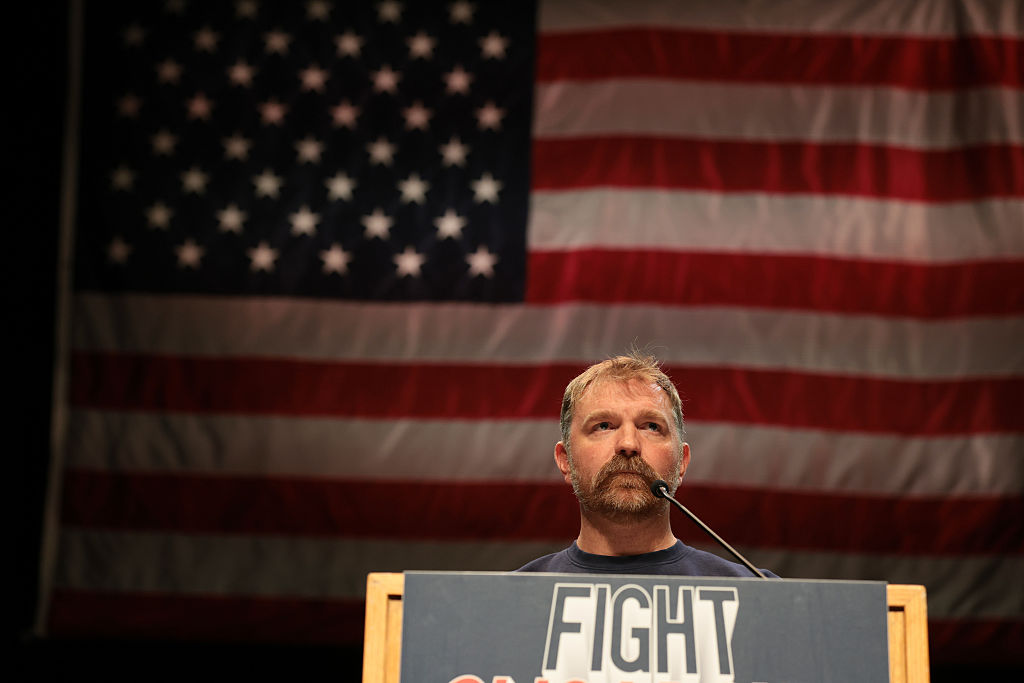
Maine Democratic Senate nominee Graham Platner has suspended his campaign following sexual assault allegations, leaving an open question of who will take his place on the November ballot.
Platner, who has denied the allegations against him, released a video on Wednesday in which he announced his exit from the race while stressing that his decision to drop out was not “an admission of guilt.”
Read More: Graham Platner Drops Out of Maine Senate Race After Sexual Assault Allegations
In the 11-minute video posted on X, Platner said that “what comes next needs to come from the people,” who he said voted “against the political system, against the donor class, against the entrenched forces.” He said he is not trying to “dictate” who the next nominee will be, but stressed that the process of choosing that person “needs to be open, transparent, and Democratic” while “reflecting the will and values of the people” that voted for him.
“People in D.C. need to stay in D.C. Decisions should not be made in backrooms by people in places of political power,” Platner said.
The Democratic Party has until July 27 to select a new nominee to go up against Republican Maine Sen. Susan Collins in the midterms. The seat, which Collins has held for nearly 30 years, is considered key to Democrats’ battle to regain control of the upper chamber.
Several candidates have already thrown their hat in the ring, while others have teased possible runs or had their names floated in recent days.
Here’s what to know about how Democrats will choose Platner’s replacement, and the potential candidates in the mix.
The selection process
A Maine election law allows the Democratic Party to select a new candidate as long as Platner officially withdraws himself from the ballot by 5 p.m. on July 13—which Jana Spaulding, Maine’s deputy secretary of state for communications, told The Washington Post he had yet to do as of Thursday morning.
If he does formally remove his name, the party would be granted two weeks after that date to choose his replacement, giving them until July 27. The Maine Democratic Party would then be legally responsible for replacing him.
The state party held an emergency meeting on Wednesday, in which over 100 state committee members voted to hold a convention to select the next nominee. The party announced in a letter that details surrounding the nomination process, timeline, and requirements for candidates would be given “soon.”
“There is an unprecedented amount of energy and enthusiasm among Maine Democrats, driven in part by many of the dedicated volunteers and supporters who were inspired by Graham Platner’s campaign,” the letter reads. “We look forward to coming together and harnessing that energy around our new nominee as we work to defeat Susan Collins in November.”
The potential candidates
Troy Jackson, a former president of the Maine Senate, announced his bid for Senate following Platner’s exit.
“I’m in. And we're going to defeat Susan Collins,” Jackson wrote on X. “Maine deserves a Senator that will fight for working families.”
Jackson is a progressive Democrat and logger from rural Maine who served in the state legislature—first in the lower chamber and then the upper—for more than 20 years. He previously mounted a bid for the state’s governorship, but fell short in last month’s primary election.
Our Revolution, a progressive group founded by Independent Sen. Bernie Sanders of Vermont, endorsed Jackson on Wednesday, saying that he “has spent his life in the fight working people are asking for, not arriving to it just because a seat opened up.”.
Dan Kleban, a brewery founder who previously dropped out of the Democratic Senate primary and endorsed Gov. Janet Mills before Platner’s victory, also announced he would run to replace the withdrawing nominee on Wednesday.
“Mainers deserve a senator who will fight for them against the D.C. establishment while also doing what’s right,” Kleban said in a statement. “I plan to be that senator.”
Nirav Shah, an epidemiologist who served as Maine’s public health director, announced his bid on Thursday in a post on X.
“I’m proud to have dedicated my career to public service, and to have delivered for Mainers in our darkest times,” said Shah, who led Maine through COVID-19. “Now, in this unprecedented moment, I’m ready to unite our party and fight for you once again.”
Jordan Wood, a former Capitol Hill chief of staff, also announced he would be running. Wood launched a bid for the seat last year as well, but transitioned to instead run for the House in the state’s second congressional district—a race he lost in last month’s primary.
“It's official: I'm running to defeat Susan Collins,” Wood wrote on X on Thursday. “Together we'll stop ICE from terrorizing our streets, pass Medicare for All, and end Citizens United.”
Social worker Paige Loud filed paperwork to enter the Senate race with the Federal Election Commission on Tuesday after she, too, lost in the primary for Maine’s second congressional district.
David Costello, who garnered eight percent of the vote in the earlier primary election for the Senate seat that Platner won, also told The New York Times on Thursday that he was re-entering the race.
Others have teased possible runs, but have not officially confirmed bids to replace Platner.
Shenna Bellows, Maine’s secretary of state, said in a statement on Tuesday that she would “seriously consider entering this race, because I believe I am uniquely fit to unite Mainers and defeat Susan Collins in just over 100 days.” Bellows also mounted an unsuccessful campaign in this year’s Maine governor race, and previously ran against Collins in 2014.
Valli Geiger, a member of the Maine state House, told The New York Times on Wednesday that she would potentially join the race. She said in an interview with The Maine Wire the same day that Platner had encouraged her to do so and said he would support her.
Platner has not yet publicly endorsed any candidate for his replacement.
Outgoing Maine Gov. Janet Mills could also be a contender. Having won almost 20% of the vote in the primary against Platner even after suspending her campaign amid his surge in the polls, Mills, who was recruited and backed by Senate Minority Leader Chuck Schumer of New York, has not confirmed she will enter the race to replace Platner as the nominee. The 78-year-old did previously say that if she were elected, she would only serve one term.
Rep. Jared Golden, who is retiring from the House after representing Maine’s second congressional district in the chamber for three terms, had also been speculated as a potential candidate for the nomination. But on Wednesday, he confirmed that he would not seek it.
The name of actor Patrick Dempsey, best known for his role in the medical drama “Grey’s Anatomy,” was floated as well, but he too confirmed that he would not run on Wednesday.
Райкастовый движок на голом Android View. псевдо 3D движок в 500 строк кода

Всех приветствую! Когда речь идет о мобильных играх, то сразу все говорят: Unity, Unreal Engine, Godot. Большинство разработчиков тянут эти огромные комбайны просто " по привычке", априори считая что "сделать по другому" или писать "свой движок" это нереально, да что там... просто невозможно. Лично я никогда не встречал игру сделанную на Unity, которая сразу прекрасно работает. У телефона 3 гига оперативки? Пф, умри, несчастный, ты и так тупишь, кладбище вон там, могила вот тут. А почему так происходит? А потому что индустрия всех приучила что это "Абсолютный золотой стандарт". Люди, при этом, выбирают такие подходы, либо из за желания сделать быстрее, либо по незнанке, что можно сделать не так.
Когда, простигоспаде... геймдизайнер, выбирает подобного рода движки он автоматом закрывает глаза на следующие проблемы:
Mexico to seek criminal charges over deaths linked to ICE after fatal shooting of Houston man
Noskova beats Kostyuk to set up all-Czech Wimbledon women's final
Burnham’s apology over Gaza marks ‘reset moment’ as Labour seeks to win back progressive voters
It remains unclear how much of substance will change – and whether it will be enough to rebuild electoral coalition
On the final day of Labour’s party conference in 2023, when the public was still reeling from the brutal Hamas attack on Israel just days before, Keir Starmer took to the airwaves for the traditional broadcast round – but gave one interview that would have particularly damaging fallout.
Sitting down with LBC’s Nick Ferrari, the then opposition leader asserted Israel’s right to defend itself, a stance that was in line with the broad political consensus at the time. But then he also appeared to suggest it had “the right” to withhold power and water from Palestinian civilians.
Continue reading...South Florida's Palm Beach airport renamed President Donald J. Trump International
Democratic socialist Francesca Hong tests how far left voters will go in battleground Wisconsin
Andrés Guardado: “Se enfrentan los dos mejores equipos” | Vive el Mundial
Roque Santa Cruz analiza el ansiado duelo entre Francia y Marruecos en Boston | Hoy en el Mundial
Volkswagen Is Cutting Production as Sales in China Plunge
MAGA’s Birthright Meltdown Is in Full Effect
Harry Brook and Phil Salt blast England to T20 series win against India
Brook scores 79, Salt 59 to win with six overs remaining
This England team’s recent heatwave continued in Bristol, India wilting to lose their cool, the game and the series in what turned into another bizarrely one-sided encounter. Timid with the bat, poor in the field, error-prone with the ball and swift to accept the inevitably of defeat, this was a complete horror show from the world champions and a performance of complete dominance from Harry Brook’s burgeoning side, who won by nine wickets and will overtake their opponents as world No 1 if they win the final game of the series in Southampton on Saturday.
Brook says this team “can go to some special places”, and top of the rankings would certainly count as one. He talks often about adapting to conditions, as England have done impressively this year in a series in Sri Lanka, in the World Cup in that country and in India, and now also at home.
Continue reading...Djokovic’s powers of recovery face stern Sinner test in tantalising semi-final
The two greats face off at Wimbledon on Friday with both having questions to answer about their fitness and form
Novak Djokovic has conducted about as many press conferences in his career as any other tennis player in history. He knows the deal: after a victory, particularly a big one, he will usually be asked by a journalist to preview his next match. He is always ready with a long, expansive response summarising his opponent and his anticipation for the next encounter. He has mastered the art of doing so while keeping his cards close to his chest and not giving away a single important detail.
And so, as the clock ticked into the early hours of Wednesday morning in the aftermath of Djokovic’s breathless, impossible-to-believe five-hour, 15-minute marathon win over Felix Auger-Aliassime, a 25-year-old man, his next response was telling. Asked how he might physically recover and what the future might hold in his match against Jannik Sinner, for once he had nothing to say: “Let’s see. Let’s see. I have an extra day, which is good …
Future will tell.”
Germany agrees on deal to buy long-range U.S. Tomahawk missiles, Merz says
Prosecutors show video from interview with Tyler Robinson's former roommate
Air Force revokes more than 100 promotions after testing snafu
A Proposed Rule Would Politicize Medical Research. Scientists Are Not Happy.
«Они не заслуживают сделки». США заявили о 170 ударах по Ирану за двое суток, Тегеран — об атаках на американские базы
В Иране похоронили аятоллу Хаменеи; КСИР заявил об ударе по американской базе в Иордании
Health trackers offer a ton of data. Here are the metrics doctors want you to pay attention to

As I am typing this, a device rests on my wrist that purports to unlock a trove of real-time information about my body’s performance. I can click a button and check my heart rate and review how much it’s varied over the course of the day. It can tell me how many steps I’ve taken, how many minutes I’ve been “active” throughout the day, and — if I wore it while I slept — just how well I rested, according to the data its sensors can pick up from my arm.
The Apple Watch is a remarkable piece of technology, when you stop and really think about what it does. It’s no surprise, perhaps, then, that we have collectively become obsessed with these things. One 2023 government survey found that one in three Americans wear a smartwatch or wristband to track their health and fitness. More recent industry surveys put that figure even higher: More than half of the US population owns a wearable or connected device and tracks at least one health metric with it.
That’s a lot of people who are swimming in the ocean of information that our Apple Watches, and FitBits, and Oura Rings, and Whoops report back to us. Dr. Michael Joyner, who studies the physiology of exercise at the Mayo Clinic, said he has a three-pronged criteria for thinking about the usefulness of these metrics: Is it measurable? Is what you’re measuring actually meaningful? And is the information that you’re receiving actually actionable?
“If one or two are missing, the thing may be the most interesting thing in the world. It may be cool,” he said. “But it’s not going to make a difference in long-term outcomes.”
Across medicine, we are developing remarkable tools for detecting things in the human body, outpacing our ability to interpret what we are finding. We are getting closer to a future where these devices could offer invaluable insights into how our body is performing outside of the doctor’s office or hospital, but here in the present, we should keep our expectations in check.
Here’s what you should know about some of the most common metrics that wearables track.
Do we really understand what our wearables are telling us?
These devices claim to track both old-fashioned and new-fangled measures of your body’s performance. You’ve got your heart rate — something humans have been able to pick up from the wrist before anybody had dreamed of smart devices — and your step count. My Apple Watch estimates how many calories I have burned throughout the day. The Oura Ring takes your temperature, which can help predict ovulation or offer an early sign that you’re coming down with something.
Sign up for the Good Medicine newsletter
Our political wellness landscape has shifted: new leaders, shady science, contradictory advice, broken trust, and overwhelming systems. How is anyone supposed to make sense of it all? Vox’s senior correspondent Dylan Scott has been on the health beat for a long time, and every week, he’ll wade into sticky debates, answer fair questions, and contextualize what’s happening in American healthcare policy. Sign up here.
But as the technology has gotten better, new measures for things many of us have never heard of have emerged. Heart rate variability, or HRV, has gained a lot of recent interest. It assesses the tiny variations, measured in milliseconds, in the rhythm of your heartbeat; the Economist dubbed it “the most useful indicator” of your overall health. Some devices then use HRV to deliver “recovery” scores that judge how well your body bounces back from your workout or “stress” scores that attempt to quantify how much strain you are under.
HRV demonstrates the conundrum that wearables can present to us, Joyner said. The metric itself has a scientific basis: Researchers have, in fact, found that the amount your heart rate varies over time is associated with your overall health. In general, a higher HRV is better than low, because it suggests your body is more adaptable and better regulated.
But that doesn’t necessarily mean that tracking your HRV from minute to minute with a smartwatch will translate to better health. For starters, we don’t have specific interventions for improving HRV, Joyner said. We don’t even have universally accepted definitions of what high or low HRV is.
In any case, the best strategies are the same heart health guidelines we’ve known about for decades: don’t smoke, don’t drink to excess, eat a healthy diet, exercise. You didn’t need a smartwatch to tell you that’s the best way to take care of your heart, Joyner pointed out. So what good was really derived from closely monitoring your HRV?
“As an individual metric that you can track and do something about, it’s interesting, but there’s no definitive data that you’re going to get better,” Joyner, who was speaking for himself and not the Mayo Clinic, said. “Follow the guidelines. People who follow the guidelines are going to do better on these metrics. But whether you can intervene specifically to make the metrics better or should pay much attention to them, who knows?”
Dr. Ami Bhatt, chief innovation officer at the American College of Cardiology, told me that the bedrocks of evaluating your heart health are still the old mainstays like your blood pressure and your cholesterol, along with newer metrics checked via blood test such as ApoB and lipoprotein. Are you a smoker? What’s your family history?
The value from wearables is less about the specific numbers they are reporting — especially with something like HRV, for which there are not universal guidelines — and more about the long-term trends they can track. By collecting your personal data over time, they can help you figure out what’s normal for you and help you notice if something changes. So don’t freak out if your HRV is different from somebody else’s, or you see one abhorrent reading in your daily report. But if you notice a change in your resting heart rate or HRV that persists over time, then it might be worth going to see a doctor about it.
“We don’t want to overreact to just one abnormal reading,” Bhatt said. “If you just know your baseline when you’re relatively healthy, you can catch the trends.”
It’s all about having realistic expectations about what your wearable can deliver — and recognizing that, for some things, the old ways are still better. When it comes to those metrics that incorporate HRV to determine your stress and “recovery,” Joyner said that self-reported data (literally, how do you feel?) remains the more accurate way to evaluate a person.
And at a certain point, your wearable can straight-up make your health worse. Fixating too much on your sleep problems, for example, can paradoxically cause more sleep problem. An American Society of Sleep Medicine survey this year found that 76 percent of US reported losing sleep because they were worrying about their sleep. It’s a problem — dubbed “orthosominia” — that scientists have been warning about for nearly a decade: the possibility that our obsession with better sleep, and doing things like wearing a device to track our sleep, could actually give us insomnia.
Bhatt said she’d like to see these devices develop the capability to detect when a user may be checking their data a little too compulsively. Joyner, for his part, said he worried that the culture around health and wellness could, ironically, create a lot of stress for the people who get deeply invested in tracking their activity.
“I actually worry we’re entering a too-much-information world,” he said. “It’s going to be anxiety-provoking.”
How to have a healthier relationship with your wearables
Even as we recognize the limitations of wearables, that doesn’t mean they can’t be useful — and they’re going to keep getting better.
Right now, there are obvious situations where a wearable can be helpful. As Bhatt suggested, they can help you understand your personal baseline and notice any changes. Certain patients, such as those with congenital heart failure, can clearly benefit from ongoing monitoring of their heart’s performance, per the American Heart Association. Anybody can use a wearable to make sure their heart rate doesn’t reach dangerous levels during a workout. And these devices could ultimately prove effective in catching underlying heart problems — but there is still work to do. A 2019 study on wearables and atrial fibrillation is telling: At the time, only a tiny percentage of wearers received a notification of an irregular heartbeat, suggesting that there were others that the devices were missing. But, for those who did get an alert, the majority of them did in fact have A-fib. (The FDA has since said that several smartwatches are capable of A-fib detection.) Some patients who have had a serious cardiac event are being asked to put on a wearable, so their doctors can remotely monitor their heart, utilizing an AI assistant that checks the incoming data for any signs of a pending emergency.
And these are the worst wearables we’ll ever have. The future iterations of these devices are going to become more precise and more integrated with AI, which could allow them to ultimately provide more value to the people wearing them. The hypothetical potential for integrating wearables with health care delivery more broadly is immense.
“None of these things will exist in a silo,” Bhatt said. “Your health records, how you’re doing, your wearables, your lab data, people are going to be pulling those together…and trying to give you insights.”
But for now, for the average person, it’s more of a personal choice. Joyner, whose work is all about maximizing human performance, does not wear a smartwatch. Bhatt likes to experiment with different devices with a certain goal in mind, like trying to improve her sleep over the course of a few months.
As Bhatt put it to me, if a wearable motivates you to take your health more seriously, then it’s already doing your body some good. “The best health metric is the one that changes what you do in a way that improves your health,” she said. “For you and I, that may be different things. For your grandmother, it’s something else. For the woman down the road, it’s something else.”
At the most fundamental level, people who use wearables tend to move more when they do — up to 40 more minutes of walking per day, according to a 2022 Lancet study. That is a gain for their health; recent research has shown that even a little bit of movement can have life-saving benefits. The more wearables encourage people to move, the more they can deliver real health benefits.
So if you like wearing one, that’s fine. I’m not dropping my Apple Watch’s step tracker any time soon, because it pushes me to get moving. But be mindful of how your use affects you and how preoccupied you are with certain metrics. Stress is one of the worst things for your health. So is a lack of sleep. If you find your sleep metrics are keeping you up at night, or that your sleep seems to have gotten worse since you started using it, it’s okay to take it off.
Meghan will not appear at public events during Harry UK trip
England seal first T20 series victory over India
Trump's proposed arch needs structural revisions to earn final approval
Smithsonian chief emphasizes 'accuracy and integrity' after White House report

The memo from the Smithsonian's secretary, Lonnie Bunch, responded to a White House report that calls the National Museum of American History driven by "a radical, activist ideology."
(Image credit: J. Scott Applewhite)

Jorge Valdano: “Messi está reinando en el campeonato, el talento escapa” | Hoy en el Mundial
Digne anticipa un duelo intenso ante Marruecos
"Debemos ser el equipo más inteligente", afirma Zakaria El Ouahdi
Conoce a Boyd el perro que mantiene en orden los campos de los New England Patriots
Can Trump 'Cut Off All Trade' With Spain? Here's What Experts Say

President Donald Trump’s revived threat to cut off trade with Spain has raised grave concerns and questions about U.S.-Europe trade relations.
At the NATO summit in Turkey on Wednesday, Trump told Treasury Secretary Scott Bessent to “cut off all trade with Spain, please, including visits,” while accusing the country of being a “terrible partner in NATO.”
Spanish Prime Minister Pedro Sánchez later downplayed the incident after the two leaders met informally during the summit, telling reporters there was “no tension.”
Trump himself seemed to strike a more conciliatory tone when returning from the summit.
"I will say, I did have issues with Spain, and I still do, but Spain came back all the way today. Spain was very generous today, you know, I told them I was going to stop trading,” he said aboard Air Force One.
When asked about Spain’s “generosity,” Trump responded: “They honored a request for lots of payment, and if they didn't, we wouldn't even talk to them."
Trump appeared to be referencing Spain complying with NATO's old defense spending target of 2% of GDP—something NATO Secretary General Mark Rutte championed at the summit.
Reports circulating Wednesday said the Treasury Department was working alongside the U.S. Trade Representative and the Commerce Department to prepare Trump with “a menu of Spanish products that may be embargoed in the coming days.”
TIME has reached out to the White House and Treasury Department for comment.
U.S. Trade Representative Jamieson Greer on Thursday told reporters that the President “for sure can” use the International Emergency Economic Powers Act (IEEPA) to limit trade with other countries.
Greer said the Supreme Court’s tariff decision earlier this year, which ruled that Trump lacked the authority to impose sweeping import taxes by claiming a national emergency, highlighted “that IEEPA clearly says you can prohibit trade, you can do certain things.”
However, the trade official said Trump may no longer want to explore that measure after he and Sánchez had shared a “good meeting.”
Any move to restrict trade would likely carry major economic consequences.
Total goods trade between the United States and Spain reached $47.9 billion in 2025 according to U.S. Census Bureau data.
Tensions between the two countries mounted last year with Spain's refusal to commit to investing 5% of GDP annually on defense by 2035, after other member states agreed to the target at last year's summit.
Months later, in October, Trump said he was “very unhappy with Spain” and admitted he was “thinking of giving them trade punishment through tariffs, because of what they did.”
His threat did not materialize.
Relations further splintered in the fallout of the Iran war—a military operation Sánchez has repeatedly denounced.
Spain notably denied the U.S. access to joint military bases for offensive operations and closed its airspace to American aircraft involved in the conflict.
Trump lambasted Spain’s position during a March Oval Office briefing and threatened to cut trade with Spain, but did not follow through.
Trump also threatened to withdraw U.S. troops from Spain and Italy, arguing both countries had failed to support the United States during the conflict with Iran.
Any form of trade embargo would represent the most significant escalation yet, not only in relations with Spain, but also with the European Union, whose institutions negotiate trade policy on behalf of all 27 member states.
The European Union's side of a trade deal struck with the U.S. last year came into effect on July 1.
In response to Trump's latest threat, European Commission deputy chief spokesperson Olof Gill said “we expect the U.S. to honor its commitments... as we have honored ours."
Even if Trump does push forward with his grievance against Spain, can he really cut all trade with the European country? TIME spoke to legal and trade experts to find out.
Does Trump have the power to cut off all trade with Spain?
There are various legal tools that could allow the President to significantly restrict or suspend all trade between Washington and Madrid, experts tell TIME.
One of the broadest is the IEEPA, mentioned by Greer, which allows Presidents, after declaring a national emergency regarding an “unusual or extraordinary threat” under the National Emergencies Act, to regulate or prohibit a wide range of international economic transitions.
Kathleen Claussen, a professor of law at Georgetown Law, tells TIME that the statute could provide Trump with the authority to suspend trade with Spain.
“First, he declares a national emergency, and then he imposes the embargo,” she says. “Under IEEPA, once you declare a national emergency, with respect to some threat from a foreign source, that unlocks the power to do all those verbs that are in the statute.”
According to the statue, the law allows a President to “investigate, regulate, or prohibit” transactions involving foreign exchange and imports or exports.
Claussen notes that the Supreme Court's tariff ruling earlier this year may have limited Trump's authority over levies, but it also reaffirmed the breadth of IEEPA.
“In the context of the tariff case of earlier this year, the Supreme Court actually reminded [Trump] that he has this power in Justice [Brett] Kavanaugh's dissent,” she says.
"The plaintiffs and the Court do not dispute that the President can act in declared emergencies under IEEPA to impose quotas or even total embargoes on all imports from a given country. But the President supposedly cannot take the far more modest step of conditioning those imports on payment of a tariff or duty,” read Kavanaugh’s dissent.
After the Supreme Court’s decision, Trump argued that the outcome had granted him even greater powers, despite striking down his tariffs.
“I am allowed to cut off any and all trade or business with that same country. In other words, I can destroy the trade. I can destroy the country. I'm even allowed to impose a foreign country-destroying embargo. I can embargo,” he claimed.
Asked whether the Spain row could plausibly constitute a national security emergency, Claussen says U.S. courts generally “tend to defer to the executive branch when it comes to those security questions.”
She cautions that an embargo is only one option available to Trump.
“The fact of the matter is, the President has been given a great deal of authority with respect to economic security matters from the Congress,” she says, noting that such authority could include tariffs, sanctions, import fees, or restrictions on services and other commercial authorizations regarding Spain.
Would a trade embargo violate the E.U.-U.S. trade agreement?
While Trump could legally impose trade restrictions under U.S. law, doing so would risk violating the spirit of the Turnberry agreement, experts note.
The European Union agreed to eliminate tariffs on U.S. industrial goods, while the United States agreed to impose a baseline tariff of 15% on most goods imported from the European Union, with some sector-specific exceptions.
Maria Demertzis, professor of economic policy at the European University Institute, notes that the trade policy was negotiated collectively by Brussels rather than individual member states.
She argues that a trade embargo with Spain would be in direct conflict with the framework of this agreement, as it would single out a single member state.
Claussen, however, says that the Turnberry agreement is a political deal, not a legal one.
“We don't have any legally-binding text, and even if we did, there's nothing to stop the President from changing the terms, apart from the maintenance of the relationship [with the E.U.],” she notes.
The Administration has already undermined the agreement in many ways, experts tell TIME, citing the discord in February, when the bloc had to freeze the implementation of the agreement after Trump made additional tariff threats.
Even if Trump has the legal authority, experts question whether an embargo could work in practice.
Demertzis points out that the European Union is designed to function as a single market, with no internal trade barriers.
“You cannot block trade with Spain, because Spain can still import from the U.S. via France,” she argues.
How could the European Union respond?
While the E.U. cannot stop the President from cutting trade relations with Spain, they have a series of measures they could take, but experts warn the bloc may not have the political capital to implement these.
Brussels would first pursue a diplomatic solution, Demertzis says, predicting that “the E.U. would continue to fight for what is in agreement” by appealing to Trump to honor the deal.
If this fails, the European Commission has possible ways it could retaliate.
“They have all the tools to confront the United States on a sort of equal ground on this,” says Jeremy Shapiro, research director of the U.S. Programme at the European Council on Foreign Relations. “In particular, they have a very strong norm within the E.U. that people treat the single market equally, trade partners are not supposed to discriminate against [individual countries].”
A response to such discrimination could include retaliatory tariffs targeting politically sensitive sectors of the U.S. economy.
However, Demertzis is skeptical the dispute would even escalate that far.
“The E.U. will not retaliate because the E.U. is quite uncomfortable about the dependencies on the U.S., primarily militarily,” she insists.
That military dependence has remained central to Trump's leverage.
Throughout the fallout from the Iran war, he has repeatedly threatened to withdraw troops from European countries after allies refused to get actively involved in the conflict.
In June, Washington told allies it would be scaling back the number of military assets it dedicates to the alliance—an attempt to remedy an "unhealthy co-dependence in the NATO Force Model on U.S. forces,” according to NATO's top commander, U.S. Air Force General Alexus Grynkewich.
Weeks later, U.S. Defense Secretary Pete Hegseth announced a review of U.S. military troops in Europe during a critical address to NATO defense ministers.
Breaking Down the Emotional Ending of Five Star Weekend

Five-Star Weekend, a Peacock series out July 9, is about a food influencer Hollis Shaw (Jennifer Garner) who is in need of a new kind of nourishment after her husband Matthew (Josh Hamilton) dies suddenly in a car accident.
In the eight-episode series—adapted from a Elin Hilderbrand novel by the same name—Hollis organizes a girls’ weekend at her house on Nantucket and invites a friend from each stage of her life. But the women also bring their own baggage to the island, literally and figuratively. So does Hollis, who has been hiding that she and Matthew were not happily married in the end.
Here’s a breakdown of each character’s messy back story and the show’s surprisingly happy ending.
A recipe for drama
Five Star Weekend starts on a wintry Massachusetts day, with Hollis in her kitchen talking about how she feels happiest there, cooking and baking for people. In fact, she’s making elaborate Christmas cookies when police officers show up to tell her that her husband has died.
Six months later, Hollis is on The TODAY Show, telling host Jenna Bush Hager that she got into cooking after her mother died and she took charge of cooking for herself and her father. Then she bursts into tears on air while she’s cutting onions, explaining that everything makes her cry after her husband’s death. Afterwards, her publicist suggests she try to work through her grief by inviting some girlfriends over.
Hollis gets to planning a girls’ weekend. But since she hasn’t stayed in regular touch with these women, she doesn’t realize that they are all dealing with major problems of their own.
Dru-Ann Jones (Regina Hall) is a college friend and a sports agent who is under fire for publicly dismissing one of her clients who wanted to take a break from playing soccer to focus on mental health. Throughout the show, she is not only helping Hollis heal her damaged heart, but is also in damage control mode at her job.
Tatum (Chloë Sevigny) is a childhood friend who runs a dry cleaner on the island and is awaiting results from a biopsy on her breast. She feels like Hollis drifted apart from her to socialize with a more upper-class orbit.
Brooke (D’Arcy Carden), a mom friend who lives near Hollis in suburban Wellesley, Mass., is married to a corporate lawyer facing a lawsuit brought by an intern who is accusing him of sexual harassment.
Gigi (Gemma Chan) is a commercial pilot who developed an internet friendship with Hollis after she reached out offering to be a sounding board when Matthew died. She’s the only one who doesn’t know anyone on the trip, so the other friends are trying to figure out how she got invited.
And unbeknownst to Hollis, her own daughter Caroline (Harlow Jane) is flunking out of Amherst College because she misses her father so much. Originally enrolled as a pre-med student to follow in her surgeon father’s footsteps, she is thinking about switching majors, but doesn’t know how to talk to her mom about that or her grief.

Tensions simmering
Hollis is channeling Martha Stewart all weekend, creating an elaborate itinerary that includes five-star meals inside and outside of the home, spa sessions, dance parties, shopping excursions—and even an ice cream truck that rolls up to her house.
Her friends are grumbling that she’d rather play homemaker than open up about how she’s really feeling after Matthew. But whenever they implore her to tell them how she’s really feeling, Hollis is brutally honest about how she feels like she’s hanging on by a thread and insists that she is not trying to hide the pain, but that she really needs a weekend of dance parties and cooking to distract her. In a distraction she doesn’t expect, her ex is on the island, and they have never stopped thinking about each other.
Meanwhile, the girls’ weekend turned out to be a time of self-discovery for Brooke, who realizes she has shrunk her identity to accommodate her husband. Gigi gives her a makeover, and she’s so grateful for the new duds that she kisses Gigi on the lips. She apologizes profusely, and Gigi insists it does not have to be a big deal and that they can move on. But it unearths something deeper in Brooke. Her husband has never satisfied her sexually. And he keeps calling her to make sure she’ll support him through his lawsuit. When Brooke finally asks him if he really did do something inappropriate with the intern, he doesn’t deny anything. So she decides to follow her heart and flirts with a local female tour guide named Sunny, bonding with her over a shared love for history.
The boiling point
During what’s supposed to be a weekend of feasting, Gigi is eaten up by guilt. She had an affair with Matthew, and she hopes to come clean to Hollis on this trip. But before she can tell Hollis herself, Brooke figures it out when she sees a picture of Gigi and Matthew on Gigi’s phone screen.
A heated confrontation follows in a sauna room during the planned spa day—amplified by the weed mints that the women ingested. Gigi admits to Brooke that Matthew was the first person she ever loved and that her online conversations with Hollis helped her feel connected to Matthew after his passing. Meanwhile, Hollis, the baking influencer, is so baked wandering around that she starts seeing Matthew in the spa rooms.
While Gigi tried to tell Hollis the truth about her relationship with Matthew multiple times—even writing her a letter that she never delivers—it’s Brooke who ends up breaking the news to Hollis. In front of an ice cream truck parked outside of Hollis’s house, Brooke blurts out the not-so-sweet truth that Gigi was having an affair with Matthew.
Now the distance Hollis felt with Matthew at the time of his passing makes sense, plus all of Matthew’s planned domestic and international air travel; he was meeting Gigi on her route. She also recalls that he’d get texts from someone named “G,” and he always assured Hollis she was just an OR nurse messaging about work stuff. And now it made sense why Matthew had been driving to the airport when he got into a car accident: he was driving to meet Gigi.
Cooling off
The opening scene of the last episode is a flashback to Hollis’s kitchen in Wellesley, where she is grilling Matthew on why he is going to Paris if the conference he’s supposedly going to is in Berlin. If the viewer did not already see the proof in the pudding, then this scene makes it clear that Matthew was not going to a work conference, but planning to see Gigi.
Hollis questions whether Matthew is really going to a work conference given the timing over the holiday season and calls him out. She acknowledges that she’s been busy with her social media accounts, and their daughter Caroline has moved out to go to college, but insists that they need to try to adapt to the new normal together. Matthew says it’s sad that they need to “try” at all.
The next scene fast-forwards to the present, where Gigi is passed out in a bed in Hollis’s house after a bender. Instead of confessing to Hollis herself, she drank herself into oblivion at a local bar, and Caroline had to carry her back to the house.
Hollis hears a noise outside, and when she walks out, she finds her ex, Jack (Timothy Olyphant) on a ladder cleaning her gutters. He says he noticed they needed maintenance but that’s not the real reason why he came over. She confesses that she’d have dreams about him and wake up sweating next to Matthew. They share a kiss and hook up in Hollis’s bed.
The next morning, Gigi is nowhere to be found, and Jack is cooking her breakfast. Hollis and Jack are talking about how great the prior night was, and Hollis is in the middle of telling Jack how she’s not ready to be in a romantic relationship when Gigi walks in holding a box of morning buns.
Hollis and Gigi retreat to the laundry room to talk in private (though all the friends are listening at the door). Gigi reveals to Hollis that Matthew “was going to choose you.” Before he died, Matthew left Gigi a voicemail saying they needed to talk; Gigi says he was going to break up with her. Hollis looks back at the accident report, which shows that Matthew was driving back toward their house—to Hollis—when he died.
Hollis tells Gigi she will forgive her because she doesn’t want there to be anger between them. She hands her a party favor of toffee with cardamom, her version of an olive branch.

An ending as sweet as honey
Given all of the drama going into the weekend, the show wraps up with happy endings for the characters. The weekend made the women all best friends with one another, and they immediately started brainstorming destinations for another girls’ trip for the same time next year.
When Gigi leaves, Hollis makes everyone pancakes with sad faces drawn on them “because my marriage was a lie.” Then the four women dump Matthew’s comically large stash of protein powder into the ocean.
On the beach, Tatum receives her biopsy report. It’s not good news—the lump doctors found is benign but they find abnormal cells forming behind it. But by the end of the show she is feeling optimistic because she knows she is surrounded by supportive family members—and now the friends she made during the girls’ weekend. Tatum and Hollis share a tender moment over a cigarette in which Hollis vows to call her the next day and stay in touch better.
Brooke is heading home a changed woman. Over the weekend, her husband showed up to Hollis’s house, demanding she come home and even telling their kids that she was trying to break up the family by leaving them. She rightfully tells him to get lost. In an even sweeter turn, she runs into Sunny on the ferry, where they kiss and vow to continue seeing each other on the mainland.
Brooke runs up to Dru-Ann and shares excitedly that she has a girlfriend. Dru-Ann too has had a transformative weekend. She still has her job as a sports agent because it’s revealed that her client pretended to need a break to deal with mental health struggles just so she could watch her boyfriend play basketball. But she resents the way the colleagues at her agency did not support her during the controversy and decides she’s going to quit and launch her own talent agency. She’s always been a surrogate mother to Caroline when Caroline needed someone to talk to, and she feels similarly toward her client Posey. Following this strength—her ability to listen and offer guidance well—feels like the right move for Dru-Ann.
By the end of the show, Hollis is on much better terms with her friends. But perhaps the most important relationship Hollis restored was her relationship with her daughter. Caroline has had a wild time on Nantucket, spending most of the show outside of Hollis’s house hanging out with Tatum’s daughter Aubrey (West Duchovny)...and flirting with a bartender who turns out to be the father of Aubrey’s baby and her on-again-off-again boyfriend. By the end of the weekend, she’s realized that grieving her father will take time. Pushing against her mother isn’t going to help.
Once Hollis learns the truth about Matthew, she is desperate to keep it from Caroline. But Caroline tells her mom that she figured it out anyway. “I’m an adult person with eyes and ears,” she says. She begs her mom not to hide her feelings from her because it makes it hard for her to confide in her—and she wants to confide in her because Hollis is her only parent now.
Hollis turns down a TV appearance to spend more time with Caroline on Nantucket, and the two talk about what’s next for the youngster. Caroline suggests she might want to switch gears from the pre-med track to something in photography. The episode ends with Hollis and Caroline running into Jack during a golden-hour walk on the beach and heading back to her house to eat leftovers.
Overall, it was a messy but clarifying weekend for everyone.
'The whole match was the tie-break' - how Muchova-Gauff semi-final unfolded
Writer argues the age of reading has ended
Charlie Kirk murder suspect allegedly told roommate he "wishes he hadn't done it," interview reveals
Meta enters the crowded AI coding battle with Muse Spark 1.1
Keir Starmer may award resignation honours when he leaves No 10
Outgoing PM has not ruled out drawing up honours list when he stands down, despite previously opposing it
Keir Starmer has signalled he could hand out resignation honours when he leaves Downing Street, despite pledging three years ago he would not do so when he eventually stood down.
The prime minister twice declined to rule out drawing up a list of honours when he stands down in just over 10 days’ time, to be succeeded by Andy Burnham.
Continue reading...Haley Stevens knows how to win in Michigan. Dems must decide if that's enough to win the Senate
Charles Hudson shares the common mistakes he’s seen after investing in 500+ startups
Palestinian Authority Sets Date for First Major Elections in 20 Years
'Taking the Waters' Was the Original Summer Getaway
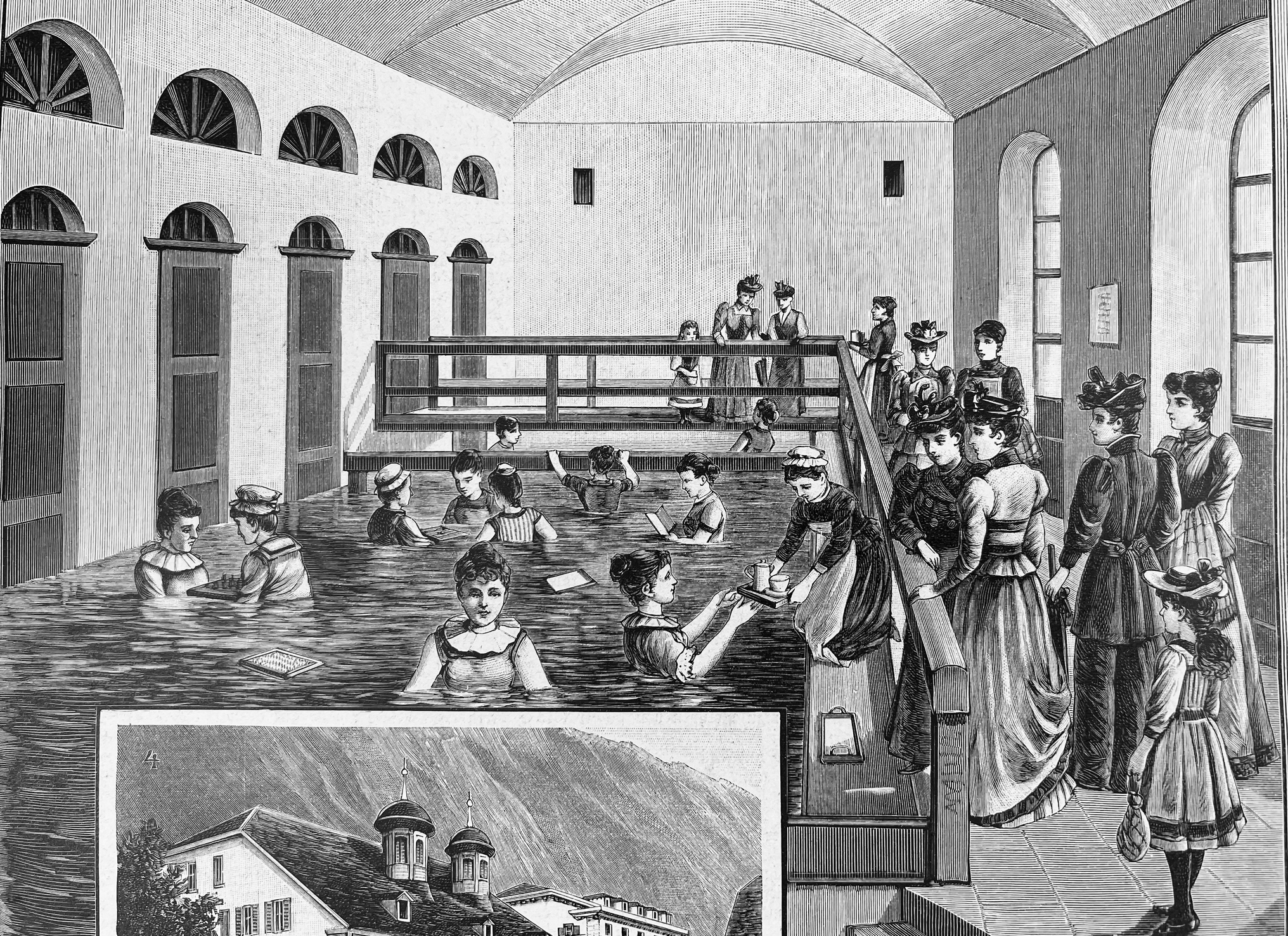
Summer, for many of us, has its own comforting set of rituals. People pull out the barbecue, open fire hydrants, throw block parties. Maybe there are road trips, visits to grandparents, pool days, beach days. Maybe there’s a lake or an island and a ramshackle old house where the breeze comes through the windows at dusk every evening, the same as it always has, every summer you can remember.
But in the 18th and 19th centuries, for many people, there was a summer ritual with a very different form. It was the season for “taking the waters,” which meant traveling to a countryside spa town like Harrogate in England or Karlsbad in Germany and spending the next few weeks or months under the care of a doctor, who would prescribe personalized treatments. These might be mineral water showers or baths, cold-water enemas, or just drinking 3 glasses of stinky, sulfurous spring water daily before breakfast, while strolling and engaging in pleasant conversation on a landscaped promenade.
You didn’t have to be ill to take the waters. Especially for the well-off bourgeois of Europe, it was a required social ritual and time for recharging, says Astrid Köhler, a spa scholar and co-author of The Health Resort in Modern European Literature, so universally observed that in these months, at least in Germany, theaters and salons in the cities closed down: “Everyone is busy, going to the spas.”
What was a typical summer day like for someone taking the waters?
Often, the day started early. You might get up at 6 a.m. and head straight to the pump room, where water from a local healing spring—Harrogate had around 100, with 36 bubbling up in a single field—had been piped in. A pump room attendant would fill you a glass of the water prescribed by your doctor.
“You would drink as many glasses as prescribed, and then you would wait for the waters to pass,” says Sophie Vasset, a scholar at Université Paul-Valéry Montpellier in France and author of Murky Waters: British Spas in Eighteenth Century Medicine and Literature. That wouldn’t necessarily mean having a pee, she clarifies: “If the waters were salt waters, then they would be laxative.” The exact location of the restrooms was thus important knowledge for spa visitors, and Köhler confirms that “spas had to create rows of toilets.” Contemporary cartoons sometimes show water-takers heading for the restrooms in great urgency.
As they waited for the waters to take effect, Köhler explains, “people would walk up and down the promenade, or in the park…talking to other people, chatting, that sort of thing. Then the day would start.”
What did people do all day?
Many spas, in addition to landscaped parks and gardens, also had theaters, reading rooms, restaurants, and grand casinos. “The buildings are often too big for the size of the town,” says Köhler. “These are buildings that—in terms of their size, of their grandeur—belong in cities, and yet they're in those small little valleys. It's one of those distinctive features of spa architecture.”
In these ornate halls, while those with more serious ailments might soak in mineral baths or endure being wrapped in a wet sheet for the sake of their health, others played cards, chatted with friends, and attended concerts. The social and cultural aspect of spas was a major draw.
Why don’t we go to spa towns today?
As medicine grew more intertwined with the burgeoning science of chemistry, the medical benefits of spas came under scrutiny. “Water with iron in it was seen as fortifying, the sulfur waters were seen as good for rheumatism and respiratory problems, and some of the waters were seen as good for fertility, as well,” says Vasset. But scientists’ search for why these substances would have had these effects often came up empty.
“Medicine in the 19th century was very, very keen to be absolutely scientific,” says Köhler. “So spas tried to catch up with that, but never quite managed, and were never quite taken seriously enough.”
Looking back on the practice now, it seems logical that leaving a polluted city and engaging in regular exercise, alongside adequate hydration, healthy eating, and having a shared experience with others, did have beneficial effects on health, regardless of what was in the waters.
But having leaned into the medical benefits of treatment, spas in the U.K. were in a difficult position later on when the National Health Service, founded in 1948, decided that water cures did not have sufficient evidence to be included in medical care paid for by the state. By that point, for a variety of reasons, the culture of spas as gathering places in the summer was on the wane, and many spa towns had to reinvent themselves. France did not give up entirely on water cures; people with a wide variety of disorders can go to thermal spas for treatments even today and be reimbursed within the French medical system.
Is there a modern equivalent to taking the waters?
Perhaps the closest analogue, Köhler speculates, are wellness retreats. She speaks of one colleague who goes regularly to a retreat in Sri Lanka. “It's about cleansing with waters, it's about yoga exercises, it's about all these things—she feels that she sort of renews herself.”
Still, there is a significant difference. Modern wellness retreats are centered on the self: on self-actualization and optimization. In contrast, “the original spa culture was based on sociability,” she says. In 1800s spa guides, “you would find long pieces of prose about how important it is to be in pleasant company, to leave all your everyday worries behind, not to care about social status, but just to see people as people and try to be as pleasant to others as you can, and receive pleasantness from others.”
At the same time, however, a common thread running through modern retreats and historical spas is that both provide succor for people who have ailments for which standard medicine might not have an answer yet, Köhler continues. In those days it might have been syphilis or tuberculosis, and today it might be burnout or Long Covid. She thinks this may be a universal need, consistent across time. “You do need this kind of institution that takes up the people and the conditions that cannot be cured in hospital,” she says.
Millions of Americans have until July 10 to claim refunds from the IRS
Home prices across the U.S. hit an all-time high
Tensions erupt in Indian state after 11-year-old raped and murdered
How to deal with seesawing gas prices

Gas prices have fluctuated since the U.S. and Israel launched a war on Iran, which disrupted shipping through the Strait of Hormuz and left consumers unsure of what they'll pay at the pump.
(Image credit: Joe Raedle)
