Привет, Хаброжители! Улучшаем скорость и качество с APIOps и OpenAPI.
Создавайте качественные, согласованные API и быстро выпускайте их на рынок благодаря автоматизации разработки! Эта книга научит инновационному подходу – как применять рабочие принципы непрерывной доставки (CD) и DevOps на всем протяжении жизненного цикла API. Преобразуйте набор отдельных задач в бесшовный управляемый пайплайн с поддержкой автоматизированного тестирования, итеративных улучшений и надежной документации.
Sony’s decision last week to quietly announce the end of physical games production for the PlayStation in 2028 is one of the most perfect PR disasters in recent gaming history – and considering what has been happening with Xbox, that’s saying something.
First, there was the timing. Sony posted the news of its decision on the PlayStation blog, less than a week after admitting that it would be deleting 550 movies from the digital libraries of PlayStation owners due to the end of a licensing deal – thereby perfectly illustrating the dangers of purchasing digital products. (Surprise! You never actually owned them!) The move is in stark contrast with the company’s stance on this very issue back in 2013. When Microsoft was attempting to push Xbox One as a digital-first console with strict controls on the sharing and reselling of its games, Sony brilliantly mocked its rival with a short video on how easy it was to lend physical games to pals on the PS4. Oh dear.
As his bold yet delicate sculptures fill the glass buildings of Brussels for Ireland’s turn at the EU presidency, the Wexford artist discusses working with Björk, his decorator father – and one noisy horse
‘Just so you know,” says Richard Malone before we begin talking, “if you hear any neighing, it’s not me!” The Irish artist is speaking to me from an unusual studio space: a farm in Stradbally, County Laois. It may have the odd equine intruder, hungry for press coverage, but it also boasts huge lambing sheds – the perfect location for Malone to construct his latest five-metre sculptures.
“There’s lovely lambs everywhere and about 20 dogs running around,” he smiles. “Exactly what I’d choose to have around me.”
The loss of protections for Haitian and Syrian workers could worsen shortages of nurses, aides and home care workers
The Trump administration may remove the temporary protected status (TPS) of Haitians and Syrians in the US, the US supreme court ruled in late June – a move that will worsen America’s growing caregiver shortage, experts say.
The US is now experiencing its fastest increase in the aging population in more than a hundred years, and more than 20% of the US population will be 65 or older by 2030. But the population of caregivers has not grown at the same pace, leading to staffing shortages.
Five days after T20 World Cup final misery tickets are selling fast for India clash in a rare fixture at the home of cricket
England’s historic first Test at Lord’s, which begins on Friday against India, will be the swansong for at least one great of the game, after Tammy Beaumont announced her retirement from international cricket on Wednesday.
It is possible that more retirements may follow at the end of the summer; after England lost last Sunday’s T20 World Cup final to Australia, head coach Charlotte Edwards said that “a lot of younger players are now staking a claim” and that she planned to review the situation after The Hundred. Beaumont, though, has chosen to get ahead of the pack and go into the forthcoming Test with the certain knowledge that it will be the last time she pulls on an England shirt.
Some of the biggest items in film history, including Luke Skywalker's lightsaber and the Wicked Witch's hat from "The Wizard of Oz," are up for sale through Heritage Auctions.
Here’s the problem with friendship these days: People say they have quality people in their corner, are even satisfied with the number of friends they have, and yearn to see them more often. | Carme Parramon/Getty Images
But we can close the gap between our wants and the constraints of reality by utilizing the resources we already have. Might I suggest the weekly photo dump? Every Friday in our group chat, my friends and I send a handful of photos from our weeks: pictures of dogs, of meals, of trails hiked, outfits worn, the stuff we wouldn’t necessarily share online. The photo dump is a peek behind the curtain, an intimate front-row seat to the small, slow moments that only your friends would appreciate.
If you’re prone to laziness, as I admittedly am, the photo dump has perhaps the highest effort-to-payoff ratio. The weekly cadence establishes a routine, and texting is a relatively low-lift means of staying in touch.
Since texting outpaced phone calls in 2008, many of us have primarily used the written word, and the occasional photo, to converse. Perhaps unsurprisingly, the amount of time we spend glued to our phones has only increased, too. Sure, we could all do with a little less screen time, but if you’ve already got your phone in hand, might as well use it for something socially engaging.
At the same time, the photo dump provides some much needed guardrails when it comes to the expectation to be always available. First, by choosing a time or day of the week for the dump, you eliminate the pressure to respond to sporadic messages that come in at all hours of the day. “Maybe a weekly call becomes a little bit harder to sustain for some people, but a weekly text message, especially if we could say ‘I saw this and it reminded me of you. Hope you’re well,’ that doesn’t create an immediate pressure to respond,” Peggy Liu, the Ben L. Fryrear endowed chair and professor of marketing at the University of Pittsburgh School of Business, told Vox.
Plus, having a routine when it comes to your social interactions makes it easier to stay in touch. If you’re already in the habit of catching up regularly, you’re less likely to completely fall out of contact, which eliminates the anxiety a lot of people feel when it comes to reaching out to a friend when it’s been a while. “Even in the age of social media when people were more likely to use it for a social networking purpose, having some sense that you knew what was happening in someone’s life actually gave you something to talk about once you saw them face-to-face or on a phone call,” Jeffrey A. Hall, a communication studies professor at the University of Kansas, told Vox.
Next, mutual buy-in helps quiet the anxious voice in the back of your mind that says you’re annoying and no one wants to see what you’ve been up to. The structure of the photo dump gives everyone permission to share. “There’s really nothing wrong with the idea of caring as being a central reason for doing all of this,” Hall said.
Texting may not be the most effective way to keep in touch — phone calls create stronger social bonds, according to one study — but it’s certainly preferable to no communication whatsoever. “It provides a sense of connection in the moment and a reminder that there are people in your life who care about you and are thinking of you,” Hall said. Take, for instance, one of Liu’s studies that found that people underestimate how much others appreciate their reaching out. Sending a picture of your garden in full bloom is a way of sharing something meaningful to you and also lets your friends know you’re thinking of them.
The weekly photo dump is a safe space to fill your friends in beyond the prying eyes of social media. No need to hard launch to an audience who hardly knows you — sprinkle in pictures of your new fling, who they’ve probably already heard about. Your friends will value the chaotic scene of your kids’ pool party more than the internet will, and the fact that it’s not something you’re posting on Instagram makes the interaction feel that much more intimate. “The social obligation amongst five to 10 friends is a lot stronger than an obligation to [the] social media audience as a whole,” Hall said. “There’s a lot of possibilities from more meaningful and richer exchanges in that kind of context than there would be in your 500 friends on Facebook back in the day.”
My last photo dump included pictures of a friend’s cat in her fridge, my backyard looking dreamy under string lights, a manicure, a towering ice cream cone. None of these moments will be etched into the annals of history, but I feel closer to my friends having witnessed the tiny snapshots of their lives. And that’s what friendship is: being there for the small stuff.
“We know what’s going on in each other’s lives,” Hall said. “And those things are the hallmark of what it means to be in a relationship with someone.”
В этой статье я хочу поделиться практическим опытом создания архитектурной BIM-модели многоквартирного жилого дома в nanoCAD BIM Строительство на основе уже существующего проекта, выполненного в Archicad.
Основной задачей было не просто воспроизвести готовую модель, а объективно оценить возможности программного продукта при работе над реальным объектом, определить сильные стороны, выявить существующие ограничения и сформировать практические рекомендации по эффективному моделированию.
Исходные данные проекта
История проекта началась с обучения одного из наших клиентов работе с программными продуктами линейки Нанософт. В частности, мной проводился курс по nanoCAD BIM Строительство.
В рамках обучения заказчик использовал программу преимущественно для разработки конструктивной части здания. Поскольку объект представлял собой кирпичный жилой дом, средствами nanoCAD BIM Строительства в рамках раздела КР были выполнены: раскладка пустотных плит перекрытий, лестничных маршей и площадок, фундаментных блоков, перемычек над проемами и деревянная стропильная система крыши.
I was leading a workplace session on menopause, screens full of faces from the same company. We’d covered the standard symptoms: hot flashes, sleep loss, the cognitive fog that shows up uninvited. Then I said something not on the agenda. I told them the emotional volatility of perimenopause can carry different professional consequences for women of color, because of the layers of bias they already navigate before they walk into any room.
A woman closed her eyes. Then another. Then another, until heads were nodding across the screen, quietly, almost in unison.
That moment crystallized something I’ve known for years in clinical practice but hadn’t found quite the right way to say out loud: we have built an entire public conversation about menopause around the symptoms that are easiest to name, and left out the one doing the most damage.
To be clear, institutional momentum is finally building around menopause, including some of its mood symptoms. In June, Melinda French Gates announced a $215 million commitment to women’s health research and advocacy. That same month, Washington Governor Bob Ferguson signed an executive order directing state agencies to build menopause accommodations into workplace policy, and Illinois lawmakers advanced the bill that would require employers to provide reasonable accommodations for menopause-related conditions.
But almost none of that momentum has reached the one mood symptom doing the most damage. The word we’ve settled on is irritability. The word my patients use is rage.
Women in my practice describe something sharper than short-temperedness: an emotional intensity disproportionate to the moment. What scares many of them is the loss of predictability, the sense of no longer recognizing their own reactions.
The science on this has existed for decades, but it has seldom entered the clinical conversation in language women can recognize in themselves. Estrogen plays a central role in regulating the neurotransmitter systems that govern mood and stress response, and as it fluctuates during perimenopause, those systems are disrupted, often abruptly.
The Study of Women’s Health Across the Nation (SWAN), the largest and longest-running study of the menopause transition, shows women are significantly more likely to report high depressive symptoms during perimenopause than before it. A separate analysis tracked irritability specifically, as one symptom in a four-part anxiety cluster alongside tension or nervousness, feeling fearful for no reason, and a racing or pounding heart, in nearly 3,000 women over 10 years. Women with no prior history of anxiety were significantly more likely to report high levels of that cluster during perimenopause and beyond, even after adjusting for hot flashes, stress, and overall health.
So some data exist. What doesn't exist, with anything close to the same rigor, is a guideline, a diagnostic category, or even a name for perimenopausal rage on its own terms.
The 2018 Menopause Society consensus guidelines on perimenopausal depression, the most recent dedicated clinical guidance on mood from any major U.S. professional body, direct clinicians to screen for depressive symptoms using validated instruments and treat them with antidepressants or psychotherapy. And in the research that does measure irritability, including the SWAN analysis, it appears as one component inside a composite anxiety measure, studied alongside nervousness, fearfulness, and a racing heart, never examined as its own clinical subject.
Researchers are now beginning to change that. A federally funded clinical trial currently underway at the University of North Carolina, supported by the National Institute of Mental Health, is specifically investigating the neurophysiology of irritability during perimenopause, because, as its researchers note, most perimenopausal women with affective symptoms report that irritability, not depression, is their primary source of distress. But rage specifically—the symptom my patients actually describe, the one sharp enough to make a woman get off a plane because she worries she’ll have an outburst in an environment she can’t escape, or step back from a promotion she spent years working toward—has no equivalent guideline. It has been studied just enough to confirm it’s real, but not nearly enough to be treated as its own clinical problem.
I think of a white patient who sat across from me several years ago and stared at the floor. For years she’d been one of the most animated people I knew, full of stories about work travel and her family. That day she barely looked up.
“I’m scared to get on a plane,” she told me. “I feel like I’m exploding inside.”
She had stepped back from a leadership role that required frequent travel, not because she couldn't do the work, but because she no longer trusted what she might feel at 30,000 feet. The rage came without warning and without proportion, and what frightened her most was that she couldn't see it coming anymore. She hadn't connected any of it to perimenopause, because no one had ever suggested she should.
As a clinician, I see this pattern—mood disruption mistaken for personal failure, real professional decisions made in response to something a woman has no name for—all the time. Women rarely raise it unless I ask directly.
But the silence isn’t distributed evenly, and that’s where any policy response built on this moment will either hold up or fall apart.
Another patient, a Black woman in her mid-40s who had built a career on moving through professional spaces with precision, described the same sudden rage, the same anxiety. Then she said something I’ve never forgotten.
“I can’t be perceived as angry,” she said. “Ever.”
Black women are held to a different standard than their white colleagues, even in workplaces where anger and aggravation are otherwise treated as normal parts of the culture. Sociologist Adia Harvey Wingfield spent years documenting racialized feeling rules: the uneven, unspoken boundaries around who is permitted to express emotion and at what professional cost. Wingfield’s research has found that Black women in particular learn to deploy anger selectively and strategically, calculating when it might help them be taken seriously rather than confirm doubts already stacked against them.
Washington’s new directive and the Illinois bill focus primarily on accommodations for the physical symptoms of menopause: temperature control of workplaces, flexible scheduling, occupational health access. These are necessary and overdue. But they are not sufficient if another symptom driving significant professional disruption, one with no clinical guideline at all, stays outside of the frame.
Women are stepping back from leadership roles, withdrawing from opportunities, and quietly losing trust in their own judgment in response to a biological event nobody told them was biological. Research on how rage specifically affects women’s careers is thin, partly because research on women’s occupational health during midlife is thin across the board, and partly because rage so infrequently has been studied on its own.
Rage deserves to be treated with the same seriousness now finally being extended to other menopause symptoms.
With marriage rates in decline, the appeal of a big wedding that we can live vicariously is stronger than ever
Finally, after decades, I have something in common with Taylor Swift. It feels great to say that out loud, in public. No, I’m not famous, rich, particularly attractive, or a woman. I really, really can’t sing. Like, not even my karaoke is tolerable for human ears (dogs seem to be fine with it). No, our sole point of connection in the cosmic swirl of life is that we’ve both been married. I can’t compare this achievement to winning a Grammy or selling out Crypto.com Arena 16 times, but it has to be on the list somewhere.
My wedding did not come close to the upwards of $50m floated by People Magazine as the cost of Swift’s. We got the venue for free because my wife’s family owned it, which is its own sort of privilege. Lena Dunham didn’t attend, but I certainly sent enough invites. Still, getting someone to agree to tolerate you “till death do you part” is no small feat. Did we get divorced three years later? Of course. I can’t believe she dealt with me even that long. Will Taylor and Travis Kelce beat our record? Depends on how often he forgets to put the toilet seat down in one of their numerous homes across the country. That guy just seems like the sort to make that mistake regularly. Don’t ask me how I came to this conclusion. I trust my own eyes.
Dave Schilling is a Los Angeles-based writer and humorist
Cases of cyclosporiasis – a parasitic illness that can cause “explosive”, watery diarrhea – have surged across the United States in recent days, health officials have said, with an abnormally large outbreak of almost 1,000 cases reported in Michigan.
Michigan typically reports about 50 cases a year, making the current outbreak the largest in the state’s history and one of the nation’s biggest in recent years. Ohio has also reported a sharp increase, with 177 cases as of 2 July, since the CDC’s last count.
“EMF straws” and similar products are being sold as a way to block electromagnetic frequencies that come from common electronic devices, even without scientific evidence that they work.
Palm Beach International Airport officially became Donald J. Trump International Airport on Thursday, but the airport's code won't change for another 40 days.
Former Olympic canoeist David Hearn has pleaded not guilty to vandalizing the Lincoln Memorial reflecting pool.
Hearn, 67, from Maryland, was arrested last month after stopping by the pool on a bike ride. He told several outlets that he was detained for almost five hours after he reached into the water to inspect what he described a piece of the blue liner that was partially detached from the bottom of the pool as he was curious what it felt like.
After hopping between country, disco and soft rock, Tyler found her groove with Jim Steinman-penned epics, shining through even the most overblown backing tracks
Bonnie Tyler had a peculiar career: two bursts of global success that seemed to have almost nothing to do with each other beyond the name that appeared on the records. Her first big British hits, 1976’s Lost in France and 1977’s It’s a Heartache, were superior examples of what writer Pete Paphides subsequently dubbed “medium wave pop”, the largely forgotten stuff that actually filled the charts and Radio One’s playlists at a time when reductive rock histories would have you believe the entire nation was gripped by punk. They were a little bit soft rock, a little bit country, a little reminiscent of reliable mid-70s hitmakers Smokie, and so catchy that no one seemed to notice that somewhere between their respective releases, Tyler’s voice had changed dramatically: possessed of a rather sweet tone on Lost in France, an operation to remove nodules on her vocal cords had caused her to develop a striking Rod Stewart-like huskiness by the time of It’s a Heartache.
It looked like It’s a Heartache would turn Tyler into a huge star: it sold 6m copies, and the accompanying album made the Top 3 on the US country chart. But said success proved difficult to sustain, compounded by the fact that her record label seemed bizarrely unsure what to do with her. Get her to cover Tom Petty and the Heartbreakers, as on Louisiana Rain? Aim her squarely at the easy listening market via a version of Sometimes When We Touch? Encourage her to go disco, as on the fabulously camp (The World is Full of) Married Men?
NHTSA administrator Jonathan Morrison called reports that self-driving cars had driven into emergency scenes and blocked ambulances and firefighters “unacceptable.”
A search for one man's remains underscores the staggering humanitarian crisis in Gaza, where thousands of bodies are trapped beneath millions of tons of rubble.
—Photo-Illustration by Chloe Dowling for TIME (Source Images: Fabrice Lerouge—Getty Images; Weiquan Lin—Getty Images; Hiroshi Higuchi—Getty Images; Syuzanna Guseynova—Getty Images; SivStockMedia via Canva)
A gender gap has long persisted in religious identity. Historically, data has widely, and with remarkable consistency, shown women being more religious than men. But that appears to be changing when it comes to Gen Z.
Recent surveys indicate the longstanding gap is now closing among young men and women—and one even suggests that it might be beginning to open in the opposite direction.
Which gender is driving the shift, and why, is a matter of some contention, however.
Recent Gallup polling attributed the narrowing gender gap among Gen Zers primarily to a rise in religiosity—meaning the depth of religious belief—among young men. But other surveys have found no such change in young men’s religious identities, and have instead shown that the change is being caused by more young women turning away from religion—a trend that some attribute to young women’s frustration with the sexism that persists in some places of worship.
TIME spoke to pollsters, political scientists, religious leaders, and others about the data and what they make of it.
Are young men becoming more religious?
Gallup polling released in April found that in 2024-2025, 42% of men between the ages of 18 and 29 said religion was “very important” to them. That figure marks a jump of 14 percentage points from just two years before, when 28% of young men said this. It also shows a reversal of past gender dynamics: in previous years, women surpassed men in saying that religion is important to them. In 2012-2013, for instance, 51% of women between the ages of 18 and 29 said so, compared to just 41% of men in that same age group. In 2024-2025, meanwhile, just 29% of young women said religion is very important in their lives, notably lower than the 42% of young men who said the same.
“Historically, there has been a gender gap in religiosity in this country as long as we’ve had survey research,” says Frank Newport, a senior scientist at Gallup who worked on the poll. “What I think is important in our findings so far is that the gender gap among young Americans—18 to 29—has basically disappeared across several measures of religiosity. Men and women are either statistically the same or, in one measure, men are more religious, among 18 to 29 year olds.”
The Gallup polling did not break the findings down by different faiths. But political scientists say that because the majority of Americans—nearly two-thirds—are Christian, it’s challenging to make nationwide conclusions on other religious traditions based on the data.
In line with the polling, multiple Christian leaders tell TIME that they’ve recently observed more young men in particular expressing an interest in religion.
“Just anecdotally, it’s something that I’ve witnessed in my role in working with young adults—that there is really a renewal that’s happening in hearts of young people, and, in particular, it seems to be something that I’ve noticed even more so for young men,” says Father Matthew Hood, chaplain for Detroit Catholic Campus Ministry and Director of Priestly Vocations for the Archdiocese of Detroit. “I’ve noticed the growth is definitely young men really seeking their faith in a new way.”
Political scientists urge caution when interpreting Gallup’s findings, noting that other polls have not observed the same drastic increase in young men’s religiosity. The Public Religion Research Institute’s (PRRI) Census of American Religion, also released in April, found that just 20% of young men went to church weekly in 2025—virtually the same figure from the year before. The Pew Research Center, meanwhile, reported in December that “there is no indication that young men are converting to Christianity in large numbers.”
Experts say that Gallup’s finding regarding young men could be a result of the metric it used to measure religiosity: Pollsters asked respondents how important religion was in their lives.
Gallup did also ask about attendance at religious services, and found that the share of young men who say they attend religious services at least once a month increased by seven percentage points in the span of two years, making them statistically tied in that metric with their female counterparts in the poll’s findings. But David Campbell, a professor of political science at the University of Notre Dame, points out that other surveys that measure weekly attendance haven’t shown the same spike among young men.
“When you look at the more demanding aspects of religion, you don’t necessarily see this increase among young men,” Campbell says. The increase that Gallup found in young men saying religion is important, he adds, is “just an expression of an identity or of an attitude on a survey. That’s not—are you actually active in a congregation? Do you actually read scripture on a regular basis? Are you involved in the things we consider to be religious activity?”
Ryan Burge, a former pastor who is now a professor of practice at the John C. Danforth Center on Religion and Politics at Washington University in St. Louis, expresses skepticism about the Gallup poll’s finding.
“It feels like either one of two things is happening: either a lot of young men got better vibes about religion, felt more positively about religion very quickly, or it’s just a weird result for whatever reason because it’s not replicated in the other metrics about religion that you would expect [it] to be replicated in,” Burge tells TIME.
When it comes to the question of why young men might be becoming more religious—if they are—the Gallup polling indicated a partisan connection: much of the rise in religiosity it found among young men was concentrated among young Republicans.
Campbell says there has been a “surge in Republican identity” over the past few years, adding that young men may be attracted to religion because they view it as an expression of their conservative beliefs.
The rise of the “manosphere”—a term that refers to online content directed at boys and men and has generated controversy for spreading misogynistic views and hostile attitudes towards women—could also be a factor, says Melissa Deckman, the chief executive officer of PRRI.
Religious leaders, though, say that they haven’t seen in their own congregations that young people are more affiliated with one political party than another. They instead suggest that young men are turning toward religion as part of a broader “religious revival” in the age group—though political scientists say that this claim isn’t reflected in data collected in recent years.
Are young women becoming less religious?
Many political scientists attribute the narrowing of the gender gap in religiosity to more young women turning away from religion rather than more young men turning toward it.
“Are young men becoming more religious, I think, is a very contested question from a data perspective,” says Burge, of Washington University in St. Louis. “There’s just too much noise in the data to have a really clear signal. There’s much more of a signal on the women’s side—like almost all those metrics are pointing to a decline in religiosity among women.”
In 2013, 29% of young women reported identifying as religiously unaffiliated, according to PRRI. That number soared to 40% in 2024, and rose again to 43% a year later. The Pew Research Center in December also attributed the closing of the gender gap to “declining religiousness among American women” rather than an increase in men’s religiosity.
And while Gallup polling found less of a significant shift in young women’s religiosity in the most recent few years than it did among young men’s, in the longer term it appears to show an even greater change in young women’s responses. In 2012-2013, 51% of women between the ages of 18 and 29 said that religion was “very important” to them; in 2024-2025, just 29% said the same, a steep decline of 22 percentage points.
Experts offer a few possible explanations as to why young women may be leaving religion. Gina Zurlo, senior researcher and lecturer in World Christianity at the Harvard Divinity School, says one reason could be that “women are kind of fed up.”
“Women have always been, if I could say, the backbone of churches—they are the unsung laborers, they’re the behind-the-scenes people. They are the ones teaching the children, ensuring the faith [in] the next generation. They’re the administrative assistants. They’re the prayer warriors. They’re the cleaners,” Zurlo says. “These churches literally would not exist without women, and everyone knows that, even though very few … American congregations have a female pastor.”
“And I just wonder,” she continues, “if the closing of the [gender] gap is just because women are fed up—they don’t want to do this anymore.”
Deckman, of PRRI, says that there’s been a lot of focus recently on the “patriarchal religious traditions” that some churches are still promoting, such as those that emphasize “more traditional gender roles: that men should be the head of the church, [while] women should be helpers, tradwives.”
In recent years, some church leaders have advocated for repealing the 19th Amendment, which gave American women the right to vote. The Southern Baptist Convention took steps in June to bolster its ban on women becoming pastors. And many women have shared their own experiences of sexism within the church, including the harm caused by “purity culture,” which emphasizes abstinence until marriage.
“I think that kind of perception of American religion has really been off-putting to a lot of young women today,” Deckman says. “I don’t want to suggest that every faith tradition has a patriarchal nature. But again, I think what you’re seeing in the media, especially with the rise of Christian nationalism, is a lot of attention being placed on more conservative churches.”
Jubilee Dawn Huerta, a 32-year-old content creator and podcaster, says that the sexism she experienced in her church was part of why she opted to stop going. Huerta was raised in a Christian household in San Antonio, but she says she started questioning the faith a few years ago, after she left an abusive marriage.
“Once I entered this marriage, I started to realize what was being expected of me as a Christian wife and a Christian woman,” she says. “[My ex] would do something horribly abusive, and he would call me awful names, and then he would want to have sex afterward. Then he says, ‘Well, I apologized. You need to forgive me. The Bible says that you need to forgive.’ And I didn’t really have anything to combat that because, technically, that was my belief system: that we needed to forgive.”
“It was always put back on to me that I wasn’t being godly enough, I wasn’t submitting enough,” she continues. “I was raised in this environment where if a husband and a wife disagree, the husband automatically wins.”
Experts also suggest that politics could be behind young women’s departure from religion. Many surveysshow that young women are more socially progressive than their male counterparts. And so some people may be “turned off by the association of religion with conservative politics and with the Republican party,” Campbell suggests.
Burge points out that this rise in young women’s disaffiliation from religion emerged alongside the #MeToo movement and the U.S. Supreme Court’s decision in Dobbs v. Jackson Women’s Health Organization, which overturnedRoe v. Wade—both of which may have prompted some women to rethink their ties to an institution they may view as having patriarchal traditions and not supporting their reproductive freedom.
Religious leaders tell TIME that they haven’t noticed young women leaving the church. But in addition to her own experience, Huerta says this is something she has observed among her peers. She has a series on TikTok called “Why are women leaving the church?” where she reads out comments people have left on her social media posts sharing why they turned away from religion.
“A lot of it has to do with purity culture and the culture of submission and really how women in the church are made to feel less than,” Huerta says.
“I think women have been waking up to their power in a way in society and realizing that we can build lives for ourselves,” she continues. “When it comes to religion, especially in some of these more evangelical, conservative sectors, it feels like you’re being yanked back … and you are being told that you need to submit and an equal partnership isn’t necessarily encouraged.”
As players in the World Cup shore up their tactics and hone their teamwork skills ahead of the quarter-finals, a chorus of voices have warned that the rise of divisive political rhetoric is translating into an intensifying challenge for players on the pitch: a surge in racism.
“There’s a huge issue,” said Samuel Okafor, the chief executive of Kick It Out, a UK-based organisation that seeks to tackle discrimination in football. “The political climate that we’re facing is clearly finding its way into football. And it’s making a huge difference in the levels of abuse we’re seeing – people are certainly being emboldened now more than ever.”
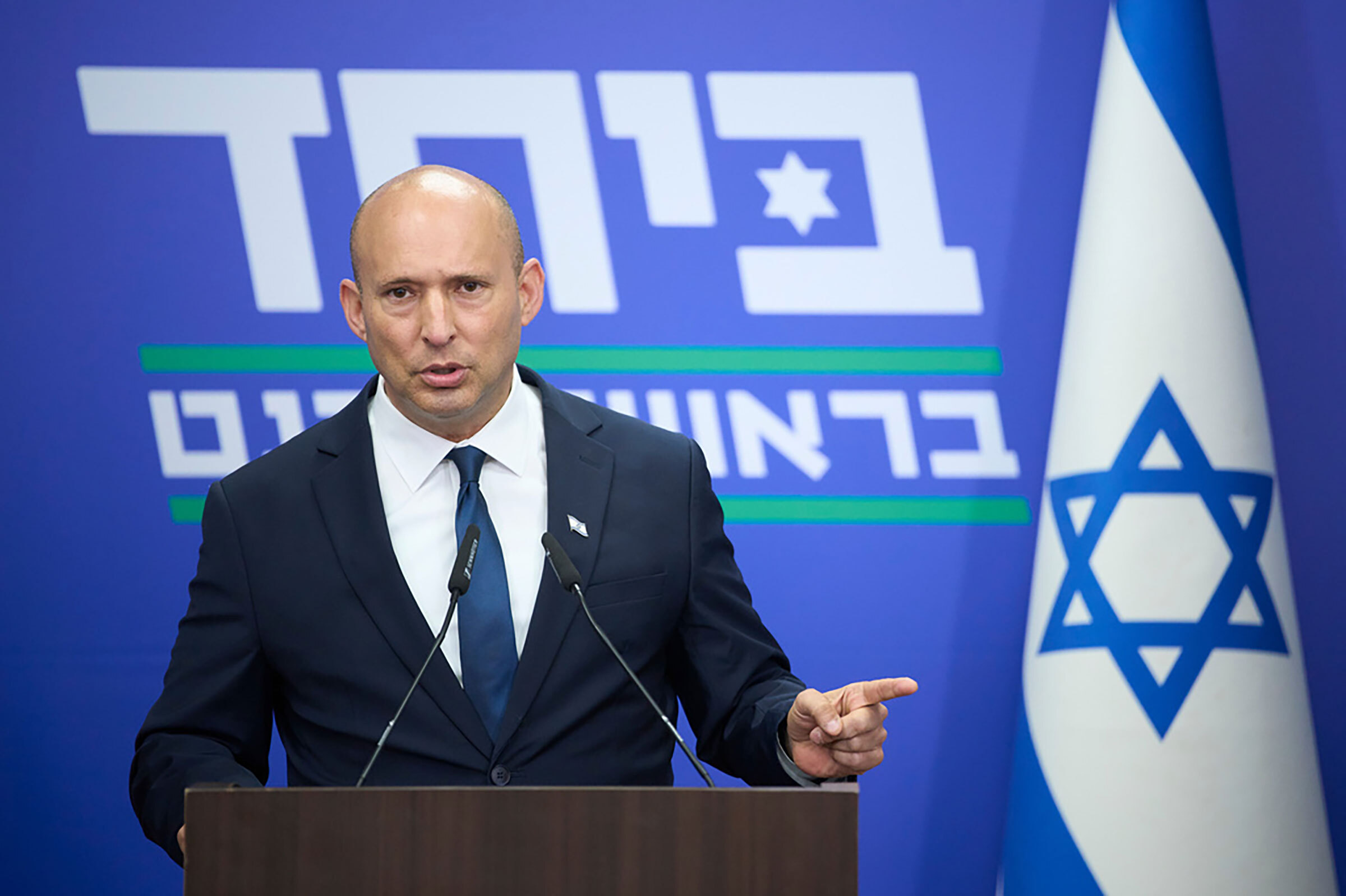
Former Prime Minister Naftali Bennett speaks to the media during the party session at the Knesset, Israel’s parliament, in Jerusalem, on May 20, 2026 —Ohad Zwigenberg—AP
Two hundred and fifty years ago, a small group of visionaries put their names to a document that changed the world. They declared, against the verdict of history and the weight of empire, that all men are created equal—endowed with unalienable rights to life, liberty, and the pursuit of happiness. They were not certain they would prevail. Most of the world doubted them. And yet they built something that has endured for two and a half centuries, inspiring and lasting. A nation of immigrants became a role model for democracy and prosperity worldwide.
Mazal tov, America.
This legacy goes through my veins, as I was born to American parents myself. As an Israeli, I read those founding words with a particular reverence. The Jewish people know what it means to carry an ideal across centuries of hardship, to believe in a future that has not yet arrived, and to build something lasting on the other side of adversity. It is perhaps no coincidence that from Israel’s very beginning, both countries recognized something familiar in each other—not merely an ally, but a kindred spirit.
The bond between our two nations did not begin with the Iran war. It will not end when this war is over. It is older and deeper than any single point in history. We shall always cherish the moment when American soldiers arrived at the gates of Auschwitz. When David Ben-Gurion proclaimed Israel's independence on May 14, 1948, it was the United States, led by the courageous and clear-eyed Harry Truman, that extended recognition within minutes. That act toward a people reborn in their ancient homeland set the tone for everything that followed.
In the decades since, the United States has stood by Israel in its darkest hours and its most triumphant ones. Military partnerships preserved our ability to defend ourselves. Diplomatic steadfastness helped us in the face of international pressure. Shared intelligence has neutralized threats to us and the entire free world. Our scholars, scientists, and engineers have partnered across disciplines. For all of this, Israel is grateful. Deeply, genuinely, enduringly grateful.
Now, under President Donald Trump's leadership, the United States has pursued a Middle East policy that dares to imagine something genuinely new: a region in which Iran's destructive influence is constrained, the axis of violence and intimidation is weakened, and a moderate, forward-looking coalition of nations can finally raise its head. The Abraham Accords, led by President Trump, were the opening chapter. What we see today—the effort to build a broad regional security and economic reality—embodied by visions like the India-Middle East-Europe economic corridor, is the next one. This revised architecture can help create a new future for the region that gave the world all Monotheistic religions. And this will also be the task of the next Israeli leadership. It is ambitious. It is historic. And Israel is not a bystander in this vision. We are one of its cornerstones.
This is exactly why Israel is not a burden to American foreign policy. It is one of its greatest assets. When American forces in the region need reliable intelligence, Israel delivers. When American companies seek world-class innovation partners, Israeli startups answer the call. Our militaries train together. Our scientists collaborate. Our shared values run deeper than any treaty. This is a partnership of equals—not in the size of our populations, but in the depth of our commitments.
I will not pretend this friendship has always been without friction. Partnerships between nations, like those between people, encounter disagreements. There have been differences of perspective, candid conversations, and moments of tension. That is normal. That is, in fact, a mark of genuine friendship—the willingness to speak honestly and to work through difficulty rather than around it. What has never wavered is the underlying foundation: the recognition that when it matters most, the United States and Israel stand together.
What concerns me—and I believe it should concern every American leader—is a troubling trend in public opinion, particularly among younger Americans. Surveys show growing skepticism about Israel among the next generation of U.S. citizens. I do not believe this reflects their true values. American young people are, overwhelmingly, decent and justice-seeking. This is not merely Israel's problem. It is America's problem, too. In my opinion, the same forces working to delegitimize Israel are working to undermine the Western alliance, democratic institutions, and American leadership itself. Countering this shift is a shared responsibility—and an urgent one.
The good news is that truth is resilient. The friendship between our two nations is not built on illusion. It is built on decades of shared sacrifice, shared achievement, and shared purpose. It has survived wars, recessions, and the tests of time. It will survive this as well.
When I look ahead to the next 50 years—and allow myself to imagine the 300th anniversary of American independence—I see a Middle East that has moved, however imperfectly, toward stability and coexistence. I see an Israel that has grown in strength and confidence, contributing to regional peace and to global progress. And I see the United States, still the indispensable nation, still the great democracy the founders envisioned—with Israel proudly at its side.
An MSG database tracked and categorized hundreds of celebs, famous Knicks superfans, and even some of Taylor Swift’s wedding guests. Labels included “LGBTQIA,” “DO NOT HOST,” and low to high “risk.”
The loss of protections for Haitian and Syrian workers could worsen shortages of nurses, aides and home care workers
The Trump administration may remove the temporary protected status (TPS) of Haitians and Syrians in the US, the US supreme court ruled in late June – a move that will worsen America’s growing caregiver shortage, experts say.
The US is now experiencing its fastest increase in the aging population in more than a hundred years, and more than 20% of the US population will be 65 or older by 2030. But the population of caregivers has not grown at the same pace, leading to staffing shortages.
Cases of cyclosporiasis – a parasitic illness that can cause “explosive”, watery diarrhea – have surged across the United States in recent days, health officials have said, with an abnormally large outbreak of almost 1,000 cases reported in Michigan.
Michigan typically reports about 50 cases a year, making the current outbreak the largest in the state’s history and one of the nation’s biggest in recent years. Ohio has also reported a sharp increase, with 177 cases as of 2 July, since the CDC’s last count.
More than one year after the Supreme Court restricted the use of nationwide injunctions, groups challenging President Trump's agenda have relied on other mechanisms to broadly block his policies.
Senator Jon Ossoff, a Democrat from Georgia, during a campaign event at The Tabernacle in Atlanta, Georgia, on May 31, 2026. | Ben Hendren/Bloomberg via Getty Images
For the past month, one name has dominated discussions of the 2028 Democratic primary: Georgia Senator Jon Ossoff.
Key takeaways
Sen. Jon Ossoff (D-GA) is having a moment. The senator is winning praise from across the Democratic Party’s many factions and is being touted as a potential top candidate for 2028.
There are good reasons for this hype: Ossoff is an excellent public speaker with a message on Donald Trump’s corruption that united the party. But there is also reason for doubt: “Unity” candidates have a questionable track record in primaries, and he may be falling into that trap.
Ultimately, the recent wave of Ossoff frenzy tells us that Democrats are unsatisfied with the current names topping the polls — like Vice President Kamala Harris and Gov. Gavin Newsom (CA) — and are very much open to alternatives.
Though Ossoff is running for reelection in a crucial swing state, his consistent polling lead is prompting national observers to leapfrog all the way to 2028. Features in both the New York Times and Politico have touted him as a leading candidate. His odds on the Polymarket prediction site have more than doubled since late May: he’s now given a better chance than Vice President Kamala Harris (who is currently the leader in nearly all national polls).
There are good reasons for this. Ossoff is a repeat winner in one of the most important presidential battlegrounds who appeals to everyone from the Never Trumpers at the Bulwark to leftist streamer Hasan Piker. His rhetorical focus on Trump’s corruption elevates a theme that energizes Democrats of all stripes. And his background as a filmmaker makes him almost uniquely well-suited to the short-form video age.
“I have been jokingly calling him…the Lisan al-Gaib, which is a Dune reference to the Timothée Chalamet figure — essentially, the chosen one,” Chris Hayes, the MSNBC host, said on a recent episode of The Ezra Klein Show. “I think he has figured out a way, in a broadly palatable ideological fashion, to leverage a populist moral critique of the rot of Trump that can appeal across the different Democratic factions.”
And yet, there’s some reason to think this hype is getting over its skis.
Ossoff is a certain kind of archetype who often emerges in divided parties: The mythical “unity candidate.”
These figures are typically broadly appealing elected officials without any one defined base of supporters. They have traits that seem to correct for the party’s failures in the previous election, have qualities that can attract fans from a wide range of factions and demographics within it, and they have yet to alienate anybody important. But the “unity candidate” has a mixed record in recent contests — they often look perfect on paper, then struggle in practice.
Whether Ossoff is the Democratic savior or another unity candidate poised to flame out remains to be seen. There’s a reasonable case in either direction.
But the fact that Ossoff is already generating so much attention tells us something undoubtedly important: that Democrats are deeply frustrated with their early frontrunners and looking for alternatives. That could augur a wild, perhaps even unpredictable, outcome in the eventual primary.
Why Ossoff has so many Democrats excited
Let’s start with one important caveat: Ossoff might not run. He has steadfastly denied rumors of presidential ambition, saying he’s focused on the Senate race.
Of course, that’s what anyone in his position should be saying — even if it’s insincere. But many in Democratic and Georgia politics seem to think that it might not just be for show. It will be harder for him to run if Democrat Keisha Lance Bottoms doesn’t win the governor’s race, which would allow her to appoint a Democratic replacement for his seat. It will be harder still if fellow Georgia Senator Raphael Warnock, a star in his own right, launches a bid.
But should he run, there are considerable reasons why so many Democrats believe Ossoff is poised to take off in 2028.
He’s a proven winner in the swing state, an excellent public speaker, a telegenic young guy with an inspiring and unifying message: he’s basically the stuff that Democrats dream of. It makes sense that pundits and bettors would anticipate a boom even before it emerges among voters; the raw material is all there.
What’s especially impressive is his ability to straddle the party’s internal divides without making enemies.
His vote to block military aid to Israel in 2024, when that position was less common among Democrats, endeared him to the left. The party’s centrist faction admires his vote for the Laken Riley Act imposing harsher punishments on undocumented immigrants who commit crimes. And he managed to avoid taking hardline stances on social issues that many Democrats took during Trump’s first term — the ones that left Kamala Harris with a trail of quotes and positions for Republicans to attack in 2024 — without alienating liberals.
“He not only refused to join along with the craziness of 2017 to 2020, but actively explicitly rejected it without becoming defined by the negative,” said Liam Kerr, co-founder of the centrist WelcomePAC.
Ossoff’s multifaceted appeal makes even more sense when you look at the emerging field. Acrosspollaverages, the top four candidates are consistent: Harris on top, California Gov. Gavin Newsom in second, and Rep. Alexandria Ocasio-Cortez and former Secretary of Transportation Pete Buttigieg battling it out for third.
Each of those candidates has a major strike against them with at least some important corner of the party. Buttigieg is unpopular on the socialist left and has long polled poorly with Black voters. AOC is hated by Democratic centrists and will need to convince electability-minded voters that she can appeal to the center. Gavin Newsom is seen by many as oily, insincere, and a traitor on trans rights. Kamala Harris, of course, carries enormous baggage both from Biden’s presidency and her own unsuccessful presidential runs.
In a party looking to move beyond its Trump-era doldrums, many see these choices as either uninspiring or divisive. There is a deep hunger for someone new. Ossoff, who is less weighed down by prior party debates, can fill that need.
At the same time, Ossoff isn’t just defined by who he isn’t — he’s genuinely impressed observers with his messaging strategy. Not just the focus on corruption, though that’s part of it, but the means by which he communicates. Instead of the long-form podcast interviews and direct-to-camera videos most candidates employ nowadays, Ossoff primarily communicates through slickly produced clips of his speeches at rallies or Sunday services at a Black church (and the occasional cable news hit).
Ossoff: How much do you guys know about Jared Kushner, Ivanka's husband? He's on the Saudi payroll for $2 billion dollars. Did you know that? And now he's leading American diplomacy in the Middle East, apparently while at the very same time asking princes and sheikhs across the… pic.twitter.com/VRn425sVNq
Perhaps counterintuitively, this works really well in the TikTok age. The clips do great numbers — again, he’s a documentarian by training and a talented orator. Making speeches his primary means of communication also allows him to keep tight message control: There is far less risk of a slip-up where he manages to infuriate one of the Democratic Party’s various subfactions.
Why “unity” candidates often fail
But there’s a big risk to this something-for-everyone strategy: it can leave you without a base.
In 2016, for example, Marco Rubio had a similar profile to Ossoff. He was a young Tea Party insurgent who unseated an old incumbent, but with an establishment-friendly profile on foreign policy and welfare-state politics. For electability-minded party leaders worried about Latino voters, his Cuban roots and fluent Spanish were viewed as an asset — just as some on the left now hope Ossoff’s Judaism might smooth over debates over Israel and antisemitism.
But ultimately, he got squeezed. Ted Cruz had outmuscled him to the right with ideological conservatives, the truly moderate Ohio Gov. John Kasich had taken over the center lane, and Trump ultimately beat all of them running as the charismatic outsider with populist appeal. Rubio dropped out before the race was done.
Similarly, in 2020, Kamala Harris looked like a unifying bet on the Democratic side. She had taken some quite left-wing positions in the Senate, but also had a moderate-appealing tough-on-crime background as California attorney general. Like Ossoff, she generated excitement among voters with widely shared clips — in her case, televised grill sessions with Republicans. Yet she flamed out even earlier than Rubio, suspending her campaign in December 2019 before the first primary vote was even cast.
Both Rubio and Harris suffered from their lack of a clear identity and support base: In offering something for everyone, they ended up being few people’s first choice. As they filled in their platforms with more detail, each sought to find a compromise on issues dividing party factions — Rubio backtracked from his earlier support for immigration reform, Harris endorsed Medicare-for-all then put out her own plan — only to find their answers pleased no one.
Currently, Ossoff is starting from a weaker place than either Rubio or Harris at the start of those races: 2.3 percent in the RealClearPolitics average, dead last among all included candidates. Several Democrats I spoke with questioned whether Ossoff could rise to frontrunner status without a sturdier base of support from one corner of the party or another.
“We’re seeing that play out in the Michigan Senate race,” Democratic pollster Adam Carlson said, referring to recently dropped-out Senate candidate Mallory McMorrow, a state legislator who became a rising star earlier after a speech on trans rights went viral. “McMorrow [was] kind of in the middle between [Haley] Stevens and [Abdul] El-Sayed, trying to be a little something to everybody.”
In particular, McMorrow got trapped on Israel: She angered the left by criticizing El-Sayed for campaigning with Hasan Piker in an interview, while failing to win them over by labeling Israel’s actions in Gaza “genocide.” Meanwhile, Stevens consolidated centrist support and drew in outside spending from pro-Israel groups. Ossoff has yet to face this level of sustained scrutiny on the topic, and it’s an open question whether left-wing influencers will be as willing to celebrate his partial support for their positions if there’s a rival candidate, perhaps Ocasio-Cortez, who goes significantly further.
Ossoff’s media strategy, while generally effective, might also mask upcoming challenges during a crowded primary. In our current attention economy, people build rabid fandoms by fostering parasocial connections — often by convincing fans that what they’re seeing on screen is the “authentic” version of the person. That’s harder to do when you eschew unscripted content for polished speech clips.
“He doesn’t do longform [interviews], he doesn’t do off-the-cuff, he doesn’t do the omnipresent attention,” one Democratic strategist told me. “He’s gotta get the reps in, because he’s going to need that skill set to run for president.”
Again, prior candidates are instructive: Harris famously struggled in interviews; Rubio was wrecked by an overly scripted debate performance. Ossoff will have to prove he can operate in settings where he has less control and can handle follow-up questions that are designed to pinpoint the narrow differences between candidates.
To be clear: Ossoff’s strategy isn’t doomed to fail. Barack Obama quite famously managed to be everything-to-everyone in his 2008 campaign: appealing to the left on the Iraq war while attacking Hillary Clinton’s healthcare plan from the right, all while delivering a message about bridging old partisan divides. Some have suggested Ossoff’s early criticism of Israel might play a similar role to Obama’s early war opposition, potentially allowing him to reassure the left on a key litmus test while courting the middle on substantive policy debates.
“He seems like someone who plays to win — not someone who plays not to lose,” Kerr said.
Ossoff may, or may not, emerge as a 2028 force. But the hype surrounding his campaign, even before it exists, has clearly exposed that the Democratic primary is unsettled: the current polling frontrunners are weak, and both voters and the party elite seem to be actively searching for alternatives.
It’s a bit like where the GOP was in 2016: plenty of credible contenders, but no one who clearly stood out as a consensus favorite. And that race ended with a nominee who had seemed to most, at the outset, like an impossibility.
President Donald Trump signs the H.R. 748, Coronavirus Aid, Relief, and Economic Security (CARES) Act, in the Oval Office of the White House in Washington, DC, on Friday, March 27, 2020. | Erin Schaff/The New York Times/Bloomberg via Getty Images
AI is scaling faster than any past tech boom, and it’s likely to produce an economic emergency — a moment when policymakers will suddenly accept big risks and big changes. The US isn’t ready.
These crisis windows open dramatically but close fast. In 2008 and 2020, near-universal cash payments and huge bailouts won bipartisan support, then vanished within months. Assuming AI will permanently shift politics toward generous policy is wishful thinking.
Today’s proposals fall short on both ends: AI labs offer sweeping ideas — sovereign wealth funds, portable benefits — with none of the detail legislation needs, while DC figures like Gina Raimondo push undersized fixes like retraining, too small for a transition that could wipe out whole categories of work.
Whoever has a detailed, ready-to-pass plan when the moment hits gets to shape it — the way TARP came straight from a “break the glass” plan drafted months earlier.
To be clear, at this point, my then-employer Vox had already sent everyone to work from home indefinitely, and it was clear something dramatic was happening. But I hadn’t yet internalized that the Overton Window in American politics had shifted dramatically.
True, there were some Republican Senators who, by 2020, were expressing more openness to safety net programs, and rethinking Reagan-style laissez-faire economics. Tom Cotton, though, was not one of these senators. I didn’t think he really had strong economic policy opinions at all; he was a defense and culture war guy. He cared about defeating China and, secondarily, defeating Woke. Universal cash handouts were not his bag. And yet here was Cotton, not just calling for near-universal cash payments, but also for welfare work requirements to be suspended and for big block grants to states to expand unemployment insurance.
If you had told me literally any of that would happen in February 2020, I would have laughed at you. But the normal rules had stopped applying. All that was solid had melted into air. Much, much bigger things were, suddenly, possible.
I’ve been thinking about that moment a lot as advanced AI models grow more and more capable, and more and more central to many businesses’ strategies. As of May, Anthropic is reporting an annualized revenue rate of $47 billion, equaling the likes of Coca-Cola and exceeding Netflix. That’s up from $30 billion a month earlier. If their revenue keeps growing at 56.7 percent a month, they will outpace Amazon, currently the highest-revenue company in the world at $717 billion a year, by late November or early December. The AI boom is already unfolding faster than the internet or mobile booms before it and may yet speed up even further. The debate over whether this tech is real and valuable is, essentially, over. The only question is what, and how large, its effects on our lives will be.
This is happening unbelievably fast, and it seems likelier and likelier that we will face a moment, like that in March 2020, when the speed and disruption of AI progress begins to constitute an emergency that policymakers will be willing to take surprisingly large risks to confront. There will likely be a moment of unusual policy freedom and flexibility, a moment which is brief — but could enable large changes for the better.
The US is currently not ready for that moment. But we need to get ready, fast. And we need your help. My colleagues at the Center for Shared AI Prosperity, a new DC-based research group, are attempting to collect a menu of detailed policy ideas that can meet this moment. In fact, we have an open Request for Ideas with funding that can go to the best proposals people submit for how to set up the tax code and safety net in a way fit for the AI era. Now is the time to act.
These moments don’t last forever
I sometimes talk to friends in the tech world who assume that the power and economic impact of advanced AI will permanently shift our politics, and that the policies necessary to keep everyone afloat (like, say, a guaranteed income, or a sovereign wealth fund) will materialize without much effort. After some 17 years as a journalist covering US politics and policy, I think this is overly optimistic, so say the least. Congress is like jello: flick it and it will shake, but it eventually settles back to normal.
Take Covid. Within a couple of months, the apparent consensus had evaporated, and Republicans were back to resisting safety net expansion. By May, Cotton had pivoted to pushing the No Bailouts for Illegal Aliens Act, which “amends the CARES Act to prohibit sending future funds to states or municipalities until they certify they aren’t issuing stimulus checks or other payments to those in the United States illegally.” By August he had a bill to deny virus-related federal employment funds to people convicted of federal offenses because of “riots.” The pandemic was still raging but the policy emergency, and the bipartisan window for much larger-scale action, had mostly closed.
The 2008 financial crisis offers another example. There, the window was open somewhat longer. At the very beginning of the recession, in February 2008, the Bush administration went against its normal laissez-faire commitments and supported a stimulus package championed by then-Speaker Nancy Pelosi built around per-person checks to nearly all Americans, including many of those not owing income tax. In July, President George W. Bush signed a bailout of Fannie Mae and Freddie Mac in the face of strong opposition from fellow Republicans in the House, but having mostly won over his party in the Senate.
In September, when Lehman Brothers collapsed and the possibility of a cascade of massive bank failures seemed very real, Bush demanded a sweeping $700 billion bailout that proposed purchasing toxic assets from at-risk banks (the “Troubled Asset Relief Program,” or TARP). As the subsequent years would demonstrate, bailing out banks failing due to their own irresponsibility was not exactly a popular position in the general public. Members of Congress are not stupid, and they realized this at the time. On September 29, the House voted down the proposal, with huge numbers of both parties defecting from Bush and Pelosi’s position. That led to a large stock sell-off that terrified lawmakers. That experience, some last-minute tweaks, and truly herculean lobbying from the administration, the Fed, and others led the House to switch course and pass the bill on October 3, though within weeks of its passage, Treasury abandoned asset purchases in favor of buying equity stakes in the banks directly.
The full course of 2008 shows the value of, and power inherent in, being prepared. The February 2008 stimulus package was very roughly improvised. It worked a little bit, but proved nowhere near big enough. If Pelosi and Bush had had a more thought-through proposal on hand, perhaps one that automatically repeated and scaled the checks depending on where the unemployment rate went, then the recession would have been much less severe and the 2009 stimulus might not have proven necessary.
TARP was an example of a case where some key actors were prepared. The structure of the program came from the “Break the Glass Plan,” a proposal put together by Bush Treasury officials Neel Kashkari and Philip Swagel in April 2008 explicitly designed as a “just in case” plan for the extreme situation where the whole financial sector needed recapitalization. That case, of course, came to pass, and because Kashkari and Swagel had a plan, there was something for Congress to quickly pass. That was good — TARP played an important role in preventing the financial crisis from worsening.
But it also meant that the plan reflected Kashkari, Swagel, and their boss Hank Paulson’s overall conservative worldview. One could imagine a plan like that which saw the US government instead outright nationalizing major banks, or imposing strict capital requirements on them in perpetuity as a condition of the bailout money, or banning them from owning hedge funds or doing speculative trading. A different administration with different views might have designed a different emergency plan — and because it was genuinely an emergency, that plan would likely have passed, with very different consequences over the next few years.
What stocking the shelves for AI means
One way to think of the project of AI economic policy in 2026 is as designing the equivalent of the Kashkari-Swagel plan: something detailed, opinionated, and actionable that can be deployed quickly when the situation gets dire. What that plan looks like will, of course, depend on one’s values and commitments; the America First Policy Institute’s emergency plan will not look like the AFL-CIO’s.
The Center for Shared AI Prosperity was founded with an aim to produce plans of this nature designed to make sure any economic windfall from AI is widely shared, and that workers and low-income Americans are not left behind in the transition. We were also founded out of a frustration at the inadequacy of the proposals we were seeing from two ends of the AI policy debate.
On the one side are ideas from the AI labs themselves. These tend to be ambitious — indeed ambitious enough to seem like plausible answers to a problem of the magnitude of AI completely reshaping the economy — but woefully unspecific. They more closely resemble dorm-room philosophizing rather than legislative drafting.
OpenAI’s “Industrial Policy for the Intelligence Age” from this past April, is one such example, laying out a number of very broad ideas: taxing capital more, a sovereign wealth fund invested in the AI economy, portable job benefits. It’s light on the specifics: What kinds of capital taxes? How big a hike is too big? How do you make health benefits portable without disrupting people’s current plans? How does the sovereign wealth fund get its money? Anthropic’s Economic Policy Framework is somewhat more specific, offering paragraphs per idea where OpenAI has a sentence or two, but still nowhere near the level of detail necessary to actually write legislation.
On the other side are proposals from within the DC policymaking world, which are firmly rooted in what seems politically viable right now but would be woefully inadequate in the face of the likely economic disruption that’s coming. Former Commerce Secretary Gina Raimondo and her group RAISE US have centered employee retraining; Raimondo’s recent New York Times op-ed centered ideas like new credentials from community colleges and expanded apprenticeship programs as the answer to mass AI unemployment. These are sensible tools for ordinary labor-market churn, but they are mismatched to a transition that could displace whole categories of work on a compressed timeline. The dawn of machine intelligence will demand more from our leaders than certificate programs.
The best case for this kind of caution is that ideas on the scale of the labs — sovereign wealth funds, universal capital accounts for all Americans, permanent relief funds for the long-term unemployed — are dead in the water in DC. Which might be true — now, at least.
But this is where Tom Cotton’s brief love of cash transfers becomes relevant. We should not overindex on the way the politics look right now. The world is about to become very strange, and we may be surprised by the scale of change in response that can earn even bipartisan support.
Indeed, it’s notable that both the 2008 relief measures and the 2020 CARES Act came under Republican presidents with Democrats controlling at least one chamber in Congress, which is also the likely situation after the midterms this year. Democrats are always willing to vote for big new safety net programs to protect unemployed and low-income people. But Republicans are often willing to compromise their usual anti-welfare stances when they’re the party in the White House, and their approval ratings depend on the country’s basic economic health.
What action they might take in a 2027 or 2028 featuring massive AI-based economic disruption is still unclear. But right now, we all have an opportunity to help shape it. The Center for Shared AI Prosperity is running a request for ideas, seeking proposals for shared AI ownership, new AI-related taxes and revenue raisers, and new safety net programs to share the gains widely. We want ideas from economists and think tanks, of course — but also from the labs, from independent researchers and academics, and from ordinary citizens with an interest in where this technology is going.
Stocking the shelves is hard work, and we don’t have all the answers. But you just might, and we’re going to need all the help we can get if the US is going to emerge from the AI transition as a prosperous, functional nation.
The devastation of Ms. Zúñiga’s city in Venezuela follows the demise of her political project. The revolution is over, but the human ties that help her cope remain.
Emma Waters, pregnant with her third child, is crafting policy to encourage early parenthood. Some think she is pushing an ideology that does not meet reality.
The proposed 250-foot arch would violate a height limit on Washington structures under the traditional reading of the law. But a planning commission gave it preliminary approval anyway.
While President Trump insulted allies and demanded loyalty, the military alliance moved quietly closer to accepting more European responsibility for defense.
Представьте ситуацию: вы сделали хороший продукт, вы уверены в его нужности, вы можете часами рассказывать про его архитектуру, функции, интеграции и пользовательские сценарии. Но на встрече с потенциальным клиентом вас спрашивают: «Сколько это нам принесет денег?», «За сколько времени окупится?», «Вы гарантируете финансовый эффект?». И тут оказывается, что рассказ про функциональность закончился, а ваши собеседники вообще не услышали того, что хотели.
В этом небольшом цикле статей я постараюсь поделиться своим более чем пятнадцатилетним опытом оценки экономической эффективности ИТ-решений и подготовки бизнес-кейсов внедрений, полученным в процессе работы в роли пресейл-архитектора и отраслевого эксперта у международных и отечественных вендоров корпоративного ПО,. В качестве примера я использую знакомую многим область – управление ТОиР (так же известное как ТОРО). Но логика подхода универсальна: меняются только исходные показатели и драйверы эффекта.



.png?branch=production)