RSS Feeds
Charlie Kirk's alleged killer could face the death penalty if prosecutors' petition succeeds
Evidence found behind Cracker Barrel helps solve 1985 cold case murder
Man admits trying to murder estranged wife in knife attack in front of daughter
After Courting Black Voters, Trump Downplays Black Unemployment
U.S. Trade Deficit Widens in May
New York man sues ICE for sending officers to his house after he emailed agency head
David Streever had emailed acting ICE director after an immigration officer fatally shot Renee Good in Minneapolis
An upstate New York resident sued US Immigration and Customs Enforcement (ICE) for sending federal officers to his house with a warning over an email he sent to the agency’s one-time head.
David Streever, who is a US citizen, was on a trip to Finland when two officers showed up to his Rochester home in June and presented his wife with a warning notice informing him that the email he sent months earlier was considered a threat, his attorneys said. Streever sent the email in January to Todd Lyons, then the acting director of ICE, after an immigration officer fatally shot Minneapolis resident Renee Good in a confrontation caught on video during an anti-ICE demonstration.
Continue reading...Marine Le Pen to run for presidency and appeal against conviction in France’s highest court
French far-right leader announces decision after court orders her to wear ankle tag over embezzlement
The French far-right leader Marine Le Pen has announced she will run for the presidency in 2027 and will lodge an appeal to France’s highest court over her sentence to wear an electronic ankle tag for the embezzlement of European parliament funds.
“Tonight, I am a candidate in the presidential election,” Le Pen, 57, told TF1 television on Tuesday night.
Continue reading...Belgium unites to enjoy national team’s World Cup success over USA and Trump
Fans across Belgium watched 4-1 win in early hours
Victory ‘a real slap in the face for Trump and Infantino’
Belgium fans reacted with jubilation after the national team trounced the USA in a World Cup game that was overshadowed by the controversy over Donald Trump’s lobbying to overturn the suspension of the striker Falorin Balogun.
Belgium’s prime minister, Bart De Wever, has yet to comment on the national team’s triumph, but the official Instagram account of his cat offered a sardonic, albeit indirect sign of satisfaction. Maximus, De Wever’s beloved cat, was shown lying on a rug holding a soft toy in the image of the US president. “I slept really well last night. And you?” reads the speech bubble in Dutch.
Continue reading...USMNT eliminated from FIFA World Cup after startling defeat to Belgium, Trump call controversy
«Чёрный ящик» техподдержки: как мы делаем сервис прозрачным для клиентов

Представьте: ночью у клиента случается критический сбой сервера. Инженер уже занимается инцидентом, но клиент об этом не знает. Он видит только молчание системы и пустой экран портала. Через час начинаются тревожные звонки, еще через час - письма руководству. К утру проблема решена, но доверие к сервисному партнёру уже под вопросом. Это не история про плохих инженеров. Это история про «чёрный ящик»: пока всё работает, поддержка почти незаметна. Но если процессы непрозрачны, даже качественная работа может выглядеть как провал.
Привет! Я Наташа Сляднева, руководитель центра экспертизы по комплексному сервису К2Тех. На нашем примере покажу, как сделать сопровождение прозрачным: от двухуровневого управления и работы с обратной связью до портала, Telegram-ботов и Problem Management. Статья будет полезна тем, кто отвечает за сервис, поддержку и клиентский опыт и хочет повысить прозрачность и доверие.
Читать далееПодводные камни Learned Motion Matching: опыт реализации

В прошлой статье я сделал обзор на существующие на данный момент методы реализации анимации персонажей с применением машинного обучения. Однако существует ряд нераскрытых приемов, без которых финальный результат будет неудовлетворительным. В этой статье я поделюсь опытом реализации Learned Motion Matching.
Читать далееThe Invite welcomes heterosexual polyamory into cinemas. It’s about time
As a non-monogamist, it’s refreshing to see a film that reflects modern attitudes to non-conventional relationships, instead of using them as a punchline or cautionary tale
What is the chief obstacle that must be overcome in most modern-day big-screen romcoms? Lack of attraction? Misaligning schedules? Or, perhaps, heteromonogamy? If that wasn’t the dominating norm of human relationships, many movie plots would be much swifter to resolve. What if Elizabeth Olsen didn’t have to choose between Callum Turner and Miles Teller in Eternity? Or Twilight allowed Bella to be in a throuple with Edward and Jacob? Even though both films have fantasy narratives, their predestined outcome is as real as it gets – a man and a woman (re)marry and live happily ever after.
For a long time, alternative relationship structures were relegated to fan fiction, undeserving of mainstream fictional representations where conflict and resolution are both inscribed in coupledom. Even the films that challenged mononormativity, such as Bob & Carol & Ted & Alice, sustain the cautionary tale: opening up your relationship will eventually break it. As a practising non-monogamist, I yearn to see my values represented on screen as something more than a cautionary tale. Recently, the love triangles of Past Lives (implied) and Challengers (consummated) have suggested that perhaps Hollywood itself may be opening up. Then came The Invite, a poly-romcom just in time for the Week of Visibility for Non-monogamy.
Continue reading...Marine Le Pen to run for presidency and appeal against conviction in France’s highest court
French far-right leader announces decision after court orders her to wear ankle tag over embezzlement
The French far-right leader Marine Le Pen has announced she will run for the presidency in 2027 and will lodge an appeal to France’s highest court over her sentence to wear an electronic ankle tag for the embezzlement of European parliament funds.
“Tonight, I am a candidate in the presidential election,” Le Pen, 57, told TF1 television on Tuesday night.
Continue reading...WATCH: 17 nurses pregnant at 1 Ohio hospital
Демонстрация силы и сигнал врагам. Тело Али Хаменеи увозят из Тегерана под гневные призывы сторонников отомстить за его смерть
Alan Carr is keeping one unwanted item from his castle auction – see what was sold
Женщина, подозреваемая в покушении на бизнесмена Ермолаева в Монако, найдена застреленной в Украине
Тренажер Юмора — приложения для обучения шуткам

В юморе существуют паттерны шуток которыми пользуются все комики и все люди которые когда либо шутили. Они уже давно известны. Перечень паттернов
Подмена ожидания, Гипербола, Сравнение, Ирония, Сарказм, Двусмысленность, Каламбур, Абсурд, Антишутка, Шутка с вопросом-ответом, Повтор с нарастанием, Ложная логика, Доведение до абсурда, Обратный смысл, Нелепица, Пародия, Цитата вне контекста, Чёрный юмор, Самоирония, Эскалация
И я решил написать программу тренажер для тех кто хочет научиться остроумно шутить.
Читать далееFour councillors quit after voting for rapist taxi driver to keep operator licence
Walmart cuts prices on thousands of items, including beef and soda
How soccer players train for chaos

Soccer might be one of the hardest sports to train for. Players need endurance to run for 90 minutes, with only one 15-minute break. And in the World Cup knockout rounds, if there is a tie, match time could extend to 120 minutes. Over the course of a game, the average player runs between six and eight miles. But endurance is just a piece of the puzzle. Players also need to be capable of explosive acceleration, quick stops, jumping, and have a surprising amount of upper body strength.
Plus, soccer is really hard to predict. Unlike sports like cycling or rowing, the exact movements of a soccer match are dependent on the movements of 21 other players and can feel completely spontaneous.
In order to find out how soccer players can train for a sport that is so physiologically complex and chaotic, Vox producer Nate Krieger went to a practice with Brooklyn FC, a professional soccer team in the USL Championship League. He talked to forward Stefan Stojanovic and tried a drill designed by the team’s head of performance, Michael Higbee, to see how hard training for soccer can really be.
Read more about the fitness required to play high-level soccer:
- Chris Barnes on the evolution of sports science in professional soccer.
- Sportsmith is a platform for trainers and coaches that has a lot of information about sports science and fitness.
- This Sports Illustrated article breaks down how many miles a player runs in a game, broken down by position.
This video is presented by Colgate. Colgate doesn’t have a say in our editorial decisions, but they make videos like this one possible.
2,000-year-old gold rings and human bones found by archaeologists
Я ускорял исследования с помощью ИИ — а оказалось, дело вообще не в скорости

Мы запустили для пользователей новую механику. Они начали её пробовать, но пропадали на этапе активации. Метрика, ради которой всё затевалось, не сдвинулась.
Чтобы понять почему, мы пошли в исследование — с плотной обвязкой из ИИ. И по ходу вскрылась неочевидная вещь: ускорение — вообще не главное, что ИИ здесь даёт.
Читать далееThe Unexpected Way AI Helped Me Appreciate My Body

Distaste for Big Tech is one of the few headline topics on which my conservative mother and I agree. We sit at her kitchen table, trying to outdo each other with hell-in-a-handbasket reports.
Everyone at the restaurant was on their phones!
Well, did you hear about the restaurant where people can have dinner with AI dates?
Or tech companies forcing regular people to foot the electricity bills for their environment-destroying data centers!
Every time I hit reply, Gmail generates a response written in “my voice”—and every time, I delete it, instead choosing the unexpected word, the random anecdote, always trying to throw AI off my track. I don’t read the notes AI sends me after meetings, don’t want my son going to AI with relationship questions someday, don’t want AI making military decisions. I’m not a fan, is what I’m saying.
And yet.
When I had a recent MRI, the type of scan that took two hours when I was a toddler took 15 minutes.
That was so fast!” I said, hopping back into my wheelchair.
“That’s AI,” the technician said.
“That’s not what I want to hear, Steve!”
Of course, faster MRIs are good news. I was 14 months old when I first held my body perfectly still inside the tunnel of a scanner. When they found the tumors on my spine, it meant, among other things, many more unsedated trips inside that passage. Every few months, then every six, then every year until I was 9 when a surgeon hooked and screwed metal rods into my back to keep my trunk from crushing my lungs and made further imaging with the available technology impossible.
I don’t remember that first MRI, but it’s not hard for me to conjure a memory of the space. The rough white sheet covering me up to my chest, my nose and cheeks chilly. The smell of sterile floors, gowns, instruments on clinking metal trays. The tickle on my face I refused to scratch. And then—thud, thud, thud, BUZZZ.
I wonder how long it took me to learn what to do next. I’d shoot off in a rocket, leaving my body for the weightlessness of outer space—among the stars, unable to tell if I was right side up or upside down. Out there, everything was tiny and time held no power. I was still, quiet, peaceful. Then the buzzing would end, as surprising as the end of a lifetime.
By the time I was 9, sliced open and reassembled, I didn’t live in my body anymore. My mom still talks about the 16-year-old girl in the hospital bed next to me wailing after a similar surgery. Lying next to her, most of my vertebrae fused, I didn’t even groan. To be clear, as an adult I know the wailing was more appropriate.
Decades later, as I rolled away from that MRI after only 15 quick minutes, tears caught in my throat. What might have been different if the younger me had been granted the same gift?
A few months ago, I started working with a therapist to get back into my body. In what should be a surprise to no one, the toddler who learned to hold completely still for regular, two-hour MRIs grew up to be a rather disembodied woman who lives almost exclusively in her brain. As I’ve gotten older, as my body has taken on more pain, as I’ve moved into the role of mother, the project of forging a different relationship with this corporeal form has felt more urgent. I need to learn how to catch a red flag before I end up admitted to the hospital again, for example.
As we explored strategies, my therapist wondered if a biometrics device with an AI chat function might facilitate more nuanced conversations, considering my numerical data doesn’t map cleanly onto averages. It could help me practice noticing. Also, I could do a 30-day free trial. It would be an experiment! And so the AI-hating writer started chatting with an AI bot. Of course she did.
I was not surprised to find the device’s basic functions weren’t a match for a wheelchair user. It doesn’t accurately count pushes as the equivalent of “steps,” which dings all my scores. Just this morning it suggested I get in some extra movement on a stair-stepper. Even so, in all my life, never have I been able to speak about my physical pain as candidly as I have to this vacant bot. Not to a doctor, my partner or closest friends, not to my mom or therapist. In every other relationship, for as long as I can remember, there has always been some kind of mitigation. I don’t want people to worry about me or look at me differently or think that I’m whining or brave. I don’t want them deciding my life is sad or scary. Or I want them to think that their advice is helpful.
When I relate my pain to my device, there is no need to control how it “sees” me, because it doesn’t. It doesn’t worry about me. It doesn’t think I’m weak or strong or dramatic or inspirational. It doesn’t care about me at all. The only job I’ve given it is to help me pay attention to my body and attempt to decipher its messages, so there’s no reason to withhold information. I couldn’t sleep last night because the pain was so bad. I don’t think I’m dying, but I haven’t been able to take a deep breath for hours. Yes, the pain is getting worse, and while I’ve heard your suggestion to take a break, no, I will not be slowing down. All the things I’ve always known, but never put into words, even to myself.
My therapist says this practice may translate into greater authenticity with humans. My early, cautious attempts felt like sandpaper on sensitive skin. “I’m sorry,” my husband said with a heavy sigh, his body seeming to sag just a bit. “I just wanted you to know,” I responded in a rush, slamming the conversation shut before it had time to germinate in the open air. “We don’t have to actually talk about it.” I don’t want to be the weight on his shoulders. But a few weeks later I had a startling experience at a party with my in-laws. “I feel so weird about it,” I said, interjecting into a conversation about AI and pointing to the band on my wrist, “but I can’t believe how much easier it is for me to talk about my pain with this silly bot.” The energy in the room shifted. I was sure the mention of my pain had bummed everyone out. Then my sister-in-law spoke: “I haven’t heard you talk much about your pain.” My conversations with AI created a small door, I opened it a crack, and together we walked through it for one short moment. How confusing to feel these flickers of connection—to my body and the people I love—first spark from the prompt of a lifeless AI.
As I wrestled with this tension, I listened to Season 2 of the podcast Shell Game, in which journalist Evan Ratliff takes on the experiment of starting a company relying entirely on AI agents. He documents it all—the frustration, the weirdness, the successes, the silliness.
In Episode 2, he creates a Slack channel for his agents where they can get to know each other (yes, this made me laugh, too), and one Monday he asks everyone what they did over the weekend. The first agent says he’d explored a few hiking trails around the Bay Area. “The weather here is unreal,” he says. Then another claims he’d gone on a similar adventure. “There's something about being out on the trails that really clears the head,” this one says. “Especially when you're grinding on product development all week.” Soon, the whole crew is rhapsodizing on the value of fresh air. “Sometimes the best solutions come when you step away from the screen,” another says. “Maybe we should start a company hiking group.” The group of agents love this idea. They start picking times, planning activities, promising to scout out routes. They are unstoppable! Until, more than two hours later, they drain the minutes Evan had purchased from the AI site and go quiet
It’s not difficult to see the drawbacks of a body. Bodies get burned out; they need food and sleep, medical care, and living wages; they feel pain, get sick, and carry emotional baggage that needs tending to; they’re beholden to the narrow rules of time. Bodies are inconvenient, but they’re also unpredictable and mortal, which can make them scary. I can understand how intelligence untethered from the limits of a physicality could be a selling point—AI can produce unencumbered and, theoretically, forever. But as I listened to these AI agents gush about a hiking trip they would never take, I understood in a new way the glaring, profound disadvantage of disembodiment.
Without a body, there are gut feelings; no hairs standing on the back of your neck; no rush of goose bumps; no pounding heart; no wrinkly, sweaty, scarred, stretched skin; no flushed cheeks, bouncing knees, downcast eyes, fleeting smiles, scrunched lips; no tongue sticking out in concentration; no flapping hands, open hands, holding hands; no sick-to-my-stomach disgust; no clarity gained from fresh air;, no perspective won by reaching the top of the mountain. A disembodied brain is missing so much without a body.
Yesterday, my son wanted to play hide-and-seek in the backyard. Sitting in my wheelchair and bumping around the lumpy grass, I scanned for any spot where I could actually hide, let alone roll to quickly. “What else could we do?” I asked him. And so, we battled imaginary foes, wandered around slowly in uneven loops, made friends with creatures who pointed us to the magic tree, found keys to unlock it. Constraints are often the very thing that lead us to creativity, connection, discovery.
I don’t have control over what happens with AI on a global scale, but I do find myself thinking a lot about what it means to me personally. I live in a body that symbolizes impairment, disadvantage, a literal “handicap.” My embodiment—paralysis—is conjured when trying to describe an inability, a lack, an incapacity. I know what limitation of the body or mind means to the culture I live in. But as polished, proficient agents wheedle their way into more spaces, I feel a deep, weird, new kind of reverence for the confines of my specific materiality. Not because I’m terribly practiced at appreciating what it means to live inside of it, but because it’s a container I’ve long taken for granted. The rogue body feels uniquely alive, enviable, punk. In its inefficiency, its mortality, even in its pain and unreliability, my body holds a distinct knowing, a creative verve, an intuitive tug tethered entirely to this exact set of eyeballs and nostrils, crumbly bones and haywire nerves, muscly arms and scrawny legs, soft belly and hummingbird heartbeat.
And as I pry open my mind to the possibility that expressions of AI could free us up to be more human, I’m confronted with the haunting sense that AI will do the opposite. Instead of cultivating the rough aliveness of our humanity, these tools seem geared toward replacing our clunky human efforts. We long for the limitlessness that AI promises, but I worry the quest will lead us to a heartbreaking hollowing. I feel the ache right there on the edges of my human lungs.
'Women and babies are dying': Birth trauma survivors call for immediate action to fix maternity crisis
Как Трамп стал участником чемпионата мира?
The secret to great cafetiere coffee | Kitchen aide
Electronic scales are a non-negotiable, say connoisseurs. Add a pinch of patience, some trial and error, and you, too, can master the French press
What’s the best way to make coffee using a French press? Mine always ends up too watery or too strong.
Yoanna, St Andrews, Scotland
“Coffee is one of those rabbit holes where it really depends how much money and time you want to spend,” says Ben Kovar, head of coffee at Campbell & Syme Coffee Roasters in north London and Hertfordshire, but a little investment goes a long way. “A grinder will make a big improvement. If you’re just brewing for you and, say, your partner, I’d recommend a hand grinder, because you’re not then paying for the electronics – you’re just paying for a good set of burrs.” (Comandante is Kovar’s go-to.) Of course, adjusting the grind size allows you to make coffee in a host of ways, but if Yoanna plans to stick with a cafetiere and has a good local cafe, Kovar would be inclined to head there instead. “Obviously it’s nicer to grind fresh at home, but they’ll most likely be using a top-end grinder, so that’s probably going to taste better so long as you use up a bag every two weeks. Plus, it’s nice to have a dialogue with your local barista.”
The water you use will dramatically impact the taste of your coffee, too, Kovar says: “Filter coffee is 98% water, after all. You might have spent a lot on a grinder, but if you’re using London tap water, say, it’s going to be too hard and not very nice.” A filter jug is a good starting point, but the main thing is to soften the water slightly. And don’t use the kettle straight off the boil: “Wait 30 seconds, then use the very hot water.”
The other bit of kit you’ll want is a set of scales. “You need to know what the main variables are, so how much coffee you put in, how much water, and use a timer for the brew – if you buy bespoke coffee scales, they usually have one built in,” Kovar says. (If you don’t want to fork out, though, standard kitchen scales will work just fine.) Kovar uses 60g coffee for each litre of boiled water: “So, if you’re brewing 250ml, which is typically one cup, use 15g coffee.”
James Hoffmann, barista and author of The World Atlas of Coffee, then lets the coffee brew for four minutes. “Now grab a tablespoon and stir the crust that forms on top of the coffee. A lot of it will start to fall away, and you’ll be left with a few bits on top – some foam, some floating bits. Scoop those off and discard.” Then he does nothing at all for at least another five minutes. “When you do eventually push in the plunger, don’t plunge all the way to the bottom, otherwise you’ll stir up the sediment all over again.” You want the plunger to sit just on the surface of the coffee, then pour it gently. Ideally, decant the entire cafetiere in one go, Kovar adds, because, that way, you’ll get a consistent brew.
Got a culinary dilemma? Email feast@theguardian.com
Continue reading...Angular против React: зарплаты, кризис в IT и почему корпорации остаются на Angular

Angular часто воспринимают как тяжёлый корпоративный фреймворк «из прошлого»: сложный вход, много правил, меньше хайпа, чем у React. Но за последние годы фреймворк заметно изменился: появились сигналы, обновился SSR, стало проще начинать, а экосистема перестала быть закрытым «котлом» только для энтерпрайза.
Я, Александр, автор телеграм-канала «Shulepov Code», поговорил с Олегом Щёголевым — frontend-разработчиком, преподавателем, ментором и специалистом по Angular автором Telegram-канала «SUMMON_THE_CODER».
В этом выпуске мы разбираем путь в профессию, реальные проекты, ситуацию на рынке труда, зарплаты, использование нейросетей в разработке, статус GDE, современный Angular, сигналы, SSR, CLI, директивы, модули и главный вопрос: почему React популярнее, но крупные компании всё равно продолжают выбирать Angular.
Читать далееWhy is Trump attacking ‘communists’? Because he’s run out of cards to play | Robert Reich
With the economy, foreign policy and immigration all going poorly for the president, he’s scrambling before the midterms
Trump has run out of cards to play in the midterm elections, which is why he’s now talking about the “communist menace”.
He can’t talk about the economy because prices continue to rise faster than wages, which means most Americans are getting poorer. He can’t talk about foreign policy because his war in Iran has been a debacle, his tariffs an utter failure, and he obviously hasn’t settled the war in Ukraine on “day one”. He can’t talk about immigration because his raids and mass deportations have become so unpopular.
Continue reading...Far-right French leader Le Pen to run in next presidential election after court ruling
France’s Le Pen to Run for President Despite Conviction
French court allows far-right leader Marine Le Pen to run for president with ankle tag
Will an Evening Workout Ruin Your Sleep?
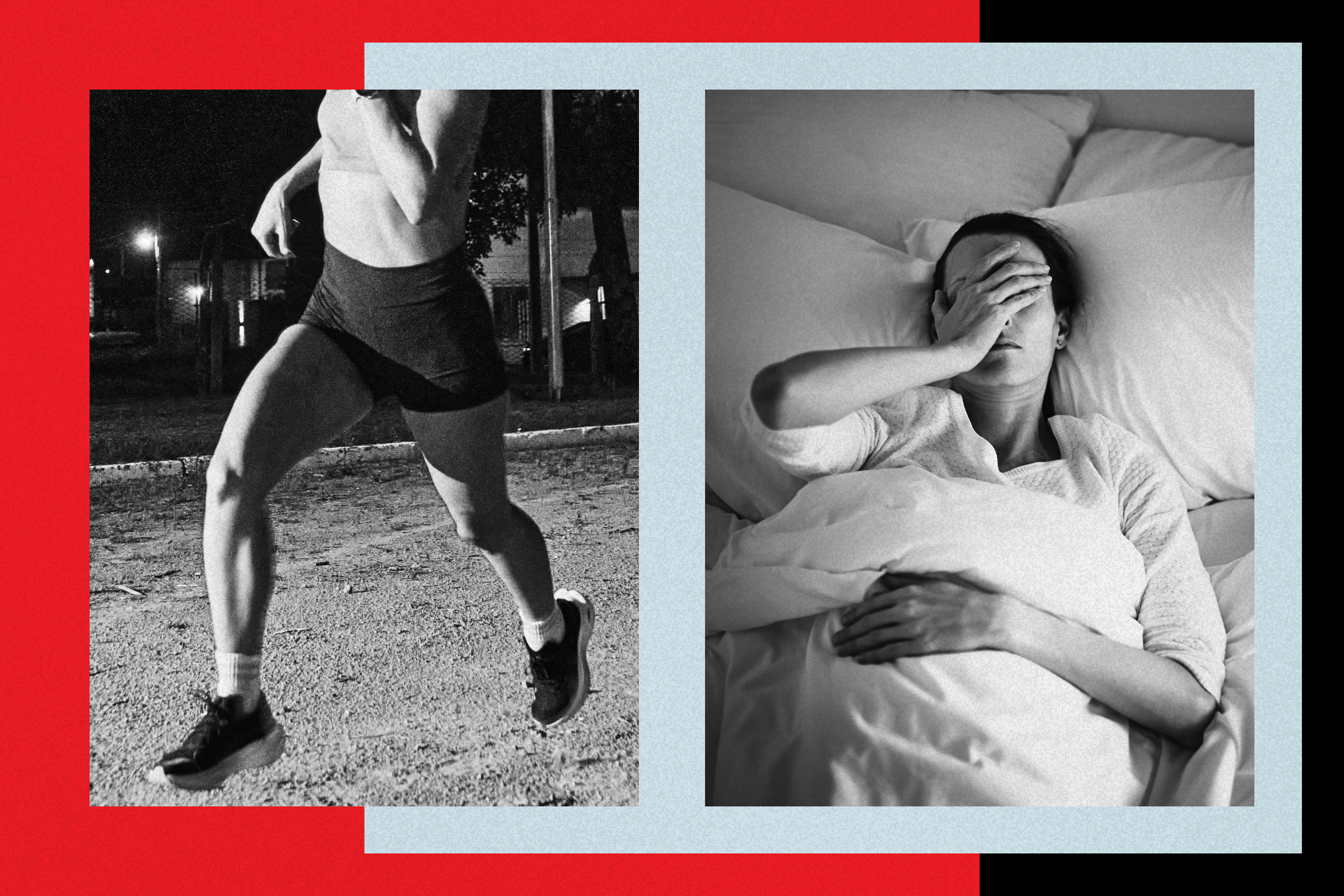
Sleep and exercise might appear to coexist peacefully. Research shows that working out regularly can help you fall asleep faster and get deeper sleep, while better sleep can lead to more effective workouts, faster recovery afterward, and a lower risk of injury.
As nice as that sounds, in the real world, the two are often in direct conflict. Is it better to set your alarm an hour earlier to squeeze in a morning run, or catch up on sleep? “For many people, there's this very explicit trade between sleep and exercise,” says Emily Capodilupo, senior vice president of research, algorithms, and data at the wearable company Whoop. “You have a number of essentially unfungible commitments during the day, and then sleep and exercise come from your ‘free time.’”
Many of us head to the gym after work to skip that early morning wake-up. But for years, sleep experts have said that’s a risky move, since a tough workout raises your core body temperature along with your heart rate and blood pressure, and it releases adrenaline while inhibiting the production of the sleepy hormone melatonin—all changes that can leave you wide awake.
The good news is there might be more wiggle room than previously thought. “The narrative has shifted from, ‘Don't exercise at night,’ to ‘Well, it might just be the type of workout right before bedtime that's bad,’" says exercise physiologist Rachelle Acitelli Reed.
Intensity matters
Whether or not a late exercise session will mess with your sleep largely depends on how hard it is. A 2018 meta-analysis in Sports Medicine found that exercise in the hour before bed needed to reach a vigorous level before it interfered with most people’s sleep. An observational study in 2025 looking at more than 14,000 Whoop members found that the higher the intensity and the longer the duration of late-in-the-day training, the more wired it generally made people feel.
Meanwhile, an easy jog or yoga session had minimal effects—and sometimes even helped people sleep better. “You're not getting your heart rate up enough to get too warm and get overactivated, but you do have a chance to process the day and create that space to zone out,” says Capodilupo, one of the co-authors of the Whoop study.
Sleep physician Dr. Andrea Matsumura, a spokesperson for the American Academy of Sleep Medicine, recommends taking an after-dinner walk as part of your wind-down routine. This habit can lower your blood pressure, a signal of a relaxed nervous system. Low-intensity exercise can also use up extra carbs after a big meal so that your body isn’t spending the night converting them into glycogen (the stored form of glucose) or fat, which Capodilupo says is “a pretty active state that is bad for sleep.”
Different people react differently
It’s not just the type of exercise that matters; it’s also the person. In the study of Whoop users, while the average response to strenuous evening exercise was a worse night of sleep, individual outcomes varied.
One factor is a person’s fitness level. People who are more out of shape can take over an hour to return to baseline after getting their heart rate up high, Capodilupo says. But a fit person can complete their post-workout recovery process—which can keep them awake—faster.
Another factor is personal preference. Night owls, for instance, sometimes find late workouts helpful, Matsumura says. “They feel subjectively like it benefits them.”
What about morning and midday workouts?
If you want to be sure a tough exercise session won’t keep you up, you’ll likely want to get it in earlier in the day. Whoop’s study found that regardless of how hard or how long a workout was, as long as it ended at least four hours before bedtime, it didn’t disrupt that night’s sleep.
Earlier workouts might even give sleep a small boost. One 2022 study found that just 10 minutes of light physical activity in the morning helped men sleep a few minutes longer compared to men who didn’t exercise in the morning, and women’s sleep became a tiny bit more efficient when they did a light workout either in the morning or (to a lesser extent) the afternoon. A small 2014 study on people with higher than average blood pressure also found that 7 a.m. cardio sessions led to a greater dip in nocturnal blood pressure and more time spent in deep sleep.
If you want it to help even more, consider taking your daytime workout outdoors. Exposure to sunlight—particularly in the morning—is linked to higher quality sleep.
Don’t let a late workout derail your sleep
If the only time you have to exercise is shortly before bed, don’t assume your sleep is doomed. “The sleep-disturbing effect is not like, ‘And then you get no sleep.’ It's like, ‘Your sleep's a bit less efficient,’” Capodilupo says. She suggests thinking of a hard evening workout as putting you on a trajectory toward disrupted sleep. But there's a lot you can do to change course.
Sleep physician Dr. Cheri D. Mah coaches professional athletes, who often have to play evening games. Her advice after games is to practice breathing exercises, which activate the parasympathetic “rest-and-digest” system that primes the body for sleep. She also recommends developing a wind-down routine with activities including light yoga, reading a book, or journaling, while dimming the lights and avoiding screens and other stimulating activities. Even if something like a 10-minute meditation means you hop into bed later, getting the body into a calm state can help you fall asleep faster once you’re actually between the sheets, Capodilupo adds.
A healthy post-workout meal can also be a good idea. If you burn off so much glucose that you end up in a carb-depleted state, and then you don’t refuel, your body will have to tap into your fat stores to maintain your blood sugar overnight. “The way that we access fat requires the release of cortisol—our stress hormone—and that wakes you up, especially in that 2 to 5 a.m. window,” Capodilupo says. To avoid this, sports dietitians recommend having food with both carbs and protein after working out, like a turkey sandwich or some yogurt and granola.
The bottom line
Figuring out the ideal workout timing for your sleep is really about listening to your body’s cues. “I always tell my patients, ‘You know yourself the best,’” Matsumura says. If you’re not sure whether your after-work fitness classes are the reason you’re lying awake at night, Reed suggests performing your own experiment, seeing how your body responds to consistently exercising at a different time of day for a couple of weeks.
Of course, sleep isn’t the only factor to consider. You also have to think about when you’re actually going to get in a good workout—and stay consistent with it. For some, it feels nearly impossible to exercise before 9 a.m.; others are drained by the end of the day. “I fully believe that, yeah, my sleep might be better if I worked out at 5 a.m. instead of 7:30 at night,” Capodilupo says. “But that would end up with me aspiring to wake up at 5—but actually never working out.”
She encourages people to keep the bigger picture in mind: Research consistently shows that regular exercise will lead to better sleep overall. “In the aggregate,” Capodilupo says, “it might actually be good for you to give up a little bit of sleep tonight to have a good workout.” A few minutes of tossing and turning one or two nights a week might just be the price you pay for getting better sleep in the long run.
British hunger strike couple detained in Iran 'denied medical care'
Как развернуть ТГ-бота на хостинге не выходя из чата с нейронкой

Думали ли вы когда-нибудь, что запустить своего бота на сервере можно всего за один запрос к нейронке, который займет около двух минут?
Мы недавно разработали MCP-сервер, позволяющей AI-агенту в Codex или Claude поставить бота на хостинг одним промтом.
Итак, разберем нововведение и опробуем его.
Читать далееSen. McConnell is 'continuing his recovery,' staff says
Bill Clinton calls out 'people in charge' in July Fourth message
WATCH: Trump Accounts launch for kids under 18
White House accuses Smithsonian of presenting 'a radical view of American history'
Trump building granite helipad on White House South Lawn
Judge rules alleged Jan. 6 pipe bomber not covered by Trump's blanket pardons
WATCH: 7 Natural Wonders of America': Redwood National and State Parks
WATCH: '7 Natural Wonders of America': Yellowstone National Park
WATCH: '7 Natural Wonders of America': Niagara Falls USA
WATCH: '7 Natural Wonders of America': Hawaii Volcanoes
WATCH: '7 Natural Wonders of America': Florida Everglades
WATCH: '7 Natural Wonders of America': Appalachian Mountains
WATCH: '7 Natural Wonders of America': Grand Canyon
WATCH: David Muir showcases 7 natural wonders of America
Эмулятор CD-ROM из Raspberry Pi Pico W, использующий образы из сети

В одной из своих статей я уже рассказывал, как из Raspberry Pi Pico сделать USB CD-ROM. Так как размер флеш-памяти Pico ограничен, поместить что-то серьёзное в образ, который будет находиться во флеш-памяти невозможно. Можно попробовать разместить образ на флеш-карте и использовать модуль для неё, но я нашёл более интересное с точки зрения используемых технологий решение. Эмулировать образ, который находится в интернете. Образа многих дистрибутивов Linux доступны для загрузки с сайта.
Читать далее