RSS Feeds
Ken Burns: Why I’m Optimistic About the Midterms
The elections that could define Trump's closing chapter
Opioid Users Found a ‘Miracle Drug’ to Help Them Quit. Then the DEA Banned It
«Там было очень страшно». Эвакуировавшиеся жители Алешек вернулись в Украину
Взлом украинского приложения «Воздушная тревога» и кибератака на МЧС России. Что известно
Тысячи европейских военных проведут учения в Польше по развертыванию в Украине в случае мира
Will Trump relaunch his war on Iran after the midterm elections? | Mohamad Bazzi
Reports have suggested a vulnerable president could start a new bombing campaign. But that wouldn’t bring a deal any closer
Will Donald Trump decide to resume a large-scale war against Iran after the US midterm elections?
That question has loomed over the campaign for weeks, as officials leaked plans for a new round of joint US-Israeli military strikes that would target Iran’s underground nuclear facilities, missile arsenals and civilian infrastructure.
Continue reading...Carrie at 50: Brian De Palma’s fiery masterpiece still has the power
The Oscar-nominated 1976 adaptation of Stephen King’s high school horror remains heartbreaking and horrifying in equal measure
Often when a pop culture figure, whether real or fictional or somewhere in between, is described as an eternal teenager, it refers to an image of youthful vitality. Carrie White, the wallflowery, telekinetic, sort-of heroine at the center of Stephen King’s book and its multiple adaptations, is a sadder case. She’s forever a teenager because until recently, every version of the story ends with her demise – a turn that would qualify as a spoiler if not for the universal familiarity of her story, or the fact that the book heavily implies her fate within the first 30 pages or so.
That fate is poised to change with Mike Flanagan’s TV series, which was recently renewed for a second season (though even then, there’s still plenty of room for poor Carrie to die young). The new show updates and expands the story of the 1974 novel, taking its inspiration from a combination of 2020s social trends and details from the original text. In other words, it’s a new adaptation, not a remake of the Brian De Palma film from 1976. As such, it’s the first truly successful version of Carrie in half a century. (Previous iterations popped up in a 1999 movie sequel, a 2002 miniseries and another film in 2013.) It’s arguable, however, that the reason such a high-profile new version of Carrie exists in 2026 is that first film, which was released 50 years ago on 3 November.
Continue reading...Midterm elections 2026: how are votes counted and when will we know the results?
Everything you need to know about how winners are called, how states count ballots and Trump’s election denialism
There’s no simple answer as to when US voters will know the results of the midterms.
Elections are managed locally throughout the US, and it’s different in each state. Sometimes, if a race isn’t close, there’s a near-instantaneous sense of who won. In more contested races, it can take many hours, days or even weeks.
Continue reading...The candidates who will decide the US midterm elections
The 2026 US midterm elections feature firebrand progressives trying to stake out new territory, moderate Republicans struggling in the shadow of Donald Trump, and a host of scandals that have made races closer than they should be.
These candidates could shape not only power in Washington, but public and political understanding of what works – and wins votes – in different places across the country. Can a Democrat win in red Kansas? Could Texas finally flip away from Republicans? Will abuse allegations or absenteeism tank incumbents? How important is capturing online attention?
And how can Republicans run away from Trump, their party’s leader, and modern architect, as his popularity wanes?
The lessons learned – and the candidates who teach them – will play into the 2028 presidential election and alter the makeup of Congress at a critical time for both parties
Continue reading...Midterm elections 2026: what time do the polls close today?
Here’s an hour-by-hour rundown of when polls close around the US, and some of the key races taking place
In the 2026 US midterm cycle, there are 35 Senate seats up for election, 36 governors’ races and all 435 seats in the House of Representatives up for grabs. There are also several ballot measures across the country on issues ranging from election administration to abortion access.
Democrats are looking to reclaim control of both chambers of Congress. They’ll need to gain four seats in the Senate to secure a 51-seat majority, and win at least 218 seats to take back the House.
Continue reading...Live Results: Ohio governor midterm election
Live Results: Alaska Senate midterm election
Live Results: Georgia governor midterm election
Live Results: Iowa Senate midterm election
Live Results: Maine Senate midterm election
Live Results: Kansas Senate midterm election
Live Results: Nevada governor midterm election
Live Results: New Hampshire Senate midterm election
NBC News Exit Poll: How it works and how we use the results on election night
«Финансовый защитник»: как новый сервис ПСБ помогает оберегать близких от мошенников
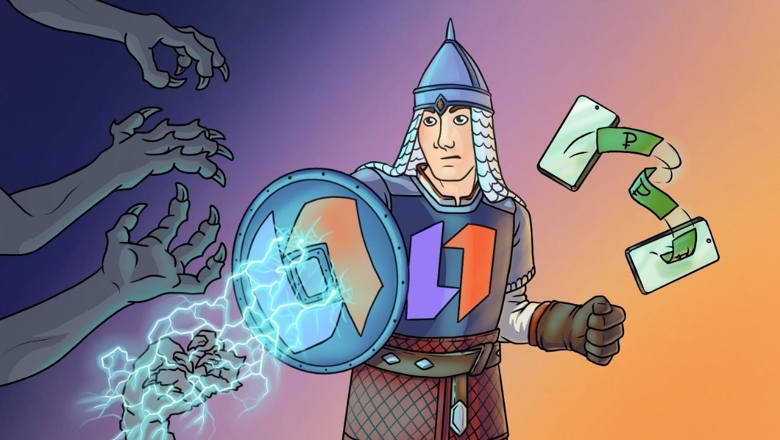
В современном мире от махинаций с денежными переводами чаще всего страдают подростки и пожилые люди, но в подобной ситуации может оказаться любой, даже самый уверенный в своей рациональности человек.
Чтобы уберечь деньги от мошенников, нужна поддержка. Поэтому команда проекта СБП в банке ПСБ создала сервис «Финансовый защитник»: он разработан в соответствии с требованиями ЦБ по противодействию мошенничеству. А чтобы «Защитник» работал, необходим настоящий герой — друг или родственник, которому клиент доверяет. Эта история о том, как стать таким героем для близких.
Узнать большеThis woman defied lethal cancer. Can mRNA vaccines make that possible for others?

Researchers have been chasing the dream of a cancer vaccine for decades. Some recent successes with mRNA technology are garnering excitement from patients, doctors, government and investors.
(Image credit: Yuki Noguchi)

'Messy,' 'divided' and 'scary': swing voters rate the country ahead of Election Day

One last check in with the Swing Shift voters before Election Day. All of them voted for President Trump. Now, they're rating his presidency and deciding who to support when he's not on the ballot.
(Image credit: Tara Anand for NPR)

It's Election Day. Control of Congress is on the line, and what else you need to know

There are a lot of variables for how things will go today. Results will start to come in at 6 p.m. ET in Kentucky and Indiana, and then it will be off to the races.
(Image credit: Ryan Murphy)

How NPR makes race calls in the 2026 election

Race calls are a critical part of election night and NPR partners with the Associated Press to make those calls. Here's how we do it.
(Image credit: Justin Sullivan)

From 'model minority' to target, anti-Indian hate on the rise

A massacre allegedly targeting Hindu Americans was recently thwarted, but researchers say it helps to illustrate a growing and increasingly mainstream hate directed at South Asians in the U.S.
(Image credit: Laura Bargfeld)

A new cold war: hackers target fridges across the globe

NPR investigated cyberattacks on the digital devices that control industrial refrigerators, revealing the extent to which operational technology is exposed to damage and disruption.
(Image credit: Fred Tanneau)

‘I am deeply sorry’: Craig Silvey pens 9,000-word apology for child exploitation material offences
The children’s author claims he experienced trauma in childhood as he begins seven-month sentence for possessing depraved material
Warning: This article contains graphic content
Get our breaking news email, free app or daily news podcast
The disgraced best-selling author Craig Silvey has claimed he experienced trauma as a child in a 9,000-word apology published after he was jailed for child exploitation offences.
The young adult novelist was sentenced on Monday to seven months’ imprisonment, after being charged in January and subsequently pleading guilty to distributing and possessing depraved child exploitation material.
Continue reading...West Ham sack head coach Nuno Espirito Santo
UK meat industry hit by cyber-attack which targeted European supermarket freezers
Under-fire Poundland owner Gordon Brothers defends stewardship
В фокусе RVD: трендовые уязвимости октября

Хабр, привет!
На связи команда инженер-аналитиков R-Vision. Уязвимости в привычных корпоративных инструментах могут открывать злоумышленникам путь к самым критичным ресурсам: от серверов и рабочих станций до исходного кода и секретов CI/CD.
В октябре в центре внимания оказались сразу несколько таких решений: PHP, Windows, GitLab и TrueConf Server. Две уязвимости уже эксплуатировались в реальных атаках до выхода исправлений, ещё одна получила максимальную оценку CVSS 10. В новом дайджесте разберём, как работают эти ошибки, какие сценарии атак они открывают и на что обратить внимание при устранении.
Читать далееAsda appoints former Morrisons boss as chief executive as sales struggle
David Potts to take over immediately as executive chair Allan Leighton steps back to non-executive strategic role
Asda has appointed David Potts, the 69-year-old former boss of Morrisons, as its chief executive with immediate effect as it continues to struggle to lift sales.
The UK’s third largest supermarket said its 73-year-old executive chair, Allan Leighton, who has been running the business since 2024, would now step back to a non-executive role focusing on “the long-term strategic agenda for the business”.
Continue reading...Helicopters collide near Mount Everest, killing 1, Nepal Police say
Мы храним записи сессий: почему heatmap тяжелее, чем stack trace, и как из этого выросла политика retention
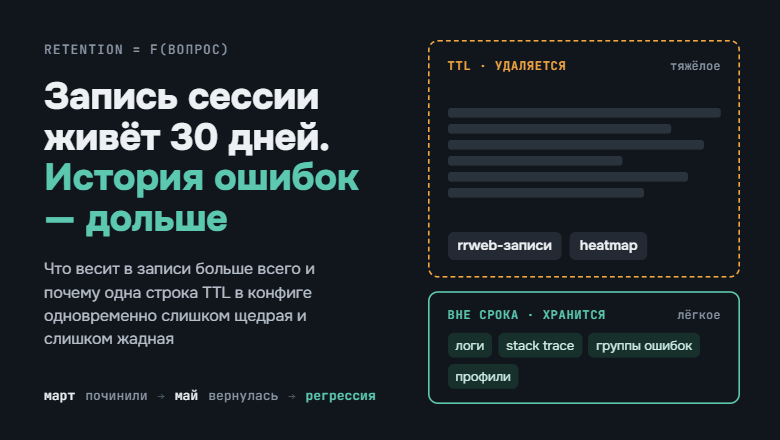
Из чего на самом деле состоит запись сессии, что в ней весит больше всего и почему историю ошибок нельзя удалять вместе с записями.
Привет! Я Паша, работаю над российским сервисом записи сессий пользователей Broux. Всё ниже основано на нашем опыте, со всеми его ограничениями.
Когда мы начинали, вопрос «сколько хранить» решался одной строкой в конфиге: всё живёт N дней, потом удаляется. Довольно быстро выяснилось, что эта строка одновременно слишком щедрая и слишком жадная.
Щедрая, потому что основное место занимали данные, которые через неделю почти никто не открывал. Жадная, потому что вместе с ними удалялось то, что как раз понадобилось бы через месяц. Расскажу, как мы это разделили и в каком месте до сих пор спорим.
Читать далее‘Mogging’ crowned Collins English dictionary word of the year
Bodybuilding slang referring to making someone else look inferior beat entries concerning AI and climate crisis
Mogging – meaning to outperform or outshine someone or something – has been named Collins’s word of the year 2026.
Announcing the winner in an article for Collins, the copywriter Rachel Quin said the term describes making someone or something look inferior in terms of appearance, confidence or status.
Friendslop A term adopted by gamers to describe low-budget, multiplayer indie titles focused on social fun over high-end graphics.
Fricy A portmanteau of “fruity” and “spicy”, reflecting a rise in popular food products such as pineapple and mango hot sauces.
Bixie A hairstyle blending a bob and a pixie cut, recently adopted by figures such as Zendaya, Jessie Buckley, and Helen Mirren;
P(doom) A mathematical shorthand representing the percentage likelihood that artificial intelligence will cause the collapse of human civilisation.
Continue reading...Apple warns of ‘unprecedented’ rise in memory chip prices
iPhone maker says decision to raise prices has offset some of impact, as revenues are stronger than expected
Apple has warned of an “unprecedented” rise in memory chip prices, as it battles with datacentres to lay its hands on supplies.
The iPhone maker’s shares fell in after-hours trading after it told investors that the higher prices will eat into its profit margins.
Continue reading...Helicopters collide below Mount Everest base camp, killing 1 person and injuring 2
U.S. Military Strikes Iran’s Qeshm Island in What U.S. Officials Call a Defensive Measure
Champagne, cocaine and some very long walks: when pedestrianism ruled the sporting world
Crowds once flocked to see ambling athletes pull off amazing feats of stamina. Edward Payson Weston was chief among them
More than $1.4bn has been staked on prediction markets for this week’s US midterm elections, according to CNN.
Though a lot of people are about to win – or lose – a lot of money, it’s hard to imagine any wagers as consequential as the election bet that birthed a sporting craze spearheaded by a chancer who walked and talked his way into becoming one of the greatest athletic stars of the 19th century.
Continue reading...DataGrip and Database Tools User Experience Survey #3 Results
Introduction
Hello, DataGrip community!
We’re back with the results of our third DataGrip and Database Tools User Experience Survey.
A big thank you to everyone who took the time to participate! This year, 1,420 people shared their experiences with DataGrip and the built-in database tools in other JetBrains IDEs.
As with our first and second survey, our goal is to understand what works well, what causes frustration, and where we should focus our efforts to improve your experience.
In this post, we’ll share the key findings, from overall satisfaction and day-to-day usability to performance, reliability, database support, and AI-powered features. We’ll also compare the results with previous surveys where meaningful, taking into account differences in the questions and the respondent demographics.
Finally, we’ll look at what your feedback means for our priorities and the improvements we’re working on.
About you
The first part of the survey focused on who you are, which tools you use, and what your daily database work looks like. This helps us better understand your needs and put the survey findings into context.
Role
Software developers and engineers continue to represent the largest group of respondents, accounting for 70% of participants. Other roles include software architects (6%), team leads and engineering managers (5%), and data engineers (4%).
Experience
Our respondents are an experienced group: 74% have more than five years of experience in their primary role, and half (50%) have over ten years.
When it comes to JetBrains database tools specifically, 37% have been using them for 3–5 years, 25% for 6–10 years, and 8% for more than ten years.
DataGrip and built-in database tools
One of the most notable shifts from the previous survey is how respondents are distributed across our products:
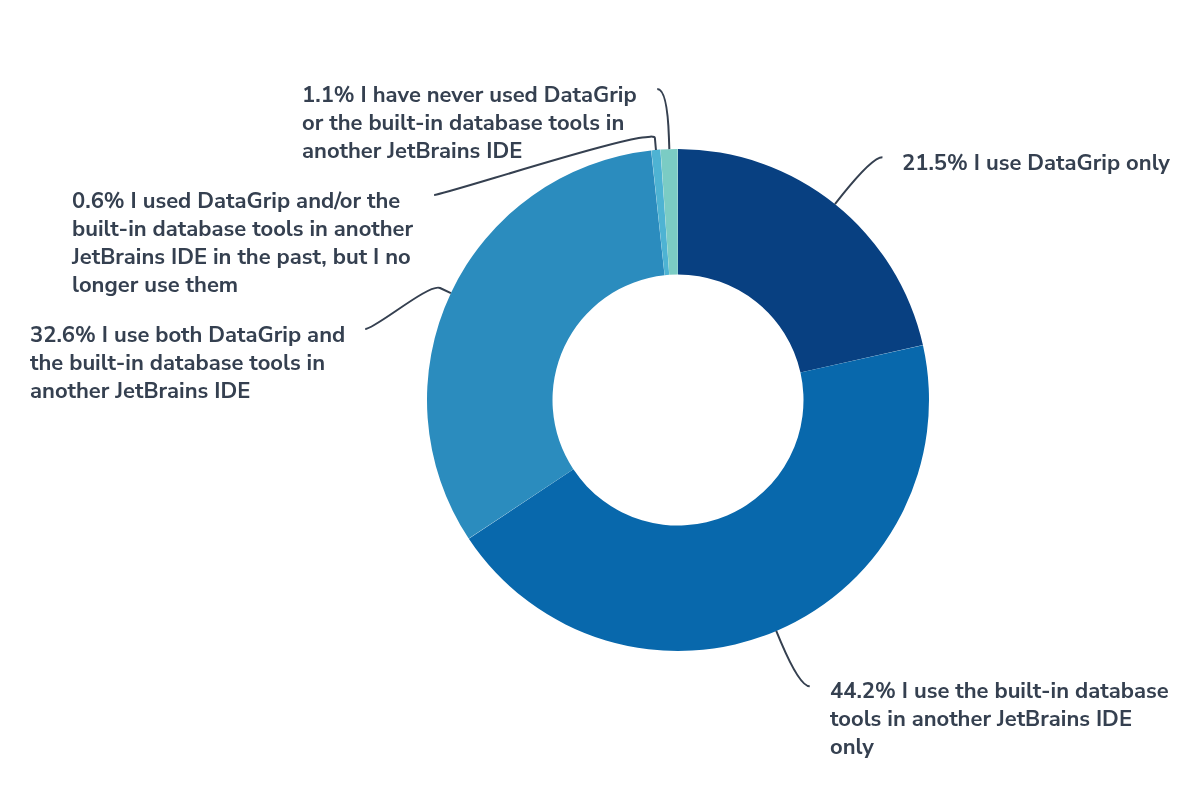
- 44% use only the built-in database tools in other JetBrains IDEs.
- 33% use both DataGrip and the built-in database tools.
- 22% use DataGrip exclusively.
In the second survey, only about 5% of respondents used the built-in database tools exclusively, compared with 44% this time. This difference is likely due to how we promoted the survey. This year, we used in-product notifications across all JetBrains products with database features in addition to the other channels.
Keep this demographic change in mind when comparing satisfaction results with previous years.
Tech stack
PostgreSQL remains the most widely used database among respondents at 77%, followed by MySQL (42%), SQLite (28%), and Microsoft SQL Server (26%).
Other commonly used databases include MariaDB (24%), Oracle Database (23%), Redis (23%), and MongoDB (19%).
Daily routine
We also asked respondents which database-related tasks they had performed over the past month. Here’s what they reported:
- 95% wrote, edited, or executed SQL queries.
- 95% browsed databases, schemas, tables, or other database objects.
- 87% created or configured database connections.
- 86% viewed or edited table data.
- 72% exported data to files.
- 71% created or modified database objects using SQL.
Other common activities include importing data (46%), investigating or optimizing query performance (45%), and comparing table data or query results (34%).
Team size
Most respondents work in relatively small teams: 62% belong to teams of 2–10 people, 15% work in teams of 11–20, and 10% work on their own.
In short, our typical respondent is an experienced developer working in a small team, relying on DataGrip or the built-in database tools in other JetBrains IDEs for a broad range of day-to-day tasks.
Overall satisfaction
As in previous surveys, we measured overall satisfaction using the Customer Satisfaction Score (CSAT) – the percentage of respondents who rated their experience as “Satisfied” or “Very satisfied”.
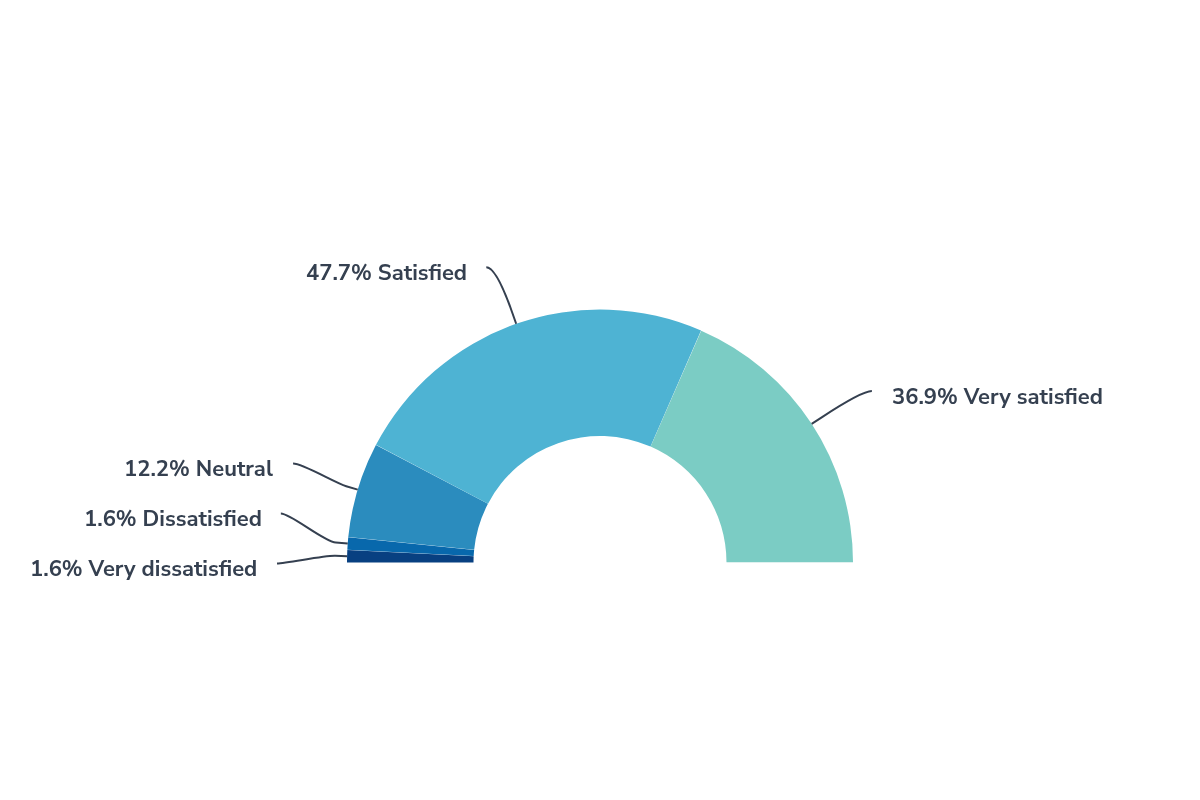
This year, 84.7% of respondents were satisfied or very satisfied with DataGrip and the built-in database tools. That’s slightly lower than the 87.5% recorded in our second survey and 90% in the first.
However, this year’s survey reached a broader audience through in-product notifications in all JetBrains products with database features. To better understand the shift in satisfaction , we compared the CSAT scores across different user groups:
| Product usage | Respondents | CSAT |
| DataGrip only | 306 | 87.9% |
| Built-in database tools only | 628 | 81.4% |
| Both DataGrip and built-in tools | 462 | 87.0% |
| Overall | 1,396 | 84.7% |
Satisfaction among DataGrip-only users (87.9%) and hybrid users (87.0%) remains high and consistent, while users of the built-in tools exclusively report somewhat lower satisfaction (81.4%). Since built-in-tools-only users make up a much larger share of respondents this year, this difference accounts for the slight drop in the overall CSAT.
Now, let’s look at satisfaction with individual aspects of DataGrip and the built-in database tools.
Experience with specific areas
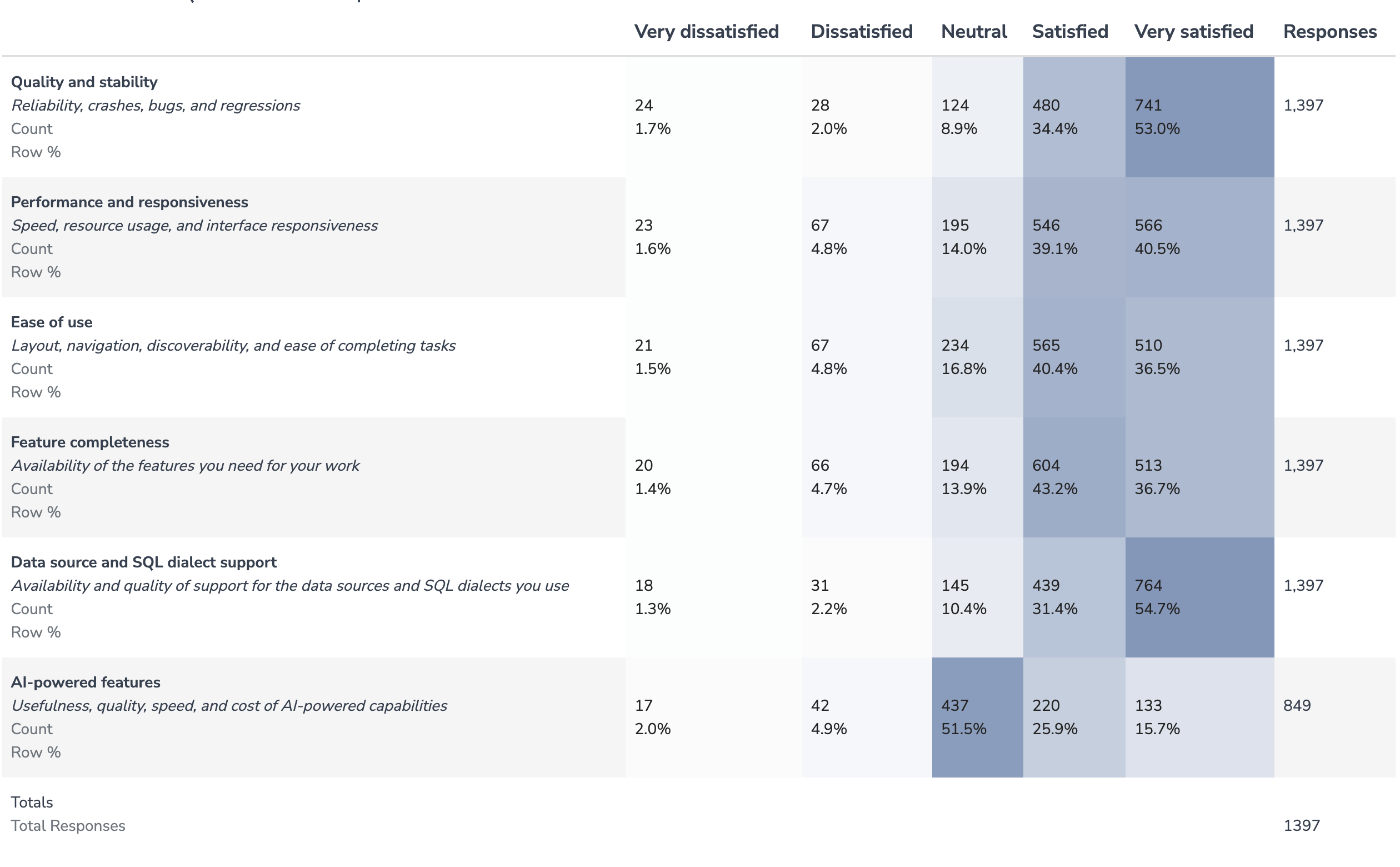
As in previous surveys, we asked you to rate your experience with different specific aspects of DataGrip and the built-in database tools. Here’s how the CSAT scores compare with our second survey:
For quality, performance, and ease of use, we also asked respondents who gave neutral or negative ratings to identify the areas needing the most improvement.
Quality and stability
87.5% of respondents were satisfied with quality and stability.
Among the 175 respondents who rated this aspect neutral or lower, the top areas flagged for improvement were:
- Database Explorer (33%)
- Code editor (33%)
- Code assistance (30%)
Even when issues affect only a small percentage of users, we take them seriously. If you encounter a bug or regression, please report it on our public YouTrack server to help us investigate and prioritize problems.
Performance and responsiveness
Performance received a 79.7% CSAT.
Schema introspection remains the biggest concern. Among the 284 respondents who rated performance neutral or lower, 44% pointed to introspection. Other reported concerns included overall resource usage (24%), IDE freezes (23%), and query execution speed and general UI responsiveness (22% each).
We’re continuing to profile and optimize performance closely. If you encounter slowdowns, freezes, or excessive resource usage, please follow our guide to reporting performance issues. Detailed snapshots and logs help us investigate and resolve problems much faster.
Useful tips to speed up performance:
- Adjust introspection levels: Lower levels load less metadata and can significantly reduce introspection time.
- Deselect unused schemas or databases: Limiting introspection strictly to active databases and schemas eliminates unnecessary background processing.
- Keep DataGrip updated: Every release brings targeted performance improvements and fixes.
Ease of use
With a 77.0% CSAT, ease of use remains the lowest-rated aspect.
Among the 321 respondents who rated it neutral or lower, 48% cited feature discoverability as an issue. Navigation and layout were each selected by 36%, followed by workflow efficiency at 35%.
We’ve delivered several usability improvements in recent releases:
- DataGrip 2026.1 introduced a new workflow for query files, offering more flexibility in organizing your queries and consoles.
- DataGrip 2026.2 added bundled JDBC drivers, an interactive onboarding tour, and a redesigned empty state in Database Explorer to make getting started easier. We also revamped database colors, added schema object grouping by prefix, and introduced customizable query console names in editor tabs.
- Upcoming in v2026.3: We’re actively developing a dedicated Output tool window to replace Services with a database-first interface. It will provide more space for working with result sets and let you open them in editor tabs. You can already play with these features and other improvements in our Early Access Program (EAP).
Useful tip: Try Find Action (⇧⌘A on macOS or Ctrl+Shift+A on Windows/Linux) to quickly find settings, tools, and actions without digging through menus.
Feature completeness
Feature completeness received an 80.0% CSAT.
Your feedback highlighted the need for more flexible import/export pipelines, better schema comparison and migration tools, and richer data-editing utilities.
The DataGrip team listens to your feedback and adapts to your evolving needs, continuously improving workflows and adding new features. Here are some of the improvements we’ve introduced in recent releases:
- Data source templates: Easily reuse database connection settings across JetBrains IDEs.
- SQL expressions in the data editor: Evaluate database functions and custom expressions directly when editing cell values.
- Two-session mode: Keep database introspection separate from active query execution and other database operations, preventing background metadata refreshes from locking query sessions.
You can explore these and many other improvements on our What’s New page.
There’s more on the way! Our Early Access Program includes a new Workspace data source that lets you run queries across multiple data sources, along with other improvements.
If a feature is missing from your workflow, please submit a feature request or vote for an existing one on YouTrack.
Data source and SQL dialect support
86.2% of respondents were satisfied with data source and SQL dialect support, making it one of the highest-rated product areas.
Your feedback centered on demand for deeper support in existing databases, including Oracle, MongoDB, Redis, ClickHouse, and Databricks.
We’ve also made progress in this area:
- DataGrip 2026.2 brought improved SQL support for ClickHouse and Snowflake, including additional statements, functions, and syntax recognition.
- DataGrip 2026.1 added support for PostgreSQL 18.
- Our current Early Access Program includes DuckDB support and improved MariaDB support.
If there’s a database you’d like us to add or improve support for, please vote for existing requests or submit a new one on YouTrack.
AI-powered features and database workflows
This year, we expanded the survey to better understand how you use AI-powered tools, both within and outside JetBrains IDEs, particularly for database-related tasks.
AI adoption and tooling
- 61% of respondents use AI-powered features in JetBrains IDEs regularly or occasionally.
- 8% haven’t tried them yet but plan to.
- 16% have tried AI features but aren’t currently using them.
- 11% don’t intend to use them.
Among those who use AI in JetBrains IDEs, 70% apply it to database-related tasks at least occasionally.
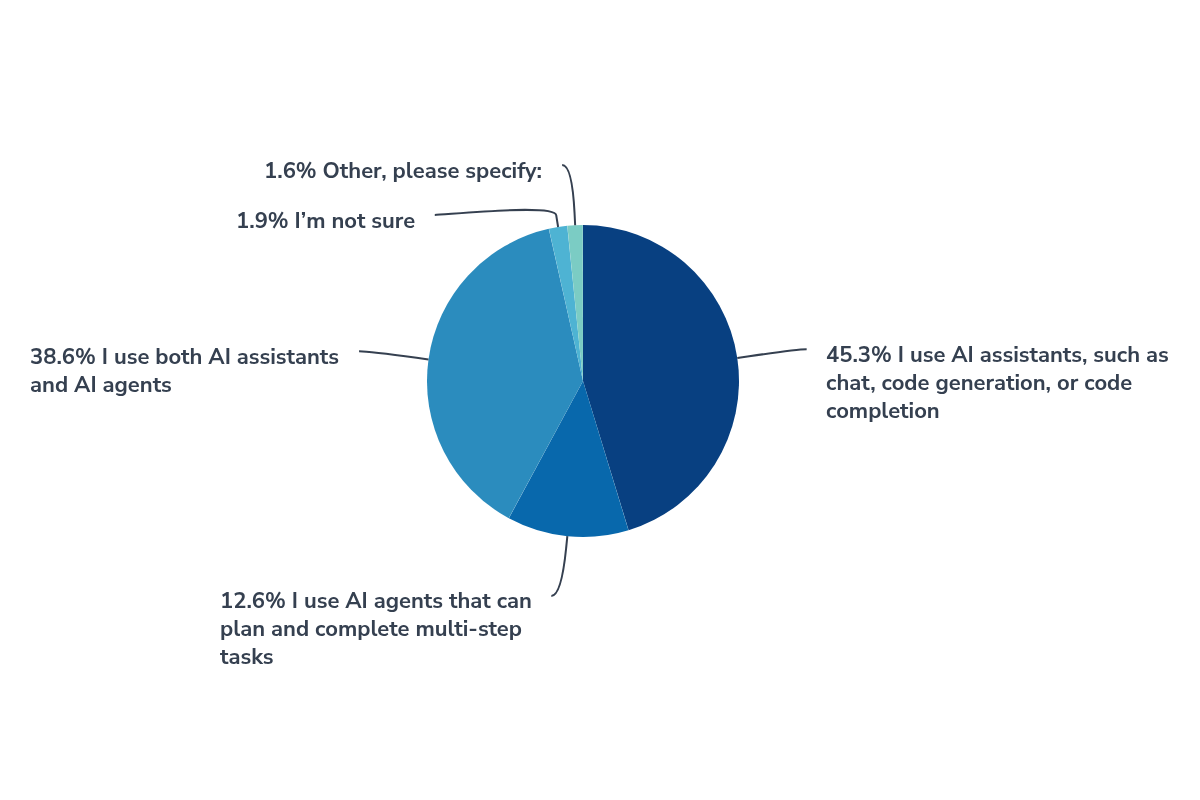
While conversational assistants remain popular, agents are also becoming part of your workflows. 45% of respondents use assistants exclusively, 39% use both assistants and agents, and 13% rely strictly on agents.
The most widely adopted tools among our respondents were JetBrains AI Assistant (63%) and GitHub Copilot (41%). Many respondents also mentioned Claude Code, Codex, and other tools.
AI for database tasks
SQL-related tasks dominate AI usage in database workflows:
- Writing or completing SQL queries – 64%
- Explaining SQL queries – 50%
- Diagnosing or fixing SQL errors – 41%
AI is also used for generating database objects, analyzing query results, and creating migration scripts, though less frequently.
Satisfaction and areas for improvement
AI-powered features received a 41.6% CSAT, while 51.5% of respondents rated their experience as neutral. These results are based on 848 respondents who rated AI-powered features, rather than the full survey audience.
When asked what needs improvement, respondents most frequently selected accuracy of AI responses (25%), understanding of database schemas and relationships (23%), and costs, usage limits, or their predictability (22%).
Among those who don’t currently use AI for database tasks, the leading reasons were lack of opportunity to try it (38%), using AI tools outside JetBrains IDEs instead (38%), or simply preferring to perform these tasks without AI (29%).
What we’ve improved
We’re continuing to expand AI capabilities in DataGrip, focusing on better integration with AI agents, a smoother experience when working alongside them, and greater control over AI-powered database operations.
- DataGrip 2026.1 integrated AI agents, including Claude Agent and Codex, and introduced database-specific MCP tools. These allow agents to explore schemas, work with data, and execute SQL queries.
- DataGrip 2026.2 introduced database-specific AI agent skills for database exploration, connection management, and natural-language-to-SQL workflows. We also expanded MCP tools and improved how agents interact with databases.
One particularly important improvement is our security layer for AI agents. Introduced in v2026.1 and extended in v2026.2, it gives you control over what agents can access and modify in your databases. Agents request permission for database operations, including those initiated through the CLI, so you can review and approve their actions.
Check out our YouTube video to see how AI agents can help with database tasks in JetBrains IDEs:
What’s next
We’re now introducing a new experience for working with AI agents: JetBrains Air in IDEs. Available in Early Access as a plugin for DataGrip 2026.2 and built into 2026.3 EAP builds, Air provides a dedicated interface for working with multiple agents, managing their sessions, tracking progress, and reviewing changes without leaving the IDE.
We’re also working on an enhanced security layer with more powerful and granular settings, giving you greater control over how AI agents interact with your databases. In addition, we’re improving how agents work with query history, allowing them to access and use the full history for better context.
These and other enhancements will make working with AI agents more flexible, secure, and efficient. Stay tuned for more updates!
Thank you!
A big thank you to all 1,420 participants in our third DataGrip and Database Tools UX Survey!
We appreciate your honest feedback, detailed comments, and suggestions. They help us understand what works well, identify the challenges you face in everyday database workflows, and prioritize improvements that matter to you.
Survey prizes
As a special thank you, we’ve selected ten respondents who shared particularly thoughtful and constructive feedback to receive prizes!
Our winners:
1-year JetBrains All Products Pack subscription:
- Nathan from the United States
- Louis from China
- Shavkat from Uzbekistan
- Ivan from the UK
- CrazyKid from China
USD 100 Amazon Gift Card:
- Jose from the United States
- Celso from Brazil
- Wiktoria from Poland
- Manthan from India
- Matias from Portugal
We’ve contacted the winners directly at their email addresses.
Keep sharing your feedback
You don’t have to wait for the next survey to let us know how we’re doing. You can always report an issue or suggest a feature on YouTrack, reach us through our feedback form, or leave a comment below.
Thank you for being part of our community and helping us make DataGrip and our database tools better with every release!
The 2026 John Lewis Christmas advert is here – and it’s Kristin Scott Thomas v Pickles the evil AI overlord puppy!
This year’s festive special looks forward to the time when chatbots reign supreme and humans prepare to be stamped out for ever. What a treat!
The John Lewis Christmas advert no longer lands with the same thud as old. Once it prompted full media saturation and performative crying contests on social media. Now, more often than not, it’s the thing you skip before watching cat videos on YouTube. Nevertheless, its release is still an event, and so here we are again.
This year, either by fluke or by design, John Lewis has managed to remember that it is a shop, and not simply a vessel for feelings of unfathomable sadness. Rather than being a vignette about lonely penguins or Moon Hitlers or Elton John’s growing fears about his own mortality, the John Lewis Christmas advert is literally about a woman going shopping. Admittedly there are caveats, but we’ll get to those. For the most part, this is less ‘Christmas can be emotionally brutal’ and more ‘Hey guys, remember shops?’ That has to be a good thing.
Continue reading...‘Mogging’ crowned Collins English dictionary word of the year
Bodybuilding slang referring to making someone else look inferior beat entries concerning AI and climate crisis
Mogging – meaning to outperform or outshine someone or something – has been named Collins’s word of the year 2026.
Announcing the winner in an article for Collins, the copywriter Rachel Quin said the term describes making someone or something look inferior in terms of appearance, confidence or status.
Friendslop A term adopted by gamers to describe low-budget, multiplayer indie titles focused on social fun over high-end graphics.
Fricy A portmanteau of “fruity” and “spicy”, reflecting a rise in popular food products such as pineapple and mango hot sauces.
Bixie A hairstyle blending a bob and a pixie cut, recently adopted by figures such as Zendaya, Jessie Buckley, and Helen Mirren;
P(doom) A mathematical shorthand representing the percentage likelihood that artificial intelligence will cause the collapse of human civilisation.
Continue reading...UK and EU agree deal to remove Brexit checks on food and animal products
Agreement to ease rules on food imports and exports is expected to come into force in first quarter of 2028
The EU and the UK have completed their deal to remove Brexit checks on imports and exports of food and animal products ranging from sausages and cheese to leather goods and flowers.
A wider series of mini-deals expected to be sealed at a UK-EU summit on 20 November would also result in Britain once again contributing to the EU budget as the price of rejoining a single electricity market.
Continue reading...Here's when polls close for the midterm elections tonight
Немецкое экономическое чудо: послевоенный опыт Siemens

Мы продолжаем рассказывать про историю корпорации Siemens. В предыдущей части речь шла о первой половине XX века. В этой мы поговорим о тех процессах, что происходили в компании и мире после Второй мировой войны.
Читать далееИИ-протокол приема уже работает. Почему не везде и что это даст ДМС
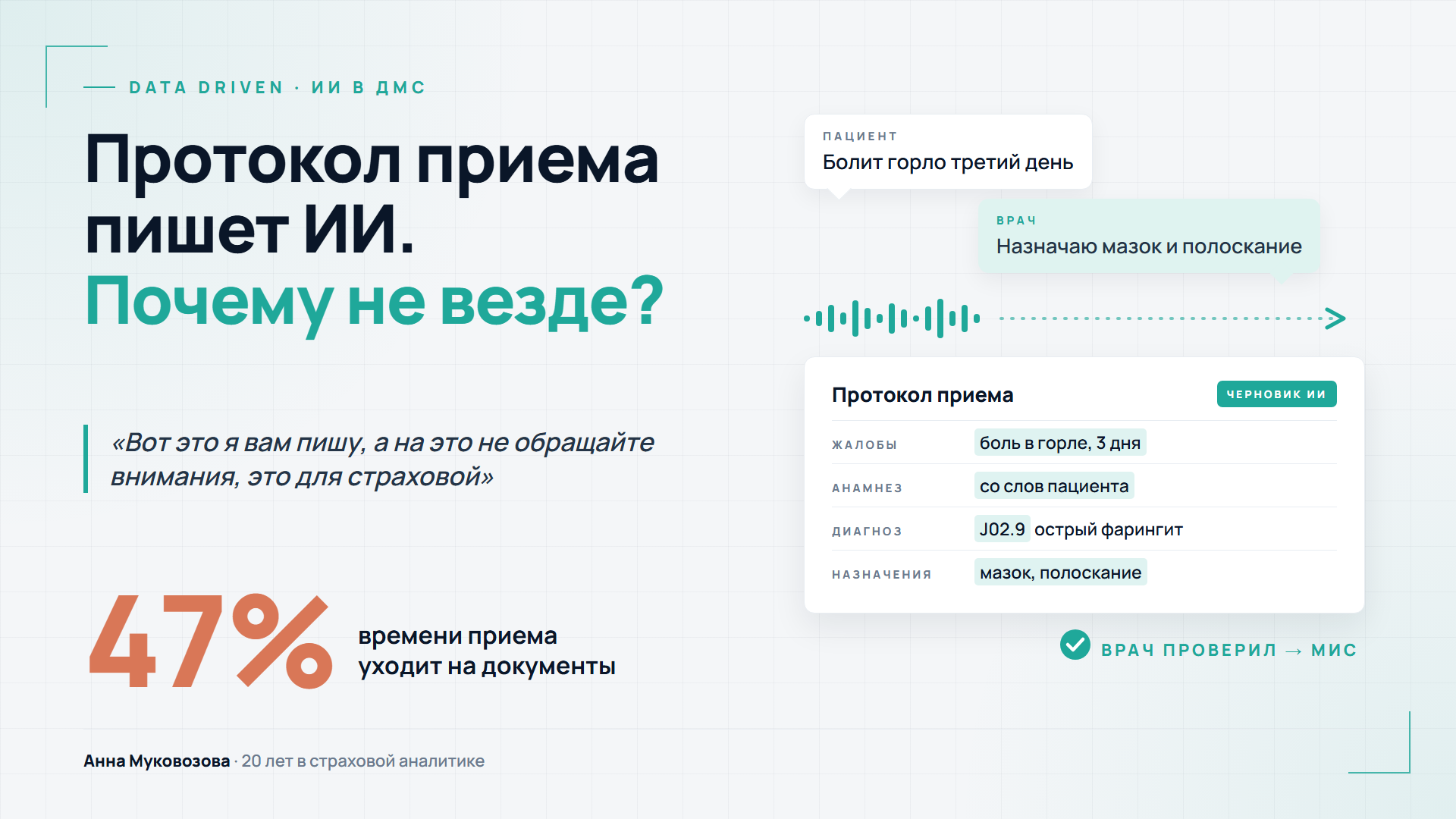
На Форуме лидеров страхового рынка 29 октября говорили про ИИ в медицине, и разговор быстро пришел к привычному выводу: ИИ не заменит врача. Системы подсказок по диагнозу есть, но решение принимает врач, потому что ответственность на нем.
С этим я согласна. Но что если смотреть на ИИ не как на помощника в диагнозе, а как на помощника в рутине, в заполнении протокола приема?
Такие решения уже есть. В Москве голосовой помощник заполняет протоколы у всех участковых врачей, Яндекс выставил этот сервис на коммерческую продажу, а студенты ИТМО собрали рабочий прототип на открытых моделях. Тогда почему этого до сих пор нет в каждой клинике?
Несмотря на очевидную экономию, похоже, тормозят все это сами клиники. А нам, как страховщикам ДМС, эта история нужна даже больше, чем врачам. И у меня есть доказательства.
Читать далееKing tells Commonwealth leaders that Britain’s role in slave trade was ‘shameful’ but stops short of apology – UK politics live
Speech by Charles marks formal opening of Commonwealth Heads of Government Meeting (Chogm) in Antigua
Q: Do you think the UK should reconsider Commonwealth membership, given other countries just keep asking us for slavery reparations?
Badenoch said she did not agree with that “because most Commonwealth countries aren’t doing this”.
China did all sorts of things. It’s not out there apologising.
The purpose of the apology is to make us look weak. It is to make this country look weak. And once we start looking weak, then we have every man and his dog making demands and sending us an invoice, which the British taxpayer has to pay.
Continue reading...