RSS Feeds
Video shows scale of flash flood hitting Nepal-Tibet border
Oil Prices Dip on News of Progress in Hormuz Talks
PCE Index Shows Inflation Remained Elevated in July Amid High Energy Costs
[Перевод] Технический обзор S3-совместимого общего ресурса на СХД QSAN
Завершение процесса обучения модели — это, как правило, не конец проблемы, а только её начало.
Сразу же возникают вопросы. Как передать результаты команде аналитиков из соседнего отдела? Где найти актуальную копию того размеченного набора данных, с которым работали на прошлой неделе? Следующему этапу конвейера (pipeline) результаты инференса нужны уже через несколько минут — придется ли снова запускать задачу копирования?
Большинство команд вкладывают значительные средства в инфраструктуру для обучения: быстрые диски, сети с поддержкой RDMA, специализированные коммутаторы. Однако этап передачи данных зачастую по-прежнему выполняется вручную: копирование через scp, открытие доступа к общей папке на GPU-сервере и опора на устные договоренности о том, в какой именно директории лежит верная версия. Если практиковать такой подход достаточно долго, каждая из этих привычек обрастает собственным набором проблем.
Функция S3 Compatible Share, доступная начиная с версии QSM 4.3.1, призвана устранить именно этот пробел. Она позволяет использовать один и тот же общий файловый ресурс одновременно для работы с объектным API (S3) и файловыми протоколами (NFS/SMB). Никаких дублирующих наборов данных или фоновой синхронизации — только один комплект файлов с двумя способами доступа к ним.
Эта статья адресована трем категориям читателей: специалистам, проектирующим инфраструктуру для ИИ или аналитики; администраторам систем хранения данных, выбирающим между объектным шлюзом и репликацией; а также разработчикам клиентского ПО.
Читать далее853 команды ИИ‑агенту за 16 дней. Защита сработала один раз

Я поставил перед агентом перехватчик разрушительных команд и шестнадцать дней писал в журнал всё, что агент делал. Хотел получить красивую статистику предотвращённых катастроф. Получил единицу.
Дальше — что было в журнале и почему единица оказалась интереснее, чем то, на что я рассчитывал.
Читать далееDTaaS: фреймворк цифровой трансформации как сервис
DTaaS (Digital Transformation as a Service) — стратегический фреймворк цифровой трансформации, выявляющий десять «заповедей» цифровой компании и четыре этапа пути к ней. Автор тестировал его на более чем 50 лидерах цифровой трансформации крупных российских компаний. В статье — методология, метрики IDM и ITS, антипаттерны и разбор кейсов General Electric, Ford, Сбера и CDER Group.
Читать далееКак архитектору решений получить работу мечты? Открыт предзаказ книги «Solutions Architect интервью»

Привет, Хаброжители!
Кто такой Solutions Architect? Представления о должности архитектора очень часто разнятся. Спросите десять человек, кто такой Solutions Architect и чем он занимается, — получите как минимум пять разных ответов. Авторы книги формулируют так: архитектор решений отвечает за разработку и внедрение технических решений, которые должны соответствовать потребностям компании или заказчика. Причем обязанности не ограничиваются этапом проектирования системы: архитекторов также привлекают после ее запуска, чтобы обеспечить масштабируемость, доступность и удобство обслуживания.
Hundreds Missing, 157 Dead, as Likely Ice-Rock Cascade Triggers Floods in Nepal and Tibet
Fans at Dollywood mourn and celebrate Dolly Parton: "There's a piece of my heart gone"
Ex-police chief investigated over decision to ban Israeli fans from Aston Villa match
Eye Opener: Tributes pour in for Dolly Parton
Vholume review – a headlong rush of parkour perfection in a brutalist wonderland
PC; Nathan Grange, Léonard Lemaitre, Niels Tiercelin, IronEqual
Race across impossible dystopian cityscapes in this exhilarating game of wall-runs, death-chancing leaps and split-second improvisation
At first, Vholume seems like a quick rush through some smartly selected references. Has this breathless yet austere parkour game been designed or ingeniously curated? The urban gymnast moveset comes from Mirror’s Edge. Level names use terms like conapt, first coined by Philip K Dick. And the environments themselves are dystopian and surreal, Half-Life 2’s City 17 colliding with the blasted avenues and mute archways of de Chirico. Many games have influences. Vholume has actual taste.
All the surface stuff fades away when the game is in motion, however. Vholume’s an on-foot racing game in which you hoof it through spectacularly odd environments, moving from one beam of concrete to the next. You’re clipping your wall-runs and power-slides together to bridge seemingly impossible gaps between buildings, forever in search of the next stretch of track, the next turn, the next jump that gets you to the level’s exit and the worldwide leaderboards. And once that’s done, you have a choice: onwards to another gauntlet, or back to the start of this one again to slice a few microseconds off your score? Or maybe you’d rather head over to multiplayer to race against the ghosts of others?
Continue reading...WATCH: Looking back at Dolly Parton on ‘GMA’ over the years
Why Pride is facing a backlash - from inside and outside the LGBT community
Rockstar Games breaks silence on Grand Theft Auto 6 leaks
8 dead, hundreds missing as Nepal avalanche triggers flash floods

The disaster is linked to climate change, with experts noting the region's vulnerability to extreme weather.
(Image credit: Niranjan Shrestha)

Prince Harry and Meghan arrive back in U.K., BBC News reports
Мы выдали командам ИИ‑инструменты и получили нулевой эффект
Привет, Хабр! Меня зовут Евгений Симонович, я работаю в Ви.Tech.
Расскажу одну историю про то, как мы набивали шишки. Мы начали внедрять ИИ и LLM в контур разработки в декабре, к середине года собрали из этого стратегию, и по дороге успели получить около нулевой эффект, разобраться, почему так, и переделать подход. Мне кажется, это применимо к кому угодно в екоме, у кого цель звучит примерно так же: быстрее доставлять бизнесу ценность.
Перед началом рамка: будет нечисто про чисто SDLC.
Разработка − это весь путь от бизнес‑требования до выкатки в прод: идея, требования, аналитика, архитектура, код, тестирование, релиз. В екоме почти всегда есть стандартный путь заказа изменений, и он сквозной − через много команд и много людей. Дальше это будет важно.
Читать далееКогда Chisel уже недостаточно: создаем свой фреймворк аппаратного тестирования на Verilator

Привет! В этой статье я разберу, почему возможностей Chiseltest может не хватать для сложного аппаратного тестирования и как мы пришли к собственному фреймворку на базе Verilator и C++. Поговорим об архитектуре тестового окружения, BFM-агентах, автогенерации обвязки и интеграции с RTL и программными моделями. А заодно обсудим, какие задачи с таким подходом решаются лучше, чем с Chisel, и где все-таки остаются ограничения.
Читать далееChina advises its citizens to leave Taiwan ally Eswatini over 'security risks'
Door was locked at Pakistan hospital where fire killed 14 babies, witnesses say
How Dolly Parton helped the world - from children's books to supporting Covid vaccine
Проверка теории улучшения результата LoRA файн‑тюнинга на «умных» слоях

При LoRA‑дообучении адаптеры обычно применяются ко всем слоям модели, хотя активность разных слоев во время обработки промпта заметно различается. Возникает вопрос: можно ли выбрать более «умные», активные слои для конкретной темы и получить прирост качества?
Проверил гипотезу на Qwen3-1.7B: воспроизвёл метод из статьи Act‑LoRA, добавил свою метрику по градиентам, статистически проверил устойчивость сигнала и получил результат, который многое объясняет о том, как на самом деле работает LoRA‑дообучение.
Читать далееMan who hid body of arson attack suspect in bin jailed
‘You can taste the ash’: surviving in America’s wildfire smoke capital
A magical corner of Oregon has the highest US rate of wildfire smoke deaths. How do residents live with the haze – and grief?
Driving into the county, you can’t miss the sign.
“IT’S THE CLIMATE”.
Continue reading...Why smugglers are stealing Kenya’s ants
Police not ruling out links to A66 crash after two killed in Middlesbrough house fire
Murder inquiry launched after blaze in Grangetown area, amid investigation into collision in which seven died
A murder investigation has been launched after two people were killed in a house fire in Middlesbrough, with police not ruling out links to organised crime or the crash on the A66 on Saturday that killed seven people including two police officers.
A child was one of those killed in the blaze in the early hours of Wednesday and a woman was in a critical condition in hospital. Three other people sustained non-life-threatening injuries. Two men aged 23 and 31 have been arrested on suspicion of murder.
Continue reading...Wi-Fi научился видеть людей сквозь стены. Я полез в код, и там нашёлся подвох
Звучит как очередной заголовок из серии «будущее уже наступило»: берём обычный Wi-Fi, несколько дешёвых ESP32 и внезапно видим на экране человека, который находится за стеной. Без камеры, без датчиков на человеке и даже без какого-нибудь браслета.
Я наткнулся на проект RuView, раньше он назывался WiFi-DensePose. В итоге полез смотреть, что там внутри: репозиторий, документацию, модели и issues. Если коротко: проект настоящий. Но ESP32 за девять долларов пока не превращает квартиру в рентген-кабинет.
Читать далееHow Ubuntu Is Using Rust to Rebuild Core System Tools
This post is based on a RustRover livestream hosted by our Developer Advocate, Orhun Parmaksız, with Jon Seager, VP of Engineering at Canonical. They talked about Ubuntu, Rust, and the future of core system software, including how Canonical is approaching Rust adoption and why some of the most important changes are happening in parts of the system users rarely see but depend on every day.
Watch the full video here 👇
There’s a version of this story where someone rewrote ls in Rust and called it a revolution. Ubuntu is taking a more deliberate approach. It started with a question Jon Seager asked himself shortly after he took on leadership of Ubuntu: what got us here probably won’t get us through the next 20 years – so what do we change?
The answer, it turns out, involved a lot of memory safety, a healthy appetite for calculated risk, and more opinions about the sudo password prompt than anyone anticipated.
Why Ubuntu is betting on Rust
Ubuntu has been around for over 20 years. It runs on 15 million deployments, and you’ll find it on servers, desktops, edge devices, and inside cars. That reach is exactly the reason why Jon’s thinking about security and resilience isn’t abstract. It has to work at scale, in a wide range ofacross industries, and in safety-critical systems where a crash isn’t just inconvenient.
When Jon joined as VP of Engineering, Rust wasn’t necessarily the plan. His thinking changed as he looked at what Ubuntu would need from its platform over the next couple of decades.
“In my opinion, Rust provides the most compelling set of tools of the systems programming languages we have available for progressing that agenda.”

Security, resilience, and memory safety
The obvious argument for Rust is memory safety, but Jon frames it a bit differently. He talks about resilience as sitting at the intersection of security and reliability. He treats security and reliability as closely related, but distinct problems
An unhandled panic can create both a security risk and a reliability failure. In automotive systems, industrial control software, and safety-critical infrastructure, that difference matters less than the outcome: the thing stopped working when it shouldn’t have. Fewer memory bugs mean fewer crashes, fewer attack surfaces, and a system that’s harder to break in general. Canonical’s revenue is largely built on patching vulnerabilities and providing support.
Jon Seager’s long-term platform view
Jon describes the move to Rust as a long-term platform decision rather than a rewrite campaign.
The technical case is only part of the story. Jon is just as interested in who Rust attracts. Those are developers who care about correctness, think carefully about safety, and want to work on the kinds of problems Ubuntu needs solved. By building more of the platform in Rust, Canonical is creating a clearer path for that community to contribute.
GNU coreutils has existed for 30 years, and it’s great software. Jon was clear about that. But 30 years also means 30 years of accumulated bugs, and the argument that the Rust version has bugs too misses the point. The longer-term question is whether the platform ends up in a better place 20 years from now if more of its base is memory-safe by default.
What is changing in Ubuntu
Ubuntu is not rewriting everything in Rust. The headline version of this story often makes it sound that way, but Canonical is making selective, deliberate replacements where the security and maintenance case is strongest, starting at the boundary of LTS releases, where users have fallback options and the chances of getting it right are highest.
coreutils, sudo-rs, ntpd-rs, and UPKI
The first pieces landed in Ubuntu 26.04 LTS. uutils coreutils, the Rust reimplementation of GNU coreutils, shipped as the default with a goal of 100% bug-for-bug compatibility with the GNU tools.
sudo-rs is the other big one in 26.04, and it takes a very different approach. Where uutils aims to be a drop-in replacement, sudo-rs is asking a different question entirely: if you were designing sudo today, having learned 30 years of security lessons, what would it actually look like? The answer involves some deliberate behavior changes.
ntpd-rs is next on the list. Canonical announced in June 2026 that it’s funding the Trifecta Tech Foundation to bring ntpd-rs to Ubuntu as the default time synchronization utility, eventually replacing chrony and linuxptp with a single tool that handles NTP, NTS, and PTP. The plan is to archive it in Ubuntu 26.10, with a full default switch in Ubuntu 28.04.
UPKI takes a different approach. It’s a greenfield project built in collaboration with the Rustls project, aimed at bringing certificate revocation to Linux system utilities. That’s something that browsers figured out years ago, but that curl, wget, and OpenSSL still don’t handle. UPKI is targeting Ubuntu 26.10 as its first shipping milestone for certificate revocation.
Why ntpd-rs is more than a drop-in replacement
Accurate timekeeping is safety-critical in more places than it might seem: microcontrollers in planes, cars, and robots; cryptographic systems where keys rotate frequently; and positional systems where clock drift has real consequences. Chrony handles basic NTP well, but problems show up when you need PTP, the precision time protocol, which handles high-precision synchronization.
On Linux today, that means running chrony and linuxptp, and potentially a dedicated or satellite time source, then configuring all of them to talk to each other. Jon described it as “quite unfun,” which felt like an understatement. ntpd-rs is meant to collapse all of that into one tool with one configuration file, with the added benefit of being memory-safe and efficient.
The trade-offs
Jon was clear that they broke some things. They knew they would, but they did it anyway because they accepted short-term breakage in exchange for longer-term benefits and built the transition so people could step back if needed.
Compatibility vs. deliberate behavior changes
- uutils coreutils is trying to be 100% compatible, so that differences from GNU behavior are treated as bugs, not features. In practice, that’s hard. One recent example Jon shared: when you tell head to read N bytes from an empty file, GNU coreutils returns zero. The uutils implementation initially returned an error, which is arguably more correct. But it broke a buried script in an Obsidian snap, so the maintainer changed it back to match the GNU behavior anyway. Compatibility first.
- sudo-rs makes no such promise. It asks what sudo should be, not what it was. One change that generated a surprising amount of heat was that by default, sudo-rs now shows asterisks when you type your password in the terminal. What can look like a small UX change generated surprisingly strong reactions. Jon’s take was basically that the new behavior is better – they thought it through and stand by it.
Why Ubuntu rolled this out at an LTS boundary
The LTS timing is deliberate. Long-term support releases are when enterprises upgrade, and they’re also the moment where fallback options matter most. By making these changes at the LTS boundary, Canonical ensures that if something breaks for you specifically, you have 15 years of maintained support on the previous release while you work it out. The legacy utilities remain in the archive. Nobody is being forced into the new behavior on a live production system without warning.
Ubuntu Rust: Packaging and delivery
Shipping memory-safe system software is one thing. Actually getting Rust code into a Linux distribution at distro scale is another, and much of the unglamorous work happens at this stage.
Crates, cargo auditable, and snaps
Canonical takes a vendoring approach to Rust dependencies rather than packaging individual crates as separate debs. All the crates for a given package get bundled together into a tarball and shipped as part of the finished artifact, similar to how Nix handles it. That keeps the dependency surface manageable and makes the builds deterministic, even if they’re not reproducible in the formal sense.
Earlier in 2026, cargo auditable was rolled out across all Rust packages in the Ubuntu archive. Every Rust binary now carries an embedded SBOM (Software Bill of Materials) listing the exact crates and versions used to build it. When a package gets rebuilt, the SBOM updates automatically. That makes it easier to identify exactly which crate versions are present when a vulnerability is discovered.
Then there are snaps. Whatever your feelings about them, Jon acknowledges they solve a specific problem that’s hard to solve any other way at Ubuntu’s scale: getting modern software to run on old releases. Because snaps bring their own runtime, you can ship a snap built against Ubuntu 26.04 and have it run correctly on 22.04 or 24.04. For Rust packages with climbing MSRVs, that’s not a small thing. It’s also how JetBrains ships RustRover across multiple LTS versions, which came up in the conversation.
What comes next
Canonical is approaching this incrementally. Each release cycle, the team looks at where replacing or rebuilding a component would bring the clearest security or maintenance benefit.
More Rust in system software and ecosystem funding
After ntpd-rs and UPKI, compression libraries are next in focus. Canonical is looking at bzip2-rs, zlib-rs, and zstd-rs. There are trade-offs here too. One of the zstd implementations catches a class of unsafe operations that the current C library allows, but with some performance cost unless you turn those checks off. Whether to ship with the checks on or off is the kind of decision that sounds small, but isn’t.
Jon put it plainly during the stream. Ubuntu’s goal extends beyond shipping Rust code to upstream contributions, security audits, funding for maintainers, and involvement in conversations about supply chain security at the infrastructure level. Canonical also hopes that some of this work can be reused or adopted by other Linux distributions.
Door was locked at Pakistan hospital where fire killed 14 babies, witnesses say
Darline Graham Wins South Carolina GOP Senate Primary Runoff
Dolly Parton explains why she's "almost like three people" | 60 Minutes Archive
GitLab Patch Release: 19.3.1, 19.2.5, 19.1.7
No content available
How to turn the dregs of a ketchup bottle into a classic Marie Rose dressing – recipe | Waste not
Shake up the remnants of a bottle of ketchup with a splash of sprits, a heap of mayonnaise and a few other simple additions, and turn it into one of the culinary world’s most famous sauces
My new favourite preparation for sauces, marinades and dressings is in a near-empty jar, tub or bottle, so I can upcycle all the remains. Rather than washing it and putting it in the recycling, I instead add a few store-cupboard ingredients to create a dressing or sauce, often re-exploring classics such as a retro Marie Rose sauce or my yoghurt-pot chicken. It’s a convenient way to use up the last dregs of a ketchup bottle, for instance, which often seems to harbour exactly the right amount of sauce.
My Marie Rose recipe is inspired by the one in Simon Hopkinson and Lindsey Bareham’s 1997 The Prawn Cocktail Years. It’s wonderfully simple, with the sophisticated addition of a dash of cognac, though other recipes use brandy. I had neither, however, but I did have some sweet vermouth left over, which worked exceptionally well, so feel free to experiment with whatever spirits you have to hand – vodka, for instance, works brilliantly, and gives the sauce a nice kick.
Continue reading...Wiped out: US faces surging toilet paper prices amid trade war with Canada
Paper products among hardest-hit sectors after trade negotiations broke down, with 25-50% tariffs estimated
Using the bathroom or having a cry is about to become more expensive for North Americans as the US and Canada enter a full-fledged trade war that threatens to flush away decades of peaceful trading between the two nations.
After trade negotiations broke down between the two countries last weekend, Mark Carney, the Canadian prime minister, vowed to match US tariffs “dollar for dollar” and unveiled a list of nearly 900 American goods that will face 25% to 50% tariffs starting on 8 September.
Continue reading...Dad of woman who took her own life says Treasury failed in its duty of care
CIA head's visit to Moscow was 'semi-routine', says Trump
Тестируем модульный ПК Khadas Mind 2 с RTX 5060 Ti: игры в 4K и монтаж 8K-видео

Привет, Хабр! Ну что, пришло время тестировать крутой модульный настольный ПК Khadas Mind 2. Напомню, я его приобрел по случаю и очень недорого (реальная стоимость сейчас около 3 800 евро, я приобрел за 1 000). В первой части я рассказал, как Khadas Mind 2 оказался у меня, разобрался с его характеристиками и устройством модульной системы. Вторая посвящена повседневной эксплуатации: работе с xPlay, поездке, встроенному аккумулятору, охлаждению и нескольким проблемам, возникшим при настройке.
Теперь пришло время проверить производительность моего экземпляра. Посмотрим на результаты процессора и встроенной графики, оценим скорость накопителя, а затем подключим Mind Graphics 2 с десктопной GeForce RTX 5060 Ti 16 ГБ. Кроме синтетических тестов, в программе будут игры в 4K и монтаж 8K-видео в Adobe Premiere Pro. Что ж, поехали тестировать!
Читать далее«Я родился!» или Первые CSPU-релизы Axiom JDK и Axiom NIK Pro

18 августа вышли первые CSPU-релизы Axiom JDK и Axiom Native Image Kit Pro, согласно новому графику релизов Oracle.
В этом дайджесте разберём, что вошло в первый CSPU-релиз.
Читать далееHope and concern swirls for Ohioans around ‘world’s largest datacenter’
Piketon datacenter promises to generate thousands of jobs, but environmental groups voice concern over project
On a winding road tucked away behind forests in the Appalachian foothills of southern Ohio is where OpenAI, Nvidia and Japanese investors are set to spend $500bn on one of the largest artificial intelligence datacenters on the planet.
Last March, the energy secretary, Chris Wright, the commerce secretary, Howard Lutnick and a host of Japanese and other dignitaries briefly descended on Piketon to enthusiastically break ground on a project to build 8GW worth of AI computing power.
Continue reading...Hearing tech startup Legato emerges from stealth with $12M and a peek at its AI hearing glasses
Трамп, возможно, надеется с помощью санкций дожать Иран. Тегеран делает ставку на обратное
WATCH: Celebrating Dolly Parton's lifetime of philanthropy
Принц Гарри и Меган с детьми вернулись в Великобританию
Dolly Parton Died After ‘Brief Battle With Cancer,’ Her Team Says
Вы сменили пароль, а он всё ещё внутри: что остаётся у атакующего после «я всё поменял»
Знакомая последовательность: человек понимает, что в его почту кто-то залез, меняет пароль, включает двухфакторную аутентификацию, выдыхает. Через неделю выясняется, что письма всё это время читали, а часть из них уходила на сторону.
Причина не в том, что пароль опять подобрали. Причина в том, что пароль — это способ получить доступ, а не способ его удерживать. Тот, кто уже был внутри, к моменту вашей смены пароля обычно держится за что-то другое: за живую сессию, за выданный приложению токен, за правило пересылки, за отдельный пароль для почтового клиента. Смена пароля по всем этим вещам не бьёт вообще или бьёт с большой задержкой.
Разберу, что именно остаётся, как это найти в основных сервисах и в каком порядке всё делать.
Читать далееMaking room for what's next in the GitLab UI
Throughout this year, the product interface has been in a season of reduction. On the heels of dark mode, the tide has been moving out with a quieter application chrome, overall color reduction, and neutral controls. It can feel like loss, low tide always does. But low tide is also when you can see the shape of the shoreline clearly enough to build something new on it.
What’s coming in is a user interface built for a different kind of work where you don't search for the right button, it surfaces at the moment you need it. This is a conceptual shift that needs room to breathe, and we’re clearing the way for it.
Tech goes through cycles like this. Touchscreens replacing physical buttons felt like a loss at first, until gestures, voice, and haptics enabled a deeper kind of interaction and expression. Cords gave way to wireless and each generational change introduced real friction for a time. The tide going out isn’t the point, it’s the possibility of what comes in with it.
Here’s what’s changed in the GitLab UI:
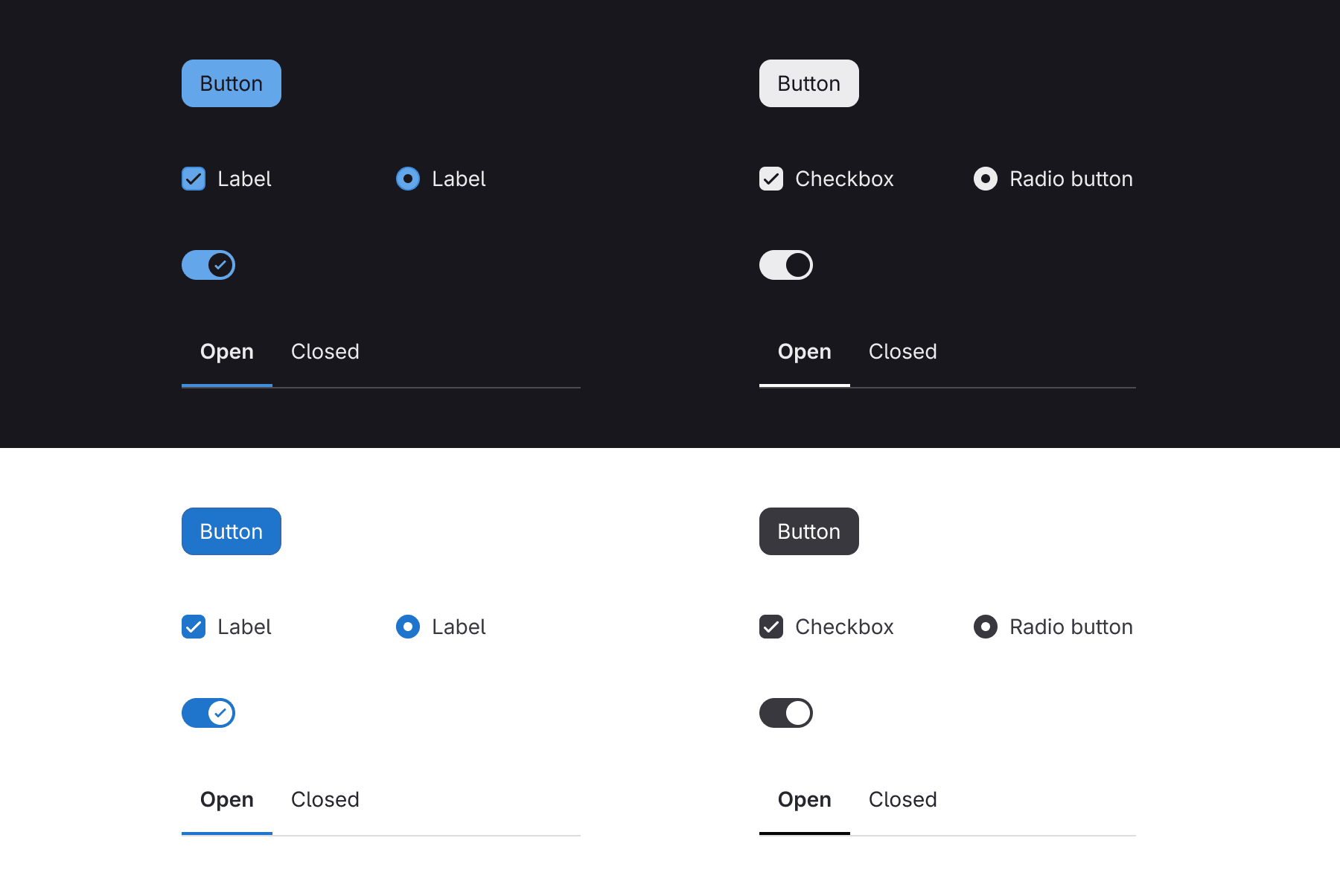
- Neutralized actions and controls (buttons, form controls, toggles, tabs) with increased contrast
- Enhanced instance theming addressing more surface area
- Neutral palette update and tinted neutrals for themes
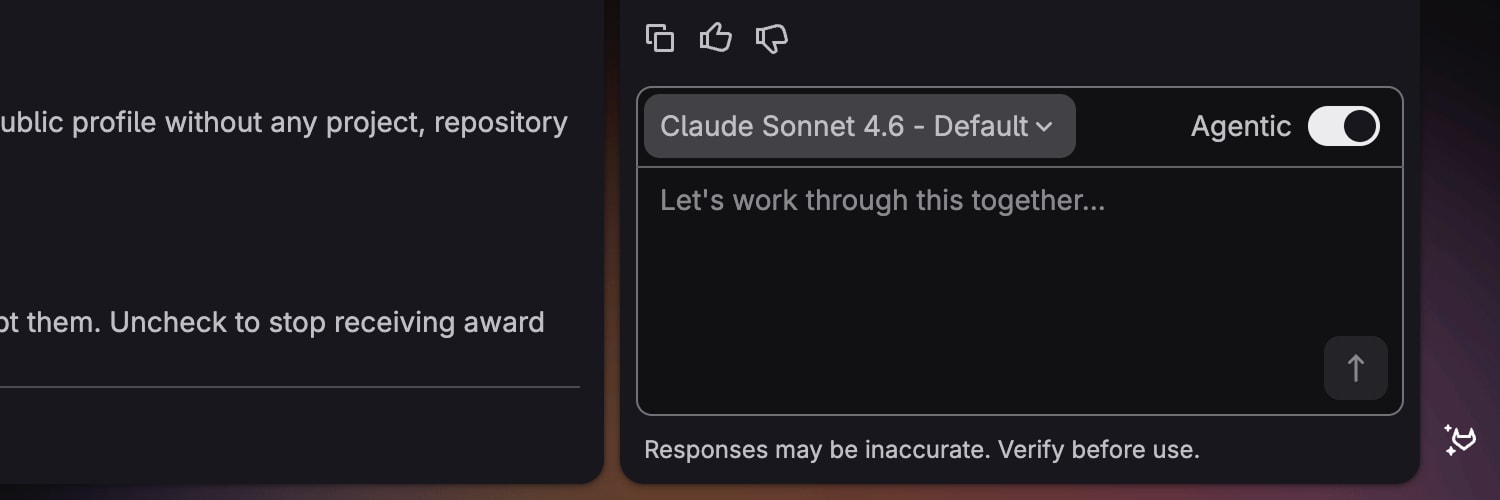
- New bloom-style glow visual element draws attention to GitLab Duo interaction and moments requiring user input

The journey to the new design
Our version of that cycle started years ago when we removed many of the old Bootstrap variants and continued as we moved to design tokens. Instead of sharing a crowded palette, we scoped categories like actions, feedback, and controls more narrowly. Color in the product had a real problem of trying to do too many jobs at once and resulted in some screens feeling “lit up like a Christmas tree.” Generally speaking, enterprise software limits color so that when it shows up it means something. That’s the direction we’ve been iterating on for years.
Changes like this are rarely perfect on the first pass. Something looks fine in review and initial testing, and problems only become apparent with broad use across the larger product surface area. A user might struggle to tell two states apart or locate a control, which can also hint at larger UX or composition problems worth fixing. That’s not unique to this rollout, it’s how iteration works. We keep a UI feedback issue and address comments.
We’ve made it this far without a mention of AI, but here we go. A quieter, more reductive UI isn’t the goal in and of itself. The next UI wave won’t live solely in elements waiting to be clicked, it’ll live in intelligent, self-surfacing moments. An already loud UI drowns that kind of interaction out.
We realize that not all of the changes will be received the same way, sometimes for subjective reasons, and at other times for very objective reasons. That distinction matters to us and we want to hear about both. Drop a note in the feedback issue.