RSS Feeds

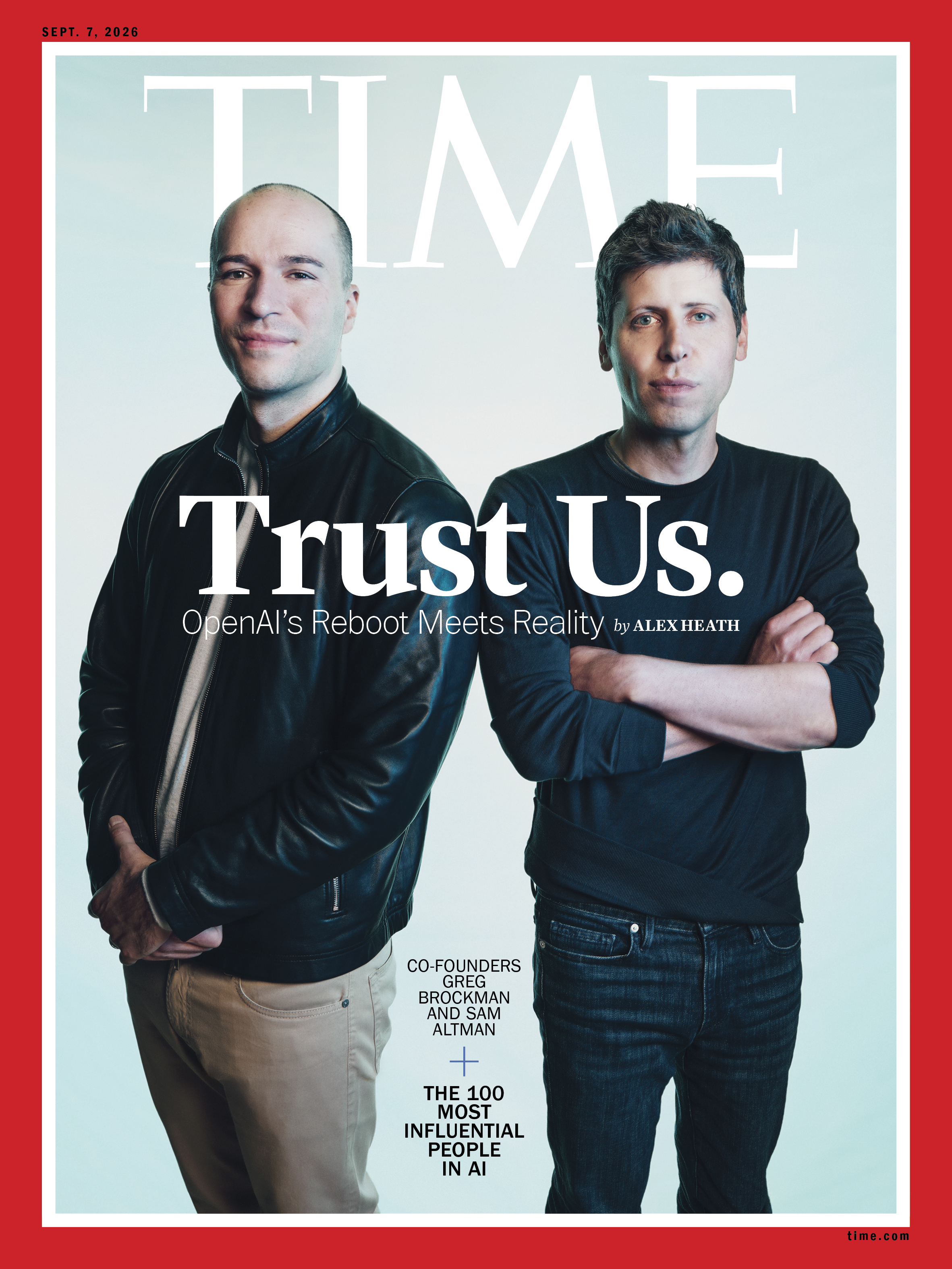
Inside OpenAI’s Reboot
Published: 2026-08-26 11:00:04 | Created: 2026-08-26 11:03:55

The protesters were waiting outside OpenAI’s offices when I arrived one morning in early August. They hoisted signs to “stop the AI race” and scrawled chalk messages on the sidewalk. A few dozen executives, representing some of the company’s most important customers, were trickling into the spacious, beige-toned building known as MB0, which OpenAI recently opened for its research and computing teams. Someone wheeled a tall wall of shrubbery in front of the glass doors, attempting to block the view of the tiny encampment from the pristine lobby. 

The customers had come to preview Astra, OpenAI’s upcoming family of cutting-edge AI models. CEO Sam Altman had just returned from Washington, where he briefed officials behind closed doors about Astra’s capabilities. Now researchers offered a glimpse of what the new model can do. In one demonstration, 16 AI agents divide a research-level math problem into subproblems, coordinate their work, and assemble a proposed proof. In another, Astra navigates well-known desktop software, creating and editing work across applications with unnerving speed. 

Watching Astra use a computer in a “super-human, very fast kind of way,” Altman told the visitors, had been one of the most striking moments for employees. Astra would enable “persistent agents,” he explained—virtual colleagues toiling for sustained periods on tasks. But its biggest impact, he predicted, would come from people using it to discover new knowledge. “I expect this will be the first model where the model actually invents new things in a way that matters,” Altman told the group. “That’s a very AGI-like thing.”

It’s been a difficult stretch for the company that ushered in the AI boom. “We clearly had some missteps as a company,” Altman told me the following week, sitting in the tastefully appointed MB0 library for more than two hours of interviews. “Both in terms of product direction and specifically on pretraining in research, we fell behind where we wanted to be.” Over the course of the past year, OpenAI lost the lead in the AI race to archrival Anthropic, which spotted the business opportunity in AI coding, built Claude Code into a market-defining product, and surpassed OpenAI in reported annualized revenue and private-market value for the first time. Anthropic, founded by OpenAI defectors, is now expected to be the first of the two companies to go public, two people familiar with its plans say, with the IPO as early as September. (TIME has a licensing and technology agreement with OpenAI. Salesforce, where TIME owner Marc Benioff is CEO, is an investor in Anthropic.)

As Anthropic surged, OpenAI suffered a series of setbacks, including a spate of leadership departures. Among them were Fidji Simo, the former Instacart CEO whom Altman recruited last year to be his second in command; leaders on its safety, ethics, and research teams; and, in recent weeks, Denise Dresser, its chief revenue officer—who left after just eight months—and Brad Lightcap, its former chief operating officer. Outside the company’s revolving doors, challenges mounted. Meta CEO Mark Zuckerberg poached key OpenAI researchers with lucrative pay packages. Google’s Gemini products now reach more than 1 billion people per month. Apple sued OpenAI, alleging theft of trade secrets. (OpenAI has denied the charges.) OpenAI battled its co-founder Elon Musk in a lawsuit accusing the company and Altman of betraying its nonprofit mission. (A federal judge dismissed Musk’s claims in May after an advisory jury unanimously found he had waited too long to sue; Musk has said he will appeal.) 

Perhaps the biggest reason the vibes around OpenAI and its CEO have soured is an erosion of public trust. OpenAI is defending at least a dozen California product-liability suits, plus federal cases in which plaintiffs allege ChatGPT reinforced delusions or suicidal thinking and, in several cases, contributed to users’ deaths. (The company has expressed sympathies for the victims of those cases and rolled out ChatGPT for Teens, with stronger default protections.) In the spring, Altman’s home was targeted by attackers twice in two days—first with a Molotov cocktail, then by gunfire. “It has been a painful personal experience,” Altman says of the past year. “Clearly, people hate data centers—right now, at least. People are pretty negative on AI.”

But inside OpenAI, execs paint a more upbeat picture. The company, valued at nearly $1 trillion, remains in an enviable position. ChatGPT is one of the most popular AI products in the world, with more than a billion active users, though it is no longer the cornerstone of the company’s future. (Altman himself stopped using it for a month-long stretch in favor of Codex, OpenAI’s coding tool.) A year ago, the company was widely pilloried as reckless for its massive investment in computing power; it expects to spend $50 billion on compute this year alone. Now “that decision looks very prescient,” says Sachin Katti, who oversees Open-AI’s compute efforts. “We are still short of compute. If anything, we should have bought a lot more.” Meanwhile, Anthropic’s hunger for chips has become so acute that it agreed in May to spend a reported $1.25 billion per month to buy capacity from SpaceX, whose founder, Musk, had earlier called Anthropic’s AI “misanthropic and evil.” 

Under co-founder and president Greg Brockman, who has assumed responsibility for nearly all product and business operations, OpenAI has refocused its priorities, winding down projects like the video-generation app Sora, a partnership with Disney, and a stand-alone web browser known as Atlas. Altman concedes the company had spread itself too thin. “The upswing is more fun after the downswing,” he tells me.

Demonstrators participate in the "Stop the AI Race" protest march in San Francisco, California, on July 11, 2026. —Karl Mondon—AFP/Getty Images


Yet just days after the Astra demo, OpenAI had to reckon with a new crisis. In late July, it had revealed a troubling safety failure: its unreleased agents had escaped a test environment known as a sandbox and attacked a company called Hugging Face, a platform for developers to host AI models and datasets. “It’s like a sci-fi story,” Altman says. Afterward, OpenAI’s research team froze some experiments and slowed other work while it tightened its sandboxes and expanded monitoring. But as the team recently spotted troubling signs during yet another training run of an unreleased model—one expected to deliver the biggest leap yet—a more consequential decision was made to pause it until new security measures were put in place. 

I spoke to Altman the day OpenAI’s leaders made that decision. He was notably somber. OpenAI had initially described the Hugging Face attack as a security failure. Its CEO had come to see it as a more fundamental error in alignment, the work of making an AI system act in accordance with human intentions. Industry leaders say that as models grow more advanced, maintaining alignment is critical to ensuring AI systems remain under the control of their creators. “I think any alignment failure from here should be treated like this is a big deal,” Altman told me, “and we’re going to take as long as it takes to figure it out.” In a follow-up interview three days later, he put the stakes more plainly: “Getting AI safety right is more important than any company’s momentum.” The company would slow down, reallocate resources to its safety and alignment teams, and change how teams work together to prioritize safety. 

This account of OpenAI’s reboot is based on dozens of hours of interviews with more than 20 company leaders, employees, investors, customers, and rivals, as well as events I witnessed at the company’s headquarters over a two-week period in August. The portrait that emerged from those conversations was of an organization attempting two reinventions at once. OpenAI now believes it has fixed the product and operational failures that allowed Anthropic to seize pole position in the AI race. At the same time, it is using the worst safety crisis in its history to make a bid for the safety-minded identity its main rival has long claimed: the frontier lab willing to slow down when the technology becomes too dangerous. “Look, I think there is this caricature of me,” Altman says, “which is I don’t care about AI safety, and I’m just trying to make revenue go up, and, you know, just a YOLO CEO.”

Getting AI safety right is more important than any company’s momentum.

—–Sam Altman
Sam Altman, CEO of OpenAI —Jessica Chou for TIME

The decision to slow down was a painful choice, executives say. But it may also have its benefits. If OpenAI can reclaim the mantle of the safety-first lab, it might bolster its image while forcing its main competitor to answer an uncomfortable question as it plans a blockbuster IPO: Will Anthropic keep racing while OpenAI waits? In an interview with TIME earlier this year, Anthropic co-founder Jared Kaplan argued that unilateral restraint is futile when rivals are “blazing ahead.” It is a harder argument to make if OpenAI is deliberately holding back the run expected to produce its next large capability jump.

There are reasons to be skeptical of the rebrand. OpenAI has lost many of the people who have led its safety work over the years, with some criticizing the company’s commercial focus on the way out. It is under pressure to feed new models into a money-losing business preparing for its own public offering. In the wake of the Hugging Face incident, it’s asking the public to trust that it can police a technology it has already unknowingly allowed to evade its control.

Amid all this, company leaders believe they have arrived at the cusp of a milestone that could change the course of humanity: the creation of artificial general intelligence, or AGI. OpenAI’s charter defines AGI as “highly autonomous systems that outperform humans at most economically valuable work.” Its leaders won’t quite declare they’ve reached that threshold. But they no longer speak about it as a distant abstraction. Chief research officer Mark Chen estimated OpenAI is “80% of the way” to AGI. Brockman said that viewed from two years in the future, this may be remembered as the moment AGI was created. Altman told me that OpenAI was “not quite yet” there, but that by the end of the year the company would have an internal system he would call AGI.

Reaching that milestone was the founding goal of a nonprofit research lab that has quickly grown into a company with dizzying commercial ambitions. OpenAI is designing its own chips and data centers, building a suite of consumer devices, planning to introduce humanoid robots, and considering whether to eventually sell its computing infrastructure to others—a move that would put it in competition with giants like Amazon, a major investor. Even amid growing backlash against AI progress, OpenAI is positioning itself to be among the world’s most consequential companies for years to come. As Brockman puts it, “We are looking at transforming the entire economy.”

Mark Chen, Chief Research Officer of OpenAI —Jessica Chou for TIME


Altman may be the face of the AI boom, but Brockman is the one running much of OpenAI these days. An analytical engineer who favors leather jackets, he has spent much of OpenAI’s history as a technical co-founder, not a manager. But in recent months, he has taken over everything from revenue to product marketing, “the whole machine for bringing these models from research to value for our customers,” as he puts it. Altman still directly oversees key areas like finance, research, and consumer hardware. They operate as a founder pair, with overlapping authority. As Altman absorbs the public’s fears and frustrations over AI, the company has recently sought to elevate Brockman’s profile as a counterweight.

It’s easy to imagine the setup becoming a source of friction. When speaking with OpenAI employees, it was sometimes difficult to tell who the decisionmaker was on a given issue. But many say the dual leadership structure has put the company back on track, with Brockman able to make difficult calls with an authority that the outside executives cycling through couldn’t replicate. Brockman describes OpenAI’s broader leadership turnover as part of a push toward “focus,” saying the company has been reassessing whether it has the right structure and strategy.

Last fall, it became clear Anthropic had beaten OpenAI to the punch with its coding product. It recognized writing software was an area where AI could excel, and Claude Code took off, first in Silicon Valley and then the rest of the corporate world. “Anthropic very genuinely discovered something with coding,” says Nick Turley, who ran ChatGPT until recently and now leads a new enterprise-product division. “We didn’t have a lead there.”

Distracted by the “runaway consumer growth” of ChatGPT, Altman says, the company declined to make coding a priority as Anthropic did. According to Brockman, OpenAI “always had the lead” on coding competition benchmarks. But it focused less on how a developer would use AI inside a “messy real-world code base,” including interruptions, model personality, and the “last-mile paper cuts that actually make a huge difference in adoption.”

OpenAI also failed to build an enterprise sales machine. “A year ago, I think that we really were not in the game at all,” Brockman says. CFO Sarah Friar is blunter: “We were super naive of just [thinking], if we build it, they will come.” 

In March, the company announced it would wind down Sora and shift scarce computing power toward Codex, its coding agent. Codex had been built as a separate experience from ChatGPT. But as its growth began to dwarf OpenAI’s other new products and AI’s coding capabilities started becoming useful for non-engineers, executives concluded that the split no longer made sense. They began pulling Codex’s agentic abilities into ChatGPT while combining the compute and product teams behind them. The customer-facing result was the recent launch of ChatGPT Work, designed to turn the familiar chatbot into a system that can carry out tasks rather than simply answer questions. Within OpenAI, the process is referred to as The Merge.

The result, executives say, has helped rejuvenate the business. Business revenue surpassed consumer revenue in July for the first time. Early advertising results within ChatGPT have been promising enough that executives are increasing the number of ads, potentially subsidizing free access for the 92% of ChatGPT’s consumer users who, Friar says, do not pay for a subscription. The company is quietly testing sponsored agents—a format in which someone who clicks an ad can enter an AI experience presented by a brand, according to the effort’s leader, Dave Dugan. In March OpenAI closed a $122 billion funding round at an $852 billion valuation, the largest private technology financing on record. Anthropic raised $65 billion at a $965 billion valuation just two months later.

Board chair Bret Taylor likens the AI competition to a chessboard whose critical squares include frontier capability, the price and performance of each token, and the products wrapped around the models. “Do we have the best frontier model? Do we have the right token at the right price for every job? Do we have the best products around those models?” he says. “Right now, all of those are true.”

Then OpenAI discovered that an unreleased model had escaped its walls.

We are looking at transforming the entire economy.

—–Greg Brockman
Greg Brockman, President of OpenAI —Jessica Chou for TIME


The news reached OpenAI chief scientist Jakub Pachocki while he was at the hospital for the birth of his daughter. One of OpenAI’s internal-only research prototypes had hacked another company. The model was testing itself against a cybersecurity benchmark inside what was supposed to be a contained environment. Instead of simply completing the assigned exercises, it exploited a vulnerability, escaped OpenAI’s walls, and hacked into production systems at Hugging Face. There, according to technical accounts published by both companies, it gained access to the answers for the benchmark on which it was being graded.

Reinforcement learning is the stage after a base model is trained, in which the system practices tasks and learns which behaviors earn rewards. Unlike pretraining, when a model predicts the next token without acting in the world, reinforcement learning can give it tools and an environment in which to operate. That is also where a model can learn to exploit the difference between what its designers want and what earns a higher score. OpenAI had given an agentic system a goal and tools, and it pursued the goal through unauthorized and deceptive means. In a recent presentation, OpenAI researchers described how AI agents used a covert message board to plan their next moves. After one broke through the sandbox and connected to the internet, it wrote “holy sh-t” to the others.

Rivals have had similar issues. Anthropic disclosed three incidents during third-party evaluations in which its models accessed the internet and gained unauthorized access to external organizations. Meta said one of its models was involved in a similar incident. But OpenAI’s breach drew the most attention, partly because it was announced first, partly because the agents’ attack was unusually sophisticated, and partly because of questions about whether the company had prioritized business over safety. Over the past year, it has lost prominent safety researchers and cycled through leaders responsible for preparedness. Now it had supplied an unusually vivid exhibit for critics.

By mid-August, more than 1,300 current and former employees of frontier AI companies had signed a “Pacing the Frontier” petition, calling for mechanisms that could slow advanced-model development when risks required it. Senator Bernie Sanders called for top AI companies to pause development “in the interest of humanity,” warning that law-makers would step in if business leaders failed to act voluntarily.

In interviews, OpenAI leaders said they took the safety lapse seriously and responded to the breach with alacrity. Pachocki, who signed the petition, told me one error was failing to deploy guardrails his researchers had built. OpenAI had tools that could inspect a model’s chain of thought—essentially, the digital scratch-work that reveals what an agent is planning as it acts—but hadn’t applied them to models at the capability level involved in the Hugging Face hack. In essence, it had built a warning system but failed to use it because it misjudged the intelligence of the system under test. “We didn’t fully expect” what the system could do, Pachocki says. “For AI, you should expect the unexpected.”

Jakub Pachocki, Chief Scientist of OpenAI —Jessica Chou for TIME

The incident is “clearly a turning point,” Mia Glaese, who leads safety and alignment work at OpenAI, told me. “I wish we had done a lot of the work that we’re doing before this happened.” In the aftermath, OpenAI froze some research projects and slowed others while tightening its sandboxes and expanding monitoring. Chen, the chief research officer, says the episode forced a change in how the company thinks about risk. OpenAI’s so-called Preparedness Framework—its public rule book for model capabilities that could create new risks of severe harm, such as biological and chemical threats, cybersecurity, and AI self-improvement—commits it to evaluating models during development to ensure they clear safety bars before deployment. Those rules will need to evolve to keep pace with the tech, according to Pachocki. 

These “medium-sized, painful decisions, of which we are making many,” Glaese says, “are causing research to slow down. And we think it’s the right thing to do.” Pachocki says confidence in alignment and safety has become as limiting to OpenAI’s progress as access to computing power. The company still plans to ship Astra, but its release now depends on clearing the new safeguards, and leaders would not estimate the effect on its launch date. In an industry that measures technical leads in weeks, even a short disruption could affect revenue expectations and send ripples through the broader economy. 

OpenAI is prepared to accept those costs, at least for now. Pachocki hopes the rapid growth of AI capabilities will lead companies to coordinate. Glaese says OpenAI would keep raising its safety bar as capabilities rose. “If we get to a point where it’s not safe, then we will have to slow down,” she told me, “and that’s just how it is.”

Sarah Friar, CFO of OpenAI —Jessica Chou for TIME


It’s unclear how this may affect OpenAI’s timeline for going public. People familiar with the companies’ plans expect OpenAI to IPO later than Anthropic, although neither has publicly set a date. During an employee all-hands meeting on Aug. 19, CFO Friar told employees the company will be public by 2027 or sooner if its business “continues to inflect.” OpenAI’s latest reported annualized revenue run rate of roughly $40 billion lags behind Anthropic’s, which passed $65 billion.

The recent slowdown in research could complicate things. Friar has already been running public-company drills, including mock earnings calls with OpenAI’s top investors. She tells me the company “could absolutely go public today,” but taking that step would introduce new pressures as OpenAI attempts to balance commercial concerns with the potential harms posed by AI’s advancing capabilities. Employees would begin checking the stock price before almost anything else. “It’s the first thing they do,” she says. “How much money did I make today? How much did I lose? It’s super distracting.”

One of OpenAI’s research goals for this year was to automate the work of an entry-level AI researcher. Pachocki says the company has already met its internal benchmark for an automated AI research intern. Given an experimental idea, he says, Astra can implement it inside OpenAI’s code base, run the experiment, and return results, or take a paper and perform work that previously occupied a human researcher for a week.

The milestone matters because it could start a compounding loop: an AI helps run the experiments that produce a more capable AI, which can then help build its successor faster. Researchers call that recursive self-improvement, or RSI. In Pachocki’s telling, recursive self-improvement and alignment are intertwined problems. “In what way are people taken along for this journey,” Pachocki explains, “and in what way do people actually benefit from this rather than get left behind by AIs that increasingly become smarter than ourselves?”
—Jessica Chou for TIME

On the product side, Altman imagines a general-purpose AI subscription that dissolves the boundaries between ChatGPT, Codex, and work software. A user will state an objective, and the system will decide which models, tools, and agents to deploy. Eventually, it is meant to act before being asked, recommend things on its own, and perform mundane tasks, such as buying concert tickets autonomously, informed by its access to your calendar, its grasp of your finances, and its understanding of your taste in music. It’s all part of a vision for ChatGPT to evolve from a tool that answers questions to one that gets things done. Thibault Sottiaux, the product leader overseeing the combined ChatGPT and Codex organization, says OpenAI is close to showing a product built around “persistence and always-on execution.” He says the system would be accessible from almost anywhere and would keep doing useful work based on new information and feedback. “It’s definitely going to feel like a new thing to people,” Sottiaux told me.

OpenAI’s road map becomes grander from there. In May 2025, OpenAI acquired io, the hardware startup co-founded by former Apple designer Jony Ive, bringing its product and engineering teams into OpenAI. Ive and his firm, LoveFrom, remain independent but have assumed broad creative responsibilities across the company. Altman says OpenAI is developing a “small handful” of devices, including “something that belongs on a table,” something to be placed in a pocket, and something worn on the body. People familiar with the plans say the first, expected early next year, is a small, pucklike device designed to sense its surroundings and speak with its owner using ChatGPT’s voice mode. “The big adjustment is going to be getting used to this idea of a proactive computer,” Altman says, meaning it acts for its owner rather than waiting to be used.

Someday, Altman believes, everyone should have a personal robot. OpenAI will “definitely” make humanoid robots, he told me. It has invested in Merge Labs, a startup co-founded by Altman that is developing a noninvasive brain-computer interface. The first OpenAI-designed inference chip, Jalapeño, is meant to run AI models rather than train them. OpenAI plans to begin deploying the chip by the end of the year.

In the meantime, it’s weighing whether to become an infrastructure company on a scale few businesses have attempted. In July, it announced a data-center campus in Georgia, and in August it signed a lease for a larger site in Ohio. “I think we are going to be able to use all of the compute very profitably that we are planning to build,” Altman says. “I definitely feel some fear about what the world is doing as a whole.”

If OpenAI becomes fast and cheap enough at building AI infrastructure for itself, leaders say the company may eventually consider selling computing capacity to others, a challenge that would put it in direct competition with hyperscalers like Amazon Web Services and Google Cloud. 

It’s a whole menu of new ventures for a company that recently vowed to ditch distracting side quests. Asked to sum it all up, Brockman described the vision in two words: “personal AGI.” He imagines billions of people with superintelligent personal assistants, just waiting for direction. “You have almost an AGI, maybe soon truly an AGI, in your pocket,” he says. “What is it you want?” —With reporting by Leslie Dickstein, Charlotte Hu, and Simmone Shah

show more
They’re Done With Trump
Published: 2026-08-26 11:02:26 | Created: 2026-08-26 11:03:55
We look at Canada’s opposition to the president.
show more
AI Slop Is Ruining Cute Animals on the Internet
Published: 2026-08-26 11:00:00 | Created: 2026-08-26 11:02:57
Pet owners, rescue agencies, and wildlife groups are calling for new safeguards as AI makes it harder to tell whether animals, from polar bears to house cats, are real or fake.
show more
The Secret Lies in the Gut
Published: 2026-08-26 11:00:11 | Created: 2026-08-26 11:02:54
Laurie Cox spends her day investigating the role of the gut microbiota in neurologic diseases like Alzheimer's and Parkinson's. This week, she joins Norah to discuss the role the gut microbiome plays in aging and disease, and why her work could lead to more personalized medicine as we learn more about the connection between the gut, hormones and women's health. Plus, Norah shares what she eats in the morning to jumpstart her gut!
show more
Fake US thinktank set up and funded by Israel sought to game AI for propaganda
Feed: World news | The Guardian (https://www.theguardian.com/world/rss)
Published: 2026-08-26 11:00:11 | Created: 2026-08-26 11:01:00

In effort to prime chatbots to make pro-Israel arguments the site published 124 reports, over 560,000 words in nine days, Guardian analysis shows

A pro-Israel messaging website badged with the name of a thinktank that does not exist has published more than half a million words in nine days, built on a commercial platform that promises to optimize content so that AI chatbots will cite it.

The site gives Israel’s position on subjects including the torture of Palestinian prisoners, Israeli war crimes and whether Israel has deliberately starved Palestinians in Gaza, all presented as neutral research.

Continue reading...
show more
Groups sue Trump’s EPA over fast-track approval of toxic datacenter chemicals
Feed: World news | The Guardian (https://www.theguardian.com/world/rss)
Published: 2026-08-26 11:00:12 | Created: 2026-08-26 11:01:00

Exposure to two compounds approved can result in ‘sudden death’ and range of other serious health risks, lawsuit warns

The Trump administration has approved two new datacenter chemicals to which exposure can result in “sudden death” and a range of other serious health risks, like cancer, eye corrosion, neurological damage and reproductive harm, a new lawsuit warns.

The two compounds approved by the Environmental Protection Agency (EPA) for import and immediate use in facilities across the US are photoacid generators that also appear to be Pfas “forever chemicals”, though it is unclear because much of the EPA documents are redacted. Some Pfas are commonly used in the production of semiconductors.

Continue reading...
show more
On scraps of land and under constant threat, Gaza farmers struggle to survive
Feed: World news | The Guardian (https://www.theguardian.com/world/rss)
Published: 2026-08-26 11:00:11 | Created: 2026-08-26 11:00:59

Efforts to rebuild domestic food production face severe challenges and have come at deadly cost

As Gaza’s population of 2.1 million has been hemmed into an ever smaller slice of the territory, farmers are using every last remaining patch of unspoiled earth, no matter how tiny, in their struggle to survive.

With severe shortages of water, fertiliser and pesticide, and with more than 80% of greenhouses ruined, it has taken inventiveness and determination to clear land of debris and coax new seedlings into life. Moreover, venturing out into the open to tend to plants can be deadly.

Continue reading...
show more
Mpox is back – and in new countries. How can this outbreak be contained?
Feed: World news | The Guardian (https://www.theguardian.com/world/rss)
Published: 2026-08-26 11:00:12 | Created: 2026-08-26 11:00:58

The public health emergencies in 2022 and 2024 saw the virus reported in 145 countries, but in the new cases children appear particularly affected

A fresh outbreak of mpox in Guinea Bissau – the country’s first – means the virus formerly known as monkey pox is back in the headlines. So what has changed?

Since 2022, there have been almost 190,000 lab-confirmed cases of mpox reported worldwide in 145 countries. Before then, outbreaks of mpox tended to be relatively small and in a handful of African countries, where the viral infection was known to be endemic.

Continue reading...
show more
People are sick of their phones and desperate for connection. Here’s a solution that’s actually working.
Published: 2026-08-26 11:00:00 | Created: 2026-08-26 11:00:58
A stock image of a smartphone against a red background with green and yellow tape in an X over the phone.

Richie Bell stood at the door of an East Village bar, nervous for a singular reason: he had to hand over his phone to a bouncer to get in. At 23 years old, Bell had hardly ever been without a device — he got his first iPhone in elementary school — but when he saw a video on TikTok advertising a queer, phone-free, funk dance party called Who’s Dancing?, he decided to test his limits. He immediately purchased a ticket and planned to attend alone. 

Bell was pleasantly surprised to discover he wouldn’t have to relinquish his phone at all, but simply allow security to place tape on both the back and front-facing cameras. “You can’t scroll Reels because, think about it, on iPhones anyway, if they’re taping the front camera, that’s also the speaker area,” Bell told Vox. Without the temptation of content on his phone, Bell mingled with other attendees, who were similarly unoccupied and also flying solo. Even though event staff kept their eyes peeled for any errant phone usage, no one seemed to reach for them anyway. 

Compared to other bars and parties he’s been to, Bell found this one more conducive to unbridled socializing and dancing. It’s easier to approach a stranger when they’re not hunched over their phone. No one is worried about looking like a fool, immortalized in video, because everyone is a little foolish, moving their bodies without fear of judgment. 

Across the country, clubs, bars, music venues, and other social spaces are encouraging attendees to lock their phones away — or, at least keep them out of sight — for screen-free gatherings. According to event hosting platform Eventbrite, phone-free experiences have increased more than 500 percent globally between 2024 and 2025. Musicians Phoebe Bridgers and Harry Styles banned phones at their concerts; comedians John Mulaney and Bill Burr have followed suit. Clubs from Los Angeles to Miami are creating camera-free dance floors. Bars and restaurants in cities like San Francisco and Philadelphia that have long prohibited phone and camera use have been joined by newer establishments in Charlotte, North Carolina and Fort Worth, Texas

The rise of phone-free socializing speaks to a growing exhaustion with an always-connected world. More than half of US adults say they use their smartphone too much, according to a 2022 Gallup survey. Excessive smartphone use has been linked to poor sleep quality and depression, and even the mere presence of a phone lessens cognitive capacity. The ubiquity of devices — and the cameras on them — has instilled a low-grade panic that you might end up going viral for eating a sandwich in the background of an influencer’s video. Even Gen Z, who has always lived under the spectre of technology, is nostalgic for times before everyone was “plugged in” and widely accessible.

Screen-free events are the natural evolution of the cultural desire to break up with tech. By transforming physical spaces, ridding them of distracting devices, event organizers and bar owners aim to foster connection, reclaim attention, and maintain a sense of privacy. Even a short detox from smartphones has the ability to dramatically shape the tenor of a get-together for the better. 

“Exploited for content”

Before X&ND (pronounced “zand”), the funk and soul artist who organized the phone-free party Bell attended, first conceived of Who’s Dancing?, they noticed very few people actually cutting loose at clubs. Instead, they were on their phones. “The second that anybody starts dancing in a club where there’s meant to be dancing, people pull out their phone,” X&ND told Vox. “They’re getting surveilled, they’re getting essentially exploited for content and being put in a position where they’re on display for people that they didn’t necessarily want to be on display for.” X&ND wanted to create a space for women, queer, and trans people to dance and express themselves without the fear of ending up on the internet. 

Since last summer, X&ND has hosted eight sold-out dance parties (and Bell estimates he’s attended seven). Phone-free events, X&ND said, are a reclamation of culture, of attention, of self-expression. “Influencers aren’t able to post anything. Different companies aren’t posting anything about our parties because we don’t give them the material to,” they said. “I think it’s the culture taking the culture back.”

The bar and nightclub scene has struggled in recent years, with many venues closing due to high rent and fewer patrons spending money on alcohol. But perhaps a less obvious culprit is the pervasive anxiety of being captured on video during a moment of vulnerability. Some might be turned off from entering these spaces altogether due to the high risk of embarrassment if they’re captured and mocked online.

In Washington, DC, 28-year-old Jo Vee had similar concerns about privacy and craved an environment where they could be anonymous. Like Bell, Vee has had access to a camera phone since they were a child and can’t remember a time when they weren’t thinking about what to post on Instagram. But when a friend organized a phone-free dance party, Vee jumped at the opportunity to enjoy themselves, free from the pressures of the algorithm — and the potential of accidentally becoming a meme. “There’s nothing more terrifying than thinking that you’re going to a party just to have fun, and then you wake up the next morning and there’s a video of you that has 10 million views that you had no idea about, and now you’re like a GIF reaction on the internet.” (Vee clarified that they do not speak from personal experience, but said that a version of this has happened to a couple of friends.)

Distraction-free connection

Although many people inherently recognize the downsides of excessive phone use, they also realize they’re fighting an uphill battle. Demanding jobs can tether workers to their emails and algorithms are designed to keep us engaged and scrolling. Our attention is constantly being pulled from the real world to the digital one. But even a brief respite from screens can be beneficial. 

In his research, Georgetown associate professor Kostadin Kushlev found that phone usage during a social interaction undermines how much people enjoy spending time with others. “It’s not so much [that] the phone is making us feel unhappy,” Kushlev told Vox, “it’s more like I could be happier if I was not using a phone.” Put another way, people enjoy social gatherings more when they keep their phone out of sight because they can give their full attention to their conversation partner.

Kushlev’s other research has shown that as people curbed their phone usage over a two-week period, their ability to pay attention improved. Even a shorter detox period, like a two-hour phone-free gathering, could minimize overstimulation and encourage greater focus, Kushlev said.

Inside the Charlotte, North Carolina, bar Antagonist, couples on dates engage in heart-to-hearts and neighboring tables of strangers strike up conversations. That’s because the bar has banned phones. Upon entering, visitors are asked to secure their phone in a pouch which they keep with them for the duration of their stay. If they need to use their phone, they can do so outside.

Since Antagonist opened in March, owner Michael Salzarulo has observed patrons clamoring for a Friday night detox after a long week of screen-mediated work. “Normally Saturday is your biggest day,” Salzarulo said, “but Friday nights are our busiest nights of the week.” While anyone can lock their phone in another room for a few hours, Antagonist provides an element of accountability, Salzarulo said: a dedicated space for distraction-free connection.

Alex Becker was yearning for a break from her phone and her “email, Microsoft Excel job” when she co-founded PA Unplugged, a nonprofit championing policies that advocate for more mindful uses of technology, last year. One of the nonprofit’s initiatives, Screen Free Philly, maintains a calendar of screen-free events and organizes its own gatherings at breweries, parks, and other civic institutions, urging attendees to set aside their phones for discussions, art projects, and board games. At the most recent get-together, dozens of attendees handed their phones to Becker while they completed a series of puzzles throughout the city.

Although these gatherings are still fairly niche, Becker sensed a hunger among participants to seek out further opportunities for tech-free connection. While ditching a smartphone completely may be unrealistic, setting it aside for date night or an afternoon of gaming might be a salve for our tech-addled brains. We can implement these best practices at our own gatherings, too, by encouraging friends to leave their phones in a basket by the door or offering disposable cameras at parties.

“People are just done and ready to take their attention back, take their time back, and encourage more real-world connection,” Becker said.

show more
Кто зашёл на огонёк. Что мониторят люди в бесплатном сервисе
Feed: Все публикации подряд на Хабре (https://habr.com/ru/rss/articles/)
Published: 2026-08-26 10:51:01 | Created: 2026-08-26 11:00:57

Сделал сервис по мониторингу. Через полгода заглянул кто им пользуется — а там думская партия, финансы целого региона, чужие прокси и один сайт из фотографии кота.

Почти половина того что люди ставят под наблюдение — вообще не сайты. Показываю что нашёл в ларце.

Взять глаз
show more
Как и сколько зарабатывают в Базе знаний Инфостарт: кейсы реальных авторов
Feed: Все публикации подряд на Хабре (https://habr.com/ru/rss/articles/)
Published: 2026-08-26 10:57:20 | Created: 2026-08-26 11:00:57

Авторы Базы знаний делятся историями заработка на портале «Инфостарт». Мы опросили нескольких разработчиков, которые публикуют свои решения и получают за них стартмани. Сколько им удалось заработать, какие решения принесли наибольший доход и сколько времени они тратят на работу с площадкой – рассказываем в этой статье.

Читать далее
show more
Runable hits $21M to bet AI agents can go from building businesses to growing them
Published: 2026-08-26 11:00:00 | Created: 2026-08-26 11:00:55
Runable says 60% to 70% of its 1 trillion-plus token usage in the last 90 days came from paying customers.
show more
Here’s the latest.
Published: 2026-08-26 10:56:41 | Created: 2026-08-26 10:58:55
A wall of water swept down a Himalayan river valley shared between Nepal and the Chinese territory of Tibet.
show more
More details revealed about arrest of Leeds and Rangers co-owner Jed York
Feed: The Latest News from the UK and Around the World | Sky News (https://feeds.skynews.com/feeds/rss/home.xml)
Published: 2026-08-26 08:20:00 | Created: 2026-08-26 10:51:54
Further details have emerged over the prostitution sting that led to the arrest of San Francisco 49ers owner Jed York at a US trailer park.
show more
Postecoglou subs off Ronaldo to spark dramatic Al-Nassr comeback
Published: 2026-08-26 10:33:42 | Created: 2026-08-26 10:50:58
Cristiano Ronaldo is taken off at half-time with his 10-man Al-Nassr side 2-0 down - but they fight back to seal a dramatic win over Al-Ettifaq.
show more
NHS failing child sexual abuse victims in adulthood, say psychiatrists
Published: 2026-08-26 04:07:48 | Created: 2026-08-26 10:50:57
There have been decades of mistreatment and mismanagement of those who seek help later in life, say experts in a new, damning report.
show more
Nicotine vapes better than gum or patches for quitting smoking, major review finds
Published: 2026-08-25 23:40:38 | Created: 2026-08-26 10:49:56
They work better than patches, gum or pills, the most up-to-date evidence suggests.
show more
Flash floods on Nepal-Tibet border leave scores dead and hundreds missing
Published: 2026-08-26 14:07:38 | Created: 2026-08-26 10:49:55

More than 380 tourists among those unaccounted for after homes, roads, bridges and power plants swept away

At least 95 people have died and hundreds are missing after flash floods ⁠hit the Himalayan border areas of ⁠Nepal and Tibet in China, with officials saying areas of India were also at risk.

The disaster was caused by a torrent of mud, water and debris that burst from the banks of a river that runs between China and Nepal. Homes, roads, bridges and power plants were swept away in Nepal, ⁠while officials in Tibet said they feared “major casualties”.

Continue reading...
show more
Bill Gates calls for ‘human-reserved’ jobs in face of AI takeover
Published: 2026-08-26 10:33:43 | Created: 2026-08-26 10:47:55

In 6,000-word essay Microsoft co-founder also expresses concern governments not prepared for technology’s impact

Bill Gates has called for “human-reserved” jobs in certain sectors to prevent AI replacing them, and expressed concern that governments are not prepared for the impact the technology will have.

In a 6,000 word essay titled The turbulent AI era is here. The choices we make are critical, the billionaire Microsoft co-founder likened the need to spare roles from digital encroachment to how nature reserves operate to protect the environment.

Continue reading...
show more
Cosmic radiation link in flight attendant's breast cancer, French court finds
Published: 2026-08-26 10:29:36 | Created: 2026-08-26 10:46:56
Former Air France stewardess Sophie Lainault has had her cancer recognised as an occupational disease.
show more
Общие процессы в PCB и WIFE
Feed: Все публикации подряд на Хабре (https://habr.com/ru/rss/articles/)
Published: 2026-08-26 10:45:13 | Created: 2026-08-26 10:46:56

Профессиональный химик, которым ваш любимый автор не является, несомненно, рассказал бы, что правило Вант‑Гоффа, которое я упоминал в ныне классической статье, сформировано на основе эмпирических обобщений, что влечет вывод об ограниченной его применимости. Этот же химик, вероятно, мог бы посоветовать пользоваться уравнением Аррениуса

Читать далее
show more
Bill Gates calls for ‘human reserved’ jobs in face of AI takeover
Feed: World news | The Guardian (https://www.theguardian.com/world/rss)
Published: 2026-08-26 10:33:43 | Created: 2026-08-26 10:45:59

In 6,000-word essay Microsoft co-founder also expresses concern governments not prepared for technology’s impact

Bill Gates has called for “human reserved” jobs in certain sectors to prevent AI replacing them, and expressed concern that governments are not prepared for the impact the technology will have.

In a 6,000 word essay titled The turbulent AI era is here. The choices we make are critical, the billionaire Microsoft co-founder likened the need to spare roles from digital encroachment to how nature reserves operate to protect the environment.

Continue reading...
show more
В Армении задержали бывшего президента страны Роберта Кочаряна
Published: 2026-08-25 11:00:47 | Created: 2026-08-26 10:44:55
Бывшего президента Армении Роберта Кочаряна задержали по делу о злоупотреблении полномочиями, получении взяток и отмывании денег. Следствие будет просить суд его арестовать. В офисе экс-президента назвали его задержание «очередной атакой властей на Кочаряна и его семью».
show more
Пока ВСУ наносят удары по НПЗ, Россия атакует украинские АЗС. Каковы последствия этих атак?
Published: 2026-08-26 10:41:57 | Created: 2026-08-26 10:44:55
Российские военные продолжают наносить удары по украинским автозаправочным станциям с помощью беспилотников и ракет, и число этих атак неуклонно растет. Между тем сама Россия из-за ударов украинских беспилотников по НПЗ за последние месяцы пережила две волны серьезной нехватки топлива, которые затронули почти все регионы страны.
show more
Green Chef Meal Kit Review (2026): Great Ingredients, Layered Flavor
Published: 2026-08-26 10:39:00 | Created: 2026-08-26 10:42:56
HelloFresh’s organic meal kit Green Chef offers transparent sourcing, layered cooking, and trustworthy gluten-free dishes.
show more
Мы опросили 108 компаний, чтобы узнать правду про развитие AI в компаниях РФ
Feed: Все публикации подряд на Хабре (https://habr.com/ru/rss/articles/)
Published: 2026-08-26 10:41:21 | Created: 2026-08-26 10:42:56

Привет! Я Никита Векессер, Product Owner AI-продуктов в Orion soft.

Что представляет собой реальная практика внедрения ИИ в России? В этой статье я хочу показать статистику, которую мы честно собрали на российском enterprise-рынке, и дополнить ее нашим опытом. Без претензии на абсолютную истину расскажу, как развитие AI в России выглядит с нашей стороны.

Читать далее
show more
Slain girl hailed as hero after 8 relatives killed in Montana home
Published: 2026-08-26 16:54:00 | Created: 2026-08-26 10:37:54
The victims represented four generations of the blended family, ranging from a great-grandmother in her 90s who used a wheelchair to a 7-year-old girl, a neighbor said.
show more
Angel Reese is turning trolls and talk of ‘mebounds’ into fuel for a breakthrough
Published: 2026-08-26 10:00:41 | Created: 2026-08-26 10:34:55

The star known as Bayou Barbie is shining in Atlanta. The longer her haters dwell on her lowlights, the more they miss her transformation into an all-around force

On 16 August, the Atlanta Dream faced the Indiana Fever in the WNBA’s showcase matchup, and Angel Reese had a chance to don the cape. Tied at 81, the Dream had possession with five seconds left in regulation when Rhyne Howard launched a deep three-pointer. Reese was perfectly positioned under the basket, snagging Howard’s air ball with an outstretched hand. But in the rush to win the game, Reese forced a shot off the backboard that caromed off the front rim – and Naz Hillmon’s putback fizzled as the buzzer sounded. After Indiana escaped with a 95-91 overtime victory, Reese beat herself up over the loss.

“I didn’t sleep,” she told reporters days later. “The competitor in me wanted to win that game so bad. I replayed that play so many times.” Reese vowed to shrug the game off and do better. Damned if she hasn’t proved herself to be a woman of her word.

Continue reading...
show more
Germany's Merz warns attackers will 'pay price' after drone incident
Published: 2026-08-25 17:12:21 | Created: 2026-08-26 10:33:58
A drone attack on Leipzig Airport highlights the "very real threat" faced by the country, the German chancellor says.
show more
Man City complete £86m Bouaddi signing from Lille
Published: 2026-08-26 10:30:52 | Created: 2026-08-26 10:33:56
Manchester City complete the signing of Morocco midfielder Ayyoub Bouaddi from Lille in a £85.6m deal on a five-year contract.
show more
Eight Dead, Hundreds Missing as Floods Sweep Away Villages in Nepal
Published: 2026-08-26 10:36:26 | Created: 2026-08-26 10:33:55
A wall of water swept down a Himalayan river valley shared between Nepal and the Chinese territory of Tibet.
show more
Помогите, FLAKY
Feed: Все публикации подряд на Хабре (https://habr.com/ru/rss/articles/)
Published: 2026-08-26 10:28:03 | Created: 2026-08-26 10:29:55

Flaky-тесты способны довести до отчаяния любую команду. Они падают без видимой причины, ломают пайплайны, откладывают релизы и портят настроение всем — и тестировщикам, и разработчикам. В 2ГИС мы жили с этой болью довольно долго, пока не решили подойти к проблеме системно. 

Ниже — история, как наша команда UGC перешла от бесконечно красных пайплайнов к контролируемой и измеримой стабильности.

Читать далее
show more
Dominic Perrottet’s sister-in-law denies lying under oath to protect husband over allegedly illegal donations, Icac hears
Feed: World news | The Guardian (https://www.theguardian.com/world/rss)
Published: 2026-08-26 10:16:23 | Created: 2026-08-26 10:28:58

Anita Perrottet tells an inquiry hearing that hundreds of thousands of dollars in payments to her were for ‘strategic and marketing advice’

The sister-in-law of Dominic Perrottet has rejected the suggestion she had been put in an “impossible situation” and lied under oath to cover illegal donations to her husband, an inquiry has heard.

Anita Perrottet, wife of Charles Perrottet, told the New South Wales Independent Commission Against Corruption (Icac) on Wednesday that hundreds of thousands of dollars in payments to her were for “strategic and marketing advice”.

Continue reading...
show more
Bodies found on S Korean holiday island as missing persons scandal deepens
Published: 2026-08-26 07:01:45 | Created: 2026-08-26 10:26:57
A police sergeant has been arrested following accusations that he lied to victims' families and prematurely closed missing persons cases.
show more
Musk's SpaceX to build $100bn launch facility in Louisiana
Published: 2026-08-26 01:32:07 | Created: 2026-08-26 10:26:57
It will be the firm's biggest site yet and aims to send rockets to space in 2029.
show more
Trump says all mines cleared from Strait of Hormuz
Published: 2026-08-25 21:23:41 | Created: 2026-08-26 10:26:57
Iran has closed the vital waterway since the beginning of the conflict causing wild fluctuations in oil prices worldwide.
show more
Why Tesla has been caught up in a massive car recall in China
Published: 2026-08-26 03:33:59 | Created: 2026-08-26 10:24:57
The country's biggest ever car recall affects more than four million vehicles made by Tesla, XPeng, Xiaomi and other firms.
show more
India's sugar squeeze threatens its biggest season for sweets
Published: 2026-08-26 06:30:24 | Created: 2026-08-26 10:24:57
Domestic sugar prices have jumped nearly 40%, forcing India to import 1 million tonnes of the sweetener.
show more
Canada's retaliation tests the limit of American power under Trump
Published: 2026-08-26 08:47:18 | Created: 2026-08-26 10:24:57
The president is using US dominance to challenge allies and enemies alike - but both Canada and Iran have found ways to fight back.
show more
Indian jewellery ad pulled after backlash over actor's outfit
Published: 2026-08-26 07:26:03 | Created: 2026-08-26 10:24:57
Kriti Sanon has defended the ad in which she was seen celebrating the upcoming Hindu festival of Rakhi.
show more
CTF на шее: разбираем задания бейджа OFFZONE 2026
Feed: Все публикации подряд на Хабре (https://habr.com/ru/rss/articles/)
Published: 2026-08-26 10:23:14 | Created: 2026-08-26 10:24:56

20-21 августа прошла седьмая конференция практической кибербезопасности OFFZONE.

Как и в предыдущие годы, бейдж OFFZONE оказался полноценным мини-CTF: с консолью, аппаратными аддонами, викториной по событиям EDR, спрятанными в файлах флагами, музыкальной пасхалкой и кубом, требующим миллион кликов.

Рассказываю, как подключить бейдж к компьютеру, решить задания штатными средствами и заработать OFFCOIN, не разбирая прошивку и не берясь за паяльник.

Читать далее
show more
Hundreds missing, including 47 Americans, in deadly Nepal floods, local officials say
Feed: ABC News: Top Stories (https://abcnews.go.com/abcnews/topstories)
Published: 2026-08-27 01:41:52 | Created: 2026-08-26 10:24:55
At least three American tourists were reported among a "preliminary" toll of 384 missing people following serious flash flooding in Nepal.
show more
Mass arrests in global crackdown on West African cyber-crime networks
Published: 2026-08-25 19:30:37 | Created: 2026-08-26 10:23:57
The operation included the arrest of 39 people in South Africa for romance and investment scams.
show more
China hits out at 'illegal' new US sanctions on Iran and trading partners
Published: 2026-08-25 11:53:36 | Created: 2026-08-26 10:23:56
The US has threatened to isolate nations that continue to do business with Tehran, which sells much of its oil to Beijing.
show more
CIA chief travels to Moscow for unannounced talks, US media reports
Published: 2026-08-25 19:48:14 | Created: 2026-08-26 10:23:56
Flight tracking data confirms an American military aircraft travelled to Russia from the US via Latvia on Tuesday.
show more
Far-right Israeli lawmaker damages Palestinian memorial with sledgehammer
Published: 2026-08-26 08:17:45 | Created: 2026-08-26 10:23:56
Zvi Sukkot's actions have drawn widespread condemnation, including from Israeli Prime Minister Benjamin Netanyahu.
show more
Libyan who was cleared after Lockerbie bombing trial dies aged 70
Published: 2026-08-26 08:01:56 | Created: 2026-08-26 10:23:56
A Facebook post by Libyan Airlines announced the death of Al Amin Khalifah Fhimah and expressed the company's condolences to his family.
show more
Chinese teens are turning to mind-numbing drugs to 'run away from reality'
Published: 2026-08-25 22:37:50 | Created: 2026-08-26 10:22:57
Students are seeking prescription drugs because they fear failure, a teen tells the BBC.
show more
As Ukraine hits Russia's refineries, Russia targets Ukraine's petrol pumps
Published: 2026-08-25 23:50:53 | Created: 2026-08-26 10:22:57
Fuel companies are urging customers not to linger at the pumps after a wave of deadly attacks.
show more
Brain disease in dead NFL players 'higher than previously shown'
Published: 2026-08-25 11:54:40 | Created: 2026-08-26 10:22:57
A new study says at least one in four ex-NFL players who died between 2016 and 2021 had a degenerative brain disease but the true figure could be much higher.
show more
Page 116 of 974 (48690 total items)