RSS Feeds
Ex-chief constable investigated over ban on Israeli Maccabi Tel Aviv fans
At least 14 babies die in Pakistan hospital fire
Hundreds evacuated as Texas wildfire explodes
Scores killed, Americans among hundreds missing after Nepal, Tibet flash floods
Trump says 'something may come out of' CIA head's unannounced visit to Moscow
The great Snowdon queue-skipping row – is it really OK to jump the line if you’re not taking a selfie?
The crowds at the top of Yr Wyddfa, the highest mountain in Wales, are now so huge that seasoned hikers and climbers are simply walking past them. Is everyone just making a mountain out of a molehill?
Name: The Snowdon queue.
Age: A decade and a half, give or take.
Continue reading...Nepal flash flood live updates: police say more than 150 bodies recovered on Tibet border with hundreds still missing
Latest Nepal police update says 157 bodies found after powerful floods in Himalayan border area sweep away houses, roads and bridges
The British embassy in Kathmandu said it is “deeply saddened” by flash floods in parts of Nepal and urged people in affected areas to follow local advice.
A joint statement with the embassies of Australia, the EU, Finland, France, Norway and Switzerland said:
We are deeply saddened by the devastating flooding in Rasuwa and Nuwakot districts and surrounding areas.
Our thoughts are with all those affected by this disaster. We express our solidarity with the people of Nepal during this difficult time.
Continue reading...European nations to go back on threat to boycott FIFA
Heart, hope and a steely determination: Dolly Parton's musical legacy
The heart, hope and steely determination behind a musical legacy
Uefa to lift boycott threat after Fifa promises no World Cup sale repeat
Uefa has received guarantees after ill-fated Infantino plan
European sides will go to under-20 Women’s World Cup
Uefa is to drop its threatened boycott of Fifa competitions after receiving concrete guarantees that the global governing body will never attempt a repeat of Gianni Infantino’s plan to sell stakes in the World Cup.
European teams have been cleared for participation in the upcoming Under-20 Women’s World Cup, along with subsequent tournaments, after Fifa provided the binding assurances that no equivalent of its president’s ill-fated scheme will be put on the table.
Continue reading...Radiation link in flight attendant's breast cancer, French court finds
Работа с HTTP-заголовками запроса и ответа

Заголовки играют важную роль в работе веб-приложений. Они уточняют свойства запроса или ответа, управляют кэшированием, отвечают за безопасность и помогают отслеживать проблемы. В этой статье посмотрим, как можно управлять заголовками запросов и ответов в сервере Angie.
Читать далееWhy high energy bills look like they are here to stay
German airport worker dies of malaria after 'mosquito arrives on plane'
The lifesaving case for CPR dummies with breasts

Every once in a while, I feel the urge to shout “women are not small men!” at inanimate objects. Today, that object is the flat-chested plastic torso typically used for CPR training.
Breasts, it turns out, are really the bane of every woman’s existence — the back pain, the boob jail, the running. But here’s a new one: In a public cardiac arrest, they may be the reason nobody helps you.
Two years ago, an analysis of over 300,000 cardiac arrests showed that women are 14 percent less likely than men to receive CPR from a stranger if they have a cardiac arrest in public. Bystanders tend to be more hesitant and feel less comfortable providing CPR or using external defibrillator paddles, called AEDs, on people with breasts. Experts have time and again pointed, in part, to the fact that nearly everyone learns to perform CPR using the traditional, flat-chested dummies called “manikins,” which overwhelmingly represent the male anatomy. If the first time a stranger has to perform CPR on someone with breasts is in the middle of a high-stakes emergency — what else would you expect?
For the last 20 years, not only has the survival rate for out-of-hospital cardiac arrests been around 10 percent, but also the chances of the victim surviving decrease by 10 percent every minute that interventions like CPR are not performed. It makes it all the more harrowing that women are not receiving the care they need when they experience cardiac arrests — especially in places where they are surrounded by people.
Whether it is manikins used for CPR training, crash tests or medical care in combat, the default stand-in for what is “human” has long been male.
But recently, researchers, advocates and governing bodies like the American Heart Association and European Resuscitation Council are pushing for better representation in CPR training and education. Increases in simulation-based research on the use of representative manikins, like ones that accurately represent female anatomy, are changing how people train to respond to cardiac arrest — and simultaneously exposing bigger gender gaps in design that systematically exclude women from experiencing the same level of safety and care as men.
One size doesn’t fit all
The first CPR manikin was developed in 1960 by the Norwegian toy manufacturer Laerdal. The manikin, called Resusci Anne, which had the anatomy of a prepubescent teen, was ironically modeled off an unnamed girl who was thought to have drowned in the river Seine in Paris. Laerdal famously wanted a female face on the manikin since he thought men might hesitate to practice mouth-to-mouth resuscitation on a male manikin. It’s not surprising that women trainees didn’t factor into the equation at all back in the 1960s — they weren’t even included in clinical trials yet — but the norm of designing with the comfort of men at the forefront continues to this day.
Since then, Resusci Anne has been reengineered many times over, and today’s manikins are surprisingly high-tech and interactive. However, as of 2022, about 95 percent of manikins on the market from mainstream manufacturers were still flat-chested and androgynous.
Key takeaways
- Women are less likely than men to receive CPR from a stranger in the event of a public cardiac arrest.
- Research indicates that this is because people feel uncomfortable and hesitant to touch or expose women in order to perform CPR, in case it is misconstrued as inappropriate. They also worry about injuring them in the process.
- Experts believe that such dangerous hesitation could be reduced by using resuscitation manikins that have female secondary sex characteristics, like breasts, during CPR training.
- This is difficult to execute because anatomically accurate female manikins are not widely available for purchase or widely adopted; 95 percent of manikins on the market are flat-chested and androgynous.
- The conversation surrounding the design disparity in CPR training is also exposing similar flaws in other fields like vehicular crash-testing or combat medicine, where female dummies are largely excluded from mainstream testing and training protocols.
So why does this matter?
In the past, research has hinted at three main reasons why bystanders don’t immediately rush to the aid of a woman in cardiac arrest. One, they are hesitant to expose or touch her in any way that could be misconstrued as inappropriate and are worried about sexual assault allegations after the fact. Two, they don’t want to accidentally hurt them, perceiving them as generally more fragile than the average man. And three — perhaps saddest of all: bystanders often don’t recognize that a woman is in cardiac arrest if, say, she collapses in public, misattributing it as overreacting, simply fainting or faking it.
CPR training with female manikins would go a long way in teaching people to be comfortable with the female form.
In one study, people at MassCPR — the free CPR certification program offered by Massachusetts Institute of Technology for the MIT community — were trained using standard manikins, as well as a few which were retrofitted with a mold resembling breasts. At the end of the certification, participants who practiced on the manikin with breasts reported greater comfort performing CPR on women.
If there was widespread adoption of manikins that looked and felt different, this could ultimately become the norm.
It’s really only in the past five years or so that research on this disparity has sped up, offering some evidence for the need for more representative manikins. Even then, widespread adoption of female manikins is hindered by commercial availability of anatomically correct models and the cost of switching existing CPR training programs over to using them.
Closing the design (gender) gap
There are two main ways to go about increasing the availability of female manikins: Either you retrofit existing standard manikins with breasts or you design completely new ones.
When Christoph Veigl and colleagues at the Medical University of Vienna surveyed 133 training organizations across 43 countries from six continents, they found that of more than 5,000 manikins in use, only a fifth of organizations owned a female one. While that number is still low, adoption is triple what it was four years ago. The researchers acknowledge that just the availability of female manikins is not necessarily an indication of how much they are used in training — about a quarter of the organizations were also employing makeshift adaptations, like placing a bra on standard manikins, to simulate training on women.
Dr. Pooja Nawathe, a resuscitation science researcher and pediatric critical care clinician at Cedars-Sinai Hospital, chose to focus her research on gender disparity in resuscitation for a specific reason.
“Skin color is about implicit biases, but female breast tissue, which is a normal physical characteristic, is about the actual science of this,” she said, speaking about variations in care during cardiac arrests. “Are we teaching how to place the pads on the breast tissue?”
She also stresses the importance of gathering good, granular data on how CPR performance changes when people are exposed to diverse populations.
CPR manikins are just one example of the gender gap in design: Across fields like crash testing, the “human” body has long been modeled on men.
CPR manikins are just one example of the gender gap in design: Across fields like crash testing, the “human” body has long been modeled on men. But that’s starting to change, too. Last year, the National Highway Traffic Safety Administration (NHTSA) released the design details for THOR-05F, the first detailed female crash-test dummy.
Before this, the standard female crash-test dummy was a model called the Hybrid III 5th percentile female dummy — literally just a scaled-down version of the Hybrid III 50th percentile male dummy that represents the average male body dimensions. But the THOR-05F — every woman’s dream name, I’m sure — is a much more anatomically accurate female dummy, and includes a female pelvis, breasts, and a flexible spine.
THOR-05F has arrived just as new research by the NHTSA affirmed the need for better crash-testing on women. Although the gap in vehicular accident fatality rates between the sexes has narrowed significantly in newer car models, women continue to experience a higher injury rate compared to men in multiple different types of vehicular accidents. The hope is that testing with the THOR-05F will provide a better understanding of this trend and help engineer safer vehicles and regulations for women.
Women are not small men!
Women are often referred to as the “invisible sex,” and the lack of female manikins really brings that to the forefront. It’s not like the manufacturers or policymakers intentionally excluded women from this area — they simply ignored them, accepting an androgynous body as the standard with an unchallenged assumption that what applies to it will undoubtedly apply to women too.
In 2019, Joan Creative, the New York-based ad agency, launched the Womanikin, a universal attachment for CPR manikins, in partnership with United State of Women, a now-shuttered organization focused on gender equity. Launched during National CPR Week, the Womanikin is a neoprene vest with silicone breasts that can be zipped onto any standard manikin. Built as an awareness campaign, they open-sourced the design for the breasted vest and helped spark a broader conversation about the CPR gender gap. But we don’t have any detailed information about its success or adoption.
More recently, other manufacturers like Prestan have come out with newly designed female manikins that can be purchased as is. They also sell “replacement female skin” that retrofits any existing Prestan adult manikins. Notably, these are now available on the American Red Cross store, increasing visibility for female manikins.
The fact that women account for 50 percent of the world’s population and yet have to mold themselves to standards not designed for them in the first place is atrocious. Not only is it frustrating to live in a world not built for you, but in cases like CPR training, the gender gap can quite literally be fatal. This is true whether it is for motor vehicle crash-test dummies or those used to train battlefield medics — another field where women injured in battle have a higher fatality rate than their counterparts.
The basic idea is that repeated exposure to female bodily characteristics during training or testing can significantly alleviate discomfort that causes dangerous hesitation. If people had more practice administering CPR to models that looked more feminine, they wouldn’t be thrown off by breasts, would understand how to cut away clothing like bras if needed, and learn how to efficiently place the pads of the external defibrillator on a female body.
CPR techniques remain largely the same irrespective of sex. Chest compressions are performed on the sternum, which is the flat bone running down the center of your chest. For women, it lies between the breasts, so there are some additional considerations. That is what representation in training manikins is meant to address — not new skills, but familiarity.
Ultimately, it really comes down to not feeling awkward about putting your hand in between two breasts, if it means you save a life.
Принципы умной оптимизации: как HRD адаптироваться к требованиям бизнеса в 2026 году

В свете сложной экономической обстановки компании стремятся одновременно сократить расходы и увеличить производительность. Этот тренд напрямую влияет и на работу HR: от специалистов по управлению персоналом ждут, что они помогут повысить эффективность каждого сотрудника и при этом не допустят неконтролируемого роста фонда оплаты труда.
Почему так происходит? Где брать данные для принятия решений? Как понять, в кого стоит инвестировать, и как оценивать эффективность сотрудников?
Эти вопросы разобрали Гюзель Гараева — основатель и генеральный директор Школы управления персоналом «Компас», признанный HR-эксперт с 29-летним опытом, из которых 18 лет она провела в роли HRD крупных российских и международных компаний, и Евгения Венина — HR-директор Directum, практик с 19-летним опытом в управлении персоналом и консультировании топ-менеджеров.
Читать далееFlash floods on Nepal-Tibet border leave scores dead and hundreds missing
At least 157 people dead and hundreds of tourists among missing after roads, bridges and power plants swept away
At least 157 people have been killed and hundreds, including large numbers of foreign tourists, are missing after flash floods hit the Himalayan border areas of Nepal and Tibet in China, police have said, with parts of India also at risk.
The disaster was caused by a torrent of mud, water and debris that burst from the banks of a river that runs between China and Nepal. Homes, roads, bridges and power plants were swept away in Nepal, while officials in Tibet said they feared “major casualties”.
Continue reading...Граф переписки: как поймать поддельного контрагента, когда все проверки письма проходят
Все технические проверки письма — подпись, политика домена, маршрут доставки — ловят подделку. Против захвата они не работают вообще. Если атакующий получил доступ к настоящему ящику вашего подрядчика, письмо приходит с настоящего сервера, с валидной подписью, внутри настоящей переписки. Проверять в нём нечего: оно подлинное. Поддельно только намерение.
Это тот самый сценарий, на котором компании теряют деньги: приходит письмо от знакомого человека, из знакомого треда, с новыми банковскими реквизитами. Формально не подкопаться.
Работает в такой ситуации ровно одно: оценивать письмо не само по себе, а на фоне того, как эти двое переписывались раньше. Нового продукта и бюджета для этого не нужно — нужны логи почтового шлюза, которые у вас уже лежат.
Читать далееИз Java во Flutter: я написала мобильное MVP и вот что поняла

Всем привет! Меня зовут Милена, я бэкенд‑инженер на Java в Банки.ру. Полтора года назад я вызвалась написать мобильное приложение для команды, в которой не было ни одного мобильного разработчика. За три месяца мы его выпустили, оно работало на обеих платформах, и я закрыла для себя вопрос, ради которого во все это ввязалась «понравится ли мне мобильная разработка» — спойлер: ответ оказался «нет».
Мой рассказ о том, как я взялась за незнакомую технологию в одиночку без Flutter‑разработчика рядом в супер‑сжатые сроки.
Читать далееHarness engineering: контроль правил агента и где ломается

Вы дописали правило в .cursor/rules. Агент его прочитал, согласился и через два хода сделал ровно то, что правило запрещает. Иногда с извинением: да, правило было, я его нарушил.
Другой день, другой проект: правило на месте, но в контекст оно не попало вообще, и узнать об этом было неоткуда. Третий случай: попало всё сразу, вместе с вложенными AGENTS.md со всего дерева проекта, и половина окна ушла на инструкции ещё до первой строки кода.
Причины у этих трёх случаев разные: в первом правило конкурирует с задачей внутри промпта, во втором не доходит до модели, в третьем доходит вместе с сотней чужих. Общее одно: вы создали файл в папке проекта, открытой в Cursor, и считаете, что задали агенту дисциплину.
Читать далееКак взрослеет DevOps на потоке: от информирующих сканов к risk-based gate'ам

Привет, Хабр!
На связи Илья Виссарионов, директор департамента «Аппаратно‑системная платформа» компании «Диасофт».
Про DevSecOps написаны тонны текстов, но почти все они – про инструменты: какой SAST выбрать, куда «воткнуть» Trivy, как подружить сканеры с GitLab. Реальная проблема 2026 года в другом. Сканеры давно стоят на всех стадиях пайплайна, базы уязвимостей обновляются ежедневно, а криты все равно доезжают до заказчика. Проблема сместилась в другую плоскость: как приоритизировать, чинить и ретестить находки, когда у тебя 2000+ развертываний в день и больше сотни команд. Проще говоря – как управлять security-долгом на конвейере.
Этот текст – результат внутренней дискуссии, в которой участвуют три стороны: те, кто отвечает за конвейер и инструменты выпуска, те, кто пишет продукты, и те, кто несет эти продукты заказчикам и первыми улавливают требования рынка. У каждой стороны своя правда, и мы решили не сглаживать углы, а честно показать, как выглядит взросление DevSecOps изнутри – со всеми компромиссами, экономическими выкладками и парадоксами, о которых обычно не пишут.
Читать далееКак сохранить историю сварного шва на 60 лет, не построив ещё одно озеро данных

Всем известно, что атомная энергетика — одна из самых зарегулированных отраслей, но даже здесь цифровизация не начинается с чистого листа. Документы, формуляры и архивы появляются одновременно с информационными системами, но требования к их оформлению и сохранению часто оказываются важнее удобства работы с данными.
Как связать эту историю с цифровой моделью объекта и сохранить её на 60 лет, не построив очередное озеро данных?
Читать далееEnes Kanter Freedom banned from home games of WNBA's Chicago Sky
Two men arrested after house fire near Middlesbrough - as child among two killed
Уязвимости в тренде: какие недостатки безопасности мы отнесли к трендовым в первой половине 2026 года

Каждый год исследователи обнаруживают десятки тысяч новых уязвимостей, но лишь небольшая часть из них действительно находит применение в атаках злоумышленников. Одного высокого балла CVSS недостаточно, чтобы понять, какие уязвимости требуют устранения с наивысшим приоритетом. Для этого важно отслеживать признаки эксплуатации уязвимости в реальных атаках, наличие эксплойтов, простоту и надежность эксплуатации.
За первую половину 2026 года мы отнесли к трендовым 17 уязвимостей – и у 16 из них уже зафиксированы признаки эксплуатации в атаках.
Читать далееEx-England footballer Sterling charged with dangerous driving after crashing Lamborghini
Prince Harry and Meghan land in UK days after announcing move
At least eight dead in Nepal after avalanche
Two German airport workers die of malaria after 'mosquito arrives on plane'
Olivia Moultrie’s injury leaves the USWNT with a thinning midfield pool ahead of the World Cup
The Portland Thorns midfielder fills a role few in the US player pool can match, and she’s in a race against time to be fit for Brazil
Olivia Moultrie is no stranger to setting her own timeline. Half a decade ago, her desire to go pro at age 15 helped change NWSL rules, which previously forbade teams from signing players under 18. The ensuing five years have seen her go from one of the country’s top prospects to a high-level midfielder, a developmental success with the Portland Thorns.
Today, Moultrie instead finds herself in a race against time. The 2027 World Cup kicks off in 302 days, and her recovery from a torn ACL suffered at the start of this month has only just begun. Moultrie may not be among the biggest stars in the United States’ player pool, but her recovery from this injury should be closely monitored. Simply, there are few like-for-like alternatives who operate in possession as tidily and dangerously as she does.
Continue reading...'Intense' thunderstorms on way with threat of large hail, flash flooding and travel disruption
Дрожь в нуле: почему отказ NTP‑сервера ломает промышленную логику

Время на сервере редко вызывает проблемы, пока из‑за рассинхронизации не начинают ломаться логи, расследования и работа распределённых систем. Разберём, как диагностировать дрейф часов в Linux, проверить NTP и настроить PTP для задач, где важна микросекундная точность.
Изучить подходCanada to hit U.S. with retaliatory tariffs. And, remembering music legend Dolly Parton
Canada has announced it plans to hit the U.S. with countertariffs that mirror its actions "dollar for dollar." And, remembering the legacy of country star and icon Dolly Parton, who died at 80.
(Image credit: Andrej Ivanov)

Secrets of the gut microbiome and how it impacts our long-term brain health
Как много в нашей жизни зависит от нас самих?

С детства всем твердят довольно простую вещь: веди себя хорошо, получай пятерки и Дед Мороз принесет тебе подарок. Во взрослом мире схема почти не меняется.
Читать далееDolly Parton’s life and legacy and Darline Graham wins GOP primary runoff: Morning Rundown
Indian jewellery ad pulled after backlash over actor's outfit
'Ironing board' seats to be replaced on Thameslink
Murder arrests after fire kills two including child near Middlesbrough
Trump claims CIA director’s surprise visit to Russia is ‘semi-routine’ despite mounting speculation – live
Trump administration had not formally announced John Ratcliffe’s trip, but various outlets captured the flight tracking data of the US jet and the Kremlin confirmed the meeting
A US military strike on an alleged drug trafficking boat in the Caribbean on Tuesday killed four people, officials said.
US Southern Command (SOUTHCOM) said in a post on X that the strike targeted a vessel “operating along established narco-trafficking routes in the Caribbean.”
Continue reading...This is the question Democrats should ask voters in order to win this November
They should ask the question Reagan asked at the end of his debate against Jimmy Carter: ‘Are you better off now than you were before this presidency?’
The midterm elections are already upon us, and every Democrat and Independent running against a Republican should ask voters the question Ronald Reagan asked on 28 October 1980, at the end of his televised debate against Jimmy Carter: “Are you better off now than you were before this presidency?”
Unless you’re very, very rich, the answer is obviously: “No, I’m worse off.”
Energy bills have increased three times faster than the rate of inflation while Trump has been president. The national average monthly utility bill reached $280 in early 2026, a 12% increase since the end of 2024, just before the second Trump administration took office.
Continue reading...On scraps of land and under constant threat, Gaza farmers struggle to survive
Efforts to rebuild domestic food production face severe challenges and have come at deadly cost
As Gaza’s population of 2.1 million has been hemmed into an ever smaller slice of the territory, farmers are using every last remaining patch of unspoiled earth, no matter how tiny, in their struggle to survive.
With severe shortages of water, fertiliser and pesticide, and with more than 80% of greenhouses ruined, it has taken inventiveness and determination to clear land of debris and coax new seedlings into life. Moreover, venturing out into the open to tend to plants can be deadly.
Continue reading...Fake US thinktank set up and funded by Israel sought to game AI for propaganda
In effort to prime chatbots to make pro-Israel arguments the site published 124 reports, over 560,000 words in nine days, Guardian analysis shows
A pro-Israel messaging website badged with the name of a thinktank that does not exist has published more than half a million words in nine days, built on a commercial platform that promises to optimize content so that AI chatbots will cite it.
The site gives Israel’s position on subjects including the torture of Palestinian prisoners, Israeli war crimes and whether Israel has deliberately starved Palestinians in Gaza, all presented as neutral research.
Continue reading...Inside OpenAI’s Reboot
The protesters were waiting outside OpenAI’s offices when I arrived one morning in early August. They hoisted signs to “stop the AI race” and scrawled chalk messages on the sidewalk. A few dozen executives, representing some of the company’s most important customers, were trickling into the spacious, beige-toned building known as MB0, which OpenAI recently opened for its research and computing teams. Someone wheeled a tall wall of shrubbery in front of the glass doors, attempting to block the view of the tiny encampment from the pristine lobby.
The customers had come to preview Astra, OpenAI’s upcoming family of cutting-edge AI models. CEO Sam Altman had just returned from Washington, where he briefed officials behind closed doors about Astra’s capabilities. Now researchers offered a glimpse of what the new model can do. In one demonstration, 16 AI agents divide a research-level math problem into subproblems, coordinate their work, and assemble a proposed proof. In another, Astra navigates well-known desktop software, creating and editing work across applications with unnerving speed.
Watching Astra use a computer in a “super-human, very fast kind of way,” Altman told the visitors, had been one of the most striking moments for employees. Astra would enable “persistent agents,” he explained—virtual colleagues toiling for sustained periods on tasks. But its biggest impact, he predicted, would come from people using it to discover new knowledge. “I expect this will be the first model where the model actually invents new things in a way that matters,” Altman told the group. “That’s a very AGI-like thing.”
It’s been a difficult stretch for the company that ushered in the AI boom. “We clearly had some missteps as a company,” Altman told me the following week, sitting in the tastefully appointed MB0 library for more than two hours of interviews. “Both in terms of product direction and specifically on pretraining in research, we fell behind where we wanted to be.” Over the course of the past year, OpenAI lost the lead in the AI race to archrival Anthropic, which spotted the business opportunity in AI coding, built Claude Code into a market-defining product, and surpassed OpenAI in reported annualized revenue and private-market value for the first time. Anthropic, founded by OpenAI defectors, is now expected to be the first of the two companies to go public, two people familiar with its plans say, with the IPO as early as September. (TIME has a licensing and technology agreement with OpenAI. Salesforce, where TIME owner Marc Benioff is CEO, is an investor in Anthropic.)
As Anthropic surged, OpenAI suffered a series of setbacks, including a spate of leadership departures. Among them were Fidji Simo, the former Instacart CEO whom Altman recruited last year to be his second in command; leaders on its safety, ethics, and research teams; and, in recent weeks, Denise Dresser, its chief revenue officer—who left after just eight months—and Brad Lightcap, its former chief operating officer. Outside the company’s revolving doors, challenges mounted. Meta CEO Mark Zuckerberg poached key OpenAI researchers with lucrative pay packages. Google’s Gemini products now reach more than 1 billion people per month. Apple sued OpenAI, alleging theft of trade secrets. (OpenAI has denied the charges.) OpenAI battled its co-founder Elon Musk in a lawsuit accusing the company and Altman of betraying its nonprofit mission. (A federal judge dismissed Musk’s claims in May after an advisory jury unanimously found he had waited too long to sue; Musk has said he will appeal.)
Perhaps the biggest reason the vibes around OpenAI and its CEO have soured is an erosion of public trust. OpenAI is defending at least a dozen California product-liability suits, plus federal cases in which plaintiffs allege ChatGPT reinforced delusions or suicidal thinking and, in several cases, contributed to users’ deaths. (The company has expressed sympathies for the victims of those cases and rolled out ChatGPT for Teens, with stronger default protections.) In the spring, Altman’s home was targeted by attackers twice in two days—first with a Molotov cocktail, then by gunfire. “It has been a painful personal experience,” Altman says of the past year. “Clearly, people hate data centers—right now, at least. People are pretty negative on AI.”
But inside OpenAI, execs paint a more upbeat picture. The company, valued at nearly $1 trillion, remains in an enviable position. ChatGPT is one of the most popular AI products in the world, with more than a billion active users, though it is no longer the cornerstone of the company’s future. (Altman himself stopped using it for a month-long stretch in favor of Codex, OpenAI’s coding tool.) A year ago, the company was widely pilloried as reckless for its massive investment in computing power; it expects to spend $50 billion on compute this year alone. Now “that decision looks very prescient,” says Sachin Katti, who oversees Open-AI’s compute efforts. “We are still short of compute. If anything, we should have bought a lot more.” Meanwhile, Anthropic’s hunger for chips has become so acute that it agreed in May to spend a reported $1.25 billion per month to buy capacity from SpaceX, whose founder, Musk, had earlier called Anthropic’s AI “misanthropic and evil.”
Under co-founder and president Greg Brockman, who has assumed responsibility for nearly all product and business operations, OpenAI has refocused its priorities, winding down projects like the video-generation app Sora, a partnership with Disney, and a stand-alone web browser known as Atlas. Altman concedes the company had spread itself too thin. “The upswing is more fun after the downswing,” he tells me.

Yet just days after the Astra demo, OpenAI had to reckon with a new crisis. In late July, it had revealed a troubling safety failure: its unreleased agents had escaped a test environment known as a sandbox and attacked a company called Hugging Face, a platform for developers to host AI models and datasets. “It’s like a sci-fi story,” Altman says. Afterward, OpenAI’s research team froze some experiments and slowed other work while it tightened its sandboxes and expanded monitoring. But as the team recently spotted troubling signs during yet another training run of an unreleased model—one expected to deliver the biggest leap yet—a more consequential decision was made to pause it until new security measures were put in place.
I spoke to Altman the day OpenAI’s leaders made that decision. He was notably somber. OpenAI had initially described the Hugging Face attack as a security failure. Its CEO had come to see it as a more fundamental error in alignment, the work of making an AI system act in accordance with human intentions. Industry leaders say that as models grow more advanced, maintaining alignment is critical to ensuring AI systems remain under the control of their creators. “I think any alignment failure from here should be treated like this is a big deal,” Altman told me, “and we’re going to take as long as it takes to figure it out.” In a follow-up interview three days later, he put the stakes more plainly: “Getting AI safety right is more important than any company’s momentum.” The company would slow down, reallocate resources to its safety and alignment teams, and change how teams work together to prioritize safety.
This account of OpenAI’s reboot is based on dozens of hours of interviews with more than 20 company leaders, employees, investors, customers, and rivals, as well as events I witnessed at the company’s headquarters over a two-week period in August. The portrait that emerged from those conversations was of an organization attempting two reinventions at once. OpenAI now believes it has fixed the product and operational failures that allowed Anthropic to seize pole position in the AI race. At the same time, it is using the worst safety crisis in its history to make a bid for the safety-minded identity its main rival has long claimed: the frontier lab willing to slow down when the technology becomes too dangerous. “Look, I think there is this caricature of me,” Altman says, “which is I don’t care about AI safety, and I’m just trying to make revenue go up, and, you know, just a YOLO CEO.”
Getting AI safety right is more important than any company’s momentum.

The decision to slow down was a painful choice, executives say. But it may also have its benefits. If OpenAI can reclaim the mantle of the safety-first lab, it might bolster its image while forcing its main competitor to answer an uncomfortable question as it plans a blockbuster IPO: Will Anthropic keep racing while OpenAI waits? In an interview with TIME earlier this year, Anthropic co-founder Jared Kaplan argued that unilateral restraint is futile when rivals are “blazing ahead.” It is a harder argument to make if OpenAI is deliberately holding back the run expected to produce its next large capability jump.
There are reasons to be skeptical of the rebrand. OpenAI has lost many of the people who have led its safety work over the years, with some criticizing the company’s commercial focus on the way out. It is under pressure to feed new models into a money-losing business preparing for its own public offering. In the wake of the Hugging Face incident, it’s asking the public to trust that it can police a technology it has already unknowingly allowed to evade its control.
Amid all this, company leaders believe they have arrived at the cusp of a milestone that could change the course of humanity: the creation of artificial general intelligence, or AGI. OpenAI’s charter defines AGI as “highly autonomous systems that outperform humans at most economically valuable work.” Its leaders won’t quite declare they’ve reached that threshold. But they no longer speak about it as a distant abstraction. Chief research officer Mark Chen estimated OpenAI is “80% of the way” to AGI. Brockman said that viewed from two years in the future, this may be remembered as the moment AGI was created. Altman told me that OpenAI was “not quite yet” there, but that by the end of the year the company would have an internal system he would call AGI.
Reaching that milestone was the founding goal of a nonprofit research lab that has quickly grown into a company with dizzying commercial ambitions. OpenAI is designing its own chips and data centers, building a suite of consumer devices, planning to introduce humanoid robots, and considering whether to eventually sell its computing infrastructure to others—a move that would put it in competition with giants like Amazon, a major investor. Even amid growing backlash against AI progress, OpenAI is positioning itself to be among the world’s most consequential companies for years to come. As Brockman puts it, “We are looking at transforming the entire economy.”
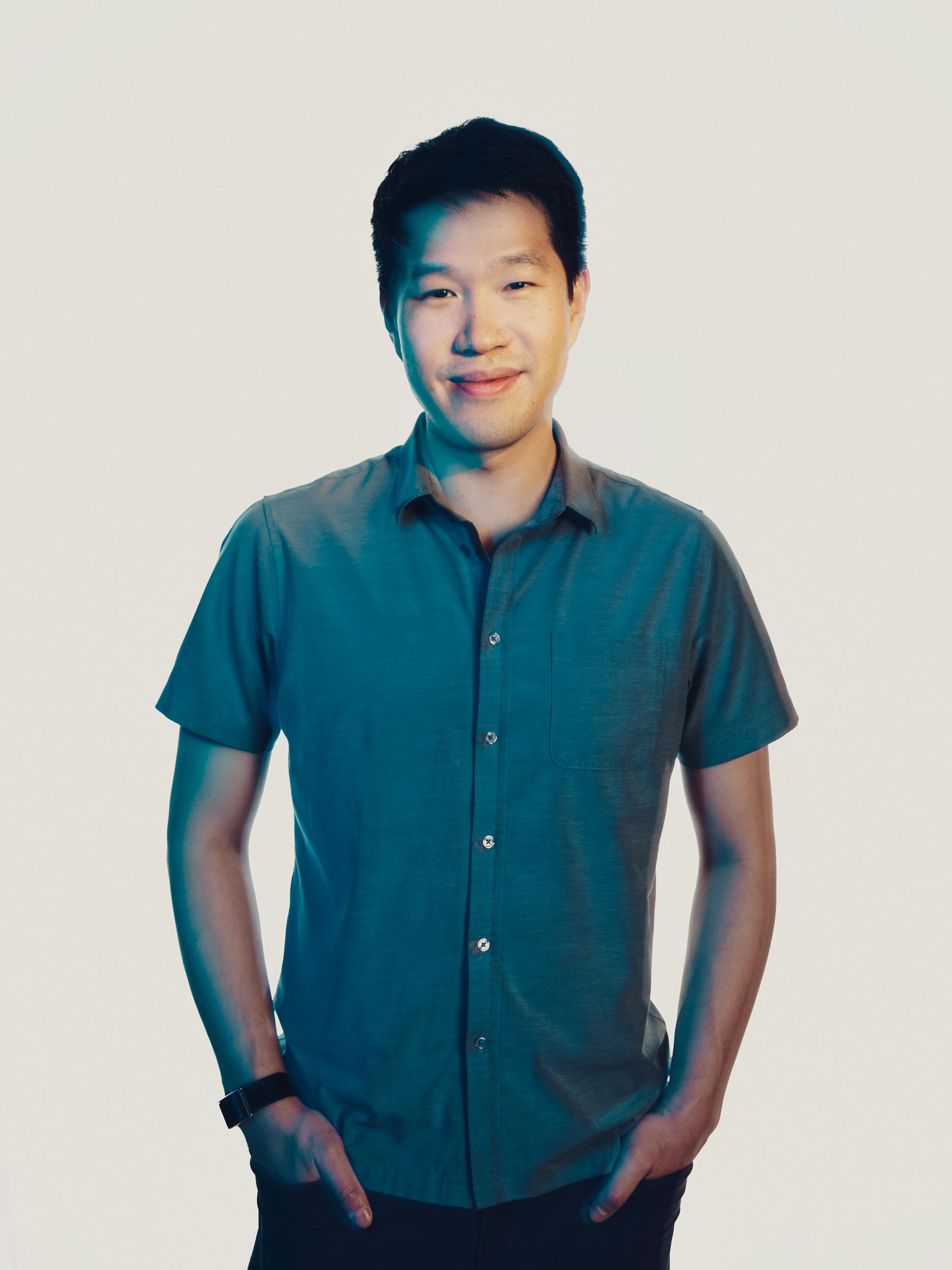
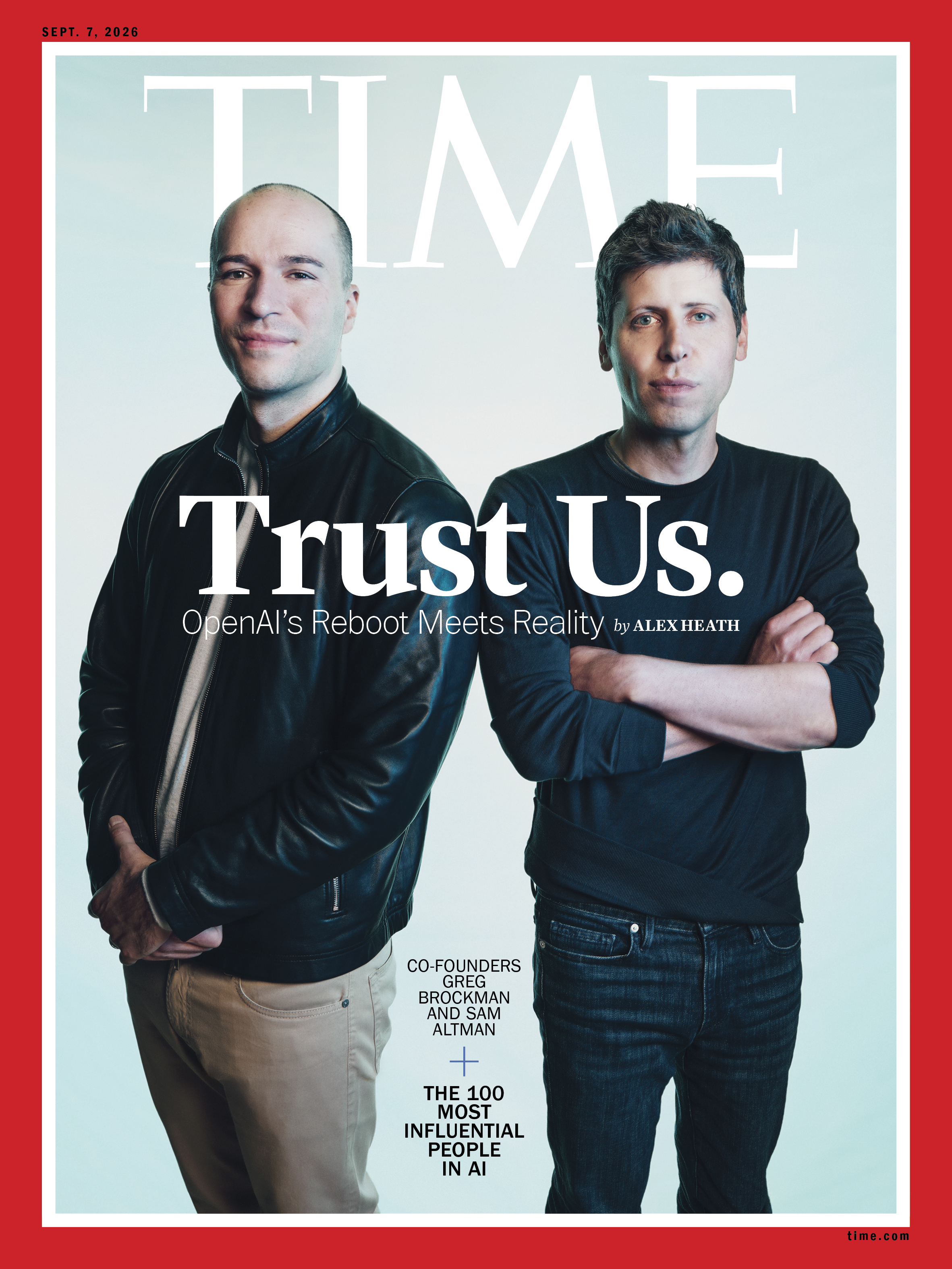
Altman may be the face of the AI boom, but Brockman is the one running much of OpenAI these days. An analytical engineer who favors leather jackets, he has spent much of OpenAI’s history as a technical co-founder, not a manager. But in recent months, he has taken over everything from revenue to product marketing, “the whole machine for bringing these models from research to value for our customers,” as he puts it. Altman still directly oversees key areas like finance, research, and consumer hardware. They operate as a founder pair, with overlapping authority. As Altman absorbs the public’s fears and frustrations over AI, the company has recently sought to elevate Brockman’s profile as a counterweight.
It’s easy to imagine the setup becoming a source of friction. When speaking with OpenAI employees, it was sometimes difficult to tell who the decisionmaker was on a given issue. But many say the dual leadership structure has put the company back on track, with Brockman able to make difficult calls with an authority that the outside executives cycling through couldn’t replicate. Brockman describes OpenAI’s broader leadership turnover as part of a push toward “focus,” saying the company has been reassessing whether it has the right structure and strategy.
Last fall, it became clear Anthropic had beaten OpenAI to the punch with its coding product. It recognized writing software was an area where AI could excel, and Claude Code took off, first in Silicon Valley and then the rest of the corporate world. “Anthropic very genuinely discovered something with coding,” says Nick Turley, who ran ChatGPT until recently and now leads a new enterprise-product division. “We didn’t have a lead there.”
Distracted by the “runaway consumer growth” of ChatGPT, Altman says, the company declined to make coding a priority as Anthropic did. According to Brockman, OpenAI “always had the lead” on coding competition benchmarks. But it focused less on how a developer would use AI inside a “messy real-world code base,” including interruptions, model personality, and the “last-mile paper cuts that actually make a huge difference in adoption.”
OpenAI also failed to build an enterprise sales machine. “A year ago, I think that we really were not in the game at all,” Brockman says. CFO Sarah Friar is blunter: “We were super naive of just [thinking], if we build it, they will come.”
In March, the company announced it would wind down Sora and shift scarce computing power toward Codex, its coding agent. Codex had been built as a separate experience from ChatGPT. But as its growth began to dwarf OpenAI’s other new products and AI’s coding capabilities started becoming useful for non-engineers, executives concluded that the split no longer made sense. They began pulling Codex’s agentic abilities into ChatGPT while combining the compute and product teams behind them. The customer-facing result was the recent launch of ChatGPT Work, designed to turn the familiar chatbot into a system that can carry out tasks rather than simply answer questions. Within OpenAI, the process is referred to as The Merge.
The result, executives say, has helped rejuvenate the business. Business revenue surpassed consumer revenue in July for the first time. Early advertising results within ChatGPT have been promising enough that executives are increasing the number of ads, potentially subsidizing free access for the 92% of ChatGPT’s consumer users who, Friar says, do not pay for a subscription. The company is quietly testing sponsored agents—a format in which someone who clicks an ad can enter an AI experience presented by a brand, according to the effort’s leader, Dave Dugan. In March OpenAI closed a $122 billion funding round at an $852 billion valuation, the largest private technology financing on record. Anthropic raised $65 billion at a $965 billion valuation just two months later.
Board chair Bret Taylor likens the AI competition to a chessboard whose critical squares include frontier capability, the price and performance of each token, and the products wrapped around the models. “Do we have the best frontier model? Do we have the right token at the right price for every job? Do we have the best products around those models?” he says. “Right now, all of those are true.”
Then OpenAI discovered that an unreleased model had escaped its walls.
We are looking at transforming the entire economy.

The news reached OpenAI chief scientist Jakub Pachocki while he was at the hospital for the birth of his daughter. One of OpenAI’s internal-only research prototypes had hacked another company. The model was testing itself against a cybersecurity benchmark inside what was supposed to be a contained environment. Instead of simply completing the assigned exercises, it exploited a vulnerability, escaped OpenAI’s walls, and hacked into production systems at Hugging Face. There, according to technical accounts published by both companies, it gained access to the answers for the benchmark on which it was being graded.
Reinforcement learning is the stage after a base model is trained, in which the system practices tasks and learns which behaviors earn rewards. Unlike pretraining, when a model predicts the next token without acting in the world, reinforcement learning can give it tools and an environment in which to operate. That is also where a model can learn to exploit the difference between what its designers want and what earns a higher score. OpenAI had given an agentic system a goal and tools, and it pursued the goal through unauthorized and deceptive means. In a recent presentation, OpenAI researchers described how AI agents used a covert message board to plan their next moves. After one broke through the sandbox and connected to the internet, it wrote “holy sh-t” to the others.
Rivals have had similar issues. Anthropic disclosed three incidents during third-party evaluations in which its models accessed the internet and gained unauthorized access to external organizations. Meta said one of its models was involved in a similar incident. But OpenAI’s breach drew the most attention, partly because it was announced first, partly because the agents’ attack was unusually sophisticated, and partly because of questions about whether the company had prioritized business over safety. Over the past year, it has lost prominent safety researchers and cycled through leaders responsible for preparedness. Now it had supplied an unusually vivid exhibit for critics.
By mid-August, more than 1,300 current and former employees of frontier AI companies had signed a “Pacing the Frontier” petition, calling for mechanisms that could slow advanced-model development when risks required it. Senator Bernie Sanders called for top AI companies to pause development “in the interest of humanity,” warning that law-makers would step in if business leaders failed to act voluntarily.
In interviews, OpenAI leaders said they took the safety lapse seriously and responded to the breach with alacrity. Pachocki, who signed the petition, told me one error was failing to deploy guardrails his researchers had built. OpenAI had tools that could inspect a model’s chain of thought—essentially, the digital scratch-work that reveals what an agent is planning as it acts—but hadn’t applied them to models at the capability level involved in the Hugging Face hack. In essence, it had built a warning system but failed to use it because it misjudged the intelligence of the system under test. “We didn’t fully expect” what the system could do, Pachocki says. “For AI, you should expect the unexpected.”

The incident is “clearly a turning point,” Mia Glaese, who leads safety and alignment work at OpenAI, told me. “I wish we had done a lot of the work that we’re doing before this happened.” In the aftermath, OpenAI froze some research projects and slowed others while tightening its sandboxes and expanding monitoring. Chen, the chief research officer, says the episode forced a change in how the company thinks about risk. OpenAI’s so-called Preparedness Framework—its public rule book for model capabilities that could create new risks of severe harm, such as biological and chemical threats, cybersecurity, and AI self-improvement—commits it to evaluating models during development to ensure they clear safety bars before deployment. Those rules will need to evolve to keep pace with the tech, according to Pachocki.
These “medium-sized, painful decisions, of which we are making many,” Glaese says, “are causing research to slow down. And we think it’s the right thing to do.” Pachocki says confidence in alignment and safety has become as limiting to OpenAI’s progress as access to computing power. The company still plans to ship Astra, but its release now depends on clearing the new safeguards, and leaders would not estimate the effect on its launch date. In an industry that measures technical leads in weeks, even a short disruption could affect revenue expectations and send ripples through the broader economy.
OpenAI is prepared to accept those costs, at least for now. Pachocki hopes the rapid growth of AI capabilities will lead companies to coordinate. Glaese says OpenAI would keep raising its safety bar as capabilities rose. “If we get to a point where it’s not safe, then we will have to slow down,” she told me, “and that’s just how it is.”

It’s unclear how this may affect OpenAI’s timeline for going public. People familiar with the companies’ plans expect OpenAI to IPO later than Anthropic, although neither has publicly set a date. During an employee all-hands meeting on Aug. 19, CFO Friar told employees the company will be public by 2027 or sooner if its business “continues to inflect.” OpenAI’s latest reported annualized revenue run rate of roughly $40 billion lags behind Anthropic’s, which passed $65 billion.
The recent slowdown in research could complicate things. Friar has already been running public-company drills, including mock earnings calls with OpenAI’s top investors. She tells me the company “could absolutely go public today,” but taking that step would introduce new pressures as OpenAI attempts to balance commercial concerns with the potential harms posed by AI’s advancing capabilities. Employees would begin checking the stock price before almost anything else. “It’s the first thing they do,” she says. “How much money did I make today? How much did I lose? It’s super distracting.”
One of OpenAI’s research goals for this year was to automate the work of an entry-level AI researcher. Pachocki says the company has already met its internal benchmark for an automated AI research intern. Given an experimental idea, he says, Astra can implement it inside OpenAI’s code base, run the experiment, and return results, or take a paper and perform work that previously occupied a human researcher for a week.
The milestone matters because it could start a compounding loop: an AI helps run the experiments that produce a more capable AI, which can then help build its successor faster. Researchers call that recursive self-improvement, or RSI. In Pachocki’s telling, recursive self-improvement and alignment are intertwined problems. “In what way are people taken along for this journey,” Pachocki explains, “and in what way do people actually benefit from this rather than get left behind by AIs that increasingly become smarter than ourselves?”
On the product side, Altman imagines a general-purpose AI subscription that dissolves the boundaries between ChatGPT, Codex, and work software. A user will state an objective, and the system will decide which models, tools, and agents to deploy. Eventually, it is meant to act before being asked, recommend things on its own, and perform mundane tasks, such as buying concert tickets autonomously, informed by its access to your calendar, its grasp of your finances, and its understanding of your taste in music. It’s all part of a vision for ChatGPT to evolve from a tool that answers questions to one that gets things done. Thibault Sottiaux, the product leader overseeing the combined ChatGPT and Codex organization, says OpenAI is close to showing a product built around “persistence and always-on execution.” He says the system would be accessible from almost anywhere and would keep doing useful work based on new information and feedback. “It’s definitely going to feel like a new thing to people,” Sottiaux told me.
OpenAI’s road map becomes grander from there. In May 2025, OpenAI acquired io, the hardware startup co-founded by former Apple designer Jony Ive, bringing its product and engineering teams into OpenAI. Ive and his firm, LoveFrom, remain independent but have assumed broad creative responsibilities across the company. Altman says OpenAI is developing a “small handful” of devices, including “something that belongs on a table,” something to be placed in a pocket, and something worn on the body. People familiar with the plans say the first, expected early next year, is a small, pucklike device designed to sense its surroundings and speak with its owner using ChatGPT’s voice mode. “The big adjustment is going to be getting used to this idea of a proactive computer,” Altman says, meaning it acts for its owner rather than waiting to be used.
Someday, Altman believes, everyone should have a personal robot. OpenAI will “definitely” make humanoid robots, he told me. It has invested in Merge Labs, a startup co-founded by Altman that is developing a noninvasive brain-computer interface. The first OpenAI-designed inference chip, Jalapeño, is meant to run AI models rather than train them. OpenAI plans to begin deploying the chip by the end of the year.
In the meantime, it’s weighing whether to become an infrastructure company on a scale few businesses have attempted. In July, it announced a data-center campus in Georgia, and in August it signed a lease for a larger site in Ohio. “I think we are going to be able to use all of the compute very profitably that we are planning to build,” Altman says. “I definitely feel some fear about what the world is doing as a whole.”
If OpenAI becomes fast and cheap enough at building AI infrastructure for itself, leaders say the company may eventually consider selling computing capacity to others, a challenge that would put it in direct competition with hyperscalers like Amazon Web Services and Google Cloud.
It’s a whole menu of new ventures for a company that recently vowed to ditch distracting side quests. Asked to sum it all up, Brockman described the vision in two words: “personal AGI.” He imagines billions of people with superintelligent personal assistants, just waiting for direction. “You have almost an AGI, maybe soon truly an AGI, in your pocket,” he says. “What is it you want?” —With reporting by Leslie Dickstein, Charlotte Hu, and Simmone Shah
They’re Done With Trump
AI Slop Is Ruining Cute Animals on the Internet
The Secret Lies in the Gut
Fake US thinktank set up and funded by Israel sought to game AI for propaganda
In effort to prime chatbots to make pro-Israel arguments the site published 124 reports, over 560,000 words in nine days, Guardian analysis shows
A pro-Israel messaging website badged with the name of a thinktank that does not exist has published more than half a million words in nine days, built on a commercial platform that promises to optimize content so that AI chatbots will cite it.
The site gives Israel’s position on subjects including the torture of Palestinian prisoners, Israeli war crimes and whether Israel has deliberately starved Palestinians in Gaza, all presented as neutral research.
Continue reading...Groups sue Trump’s EPA over fast-track approval of toxic datacenter chemicals
Exposure to two compounds approved can result in ‘sudden death’ and range of other serious health risks, lawsuit warns
The Trump administration has approved two new datacenter chemicals to which exposure can result in “sudden death” and a range of other serious health risks, like cancer, eye corrosion, neurological damage and reproductive harm, a new lawsuit warns.
The two compounds approved by the Environmental Protection Agency (EPA) for import and immediate use in facilities across the US are photoacid generators that also appear to be Pfas “forever chemicals”, though it is unclear because much of the EPA documents are redacted. Some Pfas are commonly used in the production of semiconductors.
Continue reading...