RSS Feeds
House passes short-term funding bill to prevent a shutdown before the election
Watch: Key moments from Andy Burnham's first Commons speech as PM
WATCH: DHS Secretary Mullin says thousands arrested in New York immigration operation
Чего мы не знаем об умирании? Интервью Би-би-си с доулой смерти
Премьер Индии просит Путина закончить войну в Украине, а что Китай? Текстовая версия подкаста «Что это было»
Congress passes funding bill to avoid shutdown before midterms
Brughmans joins Liverpool in deal worth up to £30m
Переводим книги нейронками для себя: год спустя. Словари, скорости и почему переводчики всё ещё нужны

Год назад я написал статью «Переводим fb2 книжки, с нейронками, для себя» — про то, как собрал на паре Tesla P40 в гараже программу Sunny Narrator («Солнечный сказочник»), которая переводит художественные книги через локальные и облачные LLM. Тогда это был скорее прототип «доказать себе, что так можно»: черновики читались с головной болью, книга в тысячу страниц переводилась два дня, а электричество, отключённое посреди процесса, стоило ещё двух.
За год программа доехала до версии 2.1, я перевёл достаточно книг, чтобы набить руку, и понял главное: это уже инструмент не только для меня, но и для переводчиков — и для всех любопытных. Рассказываю, что изменилось, сколько это стоит в токенах и почему без человека ничего не работает.
Читать далее
Congress averts a government shutdown ahead of the midterms

With just a few weeks to spare, the House approved legislation extending funding through mid-December.
(Image credit: Julia Demaree Nikhinson)

Germany blames Russia for drone attack at Leipzig airport
Government says ‘dangerous behaviour’ is part of effort by Moscow to cause damage with hybrid attacks
The German government has blamed Russia for the drone attack on Leipzig airport last month, calling it “dangerous behaviour” and part of a systematic and concerted effort by Moscow to “cause great damage” through a large number of hybrid attacks.
The interior minister, Alexander Dobrindt, and the foreign minister, Johann Wadephul, ended weeks of speculation and the government’s hesitancy to blame Russia, saying in a brisk 10-minute briefing in Berlin that all indications were the Russian state had provided the knowhow and equipment for the planned attack and “low-level agents” were recruited to carry it out.
Continue reading...Send your questions for Richard Engel on Ukraine and more
OPERATION MOONLIGHT 1.0: курс языка C, который я сам себе собрал

Мне хотелось разобраться с языком C по-человечески: не «сто задач на указатели», а так, чтобы каждая написанная программа была зачем-то нужна. Готового такого курса я не нашёл, и по своей же идее собрал себе сам.
Получилось следующее: 80 серий в десяти сезонах, 74 часа задач, семь сквозных проектов, всё собирается без единой внешней библиотеки и прогоняется в CI на Linux и macOS. Курс бесплатный, лежит на GitHub, и я решил им поделиться — вдруг будет интересно или пригодится ещё кому-то.
Год назад я уже писал о нём здесь, но с тех пор от того курса, не осталось почти ни одного эмодзи, а уроков стало в два-три раза больше.
Читать далееSide of slop? Bizarre AI food images jump from online to IRL menus
Utah judge to decide if Tyler Robinson will stand trial in Charlie Kirk's killing
British activist abducted by West Bank settlers deported by Israel - The Latest
A British activist who was forcibly abducted by Israeli settlers in the occupied West Bank has been deported to the UK. The treatment of 22-year-old Finn Joughin comes after a surge of settler violence against Palestinian people in the West Bank that has been widely condemned internationally and also by many prominent figures within Israel. Lucy Hough speaks to the Guardian’s chief Middle East correspondent, Emma Graham-Harrison – watch on YouTube
Continue reading...Germany blames Russia for drone attack at Leipzig airport
Government says ‘dangerous behaviour’ is part of effort by Moscow to cause damage with hybrid attacks
The German government has blamed Russia for the drone attack on Leipzig airport last month, calling it “dangerous behaviour” and part of a systematic and concerted effort by Moscow to “cause great damage” through a large number of hybrid attacks.
The interior minister, Alexander Dobrindt, and the foreign minister, Johann Wadephul, ended weeks of speculation and the government’s hesitancy to blame Russia, saying in a brisk 10-minute briefing in Berlin that all indications were the Russian state had provided the knowhow and equipment for the planned attack and “low-level agents” were recruited to carry it out.
Continue reading...What the Jump in Global Interest Rates Means for the Economy
ICE says it has enough body cameras now, after series of deadly shootings

Cameras could help alleviate some concerns about ICE transparency and accountability after immigration officers were involved in over two dozen shootings under the Trump administration.
(Image credit: Michael M. Santiago)

Judge to decide if Tyler Robinson will stand trial in Charlie Kirk's killing
U.S. launches new strikes against Iran, CENTCOM says
What the judge told the Lindsay Clancy jury after they said they're deadlocked
Five held by police after newborn baby dies from stab wounds in Sheffield
Officers responded to reports concerning safety of baby girl at property in Wincobank area of the city
Five people are being held on suspicion of murder after a newborn baby died from stab wounds in Sheffield on Sunday.
Police officers found the girl at a property in Holywell Heights, in the Wincobank area of Sheffield, while responding to reports concerning her safety just before 6am on Sunday. She was pronounced dead at the scene.
Continue reading...US launches new airstrikes on Iranian targets as hostilities flare
Move from Washington quashes hopes that exchange of fire last weekend might not presage wider renewal of hostilities
The US launched new airstrikes on Iranian targets on Tuesday, quashing hopes that an exchange of fire last weekend might not presage a wider renewal of hostilities.
Oil prices had already risen after that first exchange of direct attacks since July and after reports of two tankers being hit leaving the strait of Hormuz, the global oil supply waterway that Iran has effectively closed to shipping.
Continue reading...One last Starmer U-turn and it’s over to Andy ‘less policy, more vibes’ Burnham | John Crace
What former PM could resist upstaging the new one hours before his first dispatch box appearance in 16 years?
No good deed goes unpunished. Or any deed for that matter. It was only a few weeks ago that Keir Starmer was insisting he would remain an MP until the next general election. So we should all probably have guessed that he would be off at the earliest opportunity. U-turns were a distinguishing feature of his two years in office.
And what former prime minister could resist upstaging the new one hours before his first appearance at the government dispatch box for 16 years? Especially when the new one had been plotting his downfall for at least a year. It’s what everyone would have wanted. Right?
Continue reading...Family mourn 'deeply loved' girl killed in Middlesbrough fire
US launches more strikes on Iran as state media reports explosions
Stocks slip on Wall Street under pressure from rising oil prices, bond sell-off
US launches new airstrikes on Iranian targets as hostilities flare
Move from Washington quashes hopes that exchange of fire last weekend might not presage wider renewal of hostilities
The US launched new airstrikes on Iranian targets on Tuesday, quashing hopes that an exchange of fire last weekend might not presage a wider renewal of hostilities.
Oil prices had already risen after that first exchange of direct attacks since July and after reports of two tankers being hit leaving the strait of Hormuz, the global oil supply waterway that Iran has effectively closed to shipping.
Continue reading...‘I think he’s sensible’: constituents on Keir Starmer stepping down as MP
Few regrets voiced in Holborn and St Pancras over decision despite former PM having had ‘rough time of it’
In Keir Starmer’s north London constituency, full of pretty pubs and elegant townhouses, few tears were being shed at the news of his departure as its MP.
One man nursing a pint outside a pub in Kentish Town simply remarked “good” when informed his MP had quit. He added: “I thought he was very nice before he became prime minister; I met him a few times. But he messed the country up and screwed over pensioners.”
Continue reading...Everton agree to re-sign Grealish on loan as Beto leaves
Nepal's death toll from glacier collapse and flood exceeds 1,000
Chevron expected to expand oil operations in Venezuela, U.S. official says
How much does a $50,000 annuity pay per month in 2026?
Ukraine is preparing for Russia’s hardest winter blitz yet
Who is John Ternus, Apple’s new CEO?
Hardware engineering executive succeeding Tim Cook is a longtime Apple insider, indicating company will continue strategy that has led to record profits
Tim Cook stepped down as CEO of Apple on 31 August. John Ternus, a longtime company veteran, succeeded him the next day as the company’s new chief executive. Cook has transitioned to the role of executive chairman of Apple’s board of directors.
Ternus, a hardware engineering executive, is a tenured Apple insider, and his ascension indicates the company will stay the course that has led to record profits under Cook’s leadership. Apple’s yearly profit now tops $100bn, the company is worth about $4.5tn, and it has notched record revenue from its iPhones this year, boosted by renewed demand in China.
Continue reading...Tony Romo admits to ‘over-reliance on alcohol’ after pleading no contest to impaired driving
These Ukrainian Children Go to School Underground. They’re the Lucky Ones.
Was John Galliano Ever Really Canceled? Not by the Fashion Crowd.
What to Know About Venezuelan Energy Following Trump’s Oil Deal
Google’s answer to Canva is an AI tool where you prompt instead of design
‘Stop trying to be tough’: Carney fires back at Trump as US-Canada trade fight escalates
WATCH: This girl just made history in Little League baseball
Tony Romo pleads no contest to Wisconsin operating while intoxicated charge
Putin pledges support to Iran, rallies leaders to challenge U.S.
Russia targets Ukraine’s rail network as war enters deadly new phase
Six employees killed on Tuesday after Moscow escalates attacks on infrastructure and Ukrainian capital
Russia has opened a deadly new phase in its war against Ukraine by deliberately targeting the country’s railway network, with six employees killed on Tuesday in the latest strikes on Kyiv.
Ukraine’s state-owned railway company, Ukrzaliznytsia, said its workers died when a ballistic missile plunged into a locomotive depot. The Russians hit other railway facilities, it added, during a massive bombardment of Kyiv and the Kyiv region. At least 12 people died, with a dozen wounded, including three children.
Continue reading...As Carney takes stand against Trump, Canadian voters reward his party with sweep of 3 special elections
Russia targets Ukraine’s rail network as war enters deadly new phase
Six employees killed on Tuesday after Moscow escalates attacks on infrastructure and Ukrainian capital
Russia has opened a deadly new phase in its war against Ukraine by deliberately targeting the country’s railway network, with six employees killed on Tuesday in the latest strikes on Kyiv.
Ukraine’s state-owned railway company, Ukrzaliznytsia, said its workers died when a ballistic missile plunged into a locomotive depot. The Russians hit other railway facilities, it added, during a massive bombardment of Kyiv and the Kyiv region. At least 12 people died, with a dozen wounded, including three children.
Continue reading...In Nepal's Tragedy, a Warning for a Warming World
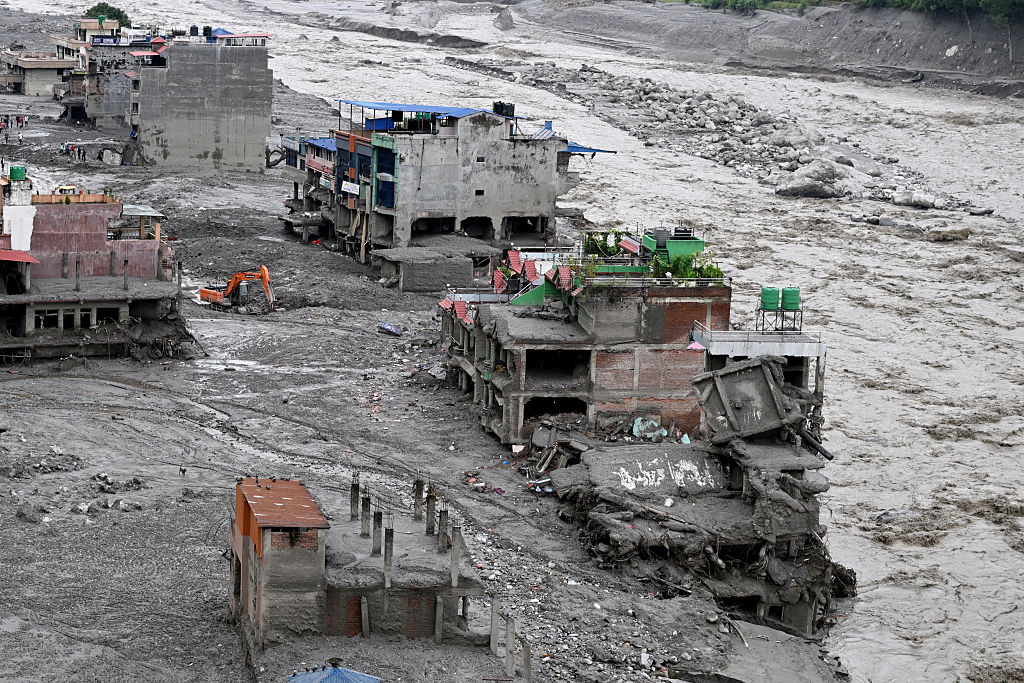
On Aug. 26, a landslide and a glacier collapse in the Himalayas sent an avalanche of water, rock and soil cascading down the Trishuli River valley, which sits on the border between the northern Rasuwa district of Nepal and Gyirong County in Tibet. The flood moved with overwhelming force and terrifying speed, sweeping away homes, schools, shops, vehicles, and people.
A week later, the reports are bleak: more 1,000 people have died in Nepal and Tibet and around 4,500 people remain missing. Some of the bodies carried away by the deluge were found hundreds of miles downstream in India. Rescue workers are still fighting to reach survivors. At least 900 workers remain missing from several hydropower projects along the Trishuli River, which runs through several remote, mountainous districts of Nepal. Hundreds of workers are believed to be trapped inside the tunnels in the hydropower projects.
A final accounting of lives lost is expected to be in thousands. In the Chitwan district of southern Nepal, some 120 miles from the mountain valleys where the glacial fury first struck, officials have buried nearly 200 unidentified bodies in a forested area because of a lack of morgue space. Mass burials have also started in a forest outside Kathmandu, the capital. DNA samples have been collected so the bodies can be identified later.
Families are still waiting outside hospitals in Kathmandu, the capital, for news of their loved ones. “Even if it’s just their bodies, at least we’d know,” Dil Kumari Masrangi Magar, a woman from Udaypur district in southeastern Nepal, told me outside Kathmandu’s Teaching Hospital. Magar was searching for her missing brother-in-law and a nephew, and had pasted their photos on a hospital wall already covered with images of the dead and names of the missing.
Many others were coming to terms with their loss after recognizing identifying details in photographs of the dead. Among them was Kesari Tamang, a woman, whose brother Sankha Budha Tamang ran a hotel in Betrawati town in central Nepal. He had been swept away by the flood and a body matching his description had been recovered 100 miles downstream in Kapilvastu. The family was travelling there to identify him. “If we start early tomorrow, we will reach there in about 10-11 hours,” Tamang told me. Another relative let out a deep sigh and said, “If it’s not him, we will just come back,” he said. “but it looks like it is him.”
The obliteration of the Gyirong port building on the Nepal-China border on the morning of Aug. 26, by a wave of mud and boulders, rising as high as 80 meters, has become a globally recognized image of the disaster’s scale and ferocity.
The landscape of loss in Nepal
The catastrophic floods have caused an estimated damage of $8 billion, according Nepal’s Finance Ministry. But the concentrated nature of this disaster, confined to a commercially important river valley, means the impact will be much greater. Fifteen hydropower plants—ten operational and five under construction—with a combined capacity of 753 megawatts have been affected by the floods. Roughly 11% of Nepal’s total power generation capacity has been knocked out. Multiple transmission lines and substations have been destroyed, severely crippling the country’s electrical infrastructure. Preliminary estimates by the Independent Power Producers’ Association Nepal put the damage to the hydropower plants at up to $230 million, a figure expected to rise.
More than 40 bridges have been destroyed or damaged, and 25 miles of vital roadways have been erased from the map, or buried under thick mud, cutting off remote mountain communities and compounding the rescue effort. At the same time, 69 schools have been damaged or destroyed, affecting 19,000 children, according to the charity Save The Children. At least 65,000 people have been directly affected.
Much of the downstream death toll was the result of poor planning and weak enforcement of zoning laws, which allowed settlements to be built along riverbanks. Yet nothing could have saved the hydropower plants, which Nepal needs both to wean itself off fossil fuels and to sustain its energy exports. Melting glaciers, a consequence of global warming, combined with high seismic activity, make the Himalayas a hotspot for catastrophic disaster risk downstream.
This is also a lesson for other vulnerable river valleys in Nepal. Four major hydropower plants backed by Indian investments sit in the Arun River basin, directly below Makalu, the world’s fifth highest mountain, at 8,463m, in eastern Nepal. The basin also lies downstream from the Tibetan region of China, where dozens of glacial lakes have swollen in size and could burst at any time. The Arun sits just across the border from the Indian state of Sikkim, where a $1 billion, 1,200-megawatt dam, the Teesta III, was wiped out by a glacial lake outburst in October 2023.
The Annapurna massif towers above the Marsyangdi River in Nepal, which flows through a valley next to the Langtang Lirung mountain where the glacier melted last week. Five cascade hydropower projects—operational and under construction—have been built on the Marsyangdi River. These sit directly beneath the Thulagi Glacial Lake, which has expanded in recent years because of global warming and is held back by a fragile moraine dam.
The science behind the flood
In the immediate aftermath, as is often the case with disasters, there was much speculation. A smaller flood struck the same river last year, caused by a glacier collapse in Tibet, leading many to assume this one had originated in from the same glacier. Online commentators quickly rushed to question why Chinese authorities had not sounded an alarm early on.
But it turned out to be an ice-rock avalanche on the north face of Langtang Lirung, a mountain in northern Nepal near the border with Tibet. At first, many linked the flood to a magnitude 4.4 earthquake near the Tibetan border. But the U.S. Geological Survey later revised that account, determining that the avalanche had triggered the earthquake, at 8:37 a.m. that morning in Nepal, not long before the floods.
Satellite photos now reveal a distinct 0.9 mile-wide break in a hanging glacier at 16,4000 feet, on the north face of Langtang Lirung, a 23,733-foot mountain in Nepal. Some scientists argue, however, that this was not a simple glacial calving but rather a bedrock failure, likely caused by melting permafrost seeping into a pre-existing fissure. This bedrock fracture sent a mix of rock and ice plunging more than 3,280 feet onto the flatter glacier below. The immense friction and kinetic energy from the drop melted much of the ice, producing collapse so vast that it triggered a localized magnitude 5.2 tremor.
The ice and rocks bulldozed surrounding debris down to the monsoon-swollen Lhende Khola and swept nine miles downstream to the Rasuwagadi border checkpoint between Nepal and China, sending a wall of mud and boulders racing down the Trishuli River into Nepal. Geologists estimate the avalanche displaced up to 200 million cubic meters of debris, making it the largest rock-ice event ever recorded.
A challenge and an opportunity for Balendra Shah
On Sept. 8, 2026 Gen Z in Nepal erupted in protests, which faced violent reprisals from then government, and forced its resignation. In the national election in March, Balendra Shah, a 35-year-old former rapper and independent politician won a major victory and was elected Prime Minister of the country. As the one-year anniversary of the protests approaches, my colleagues and I were planning to take stock of the protests, the reprisals, the election of the new government and its performance in the first six months in power.
The Aug. 26 flood is their biggest test yet. But the sheer scale of the Nepal-Tibet flood would have overwhelmed even the most well-equipped governments, as evidenced by the fact that it took the Chinese authorities three days to reach the disaster site. These are some of the most remote and extremely rugged mountain settlements in a geopolitically sensitive border region.
The Nepal government has deployed 19,000 security personnel and mobilized 16 helicopters in search and rescue operations, and more than 11,000 people have been rescued so far. Although news initially spread of the government refusing international assistance immediately after the floods, it reversed course later, requesting specialized technical personnel and equipment, especially to rescue workers trapped inside hydropower tunnels and to conduct DNA tests of unidentified bodies and remains.
Once the rescue phase and immediate relief efforts conclude, attention should shift to long-term rehabilitation and resettlement for survivors. Nepal’s Prime Minister’s Disaster Relief Fund has collected nearly $33 million in its domestic bank accounts, alongside more than $1.8 million in foreign currency accounts. International donors—through individual country pledges, multinational contributions, and local nonprofit relief efforts—have pledged over $200 million in combined emergency financial aid, potential loans, and dedicated reconstruction funds, alongside significant technical assistance.
How these funds and this assistance are managed and distributed, and whether affected families on the ground actually receive support, could set this government apart from its predecessors. This unprecedented flood, regardless of its colossal toll, also offers Prime Minister Shah and his government, an opportunity to demonstrate a proactive approach to search and rescue, rehabilitation, and a preparedness strategy for the future.