RSS Feeds
'Biggest night in club's history' as fearless Fleetwood stun Arsenal in EFL Cup
Confusion about Flávio Bolsonaro's whereabouts as Argentina says he flew to Ecuador
Luxury cruise passengers stranded in Cambodia due to soaring fuel costs
Russell Brand tells trial sexual consent is 'fundamental'
Watch: What happens now after close vote in Israeli election?
What we know so far about deadly Spain train crash
Overturned carriages and makeshift medical tents at crash site
Четыре протокола и одна кнопка «Разрешить»: как я подключил Claude Code, Codex, Qwen и Hermes к Telegram
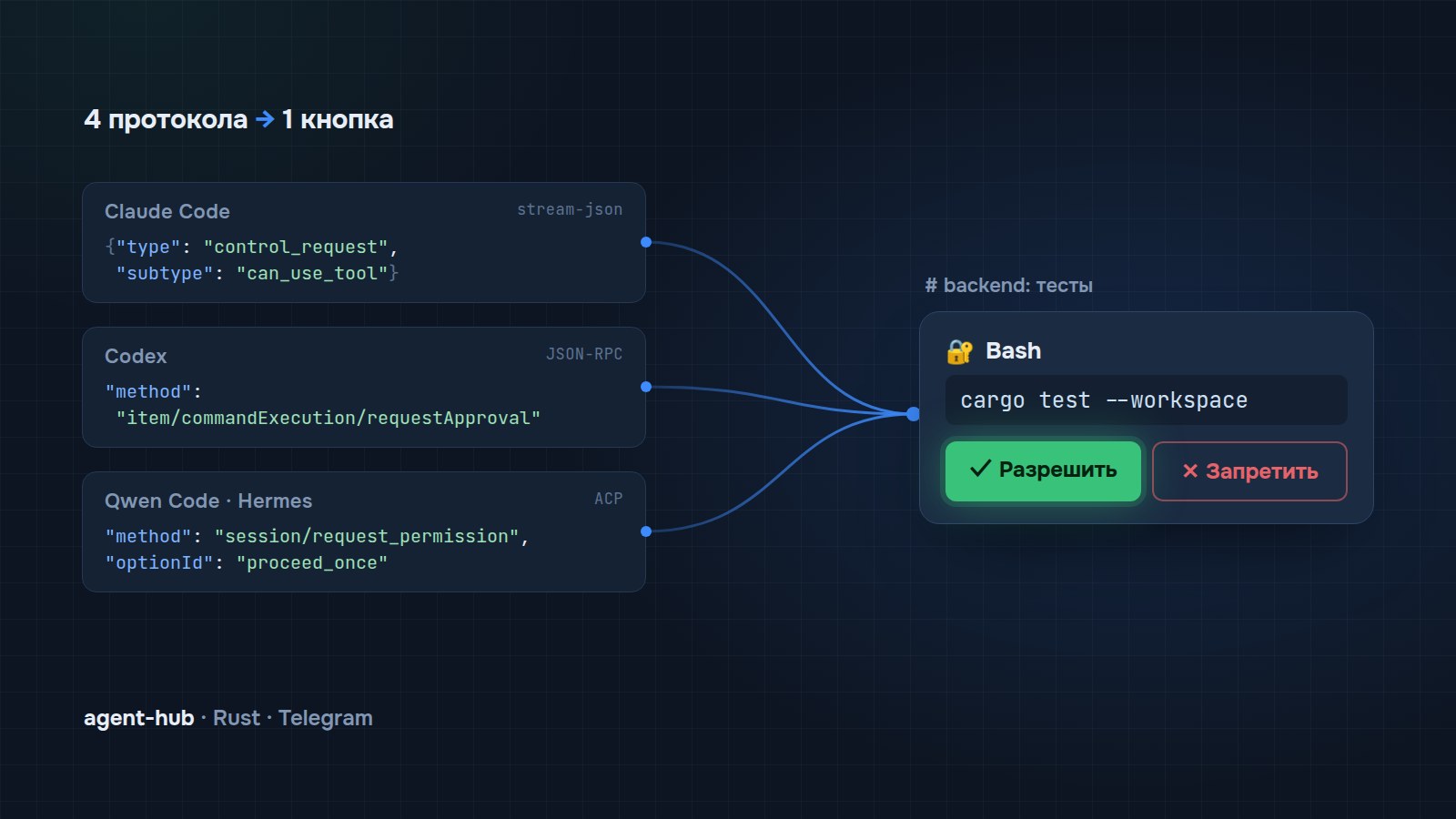
Claude Code и Codex умеют работать долго и без присмотра, но только пока ты сидишь рядом. Агент то спрашивает разрешение на команду, то задаёт уточняющий вопрос и ждёт ответа. Отошёл от компьютера - и всё встало.
Как-то мне пришлось срочно уехать по делам, а задач на день было много. Хотелось ставить их агентам с телефона и подтверждать команды кнопкой, а не держать открытыми шесть терминалов. Так появился agent-hub: десктопное приложение на Rust, в котором каждая тема Telegram-группы - отдельная сессия агента на моём компьютере. За 3-4 часа в дороге я провёл через него больше шести задач.
Похожие решения есть, но мне не подошли. Мне важно, чтобы у каждой задачи была своя история переписки и не приходилось помнить ID сессий, а темы в группе для этого подходят идеально.
В статье расскажу не столько про сам инструмент, сколько про то, как он устроен внутри: как четыре агента с разными протоколами сведены к одному интерфейсу, как запрос разрешения превращается в кнопку Telegram и обратно и какие ограничения Telegram пришлось обходить.
Читать далееSerrano to end career in Puerto Rico in January
Bye bye Bibi? Israel’s election results
AI is a technological version of the Homeric songs
'I earned my spot' - Lewis can be England hero after controversial selection
A.I. by the Numbers
Trump fights for votes in Texas and deadlock in Israeli election: Morning Rundown
American who was ISIS teen bride convicted of getting weapons training
The Devils review – Ken Russell’s 1971 possessed-nuns tale is a frenzied aria of confrontation and hysteria
Oliver Reed and Vanessa Redgrave put in the performances of their lives in this film originally banned for obscenity that highlights the violence of power
‘I could never be Satan’s boy. I haven’t the humility.” The speaker is Father Urbain Grandier, the 17th-century French priest accused of witchcraft, stylishly played by Oliver Reed, in Ken Russell’s scabrous 1971 classic; it is now restored and rereleased in its complete form after years of censorship. It comes from an era when movies, playing in high-street cinemas, still had the power to shock, to position that shock in the polite cultural mainstream and to compel serious discussion about whether that shock – or, conversely, a ban – was justified.
The Devils is based on a true story of politically directed mass hysteria, adapted by Russell from two literary works: Aldous Huxley’s The Devils of Loudun and John Whiting’s stage play The Devils. Of course it is obscene; obscenity is the glowing sulphurous paint which Russell is applying to the canvas. It is about obscenity – but the obscenity does not reside in the sexualised images of the crucified Christ or naked nuns disporting themselves; it is the violence of authority that is shown to be obscene. The idea of martyrs or heretics being burned at the stake has long been an accepted fact recounted in U-certificate history lessons, and a punishment which survived well into the European enlightenment. Russell shows you what it might actually look like and that is to involve a confrontational assault on good taste.
Continue reading...Airbnb feels like a soulless rip-off – and its hosts are revolting | Arwa Mahdawi
Excuse me if I feel no sympathy for the property owners who have threatened strike action because guests no longer have to do their chores. Whatever happened to the company’s initial guff about building community?
To Airbnb or not to Airbnb, that is the question. Would you like to help pay someone’s mortgage and clean their house and fork out an extortionate cleaning fee and abide by a 90-page list of house rules? Or would you like to check into a nice hotel where you get fresh towels and a tiny chocolate on your pillow?
Airbnb’s business is booming, so plenty of people are still choosing the first option. Nevertheless, the hospitality giant seems to have realised travellers are sick of being handed ridiculous chore lists, and is reining in some of its more tyrannical hosts. Last week Airbnb posted updated guidelines stating guests can no longer be asked to complete tasks that “require significant effort or time or would typically be performed by a cleaner”.
Continue reading...Film buffs love it. Trump and Tom Hanks hosted it. Can TCM survive a Hollywood mega-merger?
Since 1994, Turner Classic Movies has been a haven for old film lovers. Now with Skydance’s David Ellison calling the shots, fans are panicking over its unclear future
I have made many attempts to lessen the existential disaster we call Tuesday – tacos, trivia – but lately only one thing works. Every night just before 8pm, I hide my phone under a pillow in the next room, plate up a carb-heavy dinner, and turn on Turner Classic Movies (TCM) for Sweater Weather, a series of films dedicated to the transitional season.
Every Tuesday in October, Alicia Malone, an affable Australian film historian wearing business casual and a flippy bob, introduces a double feature. These are often midcentury melodramas featuring striking leads, serpentine plots, and the burnt hues of fall rendered in indulgent Technicolor. Like All That Heaven Allows (1955), about a widow who finds herself crushed under the weight of 1950s suburban conformity – and the teeny waistline of her swing skirts – while nursing a crush on her much-younger gardener. Or Leave Her to Heaven (1945), about a beautiful socialite so obsessed with her hapless husband that she will kill anyone who threatens their bond.
Continue reading...Gulliver fans celebrate three centuries of Jonathan Swift’s classic satire
Events in Ireland explore origins of Gulliver’s Travels, the Dublin clergyman’s book that became an instant hit in 1726
In March 1726, an Irish clergyman visited London and arranged for a courier to deliver a manuscript to a publisher under cover of night. The dean of St Patrick’s Cathedral in Dublin knew his novel would cause trouble and wanted to publish it anonymously.
His name was Jonathan Swift and the story was called Travels into Several Remote Nations of the World. The satirical work was published that October and is better known 300 years on as Gulliver’s Travels.
Continue reading...Sauerkraut at Every Meal? These Fermentation Fanatics Tried That Long Before MAHA
How Trump Could Interfere With the Midterms on Election Day, and the Days After
With less than a week until Election Day, the Trump administration is ramping up efforts to shape the outcomes, prompting concerns that the midterm elections could face unprecedented interference by federal authorities.
In recent days, Trump officials have sued to potentially block the certification of a Senate race in Alaska, threatened election officials in California with jail time, and implied that the outcome in a Senate race in Minnesota couldn’t be trusted if the Republican didn’t win. Trump’s allies have also been urging the President to potentially take drastic measures, including declaring martial law to seize ballots.
Election officials in dozens of states are preparing for a wide range of possible interference on Tuesday when millions of voters will cast ballots, as well as in the days that follow as the votes are counted, the final batches of mail-in ballots come in and the election outcomes are certified.
The prospect of so many challenges has led to intense efforts by voting rights groups, election officials and teams of lawyers to be ready to respond to election meddling anywhere in the country.
Here’s how the Trump Administration could potentially interfere in each step of the election process—and how state and local officials, and various outside groups, are preparing for each scenario:
Polls open for in-person voting
Election workers are preparing for possible federal interference both inside and outside polling places on Tuesday.
Over the past few months, officials from the Trump Administration have given vague answers when asked if the Administration might try to deploy federal agents to the polls. Federal laws explicitly prohibit military or federal officials from stationing troops or armed men where elections are held in an attempt to interfere with a federal election. Joint Chiefs of Staff Gen. Dan Caine assured a Democratic senator in late August that the military had “no plan” to be deployed to polling locations during the midterm elections. Yet Trump has declined to rule out measures such as declaring a federal emergency on Election Day or sending ICE agents to the polls, telling TIME in an interview in September that he didn’t “rule anything out” at this point.
At least three lawsuits have been filed to preemptively block ICE agents from being deployed to polling sites on Election Day. According to one of the lawsuits, at least one county sheriffs’ office in Colorado has already been cooperating with ICE and conducted “warrant checks at polling locations” this year.
Along with the prospect of ICE agents conducting immigration enforcement, election officials have also expressed concern that the federal government might try other ways to disrupt polling places, citing voter fraud allegations as a premise. For months, the Administration has been involved in a legal fight with dozens of states over allegations that noncitizens are on their voter rolls. Election experts say voter fraud is incredibly rare.
In some local communities, there are indications that federal agents showing up at polling locations could sow chaos at the polls. Virginia’s Arlington County stated in its preemptive legal filing against federal agents at the polls that the county had developed plans regarding “whether and how to make arrests, and any prosecutorial response or civil legal actions that might be necessary.”
“Arlington has never before needed to prepare for these threat scenarios,” the filing adds. When reached for a statement, the Arlington County government says the local police department remains in contact with election officials and is prepared to respond to any reported incidents.
Polls close and ballot counting begins
As polling stations close Tuesday evening, local election officials and voting rights groups are bracing for the prospect of federal officials possibly seizing election materials and voting machines. In January, the FBI raided the Fulton County election office in Georgia and seized election materials in connection with the 2020 election. In May, a federal judge ruled that the federal government could continue to retain the ballots. The FBI has not announced any wrongdoing stemming from the investigation.
“The lesson of Fulton County was that you have to be ready to be in court literally in minutes,” Norm Eisen, co-founder and executive chair of Democracy Defenders Action, tells TIME. Eisen has been working closely with voting rights groups as well as local and state election officials in multiple states to prepare for any federal interference in next week’s elections. That includes being ready to immediately file lawsuits as soon as any federal officials try to seize any ballots or voting machines.
Other legal scholars are also encouraging judges to consider alternative solutions if federal authorities seek to retain election materials. Rick Hasen, a law professor and director of UCLA’s Safeguarding Democracy Project, published a white paper urging judges who might see warrant applications for ballot seizure to consider ordering copies of the ballot to allow the election certification process to continue.
Waiting for the last batches of mail-in ballots
Many mail-in votes won’t arrive until days after Election Day. Some will be from members of the military stationed overseas. The fight over who can receive mail-in ballots, and which mail-in ballots should be counted, has been underway for most of Trump’s second term.
In March, President Trump signed an executive order requiring states to work with the United States Postal Services to establish lists of verified voters and asking USPS to withhold mail ballots from anyone not on the lists. The executive order was quickly met with a flurry of lawsuits, which resulted in a preliminary injunction blocking the USPS from enforcing any new rules in response to Trump’s order.
But election officials are still preparing for the possibility that some federal officials may try to get in the way of mail-in ballots being counted. On Monday, the DOJ asked the state of Washington to not count ballots from more than 400 voters whom it suspects to be noncitizens, as more than 1 million ballots have already been cast.
Even with the federal effort on hold, state governments have pressed ahead with new rules that are already pushing ballot rejection rates higher. In North Carolina, the State Board of Elections implemented a new rule that requires voters to use at least three different envelopes to deliver their ballots and copies of their ID. Failure to seal any of the three envelopes would result in the ballot being rejected. So far, the state is already seeing an uptick in the ballot rejection rate compared to the previous election cycle, from 2.6% to 3.1% statewide, according to local media outlets.
Certifying the election results
After all the votes are tabulated, county officials will begin certifying the election results. Although each state has its own rules on raising and resolving a challenge from county officials, certifying the election results is a mandatory duty. According to the Campaign Legal Center, if an official delays or refuses to certify results, state officials and courts can step in to compel certification. State officials can also pursue criminal or civil penalties to hold local officials accountable.
On Thursday, the Justice Department preemptively sued the state government of Alaska to block the certification of its closely-watched Senate race if Republican incumbent Sen. Dan S. Sullivan loses to Democrat Mary Peltola. The department accused the state of failing to “protect the integrity of the election” by allowing independent candidate Dan J. Sullivan on the ballot.
“The DOJ attempting to intervene at this late stage is entirely against department policy, as there is no legitimate enforcement of federal law here, and it raises serious concerns about political interference,” said David Becker, executive director of the nonpartisan Center for Election Innovation and Research. “I cannot recall an administration ever attempting to stop the certification of an election — and certainly not 11 days before polls close.”
Various election officials expect that Alaska won’t be the only state that says a certification challenge. During the 2020 election, President Trump sought to pressure Georgia Secretary of State Brad Raffensperger to undo the state’s certification of Joe Biden’s win and “find 11,780 votes”—the number needed to overturn his loss in Georgia. Trump’s allies also led a pressure campaign, meeting with lawmakers in Michigan, Pennsylvania, Georgia, and Arizona in an attempt to overturn the election results, according to the investigation by the bipartisan January 6 committee.
Correction, Oct. 28
The original version of this story misstated Norm Eisen's title. He is the co-founder and executive chair of Democracy Defenders Action, not its executive director.
Почему LLM игнорирует системный промпт: история диалога сильнее инструкций
Знакомая ситуация: в системном промпте четко написано, что модель делать не должна ни в коем случае, а она все равно это делает. Вы переписываете правило, добавляете «ВАЖНО», капслок и примеры, становится чуть лучше, а потом снова за старое. В какой‑то момент начинаешь подозревать модель, ее настройки (например, температуру) или провайдера.
Мы наступили на это в голосовом ассистенте и разобрали случай до конца: переиграли боевые запросы и меняли по одному фактору за раз. Промпт оказался ни при чем. Модель слушалась собственной истории диалога, и ниже я покажу, как мы это нашли, какие получились цифры и что с этим делать, если вы строите на LLM чат‑бота, агента или ассистента.
Читать далееDo's and Don'ts for Preventing and Reversing Skin Damage
Norah's dermatologist shares skin care do's and don'ts
Trump visits South Carolina, Peltola speaks out and more from the trail
Облако ляжет снова. Что вы успеете настроить до этого, а что уже нет

Понедельник, 9:12. В чате поддержки сорок сообщений про четыре разные системы: у одних не открывается почта, у других не грузится CRM, бухгалтерия пишет, что «1С зависла», разработчики спрашивают, куда делся репозиторий. Причина у всего одна, и находится она в дата-центре облачного провайдера, до которого ваша служба дотянуться не может. Облако провайдер починит, а вот что делать людям, пока оно лежит, решает ИТ-служба.
Читать далееКак мы незаметно перемещаем десятки петабайт данных внутри S3

Всем привет! Меня зовут Никита, я старший разработчик в команде Storage. Мы делаем собственное S3-совместимое хранилище в Ozon, которое уже хранит 130 PB данных. Какое-то время назад мы очень подробно рассказали почему нам перестали подходить коробочные решения, по каким критериям мы выбирали технологии для собственной реализации и с деталями описали основную схему получившегося хранилища.
Хранилище постоянно растёт, и вместе с ним появляются задачи, которых раньше просто не существовало в таком масштабе. Одна из них звучит довольно просто: как перенести огромный бакет из одной части S3 в другую, продолжая принимать запросы на чтение и запись и не заставляя пользователей вообще думать о том, что где-то идёт миграция.
Слона будем есть по частям. Чтобы понять, зачем нам понадобилось перемещать данные, сначала коротко разберём архитектуру.
Читать далееBolsonaro Lands in Miami After Fleeing Brazil
Getting Started with Air in JetBrains IDEs – Part 1
Setting coding agents up to handle several tasks while you continue working is easy. The harder part is knowing where each task stands, what each agent has changed, and what still needs your attention.
Recently, we introduced Air in JetBrains IDEs. It brings coding agents into the environment where you already write, review, run, and test your code. From one workspace, you can manage different agent sessions, track their progress, and review their changes with familiar JetBrains tools.
In the first video of our Air in IDEs series, Developer Advocate Kristel Cocoli puts this workflow into practice. Starting with an existing project, she asks agents to extend it, reviews the changes, and tests the result.
You can watch the full video below to see the workflow in action.
Get started with Air in your IDE
Air is available as a plugin from JetBrains Marketplace, and it’s also built into the JetBrains IDEs in the 2026.3 EAP.
If you install Air from the notification in AI Assistant, AI Assistant will be turned off so the two don’t run side by side. To switch back, press Shift twice, select Actions, and search for Open AI Assistant. You can also open Options in the Agent Sessions tool window and select Open AI Assistant. There’s no need to disable Air.
Choose an AI Agent for each task
Air can detect compatible agents already installed on your machine. Open Manage Agents to install them from the registry or connect custom ones, then choose the one you want to use for each task.
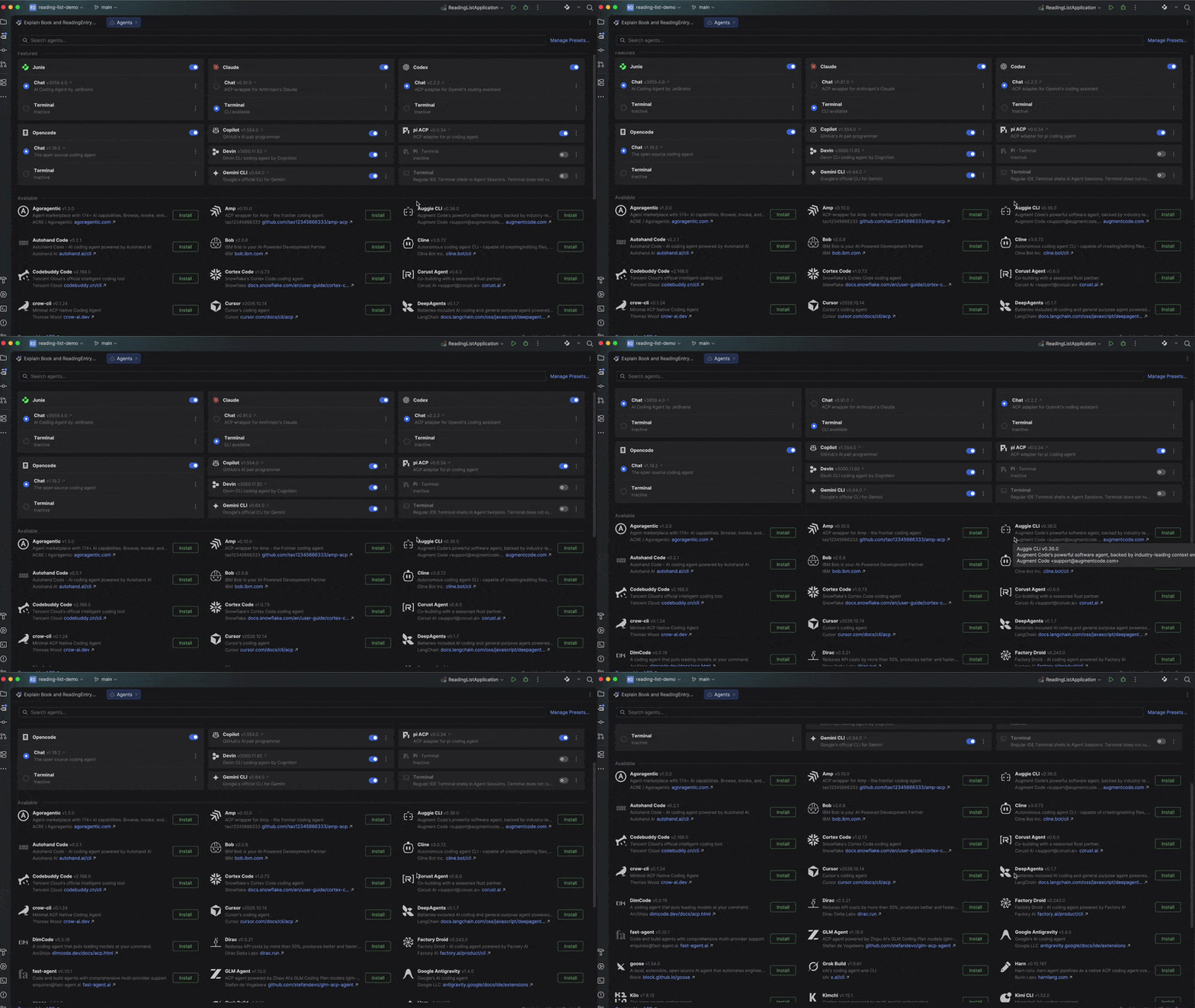
Codex, Gemini, GitHub Copilot, Claude Agent, and Junie are supported, alongside other agents connected through the Agent Client Protocol (ACP). A JetBrains AI subscription supports all these agents. Only Claude Agent requires a JetBrains AI subscription in Chat view, while its terminal interface lets you use your Claude subscription.
This gives you room to use agents you already know while trying others when a task calls for a different approach.
Installing Air does not install or activate any agents, or cause your project code to be sent to an AI provider. You decide which ones to connect and use. If you connect a third-party agent, your data goes directly to that provider under your existing agreement.
If you are using JetBrains AI, the JetBrains AI Terms of Service apply.
Start your first agent session
Once you’ve chosen an agent, press Cmd+2 (macOS) or Alt+2 (Windows/Linux) to start a new agent session.
From there, describe what you want the agent to do. You can give it more context by attaching a file or selecting relevant code. A focused request gives the agent a clearer starting point, whether you want it to explore part of the project, investigate a bug, or implement a feature.
For a step-by-step introduction, Developer Advocate Mike Hartington walks through the setup in our latest onboarding video below.
Manage agent sessions while you work
Running several sessions is useful only if you can still see what the agents are doing. Air brings their sessions together so you can follow progress, check updates, and identify work that needs your input.
Ask one agent to explore an unfamiliar part of the project and another to implement a change, or run several sessions with the same agent. While the agents work, you can focus on your own code and return later to review their changes.
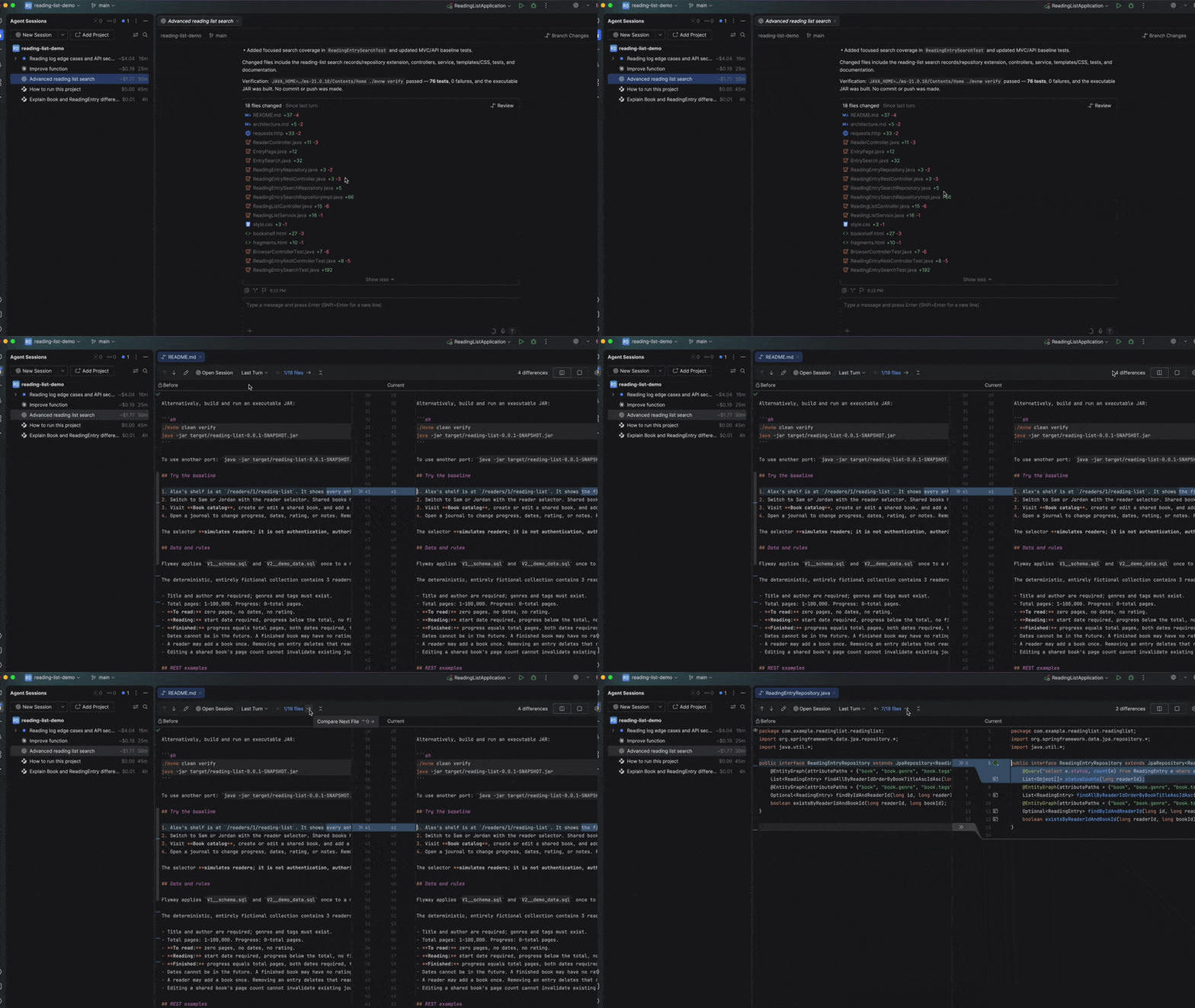
Agent sessions open in the editor as tabs, so you can easily switch between them and your code. Changed files and diffs remain accessible from the session, keeping the agent’s work close to the code it affects. Compatible agents can be used through chat or terminal interfaces, and you can use your Claude subscription in Air’s terminal, which opens as a full-screen tab. Where available, you can also use voice input to provide instructions or feedback.
You can also view session-level cost estimates, helping you understand how agent and model choices affect usage.
Review your code with JetBrains IDE tools
The most important part of delegated work is deciding whether the result is ready for you to accept. Air lets you move from the agent session into the surrounding project, where you can inspect the diff, navigate related code, run tests, and use the other tools available in your JetBrains IDE. If something needs changing, you can send feedback on the diff back to the agent.
Try Air for yourself
Once you’re set up, give Air a focused task in one of your own projects.
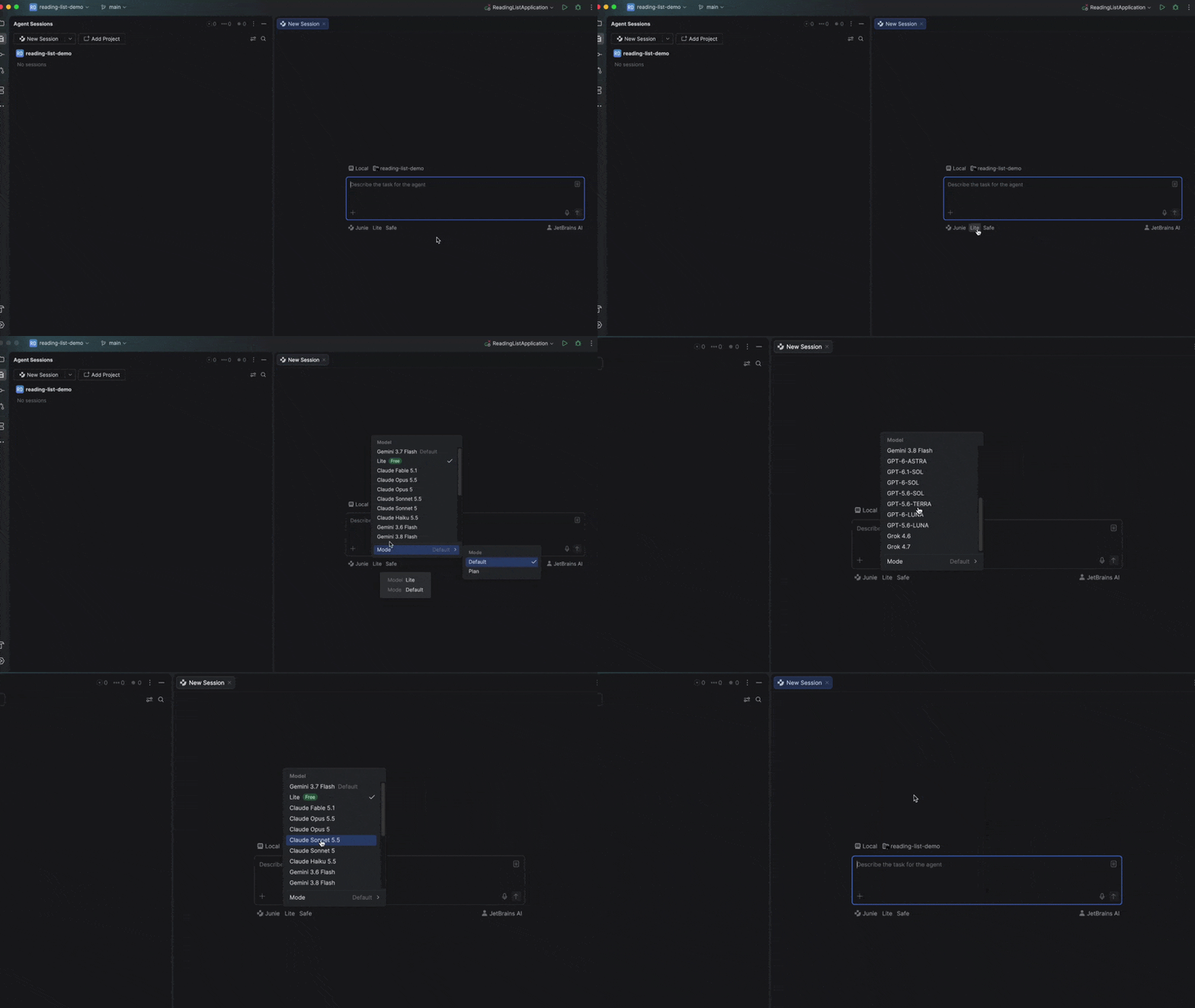
You can currently try Junie in Lite mode without a paid subscription. Just sign in with your JetBrains Account and get started.
In the next part of this series, we’ll explore more advanced Air workflows, including how to use worktrees, add code notes, and generate commit messages.
For Israel’s Neighbors in Middle East, the Election Offers Little Hope of a Reset
Новая российская ракета «Филин»: чем она опасна для Украины
Кругосветный круиз остановился из-за цен на топливо. Пассажиров высаживают в Камбодже
King acknowledges 'suffering of the past' as Caribbean tour begins
Russell Brand tells trial sexual consent is 'fundamental'
Pornhub Stars Want to Teach You How to Make Dinner
7 паттернов микросервисной архитектуры на примере музыкального сервис

Представим, что мы разрабатываем сервис для прослушивания музыки — Пай.Музыку. В него уже заходит больше 100 тысяч пользователей в месяц, в команде работает 10+ инженеров, а недавно к музыке добавились подкасты и личный кабинет музыканта. Новые направления хочется часто обновлять и отдельно масштабировать (из-за разной нагрузки), основную логику — релизить пореже. Но пока всё живёт в одном монолите: общий релизный цикл тормозит команды, а изменения в одних и тех же файлах приводят к мерж-конфликтам.
Команда приняла решение распилить монолит на несколько микросервисов. Но вот незадача: почти никто не имел такого опыта, а о паттернах читали лишь в книжках. Давайте поможем команде внедрить нужные паттерны, заодно обсудив, какую проблему они решают и чем приходится платить за это.
На примере этой системы разберём семь паттернов микросервисной архитектуры, их ограничения и короткие примеры на Python.
В этой статье слова “сервис” и “микросервис” используются взаимозаменяемо.
Читать далееКак создать песню нейросетью: гайд по Suno v6, 6 советов и 6 стилей со словами и без

Создать песню нейросетью Suno можно, заполнив два основных поля: стиль и текст. В стиль пишется задание музыкантам, а в текст идут ваши стихи с метками куплетов и припевов. На выходе получаются два трека с музыкой и вокалом.
Читать далееСоздавать стало дешевле. Платить стали за другое
Последние собеседования заставили меня задуматься о том, как меняется ценность технической экспертизы на рынке труда. Я говорю не о том, что ИИ начинает писать код вместо разработчиков, — об этом уже сказано достаточно. Мне интереснее другое: если техническая реализация становится доступнее, то что именно компания хочет получить от человека, которого нанимает на руководящую позицию?
Один из последних разговоров был о позиции технического директора в крупную компанию. Второй — о новом проекте в финтехе, куда требовался руководитель. Проект предстояло запускать, разработчики уже были, но процессы нужно было выстраивать с нуля. В обоих случаях задача состояла не просто в том, чтобы руководить разработкой. Нужно было сформировать вокруг себя рабочее окружение, вырастить команду, организовать взаимодействие людей и добиться, чтобы всё это работало как единая система.
Я давно занимаюсь разработкой, последние восемь лет работал руководителем. Почти год назад вышел из найма, чтобы разобраться в новых инструментах ИИ и проверить их на собственном инженерном опыте. За это время я создал несколько инструментов для своих задач.
Я не готовил софт специально для собеседований. Наоборот, я делал его потому, что мне самому не хватало удобного и достаточно строгого процесса разработки с ИИ. Но на собеседованиях произошло неожиданное: рассказ о моём опыте занимал несколько минут, а затем мы переходили к софту, который я написал, и могли обсуждать его ещё полчаса.
Почему так?
Читать далееНил Янг снова подал иск против предвыборного штаба Трампа за использование песни Rockin' in the Free World без разрешения
Humans can coexist with AI. Here’s how.

It feels like the skies above our AI-frenzied world have darkened in the past month. Employees at Anthropic and Google started quitting, citing fears that the AI was spiraling out of control. After a string of agents started hacking websites, researchers used AI to discover vulnerabilities in critical systems, leading to large swaths of the web going dark last week and giving rise to a scary term: Black October. At the same time, as it continued to ramp up AI spending, Microsoft offered buyouts to 60,000 employees — over a quarter of its workforce — and economists once again warned of a bubble.
Yet, a lot has happened recently to make AI genuinely useful for more people. AI agents are getting better and can now make restaurant reservations for you. Walmart made it possible for agents to shop on behalf of humans, a bold move since Amazon banned the practice. Apple announced an AI-ready home display that can turn on your lights. And let’s not forget that AI is also helping scientists find cures for formerly incurable diseases and mathematicians solve previously impossible problems.
It’s hard to reconcile the incongruity between the recent bad news and good news. For most of us, the state of AI is anxiety-inducing — especially when it comes to our livelihoods. According to a Pew Research Center study published in August, 71 percent of Americans think AI will lead to fewer jobs in the next two decades. That figure is up 7 percentage points from where it was two years ago. Sure, in the best-case scenarios, AI could erase inefficiencies at work, streamline our daily lives, cure diseases, and generally improve the human condition.
But what if you are the “inefficiency” at work that gets erased?
That tension is at the heart of Ethan Mollick’s latest book Co-Existence: The Next Phase of AI. If there is such a thing as an AI sage, it would be Mollick, an associate professor at the Wharton School and faculty director of its Generative AI Labs. To the nearly half a million subscribers to his Substack newsletter, One Useful Thing, he delivers semiweekly updates from the jagged frontier of the technology’s development. His message in any medium is resoundingly clear: You need to use AI in order to understand it. And to get the most out of using it, he argues that you have to accept that AI is not going away; it’s only going to become more important.
That ethos doesn’t make the existential threats of AI any less daunting, but that’s not the point. Unless you’re an early Anthropic employee or a United States senator, there’s probably not much you can do directly to rein in AI’s potential harms. But you can, according to Mollick’s worldview, decide how the technology could fit into your life and think about how you fit into an AI-dominated future.
I recently spoke with Mollick about his new book, what life and work might look like in the agentic AI era, and what it means to be an artisan when even knowledge is industrialized. His theories about living with AI are meant to help you navigate the future, regardless of the latest forecast. This interview has been lightly edited for length and clarity.
We’re entering a new era for AI, and the vibes are different. AI agents are something that many of us will encounter, interact with, and maybe even embrace. I’ve always known you as someone who jumps on the cutting edge of this technology to figure out what it can do. What do you think most people don’t understand about the next generation of AI?
I really think people haven’t internalized what agents do. Agents mean many things, and we can talk about personal agents, like Muse. But the fact that the problems that plagued working with AI agents before — you had to guide them each step of the way, they made mistakes, hallucinated constantly — that’s kind of gone. You can regularly get hours, days, weeks of work out of a system.

It’s not just a theoretical thing anymore. I talk to coders all the time who are a hundred times or more productive than they were before. And in other fields, we’ve kind of moved past the theoretical discussion about AI being, “This is going to be a big deal,” to, “It’s here.” From a whole kind of co-intelligence perspective, we’ve gone from, “Here’s how we use AI and work with a chatbot back and forth,” to, “These systems are now doing real work in ways that matter to real people and are reshaping real fields for better or worse.” And if you’re used to using AI a year ago, if you’re not paying for one of these systems, it’s really easy to have lost track of what’s going on.
What about the practical, everyday ways that AI is disrupting our lives? And what do you think are the limits of that disruption?
So outside of the job world and homework cheating, I think life has changed only a little bit for people, partially because these systems were kind of complicated to use and you had to decide what you were using them for. But I think the advent of personal agents, like Muse and Dot, are going to lead to a very rapid change in a lot of ways.
Most people I know who aren’t experts who use these systems, like my parents, are using these things spontaneously. They’re finding that once you know how to prompt the AI to do something, it can do things spontaneously and come back to you because it has your email and everything else. Just as one example, I was unable to figure out how to cancel my standing $8-a-month wifi subscription from my airline, and I was like, figure this out. And it went to customer service, joined chats, then I have no idea what it did, but now I don’t have a subscription to wifi anymore, thank goodness.
“I deeply worry that if I de-skill myself entirely, I won’t even know how computers work.”
So there is this sort of lowering friction piece that’s super interesting, with good and bad elements to it. The bad side of lowering friction is both that every article gets written by AI, so there’s no human thinking in it anymore, and that companies don’t want 10,000 customer service agents coming to them demanding new things. So I think we’re just on the edge of seeing the mass change in everyday life. Right now, AI is a really good second opinion on everything. As agents become more popular, they start to take action.
How do you know when to let AI do the work, though? We know that offloading certain tasks to AI can make you worse at doing those kinds of tasks in the future. How do you take advantage of AI’s ability to do drudgery but also hold onto your own expertise?
If there’s a personal theme underlying Co-Existence, it’s that one. That is an incredibly hard choice to make, and we’re historically very bad at making it.
Students are the No. 1 case because they’re willing to offload homework because homework sucks and because the incentives for doing any piece of homework are terrible. But overall we need to do it to learn. So people offload that, but even if you’re trying to do the right kind of thing, like using AI only to help you learn and not to replace learning, it turns out that when chatbots are in assistant mode, as opposed to using them as a tutor, it feels like you’re learning even though you’re not. You feel like you’re in the loop even though you’re not. And so that assumes that we both know we want to offload and we do it intelligently and that we do it in a way that helps our long-term gain.
I am worried about us being able to do that. You have to draw lines for yourself about what skills matter to you or not, and you have to be thoughtful, in a way that we’re usually not, about what we’re giving up and what we’re not. Technology’s designed for us to give up stuff. We don’t walk 50 miles a day anymore in forced marches. I don’t know how to weave clothes. There’s a lot of stuff I’m very happy to not know: how to maintain my computer in some ways, even though that’s dangerous. I let Codex scan for security issues because it does a better job than me faster. But I deeply worry that if I de-skill myself entirely, I won’t even know how computers work.
So I don’t have an easy answer, but I think that that will be the defining question for most people in their career paths right now and their lives: What do I give up? I think we can be too sentimental about things that we’re giving up. It’s okay, but we don’t know the full chain of consequences. I think that struggle is going to be central to a lot of people’s experience. I wish I had an easy answer, but now that AI can do so many things, de-skilling is a real problem at this point.
We’re living through a huge transformation. That’s increasingly clear. Besides losing their jobs, a lot of people are scared of losing the sense of what makes them human and what makes them valuable. How do people hold onto that in the years to come?
There’s a transformation happening, and for some people, the work will get more satisfying. There’s a lot of coders who did not like writing lines of code, but they did like summoning software and figuring out what they wanted to build. Their lives are much better because the AI does all the tedious work. They can command things to be built, and it’s so much more exciting than it was before. It lets people who didn’t code start to do incredible coding projects. So on one hand, that’s deeply freeing of the kinds of work that we did. On the other hand, there are people who love writing those lines of code and that’s gone now. You’re a hand-weaver in a world of power looms. Your stuff might be elegant and beautiful, but it is not going to last in a world where industrialization happens.
Industrialization versus craft is a way to think about this. There’s a lot of craft that we’ve grown to really appreciate, like the handcrafted sentence. Those things will be under threat from the logic of industrialization, which is that we need to do more of it. I think that there’s going to be a shift. There’s satisfying work to do, but I think a lot of what was satisfying human work will be under pressure to disappear, because you took pleasure in something that was not automatable, but now is.
We’ve been through this in industrial revolutions before. This is happening at a very large scale to intellectual work, where craft was a very important part of what we did. Mathematics was craft, software engineering was craft. I think that we’ll be under pressure to produce more of it, which is what industrialization’s about, even if that destroys the value of doing this as a person. You get paid to do it now, but you’re not getting the same value you did before.
“We’re no longer in a place where AI is going away.”
I think we’re going to find lots of crises of meaning. Some people are going to find huge amounts more meaning in their work, either because the work itself is now much more interesting. Work is a lot of crap, too. We can say great things about it, but people spend a quarter of their work life saying they’re bored. It’s not like this was a great job for everybody. So some people will have much more excitement in craft. Some people will have it extracted out of their job, and it’s all going to be happening at once. I know it’s not a satisfying answer, but that’s what’s happening.
Forgive me for saying so, but that was an anxiety-inducing answer. It’s an anxiety-inducing time. I wonder what advice you have for us anxious people?
I think anxiety is real, and there’s different levels of anxiety. We’re going through a wrenching change, or we will be going through one that we’re on the edges of now. There is also existential risk about whether AI will kill us all, where we clearly need more regulation. The answers are unclear. Smart people seem to think that that’s a real danger. It’s hard to know. But leaving that aside, there’s anxiety about our own transformation, our jobs. I mean, the industrial revolutions worked out great in the end, but during it, [that] was the time of Marx and anarchists and Dickens writing about London. There’s a transition we have to go through here.
I don’t think we can pretend it’s not happening, and I see a lot of people taking comfort in the idea that maybe this all will collapse and AI will go away. Even if there was a bubble financially, we’re no longer in a place where AI is going away or stopping development. I worry a lot about people doing that. Once you face that, though, I find people often reconstruct meaning in very exciting ways. Thinking about what more you can do and where you find joy in this is actually quite exciting. So I think that anxious optimism is a reasonable place to be.
What I worry about is sticking your head in the sand saying, “I’m not going to learn AI. This will go away. I’m going to pretend it’s not happening.” I mean, I wish I could give you that option. I think there’s a lot of people who wish we could slow things down or turn a dial down, but there’s also a lot of exciting things. There’s a lot of hard problems in the world that are unsolved.
If you lean into the positive pieces, you can ask how we mitigate risk but also think about how we can build a better world. Part of what makes me nervous is people sitting out that second question and just filling up with anxiety rather than believing we have a tool that can rebuild things. How do we rebuild a better world for journalism or for nonprofits or whatever it is? I think it’s a reasonable question to ask, and I worry it’s asked too little.
Legal bid to overturn Drumcree march ban fails
ИИ должен был облегчить нам работу

Это моя первая статья на Хабре, поэтому, признаюсь, немного волнительно. Меня зовую Афанасова Юлия. Я работаю в IT с 2017 года, преимущественно в SEO (а также руковожу своей командой по брендовому продвижению в интернете), и за это время накопилось немало мыслей, которыми хочется поделиться. Особенно сейчас, когда вся наша отрасль переживает очередную перестройку из‑за искусственного интеллекта. Причем перестройку довольно странную.
Казалось бы, вот она, долгожданная эпоха: робот работает — я отдыхаю!
Можно автоматизировать рутину, быстрее обрабатывать информацию, писать код, анализировать данные, собирать отчеты и вообще заниматься более интересными задачами. Ну красота же.
Но прошло уже больше года с тех пор, как ИИ‑инструменты прочно вошли практически во все мои рабочие процессы. И знаете, что я могу сказать? Я очень устала.
Причем там, где нагрузка, казалось бы, должна была уменьшиться, ее стало как будто кратно больше. И судя по тому, что я читаю и слышу от коллег, не одна я такая.
У вас так же?Spain’s Second High-Speed Train Crash This Year Leaves Dozens Dead
Africa’s ‘unprecedented’ Ebola outbreak could reach UK, says top health official
Jean Kaseya, of the Africa CDC, warns of the illness spreading like Covid unless more funding is secured to increase preparedness and possible treatment
The “unprecedented” spread of the Ebola outbreak means it could reach the UK and other countries, according to one of Africa’s top health officials.
As the current outbreak reached 10,000 cases, with almost 5,000 deaths, Dr Jean Kaseya, director general of the Africa Centres for Disease Control and Prevention (CDC), compared the outbreak to the Covid pandemic, which first took hold in China before spreading to countries across the world, claiming millions of lives, and ravaging health systems and economies.
Continue reading...Apple AirPods Max 2 Are $100 Off Ahead of Black Friday
Сбор персональных данных через чат-бот

Требования Закона «О персональных данных» нужно соблюдать во всех случаях, когда вы сталкиваетесь с обработкой персональных данных. К сожалению, в большинстве случаев наводится порядок на сайте и внутри компании (относительно работников). Поскольку это два основных направления, где у Роскомнадзора возникает больше всего вопросов. Но предприниматели забывают или относят к малым рискам, когда осуществляют обработку персональных данных в чат-ботах.
Читать далее«Лучше пять раз переспросить, чем один раз выдумать» — я посадил ИИ-ассистента отвечать коллегам в рабочем мессенджере

Всем привет! Меня зовут Александр, я руковожу направлением аналитики страховой вертикали в Банки.ру. Наша вертикаль живёт в отчётах и данных: продажи ОСАГО и КАСКО, ипотечное страхование, кроссы, пролонгация, воронки, кэшбэк и сверки с партнёрами.
И каждый день в рабочем мессенджере на меня прилетает поток одного и того же жанра: «где посмотреть КВ по ОСАГО за сентябрь?», «почему упало одобрение у страховой?», «сделай выгрузку по регионам», «это у нас баг или так и задумано?». КВ здесь комиссионное вознаграждение.
Постепенно аналитик превращается в справочное бюро. Ответы есть, но живут они в голове, в SQL-запросах и в вики, а вопросы приходят в личку и в каналы в любой момент, в том числе пока ты на встрече. Я решил посадить на эту очередь ИИ-ассистента. Условие одно и жёсткое: ассистент не выдумывает. В аналитике выдуманная цифра хуже отсутствия ответа, потому что по ней примут решение.
В статье рассказал, как бот устроен, какие правила не дают ему врать и как он им учится.
Читать далееRussell Brand tells court he ‘misused’ fame for ‘reckless philandering’ – as it happened
Brand, 51, who has been charged with three counts of rape says he acted ‘consensually’
Content warning: this article contains references to allegations of sexual abuse which some readers might find distressing
Winter moved on to count 5, in which a woman alleged Brand sexually assaulted her when she was in her 20s and working at a radio station in 2004 or 2005.
Winter asked Brand whether he “sloppily kissed her”.
Continue reading...QMS: Миниигры

Миниигры - это соль и перец текстовых квестов “Космических рейнджеров”. Хороший квест должен содержать миниигру или должен быть построен на основе её механики. Миниигры - это очень трудоёмко. Это было трудоёмко, пока не появился QMS.
Читать далееИнтеграция 1С через ESB: Digital Q.Integration — OData-коннектор
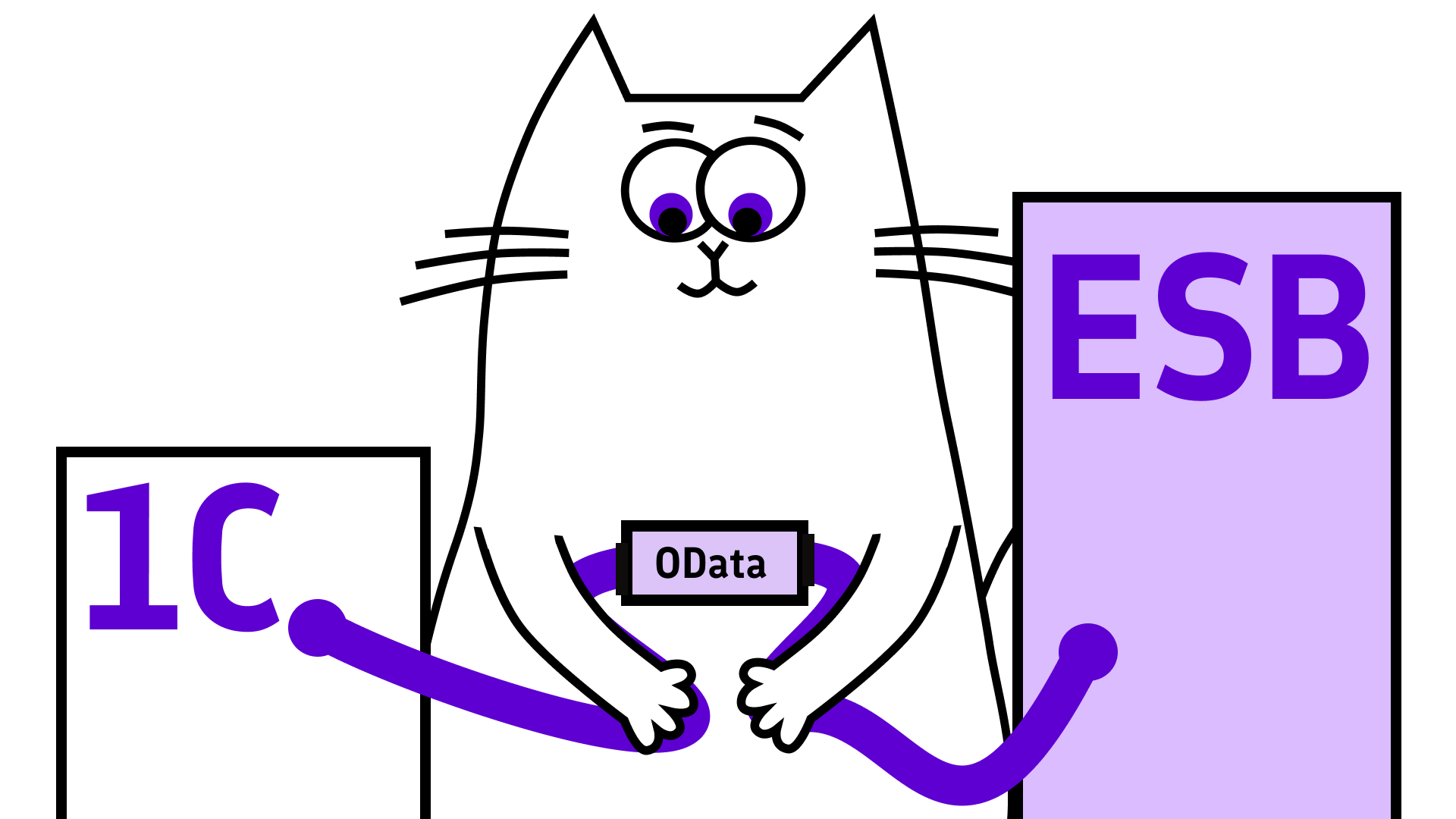
На связи Сергей Скирдин, технический директор ИТ-интегратора «Белый код». Уже 2 года я делаю подробные обзоры на продукты класса ESB. Появилась идея детально разобрать решения, которые предлагают те или иные платформы, для интеграции с 1С. В этом материале про возможности Digital Q.Integration.
Читать далее