RSS Feeds
The Latest Gaza Hostages Freed: Women Whose Hamas Warnings Were Ignored
Medicare is now offering $50 GLP-1 prescriptions. The US may never be the same.

The latest breakthrough for GLP-1 drugs isn’t scientific. It’s financial.
As of July 1, Medicare is providing coverage of GLP-1 medications for weight loss for just a $50 co-pay, potentially enabling millions more Americans to get onto this much-hyped new class of drugs. Medicare’s GLP-1 Bridge Program, as it is called, is technically a one-year pilot project authorized by the Trump administration. Medicare previously limited GLP-1 coverage to people who have diabetes, heart disease, or obstructive sleep apnea.
Under the new program, Medicare enrollees will be eligible to receive one of three drugs — Foundayo (the new once-a-day tablet), Wegovy, or Zepbound — for weight loss specifically. Patients generally qualify if they have a body mass index of 35 or higher, or a BMI of 27 or higher with certain health conditions.
The new program could prove to be an inflection point for a class of drugs that has already generated so much excitement and interest. It is a story with enormous implications, not only for Americans’ health, but for the economy at large.
“We call [this drug] a physiological disruption akin to technological disruptions of our time like the smartphone. When the smartphone first came out, no one anticipated Uber or TikTok or Netflix streaming,” Alison Furman, partner and US consumer markets industry leader at PwC, said at Aspen Ideas: Health. “This is no different. You are going to see new brands, new products, new industries form around this ecosystem that this drug is already creating.”
The percentage of households with a GLP-1 user had already doubled from January 2025 to May 2026, per PwC. And that was before the launch of the Bridge program, which seems likely to act as an accelerant on several trends that are already underway.
A lot more Americans are about to start taking a GLP-1 drug
About 12 percent of Americans said in an August 2025 survey that they had taken a GLP-1 drug — equivalent to more than 40 million people. As of May 2026, one in five US households had at least one GLP-1 user, according to data from PwC — and those shares are probably as low as they will ever be.
Millions more are likely to join them with Medicare’s coverage broadening under the Bridge program.
Exactly how many remains to be seen. According to one KFF estimate of the Medicare population, as many as 14 million people on the program are obese or overweight. A more recent KFF estimate using the Bridge program’s specific qualifications concluded that about four million beneficiaries could be eligible for the $50-per-month GLP-1 offer.
Doctors are expecting an onslaught of new patients: As Axios reported in June, clinics are worried they may be overwhelmed by the increased demand that follows the Bridge program’s launch. It is expected to be one of the largest prescription drug rollouts ever.
Sign up for the Good Medicine newsletter
Our political wellness landscape has shifted: new leaders, shady science, contradictory advice, broken trust, and overwhelming systems. How is anyone supposed to make sense of it all? Vox’s senior correspondent Dylan Scott has been on the health beat for a long time, and every week, he’ll wade into sticky debates, answer fair questions, and contextualize what’s happening in American healthcare policy. Sign up here.
And it’s not the end. Pharmaceutical executives say they are making inroads with the private employer-based insurance plans that cover about half of the US population; at Aspen Ideas: Health in late June, Laura Steele, group vice president of US cardiometabolic health at Eli Lilly, said the company has seen employer coverage increase significantly, from about 20 percent covering to 67 percent. Drug manufacturers have also gotten aggressive about selling prescriptions directly to the consumer at a reduced cash price, as have other DTC healthcare businesses like Hims and Hers.
Cost remains a barrier to uptake. According to a November 2025 KFF survey, more than half of GLP-1 users said the drugs were difficult to afford; 14 percent said they had stopped taking the weight-loss meds because of the cost. Even with millions of Americans already on a GLP-1, adoption could still grow exponentially as costs come down. About three-fourths of US adults are overweight or obese. Furman said that between 50 and 75 percent of Americans could be taking one of these medications in 10 years.
More widespread use could reduce the stigma around GLP-1 use
Millions more people going on GLP-1s could also alter one of the defining features of the recent weight-loss boom: the stigma that some people still experience for using one of these drugs.
The reality of such a stigma is undeniable. Reddit communities dedicated to these drugs and patients’ weight-loss journeys are filled with stories of people experiencing judgment or other negative reactions from people in their lives who find out they are taking a GLP-1. It’s not just anecdotal, either: One randomized experiment from researchers at Rice University found that people reported feeling more negative emotions when hearing that somebody lost weight using a GLP-1 drug compared to losing weight with diet or exercise, or not even losing weight at all.
But there are signs that stigma is starting to break down. According to PwC data shared with Vox, 23 percent of current GLP-1 users openly share that they are on the drugs, compared to the 2 percent who say they haven’t told anyone. And people who are considering going on a GLP-1 — the kind of people who may now take the leap with the Medicare Bridge program — are even more open-minded. More than half of those considerers (53 percent) say they would share their use with their immediate family members, versus 42 percent of current users.
If the financial barriers were the No. 1 factor holding back GLP-1 adoption, stigma might have been the No. 2 reason. Now both of those are trending in the opposite direction: The drugs are becoming more affordable, and according to the data, the stigma around using these medicines may not be as stifling as it used to be.
As GLP-1 use expands, the economy will be permanently altered
And as GLP-1 use expands, the ripple effects already being felt in the US economy could turn into waves. A recent PwC consumer survey illustrates how dramatically people’s spending habits can change when they or somebody in their household goes on one of these weight-loss medicines.
More than half of GLP-1 users said they were spending less at the grocery store on sweet snacks (including candy and baked goods) and salty snacks; 43 percent said they said they were buying fewer sugary beverages, and 12 percent said they were buying less alcohol. At the same time, 45 percent reported purchasing more fresh produce, 35 percent bought more protein-packed snacks, and 28 percent said they spent more on high-fiber foods.
The restaurant industry is in for a shake-up too: Spending on pizza, for example, dropped 22 percent among GLP-1 households, which also spent less on takeout chicken (down 12 percent), coffee and bakery items (8 percent), burgers (6 percent), and deli sandwiches (4 percent).
“When people are eating less, they tend to favor quality over quantity,” Furman said.
And the GLP-1 effect is felt beyond food shopping or dining out: Users also spend 10 percent more on apparel (specifically women’s jeans, swimwear, dresses, and jewelry) within six to eight months of going on the medication.
These weight-loss meds could ultimately change parts of the economy that go beyond consumer spending. One recent study suggested that women who go on a GLP-1 have an easier time finding a job. (Although we should still be cautious about interpreting the results of a single study, as one economist pointed out.)
The point is, a massive weight-loss revolution that affects 50 percent of the US population or more is going to have huge consequences beyond a lot of people walking around looking slimmer. If current trends hold, we may eventually look back at the economy — and the United States as a whole — in pre- and post-GLP-1 terms.
Who Are the Israeli Hostages Released by Hamas?
U.N. and Congolese Troops Struggle to Halt Lightning Rebel Attack
A very Trump July 4

This story appeared in The Logoff, a daily newsletter that helps you stay informed about the Trump administration without letting political news take over your life. Subscribe here.
Welcome to The Logoff: Hi readers, happy Thursday! The Logoff will be off tomorrow ahead of July 4. But before I go in search of a hot dog, let’s talk about how President Donald Trump is celebrating America’s 250th birthday.
What’s happening? The celebration has been underway since last week, when the Great American State Fair kicked off on the National Mall. By and large, it’s not going very well: Reviews have ranged from merely underwhelming to “bleaker than expected.” On Thursday, a piece of the stage fell from the rafters, narrowly missing performers as they rehearsed.
The main event, of course, will be this weekend. Trump reportedly wants to set a world record with a 40-minute, 850,000-shell fireworks display, which is likely to cause “very unhealthy” air pollution in Washington.
But the show will have to wait until some TBD time, likely late at night — or potentially very early in the morning on July 5 — for Trump to speak. On Wednesday, he boasted that “it’s going to be approximately 107 degrees out, and I’m going to go, and I’m going to make a really long speech just to show that I can do anything.”
Why does this matter? Trump’s monomaniacal focus on his version of America has come at the cost of a bigger, more inclusive celebration of the country’s semiquincentennial. As the news site NOTUS reported earlier this week, Trump’s DOGE initiative previously slashed funding for local celebrations — and is now refusing to dole out congressionally appropriated funds.
On a national level, Trump has also channeled money meant for America250 — the bipartisan group created by Congress — into his own Freedom 250, a Trump administration-backed public-private group with a distinctly partisan slant. On Thursday, congressional Democrats also alleged that Trump misled donors who intended to support America250 by providing routing and account numbers for Freedom 250 instead.
And with that, it’s time to log off…
Let’s end on an upbeat, patriotic note: As my colleague Bryan Walsh explains, for all of our troubles, the United States is by many metrics doing far better than it was on America’s bicentennial 50 years ago. And as Constance Grady argues, there’s plenty of good in America that Trump can’t quash. (They’re both gift links.)
Plus, a World Cup thing: The USMNT is heading to the round of 16 next week! In the meantime, I’m loving the team’s musical celebrations.
Thanks for reading, have a great holiday, and we’ll see you back here on Monday!
Hamas Took More Than 200 Hostages From Israel. Here's What We Know.
Hamas Releases Four Female Israeli Soldiers Under Gaza Cease-Fire Deal
Trump Says He Wants to 'Clean Out' Gaza, Send Refugees to Egypt and Jordan
The fatal flaw in how America handles heat waves

It was not the postcard-worthy aesthetics that prompted Greek islanders to first drench their cliffside-carved homes, churches, and pathways in a thick layer of pearly white paint.

Much like wearing a white tunic on a hot sunny day, painting your house a shade of reflective white is a fine way to keep an ancient island cool, bouncing some of the sun’s heat back into space instead of absorbing it into the structure of the buildings themselves. Before air conditioning existed, people in warmer areas of the world often built with similar techniques in mind: Iran’s picturesque chimney-like badgirs or wind catchers have helped desert dwellers stay cool for millennia, for example, and in the tropics, Malaysians have long engineered their homes on stilts to avoid floods and let a breeze in.
Key takeaways
- AC has made Americans much safer during heat waves — but it also transformed how the nation builds for heat.
- With no built-in protections, many of today’s homes quickly become deadly heat traps if the power goes out or if the AC breaks during a heat wave.
- Momentum is growing for passive cooling, which can greatly reduce your need for AC — and your power bill.
Many homes and cities in Europe are still living as if AC had never been invented, relying largely on their thick shutters, ventilated courtyards, and other strategies to encourage shade and airflow. But after a deadly, record-shattering heat wave tore through western Europe last week, killing at least 1,300 people, it has become increasingly clear that old-world buildings are not cooling enough on their own for our new world of heat.
As a similar heat dome now pulses over the eastern US, a nation of AC aficionados faces the inverse of this problem. Since just after the end of World War II, the US has built its homes, schools, and hospitals so thoroughly with AC in mind that most buildings have no built-in defense against the heat at all. The air conditioner made possible America’s cavernous McMansions, megamalls, and frigid glass office towers, engineered like ectotherms, liable to soak up a heat wave like a cold-blooded lizard sprawled out on a rock on a scorching summer’s day.
Clearly, climate change has, to some extent, vindicated America’s hyperreliance on the AC. Unlike in Europe, with its suddenly vulnerable passive cooling systems that kept things temperate back when weather used to be normal, the US can take the heat as long as the air is on. In the aftermath of the AC-enabled postwar housing boom, the likelihood of an American dying on a scorching hot day fell by a staggering 80 percent.
But the roaring, life-saving success of the AC has also embedded a profound vulnerability: the moment the power goes out, as it’s prone to do in a heat wave — or that electricity bills get too onerous, which tends to happen when the AC is cranked — the nation’s cold-blooded buildings convert into furnaces.
In most conventional American houses, if you “lose power in the middle of an extreme heat wave or in a blizzard, you’ve got hours before you need to get out,” said Alexander Gard-Murray, executive director of Passive House Massachusetts, a group that encourages the state to build naturally cooler buildings – or “passive houses” – from the start. Some techniques are state-of-the-art and technologically novel, others are ancient, and still many others are basic common sense: don’t build facing the sun, plant trees, add an awning, and replace heat-radiating asphalt driveways with gravel.
Notably, none of these strategies involve shoving your AC unit out the window. But they can help your air conditioning work a lot less hard — which, by the way, could cut your electricity bills in half — at a time when America’s electrical grid is desperately straining to keep everything online. Most importantly, it ensures that “if something does go wrong, if the power goes out,” said Gard-Murray, “you’re still going to be okay.”
Air conditioning reshaped how America builds for heat
American homes used to reflect the cities they were built in. Cool air flowed beneath the floorboards of New Orleans’ breezy raised shotgun houses. Boston’s winter winds met the saltbox house’s long, sloping roofs, and Pueblo tribes used thick blocks of mud to build adobe homes that withstood the desert’s daily fluctuations.


But in 1947, an engineer named Henry Galson transformed how America builds with his invention of “the people’s air conditioner,” a low-cost AC unit — until then, a luxury item — snug enough to nestle into a residential window. With millions of service members, then returning from World War II, the nation needed more housing, and it needed it fast. Cheap air conditioning allowed builders more flexibility to mass-produce the suburbs that sprawled out as a solution to America’s post-war housing crisis — even in hot climates like the Sunbelt.
Air conditioning made large swaths of the country newly habitable, fueling the spectacular growth of many now-flourishing metropolises across the American South and Southwest. In less than a century, the AC transformed blisteringly hot Phoenix from a small desert town, population 65,000, into the fifth-largest city in the country.
At the same time, as the AC became ubiquitous in America, “many architects stopped designing buildings for their specific context,” said Sonia Chao, associate dean of architecture at the University of Miami and author of Calibrating Coastal Resilience. “What we have today are buildings in South Florida that look a lot like the buildings being built in California or Arizona” or more temperate climates, when in fact “we really shouldn’t be building in the same ways.”
Most homes in South Florida once sat atop crawl spaces that protected them against floodwaters and let in a breeze to naturally cool the rooms above, said Chao. But many local buildings are now built directly atop concrete, meaning that “as the earth itself gets warmer,” the homes above absorb the heat too.
Of course, if you blast your AC high enough, you probably won’t feel it. And, for decades, that gave American developers tacit permission to pare down the elements like thick masonry, high ceilings, shaded porches, and window shutters that once naturally kept us cool in favor of cheap drywall and easier-to-construct boxy floor plans that helped them cram sprawling tracts of readymade starter homes across suddenly bustling desert cities such as Phoenix and Albuquerque. They cleared trees and poured asphalt, churning out decades’ worth of leaky, heat-absorbent neighborhoods. But it didn’t matter — so long as the AC kept running.
The problem with America’s hyperreliance on the AC
AC proved transformational to American life in profoundly positive ways, stretching the boundaries of where one can comfortably live and greatly reducing extreme heat as a public health threat. The problem is, if for whatever reason, the AC is not running, many American homes now become immediately and extraordinarily exposed. “We all like to believe that the grid is safe and stable,” said Katrin Klingenberg, executive director of Phius, which sets standards for passive homes constructed in the US. “But it’s actually way more vulnerable than we all think.”
Researchers estimate that if Phoenix were to experience a two-day blackout during one of its regular heat waves — knocking out air conditioning citywide — it would quickly kill 12,800 people, or roughly 1 percent of the population, while a full half of the city would require emergency medical care.
Arizonans will always need AC to stay safe from the heat, but they could be far more resilient to temporary lapses if their homes and neighborhoods were better designed to stay cool without it. If Phoenix planted enough trees to shade half of its streets — which would be enough to lower the city’s temperature by at least a few degrees— 27 percent fewer residents would die in such a blackout, according to the study. If every building installed a “cool roof” — simply painting it with a white material to better reflect sunlight — then the death toll would plummet by 66 percent.

This is not just a thought experiment. Driven by extreme weather and an aging electrical grid, the number of power outages in the US has doubled over the past two decades. After Hurricane Beryl knocked out power for millions in Texas in 2024, at least dozens — and possibly hundreds — of people died from heat-related causes, meaning the outage may have been deadlier than the storm itself.
“It overcomes you really fast,” said Patricia Solis, executive director of the Knowledge Exchange for Resilience at Arizona State University, which focuses on Maricopa County, where hundreds of people die from heat-related causes each year, many inside their own homes, their air conditioning broken, turned off, or unplugged.
One of them was Stephanie Pullman, a 72-year-old who died in Phoenix in 2018, a day after her electricity was cut off over a $51 unpaid bill. Another was Patricia Miletich, a 70-year-old with memory issues, whose busted AC was blowing hot 110+ degree air into her RV when she died in June 2024. Upwards of a quarter of Arizonans who succumb to heat inside their homes live in mobile houses, structures whose thin walls, poor insulation, and cramped concrete quarters make them especially expensive to cool with AC, and especially deadly without it.
Because this extreme heat is “going to happen increasingly to more and more of us around the world,” Solis warned, we have to “make it a part of the way that we build our environments, that we build our homes, that we rebuild our homes.”
How to build a home for the climate we actually have
It’s not as hard or expensive as you might think to build a cooler home, one that does at least some of the work needed to keep things more comfortable in extreme temperatures.
“It’s not about doing extraordinary things; it’s about doing ordinary things extraordinarily well.”
Alexander Gard-Murray, executive director of Passive House Massachusetts
Something as simple as facing an RV away from the sun, adding an awning or garden trellis, or installing vinyl skirting around the foundation to prevent hot air from coming up through the floor, could make a mobile home safer to be in if the power goes out, says Solis. And even in less catastrophic conditions, these age-old adaptations would make an AC unit cheaper to run. When she began her work, some mobile home park owners sought to outright forbid residents from adding cooling features like a small window garden for purely cosmetic reasons. Solis and her team later helped pass a law outlawing such practices.
Even earning the gold standard of building cooler buildings — a “Passive House” certification from Phius — isn’t “some space-age, super advanced crazy thing,” said Gard-Murray, of Passive House Massachusetts. “It’s not about doing extraordinary things; it’s about doing ordinary things extraordinarily well,” he said, like making sure your walls are airtight and thick enough to act as a buffer against outside temperatures.
If most American buildings absorb heat like a plastic water bottle left out in the sun, a passive house is built like a thermos, keeping things relatively temperate regardless of the temperature outside. To illustrate that, a group of architects once built two miniature houses, one according to normal building codes and the other like a passive house, plopped them in a park in New York City, and filled both with 1,800 pounds of ice. One month later, the mini passive house had 40 percent of its ice left, while the other one had only 7 percent.
You can imagine how much safer that makes you if your AC ever goes out, and makes it up to 90 percent less energy-intensive to run — enough to cut your utility bills in half — when it’s on. “If we’re much more intentional about insulating the property, the heating and cooling systems have to do a lot less work,” said AJ Patton, founder of the Chicago-based developer 548 Enterprises, which is currently building Chicago’s largest-ever Passive House-certified affordable housing complex.
“Too often we’ve used sustainable technologies as a luxury item,” said Patton, but the biggest benefits to these homes are for lower-income households who could really use the savings on their bills or are more vulnerable to having their power cut off.
As of now, only about one percent of homes being built in the US are built according to passive standards. One might assume that building such a sensible, sustainable, and safer home must be prohibitively expensive, or else it would be much more common. After all, who doesn’t want a significantly lower utility bill, all other things being equal? But in reality, at least in Massachusetts — where passive designs are now the mandatory norm in many cities — a survey found that such buildings only cost as little as two to three percent more than conventional buildings.
Equally important in a country with a notorious housing shortage, the municipalities in Massachusetts that have opted into more stringent requirements continue to build new homes at a faster clip than those that haven’t, and they approved more new housing permits after the change. There could be a lot of factors at play in those differences, but at the very least it shows that requiring strict standards in this case might not, as some skeptics fear, “crash our housing production,” Gard-Murray said.
The real reason why these building techniques don’t happen more often comes down to a lack of awareness, experts told me, along with the fact that the biggest financial benefits are for whoever pays the utility bill, not the developer who has to pay the upfront costs. It doesn’t help either that the Trump administration has cut or let expire tax credits that helped defray the extra costs of energy-efficient buildings. Some projects like Patton’s lost out on $300,000 in expected incentives in real time.
“The moronic government policies of the last 18 months are not helping us,” said Mark Ginsberg, a founding partner of Curtis + Ginsberg Architects, which has completed about 25 multi-family passive projects in New York City, most of them affordable or supportive housing.
“There are too many people burying their heads in the sand and saying climate change isn’t real,” he said. That’s easier when the AC hides the worst effects of extreme heat from us. But on the verge of a heat wave poised to put 175 million Americans at risk, it may be past time to give our AC a little boost, too.
Germany's Economic Model Is Broken, and No One Has a Plan B
Jeju Air Crash Probe Focuses On Engine Damage After Bird Strike
Trump Says Colombia Will Accept Deportees, Ending Tariff Standoff
The Supreme Court can no longer explain itself

The legal profession is much like a priesthood; both lawyers and theologians interpret a central text, be it the Bible, the Quran, the Gita, or the Constitution. We bury ourselves in canonical commentaries on that text. And we are all supplicants to beings much more powerful than ourselves.
Which explains why I’ve spent the past few years contemplating what happens when God goes mad.
The Supreme Court wrapped up its most recent term during a bizarrely haphazard celebration of the United States’ 250th birthday. And it has struggled to articulate a coherent vision of the Constitution no less than President Donald Trump has struggled to keep the National Mall’s reflecting pool clear during that celebration.
The Court isn’t just the most powerful institution in the United States — the only body capable of overriding both Congress and the president. It is supposed to be the caretaker of something sacred and eternal. As Justice Antonin Scalia once wrote, the whole purpose of a written constitution is “to prevent the law from reflecting certain changes in original values that the society adopting the Constitution thinks fundamentally undesirable.”
That is, the Constitution fixes in place certain rights and governmental structures that are not supposed to change just because someone loses an election or because a few seats on the Supreme Court change hands. The right to free speech, the rule establishing that people born in the US are Americans, and the idea that all Americans, including the president, are subject to the same laws are abiding principles that should survive a change in administration or in the Court’s makeup.
But this Court does not simply overrule foundational precedents so often it is difficult to keep track; its work is increasingly illegible to people — even lawyers — who do not share the Republican justices’ values. I am grateful that I no longer practice law, because one of a lawyer’s primary duties is to advise clients on whether something they plan to do in the future is legal. And this Court’s interpretations of the law are often too opaque and unpredictable to allow lawyers to advise clients on what the law will be tomorrow.
One of the most prestigious writing assignments in the American legal academy is the Harvard Law Review’s annual Foreword. Last year, this assignment went to Richard Re, an insightful right-leaning scholar on Harvard’s own faculty, and Re spent much of his Foreword discussing why “America’s two competing legal cultures” have diverged.
Re writes that, for many years, the Court was dominated by “swing” justices like Lewis Powell, Sandra Day O’Connor, and Anthony Kennedy who were “Republican appointees selected under conditions that facilitated the identification of moderates.” These justices were all moderate conservatives who weren’t particularly sympathetic to liberal causes, but they also tended to shy away from decisions that would alienate half of the country. As Re writes, Powell, O’Connor, and Kennedy had a knack for avoiding “results that would divide the nation and threaten the Court’s legitimacy or popularity.”
Just as importantly, these swing justices forced “judges, advocates, commentators, and students” to all seek “ways of appealing to those median jurists.”
Because a moderate justice “held the key to major victories,” lawyers and judges across the political spectrum had to ask themselves “what would Anthony Kennedy do?” and not “what outcome would I prefer?” In Re’s words, this “shared mission effectively forced the two opposed ideological groups to adopt a common language and mode of reasoning, at least when arguing their cases.”
Today, by contrast, the Court is dominated by a coalition made up of two camps: very conservative Republicans and fiendishly conservative Republicans. Republican legal elites spend their time crafting legal theories that sound fantastical or even farcical to lawyers who do not belong to their tribe. And when the Supreme Court embraces these theories, they are often impenetrable even to other federal judges.
This legal divide is, of course, symptomatic of a greater rot. Democrats and Republicans are as polarized in Congress and in the broader electorate as they are in the Supreme Court. Consumers divide over whether to buy the liberal brand of blue jeans, coffee, or beer or the nearly identical MAGA version. America is so divided it can’t even celebrate its 250th birthday. As I write these words, the nearly empty Great American State Fair is eclipsed by our head of state’s hyperfixation on an algae bloom and his broader desire to turn our semiquincentennial into a celebration of himself.
But the country does pay a significant price for its bifurcated legal priesthood, above and beyond the broader costs political polarization imposes on us all. The decisions handed down by one faction of this priesthood are increasingly incomprehensible to people outside that faction.
As a result, lawyers cannot reliably advise their clients when the law is constantly shifting and incomprehensible to many of them, and lawmakers cannot know in advance whether the bill they spend years shepherding into law will be struck down by the courts. And ordinary Americans, who may rely on their attorneys for counsel and who relied on lawmakers’ promises that they could actually legislate, can easily lose faith in a system that even lawyers cannot understand.
Meanwhile, the biggest loser may be the Court itself. When the legal priesthood’s nine prelates are unable to explain their decisions in ways lawyers can understand — when the high priests refuse to tell us why they decided cases the way they did or seem to abandon their longstanding beliefs once those beliefs inconvenience their political party — those decisions become fragile. A few shifts in the Court’s makeup could bring even more disruption, as the new guard casts aside decisions they find repulsive or that they simply cannot comprehend.
In the worst case scenario for this Court, Democratic lawmakers who believe that the justices have weaponized the law against them could retaliate in ways that the Court cannot defend itself against.
The Alitoification of Brett Kavanaugh
One apparent consequence of a polarized legal priesthood is that justices who previously displayed hints of moderation are being pulled deeper into their respective camps — a shift that is embodied by Justice Brett Kavanaugh.
In the early years, when Kavanaugh and Justice Amy Coney Barrett were still newly installed on the Court, legal commentators often spoke of a “3-3-3 Supreme Court.” The three Democrats formed one bloc; Justices Clarence Thomas, Samuel Alito, and Neil Gorsuch formed a far right bloc; and Chief Justice John Roberts, Kavanaugh, and Barrett broke with the MAGA justices often enough that they appeared to be collectively more cautious than Thomas or Alito.
In 1st Amendment cases, Kavanaugh joined a six-justice coalition that voted to preserve free speech rights that the most reactionary justices wish to abolish. Kavanaugh ruled that the military, under then–Commander-in-Chief Joe Biden, could require service members to be vaccinated against Covid-19. And he joined the Court’s short-lived decision in Allen v. Milligan (2023), which required Alabama to redraw its congressional maps to include an additional Black-majority district.
Not long after President Donald Trump’s reelection, however, Kavanaugh started acting much like his most partisan colleague, Justice Alito. Shortly before the recent term began, Kavanaugh authored his infamous “Kavanaugh stops” opinion, which argued that a person’s ethnicity is a “relevant factor” that law enforcement may consider when deciding whom to stop, and which also claimed that ICE operations targeting US citizens and lawful residents are a minor imposition that are “typically brief” — words he wrote just a few months before immigration officers killed Renee Good and Alex Pretti.
While three of Kavanaugh’s Republican colleagues voted to strike down many of Trump’s tariffs, Kavanaugh did not. Kavanaugh also voted to throw out thousands of absentee ballots after the Republican Party asked him to, rejecting a majority opinion by Barrett that devastated the GOP’s legal arguments.
And Kavanaugh even claimed that the Constitution no longer guarantees that nearly everyone born in this country is a US citizen — a provision that was written into the 14th Amendment in 1868 — because “significant illegal immigration into the United States is a new circumstance that was largely unknown as of 1868.” (Unlike three of Kavanaugh’s fellow Republicans, he did say that a federal statute protects birthright citizenship, even as he tried to rewrite the Constitution.)
Kavanaugh’s conclusion doesn’t just defy the text of the Constitution itself; it also defies Scalia’s principle that constitutional meaning is fixed — a principle that has animated Republican judges’ approach to constitutional interpretation for at least a generation. Republicans inspired by Scalia have spent decades railing against the “living constitution,” the idea that constitutional meaning changes with society. Anyone who has paid attention to how Republicans read the Constitution would have thought that living constitutionalism died years ago. But, apparently, living constitutionalism is good now, so long as it aligns with the Republican Party’s shifting values.
It’s not entirely clear why Kavanaugh made this shift and decided to emulate Alito. It’s entirely possible that he will resume his alliance with Roberts and Barrett once a different mix of cases reach the Court. But that uncertainty about Kavanaugh’s future behavior only adds to the illegibility of this Court.
The Republican justices also abandoned the moral high ground on Roe v. Wade
Another legal concept that Republicans opposed until very recently is substantive due process: the idea that two provisions of the Constitution that prohibit the government from denying people “liberty” without “due process of law” create individual rights that are not explicitly mentioned in the Constitution.
Substantive due process was used by economic libertarians in the early 20th century to strike down a wide range of workplace regulations, including the minimum wage, the right to unionize, and a law limiting bakery workers to 60-hour work weeks. Substantive due process also played a starring role in Roe v. Wade (1973), the Court’s now-overruled decision establishing a constitutional right to abortion. (The idea was that the right to abortion is such an essential “liberty” that no amount of “process” could justify taking it away.)
Many of the Republican justices have embraced the traditional arguments against substantive due process in their past opinions. Thomas, for example, called it a “dangerous fiction” that “invites judges to … “‘roa[m] at large in the constitutional field’ guided only by their personal views.” Gorsuch railed against “judicial misuse” of substantive due process “to dictate policy on matters that belonged to the people to decide.”
But now that Roe is gone, and Republicans firmly control the Supreme Court, they’ve decided that giving judges free rein to dictate policy based solely on their personal views is a good idea.
In Mirabelli v. Bonta (2026), the Court used substantive due process to declare that public school teachers have a constitutional duty to out transgender students to their parents, with all three Democratic justices dissenting.
The opinion was very short, and it was a temporary decision handed down on the Court’s “shadow docket,” so it is possible that the justices will revisit this issue. But, for now, the Court appears to believe that judges can dictate policy on sensitive questions like whether a high school student can trust his teacher with a secret that the student isn’t ready to share with their parents. The idea that substantive due process is a “dangerous fiction” is suddenly no longer on most of the justices’ minds.
Of course, the fact that the Court now often hands down brief or unexplained decisions on its shadow docket, a mix of emergency motions and other matters the justices decide on an expedited basis, is another reason why this Court is often illegible to outside observers. Before Trump became president, the Court rarely handed down shadow docket decisions, and it typically provided lengthy explanations for any matter it decided.
But, in the absence of an opinion fully explaining why schoolteachers must out trans students, lawyers and lower court judges can do little more than guess which other policies this Court will dictate while it is roaming at large in the constitutional field.
The Supreme Court’s 2nd Amendment decisions are illegible even to other federal judges
Perhaps the most illegible of the Roberts Court’s major decisions is New York Rifle & Pistol Association v. Bruen (2022), which governs Second Amendment disputes.
Bruen requires judges hearing these cases to ask whether the modern-day gun law that is being challenged in court is “relevantly similar” to a law that existed when the Constitution was written. While the Court has struggled to explain how similar the two laws must be, Bruen did suggest that modern gun laws are especially unlikely to survive if they address “a general societal problem that has persisted since the 18th century.”
This novel legal test confounded judges. In a 2024 dissenting opinion, Justice Ketanji Brown Jackson quoted a dozen lower court opinions, some of them written by Trump appointees, which complained that judges cannot figure out how Bruen is supposed to work.
Bruen also led to absurd results right out the gate. That’s because one example of a general society problem that has persisted since the 18th century is violence between romantic partners — and the law generally ignored this problem until the late nineteenth century. In all 50 states, it was legal for married partners to beat their spouses until 1871, when the Alabama Supreme Court ruled that husbands and wives “may be indicted for assault and battery upon each other.”
And so, just months after Bruen, a federal appeals court struck down the federal law that bars individuals subject to domestic violence restraining orders from possessing a gun.
When this case, known as United States v. Rahimi (2024), reached the Supreme Court, the justices seemed to back away from Bruen. Though Rahimi did not abandon Bruen’s unusual test, it pointed to founding era laws that have nothing to do with firearms — laws that sometimes required “individuals suspected of future misbehavior to post a bond” that they would forfeit if they “broke the peace” — and deemed this law to be similar enough to the modern day domestic abuser law to survive.
This term, however, the Court heard a challenge to a much more sweeping Hawaii law that required gun owners to get permission from a business’s owner or manager before they could bring a gun on that business’s property. The Hawaii law was drafted this way because four states had nearly identical laws in the 1700s that, in the words of Pennsylvania’s statute, made it illegal to “carry any gun or hunt on the improved or inclosed lands of any plantation, other than his own,” without securing “license or permission from the owner of such lands or plantation.”
And yet, in Wolford v. Lopez (2026), the Republican justices concluded that these nearly identical 18th century laws were not sufficiently similar to Hawaii’s law because, Alito claimed in his majority opinion, the old laws were primarily concerned with preventing poaching.
As a policy matter, it’s easy to see why these two cases came down the way they did. Rahimi involved a narrow law targeting dangerous individuals who had already received a court hearing. The law at issue in Wolford, by contrast, would have effectively banned guns in nearly every public place in Hawaii — because few gun owners are going to enter a business unarmed, find the manager, obtain permission to carry, and then return with their weapon.
But there’s no legal basis for these two outcomes, at least so long as Bruen is good law. The old laws at issue in Wolford are obviously more similar to Hawaii’s law than the old laws at issue in Rahimi were to the ban on gun ownership by domestic abusers. Bruen is unserious. And its legal standard is incomprehensible.
There’s a difference between an illegible Supreme Court decision, and one that is merely wrong
There are many other recent decisions that are poorly explained, inconsistently applied, or otherwise illegible.
The Court, for example, has never explained where its “major questions doctrine,” a newly minted theory that it used to block several actions by the Biden administration, actually comes from. It has also never used this doctrine, which Republican justices first articulated in 2014, against any president who isn’t named “Joe Biden” — although the Court’s six Republicans did split 3-3 on whether to apply it to a Republican president in Learning Resources v. Trump (2026), the tariffs case.
Similarly, in Medina v. Planned Parenthood (2025), the Republican justices appeared to create a special carveout to its rules governing which federal laws may be enforced in court in order to ensure that an abortion provider did not prevail in that case. This term, when the Court was confronted with a similar legal issue in a case that did not involve abortion, the justices did not even cite Medina, much less explain why their special rule did not apply to the new case.
At the same time, not every recent Supreme Court decision that involves a politically charged issue, or that divides the Court along partisan lines, can fairly be critiqued as illegible. This includes transformative decisions like Louisiana v. Callais (2026), which effectively repealed a 1982 amendment to the Voting Rights Act that required some states to draw a minimum number of legislative districts that would elect non-white lawmakers.
Callais was rooted in a concept called the “colorblind Constitution” that should be familiar to any law student who has passed their first semester of Constitutional Law. Colorblindness is the idea that laws that seek to create a racial underclass, such as Jim Crow laws, are morally and legally identical to affirmative action and similar programs that offer a benefit to racial groups that have historically been subject to discrimination. And this idea has been a mainstay of conservative judicial opinions involving racial issues for decades. Chief Justice Roberts summarized the colorblind theory of the Constitution nearly twenty years ago in a pithy line: “The way to stop discrimination on the basis of race is to stop discriminating on the basis of race.”
Similarly, National Republican Senatorial Committee v. FEC (2026), the Court’s latest decision striking down a campaign finance law, is grounded in the Republican Party’s longstanding belief that nearly all regulations of money in politics violate the First Amendment — a position that justices in both majority and dissenting opinions have advanced for decades. Trump v. Slaughter (2026), which gave Trump the power to fire nearly all leaders of “independent” federal agencies, also has a longstanding pedigree; the decision implemented a dissenting opinion that Scalia wrote in 1988.
Whatever else can be said about Callais, NRSC, or Slaughter, in other words, they were all rooted in ideas that have been part of legal debates for generations and that have been part of many law schools’ mandatory coursework for decades. Competent lawyers know how to advise clients on campaign finance law, even if they disagree with NRSC. Law professors know how to teach the concept of colorblindness, even if they think this idea is wrong.
That distinguishes these cases from decisions like Bruen, which require lawyers and judges to play an elaborate game of “why is a raven like a writing desk?” and guess how the justices will answer this unfathomable question.
It is normal for whichever political faction controls the Supreme Court to implement controversial ideas that have long been endorsed by that faction. The current Court isn’t abnormal because it is conservative. It is abnormal because it frequently cannot articulate the basis of its decisions. It invents incomprehensible legal rules. It baffles judges. And, especially in its shadow docket decisions, this Court often provides no explanation whatsoever for transformative legal rulings.
The Court’s inability to explain itself makes it weak
Right now, as the justices pack up their chambers and get ready for their summer vacations, President Trump is preparing to give a long, droning speech to what has thus far been a barren celebration of America’s 250th birthday. It’s a terrible shame, because the semiquincentennial could have been a unifying event that renewed many Americans’ commitment to our nation’s foundational values.
As Justice Gorsuch, of all people, said in a recent interview promoting his latest book, the United States is a “creedal nation.” We are not united by a single religion, a single ethnicity, or even a common culture. Instead, says Gorsuch, the American nation is defined by three values articulated 250 years ago in the Declaration of Independence: “all of us are equal,” “each of us has inalienable rights,” and “we have the right to rule ourselves.”
These foundational values are, of course, as much of a myth as the major questions doctrine, or as the idea that the architects of the 14th Amendment — who also created affirmative action programs like the Freedmen’s Bureau — believed in a colorblind Constitution. Thomas Jefferson, the author of the Declaration, wasn’t just a slaveholder; he was the leader of early America’s Southern political faction that sought to preserve slavery.
But myths have tremendous power. Gorsuch’s theory of America is largely borrowed from the late historian Gordon Wood, who credited the Great Emancipator Abraham Lincoln as the first American leader to find in the Declaration “a solution to the great problem of American identity.” Frederick Douglass spoke of the Declaration as the “RINGBOLT to the chain of your nation’s destiny.” Dr. Martin Luther King Jr. called the Declaration’s three principles a “promissory note to which every American was to fall heir.”
From the pen of one of America’s most morally compromised early leaders came a narrative that inspired generations of Americans to build the world’s most successful liberal democracy.
Like any other priesthood, lawyers and judges also deal in mythology. The stories we tell about why the Constitution was drafted and what it sought to accomplish are sometimes fabricated, and they frequently rely on a selective reading of American history. But these stories are nonetheless powerful. And, when they are told by five or more justices, even Trump has yielded to them.
But the current Court’s inability to tell plausible stories has also weakened it considerably, and it’s causing some of the most prominent figures in US politics to question the legitimacy of the Supreme Court.
In a 2023 interview, Justice Alito complained that his Court is “being hammered daily” by critics of its decisions, and he claimed that lawyers have an obligation to close ranks around him. “The idea has always been that judges are not supposed to respond to criticisms,” Alito said, “but if the courts are being unfairly attacked, the organized bar will come to their defense.”
Instead, Alito lamented, some lawyers have “participated to some degree in these attacks.”
Unlike Alito, I do not believe that I gave up my First Amendment right to criticize my own government when I swore the oath that admitted me to the bar. But even if I wanted to defend this Court’s behavior, I often do not know how.
How am I supposed to explain a shadow docket decision that the Court hasn’t even bothered to explain itself? How do I defend justices who’ve abandoned principles that they’ve advocated for decades, and who, again, did so without explaining why? How can I even articulate an argument in favor of Alito’s position that the Constitution, which has guaranteed citizenship to nearly everyone born in the United States for 158 years, suddenly does not?
Nor am I the only one who is experiencing this discomfort and who is beginning to question whether this Court should continue to wield the enormous influence it has over hundreds of millions of people’s lives.
Last May, former Vice President Kamala Harris joined the growing chorus of Democrats arguing that “the idea of Supreme Court reform, which includes expanding the Supreme Court” should be part of an “expanded playbook” that Democrats might use to defend against a Republican judiciary. Congress may, by enacting a new law, add seats to the Supreme Court that can immediately be filled by the sitting president, although this idea has long been considered too radical for mainstream politicians to consider.
I don’t know which way the winds of politics will blow next. But I do know that, in a world where Donald Trump can become president, many ideas that were once considered far outside the bounds of the possible are now entirely plausible. It’s actually very normal for the United States to elect a Congress and a president that agrees with an idea that was recently articulated by one of the two major parties’ last presidential nominee.
The Republican justices, in other words, are playing with fire when they hand down decisions that are illegible to people, including lawyers, who do not share their values. Many of the Court’s recent decisions seem designed to convince Democrats that the justices are acting arbitrarily, and that they are motivated entirely by partisanship. Those justices should not be shocked if the next time Democrats are in power, they do something about it.
Why Gen Z bros are ditching their MAGA hats

The numbers are clear: President Donald Trump’s approval rating is cratering across the board, and he’s losing the most ground with groups that were key demographics to his win in 2024.
In that election, men under 30 broke for Trump over Vice President Kamala Harris by about a single point — not a lot, but a big improvement for Republicans, who have struggled with young voters. This year, Trump’s approval with that same group has collapsed. A recent CNN poll had him underwater by roughly 55 points with the same group.
We wanted to understand what’s going on, so America, Actually headed to Washington for Trump’s June 14 UFC event on the South Lawn of the White House. It was a night practically engineered for the White House to speak directly to young men (plus Trump’s own love of combat sports like UFC). My question to attendees was pretty simple: Has their age cohort really turned on Trump, or is this just noise?
What I heard — from the guys standing in line and from Jack Posobiec, the far-right activist who has spent years selling Trump to this audience — is that the softening is real. Three things kept coming up as an explanation:
1. The economy
Almost every person I talked to came back to prices. Trump’s election was built off the promise of cheaper gas and cheaper groceries — and the very literal receipts haven’t backed that up. As one young man put it to me: “[Trump] said he was anti-war. He said he was gonna lower prices, and we’re just not…That result is just not happening.”
Another put it more bluntly: “Prices are ridiculous. Don’t even get me started on gas. I don’t even wanna fill my gas tank no more.” A third, who described himself as middle class, said the disconnect was personal: “I want things that affect my life. I wanna see change in my regular day-to-day, and I don’t see that.”
Even Posobiec, who still supports Trump, didn’t dispute that the economy has been a sticking point for young Trump voters who may be drifting away. “Gas prices are up,” he admitted, but “they are coming down.” He also offered the same defense the Trump administration has given: that higher gas prices are simply the price of Trump’s efforts to quash the Iranian nuclear program. (That might not get them very far, however. As of early July, according to an Economist/YouGov poll, 69 percent of young adults disapproved of Trump’s handling of Iran.)
2. Iran and Israel
That’s the second break — and for a lot of these young men, the deepest one. “We didn’t know wars were gonna start with other countries,” one man said. When I asked what single issue they’d want Trump to fix, the answer came fast: “Foreign aid to Israel. A lot less. People are dying, and it just shouldn’t be happening — and we’re paying for that as taxpayers.” His friend agreed: “We don’t want conflict. A lot of young people are on the same page with that.”
This is something Posobiec said that he also hears from young conservatives: “Young men saying, ‘Look, we want more focus on domestic than on foreign policy.’ We heard that a lot today.”
Posebiec tried to mince definitions — “It’s a war, but it’s not a forever war,” he said — but that’s a hard sell to a group that took Trump at his word. And he conceded the two grievances are fused: “You cannot disassociate the war in Iran with the gas prices and the economic pain people are feeling.”
3. Epstein and the broken trust
The third reason is less about policy and more about a campaign promise betrayed. The Epstein files debacle, and especially the sense that Trump had promised transparency and then stalled, has curdled something with his younger voters.
“After the Epstein files and everything, [things have] ramped up with how he’s been acting,” one young man said. “It was a lot more chill before that.” Another put it this way: “No one likes pedophiles. The way it’s portrayed, it seems like there’s trying to be some sort of coverup.”
Even Posobiec, himself an infamous “Pizzagate” conspiracy theorist who helped build the elites-versus-the-people frame in the first place, thinks Trump’s lack of transparency cost him. “Just rip the Band-Aid off. Throw all the files out there,” he said. His warning was that stonewalling costs Trump the exact connection that the UFC night was meant to celebrate. “It becomes a block between that relationship he’s always had with the average people. ‘We thought you were on our side. Release everything.'”
The takeaway
To be clear: None of this makes these young men Democrats. And most came for the UFC fight, not the president himself. But it’s clear that their support for Trump is much softer than the last election — and, on the economy, on Iran, and on Epstein, they’re telling anyone who’ll listen that they feel differently now. It’s a real shift, and one that could have implications not just in the midterms but for election cycles to come.
As always, there’s much more in the full show, so listen to America, Actually wherever you get your podcasts or watch it on Vox’s YouTube channel.
Kim Jong Un Is Doing Everything He Can to Keep North Korea's Youth in Line
Shippers Wary of Red Sea Routes Despite Houthi Pledge to End Targeting
Italy Supports Saudi Arabia Joining Fighter-Jet Program, PM Meloni Says
Cocaine-Funded Gangs Shake Colombia Years After Peace Pact
Rwanda-Backed Rebels Enter Congo's Safe-Haven City
Suspected Sabotage of Deep-Sea Cable Triggers First NATO-Led Response
Freed Israeli Hostages Still Had Shrapnel in Their Bodies From Oct. 7 Attack
Leading China Property Developer Reports Huge loss, in Sign of Widening Real-Estate Woes
Palestinians Stream Back to Northern Gaza on Foot
Trump-backed truce in Lebanon, key to Iran peace deal, risks new civil war
Russia rocks Ukrainian capital with massive assault, killing at least 30
Vatican excommunicates bishops of breakaway traditionalist sect
Kyiv’s most-bombed neighborhood just won’t quit
Former USAID head grieves its closure while hoping for its future

Former USAID administrator reflects on a year since USAID's shutdown and the new direction of US foreign aid.
(Image credit: Chip Somodevilla)

Iran’s leader was killed in February. The country will finally bury him.
Just gave birth or are about to? Share your story and questions about costs

The costs of having a baby in the U.S. can be hard to predict and budget for. We want to hear your stories and questions about how to navigate the system.

July 4th events threatened by heat wave. And, Russia strikes on Ukraine's capital
July 4th events for America's milestone birthday are being threatened by a brutal heat wave. And, Russia has struck Ukraine's capital, killing several people in what it calls retaliatory attacks.
(Image credit: Mario Tama)

Iran plans dayslong funeral for Supreme Leader Khamenei after war death

The country's theocracy hopes to see millions flood the streets of the capital beginning Saturday in scenes reminiscent to the burial of the late Supreme Leader Ayatollah Ruhollah Khomeini in 1989.
(Image credit: Vahid Salemi)

A family steps in to save the dying casino town of Primm, Nevada

Primm, Nev., a once-thriving casino town on the border with California, was on the verge of fading away for good. The family it was named for has stepped in and faces the challenge of reviving it.
(Image credit: Krystal Ramirez for NPR)

Iran's control of the Strait of Hormuz remains a powerful bargaining chip
Despite efforts by U.S. negotiators, Iran says it wants to charge a toll for ships to pass through the Strait of Hormuz. It's yet another unresolved issue of the U.S.-Iran war.

After weeks of speculation, Taylor Swift, Travis Kelce wed in New York

Superfans and sleuths appear to have their hunches confirmed on Friday, as dozens of black cars dropped off elegantly dressed guests outside of Madison Square Garden in New York City. The wedding bash is expected to last into Saturday morning.
(Image credit: Charly Triballeau)

Reflections on America's 250th birthday

NPR member station reporters across the U.S. asked people how they are thinking about their country on its semiquincentennial.
(Image credit: Julia Demaree Nikhinson)

Dayslong funeral for slain Supreme Leader Ayatollah Ali Khamenei begins in Tehran

Khamenei, who ruled Iran for more than three decades, was killed in an airstrike on Feb. 28 at the start of the U.S.-Israeli war against Iran.
(Image credit: Altaf Qadri)

Cape Verde's historic World Cup ride ends after pushing Argentina to the brink
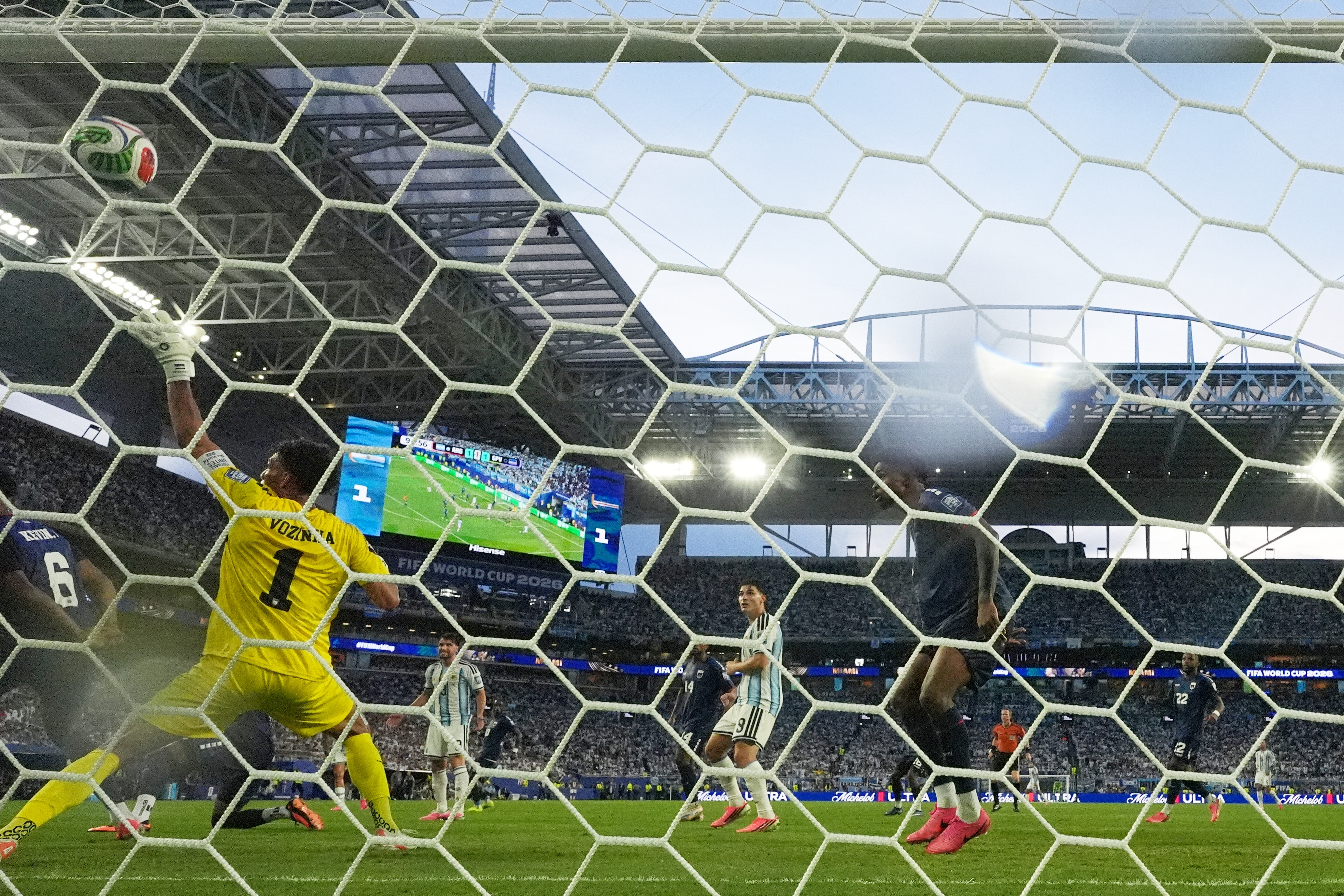
Cape Verde didn't win a match at the World Cup, and somehow, that didn't seem to matter. The African team's debut on this stage was unforgettable.
(Image credit: Lynne Sladky)

Keiko Fujimori declared winner of Peru's presidential election weeks after vote
In pictures: Stars and fans celebrate Taylor Swift and Travis Kelce's wedding
5 новых одноплатников лета 2026 года: x86, Snapdragon и сменные процессоры

Еще несколько лет назад большинство одноплатных компьютеров были похожи друг на друга: ARM-процессор, несколько USB-портов и GPIO для подключения периферии. Сегодня возможностей стало гораздо больше. Производители экспериментируют с новыми архитектурами, добавляют ИИ-ускорители, высокоскоростные сетевые интерфейсы и даже делают платы со сменными вычислительными модулями.
Под катом делимся пятью интересными новинками лета 2026 года. Среди них — компактная плата на Snapdragon 8cx Gen 3 с поддержкой Windows, модульный компьютер со сменным процессорным блоком, x86-плата размером с Raspberry Pi и другие модели, каждая из которых предлагает свой взгляд на развитие одноплатных компьютеров.
Под кат →Lightning, hotel security and spying - issues England face in Mexico
От игры за $999 до симулятора автобуса: самые странные проекты в истории Steam

В магазине Steam легко потеряться среди тысяч проектов: одни пытаются выглядеть как большие сюжетные приключения, другие пародируют знакомые жанры с новой обложкой, третьи просто копируют удачные идеи соседей. Но иногда среди этого потока появляются игры, которые цепляют не графикой и не масштабом, а описанием: заплати почти тысячу долларов за короткую прогулку по красной дорожке, восемь часов веди автобус по пустыне без возможности ускориться или попробуй довести ломтик хлеба до тостера. Получается необычно и непривычно, так что такие тайтлы иногда даже становятся культовыми.
Что ж, давайте оценим некоторые из них в этой подборке. Поехали!
Читать далееCanada tests the limits of Trump’s power
Лукашенко помиловал 32 человека, его сын Николай получил диплом Пекинского университета. Главное в Беларуси за неделю
Каким будет внешний вид человека в будущем? Возможно, нам самим предстоит сделать выбор
Экономическая эффективность тренажёрных комплексов: расчёты в эпоху роста энергопотребления ИИ

ЦОДы и искусственный интеллект требуют колоссального количества электроэнергии - и желательно дешёвой. Согласно генеральной схеме размещения объектов электроэнергетики в нашей стране, планируется ввод внушительного объёма генерирующих мощностей(порядка 47 ГВт).
Однако даже эти планы несколько отстают от растущего потребления, обусловленного развитием ИИ. При этом всеми этими мощностями нужно грамотно управлять — а значит, критически важен подготовленный персонал. В статье я хочу поделится своим видением относительно этого вопроса.
Читать далее[Перевод] Сэнди Петерсен и Джон Кармак: как Quake сломал id Software

Сэнди Петерсен, геймдизайнер и дизайнер уровней Doom и Quake:
«В связи с 30-летней годовщиной выпуска сейчас многие с теплотой вспоминают Quake, и это вполне оправдано. Quake — потрясающий проект, сочетающий в себе искусство, программирование и дизайн. Я работал над ним, и все мы выложились почти идеально. Мы создали безумный экшен с большой долей свободы, захватывающий воображение игроков. Вся команда проделала замечательную работу и качественно выполнила все задачи. Но расплата за это была печальной: мы трудились долго и упорно, и мне кажется, эта игра сломала нас морально...»
Читать далее[Перевод] Слепые зоны в промптинге: полный гайд по Fable 5

Работа с Claude Fable 5 раз за разом напоминает мне старую истину: карта — не территория.
Карта — это представление предстоящей работы: мои промпты, скиллы и контекст, всё, что я передаю Claude. Территория — это то, где работа реально происходит: кодовая база, реальный мир, его настоящие ограничения.
Разницу между картой и территорией я называю неизвестными. Когда Claude наталкивается на неизвестное, ему приходится принимать решение на основе наилучшей догадки о том, чего я хочу. Чем больше объём работы, тем больше неизвестных может встретиться Claude по пути.
Fable — первая модель, где я вижу, что качество работы упирается именно в мою способность прояснять её неизвестные.
Читать далееAn AI philosopher, the conflict and chaos in Taylor Swift’s songs and the erasure of US history from national parks
Need something brilliant to read this weekend? Here are six of our favourite pieces from the last seven days
Continue reading...