RSS Feeds
John Galliano's 2027 Met Gala exhibit canceled after weeks of backlash for past remarks
South African airline defends low-altitude aerial stunt over packed stadium
US singer D4vd's celebrity lawyers withdraw from murder case
Tim Cook’s parting message: Apple is in the hands of a product builder
Testing cookie behavior across hundreds of web surfaces with our in-house auditor
As AI and automation become a bigger part of digital experiences, it’s increasingly important that people stay in control of the choices they make. They should be able to benefit from new technology without losing the preferences they’ve already expressed.
Cookie banners are one of the most familiar places where people express those preferences online. They’re also one of the most visible parts of a company’s privacy program. And for companies that operate a large, dynamic collection of websites, keeping them working as intended can be challenging. A banner might work correctly when a page launches, but changes made later can affect how someone’s cookie preferences are saved or applied. When someone accepts, declines, or customizes cookies, the website needs to remember that choice and behave accordingly. New integrations, experiments, or even changes to a page’s settings can unintentionally affect that behavior.
Manually checking that cookie banners continue to work as expected across all of our websites requires hours of quality assurance. To make those checks more manageable, we built a cookie auditor that acts like a privacy-conscious user. It visits Dropbox web pages and checks that they only load cookies consistent with that user’s privacy preferences. This gives us a scalable way to put our privacy commitments into practice as our web presence continues to evolve.
Most of us are familiar with cookies, but we don’t always think about what they mean for the choices we make online. Cookies are small pieces of data sent to a browser when someone visits a website. Some are strictly necessary, meaning they serve an essential purpose like keeping a user logged in or remembering language settings. Others are non-essential and support things like analytics, marketing, performance, or advertising. Strictly necessary cookies load automatically, but privacy laws in some places require companies to get consent before loading non-essential ones.
On the surface, cookie compliance can seem pretty straightforward. Websites show a banner, provide buttons to accept or decline, record the choice, and load cookies accordingly. But at scale, things can get a bit more complicated. Dropbox operates over 200 web surfaces across different products and teams, and the cookies on each page can vary depending on that surface’s purpose. URLs also change all the time as pages are launched, retired, redirected, localized, or included in experiments.
Plus, cookie banners aren’t the only way people can communicate their privacy preferences. Global Privacy Control (GPC), for example, is a technical standard that lets people set a privacy preference in their browser that can be communicated automatically to the websites they visit. Our system needed to recognize GPC signals and respect those preferences, too.
It’s also important to look beyond cookie banners themselves. Even when a banner appears to work correctly, we still need to verify that someone’s choice is actually being applied. That means checking which cookies load before and after someone makes a selection, and that their preference continues to apply after the page reloads. That’s where our cookie auditor comes in.
Turning privacy requirements into testable rules
Before we began building a cookie auditor, our Privacy and Engineering teams first needed to agree on what the system should consider correct behavior. That meant deciding which websites should be audited, what kind of banner behavior would constitute a violation, and which third-party cookies and other artifacts should be tracked separately. We also defined when a missing banner should be considered a problem and when it was expected, such as on a web page that was no longer in use.
Privacy programs often depend on legal concepts that require human interpretation, such as opt-in or opt-out, strictly necessary, and affirmative consent. But a machine needs much more concrete instructions about what should happen when someone makes a particular choice and what to flag when something doesn’t behave as expected. Turning those concepts into outcomes the cookie auditor could actually test was an important part of the work.
We also kept these classifications outside the auditor’s source code. That meant the Privacy team could update the list of approved cookies and known exceptions without waiting for engineers to change the code and release a new version. Importantly, it also made the system easier to adapt as Dropbox services and regulatory guidance evolve, helping our privacy protections keep pace with both.
Because we built our cookie banner in-house rather than using an off-the-shelf product, we could integrate the auditor directly with our existing consent infrastructure. That gave us more control over how the auditor and consent system worked together and made it easier to adjust what we tested as our websites, services, and privacy requirements evolved. Instead of treating compliance as a fixed set of rules, we built a system that could change along with those requirements.
Testing the experience like a user
Defining the criteria that’d govern our cookie auditor was only one part of the challenge. We also needed a way to test those criteria against what someone really experiences when they visit a Dropbox website. To do that, we designed the auditor to behave much like a real visitor would. It uses Playwright, a browser automation library, to open a Dropbox web page in a fresh, isolated browser session and observe what happens from the moment the page loads.
For every page we check, the cookie auditor runs three separate tests to account for different privacy experiences. One simulates a standard US visitor, another simulates a visitor in the EU, and the third uses a GPC signal. Each test starts from scratch, with no existing cookies or saved preferences, so the auditor sees the same experience as a new visitor. Before interacting with anything on the page, the auditor records which cookies have already loaded and checks whether they match what we expect to see for that test.
Next, the auditor finds the page’s consent controls and declines non-essential cookies. That’s more complicated than simply looking for a button that says “Decline.” Depending on the page, consent controls might appear in a banner, a floating control, a preferences window, or a footer link. They can also appear in any of our 22 supported languages. Rather than relying on specific words on the screen, the auditor identifies and interacts with the underlying consent controls. It then reloads the page and checks what happens next.
Reloading the page is an important part of the test. Once the page reloads, the auditor checks that the user’s preference still applies and that the cookies present match what we expect for that test. If anything unexpected appears, it’s recorded for further review. This focus on what actually happens, rather than what should happen based on a configuration, became one of the project’s most important design decisions.
Discovering what we weren’t testing
At this point, we had a reliable way to test whether a Dropbox web page was respecting someone’s privacy choices. But the auditor could only test the pages we knew about. As new pages were created and existing ones changed, we also needed a reliable way to identify which pages should be included in our audits.
Although the auditor worked well on our defined list of URLs, we soon realized that keeping that list up to date would be an ongoing challenge. New marketing pages, blog posts, and help center articles are published every week. Our Privacy team didn’t necessarily have clarity on every new web surface being created across the company, and asking teams to manually send us every new URL would create exactly the kind of bottleneck the project was meant to reduce.
Our solution was a companion URL detector, which is effectively an auditor for our auditor. The cookie auditor checks whether a user’s decision is respected, and the URL detector makes sure we’re checking all the places where the consent experience should appear.
We started by using traffic data to identify Dropbox web properties. Because that data includes a new record every time someone visits a page, our initial search had to comb through billions of records. But billions of visits didn’t mean billions of different pages. The same URL path might appear thousands or even millions of times, so we first filtered out repeated records to narrow the results down to a more manageable list of unique paths.
From there, we applied a second, more detailed round of filtering. Doing all of that work while searching through billions of traffic records would have required significantly more time and computing resources, but working from the smaller list made it much more efficient. At this stage, we could exclude pages that didn’t need to be tested, group together pages that used the same consent logic, and select representative URLs from large groups of similar pages. This gave the cookie auditor a manageable set of pages that still represented the different consent experiences someone might encounter across Dropbox.
Automation can narrow the search space, gather evidence, and identify potential issues, while Privacy and Engineering teams provide the insight needed to understand unusual pages and exceptions. This division of labor helps us keep pace with Dropbox’s changing web footprint without creating another time-consuming manual process for our teams. It also reflects a principle behind how we approach automation and AI at Dropbox: Use these tools to surface relevant information so that people have the context they need to make informed decisions and take action, while spending less time searching for and sorting through it.
Privacy as a continuously validated practice
Privacy programs rely on policies, controls, and review processes, but people ultimately experience them through the products they use. When someone makes a choice about their data, they expect the product to respect it. That means making the choice clear, making declining as easy as accepting, remembering the preference, and applying it consistently as someone moves across a website.
That’s why we think about privacy much like reliability or security. It requires ongoing attention as products and systems change. Building the auditor showed us just how many pieces needed to work together to make that possible. We needed to know which pages to test, distinguish real issues from false positives, translate legal requirements into behavior that the auditor could check, and test the experience from a user’s perspective rather than relying on how a system was configured.
Over time, that changed how we thought about the auditor itself. It gave us a way to turn our privacy commitments into something we could regularly test against the actual experience people have on our websites. For us, building that trust into a changing product means making clear commitments to users and designing systems that continuously verify we’re upholding them.
Today, the auditor gives our Privacy and Engineering teams a weekly report on consent behavior across Dropbox websites. It separates likely violations from known false positives, making it easier for teams to understand what needs their attention. Historical results also help us track trends and spot when something that was working correctly begins to change. Our next step is to make that process even more efficient by connecting findings to the teams responsible for those pages and getting potential issues to the right people more quickly.
For teams considering a similar project, the browser automation itself may be the simplest part. Much of the work happens around the browser automation, including defining what correct behavior looks like, maintaining a reliable inventory of what needs to be tested, separating real issues from noise, and creating a review process that brings the right teams together. Investing in those pieces has given us greater confidence that our cookie program continues to work as intended, even as the websites and systems around it change.
Acknowledgments: Special thanks to folks on the Privacy Engineering and Legal teams for guidance throughout the project.
~ ~ ~
If building innovative products, experiences, and infrastructure excites you, come build the future with us! Visit dropbox.jobs to see our open roles.
Автоматизируем обработку лидов в недвижимости с голосовым роботом

В недвижимости скорость первого контакта напрямую влияет на результат. В долгосрочной аренде клиент обычно выбирает из нескольких вариантов, а подходящую квартиру могут сдать в день обращения. Если агент быстро обрабатывает заявку, он успевает назначить больше показов и заключить больше сделок.
В продаже квартир решение обычно занимает больше времени, но оперативный ответ тоже важен. Клиент быстрее получает информацию, агент раньше видит качество лида и работает с наиболее заинтересованными покупателями. Это улучшает сервис и повышает вероятность, что клиент продолжит работать именно с ним.
Читать далее'I haven't lost my hope' - the search for missing loved ones
Man City's £80m move for Gakpo close to collapse
At least two dead after catastrophic Grand Canyon flooding
Can a debt collector sell a judgment to another debt collector?
James Clyburn says supporting Clarence Thomas for supreme court ‘was mistake’
Congressman says Thomas abandoned his principles to become an extremist, hard-right member of bench
The senior Democratic congressman James Clyburn said his decision to support Clarence Thomas for a US supreme court seat “was a mistake” and called for the expansion of the nation’s highest legal panel to 13 justices.
Clyburn, of South Carolina, spoke up for Thomas at his fiery 1991 confirmation hearings, calling him “a personal and professional friend” who would use their shared experiences lifting minorities and advancing civil rights to become a respected and accomplished jurist.
Continue reading...Measles deaths reported in Pennsylvania spark feud among politicians and health officials
Trump pushes Apple to change 'Lake Ontario' to 'Lake America' on its maps
U.S. deportees land in Africa after Trump administration sends them to third countries
Lionel Messi says he's retiring from playing internationally for Argentina

The soccer star is ending 21 years of Argentine national-team duty but will continue to play at club level with Inter Miami in U.S. Major League Soccer.
(Image credit: Sergei Grits)

Three more held in crime crackdown following A66 crash that killed seven
[Перевод] Лучшие практики управления конфигурацией в Spring Boot

Конфигурация Spring Boot приложений гораздо более сложная, чем может показаться на первый взгляд.
В новом переводе от команды Spring АйО, мы вместе постараемся внести небольшую ясность в этот процесс.
Читать далееОтток в B2B SaaS: почему чаще всего лечат не тот симптом
Отток в массовом B2B SaaS почти всегда рождается не в недовольстве продуктом, а в первых днях после покупки, до того как клиент дошёл до реального результата. Чинит его онбординг, а не запуск программы удержания.
Читать далееPakistan sack head coach and send seven players home after England Test series defeat
Sarfaraz Ahmed sacked after 194-run loss at Lord’s
White-ball coach Mike Hesson steps in
Pakistan have decided to rip up their plans during an already chaotic tour of England by announcing that seven players and head coach Sarfaraz Ahmed have been sent home before the third Test at Edgbaston next week.
Already confirmed to lose the series after going 2-0 down with a 194-run defeat at Lord’s on Sunday, Pakistan have now asked Mike Hesson, the New Zealander who runs their white-ball teams, to replace Sarfaraz as head coach. Umar Gul, their bowling coach, has also been swapped out for the Australian Ashley Noffke.
Continue reading...Dolly Parton laid to rest in private Nashville funeral
The queen of country was interred next to her late husband in an intimate ceremony attended by close family
Dolly Parton was laid to rest in a private ceremony in Nashville on Friday, her family has confirmed.
The queen of country music, who died aged 80 on 25 August “after bravely facing a brief battle with cancer”, was interred at Woodlawn Memorial Park and Mausoleum alongside her husband of 60 years, Carl Thomas.
Continue reading...Watch: Notting Hill Carnival celebrates 60th anniversary
Death Toll Rises in Grand Canyon Flood as Search Continues
Weather system forming near Texas, Louisiana expected to strengthen
Notting Hill Carnival revels in 60th anniversary celebrations
Thousands of cans of Pabst beer stolen in two separate heists in California
Both thefts occurred on 17 August at a distribution center east of Los Angeles
Thieves made off with tens of thousands of cans of Pabst beer in two separate heists from a southern California warehouse on the same day, police said.
Pabst Blue Ribbon has turned the thefts – valued by police at $70,000 – into a lighthearted social media promotion. But police in Montclair said on Friday that investigators were trying to determine whether they were part of a single operation.
Continue reading...Lionel Messi says he's retiring from playing for Argentina
We tried lots of products in August, these picks from Béis, Hoka, Zara and more were worth our dollars
Vance defends Trump's AI post of Kharg Island bombing: "he's sending a message to the Iranians"
Tropical Storm Edouard makes landfall along Gulf Coast
Kalshi permanently bans ex-Congressman George Santos for life after concluding he likely was insider trading
Onslaught review – super soldier slasher doesn’t go hard enough
There’s a committed performance from a spunky Adria Arjona in the Guest director Adam Wingard’s decent B-movie but it’s missing some sharper weaponry
There’s something rather fascinating about an indie director who heads to the A-list before returning to their roots, a wider skillset and different perspective gained for better or worse. Working within a stricter system – the tiniest of choices being agreed upon by the largest of committees – can often be a creatively crushing experience that we’ve heard gruesomely detailed by many who survived it but the expansion of what one is allowed to technically do with a bigger budget can also be instructive and enriching. The dream scenario is bringing back the good and allowing the bad to inspire new work that makes the most of how unshackled one again now is.
There are plenty of examples of how this hasn’t worked. Neill Blomkamp following Elysium and Chappie with chintzy low-budget horror Demonic (easily his least effective film although since opening his own AI “studio” I imagine the worst is yet to come), Marc Forster following Quantum of Solace and World War Z with a blind Blake Lively film that, ironically, no one saw while Anna Boden and Ryan Fleck went from the greatness of Half Nelson to the blandness of Captain Marvel to the headache of Freaky Tales. But then we were also gifted with the hometown intimacy of Alfonso Cuarón’s Roma after he came back from space for Gravity and Hogwarts for the Prisoner of Azkaban while Karyn Kusama brushed off the nightmare of Æon Flux with the brilliantly creepy dinner party thriller The Invitation.
Continue reading...Growing TIME’s AI Coverage
TIME Editor in Chief Sam Jacobs and Executive Editor Alex Altman sent the following memo to staff on Monday:
Dear all,
TIME aspires to lead in the coverage of the remaking of the world by artificial intelligence.
Last week, we released our annual TIME100 AI list, led by Ayesha Javed, and an exclusive cover story about OpenAI drawing on unprecedented access inside the company. Today, we're announcing a significant investment in our AI and technology coverage.
In just a few weeks, we’ll relaunch In the Loop, our AI newsletter, with a new format. Later this year, we plan to expand it to five days a week, giving readers a daily, essential briefing on the industry and the influences shaping it. Next year, we'll build on the success of this year’s AI events in Davos, Cannes, New York and San Francisco by launching our first-ever TIME100 AI Leadership Forum in Washington, D.C. We are exploring additional opportunities to convene the world's most influential AI leaders internationally too.
To support our continued commitment to this work, we’re pleased to announce the following staff changes.
Naomi Nix joined us Aug. 17 as a Senior Correspondent based in Washington. Naomi comes to TIME after four years covering Meta and the broader social media industry for The Washington Post, where her reporting focused on how powerful platforms shape American democracy and global politics. Before The Post, she covered tech lobbying and corporate influence for Bloomberg News, and got her start covering beats including education and City Hall for The 74, The Star-Ledger and the Chicago Tribune. At TIME, Naomi will contribute to In the Loop, write ambitious features and investigations, and report across platforms with a focus on policy, regulation, tech's political influence, and the nexus between Silicon Valley and the nation's capital.
Manisha Ganguly joins us as a Senior Correspondent based in London, starting Nov. 1. Manisha is a decorated investigative journalist and a pioneer in using open-source intelligence to expose war crimes. She joins us from The Guardian, where she was investigations correspondent and led visual forensics; she previously built out open-source investigative workflows at the BBC. She holds the first PhD awarded for research into OSINT's impact on investigative journalism, from the University of Westminster. Manisha is currently writing her first book. At TIME, she will pursue investigations and features on AI and national security, profile key leaders and policymakers, and contribute to In the Loop and our coverage across platforms.
Harry Booth, who joined TIME in 2024, becomes Staff Writer and will relocate to San Francisco in January to anchor our coverage of the world's most important AI hub. Since joining the London bureau, Harry has been a force behind our TIME100 AI, Philanthropy, and Climate franchises and our Best Inventions coverage. He co-authored our March cover story on Anthropic’s rise and its standoff with the Trump Administration, based on reporting inside the company. Harry will lead our beat coverage of the AI boom on the ground in the Bay Area, covering the frontier labs, hyperscalers, and startups defining this moment.
The additions of Naomi and Manisha, and Harry's expanded role in San Francisco, will strengthen a team that already includes two agenda-setting correspondents on the AI beat: Billy Perrigo, based in London, and Andrew Chow, based in Washington. All will work with Senior Editor Dayana Sarkisova, who has done a terrific job leading our global beat coverage of AI leaders, companies, and their impact on society. Charlie Campbell, reporting to Gemma Fox, will continue to contribute greatly to our AI coverage from Asia.
In recent years, this global team has brought readers inside companies like Anthropic, OpenAI, Google, Nvidia, and Waymo; broken robotics scoops showing what the next wave of automation looks like; and reported on the global data center boom and the political backlash it has provoked, taking readers from a remote valley above the Arctic Circle in Norway to frontline communities in Tennessee and Texas. Last December, we named "The Architects of AI" our Person of the Year.
Assembling this team reflects TIME's commitment to covering the most consequential story of our time with the ambition it demands—across every platform, through access and accountability, and careful scrutiny of AI’s promise and perils. Please join us in welcoming Naomi and Manisha, and in congratulating Harry on his upcoming move to San Francisco.
Sam and Alex
How the Alternative for Germany would govern
Iceland opposes E.U. membership talks as local concerns outweigh fears of Trump
Pakistan hit 'panic button' and drop seven players and release head coach
How to Stop Wasting So Much Food in Your Kid’s Lunchbox

Collect everything the average American kid throws away in the school cafeteria over a single year, pile it on a scale, and you'd be looking at roughly 39 lbs of food. That’s about what a typical 4-year-old weighs.
Multiply that across the country, and school food waste adds up to an estimated 530,000 tons every year—an alarming amount of uneaten sandwiches, rejected fruit, and unopened snacks.
That makes food waste difficult to dismiss as somebody else’s problem. “If you eat food, you’re part of this whether you like it or not,” says Lauren Click, founder of the nonprofit Let’s Go Compost, which runs food-waste programming in more than 600 schools, libraries, and community centers. The flip side is that you’re also in a position to waste less—starting with a packed lunch, one of the few pieces of the food system a family fully controls.
Here’s how experts recommend packing a school lunch that produces less trash—and stands a better chance of getting eaten.
See what comes home
Before you overhaul your lunch-packing routine, spend a couple weeks paying attention to what returns at the end of the day. Which foods are untouched? Is the bologna sandwich always missing exactly one bite? What never even made it out of the wrapper?
After a few days, you’ll probably start to notice a pattern. “If you pack based on what actually comes home, not what seems balanced on paper, you can track it each week and adjust over time,” says Lizzie Horvitz, founder and CEO of Finch, a platform that evaluates products for sustainability.
You don’t have to keep tabs on the lunchbox all year. August and September are when parents are still figuring out what—and how much—their kids will eat. “If you're really paying attention to ‘what's my kid eating?’ and ‘what's my kid consistently bringing home?’” Horvitz says, “there really shouldn't be any waste after a couple of weeks.”
Ask your kid what happened
Seeing what comes home is only half the job. You also need to find out why—and good luck guessing correctly.
Click has heard every version of this story: A kid suddenly stops eating apples, and their parent assumes they don’t like the fruit. The real problem? A classmate declared apples uncool. “You can't make assumptions, because you'll never guess what's going on in the mind of a 5-year-old,” she says.
Keep the conversation curious, not accusatory. Ask your kid who they sit with, how much time they have to eat, and what their friends bring. Maybe the orange takes too long to peel, or they can’t open one of the containers without help. Maybe their friend brings two sandwiches and shares one every day—in which case, congratulations, you can stop making a sandwich.
Save new foods for dinner
The school cafeteria isn't exactly an ideal tasting room. Lunch periods are short, cafeterias can be loud and chaotic, and no one is sitting nearby encouraging your kid to give that unfamiliar vegetable one more chance. (Rutabaga, anyone?)
“Maybe this isn't the time to have a really balanced, try-new-things meal,” Horvitz says. “Let's save that for meals at home.” That's not an argument for packing nothing but cookies. It means lunch should mostly consist of foods you already know your child will eat; save the experiments for dinner, when you’re there to encourage them.
Choose the food before the lunchbox
Compartmentalized bento boxes are adorable. They're also built for a very specific amount (and shape) of food, which may not match what—or how much—your kid eats.
Lindsey Schoenfeld, a registered dietitian nutritionist, chef, and co-author of To Your Taste: How to Eat Well and Feel Better for Your Whole Life, suggests starting with the food instead. Ask your kid what they ate all summer and which lunches they loved last year. Then choose containers that fit those foods. The folded half-sandwich that nestled perfectly into one tiny compartment in second grade might not cut it for a middle-schooler.
Before splurging on new gear, check your cabinets. “There's so many containers that we have around the house,” Schoenfeld says. “Maybe they don't have a lid right now. Maybe we need to dig through a few shelves.” You might need a new lunchbox, but you probably don't need every container inside it to be new too.
Reusable containers only reduce waste if you use them over and over, so make cleanup as painless as possible. Many silicone bags and food containers can go straight into the dishwasher—check the manufacturer’s instructions—and you don’t need to scrub them spotless first. “The dishwasher’s job is to make them completely spotless,” Horvitz says.
Pack the amount your child actually eats
An oversized container practically begs to be filled, Schoenfeld says—and parents often respond by packing more than their kid will eat.
As a rough starting point, she suggests about half a cup of fruit, or one small piece of whole fruit, for younger elementary-school kids, in addition to a quarter- to half-cup of vegetables and one serving of grains, such as a slice of bread or a 6-inch tortilla. Middle-schoolers might need the higher end of those ranges, while high-schoolers may eat a full cup of produce and two servings of grains.
But kids aren’t measuring cups. “They grow at different times, and their activity is very different,” Schoenfeld says. One child might spend all day running around on the playground or practicing with the marching band, while another might take medication that suppresses their appetite at lunchtime. If the same amount keeps returning, try sending less before deciding your child has rejected the food altogether.
Find out what time lunch starts
Plenty of parents don’t know what time their kid eats lunch. It's worth checking: Because schools stagger lunch by grade, some are sitting down with their sandwiches at 10:30 a.m.
That can explain a lot. A child who ate breakfast at 7 might not be hungry three and a half hours later, even though they're ravenous when they get home. Pack a little less for an early lunch, Schoenfeld suggests, and have a substantial snack ready after school. She likes options that include a real food group, such as cheese and whole-grain crackers, fruit, or carrot sticks.
“It's good to capture these kids when they're hungry and you have something good ready,” she says.
Send last night's dinner
One of the easiest ways to waste less is to pack food you already made—and already know your child likes.
Jessica Randhawa, the chef and recipe developer behind The Forked Spoon, has used vacuum-insulated stainless-steel containers for her son's lunch since preschool. In the morning, she reheats leftovers—vegetables, meat, whatever is in the fridge—and transfers them to the insulated container. In winter, she sends leftover chicken soup, one of his favorites, in a larger container with a handle. A reusable metal spork goes in with it.
Her larger point: The container matters far less than whether the food gets eaten. “The best low-waste lunch system is one that the child actually eats,” Randhawa says. “Reusable containers aren’t helpful if the food inside is repeatedly wasted.”
Open the lunchbox before the pantry
When a hungry kid walks through the door, take a look inside their lunchbox before handing over a new snack. Schoenfeld does this automatically. “I’m known for saying, ‘Oh, you’re hungry?’” Schoenfeld says. “I just open the lunchbox back up. ‘Look, it’s perfect. It’s ready to go.’”
Of course, food safety gets the final say. Shelf-stable foods—crackers, a sealed pouch, an unopened bag of chips—can go back into the pantry or be eaten later. Perishable food is a different story: If it didn’t stay cold during the school day, toss it.
Don't automatically rule out single-serve packages
An individually packaged snack isn’t always an environmental villain. If your kid brings home an unopened package of crackers, it can go straight back into the pantry. “It’s like it never came to school,” Horvitz says.
Loose crackers can be saved too, of course, but people are often more willing to toss food that’s already been opened and portioned out. Buying in bulk and using reusable containers still produces the least packaging—but a single-serve snack that gets eaten another day can be better than food that lands in the trash.
“If we're assuming a kid is eating everything in their lunchbox, we of course want to stray from individually packaged food,” Horvitz says. But if your child is unpredictable about what they'll eat, a sealed package that comes home isn't necessarily a failure. The best option is to buy in bulk and portion food into reusable containers; after that, a packaged snack that gets eaten another day can be better than loose food that lands in the trash.
The same general rule applies to drinks: A reusable bottle is best, and pouring juice from a large jug creates less packaging than sending an individual box. If you do pack a can, don't crush it afterward; Horvitz notes that intact cans are easier for recycling facilities to sort.
Consider a secondhand lunchbox
There's no rule that says a lunchbox has to be new. Click suggests checking Facebook Marketplace, Poshmark, and eBay, where last year's enthusiasm for a particular cartoon character is now available at a discount. “They have every character you can think of,” she says.
Just don't try to replace every disposable item in one frantic back-to-school shopping trip. Pick one change, get used to it, and then consider another. “Don't try to go zero-waste in one day, because you're gonna get frustrated,” Click says. “It's like saying you're gonna lose 50 lbs in one month.”
Be skeptical of “compostable” packaging
“Compostable” packaging usually needs more than a trash can—or even a backyard compost pile. Many products break down only in commercial composting facilities. Yet a 2025 national analysis found that just 18.1% of the sampled U.S. population had access to a curbside or drop-off program that accepted food scraps and at least some forms of compostable packaging. If your local program doesn’t accept these products, they’ll probably end up in a landfill.
“The word compostable doesn't mean it will compost,” Click says. She recommends choosing reusable items first. If you do buy compostable products, make sure you have a realistic way to compost them—either at home, if they’re certified for home composting, or through a local service that accepts and processes them.
Show kids where the trash goes
The most effective tool for cutting lunch waste isn't a product. It might be a field trip.
Click takes children to landfills, where the hard hats, safety vests, and enormous trucks are a hit. But the adults tend to leave with the bigger revelation. “You start to see the birds there eating trash,” she says. “You're really faced with this reality of, like, you contribute to this.”
Many recycling facilities offer free tours, and county extension offices around the country run gardening and composting programs for kids. The point isn’t to make children feel guilty about every granola-bar wrapper. It’s to help them see where their trash ends up—and why small changes matter.
“There's not a magical product that you can order online and have it shipped with two-day shipping that will solve this,” Click says. “It really comes down to healthy daily habits that you build over time.”
Lionel Messi says he's retiring from Argentina's national soccer team after nearly 2 decades
How much will a $100,000 HELOC cost monthly if opened this September?
D4vd’s legal team abruptly withdraws; singer taps public defender for murder trial
Dolly Parton laid to rest in private Nashville funeral
The queen of country was interred next to her late husband in an intimate ceremony attended by close family
Dolly Parton was laid to rest in a private ceremony in Nashville on Friday, her family has confirmed.
The queen of country music, who died aged 80 on 25 August “after bravely facing a brief battle with cancer”, was interred at Woodlawn Memorial Park and Mausoleum alongside her husband of 60 years Carl Thomas.
Continue reading...Did you solve it? The fin-tastic fish puzzle
The solution to today’s underwater conundrums
Earlier today I set you the following puzzles. Here they are again with the solutions.
A fish is swimming in a tank that is two metres high, one metre across and one metre deep. The image below shows one path it swam.
Continue reading...Caregiver creep: how helping elderly relatives can snowball into a full-time job
Assisting an ageing loved one can start with small tasks but may lead to full-time caregiving that requires more support
Helping an ageing parent or loved one often begins with easy-to-field requests: Pick up a prescription. Drive them to a doctor’s appointment. Grab groceries.
However, light tasks – just “helping out” here and there – may eventually snowball into the avalanche of full-time caregiving, a phenomenon becoming known as “caregiver creep”. Like “caregiver burnout”, it’s not a formal term, but there is growing awareness about this slow build among healthcare providers and experts.
Continue reading...Ed Markey’s Massachusetts Senate Race Is a Generational Fight, With a Twist
4 Easy Ways to Start the Mediterranean Diet
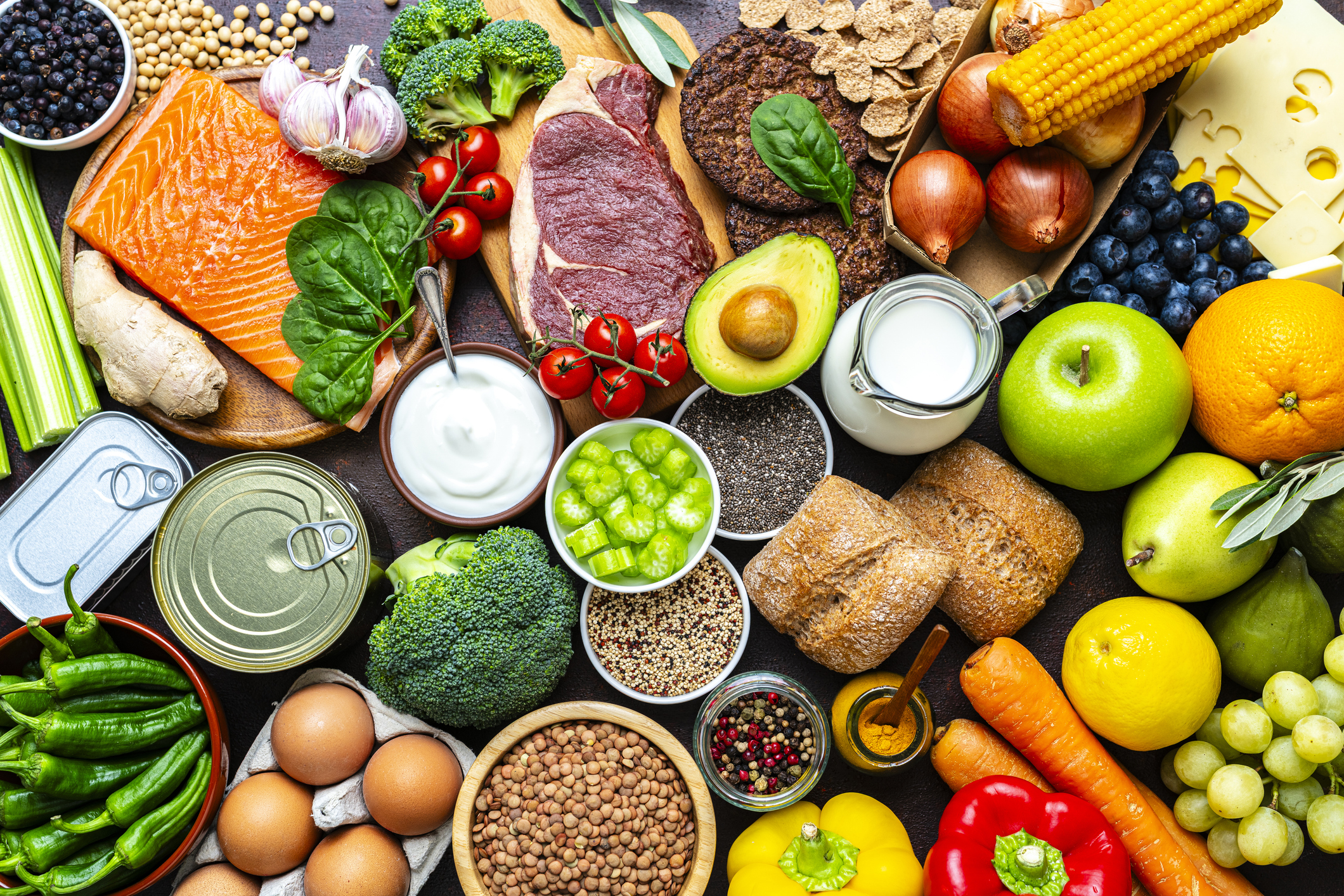
The Mediterranean diet is one of the most researched and most prescribed eating plans for weight loss, heart health, and many conditions in between. Research has linked it to better health outcomes, including lower rates of Type 2 diabetes, stroke, heart issues, cancer, and even better cognitive health.
Yet many people still have misconceptions about the Mediterranean diet: mainly that it’s expensive and difficult. “I think that people just have to be told that it is affordable and it's quite easy,” says Joan Salge Blake, clinical professor of nutrition at Boston University, author of the book Nutrition & You, and the host of the nutrition podcast Spot On!
The pillars of the Mediterranean diet include eating more vegetables, whole grains, fish, and olive oil, and consuming minimal amounts of alcohol, red meat, and saturated fats. Getting good amounts of physical and social activity is a core tenet of the lifestyle plan, too. But you don’t have to overhaul your diet overnight. “Try to take one one or two small steps at a time, and you'll eventually get there,” says Angel Planells, a registered dietitian in Seattle and spokesperson for the Academy of Nutrition and Dietetics.
We spoke to experts about easy ways to start adopting the Mediterranean diet.
Embrace frozen and canned produce
Americans are woefully behind on their produce intake. Only about 12% of U.S. adults ate the recommended amount of fruit, and 10% ate enough vegetables, according to the latest analysis by the U.S. Centers for Disease Control and Prevention..
A great way to start getting more produce on your plate is through your freezer and pantry, Blake says. When you’re first learning to prepare fresh fruits and vegetables, they can become expensive—especially if they end up rotting away, forgotten, in a fridge drawer. Since grocery bills have skyrocketed over the last few years, that can make the shift even more daunting. But Blake points out that frozen and canned produce can carry the same nutrients in an easier-to-store, more cost-effective format.
“Some people think, ‘Oh, I’ve got to cook from scratch, and everything's got to be fresh,’” says Blake. “And the answer is, ‘No, it does not.’”
It’s also easier to deal with. “Canned and frozen produce is cleaned, chopped, and ready to go. It's like having Rachael Ray in your freezer and pantry,” she says. “Fresh is not always best.”
Choose frozen or canned seafood
Fresh seafood is also often pricey, but it’s not a requirement that your seafood be fresh, either.
“It could be frozen. It could be out of a can,” Blake says. Tuna and salmon also come packaged in a pouch, which is “extremely, extremely affordable and really, really good for you based on the science that we have today,” she says.
For time-strapped Americans, frozen and canned foods can help speed things along, reduce food waste, and ensure that there’s always some kind of produce at the ready.
Read More: 6 Easy Ways to Move More While Working from Home
“These are as nutritious as fresh, and they're convenient, and this way you don't have to go back to the supermarket more than once a week,” she says. She also recommends checking out your local supermarket’s deals to see what’s on sale that week.
Diversify your protein sources
“We get kind of fixated that it has to be animal protein, and that's clearly not the case,” says Planells. For animal protein, the Mediterranean diet favors seafood and leaner cuts of meat, and it also recommends plant-based sources of protein like beans and lentils.
Despite rising grocery costs, a May 2026 report from the American Farm Bureau Federation finds that “America’s demand for meat continues to grow.” As of July, ground beef prices were up 10% from the same time in 2025.
“Everyone wants protein, protein, protein, but we're going to go broke,” says Planells.
Swap in leaner cuts and types of meat, embrace eggs, and try more plant-based protein like tofu, beans, nuts, and seeds, he recommends, which both comply with the Mediterranean diet and might end up being a cost effective and healthier trade.
You can also add leaner, greener proteins into meaty dishes you already like. “If you're going to make a chili, what you can do instead of putting in like 2 lbs of ground beef is put in 1 lb of lean ground beef and double up or triple up on beans,” Blake suggests. “You cut the cost of that meal per serving, and you also decrease the saturated fat and increase the fiber per serving.”
Take baby steps
“Whatever way people eat, whatever way they shop, it would be better to try to look into their life and try to make small, gradual changes in what they're doing than trying to give them the pathway to excellence,” says Planells. Instead of fried foods, opt for baked, grilled, or steamed. In terms of meats, pick leaner cuts. Choose healthier snacks, like nuts or yogurt, instead of products like chips. Swap in whole grains like quinoa, brown rice, and whole wheat pasta instead of processed versions.
“Every time we have a meal or snack, it's an opportunity to try to make it as nutrient-rich as possible,” says Planells.
When Planells works with a patient, he often suggests making one small diet-related and physical-related change a week.
Movement is just as key to the Mediterranean lifestyle as the food is. When researchers originally started studying the diets and lifestyles of people in the region, Blake says, they found that physical activity was an important part. “We really need to start getting movement in our life as a habit,” says Blake.
Correction, Aug. 31
The original version of this story misspelled a dietitian's name; she is Joan Salge Blake, not Joan Saldge Blake.
Iceland’s Rejection of EU Keeps It a NATO Island Straddling U.S. and Europe
Live Results: Massachusetts midterm primaries
Marseille’s squad is being gutted but their manager is staying – for now
It has been a tough transfer window for Marseille and a 2-0 defeat at Monaco suggests it could be a long season
A humid night in Monaco provided an opportunity to gauge the temperature of the Marseille supporters. Despite the ban on away fans at the Stade Louis II, plenty were in attendance for their 2-0 defeat in the Principality. There were cheers for their new manager, Bruno Génésio, and boos for Geoffrey Kondogbia, but it was the silence for much of the second half that spoke volumes.
Génésio, who replaced Habib Beye in the summer, has been appointed to keep a lid on things. The former Lille manager has been part of a larger reshuffle at Marseille, with the president and the sporting director also replaced. The new arrivals have inherited a mess. After making promises to Uefa and the DNCG – French football’s financial watchdog – Marseille were allowed to compete in Europe this season. However, if they fail to reduce their wage bill drastically, they will not be allowed to do so next season.
Continue reading...Fifa extends ban on man who secretly filmed female footballers in Austria
Former SCR Altach employee now banned worldwide
Move follows pressure from players’ unions
Fifa has extended worldwide the ban on a former match official and SCR Altach employee found guilty of taking secret videos and photographs of members of the club’s women’s team.
In February, a regional court in Feldkirch, Austria, handed the man a seven-month suspended prison sentence, a €1,200 (£1,046) fine and ordered him to pay the victims €625 (£545) each in compensation after he was found guilty of filming and taking photographs of players, including minors, in the changing room, gym and showers of Altach’s women’s team between 2018 and 2025.
Continue reading...НАСА запустила новый космический телескоп. Он будет исследовать темную энергию, темную материю и экзопланеты
‘Superhuman’ AI tool spots heart disease in less than 2 seconds
Technology trained on millions of routine ECGs could fast-track high-risk patients for treatment
Doctors have developed a “superhuman” AI tool that can spot heart disease in less than two seconds.
The groundbreaking technology has been trained on millions of patients and works by extracting more information from a routine electrocardiogram (ECG) than the human eye can typically see.
Continue reading...