RSS Feeds
The Eyes of Elizabeth Holmes
The Fight Over Who Counts in India
In A Fine Balance, one of the finest novels about modern India set in the 1960s and 1970s, Rohinton Mistry powerfully conveys a sense of the social meaning of the vote for the Indians at the bottom of the ladder. Narayan, a Dalit tailor, insists on marking his own ballot in an upcoming election instead of allowing an upper-caste landlord’s men to vote on his behalf.
Dukhi, his father, warns him against it. “It is still my right,” Narayan replies. “And I will exercise it in the next election, I promise you.”
Dukhi urges him not to risk his life.
“Life without dignity is worthless,” Narayan replies.
I have been rereading Mistry’s novel over the past few weeks as a series of protests has turned October into a month of fierce battles over the integrity of India’s elections, the accountability of its institutions, the right to protest, and the soul of its democracy.
A nascent Gen-Z movement, Cockroach Janta Party, which organized protests over education and unemployment in Delhi in June and July and forced the resignation of India’s higher education minister, gave the call for the October protests. Young protestors answered with an insurrectionary energy in the summer and soon found support from a broader coalition comprised of opposition parties, social movements and other pillars of Indian civil society.
These assorted protesters see the stakes of the current moment as existential: the sanctity of the vote in India, the essential ingredient, in other words, of democracy. Throughout October thousands joined the cause in Delhi and other Indian cities, their marches spurred by anger directed against an ongoing national exercise to overhaul the country’s electoral register.
Known as the Special Intensive Revision, the exercise has, according to the protestors, resulted in more than 130 million voters being removed from electoral lists. Although electoral rolls have been revised periodically, this is the first time such an exercise has placed the burden on citizens to establish their eligibility, raising fears that millions of legitimate voters, particularly the poor and marginalized, could be disenfranchised.
Seeking accountability, they have been calling for the resignation of Gyanesh Kumar, the country’s chief election commissioner, who oversees the Election Commission of India, the body charged with conducting and safeguarding the sanctity of elections across the nation. The protestors accuse Kumar of abandoning his constitutional obligation to act impartially. In their telling, the mandarin has set the table in a way to favor the interests of Prime Minister Narendra Modi’s Bharatiya Janata Party, a charge denied by those in power.
Already shaken by the summer protests over education, this time the Indian government responded with coercive force, effectively turning central Delhi, the political and administrative heart of the capital, and the place where India goes to protest, into a garrison. On Oct. 10, it deployed tens of thousands of police and paramilitary personnel, restricted internet access, detained thousands of protesters, and sought to deny the protesters access to public spaces across the capital.
The crackdown was intense. On the night of Oct. 16, there was a palpable sense of panic on social media in India as an urgent question was asked repeatedly: Where is Neha Bora? A 29-year-old doctoral student and left-wing activist, Bora has emerged as one of the most articulate and formidable leaders of these protests, which have rattled Modi’s government and—despite valiant attempts to construct a counter narrative by BJP leaders and other party apparatchiks—become a significant challenge to his popularity and legitimacy.
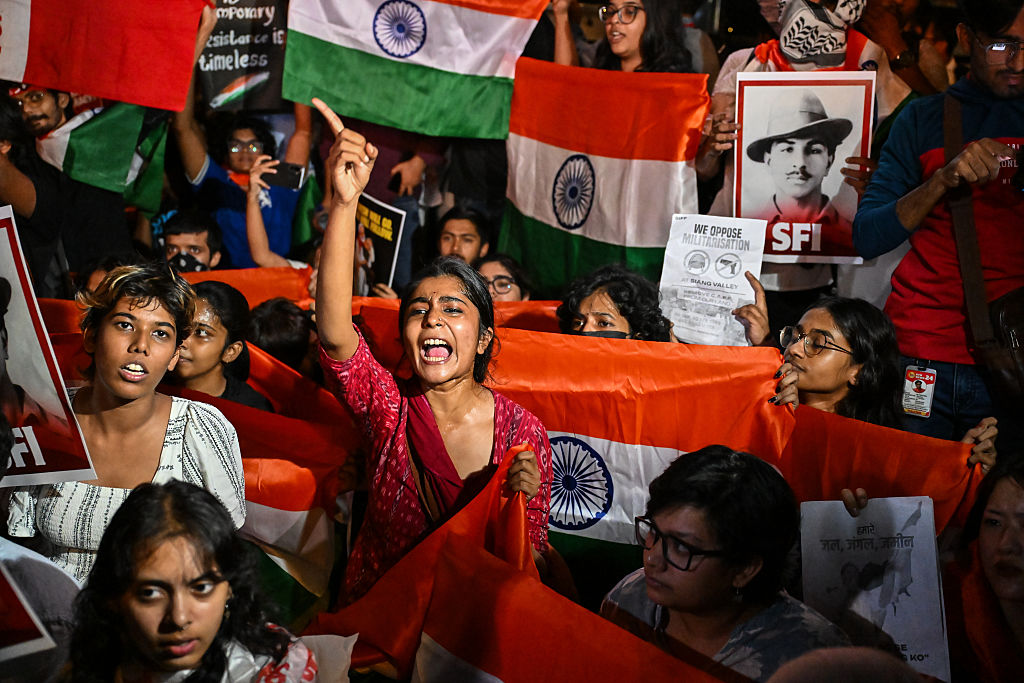
Bora was detained by the police on their way to join the thousands of protesters who had converged on Connaught Place, a prominent commercial district in the capital, waving the national flag and reiterating demands to protect the right to vote and the sanctity of electoral democracy in India. For several hours after sunset, there was no news of the whereabouts of Bora, who uses they/them pronouns. Their lawyers spoke about the police refusing to reveal their location. Eventually, around midnight, their lawyers located them at a police station.
When Bora was released on Saturday morning, they tweeted, “Fighting for democracy and the Constitution cannot be criminalized.” It was a neat summation of the sentiment moving so many Indians to take to the streets, namely a sense of being robbed of something of existential proportions. “Now if they take away our right to vote,” a protester told a reporter, “what is left with us?”
The power of the vote
The emotional charge behind the protests has its roots in the birth of the modern Indian nation-state itself. India always took great pride in adopting universal franchise rights as the Constitution of India came into effect on Jan. 26, 1950. In its historic first general elections in 1952, every Indian above the age of 21, irrespective of caste, religion, gender, race or wealth, had their constitutionally guaranteed right to vote. It was, as many legal and constitutional scholars have since remarked, a colossal feat, and one that became a touchstone for the modern idea of India.
Hence the current upheaval in the country. The Modi government may be reversing decades of democratic gains by recasting the act of voting as a privilege, conferred at the discretion of bureaucrats or as a favor from the ruling party, rather than a right guaranteed by the constitutional order. Now, every prospective voter must first complete an enumeration form, and many may subsequently be required to produce onerous documentary evidence, such as birth certificates and educational records to establish their eligibility to vote. Tens of millions of Indians from marginalized communities either lack documentary records or possess documents that are riddled with mistakes such as spelling errors, making it harder for them to navigate any process of bureaucratic verification.
The fear is that India is—to put it bluntly—being yanked back to a darker time, one from which it emerged in no small part because of the work done over decades to firmly establish the credibility and broaden the depth of its democratic franchise. In the 1950s, India was an overwhelmingly rural country, with around 83% of its population living in the villages and only about 17% in urban areas. Its nascent democratic system confronted entrenched social hierarchies of caste and power. Early accounts of grassroots democracy in India describe how higher-caste landowners controlled the votes of their lower-caste dependents, sometimes even marking ballots that the voters had to authenticate with their thumbprints.
The pioneering Indian sociologist M.N. Srinivas showed how politicians campaigning for votes treated villagers not as individual voters with agency but as members of “vote banks.” Politicians approached landlords or community leaders to deliver these blocs of votes in return for favors from the government, from “licenses for buses and rice-mills to seats in medical and technological colleges for their kinsfolk.”
And well into the 1960s, millions of Indians were still unable to exercise their constitutional right to vote. In the eastern Indian state of Bihar, landlords used club-wielding enforcers known as lathaits to keep Dalits, members of the most oppressed caste, out of polling booths. “I remember watching members of my caste being dragged out of a polling booth,” an elderly Dalit man in Bihar’s Siwan district recalled in an interview with The Print, an Indian news site.
During the state elections in 1967, Jagdish Master, a teacher turned activist, challenged the veto of the landlords over Dalit suffrage by escorting a group of Dalits to a polling booth in Ekwari, a village in Bihar’s Bhojpur district. The landlords’ henchmen brutally beat him and drove him out. He returned to the village as an armed guerrilla, recruiting Dalit laborers and other poor peasants in a Maoist-style rural insurgency that would flare across the region for decades.
The power of the vote in Indian consciousness transformed radically after the “Emergency,” the period between June 1975 and March 1977 when Prime Minister Indira Gandhi suspended constitutional rights, assumed untrammeled powers, imprisoned opposition leaders and silenced the press. Much of India’s elite—bureaucrats, businessmen, newspaper editors and movie stars—bent the knee and welcomed Mrs. Gandhi’s promise of “order” and “discipline.” Wealth and connections offered protection from the state. India’s poor, stripped of their electoral power, suffered terrible abuses of an unaccountable bureaucracy and police from slum demolitions to forced sterilization of men.
In the general elections held in March 1977 after the end of the Emergency, Mrs. Gandhi’s Congress Party was decisively defeated by the people and tossed out of power for the first time since Indian independence in 1947. The principal victims of abuses of the Emergency—Dalits, Muslims, and the poor of the populous northern Indian states—voted against the Congress party for the first time and contributed significantly to its removal from power
The power of the vote has gradually forced India’s high-handed bureaucracy to recognize the human dignity and political citizenship of ordinary people. The electorate delivered its verdict on Mrs. Gandhi’s breach of the sacred covenant between the Indian state and its people: the people confer legitimacy on the state in exchange for their rights, including its protection of the sanctity of the vote. Having asserted their power, voters proved difficult to subdue again. As the political theorist Partha Chatterjee put it, it was the 1977 defeat of Mrs. Gandhi and the Congress party that established the “capacity of the vote.”
A silent revolution
India’s poor and marginalized took proper control of their voting choices three decades after independence. In the years after the Emergency, they leveraged the vote as a means to a secure livelihood or as a tool for ensuring justice. Politicians could no longer rely on local patrons to intimidate people into voting for them and had to compete on representing their interests. A new competitive politics emerged in the 1980s and led to an upsurge, as Chatterjee wrote, “of popular demands of a kind that had never before been allowed to disturb the order and tranquility of the proverbial corridors of power.”
By the 1990s, political leaders from socially disenfranchised castes and Dalit communities were taking power in the populous, northern Indian states of Bihar and Uttar Pradesh. Political scientist Christophe Jaffrelot memorably described it as “the silent revolution.” This revolution, ushered in by the votes of the historically oppressed communities, did not quite transform the economic and social structures of the region. But it changed the everyday relations of power. Indrajit Roy, a scholar of development studies, recalled a refrain he heard frequently during his fieldwork among Dalits in Bihar in the late 2000s: “There has been development, change has come. Today, we can look the landlord in the eye and speak as equals.”
Vote banks had thus turned into vehicles of collective political assertion. Marginalized communities had become adept at pooling their votes to secure political favors and advance their shared interests. They chose their own patrons, preferring their own caste leaders to represent their interests and negotiate with the state on their behalf.
Over time, the clientelist politics of vote banks became associated with an entrenched culture of corruption. This helped pave the way for Modi’s successful national campaign in 2014, in which he cast himself as a populist strongman who embodied the aspirations for “development” of all Indians while portraying the Congress and regional parties as beholden to their respective vote banks. Modi’s attacks on vote bank politics also carried a more sinister charge: that successive governments had appeased India’s Muslims minority, which accounts for around 14% of the population, for their votes at the expense of the national interest.
Bangladesh borders the Indian state of West Bengal and Modi reserved his sharpest, xenophobic barbs for Bengal’s Muslims, whom he tarred during his 2014 campaign as “Bangladeshi” and “illegal immigrants,” establishing a template for their vilification that persists to this day. In an inflammatory campaign speech, Modi issued an ominous warning: “After May 16 [the day of the results of the 2014 elections], these Bangladeshis better be prepared with their bags packed.”
A dangerous exclusion
The Modi government invoked that very specter of the “illegal, Bangladeshi Muslim” to push through revisions to electoral rolls across most Indian states. India’s home minister, Amit Shah, who had earlier likened Bangladeshi immigrants to “termites,” responded to the ongoing protests by calling them an “action plan to protect infiltrators.”
There are no reliable estimates of how many Bangladeshi immigrants live in India. In 2016, a minister of the Modi government told the parliament, without citing a source, that the country was home to some 20 million “illegal immigrants from Bangladesh.” The government later acknowledged that it had no accurate data on the number of illegal immigrants in India.
Yet the Indian government has used unfounded speculation about “illegal” Bangladeshis to overturn the fundamental logic of the country’s electoral registration system, shifting the burden of ensuring registration from the Election Commission to the voter herself. The commission was responsible for ensuring that every citizen made it onto the electoral rolls.
The exercise has already disproportionately disenfranchised the poor, migrants, religious minorities, women—and is bound to continue doing so. “The majority of voters in Bihar who were excluded from the list were in rural areas,” said retired Maj. Gen. Anil Verma, who heads the Association for Democratic Reforms, a nonprofit group that challenged the electoral rolls revisions in the Supreme Court. “Those worst affected were the poor and the marginalized—they had no documents.”
Opposition parties have also alleged that the electoral roll revisions tilted the electoral field in the BJP’s favor in the West Bengal election held earlier this year, helping the party win power in the state for the first time. An analysis by the SABAR Institute, a public policy research institute, lent some credence to that charge: a disproportionate share of the 9.08 million voters removed from West Bengal’s electoral rolls came from constituencies held by the then-ruling Trinamool Congress or those with large Muslim populations.
The Election Commission has denied the charge that the deletions were politically motivated, arguing that it applied uniform criteria to remove entries for voters who had died, were registered more than once or had permanently relocated. But that claim is difficult to reconcile with the disproportionate representation of certain groups among those deleted from supplementary lists issued for some constituencies after an adjudication process. For instance, although Muslims make up around 23% of the population of Nandigram, a constituency in West Bengal, the SABAR Institute study found that they accounted for 95.5% of the deletions across seven supplementary lists released by the Election Commission for the constituency.
Voting carries an almost existential significance for Indians whose equal citizenship has not been fully recognized by the institutions of the state. Indians see the vote as an affirmation of their existence. If the vote is no longer a gift freely given or withdrawn by the people but a resource controlled by the state, it reduces ordinary voters once again to supplicants dependent on the favor of political elites.
The electoral revisions and mass deletion of voters have provoked such widespread revulsion because many Indians see it as an assault on their identity as citizens and a threat to the social recognition they have won through a long, arduous struggle. Many Indians might have forgiven Modi for his numerous missteps but they are determined not to let him devalue their voting power.
We that are young
The young protesters moving through Delhi’s barricaded streets carry a palpable sense that they are living through a historical moment. References to the Quit India movement against the country’s erstwhile British colonizers and the protests around the Emergency have become commonplace. Memories of seminal events of the past offer a lens through which to consider the present. The future seems open to change through collective action. This sense of a turning point imbues individual actions with a larger purpose and drives protesters to confront a police force intent on clearing the streets by whatever means necessary.
On Oct. 9, a day before Delhi was placed under a lockdown, Bora invoked India’s struggle against British imperialism to denounce the pre-emptive detention of protest organizers. “History is repeating itself. Just like in 1942, the arrest of leaders could not stop the Quit India movement; this movement will also not stop,” Bora said. “This is nothing but a state of open emergency in the country.”
The convergence of young people’s anger over education and employment, fears of authoritarianism, and concern for the sanctity of the vote poses a serious challenge to the Modi government. It could forge a broad popular coalition of unemployed young people, urban poor, Dalits and religious minorities, united in challenging the legitimacy of the government. Unless the government retreats on electoral roll revisions, sustained protests could drain its political capital.
One of Indian democracy’s great achievements is that even its poorest citizens have proved adept at recognizing when the power of their vote is being wrested away, gauging the consequences and organizing to resist. A government in India can retain its legitimacy despite failing to provide functioning schools or decent employment. It cannot do so if it also violates the sanctity of the vote.
Poor England suffer another Australia humiliation
[Перевод] Как выбирать нужный ИИ
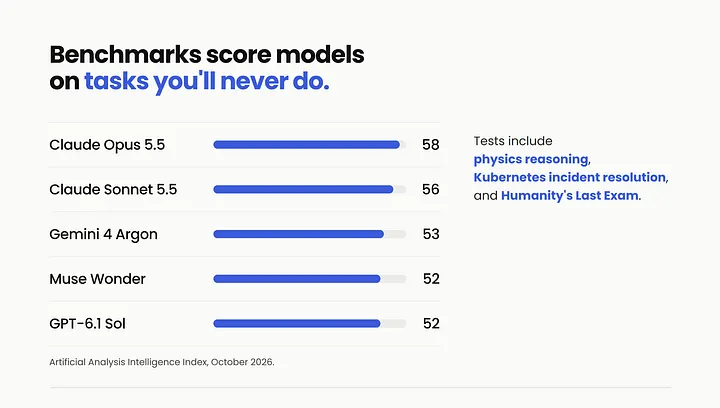
За последний месяц вышло достаточно новых передовых ИИ-моделей. Если вы уже перестали понимать, чем одна отличается от другой и какая вообще нужна именно вам
Читать далее9 Unique Apps to Try on the iPhone Duo
Что там вообще с квартирами и ипотекой? Большой разбор

В далеком 2011 году квадратный метр в российской новостройке стоил в среднем 43,7 тыс. рублей, а к 2026 году стал стоить уже 215,3 тыс. рублей - это почти пятикратный рост за 15 лет.
И казалось бы, вывод очевиден: квартиры стали значительно менее доступными, а зарплаты отстали от цен, и примерно с этой мысли я и начинал исследование, но решил копнуть глубже и посмотреть, как за это время изменились зарплаты, сравнил средние цены с официальными индексами Росстата, разложил изменение доступности на составляющие и рассчитал ипотечную нагрузку по данным осени 2026 года.
И вот тут выяснилось, что история с доступностью жилья гораздо интереснее, чем кажется по первым двум цифрам.
Читать далееFather who killed Oregon school gunman describes anguish over children he couldn't save
Infantino tells BBC Sport he is backed by 'vast majority' of world football
Infantino says he is backed by 'vast majority'
My Favorite Sofa Is Discounted for Joybird’s Semiannual Sale
Bayern Munich coach Vincent Kompany's recovery will take 'weeks' after collapse
Hundreds of Thousands Protest Across France as Clashes Erupt in Paris
Bahamas police investigate after British woman dies trying to rescue sons
UK to invest £100m in 'world first' AI Biosecurity Lab
Mum who died trying to save sons swept away in Bahamas was hero, husband says
12 Absolutely Banging Proper Watches Under $400
"A butter knife against a nuclear arsenal:" Tech billionaires vastly outspend wealth tax supporters
More than $351 million in political donations has been poured into a high-stakes contest about a proposed wealth tax on the November ballot, making it one of the most costly campaigns in California history.
Verse from Qu’ran inspired US man to leap on runaway school bus and halt it
Ebro Ahmed, who acted after driver’s medical emergency, said he hopes incident will show Eritreans ‘in a good way’
A man who hopped on to a school bus full of terrified children that was careering down a Minnesota street after its driver had a medical emergency and manually halted it says he was motivated to act by a Qu’ran verse about how saving one life is equivalent to saving all of humanity.
“I’m a numbers guy, and those numbers make sense to me,” Ebro Ahmed, 27, said on Friday during an interview about his actions four days earlier in front of his family’s convenience store in Saint Paul, Minnesota. “I didn’t do it for me. It was selflessness in the name of God.”
Continue reading...Celebrity Traitors left on a knife edge after a trip to the field of screams
Wayfair’s Way Day sale ends tonight: Shop the best deals on furniture, storage and more before they’re gone
The artist dropping her debut album after a billion streams
Watch: The rise of AI election ads in US midterms campaign
U.S. birth rate drops to record low, but older women are having more babies
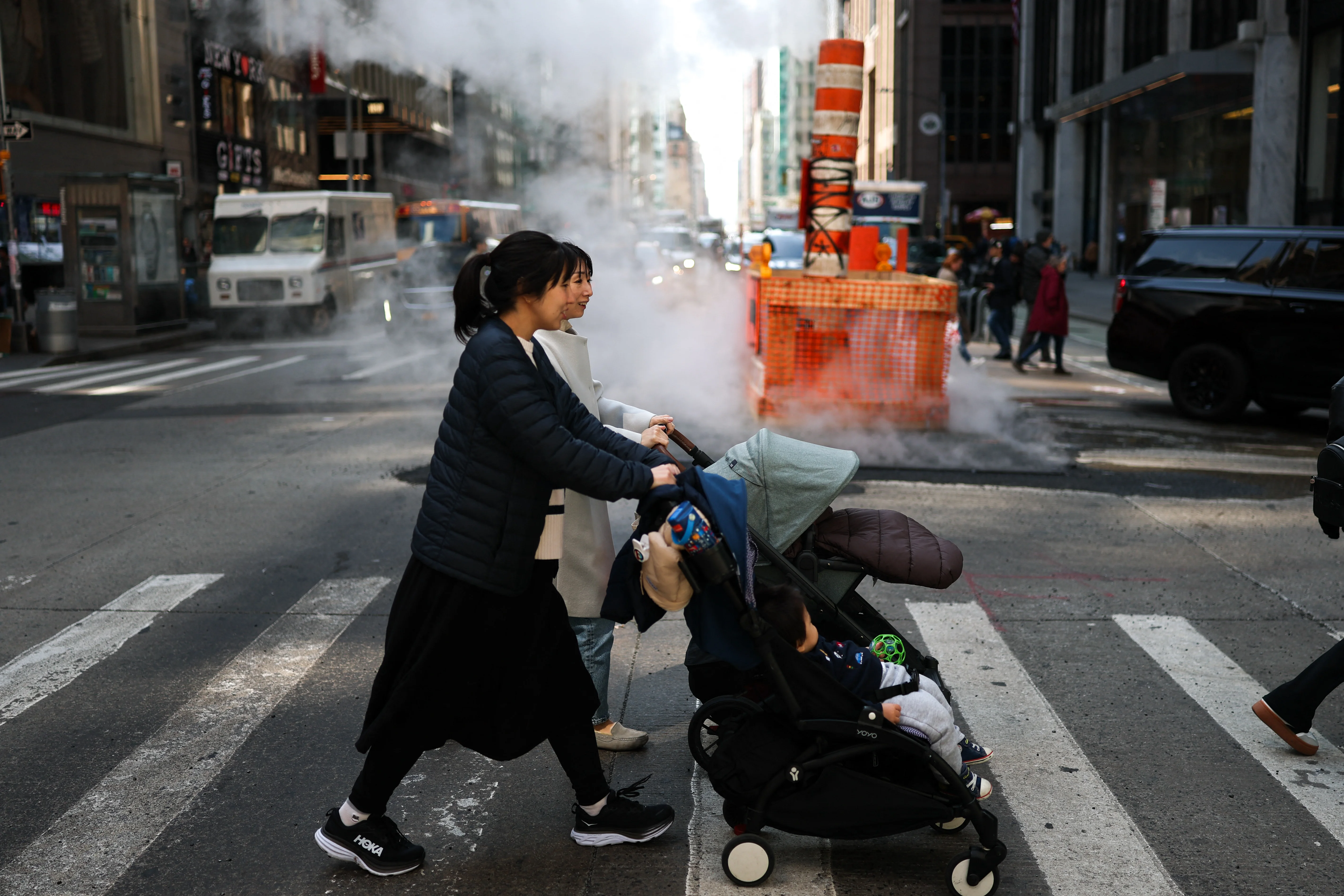
The U.S. birth rate fell to its lowest level ever recorded, according to a report from the Centers for Disease Control and Prevention. The drop would have been greater, but women over age 30 are having more children.
(Image credit: CHARLY TRIBALLEAU)

Is your Medicare Advantage plan ending next year? Here's what to know

Medicare open enrollment runs through Dec. 7, and for as many as 5 million seniors, it will be important to log on and pick a new plan.
(Image credit: Jim Watson)

A theatrical dancer on a pristine limestone mountain in East Java: Mohammad Nur Nasikin’s best phone picture
The photographer hopes his image of a father and son practising a traditional Indonesian artform will go some way towards preserving it
Early this summer, in a pristine, limestone mountain range in the East Java province of Indonesia, Mohammad Nur Nasikin met with the father and son pictured here. His aim was to capture a character from a treasured Indonesian theatrical dance and art form called Reog Ponorogo.
“Bujang Ganong is one of the characters in the dance; a young regent who is agile, skilful and clever,” Nasikin explains, “Mr Hanafie, on the left, is a true artist, skilled in many Javanese arts. He’s wearing the traditional costume worn by a Bujang Ganong dancer: a wooden ganong mask, and a bright red waistcoat, a shoulder cloth known as a sembong, and loose‑fitting trousers called katok panji. At his feet is his drummer – his son Tirta, which means ‘water’ in Javanese.”
Continue reading...Fine ‘headphone dodgers’ if you will, but to really tackle antisocial behaviour, Britain should look to Japan | Emily Bratt
Working in Japanese schools, I saw how teaching young people civic pride creates adults with consideration for others
There are two types of people who listen to music in public: those who wear headphones and those who … are a word I probably can’t use here. “Loudcasting” – playing audio, watching videos or talking on speakerphone in public spaces – is a form of antisocial behaviour that drives eight in 10 of people in the UK crazy, and I’m glad Andy Burnham is one of those eight. But while I welcome his policy to fine “headphone dodgers”, I’m not convinced it will solve the problem.
This behaviour isn’t only a nuisance, but a grave indicator of a deeper societal issue: the erosion of empathy. You can’t legislate civic pride into an individualistic culture where feelings of social disconnection are widespread.
Continue reading...Forget the Live Aid image, Africa is only a broken continent in the minds of the west | Moky Makura
Innovators and business leaders are driving progress across the continent-wide, but the ‘visibility gap’ prevents the rest of the world from truly seeing it
Thirty years ago, shortly after South Africa emerged from apartheid, I left London for Johannesburg in search of a better life. Not long afterwards, a friend who was preparing to visit from the UK called with an intriguing question: do they have ATMs in South Africa?
After I picked myself off the floor, I explained that not only did South Africa have ATMs, but in many respects its banking system was far more advanced than the one I had left behind in Britain. She was surprised and – dare I say – delighted that she wouldn’t have to lug a wad of cash around South Africa after all.
Continue reading...Verse from Qu’ran inspired US man to leap on runaway school bus and halt it
Ebro Ahmed, who acted after driver’s medical emergency, said he hopes incident will show Eritreans ‘in a good way’
A man who hopped on to a school bus full of terrified children that was careering down a Minnesota street after its driver had a medical emergency and manually halted it says he was motivated to act by a Qu’ran verse about how saving one life is equivalent to saving all of humanity.
“I’m a numbers guy, and those numbers make sense to me,” Ebro Ahmed, 27, said on Friday during an interview about his actions four days earlier in front of his family’s convenience store in Saint Paul, Minnesota. “I didn’t do it for me. It was selflessness in the name of God.”
Continue reading...The Qubitunes Soundstage Toy Is a Great Gift for Kids
Our Brains Weren’t Built for This Much Comparison

More than 20? Or less than 75? As I scan my feedback on a recent social media post, my brain just can’t seem to help registering the number of “likes.” I’m not alone.
Under a recent settlement that Meta recently reached with states, Facebook and Instagram are about to look different for minors Among the new protections, one seemingly modest change caught my eye. By default, users under 18 will no longer be able to see likes and other reactions in response to their posts or those of others. The reforms are designed for children and teenagers, but touch on a psychological phenomenon just as relevant to adults. As a psychiatrist, I found myself wondering: Why does that little number beneath your post matter so much?
The answer has less to do with social media and more to do with an ancient human tendency: social comparison. Social comparison is the psychological process by which people assess themselves, including their own abilities, opinions, and achievements, in relation to those of others. Likes can both reward us and rank us. They show us that people are validating our posts and also quantify that validation.
We know how much approval we receive relative to what we might have expected, what we got the last time we posted, and what others receive. Feedback is scored. Likes are just one example. Follower counts, views, and shares are other metrics that make social information measurable. When social approval is numerically valued, comparison becomes harder to avoid.
From an evolutionary perspective, social comparison may have served an adaptive purpose. Humans evolved in social groups. Knowing where you stood relative to others might have helped you identify what behaviors were approved, whether you belonged, and how to navigate hierarchy. But moving beyond prehistoric time to the last century, comparison still had constraints. Your 25-year high school reunion? It happened once in your lifetime, maybe in a city far away from you, with only your fellow classmates in attendance. Now, the high school reunion lives in the device in our hands, capable of giving anyone quantitative signals from a vast reference group at any moment on our personalized scoreboards of social approval. If the subjective question is whether we belong, what can feel like an objective answer is the 100 likes our post gets from 2,500 followers. The scale, frequency, quantification, and accessibility of social comparison have all changed.
Our brains weren’t built for this much comparison. Neuroimaging studies show that our brains allocate value to how we believe we stack up next to others. Downward social comparison, in which we learn someone performs worse than us, can engage neural circuits associated with reward and valuation. Upward comparison, in which we learn someone performs better than us, can engage neural circuits associated with processing unpleasant emotions. These are ways in which our brains process social outcomes much like other kinds of gains or losses.
But our brains don’t just register numbers; we also tend to evaluate their meaning. In one study, likes functioned as a type of currency that adult users compared themselves on, shaping how they felt in that moment. In another set of studies, adults who made more frequent and extreme upward comparisons reported an immediate decline in self-evaluation and cumulative declines in self-esteem and life satisfaction over a browsing session. Research has also found that across generational groups, greater user tendency to engage in social comparison, together with greater maladaptive ways of coping with emotions, is associated with more symptoms of anger, anxiety, and depression.
Social comparison isn’t inherently harmful. But as repeated opportunities to compare mount, the mental health effects can add up.
While hiding likes may not eliminate social comparison, it does remove a metric from the scoreboard. The instinct to compare or desire to belong won’t just vanish. But even if we might wonder where we stand next to who’s performing better, there’s a difference between wondering and a number answering that question for us.
Social media didn’t invent our instinct to compare ourselves to others. We’ve had that for millennia. What it did was shift the environment surrounding our instincts, encoding one form of social feedback into numbers we can monitor.
That's why changing our relationship with social comparison will mean more than adapting digital platforms. What do we value? What gives us purpose? What makes our lives matter?
The cultural shift that lies ahead is to ask the questions about our social worth that don’t need a scoreboard to answer.
Делаем анкету персонажа с помощью Nano Banana, Krea 2 и Grok

Анкета персонажа нужна для того, чтобы лучше понимать что из себя представляет наш герой или героиня. Он служит референсом для игродельческой команды и это помогает держать character improvement более-менее в условном “унисоне”.
Сегодня попробуем сделать качественные анкеты для персонажей фэнтези-игры с помощью трех моделей: Grok Image 2.0, Krea 2 и Nano Banana Pro.
Читать далееВ каких областях нейросетевой текст уместен, а в каких мгновенно отпугнет читателя?
Чем дальше, тем больше в интернете ИИшного контента, и эта тенденция никуда не денется. Мне лень подтягивать статистику, но я смутно помню, что количество нейрослопа превысило количество человеческого текста уже год назад. Распознавать, где ИИ-шный текст, а где человеческий мы всё еще неплохо умеем, но вот эмоциональная реакция на нейросетевое творчество отличается от области к области.
Читать далееBritish woman dies trying to save sons on Bahamas snorkelling trip
Mother, 36, died after current off North Bimini reportedly swept away two boys, who were later rescued, police say
A British woman has died in the Bahamas while trying to rescue her two sons after a current swept them away as they were snorkelling.
The Royal Bahamas police force said it had launched an investigation after the death of a 36-year-old woman on Tuesday.
Continue reading...Becky Barnicoat on scary outfits for Halloween – cartoon
Trump is trying to overturn an election that hasn’t happened yet

President Donald Trump’s Justice Department filed a lawsuit on Thursday seeking to block former Democratic Rep. Mary Peltola’s victory in the 2026 US Senate election. If you’re confused by this development, you should be. Because the election won’t happen for more than a week.
The case arises out of an odd candidacy that might undercut incumbent Republican Sen. Dan S. Sullivan’s reelection bid against Peltola. A man named Dan J. Sullivan also secured a spot on the ballot, and Republicans fear that the not-Senator Sullivan’s presence on the ballot might trick voters who wish to vote for the incumbent into voting for the not-senator instead.
In the abstract, it’s a fair concern. But there are two reasons to doubt that not-Senator Sullivan will attract many voters who actually wanted to vote for the Republican. According to a sample ballot published by Alaska’s Division of Elections, Sen. Sullivan will be identified as a “Registered Republican” and as the “Incumbent,” so voters will be told which Dan Sullivan to vote for if they wish to reelect the one who is actually a senator.

Additionally, Alaska uses ranked-choice voting, a system where voters rank candidates in order of preference, and votes cast for losing candidates are redistributed to voters’ next choice. So an Alaska voter who wants to reelect the Dan Sullivan who is actually a senator, but who is confused as to which Dan Sullivan is the incumbent, can simply rank both Dans Sullivan as their top two choices, and the ranked choice system should ensure that their vote is counted as a vote for Senator Sullivan (and against Peltola).
The question of whether not-Senator Sullivan may appear on the ballot, moreover, has already been litigated. Initially, the Alaska Division of Elections, which is led by a Republican, attempted to disqualify the not-senator because it concluded that he did not seek election to the Senate in “good faith.” Not-Senator Sullivan sued, and an Alaska court ordered him reinstated as a candidate because “the Division’s decision to exclude Mr. Sullivan from the primary ballot was based on a ‘good-faith’ requirement that does not appear in the U.S. Constitution, the Alaska Statutes, or the implementing regulations adopted by the Division” — that is, there is not actually a law that prevents the not-senator from running, even if he is intentionally running as a spoiler candidate.
This lower court order was affirmed by the Alaska Supreme Court last June. If Republicans thought that this decision violates federal law, they could have asked the Division of Elections — which, again, is run by a Republican — to appeal to the US Supreme Court.
Instead, they appear to have let the issue lie until less than two weeks before Election Day, when Trump’s Justice Department filed a new, federal lawsuit claiming that not-Senator Sullivan’s presence on the ballot is somehow illegal, and asking a federal court to preemptively block a Peltola victory in the upcoming election. Trump says that he personally told the Justice Department to file this suit.
It is difficult to find an actual legal argument, much less a persuasive one, anywhere in the Trump DOJ’s complaint initiating the lawsuit. Trump’s lawsuit also runs afoul of something called the “Purcell principle” — a concept that, ironically, the Supreme Court reaffirmed the same day that the Trump administration filed its suit — which says that federal courts should be reluctant to intervene in election-related disputes when the election itself is about to happen.
It is likely, in other words, that the Trump administration’s attempt to overturn a Democratic victory that hasn’t even happened yet will fail. But the mere existence of this new lawsuit, which is known as United States v. Alaska, is an ominous sign that the Trump administration will use every tool in its shed to overturn Democratic victories in the upcoming election.
So what are the actual legal arguments in the Alaska case?
It is a bit of a stretch to even describe the Justice Department’s complaint in this case as a “legal” document, as the complaint does not so much as point to any law that either not-Senator Sullivan or the state of Alaska may have violated, and instead vaguely alludes to legal sources that use terms like “integrity.”
Specifically, the Justice Department points to a federal law which says that it has four purposes, one of which is to “protect the integrity of the electoral process.” It also points to the Supreme Court’s decision in Bullock v. Carter (1972), which said that “a State has an interest, if not a duty, to protect the integrity of its political processes from frivolous or fraudulent candidacies.”
But the statute that Trump’s lawyers quote, the National Voter Registration Act of 1993, does not concern which candidates’ names should appear on the ballot. As its name suggests, it is a law about voter registration, and it imposes requirements on states, such as requiring them to register voters when those voters obtain a driver’s license.
Similarly, while Bullock does include a single line indicating that states may enact laws targeting “frivolous or fraudulent candidacies,” nothing in the opinion suggests that sharing another candidate’s name makes someone’s candidacy frivolous or fraudulent. The decision itself concerned unusually high fees charged to a candidate for public office in Texas, and the Court concluded that Texas’s fees were unconstitutional.
The line about “frivolous or fraudulent candidacies,” meanwhile, was included to clarify that states still have some power to regulate ballot access. While Bullock concluded that Texas’s fees were excessive, the opinion also suggests that states may impose more reasonable filing fees on candidates to discourage unserious candidates from seeking office. Alaska, for example, charges a modest filing fee of $100 to US Senate candidates.
The Trump DOJ’s entire argument, in other words, appears to turn on the fact that it identified two legal sources that use the word “integrity” in contexts that bear little resemblance to the Alaska case.
Nevertheless, Trump’s lawyers claim that the court must prevent Alaska from certifying a Peltola victory “pending an investigation to determine whether votes cast for Daniel J. Sullivan were meant to be cast for Senator Sullivan.”
This lawsuit also cannot be squared with one of the Republican Party’s favorite legal doctrines
Even if Trump’s Justice Department had a persuasive argument that leaving not-Senator Sullivan on the ballot is illegal, they should still lose Alaska because they waited too long to file the case.
In Purcell v. Gonzalez (2006), the Supreme Court warned that “court orders affecting elections, especially conflicting orders, can themselves result in voter confusion and consequent incentive to remain away from the polls,” and it added that this “risk will increase” as Election Day draws closer. More recent decisions, many of them joined only by the Court’s Republicans, have read this “Purcell principle” quite expansively to forbid federal courts from issuing election-related decisions in the months leading up to an election. Justice Brett Kavanaugh has even claimed that Purcell prevents federal courts from issuing election-related decisions as soon as nine months before the general election date.
Supreme Court decisions invoking Purcell to shut down lower court orders altering a state’s election rules are now very common in the weeks leading up to an election. On Thursday, for example, the Court relied on the Purcell principle to block a lower court order that would have made it easier for college students to vote in New Hampshire. The Court began its decision with this line: “This Court has repeatedly emphasized that lower federal courts should ordinarily not alter the election rules on the eve of an election.”
Trump’s DOJ, meanwhile, did not even file its lawsuit seeking to preemptively invalidate a Peltola victory until less than two weeks before Election Day. If Purcell means anything, it must mean that a federal court cannot force Alaska to kick a candidate off the ballot mere days before a federal election.
British woman dies trying to save sons on Bahamas snorkelling trip
Mother, 36, died after current off North Bimini reportedly swept away two boys, who were later rescued, police say
A British woman has died in the Bahamas while trying to rescue her two sons after a current swept them away as they were snorkelling.
The Royal Bahamas police force said it had launched an investigation after the death of a 36-year-old woman on Tuesday.
Continue reading...Mum who died trying to save sons swept away in Bahamas was hero, husband says
What This Democrat’s Surge in Texas Says About the Midterms
They Were Accused of Illegal Fishing. They Ended Up in ICE Detention.
Looting Left Damage and Fear on Paradise Street in Marseille
How Vivek Ramaswamy’s Ruthless Ad in Ohio Divided Republicans
What to Know About Alaska’s Senate Race
5 Takeaways From Our Investigation of Trump’s Waivers for Polluters
How Trump Gave the Worst Polluters a Free Pass
Новый приказ «Сколково» о доходах: как считать 70/30 и не ошибиться

20 октября 2026 года Фонд «Сколково» наконец утвердил приказ о долгожданном порядке расчета суммы профильных доходов участников Сколково. С января резиденты могут получать доходы от иной деятельности, но их доля не должна превышать 30% всех доходов. Вот только как именно считать эту долю, до сих пор было непонятно.
Порядок должен был утвердить отдельный приказ, и вот, спустя 9 месяцев, он с нами) Спойлер: приказ получился коротким и лишь определил бухгалтерскую базу расчета, перечень исключаемых доходов и формулу прибыли, которую нельзя распределять.
Читать далееTwo rescued after Nairobi building collapse with five still missing
Vincent Kompany to miss ‘weeks, not days’ with virus treatment, say Bayern Munich
Head coach in hospital after collapsing in training
Assistant coach Aaron Danks to take charge against Freiburg
Bayern Munich expect Vincent Kompany to miss an extended period as their head coach continues his hospital treatment for a virus after collapsing on the training pitch on Friday. Speaking at a press conference on Saturday, Bayern’s sporting director, Max Eberl, confirmed Kompany was still in hospital in a stable condition.
Kompany’s English assistant coach, Aaron Danks, will replace the 40-year-old for Sunday’s Bundesliga match at Freiburg. Eberl said examinations were continuing to determine the nature of the former Manchester City and Belgium captain’s condition, with a recovery timeframe yet to be determined.
Continue reading...