9 утра, 2028 год. До первой сессии остаётся двадцать минут. Клиент уже заполнил дневник состояний, система собрала записи за неделю, отметила повторяющиеся темы и подготовила черновое резюме. Психолог читает его, вычёркивает два слишком смелых вывода и меняет план встречи. Через час ИИ напомнит клиенту об упражнении, которое они выбрали вместе. С чем работать и куда двигаться дальше, решит специалист.
Это сценарий, а не прогноз с гарантией. Но главный сдвиг в нём уже виден: ИИ заберёт часть операций, перекроит рабочий процесс и добавит неприятный вопрос об ответственности. Профессия целиком никуда не денется. Зато привычный рабочий день вполне может.
Calls grow for inquiry into media reporting of the case as Cambridge chancellor criticises ‘racist feeding frenzy’
A Windrush campaigner who launched a fundraiser for Jason Arday’s family has said the outpouring of support shows “Britain still cares”.
Arday, who was found dead on Friday, had resigned the previous week from his post as professor of sociology of education at the University of Cambridge after allegations of plagiarism were made against him.
The UN rights chief voiced alarm Monday at the rising civilian toll of escalating hostilities in Yemen, urging restraint and an immediate de-escalation to avoid plunging the country back into a full-scale war.
“I urge all parties to halt immediately any actions that risk returning Yemen to full-scale conflict,” Volker Türk said in a statement, as renewed fighting between the Houthi rebels and the government undermined a 2022 truce.
The head of U.S. Central Command visited the USS Lincoln over the weekend amid questions over when the ship will return from the Middle East. Families of sailors and members of Congress raised concerns over conditions on the ship during its nine-month deployment. Charlie D'Agata reports.
A Trump-appointed bank regulator has given conditional approval for World Liberty Financial, a crypto business established by President Trump's sons and the sons of special envoy Steve Witkoff, to become a bank. Nancy Cordes reports.
Actor Hayden Panettiere, known for her roles in "Remember the Titans" and "Heroes," has died at 36, her publicist confirmed. CBS News' Bradley Blackburn reports.
Привет, Хабр. Я Матвей Лихота, старший Go-разработчик и DevSecOps. Как это часто бывает с внутренними инструментами, идея этой утилиты появилась уже после того, как у нас упал прод. Во время хотфикса сотрудник забыл обновить в одном из двух сервисов версию библиотеки с контрактами и в результате в зависимостях осталась предыдущая версия. Перед слиянием код собирался и тесты проходили, но после деплоя сервис упал с ошибкой 500: новое поле в структуре запроса не появилось на сервере. Пришлось откатить изменения и даунтайм был ощутимый.
Снова попадать в такую ситуацию никому, конечно, не хотелось. Можно было бы добавить пункт в предрелизный чек-лист, но кто будет заполнять его во время хотфикса? Можно было еще раз напомнить разработчикам про версии, но такие напоминания работают от силы пару недель, а потом об этом снова забывают.
Тогда я решил, что теперь проверять актуальность зависимостей будет CI. Так и появился Dependency Validator.
Но вместо этого убила себя. Это история Apple Copland, операционной системы, на которую возлагали огромные надежды, но, как обычно, что-то пошло не так…
Один хакер полтора часа исследовал поддельный Bitrix-сервер: нашёл конфигурацию, извлёк ложные учётные данные базы, попытался выгрузить таблицы и записать PHP-файл.
Другой клиент отправил в открытый Ollama-compatible API 27 тысяч реальных задач. Самый большой промпт содержал 919 тысяч символов. Модели за API при этом не было.
Я три месяца наблюдал за двумя среднеинтерактивными ханипотами — традиционным SCADA/Bitrix-стендом и поддельным AI gateway. В статье разбираю 2,5 млн событий Cowrie, стотысячный MySQL password spray, 183 сохранённых payload, массовую эксплуатацию AI API и MCP-разведку.
Amodo Design engineer Carl Heimann stands before a rack of Nvidia chips at an Amodo facility in Sheffield, England. —Courtesy of Tom Milton—Amodo
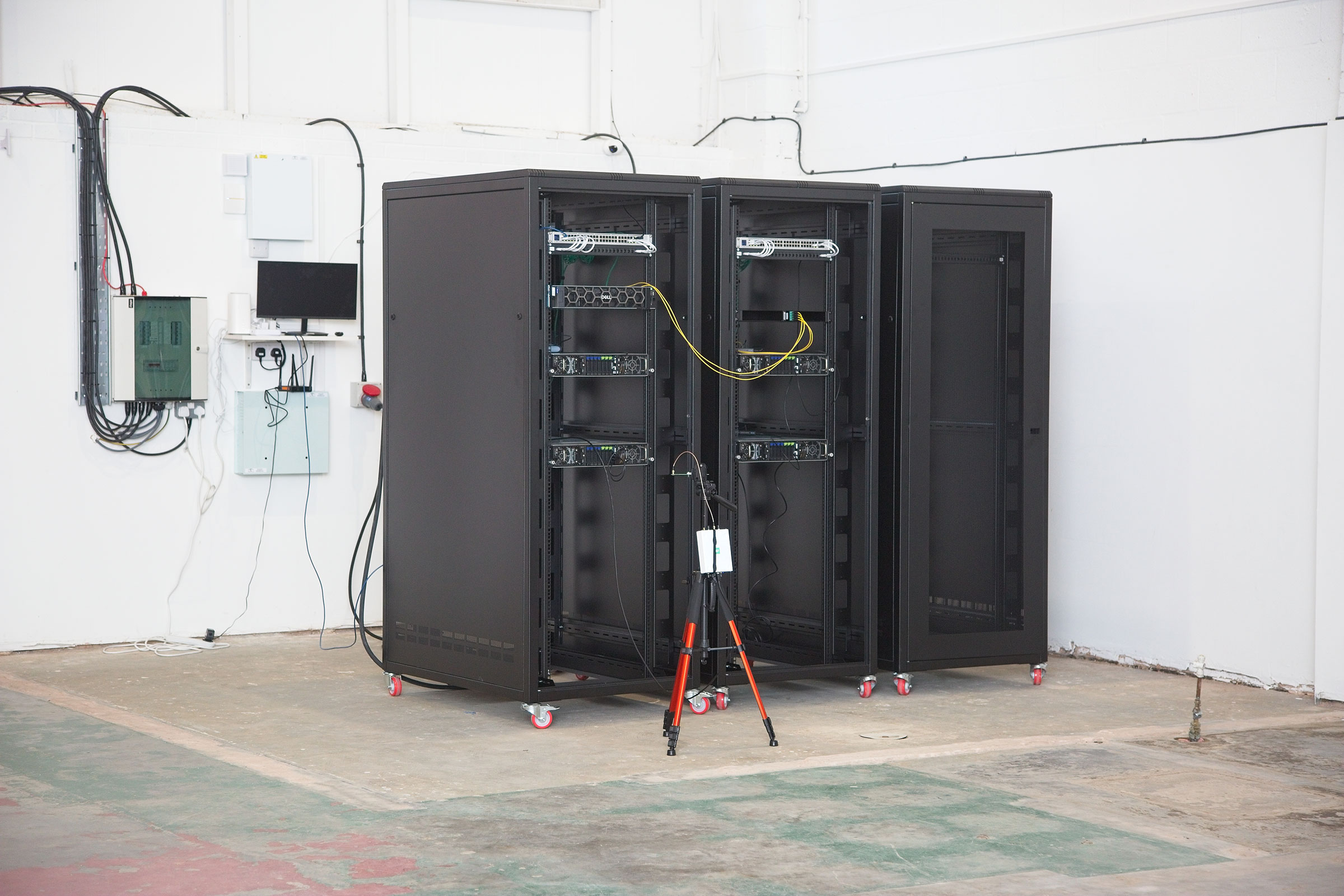
In the corner of a nondescript office in Sheffield, a city in the north of England, a compact server full of Nvidia chips is whirring away.
It’s a microcosm of the huge data centers springing up all over the globe: town-sized, energy-guzzling computers that are the worldly manifestations of frontier AI models.
Here in Sheffield, on these eight chips, engineers from the consultancy Amodo Design are piloting a monitoring system that they hope, one day, might find its way into every data center, allaying the fears of AI researchers who are concerned that the technology they are building may destroy the world.
In late July, more than 1,300 employees of frontier AI companies signed an open letterwarning that their AI is quickly becoming so powerful that humans may soon no longer be able to control it. Slowing the pace of AI development, they warned, may become vital in order to allow more time for safety research, and thus avert catastrophe. But slowing down, they wrote, is essentially impossible, due to intense competition between companies and countries. The AI race is stuck in an arms-race dynamic, these top scientists say, in which one team slowing down would only hand victory to rivals that don’t.
The letter’s main request—one so important to 1,300 of the world’s top AI researchers that they called publicly for it—was for the U.S. government to support an international effort to build tools that would enable all sides to slow down the AI race.
So far, only a small group of people are working on this effort. There are fewer than 50 engineers in the world working full-time on building so-called “AI verification” tools, Amodo CEO Tom Milton estimates—nine of them at Amodo—plus a few dozen more policy researchers scattered among a handful of companies and research institutes. Meanwhile, trillions of dollars, and the combined might of the world’s biggest tech companies, are now dedicated to making AI systems more powerful as quickly as possible. Efforts to build slowdown tools are funded mostly by academia and philanthropy. (Amodo’s work in this area is funded by the Survival and Flourishing Fund and Longview Philanthropy, two grantmakers that have donated heavily toward reducing AI-related risks.)
“It is surprising that very few people are doing it,” says Milton, a 28-year-old who fell into the field almost by accident several years ago, when Amodo was commissioned to do some work in the area.
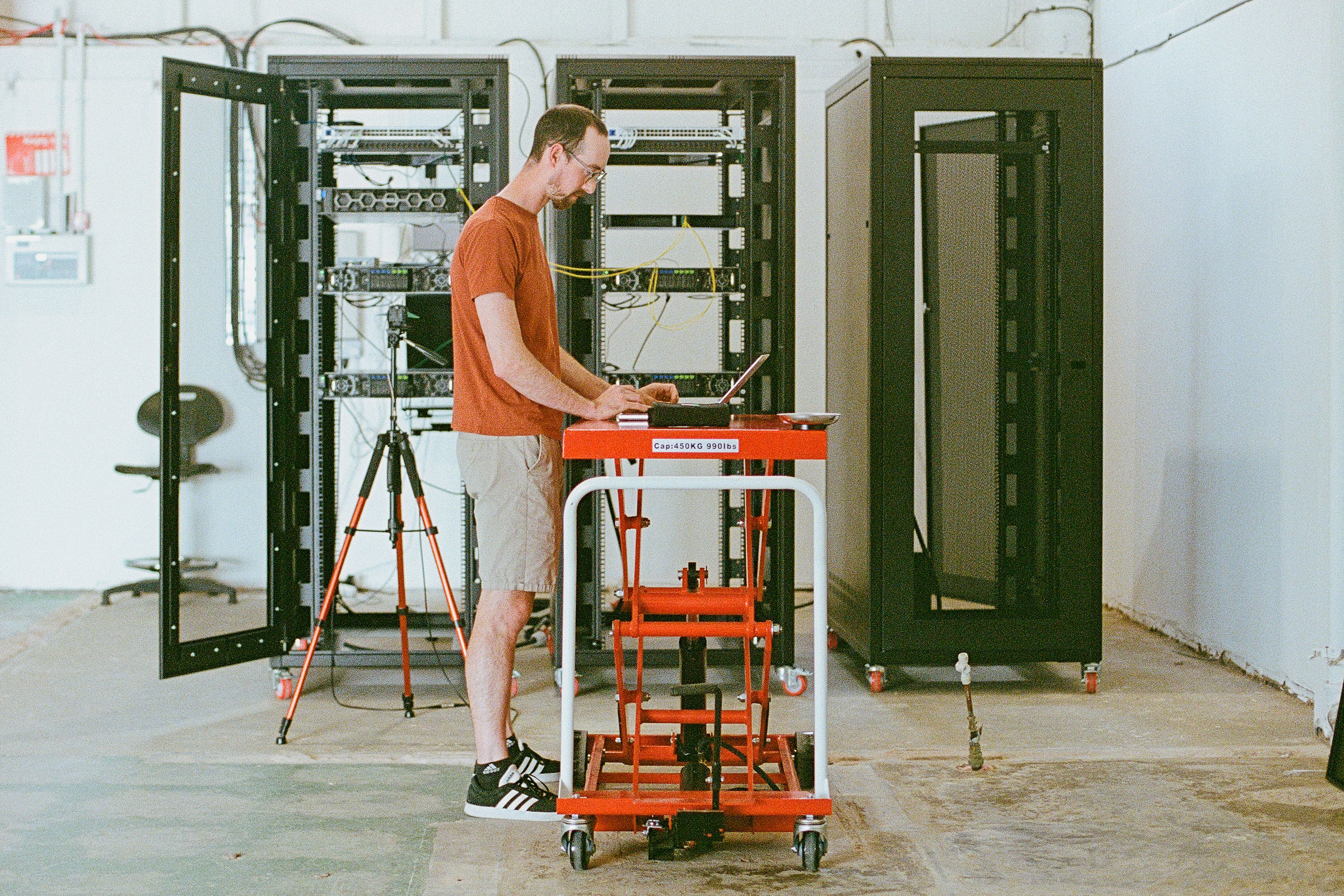
In Sheffield, three workers are huddled around their compute cluster, under an air conditioning unit that is running on full-blast. Their small-scale prototype may be running hot, but it isn’t ready yet. Many technical obstacles remain in its way, plus a bigger political one: it won’t be useful unless the U.S. and China come to the table and agree on an AI slowdown treaty, Milton says.
For now at least, such an agreement looks unlikely. But Amodo’s engineers are keenly aware that political choices are downstream from what is possible. Treaties that curtailed the Cold War arms race were only possible because new technologies, like satellites and seismometers, allowed each side to verify the other’s compliance. Milton expects a similar moment to arrive for AI. When that moment comes, he wants to be ready.
Halfdan Holm, an Amodo staffer, adjusts the server rack that is running Amodo's recomputation algorithm in Sheffield, England —Courtesy of Tom Milton—Amodo
How AI verification might work
Nobody knows how an AI slowdown treaty might look, but Amodo’s engineers believe it will probably require monitoring data centers, given that these are the places where AI physically lives.
The current prototype that Amodo is building could make it possible to gain two assurances about a data center that might be helpful in the years to come, Milton says.
First, that a data center is only being used for inference. That means the running of existing AI models, rather than the training of new, more powerful ones.
Second, that a data center is running a particular, agreed-upon model—for example, one that has passed certain safety tests, perhaps ones that have been set down in law.
To demonstrate how this might work, an Amodo engineer logs into the whirring server rack, where he spins up two separate systems, each containing an open-source AI model made by OpenAI.
Think of the first system, he says, as an AI model that a company would normally run in a data center. The second system is the “verifier,” he explains. Its job is to sample snippets of data from this data center and rerun them on its own version of the model, thus confirming that the model is the one the data center operator claims it to be.
When he demonstrates it, the system works—at least on its own terms. The verifier performs some calculations on the outputs of the original AI model, and spits out a high certainty score that this model is GPT-OSS-120B, which is exactly correct.
A rack of Nvidia chips at an Amodo facility in Sheffield, England —Courtesy of Tom Milton—Amodo
The limitations
There are several significant problems that point to Amodo’s solution not yet being ready for prime time.
For now, it only works with unencrypted data, which makes it unfeasible for the most sensitive workloads, which are routinely encrypted. (Milton says the next version of Amodo’s prototype will utilize “zero-knowledge” cryptography, which would significantly reduce the amount of unencrypted data needed.)
A second limitation is that a system like this would require data centers to be retrofitted, including a process ominously named “network tapping,” which involves copying data from working chips onto other verification systems within the same building. Given that these are some of the highest-security buildings on earth, housing trillion-dollar intellectual property and masses of private data, that’s access that no leading AI company is likely to be willing to grant, at least today.
But it doesn’t have to be as scary as it sounds, Milton says. There are precedents in the history of arms control—including nuclear and chemical weapons—for international bodies to carry out inspections of sensitive facilities. These inspections can guarantee that a facility is compliant with international law, without revealing the secrets of how it works to adversaries. Amodo hopes to build on these principles, aiming to build a system that would only send low-information signals like “passed” or “failed” outside of the data center’s secure walls.
(Amodo says it plans to open-source all of its work on AI verification, so that all sides can interrogate it, understand exactly how it works, and be confident it lacks security vulnerabilities.)
Another limitation is that the verifier system requires computing power in order to run. That could substantially reduce the total capacity, and thus profitability, of any data center that hosts it. The system witnessed by TIME required computing power equal to between one-third and one-fifth of the AI model it was monitoring. Amodo’s engineers say they expect to find substantial further efficiency gains, in particular because the system could theoretically be set to monitor only random samples of a data center’s computation, rather than every single calculation, in order to achieve its intended result.
Milton acknowledges that for now at least, Amodo’s tech isn’t perfect. The idea, he says, is for it to improve significantly over time, ultimately reaching a point where it becomes minimally invasive and maximally privacy-preserving. “We tend to be of the mind that verification mechanisms will ladder up, and they won't be perfectly trustable and perfectly secure on day one,” he says. “Over time, we can get to systems that can be verified in much more detail.”
There are many individual AI researchers, Milton says, who are paid more than the single-digit-million dollar budget for his entire project. A full-scale effort, of the kind that AI workers asked for in the open letter, might quickly result in more sophisticated tools.
“It is insane for us to think that we are even a noteworthy participant in this,” Milton says. “Let alone one of the largest projects.”
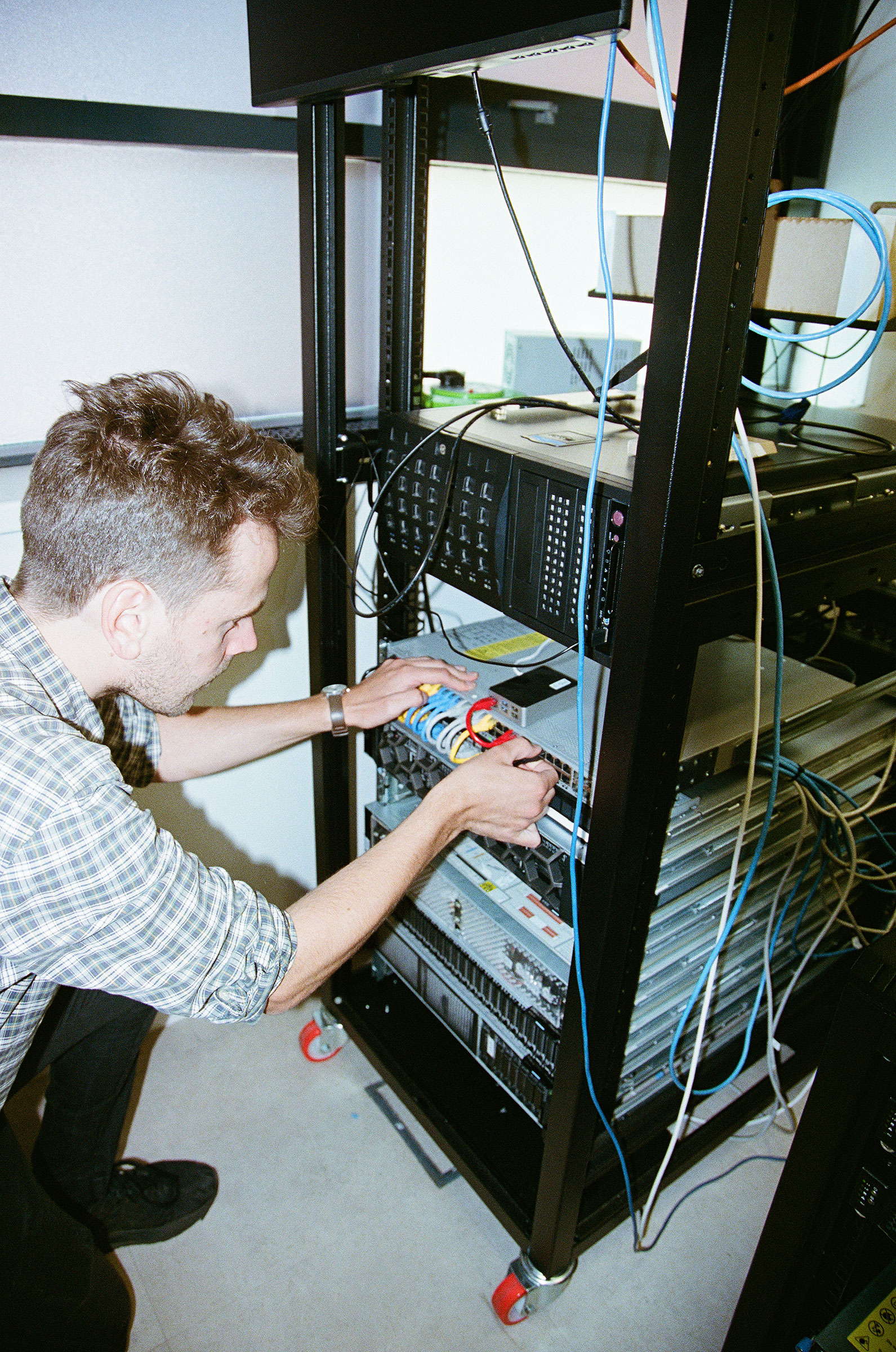
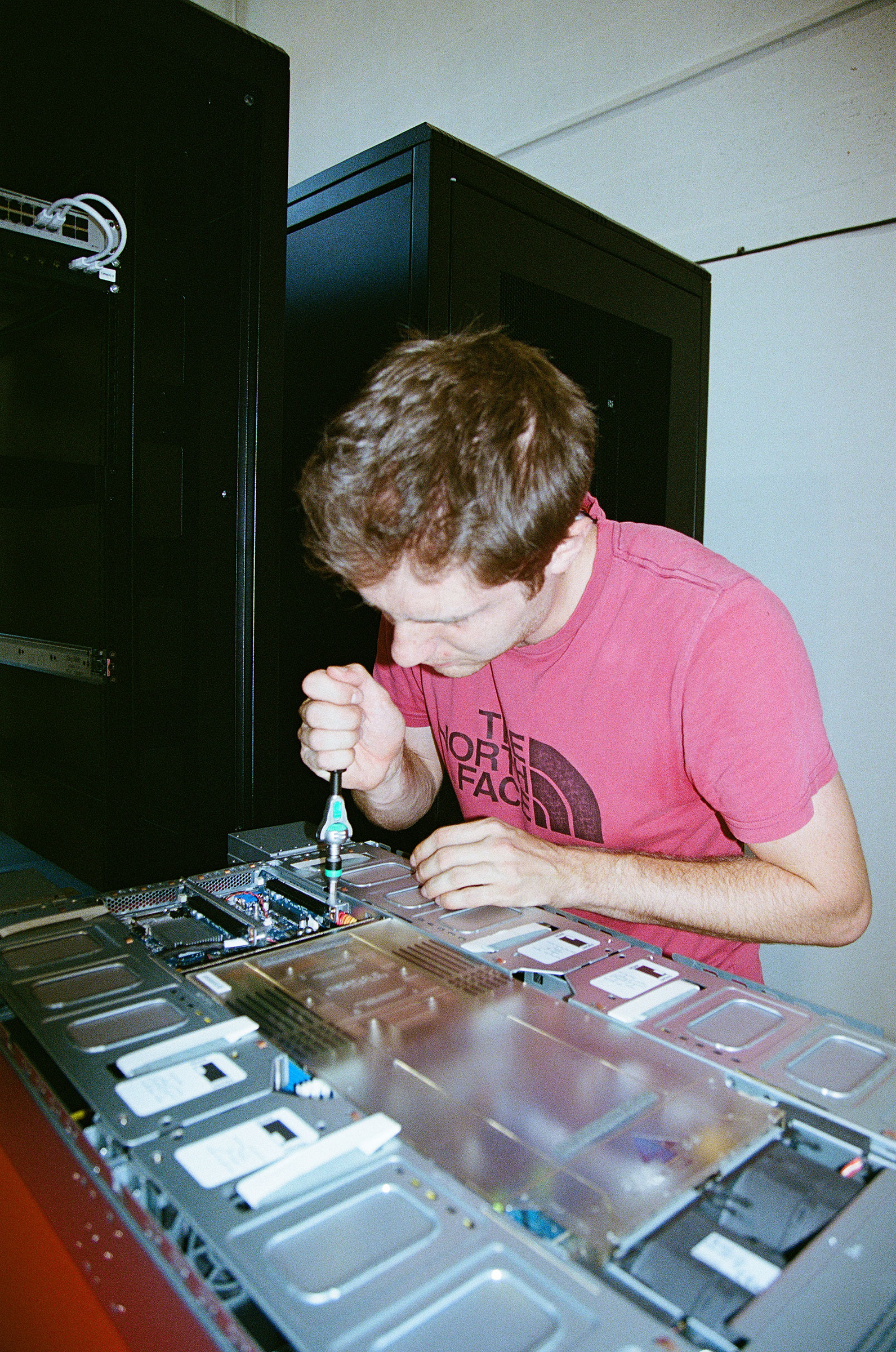
Sam Reynolds, an Amodo engineer, adjusts a server in Sheffield, England —Courtesy of Tom Milton—Amodo
Is it politically possible?
While AI verification tech remains nascent, the acceleration of AI capabilities in recent months has led to a surge of interest in the field.
The Institute for Progress, a think-tank, recommended in August that the U.S. government collaborate with frontier AI labs, chipmakers, and hyperscale data center builders, plus other governments, to accelerate the development of AI verification tools. “If the nuclear arms control precedent is any indication, the ability to verify that agreements are being upheld is often necessary for parties to enter into them in the first place,” it wrote. “Better verification technology would unlock a broader space of possible agreements.”
It is a view shared by the authors of AI 2040, a follow-up to the widely-read essay AI 2027. Their so-called “Plan A” for humanity to navigate the arrival of superintelligent AI safely makes heavy use of data center monitoring technologies.
And Anthropic recently announced it would devote resources to “help build the systems that a credible slowdown or pause would require.” Those systems, it said in a June blog post, “would enable frontier AI developers to verify that others globally have actually stopped or slowed, and that a bad actor could not use the auspices of a coordinated slowdown to jump ahead in secret.”
Milton says Amodo has held some preliminary discussions with governments about its work, although he declines to say which governments, or to share specifics.
For now, at least, it seems clear the U.S. government does not share the enthusiasm.
“We totally reject global governance of AI,” the director of the White House office of science and technology policy, Michael Kratsios, said in February. “We believe AI adoption cannot lead to a brighter future if it is subject to bureaucracies and centralized control.”
It’s true that since that speech in February, the White House has slightly moderated its approach to AI regulation, having been spooked by the cyber-warfare capabilities of recent models into testing some frontier models before their release. But White House officials remain highly skeptical of heavy-handed interventions in the AI industry, especially ones that might be perceived as allowing for ground to be lost to China. “We refuse to stifle [AI] innovation with overly burdensome regulation,” President Trump wrote in the introduction to a June executive order.
China, meanwhile, appears to still be pursuing its strategy of releasing open-weight models in an attempt to catch up to the U.S. frontier.
In other words: neither great power is exactly clamoring to agree on an AI treaty. Officials from the U.S. and China are planning to meet in September to discuss the growing risks of AI, Reuters reported, though that meeting is more likely to focus on immediate security issues.
Milton is unfazed by what appears, for the moment, to be the political unfeasibility of putting this technology to use. He expects that more powerful AI models will soon arrive, with scarier capabilities. At that point, he expects, both the U.S. and Chinese governments will be “sufficiently scared”—and might come to the table. That possibility, he says, is likely enough “that money should be spent on building the optionality for it.”
The cleanup is beginning in Hawaii after it was hit by Hurricane Lala, which has now weakened to a tropical storm. Floodwaters washed out roads, and thousands of people are without power. Jonathan Vigliotti reports.
Actor Hayden Panettiere has died at the age of 36, her father confirmed in a statement. The star was known for her roles in "Heroes" and "Nashville." Gayle King has a look at her life and career.
Hayden Panettiere is remembered by fans and Hollywood following the actor's shocking death at 36 years old. Plus, a look at the damage left behind by Hurricane Lala after it slammed Hawaii with strong winds and torrential rain. All that and all that matters in today's Eye Opener.
Когда-то наш почтовый загрузчик был обычным методом с @Scheduled. Раз в 30 минут он подключался к ящикам, искал новые вложения и запускал их обработку. Решение было простым, понятным и долгое время вполне рабочим.
Через несколько итераций вокруг того же загрузчика уже существовали IMAP IDLE listener'ы, PostgreSQL leases, heartbeat экземпляров приложения, перебалансировка почтовых ящиков между pod'ами, UID checkpoints, постоянная идемпотентность и отдельная обработка FolderClosedException. В какой-то момент мы даже попробовали держать несколько IMAP-соединений к одному ящику, но затем сознательно удалили эту часть архитектуры.
Это история не о том, как мы «заменили polling на push» одной настройкой. Она о том, как безобидный интеграционный адаптер постепенно превратился в маленькую распределённую систему. И о границе параллелизма, которую мы сначала провели не там.
Cucumber and avocado gazpacho and addictive carrots: when it’s too hot to cook, contrast, texture and seasoning bring dishes to life
Heat brings caramelisation, char, the slow collapse of ingredients into something rich and deep, but when it’s too hot to cook, flavour has to be built differently – through contrast, texture and a more deliberate hand with seasoning. Salt, in particular, becomes transformative: drawing out moisture, softening structure, shifting raw into something more yielding. That principle underpins this carrot salad, inspired by the Japanese yamitsuki (‘addictive’) method most commonly used on cabbage, while a chilled cucumber gazpacho offers clean, cooling clarity.
Opening statements are set to begin Monday in the Tupac Shakur murder case, as a now 63-year-old man is tried for the 1996 killing of the rap icon. Duane “Keefe D” Davis, who authorities say was the “shot caller” in the murder, is now finally set to stand trial for one of the biggest murder mysteries as lawyers look to lay out what really happened the night Tupac was fatally shot. NBC’s Dana Griffin reports for TODAY.
Grant cancellations at leading research institutions appear to target study of impacts of racism on brain health
A new round of scientific grant cancellations has hit brain health and Alzheimer’s disease research at two leading research institutions, Emory University and the University of Pittsburgh.
The latest cancellations are the Trump administration’s most recent effort to remove disfavored topics from the National Institutes of Health (NIH) $47bn scientific portfolio – and appear to target the study of the impacts of racism.
I understand gen Z’s concerns about the cost of romance. But anything can be a date if you want it to be
A couple of months ago, I wrote a column imploring young people to keep trying to find love, to not become cynical about romance and avoid the temptation of the accursed “loneliness influencers” peddling antisocial behavior as some sort of newfangled experiment that no one had thought of before. I stand here today saying, hey, I can’t be right all the time. Maybe it is better to be alone, since it costs a hell of a lot less.
Apparently, young people across the country are forgoing dating because it’s too damn expensive. Or at least, I think they are, based on the multiplenewspaperarticles saying so that came out in the last two weeks. As the New York Times put it, the “prospect of a tab of $150 or more for two entrées, two drinks, an appetizer and tip” is too pricey for many gen Z singles. I say, only $150? Where are you going, Chili’s? I went on a date with (shameful brag incoming) a very famous political figure from the late 90s and spent twice that amount, sending my bank account into cardiac arrest. I practically begged her to get dessert, even though it was clear our decade of age difference and general lack of chemistry meant I was better off going home and journaling about it. I paid for the whole thing, and in return, I got an amazing story to tell at parties.
Hi-tech cameras orbiting Earth and on the ground, along with AI, help firefighters extinguish blazes before they spread
The fires in Spokane, Washington, this summer are the latest reminder that when a wildfire is detected can be just as important as where it starts. A blaze found within minutes can often be contained before it spreads. Wait too long, and a small spark can become a major disaster.
A new effort to shorten that timeline began in July when a SpaceX rocket carried the first three FireSat satellites into orbit. The trio is the first part of a planned network of 50 satellites built solely to spot wildfires while they are still small enough to stop.
Я Полина, директор по продукту в компании, где мы делаем бытовую технику. Я выбираю будущие модели, тестирую и дорабатываю их, прежде чем они попадут к покупателям. Недавно в продаже появился наш новый робот-пылесос.
Расскажу, как вообще родилась идея его выпустить, как я выбирала образец, что в нём дорабатывала и почему принципиально не читаю инструкции.
Сервер отвечает с задержкой, сайт еле открывается, а причина нагрузки неочевидна. В статье разберём пошаговую диагностику Linux‑сервера: как проверить CPU, память и диск с помощью top, free, vmstat, iostat и iotop, найти процесс‑виновник и понять, куда копать дальше.
CEO Anthropic Дарио Амодей срочно созвал заседание. Экс-глава Apple Тим Кук пожалел, что встроил в айфоны облачную Gemini, так и не дождавшись локальной модели нужного уровня. Где-то в датацентрах Alibaba щёлкнул рубильник, на Hugging Face слетел обратный отсчёт, и в мир вышла Qwen3.8-27B – новая dense-модель на 27 миллиардов параметров, которую даже прозвали «локальным Opus’ом», поскольку она позиционируется как одно из самых мощных открытых решений для локальной генерации.
Ждали её всем миром: обратный отсчёт на huggingface, первые пиксельные пеликаны на великах – всё как положено.
Если вкратце, это открытая (Apache 2.0) мультимодальная модель, которая понимает текст, картинки и видео, влезает в одну ооочень мощную домашнюю видеокарту, а временами по бенчмаркам обгоняет закрытые облачные модели уровня Claude Opus 4.6.
Если не вкратце – читайте дальше, потому что там есть и триумф, и зависания на 49 минут раздумий!
Grant cancellations at leading research institutions appear to target study of impacts of racism on brain health
A new round of scientific grant cancellations has hit brain health and Alzheimer’s disease research at two leading research institutions, Emory University and the University of Pittsburgh.
The latest cancellations are the Trump administration’s most recent effort to remove disfavored topics from the National Institutes of Health (NIH) $47bn scientific portfolio – and appear to target the study of the impacts of racism.
Calls grow for inquiry into media reporting of the case as Cambridge chancellor criticises ‘racist feeding frenzy’
A Windrush campaigner who launched a fundraiser for Jason Arday’s family has said the outpouring of support shows “Britain still cares”.
Arday, who was found dead on Friday, had resigned the previous week from his post as professor of sociology of education at the University of Cambridge after allegations of plagiarism were made against him.
С развитием генеративных нейросетей в Сети появилось множество советов, как повысить видимость сайта в ИИ-поиске. Проблема в том, что многие рекомендации пока не подтверждены или вовсе основаны на мифах, которые постепенно начали воспринимать как проверенные факты.
Apache Kafka можно бесплатно скачать, развернуть и подключить к приложениям. При небольшом проекте этого может быть достаточно: создали несколько топиков, настроили потребителей — и обмен сообщениями работает.
Но по мере роста инфраструктуры Kafka перестает быть просто брокером. От нее начинают зависеть функциональность микросервисов, интеграции, тестовые стенды, CI/CD‑процессы и рабочие системы. Вместе с нагрузкой растет и список вопросов: как обновлять кластеры, отслеживать очереди, устранять уязвимости и восстанавливать работу после отказа.
Меня зовут Илья Виссарионов, я директор департамента «Аппаратно‑системная платформа» компании «Диасофт», и в этой статье расскажу, как мы используем Kafka в DevOps‑инфраструктуре «Диасофта», какие проблемы обнаружили при эксплуатации под высокой нагрузкой и почему в итоге стали рассматривать брокер сообщений не как отдельный open‑source‑компонент, а как полноценную инфраструктурную платформу.
Полтора месяца ушло на то, чтобы среди кучи вакансий, не стыкующихся с моей учебой в универе, найти этот бриллиант. Вернулся я однажды с пар, сижу на бирже труда — и нахожу объявление: «Учитель информатики для детей, без опыта, требования — студент вуза на технической специальности».
Шел на собеседование с мыслью: раз я инженер, с техникой работаю нормально, то и детям объяснить получится, слова попроще подберу. Никогда до этого отклика я всерьез не рассматривал себя в роли преподавателя. Да и какой из меня преподаватель — для этого вроде педагогический нужно оканчивать.
Через пару дней такой работы я был приятно удивлен. Я думал, что шел на эту работу как на простой способ заработка: отработал норму — свободен. А по факту я стал смотреть на мир совсем другими глазами. Этому меня научили дети.
Самое опасное в больших языковых моделях — то, насколько легко с ними можно что-нибудь сделать. Вернее, даже не так: прототип продукта с LLM сделать удивительно легко, а вот хорошее приложение на его основе — удивительно трудно.Именно об этот подводный камень и спотыкаются большинство разработчиков на этапе перехода от минимально работоспособной модели к созданию полноценного продукта. Причина, на самом деле, банальна: между «смотрите, я за вечер навайбкодил работающего чат-бота» и «этим ботом ежедневно пользуются десять тысяч человек» лежит примерно такая же пропасть, как между собранным в гараже прототипом карта из водопроводных труб с мотором от триммера и гоночным болидом «Формулы-1».
Всем привет! Меня зовут Алёна, я руководитель группы аналитики отдела Compliance и безопасности данных в Ozon. Звучит длинно, поэтому мы с командой называем себя просто датасеками — от Data Security. В информационной безопасности я почти 13 лет, из них 4,5 года в Ozon. До этого больше восьми лет работала в интеграторе и занималась в основном персональными данными и банковской безопасностью — вопросами чистого compliance. Сейчас у меня команда из 11 человек, и мы занимаемся безопасностью данных в Ozon.
Сегодня хочу поговорить об одной важной теме — аудитах безопасности данных. Речь не про пентесты, нет, у нас совсем другая история. Мы смотрим на безопасность данных — и персональных, и финансовых, и любых других данных, которые нужно защищать по требованиям закона, компании или здравого смысла. Расскажу вам о сложностях и о том, как мы с ними справлялись.
Высокий уровень observability в наше время — такое же необходимое условие для любого проекта, как и высокая доступность или производительность. Мы стараемся собрать и сохранить максимум метрик, чтобы понимать, в каком состоянии находится наша система и куда это состояние дрейфует. Собираем максимум логов, чтобы понимать, что происходило. Но даже когда логов и метрик настолько много, что для них собираются свои логи и метрики, иногда этого бывает недостаточно. Иногда нужно понимать не ЧТО и КОГДА, а ПОЧЕМУ.
В мире Kubernetes такой источник есть — events: именно они отвечают, почему под перезапустился, почему не смог подняться, почему не встал на ноду. Парадоксально, но эти чрезвычайно важные сведения довольно неудобно извлекать, а по умолчанию через час они уже исчезают. С этим обычно мирятся — ровно до утра, когда нужно объяснить, почему ночью упали сборки. Дальше история одного такого утра: начинается она с двух неудачных пайплайнов, заканчивается часовым окном нестабильности, задевшим 46 namespace'ов, и ни одной улики к моменту расследования в кластере уже не остаётся.
Переменные в сервере Angie используются для расширенного управления обработкой запросов, более гибких конфигураций, а также получения подробной информации о клиентах и запросах. Постараемся разобраться со всем спектром возможностей переменных в Angie.
The USS Washington is on its way to the Middle East to relieve the USS Lincoln amid concerns about conditions aboard. And, Jared Kushner is expected to meet with Prime Minister Netanyahu to move Gaza talks forward.
<a href='https://news.sky.com/story/politics-latest-andy-burnham-labour-kemi-badenoch-tories-nigel-farage-reform-12593360?postid=12239264#liveblog-body'>Burnham 'exchanged messages' with impersonator pretending to be Trump official</a>
Google’s most capable Flash model for coding, with a limited time discount.
Most of the coding you do in a day doesn’t need a flagship model. It needs a good one that won’t have drained your budget by lunchtime. That’s the thinking behind Junie’s new default, Gemini 3.7 Flash. It’s live now in both the IDE plugin and Junie CLI, and for a limited time it runs at 40% off base pricing.
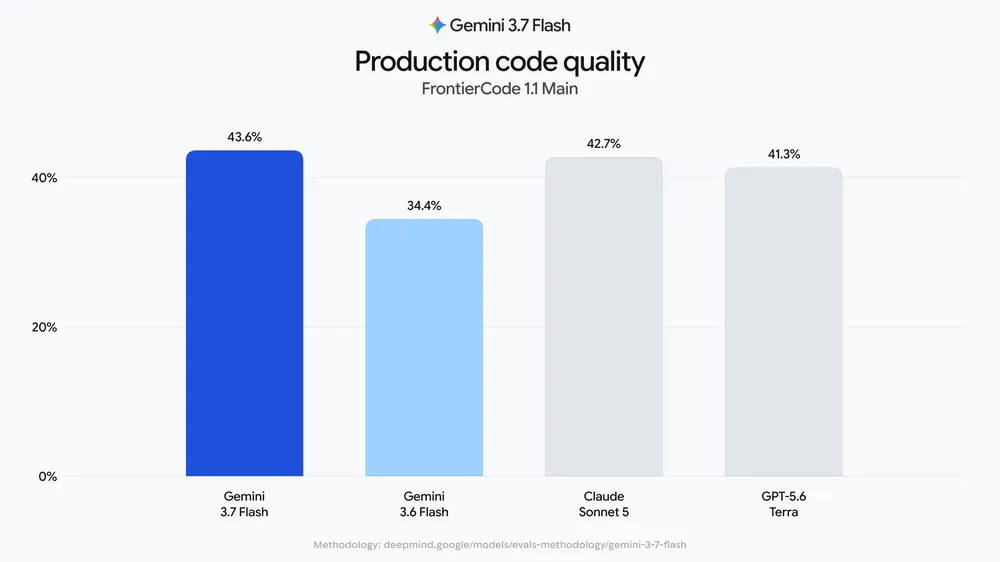
Gemini 3.7 Flash is Google’s most capable Flash model yet for coding and agents, and it’s a clear step up from the 3.6 Flash it replaces. In Google’s own testing*, it resolves far more long-horizon software-engineering tasks (DeepSWE v1.1: 65.3% vs 49.0%) and writes more production-ready code (FrontierCode 1.1: 43.6% vs 34.4%), with higher first-pass accuracy and fewer retries. On everyday coding work that means less manual oversight, not a downgrade you accept to save money.
We evaluate every model on JetBrains’ own private test set before it goes anywhere near Junie. On a private benchmark built from real, recent commits in our own projects that no model has been trained on, Gemini 3.7 Flash matched the solve rate of our premium Sonnet-5 midtier model, at roughly a third of the cost per task.
So this is a better default and a cheaper way to do premium-class work, not a downgrade you accept just to save money.
40% OFF to start
For a limited time, Gemini 3.7 Flash runs at 40% off base pricing in Junie. It’s already the default, so there’s nothing to set up. Open the IDE plugin or Junie CLI, run a real task, and see how much you might save.
Объектные хранилища, работающие по протоколу S3, уже давно стали де-факто стандартом для работы с неструктурированными данными — от бэкапов корпоративных систем до наполнения озёр данных (Data Lake) для аналитики. Однако переход от простого использования API к построению на базе S3 отказоустойчивой и безопасной инфраструктуры часто оказывается сложнее, чем кажется на первый взгляд, а многие встроенные механизмы остаются невостребованными. И связано не столько с отсутствием бизнес-потребности, сколько с недостаточным пониманием того, как именно эти функции работают.
Чтобы устранить подобные «слепые зоны», в статье разберём, как с помощью объектных хранилищ решаются ключевые задачи обеспечения безопасности, катастрофоустойчивости и эффективности хранения.
Ну что же — то, чего все ожидали (не путать с «ждали») случилось. Многие российские сайты и сервисы начали переходить на сертификаты Минцифры — и у пользователей начали ломаться работавшие ранее сервисы, пользователи начали получать сообщения, что подлинность ресурса не может быть проверена. Кто‑то просто не смог продлить свой сертификат, у других сертификаты вообще были отозваны — но, в конечном итоге, это приводит к одному и тому же результату — из-за проблем с сертификатом сайты некоторых российских компаний перестают открываться через HTTPS (каковой де‑факто уже давно стал стандартом), а получить новые сертификаты становится проблемой.
Для того, чтобы обойти это ограничение, многие российские подсанкционные компании начали использовать так называемые сертификаты Минцифры — сертификаты, подписанные российскими удостоверяющими центрами с корневым сертификатом, вылущенным Минцифры. Чем это грозит пользователю?
Привет, технари, я на Хабре недавно, решил делиться своей экспертизой и общаться с единомышленниками, чтобы иметь окружение схожих себе и обмениваться опытом. Сам своими руками сделал более 70 интеграций Битрикс24 и AmoCRM за 3 года, есть что выложить из опыта.
Отделам продаж постоянно нужны отчеты: конверсии, звонки и так далее, но особо развитым кампаниям надо отчеты уже кастомные, не шаблон. Если брать шаблонные отчеты в Битрикс24, то там кусок фронта достаточно шаблонный, что и обычно для CRM которая «для всех», это же не самописка. Там есть Конструктор отчетов, но там тоже очень много ограничений.
А если РОП или директор по продажам хочет кастомный отчет? В Rest API лезть?
При большом желании можно и в API лезть, но в Битрикс24 есть промежуточный вариант, полушаблон, полукод (кастом) — BI конструктор.
Как современные LLM получают разные настройки reasoning effort: системные промпты, SFT, RLVR, штрафы за длину, reasoning budgets и on-policy-дистилляция. Разбираем DeepSeek V4, Nemotron 3 Ultra, Kimi K2.5 и K3, GLM-5, Qwen3 и Inkling.
VPN шифрует содержимое трафика, но это не делает соединение невидимым для сети. IP‑адреса, handshake, размеры пакетов, тайминги и поведение потока могут использоваться для классификации даже без расшифровки данных. Разберемся, что видит DPI, как работают fingerprinting и active probing и какую роль в этой архитектуре играют VLESS, XHTTP и REALITY.
Рабочие, перестраивающие старый дом в Бельгии, нашли в стене подвала под ним клад — золотые слитки и монеты, общая стоимость которых может достигать девяти миллионов евро.
Премьер-министр Великобритании Энди Бернем некоторое время переписывался с человеком, выдававшим себя за главу аппарата Белого дома Сьюзи Уайлс. После нескольких сообщений он заподозрил, что общается не с Уайлс, а с самозванцем.
A rare hurricane in Hawaii pummeled the Big Island and Maui over the weekend, leaving thousands without power, causing widespread damage, stranding tourists and prompting officials to issue a major disaster declaration. NBC’s Morgan Chesky reports and TODAY’s Dylan Dreyer shares the forecast.
Restaurant critic and award-winning food writer Jimi Famurewa travels from Belfast to Edinburgh and London to meet the inventive DIY chefs stretching US, Italian and British pizza styles to come up with delicious new flavour combos