RSS Feeds
The map showing world's division over Infantino
Yii1: извлечение Active Record в отдельный composer пакет

Может показаться, что старый Yii1 в 2026 году уже никому не нужен. Но, на удивление, проектов, застрявших на этом фреймворке, довольно много. Чаще всего сдерживающими факторами от переезда являются размер проекта, какие‑то свои надстройки над фреймворком или отсутствие денег у бизнеса. Переезд сопряжён с рисками получить два проекта на годы вперёд. Параллельно требуются какие‑либо доработки, что требует вдвое больше ресурсов и от разработчиков, и от бизнеса.
Последний год я активно изучаю устройство современных PHP‑фреймворков и PSR‑стандарты. Относительно недавно мне пришла мысль: а что ценного есть в Yii1 и что блокирует возможность быстро съехать на другой фреймворк? Ответ довольно банален — это Active Record. Можно сказать, что это сердце фреймворка. Почему же так получилось? Как ни странно, внешний API данного слоя довольно неплох даже в 2026 году, не говоря уже о 2008-м, когда он появился на свет, а скорее всего, намного раньше.
Что же мы имеем из возможностей данной ORM?
Читать далееEye Opener: How Trump was secretly moved off Air Force One amid threats from Iran
Trump secretly moved in catering truck to new plane in Turkey amid Iran missile threat
Omar says federal agent was posted outside monthly meeting in Minneapolis suburb
Arsenal’s Myles Lewis-Skelly offered to Manchester United as left-back solution
Chelsea also made aware of 19-year-old’s availability
Newcastle’s Lewis Hall remains prime United target
Myles Lewis-Skelly has been offered to Manchester United as a potential left-back option, with Arsenal wishing to recoup some of the £75m paid to Newcastle for Bruno Guimarães.
Chelsea, it is understood, have also been made aware of the 19-year-old’s availability. Lewis-Skelly won the Premier League under Mikel Arteta last term, but whether the west London club will make a move for him is unclear.
Continue reading...‘I feel motherly towards them’: the nature reserve manager sharing her office with a wasp nest
Eilish Rothney’s first instinct was to get rid of the wasps entering her converted shipping container in Norfolk. Now she enjoys their constant hum
When wasps began streaming through a rusted gap in her office door one June morning, Eilish Rothney’s first instinct was the same most people would have: get rid of them. The reserve manager for the Trinity Broads, part of the Norfolk Wildlife Trust, had discovered a wasp colony taking up residence in her office, a converted shipping container.
“They just built the nest inside my door,” she says. “My first thought was: ‘Oh no, I have to get rid of that now.’ But then I realised: ‘Wait, why? Why do I have to do that?’”
Continue reading...AI agent hacks gym to get its owner spot in pilates class
How £30m Charles became Northern Ireland's most expensive footballer
Palace co-owner spoke to McNeil's partner before move
Anthropic says it will watermark text generated by its AI models
Rep. Lauren Boebert's son arrested, accused of sexual exploitation of a child
[Перевод] RGB‑значения нужно нормализовать делением на 255 или на 256?

Допустим, вы пишете программу для обработки изображений. Программа получает изображение, преобразует его в значения с плавающей запятой, выполняет обработку и сохраняет изменённые пиксели на диск в виде 8-битных цветов. Сегодня я хочу рассмотреть вопрос преобразования целых значений в значения с плавающей запятой. Существует два решения, которые на Python и NumPy выглядят так:
Стандартное деление на 255
pixels = img / 255.0result = process(pixels)output = np.trunc(result * 255 + 0.5)
Альтернативное деление на 256
pixels = (img + 0.5) / 256.0result = process(pixels)output = np.trunc(result * 256)
Я предполагаю, что в обоих случаях выходные значения ограничиваются перед окончательным преобразованием типов:
# Ограничение и преобразование в 8 битoutput_8bit = output.clip(0, 255).astype(np.uint8)
В стандартном случае целочисленный 0 соответствует 0.0, а 255 соответствует 1.0. Это работает абсолютно нормально и именно так всё реализовано в GPU. В альтернативном случае прибавляется смещение на 0,5 и деление происходит на 256, поэтому целочисленный 0 соответствует 0.5/256=0.001953125. Это неудобно, потому что код обработки изображений, например, без знания константы не сможет обнаруживать чёрные пиксели. Из‑за этого мы привязываем логику к 8-битным значениям, даже если вычисления выполняются с плавающей запятой. В стандартном решении всегда можно предполагать, что чёрный соответствует 0.0.
Однако некоторых программистов всё равно притягивает альтернативное решение. В чём дело? Чем оно им так нравится?
Читать далееThe Meaning of Roots at 50
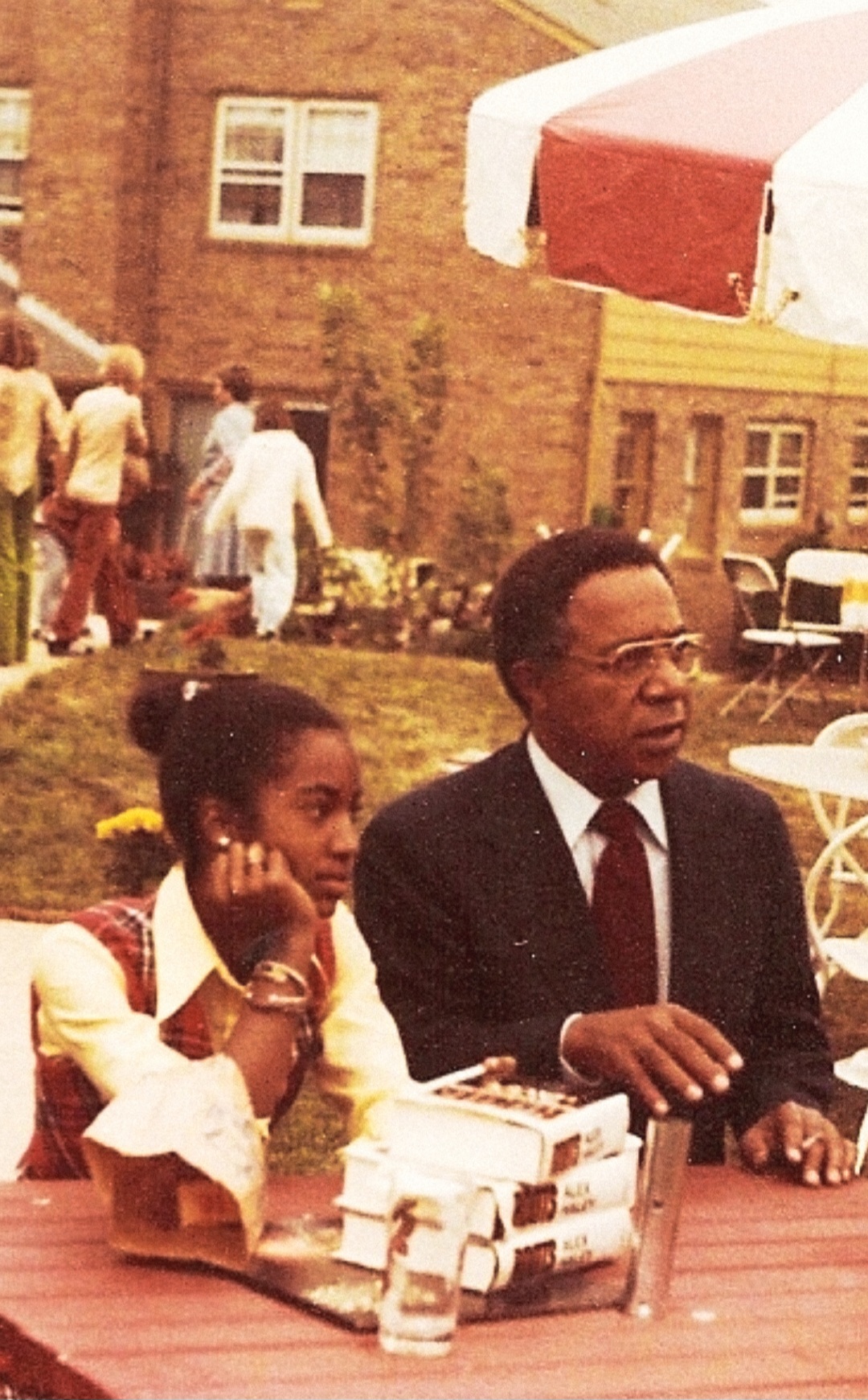
Two days before my 39th birthday, I sat in a small boat making its way up a deep river lined with rooty mangrove trees. Though I had never been to this place, it felt hauntingly familiar, like an unlived memory. This was the River Gambia, and it was taking me to the village of Juffure.
It was February 2001. Three years earlier, President Bill Clinton had appointed my father, George W. Haley, U.S. ambassador to the Republic of Gambia. Like an act of poetic atonement, America sent the great-great-great-great-grandson of a slave back, as a diplomat, to the country whence his ancestor had been kidnapped. From my first breath of Gambian air, every step felt like an introduction to my whole self. But the most extraordinary moment was when I walked into Juffure, as my uncle, Alex Haley, had done 33 years earlier on his journey to writing Roots: The Saga of an American Family, and discovered our beginning.
As soon as the boat reached shore, I gazed into some three dozen eyes that looked like mine, many belonging to my cousins, unmet and however many times removed, and imagined how Uncle Alex felt when he first set foot there. I thanked him silently for his sacrifice and perseverance.
How does a single book at once condemn and captivate a nation? Fifty years ago this August, Roots did just that. In 1976, the bicentennial of the United States of America, Alexander Murray Palmer Haley saw the story he had carried since childhood, then researched and written over 12 years, sit atop the New York Times best-seller list for 46 weeks, spending 22 at No. 1. A U.S. Coast Guard veteran and freelance writer had dispelled any notion of it having been born the land of the free that its anthem professed, and the entire country, it seemed, was now on notice.
Alex Haley was my father’s older brother, and a significant presence in my life. He called me his “beloved niece” and “Little Bertha,” the second a loving attribution to his mother. He flew in for ballet performances and piano recitals, sent flowers for a good report card, and bought me my first car. He delivered the commencement speech at my high school graduation, and sat front and center at my college and law-school graduations. I adored him.
And now, all of those conversations around the Thanksgiving table had finally come to fruition. At 14, I innocently felt that his accomplishment was mine too. I had been raised on this story that was now the world’s to know. This was my family. And this is my love letter to him.

Roots sold 1.5 million copies in its first seven months and eventually 8 million, collecting a National Book Award, a special Pulitzer Prize, and an NAACP Spingarn Medal. It was translated into more than 35 languages and adapted into a ratings-smashing TV miniseries. You would be hard-pressed to find anyone born in America before 1980 who does not remember a copy of Roots on the bookshelf or the miniseries playing on the TV. In his Feb. 2, 1977, monologue for the Tonight Show episode on which Uncle Alex appeared, Johnny Carson remarked, “If there’s anyone watching who does not know about Roots, you must have either been out of the country or on Mars someplace.”
But none of this had been Uncle Alex’s wildest dream. All he had set out to do was to find out for himself who the African was. Uncle Alex and his brothers spent most summers on their maternal grandparents’ front porch. There, they would sit rapt, listening to the stories their grandmother Cynthia and her sister friends told late into the night. One such story told of a man brought to America on a boat from Africa that had landed in “’Naplis.” The African’s name was “Kinte.”
The African had been sold to a plantation in Spotsylvania County, Virginia, where he married Bell, the plantation cook. The two had a daughter named Kizzy, which in his native tongue meant “stay put.” So much more the devastating irony when she was sold to a plantation in North Carolina at 16. There, her enslaver fathered her child, George, who became known as Chicken George because of his skills working gamecock fights.
The stories became livelier at this point, and more rich with detail, as these were characters the women had known personally—Chicken George was Cynthia’s grandfather—and they stayed with Uncle Alex. Haunted him, really. Who was this Kinte? Where had he come from? There was no 23andMe then, but there were reams of microfiche at the Library of Congress and ample records in basements of the Churches of Latter-day Saints. There was also, and first, Cousin Georgia.
When my uncle would land in Kansas City, Kans., where my family lived, it was like a rock star on a sold-out tour. We knew he had come to sit at the knee of his grandmother’s cousin, Georgia Anderson, decades after he’d watched her rocking chair keep time on a porch. Now in her 80s, she was the last living repository of the stories of the African, including some of the words of his native tongue: she knew that kamby bolongo meant river, and kora was a stringed instrument like a banjo.
Her recounting, alongside his research, enabled Uncle Alex to learn that these cherished words were of the Mandinka language, spoken primarily in the Republic of Gambia. He made multiple trips on his meager budget, traipsing around a country the size of Connecticut. Had he too much audacity in believing he could reverse the Middle Passage?
Perhaps he was feeling that way when he stepped into Juffure in April 1967, and the griot recited a history that included a 17-year-old Kunta Kinte, who had left the village almost exactly 200 years earlier to gather wood to make a drum for his younger brother and never returned. Uncle Alex carried the other end of that story: where that firstborn son of Binta and Omoro Kinte had ended up on a British slave ship named the Lord Ligonier that set sail from the Gambia River on July 5, 1767, and arrived in Annapolis, Md., on Sept. 29, 1767. One hundred and forty Africans had been smuggled onto that ship. Ninety-eight survived the journey.
Uncle Alex’s arrival in Juffure was a feat of ancestral home revealed and personal mystery solved. James Earl Jones made that moment his own in the Roots miniseries. In his portrayal of Alex Haley there in Juffure, Jones exclaims with bass-toned exuberance: “You old African! I found you, Kunta Kinte!” I always smile at this scene. Knowing Uncle Alex, I imagine that his reaction would have been no less dramatically felt, but more understated. I see him sitting there, knee to knee with the griot. Upon hearing the name Kinte and then calculating the data, I envision him folding in on himself, a gut punch quietly and gratefully received; a recognition of origin, a recompense for every African American back home, a proof of life: before.

This flood of emotions must have ranged from relief to euphoria to mind-splitting fury. Perhaps it inspired the title Uncle Alex originally had in mind Before This Anger. The story we heard was that the publishers were likely apprehensive about putting off a white audience with this title. But its layers of meaning demand excavation. If there was an anger before this one, the inference is that there was a present anger. And was there not, for Black folks in America’s mid–20th century? (And every century before, and today?)
But there is another way to read it. One that reveals that before this anger—before this truncated knowledge that people of African ancestry had been enslaved for 400 years, stripped of their culture, their liberty, and their personhood, then denied civil rights—there was another place across the waters where their forebears were not property but kings and queens. Before this anger was a place where the culture of these people was wholly intact, centuries old, with a foundation so deep that when stripped from its shores, a man had carried it with him and remembered it to those in the place where he landed.
Not long after Roots’ publication, Uncle Alex was challenged by critics who questioned the accuracy of his timeline and suggested the griot told him what he wanted to hear. But as many historians pointed out, to focus on specific dates or dialogue is to miss the larger truth. The “before,” the lineage Uncle Alex uncovered, came to him by way of oral history. This tradition is, almost by definition, imperfect in its translation, especially across centuries. The very nature of the oral tradition, which is decidedly African and characteristically unburdened by the rules of Western record-keeping, is the spirit of its truth, even more than its detail. One’s trust in a griot’s accounting derives from centuries-old reliability. To counter the critics, Uncle Alex himself said while his work was informed by extensive research, the book was not without errors, and certain details were his own literary creation. Today, we call this historical fiction. But for my family, and all those who see their lineage in Roots, this genre designation changes its meaning not one bit. As my uncle told one journalist, “Neither you nor I know exactly what happened. But I stand by Roots as a symbol of the fate of my people.”

Before Roots, most every depiction of our origin had begun with enslavement, as if we had sprung up spontaneously on this soil with sun-kissed skin and woolen hair. Both captor and captive knew that all had not begun here. But the captor would not have been inclined to tell that story, and the captive was not allowed, being not permitted to learn to read or write.
All the more prescient, then, that Kunta would be inclined to tell his daughter his origin story, and teach her words in his native tongue. He likely would not have imagined that those words would lead his descendants back to his beloved homeland. Or perhaps that was his very design. Alex Haley: his ancestors’ wildest dream.
It was a game of generational telephone that allowed the world to know the history of the African American before slavery. Uncle Alex always said Roots was not just the story of the Haley family, but of every African American: “In all of us there is a hunger, marrow-deep, to know our heritage—to know who we are and where we have come from. Without this enriching knowledge, there is a hollow yearning.” Roots gave Americans of African descent an origin that began not in servitude but in freedom.
White America’s fascination is less legible. Maybe it was a need to not be called out, as by Carson. Or maybe people were more open to national truths following the Vietnam War and civil rights movement. The most common memory Black people around my age have shared with me is how, on the days after watching a Roots episode, they would go to school angry. Mean-mugging white classmates who, in turn, were sheepish and chastened. Roots was not intended as a condemnation, but for some, it played like one.
That the TV deal was struck almost before the ink on the manuscript was dry speaks to the inevitability that Roots would be an economic powerhouse, though the book’s immediate popularity surprised even the publishers, selling out an initial print run of 200,000 copies, with Doubleday forced to push out 14 more printings.
ABC must have been surprised too. The network decided to run the miniseries, originally slated to run weekly, on consecutive nights, to avoid a falloff in viewership, but also to get it all in before the ratings period. Some say it was the inclement weather that had people fixed to their TV sets. But maybe America was actually interested in learning about this 11.5% of its population whose culture it had long appreciated. And so, more than half the U.S. population and 85% of all U.S. homes with televisions watched Roots, most every night, for eight sequential nights.
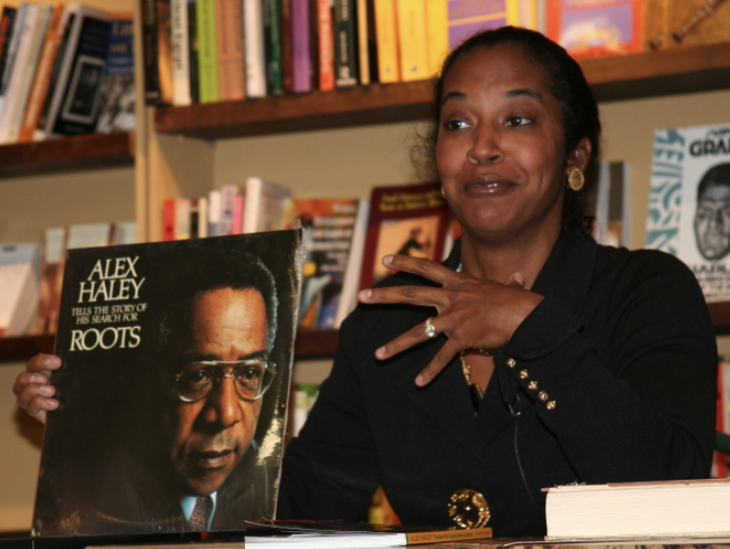
Since Roots was published our country has seen vast increases in Black businesses and Black academia, a Black superhero and a Black President, even as we continue to fight the battles of institutional racism. A 2022 Pew study reported that of the Black Americans who have delved into genealogical research, 77% did so by speaking to their families. I like to think of that as a nod to Kunta, Kizzy, and the art of oral history.
I have a slightly tattered, no matter how lovingly preserved, copy of the Reader’s Digest excerpt of Roots. On its title page is a message from my uncle that reads: “To the next writer in the family. Love, Uncle Alex.” As we mark the nation’s sesquicentennial, I carry that booklet with me like a talisman, a call to arms: Keep telling our story, he tells me. Keep our ancestors alive.
History may depend on it. Earlier this spring, Knox County, Tennessee—the county where Uncle Alex spent his final years, the home of the university where he would donate the majority of his papers and where a public park holds a 13-ft., 4,200-lb. bronze statue of him, in the state that cradles the porch that birthed the book—banned Roots, requiring that copies be removed from school libraries. Ten days later, following swift backlash, the county reversed its decision. The work of the ancestors, or just better minds prevailing? Either way, the lesson is clear. The surest way to preserve one’s story is to keep telling it.
How to jazz up a fruit salad | Kitchen aide
Our panel says fresh is best, petals are pretty and booze can be beneficial – plus other upgrades for this retro summer classic
How can I make fruit salads more interesting?
Claire, via email
There’s a fine line between a boring and brilliant fruit salad, and it comes down to treating it like you would any other salad. “It’s about layering, it’s about texture, it’s about contrast, it’s about colour,” says Gurdeep Loyal, author of Flavour Heroes. That’s not to say it’s the time to be a maximalist, mind. “If you go for six fruits, then you get into the tinned fruit cocktail territory, so be discerning and use a magic triad instead,” he adds, “although don’t feel the need to use a playground mix of colours.” Sometimes it’s nice to have, say, three red things, so keep it in the family with a mix of strawberries, raspberries and a hybrid berry, like tayberries. That said, Loyal is of the strong opinion that “any fruit salad in the world” will greatly benefit from the addition of passion fruit.
Using nice, ripe fruit is a given, but it’s worth considering how you cut it, too : “A persimmon sliced on a mandoline, for example, is a really lovely thing.” Then, season with salt. “It’s the one thing people don’t do enough,” Loyal adds, although a pinch of brown sugar wouldn’t go amiss, either. And it’s hard to deny the transformative power of spices: “Cinnamon works incredibly well with berries; cardamom with tropical fruit; or try more savoury spices like cumin with mango or pineapple.” It would be a mistake to just stick to the spice rack, though: “Grating ginger on strawberries or mango (with a pinch of cinnamon and some lime, of course) will bring heat, as will freshly grated turmeric.”
Got a culinary dilemma? Email feast@theguardian.com
Continue reading...Hotel prices in Europe jump before total solar eclipse
Rooms in Icelandic capital Reykjavík cost double usual rate and Spain also enjoying strong bookings
Hotel prices have surged in key European cities as hundreds of thousands of tourists flock to see the first total eclipse visible from the continent this century.
Iceland’s capital, Reykjavík, has seen one of the biggest jumps in hotel room prices, being one of the few accessible locations to see the full eclipse before evening on Wednesday.
Continue reading...Transfer roundup: Nottingham Forest seal £34m deal for Sporting’s Diomande
Fulham sign Shea Charles from Saints for £30m
Chelsea’s Filip Jorgensen moves to Strasbourg on loan
Nottingham Forest have signed Côte d’Ivoire defender Ousmane Diomande from Sporting for an undisclosed fee, reported to be £34.2m.
The 22-year-old centre-half, who featured in the Côte d’Ivoire’s World Cup squad, has agreed a four-year deal with Forest, who have an option for a further year.
Continue reading...Pete Hegseth’s Pentagon picks raise questions over Trump family business ties
Two advisers have links to a venture fund co-investing in US defense companies that benefit from federal spending
Pete Hegseth’s appointments to a key Pentagon advisory body include two men with ties to the venture capital fund where Donald Trump Jr is a partner, which has lucrative investments in military and space technology.
Defense Policy Board appointee Marc Andreessen’s firm, Andreessen Horowitz, one of Silicon Valley’s largest venture capital firms and known by the name “a16z”, co-invests alongside the Trump partnership 1789 Capital in three defense contractors. Fellow DPB appointee Blake Masters also sits on the boards of three ventures tied to 1789 Capital.
Continue reading...Как мороженое заставляет людей тонуть: главная ошибка корреляционного анализа

Известно, что чем больше продается мороженого, тем больше регистрируется несчастных случаев с утонувшими. Корреляция есть - значит, мороженое опасно?
Эта статья — о том, почему знание правила «correlation ≠ causation» еще не гарантирует, что вы сами на нем не попадетесь
Читать далееЭволюция планировщиков ядра Linux — от O(1) до CFS и EEVDF

Планировщик процессов — одна из важнейших подсистем ядра Linux. Именно он определяет, какой поток получит процессорное время в каждый конкретный момент. Несмотря на многоядерность современных компьютеров, количество одновременно выполняемых задач практически всегда значительно превышает доступные вычислительные ресурсы. Поэтому ядру необходимо постоянно принимать решения о распределении процессорного времени между задачами.
Привет! Я Никита, разработчик системного ПО в Selectel. В этой статье рассмотрим эволюцию трех наиболее известных планировщиков Linux: O(1), CFS (Completely Fair Scheduler) и EEVDF (Earliest Eligible Virtual Deadline First).
Читать далееWhy progressives are backing off “Woke 1”

Welcome to The Midterms, Actually. Every week I’ll be writing about two things: one big idea or trend I see forming across the 2026 primaries, and one thing I’m hearing from a voice on the ground. Let’s get into it.
One big idea: Lessons from “Woke 1”
Earlier this week, Rep. Alexandria Ocasio-Cortez (D-NY) flashed her political dexterity on ABC’s This Week when she was asked about the policies of Peak Woke — call it Woke 1, that stretch around the 2020 pandemic when the American liberal machine seemed to be at its political and cultural height. “I have a local city councilman who has this saying,” the Bronx congresswoman said. “Woke 1 was crazy.”
Rep. Alexandria Ocasio-Cortez on her support for defunding the police in 2020: “During lockdown, of course, rhetoric in that time is not rhetoric that we would use today.”https://t.co/dR4cGgbAq4 pic.twitter.com/e8z7EFyQvU
— This Week (@ThisWeekABC) August 9, 2026
She was quoting a tweet from Chi Ossé, a New York City Council member from Brooklyn, but the point underneath it was the real tell. The Democrats’ emerging left — fresh off primary victories in New York, Colorado, and now Michigan — has developed a playbook for handling any unpopular stance, or tweet, from the early 2020s, whether it’s pandemic masking, defunding the police, or the broader vocabulary of that summer.
The new plan: Brush it off. Then refocus on the present, and on the policies that will actually make people’s lives better.
So far, the strategy is working. Zohran Mamdani walked back his support for defunding the police during his 2025 mayoral campaign and is now the mayor of New York. Darializa Avila Chevalier, the DSA-backed congressional candidate in New York’s 13th District, had a stack of deleted posts that CNN’s KFile resurfaced this June — including one that read “all deportations are wrong.” When I asked her about them, she didn’t disavow a word. She won her primary, albeit in a deep-blue district, anyway. Wisconsin gubernatorial candidate Francesca Hong had a bad case of the woke mind virus in 2020 — the “cancel Thanksgiving” kind — and she’s still in the hunt in this week’s Democratic primary, where her candidacy has been far more focused on issues like data centers and education funding.
Electorally, at least, Ossé has been proven right. The pandemic was wild, and primary voters seem to be extending progressives a grace period of sorts — a chance to reintroduce themselves after workshopping their ideas over the last five years. And while Republicans are still hopeful they can relitigate some of these fights in a general election, they’ve struggled to make them stick in high-profile races since 2024.
But these are also the issues — race, gender, sexuality, affirmative action, religion, cancel culture — where the simplest story gets repeated out of ease. The national media’s distance from everyday people, and especially from working-class people of color, is felt most in how it covers culture. Catch-all terms like “wokeness” flatten real differences across the electorate and quietly impose a conservative frame on genuine arguments about equity and inclusion.
That was one of my biggest takeaways from that 2020 summer: our collective discomfort with all of these issues in the first place. I watched that year up close, traveling with Democratic and Republican candidates through the pandemic and the racial-justice protests, and there was never a clean “Two Americas” moment — at least not the left-versus-right one everyone expected. The real gap was between Masked America — coastal, professional, absolutely consumed by identity politics — and everyone else. Among ordinary voters of all parties, and especially minority voters, there was significantly more skepticism from the start toward the highly-specific “woke 1” litmus tests now being renounced by their leading proponents. At George Floyd’s memorial in Houston and in the city where he died, there was no consensus on defunding the police, only a shared agreement about racial injustice and a deep distrust of institutions. In south Chicago, people were already skeptical that the sudden flood of corporate money into racial justice would outlast the moment — even while the checks were still being written.
So no, I don’t love the tidy language of Woke 1 (then) versus Woke 2 (now). But here are a few lessons from that summer — and from our recent reporting on America, Actually — that I think apply now, especially to the progressives stepping back from things they used to say.
1. Woke isn’t dead
The broad ideals — diversity, equity, a basic sense of fairness — still matter to Democratic voters. Criminal justice reform still has real purchase with the base. Minority and women candidates have kept winning since 2024, and even ideas like reparations still resonate with big chunks of the Democratic electorate. What’s changed isn’t who these candidates are — it’s what they choose to lead with.
What has fallen out of favor is a way of talking. Let’s say it’s the nonprofit register, or the Ford Foundation cadence — the language that lived in mission statements and land acknowledgments, or that made sweeping generalizations about a specific group — white women, cis men, you name it. David Axelrod, describing Wisconsin’s Francesca Hong, gave it this label: a “font of zany liberal, faculty lounge exotica.” Yes, that’s the part that’s gotten less popular. The vocabulary changed more than the values.
2. The left rewrote its message after 2024
The clearest change is the affordability pivot. When Abdul El-Sayed ran for Michigan governor in 2018, the animating cause was climate and a Green New Deal. Today the center of gravity has moved to economic populism, affordability, and a rethinking of the US relationship with Israel. Climate didn’t vanish, but it’s no longer the headline. And “representation” was, at its core, a white-collar frame — it spoke loudest to people already inside the room.
Affordability speaks to everyone. When I sat down with El-Sayed on the show, this is how he described what Michigan voters were actually asking:
“Who poses the biggest pushback to a system of politics that has been bought off in ways that leave me unable to afford my groceries, unable to afford a home, unable to look at my kid’s school and believe that that’s a good place for them, unable to get healthcare when I need it — and then sending my money abroad, telling me that somehow that’s in my best interest?”
That’s not the language of 2020. It’s economic, universal, and it doesn’t ask anyone to first pass a vocabulary test.
It helps to remember that Sen. Bernie Sanders (I-VT) was never really “woke.” He talked about class more than culture, the many against the money. And it repeatedly got him into trouble, leading him to adopt more of the left’s rhetoric and positions on identity and race after 2016. In 2028, the sweet spot is probably the middle, and that’s what the next generation of progressives — AOC, Mamdani, El-Sayed — can do better than their Burlington forefather. They’re fluent in blending the class critique and the social one without missing a beat.
“This is about the many versus the money,” El-Sayed told me. “If you support a politics of the UAW, of working people everywhere, of teachers, of nurses, of working families, of Bernie Sanders and AOC, of people who want to break the chokehold of corporations and special interests on our politics — this is that race.”
3. Democratic voters have changed
Progressives never had enough power to implement their most controversial ideas en masse (the Minneapolis City Council was backtracking off “defunding the police” by the summer of 2021). Instead, “woke,” as a cultural phenomenon, took its deepest hold in liberal and academic circles. So the corporate whiplash that followed — the rush to embrace new HR trainings, new DEI policies, and new vocabulary in 2020 and the quiet discarding of it a couple of years later — was felt most acutely by college-educated progressives themselves, and not by the more working-class voters cable news often invokes as most alienated by this period.
I think this speaks to Ossé’s tweet, and why the grace period is real. And I think we can’t underrate how many voters have been on a similar journey since 2020 — being genuinely shocked by the video of George Floyd’s murder, agreeing in large part with the ideals of progressive activists, and maybe coming to disagree on the specifics in hindsight. In some ways, it reminds me of the way MAGA voters heard out now-Vice President JD Vance’s journey from Trump critic to Trump loyalist. The audience is willing to believe the candidate’s evolution because they’ve been on a similar one.
I think part of the reason “Woke 1” had a short shelf life was that it was based on a rigid framework of race and identity that has already been proven outdated. The binary that has guided most political discourse about race in the Democratic Party — with Black people on one side and white people on the other — is more outdated every election cycle. The emergence of Latino, Asian, and Arab swing voters has created coalitions for candidates beyond the Democrats’ traditional base.
Diversity, equity, and inclusion already mean something different than in 2020, and that’s what the next Democratic presidential primary will sort out.
4. The establishment’s credibility collapse is the bigger story
But, of course, the reaction to Donald Trump’s first presidency is different than the reaction to the second one. There have been material changes to the country, and voters aren’t weighing progressives against some pristine center. They’re weighing them against an establishment they believe has lied to them and fumbled the things that mattered, from inflation and immigration in Joe Biden’s presidency to his decision to run for reelection.
That was the theme of my recent interview with Rep. Jim Clyburn (D-SC). Asked what the party should learn from 2024, he pointed the finger at Black voters — arguing Vice President Kamala Harris would have won if turnout had been higher. And while I appreciated the congressman’s candor, that sentiment — pervasive among moderate Democrats right now — is exactly why the establishment is in the predicament it’s in. Yes, there are real policy fights, over corporate PAC money and Medicare-for-all. But voters are also rejecting an insular way of doing politics, one built in the pre-Trump era, that refuses to account for its own failures.
The Democratic Party leadership is on the defensive, and handwringing about “woke” — and its so-called excesses — is fighting the last war. It’s what helped Trump get elected in 2024. I don’t think it’s going to win elections in 2026 or 2028.
Also, I think most people have moved on. The scope of Trump’s actions in his second term are so severe, and the backlash to anything “DEI” adjacent is so total, that the mild annoyance of Peak Woke seems tame in comparison.
What I’m hearing
With the Wisconsin primary today, I talked with Sachin Chheda, a progressive strategist in Wisconsin who works on Democratic elections for issues and candidates. He oversaw winning campaigns for Wisconsin’s all-important elections in the state Supreme Court. He is the principal at Earthrise Strategies.
Is the expectation at this point that Francesca Hong is going to win?
I think that’s the most likely scenario, but politics in Wisconsin is like the weather, and you can see big swings in a very short period of time.
The contours of this race have sort of been confounding, starting with Lt. Gov. Sara Rodriguez, and then the collapse of Mandela Barnes. Should we see this race as Hong winning? Or the Dem establishment failing to organize itself?
I think it’s two things.
First of all, the other candidates, who run the gamut from farther left to close to centrist, all underestimated Fran.
She really hit on where the electorate is — especially on Gaza and data centers. Gaza isn’t a central issue of this campaign, but it’s a signal, and just like Joe Biden, most of the other candidates missed it, while her supporters centered it.
And she just has her finger on the pulse of the electorate on data centers, while most of the other candidates were more focused on navigating the building trades politics. Again, not the central issue for most voters — but being the lone candidate against data centers sent a signal and allowed her to differentiate herself.
The other thing is the “alternative-to-Fran” candidates didn’t coalesce — the opposite of what happened with Biden in South Carolina. There’s some real differences among the candidates, there’s some real ill-feeling and animosity and history among them, and there’s real resentment of Gov. [Tony] Evers’s late power move.
Is there any risk Wisconsin Democrats have an issue uniting ahead of November?
Competitive primaries are always tough on the candidates, on activists, on volunteers…and fun for pundits!
But I have no doubt that whomever wins, Wednesday in Wisconsin will be just like Michigan last week — where a close race still ended in a quick endorsement and a very public show of unity among the candidates.
All of the Democrats support lowering the cost of healthcare and childcare, funding public schools, taxing the rich, building more housing, putting guardrails on data centers, protecting civil rights, blocking ICE from kidnapping Wisconsinites, and stopping the corruption of the Trump administration and the MAGA agenda. They of course differ on many of the details, and that’s why we have the primary election. There will always be some folks at the margins who don’t get on the train, but 99% of Democrats will support the nominee and oppose far-right extremist MAGA goofball Tom Tiffany.
Серьёзные проблемы разработки с помощью AI, о которых никто не говорит
Вчера я наткнулся на Хабре на прекрасную статью "Помешательство вокруг ИИ парализовало принятие решений" - это один из немногих текстов, встреченных мною за последнее время, в котором задаются серьёзные вопросы про экономическую эффективность внедрения ИИ в бизнес-процессы и в разработку программного обеспечения. Так получилось, что за последние два года я успел поработать и над построением продукта на базе ИИ, и над внедрением ИИ в разработку, и набил на этом всём множество шишек. В этом посте я хочу описать свой опыт и рассказать про множество проблем ИИ-разработки и ИИ-продуктов, о которых сейчас публично почти не говорят. Все активно обсуждают технические проблемы вроде изоляции агентов, но про основные проблемы внедрения ИИ - организационные, экономические, философские - ни слова.
За последние несколько лет мы уже много раз наблюдали массовые психозы: блокчейн, NFT, ковид - вот только некоторые из них. Те из нас, кто ещё сохранил память о том, как это было, чувствуют, что современное наваждение ИИ - точно такой же массовый психоз. Конечно, под каждым психозом лежит что-то реальное: блокчейн - действительно полезная и нашедшее своё применение технология, NFT - теоретически интересная технология на основе блокчейна, во время ковида люди действительно болели и умирали. Реальная основа в каждом случае была, но ей уделялось фанатично непропорциональное внимание, у людей просто сносило крышу. В средневековой христианской литературе такие массовые истерии обычно описывались как одержимость демонами: люди теряют контроль над собой, фиксируют своё сознание на одной идее, ведут себя как зомби, а когда всё заканчивается, ничего не помнят. Рассказам тех, кто помнит, как всё было, и напоминает про это, не то чтобы не верят - скорее воспринимают их как истории из какой-то другой реальности. Но я помню.
Читать далее'I started in my 20s and made £8,000': Why women are often better investors than men
Eclipse chasers scramble for glasses as stocks run low
Гадкий NULL

Если вы пишете SQL-запросы, то наверняка сталкивались с ситуацией, когда данные исчезают, отчеты не сходятся, а бизнес теряет деньги. И виновник этого — маленькое, но очень коварное слово NULL. В 1974 году Эдгар Кодд, создатель реляционной модели данных, ввел это понятие, чтобы обозначить отсутствие информации. Он хотел, как лучше, но спустя пятьдесят лет NULL продолжает «терроризировать» разработчиков по всему миру. Важно усвоить раз и навсегда: NULL — это не значение. Это состояние неизвестности.
Поэтому:
· NULL ≠ 0 (ноль - это число);
· NULL ≠ '' (пустая строка - это строка);
· NULL ≠ ' ' (пробел - это символ).
Но всегда есть нюансы и исключения. Например, в Oracle INSERT INTO table (col) VALUES ('') запишет NULL. Это поведение отличается от других СУБД и часто становится сюрпризом при миграции.
Читать далееOil Prices Touch $90 a Barrel Over U.S.-Iran Stalemate
The 1999 solar eclipse in pictures - and why you should probably get new glasses this time
Murder arrest over fatal shooting in Clapham
All Eyes on Key Midterm Primaries in Wisconsin and Minnesota
Former translator for British Army in Afghanistan jailed for raping taxi passenger
[Перевод] Обзор релиз-команды Kubernetes v1.37: что устареет, сломается и перейдёт в GA

Команда VK Cloud подготовила перевод обзора релиз-команды Kubernetes (Arsh Sharma, Christopher Tineo, Kirti Goyal, Sophia Ugochukwu, Swathi Rao, Troy Connor) из блога kubernetes.io. О том, что устареет, сломается и перейдёт в GA в Kubernetes v1.37, релиз которого запланирован на 26 августа 2026 года. Будет полезен тем, кто эксплуатирует кластеры Kubernetes в проде: DevOps- и SRE-инженерам, платформенным командам, которые планируют обновление.
По мере приближения даты релиза Kubernetes v1.37 проект развивается и взрослеет, поэтому отдельные функции признают устаревшими, удаляют или заменяют более удачными ради общего здоровья проекта. В этом блоге собраны некоторые из запланированных изменений релиза Kubernetes v1.37, о которых, по мнению релиз-команды, вам стоит знать, чтобы продолжать поддерживать вашу среду Kubernetes и оставаться в курсе последних изменений. Информация ниже отражает текущий статус релиза v1.37 и может измениться до фактической даты выхода.
Читать далееМинус UX, плюс PUSH: как Я.Навигатор пытается протолкнуть фичу маркетингом

Вчера получила пуш от Я.Навигатора о “новой” фиче “по шагам”.
Привет! Меня зовут Маша, я Senior Product Manager и я разбираю только те продукты, которыми сама пользуюсь, люблю и вижу, где есть потенциал роста. Мне драйвово искать для них решения, которые выводят продукт на новый уровень не только по деньгам, но и по UX и любви пользователей 🥰
В этот статье разберу почему маркетинг не поможет проникновению фичи "По шагам" в навигаторе и как можно улучшить проникновение.
Читать далееАвтоматизированное тестирование Webauthn с помощью Playwright

Авторизация — это сложно… Хотя казалось бы — самая частая используемая фича в мире. Очень многие процесы завязаны на авторизации и аунтентификации. Начиная от ваших любимых соц сетей и заканчивая редакторами кода.
Читать далееDemocrats Plan New Push to Defeat Max Miller in Ohio After Abuse Accusations
Помогаем детским ревматологам повышать эффективность терапии: ИИ-агент для дистанционного мониторинга

В России около 70 тысяч детей и подростков страдают от ревматических патологий. Это группа заболеваний, при которых иммунная система даёт сбой и атакует собственные ткани — чаще всего суставы. Примерно раз в год ребёнку положена госпитализация в федеральный центр, чтобы проверить состояние и убедиться, что конкретный тип терапии работает. Однако, когда ребёнок возвращается в родной город, рядом может не быть ни одного врача, который знает, что делать с этой терапией.
На связи Юлия Шеянова, менеджер проектов в здравоохранении, Центр технологий для общества Yandex Cloud. В этой статье расскажу, как мы в Yandex Cloud вместе с Ассоциацией детских ревматологов (ASPiRRe) и студентом ИТМО сделали ИИ-агента для системы дистанционного мониторинга.
Ниже — как он устроен и почему мы доверили модели только две узкие задачи, а все решения о рисках вынесли в детерминированные правила.
Читать далееRanking the Best Red-Light Therapy Masks and LED Devices of 2026
'I won Commonwealth bronze - then went back to work at McDonald's'
Chelsea face Real Sociedad in WCL third qualifying round with riches at stake
WSL team will be favourites against Spanish side
Financial implications of missing out are significant
Chelsea will face Real Sociedad in the Women’s Champions League’s third qualifying round, needing a victory over two legs to earn a place in the main league phase of the competition.
The 2021 runners-up and six-time European semi-finalists are taking part in the qualifying stage by virtue of their disappointing third-placed finish in the Women’s Super League last term – their lowest league finish since 2019 – and they will be the favourites against the Spanish side.
Continue reading...EuroMillions winner will 'never get to meet unborn baby', says widow after crash
Gen Z has rediscovered the joy of going to the movies
Как DLSS 5 меняет графику в играх и где тут подвох

В марте Nvidia показала DLSS 5 и получила такую волну критики, какой у зеленых не было довольно давно. Сейчас, спустя несколько месяцев, компания дала повод снова о ней поговорить. Она просто вышла и показала то, что стоило показывать сразу. Это касается в первую очередь инструментов, которые развязывают руки разработчикам и позволяют лучше управлять нейросетями в своих играх. Звучит пространно и непонятно, но сейчас разберем, в чем именно преимущество новой функции.
Читать далее2 custodians found shot dead inside Chicago elementary school, police say
Forest sign Sporting's Ivory Coast defender Diomande
Primaries test the Democratic Party and ‘red alert’ after Colombia earthquake: Morning Rundown
1 year in, National Guard became a part of D.C. life. And, deadly quake hits Colombia
Today marks one year since the National Guard was deployed to the nation's capital. Here's what has happened since. And, a 7.4 magnitude earthquake leaves more than 100 people dead in Colombia.
(Image credit: Joaquin Sarmiento)

Rescuers race to find Colombia earthquake survivors as death toll rises
6 Best Dehumidifiers to Fight Mold and Muggy Summers (2026)
“Поле чудес” на twitch.tv: дикая история HQ Trivia, закончившаяся пьяным дебошем в прямом эфире

А помните, был такой Vine? В конце 2010-х это приложение для коротких видео, казалось, вот-вот станет тем, во что в итоге превратился TikTok. Вместо этого его купил Twitter и быстро закрыл.
На этом, по идее, история должна был и закончиться, но на самом деле у нее было совершенно дикое продолжение, и нет, речь не о Логане Поле, перебравшемся из Vine в YouTube.
Речь про HQ Trivia.
Читать далееPete Hegseth’s Pentagon picks raise questions over Trump family business ties
Two advisers have links to a venture fund co-investing in US defense companies that benefit from federal spending
Pete Hegseth’s appointments to a key Pentagon advisory body include two men with ties to the venture capital fund where Donald Trump Jr is a partner, which has lucrative investments in military and space technology.
Defense Policy Board appointee Marc Andreessen’s firm, Andreessen Horowitz, one of Silicon Valley’s largest venture capital firms and known by the name “a16z”, co-invests alongside the Trump partnership 1789 Capital in three defense contractors. Fellow DPB appointee Blake Masters also sits on the boards of three ventures tied to 1789 Capital.
Continue reading...HCA workers push for higher pay and more staffing amid billions in profits: ‘I’m struggling’
Largest for-profit hospital system and operator in the US reported $6.8bn in profits, while employees find it difficult to make ends meet
Union workers with HCA Healthcare, the largest for-profit hospital system and operator in the US, are holding picket protests across the country as they push for pay and staffing increases in a new contract.
The hospital system has over 300,000 employees in the US and the UK, with 22,000 US workers represented by the Service Employees International Union (SEIU) who are in contract negotiations with HCA. Workers are asking for a pathway to a $25 an hour minimum wage, improved wage scales and raises that match the increased cost of living, along with benefits including paid vacation, sick time and bolstered work protections.
Continue reading...