RSS Feeds
Russian Civilian Deaths Are Growing Rapidly as Ukraine Expands Its Air War
Данные без противоречий. Связи между полями

Привет! Сейчас покажу штуку, которую я довольно долго доводил до ума, и мне кажется, она может пригодиться не только мне.
Задача звучит скучно: нагенерировать тестовые карточки людей. Пол, имя, диагноз. Скучно ровно до того момента, пока не посмотришь, что получилось:
Читать далееСирийский суд заочно приговорил Башара Асада к смертной казни за преступления против человечности
The secret economics inside the new Planet Money board game

From Nobel Prize-winning research to the Laffer Curve, Scabby the Rat, Veblen's peacock, and more — the economic ideas and inside jokes hiding throughout Planet Money's new board game.

Elon Musk, Sam Altman, and the Misreading of Science Fiction
Spring, then fall: a weakened Muslim Brotherhood
Hermes c локальными LLM vs GigaCode: сравниваем агентов на реальных PHP/Symfony-задачах

На YouTube очень часто мне попадаются видео, где сравнивают разные LLM для вайбкодеров: сделай 3D-аквариум с рыбками, напиши игру, слепи лендинг. Но по ним совсем непонятно, как эти модели поведут себя на существующем проекте с большой кодовой базой и можно ли их применять для ежедневных задач веб-разработчика.
Уже давно пользуюсь Claude Code, и он, в принципе, закрывает все потребности. Но при активной разработке лимиты кончаются довольно быстро... Кроме того, есть риск блокировок, поэтому я всё чаще посматривал в сторону локальных LLM. Было интересно, когда же настанет момент, что их реально можно будет использовать в повседневной разработке.
К сожалению, все модели, которые получалось запустить на своих 16 ГБ VRAM, не внушали оптимизма. Да, их можно использовать для суммаризации текста или написания короткого фрагмента кода, но до агентского кодинга им было очень далеко. И вот мне выдалась возможность поэкспериментировать с DGX Spark, который имеет 128 ГБ унифицированной памяти. Результатами этого эксперимента и хочу поделиться.
В качестве агента для локальных моделей выбрал Hermes — его имя постоянно мелькало в обсуждениях, и многие его хвалили, так что решил попробовать именно его. Модели крутились через vLLM на DGX Spark: весь процесс — чтение кода, поиск нужных мест, внесение правок, запуск тестов и статического анализа — выполнялся самим агентом, без участия человека (но иногда нужно было написать «продолжай», когда работа прерывалась по каким-то причинам).
Тестировал всё на реальных задачах из своего проекта на Symfony. Результатами первых прогонов поделился с коллегами, и им стало интересно, могут ли локальные модели конкурировать с детищем Сбера — тем более что GigaChat недавно обзавёлся агентным режимом. Так в сравнение добавился GigaCode (использовал его внутри GigaIDE) — облачный агент, который на момент написания статьи бесплатен.
Читать далее[Перевод] Кризис в физике

От переводчика: это перевод сольного выпуска подкаста Шона Кэрролла - замечательного популяризатора науки, теоретического физика и профессора Университета Джонса Хопкинса.
Физика переживает кризис. По крайней мере, нам так говорят. Мне доводилось слышать это в интернете, в подкастах и даже читать об этом в книгах. Мол, прямо сейчас физика находится в состоянии кризиса. И мне грустно это слышать. Я вырос с мечтой стать физиком. Теперь я физик. Помимо всего прочего, физика - это моя жизнь. Я очень ее люблю. Поэтому, когда я слышу, что моя область переживает кризис, это меня тревожит. Но что вообще значит “кризис”? Законы физики перестали работать? Физики объявили забастовку? Что именно происходит? Поэтому я решил записать сольный выпуск и рассказать вам о своем взгляде на так называемый кризис в физике. А взгляд мой заключается в том, что никакого кризиса в физике нет. Вот что я думаю. В любом случае, я объясню, почему я так считаю, а выводы вы сможете сделать сами. Но сначала хочу сказать, что мне немного грустно оттого, что приходится занимать именно эту сторону.
Читать далееСмерть сервиса, стартапов и микробизнеса в России
Заголовок громкий и не означает факт смерти прямо сейчас, но это процесс, который длиться уже долго.
Немного о себе - я развиваю стартапы уже несколько лет и наверное просто хочу высказаться о том, что думаю про современные стандарты - где службу поддержки заменяют на злую Алису, а человечность в саппортах искореняются скриптами и формализованными ответами.
Где люди сознательно платят за плохие продуктами, потому-что они распиарены из всех утюгов. А качественные закрываются, потому-что нет денег на пиар и маркетинг. Это кажется так все бессмысленным.
Читать далееОбзор электронной книги ОНИКС БУКС Элегия

Электронными книгами я пользуюсь довольно давно и застал то время, когда они были просто «читалками». Но время не стоит на месте, и сегодня электронные книги — это многофункциональные устройства, способные не только отображать текст, но и помогать с его выбором, озвучивать произведения и даже давать советы на основе искусственного интеллекта. Поэтому, держа в руках современную ОНИКС БУКС Элегия, мне с одной стороны интересно посмотреть на все современные новшества, а с другой — оценить, насколько они нужны обычному пользователю, которым я и являюсь. Об этом и расскажу в данном обзоре.
Читать далееWisconsin considers democratic socialist for governor amid US wave of progressive wins
Francesca Hong is Democratic frontrunner in four-way primary race to lead the swing state, a test of anti-establishment sentiment
Wisconsin voters will decide on Tuesday whether to nominate a democratic socialist for the state’s highest office in the latest test of an anti-establishment wave among Democratic primary voters.
Francesca Hong, a democratic socialist state lawmaker, emerged as the frontrunner in a four-way race to succeed Tony Evers, the Democratic governor who is not seeking another term.
Continue reading...Experts are warning: our AI arms race is putting humanity at risk | Stuart Russell
A recent letter signed by 1,367 researchers and engineers at frontier AI labs – mainly OpenAI, Anthropic and Google Deepmind – points to a dangerous moment
It is fashionable in certain circles to dismiss the catastrophic risks of AI. One often hears that “the real experts” who work on the technology every day are really not concerned at all; that only “doomers” and “luddites” espouse a “fringe” view from a “position of ignorance”; that all talk of potential catastrophe is just “science fiction”.
Fortunately, an open letter has been published that lets us hear from the real experts who work on the technology every day, in their own words. And are they worried? Very.
Continue reading...Trump’s vaccine order is about feelings, not facts | Robert B Shpiner
There’s no evidence that vaccines cause autism, or that we should separate MMR shots. This order is dangerous
“This is based on what I feel.” That was the president last September, explaining why he wanted the measles, mumps and rubella (MMR) vaccine broken into three separate shots. On Monday, he signed an executive order instructing exactly that.
Four decades in intensive care have taught me what a feeling costs once it becomes national policy. Children will be hospitalized who did not need to be. Some of them will die. No one can name those the vaccine has saved, because prevented harm is invisible by definition, and that invisibility is what makes preventive medicine easy to dismantle and hard to defend.
Continue reading...The return of the caspian tiger: how a species feared extinct has come back to Kazakhstan
The wild capture and release of a female big cat into a nature reserve is the first step towards reintroducing a population that hasn’t been seen for 70 years
On 31 July, “Umit” – which means hope in Kazakh – was released into a nature reserve on the edge of Lake Balkhash after more than a decade of careful planning to return the caspian tiger to the region. With this release, Kazakhstan became the first country to restore its tiger range after they had been thought extinct, with the last reliable sighting in the country recorded more than 70 years ago.
Umit – a wild-caught female tiger transported from the Russian far east – will be joined by more big cats in the coming years, with plans to establish a self-sustaining population of about 50. A wild-caught male flown from Russia is still being monitored by authorities and will be released when he is judged fit to survive alone. Two wild tiger cubs are also being reared on the reserve in special enclosures, with as little human contact as possible, and are likely to be released into the marshlands next year, to feast on boar, deer and kulans, a type of wild donkey.
Continue reading...Watch: Family escapes home during Colombia earthquake
Officials Reveal a Secret Ruse to Evacuate Trump, and the F.D.A. Takes On a Food Safety Loophole
Former Syrian President Assad sentenced to death in absentia

A Syrian court sentenced Assad along with his brother to death in absentia for crimes against humanity and war crimes during Syria's 14-year conflict that left about half a million people dead.
(Image credit: Remy de la Mauviniere)

Chabria: Protecting the blue wall of silence is not justice in LAPD whistleblower case
In charging LAPD officer Daniel Flores with 16 felonies for his secret tapes of officers making ugly comments, the district attorney is sending the wrong message.
Как восстановить KRaft-кворум после потери большинства контроллеров

Представьте себе баг-репорт: все шесть подов в статусе 1/1 Running, Readiness зелёный, kafka-agent на брокерах отдаёт 204. А кластер мёртв: оператор бесконечно крутит реконсайл и валится в TimeoutException: Timed out waiting for a node assignment. Call: describeMetadataQuorum. Если зайти на том контроллера, можно увидеть, что __cluster_metadata-0/quorum-state: leaderId выставлен, а appliedOffset в 0. Ни одна запись метаданных не применена. JVM живые, raft-лог на диске растёт, и при этом ни один под не написал в stdout ни строки следующие восемь часов. Это не выдумка, а реальный баг-репорт Strimzi от 25 мая 2026, и к нему мы ещё вернёмся.
В Kafka 4.x больше нет привычного «запасного выходa» в виде ZooKeeper: метаданные переехали внутрь самой Kafka (KRaft), и если кворум контроллеров теряет большинство, чинить уже приходится сам кластер Kafka, а не внешний сервис.
Раньше чтобы с этим справиться в Kafka существовал ZooKeeper, отдельная система со своими инструментами, ансамблем и культурой восстановления. В версии 4.x его нет, и в документации от процедуры остался только линк на 3.9. Метаданные переехали внутрь самой Kafka (KRaft), и если кворум контроллеров теряет большинство, чинить уже приходится сам кластер Kafka, а не внешний сервис.
В этой статье расскажем, что делать в такой ситуации и как восстанавливать этот кворум, чтобы не случилось ситуации, описанной выше.
Читать далееLuigi Mangione appears in court over healthcare CEO’s killing with trial a month away
Prosecutors allege that Mangione gunned down Brian Thompson outside New York City hotel in December 2024
Luigi Mangione, who is accused of killing UnitedHealthcare CEO Brian Thompson, appeared Tuesday morning in Manhattan state court for a final pre-trial conference, where the judge addressed contentious issues surrounding media access at the highly anticipated trial.
Judge Gregory Carro announced that there would be an overflow courtroom for the 8 September trial. The media access plan for Mangione’s case did not initially include an overflow courtroom – which is common in high-profile cases, such as Donald Trump’s New York criminal trial.
Continue reading...Francesca Hong aims to ride progressive wave in Wisconsin primary for governor
Democratic socialist is frontrunner in four-way race to face Republican Tom Tiffany in test of anti-establishment mood
Wisconsin voters will decide on Tuesday whether to nominate a democratic socialist for the state’s highest office in the latest test of an anti-establishment wave among Democratic primary voters.
Francesca Hong, a democratic socialist state lawmaker, emerged as the frontrunner in a four-way race to succeed Tony Evers, the Democratic governor who is not seeking another term.
Continue reading...‘Fiercely independent’ South Carolina votes on Lindsey Graham’s Senate successor
Republicans, including Graham’s sister Darline, expedite campaigns to replace late senator in special primary race
In the race to replace the late US senator Lindsey Graham, 10 candidates have been barnstorming South Carolina diners, church halls and recreation centers, compressing a normal year of campaigning into about a fortnight.
The Republican party is staging a special primary election in the state on Tuesday to choose Graham’s replacement. His sister, Darline, who has been serving as interim senator following his sudden death last month, is on the ballot.
Continue reading...Minnesota primaries could mark change of path for Democrats and Republicans
From progressive and moderate to election deniers, state sees wide spectrum of candidates in test of direction for both parties
Minnesota voters on both sides of the aisle are weighing the direction of their parties – and their chances of winning over the general electorate – in marquee statewide races on Tuesday.
On the left, Peggy Flanagan, the state lieutenant governor and a progressive, faces off against Angie Craig, a US representative, for the Democratic bid for US senate in a race punctuated by the role of immigration enforcement in the state that saw two residents killed by immigration agents in a winter surge.
Continue reading...The return of the caspian tiger: how a species feared extinct has come back to Kazakhstan
The wild capture and release of a female big cat into a nature reserve is the first step towards reintroducing a population that hasn’t been seen for 70 years
On 31 July, “Umit” – which means hope in Kazakh – was released into a nature reserve on the edge of Lake Balkhash after more than a decade of careful planning to return the caspian tiger to the region. With this release, Kazakhstan became the first country to restore its tiger range after they had been thought extinct, with the last reliable sighting in the country recorded more than 70 years ago.
Umit – a wild-caught female tiger transported from the Russian far east – will be joined by more big cats in the coming years, with plans to establish a self-sustaining population of about 50. A wild-caught male flown from Russia is still being monitored by authorities and will be released when he is judged fit to survive alone. Two wild tiger cubs are also being reared on the reserve in special enclosures, with as little human contact as possible, and are likely to be released into the marshlands next year, to feast on boar, deer and kulans, a type of wild donkey.
Continue reading...AI Is Dead. Organoids Are Alive
Seedless Blackberries and Cherries That Grow on Bushes Vie to Be the Future of Food
Stapler: текстовый «рецепт» сборки и управление пакетами в ОС «Альт»

Stapler: текстовый «рецепт» сборки и управление пакетами в ОС «Альт»
Во время установки «Альт Рабочей станции» 11.2 можно загрузить инструмент, позволяющий использовать приложения из различных источников, включая сторонние репозитории. Его также можно установить в других ОС «Альт» на платформе p11. Речь идет о Stapler.
Читать далееA midwife crosses 'maternity deserts' to make a difference for Black moms and babies

New research from the March of Dimes says more than half of U.S. counties have no labor and delivery hospitals. One Black midwife tries to make a difference for moms in Alabama.
(Image credit: Maria Fabrizio)

More Than One Third of U.S. Counties Are Maternity Care Deserts

In the last eight years, women living in counties in one-third of the country have faced an abysmal reality: they live in a maternity care desert, which means a place where there are no hospitals or birth centers or even any obstetric clinicians.
That reality has persisted: in its new 2026 report on women’s access to ob-gyn services, released on August 11, the March of Dimes found that 34.6% of U.S. counties are maternity care deserts, and that more than half of U.S. counties lack a hospital with labor and delivery services. That’s relatively unchanged since 2016, the report found.
But the situation is likely to soon get even worse, experts say.
H.R. 1, known as the One Big Beautiful Bill Act, which was signed into law on July 4, 2025, is expected to dramatically cut payments to Medicaid as well as introduce burdens that make it more difficult for people to stay on Medicaid. Medicaid already reimburses hospitals at a lower rate than services cost; on average, Medicaid paid hospitals $8,732 less for childbirth services than did employer-sponsored health plans, one 2022 study found.
Meanwhile, the expiration of subsidies for Affordable Care Act plans have led to more uninsured patients visiting emergency rooms, challenging some hospitals’ financial status.
“It is going to be very challenging for rural hospitals to remain viable,” says Dr. Michael Warren, chief medical officer of the March of Dimes. “That is going to further exacerbate the patterns that we're already seeing, where these maternity care deserts tend to be concentrated in rural communities.”
Why maternity care deserts happen
A 2025 analysis from the National Partnership for Women and Families found that 131 rural hospitals across the country with labor and delivery units were at risk of closure or severe service cutbacks because of H.R. 1.
Maternity care deserts happen because of a few factors. Ob-gyn services often lose money for hospitals because they have to be staffed with medical providers, including anesthesiologists, around the clock. In rural areas with low birth rates, hospitals have to spend the money to keep obstetric units staffed and open, even when there are relatively few births generating revenue. And because rural areas have high shares of patients on Medicaid, the hospitals also don’t receive adequate reimbursement.
“It’s sort of a double whammy,” Warren says. “Their birth volume is low, so they have fewer folks coming through to make those payments, but also, when they do get those payments, it's likely to be lower because it's more likely to be Medicaid.”
Maternal care deserts aren’t just in rural areas. Some urban and suburban hospitals have also had to close their labor and delivery units because of cost or because they can’t find enough staff.
Those staffing shortages are also expected to increase. Today, the majority of rural counties—57.9%—lack a practicing obstetric clinician, the March of Dimes found. But by 2035, all but six states are projected to have an inadequate supply of obstetric clinicians, according to a recent study that used data from the Health Resources & Services Administration.
Maternity care deserts lead to worse outcomes for both mother and baby, Warren says. When women have to travel further to receive care, they often miss prenatal appointments, which means problems may not be diagnosed in time. They sometimes have to skip postpartum appointments, even though the majority of pregnancy-related deaths occur postpartum, he adds.
Having to drive farther to deliver a baby means that women with dangerous pregnancies may not get care until it’s too late. Some bleeding episodes in pregnancy have to be addressed quickly, says Dr. Lisa Bukovac, chief clinical officer at OB Hospitalist Group, which partners with hospitals to help deliver babies.
“In obstetrics and all specialties,” she says, “minutes count.”
Taiwan’s Opposition Leader Says Talking to China Is the Island’s Best Defense
Cheng Li-wun once called for the destruction of the party she now leads. Back in 1988, when she was still a teenager, Cheng took the dais at a farmers’ rally to condemn Taiwan’s Nationalist Party, or KMT, as “the most detestable ruling force,” urging her compatriots to “overthrow KMT tyranny and establish our own country.”
Today, Cheng runs the KMT from its Taipei headquarters, where her chairperson’s office boasts the eclectic talismans of her unconventional journey: a cuddly kangaroo, a model Xiaomi electric car, and a jade Buddha statue guarding her desk. “I’m a very devout Buddhist,” Cheng tells TIME.
Read more: Taiwan in the Shadow of War
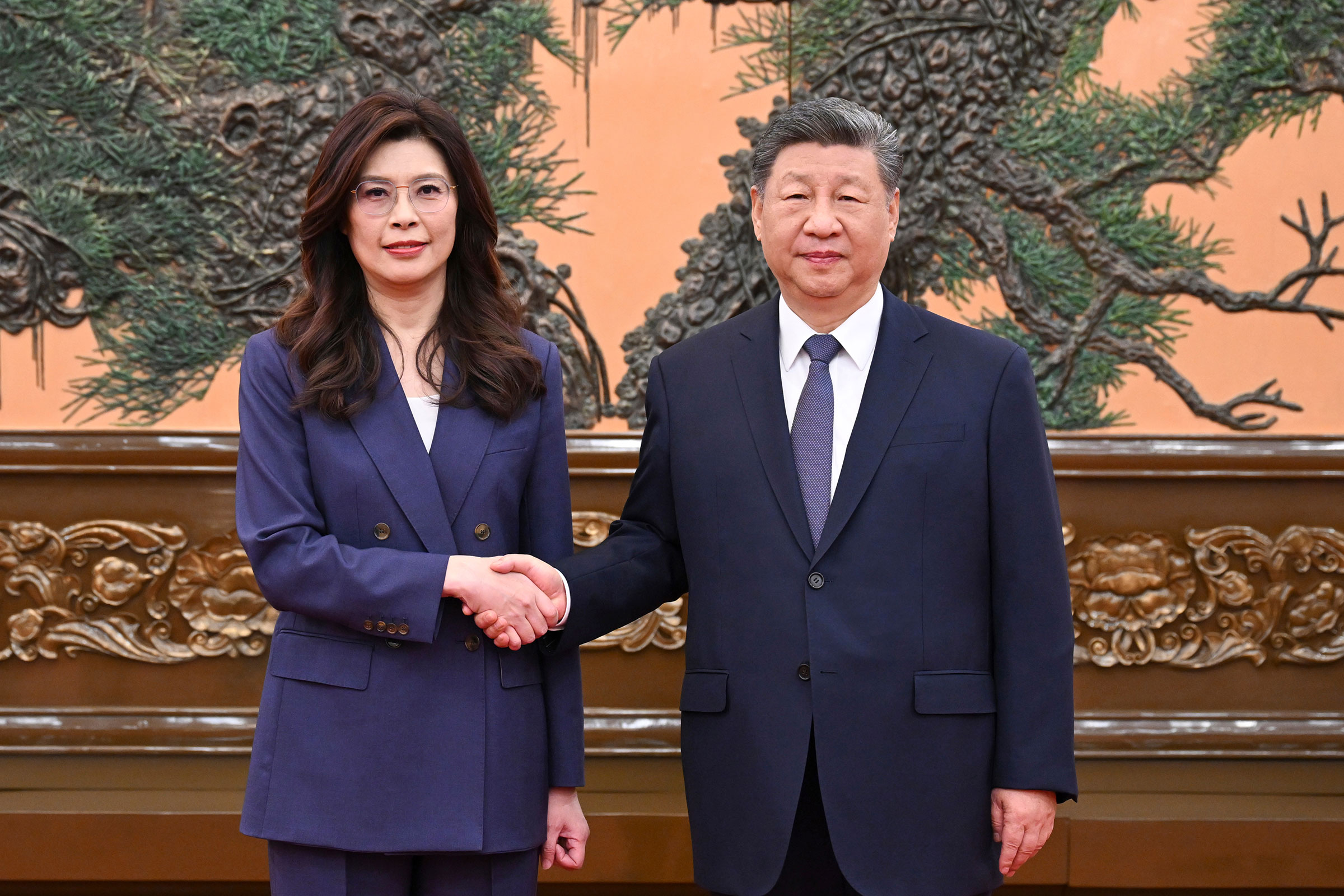
Cheng’s stunning transformation from Taiwanese independence zealot to leader of the self-ruling island’s China-friendly opposition is illustrated by another office adornment: a framed copy of the China Daily newspaper documenting her April meeting with Chinese President Xi Jinping in Beijing, under the headline “Xi calls for closer bonds across Strait.”
It was the first trip by a KMT leader to China in a decade and came against a backdrop of spiraling tensions, with near-daily Chinese combat aircraft, warships, and coast guard vessels rehearsing port blockades, precision strikes, and foreign-intervention denial. “Before the meeting [with Xi], nobody really had expectations of how it would go, and I think that they were very surprised by the goodwill that we received,” Cheng says.
For Xi, Taiwan is not merely unfinished business from the 1945–49 Chinese Civil War, after which the routed KMT fled to the now democratic island of 23 million. It is the keystone of a far grander project: the national rejuvenation of China as the world’s dominant technological, economic, and political power. The island’s very existence—a prosperous, democratic Chinese society integrated with the West—offers a stinging rebuke to the claim that authoritarian rule is uniquely suited to the Chinese people.
Cheng’s conversion encapsulates Taiwan’s own agonizing debate: whether security lies in distancing itself from the power threatening to take the island by force, or drawing closer to it. The ruling Beijing-skeptic Democratic Progressive Party, or DPP, sees Taiwan’s future as distinct from China’s and has prioritized building trade and other unofficial ties with Asian neighbors. In 2010, China accounted for 83.8% of Taiwan’s total outward investment; during the first five months of 2026, that figure had plunged to just 0.9%.
That decoupling has also seen Beijing squeeze Taiwan economically and diplomatically. Over the past decade of DPP rule, Beijing has restricted imports of Taiwanese goods and limited free-spending tourist arrivals, while poaching 10 of Taiwan’s diplomatic allies, so that only 12 remain.
Read more: The U.S. Must Beware of Taiwan’s Reckless Leader
Swelling anxiety increasingly shapes Taiwan’s domestic politics. Within the KMT, there is a strong belief that Washington cannot be relied upon indefinitely and that Taipei must engage Beijing from a position of weakness. The party’s implicit message is that Taiwan will not choose unification now—but nor will it formally choose another future.
Cheng’s emergence embodies that bargain. Despite her pro-independence past, Cheng has embraced Chinese identity, the so-called 1992 Consensus that both sides of the Strait belong to “One China,” and direct engagement with Beijing. Her meeting with Xi allowed Beijing to display its neglected carrots: economic incentives, restored exchanges, and the promise of stability. But Cheng’s limited electoral experience, thin Washington ties, and lackluster appeal to the KMT’s traditional base leave open the question of whether she can persuade Taiwan’s broader electorate.
“It’s not a good move for Taiwan,” Puma Shen, a DPP lawmaker and the party’s candidate for the upcoming Taipei mayoral election, says of Cheng’s meeting with Xi. “China is the country that wants to invade Taiwan … and they’re also pushing more and more gray-zone tactics.”
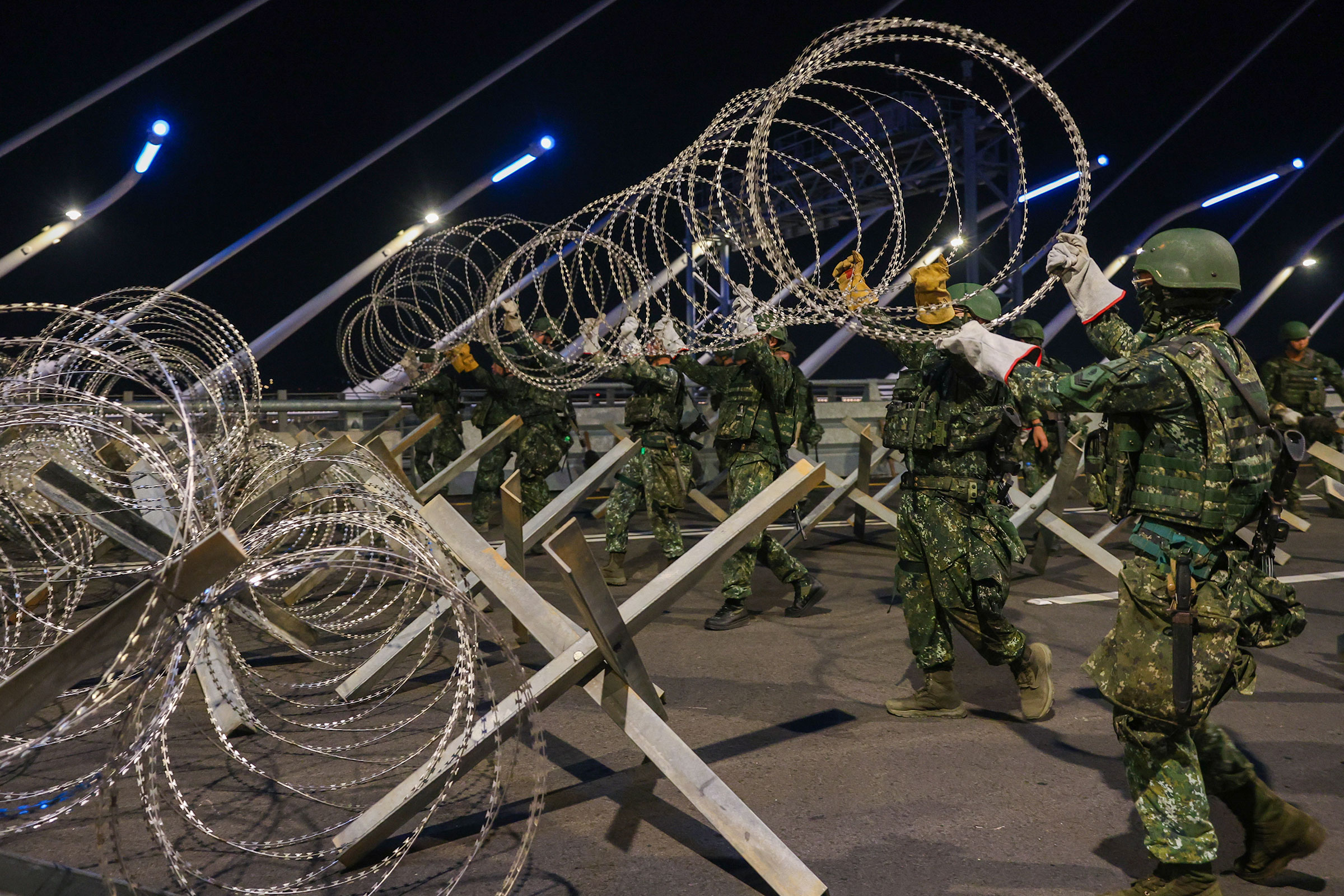
Yet that doesn’t necessarily mean Xi is racing toward war. He appears to regard history as moving inexorably in China’s favor and may believe he can afford to wait. The surest form of deterrence, then, may not be convincing Beijing that unification is impossible, but that patience remains the least costly path.
“I want to do away with the Cold War thinking,” says Cheng. “I do not want the first island chain to be thought of as the front line of military conflict. Rather, I would like it to be the front line of peace.”
The need to dial down the temperature is indisputable. A Taiwan contingency would decimate global supply chains in unprecedented ways, costing some $10 trillion, according to estimates by Bloomberg Economics. Opinion is split, however, on how best to prevent conflict.
While the DPP has formal independence for Taiwan written into its party charter, its recent leaders have pragmatically skirted that goal, aware that Beijing has vowed to meet secession with a military response. But such ambiguity has cut little ice with China’s leadership, which loathes President Lai Ching-te as a “provocateur and saboteur of peace.”
Cheng’s prescription is direct engagement and the revival of the KMT’s role as an intermediary between two governments that, under two-and-a-half DPP terms, only communicate through warplanes and naval exercises. But peace offered by a stronger adversary rarely comes without conditions—and Cheng’s task is to prove she understands the stakes.
“This is a really important time for Taiwan,” she says. “Are we going to go toward war or toward peace across the Strait? This is really why I decided to take the party chair.”
Standing 5 ft. 10 in., Cheng is an arresting presence with a reputation for chest-thumping speeches. Sure enough, during our interview, her answers betray a bombastic staccato honed on the stump. Behind the scenes, however, she is amiable and slightly introverted.
“I actually am a very, very quiet person,” she says. “I don’t like to see people, and I don’t like to talk to people. I like to keep to myself.”
It’s a surprising revelation given Cheng’s political journey under the spotlight, which in many ways reflects the complicated social dynamics of Taiwan, where political fault lines have historically been drawn between native islanders and mainland arrivals following the Civil War.
Cheng grew up in the southern city of Tainan, the daughter of a Taiwanese mother and a KMT soldier father from China’s southwestern Yunnan province, who fled to Taiwan in 1953 via Southeast Asia’s arcane Golden Triangle. “My father really hated politics, hated war, and hated the army,” Cheng says. “He hated the KMT. My father thought all politicians are assholes!”
How would he react to her current position? “I surprised my father quite a few times!” she laughs.
Indeed, Cheng was once a student leader in Taiwan’s Wild Lily democracy movement of the early 1990s, though her participation came as something of a shock to her parents. “One day when I was leaving my home, my father said, ‘Don’t go out today, it will be very dangerous,’” Cheng recalls. “He didn’t know I was the leader!”
After graduating in law at National Taiwan University and Philadelphia’s Temple University—she later earned a master’s degree in international relations at Cambridge—Cheng served as a DPP representative in the now-defunct National Assembly. As the daughter of a mainlander, she enjoyed a fast-tracked rise in a party desperate to broaden its appeal beyond its native Taiwanese base.
But Cheng resigned from the DPP after criticizing the party’s handling of sexual harassment allegations against a superior that were eventually dismissed, spurring disciplinary proceedings against her. Cheng insists her defection had nothing to do with sour grapes, but a Damascene realization.
“I became very disappointed because I realized that the DPP’s advocating for Taiwan independence was really a scam,” she says. “It’s something they pull out during elections in order to get votes.”
Cheng joined the KMT in 2005 and was elected as a lawmaker three years later, also serving as party spokesperson and hosting a TV talk show after briefly losing her seat. “I only did that for the money,” she laughs. After returning to the legislature, Cheng was then elected as KMT chairperson in October on a platform of reengagement with China. “Based on the 1992 Consensus, we want to create sustainable and institutionalized peaceful cross-Strait relations,” Cheng says.
Yet her rise was contentious. Cheng’s candidacy for the KMT leadership was supported by a social media blitzkrieg that critics allege was underwritten by Beijing. “That’s part of [China’s] information operations,” says Shen. “Tons of YouTube channels just emerged … to praise Cheng Li-wun. That’s one of the reasons why she got elected.”
Cheng vehemently denies she is a stooge of the Chinese Communist Party. “It’s a ridiculous joke,” she says. “This is a complete fabrication.”
It will be left to voters to decide. On one hand, Taiwan’s citizens have a dwindling affinity for the mainland; the proportion of Taiwanese who reject unification rose from 39% in 2005 to 61.7% this year. However, coercion and the constant specter of war have also fed disillusionment and conflict fatigue. A separate survey last year found that only 40.8% of respondents were willing to lay down their lives to protect the island—down four percentage points from two years earlier. Meanwhile, 58.3% favored resuming government-to-government talks with Beijing and easing people-to-people exchanges.
It is often quipped that Taiwanese want a “Goldilocks approach” to cross-Strait relations, says Ryan Hass, an expert in China-Taiwan relations at the Brookings Institution. “Not too hot, not too cold, just right.”
The problem is whether dialogue alone will be enough to satisfy Beijing. During the last KMT administration from 2008 to 2016, Xi pushed then President Ma Ying-jeou hard to enter talks toward closer political integration. Ma demurred, saying the time was not yet right. But by Taiwan’s next presidential election in 2028, 12 years will have passed since that strategy was last tested—and the gamble is whether Xi can still be strung along.
“Beijing is probably eager to pick things up and push them forward, maybe on a timeline that is a little bit more ambitious than what the KMT are hoping for,” says Hass. “This is the underappreciated risk of the KMT retaining power. Because unrealized expectations can fuel disappointment and actions that relate to it.”

Taiwan certainly has no appetite for Beijing’s standing offer of reunification under “one country, two systems,” the framework used in Hong Kong, where freedoms have drastically eroded. Cheng highlights that Xi did not raise “one country, two systems” in their April discussions and that they saw “a very friendly side” of the strongman. “He expressed real, authentic sentiment toward us and goodwill,” she says. “He treated us as members of the same family … and cherished the opportunity to show that he is not interested in war.”
Would she consider a referendum on reunification? “There is no rush to make any changes to the status quo,” Cheng says. “A referendum would count as a big change, and that would have to align with the interests and willingness of the Taiwanese people.”
Cheng’s words are carefully calibrated to reflect the tightrope she must walk. The KMT has long adhered to the mantra: “Endear ourselves to the U.S., befriend Japan, and pacify China.” But following three straight presidential election defeats and plummeting poll numbers, Cheng won the party leadership on the platform that a radical shake-up was needed. With anxiety growing over U.S. security guarantees under the capricious Donald Trump, Cheng’s pitch was that befriending Beijing was the party’s ace in the hole.
Cheng is now attempting to forge a controversial “Taiwanese KMT” narrative, delicately balancing local sentiment with an overarching Chinese identity. But it is an uneasy pivot: she cannot talk too much about shared democratic values lest she irk Beijing, and she cannot lean too heavily into blood bonds between Chinese across the Strait for fear of alienating Washington. What remains is a torrent of bromides without a clear plan for moving closer to China without salami-slicing away Taiwan’s cherished autonomy.
“I am not only seeking reconciliation across the Strait but also a better relationship between the U.S. and China,” Cheng says. “That not only helps create peace in East Asia but in the whole world.”
Above all else, securing U.S. commitment to Taiwan is paramount. While Washington officially switched recognition from Taipei to Beijing in 1979, the U.S. is obliged by act of Congress to provide Taiwan with the weapons it needs for its own defense. However, the latest $14 billion package—the largest ever—has still not been signed off by Trump. The understanding in Washington is that the U.S. commander-in-chief does not want anything to derail Xi’s prospective state visit to the White House next month.
Cheng’s Beijing visit was also historic because she was the first KMT leader to visit China before the U.S.—which she eventually did in June. She denies this indicates that she is placing cross-Strait ties above those across the Pacific.
“The situation across the Strait is very tense and hostile, and we had to take the first step to show that we are interested in peace,” she says. “That’s the reason that I wanted to take that peace tour first—I had to confirm that there was this willingness to create peace in the Taiwan Strait before I went to the U.S.”

If that trip was intended to reassure the Beltway, it was not entirely successful. Cheng did not meet Trump and appeared to upbraid U.S. foreign policy when she told crowds in New York City that she did not want Taiwan to become the “next Strait of Hormuz.” She also attracted criticism for saying there is no reason ethnic Chinese cannot exert similar influence over American society as the Jewish community, prompting condemnation for seeming to parrot an antisemitic trope.
It was not her only questionable statement on the road. Cheng raised eyebrows while in China when she criticized the colonial legacy of Japan—one of Taipei’s staunchest backers. In November, Japanese Prime Minister Sanae Takaichi even sparked a diplomatic spat with Beijing by saying that a Chinese attack on Taiwan could trigger a military response from Tokyo. Cheng, again, tries to walk the tightrope.
“The Japanese Prime Minister commented if there’s a problem in Taiwan, that’s a problem for Japan,” Cheng says. “I don’t want that to just be negative; I want it to be positive: if there are no issues in the Taiwan Strait, then there is no issue in the world.”
Taiwan’s future is a global quandary. For U.S. policymakers, above all hangs a semiconductor industry responsible for more than 90% of the world’s bleeding edge chips, which form the bedrock of the AI revolution and has propelled the tiny island’s bourse to become the fifth most valuable across the planet. Those advanced fabrication plants have long been dubbed a “silicon shield” that prohibitively raises the cost of conflict. Yet they are also a tantalizing prize, one which, if seized, could offer a commanding advantage in that transformative technology.
Cheng has campaigned against what she has called an “arms race” with Beijing and torpedoed the Lai government’s proposed NT$1.25 trillion, or $38 billion, special defense budget in the legislature. During meetings with U.S. lawmakers, Cheng said the KMT was not opposed to buying American weapons but wanted spending to follow due process, maintain fiscal discipline, and combat corruption. The final approved special budget was capped at NT$780 billion, or $24 billion.
“National defense is very important to us,” Cheng says. “If there are more details in the future for new amounts, then we would also put those to the [legislative] floor for review.”
Beijing’s pressure, meanwhile, is becoming subtler. Military intimidation continues, but China is also waging a battle over language, law, and international legitimacy. Its effort to reinterpret U.N. Resolution 2758—which switched the world body’s China representation from Taipei to Beijing—as recognition of Chinese sovereignty over Taiwan anticipates a future crisis in which diplomatic support could matter almost as much as battlefield success. A decisive U.N. vote for Beijing could portray China as the defender of the international order—and the U.S. as its reckless subverter.
Cheng says the KMT she once despised has the best vision for securing Taiwan’s future. In any case, local elections scheduled for November will provide a bellwether for whether her message has cut through with a Taiwanese electorate that craves neither confrontation nor political absorption. Cheng’s task is to persuade Taiwan that talking to China is not the same as yielding to it.
“To be honest, President Xi and I are strangers,” she says when asked whether she trusts China’s leader. “I’ve never met him before. Therefore, trust is something that we should build up on both sides. I also need Chinese people on the mainland to trust me, because this is something we need to create stability in the future.”
The Simple Trick That Can Help You Understand Your Emotions

Here’s the scene: You’re catching up with a friend over coffee when your elbow clips your cup, sending espresso all over her brand-new phone. You feel awful. You mop up the spill, apologize five times, and bolt—then avoid her for days, turning a ruined phone into a damaged friendship.
The problem isn’t that you feel awful. It’s that awful doesn’t give you much to work with. It tells you the situation feels bad, but not why—or what to do about it.
Katie Hoemann, an assistant professor of psychology at the University of Kansas, uses a version of this scenario to explain emotional granularity: the ability to make precise distinctions among all the emotions you’re experiencing in a particular situation. Instead of stopping at “awful,” you might recognize guilt about damaging the phone, embarrassment about causing a scene, and anxiety that your ticked-off friend isn’t going to forgive you.
Those distinctions don’t just describe the moment. They point to different responses. Guilt might push you to offer to replace the phone, embarrassment might explain why you want to disappear, and anxiety might prompt you to ask your friend whether your relationship is OK. Distinguishing among them gives you access to what Hoemann calls “situated scripts”—a clearer sense of what to do and say next.
Lisa Feldman Barrett, a distinguished professor at Northeastern University, began documenting these differences in the 1990s. She compares emotional granularity to seeing color: One person might only notice red; another sees crimson, scarlet, burgundy, and maroon. Similarly, some people experience anger, sadness, and fear as different versions of bad, while others experience each one distinctly—and can make even finer distinctions among, say, anger, irritation, and frustration.
This isn’t simply a matter of collecting impressive new words. “The words are not the point,” Barrett says. It’s about developing a more precise understanding of what’s happening inside you, in this particular situation. The clearer that understanding becomes, she says, the better you can tailor your response.
Why getting specific can help
When all you know is that you feel bad, there are almost endless possible explanations: Maybe you’re lonely. Maybe you’re ashamed of something you said. Or maybe you’re disappointed that a friend let you down, resentful that your hard work is going unnoticed, or anxious about tomorrow’s doctor’s appointment. Each situation calls for something different.
“When there’s a precise cause, you can have a precise response,” says Eli Kraiem, a clinical psychologist in New York. If you’re lonely, you might call someone. If you’re resentful, you might need to have a difficult conversation. And if you’re anxious, you might make a plan, seek more information, or do something that helps calm your body. “Bad” leaves you with a giant, shapeless problem; specificity gives you somewhere to begin.
That doesn’t mean every feeling becomes a problem to solve. “Sometimes feelings don’t need solutions,” Kraiem says. “Sometimes they just need to be recognized.” Realizing that you’re not merely stressed but also grieving, for example, might not produce an obvious next step. But it can help you stop treating your sadness like a productivity problem—and give yourself permission to experience it.
Research has repeatedly linked higher emotional granularity with healthier ways of navigating difficult moments. In one study of young social drinkers, people who distinguished more precisely among their negative emotions consumed about 40% less alcohol when they were experiencing intense distress than those with lower granularity. Other daily-diary research found that people who differentiated among their emotions reported fewer aggressive tendencies when they were angry. A review of the literature has also linked higher granularity with more effective emotion regulation and fewer symptoms of depression and anxiety.
Those findings don’t prove that pausing to name three feelings will produce all of those benefits. Much of the research is correlational: It tells us that people who habitually experience emotions with more precision tend to fare better, not that one labeling exercise will transform your mental health. Scientists are still working out exactly how to strengthen the skill—and how much practice it takes.
There is, however, some encouraging evidence that people can better develop their sense of emotional granularity. In a study co-authored by Hoemann, people were able to improve their emotional granularity over roughly two weeks of assessments, during which they responded to prompts about their emotions throughout the day and elaborated on those experiences in daily diary entries. A separate study found that people participating in a mindfulness-based intervention improved their ability to differentiate negative emotions, with the improvement still evident four months after the intervention ended—though it may have partly reflected the fact that they were feeling less negative overall.
Start with the words you already overuse
The next time you catch yourself saying you feel bad, stressed, or off, pause and try to name three specific emotions.
Start by paying attention to your emotional catchalls—the handful of words you use to describe almost everything. Bad, fine, and stressed are obvious candidates, but your favorite might be overwhelmed, annoyed, or tired.
When you catch yourself using one, don’t stop there. Ask: “What does stressed mean right now?” Maybe you’re anxious because you’re underprepared for a presentation, frustrated that your co-worker isn’t helping, or afraid you’ll disappoint your boss. Those emotions aren’t interchangeable, even though they’ve all been crammed into the same word.
If you draw a blank, Kraiem recommends opening the Hoffman Institute’s free online Feelings and Sensations list, which groups more than 100 options under broad headings like anger, fear, sadness, and stress. “It actually does the differentiation for you,” he says. Start with the category that comes closest to how you feel, then scan the words beneath it: stressed, for example, branches into anxious, frazzled, rattled, weary, and worn out.
Kraiem uses the list with patients, but he also pulls it up himself after a conflict with his wife or when work or parenting leaves him stressed. “There are times when I’m feeling stuck, and that’s when I pull out this list,” he says. With practice, you may need the list less often and eventually make those distinctions “on the fly.”
Once you have a few possibilities, make sure they capture genuinely different aspects of the situation. Then add a short explanation: “I feel anxious because I don’t know what will happen”; “I feel resentful because I’m carrying more than my share”; and “I feel embarrassed because I’m worried I’ll look incompetent.”
The explanation matters. If you write “angry,” “irritated,” and “annoyed” every time something goes wrong, you may simply be using three words for essentially the same feeling. Hoemann suggests asking not which word is objectively “correct,” but which emotions best explain what’s happening in this particular moment.
It’s also fine if only one precise word fits. Granularity doesn’t mean you have to conjure up three emotions because you’re stewing over the mile-long grocery-store line. The number is a nudge, not a rule.
Don’t wait until you’re furious
You can try to get specific in the heat of the moment, but that’s often the hardest time to learn. When your friend’s phone is dripping espresso, you’re probably not going to feel eager to conduct a nuanced emotional inventory.
Barrett recommends practicing when the stakes are lower. Think of it like strength training: You don’t wait until you need to lift something enormous and then pick up a weight for the first time. “You have to practice in advance,” she says.
At the end of the day, choose one emotionally charged moment and revisit it. What were you experiencing? What did each emotion mean in that context? What did it make you want to do? Hoemann says you can reflect immediately, later that evening, or even over the next few days; researchers don’t yet know which timing works best.
The goal isn’t to replay every unpleasant interaction until you’ve analyzed it to death. Hoemann cautions that more isn’t always better: Exhaustively labeling a negative experience can veer into rumination and may even make it harder to figure out what to do. Spend a few minutes teasing apart what you felt, then move on.
Learn emotions from other people
Your emotional vocabulary doesn’t have to come from a list. Barrett says we learn a lot about emotions from other people. Books, movies, plays, conversations, and travel expose you to experiences and perspectives you might not encounter in your own routine.
When you’re watching a movie or reading a novel, pause occasionally to consider what a character might be feeling—and why. Is she angry, or does she feel betrayed? Is he sad about losing the job, ashamed that he was fired, or afraid of what comes next? More than one interpretation may make sense. The point is to practice seeing different possibilities.
Talking to other people helps, too. Hoemann describes emotional granularity not as “insular internal tagging,” but as a dialogue with the world. Describe a difficult experience to a trusted friend and ask what emotions they hear in it. They may share something you hadn’t considered.
Don’t expect the words to make the feeling disappear
Naming an emotion might make it feel more vivid in the moment, not less. Paying closer attention to sadness can make you more aware of how sad you are. It can also be unsettling to realize that what you’ve been calling irritation is actually loneliness or shame.
“I hesitate to say that it’s like a magic spell—that you’re like, ‘Oh, I’m angry, and now everything’s better,’” Hoemann says.
Immediate relief isn’t the point. Each time you examine an experience closely, you build a more detailed understanding of your emotions—one you can draw on later. Over time, you may get better at understanding what’s happening as it happens, and choosing a response that fits.
Back in the coffee shop, you might still feel awful. But guilt, embarrassment, and anxiety give you something that “awful” doesn’t: a plan. Instead of fleeing and dodging your friend for the next week, you stay, offer to replace the phone, and then check in again the next day. The phone may be toast, but the friendship doesn’t have to be.
Как мы до интернета такого докатились

На фоне всеобщего интереса к сертификатам Минцифры стал замечать, что некоторые люди не понимают, что это такое, как работает, откуда взялось и какую проблему решает. Давайте на упрощенных вымышленных примерах вспомним историю сооружения современного World Wide Web и посмотрим, почему всё так сложилось.
Но помните: все совпадения случайны.
Читать далееРынок IT-труда в 2026: реальность найма, приоритет для навыков в Ai, ловушки для «волков» и работающие стратегии карьеры

Когда я начинала карьеру в рекрутинге, всё было проще: резюме писали люди, а не «цифровые агенты», кандидаты самостоятельно проходили собеседования, без помощи ИИ, казалось, еще немного и мы окажемся в чудесном мире будущего... В итоге, в 2026 году IT-рынок все больше напоминает смесь «Матрицы» с «Голодными играми», и одну из ролей в этой драме играю я.
Меня зовут Татьяна Богословская, я руководитель сектора подбора персонала в Fix Price. Наша компания — это тысячи магазинов, сложная IT-инфраструктура и команда, которая постоянно растет. Конечно, мы непрерывно ведем подбор и нам очевидно, что в сфере IT началась флоп эра: на рынке много специалистов, но найти и привлечь подходящего кандидата стало труднее. Воронка найма расширилась: теперь приходится проводить гораздо больше интервью, чем раньше. В этой статье я попытаюсь обобщить текущие тенденции и надеюсь, что она будет интересна и кандидатам и коллегам-рекрутерам.
Читать далееWisconsin's Democratic showdown and more primary races to watch today
Spain’s Complex Ties With Morocco Fuel Speculation Over Ceuta Migrant Surge
How Social Media Sparked a Refugee Crisis Between Spain and Morocco
A.I. Offers Hope for Men With Infertility, Spotting ‘Hidden’ Sperm
The Right Loves the Founding Fathers. They Might Love the A.I. Versions Even More.
A.C. Vests and UV Parasols: East Asia Deploys Heat-Fighting Gadgets
Heat, Fire, Smoke and Storms Are Wreaking Havoc on the Economy
New Evidence Shows Federal Agents Using Racial Slurs During Immigration Sweeps
Should Letting Children Play Alone Outside Be a Crime?
A Syrian Holdout Province, Sweida, Fears a Government Takeover
What to Watch in Tuesday’s Primary Elections in Wisconsin, Minnesota and South Carolina
How We’re Covering an ‘Identity Crisis’ in Politics
Democrats Plan New Push to Defeat Max Miller in Ohio After Abuse Accusations
What to Know About the Cuban Mafia in Quintana Roo
How Raúl Castro’s Grandson, Raúl G. Rodríguez Castro, Became a Power Broker
Early prisoner releases mean pledge to cut rough sleeping ‘may fail’
Charity says government must focus on securing housing for ex-prisoners if Burnham is to meet rough-sleeping promise
• UK politics live – latest updates
Andy Burnham’s pledge to end rough sleeping in England is under threat from a failure to find accommodation for a growing number of newly released prisoners, a charity has said.
An analysis by the social justice charity Nacro has found that nearly one in six people leaving jail in England and Wales last year were released into homelessness, reaching the highest rate for five years.
Continue reading...