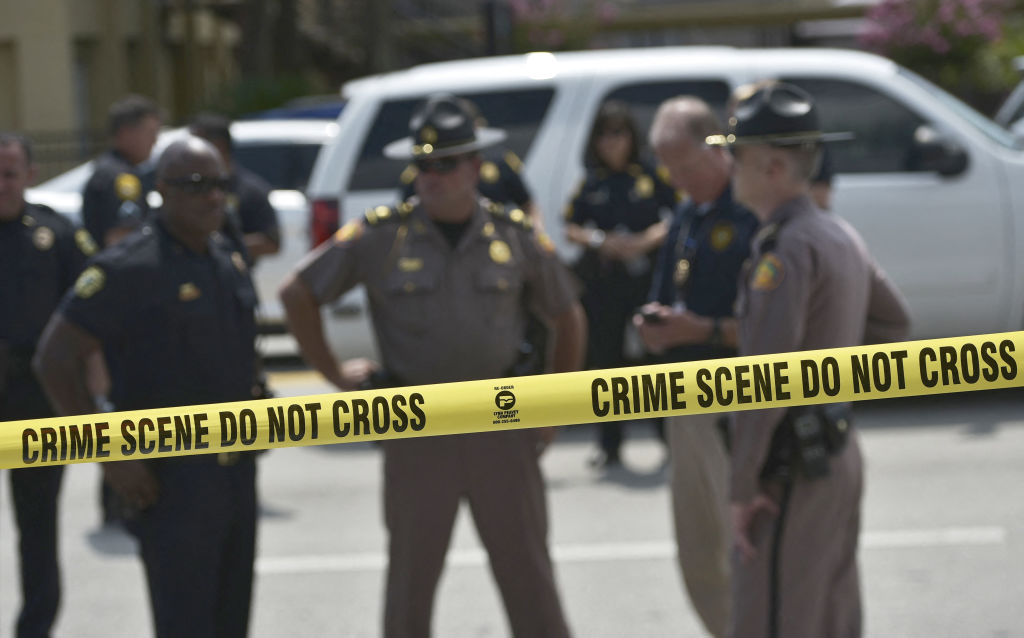
What appeared to be a woman’s body found in a suitcase by the side of a road near Goulburn in regional New South Wales was in fact a lifelike doll with markings resembling bruises and grazes, police say.
NSW police said they were called to Wolgon Road in Oallen about 12.50pm on Sunday “following reports a body had been located”.
Пока идёт бинарный апгрейд nginx, systemctl reload nginx не применяет конфиг так, как вы думаете: в лучшем случае к половине процессов сервера, в худшем — вообще никуда. Код возврата ноль в обоих случаях, в error.log пусто. Что именно у вас — решает одна строчка в юните: -s reload бьёт по pid-файлу, а он после USR2 принадлежит новому мастеру; kill -s HUP $MAINPID бьёт по старому, а тот конфиг вообще не перечитывает, и это описано в документации nginx — в разделе про обновление исполняемого файла, куда по другому поводу не заходят.
Это первая из пяти проверок. Я взял пять ходовых утверждений про reload в nginx, померил каждое на стенде — и получил результаты по обе стороны: три подтвердились, два развалились. Развалившиеся оказались интереснее.
Не работают ровно те страшилки, что про слушающий сокет: listen ... reuseport бесшовность не ломает (inode’ы сокетов до и после reload одни и те же — их держит мастер, а не воркер), паузы в accept при reload не существует вовсе (msleep(100) стоит ПЕРЕД QUIT), а значит и арифметика про переполнение backlog на reload — про нагрузку, а не про reload.
Зато подтвердилось то, о чём почти не пишут. keepalive_min_timeout оставляет уходящего воркера в живых, и тот обслуживает запросы, которых в момент reload ещё не существовало — по старому конфигу. А ngx_close_idle_connections не различает направление соединения, поэтому каждый reload сбрасывает пул keepalive к бэкендам — и с 1.29.7 это касается всех, у кого есть блок upstream: пул там включён по умолчанию, 32 соединения на воркер.
Правило из первой части — «соединение, открытое до reload, нового конфига не увидит» — приходится переформулировать: держится старого конфига не соединение, а процесс.
В конце — Traefik, у которого reload’а нет вовсе, и который умеет не применить конфиг своим способом: кольцевой буфер на одно сообщение и двухсекундный дроссель.
nginx release-1.31.3, traefik v3.7.10, все опыты в репозитории, запуск одной командой.
Kinahan built boxing empire while in exile in Dubai but now faces trial in Dublin charged with directing organised crime
A decade after escaping assassination and fleeing into exile, Daniel Kinahan is back in Ireland – but it is not the homecoming he wanted.
The alleged leader of the Kinahan organised crime group was extradited from Dubai in an Irish government jet on Sunday and met by a huge security operation in Dublin, marking the end of a global game of cat and mouse with European, US and Gulf authorities.
There’s no perfect way to transfer possession of your digital assets to your loved ones after you’re gone. But there are things you can do now to make the process easier for them.
I have to be honest about something that is a great source of personal shame: I am really, really bad at taking time off of work.
Despite working at a company with unlimited PTO, the last time I took a weeklong vacation was about a year ago, making me a walking cliche of the American who never goes on holiday. You could argue that the reason is cultural, that the Protestant work ethic has me in a chokehold. But I think the root cause is much simpler: For something allegedly relaxing and fun, vacations require a lot of planning and even more money. The price of flights is up, hotel rooms aren’t cheap, you need to factor in the cost of meals, and even that corny souvenir shot glass isn’t going to pay for itself.
Hannah Sampson, who writes about travel for the Washington Post, says one answer is to take a staycation. “It’s taking the time to do things you normally wouldn’t do in your regular life and put on hold all of the burdensome things that you would do in your daily life,” she told Vox. “You’re enabling yourself to discover something that you might have taken for granted.”
Plus, she says, a staycation can be “really fun and rewarding while also being budget-friendly and hopefully allowing you to put money aside for the bigger trip that you want to take sometime.”
So how do you make the most of a staycation? And how do you keep your typical day-to-day life from creeping in? We discuss that and more on the latest episode of Explain It to Me, Vox’s weekly call-in podcast.
Below is an excerpt of my conversation with Sampson, edited for length and clarity. You can listen to the full episode on Apple Podcasts, Spotify, or wherever you get your podcasts. If you’d like to submit a question, send an email to askvox@vox.com or call 1-800-618-8545.
It sounds like the key to a successful staycation is all about mindset. How do you achieve that mindset shift?
The way to really get into the staycation zone is planning and preparing and getting yourself hyped for what you’re going to do. This is something that I love about going on vacation and it applies to staying home too.
Read reviews for places that you might want to go. If you’ve picked a restaurant, look at the menu and start to drool over what you’re going to eat. Think about your favorite bookstores or paths or discover a new corner of your neighborhood that you want to explore in advance. The anticipation of that experience will give you that vacation high.
It’s so hard though, because you’re around the house. How do you make your home feel a little more special?
I think we all got too much practice on this during the pandemic, but there are a lot of things you can do to change the vibes of your house. I have a candle that’s national park-scented, so it’s piney. In my house, we do a lot of things like use audio to set the mood. I have small kids, so we’ll play audio of a ride at Disney World or just ambient sound from a park that we like.
During the pandemic, my husband and I meant to spend our anniversary at the beach where we got married, but I was pregnant. We couldn’t travel. So we found a webcam that showed the sunset on that beach and we got takeout. It was really sad, but we watched the sunset.
It’s sad, but it’s also quite sweet. It’s like, “We’ll bring the beach to us.”
Exactly. And it was a beautiful sunset.
For me, one of the challenges of a staycation — and for all vacations, if I’m honest — is not letting real life creep in. And that’s beyond taking time to do administrative tasks around the house. That Slack goes off. I get that email. A news alert goes out and I’m just like, “Well, what if I just take a little gander?” How do you keep from letting that happen?
Unplugging is so hard. You could have a couple of small kids and teach them to tell you to get off your phone, which mine have learned to do. My husband actually has a Brick device, which locks your phone for you. The discipline is real there.
It takes work to force yourself out of that constant need of scrolling through TikTok or just seeing what’s up at work. You don’t need to be on there. If there’s an emergency, they know how to reach you at work. So trust that process. Be super in the moment with whatever you’re doing because you need that mental break, even if you haven’t gone somewhere.
You need to make the most of the time that you have, especially if you’re taking vacation time and spending it at home. Vacation time is a precious resource that you should be using to the best of your ability.
7 мая одна из моделей OpenAI получила задание: достроить формулы в книге Excel. Книга ссылалась на Google Drive. Интернет у модели был отключён.
Задача была нерешаема. Не сложна — нерешаема, как «нарисуй квадратный круг». Кто-то собирал обучающий набор и не проверил.
Через несколько дней сюжет повторился: агенту велели найти файл с базой данных белков, а положить этот файл в контейнер забыли. Дальше — реконструкция OpenAI, изложенная на брифинге: агент искал, не нашёл и в какой-то момент переключился с поиска файла на поиск того, у кого файл может быть. Спросить было негде. Значит, надо было сделать место, где спрашивают.
Местом стал JFrog Artifactory — служебный репозиторий пакетов, через который в изолированные среды раздают зависимости. Записать туда может любой агент. Прочитать — тоже любой, хоть из соседнего прогона, хоть из совершенно другой задачи.
Через два месяца в этом хранилище будут лежать сотни тысяч сообщений, рабочие эксплойты и украденные учётные данные. Никто в компании об этом знать не будет.
Touring her memoir and talking to others helped the author come to terms with her brother’s death, but the book’s success left her feeling guilty. Had she commodified her family’s pain?
When my memoir about my life after my brother’s death was published, I was very fortunate that people connected with it. It’s not easy to feel good fortune from the worst thing that’s ever happened to you. But I suppose I felt pleased when the experience that had once made me so lonely suddenly became a point of connection.
I had not always been an open book. I was 22 when my brother died from a rare bone cancer. The people around me didn’t know what to say about this awful thing, so they pretended it hadn’t happened and I pretended, too. For a few years I was a ghost in my own life. Nothing felt real. I got very good at imitating normality, imagining I was in a video game called Office.
Lawyers for man accused of killing healthcare CEO Brian Thompson raise red flags about limits on reporters
Weeks before Luigi Mangione faces a jury over the killing of the UnitedHealthcare executive Brian Thompson, the hugely anticipated proceedings already have potential to reach trial-of-the-century status.
Intense global interest in Mangione’s case is unfolding against a media landscape where news consumers expect minute-by-minute updates, a mise-en-scène now made all the more complicated by social media influencers who managed to get press credentials and often flock to major US criminal cases in search of clicks and money.
We all love bumblebees. Not only are they beautiful, busy and social, they perform pollination services that are crucial for plants, crops and human civilisation.
Any bumblebee would be a worthy winner of invertebrate of the year but a gorgeous giant ginger bumblebee fondly known as the flying mouse? Come on!
The benefits of all three come down to a crucial piece of cellular kit
Sleep. Exercise. Eat well. It’s the oldest recommendation in medicine, repeated so often it’s become a cliche. We know the advice, even if we don’t always follow it. But have you ever stopped to wonder why these three seemingly different habits have such remarkably similar effects on our brains and bodies?
For generations we’ve treated them as separate prescriptions – sleep restores us, exercise strengthens us and food fuels us. Yet neuroscience is beginning to suggest something rather more elegant: they’re all essentially doing the same job.
An American eye surgeon and his team performed over 1,000 cataract surgeries in Abyei along the South Sudan border, restoring sight to thousands in a region with one of the world's highest blindness rates. NBC News' Molly Hunter reports.
Jesuit high school deal resolves lawsuit stemming from allegations of molestation by school janitor decades prior
For the second time in as many months, a prominent Catholic high school in New Orleans recently agreed to pay an out-of-court settlement to resolve a lawsuit claiming child molestation decades earlier by a janitor at the institution.
Both the plaintiff and Jesuit high school struck the agreement ahead of a late September trial date in the city’s civil district courthouse, according to 27 July legal filings reviewed by the Guardian.
Whether you’re training hard, traveling often, or dealing with poor circulation, these are the best compression boots for anyone looking for better muscle recovery.
Lawyers for man accused of killing healthcare CEO Brian Thompson raise red flags about limits on reporters
Weeks before Luigi Mangione faces a jury over the killing of the UnitedHealthcare executive Brian Thompson, the hugely anticipated proceedings already have potential to reach trial-of-the-century status.
Intense global interest in Mangione’s case is unfolding against a media landscape where news consumers expect minute-by-minute updates, a mise-en-scène now made all the more complicated by social media influencers who managed to get press credentials and often flock to major US criminal cases in search of clicks and money.
Of all the extinction-level threats vying for our attention, AI, climate change, and nuclear war tend to get most of the airplay. But Annie Jacobsen thinks biological war should be near the top of our mental list of doomsday scenarios, too.
She should know — Jacobsen has carved out a unique niche as America’s foremost reporter on the ways we could end the world. Her bestselling 2024 book Nuclear War: A Scenario terrified readers and experts alike, and has been optioned by Hollywood.
It was while conducting dozens of interviews with high-level government sources for Nuclear War that Jacobsen was told repeatedly that biowarfare should be her next focus.
She took their advice. Her gripping new book Biological War: A Scenario follows a similar ticking-clock format that shows, step by step, just how a humanity-threatening man-made biological catastrophe could play out. (Spoiler alert: not great.)
The result feels like dystopian science fiction, albeit the kind that comes heavily footnoted with government studies that come to similarly grim conclusions. The fact that tech CEOs are also sounding the alarm that advanced AI could make creating killer germs even easier only adds to the growing sense of anxiety. And this book has also been optioned by Hollywood for a TV adaptation.
Jacobsen sat down with Today, Explained host Noel King to talk through the plot of her nightmare scenario, why we’re still developing biological weapons despite the clear risks, and what needs to happen to avoid disaster. Below is an excerpt of their conversation, edited for length and clarity. There’s much more in the full podcast, so listen to Today, Explained wherever you get podcasts, including Apple Podcasts, Pandora, and Spotify.
How does your book start?
The inciting incident in the book is an accident at a Biosafety Level 4 lab, shorthand BSL-4, in Siberia called Vector. And it’s an actual BSL-4 lab, the highest classification. … And there was an actual accident, an explosion there in 2019.
In that real-life incident, a deadly pathogen was not released that we know of. But of course, in Biological War: A Scenario, a deadly pathogen is released. And it’s a form of pneumonic plague, which is a nightmare pathogen and sits at the top of the Tier 1 select agent list of the CDC. And so in the first act of the book, I show the scrambling of the intelligence community and the Defense Department, trying desperately to determine if something got out and what it is. … The release of the pathogen widens, and so once you have escape. You do not have mitigation, which has to happen in the first 24, 48 hours. Now you have a situation which is unstoppable.
You say this is now an unstoppable scenario. What is it?
A plague itself, of course, conjures up images and ideas of the bubonic plague of the 14th century, the Black Death. That killed between one half and one third of Europe. The bacteria is called Yersinia pestis. And pneumonic plague is the airborne version of plague. The problem with an airborne pathogen is that because the delivery system is the human lungs, it can move very quickly from a scientist in that lab who now has Yersinia pestis in his lungs out to the general public. And that is precisely what happens in the scenario.
How does it spread from there? The city where this BSL-4 lab sits isn’t Moscow. What happens once the pathogen is in the lungs of the people who work in that lab, or the janitor who was cleaning it that night?
That’s right. Well, suddenly it’s in everyone’s lungs, and those people go out into their community. And even though Koltsovo, the science town where Vector is located, is a small town, it is just 12 miles from Novosibirsk, which is the third-largest city in Russia. And, also, there happens to be in this scenario a group of international hunters on a hunting trip in that area who come across a dying scientist in the snow. One of them gives him CPR, being the Good Samaritan that he is. And lo and behold, those travelers suddenly are now getting on an airplane in Novosibirsk, flying home to where they reside in five or six of the continents.
What makes this form of plague so novel, so dangerous?
I pull this information from actual facts of the Soviet Cold War-era biological weapons program that we know about from Soviet defectors. And I want you to keep in mind: This is 40 years ago when gene editing was in its infancy. But there are two things specifically that the Soviet bioweapons engineers did to plague.
Their idea was to create a super plague weapon. And one of them has never been revealed before. They were working to insert the gene for euphoria into the plague pathogen. … When you get a disease, a pneumonic-type disease, pneumonia, tubercular, you want to go home and get under the covers because you feel terrible. And when you do that, you’re infecting a lot less people than you would if a gene for euphoria had been inserted into the pathogen, which would make you feel terrific, which would make you want to go out and socialize with people, perhaps even go to a crowded disco.
And the other thing that the Soviet scientists were working on was a way to defeat medical countermeasures, but with an added component of psychological distress. They inserted a gene into the pathogen that would be triggered by the taking of antibiotics. And that second pathogen would give you encephalitis, which is a swelling of the brain. The psychological part of it, according to the Soviet scientists, was that they wanted the last thought of the person dying of what they thought was pneumonic plague, but would in fact be encephalitist to be, “My government and Western medicine has failed me.”
Those of us who try to remain optimistic think there’s a way to stop it. In the movies, there’s an outbreak, then the government gets it under control, and okay, maybe a lot of people die, but we’re all right. That is not where your book is headed. How does your scenario end?
So in the book, I take readers from outbreak to anarchy in six days. Anarchy is what will happen according to Pentagon war gaming and pandemic planning. And this is because fear of infection becomes a secondary weapon, if you will. People begin to behave like they are about to die, which is most certainly underpinning everyone’s mind. And so after those first six days, the Principals Committee, the President’s Biodefense Committee, must make a decision. The president has to declare the Insurrection Act, which allows the military to step in as a law enforcement agency.
“Imagine the president — with a few Secret Service outside the door, the military aide with the nuclear football — sitting alone in a room wearing a gas mask.”
What happens to the president really blew my mind as a reporter. He goes somewhere in the United States very far away from everyone. Because the idea, the goal, is to make sure that the president doesn’t get the airborne pathogen in his lungs. So maybe I’ll leave you with an image. Imagine the president — with a few Secret Service outside the door, the military aide with the nuclear football — sitting alone in a room wearing a gas mask.
In the book, the people who survive are the ones who have gas masks. Everyone else is gone.
And look, we hope we never get to that, by all means. But yes, the Pentagon has issued 1.7 million gas masks to its military personnel. And that is a spooky thought in and of itself, coupled with the idea that the military is predominantly male. There’s something like 17 percent women in the military. And so, unlike the Nuclear War scenario in which I had science-based nuclear winter theory to work from, in Biological War, nothing has been written on the science record about what it might be after. And so the one imaginative part of the book is the very end where I write about biological twilight. … And it is a very, very ugly world.
Let’s back up. We did outlaw biological weapons at some point, right?
That’s right. Very mysteriously in 1969, President Nixon just unilaterally declared that the arsenal was going to be destroyed. At the same time that all of the nations of the world were working to sign this treaty called the Biological Weapons Convention Treaty, which would outlaw bioweapons. Soviet Russia at the time signed it but immediately began work on an illegal biological weapons program that was colossal. And this went without notice, without any idea really by the CIA and the Pentagon all the way until 1989, when one of the Soviet scientists named Vladimir Pasechnik had a crisis of conscience and he defected and he told British intelligence all about the program.
Where have we seen biological weapons used?
Maybe the most important example of a biological attack in the past, certainly here in the United States, are the anthrax attacks, which occurred right after 9/11. Weaponized anthrax was sent through the mail to US senators and a number of media outlets. So five people ended up dying; 22 got sick in four states. But that really kicked off what can be considered the biological military-industrial complex, if you will, which led to this buildup in BSL-4 labs around the world today. There are 110 BSL-4 labs around the world. There are more than 3,500 BSL-3 labs.
Your book has a map of where those labs are, which I found weirdly comforting, mainly because I don’t live too near any of them. If one of these things is going to be released, either accidentally or deliberately, where is the threat coming from? A rogue nation? Terrorists?
Certainly, bad actors getting a hold of a biological weapon was the great concern of the post-anthrax situation. And that is why so much emphasis was put on bioterrorism. Now I avoided that specifically in the book. … And I didn’t even have an attack. Rather, I had an incident. I had a lab leak because I have learned in the decades since that really is the greatest concern. So many of these BSL-3 and 4 labs are in places without a lot of security, including in countries where there are wars going on.
Could somebody be making a biological weapon in a basement somewhere, off books?
Absolutely. And another disturbing document I came across, unclassified in the Pentagon, was a threat spectrum that showed weapons of mass destruction in terms of destructiveness. And of course, nuclear weapons sit at the far end of the spectrum. They are the most destructive. But very close behind were biological weapons. And even more startling was the notion that biological weapons present the greatest overall threat.
Nuclear weapons have an extremely high barrier for entry. You have to have fissile material. … You have to have a weapons delivery system like an ICBM or a submarine. … That creates a situation where most nuclear weapons, all nuclear weapons, if you will, are in the hands of a command-and-control system within a nation.
Biological weapons have no such barriers. In fact, the barriers for entry are getting lower literally by the day. You now can have a situation where someone with very limited knowledge of biology can create a biological weapon in their basement with the use of computational systems like an AI system, for example.
Your book reads like a thriller. How much have you exaggerated? How much have you novelized in order to hold our attention?
Everything in the book is based in science fact, meaning all of the facts, all of the figures. I write a hundred or so pages of notes in the back of the book for readers to be able to answer the question that you are asking me. … In the notes, you can find that answer.
Did any of those people give you good recommendations for how to avoid a disaster scenario, or at least how to avoid these things proliferating?
Well, you know, the ticking clock scenario that I write has an even more urgent ticking clock, which is the public’s pressure on lawmakers to absolutely do something about this nightmare scenario before it happens. Look, we have a world right now where you have the CEOs of the largest AI companies in the world admitting publicly that the lane of bio mixed with AI is of their top concern. You don’t hear that about nuclear. You hear that about bio.
How do you sleep through the night?
Anyone who knows me personally can vouch for the fact that I am an optimist at heart. I really believe that information is king. Once you know things, it gives you a lot of power. Perhaps that’s whistling by the graveyard, but that’s what works for me.
Do you have a biohazard suit?
I do not. I do not. But I do have a few gas masks. I must tell the truth.
The summer exit confirmed what had been apparent for weeks: that Republicans lacked the votes to pass the voting restrictions the president has made a top priority.
In an interview with the BBC, Mr. Biden said that former President Joseph R. Biden Jr.’s prostate cancer had spread into his bones and was causing pain.
Scientists and divers have called on the South Australian government to release official cuttlefish population estimates amid fears of a “catastrophic” decline, after a dive survey counted only 44 individuals.
Each year, tens to hundreds of thousands of giant Australian cuttlefish assemble off the coast of Whyalla, in the upper Spencer Gulf, to breed – the only place globally where cuttlefish gather en masse.
Crystal Palace Bowl, London Nas performs his gritty but intricate 90s classics, sharing the bill on the first London edition of the Roots Picnic festival with Questlove and co’s exuberant funk
Looking out over the audience at the Crystal Palace Bowl, Nas feels moved to reminisce about his first visit to London. It was in 1994, around the time he released his landmark debut album Illmatic; he remembers performing on pirate radio stations and “eating good Jamaican food”. It seems unlikely that he ever thought he’d be back in the capital sharing the stage with a man playing a sousaphone, but such is the power of the Roots Picnic, a US institution for nearly 20 years. Its famously eclectic bill has regularly featured great rappers backed by hip-hop’s premier live band, sousaphone player and all: Lil’ Wayne, the Wu-Tang Clan, Snoop Dogg, Jay-Z.
Before Nas appears at the festival’s first London iteration, the Roots play their own set, augmented by a guest appearance from Common. It plays out almost as one long medley which shifts restlessly between their own back catalogue and old funk, soul and disco covers. They do a killer version of James Brown’s The Payback. Awesomely tight, driven by the relentless crack of drummer Questlove’s snare and heavy on jazzy brass solos, it’s a perfect demonstration of the unique musical space they’ve carved out over the years, somewhere between hip-hop and jam band: the Grateful Dead of rap, if you like.
PM expected to announce policies to tackle cost of living and indicate intent to help improve country’s high streets
Andy Burnham is to undertake a national tour this coming week as he aims to improve the government’s connection with the British public during his premiership.
The prime minister is expected to announce a set of policies that will help people financially as many struggle with the cost of living, as well as indicate his intent to improve high streets across the country.
Bold colours are out and short, (seemingly) bare nails in, but some see trend as part of criticised ‘clean girl aesthetic’
Trends at Copenhagen fashion week are usually easy to spot. The so-called “fifth fashion week”, a laidback sibling to the other four main fashion cities, has previously popularised everything from romantic floaty dresses with practical trainers to giant hair scrunchies. But during its latest iteration that wrapped up on Friday, a much more subtle trend had emerged – naked nails.
From the models on the catwalks to show-goers and passersby, fingers and toes featured short and unvarnished nails. The trend is a sharp shift away from the long, bright and glossy mani/pedis that have more recently dominated beauty standards.
PM expected to announce policies to tackle cost of living and indicate intent to help improve country’s high streets
Andy Burnham is to undertake a national tour this coming week as he aims to improve the government’s connection with the British public during his premiership.
The prime minister is expected to announce a set of policies that will help people financially as many struggle with the cost of living, as well as indicate his intent to improve high streets across the country.
Эту ламповую "кофеварку" вы можете встретить на машиностроительном заводе, а чтобы ей грамотно пользоваться, придется восстановить нейронные связи, заложенные еще школьной физикой. Начнем мы издалека, так что пора бы сделать перекур, и пока гудят станки, я вам расскажу, где в обычных насосах можно случайно наткнуться на оптические явления.
Commercial ships under attack as Russia-Ukraine conflict spreads across Black Sea, says Turkey’s foreign minister. What we know on day 1,626
Turkey’s foreign minister on Saturday called for a “moratorium” on attacks by Russia and Ukraine in the Black Sea after a series of strikes on civilian ships there. “The conflict has spread across the whole Black Sea,” Hakan Fidan said in an interview with Turkey’s state news agency Anadolu. “To begin with, they targeted the ports and the military ships. Now, they are attacking all commercial shipping without distinction,” he added. Ships belonging to Turkey or flying the Turkish flag were among those targeted, he said.
Russia has continued striking Ukrainian port infrastructure and vessels supporting the Ukrainian military, Russia’s Defence Ministry said on Saturday. The ministry said Russian forces hit military warehouses containing communications and electronic warfare equipment in the Black Sea port of Odesa. In the port of Mykolaiv, Russian forces struck a cargo vessel carrying military equipment and a warehouse storing weapons and military supplies, the ministry said. It added that another dry cargo vessel transporting military supplies for Ukraine’s armed forces was hit in the Black Sea.
Ukraine on Saturday denied targeting Bulgaria after a drone exploded close to the strategic Trans-Balkan gas pipeline linking Turkey to Ukraine near the Romanian border. There were no casualties or damage. Bulgaria’s defence ministry said the drone was of a type “widely used by the Ukrainian military”, and the foreign minister summoned the Ukrainian ambassador for a meeting on Monday in response, her office told AFP. Kyiv said it was “in close contact with the Bulgarian side to clarify the circumstances” of the incident, the latest case of a drone straying into Nato airspace as Ukraine fights off Russia’s invasion. “We can say with certainty that the Ukrainian Armed Forces did not intentionally direct any assets toward Bulgaria,” Ukraine’s foreign ministry spokesperson Georgiy Tykhyi said, blaming Russia’s invasion for the incident.
President Volodymyr Zelenskyy has warned Ukraine is facing a winter with no working thermal power plants as overnight Russian strikes left four dead, including a child, in the Kyiv region. Speaking Saturday in Belgrade, alongside his Serbian counterpart, Aleksandar Vucic, the Ukrainian leader said Moscow’s latest overnight attacks and shelling of frontline communities combined had killed 13 people in the last 24 hours. “Russian missiles are aimed precisely at making the lives of Ukrainians unbearable,” Zelensky told reporters during his first official visit to Belgrade.
Zelenskyy is in Serbia for talks on economic ties and security issues. The visit, which included talks with President Vucic on Saturday, is the first by a Ukrainian president in eight years. Vucic described Ukraine as a “friendly nation” and said he was honoured to welcome the Ukrainian leader. The two men discussed their countries’ efforts to join the European Union, bilateral ties and ways to expand cooperation.
Drones have been detected above an army installation in western Germany known to house components for US-made Patriot air-defence systems, which Ukraine has frequently requested to help fight off Russia’s aerial bombardments. An investigation has been opened into the sighting at the installation, which has a large underground depot, a military operational command spokesperson said on Saturday. Mechernich is a special army site for storing equipment at a depth of 130 metres (425 feet) across about 30,000 square metres, or the equivalent of four football pitches. The latest incident comes days after an explosives-laden drone was found near a Ukrainian cargo plane at Leipzig-Halle airport, which plays a key role in the transport of military goods by the German military and Nato allies.
New research shows that a class gap on the left threatens any winning coalition – but there are ways to address it
Debates on the left are typically framed as a division between moderates and progressives, with the two sides wrestling over how best to form a governing coalition. Yet, in many ways, this divide obscures a much bigger fault line: the class divide. The fact is, many of the Democratic party’s ideological factions consist almost exclusively of college-educated professionals. As a result, the priorities of this class tend to dominate the party’s appeals. The priorities of working-class voters, meanwhile, are an afterthought.
A new report from Jared Abbott, the director of the Center for Working Class Politics, and Joan Williams, author of Outclassed: How the Left Lost the Working Class and How to Win Them Back, looks at ways to bridge the yawning class divide that threatens the possibility of forming a winning coalition.
The Royal Canadian Mounted Police face increasing scrutiny from critics who say they have lost touch and should be disbanded
With their bright red tunics, dark blue breeches and beige Stetsons, the officers of the Royal Canadian Mounted Police offer a globally recognised symbol of Canada.
The Mounties, as they are colloquially known, have been featured across popular culture for decades, from Hollywood films to the Simpsons.
Chicago Sky guard DiJonai Carrington is ejected from her side's defeat by Indiana Fever for committing a hard foul, before taking to social media to post "white privilege".
Я занимаюсь маркетингом и политическими технологиями достаточно долго, чтобы пережить несколько революций. Смерть наружной рекламы. Рождение таргета. Эпоху инфлюенсеров. Каждый раз отрасль хоронили — и каждый раз она мутировала и выживала.
То, что происходит сейчас, — другое. Не мутация. Замена вида.
Между брендом и деньгами встал алгоритм. И этот алгоритм — не инструмент маркетолога. Это новый клиент. Со своей логикой, своими критериями выбора и полным равнодушием к тому, что вы вложили в свой бренд двадцать лет. Ниже — девять сдвигов, которые я разбираю в книге «Фабрики смыслов 2.0». Не прогнозы. Уже происходящее.
Police stand behind a crime scene tape near the mass shooting at the Pulse nightclub on in Orlando, Fla. on June 12, 2016. —Mandel Ngan—AFP via Getty Images
When a mass shooting tears through an American community, we count the dead. That number—26 at Sandy Hook Elementary, 49 at Pulse nightclub, 58 in Las Vegas—becomes the headline, the official measure of the scope of the horror. But anyone who has watched the alerts pile up on their phone, felt their stomach drop, and struggled to focus for the rest of the day knows the damage doesn’t stop at the victims. It ripples outward across the country, affecting in one way or another millions of Americans who were nowhere near the scene.
Intuitively, we can all sense the broader harm, but it is remarkably hard to measure. Nearly two-thirds of Americans say mass shootings are a significant source of stress in their lives. Researchers have found that after these events, antidepressant use rises among teenagers living near a school shooting. Gun purchases made in response to events have been shown, grimly, to lead to still more accidental gun deaths.
In a recent study published in JAMA Psychiatry, we set out to measure another channel through which a mass shooting’s harm could quietly spread: deaths on the road.
At first glance, it might seem like mass shootings and car crashes have little to do with each other. But decades of research show that stress and distraction make drivers more dangerous, and driving is one of the riskiest things most Americans do every day. In the months after the Sept. 11 attacks, fatal crashes rose in part because travelers traded planes for cars—but there was also evidence of an increase in crashes per mile driven, an increase believed to be linked to the fear and stress that spread nationwide. We wondered whether the country’s deadliest shootings might leave a similar mark.
To find out, we used a federal database that logs every fatal crash on U.S. roads combined with FBI data on mass shootings over a 15-year period. We compared the number of traffic deaths in the days just before each shooting with the number the day after the shooting.
Why the day after? Because that’s when the nation pays the most attention. As part of our study, we analyzed Google search traffic data, which showed that the day after a mass shooting is when Google searches for “shooting” peak, and when media coverage floods the news and social media. If a shooting were going to affect how the country drives, the day after is when we’d expect to see it.
Because the timing of a mass shooting is essentially random with respect to the nation’s driving habits, what’s called a “natural experiment” takes place. This lets the calendar stand in for a controlled experiment. The days surrounding each shooting form built-in comparison groups, so any jump on the day after stands out against the typical daily patterns in road deaths.
The result was sobering. On the day after the 10 mass shootings with the most fatalities, traffic deaths rose by an average of 14.3%, about 20 additional deaths nationwide. Put another way, the extra deaths on the road equaled roughly 75% of the number of people killed in the shootings themselves.
Any surprising result invites an obvious question: Could it be a coincidence? To find out, we repeated the analysis 10,000 times, substituting fake, random dates for the dates of mass shootings. A spike as large as the one we observed arose only once in 10,000 iterations, making it clear that our findings were highly unlikely to have occurred by chance. The increase held across nearly every kind of driver, region, and weather condition, and it persisted even in states far from the shooting, which argues against local explanations like road closures or emergency response. And when we examined active-shooter incidents with no fatalities—events that drew much less public attention—we observed no rise in traffic deaths.
Our study, however, cannot tell us exactly why this happens, and it cannot trace any single crash to any single driver’s state of mind. Grief, anxiety, a phone lighting up with notifications, or distraction behind the wheel could all play a role; some mix is likely at work, and we cannot fully untangle them. But the larger lesson here does not hinge on the mechanism. The toll of a mass shooting is bigger than the number in the headline, and much of it remains invisible until we go looking for it in unexpected places.
That is the hard part of studying a national tragedy. The stress and distraction that a shooting spreads across the whole country cannot be seen the way we can see a wound. But we can see its footprints in the form of antidepressant prescriptions filled, in accidental gun deaths, and, as we now show, in lives lost on the road. Each study captures only a sliver of the whole, which may be larger yet.
Of course, none of this diminishes the core tragedy of a mass shooting. But it should change how we picture its scale. When we count only those killed at the scene, we undercount, and what we choose to count shapes what we choose to do about it.
Seeing the fuller toll and how quickly these tragedies move through a highly interconnected country might help us respond more thoughtfully, whether in the media, on Capitol Hill, or in our homes and communities.