
Переход с Selenium на Playwright часто заканчивается теми же флаками, долгими прогонами и ручными ожиданиями.
Разбираем семь ошибок Java‑миграции и показываем, как перестроить тесты под возможности Playwright.
Читать далееПереход с Selenium на Playwright часто заканчивается теми же флаками, долгими прогонами и ручными ожиданиями.
Разбираем семь ошибок Java‑миграции и показываем, как перестроить тесты под возможности Playwright.
Читать далееThe Salt King by Natasha Pulley; A Trade of Blood by Robert Jackson Bennett; Netherwood by Jake Arnott; Fawn by CN Vair
The Salt King by by Natasha Pulley (Gollancz, £22)
The latest from the author of The Watchmaker of Filigree Street blends an apocalyptic end-of-the-world tale with folk horror and two slowly developing love stories. Avelyn Brocken is a trainee priest at the Vatican, sent to check out a possible miracle in the fens of East Anglia. His only qualification for the job is that he was born and raised in Hreodwater, a strange community based around a salt mine with its own language, religion and rituals. But what begins in Hreodwater, involving the mysterious salt light and a sleeping king deep in the mine, threatens civilisations. An original, rich and gripping tale that’s also an interesting exploration of the power of faith.
A Trade of Blood by Robert Jackson Bennett (Hodderscape, £25)
A new case for Ana and Din, the crime-solving team introduced in the Hugo and World Fantasy award-winning novel The Tainted Cup, focuses on a murder among the cattle-ranching gentry of the Empire of Khanum. The murderer has been caught red-handed, unable to remember what happened. The victim was his lover, and their families were enemies; he is the last of his line, and fears his family is cursed. The detectives suspect a more material and dangerous adversary behind the scenes, with access to a terrifying weapon. This is the sort of other-world fantasy with close ties to speculative fiction, based on natural laws and science rather than any magical system, and some of the issues it raises are of immediate concern in today’s world of shrinking resources. Great world-building and a masterfully conceived mystery make for a compelling cross-genre blend.
Vladimir Feltsman
(Nimbus)
Feltsman’s comprehensive survey of the Lyric Pieces is revelatory and authoritative
Russian-American pianist Vladimir Feltsman’s love of Grieg’s Lyric Pieces dates back to his childhood in Moscow and his first piano teacher, EM Timakin, who introduced him to the works. Part homage, then, this comprehensive survey draws on the accumulated wisdom of over 60 years in a set that abounds with interpretative imagination.
Feltsman approaches Grieg as if it were Schumann, bringing a probing flexibility that transforms this music into more than just occasional salon pieces. Book I’s famous Arietta, for example, responds eagerly to his supple sense of rubato. He also points up the composer’s cosmopolitan influences, with a Nocturne that could almost be Chopin, a Scherzo redolent of Saint-Saëns and a Nordic Valse-Impromptu that could only be by Grieg.
Continue reading...Day’s latest album Halo is all high-energy exhaustion, injected with a crushing electroclash chaos that illuminates her insecurities in bright neon
From Los Angeles
Recommended if you like Slayyyter, Charli xcx, Underscores
Up next Halo out now. UK and Ireland tour starts in December
Right now popstar breakthrough and burnout are a hair’s breadth from one another. Enter Tiffany Day, a Wichita-raised artist who first went viral in 2017 when a video of her singing Hallelujah on a school trip blew up online. She spent the subsequent years unsuccessfully chipping away at building on that virality, cycling through acoustic guitar covers and bedroom R&B. Only by channeling her frustrations into this year’s anxiety-ridden sugar rush Halo did Day finally regain her early momentum.
Continue reading...DHS secretary Markwayne Mullin says ‘We’re going after them right now’ despite threat of violence in home country
Hundreds of thousands of Haitians are faced with the prospect of imminent risk of arrest and deportation – to a home country racked with crime, violence and political unrest – after the Trump administration officially stripped them of humanitarian protections that had allowed them to live and work legally in the United States for years.
US district judge Ana Reyes confirmed on Wednesday that her order blocking the Department of Homeland Security (DHS) from ending temporary protected status (TPS) for Haiti was no longer in effect. This followed the controversial supreme court ruling in June that upended judicial review of the program and opened the door for immigration enforcement to track down and detain Haitians en masse.
Continue reading...The famous art deco pool has taken so long to renovate that some lifelong patrons died waiting. On Friday, its lanes were once again filled with swimmers
Get our breaking news email, free app or daily news podcast
On a sunny Sydney Friday afternoon, a group of extremely athletic people in sailor costumes float merrily across a stretch of water, encased in inflatable spheres. On land, similarly dressed athletic people slowly pull them along with strings as the performers strike acrobatic poses and wave to passersby.
In the background is Sydney Harbour, its famous bridge and the Opera House. To the right, Luna Park’s iconic gates and a ferris wheel.
Continue reading...Also known as the tree lobster, this ultra-rare creature was inadvertently driven to the brink by European settlers
When small species are left alone to evolve for centuries on small islands, they often become larger. Quietly, over thousands of years, Dryococelus australis grew to a great size on Lord Howe Island, in the Tasman Sea between Australia and New Zealand.
But the peaceful life of the Lord Howe Island stick insect, an invertebrate of such gargantuan proportions that it is also fondly known as the tree lobster, was destroyed by European settlers. In 1918, a shipwreck brought black rats to the island. The flightless insects were once so common they were used by settlers as bait for fishing, but the rats wiped out the entire population on the island in just two years.
Continue reading...
If you live in America in 2026, and you’re not so wealthy as to be absolutely shielded from daily life, you’re probably aware that everything is really expensive now. Gas and milk are both above $4 a gallon. Fresh vegetables are up almost 10 percent over this time last year, even though they will maybe give you explosive diarrhea. The median home in this country now costs almost half a million dollars.
A lot of people — even those with relatively high-paying jobs — are very, very stressed about money.
In some ways, our current unaffordable era is starting to evoke the years right after the Great Recession. Unemployment was high, the economy was bleak, and a lot of Americans, myself included, were searching for ways to do more with less.
One distinctive product of these harsh conditions was an entire blogosphere that emerged to give readers chatty, relatable advice on saving money.
It was a kind of the golden age for personal writing on the internet, and these writers melded advice and personal narrative in a way that foreshadowed today’s influencers, but with a more lo-fi, DIY aesthetic. Starting in about 2008 and continuing for the next decade, these authors reached thousands of readers a day with tips on how to spend less and sock more away. There was Mr. Money Mustache, a brash “financial magician” who had retired at age 30 and believed ordinary people could save half or even 75 percent of their income. There was Trent Hamm of the Simple Dollar, an Iowa dad who shared his story of getting out of debt alongside recipes for cheap meals and homemade laundry detergent. There was my niche favorite, An English Major’s Money, by a young woman who shared my less-than-lucrative career path but who was nonetheless determined to achieve financial stability.
It wasn’t just old-school personal finance advice, it was a whole philosophical universe dedicated to the idea that by living on less, you could liberate yourself from the uncertainties of the economy and experience true freedom.
Collectively, I like to think of these writers as the frugalsphere.
Today, most of them are no longer blogging about saving money — some have gotten jobs in traditional media, while others have gone on to other careers entirely (or are simply enjoying early retirement). But their movement feels newly relevant today, as Americans struggle to afford necessities and face mounting anxiety over their economic future. So I decided to track down a bunch of frugality writers from that time, and see what they had to say about 2026.
One thing I wanted to know was why I wasn’t seeing the same outpouring of money-saving advice I’d seen in the wake of the 2008 crash. But I was also curious for bigger insights: What, if anything, is the equivalent of the frugalsphere in today’s inflationary era? And could the ethos of those optimistic coupon-clippers give us smarter ways to think about the unsettling new place we find ourselves in 2026?
What I found is that the frugalsphere still has lessons to teach us, but they’re not about reheating leftovers or washing out Ziploc bags. Instead, they’re about how to claim a sense of autonomy, even when our lives are buffeted by forces beyond our control.
The idea that you can achieve prosperity by carefully watching your spending is far from revolutionary, and self-help authors were extolling the virtues of frugality long before the Web 2.0 era. In the 1990s, for example, editor Amy Dacyczyn published a print newsletter called the Tightwad Gazette, teaching readers frugal tricks (Dacyczyn herself favored reusing aluminum foil) for the low price of $12 per year.
But amid the upheaval of the Great Recession, when more than 15 million Americans found themselves unemployed in the worst crisis since the 1930s, a new generation of bloggers started offering advice about saving money, often directed at millennials starting their careers in a decimated job market.
“People were looking for something they could do,” Nicole Dieker Finley told me recently.
What Finley did was to start posting all her earnings and expenses on Tumblr around 2012, when she was trying to make it as an independent musician in Los Angeles. She soon caught the attention of the editors of The Billfold, a website launched the same year to cover money with a personal, relatable tone befitting the times. Billfold editors Logan Sachon and Mike Dang shared their student loan and credit card debt; Finley tracked her net worth and spending and wrote about her quest for financial independence. She later went on to a freelance career writing about money (including for Vox).
Kara Stevens, meanwhile, started the website the Frugal Feminista around 2012 while facing down student loans, credit card debt, and a tanking credit score: “It clicked to me that if I didn’t do something about it, I would be in this position of not being able to move forward in my life,” she told me.
Based in New York City, she shared tips for finding free events, cheaper dupes of popular brands, and deals on fancy hotels. “It was like, how am I living my Sex and the City life on a budget?” Stevens recalled.
As time went on, more bloggers joined the space, some of them already starting from a position of financial freedom. Kristy Shen and her husband Bryce Leung started the site Millennial Revolution after retiring in 2015 at age 31 with a seven-figure investment portfolio.
“After 2008, people started freaking out and thinking that no job is safe,” Shen told me. “I think that’s when people started being more interested in finance.”
The message of the frugalsphere was that if you could leave cheaply enough and save enough money, you could weather any layoff — and eventually, not have to work at all. The bloggers of the era — many of them millennials aiming their advice at other millennials — tended to share a can-do attitude, a sense that with the right mix of care and planning, almost anyone could improve their financial situation.
The frugalsphere also had a tinge of rebellion about it. “Americans tend to have a very up-down relationship with consumption,” said Helaine Olen, a longtime financial journalist and the managing editor at the American Economic Liberties Project, an anti-monopoly think tank. After 2008, the pendulum started swinging against buying stuff, and the frugality bloggers were leading the swing.
Their implicit message was often that by refusing to buy expensive things, you were pushing back against corporations that wanted to control you. Frugality was, at least to some degree, about sticking it to the man.
At their peak, some personal finance blogs were reaching thousands of readers a day and breaking through into mainstream media. Shen told me that Millennial Revolution got 15,000 page views the day after a post about the virtues of renting a home was picked up by the CBC. Shen and Leung, as well as Trent Hamm and other bloggers, got book deals and started to reach a broader audience.
But the culture soon began to shift. The written personal blog began to die out, replaced by more visually driven social media – and an influencer ethos that rewarded the acquisition of new possessions, rather than showcasing ways to do without. Today, social media is much more about celebrating consumption than questioning it.
On TikTok and Instagram, “it becomes about showing perfection and showing a good life,” Olen said. “And part of a good life, as we define it in the United States, is spending money.”
Today, some frugality influencers have found a home on TikTok, and the deinfluencing trend of a few years ago shows there’s still an appetite for anti-capitalism, even in the age of short-form video. But overall, the cultural and economic winds have blown against frugality, frugalsphere writers and observers told me.
As inflation rose in the 2020s, necessities cost more, but saving also became less attractive. More people made the calculation that “if I don’t take this trip this month, it’ll be more expensive next year,” Olen said.
Upheavals like the Covid pandemic gave some Americans “a grim outlook on money,” Stevens said. Their feeling was, “there’s no chance that any of us can be wealthy. What’s the point of saving anything?”
Today, tips like making all your coffee at home instead of going out for a little treat don’t resonate the way they once did. This time is fundamentally different from 2008: The economy is nominally “good” now, and unemployment is low, but everything from eggs to real estate feels more unaffordable than ever.
“People say, The cost of living is so high, I need some joy,” Stevens said. “Like, You can’t deny me everything.”
When I talked to frugalsphere writers about today’s situation, I ended up realizing that even if some of their specific tips are no longer as applicable, their mindset still is.
At its best, frugality advice was always about adapting to your situation, whatever that might be. When rice is cheap, buy in bulk. When basil is expensive, use the leftover pesto you froze in an ice-cube tray. Nothing is cheap right now — and, to be honest, I have never had the energy to freeze pesto — but the basic idea stands.
“Frugality to me means intentionality.”
Kara Stevens
“Be flexible,” Shen says. Millennial Americans once worried about their jobs being outsourced. Now workers all over the world are worried about getting replaced by AI. No matter what, though, “you have to change with the times.”
For Gen Z, that might look like entrepreneurship and investing rather than a traditional career and saving for a home, Shen said. I can’t yet imagine what it will look like for Gen Alpha, but there’s something reassuring about the idea that flexibility is a skill we can learn, one that can help carry us through even the most macro of macroeconomic shocks.
One big thing that’s changed since 2008 is the politics of personal finance. In the 2010s and 2020s, many critics of the frugality approach began to point out that without systemic change to lower the costs of housing, health care, and education, all the coupons in the world weren’t going to make much difference. Today, affordability isn’t just an individual concern — it’s the cornerstone of a lot of political debates.
But even as we look to systemic solutions, there’s another big lesson Americans today can take from the frugalsphere: Control what you can.
For Stevens, that looks like acknowledging that “within any system that has a bias toward corporations or the wealthy, we understand that things may not be fair,” she said. “That also doesn’t mean that you don’t have personal agency.”
Exercising that agency might mean being more mindful around retail therapy rather than cutting it out entirely, Stevens said: “If I know that I need these little quick boosts to make me feel good because work is stressing me out, can I carve out a part of my budget that allows me to do that without completely disrupting my financial goals?”
Stevens, for instance, cares a lot about her skin, so she spends money on skincare products that really work for her, and cuts back on things like purses that don’t matter as much.
“Frugality to me means intentionality,” Stevens told me. It’s about “living more aligned with your values.”
In today’s era of polycrisis, it feels downright insensitive to promulgate the idea that anyone can get rich with the right combination of tips and tricks. But most Americans make at least a few choices every week about where our money is going.
If we can make whatever choices we do have in a way that’s intentional, in line with our larger goals for ourselves and the world — maybe that’s a 2026 version of financial independence.

Половину контрактов моего игрового сервера нельзя записать ассертом: исход живёт в ответе живого процесса, в разметке страницы и в кадре игры. Я записал их таблицами «дано → действие → ожидание», а прогоняет их агент. Рассказываю, как устроен контур проверки кода, который пишет ИИ: контракты вместо юнит-тестов, ревью, где находку надо доказать, и граница, за которую машину не пускают.
Читать далееPresident Trump says he has signed two new orders targeting birthright citizenship. And, Iran is aiming to ban U.S. ships from the Strait of Hormuz.
(Image credit: Aaron Schwartz)


President Donald Trump refuted reports that the U.S. is experiencing a munitions shortage from the U.S.-Israeli war against Iran, vowing to jail those suspected of leaking information.
“The U.S. has massive amounts of ‘munitions,’ especially of certain types,” Trump posted on Truth Social on Thursday. “Additionally, large amounts are being manufactured and shipped to the U.S. as needed. Defense companies are building the largest number of plants and factories in our country’s history.”
“The ‘leakers’ of these treasonous statements are being hunted down. Long term jail sentences will be sought!”
Trump and the Pentagon have pushed back against various reports that the U.S. military arsenal has been depleted.
Trump’s anger over the reports comes as Iran has shown reluctance to reenter a cease-fire agreement on U.S. terms. Reports of a dwindled munitions stockpile could undermine the U.S. position in ongoing negotiations. Moreover, if the conflict is prolonged, it could further strain U.S. weapons supplies and stoke more global economic pain from disruptions to the Strait of Hormuz.
The war, which began on Feb. 28, already cost taxpayers around $29 billion as of May for expended munitions, equipment repairs, and other operations, although outside estimates put the broader war cost closer to $50 billion. Last month, the Trump Administration asked the Senate for $87 billion in emergency funding, including $67 billion for the Pentagon. Defense Secretary Pete Hegseth told Senators the funding was needed to “rapidly replenish equipment and munitions,” and included $18 billion to replace advanced Patriot interceptors, Navy Tomahawks, and Army terminal high altitude area defense (THAAD) missiles.
“Each day, the signs of the enemy’s diminishing capabilities become increasingly evident,” Iranian Defence Minister Majid Ibn-e-Reza posted on X. “But our Armed Forces—backed by the nation’s defence industry—are fully equipped to respond to any threat.”
Multiple news outlets have reported that the U.S. has substantially depleted its global stockpile of key munitions. As early as March, senior officials and lawmakers raised concerns about how large-scale deployment of U.S. missiles could constrain support for Ukraine in its war with Russia. Some lawmakers also previously raised concerns that a munitions shortage would weaken the country’s image in the face of its other geopolitical rivals like Russia and China.
And in May, Sen. Mark Kelly (D, Ariz.) publicly shared that it could take “years” to replenish stockpiles of Tomahawks, Patriots, and other munitions that were used in the war. Kelly cited a Department of Defense briefing, as well as Hegseth’s public testimony. Hegseth accused Kelly of discussing classified information, which Kelly denied, and ordered a legal review of his remarks.
Reports about the status of the country’s military arsenal have continued to be a thorn in the side of the Trump Administration.
On Wednesday, the Washington Post reported that Trump had confronted Hegseth about a possible shortage on the sidelines of his Cabinet meeting at Camp David last week. Citing unnamed sources, the Post reported that the shortfall of key weapons contributed to Trump calling off major strikes on Iran and making another push for diplomacy. Trump had publicly said he canceled the attack at the request of Iran and Gulf countries, while Iran denied that they did so or that talks were even back on.
The White House and Pentagon denied that the reported Trump-Hegseth confrontation occurred. In another post on Thursday, Trump said of the Post article, “I really believe their fake ‘reporting’ is treasonous!”
“I am extremely happy with the job that Pete Hegseth is doing,” he added. “Iran, where the country has been decimated for the purpose of NOT ALLOWING IT TO EVER HAVE A NUCLEAR WEAPON, is going very well!”
Information about the U.S. weapons stockpile is largely classified, and Pentagon reporting became more difficult after Hegseth imposed press limitations last year. Trump has also previously threatened penalties over reports related to the Iran War that cited unnamed sources. In April, Trump threatened to jail a journalist unless the reporter identified the official who disclosed information about the rescue of a U.S. airman downed over Iran. And in July, Hegseth announced a joint Pentagon-Justice Department task force aimed at identifying and prosecuting people leaking sensitive information to news organizations.
Estimates using publicly available data suggest that the U.S. inventory of Patriot missiles fell by roughly two-thirds from 2,330 before the war to between 759 and 827 at the end of July, according to an analysis by the Center for Strategic and International Studies (CSIS). The U.S. inventory of THAAD interceptors had nearly halved from around 452 to between 234 and 278 over the same period, the CSIS report estimated.
In an April report, CSIS said the U.S. retained enough missiles to continue its war with Iran under most scenarios, but that the greater danger lay in reduced readiness for a separate future conflict. That could be exacerbated if there is another flare up between the U.S. and Iran. While officials have said that the U.S. is producing more munitions, it’s unclear what the production and delivery timelines will be for those weapons. Public estimates suggest rebuilding several key inventories could take years.
In the meantime, the U.S. is in the middle of ongoing indirect negotiations with Iran, after an earlier memorandum of understanding collapsed and the two countries returned for weeks to fighting. Analysts previously told TIME that the Iranian regime has less to lose, politically speaking, than Trump from the war, which could disadvantage the U.S. in talks.
Simeone keen on move for Spurs defender
Van de Ven expected to pen five-year extension
Tottenham are in talks with Atlético Madrid over the sale of Cristian Romero after categorically rejecting Arsenal’s approach for the Argentina defender and are expected to agree a new five-year deal with Micky van de Ven.
Romero has made no secret of his desire to leave Spurs despite signing a new four-year contract at the start of last season and had looked set to join Inter for a fee of around £35m. But Atlético are long-term suitors of the 28-year-old and are thought to be his preferred destination, with Diego Simeone’s side understood to be prepared to match Inter’s bid.
Continue reading...
If you’re Gen Z and it feels like something is different this summer, you’re not alone.
I’ve spent my career documenting — and living — this generation’s coming of age through reporting, focus groups, and surveys. More than anything else, and especially for younger Zoomers, it’s been characterized by the experience of the pandemic, which left many still feeling bitter and isolated even years later.
But lately, the vibes are very different. Performative pessimism is out. The summer of 2026 has been called a “Great American Sleepover” that will be known decades from now as “the good ole days” and “the best of times.”
After years of post-pandemic malaise that saw young people’s mental health plummet as they opted for online engagement over offline opportunities, embraced a politics of doubt, and channeled their frustration into nostalgia for simpler times, nature is finally healing. A cohort whose coming of age was stunted by the chaos of 2020 is finally coming out of its shell.
We’ve seen it packed movie theaters and record-smashing ticket sales for Spider-Man: Brand New Day and The Odyssey. We’ve seen it in sports, especially in New York City, where joyous people filled the streets for weeks shoulder to shoulder, first for the New York Knicks’ championship run and later for the World Cup that concluded just across the river. For the young adults whose defining life experience to this point was being trapped inside, the images of impromptu mass gatherings and fan celebrations resonated far beyond the five boroughs.
But sports aren’t the only thing that has communities coming together in person as of late. Doves of young people have been lining up for froyo on any given night of the week, Love Island-obsessed observers have gathered in bars to watch the dating show, and despite dwindling patriotism, communities nationwide celebrated the country’s 250th birthday with hot dogs, fireworks, and fanfare.
As one 25-year-old from Illinois told me, it’s the season of “summer-maxxing,” which means “enjoying every bit of summer and the perks that come with it.”
In my own conversations and research, there’s a burgeoning sense that — for the first time in their lives — young people are driving the cultural moment themselves rather than having it inflicted upon them by older adults and events outside of their control. Some of the comments in this piece were shared in focus groups. Others came from a qualitative survey sent out to Gen Z-ers.
And while hope is a fragile thing, the implications could be profound. Through my work, I’ve tracked Gen Z’s loneliness and the fallout of the Covid-19 pandemic for years — examining how the damage has shown up in school, work, and politics, and even split my generation in two. The national conversation about young people has been just as dark, featuring stories overwhelmingly about what they aren’t doing: Hanging out with friends, hooking up, taking risks.
A generation dismissed as terminally online is taking its politics offline as well, making their presence loudly known in primaries by walking neighborhoods, knocking on doors, and turning out voters.
In recent years, post-pandemic trauma expressed itself in a craving for simpler times that fueled Gen Z’s nostalgia era. Young adults daydreamed about how good things must have been back in the 1990s, or in the early 2000s, or even within their own lifetime, before the pandemic, before the 2016 election, and especially before smartphones, social media, and AI took over the world. This nostalgia even helped power some young voters’ rightward shift in 2024, as they embraced a candidate who ran on a campaign to bring back the pre-pandemic past.
But this summer, the summer of 2026, is a moment of its own, and it involves engaging with the present rather than wishing we were somewhere else.
Take the movies, an industry that doomsayers warned was in danger of extinction after the pandemic trained a generation to stay inside with streaming devices.
Instead, this summer has seen two massive box-office hits — Obsession and Backrooms — that were made by young people, for young people, and saw young audiences turn out in droves for repeat in-person viewings. Obsession, directed by 26-year-old Curry Barker, drew on Gen Z’s anxieties about dating and intimacy. Backrooms, directed by 21-year-old Kane Parsons, drafted off a YouTube horror meme about people trapped in (generational metaphor alert) a never-ending indoor space.
It’s probably not a coincidence that these movies came out at a time Gen Z was confronting their post-pandemic fears of isolation head-on. Again and again in focus group conversations across the country, I’ve heard from young people who are looking to log off their devices and spend time together in-person.
“People seem a lot more interested in experiences rather than just like going out to go out,” a 17-year-old girl from Arkansas said. “People want to go…to concerts, go play pickleball, go to farmers market[s], go thrifting, go hiking, go on a coffee run. I think it’s just kind of more looking for community as opposed to entertainment.”
There are other signs of behavioral shifts. After years of data showing Gen Z drinking less than their adult peers, they are now keeping up with older generations: 74 percent of Gen Z reported drinking alcohol in March 2026, almost on par with the 76 percent rate for boomers, according to an IWSR report released in July. The report also found something very telling — rather than drinking to unwind, as has been the case for older generations, Gen Z is drinking more to socialize and to be with others.
In cultural events around the country, you can see this appetite for in-person gatherings that force young adults to unplug. The generationally beloved Phoebe Bridgers hosted phone-free concerts where she required her fans to put their devices in Yondr pouches. And there are impromptu “lie down” gatherings meant to encourage a collective, communal pause that are happening in Central Park. To keep up with this shift, Tinder — the epitome of online dating — will launch in-person dating events in 26 cities by the end of September, signaling that any business interested in capturing Gen Z must now have an in-person component.
A generation dismissed as terminally online is taking its politics offline as well, making their presence loudly known in primaries by walking neighborhoods, knocking on doors, and turning out voters. When I ask focus groups about which politicians catch their attention, they’ve brought up figures like James Talarico, Jon Ossoff, and Marco Rubio, who they identify as having a more energetic and optimistic approach. Young people have often mentioned New York City Mayor Zohran Mamdani as a model politician, and one of the traits I hear consistently that they like about him is that he is out in the street and easy to bump into. His online videos also emphasize him out in the world, interacting with constituents, or walking down the entire island of Manhattan.
“I think there’s a stronger presence of people coming together, whether it is for their favorite sports team with the NBA Finals and World Cup (let’s go Knicks!), stronger political activism, especially with primaries coming up in states like New York, and simply attending events like Pride parades,” one 30-year-old man from Brooklyn said.
There’s no doubt that we’re experiencing something new. The question then becomes whether it’s a momentary trend: Where does the IRL energy go when it gets cold, dark, and college kids are back in school?
As the reality of fall intrudes, the vibes could certainly shift. And it will take time to see whether these nascent cultural trends show up in hard data — one thing I’ll be watching is whether Gen Z’s trademark self-reported anxiety, unhappiness, and loneliness start finally reversing.
But I do see a world in which some of the Gen Z summer trends persist — perhaps we’ll see more in-person NFL watch parties or fantasy football drafts, community organizing for midterm election candidates, and more energy around in-person celebrations for Halloween or Friendsgiving.
My bet is the post-nostalgia era is here to stay. Just as Boomers were permanently changed by the “Summer of Love” — a period some history-minded young people have compared this season to — this is going to be a core memory going forward. It’s our time now, and we’re not going back inside.

Я понимаю, что Хабр не политическая платформа, я хорошо знаком с правилами, понимаю, что получу массу минусов в карму, а может, и бан.
Но!
Во-первых, я считаю это социально важной новостью, вероятно, способной изменить судьбу нашего государства. И я готов идти на жертвы.
Во-вторых, фраза «технический ресурс, а не политическая площадка» держится на молчаливом допущении: будто политика — это отдельная комната, куда можно не заходить. Почему политика может входить в техническую область, внедряя ТСПУ, блокировки и реестры запрещённых сайтов, а техническая область не вправе говорить о политике? Граница, которую проводит Хабр, проницаема ровно в одну сторону — и не в его пользу.
Читать далее
Разработчик интерфейсов уверен, что выбранный им фреймворк автоматически решает за него вопросы структуры и организации кода. Он искренне верит, что если взять React, Angular, Vue, да тысячи их, то получает в руки серебряную пулю, которая закроет все проблемы разработки. Достаточно следовать документации фреймворка, и с проектом все будет хорошо в долгосрочной перспективе. И я сам долгое время рассуждал точно так же, я воспринимал только Angular, потому что там есть хоть какой-то структурный подход. На практике это оказывается большим заблуждением.
Что делать и кто виноват?
Ну что, сыграем сегодня в разрушителей мифов? Тем более, именно этот миф набил оскомину и пару маркетинговых физиономий. Итак, давайте разбираться, что же такое этот наш элэлэмс текст, зачем он нужен и нужен ли вообще.
Читать далее
В этой статье я хотел бы рассказать как я портировал корабли из старой игры X²: The Threat в новую игру X4: Foundations. Могут ли игровые ассеты из 2003 года быть актуальны в 2026?
Читать далееInspections ordered by US regulator will affect about 470 aircraft, after reported problems in earlier models
The US aviation regulator has ordered inspections of the fuselages of Boeing 737 Max planes for possible cracks in a component.
The Federal Aviation Administration airworthiness directive will affect an estimated 471 aircraft and follows reports of cracks in earlier Boeing models.
Continue reading...Mexico breaks ranks with Concacaf to support Fifa chief
Growing speculation country will switch to Conmebol
Mexico’s football federation has broken ranks with the rest of Concacaf by publicly backing the beleaguered Gianni Infantino in a move that has deepened world football’s civil war.
Concacaf has called for a thorough review of Fifa’s governance in the light of the World Cup sell-off debacle, and is backing Uefa’s demands for meaningful change, although has yet to follow its European counterparts by threatening to boycott tournaments if they do not achieve their objectives.
Continue reading...Inspections ordered by US regulator will affect about 470 aircraft, after reported problems in earlier models
The US aviation regulator has ordered inspections of the fuselages of Boeing 737 Max planes for possible cracks in a component.
The Federal Aviation Administration airworthiness directive will affect an estimated 471 aircraft and follows reports of cracks in earlier Boeing models.
Continue reading...
Democratic socialists keep winning primary elections, and Democratic voters are trending in the same direction: Recent polling suggests that a third of Democrats and Democratic-leaning adults now identify as democratic socialists. Most recently, Abdul El-Sayed, who does not identify as a democratic socialist but was endorsed by Sen. Bernie Sanders (I-VT) and Rep. Alexandria Ocasio-Cortez (D-NY) and supports policies like Medicare-for-all, won a fiercely fought Democratic Senate primary in Michigan.
As democratic socialists gain ground in Democratic politics, President Donald Trump and Republicans have attempted to conflate democratic socialism with communism (though allegations of “communism” are hardly new territory for Trump). At the same time, recent reporting has pointed out that, in fact, there are some members within the Democratic Socialists of America who openly identify as communists.
To help us understand what communism actually is and its history in the United States, Today Explained co-host Noel King spoke with Maurice Isserman, a history professor at Hamilton College. Isserman has written extensively about the history of communism in the United States, including in his latest book is Reds: The Tragedy of American Communism.
Below is an excerpt of the conversation, edited for length and clarity. There’s much more in the full podcast, so listen to Today, Explained wherever you get podcasts, including Apple Podcasts, Pandora, and Spotify.
Define communism for me.
Communism began as a split off from the socialist movement. It was inspired by the Bolshevik Revolution in Russia in 1917. And it is in favor of a total transformation of capitalist society with the government — the state — owning and operating what communists would call the means of production: factories, transportation, and so forth. It also believes in one-party rule. So for 75 years or so, the Communist Party of the Soviet Union allowed no competing parties to exist within that country.
There have been communists in the United States of America before. What is their history in this country?
The American Communist Party was founded in 1919, right after the First World War.
And it was, again, inspired by the Bolshevik Revolution in Russia. It seemed to point to a way out. The Bolsheviks came to power, remained in power. And so communists or would-be communists in the United States, in Europe, elsewhere said, “Well, if they can do it, we can do it too.” So an American Communist Party was founded in 1919 — small, isolated, mostly immigrants, but it gained strength in the course of the 1930s during the Great Depression.
Why did they gain strength during the Great Depression?
Because capitalism seemed to be failing and communism seemed to be the wave of the future. The other factor leading to the increase in communist influence was that fascism was rising in Italy, in the 1920s, in Germany, in the early 1930s. And it seemed as if there was a stark choice facing the world: either fascism or communism. And many people in the 1930s said, “Well, let’s support the communists to beat back the threat of fascism.”
Did elected communists get anything done in the United States?
Well, there were very few elected communists. In the 1940s, there were two communist members of the New York City Council, but that was about it in terms of open communists being elected to office. Their influence was seen more behind the scenes in the labor movement, in organizing the big new industrial unions of the 1930s, and organizing so-called front groups, anti-fascist groups, anti-racist groups, and so forth. And the party was never huge. At its height at the end of the 30s, it had perhaps 75,000 members in a country then with a population of 130 million. Its influence extended beyond its own membership, but it was still very much a minor party — growing, but minor.
Why did communism fail in the United States of America?
One reason was that it was repressed by the government pretty much throughout its existence — in the first Red Scare immediately after the First World War, and then again in the second Red Scare, which we commonly refer to as the McCarthy era in the late ’40s and through the 1950s. Communists were sent to jail for advocacy, for simply saying that they favored communism.
But it also failed because of its rather slavish obedience to the dictates of Soviet leaders. When the Soviet foreign policy changed from anti-fascism and anti-Hitlerism in the mid- to late ’30s to a kind of de facto alliance with Hitler from 1939 to 1941, the American Communist Party obediently followed that line. Then Hitler invaded the Soviet Union in 1941, and the Soviet Union swung back to anti-fascism. Well, [the American Communist Party] made that turn too. But all of those turns gave the communists a reputation as an organization that did not really exist to serve American interests, but rather to serve Soviet interests.
We know from reporting that’s been done that there are people within the DSA who identify as communists. Can you help us understand who these folks are within the organization and what they actually believe?
There are a number of left-wing factions. There’s a group called Red Star. There’s another one called the Marxist Unity Group. There are three or four of them that work in coalition. They’re rivals, but they also work in coalition to control, by a narrow margin, the national leadership. One of the members of Red Star is a co-chair of the organization.
These people make no bones about their belief. They’re not secret communists infiltrating. They describe themselves as being inspired by the Bolshevik Revolution or being inspired by Maoist China, or they call themselves Marxist-Leninist. So they’re quite open about it, and that comes out of a different political tradition, an antithetical tradition to democratic socialism.
They have a different ultimate strategy in mind, which is not to work within the Democratic Party as AOC is committed to do, as Zohran Mandami is committed to do, but rather they want to split and start an independent revolutionary socialist party, which will run against both Democrats and Republicans, which is a strategy that has been tried an infinite number of times in the past by various groups of leftists.
Is this a Red Scare, or is there something to be scared about here?
It’s definitely a Red Scare. Trump and his allies don’t have a lot going for them in this election cycle. They’ve got an unwinnable war going on. They’ve got gasoline prices skyrocketing. Trump is even underwater on immigration, his signature issue. So what do you do in that situation? You create a boogeyman, or try to. And the difference is that most Americans under the age of 45 have no memory whatsoever of the existence of the Soviet Union as a threat to the United States.
When you launch a Red Scare in 1919, well, there’s communist Russia. When you launch a Red Scare in the 1940s and ’’50s, well, there’s the Soviet Union. There’s a real threat. I mean, they have missiles and so forth.
Who’s supposed to be the foreign threat today controlling the actions of these American communists? Cuba? Cuba can’t even keep the lights on for its own people. It doesn’t have missiles. It’s not going to invade the United States or its allies. So I think this is an attempt to launch a Red Scare using DSA as kind of a boogeyman. But DSA, again, is not one thing. It has the ‘left wing of the possible’ Democratic socialists, who I would say include such figures as Zohran Mamdani and Alexandria Ocasio-Cortez. And then it has, unfortunately, some would-be Bolsheviks, so it’s really a question of which DSA is going to prevail in the long run.
Which one do you think will prevail in the long run?
I’m a historian. I’m very good at predicting the past, and I’m terrible at predicting the future.

Привет, Хабр! Это Илья Петухов, руководитель проектов развития ИИ-решений в Directum. Сегодня я продолжаю серию статей про ИИ-агентов:
В первой части статьи мы разобрались, чем отличаются ИИ-агенты от чат-ботов и ассистентов.
Во второй остановились подробнее на преимуществах workflow-агентов.
Думаю, настало время поговорить о самом щекотливом вопросе — замене сотрудников ИИ-агентами.
Ну и кого же заменит ИИ?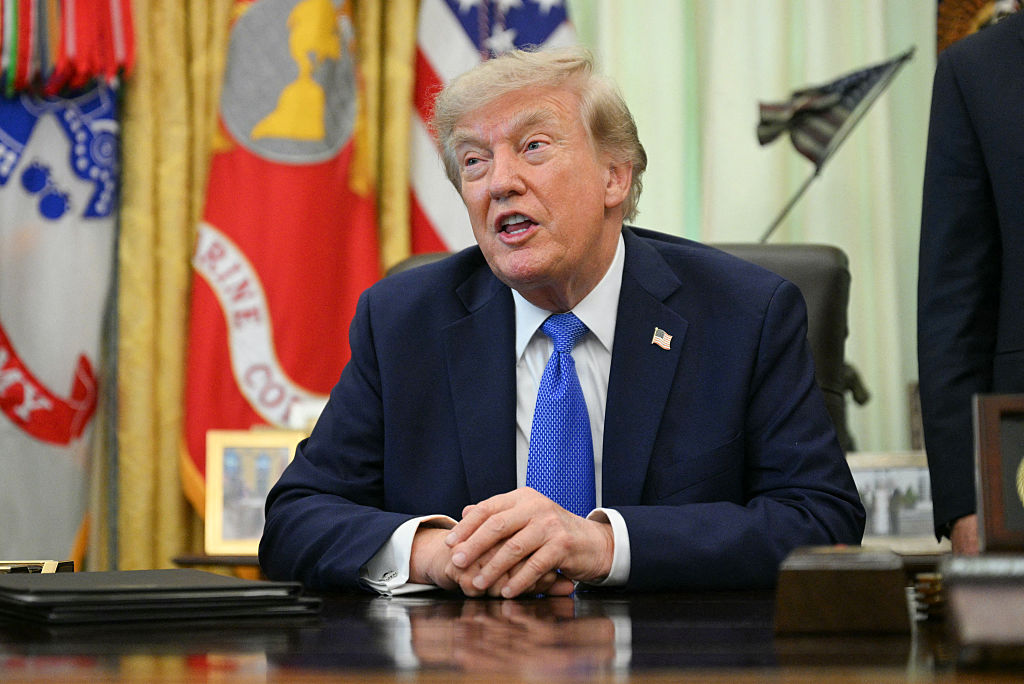
The U.S. Supreme Court rejected Donald Trump’s previous attempt to impose restrictions on birthright citizenship, but the President hasn’t stopped trying to reinterpret the constitutional guarantee to advance his restrictive immigration agenda.
In the Oval Office on Thursday, Trump signed two new executive orders on immigration—one that would exclude specific categories of U.S.-born children from getting automatic citizenship, and another that would authorize visa and entry restrictions for “birth tourism.”
The new orders have a narrower scope than the previous sweeping order issued immediately after Trump returned to the White House. The earlier order said babies born in the U.S. who don’t have at least one U.S. citizen or lawful permanent resident parent are not granted automatic citizenship. But the Supreme Court on June 30 struck down that order, saying it couldn’t be reconciled with the 14th Amendment.
“It was close, but a very, very unfortunate decision,” Trump said of the ruling Thursday. “So we’re making adjustments because it’s very unfair.”
One of the new orders applies to children with non-citizen parents, with at least one of those parents being an “alien enemy,” a foreign government employee working for a foreign government while in the U.S., or someone who “engaged in a commercial transaction to purchase or access birthright citizenship.” Children of foreign diplomats are already excluded from birthright citizenship, and the new order broadens the covered categories.
The order also restricts birthright citizenship for anyone born to non-citizen parents in a U.S. territory or territorial waters where citizenship is not conferred by federal statute, such as American Samoa. (Major U.S. territories like Puerto Rico and Guam confer birthright citizenship by federal statute, though one House Republican has introduced a bill to end birthright citizenship for territories.)
The other order singles out the practice of foreign pregnant women visiting the U.S. to give birth, ordering the Secretary of State and the Secretary of Homeland Security to take action and create rules to prevent any foreign national from trying to enter the U.S. to engage in “birth tourism” or to remove such persons if necessary.
It’s unclear how successful the President’s latest attempt may be.When asked Thursday whether he believes his new executive orders will survive constitutional scrutiny, the President said, “I think it will.”
To enforce the “birth tourism” order, Trump said Thursday there will be “very big crackdowns.” The President claimed certain individuals were either “buying their way in” the U.S. or “building businesses” off the country’s birthright citizenship law.
White House deputy chief of staff Stephen Miller said “birth tourism” has been a problem for decades. “People come here pretending to be a tourist, pretending to be a visitor, saying they want to go to Disneyland, they want to go visit a monument or go to a national park, but the real reason they’re here is to have a child, to make that child an automatic citizen, leave our country, and then have a U.S. citizen child,” Miller said at the signing ceremony.
No official figures tally “birth tourism.” Government data show fewer than 10,000 births in the U.S. to mothers with foreign addresses in 2024, but an April 2026 article by D.C.-based think tank Migration Policy Institute says that census-based estimates put “birth tourism” at 22,000 to 26,000 babies born annually in the country.
Organized “birth tourism” operations have been reported in the past. In a letter to the Secretaries of Homeland Security and the Interior earlier this year, Republican legislators raised concerns over Chinese mothers-to-be visiting the Commonwealth of the Northern Mariana Islands, the archipelagic U.S. territory in the Pacific, as a “birth tourism” destination.
Trump’s first-term Administration already cracked down on “birth tourism” through a 2020 rule that allowed the State Department to deny tourism visas to an applicant it has “reason to believe intends to travel” for that reason. That rule, according to a 2022 minority report from the Senate Committee on Homeland Security and Governmental Affairs, made it more difficult for “birth tourism” companies to continue operating in the country.
Border czar Tom Homan told Fox News in April that “birth tourism” from geopolitical adversaries Russia and China specifically posed a “significant national security threat.”
The Migration Policy Institute article, like other observers and critics of the crackdown, pointed out, however, that birth tourism is “rare” and gets ‘outsized public attention and legal scrutiny” relative to its scale. For context, the U.S. saw an estimated 3.6 million total births in 2025.
Trump’s new orders are expected to face legal challenges, with critics and immigration rights advocates already pointing to the Supreme Court’s June ruling.
“The Supreme Court already decided this issue: Birthright citizenship is guaranteed by the Constitution,” Cody Wofsy, deputy director of the American Civil Liberties Union’s Immigrants’ Rights Project, said in a statement. “No additional executive order can change the meaning of the Constitution. Any executive order that tries to rewrite birthright citizenship will meet the same fate as the last one.”
A handful of Democratic lawmakers also voiced their opposition to the order. Sen. Alex Padilla of California posted on social media that “Trump doesn’t understand the Constitution—but the 14th Amendment’s promise of birthright citizenship and equality speaks for itself.” Sen. Ruben Gallego of Arizona wrote that “even our extremist Supreme Court ruled it’s not up for debate.”
But even some immigration advocates and observers have suggested the Supreme Court’s latest ruling on birthright citizenship didn’t necessarily close the door on the issue.
Spring cabbages sown now will grow swiftly and then overwinter in your garden
If you told primary-school-age me that I’d one day love cabbage, I would have laughed and called you a liar. Despite how much school dinners tried to put me – and likely, you – off this green-leafed staple, I’m happy to say that my taste has been rehabilitated. Yet, for all the love I have for the humble cabbage, it is not a crop I grow. And it is for the same reason that lots of grow-your-own classics don’t make it on to my plot: I don’t have enough space. For a vegetable that is so inexpensive and ubiquitous, I simply can’t justify it.
But if you’re fortunate enough to have a decent-sized patch – or just a strong desire to grow cabbages – then it’s a good time to get them started. Spring cabbages sown now – in good quality sowing compost in a modular tray – will grow swiftly in summer’s ideal conditions. They will then overwinter in the ground all the way through to next spring, when they will be ready to pick.
Continue reading...A decade after leaving elite gymnastics behind, the viral UCLA star is chasing a spot at LA 2028 on her own terms – and inspiring a new generation
Every morning, Katelyn Ohashi gets up and makes a smoothie and then walks her four-month-old puppy. She drives to the gym and begins with a moment of gratitude before warming up with gymnasts half her age. She trains four days a week, around four hours per day, while also dabbling in her various hobbies. It’s a routine that maybe a decade ago she didn’t envision but is now undertaking.
When Ohashi left elite gymnastics in 2013, it was no longer a place where she found joy. Although she was seen as an Olympic hopeful (she was the last gymnast to beat Simone Biles in the all-around finals at the American Cup), a back injury took her out of the running for the Games. She slowly found her joy for the sport in NCAA gymnastics at UCLA, where she was known for her perfect 10 floor routines that often went viral, garnering millions of views from around the world.
Continue reading...Kasia Niewiadoma sealed an epic solo victory on Mont Ventoux, securing a slim overall lead
114km to go Korevaar’s attack couldn’t hold. The peloton is back together as the road starts veering upward before we hit the category three climb up the Colombier.
122km to go We are seeing the first attacks of substance on the flat section to Col du Colombier. Jeanne Korevaar (Liv-AlUla-Jayco) has burst clear of the peloton and got herself a lead of about 15secs.
Continue reading...From courtrooms to strip clubs, backlash is building against Meta's smart glasses.

Мы знаем, что сегодняшние большие языковые модели основаны на архитектуре transformer, а самое важное понятие в трансформере это механизм attention.
Вычисление attention происходит путем многократного произведения матриц. Но как модели с миллиардами параметров вычисляют эти матрицы? Почему генерация происходит так быстро? Как можно вычислить следующий токен, без многомиллионного перемножения?
Сегодня вы узнаете об одном из самых важных понятий в современном ИИ — о KV cache.
This live blog is now closed.
Following Lisa Murkowski’s announcement that she plans to vote “no” on Todd Blanche’s nomination to lead the Department of Justice, the acting attorney general can’t afford another defection in order to secure the permanent position.
So far the only other holdout is Senator Bill Cassidy – a GOP lawmaker from Louisiana. Cassidy, a former physician, said this week he’s concerned about Blanche’s ability to lead the justice department independently, considering he once served as Donald Trump’s personal lawyer.
Continue reading...
Пятничная публикация с очень актуальным вопросом на вечер :)
На самом деле вопрос риторический. Конечно пить! Потому что без воды, вы долго не протянете.
Кейс о том как мы сделали мобильное приложение для налива чистой питьевой воды через водоматы и почему таким же образом можно наливать и бензин на АЗС.
Водоробот - это компания, которая занимается установкой водоматов в различных городах и осуществляет через них налив питьевой воды по доступной цене. Почти как заправка автомобиля на АЗС, только вместо бензина - чистая питьевая вода для людей.
На 2026 год Водороботом установлено более 1500 водоматов. Это сопоставимо с количеством АЗС Газпромнефть.
Читать далее
No more fresh raspberries this summer, one of the few foods toddlers reliably eat. Health advisors now say you should cook them in pies and jam to be safe. And that convenient bagged salad? Needs to be replaced with the full head, painstakingly washed.
As an economist studying women’s lives, I’ve railed against the unfair division of labor in American households, where women still tend to shoulder the majority of the domestic load despite growing earning power. But in this case, there’s another actor not pulling its weight: the government.
Cyclosporiasis, and the attendant time burden for parents that comes with it, can be directly linked to recent pullbacks in the food safety system that has kept us safe for decades.
Food safety is a classic “public good”—something that it’s more efficient for the government to provide than for each household to manage on its own. If a chemical is harmful, say BPA in pouch linings, it’s much more efficient for the government to ban it than for each family to have a designated baby food policer reading labels and parenting blogs to find out which brands to avoid. And the government can provide safety at scale that parents cannot provide themselves. We cannot test for possible bacterial or parasitic contamination of frozen food products or fresh vegetables without a lab.
For more than 120 years, since the publication of Upton Sinclair’s The Jungle, we’ve been moving in the direction of greater food safety oversight. Recently, that movement switched direction. The division of labor between families and their government that parents have relied on is being dismantled.
In Feb. 2025, roughly 89 people were fired from the FDA’s human foods program. The FDA then delayed by 30 months a new rule that would require tracing contaminated foods and yanking them off store shelves and the U.S. Department of Agriculture (USDA) withdrew a rule designed to limit salmonella in poultry.
Meanwhile, more than 15,000 employees at the USDA signaled their intention to resign by accepting the offer proffered by the Department of Government Efficiency (DOGE). Not satisfied, the agency pushed through a reorganization that would force workers from Washington, D.C. to regional hubs, which unions filed in court represented another attempt to gut the agency.
In July 2025, the CDC ceased mandatory tracking of six pathogens causing food-born illness. Among them? Cyclospora. In November, inspections of foreign food manufacturing facilities hit historic lows. Consumers noticed. During the 2025 fiscal year, food safety complaints for meat, poultry, and eggs (including things like wood in corndogs) went up 40%.
When the government steps down, parents have to step up—and safety becomes a private good. A staff of 18,000 for the FDA only sounds large when you don’t compare it to the 63 million American parents whose time, worry, and stress can be saved by a reliable food safety system.
And the problem isn’t limited to food safety. Since the start of President Donald Trump’s second term, vehicle safety rules were rolled back, and transportation investigations were cancelled. Air and waterway protections were decimated. Policing of predatory tech companies has been sidelined.
In a better world, parents would be able to trust the government not only to monitor existing threats, but to keep up with new science and adjust accordingly. Instead, Trump EPA administrator Lee Zeldin recently announced they would roll back the Biden rule regulating “forever chemicals”—now widely linked to cancer—in tap water.
From my vantage point, safety is becoming the latest DIY project, instead of a common goal we all invest in. The CDC’s official website on the COVID vaccine now unhelpfully states that the vaccine is recommended “for people ages 6 months and older based on individual-based decision-making.”
Over the last year, much of the conversation about regulation has focused on its costs to the federal budget and firm productivity. But left outside the picture has been the cost to parents of having to monitor and mediate these issues on our own. The advice given to overwhelmed parents is often to do less, and be more “free-range,” letting kids play outdoors unsupervised.
But this advice relies on the safety of our lived environment. The more real dangers exist in our children’s surroundings, the more time parents must spend protecting our kids. We are tasked with choosing safer foods and cleaning products, endlessly reviewing labels and ingredients, following content creators to guide us through chemicals and their exact level of endocrine disruption, monitoring our children’s phone usage, researching smart watches instead of phones, keeping our children indoors when air quality is bad, washing lead dirt off tiny hands before they put them in their mouths, and keeping kids busy with structured activities because the street is too full of huge SUVs for unsupervised bike-riding.
I would love to be able to cut loose as a parent. To do that, I need to know the government has my back: That they’ll handle the air, water, pandemic, and diarrhea-causing parasites, while we do the parenting.